Review

Implication of Contactins in Demyelinating Pathologies


Laboratory of Neuroscience, Department of Basic Science, University of Crete Medical School and IMBB FORTH, Nikolaou Plastira 100, 70013 Vassilika Vouton, Greece
*
Author to whom correspondence should be addressed.
Equal contribution.
Life 2021, 11(1), 51; https://doi.org/10.3390/life11010051
Submission received: 11 December 2020 / Revised: 9 January 2021 / Accepted: 11 January 2021 / Published: 13 January 2021
(This article belongs to the Special Issue Myelin and Oligodendrocyte-Neuron Interactions)

Abstract

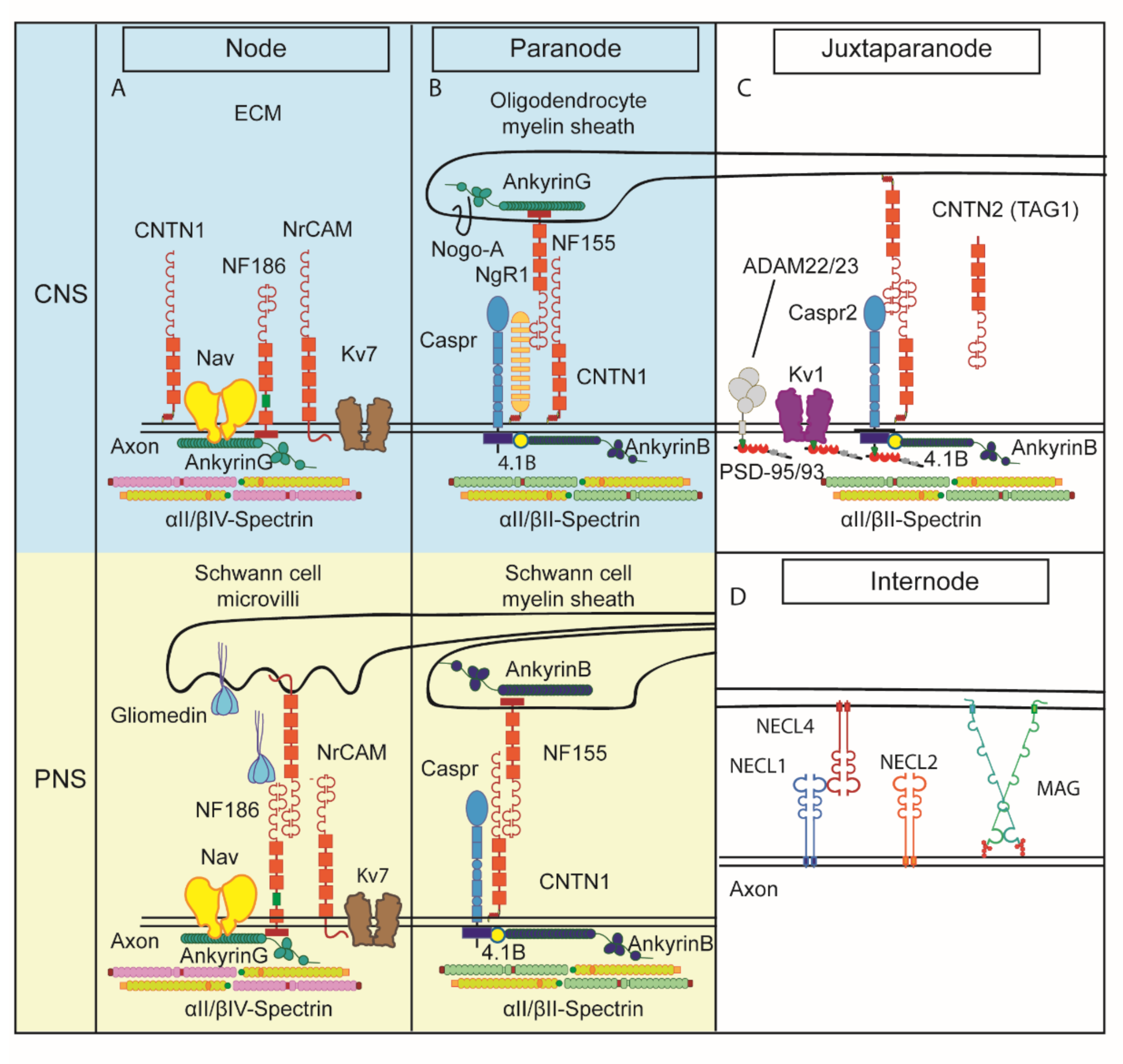
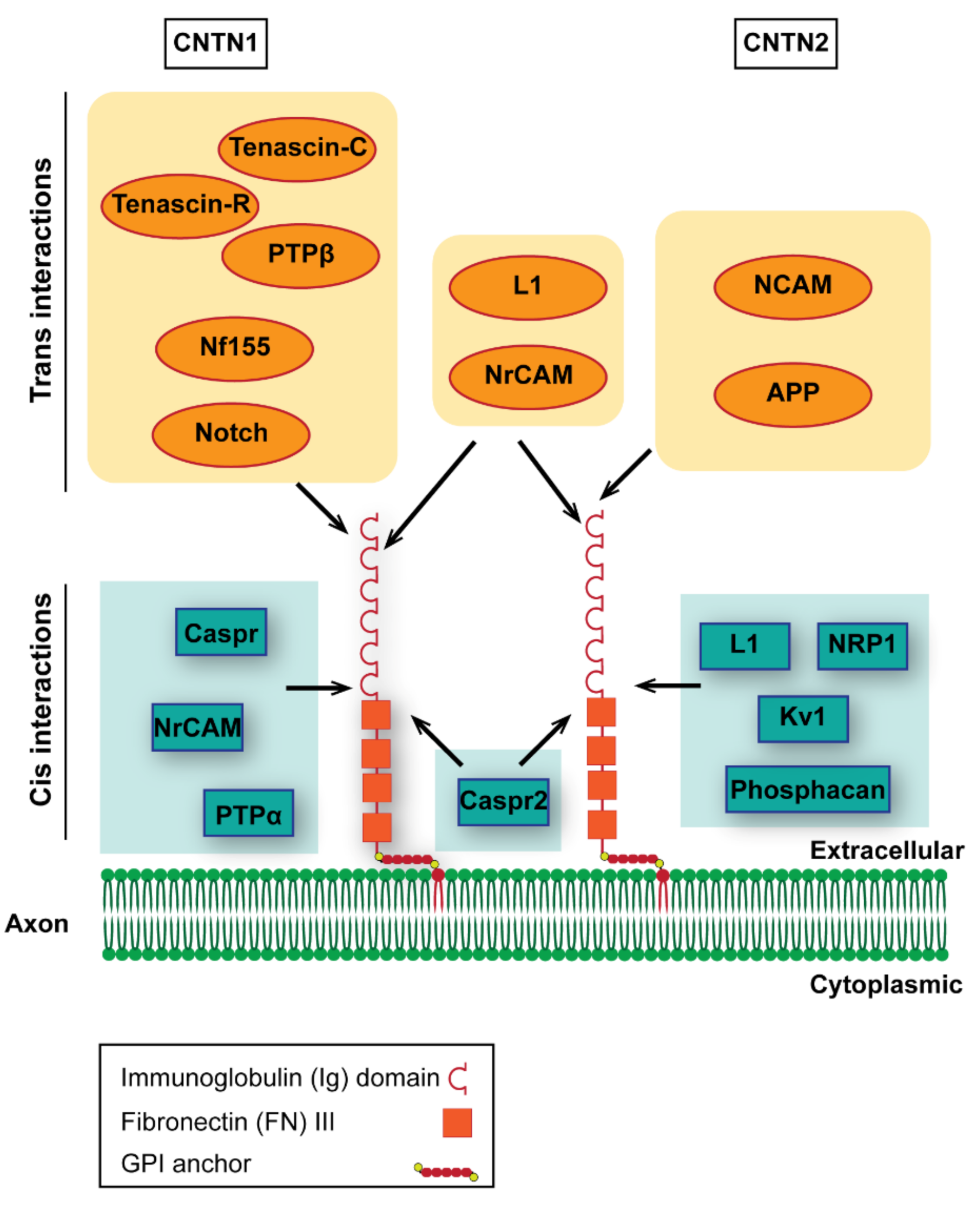
Demyelinating pathologies comprise of a variety of conditions where either central or peripheral myelin is attacked, resulting in white matter lesions and neurodegeneration. Myelinated axons are organized into molecularly distinct domains, and this segregation is crucial for their proper function. These defined domains are differentially affected at the different stages of demyelination as well as at the lesion and perilesion sites. Among the main players in myelinated axon organization are proteins of the contactin (CNTN) group of the immunoglobulin superfamily (IgSF) of cell adhesion molecules, namely Contactin-1 and Contactin-2 (CNTN1, CNTN2). The two contactins perform their functions through intermolecular interactions, which are crucial for myelinated axon integrity and functionality. In this review, we focus on the implication of these two molecules as well as their interactors in demyelinating pathologies in humans. At first, we describe the organization and function of myelinated axons in the central (CNS) and the peripheral (PNS) nervous system, further analyzing the role of CNTN1 and CNTN2 as well as their interactors in myelination. In the last section, studies showing the correlation of the two contactins with demyelinating pathologies are reviewed, highlighting the importance of these recognition molecules in shaping the function of the nervous system in multiple ways.
Keywords: contactins; nodes of Ranvier; demyelination contactins; nodes of Ranvier; demyelination