


Abstract
The electrification of the automotive industry and the lightweighting of aerospace equipment demand high-efficiency centrifugal pumps for compact spaces. A novel centrifugal pump incorporates an integrated impeller-motor rotor design, achieving a more compact footprint and higher power density. However, research is scarce on the radial clearance between the rotor and casing. This study presents a comprehensive investigation of the internal flow dynamics, combining numerical simulations with experimental validation. A significant reduction in fluctuation amplitude for pump efficiency, head coefficient, and frictional loss rate occurs when the clearance ranges from 1.0 to 1.5 mm. Within clearances of 0.75 to 1.5 mm, complex vortex systems emerge in the radial clearance, inducing diverse circumferential high-speed zones. Pressure fluctuations within the radial clearance are predominantly governed by the blade passing frequency. At a clearance of 1.5 mm, the rotational harmonic amplitude at monitoring points exceeds the blade passing frequency amplitude by a factor of 1.9, while the average pressure fluctuation intensity at other points increases significantly by 36.9%. An optimal clearance of 1.25 mm achieves a balance between flow characteristics and energy consumption. This research provides practical insights for optimizing pump energy performance and operational stability.
1. Introduction
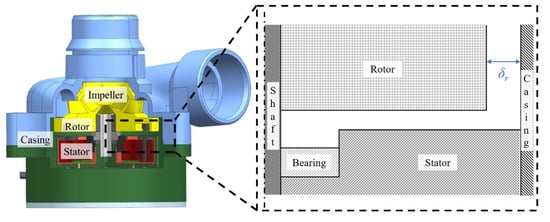
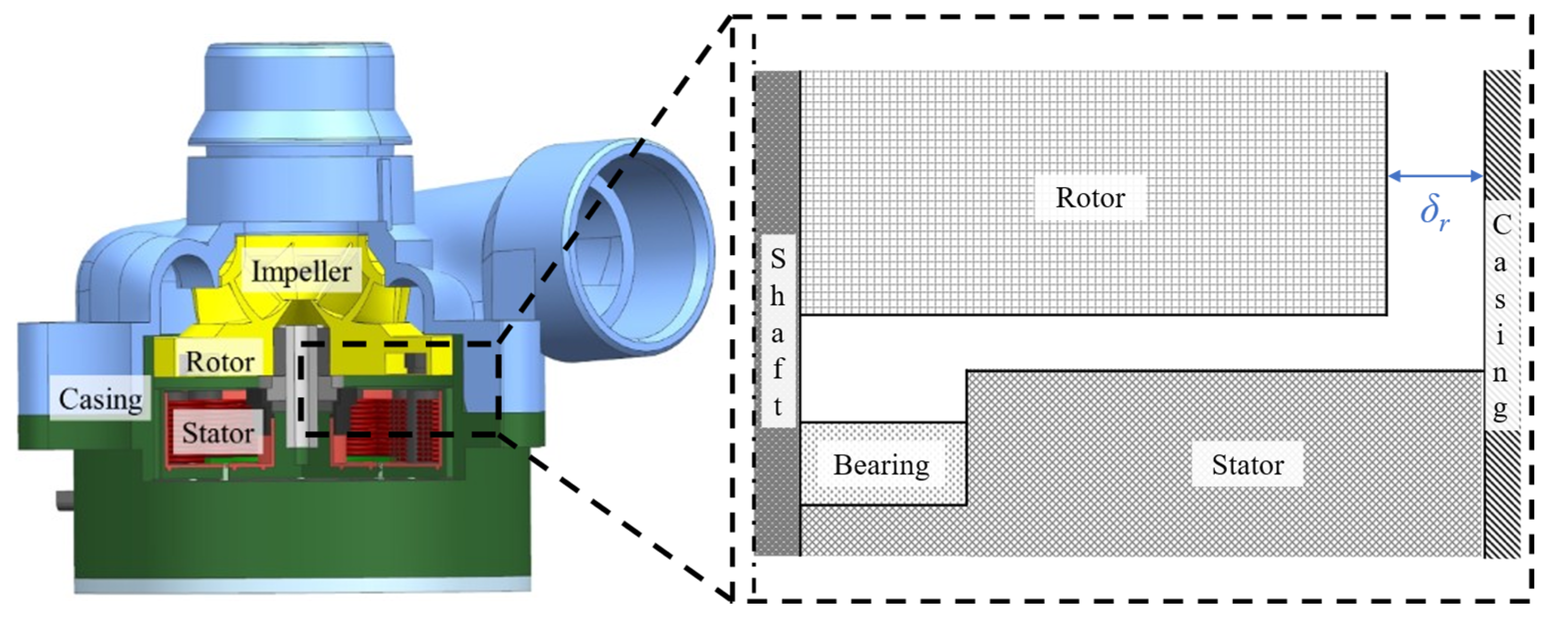
The electrification of the automotive industry and the lightweighting of aerospace equipment are accelerating. Consequently, it is critical to design high-efficiency and high-power electronic coolant pumps for compact spaces [1,2]. Replacing traditional radial flux motors with axial flux motors can significantly enhance power density within a fixed volume [3,4]. This approach offers distinct advantages in weight reduction and miniaturization [5,6]. Figure 1 illustrates an innovative centrifugal pump integrated with an axial flux canned motor. In this configuration, the stator and rotor are arranged in parallel along the axial direction. Furthermore, the impeller is integrated with the rotor as a single unit. Here, δr denotes the specific radial clearance between the rotor and the casing.
Figure 1.
Centrifugal pump with canned motor.
Currently, research on pumps with axial flux motors (AFMs) focuses primarily on motor components. Ai et al. [7] analyzed the variation in axial and radial forces with air gap and rotational speed for a pump with an AFM used in cryogenic submerged applications. Since an axial flux permanent magnet synchronous motor (PMSM) provides high power density and high torque at low speeds, Hoffstaedt et al. [8,9] integrated a contra-rotating reversible pump-turbine with an AFM. This design achieves low-head pumped hydro storage in coastal and shallow-water regions. Through experimental comparisons of two PMSMs, Eker et al. [10] found that the axial flux configuration effectively enhances the power density and efficiency of pump systems. Yim et al. [11] retrofitted a liquid hydrogen centrifugal pump with an AFM, resulting in significantly improved torque density and mechanical stability. For a ventricular assist pump with an AFM, Karabulut et al. [12,13,14,15] investigated how stator materials and structural layouts affect motor performance. They also conducted thermal analyses on its rotor and stator. Zhao et al. [16] introduced hybrid excitation technology into an axial flux switching motor for a pump-turbine. This allows the system to control speed and power across multiple operating conditions. Zhang et al. [17] compared a pump with an AFM to a traditional electronic coolant pump. Their results showed that the AFM-based pump exhibits superior electromagnetic torque performance under the same thermal load. Choi et al. [18,19] replaced the stator of an AFM in an electronic water pump with a PCB stator. They subsequently analyzed its efficiency, torque performance, and thermal stability. For a pump with a PCB-stator AFM, Youn et al. [20] proposed a non-adjacent end-winding structure to ensure electrical symmetry. Ma et al. [21] studied an ultracompact micro centrifugal pump with an integrated printed AFM, optimizing both its hydraulic and heat dissipation performance. Song et al. [22] converted a radial flux motor for a pump into an AFM of equivalent volume and optimized its torque ripple and efficiency. Nahin et al. [23] integrated a hydrostatic radial piston pump with an AFM to analyze its volumetric, mechanical, and overall efficiency. Furthermore, Gao et al. [24] proposed a blood pump with an axial flux bearingless hysteresis motor and tested its torque performance. Despite these studies, there is almost no analysis on how structural parameters influence the energy performance and internal flow fields of pumps with AFMs. In particular, the impact of motor-specific parameters remains insufficiently explored.
The design and optimization of various clearance structures in pumps directly affect their internal flow characteristics and energy performance. Therefore, it is essential to study the influence of clearance parameters on pumping characteristics. Carvalho et al. [25] investigated the effects of medium physical properties and clearance on the leakage loss and efficiency of a sucker rod pump. They found that the clearance had the most significant impact. Ranawat et al. [26] analyzed how wear ring clearance increases across two orders of magnitude, along with different eccentricity levels, affect the performance of a centrifugal pump. Lei et al. [27] evaluated the impact of impeller inlet wear ring clearance on the external characteristics, internal flow field, and energy loss of a double-suction centrifugal pump. Si et al. [28] researched the influence of front and rear wear ring clearance sizes on the hydraulic performance and operational stability of a low-specific-speed multistage centrifugal pump. They also analyzed the internal flow loss mechanism and performance evolution. Lin et al. [29] analyzed the effect of seal ring clearance on the performance and energy consumption of a submersible sewage pump. Han et al. [30] modified the rear wear ring of a canned pump. They analyzed the influence of the rear wear ring clearance width on axial force, leakage, and hydraulic performance. Using a combination of computational fluid dynamics (CFD) and the acoustic finite element method, Zhou et al. [31] analyzed the effects of rear wear ring clearance width on a centrifugal pump. Their study covered energy performance, flow field features, and internal noise. Zhang et al. [32] studied how various clearances in the rotor structure affect the geometric characteristics and performance of a vacuum pump. For a gear pump, Zhan et al. [33] analyzed the effects of different radial and end-face clearances on internal leakage and viscous friction losses. Similarly, Liu et al. [34] researched the influence of radial and axial clearances on the efficiency of a gear pump. Zhai et al. [35] conducted a simulation on a miniature gear pump with a canned motor to analyze the impact of clearance flow structures on flow and thermodynamic characteristics. Liang et al. [36] investigated the effects of seven different working clearances on a hydrogen circulation pump. They examined the internal flow field, pressure pulsations, flow pulsations, and radial forces. In a regenerative hydrogen pump, the clearance between the impeller disk and the casing affects performance and disk forces. Yang et al. [37] analyzed the influence of this clearance width on the hydraulic performance, axial force, and disk friction power of the pump. The secondary flow path is crucial in the design of centrifugal blood pumps. Wu et al. [38] used Large Eddy Simulation to compare the flow fields of small and large clearance sizes and analyzed their impact on pump performance. Zhu et al. [39] analyzed the influence of the secondary flow path clearance on the performance and blood compatibility of a centrifugal blood pump. Zhou et al. [40] analyzed a vortex pump under different axial clearances through internal flow field studies. They discussed the influence of clearance size on the external characteristics and clearance flow features. Liu et al. [41] and Chen et al. [42] analyzed the influence of stator-rotor clearance variations on the internal flow patterns within full tubular pumps.
Regarding the axial flux canned motor pump studied in this manuscript, the impeller and rotor feature an integrated structure. Consequently, the fluid within the radial clearance between the rotor and the casing interacts directly with the main flow. However, previous research only analyzed the axial gap between the stator and rotor [43]. The influence of radial clearance on the hydraulic performance and internal flow characteristics of the pump remains unclear.
Section 2 outlines the key parameters of the centrifugal pump with an axial-flux canned motor and details the numerical simulation methodology. Section 3 describes the experimental setup and presents the validation of the numerical method against the experimental results. Then, Section 4 provides a comprehensive discussion on the effects of six radial clearances ranging from 0.25 to 1.5 mm on the hydraulic performance and internal flow characteristics of the axial flux canned motor pump, specifically analyzing the pressure, velocity, vorticity, entropy production, and pressure fluctuations.
2. Numerical Simulation
2.1. Pump Parameters
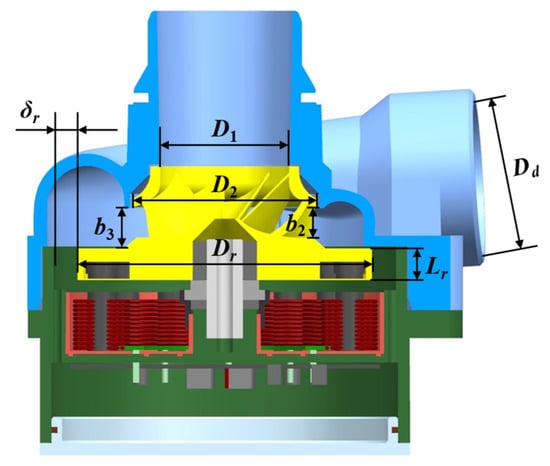
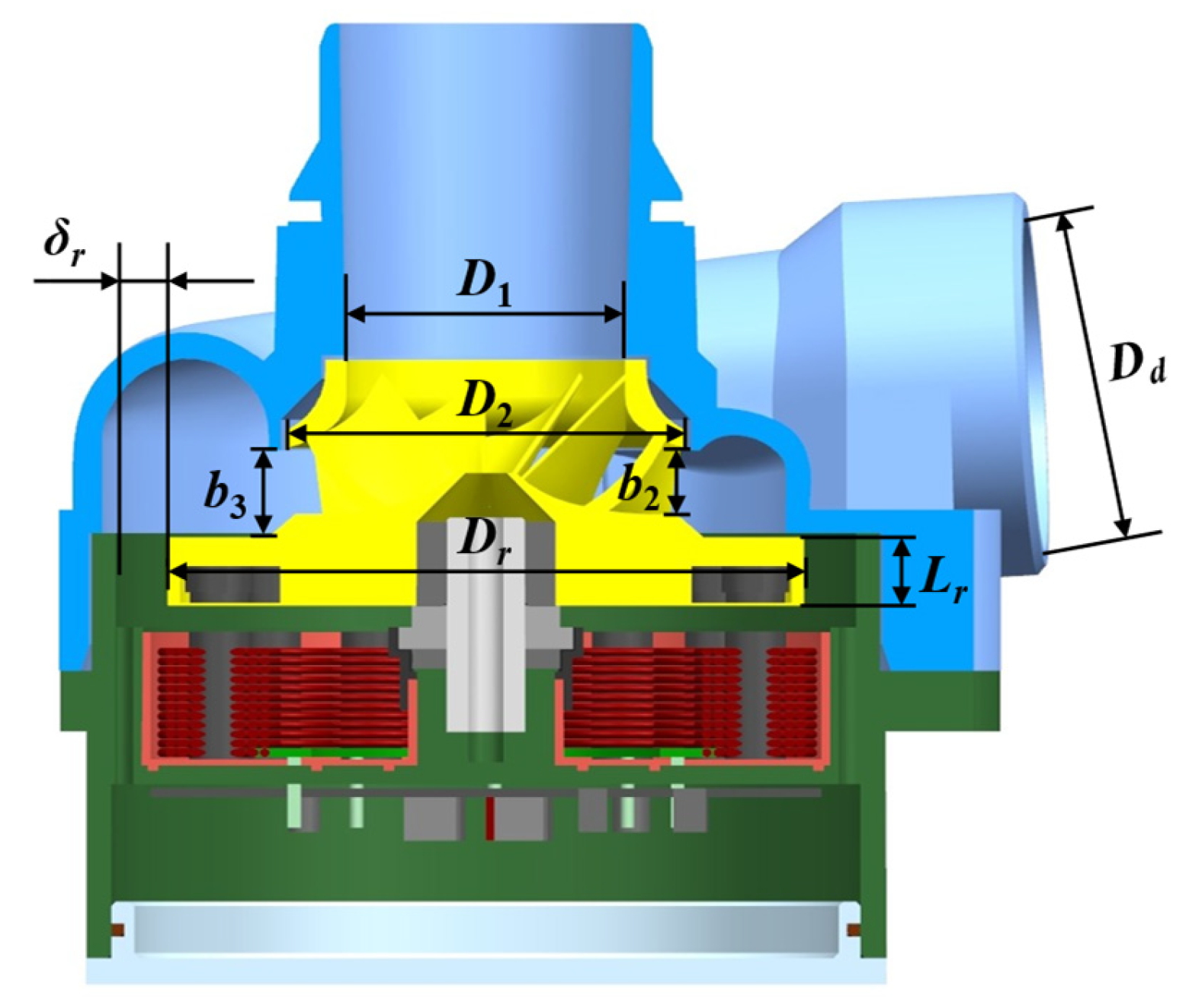
As shown in Figure 2, the focus of this study is a centrifugal pump driven by an axial-flux canned motor. The pump operates at a design flow rate (Qd) of 9 m3∙h−1 and a rated speed of 5200 r∙min−1.
Figure 2.
Meridional section.
The pump primarily consists of an impeller and a volute. Table 1 summarizes their main geometric parameters. The suction pipe diameter equals the impeller inlet diameter. Similarly, the discharge pipe diameter matches the volute outlet diameter. Each pipe extension is five times its respective diameter in length.
Table 1.
Main geometric parameters.
2.2. Mesh Generation
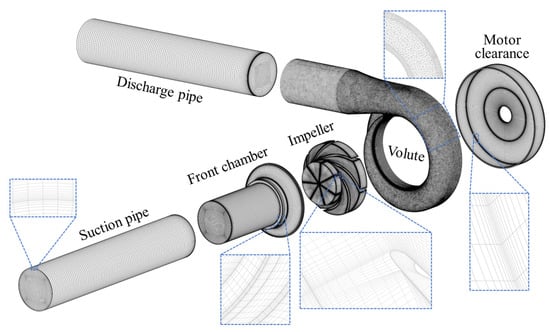
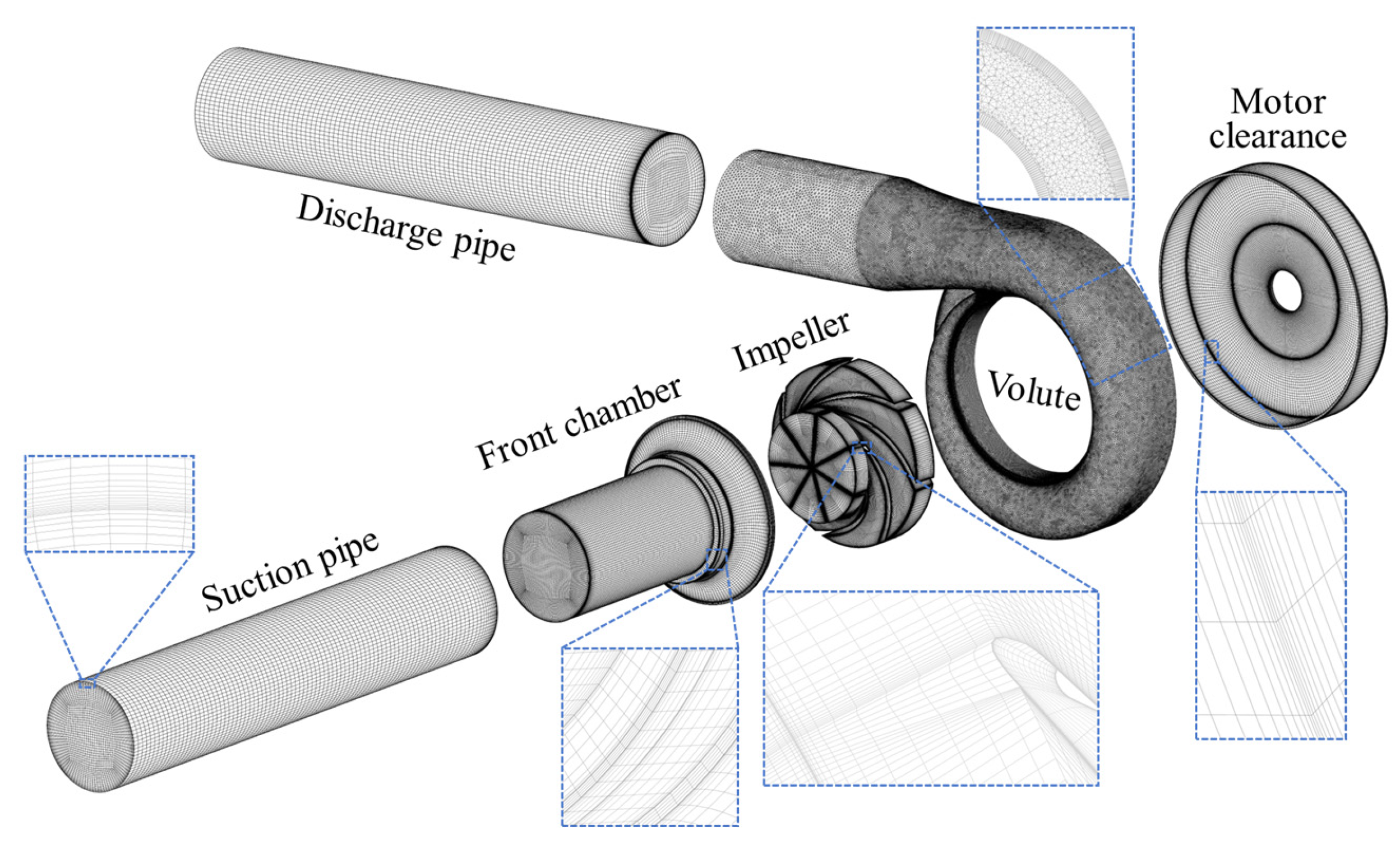
Figure 3 illustrates the computational domain of the axial-flux canned motor pump. It consists of six parts: the suction pipe, the front chamber, the impeller, the volute, the motor clearance, and the discharge pipe.
Figure 3.
Mesh of the computational domains.
ANSYS ICEM CFD 2020 R2 is used to generate hexahedral meshes for the pipes, chamber, clearance, and impeller. Block-structured topologies, such as O-grid, C-grid, and Y-grid, are employed for the flow passages. These structured grids exhibit high quality. They all feature a Jacobian determinant above 0.5 and minimum angles exceeding 18° [44]. However, the volute presents a significant meshing challenge. Its complex 3D geometry and sharp features near the tongue make a fully hexahedral mesh difficult to achieve. Therefore, a hybrid meshing strategy is adopted for this component. A hybrid grid is generated using ANSYS Meshing. It consists of both tetrahedral and hexahedral elements. Local mesh refinement is applied in critical areas. The resulting hybrid mesh exhibits an orthogonal quality above 0.7. Its aspect ratio remains below 3. The average y+ value is 2.6 for the impeller domain and 20 for the volute domain, while those of the other domains are all below 28. Overall, the mesh quality satisfies the requirements for a high-fidelity analysis of the internal flow field [45].
2.3. Computational Setup
CFD simulations in this study are performed using ANSYS CFX. The Unsteady Reynolds-Averaged Navier–Stokes (URANS) method is employed for turbulence modeling. Equations (1) and (2) present the governing equations.
where ρ is the density, t is the time, u is the velocity, x is the coordinate, p is the pressure, μeff is the effective viscosity, fi is the external force. The Shear Stress Transport k-ω model is utilized alongside the URANS equations to close the system. This model accurately captures the primary flow characteristics.
Simulations are performed in an absolute pressure framework. The reference pressure is 0 Pa. A total pressure of 1 atm is specified at the inlet. A mass flow rate corresponding to the operating condition is set at the outlet. The impeller is defined as a rotating domain. All other domains are stationary. Solid surfaces are modeled as no-slip smooth walls. The transient simulation employs the transient rotor-stator interface. The working medium is water at 25 °C, with a density of 997 kg∙m−3 and a dynamic viscosity of 8.899 × 10⁻⁴ kg∙m−1∙s−1. The time step corresponds to 0.2 degrees of impeller rotation. This setting resolves unsteady flow phenomena with high fidelity. The global average Courant-Friedrichs-Lewy number is maintained below 0.4 to ensure numerical stability. The convergence criterion is met when the Root Mean Square (RMS) residuals for all equations drop below 10−5.
2.4. Energy Performance of Simulations
In the numerical simulation, the head of the centrifugal pump is defined as follows:
where p1,tot is the total pressure at the pump inlet and p2,tot is the total pressure at the pump outlet.
The head is non-dimensionalized to eliminate the effects of geometric dimensions and rotational speed. This facilitates performance comparisons across different operating conditions based on similarity laws. The head coefficient is defined as follows:
where u2 is the peripheral velocity at the impeller outlet.
The pump efficiency is defined as follows:
where Q is the flow rate, Tf is the friction torque on the front shroud of the impeller, Tr is the friction torque on the outer surface of the rotor, Tb is the torque on the blades, and ω is the angular velocity of the impeller.
In addition, the friction loss ratios of the impeller front shroud and the rotor outer surface are defined by Equations (6) and (7), respectively.
The total friction loss ratio of the pump is defined as the sum of these two components:
2.5. Mesh Independence Study
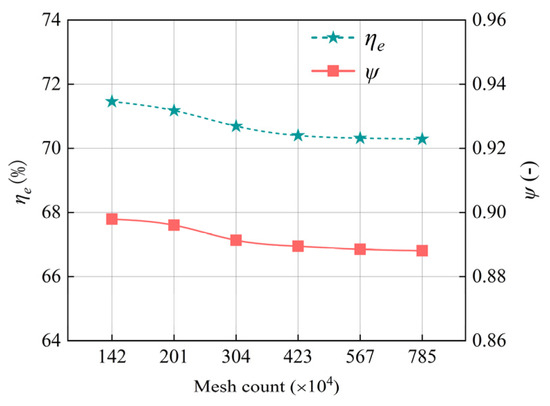
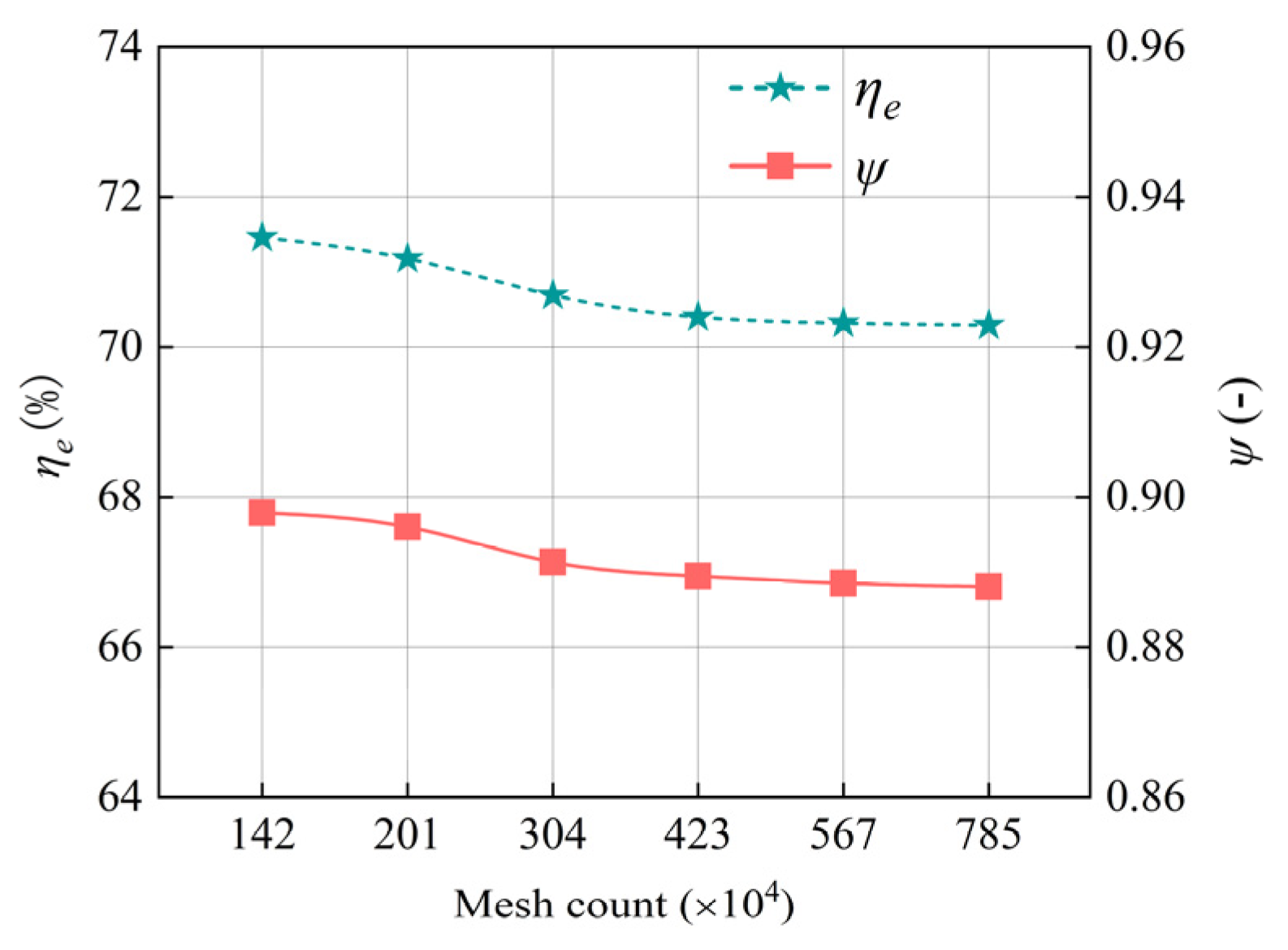
A grid independence study is conducted using six mesh schemes. The mesh counts range from 1.42 million to 7.85 million. As shown in Figure 4, the head coefficient and efficiency are the key assessment metrics. Both values begin to plateau when the mesh count exceeds 5.67 million. Specifically, the relative errors for both the head coefficient and efficiency between the 5.67 million and 7.85 million meshes are less than 0.1%. This trend indicates that the results are independent of the grid resolution. Therefore, the 5.67 million mesh scheme is adopted for subsequent simulations. This choice strikes a balance between numerical accuracy and computational cost.
Figure 4.
Mesh sensitivity.
2.6. Monitoring Locations
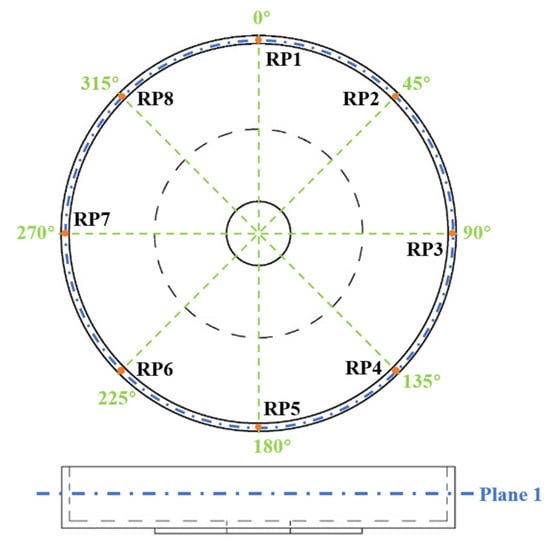
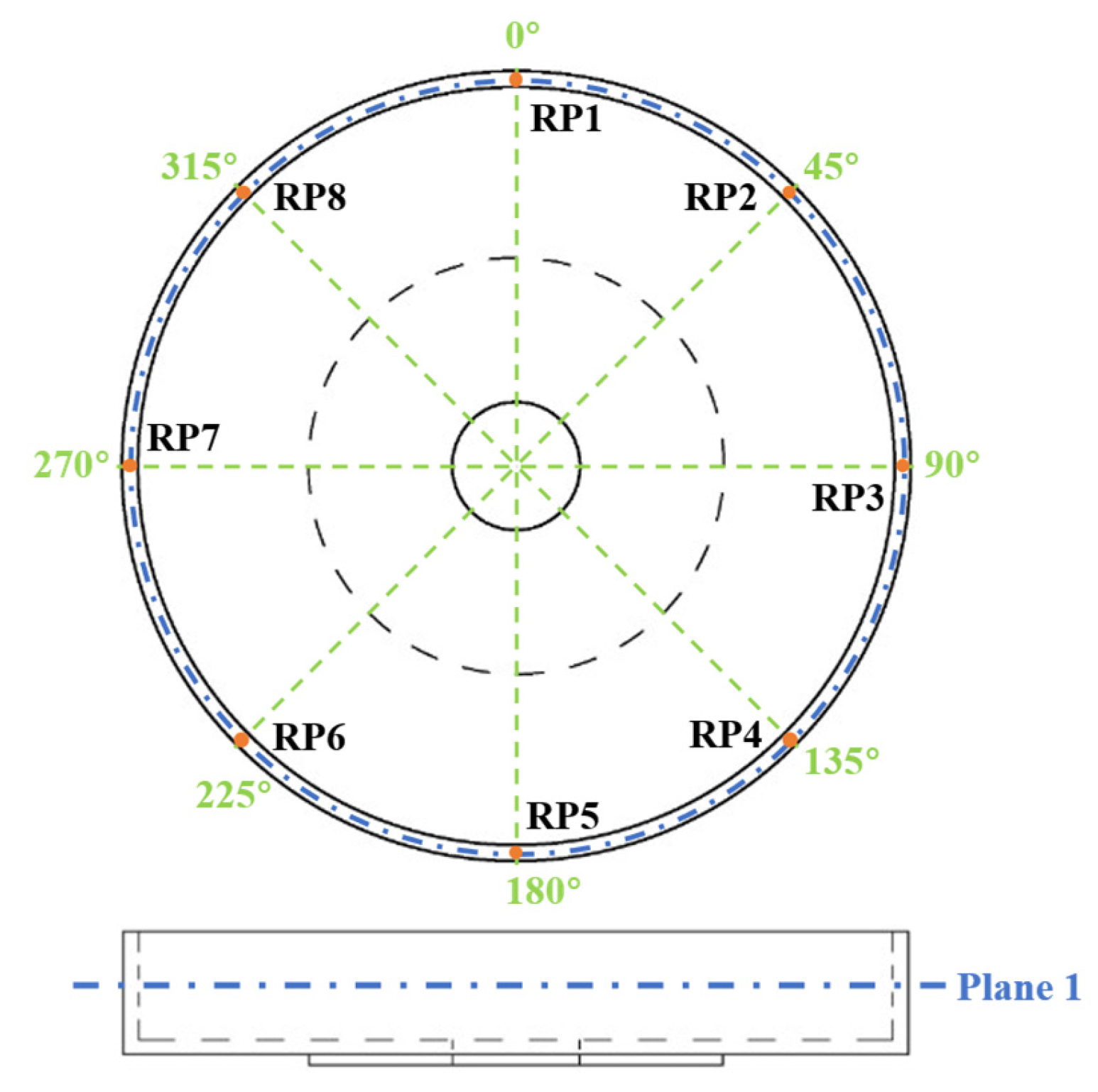
Figure 5 illustrates the locations of the monitoring points within the radial clearance. Points RP1 through RP8 are located on Plane 1 and are distributed circumferentially at intervals of 45°. Plane 1 represents the middle cross-section of the radial clearance, with an axial distance of 0.5Lr from both the front and rear planes of the rotor.
Figure 5.
Monitor position.
3. Experimental Setup and Validation
3.1. Experimental Setup
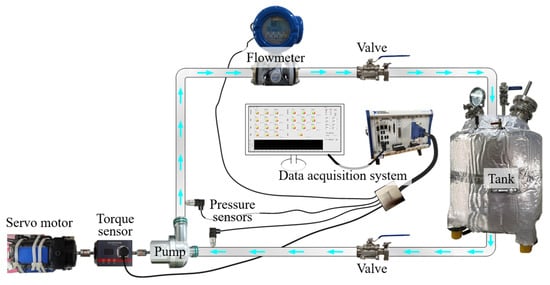
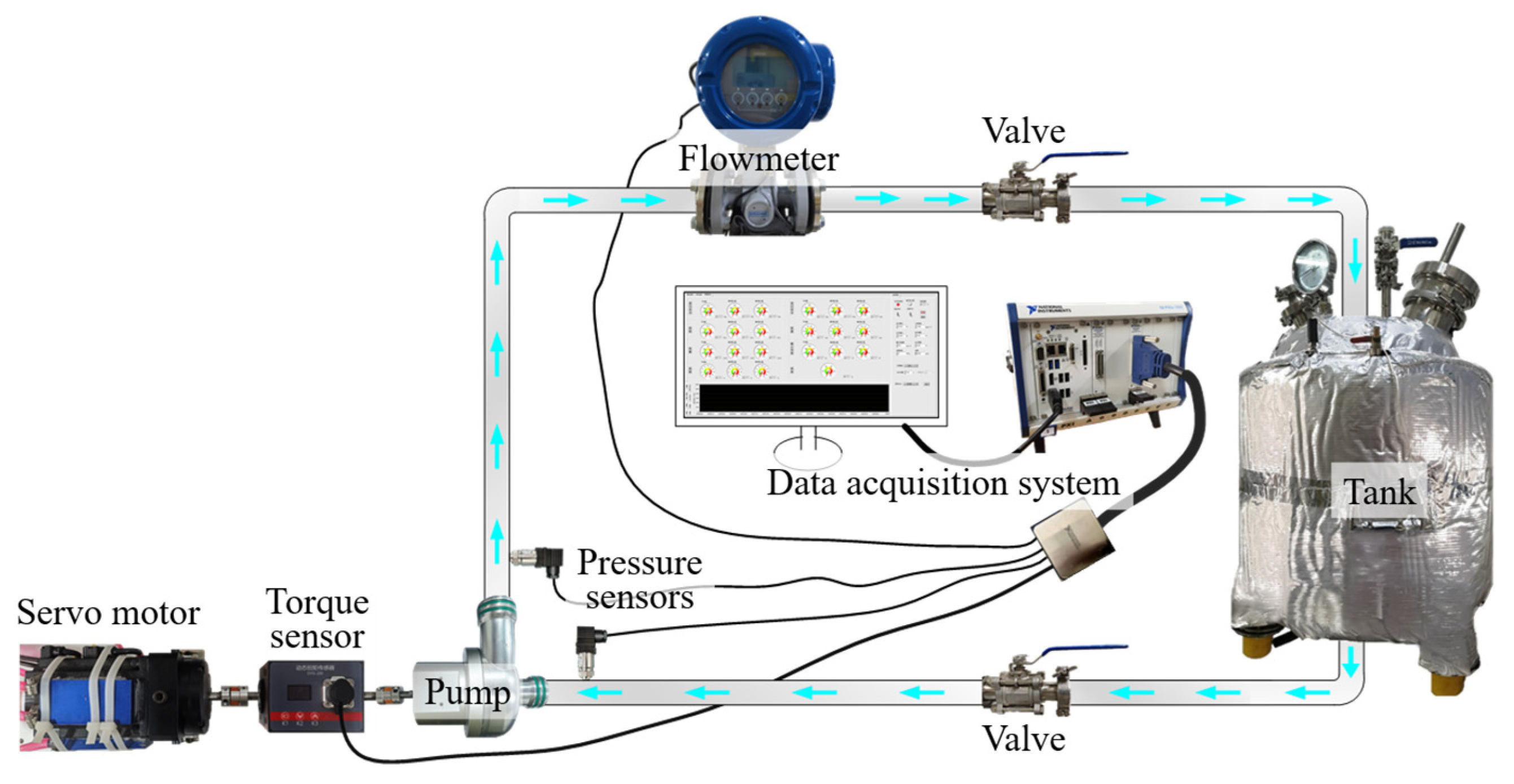
Figure 6 depicts the experimental test rig. It comprises the pump under test, a servo motor (INOVANCE, Shenzhen, China), and two pressure sensors (Stork, Stuttgart, Germany). The system also includes a dynamic torque sensor (DAYSENSOR, Bengbu, China), a turbine flowmeter (KROHNE, Duisburg, Germany), valves, a tank, and a data acquisition system (National Instruments, Austin, TX, USA).
Figure 6.
Test rig.
The test rig complies with the Grade 1 accuracy specifications of the ISO 9906:2012 standard [46]. Two absolute pressure sensors measure the inlet and outlet pressures. Each sensor has an accuracy of ±0.1%. A turbine flowmeter measures the flow rate with ±0.3% accuracy. Additionally, a dynamic torque sensor monitors the pump torque with ±0.2% accuracy. The systematic uncertainties for the head and efficiency are ±0.14% and ±0.56%, respectively. All sensors output a 4–20 mA current signal. These signals are fed into a data acquisition chassis. An NI LabVIEW 2016 platform then processes the data. This configuration allows for real-time monitoring of all key performance parameters. During experiments, the inlet valve remains fully open to minimize hydraulic losses. The outlet valve is used to regulate the flow rate.
3.2. Experimental Validation
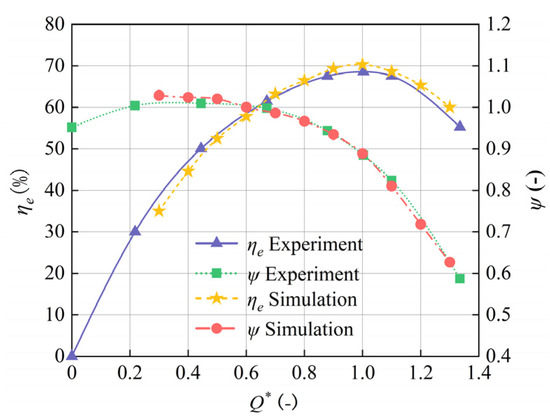
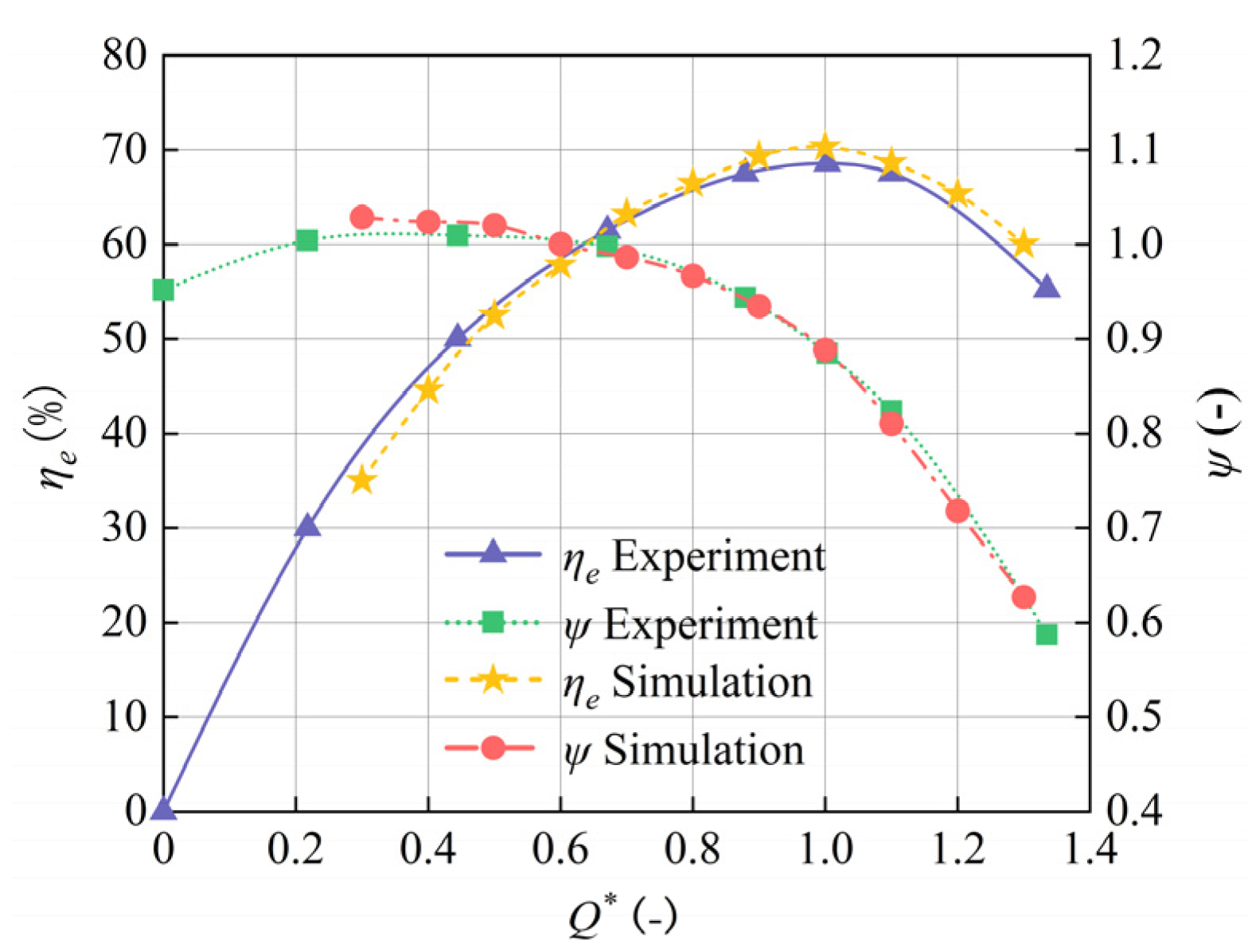
Figure 7 compares the experimental data with the numerical results. This comparison validates the simulation method. The head coefficient and efficiency are evaluated across various flow rates. The dimensionless flow rate is defined as Q* = Q/Qd. The test pump geometry is identical to the numerical model. This consistency ensures a direct and valid comparison.
Figure 7.
Validation of CFD results with experimental data.
Numerical and experimental data show good agreement between 0.3Qd and 1.3Qd. At Qd, the predicted head coefficient is 0.889. This value represents a relative deviation of only 0.4% from the measured data. The predicted efficiency at this point is 70.3%. This result is 1.8 percentage points higher than the experimental value. Across the entire operating range, the average relative error for the head coefficient is 1.0%. The peak deviation of 2.3% occurs at 1.2Qd. For efficiency, the average absolute error is 1.6%. The largest discrepancy is a negative deviation of 3.7% at 0.3Qd. This close agreement confirms the high fidelity of the simulation approach [47,48]. Therefore, the method is suitable for analyzing the pump’s unsteady flow characteristics. Subsequent analysis in this study is conducted at Qd.
4. Discussion
4.1. Energy Performance
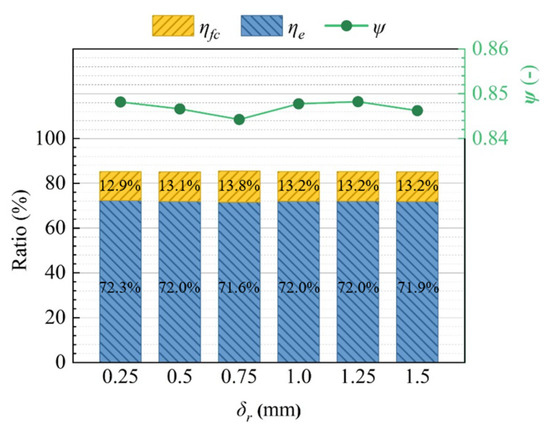
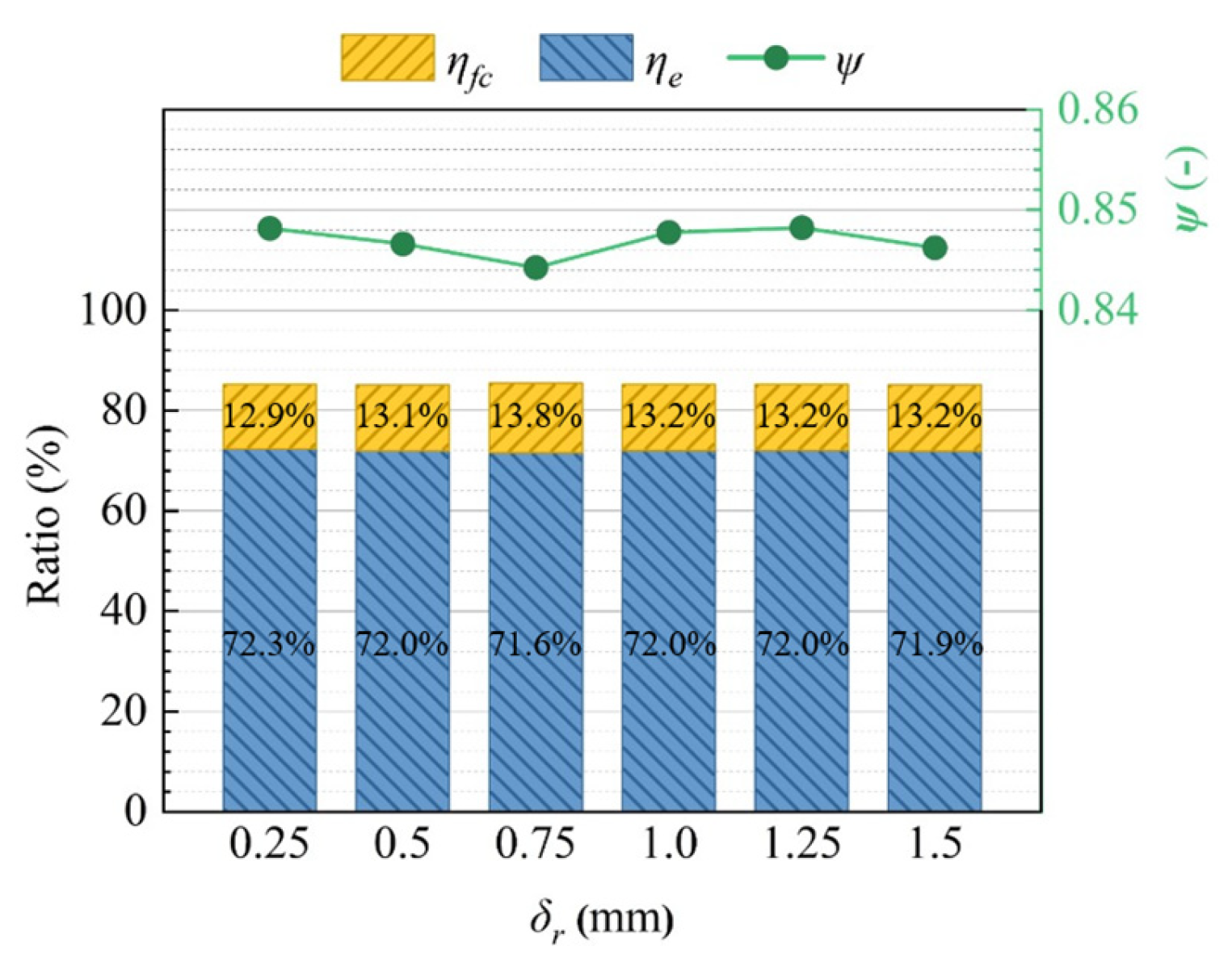
As illustrated in Figure 8, the radial clearance exerts a significant nonlinear influence on the performance of the centrifugal pump with an axial-flux canned motor. Within the range of 0.25 to 1.5 mm, the efficiency exhibits a non-monotonic trend, initially decreasing before increasing. Specifically, the efficiency peaks at 72.3% with a 0.25 mm clearance, while the minimum value of 71.6% occurs at 0.75 mm. In contrast, the head coefficient remains relatively stable and is less sensitive to changes in radial clearance. Notably, within the 1.0 to 1.5 mm range, the pump demonstrates high performance stability, with negligible variations in efficiency, head coefficient, and total friction loss ratio.
Figure 8.
Energy conversion and loss characteristics.
4.2. Pressure Field
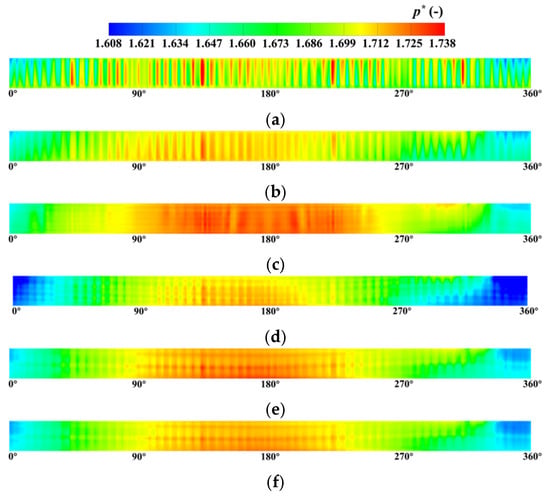
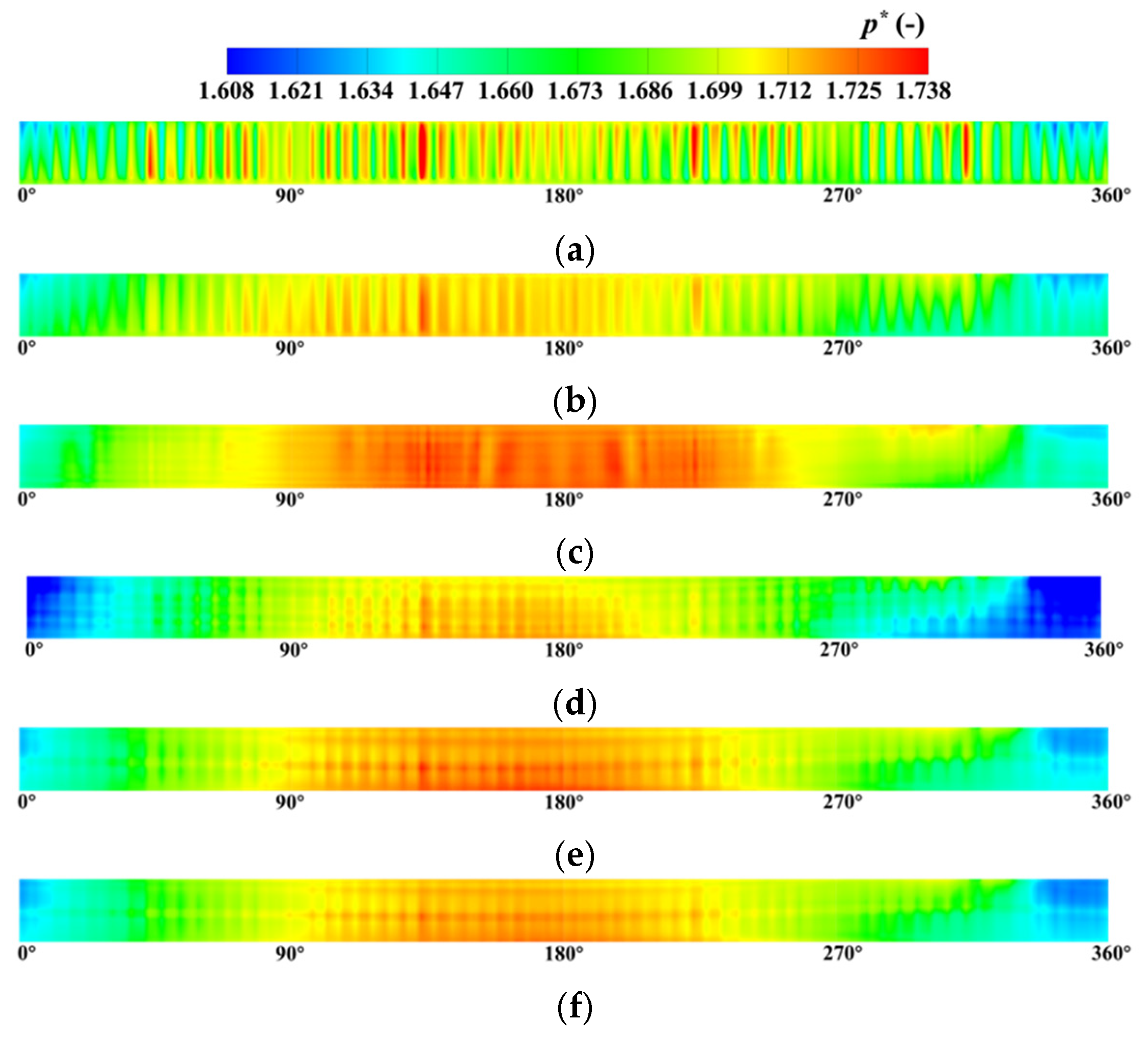
Figure 9 illustrates the time-averaged pressure contours on the middle annular cross-section, unfolded circumferentially as shown in Figure 5, under different radial clearances. Here, the pressure coefficient is defined as p* = p/(0.5ρu22).
Figure 9.
Average pressure field: (a) 0.25 mm; (b) 0.5 mm; (c) 0.75 mm; (d) 1.0 mm; (e) 1.25 mm; (f) 1.5 mm.
A distinct low-pressure region consistently appears within the radial clearance beneath the diffuser inlet. The spatial distribution of the high-pressure zone exhibits a nonlinear relationship with the radial clearance: at a clearance of 0.25 mm, the high-pressure region is most extensive, spanning a circumferential range of approximately 45° to 315°. As the clearance increases to 1.0 mm, this high-pressure zone shrinks to a range of approximately 90° to 225°. At this point, the pressure in the low-pressure zone reaches its minimum. Consequently, the pressure difference between the high- and low-pressure zones is maximized. When the clearance is further increased to 1.25 to 1.5 mm, the circumferential span of the high-pressure region remains largely unchanged, exhibiting only a slight extension in the axial direction.
4.3. Velocity Field
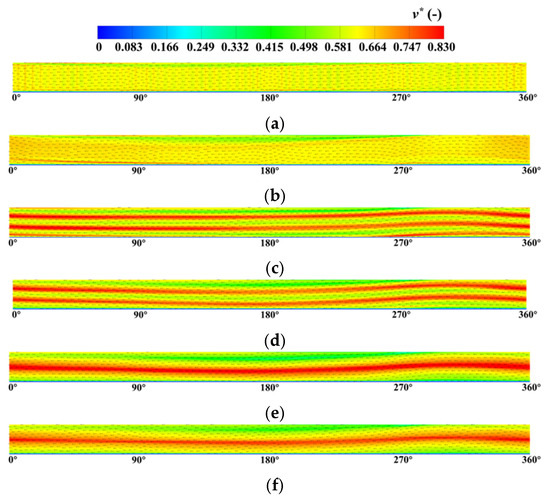
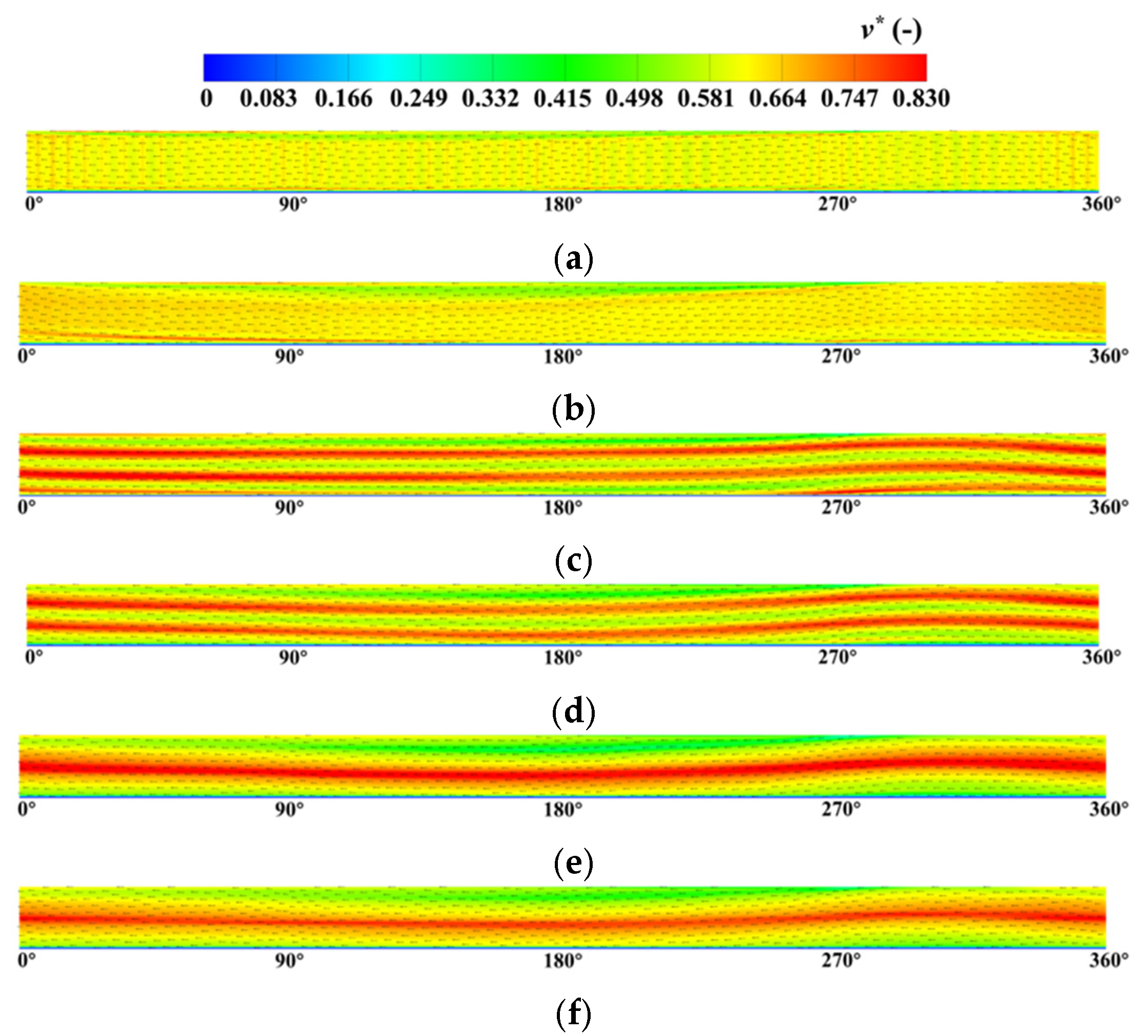
When the fluid flows through the top of the radial clearance, the abrupt change in geometry induces an adverse pressure gradient. This gradient triggers boundary layer separation, leading to a significant reduction in fluid kinetic energy and the formation of a low-velocity zone, as illustrated in Figure 10. The velocity is presented in its non-dimensional form, v* = v/u2. As the radial clearance increases, the enlarged space allows greater freedom for the low-velocity fluid to expand, thereby extending the axial range of the low-velocity region.
Figure 10.
Average velocity field with vectors on the annular cross-section: (a) 0.25 mm; (b) 0.5 mm; (c) 0.75 mm; (d) 1.0 mm; (e) 1.25 mm; (f) 1.5 mm.
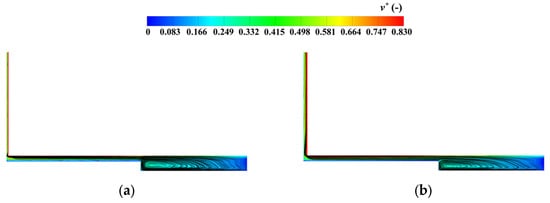
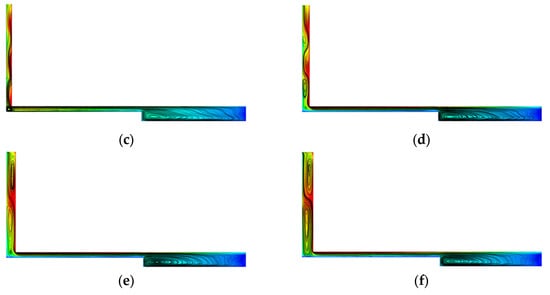
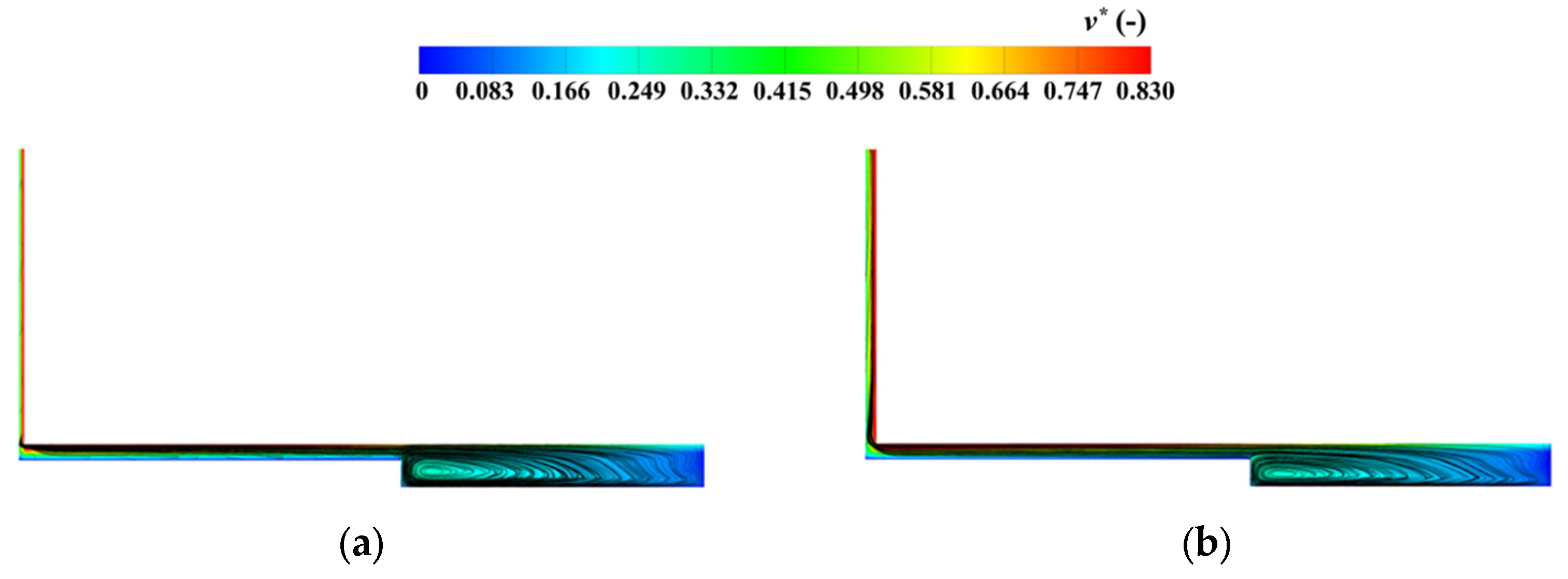
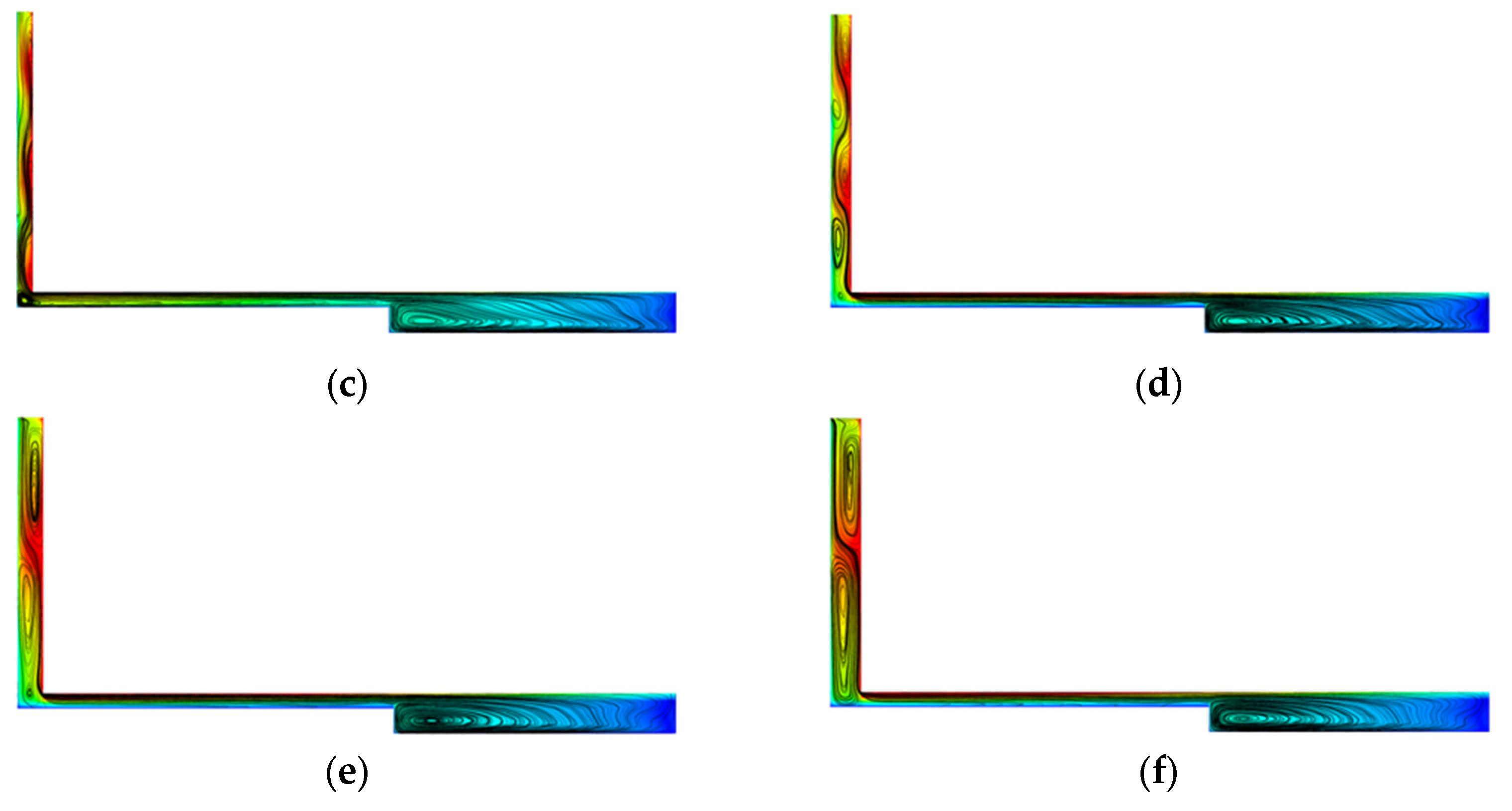
Under different radial clearances, the time-averaged velocity distributions and streamlines of the axial cross-section of the motor clearance are presented in Figure 11. When the radial clearance is between 0.25 and 0.5 mm, the confined space inhibits flow separation. Consequently, no distinct velocity anomalies or vortices are observed within the clearance. As the clearance increases to 0.75 mm, the radial expansion of the high-velocity region near the rotor’s abrupt geometric change triggers shear layer instability. This induces three circumferential high-speed zones accompanied by incipient vortices, while secondary flow separation leads to the formation of an independent vortex structure at the corner.
Figure 11.
Average velocity field with streamlines on the axial cross-section: (a) 0.25 mm; (b) 0.5 mm; (c) 0.75 mm; (d) 1.0 mm; (e) 1.25 mm; (f) 1.5 mm.
At a clearance of 1.0 mm, the number of circumferential high-speed zones decreases to two, yet their axial fluctuations intensify. Concurrently, the corner vortex shrinks, and a complex system comprising four coexisting vortices emerges in the middle of the clearance. Under the 1.25 mm condition, the flow topology is reconstructed: a large, symmetrically distributed dual-vortex structure forms centrally, confining a robust circumferential high-speed zone within the shear layer between them. Independent the small vortex also arises at the channel corners due to secondary separation. The small vortex interacts with the large dual-vortex structure to form a three-vortex system, which maintains the stability of the high-velocity zone via shear momentum exchange. As the clearance further increases to 1.5 mm, the small corner vortex is entrained and merged into the large vortex, resulting in a simplified dual-vortex dominant mode. The high-velocity zone remains stably confined between the vortices, although its kinetic energy is slightly reduced.
4.4. Entropy Production
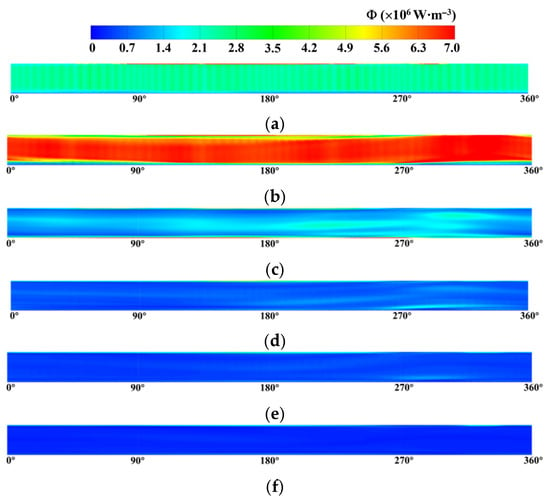
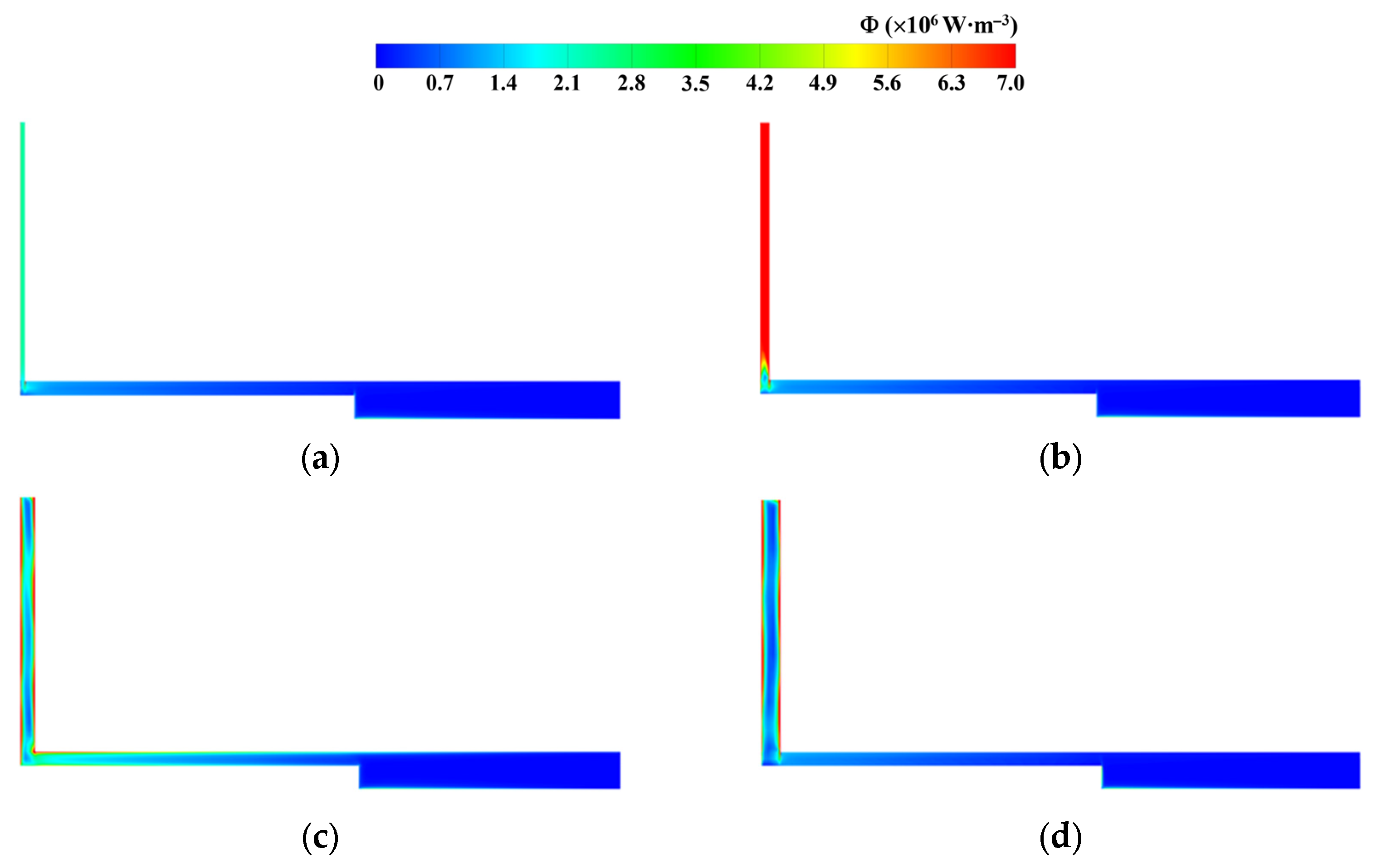
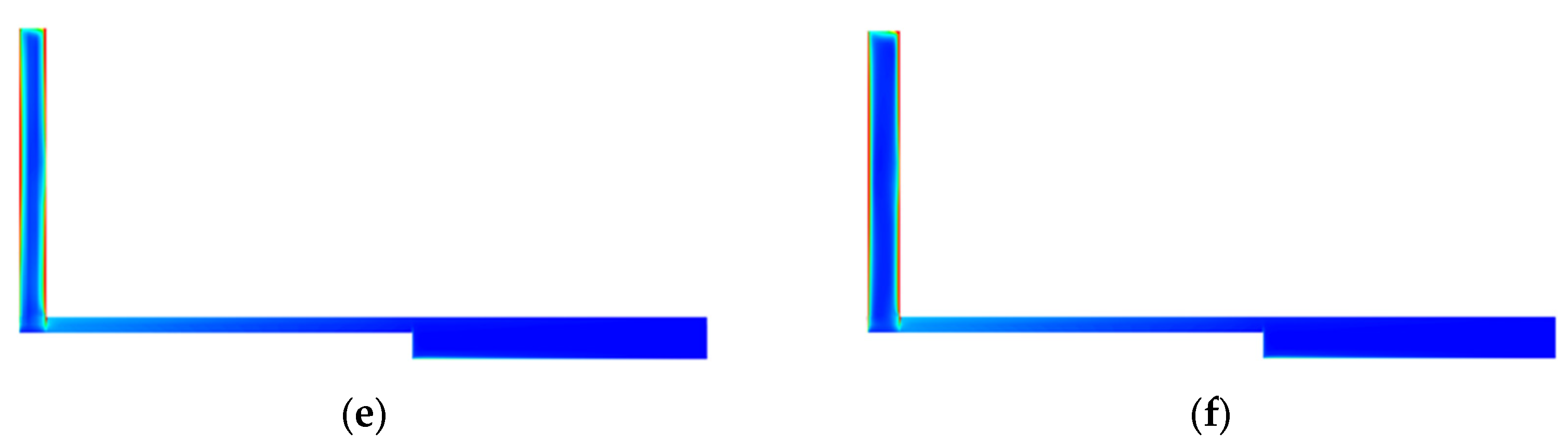
An entropy production method is employed within the URANS framework. This methodology accounts for both viscous and turbulent dissipation. Equations (9)–(12) present the governing equations.
where is the viscous dissipation, is the turbulent dissipation, ε is the turbulent kinetic energy dissipation rate, Φ is the total entropy production dissipation, PEP is the total entropy production power, and V is the volume.
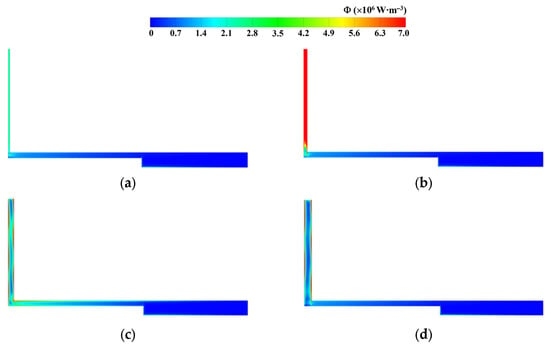
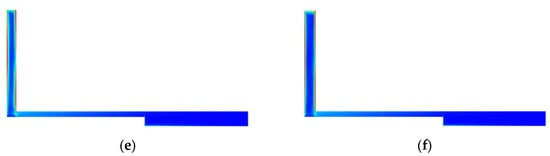
As shown in Figure 12 and Figure 13, at a clearance of 0.25 mm, the confined flow space results in a high level of entropy production. As the clearance increases to 0.5 mm, turbulent kinetic energy dissipation within the radial clearance peaks, leading to the maximum observed entropy production. When the clearance further expands to 0.75 mm, the increased flow freedom mitigates the intensity of shear layer instability. Consequently, with the reduction in turbulent dissipation in the middle of the clearance, the overall entropy production decreases to the third-highest level. However, in local regions of the rotor–stator axial clearance, intensified turbulent mixing causes a localized increase in entropy production. As the clearance extends from 1.0 to 1.5 mm, the flow becomes geometrically dominated. Energy dissipation is primarily governed by boundary layer development and wall viscous shear. The regions of high entropy production shift towards the casing wall and the rotor outer surface. Furthermore, the overall entropy production exhibits a decreasing trend as the clearance increases.
Figure 12.
Average entropy production on the annular cross-section: (a) 0.25 mm; (b) 0.5 mm; (c) 0.75 mm; (d) 1.0 mm; (e) 1.25 mm; (f) 1.5 mm.
Figure 13.
Average entropy production on the axial cross-section: (a) 0.25 mm; (b) 0.5 mm; (c) 0.75 mm; (d) 1.0 mm; (e) 1.25 mm; (f) 1.5 mm.
4.5. Pressure Fluctuations
Pressure fluctuations are non-dimensionalized to facilitate comparisons across various operating conditions. The pressure fluctuation coefficient, Cp, is employed for this purpose [49]. This coefficient eliminates the influence of dimensional quantities, such as fluid velocity and density. Consequently, Cp provides a common baseline for the analysis. This approach enhances the generality and reliability of the findings. The definition of Cp is as follows:
where pi is the instantaneous pressure, and is the time-averaged pressure.
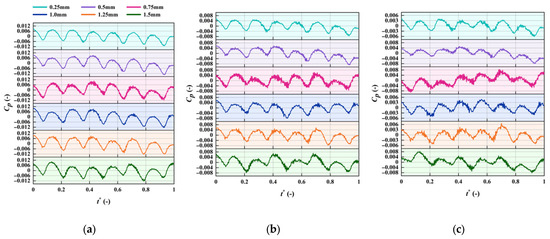
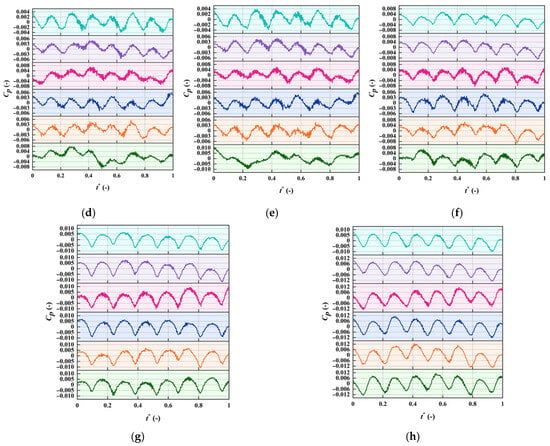
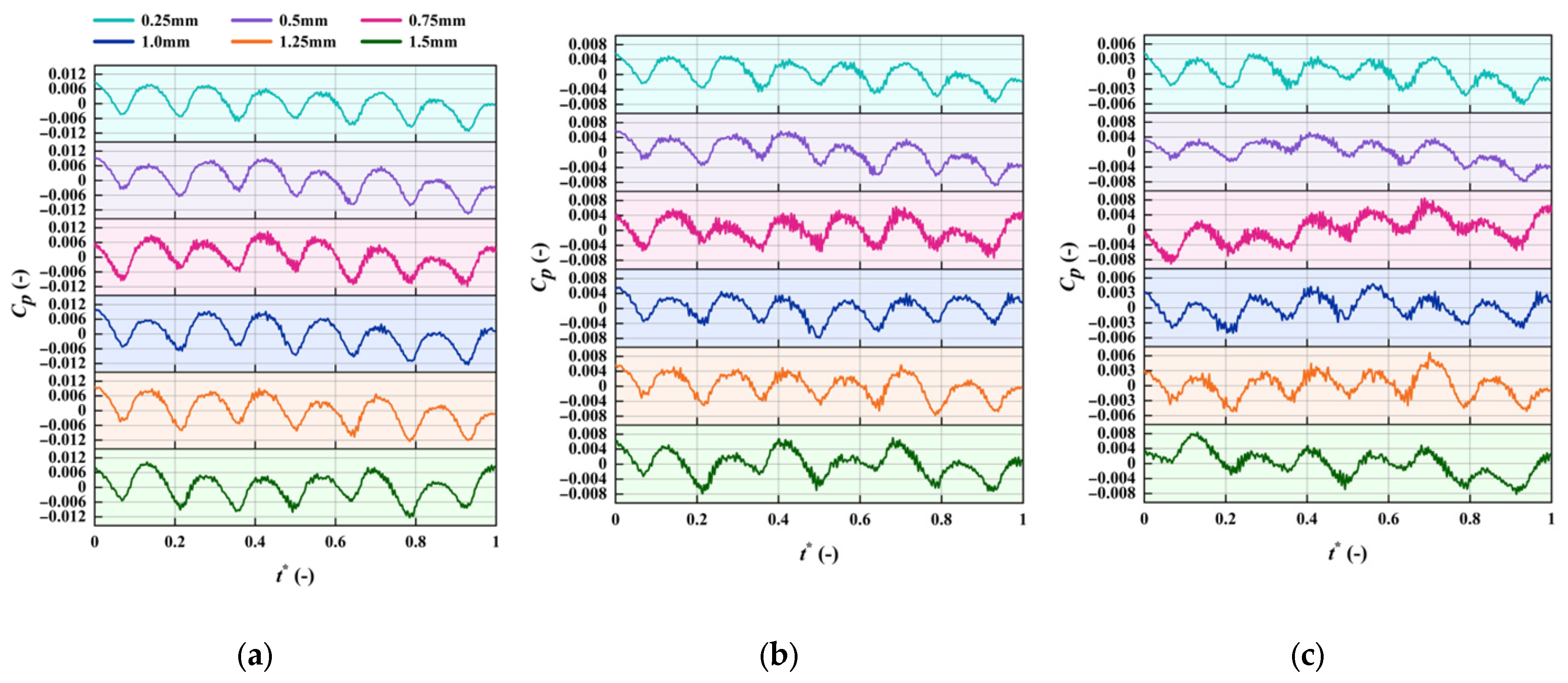
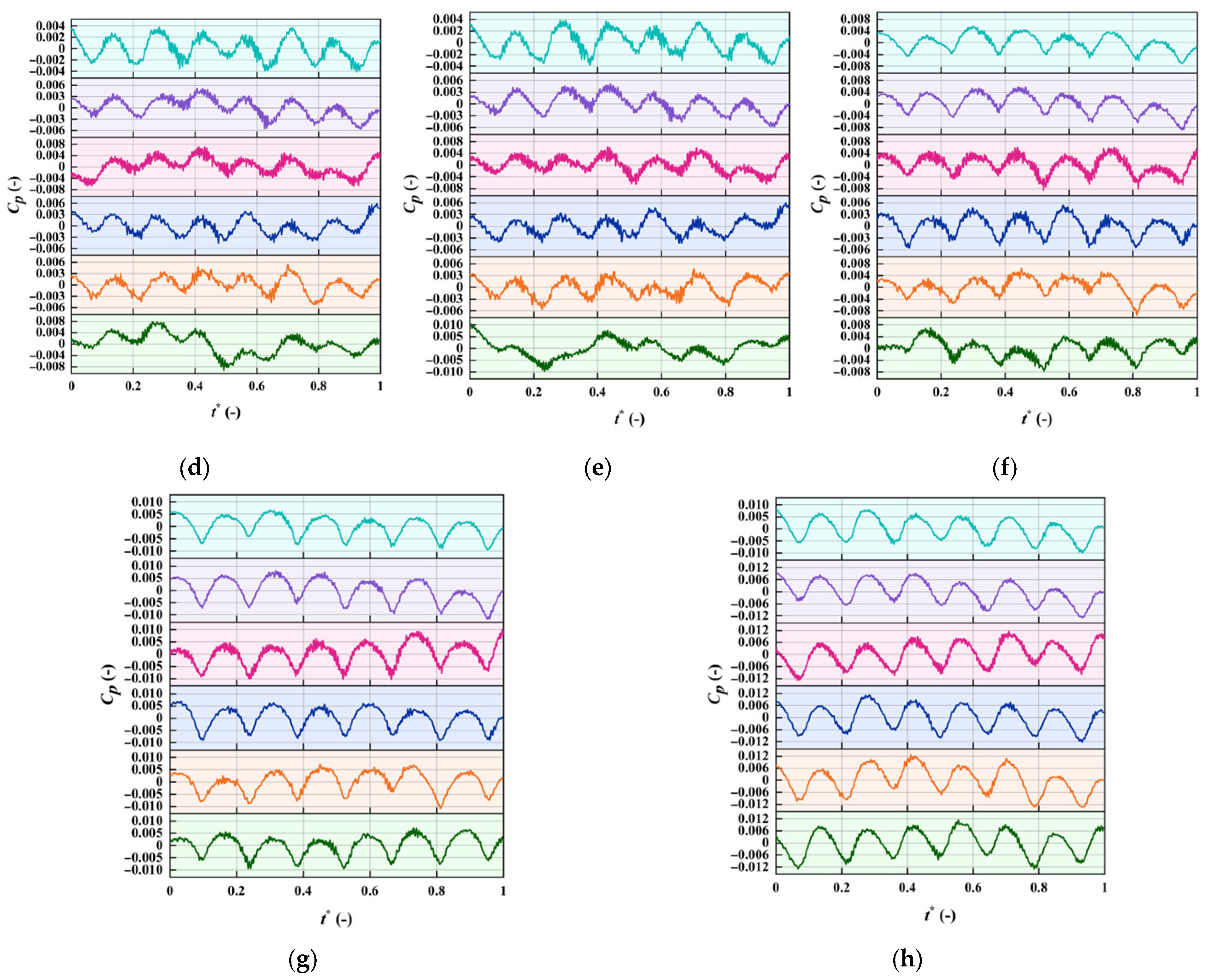
As shown in Figure 14, for all radial clearance sizes, the time-domain pressure fluctuation signals at each monitoring point exhibit distinct periodic oscillations that strictly correspond to the number of impeller blades. This indicates that the rotor-stator interaction between the impeller and tongue dominates the pressure fluctuations within the radial clearance. However, a large radial clearance can weaken the stability of the blade passing frequency modulation. When the clearance increases to 1.5 mm, the periodicity of the signals from RP2 to RP6 deteriorates significantly, particularly at RP5.
Figure 14.
Time-domain under various radial clearances: (a) RP1; (b) RP2; (c) RP3; (d) RP4; (e) RP5; (f) RP6; (g) RP7; (h) RP8.
Table 2 summarizes the time-domain characteristic parameters of pressure fluctuations at all monitoring points under various radial clearances. The maximum (Max) and minimum (Min) values define the dynamic range of the fluctuations, while the RMS value provides a robust measure of their average intensity. RP1, located below the diffuser inlet, and RP8, below the tongue, consistently exhibit high fluctuation levels. At the 1.5 mm clearance, the RMS value at RP8 reaches its maximum, which is 36.9% higher than that at 0.25 mm clearance. In contrast, the RMS value at RP1 peaks at 0.5 mm clearance, showing a 12.9% increase compared to its value at 0.25 mm.
Table 2.
Pressure fluctuation statistics.
At clearances of 0.75 to 1.0 mm, RP5 exhibits the lowest average pressure fluctuation intensity, with an RMS value 56% to 61% lower than that of RP1. However, when the clearance increases to 1.5 mm, the RMS value at RP5 surges by 55.3%, indicating intensified energy dissipation driven by enhanced vortex merging under large clearance conditions. At the 0.25 mm clearance, the variation in RMS values across all monitoring points is less than 15%. In contrast, at the 1.0 mm clearance, the relative difference between the extremes at RP5 and RP8 reaches 165%.
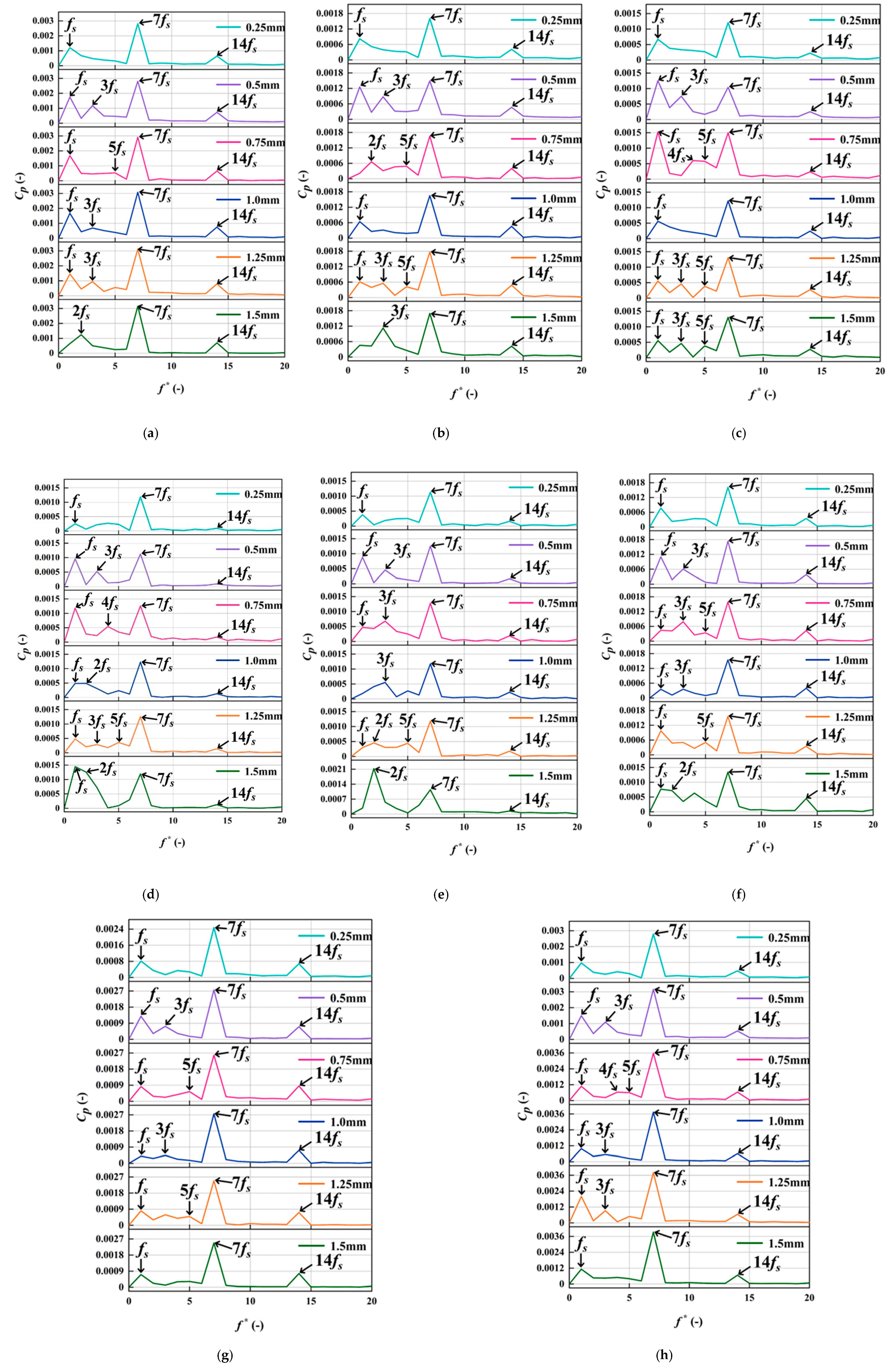
The frequency-domain analysis results of pressure fluctuations at all monitoring points within the radial clearance are presented in Figure 15. Here, the blade passing frequency (BPF) corresponds to 7fs, where fs represents the shaft frequency. The BPF and its second harmonic are present at all locations. The amplitude at the BPF is notably high, universally acting as the dominant frequency. In comparison, the amplitude at its second harmonic is significantly lower, exerting a minor influence on the overall pressure fluctuations.
Figure 15.
Frequency-domain under various radial clearances: (a) RP1; (b) RP2; (c) RP3; (d) RP4; (e) RP5; (f) RP6; (g) RP7; (h) RP8.
As the increasing clearance from 0.25 mm to 1.5 mm intensifies the rotor-stator interaction between the impeller and tongue, the BPF amplitudes at RP1 and RP8 show a monotonic increase of 12.1% and 40.5%, respectively. In contrast, the BPF amplitudes at other monitoring points show non-monotonic variations. The amplitudes at RP2 and RP3 first decrease, then increase, and subsequently fluctuate, with maximum increases of 18.8% and 44.2%, respectively. The BPF amplitude at RP4 fluctuates within a narrow range, peaking at clearances of 0.75 mm and 1.25 mm and reaching its lowest value at 0.5 mm, with a maximum decrease of 5.6%. RP6 also exhibits fluctuating BPF amplitude, with a maximum decrease of 22.5%. The BPF amplitude at RP5 first increases and then decreases, reaching its maximum and minimum values at 0.75 mm and 1.5 mm, respectively, with a maximum decrease of 10.9%. Meanwhile, RP7 shows a trend of initial decrease followed by an increase, with a maximum increase of 12.1%.
At a clearance of 0.25 mm, the fs component is observed at all monitoring points, with the strongest influence at RP1 and the weakest at RP4, where the amplitude is reduced by up to 79.2% compared to that at RP1. When the clearance increases to 0.5 mm, a third harmonic of the fs appears in the pressure fluctuations. The variation trend of its amplitude aligns with that of the fs, peaking at RP1 and reaching a minimum at RP5, with relative extreme differences of 113% and 159%, respectively. As the clearance further expands to 0.75 mm, additional harmonics of the fs emerge. At this point, the fs at RP2 is suppressed, while the points are affected by a broadband influence spanning from 2fs to 5fs. Notably, the amplitude of 3fs at RP5 and RP6 even exceeds that of the fs. At a clearance of 1.0 mm, the amplitude of 2fs at RP4 matches that of the fs. Apart from the BPF and its second harmonic, RP5 is only influenced by 3fs.
At a clearance of 1.25 mm, all monitoring points remain subject to broadband influences from the fs and its harmonics. However, when the clearance increases to 1.5 mm, RP1 and RP2 are significantly affected by 2fs and 3fs. At RP4 and RP5, the influence of the fs and its harmonics surpasses that of the BPF, with amplitudes reaching up to 1.9 times that of the BPF.
5. Conclusions
This study investigates an axial-flux canned motor pump. It features a novel integrated impeller-rotor design. A numerical simulation methodology is presented. Validation against experimental data confirms the accuracy of the computational model. This manuscript systematically investigates the effects of radial clearances ranging from 0.25 to 1.5 mm between the rotor and the casing on the energy performance and internal flow characteristics of the centrifugal pump with an axial-flux canned motor. The main findings are summarized as follows:
- (1)
- Efficiency reaches its peak and valley values at radial clearances of 0.25 mm and 0.75 mm, respectively. Head coefficient is relatively less affected by the radial clearance. When the clearance is between 1.0 and 1.5 mm, which corresponds to a ratio of approximately 0.04 to 0.06 relative to the impeller outlet radius, the variations in efficiency, head coefficient, and total friction loss ratio decrease significantly, indicating that the performance tends to stabilize.
- (2)
- The circumferential extent of the high-pressure region within the radial clearance contracts as the clearance increases. At a clearance of 0.25 mm, the confined space results in high entropy production, whereas at 0.5 mm, turbulent dissipation in the shear mixing zone reaches its peak. A further increase in clearance causes the high entropy production regions to shift toward the wall, leading to a decreasing trend in overall entropy production. For clearances ranging from 0.75 to 1.5 mm, a complex vortex system forms within the radial clearance, inducing the generation of diverse circumferential high-velocity zones.
- (3)
- Pressure fluctuations are primarily BPF-dominated. However, at 1.5 mm, rotational harmonics at RP4 and RP5 exceed the BPF by 1.9 times, with a 36.9% intensity surge at RP8. When the clearance is 1.25 mm, corresponding to a ratio of approximately 0.05 relative to the impeller outlet radius, the energy loss is reduced, pressure fluctuations remain controllable with stable BPF dominance, achieving an optimal balance between flow stability and energy consumption.
Author Contributions
Conceptualization, J.B. and Y.G.; methodology, J.B. and Y.G.; software, J.B. and Q.Z.; validation, J.B. and Q.Z.; formal analysis, J.B.; investigation, J.B. and Q.Z.; resources, Y.G. and W.L.; data curation, J.B.; writing—original draft preparation, J.B.; writing—review and editing, J.B. and Y.G.; visualization, J.B.; supervision, Y.G. and W.L.; project administration, Y.G.; funding acquisition, Y.G. All authors have read and agreed to the published version of the manuscript.
Funding
This work was supported by the National Natural Science Foundation of China (grant numbers: 52579092 and 52206055), the Natural Science Fund for Colleges and Universities in Jiangsu Province, China (grant number: 25KJA570001), the Qinglan Project of Yangzhou University, China, and the Priority Academic Program Development of Jiangsu Higher Education Institutions, China (grant number: PAPD).
Data Availability Statement
The raw data supporting the conclusions of this article will be made available by the authors on request.
Conflicts of Interest
The authors declare no conflicts of interest.
Nomenclature
The following abbreviations are used in this manuscript:
| Symbols | |
| b2 | blade outlet width, mm |
| b3 | volute inlet width, mm |
| Cp | non-dimensional pressure coefficient |
| D1 | blade inlet diameter, mm |
| D2 | blade outlet diameter, mm |
| Dd | volute outlet diameter, mm |
| Dr | rotor diameter, mm |
| Lr | rotor axial length, mm |
| f | external force, N |
| f* | dimensionless frequency |
| fs | shaft frequency, Hz |
| g | standard gravity, m/s2 |
| H | head, m |
| p | pressure, Pa |
| p* | dimensionless pressure |
| p1,tot | total pressure at the pump inlet, Pa |
| P2,tot | total pressure at the pump outlet, Pa |
| PEP | total entropy production power loss, W |
| Q | flow rate, m3/h |
| t | time, s |
| Tb | blades torque, N∙m |
| Tf | front shroud disk friction torque, N∙m |
| Tr | rotor disk friction torque, N∙m |
| u | velocity, m/s |
| u2 | circumferential velocity of blade trailing edge, m/s |
| dimensionless velocity | |
| V | volume, m3 |
| x | coordinate, m |
| z | number of blades |
| Greek letters | |
| ϕ0 | cutwater angle, ° |
| ηe | efficiency |
| ηfc | total friction loss ratio |
| ηffc | friction loss ratio of the impeller front shroud |
| ηrfc | friction loss ratio of the rotor outer surface |
| μeff | effective viscosity, kg/(m·s) |
| ρ | density, kg/m3 |
| ψ | head coefficient |
| ω | angular velocity of impeller, rad/s |
| δr | radial clearance between rotor and casing, mm |
| Ꜫ | turbulent kinetic energy dissipation rate, m2∙s−3 |
| Φ | total entropy production dissipation, W∙m−3 |
| ΦD’ | turbulent dissipation, W∙m−3 |
| viscous dissipation, W∙m−3 | |
| Subscripts | |
| d | design condition |
| i, j, k | index |
| Abbreviations | |
| AFM | Axial Flux Motor |
| BPF | Blade Passing Frequency |
| CFD | Computational Fluid Dynamics |
| Max | Maximum |
| Min | Minimum |
| PMSM | Permanent Magnet Synchronous Motor |
| URANS | Unsteady Reynolds-Averaged Navier–Stokes equations |
| RMS | Root Mean Square |
References
- Fan, W.; Jiang, H.; Zhang, Y.; Zhang, Q.; Wang, Z. A novel design of pump-cooler for advanced electronic cooling. Therm. Sci. Eng. Prog. 2025, 58, 103227. [Google Scholar] [CrossRef] [Scilit]
- Gu, Y.; Huang, J.; Zhu, Q.; Ma, C.; Cheng, L. Analysis of impeller passage blockage effects on energy dissipation and flow fields in pumped cooling systems. Energy 2025, 338, 138969. [Google Scholar] [CrossRef] [Scilit]
- Chen, Q.; Chen, Z.; Li, G.; Wu, D.; Li, P. Comparative Analysis of Vibration and Noise of Axial Flux Motor with Different Pole and Slot Combinations. Chin. J. Electr. Eng. 2023, 9, 144–156. [Google Scholar] [CrossRef] [Scilit]
- González-Parada, A.; Moreno Del Valle, F.; Bosch-Tous, R. Design and Construction of a Multipole Electric Motor Using an Axial Flux Configuration. World Electr. Veh. J. 2024, 15, 256. [Google Scholar] [CrossRef] [Scilit]
- Li, J.; Meng, X.; Dong, P.; Zhao, S. Design and analysis of an axial flux permanent magnet motor for the direct drive radial piston pump. Proc. Inst. Mech. Eng. Part C J. Mech. Eng. Sci. 2019, 233, 7077–7088. [Google Scholar] [CrossRef] [Scilit]
- Wang, H.; Pei, X.; Yin, B.; Eastham, J.F.; Vagg, C.; Zeng, X. A Novel Double-Sided Offset Stator Axial-Flux Permanent Magnet Motor for Electric Vehicles. World Electr. Veh. J. 2022, 13, 52. [Google Scholar] [CrossRef] [Scilit]
- Ai, L.; Zhang, G.; Jing, L.; Xu, X.; Si, J. Behaviors of axial and radial electromagnetic force for cryogenic disk motor. IEEE Trans. Energy Convers. 2021, 36, 874–882. [Google Scholar] [CrossRef] [Scilit]
- Hoffstaedt, J.P.; Truijen, D.P.K.; Fahlbeck, J.; Gans, L.H.A.; Qudaih, M.; Laguna, A.J.; De Kooning, J.D.M.; Stockman, K.; Nilsson, H.; Storli, P.T.; et al. Low-head pumped hydro storage: A review of applicable technologies for design, grid integration, control and modelling. Renew. Sustain. Energy Rev. 2022, 158, 112119. [Google Scholar] [CrossRef] [Scilit]
- Hoffstaedt, J.P.; Truijen, D.; Jarquin Laguna, A.; De Kooning, J.; Stockman, K.; Fahlbeck, J.; Nilsson, H. Low-head pumped hydro storage: An evaluation of energy balancing and frequency support. IET Renew. Power Gener. 2024, 18, 4465–4479. [Google Scholar] [CrossRef] [Scilit]
- Eker, M.; Zöhra, B.; Akar, M. Experimental performance verification of radial and axial flux line start permanent magnet synchronous motors. Electr. Eng. 2024, 106, 1693–1704. [Google Scholar] [CrossRef] [Scilit]
- Yim, W.; Yoon, J.; Cha, J.; Bong, U.; Hahn, S. A design study on 20 kW class axial flux motor with HTS field winding for 100 MPa liquid hydrogen pump. Cryogenics 2024, 139, 103829. [Google Scholar] [CrossRef] [Scilit]
- Karabulut, Y.; Meşe, E.; Ayaz, M.; Aktaş, S. Comparison study on SMC and grain-oriented laminated steel core for small-size axial flux permanent-magnet synchronous machines. Mater. Res. Express 2024, 11, 106102. [Google Scholar] [CrossRef] [Scilit]
- Karabulut, Y.; Ayhan, U.; Aktaş, S.; Ayaz, M.; Meşe, E. Thermal analysis of small-scale axial flux permanent magnet synchronous motors for LVAD systems. IEEE Trans. Ind. Appl. 2025, 61, 3701–3710. [Google Scholar] [CrossRef] [Scilit]
- Karabulut, Y.; Meşe, E.; Ayaz, M.; Aktaş, S. Design and performance analysis of coupled dual axial flux PM machines for left ventricular assist devices. IEEE Trans. Ind. Appl. 2025, 61, 6861–6872. [Google Scholar] [CrossRef] [Scilit]
- Karabulut, Y.; Meşe, E.; Ayaz, M.; Aktaş, S. Modeling and analysis of leakage inductance in Small-Size AFPMSMs with different core materials for compact biomedical pump systems. Measurement 2026, 263, 120198. [Google Scholar] [CrossRef] [Scilit]
- Zhao, J.; Wang, L.; He, Z.; Yao, Y.; Han, Q. Multi-condition cooperative control of a hybrid excited axial switched-flux permanent magnet generator for distributed pumped storage system. IEEE Trans. Appl. Supercond. 2024, 34, 1–5. [Google Scholar] [CrossRef] [Scilit]
- Zhang, Y.; Li, J.; Yan, W.; Chng, C.-B.; Chui, C.-K.; Yang, X.; Zhao, S. Advancing energy efficiency in electric vehicles: Design and performance analysis of innovative axial-flux PM motor-driven coolant pumps. Energy 2024, 313, 134112. [Google Scholar] [CrossRef] [Scilit]
- Choi, D.-H.; Han, H.-S.; Hong, M.-K.; Jung, D.-H.; Kim, W.-H. Design for loss reduction in a compact AFPM electric water pump with a PCB motor. Energies 2025, 18, 2538. [Google Scholar] [CrossRef] [Scilit]
- Choi, D.-H.; Kim, W.-H.; Jang, H. Magnetic equivalent circuit-based performance evaluation of modular PCB AFPM motor for electric water pumps. Actuators 2026, 15, 87. [Google Scholar] [CrossRef] [Scilit]
- Youn, M.-S.; Hong, M.-K.; Ko, S.-H.; Nam, D.-W.; Kim, W.-H. A study on the mitigation of back-EMF imbalance in axial flux motors with PCB stators. Energies 2026, 19, 1060. [Google Scholar] [CrossRef] [Scilit]
- Ma, S.; Li, Z.; Wang, X.; Jiang, Z.; He, Z.; Li, Z.; Zhou, Q. Integrated thermal-drive synergy for miniaturized system: An ultra-compact liquid-cooled micro centrifugal pump with printed permanent magnet synchronous motor. Case Stud. Therm. Eng. 2025, 76, 107329. [Google Scholar] [CrossRef] [Scilit]
- Song, S.-W.; Kim, W.-H. Design and analysis of torque ripple reduction in low-pole axial flux motor. Processes 2025, 13, 2913. [Google Scholar] [CrossRef] [Scilit]
- Nahin, M.M.; Bohach, G.R.; Gadiyar, N.; Severson, E.L.; Van de Ven, J.D. Dynamic modeling and design of a radial hydrostatic piston pump for integrated electric motor-pump. J. Dyn. Syst. Meas. Control 2026, 148, 041005. [Google Scholar] [CrossRef] [Scilit]
- Gao, B.; Cheng, Y.; Sun, H.; Yao, K.; Zhao, Z.; Cui, S. Structure, Design and verification of axial flux bearingless hysteresis motor. IEEE Trans. Energy Convers. 2026, 41, 284–298. [Google Scholar] [CrossRef] [Scilit]
- Oliveira Pereira de Carvalho, L.; Santos, D.; Paulo Lobo dos Santos, J. Analysis of the influence of water cut and clearance in pump efficiency for a well equipped with sucker rod pumping. Pet. Sci. Technol. 2022, 40, 1979–1993. [Google Scholar] [CrossRef] [Scilit]
- Ranawat, N.S.; Miglani, A.; Kankar, P.K. Performance of centrifugal pump over a range of composite wear ring clearance. J. Braz. Soc. Mech. Sci. Eng. 2022, 44, 524. [Google Scholar] [CrossRef] [Scilit]
- Lei, L.; Wang, T.; Qiu, B.; Yu, H.; Liu, Y.; Dong, Y. The influence of ring clearance on the performance of a double-suction centrifugal pump. Phys. Fluids 2024, 36, 025134. [Google Scholar] [CrossRef] [Scilit]
- Si, Q.; Xu, H.; Deng, F.; Xia, X.; Ma, W.; Guo, Y.; Wang, P. Study on performance improvement of low specific speed multistage pumps by applying full channel hydraulic optimization. J. Energy Storage 2024, 99, 113238. [Google Scholar] [CrossRef] [Scilit]
- Lin, P.; Zheng, Y.; Long, Y.; Qiu, W.; Zhu, R. Study on the influence of pump performance curve fitting and seal ring wear on pump intelligent monitoring. Processes 2025, 13, 1529. [Google Scholar] [CrossRef] [Scilit]
- Han, S.; Duan, Y.; Wan, Y.; Ge, J.; Li, G. Numerical simulation for influence of rear wear ring and balance hole on performance of the canned motor pump. Can. J. Chem. Eng. 2026, 104, 1578–1598. [Google Scholar] [CrossRef] [Scilit]
- Zhou, P.; Tan, M.; Wu, X.; Liu, H.; Wu, D. Effect of back wear-ring clearance on the internal flow noise in a centrifugal pump. Processes 2025, 13, 2641. [Google Scholar] [CrossRef] [Scilit]
- Zhang, L.; Liu, Y.; Zhang, Y.; Liu, W.; Chen, Z. Geometric design and performance analysis of conical-rotor screw vacuum pump with adjustable flow field clearances. Vacuum 2023, 214, 112201. [Google Scholar] [CrossRef] [Scilit]
- Zhan, P.; Wei, L.J.; Liu, R.M.; Liang, M.Y.; Qiang, Y. Flow field modeling and simulation of high-speed gear pump considering optimal radial and end clearance. IEEE Access 2023, 11, 64725–64737. [Google Scholar] [CrossRef] [Scilit]
- Liu, J.; Xi, W.; Lu, W. Optimization design of radial clearance between stator and rotor of full cross-flow pump units. J. Mar. Sci. Eng. 2024, 12, 1124. [Google Scholar] [CrossRef] [Scilit]
- Zhai, L.; Zhang, J.; Guo, J.; Liu, J.; Zhu, Z. Clearance flow characteristics and thermodynamic properties of micro-gear pump with canned motor. Phys. Fluids 2025, 37, 015122. [Google Scholar] [CrossRef] [Scilit]
- Liang, S.; Pang, S.; Liu, J.; Chen, Z. Flow field analysis and performance study of a hydrogen circulation pump for proton exchange membrane fuel cell vehicles with different working clearances. Energy Technol. 2024, 12, 2400208. [Google Scholar] [CrossRef] [Scilit]
- Yang, T.; Wang, S.; Sun, J. Parametric study of impeller ring tongue of regenerative hydrogen pump. J. Fluids Eng. 2025, 147, 021203. [Google Scholar] [CrossRef] [Scilit]
- Wu, P.; Zhang, K.-J.; Xiang, W.-J.; Du, G.-T. Turbulent flow field in maglev centrifugal blood pumps of CH-VAD and HeartMate III: Secondary flow and its effects on pump performance. Biomech. Model. Mechanobiol. 2024, 23, 1571–1589. [Google Scholar] [CrossRef] [Scilit] [PubMed]
- Zhu, C.; Ye, P.; Chang, Z. Optimization of secondary flow path clearance in centrifugal blood pump: A combined numerical and experimental study. Front. Physiol. 2025, 16, 1595588. [Google Scholar] [CrossRef] [Scilit]
- Zhou, L.; Zhou, C.; Bai, L.; Agarwal, R. Numerical and experimental analysis of vortex pump with various axial clearances. Water 2024, 16, 1602. [Google Scholar] [CrossRef] [Scilit]
- Liu, L.; Wu, L.; Cao, W.; Liu, Y. A mathematical leakage-friction model for deep-sea external gear pumps. Ships Offshore Struct 2025, 1–17. [Google Scholar] [CrossRef] [Scilit]
- Chen, H.; Yang, L.; Lu, Y.; Fu, Q.; Zhu, R. Influence of stator–rotor clearance on hydraulic performance and flow dynamics in full tubular pumps. Phys. Fluids 2025, 37, 025110. [Google Scholar] [CrossRef] [Scilit]
- Zhu, Q.; Gu, Y.; Bian, J. Impact of the magnetic gap in submerged axial flux motors on centrifugal pump hydraulic performance and internal flow. Machines 2025, 13, 721. [Google Scholar] [CrossRef] [Scilit]
- Gu, Y.; Zhu, Q.; Bian, J.; Wang, Q.; Cheng, L. Novel sealing design for high-speed coolant pumps: Impact on energy performance, axial thrust and flow field. Energy 2025, 321, 135511. [Google Scholar] [CrossRef] [Scilit]
- Liang, A.; Chang, Y.; Zhang, W.; Yao, Z.; Zhu, B.; Wang, F. Research on the evolution law and energy loss characteristics of rotating stall in a pump-turbine under pump mode. Energy 2025, 330, 136696. [Google Scholar] [CrossRef] [Scilit]
- ISO 9906:2012; Rotodynamic Pumps—Hydraulic Performance Acceptance Tests—Grades 1, 2 and 3. International Organization for Standardization: Geneva, Switzerland, 2012.
- Ye, W.; Zhuang, B.; Wei, Y.; Luo, X.; Wang, H. Investigation on the unstable flow characteristic and its alleviation methods by modifying the impeller blade tailing edge in a centrifugal pump. J. Energy Storage 2024, 86, 111358. [Google Scholar] [CrossRef] [Scilit]
- Chen, Z.; Gu, Y.; Lu, W.; Liu, M. Enhancing canned motor pump performance in energy systems: A novel structure for particle wear mitigation and flow efficiency preservation. Energy 2026, 344, 139943. [Google Scholar] [CrossRef] [Scilit]
- Gu, Y.; Bian, J.; Wang, Q.; Stephen, C.; Liu, B.; Cheng, L. Energy performance and pressure fluctuation in multi-stage centrifugal pump with floating impellers under various axial oscillation frequencies. Energy 2024, 307, 132691. [Google Scholar] [CrossRef] [Scilit]

Disclaimer/Publisher’s Note: The statements, opinions and data contained in all publications are solely those of the individual author(s) and contributor(s) and not of MDPI and/or the editor(s). MDPI and/or the editor(s) disclaim responsibility for any injury to people or property resulting from any ideas, methods, instructions or products referred to in the content. |
© 2026 by the authors. Licensee MDPI, Basel, Switzerland. This article is an open access article distributed under the terms and conditions of the Creative Commons Attribution (CC BY) license.