1. Introduction
Crosswinds pose significant safety challenges in road transportation. Among other effects, transverse winds (WT) disturb the ideal trajectory by inducing lateral deviations that affect the stability of ground vehicles, especially those with large lateral surfaces, such as buses.
The standard ISO 12021:2010 [
1] addresses the sensitivity of road vehicles to lateral wind and specifies a test methodology. The present study proposes a complementary methodology applied to a full-scale bus operating under real conditions. This study investigates the characteristics and contributing factors of lateral deviation caused by crosswind forces, with particular attention paid to the dynamic interaction between the vehicle and the surrounding airflow. Through a combination of theoretical analysis and experimental approach, this manuscript aims to provide a comprehensive assessment of lateral displacement behaviour under varying wind conditions. The findings are intended to support advancements in aerodynamic design, guidance and control systems, and safety protocols across relevant engineering domains.
For this purpose, the lateral deviations of the vehicle trajectory were measured when the bus was operating with an OGS. The study characterised the temporal evolution of vehicle trajectories in automated guidance mode, both with and without crosswind conditions. According to the requirements set by Metro Mondego (MM), the analysis of wind effects focused specifically on scenarios with a transverse wind (WT) of 5 m/s (18 km/h) and 10 m/s (36 km/h).
1.1. Literature Review
The impact of wind on moving vehicles has garnered interest over the years, prompting studies to evaluate its effects on fuel consumption, its role in road accidents during adverse weather conditions, and its influence on vehicles equipped with automatic guidance systems (AGS) [
2]. Over the years, researchers have employed diverse methodologies, including wind-tunnel testing, numerical simulations, and, rarely, full-scale field or experimental measurements [
3,
4], and mixed approaches to unravel the complexities of wind-vehicle interactions.
Szodrai [
5] assessed the effect of side winds on buses in urban settings. At low speed, they observed that the drag coefficient may exhibit distortion, contrary to the assumption that it is constant; therefore, the magnitude of the distortion in the drag coefficient and the associated losses for slow-moving buses were examined using large-eddy simulations. Symmetrical and asymmetrical wind flows were introduced to assess the distribution of forces and the flow patterns. They found that different approaches are required when evaluating drag force at high and low speeds, as revealed by differences in drag force behaviour. In Ethiopia, using the popular FSR Isuzu Bus, Kahsay et al. [
6] proposed optimising the bus’s aerodynamic design through numerical simulation. They used SolidWorks (2023 SP3) to model and modify the bus’s design. ANSYS Fluent (2020 R1)was also used for CFD analysis of the bus at different speeds. They achieved reductions in fuel consumption and drag force through design modifications. Also, adding roof strips further reduced the drag force and improved crosswind stability in the vehicle. Suzuki et al. [
7] investigated the role of wind in causing some vehicle accidents. The study analysed the effects of the infrastructure’s shape and configuration on the vehicle’s aerodynamic characteristics. Using three kinds of wind-tunnel tests, they observed an increase in the aerodynamic side force coefficient given the following conditions: on embankments, an increase in the height of the embankment; on bridges, an increase in the thickness of the bridge girder, and a further increase when the vehicle has an edgier roof. William et al. [
8] analysed the response of commercial buses to variable wind gusts using aerodynamic and design parameters, a 2-DOF vehicle lateral dynamics model in MATLAB (R2014a), and a 3D CFD simulation. They simulated a bus moving on a straight path with a fixed steering wheel entering a gust of wind, and reported lateral deviation, lateral acceleration, yaw rate and angle. The results show that at a wind gust of 25 m/s at a 45° angle, after 4.5 s of entry, the bus maintained a 5 m lateral deviation, while the yaw rate peaked at 2.3 deg/s within that time. To address challenges and enhance the safety of commercial transport systems, Rong et al. [
9] conducted a study to improve bus stability by designing an anti-rollover control strategy that leverages mixed-sensitivity and robust H-infinity controller feedback to maintain stability and performance even in worst-case scenarios. Simulation testing under dynamic lateral interference showed the influence of variables such as lateral vehicle velocity, roll angle, yaw rate, and roll angle rate on vehicle stability during lateral interference. They emphasised that these variables are important when designing an anti-rollover control strategy. Petzäll et al. [
10] surveyed 10 bus crash incidents caused by deviations during strong winds and/or slippery road conditions to determine the contributing factors to these crashes. The results from wind-tunnel testing established that wind, including speed and tyre friction, is an important factor to consider in crash investigations, bus handling capacities, and the aerodynamic design of the bus.
During crosswinds, Brandt et al. [
11] studied the stability of road vehicles at high speed. The study highlighted the need to combine unsteady aerodynamics and vehicle aerodynamics to virtually assess the stability of high-speed vehicles during the early design phase. They used numerical one-way coupling to simulate both vehicle dynamics and aerodynamics using realistic wind gust profiles. Using sensitivity analysis and model fidelity, they observed that the vehicle centre of gravity, the aerodynamic yaw-moment coefficient, wheelbase, mass, yaw inertia, and suspension characteristics play key roles in improving crosswind stability. Petzäll et al. [
12] also studied the aerodynamic properties of high-sided buses and concluded that a rounded front face, rounded top sides, and sharp rear corners will help improve bus stability and its reaction to strong winds. In another study by Dong-Chen et al. [
13], the influence of crosswind on a Yutong high-speed bus was carried out with simulation tests and a sensitivity test. The tests were carried out (i) by shifting the pressure centre on the vehicle chassis, (ii) with an immobile pressure centre, and (iii) with a straight-line simulation test without crosswind. The comparative results of the 3 tests showed that shifting the pressure centre was more reliable in providing reference data towards improving crosswind stability in the bus. Tian et al. [
14] carried out a study during adverse weather conditions on large buses to support the need for a speed limit in a slope–curve section. First, field measurements were conducted under adverse conditions to carry out force analysis acting on the body of the bus. Then, a simulation test of a large bus at a slope–curve section at a speed was carried out with input parameters like crosswind, wind–rain/snow conditions, road friction coefficient, etc. They reported judging conditions for sideslip (when a sudden lateral acceleration occurs, from 0.15 m/s
2 and stabilising at 0.52 m/s
2) and for rollover (when there is 0 N of force on the inner tyre at a road coefficient of 0.8). To improve track control in city buses, Schrick [
15] proposed and investigated the use of a robust observer for disturbance rejection and instrument fault detection under the influence of lateral disturbances, such as side wind. The robust observer will help improve the riding comfort of occupants, irrespective of vehicle conditions such as speed, mass, and road surface, while supervising sensor failures in the guidance system. The goal is to maintain the bus’s lateral motion along the electromagnetic tracker embedded in the road. While the disturbance rejection control uses measurements of steering angle and track deviation, the authors highlighted that the robust observer should be designed to use measurements from either track deviation alone or from both track deviation and steering angle, as the steering angle alone yields poor observability. Despite limitations, the results of their simulations showed quality estimates from the designed robust observer. Wang et al. [
16] reviewed the use of CFD in the study of the aerodynamics of vehicle–bridge systems, compared with wind-tunnel experiments. Realising that the vehicle’s speed in the boundary wind tunnel is very low, the study highlighted this as a limitation in fully exploring the potential of wind induced by moving vehicles. The outcome of this review underscores CFD’s role in vehicle–bridge interactions under wind loading and validates CFD as a reliable alternative to wind-tunnel testing.
The current study was carried out to assess the lateral deviations resulting from crosswind on a category M3 urban bus equipped with an OGS.
1.2. Brief History of Guidance Systems for Buses
Guided buses have evolved as a hybrid transit system, combining the benefits of buses and rail transport. The concept dates to the mid-century, with the first experiments in Europe and Japan exploring ways to increase bus efficiency through guided systems [
17]. The main objective was to improve capacity, safety, and precision while maintaining the buses’ flexibility. In Germany in the 1980s, buses used concrete guides to navigate corridors with physical idlers that steered the buses along dedicated rails [
18,
19]. However, mechanical guidance systems have proven limited in flexibility and maintenance. This was followed by projects in the United Kingdom, such as the Cambridgeshire Guided Busway, which remains one of the largest guided bus corridors in the world [
20]. Over time, various methods of orientation have been tested, including mechanical (using physical guide rails), optical (using cameras and lane markings) and magnetic [
21]. Despite their advantages in reducing congestion and ensuring smooth transit, guided buses have faced challenges, including high infrastructure and maintenance costs [
22]. However, they remain a viable option for cities looking for an alternative to traditional bus systems and light rail. The development of optical guidance systems began with the advent of computer vision systems (CVS) and related technologies, such as cameras and image processing algorithms, that detect road markings and guide vehicles along a predefined path [
23]. Although primitive by today’s standards, CVS laid the foundation for modern guided optical systems. In other words, the transition to optically guided systems has been driven by advances in computer vision and artificial intelligence, exemplified by the Optiguide system, developed by Siemens in 2001 [
24]. This system allows for precise docking at stations, significantly improving accessibility for passengers with disabilities [
25]. Since then, several cities have experimented with guided buses using optical methods, aiming to increase efficiency without major infrastructure investments [
26,
27].
Optically guided buses represent a significant advancement in public transportation, particularly in urban environments where precision and operational efficiency are essential. These buses rely on optical guidance systems to track predefined road markings, enabling autonomous driving operation without direct driver intervention in specific road sections, such as at bus stops for passenger boarding and alighting. They rely on real-time image processing to interpret road markings and adjust their trajectory in compliance. High-resolution cameras, often combined with sensors, capture lane markings, which are then analysed to determine the vehicle’s position and steering settings [
28], thereby informing the electronic power steering system, ensuring smooth and precise navigation [
29]. Optically guided buses rely on a combination of advanced technologies to achieve autonomous operation.
- -
Computer Vision Systems: High-resolution cameras and image processing algorithms are used to detect and interpret road markings. Machine learning techniques, such as convolutional neural networks (CNNs), have significantly improved the accuracy and reliability of these systems [
30].
- -
LIDAR (Light Detection and Ranging): LIDAR sensors provide precise distance measurements and 3D mapping of the surrounding environment. This technology is fundamental in complex environments, such as tunnels, where GPS signals may be unreliable [
31].
- -
Vehicle-to-Infrastructure (V2I) Communication: V2I systems enable communication between the bus and road infrastructure, such as traffic lights and sensors. This technology plays a crucial role in monitoring, forecasting, and alerting drivers in unsafe situations, ensuring trouble-free operation in areas of large traffic, such as stations [
23].
- -
Artificial Intelligence (AI): AI algorithms play a crucial role in decision-making and path planning. These algorithms analyse data from multiple sensors to ensure safe and efficient navigation [
32].
In recent years, there has been significant progress in the development and implementation of optically guided buses. Several cities and research institutions implemented pilot projects and operational systems, showing the potential of this technology. One of the most widely implemented optical guidance systems is Siemens Optiguide. Deployed in several European cities, Optiguide allows autonomous docking at bus stations, reducing platform clearances to just 5 cm, thus facilitating level boarding for passengers with mobility issues [
33]. Precise docking at stations is a primary application of optical guidance, enabling buses to align precisely with platforms. This reduces the need for ramps and facilitates boarding, especially for passengers with disabilities. The case studies by Rouen and Nîmes demonstrate that optical guidance can significantly reduce gaps in platforms, thereby improving accessibility and efficiency [
27].
In addition, in the United Kingdom, the CAVForth project demonstrated autonomous buses operating to provide a regular passenger service in Scotland. CAVForth buses operate using Fusion Processing’s ‘CAVstar’ Automated Drive System (ADS), which includes an AI controller and a sensing system that enable the autonomous navigation within a defined Operational Project Domain. This domain specifies the conditions under which the vehicle can drive itself. The system collects data from sensors, GPS, and an integrated map to assess the surroundings, determine your location, and continuously set a safe route. CAVstar then translates this route into commands for steering, acceleration and braking. Operating with SAE level 4 autonomy, the CAVForth buses operate safely within their operational design domain (ODD) without human intervention, even in the event of a system failure. Redundant steering and braking systems ensure reliability, so the driver is not expected to take control. CAVstar detects and tracks nearby vehicles, cyclists, and pedestrians using camera optics, lidars and radars to avoid collisions. Rigorously tested over thousands of kilometres, it is one of the safest and most reliable automated driving systems available [
34]. The CAVForth test provided valuable insights into the actual performance of autonomous bus technology, highlighting its operational potential and challenges. The key learning includes the impact of change on commuting patterns and the infrastructure requirements for widespread adoption [
35]. Recently, the CAVForth 2 was built on the original design by extending the existing route by a further 8 km to the city centre of Dunfermline (Scotland), increasing the overall length to approximately 30 km. This expansion incorporates more urban driving environments, including busy roads with downtown traffic, to refine and further evaluate the autonomous capabilities of buses by applying more complex technologies [
36].
1.3. Description of the Case Study
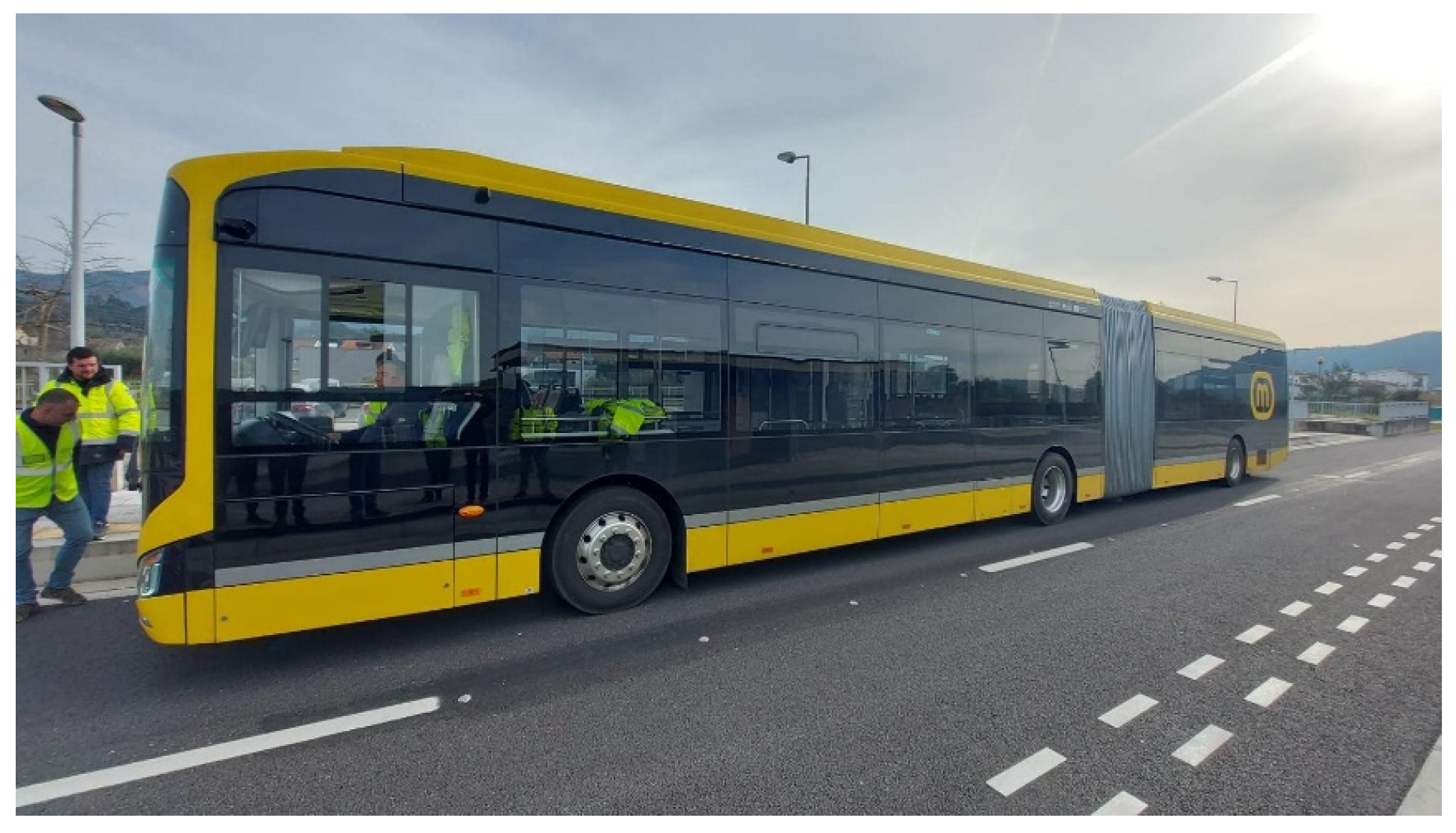
The vehicle used in this study is an urban bus of category M3, Class I, with three axles and an articulated body (see
Figure 1). Its overall dimensions are 18.70 m long, 3.32 m high, and 2.55 m wide. Since the aim is to quantify trajectory deviations caused by crosswinds, it is important to note the exposed lateral area, which is approximately 62 m
2.
The vehicle belongs to Metro Mondego, S.A., a Portuguese company based in Coimbra, with the exclusive licence to implement, operate, and maintain the public passenger transport system between the municipalities of Coimbra, Miranda do Corvo, and Lousã, known as the Mondego mobility system (MMS) [
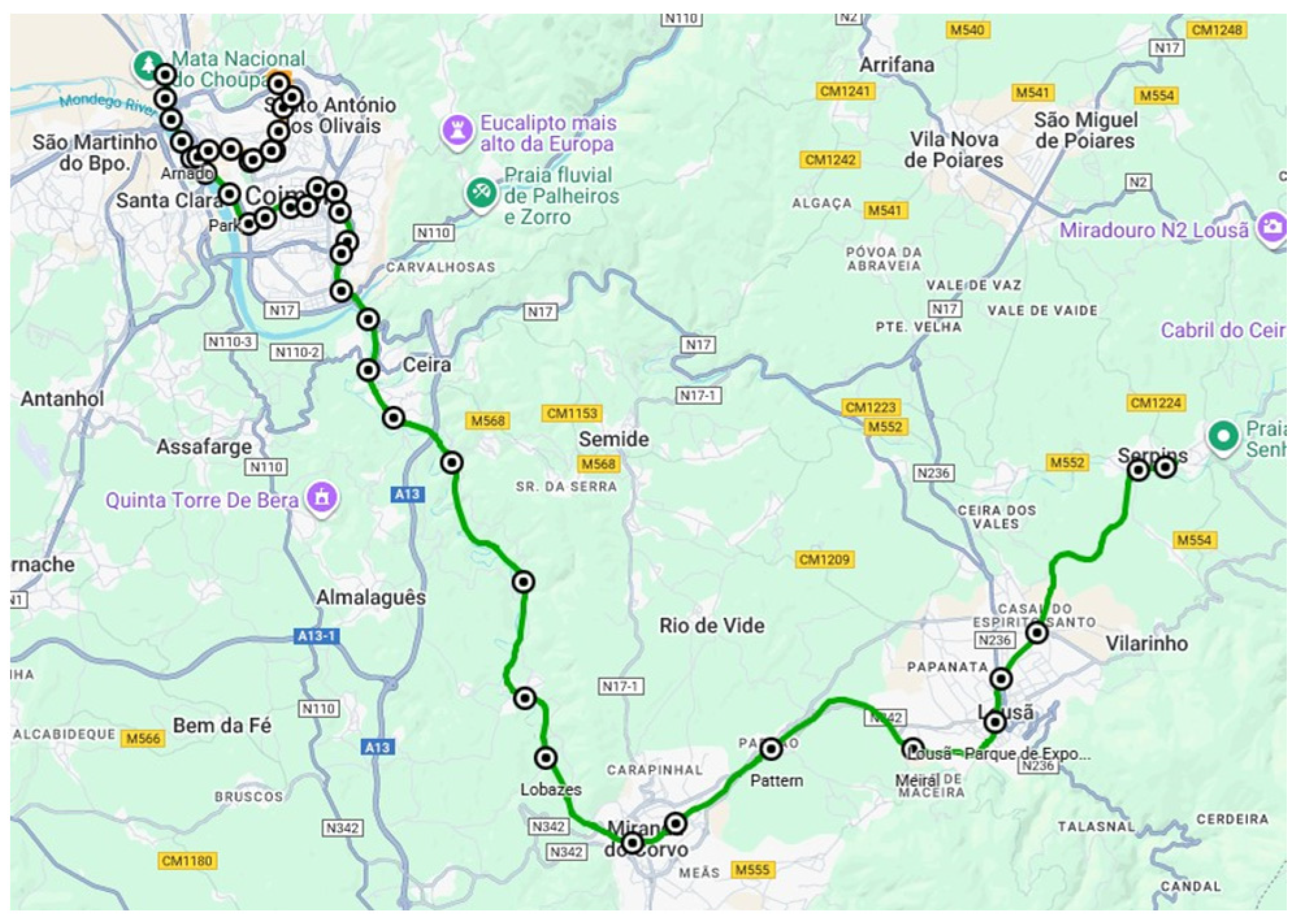
37]. The Mondego mobility system is a road mode sustainable mobility system using fully electric articulated metrobuses on dedicated channels between Coimbra, Miranda do Corvo and Lousã. The MMS consists of 35 units of 135-passenger capacity electric buses. Along the 42 km long route, 42 stations (see
Figure 2) and six charging stations are located. The goals of the MMS include improving transport efficiency by reducing travel time, enhancing urban cohesion and development, and improving safety and comfort through environmentally friendly means.
The MMS estimates ridership to be 13 million per year, emphasising the significant impact of the mobility system on municipalities and users. This underscores the need for adequate quality testing procedures before launch to ensure occupants’ comfort and safety during the daily commute.
The current study was conducted as part of a series of quality tests on a set of newly manufactured and delivered M3 urban buses for Metro Mondego, aimed at assessing the reliability of the optical guidance system and the lateral deviation induced on the buses by crosswinds during a self-driving phase on bridges and tunnels.
2. Materials and Methods
2.1. Test Requirements
When performing lateral deviation tests, it might be necessary to observe specific requirements, such as imposing limits on the lateral deviation (LD) for given transverse wind (WT) speed. The ISO 12021:2010 [
1] indicates that the “accelerator pedal shall be held fixed” after the coordinate x0 (the so-called “wind zone”). Similarly, in the present tests, the driver was asked to keep the vehicle speed (VS) constant (ideally, 30 km/h), in accordance with the operational conditions defined for the optical guidance system.
Regarding the steering wheel, that ISO standard specifies that it “shall be held fixed” over a length of 40 m (before x0) to “at least a distance corresponding to 2 s of travel at the test speed” (100 km/h = 27.8 m/s), equivalent to approximately 96 m. In the present tests, the bus steering was controlled by the OGS, which aims to minimise deviation from the ideal trajectory within the optical-guided zone (OGZ), marked by a double-dash lane.
The total lateral deviation (LD) is here defined as the result from the OGS (LD_OGS) system plus the deviation resulting from the transverse wind (LD_WT), as indicated in Equation (1):
2.2. Methods and Measuring Systems
To verify compliance with the requirements, it is necessary to obtain the temporal evolution of the vehicle under test’s OGS response, simulating real road-usage conditions, for both with and without crosswind. Therefore, the physical quantities to be monitored during the tests are: (1) deviations of the real trajectory relative to the ideal one, defined as the mean line between the double dashed-lines painted on the road along the test zone; (2) the wind speed and wind direction acting on the test zone throughout each test; and (3) the vehicle speed during the experiment.
To measure vehicle deviations, a Dimetix DLS-B 15 [
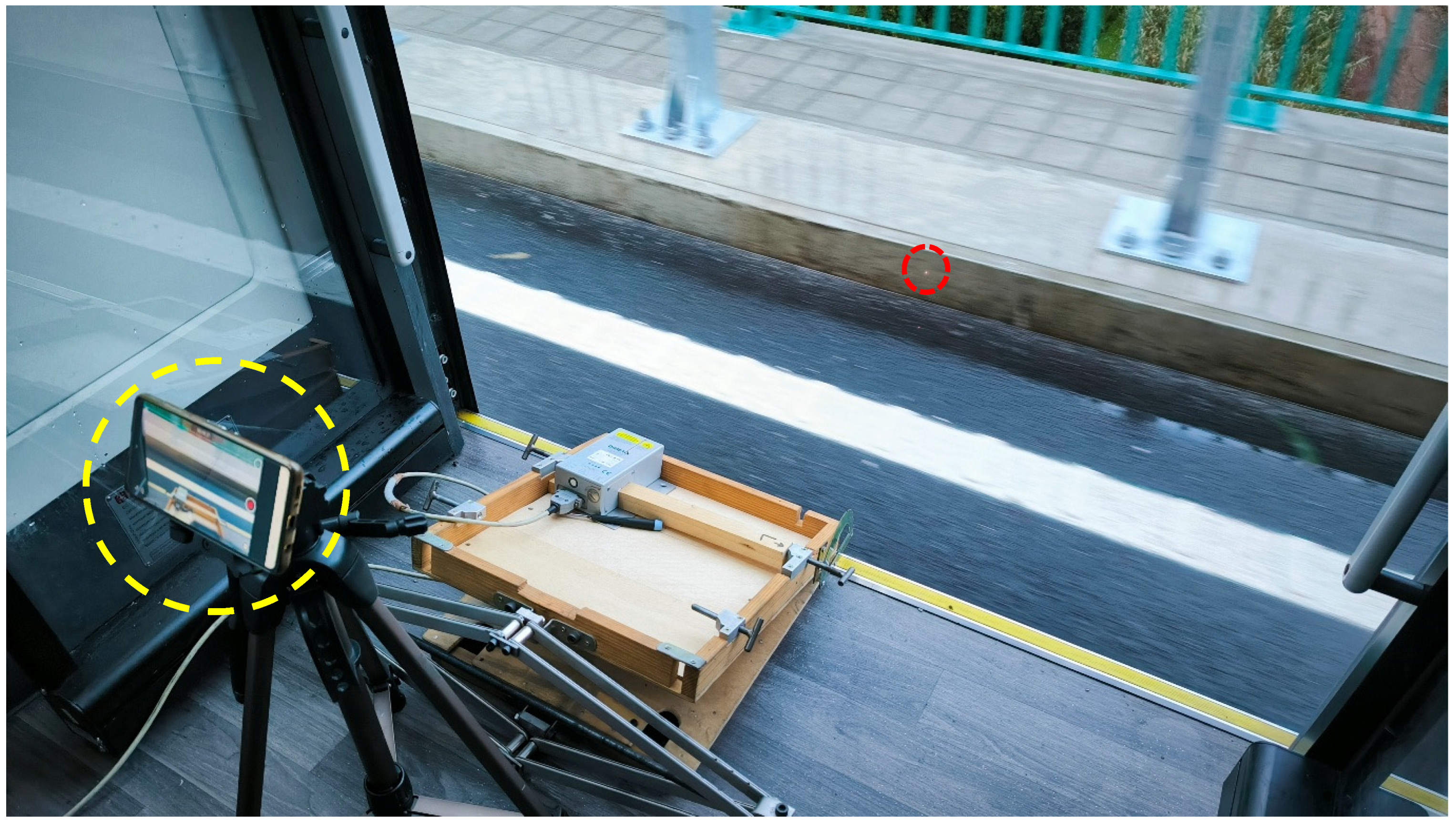
38] laser distance sensor (Dimetix AG, CH-9100 Herisau, Switzerland) was mounted on the bus floor near the front entrance. The laser sensor, with a precision of ±1 mm, has a measurement range from 0.2 m to 500 m. The measuring system was installed to ensure that the laser beam would be perpendicular to the bus trajectory when it struck the parapet curb at the chosen test location. The laser equipment was mounted on an adjustable platform to allow for inclination adjustment, ensuring that the light beam would strike the curb at approximately its mean height (see
Figure 3). This setup provides optimal data collection conditions along the vehicle’s path during each test.
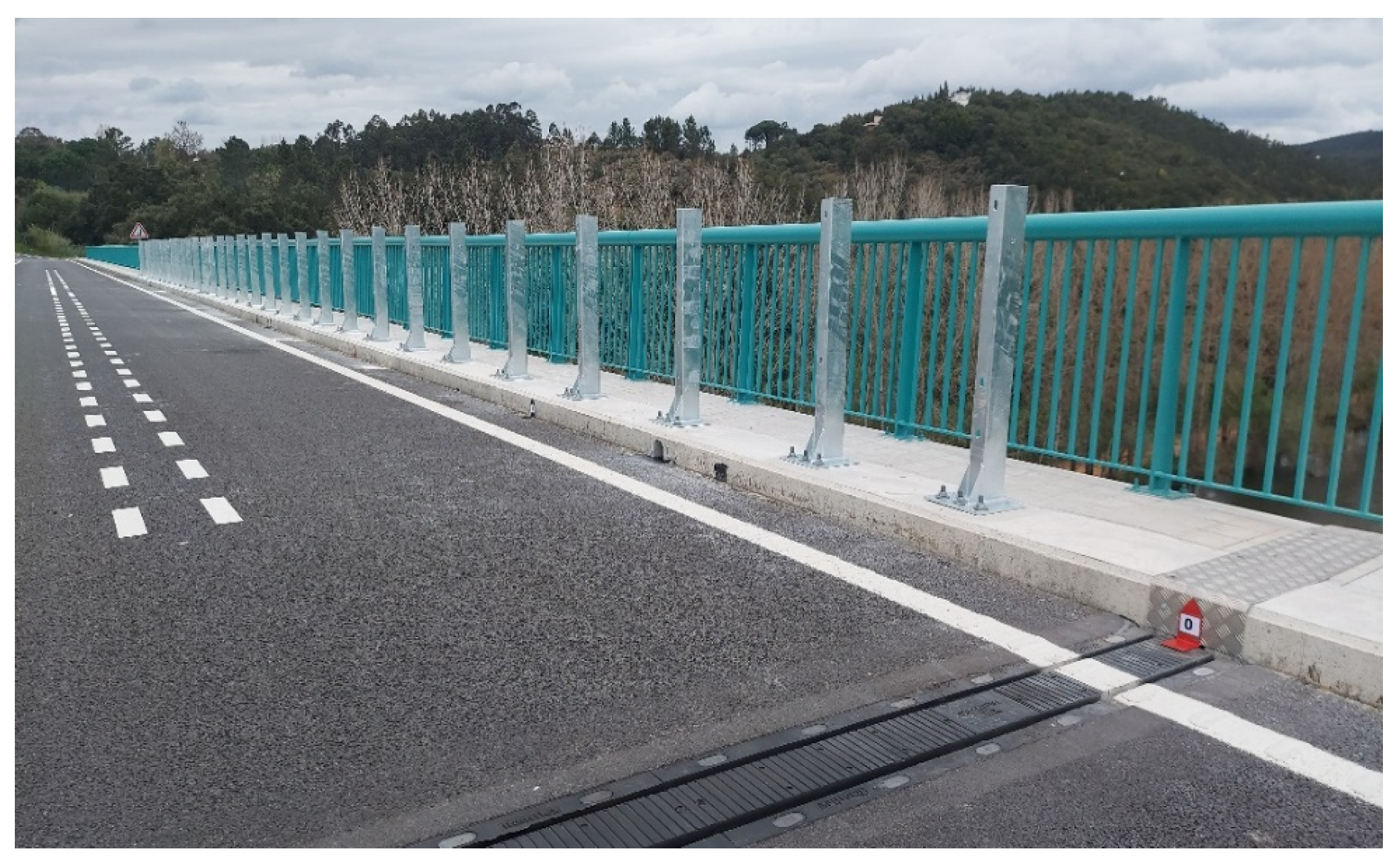
The vehicle’s position, both temporally and along test zone length, was determined using video recordings and curb side markers placed at 5 m intervals along the 60 m length of the OGZ (see
Figure 4).
For the video record, the Android app “Timestamp Camera” [
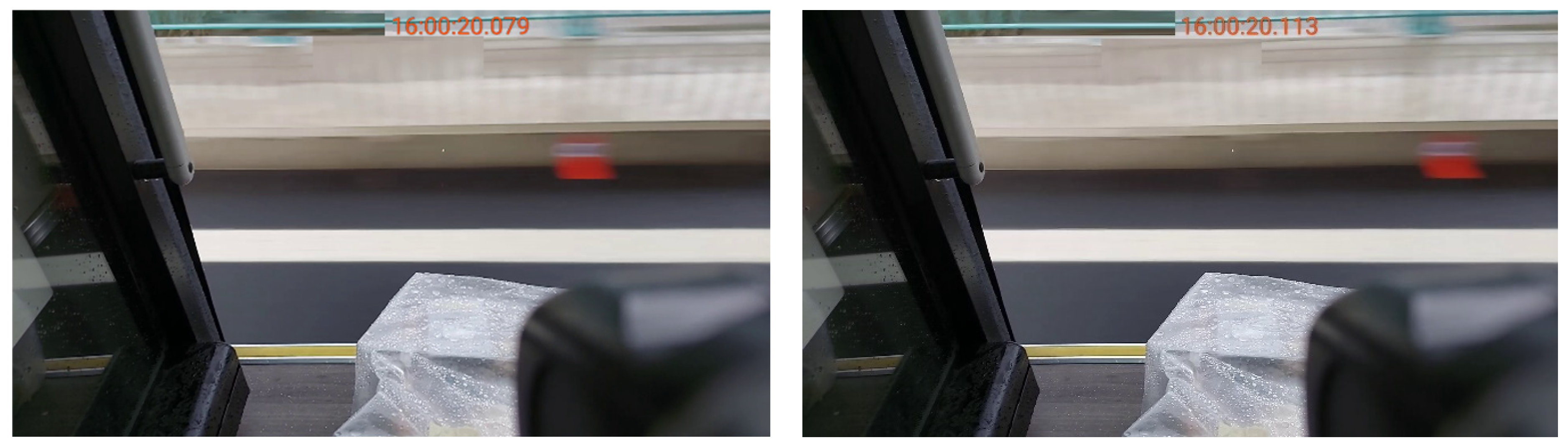
39] was used. It records the time in each frame with a time resolution of 1 millisecond. The video recording frequency is 30 frames per second, corresponding to one frame every 0.275 m for VS = 30 km/h (see examples on
Figure 5).
2.3. Test Field
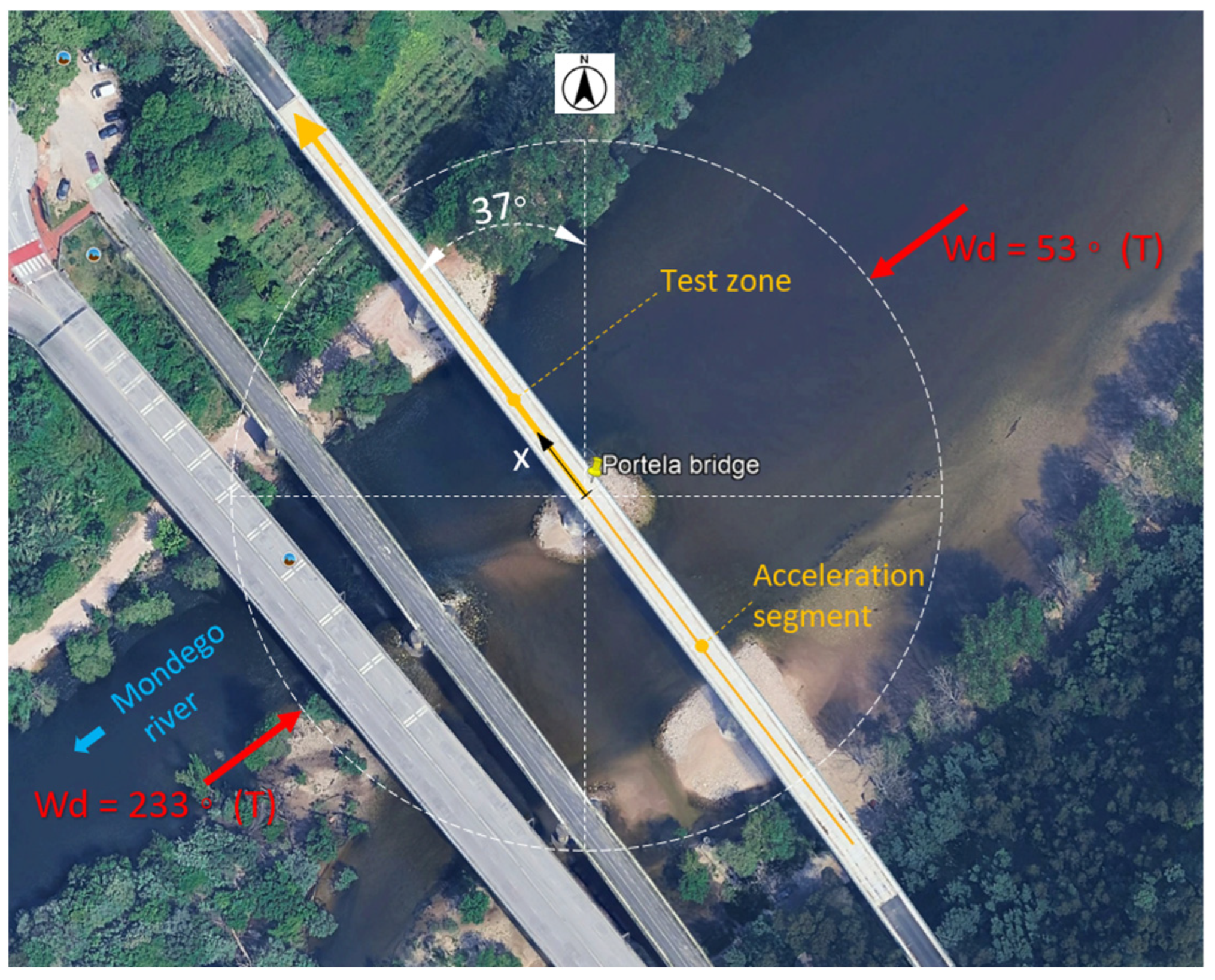
The Portela bridge (outskirts of Coimbra, Portugal), located at (40°11′4.35″ N, 8°23′44.19″ W), was selected for the field tests; its entire length is sufficient to accommodate both an acceleration section and a test section. The bridge deck—measuring 202 m in length and 5 m in width and positioned 20 m above the Mondego River—is fully exposed to ambient wind conditions. The bridge curb, oriented 37° west of geodetic north (see
Figure 6) is quite straight and level throughout the test zone, making it a suitable reference (target) for the experiments. Its alignment allows the bus to accelerate as needed before entering the designated test zone (TZ), which starts at the midpoint of the bridge. All experimental runs were conducted in the south-to-north direction, as depicted in
Figure 6.
The origin of the longitudinal coordinate (x = 0) was set at the mid-length of the bridge (as marked in
Figure 6). The OGZ is 60 m long, with optical marks beginning at x = 2.85 m, as illustrated in
Figure 4. In each test, the time instant t = 0 corresponds to the moment the laser beam hits the marker at position x = 0.
2.4. Performance Indicator
The deviation here is defined relative to the ideal imaginary trajectory coincident with the centreline between the dashed lines painted on the road in the test zone (shown in
Figure 4). The guidance system (OGS) itself has a certain deviation (LD_OGS), to which is added the lateral deviation induced by the wind (LD_WT). Therefore, relative to the ideal trajectory, the total lateral deviation (DY) is simply determined by Equation (2):
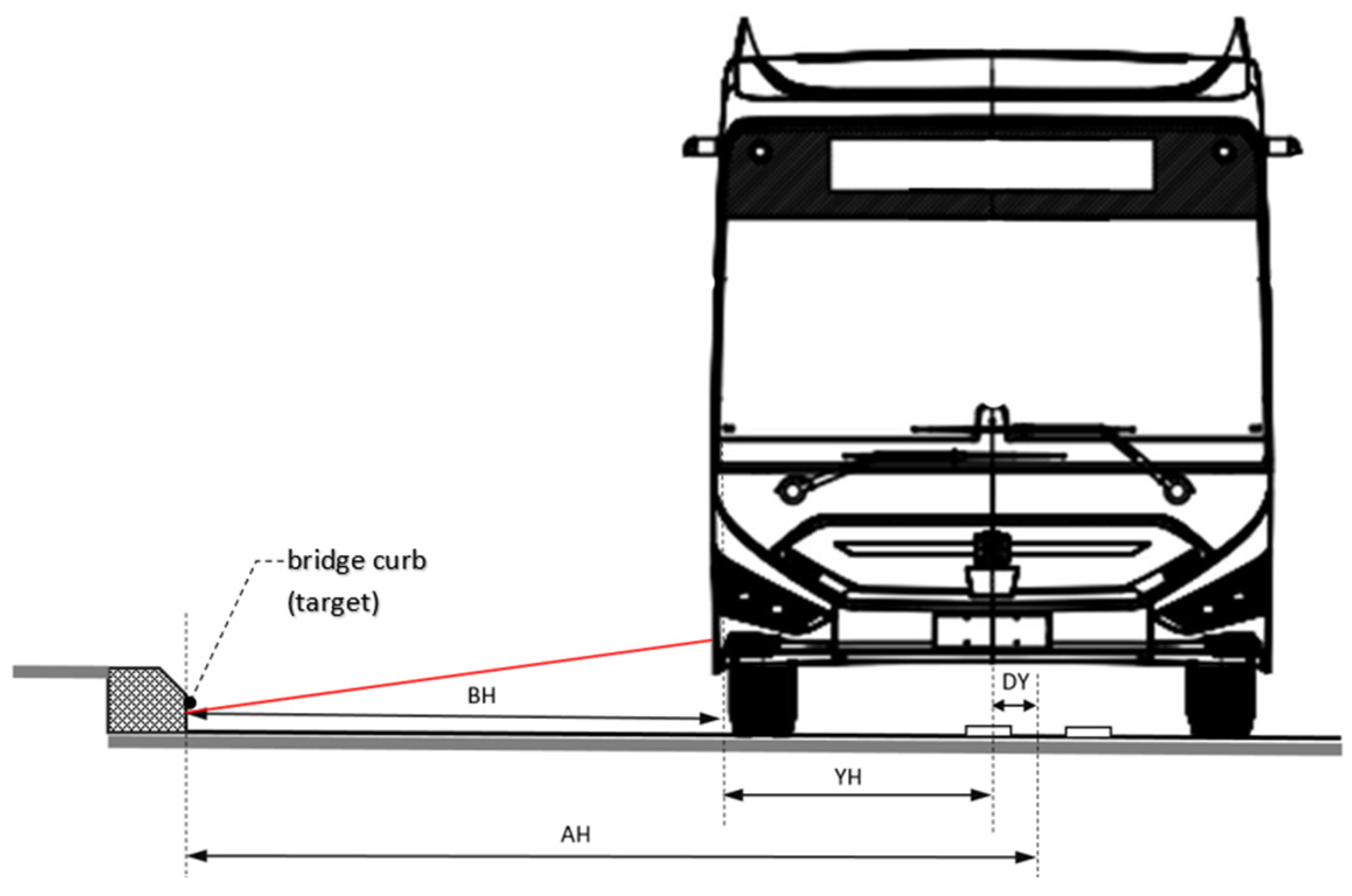
To determine the deviations along the trajectory, the distances shown in
Figure 7 were used. The span between the curb and the axis of the ideal trajectory (AH) is constant and is equal to 2500 mm here. The length BH corresponds to the horizontal projection of the distance measured from the laser to the bridge curb (target). The inclination angle of the laser beam was adjusted to ensure it consistently struck the curb throughout the entire test zone (approximately 15.4°, as evaluated). The distance from the laser’s measurement origin to the vehicle’s centreline (here considered coincident with the trajectory line) is YH = 1223 mm, as measured. The deviation of the bus’s centreline from the ideal trajectory axis (DY) can be determined from Equation (3):
where
AH = distance between the curb and the axis of the ideal trajectory;
BH = horizontal projection of the distance measured from the laser to the curb;
YH = distance from the laser’s measurement origin to the vehicle’s centreline.
Figure 7.
Identification of geometrical distances: lateral deviation (DY), horizontal laser distance (BH) and half deck bridge (AH = 2.5 m).
Figure 7.
Identification of geometrical distances: lateral deviation (DY), horizontal laser distance (BH) and half deck bridge (AH = 2.5 m).
3. Results
3.1. Tests Performed and Wind Conditions
Two main test campaigns were conducted, designated here as series C and E, respectively. In each experimental campaign, some tests were omitted due to unexpected observations (e.g., the OGS failing to function, the laser striking outside the target). The number of validated tests and the range of the transverse wind speed are indicated in
Table 1.
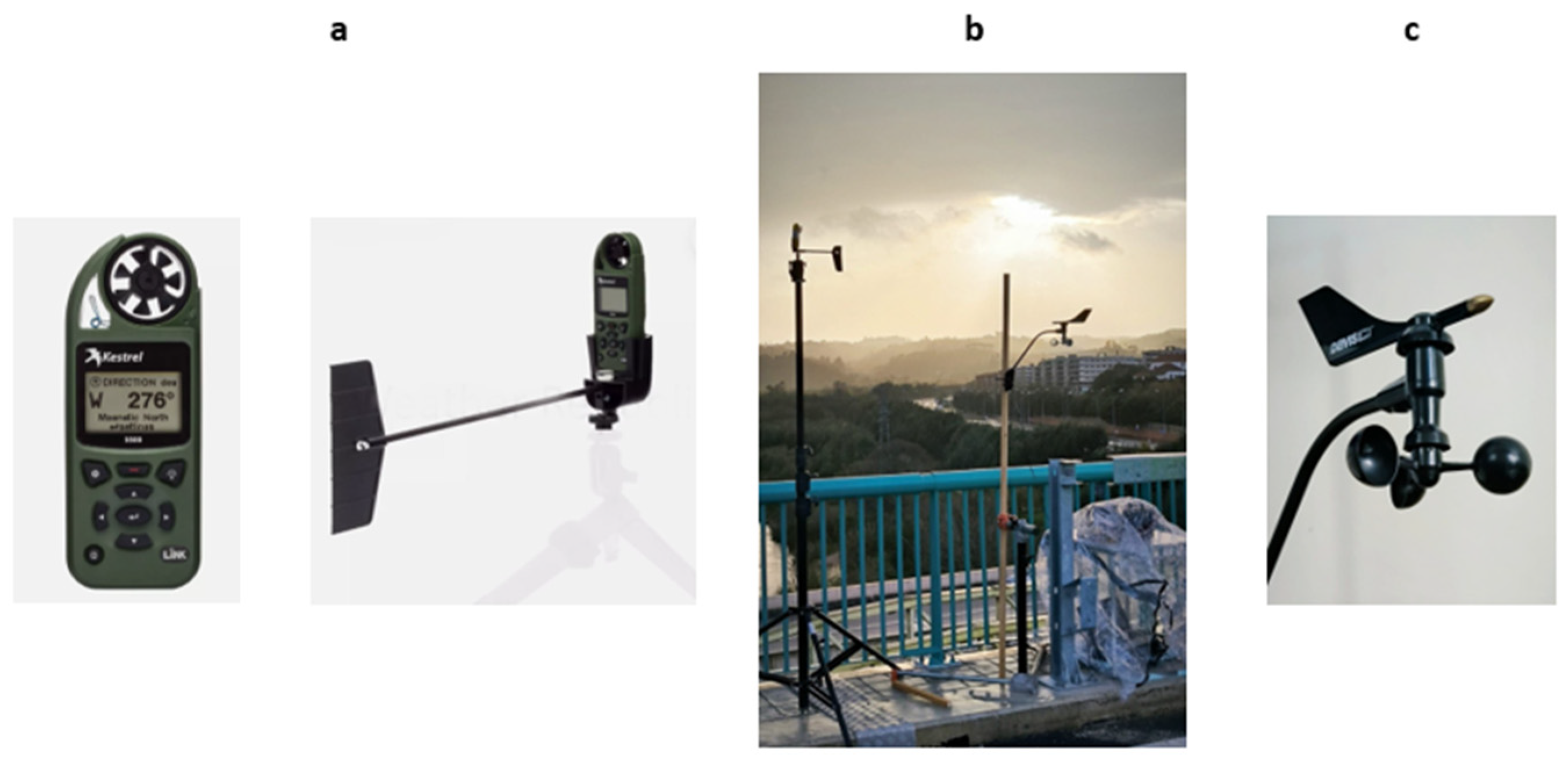
For the wind speed and direction measurements, a Kestrel 5500 weather metre was positioned and mounted 2.5 m above the bridge deck, approximately 10 m upstream from the test zone. Wind speed was recorded as 2 s time averages with a resolution of 0.1 m/s, and wind direction with a precision of ±5°.
Considering the test conditions—a vehicle speed of 30 km/h and an OGS test zone length of 60 m—the data acquisition period was only 7.2 s. Consequently, Kestrel 5500, which records measurements every 2 s, collected only 3 data points per OGS test. To achieve a more accurate characterisation of the temporal evolution of wind speed and direction throughout the testing interval, an alternative measurement setup was implemented. The new configuration used a cup anemometer and a wind vane, typically included with the Davis Vantage Pro weather station. These sensors were connected to a National Instruments myDAQ data acquisition interface equipped with a 12-bit analogue-to-digital converter and a ±10 V measurement range. Data were recorded using the Data Logger application included with the dedicated software package supplied with the myDAQ interface. An acquisition frequency of 100 Hz was adopted, enabling high-resolution capture of the temporal evolution of the variables describing wind conditions in each test.
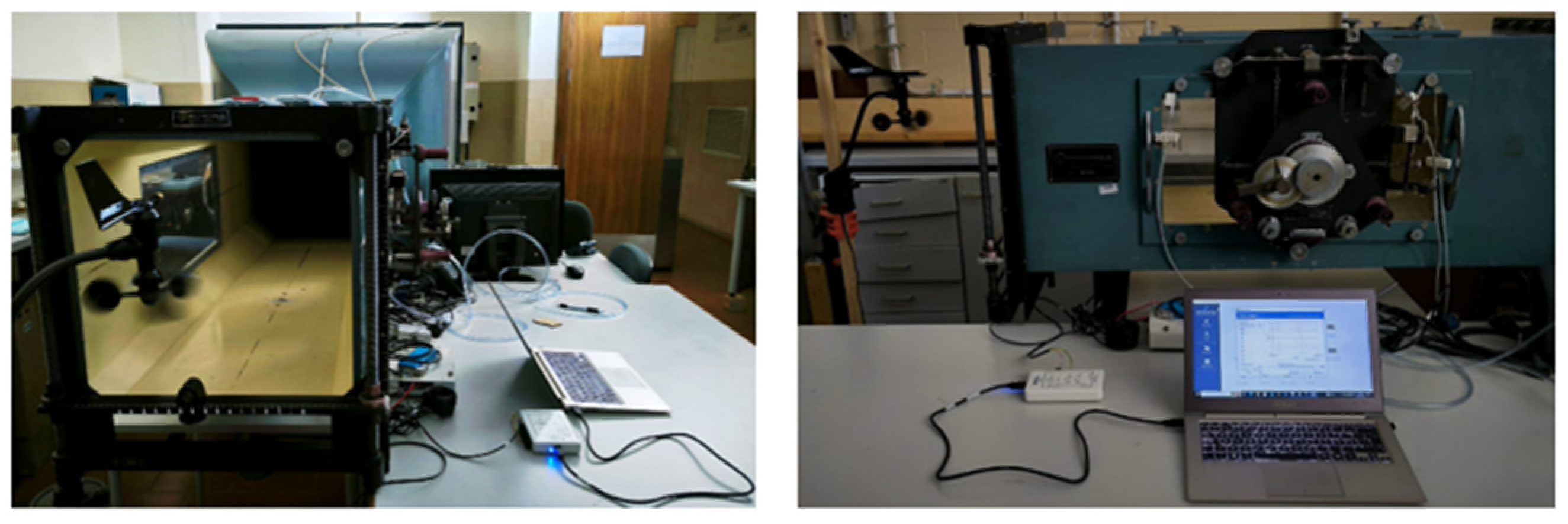
Figure 8 illustrates the instrumentation used for wind speed and wind direction measurements. Moreover, a summary of the instruments has been provided in
Appendix A.
This system was previously subjected to an internal calibration test in the Plint & Partners TE44 wind tunnel at the ADAI laboratories in the Department of Mechanical Engineering of the Faculty of Science and Technology of the University of Coimbra (see
Figure 9).
The wind speed conditions registered on the two campaigns are summarised in
Table 1, showing that the transverse wind speed in test campaign C was considerably weaker than in test campaign E. Some of the tests from campaign C were used to characterise the deviation LD_OGS when the wind speed was insignificant. On the contrary, throughout campaign E, wind blew mostly from the western transverse wind quadrant, which was very convenient to characterise the lateral wind deviation (LD_WT).
3.2. Trajectory Deviations
3.2.1. Results from Campaign C
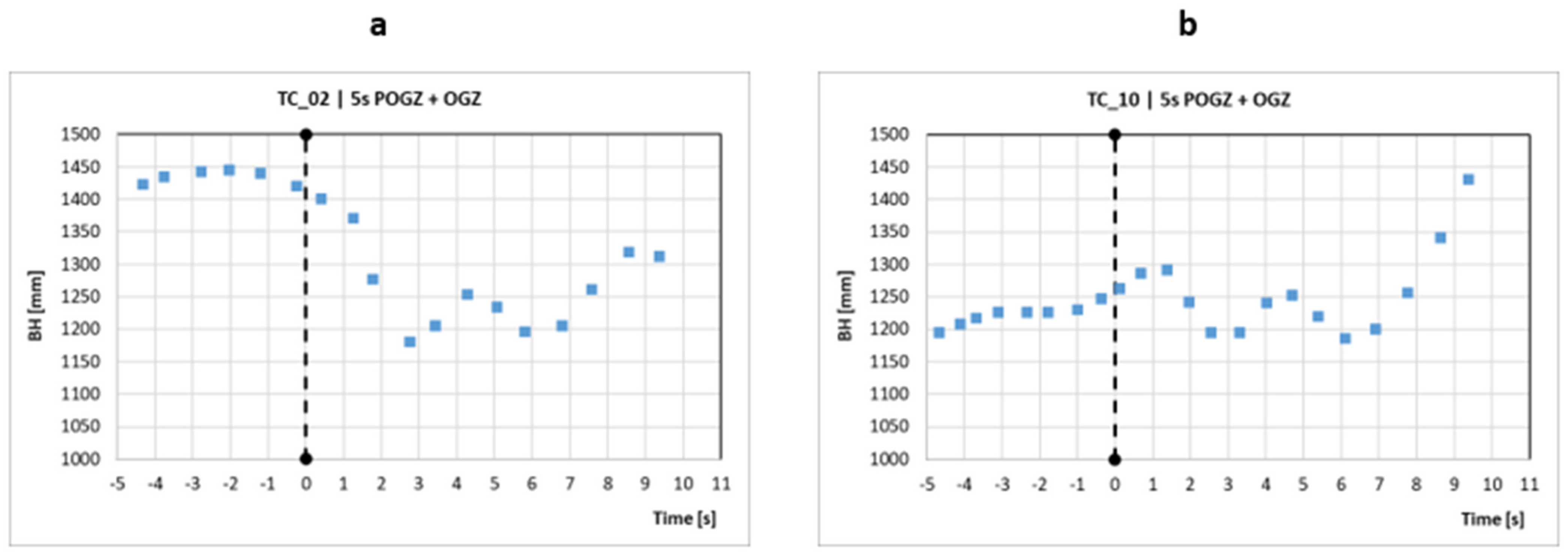
To better analyse the bus entry conditions into the test zone (TZ), a 5 s time period preceding entry was considered, with x = 0 m corresponding to t = 0 s. The section upstream of the test zone is here referred to as the pre-optically guided zone (POGZ).
Figure 10 illustrates the concepts based on the results obtained in two tests.
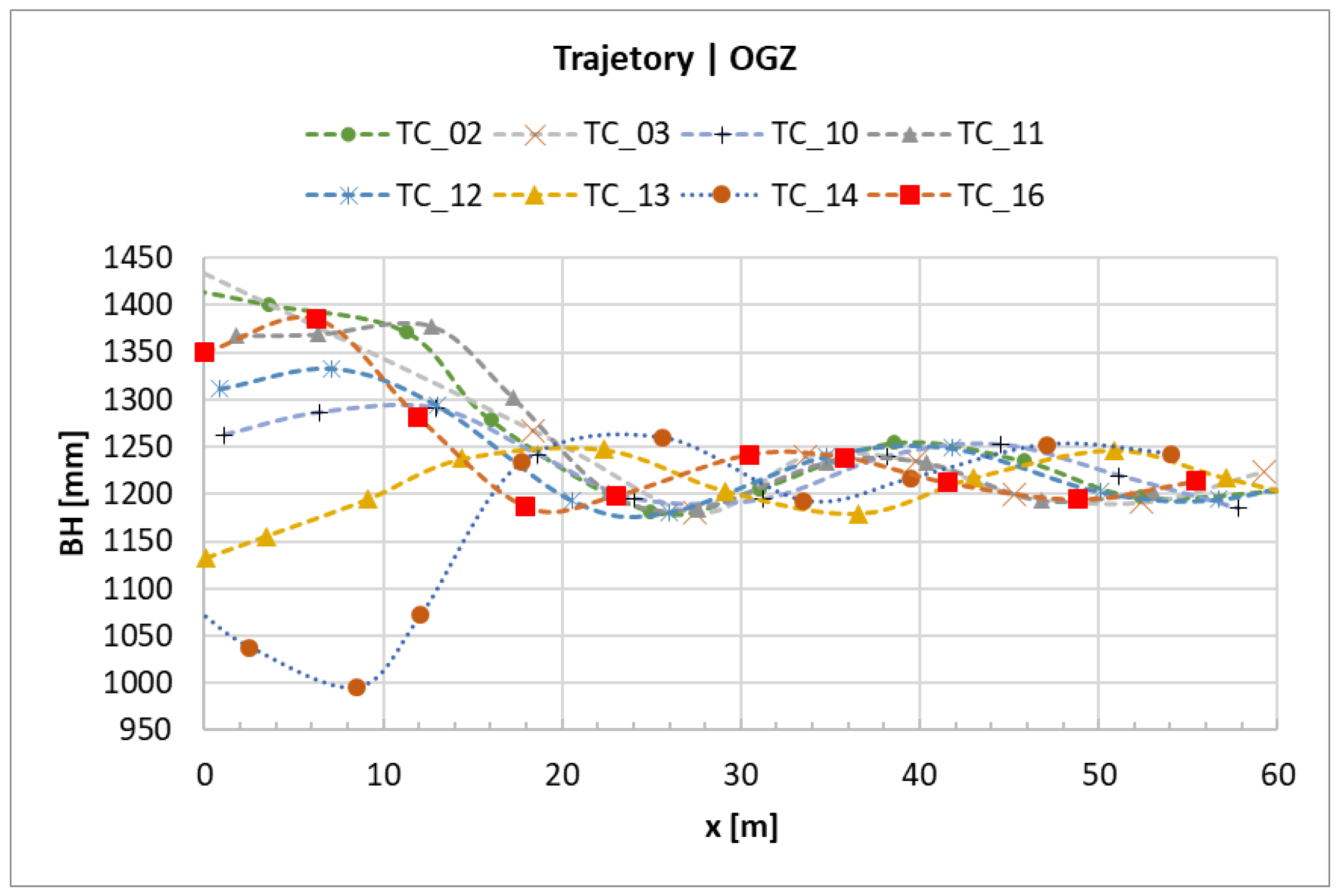
Figure 11 shows the trajectories of several tests from campaign C, characterised by considerable dispersion, and different entry conditions in the test zone. Despite the discrepancies, it is noticeable that the OGS quickly adjusts the trajectory and, after the initial 30 m, the distance BH oscillates between 1175 and 1250 mm, corresponding to an amplitude of ±37.5 mm about the mean value of BH = 1212.5 mm, after stabilisation (sector 30 ≤ x ≤ 60).
As previously mentioned, the transverse wind component (WT) was relatively small during campaign C.
Table 2 presents statistical indicators measured across the stabilised sector (30 ≤ x ≤ 60), along with the corresponding mean WT.
3.2.2. Results from Campaign E
As shown in
Table 1, wind conditions were considerably more favourable for conducting transverse deviation studies. Of the 16 experiments carried out during the campaign E, the transverse wind speeds (WT) for the valid tests are presented in
Table 3. The highest WT was recorded during test TE_09.
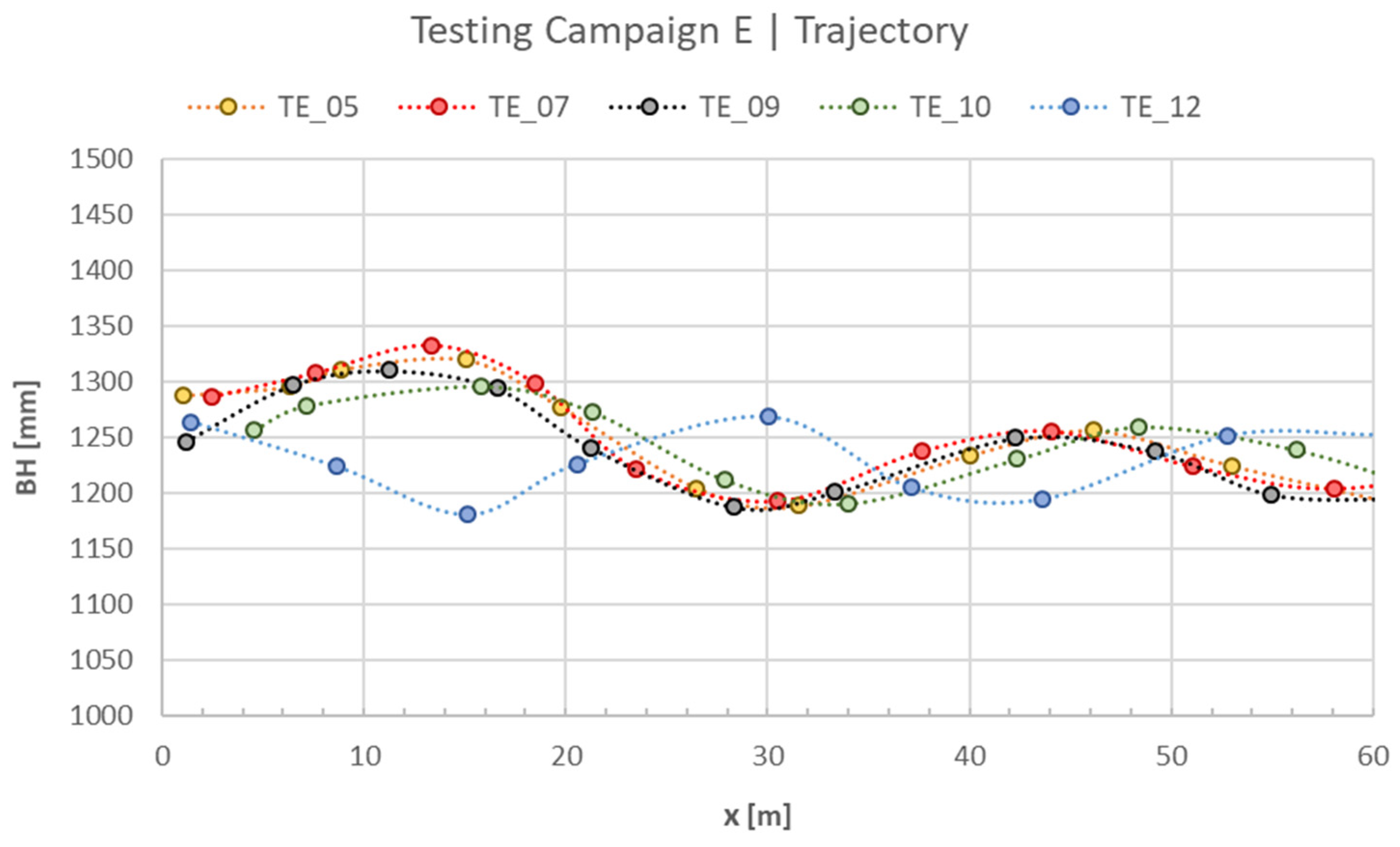
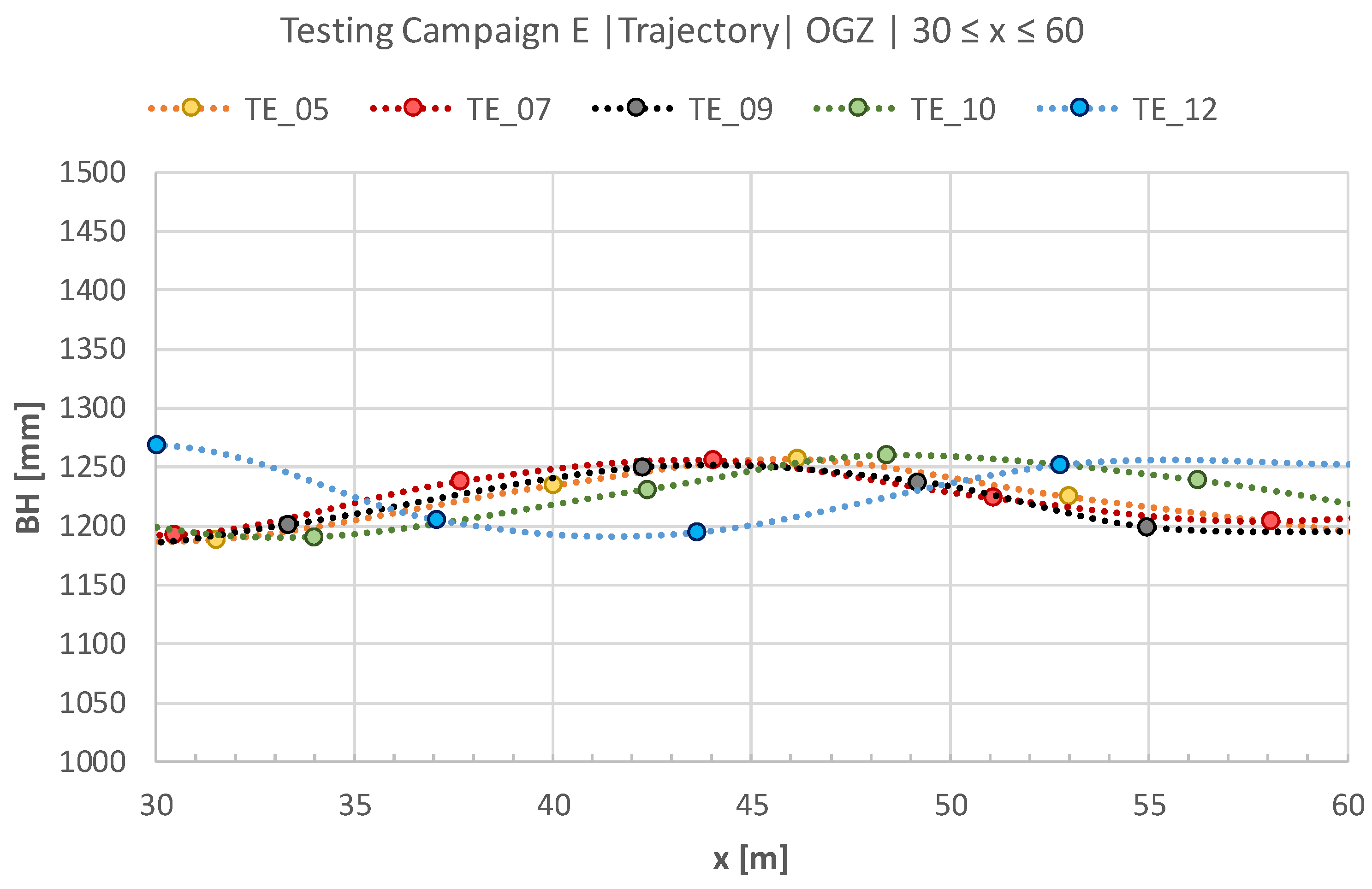
Figure 12 shows the trajectory deviations recorded in five representative experiments from campaign E, using a format similar to that adopted for the tests from campaign C.
Compared to the campaign C, the achievement of BH ≈ 37.5 mm is delayed by approximately 5 m in campaign E expedition due to the typically larger WT values. This deviation generally occurs around 35 m after the vehicle enters the test zone (i.e., x > 35 m). For a nominal vehicle speed of 30 km/h, this 5 m delay corresponds to approximately 0.6 s. This confirms that the OGS quickly adjusts the deviation toward the ideal trajectory, as illustrated in
Figure 13.
4. Discussion of Results
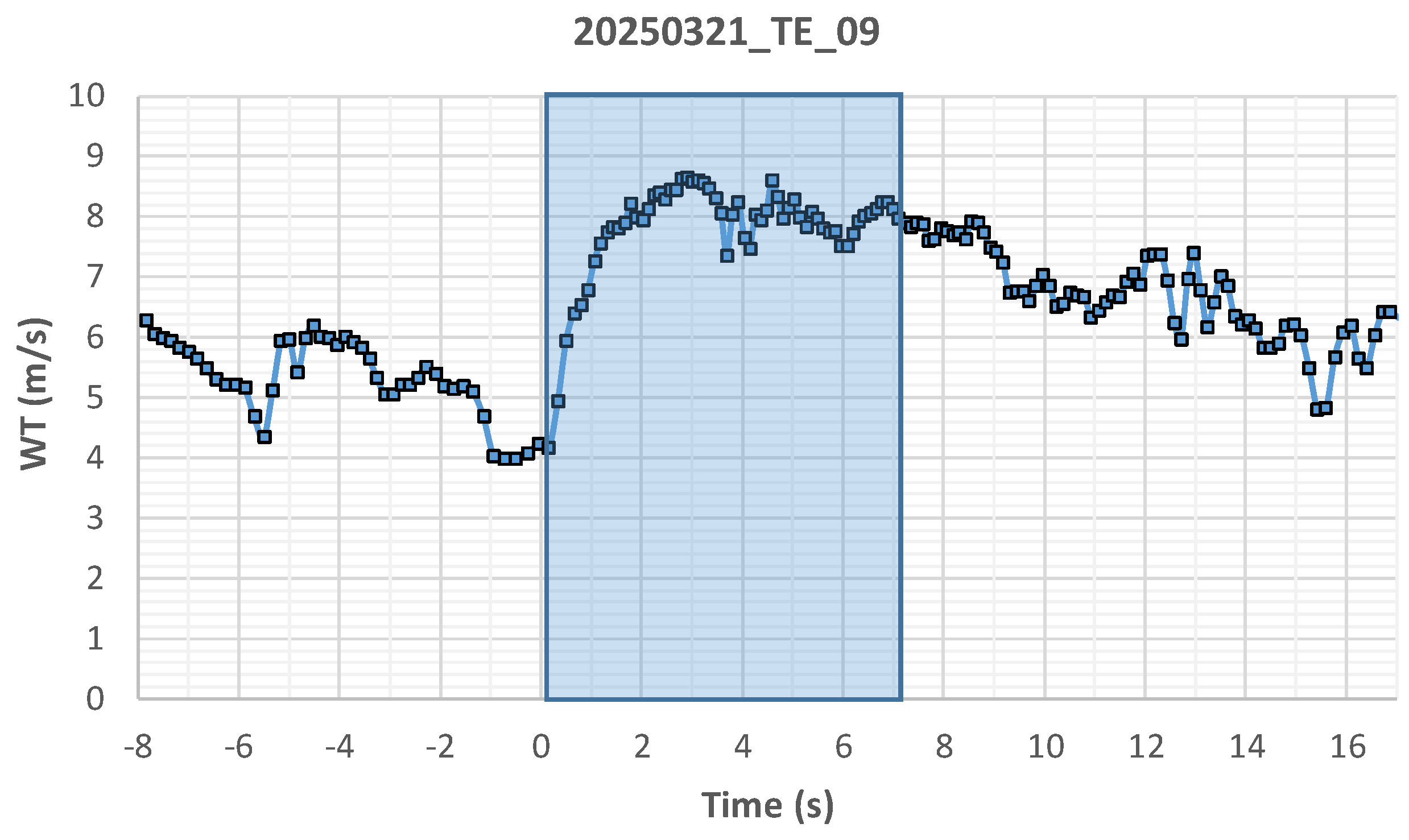
A more detailed analysis and discussion of the most challenging test is done in this session. During experiment TE_09, which lasted 7.2 s within the OGZ, WT peaked at 8.7 m/s with an average of 7.7 m/s, as shown in
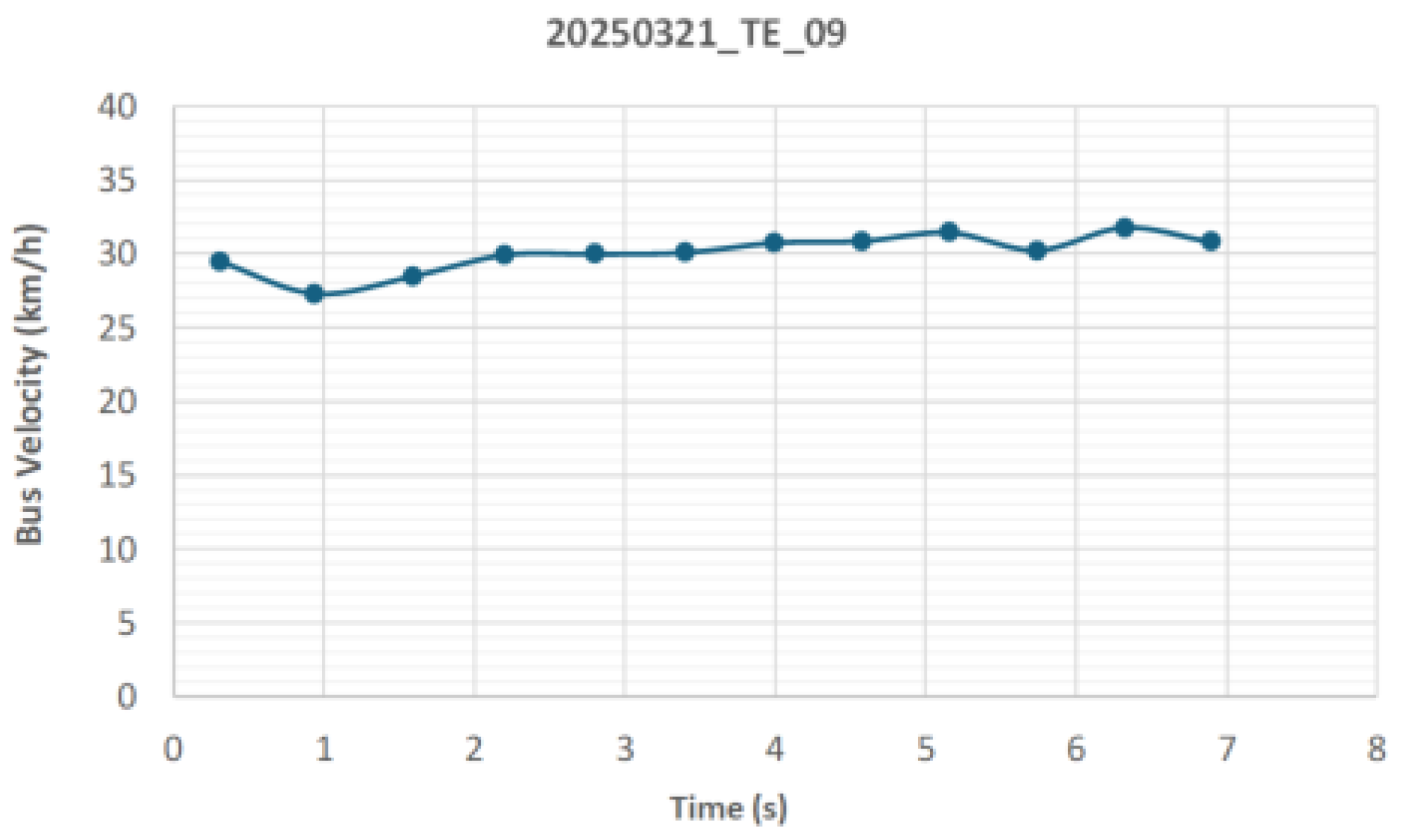
Figure 14. As an illustrative example of the methodology, the real vehicle velocity is shown in
Figure 15.
The following figures sequentially present the evolution of wind speed, wind direction, and the transverse component of wind velocity throughout the entire test duration, as well as the evolution of vehicle speed in the OGZ, the bus trajectory based on the BH distance in both the approach zone and the OGZ, and, finally, the lateral deviation (DY) in the OGZ.
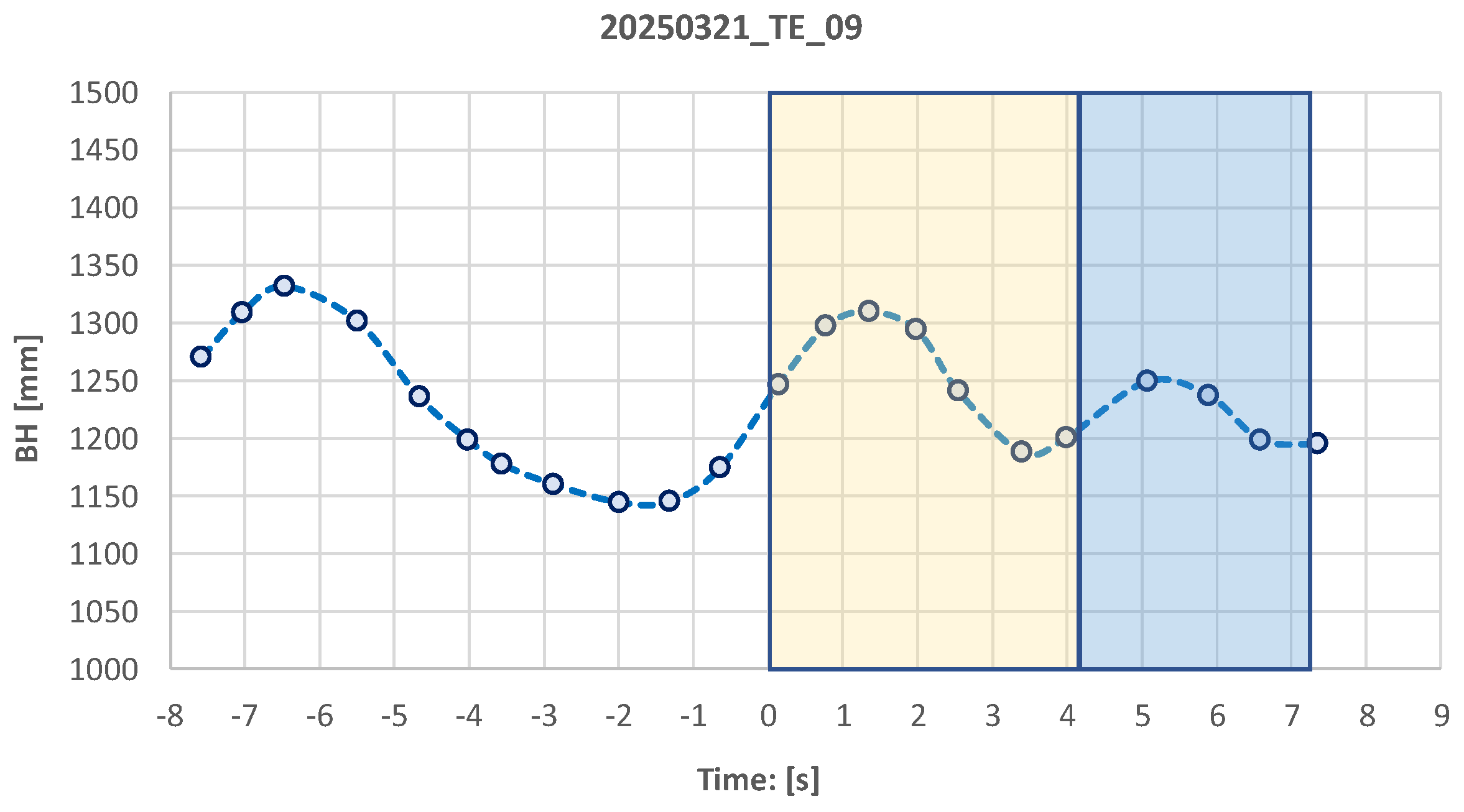
Figure 16 compares the performance of the OGS and the human driver in maintaining a straight-line trajectory under crosswind conditions. Once the bus enters the OGZ and the OGS becomes active, a clear reduction in oscillation amplitude is observed, accompanied by a shorter duration of each correction cycle. After 7 s of the OGS actuation, the deviation was reduced from an initial entering condition of ±75 mm to ±25 mm, which should be compared with the usual road lane widths, which range from 2.7 to 3.7 m, resulting in a typical ±1.2% relative oscillation in the BRT vehicle trajectory. The order of magnitude of this value will not pose any particular risk to road safety, as it will circulate under OGS control, moreover, since the vehicle has exclusive circulation in a dedicated lane.
Based on the information compiled in
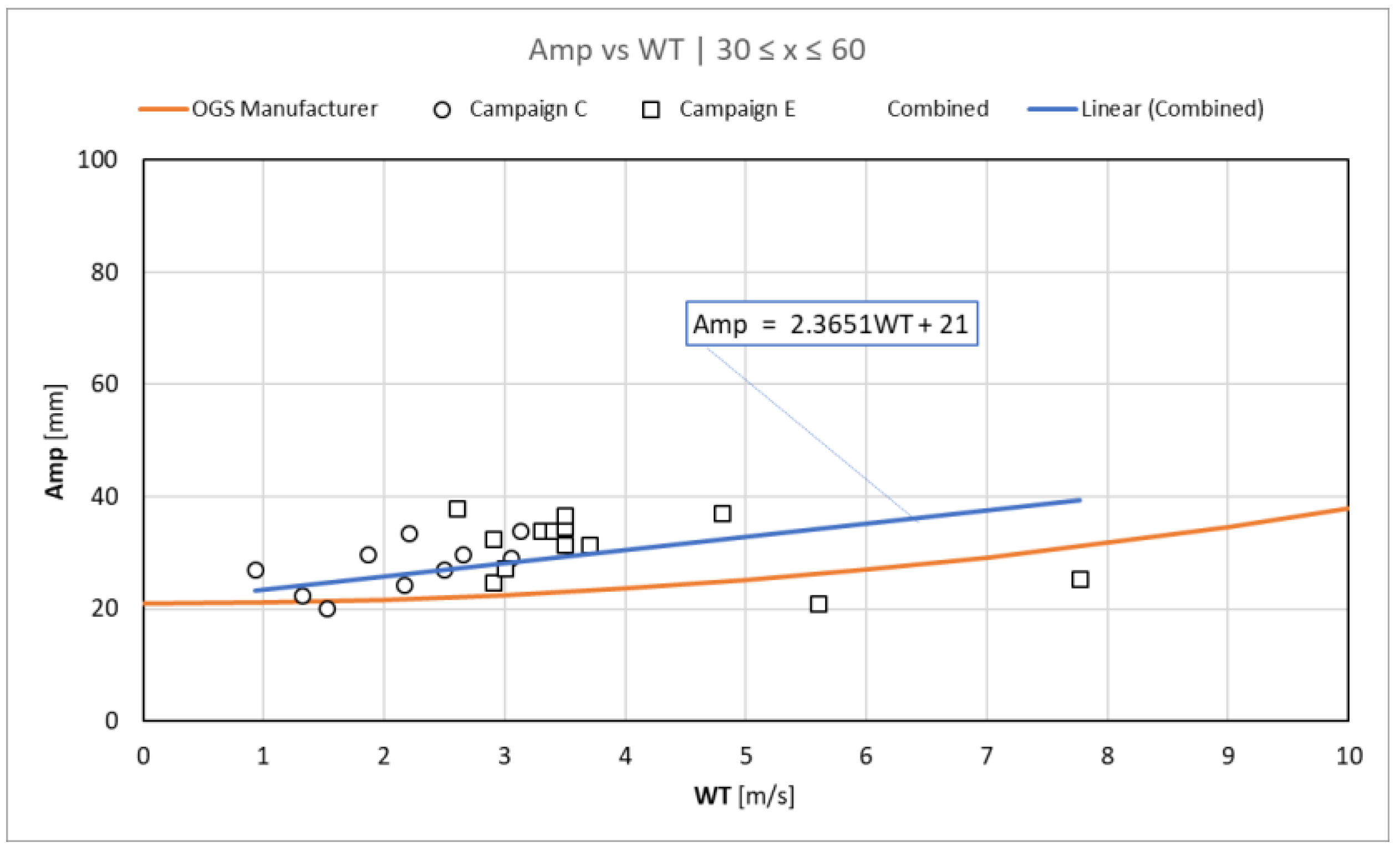
Table 2 and the corresponding data from campaign E, the amplitude values ({DYmax − DYmin}/2) within the segment where oscillations are stabilised (30 m < x < 60 m) were adopted as indicators of the maximum lateral deviation after OGS actuation for each test.
Figure 17 presents the distribution of these values as a function of the transverse wind component, WT. It also includes reference data from a study conducted by the manufacturer of the OGS installed on the buses supplied to Metro Mondego.
Based on the values in the chart, the OGS response is both effective and dynamically complex, as evidenced by its ability to rapidly correct trajectory deviations, as previously observed in
Figure 14 and
Figure 16. Therefore, it is expected that the OGS will also respond efficiently under significant crosswind disturbances. By fitting a linear trendline to the data points, the relationship “Amp = 2.3651 WT + 21” is obtained, which shows good agreement with the reference trend provided by the manufacturer. A visual inspection indicates low discrepancy between the trendlines within the range 0 ≤ WT ≤ 10 m/s. For WT = 10 m/s, the fitted trendline yields an amplitude of 44.6 mm, slightly below the 46 mm value discussed below.
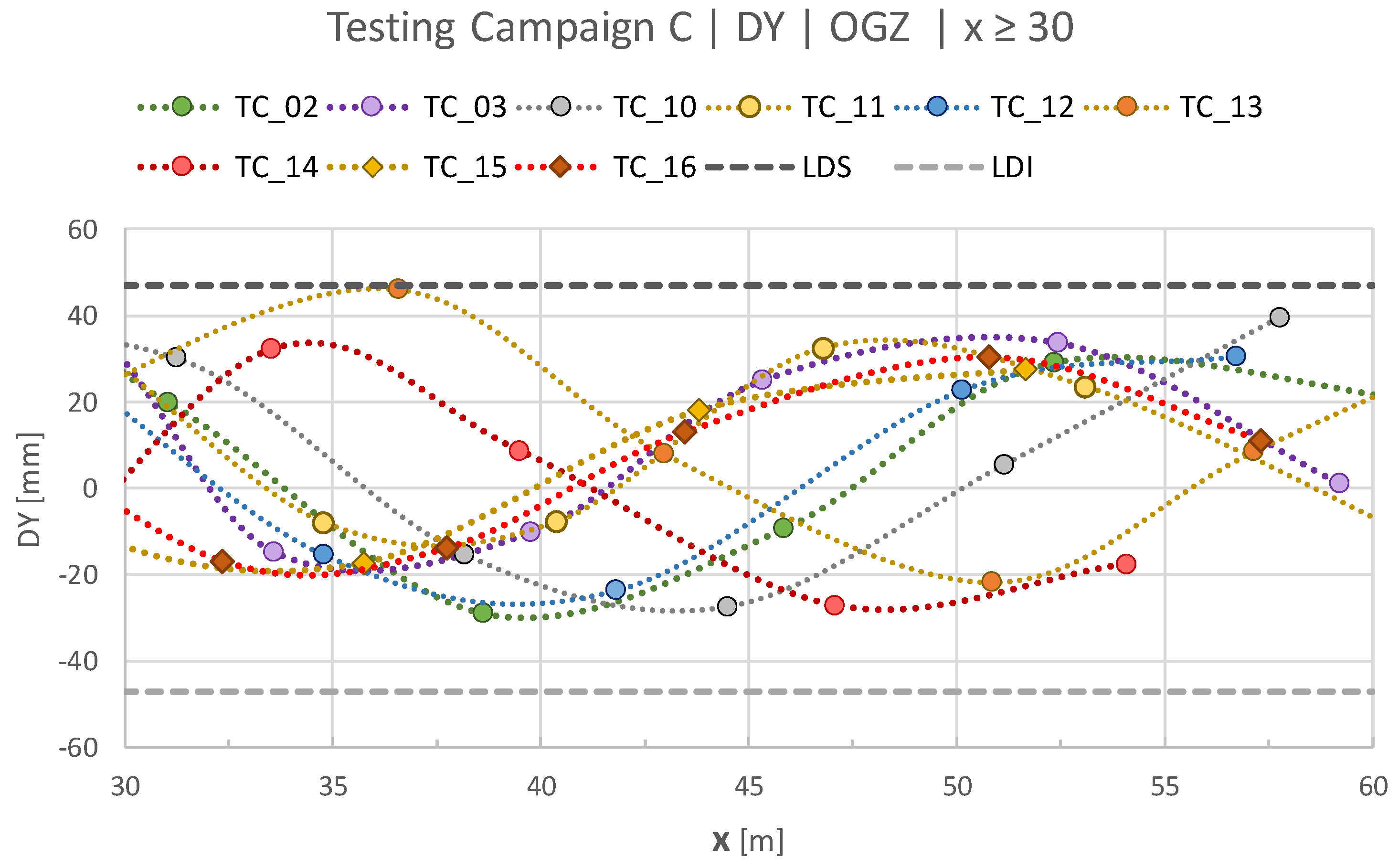
Returning to Equation (2), and adopting a value of 21 mm as an indicator of LD_OGS under no-wind conditions (mean amplitude from tests TC 11, 12, and 14), together with the allowable additional deviation LD_WT = 25 mm (as defined in the Metro Mondego technical specifications), the resulting total allowable deviation is ∣DY∣ = 21 + 25 = 46 mm.
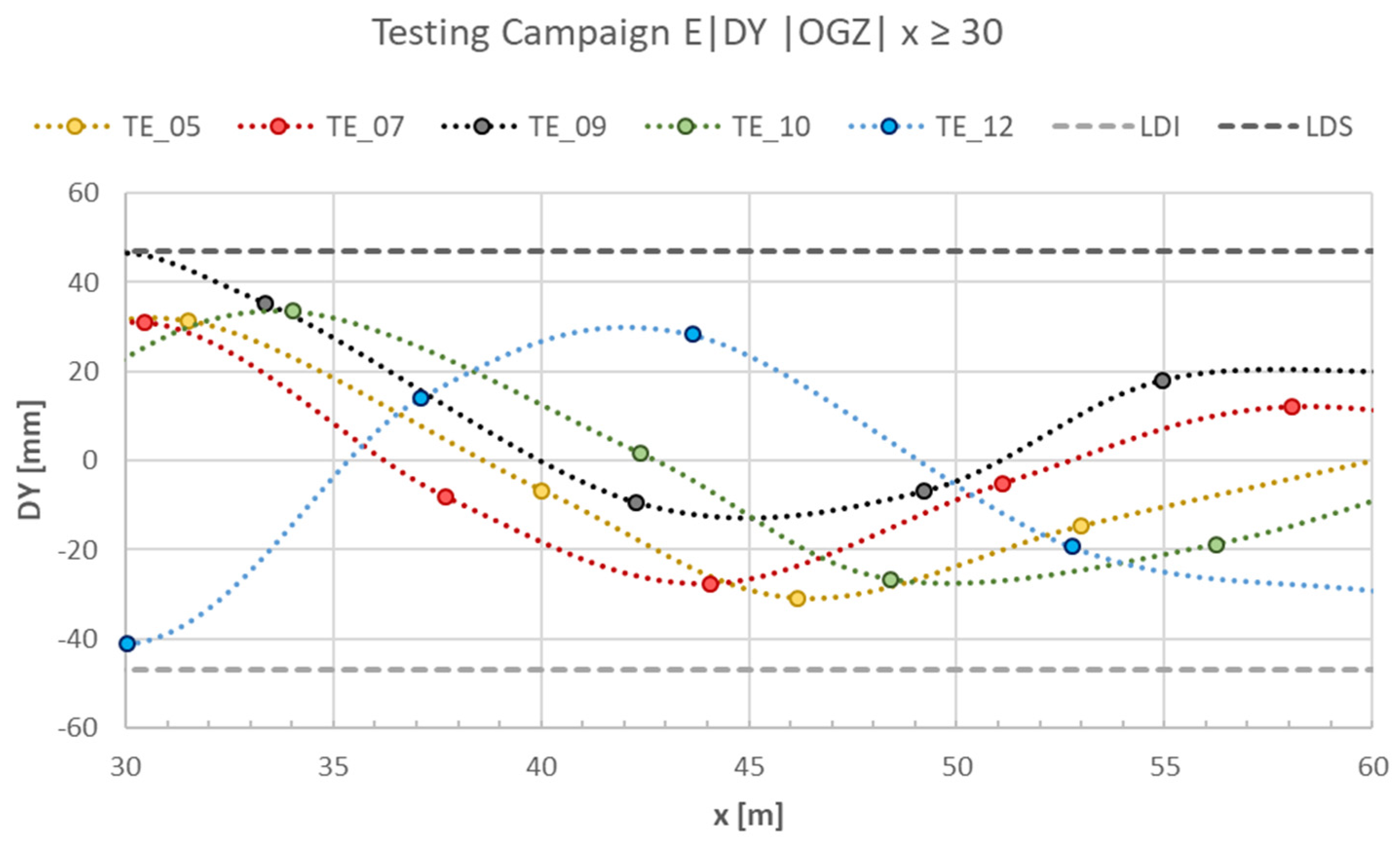
Figure 18 and
Figure 19 present the lower deviation limit (LDI = −DY = −46 mm) and the upper deviation limit (LDS = +DY = +46 mm). As observed, for all tests performed, and within the stabilised region of the OGS (i.e., for x ≥ 30 m), every measured deviation remains within the range specified in the technical requirements.
Finally, it should be mentioned that the applicability of the proposed methodology is subject to certain limitations inherent to full-scale field testing. In particular, the dependence on natural weather conditions restricts the ability to test under predefined wind intensities, which may result in limited wind ranges during experimental campaigns. Additionally, adverse conditions such as rain can affect measurement quality, especially by reducing the visibility and reliability of the laser-based distance measurements due to reflection and scattering effects. These factors introduce uncertainty and reduce experimental repeatability and should be considered when interpreting the results.
5. Conclusions
This paper presents a study on the additional lateral trajectory deviation induced by crosswind in a bus equipped with an optical guidance system.
The study carried out at the request of Metro Mondego, S.A, aimed to verify compliance with their technical requirements.
A series of tests was conducted on the Portela Bridge under conditions representative of normal vehicle operation. The study involved measuring the distance to the bridge curb using a high-precision laser system while the bus travelled in the longitudinal direction. The goal was to assess lateral trajectory deviations induced by crosswinds acting perpendicular to the direction of travel.
It was observed that, despite variability in the trajectories, when measured at high spatial resolution (±1 mm) during the approach phase upstream of the test zone, the optical guidance system corrected deviations from the ideal trajectory within a short time interval and, consequently, over a short distance. The experimental results demonstrate that the OGS provides a rapid and effective correction of trajectory deviations induced by crosswind disturbances. After entering the optically guided zone, the system stabilises the vehicle trajectory within approximately 30 m, which is equivalent to 3.5–4 s, significantly reducing the initial deviation amplitude.
The deviation measured by the laser system includes both the inherent deviations of the OGS and those induced by the wind. The system’s response shows reasonable agreement with the results reported in the manufacturer’s study when approximated by a linear trend (Amp = 2.365 WT + 21 (mm)) within the crosswind range up to 10 m/s.
The results show a certain degree of dispersion, and a full explanation of the observed differences is not straightforward, given the multiple sources of uncertainty inherent to full-scale testing under real operating conditions (e.g., variability in the approach trajectory imposed by the driver, fluctuations in meteorological conditions, variation in road surface characteristics, measurement system uncertainty, among others). Nevertheless, the influence of crosswind appears relatively minor in the OGS’s dynamic response.
All measured deviations fall within the tolerance range specified in the technical requirements. Therefore, it is concluded that the OGS installed on the tested bus complies with the technical requirements set out by Metro Mondego, S.A.
Finally, future work should focus on developing a dynamic model of the OGS-controlled vehicle under crosswind disturbances, including the estimation of an equivalent damping coefficient governing the correction process. Such a parameter would allow a more rigorous characterisation of system stability, enabling comparison with control system design criteria and supporting the optimisation of guidance algorithms under transient wind conditions. In what concerns the measurement of the vehicle’s velocity during the tests, the amount of work on the data processing and analysis phases can be substantially reduced if a high-precision GPS data logger, with a sample rate higher than 10 Hz and a local fixed antenna, is used.
Author Contributions
A.D.F.: conceptualisation, methodology, software, investigation, resources, data curation, original draft preparation, writing—review and editing, project administration; J.O.: validation, investigation, data curation, visualisation, original draft preparation; B.C.: investigation, validation, data curation, original draft preparation; J.I.B.: validation, investigation, data curation; M.G.d.S.: conceptualisation, methodology, software, resources, writing—review and editing, supervision, project administration, funding acquisition. All authors have read and agreed to the published version of the manuscript.
Funding
The authors would like to acknowledge the support of the Association for the Development of Industrial Aerodynamics (ADAI,
https://ror.org/05gh16g69 (accessed on 10 April 2026)), Associate Laboratory of Energy, Transports and Aeronautics (LAETA) and the Portuguese Foundation for Science and Technology (FCT) through the projects with the references UID/50022/2025 and LA/P/0079/2020 (DOI:
https://doi.org/10.54499/UID/50022/2025. and
https://doi.org/10.54499/LA/P/0079/2020. The co-author James Ogundiran has a research grant with Ref: 2024.18455.PRT. For the purpose of Open Access, the author has applied a CC-BY public copyright licence to any Author’s Accepted Manuscript (AAM) version arising from this submission.
Data Availability Statement
Data are available on request from the corresponding author.
Acknowledgments
Metro Mondego, S.A. made a significant contribution to the present work. In addition to providing the bus used in the tests, João Teixeira, Alexandre Nunes, José Pinto de Sousa, Beatriz Santos, and António Teles Cardoso (from ADAI) made valuable personal contributions.
Conflicts of Interest
The authors declare no conflicts of interest.
Appendix A
Table A1.
Summary of instruments specifications.
Table A1.
Summary of instruments specifications.
| Equipment | Type | Measurement Range | Metrological Characteristics | Sampling Rate |
|---|
| Dimetix DLS-B 15 | Laser distance sensor | 0.2 to 500 m | Uncertainty: ±1.5 mm
±2 mm (under adverse light conditions) | Typically, 1 to 2 s update time, depending on daylight visibility |
| Kestrel 5500 | Portable weather metre | Wind speed:
0.6 to 40 m/s | Resolution: 0.1 m/s
Direction: ±5°
Accuracy: Larger of 3% of reading, least significant digit or 0.1 m/s | Logging interval: user-defined (2 s used in this study) |
| Davis Vantage Wind Probe + NI myDAQ Interface | Wind data suite | Wind speed:
0 to 89 m/s
Wind direction:
0 to 360° | Wind speed:
Resolution: 0.1 m/s
Uncertainty: ± 0.2 m/s
Wind direction:
Resolution: 0.09°
Uncertainty: ±0.5° | Sampling rate:
10 samples/second, both for wind speed and wind direction |
| Mobile Phone Timestamp Camera App | Video-based distance and timing tool | Distance measurement
0–5 m | Distance measurement
Resolution: 2.2 mm
Uncertainty: ±15 mm
Time measurement
Resolution: 1 ms
Uncertainty: ±2 ms
Vehicle’s velocity
uncertainty: 0.05 m/s | Frame rate: 30 fps (approx. 0.033 s per frame) |
References
- ISO 12021:2010; Road Vehicles—Sensitivity to Lateral Wind—Open-Loop Test Method Using Wind Generator Input. International Organization for Standardization: Geneva, Switzerland, 2010.
- SAE J3016; Surface Vehicle Recommended Practice, Taxonomy and Definitions for Terms Related to Driving Automation Systems for On-Road Motor Vehicles. SAE: Warrendale, PA, USA, 2014.
- ISO 7401:2011; Road Vehicles—Lateral Transient Response Test Methods—Open-Loop Test Methods. International Organization for Standardization: Geneva, Switzerland, 2011.
- ISO 15037-1:2019; Road Vehicles Vehicle Dynamic Test Methods, Part 1: General Conditions for Passengers Cars. International Organization for Standardization: Geneva, Switzerland, 2019.
- Szodrai, F. Numerical Assessment of Side-Wind Effects on a Bus in Urban Conditions. Appl. Sci. 2022, 12, 5688. [Google Scholar] [CrossRef] [Scilit]
- Kahsay, Y.K.; Zeleke, D.S. Aerodynamic design optimization of locally built FSR Isuzu bus through numerical simulation. Eng. Res. Express 2024, 6, 025506. [Google Scholar] [CrossRef] [Scilit]
- Suzuki, M.; Tanemoto, K.; Maeda, T. Aerodynamic characteristics of train/vehicles under cross winds. J. Wind. Eng. Ind. Aerodyn. 2003, 91, 209–218. [Google Scholar] [CrossRef] [Scilit]
- William, Y.; Oraby, W.; Metwally, S. Analysis of Vehicle Lateral Dynamics due to Variable Wind Gusts. SAE Int. J. Commer. Veh. 2014, 7, 666–674. [Google Scholar] [CrossRef] [Scilit]
- Rong, J.; Wu, T.; Wang, J.; Peng, J.; Yang, X.; Meng, Y.; Chu, L. Enhanced Anti-Rollover Control for Commercial Vehicles Under Dynamic Lateral Interferences. Designs 2024, 8, 121. [Google Scholar] [CrossRef] [Scilit]
- Petzäll, J.; Albertsson, P.; Falkmer, T.; Björnstig, U. Wind forces and aerodynamics: Contributing factors to compromise bus and coach safety? Int. J. Crashworthiness 2005, 10, 435–444. [Google Scholar] [CrossRef] [Scilit]
- Brandt, A.; Jacobson, B.; Sebben, S. High speed driving stability of road vehicles under crosswinds: An aerodynamic and vehicle dynamic parametric sensitivity analysis. Veh. Syst. Dyn. 2022, 60, 2334–2357. [Google Scholar] [CrossRef] [Scilit]
- Petzäll, J.; Torlund, P.Å.; Falkmer, T.; Albertsson, P.; Björnstig, U. Aerodynamic design of high-sided coaches to reduce cross-wind sensitivity, based on wind tunnel tests. Int. J. Crashworthiness 2008, 13, 185–194. [Google Scholar] [CrossRef] [Scilit]
- Qin, D.; Xu, Y.; Qiang, Z.; Li, Y. Modeling and simulation study on crosswind stability of the high-speed bus. Noise Vib. Worldw. 2011, 42, 44–50. [Google Scholar] [CrossRef] [Scilit]
- Tian, L.; Li, Y.; Li, J.; Lv, W. A simulation based large bus side slip and rollover threshold study in slope-curve section under adverse weathers. PLoS ONE 2021, 16, 0256354. [Google Scholar] [CrossRef] [Scilit] [PubMed]
- Van Schrick, D. Robust Observers for Automatic Track Control and Instrument Fault Detection of a City Bus. In Fault Detection, Supervision and Safety for Technical Processes 1991; Pergamon: Berlin, Germany, 1992. [Google Scholar]
- Wang, B.; Wang, W.; Li, Y.; Lan, F. Aerodynamic characteristics study of vehicle-bridge system based on computational fluid dynamics. J. Wind. Eng. Ind. Aerodyn. 2023, 234, 105351. [Google Scholar] [CrossRef] [Scilit]
- Levinson, H.S.; Hoey, W.F.; Sanders, D.B.; Wynn, F.H. Bus Use of Highways: State of the Art. 1973. Available online: https://onlinepubs.trb.org/Onlinepubs/nchrp/nchrp_rpt_143.pdf (accessed on 26 November 2025).
- Shladover, S.E.; Zhang, W.-B.; Jamison, D.; Org, E. Lane Assist Systems for Bus Rapid Transit, Volume I: Technology Assessment; California PATH: Richmond, CA, USA, 2007; Available online: https://escholarship.org/uc/item/9df1w6z6 (accessed on 26 November 2025).
- Levinson, H.S.; Zimmerman, S.; Clinger, J.; Rutherford, D.C.S. Bus Rapid Transit: An Overview. J. Public Transp. 2002, 5, 1–30. [Google Scholar] [CrossRef] [Scilit]
- Murphy, S.; Boast, L. CAMBRIDGESHIRE BUS USER RESEARCH, 2017. Available online: https://www.greatercambridge.org.uk/asset-library/Sustainable-Transport/Public-Transport/Cambourne-to-Cambridge/C2C-End-of-Stage-Report-Sept-2017-Appendix-C1.pdf (accessed on 26 November 2025).
- Tan, H.S.; Huang, J. The design and implementation of an automated bus in revenue service on a bus rapid transit line. In Proceedings of the American Control Conference; IEEE Xplore: New York, NY, USA, 2014; pp. 5288–5293. [Google Scholar]
- Agrawal, A.W.; Hannaford, T.G.N.; Goldman, T.; Hannaford, N. Shared-Use Bus Priority Lanes On City Streets: Case Studies in Design and Management, MTI Report 11-10. April 2012. Available online: https://scholarworks.sjsu.edu/mti_publications/27 (accessed on 26 November 2025).
- Loce, R.P.; Bernal, E.A.; Wu, W.; Bala, R. Computer vision in roadway transportation systems: A survey. J. Electron. Imaging 2013, 22, 041121. [Google Scholar] [CrossRef] [Scilit]
- Siemens, Optiguide–Optiboard: A Comprehensive Range of Driver Assist Systems for Buses and Trolleybuses, Siemens Mobility Division, June 2015. Available online: https://egalite.fr/public/siemens/Fiche%20optiboard%20UK%2006%202015.pdf (accessed on 26 November 2025).
- Optical Guidance System Steers Buses as If on Tracks. Available online: www.kontron.com (accessed on 26 November 2025).
- Deng, T.; Nelson, J.D. Recent developments in bus rapid transit: A review of the literature. Transp. Rev. 2011, 31, 69–96. [Google Scholar] [CrossRef] [Scilit]
- Guidance Technology Options Outline Business Case-Appendix E. 2020. Available online: https://www.greatercambridge.org.uk/asset-library/Sustainable-Transport/Public-Transport/Cambourne-to-Cambridge/C2C-OBC-Jan-2021/C2C-OBC-2020-Guidance-Technology-Options-Appendix-E.pdf (accessed on 26 November 2025).
- Litman, T. Autonomous Vehicle Implementation Predictions: Implications for Transport Planning. Engineering, Environmental Science. 2015. Available online: www.vtpi.org (accessed on 26 November 2025).
- Yeong, D.J.; Velasco-hernandez, G.; Barry, J.; Walsh, J. Sensor and sensor fusion technology in autonomous vehicles: A review. Sensors 2021, 21, 2140. [Google Scholar] [CrossRef] [Scilit] [PubMed]
- Kanchana, B.; Peiris, R.; Perera, D.; Jayasinghe, D.; Kasthurirathna, D. Computer Vision for Autonomous Driving. In ICAC 2021—3rd International Conference on Advancements in Computing, Proceedings; Institute of Electrical and Electronics Engineers Inc.: New York, NY, USA, 2021; pp. 175–180. [Google Scholar] [CrossRef] [Scilit]
- Ainsalu, J.; Arffman, V.; Bellone, M.; Ellner, M.; Haapamäki, T.; Haavisto, N.; Josefson, E.; Ismailogullari, A.; Lee, B.; Madland, O.; et al. State of the art of automated buses. Sustainability 2018, 10, 3118. [Google Scholar] [CrossRef] [Scilit]
- GIGABYTE. How to Benefit from AI in the Automotive & Transportation Industry. AI & AIoT by GIGABYTE. Available online: https://www.gigabyte.com/Article/how-to-benefit-from-ai-in-the-automotive-transportation-industry (accessed on 26 November 2025).
- Filipe, V.; Fernandes, R. Analysis of Guided Public Transport Systems in Urban Zones. Sci. Am. 2020, 221, 19–27. [Google Scholar]
- CAVForth—The World’s Most Ambitious and Complex Autonomous Bus Pilot. Available online: https://www.cavforth.com/ (accessed on 26 November 2025).
- Hutton, P. “CAV Forth Trial Has ‘Provided Valuable Insight,’” Highways News. Available online: https://highways-news.com/cav-forth-trial-has-provided-valuable-insight/ (accessed on 26 November 2025).
- CAVForth. Innovate UK Business Connect. Available online: https://iuk-business-connect.org.uk/projects/connected-automated-mobility/cavforth-2/ (accessed on 26 November 2025).
- Mondego, M. Metro Mondego. Available online: https://www.metromondego.pt/en/company (accessed on 26 November 2025).
- Dimetix. Distance Laser Sensor—Technical Reference Manual. Available online: www.dimetix.com (accessed on 26 November 2025).
- Bian, D. Timestamp Camera, Mobile Application, Google Play Store, 2025. Available online: https://play.google.com/store/apps/details?id=com.jeyluta.timestampcamerafree (accessed on 10 April 2026).
Figure 1.
Vehicle used in the experiments (length = 18.7 m, height = 3.3 m, width = 2.5 m).
Figure 1.
Vehicle used in the experiments (length = 18.7 m, height = 3.3 m, width = 2.5 m).
Figure 2.
Mondego mobility system route map highlighting its 42 stations.
Figure 2.
Mondego mobility system route map highlighting its 42 stations.
Figure 3.
Laser Dimetix DLS-B 15 distance sensor fixed on the inclination platform at the bus front door. The red dashed circle indicates the laser beam incidence spot, and the yellow dashed circle highlights the video recording system.
Figure 3.
Laser Dimetix DLS-B 15 distance sensor fixed on the inclination platform at the bus front door. The red dashed circle indicates the laser beam incidence spot, and the yellow dashed circle highlights the video recording system.
Figure 4.
View of the test zone with the double-dashed lines necessary for OGS, together with markers (every 5 m) along the lateral curb.
Figure 4.
View of the test zone with the double-dashed lines necessary for OGS, together with markers (every 5 m) along the lateral curb.
Figure 5.
Example of two consecutive frames registered—visualisation of the laser beam on the curb and marker for correlation between time and longitudinal location.
Figure 5.
Example of two consecutive frames registered—visualisation of the laser beam on the curb and marker for correlation between time and longitudinal location.
Figure 6.
Aerial view of the test field, and identification of the transverse (T) wind directions: Wd = 233° and Wd = 53°.
Figure 6.
Aerial view of the test field, and identification of the transverse (T) wind directions: Wd = 233° and Wd = 53°.
Figure 8.
(a) Kestrel 5500 weather station; (b) instrumentation installed in the test zone for wind speed and wind direction measurements; (c) Davis Vantage Pro weather wind measuring probes.
Figure 8.
(a) Kestrel 5500 weather station; (b) instrumentation installed in the test zone for wind speed and wind direction measurements; (c) Davis Vantage Pro weather wind measuring probes.
Figure 9.
Data acquisition system with the myDAQ interface and a laptop during the internal calibration test of the Davis Vantage Pro weather station.
Figure 9.
Data acquisition system with the myDAQ interface and a laptop during the internal calibration test of the Davis Vantage Pro weather station.
Figure 10.
Vehicle trajectory pre-optically guided zone (POGZ) (5 s) and throughout the optical-guided zone (OGZ): experiments TC_02 (a) and TC_10 (b) (VS equal to 32.5 and 34.1 km/h, respectively).
Figure 10.
Vehicle trajectory pre-optically guided zone (POGZ) (5 s) and throughout the optical-guided zone (OGZ): experiments TC_02 (a) and TC_10 (b) (VS equal to 32.5 and 34.1 km/h, respectively).
Figure 11.
Vehicle trajectories in the test zone: entrance (x < 30) and stabilisation (30 ≤ x ≤ 60) sectors.
Figure 11.
Vehicle trajectories in the test zone: entrance (x < 30) and stabilisation (30 ≤ x ≤ 60) sectors.
Figure 12.
Vehicle trajectories of some E experiments: entrance (x < 30) and stabilised (30 ≤ x ≤ 60) sectors.
Figure 12.
Vehicle trajectories of some E experiments: entrance (x < 30) and stabilised (30 ≤ x ≤ 60) sectors.
Figure 13.
Trajectory in selected E tests, based on the longitudinal evolution of BH within the OGZ (VS ≈ 30 km/h), following the initial stabilisation zone (30 ≤ x ≤ 60 m).
Figure 13.
Trajectory in selected E tests, based on the longitudinal evolution of BH within the OGZ (VS ≈ 30 km/h), following the initial stabilisation zone (30 ≤ x ≤ 60 m).
Figure 14.
Time evolution of the transverse wind component over time during test TE_09. The blue-shaded area indicates the period during which the bus was within the OGZ.
Figure 14.
Time evolution of the transverse wind component over time during test TE_09. The blue-shaded area indicates the period during which the bus was within the OGZ.
Figure 15.
Time evolution of the vehicle velocity throughout the OGZ during test TE_09.
Figure 15.
Time evolution of the vehicle velocity throughout the OGZ during test TE_09.
Figure 16.
Time evolution of BH during test TE09, showing three phases: (i) upstream of the OGZ (time < 0 s); (ii) adjustment phase (0 ≤ time <4 s—highlighted in yellow shade); and (iii) stabilised phase (highlighted in blue shade).
Figure 16.
Time evolution of BH during test TE09, showing three phases: (i) upstream of the OGZ (time < 0 s); (ii) adjustment phase (0 ≤ time <4 s—highlighted in yellow shade); and (iii) stabilised phase (highlighted in blue shade).
Figure 17.
Deviation amplitude and trendlines as a function of WT. (Lateral deviation amplitude and corresponding trendlines plotted against the transverse wind component WT.).
Figure 17.
Deviation amplitude and trendlines as a function of WT. (Lateral deviation amplitude and corresponding trendlines plotted against the transverse wind component WT.).
Figure 18.
Measured deviations DY and admissible limits for campaign C (upper: LDS; lower: LDI).
Figure 18.
Measured deviations DY and admissible limits for campaign C (upper: LDS; lower: LDI).
Figure 19.
Measured deviations DY and admissible limits for campaign E (upper: LDS; lower: LDI).
Figure 19.
Measured deviations DY and admissible limits for campaign E (upper: LDS; lower: LDI).
Table 1.
Tests and wind transverse conditions in each experimental campaign.
Table 1.
Tests and wind transverse conditions in each experimental campaign.
| Campaign | Validated | WT (m/s) |
|---|
| C | 8/16 | [0.9, 3.2] |
| E | 13/16 | [2.6, 7.8] |
Table 2.
Statistical indicators of BH and WT speed in some tests from campaign C.
Table 2.
Statistical indicators of BH and WT speed in some tests from campaign C.
| Test | Max
[mm] | Min
[mm] | Average
[mm] | |Amp|
[mm] | Standard
Deviation
[mm] | Avg. Wind Speed—WT [m/s] |
|---|
| TC 02 | 1254.0 | 1195.9 | 1218.9 | 29.1 | 24.4 | 3.0 |
| TC 03 | 1239.7 | 1191 | 1218 | 24.3 | 22 | 2.2 |
| TC 04 | 1252.6 | 1193 | 1220 | 29.8 | 25 | 2.6 |
| TC 10 | 1252.5 | 1186 | 1219 | 33.5 | 29 | 2.2 |
| TC 11 | 1232.9 | 1192.6 | 1214.9 | 20.2 | 21.0 | 1.5 |
| TC 12 | 1248.6 | 1194.5 | 1222.2 | 27.1 | 23.4 | 0.9 |
| TC 13 | 1246.7 | 1179.0 | 1207.9 | 33.9 | 28.6 | 3.1 |
| TC 14 | 1252.2 | 1193 | 1226 | 29.7 | 27 | 1.9 |
| TC 15 | 1242.3 | 1198 | 1223 | 22.4 | 19 | 1.3 |
| TC 16 | 1248.7 | 1194.6 | 1225.0 | 27.1 | 21.2 | 2.5 |
Table 3.
Transverse wind conditions and the number of experiments on campaign E.
Table 3.
Transverse wind conditions and the number of experiments on campaign E.
| WT (m/s) | Experiments |
|---|
| [2, 3] | 4 |
| [3, 4] | 6 |
| [4, 5] | 1 |
| [5, 6] | 1 |
| [7, 8] | 1 |
| Disclaimer/Publisher’s Note: The statements, opinions and data contained in all publications are solely those of the individual author(s) and contributor(s) and not of MDPI and/or the editor(s). MDPI and/or the editor(s) disclaim responsibility for any injury to people or property resulting from any ideas, methods, instructions or products referred to in the content. |




 ,
,