Comprehensive Performance Modeling and Evaluation Method for Machine-Tool Thermal Control Plates Based on an Equivalent Thermal Resistance Network

Abstract
1. Introduction
2. Experimental and Numerical Simulation Methods
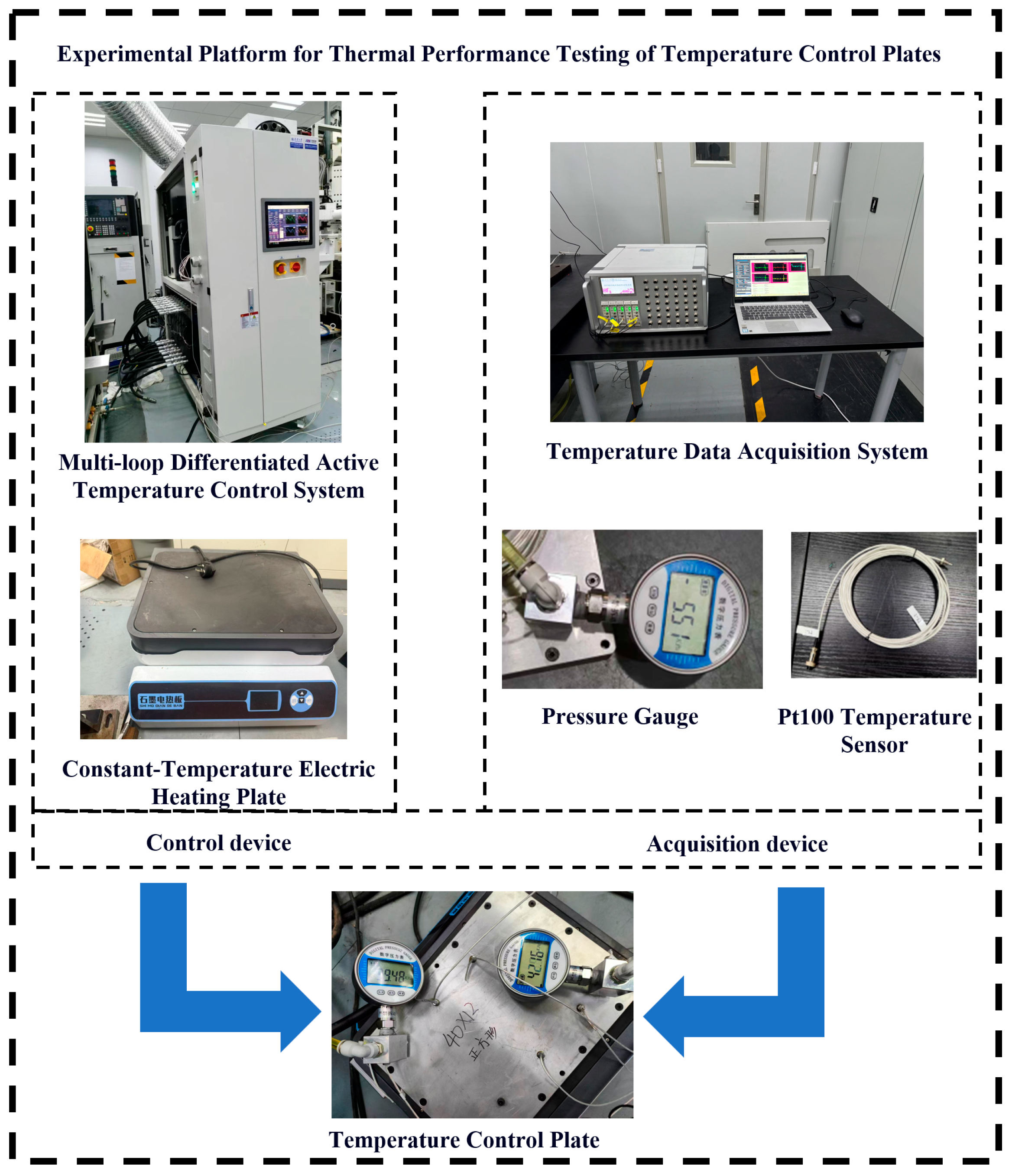
2.1. Experimental Platform and Testing Methods
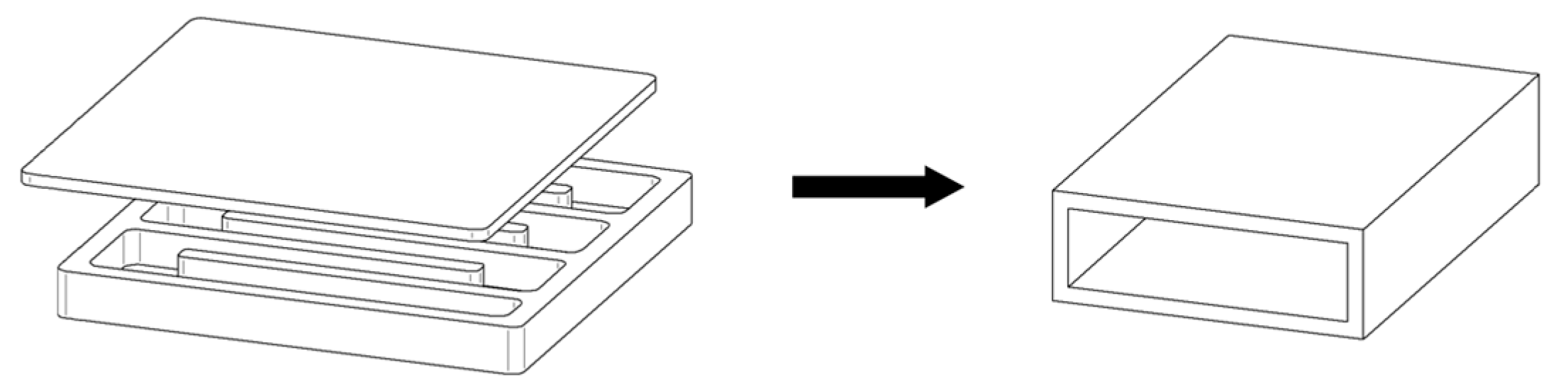
2.2. Establishment of the Numerical Simulation Model
3. Comprehensive Performance Evaluation and Modeling Method for the Temperature Control Plate
3.1. Definition of Performance Evaluation Indicators
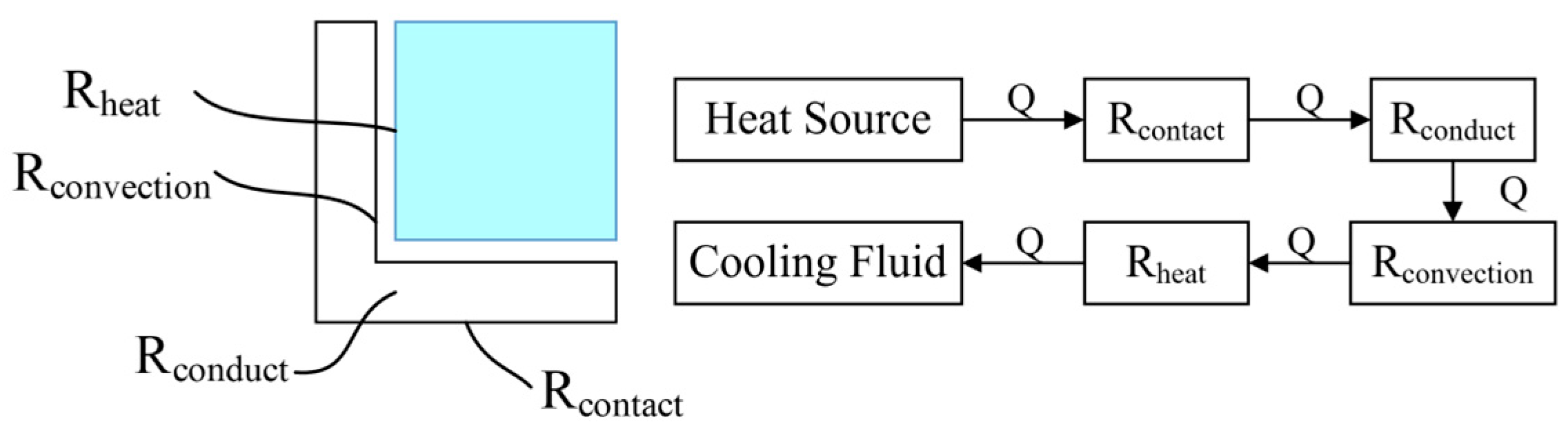
3.2. Equivalent Thermal Resistance Network and Heat-Transfer Power Model
3.3. Quantitative Relationship Between Inlet Flow Rate and Heat-Transfer Performance
3.4. Flow Resistance and Energy Efficiency Model
4. Results and Discussion
4.1. Validation of the Numerical Simulation Model
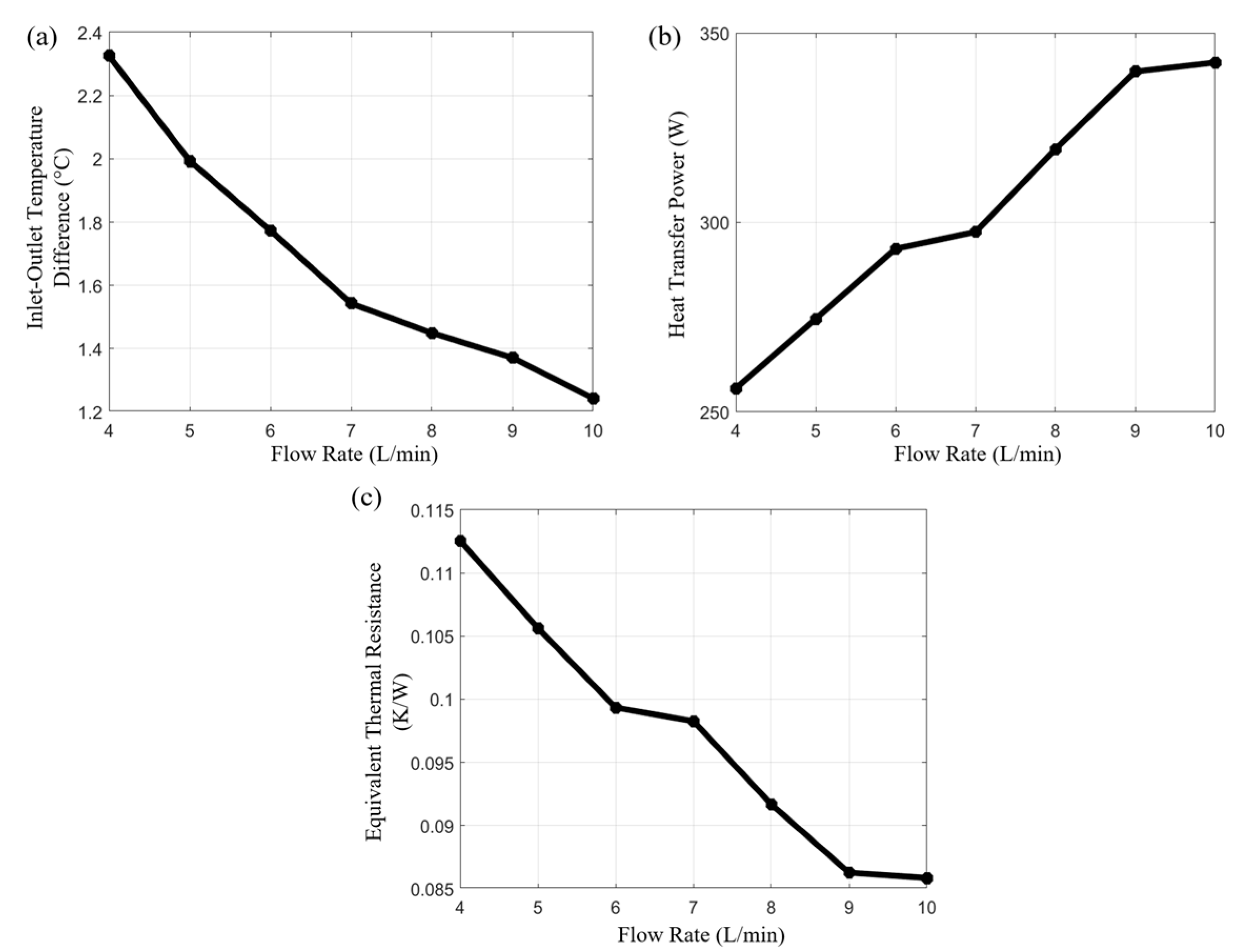
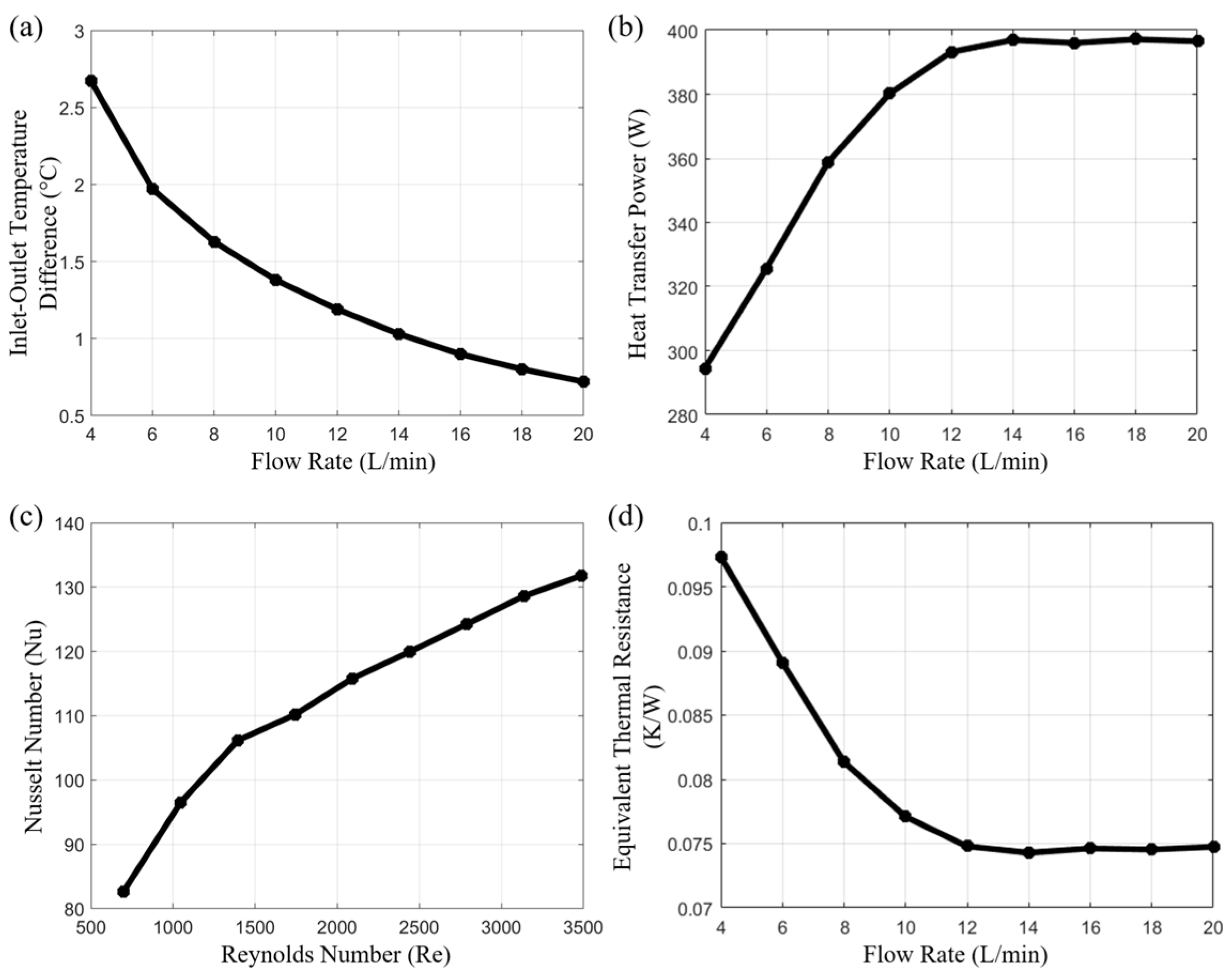
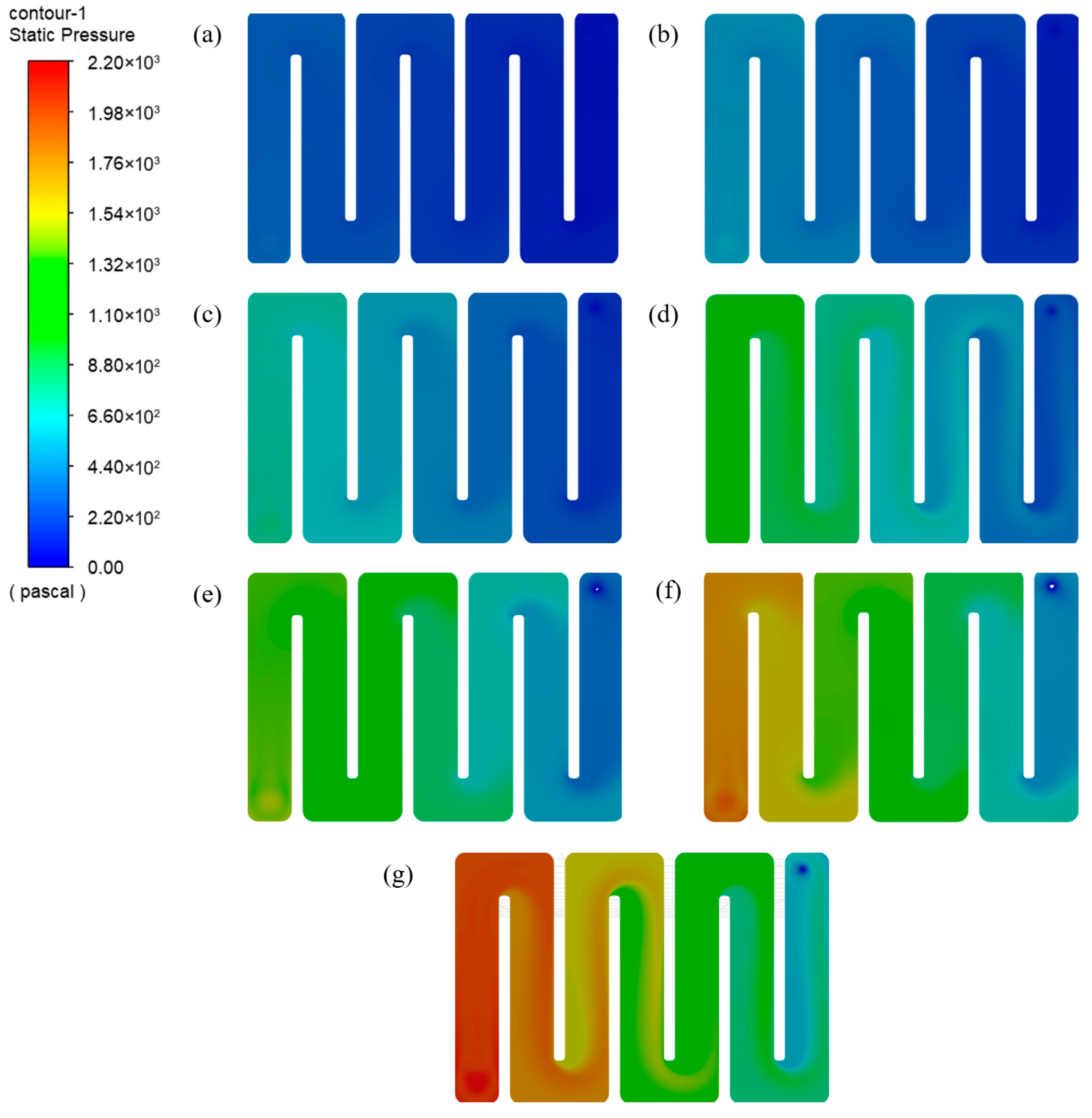
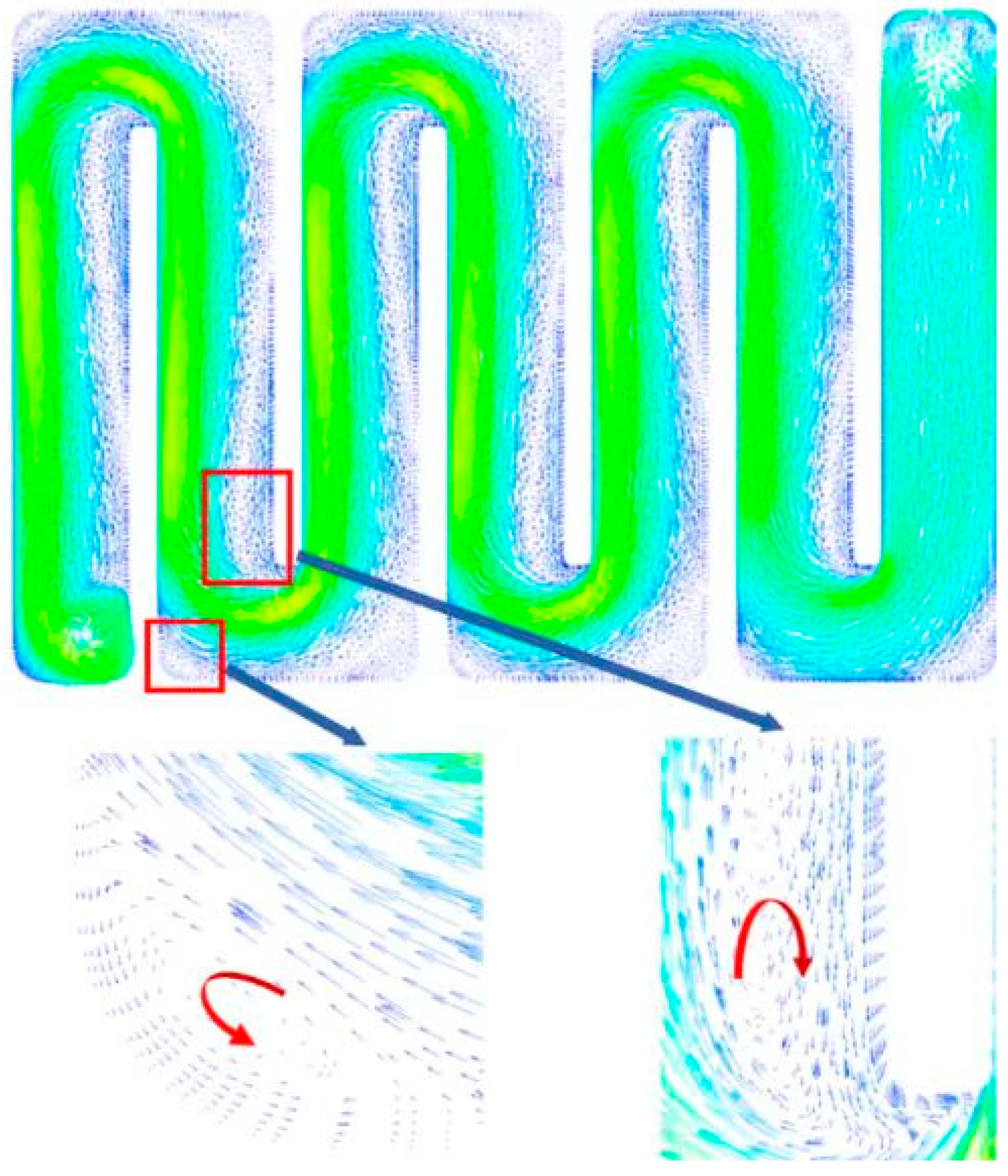
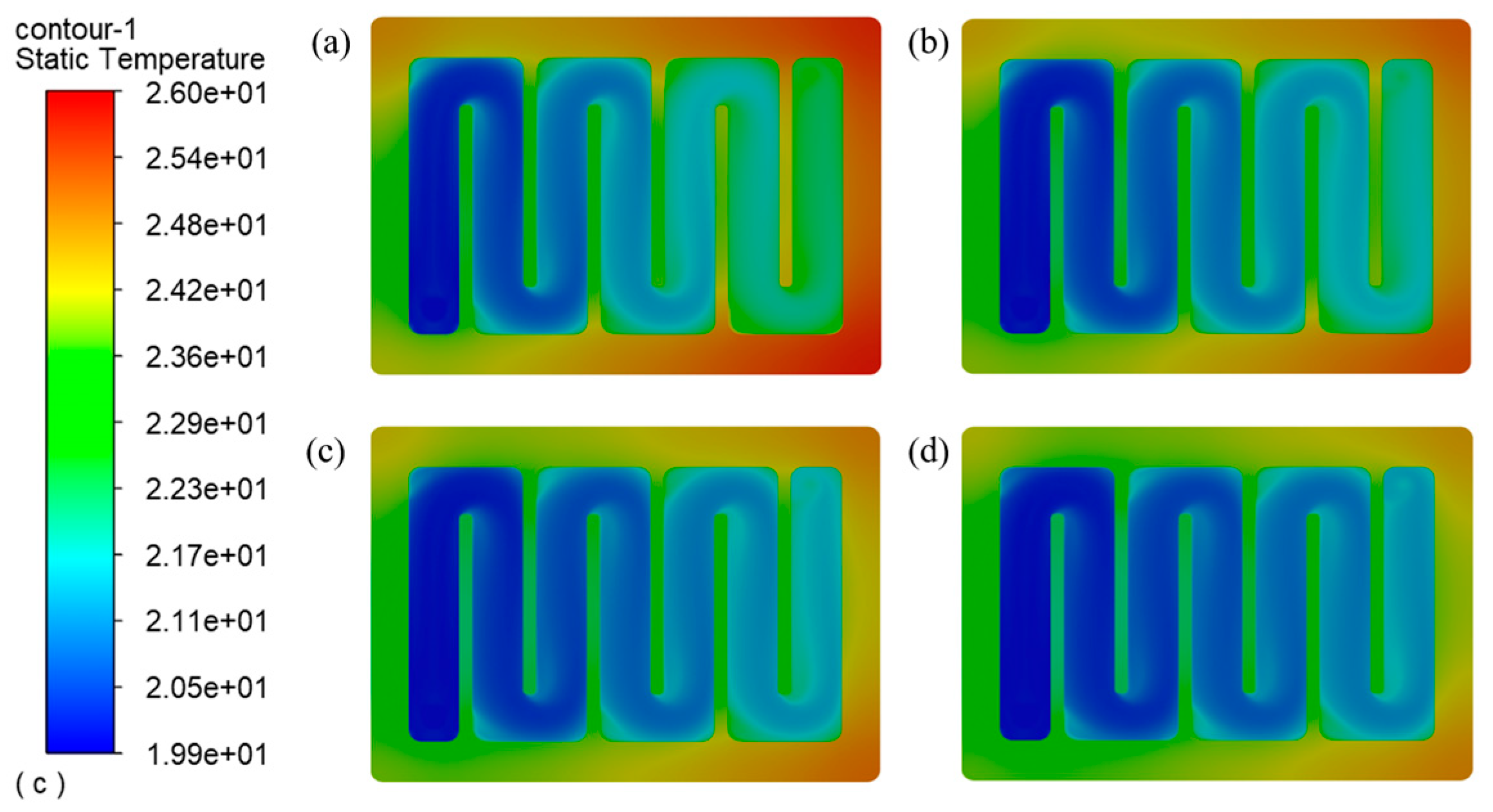
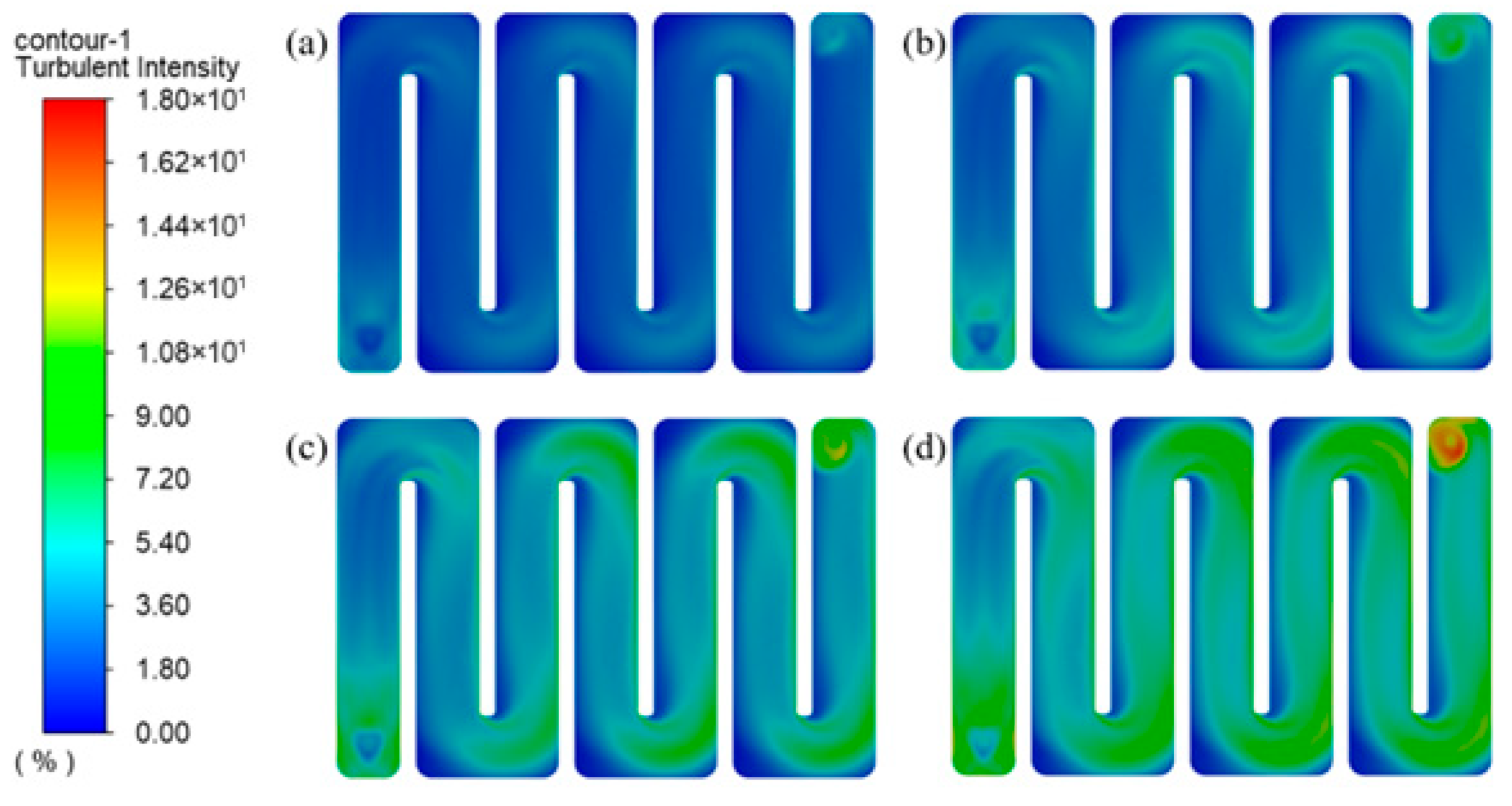
4.2. Effect of Inlet Flow Rate on Heat-Transfer and Flow Characteristics
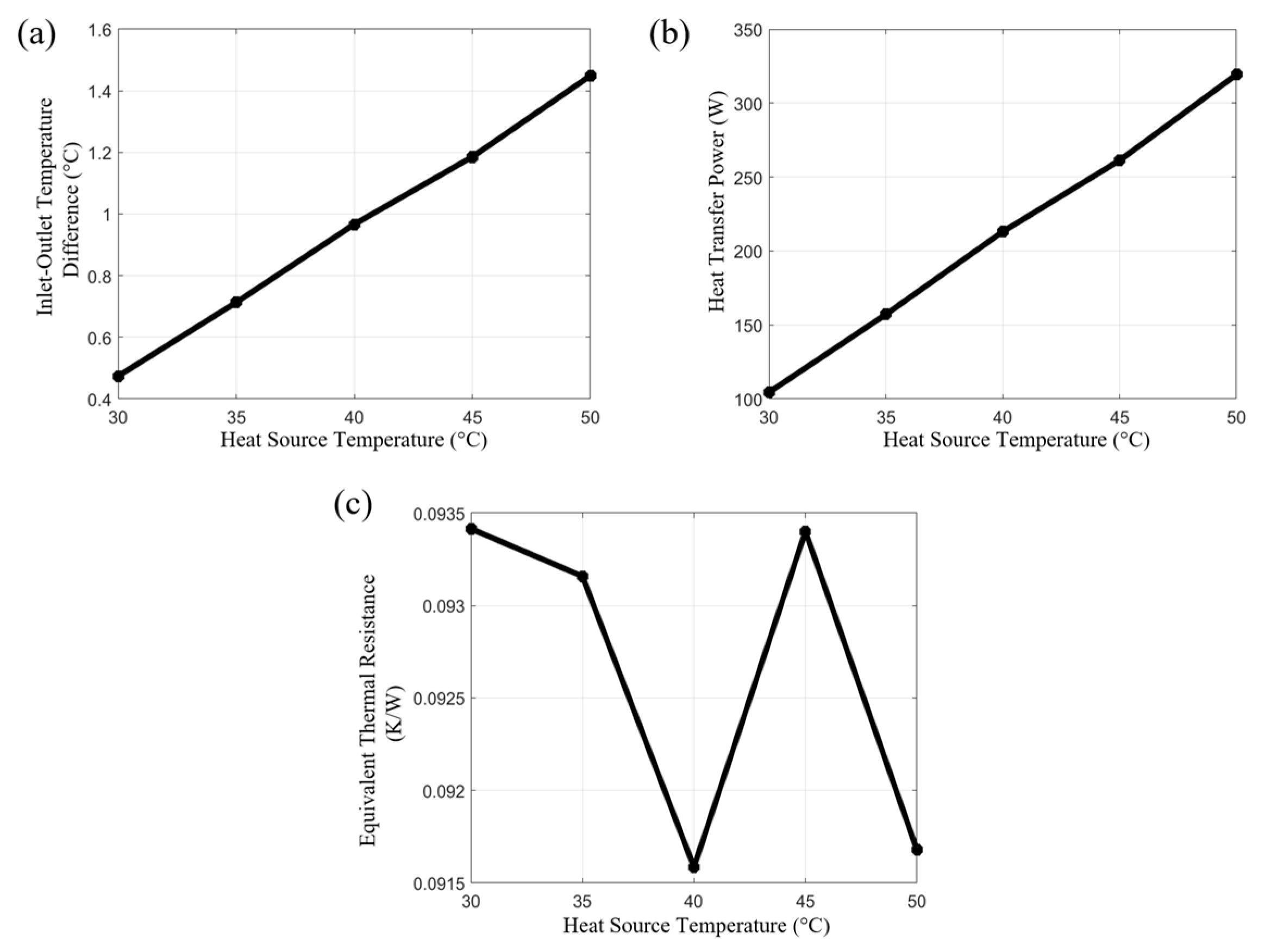
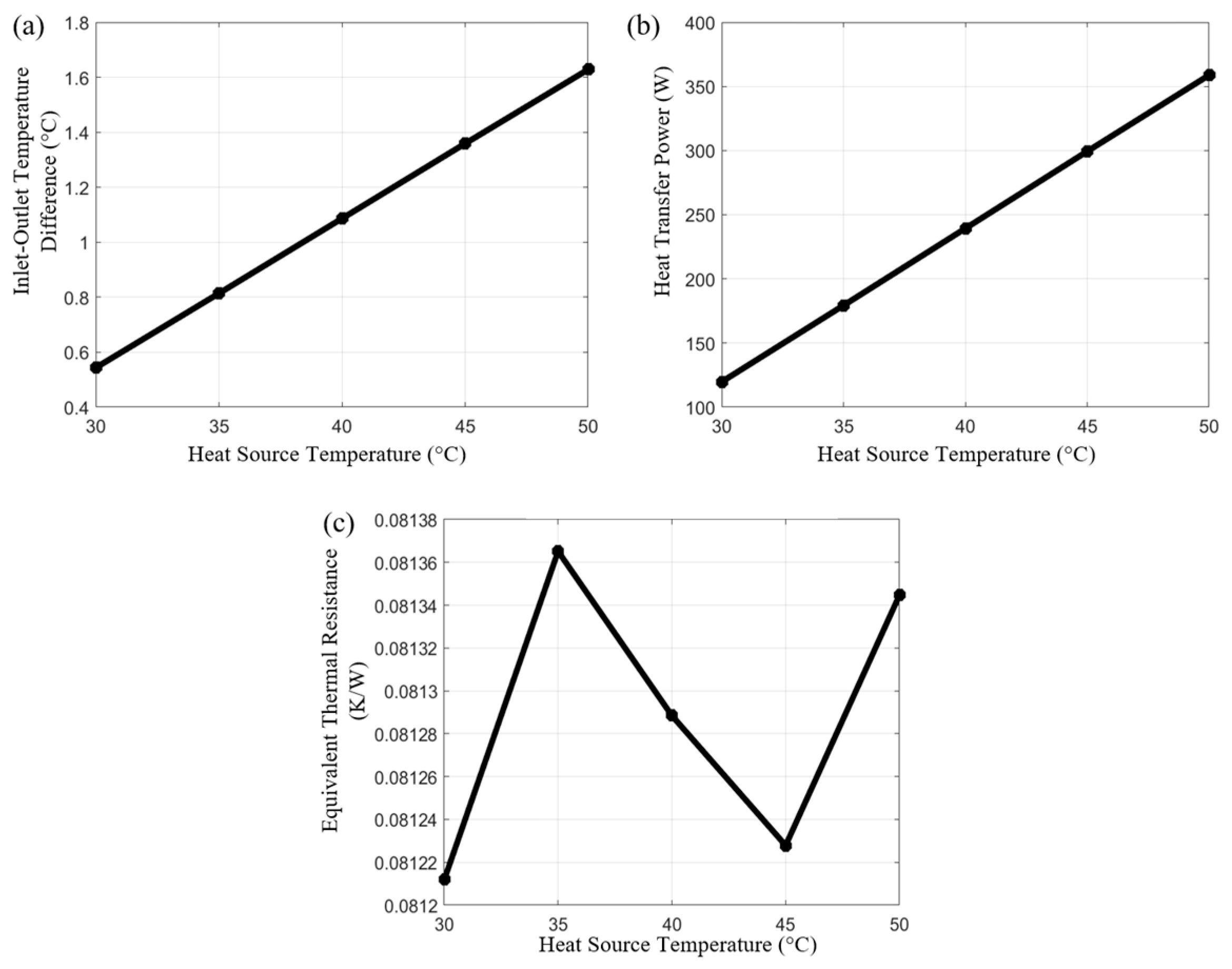
4.3. Effect of Heat-Source Temperature on Heat-Transfer Performance
5. Conclusions
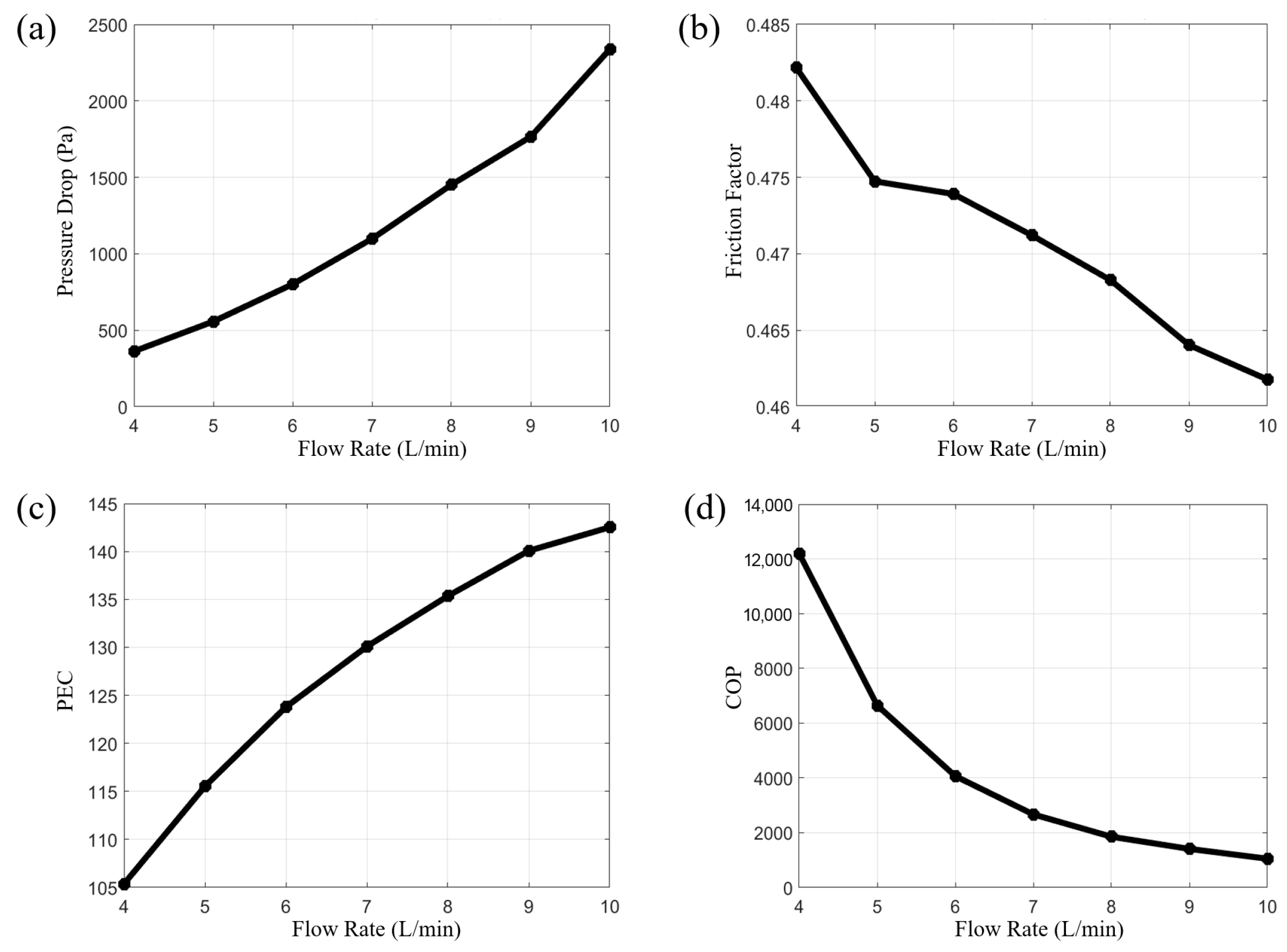
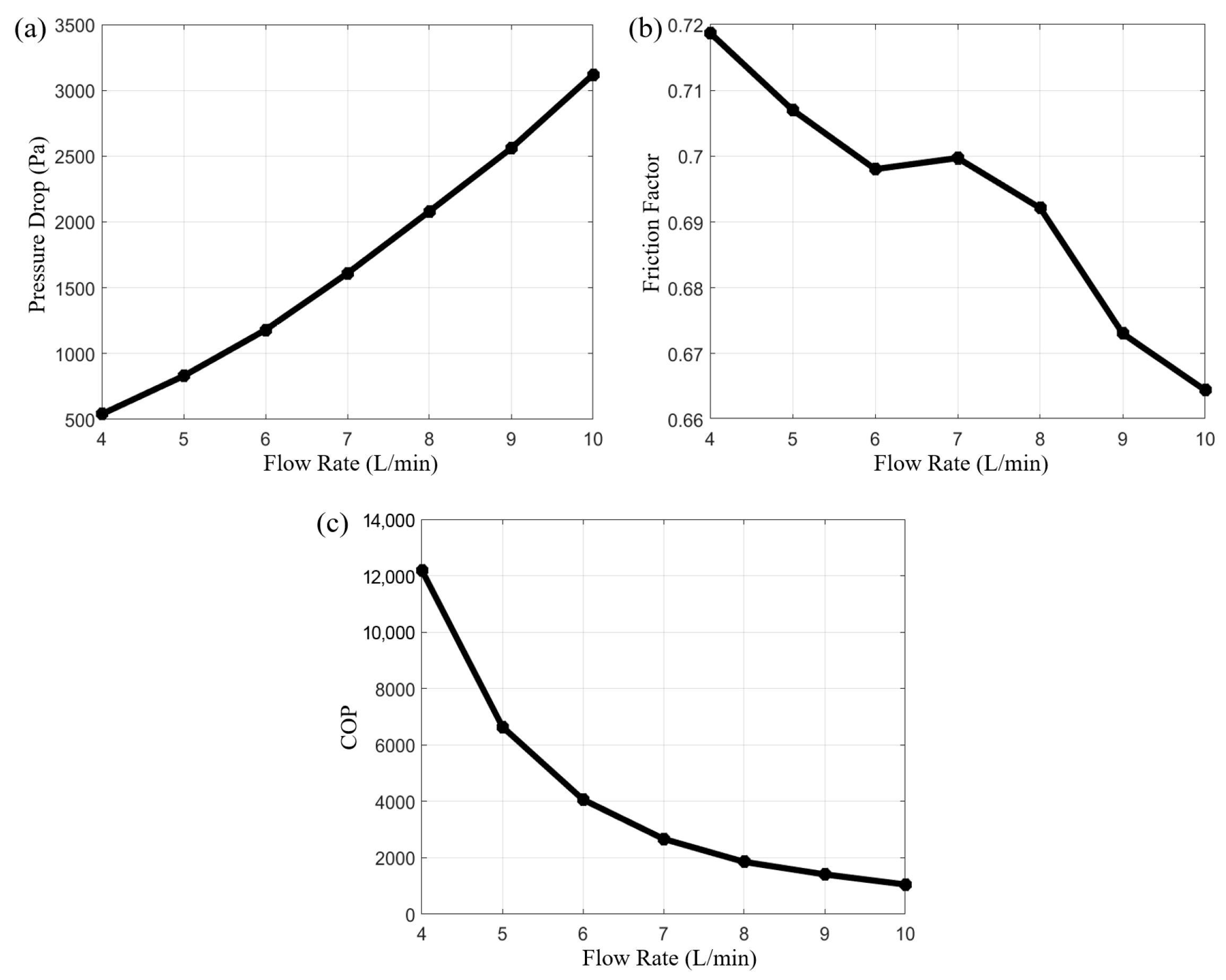
- Increasing the inlet flow rate enhances heat-transfer performance and reduces the equivalent thermal resistance. However, the increment in heat-transfer power gradually diminishes, while the pressure drop increases approximately in a quadratic manner and the COP decreases accordingly. This indicates that further improvement in heat transfer performance by simply increasing the flow rate is constrained by energy-efficiency limitations.
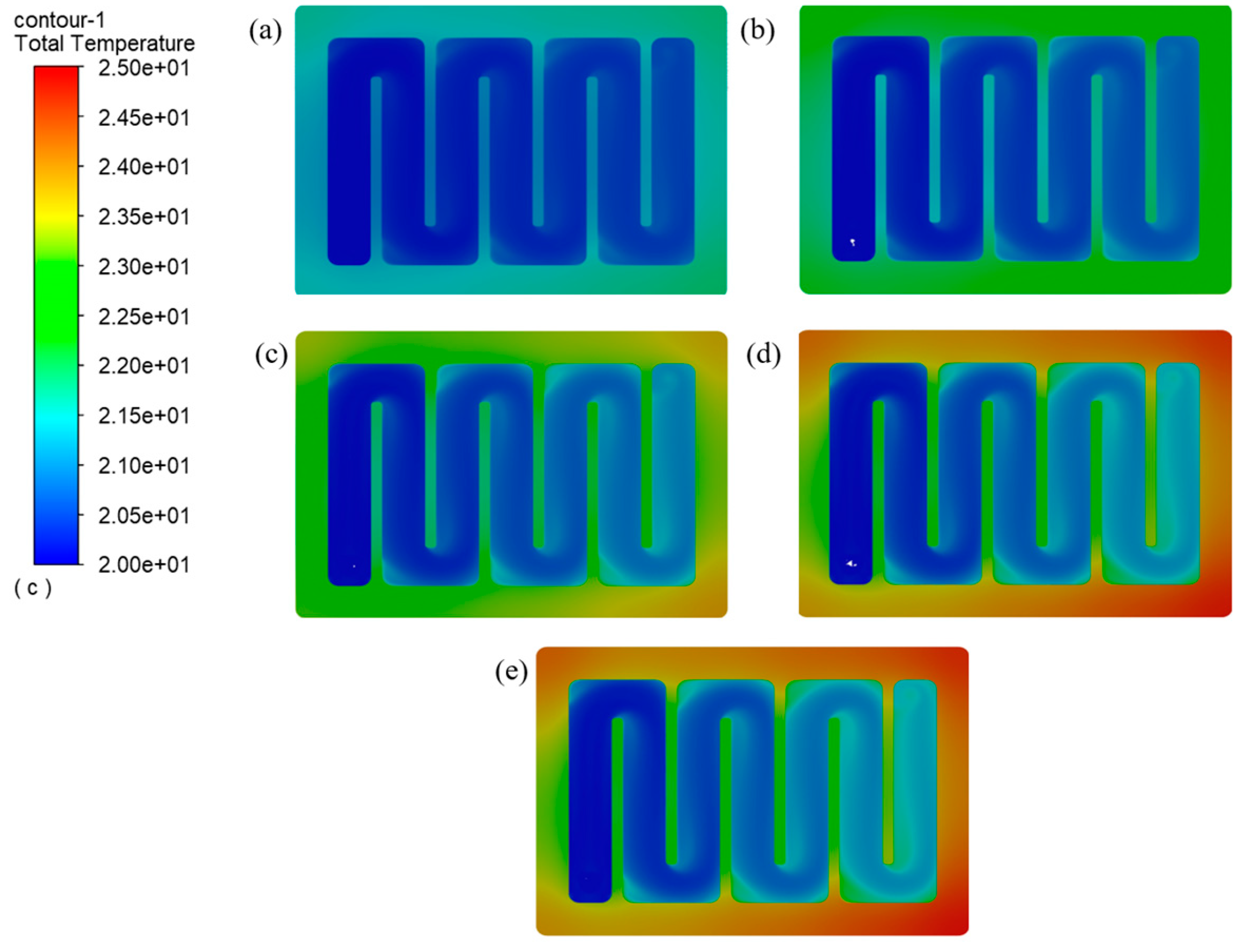
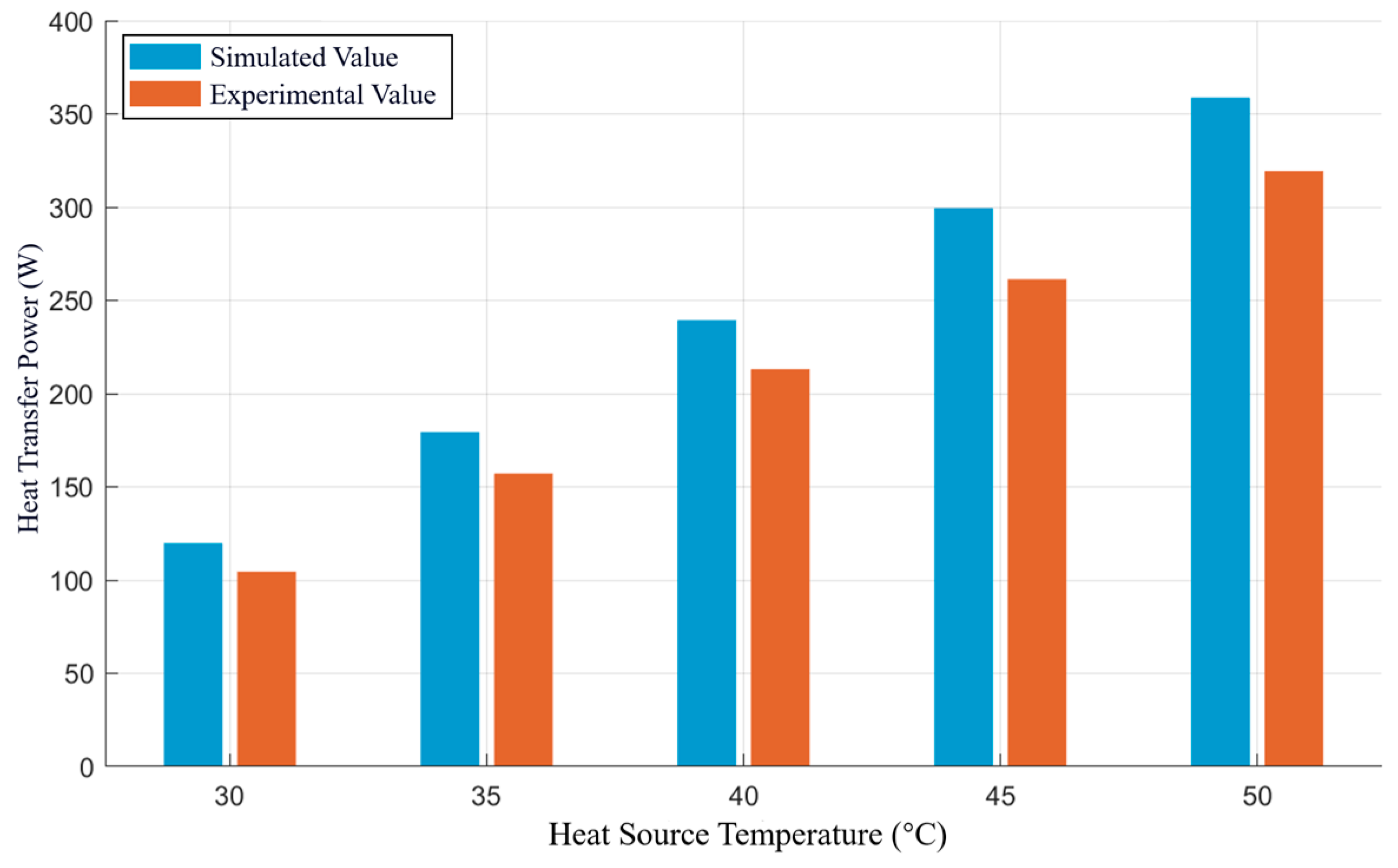
- Increasing the heat-source temperature primarily enhances heat-transfer power by strengthening the temperature-difference driving force, whereas the equivalent thermal resistance remains nearly unchanged. This suggests that heat-source temperature mainly affects the thermal driving potential rather than the intrinsic heat-transfer characteristics.
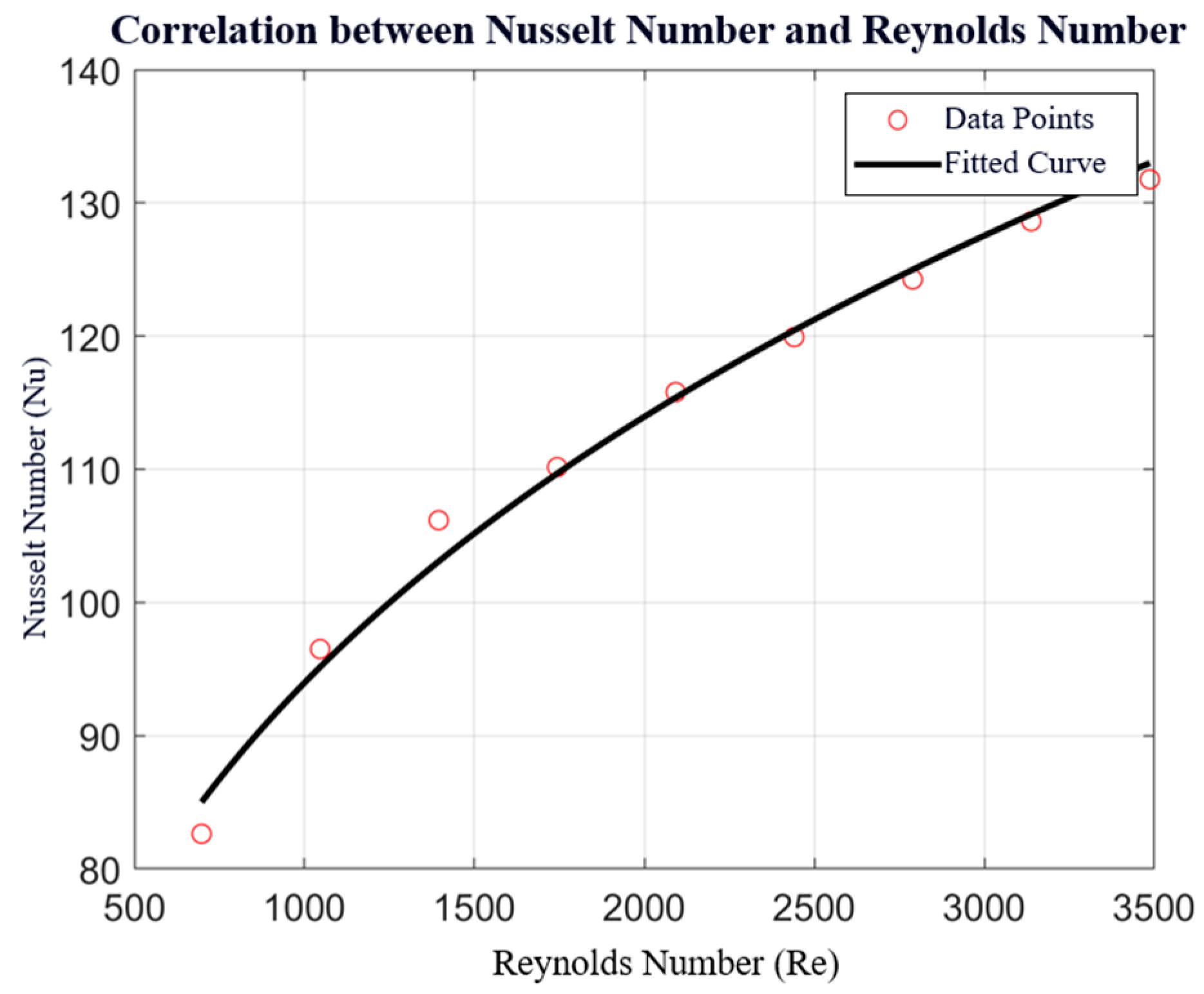
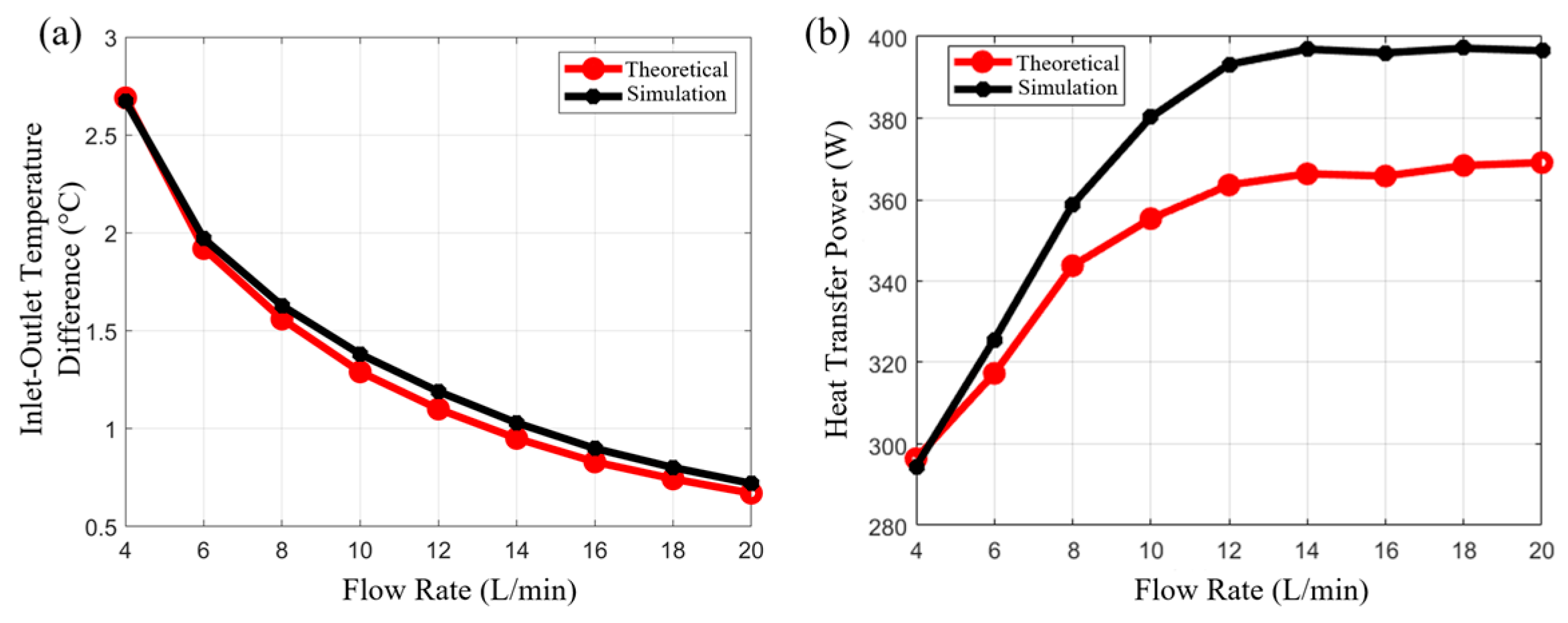
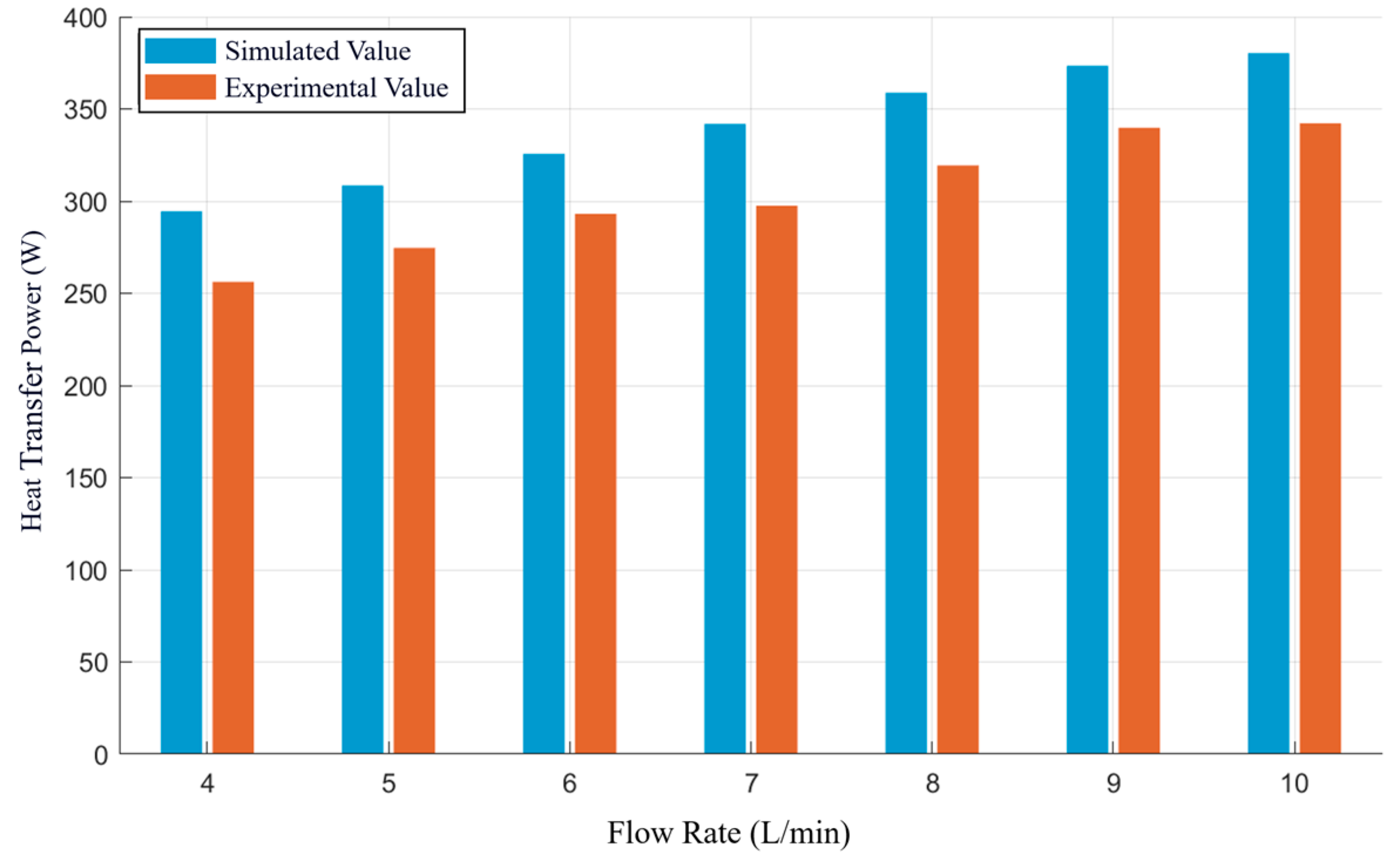
- When incorporating the Nusselt number–Reynolds number correlation derived from numerical simulations into the proposed model, the deviation between theoretical predictions and simulation results is within 10%. Experimental results further demonstrate that, within the inlet flow-rate range of 4–10 L/min, the heat-transfer power increases by approximately 33%, with simulation–experiment discrepancies below 15%. The deviation in pressure drop is mainly attributed to surface-roughness effects in practical flow channels.
Author Contributions
Funding
Data Availability Statement
Acknowledgments
Conflicts of Interest
Abbreviations
| CFD | Computational fluid dynamics |
| COP | Coefficient of performance |
| PEC | Performance evaluation criterion |
| Nu | Nusselt number |
| Re | Reynolds number |
| PID | Proportional–integral–derivative |
| TI | Turbulence intensity |
References
- Bryan, J. International Status of Thermal Error Research. CIRP Ann.-Manuf. Technol. 1990, 39, 645–656. [Google Scholar] [CrossRef]
- Jafari, D.; Wits, W.W. The utilization of selective laser melting technology on heat transfer devices for thermal energy conversion applications: A review. Renew. Sustain. Energy Rev. 2018, 91, 420–442. [Google Scholar] [CrossRef]
- Zhang, Z.; Wang, X.; Yan, Y. A review of the state-of-the-art in electronic cooling. e-Prime-Adv. Electr. Eng. Electron. Energy 2021, 1, 100009. [Google Scholar]
- Murshed, S.S.; De Castro, C.N. A critical review of traditional and emerging techniques and fluids for electronics cooling. Renew. Sustain. Energy Rev. 2017, 78, 821–833. [Google Scholar] [CrossRef]
- Lu, G.; Ye, Y.; Wang, J.; Jiao, B.; Kong, Y.; Liu, R. Embedded manifold microchannel cooling for chiplet thermal management. In Proceedings of the 2024 23rd IEEE Intersociety Conference on Thermal and Thermomechanical Phenomena in Electronic Systems (ITherm), Aurora, CO, USA, 28-31 May 2024; IEEE: New Tork, NY, USA, 2024; pp. 1–5. [Google Scholar]
- Bognár, G.; Takács, G.; Szabó, P.G. A novel approach for cooling chiplets in heterogeneously integrated 2.5-d packages applying microchannel heatsink embedded in the interposer. IEEE Trans. Compon. Packag. Manuf. Technol. 2023, 13, 1155–1163. [Google Scholar]
- Ambatipudi, K.K.; Rahman, M.M. Analysis of conjugate heat transfer in microchannel heat sinks. Numer. Heat Transf. Part A Appl. 2000, 37, 711–731. [Google Scholar]
- Beach, R.; Benett, W.; Freitas, B.; Mundinger, D.; Comaskey, B.; Solarz, R.; Emanuel, M. Modular microchannel cooled heatsinks for high average power laser diode arrays. IEEE J. Quantum Electron. 2002, 28, 966–976. [Google Scholar] [CrossRef]
- Zhang, Y.F.; Wang, P.; Gao, W.G.; Liu, T.; Guo, W.B.; Zhang, D.W. Closed-loop stability temperature control strategy for motorized spindle unit based on BP-PID. J. Tianjin Univ. (Sci. Technol.) 2017, 50, 885–891. [Google Scholar]
- Zheng, Y.; Gao, W.; Zhang, D.; Huang, T.; Zhao, X.; Chen, F. Active temperature control method based on time grating principle for the feed system of precision machine tool and its application. Int. J. Adv. Manuf. Technol. 2023, 124, 1537–1555. [Google Scholar] [CrossRef]
- Zheng, Y.; Weng, L.; Gao, W.; Fu, Z.; Zhao, Z.; Qi, J.; Shi, K.; Zhang, D.; Huang, T. Towards understanding thermal-stiffness coupling modeling and active temperature control method of machine tool feed system. Appl. Therm. Eng. 2025, 268, 125911. [Google Scholar] [CrossRef]
- Liu, Y.C.; Liao, C.W.; Lee, M.T. Active thermal balance control for improving orientation error of vertical machine tool spindle. Precis. Eng. 2024, 88, 686–698. [Google Scholar] [CrossRef]
- Salem, M.; Ali, R.; Elshazly, K. Experimental investigation of the performance of a hybrid photovoltaic/thermal solar system using aluminium cooling plates with straight and helical channels. Sol. Energy 2017, 157, 147–156. [Google Scholar] [CrossRef]
- Zhang, Y.; Zhang, X.; Li, M.; Liu, Z. Research on heat transfer enhancement and flow characteristic of heat exchange surface in cosine style runner. Heat Mass Transf. 2019, 55, 3117–3131. [Google Scholar] [CrossRef]
- Wang, H.; Gan, Y.; Luo, Q.; Li, Y.; Feng, J. A study on the effect of channel structures on flow and heat transfer performance of cold plates with double-layer serpentine microchannel. Appl. Therm. Eng. 2025, 259, 124944. [Google Scholar] [CrossRef]
- Feng, C.; Du, J.; Pan, X.; Wang, R. Proposal and optimization of a novel plates fin heat exchanger with hollow Turbulences for precooling by liquid nitrogen in hydrogen liquefaction. Int. Commun. Heat Mass Transf. 2024, 157, 107819. [Google Scholar] [CrossRef]
- Li, H.; Chen, L.; Zuo, H.; Zhang, B.; Jia, G. Performance enhancement of a battery thermal management system using novel liquid cold plates with micro-channel featuring pin fins. Energy 2024, 301, 131731. [Google Scholar] [CrossRef]
- Kong, J.; Yang, C.; Chen, X.; Chen, D.; Jin, Z.; Qian, J. A comparative study on thermohydraulic performance of multi-channel Turbulences and staggered Turbulences. Int. J. Therm. Sci. 2023, 192, 108426. [Google Scholar] [CrossRef]
- Wiriyasart, S.; Naphon, P. Liquid impingement cooling of cold plates heat sink with different fin configurations: High heat flux applications. Int. J. Heat Mass Transf. 2019, 140, 281–292. [Google Scholar] [CrossRef]
- Chen, S.; Peng, X.; Bao, N.; Garg, A. A comprehensive analysis and optimization process for an integrated liquid cooling plates for a prismatic lithium-ion battery module. Appl. Therm. Eng. 2019, 156, 324–339. [Google Scholar] [CrossRef]
- Zhou, Y.; Yu, J. Optimization design of falling film type plates-fin condenser/reboilers by minimizing specific entropy generation rate. Cryogenics 2019, 99, 25–31. [Google Scholar] [CrossRef]
- Minaei, A.; Talee, Z.; Safikhani, H.; Ghaebi, H. Thermal resistance capacity model for transient simulation of Earth-Air Heat Exchangers. Renew. Energy 2021, 167, 558–567. [Google Scholar] [CrossRef]
- Wang, Q.; Li, X.; Zhang, J.; Wang, T.; Ma, S.; Zhang, B.; Ma, T. Analysis methodology during heat transfer in fluid domain: Conduction-advection thermal resistance in parallel. Int. J. Heat Mass Transf. 2024, 226, 125491. [Google Scholar] [CrossRef]
- Wang, Q.; Ma, S.; Chang, H.; Li, X.; Zhang, B.; Ma, T. Local thermal resistance delamination method for precise analysis and optimization of heat transfer processes. Energy 2024, 304, 132171. [Google Scholar] [CrossRef]
- Wang, S.; Jian, G.; Wang, J.; Sun, L.; Wen, J. Application of entransy-dissipation-based thermal resistance for performance optimization of spiral-wound heat exchanger. Int. J. Heat Mass Transf. 2018, 116, 743–750. [Google Scholar]
- Chaoui, A.; Bouzid, S.; Aidi, M.; Bordja, L.; Poós, T. Comparative study of shell-and-tube heat exchanger designs for improved thermal performance and energy efficiency. Adv. Mech. Eng. 2025, 17, 16878132251408726. [Google Scholar] [CrossRef]
- Rabiee, A.; Ahmadian-Elmi, M.; Hajmohammadi, M.; Mohammadifar, M. Multi-objective optimization of rectangular microchannel heat sink based on entropy generation and hydro-thermal performance using NSGA-II algorithm. Int. Commun. Heat Mass Transf. 2023, 149, 107140. [Google Scholar]
- Wang, H.; Rose, J.W. Film condensation in horizontal microchannels: Effect of channel shape. In Proceedings of the ASME 3rd International Conference on Microchannels and Minichannels, Toronto, ON, Canada, 13–15 June 2005; Volume 41855, pp. 729–735. [Google Scholar]
- Sakanova, A.; Keian, C.C.; Zhao, J. Performance improvements of microchannel heat sink using wavy channel and nanofluids. Int. J. Heat Mass Transf. 2015, 89, 59–74. [Google Scholar] [CrossRef]
- Xia, G.D.; Jiang, J.; Wang, J.; Zhai, Y.L.; Ma, D.D. Effects of different geometric structures on fluid flow and heat transfer performance in microchannel heat sinks. Int. J. Heat Mass Transf. 2015, 80, 439–447. [Google Scholar] [CrossRef]
- Vinoth, R.; Sachuthananthan, B.; Vadivel, A.; Balakrishnan, S.; Raj, A.G.S. Heat transfer enhancement in oblique finned curved microchannel using hybrid nanofluid. Int. J. Therm. Sci. 2023, 183, 107848. [Google Scholar]
- Shafeie, H.; Abouali, O.; Jafarpur, K.; Ahmadi, G. Numerical study of heat transfer performance of single-phase heat sinks with micro pin-fin structures. Appl. Therm. Eng. 2013, 58, 68–76. [Google Scholar] [CrossRef]
- Kuiphuis, D.J.G.; Terpstra, M.J.; Wits, W.W.; Rohlfs, W. Thermal-hydrodynamic modeling and design for microchannel cold plates subjected to multiple heat sources. Appl. Therm. Eng. 2024, 125220. [Google Scholar]
- önül, A.; Okbaz, A.; Kayaci, N.; Dalkilic, A.S. Flow optimization in a microchannel with vortex generators using genetic algorithm. Appl. Therm. Eng. 2022, 201, 117738. [Google Scholar] [CrossRef]
- Al-Neama, A.F.; Kapur, N.; Summers, J.; Thompson, H.M. An experimental and numerical investigation of the use of liquid flow in serpentine microchannels for microelectronics cooling. Appl. Therm. Eng. 2017, 116, 709–723. [Google Scholar] [CrossRef]
- Yang, K.; Zuo, C. A novel multi-layer manifold microchannel cooling system for concentrating photovoltaic cells. Energy Convers. Manag. 2015, 89, 214–221. [Google Scholar] [CrossRef]
- Brazhenko, V.; Qiu, Y.; Cai, J.; Wang, D. Thermal evaluation of multilayer wall with a hat-stringer in aircraft design. Stroj. Vestn.-J. Mech. Eng. 2022, 68, 635–641. [Google Scholar] [CrossRef]
- Zimparov, V.D.; Vulchanov, N.L. Performance evaluation criteria for enhanced heat transfer surfaces. Int. J. Heat Mass Transf. 1994, 37, 1807–1816. [Google Scholar] [CrossRef]
- Shen, H.; Liu, H.; Shao, X.; Xie, G.; Wang, C.-C. Thermofluids performances on innovative design with multi-circuit nested loop applicable for double-layer microchannel heat sinks. Appl. Therm. Eng. 2023, 219, 119699. [Google Scholar] [CrossRef]
- Shen, H.; Zhang, Z.; Ge, X.; Liu, H.; Xie, G.; Wang, C.-C. Thermal analysis and experimental verification on double-layer microchannel heat sinks with impact jet nested arrays. Int. J. Heat Mass Transf. 2023, 209, 124169. [Google Scholar] [CrossRef]
- Cao, X.; Lan, X.; Gao, S.; Wang, C.-C.; Shen, H. Thermal-Dynamic analysis research on the designed Impingement-Jet Double-Layer nested microchannel heat sinks with vertical truncated bifurcation. Appl. Therm. Eng. 2024, 243, 122585. [Google Scholar] [CrossRef]

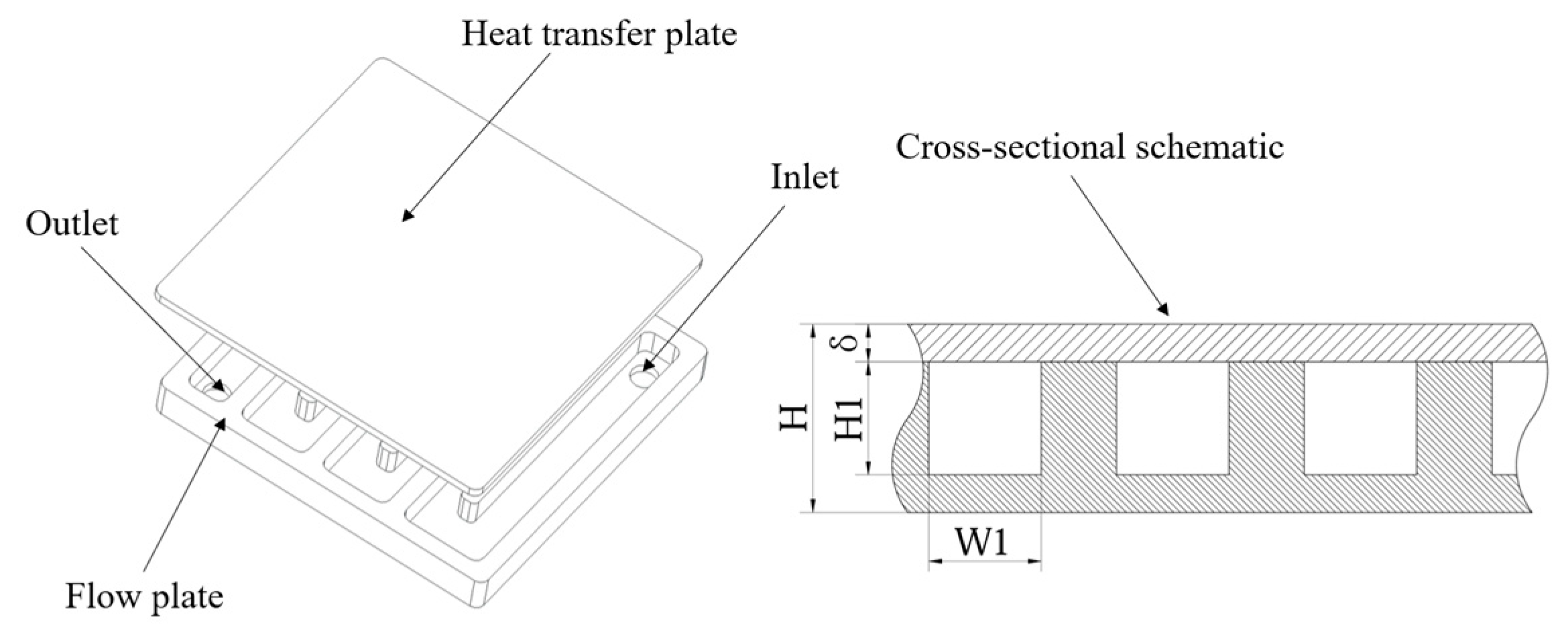








| Model Parameter | Value |
|---|---|
| Length (L, m) | 1.784 |
| Heat Transfer Plate Thickness (δ, m) | 0.008 |
| Overall Thickness (H, m) | 0.028 |
| Overall Width (W, m) | 0.071 |
| Property | Aluminum Alloy | No. 2 Spindle Oil |
|---|---|---|
| Density (kg/m3) | 2719 | 854 |
| Thermal Conductivity [W/(m·K)] | 170 | 0.14 |
| Specific Heat Capacity [J/(kg·K)] | 871 | 1935.2 |
| Dynamic Viscosity (pa·s) | - | 0.00314 |
Disclaimer/Publisher’s Note: The statements, opinions and data contained in all publications are solely those of the individual author(s) and contributor(s) and not of MDPI and/or the editor(s). MDPI and/or the editor(s) disclaim responsibility for any injury to people or property resulting from any ideas, methods, instructions or products referred to in the content. |
© 2026 by the authors. Licensee MDPI, Basel, Switzerland. This article is an open access article distributed under the terms and conditions of the Creative Commons Attribution (CC BY) license.
Share and Cite
Zhoujie, Z.; Chao, G.; Xu, Z.; Yuxuan, R.; Lingtao, W.; Weiguo, G. Comprehensive Performance Modeling and Evaluation Method for Machine-Tool Thermal Control Plates Based on an Equivalent Thermal Resistance Network. Machines 2026, 14, 378. https://doi.org/10.3390/machines14040378
Zhoujie Z, Chao G, Xu Z, Yuxuan R, Lingtao W, Weiguo G. Comprehensive Performance Modeling and Evaluation Method for Machine-Tool Thermal Control Plates Based on an Equivalent Thermal Resistance Network. Machines. 2026; 14(4):378. https://doi.org/10.3390/machines14040378
Chicago/Turabian StyleZhoujie, Zhao, Gao Chao, Zhou Xu, Ran Yuxuan, Weng Lingtao, and Gao Weiguo. 2026. "Comprehensive Performance Modeling and Evaluation Method for Machine-Tool Thermal Control Plates Based on an Equivalent Thermal Resistance Network" Machines 14, no. 4: 378. https://doi.org/10.3390/machines14040378
APA StyleZhoujie, Z., Chao, G., Xu, Z., Yuxuan, R., Lingtao, W., & Weiguo, G. (2026). Comprehensive Performance Modeling and Evaluation Method for Machine-Tool Thermal Control Plates Based on an Equivalent Thermal Resistance Network. Machines, 14(4), 378. https://doi.org/10.3390/machines14040378