
Article

Optimization Design of Pneumatic Heat-Generating Blower Impeller Based on Kriging Model and NSGA-II

1
College of Mechanical Engineering, Liaoning Petrochemical University, Fushun 113001, China
2
College of Petroleum Engineering, Liaoning Petrochemical University, Fushun 113001, China
3
College of Engineering, Shenyang Agricultural University, Shenyang 110866, China
*
Author to whom correspondence should be addressed.
Machines 2026, 14(4), 379; https://doi.org/10.3390/machines14040379
Submission received: 24 January 2026 / Revised: 2 March 2026 / Accepted: 5 March 2026 / Published: 30 March 2026
(This article belongs to the Section Turbomachinery)

Abstract

This study aims to improve the outlet temperature performance of a pneumatic heat-generating blower and investigate the influence of turbulence on the outlet temperature. Based on the heat generation mechanism and structural principle, mathematical models are developed for key components including the impeller and flow channel. The Kriging surrogate model and NSGA-II multi-objective genetic algorithm are adopted to optimize the aerodynamic performance responses of the impeller structural parameters. After comprehensive analysis, an optimal parameter combination is selected from the Pareto solution set for CFD numerical simulation. The results show that the optimization effectively improves the outlet temperature and turbulent kinetic energy distribution. The numerical results agree well with the optimization outcomes, verifying the reliability and accuracy of the proposed method. These findings provide a reference for the multi-physics coupled optimal design of blower blades.

1. Introduction

The pneumatic heat-generating blower is a spark-free heat source device that is widely applied in explosion-proof environments with stringent safety requirements, including the petroleum, chemical, gas, mining, and paint-spraying industries [1]. As the core component of the pneumatic heat-generating blower, the blade’s structural rationality directly influences the overall configuration and operational performance of the entire device [2]. Aerodynamic optimization design of blade geometry is a key technical approach to achieving high-loading and high-performance operation of turbomachinery. For the pneumatic heat-generating blower investigated in this study, the internal flow is complex and the temperature rise is sensitive to the blade structure. This type of blower presents specific optimization requirements, including temperature elevation, turbulence suppression, and energy loss reduction. Therefore, the development of dedicated optimization algorithms and strategies for such blowers represents an important research direction in the field of turbomachinery optimization design.
In China and globally, experts and scholars have conducted extensive and in-depth investigations on the design and parameter optimization of blower impellers. Zhu et al. and Kim et al. [3,4] conducted an optimization design of the axial flow fan blade structure by constructing a proxy model and employing genetic algorithms and three-dimensional optimization methods. Kim et al. [5] optimized the aerodynamic performance of jet fans for tunnel ventilation using the Prediction Error Squared Average (PBA) model. Jia et al. [6] proposed an inverse design method for fan blade profiles based on conditional invertible neural networks, which, combined with a Gaussian process regression surrogate model, enables the direct generation of blade profiles that meet specified aerodynamic performance requirements, effectively addressing the issues of excessive iterations and low efficiency inherent in traditional design methods. Joly et al. [7] performed an optimal design for compact high-load fans using a multi-objective algorithm that integrates computational fluid dynamics (CFD) and computational structural mechanics (CSM). Yang et al. [8] optimized the structural parameters of centrifugal fans in automotive air conditioning systems using the response surface methodology, with shock absorption and noise reduction as the objective functions. Ji et al. [9] parametrically characterized the blade profile using a third-order uniform B-spline curve, and completed the blade optimization design by combining a radial basis function (RBF) surrogate model with the L-SHADE algorithm. This optimization increased the power coefficient of the water turbine by 7.07% at a tip speed ratio of 1, thus significantly improving the hydraulic energy capture efficiency. Heo et al. [10] regarded the fan efficiency as the objective function and optimized the structural parameters of the forward-curved fan by means of a neural network model. Song et al. and Chen et al. [11,12] optimized the blade section profiles of a transonic axial-flow fan using the Cooperative Coevolutionary Algorithm (CCEA) and an adaptively updated Kriging surrogate model. Kong et al. [13] proposed a method for low-pressure axial-flow fans, which integrates CFD and a surrogate-assisted multi-objective optimization process. Wang et al. [14] optimized blade geometries using the Soft Actor–Critic (SAC) deep reinforcement learning algorithm and constructed a multilayer perceptron surrogate model to predict aerodynamic responses. This model demonstrated exceptionally high accuracy in forecasting lift and drag coefficients. Kim et al. [15] optimized the blades of centrifugal fans with fan efficiency as the objective function, utilizing various optimization algorithms.
However, while the aforementioned studies have employed diverse research methods to optimize the structural design of various types of fan blades—with the aim of enhancing fan performance—relatively few studies have focused on the performance optimization for the impellers of pneumatic heat-generating blower. Therefore, this study integrates computational fluid dynamics (CFD), surrogate modeling, and genetic algorithms (GA). With turbulent kinetic energy in the impeller region and outlet gas temperature as the objective functions, a Kriging surrogate model was established. The multi-objective genetic optimization algorithm NSGA-II was employed for solving, and the key structural parameters of the pneumatic heat-generating blower were optimized.

2. Materials and Methods

2.1. Component Structure

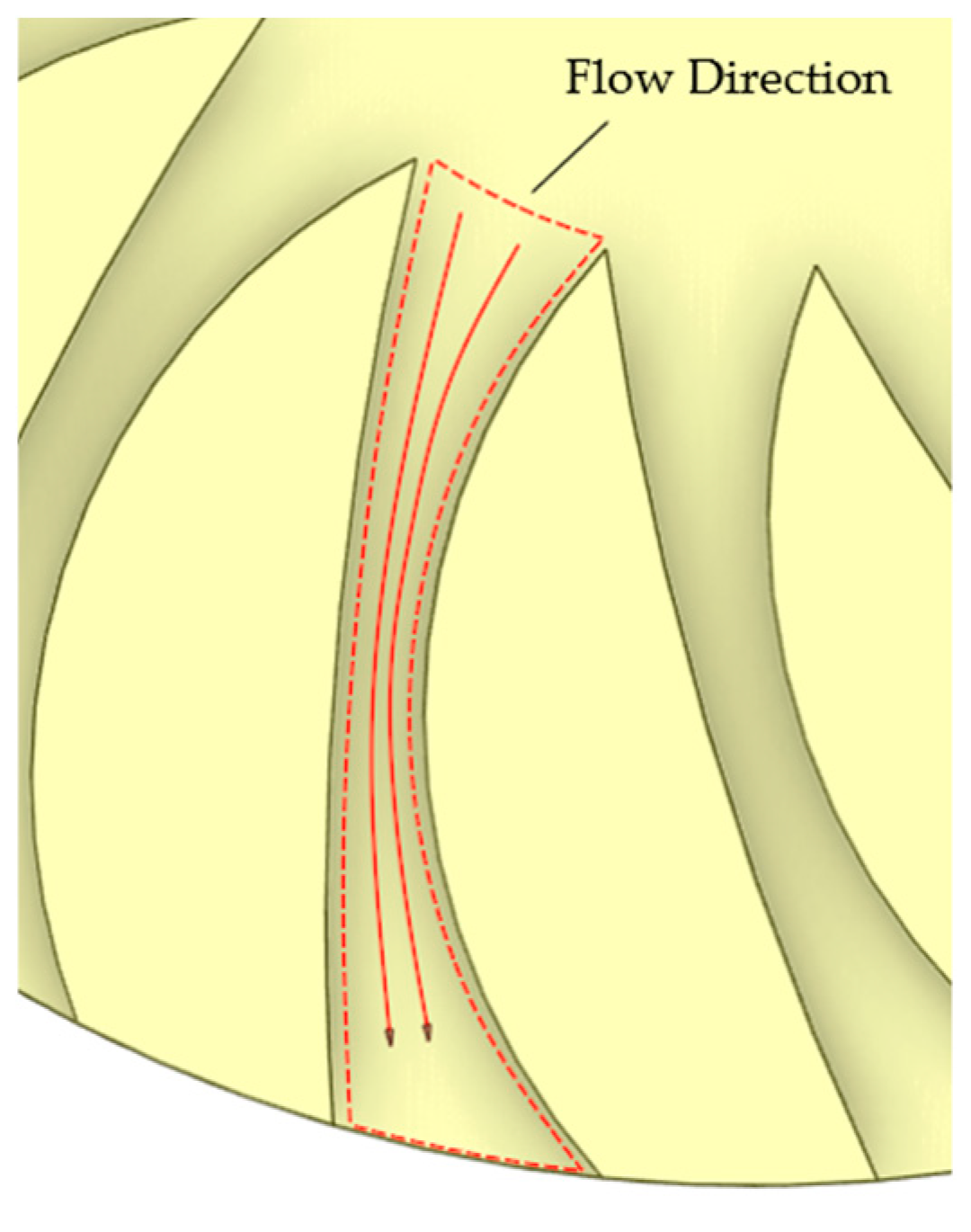
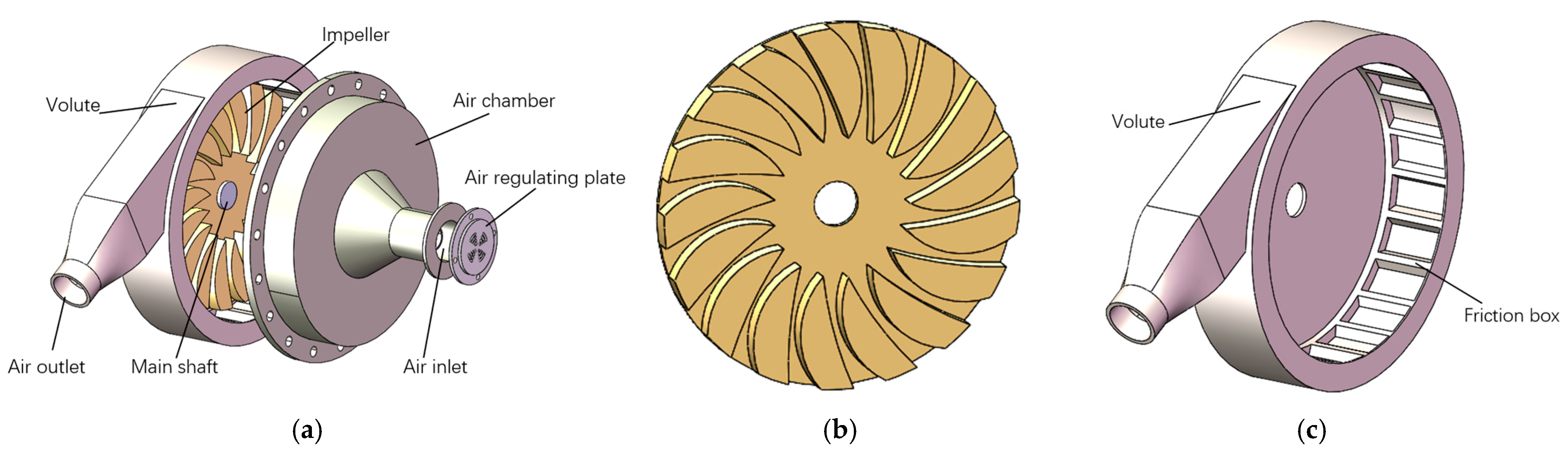
The pneumatic heat-generating blower, as shown in Figure 1, is composed of key components such as a volute, impeller, main shaft, air regulating plate, and air chamber. The volute is fastened to the frame, and the air chamber is bolted to the volute, collectively forming the compression space of the pneumatic device. Several blades are uniformly welded onto the disc, thereby forming an impeller. The impeller is rigidly connected to the main shaft and is capable of rotating relative to the volute. The air regulating plate consists of two metal circular plates with mutual rotational degrees of freedom. Mounted on one side of the air chamber, it enables adjustment of the air intake rate of the pneumatic heat-generating blower by manipulating the relative angular positions of the two metal plates. This, in turn, indirectly regulates parameters including the blower’s outlet air volume, wind speed, and pressure. The flow channel refers to an enclosed or semi-enclosed passage within the blower that facilitates fluid flow, as shown in Figure 2.

2.2. Working Principle and Features

During operation, ambient air enters the air chamber via the air inlet. As the impeller rotates at high speed, the air flows radially outward through the flow passages formed between adjacent blades. When the trailing edges of the rotating blades interact with the annular cavity on the inner wall of the volute, the air is pressurized due to the high-speed rotation of the impeller. Additionally, frictional heating occurs, and there is an exchange of energy among gas molecules. These processes jointly induce a temperature rise. Once heated, the air is discharged through the air outlet via the impeller’s rotation, thereby accomplishing the conversion of the equipment’s mechanical energy into the air’s kinetic energy and thermal energy [16].
The core characteristic of the pneumatic heat-generating blower lies in that the mechanical energy input by the shaft is not mainly used to generate pressure rise. Instead, through the high-speed rotation of the gas inside the impeller, the energy exchange among the gas molecules, and the friction between the gas and the wall surface, the mechanical energy is converted into heat energy. This is fundamentally different from conventional fans, which aim to increase pressure, and electric heaters, which aim at direct electro-thermal conversion.
According to the working principle of the pneumatic heat-generating fan, a rational flow channel structure can effectively mitigate vortex-induced losses within the channel [17]. Specifically, optimizing the flow channel structural parameters constitutes a key factor in enhancing the blower’s heat generation efficiency.
In comparison with conventional heating devices, this equipment offers the following advantages:
(1)
No additional heat sources or heat transfer media are required; the heating process can be accomplished solely via mechanical energy. Consequently, it is particularly suitable for fire- and explosion-prone environments, such as the petroleum and chemical industries.
(2)
Both heat generation efficiency and heat transfer efficiency are high, allowing for rapid air heating within a short timeframe.
(3)
The equipment utilizes electrical energy as its energy source and generates no pollutants, thereby exhibiting environmental friendliness.

2.3. Impeller Structural Design

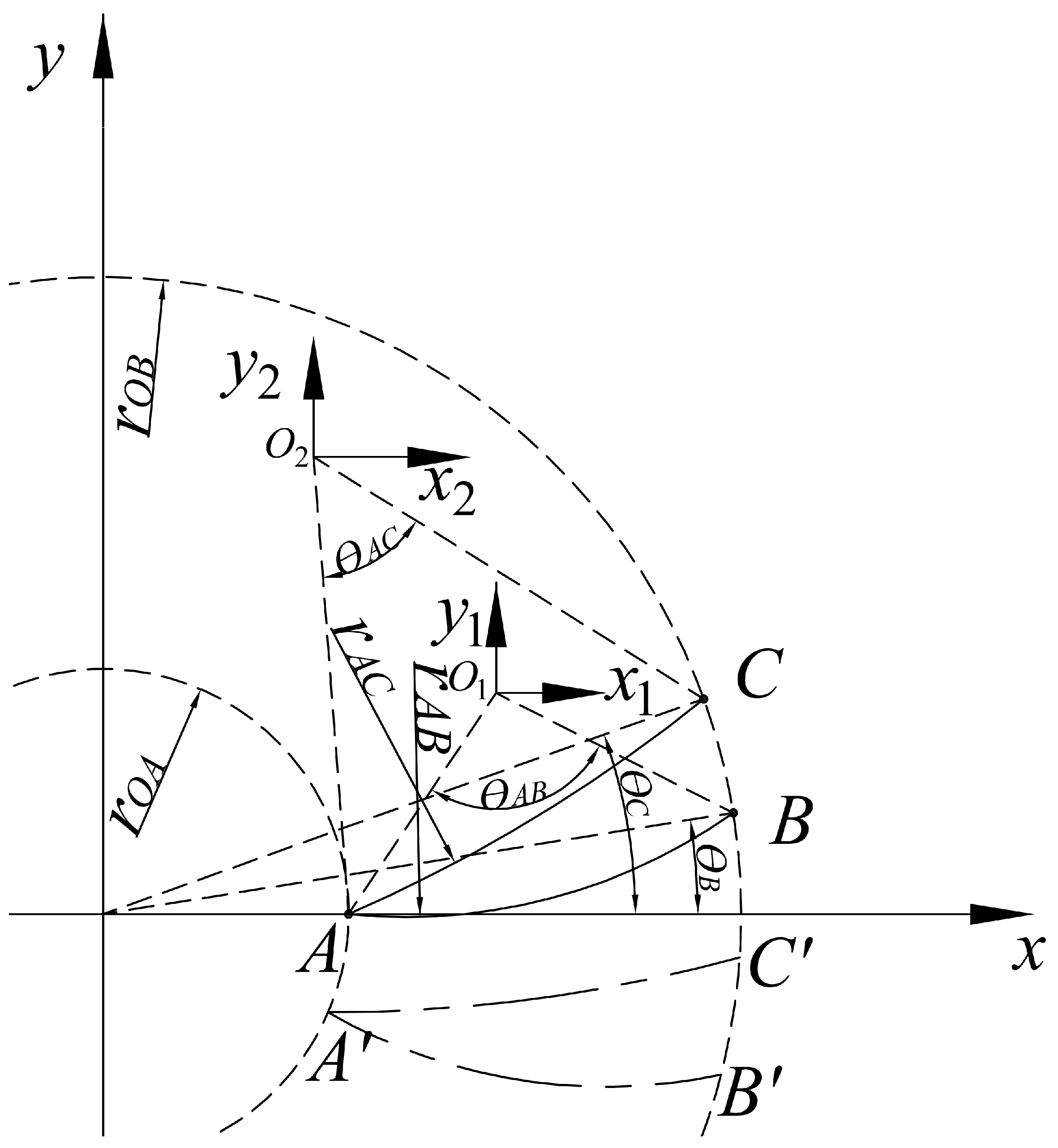
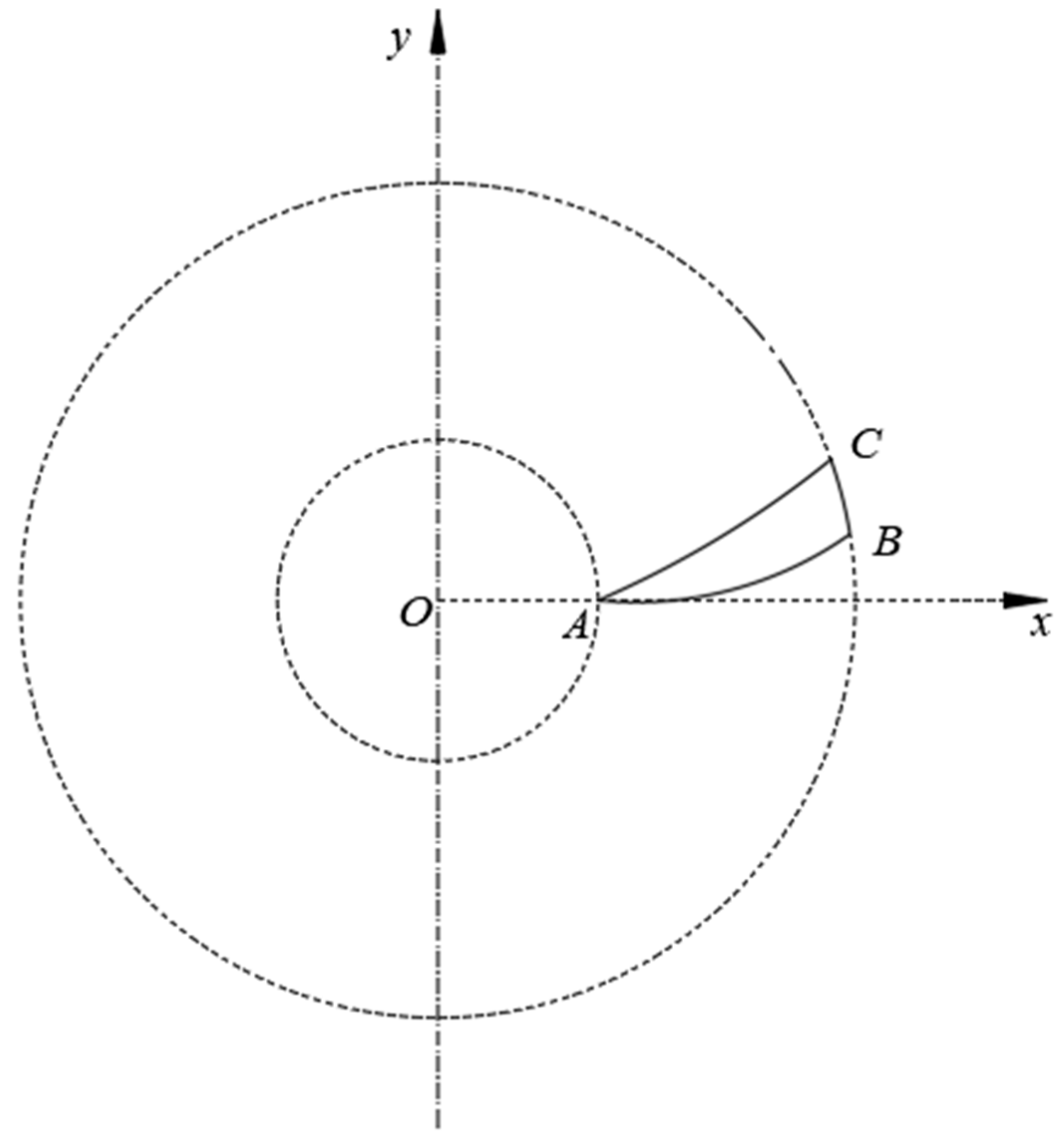
The structure of the impeller is illustrated in Figure 3. Multiple blades are circumferentially and uniformly distributed on the surface of the impeller disk. When viewed in the disk cross-section, each blade is composed of three circular arcs, namely A B , B C , and A C . These arcs are connected end-to-end to form a closed curve. Point A lies on the inner circle with radius rOA, whereas points B and C are located on the outer circle with radius rOB. Point A is defined on the x-axis of the coordinate system. The angles between the lines OB, OC and the x-axis are θB and θC, respectively. Meanwhile, the central angles corresponding to arcs A B and A C are θAB and θAC, respectively, as shown in Figure 4.

2.3.1. Establishment of a Blade Mathematical Model

Building upon existing models, points A, B, and C are defined as known fixed points within the xOy coordinate system. The blade takes the form of a closed curve constituted by three arcs A B , B C , and A C . Accordingly, mathematical models for these three arcs can be established independently.
(1)
A B mathematical model. In the local Cartesian coordinate system x1O1y1, the equation for arc A B is as follows:
x 1 = r A B cos θ 1 y 1 = r A B sin θ 1 ;   θ 1 ( O 1 A x π , O 1 A x π + θ A B )
where:
O 1 A x = arcsin y O 1 y A r A B ;
r A B = ( x A x B ) 2 + ( y A y B ) 2 2 sin θ A B 2 ;
x O 1 = x A + x B 2 + y A y B 2 tan θ A B 2 ;
y O 1 = y A + y B 2 + x B x A 2 tan θ A B 2 ;
x A = r O A ; y A = 0 ;
x B = r O B cos θ B ,   y B = r O B sin θ B .
(2)
A C mathematical model. In the local Cartesian coordinate system x2O2y2, the equation for arc A C is as follows:
x 2 = r A C cos θ 2 y 2 = r A C sin θ 2 ;   θ 2 ( O 2 A x π , O 2 A x π + θ A C )
where:
O 2 A x = arcsin y O 2 y A r A C ;
r AC = ( x A x C ) 2 + ( y A y C ) 2 2 sin θ A C 2 ;
x O 2 = x A + x C 2 + y A y C 2 tan θ A C 2 ;
y O 2 = y A + y C 2 + x C x A 2 tan θ A C 2 ;
x C = r O B cos θ C ,   y C = r O B sin θ C .
(3)
B C mathematical model. In the global Cartesian coordinate system xOy, the equation for arc B C is as follows:
x = r O B cos θ 0 y = r O B sin θ 0 ;   θ 0 ( C O x , B O x )
where:
C O x = arcsin y C r O B ,   B O x = arcsin y B r O B

2.3.2. Analysis on Flow Channel Structure

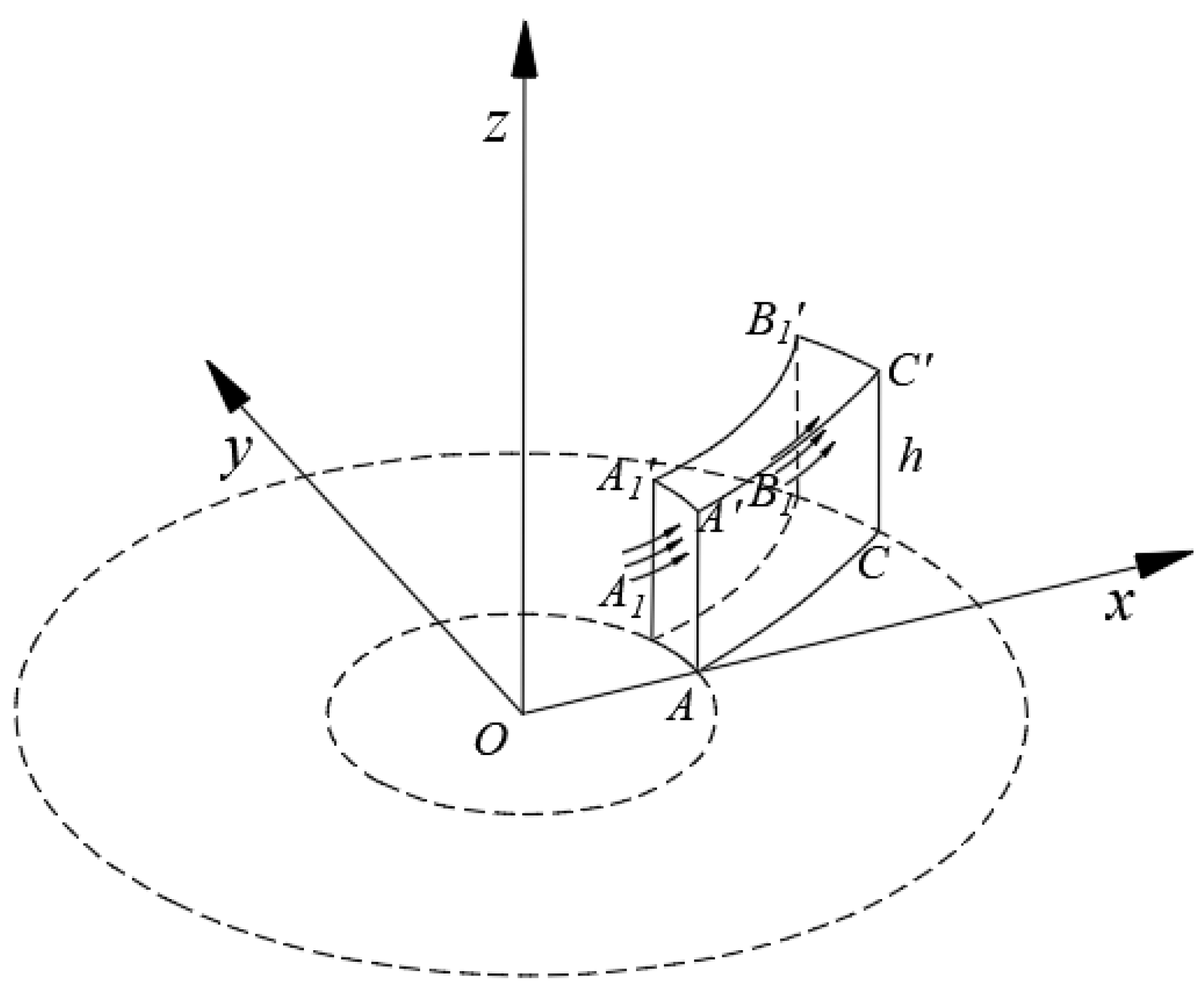
Based on an analysis of the working principle, during operation, the impeller rotates at a constant speed. Air enters through the air inlet and flows radially outward along the flow channels between the blades. The spatial structural dimensions of the flow channels directly influence the airflow efficiency. For the sake of analytical simplicity, one of the flow channels is selected for investigation, as shown in Figure 5. Air enters through the flow channel’s cross-section A1AA’A1’ and exits via its cross-section B1CC’B1’. A mathematical model for the flow channel volume is established.
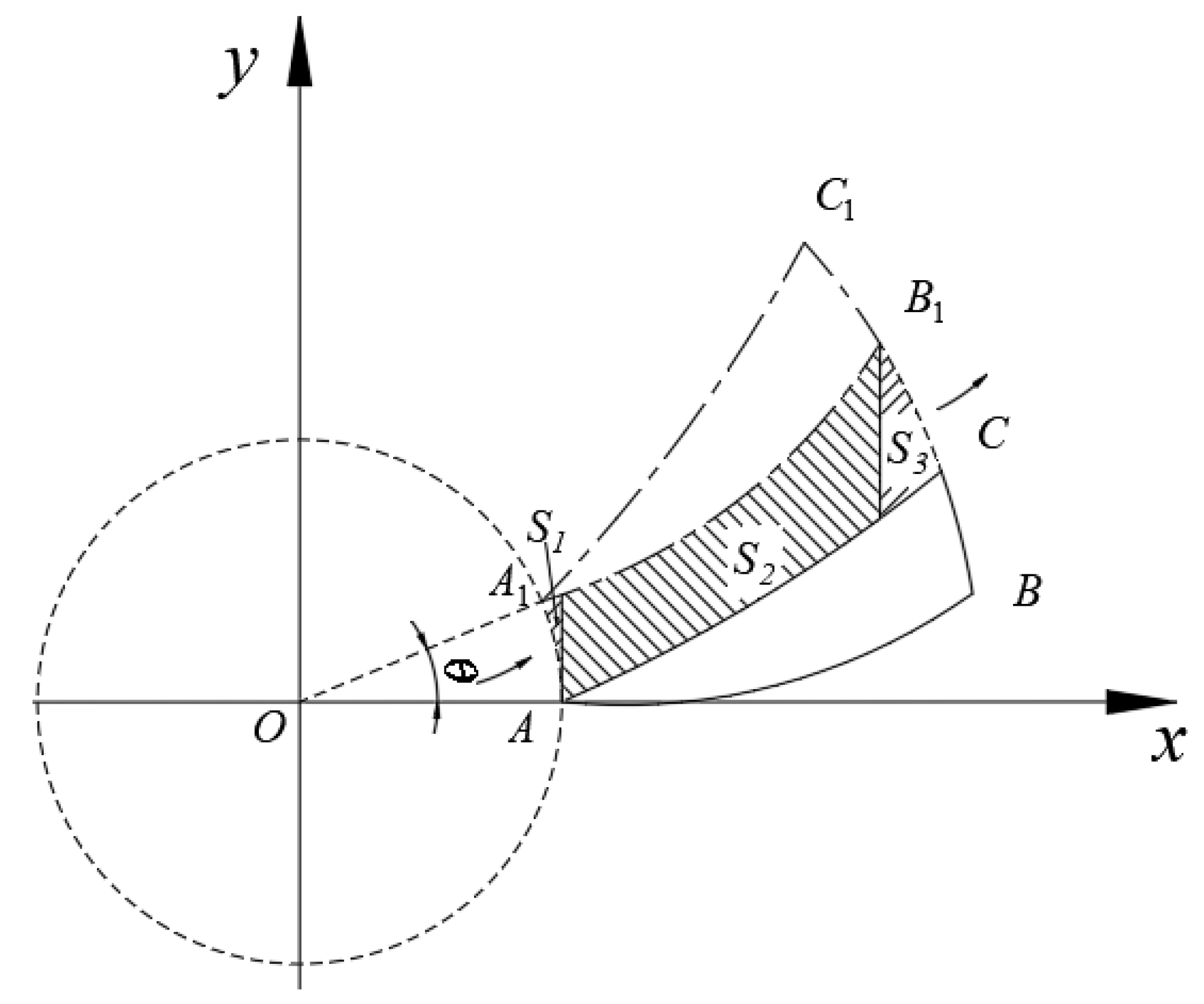
The flow channels are formed by the convex arc A C , concave arc A 1 B 1 , circular arc A A 1 , and circular arc C B 1 of two adjacent blades. As shown in Figure 6, the mathematical model for the cross-sectional area of the impeller airflow channel SACB1A1 is established, which comprises three area components:
S A C B 1 A 1 = S 1 + S 2 + S 3
S 1 = x A 1 x A f A 1 B 1 ( x ) g A 1 A ( x ) d x
S 2 = x A x B 1 f A 1 B 1 ( x ) g A C ( x ) d x
S 3 = x B 1 x C f B 1 C ( x ) g A C ( x ) d x
where:
f A 1 B 1 ( x ) = x O 1 sin θ + y O 1 cos θ r A B 2 x x O 1 cos θ + y O 1 sin θ 2
g A 1 A ( x ) = r O A 2 x 2 ;
g A C ( x ) = y O 2 r A C 2 x x O 2 2 ;
f B 1 C ( x ) = r O B 2 x 2 .
Substituting these into Equations (7), (8), and (9) respectively yields:
S 1 = x A 1 x A x O 1 sin θ + y O 1 cos θ r A B 2 x x O 1 cos θ + y O 1 sin θ 2 r O A 2 x 2 d x
S 2 = x A x B 1 x O 1 sin θ + y O 1 cos θ r A B 2 x x O 1 cos θ + y O 1 sin θ 2   y O 2 r A C 2 x x O 2 2 d x
S 3 = x B 1 x C r O B 2 x 2 y O 2 r A C 2 x x O 2 2 d x
Thus, the mathematical model for the flow channel volume is expressed as:
V = 0 h S 1 + S 2 + S 3 d z
Based on the above analysis, it can be concluded that the flow channel volume is primarily influenced by the coordinate values of structural parameters O1(xO1, yO1) and O2(xO2, yO2), the blade rotation angle θ, the arcs A B , A C , A A 1 , and C B 1 , as well as the rotational radii rAB, rAC, rOA and rOB. From Equations (1) and (2), it can be observed that the coordinate values of O1(xO1, yO1) and O2(xO2, yO2), along with the rotational radii rAB and rAC, are functions of A(xA, yA), B(xB, yB), C(xC, yC), θAB and θAC; furthermore, A(xA, yA), B(xB, yB), and C(xC, yC) are functions of rOA, rOB, θB and θC. Thus, the key parameters influencing the flow channel structure are the blade rotation angle θ, the radius rOA of arc A A 1 , the radius rOB of arc C B 1 , the horizontal angles θB and θC between the lines connecting points B and C to the circle’s center O, the central angle θAB of the blade’s convex arc A B , the central angle θAC of the blade’s concave arc A C , and the blade thickness h.

2.4. Optimization of Impeller Parameters

2.4.1. Optimization Parameters and Objective Parameters

Based on the analytical conclusions in Section 2.1 and with reference to the existing structural parameters of the pneumatic heat-generating blower impeller [18], the inner diameter of the air duct rOA is set to 125 mm, the outer diameter rOB is 325 mm, angle θB is 9.13°, and angle θC is 19.73°. Given that the blades are uniformly arranged along the impeller circumference, the blade rotation angle θ can be converted to the number of blades as n = 360°/θ, thus determining the impeller blade count n, the central angle θAB of the blade’s convex arc A B , the central angle θAC of the blade’s concave arc A C , and the blade thickness h are designated as optimization variables.
In operation, the outlet temperature serves as one of the key indicators for evaluating its efficiency and performance. It directly characterizes the equipment’s capability to convert input energy (e.g., electrical energy, mechanical energy, or thermal energy from combustion) into effective thermal energy [19]. Furthermore, the turbulence generated within the pneumatic heat-generating blower is a critical factor influencing its thermal efficiency, temperature distribution, and airflow stability. The disorderly mixing characteristic of turbulence makes the collisions of gas molecules more intense, accelerating the conversion of mechanical energy into heat energy and enhancing the heating effect. At the same time, an excessively high turbulence intensity will lead to increased internal friction within the fluid, raise the flow resistance, and affect the hot-air transportation capacity [20]. Thus, the turbulent kinetic energy within the impeller region during blower operation and the outlet temperature are adopted as the objective functions for optimization.
Based on the foregoing analysis, the objective functions and constraints for optimizing the impeller of the pneumatic heat-generating blower in this study can be expressed as follows:
max T out max k 70 θ A B 100 5 θ A C 25 10 n 20 25 h 45
where Tout—the outlet gas temperature, in K; k—the turbulent kinetic energy in the impeller region, in m2/s2; θAB—the central angle corresponding to the convex circular arc A B of the blade, in degrees (°); θAC—the central angle corresponding to the concave circular arc A C of the blade, in degrees (°); h—blade thickness, in mm.

2.4.2. Optimization Algorithm

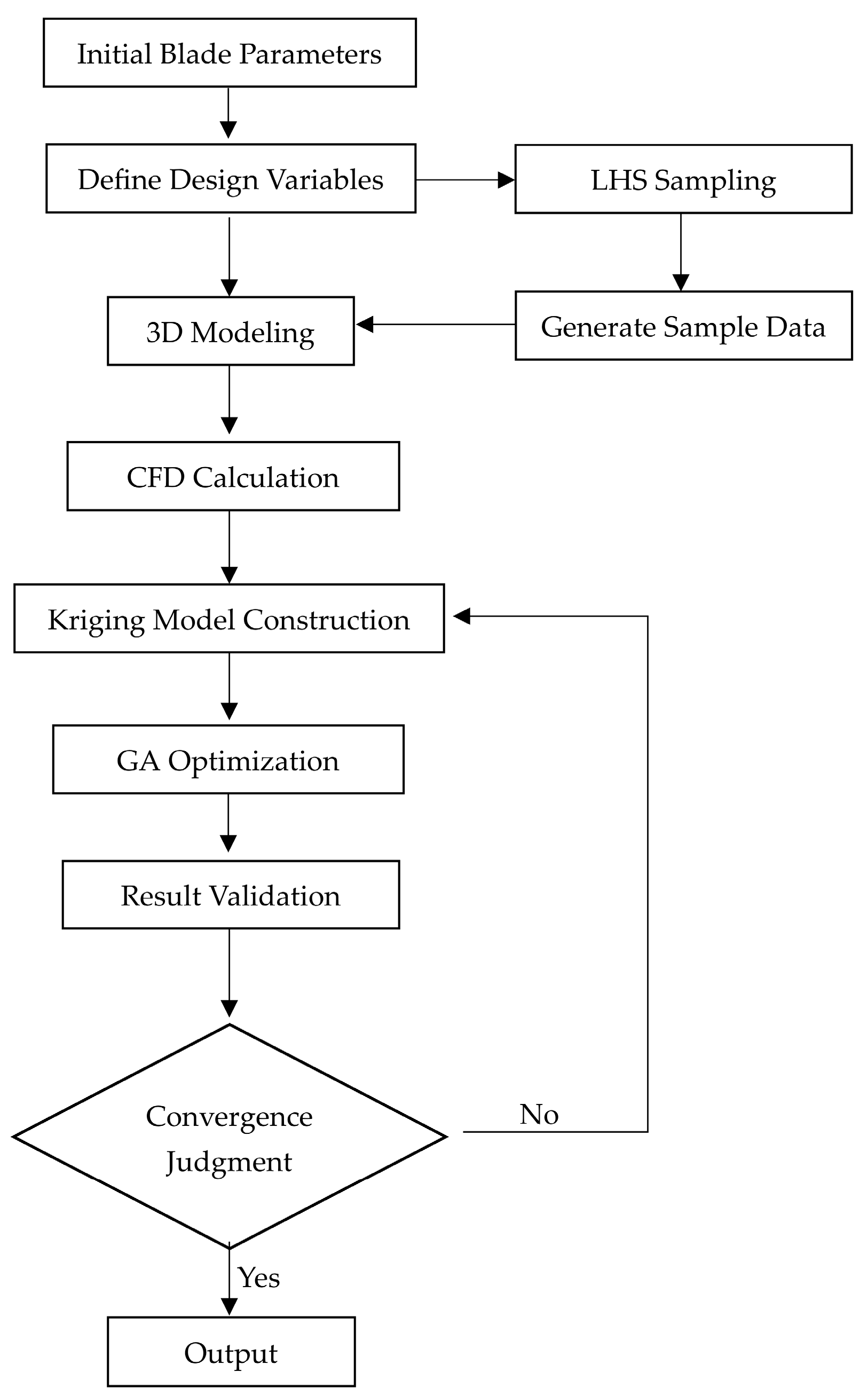
To ensure that the selected sample parameters can efficiently and uniformly cover the high-dimensional parameter space, Latin hypercube sampling (LHS) is employed for sample generation [21]. Meanwhile, the turbulent kinetic energy within the impeller region and the outlet temperature were designated as the objective functions. The Kriging surrogate model was utilized to characterize the coupling relationship between the optimized structural parameters and the objective functions. Subsequently, the multi-objective optimization genetic algorithm NSGA-II, based on the Kriging surrogate model, was applied to optimize the structural parameters [22]. The optimization design process is illustrated in Figure 7.
(1)
Latin Hypercube Sampling (LHS)
LHS is an efficient sampling method for high-dimensional probability distributions. Its core mechanism involves stratified sampling and dimension decoupling: each distribution interval of the input variables is uniformly partitioned into N equal-probability subintervals, with exactly one sample drawn from each subinterval. Sampling points across different dimensions are then randomly permuted and combined to form samples, ensuring uniform coverage of the entire parameter space [23].
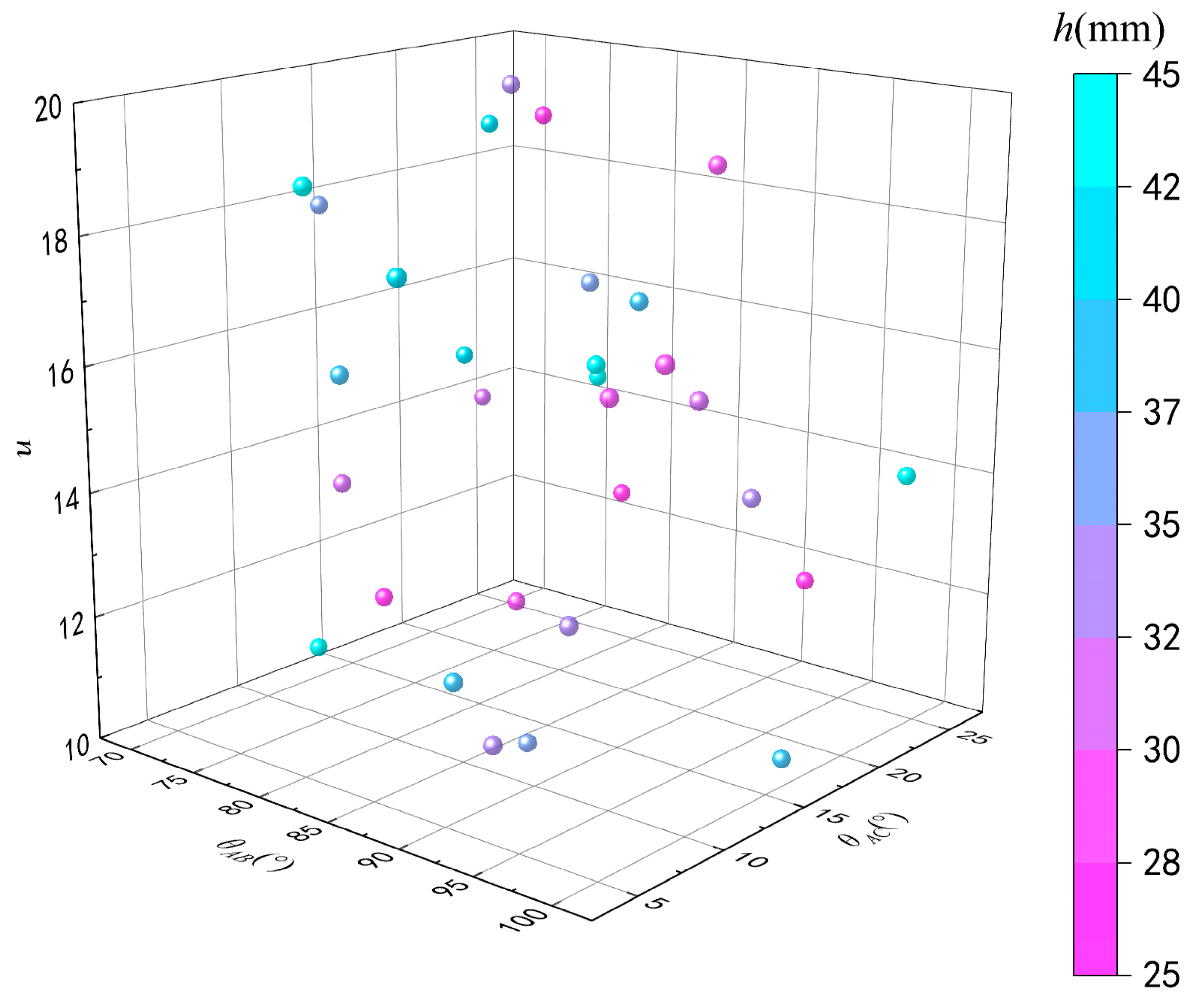
In this study, 30 sets of initial optimized structural parameters were obtained via LHS. The distribution of these 30 initial samples within the three-dimensional design space is shown in Figure 8. During the CFD simulation of the 30 initial sample sets, 4 sets were excluded due to geometric parameter mismatches that caused calculation non-convergence. The remaining 26 sets of sample data were retained for subsequent analysis.
(2)
CFD settings
The optimized structural model was simulated using the CFD software Fluent 2024 R2. The rotation of the impeller is handled using the Multiple Reference Frame method. The impeller region is defined as the rotating reference frame, while the stationary regions such as the volute are defined as the stationary reference frame. Data transfer is carried out through the interface. To accurately capture the pneumatic heat-generation effect within the blower, the energy equation is turned on. The fluid medium is described by the ideal gas equation of state. To accurately simulate the flow near the wall, wall functions are adopted, and the grid size near the wall is strictly controlled to ensure that y+ > 15. Turbulence constitutes the core flow phenomenon investigated in this study. Given that the Reynolds-Averaged Navier–Stokes (RANS) equations are primarily suited for simulating turbulent flows and unsteady flow scenarios, the RANS model was employed as the fundamental numerical framework in this work. The core of the RANS model lies in applying Reynolds averaging to the Navier–Stokes equations. Specifically, by decomposing turbulent flows within the flow field into mean flow components and turbulent fluctuation components, the model circumvents the need for direct computation of random turbulent fluctuations, thereby simplifying the numerical solution process. In the present study, the compressible RANS equations governing air flow are formulated in Cartesian tensor form.
Continuity equation:
ρ t + x i ρ u ¯ i = 0
Momentum equation:
t ρ u i ¯ + x j ρ u j ¯ u i ¯ = p x i + σ i j x j + x j ρ u i u j
where u i ¯ —the Reynolds average velocity component in the i direction; ρ—fluid density; p—pressure; ui′—vibration velocity; σij—stress tensor component.
The Shear Stress Transport (SST) k-ω model is a widely employed two-equation eddy viscosity model in CFD. This model integrates the advantages of different turbulence models, making it well-suited for simulating complex flow phenomena. Specifically, it exhibits high predictive accuracy in scenarios including vortex-dominated flows, free shear flows, rotating flows, and flows with significant pressure gradients. Therefore, the SST k-ω model is selected as the turbulence closure model for the numerical simulations in the present study.
The transport equation of turbulent kinetic energy:
ρ k t + ρ k u i x i = x j μ + μ t σ k k x j + G k Y k + G b + S k
where ρ—fluid density; t—time; ui—component of velocity in the direction; xi, xj—spatial coordinate components; μ—molecular dynamic viscosity coefficient of the fluid; μt—turbulent viscosity coefficient; σk—turbulent kinetic energy transport equation; Gk—turbulent Prandtl number in the turbulent kinetic energy generation term; Yk—turbulent kinetic energy generation term; Gb—turbulent kinetic energy generation term caused by buoyancy; Sk—user-defined source term in the turbulent kinetic energy equation.
Transport equation with dissipation rate ω:
ρ ω t + ρ ω u i x i = x j μ + μ t σ ω ω x j + G ω Y ω + S ω + G ω b
where σω—turbulent Prandtl number in the transport equation of the dissipation rate ω; Gω—generation term of the dissipation rate ω; Yω—dissipation term of the dissipation rate ω; Gωb—generation term related to buoyancy of the dissipation rate ω; Sω—user-defined source term of the equation of the dissipation rate ω.
The rotational speed of the impeller domain is set to 1200 r/min. Throughout the simulation, the reference pressure is specified as standard atmospheric pressure. The inlet and outlet boundary conditions are defined as the pressure inlet and pressure outlet. Since the ambient temperature in the simulation scenario is 300 K, the Backflow Total Temperature is set to 300 K. The turbulent intensity at the inlet is set to 5% and the turbulent viscosity ratio is set to 10. All solid walls in contact with the environment are assigned the no-slip adiabatic wall boundary condition.
(3)
Mesh independence verification and experimental validation
Mesh independence verification constitutes a critical step in CFD simulations. Its primary objective is to confirm that computational results exhibit no significant variation with increasing mesh density, thereby eliminating the influence of mesh resolution on the final simulation outcomes. Experimental validation serves to ensure the reliability and scientific rigor of the simulation. Its essence lies in utilizing physical measurement results to verify the rationality of the numerical model.
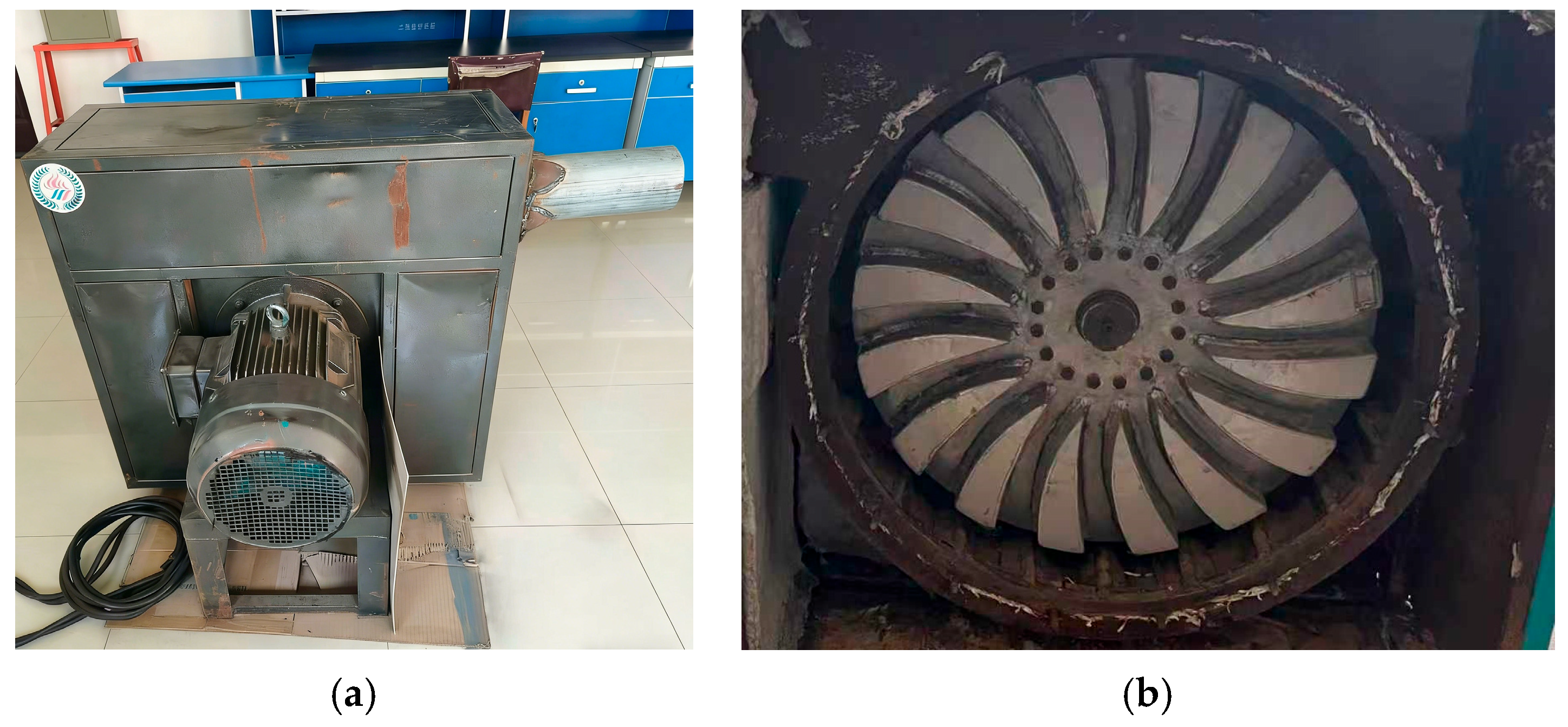
The turbulent kinetic energy in the impeller region is challenging to measure in physical experiments and exhibits relatively low measurement accuracy. Consequently, this study only conducts mesh independence verification and experimental validation for the outlet gas temperature, with Figure 9 illustrating the experimental apparatus employed in this study. As shown in Table 1, the CFD simulation values, experimental values, and relative errors between the simulation and experimental results for the pneumatic heat-generating blower under different mesh densities are provided.
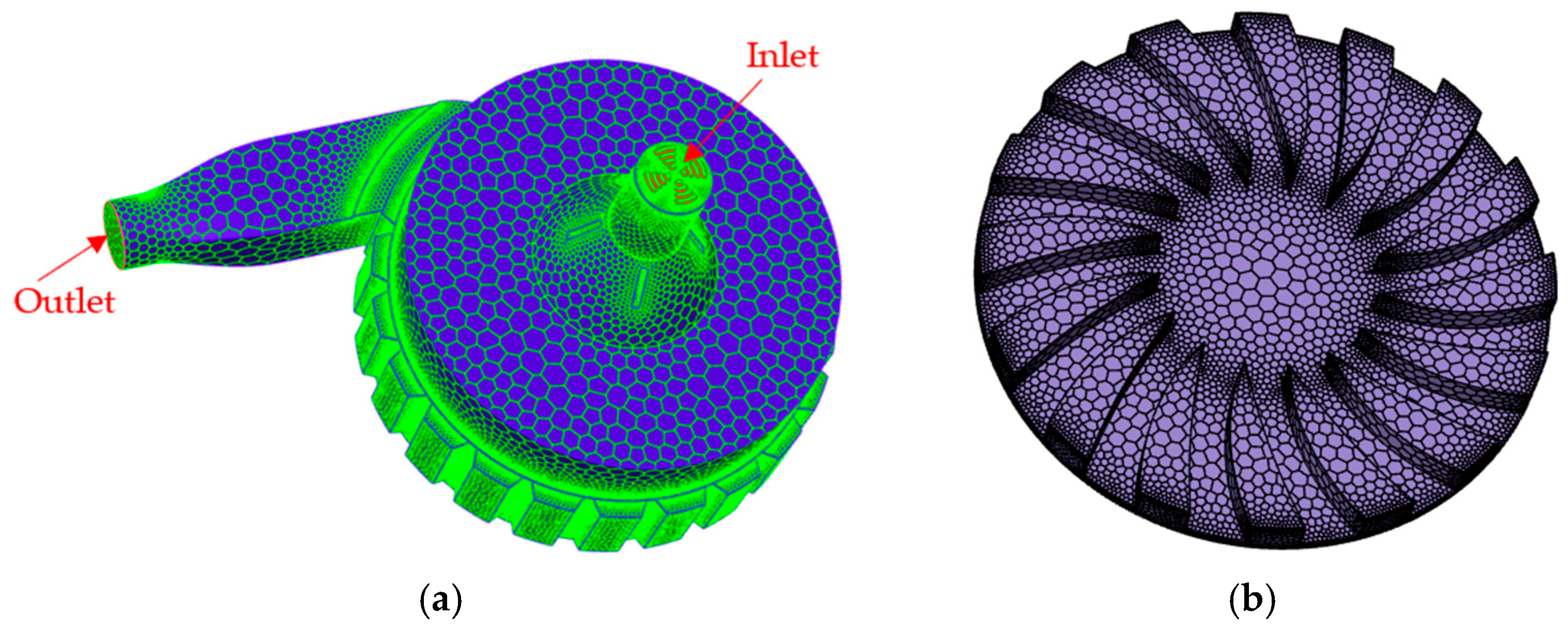
As shown in Table 1, when the mesh quantity increased from 1,743,841 to 2,270,620, the outlet gas temperature exhibited a relatively significant variation, with a relative error of 4.65%. However, when the mesh quantity reached 3,633,247, the relative error decreased to merely −1.20%. With a further increase in the mesh quantity, the outlet gas temperature remained nearly unchanged. It can thus be concluded that when the mesh quantity exceeds 3.63 million, the simulation results become independent of mesh density. Considering both computational resources and efficiency, a mesh scheme with approximately 3.63 million grids was selected for the subsequent simulation calculations of samples. As shown in Figure 10, it represents the computational domain, inlet, and outlet of the pneumatic heat-generating blower.
(4)
Kriging model
The Kriging surrogate model is a regression analysis tool based on statistical methods. It is commonly employed to establish the coupling relationship between input variables and output responses. It features high prediction accuracy for complex functional relationships, as well as excellent capability in handling uncertainty and performing uncertainty-based prediction. The Kriging surrogate model assumes that the response value y(x) can be expressed as the sum of a deterministic global trend function f(x) and a random local deviation ε(x):
y x = f x + ε x
where x is the d-dimensional input parameter vector, f(x) is generally a linear function of the input parameters, and ε(x) is a stochastic process satisfying the second-order stationary assumption; its mean is zero and the covariance function depends only on the distance between two points.
The covariance function of ε(x) is usually modeled by the Gaussian kernel function (also known as the radial basis function):
C o v ε x i , ε x j = σ 2 R x i , x j
where σ2 denotes the variance, and R(xi, xj) represents the correlation function.
Given a set of training data {x, y}, where x = [x1, x2, …, xn]T denotes n input samples and y = [y(x1), y(x2), …, y(xn)]T is the corresponding response values, the predicted value y ^ at a new input point x0 can be calculated by the following equation:
y ^ x 0 = h T x 0 β ^ + r T x 0 R 1 y H β ^
where h(x0) is the basis function vector, β ^ is the estimated regression coefficient, H is the design matrix, r(x0) is the correlation vector between the new point and the training points, and R is the n × n correlation matrix.
(5)
Genetic Algorithm
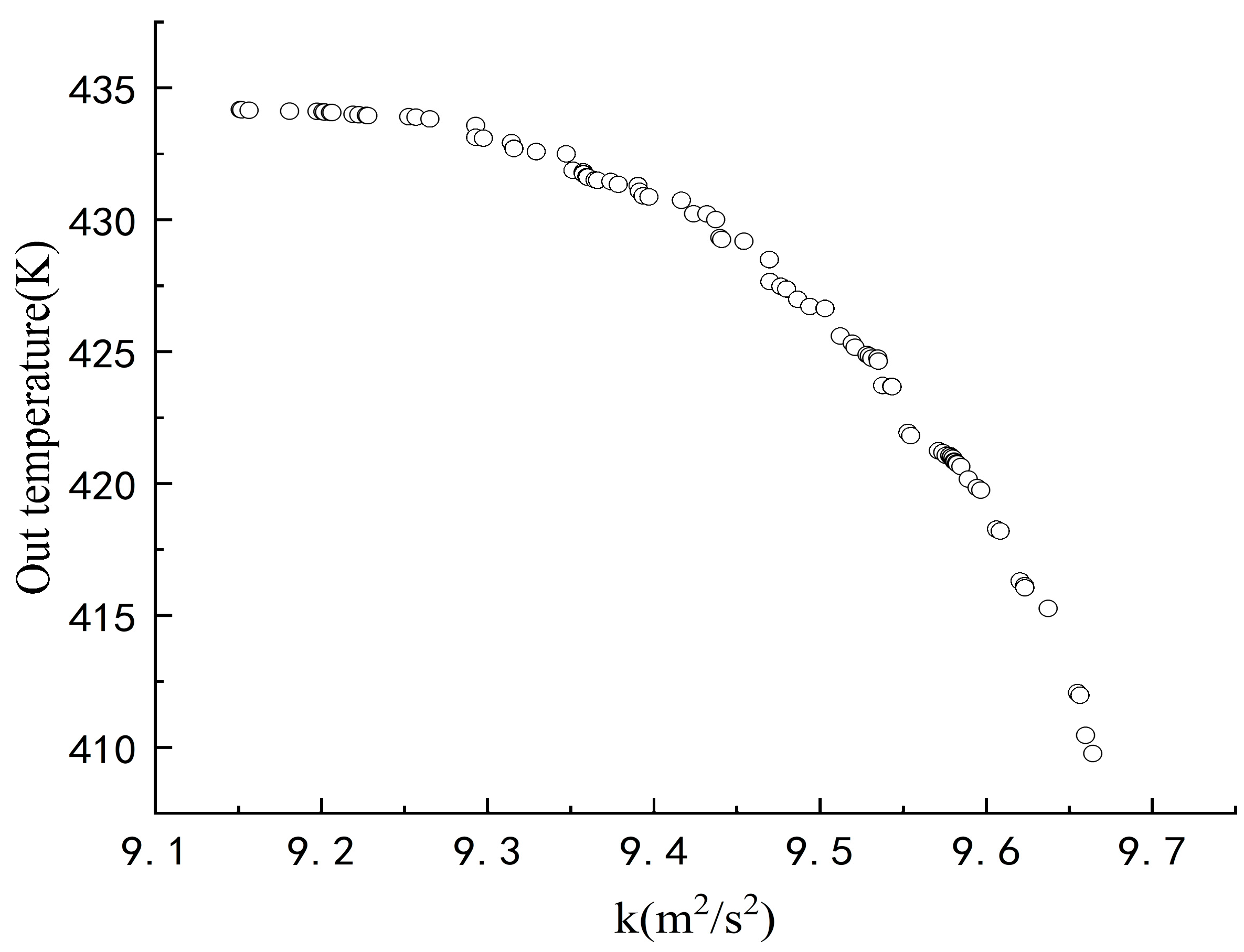
The coupling relationship between the structural parameters and the objective functions is established using the Kriging surrogate model, with the multi-objective genetic algorithm NSGA-II employed for optimization. This approach aims to achieve the following objectives: guiding the solutions to converge as closely as possible to the true Pareto frontier; ensuring the obtained solutions are diverse and uniformly distributed, avoiding excessive concentration in local regions. In contrast to single-objective optimization, which yields a unique global optimal solution, multi-objective optimization does not possess a unique global optimum; rather, it exists as a set of solutions. Each solution within the optimal solution set is non-dominated relative to the objective functions, and this set is generally termed the Pareto optimal set [24]. The initial population size is set to 100, with a mutation probability of 0.01, a crossover probability of 0.75, and a two-point crossover operator employed. Following 300 generations of iterative computation, the Pareto optimal set for outlet temperature and turbulent kinetic energy is obtained, as shown in Figure 11.
As depicted in Figure 11, the outlet temperature remains stable when the turbulent kinetic energy is in the range of 9.1~9.3 m2/s2; beyond 9.3 m2/s2, the outlet temperature decreases progressively with increasing turbulent kinetic energy. This phenomenon indicates that once the turbulent kinetic energy reaches a critical threshold, elevated turbulent kinetic energy enhances momentum exchange and energy dissipation between the impeller and the air. Consequently, a greater proportion of energy is allocated to driving airflow (kinetic energy) rather than being converted into thermal energy, thereby reducing the outlet temperature.
Thus, in selecting the optimized structural parameters, it is essential to not only achieve an effective increase in outlet temperature but to also maintain the turbulent kinetic energy at an appropriate level. The optimized blade structural parameters and corresponding objective function values are listed in Table 2.

3. Results and Discussion

3.1. Analysis of the Velocity Flow Field

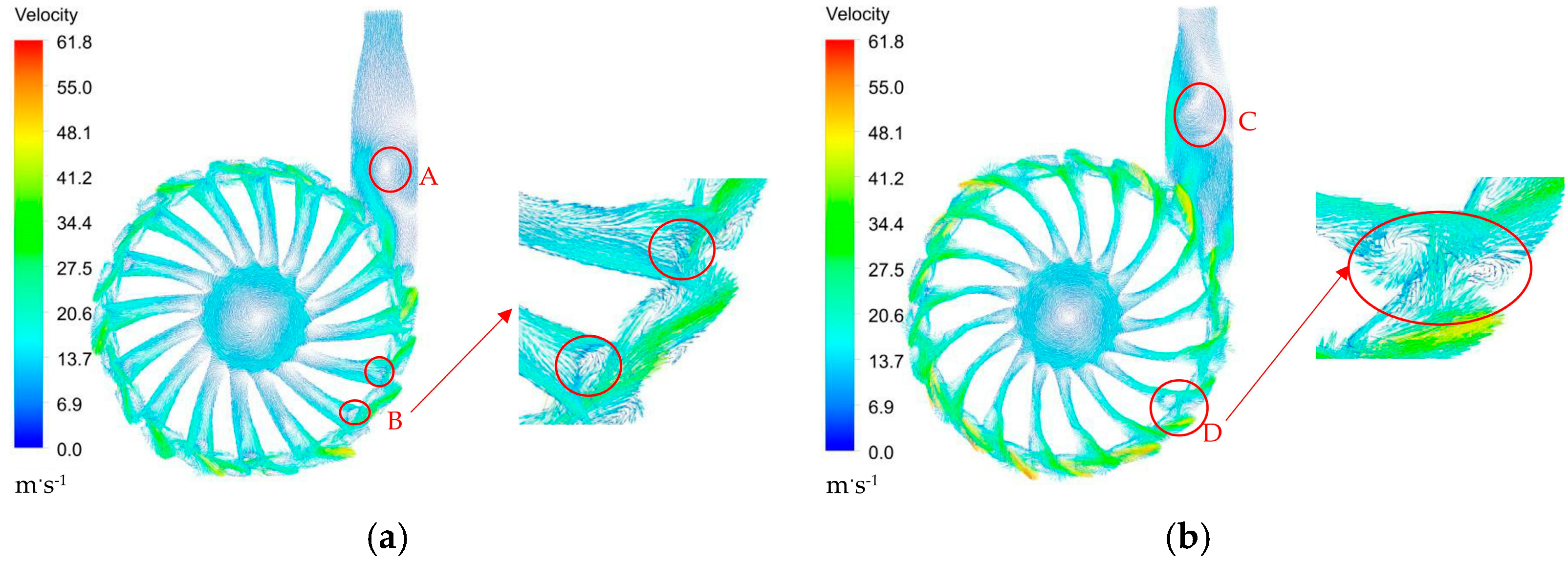
The pre- and post-optimization velocity vectors at 50% blade height are shown in Figure 12, using the impeller rotation as the reference frame.
As shown in Figure 12, in the post-optimization state, the upper limit of the gas velocity increased from 52.2 m/s (pre-optimization) to 61.8 m/s. Under the identical color scale mapping, the coverage of high-speed regions (yellow, green, and red) exhibits greater uniformity. This indicates enhanced energy conversion efficiency, improved functional performance, and elevated flow field stability.
Compared with the original design, the intensity of the vortex at the impeller passage outlet is significantly reduced or even eliminated (Region B in Figure 12a, Region D in Figure 12b), leading to a decrease in the flow resistance of the gas. The corresponding vortex position after optimization is closer to or located within the tip clearance compared with that before optimization, indicating that the gas compression region is concentrated inside the tip clearance. This demonstrates that the optimized impeller structure is more reasonable.
In the pre-optimization state, the vortex within the blower outlet pipe was situated at A. In the post-optimization state, it shifted to C. Compared with the pre-optimization state, the location of vortex generation is farther from the intersection of the impeller tip clearance and the blower outlet flow channel. This leads to a lower pressure at the inlet of the outlet flow channel, facilitating the entry of gas into the outlet flow channel and increasing the gas flow velocity inside the channel. After optimization, the flow channel becomes narrower, the flow velocity of the gas increases, and the kinetic energy of the gas increases. The high-speed gas flow is less likely to detach from the blade surface. This effectively suppresses the generation of vortices, allowing the gas to flow smoothly through the flow channel, reducing energy loss and increasing the gas flow velocity.

3.2. Analysis of the Pressure Field

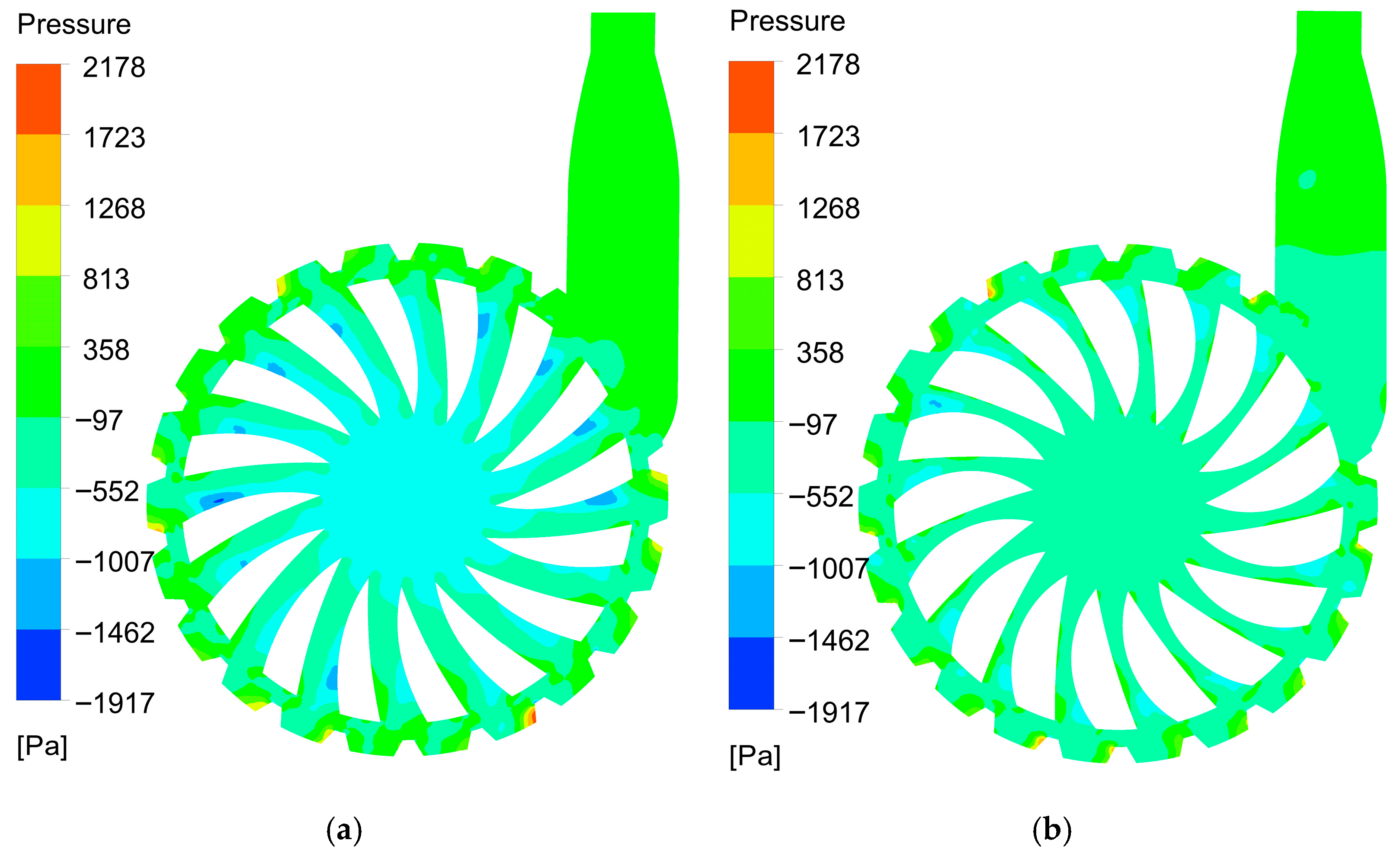
In CFD-Post, a monitoring cross-section was selected, and the static pressure distribution contour of the blower is shown in Figure 13. In comparison to the pre-optimization state, the overall static pressure has exhibited a significant increase. Specifically, the inlet static pressure increased from −851 Pa to −372 Pa in the post-optimization state, whereas the outlet static pressure remained constant at 0 Pa. Consequently, the efficiency of the blower system has been enhanced. The flow channels of the blades are predominantly under negative pressure, which effectively reduces gas flow resistance and facilitates the entry of gas into the impeller tip clearance area.
Regions with the highest positive pressure are predominantly concentrated in the vicinity of the inner walls of the friction boxes, which act as flow obstructions. This phenomenon contributes to enhanced turbulence intensity and improved heat generation efficiency of the system.
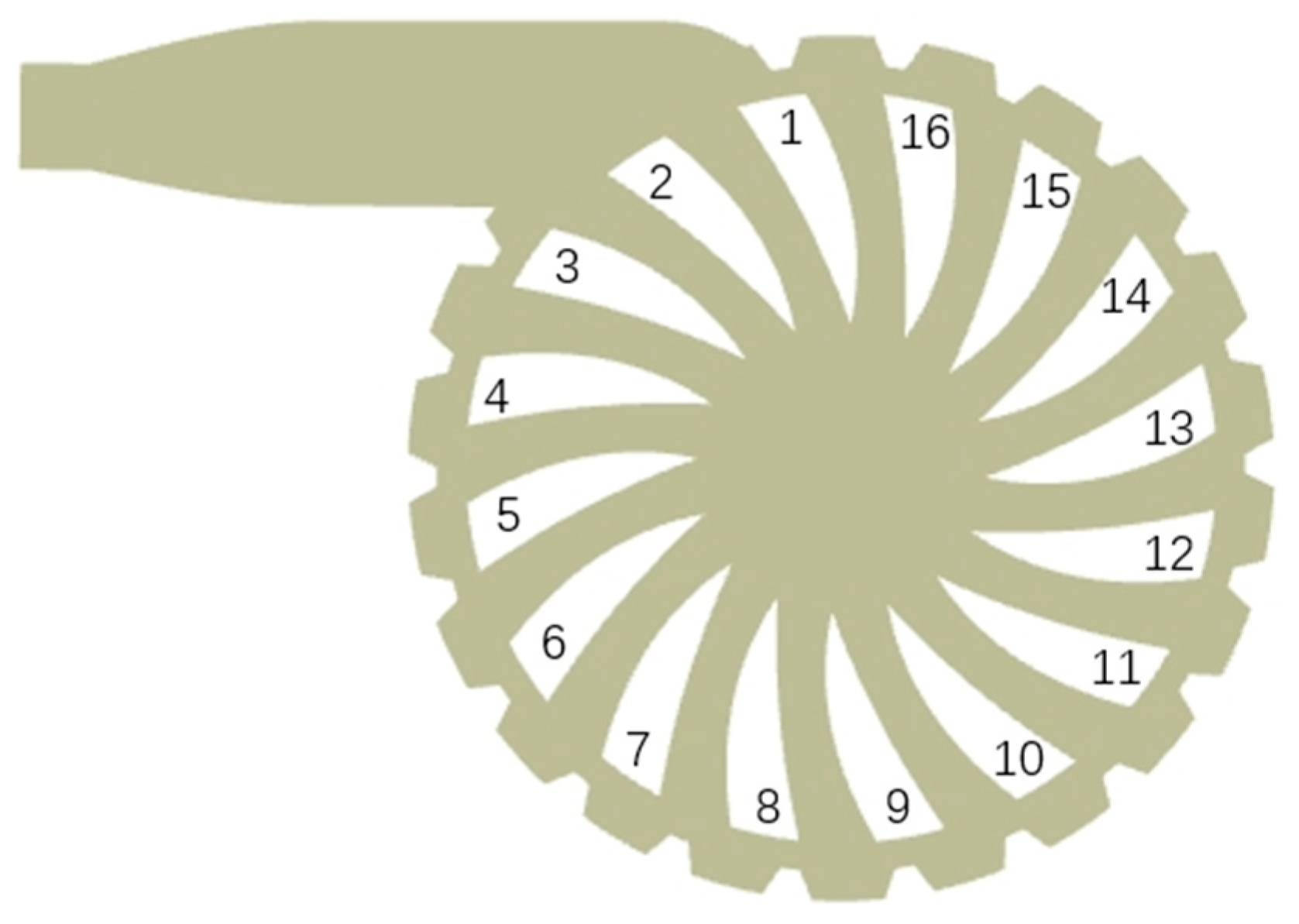
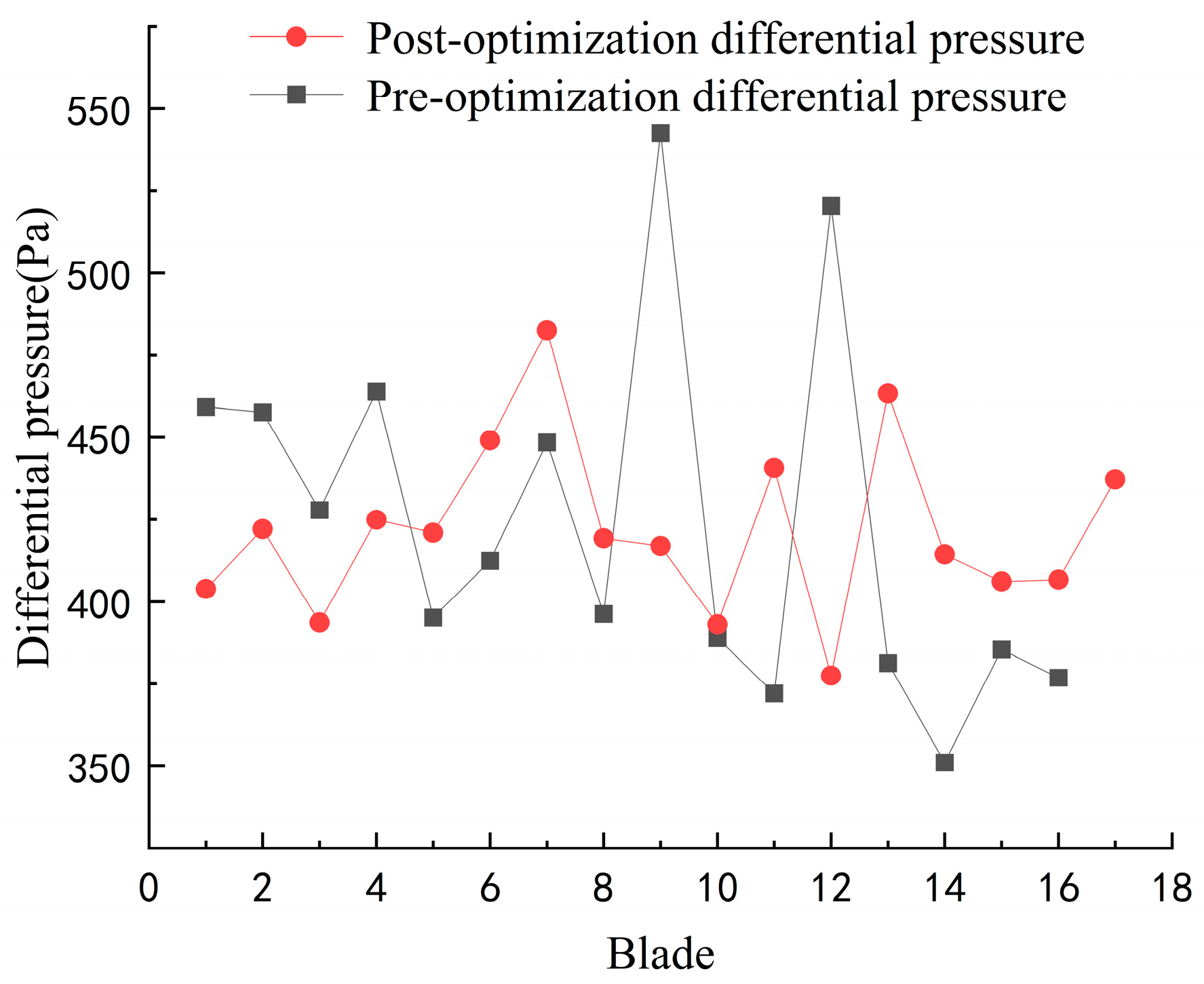
The pressure difference between the pressure side and suction side of the impeller blades not only directly reflects the work done by the impeller on the airflow, but also correlates with the velocity field and vortices within the impeller. The nomenclature of the impeller blades is shown in Figure 14, whereas the analysis of the pressure difference between the pressure side and suction side of each blade in the pre-optimization and post-optimization states is presented in Figure 15.
As shown in Figure 15, in the pre-optimization state, pressure difference peaks were observed at blades 9 and 12, with a relatively large overall fluctuation range. In the post-optimization state, the pressure difference fluctuations became more stable overall, and the peak values were reduced. This mitigates the airflow separation and turbulence induced by abrupt pressure variations, indicating that the optimized structure enables more stable energy transfer of the airflow within the impeller.

3.3. Analysis of the Flow Channel Temperature Field

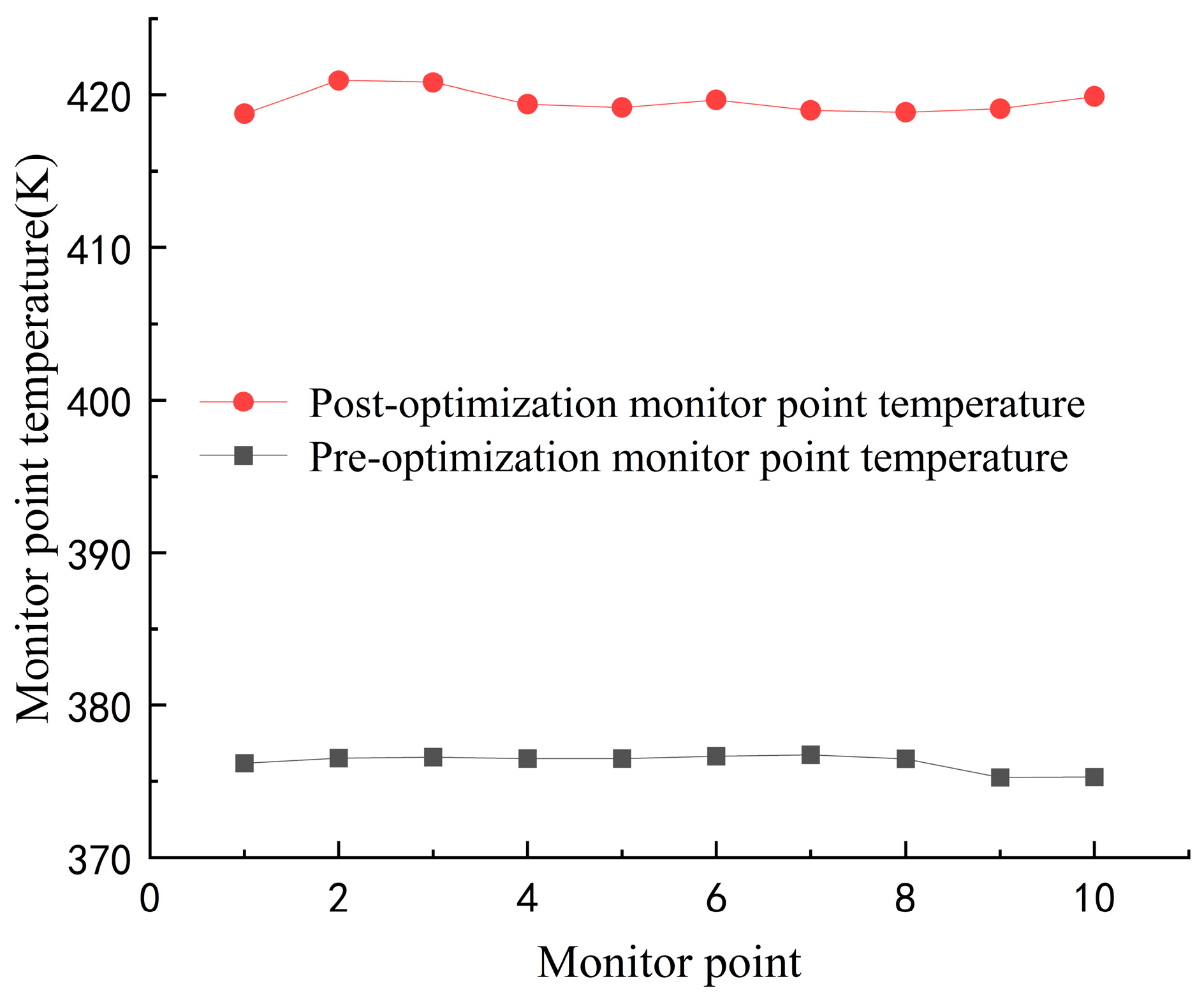
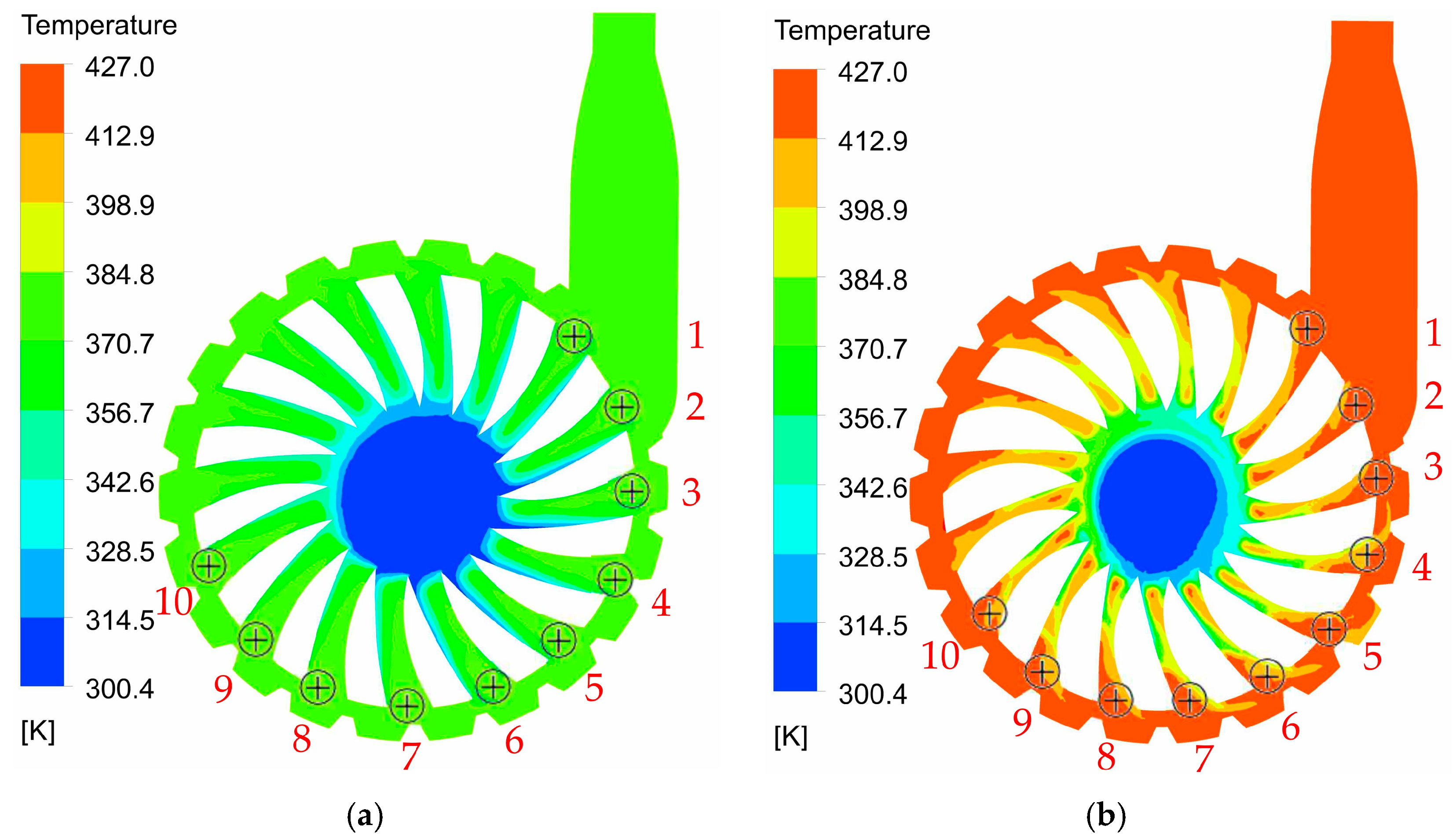
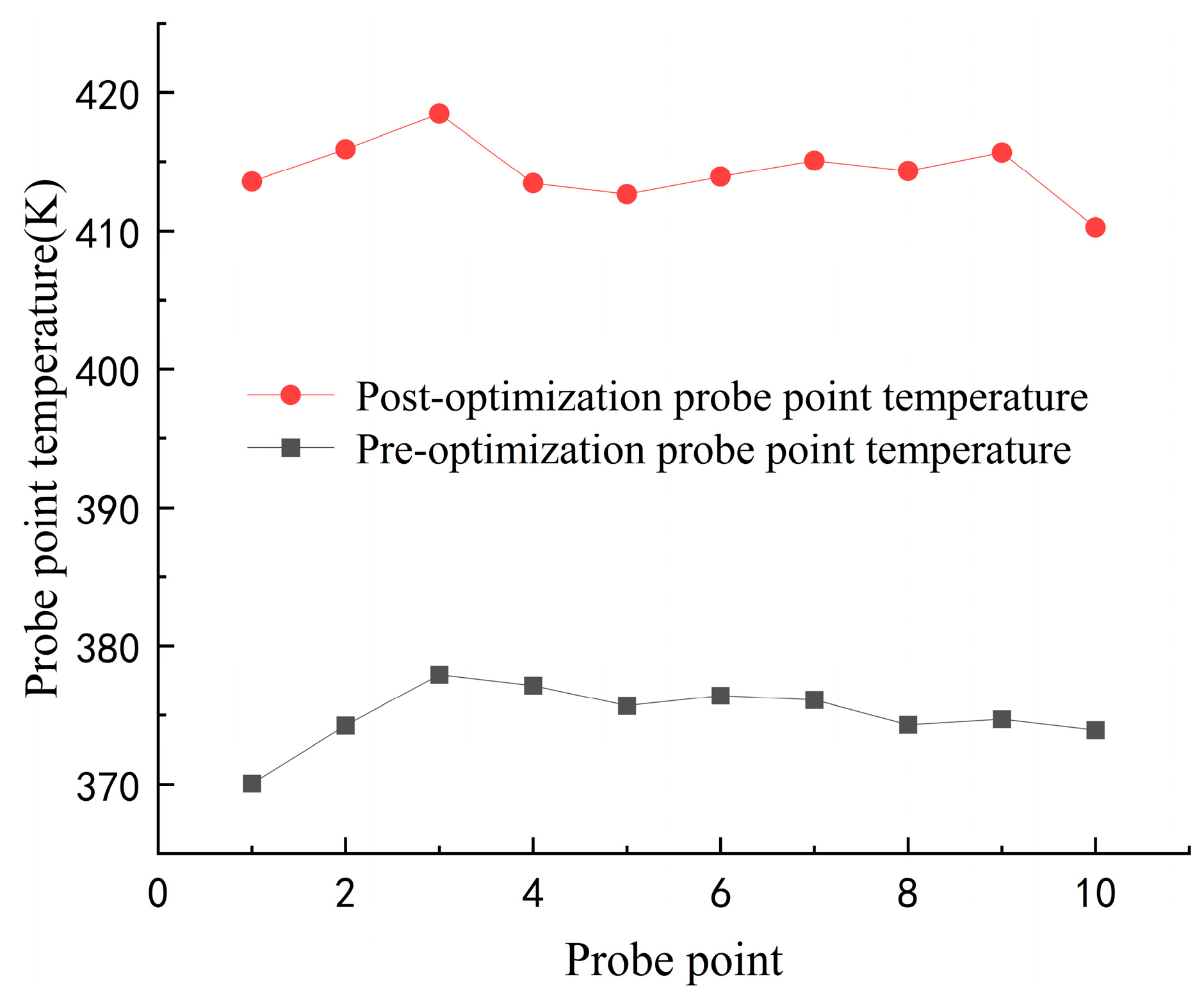
In CFD-Post, a monitoring cross-section was selected, and the temperature distribution contour of the blower is presented in Figure 16. Probe points were deployed at the flow path edges that exert a significant influence on the gas temperature in the outlet pipe to measure the corresponding temperature values. The temperature line graphs of these probe points in the pre-optimization and post-optimization states are shown in Figure 17.
In Figure 16, in the post-optimization state, the global maximum temperature of the blower has increased from 383.7 K to 427.0 K. The red high-temperature region exhibits a wider distribution within the impeller tip clearance, while the temperature in the impeller passages is higher. Additionally, the red high-temperature region at the junction of the tip clearance and the outlet passage is more uniformly and rationally distributed. This improves both the overall thermal output capacity of the blower system and the uniformity of heat distribution. After optimization, the flow channel becomes narrower, preventing gas separation within the channel. The gas flow velocity and kinetic energy increase, and the gas undergoes intense compression and friction within the friction box, resulting in a rise in temperature.
Figure 17 presents a comparison of the probe point temperatures in the pre-optimization and post-optimization states. As shown in Figure 17, the temperature variation trends of probe points 1 to 10 are consistent in both states. The temperatures at points 1 to 3 increase gradually, while those at subsequent probe points remain relatively stable. In the pre-optimization and post-optimization states, the probe point temperatures fluctuate around 375 K and 415 K, respectively, with a temperature difference of approximately 40 K.

3.4. Analysis of the Outlet Pipe Temperature and Velocity Fields

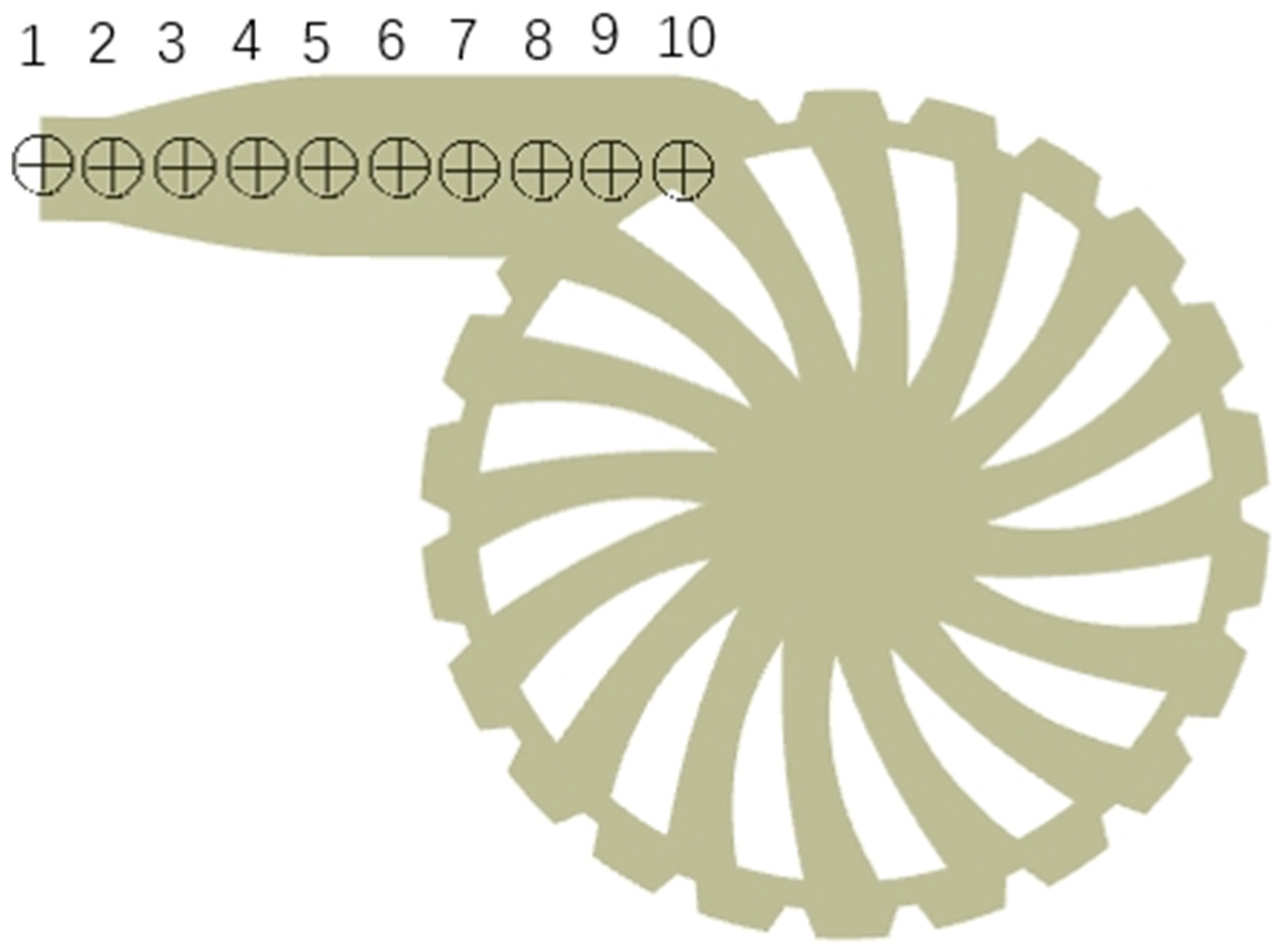
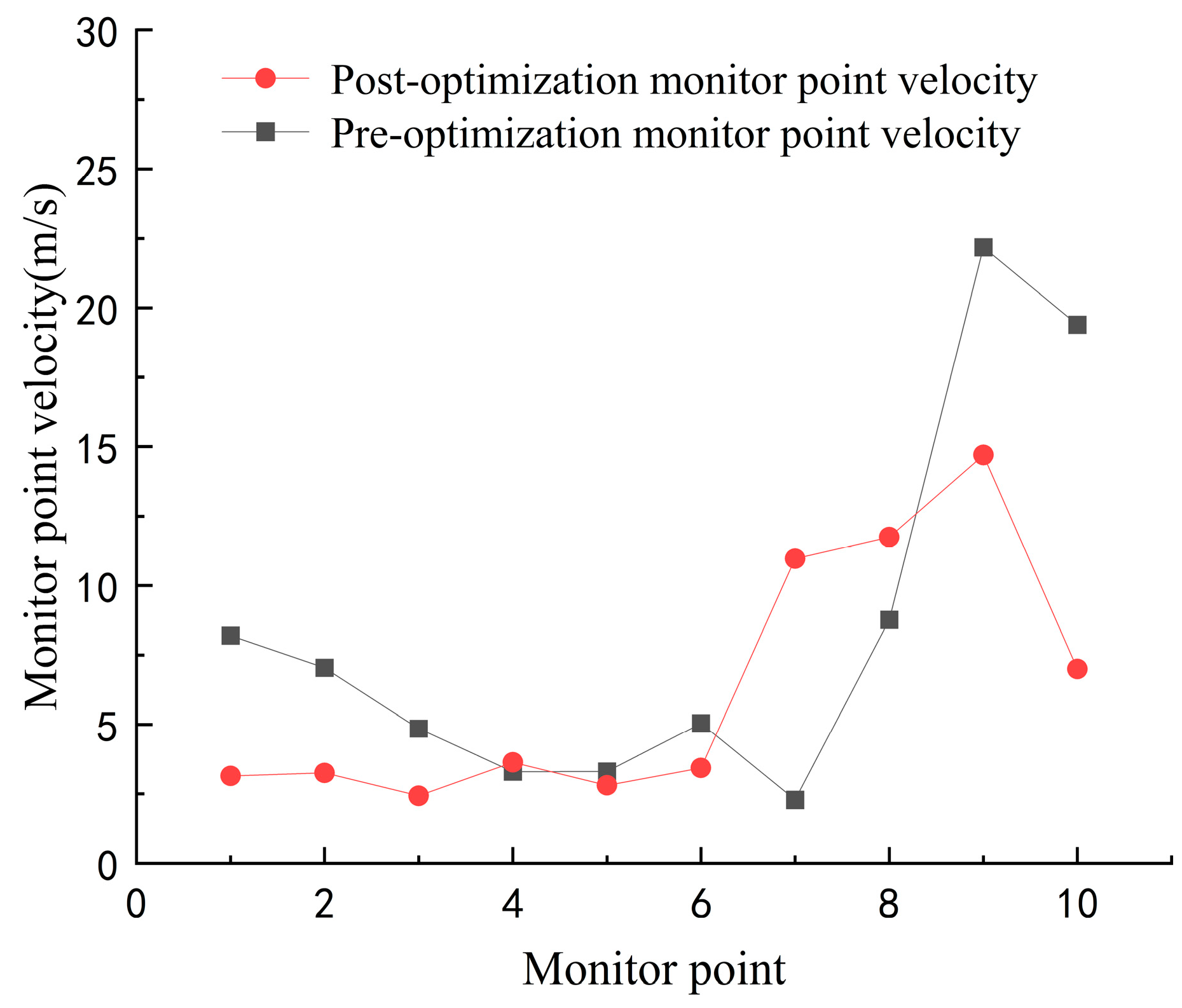
A mid-span cross-section was established at the impeller’s mid-position, where the gas temperature and flow velocity in the vicinity of the aerodynamic heating blower outlet were monitored. Ten monitor points were designated along the route from the impeller tip to the fan outlet, as depicted in Figure 18. Figure 19 and Figure 20 present the temperature and velocity curves of the monitor points. In Figure 19, in both the pre-optimization and post-optimization states, the temperature fluctuations in the outlet duct are relatively small, with temperatures fluctuating around 375 K and 420 K, respectively. In the post-optimization state, the temperature at the measurement points within the duct increased by approximately 45 K.
As illustrated in Figure 12 and Figure 20, in the pre-optimization state, eddies in the outlet pipe originated at A, resulting in a locally highly disturbed flow field. This region, adjacent to the impeller outlet tip, corresponded to the boundary layer separation zone between the impeller passage and the external flow channel. At monitor point 9, the velocity increased to 22.2 m/s due to eddy disturbance, whereas at monitor point 7, it dropped sharply to below 5 m/s as a result of eddy energy dissipation. Velocities at monitor points 1 to 6 were perturbed by the eddy wake, with relatively small variations. In the post-optimization state, eddies originated at C. Compared to the pre-optimization state, both their intensity and range were reduced. Under the influence of eddy disturbance, the gas flow velocity at monitor point 9 reached a maximum of 14.7 m/s. At monitor points 7 and 8, velocities decreased gradually as they were farther from the eddy center, while velocity fluctuations at monitor points 1 to 6 were insignificant.

3.5. Analysis of the Turbulent Kinetic Energy

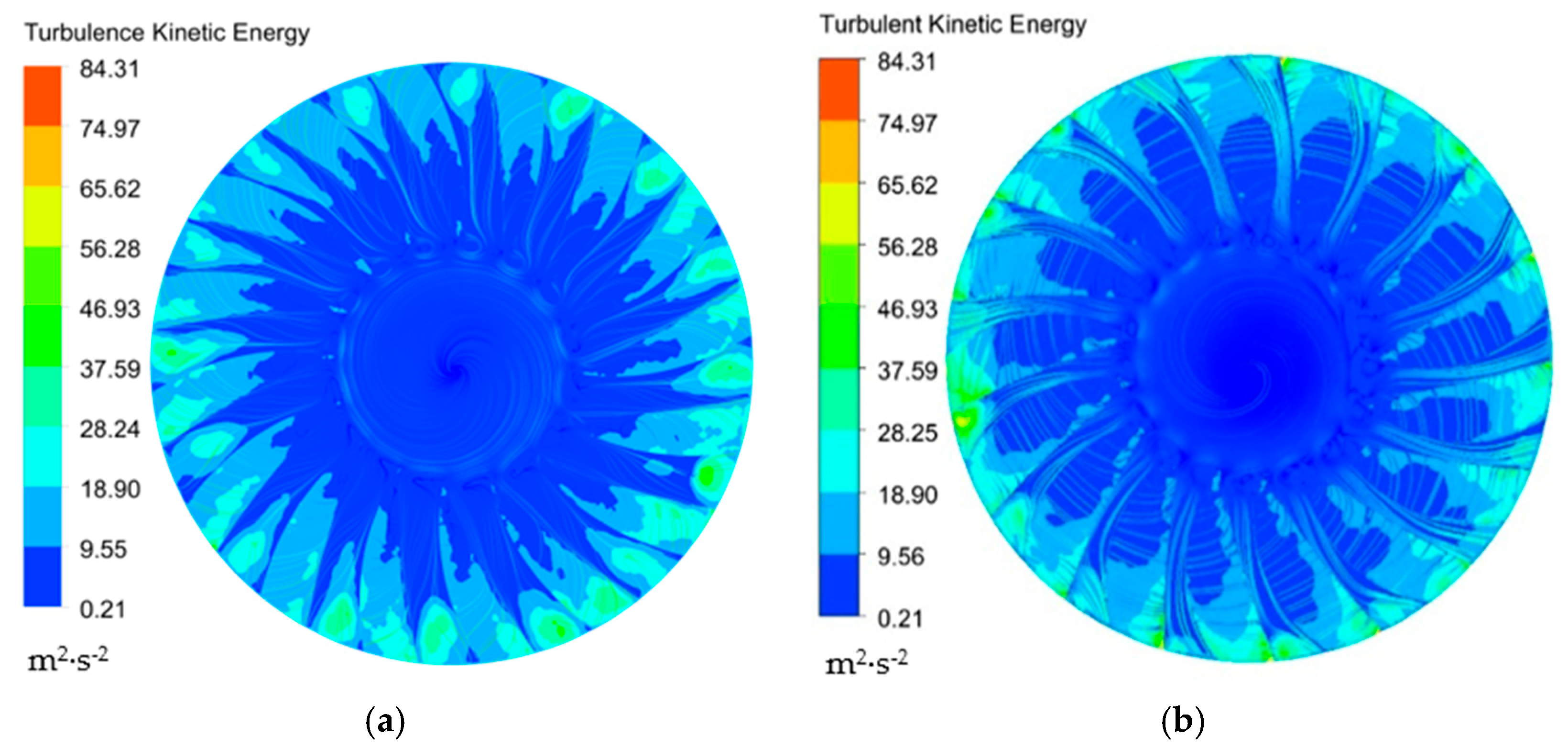
To investigate the influence of turbulent kinetic energy variations in the impeller region on the aerodynamic heating performance of the pneumatic heat-generating blower, superimposed plots of turbulent kinetic energy contours and streamlines on the impeller surface pre- and post-optimization were generated via CFD-Post, as presented in Figure 21.
As shown in Figure 21, the maximum turbulent kinetic energy increased from 74.97 m2/s2 in the pre-optimization state to 84.31 m2/s2 in the post-optimization state. This indicates enhanced turbulent gas collisions, which in turn improves the heat generation capability. The optimized flow channel structure change leads to an increase in flow channel pressure, an increase in gas flow velocity, and smooth passage through the flow channel. The gas undergoes intense compression and friction in the gap at the top of the blade and within the friction box. The vortex intensifies, the disorderly movement of gas molecules becomes more intense, and the turbulent kinetic energy increases, thereby improving the heat generation efficiency.
As observed from the streamlines in Figure 21, in the post-optimization state, the streamlines of the gas flow within the flow channel propagate regularly outward along the channel inner wall. Additionally, the gas streamlines in the clearance between the air chamber and the impeller tip extend regularly outward along the circumferential direction of the impeller. This results in a relative reduction in energy losses and vortex phenomena.

3.6. Analysis of Volume Flow Rate Optimization Comparison

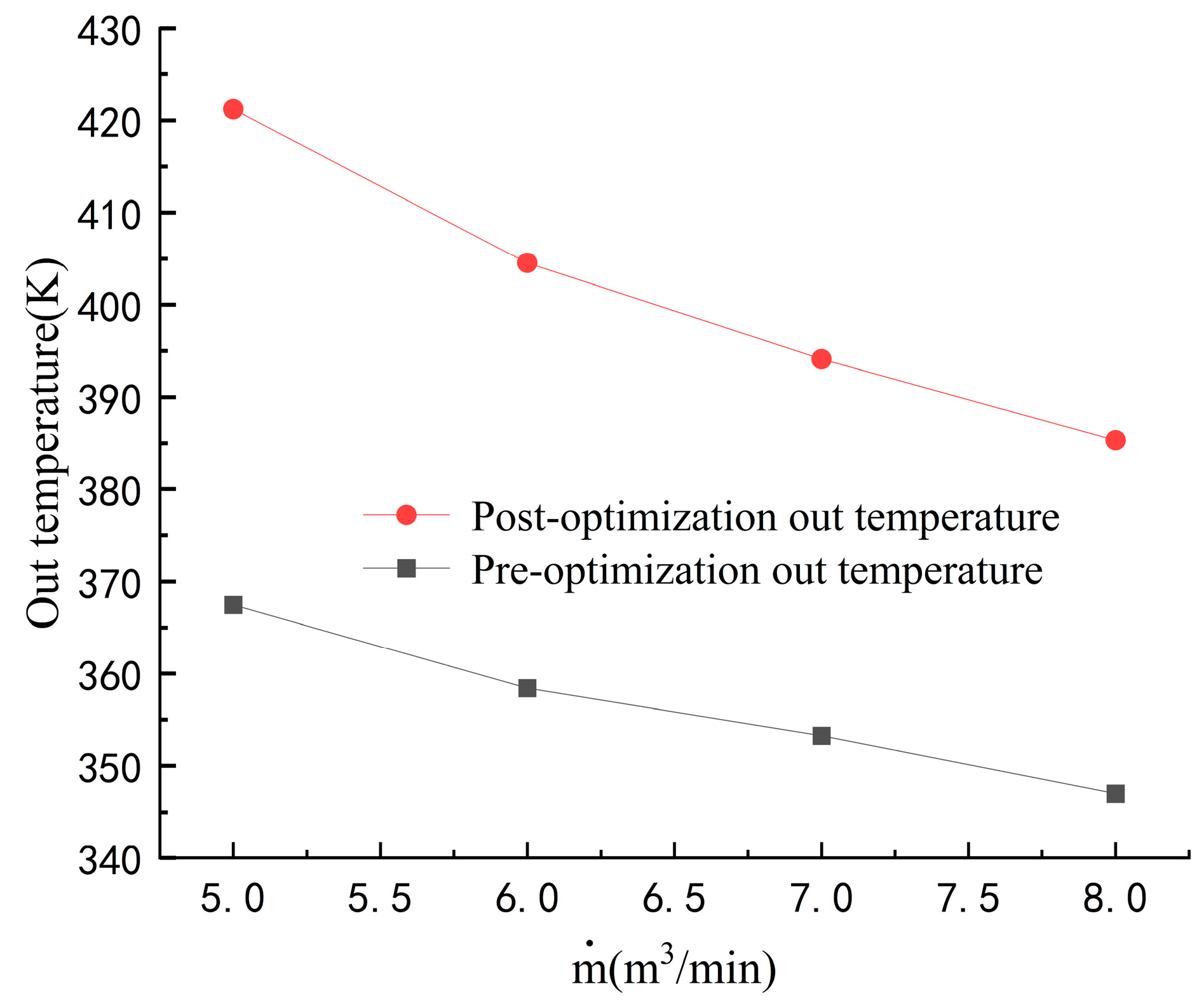
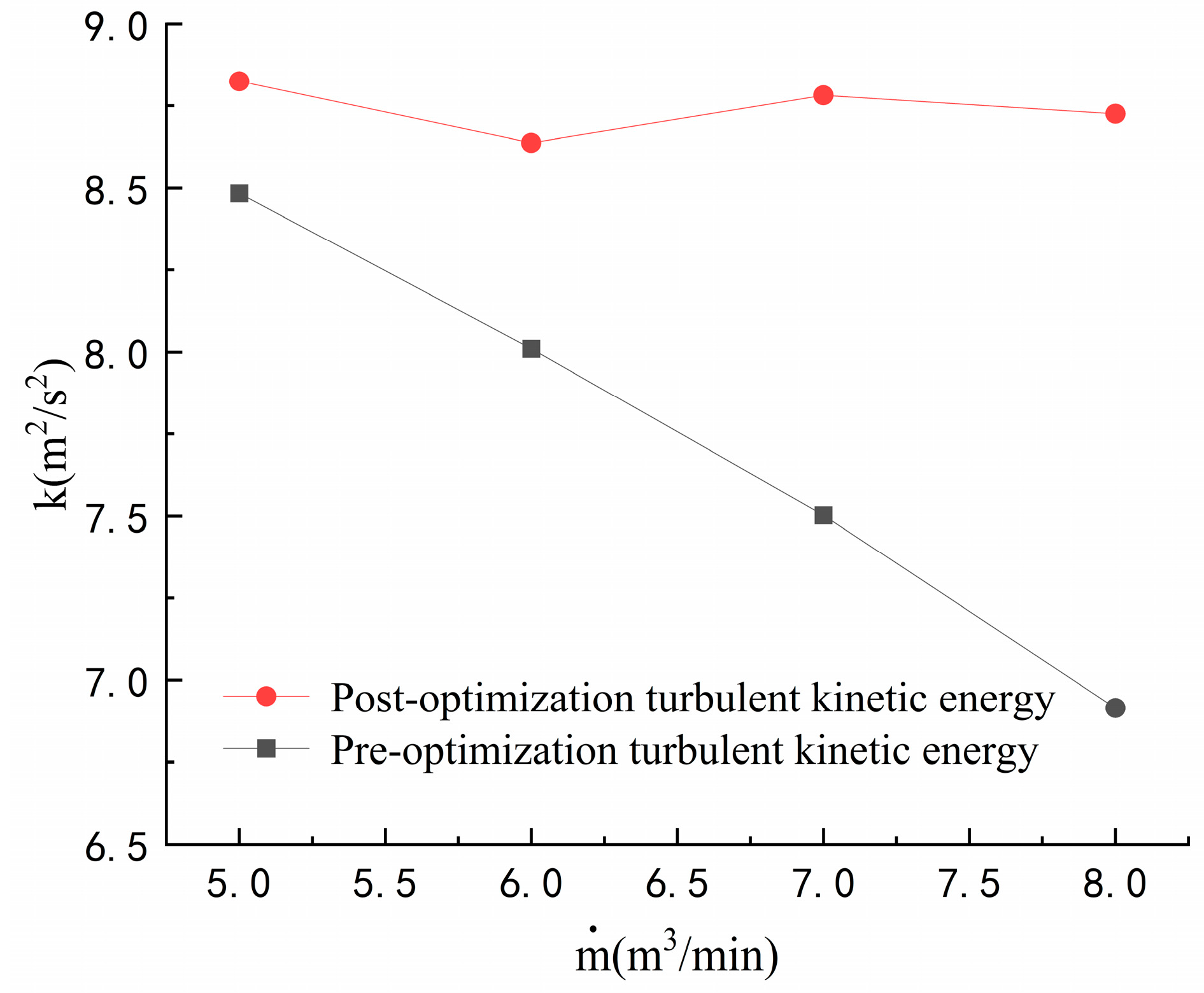
For the original pneumatic heat-generating blower, the inlet boundary condition was set to mass flow inlet, and the corresponding outlet gas temperature and turbulent kinetic energy in the impeller region were obtained via numerical simulation. Subsequently, based on the structural parameters of the optimized impeller, the outlet gas temperature and turbulent kinetic energy corresponding to varying flow rates were simulated. The column–point–line plots of the outlet gas temperature and turbulent kinetic energy for the original and optimized blowers were generated, as shown in Figure 22 and Figure 23.
As observed in Figure 22 and Figure 23, as the volume flow rate of the aerodynamic heating blower increased from 5 m3/min to 8 m3/min, the outlet gas temperature of the post-optimization blower increased by over 11%, while the turbulent kinetic energy within the impeller region increased by more than 4%.

4. Conclusions

Through in-depth analysis of the structural characteristics and working principle of the pneumatic heat-generating blower, the main factors affecting the heating efficiency of the fan are the flow velocity, density and cross-sectional area of the gas. It is determined that by optimizing the structure of the flow channel, the internal pressure distribution of the blower can be changed, thereby improving the heating efficiency of the blower. In order to obtain the structural parameters of the flow channel, mathematical models for the impeller and the flow channel were established, respectively. Based on these models, the structural parameters were determined: the number of blades n, the central angle of the convex arc A B ̑ of the blade, the central angle of the concave arc A C ̑ of the blade, and the blade thickness h were taken as the optimization variables; the objective function was the turbulent kinetic energy k and the outlet temperature Tout of the blower.
Samples were selected using Latin Hypercube Sampling, and a Kriging surrogate model was established. Through experimental comparison, the grid independence of the simulation model was tested. When the number of grids exceeded 3.63 million, the simulation results were independent of the grid density. The simulation calculation was carried out for the grid scheme with approximately 3.63 million grids. Based on the multi-objective optimization genetic algorithm NSGA-II, the flow channel structure parameters were optimized and designed, and the optimal parameter combination was obtained: n = 17, θAC = 12.04°, θAB = 78.57°, h = 38.13 mm. Under this parameter combination, the turbulent kinetic energy is 9.20 m2/s2 and the outlet temperature is 434.11 K.
Based on the optimized parameters of the flow channel, a simulation model was established and analyzed using CFD. Through the analysis of pressure field, velocity field, temperature field and energy field results, the internal pressure of the blower becomes more reasonable. The vortices in the flow channel are weakened and are closer to the blade tip gap, verifying the rationality of the optimized design. When the turbulent kinetic energy is 8.87 m2/s2, the outlet temperature is 423.2 K. The relative errors of the target function values for the comparison optimization were 2.59% and 3.72%, respectively. Additionally, by comparing the temperature curves of the export observation points before and after optimization, the temperatures at each point increased by approximately 35 K to 40 K. The research results can provide a reference for the optimization design of blower blades based on multi-physics field coupling during the design process.

Author Contributions

Software, J.H.; validation, L.Z.; writing—original draft, J.H.; writing—review & editing, T.X.; visualization, Z.L. All authors have read and agreed to the published version of the manuscript.

Funding

This paper was funded by the Liaoning Innovation Team of the National Modern Agricultural Industry Technology System in 2025 (No. 2025lncxtdhssx).

Data Availability Statement

Data is available upon request.

Acknowledgments

All content generated by AI has been carefully and thoroughly reviewed word by word by the authors. We have further revised, supplemented and refined such content in light of the specific research context and professional academic requirements of this paper, ensuring the accuracy of expressions, rigorous logic and full compliance with academic norms. All core viewpoints, research methods, experimental design and conclusions of the manuscript were independently completed by the author team; AI was only used as an auxiliary tool and did not participate in the creation of any core academic content.

Conflicts of Interest

The authors declare no conflicts of interest.

References

  1. Cai, X.; Pan, P.; Zhu, J.; Gu, R. The Analysis of the Aerodynamic Character and Structural Response of Large-Scale Wind Turbine Blades. Energies 2013, 6, 3134–3148. [Google Scholar] [CrossRef]
  2. Li, H.; Chen, Y.; Bai, L.; Shi, W.; Zhou, L. Assessing Energy Loss and Entropy Production in a Centrifugal Pump with Various Impeller Blade Trailing Edges. J. Appl. Fluid Mech. 2024, 18, 518–534. [Google Scholar] [CrossRef]
  3. Zhu, F.; Jin, D.; Gui, X. Corner flow control in high through-flow axial commercial fan/booster using blade 3-D optimization. J. Therm. Sci. 2012, 21, 32–41. [Google Scholar] [CrossRef]
  4. Kim, J.-H.; Choi, J.-H.; Husain, A.; Kim, K.-Y. Performance enhancement of axial fan blade through multi-objective optimization techniques. J. Mech. Sci. Technol. 2010, 24, 2059–2066. [Google Scholar] [CrossRef]
  5. Kim, J.-H.; Kim, J.-H.; Kim, K.-Y.; Yoon, J.-Y.; Yang, S.-H.; Choi, Y.-S. High-efficiency design of a tunnel ventilation jet fan through numerical optimization techniques. J. Mech. Sci. Technol. 2012, 26, 1793–1800. [Google Scholar] [CrossRef]
  6. Jia, X.; Huang, X.; Jiang, S.; Wang, D.; Firrone, C.M. Inverse Design of Compressor/Fan Blade Profiles Based on Conditional Invertible Neural Networks. J. Turbomach. 2025, 147, 101014. [Google Scholar] [CrossRef]
  7. Joly, M.M.; Verstraete, T.; Paniagua, G. Multidisciplinary design optimization of a compact highly loaded fan. Struct. Multidiscip. Optim. 2014, 49, 471–483. [Google Scholar] [CrossRef]
  8. Yang, Z.; Gu, Z.; Wang, Y.; Yan, J.; Yang, X. Prediction and optimization of aerodynamic noise in an automotive air conditioning centrifugal fan. J. Cent. South Univ. 2013, 20, 1245–1253. [Google Scholar] [CrossRef]
  9. Ji, X.; Lu, X.; Li, H.; Ma, P.; Xu, S. Blade optimization design of Savonius hydraulic turbine based on radial basis function surrogate model and L-SHADE algorithm. Ocean Eng. 2023, 286, 0029–8018. [Google Scholar] [CrossRef]
  10. Heo, M.-W.; Kim, J.-H.; Seo, T.-W.; Kim, K.-Y. Aerodynamic and aeroacoustic optimization for design of a forward-curved blades centrifugal fan. Proc. Inst. Mech. Eng. Part A-J. Power Energy 2016, 230, 154–174. [Google Scholar] [CrossRef]
  11. Song, P.; Sun, J. Blade shape optimization for transonic axial flow fan. J. Mech. Sci. Technol. 2015, 29, 931–938. [Google Scholar] [CrossRef]
  12. Chen, Y.; Wang, Z.; Zhang, X. HCF Weak Link Optimization for Wide-Chord Fan Blades Based on Circumferential Stacking Line Design. Int. J. Aeronaut. Space Sci. 2021, 22, 845–856. [Google Scholar] [CrossRef]
  13. Kong, C.; Wang, M.; Jin, T.; Liu, S. An optimization on the stacking line of low-pressure axial-flow fan using the surrogate-assistant optimization method. J. Mech. Sci. Technol. 2021, 35, 4997–5005. [Google Scholar] [CrossRef]
  14. Wang, X.; Li, H.; Baoyin, H.; Han, S.; Bao, C. Aerodynamic optimization of wind turbine blades via surrogate-assisted deep reinforcement learning. Phys. Fluids 2025, 37, 047141. [Google Scholar] [CrossRef]
  15. Kim, J.T.; Yang, J.S.; Kallath, H.; Min, J.K. Multi-stage optimization of centrifugal fan and casing with preliminary design and mesh morphing method. J. Mech. Sci. Technol. 2023, 37, 4065–4080. [Google Scholar] [CrossRef]
  16. Li, H.; Li, X.; Zhan, J.; Chen, W.; Zong, W. Study of Turbulent Kinetic Energy and Dissipation Based on Fractal Impeller. Sustainability 2023, 15, 7772. [Google Scholar] [CrossRef]
  17. Xu, Z.; Yu, Z.; Ning, X.; Wan, X.; Qu, Z.; Zhao, C. Hybrid of non-dominated sorting genetic algorithm II and invasive weed optimization for fan duct surface heat exchanger configuration optimization design. Case Stud. Therm. Eng. 2024, 61, 105149. [Google Scholar] [CrossRef]
  18. Xing, Z.; Sun, J.; Liu, W.; Zhao, L. Experimental Study on a New Type of Pneumatic Heating Fan. J. Mech. Eng. 2024, 1, 46–49+57. [Google Scholar]
  19. Zhang, Z.; Guo, Q.; Ma, G.; Li, Y.; Chen, H. Simulation Study on Improving the Safety of Heat Exchanger by Adding Thermal Insulation Layer at the Pipe End. J. Liaoning Univ. Pet. Chem. Technol. 2023, 43, 67. [Google Scholar] [CrossRef]
  20. Sun, J.; Yang, S.; Guo, K.; Yu, J. Simulation Study of Single-Bubble Ultrasonic Cavitation Dynamics. J. Liaoning Univ. Pet. Chem. Technol. 2025, 45, 76. [Google Scholar] [CrossRef]
  21. Wang, F.; Ji, H.; Chen, H.; Chen, X.; Wang, M.; Shi, X. Neural network model for fast prediction of infrared radiation of turbofan engine with axisymmetric exhaust system in preliminary design phase. Case Stud. Therm. Eng. 2025, 73, 106641. [Google Scholar] [CrossRef]
  22. Xiao, Q.; Wang, J.; Jiang, B.; Yang, W.; Yang, X. Multi-objective optimization of squirrel cage fan for range hood based on Kriging model. Proc. Inst. Mech. Eng. Part C-J. Eng. Mech. Eng. Sci. 2022, 236, 219–232. [Google Scholar] [CrossRef]
  23. Zhao, H.; Li, X.; Chen, J. Distributed Load Identification for Uncertain Structure Based on LHS-GA and Improved L-Curve Method. Int. J. Comput. Methods 2021, 18, 2050022. [Google Scholar] [CrossRef]
  24. Xi, K.; Xie, Z.; Wang, C.; Meng, F.; Lu, Z.; Chen, X. Stepwise iterative multi-objective optimization design of airfoil fin channel printed circuit regenerators based on deep neural network and NSGA-II. Int. Commun. Heat Mass Transf. 2025, 169, 109685. [Google Scholar] [CrossRef]
Figure 1. Pneumatic heat-generating blower structure schematic. (a) Pneumatic heat-generating blower assembly; (b) impeller; (c) volute.
Machines 14 00379 g001
Figure 2. Flow channel.
Machines 14 00379 g002
Figure 3. Blade structure.
Machines 14 00379 g003
Figure 4. Blade structure schematic.
Machines 14 00379 g004
Figure 5. Flow channel structure schematic.
Machines 14 00379 g005
Figure 6. Flow channel cross-sectional schematic.
Machines 14 00379 g006
Figure 7. Optimization design process.
Machines 14 00379 g007
Figure 8. Distribution of initial samples.
Machines 14 00379 g008
Figure 9. Experimental apparatus. (a) Pneumatic heat-generating blower; (b) impeller structure.
Machines 14 00379 g009
Figure 10. Fluid domain grid. (a) Volute region grid; (b) impeller region grid.
Machines 14 00379 g010
Figure 11. Pareto optimal set.
Machines 14 00379 g011
Figure 12. Velocity vector plot. (a) Pre-optimization; (b) post-optimization.
Machines 14 00379 g012
Figure 13. Pressure distribution contour. (a) Pre-optimization; (b) post-optimization.
Machines 14 00379 g013
Figure 14. Blade nomenclature.
Machines 14 00379 g014
Figure 15. Pressure difference.
Machines 14 00379 g015
Figure 16. Temperature distribution contour. (a) Pre-optimization; (b) post-optimization.
Machines 14 00379 g016
Figure 17. Probe point temperature.
Machines 14 00379 g017
Figure 18. Monitor point.
Machines 14 00379 g018
Figure 19. Monitor point temperature.
Machines 14 00379 g019
Figure 20. Monitoring point velocity.
Machines 14 00379 g020
Figure 21. Turbulent kinetic energy streamlines. (a) Pre-optimization; (b) post-optimization.
Machines 14 00379 g021
Figure 22. Temperature.
Machines 14 00379 g022
Figure 23. Turbulent kinetic energy.
Machines 14 00379 g023
Table 1. Simulation and experimental validation.
Mesh QuantitySimulation Value T (K)Experimental Value T (K)Relative Error e (%)
1,743,841355.2371.74.65
2,270,620361.9371.72.71
3,633,247376.2371.7−1.20
4,558,916376.7371.7−1.33
5,745,965376.6371.7−1.30
7,014,285376.4371.7−1.25
Table 2. Optimized blade structural parameters.
ParametersPre-OptimizationPost-Optimization
Central angle θAB (°)41.3478.57
Central angle θAC (°)15.5612.04
Number of blades n1617
Blade thickness h (mm)40.0038.13
Outlet temperature Tout (K)376.2434.1
Turbulent Kinetic Energy k (m2/s2)8.169.20
Disclaimer/Publisher’s Note: The statements, opinions and data contained in all publications are solely those of the individual author(s) and contributor(s) and not of MDPI and/or the editor(s). MDPI and/or the editor(s) disclaim responsibility for any injury to people or property resulting from any ideas, methods, instructions or products referred to in the content.