Review

Research on the Productization Design of Large-Stroke and High-Precision Non-Resonant Piezoelectric Actuators

1
Department of Industrial Design, School of Art, Tianjin University of Technology, Tianjin 300382, China
2
Key Laboratory of Mechanism Theory and Equipment Design of Ministry of Education, School of Mechanical Engineering, Tianjin University, Tianjin 300354, China
*
Author to whom correspondence should be addressed.
Machines 2026, 14(3), 290; https://doi.org/10.3390/machines14030290
Submission received: 2 February 2026 / Revised: 24 February 2026 / Accepted: 24 February 2026 / Published: 4 March 2026
(This article belongs to the Special Issue Design, Control and Application of Precision Robots)

Abstract

Stick-slip actuators have emerged as a promising solution for precision positioning, which can help attain a nanometer-scale resolution and large stroke size. This review summarizes recent advances in the design, modeling, and performance enhancement of non-resonant stick-slip actuators systematically. Three fundamental actuation principles, including conventional, parasitic, and hybrid types, are reported, which highlight their respective mechanisms for stepwise motion generation. We examine the development of linear and rotational actuators and reveal the function of compliant amplification mechanisms, asymmetric stiffness configurations, and bio-inspired architectures in improving step consistency, load capacity, and compactness. We also examine the effects of step displacement optimization, active preload control, and advanced dynamic modeling on motion precision. We suggest that future development prioritize enhancing driving force, suppressing backward motion, improving dynamic response, and ensuring long-term reliability.

1. Introduction

The advancement of fields such as aerospace, optics, precision manipulation and manufacturing has posed stringent demands for precision positioning platforms with sub-micrometer- or even nanometer-scale resolution over centimeter-scale travel ranges [1,2,3,4,5]. Conventional motor-driven stages can fulfill the requirements for long travel and high load capacity, while they depend on transmission mechanisms to convert rotary into linear motion. This inherent mechanical transmission introduces backlash, friction, and elastic deformation, which fundamentally limits positioning accuracy on the micrometer level [6,7]. Direct-drive linear motors eliminate these intermediate mechanical components, which can achieve superior motion fidelity, faster dynamic response, and significantly improved accuracy. However, their poor self-locking capability hinders their broader application, which compromises stability and safety in vertical applications [8,9].
For precision positioning applications, electrostatic and electrothermal mechanisms are compatible with MEMS fabrication, which can achieve a compact structure. However, they often struggle with limited force output and slow cooling-dependent recovery cycles, respectively. Piezoelectric actuators (PZT) serve as a foundational ferroelectric ceramic that adopts a perovskite crystal structure. This material is particularly valued because it maintains a morphotropic phase boundary, which allows the polar axes to reorient with minimal energy under an applied electric field. Such unique crystallo-graphic behavior leads to high dielectric constants and electromechanical coupling. PZT actuators utilize the inverse piezoelectric effect to generate precise displacement under applied voltages and have attracted significant attention in the field of precision positioning because PZT actuators possess the advantages of high motion accuracy, fast response, and large driving force [10,11,12,13]. Based on the actuation principle, PZT positioning platforms can be classified into the direct-drive type [14,15], inertial-drive type [16,17], inchworm-drive type [18,19], ultrasonic-drive type [20,21], and stick-slip-drive type [22,23]. To enlarge the output displacement of PZT actuators, direct-drive stages are usually designed with flexible amplification mechanisms. However, the motion strokes in this kind of stage can only reach tens to hundreds of micrometers [24,25]. Inertial-drive platforms can achieve larger motions through repeating step motions; however, controlling complexity and stability are still challenges [26]. Inchworm-type mechanisms enable long-range, high load capacity and high-resolution movement. However, multi-phase control and intricate structural design limit their application [27]. High-frequency vibration is employed in ultrasonic-drive platforms to produce smooth motions. Sophisticated control of its vibration mode and heat generation are two pressing challenges that need to be addressed [28]. In contrast, the stick-slip drive mechanism distinguishes itself by combining a compact structure with relatively simple control signals. Simultaneously, it maintains high positioning accuracy and a substantial force output [29,30]. These advantages make stick-slip actuators particularly suitable for miniaturization, control simplicity, and precision applications.
The structural stability of stick-slip actuators is a critical factor determining attainable speed, load capacity, and motion consistency. Therefore, enhancing the structural rigidity and natural frequency of the drive unit through mechanical design has become an important research focus [31]. Furthermore, the ability to dynamically adjust the normal contact force between the actuating foot and the slider during the stick and slip phases is another pivotal parameter that directly influences the platform’s load capacity and backward motion [32,33]. To address this challenge, several solutions, encompassing both novel mechanical designs and coordinated control strategies, have been proposed [34,35,36,37]. By integrating mechanisms with asymmetric stiffness or specially designed compliant structures, actuators can generate coupled output displacement at the driving foot [38]. This design principle enables the actuating foot to simultaneously generate a forward tangential displacement and an elongating motion in the normal direction during the stick phase, which can be used to actively increase the frictional force between the driving foot and slider to propel the slider more effectively and stably. Conversely, during the slip phase, the foot retracts tangentially while undergoing a contraction in the normal direction, which minimizes the undesired backward motion of the slider by reducing friction. Considering the driving principle of the stick-slip actuator, it is crucial to conduct dynamic characteristic analysis and friction behavior research to reveal its potential working mechanism and provide theoretical guidance for structural design. An accurate dynamic model is essential for stick-slip actuator dynamic characteristic analysis, and suitable friction models should be built to describe the contact interface behavior between the actuating foot and the slider [39]. The dynamic model can reveal how different driving signals, such as sawtooth, asymmetric sinusoidal, or step-like waveforms, and their specific parameters, including voltage amplitude, rising/falling slope, and frequency, influence single-step displacement characteristics.
Existing literature reviews on stick-slip actuators primarily focus on the evolution of piezoelectric driving mechanisms, the systematic classification of mechanical structures, and the evaluation of control strategies. To address the critical challenges of significant backward motion, limited load-carrying capacity, and unpredictable stepping efficiency in stick-slip actuators, this paper surveys their driving mechanisms in conventional, parasitic, and hybrid configurations. The working principles of diverse actuators designed to mitigate these issues are elucidated, complemented by a comprehensive review of their practical applications in both linear and rotary motion systems. This paper is structured as follows: Section 2 analyzes the stick-slip actuating principle; studies on linear stick-slip actuators are introduced in Section 3; Section 4 describes the rotational stick-slip actuator; Section 5 critically examines recent research progress dedicated to enhancing the motion accuracy of stick-slip piezoelectric actuators; we propose some prospects in Section 6; and finally, Section 7 concludes this paper.

2. Stick-Slip Actuating Principle

The concept of stick-slip actuators was first systematically proposed in the 1980s, aiming to fulfill the demand for long-range, nanometric positioning in instruments like scanning tunneling microscopes [40]. Entering the 21st century, with the development of micro-nanomanipulation, precision optics, and semiconductor manufacturing, more and more attention has been attracted to stick-slip technology [16,41,42]. An alternating cycle of interface adhesion and inertial sliding is the basic working principle for achieving large-stroke motion [43]. The preload between the driving foot and slider is a key parameter influencing its performance. Based on the preload adjustment method, existing stick-slip actuators can be divided into three types, named conventional stick-slip actuators [44], parasitic stick-slip actuators [45] and hybrid stick-slip actuators [46]. A comparison of these stick-slip actuators is listed in Table 1. The traditional stick-slip actuator has a simple structure and direct control, but it exhibits significant backlash and has a relatively limited load capacity. Parasitic stick-slip actuators generate coupled displacements at the driving foot, which increases the normal pressure between the driving foot and the slider during the stick phase and reduces it during the slip phase. A changing preload can be used to improve the load capacity and minimize backward motion. Hybrid stick-slip actuators integrate additional PZT actuators with parasitic mechanisms, which enable flexible and dynamic adjustment of the pressure between the driving foot and the mover. This configuration can effectively reduce backward displacement and enhance load capacity.
From an industrial application perspective, the selection of stick-slip actuators necessitates a trade-off analysis between kinematic performance and economic costs. Table 2 concludes the comparative analysis of economic and manufacturing factors. Conventional direct-drive actuators represent the most cost-effective solution due to their structural simplicity and minimal part count. The introduction of flexure-based parasitic actuators—whether utilizing single or dual PZT configurations—shifts the cost driver toward precision manufacturing, specifically the high-fidelity Wire Electrical Discharge Machining required for monolithic compliant mechanisms. For more complex hybrid and multi-DOF configurations, the economic bottleneck transitions from the mechanical frame to the electronic infrastructure. The requirement for synchronized, multi-channel high-voltage power amplifiers and real-time FPGA-based control systems exponentially increases the total system cost.
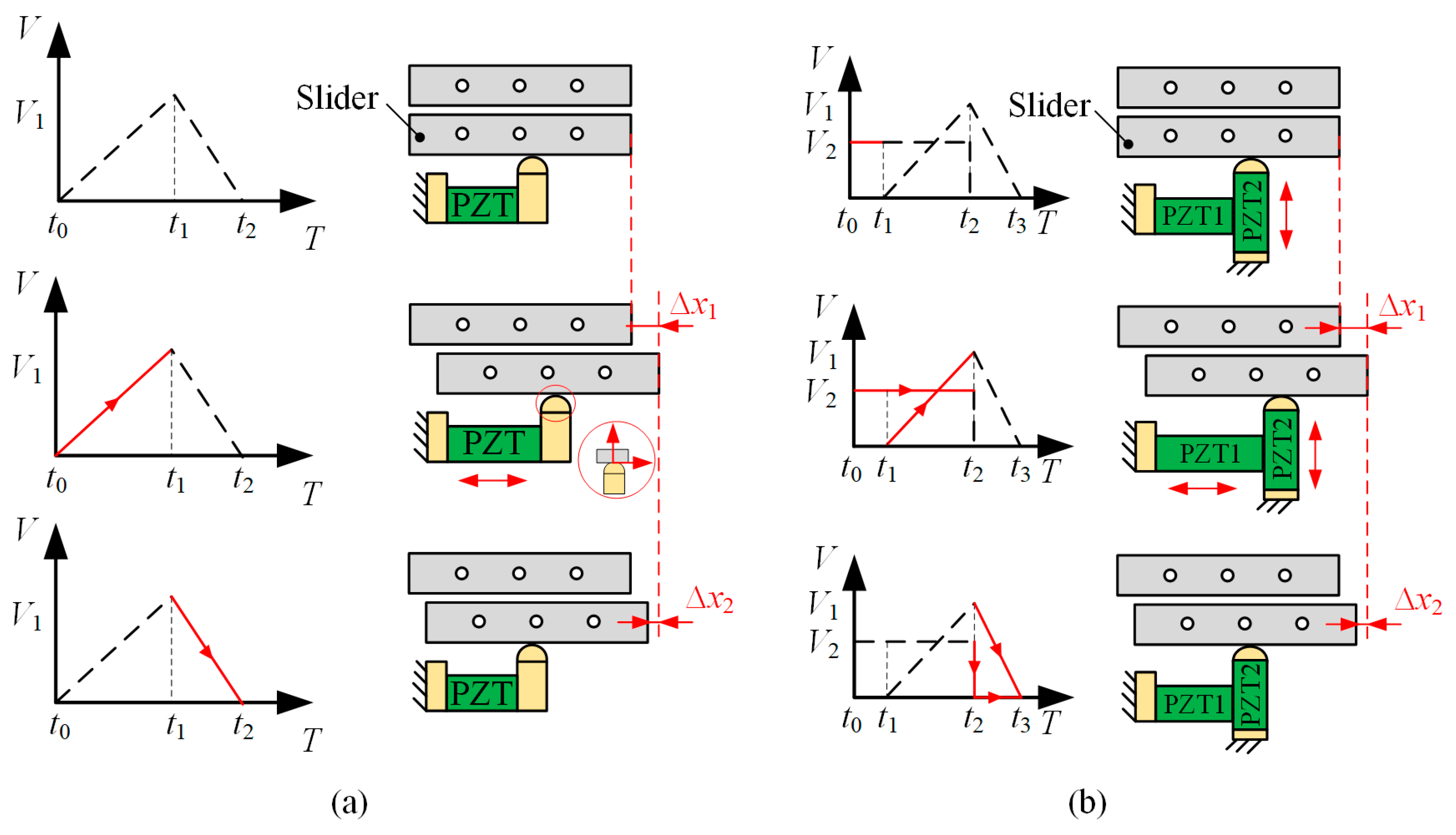
The actuating principle of the conventional stick-slip actuator is illustrated in Figure 1a. A single PZT element is adopted to actuate the mechanism by applying an asymmetric triangular voltage signal. The differential response of the friction force between the driving foot and slider to the varying sliding rates of the applied voltage is the key to achieving continuous forward motion [47,48]. The slow elongation of the PZT actuator from t0 to t1 results in a coordinated forward motion of the slider. A large displacement, Δx1, can be achieved in this phase due to the prevailing static friction. In the subsequent rapid ramp-down phase (from t1 to t2), the rapid contraction of the PZT actuator causes a small reverse motion, Δx2. Then, the total forward motion of the slider during one actuating cycle can be calculated by
Δ d = Δ x 1 Δ x 2
The motion principle of the parasitic stick-slip actuator is similar to that of its conventional counterpart, and it also features an adjustable preload force [49,50]. The applied voltage and the corresponding slider motion can be depicted in Figure 1a. During the stick phase, the driving foot not only advances forward but also undergoes an extending displacement perpendicular to the direction of motion, which can enhance the frictional force between the driving foot and the slider. As the voltage decreases abruptly, the driving foot retracts to its initial position. In this process, the friction force progressively diminishes, which is conducive to reducing the retracting displacement Δx2. Hence, many developed innovations have focused on the design of this mechanism to ensure the generation of parasitic displacement.
Distinct from the aforementioned two types of actuators, the hybrid stick-slip actuator usually comprises two PZT units, an actuation mechanism, and a preloading mechanism. Additionally, the actuating voltage signals need to be coordinated [51,52]. The operational principle of this actuator is schematically illustrated in Figure 1b. A square-wave voltage signal is applied to PZT2, while an asymmetric triangular-wave voltage is applied to PZT1. During the interval from t0 to t1, a voltage with amplitude V1 is applied to PZT2. Then, the extension of PZT2 can increase the contact force between the driving foot and the slider. From t1 to t2, the voltage applied to PZT1 ramps up gradually from 0 to V2, while the voltage for PZT2 remains constant at V1. In this process, the slider will move forward with the extension of PZT1. Subsequently, during the interval from t2 to t3, the voltage applied to PZT2 drops abruptly to 0. This retraction is helpful for minimizing the friction between the driving foot and the slider. Concurrently, the voltage applied to PZT1 rapidly decreases to 0, which can ensure a swift retraction of the driving foot to its initial state and reduce the retraction of the slider.
By repeating the actuating cycle, a traveling range on the scale of millimeters or greater can be achieved. The velocity of the motion can be adjusted by controlling the frequency and amplitude of the voltages. Over the past few years, various linear and rotary precision positioning stages have been developed based on the aforementioned stick-slip actuation principles, as summarized in Table 3. These advancements have been extensively integrated into high-speed precision scanning systems, micromanipulation robots, and ultra-precision machining units.

3. Linear Stick-Slip Actuator

Stick-slip actuators have emerged as an important driving solution for high-performance linear platforms to achieve high precision and large strokes [68,69]. Through continuous step-by-step motion, they can achieve nanometer-level resolution within a centimeter-scale range, which means they are suitable for micro-nanomanipulation and precision alignment applications.
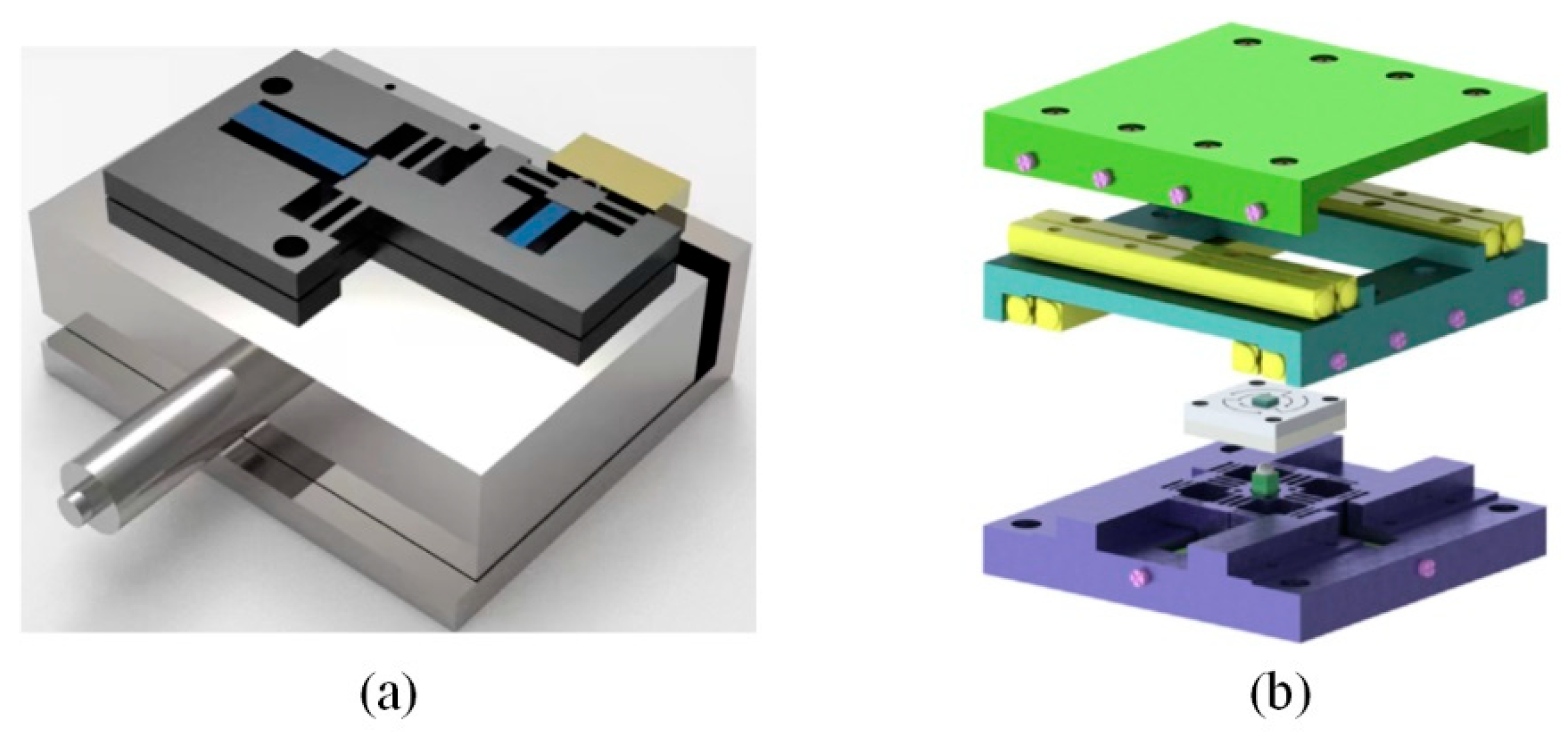
Initially, stick-slip actuators employed a single PZT element to drive the slider in a stepwise manner for long-range travel, during which the friction force between the driving foot and the slider remained constant. However, this configuration often induced considerable backward motion, which depressed the positioning accuracy. To address this issue, a second PZT was introduced to actively regulate the normal preload [70], as shown in Figure 2a. For this configuration, two PZT elements were used to actuate the slider and adjust the preload force directly, without compliant amplification mechanisms (CAM). An integrated arc-plate flexible foot, which enlarged the contact area by deforming under the action of the contact force between the driving foot and slider, was used to further enhance the stick-slip actuator’s performance. Another approach introduces a dual-foot architecture, where an active driving foot propels the slider while a passive damping foot secures it during the slip phase [71]. The backward motion can be restrained to less than 1% without sacrificing locking force. In a related design, the preload force is dynamically adjusted by longitudinal transducers during operation [72]. In addition, conventional sinusoidal voltages were replaced with sawtooth signals, which enable the same actuator to achieve a fine resolution of 19 nm. To improve the motion capability, a 2-DOF stick-slip actuated positioning stage was developed, where the driving part and active clamping mechanism for friction control are actuated by separate PZT elements [73], as shown in Figure 2b. The nonlinearity was addressed through advanced compensation techniques and decoupling mechanisms, which improve tracking accuracy without relying on a complex dynamic model. Due to the absence of CAM, the step displacement can only reach a few to ten micrometers, limited by the stroke of the PZT actuator, which affects the moving velocity of the platform. Although motion speed can be increased by raising the input voltage frequency, this frequency cannot be extended indefinitely, as it is restricted by dynamic mechanical constraints.
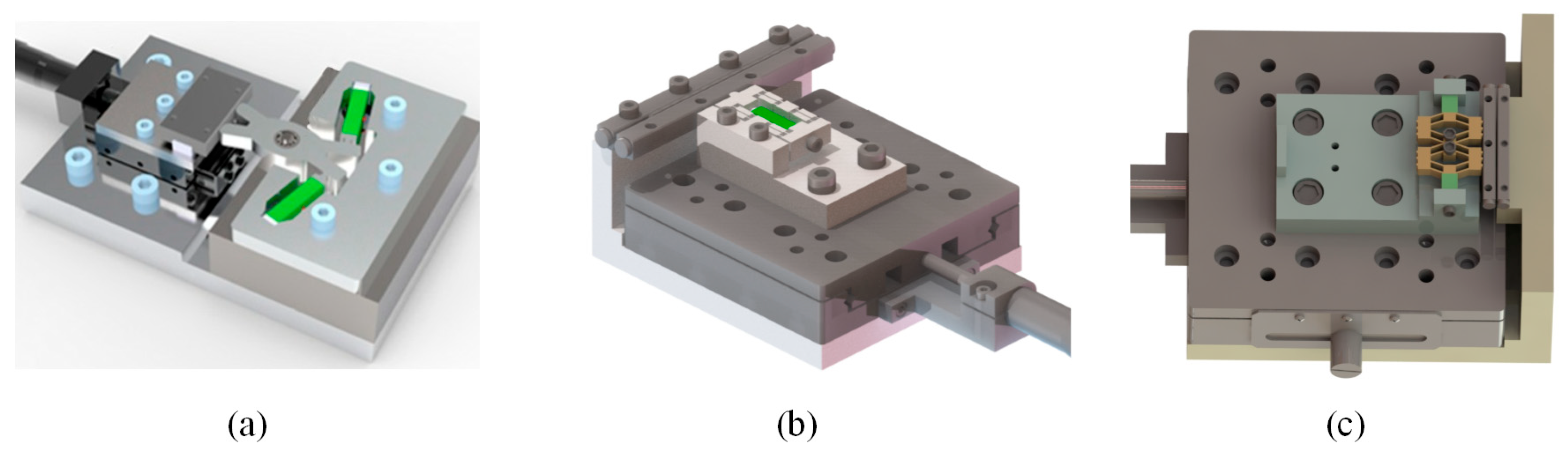
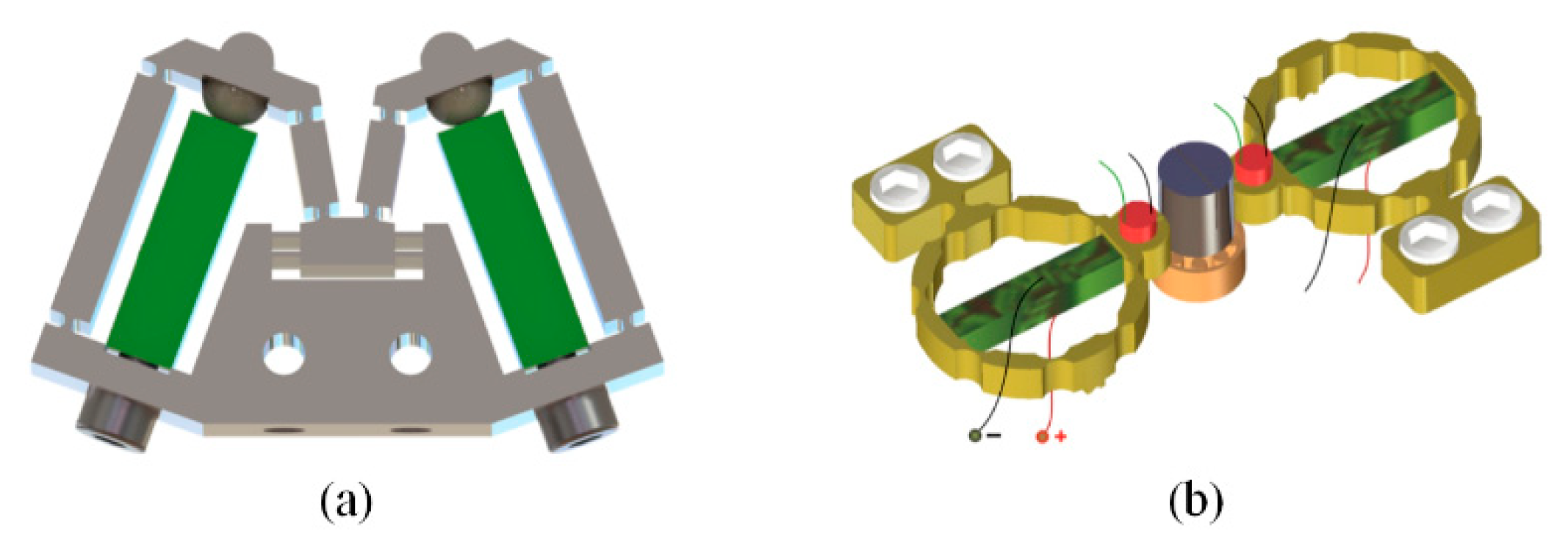
To overcome the limitation of the stepping stroke, CAMs were subsequently introduced to magnify the output displacement of the PZT actuators. Lever, bridge-type, rhombic, and triangular mechanisms can effectively enhance the stepping stroke. By employing asymmetric structural designs or exploiting the inherent kinematic characteristics of CAMs, parasitic motion can be generated and utilized to actively adjust the preload between the driving foot and slider. Owing to the inherent kinematic coupling at its output, the lever mechanism offers considerable potential for developing stick-slip actuators with integrated parasitic motion, and several relevant innovations have been reported. To improve bidirectional motion consistency, a symmetrically configured rotary mechanism was designed based on the lever principle, as illustrated in Figure 3a, where a single driving foot is designed to reduce discrepancies induced by assembly tolerances [74]. This optimized configuration achieved a notably low velocity deviation rate of 1.6% at 100 V and 10 Hz between two axes, which indicates that the configuration exhibits stable bidirectional performance across a wide frequency range without requiring complex structural modifications. In a different structural approach, an asymmetric lever-based stick-slip actuator was proposed [75]. A dual-foot stator with different stiffness was employed to generate opposing frictional forces to effectively suppress backward motion. This structure enables smooth, non-regressive displacement even under low voltage and frequency excitation, and a motion resolution of 237.6 nm can be achieved. Separately, a low-stiffness contact strategy was introduced by substituting conventional rigid driving feet with flexible ones, which could significantly desensitize the actuator to variations in preload deformation and assembly misalignments [76]. This method allowed a compact stick-slip actuator to achieve high assembly interchangeability, reliable performance over repeated reassembly cycles, and stable long-stroke motion without requiring fine-tuning. Furthermore, a dual-mode stick-slip actuated stage was developed by integrating both long-range coarse positioning and high-resolution scanning within a unified structure [77]. Through active regulation of the contact force during scanning, the motion resolution can be improved from 0.638 nm to 0.192 nm.
Due to its inherent kinematic coupling and exhibition of superior dynamic performance, the triangular CAM offers a viable alternative to the lever-type design for stick-slip actuators. For backward motion compensation, one strategy leverages two sawtooth driving signals with a specific initial time gap [78]. By adopting this method, step size and speed can be significantly improved, particularly at lower frequencies. In contrast, the other strategy is based on structure design to reduce backward motion. A single PZT-actuated dual-driving-foot configuration with asymmetric stiffness was proposed that utilized the intrinsically generated phase difference to suppress backward motion and enhance performance at higher frequencies [79]. For asymmetrically structured actuators, the actuating force can induce parasitic motion at the output end. The parasitic ratio, which influences the preload between the driving foot and slider, can be regulated by optimizing the structural parameters. Based on this principle, a bridge-type CAM with asymmetric hinge stiffness was developed to strategically redistribute the elongation of the PZT to obtain the actuating and parasitic motion [80], as shown in Figure 3b. This design achieved a significantly enlarged stepping stroke of 102 μm, a high velocity of 23.53 mm/s, and nanometer-scale resolution. Further advancing this approach, a systematic topology optimization framework was employed to design a CAM to maximize the displacement amplification ratio in the driving direction while actively constraining parasitic displacement [81]. This driven methodology enabled a high velocity of 15.25 mm/s at a relatively low frequency of 650 Hz. Additionally, several studies leverage specially designed CAMs to develop parasitic motion-based stick-slip actuators to achieve high load capacity and velocity. For instance, one design employed a symmetrical Z-shaped flexure mechanism to achieve bidirectional motion [82]. The stick-slip actuator is activated selectively by two PZT units. The resolutions in the forward and reverse directions can reach 106 nm and 84 nm, respectively. In a parallel development, a compact actuator incorporating a symmetric rhombus-type mechanism was proposed, as shown in Figure 3c, that could generate lateral and vertical motion simultaneously [83]. This design utilized a dual driving-foot configuration to enhance load capacity while ensuring consistent step displacement and high resolution in both motion directions.
Figure 3. Linear stick-slip actuator utilizing parasitic displacement for preload force adjustment. (a) A rotation-structure-based stick-slip actuator with high consistency in forward and reverse motions [74], (b) an asymmetric bridge-type mechanism based on stepping stroke [80], (c) a rhombus-type stick-slip actuator with two driving modes [83].
Machines 14 00290 g003
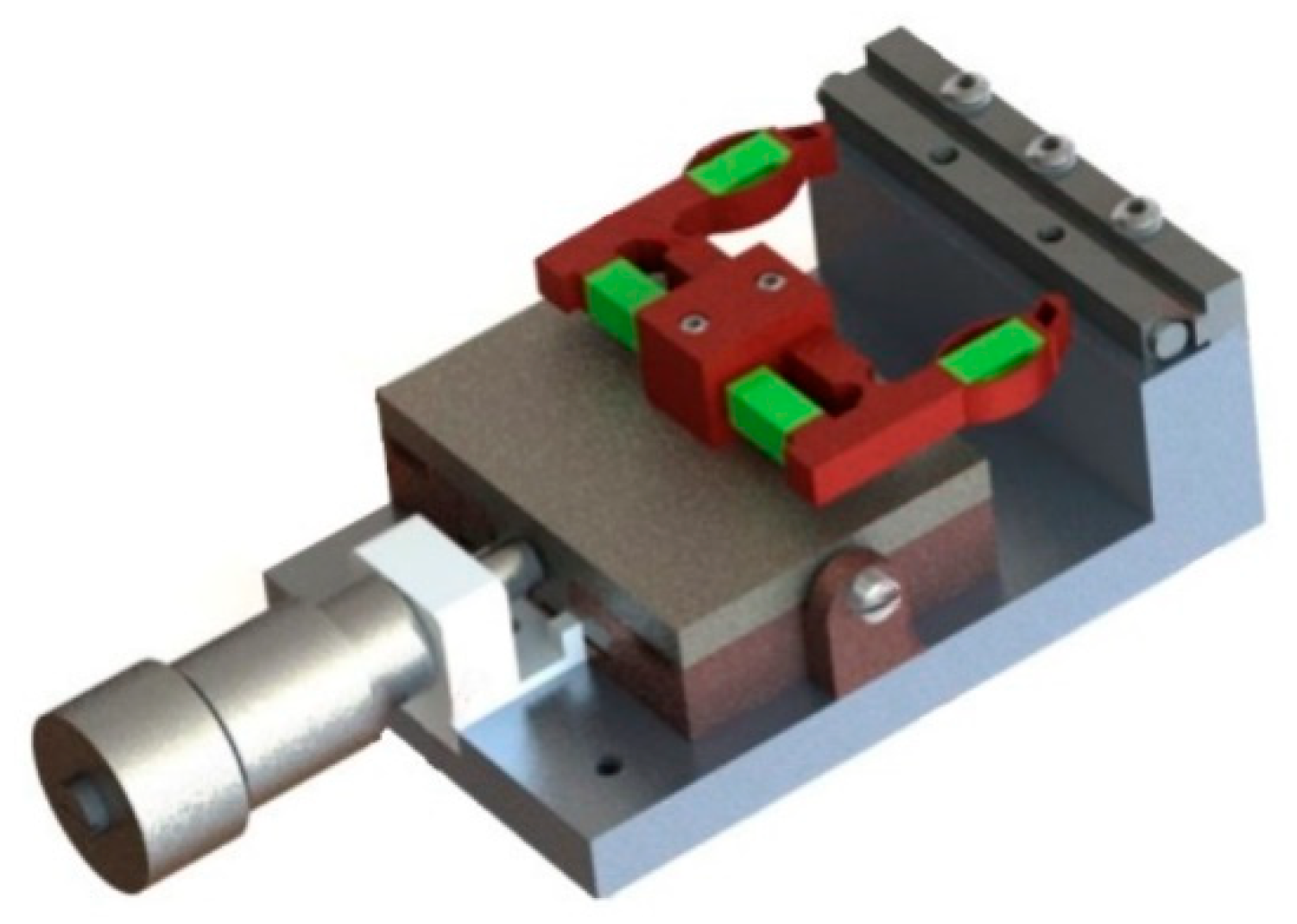
To further enhance the performance of stick-slip actuators, a dual-preload adjustment strategy has been proposed [84]. For these stick-slip actuators, they are composed of both a special mechanism and an auxiliary PZT element. By adopting this approach, the normal force between the driving foot and the slider can be significantly improved, and the reverse motion can be reduced effectively. One representative design features a hybrid architecture that integrates a parasitic displacement mechanism with a dedicated lever amplification mechanism [85]. In this configuration, an additional PZT element actively regulates the normal force at the driving interface. Driven by synchronized waveforms, this dual-mechanism design successfully suppresses backward displacement. At the same time, continuous contact can be maintained to improve stepping efficiency and achieve a maximum speed of 2.26 mm/s under load. Another stick-slip actuator composed of two lever mechanisms, with a flexible driving foot and two separate PZT elements, as shown in Figure 4, can achieve consistent bidirectional motion [86]. The normal force between the driving foot and the slider is adjusted by both the lever mechanism and separate PZT element. This integrated design enhances dynamic control of the contact interface and enables high-speed operation even at low driving frequencies and with small piezoelectric elongations.
In summary, the selection of stick-slip actuator configurations involves a strategic trade-off between structural complexity, output displacement, and motion stability. Direct-driven architectures without CAMs are characterized by high stiffness and compact footprints, which are ideal for high-precision, low-stroke applications. The integration of dual-PZT elements or dual-foot structures can effectively suppress backward motion, which is suitable for heavy-load positioning and high-resolution scanning tasks. Conversely, CAM-based actuators are preferred for high-speed and long-range travel requirements because they can significantly amplify the stepping stroke and velocity. Within this category, asymmetric or parasitic-motion mechanisms offer an autonomous solution for dynamic preload regulation, enhancing bidirectional consistency without complex control algorithms. Finally, hybrid architectures that combine CAMs with auxiliary active clamping represent the most robust solution for high-performance systems requiring both high load-carrying capacity and minimized regressive displacement.

4. Rotational Stick-Slip Actuator

For rotational systems, the stick-slip principle has been successfully adapted to generate continuous rotational motion with an unlimited angular range and micro-arc-level resolution, providing key technological support for precision optical alignment and pointing mechanisms in optical systems and aerospace applications [87,88]. Similarly, load capacity and backward motion are also limitations for their utilization due to the friction-actuating approach. To settle this problem, researchers have paid much attention to the development of advanced friction interface materials, innovative structural designs (e.g., active clamping mechanisms or hybrid actuation modes), and sophisticated driving waveforms to enhance load-bearing performance and minimize unwanted backward motion [89,90,91]. Among these approaches, structural designs and driving signals present distinct advantages over new friction materials. Although advanced materials like diamond-like carbon coatings improve durability and friction, their development involves complex processes and higher costs. In contrast, structural innovations such as active clamping or hybrid actuation directly enhance load capacity and motion stability through mechanical decoupling. Similarly, waveform optimization offers a flexible strategy to precisely control stick-slip dynamics and minimize backward motion without hardware modifications.
Parasitic motion perpendicular to the primary motion direction offers an effective means of regulating the friction between the driving foot and the slider in rotary stick-slip actuators. This approach avoids the need for additional PZT actuators or auxiliary mechanisms. By employing this method, a more compact structure and simplified control strategy can be achieved, which is particularly advantageous for microsystems with stringent size constraints. For instance, a dual-drive rotary platform utilizing a flexure-based mechanism to generate controlled parasitic displacement was proposed, as shown in Figure 5a [92]. By actively modulating the normal force, the configuration enhances static friction during the stick phase to improve thrust while reducing kinetic friction in the slip phase to minimize backward motion. To mitigate performance degradation in stick-slip actuators with low-inertia rotors, an auxiliary friction method was introduced [93]. An additional friction plate applies a counteracting force to suppress reverse motion during slip. This strategy boosted the output torque by a factor of 55, and a high resolution of 1.2 μrad and a speed of 367.5 mrad/s were achieved. Another approach employs an asynchronous-driven dual-stator configuration that incorporates compact force-couple flexure mechanisms [94]. The two stators operate alternately to actively increase static friction in the stick phase and counteract reverse sliding friction in the slip phase to suppress backward displacement. Similarly, a compact rotary stick-slip actuator, designed with a symmetrical, flexible mechanism and a connecting ring, was developed, where the four driving feet are actuated via only two PZT actuators [95]. The parasitic motion principle likewise enhances static friction in the stick phase and reduces kinetic friction in the slip phase. A high-speed stepping motion of up to 151.4 mrad/s under non-resonant operation can be obtained. However, as actuators continue to miniaturize, the trade-offs among step resolution, speed, and long-term reliability under high-frequency cycling become increasingly acute. Future research must address the integrated modeling of dynamic friction, wear, and heat dissipation in micro-scale interfaces to improve the performance of the stick-slip actuator fundamentally. Additionally, developing adaptive control algorithms that can compensate for performance degradation over time is another important area.
The core principle of stick-slip actuators is inspired by the locomotion of organisms, where motion is achieved through a controlled cycle of adhesion and release. This natural mechanism is replicated in engineering by mimicking biological structures using compliant mechanisms and smart materials. Recent advances aim to develop actuators that are compact and have high resolution and large strokes for precision robotics and microsystems. For instance, a bio-inspired stick-slip actuator mimicking the articulated joints and curved tibial spur of a mantis foreleg was fabricated [67]. A variable-stiffness flexure hinge that enables in situ adjustment of the contact state with the rotor was employed. This configuration utilizes stored elastic energy to fully suppress backward motion, which obtains smooth, high-speed rotation with ultra-high resolution in a miniaturized footprint. In another approach, as illustrated in Figure 5b, a PZT-and-thermal-combining actuated stick-slip rotary actuator was manufactured, where mantis leg-inspired claws were utilized to improve frictional engagement during motion [96]. A macroscopic resolution of 0.2 μrad through PZT action and a thermal resolution of 0.00073 °/°C were achieved, where the rotational fallback was effectively reduced via structurally optimized compliance. Further extending this biomimetic paradigm, a kangaroo leg-inspired actuator was developed, where an elastic drive mechanism that emulates the tendon–foot function to store and release elastic potential during operation was incorporated [97]. With a single PZT unit and a coupled amplification flexure hinge, the step displacement in both the stick and slip phases were enhanced, reaching a step efficiency of 38.6%.
In addition to the aforementioned approaches, several other strategies have been developed to enhance the performance of stick-slip actuators. A dual-mode excitation strategy for a flexure hinge-type actuator was employed, where auxiliary PZT plates superimpose high-frequency ultrasonic vibration during the slip phase to reduce friction [55]. By introducing the vibration, backward motion is suppressed, and velocity, load capacity, and stepping consistency are improved. Another study utilized a spatial screw compliant mechanism to mechanically amplify the output of a linear PZT actuator [98]. A significantly enlarged stepping angle that enables high rotational speeds at low operating frequencies was created, and backward motion was minimized. Furthermore, a longitudinal-torsional motion conversion mechanism and a threaded transmission were integrated to form a screw-type actuator, which achieved both high thrust force density (384.86 mN/cm3) and passive self-locking within a compact cylindrical footprint [99]. Additionally, an asynchronous driving method with coordinated preload control was proposed, which implemented dual driving units with independent preload modules [100]. Backward motion could be eliminated by dynamically modulating preload via synchronized square and sawtooth waveforms.
Like the selection principle for linear stick-slip actuators, parasitic motion-based designs can miniaturize rotational platforms, since they can achieve dynamic friction regulation without auxiliary PZT actuators. Bio-inspired mechanisms, such as those mimicking mantis or kangaroo limbs, utilize variable-stiffness flexure hinges and elastic energy storage to achieve high step efficiency and ultra-high resolution, which provides a novel design process. Furthermore, hybrid and multi-mode excitation strategies offer a versatile approach to enhance load capacity and bidirectional consistency in complex environments.

5. Motion Precision Improvement

5.1. Step Motion Mechanism

The step displacement of a stick-slip actuator serves as the fundamental unit for achieving large strokes. And its stability and predictability directly determine the overall motion accuracy of the platform. Through precise modeling of the dynamic behavior and active control of the driving frequency, voltage amplitude, and friction force during the single-step motion, the step displacement can be effectively predicted and adjusted in real time. This approach fundamentally suppresses backward motion, eliminates cumulative errors, and significantly improves the resolution, repeatability, and trajectory-tracking accuracy of the positioning platform.
Recently, studies quantitatively analyzing and optimizing single-step motion characteristics have been carried out to enhance the overall performance of the stick-slip actuator, as shown in Table 4. These studies employ diverse methodologies, from energy-based metrics and dual-actuator control to model-based optimization and dynamic boundary identification, to improve motion consistency, efficiency, and output capability. A critical energy ratio was proposed as a unified metric to regulate single-step motion, where a quantitative link between drive signals and motion states is built to suppress backward motion and improve positioning resolution in micro-nanofabrication [101]. Another method utilizes dual PZT stacks to actively coordinate forward and backward displacement, transforming typically parasitic backward motion into a controllable parameter for creating tunable hierarchical micro/nanostructures, with feature geometry dictated by the backward ratio [102]. Further, a model-based optimization framework combining dynamic modeling and genetic algorithms was developed to co-optimize flexible mechanism dimensions and driving signal shapes [103]. By minimizing slip-phase friction work, energy transfer efficiency is increased, yielding more consistent step displacement and raising velocity by up to 29.48% at high frequencies. Additionally, a cascaded dynamic-friction model analytically determines the actuator’s scannable trajectory set, defining safe operational bounds for slip-free scanning and enabling a large scanning range, achieving a 1–2 order-of-magnitude gain over conventional methods through driving frequency optimization [104]. Finally, systematic investigation into the initial gap reveals its decisive role in single-step behavior [105]. Via modeling step dynamics with system deformation and response lag, a critical gap has been identified to eliminate backward motion (ΔS = 0), offering a simple yet effective means to enhance step efficiency without altering drive signals or control.

5.2. Active Control of Preload

It is known that the contact force between the driving foot and the slider is a critical parameter that affects the step displacement of the stick-slip actuated platform. Several methods have been proposed to adjust the contact behavior, and contact force monitor approaches have also been reported. Active control of the preload between the driving foot and the rail has emerged as a frontier and critical research direction for optimizing the output performance of stick-slip piezoelectric actuators. By precisely regulating this core frictional interface, backward motion can be directly suppressed. At the same time, self-locking stability can be enhanced and speed-load capability can be expanded.
The active monitoring and control of the interfacial preload are two effective approaches to overcome the limitations inherent in conventional static preloading. This is achieved by dynamically regulating the mechanical state at the critical frictional interface. This pathway addresses long-standing inherent challenges, which include motion nonlinearity and backward motion. Furthermore, the traditional trade-off between load capacity and driving speed can be mitigated. A contact force-measuring approach was examined by integrating strain gauges directly into the compliant driving mechanism, which enabled real-time measurement and closed-loop control of the contact force [106]. Disturbances like surface unevenness can be compensated for using this active regulation, significantly improving motion linearity in long-stroke operation. Simultaneously, the linear correlation coefficient can be increased from 0.7545 to over 0.9739. Alternatively, a structurally integrated method was reported, where the deflection of a built-in cantilever beam was used to indirectly quantify the preload [35]. This setup revealed that the preload governs the stepping mode and actively tunes the system’s resonant frequency from 625.6 Hz to 770.6 Hz. The optimized maximum speed could reach 18.37 mm/s, which expands the stable operational bandwidth. Furthermore, through the coordinated actuation of dual PZT stacks, dynamic preload regulation was accomplished within a composite flexible hinge design [107]. This method successfully mitigates inherent backward motion while enhancing the actuator’s load capacity.

5.3. Dynamic Analysis

The accurate dynamic modeling of stick-slip actuators is essential for understanding and mitigating performance-limiting factors such as bidirectional step inconsistency, which directly impact positioning accuracy and repeatability. Recent research has highlighted that this inconsistency stems not merely from friction but critically from the transient contact–separation dynamics between the driving foot and slider. Precise motion state prediction and optimization can be achieved by incorporating these contact behaviors into a comprehensive dynamical framework, which can guide the parameter design of the stick-slip actuator.
Existing dynamic models have advanced beyond modeling basic friction to now representing the intricate multi-physics interactions within the actuator assembly. This progression enables markedly improved predictability in design and more effective performance tuning. For instance, the prevalent issue of bidirectional step inconsistency was tackled by integrating the contact dynamics between the PZT stack and its flexure-based preload mechanism into a comprehensive framework [108]. During the analysis, a distributed-parameter representation was combined with Bouc-Wen hysteresis, Hunt-Crossley contact, and LuGre friction models. This approach successfully explained and reduced the forward–backward step size discrepancy by 33.43%. In a study utilizing the parasitic motion principle, a dynamic model was developed that incorporates the coupling angle and the elastic contact at the driving interface within a lumped-parameter framework [109]. This model facilitates a parametric trade-off analysis between velocity and load capacity by accurately predicting metrics like the backlash ratio. Expanding the scope of the system analysis further, the stiffness and damping of the actuator’s overall support structure was introduced into dynamical equations to account for its non-rigid body deformation [110]. This method enables the successful simulation of three distinct single-step motion modes, including backward motion, smooth motion, and sudden jump, which improves the predictive accuracy for step characteristics and provides vital guidance for application-specific design.
Based on the survey in Section 5, the transition toward deterministic motion control through single-step analysis, active preload regulation, and multi-physics dynamic modeling enables the systematic suppression of backward motion and cumulative errors. While active regulation is effective for enhancing linearity and load capacity in long-stroke operations, predictive dynamic modeling provides essential guidance for mitigating bidirectional inconsistencies and optimizing high-speed trajectory tracking.

5.4. Influence of Piezoelectric Materials

While the structural topology governs the mechanical advantage, the intrinsic properties of the functional ceramic define the ultimate performance ceiling of stick-slip actuators, as summarized in Table 5. Most modern actuators utilize Lead Zirconate Titanate due to its high electromechanical coupling. However, a critical trade-off exists between ‘soft’ (e.g., PZT-5H) and ‘hard’ (e.g., PZT-8) ceramics. Soft PZT units possess higher constants, facilitating larger step sizes and higher displacement sensitivity, but they are prone to significant hysteresis and non-linearity, which complicate open-loop control in stick-slip motion. Conversely, hard PZT units exhibit lower dielectric loss and superior mechanical quality factors, making them more suitable for the high-frequency excitation typical of rapid stick-slip stepping, as they minimize self-heating and thermal depolarization. Furthermore, in extreme environments such as vacuum or cryogenic stages, the temperature dependence of the piezoelectric coefficient and the Curie temperature become limiting factors for maintaining stable frictional contact.

6. Challenges and Prospective Directions

6.1. Challenges

The advancement of piezoelectric stick-slip actuators is currently limited by the intricate interplay between interfacial tribology and high-frequency electromechanical dynamics. The inherent nonlinearity of friction—manifested as rate-dependent stick-slip transitions and surface-induced wear—leads to motion instability and diminished long-term reliability. This is further compounded by parasitic backward motion and unwanted vibration coupling, which arise from the inertial lag of the mover during the rapid contraction phase of the PZT. Furthermore, the persistent trade-off between high-load capacity and low backward motion, alongside the challenges of modeling complex hysteresis and creep, necessitates the development of sophisticated decoupled compliant mechanisms and adaptive control strategies. Consequently, bridging the gap between theoretical precision and robust industrial performance is still a key challenge for improving the performance of stick-slip actuators.

6.2. Prospective Directions

Stick-slip actuators have attracted considerable attention due to their simple structure, high resolution, and theoretically unlimited travel range. However, their widespread application in advanced micromanipulation and precision machining is hindered by several intrinsic limitations. To address these existing challenges, this section outlines some necessary future research directions.
(1) The driving force and load capacity of stick-slip actuators can be enhanced by optimizing the actuation mechanism and material properties. The output force of current designs is usually no more than 10 newtons, which restricts their application in scenarios requiring substantial load handling. Efforts may include developing novel PZT and electromagnetic hybrid actuation principles, where the contact force between the driving foot and slider can be actively adjusted by controlling the electromagnetic force. Additionally, investigations into surface texture and friction, layer engineering could also be conducted to improve the driving force.
(2) Although much effort has been dedicated to solving the issue of reverse motion, it still exists and remains a major source of positioning error and reduced efficiency in stick-slip actuators. Future studies should aim to develop comprehensive models that accurately predict backward motion based on driving waveform, contact dynamics, and system damping. The integration of auxiliary braking mechanisms can also be employed. Furthermore, employing feedback-controlled clamping elements could minimize or eliminate backward motion, which can improve the overall motion accuracy and load capacity.
(3) Improving the dynamic response and long-term stability is essential for high-speed and high-precision applications. Developing robust compensation algorithms is necessary to enhance actuating stability. Optimizing structural design and improving bandwidth should also be focused on in future works. In addition, by implementing real-time system identification and adaptive tuning, the performance consistency under varying loads or conditions can be maintained.
(4) The long-term reliability and lifespan of stick-slip actuators are critical for practical deployment. Future investigations should pay attention to analyzing failure mechanisms, such as the wear of the friction pair, fatigue, and degradation of mechanical components. Research on durable interface materials, wear-resistant coatings, and low-degradation PZT should be conducted.

7. Conclusions

This review comprehensively examines the development of large-stroke, high-precision, non-resonant stick-slip actuators. It delineates the fundamental actuation mechanisms, including conventional, parasitic, and hybrid. The core of recent advancements lies in sophisticated structural innovations, including CAMs and bio-inspired designs, which have significantly improved the performance of both linear and rotational actuators by mitigating backward motion, enhancing load capacity, and ensuring stepping consistency. Furthermore, substantial progress in motion precision has been achieved through quantitative step optimization, active preload control, and advanced dynamic modeling that integrates friction, contact, and hysteresis phenomena. However, increasing driving frequencies to enhance velocity inevitably exacerbates frictional heat accumulation and interfacial degradation. In the future, hybrid actuation schemes, advanced interface materials, high-fidelity multi-physics models, and adaptive control algorithms can be further studied to fully realize their potential in next-generation precision positioning systems. Additionally, the integration of physics-informed neural networks for sensorless motion estimation offers a promising avenue to bypass the physical constraints of sensors.

Author Contributions

J.H.: Writing—review and editing, writing—original draft, investigation, conceptualization; Z.L.: Writing—review and editing, writing—original draft, formal analysis; Y.W.: Writing—review and editing, writing—original draft, supervision, resources; Z.Y.: Writing—review and editing, validation, supervision, funding acquisition; B.S.: Writing—review and editing, writing—original draft, methodology, supervision, funding acquisition. All authors have read and agreed to the published version of the manuscript.

Funding

This research was funded by National Key R&D Program of China (no. 2025YFE0109500), National Natural Science Foundation of China (Grant no. 52405032), Natural Science Foundation of Tianjin (no. 24JCQNJC00130), and State Key Laboratory of Robotics and Systems (HIT) (Grant no. SKLRS-2025-KF-12).

Data Availability Statement

The original contributions presented in this study are included in the article. Further inquiries can be directed to the corresponding author.

Conflicts of Interest

The authors have no conflicts of interest to declare that are relevant to the content of this article.

References

  1. Qiao, G.; Ning, P.; Gao, Q.; Yu, Y.; Lu, X.; Yang, S.; Cheng, T. A flexure hinged piezoelectric stick–slip actuator with high velocity and linearity for long-stroke nano-positioning. Smart Mater. Struct. 2022, 31, 075017. [Google Scholar] [CrossRef]
  2. Zhu, J.; Meng, S.; Wang, Y.; Pang, M.; Hu, Z.; Ru, C. A novel monopolar cross-scale nanopositioning stage based on dual piezoelectric stick slip driving principle. Micromachines 2022, 13, 2008. [Google Scholar] [CrossRef] [PubMed]
  3. Wu, G.; Yang, Y.; Cui, Y.; Li, G.; Wei, Y. A novel macro-fiber-composite stick slip actuator with large single-step displacements. Precis. Eng. 2024, 87, 79–96. [Google Scholar] [CrossRef]
  4. Zhang, T.; Ma, R.; Wang, Y.; Bian, D.; Zhang, J.; Wang, Y. A novel stick slip piezoelectric actuator is developed based on a parallelogram flexible drive mechanism to minimize shear force. Smart Mater. Struct. 2024, 33, 075014. [Google Scholar] [CrossRef]
  5. Ma, S.-k.; Yang, Y.-l.; Cui, Y.-g.; Wu, G.-h.; Wei, Y.-d. A purely centered and non-redundant piezoelectric stick slip rotary stage with force amplification. Mech. Syst. Signal Process. 2024, 220, 111689. [Google Scholar] [CrossRef]
  6. Peng, H.; Wei, S.; Huang, X.; Li, R.; Yang, Z. A novel ball-screw-driven rigid–flexible coupling stage with active disturbance rejection control to compensate for friction dead zone. Mech. Syst. Signal Process. 2024, 208, 110963. [Google Scholar] [CrossRef]
  7. Fujimoto, H.; Takemura, T. High-precision control of ball-screw-driven stage based on repetitive control using $ n $-times learning filter. IEEE Trans. Ind. Electron. 2013, 61, 3694–3703. [Google Scholar] [CrossRef]
  8. Yu, C.; Ma, J.; Pan, H.; Basin, M.V. Adaptive iterative learning constrained control for linear-motor-driven gantry stage. IEEE/ASME Trans. Mechatron. 2023, 29, 1647–1658. [Google Scholar] [CrossRef]
  9. Liu, Y.; Sun, W.; Buccella, C.; Cecati, C. Robust control of dual-linear-motor-driven gantry stage for coordinated contouring tasks based on feed velocity. IEEE Trans. Ind. Electron. 2022, 70, 6229–6238. [Google Scholar] [CrossRef]
  10. Wang, F.; Shi, B.; Tian, Y.; Huo, Z.; Zhao, X.; Zhang, D. Design of a novel dual-axis micromanipulator with an asymmetric compliant structure. IEEE/ASME Trans. Mechatron. 2019, 24, 656–665. [Google Scholar] [CrossRef]
  11. Xu, B.; Deng, J.; Sun, J.; Li, J.; Zhang, S.; Chen, W.; Liu, Y. A Bidirectional Linear Piezoelectric Actuator With High Resolution and Output Maintained Capability. IEEE Trans. Ind. Electron. 2025, 73, 1088–1099. [Google Scholar] [CrossRef]
  12. Wang, F.; Shi, B.; Huo, Z.; Tian, Y.; Zhang, D. Design and control of a spatial micromanipulator inspired by deployable structure. IEEE Trans. Ind. Electron. 2021, 69, 971–979. [Google Scholar] [CrossRef]
  13. Kanchan, M.; Santhya, M.; Bhat, R.; Naik, N. Application of modeling and control approaches of piezoelectric actuators: A review. Technologies 2023, 11, 155. [Google Scholar] [CrossRef]
  14. Wang, F.; Huo, Z.; Liang, C.; Shi, B.; Tian, Y.; Zhao, X.; Zhang, D. A novel actuator-internal micro/nano positioning stage with an arch-shape bridge-type amplifier. IEEE Trans. Ind. Electron. 2018, 66, 9161–9172. [Google Scholar] [CrossRef]
  15. Liang, C.; Wang, F.; Huo, Z.; Shi, B.; Tian, Y.; Zhao, X.; Zhang, D. A 2-DOF monolithic compliant rotation platform driven by piezoelectric actuators. IEEE Trans. Ind. Electron. 2019, 67, 6963–6974. [Google Scholar] [CrossRef]
  16. Ning, P.; Qiao, G.; Li, Y.; Lu, X.; Cheng, T. A smooth-drive scheme for piezoelectric stage by coupling of stick slip motion and inertial impact. J. Intell. Mater. Syst. Struct. 2023, 34, 1178–1187. [Google Scholar] [CrossRef]
  17. Mazeika, D.; Vasiljev, P.; Borodinas, S.; Bareikis, R.; Yang, Y. Small size piezoelectric impact drive actuator with rectangular bimorphs. Sens. Actuators A Phys. 2018, 280, 76–84. [Google Scholar] [CrossRef]
  18. Shao, S.; Song, S.; Shao, Y.; Xu, M. Long-range piezoelectric actuator with large load capacity using inchworm and stick slip driving principles. Precis. Eng. 2022, 75, 167–179. [Google Scholar] [CrossRef]
  19. Chen, W.; Liu, Y.; Liu, Y.; Tian, X.; Shan, X.; Wang, L. Design and experimental evaluation of a novel stepping linear piezoelectric actuator. Sens. Actuators A Phys. 2018, 276, 259–266. [Google Scholar] [CrossRef]
  20. Kim, W.-S.; Yun, C.-H.; Lee, S.-K. Nano positioning of a high power ultrasonic linear motor. Jpn. J. Appl. Phys. 2008, 47, 5687. [Google Scholar] [CrossRef]
  21. Xun, M.; Li, J.; Zhang, S.; Yan, J.; Liu, Y. A Bio-Inspired Parallel Ultrasonic Manipulation Platform with 3-DOF Motions, Fast Speed and High Resolution. Adv. Mater. Technol. 2025, 10, e00721. [Google Scholar] [CrossRef]
  22. Duan, B.; Hu, H.; Lei, Y.; Chen, J. Design and experimental investigation of a novel stick slip piezoelectric actuator based on V-shaped driving mechanism. Mechatronics 2023, 95, 103067. [Google Scholar] [CrossRef]
  23. Shi, B.; Wang, F.; Han, C.; Huo, Z.; Tian, Y. Design of a precise positioning stage actuated by a double-layer stick slip actuator used for precise assembly. Mech. Mach. Theory 2023, 185, 105336. [Google Scholar] [CrossRef]
  24. Chen, F.; Dong, W.; Yang, M.; Sun, L.; Du, Z. A PZT actuated 6-DOF positioning system for space optics alignment. IEEE/ASME Trans. Mechatron. 2019, 24, 2827–2838. [Google Scholar] [CrossRef]
  25. Wang, W.; Zheng, J.; Man, Z.; Wang, H.; Chen, X.; Chen, Y. Design and experimental validation of a novel compliant micro-positioning stage with nonlinear stiffness. Precis. Eng. 2025, 96, 745–756. [Google Scholar] [CrossRef]
  26. Sun, W.; Xu, Z.; Wang, K.; Li, X.; Tang, J.; Yang, Z.; Huang, H. An impact inertial piezoelectric actuator designed by means of the asymmetric friction. IEEE Trans. Ind. Electron. 2022, 70, 699–708. [Google Scholar] [CrossRef]
  27. Han, S.; Kang, H.; Yu, J.; Yang, X. A long-short motion strategy with feedforward compensation for the long-stroke inchworm piezoelectric motor driven by the bender-type actuators. Sens. Actuators A Phys. 2025, 384, 116256. [Google Scholar] [CrossRef]
  28. Wang, Y.; Deng, J.; Li, J.; Zhang, S.; Chen, W.; Liu, Y. Progress, challenges, and prospects of miniature ultrasonic motors. Adv. Mater. Technol. 2025, 10, e00711. [Google Scholar] [CrossRef]
  29. Tian, Y.; Huo, Z.; Wang, F.; Liang, C.; Shi, B.; Zhang, D. A novel friction-actuated 2-DOF high precision positioning stage with hybrid decoupling structure. Mech. Mach. Theory 2022, 167, 104511. [Google Scholar] [CrossRef]
  30. Wu, T.; Yang, Y.; Wu, G.; Cui, Y.; Wei, Y. A novel 2-DOF piezoelectric stick slip actuator with parallel guiding decoupling. IEEE/ASME Trans. Mechatron. 2024, 29, 4341–4352. [Google Scholar] [CrossRef]
  31. Qu, W.; Bian, D.; Li, X.; Zhu, W.; Ma, R.; Wang, Y.; Zhang, T. Enhanced velocity and weight-bearing capability of piezoelectric viscous-slip actuators utilising a pentagonal flexible hinge configuration. Smart Mater. Struct. 2024, 33, 115011. [Google Scholar] [CrossRef]
  32. Chen, W.; Li, R.; Li, Y.; Ye, T.; Feng, Z. A novel low-frequency driving and high-speed motion stick slip piezoelectric actuator based on two-stage compliant amplification mechanisms. Smart Mater. Struct. 2025, 34, 075015. [Google Scholar] [CrossRef]
  33. Yuan, L.; Li, Y.; Wang, L.; Liu, C.; Si, X.; Zhao, Z. A piezoelectric inertial actuator operating with elliptical drive and stick slip drive modes. Sens. Actuators A Phys. 2024, 373, 115428. [Google Scholar] [CrossRef]
  34. Li, H.; Wang, J.; Xu, Z.; Qin, F.; Wang, Z.; Zhao, H. Achieving smooth motion and high-speed for piezoelectric stick–slip actuator based on the two-stage lever principle. Rev. Sci. Instrum. 2021, 92, 125001. [Google Scholar] [CrossRef]
  35. Xu, Z.; Huang, H.; Dong, J. A stick slip piezoelectric actuator with measurable contact force. Mech. Syst. Signal Process. 2020, 144, 106881. [Google Scholar] [CrossRef]
  36. Gao, J.; Zhang, J.; Wang, Z.; She, M.; Tian, H.; Li, J.; Zhou, D. A multiple feedback parameter contact force closed-loop control piezoelectric actuator with high working performance retention. Mech. Syst. Signal Process. 2024, 212, 111275. [Google Scholar] [CrossRef]
  37. Huang, H.; Liu, Y.; Xu, Z.; Li, X.; Wang, K. Achieving high consistency in forward and reverse motions of stick slip piezoelectric actuator by a symmetrical structure and optimized installation method. Microsyst. Technol. 2023, 29, 1343–1355. [Google Scholar] [CrossRef]
  38. Yang, S.; Chen, H.; Zhang, Z.; Wang, W.; Niu, X.; Lu, X. A bioinspired piezoelectric stick slip actuator designed by the moving posture of monkey. Rev. Sci. Instrum. 2025, 96, 095003. [Google Scholar] [CrossRef]
  39. Wang, X.; Tan, L.; Yu, Q.; Wu, H.; Meng, Y.; Li, L.; Huang, H.; Zhu, L. High-Throughput Uniform Scanning of Stick slip Actuators With Optimal Smooth Trajectory. IEEE Trans. Ind. Electron. 2025, 72, 13939–13948. [Google Scholar] [CrossRef]
  40. Pohl, D.W. Dynamic piezoelectric translation devices. Rev. Sci. Instrum. 1987, 58, 54–57. [Google Scholar] [CrossRef]
  41. Guan, J.; Deng, J.; Zhang, S.; Liu, J.; Liu, Y. A spatial 3-DOF piezoelectric robot and its speed-up trajectory based on improved stick slip principle. Sens. Actuators A Phys. 2024, 374, 115502. [Google Scholar] [CrossRef]
  42. Zhang, X.; Zhong, B.; Liu, B.; Jin, Z.; Wang, Z.; Sun, L. A small bipedal trans-scale precision positioning stage based on inertial stick slip driving. Int. J. Precis. Eng. Manuf. 2021, 22, 473–482. [Google Scholar] [CrossRef]
  43. Wu, Y.; Yang, Y.; Wu, G.; Cui, Y.; Wei, Y. A new stick slip piezoelectric actuator using dual-arch bridge-type compliant mechanisms. IEEE Trans. Autom. Sci. Eng. 2024, 22, 5226–5237. [Google Scholar] [CrossRef]
  44. Liu, K.; Yu, S.; Zhang, Z.; Fan, P.; Cheng, T.; Lu, X. Integral back-stepping active disturbance rejection control for piezoelectric stick slip drive nanopositioning stage. Rev. Sci. Instrum. 2023, 94, 075001. [Google Scholar] [CrossRef] [PubMed]
  45. Zhang, T.; Ma, R.; Wang, Y.; Bian, D.; Qin, Y.; Zhang, J.; Wang, Y. A stick–slip piezoelectric actuator utilizing a special parallelogram flexible mechanism. Rev. Sci. Instrum. 2025, 96, 075001. [Google Scholar] [CrossRef]
  46. Yang, S.; Dong, H.; Zhang, Z.; Zhang, D.; Zhang, L.; Lu, X. Bio-inspired piezoelectric stick–slip actuation: Synergistic bridge-type and leveraged amplification mechanism via rowing-motion mimicry. Rev. Sci. Instrum. 2024, 95, 125003. [Google Scholar] [CrossRef]
  47. Qi, J.; Wang, L. Development of a stick slip piezoelectric actuator using bending deformation based on hammer-type driving foot. Rev. Sci. Instrum. 2025, 96, 025004. [Google Scholar] [CrossRef]
  48. Boudaoud, M.; Lu, T.; Liang, S.; Oubellil, R.; Régnier, S. A voltage/frequency modeling for a multi-dofs serial nanorobotic system based on piezoelectric inertial actuators. IEEE/ASME Trans. Mechatron. 2018, 23, 2814–2824. [Google Scholar] [CrossRef]
  49. Ning, P.; Qiao, G.; Xia, X.; Lu, X.; Cheng, T. A stick–slip linear actuator with high speed and nano-resolution by resonance/non-resonance hybrid driving. Rev. Sci. Instrum. 2022, 93, 055002. [Google Scholar] [CrossRef]
  50. Wang, F.; Dai, J.; Shi, B.; Liang, C.; Tian, Y. Smooth motion in piezoelectric stick slip actuators at low driving voltage enabled by an orthogonally coupled symmetric mechanism. Precis. Eng. 2025, 97, 290–302. [Google Scholar] [CrossRef]
  51. An, Y.; Ji, S.; Zhao, J. Achieving significant burst motion based on epicycloid induction principle for stick–slip piezoelectric actuator. IEEE Trans. Ind. Electron. 2022, 70, 9301–9311. [Google Scholar] [CrossRef]
  52. Li, H.; Wang, J.; Xu, Z.; Qin, F.; Wang, Z.; Zhao, H. A stick slip actuator for suppressing the backward motion by introducing a flexible beam. J. Intell. Mater. Syst. Struct. 2023, 34, 364–376. [Google Scholar] [CrossRef]
  53. Yu, Y.; Gao, Q.; Zhang, X.; Qiao, G.; Han, Y.; Lu, X.; Cheng, T. A piezoelectric stick slip nanopositioning stage with ultra-high load capacity realizing by decoupling the driving and moving units. IEEE Access 2019, 7, 142806–142813. [Google Scholar] [CrossRef]
  54. Deng, J.; Liu, S.; Liu, Y.; Wang, L.; Gao, X.; Li, K. A 2-DOF needle insertion device using inertial piezoelectric actuator. IEEE Trans. Ind. Electron. 2021, 69, 3918–3927. [Google Scholar] [CrossRef]
  55. Ning, P.; Xia, X.; Qiao, G.; Yang, S.; Ruan, W.; Lu, X.; Zheng, R.; Cheng, T. A dual-mode excitation method of flexure hinge type piezoelectric stick slip actuator for suppressing backward motion. Sens. Actuators A Phys. 2021, 330, 112853. [Google Scholar] [CrossRef]
  56. Qiao, G.; Ning, P.; Xia, X.; Yu, Y.; Lu, X.; Cheng, T. Achieving smooth motion for piezoelectric stick–slip actuator with the inertial block structure. IEEE Trans. Ind. Electron. 2021, 69, 3948–3958. [Google Scholar] [CrossRef]
  57. Xu, Z.; Li, X.; Huang, H. Achieving highly smooth and linear displacement output of stick slip piezoelectric actuators by an active–passive collaborative driving method. IEEE Trans. Ind. Electron. 2024, 72, 4030–4040. [Google Scholar] [CrossRef]
  58. Wang, L.; Zhang, Y. Design and evaluation of a bionic piezoelectric stick slip actuator inspired by human body. Sens. Actuators A Phys. 2024, 376, 115670. [Google Scholar] [CrossRef]
  59. Wang, L.; Wang, H.; Zhang, Y.; Qiu, Z.; Cheng, T. Development of a piezoelectric actuator based on stick–slip principle inspired by the predation of snake. Rev. Sci. Instrum. 2023, 94, 025003. [Google Scholar] [CrossRef]
  60. Ding, Z.; Fan, Y.; Huang, H.; Xu, Z.; Zhou, X.; Yu, H. An Elastic Energy Storage Method for Achieving Efficient Stick slip Motion in Piezoelectric Actuators With Small-Mass Movers. IEEE Trans. Ind. Electron. 2025, 73, 2840–2851. [Google Scholar] [CrossRef]
  61. Liu, Y.; Xu, Z.; Li, X.; Sun, W.; Huang, H. A high-performance stick slip piezoelectric actuator achieved by using the double-stator cooperative motion mode (DCMM). Mech. Syst. Signal Process. 2022, 172, 108999. [Google Scholar] [CrossRef]
  62. Ding, Z.; Yu, H.; Zhou, X.; Xu, Z.; Dong, J.; Qiu, W. A bipedal cooperative drive method for the stick–slip piezoelectric actuator to achieve smooth motion. Rev. Sci. Instrum. 2023, 94, 095004. [Google Scholar] [CrossRef] [PubMed]
  63. Zhang, Y.; Kong, M.; Mou, S.; Gu, S.; Liu, L.; Zhu, L. Development and evaluation of a bipedal stepping piezoelectric actuator based on stick–slip principle. Rev. Sci. Instrum. 2025, 96, 035002. [Google Scholar] [CrossRef] [PubMed]
  64. Pang, X.; She, M.; Xing, S.; Zhou, L.; Tian, H.; Gao, J.; Li, J.; Jiang, B. An umbrella-shaped flexible mechanism piezoelectric actuator with driving foot trajectory control. Smart Mater. Struct. 2024, 33, 055041. [Google Scholar] [CrossRef]
  65. Fan, H.; Tang, J.; Li, T.; Yang, X.; Liu, J.; Guo, W.; Huang, H. Active suppression of the backward motion in a parasitic motion principle (PMP) piezoelectric actuator. Smart Mater. Struct. 2019, 28, 125006. [Google Scholar] [CrossRef]
  66. Wang, J.; Qin, F.; Zhang, Y.; Liang, T.; Wang, Z.; Xu, B.; Sun, Y.; Liu, X.; Zhao, H. Design, analysis and experiments of a linear piezoelectric actuator adopting a flexible mechanism with wing skeletal structure. Smart Mater. Struct. 2019, 28, 085034. [Google Scholar] [CrossRef]
  67. Yan, L.; Wang, J.; Liang, T.; Mao, D.; Tong, B.; Wang, C.; Li, H.; Zhao, H. A dual-mode stick slip piezoelectric actuator imitating mantis forefoot. Int. J. Mech. Sci. 2024, 266, 108985. [Google Scholar] [CrossRef]
  68. Qiao, G.; Li, H.; Lu, X.; Wen, J.; Cheng, T. Piezoelectric stick slip actuators with flexure hinge mechanisms: A review. J. Intell. Mater. Syst. Struct. 2022, 33, 1879–1901. [Google Scholar] [CrossRef]
  69. Li, J.; Huang, H.; Morita, T. Stepping piezoelectric actuators with large working stroke for nano-positioning systems: A review. Sens. Actuators A Phys. 2019, 292, 39–51. [Google Scholar] [CrossRef]
  70. Liu, S.; Yang, Y.; Wu, T.; Liang, T.; Wang, Y.; Liu, P. A new type of arc-plate flexible driving foot stick slip piezoelectric actuator. J. Phys. Conf. Ser. 2024, 2882, 012026. [Google Scholar] [CrossRef]
  71. Tian, X.; Chen, W.; Zhang, B.; Liu, Y. Restraining the backward motion of a piezoelectric stick slip actuator with a passive damping foot. IEEE Trans. Ind. Electron. 2021, 69, 10396–10406. [Google Scholar] [CrossRef]
  72. Tian, X.; Chen, W.; Liu, Y.; Deng, J.; Li, K. Study on improving the resolution of an H-shaped piezoelectric ultrasonic actuator by stick slip principle. Smart Mater. Struct. 2021, 31, 015001. [Google Scholar] [CrossRef]
  73. Tian, Y.; Huo, Z.; Wang, F.; Shi, B. Precision tracking of a 2-DOF stick slip positioner using modeling-free inversion-based iterative control and modified inverse hysteresis compensator. Sens. Actuators A Phys. 2021, 331, 112959. [Google Scholar] [CrossRef]
  74. Tang, J.; Wei, J.; Wang, Y.; Xu, Z.; Huang, H. A novel rotation-structure based stick slip piezoelectric actuator with high consistency in forward and reverse motions. Actuators 2021, 10, 189. [Google Scholar] [CrossRef]
  75. Li, H.; Sun, F.; Lv, J. A stick slip piezoelectric actuator designed via the asymmetric friction. Smart Mater. Struct. 2025, 34, 025019. [Google Scholar] [CrossRef]
  76. Xu, Z.; Sun, W.; Li, X.; Huang, H.; Dong, J. A stick slip piezoelectric actuator with high assembly interchangeability. Int. J. Mech. Sci. 2022, 233, 107662. [Google Scholar] [CrossRef]
  77. Meng, D.; Niu, Y.; Zhu, L.; Zhu, Z. Enhanced Tunneling Current Tracking by an Improved Dual-Mode Stick–Slip Stage. IEEE/ASME Trans. Mechatron. 2025, 31, 1134–1138. [Google Scholar] [CrossRef]
  78. Qiu, C.; Ling, J.; Zhang, Y.; Ming, M.; Feng, Z.; Xiao, X. A novel cooperative compensation method to compensate for return stroke of stick slip piezoelectric actuators. Mech. Mach. Theory 2021, 159, 104254. [Google Scholar] [CrossRef]
  79. Ling, J.; Peng, H.; Duan, Y.; Rakotondrabe, M. Reducing backward motion of stick slip piezoelectric actuators using dual driving feet designed by asymmetric stiffness principle. Mech. Mach. Theory 2024, 203, 105810. [Google Scholar] [CrossRef]
  80. Wang, F.; Zhao, X.; Huo, Z.; Shi, B.; Tian, Y.; Zhang, D. A novel large stepping-stroke actuator based on the bridge-type mechanism with asymmetric stiffness. Mech. Syst. Signal Process. 2022, 179, 109317. [Google Scholar] [CrossRef]
  81. Yang, S.; Li, Y.; Xia, X.; Ning, P.; Ruan, W.; Zheng, R.; Lu, X. A topology optimization method and experimental verification of piezoelectric stick–slip actuator with flexure hinge mechanism. Arch. Appl. Mech. 2022, 92, 271–285. [Google Scholar] [CrossRef]
  82. Xie, Y.; Li, Y.; Cheung, B.C. A new symmetrical Z-shaped compliant linear actuator based on parasitic motion principle. Smart Mater. Struct. 2022, 31, 125017. [Google Scholar] [CrossRef]
  83. Shi, B.; Wang, F.; Huo, Z.; Tian, Y.; Zhao, X.; Zhang, D. Design of a rhombus-type stick slip actuator with two driving modes for micropositioning. Mech. Syst. Signal Process. 2022, 166, 108421. [Google Scholar] [CrossRef]
  84. Huang, H.; Liu, Y.; Xu, Z.; Li, X.; Sun, W.; Wu, H. Design, analysis and experimental performances of a multi-mode friction inertial piezoelectric actuator. Precis. Eng. 2023, 80, 180–197. [Google Scholar] [CrossRef]
  85. Dong, J.; Zhang, B.; Li, X.; Xu, Z.; Wang, J.; Liu, C.; Cao, Y. A stick slip piezoelectric actuator with suppressed backward motion achieved using an active locking mechanism (ALM). Smart Mater. Struct. 2021, 30, 095015. [Google Scholar] [CrossRef]
  86. Tian, X.; Yang, J.; Gai, H.; Li, J.; Wang, Z.; Dai, Y.; Niu, D. Experiments and study of a low-frequency, high-speed bi-directional piezoelectric stick slip actuator. IEEE Access 2024, 12, 75199–75207. [Google Scholar] [CrossRef]
  87. Shao, Y.; Xu, M.; Song, S.; Tian, Z.; Shao, S. Modeling and experiment of an inertial piezoelectric rotary actuator. Int. J. Appl. Electromagn. Mech. 2019, 59, 309–316. [Google Scholar] [CrossRef]
  88. Ding, Z.; Dong, J.; Yin, H.; Wang, Z.; Zhou, X.; Xu, Z. Design and experimental performances of a piezoelectric stick slip actuator for rotary motion. IOP Conf. Ser. Mater. Sci. Eng. 2019, 563, 042068. [Google Scholar] [CrossRef]
  89. Wang, Y.; Xu, Z.; Huang, H. A novel stick slip piezoelectric rotary actuator designed by employing a centrosymmetric flexure hinge mechanism. Smart Mater. Struct. 2020, 29, 125006. [Google Scholar] [CrossRef]
  90. Chang, Q.; Liu, Y.; Deng, J.; Zhang, S.; Chen, W. Design of a precise linear-rotary positioning stage for optical focusing based on the stick slip mechanism. Mech. Syst. Signal Process. 2022, 165, 108398. [Google Scholar] [CrossRef]
  91. Neuman, J.; Nováček, Z.; Pavera, M.; Zlámal, J.; Kalousek, R.; Spousta, J.; Dittrichová, L.; Šikola, T. Experimental optimization of power-function-shaped drive pulse for stick slip piezo actuators. Precis. Eng. 2015, 42, 187–194. [Google Scholar] [CrossRef]
  92. Huo, Z.; Tian, Y.; Wang, F.; Zhang, W.; Shi, B.; Zhang, D. A dual-driven high precision rotary platform based on stick slip principle. IEEE/ASME Trans. Mechatron. 2021, 27, 3053–3064. [Google Scholar] [CrossRef]
  93. Huang, H.; You, L.; Wu, Y.; Xu, Z.; Li, X. Achieving stable and effective stick slip motions of piezoelectric actuators with a small mass rotor by means of the auxiliary friction. IEEE Trans. Ind. Electron. 2024, 71, 12835–12845. [Google Scholar] [CrossRef]
  94. Zhang, X.; Cui, Y.; Yang, Y.; Lu, J.; Sun, J. Design, analysis, and experiment of a piezoelectric stick–slip rotary actuator with asynchronous-driven dual stators. Mech. Syst. Signal Process. 2023, 200, 110524. [Google Scholar] [CrossRef]
  95. Wang, J.; Huang, H.; Zhang, S.; Qin, F.; Wang, Z.; Liang, T.; Zhao, H. Development and analysis of a stick slip rotary piezoelectric positioner achieving high velocity with compact structure. Mech. Syst. Signal Process. 2020, 145, 106895. [Google Scholar] [CrossRef]
  96. Ma, Z.; Xiong, J.; Li, J.; Zhao, H.; Ren, L. Piezoelectric-Thermal Coupling Driven Biomimetic Stick–Slip Bidirectional Rotary Actuator for Nanomanipulation. Nano Lett. 2021, 22, 453–460. [Google Scholar] [CrossRef]
  97. Ding, Z.; Huang, H.; Xu, Z.; Zhou, X.; Yu, H. A bionic stick slip piezoelectric actuator with high single-step efficiency inspired by Kangaroo’s Leg mechanics. IEEE Trans. Ind. Electron. 2025, 72, 8354–8364. [Google Scholar] [CrossRef]
  98. Xun, M.; Yu, H.; Zhang, S.; Chang, Q.; Deng, J.; Liu, Y. A large-step stick slip rotary piezoelectric actuator with high velocity under low frequency and small backward motion. Smart Mater. Struct. 2023, 32, 055002. [Google Scholar] [CrossRef]
  99. Sun, J.; Deng, J.; Li, J.; Zhang, S.; Xun, M.; Liu, Y. Development of a Stick slip Piezoelectric Screw Actuator With High Thrust Force Density. IEEE Trans. Ind. Electron. 2025, 73, 1100–1109. [Google Scholar] [CrossRef]
  100. Yan, L.; Wang, J.; Liu, X.; Zhao, H. Enhancing motion smoothness and load capacity of stick slip piezoelectric actuator through asynchronous driving method with preload coordination. Mech. Syst. Signal Process. 2025, 238, 113198. [Google Scholar] [CrossRef]
  101. Wang, F.; Dai, J.; Liu, H.; Shi, B.; Liang, C.; Tian, Y. Critical energy evaluation and control method for single-step motion characteristics of piezoelectric stick slip actuators. Mech. Syst. Signal Process. 2025, 226, 112353. [Google Scholar] [CrossRef]
  102. Wu, H.; Xu, Z.; Li, X.; Zhang, X.; Yi, C.; Huang, H. Development of a piezoelectric stick–slip actuator with controllable single-step forward and backward displacements for one-step fabrication of micro/nano hierarchical structures. Mech. Syst. Signal Process. 2025, 237, 113125. [Google Scholar] [CrossRef]
  103. Wang, J.; Huang, H.; Zhao, H. Model-based optimization for structure dimension and driving signal of a stick slip piezoelectric actuator. Mech. Syst. Signal Process. 2022, 164, 108191. [Google Scholar] [CrossRef]
  104. Wang, X.; Meng, Y.; Xu, Z.; Li, L.; Huang, H.; Zhu, L. Optimizing the scanning throughput of a stick slip piezoelectric actuator by exploring the scannable trajectory set. IEEE Trans. Ind. Electron. 2024, 72, 5155–5165. [Google Scholar] [CrossRef]
  105. Wang, X.; Huang, H.; Fan, H.; Sun, W.; Li, X.; Liu, J. Evolution of one-stepping characteristics of a stick slip piezoelectric actuator under various initial gaps. Sens. Actuators A Phys. 2019, 295, 348–356. [Google Scholar] [CrossRef]
  106. Chen, W.; Wei, D.; Mei, Y.; Xu, Z.; Sun, Q.; Liu, Y.; Huang, H. A stick slip piezoelectric actuator with an integrated sensing unit for the measurement and active control of the contact force. Mechatronics 2023, 91, 102954. [Google Scholar] [CrossRef]
  107. Qin, F.; Tian, L.; Huang, H.; Wang, J.; Liang, T.; Zu, X.; Zhao, H. Actively controlling the contact force of a stick slip piezoelectric linear actuator by a composite flexible hinge. Sens. Actuators A Phys. 2019, 299, 111606. [Google Scholar] [CrossRef]
  108. Shao, Y.; Xu, M.; Shao, S.; Song, S. Effective dynamical model for piezoelectric stick–slip actuators in bi-directional motion. Mech. Syst. Signal Process. 2020, 145, 106964. [Google Scholar] [CrossRef]
  109. Wang, J.; Huang, H.; Wang, Z.; Qin, F.; Zhao, H. Development and analysis of a dynamic model for parasitic motion principle piezoelectric actuator. Mech. Syst. Signal Process. 2021, 147, 107079. [Google Scholar] [CrossRef]
  110. Wang, X.; Zhu, L.; Huang, H. A dynamic model of stick slip piezoelectric actuators considering the deformation of overall system. IEEE Trans. Ind. Electron. 2020, 68, 11266–11275. [Google Scholar] [CrossRef]
Figure 1. Actuating principle of the stick-slip actuator. (a) Conventional and parasitic stick-slip actuator, (b) hybrid stick-slip actuator.
Machines 14 00290 g001
Figure 2. Linear stick-slip actuator utilizing auxiliary PZT unit for preload force adjustment. (a) An arc-plate flexible driving foot stick-slip actuator [70], (b) a 2-DOF stick-slip positioner actuated by 3 PZT units [73].
Machines 14 00290 g002
Figure 4. Linear stick-slip actuator utilizing both extra PZT and parasitic displacement for preload force adjustment [86].
Machines 14 00290 g004
Figure 5. Different types of rotational stick-slip actuators. (a) A dual-driven rotary stick-slip actuator utilizing parasitic displacement for preload adjustment [92], (b) piezoelectric–thermal-coupling-driven biomimetic stick-slip bidirectional rotary actuator [96].
Machines 14 00290 g005
Table 1. Comparison of fundamental actuation principles for stick-slip actuators.
PropertyConventional Stick-SlipParasitic Stick-SlipHybrid Stick-Slip
Drive MechanismInertia & Sawtooth Wave Friction DifferenceStructural couplingDual-actuation (Parasitic + Active PZT)
Normal ForceConstant (Static preload)Passive modulation (Coupled with drive)Active/dynamic adjustment
BackwardsSignificantEffectively suppressedMinimized/eliminated
Load CapacityLow to ModerateHighMaximum
StructureSimple & CompactIntegrated flexure mechanismcomplex (Multiple PZT units)
Table 2. Comparative analysis of economic and manufacturing factors.
Actuator CategoryFabrication ComplexityCostControl System Overhead
ConventionalMinimal parts; simple sliding contactLowSingle-channel sawtooth driver
Parasitic (Single PZT)Requires EDM for monolithic flexure hingesLowSingle-channel sawtooth driver
Parasitic (Dual PZT Flexure)Symmetrical machining and assemblyMediumMay require synchronized or differential signals
Hybrid (Multiple PZT)Multi-stage decoupling structuresHighRequires multi-channel high-bandwidth amplifiers
Multi-DOF HybridComplex 3D compliant mechanismsVery highRequires multi-channel high-bandwidth amplifiers
Table 3. Performance comparison of different types of piezoelectric stick-slip actuators.
RefActuating PrincipleVoltage (V)Frequency (Hz)SpeedHorizontal Load Capacity (g)Dimension
[53]Conventional linear stick-slip actuator1006004.86 mm/s-85 mm × 50 mm × 32 mm
[54]Conventional linear stick-slip actuator1201500.382 mm/s3.2Φ32 mm × 230 mm
[55]Conventional rotational stick-slip actuator100380316.45 mrad/s-52.5 mm× 36 mm × 13 mm
[56]Conventional rotational stick-slip actuator100700231,320 μrad/s-38 mm × 23 mm × 8 mm
[57]Parasitic linear stick-slip actuator1001597.192 mm/s3053 mm × 48 mm × 18 mm
[58]Parasitic linear stick-slip actuator10056019.33 mm/s18055 mm × 40 mm × 9 mm
[59]Parasitic linear stick-slip actuator10060011.44 mm/s28033 mm × 31 mm × 9 mm
[60]Parasitic rotational stick-slip actuator150120010.66 rad/s-75 mm × 60 mm × 20 mm
[61]Parasitic rotational stick-slip actuator1005001042.99 mrad/s-75 mm × 60 mm × 20 mm
[62]Parasitic rotational stick-slip actuator10014001452 mrad/s- -
[63]Hybrid linear stick-slip actuator1503504.55 mm/s17038 mm × 31 mm × 9 mm
[64]Hybrid linear stick-slip actuator100700013.95 mm/s150-
[65]Hybrid linear stick-slip actuator120/525001.95 mm/s-97 mm × 91 mm × 25 mm
[66]Hybrid rotational stick-slip actuator1008088.68 μrad/s-105 mm × 50 mm × 17 mm
[51]Hybrid rotational stick-slip actuator1505150.17 μrad/s--
[67]Hybrid rotational stick-slip actuator15020004491.38 mrad/s-Φ36 mm × 10 mm
Table 4. Methodologies for optimizing single-step motion characteristics.
MethodologyCore MechanismObjectiveKey Performance ImprovementRef.
Energy-Based MetricCritical energy ratioEstablish link between drive signals and motion statesSuppressed backward motion; improved resolution[101]
Dual-Actuator CoordinationDual PZT stack modulationTransform backward motion into a tunable parameterControlled hierarchical micro/nanostructures[102]
ModelBbased GA OptimizationGenetic algorithm + dynamic modelingCo-optimize mechanism dimensions and signal waves29.48% velocity increase; higher energy efficiency[103]
Cascaded Friction ModelingAnalytical scannable trajectory setDefine safe operational bounds for slip-free scanning1–2 orders of magnitude gain in scanning range[104]
Gap-Based Dynamic AnalysisCritical initial gap identificationAddress system deformation and response lagZero backward motion without altering drive signals[105]
Table 5. Comparison between different kinds of PZT units.
PropertySoft PZT (PZT-5A/5H)Hard PZT (PZT-4/PZT-8)Impact on Stick-Slip
Piezoelectric Constant High (>500 pC/N)Low (<300 pC/N)Affects maximum step size
Dielectric LossHigh (1.5–2.0%)Low (<0.5%)Affects high-frequency stability
Mechanical Quality FactorLow (<100)High (>1000)Affects resonance and heat
HysteresisLargeSmallAffects open-loop accuracy
Disclaimer/Publisher’s Note: The statements, opinions and data contained in all publications are solely those of the individual author(s) and contributor(s) and not of MDPI and/or the editor(s). MDPI and/or the editor(s) disclaim responsibility for any injury to people or property resulting from any ideas, methods, instructions or products referred to in the content.