1. Introduction
The practice of contact martial arts involves the execution of explosive technical gestures that, although essential for athletic performance, may pose an injury risk when poorly executed. One of the pioneering studies on injury risk and its anatomical correlation was conducted by [
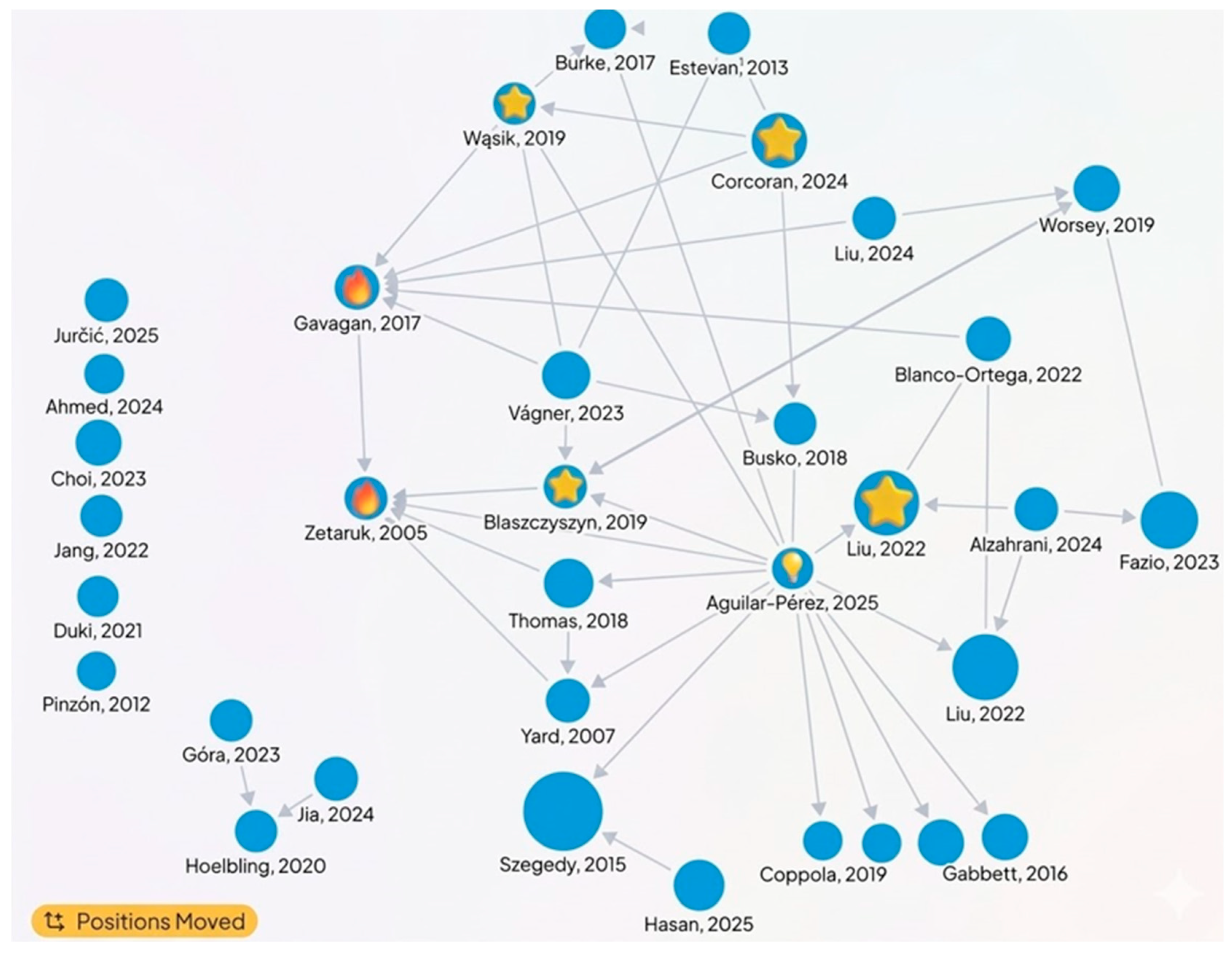
1]. Their work demonstrated that, depending on the specific martial art, the probability of sustaining an injury varied with the discipline practiced. For example, in taekwondo, the highest injury rates were observed in the neck and head, whereas in karate, the highest injury rates were observed in the limbs. To provide an overview of the research field most closely related to the present study, a citation-network analysis generated using the ResearchRabbit™ V2.0 application is presented in
Figure 1.
This figure graphically illustrates three major clusters that are correlated with one another around the study of contact martial arts practice. The first and most prominent cluster focuses on determining injury epidemiology in martial arts. The objective of research within this cluster is to understand technical execution itself and how its practice may pose a direct risk to the practitioner’s health. Across multiple research articles, it has been shown that the incidence, location, and severity of injuries vary significantly depending on the specific discipline practiced (e.g., karate, taekwondo, aikido, or kung fu) [
1,
2,
3] as well as intrinsic factors of the practitioner, which are influenced by variables such as experience [
4], training intensity [
5], or even weekly training volume [
6]. In particular, for the analysis of karate practice in an adult population (>18 years), a high frequency of injuries has been documented in the lower limbs (percentage) and the head/neck region (percentage), which has motivated the development of biomechanical assessment strategies aimed at injury prevention and technical improvement [
7,
8,
9].
On the other hand, another related cluster addresses the biomechanical analysis of technical execution as an expression of practitioner performance during training or competition. Within this area, study results demonstrate how mechanical factors are translated into biomechanical performance ranges during practice. From a biomechanical perspective, the execution of kicks under the different training contexts of each discipline consistently highlights parameters such as foot velocity, coordination among lower-limb segments, and linear moments. It even proposes neuromuscular training strategies to improve the execution of specific techniques [
2,
3,
4,
10,
11,
12,
13]. It is therefore worth noting that many of the authors consulted agree that the “fastest” kick is not always the most effective, since impact generation is better characterized by a sequence involving take-off, initial contact, and take-off/balance recovery [
4,
10,
13]. Within this context, external factors, such as proprioceptive detection of a target, directly influence the practitioner’s ability to determine distance and, consequently, to evaluate movement strategies in a controlled manner. Accordingly, one of the most recurrent discussions across the reviewed studies centers on the idea that poor movement strategies may increase the practitioner’s risk of injury.
Finally, the third cluster groups relevant studies focused on the development of wearable sensor–based monitoring systems that enable monitoring and even automatic learning of human movement, to support practitioners and improve the quality of their technical execution. In particular, it should be noted that the present work, as an extension of our previous article [
14] presented at the 8th International Symposium on Multibody Systems and Mechatronics held in Guadalajara, Mexico, has incorporated a more exhaustive analysis of the original dataset, as well as the inclusion of new evaluations that allow for a more detailed discussion of the originally obtained results. Although these studies are methodologically robust, such approaches present limitations for the continuous monitoring of athlete performance under real training conditions. For this reason, various types of wearable devices have been developed in parallel, capable of providing sufficient data to perform such measurements with high fidelity and a high information rate [
15,
16,
17,
18,
19,
20,
21]. Based on these conditions, the logical next step is the use of these tools to improve the detection of specific technical executions by leveraging more advanced monitoring configurations [
16,
22]. Studies such as those presented in [
23] clearly demonstrate that time–frequency representations based on the continuous wavelet transform (CWT) have proven to be particularly useful for human activity recognition from accelerometry data.
Previous research has demonstrated that the combination of continuous wavelet transforms and Shannon entropy constitutes a robust framework for characterizing dynamic organization of human movement signals. In particular, entropy measures derived from wavelet-based time-frequency representations have proven sensitive to transient motor events, coordination strategies and changes in movement stability in non-stationary biomechanical signals [
24]. Continuous Wavelet Transform-based entropy formulations have been extensively employed in the analysis of non-stationary physiological signals, as they capture variations in the degree of order or disorder of the underlaying dynamics rather than changes in signal amplitude alone [
25]. Related entropy-based approaches have also been successfully applied to biomechanical and neuromuscular signals, including surface electromyography and acceleration-based motion analysis, to characterize temporal variations in motor coordination and control [
26].
Within this framework, Shannon entropy can be used as a measure of spectral concentration. Low entropy values indicate that signal energy is concentrated within a narrow range of scales, corresponding to more organized and coordinated motion. In contrast, higher entropy values reflect a broader distribution of energy across scales, typically associated with sudden transitions, motor adjustments, or increased dynamic complexity. In this way, wavelet-based Shannon entropy provides a compact descriptor of how the movement’s internal organization evolves over time, complementing conventional kinematic metrics that focus solely on peak magnitudes. Recent studies in biomechanics and life sciences have shown that entropy-based metrics are sensitive to changes in motor coordination, adaptability and highly dynamic tasks, supporting their use as complementary descriptors of movement quality [
27].
In this work, we investigate the biomechanical characteristics of lateral kick execution, with particular emphasis on the dynamic organization of the movement rather than isolated kinematic magnitudes. Instead of restricting the analysis to peak values of displacement, velocity, or acceleration, the proposed approach integrates time–frequency analysis based on the continuous wavelet transform using Morlet and Mexican Hat wavelets to identify relevant dynamic features in the resulting scalograms. In addition, a wavelet-based Shannon entropy metric is employed to characterize the temporal evolution of spectral organization throughout kick execution. The primary objective is to examine how different stance distances influence movement coordination and dynamic structure, which are considered relevant indicators of skill-level practice. To this end, three case studies were analyzed: kicks executed from an excessive distance, kicks performed from an optimal distance, and a comparative analysis between both conditions. This framework enables the identification of stance-dependent differences in movement organization, providing insight into how distance affects efficiency, control, and technical execution of the lateral kick.
2. Materials and Methods
The proposed experiment aims to characterize the execution of the karate lateral kick by analyzing lower-limb kinematics at three different execution distances. The experimental setup used to acquire kinematic data is shown in
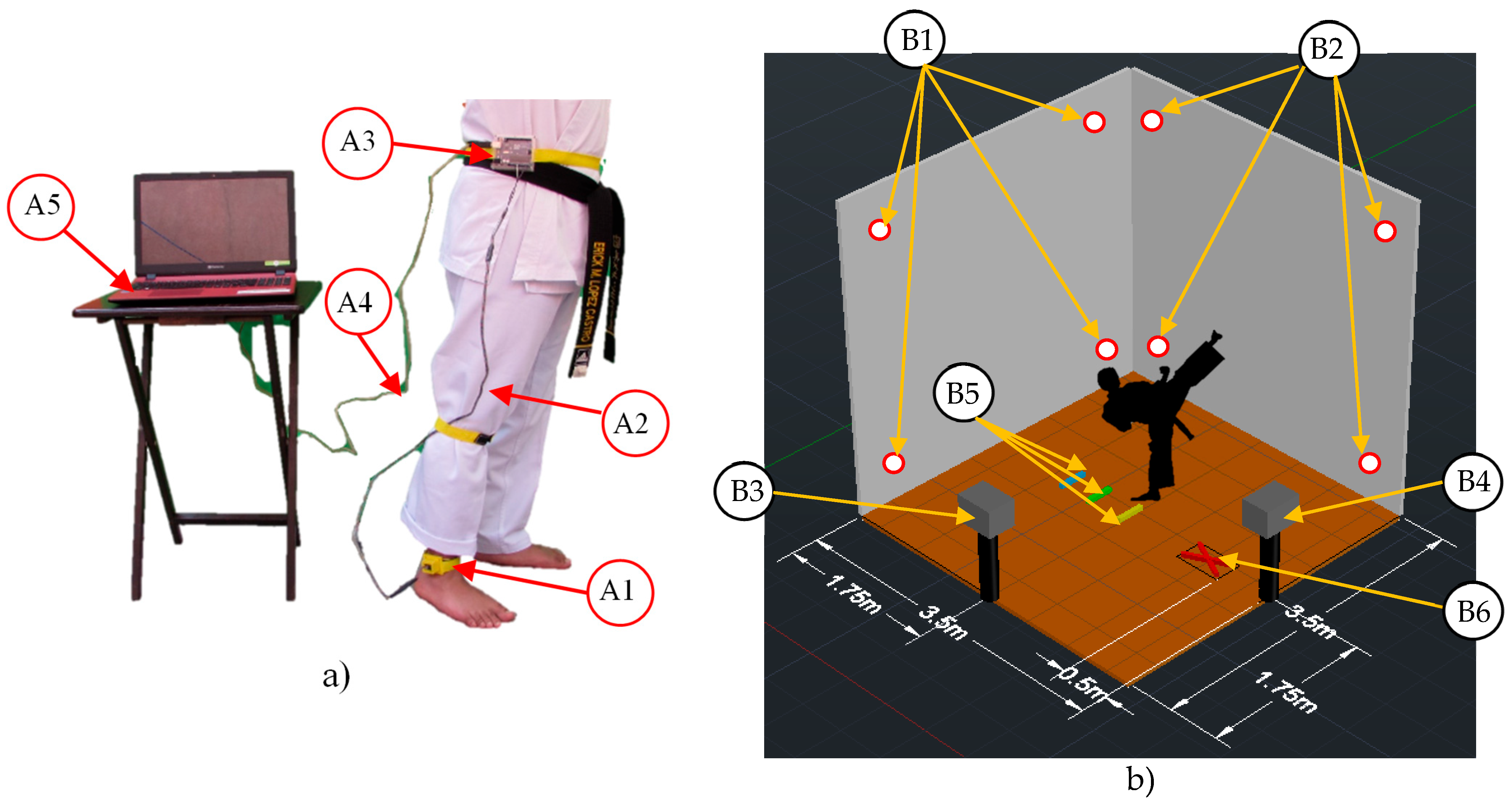
Figure 2. The experimental configuration comprises two acquisition subsystems: (A) practitioner instrumentation and (B) dojo-based videogrammetry.
Figure 2a shows the practitioner instrumented with an MPU6050 accelerometer (A1) attached to the lower limb to record motion data, connected via an I2C communication cable (A2) to an Arduino board used as the data acquisition system (A3). The Arduino transmitted the recorded signals to a personal computer (A5) for data storage and processing via a USB cable (A4).
Figure 2b illustrates the dojo setup for videogrammetry analysis, where markers for front camera alignment (B1) and markers for sagittal camera alignment (B2) were placed to ensure consistent camera orientation. A sagittal camera (B3) and a frontal camera (B4) were positioned orthogonally to capture the movement execution. Additionally, floor markers were used to define the different execution distances (B5) and to indicate the target contact position (B6). Kinematic data was obtained using a videogrammetry-based acquisition system. Recordings were performed using a S5K2P1 CMOS 16 MP (Samsung Electronics, Guangzhou, China) operating at a frame rate of 60 fps and a spatial resolution of 3456 × 4608 pixels. The sagittal camera was positioned at a distance of 2 m from the participant, with a camera height of 1.5 m. Although data were recorded during the experimental sessions, the IMU signals were not used in the analyses reported in this manuscript. Preliminary inspection revealed saturation effects, reference-frame inconsistencies during fast kicking motions, and lost data recorded due to a wrong setup; such effects were reported in [
14]. Consequently, all kinematic, wavelet, and entropy analyses presented here are based exclusively on videogrammetry-derived data. All datasets used in this study are available as
supplementary materials in the Zenodo repository as indicated below in the
Supplementary Resources section.
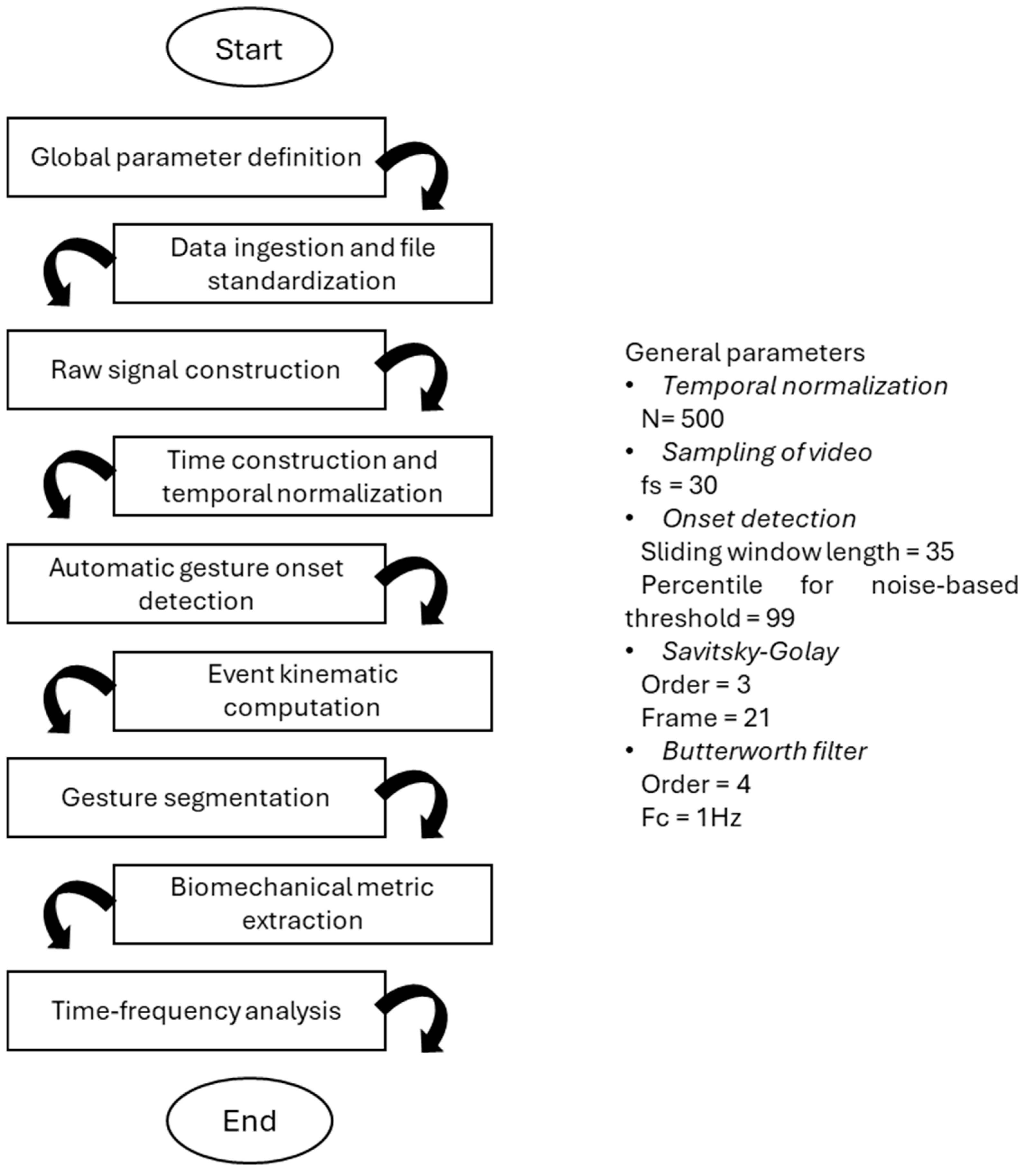
The proposed methodology for processing and analyzing the experimental dataset is summarized in
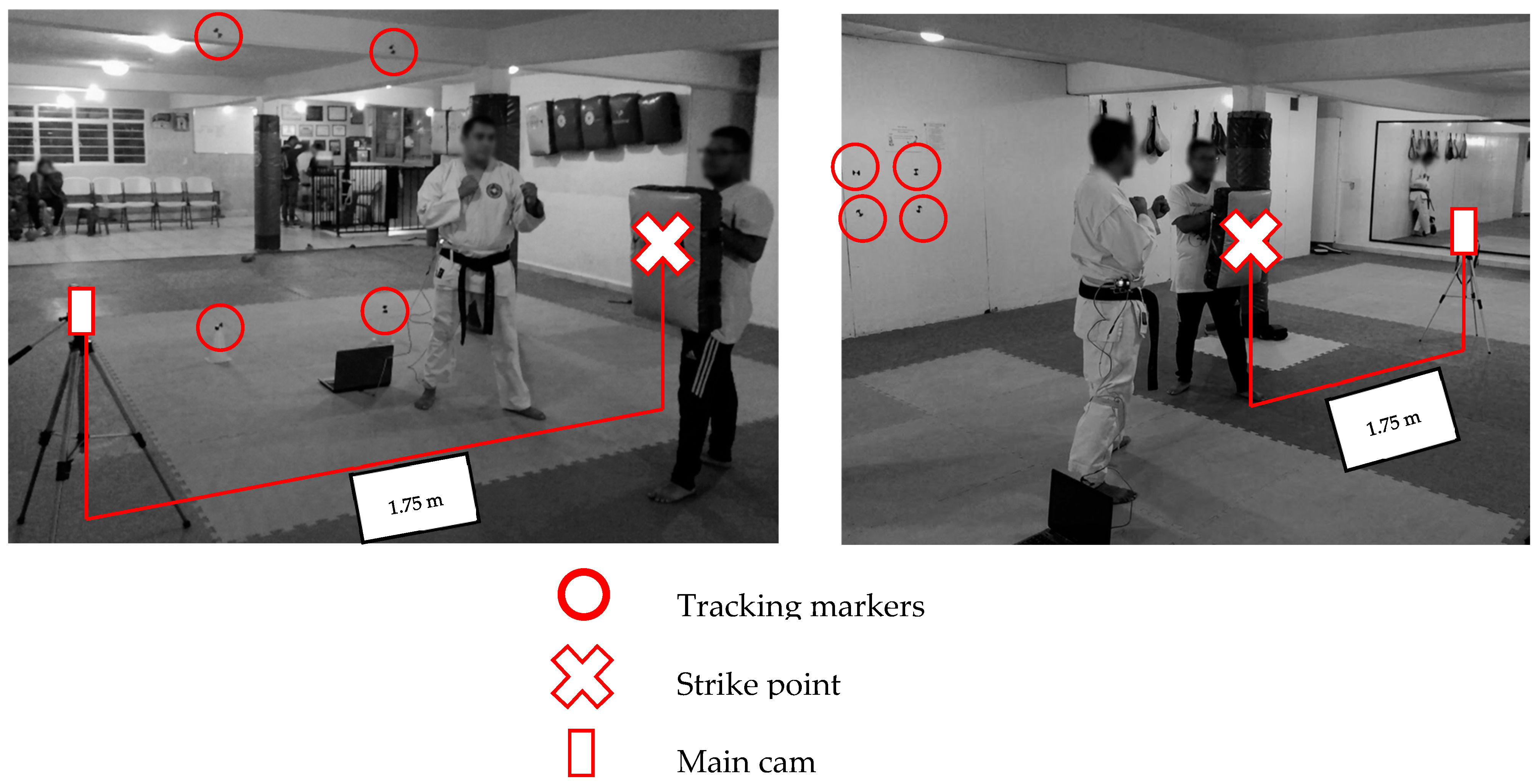
Figure 3. Videogrammetry-based video recordings were used to extract sagittal-plane toe trajectories, from which two-dimensional x–y position data were obtained. Metric calibration was performed using a rigid reference object of known dimensions positioned within the sagittal plane of motion (
Figure 4). The object provided a spatial scaling factor enabling pixel-to-meter conversion. This procedure ensured geometric consistency across trials and minimized perspective-induced scaling errors.
Raw trajectories extracted from Kinovea were filtered using a low-pass Butterworth filter (4th order, cut-off frequency 1 Hz). Velocity and acceleration signals were computed via Savitzky–Golay differentiation (3rd order and a window 21 frames). Movement onset was defined as the first time instant at which the tangential velocity exceeded a threshold of 0.1 m/s and remained above this value for a sustained temporal window of 2 ms in order to define the effective analysis window for each trial. Baseline noise was estimated from the initial portion of the signal prior to movement execution, and the velocity signal—obtained via numerical differentiation of videogrammetry-derived position data—was used to identify movement initiation. Onset was defined as the first time instant at which the velocity magnitude exceeded a predefined threshold and remained above this value for a sustained temporal window, preventing spurious detections due to noise or minor postural adjustments. The detected onset was used to temporally align all trials. The onset-aligned signals were subsequently filtered and numerically differentiated to compute velocity, acceleration, and jerk profiles. These videogrammetry-derived kinematic signals were then used to segment the active phase of the gesture and extract biomechanical metrics within a well-defined temporal context corresponding to the execution of the kick. Time–frequency analysis was performed using continuous wavelet transforms, enabling the simultaneous characterization of the temporal evolution and frequency content of the movement. The selected frequency ranges were constrained to values consistent with human lower-limb motion, capturing low-frequency components associated with postural control and global limb displacement [
28]. The resulting wavelet representations served as the basis for computing wavelet-based Shannon entropy, providing quantitative descriptors and visualizations of the dynamic organization and complexity of the karate lateral kick.
2.1. The Protocol of the Lateral Kick Execution
A correct lateral kick begins with the participant adopting the “Heiko Dachi” stance, which serves as both the starting and ending point of the experiment. All kinematic measurements were performed in the sagittal plane, which captures the primary flexion–extension dynamics of the lower limb during the execution of the lateral kick. From this stance, the supporting foot is rotated to an angle between 95° and 100°, allowing the kicking leg to pivot and facilitating a broad range of hip motion without imposing excessive strain on the supporting limb’s knee joint. Concurrently, the striking leg is raised with the knee bent at an angle between 90–130° before being extended to strike the target with maximum force. This execution harnesses the power generated by the hip movement and the thigh muscles of the attacking leg. Following target contact, the movement transitions into the recovery phase, during which the striking leg is rapidly retracted, and the knee returns to a flexed position. The sequence concludes when the participant resumes the initial “Heiko Dachi” stance, thereby completing one full execution of the lateral kick technique. To ensure consistent execution characteristics suitable for experimental analysis, this procedure was standardized as the kicking protocol and explained to each participant before execution. In addition, before each trial, the participant was photographed in the frontal plane to ensure proper distance. Floor markers were used to define the execution distances and the target contact position, ensuring repeatable recording conditions across trials. Finally, to ensure test reproducibility, participants were asked to perform the lateral kick three times. Time-frequency approaches based on wavelet analysis have been widely adopted in biomechanical research due to their ability to characterize non-stationary movement signals and transient motor events. In particular, wavelet-based frameworks provide simultaneous temporal and spectral resolution, which is essential for analyzing rapid human movements such as kicks or strikes [
29]. Due to the limited number of participants, this study is intended as an exploratory, case-based analysis. The results are not meant to support population-level inference, but rather to illustrate the feasibility and descriptive value of time–frequency and entropy-based analyses applied to videogrammetry-derived signals.
2.2. Participants and Ethics
Three participants voluntarily took part in this study. All participants were provided with written informed consent prior to data acquisition. The study was conducted in accordance with the principles of the declaration of Helsinki. Participant characteristics included age (20 ± 5 years), all were men, and had a maximum of 5 years practicing the discipline.
2.3. The Morlet Wavelet Function
The Morlet wavelet is a complex; analytic wavelet widely used for time–frequency analysis of non-stationary signals. It is defined as a complex sinusoid modulated by a Gaussian envelope, providing an optimal compromise between temporal and spectral localization. The Morlet wavelet is expressed as:
where
is the dimensionless central frequency of the Morlet wavelet. A value of
was selected to ensure practical admissibility and effective separation between positive and negative frequency components, while preserving adequate time–frequency localization [
30]. The Gaussian term
confines the oscillatory kernel in time, while the complex exponential
enables selective sensitivity to oscillatory content at a given frequency. By applying scaling and translation operations to the Morlet wavelet, the continuous wavelet transform (CWT) projects a signal onto a set of time–frequency signals, yielding coefficients that quantify the local spectral content of the signal as it evolves over time. When using the Morlet wavelet, these coefficients admit a direct interpretation in terms of physical frequency, allowing the construction of time–frequency representations (scalograms) in which the horizontal axis represents time, the vertical axis represents frequency, and the color intensity corresponds to the local energy of the signal.
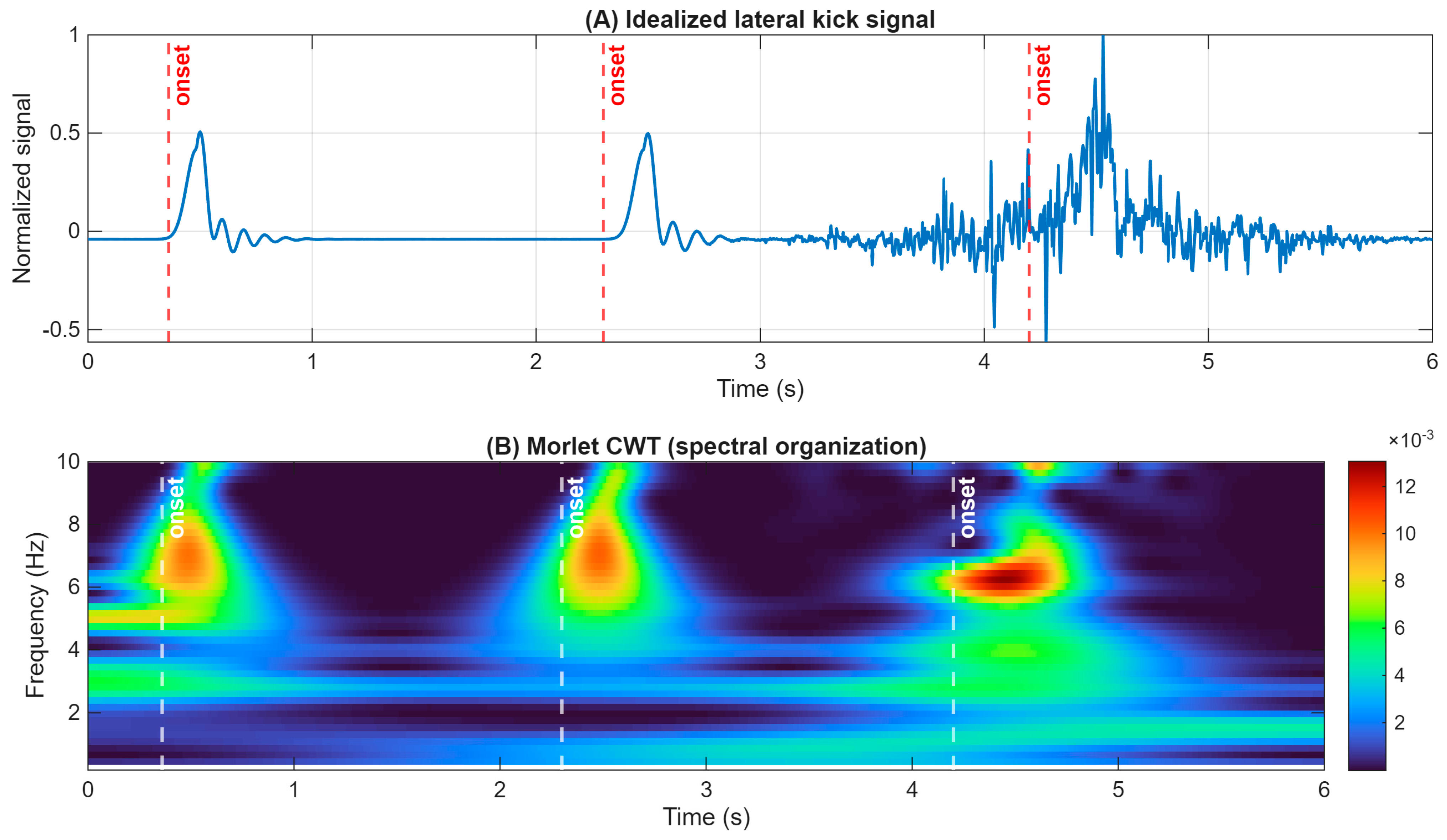
In the context of biomechanical movement analysis, the Morlet wavelet is particularly suitable for characterizing how spectral energy is distributed and reorganized during movement execution (
Figure 5). Rather than detecting abrupt transitions or discrete events, the Morlet-based CWT captures which frequency components are present and when they occur, providing insight into the movement’s temporal structure, rhythm, and coordination. This makes it well suited for analyzing complex, non-stationary motor actions in which frequency content varies continuously over time.
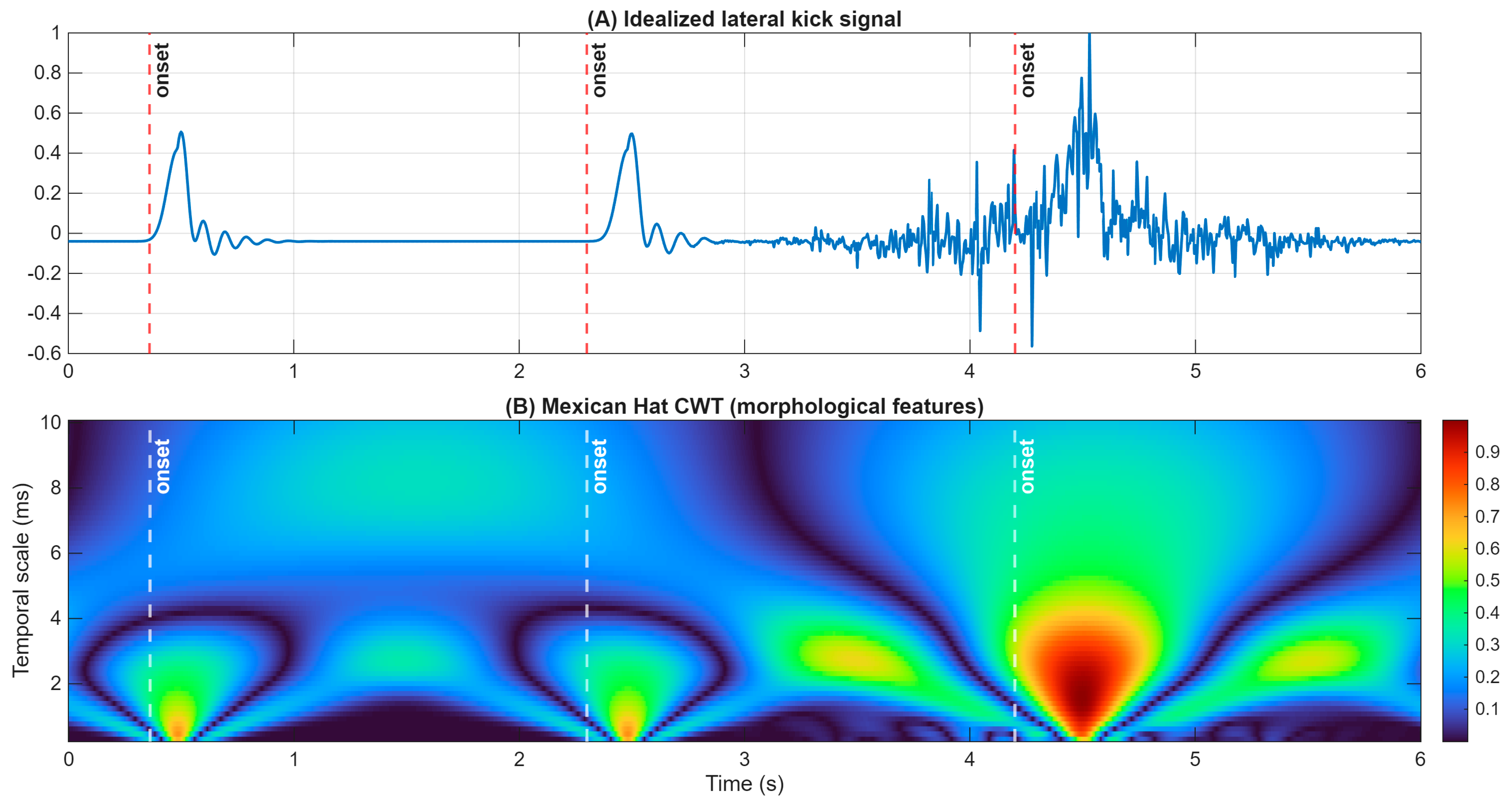
Figure 5A shows an idealized lateral-kick acceleration simulation. In this image, the first two kicks exhibit organized, repeatable ballistic dynamics, while the third kick shows a highly disorganized temporal structure. Vertical dashed lines indicate the onset of each kick event.
Accordingly, Morlet wavelet analysis is used in this work to characterize the temporal evolution of spectral energy during movement execution, enabling the identification of structured patterns associated with controlled, repeatable motion, rather than more diffuse or unstable spectral distributions (
Figure 5B). Importantly, the Morlet wavelet is not designed to emphasize sudden kinematic changes or impacts; instead, it provides a coherent representation of which frequencies are active at each instant, forming a robust basis for both qualitative analysis and subsequent feature extraction or machine-learning–based classification.
2.4. Ricker Wavelet Function
The Mexican hat wavelet, also known as the Ricker wavelet, is a real-valued wavelet derived from the second derivative of a Gaussian function. Unlike analytic wavelets designed for time–frequency decomposition, the Mexican hat wavelet is primarily sensitive to changes in signal curvature, making it particularly suitable for detecting abrupt transitions, peaks, and localized events in non-stationary signals. The Mexican hat wavelet is mathematically defined as
where the Gaussian envelope
ensures temporal localization, and the polynomial term
arises from the second-order differentiation, conferring sensitivity to rapid changes in signal slope. The normalization constant ensures the wavelet has unit energy. When applied within the continuous wavelet transform framework, the Mexican hat wavelet does not provide a direct frequency interpretation. Instead, its scale parameter controls the temporal extent over which curvature changes are evaluated. Small scales emphasize sharp, short-duration events, while larger scales highlight smoother, more gradual transitions.
Figure 6 illustrates the same idealized lateral kick signal previously analyzed, but this time, with different wavelet operators to emphasize the formal distinctions between oscillatory and morphology-based CWT representations.
In biomechanical signal analysis, the Mexican hat wavelet is well suited for identifying kinematic events, such as movement onset, impact, or phase transitions, rather than for characterizing sustained oscillatory behavior. The Mexican Hat wavelet emphasizes localized, high-curvature morphological features associated with each kick onset.
Figure 5B shows that controlled kicks produce well-defined, coherent responses across scales. In contrast, the highly disorganized third cycle yields a diffuse, saturated pattern, reflecting the breakdown of interpretable temporal structure. This comparison illustrates the sensitivity of morphology-based wavelet analysis to increasing dynamic complexity in biomechanical signals. As shown in
Figure 6B, controlled kicks produce well-defined, coherent responses across temporal scales, whereas the highly disorganized third cycle yields a diffuse, saturated pattern, reflecting the breakdown of interpretable temporal structure. This comparison highlights the sensitivity of morphology-based wavelet analysis to increasing dynamic complexity in biomechanical signals. Accordingly, the Mexican Hat wavelet is employed in this work as an event-sensitive representation to complement analytic wavelets, such as the Morlet wavelet, by emphasizing abrupt kinematic changes rather than the frequencies that dominate the signal.
2.5. Shannon Entropy
Shannon entropy was used as a quantitative measure of the instantaneous spectral dispersion of the acceleration signal [
31]. This parameter was selected due to its ability to quantify the instantaneous dispersion of spectral energy without additional model assumptions, making it particularly suitable for short, non-stationary motor tasks. In this context, entropy provides an index of how energy is distributed across frequencies at each time instant, independently of its absolute magnitude. Given the time–frequency energy representation obtained from the continuous wavelet transform:
The energy was normalized across frequencies to form a probability-like distribution, the energy was normalized across frequencies to form a probability-like distribution:
where
represents the relative contribution of each frequency component at time
. The Shannon entropy was then computed as
with a small constant added in practice to avoid numerical singularities. Low entropy values indicate that the energy is concentrated within a narrow frequency band, reflecting a more organized and stable dynamic pattern. In contrast, higher entropy values correspond to a broader spectral distribution, indicative of increased variability or complexity in the movement.
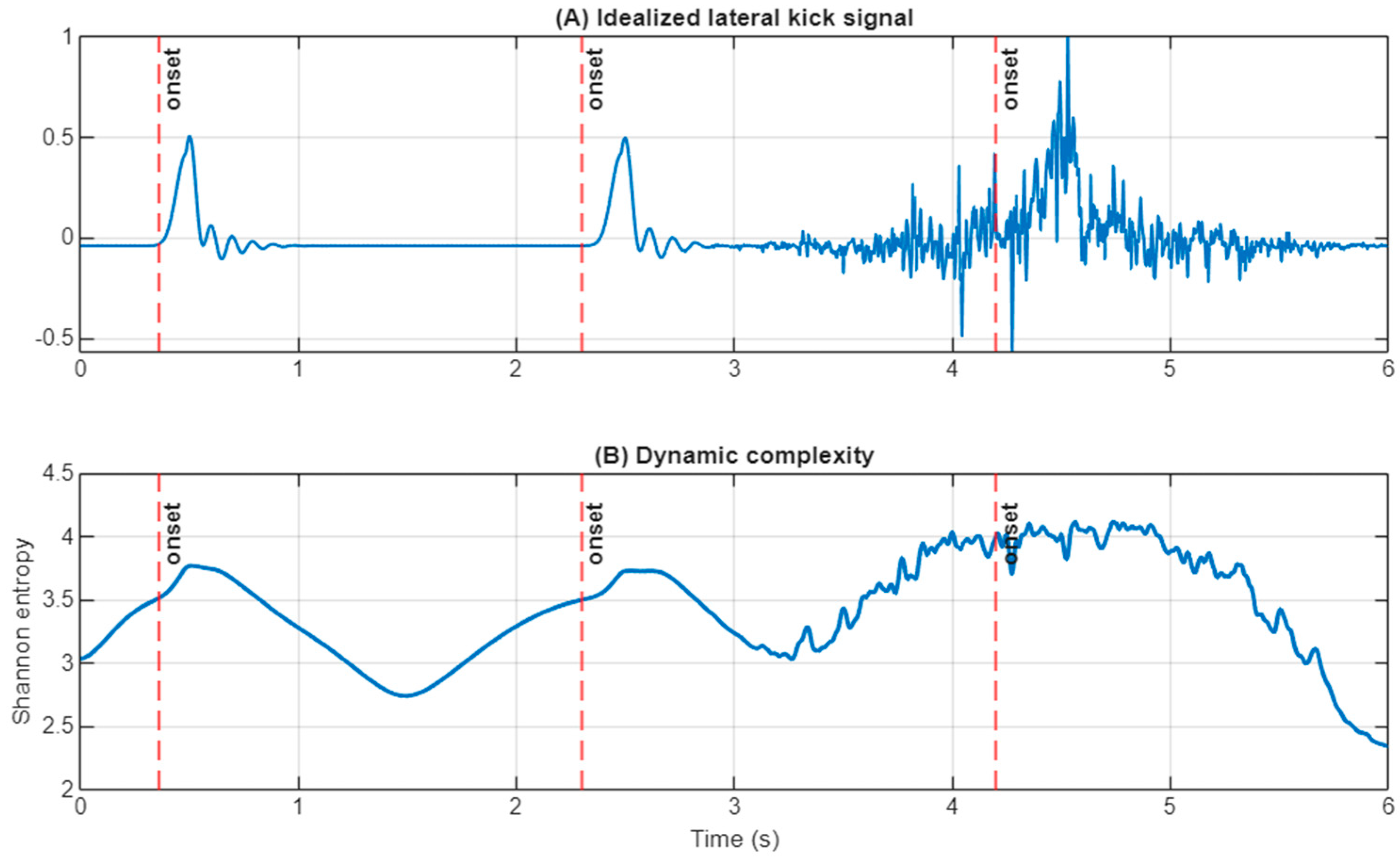
Figure 7 illustrates this concept.
From a biomechanical perspective, entropy-based measures have been shown to reflect changes in motor coordination, adaptability, and neuromuscular organization rather than simple signal variability. Previous studies have demonstrated that increased entropy is often associated with corrective strategies, instability, or transitions between motor states, whereas lower entropy reflects more stable and coordinated execution [
32]. In the present study, Shannon entropy was used to characterize temporal changes in the motor pattern organization during lateral kick execution.
Figure 7B shows that lower entropy values correspond to intervals with more organized, spectrally concentrated dynamics, whereas higher entropy values indicate increased spectral dispersion and dynamic complexity, reflecting transitions, corrections, or a loss of motor stability during the movement.
3. Results
The experimental setup was set up in a karate dojo in Ecatepec, State of Mexico.
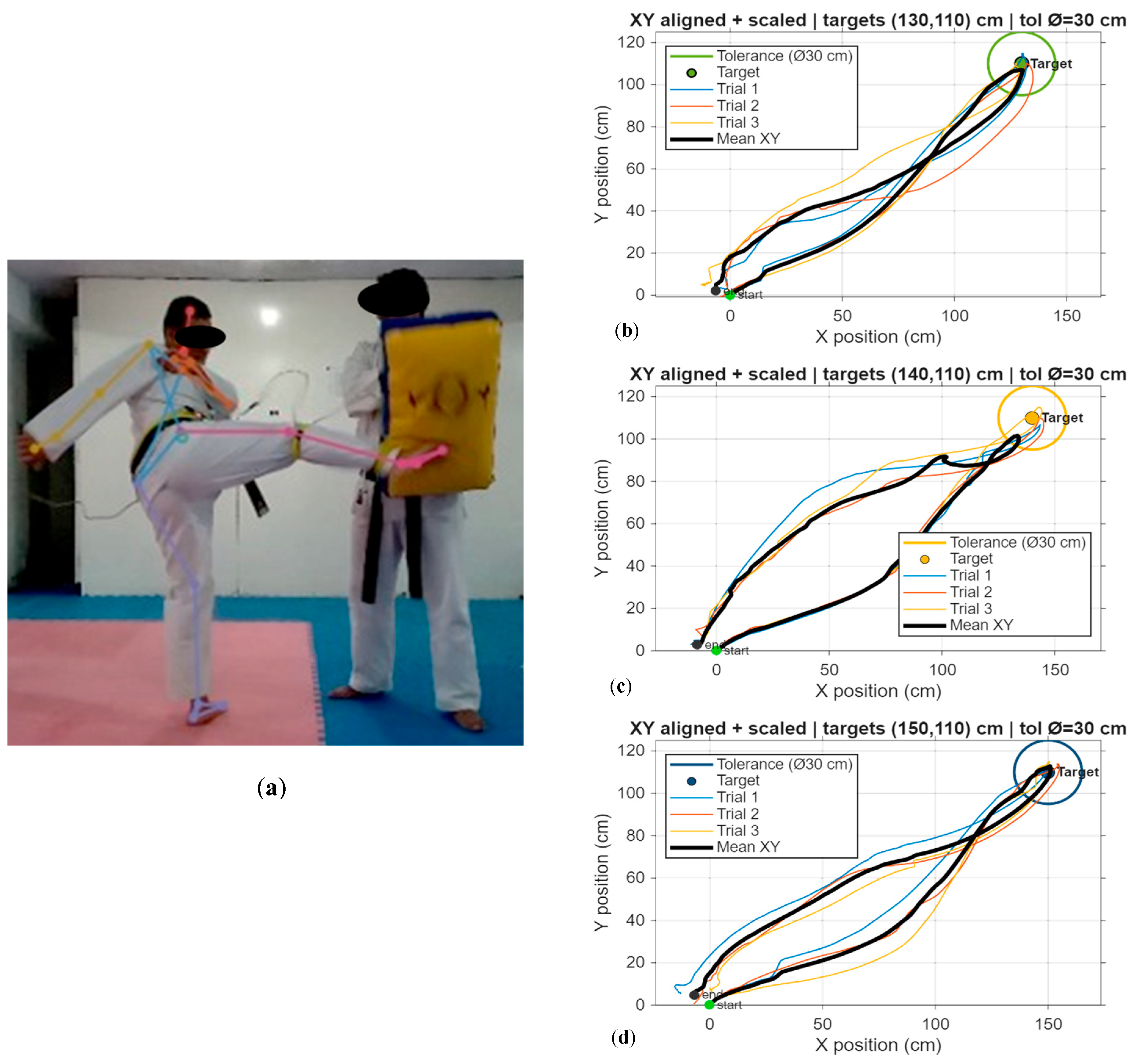
Figure 8a presents a sagittal view of the novice practitioner together with the sagittal camera configuration.
Figure 8b illustrates the execution of the lateral kick at a short target distance.
Figure 8c shows the lateral kick performed at a comfortable distance, corresponding to the practitioner’s preferred stance.
Finally,
Figure 9a depicts execution at a long reach distance, representing an extended, mechanically demanding condition. In the trajectory plots, colored lines correspond to individual trials, the black line represents the mean XY trajectory, the green square indicates the starting point, and the circular region denotes the target location with a tolerance of 30 cm.
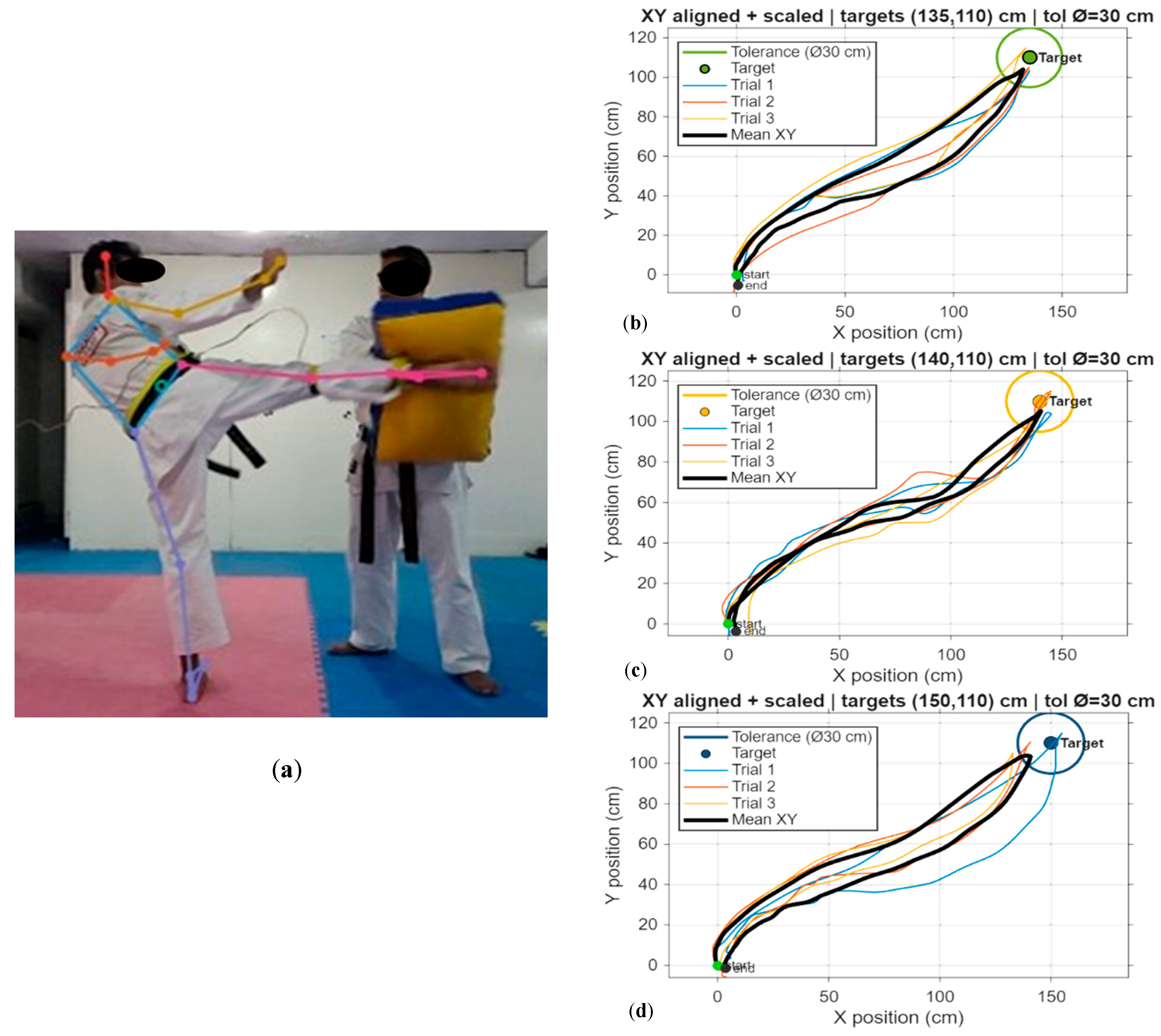
Figure 9 illustrates the execution of the lateral kick performed by the expert participant. An overall inspection of the recorded trials reveals a high degree of limb control, reflected in the consistency of the movement across repetitions shown in video. In particular, as shown in
Figure 9b, the trajectory of the kicking leg follows a nearly identical ascending and descending path in all executions, indicating stable motor coordination. For reference,
Figure 9a presents a sagittal view of the expert practitioner together with the corresponding camera configuration.
Figure 9b–d show the lateral kick executed at the three stance distances defined in the experimental protocol: short distance (
Figure 9b), comfortable distance (
Figure 9c), and long reach distance (
Figure 9d), the latter representing the most extended and mechanically demanding condition. By contrast, although the novice participant achieved the greatest vertical displacement and exhibited the lowest angle of attack—defined here as the angle measured from movement initiation to the instant of contact with the punching bag—this performance was accompanied by marked variability.
3.1. The Morlet Wavelet Analysis
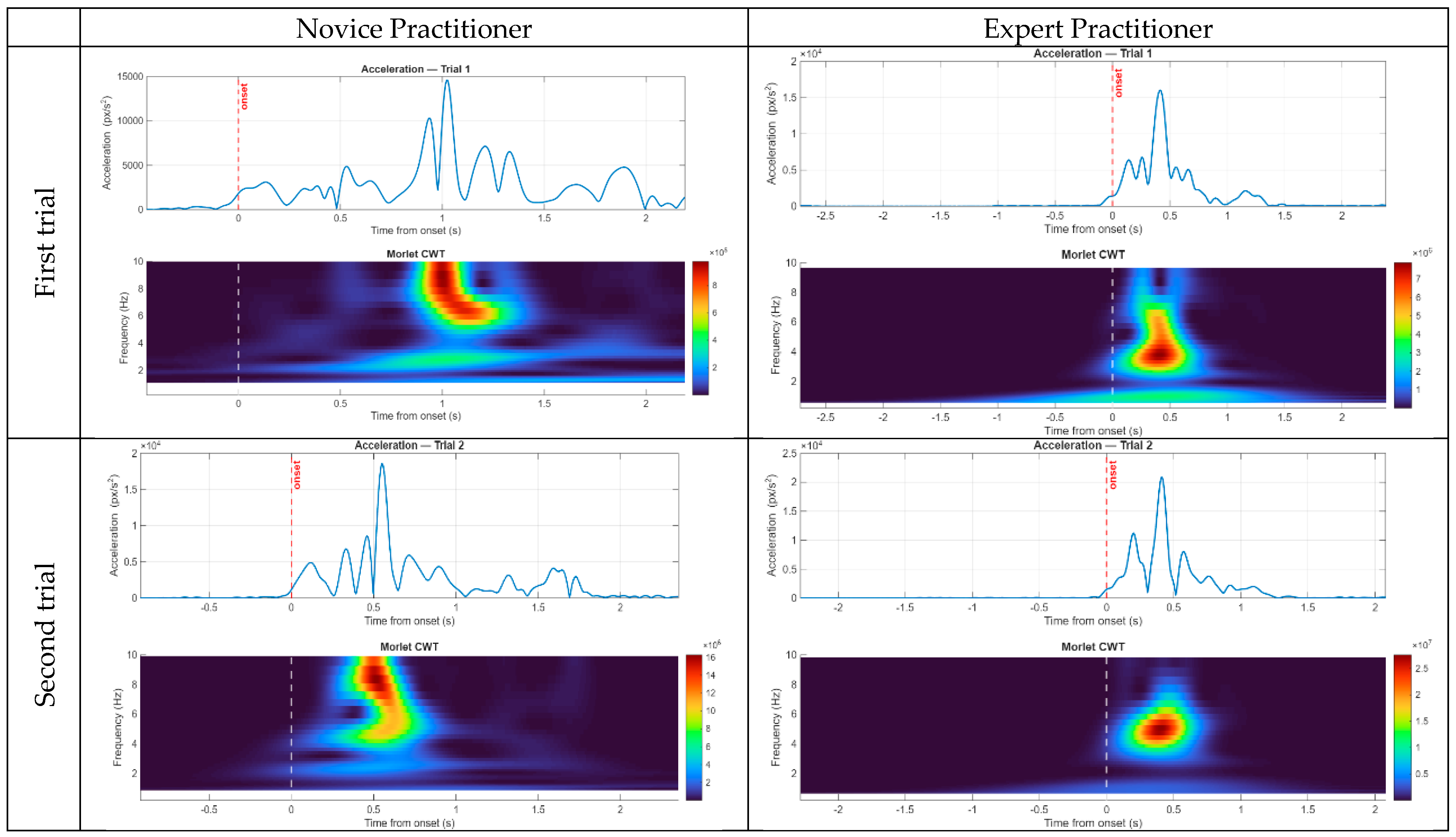
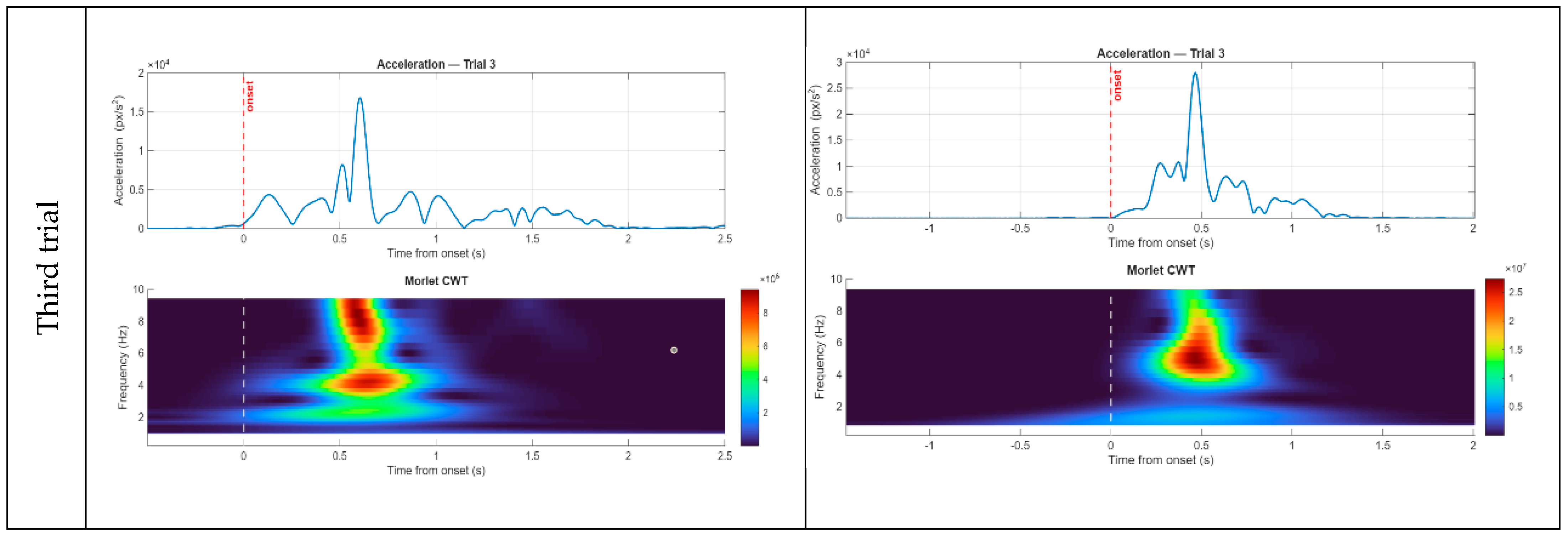
A time–frequency analysis based on the continuous wavelet transform (CWT) with a Morlet wavelet was performed to investigate the dynamic organization of the acceleration signal during the execution of the lateral kick, and the results are shown in
Figure 10. This framework enables simultaneous examination of the movement’s temporal and spectral characteristics, offering insight into how motor control strategies adapt to changes in task constraints. The resulting scalograms reveal clear and systematic differences in the time–frequency structure of acceleration between novice and expert practitioners, as well as a marked dependence of these patterns on the distance to the target.
In the novice, the scalograms show a broader distribution of energy across frequencies and a higher degree of trial-to-trial variability, particularly when the distance is modified from the comfortable condition, suggesting the presence of online corrections and a predominantly reactive motor control strategy. In contrast, the expert exhibits a more compact and temporally localized spectral pattern, with clearly defined energy peaks that remain highly consistent across repetitions, regardless of the striking distance. This invariance of the spectral structure reflects a robust, anticipatory control strategy in which the movement is reprogrammed before execution without compromising its dynamic organization. Overall, these visual results indicate that expertise is associated with greater stability and reproducibility of the dynamic pattern underlying the lateral kick. In contrast, in a novice, changes in task constraints lead to increased spectral dispersion and inter-trial variability. In the trajectory plots, colored lines correspond to individual trials, the black line represents the mean XY trajectory, the green square indicates the starting point, and the circular region denotes the target location with a tolerance of 30 cm.
3.2. Mexican Hat Wavelet Function
A complementary time–frequency analysis based on the continuous wavelet transform using the Mexican Hat wavelet was performed to emphasize the transient features of the acceleration signal during the execution of the lateral kick. Owing to its sensitivity to rapid changes and impulsive events, this analysis highlights the temporal structure of acceleration bursts and deceleration phases associated with the kicking action. The resulting scalograms reveal distinct differences between novice and expert practitioners in the magnitude, timing, and consistency of these transient components, as well as in their modulation across different striking distances, providing additional insight into the quality and robustness of motor control underlying the movement.
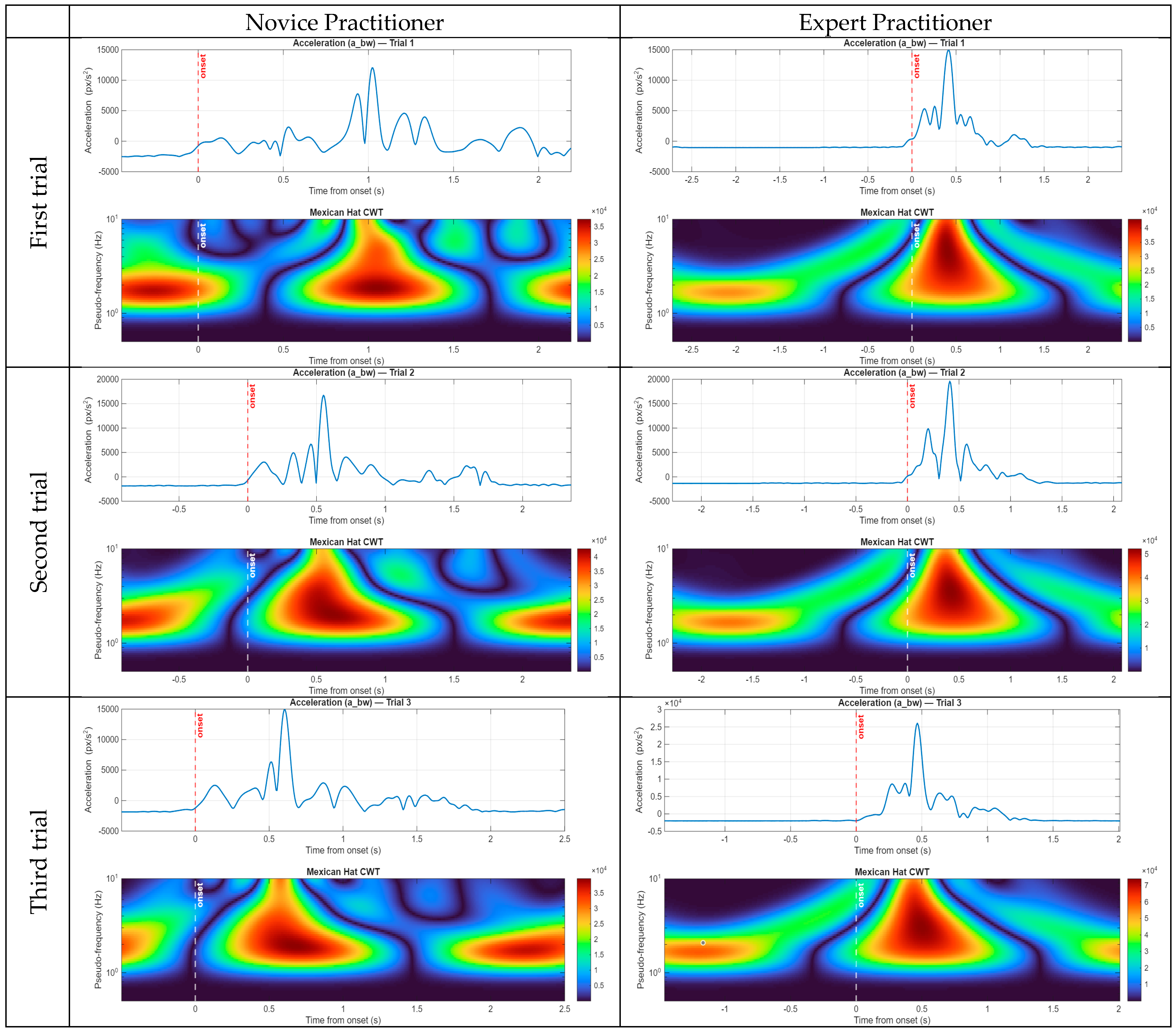
The
Figure 11 obtained from the continuous wavelet transform using the Mexican Hat wavelet shows the execution of the lateral kick in terms of transient dynamic events, namely the rapid changes in acceleration associated with the explosive phase of the movement and its subsequent deceleration. In particular, the analysis shows that the scalograms obtained from the novice practitioner exhibit broader, less well-defined energy lobes in time, particularly when the distance to the target is modified, indicating a less precise acceleration phase and the presence of online corrections during execution. In addition, the appearance of secondary energy components outside the main event suggests increased stabilization effort and less efficient eccentric control during the recovery phase. In contrast, the expert practitioner shows more compact and sharply localized energy lobes, with a clear temporal separation between the impulse and braking phases that remains consistent across the different distance conditions. This organization reflects an anticipatory control strategy in which the magnitude and timing of the impulse are adjusted prior to movement onset, enabling a precise execution and a controlled return without overshoot. Overall, the Mexican Hat scalograms demonstrate that expertise is characterized by a cleaner, more reproducible transient structure, whereas in novices, task modification leads to greater temporal dispersion and irregularity in the dynamic events underlying the lateral kick.
3.3. Shannon Entropy Energy Factor
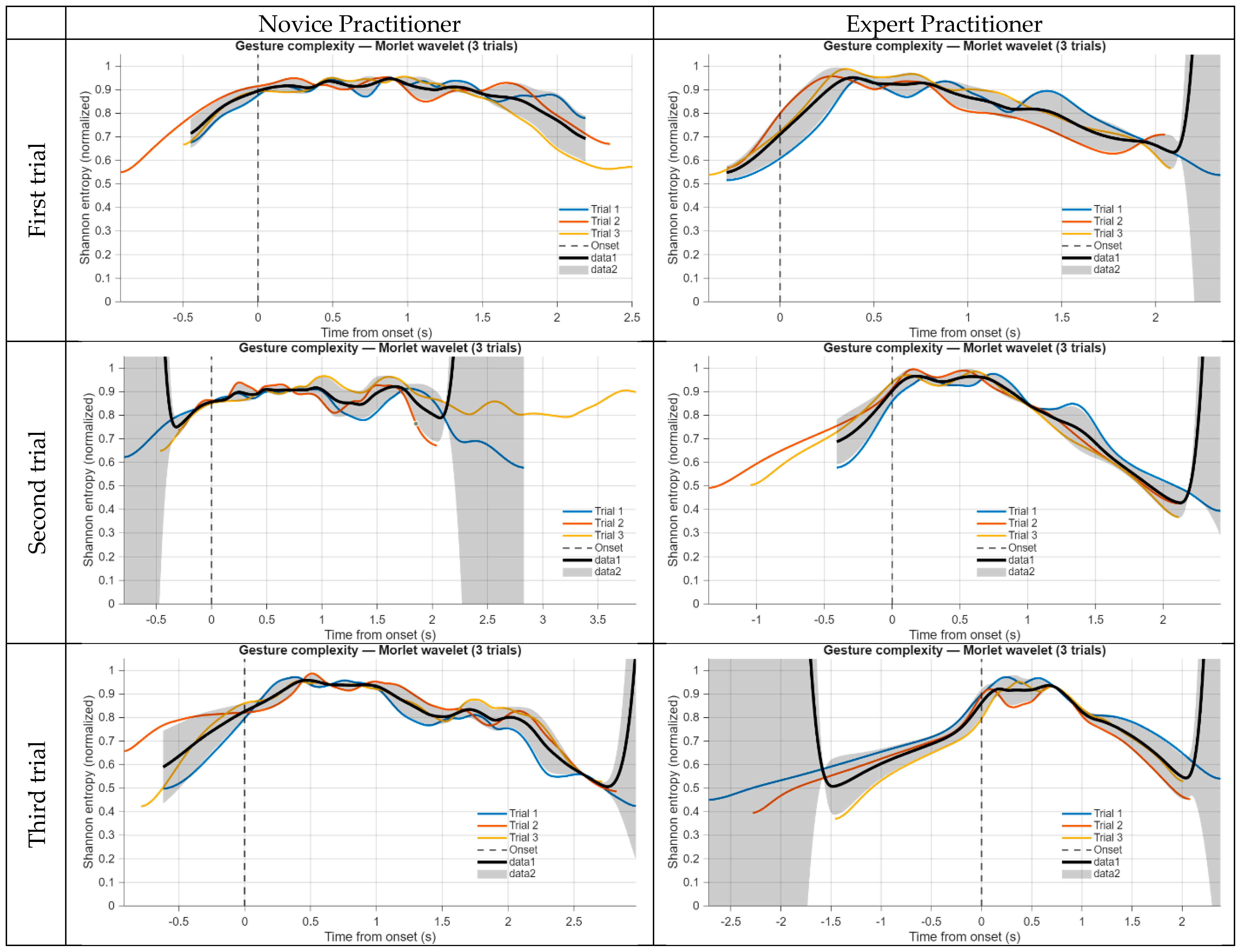
Finally,
Figure 12 presents the temporal evolution of wavelet-based Shannon entropy computed from videogrammetry-derived acceleration signals across the complete dataset. It is important to mention that the computed analysis was restricted to the effective movement interval, defined by an automatically detected onset. Baseline noise was estimated also from the initial portion of each trial, and a velocity threshold was established to identify movement initiation as the first time instant at which the threshold was exceeded for a sustained temporal window. Each panel in the figure displays the entropy profiles for three consecutive kicks within the same trial, enabling a direct comparison of entropy evolution across repetitions, stance distances, and practitioner skill levels.
In the novice practitioner (left column), the entropy profiles exhibit higher variability and pronounced fluctuations across all stance distances, indicating a more dispersed and irregular distribution of energy across time–frequency scales. This behavior reflects a less stable dynamic organization of the movement and a greater presence of transient adjustments during kick execution. In contrast, the expert practitioner (right column) shows consistently smoother entropy profiles with a progressive decrease in variability, suggesting a more concentrated spectral energy distribution and a higher degree of dynamic organization. Notably, although only three kicks were performed per condition, they were executed sequentially in the order of long, comfortable, and short distance. Despite this limited repetition, the novice practitioner’s entropy profiles show a slight reduction in variability across successive kicks, particularly in later trials.
This trend suggests the emergence of short-term motor adaptation or early muscular memory effects, indicating that repeated execution may contribute to improved movement organization even within a small number of repetitions. Overall, these results highlight the sensitivity of wavelet-based Shannon entropy to differences in skill level and repetition effects, supporting its use as a complementary descriptor for assessing coordination and control in videogrammetry-based biomechanical analysis.




 ,
,