1. Introduction
Epidural anesthesia is a widely used analgesic procedure in surgical settings, particularly for obstetric procedures [
1], thoracic and abdominal surgeries [
2,
3], and chronic pain management [
4]. Its execution requires advancing a needle through multiple anatomical layers within a lumbar intervertebral space, where the needle tip must be accurately positioned in the epidural space located posterior to the ligamentum flavum. Traditionally, anesthesiologists guide the needle primarily through tactile perception. As a blind technique, the operator identifies subtle changes in tissue resistance using the loss-of-resistance method without direct visual feedback, making the procedure challenging even for experienced clinicians [
5]. Accurate placement is critical, since inadvertent dural puncture or excessive penetration may lead to complications such as post-dural puncture headache, neurological injury, epidural hematoma, or persistent paresthesia [
6,
7].
To reduce reliance on tactile perception, multiple technologies have been proposed to assist neuraxial puncture. Imaging modalities such as ultrasound enable visualization of spinal structures and can reduce the number of needle redirections [
8,
9,
10,
11], while computer-assisted systems can estimate puncture points and optimal trajectories [
12]. However, these approaches still depend on the operator’s interpretation of visual information and manual control of insertion. Other approaches incorporate sensing capabilities directly into the needle to detect transitions between tissue layers, including optical needles capable of identifying the ligamentum flavum and epidural space [
13], optical coherence tomography systems combined with deep learning [
14], and smart needles using spectroscopy for tissue characterization [
15]. Although these techniques provide objective measurements, interpretation and control remain user dependent.
Artificial intelligence methods have also been explored to automatically estimate needle position from medical images. Algorithms for epidural target localization [
16] and deep neural networks for needle tip detection in ultrasound [
17] aim to reduce inter-operator variability, while recent reviews highlight the potential of AI to improve precision in regional anesthesia [
18]. Similarly, navigation and augmented reality systems project virtual trajectories during insertion, improving spatial orientation and providing visual guidance to the anesthesiologist [
19]. Despite these advances, most solutions remain limited to cognitive or visual assistance and do not actively constrain needle motion to prevent deviations or over-penetration. At the other extreme, partial robotic automation has been proposed, where the needle can automatically stop upon reaching a target anatomical layer through real-time tissue recognition [
20,
21]. While such approaches introduce active physical assistance, they may reduce the specialist’s direct control over the procedure.
Overall, the literature shows a progressive evolution from anatomical visualization to robotic automation, including methods for visualizing anatomy, detecting tissue transitions, interpreting information, and controlling insertion. However, an important gap remains between passive guidance and full automation: visual guidance systems improve spatial awareness but do not prevent mechanical deviations, whereas fully autonomous systems reduce clinician control and limit direct interaction during the procedure.
To address this gap, this work proposes a cooperative human–machine shared-control framework for epidural needle insertion. The system integrates a haptic device coupled to a Tuohy needle, a patient-specific lumbar model, and virtual elements that define a trajectory corridor and depth limit, combined with a tissue interaction model calibrated using ultrasound. This configuration transforms passive guidance into active cooperation between operator and system, allowing the clinician to maintain control while benefiting from physical motion constraints and multimodal feedback.
This article substantially extends our previous conference contribution [
22] by incorporating cooperative virtual constraints, quantitative ultrasound-validated depth analysis, and a structured comparative evaluation across three levels of assistance: freehand execution, visual guidance, and cooperative guidance. Experimental validation is performed by two experienced clinical anesthesiologists, enabling objective performance assessment under realistic procedural conditions and strengthening the clinical relevance of the proposed human–machine cooperative framework. The instrument trajectory is continuously recorded through the haptic device and validated using ultrasound and kinematic measurements, enabling quantification of insertion error, overshoot, collisions with vertebral structures, and needle reorientations, thereby providing objective metrics of operator performance and procedural safety.
The main contributions of this work are summarized as follows:
Development of a multimodal human–machine cooperative assistance system integrating augmented reality guidance and virtual fixtures for epidural needle insertion.
Implementation of a patient-specific L3–L4 lumbar phantom fabricated using 3D printing and ballistic gel, enabling controlled and repeatable experimental evaluation.
Formulation of a model-based force profile that reproduces the mechanical response of anatomical tissue layers during needle insertion.
Definition of cooperative virtual constraints, including a cylindrical trajectory corridor and a depth-limiting plane, enabling shared control between the clinician and the system.
Experimental validation under three assistance conditions (freehand, augmented reality guidance, and cooperative guidance) performed by experienced anesthesiologists.
Quantitative evaluation of insertion accuracy using ultrasound validation and kinematic tracking, demonstrating improved precision and reduced depth error through multimodal guidance.
2. Materials and Methods
This section describes the experimental framework used to evaluate the proposed cooperative assistance approach for epidural needle insertion.
2.1. System Overview
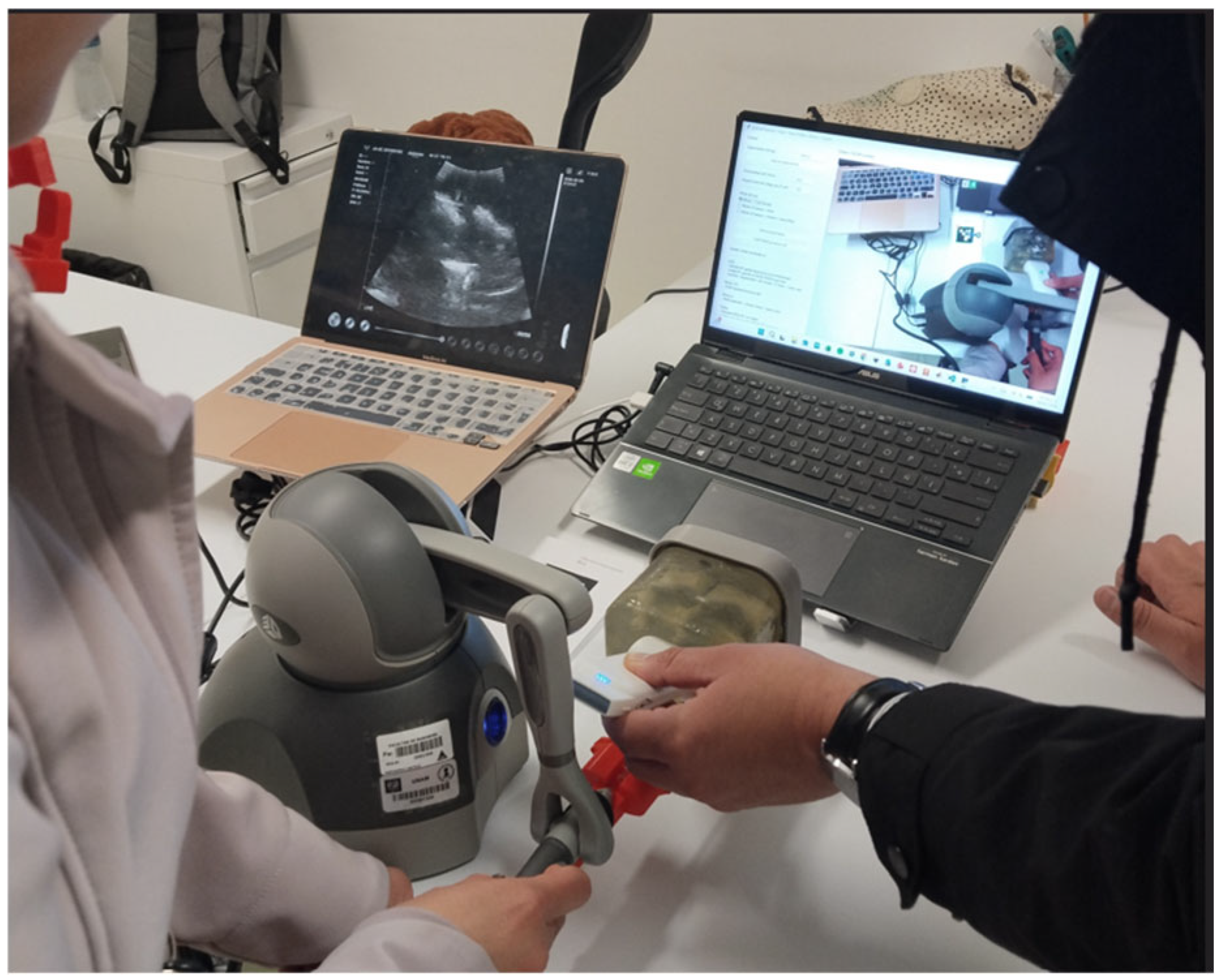
Figure 1 illustrates the experimental platform developed to assist epidural needle insertion through cooperative human–machine interaction. A clinical Tuohy needle was mechanically coupled with a 3D Systems Touch™ haptic device (3D Systems corporation, Rock Hill, SC, USA, enabling the operator to manipulate the instrument while receiving programmable force feedback. The pose of the device was continuously recorded to reconstruct the needle trajectory during insertion.
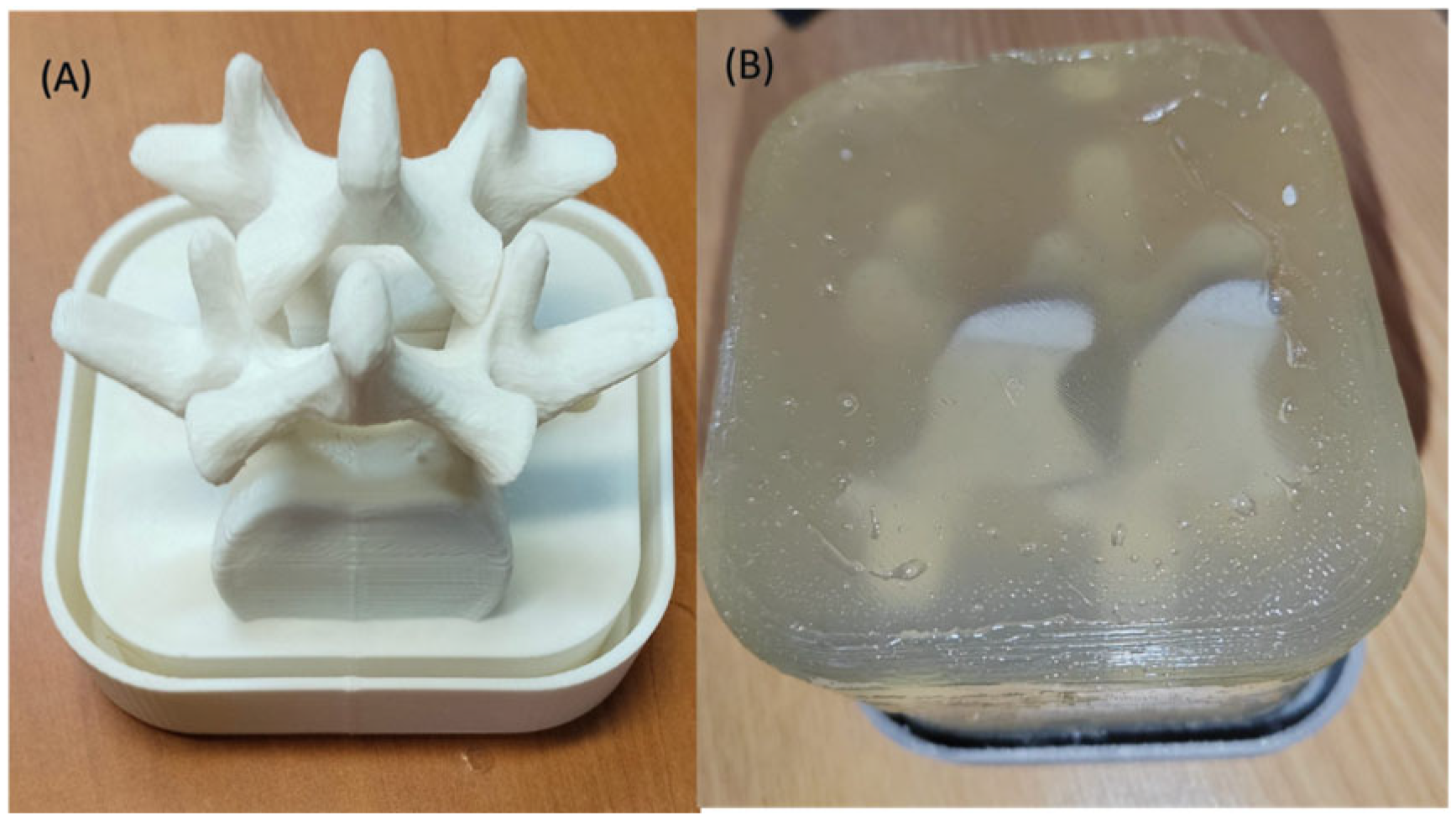
The device interacted with a patient-specific lumbar phantom representing the L3–L4 intervertebral space. Vertebral structures were fabricated by 3D printing (
Figure 2A), while surrounding soft tissues were reproduced using ballistic gel to allow both mechanical penetration and ultrasound imaging (
Figure 2B). The system software, including visualization, force rendering, and data acquisition, was implemented in Python (version 3.11). Because the phantom cannot naturally reproduce the characteristic force transitions perceived during epidural insertion, a tissue interaction force model was implemented to emulate the mechanical response of the anatomical layers.
Three assistance modes were evaluated: (1) freehand execution with only simulated tissue force feedback, (2) visual guidance displaying insertion direction and target depth, and (3) cooperative guidance incorporating virtual constraints consisting of a cylindrical corridor limiting lateral deviation and a depth-limiting plane preventing excessive penetration. The parameters defining depth, orientation, and force transitions were calibrated from ultrasound measurements of the phantom.
2.2. Calibration Phase
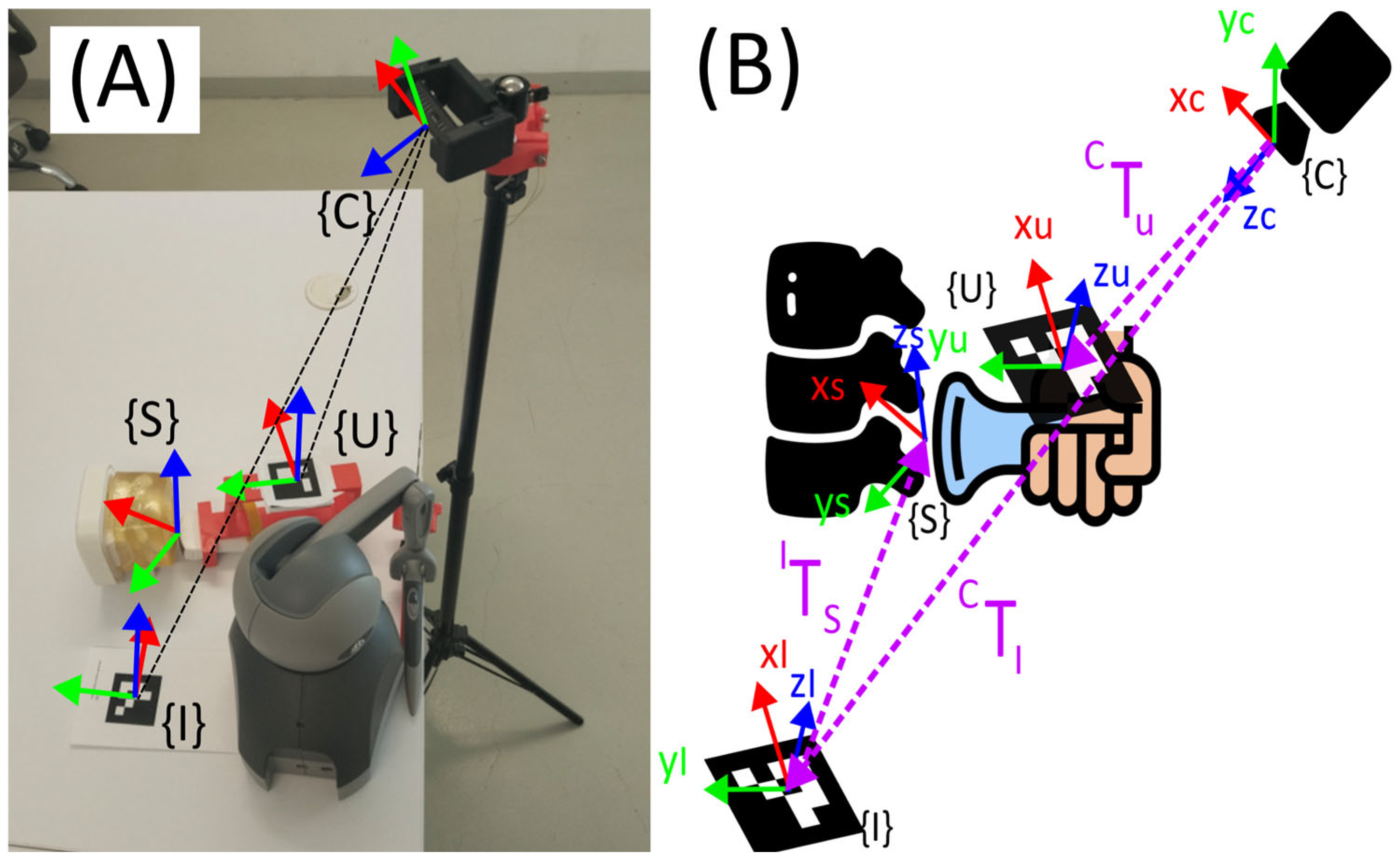
Prior to the experimental trials, a spatial calibration procedure was performed to align the physical phantom, the tracking system, and the assistance environment within a common reference framework, as illustrated in
Figure 3A,B. A binocular structured-light depth camera (AI VIEW, Yahboom, Shenzhen Yahboom Technology Co., Ltd., Shenzhen, China) was used to estimate the three-dimensional pose of fiducial markers placed on the experimental setup. The camera defines its own coordinate frame {C}, from which the position and orientation of each detected marker are obtained.
As shown in
Figure 3A, ArUco fiducial markers were employed to establish the spatial relationships between sensing modules. A fixed marker (ID0) was attached to the phantom structure to define the inertial reference frame {I}, which serves as the global coordinate system for trajectory computation and guidance. A second marker (ID1) was mounted on the ultrasound probe handle, defining a probe marker frame {U}. The depth camera estimates the pose of both markers with respect to the camera frame {C}, allowing the rigid transformations between {C}, {I}, and {U} to be computed. The haptic device defines the needle manipulation frame, which remains fixed relative to the inertial frame during all trials, ensuring consistent spatial comparison between the planned trajectory and the executed motion.
Figure 3B illustrates the spatial relationships between coordinate frames and the transformations used to express the insertion trajectory in a unified reference system {I}. Because the fiducial marker was mounted on the probe handle rather than at the acoustic origin of the ultrasound beam, an additional rigid transformation was required to relate the probe marker frame {U} to the ultrasound image frame {S}. A constant rigid transformation
was defined between the marker frame {U} and the acoustic frame {S}, whose origin corresponds to the ultrasound emission plane and whose axial direction follows the propagation direction of the ultrasound beam. This transformation accounts for the geometric offset between the physical marker location and the imaging origin of the probe and was obtained once through geometric measurement of the probe dimensions. The transformation remained constant throughout all experiments.
Once the intervertebral space was identified in the ultrasound image, the pose of frame {S} was expressed relative to the inertial frame {I}. The anatomical information visible in the ultrasound image allows defining the orientation of the insertion reference frame such that its x-axis is aligned with the intervertebral space, representing the desired insertion direction within the anatomical corridor between adjacent vertebrae. In this way, the ultrasound image provides both positional and directional information for defining the target trajectory.
By expressing both the ultrasound frame {S} and the needle pose within the inertial reference frame {I}, a unified spatial representation is obtained. This representation enables consistent integration of perception and control modules, allowing the computation of trajectory vectors and the implementation of virtual constraints aligned with the intervertebral space, as depicted in
Figure 3B.
The pose of the ultrasound acoustic frame {S} relative to the inertial frame {I} was therefore obtained as
Equation (1) defines describes the position and orientation of the ultrasound acoustic frame {S} with respect to the inertial frame {I}. This homogeneous transformation includes both rotation and translation components, allowing anatomical information extracted from the ultrasound image to be expressed in the same coordinate system used by the haptic device and the virtual guidance environment.
The transformation
the rigid transformation between the inertial frame {I} and the ultrasound marker frame {U}, computed using ArUco marker pose estimation from the depth camera. This transformation enables spatial registration between the imaging system and the experimental workspace by mapping the pose of the ultrasound probe into the global coordinate system. This transformation is defined as
Moreover, during calibration, the ultrasound probe was manually positioned over the phantom until the L3–L4 intervertebral space was visually aligned in the ultrasound image. Once aligned, the skin entry point corresponding to the center of the interlaminar window was defined in the ultrasound acoustic frame as .
Its position in the inertial frame was computed as
Using the ultrasound image and following clinical ultrasound-guided neuraxial anesthesia guidelines, two anatomical parameters were extracted:
These parameters define the needle insertion direction and target depth.
A local insertion frame
was defined at the skin entry point in order to represent the needle orientation consistently with the anatomical configuration extracted from ultrasound. The orientation of frame
with respect to the inertial reference frame
was modeled as a rotation about the lateral anatomical axis, as follows:
where
represents the rotation matrix that defines the orientation of the insertion frame relative to the inertial coordinate system, and
corresponds to the inclination of the intervertebral space measured from the ultrasound image.
Using this same rotation, the unit vector defining the insertion direction in the inertial frame was obtained as:
Finally, the epidural target position is computed by projecting the insertion direction from the skin entry point to the depth corresponding to the epidural space:
This formulation defines both the trajectory corridor and the depth-limiting constraint used by the assistance system during insertion.
2.3. Operation Models and Force Profiles
After defining the insertion point, orientation, and epidural target during the calibration stage, the needle motion during the procedure can be described relative to this clinically defined trajectory. In practice, the anesthesiologist advances the needle toward the epidural space while attempting to remain aligned with the intervertebral window and avoid excessive penetration.
To evaluate the effect of the proposed assistance, the needle movement was expressed in terms of two quantities: the advancement along the intended path and the deviation away from it. These variables allow the system both to reproduce tissue resistance and to determine when guidance forces should be applied. Based on this description, different assistance behaviors were implemented by modifying the force feedback delivered at the needle tip.
Let
be the real-time needle tip position measured by the haptic device in the inertial frame {I}. We define the axial penetration coordinate along the insertion direction:
The ideal trajectory corresponds to the straight insertion path defined during the calibration stage from ultrasound measurements. It is defined as the line that starts at the skin entry point and follows the orientation of the intervertebral space toward the epidural target:
The lateral deviation is therefore the shortest distance between the actual needle tip position and this line, is given by the orthogonal component:
which quantifies how far the operator deviates from the optimal insertion direction. Thus,
measures advancement toward the epidural space, while
quantifies lateral deviation from the clinically intended path defined during ultrasound calibration.
Using these variables, three operation modes were implemented to represent increasing levels of assistance during the insertion task. In all cases, the anesthesiologist manually advanced the needle following the usual clinical technique, while the system modified only the forces perceived at the instrument.
In the first mode, the device reproduced only the resistance of the anatomical tissues along the insertion direction, allowing the operator to rely exclusively on tactile perception as in a conventional epidural procedure. In the second mode, the system additionally displayed the recommended insertion direction and target depth, but no mechanical guidance was applied, so the motion remained entirely voluntary. In the third mode, the system provided cooperative assistance by generating corrective forces that helped maintain alignment with the intended trajectory and prevented advancing beyond epidural space. The following subsections describe the force behavior associated with each mode.
2.3.1. Mode 1: Freehand (Tissue Force Only)
In this mode, the operator performs the epidural insertion following the conventional clinical technique, without spatial guidance or motion restriction. The system reproduces the resistive force perceived during needle advancement through anatomical layers. Since the physical phantom allows needle penetration and ultrasound visualization but cannot reliably replicate the characteristic force transitions observed in biological tissues, the tactile feedback was generated computationally. The haptic device renders a model-based tissue interaction force derived from biomechanical measurements reported in the literature [
23], where the force profile was formulated based on experimentally measured insertion forces obtained using an 18-gauge Tuohy needle inserted into human vertebral specimens, where characteristic force peaks associated with the supraspinous ligament and ligamentum flavum were identified and used to construct a parametric mathematical representation of tissue resistance. This analytical formulation ensures reproducibility of the force response while preserving the characteristic mechanical behavior described in experimental epidural insertion biomechanics studies.
The force applied at the haptic interface is purely axial and aligned with the direction of insertion:
where
is the insertion coordinate measured along the needle axis and
is the unit vector defining the insertion direction in the inertial frame.
The tissue interaction force
follows a parametric depth-dependent force profile reported in the epidural insertion biomechanics literature, describing the typical progression of resistance: skin puncture, ligament traversal, ligamentum flavum peak, and abrupt force drop after entering the epidural space.
The constants and represent equivalent axial stiffness of the tissue layers (skin and supraspinous ligaments), while corresponds to the high resistance plateau associated with the ligamentum flavum. Thus, the model reproduces the mechanical response of tissue puncture as an elastic loading followed by rupture and loss of resistance.
The interval limits , , and correspond to characteristic anatomical transitions along the insertion path. Specifically, represents skin puncture, the beginning of the ligamentum flavum region, and the location of the epidural space where the loss of resistance occurs. Therefore, the variable can be interpreted as the penetration depth measured along the needle trajectory, allowing the force response to be associated with specific anatomical layers.
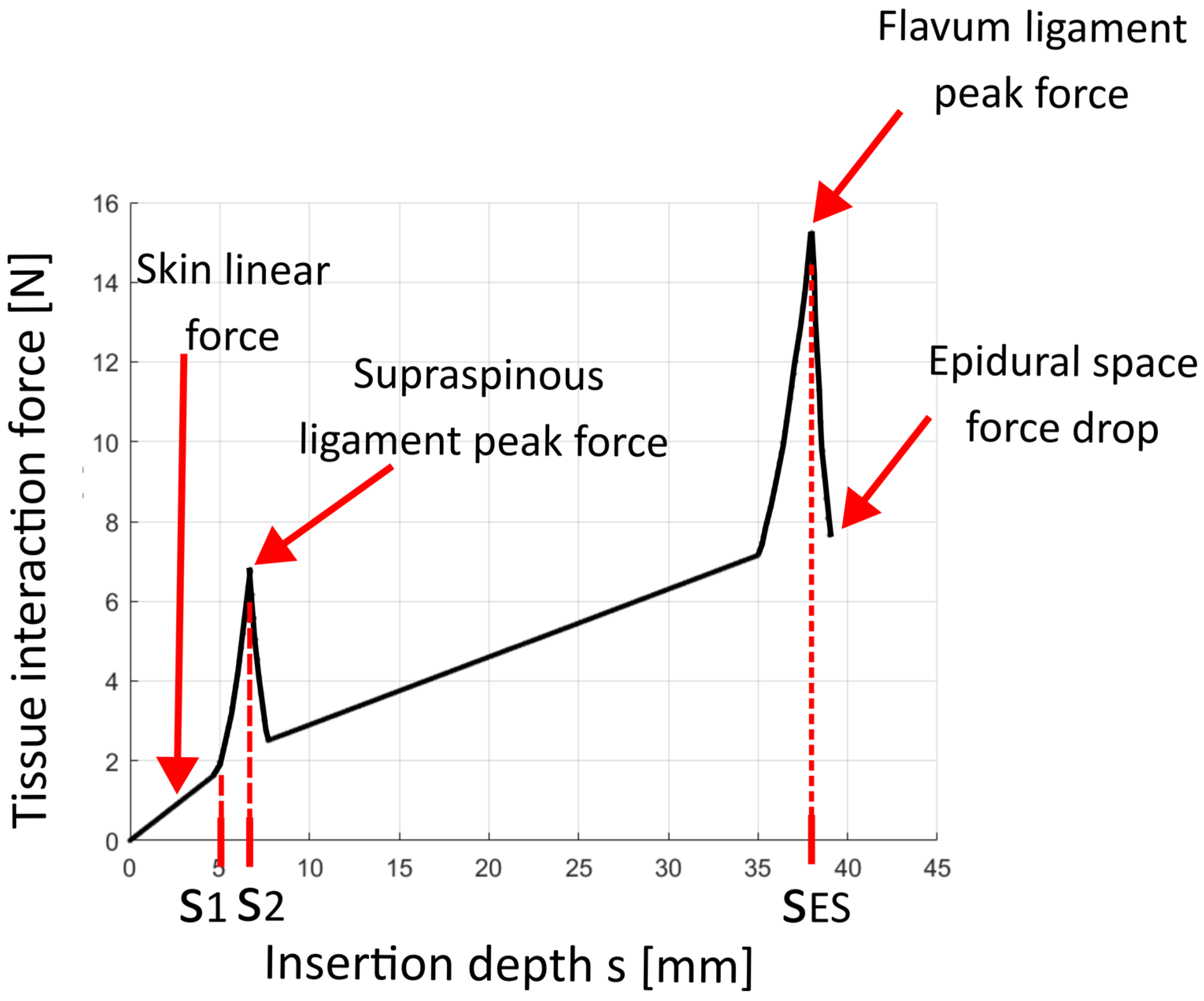
Figure 4 illustrates the implemented tissue interaction force profile (black line) as a function of the insertion depth
, where the horizontal axis represents the insertion coordinate and the vertical axis corresponds to the rendered needle–tissue interaction force. The curve reproduces the typical mechanical behavior observed during epidural needle insertion and allows each phase to be interpreted in terms of the anatomical tissues encountered along the trajectory. For
, the force increases approximately linearly due to elastic deformation of the skin and superficial tissues during initial puncture. After crossing the skin layer at
, the force continues to increase as the needle advances through subcutaneous tissues and interspinous ligaments, where progressive compression and friction generate increasing resistance. A local peak appears near
, associated with the higher stiffness of ligamentous structures, followed by a partial drop corresponding to tissue rupture. As insertion progresses, resistance increases again until reaching a second and more pronounced peak at
, corresponding to the ligamentum flavum, which typically presents the highest resistance during epidural procedures. Immediately after crossing this layer, a sudden decrease in force occurs, reproducing the clinically recognized loss-of-resistance phenomenon that indicates entry into the epidural space, where mechanical resistance is significantly reduced. The transition points
,
, and
therefore represent identifiable mechanical events associated with specific anatomical layers, allowing the modeled force profile to provide clinically meaningful haptic feedback consistent with the conventional epidural insertion technique.
Since the model is expressed as a function of the penetration coordinate , it can be scaled using the epidural depth obtained during ultrasound calibration and oriented along the insertion axis . This mode reproduces the classical loss-of-resistance technique, where the operator relies exclusively on tactile perception.
2.3.2. Mode 2: Visual Guidance (Tissue Force + Augmented Reality Trajectory)
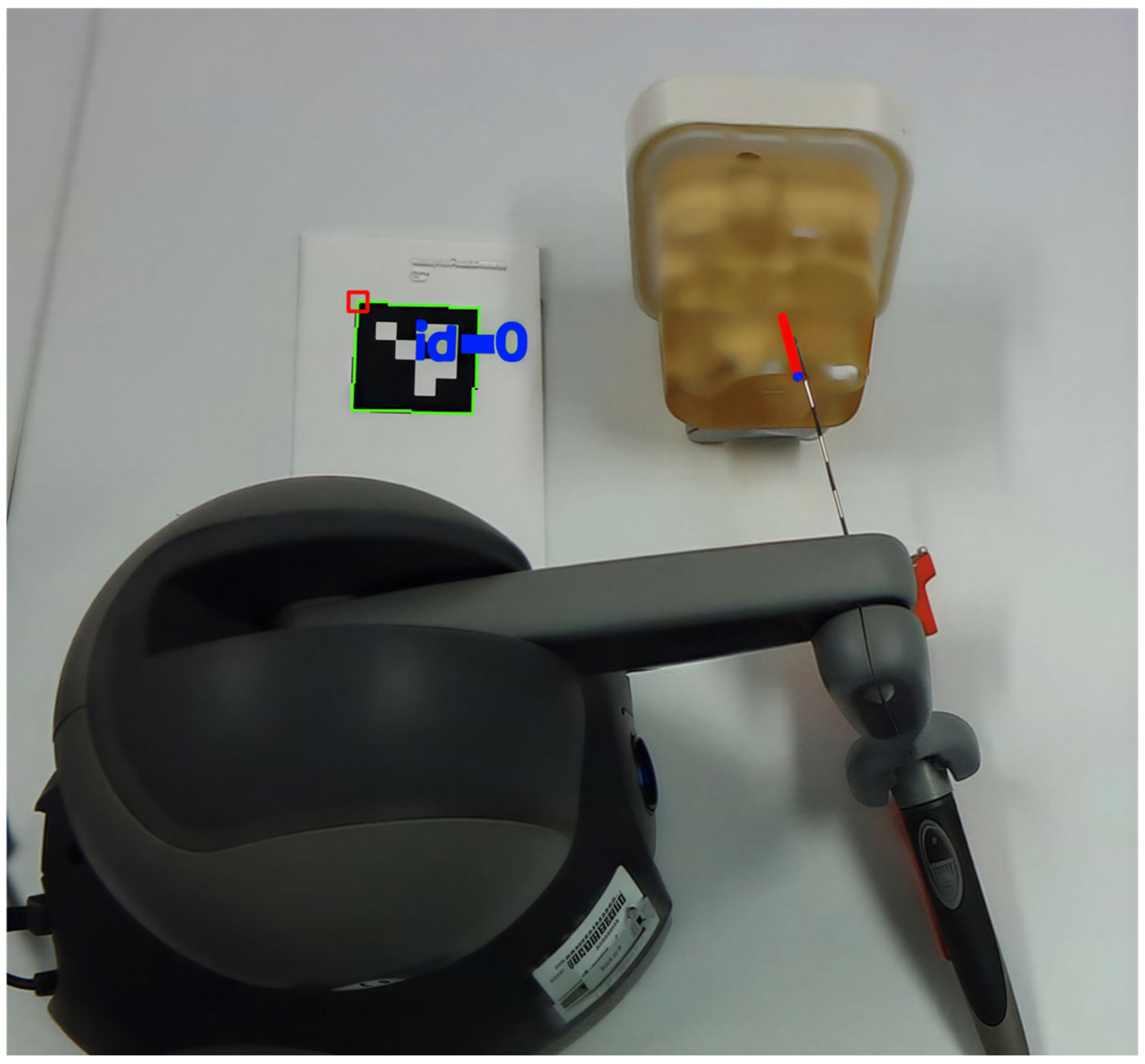
In this mode, the system provides spatial guidance based on the anatomical calibration described in
Section 2.2. Once the intervertebral space is identified in the ultrasound image, the insertion trajectory is defined relative to the inertial reference frame {I}, which is established by the fixed ArUco marker ID0 (see
Figure 3). The insertion path corresponds to the clinically defined trajectory given by Equation (8), constructed from the entry point (Equation (3)), the insertion orientation (Equations (4) and (5)), and the epidural target (Equation (6)). Expressing the trajectory in the inertial frame allows consistent spatial alignment between the ultrasound image, the phantom, and the haptic device.
A straight segment representing this trajectory is visually rendered from the skin entry point to the epidural target, as shown in
Figure 5. The trajectory is positioned with respect to the inertial reference frame {I}, enabling the anesthesiologist to align the needle with the intervertebral space and maintain the desired insertion direction. The pose of the needle is continuously measured by the haptic device and visually compared with the planned path.
No mechanical restriction is applied in this mode. The operator retains full voluntary control of the motion and must visually maintain alignment with the displayed trajectory while deciding when to stop the insertion at the appropriate depth. The haptic device renders only the tissue interaction force defined in Mode 1, allowing the clinician to perceive tissue transitions while using the augmented trajectory as spatial reference for orientation and depth estimation. The haptic device therefore renders only the tissue interaction force defined in Mode 1:
Thus, the assistance acts purely as spatial orientation, while the motion and stopping decision remain entirely dependent on the clinician.
2.3.3. Mode 3: Cooperative Guidance (Virtual Constraints)
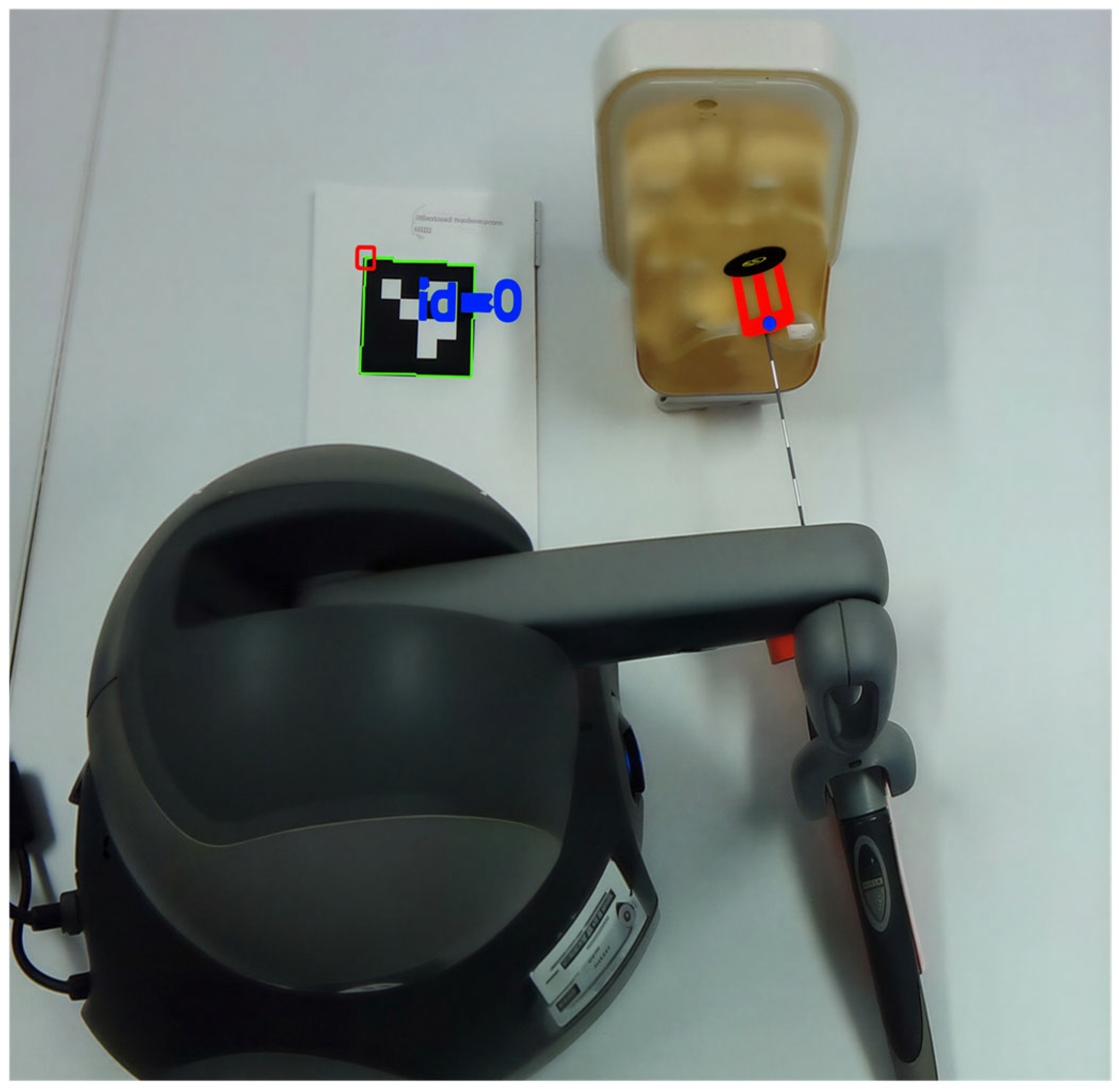
In this mode, trajectory control is achieved through cooperative virtual constraints defined relative to the anatomically calibrated insertion path expressed in the inertial reference frame {I}, established by the fixed ArUco marker ID0 (see
Figure 3). The desired trajectory is obtained from the ultrasound calibration described in
Section 2.2, where the intervertebral space defines the insertion direction and the epidural space defines the target depth. The needle pose is continuously measured by the haptic device and expressed in the inertial coordinate system {I}, allowing real-time comparison between the executed motion and the planned trajectory.
As illustrated in
Figure 6, two virtual geometric elements are positioned relative to the intervertebral space: a cylindrical corridor centered on the insertion trajectory (Equation (8)) and a depth-limiting plane located at the epidural target (Equation (6)). The cylindrical constraint defines the allowable lateral deviation around the trajectory, while the planar constraint defines the maximum insertion depth along the insertion direction. Both elements are aligned with the anatomical reference obtained from the ultrasound image and expressed relative to the inertial frame {I}.
The trajectory control is computed from the advancement coordinate
defined in Equation (7) and the lateral deviation
defined in Equation (10). The lateral deviation is calculated as the perpendicular distance between the measured needle position and the calibrated insertion trajectory. Based on this deviation, a restoring force proportional to
is applied toward the trajectory:
where
is the lateral stiffness gain that determines the resistance offered against deviation from the trajectory. This force creates a virtual cylindrical corridor around the calibrated path. Small deviations are allowed, but increasing misalignment produces progressively stronger corrective forces, enabling guidance without imposing autonomous motion.
To prevent penetration beyond the epidural space, a unilateral constraint is applied when the advancement coordinate exceeds the calibrated epidural depth
:
where
is the axial stiffness gain controlling the resistance applied once the needle reaches the epidural depth. This force behaves as a virtual stop plane perpendicular to the insertion direction and prevents further advancement.
The final force rendered by the haptic device combines the tissue interaction force from Mode 1 with the cooperative constraints:
Through this formulation, the operator retains voluntary motion while the system continuously discourages deviations from the calibrated trajectory and prevents over-penetration beyond the epidural space. The stiffness gains and regulate the level of assistance, allowing the interaction to remain cooperative rather than autonomous.
3. Results
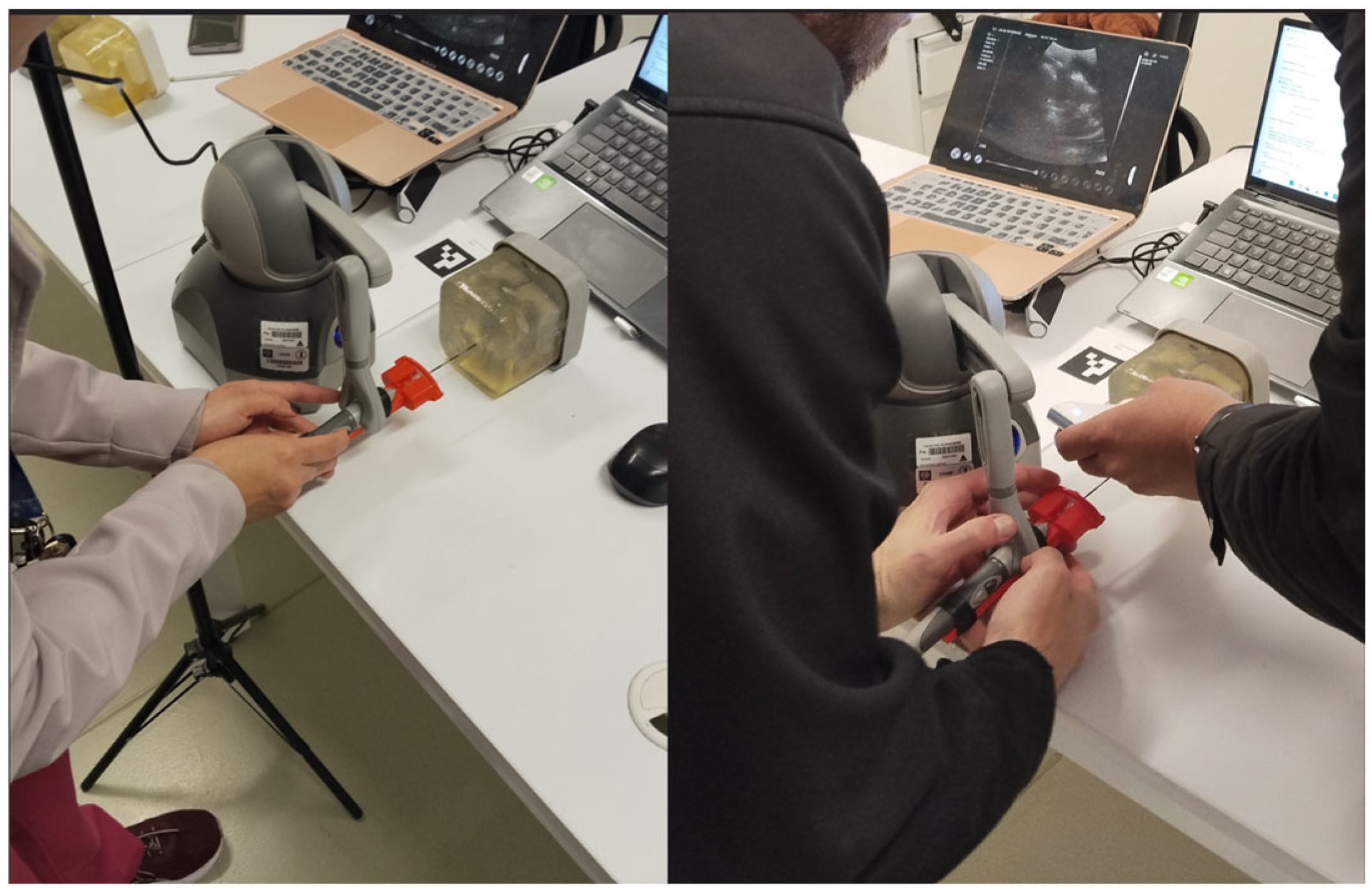
The experimental evaluation (
Figure 7) was conducted by two cardiovascular anesthesiologists with five years of professional experience in anesthesiology, including three years of residency training, one year of subspecialty training, and one currently practicing as an attending anesthesiologist. Both specialists have performed more than 1000 neuraxial procedures, including epidural anesthesia, as part of their routine clinical practice. Each anesthesiologist performed five trials under each experimental condition: (1) freehand needle insertion without guidance, (2) augmented reality (AR) guidance, and (3) cooperative guidance using ultrasound-informed virtual fixtures. A total of 30 insertions were analyzed. During every trial, the needle position was continuously recorded using the haptic device, providing real-time tracking of the needle trajectory. The insertion depth and final needle location relative to the epidural space were simultaneously verified using ultrasound imaging. The experimental outcomes were quantified by measuring the deviation between the planned and achieved needle depth, as well as the trajectory accuracy relative to the target epidural space.
The anatomical parameters obtained during the calibration phase were consistent across experiments, with an epidural depth mm and an intervertebral inclination angle . These parameters defined the insertion trajectory and depth constraints used during all trials.
3.1. Trajectory Behavior
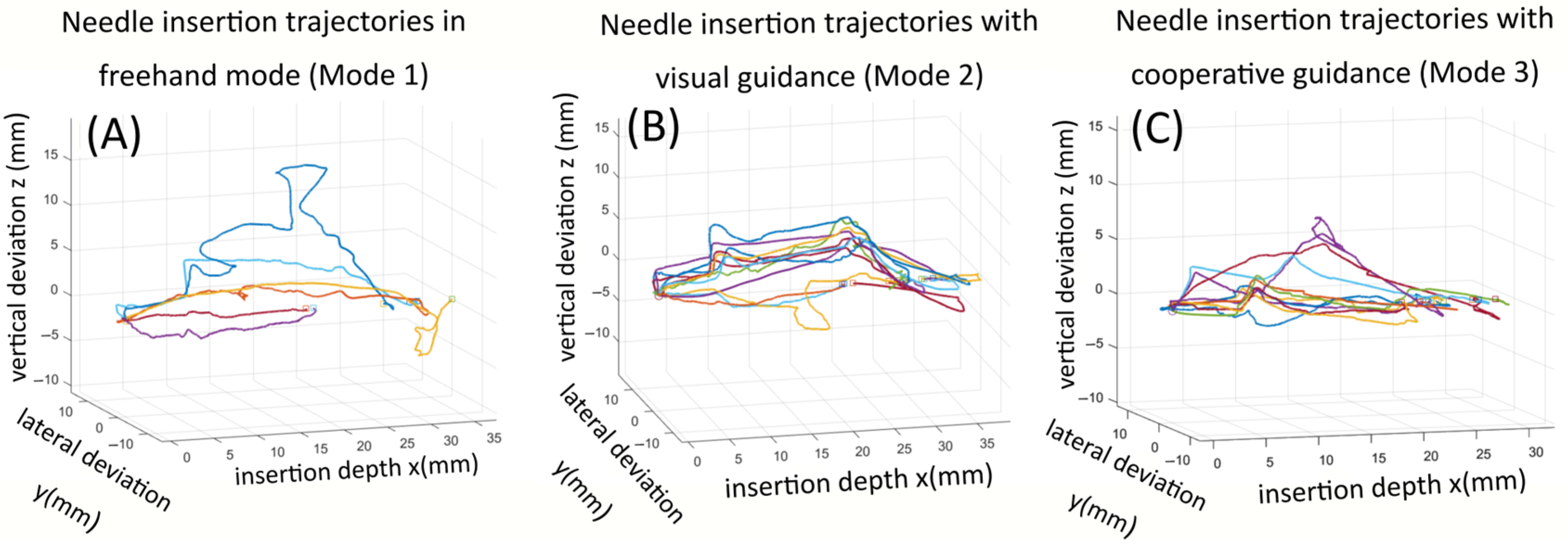
Figure 8 presents the reconstructed 3D needle trajectories for the three evaluated modes, expressed in the inertial reference frame, where the
X-axis corresponds to the insertion direction, and the
Y and
Z axes represent lateral and vertical deviations with respect to the planned trajectory. In the freehand condition (
Figure 8A), the trajectories exhibit large dispersion and multiple reorientations before reaching the epidural region, indicating difficulty in maintaining alignment with the intervertebral window. When visual guidance is provided (
Figure 8B), the trajectories follow the planned direction more consistently, reducing dispersion, although deviations from the optimal path remain observable. Under cooperative guidance (
Figure 8C), the trajectories are concentrated around the calibrated insertion line, showing smoother advancement and minimal reorientation. Comparatively, the progressive reduction in trajectory dispersion across the three modes indicates that the proposed cooperative constraints improve stability and alignment during insertion.
3.2. Spatial Deviation
Spatial deviation was used to quantify insertion stability by measuring the maximum lateral displacement of the needle relative to the planned trajectory toward the epidural space. Deviations were computed along the orthogonal axes of the inertial reference frame defined during ultrasound calibration, representing off-axis motion with respect to the optimal insertion path.
Mode 1—Freehand: up to 10 mm in the X-axis and 20 mm in the Y-axis. These values indicate greater variability in needle orientation when relying only on tactile feedback, reflecting the difficulty of maintaining alignment with the intervertebral window in blind neuraxial procedures.
Mode 2—Visual guidance: approximately 8 mm in the X-axis and 13 mm in the Y-axis. The visual representation of the trajectory improved spatial alignment, although deviations remained because motion was not physically constrained.
Mode 3—Cooperative guidance: approximately 8 mm in the X-axis and 10 mm in the Y-axis. The virtual cylindrical constraint confined the motion to a narrower corridor aligned with the planned trajectory, reducing off-axis movements.
These results indicate a progressive reduction in spatial deviation as the level of assistance increased, improving trajectory consistency and maintaining alignment with the epidural target.
3.3. Depth Accuracy
The insertion depth error was computed as the absolute difference between the needle tip position measured by the haptic device and the epidural depth confirmed by ultrasound.
Mode 1: 6.82 ± 3.46 mm
Mode 2: 4.96 ± 2.41 mm
Mode 3: 2.21 ± 1.73 mm
Freehand insertions frequently overshoot the epidural space, whereas visual guidance reduced this tendency but did not eliminate it. Cooperative guidance prevented excessive penetration and consistently stopped the needle near the epidural target.
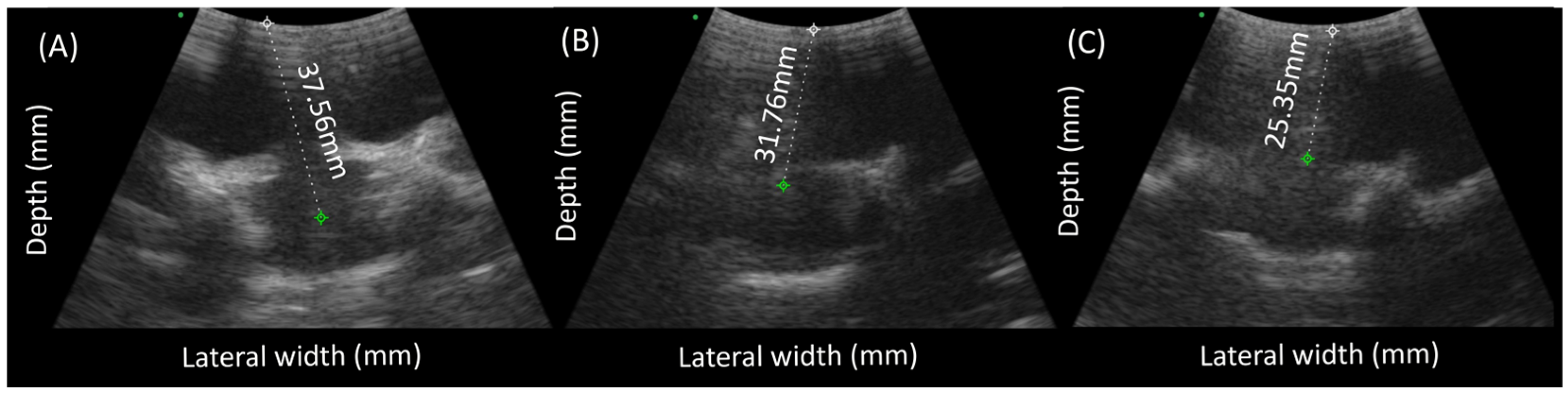
Figure 9 shows representative ultrasound images corresponding to the trials with the greatest overshoot in each mode:
Figure 9A freehand execution, where the needle tip advances beyond the epidural space;
Figure 9B visual guidance, where overshoot is reduced but still present; and
Figure 9C cooperative guidance, where the needle stops close to the epidural boundary. These images corroborate the quantitative depth error measurements.
3.4. Procedural Events
Freehand insertions showed repeated redirections and collisions with vertebral structures. Visual guidance reduced these events but did not prevent them completely. Under cooperative guidance, collisions and overshoot events were rarely observed, and the needle advanced directly toward the epidural region.
In addition to quantitative metrics, both anesthesiologists reported that the combination of the physical phantom and the rendered tissue force profile reproduced the tactile sensation of epidural insertion with high realism. The perceived similarity to clinical practice was estimated subjectively between 80% and 85%, particularly noting the ligamentum flavum resistance peak and the subsequent loss-of-resistance sensation when entering the epidural space.
Overall, the results demonstrate a progressive improvement from tactile-only execution to visual guidance and finally to cooperative human–machine assistance, achieving greater trajectory stability and higher depth accuracy.
4. Discussion
This study evaluated a cooperative human–machine assistance approach for epidural needle insertion through a controlled protocol performed by anesthesiologists. The results demonstrated a progressive improvement in performance as the level of assistance increased: freehand execution showed the largest trajectory dispersion and depth variability, visual guidance improved orientation consistency, and cooperative guidance produced the most stable insertions and the smallest insertion error.
During freehand execution the operator relied exclusively on tactile perception, reproducing the conventional loss-of-resistance technique. The large dispersion of trajectories and the presence of depth overshoot indicate the intrinsic uncertainty of identifying the epidural space only through force sensation, even in experienced clinicians. Repeated reorientations and lateral deviations reflect the difficulty of maintaining alignment within the intervertebral window in a blind neuraxial procedure. When visual guidance was introduced, the trajectory defined during ultrasound calibration provided a spatial reference that reduced orientation uncertainty and decreased lateral deviation. However, overshoot was still present because the system did not regulate motion; the clinician remained solely responsible for determining when to stop the insertion. With cooperative guidance, the cylindrical corridor stabilized the insertion direction, and the depth-limiting plane prevented advancement beyond epidural space. Consequently, trajectories concentrated around the intended path and insertion error decreased markedly. Importantly, the operator preserved voluntary motion while unsafe movements were mechanically discouraged, which corresponds to shared control rather than automation.
Most previous epidural assistance approaches either improve visualization, detect tissues, or automate needle motion. Imaging guidance facilitates anatomical localization but cannot prevent incorrect mechanical actions, tissue sensing provides objective information but still depends on user interpretation, and robotic automation may stop the needle but reduces direct operator control. The present approach instead regulates the mechanical interaction while the clinician performs the maneuver, integrating perception and action. The contribution therefore lies in cooperative interaction, where the device constrains unsafe movements without replacing the specialist.
The reduction in overshoot and trajectory variability suggests potential improvement in procedural safety because complications such as dural puncture are mainly related to depth misestimation rather than target localization alone. Stabilizing the insertion direction may also decrease bone contact and repeated attempts. Additionally, the progressive assistance strategy could be useful for training, allowing users to first rely on tactile sensation, then spatial orientation, and finally guided motion toward the epidural space.
Similarly, the study includes a total of 30 insertions (2 anesthesiologists × 3 experimental conditions × 5 repetitions). While the sample size is limited, it is consistent with controlled experimental studies evaluating emerging technologies for neuraxial procedures [
19,
24], which are frequently conducted in phantom environments to enable controlled comparison between guidance modalities. The objective of this study was not to demonstrate population-level clinical efficacy but to evaluate relative performance differences between assistance conditions under standardized experimental conditions. The repeated-measures design reduces inter-operator variability and allows consistent comparison of insertion accuracy across modalities. Nevertheless, the limited sample size represents a study limitation, and future work will include a larger number of participants and trials to further assess statistical robustness and generalizability of the proposed cooperative framework.
A potential direction to further improve surgical performance involves enhancing the sensing capabilities available during needle advancement. While the present framework relies on ultrasound-based anatomical calibration and external pose tracking to define the insertion trajectory relative to vertebral anatomy, future developments could incorporate sensing modalities directly at the needle level. For example, force-sensitive needles, fiber-optic sensing technologies, or tissue characterization approaches could provide complementary information about tissue transitions and local anatomical features. Integrating internal sensing with the proposed cooperative guidance approach may provide additional information about vertebral structures and allow more robust identification of the epidural space under anatomical variability. Such multimodal perception strategies could reduce uncertainty during insertion and further improve the stability and safety of neuraxial procedures while preserving clinician control.
The study was conducted in a phantom environment, which cannot fully reproduce biological variability such as tissue deformation, anatomical diversity, or patient motion, and the force model remains a parametric approximation of tissue behavior. Only experienced anesthesiologists were evaluated, so learning effects in trainees were not analyzed. Future work should include clinical validation and evaluation in novice operators, where cooperative guidance may have a greater impact, as well as adaptive patient-specific parameter estimation. Overall, the results support that epidural needle placement benefits from controlled physical interaction between clinician and device, bridging the gap between passive guidance and full automation.
5. Conclusions
The accurate placement of the epidural needle remains a technically demanding procedure due to the strong dependence on clinician experience and the limited availability of assistance technologies capable of simultaneously improving spatial perception and regulating needle motion during insertion. Conventional approaches, including tactile-based freehand techniques and image-guided navigation systems, provide either subjective feedback or passive visual support, but do not actively prevent trajectory deviations or excessive penetration, which may compromise procedural accuracy and safety. In this work, a cooperative human–machine assistance framework integrating augmented reality guidance and virtual constraints was developed to enhance needle insertion performance while preserving clinician control. The system combines ultrasound-informed trajectory definition, model-based tissue force rendering, and haptic virtual fixtures that constrain lateral deviation and limit insertion depth. Experimental evaluation performed by experienced anesthesiologists under three levels of assistance demonstrated progressive improvements in trajectory stability and depth accuracy, reducing mean insertion error from 6.82 ± 3.46 mm in freehand execution to 4.96 ± 2.41 mm with visual guidance and to 2.21 ± 1.73 mm under cooperative guidance. These findings indicate that the proposed methodology improves alignment with the intervertebral space, reduces overshoot beyond the epidural target, and promotes more consistent insertion behavior compared with conventional and visually assisted approaches, effectively bridging the gap between passive guidance and fully autonomous robotic solutions. The results support the potential of multimodal human–machine cooperation to enhance procedural precision and safety while maintaining the clinician as the primary decision-maker, suggesting future extensions toward adaptive patient-specific modeling, integration of additional sensing modalities, and validation in broader clinical and training environments.
Author Contributions
D.H.-M.: Writing—original draft, Methodology, Supervision, Data curation, Writing—review & editing, Formal analysis, Conceptualization. M.L.-M.: Writing—original draft, Methodology, Writing—review & editing, Validation, Data curation. L.J.-A.: Writing—original draft, Methodology, Writing—review & editing, Supervision, Formal analysis. V.J.G.-V.: Writing—original draft, Investigation, Conceptualization, Writing—review & editing, Methodology, Funding acquisition. All authors have read and agreed to the published version of the manuscript.
Funding
This research was funded by Universidad Nacional Autónoma de México (UNAM), through both the UNAM-DGAPA-PAPIIT IT103025 project: “Integration of multimodal artificial intelligence models into a robotic platform for the autonomous execution of object manipulation tasks”, and the UNAM-DGAPAPAPIME PE110923 project: “Development of a remote robotics laboratory to implement programming practices of planning and navigation algorithms in physical test benches”.
Data Availability Statement
The original data presented in the study are openly available in Dataset of Combining Augmented Reality Guidance and Virtual Constraints for Skilled Epidural Needle Placement at
https://doi.org/10.6084/m9.figshare.31446016.
Acknowledgments
The authors also thank the Department of Biomedical Engineering of the Faculty of Engineering at UNAM for the loan of ultrasound equipment. Special thanks to Karen Sánchez for her technical support in the project, and to Giselle Camacho and JG for their assistance in the experimentation and system validation.
Conflicts of Interest
The authors declare no conflicts of interest.
References
- Silva, M.; Halpern, S.H. Epidural analgesia for labor: Current techniques. Local Reg. Anesth. 2010, 3, 143–153. [Google Scholar] [CrossRef] [Scilit]
- Svircevic, V.; van Dijk, D.; Nierich, A.P.; Passier, M.P.; Kalkman, C.J.; van der Heijden, G.J.; Bax, L. Meta-analysis of thoracic epidural anesthesia versus general anesthesia for cardiac surgery. Anesthesiology 2011, 114, 271–282. [Google Scholar] [CrossRef] [Scilit] [PubMed]
- Carli, F.; Trudel, J.L.; Belliveau, P. The effect of intraoperative thoracic epidural anesthesia and postoperative analgesia on bowel function after colorectal surgery—A prospective, randomized trial. Dis. Colon Rectum 2001, 44, 1083–1089. [Google Scholar] [CrossRef] [Scilit] [PubMed]
- Avila Hernandez, A.N.; Hendrix, J.M. Epidural anesthesia. In StatPearls; StatPearls Publishing: Treasure Island, FL, USA, 2025. Available online: https://www.ncbi.nlm.nih.gov/books/NBK542219/ (accessed on 15 February 2026).
- Dhansura, T.; Shaikh, T.; Maadoo, M.; Chittalwala, F. Identification of the epidural space—Loss of resistance to saline: An inexpensive modification. Indian J. Anaesth. 2015, 59, 677–679. [Google Scholar] [CrossRef] [Scilit] [PubMed]
- Hermanides, J.; Hollmann, M.W.; Stevens, M.F.; Lirk, P. Failed epidural: Causes and management. Br. J. Anaesth. 2012, 109, 144–154. [Google Scholar] [CrossRef] [Scilit]
- Liu, H.; Brown, M.; Sun, L.; Patel, S.P.; Li, J.; Cornett, E.M.; Urman, R.D.; Fox, C.J.; Kaye, A.D. Complications and liability related to regional and neuraxial anesthesia. Best Pract. Res. Clin. Anaesthesiol. 2019, 33, 487–497. [Google Scholar] [CrossRef] [Scilit]
- McLeod, G.A.; Reina, M.A.; Boezaart, A.P. High-definition ultrasound in regional anesthesia. Curr. Opin. Anaesthesiol. 2025, 38, 652–659. [Google Scholar] [CrossRef] [Scilit]
- Lee, A.; Loughrey, J.P.R. The role of ultrasonography in obstetric anesthesia. Best Pract. Res. Clin. Anaesthesiol. 2017, 31, 81–90. [Google Scholar] [CrossRef] [Scilit]
- Seitel, A.; Sojoudi, S.; Osborn, J.; Rasoulian, A.; Nouranian, S.; Lessoway, V.A.; Rohling, R.N.; Abolmaesumi, P. Ultrasound-guided spine anesthesia: Feasibility study of a guidance system. Ultrasound Med. Biol. 2016, 42, 3043–3049. [Google Scholar] [CrossRef] [Scilit]
- Behnami, D.; Sedghi, A.; Anas, E.M.A.; Rasoulian, A.; Seitel, A.; Lessoway, V.; Ungi, T.; Yen, D.; Osborn, J.; Mousavi, P.; et al. Model-based registration of preprocedure MR and intraprocedure US of the lumbar spine. Int. J. Comput. Assist. Radiol. Surg. 2017, 12, 973–982. [Google Scholar] [CrossRef] [Scilit]
- Ni, X.; Li, M.Z.; Zhou, S.Q.; Xu, Z.D.; Zhang, Y.Q.; Yu, Y.B.; Su, J.; Zhang, L.M.; Liu, Z.Q. Accuro ultrasound-based system with computer-aided image interpretation compared to traditional palpation technique for neuraxial anesthesia placement in obese parturients undergoing cesarean delivery: A randomized controlled trial. J. Anesth. 2021, 35, 475–482. [Google Scholar] [CrossRef] [Scilit]
- Lin, S.M.; Gong, C.A.; Chiang, T.A.; Tsou, M.Y.; Ting, C.K. Optically guided epidural needle placement using 405-nm wavelength for accurate puncture. Sci. Rep. 2019, 9, 1552. [Google Scholar] [CrossRef] [Scilit]
- Wang, C.; Calle, P.; Reynolds, J.C.; Ton, S.; Yan, F.; Donaldson, A.M.; Ladymon, A.D.; Roberts, P.R.; de Armendi, A.J.; Fung, K.M.; et al. Epidural anesthesia needle guidance by forward-view endoscopic optical coherence tomography and deep learning. Sci. Rep. 2022, 12, 9057. [Google Scholar] [CrossRef] [Scilit]
- Hendriks, B.H.; Balthasar, A.J.; Lucassen, G.W.; van der Voort, M.; Mueller, M.; Pully, V.V.; Bydlon, T.M.; Reich, C.; van Keersop, A.T.; Kortsmit, J.; et al. Nerve detection with optical spectroscopy for regional anesthesia procedures. J. Transl. Med. 2015, 13, 380. [Google Scholar] [CrossRef] [Scilit] [PubMed]
- Pesteie, M.; Lessoway, V.; Abolmaesumi, P.; Rohling, R.N. Automatic localization of the needle target for ultrasound-guided epidural injections. IEEE Trans. Med. Imaging 2018, 37, 81–92. [Google Scholar] [CrossRef] [Scilit] [PubMed]
- Mwikirize, C.; Kimbowa, A.B.; Imanirakiza, S.; Katumba, A.; Nosher, J.L.; Hacihaliloglu, I. Time-aware deep neural networks for needle tip localization in 2D ultrasound. Int. J. Comput. Assist. Radiol. Surg. 2021, 16, 819–827. [Google Scholar] [CrossRef] [Scilit] [PubMed]
- Medeiros, H.J.S.; Dabbagh, A.; Vlassakov, K.; Sabouri, A.S. Artificial intelligence in regional anesthesia and pain management. Anesthesiol. Clin. 2025, 43, 491–505. [Google Scholar] [CrossRef] [Scilit]
- Ashab, H.A.; Lessoway, V.A.; Khallaghi, S.; Cheng, A.; Rohling, R.; Abolmaesumi, P. AREA: An augmented reality system for epidural anaesthesia. In Proceedings of the IEEE Engineering in Medicine and Biology Society Conference, San Diego, CA, USA, 28 August–1 September 2012. [Google Scholar] [CrossRef] [Scilit]
- Lu, J.; Huang, Z.; Zhuang, B.; Cheng, Z.; Guo, J.; Lou, H. Development and evaluation of a robotic system for lumbar puncture and epidural steroid injection. Front. Neurorobotics 2023, 17, 1253761. [Google Scholar] [CrossRef] [Scilit]
- Haro-Mendoza, D.; Pérez-Escamirosa, F.; Pineda-Martínez, D.; Gonzalez-Villela, V.J. Needle path planning in semiautonomous and teleoperated robot-assisted epidural anaesthesia procedure: A proof of concept. Int. J. Med. Robot. 2022, 18, e2434. [Google Scholar] [CrossRef] [Scilit]
- Haro-Mendoza, D.; Lopez-Magaña, M.; Jimenez-Angeles, L.; Gonzalez-Villela, V.J. Development of a haptic interface with mixed reality guidance for needle insertion in epidural anesthesia. In Multibody Mechatronic Systems. MuSMe 2025; Acevedo, M., Valdivia, L., Ponce, H., Eds.; Mechanisms and Machine Science; Springer: Cham, Switzerland, 2026; Volume 195. [Google Scholar] [CrossRef] [Scilit]
- Esterer, B.; Hollensteiner, M.; Schrempf, A.; Winkler, M.; Gabauer, S.; Fürst, D.; Merwa, R.; Panzer, S.; Püschel, K.; Augat, P. Characterization of tissue properties in epidural needle insertion on human specimen and synthetic materials. J. Mech. Behav. Biomed. Mater. 2020, 110, 103946. [Google Scholar] [CrossRef] [Scilit]
- Thaker, D.M.; Jotwani, R.; Hao, D. Extended Reality for Neuraxial Procedures: A Scoping Review. J. Med. Ext. Real. 2024, 1, 112–123. [Google Scholar] [CrossRef] [Scilit]
| Disclaimer/Publisher’s Note: The statements, opinions and data contained in all publications are solely those of the individual author(s) and contributor(s) and not of MDPI and/or the editor(s). MDPI and/or the editor(s) disclaim responsibility for any injury to people or property resulting from any ideas, methods, instructions or products referred to in the content. |




 ,
,