
Article

Parameters Identification of Tire–Clay Contact Angle Based on Numerical Simulation
1
School of Mechanical Engineering, University of Science and Technology Beijing, Beijing 100083, China
2
China North Artificial Intelligence & Innovation Research Institute, Beijing 100072, China
*
Author to whom correspondence should be addressed.
Machines 2026, 14(2), 139; https://doi.org/10.3390/machines14020139

Submission received: 29 December 2025 / Revised: 19 January 2026 / Accepted: 22 January 2026 / Published: 25 January 2026

Abstract

The predictive accuracy of the Bekker–Wong model for wheel traction is highly dependent on the precision of the wheel–soil contact angle parameters. These parameters are typically identified through extensive and costly single wheel–soil tests, which are limited by poor experimental repeatability and site-specific constraints. This study proposes a method for obtaining contact angle parameters through numerical simulation. Firstly, a finite element model of an off-road tire is established. The Drucker–Prager (D-P) constitutive model parameters of clay under different moisture were calibrated by soil mechanical tests. And then the moist clay was modeled through the SPH algorithm. An FEM–SPH interaction model was developed to define the tire–moist clay interaction. Meanwhile, the tire–moist clay interaction model was verified by a single wheel–soil test device. To identify the empirical parameters of tire–soil interaction, numerical simulations were conducted for multiple operating conditions involving different slip ratios, soil moisture contents, and vertical loads. By processing the simulated wheel–soil contact characteristic images, the contact angles for each condition were extracted. Finally, the contact angle parameters in the Bekker–Wong model were identified. The empirical parameters were integrated into the Bekker–Wong model to predict traction. The results indicate that the maximum relative error of traction force between the prediction and experiment did not exceed 13.6%, which validated the reliability of the proposed method.

1. Introduction

Study of the interaction mechanism between wheels and soft soil is essential for accurately predicting traction performance. The modeling of wheel–soil interaction can be classified into three primary categories: empirical models fitted based on extensive experimental data, semi-empirical models integrating physical mechanisms with experimental data, and numerical simulation methods grounded in continuum mechanics or discrete element theory. The empirical models are primarily used to assess the mobility of off-road vehicles, typically considering traction as a function of soil strength, vertical load, and tire size parameters. Freitag [1] and Turnage [2] proposed pneumatic tire traction prediction equations based on key variable parameters such as tire deflection, tire geometry, wheel load, and soil strength for clay and sand respectively. The empirical modeling methods cannot fundamentally reveal the mechanisms of tire–soil interaction; the accuracy of these models relies on the fitting of experimental data. With the development of numerical methods for tire–soil interaction, such as the discrete element method (DEM) [3,4,5], smoothed particle hydrodynamics [6,7], and the material point method (MPM) [8]. These methods can accurately simulate large soil deformations, soil particle flow behavior, and the complex interaction at the tire–soil interface. However, the high computational cost and time consumption of these methods make them difficult to apply in real-time traction prediction.
The semi-empirical model proposed by Wong and Reece [9,10] takes into account the influence of soil on the normal stress and tangential shear stress acting on the tire. This model has been widely used to predict traction parameters for wheels operating on deformable terrain [11]. The real-time computational performance of the model meets the requirements. Therefore, several scholars have extended the Bekker–Wong model to enhance its applicability across different working conditions and improve its predictive capability. Senatore C et al. [12] incorporated factors such as traction efficiency, multi-pass effects, and lateral forces based on the original Bekker–Wong model. Sandu C et al. [13] described computational contact models for evaluating the tire–terrain interaction. Vella et al. [14] developed an advanced contact model for automotive tires interacting with fine-grained soil. Koutras E et al. [15] developed a new high-performance and memory-efficient contact and road model, which entails various information, such as the soil elevation, soil properties, and soil compaction.
The predictive accuracy of the Bekker–Wong model is highly dependent on its soil mechanical parameter inputs. Variations in soil properties and types can cause significant changes in these parameters, thereby severely affecting the accuracy of traction force predictions. Consequently, the related scholars have focused on researching real-time estimation methods for soil parameters in semi-empirical models during actual wheel operation. Gallina A et al. [16] presented both probabilistic and non-probabilistic techniques for effectively addressing soil parameter uncertainty in rover position prediction. Reina G et al. [17] proposed a method that utilizes onboard sensors to achieve online real-time estimation of terrain characteristic parameters. Dallas J et al. [18] developed a reduced-order nonlinear model through extending the Bekker model to account for additional dynamic effects and utilized in an unscented Kalman filter to estimate the sinkage exponent. Zerbato L et al. [19] estimated of the sinkage module, cohesion, friction angle, elastic recovery, and multi-pass factor of the Bekker–Wong model based on the CAN bus of passenger vehicles.
Meanwhile, the identification of contact angles empirical parameters often requires a large number of wheel–soil tests, which are not only costly but also limited by the availability of testing sites. Therefore, related research has tried to apply computer vision and image-processing techniques to the identification of wheel–soil contact parameters.
Yuan et al. [20] proposed a real-time detection method based on monocular vision for measuring wheel sinkage and slip ratio. Tsubaki H et al. [21] utilized in-wheel sensors to accurately measure the distribution of normal stress and contact angles on the wheel. They employed particle image velocimetry using standard off-the-shelf cameras to analyze soil flow beneath the wheel. Additionally, Chen Yao et al. [22] proposed a sensorized transparent wheel (STW) concept, which enables the simultaneous in-wheel measurement of wheel–terrain interaction (WTI) traction parameters and real-time observation of soil flow behavior. The in situ wheel visualization technique proposed a comprehensive characterization of the contact geometry distribution. Chen et al. [23] employed a side-mounted camera on the wheel to simultaneously measure both wheel sinkage and rotation angle. White H et al. [24] proposed a real-time measurement method for rut depth based on stereo cameras, showing that the entry angle can be determined through sinkage measurement.
The vision-based method for extracting wheel–soil contact features enables accurate acquisition of empirical parameters. However, this approach has stringent requirements regarding experimental conditions and entails significant costs. The sensorized transparent wheel was used for observing wheel–soil contact states and has primarily been applied to frictional granular materials such as fine sand. However, its applicability becomes limited when the researched soil type is strongly cohesive clay, especially when analyzing the influence of soil moisture content on tire–soil interaction. Specifically, it requires substantial time and financial investment to achieve homogeneous physical properties and controlled moisture content in a clay test site. This process relies on precise quantitative water spraying and prolonged equilibration periods to ensure uniform moisture distribution throughout the soil mass. And each adjustment in moisture content necessitates complete replacement of the soil sample, thereby extending the experimental timeline and increasing costs [25]. Additionally, it is difficult to precisely reproduce experimental procedures and site-preparation conditions, which significantly compromises the repeatability of wheel–soil interaction tests [26].
This study aimed to integrate tire–soil numerical simulation with standardized laboratory geotechnical tests to obtain accurate and repeatable mechanical parameters for cohesive soils under different moisture contents, thereby calibrating the empirical contact angle parameters in the Bekker–Wong model corresponding to each moisture condition.
The soil parameters under different moisture contents are calibrated through geotechnical tests. The off-road tire–soil interaction model is established by the FEM–SPH coupling method. This study employs image feature extraction technology to process and analyze tire–soil simulation images, allowing for the precise extraction of the entry angle, exit angle, and maximum stress angle under various conditions. The empirical parameters of contact angles for the soil are then inversely derived based on these contact angles. The method can reduce the time and labor costs associated with traditional large-scale wheel–terrain interaction tests.

2. Bekker–Wong Semi-Empirical Model

The pressure–sinkage model reflects the relationship between the wheel pressure generated at the wheel–soil contact surface and the sinkage of soft soil, as shown in Equation (1) [27].
p = k c b + k ϕ z n
where p is the pressure at the wheel–soil interface [kPa]; b is the contact width of the wheel–soil [m]; z is the sinkage [m]; k c is the part of sinkage modulus influenced by soil cohesion [ kN / m n + 1 ]; k ϕ is the part affected by the soil friction angle [ kN / m n + 2 ].
The wheel slip ratio is presented as Equation (2):
s = ( r ω v x ) / ( r ω )                               for r ω v x     ( s l i p ) ( r ω v x ) / v x                                             for r ω < v x   ( s k i d )
where s is the slip ratio [%]; r is the wheel radius [m]; ω is the angular velocity [rad/s]; v x is the longitudinal linear velocity [m/s].
The soil shear stress is developed by Janosi and Hanamoto [28]:
τ ( θ ) = sign ( s ) ( c + σ ( θ ) tan ϕ ) ( 1 e ( j ( θ ) / K ) )
where τ is the shear stress [kPa]; j is the shear displacement [m]; K is the shear deformation modulus [m]; c is the cohesion [kPa]; ϕ is the internal friction angle of the soil.
The expression for shear displacement is as follows:
j ( θ ) = r [ ( θ f θ ) ( 1 s ) ( sin θ f sin θ ) ] ,   s > 0 r [ ( θ f θ ) 1 ( 1 + s ) ( sin θ f sin θ ) ] ,   s < 0
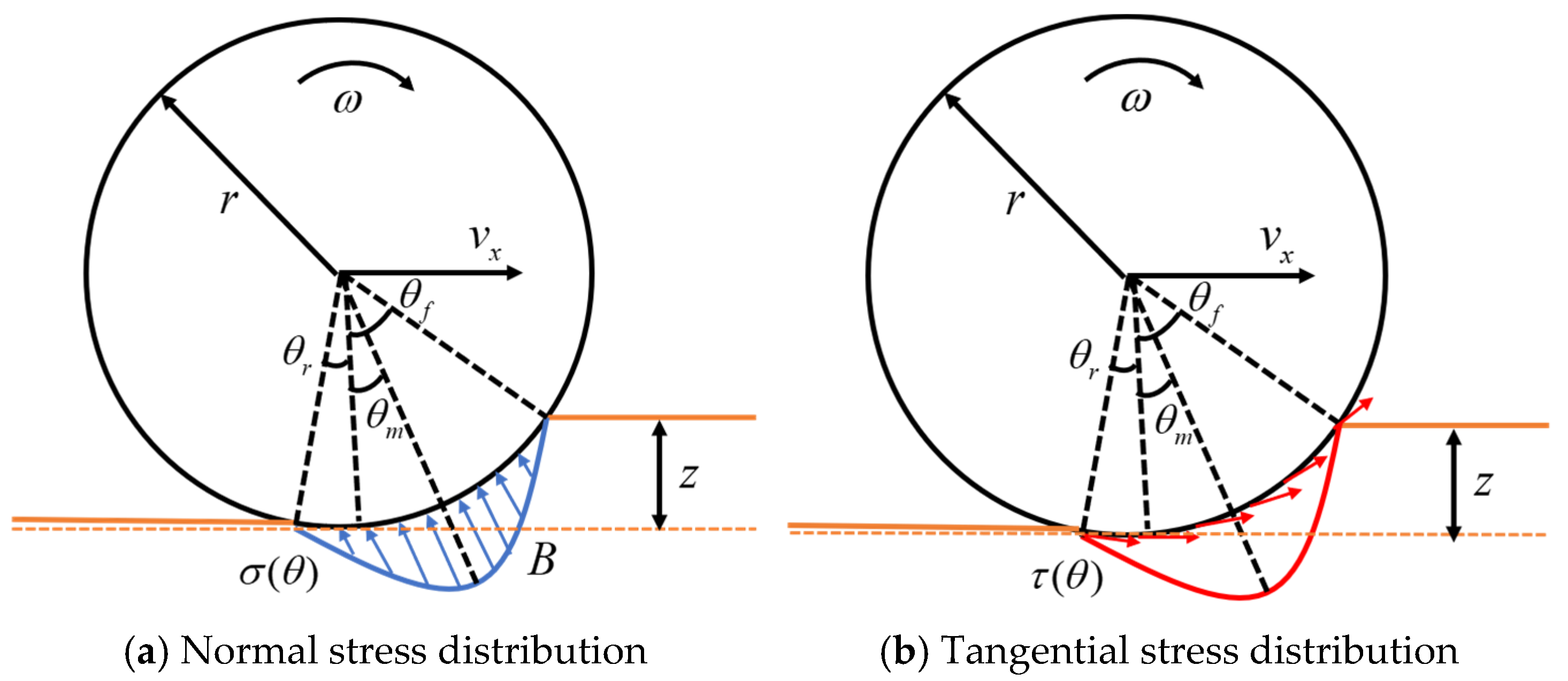
Figure 1 illustrates the distribution of shear and normal stresses in the driving mode of the wheel, enabling the calculation of stress states at any given contact angle θ . As shown in Figure 1a, the envelope of the normal stress σ ( θ ) exhibits a parabolic characteristic and can be divided into three regions based on the contact angles θ f , θ m , and θ r , each corresponding to different stress states, as described by Wong and Reece. θ f indicates the entry angle. θ m represents the angle corresponding to the maximum stress point B, while θ r denotes the region extending from the wheel’s leading contact point to the maximum stress point. θ r is the exit angle, indicating the region between the maximum stress point and the wheel trailing contact point. Additionally, as illustrated in Figure 1b, tangential shear stress is distributed along the contact arc surface at the edge of the wheel. The magnitude of the contact angle directly influences the extent of the stress integration area, making it a critical parameter in determining the mechanical behavior of the wheel–soil interaction.
The formula of the entry angle θ f of the wheel with the soil is as follows [29]:
θ f = cos 1 ( 1 z / r )
The formula of the exit angle θ r of the wheel with the soil is as follows [9]:
θ r = ( b 0 + b 1 s ) θ f
where b 0 and b 1 represents the exit angle coefficient, which are empirical parameters related to soil.
The formula of the maximum normal stress angle θ m of the wheel with the soil is as follows:
θ m = ( a 0 + a 1 s ) θ f
where a 0 and a 1 represent empirical parameters related to the maximum normal stress angle.
The formula of the equivalent area contact angle θ e is as follows:
θ e = θ f ( θ θ f ) ( θ f θ m ) / ( θ m θ r )
The distribution of normal stress σ along the wheel–terrain interface can be expressed as Equation (9):
σ ( θ ) = r n ( k c b + k ϕ ) [ cos θ cos θ f ] n , ( θ m θ θ f ) r n ( k c b + k ϕ ) [ cos θ e cos θ f ] n , ( θ r θ θ m )
By integrating the corresponding normal and shear stresses on the contact surface between the wheel and soil, the longitudinal and vertical force can be expressed as Equations (10) and (11).
F x = r b θ r θ f ( σ ( θ ) sin θ + τ ( θ ) cos θ ) d θ
F z = r b θ r θ f ( σ ( θ ) cos θ + τ ( θ ) sin θ ) d θ
where F x represents the traction force and F z denotes the vertical force.
Under steady-state driving conditions, the vertical load on the wheel and the vertical force exerted by the soft soil on the wheel are balanced, as shown in Equation (12).
F z W = 0
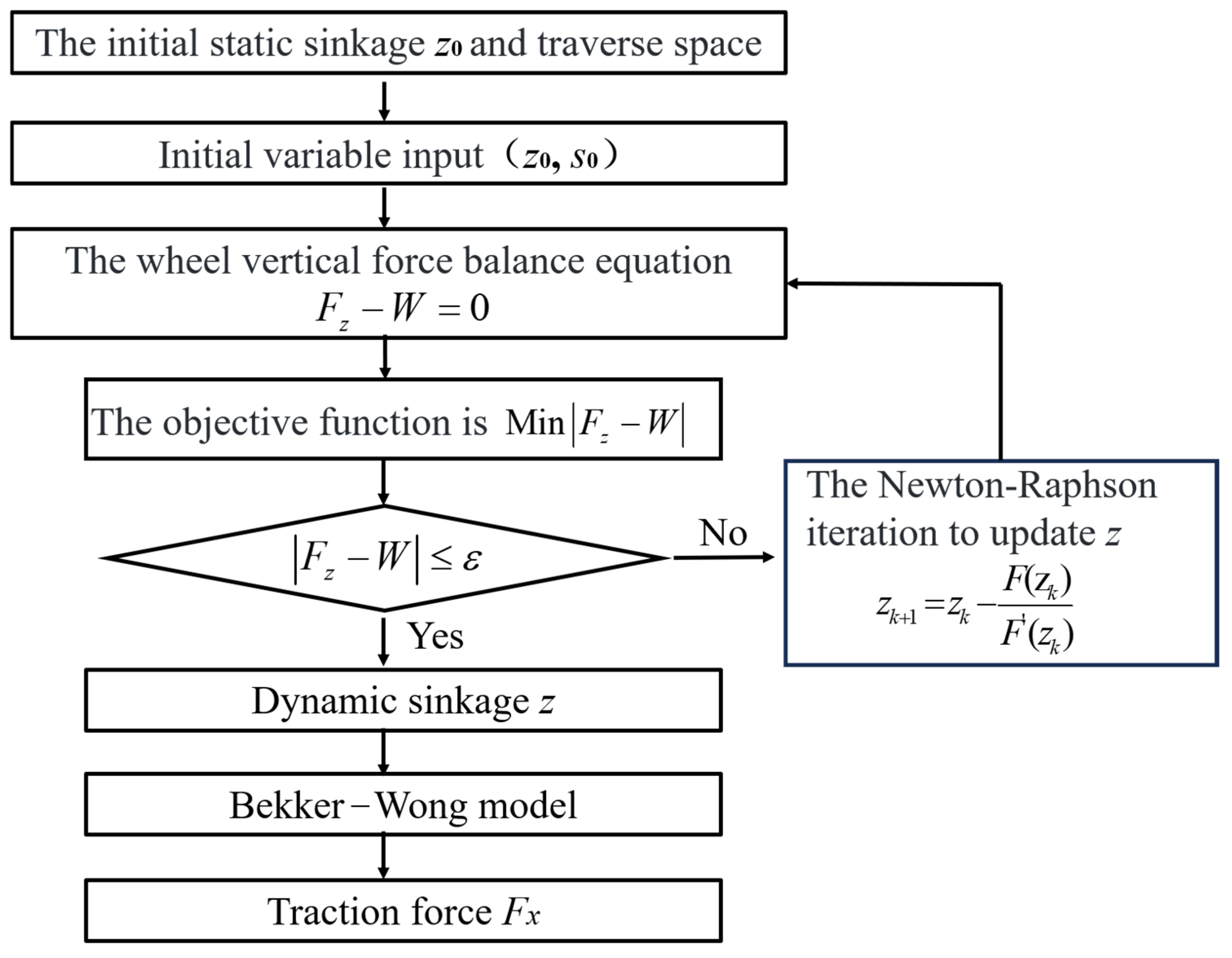
The specific procedure for calculating the wheel traction force is illustrated in Figure 2.
Under the conditions of a given vertical load and slip ratio, the static sinkage z 0 is taken as a reference value according to Equation (13), and a range for the dynamic sinkage is established within a reasonable limit. The slip ratio s 0 and initial sinkage z k 0 are substituted into Equations (1)–(11), and the Newton–Raphson iterative algorithm is employed for numerical solving until the calculated vertical force meets the force balance condition with the given vertical load on the wheel. And then the obtained dynamic sinkage z can be substituted back into Equation (10) to further calculate the corresponding wheel traction force under the current vertical load and slip ratio.
The static sinkage of the tire can be obtained according to Equation (13).
z 0 = 3 W b ( 3 n ) ( k c b + k ϕ ) 2 r ( 2 2 n + 1 )
In the Newton–Raphson iterative optimization process, the objective function is defined as the minimization of the absolute value of the difference between the vertical force F z and the given vertical load W , as shown in Equation (14). Through a convergence check on the value of ε and within the vertical load range, the setting for ε is determined to be 0.001% to 0.01% of the vertical load and it is considered that the force balance state has been achieved [30]. The corresponding value represents the dynamic sinkage under the current slip ratio.
min F z ( z ) W
The Newton–Raphson iterative formula is as follows:
z k + 1 = z k F ( z k ) F ( z k )

3. Tire–Soil Interaction Model Establishment

3.1. Calibration of Soil Constitutive Model Parameters

The Mohr–Coulomb (M-C) [31] criterion is a classical theory in geotechnical mechanics that describes the shear failure of materials. It is suitable for characterizing cohesive soils with significant internal friction and cohesion properties. The expression for its yield function is given in Equation (16).
F = τ t σ t tan φ ϕ = 0
where F is the yield function, τ t denotes the shear stress, and σ t is the yield stress.
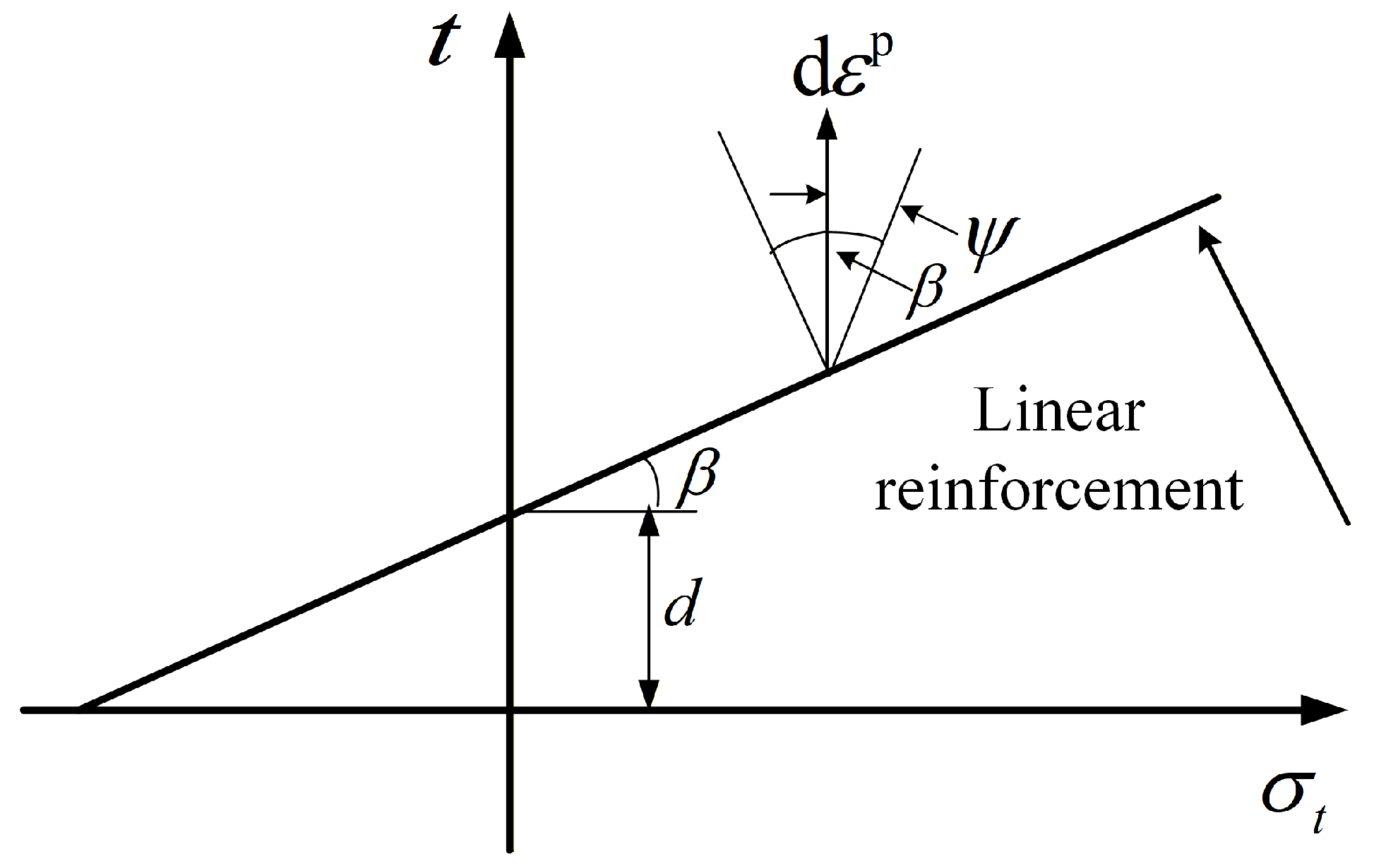
However, the hexagonal pyramidal yield surface of the Mohr–Coulomb criterion in the principal stress space may contribute to convergence difficulties during the plastic analysis of materials. The Drucker–Prager (D-P) model addresses this issue by constructing a smooth conical yield surface that is inscribed within the M-C hexagonal prism, thereby eliminating singular points [32]. This study employs a linear D-P model to characterize the deformation properties of cohesive soils [32], with its plastic potential surface illustrated in Figure 3.
The yield equation of the linear D-P model is expressed in Equations (17)–(20):
F = s t σ t tan β d = 0
s t = 1 2 q 1 + 1 K t ( 1 1 K t ) ( r t q ) 3
σ t = 1 3 ( σ 1 + σ 2 + σ 3 )
q = σ 1 σ 3
where F is the yield function, s t is deviational stress, σ t t is the average normal stress, and q is the principal stress difference. β is the inclination of the stress space of the yield surface, which is related to the friction angle of the M-C criterion. K t is the ratio of the triaxial tensile strength to the compressive strength, reflecting the influence of the intermediate principal stress on the yield stress and controlling the dependence of the yield face on the value of the intermediate principal stress. When K t = 1 , then t = q , which indicates that the yield surface is the Von-Mises circle on the plane of partial principal stress. In order to ensure that the yield surface remains convex, it is necessary to ensure 0.778 K t 1 . d is the intercept of the yield surface on the t axis in the σ t t stress space [33,34].
As shown in Table 1, the soil can be classified as a clayey soil with low liquid limit and sandy component (CLS) according to the soil engineering classification standard GB/T 50145-2007 [35]. w p is the plastic limit and w l is the liquid limit.
The study focuses on soil moisture contents of 15% and 20%. The moisture content of 15% corresponds to conditions below the plastic limit, while 20% represents the state between the plastic and liquid limits. Two moisture levels encompass the variation in the cohesive characteristics of the clay.
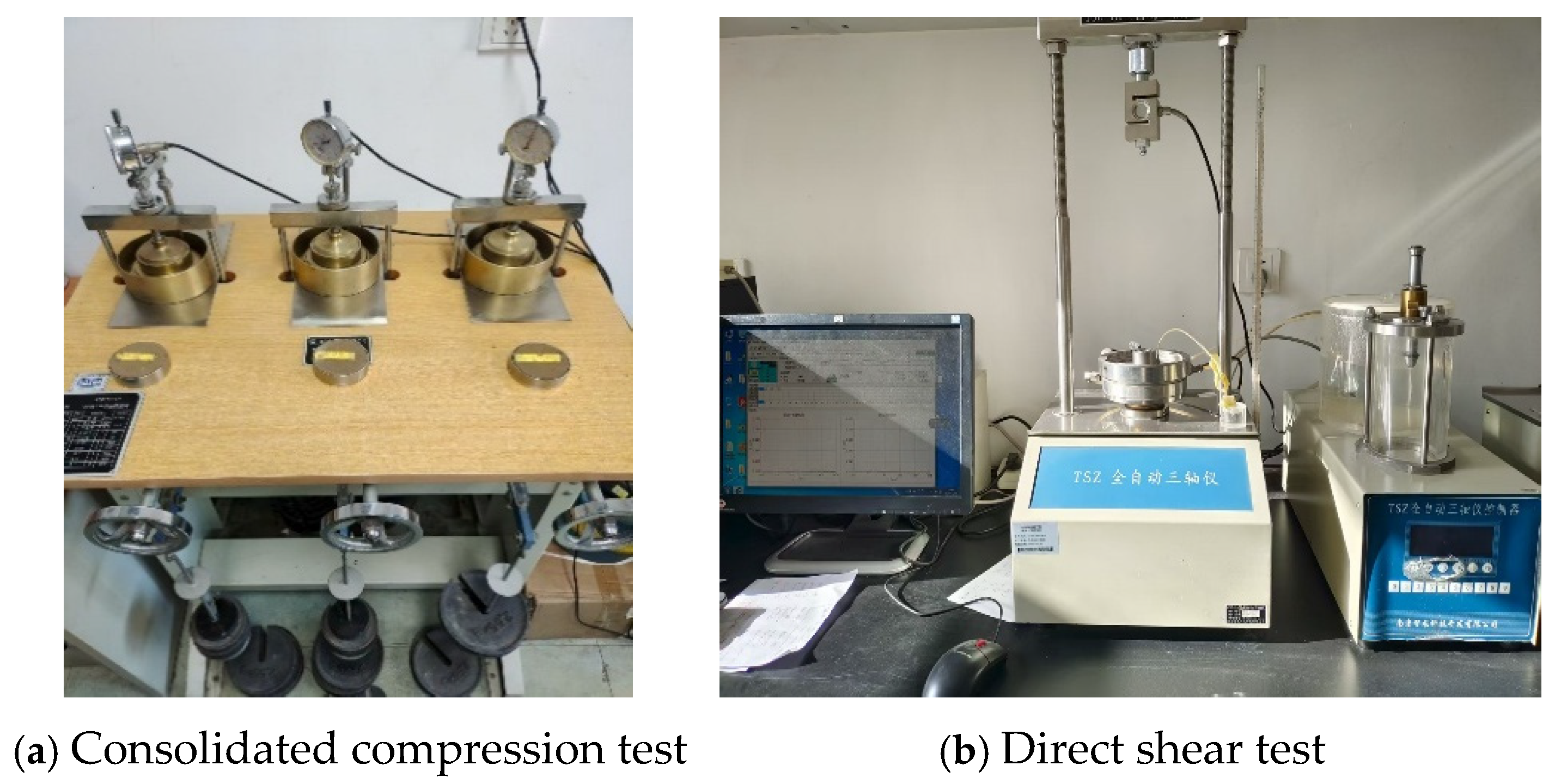
Firstly, clay samples with different moisture contents were prepared. The tests employed remolded soil samples. The in situ soil was first dried and sieved, and then water was added and mixed uniformly to achieve the target moisture contents (15% and 20%), followed by compaction to prepare the samples. In addition, the soil samples should undergo moisture-retaining treatment and be allowed to rest for 24 h. Consolidated undrained (CU) triaxial tests were conducted on soil samples with varying moisture contents in accordance with the standards outlined in the geotechnical testing method GB/T 50123-2019 [36]. The confining pressures applied were 100 kPa, 200 kPa, and 300 kPa, allowing for determination of the cohesion and internal friction angle. The calibration process for the tests is illustrated in Figure 4.
The D-P model parameters can be calibrated through the cohesion and internal friction angle from the M-C model [33]. The flow stress ratio K t of the D-P constitutive model can be calculated by Equation (21).
K t = 3 sin φ 3 + sin φ
The dilation angle ψ of the D-P constitutive model determines the direction of the plastic strain slope relative to the yield surface. The internal friction angle β of the D-P model can be obtained from Equation (22) [32].
tan β = 6 sin ϕ 3 sin ϕ
The yield stress σ 0 can be obtained from Equation (23).
σ 0 = 2 c cos ϕ 1 sin ϕ
The compression modulus E s can be obtained from the soil compression test. According to the order of consolidation pressure of 50 kPa, 100 kPa, 150 kPa, 200 kPa, and 300 kPa [25], the deformation modulus of the elastic stage E 0 is equal to the elasticity modulus E , and the elastic modulus E of clay can be obtained using Equation (24) [37].
E = E 0 = E s ( 1 2 ν 2 1 ν )
The parameters of the D-P constitutive model for the soil are presented in Table 2. w represents the soil moisture content and υ is the Poisson ratio.
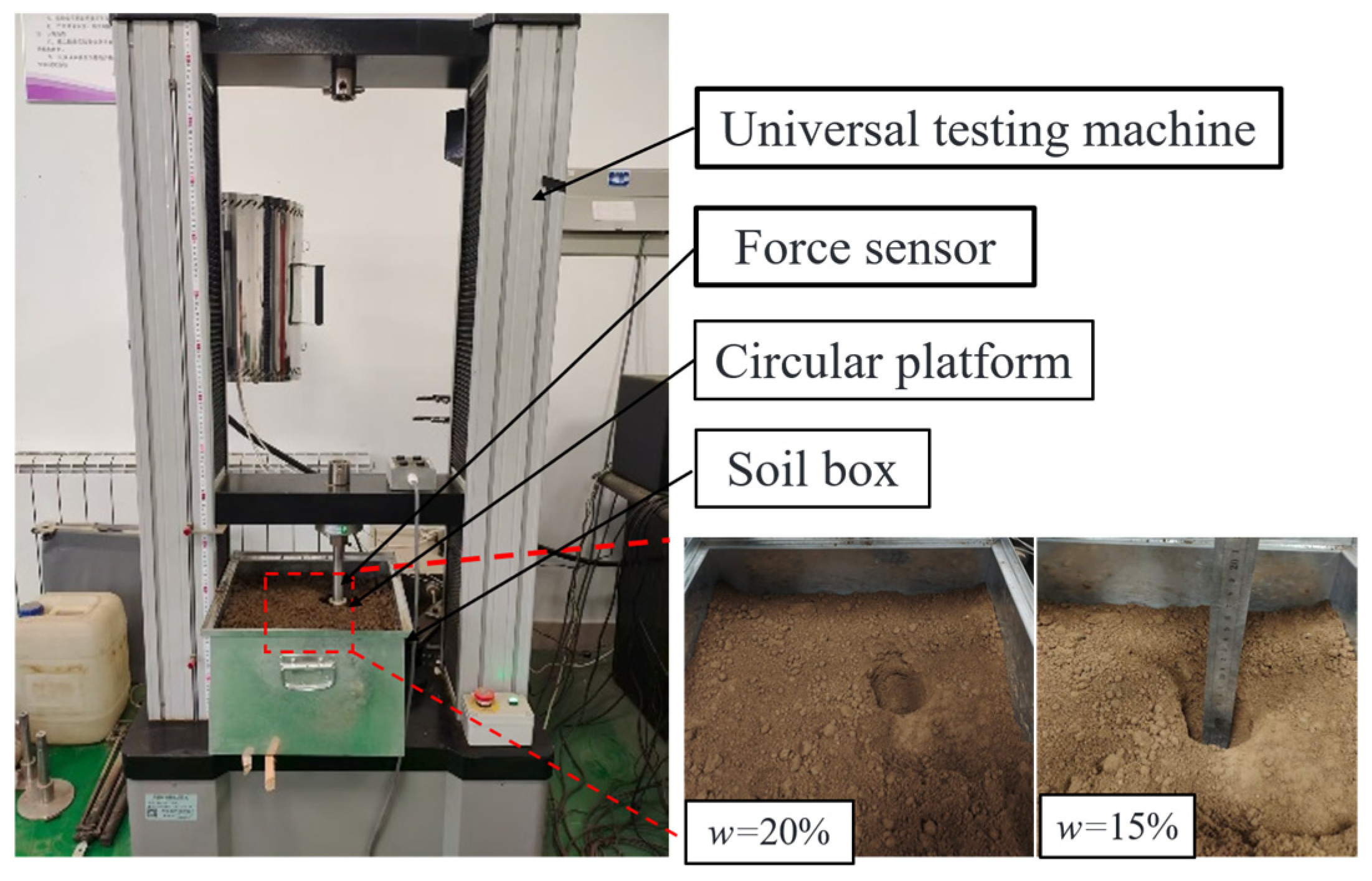
As shown in Figure 5, a universal testing machine was used to conduct plate loading tests on the soil. The radii of the plates were 35 mm and 50 mm. Due to the assumption of the Bekker–Wong model that the wheel operates under quasi-static conditions, the rate of sinkage for the circular plate pressure was set at 10 mm/min. According to Equation (1), the parameters ( k c , k ϕ , and n ) were calibrated using the pressure–sinkage curves.
The shear strength and bearing capacity parameters of the soil at different moisture contents were obtained as shown in Table 3.

3.2. Off-Road Tire–Soil Interaction Model

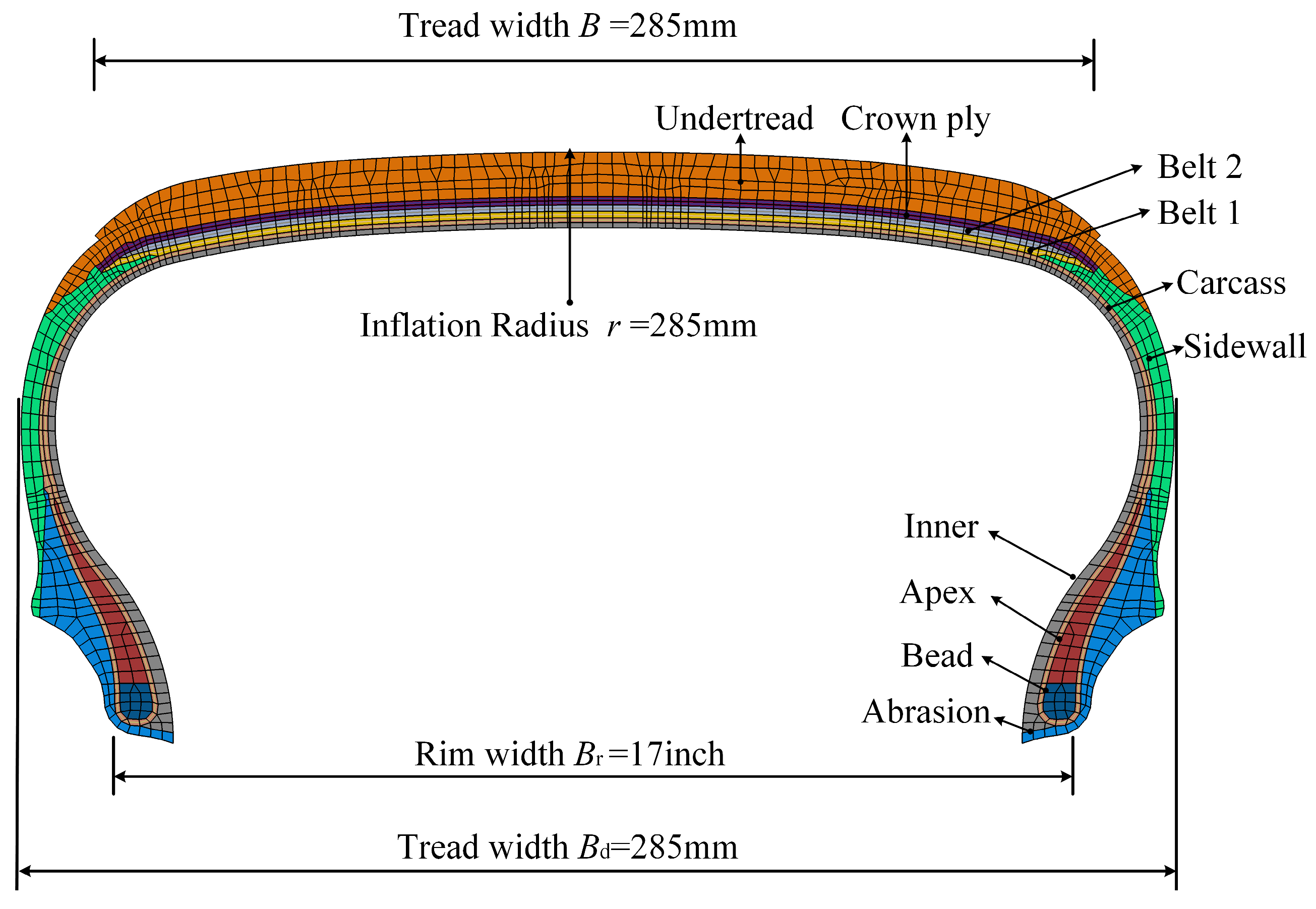
In this study, the off-road tire utilized is the Kenda Klever R/T KR601 LT285/70R17, which has a load index of 121/118 and a rim diameter of 17 inches, specifically designed for snowy and muddy conditions.
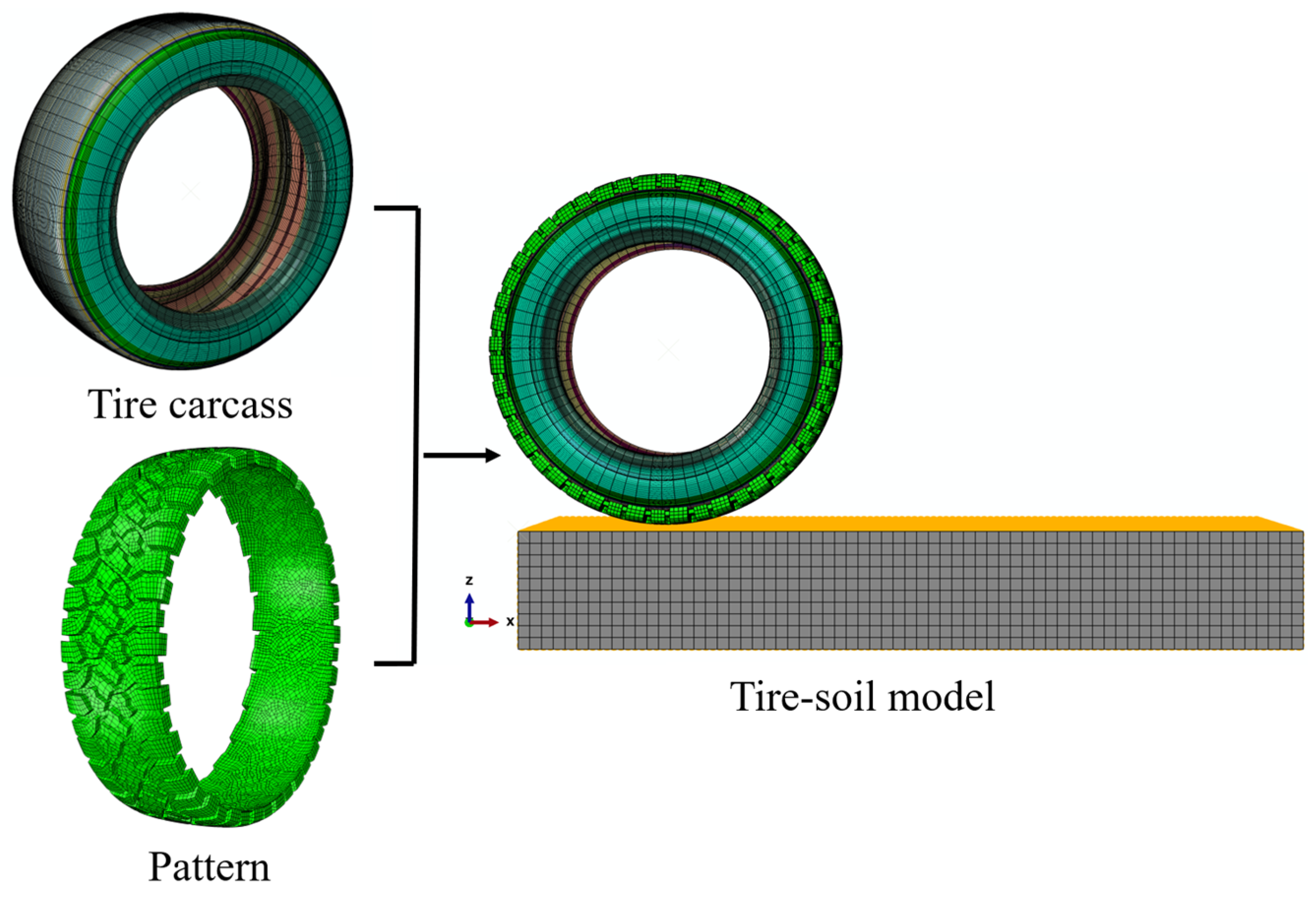
As illustrated in Figure 6, the two-dimensional tire cross-sectional model is developed based on the cross-sectional dimensions of the tread and the material composition of each component, reflecting the material distribution of the tire cross-section. The tread mesh sensitivity was analyzed and the tread mesh size was 3 mm.
Based on the two-dimensional cross-sectional profile of the tire, the smooth tire model was constructed. The tread pattern bottom surface is coupled with the smooth tire top surface using the *Tie command of Abaqus. Given that the Bekker–Wong model is predicated on the assumption of a rigid wheel, the cone index of the soil-testing site is low which indicates that the soil stiffness is significantly less than that of the tire [38]. This paper establishes a rigid coupling constraint between the patterned tire model and a reference point located at the tire center. Thus, a rigid wheel model with equivalent outer contour characteristics was established to improve computational efficiency. Ultimately, the tire model consists of 240,027 elements and 265,515 nodes [39].
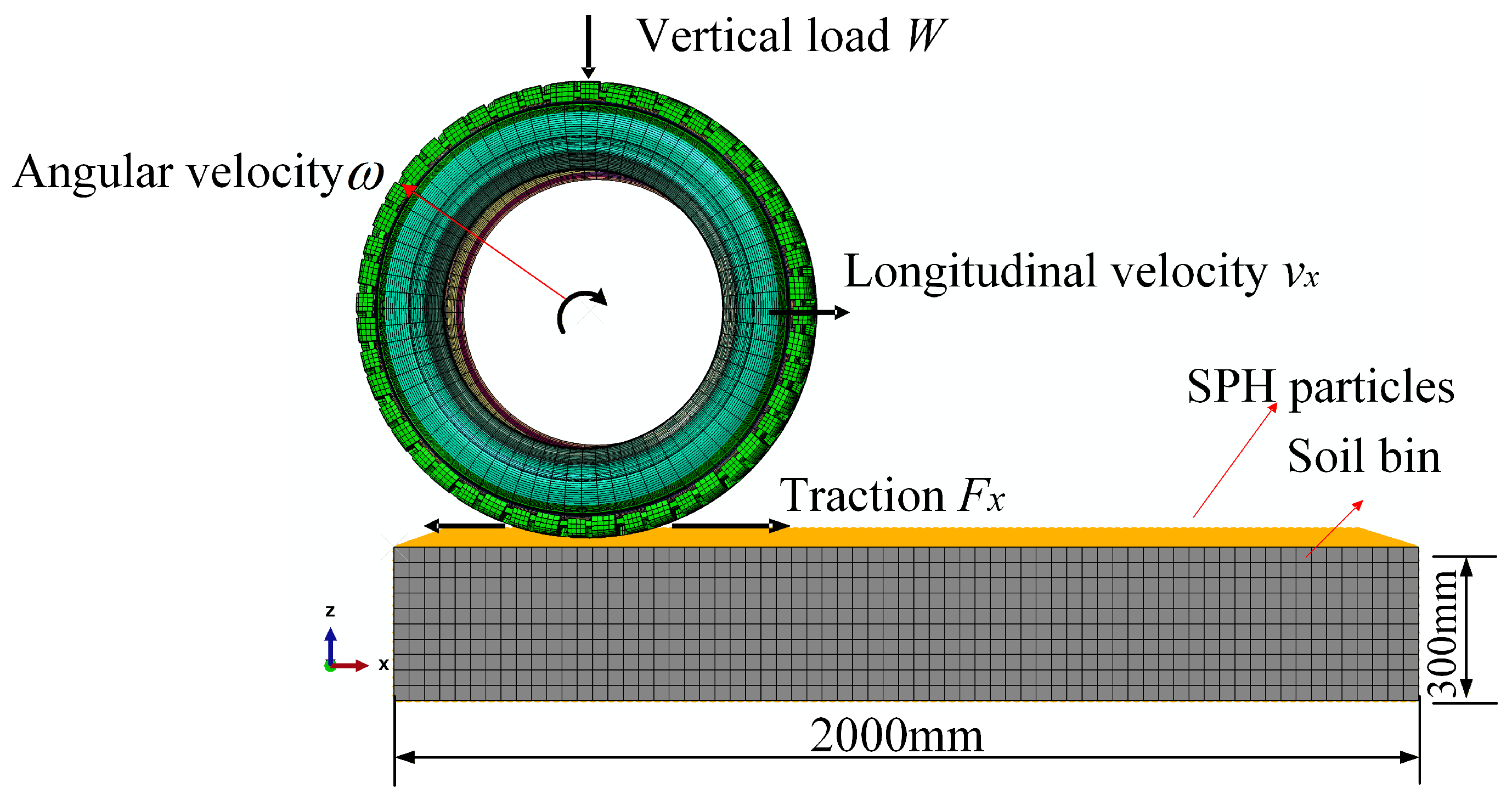
As shown in Figure 7, the relative spatial positions of the tire and the soil are assembled during the simulation initialization phase. The tire is positioned on the upper surface of the soil model, and the mechanical interaction between them is defined through the contact algorithm. The soil box is modeled as a rigid body with fully constrained boundary conditions to simulate a fixed boundary. In order to ensure the tire sinkage cannot exceed the depth of the soil box and avoid the simulation error caused by the size effect, the dimensions of the soil box are designed to be 2000 mm × 570 mm × 300 mm [39]. It can provide adequate lateral and longitudinal boundaries while limiting the maximum sinkage of the tire. The element size of SPH particles is about 18 mm according to the mesh size sensitivity analysis. The deformation characteristics of the soil were characterized by the D-P constitutive model, as shown in Table 2. Considering the interaction between the tire tread and SPH particles, it is necessary to define both the normal and tangential contact algorithm between them. Due to the higher soil moisture content, the penalty contact algorithm was adopted to define the tangential interaction, with the friction coefficient set to 0.4 [7]. Additionally, the normal contact between the tire and the particles is defined as a hard contact.
As shown in Figure 8, the finite element tire model developed in this study is a pure longitudinal tire model. During the simulation process, a constant vertical load was applied to the center of the tire. In order to strictly ensure the tire under a pure longitudinal driving condition, the vertical translational degree of freedom, the rotational degree of freedom about the wheel center axis, and the longitudinal translational degree of freedom along the driving direction are released during the tire driving process. The vertical translational degree of freedom is released to allow the tire to undergo sinkage under applied load. All other directional degrees of freedom in the model are fully constrained. Subsequently, an angular velocity was applied along the lateral coordinate axis of the tire, which increased from zero to the specified angular velocity over a designated period. Additionally, a longitudinal velocity was applied to the tire center. By adjusting the angular velocity, the tire operating conditions under different slip ratios were obtained. Ultimately, the tire sinkage and traction force were extracted.
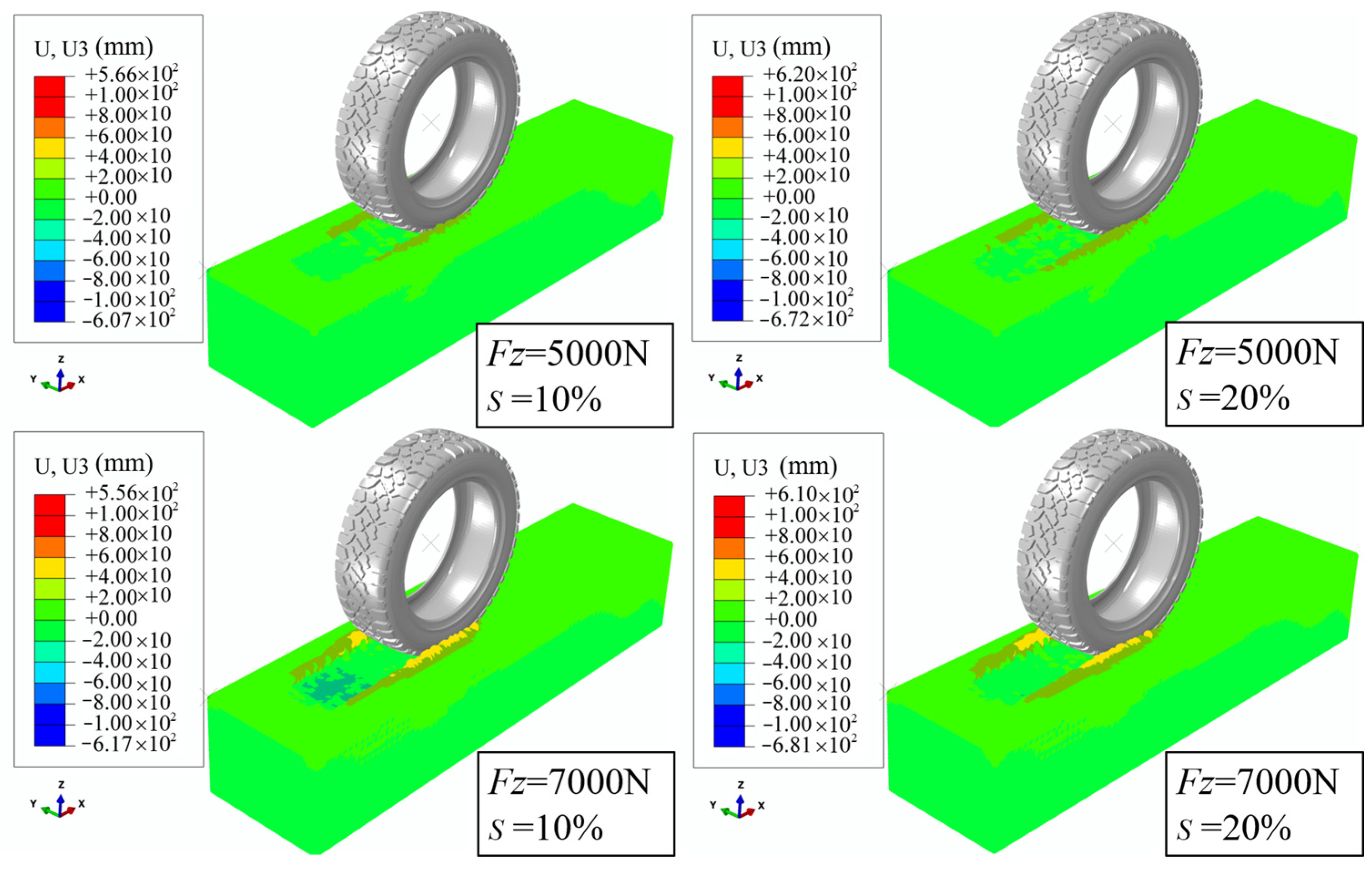
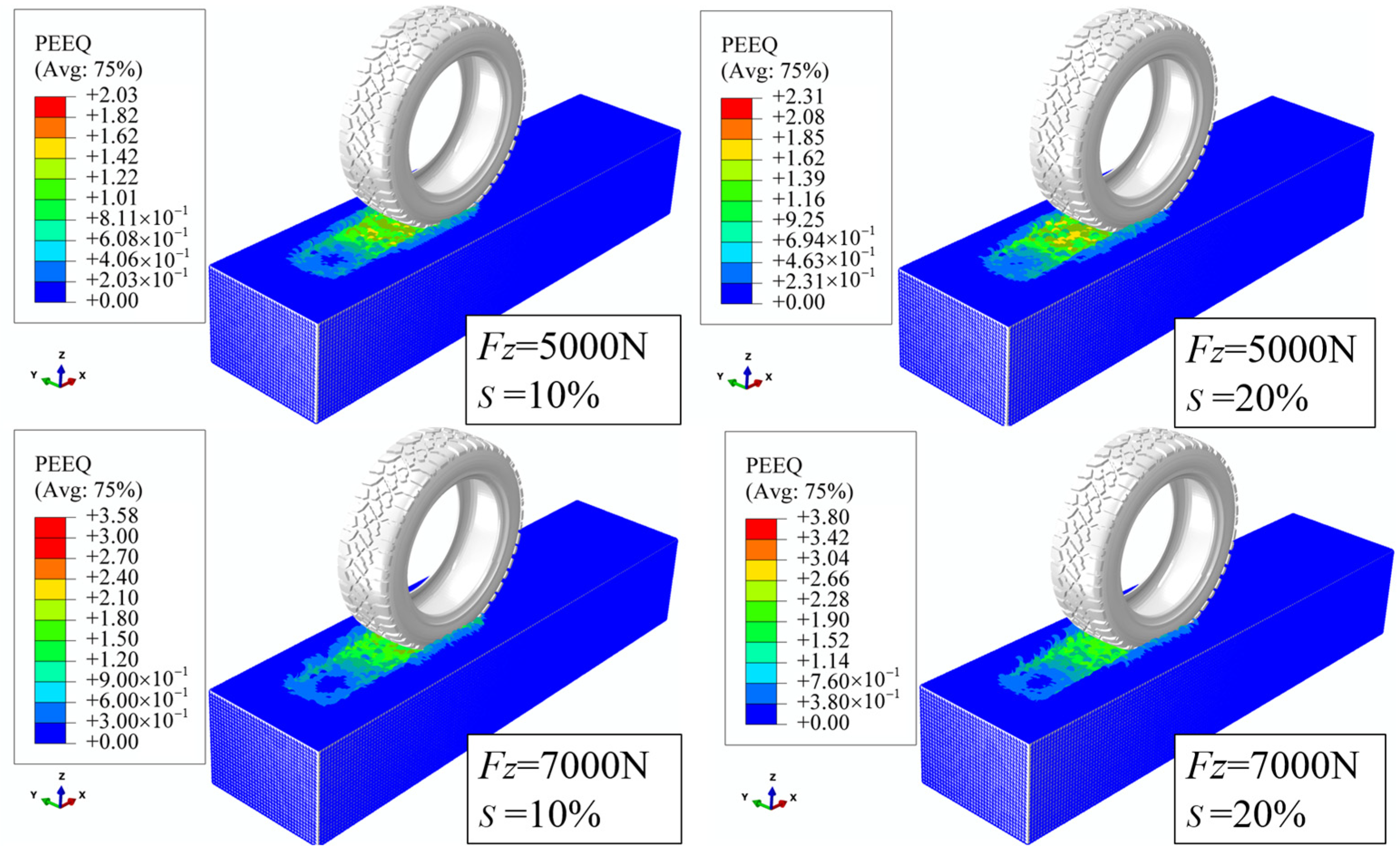
The effects of the vertical load and slip ratio on the sinkage were analyzed. Four levels of slip ratio (10%, 20%, 30%, and 40%), two levels of vertical load (5000 N and 7000 N), and two levels of soil moisture content (15% and 20%) were selected. Taking the moisture content of 20% as an example, the effects of the vertical load and slip ratio on sinkage were analyzed. As shown in Figure 9, the soil particles on both sides are compressed by the tire as the tire moves forward, resulting in a nearly symmetrical accumulation. With the increase in vertical load and slip ratio, the rut depth gradually increases and the accumulation of soil on both sides becomes more pronounced. Under the specified conditions, the maximum rut depth occurs at the slip ratio of 40% and vertical load of 7000 N, reaching approximately 40 mm.
As shown in Figure 10, under high soil moisture content, the increase in pore water pressure reduces the effective stress and cohesion between soil particles. Meanwhile, the increase in slip ratio and vertical load significantly exacerbates the compressive and shear forces of soil. This process leads to the rearrangement of soil particles and a reduction in pore volume, thereby facilitating the soil structure’s rapid attainment of the yield threshold; the pore water pressure of soil was redistributed, resulting in the continuous accumulation of plastic strain and the formation of ruts.

4. Single Wheel–Soil Test

4.1. Off-Road Tire–Soil Interaction Test Device

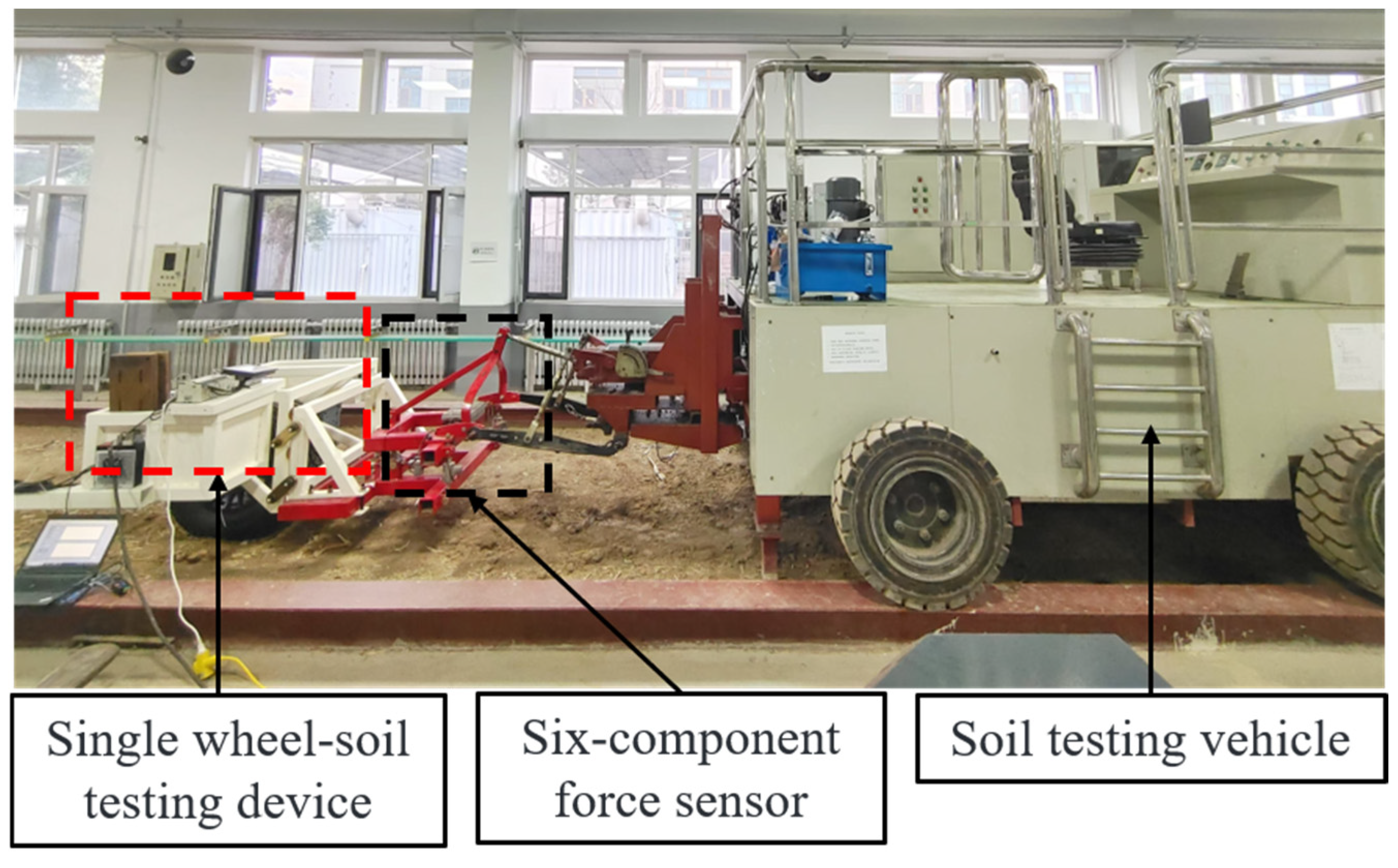
To verify the accuracy of the tire–clay interaction model, this study developed a single-wheel testing device which can be connected to the soil-testing vehicle. As shown in Figure 11, the soil-testing vehicle employs an electric drive system and operates under low-speed longitudinal driving conditions, with a speed adjustment range of 0 to 10 km/h. The longitudinal speed of the tire can be precisely controlled by regulating the speed of the soil-testing vehicle.
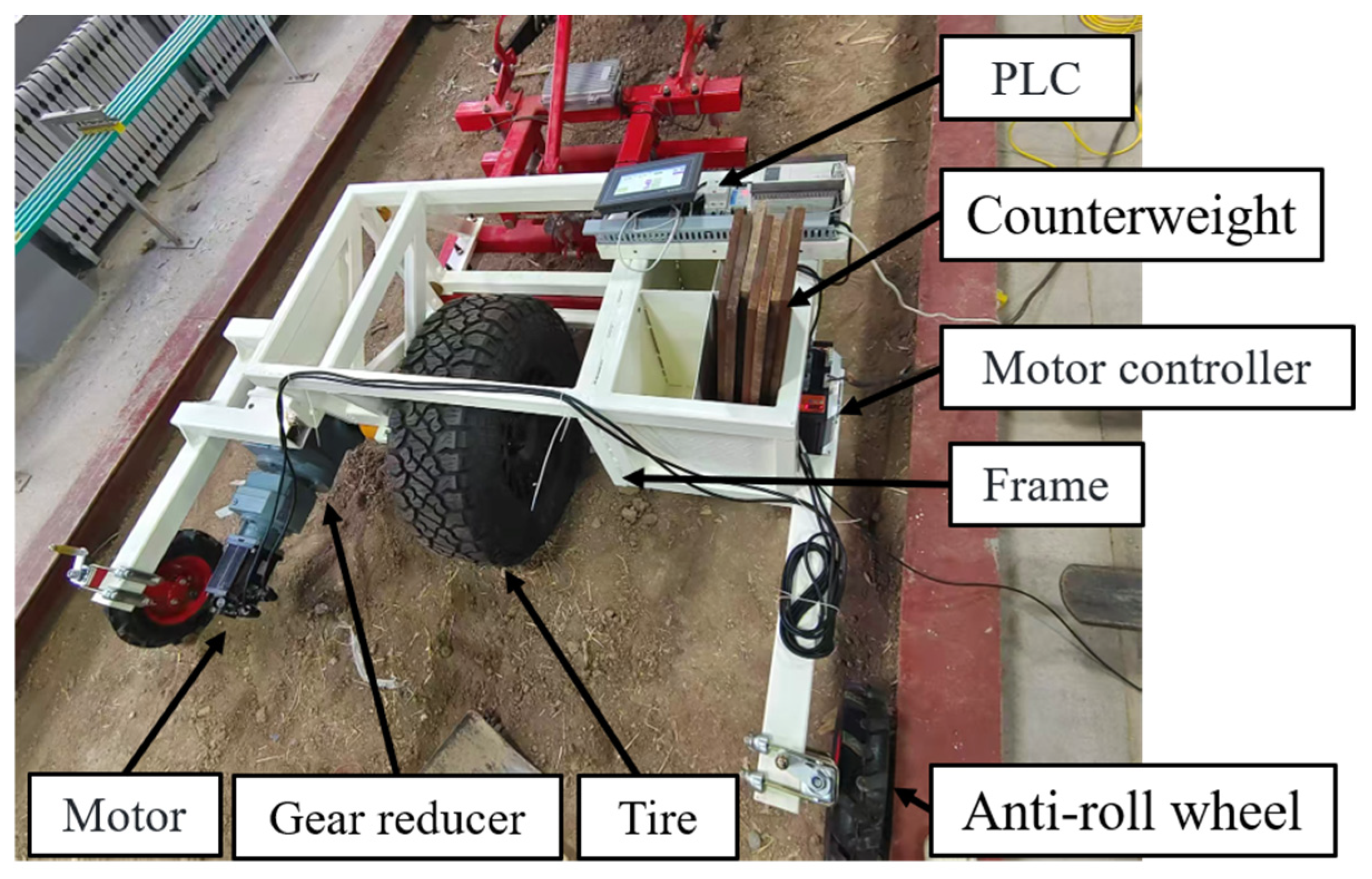
The six-component force sensor is mounted between the towing mechanism of the soil-testing vehicle and the single wheel–soil-testing device to measure the traction force. As shown in Figure 12, the single wheel–soil device comprises a drive motor, gearbox, structural frame, anti-roll wheel, and control system. The tested tire is driven by a 2.6 kW servo motor, which is connected to a gearbox capable of delivering a peak output torque of 2300 N·m [39]. The rotational speed of the driven motor is regulated by a PLC controller, which enables precise control of the tire’s angular velocity. Furthermore, the drive motor speed is modulated according to Equation (2) to achieve different target slip ratios. The traction torque of tire is acquired directly from the motor controller.
The frame balance is maintained through the addition of counterweights. Concurrently, standard calibrated weights are placed into the counterweight box to apply the target vertical load to the tire. The dynamic sinkage of the tire is continuously monitored using a laser displacement sensor fixed on the frame.
The soil was manually leveled prior to the experiments. The experimental site was uniformly irrigated using a sprinkler system. The test site was divided into multiple independent test sections, each with a longitudinal length of 5 m to ensure that a steady state could be reached at the target tire longitudinal speed. Within each test section, soil with the target moisture content was prepared through quantitative spraying. To ensure uniformity, moisture content monitoring points were set every 0.5 m along the test section. To completely avoid the repeated compaction effect of tire travel on the soil, each test section permitted a single pass of the tire.
After the entire test process, the soil in the test section was immediately tilled using the vehicle-mounted ploughing and compaction device. And then the soil was re-compacted using the compaction device to achieve the target density in the experimental design. This step was essential for ensuring the repeatability of the test conditions.
Upon completion of all tests for a given target moisture content, the entire used test section was tilled, allowing soil moisture to return to its baseline level through natural evaporation. Subsequently, the steps described above (spraying, homogenization, compaction, and testing) were repeated to conduct the next set of experiments at different moisture contents.

4.2. Validation of the Simulation Tire–Soil Interaction Model

To validate the accuracy of the tire–soil simulation model, the tire–soil interaction test was conducted. The soil moisture content was approximately 20%. The longitudinal speed of the vehicle was set to 0.8 km/h, with a vertical tire load of 6000 N and a slip ratio of 8%. Under the same soil-testing conditions, three repeated tests were conducted to measure the traction force and sinkage.
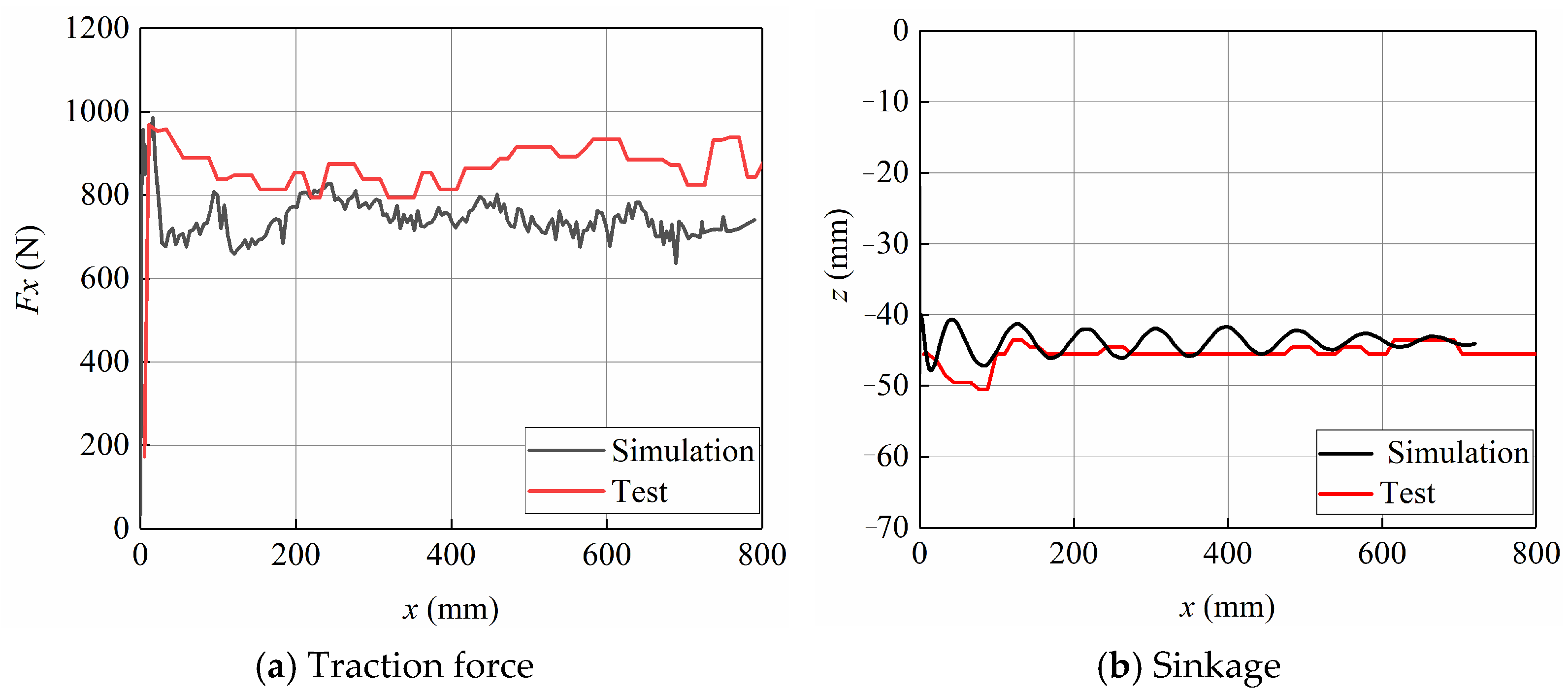
Figure 13 illustrates the variation in traction force and sinkage when the tire transitions from a stationary state to a steady driving phase. A comparative analysis between the simulation results and experimental data reveals that the curve can be divided into two distinct phases: the startup phase and the stable driving phase.
As shown in Figure 13a, during the initial startup phase, the tire rotational speed rapidly increases from zero to the specified value, and the traction force exhibits significant transient response characteristics. The experimental curve shows a rapid drop from approximately 1000 N, while the simulation curve rises slightly from nearly 800 N. Additionally, the static sinkage of tire exceeds the sinkage observed during steady-state operation. This phenomenon can be attributed to the pre-compacted state of the wheel–soil contact interface before the initial startup phase. The tire overcomes the static compaction resistance, leading to instantaneous shear failure of soil particles at the moment of startup, which causes a rapid release of shear stress and a sharp decline in traction force.
As shown in Figure 13b, during the stable driving phase, the traction forces obtained from both simulation and experiment gradually converge. It is considered to have reached a dynamic equilibrium state when the absolute change in sinkage between adjacent time steps is less than 0.5 mm. The experimental curve during this phase exhibits fluctuations primarily due to the unevenness of soil compaction and surface irregularities. In contrast, the simulation curve appears smoother, because the simulation model is based on a homogeneous soil constitutive model. To account for the fluctuations in traction parameters during the steady-state phase, the Savitzky–Golay filtering algorithm was employed to smooth the curves, and the average values were taken to represent the stable values [40]. When comparing the simulated tire traction force and sinkage obtained in the steady-state phase with the experimental data, the relative errors were 8.2% and 6.5%, respectively.

5. Contact Angle and Empirical Parameter Identification Based on Image Features

According to the Bekker–Wong model, the contact angles θ f , θ r , and θ m are critical variables of affecting accuracy. The accuracy of the contact angles is dependent on empirical parameters (including a 0 , a 1 , b 0 , and b 1 ). It is essential to identify these empirical parameters that can ensure the precision of the contact angles.

5.1. Contact Angle Recognition Method Based on Image Features

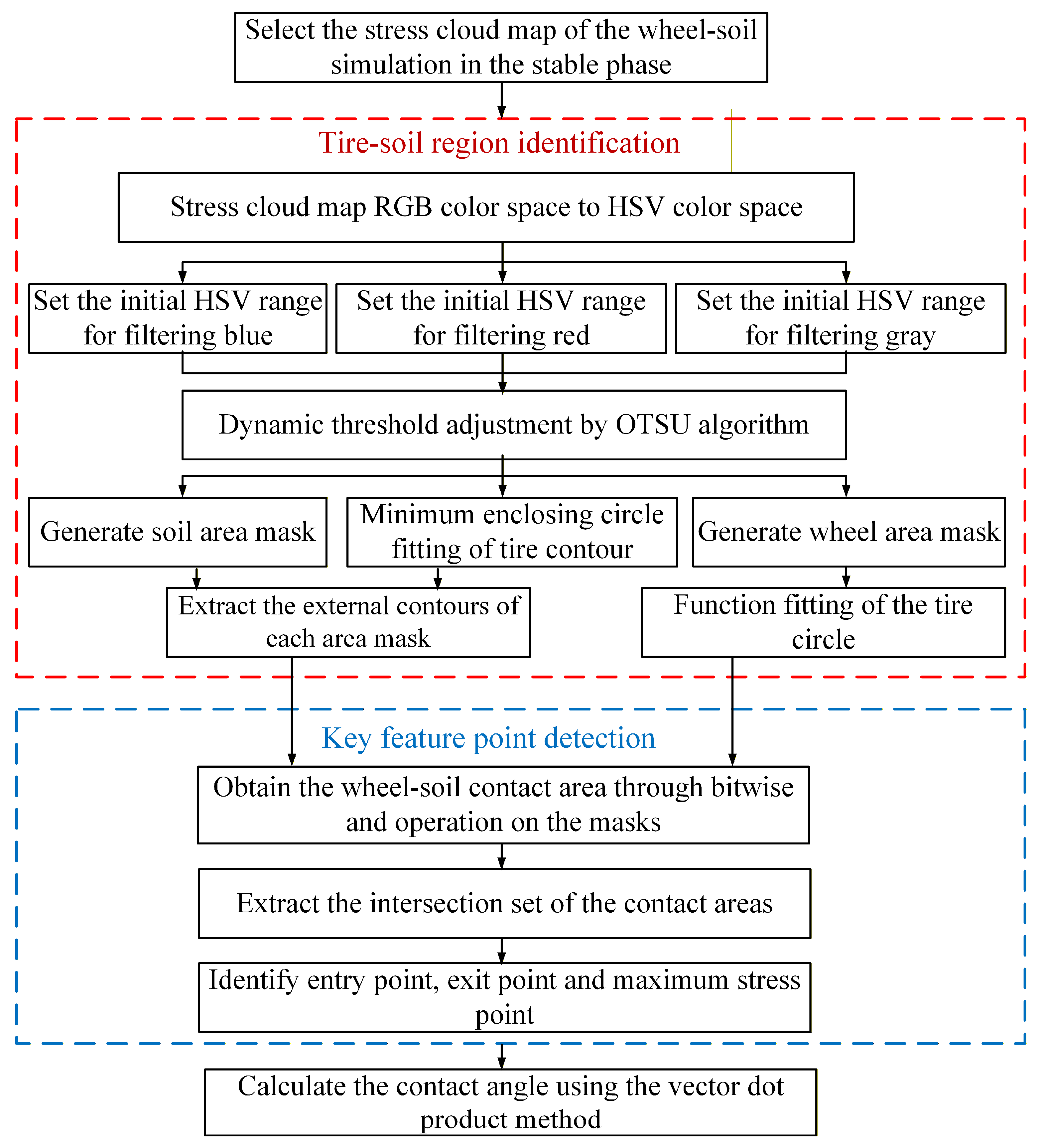
When the curve of the wheel sinkage approaches convergence, it indicates that the wheel–soil contact state has reached dynamic equilibrium state. This phase is considered as the stable stage. During this period, stress contour plots were selected as analysis samples. As shown in Figure 14, the analysis samples undergo four processing steps: identification of soil regions, identification of wheel regions, identification of key feature points, and calculation of contact angles.
To accurately extract the clay regions marked in blue within the stress contour plots, this study employs a method that combines adaptive thresholding with morphological operations. Firstly, the simulated stress contour plot is converted from the RGB color space to the HSV (hue, saturation, value) color space to facilitate better separation of color information. Subsequently, based on the distribution characteristics of the target blue color in the HSV space, an initial threshold range is predefined: hue (H) is set from 100 to 140, saturation (S) from 50 to 255, and value (V) from 50 to 255. By traversing the image pixels to calculate the proportion of blue feature pixels, these statistics serve as a basis for dynamically optimizing and adjusting the aforementioned threshold range using the Otsu algorithm [41]. This process determines the optimal blue recognition interval tailored to the current image and generates an initial blue region mask. Finally, the “cv2.findContours” function is employed to extract the external contours of all connected regions within this mask [42], and the largest blue connected domain is selected based on contour area to accurately define the target soil region.
To identify the tire profile, this study employs a comprehensive method that integrates grayscale threshold filtering, edge detection, and minimum enclosing circle fitting. The specific technical process is outlined as follows: First, the input PNG format stress contour plot undergoes preprocessing. Given that the image contains a transparent channel, each channel is separated, and the transparent pixel regions are filled with black to eliminate background interference. Subsequently, the processed image is converted to the HSV color space. Based on the grayscale characteristics of the tire region in the image (i.e., low saturation and moderate brightness), initial filtering thresholds are predefined: the hue range is set from 0 to 180, the saturation upper limit is set to 60, and the brightness range is from 30 to 220. To further enhance the adaptability of the threshold selection, the Otsu algorithm is introduced for dynamic optimization of the aforementioned thresholds, resulting in an initial grayscale mask that accurately separates and retains the grayscale region of the tire.
After obtaining the edge mask contours, the “cv2.minEnclosingCircle” function is used to fit the contours to a minimum enclosing circle to construct the theoretical geometric model of the tire [43]. This enclosing circle is defined as the theoretical circle of the tire, its tire center coordinates are denoted as point O, its coordinate position is ( x o , y o ) , and the circle radius is defined as r .
To ensure the accuracy of geometric fitting and exclude abnormal fits caused by contour noise, the quantitative fitting quality assessment criterion is established. The specific method is as follows: calculate the distance d i from each contour pixel point p i in the point set to the fitted circle center O, and compute the Root Mean Square Error (RMSE) of all distance values:
R M S E = 1 N i = 1 N ( d i r ) 2
A relative tolerance threshold η based on the radius was set (in this study, η = 5 % ). A fitted minimum enclosing circle is considered valid only if the result satisfies R M S E < η r . This valid circle is then defined as the final “theoretical tire circle” for subsequent contact angle calculation, thereby generating the final theoretical circular mask of the tire [31]. If the RMSE exceeds the threshold, it indicates that the current contour does not satisfy the rigid circle assumption. That frame of image was then flagged and excluded from the subsequent analysis process, thereby ensuring data quality.
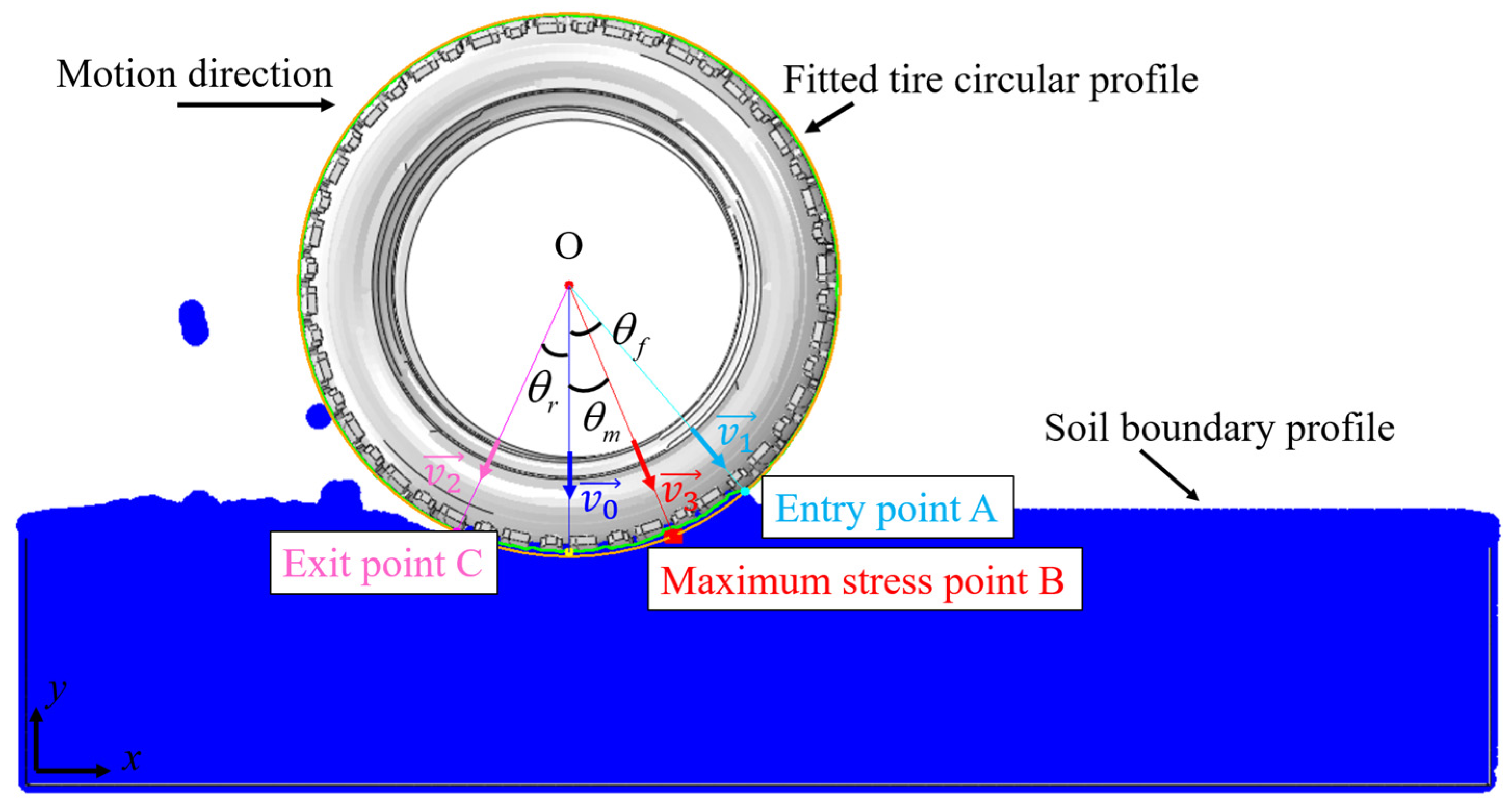
The theoretical circular mask of the tire obtained is subjected to a bitwise operation with the blue soil mask to extract the set of intersection points between them. Next, all intersection point coordinates within this set are examined, and two key contact points are defined based on the following geometric criteria. Among all intersection points located to the right of the wheel, the point with the maximum y-coordinate is selected as the entry point, which is designated as point A; its coordinate position is ( x 0 , y 0 ) . This point represents the location where the tire begins to make contact with the soil. From all intersection points, the point with the minimum x-coordinate is chosen as the exit point, which is denoted as point C; its coordinate position is ( x 2 , y 2 ) . This point signifies the terminal position where the tire is about to disengage from contact with the soil.
To concurrently analyze the stress distribution in the contact area, this study employs a threshold segmentation method based on a dual-interval HSV color space to extract high-stress regions within the image, thereby identifying and locating the maximum stress point. The high-stress areas are typically represented in red within the stress contour plots.
To accurately segment the regions representing high stress in the stress contour plot, this study establishes two complementary threshold intervals within the HSV color space to encompass the continuous distribution of red hues located near 0° and 180° on the hue circle. The specific threshold definitions are as follows: the first set is defined as lower_red1 = (0, 100, 100) and upper_red1 = (10, 255, 255); the second set is defined as lower_red2 = (160, 100, 100) and upper_red2 = (180, 255, 255). These two sets of thresholds are applied to perform binary processing on the image, generating corresponding masks. Subsequently, a logical “OR” operation is executed on the two masks to achieve a combined overlay, resulting in a comprehensive mask of the red regions. Based on this final mask, the precise coordinates of the maximum stress point in the image are identified and calculated by directly locating the extreme pixel coordinates. This point is then designated as point B; its coordinate position is ( x 3 , y 3 ) .
Taking the wheel center point O as the origin, the downward vertical direction (i.e., the positive direction of the image y-axis) is defined as the vertical centerline of the tire, represented by the reference vector v 0 = ( 0 , 1 ) . Subsequently, vectors pointing from point O to the entry point A, exit point C, and maximum stress point B are defined as v 1 , v 2 , and v 3 , respectively. By applying the vector dot product formula, the entry angle, exit angle, and maximum stress angle can be calculated, as shown in Figure 15.
Based on the aforementioned spatial vector relationships, the entry angle is calculated by the vector dot product formula.
θ f = arccos ( v 1 v 1 v 0 v 0 )
The expression for the exit angle is as follows:
θ r = arccos ( v 2 v 2 v 0 v 0 )
Similarly, the calculation formula for the maximum stress angle is as follows:
θ m = arccos ( v 3 v 3 v 0 v 0 )

5.2. Recognition of Wheel–Soil Contact Angle

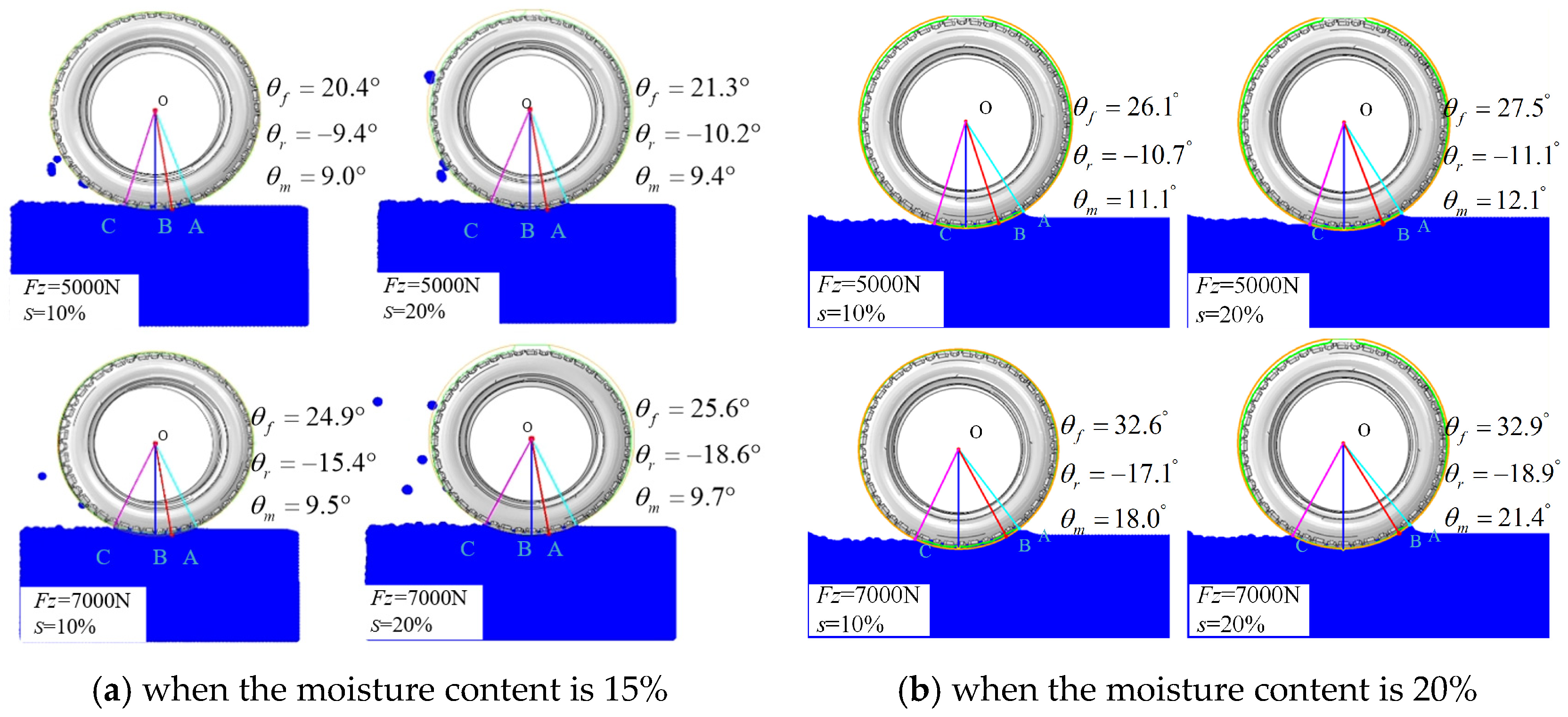
Simulations were performed based on the tire operational conditions defined in Section 3.2. The obtained stress contour maps were input into the image recognition program. As shown in Figure 16, the schematic representation of tire–soil contact angles is displayed under soil moisture contents of 15% and 20%.
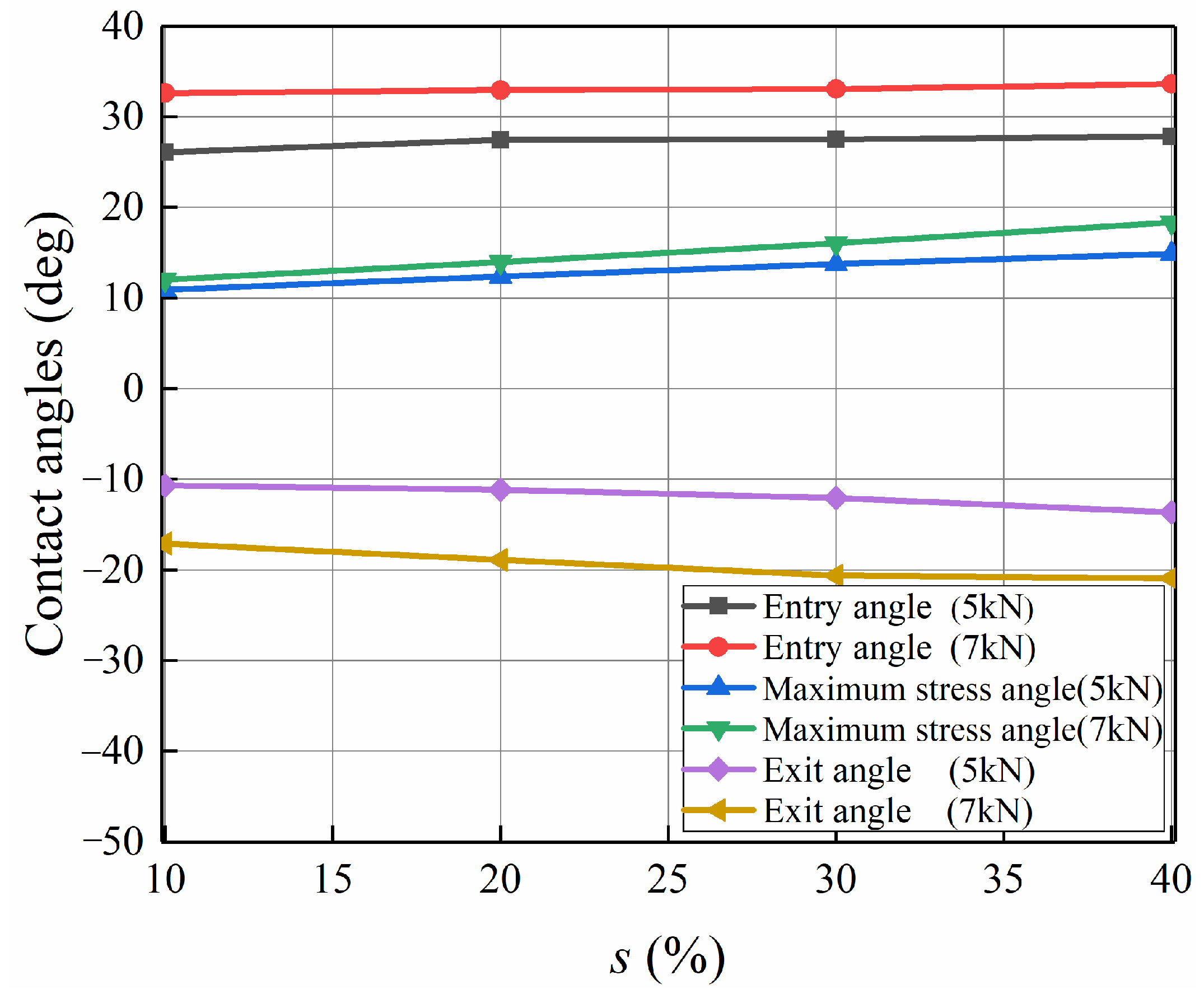
As shown in Figure 17, taking the tire operating condition corresponding to a soil moisture content of 20% as the analytical subject, this study analyzes the influence of variations in vertical load and slip ratio on the tire–soil contact angle.
As the slip ratio and vertical load increase, the entry angle gradually increases. This phenomenon can be attributed to the enhanced compressive effect of the tire on the soil ahead due to the increased vertical load and slip ratio, which causes the point of initial contact to shift forward in the direction of tire rotation. Under the specified load and slip ratio conditions, the entry angle ranges from approximately 26° to 33°. Meanwhile, the increase in slip ratio expands the sliding area at the rear of the tire, consequently delaying the termination point of soil shear deformation, which leads to an increase in the exit angle.
With the increase in the slip ratio, the distribution pattern of contact stress undergoes significant changes as the peak stress location gradually shifts towards the rear. This intensification of shear failure in the soil at the rear of the tire results in a gradual increase in the maximum stress angle. The variation range for the maximum stress angle is approximately 10° to 18°.
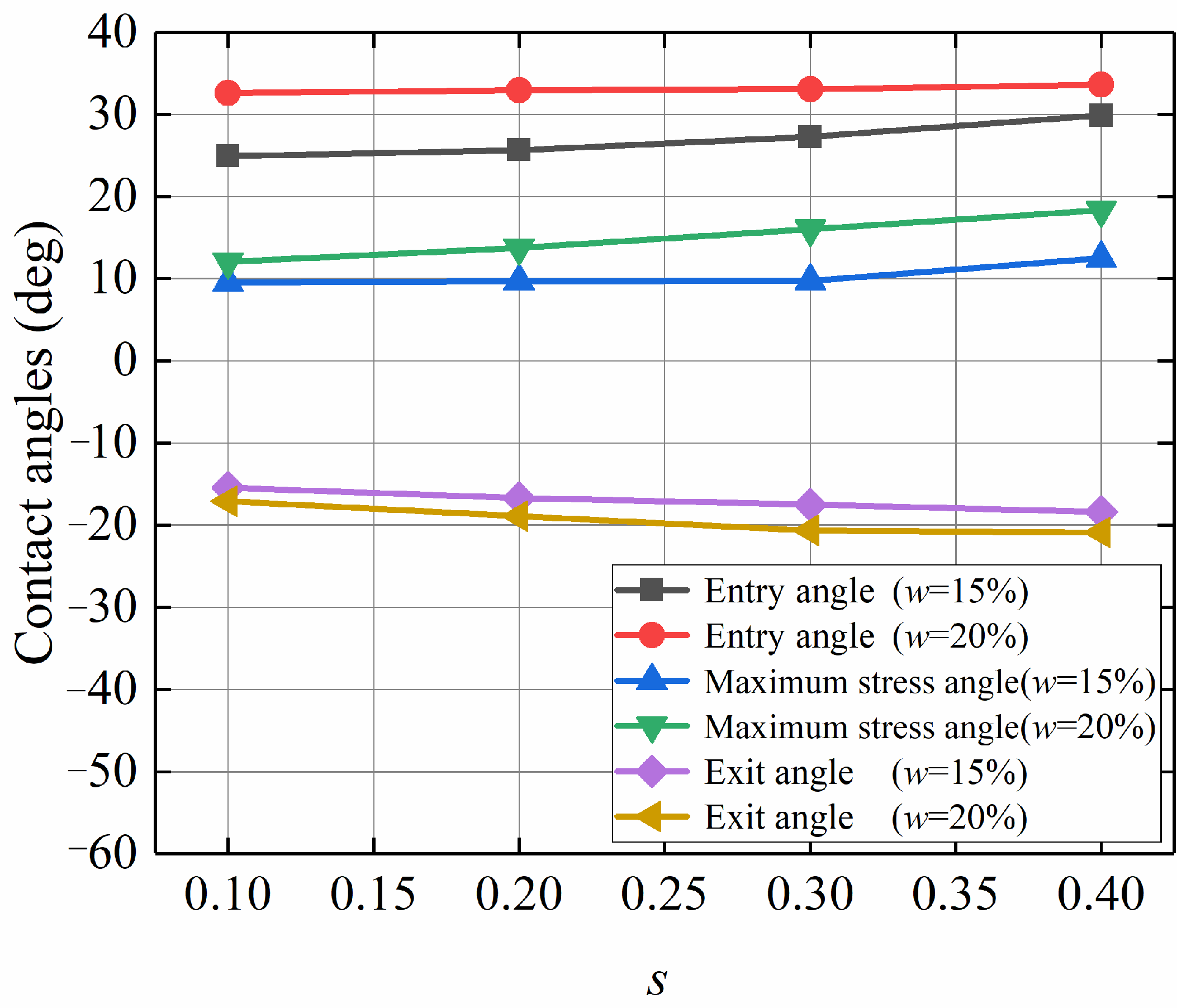
As shown in Figure 18, with the increase in soil moisture content, the soil shear strength gradually decreases. Under higher moisture conditions, the soil is more prone to plastic deformation rather than elastic deformation, resulting in a significant increase in tire sinkage. The increased sinkage subsequently elongates the tire–soil contact arc and alters the distribution pattern of soil pressure, ultimately leading to an increase in contact angles. Specifically, compared to lower moisture content conditions, the entry angle under high moisture content increases by approximately 6° to 8°, the maximum stress angle increases by about 5° to 8°, and the exit angle increases by approximately 3° to 5°.

5.3. Identification of Empirical Parameters for Contact Angle

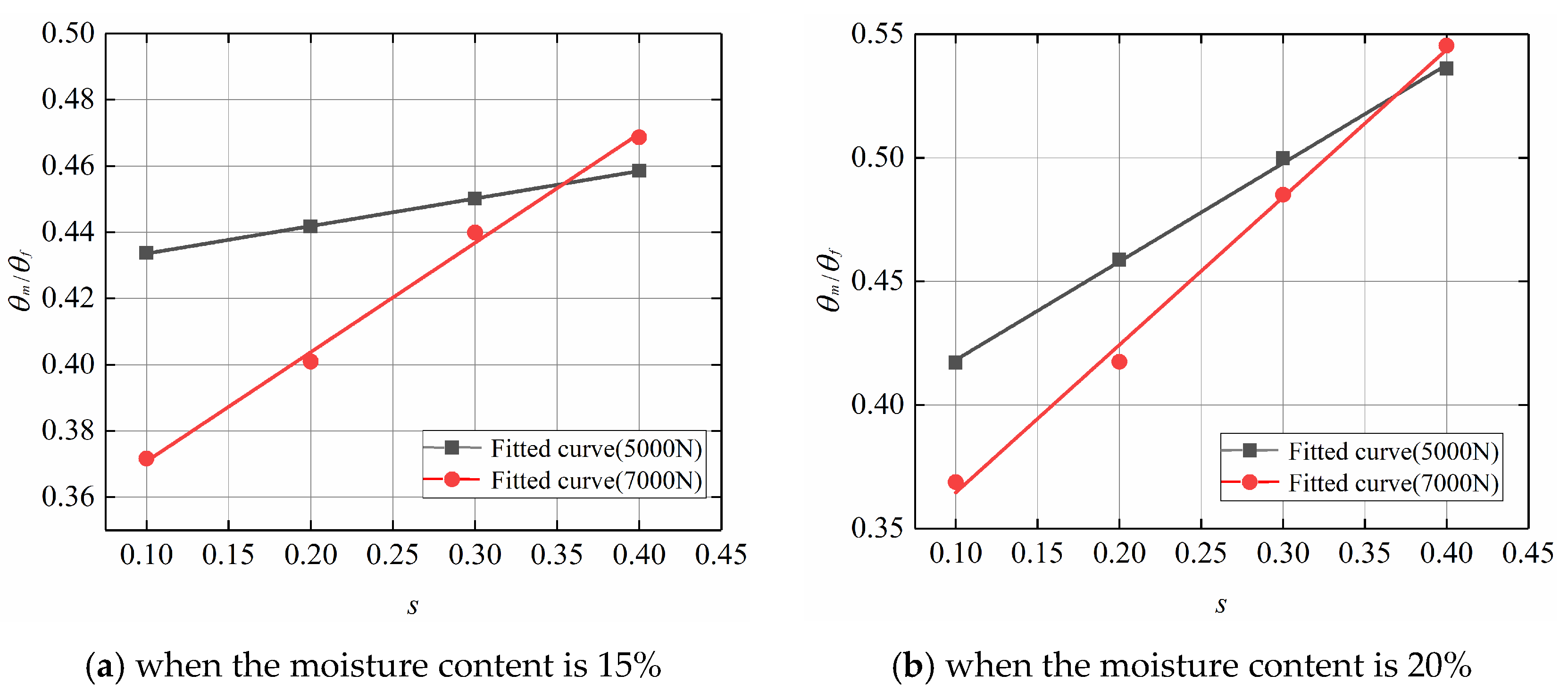
Equation (29) can be derived by transforming Equation (7). The dimensionless ratio of the entry angle to the exit angle is treated as the dependent variable, while the slip ratio serves as the independent variable. Ultimately, the values of a 0 and a 1 are determined through linear fitting.
θ m θ f = a 0 + a 1 s
Typically, b 1 is zero [20]. The following expression can be derived based on Equation (30).
b 0 = θ r θ f
As shown in Figure 19a,b, the data points corresponding to slip ratios of 10%, 20%, 30%, and 40% were selected for fitting. The empirical parameters are fitted under loads of 5000 N and 7000 N; the soil moisture contents are 15% and 20%. Empirical parameters were obtained by performing linear fitting on the data. The coefficients of determination R 2 for the two moisture content levels were 0.998 and 0.995, respectively, indicating excellent fitting performance.
As shown in Table 4, the empirical parameters have been obtained through Figure 19 and can be directly substituted into the Bekker–Wong model. This enables calculation of the wheel traction force in such soil conditions.
Wong and Reece indicated that the parameters usually satisfy the relationships 0 a 0 1 , 0 a 1 1 , and 0 a 0 + a 1 1 . The exit angle θ r is analogously determined by Equation (6), with 1 b 1 0 and b 0 + b 1 1 [9]. The parameters calibrated in this study fall within the reasonable ranges.
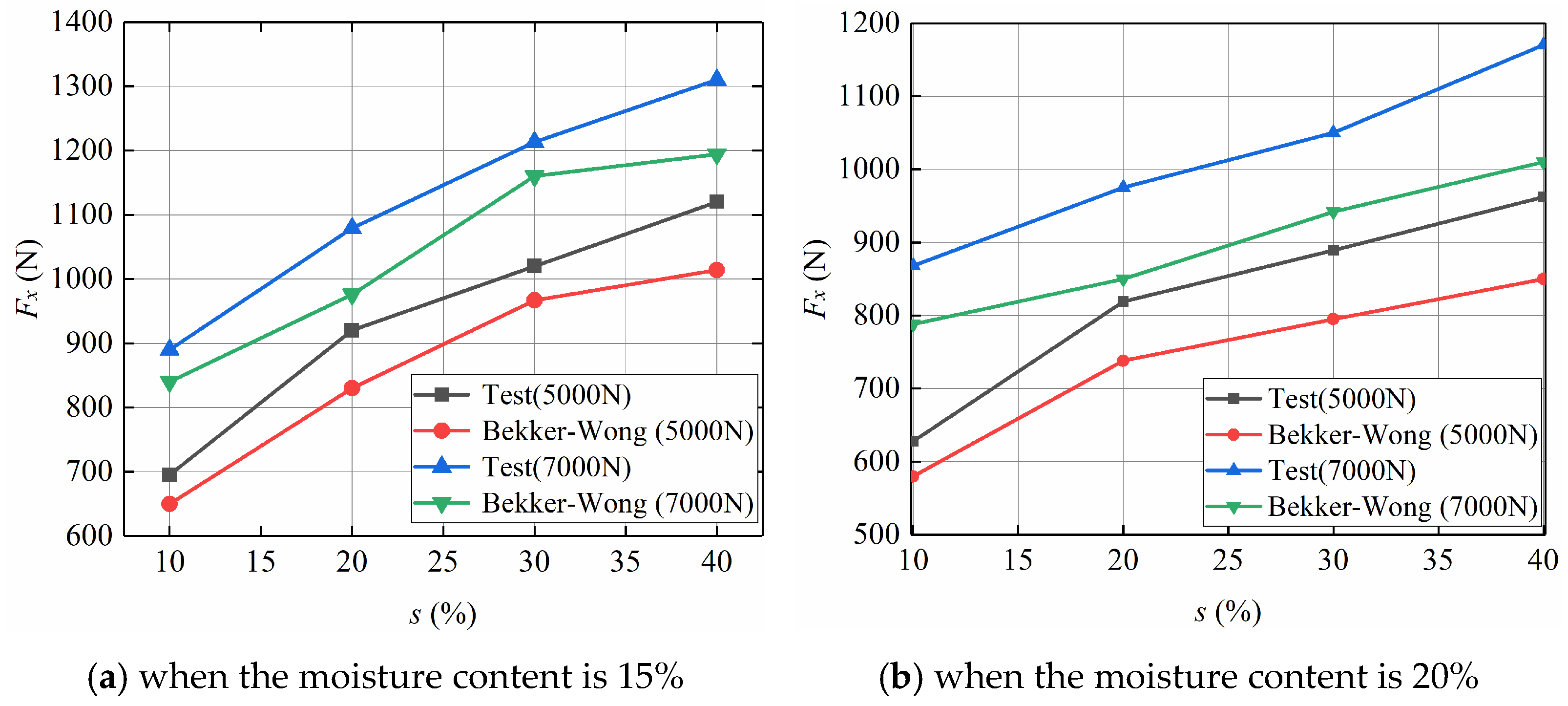
To verify the reliability of the empirical parameters identified in Table 4, the traction force is calculated using the Bekker–Wong model with the tire operating conditions described earlier. The initial traversal range for sinkage is set from 0.01 m to 0.7 m, with a small step size of 0.002 m used for parameter traversal. Subsequently, the traction force under various slip ratios and vertical loads is calculated by the Bekker–Wong model.
As shown in Figure 20a, the identified empirical parameters were substituted into the Bekker–Wong model. A comparative analysis of the calculation results with experimental data indicates that within the current range of loads and slip ratios, under a soil moisture content of 15%, the relative error between the model predictions and experimental values ranges from 6.8% to 9.8%. The maximum relative error of 9.8% occurs at a slip ratio of 40% and a vertical load of 5000 N. As shown in Figure 20b, under a soil moisture content of 20%, the relative error between the model predictions and experimental values ranges from 7.5% to 13.6%. The minimum relative error of 7.5% corresponds to a slip ratio of 10% and a vertical load of 5000 N, while the maximum relative error of 13.6% occurs at a slip ratio of 40% and a vertical load of 7000 N.
These results demonstrate the reliability of the empirical parameter identification method proposed in this study, indicating that the accuracy of the obtained empirical parameters effectively ensures the computational accuracy of the model. Furthermore, the empirical parameters can be applied for traction calculations under similar soil conditions.

6. Conclusions

In this study, the interaction model for tire–soil was established based on the FEM–SPH. And a single-wheel testing device was designed to validate the accuracy of this model. The comparison between experimental and simulation results under a soil moisture content of 20% indicates that the relative error in sinkage is 6.5% and the error in traction force is 8.2%. Therefore, the accuracy of the simulation model has been validated.
This study proposes a method that extracts coordinate information of contact points from tire–soil simulation images to obtain contact angles under various operating conditions and soil moisture contents. The results show that with the increasing vertical load and slip ratio, both the entry angle and the maximum stress angle increase, and the absolute value of the exit angle increases as well. Furthermore, these contact angles demonstrate an approximately linear relationship to the vertical load and slip ratio. By comparing tire operating conditions under soil moisture contents of 15% and 20%, the results indicate that all contact angles under higher moisture content conditions are significantly greater than those under lower moisture content conditions.
The empirical parameters of the Bekker–Wong model can be calibrated based on the identified contact angles under different moisture contents of 15% and 20%. A comparison was made between the traction forces predicted by the Bekker–Wong model using the calibrated empirical parameters and experimental data. The relative error in these predictions ranged from 6.8% to 13.6%. This range effectively validates the accuracy of the parameter identification method.

7. Limitations and Assumptions

The method proposed and validated in this study is specifically designed for cohesive soils across varying moisture conditions. Its analysis is limited to static or quasi-static tire driving conditions and does not account for tire deformation effects. Under these defined conditions, the method demonstrates good applicability within the low slip ratio range. In the future, the research will enhance the generalizability of the method by extending it to other soil types and incorporating dynamic loading conditions.

Author Contributions

Software, K.W.; Validation, R.C.; Formal analysis, K.W.; Investigation, S.Y. and R.C.; Resources, K.W. and Y.S.; Data curation, K.W., S.Y. and R.C.; Writing—original draft, K.W.; Writing—review & editing, K.W. and Y.S.; Visualization, R.C.; Supervision, Y.S. and S.Y.; Project administration, Y.S.; Funding acquisition, Y.S. All authors have read and agreed to the published version of the manuscript.

Funding

This research is financially supported by the National Natural Science Foundation of China under grant 51875035.

Data Availability Statement

Data is provided within the manuscript.

Conflicts of Interest

The authors declare no conflict of interest.

References

  1. Freitag, D.R. A Dimensional Analysis of the Performance of Pneumatic Tires on Soft Soils; Auburn University: Vicksburg, MS, USA, 1965. [Google Scholar]
  2. Turnage, G.W. Performance of Soils Under Tire Loads. Report 8. Application of Test Results to Tire Selection for Off-Road Vehicles; Waterways Experiment Station: Vicksburg, MS, USA, 1972. [Google Scholar]
  3. Yao, L.; Zhu, Y.; Wang, Y.; Shi, D.; Pang, S. Research of tire-soil interaction based on FEM-DEM for small wheeled mobile platform in forest. Adv. Eng. Softw. 2024, 196, 103735. [Google Scholar] [CrossRef]
  4. Jelinek, B.; Card, A.; Mason, G.L.; Grebner, K.; Dickerson, A.; Skorupa, T.; Cole, M.; Priddy, J.D. Tractive performance of rigid wheel in granular media using coarse-scale DEM models. J. Terramech. 2025, 117, 101016. [Google Scholar] [CrossRef]
  5. Zeng, H.; Lin, Z.; Huang, G.; Yang, X.; Li, Y.; Su, J.; Xu, W. Parameter identification of DEM-FEM coupling model to simulate traction behavior of tire-soil interaction. J. Terramech. 2025, 117, 101012. [Google Scholar] [CrossRef]
  6. Gheshlaghi, F.; El-Sayegh, Z.; El-Gindy, M.; Öijer, F.; Johansson, I. Analysis of Off-Road Tire Cornering Characteristics by Using Advanced Analytical Techniques. Tire Sci. Technol. 2024, 52, 123–148. [Google Scholar] [CrossRef]
  7. Swamy, V.S.; Yerro, A.; Sandu, C.; Pandit, R.; Gorsich, D.; Sebeck, K. Numerical analysis of tire mobility on deformable plastic clay in saturated conditions using total and effective stress frameworks. J. Terramech. 2025, 117, 101024. [Google Scholar] [CrossRef]
  8. Okada, T.; He, H.; Yamashita, H.; Sugiyama, H. Data-Driven Modeling of Tire–Soil Interaction With Proper Orthogonal Decomposition-Based Model Order Reduction. J. Comput. Nonlinear Dyn. 2024, 19, 121007. [Google Scholar] [CrossRef]
  9. Wong, J.Y.; Reece, A.R. Prediction of rigid wheel performance based on the analysis of soil-wheel stresses part I. Performance of driven rigid wheels. J. Terramech. 1967, 4, 81–98. [Google Scholar] [CrossRef]
  10. Wong, J.Y.; Reece, A.R. Prediction of rigid wheel performance based on the analysis of soil-wheel stresses: Part II. Performance of towed rigid wheels. J. Terramech. 1967, 4, 7–25. [Google Scholar] [CrossRef]
  11. Peiret, A.; Karpman, E.; Kovács, L.L.; Kövecses, J.; Holz, D.; Teichmann, M. Modelling of off-road wheeled vehicles for real-time dynamic simulation. J. Terramech. 2021, 97, 45–58. [Google Scholar] [CrossRef]
  12. Senatore, C.; Sandu, C. Off-road tire modeling and the multi-pass effect for vehicle dynamics simulation. J. Terramech. 2011, 48, 265–276. [Google Scholar] [CrossRef]
  13. Sandu, C.; Taheri, S.; Gorsich, D. Hybrid Soft Soil Tire Model (HSSTM). Part II: Tire-terrain interaction. J. Terramech. 2019, 86, 15–29. [Google Scholar] [CrossRef]
  14. Vella, A.D.; Zerbato, L.; Galvagno, E.; Vigliani, A. Advanced modelling of soft soil-tyre contact for off-road vehicle dynamics simulations. Veh. Syst. Dyn. 2025, 1–26. [Google Scholar] [CrossRef]
  15. Koutras, E.; Leila, F.M.; Ribaric, A.; Natsiavas, S. A new contact and road model for multi-body dynamic simulation of wheeled vehicles on soft-soil terrain. Multibody Syst. Dyn. 2025, 63, 39–62. [Google Scholar] [CrossRef]
  16. Gallina, A.; Krenn, R.; Schäfer, B. On the treatment of soft soil parameter uncertainties in planetary rover mobility simulations. J. Terramech. 2016, 63, 33–47. [Google Scholar] [CrossRef]
  17. Reina, G.; Galati, R. Slip-based terrain estimation with a skid-steer vehicle. Veh. Syst. Dyn. 2016, 54, 1384–1404. [Google Scholar] [CrossRef]
  18. Dallas, J.; Jain, K.; Dong, Z.; Sapronov, L.; Cole, M.P.; Jayakumar, P.; Ersal, T. Online terrain estimation for autonomous vehicles on deformable terrains. J. Terramech. 2020, 91, 11–22. [Google Scholar] [CrossRef]
  19. Zerbato, L.; Vella, A.D.; Galvagno, E.; Vigliani, A.; Data, S.C.; Sacchi, M.E. A vehicle dynamics-oriented estimator for soft soil/tyre contact parameters from experimental testing. J. Terramech. 2026, 121, 101087. [Google Scholar] [CrossRef]
  20. Yuan, Y.; Ding, L.; Yang, C.J.; Gao, H.B.; Deng, Z.Q.; Liu, Z. Real-time Monocular Vision Based Wheel Sinkage and Slip Detection for Planetary Rovers. Chin. J. Mech. Eng. 2021, 57, 259–267. [Google Scholar]
  21. Tsubaki, H.; Ishigami, G. Experimental study on wheel-soil interaction mechanics using in-wheel sensor and particle image velocimetry Part I: Analysis and modeling of normal stress of lightweight wheeled vehicles. J. Terramech. 2021, 93, 23–39. [Google Scholar] [CrossRef]
  22. Yao, C.; Xue, F.; Wang, Z.; Yuan, Y.; Zhu, Z.; Ding, L.; Jia, Z. Wheel vision: Wheel-terrain interaction measurement and analysis using a sensorized transparent wheel on deformable terrains. IEEE Robot. Autom. Lett. 2023, 8, 7938–7945. [Google Scholar] [CrossRef]
  23. Chen, S.; Wang, D.; Zhang, W.; Xie, J.; Feng, L. An Integrated Wheeled Perception System for Measuring Wheel Terrain Interaction Characteristics. IEEE Sens. J. 2024, 25, 1372–1384. [Google Scholar] [CrossRef]
  24. White, H.; Sandu, C.; Mukherjee, J.; L’aFflitto, A.; Gorsich, D.; Cole, M. Tire sinkage measurement and entry angle calculation using stereo cameras. J. Terramech. 2025, 117, 101019. [Google Scholar] [CrossRef]
  25. Kruger, R.; Els, P.S.; Hamersma, H.A. Experimental investigation of factors affecting the characterisation of soil strength properties using a Bevameter in-situ plate sinkage and shear test apparatus. J. Terramech. 2023, 109, 45–62. [Google Scholar] [CrossRef]
  26. Kim, W.-S.; Kim, Y.-J.; Park, S.-U.; Kim, Y.-S. Influence of soil moisture content on the traction performance of a 78-kW agricultural tractor during plow tillage. Soil Tillage Res. 2021, 207, 104851. [Google Scholar] [CrossRef]
  27. Wong, J.Y. Terramechanics and Off-Road Vehicle Engineering: Terrain Behaviour, Off-Road Vehicle Performance and Design; Butterworth-Heinemann: Oxford, UK, 2009. [Google Scholar]
  28. Janosi, Z. The analytical determination of drawbar pull as a function of slip for trackcd vehicles in deformable soils. In Proceedings of the International Society for Terrain-Vehicle Systems, 1st International Conference, Turin, Italy, 1 July 1961; p. 707. [Google Scholar]
  29. Buzhardt, J.; Tallapragada, P. A Koopman operator approach for the vertical stabilization of an off-road vehicle. IFAC-PapersOnLine 2022, 55, 675–680. [Google Scholar] [CrossRef]
  30. Zhou, R.Y.; Feng, W.H.; Deng, Z.Q.; Gao, H.B.; Ding, L.; Li, N. Sensitivity analysis and dominant parameter estimation of wheel-terrain interaction model. Acta Aeronaut. et Astronaut. Sin. 2021, 42, 524076. [Google Scholar]
  31. Ulusay, S. (Ed.) The ISRM Suggested Methods for Rock Characterization, Testing and Monitoring: 2007–2014; Springer International Publishing: Cham, Switzerland, 2015. [Google Scholar]
  32. Drucker, D.C.; Prager, W. Soil mechanics and plastic analysis or limit design. Q. Appl. Math. 1952, 10, 157–165. [Google Scholar] [CrossRef]
  33. Farhadi, P.; Golmohammadi, A.; Malvajerdi, A.S.; Shahgholi, G. Finite element modeling of the interaction of a treaded tire with clay-loam soil. Comput. Electron. Agric. 2019, 162, 793–806. [Google Scholar] [CrossRef]
  34. Abaqus. Abaqus User’s Manuals Version 2016; Dassault Systémes Simulia Corp.: Providence, RI, USA, 2016. [Google Scholar]
  35. GB/T 50145-2007; Standard for Engineering Classification of Soils. General Administration of Quality Supervision. Inspection and Quarantine of the People’s Republic of China: Beijing, China, 2007.
  36. GB/T 50123-2019; Standard for Geotechnical Testing Methods. Ministry of Housing and Urban-Rural Development of the People’s Republic of China: Beijing, China, 2019.
  37. Hicher, P.Y. Elastic properties of soils. J. Geotech. Eng. 1996, 122, 641–648. [Google Scholar] [CrossRef]
  38. Deng, Y.-J.; Zhao, Y.-Q.; Xu, H.; Zhu, M.-M.; Xiao, Z. Finite element modeling of interaction between non-pneumatic mechanical elastic wheel and soil. Proc. Inst. Mech. Eng. Part D J. Automob. Eng. 2019, 233, 3293–3304. [Google Scholar] [CrossRef]
  39. Wang, K.; Shen, Y.; Liu, Z. Study on traction performance of pneumatic tire–moist clay based on FEM–SPH method. Mech. Based Des. Struct. Mach. 2025, 233, 3293–3304. [Google Scholar] [CrossRef]
  40. Yang, F.; Lin, G.; Zhang, W. A new dynamic testing system for wheel-soil interactions. In Proceedings of the 2015 IEEE International Instrumentation and Measurement Technology Conference (I2MTC), Pisa, Italy, 11–14 May 2015; IEEE: Pisa, Italy, 2015; pp. 1331–1336. [Google Scholar]
  41. Chen, Z.; Gu, J.; Zhang, H.; Zhu, X.; Gao, K. Edge-enabled real-time non-contact weigh-in-motion: Automated tire deformation measurement and sidewall character recognition. Measurement 2025, 262, 120069. [Google Scholar] [CrossRef]
  42. Bradski, G. The opencv library. Dr. Dobb’s J. Softw. Tools Prof. Program. 2000, 25, 120–123. [Google Scholar]
  43. Han, B.; Zhou, D.; Shi, M.; Cao, J.; Hao, Q. A Hybrid Variable-Resolution GI without Prior Information. Electronics 2024, 13, 595. [Google Scholar] [CrossRef]
Figure 1. Stress distribution in the wheel–soil contact area.
Machines 14 00139 g001
Figure 2. Newton–Raphson iteration algorithm for calculating dynamic sinkage and traction force.
Machines 14 00139 g002
Figure 3. Plastic potential surface of the linear D-P model.
Machines 14 00139 g003
Figure 4. Calibration of D-P constitutive model parameters.
Machines 14 00139 g004
Figure 5. Soil pressure–sinkage test.
Machines 14 00139 g005
Figure 6. Tire cross-section composition and dimensions.
Machines 14 00139 g006
Figure 7. Tire simulation model with tread pattern.
Machines 14 00139 g007
Figure 8. Schematic diagram of tire operating condition.
Machines 14 00139 g008
Figure 9. Vertical displacement of soil under different tire operations.
Machines 14 00139 g009
Figure 10. Equivalent plastic strain of soil under different tire operations.
Machines 14 00139 g010
Figure 11. The connection between the soil-testing vehicle and the single-wheel test device.
Machines 14 00139 g011
Figure 12. Single wheel–soil test device.
Machines 14 00139 g012
Figure 13. Comparison of test and simulation curves of traction force and sinkage.
Machines 14 00139 g013
Figure 14. Block diagram of wheel–soil contact angle image recognition method.
Machines 14 00139 g014
Figure 15. Schematic diagram of key feature point identification for wheel–soil interaction.
Machines 14 00139 g015
Figure 16. Contact angle identification under various vertical loads, moisture contents, and slip ratios.
Machines 14 00139 g016
Figure 17. Variation curves of contact angle under different vertical loads and slip ratios.
Machines 14 00139 g017
Figure 18. Variation curves of contact angle under different soil moisture content and slip ratios.
Machines 14 00139 g018
Figure 19. Fitting curves of empirical parameters under different loads and slip ratios.
Machines 14 00139 g019
Figure 20. Comparison of relative errors between prediction results and test results.
Machines 14 00139 g020
Table 1. Basic physical properties of soil.
Soil Type Clay   ( g · g 1 ) ( < 0.075   mm ) Sand   ( g · g 1 ) ( 0.075   mm 2   mm ) Gravel   ( g · g 1 ) ( > 2   mm ) w p   ( % ) w l   ( % )
CLS0.5050.4350.061724.8
Table 2. D-P soil constitutive model parameters.
w   ( % ) E   ( MPa ) υ β   ( deg ) σ 0   ( kPa ) ψ   ( deg ) K t
154.30.4426.127.600.859
203.30.4333.811.200.82
Table 3. Bekker–Wong model parameters.
w   ( % ) k ϕ   ( N / m n + 2 ) k c   ( N / m n + 1 ) n c   ( kPa ) ϕ   ( deg ) K   ( m )
1522,693−7371.2510.9130.012
201886.6−510.924.117.50.011
Table 4. The identified empirical parameters.
w (%) F z (N) a 0 a 1 b 0 b 1
15%50000.4250.083−0.460
70000.3380.329−0.620
20%50000.3970.397−0.420
70000.3780.597−0.460
Disclaimer/Publisher’s Note: The statements, opinions and data contained in all publications are solely those of the individual author(s) and contributor(s) and not of MDPI and/or the editor(s). MDPI and/or the editor(s) disclaim responsibility for any injury to people or property resulting from any ideas, methods, instructions or products referred to in the content.