Technical Note

Dual Cone Continuously Variable Transmission Model Controlled by LabVIEW

1
Department of Applied Mechanics and Mechatronics, Faculty of Electrical Engineering and Information Technology, Slovak University of Technology in Bratislava, Ilkovičova 3, 841 04 Bratislava, Slovakia
2
Department of Information, Communication and Control Systems, Faculty of Electrical Engineering and Information Technology, Slovak University of Technology in Bratislava, Ilkovičova 3, 841 04 Bratislava, Slovakia
*
Author to whom correspondence should be addressed.
Machines 2026, 14(2), 141; https://doi.org/10.3390/machines14020141
Submission received: 26 November 2025 / Revised: 17 January 2026 / Accepted: 22 January 2026 / Published: 26 January 2026
(This article belongs to the Special Issue Mechatronic Systems: Developments and Applications)

Abstract

This paper outlines the design, development, and practical implementation of a rubber belt-driven dual cone continuously variable transmission (CVT) model. This model enables a demonstration of stepless changes in the transmission ratio between input and output shafts. Although the model can be operated manually via a control panel, enhanced functionality, such as automated measurement, proportional-integral-derivative (PID) speed control, and data measurement and storage, is achieved through a control application created within the LabVIEW virtual instrument environment. This work also includes a partial comparison between the practical implementation and its simulation model created in MATLAB-Simulink.

1. Introduction

Continuously variable transmission systems provide significant advantages in both automotive and machine tool applications, enabling infinitely adjustable and seamless transfer of power while enhancing efficiency compared to traditional geared mechanical transmissions [1]. Furthermore, CVT technology can contribute to improved fuel efficiency and a reduction in emissions in vehicles equipped with internal combustion engines [2,3]. Numerous scientific publications, monographs, and dissertations [1,2,3,4,5,6] have examined the broader challenges associated with CVT systems, analyzing their benefits and limitations in comparison to conventional mechanical and automatic transmissions in both vehicles and machinery.
Among all types of CVT systems, the conventional push belt types are the most widely utilized and researched, with various elements of their dynamics assessed and modeled [2,3,4,7,8,9,10]. The academic paper by Carbone et al. [11] delineates a comparison between theoretical proposes and empirical validation of phenomena related to the functioning of a belt CVT system during a variation in the output gear ratio. Furthermore, a paper by Srivastava and Haque [12] summarizes the current status of research in dynamic modeling and control of friction-limited continuously variable transmissions. The fundamental principles, mathematical models, and computing approaches for such systems are thoroughly discussed in both these papers.
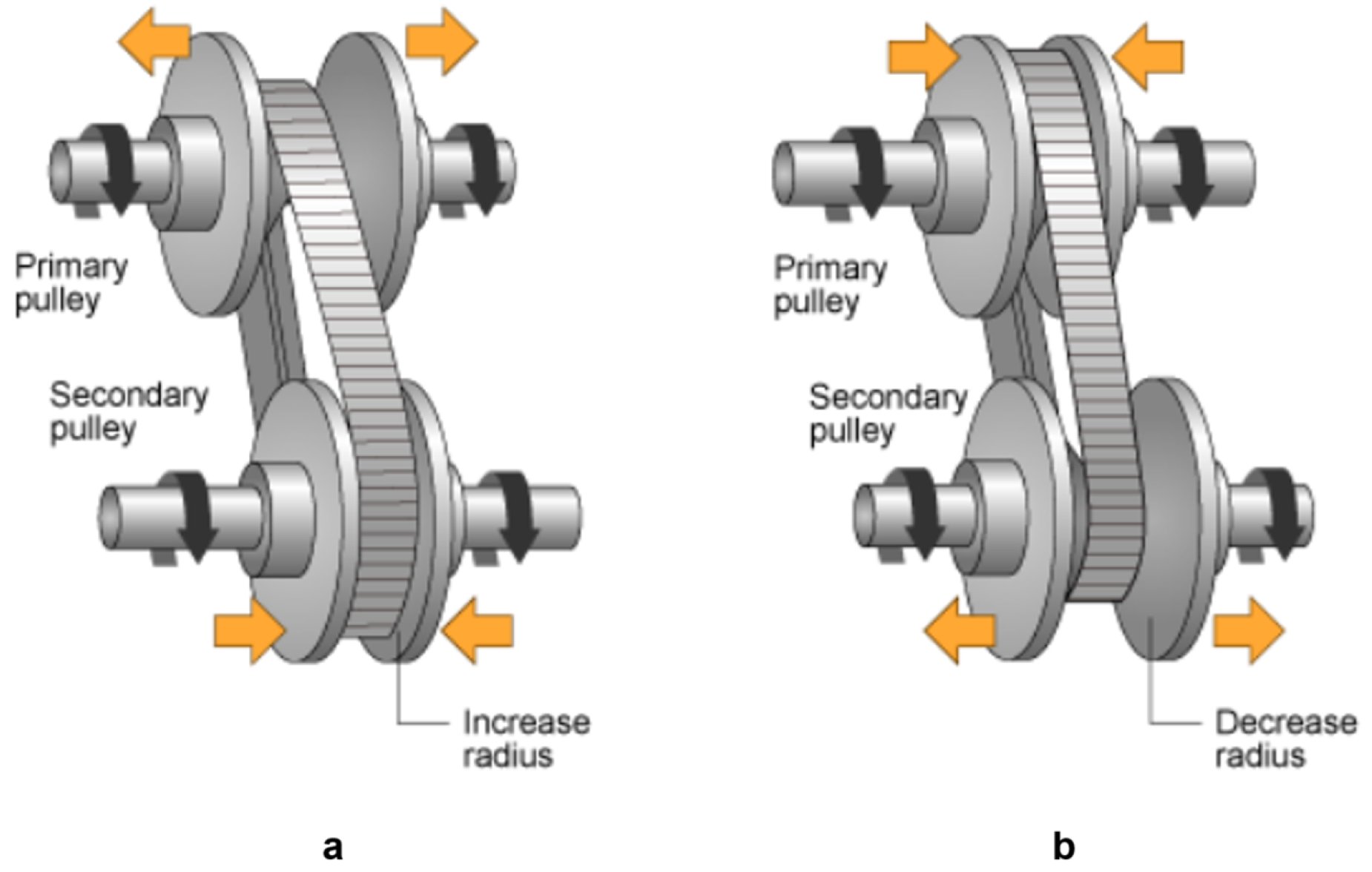
The aforementioned push belt type CVTs use a transmission belt or chain as the torque transmission element and moving pulleys that change shape during operation [13]. The change in rotation speed of the input (primary) and output (secondary) shafts is caused by a change in diameter of the transmission belt acting via friction on both pulleys (Figure 1) [3]. The two boundary states of transmission ratios (low and overdrive) are shown in Figure 1.
This fact indicates the primary disadvantage and limiting aspect of these systems: the maximum transmitted torque constrained by friction, along with the consequent friction-induced mechanical losses and wear of the pulley-belt system. Nevertheless, this was also one of the contributing factors that compelled researchers and engineers to engage in technical enhancements and develop the subsequent methodology of performance evaluation of the CVT concept.
Numerous studies show a variety of approaches for analyzing and demonstrating the performance of CVT systems, including the use of test rigs, laboratory testbeds, and prototype creation accompanied by experimental validation. Duong et al. [14] describe the design and development of a CVT test bench for evaluating the performance and characteristics of CVT. The test bench enables the assessment of key parameters influencing CVT performance, including pulley pressure, belt force, and torque under varying load conditions. Wong et al. [15] introduced a dual-belt CVT prototype and test rig for heavy-duty vehicles, validating their analytical model and studying basic characteristics. Spanoudakis and Tsourveloudis [16] explored the efficiency of an Electronic Shift Variable Transmission in a hydrogen fuel cell-powered urban vehicle using a laboratory testbed. Centeno et al. [17] designed and tested a CVT with an inertia-regulating system, consisting of three subsystems that convert engine rotation into oscillating movement, regulate it, and rectify it to unidirectional angular velocity. Supriyo et al. [18] proposed the development and experimental study of an electro-mechanical CVT system for motorcycle applications, which uses a DC motor and cam mechanism to control the primary pulley position and thereby change the transmission ratio. Work by Mohamed and Albatlan [19] presents a dynamic analysis and experimental work on a CVT system, focusing on the influence of loading conditions on the slip behavior and torque-transmitting ability of the CVT.
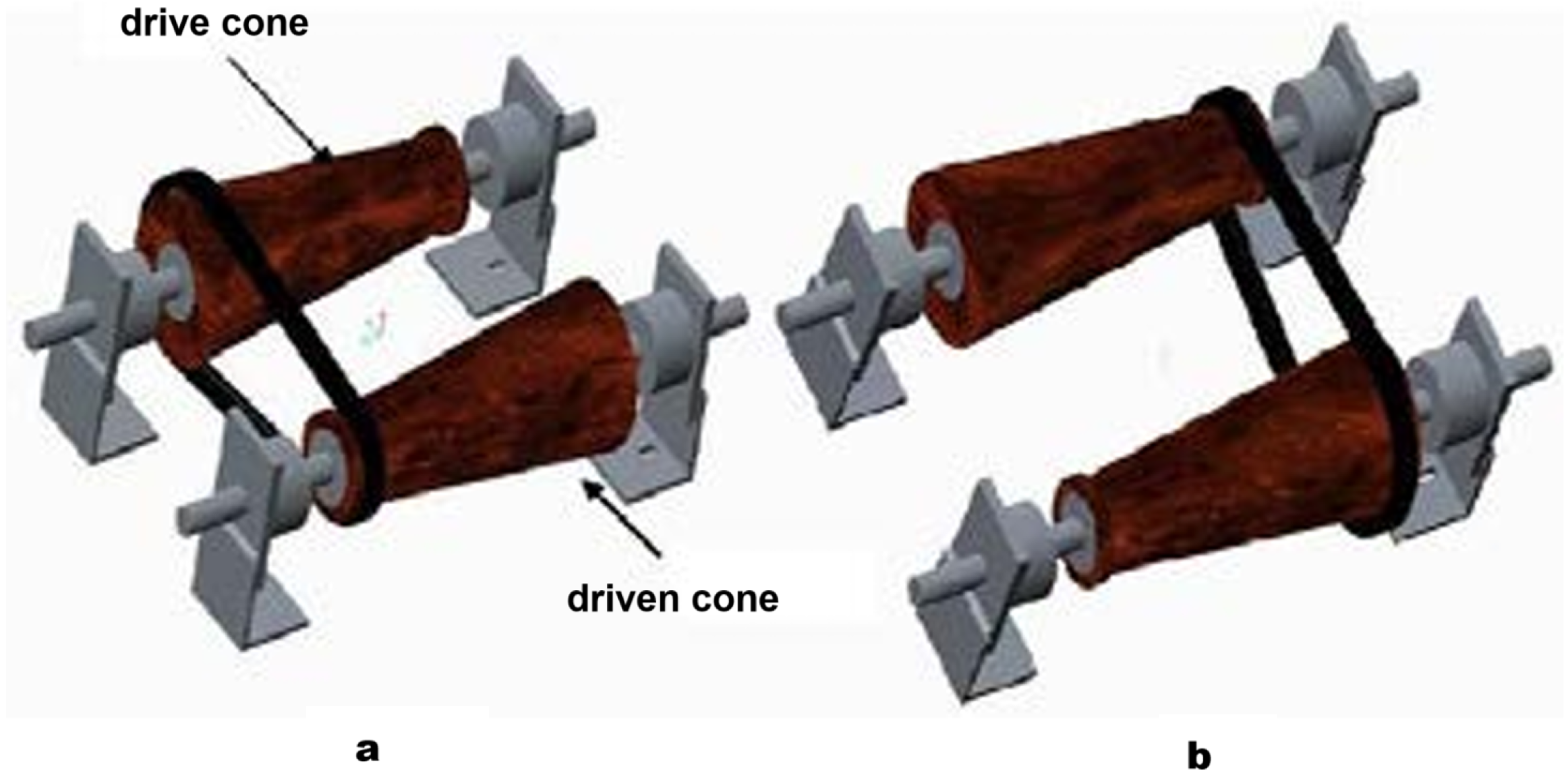
In addition to the push belt design, a significant number of experimental CVT systems are currently under research and development. These include magnetic, wheel, spherical, toroidal and cone systems [20,21,22,23,24,25,26]. The cone CVTs, which have a constant shape of the moving parts but a variable timing belt or chain location, adjust the transmission ratio by moving a wheel or belt down the axis of one or more bevel-shaped cylinders (Figure 2) [27]. The most basic design, known as the single-cone CVT, works by enabling a wheel to traverse the inclined surface of the cone, changing the effective diameter from a narrower to a broader segment. Notably, certain cone CVT systems use dual-cylinder topologies to improve performance and transmission ratio variability. The first mention of this kind of system was in 1903, when Evans and Knauf applied for a patent for a continuously variable transmission that uses two parallel conical cylinders facing opposite directions and connected by belts that can be moved along the cones to vary the gear ratio [28,29]. Added to that, the Evans variable speed gearbox, manufactured in the 1920s, is a more straightforward design [30]. It features two bevel cylinders arranged with a small gap of constant width between them, with the position of the so-called leather sleeve that runs between the cylinders determining the gear ratio.
Cone-based CVTs have been explored for various purposes and applications. The design, optimization, and functionality of such systems have been examined in various academic papers. One design integrates a dynamic vibration absorber to create an adaptively tuned vibration absorber based on the principle of a twin-cone CVT system, capable of suppressing resonance in primary systems over a wide frequency range [31]. Lin et al. presented an innovative design of a twin-cone CVT gearbox based on a discretely adjustable radius pulley system [32]. Another innovative approach by Mobedi and Dede [33] proposed a novel two-sphere cone CVT design instead of friction wheels to enable independent output torque and position control, as well as bidirectional power transmission. Researchers have also applied system-driven product development and topology optimization approaches to develop cone CVT systems, highlighting their advantages over conventional transmissions [34]. The findings of their research have also been disseminated by Bazios et al. [35], who explored the utilization of computer-controlled topological optimization in the design of a twin-cone CVT transmission system. These systems offer benefits such as higher fuel efficiency, wider torque range, and smoother acceleration in vehicles [16,35]. The cone CVTs have been investigated for their slip and speed ratio characteristics in [36], with potential applications in both the automotive and machine tool industries. Additionally, a purely mechanical continuous automatic variable transmission (CAVT) system for bicycles was designed using a centrifugal governor and slotted cone, addressing durability issues associated with electronic components in other CVT systems [37]. These studies highlight the adaptability and potential of cone-based CVT systems across a wide range of applications. Beyond their industrial utility, these mechanisms also serve as powerful pedagogical tools for illustrating complex kinematic principles.
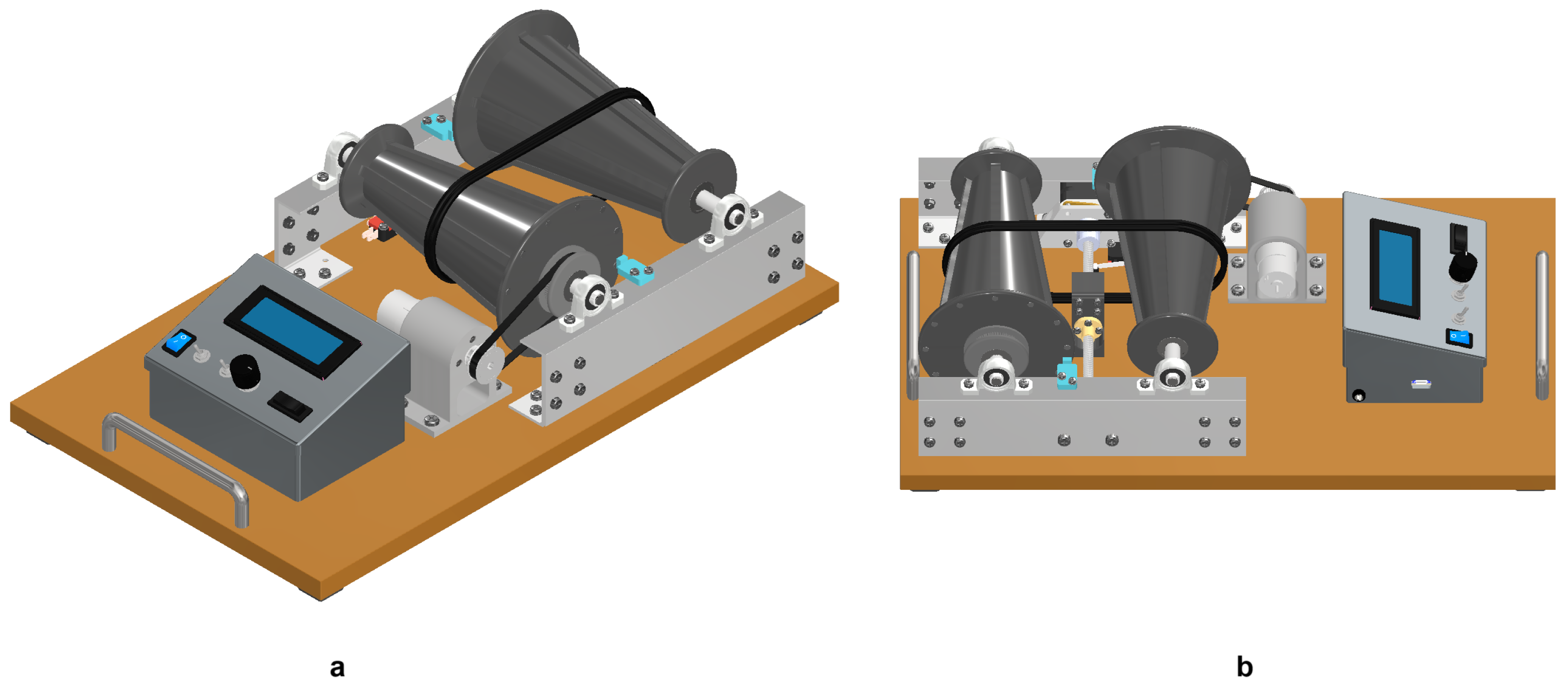
Mechanical engineering students gain a deeper understanding and increased motivation to learn about transmission systems when they can physically interact with such systems [38]. Consequently, incorporating a simple, demonstrative device into the educational process can further enhance the students’ learning experience. This work details the design and implementation of a dual cone CVT physical model with dual-mode control capabilities. The system integrates manual adjustment with a LabVIEW-based PC interface, providing a versatile tool for educational demonstrations and research prototyping (Figure 3).
The development of CVT test rigs for educational and research purposes has been explored through various configurations. Previous work has focused on performance analysis using customized rigs [39] and the use of LabVIEW for monitoring control signals in belt-driven systems [40]. Specifically, automated clutch control [41] and the fundamental mechanics of cone-to-cone (CTC) transmissions [42] have been documented. While these didactic models [43] provide a foundation for understanding CVT behavior, this paper contributes a unique dual-mode architecture that allows for a seamless transition between manual and LabVIEW-based PID speed regulation, specifically optimized for HIL (Hardware-in-the-Loop) pedagogical applications (see Table 1).
While several CVT demonstrators are documented in the literature, existing publications often emphasize theoretical outcomes rather than the granular implementation of hardware–software interfaces. This paper provides a comprehensive framework for the integration of dual-mode control (manual and LabVIEW), a technical detail frequently omitted in broader research articles. The proposed design utilizes a unique cost-effective configuration of LabVIEW-based data acquisition and PID regulation, specifically optimized for pedagogical reproducibility. Consequently, this work serves as a practical reference for researchers and educators seeking to develop functional, low-cost HIL platforms for CVT characterization.

2. Design of the Proposed Dual Cone CVT Model

The proposed design is derived from previously referenced studies on cone type CVTs, specifically influenced by references [27,31,34,35]. The cone geometry is inspired by the work of Patil et al. [34], and the mechanism for adjusting the belt position is conceptually based on ideas presented in [31,35]. The overall system architecture and configuration are primarily influenced by works [27,28,29,30].
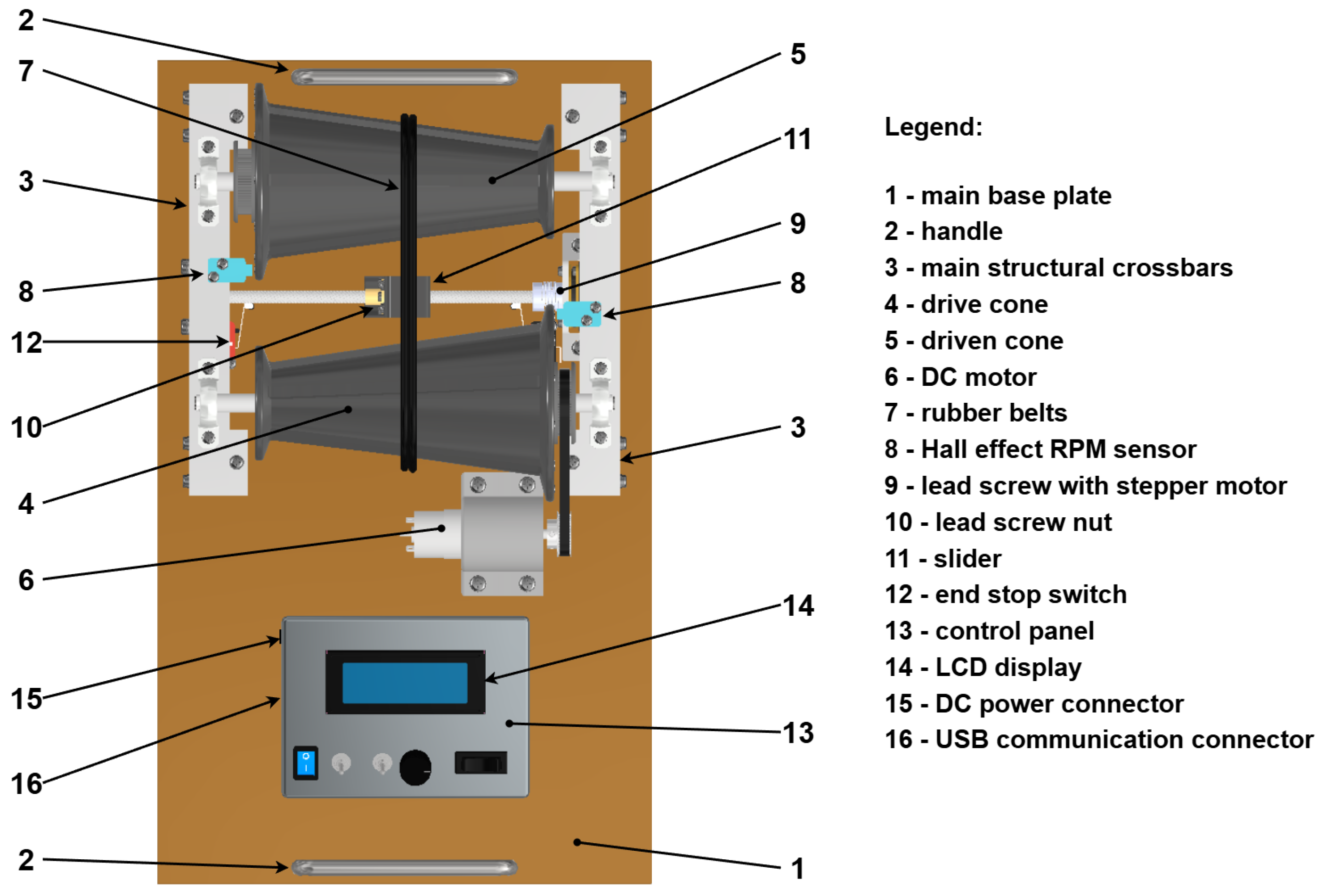
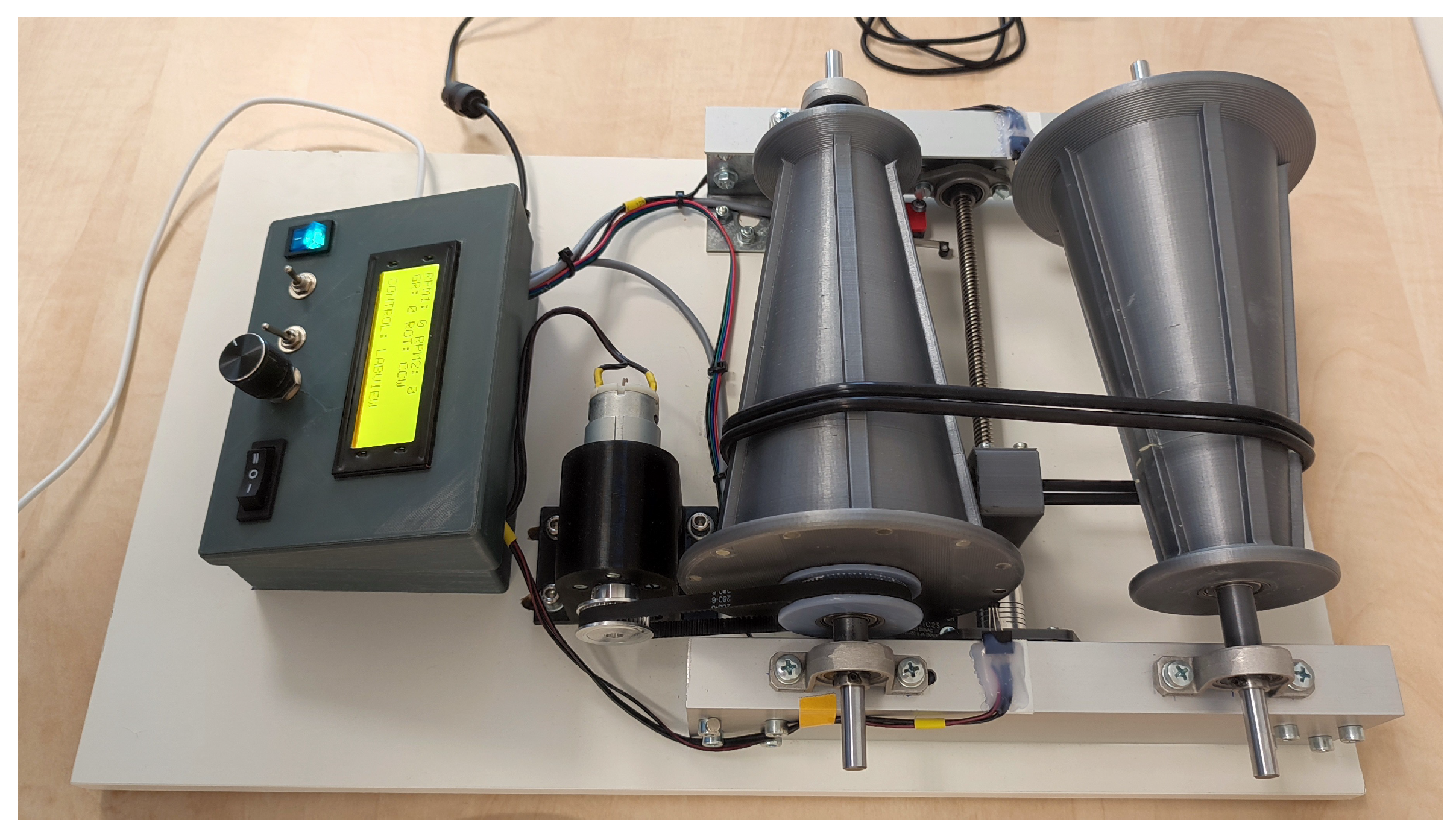
The system is mounted on a main base plate equipped with side handles to facilitate transport (Figure 3 and Figure 4). Main structural crossbars are affixed to this base plate and support the radial bearings and shafts of the rotating cones. A DC motor with a planetary gearbox, also mounted on the base plate, transmits rotational motion to the driving cone via a toothed belt and gear assembly. The driving cone, in turn, transfers torque to the driven cone through rubber belts. The rotational speeds of both cones are measured using Hall effect sensors, with twelve embedded neodymium magnets in each cone to ensure precise detection. The entire structure is assembled using standardized metric bolts and nuts, ensuring mechanical stability and allowing for straightforward disassembly in the event of component failure (Figure 3).
A lead screw, positioned between the cones, is driven by a NEMA 17 stepper motor. A nut attached to a linear slider travels along the lead screw. The slider moves across the full span between the cones, from one structural crossbar to the other (Figure 4). Limit switches are installed at both ends to control and restrict the slider’s travel range. Rubber belts are threaded through an opening in the slider. By moving the slider left or right, the belt positions on the surfaces of both rotating cones can be adjusted smoothly and synchronously.

3. Device Operation

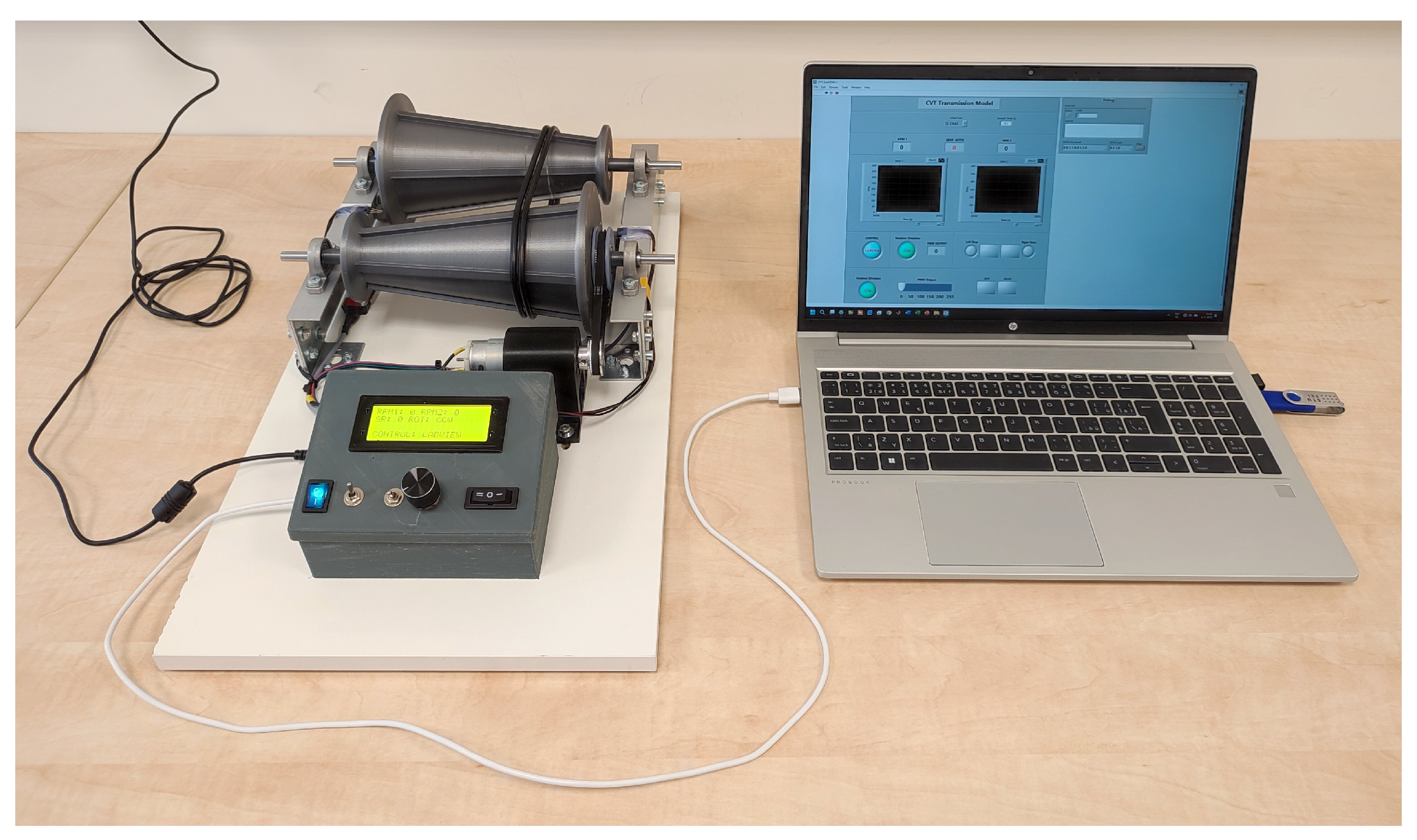
The device enables the measurement and practical demonstration of continuous (stepless) variation in the transmission ratio between the driving and driven cones by adjusting the position of rubber belts (see Figure 2). The entire system can be operated manually via toggle switches and control elements located on the control panel (see Figure 4, Figure 5 and Figure 6). A DC power connector is located on the side of the control panel to supply the system with power from a 15 V, 4 A power source. Additionally, a USB-C connector is provided for communication with and programming of the integrated Arduino Nano microcontroller (Figure 4 and Figure 5). The utilized microcontroller is programmed using the Arduino IDE programming environment (version 2.3.0).

3.1. Operating Principle

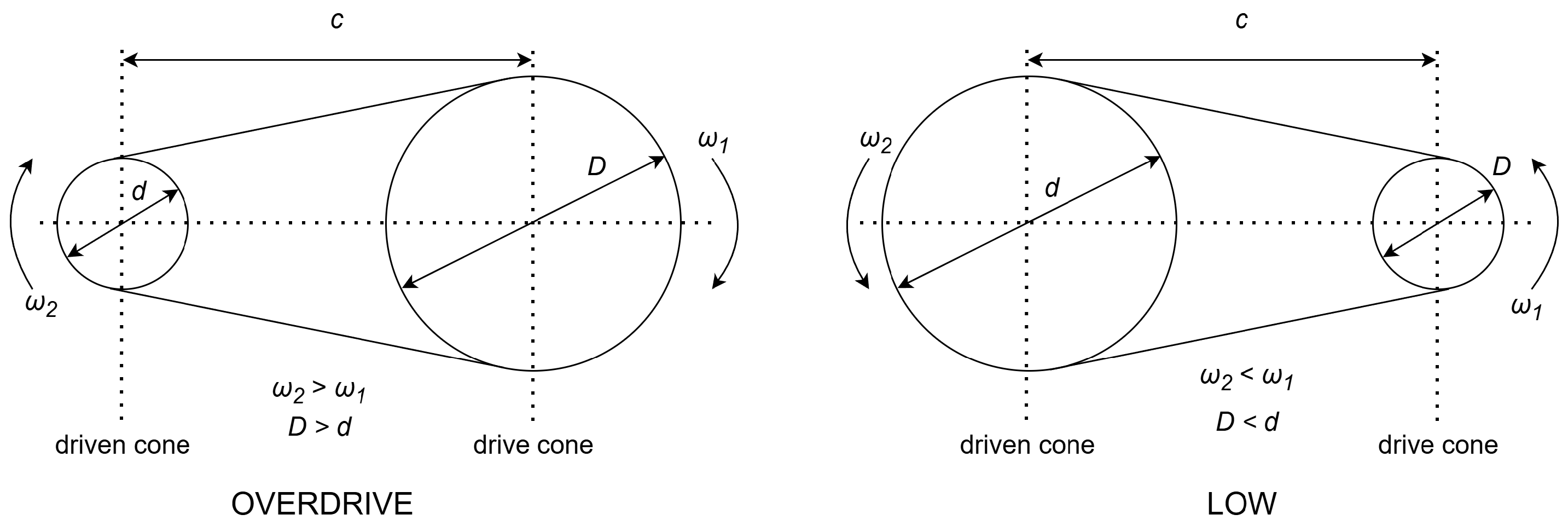
The concurrent variation in the rotational radii of the rubber belts on both cones (denoted as d and D, Figure 7) is governed by their lateral displacement. This produces an immediate and continuous adjustment of the transmission ratio, while the constant inter-cone distance c is maintained by radial bearings and crossbars (Figure 6). The transmission ratio (TR) can be expressed in terms of the rotational speeds of the drive cone ( ω 1 ) and the driven cone ( ω 2 ) as:
T R = ω 2 ω 1 = 2 v d 2 v D = D d ,
where  ω 1 and  ω 2 are measured in revolutions per minute (RPM). Alternatively, the transmission ratio (TR) may be determined from the effective diameters of the cones beneath the rubber belts, assuming a constant tangential velocity v of the elements of the belts. However, because accurately measuring the effective diameters is challenging, TR is instead calculated directly from the rotational speeds, which are measured using Hall-effect speed sensors.
Considering the construction constraints (cone taper angle, positions of the limit switches and stepper motor, and slider shape design), the proposed device enables transmission ratio adjustment within the range of 0.60 (low) to 1.55 (overdrive). The slider’s movement is limited to 125 mm from its initial position on the stepper motor side of the lead screw (see Figure 4). At present, the slider’s displacement speed is predefined and set to 4.9 mm/s, determined by the frequency preset of the pulse-width modulation (PWM) generation pin of the microcontroller. It should be noted, however, that this value may be modified in future iterations of the device through the integration of an additional rotary knob for user adjustment.
The dual cone-and-belt system is designed for a maximum input speed of 2000 RPM at the DC motor shaft (at a nominal input voltage of 15 V DC under no-load conditions at the output shaft of the driven cone), which corresponds to a maximum of 450 RPM at the drive cone following gear reduction via the flat transmission belt (see Figure 6). Consequently, the maximum output speed of the driven cone reaches 700 RPM in the overdrive gear state. Under no-load conditions, the system achieves a peak angular acceleration of approximately 75 rad/s2. This dynamic performance is primarily governed by the rotational inertia of the mechanical components and the frictional limits of the cone-and-belt interface. These performance benchmarks were established through preliminary characterization tests conducted during the initial system commissioning.

3.2. Manual Control

The first switch from the left (Figure 4) serves as the main power switch, allowing the user to activate or deactivate the device. The second switch enables the selection of the control mode, either manual or LV. The third switch determines the DC motor’s rotation direction (clockwise—CW or counterclockwise—CCW), which, in turn, sets the rotation direction of the cones. A rotary potentiometer with a control knob is provided to regulate the power supplied to the DC motor within a range of 0 to 255. As a result, the rotational speed of the drive cone can be adjusted from 0 to 450 RPM. The final control element is a three-position switch that controls slider movement—left, right, or stop (neutral center position). At the end positions, slider travel is programmatically constrained through inputs from the limit switches.
An LCD display (4 lines × 20 characters) mounted on the control panel (Figure 4) provides real-time operational data, including the rotational speeds of both cones (in RPM), the calculated transmission ratio (TR), the cone rotation direction (CW or CCW), the DC motor RPM setting, and the active operating mode (manual or LV). When the operating mode is switched to LV, enhanced functionality and control are enabled through a proprietary application running on the control PC (Figure 5).

Microcontroller Code

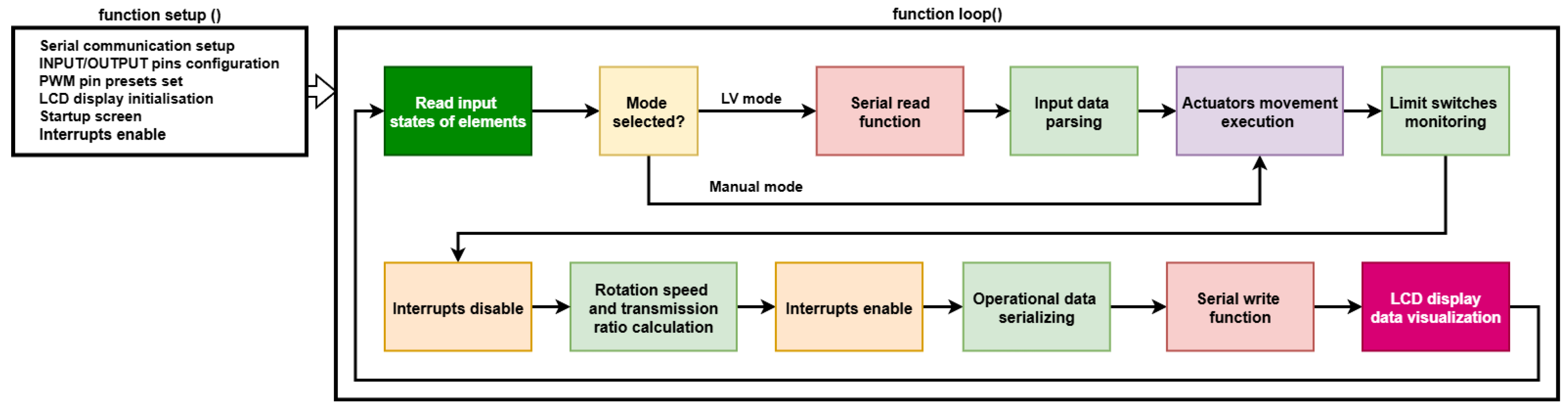
The detailed block functionality of the microcontroller code is illustrated in the block diagram shown in Figure 8. During initialization (function setup()), the program establishes serial communication via a universal serial bus (USB) port with the control PC, configures all input/output pins, sets the presets for the PWM output pin, initializes the LCD display, and presents the startup screen. At the conclusion of the setup() function, interrupts on the selected input pins are enabled to measure the rotational speeds of the cones. Within the interrupt service routines —specialized subprograms executed in response to hardware events—the input pulses from the Hall effect sensors are counted.
The main program executes within an infinite loop (function loop()). First, the input states of the limit switches and all manual control elements on the control panel are read. Depending on the mode switch setting, the program either continues in manual mode or processes serial input from the LV application.
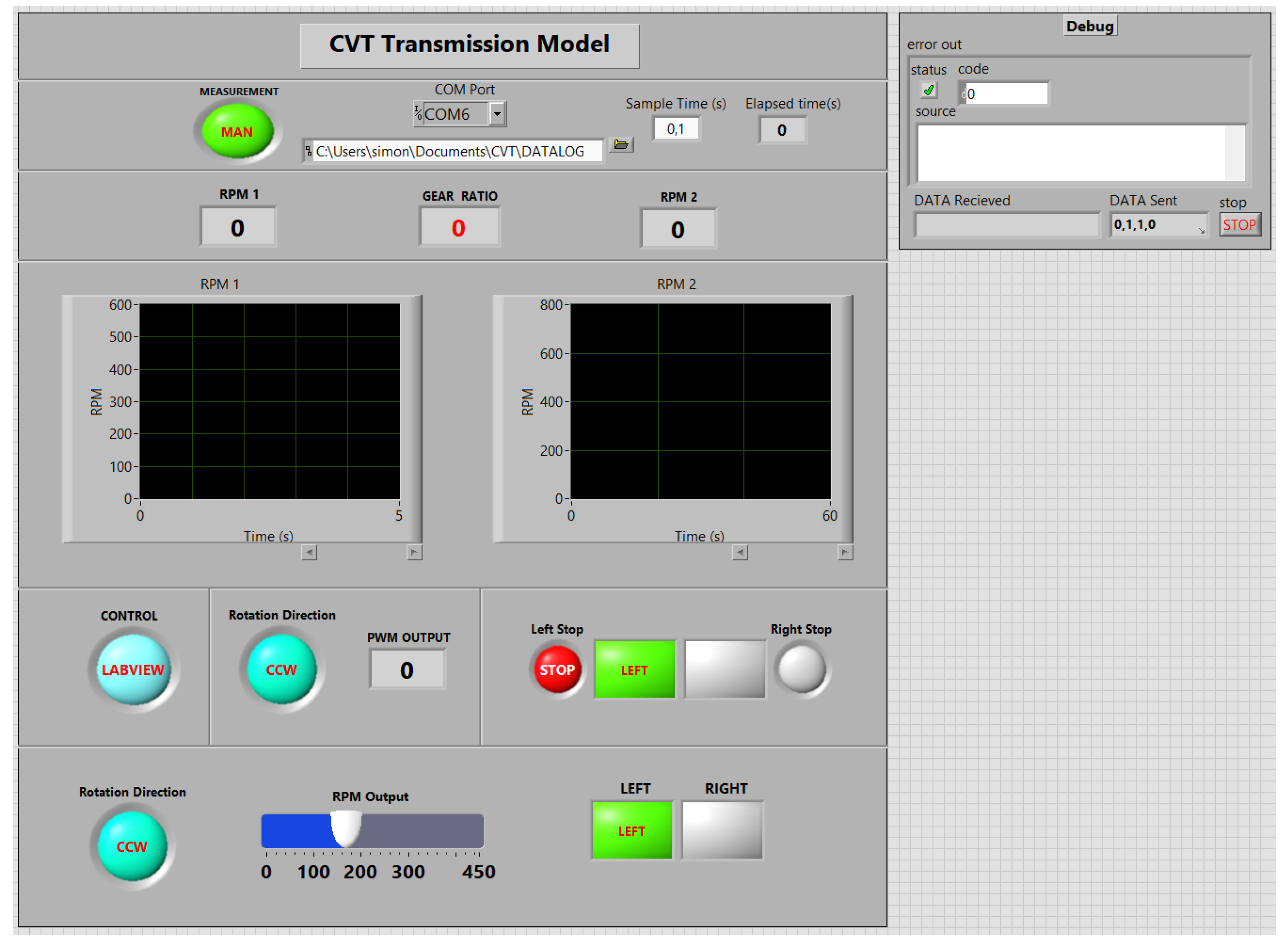
In manual mode, the DC motor and stepper motor are controlled according to the values provided by the control panel inputs. In LV mode, the incoming data string from the LV application—transmitted via USB serial communication—is programmatically parsed using comma delimiters into discrete numerical control variables—namely, the DC motor rotation direction, RPM setpoint, and left/right stepper motor commands—which are subsequently executed by the actuators. An example of the received control string can be found in Figure 9 in the DATA Sent box. This example indicates CW rotation (first 0), no left/right movement of the belts (a combination of 1 and 1), and no movement of the DC motor (setpoint set to 0 RPM).
Next, the states of the limit switches are continuously monitored, and the stepper motor is halted if the slider reaches either of the limit positions.
After the control commands for the actuators are executed and the limit switches are checked, the interrupts for speed measurements are temporarily disabled, and the rotational speeds of both cones are calculated based on the number of detected pulses and the elapsed time. Using these values, the transmission ratio is determined, after which the interrupts are re-enabled. All relevant data—including measured rotational speeds, panel control states, and limit switch states—are serialized into a comma-separated string and transmitted using the USB serial communication protocol to the LV application via the serial write function. Finally, the real-time operational data is displayed on the device’s LCD panel. The cycle of the loop() function then repeats.

3.3. LabVIEW Control

In addition to manual operation, the device can be switched to LV mode using the mode selection switch on the control panel. When connected to a control computer through a USB programming and communication interface, the LV application (version 2021 SP1) can be launched (Figure 9). This software application primarily enables direct operation of individual actuators (DC motor, stepper motor) and provides visualization of sensor data (limit switches, magnetic speed sensors), as illustrated in Figure 9.
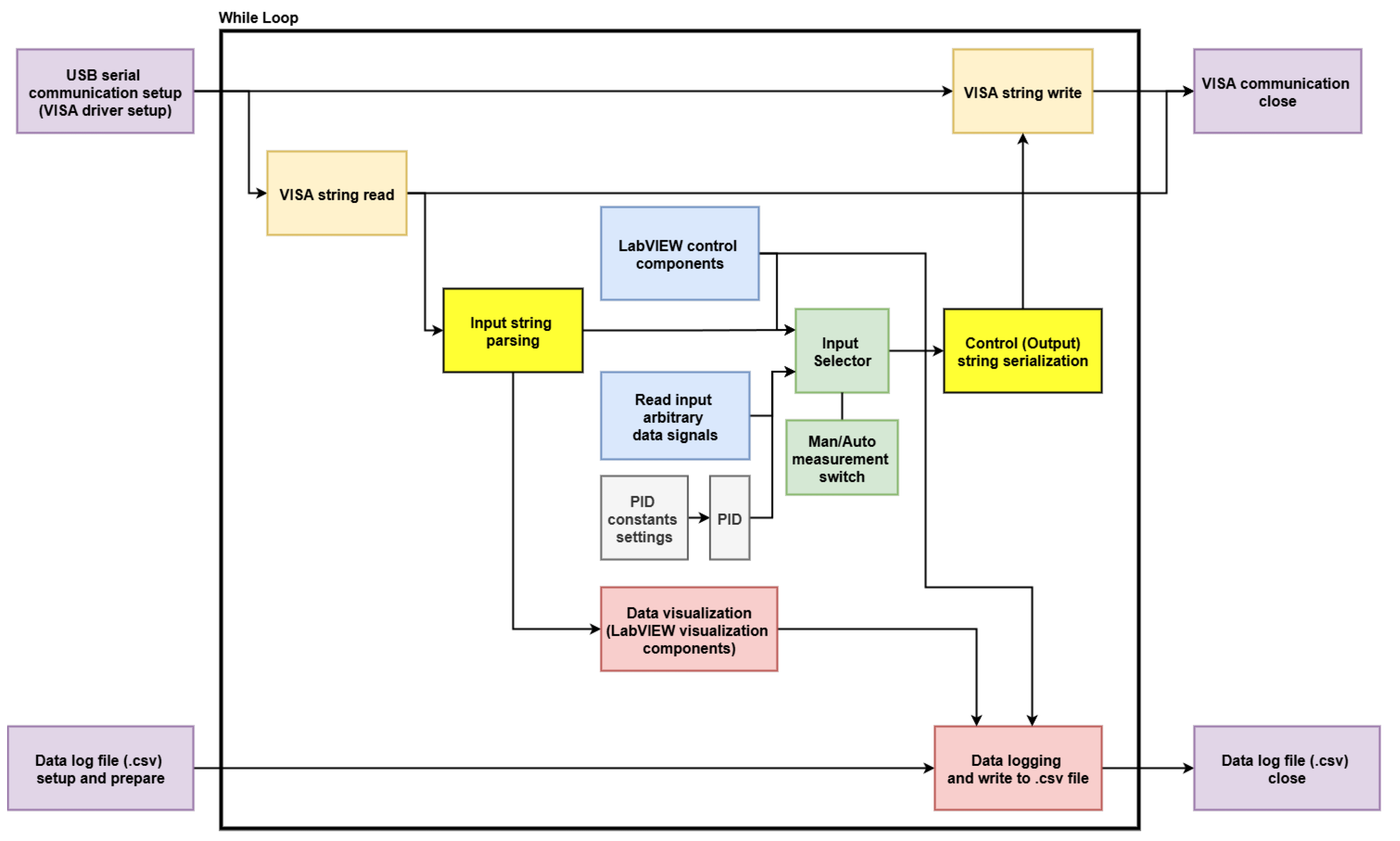
The detailed functionality of the application is illustrated in the block diagram in Figure 10. At startup, the application initializes the USB serial communication protocol with the device’s microcontroller (using the virtual instrument software architecture—VISA) and prepares a comma-separated values (CSV) log file by generating a timestamped filename and defining column headers. Data exchange with the device (microcontroller) is conducted via USB serial communication (at the port named COM6). Within the main while() loop, the program continuously reads byte streams from the USB communication buffer (using the VISA string read function), which contain serialized and comma-separated string data transmitted from the microcontroller in the serial write function (as detailed in the Microcontroller code subsubsection). The received data string, formatted as comma-separated values, can be monitored in the debug window (Figure 9, DATA Received box). An example of a formatted data string is represented by the sequence: “175, 420, 0, 0, 1, 0, 1, 1, 250”. In this sequence, the first two variables correspond to the rotational speeds of the respective cones. The subsequent value indicates the selection of control mode (0 represents manual mode); the next value indicates the rotation direction of the cones (0 represents CCW rotation), while the following binary pair (1, 0) denotes the directional command for belt translation (to the right). The next two values represent the status of the limit switches (both off), and the final parameter conveys the target RPM setpoint as defined by the rotary potentiometer on the device’s control panel. This string is parsed into individual numerical parameters and displayed using LV visualization components (RPM1, RPM2, CONTROL, Rotation Direction, RPM Output, Left Stop, Right Stop, Left, Right; see Figure 9). Conversely, setpoints from LV control components (Rotation Direction, RPM Output, Left, Right; see Figure 9, bottom) are serialized into a comma-separated data string and transmitted to the device through the VISA string write function and USB serial communication protocol. All measured and control values are simultaneously stored at the specified sampling interval (Sample Time) in the CSV file (Figure 9) created at the beginning of the measurement. When the application is stopped or closed, both the communication channel and the CSV file are properly terminated (closed).
In the LabVIEW control application, two measurement modes can be selected using the switch (Figure 10, center; Figure 9, top left). In manual measurement mode, the DC motor and stepper motor are operated directly through the LV control components. In automatic measurement mode, the DC motor speed and stepper motor movement are governed by predefined arbitrary timed functions (RPM1, Right, Left; see Table 2). These timed functions are specifically designed to enable measurements across the full range of the device’s transmission ratio. Furthermore, the generated input functions serve as inputs for the MATLAB-Simulink (version R2023b) model of the device, allowing validation of the simulation model against the experimental data gathered on the physical model.
In automatic mode, the rotational speed of the drive cone is regulated by a PID controller to maintain the RPM setpoint. The controller parameters were tuned using the heuristic Ziegler–Nichols method, yielding the following constants: P = 0.1, I = 0.1667, and D = 0.03. The implementation of the PID speed controller is essential, as the movement of the rubber belts along the cone surfaces introduces non-negligible load variations, reducing the cone speed by approximately 10 to 15 RPM. To ensure continuous and smooth adjustment of the transmission ratio during automatic measurements, the PID control structure was therefore applied.

4. MATLAB-Simulink Model

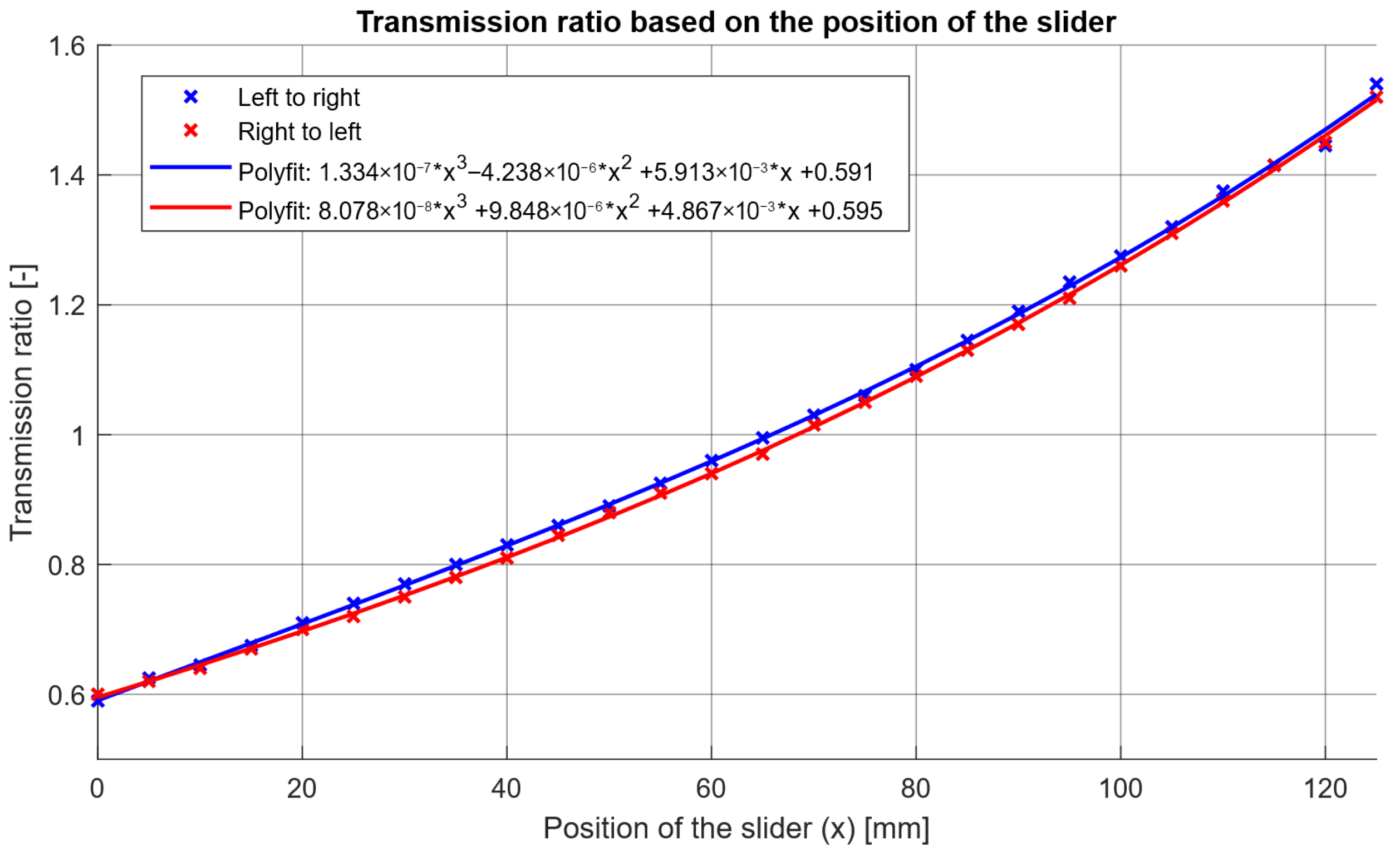
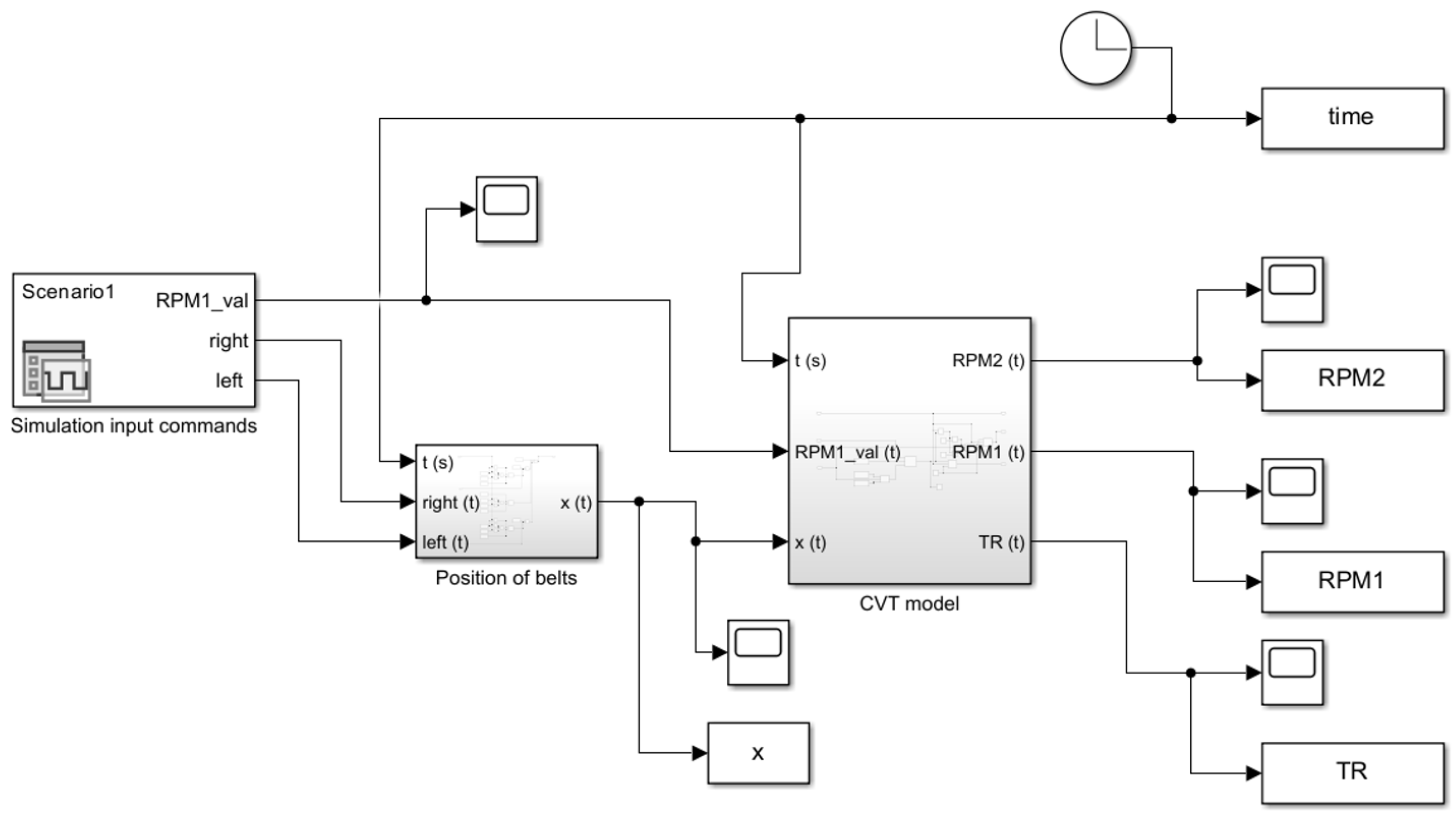
A simplified first-order MATLAB-Simulink model (Figure 11) was developed based on the primary motion characteristics (1) and the experimentally measured motion behavior of the physical system (see Figure 12). The rotational output speed of the driven cone (RPM2) is computed from the predefined rotational speed of the drive cone (RPM1) and the instantaneous transmission ratio. The transmission ratio is defined by the slider position (x), which is determined from its direction of motion (left to right or right to left, see Figure 4) and elapsed time, according to experimentally derived lookup curves (Figure 12).
The two functions were obtained by measuring the slider position with a precision ruler and determining the corresponding transmission ratio as the quotient of the rotational speeds of the two cones (with the drive cone fixed at 350 RPM). The functions and the resulting graph (Figure 12) indicate that the transmission ratio differs depending on whether the slider moves from left to right or from right to left (top view—Figure 4). This asymmetry arises from the slightly larger opening in the slider through which the rubber belts pass, leading to a minor delay and hysteresis in the transmission ratio response.
The Simulation input commands block (Figure 11) defines the timed control signals for slider motion (left/right) and the desired drive cone speed (RPM1_val). To validate the simulation model, identical arbitrary signal inputs from the LV application (automatic measurement mode) were applied (Table 2). The Position of belts block computes the slider position based on the timed direction movement inputs. The CVT Model block then calculates the driven cone speed (RPM2) and the corresponding transmission ratio (TR) from the slider position (x) and the prescribed drive cone speed (RPM1_val). These calculations are derived from experimentally obtained functions in Figure 12.
All simulation parameters (time, slider position x, drive cone speed RPM1, driven cone speed RPM2, and transmission ratio TR) are stored in the MATLAB workspace and plotted alongside the experimental data obtained from automatic measurements in the LV application (in CSV format). A comparison of simulation and experimental results is presented in the Results Comparison section.

Discussion

To ensure a computationally efficient model suitable for real-time control, the following first-order modeling assumptions were made:
  • Inextensible belt drive: The round connecting belt is considered a longitudinally rigid member. While belt creep and longitudinal elasticity are present in high-torque industrial applications, they are considered negligible within the current experimental envelope (max 500 RPM, no-load conditions).
  • Constant friction coefficient: A uniform friction coefficient ( μ ) is assumed across the contact interface of the cones. Potential variations due to local heating or surface wear were omitted, as the short duration of the test cycles prevents significant thermal gradients.
  • Negligible parasitic losses: Energy losses attributed to aerodynamic drag and bearing rolling resistance were excluded. At the current rotational velocities, these factors account for less than  2 % of the system’s total energy expenditure during transmission change, thus not compromising the transmission-ratio accuracy.
  • Ideal geometry: The contact between the round belt and the cones is simplified to a mean-radius line contact. This omission of the ’seating’ effect (belt thickness compensation) is justified by the high correlation between the simulation results and empirical measurements.
The validity of these simplifications is confirmed by the experimental results, where the maximum deviation between the model and the physical prototype remains within an acceptable margin of error for pedagogical and prototype-development frameworks.

5. Results Comparison

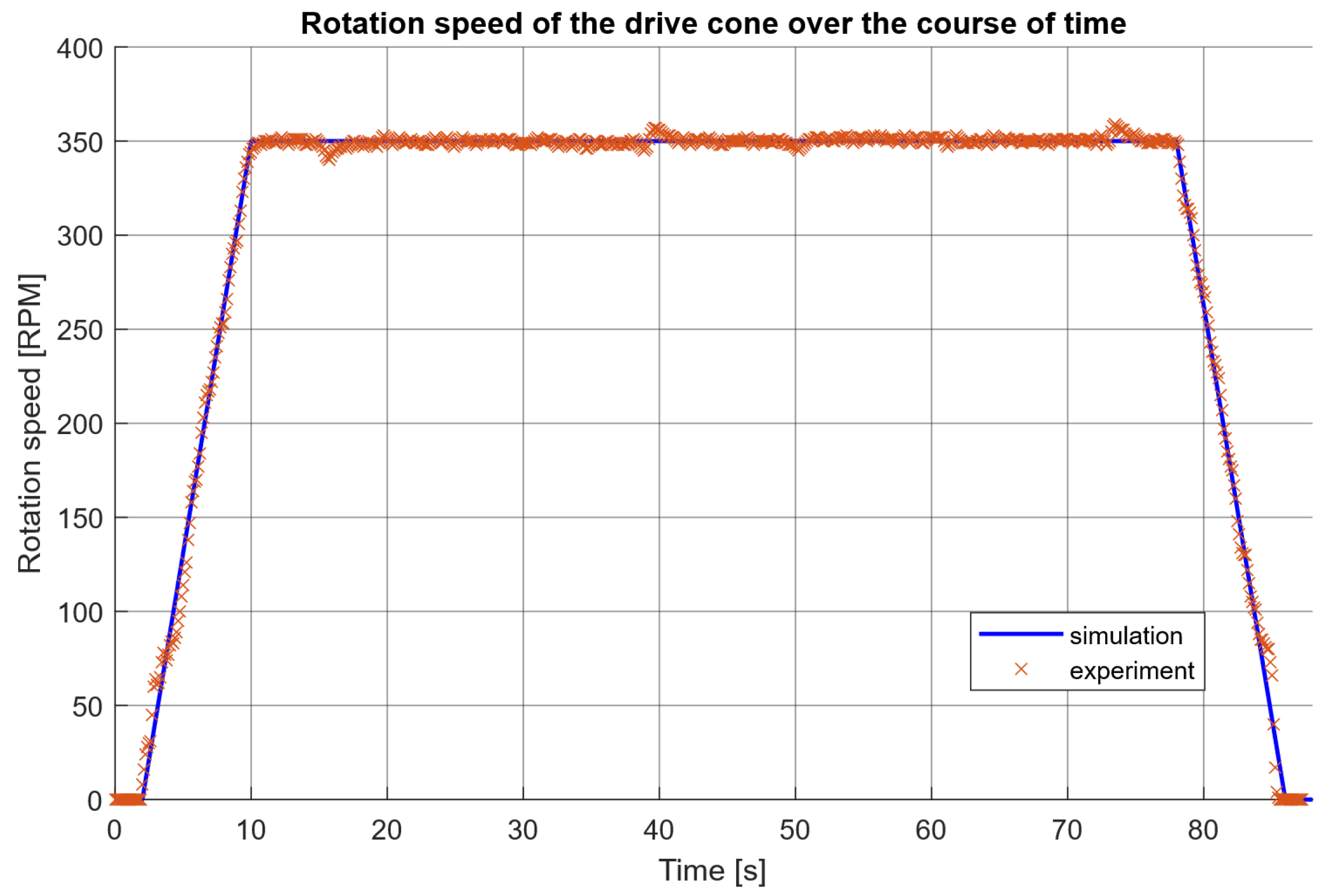
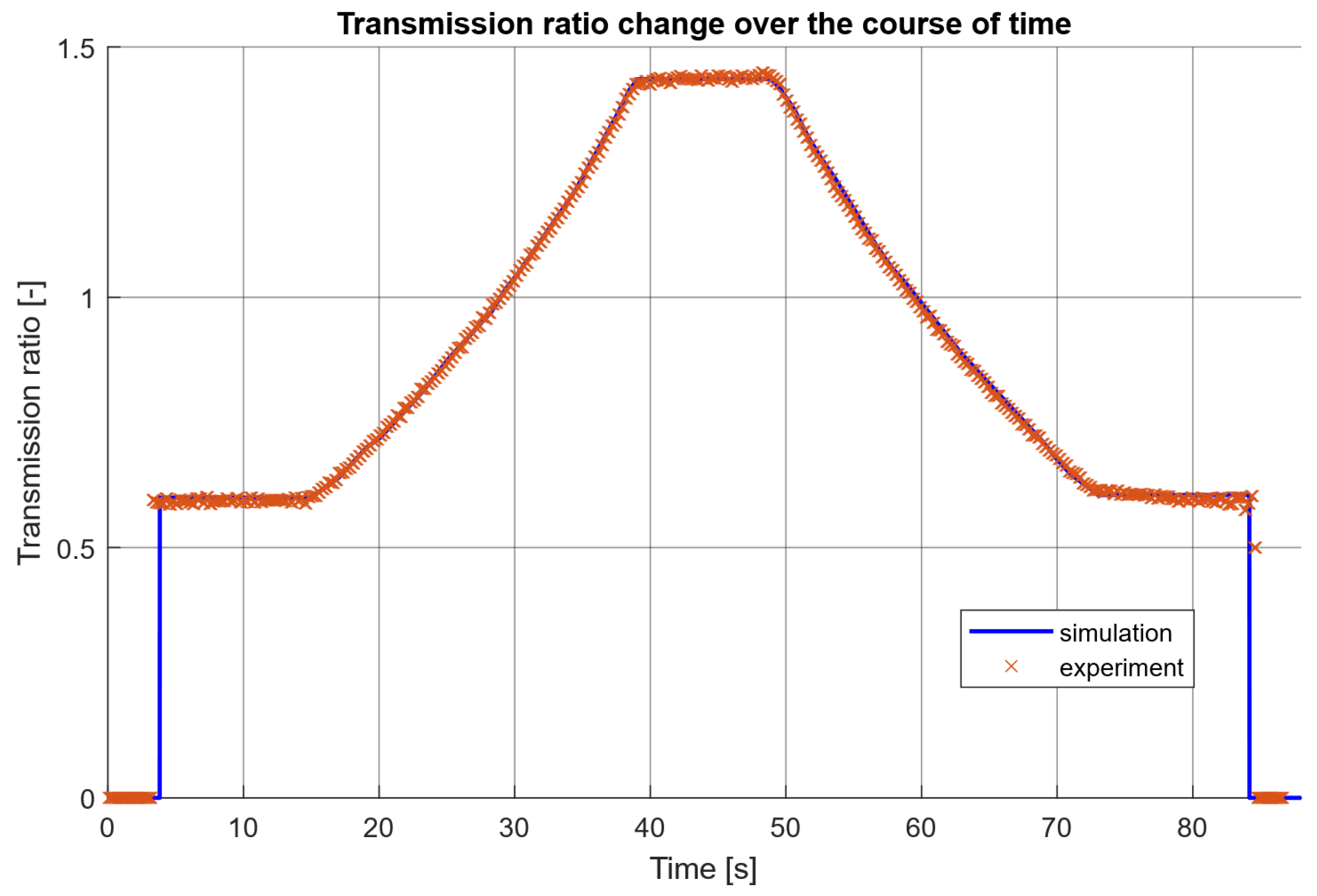
Figure 13, Figure 14 and Figure 15 provide a graphical comparison of the time-dependent courses of the rotational speeds of the drive and driven cones, along with the corresponding transmission ratio. Throughout the measurement, the rotational speed of the drive cone was maintained at a constant value of 350 RPM using the implemented PID control. At both the beginning and the end of the automatic measurement, the rotational speed was linearly increased or decreased over a short interval of eight seconds to minimize sharp peaks and abrupt transitions in the recorded data (Figure 13). The small dips and rises observed in the rotational speed (Figure 13) during the measurement can be attributed to the action of the PID controller, which regulated the rotational speed of the DC motor during the stop–start motion of the slider at its end positions (see Figure 15).
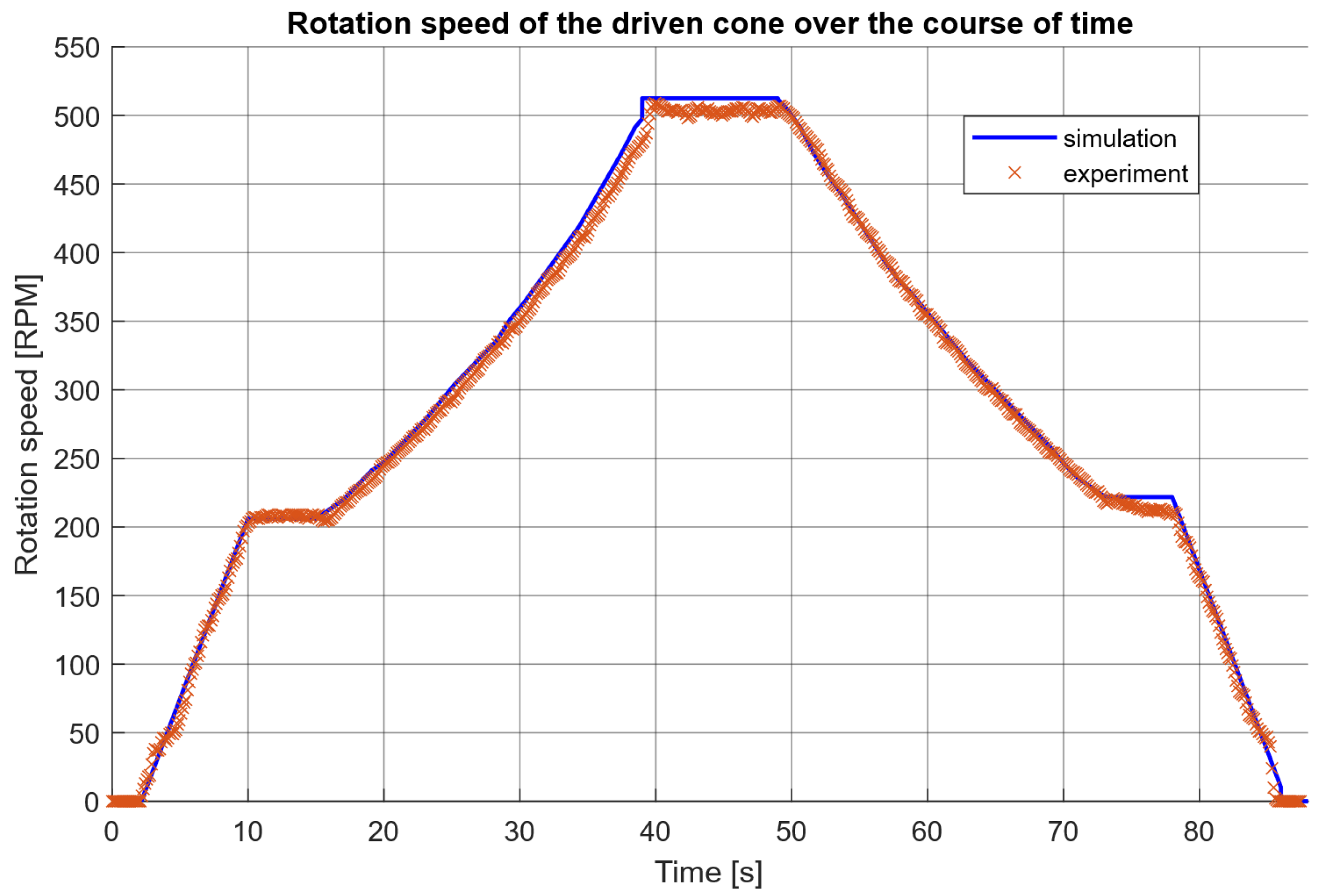
Figure 14 illustrates the time-dependent course of the rotational speed of the driven cone. The figure shows that, at specific intervals (10–15 s, 39–49 s, and 73–78 s), the slider remained stationary, resulting in a constant rotational speed of the driven cone. These intervals correspond to the slider being positioned at its end limits, as indicated by the Right/Left movement signals in Table 1. The slight discrepancies observed between the simulated and measured rotational speeds can be attributed to dynamic factors not incorporated into the simplified model; these are discussed in detail in the Discussion subsection of the previous section. These effects introduced minor, unpredictable slippage, leading to a small reduction in RPM, which is particularly evident in the middle of Figure 14.
During the measurements, the slider executed nearly a full stroke from its initial position to 120 mm and back (Figure 4). This movement produced the expected variation of the transmission ratio from the low value of 0.6 to the overdrive value of 1.45. The measured change in the transmission ratio shows strong agreement with the simulated (calculated) values, as illustrated in Figure 15. This high level of predictive accuracy is essential for establishing a reliable plant model, which serves as the foundation for implementing advanced control strategies, such as Model Predictive Control (MPC) or robust state-estimation frameworks. Furthermore, high-fidelity tracking is indispensable for specific industrial applications, including: (i) proactive slip detection to ensure component longevity; (ii) efficiency optimization along the motor’s ideal operating line; and (iii) the regulation of transient dynamics to enhance drivetrain comfort.

6. Conclusions

In conclusion, the developed rubber belt-driven dual cone continuously variable transmission model successfully demonstrates a stepless variation of transmission ratio and provides a reliable, robust, and portable platform for hybrid manual and LabVIEW-based control. The system’s microcontroller-based design offers a flexible architecture that facilitates both the straightforward integration of additional software functionalities and the seamless incorporation of supplementary hardware. The integration of the LabVIEW environment facilitates advanced functionalities—including a custom user interface, PID speed regulation, and automated data acquisition and logging—thereby extending the system’s utility beyond basic manual demonstration and enabling advanced HIL capabilities.
While this work establishes a robust framework for pedagogical and prototyping applications, the authors acknowledge certain limitations regarding mechanical optimization and comparative benchmarking. Currently, further design optimization, including rigorous tolerance analysis and belt-mechanism improvements, is ongoing to enhance the system’s operational efficiency. Furthermore, a direct quantitative benchmarking against other CVT prototypes was precluded by the absence of standardized performance markers and granular data in the existing literature. Nevertheless, by providing a detailed roadmap for low-cost HIL integration, this work establishes the necessary baseline for future comparative studies. Subsequent research will focus on utilizing this platform to generate the standardized datasets required for benchmarking advanced control strategies and mechanical refinements.
The results presented in this study demonstrate that the developed first-order MATLAB-Simulink model maintains high fidelity with experimental measurements obtained from the physical prototype. Despite the deliberate omission of specific higher order dynamics—such as belt slippage, bearing-related rotational losses, and simplified contact geometries—the model’s predictive accuracy is confirmed, establishing its suitability for further analytical refinement. The behavioral characteristics observed during experimental validation underscore the necessity of integrating hysteresis and slip-loss modeling in future iterations to further enhance the system’s precision. Ultimately, these findings substantiate the platform as a robust experimental framework for investigating CVT behavior, facilitating educational applications, and serving as a benchmark for subsequent research, including the characterization of transmission efficiency and torque-load dynamics.
Future revisions of the physical model are expected to incorporate several enhancements: (i) measurement of slider position using a laser time-of-flight (TOF) sensor, (ii) adjustable slider movement speed control through both manual operation and the LabVIEW application, (iii) implementation of incremental encoders to enable more accurate and reliable cone speed measurements, (iv) implementation of a see-through enclosure for the entire system to ensure operator safety, and (v) design optimizations of the cone and belt system to enhance transmission efficiency.

Author Contributions

Conceptualization, Š.B. and V.G.; methodology, Š.B.; software, Š.B.; validation, V.G., Š.B. and K.O.; formal analysis, V.G. and V.K.; investigation, Š.B.; resources, Š.B.; data curation, K.O.; writing—original draft preparation, Š.B.; writing—review and editing, K.O. and E.K.; visualization, Š.B.; supervision, V.G. and V.K.; project administration, Š.B. and E.K.; funding acquisition, Š.B., E.K., V.G. and V.K. All authors have read and agreed to the published version of the manuscript.

Funding

This work was supported by Grant Agency KEGA, grant No. 006STU-4/2023, and by the Scientific Grant Agency of the Ministry of Education, Research, Development and Youth of the Slovak Republic No. 1/0637/23 and 1/0045/25. APC was funded by the Institute of Automotive Mechatronics, Faculty of Electrical Engineering and Information Technology, Slovak University of Technology in Bratislava.

Data Availability Statement

The data presented in this study are openly available in Zenodo at https://zenodo.org/records/17734363 (accessed on 21 January 2026).

Conflicts of Interest

The authors declare no conflicts of interest.

Abbreviations

The following abbreviations are used in this article:
CSVcomma-separated values
CVTcontinuous variable transmission
DCdirect current
HILhardware-in-loop
IDEintegrated development environment
LCDliquid crystal display
LVLabVIEW
PCpersonal computer
PIDproportional, integral, derivative
RPMrotations per minute
USBuniversal serial bus
VISAvirtual instrument software architecture

References

  1. Seelan, V. Analysis, Design and Application of Continuously Variable Transmission (CVT). Int. J. Eng. Res. Appl. 2015, 5, 99–105. [Google Scholar]
  2. Del Castillo, J.M.; Pintado, P.; Benitez, F.G. A procedure for determining the efficiency of a continuously variable transmission. SAE Trans. 2002, 111, 2104–2108. [Google Scholar]
  3. Chen, Y. Automotive Transmissions: Design, Theory and Applications; Springer Nature: Berlin/Heidelberg, Germany, 2020. [Google Scholar]
  4. Mane, L.J.; Kekan, S.N.; Salunke, M.S.; Mane, S.S.; Adhapure, D.U. Continuous Variable Transmission. Int. J. Recent Res. Civ. Mech. Eng. 2016, 2, 51–55. [Google Scholar]
  5. Lang, K.R. Continuously variable transmissions: An Overview of CVT Research Past, Present, and Future. W 2000, 21, 1–15. [Google Scholar]
  6. van der Meulen, S.H. High-Performance Control of Continuously Variable Transmissions. Ph.D. Thesis, Technische Universiteit Eindhoven, Eindhoven, The Netherlands, 2010. [Google Scholar] [CrossRef]
  7. Shabrov, N.; Ispolov, Y.; Orlov, S. Simulations of continuously variable transmission dynamics. ZAMM J. Appl. Math. Mech. 2014, 94, 917–922. [Google Scholar] [CrossRef]
  8. Bonsen, B. Efficiency Optimization of the Push-Belt CVT by Variator Slip Control. Ph.D. Thesis, Technische Universiteit Eindhoven, Eindhoven, The Netherlands, 2006. [Google Scholar] [CrossRef]
  9. Klaassen, T.W.G.L. The Empact CVT: Dynamics and Control of an Electromechanically Actuated CVT. Ph.D. Thesis, Technische Universiteit Eindhoven, Eindhoven, The Netherlands, 2007. [Google Scholar] [CrossRef]
  10. Mascenik, J.; Murcinkova, Z. Experimental Determination of the Belt Transmission Slip. Manag. Syst. Prod. Eng. 2019, 27, 205–210. [Google Scholar] [CrossRef]
  11. Carbone, G.; Mangialardi, L.; Bonsen, B.; Tursi, C.; Veenhuizen, P.A. CVT dynamics: Theory and experiments. Mech. Mach. Theory 2007, 42, 409–428. [Google Scholar] [CrossRef]
  12. Srivastava, N.; Haque, I. A review on belt and chain continuously variable transmissions (CVT): Dynamics and control. Mech. Mach. Theory 2009, 44, 19–41. [Google Scholar] [CrossRef]
  13. MathWorks. Continuously Variable Transmission Block. Available online: https://www.mathworks.com/help/autoblks/ref/continuouslyvariabletransmission.html (accessed on 21 January 2026).
  14. Duong, T.T.; Huynh, P.S.; Tran, N.H.; Nguyen, T.H. Research on Designing the Continuously Variable Transmission Test Bench. J. Tech. Educ. Sci. 2023, 18, 15–24. [Google Scholar] [CrossRef]
  15. Wong, P.K.; Xie, Z.; Chen, Y.; Tam, L.M. Development of a novel Dual-Belt Van Doorne’s Continuously Variable Transmission for Automobiles—A preliminary study. Int. J. Struct. Stab. Dyn. 2017, 18, 1850016. [Google Scholar] [CrossRef]
  16. Spanoudakis, P.; Tsourveloudis, N.C. Prototype variable transmission system for electric vehicles: Energy consumption issues. Int. J. Automot. Technol. 2015, 16, 525–537. [Google Scholar] [CrossRef]
  17. Centeno, G.; Morales, F.; Perez, F.B.; Benitez, F.G. Continuous Variable Transmission With an Inertia-Regulating System. J. Mech. Des. 2010, 132, 051004-1. [Google Scholar] [CrossRef]
  18. Supriyo, B.; Ariyono, S.; Sihono, S.; Sumiyarso, B.; Tjahyono, B. Experimental study of transmission ratio changing mechanism for motorcycle applications. IOP Conf. Ser. Mater. Sci. Eng. 2021, 1108, 012044. [Google Scholar] [CrossRef]
  19. Mohamed, E.S.; Albatlan, S.A. Experimental investigation and theoretical model approach on transmission efficiency of the vehicle continuously variable transmission. Am. J. Veh. Des. 2014, 2, 43–52. [Google Scholar]
  20. Atallah, K.; Wang, J.; Calverley, S.D.; Duggan, S. Design and operation of a magnetic continuously variable transmission. IEEE Trans. Ind. Appl. 2012, 48, 1288–1295. [Google Scholar] [CrossRef]
  21. Belter, J.T.; Dollar, A.M. A passively adaptive rotary-to-linear continuously variable transmission. IEEE Trans. Robot. 2014, 30, 1148–1160. [Google Scholar] [CrossRef]
  22. Chen, X.; Hang, P.; Wang, W.; Li, Y. Design and analysis of a novel wheel type continuously variable transmission. Mech. Mach. Theory 2017, 107, 13–26. [Google Scholar] [CrossRef]
  23. Kim, J.; Park, F.C.; Park, Y.; Shizuo, M. Design and analysis of a spherical continuously variable transmission. J. Mech. Des. 2002, 124, 21–29. [Google Scholar] [CrossRef]
  24. Ghariblu, H.; Behroozirad, A.; Madandar, A. Traction and efficiency performance of ball type CVTs. Int. J. Automot. Eng. 2014, 4, 738–748. [Google Scholar]
  25. Raghavan, M. Kinematics of the Full-Toroidal Traction Drive Variator. J. Mech. Des. 2002, 124, 448–455. [Google Scholar] [CrossRef]
  26. Spanoudakis, P.; Tsourveloudis, N.C. On the efficiency of a prototype Continuous Variable Transmission system. In Proceedings of the 21st Mediterranean Conference on Control and Automation, Crete, Greece, 25–28 June 2013; pp. 290–295. [Google Scholar]
  27. Srinath, N. Cone Type CVT with High Speed Variations. Power 2015, 1, T2. [Google Scholar]
  28. Knauff, P.W.; Evans, W. Variable-Speed-Transmission Device. U.S. Patent 759,872, 17 October 1904. [Google Scholar]
  29. Knauff, P.W.; Evans, W. Power-Transmission Device. U.S. Patent 759,873, 17 May 1904. [Google Scholar]
  30. Evans, G.P. Speed Regulating Device. U.S. Patent 390,216, 2 October 1888. [Google Scholar]
  31. Punyakaew, S. Adaptively tuned vibration absorber using cone based continuously variable transmission. Cogent Eng. 2022, 9, 2102044. [Google Scholar] [CrossRef]
  32. Lin, X.; Peng, Y.; Hong, R.; Wang, Y. Research on a novel discrete adjustable radiuses type continuously variable transmission. Meccanica 2022, 57, 1155–1171. [Google Scholar] [CrossRef]
  33. Mobedi, E.; Dede, M.İ.C. A continuously variable transmission system designed for human–robot interfaces. In Mechanism and Machine Science: Select Proceedings of Asian MMS 2018; Springer: Singapore, 2021; pp. 29–41. [Google Scholar]
  34. Patil, N.S.; Malekipour, E.; El-Mounayri, H. Development of a Cone CVT by SDPD and Topology Optimization, Technical Report 2019-01-0775, SAE Technical Paper; SAE: Warrendale, PA, USA, 2019.
  35. Bazios, P.; Bitzas, G.; Stavroulakis, G. Topology optimization of a Continuous Variable Transmission (CVT) system. In Proceedings of the 11th HSTAM International Congress on Mechanics, Athens, Greece, 27–30 May 2016. [Google Scholar]
  36. Garud, V.U.; Awadhani, L.V.; Vivekanandan, N.; Panchawadkar, A.A.; Lakade, S.S.; Tiwari, H.U. Investigation of slip and speed ratio in axially displaceable cone variator CVT drive. In Proceedings of the 2016 International Conference on Electrical, Electronics, and Optimization Techniques (ICEEOT), Chennai, India, 3–5 March 2016; pp. 3710–3714. [Google Scholar]
  37. Sonkhaskar, Y.M.; Rao, G.S.; Khade, K.V.; Bhute, R.L.; Mahant, S.P. Design and analysis of continuously automatic variable transmission (CAVT) system for bicycle. Aip Conf. Proc. 2024, 2974, 020023. [Google Scholar] [CrossRef]
  38. Dennis, S.; Bowe, M.; Ball, J.; Jensen, D. A Student Developed Teaching Demo Of An Automatic Transmission. In Proceedings of the 2001 Annual Conference, Rome, Italy, 16–21 July 2001; pp. 6–104. [Google Scholar]
  39. Srivastava, S.D.; Haque, S. Design and Development of a Continuously Variable Transmission (CVT) Test Rig for Performance Analysis. Int. J. Eng. Res. Technol. 2016, 5, 112–117. [Google Scholar]
  40. Bieniek, A.; Graba, M.; Mamala, J.; Burdzik, R. Research on the Influence of Control Signals on the Characteristics of a CVT Transmission in a LabVIEW Environment. Sensors 2021, 21, 5842. [Google Scholar] [CrossRef]
  41. Younes, T.M.; Al-Nasser, A. Automation and Control of a Centrifugal Clutch for CVT Applications using LabVIEW. Int. J. Control. Autom. Syst. 2014, 3, 25–34. [Google Scholar]
  42. Bertini, L.; Carmignani, C.; Frendo, F.; Arnone, L. Experimental Analysis of a Cone-to-Cone Continuously Variable Transmission. Proc. Inst. Mech. Eng. Part D J. Automob. Eng. 2004, 218, 1321–1329. [Google Scholar]
  43. Kushwaha, A.K.; Dwivedi, S. Design and Fabrication of a Pedagogical CVT Model for Educational Purposes. J. Mech. Eng. Technol. 2018, 6, 45–52. [Google Scholar]
Figure 1. Push belt CVT—(a) low, (b) overdrive [13].
Machines 14 00141 g001
Figure 2. Cone type CVT—(a) overdrive, (b) low [27].
Machines 14 00141 g002
Figure 3. Overview of the proposed dual cone CVT design model—(a) isometric view, (b) side view.
Machines 14 00141 g003
Figure 4. Detailed view of the proposed dual cone CVT design—top view.
Machines 14 00141 g004
Figure 5. Constructed dual cone CVT (left) with control PC (right).
Machines 14 00141 g005
Figure 6. Constructed dual cone CVT—detailed side view.
Machines 14 00141 g006
Figure 7. Boundary states of the transmission ratio.
Machines 14 00141 g007
Figure 8. Block diagram of the microcontroller code.
Machines 14 00141 g008
Figure 9. LabVIEW application control panel.
Machines 14 00141 g009
Figure 10. LabVIEW functionality block diagram.
Machines 14 00141 g010
Figure 11. Simulation model of the CVT created in MATLAB-Simulink.
Machines 14 00141 g011
Figure 12. Slider position (x) functions.
Machines 14 00141 g012
Figure 13. Rotation speed of the drive cone (RPM1).
Machines 14 00141 g013
Figure 14. Rotation speed of the driven cone (RPM2).
Machines 14 00141 g014
Figure 15. Transmission ratio change over time (TR).
Machines 14 00141 g015
Table 1. Comparison of various CVT test rigs and didactic implementations.
ReferenceConfigurationControl InterfacePrimary Focus
Srivastava et al. [39]V-Belt CVTManual/MechanicalPerformance analysis
Bieniek et al. [40]Industrial CVTLabVIEWSignal characteristics
Younes et al. [41]Centrifugal ClutchLabVIEWAutomation of engagement
Bertini et al. [42]Cone-to-ConeMechanical/ExperimentalFundamental mechanics
Kushwaha et al. [43]Pedagogical ModelManualEducational fabrication
This WorkDual Cone CVTManual + LabVIEWPedagogical HIL & PID
Table 2. LabVIEW automatic measurement control signals (RPM1, Right, Left).
Time (s)RPM1Right SignalLeft Signal
0000
2000
1035000
1535010
3935010
493500−1
733500−1
7835000
86000
88000
Disclaimer/Publisher’s Note: The statements, opinions and data contained in all publications are solely those of the individual author(s) and contributor(s) and not of MDPI and/or the editor(s). MDPI and/or the editor(s) disclaim responsibility for any injury to people or property resulting from any ideas, methods, instructions or products referred to in the content.