Article

Effects of Ball Size on the Grinding Behavior of Talc Using a High-Energy Ball Mill


1
Department of Earth and Environmental Sciences, Kongju National University, Gongju 32588, Korea
2
Korea Institute of Geoscience and Mineral Resources, 124 Gwahak-ro, Yuseong-gu, Daejeon 34132, Korea
*
Author to whom correspondence should be addressed.
Minerals 2019, 9(11), 668; https://doi.org/10.3390/min9110668
Submission received: 26 September 2019 / Revised: 28 October 2019 / Accepted: 28 October 2019 / Published: 31 October 2019
(This article belongs to the Special Issue Comminution in the Minerals Industry)

Abstract

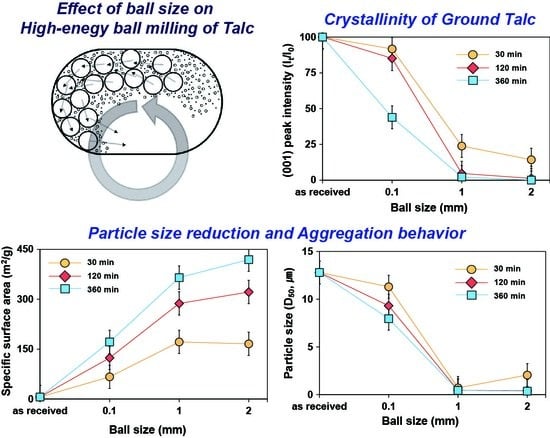
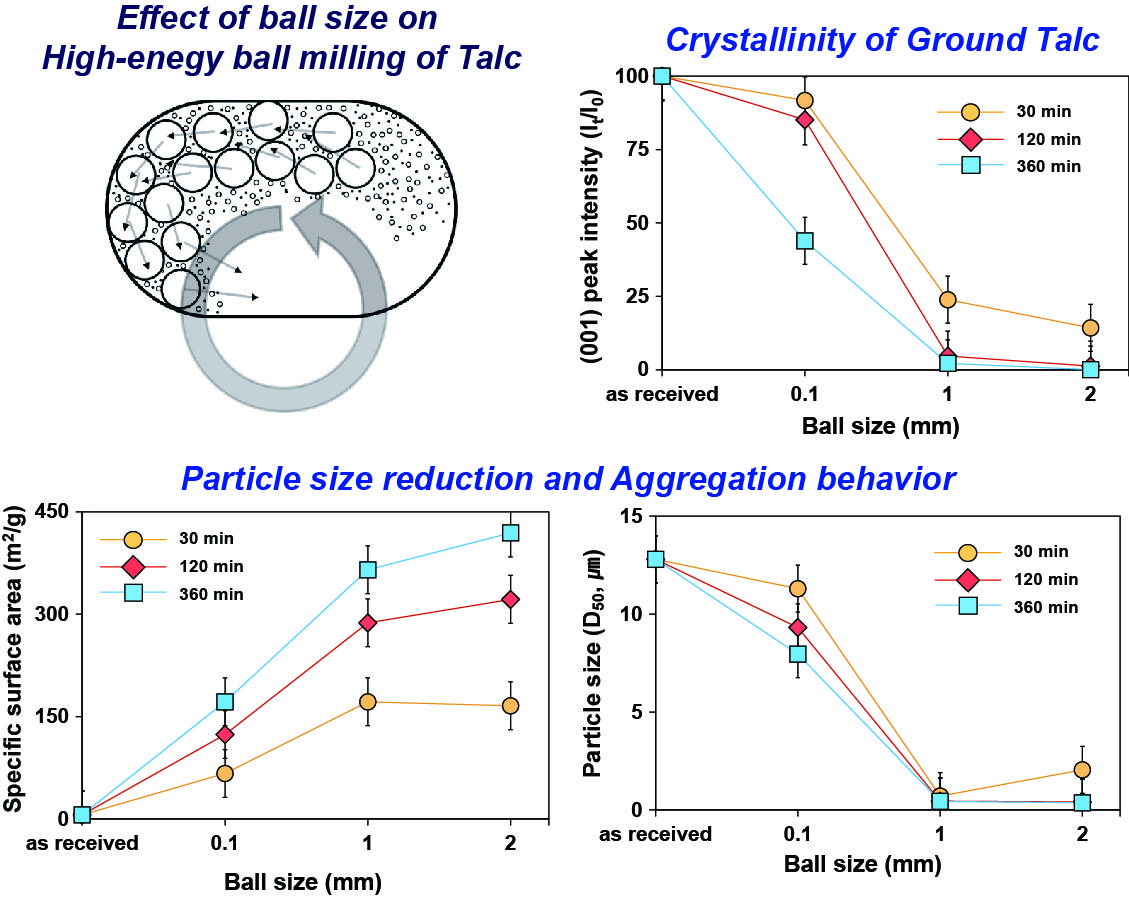
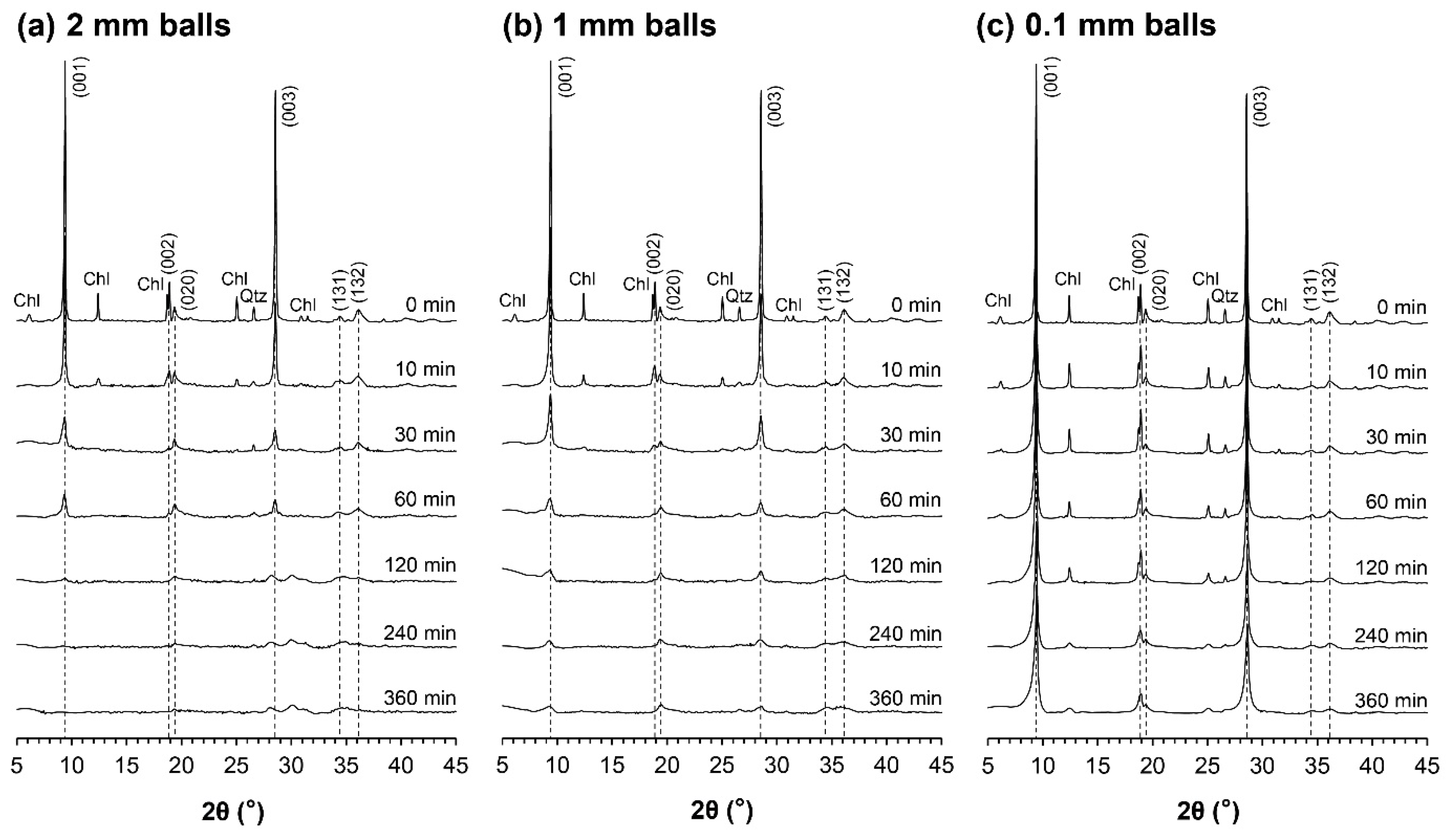
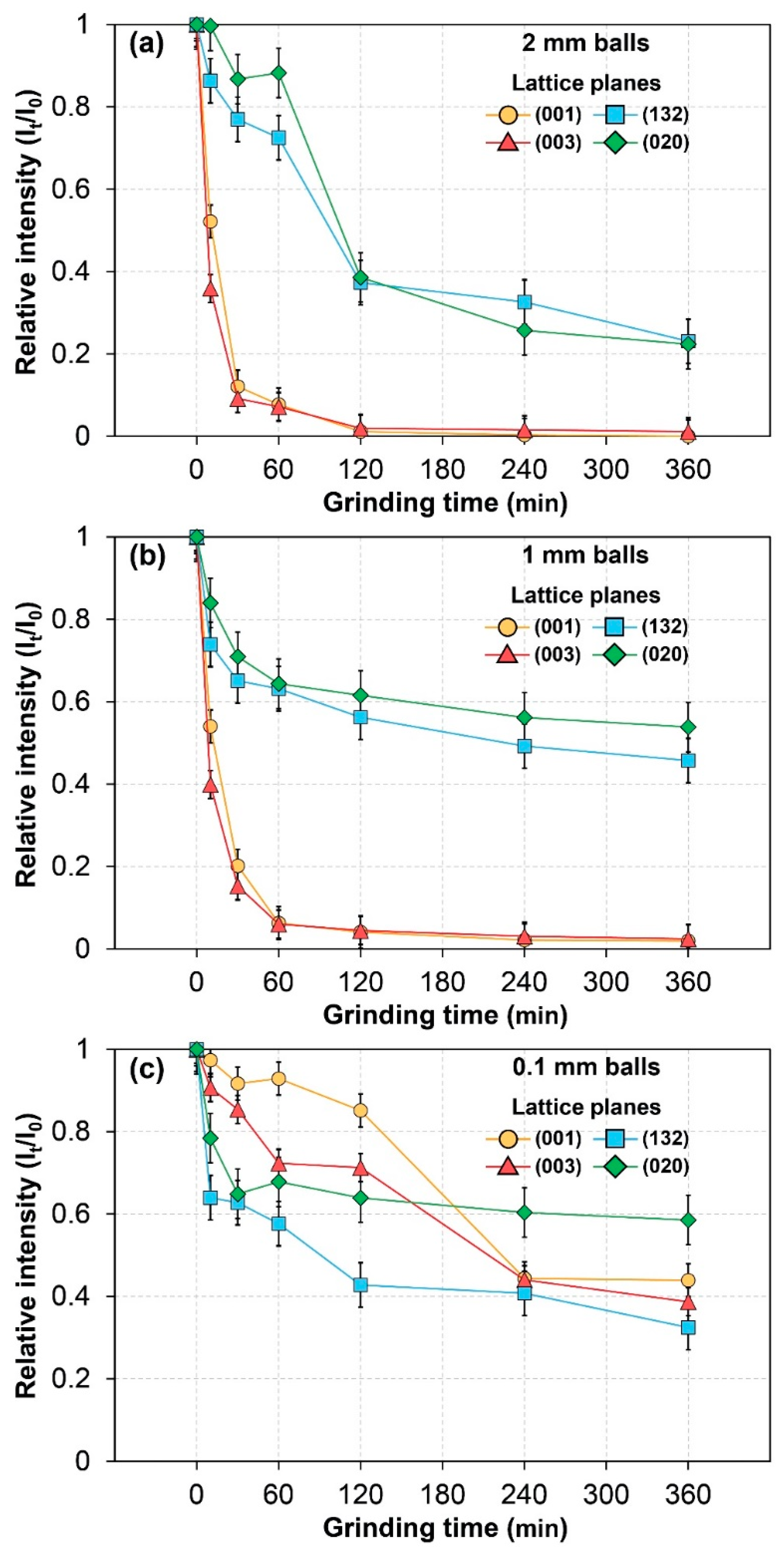
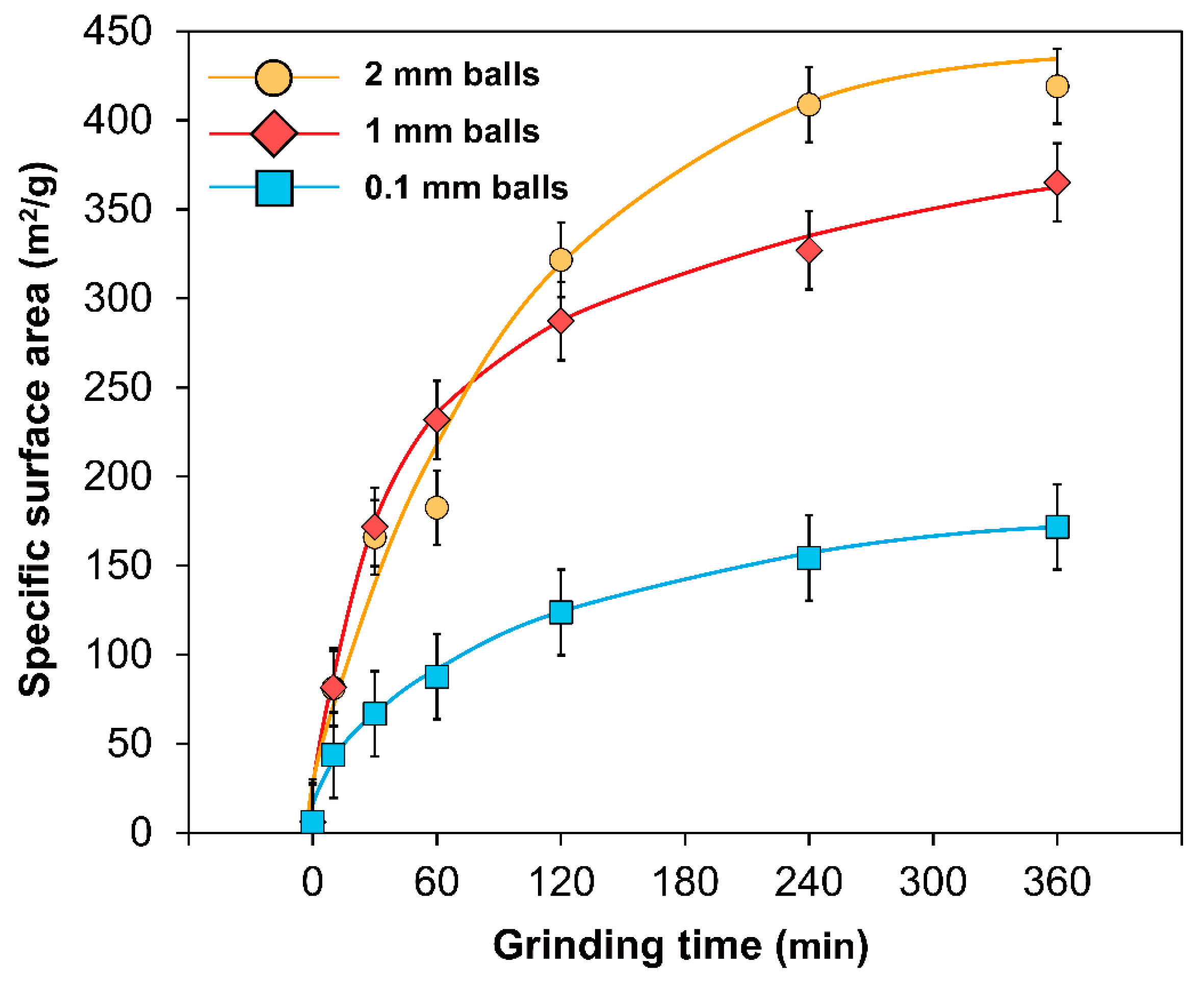
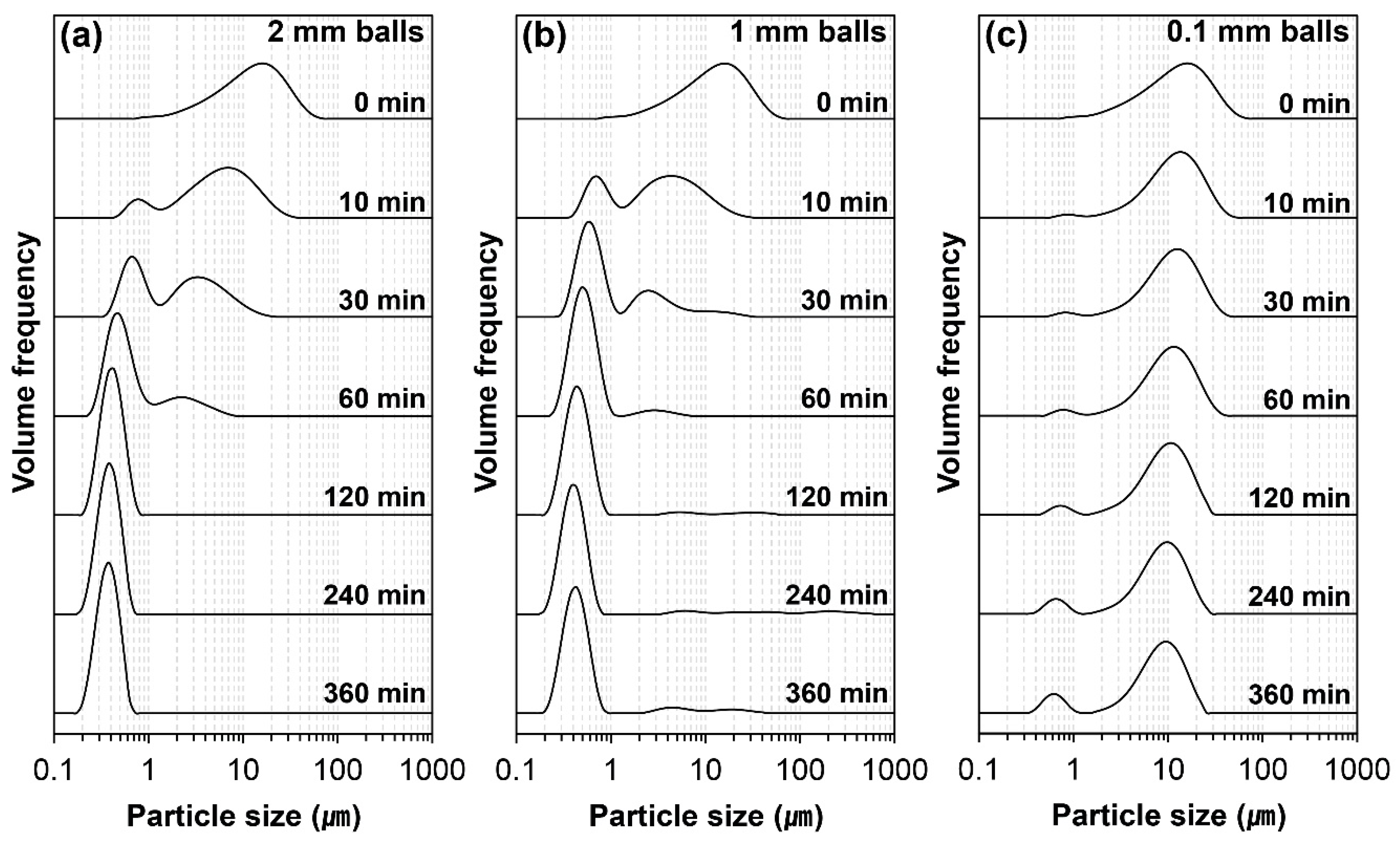
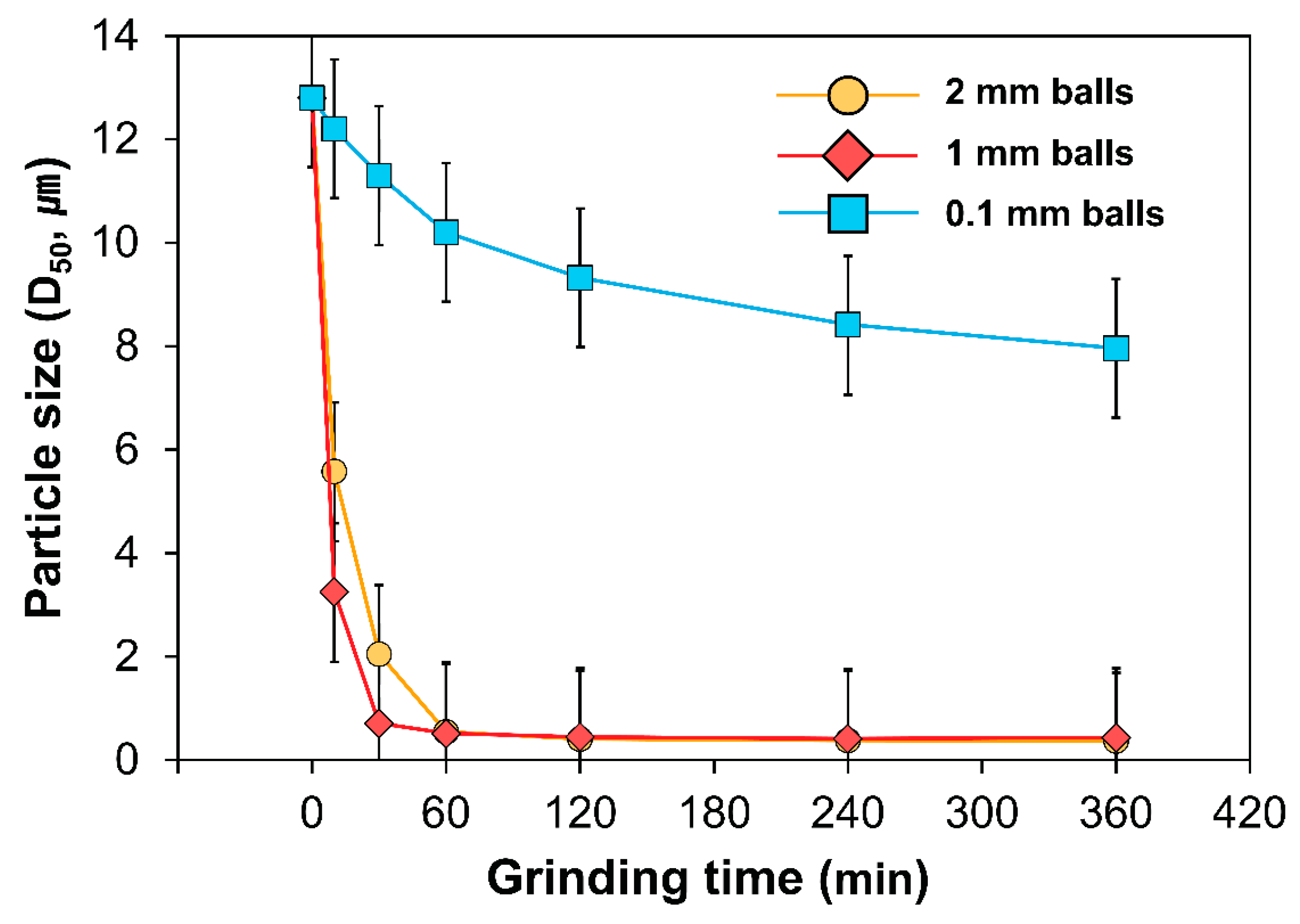
The properties and preparation of talc have long been investigated due to its diverse industrial applications, which have expanded recently. However, its comminution behavior is not yet fully understood. Therefore, having better control of the particle size and properties of talc during manufacturing is required. In this study, we investigate the effect of the ball size in a high-energy ball mill on the comminution rate and particle size reduction. High-energy ball milling at 2000 rpm produces ultrafine talc particles with a surface area of 419.1 m2/g and an estimated spherical diameter of 5.1 nm. Increasing the ball size from 0.1 mm to 2 mm increases the comminution rate and produces smaller talc particles. The delamination of (00l) layers is the main comminution behavior when using 1 mm and 2 mm balls, but both the delamination and rupture of (00l) layers occurs when using 0.1 mm balls. The aggregation behavior of ground talc is also affected by the ball size. Larger aggregations form in aqueous solution when ground with 0.1 mm balls than with 1 mm or 2 mm balls, which highlights the different hydro-phobicities of ground talc. The results indicate that optimizing the ball size facilitates the formation of talc particles of a suitable size, crystallinity, and aggregation properties.
Keywords: nanoscale talc; wet milling; high-energy ball milling; ball size; aggregation nanoscale talc; wet milling; high-energy ball milling; ball size; aggregation
Graphical Abstract