Article

The Cause of Burial Diagenesis in Sandstones Revealed by Authigenic Clay Minerals

by
Nicolaas Molenaar
Molenaar GeoConsulting, Richard Wagnerlaan 11, 2253 CA Voorschoten, The Netherlands
Minerals 2026, 16(7), 714; https://doi.org/10.3390/min16070714 (registering DOI)
Submission received: 30 March 2026 / Revised: 14 June 2026 / Accepted: 25 June 2026 / Published: 8 July 2026
(This article belongs to the Section Clays and Engineered Mineral Materials)

Abstract

Clay mineral diagenesis occurs in all buried siliciclastic sediments, albeit fine-grained and low-permeable or coarse-grained and highly permeable. Because of the limited permeability after compaction, this sheds doubt on the presumption that fluid flow is a causal factor in burial diagenesis besides temperature and effective pressure conditions. To assess the influence of fluid flow on their diagenesis, a number of sandstones have been studied focusing on clay minerals. In the studied sandstones, the authigenic clay minerals show a considerable variation in their chemical composition and mineralogy. In particular, authigenic illite and chlorite are common as authigenic cements in sandstones, often forming grain-rimming cements. Each of these two authigenic clay minerals varies distinctly in chemical composition, mineralogy and crystal habit at a small scale, compared to individual pores and laminae/beds. This indicates that local conditions determined not only which authigenic clay minerals formed, but also their chemical composition. Local conditions include the detrital mineral assemblage, specific textural features including clay grain coatings, and the ratio of the volume of susceptible components to pores. During burial diagenesis, a number of elements involved in clay mineral authigenesis, including Al, K, Mg and Fe, are locally fixed by clay mineral precipitation. In addition, diagenesis is driven by the amount and distribution of susceptible detrital components and the changes in physical conditions including temperature and effective pressure. The physical conditions allow chemical processes to commence and continue. The evidence presented is inconsistent with external fluid flow as a causal agent of burial diagenesis, supporting a largely closed, diagenetic system.

1. Introduction

The assumption of an open geochemical system characterized by basin-wide fluid flow has long been treated as near-axiomatic in sandstone burial diagenesis [1,2,3,4,5,6]. The evidence is, however, not always conclusive and convincing; in fact, it is contrary to other diagenetic models that assume continuous changes in sediment properties through diagenesis with increasing burial depth. For instance, porosity–depth curves and models depict gradual changes in porosity decrease with increasing depth [7,8,9]. Compaction-driven flow takes place mostly during the first hundreds of meters of burial depth [10]. Afterwards, large-scale fluid flow would need specific conditions that do not generally exist. Burial diagenesis is a basin-wide phenomenon, and flow should thus also operate on the same basin scale, and not be restricted to permeable and interconnected sediments. Besides compaction, the only other mechanism to induce flow is tectonic activity. If such fluid flow would indeed cause diagenesis, then burial diagenesis must be linked to tectonic activity. Haphazardly occurring phases of fluid flow would imply that burial diagenesis is an event-like phenomenon with irregular timing, and diagenesis would be more or less unrelated to the burial depth. However, general trends in diagenetic processes, general associations with temperature and effective pressure conditions, and paragenesis of burial diagenetic processes can be deduced from the available data from numerous studies. This indicates that diagenesis is caused by agents that operate generally, albeit with a variable degree of effectivity, and diagenesis is not determined by large-scale fluid flow. Instead, diagenesis results in a more or less typical depth-related trend of processes, products and certain modifications of the original sediment. This, for instance, includes a progressive loss of feldspar and thus a loss in provenance information [1,2].
A potential model opposite to large-scale fluid flow is a closed diagenetic system where mass is largely preserved within the sandstone bodies [11]. Upon the dissolution of detrital minerals, less soluble elements and coprecipitating elements would be expected to form new minerals more or less in situ. More soluble elements may precipitate at some distance according to local geochemical conditions and solubility. It is expected that the distribution of soluble diagenetic susceptible minerals or detrital grains and the ratio of rock mass to pore fluid determine the outcome of diagenesis, i.e., the mineralogy and chemical composition of the authigenic minerals formed. The grain-size distribution, detrital composition and porosity are intrinsically heterogeneous in clastic sediments. These properties change between laminae and beds. This heterogeneity is reflected in the depositional sedimentary structures such as lamination and cross-lamination. These differences in mechanical and chemical susceptibility to diagenesis lead to local small-scale variability in the mineralogy and chemistry of the authigenic minerals. For instance, the mechanical stability of detrital grains determines the rate and final degree of compaction by grain deformation [12]. In contrast, large-scale fluid flow would cause a considerably more homogeneous distribution of authigenic minerals with uniform chemical composition. Only along the flow path, larger-scale trends could be expected in mineralogy, quantity and chemistry of authigenic minerals. If burial diagenesis takes place in a chemically closed system, it would imply that the chemical stability of detrital and early diagenetic–pedogenic components and their distribution determines burial diagenesis as soon as temperature and/or effective pressure increase allow for chemical reactions to start and reaction rates to increase.
Clay mineral diagenesis is amongst the most common set of diagenetic processes in siliciclastic sandstones, siltstones and shales. To solve the conundrum of fluid flow and diagenesis, the present study focuses on the diagenesis of clay minerals in coatings and rims around detrital grains. Various clay minerals occur as authigenic components forming rim cements in sandstones, including smectite, illite/smectite, illite, corrensite, and chlorite, amongst other clay minerals [13,14]. Besides the diverse and complex mineralogy, clay minerals are also notably chemically variable with various coprecipitating elements. For instance, authigenic illite shows variations in the K and Fe contents [15], similar to illite/smectite [16], whereas authigenic chlorite tends to show a compositional range from clinochlore to chamosite [15,17,18]. This makes both clay minerals suitable for analyzing and understanding their chemical and mineralogical variations and their impact on diagenesis in general. The main tools in this study are petrographic and chemical analyses for detecting variations in the chemical and mineralogical compositions of authigenic clay minerals at the scale of individual samples. For this, a number of siliciclastic sandstone formations with different ages, depositional settings and compositions are analyzed at the scale of individual pores, laminae and beds. The aim is to use the scale of chemical and mineralogical variations in authigenic clay minerals as a tool for understanding burial diagenesis.

2. Materials

Sandstones and siltstones were studied in a number of fluvial–aeolian and marine formations with their age ranging from Devonian to Oligocene: Middle Devonian shallow-marine quartz arenites in the Berkine Basin in Algeria; the fluvial–aeolian subarkosic sublitharenites of the Permian Rotliegend Slochteren Formation in the Netherlands [19] and the lateral equivalent Havel and Elbe Subgroups in Germany; the Triassic fluvial Middle Buntsandstein Group in the West Netherlands Basin (sublitharenites, subarkoses and quartz arenites) and in Hesse (sublitharenites–subarkoses) and Thuringia (mainly subarkoses and arkoses) in the mid-German Basin [20]; the marine Triassic Skagerrak Formation in the North Sea [21]; the marine subarkoses, arkoses and sublitharenites of the Upper Jurassic (Oxfordian-Kimmeridgian) Fulmar Formation in the North Sea [22]; and the deltaic-marine Oligocene lower Vicksburg Formation in the USA. In addition, published datasets were used: the Lower Devonian alluvial–fluvial Bois d’Ausse and Acoz Formations (sublitharenites–litharenites) and the arkoses and subarkoses of the shallow-marine Upper Devonian (Famennian) Evieux and Montfort Formations in the Belgian–German Ardennes-Rheinische Schiefergebirge [23]. These sandstones have in common that they contain authigenic clay mineral cements in intergranular pores. Additional authigenic clay minerals can occur in intragranular pores in slightly to partly dissolved detrital feldspars.

3. Methods

Core plug samples were taken from several formations: the Permian (Rotliegend) Slochteren Formation in the Netherlands (The Southern Permian Basin), the Middle Buntsandstein Group in Hesse and Thuringia (the North German Basin), and the Jurassic Fulmar Formation in the North Sea. Standard and polished thin sections (prepared from samples vacuum-impregnated with oil blue A-dyed resin) of all of the mentioned formations were petrographically studied by polarized-light and scanning electron microscopy (both conventional SEM and environmental ESEM). The clay minerals in clay cutans and cement rims were analyzed on polished thin sections by scanning electron microscopy with back-scattered and secondary electron imaging using FEI Quanta ESEM-EDX 200 FEG and FEI Quanta SEM–EDX 250 (both from Thermo Fisher Scientific, Oregon, USA). The chemical composition of the clay minerals (mainly illite, illite/smectite and chlorite) was determined by energy-dispersive X-ray analysis (EDX). Oxides and elements analyzed were SiO2, TiO2, Al2O3, FeO, MnO, MgO, CaO, Na2O, K2O, P2O5, BaO, F, and Cl. Measurements with very high Cl content (from the araldite resin) or a total oxide content below 90% were discarded. Results were recalculated to 100% oxides. Selected published datasets were used to augment and to compare with the own data and put the results in a wider general framework.

4. Results

4.1. Composition

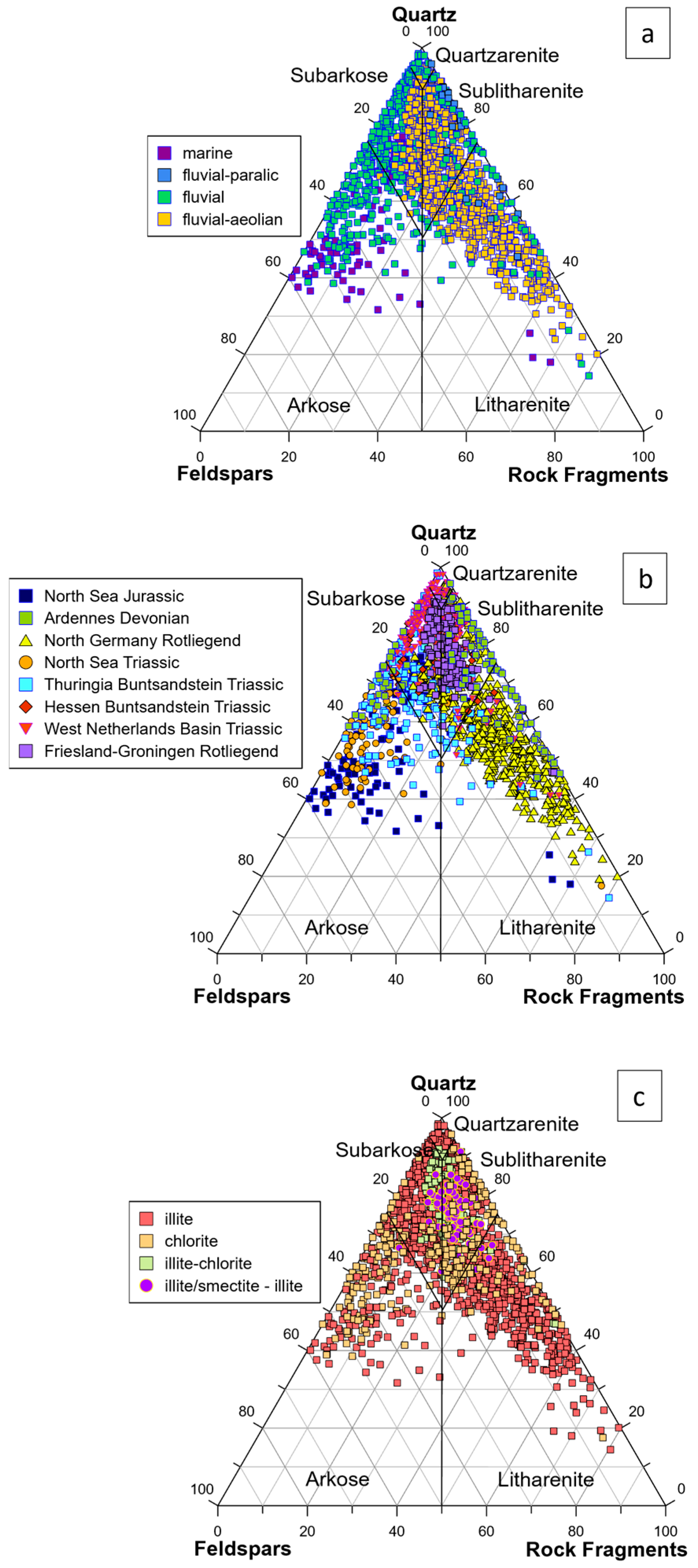
The studied sandstone formations comprise fluvial, aeolian and marine deposits with different detrital composition. Most of these sandstones are parallel laminated or cross-laminated, with often distinct grain-size differences between the laminae. Structureless or vaguely laminated sandstones occur in the basal parts of flashflood deposits in the Slochteren Formation [24]. The detrital compositions of the studied formations show a wide range from arkose and litharenite to quartz arenite (classification based on percentages of quartz, feldspar and rock fragments (QFL) according to Pettijohn [25]. This reflects differences in provenance, as could be expected because of their different basin settings (Figure 1a). Figure 1b shows the spread in the main depositional facies, and Figure 1c shows the mineralogy of the authigenic clay. The detrital composition is highly variable not only in the gross detrital composition of individual formations but also at the scale of laminae and beds. At the lamina scale, the detrital composition varies markedly between two compositional endmembers: coarser-grained, quartz-rich and feldspathic laminae on the one hand and finer-grained claystone and/or micaceous-rich laminae on the other [20]. Petrographic analysis indicates that all studied sandstones exhibit textures consistent with maximum mechanical compaction.
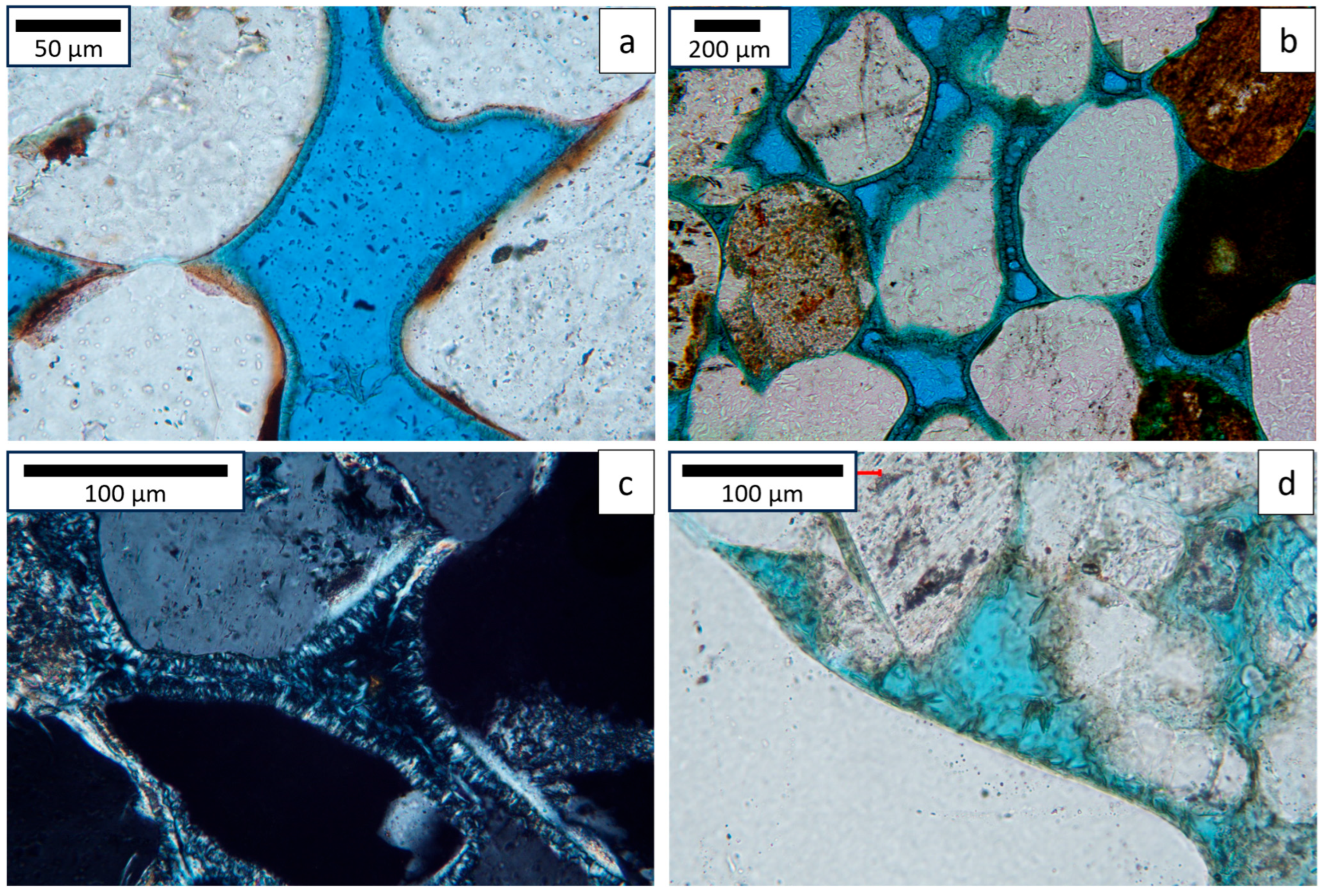
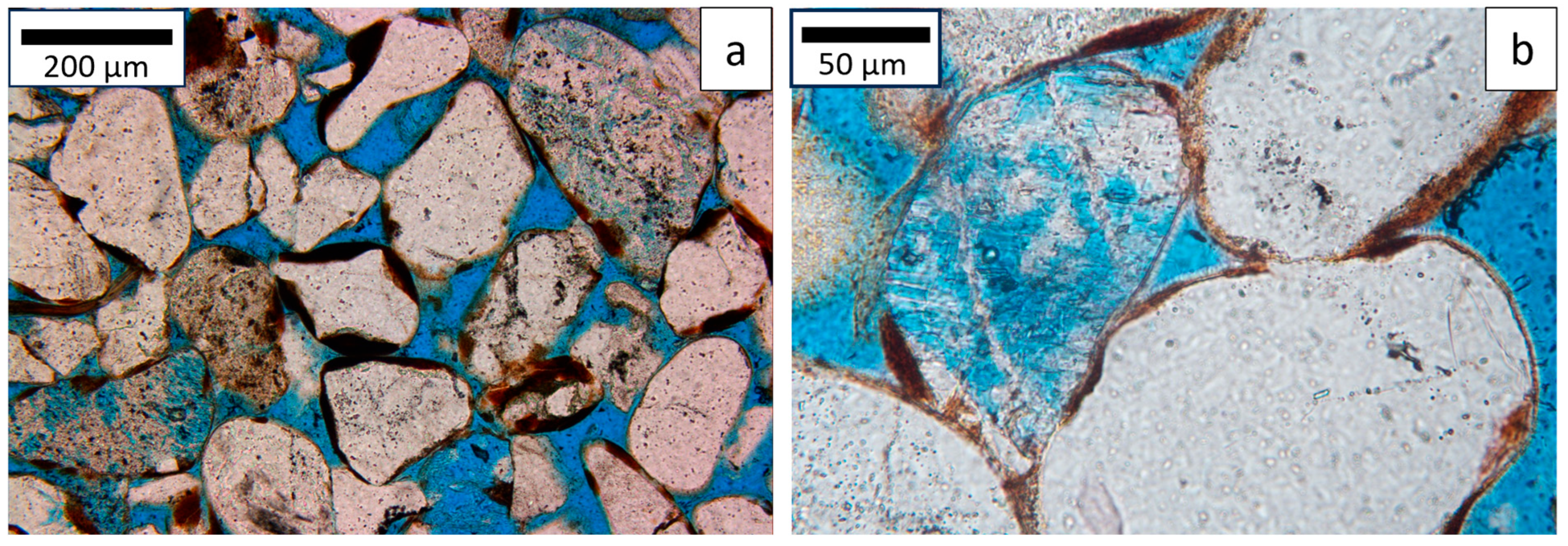
A large part of the fluvial, aeolian and marine sandstones in the studied formations contain clayey material in the form of clay coatings, called clay cutans [26], as coatings around detrital grains (Figure 2a,b). These are the result of infiltration of clay suspensions into still loose sand or silt at the paleosurface shortly after or during late phases of deposition [27,28]. At the time of deposition, clay cutans were originally composed of clay-sized detrital particles, mainly clay minerals [28], but after burial diagenesis, they contain both detrital and authigenic clay minerals. The clay cutans are mostly formed in situ during periods of non-deposition within the depositional basins, but can also be redeposited and inherited by intrabasinal erosion and redeposition even in aeolian dune deposits [29]. Inherited clay cutans are usually worn during transport and are incomplete. Authigenic clay minerals are associated with the clay cutans, including illite, illite/smectite and chlorite formed during burial diagenesis.
Clay cutans consist of single or multiple microlaminae composed of clay-sized particles that are aligned parallel to the underlying surface. The clay-sized particles are usually mainly clay minerals and micas, with occasional clay- to silt-sized quartz and hematite. The color of the clay cutans ranges from red-brown (containing small amounts of hematite) to light gray. The composition and size of the particles comprising the microlaminae can differ between the microlaminae. The thickness of clay cutans is highly variable, as is their completeness or coverage of detrital grains. The thickness usually ranges from less than 1 µm to about 5 micron but can be up to 20 µm. The clay cutans are thicker in embayments in grains than in exposed parts (Figure 2a). The clay cutans are more common, thicker and more complete in finer-grained sandstone or where grains are more densely packed or poorly sorted. Clay cutans can completely fill smaller intergranular pores in finer-grained laminae and in parts of the sandstones with denser grain packing, for instance, due to poorer grain sorting. All sandstones are compacted, and clay cutans therefore may apparently occur at grain-to-grain contacts (Figure 2b). The range of textural features and the relation to the grain size resulted in a high heterogeneity of clay cutan abundance and distribution.

4.2. Authigenic Illite and Illite/Smectite

Illite and illite/smectite are common authigenic clay minerals in the studied sandstones. The authigenic illite and illite/smectite usually occur separately but occasionally in combination with chlorite as a later authigenic phase. Illite and illite/smectite can occur as authigenic intergranular cements together. In the studied sandstones, these authigenic clay minerals were observed exclusively in sandstones that contain clay cutans. The authigenic clay minerals occur within and on top of the clay cutans. Illite/smectite is more common within clay cutans but can also form the inner part of rims. Illite occurs in clay cutans and is dominant in the rims (Figure 3). Usually, the clay mineralogy in the rims reflects the general clay mineralogy in the sandstones and, in particular, the authigenic clay minerals in the clay cutans. Clay cutans composed of illite or illite/smectite have rims composed of illite/smectite or more often just illite. Similarly, clay cutans with chlorite have rims composed of chlorite. In some cases, the mineralogy varies from illite-rich in the inner part of the clay cutans, towards a mixture of illite and chlorite on the outer side of the clay cutans, to chlorite in the rims.
The authigenic clay mineral rims line the intergranular pores and are usually absent from point-to-point grain contacts. Crystals in the rims near grain-to-grain contacts are not deformed or bent. The illite is formed after compaction in sandstones with the maximum degree of mechanical compaction because early diagenetic cements are absent. Sometimes, the clay cutans with their cement rims are detached from the underlying grains and partly displaced into the intergranular pore space. Some authigenic clay can be present on the lower side of these deformed clay cutans.
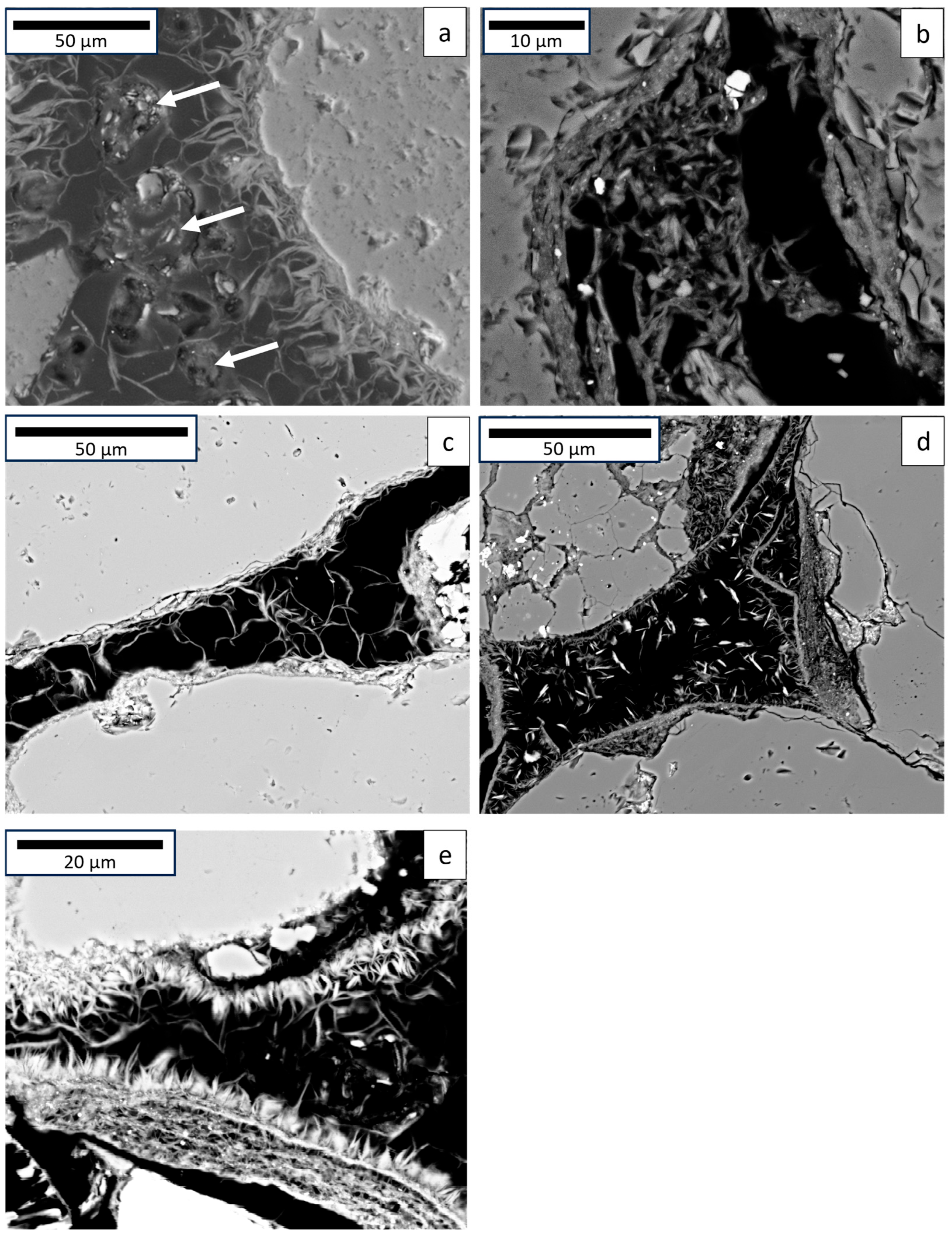
Not only is the chemical composition variable within a single authigenic mineral, but also sometimes the mineralogy changes from the clay cutans outwards into the intergranular pores from illite/smectite to illite. The various features of the authigenic illite, including crystal spacing, habit, and size, are all variable between samples and formations but also within a single sample. Moreover, the thickness of the rims is variable at the same scales, as well as the presence of more than a single generation of authigenic illite. Also, the spacing of the illite crystal varies from very close to widely spaced. The thickness of the clay cutans and the rims is variable even within a single sample and a single intergranular pore. The illite rim thickness is highly variable, ranging from a few µm to around 20 µm. There is some positive correlation between clay cutan thickness and illite rim thickness: thicker clay cutans usually have thicker illite rims. The density of illite crystals in the rims also tends to reflect the thickness of the underlying clay cutans. Generally, the illite crystals in the rims in sandstones of the Permian Slochteren Formation and the Middle Buntsandstein Group are oriented perpendicular to the underlying clay cutan outer surface. The amount of authigenic illite ranges from a few crystals on the clay cutans to densely spaced crystals. The boundary between clay cutans and rims can be sharp, but also gradually transitional (Figure 4a) with illite crystals arranged from tangential to oblique and perpendicular in the mid and outer rims. The crystal size forming the rims can increase from within or from the top of the underlying clay cutans outwards. The illite rims are often composed of a single illite generation, but in some cases, the illite rims are composed of two layers with different crystal orientations and crystal sizes and shapes, representing two different generations of authigenic illite. This denotes changes in the chemical conditions during illite precipitation. The first layer of the cement rims is composed of closely spaced illite crystals perpendicular to the underlying clay cutans (Figure 3a–c), or a rim with widely spaced and larger illite crystals usually obliquely to randomly oriented (Figure 3d). Smaller intergranular pores may contain a kind of meshwork illite. The illite morphology can thus be different between individual pores within the same sample. Also, the thickness of rims can vary throughout an individual sample and even within a single intergranular pore. A second generation of authigenic illite grew either from the crystals forming the rim cement or directly from the clay cutans. This second illite generation is often composed of bladed or fibrous crystals or a kind of meshwork fabric that can fill intergranular pores completely (Figure 4). Also, more randomly oriented illite crystal textures or fibrous illite crystals occur. These are a later generation of authigenic illite, which grew on top of the rim illite. Illite/smectite rims consist of a kind of honeycomb texture. Illite rim crystals’ shape varies from plates to blades. The platy illite crystals are composite crystals comprising amalgamated illite blades or fibers. The bladed and fibrous illite crystals are more randomly oriented on top of the rims. They occur only in larger intergranular pores.
Although most of the authigenic illite forms rims or meshworks on top of the clay cutans, there can be substantial authigenic illite within thicker clay cutans and also in and around intrabasinal claystone grains. Very thin clay cutans usually still retain their microlamination and internal parallel particle orientation. Thicker clay cutans often contain authigenic illite. The growth of these latter illite crystals, as well as illite/smectite crystals, disturbs the microlamination and distorts the parallel particle orientation. Clay cutans are generally, despite compaction, still attached to the detrital grain surfaces. Sometimes, clay cutan microlaminae can be detached together with their illite rim due to compaction and relative grain movement (Figure 4d). Here, authigenic illite may have precipitated within the spaces between grain surfaces and clay cutans and also in between separated microlaminae (Figure 4e).
The volume of illite in the meshworks and fibrous rims (Figure 4c,d) is very small, similar to chlorite rims. The rims contain ample micropores between the illite and illite/smectite as well as chlorite crystals [30]. In all cases, the porosity of the sandstone is therefore reduced marginally, but macropores are partly converted into micropores, which negatively affects the permeability.
Besides the illite rim cement and authigenic illite in clay cutans, authigenic illite also occurs as a replacement of partly dissolved K-feldspar (monomineralic) grains or crystals in polymineralic detrital lithic grains. This type of authigenic illite is of a different origin and has formed independently from the authigenic illite in clay cutans and in rim cements. It occurs in sandstones with and without clay cutans and is dependent on the presence of detrital K-feldspar.

4.3. Authigenic Chlorite

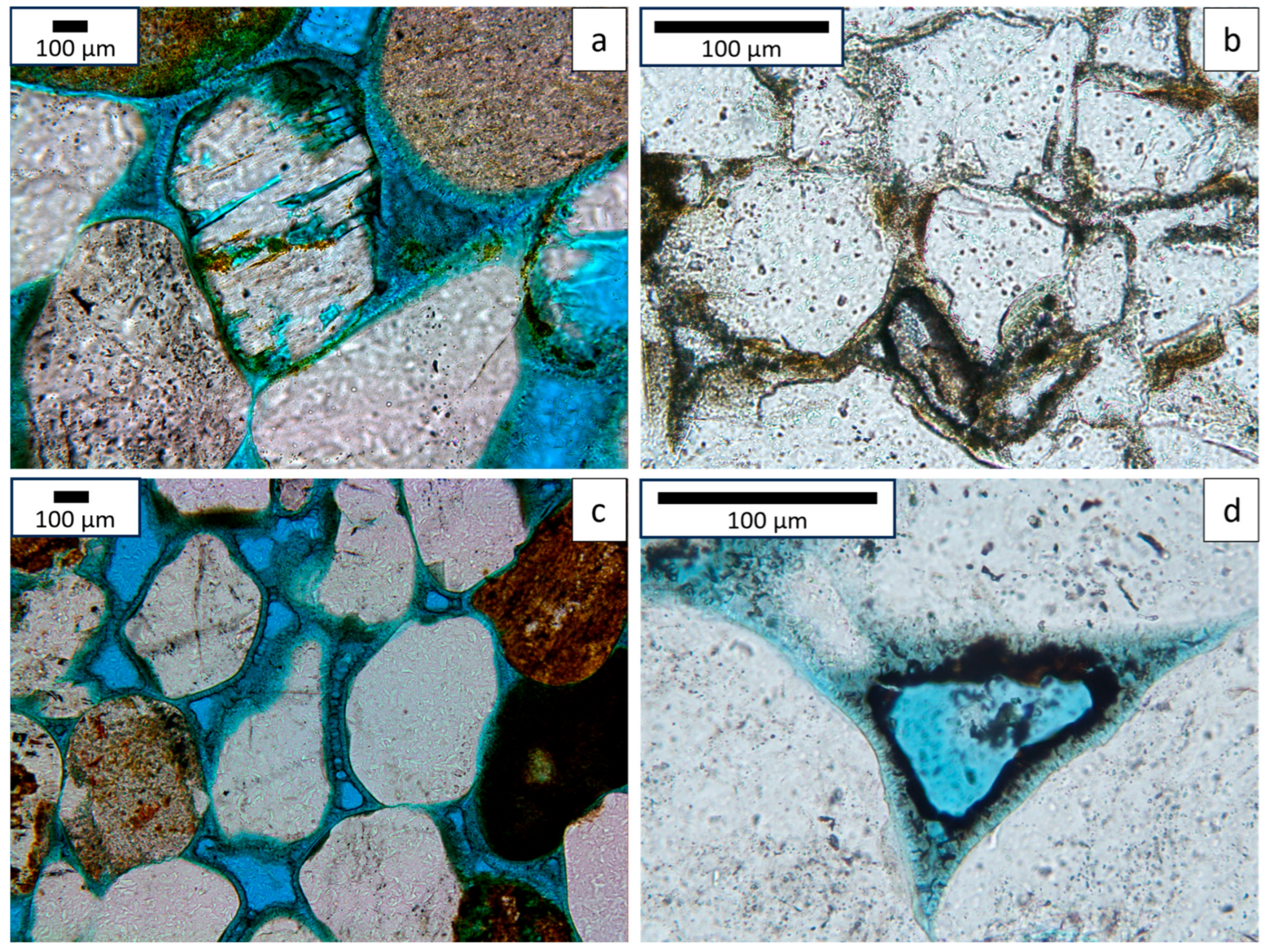
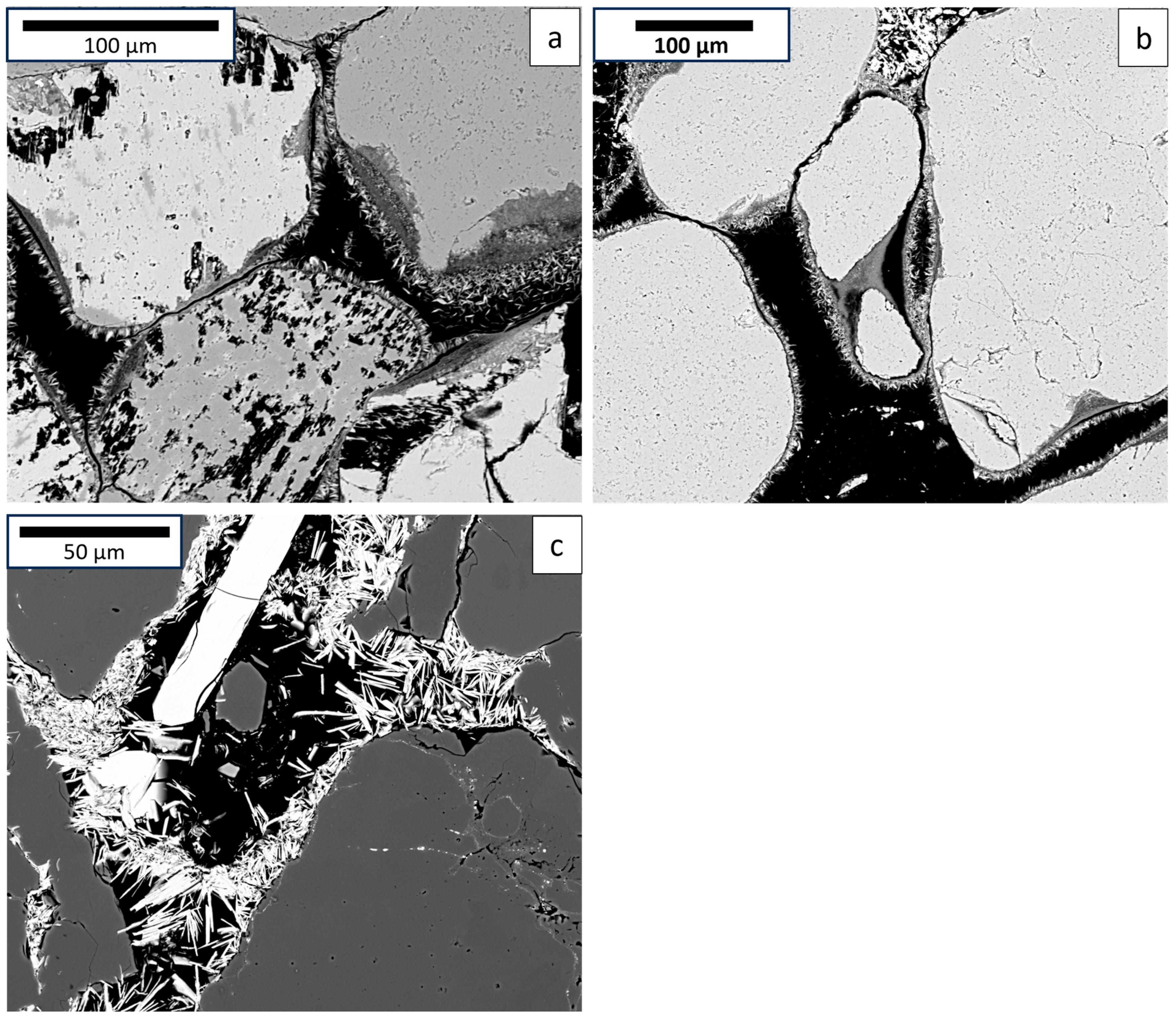
Authigenic chlorite and illite usually occur in different basin regions or in separate stratigraphic levels. For instance, in sandstones of the Rotliegend Slochteren Formation in the Netherlands and stratigraphically equivalent formations in Germany, illite rim cement is dominant, but chlorite rims occur in specific stratigraphic levels in the same well or area [31]. When both illite and chlorite are present in the same stratigraphic interval or within a single bed, they form two distinct generations of clay mineral authigenesis. Although the crystal form and habit of authigenic chlorite and illite are different, they have many similarities. Similar to authigenic illite, authigenic chlorite also forms rims around grains with clay cutans (Figure 5 and Figure 6). Authigenic chlorite also formed within the clay cutans. In the case of thin clay cutans, the chlorite only formed rims, with the density of crystals varying from widely spaced (Figure 5a) to closely spaced (Figure 5b) in a kind of honeycomb-rosette structure. In the case of thicker clay cutans, the chlorite also precipitated within the clay cutans and forms a gradual transition between clay cutans and rims. Often, the chlorite crystal size increases from within or directly on top of the underlying clay cutan outwards into the intergranular pores. The microlamination and particle orientation within the clay cutans can be disturbed by the newly displacively grown chlorite crystals. Authigenic chlorite also occurs in intrabasinal claystone grains. The rim thickness ranges between 3.5 and 13 µm but up to 25 µm in some cases, and varies within and between samples. The chlorite rim thickness changes within a single sample, reflecting the thickness of the clay cutans. Smaller intergranular pores can be completely filled with authigenic chlorite crystals, and pores between closely spaced grains can be bridged by chlorite crystals (Figure 5d). Chlorite crystals in the rims have variable orientations with respect to the clay cutans, but are mostly oriented with their long axis being perpendicular to slightly oblique to the underlying grains and clay cutans. In particular, in the outer part of rims or in a second generation of chlorite, the chlorite crystals are oriented more obliquely or more randomly (Figure 6). The transition between clay cutans and rim can be abrupt or gradual because of the authigenic chlorite within the clay cutans.
Chlorite rim cement in all studied sandstones occurs in intergranular pores between compacted and often closely packed detrital grains. Clay cutans occur between closely packed grains, whereas the authigenic chlorite rims are restricted to the remaining intergranular pores. The chlorite rims coat the clay cutans and also some grain surfaces, which are not covered with clay cutans after compaction. Also, in the Middle Devonian, in the Berkine Basin, authigenic chlorite forms rims on clay cutans in remnant intergranular pores in densely packed and highly compacted sandstones (Figure 5b and Figure 6c). The chlorite rims are occasionally covered with bitumen in Rotliegend Slochteren Formation sandstones (Figure 5d).
Usually, illite and illite/smectite and chlorite occur in separate regions of the Southern Permian Basin and in separate stratigraphic levels or different formations. Occasionally, a stratigraphic succession with dominant authigenic illite rim cement can be interrupted by an interval or intervals with chlorite rim cement. In some areas, authigenic chlorite is dominant. Sometimes, authigenic illite and chlorite occur together in the same Rotliegend sandstone, whereby the illite precipitated is first followed later by chlorite [32].
In some Rotliegend sandstones in the German part of the Southern Permian Basin, a later burial diagenetic generation of chlorite occurs, which forms crystal rosettes dispersed in intergranular pores, or (semi-)fans with larger crystal sizes than the chlorite present in the rim cements. These chlorite crystals nucleated freely in still open intergranular pores in the compacted sandstones. This late burial diagenetic generation of authigenic chlorite is apparently independent of clay cutans or other detrital or earlier diagenetic nuclei. This rosette chlorite type occurs in the deepest buried Rotliegend sandstones in the graben-like structures in North Germany.

4.4. Chemical Composition of Authigenic Illite and Chlorite

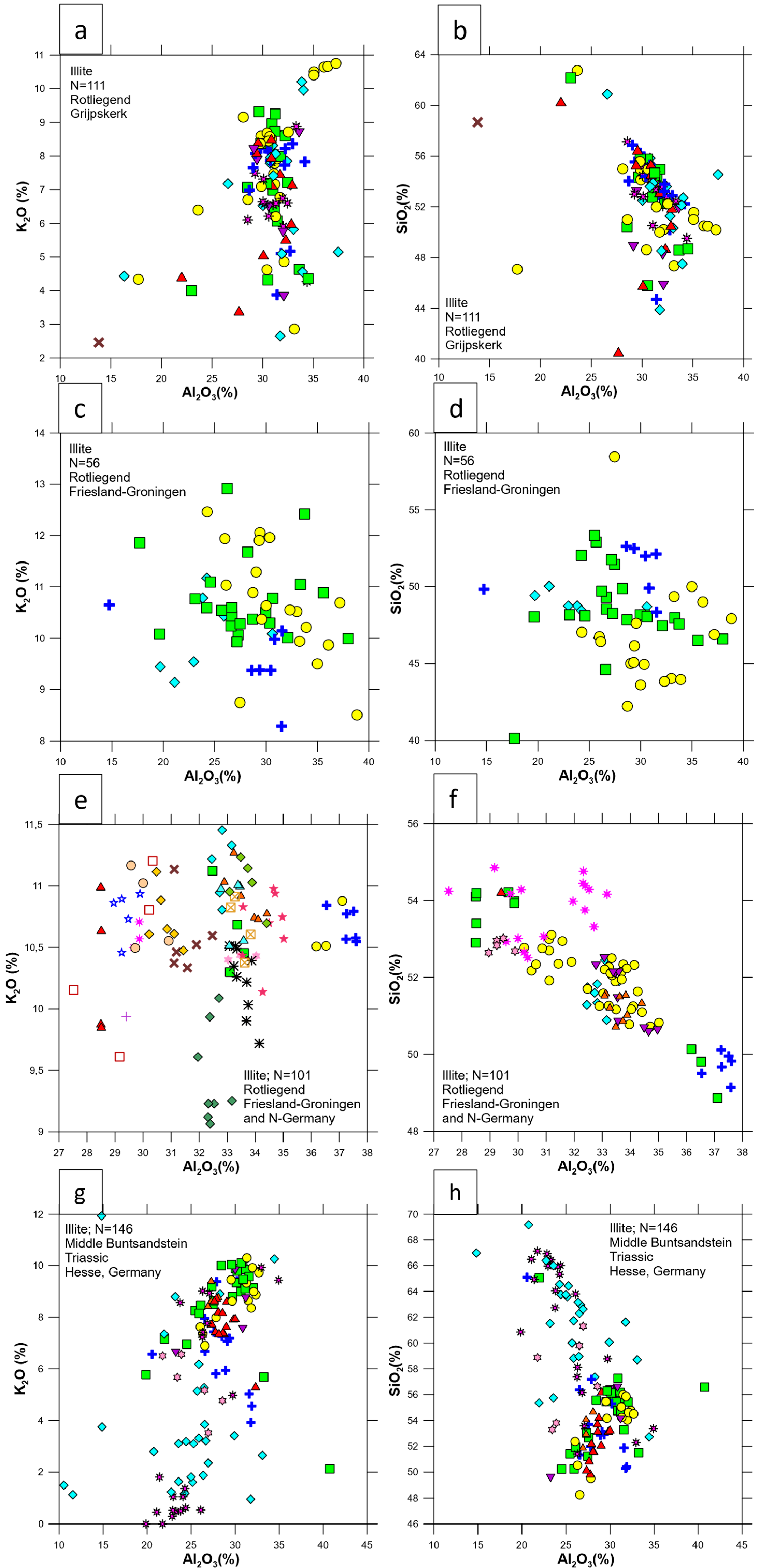
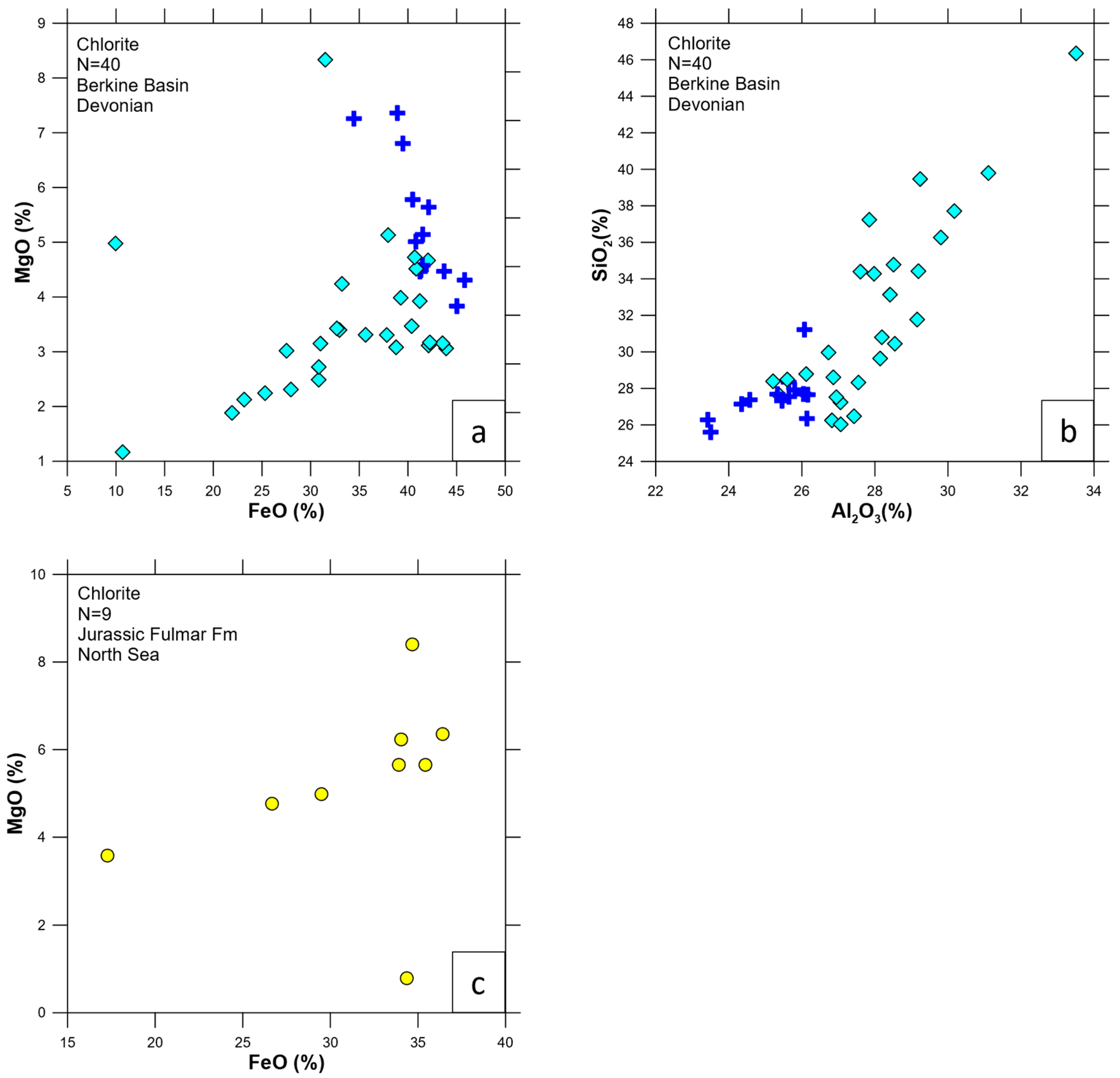
The SEM-EDX measurements obtained in this study show that the chemical composition of authigenic illite and chlorite in clay cutans, rims and meshwork crystals is highly variable. This chemical variability exists in single samples between laminae and even between and within single pores and adjacent pores, and also between samples in sandstone bodies within the same stratigraphic interval or formation. The variability is found in all studied formations: the Permian (Rotliegend) Slochteren Formation, the Middle Buntsandstein Group, and the Jurassic Fulmar Formation. The Al2O3, K2O and SiO2 contents in authigenic illite vary widely (Figure 7). In authigenic chlorite, the FeO versus MgO and the Al2O3 versus SiO2 contents in clay cutans and rims are distinctly variable (Figure 8). Most of the chlorite has a considerable MgO and FeO content range, with the mineralogical composition varying between the two endmembers, i.e., Mg-rich clinochlore and Fe-rich chamosite, which form a solid solution series. The illite, chlorite and clay cutans are Mn-poor.
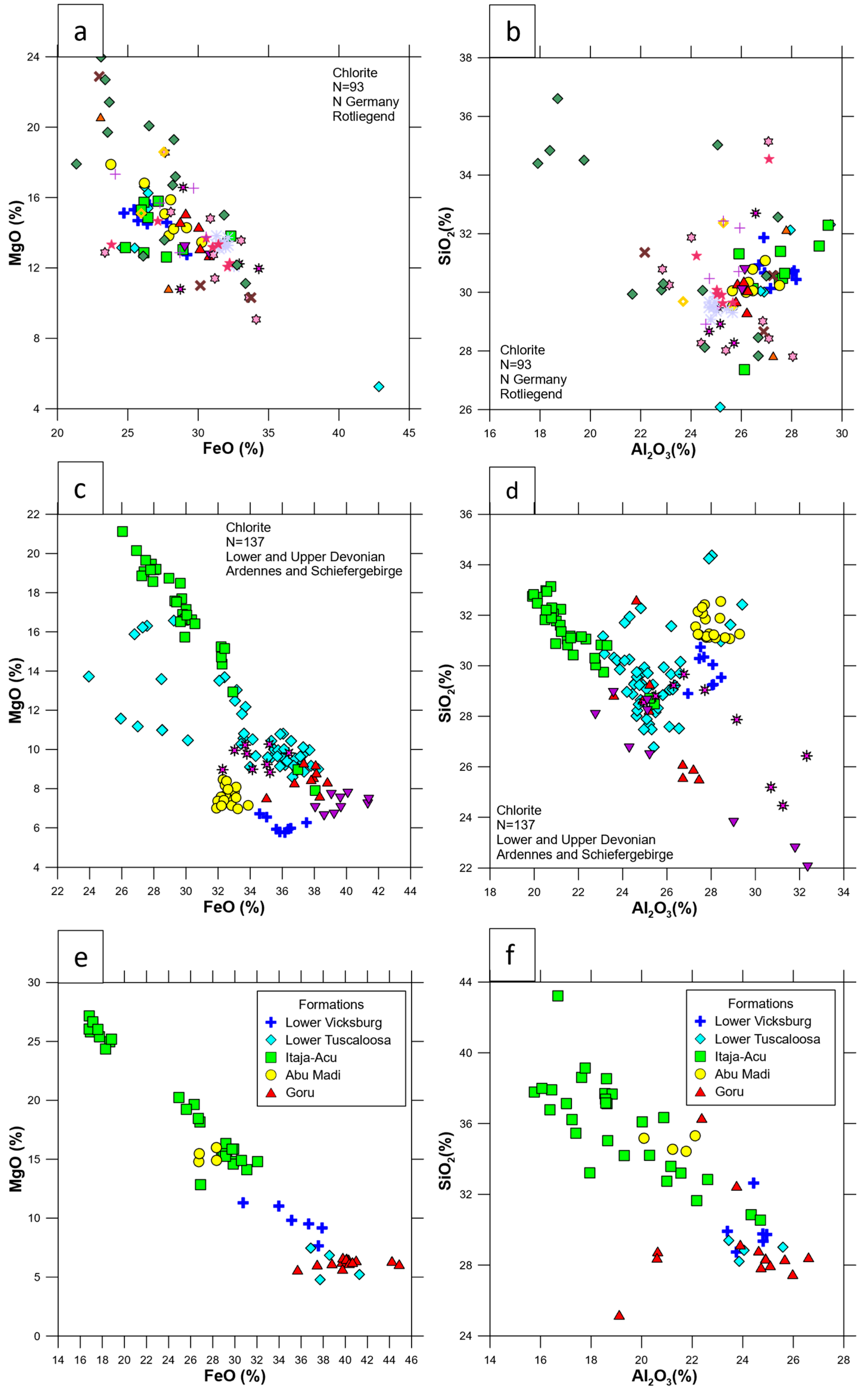
The results from our own analytical chemical data can be compared with a number of published datasets of illite and chlorite (Figure 9). For instance, the FeO versus MgO and the Al2O3 versus SiO2 contents of authigenic chlorite in German Rotliegend sandstones (Figure 9a,b), several Devonian sandstone formations in the Ardennes (Figure 9c,d), and selected formations of different ages and basins (Figure 9e,f) show similar variability. In all cases, including our own chemical data, the compositions of authigenic chlorites vary widely between the endmembers clinochlore and chamosite. They usually show a rather wide range per formation down to a single sample and even a single intergranular pore. All authigenic chlorite and illite display a consistent pattern of small-scale chemical variability.

5. Discussion

The main characteristics of the authigenic illite and chlorite are their small-scale chemical variability and their relation to clay cutans. Authigenic illite and chlorite vary in mineralogy, distribution, crystal shape and texture, amount, and their chemical composition. The crystal volume is small [30]. In all described cases, the authigenic clay minerals occur in association with clay cutans, forming coatings around detrital grains. Wherever these clay cutans occur, authigenic clay minerals are also present, within or on top of the clay cutans, but not otherwise. Moreover, clay mineral authigenesis is a regional feature in the studied sandstones, setting the general frame for explaining diagenesis [19]. These features explain the growth of authigenic clay minerals in general and help in understanding burial diagenesis.
One of the most stated explanations in the literature is that the chemical composition of both illite and chlorite reflects the temperature of formation. In many studies, it is assumed that the chemical composition of authigenic chlorite and illite is correlated to the temperature of precipitation; thus, a geothermometer can be used [15,35,36,37]. For geothermometry, most focus was on the use of chlorite [15,38]. Several algorithms have been developed mainly at first for use in hydrothermal systems [39,40] but also for sedimentary rocks [38], despite the fact that authigenic chlorite has a different origin in both systems. Diagenetic chlorites may also be interstratified with other clay minerals including smectite, saponite, vermiculite and illite, which would pose an insurmountable problem for paleotemperature modeling [38]. If correct, it would argue against the influence of factors, including the detrital composition, the detrital and sedimentological heterogeneity of siliciclastic sandstones, and the presence of clay cutans. The supposed temperature effect is therefore first scrutinized.
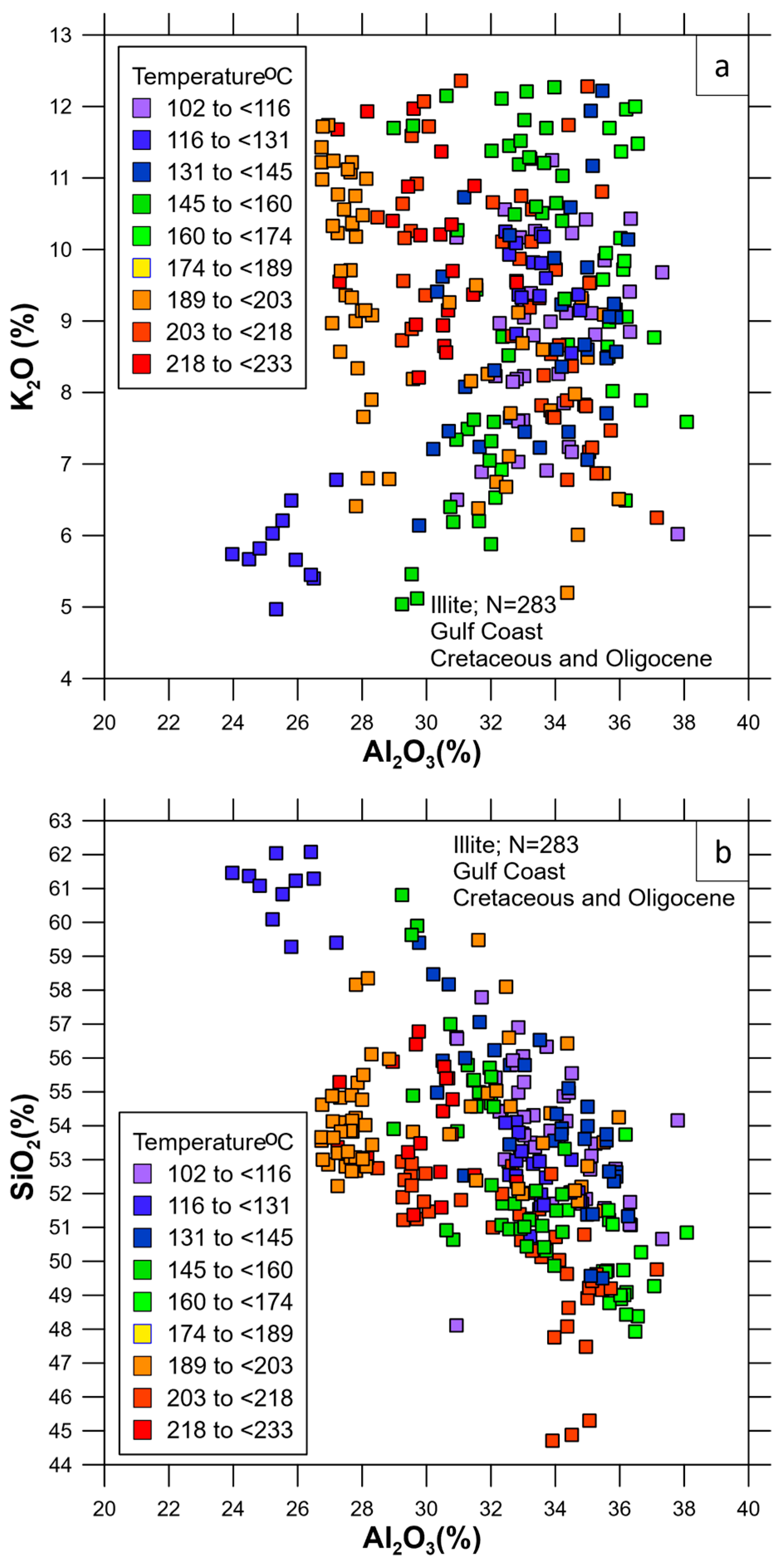
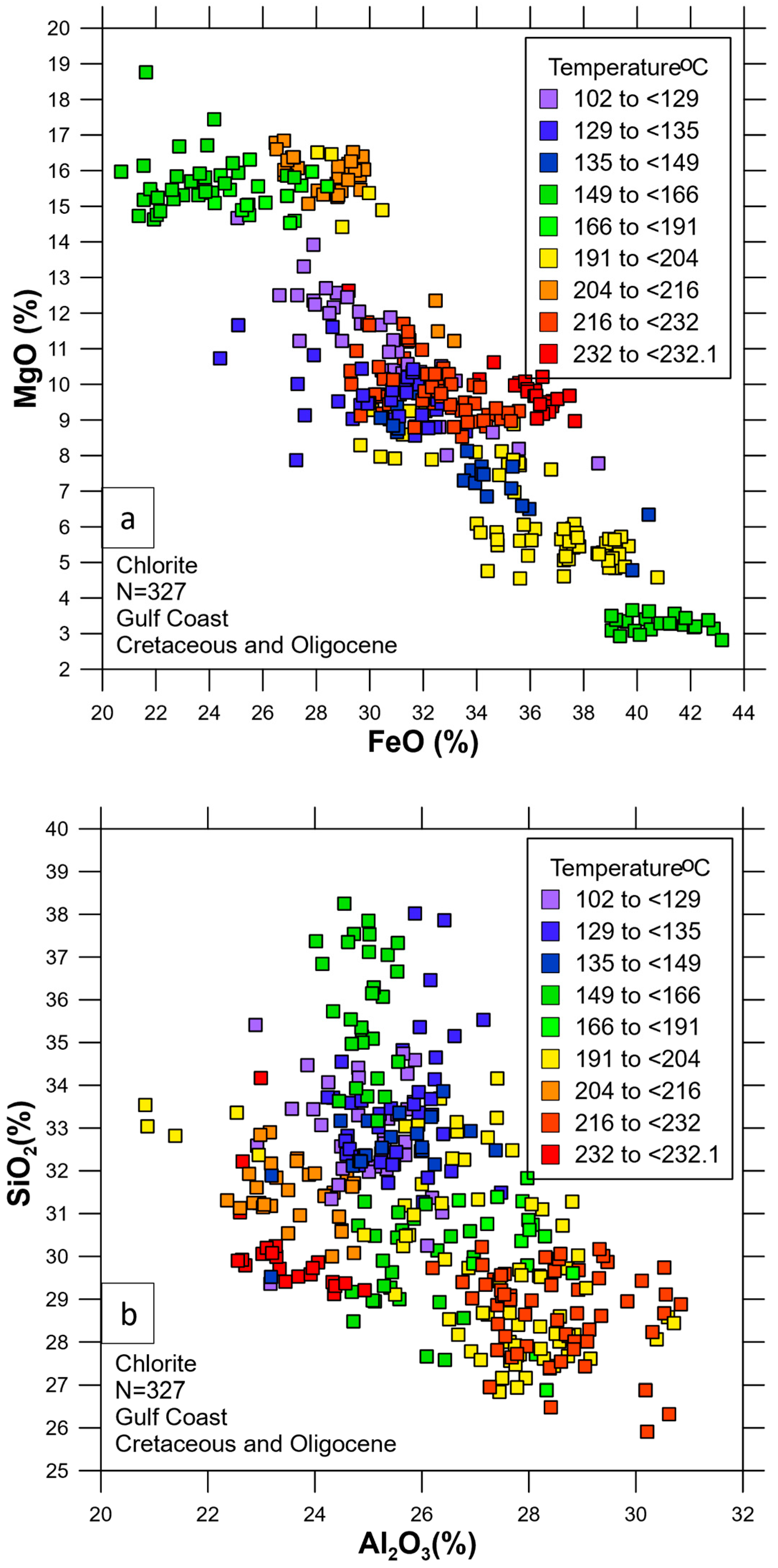
As it turns out, the various proposed geothermometers for chlorite are unreliable indicators for the temperature [39,40,41,42]. These authors concluded that, in the diagenetic realm, the composition of the host sediment is more important for the clay mineral composition than temperature. Other studies indicate that the calculated paleotemperatures are different for each of the different chlorite models used [43]. This is confirmed by the data from the present study and published data. Plotting the temperatures of formation of illite and chlorite against their chemical compositions reveals a high degree of scattering (Figure 10 and Figure 11). The chemical composition of authigenic illite in the diagenetic and low-grade metamorphic realms in terms of Al2O3 versus K2O contents is not correlated with the temperature of formation of the illite (Figure 10a) nor the SiO2 content [15] (Figure 10b). Similarly, the FeO and MgO (Figure 11a) and the Al2O3 versus SiO2 contents (Figure 11b) of authigenic chlorite in sandstones vary distinctly and independently of the maximum burial temperature (Figure 11). According to the results of this study, the variability in the chemical composition of illite and chlorite is even present within a small portion of individual sandstone samples down to single pores. This is incompatible with the assumption that merely temperature controls the chemical composition of these clay minerals in the diagenetic realm or in the low-grade metamorphic realms [44]. The effect of temperature in diagenetic conditions is thus very restricted or absent.

5.1. Timing of Clay Mineral Authigenesis

The illite and chlorite rims are absent within grain-to-grain contacts, and clay crystals in rims are not deformed near grain-to-grain contacts by the mutual movement of grains by compaction. Occasionally, the clay cutans with illite or chlorite cement rims are partly detached from the underlying grains because of compaction. In such cases, clay authigenesis took place before compaction finished completely, or merely additional chemical compaction took place. The combined observations suggest some variation in the timing of clay mineral authigenesis. In the studied sandstones, clay mineral authigenesis thus took place in an already completely or nearly completely compacted sandstone, albeit with differences in the degree of compaction between laminae. Diagenesis is differential in sediment structures because the degree of compaction as well as chemical diagenesis are dependent on the detrital composition and texture at a large scale [45] and down to the scale of individual sandstone laminae and bedding [20]. This implies that compaction not only reduced the porosity and permeability of the sandstones, but also that of the shales, when clay mineral authigenesis started. During precipitation, the growing clay mineral rims and meshworks further reduced the permeability increasingly. Still, authigenic clay minerals occur in sandstones irrespective of the present-day permeability and porosity. External fluids and large-scale fluid flow are thus unlikely factors in clay mineral precipitation.

5.2. Implications of the Variability of Authigenic Clay Minerals

In addition to variations in the chemical and mineralogical composition, the illite and chlorite crystals are also variable in size, shape, orientation, and 3D arrangement. This variability exists on the scale of a single sample and a single pore, as well as on the scale of a single sandstone body or entire formation. This distinct range in scale needs explanation, but it also contains the information to understand clay mineral authigenesis. Clay mineral diagenesis occurred on a basin-wide scale and crossed depositional facies boundaries and depositional systems (Figure 1b), thereby excluding local settings and depositional environments as important factors for clay mineral authigenesis and the observed chemical and textural variability. Critically, both illite and chlorite exhibit compositional variability at the scale of individual pores and laminae. Such fine-scale heterogeneity is incompatible with temperature as the primary control and equally inconsistent with large-scale fluid flow as the principal driving mechanism, since both would produce spatially homogeneous authigenic mineral compositions. The burial history and the physical conditions and their development are similar throughout single sandstone bodies. Therefore, the observed variability can only reflect local differences in the chemical conditions of the pore fluids during precipitation, brought about by local rock–fluid interactions. Even small changes in the geochemistry of the pore fluid may cause noticeable changes in the authigenic mineral composition and crystal habit [46]. Variations in pore fluids can notably change the degree of saturation of the authigenic minerals and therefore influence the precipitation rate and the distribution coefficients of coprecipitating elements. The interactions between rock components, including clay cutans and detrital components, and the pore fluids controlled the pore fluid chemistry and its temporal evolution. Organic matter degradation can also affect the pore fluid chemistry. This is far more important than the original pore fluid chemistry. There are several factors that could have played a role in locally influencing or determining the pore fluid chemistry. Here, the heterogeneity of the sediment is crucial. Sandstone heterogeneity generally exists at a scale ranging from individual laminae to entire regions [47]. The sandstones are laminated, implying differences in the detrital-mineralogical composition and associated differences in the texture, and the distribution and content of cutans is heterogeneous. The assemblage of detrital components varies according to the sedimentary structures. The amount and distribution of chemically or mechanically susceptible detrital components are the most relevant. The texture is important because, in combination with the degree of compaction, it determines how the ratio of pore fluid versus grains locally varies according to the sediment texture. This could explain local geochemical variability and differences in reaction rates, including dissolution as well as precipitation rates.
The studied formations with authigenic illite or chlorite comprise fluvial, aeolian and marine sandstones (Figure 1b). The depositional environment and the mineralogy and chemical composition of the authigenic illite and chlorite are not correlated. Therefore, the depositional environment can only have played a minor or indirect role in influencing the distribution and mineralogy of authigenic clay minerals. In addition, all of these sandstones have different detrital compositions and show a range of detrital compositions. The results show that illite, illite/smectite and chlorite precipitated largely independently of the detrital composition (Figure 1). The bulk of the mass for clay authigenesis thus did not derive from the detrital grain types of quartz, feldspars and lithic rock fragments, but instead must have been derived from the dissolution of other components. Although there is no direct correlation between the detrital composition and the authigenic clay minerals, the detrital components are anyway interacting with the pore fluids during burial diagenesis and thus influence the pore fluid chemistry. Because the detrital mineralogy varies locally, as a function of depositional hydrodynamic conditions, and because the composition of the detritus is grain size-dependent, the effect of rock–fluid interactions also varies. Dissolution of detrital components undoubtedly influenced the composition of pore fluids. Notably, detrital feldspars and feldspars in rock fragments, in particular plagioclase feldspars, tend to dissolve. This is reflected in the general increase in salinity and concentrations of individual elements, such as Na, during increasing burial depth simply because of the various fluid–rock interactions [48]. Still, there generally is chemical layering of formation fluids implying differences in the fluid–rock interactions due to the underlying differences in detrital composition of each stratigraphic unit [48,49,50]. This also excluded large-scale fluid flow, which would cause mixing of fluids, destroying the chemical layering of formation fluids. The above discussion leaves out only one main factor: clay cutans and the components constituting the clay cutans.

5.3. Clay Cutans Controlling Clay Mineral Authigenesis

The most probable factor influencing clay mineral authigenesis is the presence, distribution, texture and composition of clay cutans. Clay cutans and authigenic clay mineral cements are always associated in the studied sandstones [19] (Figure 2). This indicates that not only the presence but also the properties of the clay cutans are linked to the mineralogy and chemical composition of the authigenic illite and chlorite. Diagenesis during the burial of the components of the clay cutans must have supplied the materials for clay mineral authigenesis. The location within clay cutans and/or on top of them, the amount of the authigenic illite and chlorite, the crystal habit, the size and the number of cement generations are variable. In particular, the thickness of illite and chlorite cement rims is variable even within a single pore and seems to be related to the thickness of the underlying clay cutans. The gross mineralogy of the authigenic clay minerals and partly the texture of the rims reflect the composition and thickness of the underlying clay cutans. This indicates that diagenesis of the clay cutans caused clay mineral authigenesis and that the original composition of clay cutans at least partly determined the mineralogy of the authigenic clay minerals. The main variability in illite, illite/smectite and chlorite can therefore only be explained by local variations in the clay cutans in combination with the intergranular pore structure present.
Sediment textures and structures reflect differences in grain-size distribution and thus detrital composition and, more importantly, the amount and nature of clay cutans. The composition of clay cutans and their thickness and internal microlamination are variable at the scale of single samples and internal laminae. The distribution and texture of clay cutans are related to the grain-size distribution and thus to the sedimentary structures. This is inherent to the infiltration of clay suspensions, which depends on or is constrained by the grain-size distribution and texture of the sand, and thus to the sedimentary structures. Additional factors also determine the development and distribution of clay cutans, including the depth of the paleogroundwater level, the presence of hanging water levels, net sedimentation rates and pauses in deposition, and the dynamics of the fluvial and/or aeolian depositional systems. The duration and recurrence of clay infiltration influence the clay cutan thickness, texture and completeness. This is related to the activity of the depositional system and the duration of pauses in net sedimentation. The distribution and nature of clay cutans are thus linked to the position in the depositional succession and consequently are highly heterogeneous. Accordingly, diagenesis of the clay cutans can be expected to be as variable as the clay cutans themselves and variably influencing the pore fluid chemistry. This explains the observed variation in the chemical composition, mineralogy, crystal habit and amount of the clay mineral cements. The pattern becomes even more complex because not only in situ formed clay cutans occur, but also inherited clay cutans, i.e., grains with clay cutans that were eroded by fluvial, aeolian or marine activity or currents and redeposited. Erosion and transport wear down clay cutans according to the transport mechanism, in particular during aeolian transport [51,52,53], and probably relative to the duration of transport. This leads to complex variations in the properties of clay cutans down to the scale of sediment lamination and subsequent clay mineral authigenesis.
The chemical composition of the authigenic clay minerals reflects the conditions during precipitation and thus the chemistry of the pore fluids. The small-scale variability in chemical composition of authigenic illite and chlorite indicates that the chemistry of the pore fluids was highly variable at the time of precipitation and was unrelated to the temperature. Burial-related mineral precipitation is complex and is influenced by a multitude of factors enhancing or inhibiting nucleation [54]. As discussed, factors comprise the distribution and nature of clay cutans and quantity of reactive detrital minerals, the pore-size distribution, pore interconnectedness, grain packing and grain-size distribution, amongst others. This will lead to the development of concentration gradients on a small scale, influencing precipitation rates and the distribution coefficients of coprecipitating elements [54]. In a closed system, it therefore cannot be expected that precipitation results in the homogeneous distribution of authigenic minerals with the same chemical composition or regular compositional trends. This is because the sediment is heterogeneous. Authigenesis of diagenetic minerals is, in the first instance, related to the presence of chemically reactive components, the dissolution of which leads to the precipitation of new clay minerals located in close vicinity to the reactive components. An example is feldspar diagenesis where authigenic clay minerals precipitate within or on top of partly or completely dissolved feldspar grains. Multiple clay cement generations can be explained by an assemblage of components with different chemical susceptibilities dissolving successively and in phases during increasing burial depth and temperature. Clay grains and clay cutans probably were originally constituted of clay minerals, protoclays, interlayered clay minerals, and amorphous components such as allophane and other nanoparticle components. Such amorphous components are common, if not abundant, in clays [55]. Rims are dominant with thin clay cutans that are only a single or a few clay particles thick because of the lack of pores within the clay cutans. Thicker clay cutans with pores have both rims and authigenic clay minerals within the clay cutans [56]. The texture of clay cutans thus influenced the site of clay mineral authigenesis.
Sediments are intrinsically heterogeneous, a consequence of the sedimentary structures, which are different in many aspects. In addition, the content, the completeness and the thickness of clay cutans vary between sedimentary structures and with grain size, increasing with decreasing grain size and poorer sorting. Various types of grains are present only in the narrow-sized fractions, in contrast to quartz, which occurs in all size fractions. For instance, claystone grains are often restricted to finer-grained sand. Other detrital differentiation results from a specific grain shape (micas, feldspars) and/or grain density (heavy minerals). The assembly of reactive components is important, as the reactivity changes with burial depth according to temperature and effective pressure. Consequently, clay cutans as well as detrital grains susceptible to dissolution are heterogeneously dispersed in the sandstone bodies. With increasing temperature or merely with time, these susceptible components tend to react chemically. The result is locally variable gradients of solutes, degree of saturation, presence of nucleation surfaces, reaction rates and differences in the coprecipitation of elements in the newly forming clay minerals. Thus, local factors control the precipitation of clay minerals and their mineralogical and chemical composition. The impact of large-scale fluid flow is not detectable in the results of this study.

6. Conclusions

Diagenesis of clay minerals during burial is an integral and main part of diagenesis in siliciclastic sediments. As such, it demonstrates several main principles about diagenesis. Clay mineral diagenesis in the studied sandstones includes clay mineral rim cementation in intergranular pores. This study has found that clay mineral diagenesis in sandstones is distinctly variable. The authigenic clay mineralogy and chemical composition and their local variability point to local factors controlling clay authigenesis. Authigenesis of illite/smectite, illite and chlorite resulted in the partial replacement of clay cutans around detrital grains and the development of clay mineral rims and meshworks around the clay cutans. Clay mineral authigenesis is linked to diagenesis of the clay cutans and restricted to sedimentary structures with clay cutans. The materials for clay mineral authigenesis are thus already present within the sandstones. The distribution of authigenic clay minerals therefore depends on the distribution and nature of clay cutans.
The pore fluid chemistry is the result of local sediment–fluid chemical interactions. The heterogeneity of the sandstones, in particular the distribution and nature of clay cutans, ensured that chemical interactions resulted in local differences in pore fluid chemistry and finally in local variability in the chemical and mineralogical compositions of the newly formed clay minerals. The very local and small-scale differences in the chemical compositions of authigenic illite and chlorite rim cements thus indicate that pore fluids are static during this phase of burial diagenesis. Large-scale external fluid flow therefore appears to have played no significant role in driving clay mineral authigenesis in the studied sandstones.
A closed diagenetic system implies that the local sediment–pore fluid interactions determine the chemistry of the pore fluids. The detrital composition influences the chemistry of the pore fluids because of the dissolution of specific detrital components during increasing burial depth. Temperature and/or effective pressure are thus the eventual causes for dissolution and diagenesis during burial. The chemistry of pore fluids changes during geological time in sequence with the succession of diagenetic processes.
An additional conclusion is that paleotemperatures calculated from the chemical compositions of burial diagenetic authigenic illite and chlorite could be inaccurate.

Funding

This research received no external funding.

Data Availability Statement

The original contributions presented in this study are included in the article. Further inquiries can be directed to the corresponding author.

Acknowledgments

I am very grateful for the indispensable help of Andrew Aplin, Reinhard Gaupp, Jeffry Grigsby, and Thomas Voigt for providing additional sample material. Moreover, I am indebted to Marita Felder for the very helpful and supportive comments.

Conflicts of Interest

The author declares no conflicts of interest. Nicolaas Molenaar owns Molenaar GeoConsulting.

References

  1. Milliken, K.L. Loss of provenance information through subsurface diagenesis in Plio-Pleistocene sandstones, northern Gulf of Mexico. J. Sediment. Petrol. 1988, 58, 992–1002. [Google Scholar] [CrossRef]
  2. Milliken, K.L.; McBride, E.F.; Land, L.S. Numerical assessment of dissolution versus replacement in the subsurface destruction of detrital feldspars, Oligocene Frio Formation, South Texas. J. Sediment. Petrol. 1989, 59, 740–757. [Google Scholar] [CrossRef]
  3. Milliken, K.L.; Mack, L.E.; Land, L.S. Elemental mobility in sandstones during burial: Whole-rock chemical and isotopic data, Frio Formation, South Texas. J. Sediment. Petrol. 1994, A64, 788–796. [Google Scholar] [CrossRef]
  4. Lynch, F.L. Mineral/water interaction, fluid flow, and Frio sandstone diagenesis: Evidence from the rocks. Am. Assoc. Pet. Geol. Bull. 1996, 80, 486–504. [Google Scholar] [CrossRef]
  5. Land, L.S.; Milliken, K.L. Regional loss of SiO2 and CaCO3, and gain of K2O during burial diagenesis of Gulf Coast mudrocks, USA. Spec. Publ. Int. Assoc. Sedimentol. 2000, 29, 183–197. [Google Scholar] [CrossRef]
  6. Beitler, B.; Parry, W.T.; Chan, M.A. Fingerprints of fluid flow: Chemical diagenetic history of the Jurassic Navajo sandstone, southern Utah, U.S.A. J. Sediment. Res. 2005, 75, 547–561. [Google Scholar] [CrossRef]
  7. Magara, K. Comparison of porosity–depth relationships of shale and sandstone. J. Pet. Geol. 1980, 3, 175–185. [Google Scholar] [CrossRef]
  8. Chen, J.; Kuang, X.; Zheng, C. An empirical porosity-depth model for Earth’s crust. Hydrogeol. J. 2020, 28, 2331–2339. [Google Scholar] [CrossRef]
  9. Das, T.; Mukherjee, S. Compaction of sediments and different compaction models. In Sediment Compaction and Applications in Petroleum Geoscience; Dasgupta, T., Mukherjee, S., Eds.; Springer: Berlin/Heidelberg, Germany, 2020; pp. 1–8. [Google Scholar]
  10. Bjørlykke, K.; Høeg, K. Effects of burial diagenesis on stresses, compaction and fluid flow in sedimentary basins. Mar. Pet. Geol. 1997, 14, 267–276. [Google Scholar] [CrossRef]
  11. Bjørlykke, K.; Jahren, J. Open or closed geochemical systems during diagenesis in sedimentary basins: Constraints on mass transfer during diagenesis and the prediction of porosity in sandstone and carbonate reservoirs. Am. Assoc. Pet. Geol. Bull. 2012, 96, 2193–2214. [Google Scholar] [CrossRef]
  12. Nagtegaal, P.J.C. Sandstone-framework instability as a function of burial diagenesis. J. Geol. Soc. 1978, 135, 101–105. [Google Scholar] [CrossRef]
  13. Worden, R.H.; Morad, S. Clay Mineral Cements in Sandstones; IAS Special Publication; Blackwell Science Ltd.: Oxford, UK, 1999; Volume 34. [Google Scholar]
  14. Gaupp, R.; Okkerman, J. Diagenesis and reservoir quality of Rotliegend sandstones in the northern Netherlands—A review. In The Permian Rotliegend of the Netherlands; Grötsch, J., Gaupp, R., Eds.; SEPM Special Publication; SEPM: Broken Arrow, OK, USA, 2011; Volume 98, pp. 193–226. [Google Scholar]
  15. Bourdelle, F. Thermobaromètrie des Phyllosilicates dans les Series Naturelles: Conditions de la Diagénèse et du Métamorphisme de Bas Degré. Ph.D. Thesis, Université Paris Sud, Orsay, France, 2011. [Google Scholar]
  16. Saleemi, A.A. Mineralogy, Geochemistry and Possible Industrial Applications of Illite-Smectite Rich Clays from KARAK, Northwestern Pakistan. Ph.D. Thesis, University of Leicester, Leicester, UK, 1995. [Google Scholar]
  17. Dowey, P.J. Prediction of Clay Minerals and Grain-Coatings in Sandstone Reservoirs Utilising Ancient Examples and Modern Analogue Studies. Ph.D. Thesis, Liverpool University, Liverpool, UK, 2012. [Google Scholar]
  18. Stricker, S. Influence of Fluid Pressure on the Diagenesis of Clastic Sediments. Ph.D. Thesis, Durham University, Durham, UK, 2016. [Google Scholar]
  19. Molenaar, N.; Felder, M. Clay cutans And The Origin Of Illite Rim Cement: An example from the siliciclastic Rotliegend Sandstone in the Dutch Southern Permian Basin. J. Sediment. Res. 2018, 88, 641–658. [Google Scholar] [CrossRef]
  20. Molenaar, N.; Hintze, M.; Bär, K. Detrital composition controlling sandstone diagenesis: The example of the Triassic Bunter sandstone, Germany. Int. J. Earth Sci. 2025, 114, 249–266. [Google Scholar] [CrossRef]
  21. Lippmann, R. Diagenesis in Rotliegend, Triassic and Jurassic Clastic Hydrocarbon Reservoirs of the Central Graben, North Sea. Ph.D. Thesis, Friedrich-Schiller-Universität Jena, Jena, Germany, 2012. [Google Scholar]
  22. Smith, N.Q. The Diagenesis and Overpressuring of the Upper Jurassic Fulmar Formation, UK Central North Sea. Ph.D. Thesis, Liverpool University, Liverpool, UK, 1992. [Google Scholar]
  23. Stroink, L. Zur Diagenesis Paläozoischer Sandsteinen am Nordrand des Linksrheinisch-Ardennischen Schiefergebirges. Ph.D. Thesis, Rheinisch-Westfälische Technische Hochschule Aachen, Aachen, Germany, 1993. [Google Scholar]
  24. Felder, M.; van de Graaff, E. Understanding fluvial architecture in moderns dessert systems—Key to modelling Rotliegend reservoir geometries. In Proceedings of the 76th EAGE Conference and Exhibition 2014, Amsterdam, The Netherlands, 16–19 June 2014. Th G104 08. [Google Scholar]
  25. Pettijohn, F.J. Sedimentary Rocks, 3rd ed.; Harper and Row: New York, NY, USA, 1975; 628p. [Google Scholar]
  26. Brewer, R. Cutans: Their definition, recognition, and interpretation. J. Soil Sci. 1960, 11, 280–292. [Google Scholar] [CrossRef]
  27. Crone, A.J., Jr. Laboratory and Field Studies of Mechanically Infiltrated Matrix Clay in Arid Fluvial Sediments. Ph.D. Thesis, University of Colorado, Boulder, CO, USA, 1975. [Google Scholar]
  28. Walker, T.R.; Waugh, B.; Crone, J. Diagenesis in first-cycle desert alluvium of Cenozoic age, southwestern United States and northwestern Mexico. GSA Bull. 1978, 89, 19–32. [Google Scholar] [CrossRef]
  29. Wilson, M.D. Inherited grain-rimming clays in sandstones from eolian and shelf environments: Their origin and control on reservoir properties. In Origin, Diagenesis and Petrophysics of Clay Minerals in Sandstones; Houseknecht, D.W., Pittman, E.D., Eds.; SEPM Special Publication; SEPM: Broken Arrow, OK, USA, 1992; Volume 47, pp. 209–225. [Google Scholar]
  30. Nadeau, P.H.; Hurst, A. Application of back-scattered electron microscopy to the quantification of clay mineral microporosity in sandstones. J. Sediment. Petrol. 1991, 61, 921–925. [Google Scholar] [CrossRef]
  31. Schöner, R. Comparison of Rotliegend Sandstone Diagenesis from the Northern and Southern Margin of the North German Basin, and Implications for the Importance of Organic Maturation and Migration. Ph.D. Thesis, Friedrich-Schiller-Universität Jena, Jena, Germany, 2006. [Google Scholar]
  32. Havenith, V.M.J. Diageneseevolution von Ober-Rotliegend II Sandsteinen Eines Tight-Gas Feldes in Ostfriesland (NW Deutschland). Ph.D. Thesis, Rheinisch-Westfälisch Technische Hochschule Aachen, Aachen, Germany, 2012. [Google Scholar]
  33. Deutrich, T. Illitbildung in Rotliegendsandsteinen des Norddeutschen Beckens. Ph.D. Thesis, Johannes Gutenberg Universität Mainz, Mainz, Germany, 1993. [Google Scholar]
  34. Grigsby, J.D. Origin and growth mechanism of authigenic chlorite in sandstones of the Lower Vicksburg Formation, South Texas. J. Sediment. Res. 2001, 71, 27–36. [Google Scholar] [CrossRef]
  35. Dubacq, B.; Vidal, O.; De Andrade, V. Dehydration of dioctahedral aluminous phyllosilicates: Thermodynamic modelling and implications for thermobarometric estimates. Contrib. Mineral. Petrol. 2010, 159, 159–174. [Google Scholar]
  36. Bourdelle, F.; Cathelineau, M. Low-temperature chlorite geothermometry: A graphical representation based on a T–R2+–Si diagram. Eur. J. Mineral. 2015, 27, 617–626. [Google Scholar]
  37. Bourdelle, F. Low-temperature chlorite geothermometry and related recent analytical advances: A review. Minerals 2021, 11, 130. [Google Scholar] [CrossRef]
  38. De Caritat, P.; Walshe, J.L. Chlorite geothermometry in low-temperature (diagenetic) investigations. Geol. Soc. Aust. Abstr. 1990, 25, 284–285. [Google Scholar] [CrossRef]
  39. De Caritat, P.; Hutcheon, I.; Walshe, J.L. Chlorite geothermometry: A review. Clays Clay Miner. 1993, 41, 219–239. [Google Scholar] [CrossRef]
  40. Cathelineau, M. Cation site occupancy in chlorites and illites as a function of temperature. Clay Miner. 1988, 23, 471–485. [Google Scholar] [CrossRef]
  41. Velde, V.; Medhioub, M. Approach to chemical equilibrium in diagenetic chlorites. Contrib. Mineral. Petrol. 1988, 98, 122–127. [Google Scholar] [CrossRef]
  42. Inoue, A.; Kurokawa, K.; Hatta, T. Application of chlorite geothermometry to hydrothermal alteration in Toyoha geothermal system, southwestern Hokkaido, Japan. Resour. Geol. 2010, 60, 52–70. [Google Scholar] [CrossRef]
  43. Zhang, Y.; Muchez, P.; Hein, U.F. Chlorite geothermometry and the temperature conditions at the Variscan thrust front in eastern Belgium. Geol. Mijnb. 1997, 76, 267–270. [Google Scholar] [CrossRef]
  44. Essene, E.J.; Peacor, D.R. Clay mineral thermometry—A critical perspective. Clays Clay Miner. 1995, 43, 540–553. [Google Scholar] [CrossRef]
  45. Dutton, S.P.; Loucks, R.G.; Day-Stirrat, R.J. Impact of regional variation in detrital mineral composition on reservoir quality in deep to ultradeep lower Miocene sandstones, western Gulf of Mexico. Mar. Pet. Geol. 2012, 35, 139–153. [Google Scholar] [CrossRef]
  46. Putnis, A.; Prieto, M.; Fernandez-Diaz, L. Fluid supersaturation and crystallization in porous media. Geol. Mag. 1995, 132, 1–13. [Google Scholar] [CrossRef]
  47. Al-Nashar, A.M.; Hafez, N.A.A.; El-Moghny, M.W.A.; Awad, A.; Farouk, S.; Ayyad, H.M. Integrating facies, mineralogy, and paleomagnetism to constrain the age and provenance of Paleozoic siliciclastic sedimentary rocks along the northern Gondwana margin: Insights from the Araba and Naqus formations in western Gulf of Suez, Egypt. Int. J. Earth Sci. 2024, 113, 923–950. [Google Scholar] [CrossRef]
  48. Warren, E.A.; Smalley, P.C. (Eds.) North Sea formation Waters Atlas; Geological Society of London Memoir; The Geological Society: London, UK, 1994; Volume 15. [Google Scholar]
  49. Bjørlykke, K.; Gran, K. Salinity variations in North Sea formation waters: Implications for large-scale fluid movements. Mar. Pet. Geol. 1994, 11, 5–9. [Google Scholar] [CrossRef]
  50. Bucher, K.; Stober, I. Large-scale chemical stratification of fluids in the crust: Hydraulic and chemical data from the geothermal research site Urach, Germany. Geofluids 2016, 16, 813–825. [Google Scholar]
  51. Bullard, J.E.; McTainsh, G.H.; Pudmenzky, C. Aeolian abrasion and modes of fine particle production from natural red dune sands; an experimental study. Sedimentology 2004, 51, 1103–1125. [Google Scholar] [CrossRef]
  52. Bullard, J.E.; White, K. Dust production and the release of iron oxides resulting from the aeolian abrasion of natural dune sands. Earth Surf. Process. Landf. 2005, 30, 95–106. [Google Scholar]
  53. White, K.; Bullard, J.E. Abrasion control on dune colour: Muleshoe Dunes, SW USA. Geomorphology 2009, 105, 59–66. [Google Scholar] [CrossRef]
  54. Stack, A.G. Precipitation in pores: A geochemical frontier. Rev. Mineral. Geochem. 2015, 80, 165–190. [Google Scholar] [CrossRef]
  55. Tsukimura, K.; Miyoshi, Y.; Takagi, T.; Suzuki, M.; Wada, S. Amorphous nanoparticles in clays, soils and marine sediments analyzed with a small angle X ray scattering (SAXS) method. Sci. Rep. 2021, 11, 6997. [Google Scholar] [CrossRef] [PubMed]
  56. Molenaar, N.; Vaznytė, J.; Bär, K.; Šliaupa, S. Illite and chlorite cementation of siliciclastic sandstones influenced by clay grain clay cutans. Mar. Pet. Geol. 2021, 132, 105234. [Google Scholar] [CrossRef]
Figure 1. (a) Triangular QFL plot showing the variety of the detrital compositions of the studied sandstones as percentages of detrital quartz (Q), feldspar (F) and rock fragments (L) using the sandstone classification scheme according to Pettijohn [25]. Own data from the Middle Buntsandstein Group in the West Netherlands Basin and from Hesse and Thuringia (Germany), from the Rotliegend Slochteren Formation in the Southern Permian Basin in the Dutch Friesland–Groningen area and from the Rotliegend in North Germany. Literature data from the Jurassic Fulmar Formation in the North Sea [22], from the Triassic Skagerrak Formation in the UK North Sea [21], and from Lower and Upper Devonian formations in the Ardennes-Rheinische Schiefergebirge [23]. N = 1570. (b) QFL plot showing the range of detrital compositions in each depositional environment. (c) QFL plot showing the lack of correlation between the dominant authigenic clay and the detrital composition.
Minerals 16 00714 g001
Figure 2. (a) Most sand grains are completely covered by clay cutans forming brownish clay coatings with irregular thickness. Authigenic illite occurs on top of the clay cutans, forming thin rims composed of widely spaced illite crystals, which are oriented perpendicular to the underlying clay cutans. Additional authigenic illite occurs within thick clay cutans. Clay cutans are thicker in areas of irregularities of the detrital grains. The variability in clay cutan thickness and the lack of meniscus features between adjacent grains indicate that most of the clay cutans are inherited. Detrital feldspar grains and feldspar in quartz–feldspar rock fragments are largely dissolved. Their clay cutans are still intact and indicate the former shape of the dissolved feldspar grains. Dissolution left intragranular pores in which authigenic illite also occurs. Rotliegend sandstone of the Slochteren Formation in the Dutch part of the Southern Permian Basin. Plane-polarized light. (b) Sandstone of the Rotliegend Slochteren Formation with detrital quartz and feldspar grains with red-brownish clay cutans and thin authigenic illite rims. The internal microlamination and parallel orientation of particles in the clay cutans is visible. The thickness of the illite rim cement varies from 2 to 4 µm. The feldspar grain (center) is largely dissolved, leaving intragranular pores with remnants and newly formed feldspar along former cleavage and twinning planes. Rotliegend sandstone of the Slochteren Formation in the Dutch part of the Southern Permian Basin. Plane-polarized light.
Minerals 16 00714 g002
Figure 3. (a) Example of Rotliegend Slochteren Formation sandstone with red-brownish clay cutans and illite rim cement. The clay cutans vary in thickness from 1 to 9.5 µm, being thicker in irregularities of the detrital grains (quartz), but cover the detrital grains completely. The authigenic illite rim on top of the clay cutans is between 5 and 6.5 µm thick and composed of closely spaced illite crystals oriented perpendicular to the underlying clay cutan surfaces. Plane-polarized light. (b) Example of thin colorless clay cutans (3–4 µm thick) around the detrital quartz grains (some with worn quartz overgrowths) and authigenic illite rim cement. The illite rims (thickness ranging from 5 to 17 µm) are composed of two layers (two cement generations) with different crystal orientations and crystal sizes reflecting changes in the chemical conditions during illite precipitation. The first layer is composed of closely spaced illite crystals perpendicular to the underlying clay cutans. The second layer has widely spaced illite crystals that bridge pores between closely spaced grains. Rotliegend sandstone (fine sand size) in the Dutch part of the Southern Permian Basin. Plane-polarized light. (c) Example of Rotliegend sandstone in the Dutch part of the Southern Permian basin. The sandstone has clay cutans and illite rim cement. The clay cutans (3.4–10.8 µm thick) are composed of particles oriented parallel to the underlying grain surface. The illite rims are 7–18 µm thick and composed of illite crystals oriented perpendicular to the underlying clay cutans. Fine-to-medium sandstone. Crossed nicols. (d) Thin clay cutans around detrital grains are covered with widely spaced illite crystals oriented obliquely to perpendicularly to the underlying clay cutans. The clay cutan thickness is merely 2–5 microns, whereas the authigenic illite crystals are up to 15–17 microns in length. Plane-polarized light.
Minerals 16 00714 g003
Figure 4. (a) Scanning electron microscope back-scattered electron (BSEM) image of a Buntsandstein sandstone from Hesse with clay cutans and irregular illite rim cement. The clay cutans (on quartz grains) have variable thicknesses and are mainly composed of illite. The boundary between the clay cutan and the illite rim is gradual. The rim transforms into a meshwork arrangement of illite crystals filling the intergranular pore. The central part of the intergranular pores contains grinding powder and debris (arrows). (b) BSEM image with detail of authigenic illite in Buntsandstein (Hesse) with clay cutans composed of well-oriented particles arranged tangentially to the underlying grain surface. The authigenic illite crystals are randomly oriented in a kind of meshwork texture. (c) Rotliegend sandstone (Dutch Southern Permian Basin) with thin clay cutans on quartz and albite grains (partly dissolved, right side of the image) and a very loose meshwork of authigenic illite in the intergranular pore. The clay cutans are composed of clay and very fine silt-sized particles composed of illite and quartz. The clay cutans are 1.4 to 4.7 µm thick. BSEM image. (d) Rotliegend sandstone (Dutch Southern Permian Basin) with microlaminated clay cutans on quartz grains and rock fragments and an open illite rim (illite/smectite and illite) and a loose illite meshwork in the intergranular pores. Some microlaminae of the clay cutans are detached from the underlying clay cutans and grains because of compactional deformation. Authigenic illite crystals also occur on the inner side of detached clay cutans and within the cutans. Clay cutans are still well microlaminated with aligned particles. Their thickness varies between 0.5 and 13.5 µm. BSEM image. (e) Thick microlaminated clay cutans (up to 11 µm thick; here detached from the detrital grain by sample handling) with thin laminae composed of parallel-oriented clay particles alternating with microporous laminae with detrital clay and authigenic illite crystals. On top of the clay cutans are authigenic illite rims. The illite crystals are oriented perpendicular to the underlying clay cutans. The illite rim is 4 to 6 µm thick and is followed by some meshwork authigenic illite in the remaining intergranular pore space. The illite rim on the upper grain is detached by compaction, and some authigenic illite and quartz also grew on the inner side of the rim with thin clay cutan in the pore between the grain and clay cutan rim. BSEM image.
Minerals 16 00714 g004
Figure 5. (a) An example of authigenic chlorite crystals forming rims (4 to 9 µm thick) on clay cutans around detrital sand grains in compacted Permian Rotliegend sandstones in the Friesland–Groningen area in the Netherlands. The chlorite crystals are oriented more or less perpendicular to the underlying clay cutans and grain surfaces. In some of the smaller intergranular pores, a second-generation chlorite fills the pores with a random loose fabric. Larger pores remained open. The clay cutans have variable thicknesses and completeness. Plane-polarized light. (b) Authigenic chlorite rims around grains covered with clay cutans. Precipitation of chlorite occurred after compaction. The chlorite rims have variable thicknesses ranging from 6 to 13 µm. The rims consist of closely spaced chlorite crystals perpendicular or oblique to the underlying grains and clay cutans. Authigenic chlorite also fills smaller intergranular pores and replaces the clay in the clay cutans. Middle Devonian sandstones from the Berkine Basin in Algeria. Plane-polarized light. (c) Authigenic chlorite forms rims with irregular thickness around grains with continuous clay cutans. Chlorite crystals also bridge the intergranular pores in smaller pores. Larger pores are still open and interconnected. Plane-polarized light. (d) Chlorite rims covered with bitumen. The chlorite rims occur on clay cutans, which have a thickness ranging from 0.8 µm to 3.45 µm. The chlorite rim is 5.6 to 16.4 µm thick. Rotliegend Slochteren Formation in the Dutch Southern Permian Basin. Plane-polarized light.
Minerals 16 00714 g005
Figure 6. (a) Scanning electron microscope back-scattered electron (BSEM) image of chlorite rims in Rotliegend sandstone (Dutch Southern Permian Basin) with quartz grains and partly dissolved albite and K-feldspar grains all with clay cutans. The clay cutan thickness varies from 1 to 12 µm, being thicker in irregularities of these grains and thinner elsewhere but covering grains completely. The chlorite rims are thicker on thick clay cutans and thinner on thin clay cutans, ranging from 3.5 to 12 µm. Long contacts between grains with clay cutans in between indicate that the clay in the clay cutans induced some chemical compaction between the silicate grains. (b) Chlorite rim on clay cutans forming rims ranging from 1 to 10 µm thickness. Clay cutans also have variable thicknesses from 1 to 7 µm, being thicker in irregularities/recesses of the detrital grains. BSEM image. (c) BSEM image of clay cutans and rim cement composed of authigenic chlorite. The original clay cutan is still recognizable because of the smaller chlorite crystals, whereas the chlorite crystals are up to 25 µm in the outer rim. The chlorite crystals are arranged in semi/demi-rosettes or stacks. The large pore in the center is a secondary pore where a detrital grain has dissolved completely, leaving only authigenic euhedral quartz and apatite crystals. An example from shallow-marine Middle Devonian quartz arenites in the Berkine Basin in Algeria.
Minerals 16 00714 g006
Figure 7. (a) Plot showing the variation in the Al2O3 and K2O and (b) the Al2O3 and K2O contents in illite rim cement in Rotliegend sandstones of the Slochteren Formation in the Netherlands (well in the Grijpskerk reservoir onshore of the Dutch Southern Permian Basin). Different colored symbols represent individual samples at approximately the same burial depth and temperature. The wide distribution of the Al2O3 and particularly of the K2O contents of the authigenic illite indicates that the chemical composition is determined by local chemical conditions and not merely by the temperature of precipitation. (c) Plot showing the variation in the Al2O3 and K2O and (d) the Al2O3 and SiO2 contents in illite rim cement in Rotliegend sandstones of the Slochteren Formation (onshore of the southern Permian Basin) in the north of the Netherlands (Friesland–Groningen). Different symbols represent individual samples at approximately the same burial depth and temperature. The wide distribution of the Al2O3 and K2O contents of the authigenic illite indicates that the chemical composition is determined by local chemical conditions and not merely by the temperature. (e) Chemical variability of authigenic illite in Permian Rotliegend sandstones from the Slochteren Formation and lateral equivalent formations in the German part of the Southern Permian Basin [33]. The K2O and Al2O3 and (f) the Al2O3 and SiO2 contents vary within a single sample and between wells. The symbols denote measurements in individual samples. (g) Plot showing the variation in Al2O3 and K2O and (h) the Al2O3 and SiO2 contents in illite rim cement in individual samples from the same formation in the Middle Buntsandstein Group sandstones in Hesse, Germany. Different symbols represent individual samples that are at the same burial depth and temperature. The wide variation in the Al2O3 and K2O contents at the small scale of adjacent intergranular pores in small samples indicates the importance of local factors on the chemical composition of the authigenic illite. This variation is typical for the Middle Buntsandstein. N = 146; nine samples.
Minerals 16 00714 g007
Figure 8. (a) The chemical variability of authigenic chlorite in two samples illustrated by the FeO versus MgO contents and (b) the Al2O3 versus SiO2 contents (separated by 3 m in depth) of the Devonian sandstones in the Berkine Basin. N = 40. (c) The FeO and MgO contents in a single sample of the Fulmar Formation [22].
Minerals 16 00714 g008
Figure 9. (a) Variability in the FeO and MgO and (b) the Al2O3 and SiO2 contents of authigenic chlorite rim cement in Rotliegend sandstones in the German part of the Southern Permian Basin [32]. Colored symbols denote individual samples. (c) Plot showing the variability in the chemical composition of the FeO and MgO and (d) the Al2O3 and SiO2 contents of authigenic chlorite in sandstones from different formations. The chlorite occurs in the alluvial–fluvial Lower Devonian Bois d’Ausse and Acoz Formations (sublitharenites-litharenites), and shallow-marine arkoses and subarkoses of the Upper Devonian (Famennian) Evieux and Montfort Formations in the Belgian–German Ardennes-Rheinische Schiefergebirge [23]. (e,f). The chemical compositions of authigenic chlorite in various sandstones from different basins and ages. In general, the composition of authigenic chlorites is between the endmembers clinochlore and chamosite, usually showing a rather wide compositional range per formation. Data from the literature compiled by Dowey [17] is from the Upper Cretaceous Lower Tuscaloosa Formation in the USA, the Upper Cretaceous Itajai-Acu Formation in the Santos Basin in Brazil, the Messinian Abu Madi Formation in Egypt, and the Cretaceous Goru Formation in Pakistan. The deltaic-marine Oligocene lower Vicksburg Formation in the USA [34] is the only exception with respect to the association between cutans and authigenic clay minerals, because chlorite rim cement occurs around volcanic rock fragments.
Minerals 16 00714 g009
Figure 10. (a) Graph showing the low feasibility of paleotemperature assessment from the chemical composition of authigenic illite in the diagenetic realm. The contents of Al2O3 versus K2O are depicted with colors indicating the precipitation temperature (°C) [15]. Samples are Cretaceous and Oligocene sandstones from the Gulf Coast. The chemical composition is not correlated with the temperature of formation of the illite. (b) The Al2O3 versus SiO2 contents of authigenic illite are depicted, with colors indicating precipitation temperature (°C) [15]. Samples are Cretaceous and Oligocene sandstones from the Gulf Coast. The chemical composition is not correlated with the temperature of formation of the illite.
Minerals 16 00714 g010
Figure 11. Graphs illustrating the likelihood of paleotemperature assessment from authigenic chlorite in the diagenetic realm. (a) The FeO and MgO contents of authigenic chlorite (burial diagenetic) are commonly used for geothermometry. The plot shows the chlorite chemical composition and the measured temperature during precipitation [15]. The FeO and MgO contents of authigenic chlorites in sandstones vary distinctly at each depicted temperature interval. Samples are from the Gulf Coast Cretaceous and Oligocene sandstones. (b) The Al2O3 versus SiO2 contents of authigenic chlorites.
Minerals 16 00714 g011
Disclaimer/Publisher’s Note: The statements, opinions and data contained in all publications are solely those of the individual author(s) and contributor(s) and not of MDPI and/or the editor(s). MDPI and/or the editor(s) disclaim responsibility for any injury to people or property resulting from any ideas, methods, instructions or products referred to in the content.