Article

The Formation Mechanism of Chlorite and Its Constraints on Uranium Mineralization: A Case Study from the Pengyang Sandstone-Hosted Uranium Deposit in the Southwestern Ordos Basin, North China

1
State Key Laboratory of Critical Mineral Research and Exploration, Institute of Geochemistry, Chinese Academy of Sciences, Guiyang 550081, China
2
University of Chinese Academy of Sciences, Beijing 100049, China
3
School of Earth and Planetary Sciences, Chengdu University of Technology, Chengdu 610059, China
4
Tianjin Center, China Geological Survey, Tianjin 300170, China
*
Author to whom correspondence should be addressed.
Minerals 2026, 16(6), 633; https://doi.org/10.3390/min16060633 (registering DOI)
Submission received: 18 April 2026 / Revised: 5 June 2026 / Accepted: 10 June 2026 / Published: 14 June 2026
(This article belongs to the Special Issue Genesis of Uranium Deposit: Geology, Geochemistry, and Geochronology)

Abstract

The discovery of a super-large sandstone-hosted uranium ore field in the eolian sandstones of the Pengyang area (Ordos Basin, North China) represents a major breakthrough, yet the relationship between chlorite alteration and uranium mineralization in this deposit type remains unclear. This study conducted detailed mineralogical and geochemical analyses of chlorite using SEM, TEM, and EPMA. Five distinct types of chlorite were identified from mineralized and non-mineralized sandstones from the Luohe Formation in the Pengyang area from the southwestern Ordos Basin. This study addresses the formation temperatures, material sources, and possible formation mechanisms of those chlorites. The chlorites closely associated with uranium minerals formed at temperatures ranging from 130 to 170 °C, which represent the true formation temperature of the uranium minerals in the Pengyang uranium deposit. Comparing chlorite from uranium deposits related to granitic and volcanic rocks hosted uranium deposits in South China and sandstone-hosted uranium deposits in northern Ordos, North China, it is revealed that the chlorites from the eolian sandstone depositional area of the Pengyang experienced multiple episodes of fluid alteration. In addition, the chlorites closely related to uranium mineralization were formed by relatively low-temperature and oxidizing fluids, which may indicate that the uranium-bearing oxidative fluids in this region were primarily derived from interlayer infiltration.

1. Introduction

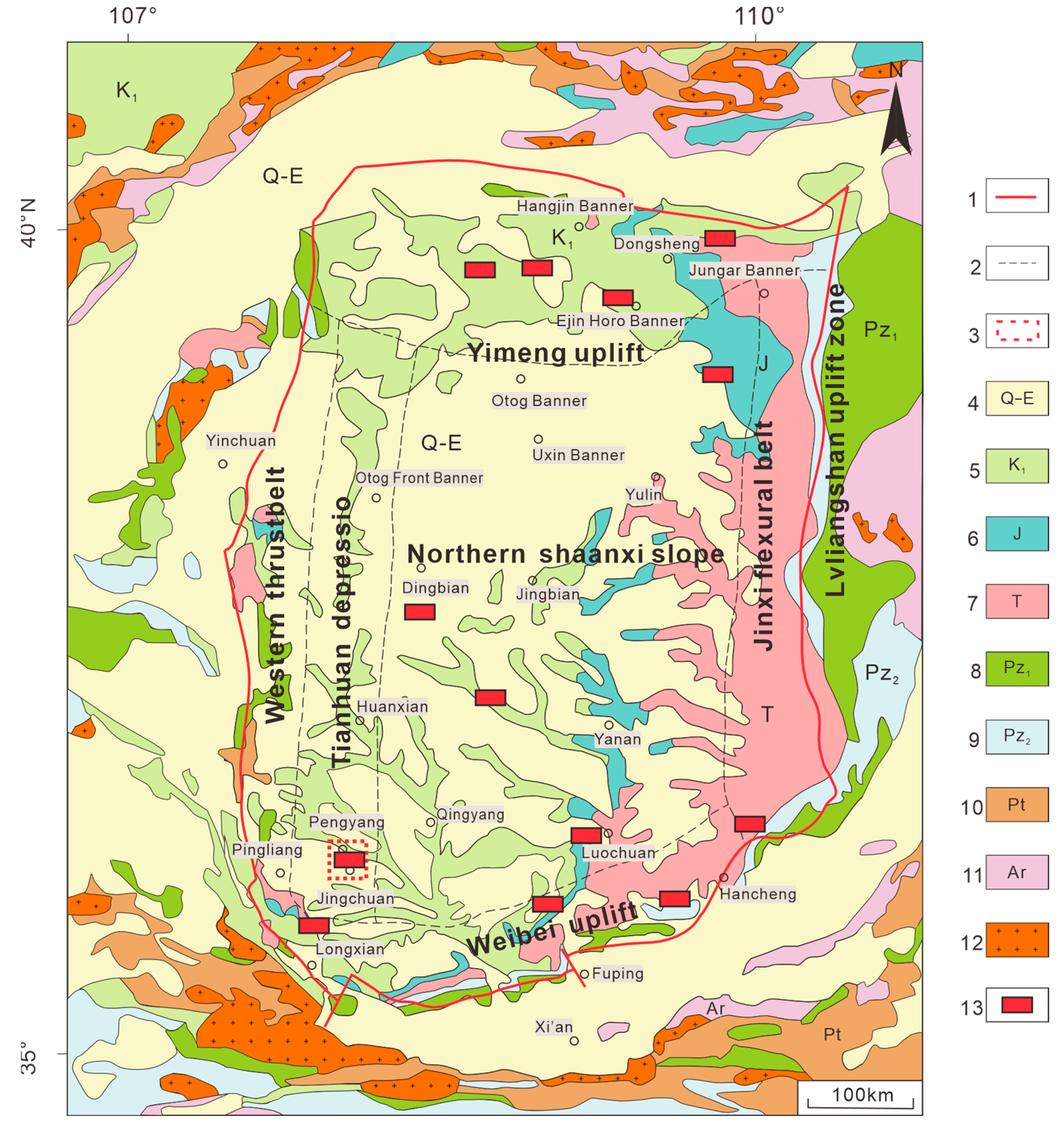
Uranium, as a significant strategic mineral resource, plays a major role in fields such as energy, healthcare, and military applications. Globally, sandstone-hosted uranium deposits have become one of the most important types of uranium resources, accounting for approximately 27% of the world’s uranium reserves [1]. Meanwhile, sandstone-hosted uranium deposits have emerged as the most critical type of uranium resource in China, primarily distributed within Mesozoic–Cenozoic basins in northern China and contributing to about 80% of the nation’s uranium production [1,2]. The Ordos Basin, a large basin where coal, petroleum, natural gas, and uranium resources coexist, has become one of the most representative inland sedimentary basins of the Mesozoic era in northern China [3]. Previous exploration and theoretical research on uranium deposits in the Ordos Basin have mainly focused on the middle Jurassic Zhiluo Formation, a key uranium-bearing target stratum, leading to the discovery of large to super-large sandstone-hosted uranium deposits such as Hangjinqi, Nalinggou, and Daying in the northern part of the basin [4,5,6,7], as well as uranium deposits like Diantou and Shuanglong in the southern part of the Ordos Basin, North China (Figure 1) [8,9].
Recently, large to super-large sandstone-hosted uranium deposits within aeolian sedimentary systems have been successively discovered in the Cretaceous Luohe Formation in the Pengyang area of the southwestern Ordos Basin [10]. The discovery of Cretaceous sandstone-hosted uranium deposits in the southern Ordos Basin indicates that the Cretaceous strata in this region possess favorable geological settings and metallogenic conditions for uranium mineralization. This greatly expands the exploration potential for sandstone-hosted uranium deposits and represents an important current direction for prospecting in this type of uranium deposit [11]. Previous research on sandstone-hosted uranium deposits in the Ordos Basin has yielded numerous findings regarding sedimentary environments, ore minerals, hydrothermal alteration, metallogenic chronology, sources of ore-forming materials, and fluid properties. Various metallogenic models have been proposed: (1) the classic interlayer oxidation zone-type uranium mineralization model [6,9]; (2) the exudative uranium mineralization model, where the uranium source is deep-seated, uranium-rich organic source rocks [12]; (3) the superposition metallogenic model involving multiple episodes [13]; (4) the fluctuating mineralization model driven by periodic changes in surficial fluids [2]; (5) the mineralization model involving migration and dissipation of deep, uranium-bearing hydrothermal fluids that contain dissolved gases [14]; and (6) the “Jingchuan-type” mineralization model involving coupled mineralization between surficial uranium-bearing fluids and deep hydrocarbon fluids [15]. It is evident that these previously proposed ore-forming processes and models all emphasize the crucial role played by fluids of different properties in the mobilization, enrichment, and precipitation of uranium in sandstone-hosted uranium deposits.
Chloritization is often considered the most important alteration type closely associated with uranium mineralization in the sandstone-hosted uranium deposits of the northern Ordos Basin, North China [16,17]. Previous studies on chlorite have elucidated the fluid properties, formation environments, and metallogenic models of uranium deposits in the northern Ordos Basin, North China [18,19,20]. Recent studies have found that uranium mineralization is closely associated with clay minerals such as chlorite and kaolinite in the aeolian system sandstone-hosted uranium deposits in the southern Ordos Basin, North China [21,22]. However, no direct mineralogical evidence from previous studies has shown a close relationship between chlorite and uranium minerals. Thus, the temperatures obtained from chlorite could not represent the temperature of uranium mineralization. This study focuses on detailed mineralogical and geochemical investigations of the ubiquitous mineral chlorite from both mineralized and non-mineralized sandstones hosted in the Luohe Formation in the eolian sandstone depositional area of the Pengyang region in the Ordos Basin, North China, aiming to provide new constraints on the formation mechanisms of these deposits.
This study was performed in the Pengyang uranium deposit in the southern Ordos Basin using scanning electron microscopy (SEM), transmission electron microscopy (TEM) identification, and electron probe microanalysis (EPMA). A comprehensive comparative study was conducted using chlorite from sandstone-hosted uranium deposits in aquatic sedimentary systems and from granite- and volcanic rock-related uranium deposits. The objectives were to determine the properties of the fluids and the ore-forming temperature during the mineralization process of sedimentary system sandstone-hosted uranium deposits; to reveal the relationship between the formation mechanisms of chlorite and the uranium mineralization process; and to provide new evidence and constraints for the genesis of sandstone-hosted uranium deposits.

2. Regional Geological Setting

The Ordos Basin, situated in the western part of the North China Craton, serves as a significant energy basin and the second-largest sedimentary basin in China. The basin exhibits an overall irregular rectangular outline with its long axis approximately trending north–south, covering a total area of about 250,000 km2. It occupies a unique tectonic position, bounded by the Lüliang Mountains to the east, adjacent to the Helan Mountains, Liupan Mountains, and Alxa Block to the west, neighboring the Qilian–Qinling composite orogenic belt to the south, and connecting with the southern margin of the Central Asian Orogenic Belt to the north, thus forming a relatively independent geological–tectonic unit [3]. Based on its structural framework and evolutionary characteristics, previous studies have subdivided the basin into six secondary tectonic units: the Yimeng Uplift, Western Thrustbelt, Tianhuan Depression, Northern Shaanxi Slope, Jinxi Flexural Belt, and Weibei Uplift (Figure 1) [14]. The basement of the Ordos Basin features a “dual” structure, comprising an indirect basement formed by the Archean–Paleoproterozoic crystalline basement and a direct basement consisting of the Proterozoic–Mesozoic Triassic platform sedimentary cover [23]. The indirect basement, having undergone uplift and erosion within the basin, can provide source materials and uranium sources for the direct basement [23].
The Ordos Basin has undergone complex multi-stage tectonic evolution, resulting in an internal structural framework characterized by fault systems and fold structures. These structures not only control the generation, migration, and accumulation of oil and gas but also significantly influence the mineralization of sandstone-hosted uranium deposits within the basin [2]. In recent years, economically significant sandstone-hosted uranium deposits within aeolian systems have been discovered in the southwestern margin of the basin [10]. The ore bodies primarily occur in sandstone strata of the Lower Cretaceous Luohe Formations and Luohandong Formations [11]. Compared to conventional fluvial–lacustrine depositional systems, aeolian depositional systems lack sufficient reducing media during the initial sedimentation stage, which to some extent constrains uranium enrichment [24]. It indicates that deep-seated faults provide effective pathways for the vertical migration of reducing media such as oil and gas [10]. These processes create the necessary conditions for the precipitation and enrichment of uranium by forming favorable geochemical barriers [12].
The study area, Pengyang County, is located in eastern Gansu Province, at the border region of Shaanxi and Gansu. It lies within the tectonic transition zone on the southwestern margin of the Ordos Basin, spanning two secondary tectonic units: the Northern Shaanxi Slope and the Tianhuan Depression. The Pengyang uranium ore field is adjacent to the eastern extension of the Qilian Orogenic Belt to the west and borders the northern edge of the Qinling Orogenic Belt to the south (Figure 1). The Mesozoic–Cenozoic strata in this region are relatively well-developed with a continuous sedimentary sequence. In ascending order, these include the Upper Triassic, Jurassic, Lower Cretaceous, Oligocene, Pliocene, and Quaternary strata. The Lower Cretaceous sequence, from bottom to top, comprises the Yijun Formation, Luohe Formation, Huanhe-Huachi Formation, Luohandong Formation, and Jingchuan Formation [25].
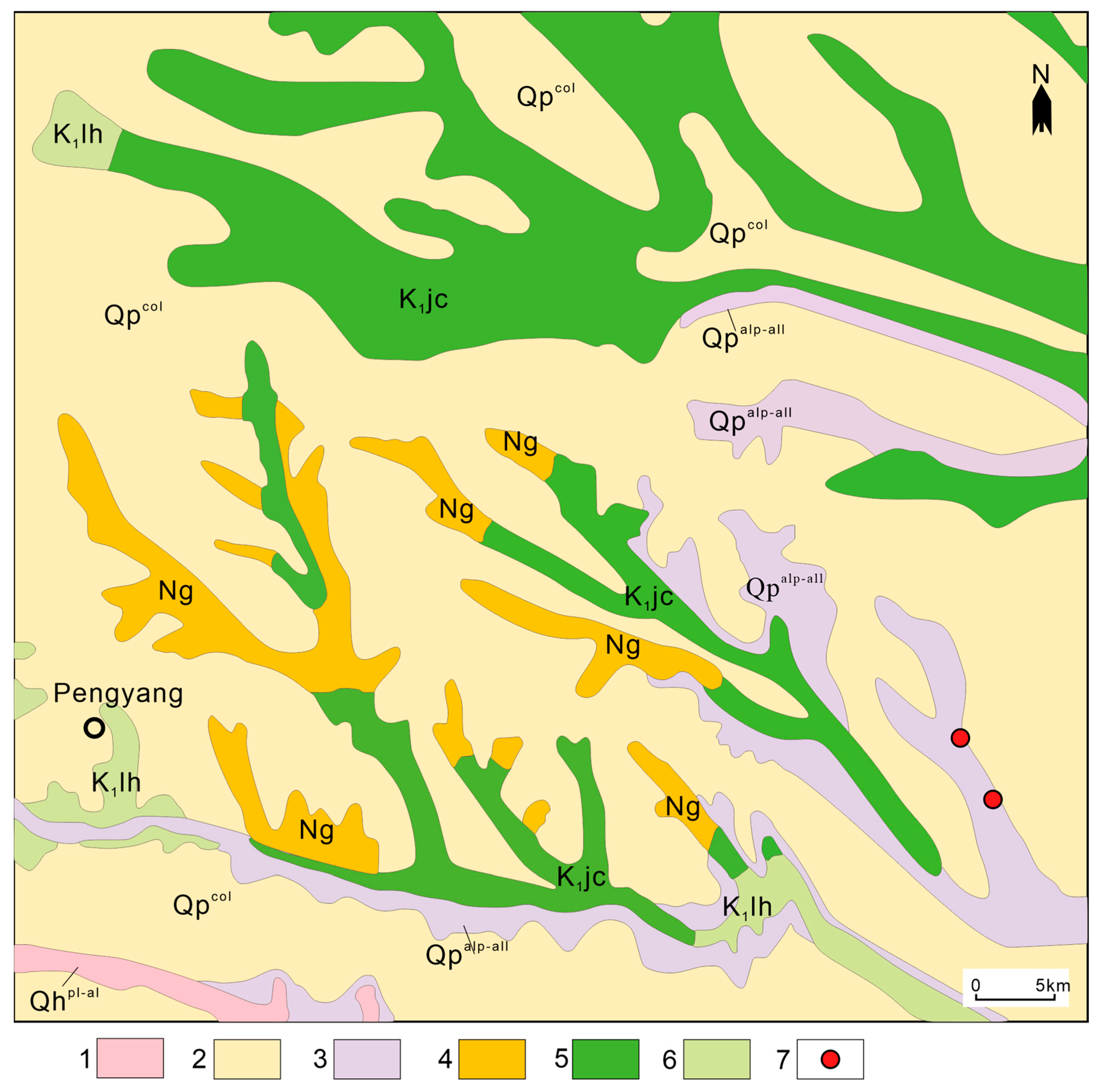
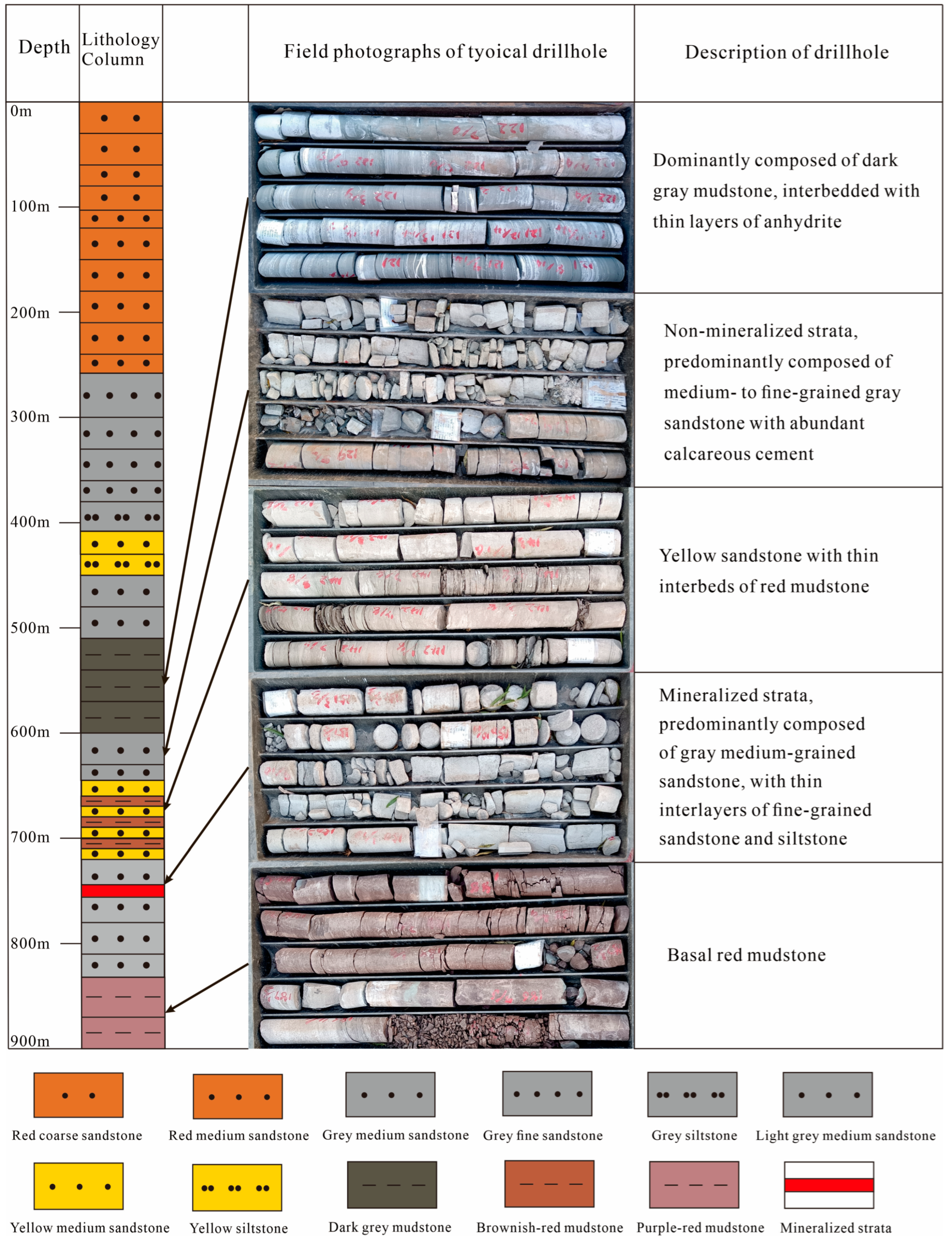
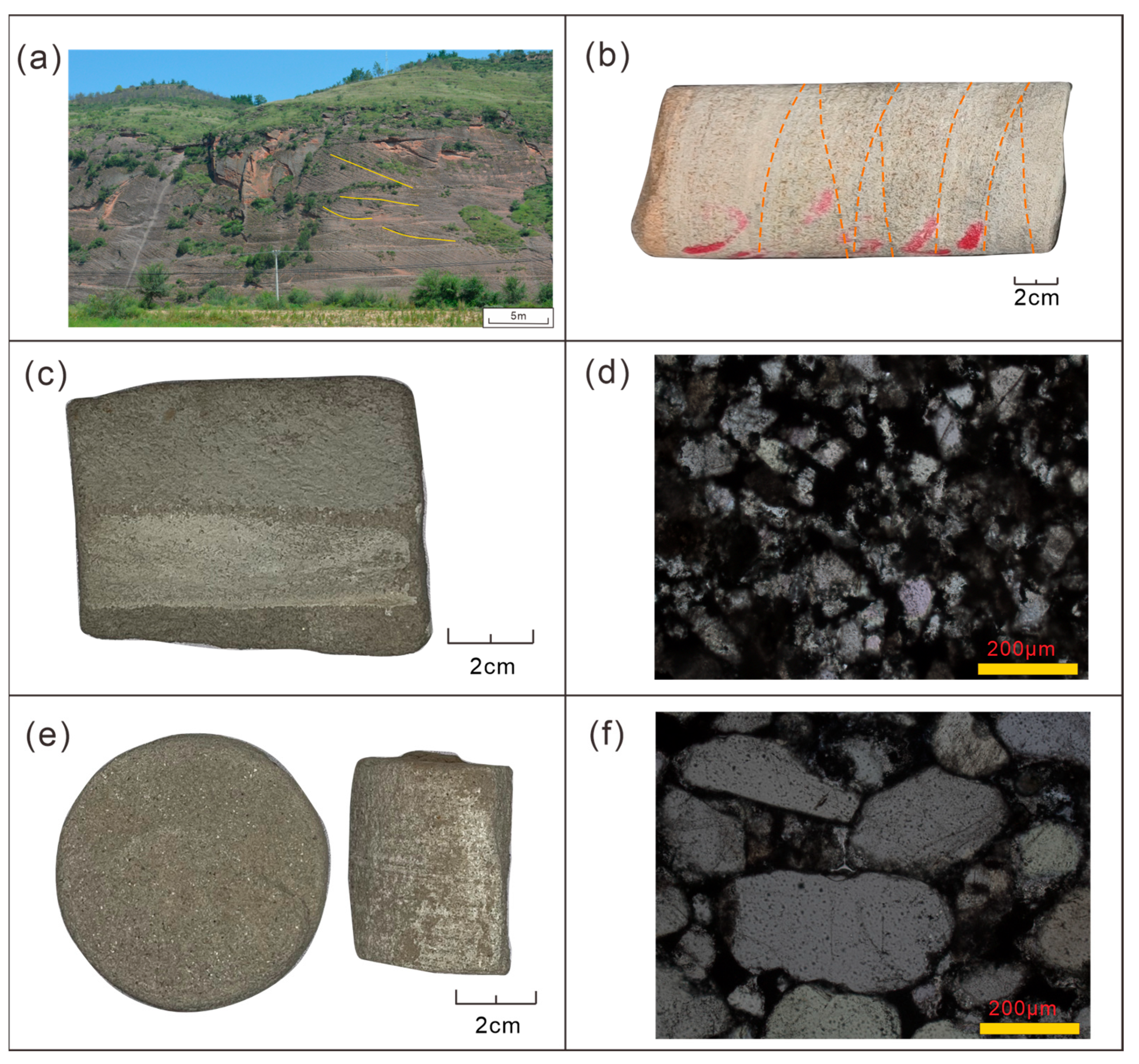
The primary ore-hosting stratum in the Pengyang uranium deposit is the Lower Cretaceous Luohe Formation, exhibiting a complete sedimentary system comprising fluvial facies, aeolian–aqueous interactive facies, and typical aeolian facies deposits [26] (Figure 2). Among these, the aeolian facies sandstones constitute the main lithological unit of the Luohe Formation and are identified by the development of typical large-scale cross-bedding (Figure 3 and Figure 4a). The thickness of the Luohe Formation in the Pengyang area ranges from approximately 300 to 400 m, with significant variations in sedimentary characteristics, allowing it to be subdivided into upper and lower sections. The upper section of the Luohe Formation consists of multiple sets of reddish sandstone and conglomerate deposits, representing aeolian–aqueous interactive facies. The lower section is characterized by typical desert facies deposits, primarily composed of yellowish and gray medium- to fine-grained sandstones. These sandstones show a high degree of grain roundness, good sorting, and relatively well-developed porosity [21]. Uranium ore bodies are mainly hosted within the gray sandstones. Drill core samples from the Luohe Formation in the Pengyang area reveal that the sand bodies are primarily red, light yellow, grayish-green, grayish-white, and gray in color, with some intervals containing interbedded mudstones. The mineralized strata are predominantly composed of gray fine-grained sandstones. The ore bodies are bounded above and below by argillaceous sandstones or mudstones that serve as aquitards, forming a typical “mud–sand–mud” structure (Figure 3).
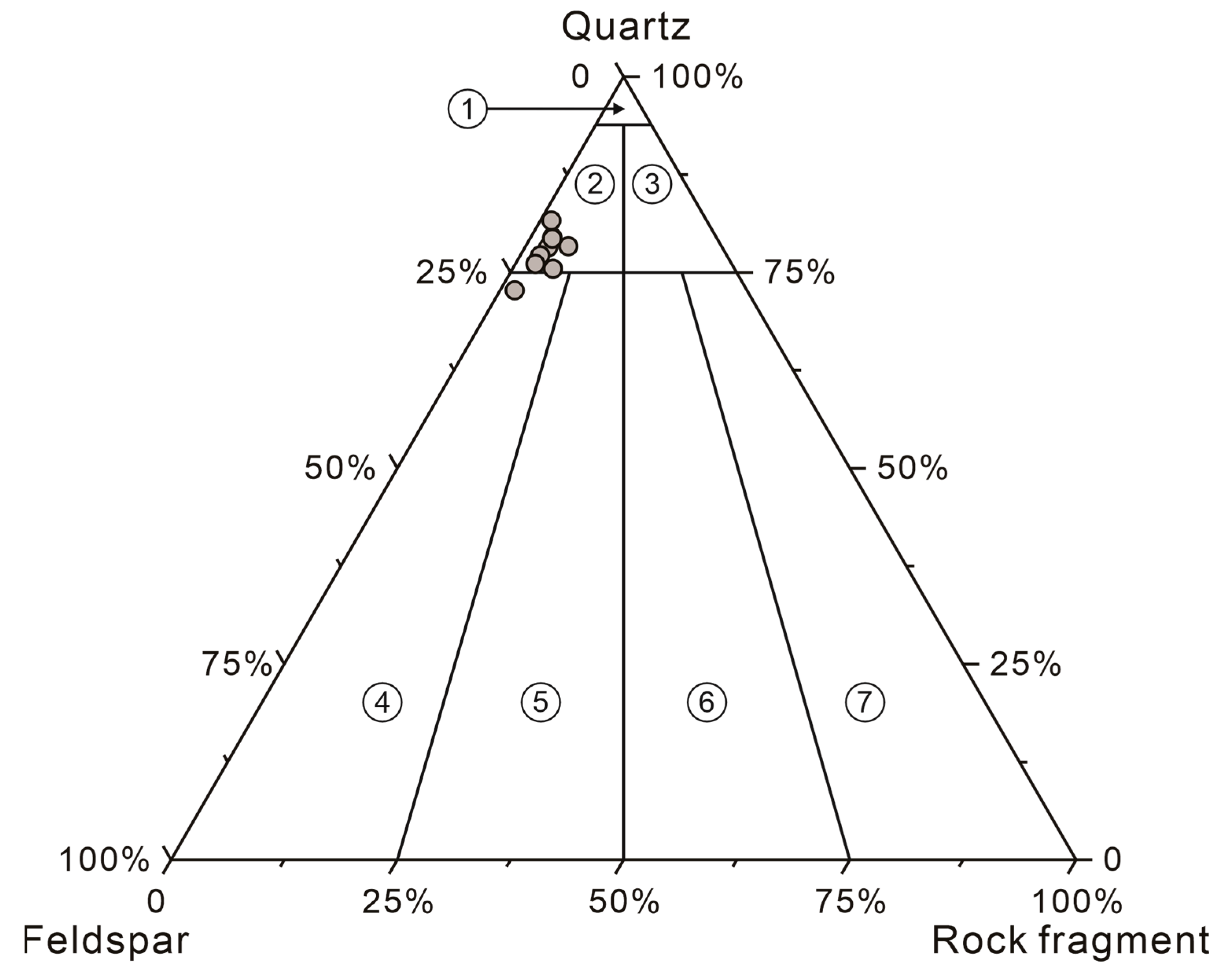
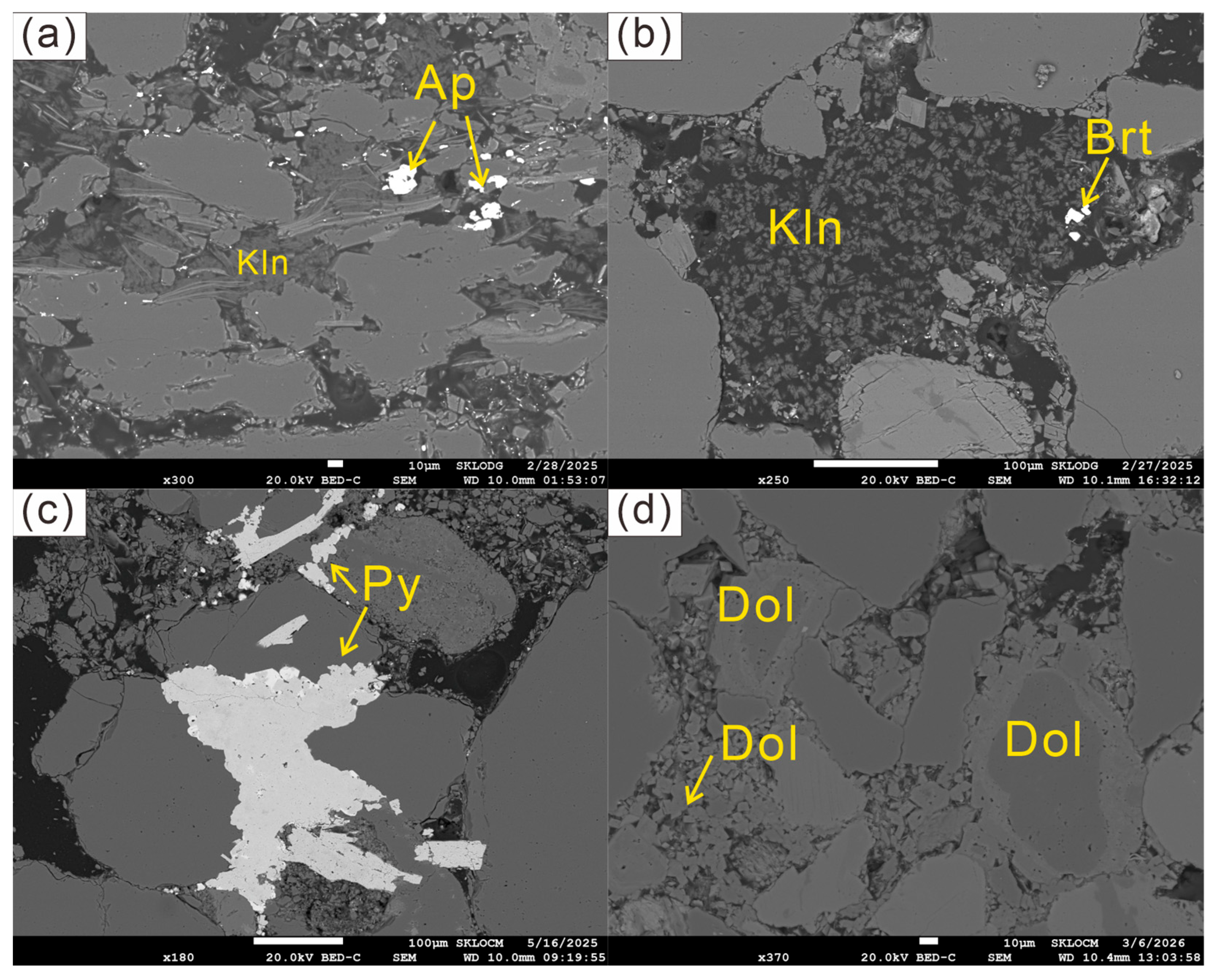
Based on extensive observations of thin sections, the characteristics of the sandstones in the target stratum and their constituent minerals have been systematically summarized. The sandstones of the Luohe Formation in the Pengyang uranium deposit, southwestern Ordos Basin, exhibit a relatively high maturity. They are predominantly medium- to fine-grained quartz–feldspar sandstones with a low lithic fragment content, classifying them as feldspathic quartz sandstones (Figure 4 and Figure 5). Quartz and feldspar constitute the majority of the framework grains, and calcareous cement is commonly observed. Additionally, chlorite, kaolinite, dolomite, anatase, and pyrite are frequently present, with barite and apatite occurring less commonly (Figure 6). The study area shows the prevalence of dolomite, while calcite is not observed.
Large dolomite grains exhibit distinct zoning, while small dolomite particles often fill the spaces between detrital grains (Figure 6d) or are commonly intermixed with clay minerals. Well-crystallized anatase is observed in the study area, occurring either as isolated grains or growing on the surfaces of other particles. Adsorbed forms of anatase are found within fractures of chlorite and quartz. Pyrite frequently exhibits needle-like or radial habits (Figure 6c). Comparing sandstones from mineralized and non-mineralized strata, it is evident that mineral grains in the non-mineralized strata are generally larger, with relatively more cement. In contrast, sandstones from mineralized strata contain finer mineral grains, more secondary porosity, higher overall porosity, and the presence of uranium minerals.
Scanning electron microscopy observations reveal abundant kaolinite, which in the study area, can be classified into two main types. The first type is well-crystallized, book-like kaolinite, indicative of the sedimentary diagenetic stage (Figure 6b), primarily found in non-mineralized layers. The second type is kaolinite formed from the alteration of muscovite or feldspar (Figure 6a). This type exhibits incomplete crystal development, often appearing as flakes, plates, or irregular forms. This kaolinite is a product of the early formation stage under the influence of acidic fluids after diagenesis, with some regions still containing small amounts of potassium [27], and is commonly observed in mineralized layers.
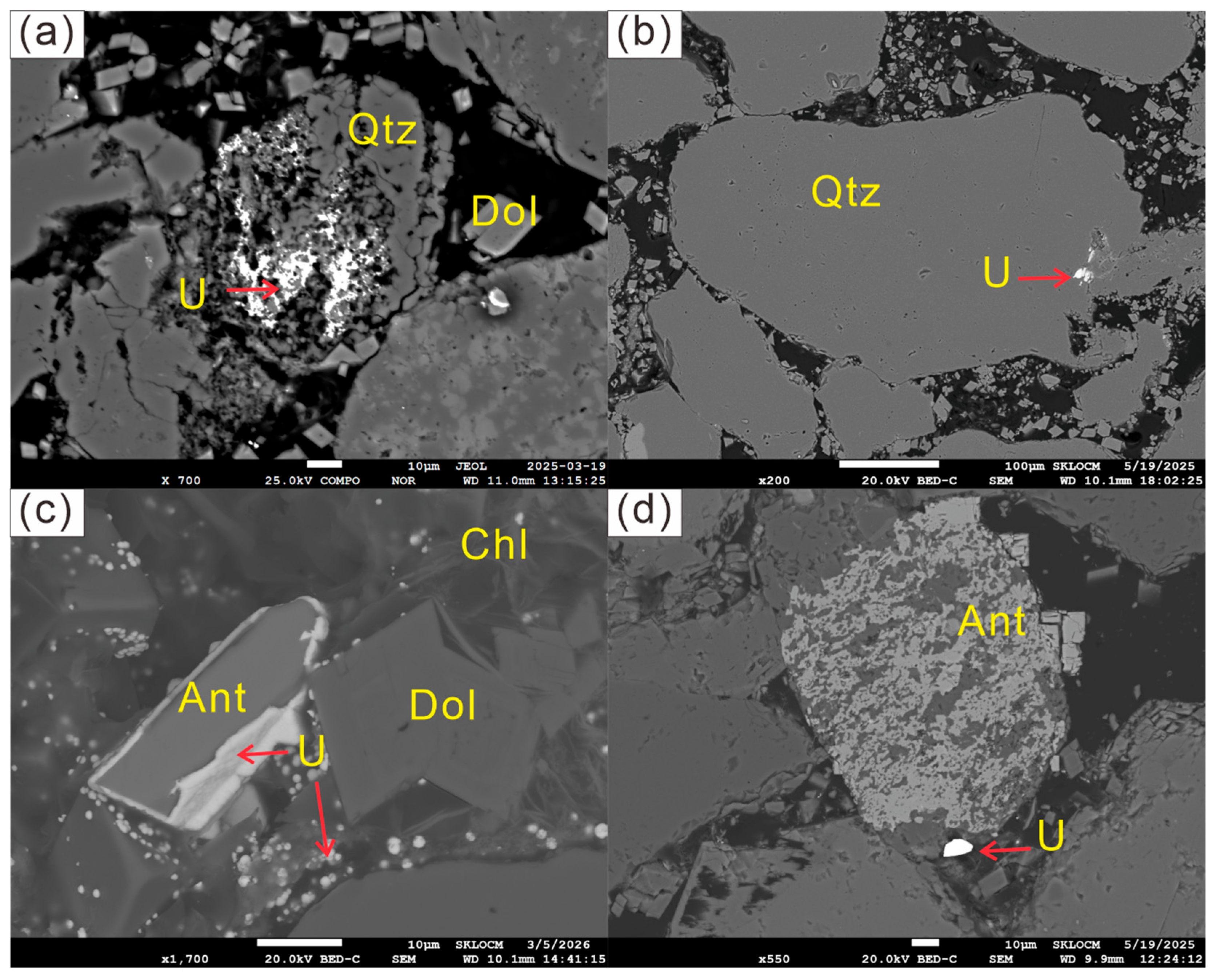
Uranium minerals in the study area are predominantly in adsorbed forms, with occasional uranophane grains. Scanning electron microscopy observations show that uranium minerals occur within fractures of chlorite (Figure 7a). Apart from chlorite, uranium minerals are mainly attached to the surfaces of anatase or within fractures in quartz (Figure 7b,c). Uranophane is also observed as independent grains adjacent to anatase (Figure 7d).
Figure 5. Composition characteristics in the Luohe Formation sandstone, Pengyang area, Ordos Basin, North China (according to [28]). 1—Quartzarenite. 2—Subarkose. 3—Sublitharenite. 4—Arkose. 5—Lithic arkose. 6—Feldspathic litharenite. 7—Litharenite.
Minerals 16 00633 g005
Figure 6. BSE images of the mineral assemblage in the Luohe Formation sandstone in the Pengyang uranium deposit, Ordos Basin, North China. (a) Kaolinite formed by the alteration of potassium feldspar coexists with apatite. (b) Large amounts of book-like kaolinite fill the intergranular pores. (c) Pyrite is distributed in a scattered or acicular pattern. (d) Zoning in coarse-grained dolomite; large amounts of dolomite fill the intergranular pores. Ap—apatite; Kln—kaolinite; Brt—barite; Py—pyrite; Ant—anatase; Dol—dolomite.
Minerals 16 00633 g006
Figure 7. Backscattered electron (BSE) images of uranium minerals from the Luohe Formation sandstone, Pengyang area, Ordos Basin, North China. (a,b) Some uranium minerals occur within quartz dissolution pits formed during the alteration stage. (c,d) Uranium minerals are closely intergrown with anatase. Qtz—quartz; Dol—dolomite; Chl—chlorite; Ant—anatase; U—uranium minerals.
Minerals 16 00633 g007

3. Samples and Analytical Methods

The chlorite samples examined in this study were primarily collected from representative sandstone samples of both mineralized and non-mineralized strata within aeolian sand drill cores from the Luohe Formation in the Pengyang area. Following previous work, the classification of sandstones into mineralized and non-mineralized layers in this study is based on sandstone zoning characteristics, mineral paragenesis, and uranium content. Specifically, non-mineralized sandstones are defined by a uranium content of less than 10 ppm, while mineralized sandstones have a uranium content exceeding 100 ppm [11].
First, sandstone samples from both mineralized and non-mineralized strata were processed into polished thin sections after screening. Subsequently, the microstructure and compositional features of the sandstones were examined in detail under an optical microscope. Suitable samples were selected for more refined mineralogical observations using SEM and TEM. Based on their morphological characteristics and modes of occurrence, chlorite was further classified into different types. Various types of chlorites were selected for EMPA, with a particular focus on chlorite closely associated with uranium mineralization.
The SEM experiments and chlorite EPMA analyses were conducted at the State Key Laboratory of Critical Mineral Research and Exploration, Institute of Geochemistry, Chinese Academy of Sciences (SKLCMRE, IGCAS). The SEM analysis utilized a JSM-7800F field emission scanning electron microscope manufactured by JEOL Ltd., with an accelerating voltage of 20 kV, a beam current of 10 nA, and employed backscattered electron imaging along with energy-dispersive spectroscopy (EDS) for compositional analysis.
The TEM specimen was prepared by the SEM microscope equipped with a Ga focused-ion-beam (FIB, 30 kV, Thermo Scientific Scios 2) and an Omniprobe manipulator at the Electron Microscope Centre of KAIPLE Co. Ltd in Changsha, China. The pieces were initially precut from the bulk samples by using a current of 7 nA, and then ion beam currents from 0.5, 0.3, and 0.1 nA to 10 pA were used in sequence to further mill the piece into electron-transparent slices with thicknesses of 70 nm.
The EPMA was performed using an EMPA-1600 instrument manufactured by Shimadzu, with an accelerating voltage of 25 kV, a beam current of 10 nA, and a beam spot size of 2–10 μm, to collect in situ major element compositions from chlorite at SKLCMRE, IGCAS. For the calibration of each element, the following standard materials were used: chlorite for Si, Al, and Cr; kaersutite for K, Na, Ca, and Mn; biotite for Mg; almandine garnet for Fe; apatite for F; tugtupite for Cl; and metallic uranium for U. The accuracy of the test was within approximately 2 wt% for major elements.

4. Result

4.1. Mineralogical Characteristics of Chlorite in the Luohe Formation

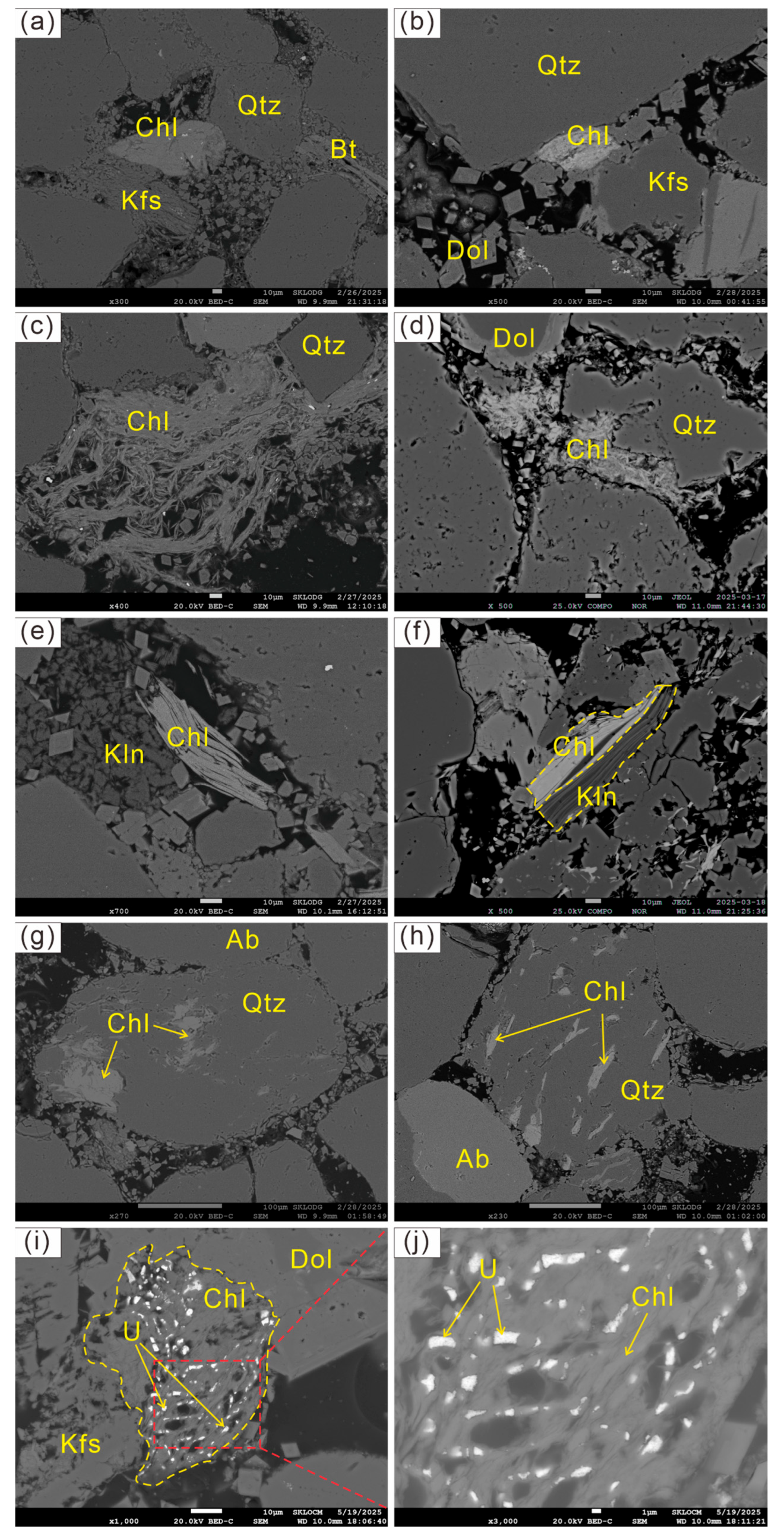
SEM observations reveal that chlorites in non-mineralized sandstone strata can be classified into three main types: massive (Type I), pore-lining (Type II), and altered (Type III). Massive chlorite (Type I) exhibits a generally rounded morphology with no distinct joint fissures visible (Figure 8a,b). In some instances, anatases are observed as inclusions within it (Figure 8a,b). Pore-lining chlorite (Type II) occurs as acicular or bamboo-leaf-like crystals along the edges of detrital grains or within pores (Figure 8c,d). Altered chlorite (Type III) retains the primary morphological features of precursor minerals such as biotite, with clearly visible joint fissures. In some cases, fragments of anatase and dolomite are observed filling these fissures (Figure 8e,f).
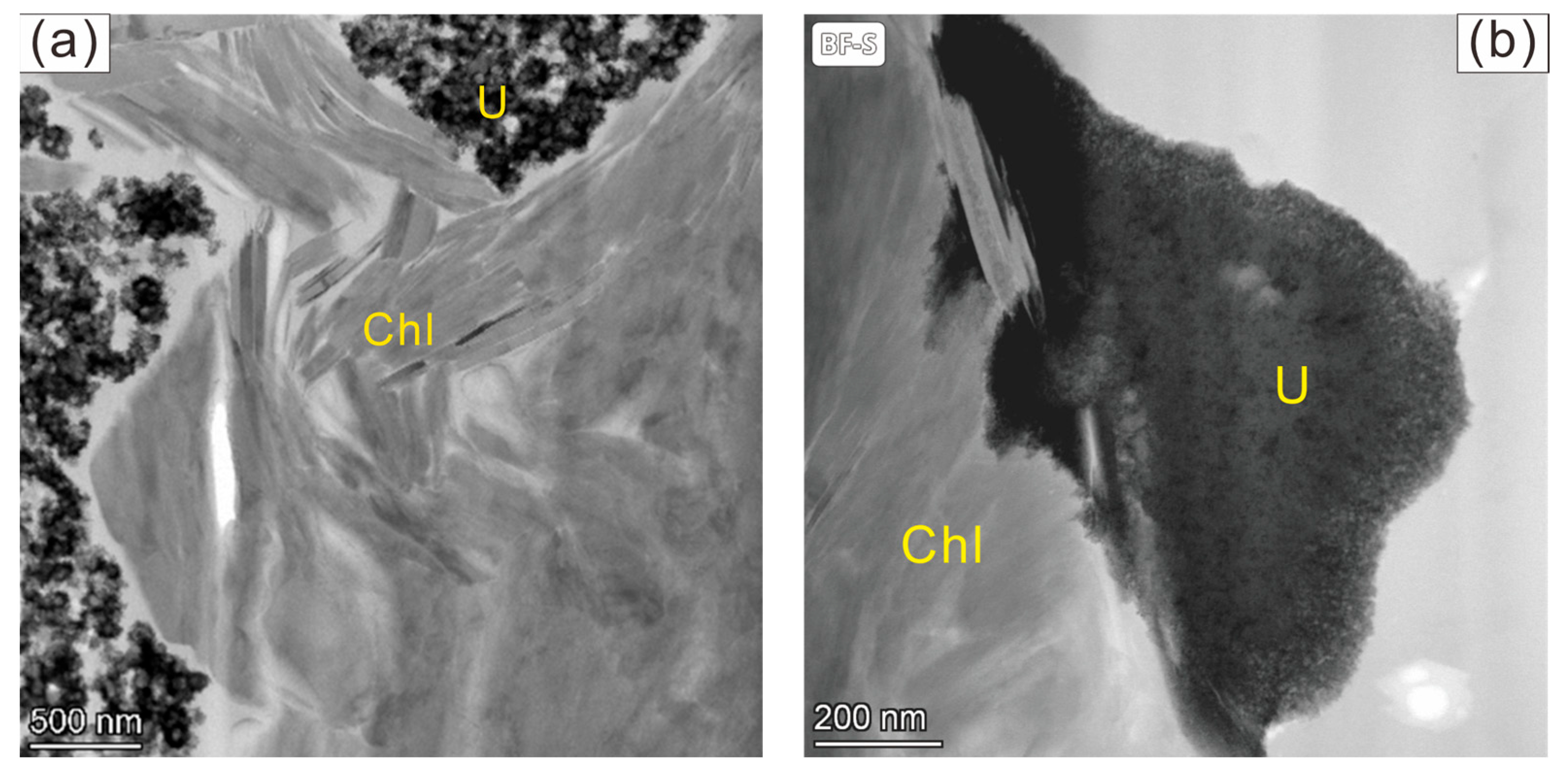
Biotite-altered and massive-type chlorites are observed in mineralized sandstone strata. Notably distinct from the chlorites in non-mineralized sandstones, pore-lining chlorite is not found in mineralized strata sandstone. However, a significant amount of filling chlorite (Type IV) is present, where chlorite fills secondary pores within quartz and feldspar grains (Figure 8g,h). It is noted that the chlorite is closely associated with uranium minerals (Type V), and uranium minerals are distributed within the fissures between chlorite crystals or along chlorite boundaries (Figure 8i,j). This study conducted detailed transmission electron microscopy (TEM) observations on the chlorite closely associated with uranium minerals (Type V) (Figure 9). The TEM images reveal a close intergrowth relationship between acicular or elongated nano-scale chlorite and uranium minerals, further confirming that Type V chlorite could be considered a clay mineral directly involved in uranium ore-forming process.

4.2. Element Composition and Classification of Chlorite

EMPA was conducted on chlorite from both non-mineralized and mineralized sandstone strata in the Luohe Formation from Pengyang uranium deposit, Ordos Basin, North China (Table S1). The structural formulas and characteristic values of the chlorite were calculated on the basis of 14 oxygen atoms (Table S2). Foster has indicated that chlorite is often contaminated by other minerals, and w(Na2O + K2O + CaO) < 0.5% in chlorites is considered indicative of negligible contamination [29]. In this study, the results show that the Fe3+ content in the chlorite is generally less than 5% of the total iron content; therefore, the total iron content can be approximated to represent the Fe2+ content [30,31,32].
Unless otherwise specified, all component data in this paragraph is expressed as a percentage by weight (wt%). Chlorite from non-mineralized strata in the Luohe Formation in the Pengyang uranium deposit exhibits SiO2 content ranging from 25.56 to 33.24 (average 30.40), Al2O3 content (12.81 to 21.50, average 15.40), MgO content (9.62 to 19.71, average 14.89), and FeO content (21.65 to 33.34, average 26.25). In contrast, chlorite from mineralized strata shows a SiO2 content ranging from 24.99 to 34.38 (average 29.16), Al2O3 content (13.24 to 23.14, average 18.14), MgO content (10.34 to 17.95, average 13.96), and FeO content (21.15 to 31.12, average 26.11).
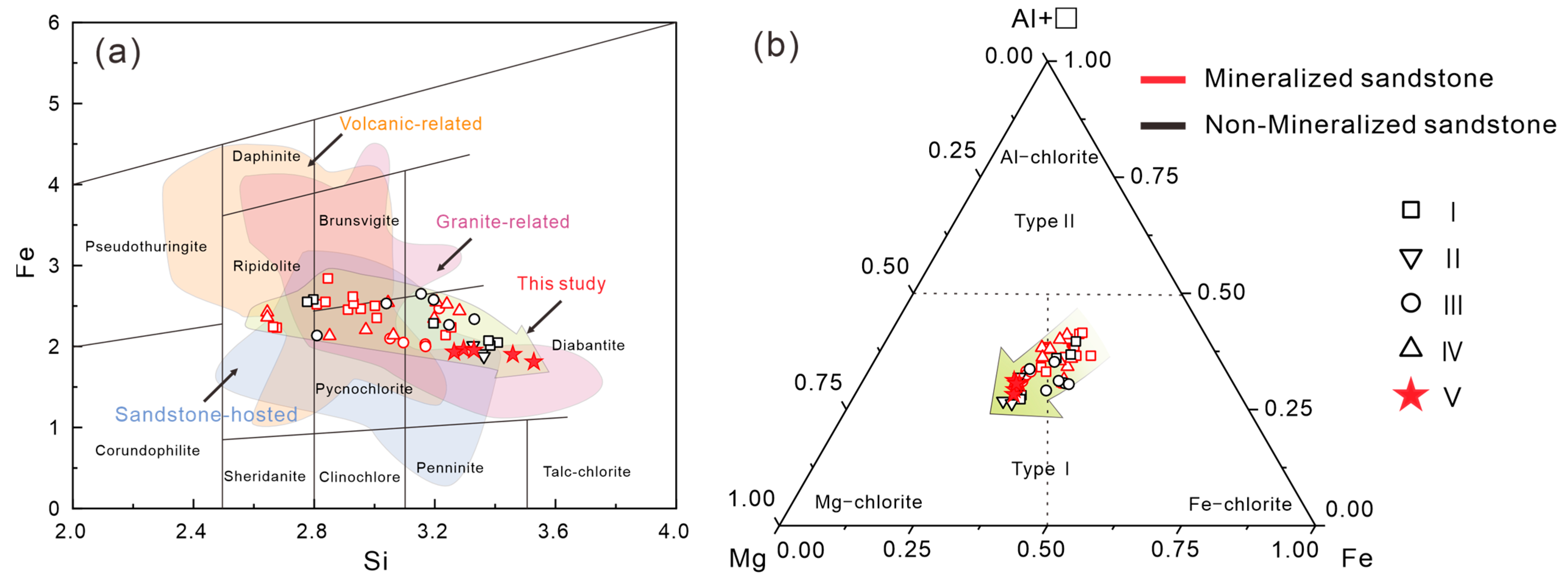
In the chlorite Fe-Si classification diagram (Figure 10a), chlorite from non-mineralized strata is predominantly diabantite. Chlorite from mineralized strata, however, plots within the compositional fields of ripidolite, brunsvigite, pycnochlorite, and diabantite. It is particularly noteworthy that chlorite closely associated with uranium minerals is exclusively diabantite (Figure 10a). Compared to chlorite from uranium deposits associated with volcanic and granitic rocks, chlorite from the sandstones of the Pengyang uranium deposit exhibits relatively lower Fe and higher Si contents. Furthermore, it shows a higher Fe content compared to chlorite from sandstone-hosted uranium deposits in hydraulic sedimentary systems (Figure 10a). In the (Al + □)-Mg-Fe ternary diagram (Figure 10b), all analyzed chlorite from the Luohe Formation sandstones in the Pengyang uranium deposit in the southwestern Ordos Basin falls within the fields of Mg-chlorite and Fe-chlorite. Chlorite associated with uranium mineralization is classified as Mg-chlorite, whereas chlorite from non-mineralized sandstone has a relatively higher magnesium content.

4.3. Formation Processes, Crystal Chemistry, and Sources of Chlorite

The morphology and composition of chlorite in sandstone are influenced by various factors, including the sedimentary–diagenetic environment and the properties of hydrothermal fluids [34]. Specific controlling factors encompass temperature, oxygen fugacity, pressure, pore size, and fluid mobility, as well as the ion concentration and pH of the hydrothermal fluids [22,27,32]. Inoue (1995) revealed that iron- and magnesium-rich, alkaline, reducing hydrothermal fluids favor the formation of chlorite, while acidic fluids are more conducive to the formation of kaolinite [35,36].
The formation mechanisms of chlorite can be divided into two categories: (1) the replacement and alteration of biotite, feldspar, or other clay minerals by fluids, followed by in situ crystallization to form chlorite [19]; and (2) the dissolution and replacement of minerals by fluids, after which the dissolved components are transported by the fluid and precipitate to form chlorite in a different location, often occurring as pore-filling or fracture-filling material [27]. The Fe and Mg in such chlorite are primarily introduced by hydrothermal fluids. Synthesizing the findings of prior studies, the authors propose that the massive-type chlorite (Type I) in non-mineralized sandstone likely formed during the early diagenetic stage and was subsequently compressed into a massive form by other grains during compaction [37]. The pore-lining (Type II), filling (Type IV), and uranium mineral-associated (Type V) chlorites primarily formed through fluid-induced dissolution and replacement of minerals [19,38]. The altered-type chlorite (Type III) mainly formed through in situ crystallization facilitated by fluid alteration.
The structural formula of chlorite is ( R x 2 + R y 3 + 6 x y ) 6 V I ( S i z R 4 z 3 + ) 4 I V O 10 ( O H ) 8 , where IV and VI denote tetrahedral and octahedral coordination, respectively, and represents an octahedral vacancy. The interionic substitution relationships and lattice occupancy in chlorite vary with its formation temperature and environment. Thus, studying these substitution relationships contributes to understanding its formation temperature and metallogenic setting [35,39]. Research indicates that chlorite primarily involves three main types of interionic substitution: (1) mutual substitution between Fe2+ and Mg2+; (2) Tschermak substitution, which refers to the substitution of AlIV and AlVI for Si, Fe, and Mg; and (3) di-trioctahedral substitution, which is the replacement of Mg and Fe for AlVI [40,41].
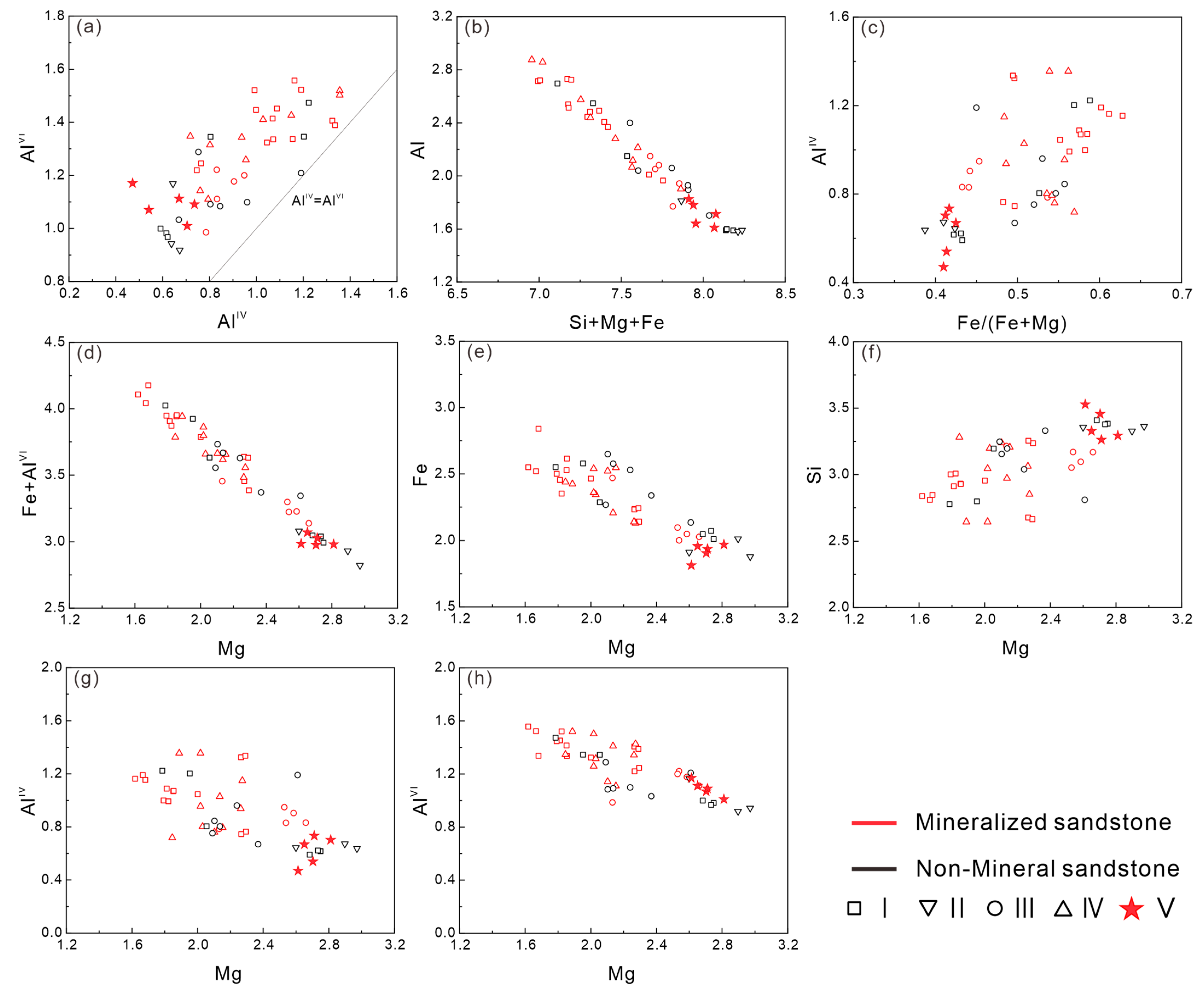
Previous studies have shown that when the Tschermak substitution mechanism is dominant, AlIV and AlVI are approximately equal [42]. In the (Si + Fe2+ + Mg2+) versus Al diagram (Figure 11b), chlorite from the sandstones in the Pengyang area exhibits a strong negative correlation between (Si + Fe2+ + Mg2+) and Al, indicating pronounced Tschermak substitution. From the AlIV versus AlVI diagram (Figure 11a), although AlIV and AlVI generally display a positive correlation, AlIV < AlVI, suggesting that during the substitution of AlIV for Si, AlVI simultaneously replaces Fe and Mg. Notably, chlorite closely associated with uranium minerals shows a negative correlation between AlIV and AlVI, indicating that chlorite formed during the mineralization stage does not conform to the Tschermak substitution mechanism. Therefore, this characteristic implies that chlorite in the sandstones of the Pengyang area does not exclusively follow the Tschermak substitution mechanism; other substitution mechanisms may also be involved. This understanding aligns with similar findings reported in previous studies [37].
In the Fe/(Fe + Mg) versus AlIV diagram (Figure 11c), Fe/(Fe + Mg) exhibits a positive correlation with AlIV, indicating that during the substitution process of Fe and Mg, more AlIV replaces Si as the chlorite structure adjusts. In Figure 11d, Fe + AlVI shows a negative correlation with Mg, and this correlation is stronger than that between Fe and Mg, possibly suggesting that the octahedral sites in chlorite are primarily occupied by Fe, Mg, and AlVI. In the Fe versus Mg diagram (Figure 11e), Fe and Mg generally exhibit a negative correlation, indicating that mutual substitution between Fe2+ and Mg2+ also occurs among chlorite ions. Additionally, the Fe-Mg correlation in chlorite closely associated with uranium minerals is not obvious, whereas the Fe + AlVI −Mg correlation is relatively strong, suggesting that this type of chlorite undergoes di-trioctahedral substitution. Considering the correlations between Mg and AlIV, as well as AlVI and Si (Figure 11f–h), it is evident that Mg in chlorite correlates better with AlVI. Therefore, based on these characteristics, it is inferred that di-trioctahedral substitution plays a more significant role than mutual substitution between Fe2+ and Mg2+.
Drawing from previous research, chlorite formed by contemporaneous fluids typically exhibits good linear relationships between Mg and other cations [42]. Correspondingly, in the diagrams of Mg versus other major cations for chlorite from the Pengyang area (Figure 11e–h), the overall linear relationships are not pronounced. Furthermore, chlorite from non-mineralized sandstone shows better linear correlations compared to that from mineralized sandstone, and the plots of Si and AlIV versus Mg in mineralized strata display more scattered characteristics. In summary, we propose that the chlorite in the aeolian system uranium deposit of Pengyang formed through multiple episodes, and the chlorite in mineralized sandstone likely experienced a more complex formation history involving more episodes compared to that in non-mineralized sandstone.
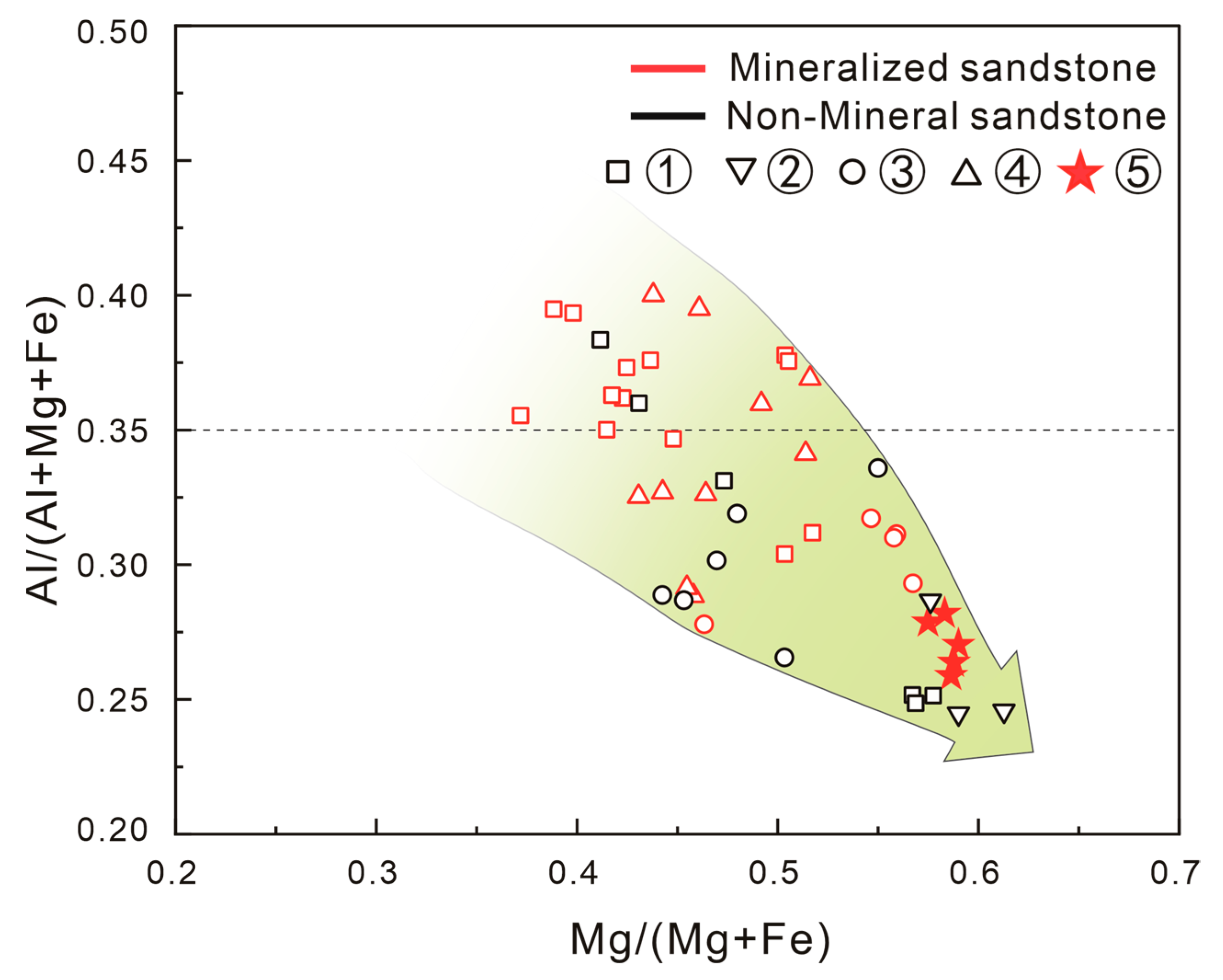
Chlorite with Al/(Fe + Mg + Al) > 0.35 is generally considered to be formed by the alteration of pelitic rocks, whereas values below this threshold suggest formation from mafic fluids [43]. Consequently, the Al/(Fe + Mg + Al) versus Mg/(Fe + Mg) diagram is commonly used to discriminate the material sources of chlorite [18,44]. In Figure 12, the chlorite from the Pengyang uranium deposit shows an overall negative correlation between Al/(Fe + Mg + Al) and Mg/(Fe + Mg), with Al/(Fe + Mg + Al) values ranging from 0.25 to 0.40 and averaging 0.32. Notably, most chlorite from non-mineralized sandstone has Al/(Fe + Mg + Al) values less than 0.35, indicating its material source is predominantly derived from the alteration of pelitic rocks. In contrast, chlorite from mineralized sandstone exhibits a wider range of Al/(Fe + Mg + Al) values (0.26–0.40), distributed both above and below the threshold of 0.35. This likely suggests that the material source for chlorite in the Pengyang uranium deposit is a mixture of mafic fluids and fluids from pelitic rock alteration. However, the chlorite closely associated with uranium minerals (Type V) indicates that the source material consists of a mixed fluid dominated by mafic fluids.
Previous research indicates that Mg-rich chlorite tends to form in low-oxidation environments, while Fe-rich chlorite corresponds to reducing environments, implying that a higher Mg/(Fe + Mg) ratio indicates stronger fluid oxidation [32,42]. Therefore, this indicates that the Pengyang uranium deposit experienced multiple episodes of fluid alteration. Furthermore, the ore-forming fluids are more closely related to relatively oxidizing mafic fluids, which may have been derived from meteoric water or interlayer infiltration. The ore-forming fluids are more closely related to relatively oxidizing mafic fluids, which could be derived from meteoric water or interlayer fluids. In summary, these characteristics of chlorite suggest that both the mineralized and non-mineralized sandstone in the Pengyang uranium deposit have undergone alteration by mafic fluids, with the mineralized sandstone additionally overprinted by fluids sourced from pelitic rock alteration.

4.4. Formation Temperature and Replacement Mechanism of Chlorites

Chlorite geothermometers are widely applied in various types of deposits to constrain the properties and temperatures of ore-forming fluids [45,46,47]. Chlorite is a mineral widely present in medium- to low-temperature environments, and its structural composition varies significantly with temperature [35,48,49]. However, Essene & Peacor (1995) point out that most clay minerals are heterogeneous mixtures whose composition varies under the influence of various factors; therefore, the validity of traditional clay mineral thermometers is questionable, and they should be used under appropriate conditions [50]. Since chlorite can be re-altered by post-depositional fluids, chlorite-based temperature estimates may reflect multiple fluid events [39,51].
Previous studies on the Los Azufres and Salton Sea geothermal systems in Mexico revealed a positive correlation between the AlIV content of chlorite and temperature (T), leading to the proposal of a chlorite geothermometer [45,52]. Battaglia (1999) calculated the formation temperature of chlorite based on XRD results [53]. In this study, the basal spacing d001 of chlorite was calculated using the relationship proposed by Rausell-Colom et al. (1991) and subsequently modified by Nieto (1997) [54,55]. The formation temperature T (°C) of chlorite in this study was derived using the basal spacing thermometer proposed by Battaglia, which has an average error rate of 10% [53]. Although this method has certain limitations due to the influence of various factors such as oxygen diffusion coefficient, pressure, and pH, it is relatively suitable for low-temperature systems below 300 °C [52]. Therefore, this method is particularly suitable for the mineralization systems of sandstone-type uranium deposits. The specific results are presented in Table S2. The relationship for temperature calculation is as follows:
d001(0.1 nm) = 14.339 − 0.1155AlIV − 0.0201 Fe2+
T(°C) = (14.379 − d001) × 1000
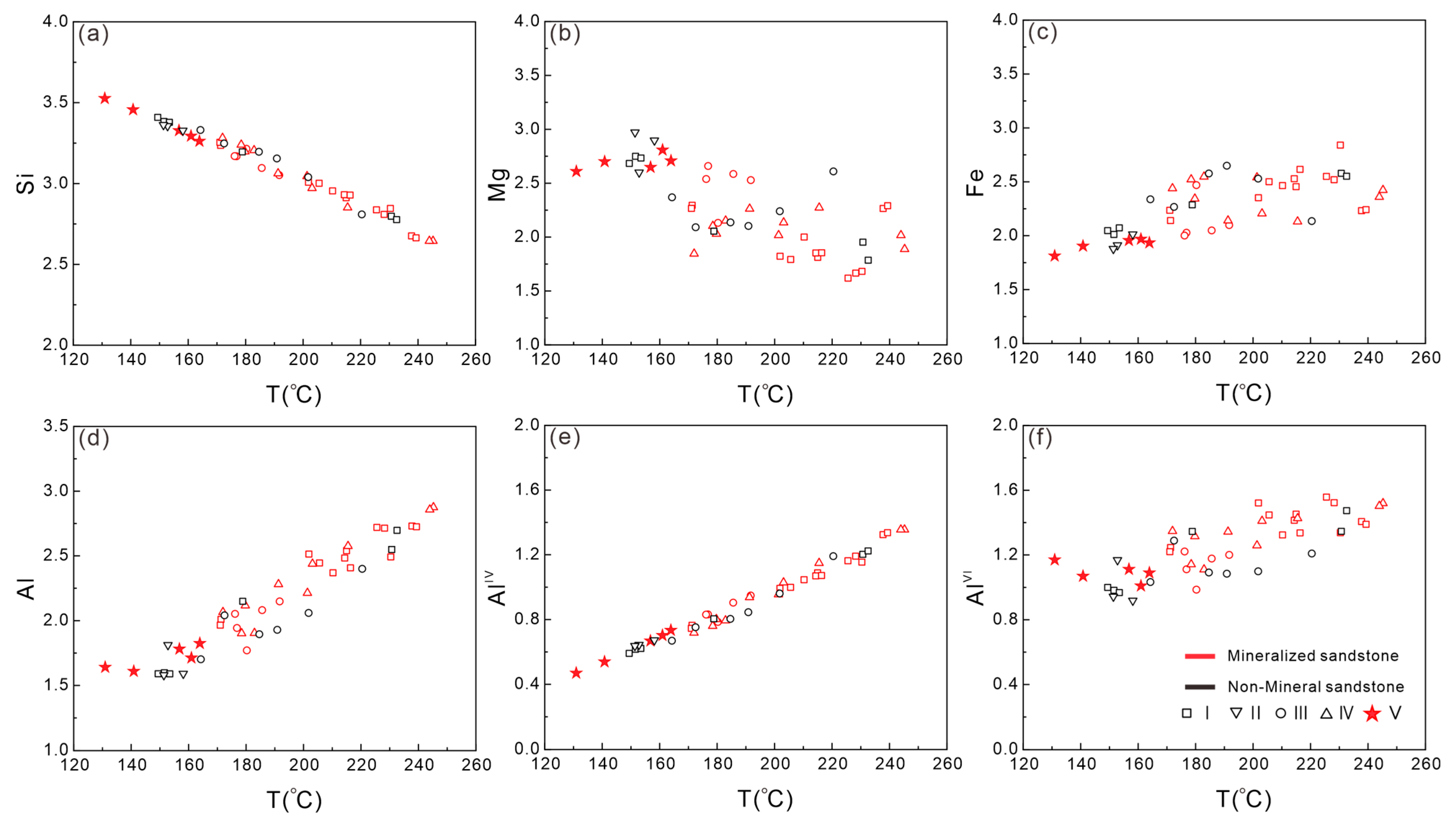
The cation content in chlorite also varies with changes in temperature [53,55]. Cathelineau and Nieva (1985) have shown that within the temperature range of 100 °C to 350 °C, temperature (T) exhibits a positive correlation with the AlIV and Fe content of chlorite [45]. AlIV, AlVI, total Al, and Fe in chlorites from the Pengyang uranium deposit show positive correlations with temperature (T) (Figure 13c–f), while the Si and Mg content of chlorites exhibit negative correlations with temperature (T) (Figure 13a,b). This indicates that temperature primarily controls the substitution of AlIV for Si in the tetrahedral layer of chlorite, with higher temperatures favoring a greater degree of AlIV replacement of Si. The charge deficit generated by the substitution of AlIV for Si during temperature increase is compensated for by the substitution of AlVI for R2+ in the octahedral layer or by the occupation of octahedral vacancies. Throughout the cooling process, the total Al content also decreases in chlorite. This may reveal that, in addition to Tschermak and di-trioctahedral substitutions, the early (pre-ore stage) hydrothermal fluids likely had relatively high Al content in chlorite. As the temperature decreased, the amount of Al incorporated into the chlorite crystal lattice from external sources gradually diminished.
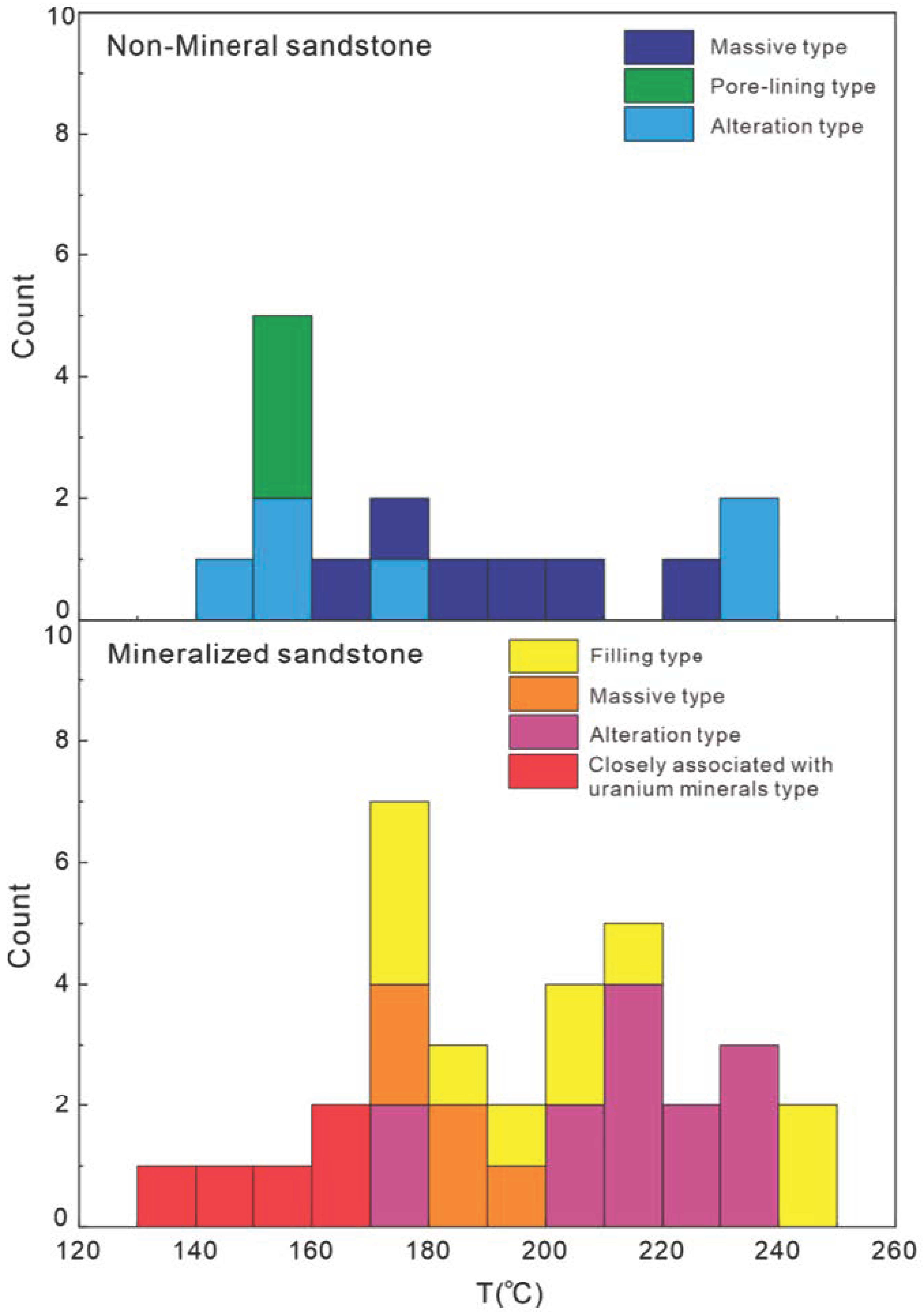
In the Pengyang uranium deposit, the formation temperatures of chlorite in non-mineralized sandstone primarily range between 140 °C and 240 °C, while those in mineralized sandstone range from 130 °C to 250 °C (Figure 14). The formation temperatures of the filling chlorite (Type IV) in mineralized sandstone (170–250 °C) are significantly higher than those of the pore-lining chlorite (Type II) in non-mineralized strata (150–160 °C). Additionally, the altered-type chlorite (Type III) in mineralized strata exhibits slightly higher formation temperatures compared to its counterpart in non-mineralized sandstone. Particularly noteworthy is that the formation temperatures of the chlorite closely associated with uranium minerals (Type V) range from 130 °C to 170 °C, which is significantly lower than those of other chlorite types in the mineralized sandstone (Figure 14). This result is similar to the fluid inclusion temperature (90–130 °C) measurements from the Diantou uranium deposit near the study area [56]. Therefore, this indicates that the ore-forming fluids were relatively low-temperature hydrothermal fluids, potentially representing the actual temperature of uranium mineralization.
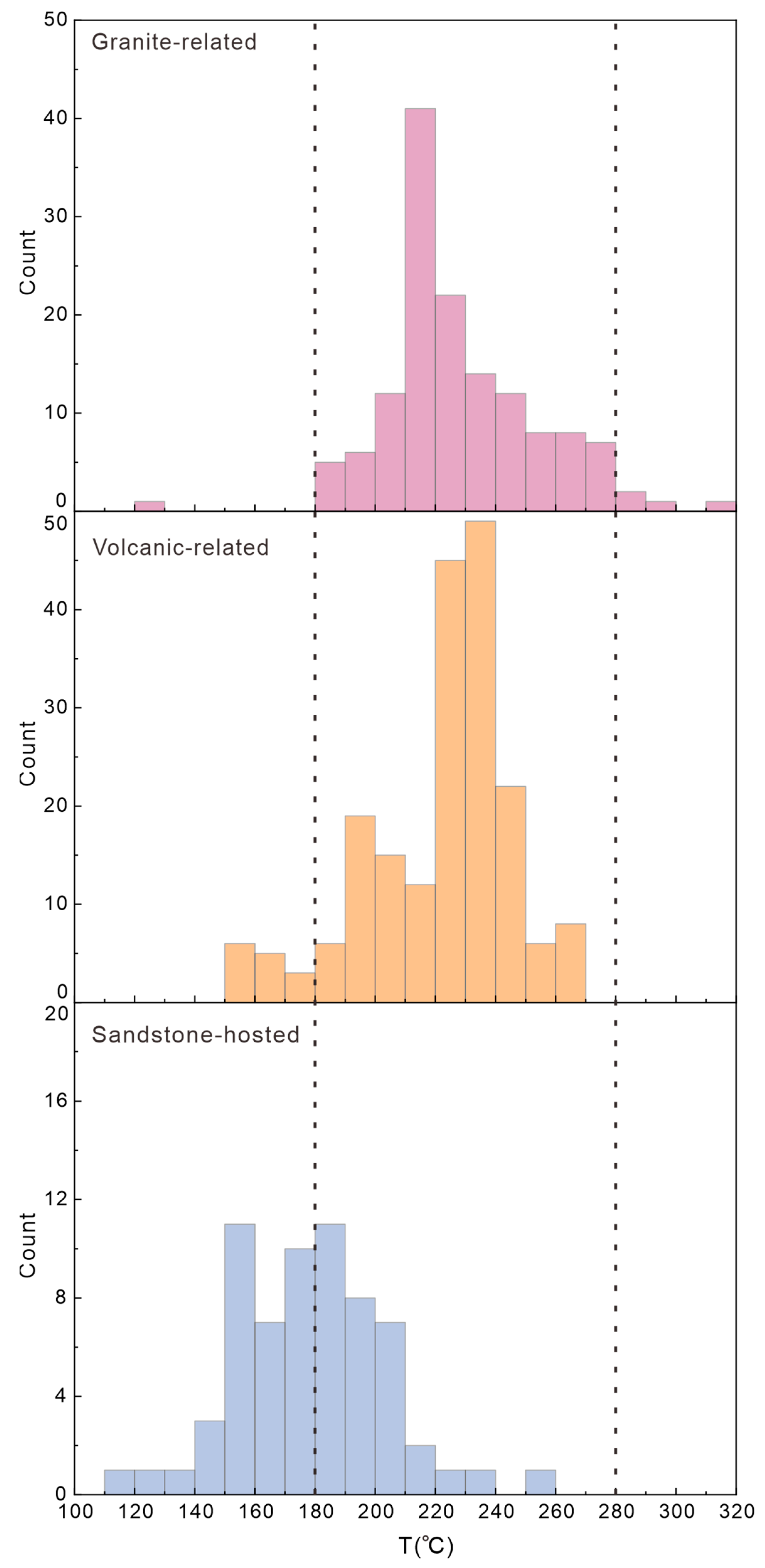
In addition, this study provides a comprehensive comparison and summary of the formation temperatures of chlorite in different types of uranium deposits in China (Figure 15), the formation temperatures obtained in previous studies differed from those of chlorites in sandstone-hosted uranium deposits (110–260 °C) (Figure 15). Because previous studies have rarely identified chlorites explicitly associated with uranium minerals [44], this likely led to generally higher ore-forming temperature ranges for sandstone-hosted uranium deposits [18,19]. It shows that the formation temperatures of chlorite in sedimentary system sandstone-hosted uranium deposits (110–260 °C) are generally lower than those in volcanic- and granite-related uranium deposits (180–270 °C), both of which belong to medium- to low-temperature mineralization systems. This viewpoint is also consistent with the formation of sandstone-hosted uranium ore bodies in relatively low-temperature systems [17,56].

5. The Relationship Between Chlorite and Uranium Mineralization

Chlorite commonly occurs in medium–low-temperature hydrothermal systems, low-grade metamorphism, and sedimentary diagenesis [46]. Variations in its structure and composition of chlorites can reflect fluid properties and formation environments, holding significant importance for understanding the attributes of ore-forming fluids and changes in metallogenic environments [47,52]. Globally, the formation of various types of uranium deposits is accompanied by significant amounts of chlorite, such as in unconformity-type uranium deposits [64], volcanic-related uranium deposits [60], granite-related uranium deposits [59], and sandstone-hosted uranium deposits [18,19]. However, to date, the relationship between chlorite formation and uranium precipitation remains poorly understood in aeolian sandstone-hosted systems.
Since the composition of chlorite is not fixed, some chlorite may result from multi-stage fluid alteration, which may be influenced by various factors such as temperature, pressure, oxygen fugacity, and fluid evolution [39,51,65]. Therefore, when discussing the formation mechanisms of chlorite, all these factors should be taken into account. Previous studies have found that Mg-rich chlorite tends to form in low-oxidation environments, while Fe-rich chlorite corresponds to reducing environments [42]. In contrast, this study shows that Fe contents in non-mineralized and mineralized strata are similar, but the Mg content in chlorite is relatively higher in non-mineralized strata (Figure 10b), indicating that the overall environment of mineralized strata is more reducing. Notably, chlorite closely associated with uranium minerals (Type V) is relatively enriched in Mg, differs significantly in composition from other chlorite in the mineralized strata, and forms at lower temperatures. This suggests that this type of chlorite was formed by lower-temperature, oxidizing, uranium-bearing hydrothermal fluids, directly representing conditions of uranium mineralization in the Pengyang uranium deposit.
Based on the clay mineral content and occurrence relationships in this study, the chlorite and kaolinite from three stages of hydrothermal fluid activity could be identified in the Luohe Formation sandstones from the Pengyang uranium deposit, evolving from alkaline to acidic and then back to alkaline conditions [22]. Thus, this study proposes that the fluids associated with chlorite formation in the Pengyang uranium deposit were multiphase, and the formation process of chlorite can be divided into three stages.
Diagenetic Stage (Stage I): With increasing burial depth, hydrolytic alteration of the deposited detrital chlorite grains releases substantial amounts of Si4+, Al3+, Fe2+, Mg2+, K+, Na+, Ca2+, and other components into the fluid, generating Fe2+-enriched alkaline fluids [27]. As fluids migrate, feldspar and biotite could be altered to form chlorite. Under progressively intensifying compaction, rounded massive-type chlorite (Type I) develops (Figure 8a,b). Where the fluids migrate into relatively larger intergranular pores, broad needle-like pore-lining chlorite (Type II) forms (Figure 8c,d).
Fluid Alteration Stage (Stage II): The release of acidic and reducing fluids from deep-seated Yanchang Formation hydrocarbons may have occurred, ascending and exuding upward in the Luohe Formation [8]. The fluids in this stage were relatively high-temperature and capable of partially dissolving feldspars to form kaolinite while releasing K+, Na+, and Si4+ (Figure 8f). Detrital dolomite dissolved, releasing Ca2+ and Mg2+, and detrital quartz underwent partial dissolution, while diagenetic-stage chlorite also partially dissolved (Figure 7a). Substantial amounts of K+, Na+, and Ca2+ were released following alteration by the acidic fluid, gradually shifting the environment from acidic to alkaline conditions [22]. Subsequently, filling chlorite (Type IV) occurred within dissolution pits of quartz (Figure 8g,h). During this stage, Ca2+ and Mg2+ from the fluids reprecipitated as dolomite overgrowths around early detrital dolomite grains (Figure 8d). Subhedral to euhedral small dolomite grains mostly formed within fractures of chlorite particles and in pores between feldspar and quartz grains (Figure 8b). Furthermore, mica altered to kaolinite by acidic fluids is observed, subsequently altered to chlorite by alkaline fluids, resulting in the coexistence of chlorite and kaolinite within mineralized strata (Figure 8f). This indicates that the target stratum underwent multiple episodes of fluid alteration, representing the combined action of acidic and alkaline fluids.
Mineralization Stage (Stage III): Scanning electron microscopy observations reveal that uranium minerals predominantly occur within secondary pores of quartz and feldspar grains (Figure 6a,b), indicating that the mineralization stage postdates the fluid alteration stage. After the Luohe Formation was altered by reducing fluids, the overall environment within the mineralized strata became more reducing, which is favorable for uranium mineralization [12,24]. At the same time, the presence of uranophane confirms that secondary uranium mineralization occurred in this area (Figure 6d) [66]. The ore-forming fluid in sandstone-hosted deposit was an oxidizing uranium-bearing fluid. During this stage, the uranium minerals formed could adsorb onto the chlorite that formed earlier. As the chlorite formed by the ore-forming fluids crystallized, uranium that could not fit into the chlorite lattice was precipitated, resulting in a phenomenon where uranium minerals filled the spaces around the chlorite (Figure 8i,j). Chlorites closely associated with uranium minerals (Type V) were observed using TEM (Figure 9), indicating the direct genesis relationship between chlorite and uranium mineralization. In addition, this type of chlorite indicates characteristics of low-temperature, relatively oxidizing fluids, likely reflecting that the main ore-forming fluids originated from the infiltration of interlayer fluids or meteoric water. This corresponds to the relatively low formation temperatures (130–170 °C) obtained for the chlorite closely associated with uranium minerals. Given the relatively low temperature and oxidized nature of the ore-forming fluids, we suggest that these fluids may have originated from meteoric water or interlayer water within the sandstone sequence.

6. Conclusions

Chlorite within sandstone from the Luohe Formation in the Pengyang uranium deposit in the southwestern Ordos Basin, North China exhibits five main occurrence types: altered, pore-lining, massive, filling, and chlorite closely associated with uranium minerals. The mineralized strata are dominated by diabantite, pycnochlorite, brunsvigite, and ripidolite, with a material source characterized by less mafic components and a predominance of pelitic rocks. In contrast, non-mineralized strata are mainly composed of diabantite, derived primarily from mafic fluids.
The formation temperature range of different types of chlorites in the Pengyang ore field is relatively broad, generally between 130 °C and 250 °C. Although those chlorites occurring with mineralized strata exhibit relatively higher temperatures, it is noted that chlorite closely associated with uranium minerals formed at lower temperatures, ranging from 130 °C to 170 °C.
The sandstones in the Pengyang uranium deposit were altered by later hydrothermal fluids, and the chlorites within sandstones from the Luohe Formation were formed through multi-stage hydrothermal activities. The chlorite in mineralized strata generally indicates a strongly reducing environment, while those chlorites associated with uranium minerals reflects a lower-temperature oxidizing fluid.

Supplementary Materials

The following supporting information can be downloaded at https://www.mdpi.com/article/10.3390/min16060633/s1: Table S1: Electron microprobe analyses (wt%) of chlorites in in sandstones from the Luohe Formation in the Pengyang area from the southwestern Ordos Basin, North China; Table S2: Estimation of structural formulae and characteristic values of chlorites in sandstones from the Luohe Formation in the Pengyang area from the southwestern Ordos Basin, North China (based on 14 oxygen atoms).

Author Contributions

H.Y.: investigation, methodology, data curation, visualization, writing—original draft, writing—review and editing. J.-C.L.: supervision, data curation, investigation, methodology, funding acquisition, writing—original draft, writing—review and editing. Y.C.: resources, writing—review and editing. Q.L.: resources, writing—review and editing. G.Y.: visualization. Y.L.: data curation. Q.Z.: resources, investigation. B.Z.: resources, investigation. All authors have read and agreed to the published version of the manuscript.

Funding

This research was funded by the National Key R&D Program of China (2023YFC2906702), and the NSFC (41873057, 41603051).

Data Availability Statement

The original contributions presented in this study are included in the article/Supplementary Materials. Further inquiries can be directed to the corresponding author.

Acknowledgments

During the preparation of this study, Yinhang Cheng is acknowledged for his generous help with getting the drill core samples. Special thanks go to Shaohua Dong and Yun Li for their assistance in BSE and EMPA, respectively.

Conflicts of Interest

The authors declare no conflicts of interest.

References

  1. NEA-IAEA. Uranium 2024: Resources, Production and Demand; OECD Publishing: Paris, France, 2025. [Google Scholar]
  2. Jin, R.S.; Liu, H.J.; Li, X.G. Theoretical system of sandstone-type uranium deposits in northern China. J. Earth Sci. 2022, 33, 257–277. [Google Scholar] [CrossRef]
  3. Deng, J.; Wang, Q.F.; Gao, B.F.; Huang, D.H.; Yang, L.Q.; Xu, H.; Zhou, Y.H. Evolution of Ordos Basin and Its Distribution of Various Energy Resources. Geoscience 2005, 4, 538–545, (In Chinese with English Abstract). [Google Scholar]
  4. Yue, L.; Jiao, Y.Q.; Rong, H.; Xie, H.L.; Wang, Q.Y.; Yan, Q.Q. Selective crystallization and precipitation of authigenic pyrite during diagenesis in uranium reservoir sandbodies in Ordos Basin. Ore Geol. Rev. 2019, 107, 532–545. [Google Scholar] [CrossRef]
  5. Zhu, Q.; Li, J.G.; Li, G.Y.; Wen, S.B.; Yu, R.G.; Tang, C.; Feng, X.X.; Liu, X.X. Characteristics of sandstone-type uranium mineralization in the Hangjinqi region of the northeastern Ordos Basin: Clues from clay mineral studies. Ore Geol. Rev. 2022, 141, 104642. [Google Scholar] [CrossRef]
  6. Dai, M.J.; Peng, B.Y.; Wu, C.J.; Jiao, Y.Q.; Liu, L.; Miao, A.S.; Zhang, C.Y.; Zhang, Z.L.; Chen, S. Ore characteristics of the sandstone-type Daying uranium deposit in the Ordos Basin, northwestern China. Can. J. Earth Sci. 2017, 54, 893–901. [Google Scholar] [CrossRef]
  7. Xue, C.J.; Chi, G.X.; Xue, W. Interaction of two fluid systems in the formation of sandstone-hosted uranium deposits in the Ordos Basin, Geochemical evidence and hydrodynamic modeling. J. Geochem. Explor. 2010, 106, 226–235. [Google Scholar] [CrossRef]
  8. Ren, Y.S.; Yang, X.Y.; Miao, P.S.; Hu, X.W.; Chen, Y.; Chen, L.L.; Zhao, H.L. Mineralogical and geochemical research on Pengyang deposit, A peculiar eolian sandstone-hosted uranium deposit in the southwest of Ordos Basin. Ore Geol. Rev. 2022, 141, 104571. [Google Scholar] [CrossRef]
  9. Sun, Y.H.; Jiao, Y.Q.; Cuney, M.; Wu, L.Q.; Mercadier, J.; Rong, H.; Liu, Y.; Tao, Z.P. Sulfur isotope and trace element constraints on the conditions of pyrite formation from the Diantou-Shuanglong Sandstone-hosted uranium deposit, Ordos Basin, China, Implications for uranium mineralization. Ore Geol. Rev. 2024, 165, 105921. [Google Scholar] [CrossRef]
  10. Miao, P.S.; Jin, R.S.; Li, J.G.; Zhao, H.L.; Chen, L.L.; Chen, Y.; Si, Q.H. The first discovery of a large sandstone-type uranium deposit in aeolian depositonal environment. Acta Geol. Sin. (Engl. Ed.) 2020, 94, 583–584. [Google Scholar] [CrossRef]
  11. Jin, R.S.; Zhu, Q. Supernormal enrichment mechanism and metallogenic process of sandstone type uranium deposit in the eolian sedimentary system in Jingchuan area, Ordos basin. Acta Geol. Sin. 2023, 97, 725–737, (In Chinese with English Abstract). [Google Scholar]
  12. Li, Z.Y.; Liu, W.S.; Li, W.T.; Li, X.D.; Qin, M.K.; Cai, Y.Q.; Zhang, Y.L.; He, S.; Wu, Q.B.; Qiu, L.F.; et al. Exudative metallogeny of the Hadatu sandstone-type uranium deposit in the Erlian Basin, Inner Mongolia. Geol. China 2022, 49, 1009–1047, (In Chinese with English Abstract). [Google Scholar]
  13. Li, Z.Y.; Qin, M.K.; Fan, H.H.; Cai, Y.Q.; Cheng, J.X.; Guo, D.F.; Ye, F.W.; Fan, G.; Liu, X.Y. Main progresses of uranium geology and exploration techniques for the past decade in China. Bull. Mineral. Petrol. Geochem. 2021, 40, 845–857+1001, (In Chinese with English Abstract). [Google Scholar]
  14. Liu, C.Y.; Zhang, L.; Huang, L.; Wu, B.L.; Wang, J.Q.; Zhang, D.D.; Tan, C.Q.; Ma, Y.P.; Zhao, J.S. Novel metallogenic model of sandstone-type uranium deposits, Mineralization by deep organic fluids. Earth Sci. Front. 2024, 31, 368–383, (In Chinese with English Abstract). [Google Scholar]
  15. Cheng, Y.H.; Jin, R.S.; Miao, P.S.; Wang, S.Y.; Teng, X.M. Two metallogenic models of sedimentary-hosted uranium deposit, Jingchuan and Tale types. Earth Sci. 2025, 50, 46–57, (In Chinese with English Abstract). [Google Scholar]
  16. Han, M.Z.; Li, Z.Y.; Zhang, Z.L.; Luo, X.N.; Wang, L.H. Genesis of Green Sandstone From Huachi-Huanhe Formation in Northwestern Ordos Basin. Uranium Geol. 2022, 38, 394–408, (In Chinese with English Abstract). [Google Scholar]
  17. Lin, Y.H.; Fan, M.S.; Ni, P.; Pan, J.Y.; Jin, R.S.; Cheng, Y.H.; Cui, J.M.; Cheng, Z.K.; Li, W.S.; Zhu, Q. New insights into uranium source and mineralization process of the world-class Jingchuan sandstone-hosted uranium deposit, Ordos Basin, China, Evidence from geology, carbonate textures and geochemistry. Ore Geol. Rev. 2025, 185, 106795. [Google Scholar] [CrossRef]
  18. Xia, F.; Meng, H.; Nie, F.J.; Yan, Z.B.; Zhang, C.Y.; Li, M.G. Characteristics of Chlorite from the Nalinggou uranium deposit in the Ordos Basin and its geological significance. Acta Geol. Sin. 2016, 90, 3473–3482, (In Chinese with English Abstract). [Google Scholar]
  19. Luo, X.N.; Zhang, Y.Y.; Yi, C.; Zhang, Z.L.; He, S.; Zhang, Y. Characteristics of chlorite and their relationship with uranium mineralization in the Bayinqinggeli uranium deposit of Ordos Basin. World Nucl. Geosci. 2021, 38, 311–320, (In Chinese with English Abstract). [Google Scholar]
  20. Ding, B.; Liu, H.X.; Xu, D.R.; Qiu, L.F.; Zhang, Z.L.; He, F. Uranium metallogenic effect of hydrothermal fluid transformation in sandstone-type uranium deposits in Northern Ordos Basin, constraints from the study of biotite chloritization process. Earth Sci. 2024, 49, 625–638, (In Chinese with English Abstract). [Google Scholar]
  21. Zhu, Q.; Li, J.G.; Wen, S.B.; Li, G.Y.; Yu, R.G.; Miao, P.S.; Zhang, B. Alteration, uranium occurrence state, and enrichment mechanism of the cretaceous Luohe Formation, southwestern Ordos Basin, western China. Ore Geol. Rev. 2021, 139, 104486. [Google Scholar] [CrossRef]
  22. Zhu, Q.; Li, J.G.; Miao, P.S.; Zhang, B.; Zhao, H.L.; Si, Q.H.; Chen, Y.; Xiao, P. Characteristics of clay minerals in the Luohe Formation in Zhenyuan area, Ordos Basin, and its uranium prospecting significance. Geotecton. Metallog. 2020, 44, 619–632, (In Chinese with English Abstract). [Google Scholar]
  23. Cheng, Y.H.; Petrov, V.; Jin, R.S.; Miao, P.S. Neotectonic controls on large-scale uranium mineralization in the Meso-Cenozioc basins, Northern China. Ore Geol. Rev. 2025, 176, 106393. [Google Scholar] [CrossRef]
  24. Si, Q.H.; Li, J.G.; Miao, P.S.; Zhang, C.; Zhu, Q.; Zhao, H.L. Characteristics and mechanism of hydrocarbon alteration of faded sandstone in the uranium-bearing Luohe Formation, Pengyang area, southwestern Ordos Basin. Ore Geol. Rev. 2021, 139, 104500. [Google Scholar] [CrossRef]
  25. Yang, Y.Y. Cretaceous sedimentary formation in Ordos basin. Oil Gas Geol. 2006, 27, 167–172, (In Chinese with English Abstract). [Google Scholar]
  26. Zhao, H.L.; Ao, C.; Li, J.G.; Chen, L.L.; Zhang, B.; Miao, P.S.; Si, Q.H.; Zhu, Q.; Yu, R.G.; Chen, Y. Occurrence and mechanism of uranium enrichment with a unique eolian sedimental environment in the Pengyang uranium deposit, Ordos Basin. Ore Geol. Rev. 2022, 141, 104641. [Google Scholar] [CrossRef]
  27. Xie, Y.; Wang, J.; Li, L.X.; Xie, Z.W.; Deng, G.S.; Li, M.H.; Jiang, X.S. Distribution of the Cretaceous clay minerals in Ordos Basin, China and its implication to sedimentary and diagenetic environment. Geol. Bull. China 2010, 29, 93–104, (In Chinese with English Abstract). [Google Scholar]
  28. Folk, R.L.; Andrews, P.B.; Lewis, D.W. Detrital sedimentary rock classification and nomenclature for use in New Zealand. N. Z. J. Geol. Geophys. 1970, 13, 937–968. [Google Scholar] [CrossRef]
  29. Foster, M.D. Interpretation of the composition and classification for the chlorite. U.S. Geol. Surv. Prof. Pap. 1962, 414, 1–33. [Google Scholar]
  30. Deer, W.A.; Howie, R.A.; Zussman, J. Rock-Forming Minerals: Sheet Silicates; Longman: London, UK, 1962; 270p. [Google Scholar]
  31. Shirozu, H. Chapter 7 Chlorite minerals. In Developments in Sedimentology; Sudo, T., Shimoda, S., Eds.; Elsevier: Amsterdam, The Netherlands, 1978; Volume 26, pp. 243–264. [Google Scholar]
  32. Walshe, J.L. A six-component chlorite solid solution model and the conditions of chlorite formation in hydrothermal and geothermal systems. Econ. Geol. 1986, 81, 681–703. [Google Scholar] [CrossRef]
  33. Zane, A.; Weiss, Z. A procedure for classifying rock-forming chlorites based on microprobe data. Rend. Lincei 1998, 9, 51–56. [Google Scholar] [CrossRef]
  34. Worden, R.H.; Griffiths, J.; Wooldridge, L.J.; Uyley, J.E.P.; Lawan, A.Y.; Muhammed, D.D.; Simon, N.; Armitage, P.J. Chlorite in sandstones. Earth Sci. Rev. 2020, 204, 103105. [Google Scholar] [CrossRef]
  35. Inoue, A. Formation of Clay Minerals in Hydrothermal Environments. Origin and Mineralogy of Clays; Springer: Berlin/Heidelberg, Germany, 1995; pp. 268–329. [Google Scholar]
  36. Tang, Y.J.; Jia, J.Y.; Xie, X.D. Environment significance of clay minerals. Earth Sci. Front. 2002, 9, 337–344, (In Chinese with English Abstract). [Google Scholar]
  37. Chen, S.Y.; Yang, Y.Q.; Jiang, Z.X.; Qiu, L.W.; Wang, X.J. Insights into the formation and growth of authigenic chlorite in sandstone: Analysis of mineralogical and geochemical characteristics from Shaximiao formation, Sichuan Basin, SW China. Mar. Pet. Geol. 2024, 170, 107112. [Google Scholar] [CrossRef]
  38. Pan, C.R.; Mou, P.; Zhong, F.J.; Huang, G.W.; Li, H.D.; Pan, J.Y. Genesis of chlorite in the Huangsha uranium deposit, middle part of Nanling Mountains and its relationship with uranium mineralization. Geol. China 2020, 47, 348–361, (In Chinese with English Abstract). [Google Scholar]
  39. González-Esvertit, E.; Canals, A.; Casas, J.M.; Nieto, F. Insights into the structural evolution of the pre-Variscan rocks of the Eastern Pyrenees from La Molina quartz veins; constraints on chlorite and fluid inclusion thermometry. Geol. Acta 2020, 18, 1–20. [Google Scholar] [CrossRef]
  40. Kranidiotis, P.; MacLean, W.H. Systematics of chlorite alteration at the Phelps Dodge massive sulfide deposit, Matagami, Quebec. Econ. Geol. 1987, 82, 1898–1911. [Google Scholar] [CrossRef]
  41. Inoue, A.; Meunier, A.; Patrier-Mas, P.; Rigault, C.; Beaufort, D.; Vieillard, P. Application of chemical geothermometry to low-temperature trioctahedral chlorites. Clays Clay Miner. 2009, 57, 371–382. [Google Scholar] [CrossRef]
  42. Xie, X.G.; Byerly, G.R.; Ferrell, J.R.; Ray, E. IIb trioctahedral chlorite from the barberton greenstone belt, Crystal structure and rock composition constraints with implications to geothermometry. Contrib. Mineral. Petrol. 1997, 126, 275–291. [Google Scholar] [CrossRef]
  43. Laird, J. Chlorites, metamorphic petrology. Rev. Mineral. 1988, 19, 405–453. [Google Scholar]
  44. Meng, F.M.; Nie, F.J.; Xia, F.; Du, B.H.; Yan, Z.B.; Zhou, W.B.; Sun, D.; Zhang, R.; Wang, C.H. Characteristics of chlorite in the Yimin Formation and its relationship with uranium mineralization in the Kelulun sag, Hailar Basin. Mineral. Petrol. 2024, 44, 78–89, (In Chinese with English Abstract). [Google Scholar]
  45. Cathelineau, M.; Nieva, D. A chlorite solid solution geothermometer the Los azufres (Mexico) geothermal system. Contrib. Mineral. Petrol. 1985, 91, 235–244. [Google Scholar] [CrossRef]
  46. De Caritat, P.; Hutcheon, I.; Walshe, J.L. Chlorite Geothermometry: A Review. Clays Clay Miner. 1993, 41, 219–239. [Google Scholar] [CrossRef]
  47. Lacroix, B.; Charpentier, D.; Buatier, M.; Vennemann, T.; Labaume, P.; Adatte, T.; Travé, A.; Dubois, M. Formation of chlorite during thrust fault reactivation. Contrib. Mineral. Petrol. 2012, 163, 1083–1102. [Google Scholar] [CrossRef]
  48. Zhang, Z.S.; Hua, R.M.; Ji, J.F.; Zhang, Y.C.; Guo, G.L.; Yin, Z.P. Characteristics and formation conditions of chlorite in No.201 and No.361 uranium deposits. Acta Mineral. Sin. 2007, 27, 161–172, (In Chinese with English Abstract). [Google Scholar]
  49. Wilkinson, J.J.; Chang, Z.S.; Cooke, D.R.; Baker, M.J.; Wilkinson, C.C.; Inglis, S.; Chen, H.Y.; Gemmel, J.B. The chlorite proximitor: A new tool for detecting porphyry ore deposits. J. Geochem. Explor. 2015, 152, 10–26. [Google Scholar] [CrossRef]
  50. Essene, E.J.; Peacor, D.R. Clay Mineral Thermometry—A Critical Perspective. Clays Clay Miner. 1995, 43, 540–553. [Google Scholar] [CrossRef]
  51. González-Esvertit, E.; Canals, A.; Bons, P.D.; Casas, J.M.; Nieto, F.; Gomez-Rivas, E. Chlorite chemical refinement during giant quartz vein formation. GSA Bull. 2024, 136, 5208–5216. [Google Scholar] [CrossRef]
  52. Cathelineau, M. Cation site occupancy in chlorites and illites as a function of temperature. Clay Miner. 1988, 23, 471–485. [Google Scholar] [CrossRef]
  53. Battaglia, S. Applying X-ray geothermometer diffraction to a chlorite. Clays Clay Miner. 1999, 47, 54–63. [Google Scholar] [CrossRef]
  54. Rausell-Colom, J.A.; Wiewiora, A.; Matesanz, E. Relationship between composition and d001 for chlorite. Am. Mineral. 1991, 76, 1373–1379. [Google Scholar]
  55. Nieto, F. Chemical composition of metapelitic chlorites: X-ray diffraction and optical property approach. Eur. J. Mineral. 1997, 9, 829–842. [Google Scholar] [CrossRef]
  56. Qiu, L.F.; Zhang, Z.L.; Sun, X.; He, F. Research and Demonstration of Fluid Inclusions in Sandstone-type Uranium Ore-forming Fluid—A Case of Study in Uranium Mineralization Area of South Ordos. J. East China Univ. Technol. (Nat. Sci.) 2020, 43, 301–312, (In Chinese with English Abstract). [Google Scholar]
  57. Wu, D.H.; Pan, J.Y.; Xia, F.; Huang, G.W.; Zhong, F.J.; Qi, J.M.; Hong, B.Y.; Zhou, T.B. Characteristics and formation conditions of chlorite in the Shangjiao uranium deposit in the Southern Jiangxi Province, China. Acta Mineral. Sin. 2018, 38, 393–405, (In Chinese with English Abstract). [Google Scholar]
  58. Guo, G.L.; Liu, X.D.; Pan, J.Y.; Zhang, Z.S.; Li, X.B. Character of Chlorite and Its Relationship to Uranium Mineralization in Uranium Deposit No.302. Uranium Geol. 2012, 28, 35–41, (In Chinese with English Abstract). [Google Scholar]
  59. Zhao, Q.F.; Chen, X.; Xu, X.S. Mineralogical Characteristics of Chlorite and its Geological Significance to Mianhuakeng Uranium Deposit. Uranium Geol. 2021, 37, 423–432, (In Chinese with English Abstract). [Google Scholar]
  60. Cui, J.Q.; Yang, S.Y.; Wang, H.; Zhang, R.X.; Tang, X.S.; Yan, Y.J. The role of uranyl complex decomposition and redox conditions in the precipitation of hydrothermal uranium deposits, Insights from chlorite mineralogy and geochemistry in the Shazhou uranium deposit, Xiangshan, SE China. GSA Bull. 2024, 136, 388–402. [Google Scholar] [CrossRef]
  61. Wang, Y.J.; Lin, J.R.; Hu, Z.H.; Wang, F.; Pang, Y.Q.; Gao, F. Characteristics of Chlorite in Yunji Deposit of Xiangshan Uranium Ore-field and Its Geological Implication. Uranium Geol. 2018, 34, 153–158, (In Chinese with English Abstract). [Google Scholar]
  62. Wei, W.F.; Chen, X.; Yu, Z.Q.; Chen, W.F.; Fang, Q.C.; Tang, X.S.; Ling, H.F. Different hydrothermal fluids inducing alteration and uranium mineralization in the Baquan deposit of the Xiangshan uranium ore field: Constraints from Geochemistry of altered rocks and ores. Ore Geol. Rev. 2021, 139, 104475. [Google Scholar] [CrossRef]
  63. Liu, Q.; Zhao, K.D.; Liu, G.Q.; Zhang, D.; Li, Q. Geochemical Characteristics and Metallogenic Indications of Chlorite in the Caotaobei Uranium Deposit in Southern Jiangxi Province. Geol. J. China Univ. 2022, 28, 874–893, (In Chinese with English Abstract). [Google Scholar]
  64. Pei, L.N.; Guo, C.Y. Alteration characteristics and significance of unconformity-related uranium deposits, the Alligator River uranium field, Northern Australia. World Nucl. Geosci. 2022, 39, 660–674, (In Chinese with English Abstract). [Google Scholar]
  65. Beaufort, D.; Rigault, C.; Billon, S.; Billault, V.; Inoue, A.; Inoue, S.; Patrier, P. Chlorite and chloritization processes through mixed-layer mineral series in low-temperature geological systems—A review. Clay Miner. 2015, 50, 497–523. [Google Scholar] [CrossRef]
  66. Ghoneim, M.M.; Panova, E.G.; Abdel Gawad, A.E. Natural radioactivity and geochemical aspects of radioactive mineralization in El Sela, South Eastern Desert, Egypt. Int. J. Environ. Anal. Chem. 2021, 103, 2338–2350. [Google Scholar] [CrossRef]
Figure 1. Geological map of the Ordos Basin, North China (modified from [8]). 1—Unconformity; 2—tectonic unit dividing line; 3—study area; 4—Quaternary–Paleogene; 5—Lower Cretaceous; 6—Jurassic; 7—Triassic; 8—Upper Paleozoic; 9—Lower Paleozoic; 10—Proterozoic; 11—Archean; 12—Yanshanian granite; 13—uranium deposit.
Minerals 16 00633 g001
Figure 2. Geological map of sedimentary facies distribution in the Pengyang–Jingchuan region (modified from [26]). 1—Quaternary Holocene alluvial–diluvial deposits; 2—Quaternary Pleistocene aeolian loess; 3—Quaternary Pleistocene alluvial–diluvial deposits; 4—Neogene Ganhegou Formation; 5—Lower Cretaceous Jingchuan Formation; 6—Lower Cretaceous Luohandong Formation; 7—borehole location.
Minerals 16 00633 g002
Figure 3. Simplified stratigraphic chart and core images of the Lower Cretaceous strata in the southwestern Ordos Basin, North China.
Minerals 16 00633 g003
Figure 4. Hand specimens and optical photomicrographs of the Luohe Formation sandstone from the Pengyang area, Ordos Basin, North China. (a) Typical cross-bedding in aeolian sandstone. (b) Grayish-white sandstone with cross-bedding. (c) Non-mineralized sandstone. (d) Microscopic image of non-mineralized sandstone (under plane polarized light). (e) Mineralized sandstone. (f) Microscopic image of mineralized sandstone (under plane polarized light).
Minerals 16 00633 g004
Figure 8. BSE images of chlorite and related minerals from the Luohe Formation sandstone, Pengyang uranium deposit, Ordos Basin, North China. (a,b) Massive-type chlorite is in intimate contact with surrounding minerals. (c,d) Pore-lining chlorite, exhibiting acicular to lamellar habits. (e,f) Alteration of biotite to chlorite. (g,h) Chlorite fills dissolution pits in quartz and feldspar grain. (i,j) Uranium minerals occur within fractures and cavities in chlorite. Chl—chlorite; Kln—kaolinite; Qtz—quartz; Kfs—K-feldspar; Ab—albite; Dol—dolomite; Bt—biotite; U—uranium minerals.
Minerals 16 00633 g008
Figure 9. TEM images of representative chlorite associated with uranium minerals in the Luohe Formation sandstone, Pengyang area, Ordos Basin, North China. Chl-chlorite; U-uranium minerals. (a,b) Nano-scale uranium minerals are closely associated with chlorites.
Minerals 16 00633 g009
Figure 10. Classification diagram of chlorite from the Luohe Formation sandstone, Pengyang uranium deposit, Ordos Basin, North China. (a) Composition and classification diagram of chlorite (according to [29]). In this study, the mineralized chlorite shows a tendency to concentrate into diabantite. (b) Ternary classification diagram of chlorite (according to [33]), in which the mineralized chlorite shows a tendency to concentrate into Mg-chlorite. □ represents an octahedral vacancy.
Minerals 16 00633 g010
Figure 11. (ah) Diagram of major cation relationships in chlorite from the Luohe Formation sandstone, Pengyang uranium deposit, Ordos Basin, North China.
Minerals 16 00633 g011
Figure 12. Mg/(Mg + Fe) − Al/(Al + Mg + Fe) diagram of chlorite from the Luohe Formation sandstone in Pengyang uranium deposit, Ordos Basin, North China (according to [43]). Chlorite in the mineralized strata tends to be Mg-rich and is mainly derived from mafic fluids.
Minerals 16 00633 g012
Figure 13. (af) Diagram of the relationship between formation temperature and major cations in the chlorite of the Luohe Formation in the Pengyang area.
Minerals 16 00633 g013
Figure 14. Histogram of formation temperatures of chlorite from the Luohe Formation sandstone in the Pengyang uranium deposit, Ordos Basin, North China.
Minerals 16 00633 g014
Figure 15. Histogram of formation temperatures of chlorite in different types of uranium deposits (according to [18,19,20,38,44,57,58,59,60,61,62,63]). All reported formation temperatures for chlorite from previous work were determined using the same method as in this study.
Minerals 16 00633 g015
Disclaimer/Publisher’s Note: The statements, opinions and data contained in all publications are solely those of the individual author(s) and contributor(s) and not of MDPI and/or the editor(s). MDPI and/or the editor(s) disclaim responsibility for any injury to people or property resulting from any ideas, methods, instructions or products referred to in the content.