1. Introduction
Air pollution remains one of the most pressing global environmental and public health challenges, driven primarily by emissions of odorous volatile organic compounds (odorants), ammonia (NH
3), and nitrogen oxides (NOₓ). These pollutants contribute synergistically to the formation of photochemical smog, secondary particulate matter, ecosystem degradation, and adverse health effects, motivating increasingly stringent regulations and the search for sustainable mitigation strategies [
1,
2]. In this context, zeolites have emerged as a central class of materials for clean air technologies owing to their crystalline microporous frameworks, high surface area, ion exchange capacity, tunable acidity and polarity, and outstanding hydrothermal stability [
3,
4,
5].
Both natural and synthetic zeolites provide versatile platforms for the adsorption and catalytic transformation of gaseous pollutants. Natural zeolites—clinoptilolite in particular—represent abundant and low-cost materials whose physicochemical properties— framework topology, aluminum siting, hydrophilicity, and extra framework cation population—govern their affinity toward polar odorants, NH
3, and acidic nitrogen species [
6,
7,
8,
9]. Experimental and theoretical studies consistently demonstrate that adsorption performance on clinoptilolite is strongly influenced by grain size, pore accessibility, and surface chemistry, with different classes of odorants stabilized through distinct interaction mechanisms [
6]. Post-synthetic modifications, including acid treatment, dealumination, hierarchical structuring, and metal ion exchange, further enhance accessible surface area, alleviate diffusion limitations, and introduce adsorption active sites without the energy-intensive synthesis routes required for fully synthetic frameworks [
7]. These attributes position natural zeolites not only as robust benchmark sorbents but also as valuable design references for engineering advanced zeolite materials.
In parallel, extensive efforts have focused on tailoring synthetic zeolites such as FAU, MFI, and ZSM 5 through precise control of framework topology, Si/Al ratio, acidity type, and heteroatom incorporation to optimize catalytic activity and selectivity toward NH
3 SCR and related NOₓ abatement processes [
10,
11,
12]. However, recent mechanistic and spectroscopic studies reveal that nominal framework substitution does not necessarily correspond to true isomorphous incorporation of metals, with surface-segregated or extra-framework species often determining functional performance [
11]. These findings underscore that framework topology alone is insufficient to predict activity and that accurate identification of metal speciation, acid site distribution, hydration state, and confinement effects is essential for establishing reliable structure–function relationships.
For nitrogen oxide mitigation, zeolite-supported transition metal catalysts have emerged as promising alternatives to conventional vanadium-based systems, offering wider temperature windows, improved hydrothermal stability, and enhanced resistance to sulfur poisoning [
13,
14,
15]. Density functional theory (DFT) studies on FAU, MFI, and clinoptilolite-based systems hosting mono and bimetallic metal centers demonstrate that reaction energetics for both deNOₓ and deN
2O pathways are governed by metal nuclearity, local coordination environment, and the adsorption sequence of NOₓ species and NH
3 [
15,
16,
17]. Importantly, natural clinoptilolite has been shown to stabilize catalytically active metal ensembles with competitive or even superior performance relative to synthetic frameworks, reinforcing the concept that natural zeolites can function as active catalytic platforms rather than passive supports.
Beyond high-temperature catalytic processes, the control of nitrogen dioxide at ambient conditions has recently emerged as a critical yet historically underexplored aspect of clean air engineering. While adsorption-based NO
2 capture is attractive for reducing human exposure, most porous adsorbents suffer from dissociative chemisorption that releases secondary nitric oxide, undermining emission control objectives [
18]. Recent breakthroughs demonstrate that zeolites engineered through divalent metal cation exchange can fundamentally alter NO
2 adsorption chemistry, achieving complete capture with zero NO emission even under humid conditions [
19]. These findings establish ion exchange chemistry and surface site design (rather than framework topology alone) as decisive levers for emission-free adsorption, extending the functional scope of zeolites toward ambient and personal-level air purification technologies.
In this work, the term engineering zeolites refers to the deliberate and integrated tuning of framework topology, acidity, metal speciation, hydration state, and transport properties to match targeted clean air functions. Rather than treating adsorption and catalysis as separate strategies, emerging evidence supports zeolite architectures that couple pollutant capture with subsequent catalytic transformation [
12,
15]. By bridging insights from natural and synthetic frameworks and by integrating experimental characterization with DFT-guided mechanistic analysis, zeolites can be rationally designed as durable, selective, and energy-efficient materials for next-generation clean air and process intensification applications.
3. Results and Discussion
3.1. Zeolites as Functional Mineral Materials: Engineering Concept and Scope
Zeolites represent a unique class of mineral-based functional materials whose technological relevance extends well beyond their original geological classification. Defined by their crystalline aluminosilicate frameworks with ordered microporosity, zeolites combine structural regularity with chemical tunability, enabling their use in adsorption, ion exchange, and heterogeneous catalysis. Rather than relying exclusively on idealized framework types, modern research increasingly emphasizes engineering zeolite properties, including topology, acidity, metal speciation, and transport characteristics, to meet application-specific demands.
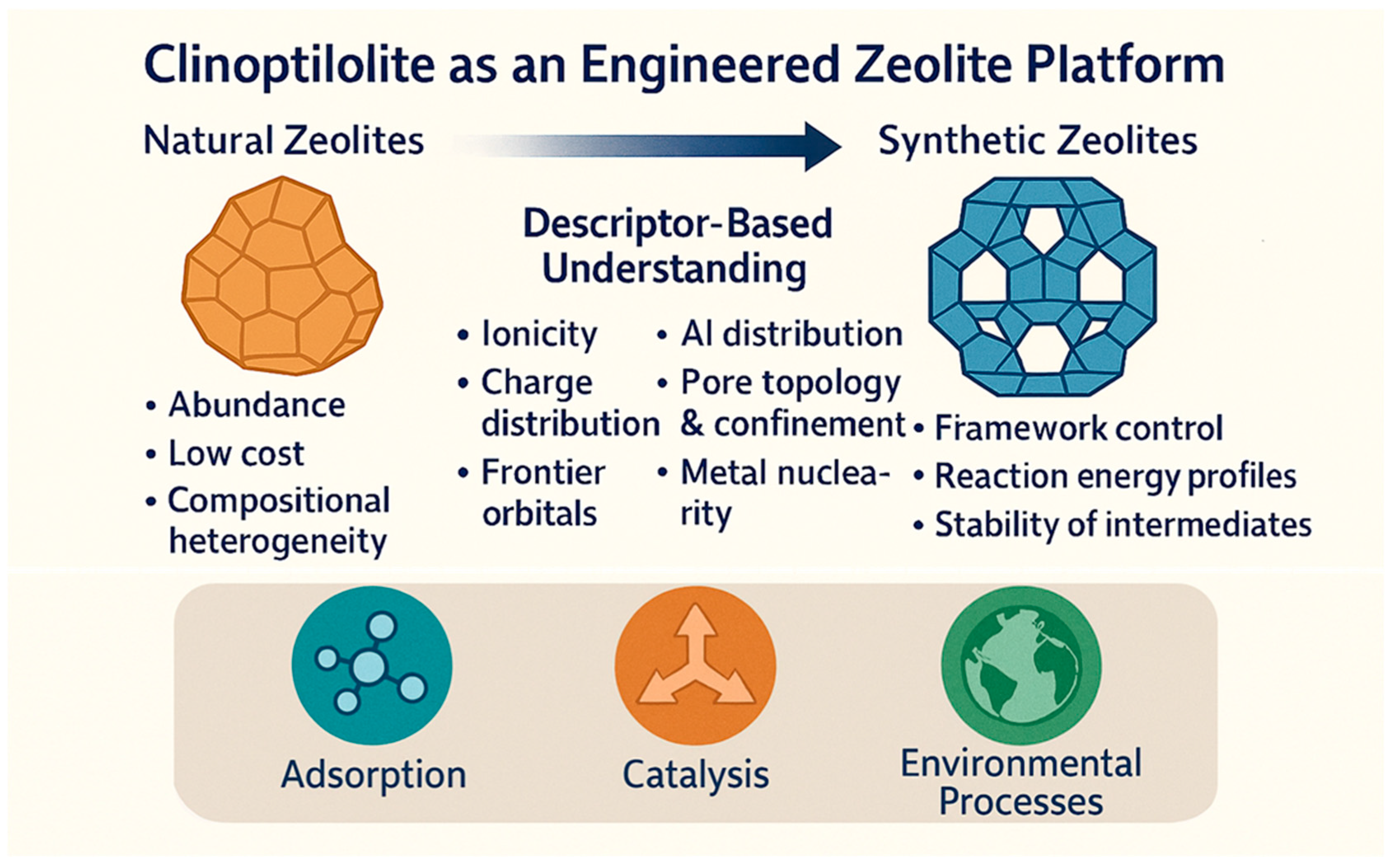
Natural zeolites, such as clinoptilolite, and synthetic frameworks, including FAU and ZSM-5, should be regarded as complementary systems rather than competing alternatives (
Figure 2). Natural zeolites offer advantages in terms of abundance, low cost, and compatibility with circular-economy principles, albeit with inherent compositional heterogeneity. In contrast, synthetic zeolites provide precise control over framework architecture and chemical composition, enabling systematic optimization of adsorption capacity and catalytic activity. Bridging these two material classes through targeted modification strategies represents an important pathway toward sustainable and scalable technologies.
In the context of air-pollution control, zeolites play a critical role in the adsorption of odorous compounds and ammonia, as well as in the catalytic conversion of nitrogen oxides. Their performance is governed not only by intrinsic framework structure but also by engineered features such as acid-site distribution, metal incorporation, and pore connectivity. This section establishes the conceptual framework for discussing zeolites as engineered mineral materials, setting the stage for subsequent analysis of structure–property–performance relationships relevant to adsorption, catalysis, and environmentally sustainable processes.
3.2. Structural Determinants of Adsorption in Natural and Synthetic Zeolites
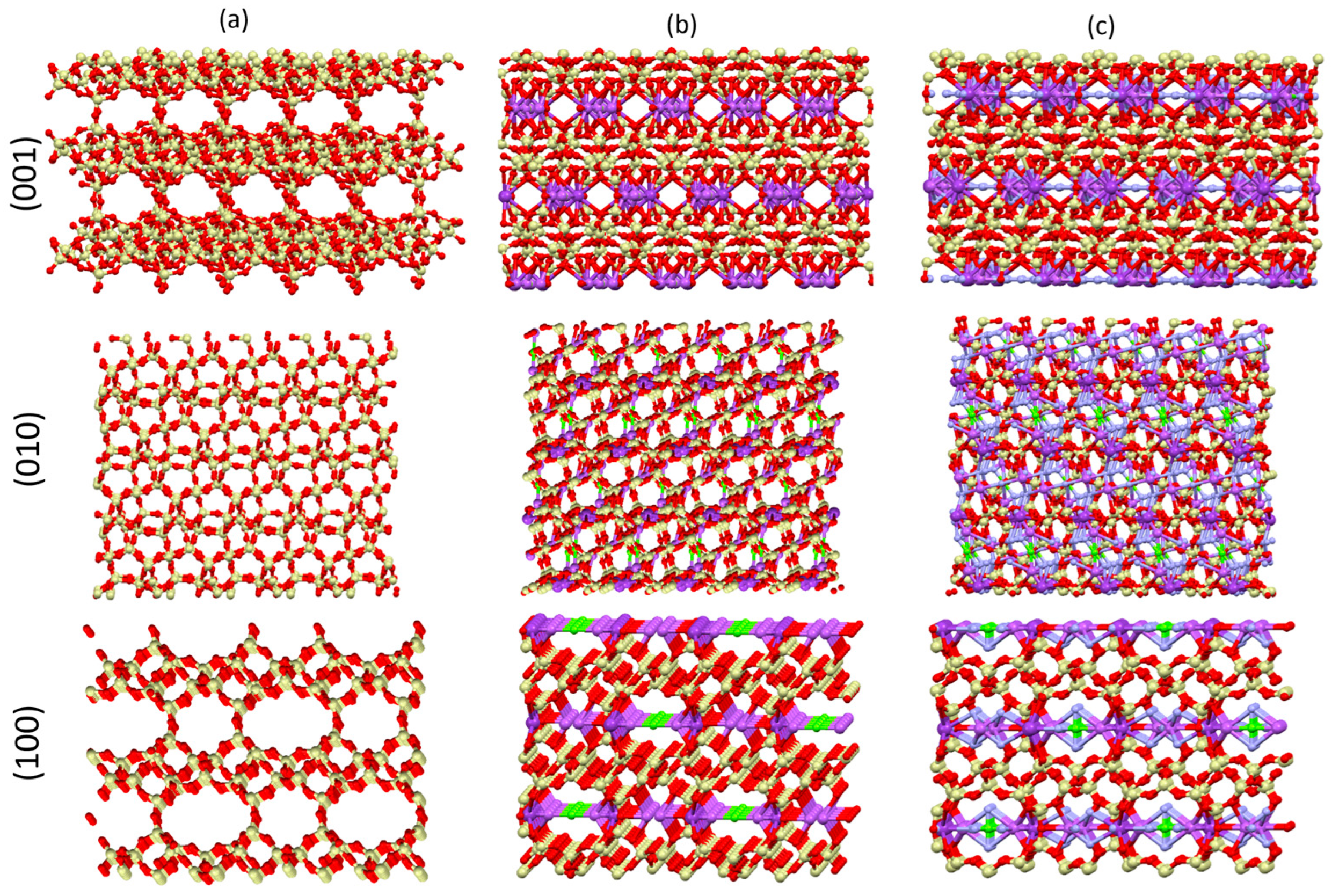
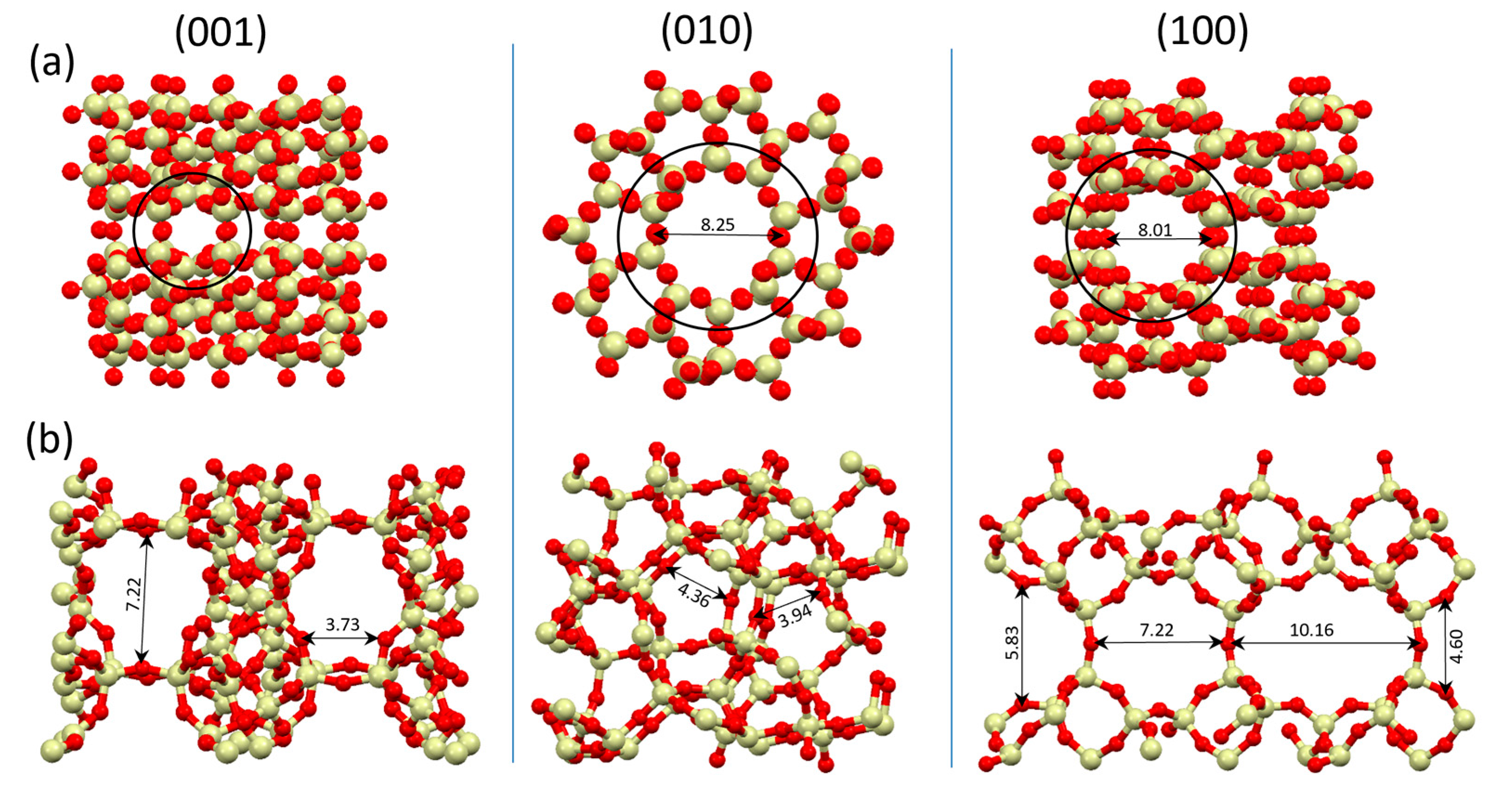
Adsorption performance in zeolites is governed by a combination of crystallographic, chemical, and textural factors that collectively determine accessibility, selectivity, and adsorption strength (
Figure 3). Among these, framework topology and pore geometry, specifically pore size, channel shape, and dimensionality, play a central role by controlling molecular diffusion and confinement effects. Zeolites with well-defined channel systems, such as ZSM-5, exhibit pronounced shape selectivity associated with narrow pore apertures, which can limit molecular transport, whereas frameworks characterized by larger and more diverse pore dimensions enable enhanced accessibility of adsorption sites.
The influence of pore size and channel geometry on adsorption is illustrated in
Figure 3 through a direct comparison of synthetic ZSM-5 and natural clinoptilolite, highlighting differences in pore dimensions and confinement environments.
Natural zeolites, such as clinoptilolite, are characterized by intrinsic structural heterogeneity reflected in a wider distribution of channel sizes, asymmetric pore shapes, and variable local environments, arising from framework irregularities and compositional variability. Although this heterogeneity reduces structural uniformity compared to synthetic zeolites, it often enhances adsorption versatility under realistic conditions, particularly for polar and basic molecules such as ammonia and low-molecular-weight odorous compounds. In contrast, synthetic zeolites like ZSM-5 exhibit uniform, well-defined pore systems with narrowly distributed pore apertures, allowing systematic correlations between pore geometry and adsorption selectivity.
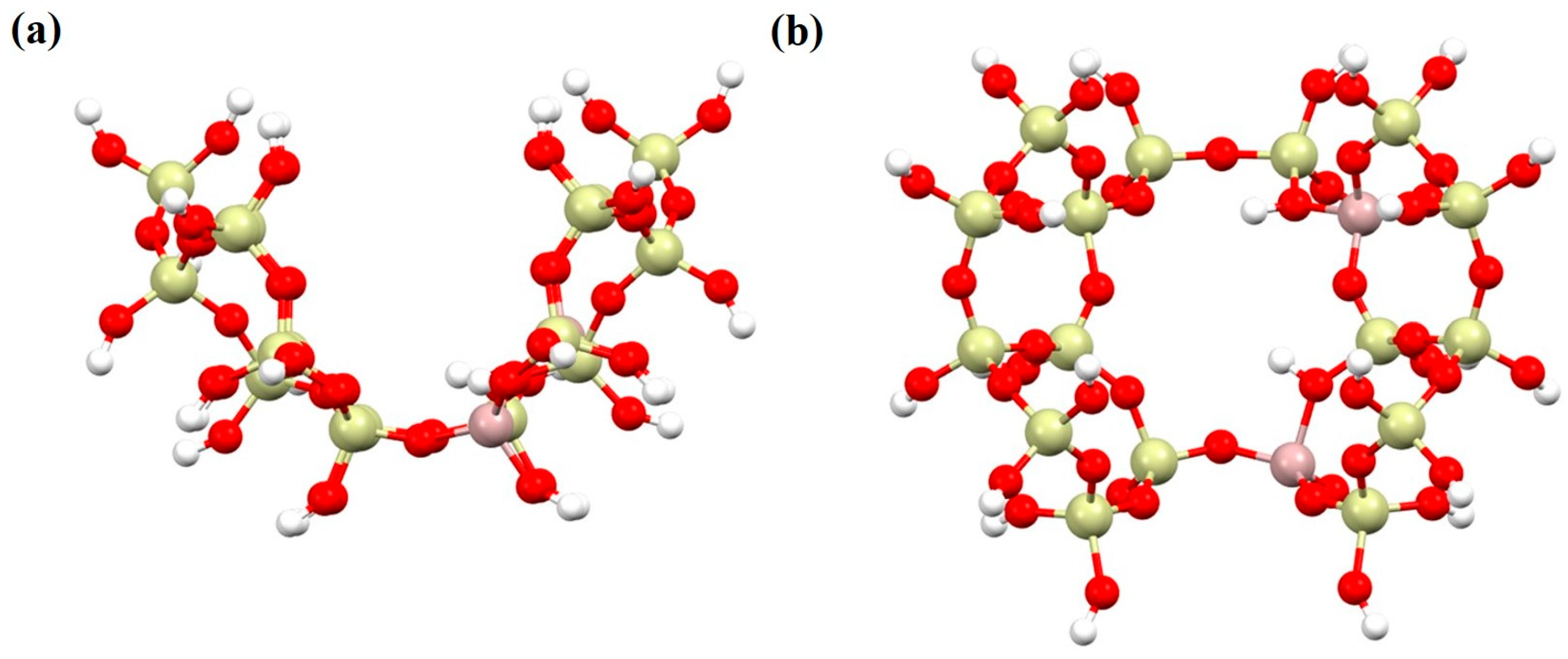
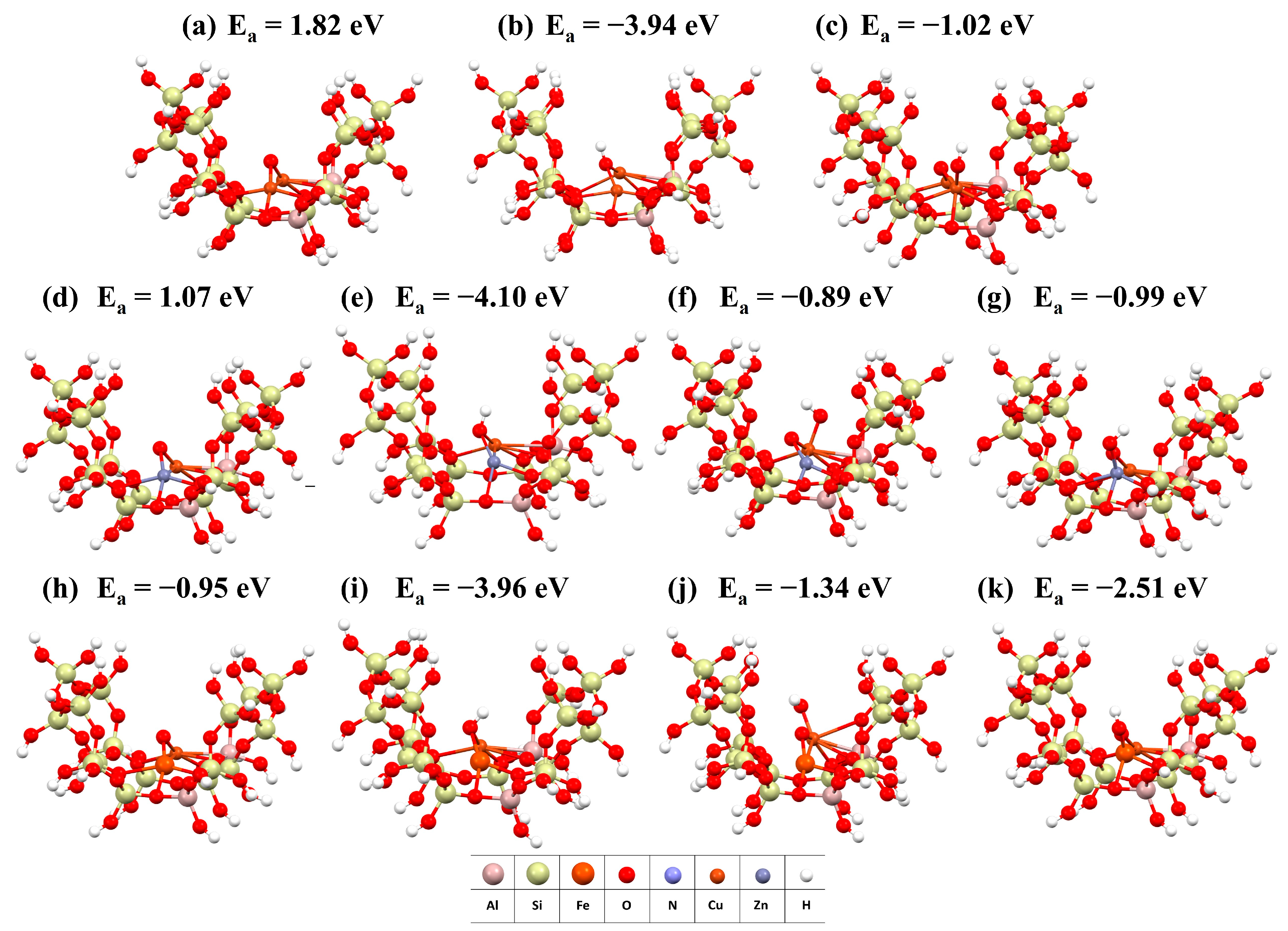
Extra-framework cations and framework defects further modulate adsorption by influencing electrostatic interactions, local polarization, and the availability of specific adsorption sites. In natural clinoptilolite, the coexistence of different extra-framework metal cations and framework-bound water molecules introduces additional adsorption pathways and competitive interactions, which are absent or strongly limited in structurally idealized synthetic frameworks. These effects are particularly relevant for nitrogen-containing species, where ion–dipole and acid–base interactions can dominate adsorption behavior.
The structural heterogeneity of clinoptilolite, including naturally occurring metal species and associated water molecules, is further illustrated in
Figure 4.
Overall, adsorption in zeolites cannot be described solely by framework type; instead, it emerges from the interplay between pore geometry, framework heterogeneity, and local chemical environment, which collectively govern diffusion pathways and adsorption site accessibility. Understanding these structural determinants is essential for guiding zeolite engineering strategies aimed at optimizing adsorption efficiency in both synthetic frameworks with uniform pores and natural zeolites operating under realistic, humidity-rich conditions.
3.3. Engineering Zeolite Acidity and Ionic Sites for Targeted Adsorption of Odorous Compounds
Zeolite acidity and the presence of extra-framework ionic sites are key parameters governing adsorption selectivity and strength, particularly for polar and basic molecules representative of odor-causing compounds and ammonia. In natural zeolites such as clinoptilolite, adsorption is not determined solely by classical Brønsted acidity but is strongly influenced by extra-framework cations, most commonly alkali metal ions (e.g., Na+), which act as dominant adsorption centers through ion–dipole interactions.
Recent experimental and theoretical studies have demonstrated that adsorption of selected odor molecules on clinoptilolite proceeds preferentially via coordination to Na+ sites located within the channel system. These interactions stabilize adsorbates through a combination of electrostatic attraction and hydrogen bonding, with adsorption energies strongly dependent on molecular polarity and functional groups. Density functional theory analysis reveals that oxygen- and nitrogen-containing odor molecules exhibit enhanced affinity toward Na+ centers compared to purely siliceous regions, highlighting the critical role of local ionic environments in determining adsorption behavior.
Beyond the nature of adsorption sites, hydrophilicity critically influences adsorption under realistic conditions. Clinoptilolite frameworks inherently favor water uptake due to their low Si/Al ratio and high concentration of extra-framework cations. Consequently, water molecules compete directly with odorous compounds for access to Na+ sites, leading to partial site blocking or modification of adsorption geometries. Both experimental observations and theoretical modeling indicate that the presence of water significantly alters adsorption selectivity and stability, particularly under humid conditions typical of air-purification applications.
The combined analysis of adsorption energetics and site-specific interactions demonstrates that targeted odor adsorption in clinoptilolite emerges from the coupled effects of ionic site distribution and framework hydrophilicity. Engineering strategies aimed at optimizing adsorption performance must therefore account for both cation identity and hydration state rather than focusing exclusively on classical acidity descriptors. Integrating experimental measurements with atomistic modeling provides a robust framework for rationally tuning natural zeolites toward efficient odor and ammonia removal in multicomponent, humidity-rich environments.
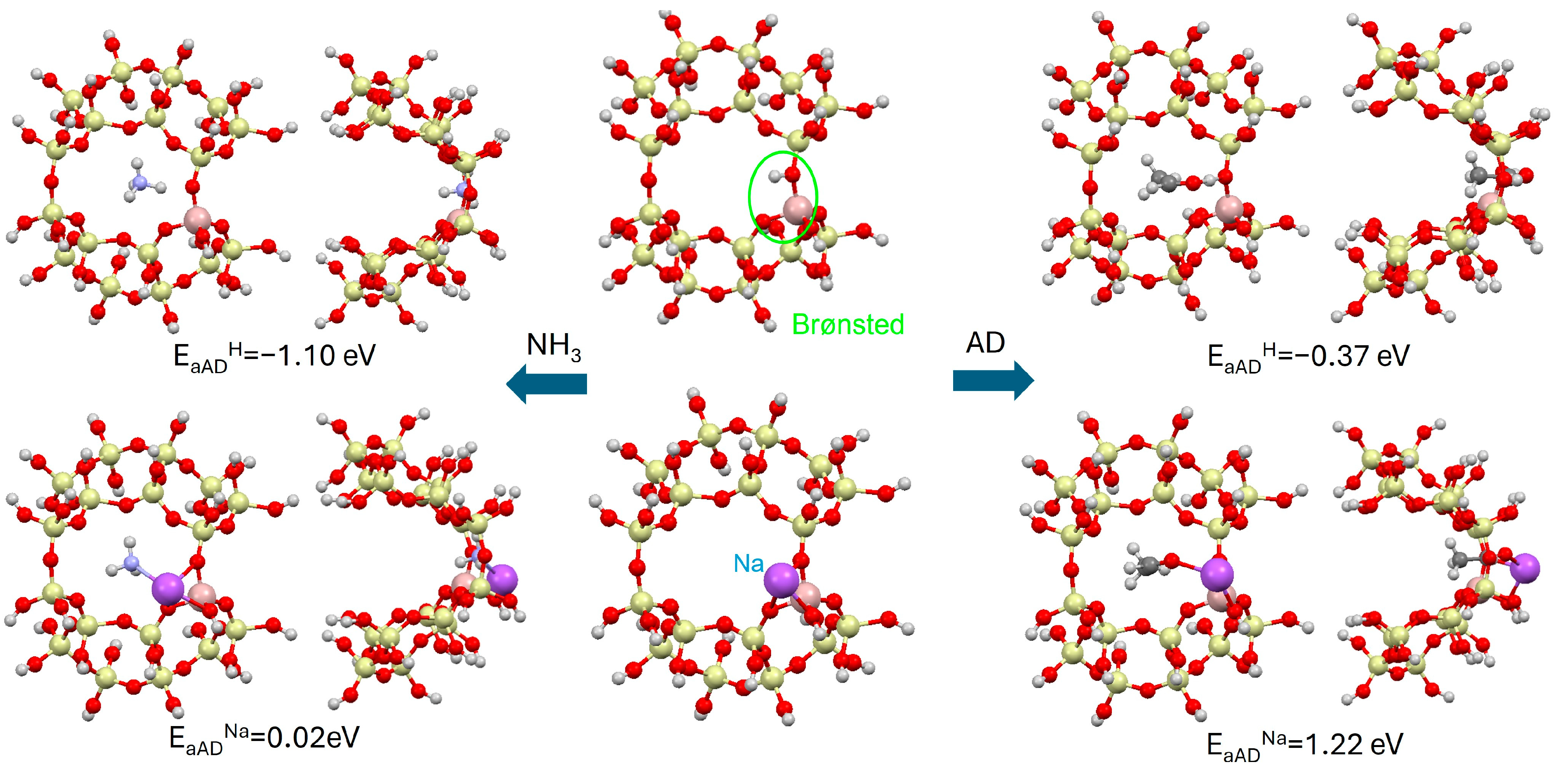
Figure 5 compares the adsorption of ammonia and acetaldehyde in the clinoptilolite chamber on two distinct types of adsorption sites, namely Brønsted acid centers and extra-framework Na
+ sites. In both cases, adsorption on Brønsted acid centers is markedly more energetically favorable than on alkali metal sites. Ammonia exhibits strong stabilization on Brønsted sites, with an adsorption energy of approximately −1.1 eV, reflecting the formation of robust acid–base interactions. Acetaldehyde also shows preferential adsorption at Brønsted centers, although with lower stabilization (−0.37 eV), consistent with weaker hydrogen-bonding interactions compared to ammonia. In contrast, adsorption on Na
+ sites is significantly less favorable, with ammonia exhibiting nearly thermoneutral binding (≈0.02 eV) and acetaldehyde showing even repulsive or unstable adsorption (≈1.22 eV). These results indicate that, despite the abundance of Na
+ cations in natural clinoptilolite, Brønsted acid sites dominate adsorption selectivity and stability for both basic and polar odorous molecules. The pronounced difference in adsorption energetics highlights a key limitation of untreated natural clinoptilolite, where the density of Brønsted acid sites is relatively low compared to extra-framework alkali cations. From an engineering perspective, this finding suggests that targeted modification strategies—such as partial dealumination, controlled ion exchange, or introduction of additional protonic sites—may be required to enhance the adsorption efficiency of odor-causing compounds. Consequently, rational tuning of the balance between Brønsted acidity and alkali metal content emerges as a critical design parameter for optimizing clinoptilolite-based adsorbents operating under realistic environmental conditions.
3.4. Metal-Modified Zeolites: From Adsorption Materials to Catalytically Active Systems
The incorporation of metal species into zeolite frameworks enables a functional transition from primarily adsorptive materials to catalytically active systems. Metal modification, achieved through ion exchange, impregnation, or controlled formation of multinuclear species, introduces redox functionality and alters adsorption energetics. The catalytic behavior of metal-modified zeolites is strongly dependent on the nuclearity of the metal species, their oxidation state, and their interaction with the surrounding framework.
Isolated metal ions, such as Cu
+/Cu
2+ or Fe
2+/Fe
3+, often act as strong Lewis acid sites, enhancing adsorption of nitrogen-containing molecules through coordination and electrostatic interactions. With increasing metal loading or under specific preparation conditions, metal dimers and bimetallic centers (e.g., Fe–Fe, Cu–Cu, or Cu–Fe) can form, giving rise to cooperative effects that are inaccessible to mononuclear sites. These multinuclear configurations are particularly relevant for redox reactions involving NOx and N
2O, where coupled electron transfer steps and oxygen shuttling mechanisms become operative (
Figure 6).
The stability and reactivity of metal species are intrinsically linked to the zeolite topology and local coordination environment. Framework geometry determines the spatial constraints imposed on metal centers, influencing their separation, accessibility, and ability to undergo redox cycling. In three-dimensional pore systems, metal species may exhibit enhanced mobility and dynamic restructuring under reaction conditions, whereas more confined environments promote well-defined, strongly anchored active sites. The presence of framework aluminum and nearby hydroxyl groups further modulates metal–framework interactions, affecting both adsorption strength and catalytic turnover.
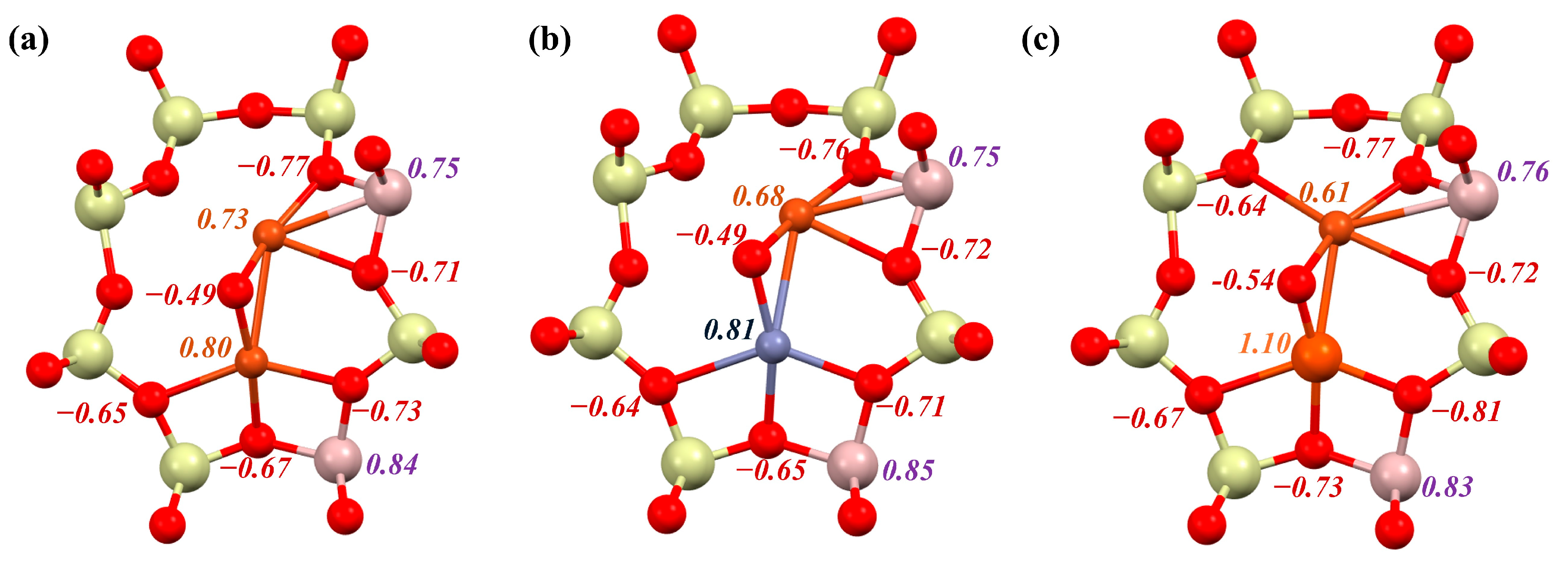
In the CLI zeolite, each of the investigated metallic dimers exhibits strong electrostatic coupling with the framework, with the copper atom in the dimer interacting directly with one of the aluminum atoms (
Figure 7).
Ionicity analysis reveals that differences in the charges on aluminum indicate a significant reorganization of the charge distribution induced by the adsorption of various metallic species. At the same time, the high ionicity of the bridging oxygen atoms observed for all dimers embedded in the CLI zeolite highlights the importance of the local metal–oxygen bonding character in stabilizing the adsorbed systems.
An increased ionic character of the metal–oxygen interactions promotes stabilization of the dimer within the confined pore space of clinoptilolite and directly translates into the adsorption energy. This result indicates that it is not the adsorption geometry alone, but primarily the electrostatic and redox nature of the interactions, which determines the stability of dimeric species in zeolites.
Combining ionicity analysis with bond lengths and bond order evaluations unambiguously demonstrates that differences in the adsorption behavior of metallic dimers within zeolites arise not only from pore morphology but largely from local structural polarization and the specific distribution of aluminum atoms. Consequently, ionicity analysis constitutes a key interpretative tool for studying systems in which adsorbed metallic dimers act as catalytically active centers, enabling a rational correlation between electronic structure, adsorption effectiveness, and catalytic potential.
From an engineering perspective, metal modification provides a versatile toolbox for tuning zeolite functionality across adsorption–catalysis boundaries. Rational control over metal identity, nuclearity, and coordination—guided by structural characterization and theoretical modeling—enables the design of zeolite systems capable of simultaneous adsorption and catalytic conversion under realistic, multicomponent conditions relevant to environmental applications.
3.5. Reaction Behavior in Confined Zeolite Spaces: deNOx and deN2O Processes
The conversion of nitrogen oxides (NOx) and nitrous oxide (N2O) over zeolite-based materials is strongly influenced by the confined environment provided by the zeolite lattice. Microporous frameworks impose spatial constraints that govern reactant accessibility, intermediate stabilization, and the coupling between adsorption and redox activity. As a result, reaction performance in zeolites cannot be understood independently of confinement effects arising from pore size, channel dimensionality, and local framework composition.
Experimental observations demonstrate that metal-modified zeolites exhibit distinct reactivity patterns compared to non-confined or bulk oxide systems, highlighting the role of framework-induced proximity between adsorbed species and redox-active metal centers. The distribution and coordination of metal species within the pores affect the availability of reactive oxygen species and the ability of the system to sustain the redox cycle under operating conditions. These effects are particularly pronounced for bimetallic or multinuclear sites, where cooperative interactions are stabilized by the surrounding framework.
Hydroxyl groups associated with framework aluminum and extra-framework species further modulate reaction behavior by influencing adsorption strength, proton mobility, and local electronic structure. Their presence can either promote or hinder conversion depending on their spatial relationship with metal centers and reacting molecules. In parallel, water vapor, an unavoidable component of industrial gas streams, plays a decisive role by competing for adsorption sites, altering local coordination environments, and modifying the effective confinement within zeolite pores. Water-induced inhibition is therefore tightly coupled to both framework hydrophilicity and metal speciation.
The zeolite lattice acts not merely as an inert support but as an active participant in shaping reaction pathways through confinement, site isolation, and stabilization of reactive configurations. Recognizing these effects is essential for rationally designing zeolite-based systems that achieve efficient NOx and N2O conversion under realistic conditions. Rather than focusing on idealized reaction schemes, a confinement-driven perspective emphasizes structure–reactivity relationships as the primary design principle for environmentally relevant catalytic applications.
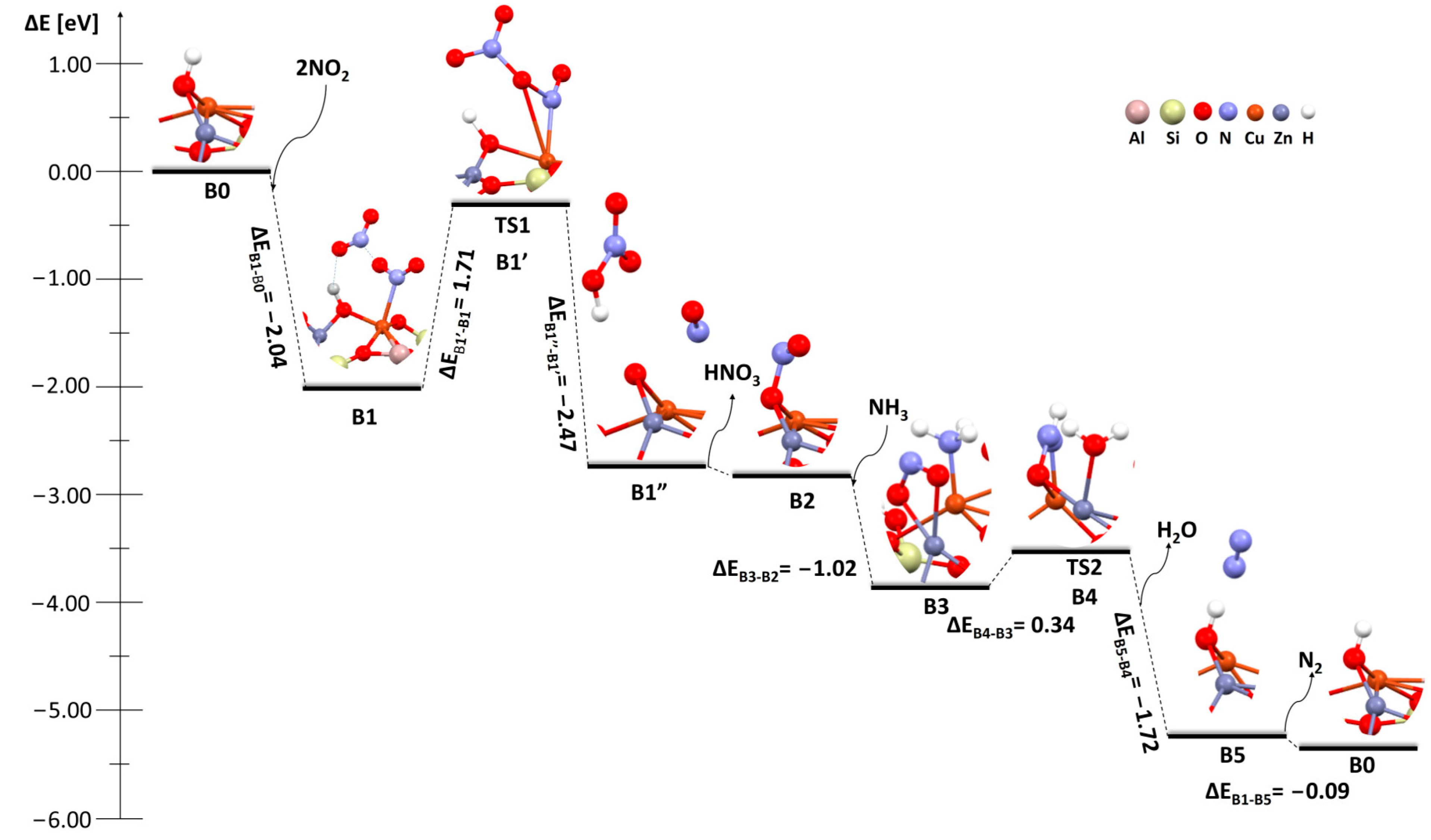
A comprehensive analysis of the deNOx and deN
2O reaction pathways on CLI-based catalysts demonstrates that their catalytic activity is governed by a clearly defined set of electronic and energetic descriptors rather than by geometric factors alone [
16]. In both reaction systems considered (Cu–O–Cu and Cu–O–Zn), the nature of the active site, particularly the presence of a bridging hydroxyl group, emerges as a key descriptor of reactivity. Bimetallic Cu–Zn dimers stabilized by a bridging –OH group consistently exhibit lower energy barriers than the monometallic Cu–Cu dimer. This effect arises from an asymmetric charge distribution within the dimer–framework ensemble, which increases the ionicity of metal–oxygen interactions and facilitates reversible redox cycling under hydrated conditions. Ionicity analysis and metal–oxygen charge separation therefore provide a quantitative measure of active-site stabilization and constitute transferable descriptors applicable across different zeolite topologies.
From an energetic perspective, both the deNOx and deN
2O processes are dominated by a rate-limiting step. In the case of deNOx, these steps correspond to the formation of HNO
3 (TS1) and –N
2H intermediates (
Figure 8), whose activation energy is strongly dependent on the electronic structure of the adsorbed dimer. Cu–OH-Zn sites supported on clinoptilolite show a pronounced reduction, especially of the –N
2H formation barrier, compared with previously studied FAU- and MFI-based systems [
15,
30].
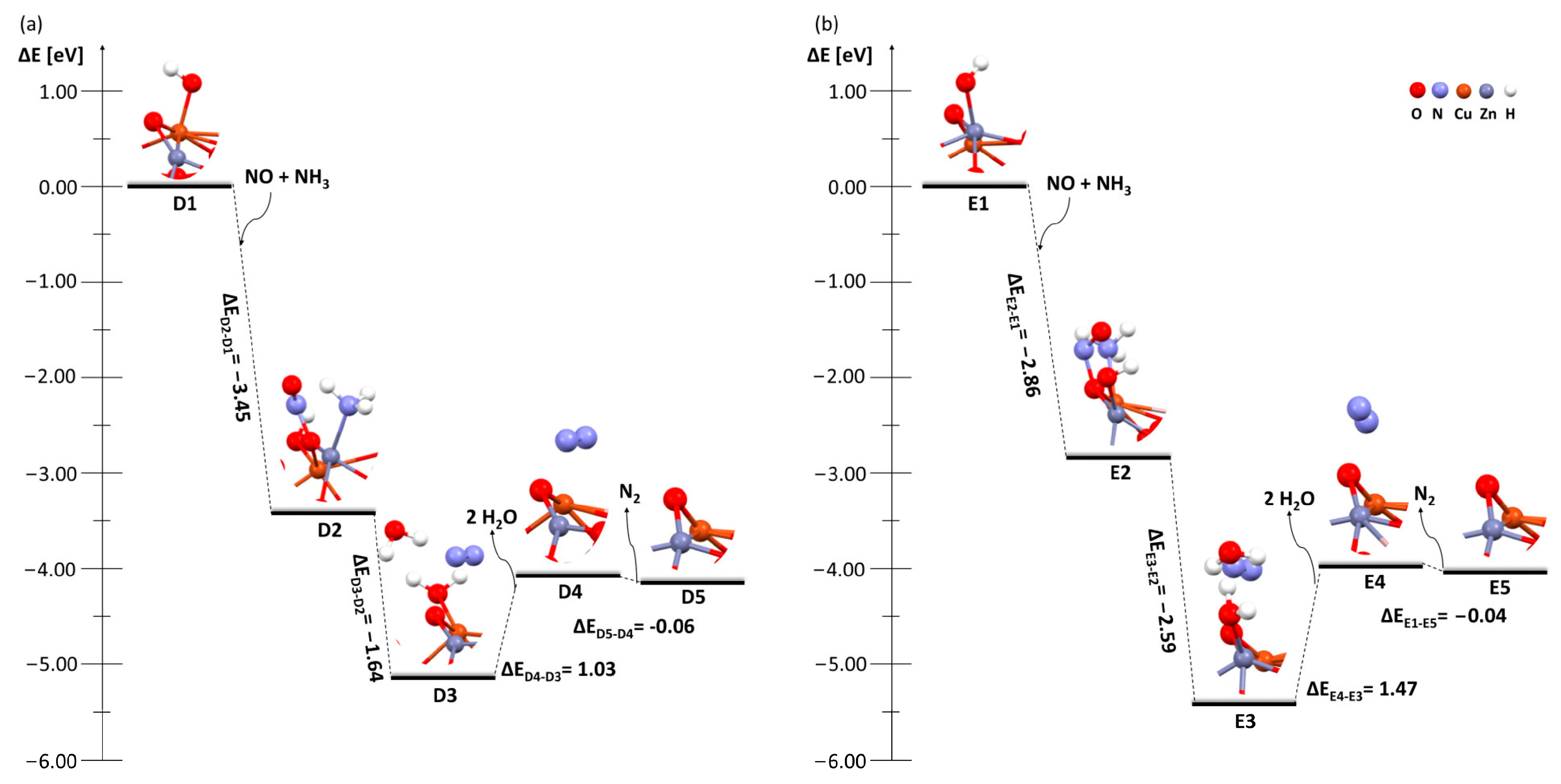
In the deN
2O process, the reaction pathway is strongly dependent on the selected mechanistic route, and the sequence of reactant adsorption constitutes an additional mechanistic descriptor (
Figure 9).
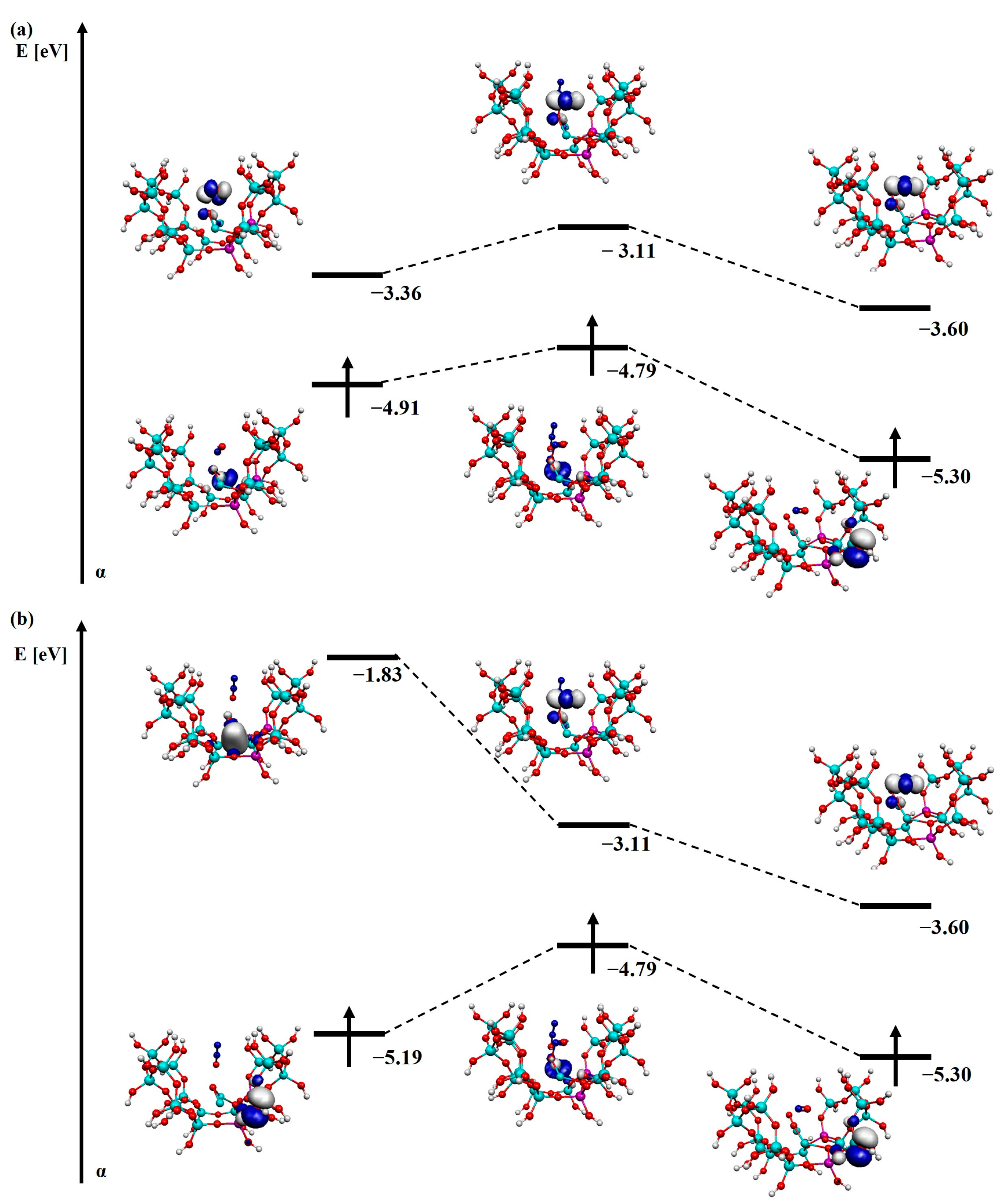
Adsorption of the N
2O molecule as the initial step leads to a pronounced stabilization of LUMO-derived states localized on the metallic dimer, which promotes early activation of the N–O bond and spontaneous N
2 desorption (
Figure 10). In contrast, pathways initiated by NO adsorption are energetically less favorable. In all analyzed variants, regeneration of the active site and desorption of NO
2 represent the most endothermic steps, highlighting the importance of electronic descriptors associated with oxidation-state recovery and orbital reorganization.
To evaluate the influence of dimer type on the adsorption properties of clinoptilolite, the adsorption energies of NO and N
2O molecules were analyzed for selected dimer–support systems. The considered dimers differ in both composition and configuration, enabling the identification of relationships between the structure of the active site and the strength of interaction with the adsorbate.
Table 1 summarizes the calculated adsorption energies for both molecules, allowing for a direct comparison of their affinity toward the surface modified with various dimers and the identification of the most active systems.
In summary, Cu–Zn–OH dimers embedded in clinoptilolite represent a model multifunctional catalytic system in which confinement effects, metal speciation, and electronic structure cooperate to minimize kinetic barriers and stabilize key intermediate species. More broadly, the deNOx and deN2O mechanisms on CLI can be rationalized using a common set of descriptors encompassing ionicity, frontier-orbital energetics, and step-resolved energy profiles. Such an approach goes beyond reaction-specific mechanistic descriptions and supports a descriptor-driven strategy for the rational design of zeolite-based catalysts capable of operating efficiently under industrially relevant conditions.
3.6. Electronic Structure Descriptors as Tools for Zeolite Engineering
Electronic structure analysis provides a powerful framework for rationalizing and predicting the adsorption and reactivity of zeolite-based materials beyond purely structural descriptors. Parameters derived from quantum-chemical calculations, such as the density of states (DOS), orbital composition, and charge-transfer characteristics, offer direct insight into how metal species interact with the zeolite framework and adsorbed molecules. These descriptors capture effects that are not readily accessible through macroscopic characterization alone, particularly in systems where subtle changes in coordination or nuclearity lead to pronounced differences in performance.
Frontier orbital analysis (HOMO, SOMO, and LUMO) constitutes an important electronic descriptor for evaluating the activity and reaction mechanisms of catalytic systems (
Figure 10). The spatial distribution and energies of these orbitals provide direct information on a system’s ability to donate and accept electrons, and thus on its reactivity in adsorption processes and redox reactions. Variations in HOMO/SOMO and LUMO energies along successive reaction steps make it possible to track the direction of electron transfer, the stabilization of reaction intermediates, and the energetic accessibility of key transformation steps. Of particular importance is the localization of the frontier orbitals: their presence on metallic centers indicates the direct involvement of these sites in the binding and activation of reactant molecules. A lowering of the LUMO energy favors adsorption of electron-donating species, whereas stabilization of the HOMO or SOMO may reflect enhanced redox flexibility of the catalytic system. In systems with different spin multiplicities, SOMO analysis additionally enables assessment of the role played by unpaired electrons in the reaction pathway.
Consequently, HOMO/LUMO (and SOMO) analysis links electronic structure descriptions with the observed energetics of adsorption and conversion processes, serving as a bridge between quantum-chemical calculations and the catalytic function of the material. As such, this descriptor enables a more predictive approach to catalyst design, particularly in complex systems where activity and selectivity are governed by subtle electronic effects rather than by geometric factors alone.
The electronic properties of metal centers embedded in zeolites are strongly influenced by their nuclearity and local environment. Isolated ions, dimers, and bimetallic species exhibit distinct electronic signatures that reflect variations in oxidation state, metal–metal interactions, and metal–framework bonding. Changes in the relative contributions of metal d-states and framework orbitals can be directly correlated with adsorption strength and redox flexibility, enabling identification of configurations that favor reversible adsorption or sustained catalytic activity. Importantly, confinement within the zeolite lattice modulates these electronic features by enforcing specific coordination geometries and limiting structural relaxation.
From an engineering perspective, electronic structure descriptors provide transferable criteria for material optimization. Rather than relying on empirical trial-and-error approaches, theoretical analysis enables pre-screening of framework types, metal combinations, and local coordination motifs based on their predicted electronic behavior. When combined with experimental validation, this approach accelerates the development of zeolite architecture tailored for specific adsorption or conversion tasks under realistic conditions.
By linking framework topology, metal speciation, and electronic structure to observable performance, electronic descriptors serve as a unifying bridge between fundamental theory and practical zeolite engineering. Their use supports a more efficient and predictive design strategy, particularly relevant for complex systems where adsorption and redox processes are strongly coupled.
3.7. Transport and Diffusion Limitations Under Industrially Relevant Conditions
Mass-transfer limitations are an inherent challenge in microporous zeolites and become particularly pronounced under conditions relevant to industrial gas purification, such as high pollutant concentrations, humid gas streams, and continuous operation. Although the intrinsic adsorption capacity and catalytic activity of zeolites are governed by their framework chemistry and active sites, overall performance is often constrained by diffusion processes controlling access to these sites. As a result, transport phenomena play a decisive role in determining effective adsorption uptake, reaction rates, and material utilization.
In microporous frameworks, molecular diffusion through narrow channels can limit the availability of internal adsorption and catalytic sites, especially for larger or strongly interacting molecules. High surface loadings amplify these effects, leading to pore blocking and reduced regeneration efficiency. The presence of water vapor further complicates transport by competing for pore space and modifying local diffusivity through changes in hydration state and adsorbate mobility. These effects are particularly relevant in air-purification applications, where fluctuating humidity and multicomponent gas streams are unavoidable.
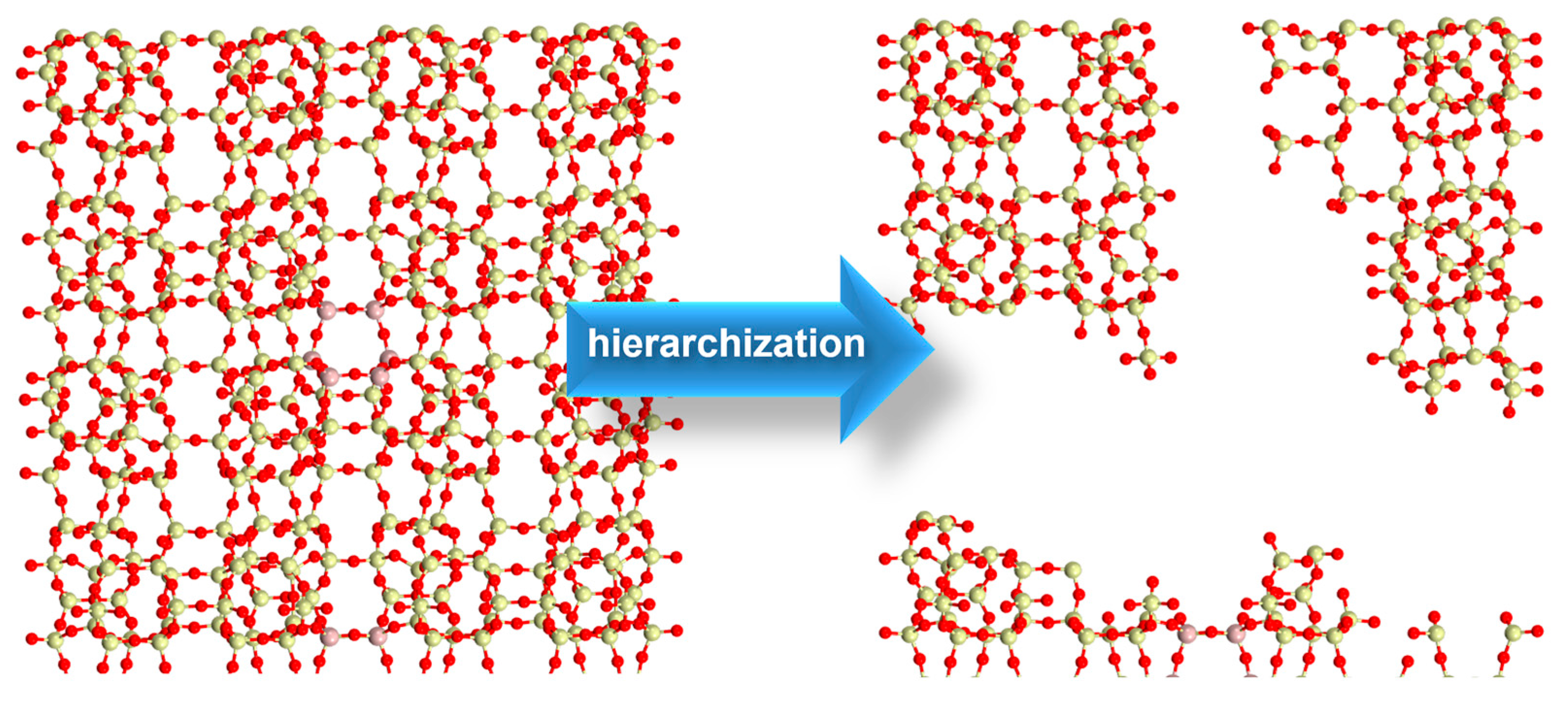
Engineering strategies aimed at alleviating diffusion limitations increasingly focus on introducing hierarchical porosity (
Figure 11) and controlled structural defects. The incorporation of mesopores or secondary transport pathways can significantly enhance mass transfer without compromising the intrinsic properties of the zeolite framework. Such hierarchical architectures improve accessibility to active sites, increase turnover under dynamic operating conditions, and mitigate deactivation associated with pore blockage. At the same time, defect engineering must be carefully balanced to preserve structural stability and prevent undesired loss of selectivity.
From an application perspective, transport-optimized zeolite materials offer improved long-term stability and more efficient utilization in fixed-bed reactors and filter systems used for air purification. Understanding and addressing diffusion limitations under realistic conditions is therefore essential for translating fundamental adsorption and catalytic properties into robust, scalable zeolite-based technologies.
3.8. Sustainability and Circular Economy Aspects of Zeolite-Based Processes
Sustainability considerations are increasingly central to the development and implementation of zeolite-based adsorption and catalytic processes. From a materials perspective, zeolites offer several inherent advantages, including high thermal stability, regenerability, and the possibility of tailoring performance through composition and structure rather than through consumable reagents. Evaluating zeolite systems within a circular-economy framework therefore requires balancing raw material availability, functional lifetime, regeneration efficiency, and overall environmental impact.
Natural zeolites, such as clinoptilolite, are particularly attractive from a sustainability standpoint due to their wide availability, low extraction and processing costs, and compatibility with large-scale applications. Their use as adsorbents or catalyst supports can reduce reliance on energy-intensive synthesis routes and critical raw materials. Although natural zeolites exhibit compositional and structural heterogeneity, this variability can be accommodated or even advantageous under realistic operating conditions, especially in non-ideal, multicomponent gas streams typical of air-purification systems.
Synthetic zeolites, while more resource-intensive to produce, offer superior control over framework architecture, acidity, and metal speciation, translating into higher activity and selectivity in demanding applications. Their sustainability performance is therefore closely linked to durability and regeneration capability. Long catalyst lifetimes, resistance to deactivation under humid conditions, and efficient regeneration protocols are essential to offset the higher material and energy inputs associated with synthesis. In this context, engineering zeolite properties to minimize metal leaching, structural degradation, and irreversible poisoning is a key design objective.
Ultimately, sustainable zeolite-based processes emerge from an optimized balance between activity, stability, and material efficiency. Integrating abundant natural zeolites where feasible, reducing metal loading through improved site utilization, and designing structures that maintain performance under repeated regeneration cycles are central strategies. Such an approach aligns zeolite engineering with circular-economy principles while maintaining the functional performance required for environmentally relevant adsorption and catalytic applications.
3.9. Design Guidelines and Outlook: Toward Accelerated Zeolite Architecture Optimization
The findings discussed in the preceding sections highlight that the performance of zeolite-based adsorption and catalytic systems emerges from interconnected structure–property–performance relationships rather than from individual material parameters. Framework topology, acidity, metal speciation, electronic structure, and transport properties collectively define adsorption selectivity, redox activity, and long-term stability. From an engineering perspective, these relationships can be translated into practical design guidelines that support targeted development of zeolite materials for environmental applications.
Effective adsorption of odorous compounds and ammonia requires balanced acidity and hydrophilicity, optimized to maintain selectivity under humid and multicomponent conditions. For catalytic removal of NOx and N2O, controlled metal incorporation, particularly the stabilization of well-defined mono- and multinuclear species within suitable framework environments, is essential to ensure sustained redox functionality. Across both adsorption and catalytic use cases, minimizing diffusion limitations through hierarchical porosity or optimized crystallite morphology is critical for achieving high material utilization under industrially relevant operating conditions.
Looking forward, continued progress in zeolite engineering is expected to rely on integrated approaches that combine materials design with reactor-level considerations. Structured forms such as monoliths or membrane-supported zeolite layers offer promising routes to reduce pressure drop and enhance mass transfer in practical air-purification systems. At the same time, data-assisted optimization strategies, informed by theoretical descriptors and experimental validation, may accelerate exploration of the vast compositional and structural design space without relying solely on empirical screening. Importantly, accelerated optimization must remain aligned with sustainability goals. Reducing metal loading through improved site efficiency, extending catalyst lifetime, and incorporating abundant natural zeolites where feasible are central to maintaining an acceptable balance between performance and resource intensity. In this context, engineering zeolite architecture should be viewed not as an isolated materials challenge, but as a systems-level effort integrating mineral properties, process demands, and circular-economy considerations.
It should be emphasized that the adsorption energies and catalytic trends discussed in this work are derived from theoretical modeling and are intended as mechanistic and predictive descriptors rather than direct experimental observables. As such, the presented results provide a framework for guiding experimental validation and catalyst design under realistic conditions.
4. Conclusions
Zeolites, both natural and synthetic, represent a versatile class of mineral materials whose adsorption and catalytic performance emerge from the coupled effects of framework topology, chemical composition, metal speciation, and transport phenomena. In this work, we demonstrate that effective zeolite design requires an integrated engineering perspective that combines structural heterogeneity, electronic structure, and confinement effects under realistic conditions. Pore geometry and structural heterogeneity were identified as key factors governing adsorption performance. While synthetic zeolites offer well-defined pore systems and predictable selectivity, natural clinoptilolite provides a broader range of adsorption environments. In particular, adsorption in clinoptilolite is strongly influenced by extra-framework cations (Na+) and hydration effects, which determine adsorption selectivity under realistic, humid conditions.
Metal modification was shown to extend zeolite functionality from adsorption to catalysis. The nuclearity and composition of metal species, especially bimetallic dimers, control adsorption energetics and redox behavior. Ionicity and metal–oxygen interactions were identified as key descriptors governing stability and catalytic activity. For deNOx and deN2O processes, confinement effects within the zeolite framework play a decisive role, enabling stabilization of reactive configurations and efficient redox cycling. The identification of transferable descriptors, including ionicity and frontier orbital energetics, provides a consistent framework for understanding catalytic performance across different systems.
From a practical perspective, the results highlight that rational zeolite engineering should focus on tuning acidity, metal speciation, and transport properties simultaneously. Strategies such as hierarchical porosity, controlled metal incorporation, and optimization of hydrophilicity are essential for achieving high efficiency under industrially relevant conditions.
Overall, this work demonstrates that combining theoretical modeling with descriptor-based design provides an effective pathway for accelerating the development of zeolite-based materials for sustainable air-purification applications.