1. Introduction
The mineral exploration industry currently faces the challenge of identifying new deposits that are increasingly concealed at greater depths and possess subtle surface expressions. Traditional methods, while foundational, often involve high operational costs and significant environmental impacts. Consequently, there is a critical need for non-invasive, cost-effective computational tools that can leverage existing geological data to optimize the identification of exploration targets.
Various methodologies have historically been employed to identify geochemical anomalies, ranging from classical statistical analysis [
1] to advanced geostatistical modeling [
2]. In recent decades, Mineral Prospectivity Mapping (MPM) has emerged as a transformative approach by integrating multifaceted datasets, including geological, geophysical, and remote sensing data, through machine learning algorithms [
3,
4,
5,
6]. Previous studies have demonstrated that MPM significantly improves exploration efficiency by identifying spatial correlations between known mineralization and regional patterns [
7]. Within this context, the evolution of MPM has been extensively documented by Carranza [
8], who emphasizes the critical need for developing quantitative methods that are both numerically robust and geologically coherent for synthesizing spatial evidence.
Recent studies have further expanded these capabilities through multi-dimensional data fusion using knowledge-based methods, such as Fuzzy-AHP, to define favorability zones in complex mineral systems (Shabani et al. [
9]). Additionally, the integration of mining geochemistry with remote sensing satellite data has proven highly effective in identifying copper mineralization patterns via specialized machine learning frameworks (Abedini et al. [
10]). Collectively, these studies establish a framework where the synergy between satellite data and advanced mathematical models defines the current frontier of mineral exploration.
Nevertheless, despite these advancements in machine learning, there remains a gap in the availability of rapid, easy-to-apply methodologies that perform effectively with limited or heterogeneous raw data. Many existing MPM workflows, including those based on the aforementioned complex algorithms, often require large, high-quality datasets or specialized expert knowledge to define evidentiary criteria [
11], which can be a limitation in data-poor environments. Most current algorithms are “black boxes” that require extensive pre-processing. This study addresses this limitation by validating a methodology based on statistical distances, specifically designed to identify imperceptible patterns in small-scale mining contexts where resources for massive data acquisition are restricted.
Therefore, the primary objective of this research is to validate the exploration methodology proposed by Navarro et al. (2024) [
12] by applying it to a new geological setting: a Cu–Ag stratabound deposit. While the original method was developed in a different context, its application to the El Olivo mine area allows for testing its performance in stratabound systems, which have distinct geochemical and structural signatures. Specifically, the study evaluates the effectiveness of different statistical distances in generating similarity maps to delineate high-probability mineralization zones. By comparing these results with known operational data from central Chile, this work aims to demonstrate the method’s versatility and provide a scalable tool for resource optimization in both stratabound and porphyry copper systems.
2. Geological Setting and Study Area
2.1. Regional Context and Deposit Location
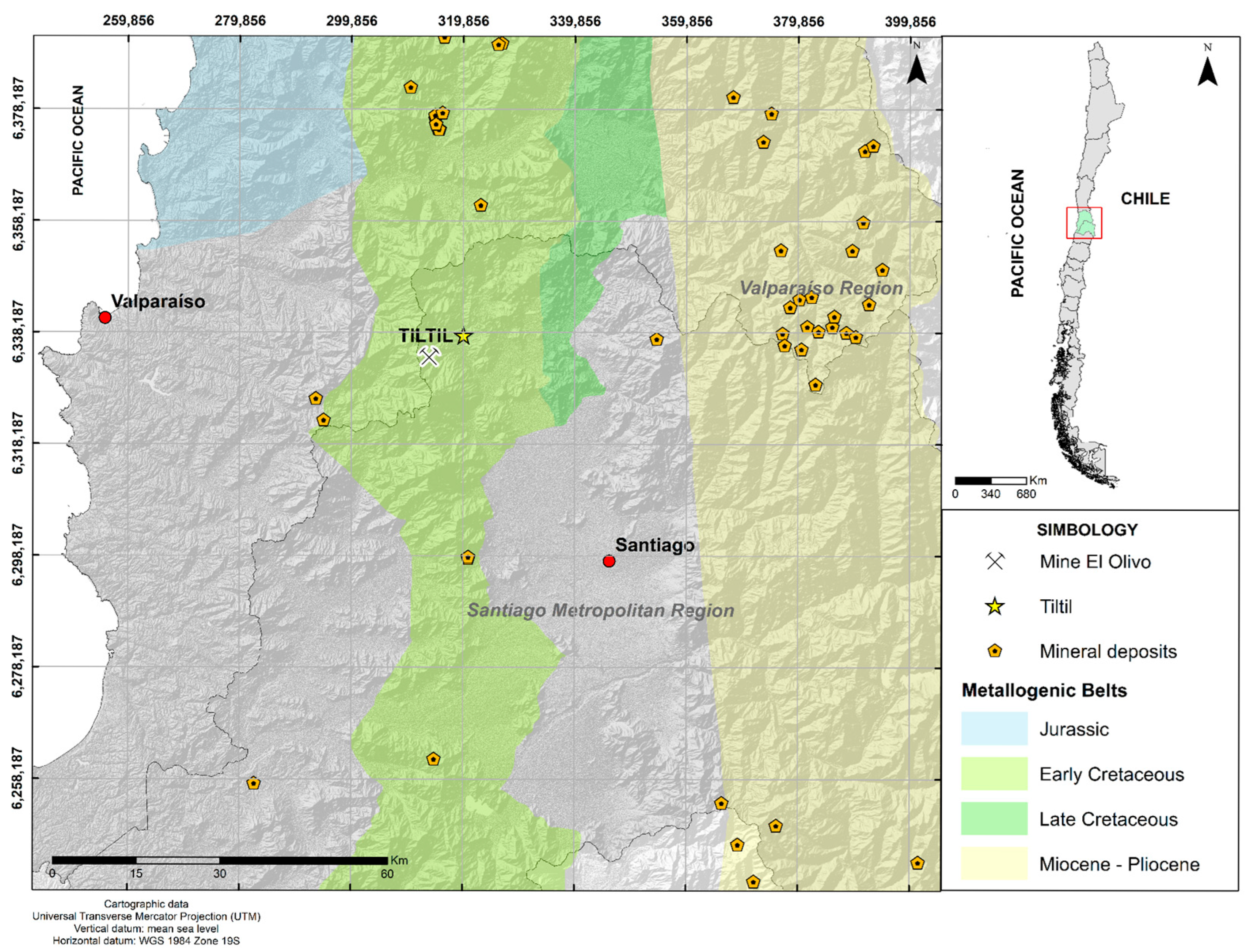
The study area is located in the Coastal Range of the Metropolitan Region, Chile, within the Early Cretaceous metallogenic belt (
Figure 1). This belt is one of the two primary regions hosting Chilean Cu-(Ag) stratabound deposits, which represent the country’s third-largest source of copper production. While the Jurassic Metallogenic Belt is situated in the Antofagasta Region (e.g., Mantos Blancos), the Lower Cretaceous Belt extends from the Atacama to the Metropolitan Region (e.g., El Soldado, Lo Aguirre), where the area of interest is situated.
2.2. Local Geology: El Olivo Mine
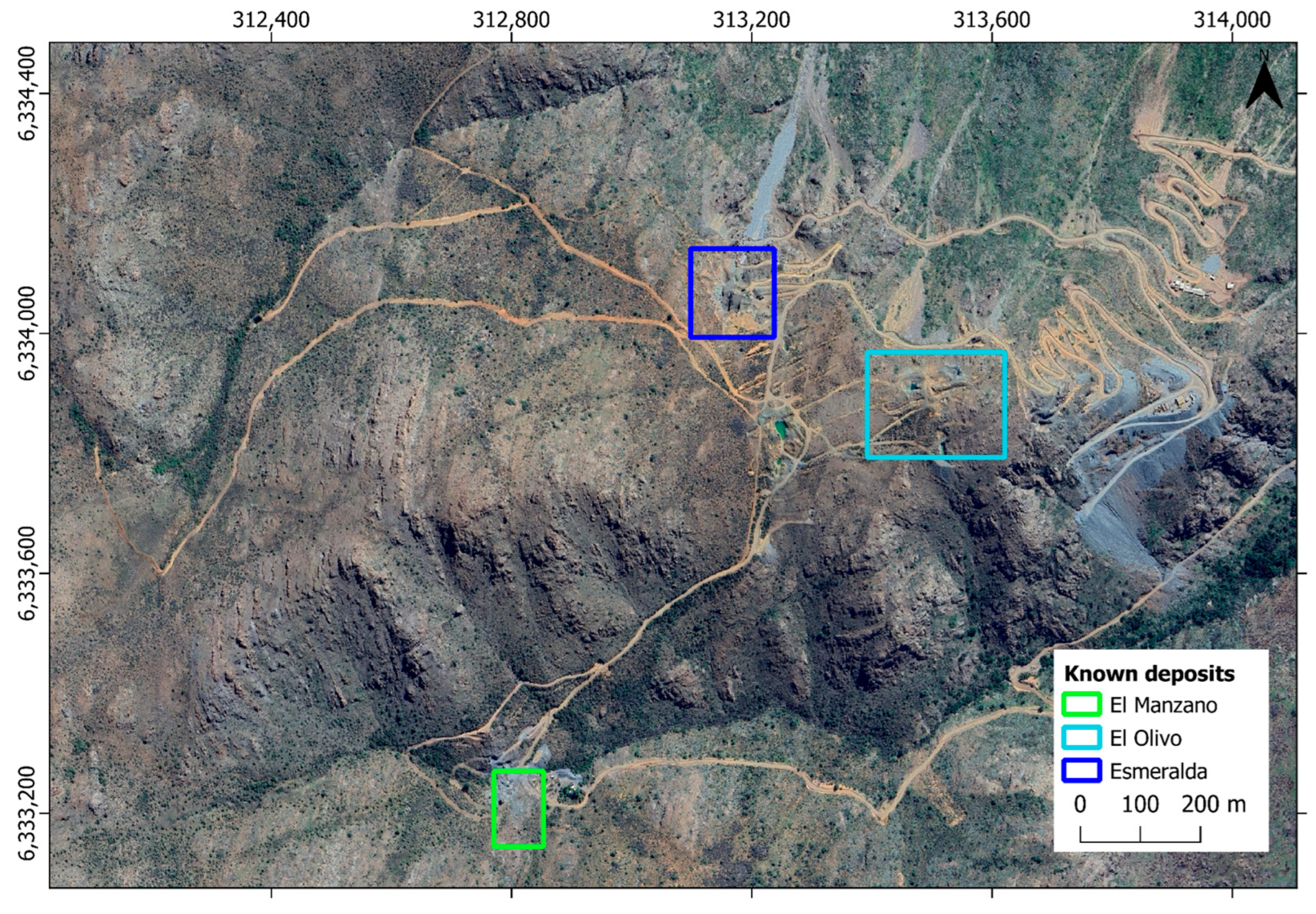
The El Olivo Mine property comprises three main mineralized zones: Esmeralda, El Olivo, and El Manzano (
Figure 2). These sectors are located within a few kilometers of each other and exhibit similar geological characteristics. Esmeralda and El Olivo are currently being mined via sublevel stoping and are dominated by andesites and ocoites. In contrast, El Manzano is undergoing exploration and presents a more varied lithology, including volcanic breccias, tuffs, and sedimentary levels.
The recognized mineralogy across all sectors includes chlorite, epidote, sericite, calcite, quartz, magnetite, hematite, potassium feldspar, apatite, and zeolites, alongside copper sulfides and oxides. The paragenetic sequence involves a low-grade metamorphic event followed by a hydrothermal mineralization stage and subsequent supergene alteration. A key distinction is that while Esmeralda and El Olivo feature in situ copper oxides at surface levels, El Manzano exhibits localized secondary enrichment horizons with native copper and chalcocite replacing bornite at depth.
2.3. Mineralization Controls and Structural Context
The deposit is hosted within the Cretaceous volcanic rocks of the Veta Negra Formation, consisting of andesites, volcanic breccias, and intercalated continental sediments [
13,
14,
15]. Mineralization is predominantly epigenetic, traditionally associated with either hydrothermal-metamorphic leaching or, more widely accepted, the emplacement of Mesozoic intrusions as sources of metals and sulfur [
16].
Given its location on an active continental margin, the area has undergone shifts in stress regimes transferred to the continental plate, resulting in variations between extensional and compressive conditions [
17]. Consequently, the deposit is influenced by a complex north–south duplex structural system associated with subvolcanic andesitic porphyries and hydrothermal breccias [
18,
19,
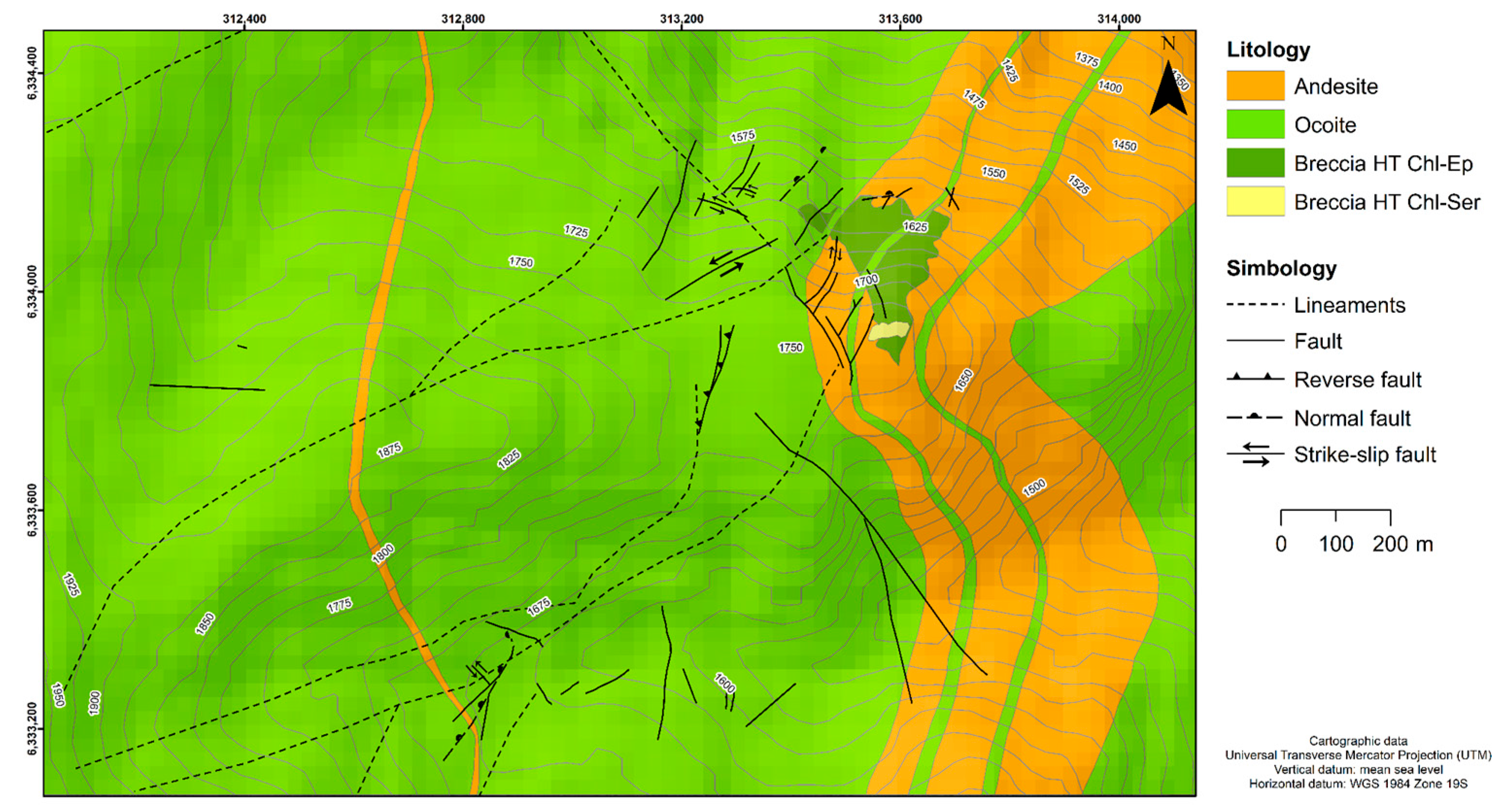
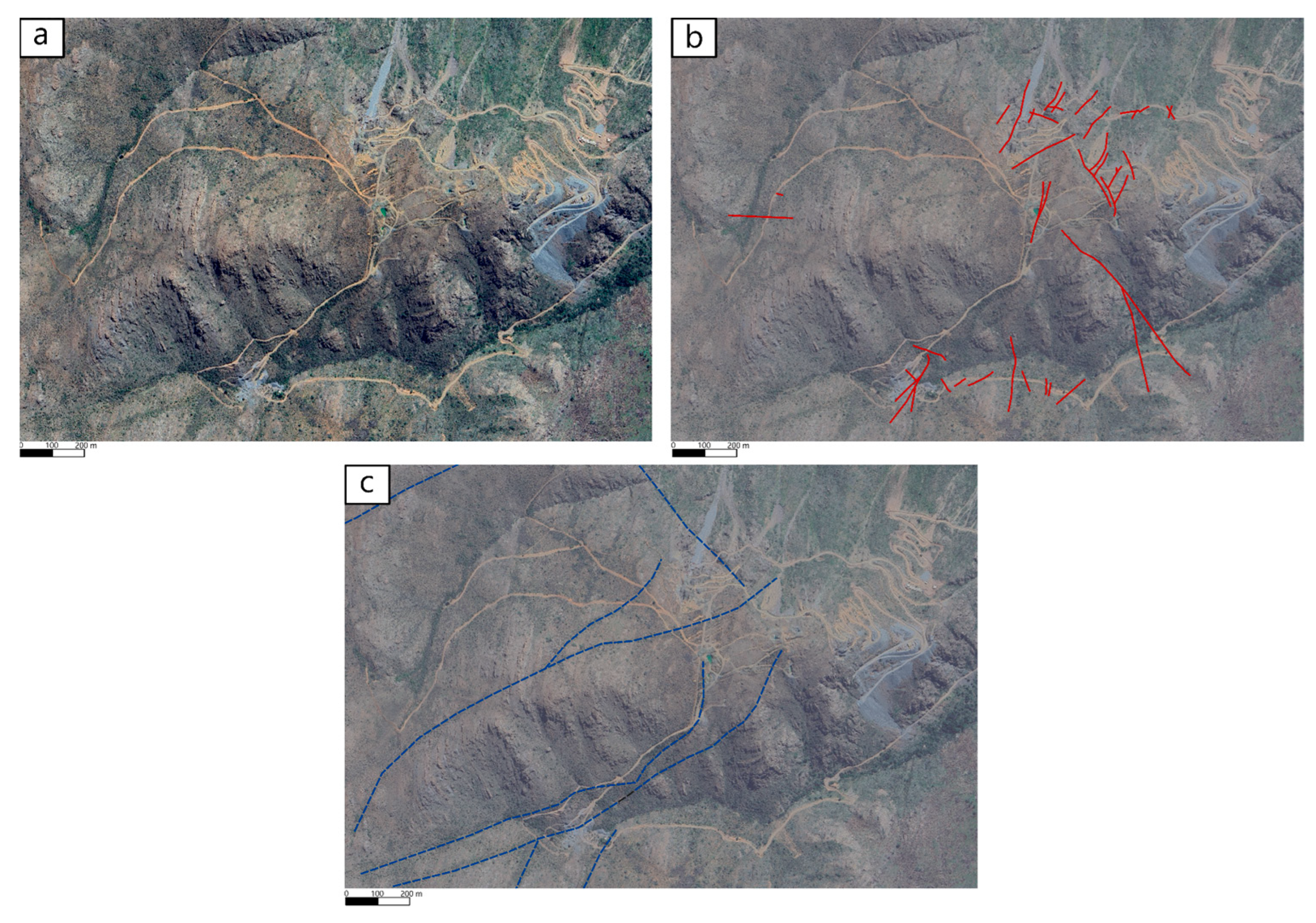
20]. Hydrothermal fluids infiltrated these structures, precipitating copper minerals in secondary permeability zones and resulting in irregular mineralized bodies. Principal NE-oriented faults (Olivo-Esmeralda) bound the system, complemented by NNW to NNE strike-slip and tensional faults. Although expert knowledge corroborates these broad structural controls, a comprehensive digitized structural map is currently unavailable due to data limitations in the original company records (
Figure 3).
3. Case Study and Methodology
The primary objective of this research is to validate the exploration methodology proposed by Navarro et al. (2024) [
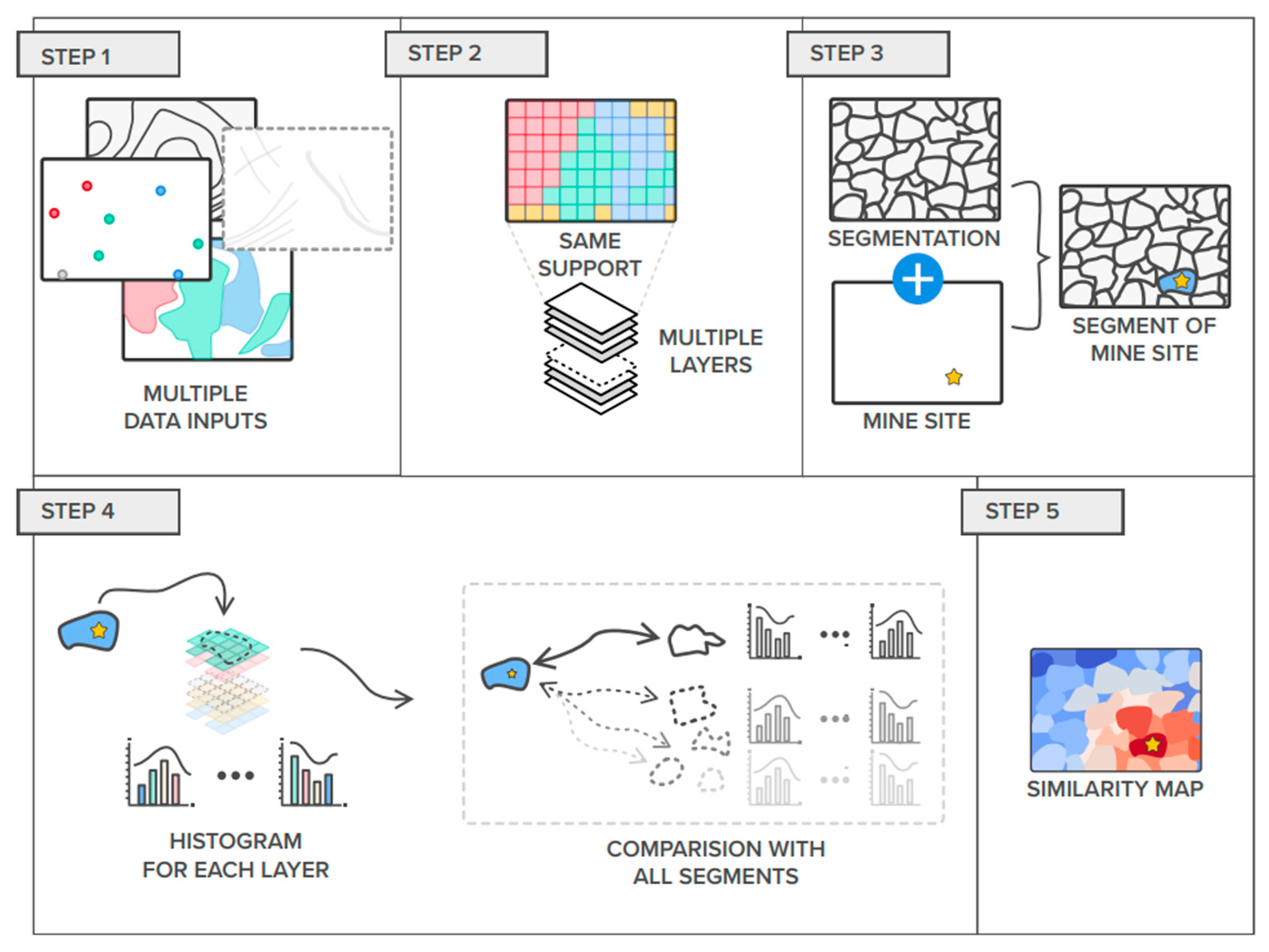
12] by applying it to a specific case study in the El Olivo Mine, Chile. The workflow is structured into five distinct stages designed to integrate multifaceted geological data into a predictive similarity framework (
Figure 4).
3.1. Study Area and Data Acquisition (Stage 1)
The study area is located in the Coastal Range of Central Chile, specifically within the Early Cretaceous metallogenic belt, which hosts significant Cu-Ag stratabound deposits in the Veta Negra Formation [
13,
14,
15,
21]. To conduct the prospectivity mapping, a comprehensive dataset was compiled to ensure full spatial coverage and minimize the sampling biases often found in localized drilling campaigns.
Initially, a Digital Elevation Model (DEM) with a base resolution of approximately 28 × 28 m was acquired to represent the topographic surface. This was complemented by high-resolution Google Satellite imagery, providing the RGB bands necessary for surface pattern recognition. Furthermore, structural information regarding faults and lineaments was synthesized from historical technical reports and updated through recent field surveys conducted by the research team. These vector-based structural features were subsequently digitized to be integrated into the computational model (
Figure 5).
3.2. Data Integration and Grid Establishment (Stage 2)
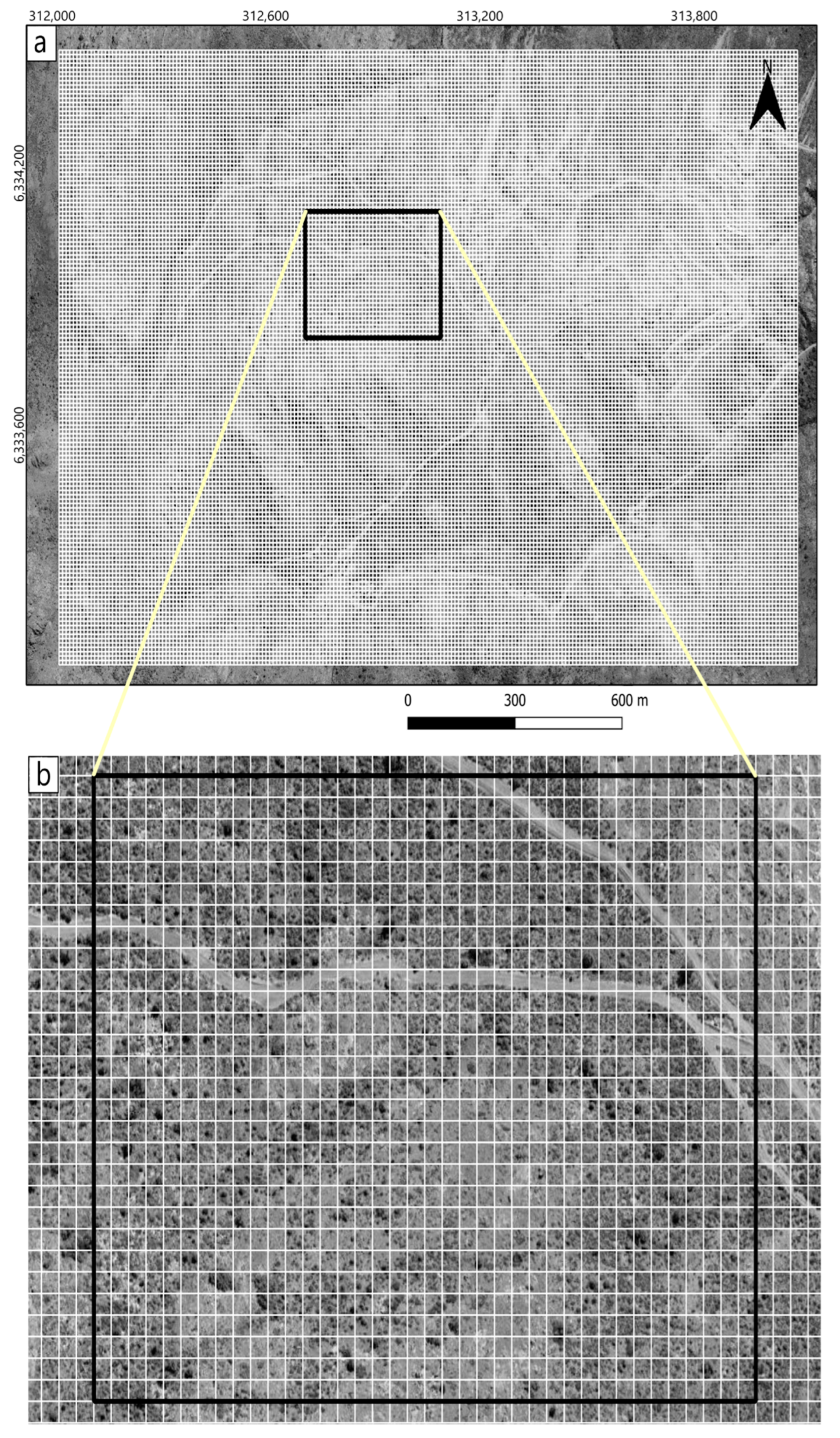
A critical phase of this methodology involves the integration of heterogeneous data formats, such as including discrete values, vectors, and varying raster resolutions, into a unified spatial framework. To address the ambiguity regarding spatial units and ensure consistency across all layers, an equidistant grid was established as the common support (
Figure 6).
The study area, measuring approximately 1.4 × 2 km, was discretized into square cells of 10 m per side, resulting in a fundamental unit of analysis (pixel) of 100 m
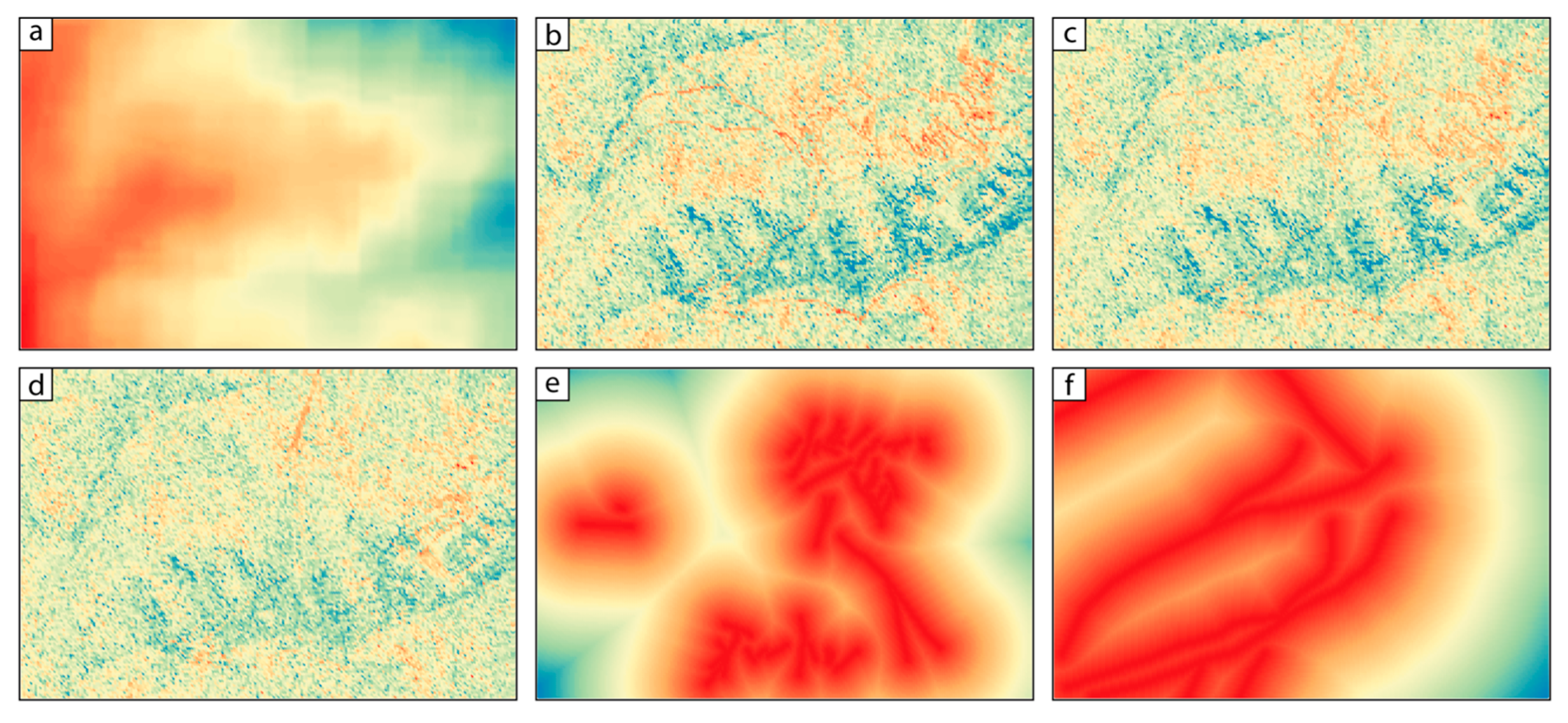
2. This resolution was selected to capture local geological and geomorphological details while maintaining computational efficiency. During this stage, the 28 m DEM was resampled to the 10 m grid using bilinear interpolation. Similarly, structural vectors (faults and lineaments) were transformed into continuous surfaces by calculating the Euclidean distance from each grid cell to the nearest structural feature. The satellite imagery was decomposed into its three primary RGB bands, generating three independent layers that match the common grid (
Figure 7). This process resulted in a multidimensional stack where every pixel contains a synchronized set of geological and topographic variables.
3.3. Spatial Segmentation and Training Sites (Stage 3)
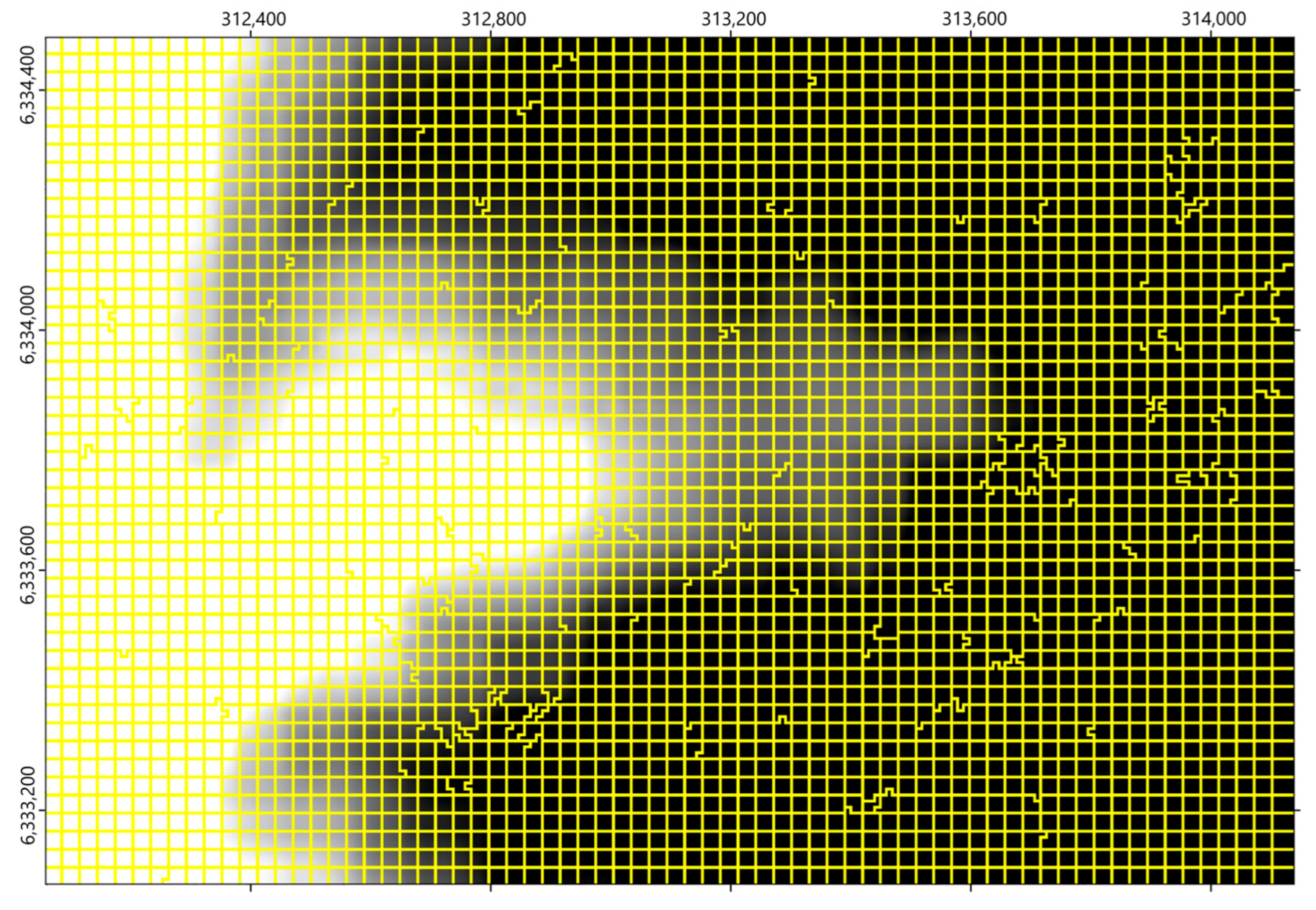
Once the common support was established, the grid was partitioned into spatial segments using the Simple Linear Iterative Clustering (SLIC) technique [
22]. This procedure clusters pixels with similar characteristics into discrete “patches.” Within this framework, Reference Patches were selected based on expert criteria, representing the specific geological signatures of known mineralized zones such as the Esmeralda and El Olivo sectors.
To ensure a representative statistical characterization of the mineralization, each reference patch was defined with a size of approximately 10 pixels. Given that each basic grid unit (pixel) covers 100 m
2, each reference patch represents a total area of 1.000 m
2. This dimension allows the model to capture the local variability of geological and structural variables, establishing a robust “signature” for comparison against the rest of the study area (
Figure 8).
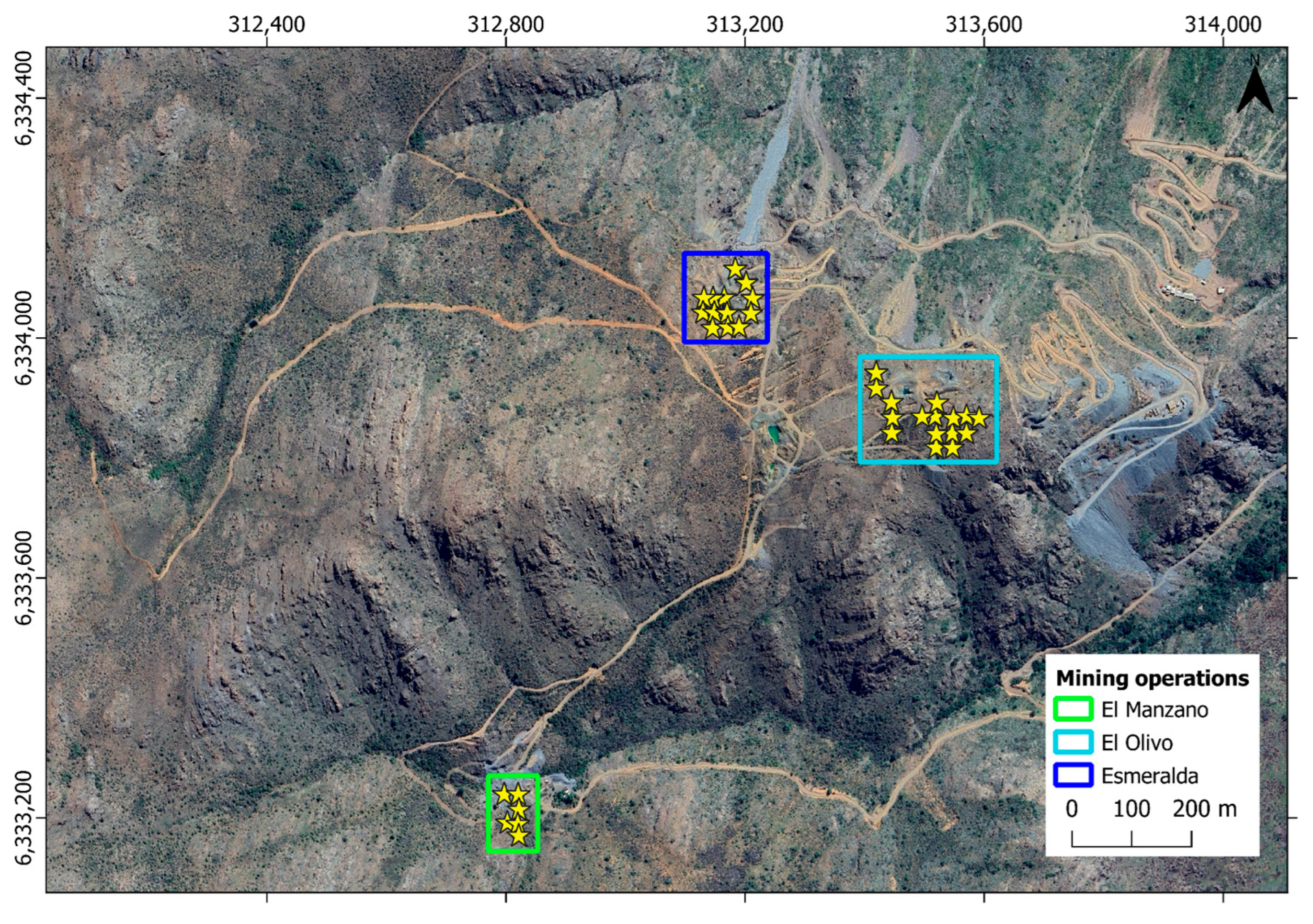
Within these general mineralized sectors, specific sites of interest were defined based on surface-mapped areas showing clear indicators of mineralization, such as the presence of copper oxides and hydrothermal alteration zones. For each sector, representative points corresponding to these sites of interest were selected (
Figure 9). Specifically, 13 points were chosen in the Esmeralda sector, 16 in El Olivo, and 6 in El Manzano, with the total number of points in each area determined by the prior identification of mineralized bodies.
The characteristics measured at each training point correspond to the numerical values of the spectral bands in the satellite image, the elevation derived from the digital elevation model (DEM), and the calculated Euclidean distance to geological structures such as faults and lineaments. One inherent limitation of using satellite imagery is that all three sectors have been affected by exploration and extraction activities, which may influence the spectral results. However, this factor is controlled by the fact that other disturbed areas in the region, such as road construction and camps, do not appear in the final results as sectors similar to the training zones. Furthermore, structural datasets, such as faults and lineaments, remain unaffected by human intervention, ensuring the geological integrity of the predictive model.
3.4. Statistical Comparisons and Similarity Mapping (Stage 4)
The core of the predictive analysis lies in comparing the probability distributions (P and Q) of the variables between the reference patches and the target segments. To identify the most effective metric for detecting subtle patterns in stratabound systems, four statistical distances were implemented using normalized histograms:
Total Variation Distance (TVD) [
23]:
Kullback–Leiber Divergence (KLD) [
24]:
Jensen–Shannon Divergence (JSD) [
25]:
Hellinger Distance (HEL) [
26]:
It is important to clarify the spatial relationship between the training data and the analytical units. The points of interest are recorded as individual coordinate points rather than polygons, meaning each training point falls within a single spatial segment generated during the SLIC process. However, depending on their geographic proximity, a single segment may contain more than one training point, while multiple segments may also be designated as training sites if they encompass independent points of interest.
3.5. Similarity Map (Stage 5)
The final stage of the workflow involves synthesizing the statistical calculations into a coherent Similarity Map. For the construction of these maps, each patch obtained from the segmentation process was assigned a characteristic color determined by the calculated statistical distance. The visualization employs a color scale ranging from deep red, representing probability values close to 1, to deep blue for values near 0. A deep red color indicates a high degree of similarity between the analyzed segment and the training sites, whereas deep blue represents low similarity. The color intensity of the remaining segments varies gradually according to their statistical proximity to these extreme values.
The total distance for each sector is obtained by summing the distances calculated for each available variable, such as elevation or structural distance, after applying a redundancy filter to ensure data independence. When multiple reference sectors exist, the total distance for each segment is computed as the sum of its distances with respect to all established references. Smaller total values represent a higher similarity to the target geological signature. By utilizing these established statistical distances rather than “black box” machine learning algorithms, the methodology ensures that the resulting exploration targets are reproducible and geologically interpretable [
12].
4. Results and Analysis
4.1. Comparative Analysis of Similarity Maps
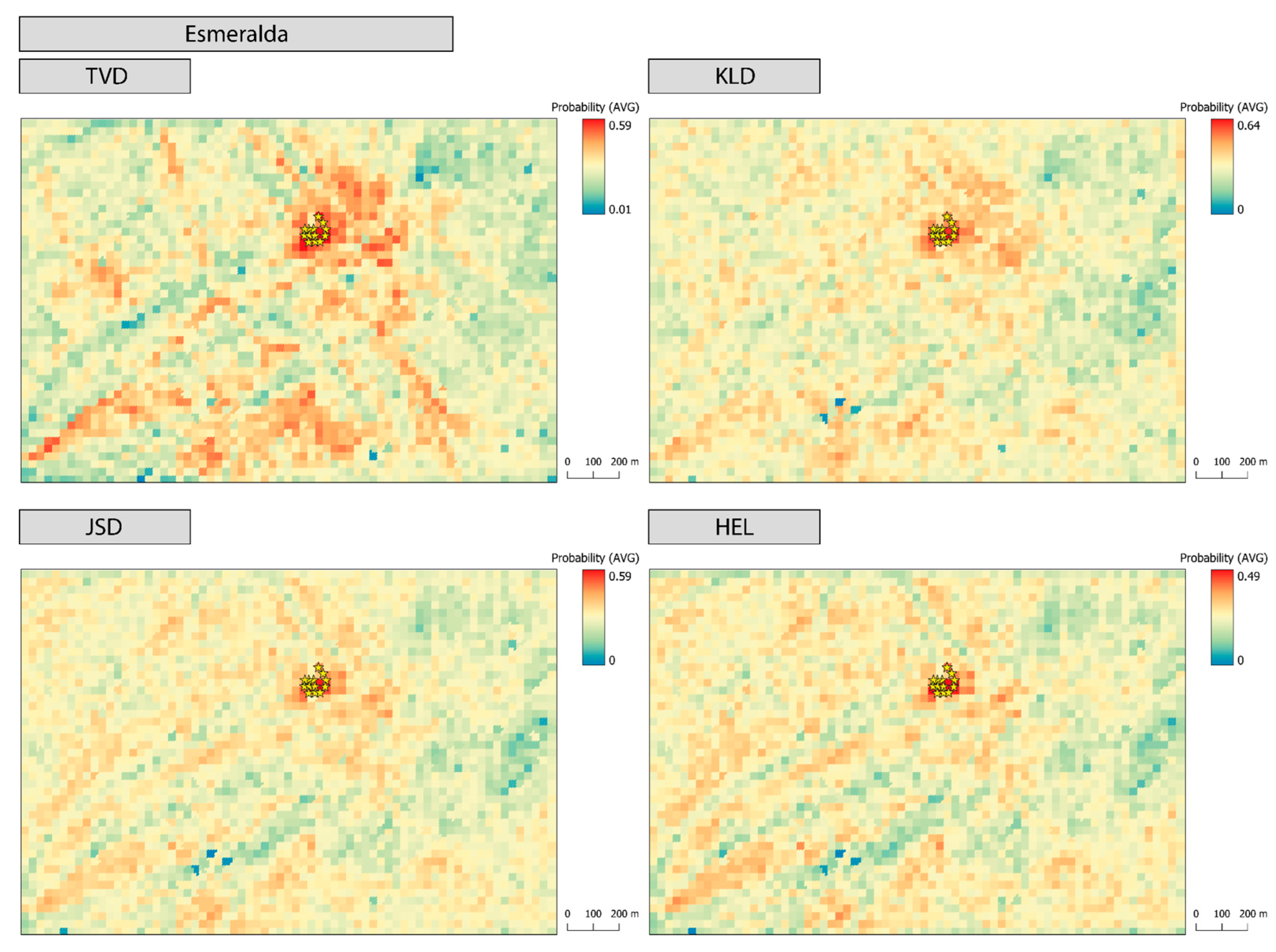
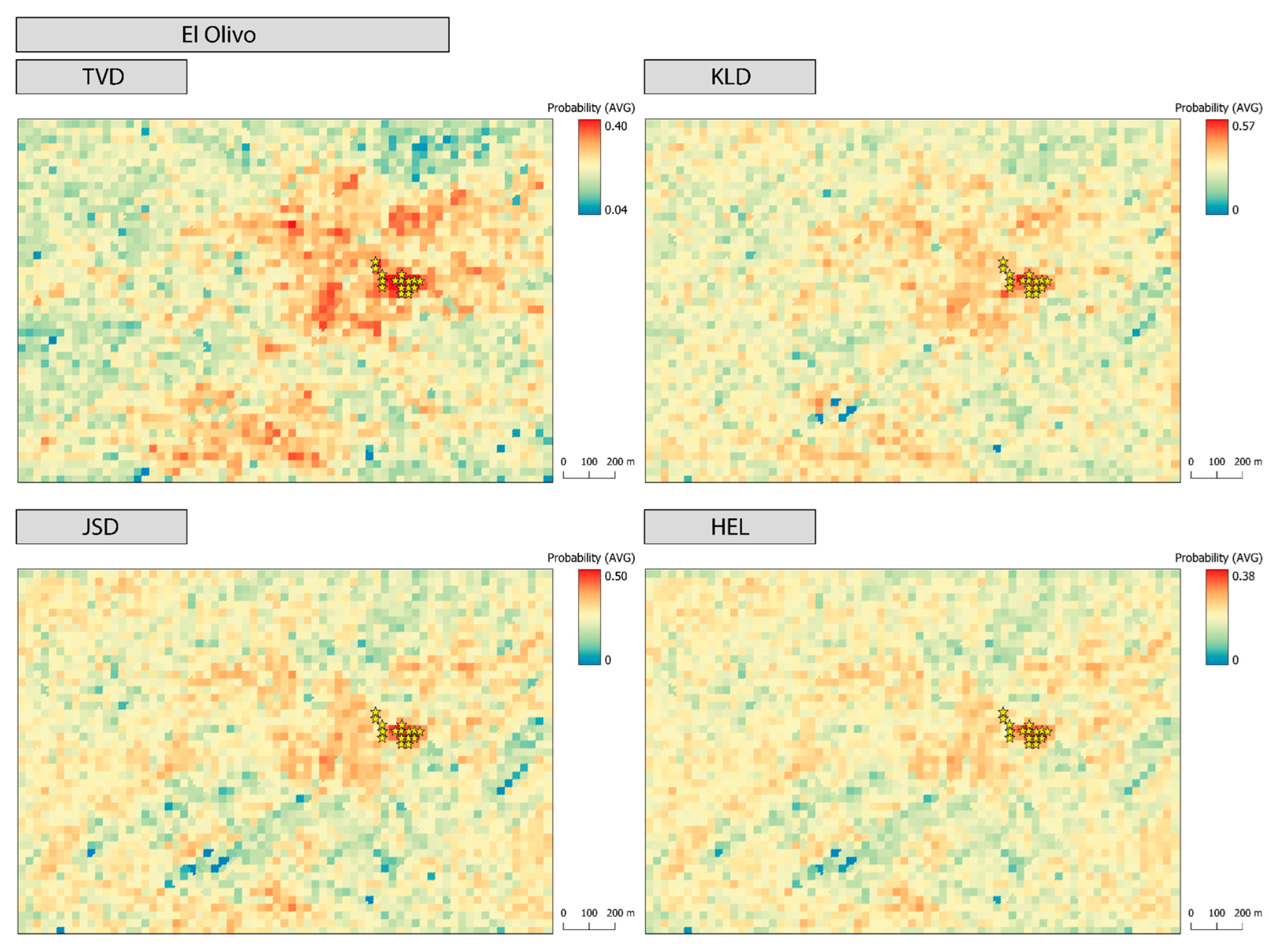
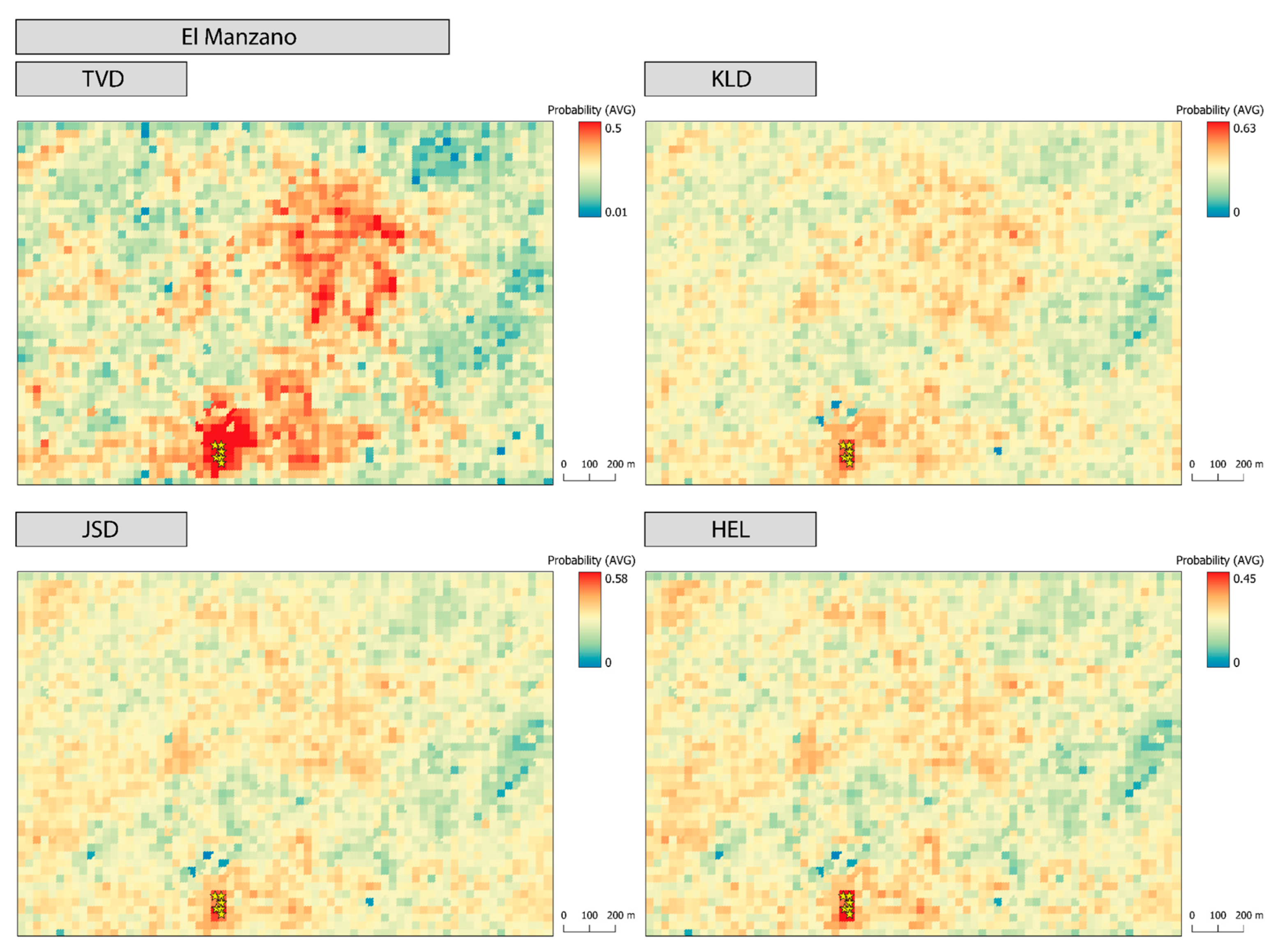
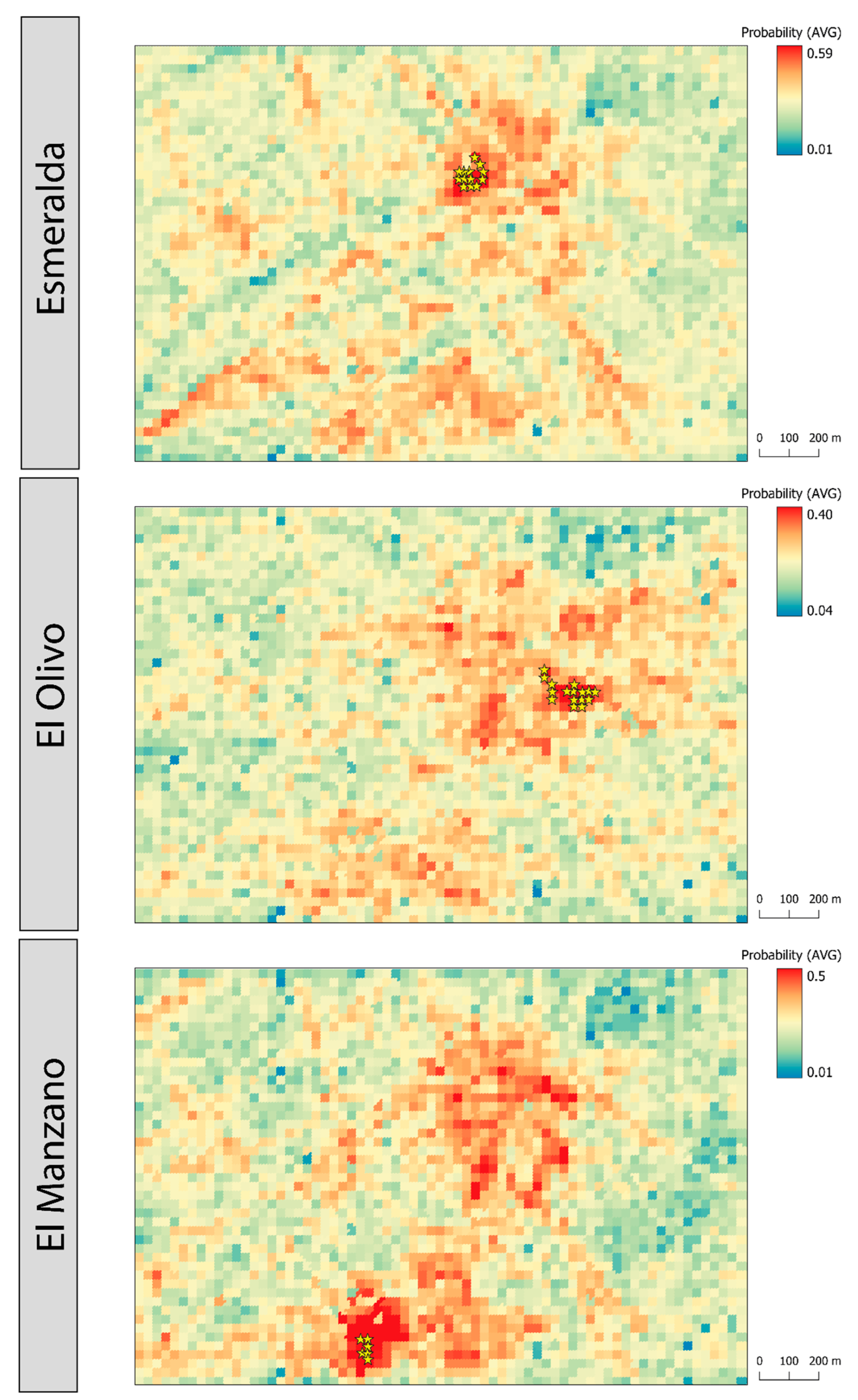
The implementation of the methodology resulted in twelve probability maps, which are organized to evaluate the predictive capacity of each sector independently. Specifically,
Figure 10 groups the results obtained by training the algorithm solely with points of interest from the Esmeralda mining sector.
Figure 11 displays the results of training the algorithm with points from the El Olivo sector, while
Figure 12 presents the results obtained using points of interest from the El Manzano sector.
Figure 10 illustrates that all four metrics consistently identify high similarity values within the El Olivo sector. Notably, the Total Variation Distance (TVD) yields the most pronounced contrast between high and low-probability zones, facilitating a sharper delineation of potential targets. Furthermore, this specific metric also highlights the El Manzano sector, situated in the southwestern portion of the study area, as a high-prospectivity zone.
In
Figure 11, where the model was trained exclusively using points from the El Olivo sector, the algorithm successfully identifies high-probability zones within the Esmeralda sector. This predictive capability beyond the training area suggests a strong consistency in the geological signatures between both deposits. Notably, the experiment utilizing the Total Variation Distance (TVD) again highlights the El Manzano sector with superior contrast, reaffirming this metric’s sensitivity in detecting discrete spatial anomalies.
Figure 12 illustrates the model’s performance when trained exclusively on data from the El Manzano sector. Remarkably, the methodology successfully identifies the Esmeralda and El Olivo sectors as high-prospectivity areas, validating the algorithm’s ability to extrapolate consistent geological signatures across the district. In the case of the Total Variation Distance (TVD), the spatial contrast is significantly more pronounced. This metric provides a sharp delineation between high-probability zones (red tones) and low-similarity backgrounds (green and blue tones), effectively reducing ambiguity during target interpretation.
A visual assessment of these experiments reveals distinct behaviors among the statistical distances applied. In the previous figures, it can be observed that the similarity zones generated using the Total Variation Distance (TVD) are more extensive and contrasting compared to those obtained through Kullback–Leibler Divergence (KLD), Jensen–Shannon Divergence (JSD), and Hellinger Distance (HEL). These latter three metrics yield more smoothed results that are quite similar to each other.
Generally, regardless of the statistical distance employed, all experiments identify a similarity zone that includes the Esmeralda, El Olivo, and El Manzano operations. A remarkable finding is that the methodology successfully identifies the target zones even when training points from the El Manzano sector are used, despite their greater geographic distance from the other sectors. This consistency demonstrates that the underlying geological signature is robust and can be generalized across the entire deposit.
4.2. Cross-Validation and Predictive Robustness
One of the most significant results is the model’s ability to perform effective cross-validation. For instance, even when the algorithm was trained exclusively with points from the El Manzano sector, it successfully identified the Esmeralda and El Olivo operations as high-similarity zones (
Figure 12). This occurs despite the geographic distance and subtle geological variations between these sectors, demonstrating that the underlying geochemical and structural ‘signature’ is robust and recognizable across the entire deposit. Furthermore, the high-probability areas (represented in deep red) delineate patterns that coincide with the known fault systems and the permeable zones of the Veta Negra Formation.
4.3. Identification of New Exploration Targets
Beyond the validation of known mineralized areas, the similarity maps revealed several high-probability patches in sectors where no current mining operations exist. In addition to the known mineralized sectors, new exploration targets have been identified, including the area east of El Manzano, north of Esmeralda and El Olivo, and the corridor between El Manzano and Esmeralda (
Figure 13).
These results were primarily derived from the maps obtained by applying the Total Variation Distance (TVD), using training sites from all three sectors (Esmeralda, El Olivo, and El Manzano). The consistent appearance of these targets across different experiments suggests they share a common geochemical and structural signature with the productive zones of the Veta Negra Formation.
The fact that other human-disturbed areas, such as road networks and mining camps, were correctly classified as low-probability zones (deep blue) reinforces the predictive validity of the model. This confirms that the statistical distances are effectively isolating geological and multispectral signatures associated with Cu-Ag mineralization rather than surface disturbances or operational noise.
5. Discussion
The results demonstrate that the choice of statistical distance significantly influences the behavior of the prospectivity model. The Total Variation Distance (TVD) proved to be the most effective for broad target generalization, as it consistently identified mineralized sectors even when the training data was geographically distant. In contrast, the Jensen–Shannon Divergence (JSD) and Hellinger Distance (HEL) provided more conservative and “smoothed” results. These metrics are particularly useful for high-precision target refinement, as they focus on areas that strictly mirror the multi-parameter signature of the reference patches.
This study represents a first stage of spatial validation where the visual output of the similarity maps provides a powerful tool for district-level reconnaissance. For detailed exploration and operational decision-making, the methodology allows for a quantitative selection of targets by adjusting the similarity threshold based on the specific needs and resources of the mining company. For instance, a more conservative threshold (e.g., similarity greater than or equal to 0.8) can be applied to prioritize high-confidence targets when resources are limited, whereas a more permissive threshold (e.g., similarity greater than or equal to 0.6) may be used to identify broader exploration areas when the budget allows for extensive field campaigns. This flexibility ensures that the methodology is both reproducible and adaptable to different mining investment scenarios.
The strong performance of structural distance layers in the model aligns with the geological framework proposed by Fuentes (2016) [
20]. The migration of hydrothermal fluids along structural pathways in the Veta Negra Formation created the irregular mineralized bodies currently exploited. The fact that the algorithm prioritized these structural proximities confirms that the model is capturing a true geological control rather than a random statistical correlation.
A key finding of this study is the success of the internal cross-validation. The ability of the system to identify the Esmeralda and El Olivo sectors while being trained exclusively on El Manzano points, and vice versa, demonstrates the robustness of the Cu-Ag “signature” within the study area. This suggests that even with a reduced dataset (limited to DEM, satellite imagery, and structural maps), the methodology remains highly predictive.
A recognized limitation of the current dataset is the absence of systematic surface geochemical data or a high-resolution 3D structural model for the entire region. While the integration of surface-mapped faults and lineaments provided a robust structural framework for this study, the addition of airborne geophysics or hyperspectral remote sensing data, such as ASTER or Sentinel 2 for hydrothermal alteration mapping, could further refine the targets and minimize potential false positives in areas of high human disturbance. Nevertheless, the reliance on expert knowledge for feature selection proved essential; prioritizing geologically relevant variables, such as the established fault systems, not only optimized processing time but also ensured that the algorithmic outputs remained consistent with the interpreted geological model.
The statistical distance approach offers a unique balance of transparency and efficiency in mineral prospectivity mapping. Unlike complex models that may require extensive datasets for training, this methodology achieved a high success rate in identifying known operations using a limited number of points of interest, ranging from 6 to 16 points per sector. This demonstrates the robustness of the statistical distributions employed, as the algorithm consistently recognized the geological signature of the deposits across the entire study area. By utilizing these established statistical distances, the process ensures that the resulting exploration targets are reproducible and directly tied to the observed geological variables, providing a practical tool for exploration in environments with restricted data access. In this context, it is important to note that the methodology’s accuracy is inherently scalable. The inclusion of higher-resolution datasets, such as multispectral imagery (e.g., ASTER), could refine mineralogical signatures, while airborne geophysical data or systematic lithogeochemical sampling would provide deeper structural and chemical constraints. Moreover, incorporating depth data from mine workings or drilling would enable the transition from 2D mapping to a 3-D predictive environment, increasing the reliability of targets in complex settings.
From a practical perspective, this methodology directly addresses the economic risks associated with small-scale mining. These operations often lack the capital for expensive drilling campaigns or geophysical surveys. By providing a low-cost, straightforward tool that utilizes public or company-available data (such as satellite imagery and basic mapping), we can significantly reduce the “search space” for new targets.
The identification of new high-probability zones, specifically north of Esmeralda and east of El Manzano (
Figure 13), provides immediate value for future exploration planning. These areas exhibit the same statistical “fingerprint” as the currently productive mines, suggesting a high potential for secondary permeability zones that have yet to be tested.
6. Conclusions
The study area, located in a mining district genetically associated with stratabound deposits, was characterized through a multi-parameter approach that allowed for a direct correlation between known mining operations and unexplored sectors. This research represents a significant step in the prospecting of the El Manzano sector, confirming its geological similarity to the currently exploited Esmeralda and El Olivo mines.
The proposed methodology is efficient and accessible, involving a systematic workflow of data standardization, SLIC segmentation, histogram construction, and statistical comparison. The process is governed by key parameters such as the coordinates of interest, spatial regularity, average patch size, and the selected statistical distance. A major advantage of this approach is its impartiality during segmentation and its ability to process diverse data formats within a common grid. Furthermore, this study demonstrates that the methodology functions effectively even with limited raw data, utilizing satellite imagery, digital elevation models, and structural features to identify subtle patterns that are often imperceptible during preliminary analysis.
Through the execution of 12 experiments, the robustness of the methodology was verified. When trained with data from El Manzano, the algorithm successfully highlighted the well-known mineralized zones of Esmeralda and El Olivo. Conversely, when Esmeralda and El Olivo were used as training sectors, the similarity mapped in El Manzano varied in intensity, a result that is consistent with the literature regarding the specific mineralization behaviors of these sectors. Additionally, the model provided a promising proposal for new exploration targets, suggesting potential northward expansions of Esmeralda and El Olivo, as well as intensified exploration to the east of El Manzano and in the corridor connecting it with northern operations.
A critical aspect of this semi-supervised tool is the integration of expert criteria. The successful execution of the algorithm depends on the informed selection of input layers and training points, as well as the geological validation of the resulting similarity maps. This synergy between statistical processing and expert interpretation ensures that the outputs remain geologically plausible and actionable for exploration.
The results confirm that this statistical approach is effective for Cu–Ag stratabound deposits, extending its applicability beyond the copper porphyry cases previously studied. The high degree of coherence observed across the four statistical distances (TVD, KLD, JSD, and HEL) and their correspondence with known mineralized sectors validate the methodology for preliminary exploration phases, particularly in small-scale mining environments with restricted data access.
Finally, it is important to note that this study specifically validates the effectiveness of the model in stratabound deposits using a focused, cost-effective dataset. While the integration of additional information, such as hydrothermal alteration mapping or high-resolution geochemistry, or element concentrations from stream sediments and soils, could further refine the results, the success of this approach using limited data demonstrates its high value for the small-scale mining sector. This methodology establishes a robust baseline for target generation in resource-constrained environments, where the primary goal is to reduce exploration uncertainty before committing to high-cost physical interventions. Future research will explore the impact of integrating multi-source, diverse datasets to evaluate the scalability of this predictive model across different geological settings. Moreover, the integration of the four statistical distances into a single weighted model will be explored. This would produce a unified, user-friendly similarity map that balances the strengths of each metric, such as the broad generalization of the Total Variation Distance and the more conservative, precise outputs of the other divergences, providing a more comprehensive tool for the mining industry.
Author Contributions
M.O.-C. contributed to data collection and generation, conducted the experimentation, and was the primary writer of the manuscript, as well as responsible for generating the figures. C.S. contributed to data generation, manuscript writing, and figure creation. G.D. was involved in manuscript writing, article review, and the development of the algorithm used. N.C. participated in data collection and generation. I.M. was involved in data collection and generation. S.P. contributed to data collection and generation, as well as providing prior information on the study area. A.N.-A. was involved in manuscript writing and review. F.N. participated in the development of the algorithm and manuscript review. All authors have read and agreed to the published version of the manuscript.
Funding
National Agency for Research and Development of Chile through grants PIA AFB230001, ANID AMTC CIA250010 and Fondef IT23I0131. They also thank Minera San Pedro for providing data, granting access to their facilities, and for their staff support during fieldwork.
Data Availability Statement
Due to legal/ethical restrictions, the data cannot be publicly shared. However, they are available to the corresponding author upon reasonable request, provided that the required conditions are met.
Acknowledgments
The authors acknowledge the funding of the National Agency for Research and Development of Chile through grants PIA AFB230001, ANID AMTC CIA250010, and Fondef IT23I0131. They also thank Minera San Pedro for providing data, granting access to their facilities, and for their staff support during fieldwork. The authors are grateful to Daniel Aquevedo, Rafael Castillo, Agustín Pinilla, and Felipe Rojas for their valuable assistance in data collection. Special thanks also go to their supervisors and co-supervisors—Nadia Mery, Gisella Palma, and Brian Townley—for their guidance and support throughout this work.
Conflicts of Interest
Author Sebastián Plaza was employed by the Minera San Pedro during the data collection and analysis phases of this study. The remaining authors declare that the research was conducted in the absence of any commercial or financial relationships that could be construed as a potential conflict of interest.
Abbreviations
The following abbreviations are used in this manuscript:
| MPM | Prospectivity Mapping |
| TVD | Total Variation Distance |
| KLD | Kullback–Leiber Divergence13 |
| JSD | Jensen–Shannon Divergence |
| HEL | Hellinger Distance |
References
- Tukey, J.W. Exploratory Data Analysis; Addison-Wesley: Reading, MA, USA, 1977; Volume 2, pp. 131–160. [Google Scholar]
- Agterberg, F.P. Sampling and analysis of chemical element concentration distribution in rock units and orebodies. Nonlinear Process. Geophys. 2012, 19, 23–44. [Google Scholar] [CrossRef]
- Carranza, E.J.M.; Hale, M. Evidential belief functions for data-driven geologically constrained mapping of gold potential, Baguio district, Philippines. Ore Geol. Rev. 2003, 22, 117–132. [Google Scholar] [CrossRef]
- McMillan, M.; Haber, E.; Peters, B.; Fohring, J. Mineral prospectivity mapping using a VNet convolutional neural network. Lead. Edge 2021, 40, 99–105. [Google Scholar] [CrossRef]
- Maleki, M.; Niroomand, S.; Rajabpour, S.; Beiranvand Pour, A.; Ebrahimpour, S. Targeting local orogenic gold mineralisation zones using data-driven evidential belief functions: The Godarsorkh area, Central Iran. All Earth 2022, 34, 259–278. [Google Scholar] [CrossRef]
- Sabbaghi, H.; Tabatabaei, S.H. Application of the most competent knowledge-driven integration method for deposit-scale studies. Arab. J. Geosci. 2022, 15, 1057. [Google Scholar] [CrossRef]
- Ford, A.; Peters, K.J.; Partington, G.A.; Blevin, P.L.; Downes, P.M.; Fitzherbert, J.A.; Greenfield, J.E. Translating expressions of intrusion-related mineral systems into mappable spatial proxies for mineral potential mapping: Case studies from the Southern New England Orogen, Australia. Ore Geol. Rev. 2019, 111, 102943. [Google Scholar] [CrossRef]
- Carranza, E.J.M. Natural resources research publications on geochemical anomaly and mineral potential mapping, and introduction to the special issue of papers in these fields. Nat. Resour. Res. 2017, 26, 379–410. [Google Scholar] [CrossRef]
- Shabani, A.; Ziaii, M.; Monfared, M.S.; Shirazy, A.; Shirazi, A. Multi-Dimensional Data Fusion for Mineral Prospectivity Mapping (MPM) Using Fuzzy-AHP Decision-Making Method, Kodegan-Basiran Region, East Iran. Minerals 2022, 12, 1629. [Google Scholar] [CrossRef]
- Abedini, M.; Ziaii, M.; Timkin, T.; Pour, A.B. Machine learning (ML)-based copper mineralization prospectivity mapping (MPM) using mining geochemistry method and remote sensing satellite data. Remote Sens. 2023, 15, 3708. [Google Scholar] [CrossRef]
- Carrasco Pardo, D.; López-Gómez, J.A.; Higueras, P.; Esbrí, J.M.; Lorenzo, S. Creación y Visualización de Mapas Prospectivos de Mercurio Mediante Técnicas de Inteligencia Artificial. 2021. Available online: https://docta.ucm.es/rest/api/core/bitstreams/561e9850-91df-4ddc-b510-f97d967a0c50/content (accessed on 27 March 2026).
- Navarro, F.; Díaz, G.; Ojeda, M.; Garrido, F.; Comte, D.; Ehrenfeld, A.; Egaña, A.; Palma, G.; Maleki, M.; Sanchez-Perez, J.F. A methodology for similarity area searching using statistical distance measures: Application to Geological Exploration. Nat. Resour. Res. 2024, 33, 2527–2544. [Google Scholar] [CrossRef]
- Thomas, H. Geología de la Cordillera de la Costa Entre el Valle de la Ligua y la Cuesta de Barriga; Boletín No. 2; Instituto de Investigaciones Geológicas: Santiago, Chile, 2015; pp. 1–86. (Original work published 1958). [Google Scholar]
- Piracés, R. Estratigrafía de la cordillera de la Costa entre la cuesta El Melón y Limache, Provincia de Valparaíso, Chile. In Actas del Congreso Geológico Chileno; Congreso Geológico Chileno: Santiago, Chile, 1976; Volume 1, pp. 65–82. [Google Scholar]
- Marambio, F. Geología del Proyecto Cuprífero Lohpan, Región Metropolitana. Bachelor’s Thesis, Universidad de Chile, Departamento de Geología, Santiago, Chile, 1994. [Google Scholar]
- Maksaev, V. Chilean stratabound Cu-(Ag) deposits: An overview. In Hydrothermal Iron Oxide Copper-Gold and Related Deposits: A Global Perspective; PCG Publishing: Boston, MA, USA, 2002; Volume 2, pp. 185–205. [Google Scholar]
- Mardones, V. Evolución Tectónica Meso-Cenozoica de la Cordillera Principal de los Andes de Chile Central, 33°30′S–34°S. Master’s Thesis, Universidad de Chile, Departamento de Geología, Santiago, Chile, 2019. [Google Scholar]
- Thomson, R. (Viscachas Mining Co., Santiago, Chile). Lohpan Project Geological Report. 1991; (Unpublished report).
- ENAMI. (ENAMI, Santiago, Chile). Informe geológico interno, Internal Report. 2013; (Unpublished).
- Fuentes, C. (Minera San Pedro, Santiago, Chile). Informe de avance Geología. Internal Report. 2016; (Unpublished).
- Espinoza, S.; Veliz, H.; Esquivel, J.; Arias, J.; Moraga, A. The Cupriferous Province of the Coastal Range, Northern Chile. In Andean Copper Deposits: New Discoveries, Mineralization, Styles and Metallogeny; Society of Economic Geologists: Littleton, CO, USA, 1998. [Google Scholar] [CrossRef]
- Achanta, R.; Shaji, A.; Smith, K.; Lucchi, A.; Fua, P.; Süsstrunk, S. SLIC superpixels compared to state-of-the-art superpixel methods. IEEE Trans. Pattern Anal. Mach. Intell. 2012, 34, 2274–2282. [Google Scholar] [CrossRef] [PubMed]
- Cai, Y.; Lim, L.H. Distances between probability distributions of different dimensions. IEEE Trans. Inf. Theory 2022, 68, 4020–4031. [Google Scholar] [CrossRef]
- Shlens, J. Notes on kullback-leibler divergence and likelihood. arXiv 2014, arXiv:1404.2000. [Google Scholar] [CrossRef]
- Nielsen, F. On the Jensen–Shannon symmetrization of distances relying on abstract means. Entropy 2019, 21, 485. [Google Scholar] [CrossRef] [PubMed]
- Steerneman, T. On the total variation and Hellinger distance between signed measures; an application to product measures. Proc. Am. Math. Soc. 1983, 88, 684–688. [Google Scholar] [CrossRef]
Figure 1.
Map of the regional context where the study area is located. The deposit is situated within the Tiltil commune in the Metropolitan Region of Chile.
Figure 1.
Map of the regional context where the study area is located. The deposit is situated within the Tiltil commune in the Metropolitan Region of Chile.
Figure 2.
Known mineralization zones in the study area. From north to south are Esmeralda, El Olivo and El Manzano.
Figure 2.
Known mineralization zones in the study area. From north to south are Esmeralda, El Olivo and El Manzano.
Figure 3.
Map of the study area with mapped surface structural information.
Figure 3.
Map of the study area with mapped surface structural information.
Figure 4.
Diagram of the methodology proposed by Navarro et al. (2024) [
12], taken from the original source. (Step 1) input data, (Step 2) generation of layers on the same support, (Step 3) local characterisation through spatial sectors and indication of training areas (star), (Step 4) comparison of sectors using statistical distances and (Step 5) generation of similarity map; areas in red indicate high similarity, while those in blue indicate low similarity. Reproduced with permission from Navarro et al.,
Natural Resources Research; published by Springer Nature, 2024.
Figure 4.
Diagram of the methodology proposed by Navarro et al. (2024) [
12], taken from the original source. (Step 1) input data, (Step 2) generation of layers on the same support, (Step 3) local characterisation through spatial sectors and indication of training areas (star), (Step 4) comparison of sectors using statistical distances and (Step 5) generation of similarity map; areas in red indicate high similarity, while those in blue indicate low similarity. Reproduced with permission from Navarro et al.,
Natural Resources Research; published by Springer Nature, 2024.
Figure 5.
(a) Satellite image. (b) Surface faults in the study area. Represented in the figure with red lines. (c) Lineaments in the study area. Represented in the figure with blue lines.
Figure 5.
(a) Satellite image. (b) Surface faults in the study area. Represented in the figure with red lines. (c) Lineaments in the study area. Represented in the figure with blue lines.
Figure 6.
(a) Study area with the grid used. (b) Zoom of the grid.
Figure 6.
(a) Study area with the grid used. (b) Zoom of the grid.
Figure 7.
Processed data layers. (a) Digital elevation model (DEM). Red colors represent the highest elevations, while blue indicates the lowest. (b) Data from Band 1 of the satellite image converted to the multidimensional grid. (c) Data from Band 2 of the satellite image converted to the multidimensional grid. (d) Data from Band 3 of the satellite image converted to the multidimensional grid. (e) Distance to faults. (f) Distance to lineaments. In (e,f), red colors correspond to the lowest values, indicating pixels closer to the structures, while blue colors represent the highest values, indicating greater distances from the structures.
Figure 7.
Processed data layers. (a) Digital elevation model (DEM). Red colors represent the highest elevations, while blue indicates the lowest. (b) Data from Band 1 of the satellite image converted to the multidimensional grid. (c) Data from Band 2 of the satellite image converted to the multidimensional grid. (d) Data from Band 3 of the satellite image converted to the multidimensional grid. (e) Distance to faults. (f) Distance to lineaments. In (e,f), red colors correspond to the lowest values, indicating pixels closer to the structures, while blue colors represent the highest values, indicating greater distances from the structures.
Figure 8.
Segmented study area with a patch size of 10, using the digital elevation model as a background.
Figure 8.
Segmented study area with a patch size of 10, using the digital elevation model as a background.
Figure 9.
The training points for the algorithm are 13 in Esmeralda, 16 in El Olivo, and 6 in El Manzano. These are represented by stars in the figure.
Figure 9.
The training points for the algorithm are 13 in Esmeralda, 16 in El Olivo, and 6 in El Manzano. These are represented by stars in the figure.
Figure 10.
Resulting Probability Maps. Probability maps resulting from experiments using the input points from the Esmeralda sector and the distances calculated using HEL, JSD, KLD, and TVD. The stars indicate the sectors of interest selected for each experiment.
Figure 10.
Resulting Probability Maps. Probability maps resulting from experiments using the input points from the Esmeralda sector and the distances calculated using HEL, JSD, KLD, and TVD. The stars indicate the sectors of interest selected for each experiment.
Figure 11.
Resulting Probability Maps. Probability maps resulting from experiments using the input points from the El Olivo sector and the distances calculated using HEL, JSD, KLD, and TVD. The stars indicate the sectors of interest selected for each experiment.
Figure 11.
Resulting Probability Maps. Probability maps resulting from experiments using the input points from the El Olivo sector and the distances calculated using HEL, JSD, KLD, and TVD. The stars indicate the sectors of interest selected for each experiment.
Figure 12.
Resulting Probability Maps. Probability maps resulting from experiments using the input points from the El Manzano sector and the distances calculated using HEL, JSD, KLD, and TVD. The stars indicate the sectors of interest selected for each experiment.
Figure 12.
Resulting Probability Maps. Probability maps resulting from experiments using the input points from the El Manzano sector and the distances calculated using HEL, JSD, KLD, and TVD. The stars indicate the sectors of interest selected for each experiment.
Figure 13.
Resulting probability maps obtained by applying Total Variation Distance (TVD) with the training sites (stars) from Esmeralda, El Olivo, and El Manzano.
Figure 13.
Resulting probability maps obtained by applying Total Variation Distance (TVD) with the training sites (stars) from Esmeralda, El Olivo, and El Manzano.
| Disclaimer/Publisher’s Note: The statements, opinions and data contained in all publications are solely those of the individual author(s) and contributor(s) and not of MDPI and/or the editor(s). MDPI and/or the editor(s) disclaim responsibility for any injury to people or property resulting from any ideas, methods, instructions or products referred to in the content. |




 and
and