Systematic Review

Circular Economy Approaches for Copper Recovery from Mining Waste: A Systematic Review of Leaching Technologies


by
Agustín Arancibia-Zúñiga
1,
Bastián Cornejo-Kunz
2,
Freddy Rojas
3 and
Carlos Carlesi
1,*
1
Escuela de Ingeniería en Química, Facultad de Ingeniería, Pontificia Universidad Católica de Valparaíso, Avenida Brasil 2162, Valparaíso 2362807, Chile
2
Facultad de Ingeniería, Universidad de Valparaíso, General Cruz 222, Valparaíso 2362807, Chile
3
Compañía Minera Tres Valles, Parcela 25A, Lote B Quilmenco, Salamanca 1950041, Chile
*
Author to whom correspondence should be addressed.
Minerals 2026, 16(6), 597; https://doi.org/10.3390/min16060597
Submission received: 13 April 2026 / Revised: 27 May 2026 / Accepted: 27 May 2026 / Published: 3 June 2026

Abstract

Mining activities generate large volumes of waste that pose both environmental liabilities and potential secondary resource value. A significant fraction of these materials still contains recoverable copper, making leaching a promising strategy for reprocessing and valorization, given the natural decline in ore grade. This study presents a PRISMA-based systematic review of recent literature on leaching technologies applied to mining waste, with emphasis on technical performance, environmental implications, and economic feasibility. The reviewed residues include tailings, slags, copper smelter dusts, sludges, waste rock, leaching residues, and other secondary mining and metallurgical wastes. The main leaching routes identified were acidic, biological, alkaline, and hybrid systems, including conventional H2SO4 leaching, pressure oxidative leaching, chloride-based systems, glycine- and ammonia-based alkaline media, organic acids, deep eutectic solvents, and biologically mediated processes. Reported Cu recoveries ranged from low values in refractory systems to near-complete extraction under optimized conditions. Overall, copper recovery was controlled primarily by the mineralogical occurrence of Cu rather than by leaching category alone. In contrast, the highest recoveries were generally associated with intensified conditions capable of overcoming sulfide- and silicate-related constraints. Environmental and circular economy benefits were frequently claimed but less often demonstrated through direct evidence, while economic assessment remained limited. Future research should better integrate mineralogical interpretation, environmental verification, and economic feasibility.

1. Introduction

Copper ore processing is carried out through the concomitance of different technologies, including leaching, flotation, smelting, and electrochemical processes [1]. The selection of each route depends on ore characteristics and associated costs. However, the mining industry is estimated to generate between 5 and 7 billion tons of waste annually worldwide, and this figure continues to increase as ore grades progressively decline [1,2]. These wastes accumulate and may cause serious environmental problems, such as the leaching and runoff of contaminants into soils, water bodies, ecosystems, and nearby residential areas; in addition, the lack of available disposal space represents an additional challenge [3].
Several studies have shown that these wastes still contain significant amounts of residual copper, particularly in slags and in unprocessed rocks discarded after mining operations (waste rocks). Previous investigations have reported copper concentrations of around 0.29% in smelting slags and up to 4.67% in historical slags that were later treated by hydrometallurgical processes [4]. In the case of waste rocks that have been weathering for decades, copper concentrations of 7782–8717 mg/kg have been documented, equivalent to more than 0.8% total copper, with a significant fraction occurring in potentially mobile forms [3]. This loss represents not only technical inefficiency but also a considerable economic loss for mining operations, especially since copper is regarded as a metal of major economic importance in today’s technological world [1]. At the same time, this situation creates a strategic opportunity to recover residual copper using more advanced, sustainable technologies.
In this context, alongside the growing global demand for valuable metals and the progressive depletion of accessible ores, there has been increased interest in alternative sources [1]. In this regard, new technologies for reprocessing mining wastes have been investigated with the dual purpose of recovering valuable metals and reducing waste hazards [2]. In addition, their use may help offset the costs of environmental remediation, thereby advancing more sustainable and profitable mining models [2].
Hydrometallurgical techniques, such as leaching, represent a promising alternative for copper extraction because they enable metal recovery from low-grade materials with lower energy consumption than pyrometallurgical routes and greater operational versatility [1]. The integration of emerging technologies, such as microwave-assisted leaching [5], radio-frequency-assisted leaching [6], and hybrid schemes in dilute solutions combining membranes and solvent extraction [7], together with low-cost sensing and digital monitoring tools associated with smart mining [8], points to solutions capable of reducing environmental liabilities while adding economic value to materials previously regarded as waste [1,2].
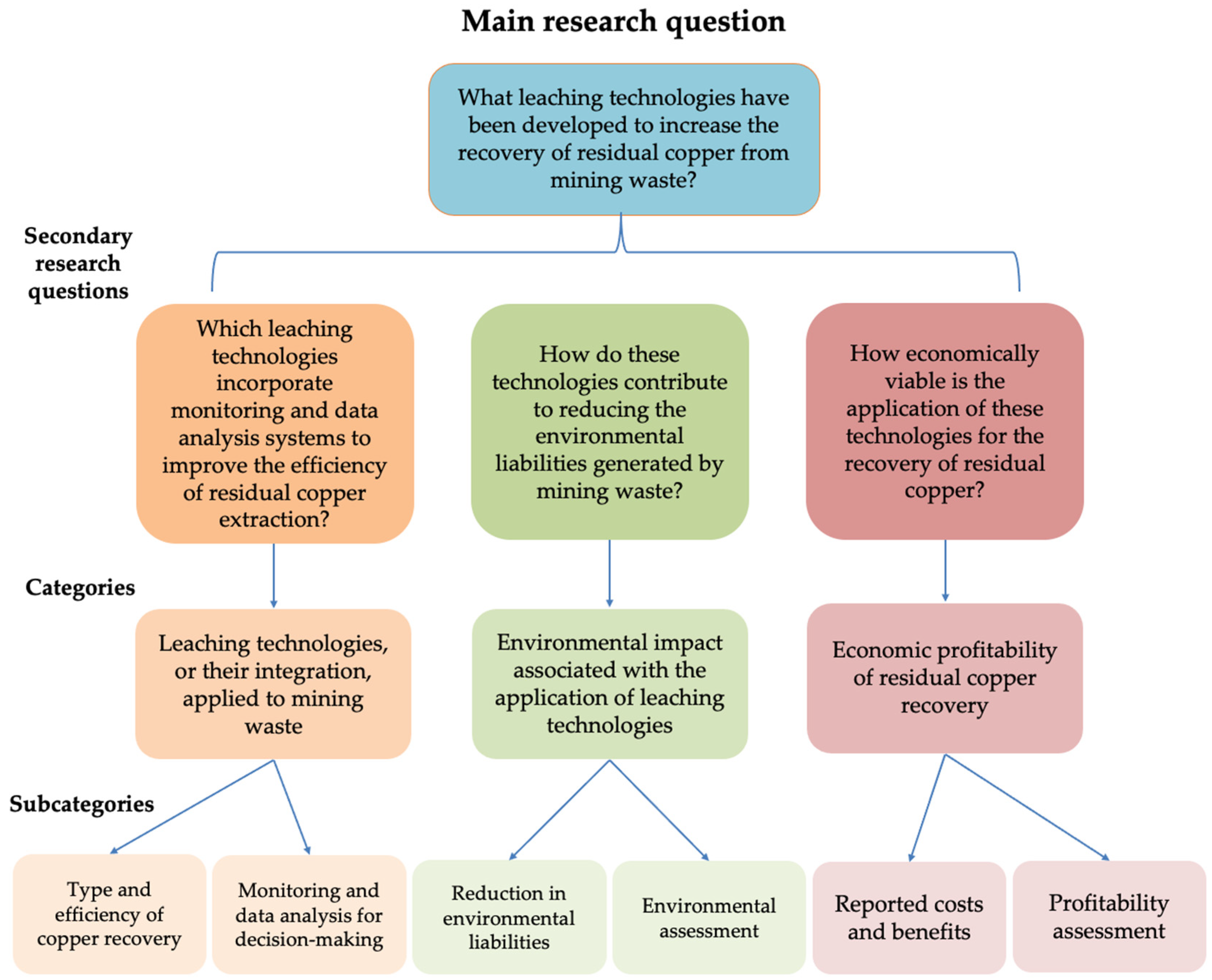
The available evidence on these technologies and their real-world applications remains scattered and fragmented, limiting their effective integration into operational settings. In response to this issue, the present study aims to describe leaching technologies for recovering residual copper from mining waste through a systematic review of the scientific literature. This review seeks to organize and critically analyze the existing knowledge to answer the following research question: What leaching technologies have been developed to increase the recovery of residual copper from mining waste? To address this question, the review identifies: (1) technologies incorporating monitoring and data analysis capabilities, (2) environmental impacts derived from their application, and (3) the economic profitability of residual copper recovery processes. In doing so, this work aims to provide relevant technical evidence to strengthen sustainability in the mining industry.
Section 2 describes the methodology used for the systematic review, with emphasis on the search strategy. Section 3 presents the results, analyzed in line with the specific research questions. Section 4 discusses the main findings, including recommendations to address the identified limitations and potential directions for future research.

2. Materials and Methods

The methodology applied in this systematic review (SR) is based on the PRISMA 2020 (Preferred Reporting Items for Systematic Reviews and Meta-Analyses) guidelines. The completed PRISMA 2020 check-list is provided in Supplementary Material S1. Its main purpose is to address the research questions guiding this study, which are presented below.
The General research question (RQ) is as follows:
  • RQ: What leaching technologies have been developed to increase the recovery of residual copper from mining waste?
The specific research questions (SRQs) are as follows:
  • SRQ 1: Which leaching technologies incorporate monitoring and data analysis systems to improve efficiency in residual copper extraction and decision-making?
  • SRQ 2: How do these technologies contribute to reducing the environmental liabilities generated by mining waste?
  • SRQ 3: How economically viable is the application of these technologies for the recovery of residual copper?
These questions are aligned with the overall objective (OO) of this research, which is
  • OO: to describe leaching technologies aimed at the recovery of residual copper from mining waste through a systematic review of the scientific literature.
The first step in the research process was to identify the specific field of knowledge within which the systematic review (SR) is framed. This step allows the research scope to be defined, the search algorithm to be designed, and a robust theoretical framework to be established for addressing the research questions.
The second step involved searching for relevant scientific documents within the defined field of knowledge. The selection of scientific articles was conducted using the Web of Science (WoS) and Scopus databases, using the search strategy presented in Table 1. Subsequently, the inclusion and exclusion criteria detailed in Table 2 were applied.
The selected databases were chosen to ensure the rigor and comprehensiveness of the systematic review, considering their multidisciplinary nature, broad international coverage, and recognition within the scientific community. Scopus, managed by Elsevier, is one of the largest databases worldwide. Its robust indexing system provides access to up-to-date literature and is widely used in systematic reviews for its coverage of the applied sciences, engineering, and technology.
On the other hand, Web of Science, administered by Clarivate, provides access to highly selective scientific literature subject to strict editorial quality criteria. WoS enables citation tracking, the identification of highly influential articles, and access to publications indexed in collections such as SCI, SSCI, and ESCI, thereby enabling rigorous filtering of relevant sources.
Both databases were selected because they
  • Ensure access to peer-reviewed publications.
  • Enable replicability and traceability of the search process, in alignment with the transparency standards proposed by PRISMA 2020.
  • Provide complementary coverage, reducing publication bias and increasing the thematic representativeness of the study area.
The search was conducted in both platforms using the same search algorithm, adapted to the Boolean operators and specific syntax of each database, to ensure comparability and consistency in data collection. The following table presents the inclusion and exclusion criteria applied in the search, along with an explanation of their relevance and alignment with the research question.
The criteria presented in Table 2 were defined to balance thematic precision, cross-study comparability, and practical relevance. In particular, they were intended to restrict the dataset to representative mining waste matrices and to studies in which copper recovery could be interpreted within a comparable leaching framework. This approach reduces the risk of overestimating extraction performance from simplified, pre-concentrated, or only partially comparable systems. At the same time, some restrictions—especially those related to accessibility, language, document type, and publication period—may have reduced the representativeness of the final dataset. These criteria should therefore be understood as methodological delimitations adopted to preserve analytical consistency, while also constituting potential sources of selection bias.
Only studies in which leaching constituted the main recovery step were retained. Articles primarily focused on downstream hydrometallurgical stages (such as solvent extraction, stripping, or electrowinning) were excluded if the leaching stage was not analyzed independently or did not represent the study’s core focus.
Additionally, when multiple copper (Cu) grades were reported in a single study—associated with different mineralogical variants, subfractions, or closely related residue types—a simple average was calculated solely for database harmonization. These averaged values were used to ensure comparability across studies, while the underlying mineralogical differences were preserved and taken into account in the qualitative analysis.
For each study, data were extracted from the experimental condition reporting the highest Cu recovery to ensure consistent performance comparisons across different leaching systems.
Subsequently, a filtering process was applied to the collected articles, removing duplicate records and assessing their relevance to the research topic. This involved an initial screening based on titles, followed by a more detailed evaluation of abstracts.
The overall search and selection procedure for the systematic review (SR) is presented in Figure 1. This figure outlines the complete process, specifying the types of filters applied, the number of records excluded, the number that progressed to the next stage, and the number ultimately included in the study.
The review was designed with explicit measures to minimize bias. Inclusion and exclusion criteria were defined and documented prior to the review process to prevent modifications that could affect study selection. The search was conducted on the Web of Science and Scopus using the same Boolean query to ensure consistency, and duplicates were removed to prevent double-counting. Titles and abstracts were screened against predefined criteria. Three authors independently reviewed the studies, and decisions were made by consensus, reducing the influence of a single perspective.
Data extraction was performed using a structured template to standardize the analysis and limit subjective interpretation. The risk of bias from missing data was mitigated by explicitly recording unavailable information for each category. The entire process was designed to be transparent and reproducible and can be represented in a PRISMA-style flow diagram to facilitate replication. The last search update was conducted in October 2025.
Based on the selected scientific articles, the following analysis categories (ACs) and subcategories (SCs) were defined to address the research questions (see Figure 2).
  • AC1: Leaching technologies applied to mining waste
This category addresses the methodologies, operational parameters, and tools used to recover residual copper from mining waste. It also includes complementary technologies, such as monitoring systems, automation, and data analysis, that contribute to process efficiency.
  • Subcategory: Leaching technologies applied to mining waste
  • SC1.1—Type and efficiency of copper recovery: type of leaching (chemical, biological, etc.), type of waste, and level of development (laboratory, pilot, industrial).
  • SC1.2—Monitoring and data analysis for decision-making: presence of sensors, automation, or data analysis associated with the process.
  • AC2: Environmental impact associated with the application of leaching technologies
This category encompasses the environmental effects of applying these technologies, particularly in reducing environmental liabilities, stabilizing or inertizing hazardous waste, and improving environmental sustainability indicators.
  • Subcategory: Environmental impact
  • SC2.1—Reduction in environmental liabilities: decrease in volume, hazard level, or toxicity of treated waste.
  • SC2.2—Environmental or regulatory assessment: references to improvements in environmental indicators, contributions to circular economy models, regulatory compliance, or reported environmental risks.
  • AC3: Economic profitability of residual copper recovery
This category evaluates the balance between the costs of implementing leaching technologies and the economic benefits, including copper recovery, reduced costly waste, and improved overall financial performance.
  • Subcategory: Economic profitability
  • SC3.1—Reported costs and benefits: general information on operational costs, capital investment, and benefits obtained.
  • SC3.2—Profitability assessment: financial indicators (NPV, IRR, and break-even point) or conditions affecting process profitability.
The analysis categories and subcategories are summarized in Figure 2.

3. Results

This section presents the analysis of the reviewed information. First, an overview of the selected articles is provided through a bibliometric analysis. Then, a more detailed examination is developed, structured according to the analysis categories described in the methodology section. Finally, the most relevant findings are synthesized.
The first analysis category (AC1) examines the various leaching technologies applied to waste, including their types, efficiencies, selectivity, and operational parameters. In addition, the measurement and data processing technologies are analyzed.
The second analysis category (AC2) addresses the environmental impacts of applying these technologies, focusing on contaminant mitigation and their contribution to the circular economy.
Finally, the third analysis category (AC3) evaluates the economic profitability of residual copper recovery, considering operational costs, reductions in hazardous waste disposal expenses, and the value from the sale of valuable metals.

3.1. Main Characteristics of the Selected Articles

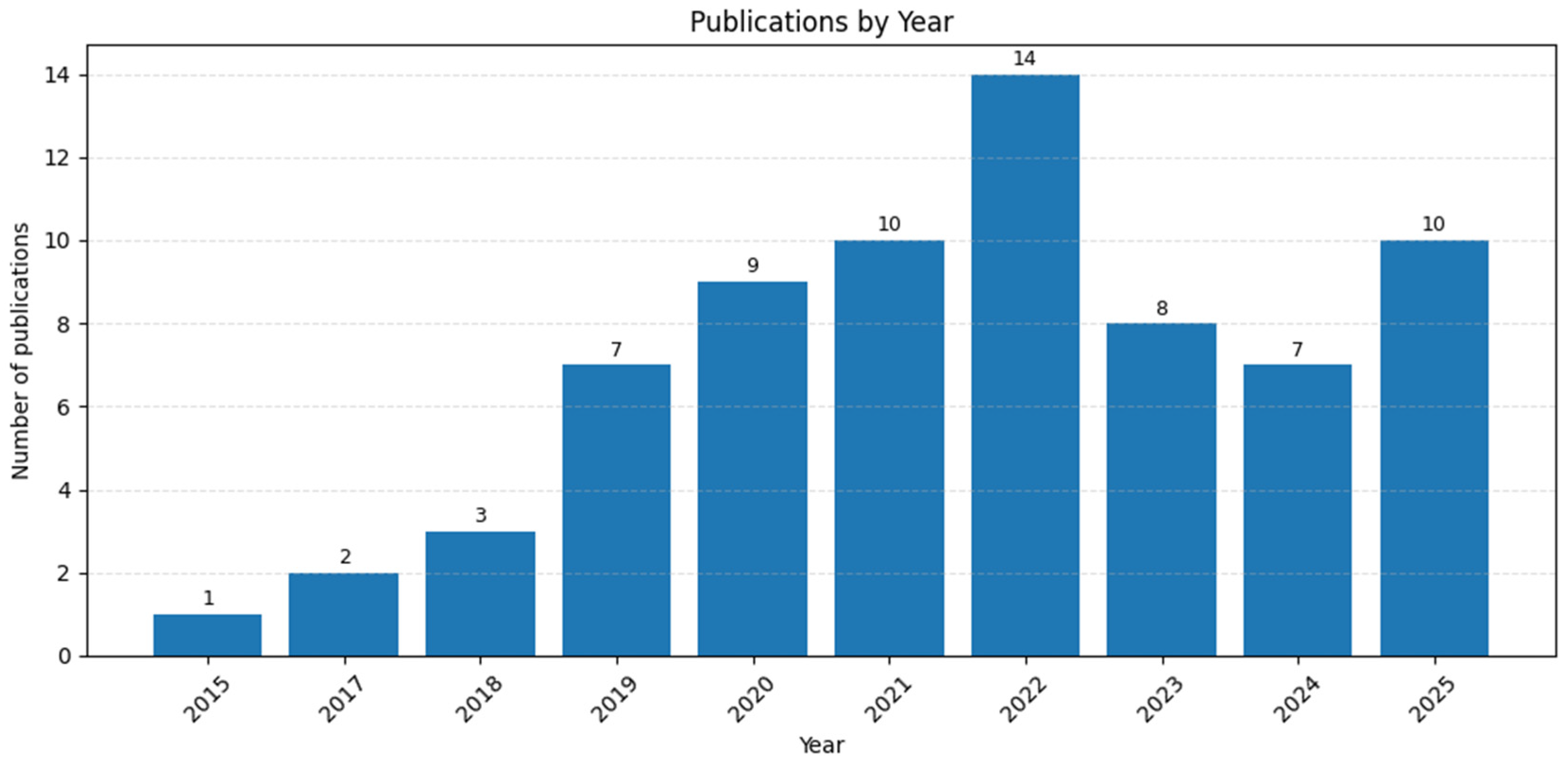
Figure 3 presents the evolution of publications per year across the selected studies, allowing identification of trends in research activity over time. The results show a clear upward trajectory in scientific output, particularly since 2018.
Between 2015 and 2018, the number of publications remained low and relatively stable, with only one to three studies per year, indicating an emerging stage of research in this field. From 2019 onward, a significant increase is observed, reaching seven publications, followed by continued rises in 2020 (nine publications) and 2021 (10 publications). This trend suggests growing scientific interest in leaching technologies for copper recovery from mining waste, likely driven by rising environmental concerns and the need for greater resource efficiency.
The peak of research activity occurred in 2022, with 14 publications, the highest output during the period analyzed. This peak may be associated with the consolidation of the topic within the scientific community and with increased attention to circular economy strategies and sustainable mining practices.
After 2022, a slight decline is observed in 2023 (eight publications) and 2024 (seven publications). However, this decrease should be interpreted with caution, as it may reflect database indexing delays or the time required for recent studies to be published and indexed. Notably, 2025 shows a recovery to 10 publications, indicating that research activity remains active and sustained.
The overall trend demonstrates that this research field has transitioned from an emerging topic to a more consolidated area of study over the last decade. Nevertheless, the fluctuations observed in recent years highlight the importance of accounting for temporal biases in publication and indexing processes. Overall, the figure confirms a growing and sustained interest in technologies for recovering residual copper from mining waste.
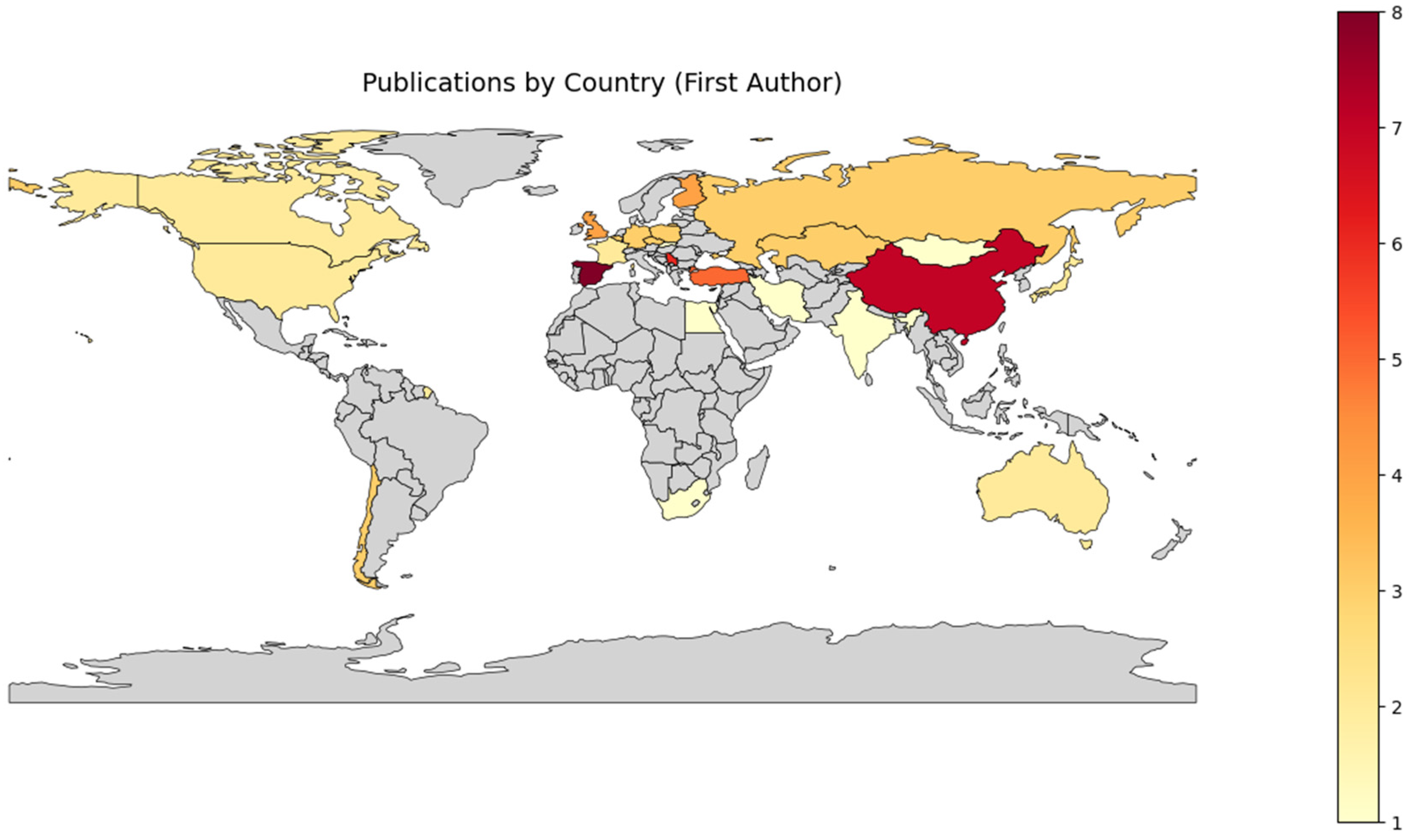
Figure 4 shows the geographic distribution of the selected publications according to the first author’s country of affiliation. The color scale ranges from yellow (lower publication count) to red (higher research output). This visualization makes it possible to identify the main countries contributing to the literature on copper recovery from mining waste through leaching technologies.
The distribution reveals a marked geographical concentration of scientific production. Spain is the leading contributor, with eight publications, followed by China with seven, Serbia with six, and Turkey with five. A second group includes the United Kingdom and Finland, each with four publications. Belgium, the Czech Republic, Russia, Germany, Chile, Kazakhstan, and Poland each contribute three studies, while France, Japan, Australia, the United States, and Canada each contribute two studies. Slovakia, South Africa, Egypt, Iran, India, and Mongolia are represented by a single publication.
From a critical perspective, this pattern suggests that research on this topic is led mainly by a limited number of countries, particularly in Europe and Asia. Spain’s leading position is noteworthy, likely reflecting both sustained academic interest and the relevance of mine waste management in regions with a history of mining activity. China also occupies a prominent position, which is consistent with its broad research capacity and strong interest in metallurgical waste valorization. Serbia and Turkey stand out as important contributors despite their smaller overall scientific output, indicating a specialized research focus in this field.
In contrast, the participation of major copper-producing regions remains comparatively limited. Chile, for example, appears with only three publications, despite its global importance in copper mining. This suggests a mismatch between industrial relevance and the volume of indexed academic production captured by the review. Similarly, the underrepresentation of countries in Africa and Latin America points to a geographical imbalance in the available evidence, which may limit the broader applicability of the conclusions across different mining contexts.
Overall, Figure 4 highlights that scientific evidence is not evenly distributed worldwide but is concentrated in a few research hubs. This uneven pattern underscores the need to strengthen international collaboration and expand research efforts in underrepresented but mining-intensive regions.
This geographic pattern should nevertheless be interpreted with caution, since it may reflect not only the actual distribution of research activity but also the methodological boundaries of this review. In particular, the restriction to English-language, open-access journal articles indexed in the WoS and Scopus may have reduced the visibility of relevant studies from certain mining regions. Therefore, the country distribution reported here should be understood as the distribution of the evidence captured under the selected review criteria rather than as a definitive representation of the global research effort on copper recovery from mining waste.

3.2. AC1: Leaching Technologies Applied to Residues

  • SC1.1—Type and efficiency of copper recovery
Table 3 synthesizes the main characteristics of the leaching processes reported in the selected studies, integrating standardized information on residue type, copper-bearing mineral phases, leaching systems, and maximum copper recovery achieved. The leaching system column consolidates the process type and the corresponding lixiviant or reactive mixture, allowing direct comparison of mechanistic approaches across studies.
Before presenting Table 3, it should be noted that the TK-type medium and the 9K medium refer to acidic mineral salt media commonly used for cultivating acidophilic bioleaching microorganisms. These media provide the chemical environment required to sustain microbial oxidation of iron and/or sulfur during bioleaching processes.
Table 3 shows that tailings are the most frequently studied residue type, followed by slags, while dusts, sludges, waste rock, and leaching residues are less frequently studied. This pattern suggests that research has focused primarily on the two major mining waste streams with the greatest volumetric relevance and long-term environmental liability, namely flotation tailings and metallurgical slags [9,10,11,14,15,16,17,18,19,22,24,25,26,27,28,29,31,32,33,34,35,36,37,38,40,41,42,43,44,45,46,47,49,50,51,52,53,54,56,57,58,59,60,62,63,64,65,66,68,70,71,72,73,74,75,76,78,79]. In mineralogical terms, copper is most commonly associated with sulfide phases, especially chalcopyrite, chalcocite, covellite, and bornite, as observed in many tailings-based studies [10,11,14,32,37,46]. In contrast, slag studies more often report copper trapped in fayalite–magnetite matrices, glassy phases, metallic inclusions, or spinel-like structures, which generally indicates a more refractory behavior and a stronger dependence on pretreatment or intensified leaching conditions [22,31,33,44,57].
Regarding process type, acidic systems are the most recurrent across the dataset, commonly based on H2SO4 alone or combined with oxidants such as Fe3+, H2O2, ozone, or pressure-assisted oxygen [10,11,23,33,34,35,36,38,44,45,46,53,55,56,58,60,61,69,71,72,74,77,78]. Biological systems are also well represented, particularly in sulfidic tailings and historical mine wastes, where ferric iron regeneration and microbial sulfur oxidation mobilize copper under acidic conditions [9,14,15,18,49,54]. Hybrid systems are reported in studies where bio-oxidation is coupled with chloride leaching or subsequent chemical extraction steps, thereby enabling improved dissolution of complex or partially refractory matrices [19,21,32,62,67,79]. Alternative media such as alkaline glycine [37,39,41,65], organic acids [52,75], deep eutectic solvents [76], and electrochemical routes [27] show that the field is also exploring lower-toxicity or more selective approaches beyond conventional acid leaching.
Copper recovery values vary markedly from low or moderate efficiencies around 30%–40% in some biologically treated refractory systems [9,11,13,73], to near-complete recoveries under optimized conditions in both chemical and biological routes. High recoveries were reported for biological treatment of historical tailings [14], thermophilic bioleaching [18], acidic roasting–leaching systems [36], alkaline glycine systems [41], reductive SO2-assisted systems [42], and pressure oxidative leaching [28,51,57]. This broad range indicates that the interaction between residue mineralogy and process design strongly controls performance. For example, chalcopyrite-rich or pyrite-dominated materials often show lower recoveries under mild conditions [11,20,73]. In contrast, systems that combine oxidation, pressure, roasting, or complexing media tend to overcome mineralogical constraints more effectively [28,34,36,51,57].
Finally, Table 3 also highlights that high recovery does not necessarily arise from one single technological family. Very high values are reported in biological systems [14,18,54]; in acidic systems with pretreatment or optimized chemistry [34,36,44]; and in pressure oxidative systems [28,51,57]. This suggests that the key factor is not simply whether the route is chemical or biological but rather how well the chosen leaching system matches the copper-bearing phases and the physical–chemical nature of the waste matrix. In that sense, Table 3 supports the interpretation that mineralogical control, residue class, and the leaching mechanism must be evaluated together when assessing the technical potential of copper recovery from mining waste.
Building on the characterization of residue types, mineralogical features, and leaching performance discussed above, the copper content remaining in the different mining residues was further analyzed. To ensure consistency, the reported Cu concentrations were grouped according to the standardized residue classification, and representative ranges were established for each category. The corresponding sources were aggregated within each residue type, as summarized in Table 4.
Table 4 shows that the residual copper content varies significantly across mining residue types. Tailings exhibit a broad range of Cu concentrations, from very low values around 0.0024 wt% up to approximately 1.11 wt%, reflecting the heterogeneous nature of flotation wastes and historical deposits [9,10,11,14,15,16,17,18,19,24,26,27,28,29,32,36,37,38,40,41,42,43,46,47,49,50,51,53,58,60,63,65,70,71,73,74,75,79]. Slags also present a wide interval, ranging from about 0.195 wt% to 3.50 wt% Cu, indicating variability associated with different smelting and processing conditions [22,25,31,33,34,35,44,45,52,54,56,57,59,62,64,66,68,72,76,78].
Dusts show the highest copper content in the dataset, with values ranging from 22.25 wt% to 65.52 wt%, consistent with their origin as fine particulate streams enriched during metallurgical processes [23,48]. Sludges present lower and more limited concentrations, ranging from 0.0115 wt% to 1.10 wt% [12,61], while waste rock exhibits values between 0.10 wt% and 4.67 wt% [13,69]. Leaching residues fall within an intermediate range, from approximately 0.50 wt% to 2.00 wt% Cu [20,30,39,77]. Finally, residues classified as “others” range from 0.30 wt% to 0.415 wt% and correspond to less conventional or heterogeneous materials, such as pyrite roasting residues (pyrite cinder) [21,55,67].
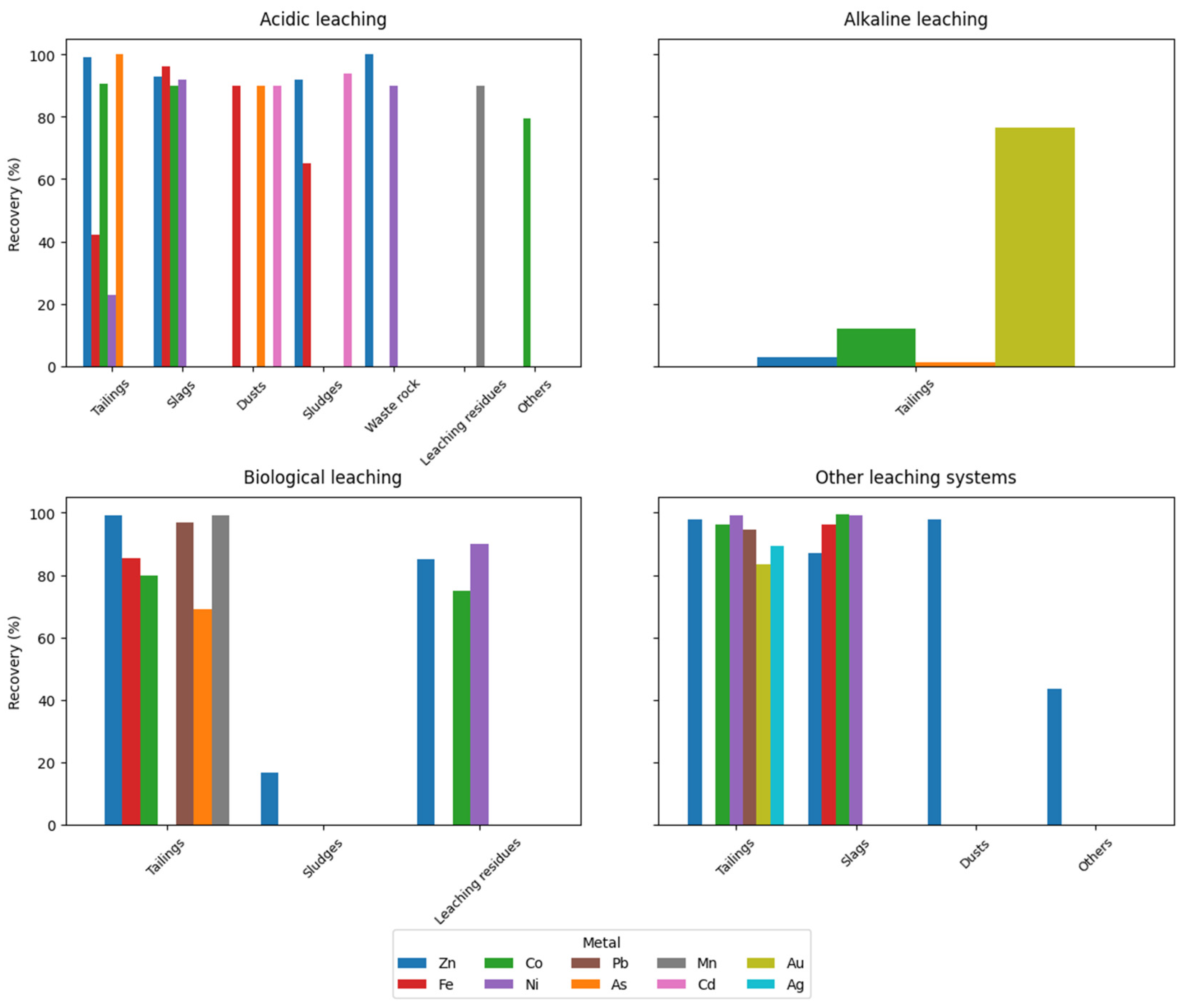
Figure 5 complements the analysis of residual copper by showing the maximum recovery of other metals across residue types under different leaching systems (acidic, alkaline, biological, and other).
Figure 5 shows the maximum recovery values for other metals, grouped by leaching system. In acidic systems, the most frequently reported metals are Zn, Fe, Co, and Ni, often reaching high recovery values, in addition to As and Cd in specific cases [10,11,23,24,26,33,34,35,38,42,43,44,45,47,52,55,58,61,69]. Alkaline systems report fewer elements, mainly associated with Au and, to a lesser extent, Co, Zn, and As, with generally more moderate recovery values [37,41]. In biological systems, Zn, Fe, and Mn are the most recovered metals, with several studies also reporting Co and Ni under bioleaching conditions [15,18,20,49,73]. Finally, other leaching systems include a broader combination of approaches, where high recoveries are reported for Zn, Co, Ni, and precious metals such as Au and Ag, depending on the process configuration [21,25,31,32,36,50,51,57,59,62,63,67,76,79]. For clarity and comparability, less representative or rarely reported metals were excluded from the figure, focusing only on the most commonly reported elements in the dataset.
  • SC 1.2—Monitoring and data analysis for decision-making
Table 5 compiles the main operational parameters reported in the selected studies, including temperature, reaction time, and pH, as well as the monitoring, control, and data analysis strategies employed during the leaching processes.
Table 5 shows that the operational conditions of leaching processes vary widely depending on the type of residue and treatment approach. Temperature ranges from ambient conditions in biological and low-intensity systems [9,12,14,15,16,17,19,21,23,27,29,30,31,37,40,41,45,46,50,52,53,54,56,60,61,62,63,64,65,66,67,69,70,71,73,74,75], up to high-temperature treatments exceeding 800–1300 °C in pyrometallurgical or roasting-assisted processes [24,26,34,35,36], while most hydrometallurgical systems operate between 25 and 90 °C [10,11,13,18,20,25,32,33,38,39,42,43,44,47,48,49,55,58,59,68,72,76,77,78]. Reaction times also exhibit significant variability, from a few minutes or hours in chemically intensified systems [33,48] to several days or weeks in bioleaching processes [9,14], reflecting differences in reaction kinetics and mechanisms.
Regarding pH conditions, acidic environments are predominant across the majority of studies [9,10,13,15,16,18,20,28,30,31,32,33,35,40,43,46,49,53,57,58,62,64,66,67,68,70,71,72,77,78,79], often below pH 2, particularly in conventional hydrometallurgical and bioleaching systems. However, alkaline conditions are also reported in specific cases, such as glycine-based or ammonia systems [37,63] and in multi-stage processes combining alkaline and acidic steps [19]. In several studies, pH is dynamically controlled or evolves during the process due to microbial activity or reagent consumption [15,49], whereas in others it remains fixed or is not explicitly reported.
In terms of monitoring and control, most studies rely on conventional analytical approaches, including periodic or continuous measurements of pH and dissolved-metal concentrations [11,18], as well as chemical analyses using techniques such as AAS or ICP [31,61]. Some works incorporate more advanced strategies, such as kinetic modeling [9], geochemical modeling [45], or detailed tracking of redox-active species and microbial populations [62], enabling a deeper understanding of process behavior. Nevertheless, fully automated control systems and real-time digital monitoring have been reported in only a limited number of cases [9,15]. At the same time, many studies still rely on manual or semi-continuous monitoring approaches or do not report digitalization at all [22,23,24,25,44,47,48,52,53,54,55,56,57,59,68,71,72,75,76,77,78].

3.3. AC2: Environmental Impact Associated with the Application of Leaching Technologies

  • SC2.1—Reduction in environmental liabilities
Leaching processes are described as contributing to a decrease in the environmental burden of mining residues by removing metals, reducing residual metal content, decreasing the mobility of hazardous species, and partially stabilizing the treated matrix. In tailings, these effects include reductions in residual Cu, removal of heavy metals, decreased sulfide reactivity, and mitigation of acid-generating behavior [9,10,14,15,16,17,18,19,24,27,28,29,32,40,41,42,43,46,47,49,50,51,53,58,60,63,65,70,71,73,74,75,79]. In other residue types, such as slags, leaching residues, dusts, sludges, waste rock, and related materials, reported outcomes include the reduction in leachable metal fractions, a lower residual metal content after treatment, and decreased disposal requirements [13,20,21,22,23,30,31,33,34,35,39,44,45,48,52,54,55,56,57,59,61,62,64,66,67,68,69,72,76,77,78]. Additional outcomes include reductions in soluble fractions, compliance with elution limits, the mitigation of acid mine drainage potential, and the stabilization of previously reactive matrices [28,73,74,79].
  • SC2.2—Environmental or regulatory assessment
The studies describe both the environmental benefits and the risks of applying leaching technologies. Metal recovery from tailings, slags, dusts, sludges, leaching residues, waste rock, and other secondary materials is consistently framed as a strategy for the revalorization of residues and their integration into the circular economy [9,10,13,14,15,16,17,18,19,20,21,22,23,24,25,26,27,28,29,30,31,32,33,34,35,36,37,39,40,41,42,43,44,45,46,47,48,49,50,51,52,53,54,55,56,57,58,59,60,61,62,63,64,65,66,67,68,69,70,71,72,73,74,75,76,77,78,79]. At the same time, the use of chemical reagents and specific operating conditions is associated with potential environmental implications, including strong acids, oxidants, chlorinated systems, ammonia-based reagents, ozone, dichromate, and high-temperature or pressure treatments [10,11,13,22,23,24,25,26,27,28,31,33,34,35,36,37,45,46,47,48,49,50,51,53,54,55,56,57,59,61,62,63,64,66,71,72,77,78]. In contrast, biological and alternative systems are described as involving the lower direct consumption of hazardous reagents or the use of less aggressive lixiviants, although they may still require acidic conditions or present operational constraints [9,15,19,21,29,39,40,41,52,54,65,68,70,73,74,75,76].

3.4. AC3: Economic Profitability of Residual Copper Recovery

  • SC3.1—Reported costs and benefits
The results show that explicit reporting of economic information—such as capital investment (CAPEX), operational costs (OPEX), or quantified economic benefits—is largely absent across the reviewed studies. Only a limited number of studies include partial or general economic considerations. These include integrated cost analyses that report CAPEX/OPEX evaluations with favorable economic outcomes [35] and model-based assessments indicating that process viability depends on external factors such as metal prices and processing scale [53]. Additional isolated cases report specific economic benefits or cost-related metrics, such as net benefit per unit of pollutant treated [42], estimated value of recoverable metals (e.g., 47–135 USD/t in slags) [54], or broader economic potential associated with large-scale tailings reprocessing [49]. In general, when reported, economic information is presented in a fragmented manner and rarely includes detailed cost breakdowns.
  • SC3.2—Profitability assessment
A similarly limited level of reporting is observed. Most studies do not include financial indicators such as net present value (NPV), internal rate of return (IRR), or break-even analysis [9,10,11,12,13,14,17,18,19,20,21,22,23,24,25,26,27,28,29,30,31,32,33,34,36,37,38,39,41,43,44,45,46,47,48,50,51,52,55,56,57,58,59,61,63,64,65,66,67,68,69,70,71,72,74,75,76,77,78]. Among the few exceptions, some studies provide formal profitability indicators, including positive NPV and favorable payback periods [35] or IRR values reaching up to approximately 30% under industrial-scale conditions [73]. More comprehensive preliminary economic assessments are reported in isolated cases, including investment costs, annual operating costs, IRR (27.11%), and NPV exceeding 24 M€ [79]. Other studies provide indirect or qualitative indications related to profitability, such as reduced processing times (e.g., operational savings of ~40 days) [16], assumptions of economically sufficient processing durations [15], relative cost advantages compared to primary ore processing (2–3 times lower cost) [40], or general statements of cost effectiveness without quantitative support [62]. Overall, the results indicate that profitability assessments remain limited, typically confined to preliminary or context-dependent evaluations rather than comprehensive economic analyses.

4. Discussion

4.1. Technical Performance of Leaching Systems

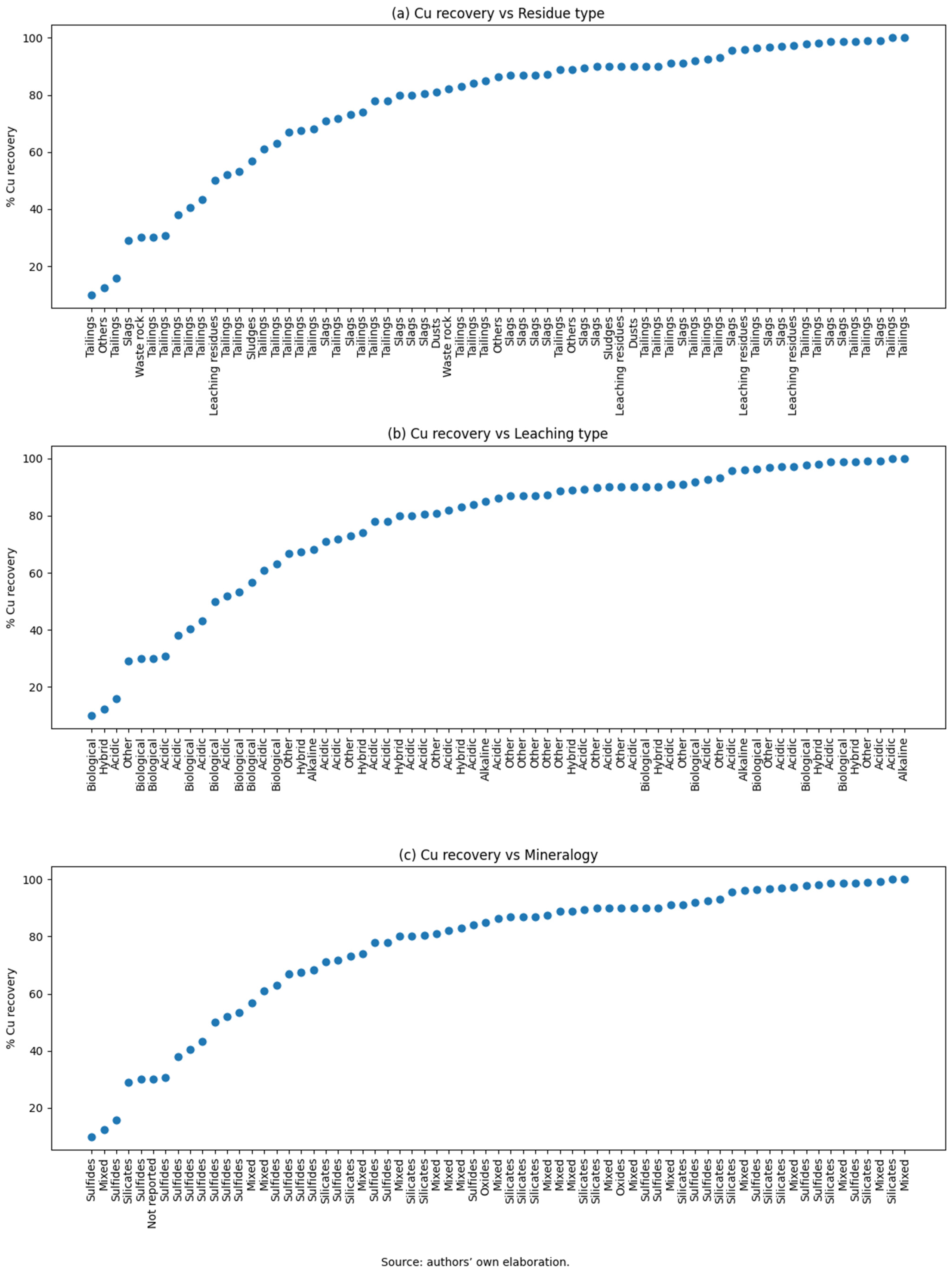
The results presented in Figure 6 show that copper recovery is determined not solely by leaching type but also by the interaction among the leaching system, its operational intensity, and the mineralogical architecture of the residue. This is evident in the upper recovery range, where the highest values are distributed across biological, acidic, alkaline-complexing, and pressure-assisted systems rather than being concentrated within a single leaching class [14,15,28,34,36,39,41,42,54,57]. Therefore, the leaching category by itself does not explain the best extraction outcomes.
A more relevant interpretation is that the same copper recovery value does not represent the same technological achievement across different mineralogical settings. In sulfide-rich systems, high recovery generally reflects the process’s ability to sustain oxidative or chemically favorable conditions that destabilize phases such as chalcopyrite, chalcocite, covellite, or pyrite-associated copper [14,15,28]. In contrast, in slags dominated by fayalite, magnetite, glassy Cu-bearing phases, or spinel-related structures, similarly high recoveries imply that the process was able to overcome a more restrictive structural barrier, where copper is physically and chemically trapped within silicate or ferritic matrices [34,36,54,57]. Thus, equivalent extraction percentages may correspond to fundamentally different metallurgical challenges.
This distinction is critical for interpreting Figure 6c. Although most of the reviewed cases fall within broad mineralogical groupings such as sulfides, silicates, and mixed systems, the figure shows that these groups span a wide recovery range. This indicates that recovery is not controlled by mineralogical label alone but by the specific way copper is hosted within the matrix and by how effectively the selected process can modify that state of confinement. In this sense, mineralogy does not simply influence extraction difficulty; it defines the meaning of the extraction result itself.
The upper recovery limit further supports this interpretation. Among the best-performing cases, copper is associated either with sulfide-bearing systems or with silicate-rich iron matrices, and high extraction is consistently linked to intensified conditions capable of transforming those hosts. These include pressure oxidation [28], roasting-assisted acidic leaching [34], concentrated acid treatment followed by autogenous dissolution [36], oxidant-assisted alkaline complexation [39], glycine-based alkaline extraction under optimized conditions [41], in situ acid generation coupled with reduction [42], biological oxidation under strongly acidic conditions [14,15,54], and high-pressure oxidative leaching of complex slags [57]. Even in the biological systems within this upper range, the extraction environment is not mild in mechanistic terms, since recovery depends on sustained acidic and oxidative attack on sulfide-bearing phases [14,15,54].
This interpretation also helps explain why some hybrid systems did not outperform chemically intensified routes. Their limitation was not hybridization itself but that the preliminary or coupled stage did not always yield sufficient mineralogical gain in copper accessibility. Hybrid systems can be highly effective when the first stage destabilizes the host matrix or exposes Cu-bearing phases to subsequent dissolution, as observed in bio-pretreatment followed by chloride leaching [32] or in bioleaching coupled with brine leaching [79]. However, when the initial stage does not substantially modify the structural confinement of copper, the additional process step may increase operational complexity without providing a proportional increase in extraction. In such cases, direct chemical routes, particularly those assisted by pressure, roasting, or strong oxidizing/complexing media, can achieve higher recoveries more efficiently because they impose a stronger immediate driving force on refractory sulfide or silicate-rich hosts [34,36,57]. This further supports the idea that mineralogy defines the extraction barrier, whereas process design determines whether that barrier is effectively overcome.
Accordingly, Figure 6 suggests that copper recovery should not be interpreted as a stand-alone measure of technological superiority. A given recovery value must be read together with the mineral host from which copper is extracted. Otherwise, there is a risk of equating recoveries obtained from relatively accessible copper phases with those achieved in structurally refractory systems. Overall, the figure supports a mechanism-oriented interpretation in which process performance depends not only on the nominal leaching route but on how effectively that route can alter the mineralogical confinement of copper in each residue [14,15,28,34,36,39,41,42,54,57].
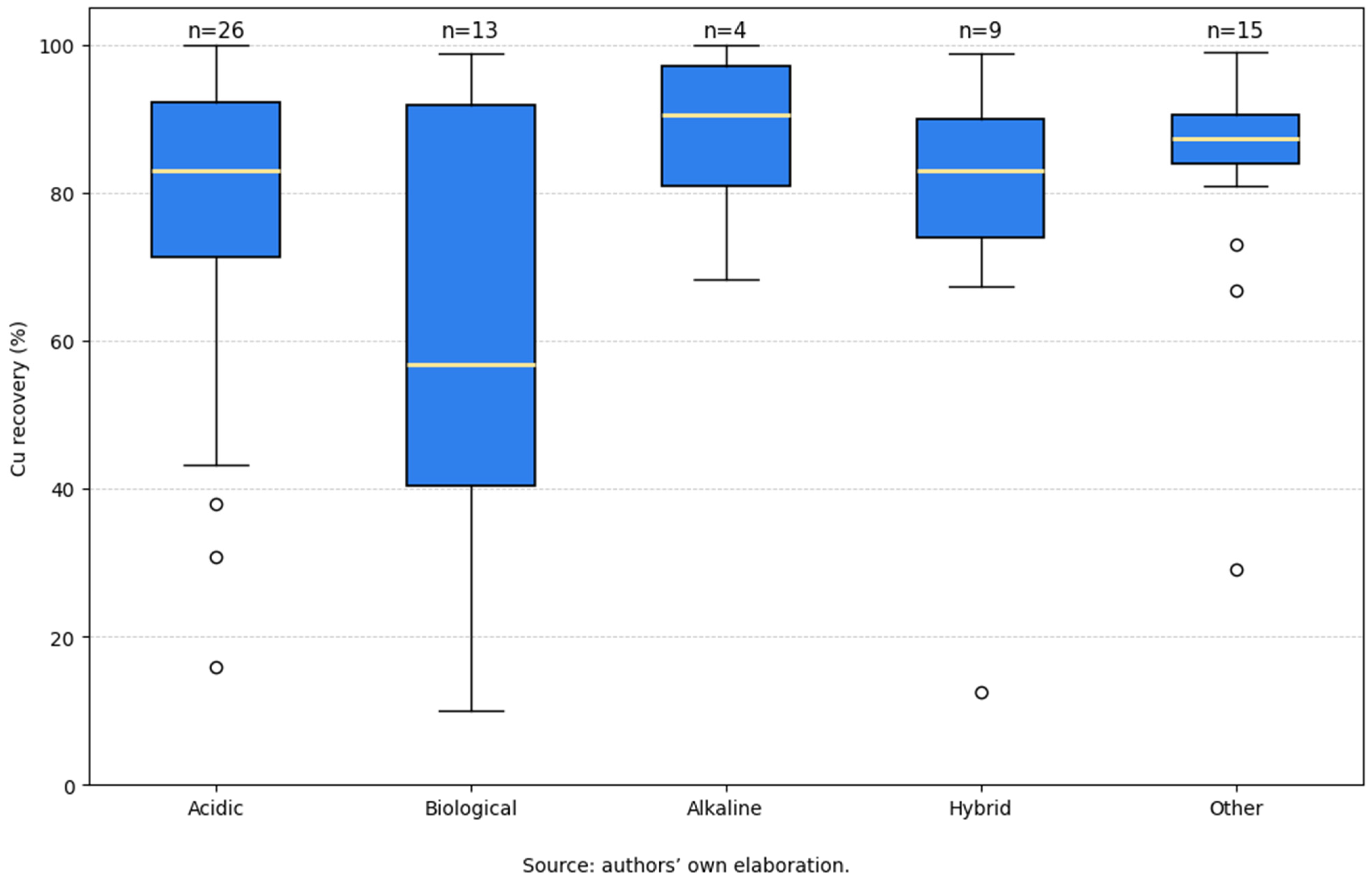
A complementary comparison by leaching family further refines this interpretation. As shown in Figure 7, acidic systems provide the broadest evidence base and remain among the strongest-performing routes overall, although their spread confirms that acid leaching is versatile rather than intrinsically uniform [10,23,34,42,44,60]. Biological systems display the greatest variability, reinforcing that their performance is highly context-dependent and not consistently superior [9,14,15,49,54,73]. Alkaline systems appear promising within the available evidence, whereas hybrid systems also cluster in the high-recovery range without clearly dominating the distribution [19,28,32,39,41,79]. Overall, Figure 7 indicates that recovery patterns differ across leaching families, but none of them can be regarded as inherently superior without reference to the mineralogical constraints of the residue.
This comparison also helps to clarify why some hybrid systems did not outperform successful acidic routes. In the reviewed dataset, hybrid systems achieved high recoveries only when the coupled stages produced a real gain in copper accessibility, for example by improving the exposure of Cu-bearing phases prior to chemical dissolution [28,32,79]. When that gain was limited, hybridization added process complexity without yielding a proportional increase in Cu recovery, as reflected by the broader spread of this group [19,27,62,63]. By contrast, successful acidic routes more consistently occupied the upper recovery range because they imposed a stronger immediate driving force on refractory sulfide- or silicate-rich systems [34,42,44,61]. In this sense, the contrast is not between hybrid and chemical routes as abstract categories but between processes that effectively modify the mineralogical barrier and those that do not.
From a comparative performance perspective, Figure 7 also suggests an approximate ordering across leaching families. Alkaline and acidic systems occupy the strongest central positions, hybrid systems remain competitive but more conditional, and biological systems show the widest spread between low and high outcomes. This pattern should be interpreted as an ordering of recovery performance rather than as a strict ranking of operational intensity, but it still helps distinguish families that more consistently achieve high Cu extraction from those with more context-dependent behavior.
Scalability considerations also help differentiate the top-performing routes identified in this review. Pressure-assisted oxidative leaching appears to be among the most scalable options because it combines high Cu recovery with process principles already compatible with established hydrometallurgical circuits, although its expansion remains constrained by acid demand, oxygen supply, pressure operation, and the risks of silica-gel formation [28,51,57]. SO2-assisted integrated leaching is also notable, since it reaches the highest technological maturity in the dataset and benefits from coupling copper recovery with flue-gas treatment, although its applicability remains site-dependent and requires stable pH and gas-load control [42]. In contrast, biological and hybrid bioleaching routes can achieve high recoveries, but most remain at laboratory or advanced laboratory scale (typically TRL 3–5), with scale-up limited by slow kinetics, pulp-density sensitivity, microbial stability, and secondary phase precipitation [14,15,32,54,79]. Overall, the results suggest that scale-up potential does not hinge solely on copper recovery: some intensified chemical routes are closer to implementation, whereas several biological or hybrid systems still require further validation under larger-scale operating conditions.

4.2. Environmental Implications of Reprocessing Routes

The results indicate that so-called green or alternative leaching systems—including glycine-based media, organic acids, deep eutectic solvents, biosurfactants, and biologically mediated routes—are promising, but the supporting evidence remains uneven. In several studies, these systems are presented as environmentally preferable because they avoid or reduce the use of highly concentrated mineral acids, lower the direct dependence on conventional oxidants, or improve selectivity against matrix elements such as Fe [17,19,37,39,41,52,63,65,68,75,76]. However, the results also show that these routes are not necessarily mild in operational terms. Some require oxidants such as H2O2 or KMnO4 [37,39,41], elevated temperatures [39,76], or long residence times [17,54]. Even biological systems, although often framed as environmentally favorable, usually operate under strongly acidic and oxidative conditions and may still depend on pre-treatments, additives, or long process times [14,15,16,18,49,54,62,73,79]. Thus, the current evidence supports the idea that claims of greener chemistry should be distinguished from demonstrated overall process advantages: lowering the reagent hazard does not automatically imply a lower environmental burden if it is offset by higher energy demand, longer treatment duration, additional oxidants, or more complex processing steps.
A second, more fundamental issue is that environmental benefit is frequently asserted but rarely quantified. Across the reviewed studies, reduction in environmental liabilities is commonly inferred from metal removal, lower residual metal content, reprocessing of historical deposits, or the generic framing of waste valorization [9,10,14,15,16,17,18,19,20,21,23,24,25,27,28,29,30,32,33,34,35,36,39,40,41,42,43,44,46,47,48,49,50,51,52,53,54,57,58,59,60,61,62,63,64,65,67,68,69,70,71,72,73,74,75,76,77,78,79]. By contrast, only a smaller subset provides direct environmental evidence through standardized elution testing, post-treatment residue characterization, explicit AMD mitigation, the reduction in sulfide reactivity, or the assessment of residue suitability for reuse or disposal [14,28,33,41,45,46,51,60,70,73,78,79]. This suggests that, in much of the literature, environmental improvement is treated as an expected consequence of metal extraction rather than as an independently verified outcome. In other words, the removal of Cu or associated metals is often taken as a proxy for environmental benefit, even though post-leaching stability, secondary phase formation, reagent-derived impacts, and residual leachability are not always demonstrated.
A similar distinction is needed for circular economy claims. Many studies frame copper recovery from tailings, slags, dusts, sludges, or leaching residues as a circular or valorization strategy, but the depth of that claim varies substantially. In some cases, circularity is more convincingly substantiated because the work goes beyond extraction and proposes or demonstrates downstream integration, such as multi-metal recovery [23,25,35,39,48,51,57,79], residue reuse in cementitious materials or restoration contexts [33,41,60], or integration with existing industrial flowsheets and by-product streams [28,42,63,78]. In other studies, by contrast, the circular economy framing remains largely conceptual, with valorization inferred from the fact that a residue is treated, even when no clear downstream use, residue application, or system-level environmental gain is demonstrated [17,19,21,29,52,68,75,76]. Therefore, the review suggests that circularity in this field should not be interpreted as an automatic consequence of leaching-based metal recovery but rather as a stronger claim that requires evidence of downstream utilization, secondary resource integration, or measurable reduction in disposal burden.
Taken together, these findings suggest that environmental performance in copper reprocessing routes should be evaluated using a hierarchy of evidentiary strength rather than binary “green” versus “conventional” labels. At the lowest level, environmental benefit is inferred from metal removal alone; at an intermediate level, it is supported by residue characterization or partial leaching and stability tests; and at the strongest level, it is demonstrated through compliance-related evidence, AMD mitigation, or validated downstream reuse. This distinction provides a more robust basis for comparing reprocessing routes, since it shows that environmental relevance depends not only on the lixiviant chemistry but also on the quality of the post-treatment evidence used to substantiate environmental improvement.

4.3. Economic Implications of Reprocessing Routes

The results show that economic evidence remains one of the weakest dimensions in the current literature. Although technical feasibility is widely explored, only a limited number of studies report CAPEX, OPEX, NPV, IRR, payback period, or other profitability indicators in a form that supports economic interpretation or comparison [35,42,53,54,73,79]. As a result, the field is still driven more by proof-of-concept extraction studies than by robust techno-economic evaluation.
This gap is particularly important because some of the highest copper recoveries are achieved through intensified routes, including pressure leaching, roasting-assisted systems, oxidant-based processes, and multi-step treatments [28,34,36,42,48,51,57,79]. While these approaches can be technically effective, they also entail greater operational complexity and potentially higher capital and operating costs. In most cases, the literature does not quantify whether the increase in recovery offsets these additional burdens. Therefore, high recovery cannot be interpreted as direct evidence of economic superiority.
Economic feasibility also depends on factors beyond copper extraction, including feed grade, scale, infrastructure integration, and the potential for multi-metal recovery [35,42,79]. In some cases, moderate recoveries may still be economically relevant if treatment costs are low or if additional value can be captured from other metals. Likewise, when reprocessing also contributes to liability reduction, AMD mitigation, residue stabilization, or industrial reuse, part of the process value may derive from avoided environmental or disposal costs rather than from copper recovery alone.
Overall, the literature still provides weak support for comparing reprocessing routes on a true recovery–cost–impact basis. Extraction efficiency is measured in detail, but economic feasibility is often only inferred. This limits the possibility of ranking technologies for industrial adoption, especially in intensified systems where metallurgical gains may be real but implementation thresholds remain uncertain.
Taken together, these findings suggest that technology selection in this field cannot be based on copper recovery alone but should be interpreted through a broader recovery–cost–complexity framework. In this sense, intensified routes may be justified when higher extraction is accompanied by multi-metal recovery, infrastructure compatibility, or avoided environmental costs, whereas less intensive systems may remain preferable when they have lower operational severity and implementation thresholds. This provides a more realistic basis for comparing reprocessing routes and reinforces the point that metallurgical efficiency and economic viability are related but not equivalent criteria.

5. Conclusions

Copper recovery from mining and metallurgical residues is technically feasible through acidic, biological, alkaline, and hybrid routes. However, recovery is controlled primarily by the mineralogical occurrence of copper rather than by the leaching category alone.
The highest recoveries are generally achieved under intensified conditions to overcome mineralogical constraints, particularly in sulfide-bearing and silicate-rich systems. Thus, high extraction reflects not only process choice but also the capacity of the selected route to access structurally restrictive copper-bearing phases.
The review also shows that environmental and circular economy benefits are frequently claimed but less often demonstrated through direct evidence, such as residue characterization, compliance-related testing, AMD mitigation, or validated reuse pathways.
Finally, economic assessment remains a major gap in the field. While technical performance is widely reported, CAPEX, OPEX, and profitability indicators are rarely provided, limiting comparative evaluation and industrial relevance.
Overall, future research should integrate mineralogical interpretation, extraction performance, environmental verification, and economic feasibility to support a more robust selection of copper reprocessing routes.

Supplementary Materials

The following supporting information can be downloaded at: https://www.mdpi.com/article/10.3390/min16060597/s1, Supplementary Material S1: PRISMA 2020 checklist used for reporting and methodological transparency of the systematic review [80].

Author Contributions

Conceptualization, A.A.-Z., B.C.-K. and F.R.; methodology, A.A.-Z., B.C.-K. and F.R.; software, A.A.-Z., B.C.-K. and F.R.; validation, C.C.; formal analysis, A.A.-Z., B.C.-K., F.R. and C.C.; investigation, A.A.-Z., B.C.-K. and F.R.; resources, A.A.-Z., B.C.-K., F.R. and C.C.; data curation, A.A.-Z. and C.C.; writing—original draft preparation, A.A.-Z., B.C.-K. and F.R.; writing—review and editing, C.C.; visualization, A.A.-Z., B.C.-K. and F.R.; supervision, C.C.; project administration, A.A.-Z., B.C.-K., F.R. and C.C. All authors have read and agreed to the published version of the manuscript.

Funding

This work was funded by the National Agency for Research and Development (ANID-Chile)/Scholarship Program/DOCTORADO NACIONAL (national doctoral program), Folio No.: 21260006, and the project “INVESTIGACIÓN ASOCIATIVA INTERDISCIPLINARIA 2025” code 039.777/2025 financed by VINCI-PUCV.

Data Availability Statement

Data is contained within the article.

Acknowledgments

A.A.-Z., B.C.-K., F.R. and C.C. would like to thank the Doctoral Program in Smart Industry of the Faculty of Engineering at Pontificia Universidad Católica de Valparaíso (PUCV). A.A.-Z. acknowledges the support of ANID through the Advanced Human Capital Formation Program, National Doctoral Scholarship 2026, Folio No. 21260006.

Conflicts of Interest

Author Freddy Rojas was employed by the Compañía Minera Tres Valles. The remaining authors declare that the research was conducted in the absence of any commercial or financial relationships that could be construed as a potential conflict of interest.

Abbreviations

The following abbreviations are used in this manuscript:
ACAnalysis category
AMDAcid mine drainage
ANIDNational Agency for Research and Development
CAPEXCapital expenditure
DESDeep eutectic solvent
EhRedox potential
HPOLHigh-pressure oxidative leaching
IRRInternal rate of return
NPVNet present value
OPEXOperating expenditure
PLSPregnant leach solution
PUCVPontificia Universidad Católica de Valparaíso
SCSubcategory
SX-EWSolvent extraction–electrowinning
TRLTechnology readiness level

References

  1. Flores, G.A.; Risopatron, C.; Pease, J. Processing of Complex Materials in the Copper Industry: Challenges and Opportunities Ahead. JOM 2020, 72, 3447–3461. [Google Scholar] [CrossRef]
  2. Adrianto, L.R.; Pfister, S. Prospective environmental assessment of reprocessing and valorization alternatives for sulfidic copper tailings. Resour. Conserv. Recycl. 2022, 186, 106567. [Google Scholar] [CrossRef]
  3. Perlatti, F.; Martins, E.P.; de Oliveira, D.P.; Ruiz, F.; Asensio, V.; Rezende, C.F.; Otero, X.L.; Ferreira, T.O. Copper release from waste rocks in an abandoned mine (NE, Brazil) and its impacts on ecosystem environmental quality. Chemosphere 2021, 262, 127843. [Google Scholar] [CrossRef]
  4. Gabasiane, T.S.; Danha, G.; Mamvura, T.A.; Mashifana, T.; Dzinomwa, G. Characterization of copper slag for beneficiation of iron and copper. Heliyon 2021, 7, e06757. [Google Scholar] [CrossRef] [PubMed]
  5. Wen, T.; Zhao, Y.; Xiao, Q.; Ma, Q.; Kang, S.; Li, H.; Song, S. Effect of microwave-assisted heating on chalcopyrite leaching of kinetics, interface temperature and surface energy. Results Phys. 2017, 7, 2594–2600. [Google Scholar] [CrossRef]
  6. Moravvej, Z.; Mohebbi, A.; Vakylabad, A.B.; Raeissi, S. The effect of radio-waves irradiation on copper-ore leaching. Hydrometallurgy 2021, 201, 105584. [Google Scholar] [CrossRef]
  7. Sarangi, K.; Pattanaik, A.K. A Hybrid Process for Recovering Copper from Dilute Solutions. Sep. Sci. Technol. 2007, 42, 89–102. [Google Scholar] [CrossRef]
  8. Cacciuttolo, C.; Guzmán, V.; Catriñir, P.; Atencio, E.; Komarizadehasl, S.; Lozano-Galant, J.A. Low-Cost Sensors Technologies for Monitoring Sustainability and Safety Issues in Mining Activities: Advances, Gaps, and Future Directions in the Digitalization for Smart Mining. Sensors 2023, 23, 6846. [Google Scholar] [CrossRef]
  9. Medina-Díaz, H.; Acosta, I.; Muñoz, M.; Bellido, F.J.L.; Villaseñor, J.; Llanos, J.; Rodríguez, L.; Fernández-Morales, F. A classical modelling of abandoned mine tailings’ bioleaching by an autochthonous microbial culture. J. Environ. Manag. 2022, 323, 116251. [Google Scholar] [CrossRef]
  10. Davoise, D.; Méndez, A.M. Advances in the Development of Hydrometallurgical Processes in Acidic and Alkaline Environments for the Extraction of Copper from Tailings Deposit. Minerals 2025, 15, 550. [Google Scholar] [CrossRef]
  11. Karppinen, A.; Seisko, S.; Lundström, M. Atmospheric leaching of Ni, Co, Cu, and Zn from sulfide tailings using various oxidants. Miner. Eng. 2024, 207, 108576. [Google Scholar] [CrossRef]
  12. Čermák, P.; Čerňanský, S. Bioaccumulation and Bioleaching of Cu, Pb, and Zn from Mining Waste. Inż. Miner. 2023, 2, 87–91. [Google Scholar] [CrossRef]
  13. Liu, X.; Li, Y.; Cao, J.; Zeng, Z.; Liu, X.; Zhang, R.; Li, Q.; Sand, W. Bioleaching of Chalcopyrite Waste Rock in the Presence of the Copper Solvent Extractant LIX984N. Front. Microbiol. 2022, 13, 820052. [Google Scholar] [CrossRef]
  14. Stanković, S.; Morić, I.; Pavić, A.; Vojnović, S.; Vasiljević, B.; Cvetković, V. Bioleaching of copper from old flotation tailings samples (Copper Mine Bor, Serbia). J. Serb. Chem. Soc. 2015, 80, 391–405. [Google Scholar] [CrossRef]
  15. Rouchalová, D.; Rouchalová, K.; Janáková, I.; Čablík, V.; Janštová, S. Bioleaching of iron, copper, lead, and zinc from sludge mining sediment at different particle sizes, pH, and pulp density using Acidithiobacillus ferrooxidans. Minerals 2020, 10, 1013. [Google Scholar] [CrossRef]
  16. Acosta Hernández, I.; Medina Díaz, H.L.; Fernández Morales, F.J.; Romero, R.L.; Camacho, J.V. Bioleaching of metal polluted mine tailings aided by ultrasound irradiation pretreatment. Environ. Technol. Innov. 2023, 31, 103192. [Google Scholar] [CrossRef]
  17. Castelein, M.; Verbruggen, F.; Van Renterghem, L.; Spooren, J.; Yurramendi, L.; Du Laing, G.; Boon, N.; Soetaert, W.; Hennebel, T.; Roelants, S.; et al. Bioleaching of metals from secondary materials using glycolipid biosurfactants. Miner. Eng. 2021, 163, 106665. [Google Scholar] [CrossRef]
  18. Rouchalová, D.; Rouchalová, K.; Čablík, V. Bioleaching of Mine Tailings by Mesophilic: Acidithiobacillus spp., Leptospirillum ferrooxidans, and Thermophilic: Sulfobacillus thermosulfidooxidans Cultures with the Addition of Ag+ Additive. Minerals 2024, 14, 255. [Google Scholar] [CrossRef]
  19. Ristović, I.; Štyriaková, D.; Štyriaková, I.; Šuba, J.; Širadovic, E. Bioleaching Process for Copper Extraction from Waste in Alkaline and Acid Medium. Minerals 2022, 12, 100. [Google Scholar] [CrossRef]
  20. Hubau, A.; Guezennec, A.G.; Joulian, C.; Falagán, C.; Dew, D.; Hudson-Edwards, K. Bioleaching to Reprocess Sulfidic Polymetallic Primary Mining Residues: Determination of Metal Leaching Mechanisms. Hydrometallurgy 2020, 197, 105484. [Google Scholar] [CrossRef]
  21. Roberts, M.; Srivastava, P.; Gordon, W.; Weightman, A.J.; Sapsford, D.J. Biostimulation of Jarosite and Iron Oxide-Bearing Mine Waste Enhances Subsequent Metal Recovery. J. Hazard. Mater. 2023, 445, 130498. [Google Scholar] [CrossRef]
  22. Phiri, T.; Singh, P.; Hara, Y.; Siame, J.; Nikoloski, A. Carbothermic Reduction of Copper Slag in the Presence of Borax. Miner. Process. Extr. Metall. Rev. 2025, 46, 165–176. [Google Scholar] [CrossRef]
  23. Nakhaei, F.; Locmelis, M.; Alagha, L.; Moats, M.; Eyzaguirre, C.; Smith, C. Characterization and Leaching Feasibility Studies of Copper Flue Dust for the Recovery of Main and Trace Metals. J. Sustain. Metall. 2025, 11, 2215–2235. [Google Scholar] [CrossRef]
  24. Özer, M. Cobalt and Copper Recovery from the Ancient Flotation Tailings by Selective Sulfation Roast–Leaching Process. J. Min. Metall. Sect. B Metall. 2019, 55, 315–324. [Google Scholar] [CrossRef]
  25. Wang, D.; Liang, Y.; Lin, Z.; Peng, C.; Peng, B. Comprehensive recovery of zinc, iron and copper from copper slag by co-roasting with SO2–O2. J. Mater. Res. Technol. 2022, 19, 2546–2555. [Google Scholar] [CrossRef]
  26. Kamariah, N.; Kalebić, D.; Xanthopoulos, P.; Blannin, R.; Araujo, F.; Koelewijn, S.; Dehaen, W.; Binnemans, K.; Spooren, J. Conventional versus Microwave-Assisted Roasting of Sulfidic Tailings: Mineralogical Transformation and Metal Leaching Behavior. Miner. Eng. 2022, 183, 107587. [Google Scholar] [CrossRef]
  27. Lazo, A.; Lazo, P.; Urtubia, A.; Lobos, M.; Gutiérrez, C.; Hansen, H. Copper Analysis by Two Different Procedures of Sequential Extraction After Electrodialytic Remediation of Mine Tailings. Int. J. Environ. Res. Public Health 2019, 16, 3957. [Google Scholar] [CrossRef] [PubMed]
  28. Godirilwe, L.L.; Haga, K.; Altansukh, B.; Takasaki, Y.; Ishiyama, D.; Trifunovic, V.; Avramovic, L.; Jonovic, R.; Stevanovic, Z.; Shibayama, A. Copper Recovery and Reduction of Environmental Loading from Mine Tailings by High-Pressure Leaching and SX–EW Process. Metals 2021, 11, 1335. [Google Scholar] [CrossRef]
  29. Nkuna, R.; Matambo, T.S. Determining the Metabolic Processes of Metal-Tolerant Fungi Isolated from Mine Tailings for Bioleaching. Minerals 2024, 14, 235. [Google Scholar] [CrossRef]
  30. Quezada, V.; Benavente, O.; Beltrán, C.; Díaz, D.; Melo, E.; García, A. Dissolution of Black Copper Oxides from a Leaching Residue. Metals 2020, 10, 1012. [Google Scholar] [CrossRef]
  31. Dimitrijević, M.D.; Urošević, D.M.; Millic, S.; Sokic, M.; Markovic, R. Dissolution of Copper from Smelting Slag by Leaching in Chloride Media. J. Min. Metall. Sect. B Metall. 2017, 53, 407–412. [Google Scholar] [CrossRef]
  32. Altınkaya, P.; Mäkinen, J.; Kinnunen, E.; Kolehmainen, E.; Haapalainen, M.; Lundström, M. Effect of Biological Pretreatment on Metal Extraction from Flotation Tailings for Chloride Leaching. Miner. Eng. 2018, 129, 47–53. [Google Scholar] [CrossRef]
  33. Kinnunen, P.H.; Mäkinen, J.; Salo, M.; Soth, R.; Komnitsas, K. Efficiency of Chemical and Biological Leaching of Copper Slag for the Recovery of Metals and Valorisation of the Leach Residue as Raw Material in Cement Production. Minerals 2020, 10, 654. [Google Scholar] [CrossRef]
  34. Alam, S.; Tolibov, B.; Akhmedov, M.; Khujamov, U.; Yarlakabov, S. Enhanced Extraction of Valuable Metals from Copper Slags by Disrupting Fayalite and Spinel Structures Using Sodium Sulfate. Minerals 2025, 15, 771. [Google Scholar] [CrossRef]
  35. Godirilwe, L.L.; Haga, K.; Altansukh, B.; Jeon, S.; Danha, G.; Shibayama, A. Establishment of a Hydrometallurgical Scheme for the Recovery of Copper, Nickel, and Cobalt from Smelter Slag and Its Economic Evaluation. Sustainability 2023, 15, 10496. [Google Scholar] [CrossRef]
  36. Kart, E.U. Evaluation of Sulphation Baking and Autogenous Leaching Behaviour of Turkish Metallurgical Slag Flotation Tailings. Physicochem. Probl. Miner. Process. 2021, 57, 107–116. [Google Scholar] [CrossRef]
  37. Li, H.; Oraby, E.A.; Eksteen, J.; Mali, T. Extraction of Gold and Copper from Flotation Tailings Using Glycine–Ammonia Solutions in the Presence of Permanganate. Minerals 2022, 12, 612. [Google Scholar] [CrossRef]
  38. Santibáñez-Velásquez, L.E.; Guzmán, A.; Morel, M.J. Extraction of Iron and Other Metals from Copper Tailings Through Leaching. Metals 2022, 12, 1924. [Google Scholar] [CrossRef]
  39. Attia, R.M. Extraction of Uranium and Copper from Acid Leached Solid Waste of Alluoga Sedimentary Rocks, Southwestern Sinai, Egypt. J. Radioanal. Nucl. Chem. 2022, 331, 4297–4308. [Google Scholar] [CrossRef]
  40. Baibatsha, A.B.; Bekbotayeva, A.A.; Turysbekova, G.; Bektai, E.; Omarova, G. Geological and Mineralogical Study of Ore Tailings for Bio-Leaching. Period. Eng. Nat. Sci. 2021, 9, 921–937. [Google Scholar] [CrossRef]
  41. Barragán-Mantilla, S.P.; Gascó, G.; Almendros, P.; Méndez, A. Insights into the Use of Green Leaching Systems Based on Glycine for the Selective Recovery of Copper. Miner. Eng. 2024, 206, 108534. [Google Scholar] [CrossRef]
  42. Tao, L.; Chen, X.; Wang, L.; Wang, X.; Ning, P.; Cai, B.; Pu, Y. Integration for Sulfur Dioxide Removal from Smelting Flue Gas with Copper Tailings Utilization and Copper Recovery via Absorption-Synchronous Leaching and Reduction. Environ. Technol. Innov. 2022, 28, 102931. [Google Scholar] [CrossRef]
  43. Conić, V.T.; Stanković, S.B.; Marcovic, B.; Bozic, D.; Stojanovic, J.; Sokic, M. Investigation of the Optimal Technology for Copper Leaching from Old Flotation Tailings of the Copper Mine Bor (Serbia). Metall. Mater. Eng. 2020, 26, 209–222. [Google Scholar] [CrossRef]
  44. Gargul, K.; Boryczko, B.; Handzlik, P.; Noga, P.; Palimaka, P. Kinetics of Copper Leaching from Direct-to-Blister Copper Flash Smelting Slag by Sulfuric Acid. Arch. Civ. Mech. Eng. 2023, 23, 29. [Google Scholar] [CrossRef]
  45. Wang, L.; Su, Q.; Tian, H.; Du, Y.; Zhang, T.; Chen, R. Leaching Behavior and Occurrence of Metal Elements in Copper Slag: The Key to Recycling Metals in Copper Slag. J. Hazard. Mater. Adv. 2023, 12, 100374. [Google Scholar] [CrossRef]
  46. Schueler, T.A.; de Aguiar, P.F.; Vera, Y.; Goldmann, D. Leaching of Cu, Zn, and Pb from Sulfidic Tailings Under the Use of Sulfuric Acid and Chloride Solutions. J. Sustain. Metall. 2021, 7, 1523–1536. [Google Scholar] [CrossRef]
  47. Schueler, T.A.; Mettke, L.N.; Crutziger, F.; Rasenack, K.; Yagmurlu, B.; Goldmann, D. Leaching of Mine Tailings Flotation Fractions Using Inorganic and Organic Acids for Metals Extraction. J. Sustain. Metall. 2025, 11, 3014–3030. [Google Scholar] [CrossRef]
  48. Sabzezari, B.; Koleini, S.M.J.; Ghassa, S.; Shahbazi, B.; Chelgani, S. Microwave-Leaching of Copper Smelting Dust for Cu and Zn Extraction. Materials 2019, 12, 1822. [Google Scholar] [CrossRef] [PubMed]
  49. Falagán, C.; Grail, B.M.; Johnson, D.B. New Approaches for Extracting and Recovering Metals from Mine Tailings. Miner. Eng. 2017, 106, 71–78. [Google Scholar] [CrossRef]
  50. Trujić, S.; Popovic, M.P.; Conic, V.; Janosevic, M.; Alimpic, F.; Bajic, D.; Milenkovic-Andelkovic, A.; Abramovic, F. Ozone/Thiosulfate-Assisted Leaching of Cu and Au from Old Flotation Tailings. Molecules 2025, 30, 69. [Google Scholar] [CrossRef]
  51. Seyrankaya, A. Pressure Leaching of Copper Slag Flotation Tailings in Oxygenated Sulfuric Acid Media. ACS Omega 2022, 7, 35562–35574. [Google Scholar] [CrossRef]
  52. Meshram, P.; Prakash, U.; Bhagat, L.; Abhilash; Zhao, H.; Hullebush, E. Processing of Waste Copper Converter Slag Using Organic Acids for Extraction of Copper, Nickel, and Cobalt. Minerals 2020, 10, 290. [Google Scholar] [CrossRef]
  53. Drobe, M.; Haubrich, F.; Gajardo, M.; Marbler, H. Processing Tests, Adjusted Cost Models and the Economies of Reprocessing Copper Mine Tailings in Chile. Metals 2021, 11, 103. [Google Scholar] [CrossRef]
  54. Potysz, A.; Kierczak, J. Prospective (Bio)leaching of Historical Copper Slags as an Alternative to Their Disposal. Minerals 2019, 9, 542. [Google Scholar] [CrossRef]
  55. Yu, H.; Liu, L.; Chen, G.; Zhou, X.; Lu, M.; Zhang, H. Recovery of Cu, Co, and Fe from Pyrite Cinder Based on Mineral Phase Reconstruction. ACS Omega 2024, 9, 33471–33481. [Google Scholar] [CrossRef] [PubMed]
  56. Başkurt, B.; Serdengeçti, M.T.; Ozcelik, K.; Basturkcu, H. Recovery of Cu–Ce from Copper Slag by Using Flotation and Chemical Methods. Bull. Miner. Res. Explor. 2022, 169, 17–26. [Google Scholar] [CrossRef]
  57. Liao, Y.; Shi, G.; Huang, F.; Zhang, Y. Recovery of the Valuable Metals from Complex Converter Slag at Elevated Temperature with Sulfuric Acid Solution. J. Min. Metall. Sect. B Metall. 2019, 55, 359–370. [Google Scholar] [CrossRef]
  58. Álvarez, M.L.; Méndez, A.M.; Rodríguez-Pacheco, R.; Paz-Ferreiro, J.; Gascó, G. Recovery of Zinc and Copper from Mine Tailings by Acid Leaching Solutions Combined with Carbon-Based Materials. Appl. Sci. 2021, 11, 5166. [Google Scholar] [CrossRef]
  59. Grudinsky, P.I.; Vasileva, E.S.; Dyubanov, V.G. Recycling Potential of Copper-Bearing Waelz Slag via Oxidative Sulfuric Acid Leaching. Metals 2025, 15, 330. [Google Scholar] [CrossRef]
  60. Stankovic, V.; Milosevic, V.; Milicevic, D.; Gorgievski, M.; Bogdanovic, G. Reprocessing of the Old Flotation Tailings Deposited on the RTB Bor Tailings Pond—A Case Study. Chem. Ind. Chem. Eng. Q. 2018, 24, 333–344. [Google Scholar] [CrossRef]
  61. Jacob, J.; Pino-Herrera, D.; Greffié, C.; Wille, G.; Plat, E. Reprocessing of Waste Produced During Acid Mine Drainage Lime Treatment by Selective Leaching. Comptes Rendus Chim. 2024, 27, 63–80. [Google Scholar] [CrossRef]
  62. Brar, K.K.; Magdouli, S.; Perreault, N.N.; Tanabene, R.; Brar, S.K. Reviving Riches: Unleashing Critical Minerals from Copper Smelter Slag Through Hybrid Bioleaching Approach. Minerals 2024, 14, 1094. [Google Scholar] [CrossRef]
  63. Williamson, A.J.; Verbruggen, F.; Rico, V.S.C.; Bergmans, J.; Spooren, J.; Yurramendi, L.; Du Laing, G.; Boon, N.; Hennebel, T. Selective Leaching of Copper and Zinc from Primary Ores and Secondary Mineral Residues Using Biogenic Ammonia. J. Hazard. Mater. 2021, 403, 123842. [Google Scholar] [CrossRef] [PubMed]
  64. Nadirov, R.K.; Karamyrzayev, G. Selective Ozone-Assisted Acid Leaching of Copper from Copper Smelter Slag by Using Isopropanol as a Solvent. Minerals 2022, 12, 1047. [Google Scholar] [CrossRef]
  65. Xiong, W.; Yang, J.; Bauer, S. Selective Recovery of Native Copper from Basalt Tailings Using Alkaline Glycinate Solution. Appl. Geochem. 2025, 174, 106416. [Google Scholar] [CrossRef]
  66. Mussapyrova, L.A.; Nadirov, R.K.; Balaz, P.; Rajnak, M.; Bures, R.; Balaz, M. Selective Room-Temperature Leaching of Copper from Mechanically Activated Copper Smelter Slag. J. Mater. Res. Technol. 2021, 12, 2011–2025. [Google Scholar] [CrossRef]
  67. Fomchenko, N.V.; Muravyov, M.I. Sequential Bioleaching of Pyritic Tailings and Ferric Leaching of Nonferrous Slags as a Method for Metal Recovery from Mining and Metallurgical Wastes. Minerals 2020, 10, 1097. [Google Scholar] [CrossRef]
  68. Gargul, K.; Pawlik, A.; Stępień, M. Studies on the Hydrometallurgical Transfer of Lead, Copper, and Iron from Direct-to-Blister Copper Flash Smelting Slag to Solution Using L-Ascorbic Acid. Molecules 2025, 30, 1365. [Google Scholar] [CrossRef]
  69. Terrones-Saeta, J.M.; Suárez-Macías, J.; Río, F.J.L.d.; Corpas-Iglesias, F.A. Study of Copper Leaching from Mining Waste in Acidic Media, at Ambient Temperature and Atmospheric Pressure. Minerals 2020, 10, 873. [Google Scholar] [CrossRef]
  70. Chen, W.; Yin, S.; Chen, X.; Wang, L.; Zhang, M. Study on Comprehensive Utilization of Tailings by Using Bioleaching and Microbial-Cementation. Case Stud. Constr. Mater. 2023, 18, e02190. [Google Scholar] [CrossRef]
  71. Goryachev, A.; Svetlov, A.; Kompanchenko, A.; Makarov, D. Sulfuric Acid Granulation of Copper—Nickel Ore Tailings: Leaching of Copper and Nickel in the Presence of Sulfide Oxidation Activators. Minerals 2022, 12, 129. [Google Scholar] [CrossRef]
  72. Khalid, M.K.; Hamuyuni, J.; Agarwal, V.; Pihlasalo, J.; Haapalainen, M.; Lundström, M. Sulfuric Acid Leaching for Capturing Value from Copper-Rich Converter Slag. J. Clean. Prod. 2019, 215, 1005–1013. [Google Scholar] [CrossRef]
  73. Lorenzo-Tallafigo, J.; Iglesias-González, N.; Romero-García, A.; Mazuelos, A.; del Amo, P.R.; Romero, R.; Carranza, F. The Reprocessing of Hydrometallurgical Sulphidic Tailings by Bioleaching: The Extraction of Metals and the Use of Biogenic Liquors. Miner. Eng. 2022, 176, 107343. [Google Scholar] [CrossRef]
  74. Crane, R.A.; Mohammad, A.; Jin, F.; Cleall, P.; Sapsford, D.J. Towards Environmentally Compatible In Situ Leaching of Mine Waste Using Low Concentration Acids. Hydrometallurgy 2025, 236, 106506. [Google Scholar] [CrossRef]
  75. Crane, R.A.; Sapsford, D.J. Towards Greener Lixiviants in Value Recovery from Mine Wastes: Efficacy of Organic Acids for the Dissolution of Copper and Arsenic from Legacy Mine Tailings. Minerals 2018, 8, 383. [Google Scholar] [CrossRef]
  76. Topçu, M.A.; Rüşen, A.; Küçük, Ö. Treatment of Copper Converter Slag with Deep Eutectic Solvent as Green Chemical. Waste Manag. 2021, 132, 64–73. [Google Scholar] [CrossRef]
  77. Shirchinnamjil, N.; Tumen-Ulzii, N.; Davaadorj, N.; Byambasuren, K.; Purevsuren, S.; Erdenebat, U.; Surenjav, E. Treatment of Copper-Containing Leaching Residue by Sulfation Roasting Followed by Acid/Water Leaching. Mong. J. Chem. 2023, 24, 18–26. [Google Scholar] [CrossRef]
  78. Lichovník, M.; Aiglsperger, T.H.; Mihaljevic, M.; Kribek, B.; Mapani, B.; Ettler, V. Using Quantitative Mineralogy for Tailoring the Metal Extraction and Potential Recovery from Copper Slags. J. Sustain. Metall. 2025. [Google Scholar] [CrossRef]
  79. Romero-García, A.; Iglesias-González, N.; Romero, R.; Lorenzo-Tallafigo, J.; Mazuelos, A.; Carranza, F. Valorisation of a Flotation Tailing by Bioleaching and Brine Leaching, Fostering Environmental Protection and Sustainable Development. J. Clean. Prod. 2019, 233, 573–581. [Google Scholar] [CrossRef]
  80. Page, M.J.; McKenzie, J.E.; Bossuyt, P.M.; Boutron, I.; Hoffmann, T.C.; Mulrow, C.D.; Shamseer, L.; Tetzlaff, J.M.; Akl, E.A.; Brennan, S.E.; et al. The PRISMA 2020 statement: An updated guideline for reporting systematic reviews. BMJ 2021, 372, n71. [Google Scholar] [CrossRef] [PubMed]
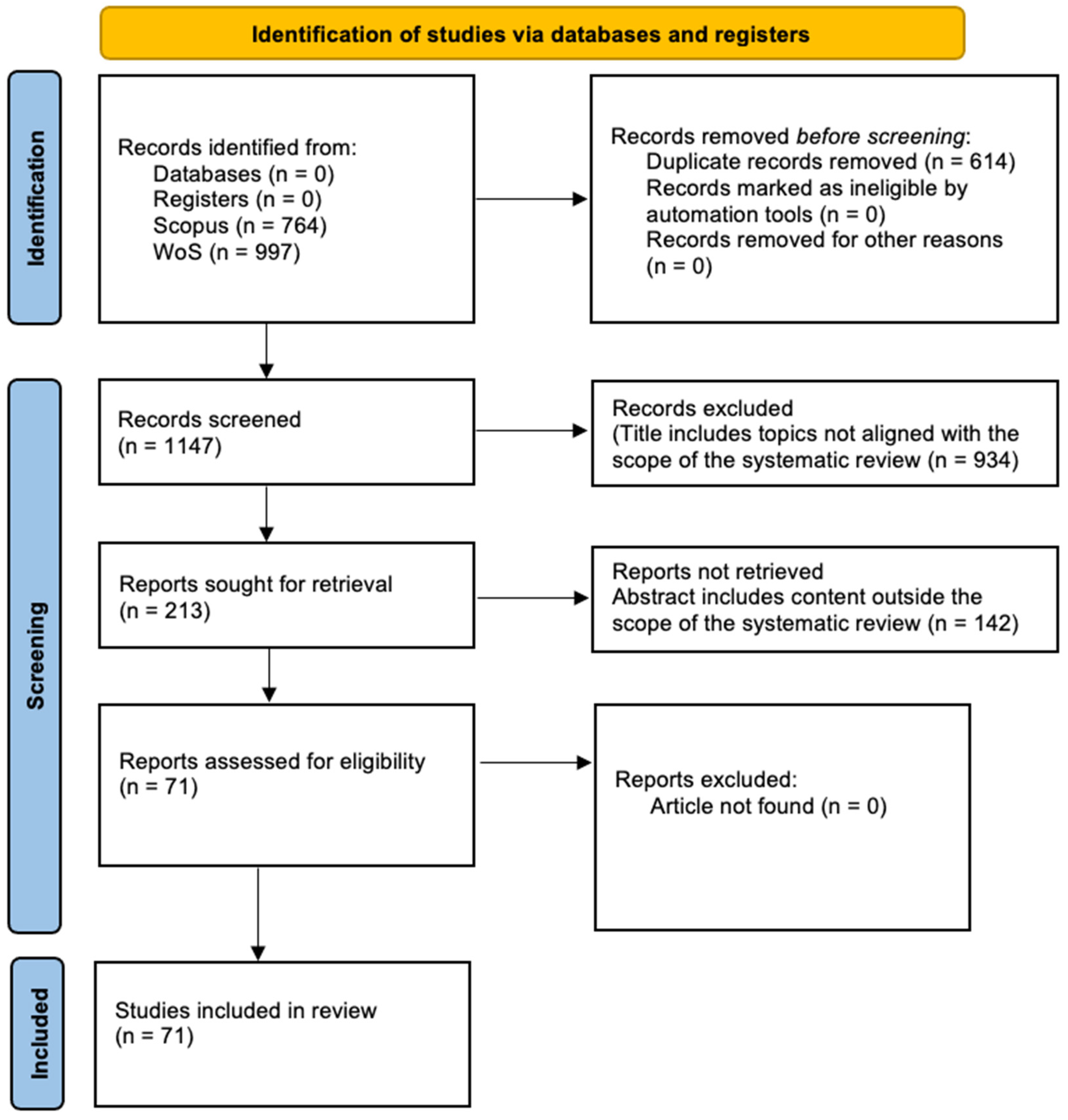
Figure 1. PRISMA flow diagram.
Minerals 16 00597 g001
Figure 2. Diagram of analysis categories.
Minerals 16 00597 g002
Figure 3. Temporal distribution of scientific publications (2015–2025).
Minerals 16 00597 g003
Figure 4. Geographic distribution of scientific publications by country (first author).
Minerals 16 00597 g004
Figure 5. Maximum recovery of other metals from mining residues by residue type and leaching system.
Minerals 16 00597 g005
Figure 6. Copper recovery as a function of residue type (a), leaching system (b), and mineralogical classification (c), ordered from left to right by increasing Cu recovery. The same ordered study sequence is maintained across the three panels: [9,10,11,12,13,14,15,17,18,19,20,22,23,24,25,27,28,29,30,31,32,33,34,35,36,37,39,40,41,42,43,44,45,46,47,48,49,50,51,52,53,54,55,56,57,58,59,60,61,62,63,64,65,66,67,68,69,70,71,72,73,74,75,76,77,78,79].
Minerals 16 00597 g006
Figure 7. Boxplot of Cu recovery grouped by leaching family, including summary statistics for each group. The yellow horizontal line within each box indicates the median, the box represents the interquartile range, and the whiskers show the spread of the non-outlier data.
Minerals 16 00597 g007
Table 1. Search strategy and Boolean query used in Web of Science and Scopus.
DatabaseSearch String
Web of Science (WoS)(leaching OR bioleaching OR “hydrometallurgy” OR “hydrometallurgical process”)
AND
(residue* OR waste* OR tailing* OR slag* OR “waste rock*” OR “mine waste*” OR “mining by-product*” OR “jarosite*”)
AND
(copper OR Cu) AND (recover* OR extraction OR “metal recovery” OR “selective dissolution”)
Scopus(leaching OR bioleaching OR “hydrometallurgy” OR “hydrometallurgical process”)
AND
(residue* OR waste* OR tailing* OR slag* OR “waste rock*” OR “mine waste*” OR “mining by-product*” OR “jarosite*”) AND (copper OR Cu)
AND
(recover* OR extraction OR “metal recovery” OR “selective dissolution”)
Table 2. Inclusion and exclusion criteria applied in the systematic review.
DimensionInclusion CriteriaExclusion CriteriaJustification
Copper extraction technologyLeaching-based processes where leaching is the main recovery stage (chemical, biological, or hybrid)Technologies other than leaching; studies focused on downstream stages (e.g., solvent extraction, electrowinning), where leaching is only a prior stepIsolates leaching as the main object of analysis and avoids confounding copper dissolution with downstream recovery performance
Target metalCopper (Cu) as the main target metalStudies focused on metals other than copperPreserves analytical coherence by restricting comparisons to studies with the same recovery objective
Material to be valorizedFinal mining waste from primary processing (tailings, slags, waste rock, dusts, sludges, leaching residues) representative of bulk materialPrimary ores, concentrates, enriched fractions, intermediate process streams, non-mining materialsRestricts the review to secondary resources that also represent environmental liabilities, which is the actual scope of waste reprocessing
Residue representativenessBulk waste materials or clearly defined final waste streamsSelected mineral phases, metallic fractions, enriched subfractions, or internal process streamsAvoids inflated recovery values derived from simplified or pre-concentrated materials and preserves real waste-matrix complexity
AccessibilityOpen-access publicationsNon-open-access publicationsEnsures full-text verification and reproducible extraction of technical data while acknowledging a possible selection bias
LanguageEnglishNon-English publicationsEnables consistent screening and interpretation across studies, although potentially relevant regional evidence may be underrepresented
Document typePeer-reviewed journal articlesConference papers, reports, theses, book chaptersPrioritizes methodologically consolidated evidence over preliminary or unevenly reported sources
Time framePublications from 2015 to 2025Publications before 2015Focuses the synthesis on recent process configurations and current sustainability-oriented reprocessing approaches
Table 3. Summary of leaching systems, mineralogy, copper recovery from mining residues and technology readiness level (TRL).
SourceWaste TypeMineralogyLeaching SystemCu Recovery (%)TRL
[9]TailingsNot reportedBiological: Fe2+/Fe3+ bio-oxidation in acidic TK-type medium30.03–4
[10]TailingsSecondary Cu sulfides (chalcocite, covellite) + chalcopyriteAcidic: H2SO4 + Fe3+ + H2O2 + activated carbon92.53–4
[11]TailingsChalcopyriteAcidic: H2SO4 + H2O2 + O230.83–4
[12]SludgeNot reportedBiological: organic-acid-producing fungal system56.83–4
[13]Waste rockChalcopyriteBiological: thermophilic autotrophic medium with Fe2+ or S030.03–4
[14]TailingsCu sulfides (covellite, chalcocite, enargite, chalcopyrite)Biological: natural acidic lake water with indigenous acidophiles97.83–4
[15]TailingsMetal sulfides (Cu, Fe, Pb, Zn)Biological: acidophilic mesophilic bioleaching in acidic medium96.44–5
[16]TailingsAcid-generating sulfidesBiological: acidophilic biostimulation in TK medium with H2SO4 adjustmentNot reported3–4
[17]TailingsCuSBiological: biosurfactant-assisted aqueous system53.33–4
[18]TailingsCu sulfides in polymetallic matrixBiological: thermophilic acidic medium91.93–4
[19]TailingsCu oxides + sulfides + carbonatesHybrid: combined alkaline and acidic biohydrometallurgical system74.04–5
[20]Leaching residuesChalcopyrite + altered Fe sulfidesBiological: stirred acidic bioleaching system50.03–4
[21]OtherJarosite-associated Cu + Fe oxidesHybrid: biostimulation with glycerol followed by acid/complexing leaching12.43–4
[22]SlagFayalite + magnetite + Cu (metallic/glassy)Thermal: carbothermic reduction with carbon and borax87.04–5
[23]Copper Smelter DustCu-Fe sulfates + oxides + silicatesAcidic: H2SO4 and HCl90.03–4
[24]TailingsPyrite + chalcopyrite + Fe sulfates + Fe oxidesThermo-acidic: sulfation roasting (Na2SO4) + H2SO4 leaching71.84–5
[25]SlagSilicates (olivine) + magnetite + Cu in matrixNeutral: water leaching after sulfation roasting91.04–5
[26]TailingsChalcopyrite + covellite + sulfidesNeutral: water leaching78.03–4
[27]TailingsPrimary and secondary Cu sulfidesElectrochemical: H2SO4 + HNO3 with electrodialysis67.43–4
[28]TailingsPyrite + chalcopyritePressure oxidative: HPOL with O2 in aqueous system98.74–5
[29]TailingsCu in sulfides + exchangeable fractionsBiological: liquid fungal bioleaching mediumNot reported3–4
[30]Leaching residuesSecondary Cu phases (pitch, limonite, chrysocolla)Reductive: H2SO4 + Fe2+90.03–4
[31]SlagFayalite + magnetite + sulfides + metallic CuOxidative: HCl + H2O2 (chloride medium)73.03–4
[32]TailingsPyrite + chalcopyriteHybrid: bio-pretreatment followed by chloride leaching98.03–4
[33]SlagFayalite + magnetite + glassy phaseAcidic: H2SO471.03–4
[34]SlagFayalite + magnetiteAcidic: H2SO4 after Na2SO4 roasting97.03–4
[35]SlagFayalite + magnetite + glassy phaseAcidic: H2SO489.44–5
[36]TailingsFayalite + magnetite + ZnO + quartzAcidic: H2SO4 roasting + water leaching99.04–5
[37]TailingsChalcopyrite + borniteAlkaline: glycine + NH3 + KMnO468.23–4
[38]TailingsSilicates + magnetiteAcidic: HClNot reported3–4
[39]Leaching residuesSulfides + Cu carbonatesAlkaline: glycine + H2O296.03–4
[40]TailingsChalcopyrite + bornite + chalcocite + covelliteBiological: 9K medium with Fe2+/Fe3+63.03–4
[41]TailingsSecondary matrix (gypsum, Fe oxides, quartz)Alkaline: glycine + H2O2100.03–4
[42]TailingsFayalite + magnetite + residual CuReductive: SO2−assisted leaching + Fe0100.06–7
[43]TailingsMixed Cu sulfides and oxidesBiological: biogenic Fe3+ solution78.04–5
[44]SlagFayalite + magnetite + Cu (metallic/sulfide)Acidic: H2SO495.63–4
[45]SlagFayalite + magnetite + silicatesAcidic: pH-adjusted aqueous systemNot reported2–3
[46]TailingsChalcopyrite + sphalerite + galena + pyriteAcidic: H2SO4+ NaCl66.83–4
[47]TailingsChalcopyrite + pyrite + silicatesOxidative: H2SO4 + H2O252.04–5
[48]Copper Smelter DustCu sulfides + oxides + metallic CuOxidative: H2SO4 + HNO3 (microwave-assisted)80.93–4
[49]TailingsComplex Cu sulfides (incl. tetrahedrite)Biological: acidic medium with elemental sulfur90.04–5
[50]TailingsCu in sulfates + oxides + secondary sulfidesOxidative: thiosulfate + ozone88.83–4
[51]TailingsFayalite + magnetite + oxide/sulfide CuPressure oxidative: H2SO4 under O2 pressure93.14–5
[52]SlagMetallic Cu + Cu oxides + spinels + fayaliteOrganic acid: citric acid99.13–4
[53]TailingsCu sulfides + silicate gangueAcidic: H2SO484.04–5
[54]SlagMetallic Cu + sulfides in glassy matrixBiological: biogenic acidic medium98.73–4
[55]OtherFe phases (hematite, pyrite) + Cu phasesAcidic: H2SO486.23–4
[56]SlagFayalite + magnetite + dispersed CuAcidic: H2SO4 after flotation concentration80.54–5
[57]SlagFayalite + magnetite + spinels (Cu, Co, Ni)Pressure oxidative: H2SO4 under O296.84–5
[58]TailingsSilicate gangue + sulfidesAcidic: H2SO4 + carbon material61.03–4
[59]SlagComplex Fe-Ca-Si phases with CuOxidative: H2SO4 + H2O287.03–4
[60]TailingsCu sulfides + oxidesAcidic: H2SO4 followed by reflotation91.03–4
[61]SludgeCu in Fe aggregates (delafossite)Acidic: H2SO490.03–4
[62]SlagMetallic Cu + chalcopyrite + delafossiteHybrid: oxidative–reductive bioleaching (9K + S)80.03–4
[63]TailingsCu(0) + oxides + sulfides + hydroxidesAlkaline: biogenic ammonia system83.03–4
[64]SlagFayalite + magnetite + CuOxidative: H2SO4 + ozone + isopropanol87.03–4
[65]TailingsNative CuAlkaline: glycine85.03–4
[66]SlagChalcopyrite + fayalite + silicates + spinelsOxidative: H2SO4 + K2Cr2O787.33–4
[67]OtherMixed sulfides + metallic Cu + fayaliteHybrid: biogenic Fe3+ followed by chemical leaching88.93–4
[68]SlagFayalite + magnetite + glassy phaseReductive: ascorbic acid + H2SO429.03–4
[69]Waste rockCu sulfides → oxidesAcidic: H2SO4 percolation82.03–4
[70]TailingsChalcopyriteBiological: biogenic acidic system with microbial cementation10.03–4
[71]TailingsChalcopyrite + magnetiteAcidic: H2SO415.94–5
[72]SlagFayalite + magnetite + glassy phaseAcidic: H2SO498.73–4
[73]TailingsPyrite + quartz + secondary Cu sulfidesBiological: 9K medium with Fe2+40.44–5
[74]TailingsChalcopyrite + pyrite + silicatesAcidic: diluted H2SO4 (percolation/in situ)43.23–4
[75]TailingsChalcopyrite + chalcocite + silicatesOrganic acids: citric, oxalic, acetic38.03–4
[76]SlagFayalite + magnetite + residual sulfidesDES: choline chloride + hydrogen bond donor89.93–4
[77]Leaching residuesCu in oxides + sulfides + Fe matrixAcidic: H2SO497.23–4
[78]SlagCu in glassy phase + fayaliteAcidic: H2SO480.03–4
[79]TailingsChalcopyrite + Cu in pyriteHybrid: bioleaching + chloride leaching (HCl)90.04–5
Table 4. Residual copper content ranges by mining residue type.
Waste TypeCu Content Range in Residue (wt%)Source
Tailings0.0024–1.11[9,10,11,14,15,16,17,18,19,24,26,27,28,29,32,36,37,38,40,41,42,43,46,47,49,50,51,53,58,60,63,65,70,71,73,74,75,79]
Slags0.195–3.50[22,25,31,33,34,35,44,45,52,54,56,57,59,62,64,66,68,72,76,78]
Copper smelter dust22.25–65.52[23,48]
Sludges0.0115–1.10[12,61]
Waste rock0.10–4.67[13,69]
Leaching residues0.50–2.00[20,30,39,77]
Others0.30–0.415[21,55,67]
Table 5. Operational conditions and monitoring, control, and data analysis approaches in leaching processes.
SourceTemperature
(°C)
Time
(d)
pHMonitoring, Control, and Data Analysis
[9]30182.0Online pH and Eh monitoring; advanced kinetic modeling (cooperative model); real-time electrochemical tracking.
[10]600.081.0Periodic pH and Eh measurements; dissolution kinetics; Eh–pH diagrams; no real-time automation reported.
[11]900.25Not reportedOnline pH and Eh monitoring; time-course sampling; AAS solution analysis.
[12]2820Not reportedEx situ metal analysis by F-AAS/HG-AAS.
[13]45211.9pH, Fe3+, Cu2+, and SO42− monitoring; cell counting; calorimetry.
[14]3035~2.2Weekly monitoring of Cu2+, Fe2+, Fe3+, and pH.
[15]3028–421.8Automatic pH control by acid/base dosing; pH and dissolved-metal monitoring.
[16]30352.0Daily pH and ORP monitoring; dissolved metals; microbial population tracking.
[17]Ambient7~3.0pH and dissolved-metal monitoring by ICP; extraction efficiency assessment.
[18]50241.8Controlled pH; dissolved-metal concentration monitoring.
[19]Ambient9 + subsequent acidic stages8.5 (alkaline), 1.5–4.5 (acidic)No digitalization or advanced monitoring reported.
[20]5514~1.5–2.0Chemical monitoring of Fe, sulfates, and sulfur speciation.
[21]AmbientNot reportedNot reportedMicrobial community shifts and effluent chemistry monitored; no automation reported.
[22]~13000.04Not applicableNot reported.
[23]AmbientNot reportedStrongly acidicChemical analysis of leachates by ICP.
[24]7000.08Not applicableNot reported.
[25]800.047.0Not reported.
[26]500–5500.04 roasting + 0.02 leachingNot reportedNo advanced monitoring or digitalization reported.
[27]Ambient15AcidicVoltage sensors and basic electrical monitoring.
[28]1800.040.8 (generated in situ)Current-density and electrowinning operating parameters reported; no dedicated digital monitoring described.
[29]30Up to 14~2–3pH and dissolved-metal concentration monitoring.
[30]250.33~0–1Eh monitoring; nonlinear kinetic modeling.
[31]Ambient0.08~1.0AAS solution analysis; experimental control of concentration and agitation.
[32]9531.0pH and redox potential monitoring.
[33]900.08<1.0Dissolved Cu monitoring by ICP-OES.
[34]900 roasting; 90 leaching0.06 roasting + 0.06 leachingNot reportedXRD analysis; extraction assessment.
[35]800 roasting; 90 leaching0.08 roasting + 0.08 leaching<1.0ICP-OES for Cu, Ni, and Co.
[36]650 roasting; 50 leaching0.04 roasting + 0.04 leachingNot reportedICP-AES, XRD, and sulfur analysis.
[37]3029.5–10.5Periodic pH and Eh measurements; ICP-MS/OES analysis.
[38]500.67Not reportedAAS, SEM-EDX, XRD, and XRF characterization.
[39]550.139.5AAS analysis of Cu in solution.
[40]250.08~2.0Basic control of bacterial concentration and chemical conditions.
[41]~2019.5pH and Eh monitoring; ICP-OES/ICP-MS analysis.
[42]30–50 (lab); ~85 (pilot)1optimum 3–5Continuous SO2 monitoring; pH control; ICP-OES analysis.
[43]800.0032.1 to 1.5pH and Eh monitoring; AAS for Cu and Fe.
[44]25–750.08Acidic (0.5 M H2SO4)Not reported.
[45]Ambient23–12Geochemical modeling (Visual MINTEQ); pH/Eh monitoring; ICP-OES analysis.
[46]2530<1.0pH monitoring; ICP-OES analysis.
[47]800.04Not reportedNot reported.
[48]~900.007Strongly acidicNot reported.
[49]45~21–601.8 to 1.0pH, Eh, and dissolved-metal monitoring.
[50]Ambient0.04Not reportedpH monitoring during operation.
[51]2200.06Not reportedICP-based analysis of solution and residues.
[52]~25~0.08~2–3Not reported.
[53]~25–50~2.5~1.5–2.0Not reported.
[54]~25–2821~2–2.5Not reported.
[55]700.17Not reportedNot reported.
[56]250.082.5Not reported.
[57]2080.06<2.0Not reported.
[58]900.25~0.7 finallypH and Eh monitoring over time.
[59]700.13Not reportedNot reported.
[60]~200.04Not reportedCu2+ analysis in leach liquor.
[61]221Not reportedpH, conductivity, Eh, and dissolved-metal monitoring.
[62]30201.8pH, Eh, conductivity, sulfate, total Fe, Fe2+, Fe3+, dissolved metals, cell counts, and mineralogical analysis.
[63]251 (screening)8.8–9.8pH and Eh monitoring; dissolved-metal concentration tracking.
[64]25–700.08<2.0pH and dissolved-Cu monitoring.
[65]20–251–3~10–11Dissolved-Cu and pH monitoring.
[66]25 ± 20.08<1.0pH and redox potential monitoring.
[67]35 (bioleaching); 70 (slag leaching)12 + 0.1~1.3–1.5pH and Eh monitoring reported.
[68]25–900.08~1–2Not reported.
[69]25 ± 13Not reportedPeriodic sampling; temperature control; ICP-MS analysis.
[70]30–35~30~2.0pH and dissolved-metal monitoring.
[71]~20–25 ~10–20<2.0Not reported.
[72]~25–90 ~0.07<2.0Not reported.
[73]30 ~102.0–2.3pH and Eh monitoring during operation.
[74]AmbientDays to weeksAcidicBasic pH and dissolved-Cu monitoring.
[75]20–25 1–3~2–4Not reported.
[76]60–95 2Not reported (non-aqueous medium)Not reported.
[77]25–80 0.04–0.17~1–2Not reported.
[78]25–90 0.04–0.13~1–2Not reported.
[79]31 (bioleaching); 80 (brine)~25 + 0.081.5 in bioleaching; strongly acidic in brinepH control with NaOH addition; analytical monitoring of Fe, Cu, and Zn in solution; no advanced automation reported.
Disclaimer/Publisher’s Note: The statements, opinions and data contained in all publications are solely those of the individual author(s) and contributor(s) and not of MDPI and/or the editor(s). MDPI and/or the editor(s) disclaim responsibility for any injury to people or property resulting from any ideas, methods, instructions or products referred to in the content.