Article

Surface Characterization of Chalcopyrite Dissolution in Hypochlorite Medium

1
Departamento de Ingeniería Metalúrgica y Minas, Universidad Católica del Norte, Av. Angamos 0610, Antofagasta 1240000, Chile
2
Department of Chemical Engineering and Metallurgy, Universidad de Barcelona, Marti i Franques 1, 08028 Barcelona, Spain
*
Author to whom correspondence should be addressed.
Deceased author.
Minerals 2025, 15(12), 1268; https://doi.org/10.3390/min15121268
Submission received: 5 August 2025 / Revised: 6 November 2025 / Accepted: 21 November 2025 / Published: 29 November 2025

Abstract

The surface of chalcopyrite was studied by XPS characterization for an unleached chalcopyrite, and, after being leached in an alkaline oxidant medium at room temperature, pH 12.5, and [ClO] 0.34 M, the reaction of enargite presented high selectivity with respect to chalcopyrite, allowing the removal of arsenic from copper concentrates with high arsenic content prior to smelting. Based on the XPS analysis, the original chalcopyrite is composed of a combination of its constituents in different oxidation states, and chalcopyrite has the following stoichiometric formula: Cu(I)0.85Cu(II)0.15Fe(II)0.65Fe(III)0.35S2−1.5S22−0.17Sn0.082−. The unleached chalcopyrite on its surface presents an iron deficiency, which raises the ratio Cu/Fe up to 2, reaching the chalcopyrite Cu/Fe rate in the fifth cycle. The Cu/S ratio of chalcopyrite, 0.5, remains constant at the surface as after the peeling. Surface sulfur shows a decrease in monosulfides, increasing the Sn2−/S2− y S22−/S2− ratio. Chalcopyrite leached with ClO/OH media generates surface layers with the following intermediate products: ChalcopyriteCuFe1-xS2/CuSn/Fe3+ -OHFe3+-OH/CuO/SO42−. Neither sulfur intermediates nor oxidized final products are passivating, allowing the chalcopyrite transformation to progress in depth with increasing reaction time.

1. Introduction

Due to the aging of Chilean mine operations (copper grade decrease and deep mines), sulfide ores are becoming the main copper-bearing minerals. The most abundant copper sulfides are chalcopyrite (CuFeS2), followed by bornite, enargite, tennanite, tetharedrite, etc. Some of these minerals can carry deleterious impurities, like arsenic and antimony. Actual industry standard practice is to treat the sulfide ores via concentration/smelting to obtain copper products [1].
Hydrometallurgical processes are also an alternative to recover copper from low-grade ores and concentrates, and different aqueous media and operational conditions has been evaluated [2,3] to recover copper, on the one hand, from low-grade sulfide ores and, on the other hand, from copper concentrate, generating copper solutions to be fed on existing hydrometallurgical facilities. Hydrometallurgical processes are also an alternative to treat concentrates that cannot be treated by smelting due to the high content of impurities like arsenic. An arsenic content over 0.5% makes it a dangerous material, losing its commercial value [4,5].
The main characteristics associated with the sulfide acid leaching processes are the slow dissolution rate of chalcopyrite due to its surface passivation [6]. The passive interfacial solid film(s) of chalcopyrite consisted of elemental sulfur, precipitated iron compounds, a solid electrolyte interphase (SEI), and a metal-deficient sulfide or a polysulfide [7,8,9,10,11,12,13].
An acceptable copper recovery was reached in a short time under small particle size and very aggressive conditions of high reagent concentration, pressure, and temperature due to the breakdown or dissolution of the passivation products generated over the mineral surface [4]. Copper extraction, adding hypochlorite in a dilute sulfuric acid solution (pH 0.9 to 3.2), achieved 99.3% extraction at pH 2.7–3.2 at 60 °C within 30 min.
The process proposed enables the leaching of enargite at room temperature and pressure with a low concentration of reagent in alkaline oxidant media. This method allows for the evaluation of arsenic removal from copper sulfide concentrates [14,15] as a high arsenic concentrate (chalcopyrite/enargite) pretreatment prior to smelting. This study found that 80% of enargite and 17% of chalcopyrite reacted within 135 min, indicating that the reaction rate of enargite is six times greater than that of chalcopyrite. This results in a reduction in arsenic content in the copper concentrate from 0.6% to 0.2%. This phenomenon has not been documented in the existing literature, and the reasons for this selectivity have not yet been clarified. To investigate the causes of this selectivity, the surface of chalcopyrite was analyzed under these conditions.
An X-ray photoelectron spectroscopy (XPS) study was carried out to determine how the original, intermediate, and final elements and compounds are found on the surface. An XPS analysis was developed to examine the surface of the unleached chalcopyrite before and after being leached with NaOCl at pH 12.5, [ClO] 0.34 M for 5 s and 5 min at room pressure and temperature. The surfaces were analyzed in depth using a sputtering with Ar ions. The depth profile for Fe 2p, Cu 2p, S 2p, O 1s, and C 1s was determined to analyze the composition of the product formed on the surface.

2. Materials and Methods

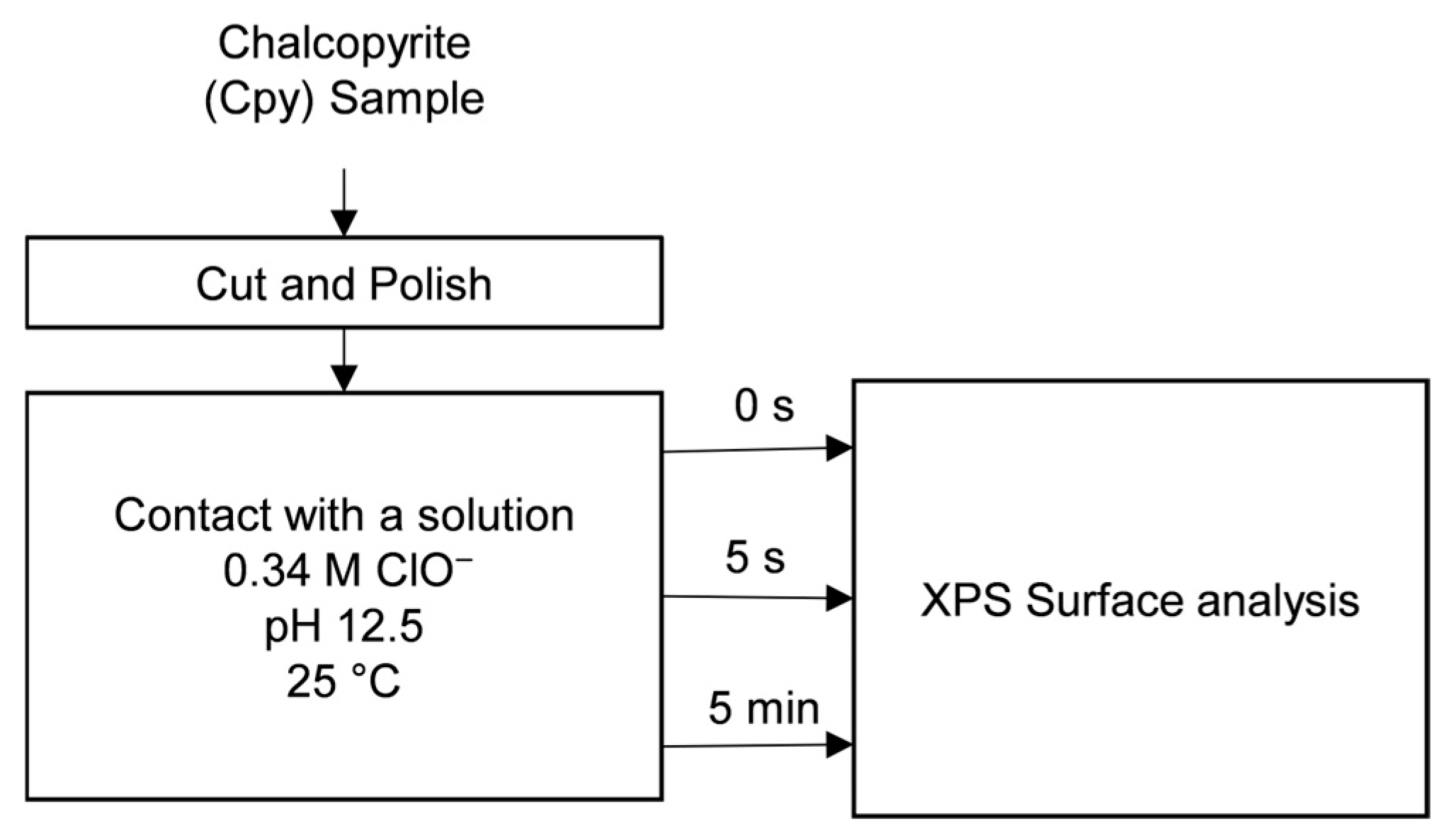
The chalcopyrite sample used is pure chalcopyrite, cut with a surface area of 1 cm2 and polished with a 3 µm aqueous alumina suspension to remove the natural oxidation patina and any impurities adhering to the surface. Subsequently, the sample was leached with 0.34 M sodium hypochlorite, pH 12.5, at room temperature for 5 s and 5 min. After the reaction with the hypochlorite, the surface was drained and dried with nitrogen gas for subsequent XPS analysis. A process diagram is shown in Figure 1.
The analysis of X-ray photoelectron spectroscopy (XPS) was used as an analytical technique to identify elements and their oxidation states on the surface. The equipment used for this purpose is the Perkin Elmer model PHI ESCA5500 system (Physical Electronics, Chanhassen, MN, USA) from the Spectroscopy Service of the University of Barcelona. It is based on irradiating, in a high vacuum environment (10−7 torr), with monochromatic X-rays over the sample, and the quantification of the energy of the emitted electrons (photoelectrons) for energy ranges from 100 to 2000 eV. The volume analyzed reaches a depth in the range of 5 to 40 (Å) [2]. The emitting source used is Al Kα at 1486.6 eV, with an applied power of 350 W. The calibration of the measurements is carried out using the peak of carbon C (1s) located at 248.8 eV. The equipment has an emitter source of a beam of Ar ions (4 keV, at 20 mA/mm2), capable of successive etching, allowing compositional analyses to be performed at different depths and thus determining a composition profile from the surface until reaching the stoichiometric composition of chalcopyrite in the interior of the sample.
The compositional analysis, in atomic percentages, was calculated using Equation (1):
C e l e m e n t ( %   a t ) = A r e a e l e m e n t S F e l e m e n t A r e a e l e m e n t S F e l e m e n t × 100
where A r e a e l e m e n t is the area of the selected peak of the element to be analyzed and SFelement is the sensitivity factor of the power spectra of that element.
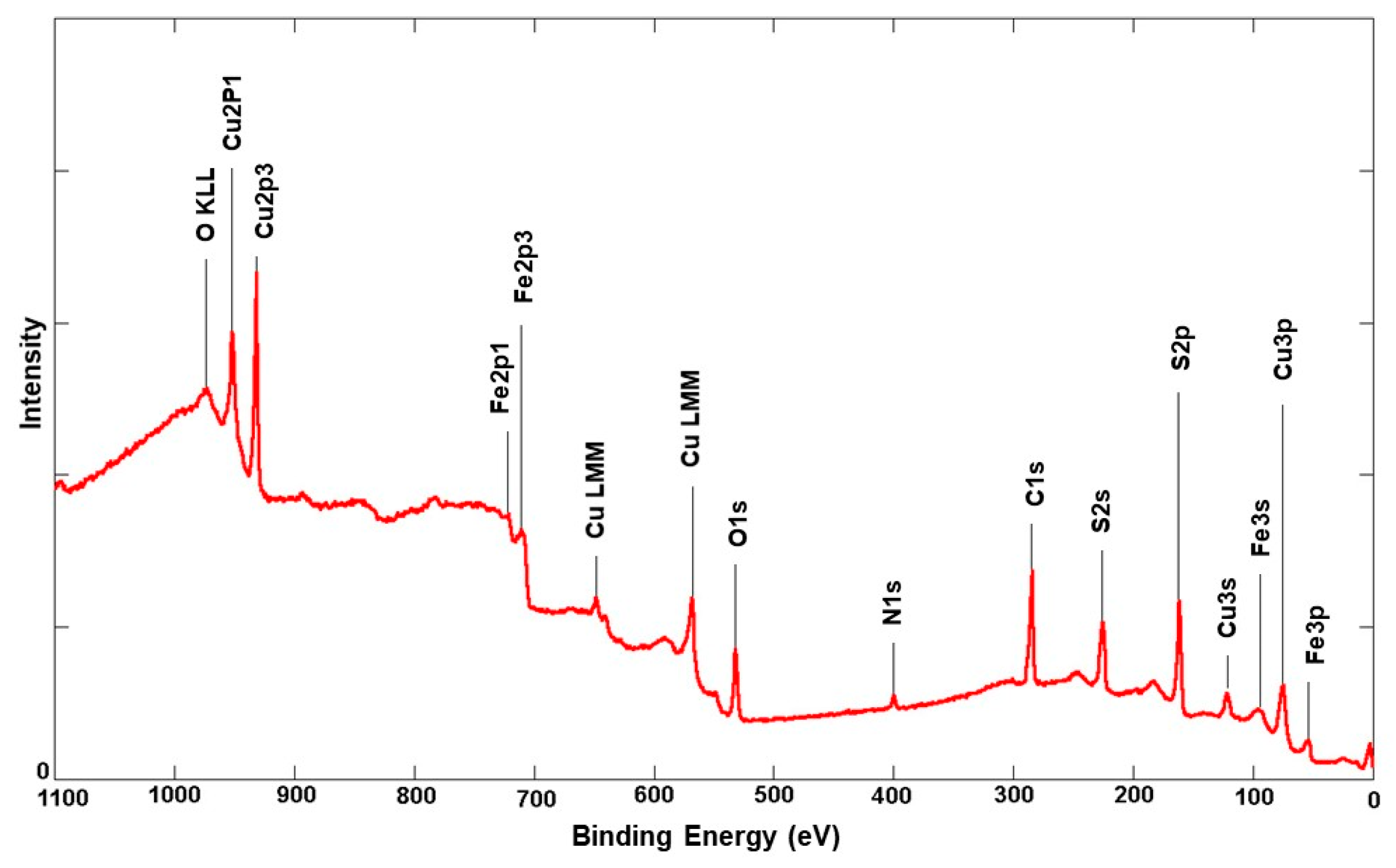
A general spectrum of the entire energy band (0–1100 eV) was carried out on the unleached chalcopyrite sample in order to identify the elements present. Once the elements on the surface were known, the most representative peaks of each element were defined, that is, those that do not overlap and have good intensity. The energy ranges in which they are framed were determined, and, on these ranges, the readings were made at successive depths using the argon sputtering process.

3. Results

3.1. Surface Analysis of Unleached Chalcopyrite

The XPS general spectrum of the chalcopyrite surface is shown in Figure 2; it is observed the peaks that better represent the elements in the chalcopyrite are copper Cu(2p3/2), iron Fe(2p3/2), and sulfur S(2p), and we also detected the presence of oxygen O(1s), carbon C(1s), and nitrogen N(1s).
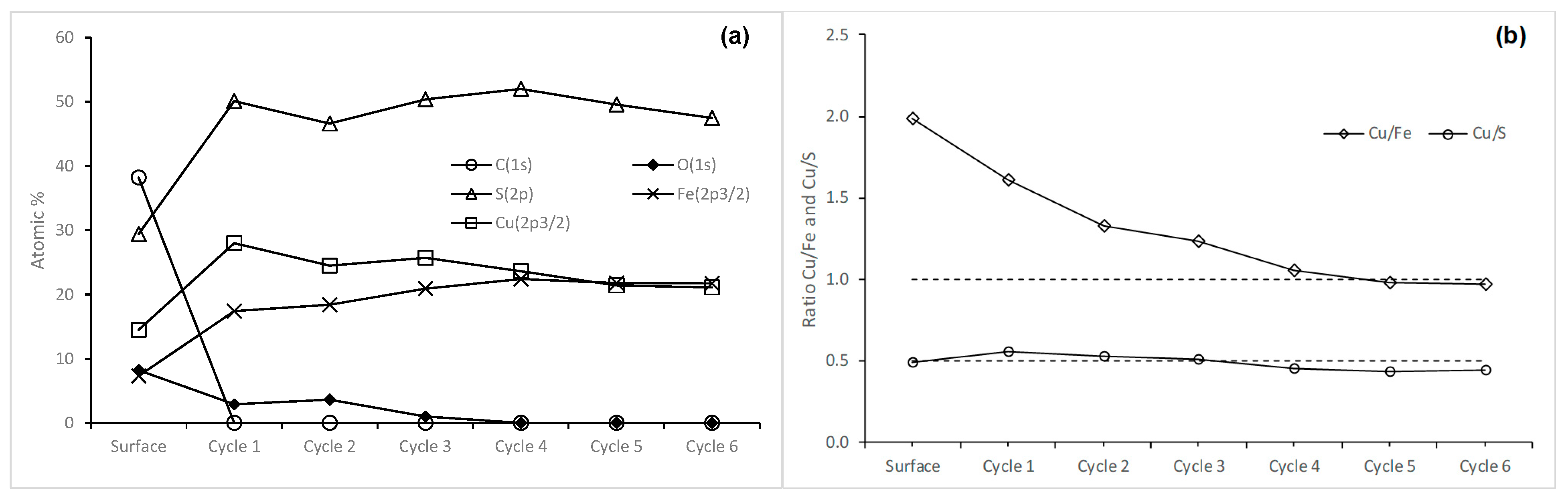
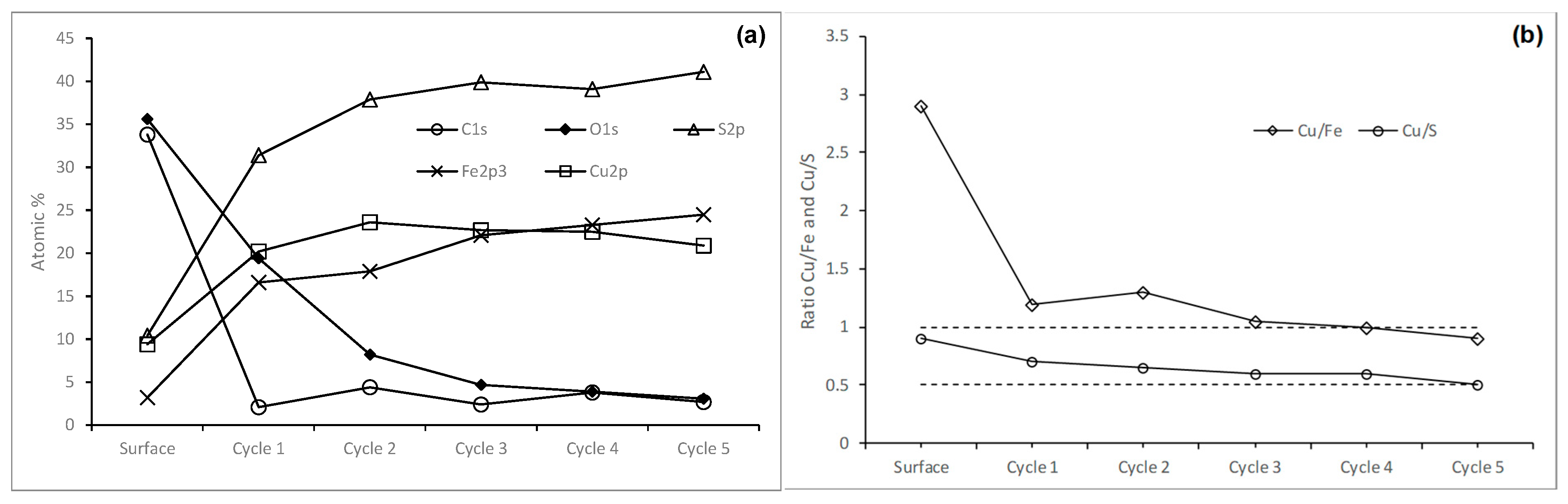
A depth composition profile was made for the energy levels in which these peaks exist. The chalcopyrite surface was sputtered with an argon gas beam reaching a depth of about 5 to 40 Å by cycle. The percent atomic composition by peeling levels is shown in Figure 3a. Carbon and oxygen are present on the surface but disappear after the first peeling because their presence is a consequence of atmospheric pollution.
The Cu/Fe and Cu/S ratios are shown as a function of the depth of the sample. The surface presents a depletion of iron and an enrichment of copper and sulfur. As the peeling cycles progress, these relationships tend to the stoichiometric values of chalcopyrite and are reached on the fifth cycle around 175 Å depth as shown in Figure 3b.

3.1.1. Analysis of the Atomic Oxidation States of Chalcopyrite

To determine the intermediate oxidation states of the chalcopyrite surface elements, the oxidation states at different depths of sulfur, copper, iron, and oxygen were determined and quantified for the first five peeling cycles.
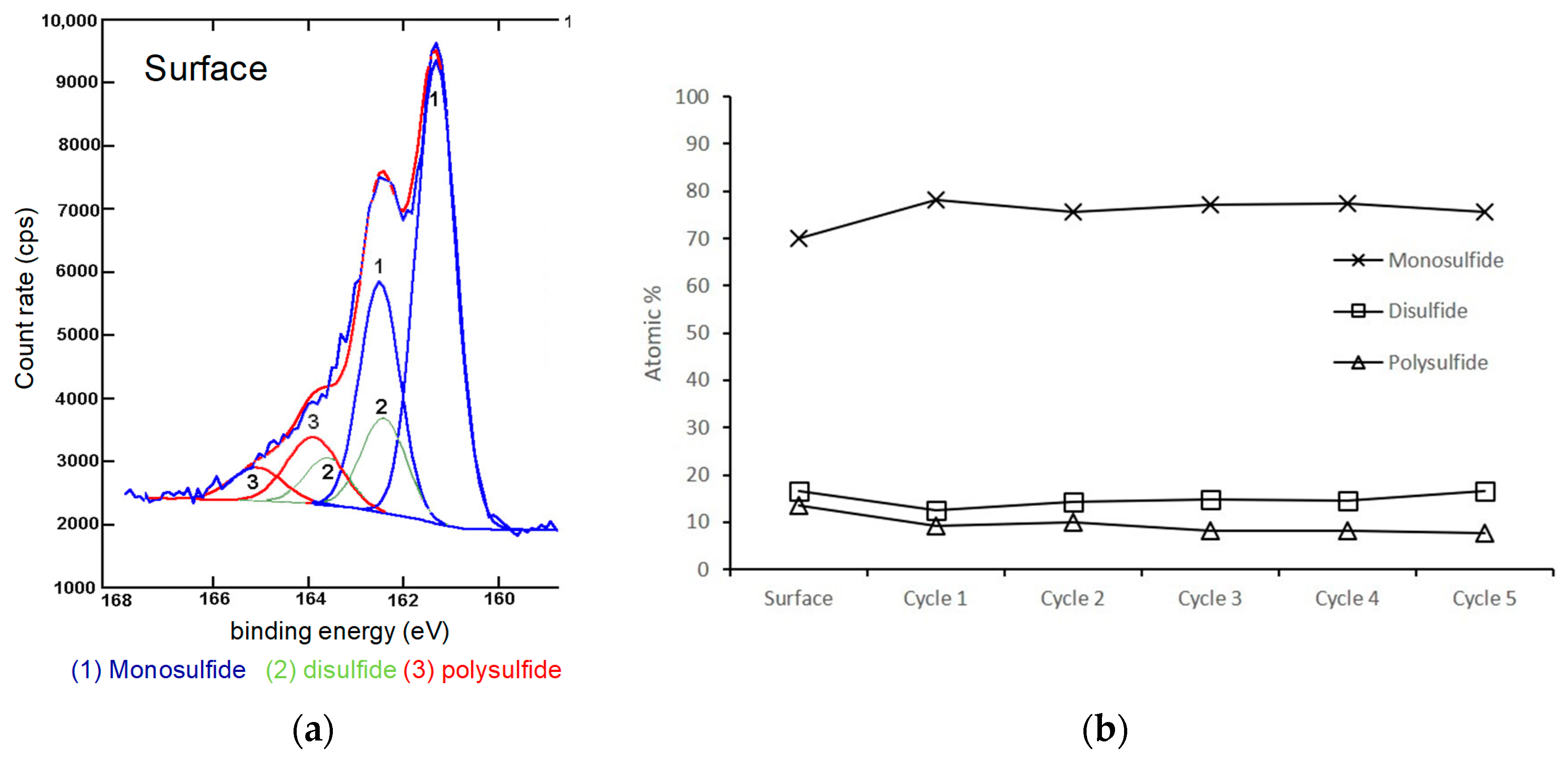
For sulfur, the spectra show the sulfur peak S(2p) (S(2p3/2) and S(2p1/2)), Figure 4a. These peaks are very wide, so it follows that several oxidation states must coexist in them. A good fit is obtained, using three pairs of Gaussians, and the main peaks of these doublets are located in the binding energy ranges of monosulfide (S2−) 161.2 eV, disulfide (S22−) 162.5 eV, and polysulfide (Sn2−) 163.5 eV [7,16,17,18].
Figure 4b shows the oxidation states of sulfur as a function of depth, on the surface and inside. The presence of monosulfide, disulfide, and polysulfide is observed. The inside composition after the first cycle is composed of 75% monosulfide, 17% disulfide, and 8% polysulfide. The surface is enriched in polysulfide and disulfide, which indicates the formation of surface species such as CuFe1−xS2 (disulfide) and CuSn (polysulfide).
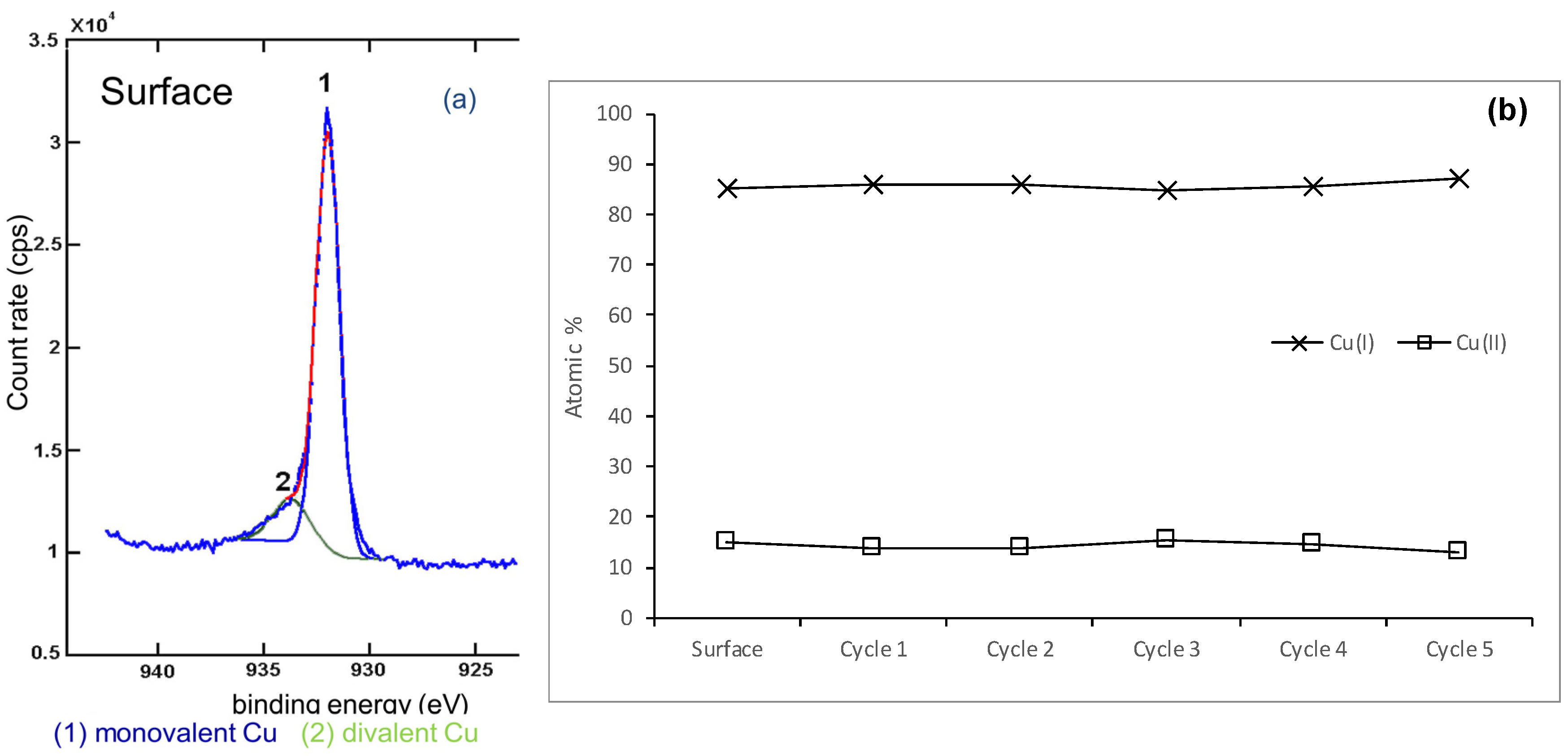
The copper XPS spectrum is formed by a doublet for Cu(2p) composed of two peaks. One is Cu(2p3/2) at 932 eV, and the other Cu(2p1/2) at 952 eV [4]. The Cu peak (2p3/2) was analyzed, and it can be adjusted by means of two simple Gaussians: a main one at 932.4 eV, monovalent copper [18,19], and a small Gaussian one at 933.6 eV, representing the copper divalent [19]; the chalcopyrite surface does not show the presence of copper oxides, and the oxidation states of copper do not change in depth, showing a constant ratio of Cu(I)/Cu(II) equal to 85/15, Figure 5b.
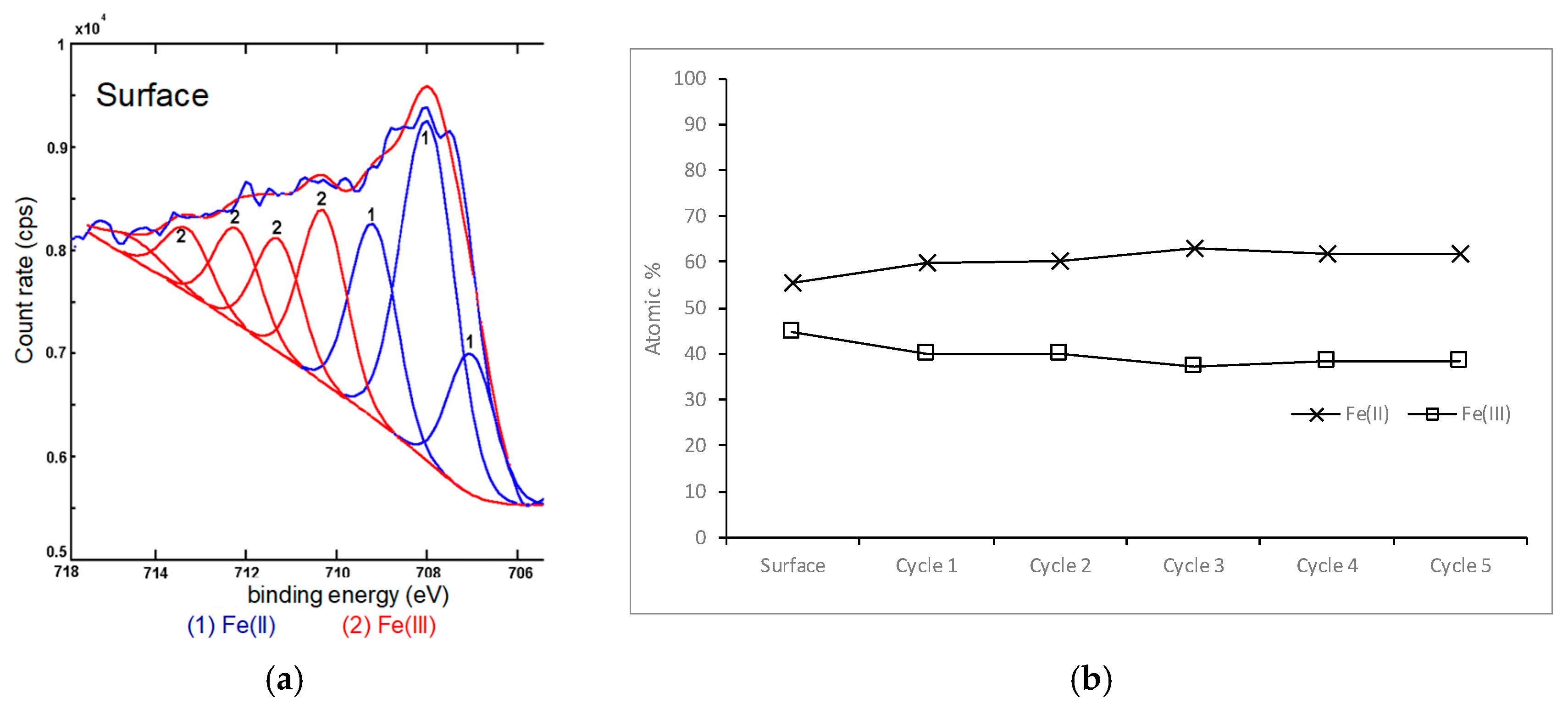
The spectrum of Fe(2p) is composed of the doublet Fe(2p3/2) and Fe(2p1/2) located at 708 eV and 721 eV, respectively [4]; these peaks are not well defined as they have a very long and wide tail, Figure 6a. To determine the iron oxidation states, the spectrum was adjusted with a series of Gaussians following the following criteria: The spectrum of iron is formed by a superposition of the Fe(II) and Fe(III) spectra. For the quantification of these oxidation states, [20] analyzed spectra of Fe2O3 and FeO to determine the spectra of Fe(III) and Fe(II). The energy distribution of the Fe(II) spectrum can be adjusted by means of three large and two small Gaussians at higher energy levels. For the determination of the Fe(III) spectrum, the spectrum was adjusted by means of two thin Gaussians of 1.4 FWHM (Full Width at Half Maximum) separated by 1.2 eV. The rest of the spectrum was adjusted by means of a decreasing series of Gaussians of a similar profile.
Mc Intyre determined a difference of approximately 2.3 eV between the Fe(II) and Fe(III) peaks [20]. This difference was used as an initial estimate for the energy difference of the integrated Fe(II)-S and Fe(III)-S peaks of the Fe(2p3/2) spectrum of chalcopyrite [21]. From the spectra of iron at different depths, it can be determined that it is composed of Fe(II) and Fe(III) located at 707 eV and 709 eV, which implies that they are associated with sulfur [22]. The iron composition is evenly distributed, in a proportion of 60% Fe(II) and 40% Fe(III) throughout the sample, except for a small increase in Fe(III) on the surface, Figure 6b.
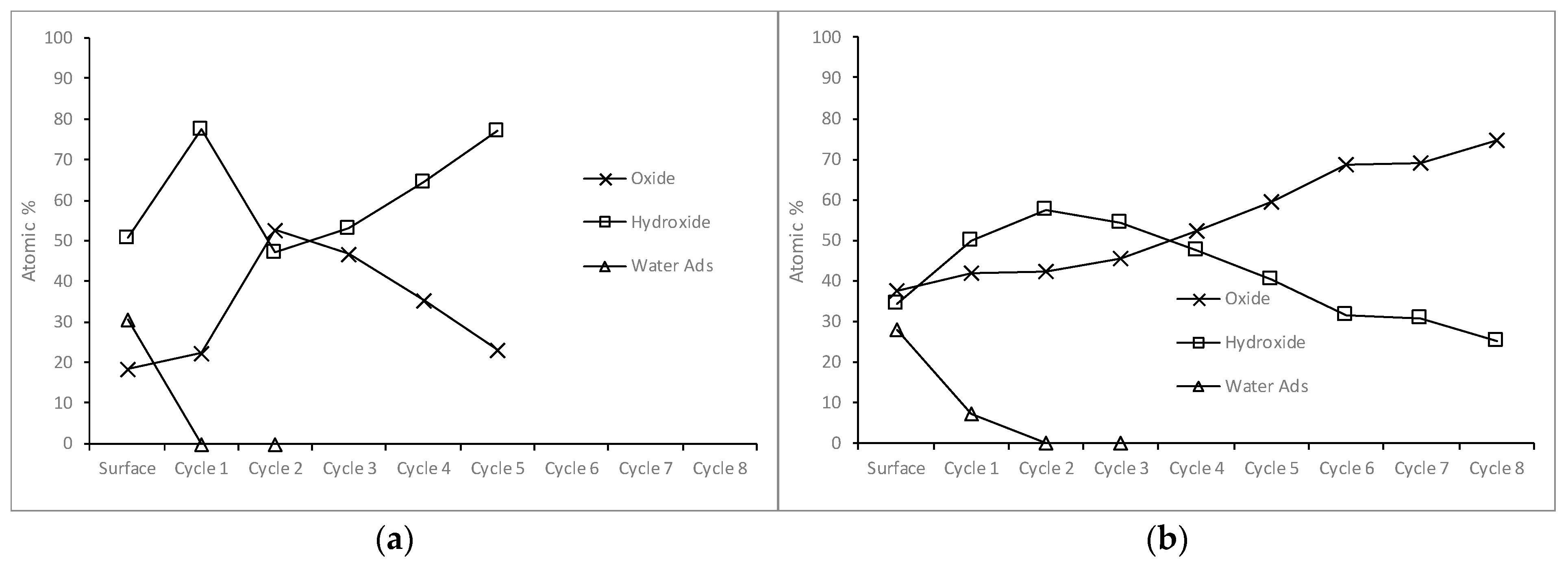
Oxygen is located on the surface, and its atomic fraction decreases after the first peeling, Figure 3a. The O(1s) spectrum (532 eV) was analyzed. The O(1s) spectrum of the surface is adjusted by means of three Gaussians, located at 532 eV, 529 eV, and 534.3 eV, of oxygen present as hydroxide, oxide, and adsorbed water, respectively. The spectra of the inner levels show just a small peak centered at 532 eV, corresponding to hydroxide, as was identified by [16,17,18].

3.1.2. Chalcopyrite Composition

Based on the different constituent elements’ oxidation states, a formula for chalcopyrite atomic states can be determined based on these results.
Copper is present in 85% as Cu(I) and 15% as Cu(II); the total weighted charge of the two oxidation states of copper gives chalcopyrite 1.15 positive charges.
In chalcopyrite, sulfur is found in three oxidation states: monosulfide, S2-; disulfide, S22-; and polysulfide, Sn2-, in a proportion of 75%, 17%, and 8%, respectively. Considering this distribution and the charges of each one, it is calculated that each sulfur contributes 1.75 charges, and, since in the general composition of chalcopyrite, there are two sulfurs, the total contribution of sulfur will be 3.5 negative charges.
The 1.15 positive charge associated with copper interacts with the 3.5 negative charge of sulfur, leaving 2.35 negative charges to be associated with iron. To meet this load balance, iron must be present in a proportion of Fe(III) and Fe(II) of 65/35. This distribution of oxidation states is very close to that obtained by the XPS technique, which is 60/40. Based on this, it is possible to determine the element oxidation states of chalcopyrite, which can be represented as follows:
Cu(I)0.85Cu(II)0.15Fe(II)0.65Fe(III)0.35S2−1.5S22−0.17Sn0.082−
From the data obtained from the surface and interior levels, the Cu/S ratio remains approximately equal to 0.5, a value that corresponds to the composition of chalcopyrite.
The Cu(I)/Cu(II) ratio in the surface and internal areas is constant, which indicates that all the copper is found as sulfide, and the presence of the satellite in Cu(2p) is not detected due to Cu(II)-O not being present.
The iron shows a concentration decrease on the surface and a slight relative increase in the Fe(III) concentration. This is associated with the presence of hydroxide due to the surface formation of hydroxide species of Fe(III)-OH. All of the above is consistent with the formation of surface species of the disulfide type (CuFe1−xS2) and polysulfide (CuSn) caused by environmental oxidation.
CuFeS2 → CuFe1−xS2 + x Fe3+
CuFe1−xS2 → CuSn + (1 − x) Fe3+ + z Cu2+     n = 2/1 − z (being z ≤ 1)

3.2. Surface Analysis of Chalcopyrite Leached with Sodium Hypochlorite

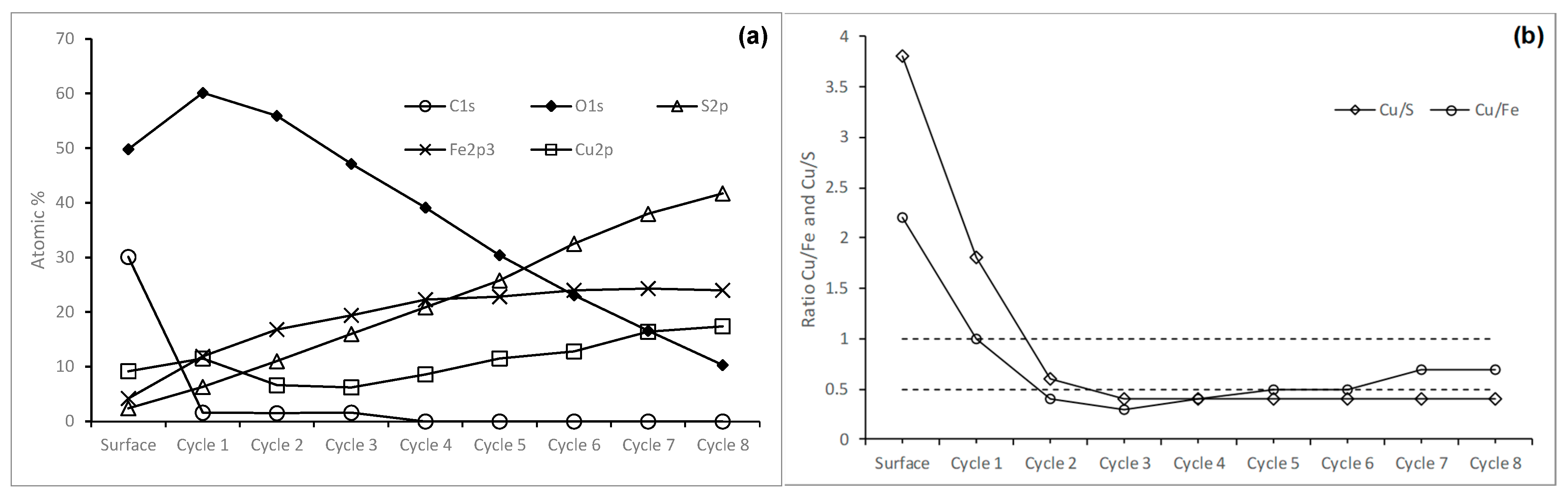
The chalcopyrite was contacted with a 0.34 M sodium hypochlorite solution, pH 12.5, at room temperature for 5 s and 5 min, and the leached surface was analyzed by XPS. The surface of the sample immersed in ClO for 5 s shows signs of oxidation, as shown in Figure 7a. This is evidenced by the advance of oxygen in the sample compared to the original sample, Figure 3a. Its presence is considerable up to the third level of peeling; carbon is present only on the surface and is removed with the first peeling cycle.
The atomic ratios Cu/Fe and Cu/S, Figure 7b, show that the surface is even more enriched in copper and depleted in iron than the surface of the original or unleached sample, and sulfur decreases its fraction due to the passage to solution as SO42−. The Cu/Fe and Cu/S ratios reach, in cycle 4, the values of 1 and 0.5, characteristic of chalcopyrite.
The chalcopyrite leached by the hypochlorite solution for five minutes is shown in Figure 8a. It is observed that oxygen appears as the majority element, associated with copper, iron, and sulfur, and there is a decrease in surface sulfur. The atomic ratios of Cu/Fe and Cu/S do not reach the characteristic values of chalcopyrite in the first eight peeling cycles; that is, the attack with hypochlorite reached a greater depth, Figure 8b. This allows us to show that there would not be a passivating layer.
It is observed that oxygen became the principal element on the surface, associated with copper, iron, and sulfur, with the constant dissolution of sulfur as SO42−, practically disappearing at the surface.

3.2.1. Behavior of Chalcopyrite Sulfur When Leached with Hypochlorite

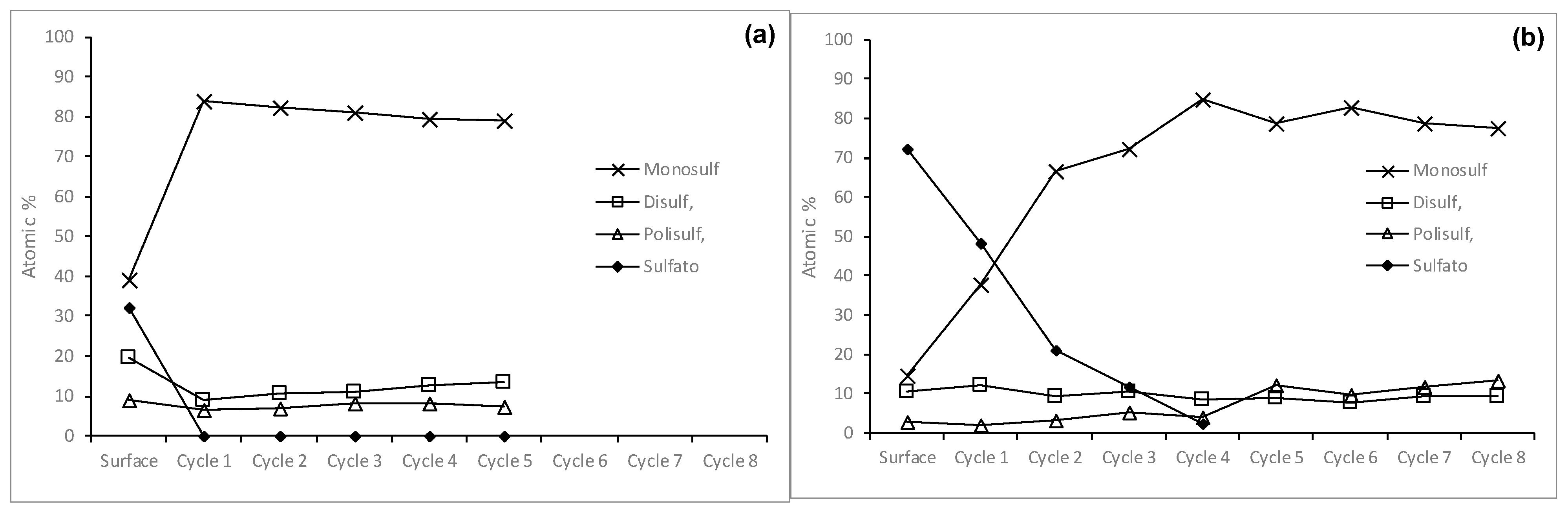
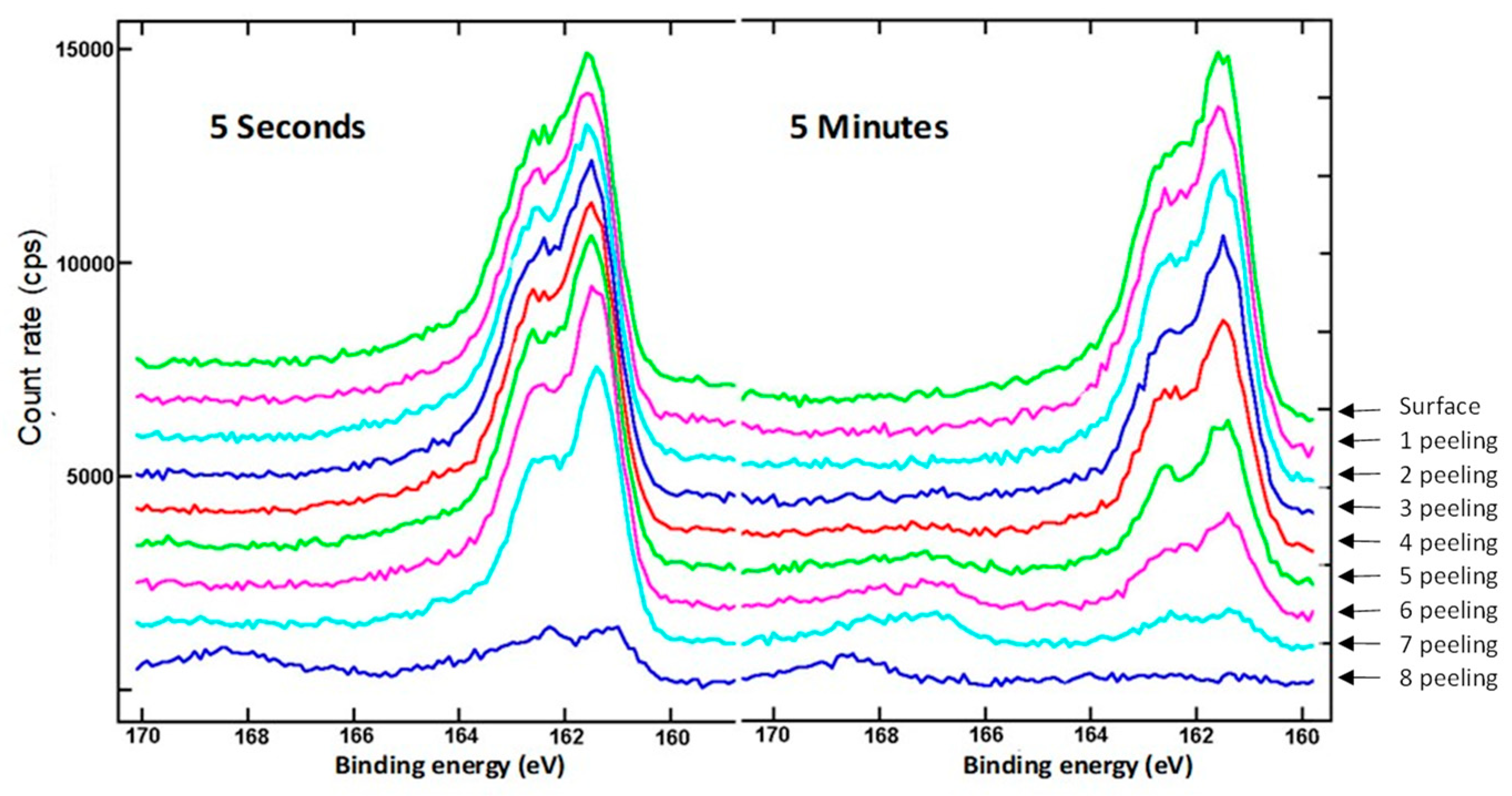
The S(2p) spectrum of the leached chalcopyrite, Figure 9, shows the appearance of an additional low-intensity peak located at 168.8 eV. This peak is the consequence of the presence of sulfates due to the sulfur oxidation [10]. The sulphate is observed only on the surface of the sample leached for five seconds and in chalcopyrite leached for 5 min, and the sulfates penetrate until cycle 4. The peak S(2p) at 161.2 eV decreases in intensity and gains width towards the surface as a consequence of either the passage from monosulfide to polysulfide or the decrease in the atomic fraction of sulfur in the sample due to the passage of sulfur to solution.
The main peak is perfectly adjusted by means of three doublets that correspond to monosulfide (S2−), 161.2 eV; disulfide (S22−), 162.5 eV; and polysulfide (Sn2−), 163.5 eV and the peak located at 168.8 eV that corresponds to sulfate. The distribution of the oxidation states of sulfur is shown in Figure 10a. The appearance on the surface of sulfate and a relative increase in polysulfide are observed.
Figure 10b shows the distribution of species determined for sulfur in the sample leached over five minutes. It is observed that the formation of sulfate on the surface is very high, reaching 75% of the total sulfur as a result of the monosulfide reaction.
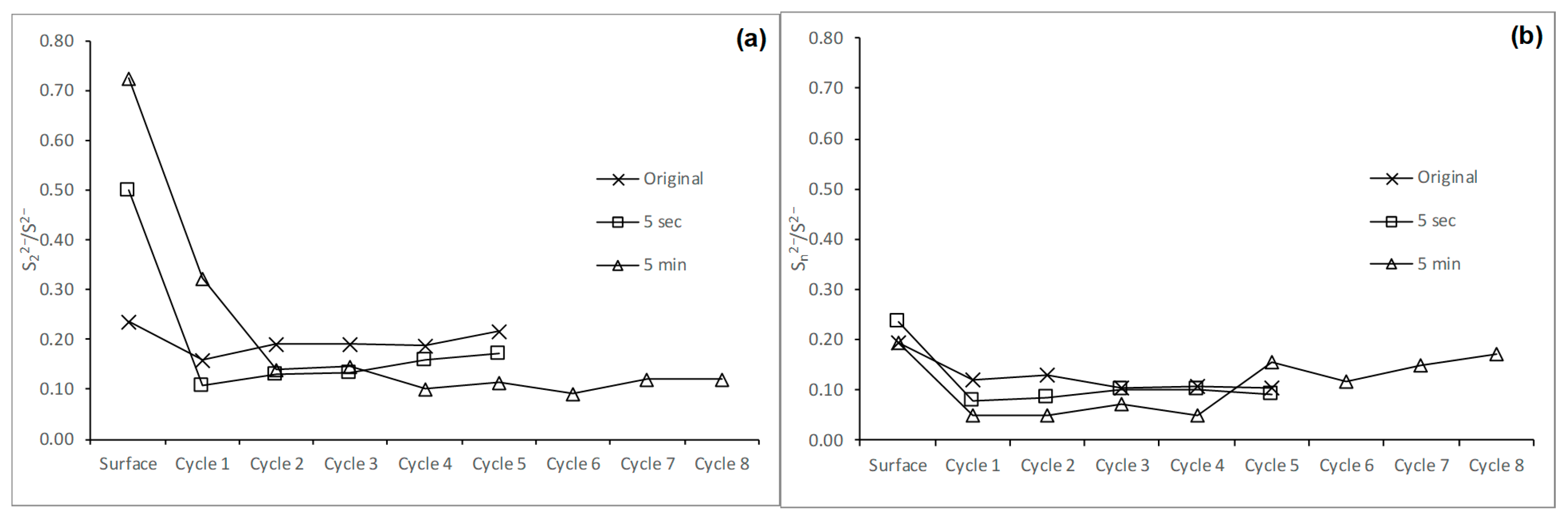
The S22−/S2− and Sn2−/S2− ratios increase significantly at the surface, especially for the dissulfide formation. Sulfur reaches a stable distribution in cycle 3, that is, when the monosulfide polysulfide ratio is that of the chalcopyrite, Figure 11a,b.
There is a relative increase in the concentration of disulfide on the surface, which is found as CuFe1−xS2, and a decrease in the relative concentration of polysulfide (CuSn) in the interior cycles. From the first and fifth cycles, the atomic distribution of sulfur for the sample leached over five seconds and five minutes, respectively, is similar to the distribution of the original chalcopyrite.

3.2.2. Copper in the Samples Leached for Five Seconds and Five Minutes

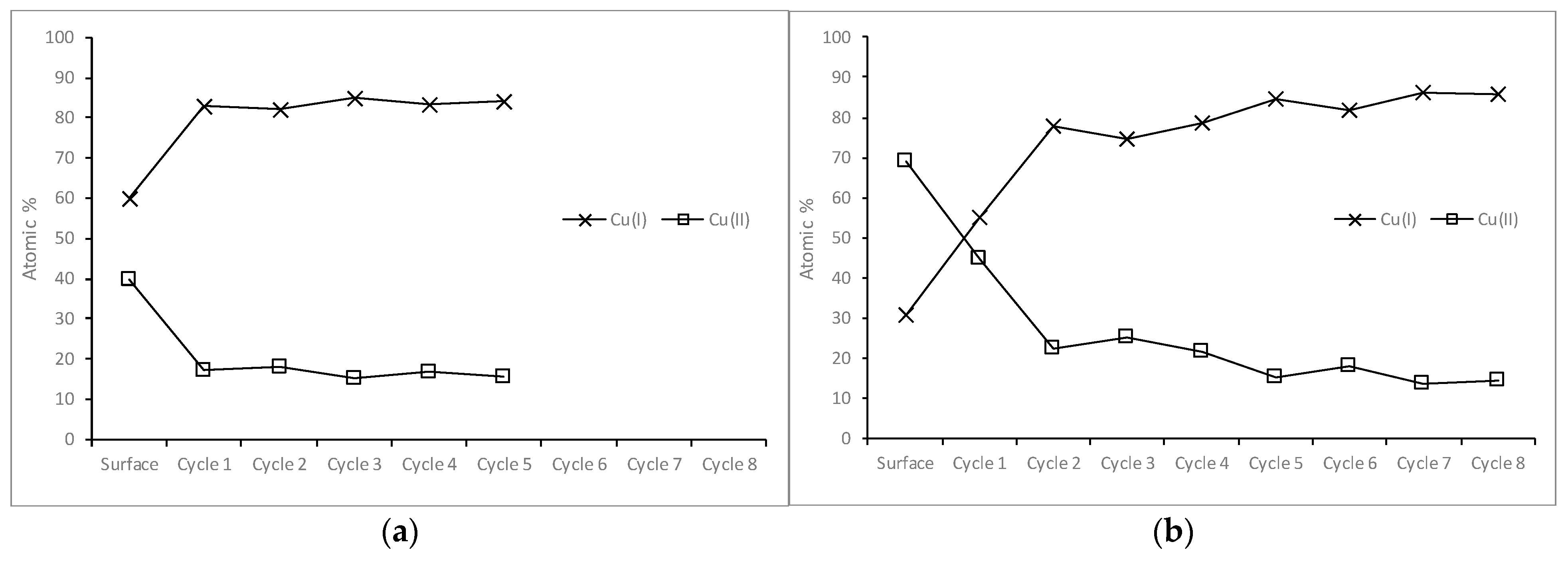
In the peak spectrum of Cu(2p), for the leached chalcopyrite surface, a large satellite located at 942 eV is observed, between lines 2p1/2 and 2p3/2. This satellite is a consequence of the inelastic shocks characteristic of the presence of copper (II). Figure 11a,b show the oxidation states for Cu(2p) and its atomic distribution in each peeling cycle for chalcopyrite leached over 5 s and 5 min, respectively. The leach with hypochlorite for 5 s oxidize the Cu(I) to Cu(II) only on the surface, since in cycle 2, the atomic fractions acquire the values 15% found in the original chalcopyrite; the increase in Cu(II) is due to the formation of CuO (located between 933.9 and 935.5 eV) [3], which is one of the solid reaction products of chalcopyrite, as determined in the reaction stoichiometry.
In the profile of the chalcopyrite leached for five minutes, a higher proportion of Cu(II) is observed as a consequence of the formation of polysulfides and copper oxides from Cu(I). In cycle 7, copper reaches the Cu(II)/Cu(I) ratio of unleached chalcopyrite, Figure 12b.

3.2.3. Iron in the Samples Leached for Five Seconds and Five Minutes

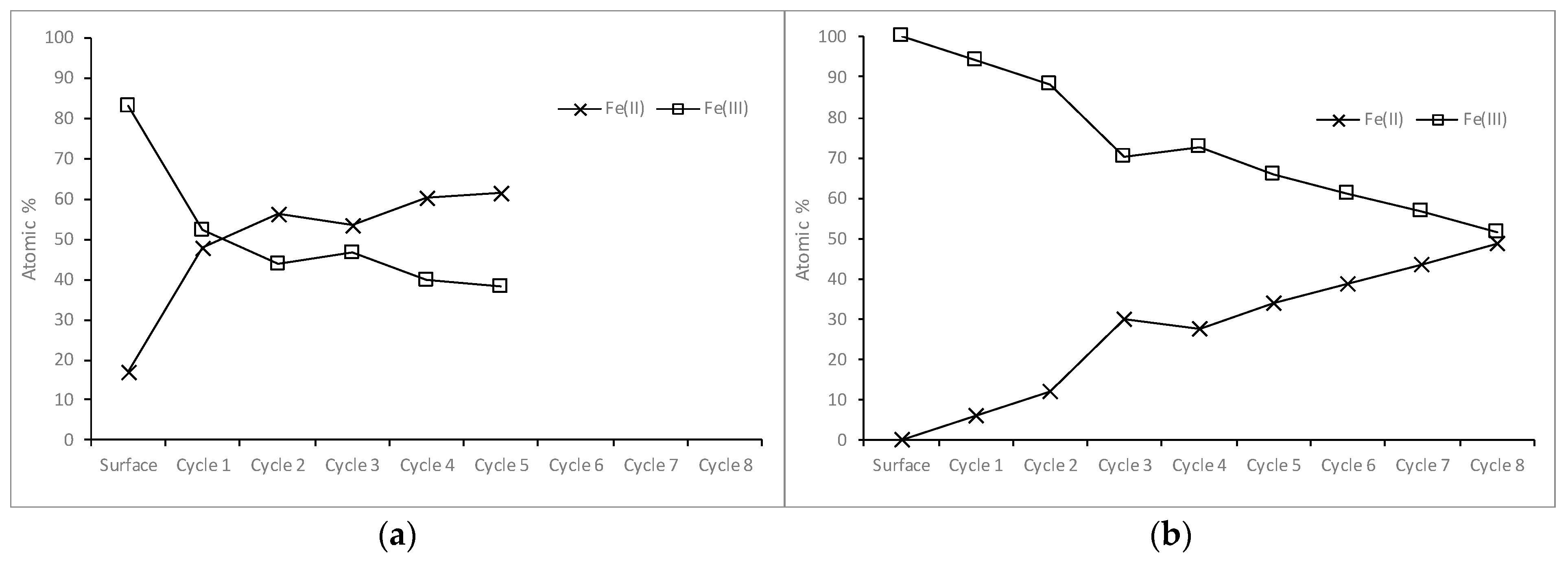
The iron spectra for the chalcopyrite leached for 5 s and 5 min with sodium hypochlorite show the shift of the spectrum from 708 eV to 711 eV as a consequence of the oxidation of the Fe(II) of the chalcopyrite to Fe(III).
Iron is the constituent element of chalcopyrite that is most strongly leached by hypochlorite solution. In the sample leached for five seconds, the iron on the surface is oxidizing to Fe(III), which is in the form of an oxy-hydroxide; this change is seen until cycle 4, where the distribution of Fe(II) and Fe(III) is 60% and 40%, that is, the proportion corresponding to original chalcopyrite, Figure 13a. The iron on the surface of chalcopyrite leached for five minutes is completely oxidized to Fe(III); the attack exceeded the depth of the analysis since the atomic ratio of Fe(II)/Fe(III) determined for chalcopyrite was not reached in any peeling cycle, Figure 13b.
The presence of oxygen in the samples leached for 5 s and 5 min marks the depth reached by the attack, which coincides with the increase in Fe(III), which is associated with oxygen, forming hydroxide.
The oxygen in the sample leached for five seconds and five minutes indicates that there is absorbed water, located at 532.5 eV, only in the surface layer; the peak of oxygen in the inner layers is composed of two Gaussians, one located at 531.3 eV, which corresponds to iron hydroxide, and the other at 529.9 eV, which corresponds to both copper oxide (529.6 eV) and iron oxide at 530.0 eV. Inside the sample, oxygen is kept in the form of oxide and hydroxide, which is associated with Fe(III) because the iron reaction rate of chalcopyrite is faster than the formation of copper oxide, Figure 14a,b.

3.2.4. Sodium and Chlorine in the Samples Leached for Five Seconds and Five Minutes

Due to the possible presence of sodium and chlorine, since the leaching reagent is made up of those elements, both were included in the analysis in the different peeling cycles.
The spectrum of chlorine Cl(2p) was analyzed, which is located at 198 eV; this peak turns out to be of low intensity and represents an atomic fraction of 2% of the total sample. Chlorine can be adjusted by a doublet meeting the following conditions: Cl(2p3/2)/Cl(2p1/2) spacing = 1.6 eV. Area A(2p3/2)/A(2p1/2) = 2
The chlorine spectrum of the sample, both leached for five seconds and five minutes, can be adjusted with a single doublet, and the location of the main peak is at 198.38 eV, which implies that 100% of the chlorine is in the state of sodium chloride, NaCl. The sodium of the sample was analyzed for the peak of Na(1s). Sodium reaches 5% of the total sample at surface levels. The Na(1s) spectrum can be adjusted by a pair of simple Gaussians [4], one of them located at 1072.5 eV, which corresponds to sodium chloride, and another located at 1071.2 eV, which corresponds to Na2SO4.

4. Discussion

The purpose of this work is to analyze the reaction of chalcopyrite in an alkaline oxidizing medium in order to determine the mechanism of the selectivity of the reaction of enargite over chalcopyrite in this medium, found in the previous work of arsenic removal from copper concentrate [14], which keeps copper in its solid phase as CuO. A similar selective leaching process was presented by [23], where leaching gold and silver with hypochlorite from chalcopyrite concentrates kept copper in the solid phase.
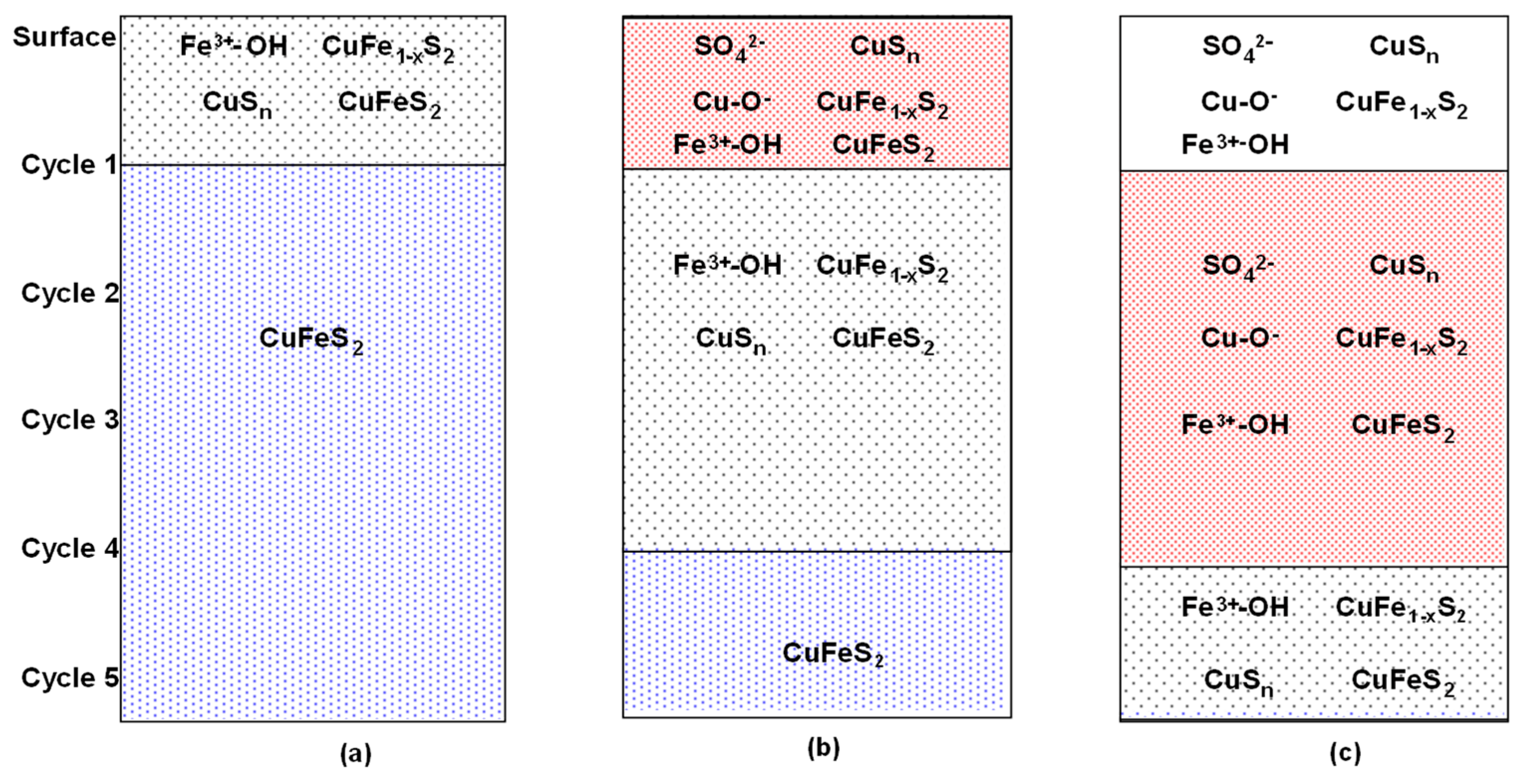
Based on the results obtained from the analysis of the surface of the original unleached chalcopyrite and that leached for five seconds and for five minutes with sodium hypochlorite, the atomic distribution of the species present at the surface levels of the sample was determined, and it is possible to distinguish three composition profiles for each sample.
Figure 15a shows a diagram of the surface profile composition of the original chalcopyrite when it was only in contact with the environment. The appearance of disulfide (CuFe1−xS2) and polysulfide (CuSn) was observed, as well as small amounts of Fe3+-OH, just on the surface, which disappeared after the first peeling.
When chalcopyrite is leached with sodium hypochlorite for five seconds, the formation of SO42− and CuO was observed superficially, and the proportion of disulfide increased significantly. The proportion of polysulfide remained similar to that of chalcopyrite. Towards the interior, SO42− and CuO disappeared, leaving a situation similar to that of the surface of unleached chalcopyrite. From cycle 4, only chalcopyrite was detected, Figure 15b.
By increasing the attack time to five minutes, Figure 15c shows that the detection of SO42− and CuO at the surface continues to increase, reaching these species’ depths in the fourth cycle. Small amounts of polysulfide and disulfide appear, although in relative terms to total sulfide. The disulfide concentration is very high, being the predominant sulfur species. Fe3+-OH is also detected, a species that persists up to eight cycles, inclusive.
In summary, the profile of the chalcopyrite leached for five minutes is similar to that of the chalcopyrite leached for five seconds, except that it reaches a greater depth. This allows us to conclude that the oxidation products, as well as the internal sulfides, are not passivating.
According to [24,25], the formation on the surface of the polysulfide CuSn is responsible for the passivation of chalcopyrite during oxidative leaching in an acid medium. The process follows the proposed reaction sequence:
CuFeS2 = CuFe1−xS2 + x Fe3+
CuFe1−xS2 = CuSn + (1 − x) Fe3+ + z Cu2+
CuSn = Cu2+ + n S0
During chalcopyrite leaching with ClO in alkaline media, a similar situation occurs, except that on the surface, the Sn2−/S2− ratio does not tend to increase with respect to the environmental state of the chalcopyrite. However, the S22−/S2− ratio significantly increases, so the process sequence would be of the following type:
CuFeS2 = CuFe1−xS2 + x Fe3+
CuFe1−xS2 = CuSn + (1 − x) Fe3+ + z Cu2+
CuSn + 2n O2 = Cu2+ + n SO42−
In other words, polysulfide decomposes rapidly in an alkaline medium, generating SO42− and not elemental sulfur as occurs in normal acid leaching. This effect is consistent with XPS analysis of chalcopyrite leaching [10], which shows that at high potential, the material becomes transpassive due to sulfur oxidation. Furthermore, Fe3+ and Cu2+ ions hydroxylate rapidly, generating the copper and iron oxide-hydroxide layers observed. This product layer is also not passivating, as confirmed by the increase in leaching depth with increasing reaction time.
The results are consistent with previous work by the authors on arsenic removal from chalcopyrite/enargite concentrates [14] as a pre-smelting cleaning treatment, where a fraction of the chalcopyrite was oxidized to CuO. In the XPS study of alkaline leaching of chalcopyrite carried out by [26], it was determined that the oxidation process generates a non-passivating layer composed of CuFe1−xS2, CuO, S, and SO4. According to these results, the selectivity would be based on the different reaction rates of these mineral species and not on the passivation of the chalcopyrite.

5. Conclusions

Using XPS, the distribution of atomic states of chalcopyrite was determined, obtaining a stoichiometric analysis of chalcopyrite: Cu(I)0.85Cu(II)0.15Fe(II)0.65Fe(III)0.35S2−1.5S22−0.17Sn0.082−
Chalcopyrite exposed to an atmospheric environment has a Cu/S ~ 0.5 ratio on the surface, a value also present in the internal areas. However, there is a marked iron deficiency that raises the ratio Cu/F ~2.
There is a shift in surface sulfur oxidation states, increasing the Sn2−/S2− and S22−/S2− ratio. The process is of the following type:
CuFeS2 → CuFe1−xS2 + x Fe3+
CuFe1−xS2 → CuSn + (1 − x) Fe3+ + z Cu2+  n = 2/(1 − z) (being z ≤ 1)
The lO-/OH- medium generates surface layers with the following intermediate reactions: Chalcopyrite ⇒ CuFe1-xS2/CuSn/Fe3+-OH ⇒ Fe3+-OH/CuO/SO42−
There is on the chalcopyrite surface a relative accumulation of the component S22, which allows us to establish a mechanism of the following type:
CuFeS2 ⇒ CuFe1−xS2 + x Fe3+
CuFe1−xS2 ⇒ CuSn + (1 − x) Fe3+ + z Cu2+
CuSn ⇒ Cu2+ + n SO42−
Fe3+ + OH ⇒ Fe(OH)3
Cu2+ + 2OH ⇒ CuO + H2O
This product layer is also not passivating, as confirmed by the advancement of the depth of attack with increasing reaction time.

Author Contributions

Conceptualization, O.B., J.V. and M.-C.H.; methodology, V.Q.; software, O.B.; validation, J.V., A.R. and E.M.; formal analysis, M.-C.H.; investigation, O.B.; resources, A.R.; data curation, V.Q.; writing—original draft preparation, M.-C.H.; writing—review and editing, O.B.; visualization, E.M.; supervision, J.V.; project administration, A.R.; funding acquisition, A.R. All authors have read and agreed to the published version of the manuscript.

Funding

This research received no external funding.

Data Availability Statement

The original contributions presented in this study are included in the article. Further inquiries can be directed to the corresponding author.

Acknowledgments

The authors thank the Universitat de Barcelona and the Universidad Católica del Norte for the opportunity and funding provided to conduct this research. We also thank the Centres Científics I Tecnològics, Universitat de Barcelona, for their support in the application of characterization techniques.

Conflicts of Interest

The authors declare no conflicts of interest.

References

  1. Wilkomirsky, I.; Parra, R.; Parada, F.; Balladares, E.; Etcheverry, J.; Díaz, R. Partial Roasting of High-Arsenic Copper Concentrates. Metall. Mater. Trans. B 2020, 51, 2030–2038. [Google Scholar] [CrossRef]
  2. Velásquez-Yévenes, L.; Quezada-Reyes, V. Hydrometallurgy Influence of seawater and discard brine on the dissolution of copper ore and copper concentrate. Hydrometallurgy 2018, 180, 88–95. [Google Scholar] [CrossRef]
  3. Li, T.; Zhang, Y.; Zhang, B.; Zhang, J.; Qin, W. Selective leaching of arsenic from enargite concentrate using alkaline leaching in the presence of pyrite. Hydrometallurgy 2018, 181, 143–147. [Google Scholar] [CrossRef]
  4. Choubey, P.K.; Lee Jchun Kim Mseuk Kim, H.S. Conversion of chalcopyrite to copper oxide in hypochlorite solution for selective leaching of copper in dilute sulfuric acid solution. Hydrometallurgy 2018, 178, 224–230. [Google Scholar] [CrossRef]
  5. Lane, D.J.; Cook, N.J.; Grano, S.R.; Ehrig, K. Selective leaching of penalty elements from copper concentrates: A review. Miner. Eng. 2016, 98, 110–121. [Google Scholar] [CrossRef]
  6. Quezada, V.; Roca, A.; Benavente, O.; Cruells, M.; Keith, B.; Melo, E. Effect of pretreatment prior to leaching on a chalcopyrite mineral in acid media using NaCl and KNO3. J. Mater. Res. Technol. 2020, 9, 10316–10324. [Google Scholar] [CrossRef]
  7. Pratt, A.R.; Muir, I.J.; Nesbitt, H.W. X-ray photoelectron and Auger electron spectroscopic studies of pyrrhotite and mechanism of air oxidation. Geochim. Cosmochim. Acta 1994, 58, 827–841. [Google Scholar] [CrossRef]
  8. Havlík, T.; Škrobian, M.; Baláž, P.; Kammel, R. Leaching of chalcopyrite concentrate with ferric chloride. Int. J. Miner. Process 1995, 43, 61–72. [Google Scholar] [CrossRef]
  9. Crundwell, F.K. The influence of the electronic structure of solids on the anodic dissolution and leaching of semiconducting sulphide minerals. Hydrometallurgy 1988, 21, 155–190. [Google Scholar] [CrossRef]
  10. Ghahremaninezhad, A.; Dixon, D.G.; Asselin, E. Electrochemical and XPS analysis of chalcopyrite (CuFeS2) dissolution in sulfuric acid solution. Electrochim. Acta 2013, 87, 97–112. [Google Scholar] [CrossRef]
  11. Wang, J.; Gan, X.; Zhao, H.; Hu, M.; Li, K.; Qin, W.; Qiu, G. Dissolution and passivation mechanisms of chalcopyrite during bioleaching: DFT calculation, XPS and electrochemistry analysis. Miner. Eng. 2016, 98, 264–278. [Google Scholar] [CrossRef]
  12. Mikhlin, Y. X-ray photoelectron spectroscopy in mineral processing studies. Appl. Sci. 2020, 10, 5138. [Google Scholar] [CrossRef]
  13. Tehrani, M.E.H.N.; Naderi, H.; Rashchi, F. Electrochemical study and XPS analysis of chalcopyrite dissolution in sulfuric acid in the presence of ethylene glycol. Electrochim. Acta 2021, 369, 137663. [Google Scholar] [CrossRef]
  14. Hernández, M.; Benavente, O.; Roca, A.; Melo, E.; Quezada, V. Selective Leaching of Arsenic from Copper Concentrates in Hypochlorite Medium. Minerals 2023, 13, 1372. [Google Scholar] [CrossRef]
  15. Viñals, J.; Roca, A.; Hernández, M.C.; Benavente, O. Topochemical transformation of enargite into copper oxide by hypochlorite leaching. Hydrometallurgy 2003, 68, 183–193. [Google Scholar] [CrossRef]
  16. Parker, A.; Klauber, C.; Kougianos, A.; Watling, H.R.; Van Bronswijk, W. An X-ray photoelectron spectroscopy study of the mechanism of oxidative dissolution of chalcopyrite. Hydrometallurgy 2003, 71, 265–276. [Google Scholar] [CrossRef]
  17. Pettifer, Z.E.; Quinton, J.S.; Skinner, W.M.; Harmer, S.L. New interpretation and approach to curve fitting synchrotron X-ray photoelectron spectra of (Fe,Ni)9S8 fracture surfaces. Appl. Surf. Sci. 2020, 504, 144458. [Google Scholar] [CrossRef]
  18. Termes, S.C.; Buckley, A.N.; Gillard, R.D. 2P Electron Binding Energies for the Sulfur Atoms in Metal Polysulfides. Inorganica Chim. Acta 1987, 126, 79–82. [Google Scholar] [CrossRef]
  19. Nakai, I.; Sugitani, Y.; Nagashima, K.; Niwa, Y. X-ray photoelectron spectroscopic study of copper minerals. J. Inorg. Nucl. Chem. 1978, 40, 789–791. [Google Scholar] [CrossRef]
  20. Grosvenor, A.P.; Kobe, B.A.; McIntyre, N.S. Studies of the oxidation of iron by water vapour using X-ray photoelectron spectroscopy and QUASESTM. Surf. Sci. 2004, 572, 217–227. [Google Scholar] [CrossRef]
  21. Mycroft, J.R.; Nesbitt, H.W.; Pratt, A.R. X-ray photoelectron and Auger electron spectroscopy of air-oxidized pyrrhotite: Distribution of oxidized species with depth. Geochim. Cosmochim. Acta 1995, 59, 721–733. [Google Scholar] [CrossRef]
  22. Mielczarski, J.A.; Cases, J.M.; Alnot, M.; Ehrhardt, J.J. XPS characterization of chalcopyrite, tetrahedrite, and tennantite surface products after different conditioning. 2. amyl xanthate solution at pH 10. Langmuir 1996, 12, 2531–2543. [Google Scholar] [CrossRef]
  23. Puvvada, G.V.K.; Murthy, D.S.R. Selective precious metals leaching from a chalcopyrite concentrate using chloride/hypochlorite media. Hydrometallurgy 2000, 58, 185–191. [Google Scholar] [CrossRef]
  24. Hackl, R.P.; Dreisinger, D.B.; Peters, E.; King, J.A. Passivation of Chalcopyrite during oxidative leaching in sulfate media. Hidrometallurgy 1995, 39, 25–48. [Google Scholar] [CrossRef]
  25. Ren, Z.; Chao Ch Krishnamoorthy, P.; Asselin, E.; Dixon, D.; Mora, N. The overlooked mechanism of chalcopyrite passivation. Acta Miner. 2022, 236, 118111. [Google Scholar] [CrossRef]
  26. Yin, Q.; Vaughan, D.J.; England, K.E.R.; Kelsall, G.H.; Brandona, N.P. Surface Oxidation of Chalcopyrite (CuFeS2) in Alkaline Solutions. J. Electrochem. Soc. 2000, 147, 2945–2951. [Google Scholar] [CrossRef]
Figure 1. Diagram of the treatment of chalcopyrite in the alkaline oxidizing environment.
Minerals 15 01268 g001
Figure 2. Identification of the elements present on the chalcopyrite surface.
Minerals 15 01268 g002
Figure 3. Unleached chalcopyrite (a) composition profile and (b) Cu/Fe and Cu/S ratios.
Minerals 15 01268 g003
Figure 4. Unleached chalcopyrite. (a) Sulfur XPS spectra, (b) sulfur oxidation state composition profile.
Minerals 15 01268 g004
Figure 5. Unleached chalcopyrite. (a) Copper XPS spectra, (b) copper oxidation state composition profile.
Minerals 15 01268 g005
Figure 6. Unleached chalcopyrite. (a) Iron XPS spectra, (b) iron oxidation state composition profile.
Minerals 15 01268 g006
Figure 7. Chalcopyrite leached at 5 s: (a) composition profile and (b) Cu/Fe and Cu/S ratio.
Minerals 15 01268 g007
Figure 8. Chalcopyrite leached at 5 min: (a) composition profile and (b) Cu/Fe and Cu/S.
Minerals 15 01268 g008
Figure 9. S(2p) spectra for the leached chalcopyrite for 5 s and 5 min for each peeling cycle.
Minerals 15 01268 g009
Figure 10. S oxidation states leached chalcopyrite over (a) 5 s and (b) 5 min.
Minerals 15 01268 g010
Figure 11. (a) Ratio S22−/S2−, (b) ratio Sn2−/S2−.
Minerals 15 01268 g011
Figure 12. Cu oxidation states leached chalcopyrite for (a) 5 s and (b) 5 min.
Minerals 15 01268 g012
Figure 13. Fe oxidation states leached chalcopyrite for (a) 5 s and (b) 5 min.
Minerals 15 01268 g013
Figure 14. O oxidation states leached chalcopyrite for (a) 5 s and (b) 5 min.
Minerals 15 01268 g014
Figure 15. Chalcopyrite composition profile: (a) original, (b) leached for 5 s, and (c) leached for 5 min.
Minerals 15 01268 g015
Disclaimer/Publisher’s Note: The statements, opinions and data contained in all publications are solely those of the individual author(s) and contributor(s) and not of MDPI and/or the editor(s). MDPI and/or the editor(s) disclaim responsibility for any injury to people or property resulting from any ideas, methods, instructions or products referred to in the content.