1. Introduction
Geophysical exploration involves acquiring data by examining the Earth’s physical properties, such as density, magnetism, and electrical conductivity. This method offers benefits like non-destructiveness, efficient wide-area coverage, and the ability to integrate multiple parameters. It is extensively applied in resource exploration, geological disaster early warning, engineering surveys, and geoscience research, providing essential evidence for resource development and disaster prevention. These subjective human factors can significantly affect the interpretation results, potentially leading to discrepancies with actual geological conditions and complicating the interpretation process [
1]. Additionally, interpreting large-scale geophysical data poses challenges. As a result, developing intelligent anomaly recognition technology constrained by multi-attribute data has become a research focus in recent years [
2].
Image fusion techniques can be traced back to the 1970s in the field of sonar signal processing. According to the level of information fusion, image fusion algorithms are categorized into three classes: pixel-level, feature-level, and decision-level, ordered from low to high. At present, multiscale decomposition methods within pixel-level fusion have been extensively studied; their core lies in processing source images with a specific multiscale transform model. This approach typically comprises three steps: first, the selected multiscale transform model decomposes the source images into transform coefficients that represent information at different scales, usually corresponding to approximation (low-frequency) and detail (high-frequency) layers of the image; second, the transform coefficients are fused according to predefined fusion rules to obtain fused coefficients; finally, the inverse transform of the chosen model reconstructs the final fused image. The developmental history of this field can be traced to the late 1980s. In 1983, Burt et al. proposed the Laplacian pyramid transform, establishing a pyramid framework for multiscale decomposition and exact reconstruction, thereby laying the foundation for subsequent layered fusion [
3]. In 1989, Toet introduced the concepts of a low-pass pyramid and a contrast pyramid, emphasizing the expression of visual saliency across scales [
4]. In the same year, Mallat formalized the wavelet representation and filter-bank pyramid algorithm within the multiresolution analysis (MRA) framework, bringing the completeness and fast decomposition/reconstruction properties of the wavelet transform into image processing [
5]. In 1993, Burt et al. applied a gradient pyramid approach to reduce the sensitivity of multiscale transforms to noise. Subsequently, wavelet-based multimodal image fusion algorithms emerged [
6]. A previous study systematically applied the wavelet transform to multisensor fusion, combining low-frequency components by weighting and selecting high-frequency components according to absolute energy [
7]. The steerable pyramid transform proposed by Simoncelli et al. provided a practical means for steerable multiscale decomposition, enabling differentiated processing across multiple directional sub-bands [
8]. In the mid-2000s, research on complex wavelet fusion advanced, exploiting approximate shift invariance and improved directional resolution to stabilize coefficients and reduce artifacts [
9]. Although wavelet-based methods achieved fusion performance superior to pyramid methods, their intrinsic limitations led to insufficient representation of image curves and edges [
10]. To better represent curves and edge structures, anisotropic transforms such as the curvelet transform and the contourlet transform [
11] were introduced into the fusion domain. The curvelet transform demonstrated superior representation of curved edges in tasks such as remote sensing [
12]. Zhang Xin et al. developed a contourlet-based medical image fusion method whose representation of image geometric features—owing to its multiscale, multi-directional, and nearly shift-invariant properties—rapidly became a mainstream foundation for medical and remote sensing image fusion and stimulated the emergence of various fusion strategies based on the non-subsampled contourlet transform (NSCT). Cunda et al. also proposed a method based on the non-subsampled contourlet transform (NSCT) [
13], because of its multiscale, multi-directional and nearly shift-invariant properties, NSCT quickly became a mainstream foundation for medical and remote sensing image fusion and gave rise to a range of NSCT-based fusion strategies. For example, Li et al. proposed a novel multimodal medical image fusion method based on the non-subsampled contourlet transform (NSCT), designing an improved Laplacian operator and weighted local energy measures for low- and high-frequency components; this approach achieved high image fusion quality, particularly excelling in detail preservation and noise suppression [
14]. In addition, Cheng et al. proposed an infrared–visible image fusion method that combines the non-subsampled shearlet transform (NSST) with an adaptive two-channel PCNN (pulse-coupled neural network); by integrating multiscale transforms and adaptive neural network models, this method improved fusion performance and further advanced the theory and application of geometric multiscale decomposition [
15]. In recent years, research on image fusion has shifted from improving decomposition tools alone toward innovation in fusion rules. Fusion rules increasingly incorporate structural descriptors such as phase consistency to better preserve salient features and edge information. For example, Xie et al. proposed an NSST-based method that fuses low-frequency coefficients using a phase-consistency-weighted strategy and fuses high-frequency coefficients via an improved dual-channel PCNN guided by phase consistency [
16]. Perceptual mechanisms have also been introduced into fusion decision-making. Wang et al. developed an NSST-based method with an improved visual-sensitivity rule for high-frequency components, emphasizing local contrast and human visual characteristics in coefficient selection [
17]. These advances indicate that fusion-rule design is evolving toward adaptive strategies that consider structural saliency, detail retention, and perceptual effectiveness simultaneously.
In recent years, image fusion technology has increasingly become a focal point in geophysical data processing, particularly in remote sensing, seismic exploration, underground structure imaging, and resource exploration. Early research primarily concentrated on traditional data fusion methods, such as combining wavelet and curvelet transforms, to enhance the resolution and reliability of multi-source data [
18]. As technology has advanced, numerous fusion algorithms have been developed and applied to practical challenges. In 2005, Mironenko et al. developed a sensitive segmentation method using independent component analysis and Kohonen neural networks, proposing a technique to identify underground physical property anomalies through image segmentation, significantly enhancing the accuracy and efficiency of geological exploration [
19]. In 2009, Kim et al. explored fusing GeoEye-1 high-resolution images with geophysical data, suggesting that principal component analysis (PCA) and wavelet transform can effectively improve the spatial and spectral resolution of remote sensing data, thereby increasing the accuracy of underground resource detection [
20]. With the rise of deep learning, image fusion methods based on transfer learning have gained attention. In 2023, a study combining ResNet50 with component analysis reported advances in multi-source geophysical data fusion and in subsurface target identification [
21]. Additionally, in 2023, Lv Pengfei et al. introduced innovations in interpreting multi-source geophysical data fusion by incorporating non-subsampled contourlet transform (NSCT) technology, effectively fusing airborne electromagnetic and aeromagnetic data to enhance the accuracy and efficiency of identifying underground physical property anomalies [
22]. Despite the promising potential of image fusion technology in geophysical data processing and mineral resource exploration, practical applications still face challenges. A unified standard for fusing different sub-bands has not been established, affecting the retention of structural information and texture details. Furthermore, parameter selection during the fusion process can impact the stability and reproducibility of results. To build on this work, our study explores targeted solutions: we apply the NSCT + NMP strategy for the first time to joint fusion of resistivity and polarizability data, introduce a dynamic weighting rule for low-frequency sub-bands tailored to the “low resistivity–high polarizability” signature of copper–nickel deposits, and perform a systematic parametric analysis on field data to assess the influence of grid size, grid angle, and fusion weight on the fused results. The goal is to provide practical technical support for joint interpretation of multi-source geophysical data. The remainder of the paper is organized as follows.
Section 2 presents the theoretical basis of the proposed method and details the NSCT-based image-fusion implementation.
Section 3 describes the measured data sources and the overall fusion workflow.
Section 4 reports the experiments, verifies the fusion results, and analyzes how different parameters affect fusion performance.
Section 5 summarizes the main findings and implications.
2. Materials and Methods
The Non-subsampled Contourlet Transform (NSCT) is an image decomposition algorithm that is multi-scale, multi-directional, and translation-invariant [
23]. It aims to improve the representation of image edges, textures, and structural features. NSCT is especially effective for images with complex structures or pronounced directionality, making it ideal for applications in medical imaging, remote sensing, and geophysical imaging.
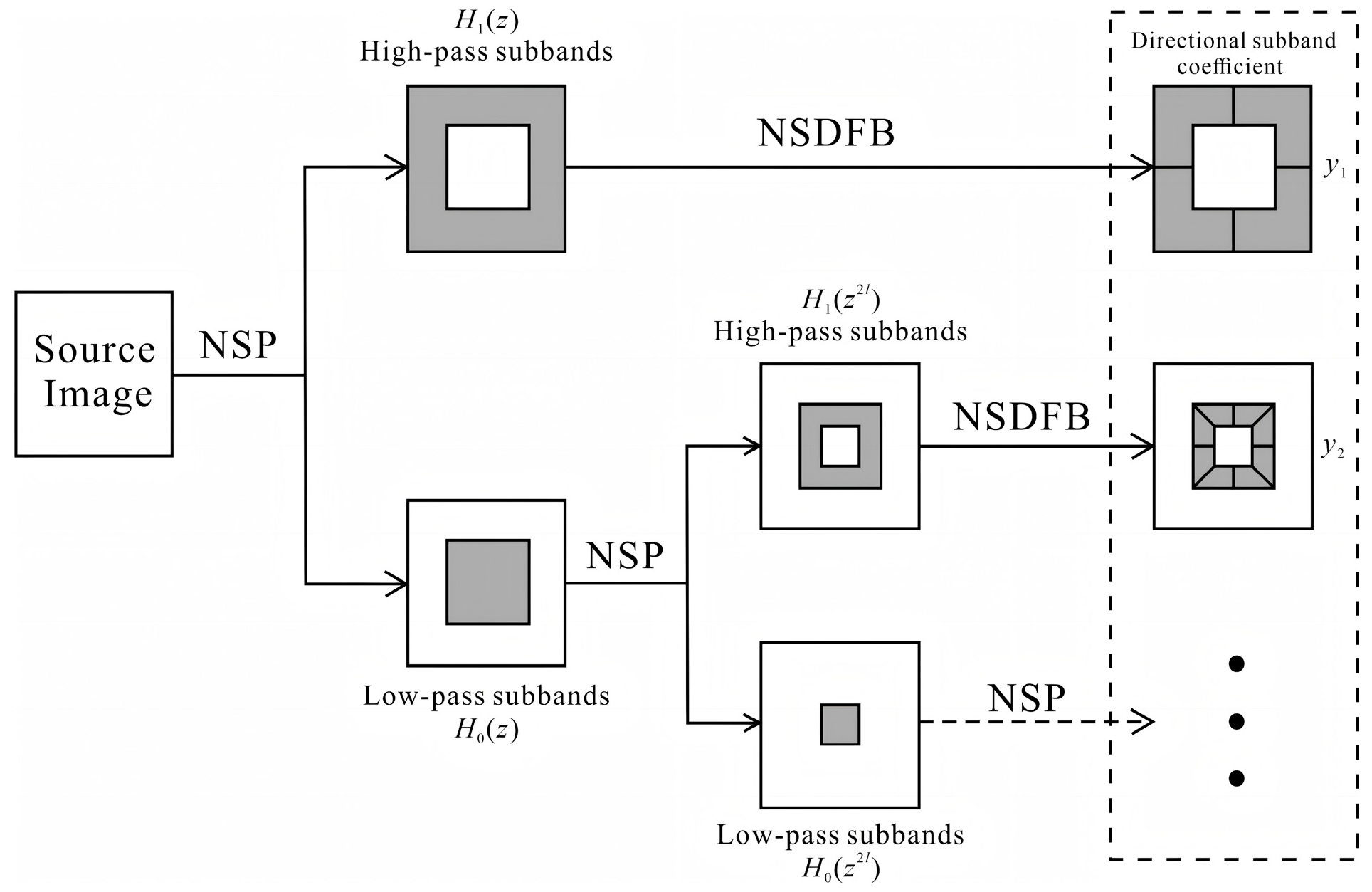
The Non-subsampled Contourlet Transform (NSCT) builds upon the Contourlet transform by removing the subsampling operation, which enhances the robustness of image processing by reducing sensitivity to image position information. NSCT primarily consists of the Non-subsampled Pyramid (NSP) and the Non-subsampled Directional Filter Bank (NSDFB). Initially, the NSP performs multi-scale decomposition, separating the image into low-frequency (approximate information) and high-frequency (detail information) components, with each layer yielding one low-frequency sub-band and several high-frequency sub-bands. Subsequently, the NSDFB conducts multi-directional decomposition on the high-frequency components of each layer to extract direction-sensitive information, such as edges and linear structures. This integration of modules allows NSCT to capture both scale and directional features of the image simultaneously.
The Non-Subsampled Pyramid (NSP) filter bank is a widely used structure for multi-scale image representation. Unlike traditional pyramid methods, such as the Laplacian and image pyramids, the NSP structure maintains the original image’s spatial resolution at each scale level by avoiding subsampling during filtering. Its primary concept involves decomposing the image signal into frequency components across multiple scales using a cascade of multi-layer low-pass and high-pass filters. This approach enables a richer and more continuous feature representation.
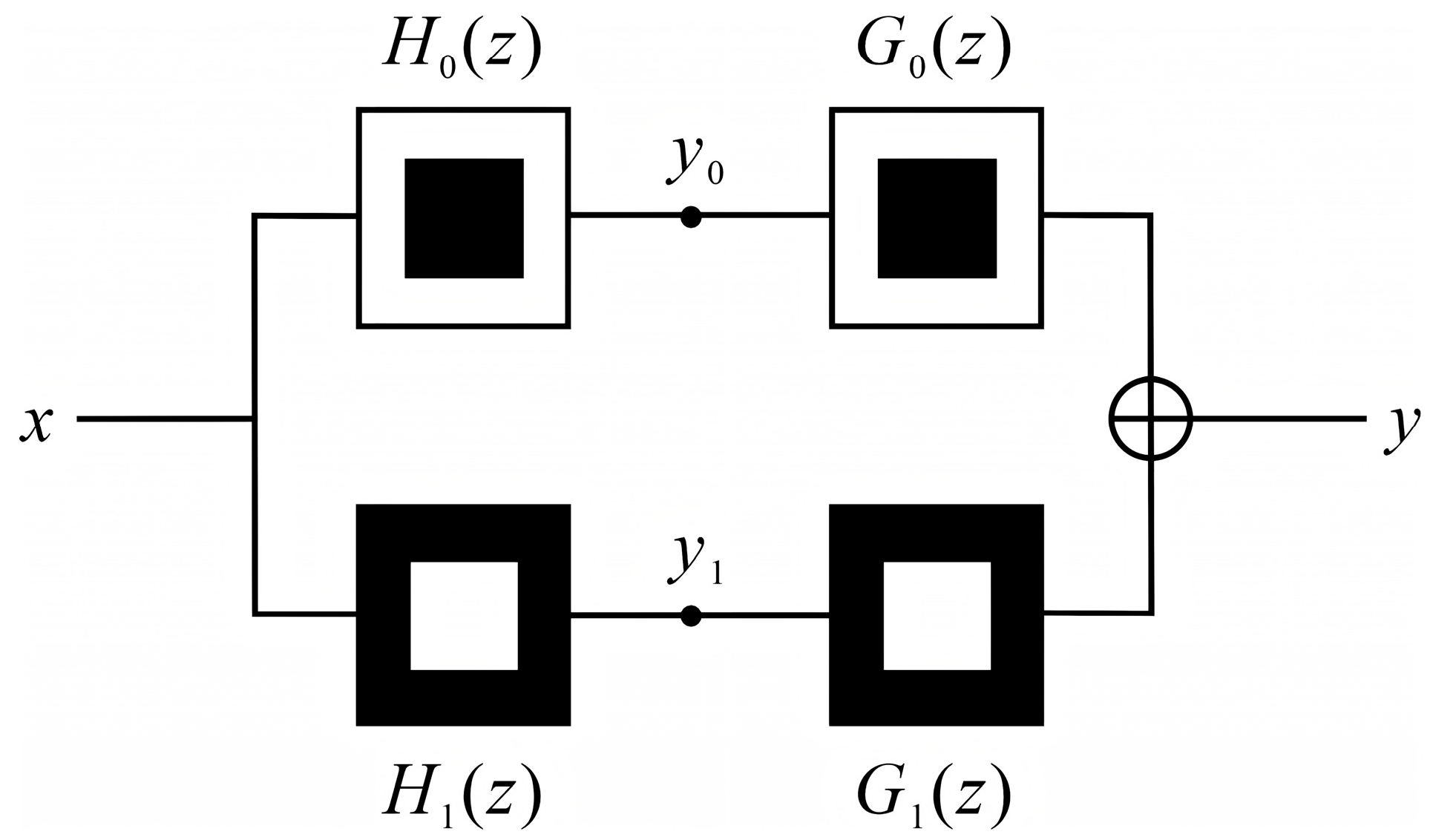
Figure 1 presents a schematic diagram of the NSPFB.
The decomposition and synthesis filters
H0(
z)
H1(
z) in the aforementioned filter
G0(
z)
G1(
z) bank can achieve perfect reconstruction if the following condition is met:
Upon executing a K-level decomposition with the NSPFB, you will obtain K + 1 sub-images, each matching the dimensions of the original image. This set includes one low-frequency sub-band image and K high-frequency sub-band images. The mathematical representation of the NSPFB filter is:
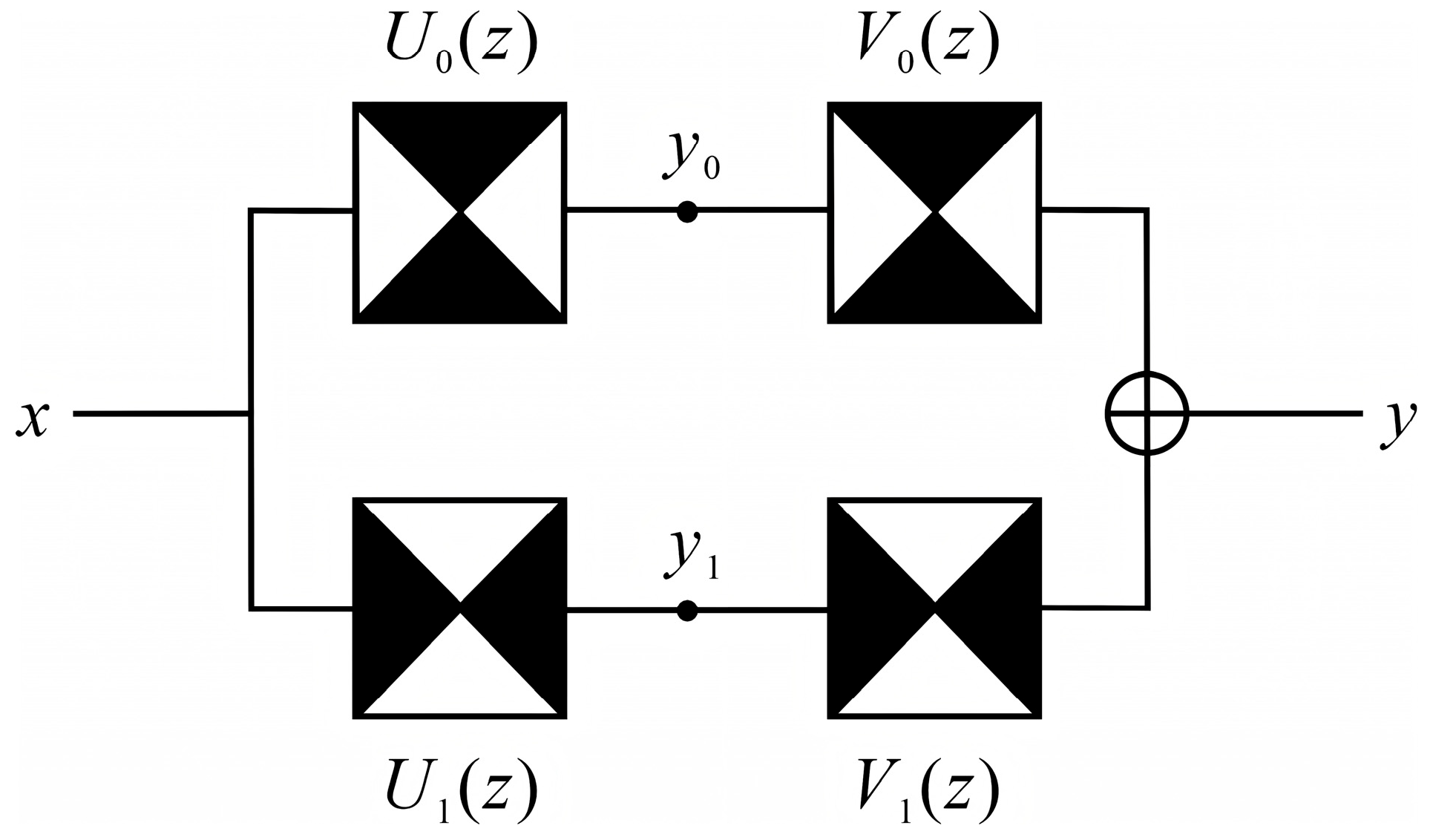
The Non-Subsampled Directional Filter Bank (NSDFB) serves as a multi-scale transformation tool for analyzing and processing directional information in images. It comprises non-subsampled filter banks with a fan-shaped structure, facilitating two-channel non-subsampled directional decomposition and reconstruction.
Figure 2 presents a schematic diagram of the NSDFB.
The fan-shaped decomposition filters
U0(
z)
U1(
z) and synthesis
V0(
z)
V1(
z) filters in the aforementioned filter bank ensure perfect reconstruction when the following conditions are met:
The NSDFB removes the subsampling step present in the original DFB, maintaining the image’s full size and achieving shift invariance. By applying l-level NSDFB directional decomposition to the high-frequency sub-band images obtained after K level scale decomposition, 2l high-frequency sub-band images are produced, each retaining the same size as the source image.
Figure 3 illustrates a schematic diagram of the NSCT decomposition stage.
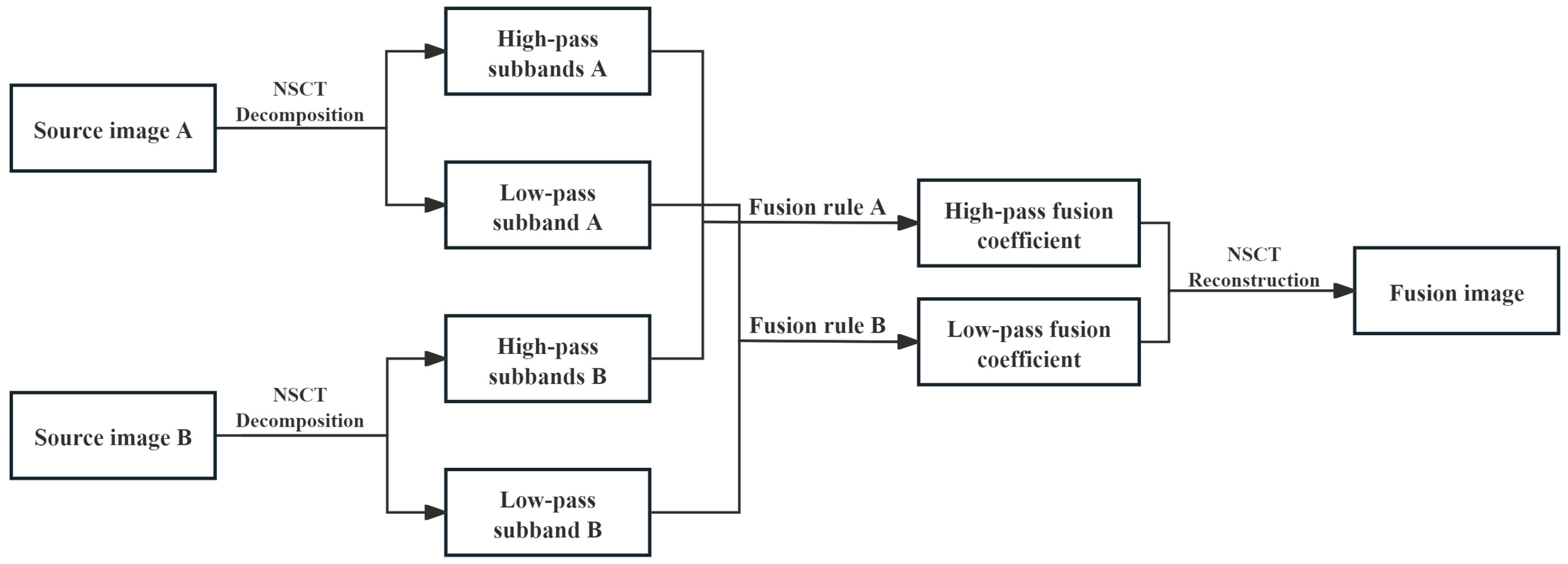
The image fusion algorithm based on NSCT involves three primary steps: NSCT decomposition, sub-band fusion, and image reconstruction. Initially, the source images are decomposed to extract low-frequency and high-frequency sub-band images at the decomposition level. Next, NSDFB conducts directional decomposition on the high-frequency sub-bands of NSPFB to capture multi-directional characteristics and more precise directional information. Fusion rules for the low-frequency and high-frequency sub-band images are then specifically designed based on detection requirements and image characteristics. Finally, by choosing a suitable reconstruction tool for inverse transformation, the final fused image is produced.
Figure 4 illustrates the workflow of the NSCT-based image fusion algorithm.
In geophysical data image fusion, selecting the right fusion strategy is crucial. Geophysical data often display multi-scale, multi-resolution, and varying noise levels, making the choice of fusion strategy directly impact data quality. The strategy must maintain spatial consistency and the data’s physical meaning, while avoiding artifacts or excessive smoothing. In multi-source data fusion, it is essential to address perceptual biases and geometric differences between sensors. Time discrepancies, noise interference, and the dynamic nature of different data sources also influence the fusion outcome. Opting for a feature-based fusion strategy can more effectively extract geophysical information, avoiding direct pixel-level fusion and minimizing information loss. A suitable fusion strategy should consider the spatial, temporal, and physical characteristics of the data, using appropriate algorithms and pre-processing methods to ensure accurate and reliable fusion results. The following text will discuss fusion rules tailored for different detection targets in multi-source geophysical data.
- (1)
Fusion rules for low-frequency sub-band images
The low-frequency sub-band image produced during the NSCT (Non-Subsampled Contourlet Transform) decomposition retains the primary structural and energy information of the original image. This image is smooth and lacks distinct edges, highlighting the image’s large-scale, low-frequency content. Thanks to NSCT’s shift-invariance, the low-frequency sub-band image remains largely unaffected by image displacement. Since the fusion targets are geophysical data, this sub-band contains the main geological structures and horizon information, serving as the image’s key global feature. A certain geophysical method exhibits a distinct advantage in detecting specific mineral types; therefore, the integrated physical-property-derived images should be configured differentially based on the relationships among physical properties. Consequently, a dynamic weighted fusion rule is employed to effectively integrate deep geological background information from multi-source images, minimizing the impact of single-source deviations and enhancing the fused image’s reliability and interpretability. Weighted averaging offers the benefits of easy implementation, high computational efficiency, and adequate information retention, making it ideal for applications like geophysical images that prioritize structural integrity and numerical continuity. The fusion rule is expressed in Equation (4):
In this context, ω1 and ω2 are the weighting coefficients of the low-frequency sub-bands of the two source images. L(x,y) denotes the approximation component of the final low-frequency sub-band image, while L1(x,y) and L2(x,y) denote the approximate components of the first and second models, respectively. It is important to note that the weighting coefficients ω1 and ω2 are not fixed; they must be determined based on the physical significance of the source images being fused. For instance, consider the source images as resistivity and polarizability models. There is a strong correlation between resistivity and polarizability, as both reflect the electrical properties of underground media, albeit through different mechanisms. Resistivity indicates the formation’s impedance to current, whereas polarizability reflects the capacity for charge accumulation at the medium interface. Typically, low-resistivity areas are often associated with high polarizability because conductive ores tend to form charge accumulations, leading to pronounced polarization effects. In the case of copper–nickel ores, the relationship between resistivity and polarizability is influenced by factors such as the electrical properties of minerals, their occurrence states, and the characteristics of surrounding rocks. Copper–nickel ores frequently coexist with highly conductive sulfides like pyrite, pyrrhotite, chalcopyrite, and cobaltite, which exhibit low-resistivity traits. Due to significant interfaces between sulfide particles or at the ore body boundary, the interface polarization effect is strong, resulting in high polarization characteristics. The finer the grain size of metal sulfides, the stronger the interface polarization and the higher the polarizability. The resistivity of surrounding rock is generally higher than that of the ore body. However, if pyrite veins, altered zone clays, and carbonate metasomatism are present in the surrounding rock, a medium polarization effect can occur, though it is lower than that of the ore body. Given that the high polarization characteristics of sulfides are most indicative in the model, assigning a higher weight to polarizability during image fusion can more effectively delineate the boundaries between the ore body, surrounding rock, and the background formation.
- (2)
Fusion rules for high-frequency sub-band images
The fusion of multi-source geophysical images seeks to optimize the complementary strengths of various physical field observation methods, focusing on response mechanisms, spatial resolution, and anomaly sensitivity. High-frequency sub-bands are rich in texture, edge, and mutation information, making their fusion strategy crucial for the quality of the final image. For instance, in fusing resistivity and polarizability images, resistivity images reveal the electrical conductivity distribution of underground media, often highlighting significant electrical boundaries at geological structure mutations. Meanwhile, polarizability images capture charge retention characteristics in geological bodies, responding more sensitively to weak electrical anomaly regions. The fusion of these heterogeneous images results in a more comprehensive and discriminative image. Given the characteristics of high-frequency sub-bands after NSCT decomposition, a fusion strategy should be chosen that highlights the detection target’s salient features and local structure similarity. This paper employs the New Metric Parameter (NMP) fusion strategy [
22], which constructs a weight function based on Phase Congruency (PC) and incorporates a Measure of Local Sharpness Change (LSCM) to reflect the image’s local contrast. Phase congruency, sensitive to structural features, effectively measures image edge salience but lacks the ability to convey local brightness information during fusion. To address this, Local Energy (LE) is introduced to supplement the local brightness information [
22].
Let the high-frequency sub-bands of the resistivity image and the polarizability image, obtained through NSCT decomposition, be denoted as Ires and Ipol, respectively. For each scale i and direction j, the following structural features are calculated:
Phase congruency evaluates the significance of local structures in an image, focusing on their features rather than the grayscale amplitude [
24]. It is defined as follows:
In this context, represents the direction angle at k, while denotes the nth Fourier component and its corresponding direction angle . is a normalization constant used to eliminate the DC component of the image signal. This index is effective in capturing the phase coherence of edge or texture regions.
- b.
Local Sharpness Change Measure (LSCM)
LSCM assesses the gradient distribution characteristics of image grayscale variations, aiding in the identification of sharp image boundaries [
25]. Typically, it is calculated by evaluating the rate of change in the gradient amplitude of the image.
Among these, signifies a local region of size 3 × 3 input at (x,y), (x0,y0) representing a pixel point within that area. Its physical significance lies in assessing the degree of structural change in a specific region, with sharp boundaries corresponding to higher LSCM values.
- c.
Local energy (LE)
Local energy quantifies the total amplitude variation in an image signal within the vicinity of a specific point, and it is defined as:
This index captures the local distribution density of signal intensity, giving greater weight to areas with high-contrast edges.
- d.
NMP weight construction and fusion rules
The NMP fusion weight value incorporates three distinct structural features, expressed as follows:
The empirical weight parameter adjusts the relative importance of the three features in the fusion process, with typical values being 1, 2, and 2 [
25].
Subsequently, the fusion decision performs pixel-by-pixel selection based on the NMP values.
Among these,
,
and
are the high-frequency sub-band images of the fused image and the source images I
res and I
pol, respectively.
represents the decision map for fusing high-frequency sub-band images, which is calculated using Equation (10).
The equation describes a sliding window centered at the coordinates with a specified size of .
This fusion strategy adheres to the maximum structural saliency criterion, prioritizing the preservation of image segments that display more pronounced characteristics in structure, texture, or energy.
After completing the fusion of the low-frequency and high-frequency sub-bands, the next step involves applying the inverse transform of NSCT to convert the fused coefficients back into the image space, thereby obtaining the final fusion result. The NSCT’s non-subsampling characteristic ensures that its inverse transform avoids interpolation errors and spectral aliasing, maintaining the translation invariance and structural fidelity of the fused image. During reconstruction, the weighted average of the low-frequency sub-band and the NMP fusion result of the high-frequency sub-band are input into the reconstruction framework. By performing inverse transform operations using the non-subsampled directional filter bank (NSDFB) and the non-subsampled pyramid filter bank (NSPFB), a fused image with the same scale as the source image is produced [
22].
4. Discussion
4.1. Verification of the Fusion Results
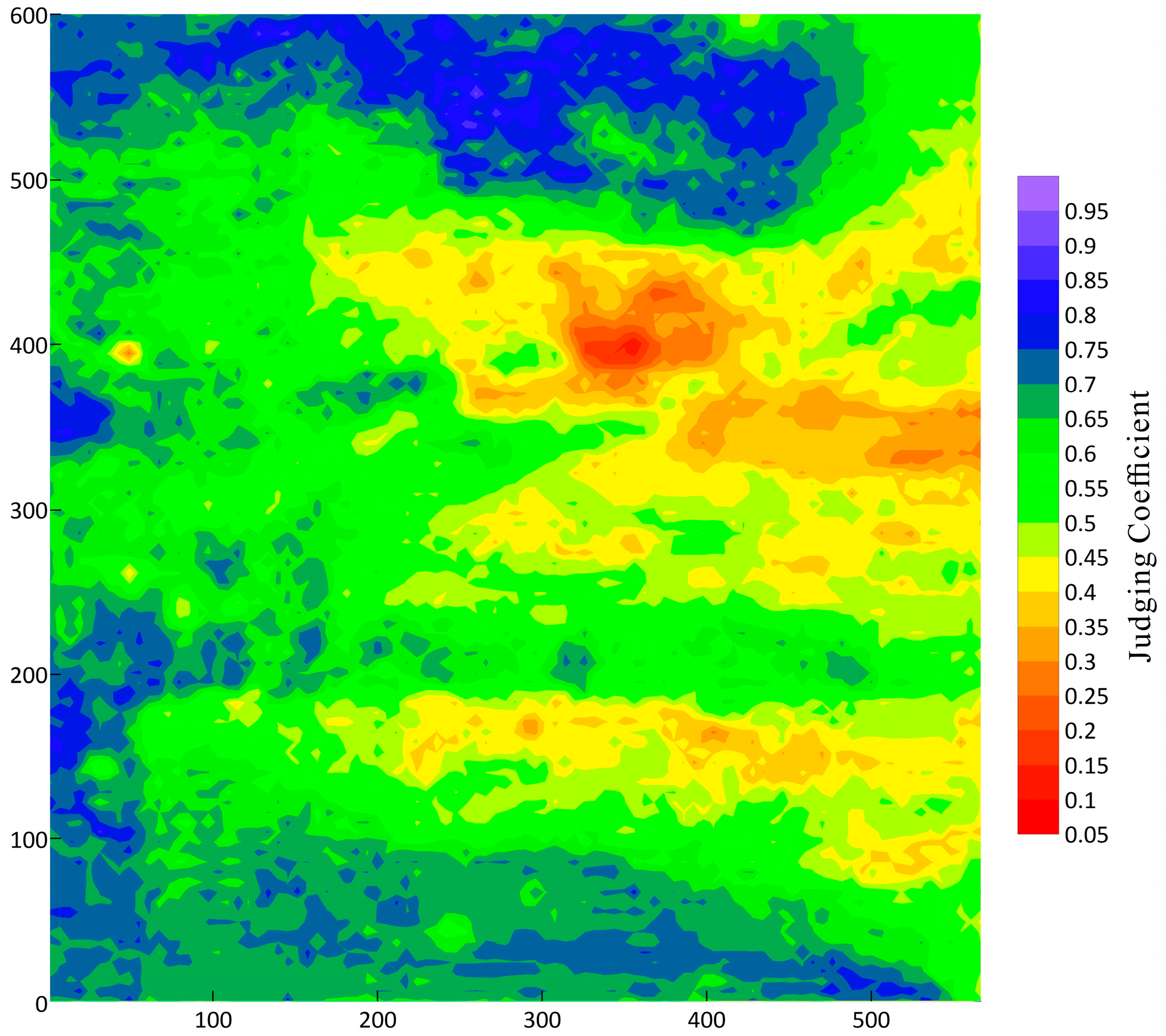
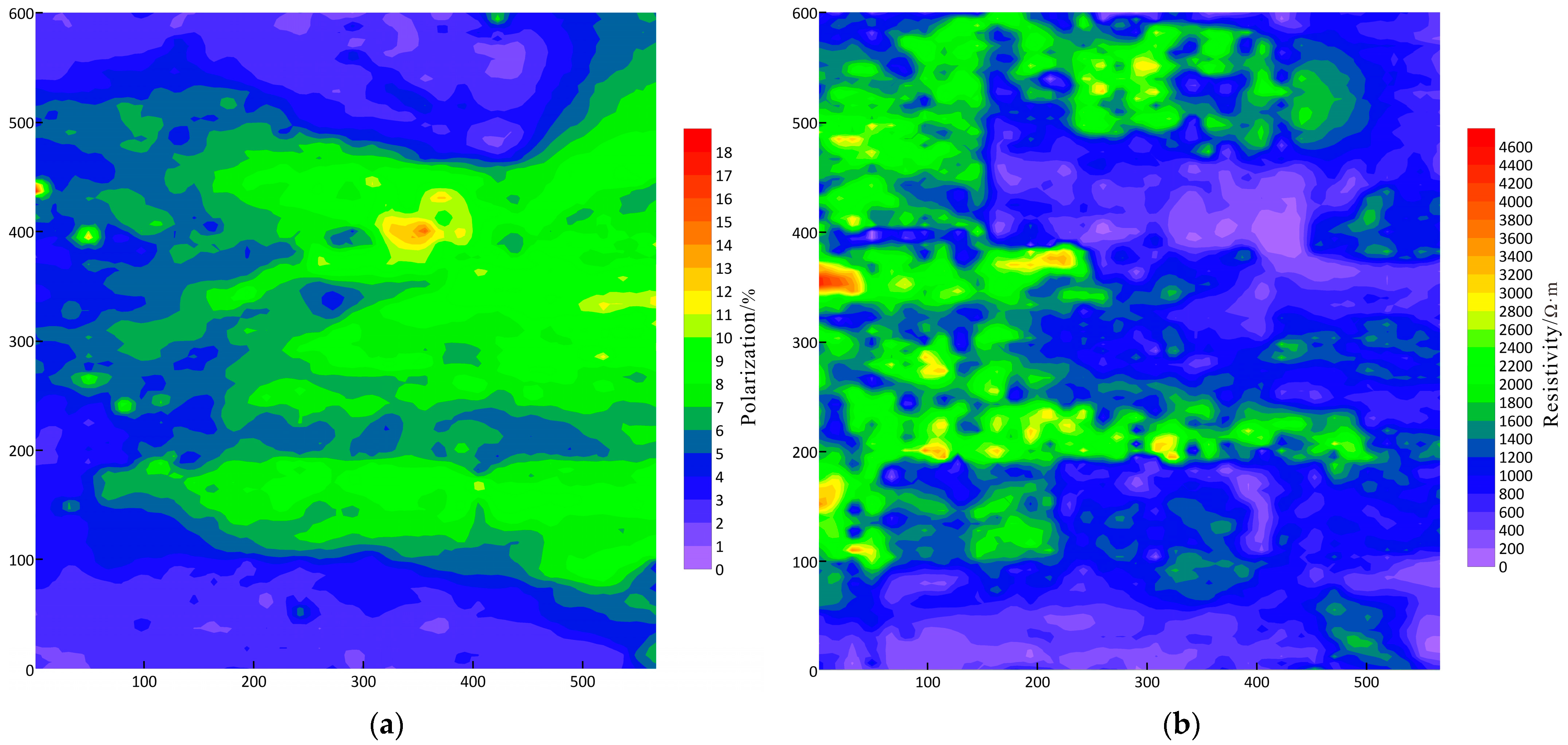
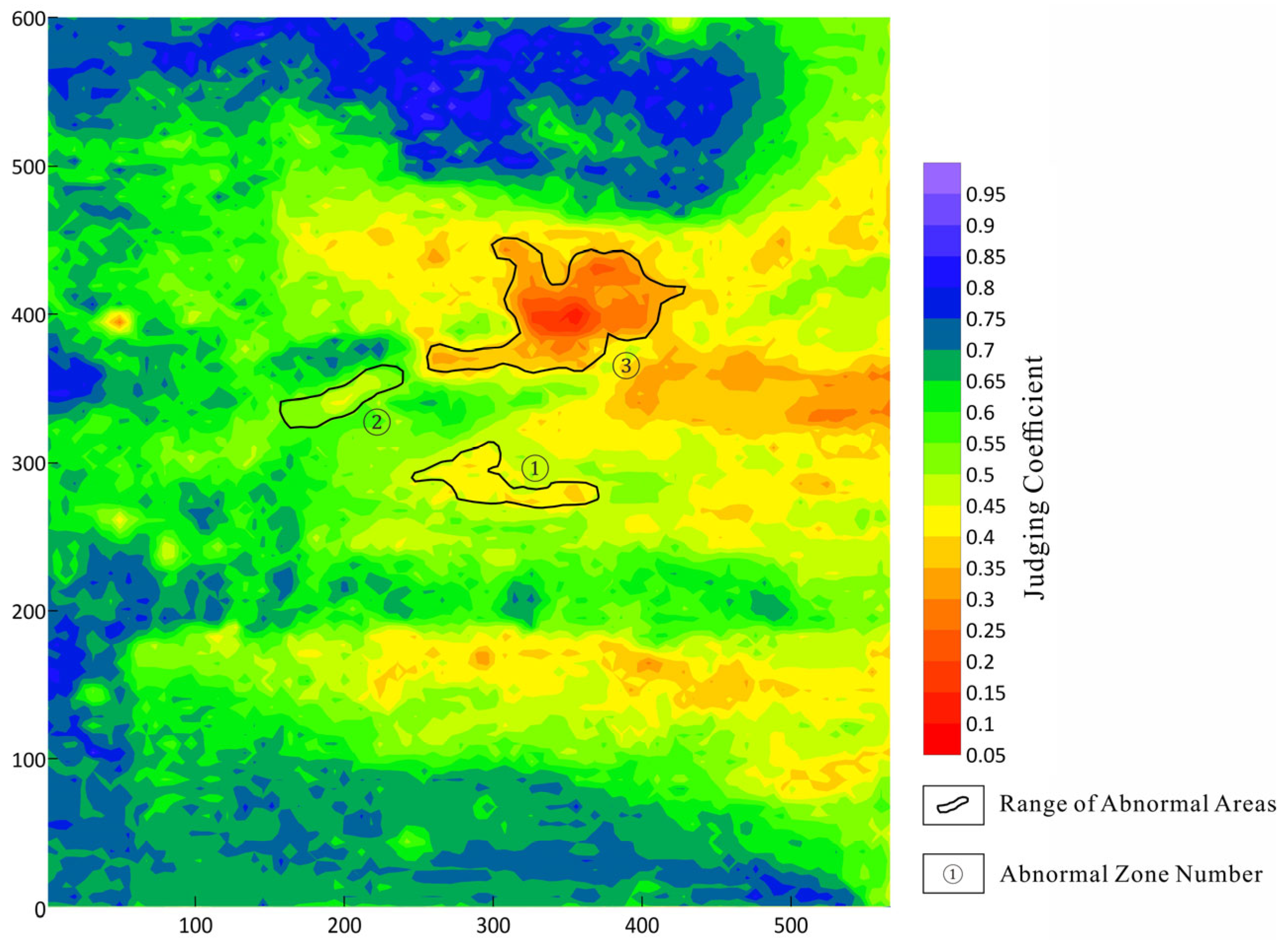
This dataset targets rock masses characterized by low resistivity and high polarization. To determine the fusion evaluation value, it is essential to integrate existing prior information from the survey area. The accuracy of this value improves with more prior information. Subsequently, the collected geological data will be compared and analyzed alongside the fusion results. According to the anomalous zones delineated on the fused image (
Figure 9) based on the polarizability contour plan view (
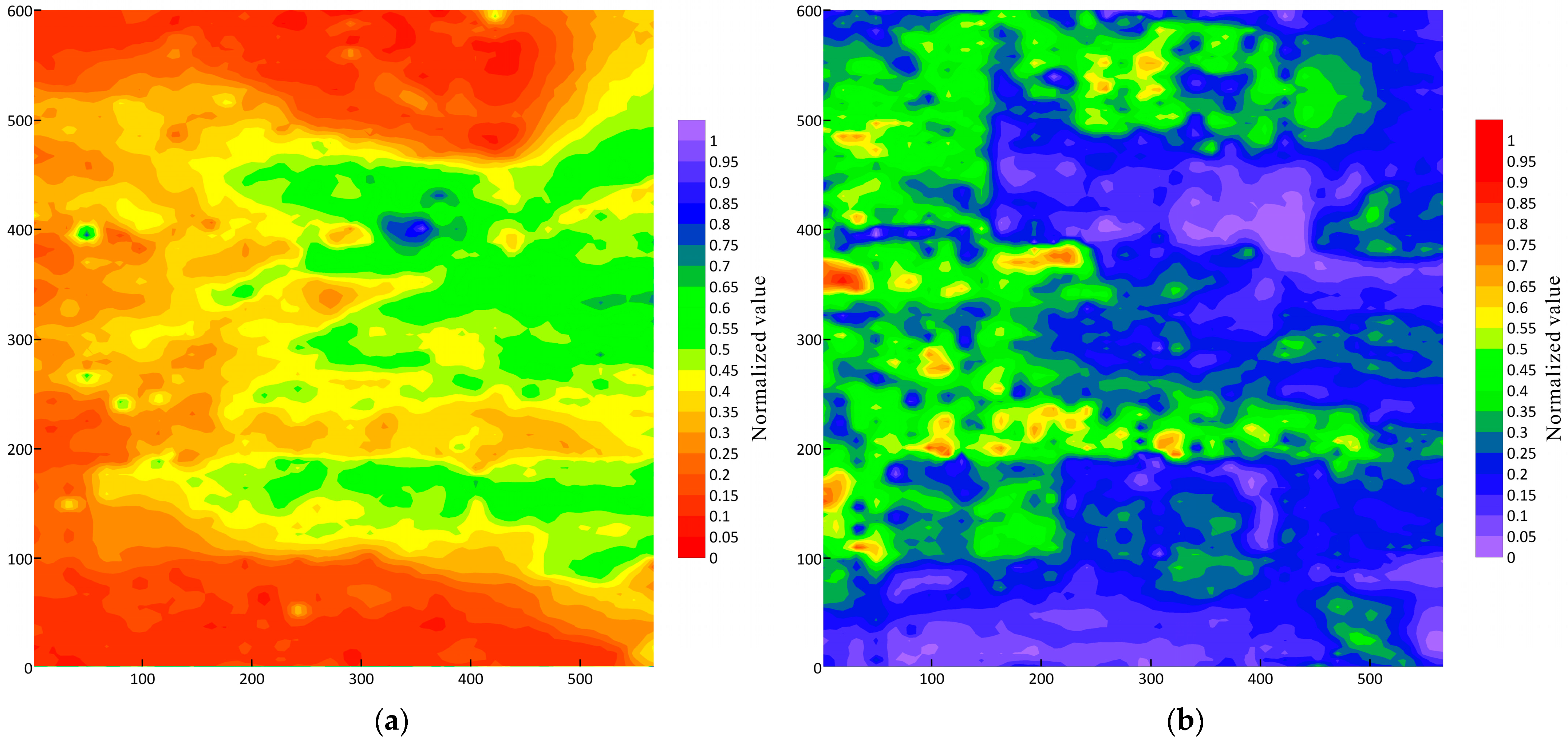
Figure 6a), three high-polarization anomaly areas can be identified within the study area: ① Situated in the middle of the survey area, this anomaly displays an irregular patchy distribution with an east–west orientation. It measures approximately 900 m in length and 400 m in width, with a maximum apparent polarizability of 10%; ② Also centrally located, this anomaly exhibits a northeast-trending banded distribution, measuring about 500 m long and 120 m wide, with a maximum apparent polarizability of 10%; ③ Found in the north-central region, this anomaly extends in a north-northeast banded shape, with a relatively large scale and a maximum apparent polarizability of 15%. These anomalies are clearly delineated in the final fusion image, with well-characterized spatial morphology, boundary features, and internal structure, retaining detailed information. Additionally, the resistivity contour plan view (
Figure 6b) illustrates that the fusion results effectively depict the boundary between low-resistivity and high-resistivity areas in the northwest and central regions. This indicates that the fusion results possess high resolution capabilities for anomaly identification and detail representation.
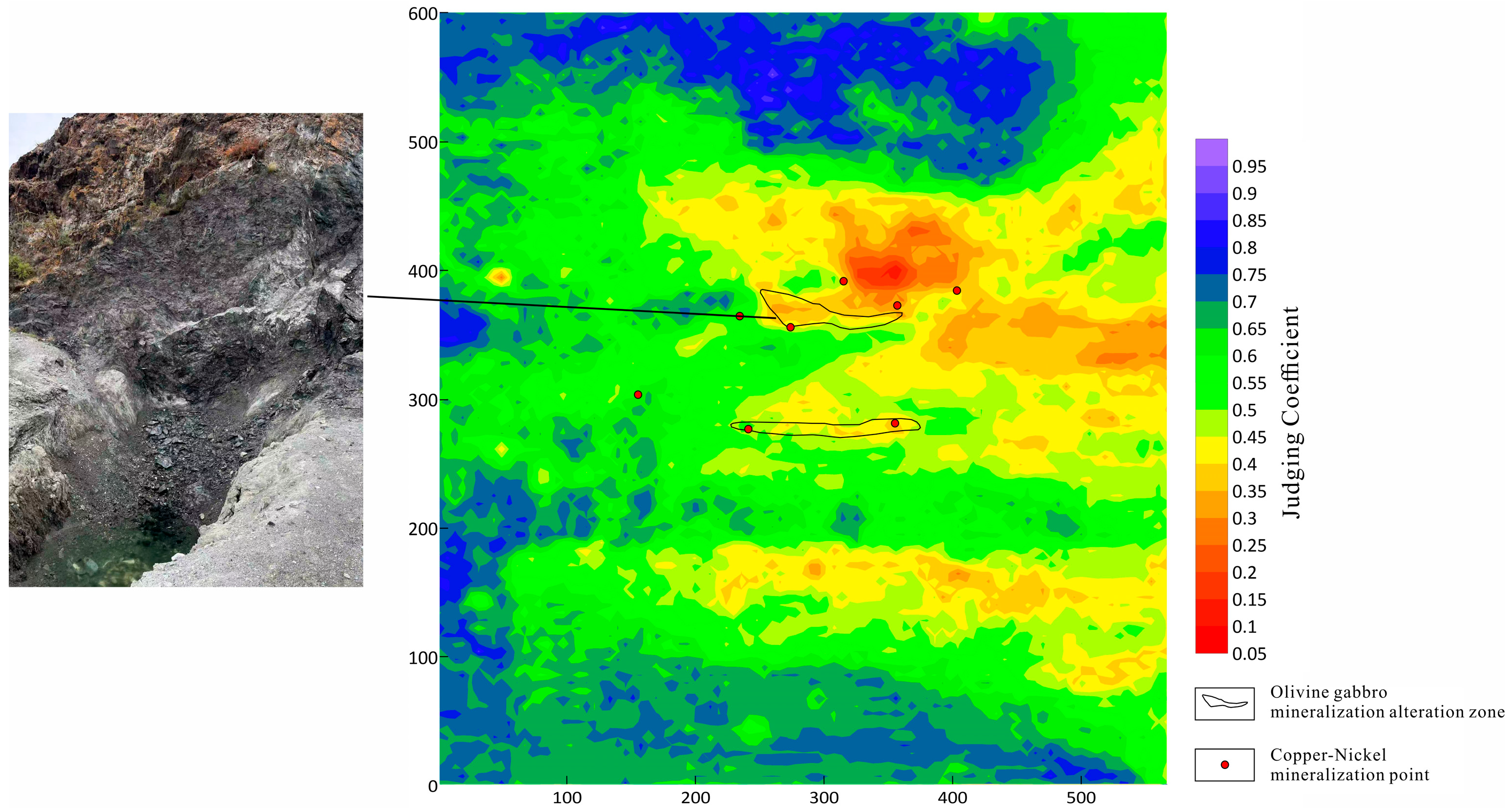
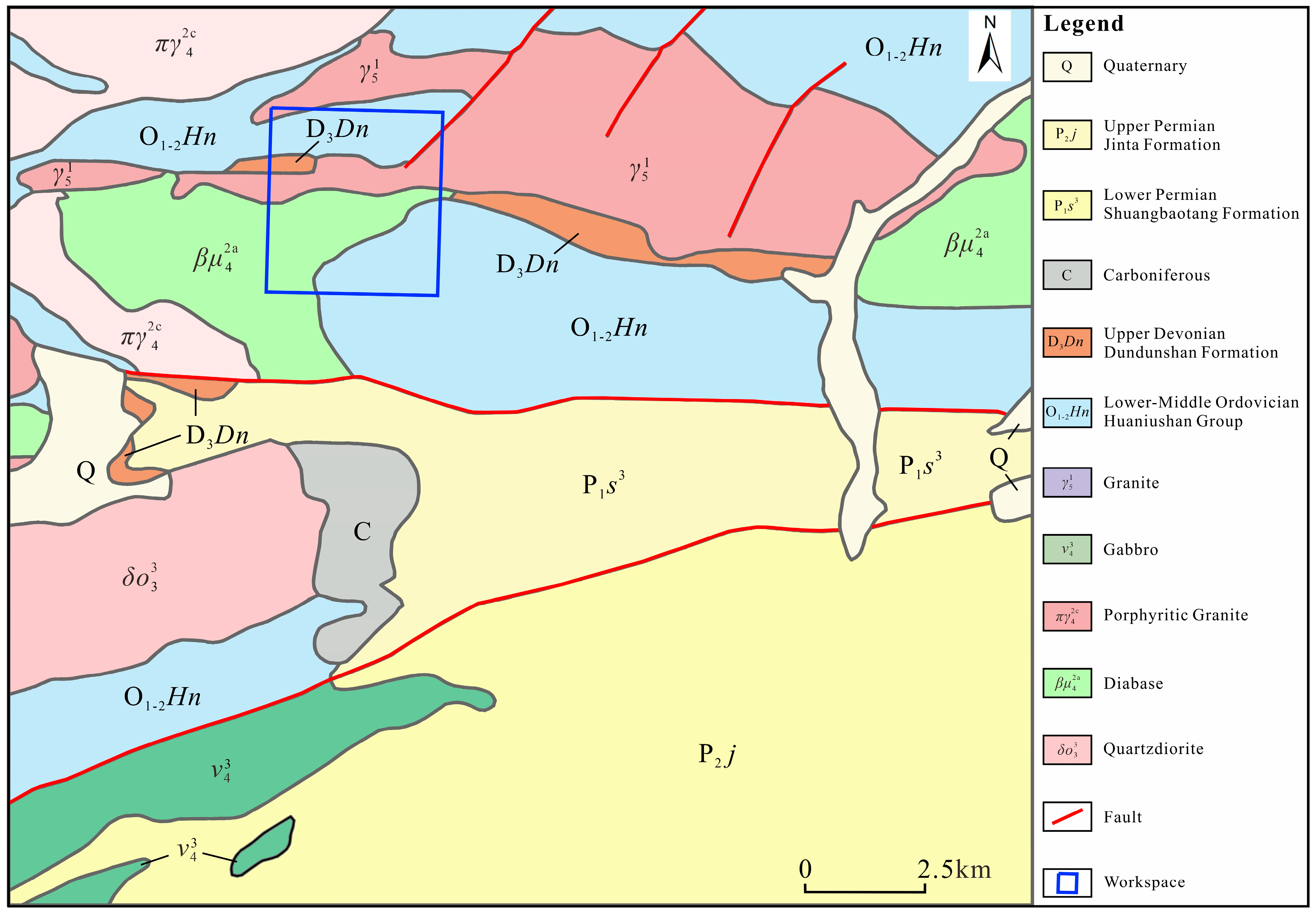
We compared the locations of the basic and ultrabasic rock masses indicated in the data. The data reveals that these rock masses are exposed in the central part of the study area. In
Figure 10, black polygons illustrate the shapes of the basic rock masses visible on the surface. Altered rocks exhibit physical properties of low resistivity and high polarization, reflected as low values in the judgment coefficient. Within the black polygon area, judgment coefficients predominantly fall below 0.45. Furthermore, most copper–nickel mineralization points identified in the data are also situated where the judgment coefficient is less than 0.45. Overall, the areas with low values in the fused image align with the regions marked in the data.
The analysis above demonstrates that the low-resistivity and high-polarization anomaly areas identified in the fused image align closely with established geological data. In the central region, low-resistivity anomalies match the outcrop locations of basic and ultrabasic rock masses, with most judgment coefficients in these areas falling below 0.45. This further confirms the fused image’s effectiveness in identifying altered rocks. The fusion results exhibit exceptional accuracy in detecting anomalies and precisely delineate the anomaly’s outline, spatial morphology, and internal details. This high resolution and reliability suggest that the fusion method can accurately identify the target body. The foregoing analysis shows that the low-resistivity and high-polarization anomaly zones in the fused image correspond closely to known geological data. In the central area, low-resistivity anomalies coincide with outcrops of basic and ultrabasic rock masses, and most judgment coefficients there are below 0.45. This correspondence confirms the fused image’s ability to identify altered rocks. The fusion results detect anomalies with high accuracy and precisely delineate their outlines, spatial morphology, and internal structure. Such resolution and reliability indicate that the fusion method can accurately locate the target body. This improvement stems from the complementary effects of the two fusion stages: the low-frequency dynamic weighting enhances the target-related background response, while the high-frequency NMP rule sharpens anomaly boundaries and local structural details.
4.2. Effects of Different Parameters on the Fusion Results
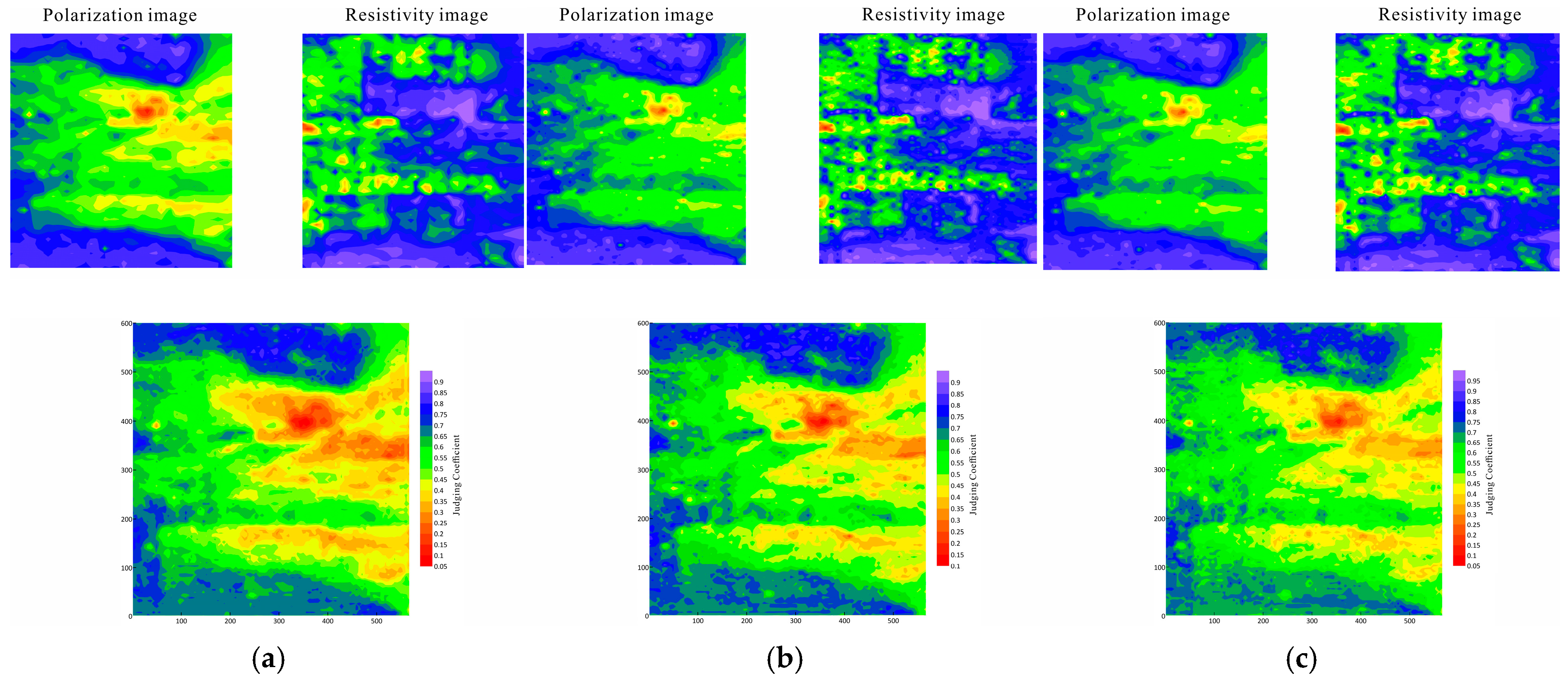
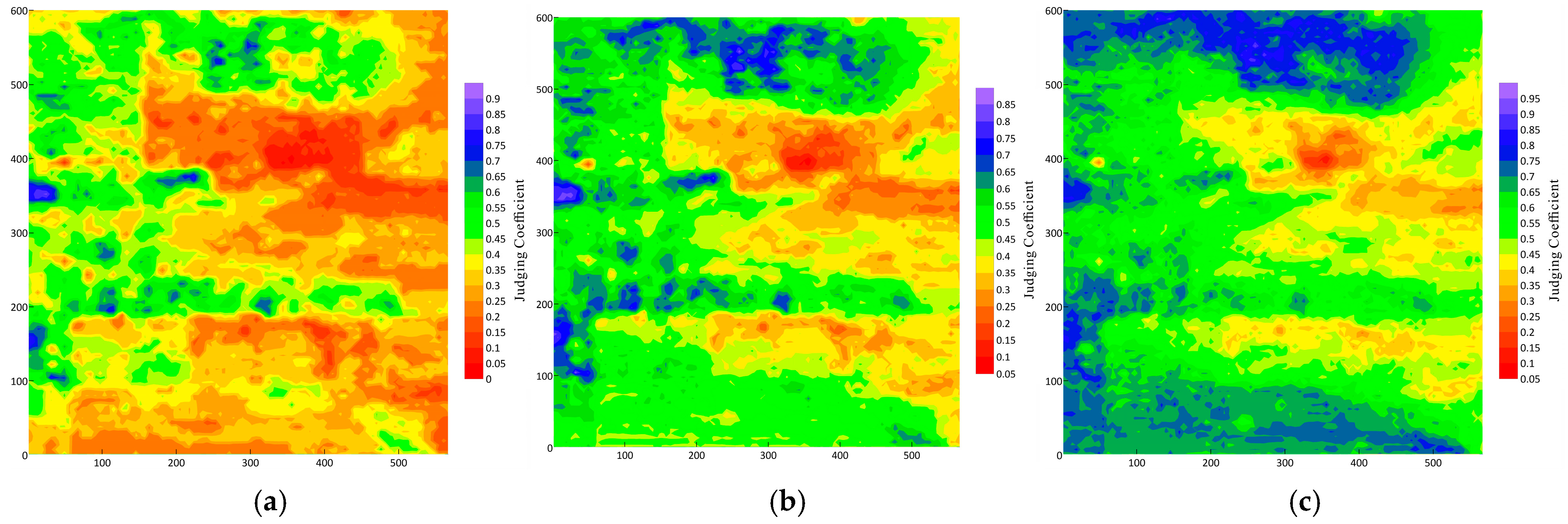
The fusion coefficients of low-frequency sub-bands play a crucial role in determining the contribution proportions of various physical property data to the macroscopic structure of the fused image. These coefficients are essential for balancing geological background information with mineralization data. To determine the low-frequency fusion weights more systematically, a series of comparative experiments was conducted with the weight ranging from 0.8 to 0.2. Based on the experimental results and the typical “low resistivity–high polarization” electrical characteristics of copper–nickel deposits, three representative weight combinations with the most pronounced differences in fusion performance were selected for presentation. Specifically, the experiments involved the following weight allocations: (a) polarizability rate weight = 0.25 and resistivity weight = 0.75; (b) polarizability rate weight = 0.5 and resistivity weight = 0.5; (c) polarizability rate weight = 0.75 and resistivity weight = 0.25, to assess how weight allocation affects the fusion results (
Figure 11).
When the polarizability weight is set at 0.25, the fused image primarily reflects resistivity data, offering a clearer view of the regional geoelectric structure on a macroscopic scale. However, this setting significantly suppresses highly polarized mineralization anomalies, resulting in blurred anomaly boundaries and complicating the distinction between mineralized bodies and low-resistivity surrounding rocks. With equal weights, the fused image strikes a balance between macroscopic structure and local anomalies, yet the anomalies remain insufficiently prominent, limiting the ability to detect weak mineralization signals. Increasing the polarizability weight to 0.75 significantly enhances the spatial morphology, boundary contours, and internal details of highly polarized anomalies in the fused image. This enhancement aligns closely with the spatial distribution of known basic-ultrabasic rocks and copper–nickel mineralization points, effectively highlighting the core prospecting indicator of “high polarizability.”
The experimental results suggest that choosing fusion coefficients for low-frequency sub-bands should align closely with the physical properties of the detection targets. In the case of copper–nickel ores, polarizability is a more significant indicator for sulfide mineralized bodies, warranting a higher weight. Conversely, for ore deposits primarily characterized by density anomalies, the fusion weight of gravity data should be increased. This dynamic weight distribution strategy effectively suppresses interference from non-target physical properties, enhances key anomaly information, and improves both the geological interpretation accuracy of the fused images and the efficiency of ore prospecting.
- 2.
Grid size of the source image
The grid size of the source image is crucial in geophysical data gridding and imaging, as it affects spatial resolution, anomaly shape restoration, and computational efficiency. In this experiment, while maintaining constant fusion coefficients for the low-frequency sub-bands and other NSCT parameters, we designed three grid density groups for comparative analysis: (a) a large-size grid with a density of 48 × 50, about half the default size; (b) a small-size grid with a density of 190 × 200, roughly double the default size; and (c) a medium-size grid with a density of 95 × 100, nearly equivalent to the default size of 100 × 100. This setup aims to quantify how grid density influences fusion results (
Figure 12).
The experimental results reveal a significant relationship among grid size, detail expression of the fused image, noise sensitivity, and computational cost. Using a large grid size increases data interpolation, resulting in a smoother overall fused image. However, this causes over-blurring of high-polarization anomaly boundaries, broadens anomaly morphology, and loses information on subtle structures and local mineralization, failing to accurately depict the real spatial distribution of underground ore bodies. While this smoothing effect reduces noise interference, it also weakens the distinguishability of key ore-prospecting indicators, hindering geological interpretation. Conversely, a small grid size theoretically offers higher spatial resolution, clarifying anomaly features and detail boundaries, but the actual improvement is limited. It significantly amplifies random noise and measurement errors in the original data, leading to unnecessary fine fluctuations in the fused image. Additionally, it increases computational time and storage demands, greatly reducing data processing efficiency.
A grid of approximately 100 × 100 achieves an ideal balance between preserving detail and suppressing noise. At this density, the fused image effectively presents the regional geological background and macroscopic tectonic patterns while accurately delineating the morphology of highly polarized anomalies. Comprehensive analysis indicates that selecting the grid size must consider both geological interpretation accuracy and computational feasibility. For the copper–nickel deposit exploration target in this study area, the 100 × 100 grid size excels in anomaly recognition accuracy, detail expression, and computational efficiency, making it the optimal choice.
- 3.
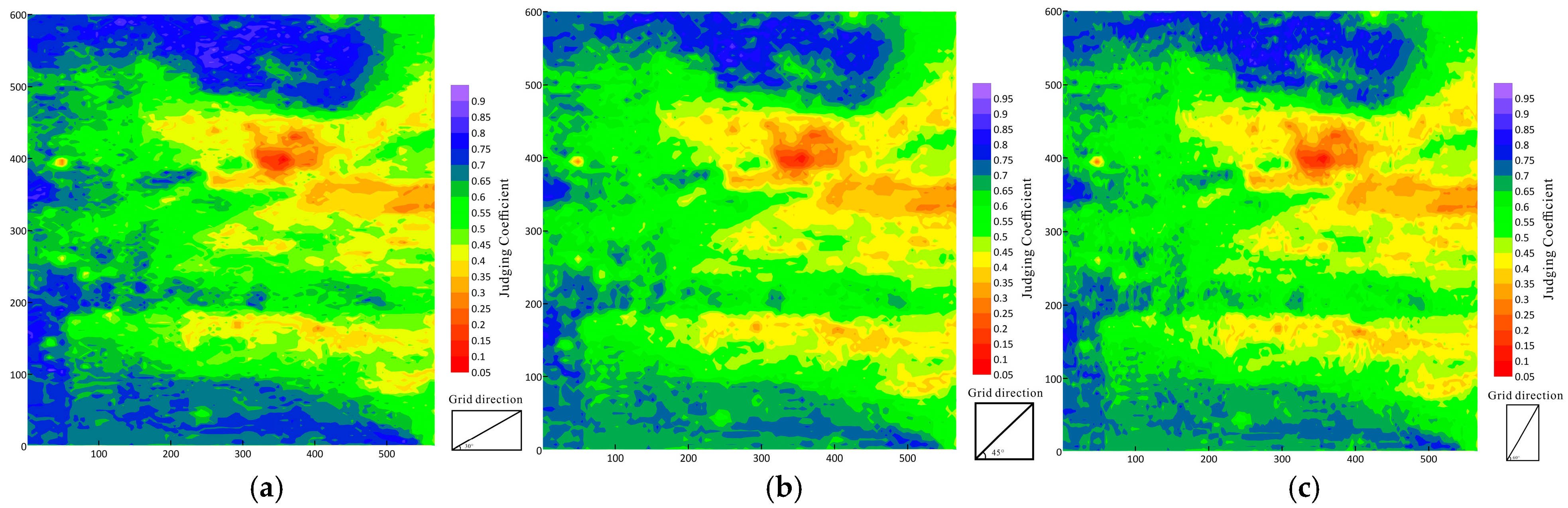
Directionality of grid shapes
The grid angle significantly influences the spatial expression of fused images and the characterization of abnormal morphology by constraining interpolation direction and contour generation paths. In this experiment, while maintaining constant grid size, fusion coefficients of the low-frequency sub-bands, and NSCT parameters, three grid angles—30°, 45° (1:1 square grid), and 60°—were set to systematically analyze their effects on data interpolation, contour generation, and the fused image. The study primarily aimed to verify the stability of abnormal morphology trending northeast in the central part. The comparison of fusion results under different grid angles is shown in
Figure 13.
The experimental results indicate that the grid angle significantly influences the directionality of data interpolation and contour generation. With an asymmetric grid of 30° or 60°, the interpolation algorithm’s directional sensitivity is heightened, causing the contour trend to align with the grid angle and disrupting contour continuity. In contrast, the 45° (1:1 square) grid offers geometric symmetry. The constraint effect of directional interpolation remains balanced, avoiding biased constraints in specific directions. This approach allows contour lines to more accurately reflect the spatial variations in subsurface physical property parameters, aligning the trends and shapes of contour lines more closely with the actual distribution characteristics of geological bodies.
The stability analysis of abnormal morphologies reveals that the position, strike, and boundary contours of the northeast-trending anomaly in the fused image exhibit minimal change across different grid angles. This suggests that within a reasonable grid angle range (30–60°), variations in grid angle have limited impact on the true morphology of the abnormal body. Consequently, the northeast-trending anomaly identified in the fused image demonstrates high stability, providing a reliable basis for understanding the spatial distribution of the abnormal body. Additionally, slight fluctuations in the abnormal boundary under asymmetric grids indicate that symmetric grids should be prioritized in geological interpretation. This approach minimizes the interference of artificial geometric constraints on the characterization of abnormal morphologies, thereby enhancing the objectivity and credibility of interpretation results. Selecting grid angles requires balancing interpolation accuracy with the fidelity of abnormal morphologies. For the copper–nickel deposit exploration target in this study area, a 45° (1:1 square) grid optimally balances directional constraints, enhances the authenticity of contour lines, and ensures the stability of abnormal morphologies.