


Abstract
This study investigated the extraction of aluminum from aluminum silicate-rich coal ash from the ash-slag waste of the Almaty CHP-2 power station using microwave-assisted alkaline leaching. The high chemical stability of the quartz and mullite phases in the ash leads to high energy consumption during conventional acid–base treatment. To improve the kinetic parameters of the leaching process, amorphous graphite was therefore used as an active additive, which effectively absorbs microwave energy. The experiments were conducted in the temperature range of 50–200 °C, in 1–6 M NaOH solution, and over a period of 5–30 min. The amount of amorphous graphite varied between 5 and 20 wt%. The proportion of amorphous graphite varied between 5 and 20 wt%. Upon microwave irradiation, the graphite-free ash reached a temperature of 200 °C within approximately 12 min, whereas this temperature was reached in the system with 15% amorphous graphite after only 8–9 min. At low alkali concentrations (1–2 M NaOH), the aluminum transfer into solution in the graphite-free system was approximately 18%–35%. With increasing NaOH concentrations to 3–4 M, the aluminum removal efficiency increased to 38%–58%. Under the same temperature conditions, the leaching process was significantly accelerated by the addition of amorphous graphite; thus, at temperatures near 200 °C and in a 5–6 M NaOH solution, 70%–72% of aluminum was removed. The leaching kinetics were analyzed using the shrinking core model. The results showed that the apparent activation energy of the reaction decreased from 54 kJ/mol to 32 kJ/mol in the presence of graphite. These results suggest that microwave-assisted alkaline leaching in the presence of amorphous graphite is an energy-efficient and promising method for aluminum recovery from coal ash.
1. Introduction
Coal combustion residues, commonly known as fly ash or boiler ash, constitute one of the most important categories of industrial waste generated during the thermal conversion of coal for electricity production [1,2,3]. Due to their mineralogical and aluminosilicate composition, these residues have a complex multiphase structure and a marked physico-chemical stability, which considerably complicates their treatment and their valorization [4,5,6]. The persistent dependence on coal in the world’s energy systems leads to the annual accumulation of millions of tons of ash, making their recycling and efficient recovery a major environmental and technological challenge [7,8,9]. Due to the high chemical stability of the mineral glass phase in the ash of No. 2 thermal power plant in Almaty, this is one of the most difficult phases to treat [10]. Mullite, quartz, amorphous aluminosilicate glass phase and carbon black—the main components of the ash—are characterized by low solubility in alkaline and acidic media, as well as high resistance to chemical decomposition. Due to these disadvantages, the complete dissolution of the minerals in the ash requires high temperatures, high concentrations, and long reaction times [11,12,13,14].
The hydrometallurgical processes for obtaining industrially important minerals from coal ash, such as aluminum, are usually carried out at a temperature of 200–300 °C, require a long chemical reaction time, and a large amount of highly concentrated reagents [15,16,17]. These factors increase energy demand and operating costs, thus reducing the economic and environmental viability of these technologies. Therefore, the search for alternative activation strategies for aluminosilicate raw materials has become a major scientific and industrial priority.
The application of microwave energy (2.45 GHz) to hydrometallurgical systems has aroused considerable interest in recent years as a promising method for increasing the reactivity of solid phases by selective and volumetric heating [18,19,20]. The generation of heat induced by microwaves strongly depends on the dielectric properties of the material; however, coal ash has a low absorption of microwaves, which translates into an inefficient direct heating under microwave irradiation [21]. This limitation motivated the introduction of carbonaceous additives absorbing microwaves—in particular amorphous graphite—as auxiliary activators to improve energy absorption [22,23,24].
Amorphous graphite has a high dielectric loss factor, which allows for a very efficient absorption of microwave radiation and the formation of localized high-temperature zones (“hot spots”) around the carbon particles [25,26,27]. These localized thermal regions weaken the structural network of the aluminosilicate matrix, increase the reactivity of the mullite and amorphous glass phases, and significantly accelerate the dissolution of aluminum in an alkaline medium [28,29,30]. However, the precise role of graphite in an alkaline medium under microwave irradiation, its indirect influence on the Gibbs free energy of the reactions concerned, the thermodynamic stability of the aluminosilicate phases under microwave radiation, and the limiting kinetic steps of the leaching process still remain poorly understood.
The available literature on the kinetics of aluminum dissolution from fly ash is mainly limited to conventional convection heating, while studies on the synergistic effects of microwave fields and carbon absorbers are few [31,32,33,34]. The underlying kinetic mechanisms—described, for example, by the shrinking nucleus model, chemically controlled processes, and diffusion-dominated phases (internal and external diffusion)—also require further systematic study under microwave-assisted conditions.
Given these research gaps, the present study aims to examine the thermodynamic and kinetic behavior of microwave-assisted alkaline leaching of aluminosilicate raw materials from coal ash from the Almaty thermal power plant, in the presence of amorphous graphite. The specific objectives include the evaluation of the synergistic effects of microwave irradiation and graphite on the structural degradation of the aluminosilicate matrix, the evaluation of the favorable thermodynamics of aluminum dissolution reactions, and the elucidation of the predominant reaction mechanisms using kinetic models.
In this work, the phase composition, morphology, and chemical properties of CHPP-2 ash samples were studied in detail by XRD and SEM. The microwave absorption behavior of amorphous graphite was analyzed, and the effects of temperature, time, NaOH concentration, and graphite dosage on the aluminum extraction efficiency were systematically evaluated. In addition, the reaction kinetics and the activation energies were calculated, and the experimental results were supported by thermodynamic interpretations.
The results of this study provide a scientific basis for the development of energy-efficient hydrometallurgical processes for recovering recoverable components from technogenic residues rich in aluminosilicates, such as coal ash. In addition, these results are of certain practical interest for the development of sustainable waste recycling technologies in the industrial sector.
2. Materials and Methods
2.1. Raw Materials and Their Properties
The ash and slag residue sample used in this study came from thermal power plant No. 2 in Almaty. It was dried for 12 h at 105 °C and then sieved to obtain a particle size fraction of less than 80 µm.
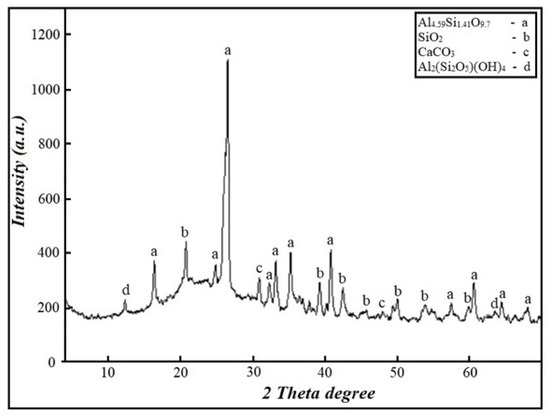
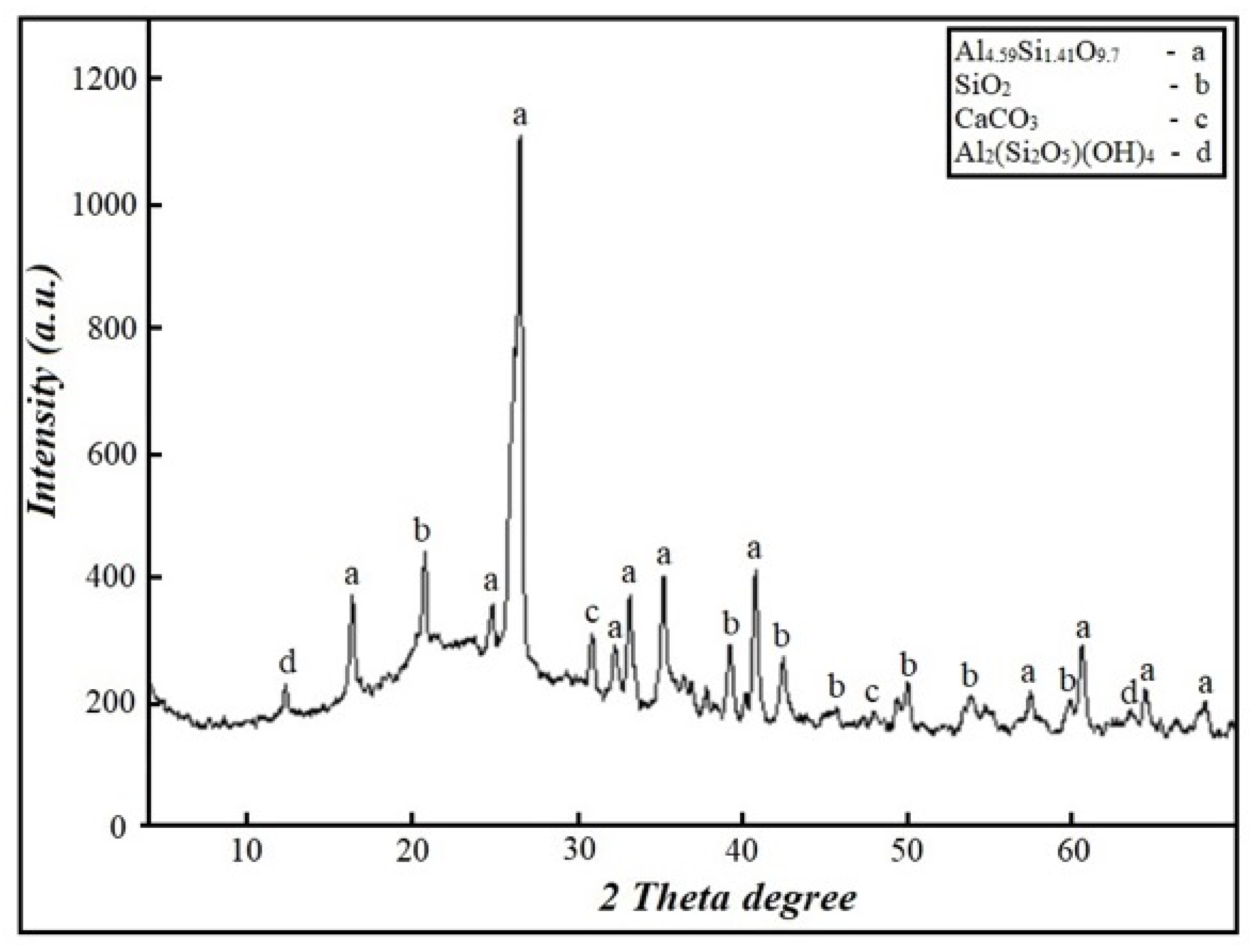
The X-ray diffraction results presented in Figure 1 indicate that the starting material, composed of ash and slag is a multiphase aluminosilicate system. Distinct diffraction peaks, attributable to mullite and quartz, confirm that these phases dominate the crystalline part of the ash matrix. In addition, a large amorphous halo in the 2θ range from 20 to 35° suggests the presence of a significant aluminosilicate vitreous phase. The predominance of mullite and quartz suggests that aluminum is incorporated in structurally stable phases, which limits its dissolution under conventional alkaline leaching conditions. On the other hand, the amorphous vitreous component, characterized by a structural disorder, represents the most reactive fraction and constitutes the main source of aluminum release during activation. Overall, the phase composition shown in Figure 1 confirms that the ash-slag material is chemically inert in the natural state, but can be considered as a promising aluminosilicate raw material for the production of aluminum when it is treated using intensified methods.
Figure 1.
Results of the analysis of the composition of the original ash and slag waste.
2.2. Production of Amorphous Graphite and Composite Systems
As part of the study, amorphous graphite was used as a carbon material that can intensively absorb electromagnetic energy in the microwave process. The selected material is a technical powder with a carbon content of about 94% and an average particle size of a maximum of 50 µm. The finely distributed structure increases the dielectric loss factor of the graphite and thus the heat generation in the microwave field. Graphite ash slag material was added in amounts of 5, 10, 15 and 20% by mass. To ensure a homogeneous structure of the mixtures, the components were mechanically mixed for 30 min in a ball mill at 300 rpm. As a result of this processing, the graphite particles are evenly distributed on the surface of the aluminosilicate grains, which prevents local agglomerations in the composite system. The dispersed graphite distribution stabilizes the spatial energy distribution during microwave irradiation and thus ensures uniform heat generation in the reaction zone. The composite mixtures produced were subsequently used as the primary reagent system in alkaline microwave leaching experiments.
2.3. Microwave Processing System
Microwave processing experiments were carried out in a closed laboratory reaction system of the type SINEO TANK eco (Sineo Microwave Chemistry Technology Co., Ltd., Shanghai, China). The device operates in the standard industrial microwave range at 2.45 GHz and allows fine tuning of the power. The processing processes were carried out in chemically resistant polytetrafluoroethylene (PTFE) reactors, which made it possible to avoid additional impurities or side reactions in an alkaline environment. The temperature modes were selected according to the experimental goals, and the heating was carried out in continuous or pulsed radiation mode. The use of the pulse mode allows for the control of the heat load and prevents overheating of the reaction medium.
2.4. Alkaline Leaching Process
To study the regularities of the transition of aluminum in solution, sodium hydroxide was used as an alkaline medium. In the experiments, NaOH solutions with concentrations of 1–6 M were prepared and their influence on the release of aluminum was systematically studied. The leaching experiments were carried out at a fixed liquid/solid ratio (L/S = 10:1).
For each experiment, 20 g of the prepared ash–graphite mixture was added to a NaOH solution of an appropriate concentration. The mixtures were introduced into the microwave reactor and the temperature was maintained between 50 and 200 °C. The duration of the reaction varied from 5 to 30 min, while a natural increase in the internal pressure of the reactor, from 2 to 8 bar, was tolerated with the rise in temperature.
After treatment, the reaction mixture was immediately cooled and the solid and liquid phases were separated by vacuum filtration. Solid residues were washed several times with distilled water and then dried for further analysis. The concentration of aluminum ions in the liquid phase was determined by atomic absorption spectrometry using a GBC Savant spectrometer (GBC Scientific Equipment Pty Ltd., Keysborough, Australia).
The degree of dissolution of aluminum in the solution (%) was calculated using the following equation [35,36,37]:
where E—efficiency of aluminum transition into solution, %; C—concentration of aluminum in solution, g/L; volume of solution, l; mAl2O3—mass of Al2O3 in the initial ash (g); 0.529—stoichiometric conversion factor from Al2O3 to elemental aluminum.
All experiments were performed in triplicate (n = 3) to ensure reproducibility. The values shown in the graphs correspond to the average results, and the error bars indicate the standard deviation of the measurement results.
2.5. Complete Analysis of Phase and Morphological Transformations
In-depth analyses were carried out to determine the structural, phase, and morphological changes of the solid residues before and after microwave-assisted alkaline leaching.
Phase analysis. In order to study the evolution of the crystalline and amorphous phases, the samples were analyzed using a DRAWELL DW-XRD-27 mini X-ray diffractometer (Chongqing Drawell Instrument Co., Ltd., Chongqing, China), with CuKa radiation (λ = 1.5406 Å) in the 2θ range from 10 to 80°. The relative proportions of mullite, quartz, and amorphous aluminosilicate phases were determined quantitatively by Rietveld refinement.
Morphological analysis. The changes in surface structure, the formation of cracks, the reaction zones, and the distribution of the graphite were studied using a Quanta 200i (MEB) 3D scanning electron microscope (FEI Company, Hillsboro, OR, USA).
The combination of the aforementioned methods allowed for a complete characterization of the structural degradation mechanisms, the phase redistribution dynamics, and the micromorphology of the reaction zones in the ash–graphite mixture created by microwave treatment.
2.6. Kinetic Studies of the Process
In order to characterize the rate of dissolution of aluminum in an alkaline medium, the leaching kinetics were studied using two main models. The experimental data were analyzed to identify the limiting step of the reaction and to compare the influence of a microwave treatment on its kinetics.
Shrinking core model (SCM): Assuming that the reaction of a solid particle takes place from its outer surface towards the core, the degree of dissolution of aluminum in the solution (X) has been correlated with time (t) using the following equations [32,35]:
Regime controlled by chemical reaction:
1 − (1 − X)1/3 = kt
Regime controlled by internal diffusion:
where k represents the apparent velocity constant. The calculated dependencies for each kinetic model were matched to the experimental data, and the obtained linearization results were statistically processed. When determining the controlling mechanism, the quality of approximation was taken as the main criterion and the values of the coefficient of determination (R2) were compared. The model that gave the highest reading R2 was taken as the dominant kinetic mode for the process under study.
1 − 3 (1 − X)2/3 + 2 (1 − X) = kt
Determination of activation energy based on the Arrhenius equation: kinetic data were processed according to the Arrhenius equation to quantify the effect of temperature on the reaction rate [32,35]:
k = Ae−Ea/RT
The activation energy value was determined by graphically constructing the de-pendence between the natural logarithm of the velocity constant (ln k) and the inverse of the temperature (1/T). Based on the slope of the obtained linear dependence, the energy barrier was calculated and the sensitivity of the process to temperature was estimated.
3. Results and Discussion
3.1. Thermal Behavior of Ash–Graphite Mixtures Under Microwave Irradiation
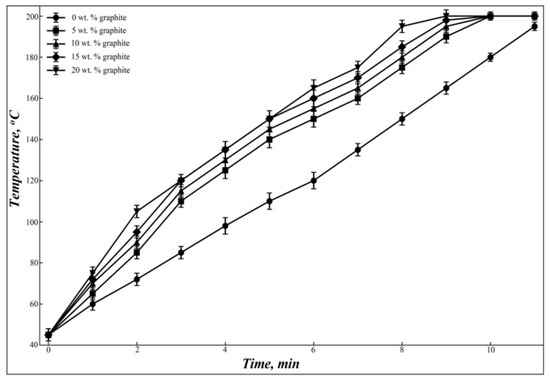
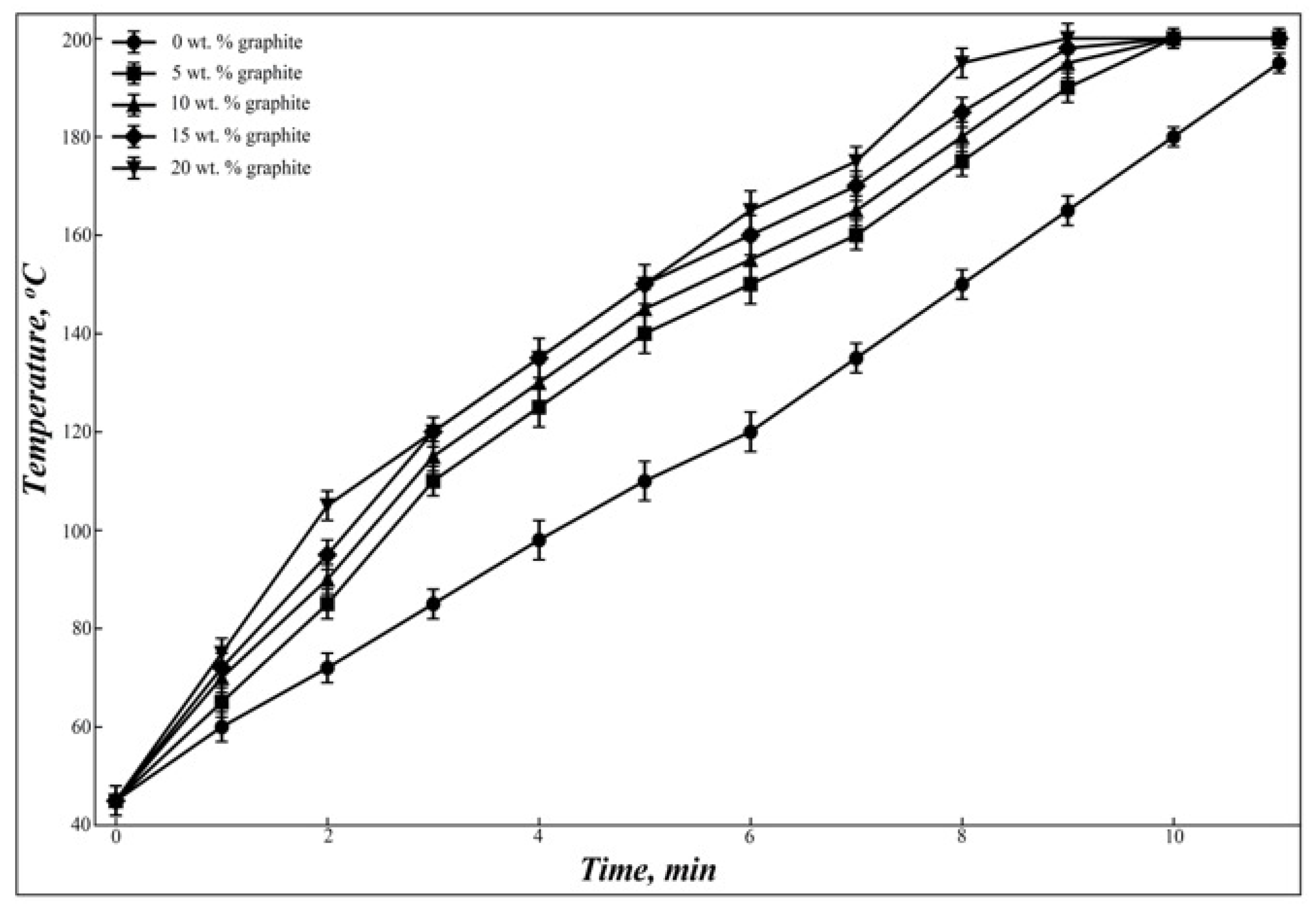
The study of the thermal dynamics of mixtures of ash, slag, and graphite under microwave irradiation is essential to understand the behavior of the material in the face of microwave energy, the distribution of heat, and the mechanisms of pre-activation [21,38]. The comparison of the temperature profiles as a function of time for different carbon contents makes it possible to quantitatively determine the energy absorbed and converted into heat, linked to the dielectric losses of the graphite (Figure 2).
Figure 2.
Temperature–time profiles of the ash–graphite mixtures under microwave irradiation.
These thermal effects contribute directly to the structural weakening of the aluminosilicate matrix, the formation of microcracks, and the subsequent acceleration of the leaching kinetics. The temperature–time curves obtained under microwave irradiation showed that the thermal behavior of the ash–slag system strongly depends on the graphite content. Experiments have shown that the heating time to 200 °C in a system containing 15 wt% amorphous graphite is approximately 8–9 min, while it is approximately 12 min for ash without graphite. The addition of graphite, which effectively absorbs microwave energy, thus reduces the heating time by approximately 25%–30%, thereby increasing the energy efficiency of the process.
The increase in the graphite content results in a more marked increase in the temperature curves, indicating a faster supply of energy to the system and the formation of zones of high thermal intensity in the material. These local temperature gradients weaken the aluminosilicate matrix, promote the formation of microcracks, and expose reactive sites. This effect is considered as an important pre-activation mechanism that directly improves the dissolution of aluminum during subsequent alkaline leaching.
Overall, the addition of 10 to 15% by weight of amorphous graphite significantly improved the thermal efficiency of the microwave treatment. The high heating rate and the increase in local temperatures in the reaction zone accelerate the structural destruction of the aluminosilicate phases and increase the overall kinetics of the leaching process. The results show that graphite plays a central role under the conditions of chemical activation by microwaves and can therefore be considered as a promising component for intensifying energy-saving technologies.
3.2. Synergistic Effect of NaOH Concentration and Amorphous Graphite Content on Aluminum Leaching
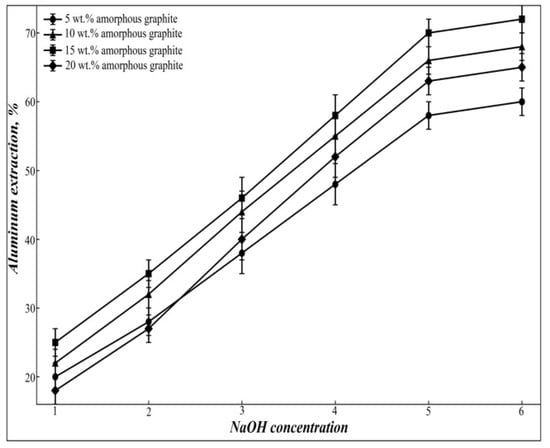
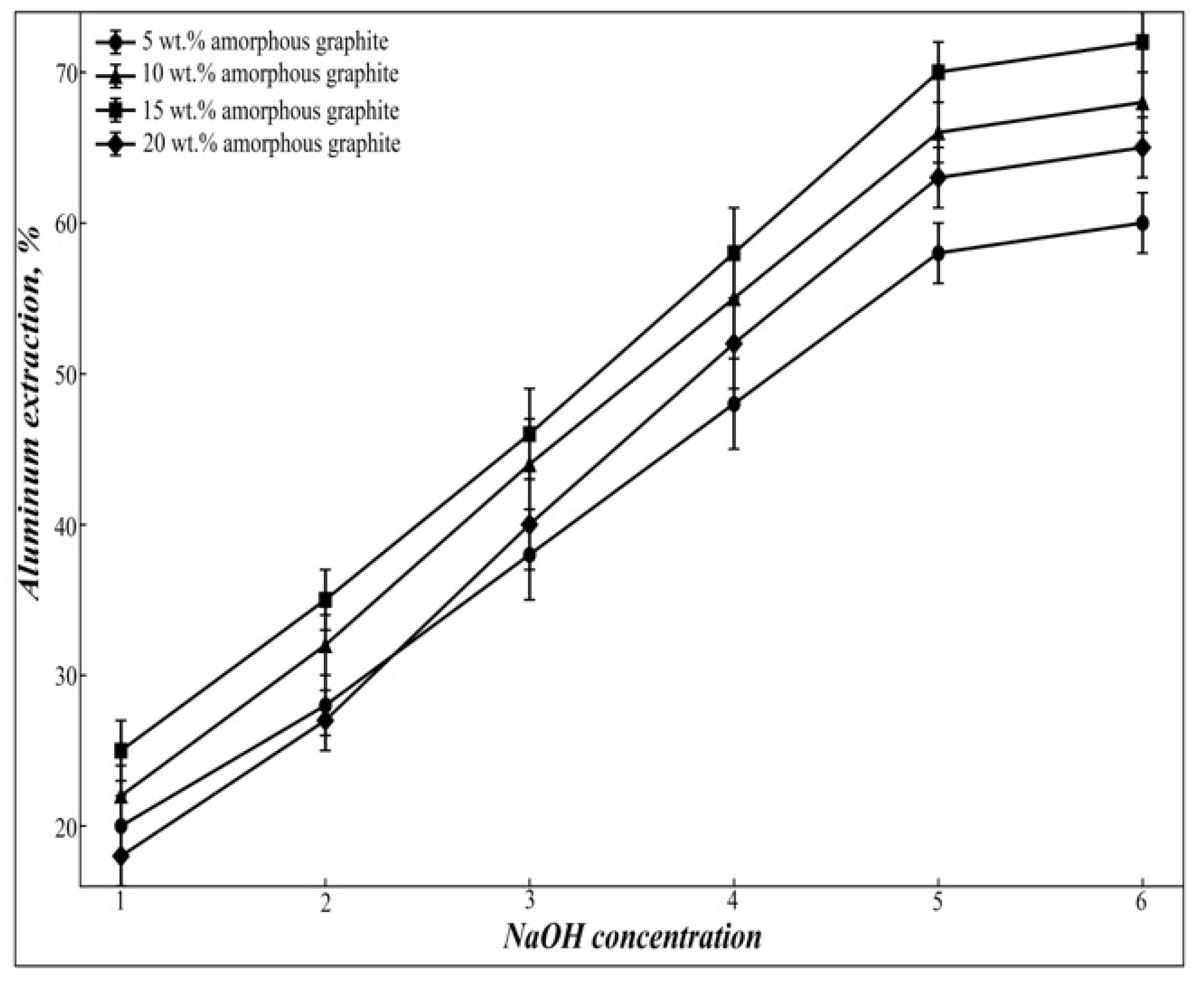
Figure 3 shows the joint influence of the NaOH concentration and the mass fraction of amorphous graphite on the aluminum yield from aluminosilicate material during microwave alkali treatment. The results clearly show that these two factors mutually reinforce each other in the regulation of aluminum transfer in solution.
Figure 3.
The influence of the NaOH concentration and the amount of amorphous graphite on the degree of transition of aluminum in solution under the conditions of alkaline microwave leaching.
In a region with a low alkali concentration (1–2 M NaOH), the degree of aluminum extraction remains relatively low: about 18%–25% in 1 M solution and 27%–35% in 2 M, depending on the amount of graphite. This can be explained by the fact that the degree of alkalinity of the solution is not sufficient to sufficiently depolymerize the structure of the mullite and amorphous aluminosilicate matrix, as a result of which the aluminum Al-O-Si bonds remain firmly anchored in the composition. Although a certain influence of amorphous graphite is observed in this concentration range, it is limited, which indicates that in this case, a chemical factor predominates over thermal activation.
At a NaOH concentration of 3–4 M, the aluminum yield increased significantly. With 5–15 masses of graphite in a 3 M alkaline medium, the aluminum yield was about 38%–46%, while at 4 M, it increased to 48%–58%. This significant increase is explained by the transition from slow solubility in the surface layer to intensive destruction of aluminosilicate phases in the material structure. Under these conditions, the formation of soluble aluminations, mainly Al(OH)4, is thermodynamically favored. In addition, amorphous graphite promotes the formation of local heating zones under microwave irradiation. As a result, microcracks can occur and mass transport processes can be accelerated, so that the alkali solution can penetrate deeper into the solid matrix.
The highest alum extraction values were observed at a NaOH concentration of 5–6 M. For 5, 10, 15, and 20 masses of amorphous graphite in a 5 M alkaline medium, the aluminum yields (based on the mass fractions) were about 58%, 66%, 70%, and 63%, respectively. With an increase in the concentration to 6 M, the values increased only slightly and reached maximum values of about 60%, 68%, 72%, and 65%, respectively. This trend indicates an approach to the saturation range. That is, the dissolution process is now no longer determined by the rate of a chemical reaction, but by diffusion constraints and the phase equilibrium.
The influence of the amount of amorphous graphite indicates a pronounced optimal range. Its share was between 5 and 15% by mass. An increase to 15% by mass led to a systematic increase in the aluminum yield over the entire NaOH concentration range. The high efficiency at 15% by mass of graphite can be explained by the intensive absorption of microwave energy and the resulting increased local heating, while the rheological properties of the suspension did not undergo significant changes. With a graphite quantity of 20% by mass, a further increase, especially at high NaOH concentrations, led to a slight decrease in the aluminum yield. This phenomenon is probably due to an increase in the viscosity of the suspension and a partial closure of the reaction surfaces of the aluminosilicates, as a result of which the diffusion transport of hydroxide ions is limited. At a graphite content of 20 wt%, a slight decrease in the degree of aluminum penetration into the solution was observed. This phenomenon can be explained not only by the increased viscosity of the suspension and the partial coverage of the aluminosilicate particles’ reaction surfaces, but also by the shielding effect of microwave energy. At high graphite concentrations, microwave energy is primarily absorbed by the carbon particles, reducing the microwaves’ penetration depth and leading to uneven heat distribution. Furthermore, the formation of local high-temperature zones (“hot spots”) around the graphite particles can impair the uniformity of heat and mass transfer and, to some extent, restrict the diffusion of hydroxide ions into the aluminosilicate matrix. Consequently, the efficiency of aluminum penetration into the solution decreases slightly.
The results show that in microwave leaching, the NaOH concentration and the amount of amorphous graphite mutually reinforce each other. A NaOH concentration of 5–6 M and a proportion of about 15% by mass of amorphous graphite create the most favorable conditions for effective aluminum separation. In this case, the structural decomposition of the aluminosilicate matrix progresses more intensively, the formation of soluble aluminates stabilizes, and kinetic restrictions are minimized. These results illustrate that the targeted combination of thermochemical effects is of decisive importance for the optimization of aluminum recovery from technogenic aluminosilicate materials.
3.3. Kinetic Behavior of the Dissolution of Aluminum Under Conventional Heating and by Microwave
In order to study the kinetic laws governing the dissolution of aluminum in an alkaline medium, the experimental data were analyzed using the equations of the shrinking core model. The linearization of the results obtained in the temperature ranged from 100 to 200 °C, allowing for a comparative evaluation of the mechanism limiting the speed of the dissolution process, as well as of the influence of the microwave treatment on the kinetics of the reaction.
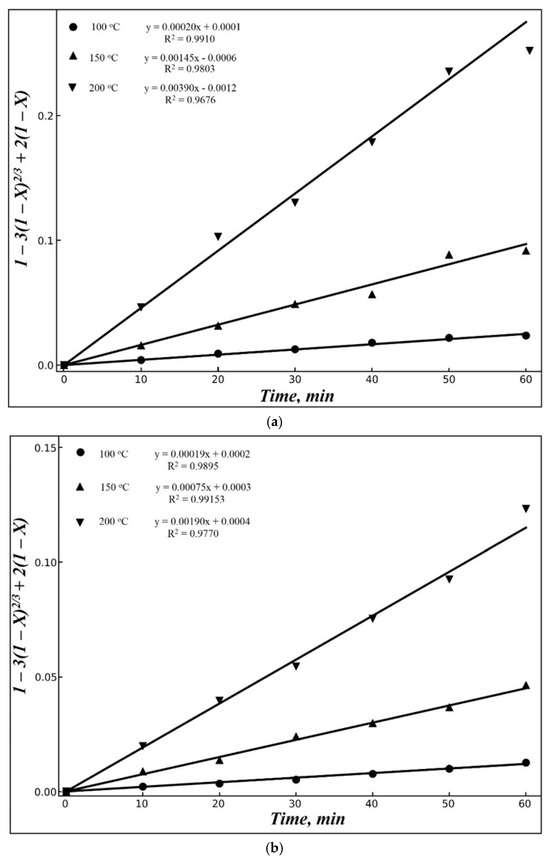
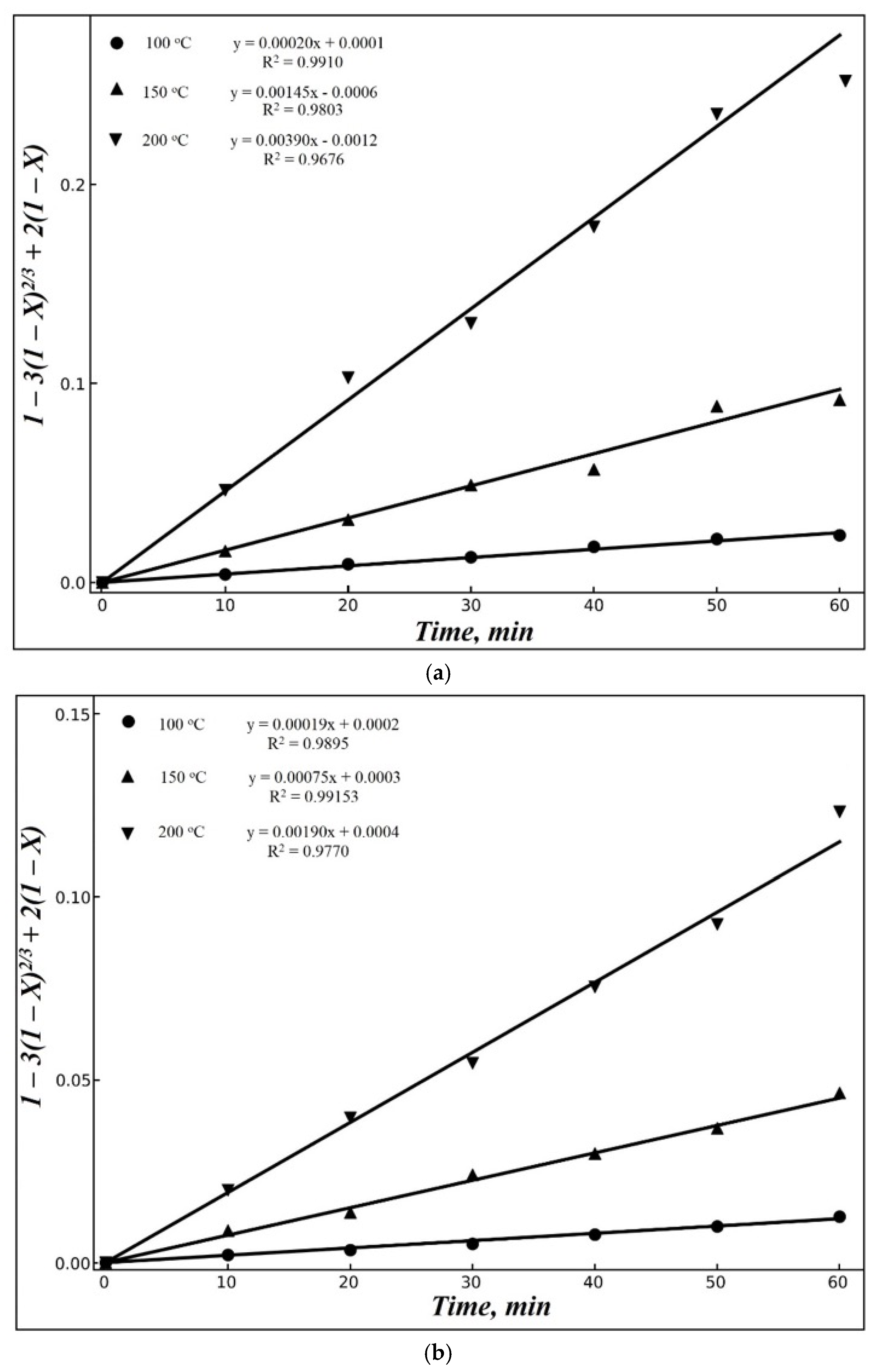
Consequently, the linearized SCM diagrams of the dissolution kinetics of aluminum obtained under microwave-assisted leaching conditions in the absence of amorphous graphite (a) and in the presence of amorphous graphite (b) are presented below.
Figure 4a,b shows the linearized results of the leaching kinetics of aluminum in alkaline media under microwave irradiation based on the shrink core model. In both cases, the linearity of the time dependence of the function 1 − 3(1 − X)2/3 + 2(1 − X) in the temperature range of 100–200 °C indicates that, according to the shrink core model, the dissolution process is mainly limited by diffusion control through the reaction product layer. The high correlation coefficients confirm that this kinetic model describes the experimental data with sufficient accuracy. The relatively high correlation coefficients confirm the relevance of the kinetic model applied to describe the experimental data.
Figure 4.
Kinetic analysis of microwave-assisted ash leaching based on the shrinkage core model: (a) without amorphous graphite; (b) with amorphous graphite.
In a system without amorphous graphite (Figure 4a), the slope of the straight line gradually increases with increasing temperature, which indicates a temperature-dependent acceleration of the reaction rate. However, the calculated speed constants remain relatively low, which means that the efficiency of microwave heating in an ash matrix with low dielectric losses is limited. This phenomenon implies insufficient energy transfer at the reaction boundary in the absence of an additional microwave-absorbing component, as a result of which the kinetics of the transition of aluminum into the solution proceeds slowly.
In contrast, in a system with amorphous graphite (Figure 4b), the slope of the SCM diagrams increased significantly at all temperatures studied. This effect could be clearly observed, especially in the high-temperature range, and a significant increase in the velocity constants was noted in comparison with a graphite-free system. The improved linearity of the dependencies and the larger angle of inclination indicate a significant acceleration of the leaching process of amorphous graphite under microwave irradiation. This result can be explained by the ability of amorphous graphite to intensively absorb microwave energy. As a result, local heating increases, and reactions at the phase boundaries between the solid and liquid phases are activated.
A comparison of Figure 4a,b shows that amorphous graphite does not change the basic kinetic mechanism of the process, but significantly increases the reaction rate. This conclusion coincides with the results of the Arrhenius analysis: when using graphite, the calculated visible activation energy was significantly reduced under the influence of microwave radiation. A reduction in the activation energy by about 40%–50% means that the combination of the microwave field and the energy absorption capacity of graphite effectively reduces the energy barriers necessary for aluminum dissolution in an alkaline environment. The SCM analysis confirms that microwave radiation is an effective means of intensifying the leaching process of aluminum, especially in combination with amorphous graphite. In this case, microwave irradiation combined with amorphous graphite increases the dissolution rate by improving heat and mass transfer. At the same time, the kinetic mechanism of the process, characterized by general diffusion control, is preserved, but the basic kinetic mechanism of the process is preserved.
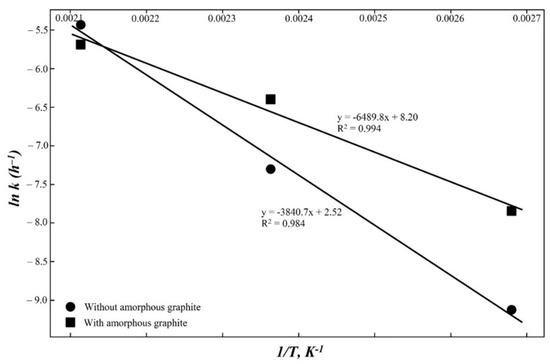
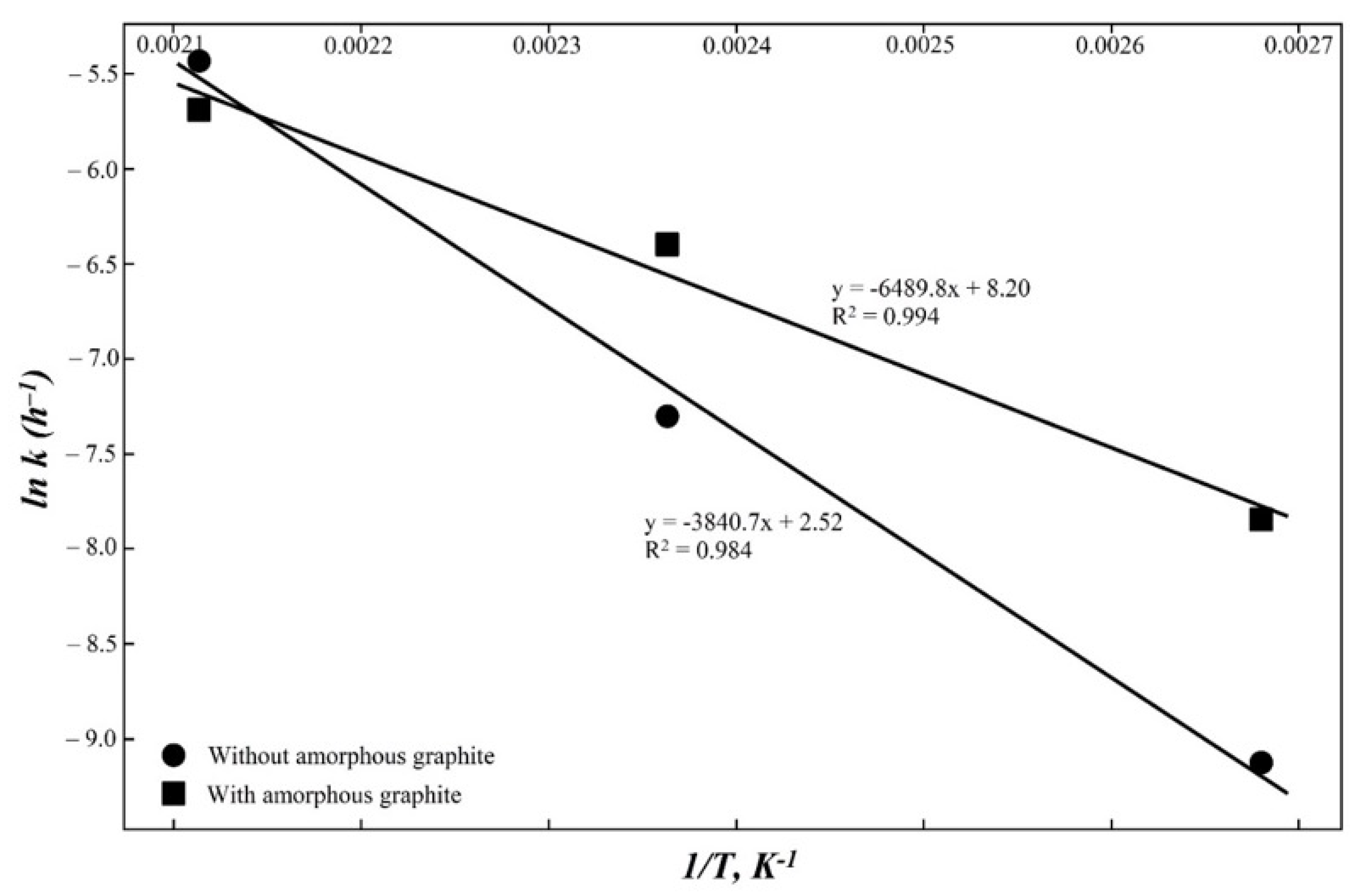
For the thermodynamic evaluation of the solubility kinetics of aluminum under the conditions of alkaline microwave leaching, the temperature dependence of the velocity constant was analyzed using the Arrhenius equation. This approach makes it possible to relatively determine the change in activation energy in the presence and absence of amorphous graphite, as well as evaluate the influence of the microwave field on the reaction kinetics (Figure 5).
Figure 5.
Arrhenius diagrams on the kinetics of ash dissolution under microwave leaching conditions: systems without amorphous graphite and with amorphous graphite.
The resulting ln K − 1/T dependencies show that the process under study has a pronounced temperature character and confirm the correctness of its description by the Arrhenius equation. The activation energies were calculated from the slope of the regression line. In a system without amorphous graphite, the activation energy was about 54 kJ/mol, which indicates that the transition of aluminum into the solution is accompanied by the overcoming of a relatively high energy barrier. This means that during the process, a significant part of the energy is spent on breaking chemical bonds and converting the solid phase. In the case of amorphous graphite, the activation energy was reduced to about 32 kJ/mol. This reduction is due to an increase in the local temperature in the reaction zone as a result of the effective absorption of microwave radiation by graphite, as well as the redistribution of energy within the solid phase and the simplification of chemical transformations. This value does not represent complete chemical control and indicates that the dissolution process occurs in an intermediate kinetic range. That is, diffusion processes through the reaction product layer limit the reaction rate to some extent. The effect of microwave radiation and amorphous graphite does not fundamentally alter the reaction mechanism, but increases the dissolution rate primarily by improving heat and mass transfer processes. As a result, the transition of aluminum into the solution takes place with low energy consumption. In this system, a significant reduction in the activation energy shows that amorphous graphite is an effective factor that improves the reaction kinetics under microwave leaching conditions and makes it possible to consider it as a technologically justified component in the processing of aluminosilicate systems.
3.4. Structural and Phase Transformations of the Aluminosilicate Matrix Under the Influence of Microwave-Assisted Alkaline Leaching
The efficiency of aluminum recovery from coal ash by microwave-assisted alkaline leaching directly depends on the degree of structural instability of the aluminosilicate matrix and the phase transformations that occur. Therefore, a comprehensive study was conducted using scanning electron microscopy and X-ray structural analysis to identify the mechanisms of microstructural disturbances and crystal structure changes caused by microwave radiation and amorphous graphite.
3.4.1. Microstructural Transformation and Degradation of the Matrix
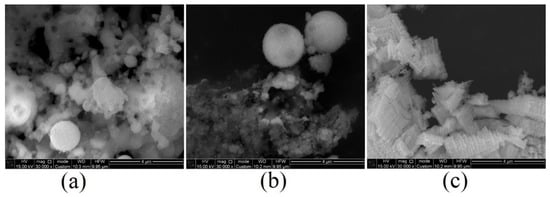
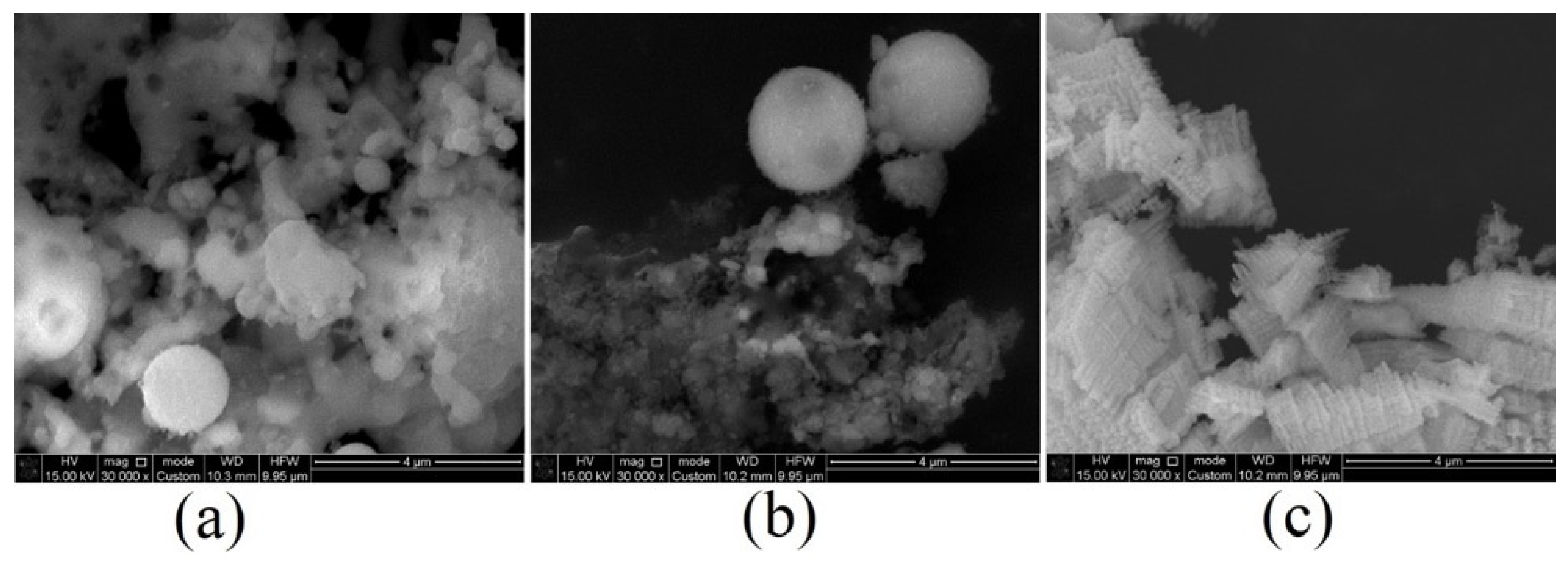
SEM analyses showed that there are significant structural changes in the morphology of the ash particles during the alkaline microwave treatment (Figure 6).
Figure 6.
MEB images illustrating the morphological evolution of coal fly ash under microwave-assisted alkaline treatment: (a) untreated coal fly ash; (b) residue after microwave-assisted alkaline leaching without amorphous graphite; (c) residue after microwave-assisted alkaline leaching in the presence of amorphous graphite.
The initial ash sample (a) was characterized by a predominance of predominantly spherical particles with a relatively smooth surface. This morphology indicates the predominance of a glassy aluminosilicate phase, which is formed during the combustion of coal at high temperatures. In addition, the dense structure and the low porosity of the particles confirm that aluminum is bound to chemically stable phases such as mullite and quartz, which limits its dissolution in an alkaline medium.
In samples subjected to a microwave alkali treatment without amorphous graphite (b), a clear destruction of the primary spherical particles was observed. Cracks, erosion zones, and the formation of finely divided fragments were noted on the particle surface. These changes can be explained by the partial destruction of the aluminosilicate matrix under the influence of microwave radiation and the selective dissolution of the glass phase by the NaOH solution. However, the structural degradation was not uniform, and the preservation of some dense phases suggests that the process was kinetically limited. In the case of amorphous graphite (c), microwave alkali treatment led to a significant increase in morphological changes. The formation of flaky, layered, and highly structured elements demonstrates a profound destruction of the aluminosilicate matrix. The ability of amorphous graphite to effectively absorb microwave energy enhances local heating, which leads to an increase in thermal stresses in the solid phase and the rapid formation of microcracks. As a result, the reaction surface available for the alkaline solution increases, as a result of which favorable conditions are created for the transition of aluminum into the solution. The results of scanning electron microscopy show that amorphous graphite acts as a structure-activating factor in alkaline microwave leaching and significantly increases the degree of destruction of the aluminosilicate phases. The observed morphological changes correlate with the data of the subsequent phase and kinetics analysis and confirm the structural prerequisites for effective aluminum separation.
3.4.2. Phase Conversion of Aluminosilicates During Alkaline Microwave Leaching
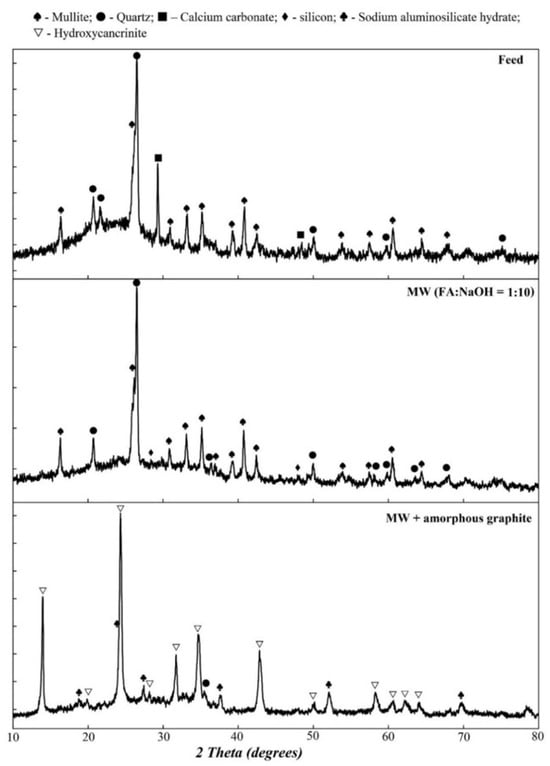
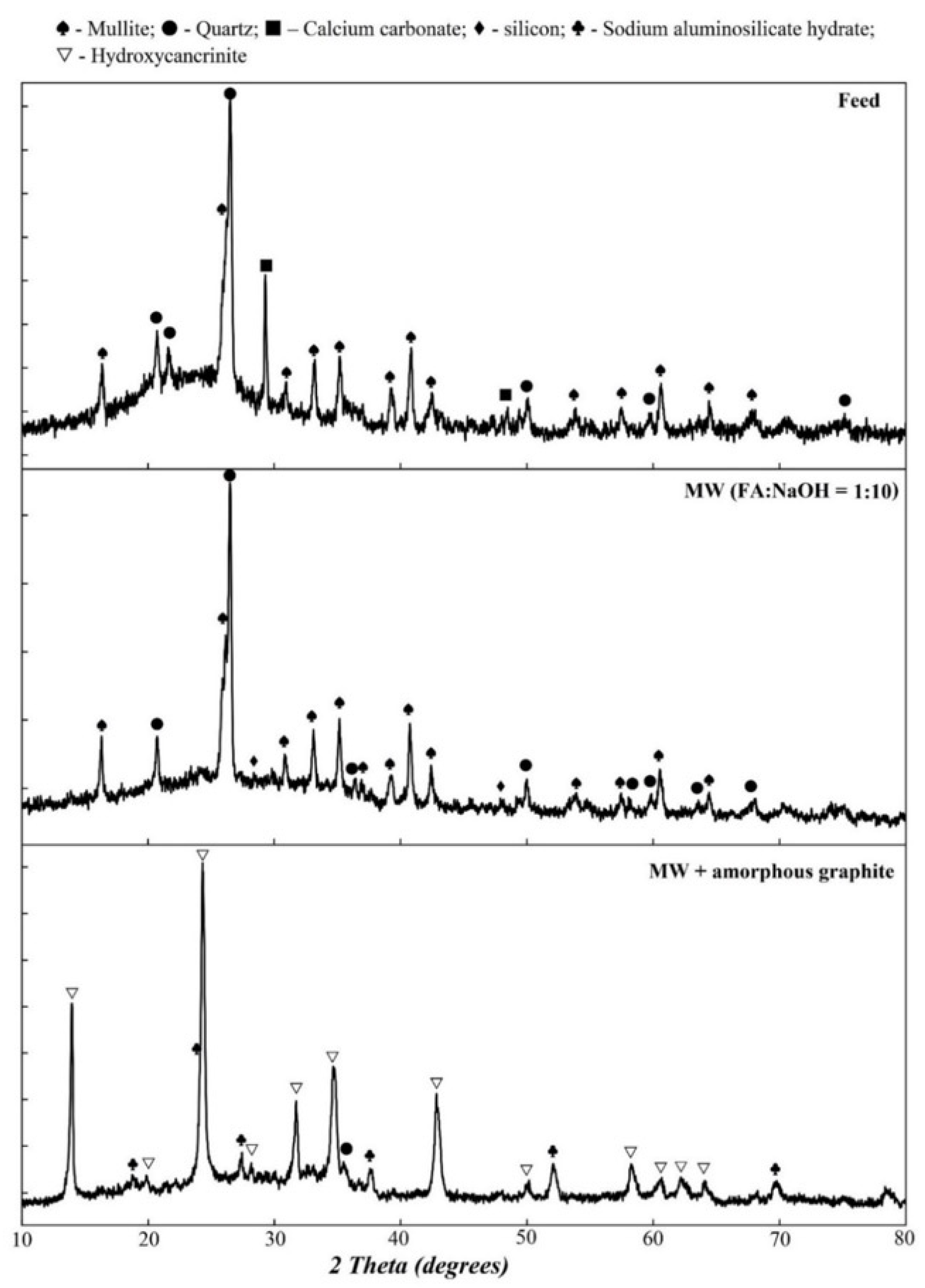
The alkaline microwave treatment led to significant phase changes in the aluminosilicate matrix of the coal ash. These changes are closely related to the redistribution of silicon and aluminum between crystal products and by-reaction products. In order to determine the development of the mineral phases during the treatment, the X-ray diffraction spectra of the starting material, the microwave-treated sample (FA:NaOH = 1:10), and the treated system were analyzed comparatively in the presence of amorphous graphite (Figure 7).
Figure 7.
X-ray diffraction patterns of coal fly ash before and after microwave-assisted alkali treatment, showing phase transformations in the presence and absence of amorphous graphite.
The results of the X-ray phase analysis clearly show the gradual transformation of thermodynamically stable phases such as mullite and quartz, as well as the formation of sodium aluminosilicate hydrates, including structures similar to crefbrinite. In particular, in the microwave treatment, the appearance of reflexes characteristic of hydroxycancrinite and their increase in intensity indicates an increased structural reorganization of the aluminosilicate lattice and an increased degree of alkali activation. In the diffractogram of the starting material, pronounced crystal phases characteristic of coal ash can be seen. The main reflexes correspond to quartz and mullite, which indicates the high crystallinity and structural stability of the aluminosilicate matrix. In addition, weak diffraction maxima are characteristic of calcium carbonate and small amounts of silicon. The relatively high intensity and clarity of the quartz and mullite peaks confirm their resistance to chemical influences and explain the low reactivity of the untreated material during alkaline leaching. In the presence of NaOH, significant changes in the diffraction pattern are revealed after microwave treatment. The relative intensity of the mullite and quartz reflexes is reduced, which indicates a partial destruction of the aluminosilicate lattice. In addition, new peaks corresponding to sodium aluminosilicate hydrates are formed. This indicates the formation of reaction products between the amorphous and weakly crystalline components of NaOH and ash. These changes prove that microwave radiation accelerates alkali activation by local heating, deformation of the crystal lattice, and increased diffusion of hydroxide ions in the aluminosilicate matrix.
The clearest manifestation of phase transformations was observed in a sample exposed to microwave radiation in the presence of amorphous graphite. In this case, the diffractogram showed a significant decrease in the intensity of the peaks characteristic of primary quartz and mullite, as well as characteristic reflexes of the sodium aluminosilicate phase hydroxycancrinite, which forms in a strongly alkaline environment. The formation of diffraction maxima characteristic of hydroxancrinite and their increase in intensity indicate a profound restructuring of the aluminosilicate lattice, as well as enhanced dissolution and re-deposition processes. The intensive formation of hydroxancrinite in the presence of amorphous graphite is due to its ability to effectively absorb microwave energy. Graphite contributes to the formation of local thermal zones, thereby accelerating the decomposition of stable aluminosilicate phases. As a result of this synergy effect, mullite and quartz rapidly transform into active forms in an alkaline environment, and the crystallization of sodium aluminosilicate hydrates increases.
Figure 7 shows the X-ray diffraction patterns of the coal fly ash sample in the initial state (feed), after microwave-assisted alkaline treatment (MW, FA:NaOH = 1:10), and after microwave treatment in the presence of amorphous graphite (MW + amorphous graphite). The results of the X-ray diffraction clearly demonstrate that the alkaline treatment assisted by microwaves induced significant phase transformations in the coal fly ash, the addition of amorphous graphite considerably amplifying these transformations. The progressive reduction in the chemically stable phases and the formation of alkali-reactive sodium aluminosilicate structures provide solid structural proof of the improvement in the extractability of aluminum observed under microwave-assisted leaching conditions.
3.5. Improving the Energy Efficiency of Alkaline Microwave Leaching
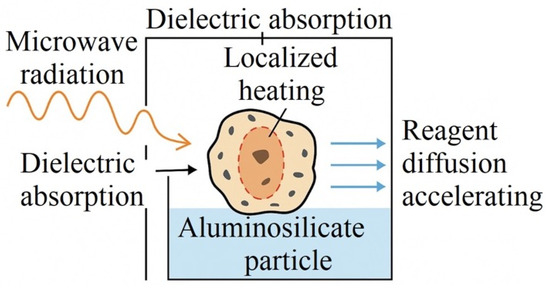
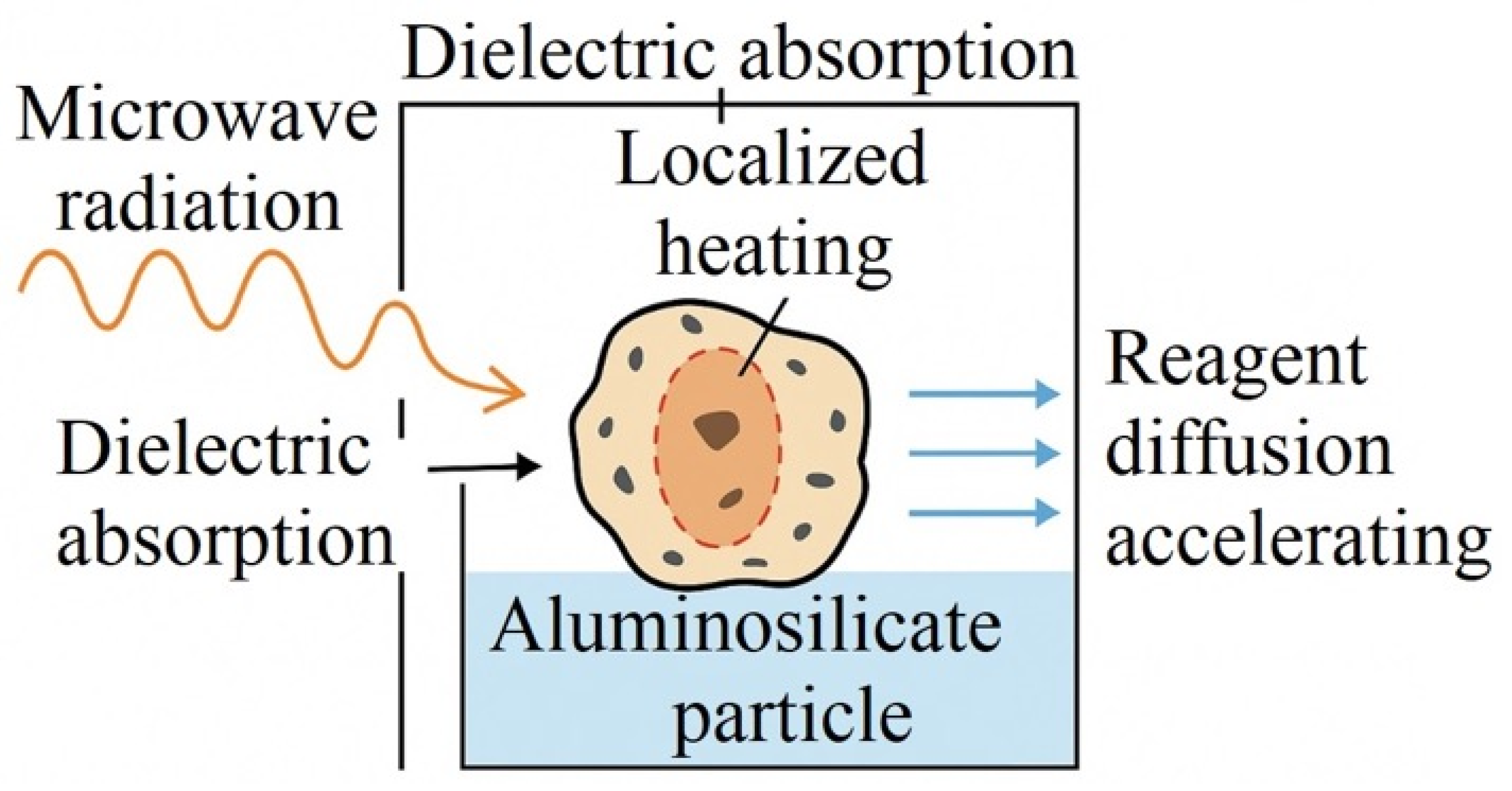
Microwave radiation changes the mode of energy supply in alkaline leaching systems by volumetric and selective heating. This mechanism is fundamentally different from conventional convective heat exchange. In alkaline aluminosilicate suspensions, heat is generated directly in the system volume due to dielectric losses and is not transferred from externally heated surfaces. However, since coal ash can absorb microwave radiation only to a limited extent, the heating power is low under graphite-free conditions. The addition of amorphous graphite changes the electromagnetic properties of the system and allows for an effective connection between microwave energy and the solid phase. Due to its high dielectric loss factor, amorphous graphite acts as a microwave receiver, concentrates the electromagnetic energy in the solid–liquid limit range and generates local temperature gradients in the ash matrix. In these ranges, the temperature reaches values that are significantly higher than the average temperature of the entire suspension, which leads to uneven, but intense thermal activation. The resulting temperature variability creates thermal stresses in the aluminosilicate particles, which contributes to the formation of cracks, the solubility of the matrix, and the development of previously inaccessible areas containing aluminum. The conceptual mechanism of selective microwave heating and enhanced diffusion is illustrated in Figure 8. This mechanism explains the reduction in heat loss, which is necessary for the accelerated melting of aluminum.
Figure 8.
Conceptual diagram illustrating the mechanism of selective microwave heating and enhanced diffusion during microwave-assisted alkaline leaching.
In order to quantify the energetic and kinetic advantages of the proposed approach, a comparison with traditional aluminum extraction methods from the literature is presented in Table 1.
Table 1.
Comparison of aluminum extraction efficiency and kinetic parameters for various coal fly ash treatment methods described in the literature and in the present study.
The comparison shows that the proposed microwave-assisted process makes it possible to obtain a comparable, or even higher, aluminum yield with a lower activation energy, without requiring increased pressure or excessive heat input.
From the point of view of transport, the formation of localized hot zones improves the mass transport thanks to an increased mobility of the hydroxide ions and shortens the effective diffusion path in the solid matrix. The increased penetration of NaOH into the microcracked areas directs the dissolution process toward a chemically controlled regime, in accordance with the kinetic behavior of the shrinkage core model. The acceleration of the interfacial reactions reduces the residence time necessary to achieve a specific aluminum yield and, consequently, reduces the cumulative energy consumption of the process.
The intensification induced by microwaves also influences the use of the reagents. The increase in the structural disorder and the partial depolymerization of the aluminosilicate network under the effect of localized heating improve the reactivity of the Al-O-Si bonds to alkaline attack. As a result, a greater proportion of hydroxide ions participate directly in the dissolution reactions of aluminum, instead of being consumed by unproductive secondary reactions. This mechanistic effect explains the reduction in alkali consumption observed experimentally under the effect of microwaves.
The increase in energy efficiency can be explained not by a change in the basic reaction mechanism, but by a reorganization of the heat and mass transport conditions in the micrometer range. The kinetic mode is mainly maintained near the particle surface, and the lower energy consumption indicates a more efficient use of energy. For this reason, the microwave radiation used in conjunction with amorphous graphite not only represents an alternative to the conventional heating method, but also makes it possible to transform the local reaction medium and increase the process intensity.
4. Conclusions
The study shows the possibility of using microwave alkaline leaching as an effective method for extracting aluminum from aluminosilicate-rich coal ash formed at Almaty Thermal Power Plant No. 2. By adding amorphous graphite as a microwave energy-absorbing additive, conditions were created to accelerate the process and significantly increase the degree of transition of aluminum in solution compared to conventional alkali leaching.
Experimental results showed that the efficiency of aluminum extraction clearly depends on the alkali concentration, temperature, and the amount of graphite. In the microwave treatment, the degree of conversion of the aluminum in solution at low NaOH concentrations (1–2 M) was in the range of 18%–35%, increased to 38%–58% in the medium alkaline range (3–4 M), and reached maximum values of about 70%–72% in systems with graphite in high concentrations (5–6 M). Kinetic analyses based on the shrinkage core model showed that the melting process of aluminum is determined by surface chemical reactions with high correlation coefficients. The apparent activation energy decreased to about 54 kJ/mol in a graphite-free system and to about 32 kJ/mol in the case of amorphous graphite.
The results of the microstructural and phase analysis confirmed that microwave alkali treatment leads to significant destruction of the aluminosilicate matrix. Scanning electron micrographs showed a strong fragmentation and cracking of the particles, and X-ray diffraction studies showed that part of the mullite and quartz is converted into sodium aluminosilicate phases, including hydroxycancrinite. These structural changes correlate with the increase in the efficiency of aluminum extraction.
The results obtained show that the combined application of microwave radiation and amorphous graphite allows the rapid separation of aluminum from coal ash under comparatively mild technological conditions. These findings form a scientific basis for the development of intensive hydrometallurgical processes for the efficient recycling of artificial waste based on aluminosilicate.
Author Contributions
Conceptualization, K.K.; methodology, A.B., A.N., R.A.,T.O. and L.M.; investigation, N.B., L.M., B.M. and A.B.; resources, K.K.; writing—original draft preparation, K.K. and N.B.; writing—review and editing, K.K.; visualization, N.B., A.B., B.M., T.O. and L.M.; funding acquisition, K.K. All authors have read and agreed to the published version of the manuscript.
Funding
This research was funded by the Science Committee of the Ministry of Science and Higher Education of the Republic of Kazakhstan (Grant No. AP26101069).
Data Availability Statement
The original contributions presented in this study are included in the article. Further inquiries can be directed to the corresponding author.
Conflicts of Interest
The authors declare no conflicts of interest.
References
- Adams, T.; Heidrich, C.; Jow, J.; Feuerborn, J. Coal combustion products worldwide-on the stretch from suitability to sustainability. VGBE Energy J. 2024, 9, 43–50. [Google Scholar]
- Chen, Y.; Fan, Y.; Huang, Y.; Liao, X.; Xu, W.; Zhang, T. A comprehensive review of toxicity of coal fly ash and its leachate in the ecosystem. Ecotoxicol. Environ. Saf. 2024, 269, 115905. [Google Scholar] [CrossRef] [Scilit]
- Ram, A.K.; Mohanty, S. State of the art review on physiochemical and engineering characteristics of fly ash and its applications. Int. J. Coal Sci. Technol. 2022, 9, 9. [Google Scholar] [CrossRef] [Scilit]
- Gao, J.M.; Yan, Z.; Ma, S.; Guo, Y. Novel process for high value utilization of high-alumina fly ash: Valuable metals recovery and mesoporous silica in situ preparation. RSC Adv. 2024, 14, 1782–1793. [Google Scholar] [CrossRef] [Scilit]
- Li, C.; Zhou, C.; Li, W.; Zhu, W.; Shi, J.; Wu, L.; Liu, G. A two-stage process of alkali fusion and organic acid leaching for recovery of critical elements from coal fly ash. J. Ind. Eng. Chem. 2024, 138, 131–143. [Google Scholar] [CrossRef] [Scilit]
- Tenza, N.P.; Aphane, M.E. Coal fly ash industrial waste-derived products: A review on the extraction of aluminum and silicon for nanoparticle synthesis. Environ. Sci. Pollut. Res. 2026, 33, 736–765. [Google Scholar] [CrossRef] [Scilit]
- Mathapati, M.; Amate, K.; Prasad, C.D.; Jayavardhana, M.L.; Raju, T.H. A review on fly ash utilization. Mater. Today Proc. 2022, 50, 1535–1540. [Google Scholar] [CrossRef] [Scilit]
- Kuźnia, M. A review of coal fly Ash utilization: Environmental, energy, and material assessment. Energies 2024, 18, 52. [Google Scholar] [CrossRef] [Scilit]
- Tian, X.; Guo, Z.; Zhu, D.; Pan, J.; Yang, C.; Li, S. Recovery of valuable elements from coal fly ash: A review. Environ. Res. 2025, 282, 121928. [Google Scholar] [CrossRef] [Scilit] [PubMed]
- Ketegenov, T.; Kamunur, K.; Mussapyrova, L.; Batkal, A.; Nadirov, R. Enhancing Rare Earth Element Recovery from Coal Ash Using High-Voltage Electrical Pulses and Citric Acid Leaching. Minerals 2024, 14, 693. [Google Scholar] [CrossRef] [Scilit]
- Zhao, B.; Guo, Y.; Wang, W.; Wan, X.; He, S.; Wang, T. Study on Experimental Parameters of Alkali-Assisted Extraction of Aluminum from Fly Ash. Materials 2025, 18, 1568. [Google Scholar] [CrossRef] [Scilit]
- Xia, J.; Zhao, B.; Guo, Y.; Li, K.; Na, Q.; He, S.; Zhang, J. Synergistic alkali fusion-acid leaching strategy for silica aerogel synthesis from fly ash and performance optimization. Sci. Rep. 2025, 15, 40299. [Google Scholar] [CrossRef] [Scilit] [PubMed]
- Bu, M.; Dong, B.; Ahmad, M.R.; Wang, Y. Dissolution behaviour and mechanism of fly ash in acid activators. CEMENT 2025, 22, 100159. [Google Scholar] [CrossRef] [Scilit]
- Li, Y.; Wang, H. Alkali Cation Effects on Compressive Strength of Metakaolin–Low-Calcium Fly Ash-Based Geopolymers. Materials 2025, 18, 4080. [Google Scholar] [CrossRef] [Scilit]
- Zhang, Z.Y.; Qiao, X.C.; Yu, J.G. Aluminum release from microwave-assisted reaction of coal fly ash with calcium carbonate. Fuel Process. Technol. 2015, 134, 303–309. [Google Scholar] [CrossRef] [Scilit]
- Kumar, A.; Agrawal, S.; Dhawan, N. Processing of coal fly ash for the extraction of alumina values. J. Sustain. Metall. 2020, 6, 294–306. [Google Scholar] [CrossRef] [Scilit]
- Chao, X.; Zhang, T.A.; Lv, G.; Zhao, Q.; Cheng, F.; Guo, Y. Sustainable application of coal fly ash: One-step hydrothermal cleaner production of silicon-potassium mineral fertilizer synergistic alumina extraction. J. Clean. Prod. 2023, 426, 139110. [Google Scholar] [CrossRef] [Scilit]
- Chen, J.; Li, X.; Gao, L.; Guo, S.; He, F. Microwave treatment of minerals and ores: Heating behaviors, applications, and future directions. Minerals 2024, 14, 219. [Google Scholar] [CrossRef] [Scilit]
- Kukurugya, F.; Wouters, W.; Spooren, J. Microwave-assisted chloride leaching for efficient recovery of platinum group metals from spent automotive catalysts: An approach for chemical reagent reduction. Clean. Eng. Technol. 2025, 24, 100868. [Google Scholar] [CrossRef] [Scilit]
- Ghaderi, S.; Zhang, W. Microwave-assisted organic-acid leaching of major and critical elements from olivine: Characteristics, kinetics, and method comparison. Green Smart Min. Eng. 2025, 2, 168–183. [Google Scholar] [CrossRef] [Scilit]
- Al-Ghouti, M.A.; Khan, M.; Nasser, M.S.; Al Saad, K.; Heng, O.E. A novel method for metals extraction from municipal solid waste using a microwave-assisted acid extraction. J. Clean. Prod. 2021, 287, 125039. [Google Scholar] [CrossRef] [Scilit]
- Li, G.; Xue, X.; Li, L.; Zhu, B.; Wang, G.; Wang, Z.; Zhang, K.; Liang, L. Sustainable utilization of solid waste fly ash for fabrication of CoNi@ FA as microwave absorbent. Phys. Status Solidi 2022, 219, 2200333. [Google Scholar] [CrossRef] [Scilit]
- Fahimi, A.; Alessandri, I.; Cornelio, A.; Frontera, P.; Malara, A.; Mousa, E.; Ye, G.; Valentim, B.; Bontempi, E. A microwave-enhanced method able to substitute traditional pyrometallurgy for the future of metals supply from spent lithium-ion batteries. Resour. Conserv. Recycl. 2023, 194, 106989. [Google Scholar] [CrossRef] [Scilit]
- Mohanty, A.; Patel, D.K.; Panigrahi, S.K. Susceptor based design strategies for enhancing microwave hybrid heating capability via experimental analysis, 3D multi-physics simulation and parametric optimization. Int. J. Therm. Sci. 2024, 196, 108674. [Google Scholar] [CrossRef] [Scilit]
- Sharma, A.K. On heating characteristics and mass depletion of structurally different SiC and graphite susceptors under microwave irradiation. Mater. Chem. Phys. 2025, 341, 130928. [Google Scholar] [CrossRef] [Scilit]
- Manzoor, S.; Wani, O.B.; Bobicki, E.R. Investigating the microwave properties of carbon materials from microwave-driven methane pyrolysis. Carbon Trends 2024, 14, 100326. [Google Scholar] [CrossRef] [Scilit]
- Chou, S.Y.; Lo, S.L.; Hsieh, C.H.; Chen, C.L. Sintering of MSWI fly ash by microwave energy. J. Hazard. Mater. 2009, 163, 357–362. [Google Scholar] [CrossRef] [Scilit]
- Ke, L.; Zhou, N.; Wu, Q.; Zeng, Y.; Tian, X.; Zhang, J.; Fan, L.; Ruan, R.; Wang, Y. Microwave catalytic pyrolysis of biomass: A review focusing on absorbents and catalysts. npj Mater. Sustain. 2024, 2, 24. [Google Scholar] [CrossRef] [Scilit]
- Dan, E.; McCue, A.J.; Dionisi, D.; Fernández Martín, C. On the potential of microwave heating to convert waste into added-value chemicals and materials: A review. Philos. Trans. A 2025, 383, 20240071. [Google Scholar] [CrossRef] [Scilit]
- Rouchalová, K.; Rouchalová, D.; Čablík, V.; Matýsek, D. Microwave-Assisted Hydrothermal Synthesis of Pure-Phase Sodalite (>99 wt.%) in Suspension: Methodology Design and Verification. Materials 2024, 17, 269. [Google Scholar] [CrossRef] [Scilit] [PubMed]
- Zhu, K.; Zhang, H.; Yuan, C. Microwave-synergistic chemical activation of bayer red mud for geopolymerization. J. Environ. Chem. Eng. 2025, 13, 118666. [Google Scholar] [CrossRef] [Scilit]
- Shoppert, A.; Valeev, D.; Loginova, I. Kinetics of Aluminum and Scandium Extraction from Desilicated Coal Fly Ash by High-Pressure HCl Leaching. Metals 2023, 13, 1994. [Google Scholar] [CrossRef] [Scilit]
- Hou, H.; Shao, S.; Ma, B.; Li, X.; Shi, S.; Chen, Y.; Wang, C. Sustainable process for valuable-metal recovery from circulating fluidized bed fly ash through nitric acid pressure leaching. J. Clean. Prod. 2022, 360, 132212. [Google Scholar] [CrossRef] [Scilit]
- Kamunur, K.; Tyumentseva, O.; Mussapyrova, L.; Batkal, A.; Karagulanova, A.; Nadirov, R. Selective Recovery of Ce and La from Coal Ash Leachates by Stepwise pH-Controlled Precipitation. Processes 2025, 13, 3203. [Google Scholar] [CrossRef] [Scilit]
- Shoppert, A.; Loginova, I.; Valeev, D. Kinetics study of Al extraction from desilicated coal fly ash by NaOH at atmospheric pressure. Materials 2021, 14, 7700. [Google Scholar] [CrossRef] [Scilit]
- Gao, Y.; Liang, K.; Gou, Y.; Wei, S.A.; Shen, W.; Cheng, F. Aluminum extraction technologies from high aluminum fly ash. Rev. Chem. Eng. 2021, 37, 885–906. [Google Scholar] [CrossRef] [Scilit]
- Wang, P.; Liu, H.; Zheng, F.; Liu, Y.; Kuang, G.; Deng, R.; Li, H. Extraction of aluminum from coal fly ash using pressurized sulfuric acid leaching with emphasis on optimization and mechanism. JOM 2021, 73, 2643–2651. [Google Scholar] [CrossRef] [Scilit]
- Fresneda-Cruz, A.; Murillo-Ciordia, G.; Julian, I. Experimental Dielectric Properties and Temperature Measurement Analysis to Assess the Thermal Distribution of a Multimode Microwave-Assisted Susceptor Fixed-Bed Reactor. Processes 2025, 13, 774. [Google Scholar] [CrossRef] [Scilit]

Disclaimer/Publisher’s Note: The statements, opinions and data contained in all publications are solely those of the individual author(s) and contributor(s) and not of MDPI and/or the editor(s). MDPI and/or the editor(s) disclaim responsibility for any injury to people or property resulting from any ideas, methods, instructions or products referred to in the content. |
© 2026 by the authors. Licensee MDPI, Basel, Switzerland. This article is an open access article distributed under the terms and conditions of the Creative Commons Attribution (CC BY) license.