4.1. Fine Particle Production Characteristics
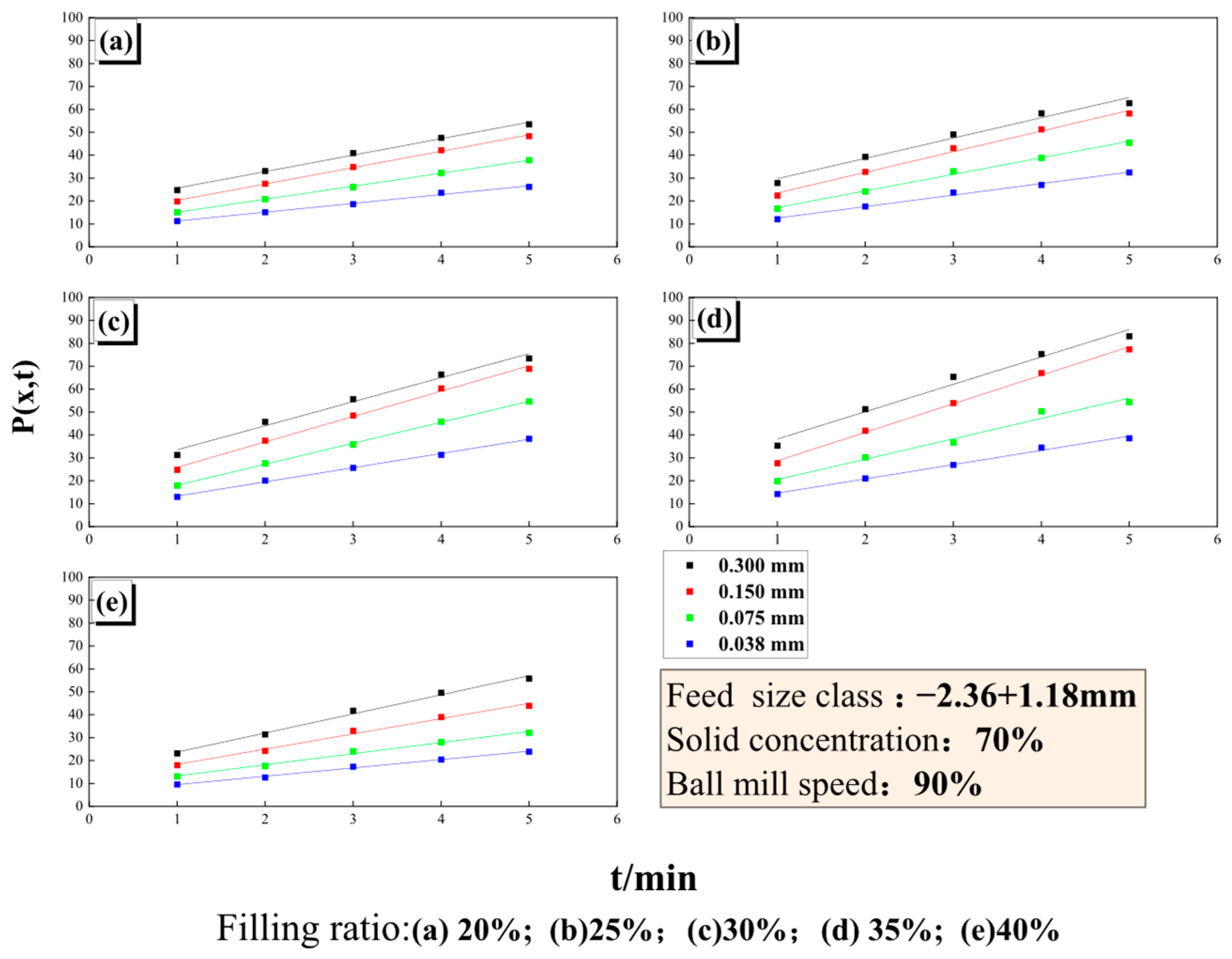
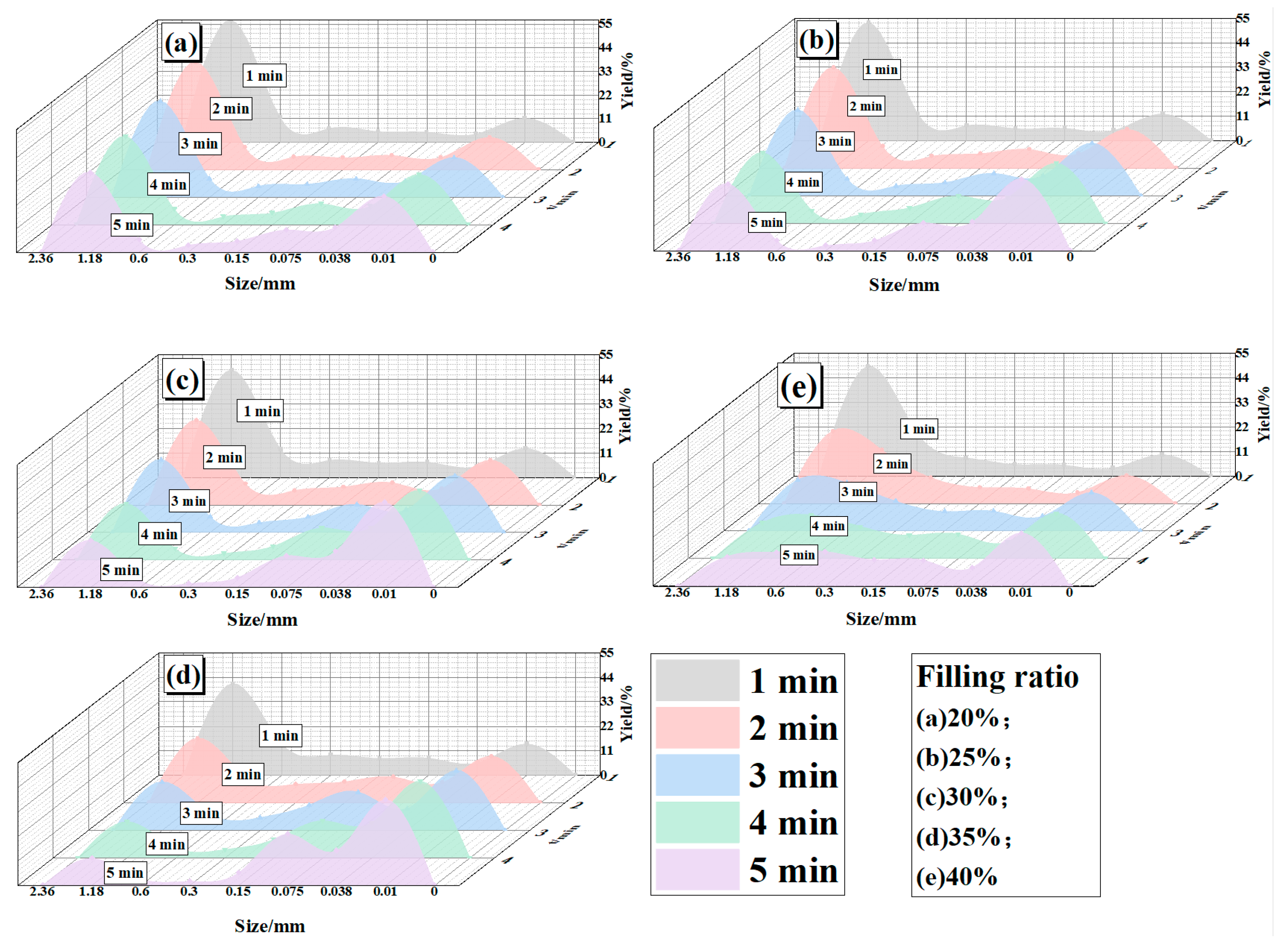
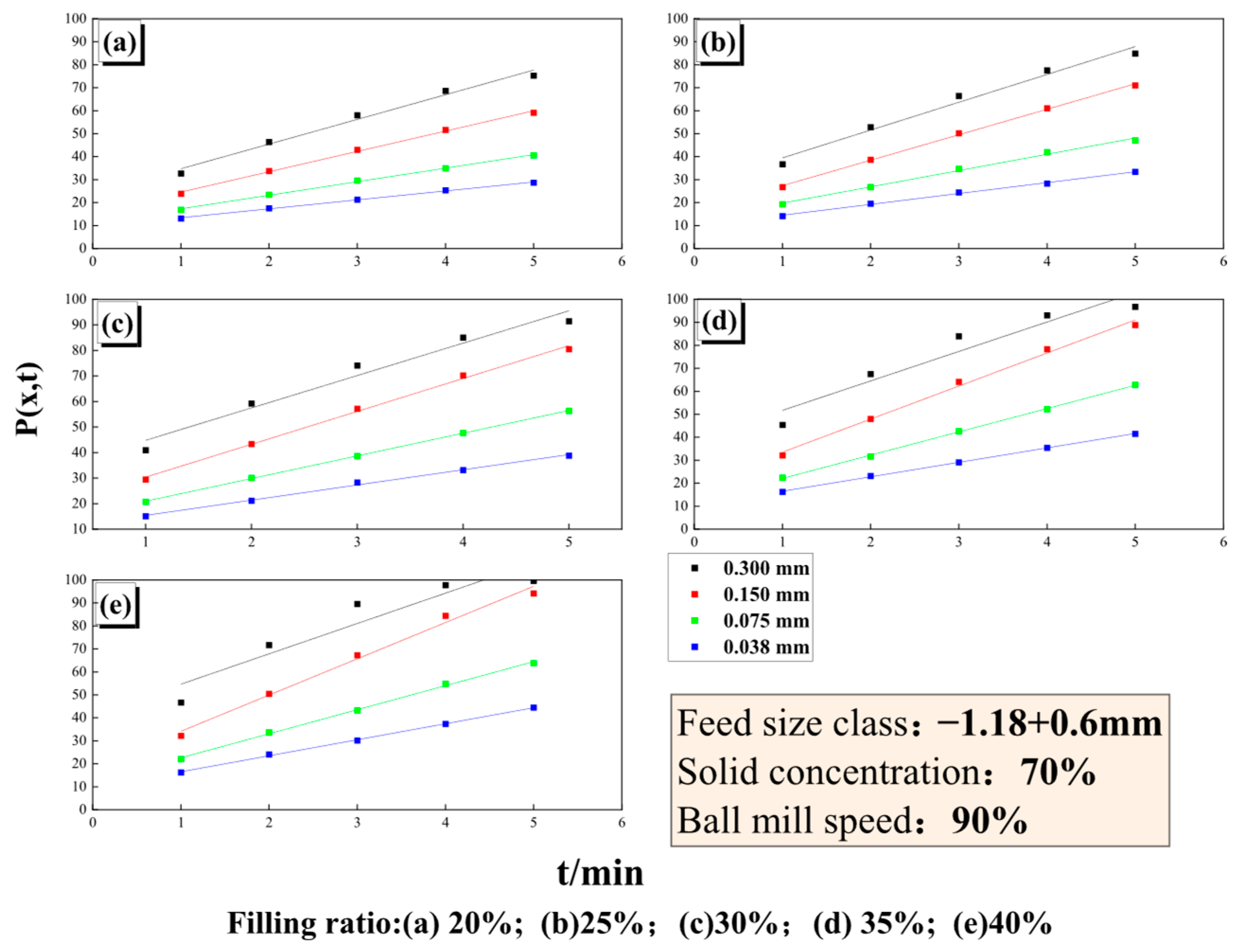
Variations in the ceramic ball filling ratio directly affect the breakage rate function and the cumulative particle size distribution during grinding, thus affecting the generation behavior of fine particles. Based on the zero-order production characteristics, the fine particle generation rates during the ceramic ball grinding of coarse magnetite ore under different filling ratios were analyzed. The fine particle production rate functions at different ceramic ball filling ratios are shown in
Figure 7, and the corresponding kinetic parameters were obtained by linear regression and are summarized in
Table 5.
Using coarse magnetite ore as the grinding feed, the negative cumulative undersize yields of the four finest sub-size fractions (0.300 mm, 0.150 mm, 0.075 mm, and 0.038 mm) were considered as dependent variables, while grinding time was used as the independent variable for linear regression analysis. The slope of the fitted straight line was defined as the fine particle generation rate for each size fraction.
For the 0.300 mm size fraction, the average adjusted R2 value was approximately 0.98, which did not exceed 0.99, indicating a relatively weak linear relationship between the cumulative undersize yield and grinding time. In contrast, when the particle size was smaller than 0.150 mm, a strong linear relationship was observed, with adjusted R2 values generally exceeding 0.99. These results indicate that, for size fractions smaller than or equal to 0.150 mm, the generation rate is predominantly independent of grinding time, demonstrating pronounced zero-order production characteristics. Therefore, in the grinding of coarse magnetite ore, sub-size fractions with particle sizes ≤ 0.150 mm can be classified as typical zero-order production fractions.
At low ceramic ball filling ratios, the specific breakage rate of the initial size fraction was relatively low, resulting in limited breakage of the coarse particles within the same grinding time and, consequently, a relatively low generation rate of the finest fraction (−0.038 mm). As the ceramic ball filling ratio increased, the generation rate of the finest fraction gradually increased, reaching a maximum value of 6.226%·min−1 at a filling ratio of 35%. However, with a further increase in the filling ratio to 40%, the generation rate of the finest fraction decreased markedly to 3.645%·min−1, corresponding to a reduction of 41.46%.
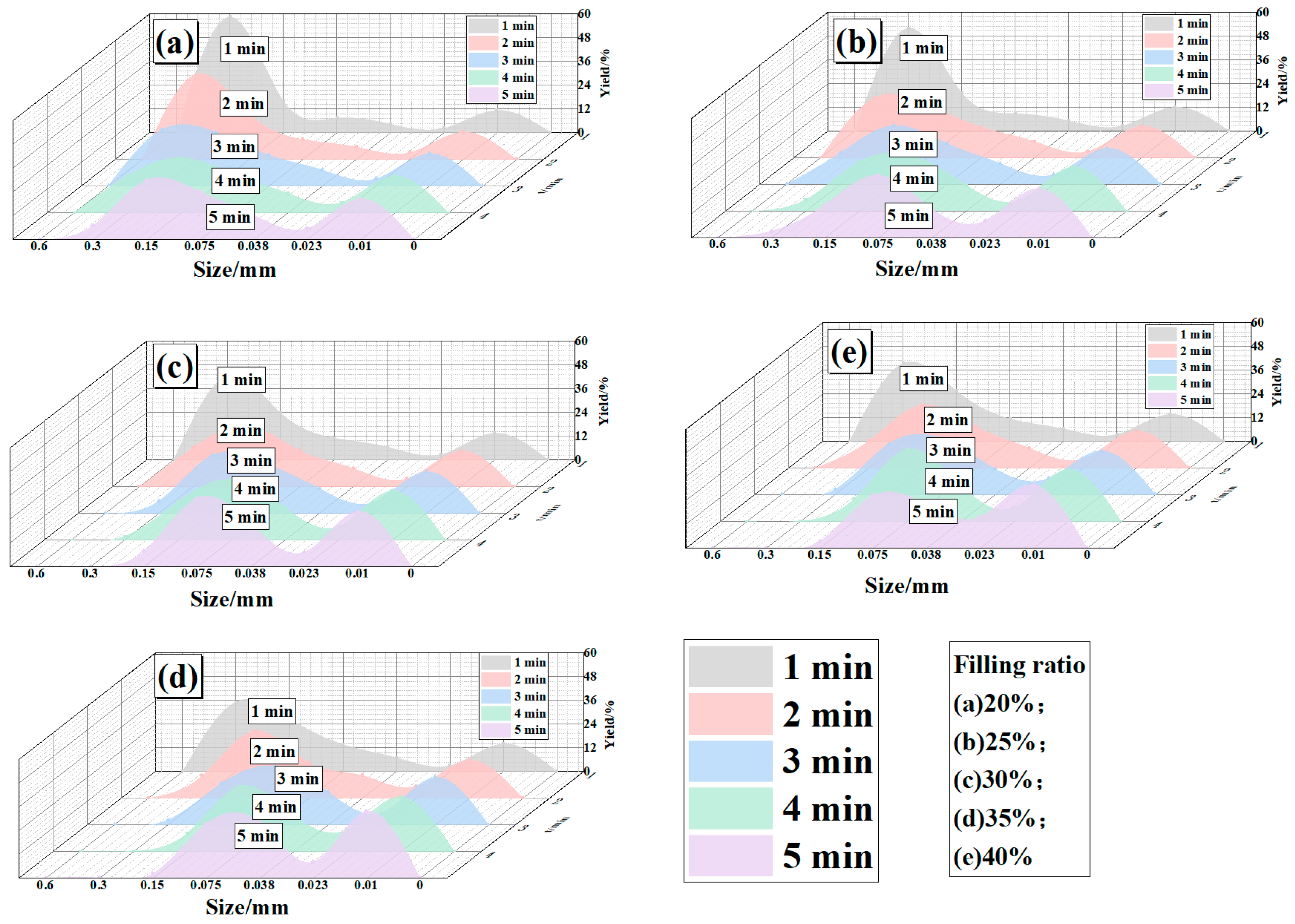
The fine particle generation rate functions for the ceramic ball grinding of intermediate magnetite ore under different filling ratios are presented in
Figure 8. The corresponding kinetic parameters were obtained by linear regression and are summarized in
Table 6.
Using intermediate magnetite ore as the grinding feed, the negative cumulative undersize yields of the four finest sub-size fractions (0.300 mm, 0.150 mm, 0.075 mm, and 0.038 mm) were also taken as dependent variables for linear regression analysis with grinding time. For the 0.300 mm size fraction, the average adjusted R2 value was only 0.93, with a minimum value of 0.848, indicating no significant linear relationship between the cumulative undersize yield and grinding time and, therefore, the absence of zero-order production characteristics.
In contrast, when the particle size was smaller than 0.150 mm, a strong linear relationship between the cumulative undersize yield and grinding time was observed, with adjusted R2 values generally exceeding 0.99. This indicates that the generation rate of these fine size fractions is independent of grinding time, demonstrating pronounced zero-order production characteristics. These results suggest that, similar to coarse magnetite ore grinding, sub-size fractions with particle sizes ≤ 0.150 mm in the intermediate grinding of magnetite ore can be considered typical zero-order production fractions.
As the ceramic ball filling ratio increased, the generation rate of the finest fraction rose steadily from 3.889%·min−1 to 6.972%·min−1, without exhibiting a distinct maximum. This suggests that, within the range of filling ratios investigated, the generation of fine particles from the fine particle generation process of intermediate magnetite ore was not significantly suppressed by overgrinding effects.
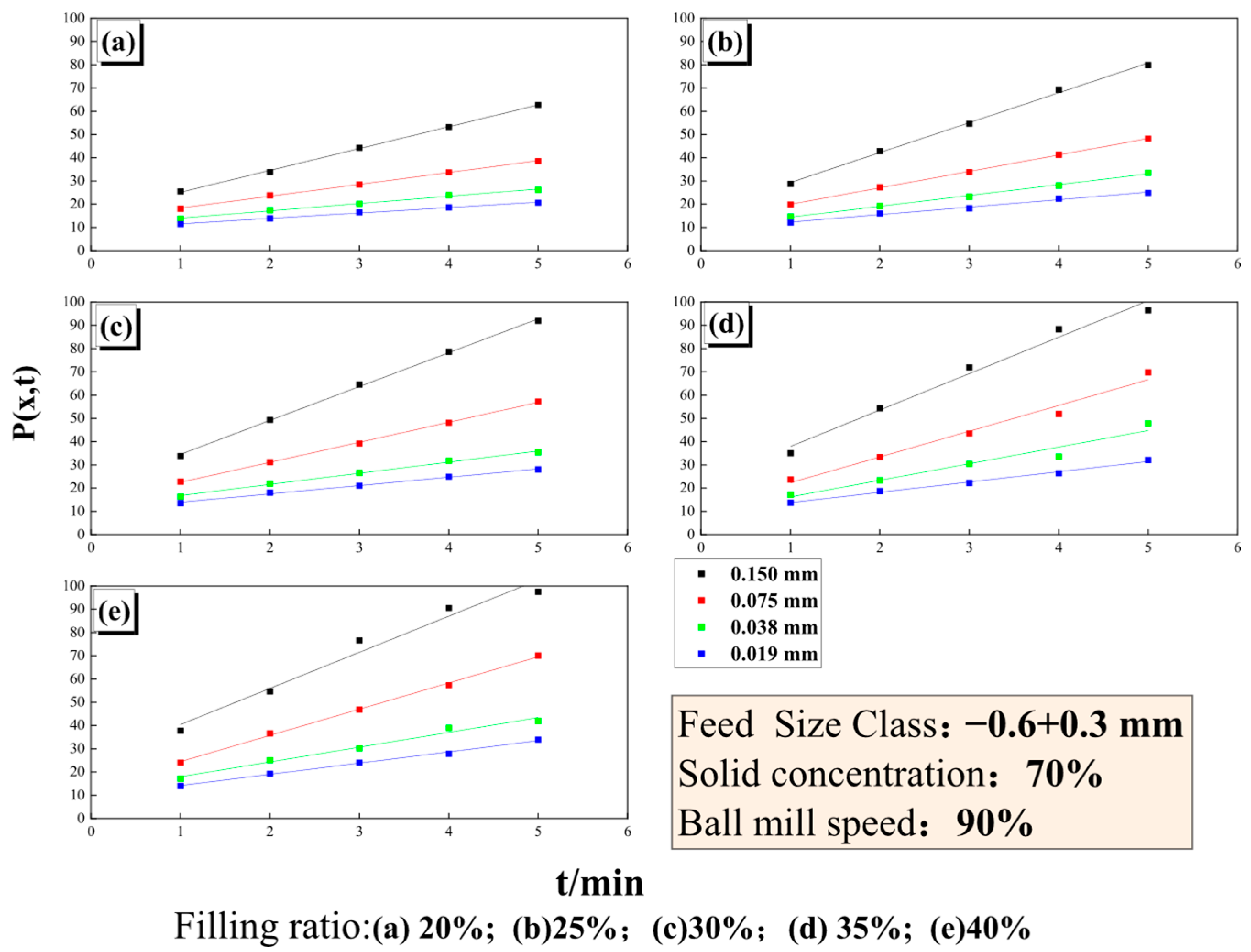
The fine particle generation rate functions for ceramic ball grinding of fine magnetite ore under different filling ratios are shown in
Figure 9, and the corresponding kinetic parameters obtained by linear regression are summarized in
Table 7.
Using fine magnetite ore as the grinding feed, the negative cumulative undersize yields of the four finest sub-size fractions (0.150 mm, 0.075 mm, 0.038 mm, and 0.019 mm) were utilized as dependent variables for linear regression analysis with grinding time. Owing to the pronounced occurrence of repeated breakage during the ceramic ball grinding of fine magnetite ore, the specific breakage rate increased with grinding time and further increased with a rising ceramic ball filling ratio.
For the −0.150 mm size fraction, the adjusted R2 values of the linear fitting between cumulative undersize yield and grinding time gradually decreased with increasing filling ratio. When the filling ratio was lower than 30%, the adjusted R2 values were consistently higher than 0.99, indicating pronounced zero-order production characteristics. However, when the filling ratio exceeded 30%, the intensified repeated breakage caused the adjusted R2 to decrease sharply to 0.962, indicating that the zero-order production assumption was no longer valid for this size fraction. Therefore, variations in the ceramic ball filling ratio significantly affect the production characteristics of the −0.150 mm fraction, and repeated breakage at filling ratios above 30% leads to the loss of pronounced zero-order behavior.
For size fractions smaller than 0.150 mm, a strong linear relationship between cumulative undersize yield and grinding time was consistently observed, with adjusted R2 values generally exceeding 0.99. These fractions demonstrate stable zero-order production characteristics that remain unaffected by variations in filling ratio or the occurrence of repeated breakage. With increasing ceramic ball filling ratio, the generation rate of the finest fraction increased from 2.320%·min−1 to 4.829%·min−1, without exhibiting a distinct maximum.
4.2. Finest Size Fraction Generation Rate
For subsequent beneficiation processes, the generation rate of the finest size fraction directly determines the degree of slime formation in the grinding product. A higher degree of slime formation leads to an increased content of ultrafine particles, which not only deteriorates pulp rheological properties but also significantly impairs separation efficiency. Therefore, the generation rate of the finest size fraction serves as a crucial indicator for evaluating the rationality of grinding conditions and controlling overgrinding behavior.
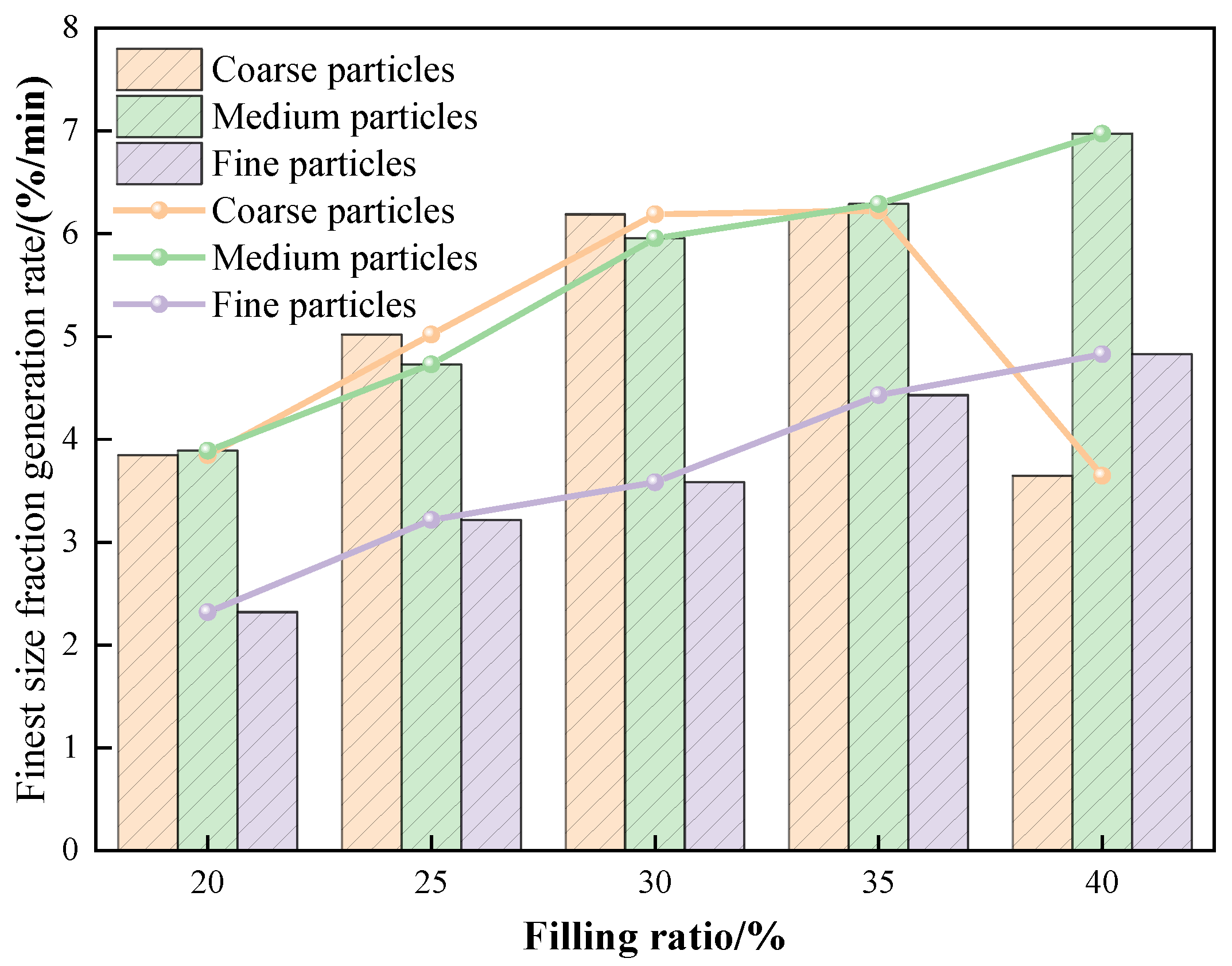
In this study, the generation rate of the finest sub-size fraction was selected as the research focus to analyze the effect of the ceramic ball filling ratio on fine particle generation behavior. Specifically, for coarse and intermediate magnetite ore feeds, the −0.038 mm fraction was defined as the finest sub-size fraction, whereas for fine magnetite ore feed, the −0.019 mm fraction was designated as the finest size fraction. The variation in the generation rate of the finest size fraction under different filling ratios is illustrated in
Figure 10.
Based on the aforementioned analyses, a highly significant linear relationship was observed between the cumulative undersize yield of the finest sub-size fraction and grinding time, with linear regression correlation coefficients exceeding 0.99 in all instances. Furthermore, this relationship exhibited insensitivity to variations in feed particle size and ceramic ball filling ratio. These findings indicate that, during the ceramic ball grinding of magnetite ore, the finest size fraction exhibits stable and pronounced zero-order production behavior, with its generation rate remaining essentially independent of grinding time within the explored range, indicating that the formation of ultrafine particles is weakly controlled by time.
As illustrated in
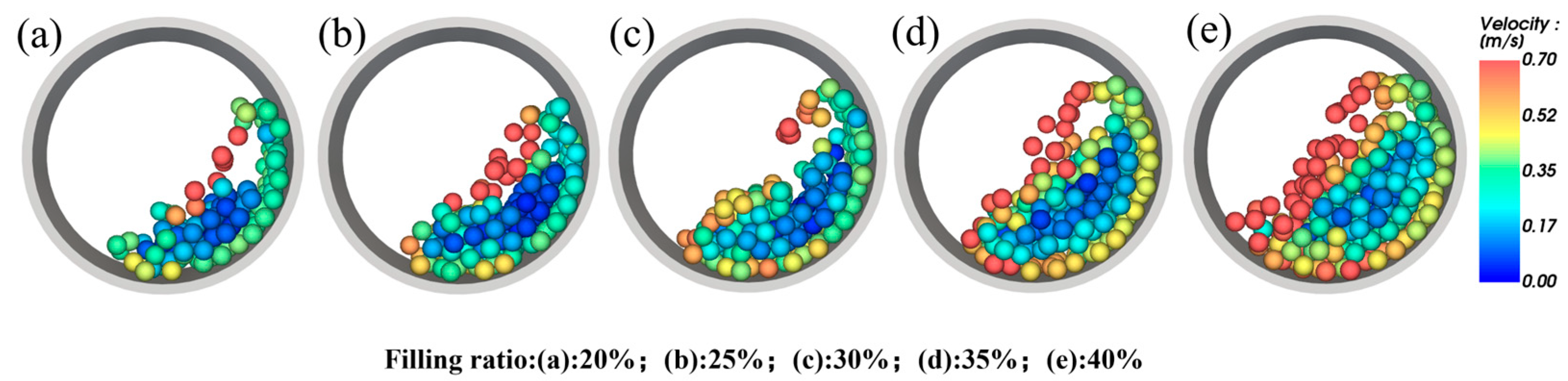
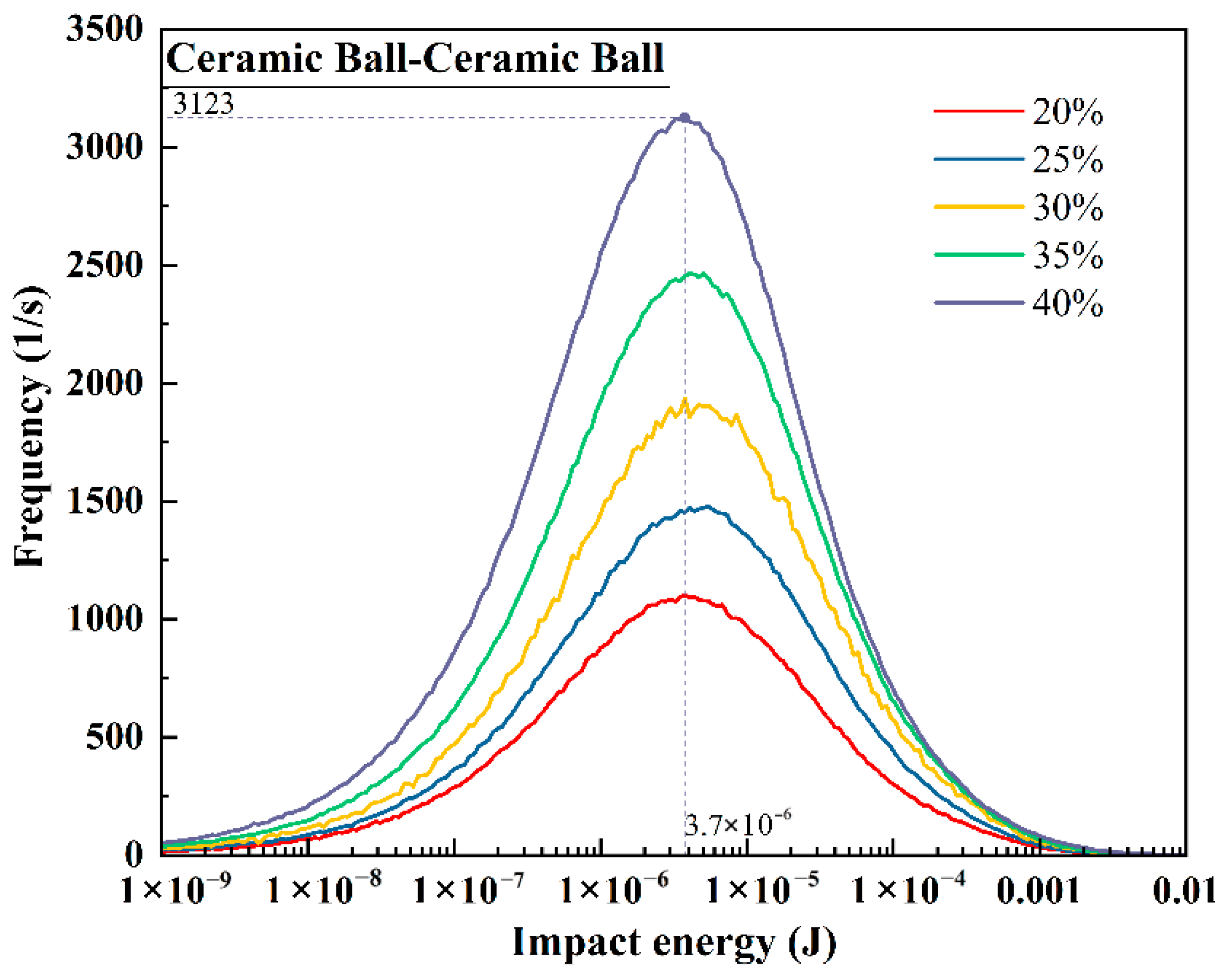
Figure 10, the generation rate of the finest size fraction increases monotonically with increasing ceramic ball filling ratio. This phenomenon can be attributed to the fact that an increase in filling ratio does not significantly enhance the energy of individual collisions but substantially increases the number of grinding media within the mill, thereby raising the contact probability and effective collision frequency between media and ore particles. Under such conditions, ore particles are more likely to undergo repeated low-energy, high-frequency breakage events dominated by abrasion, attrition, and compressive interactions, which promote the continuous generation of fine particles. The corresponding states of media motion and particle contact characteristics are schematically depicted in
Figure 11.
For coarse magnetite ore, the impact force generated by the cataracting motion of the grinding media serves as the primary breakage mechanism. As the ceramic ball filling ratio increases, the area of the cataracting zone expands, resulting in a higher specific breakage rate of the first size fraction and a corresponding increase in the generation rate of the finest fraction. However, when the filling ratio exceeds 35%, the proportion of the cataracting zone begins to decrease and its overall center of mass shifts downward, reducing the maximum impact force and causing a rapid decline in the finest fraction generation rate (
Figure 12). Therefore, for coarse magnetite ore, optimizing the filling ratio allows the minimization of overgrinding without compromising the desired fineness.
For intermediate and fine magnetite ore, the grinding force generated in the centrifuging (cascading) motion zone dominates the breakage process. With increasing filling ratio, the area of the centrifuging zone progressively enlarges, accelerating the generation rate of the finest size fraction. Consequently, increasing the filling ratio can significantly enhance overgrinding for intermediate magnetite ore (−1.180 mm) during ceramic ball grinding.
The different responses of coarse and fine particles to the filling ratio are fundamentally rooted in their distinct breakage mechanisms. Mechanically, particle breakage in ball milling transitions from impact-dominated fracture to attrition-dominated fragmentation. Under high normal impact forces, coarse particles experience induced internal tensile stresses, leading to rapid crack propagation and bulk fracture. Conversely, fine particles resist volume fracture due to reduced flaw density; instead, repeated tangential contacts induce shear stresses along the surface, resulting in progressive material removal through attrition. This transition from impact-controlled fracture to shear-controlled attrition is consistent with the DEM-derived distribution of normal and tangential contact forces.
4.3. Zero-Order Production Characteristic Parameter α
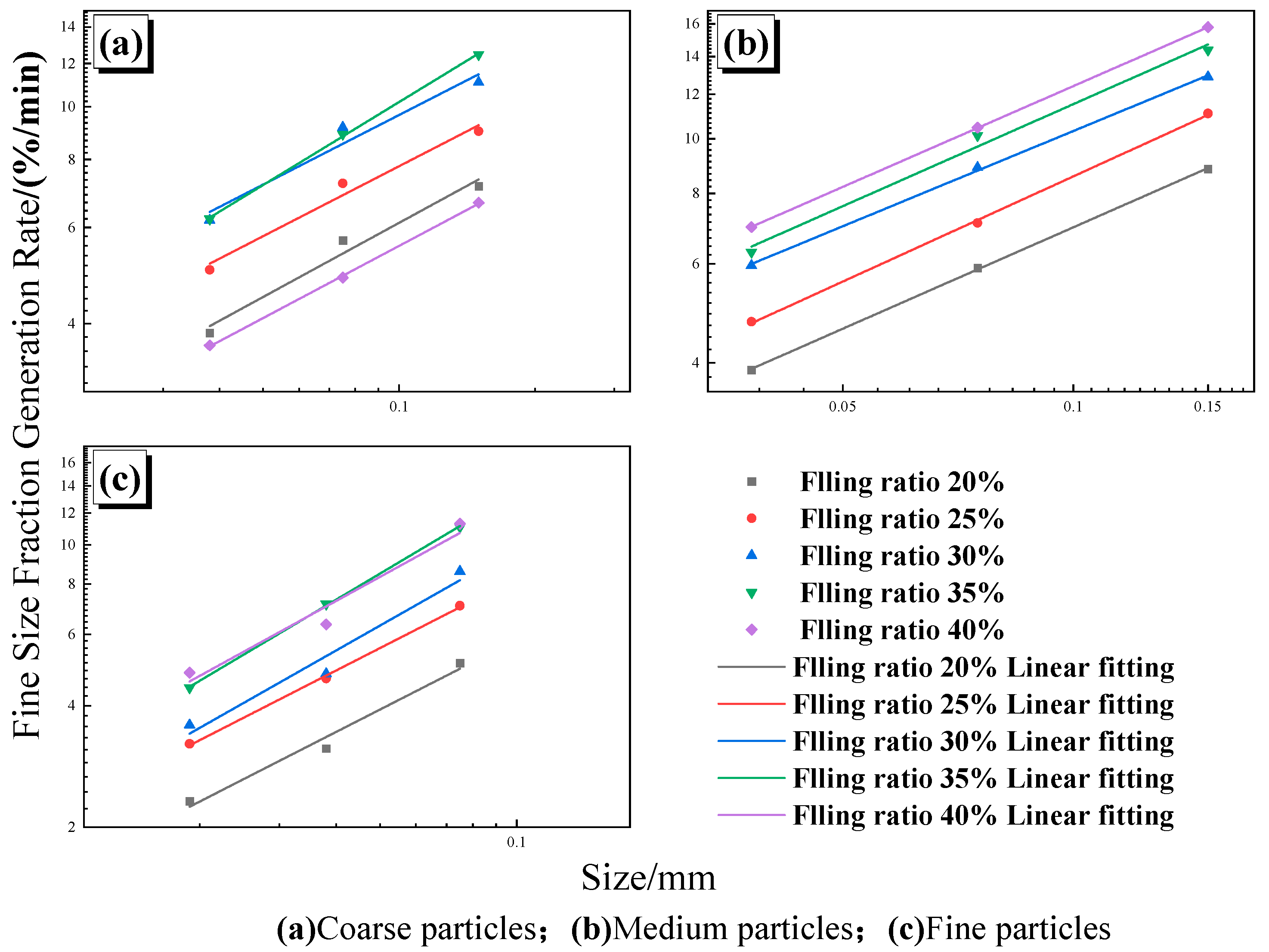
The generation rate of fine particles was plotted on the vertical axis against particle size on the horizontal axis in a double-logarithmic coordinate system. Linear regression was performed for the data points under each filling ratio condition, and the slope of the resulting line was defined as the zero-order production characteristic parameter
α. This parameter reflects the sensitivity of fine particle generation rates to particle size across different fractions. The results are presented in
Figure 13. The corresponding statistical parameters of the zero-order production characteristic function are summarized in
Table 8.
Before conducting the linear regression of the fine particle generation rate against particle size to calculate the zero-order production characteristic parameter α, it is necessary to first obtain the fine particle generation rate through a preliminary linear regression. As a result, experimental and computational errors are compounded, leading to a marginally lower fitting accuracy for α in comparison to the generation rate function. Nevertheless, this does not impact the comparative analysis of α values across varying feed particle sizes.
The mean α values for the finest size fraction during the ceramic ball grinding of coarse, intermediate, and fine magnetite ores were 0.449, 0.596, and 0.614, respectively, indicating notable differences among feed particle sizes, while the filling ratio had no significant effect on α for any fraction. This can be attributed to the dominant breakage mechanisms: normal impact forces for coarse magnetite ore, and tangential grinding forces for intermediate and fine magnetite ores. Therefore, the zero-order production characteristic parameter of the finest size fraction exhibits variation depending on the feed particle size. These results further confirm that the zero-order production characteristics of fine particles during the ceramic ball grinding of magnetite ore are not wholly independent of the grinding environment.
4.4. Energy–Size Model
The ceramic ball filling ratio determines the total mass of grinding media in the mill, which directly affects the mill’s energy consumption. Therefore, the filling ratio serves as a crucial factor influencing the energy efficiency of the grinding process.
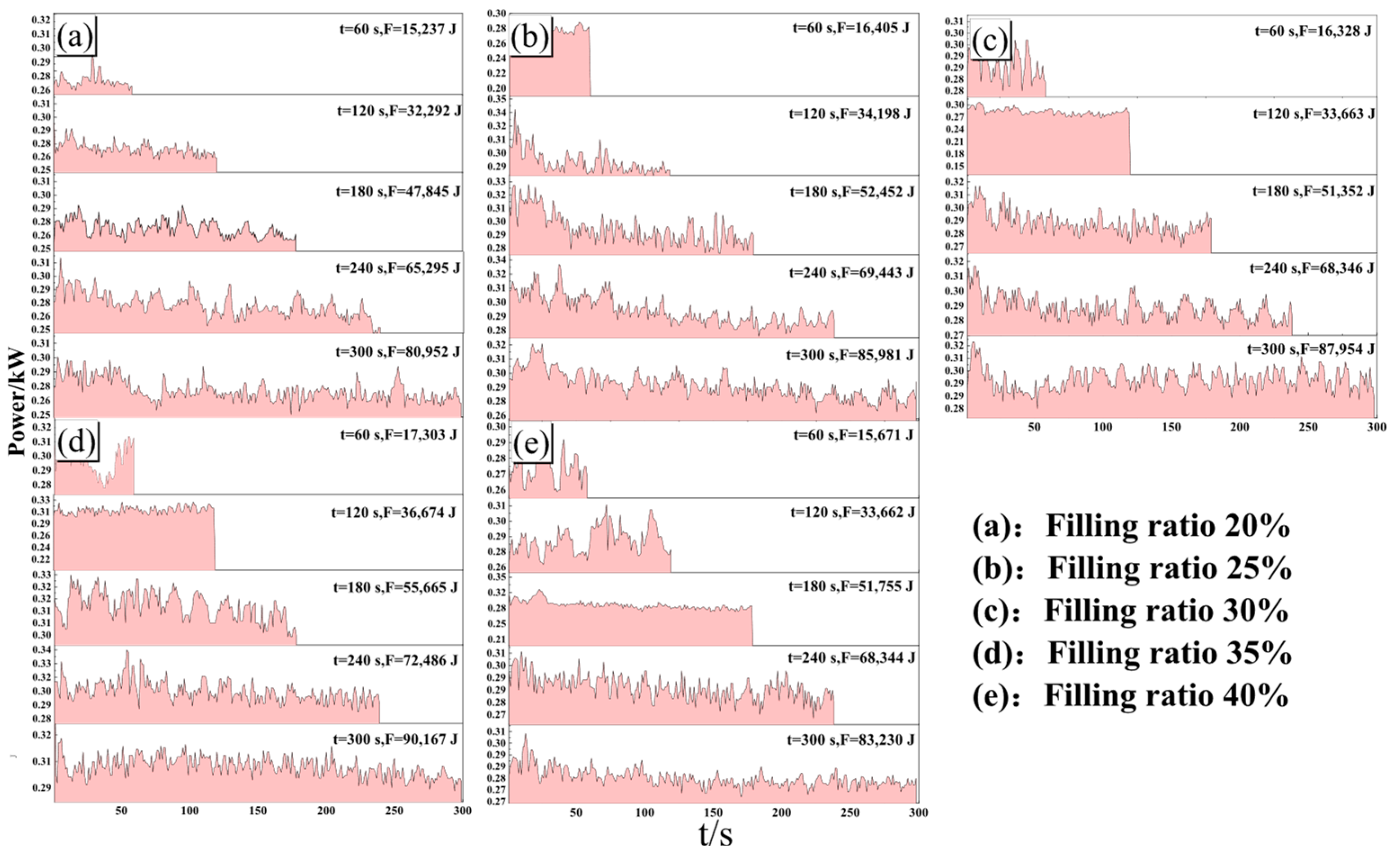
Figure 14 illustrates the energy distribution under varying ceramic ball filling ratios, offering essential data for the subsequent development of an energy–particle size model.
In a laboratory, multiple large-scale experimental devices operate concurrently, which may result in slight fluctuations in the mill input voltage and minor variations in power. However, when energy consumption experiments under different filling ratios are conducted over a short period, the overall trends remain largely unaffected.
Figure 14 presents the energy consumption characteristics of magnetite ore during ceramic ball grinding at different filling ratios:
20% filling ratio: 15,237 J at 60 s, 80,952 J at 300 s, and power 0.26–0.29 kW;
25% filling ratio: 16,405 J at 60 s, 85,981 J at 300 s, and power 0.28–0.33 kW;
30% filling ratio: 16,328 J at 60 s, 87,954 J at 300 s, and power 0.28–0.33 kW, a trend similar to 25%;
35% filling ratio: 17,303 J at 60 s, 90,167 J at 300 s (first time exceeding 90,000 J), and power 0.29–0.34 kW, maximum energy consumption;
40% filling ratio: 15,671 J at 60 s, 83,230 J at 300 s, and power 0.27–0.31 kW, slight decrease in energy consumption.
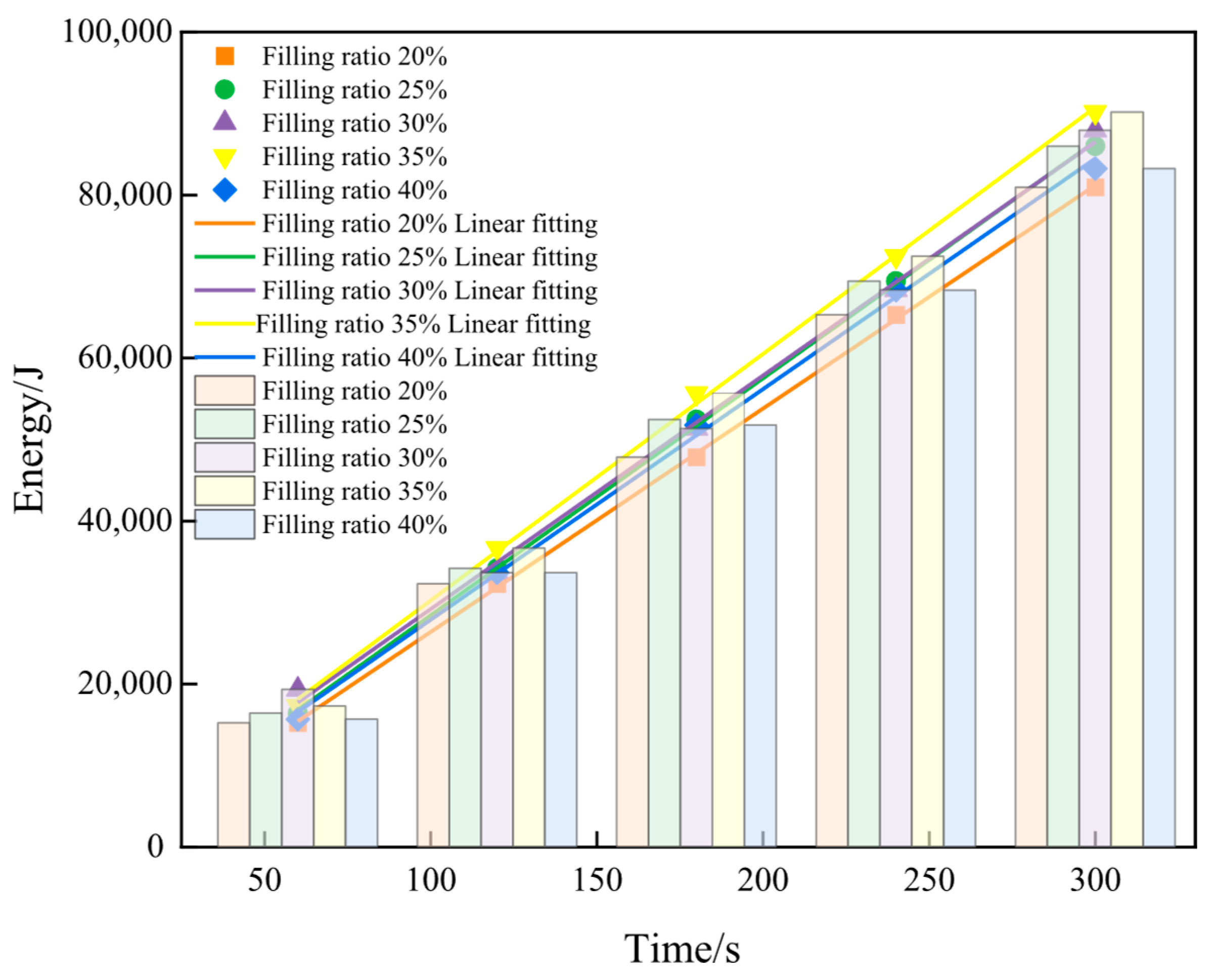
Figure 15 shows a coordinate system with mill input energy on the vertical axis and grinding time on the horizontal axis, providing a basis for analyzing the energy–particle size relationship.
As illustrated in
Figure 15, the total energy input to the mill increases approximately linearly with grinding time. The linear regression analysis between grinding time and input energy demonstrates that the mill’s power at a filling ratio of 20% is 0.274 kW. Since the power remains nearly constant over short periods, it can be considered independent of time and thus serves as a valid substitute for the generation rate of the finest size fraction. Based on this approach, the fine particle generation rate function can be reformulated as a function of mill input power P, facilitating the development of an energy–particle size model for the ceramic ball grinding of magnetite ore.
Considering that only approximately 3% of the total input energy is utilized for ore breakage, with the remainder mainly expended on media motion and friction, the influence of particle size on energy consumption can be neglected. With this assumption in mind, the yield of fine particles for varying different feed sizes can be described by a corresponding energy–size model, as follows:
where
represents the yield of the finest particle fraction at an input energy
w, expressed in %;
w denotes the mill input energy in kJ.
Using this approach, energy–size models for different filling ratios can be established, and the corresponding results are presented in
Table 9.