


Abstract
Crushing is a critical step in the efficient utilization of quasi-brittle materials such as ores and solid wastes. During this process, materials undergo fracture, and the product particles are ejected, carrying significant kinetic energy. This study investigates typical quasi-brittle materials—concrete and quartz glass—by conducting impact crushing tests using a drop-weight apparatus under varying contact modes and input energy levels. High-speed camera was employed to capture the fracture patterns of the materials and the trajectories of the ejected particles, enabling the calculation of kinetic energy during crushing. The results indicate that under point contact loading, both kinetic energy and its proportion increase significantly with rising input energy. In contrast, under surface contact loading, the kinetic energy and its proportion exhibit minimal change as input energy increases. The average ejection velocity of particles from quartz glass specimens during crushing was 6.28 m/s, which is 2.21 times that of concrete specimens. Moreover, the average proportion of kinetic energy in quartz glass crushing was 5.049%, approximately 14.43 times greater than that in concrete. Enhancing material toughness and adopting surface contact loading help reduce both the kinetic energy and its proportion during crushing. This research contributes to minimizing kinetic energy loss and improving the efficiency of energy utilization in crushing processes.
1. Introduction
Crushing is an essential step in mineral processing, aimed at enabling the efficient separation of valuable components from both run-of-mine ores and solid wastes. This operation serves two key purposes: first, to achieve the liberation of valuable minerals from the gangue matrix; second, to ensure that the product size distribution is suitable for subsequent separation processes, thereby optimizing separation efficiency.
The dynamic nature of material fracture, involving rapid crack propagation and vigorous failure, invariably produces a multitude of high-speed fragments [1]. This poses a direct safety hazard in mining through personal injury and equipment damage [2], and an economic burden in mineral processing through impact loads, energy consumption, and the long-term cumulative effects of structural damage and premature wear of key components [3].
In response, significant research attention has been directed toward the kinetic energy generated during crushing. Bergstrom et al. [4] investigated the effect of impact velocity on the breakage strength, breakage probability, product size distribution, and energy efficiency of glass spheres. Guo et al. [5] investigated fragment kinetic energy and its spatial distribution in granite during uniaxial compression. Uzi et al. [6] studied the correlation between kinetic energy and breakage probability in single-particle impact events. Jiao et al. [7] analyzed the kinetic energy absorption mechanism in quartz glass subjected to hypervelocity impact. Orozco et al. [8] utilized the Discrete Element Method (DEM) to model the relationship between kinetic energy and fracture energy for a single particle impacting a plane. Zhang et al. [9] found that the kinetic energy of rock particles increases with loading rate, demonstrating its potential for use in secondary crushing to mitigate overall energy loss.
High-speed camera is the instrument of choice for capturing the velocity and trajectory of high-speed objects. Hussain et al. [10] utilized it to reconstruct the three-dimensional flight paths of insects. Lee et al. [11] employed high-speed cameras to study the dispersion behavior of droplet particles during digestive endoscopy. Sathananthan et al. [12] used high-speed imaging to analyze the damage characteristics of soda-lime silicate glass upon projectile impact. Consequently, high-speed camera is a suitable method for observing the velocities and trajectories of ejected fragments during the crushing process.
Furthermore, high-speed cameras can capture the fracture characteristics of materials at the moment of failure, thus enabling investigation into how these characteristics influence kinetic energy evolution. For instance, Biagi et al. [13] analyzed the force and fracture behavior during the collision of two brittle materials by integrating accelerometers with high-speed imaging. Jägers et al. [14] employed a high-speed camera to study the influence of impact velocity, impact angle, and particle size on the breakage behavior of wood pellets. Klichowicz et al. [15] utilized high-speed camera to evaluate crack propagation behavior and energy input in granite during compressive failure.
Tavares [16] and Mwanga et al. [17] comprehensively reviewed the commonly used testing methods and equipment in ore comminution research, highlighting that the drop-weight tester is a crucial experimental apparatus, particularly for investigating energy-size reduction relationships. Saeidi et al. [18] utilized this device to investigate the product size distribution of LKAB magnetite ore, Beaudesert silicate, and Bundaberg quartz under both compressive and impact crushing conditions at varying energy inputs. Using the JK drop-weight test, Yang et al. [19] established a correlation between the impact crushing parameters of calcite, chalcopyrite, and sphalerite and their particle size. Based on drop-weight tests, Ma et al. [20] assessed the crushing resistance of quartz, pyrrhotite, and pyrite and analyzed the interactive effect between the impact-specific crushing energy, feed particle size, and mineral type.
In contact-type crushing machinery, the interaction between the equipment and the material can be categorized into point contact, surface contact, point-surface contact, and line contact. Typical equipment employing point contact includes sizer [21], toothed roll crushers [22], high-pressure grinding rolls (HPGRs) [23], and hydraulic hammers [24]. Conversely, surface contact is the dominant mechanism in gyratory crushers [25], cone crushers [26], and jaw crushers [27]. Among these, point contact and surface contact represent the most prevalent loading configurations in crushing equipment.
Quasi-brittle materials are defined as those in which external loading leads to crack nucleation, propagation, and coalescence. Their stress–strain curves exhibit a linear elastic stage followed by a nonlinear segment, indicating a fracture process that combines characteristics of both purely brittle and ductile materials [28]. Common resources such as minerals and construction solid wastes often display a degree of plasticity during comminution [29], making the term “quasi-brittle” a more accurate classification for them. Concrete [30] and quartz glass [31] are two prominent examples of such quasi-brittle materials.
Concrete, as one of the most widely used materials worldwide, constitutes the primary component of construction and demolition waste [32]. Crushing is an essential step in enabling the recycling of such waste. Meanwhile, the elements Si and O, which form quartz glass, account for 12.6% of the Earth’s crust by mass [33]. Quartz exhibits considerable similarity in properties to many rocks, making it a suitable material for reflecting rock comminution behavior. Therefore, studying concrete and quartz glass is conducive to promoting the efficient utilization of both construction solid wastes and various minerals.
In summary, this study employs a drop-weight apparatus to conduct impact crushing tests on typical quasi-brittle materials under both point and surface contact loading modes. It systematically investigates the kinetic energy evolution during the crushing process. The findings are pivotal for mitigating hazards associated with kinetic energy carried by ejected particles.
2. Experimental Methods and Principles
2.1. Experimental Apparatus
The impact crushing tests were conducted using a PAN-E2E-VIT drop-weight impact crushing system. This apparatus was independently modified and assembled by the Engineering Research Center for Mine and Municipal Solid Waste Recycling at China University of Mining and Technology, Beijing (CUMTB), China, with its design based on the JK drop-weight tester from the University of Queensland, Australia.
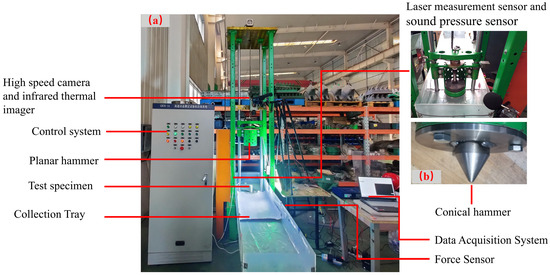
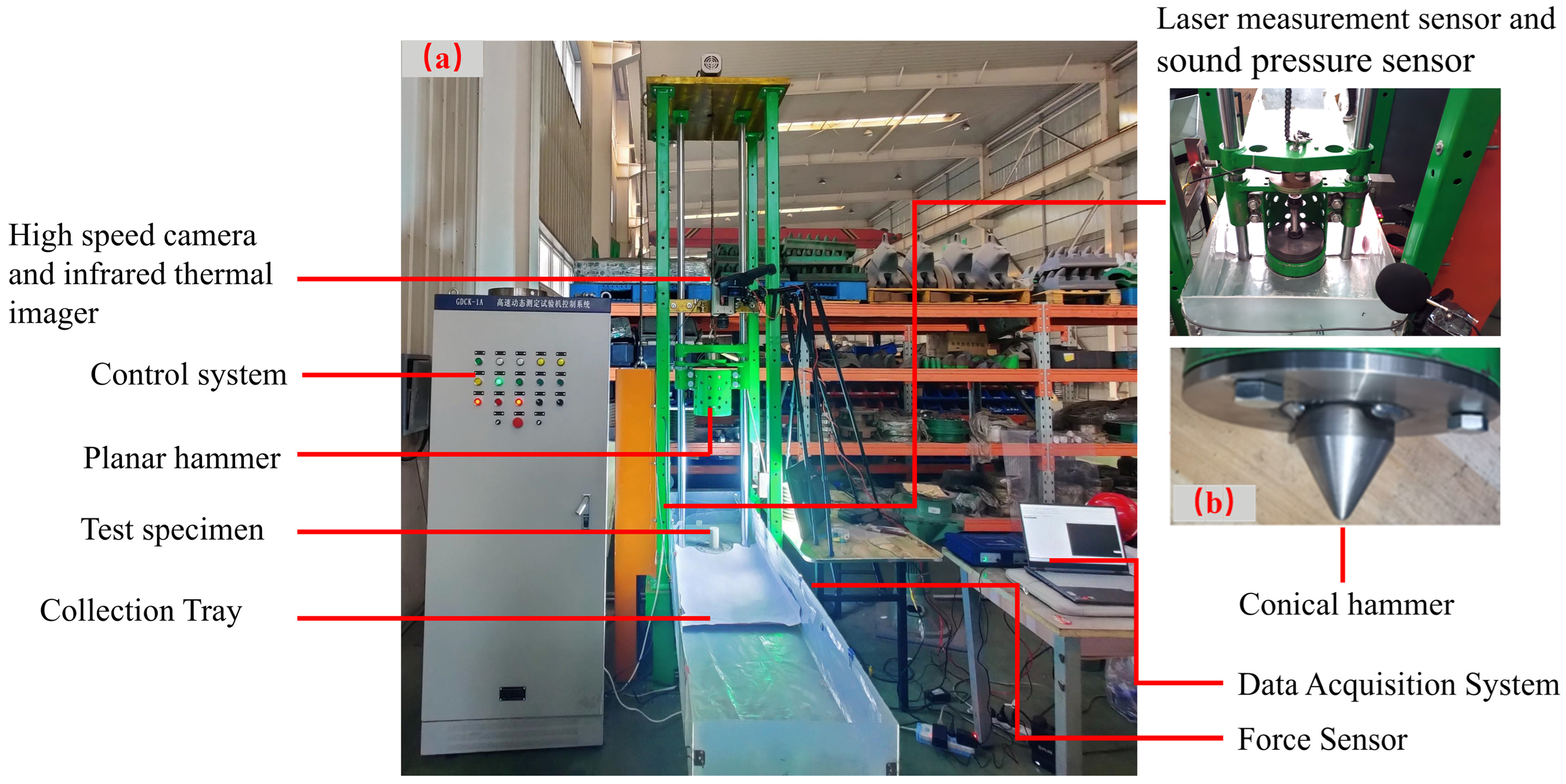
As illustrated in Figure 1, the apparatus has a frame height of 3 m with a base of 0.7 m × 0.7 m. The hammer has a maximum drop height of 2 m; it is hoisted or lowered by a chain driven by a gear motor and is released by de-energizing an electromagnet. The input energy and loading rate can be varied by adjusting the drop height. The hammer has a base mass of 20 kg, which can be increased up to approximately 60 kg by adding annular lead blocks (each weighing ~5 kg), thereby allowing the input energy to be controlled via mass adjustment. A linear sliding collar and guide rail assembly ensures the hammer falls vertically. The anvil, consisting of an upper plate, a pressure sensor, and a lower plate, is bolted to the base. The base is reinforced with ribs to ensure platform stability during impact events. A collection tray can be mounted on the base to gather the crushed products. A high-speed camera is positioned above the collection tray to record the particle ejection process, enabling the calculation of kinetic energy upon crushing through subsequent image analysis.
Figure 1.
The PAN-E2E-VIT drop-weight impact crushing system. (a) Planar hammer; (b) Conical hammer.
As shown in Figure 1b, the planar hammer can be replaced with a conical hammer, thereby altering the loading mode applied to the material by the drop hammer. Since the top surface of the material specimen is flat, the use of a planar hammer corresponds to a surface contact loading mechanism in the crushing process. Conversely, the use of a conical hammer corresponds to a point contact loading mechanism.
2.2. Materials and Experimental Scheme
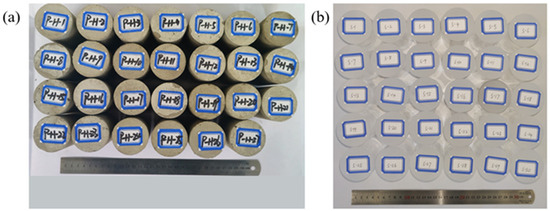
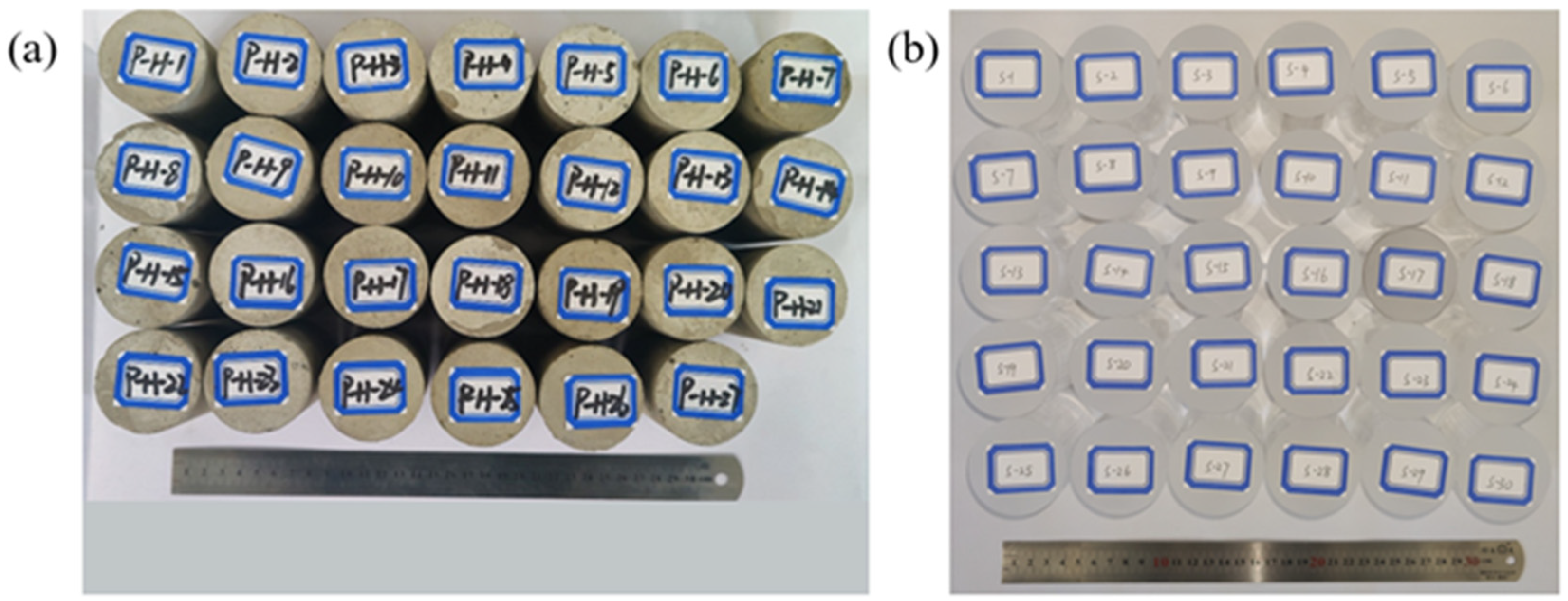
The selected quasi-brittle materials were concrete and quartz glass. In accordance with the standards for rock mechanics testing, the specimens were machined into cylinders with a diameter of 50 mm and a height of 100 mm. The flatness of the top and bottom surfaces was within 0.02 mm, and the parallelism was maintained within 0.05 mm. The geometry of the specimens is shown in Figure 2.
Figure 2.
Concrete and quartz glass specimens. (a) Concrete; (b) Quartz glass.
The concrete specimens were prepared from a homogeneous mixture of water, quartz sand, and P.O 42.5 cement in a ratio of 1:1.4:2. After 28 days of standard curing, the specimens had an average density of 1.891 g/cm3 and an average compressive strength of 38 MPa. The quartz glass specimens had an average density of 2.220 g/cm3 and an average compressive strength of 1100 MPa. Notably, due to the colorless and transparent nature of the quartz glass specimens, the motion trajectories of their fragments tended to become blurred in high-speed imaging. To mitigate this issue, the surfaces of the quartz glass specimens were coated with black spray paint. This treatment did not affect the mechanical properties of the specimens or the subsequent fracture phenomena during crushing.
As detailed in Table 1, a three-factor, three-level orthogonal experimental design was employed for each material, with each test condition replicated three times. During the experiments, different loading modes were achieved by varying the hammer geometry, while different loading rates and input energy levels were controlled by adjusting the drop height and the mass of the hammer.
Table 1.
Test plan for each material.
2.3. Principles of Input Energy and Kinetic Energy Calculation
During the test, after being released, the hammer impacts the material in a near free-fall motion along vertical guide rails. Due to the presence of air resistance and rail friction, the gravitational potential energy of the hammer is greater than the actual input energy transferred to the specimen. Therefore, in this study, a laser displacement sensor was used to record the displacement of the hammer during the impact crushing process. The maximum velocity v during the drop-weight impact on the specimen is calculated. The maximum kinetic energy of the hammer during the crushing process is taken as the input energy UI for specimen breakage, i.e.,
where m is the mass of the hammer (kg).
During the crushing process, the material generates a large number of particles. The elastic energy stored within the material is rapidly released, imparting a certain velocity to the resulting product particles. The kinetic energy of the entire crushing system is therefore the sum of the kinetic energies of all individual particles. Hence, the total kinetic energy Uk of the system can be expressed by Equation (2):
where mi is the mass of an individual product particle and vi represents its velocity.
For an individual ejected product particle, its displacement between two consecutive frames immediately after fracture was obtained from the high-speed camera recordings. Given the known time interval between frames, the velocity of the particle could be calculated. The mass of a particle can be readily determined using a precision balance. Therefore, in theory, the total kinetic energy Uk during crushing could be precisely calculated using Equation (2). However, in practice, the process generates a vast number of product particles across different size classes, making it extremely challenging with current techniques to directly correlate the ejection velocity of each individual fragment with its specific mass.
To address the challenge of correlating individual particle velocity with its mass and to simplify the kinetic energy calculation, this study adopted the methodology from Guo et al. [5]. The crushed products collected in the tray outside the anvil were classified into four size fractions: α, β, γ, and δ. Considering the resolution of the high-speed camera, the corresponding particle size ranges for these fractions were defined as: +20 mm, 13–20 mm, 6–13 mm, and −6 mm, respectively.
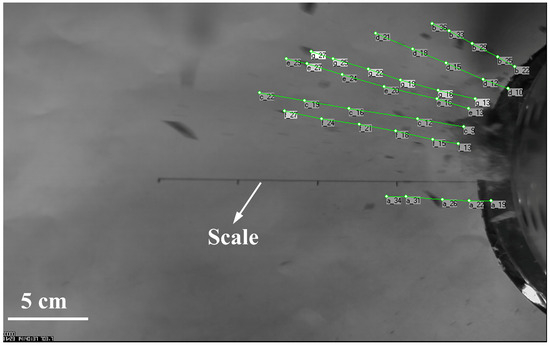
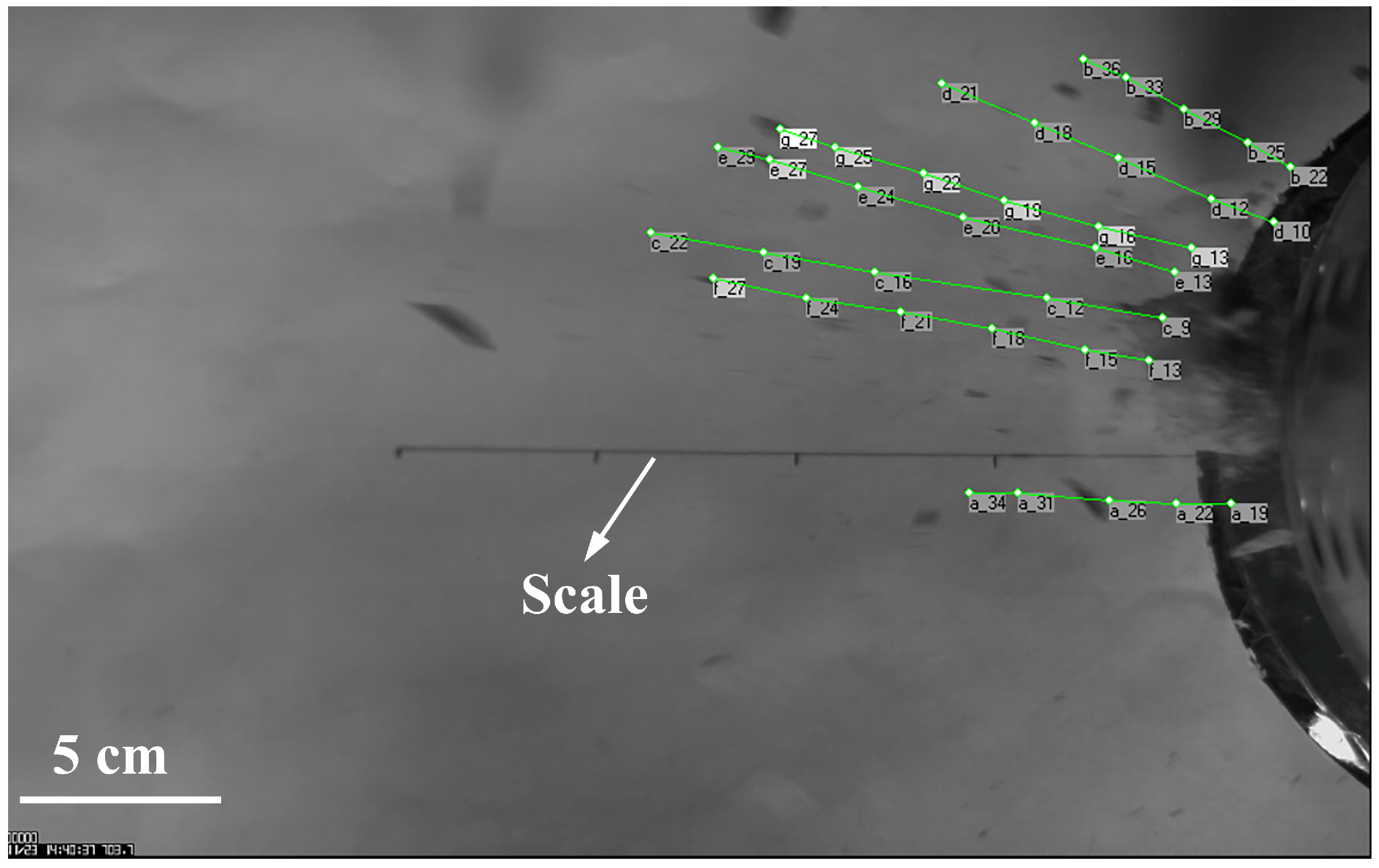
As illustrated in Figure 3, a scale is placed within the collection tray. It serves as a reference to determine the size of crushed products in the high-speed images and the travel distance of particles between consecutive frames. The tracking function of the high-speed camera was utilized to determine the horizontal velocities of representative α, β, γ, and δ particles from each test. For each particle type per specimen, approximately seven representative particles were selected (fewer than seven if insufficient oversized particles were present). The average velocity of these seven particles was calculated as the mean velocity for that specific size fraction, yielding the mean velocities vAα, vAβ, vAγ and vAδ. The total mass of the particles in each fraction mα, mβ, mγ and mδ was determined by the sieving method.
Figure 3.
High speed camera particle tracking system.
Based on the aforementioned method, the matching of particle mass and velocity for the crushed products can be achieved. Consequently, Equation (2) can be transformed into the form of Equation (3), namely:
It should be noted that during the drop-weight impact test, particles located within the anvil area are confined beneath the hammer, and the kinetic energy of these fragments can be considered zero. Therefore, this study only accounts for the kinetic energy of the crushed product particles that are ejected beyond the anvil and land in the collection tray.
The high-speed camera used in this study was a Mega Speed MS55K S2 model, with a maximum frame rate of 20,000 fps and a maximum resolution of 1280 × 1024 pixels. In the aforementioned tests, the camera was oriented perpendicular to the horizontal direction to facilitate the capture of the horizontal velocity of particles. For these recordings, a frame rate of 1000 fps and a resolution of 1280 × 800 pixels were employed.
Furthermore, to better discern the differences in fracture patterns between the various specimens, 12 additional tests (3 replicates for each combination) were conducted on both concrete and quartz glass under conical and planar hammer loading, with a drop weight mass of 30 kg and a drop height of 60 cm. For these tests, the camera was positioned perpendicular to the specimen height direction, using a frame rate of 3000 fps and a resolution of 400 × 300 pixels.
The total kinetic energy Uk during specimen breakage can be calculated using Equation (3). The ratio of this total kinetic energy Uk to the input energy UI is defined as the kinetic energy proportion ηk, i.e.,
3. Results and Discussion
3.1. Input Energy and Product Spatial Distribution
The input energy values for the concrete and quartz glass specimens during testing are summarized in Table 2 and Table 3, respectively.
Table 2.
Calculation results of input energy for concrete drop hammer impact.
Table 3.
Calculation results of input energy for quartz glass drop hammer impact.
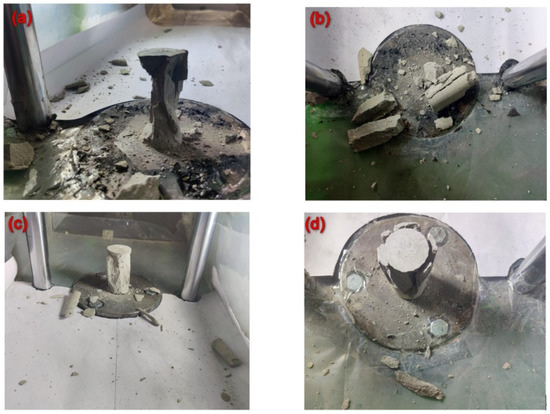
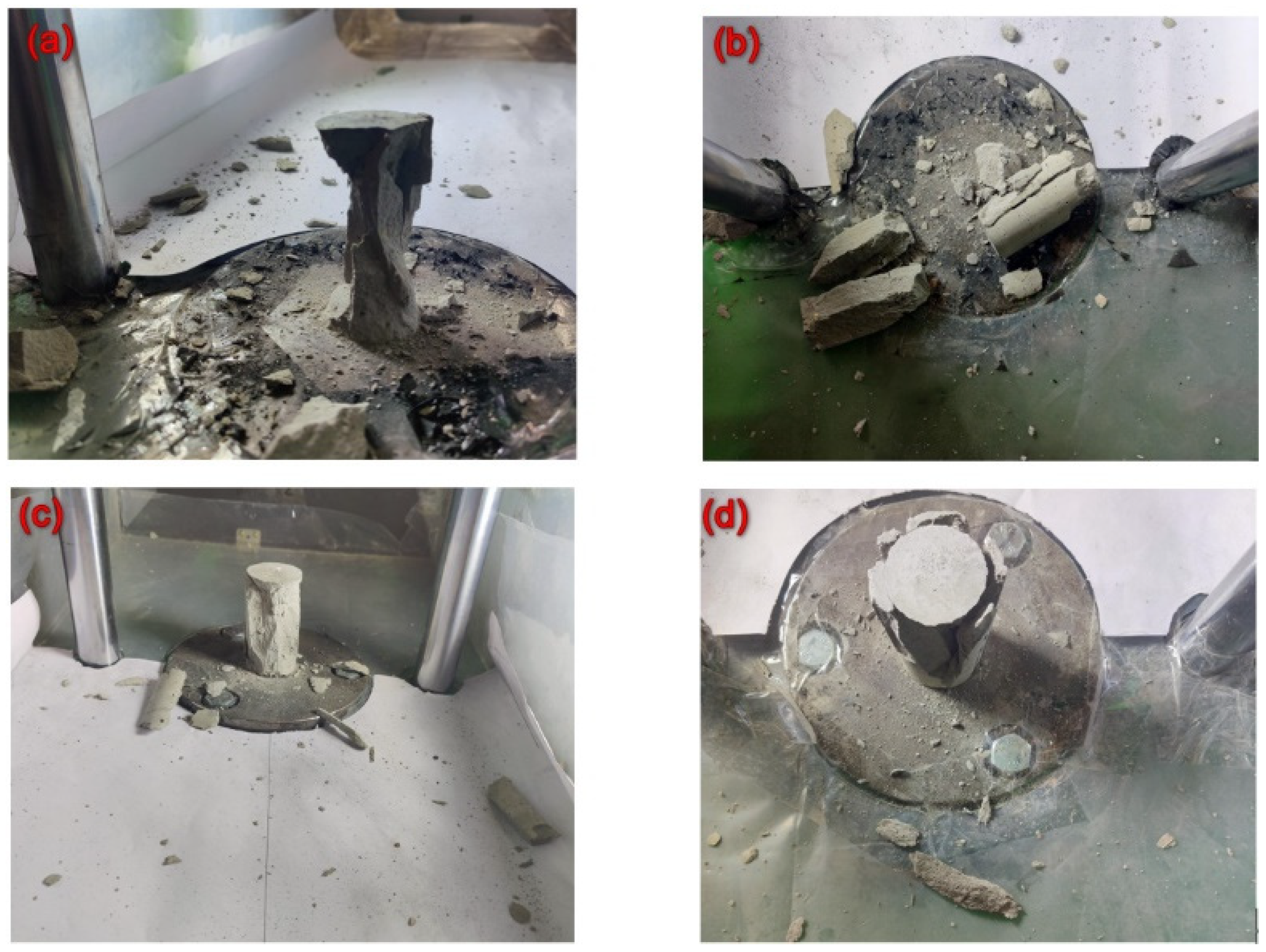
As can be seen from the tables, the input energy for quartz glass specimens is consistently slightly higher than that for concrete specimens under identical conditions. This discrepancy is primarily attributed to the different post-failure product states of the two materials. For the concrete specimens, the product distribution mainly exhibits the four patterns illustrated in Figure 4:
Figure 4.
State of the crushed product during concrete impact crushing process. (a) Under a planar hammer, the main body of the specimen remains largely intact, while the peripheral parts fracture, resulting in widespread ejection of product particles; (b) Under a conical hammer, the specimen breaks into several large fragments (+20 mm) that tilt on the anvil, with smaller particles being ejected over a wide area; (c) Under a planar hammer, the specimen retains most of its main body, with fractures occurring at the edges and resulting in fragment ejection; (d) Under a planar hammer, a distinct fracture cone forms in the main body of the specimen, but only very slight spalling occurs on the periphery, without widespread ejection of product particles.
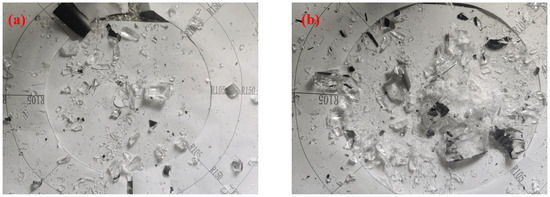
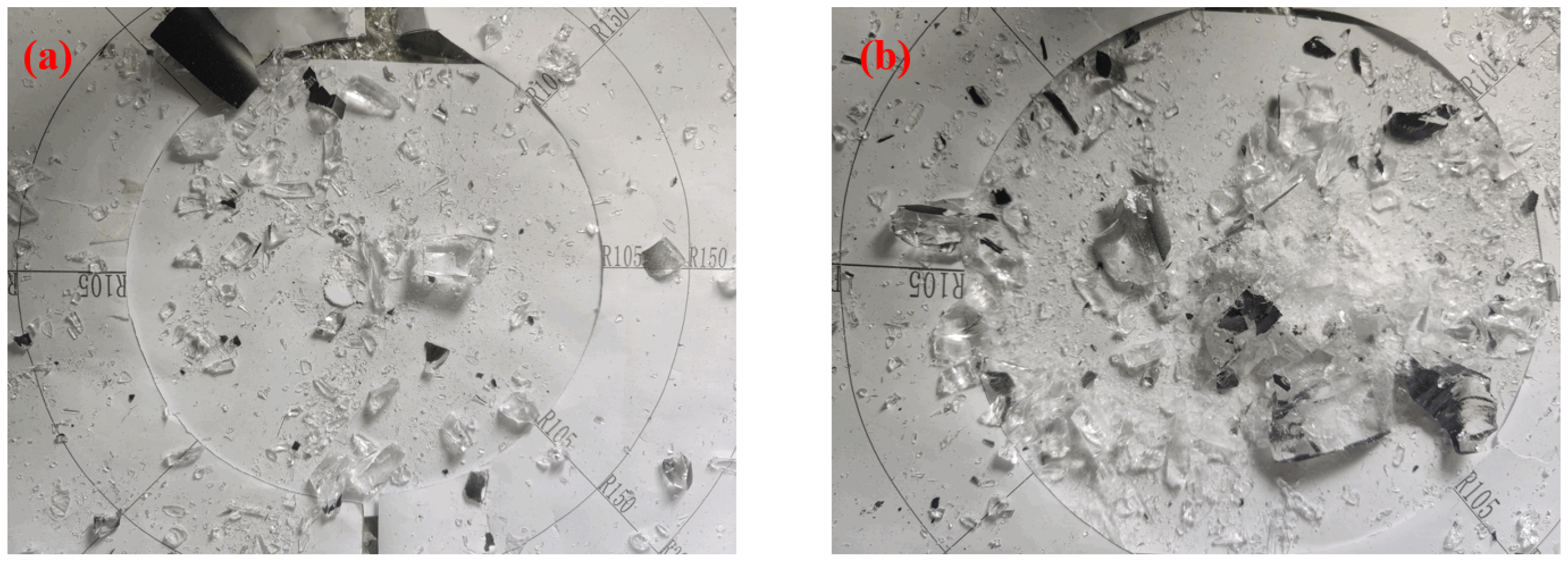
For quartz glass specimens, the product distribution primarily exhibited two characteristic patterns, as shown in Figure 5:
Figure 5.
State of the crushed product during quartz glass impact crushing process. (a) under conical hammer loading, fragments were widely ejected, leaving only a small amount of medium-sized particles on the anvil; (b) under planar hammer loading, while extensive particle ejection also occurred, the particles remaining on the anvil were further fragmented into smaller sizes due to secondary breakage.
It is evident that the main body of the quartz glass specimen is scarcely retained after crushing, whereas a significant portion of the concrete specimen remains at the center of the anvil. This difference primarily stems from the higher brittleness of quartz glass. Upon material failure, cracks propagate rapidly, and the elastic energy stored within the material is abruptly released, converting into the kinetic energy of the fragments. As a result, most of the particles are ejected away from the anvil. This observation is corroborated by our subsequent analysis, which shows that the ejection velocity of quartz glass fragments is significantly higher than that of concrete. Furthermore, since the concrete core remains on the anvil, the actual travel distance of the hammer in concrete tests is shorter than that in quartz glass tests under identical drop-weight conditions, which consequently leads to a lower input energy for concrete.
3.2. Relationship Between Product Particle Velocity and Particle Size
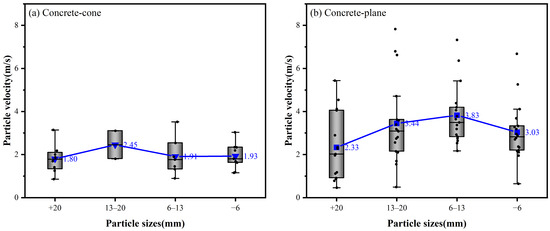
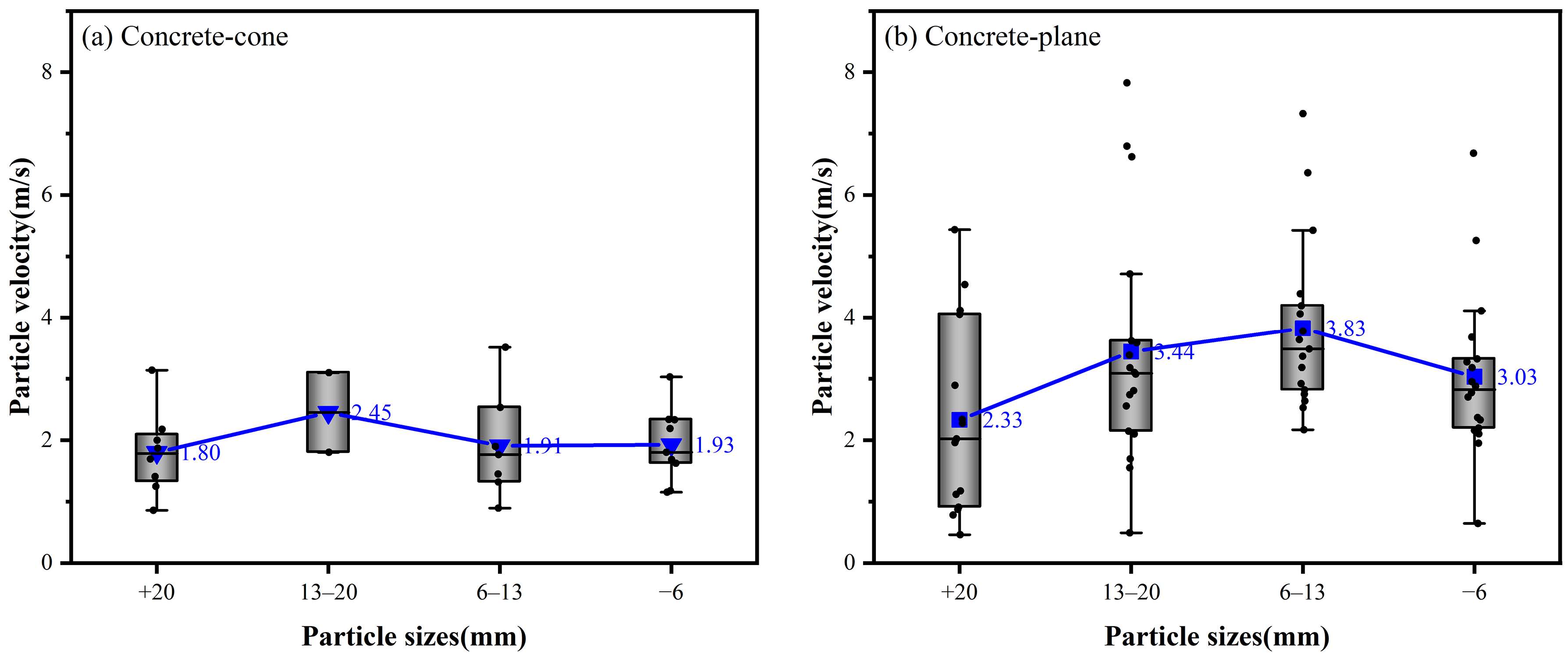
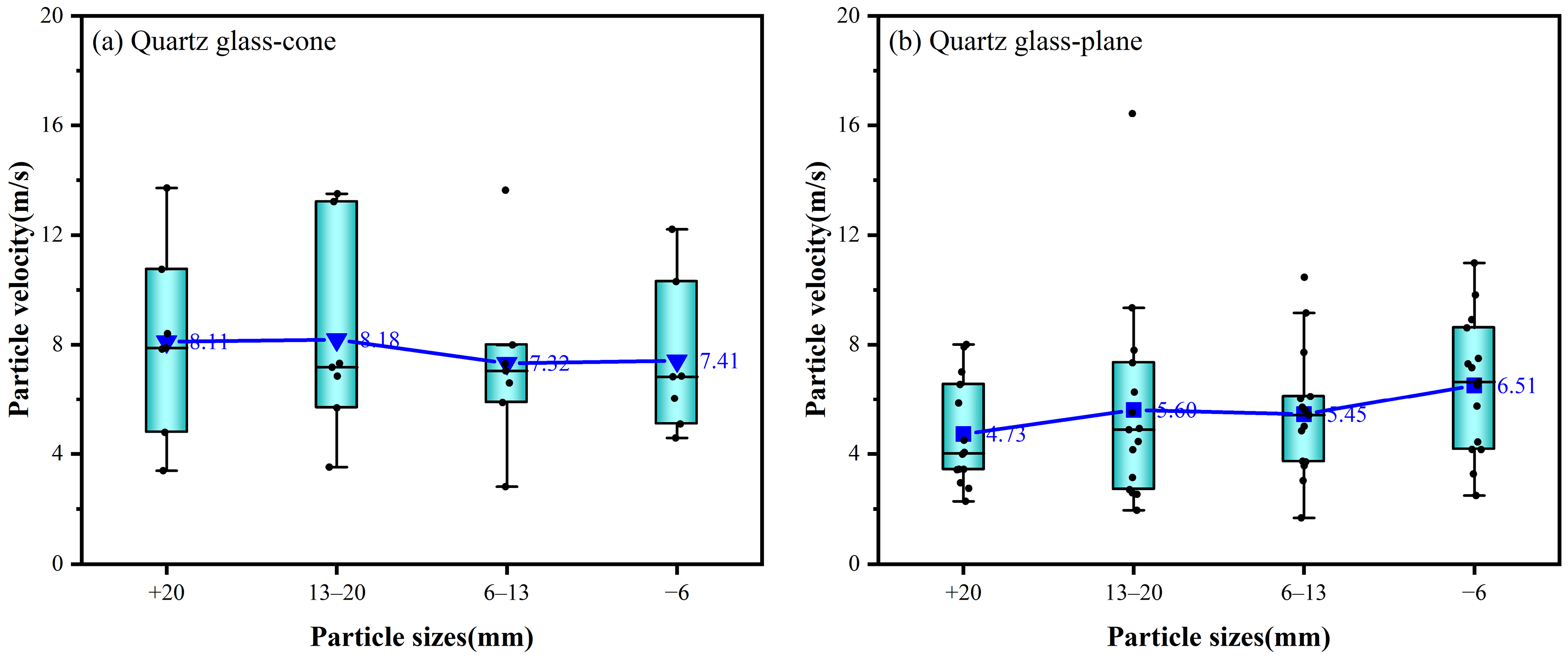
The average ejection velocities of product particles across different size fractions for all concrete specimens under various contact modes are statistically summarized in Figure 6. The blue markers in Figure 6 denote the mean values, while the whiskers show the range after outlier exclusion (coefficient = 1.5). The same representation is used in Figure 7, Figure 8 and Figure 9. Figure 6a reveals that under conical hammer loading, the particle velocity initially increases and then decreases with diminishing particle size, although the overall variation is relatively small. Particles in the 13–20 mm range exhibited the highest average velocity of 2.45 m/s, while those larger than 20 mm showed the lowest average velocity of 1.80 m/s—the former was 36.11% higher than the latter. Under conical hammer loading, the overall average velocity of all ejected concrete particles was 1.92 m/s.
Figure 6.
Relationship between product ejection velocity and particle size for concrete specimens under different contact modes.
Figure 7.
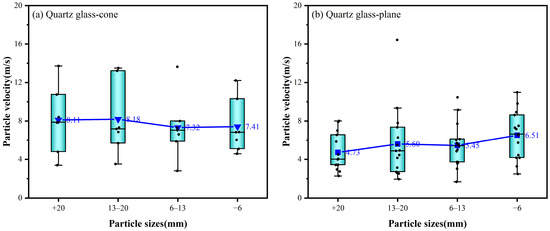
Relationship between product ejection velocity and particle size for quartz glass specimens under different contact modes.
Figure 8.
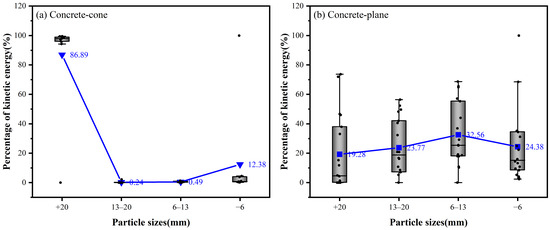
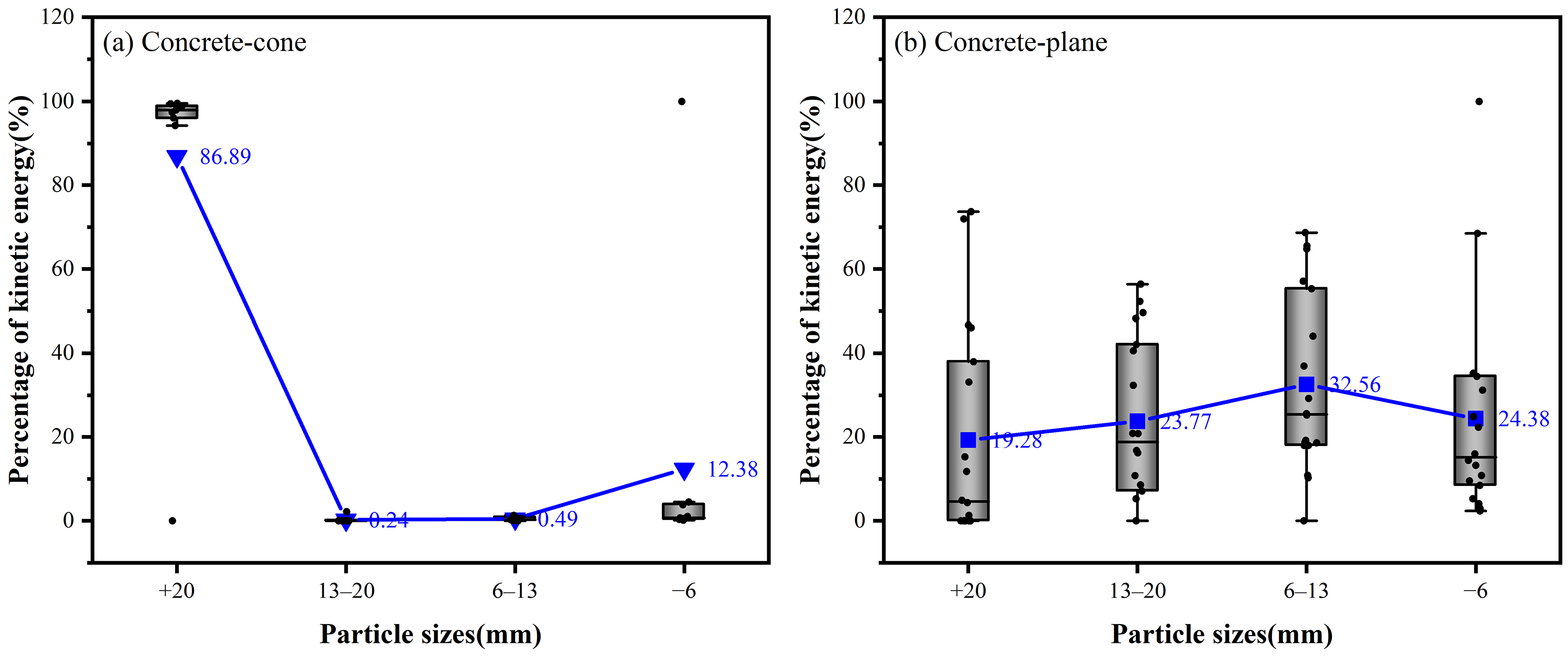
Contribution of kinetic energy from each size fraction to the total kinetic energy for concrete specimens under different contact modes.
Figure 9.
Contribution of kinetic energy from each size fraction to the total kinetic energy for quartz glass specimens under different contact modes.
Figure 6b illustrates that under planar hammer loading, particle velocity initially increases and then decreases with diminishing particle size, exhibiting a considerably larger overall variation. Particles in the 6–13 mm range recorded the highest average velocity of 3.83 m/s, while those larger than 20 mm showed the lowest average velocity of 2.33 m/s—the former being 64.38% higher than the latter. The overall average velocity of all ejected concrete particles under planar hammer loading was 3.18 m/s, which is higher than that observed under conical hammer loading.
This difference is primarily attributed to the inherent toughness of concrete. As shown in Figure 4b, under conical hammer loading, the specimen tends to split into larger fragments due to the wedging action, which generally acquire lower velocities. In contrast, under planar hammer loading, the specimen is subjected predominantly to compression and bending. Although the main body of the specimen remains on the anvil, intense disintegration often occurs at its ends, ejecting finer fragments with higher velocities into the collection tray.
Overall, the particle ejection velocities during the crushing of concrete specimens were relatively low, with an overall average velocity of 2.84 m/s across all test conditions.
The average ejection velocities of product particles across different size fractions for all quartz glass specimens under various contact modes are statistically summarized in Figure 7. Figure 7a reveals that under conical hammer loading, particle velocity initially increases and then decreases with diminishing particle size, yet the overall variation remains minimal. Particles in the 13–20 mm range exhibited the highest average velocity of 8.18 m/s, while those in the 6–13 mm fraction showed the lowest average velocity of 7.32 m/s—the former being only 11.75% higher than the latter. Under conical hammer loading, the overall average velocity of all ejected quartz glass particles was 7.76 m/s.
Figure 7b reveals that under planar hammer loading, particle velocity exhibits an increasing trend with diminishing particle size. Particles smaller than 6 mm recorded the highest average velocity of 6.51 m/s, while those larger than 20 mm showed the lowest average velocity of 4.73 m/s—the former being 37.63% higher than the latter. The overall average velocity of all ejected quartz glass particles under planar hammer loading was 5.59 m/s, which is lower than that observed under conical hammer loading.
This difference is primarily attributed to the extreme brittleness of quartz glass. Once damage initiates, cracks propagate rapidly, leading to global failure. The conical hammer applies a higher input energy density per unit area, resulting in more violent fragmentation of quartz glass and consequently higher ejection velocities of the resulting fragments.
Overall, the particle ejection velocities during the crushing of quartz glass specimens were notably high, with an overall average velocity of 6.28 m/s across all test conditions—significantly higher than that of concrete specimens.
3.3. Kinetic Energy Distribution by Size Fraction
Table A1 and Table A2 in Appendix A present the mass distributions of crushed products ejected into the collection tray during the tests on concrete and quartz glass specimens, respectively.
The contribution of product particles from each size fraction to the total kinetic energy during the crushing of concrete specimens is analyzed in Figure 8. Figure 8a indicates that under conical hammer loading, particles larger than 20 mm contribute the largest proportion of kinetic energy, as high as 86.89%, followed by particles smaller than 6 mm at 12.38%. In contrast, the intermediate size fractions contribute minimally. This is primarily because the conical hammer predominantly induces a splitting effect in the concrete specimen, resulting in the generation of very few particles in the intermediate size ranges. This feature is strongly corroborated by the particle size distribution in Table A1.
Figure 8b reveals that under planar hammer loading, particles in the 6–13 mm range contribute the largest share of kinetic energy at 32.56%, while particles larger than 20 mm contribute the least, at 19.28%. Compared to the conical hammer, the contribution to total kinetic energy across different size fractions under the planar hammer is more evenly distributed.
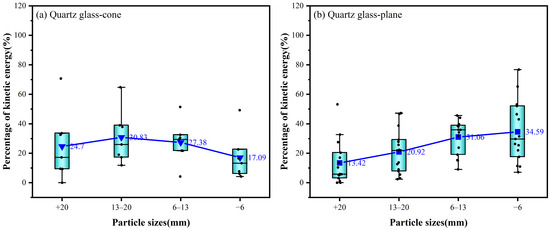
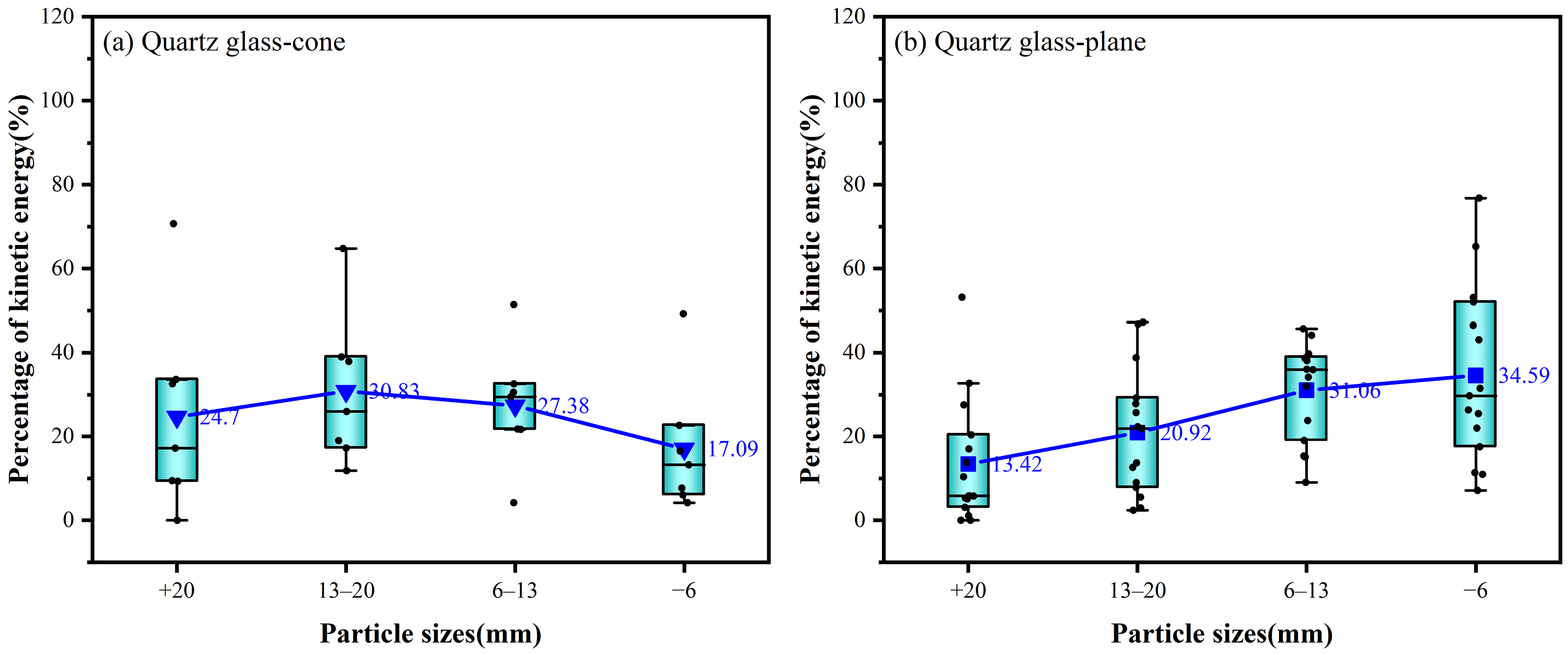
Similarly, the contribution of product particles from each size fraction to the total kinetic energy during the crushing of quartz glass specimens is analyzed in Figure 9. As shown in Figure 9a, under conical hammer loading, particles in the 13–20 mm range contribute the largest proportion of kinetic energy at 30.83%, while the smallest fraction (−6 mm) contributes the least at 17.09%. Overall, the kinetic energy contributions from the various size fractions are relatively balanced, which presents a distinct difference from the behavior observed in concrete specimens.
Figure 9b indicates that under planar hammer loading, the proportion of kinetic energy contributed increases with decreasing particle size. Particles smaller than 6 mm contribute the largest share, accounting for 34.59% of the total. This finding indicates that under planar hammer loading, a greater quantity of fine particles is ejected, and these particles possess relatively high ejection velocities.
3.4. Proportion of Kinetic Energy to Input Energy
The proportion of kinetic energy to input energy for all concrete specimens under different contact modes is statistically summarized in Table A3 of Appendix A. Under conical hammer loading, the proportion of kinetic energy across different tests ranged from 0.009% to 1.066%, with a mean value of 0.402%. Under planar hammer loading, the proportion ranged from 0.001% to 1.043%, with a mean value of 0.324%. It is noteworthy that the minimum proportion under planar hammer loading was only 0.001%. This result is attributed to the fracture phenomenon illustrated in Figure 4d, where the specimen failed, forming a distinct fracture cone, but the main fragmented body remained within the anvil without widespread ejection, resulting in minimal kinetic energy.
Although the mean proportion under conical hammer loading (0.402%) was slightly higher than that under planar hammer loading (0.324%), both values are remarkably low. Overall, the particle ejection velocity during the crushing of concrete specimens was relatively slow, with an overall average velocity of 2.84 m/s and a mean kinetic energy proportion of 0.350%.
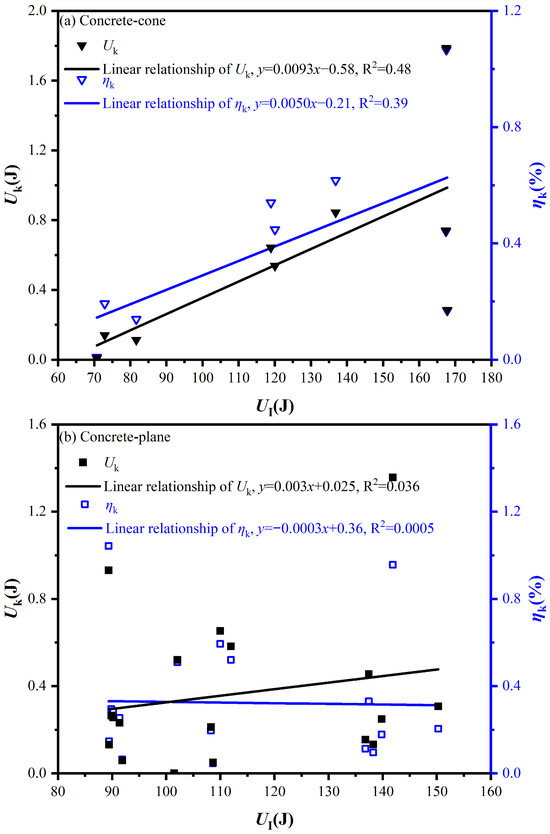
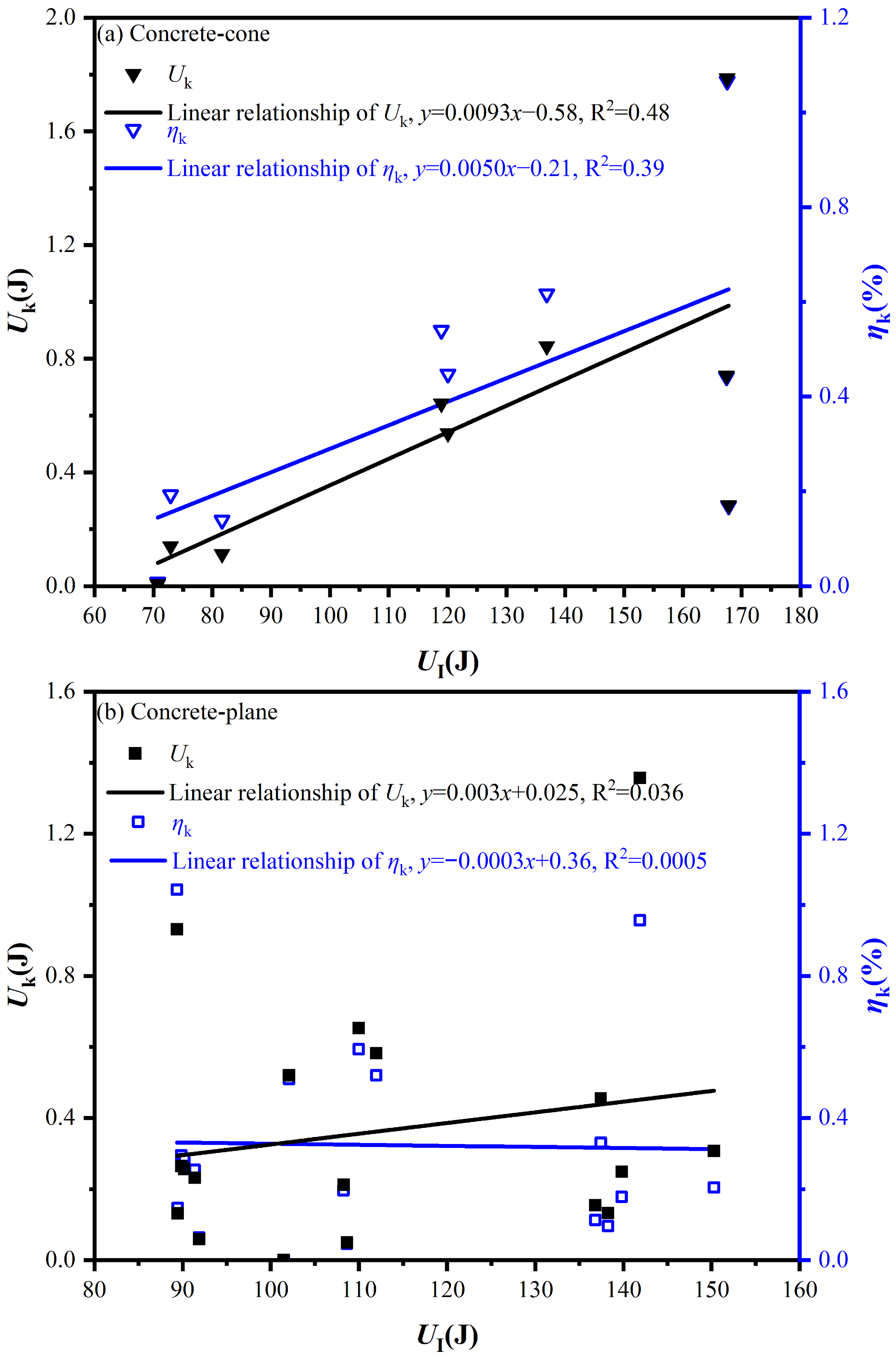
The variation trends of kinetic energy and its proportion with increasing input energy for concrete specimens under conical and planar hammer loading are shown in Figure 10. As can be observed, for concrete specimens under conical hammer loading, both kinetic energy and its proportion show an increasing trend with rising input energy. Although the linear fit yields a relatively low R2 value, the trend remains discernible. In contrast, under planar hammer loading, neither kinetic energy nor its proportion changes significantly with increasing input energy; this is reflected in the linear fit, where R2 is virtually zero.
Figure 10.
Kinetic energy and its proportion as a function of input energy for concrete specimens under different contact modes.
This difference arises because the planar hammer generates a higher proportion of compressive load and provides stronger containment of the fragmented products compared to the conical hammer. Consequently, a larger portion of the fractured material remains in the center of the anvil during crushing. This containment effect suppresses the generation of kinetic energy during crushing, which explains why the kinetic energy does not increase significantly with input energy under planar hammer loading.
An analysis of variance (ANOVA) based on the pseudo-level method was performed to assess the factors influencing the proportion of kinetic energy in the concrete drop-weight tests, as detailed in Table A4 of Appendix A. The results indicate that the factors influencing the results follow the order of significance: drop weight mass > hammer shape > drop height. However, overall, none of these effects are statistically pronounced, indicating the need for further investigation to identify additional influential factors.
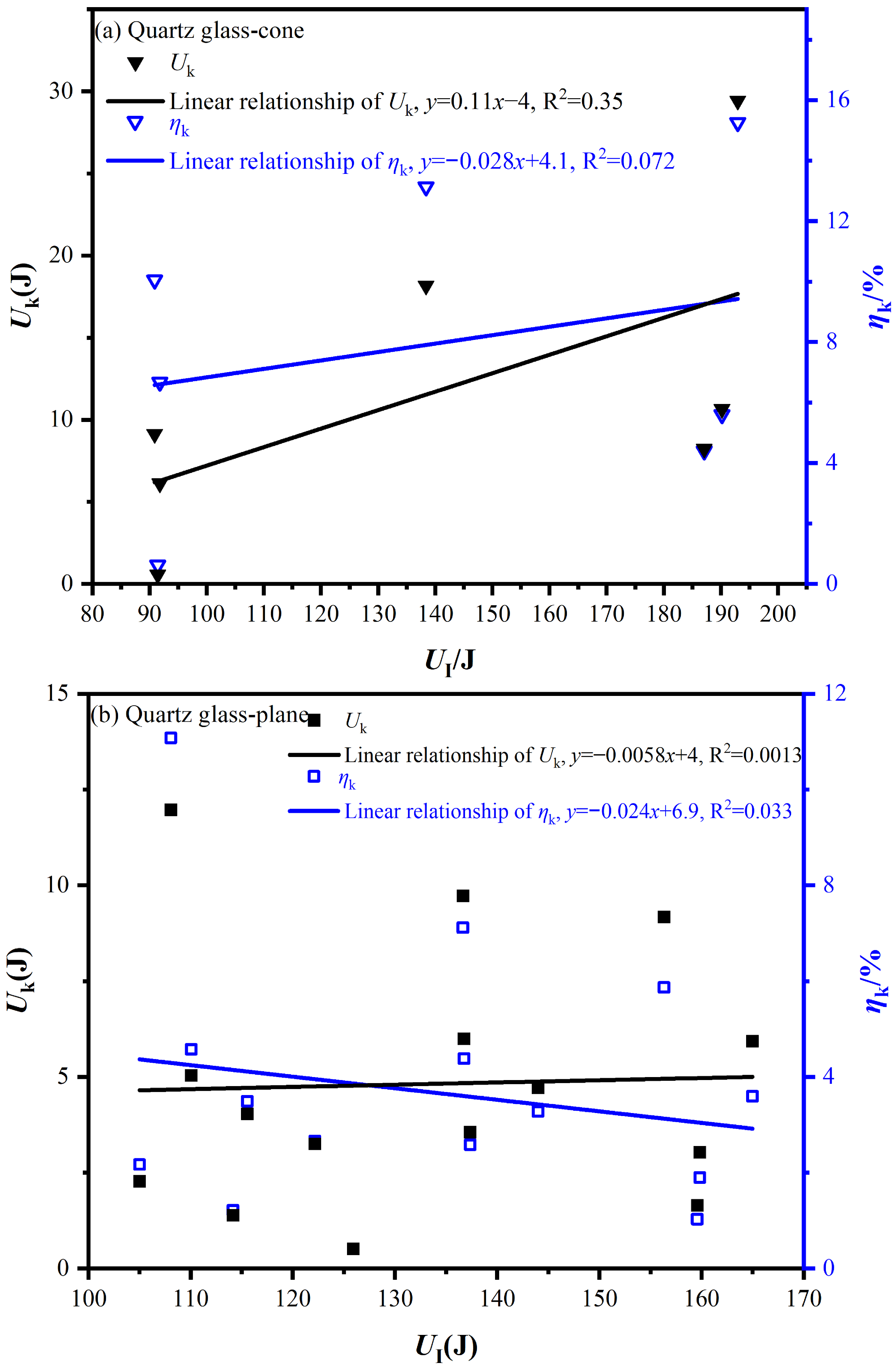
The proportion of kinetic energy to input energy for all quartz glass specimens under different contact modes is statistically summarized in Table A5 of Appendix A. Under conical hammer loading, the proportion ranged from 0.623% to 15.257%, with a mean value of 7.962%. Under planar hammer loading, it ranged from 0.406% to 11.075%, with a mean value of 3.690%.
Compared to concrete specimens, quartz glass shows a more pronounced difference in kinetic energy proportion between the two hammer types. This is primarily attributed to the higher brittleness of quartz glass, which results in finer fragmented products. Unlike the planar hammer, the conical hammer provides less containment of particle movement, thereby allowing more input energy to be converted into kinetic energy. In contrast, for concrete specimens under conical hammer loading, the larger fragment size limits ejection velocity even without significant hammer containment, resulting in lower kinetic energy conversion.
Overall, the particle ejection velocity during the fragmentation of quartz glass specimens was notably higher, with an average velocity of 6.28 m/s for all particles—2.21 times that of concrete specimens. The mean proportion of kinetic energy across all tests was 5.049%, which is 14.43 times greater than that of concrete specimens. Increasing material toughness and adopting surface contact loading represent effective strategies for reducing both the kinetic energy and its proportion during the crushing process.
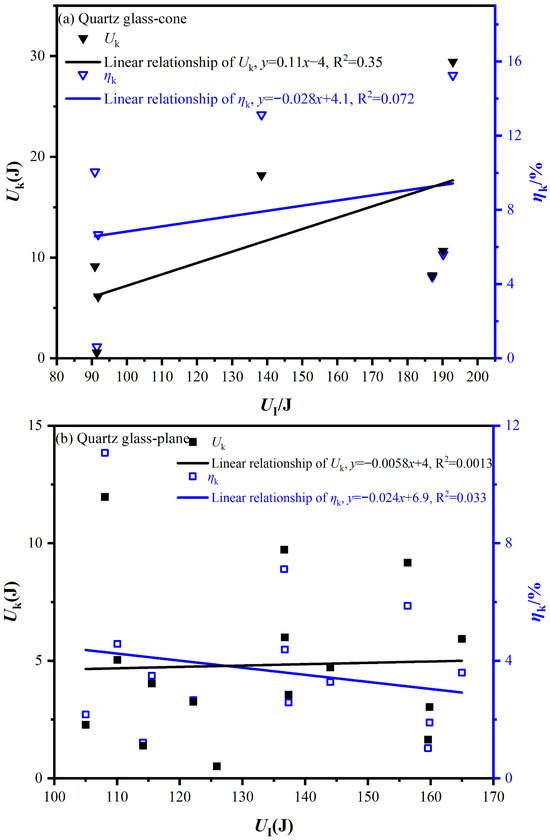
As shown in Figure 11, the variation trends of kinetic energy and its proportion with increasing input energy for quartz glass specimens under conical and planar hammer loading are presented. For quartz glass specimens, under conical hammer loading, both the kinetic energy and its proportion exhibit an increasing trend with rising input energy. In contrast, under planar hammer loading, the kinetic energy shows no significant change, while its proportion decreases gradually with increasing input energy. This is reflected in the linear fitting results, where the R2 value is virtually zero. This pattern of variation is almost consistent with that observed in concrete specimens. This indicates that the variation in kinetic energy and its proportion with input energy during the crushing process is more significantly influenced by the hammer shape than by the material properties themselves. The conical hammer tends to facilitate the generation of greater kinetic energy and a higher proportion of kinetic energy.
Figure 11.
Kinetic energy and its proportion as a function of input energy for quartz glass specimens under different contact modes.
Based on the pseudo-level method, an ANOVA was performed to evaluate the factors influencing the proportion of kinetic energy during the drop-weight tests on quartz glass specimens, as detailed in Table A6 of Appendix A. The results indicate that the influence of the investigated factors on the results follows the order: hammer shape > drop height > drop weight mass. The F0.05 test results indicate that both hammer shape and drop height exert a significant influence on the outcomes, whereas drop weight mass has no statistically significant effect.
3.5. Fracture Patterns of Specimens Under Different Contact Modes
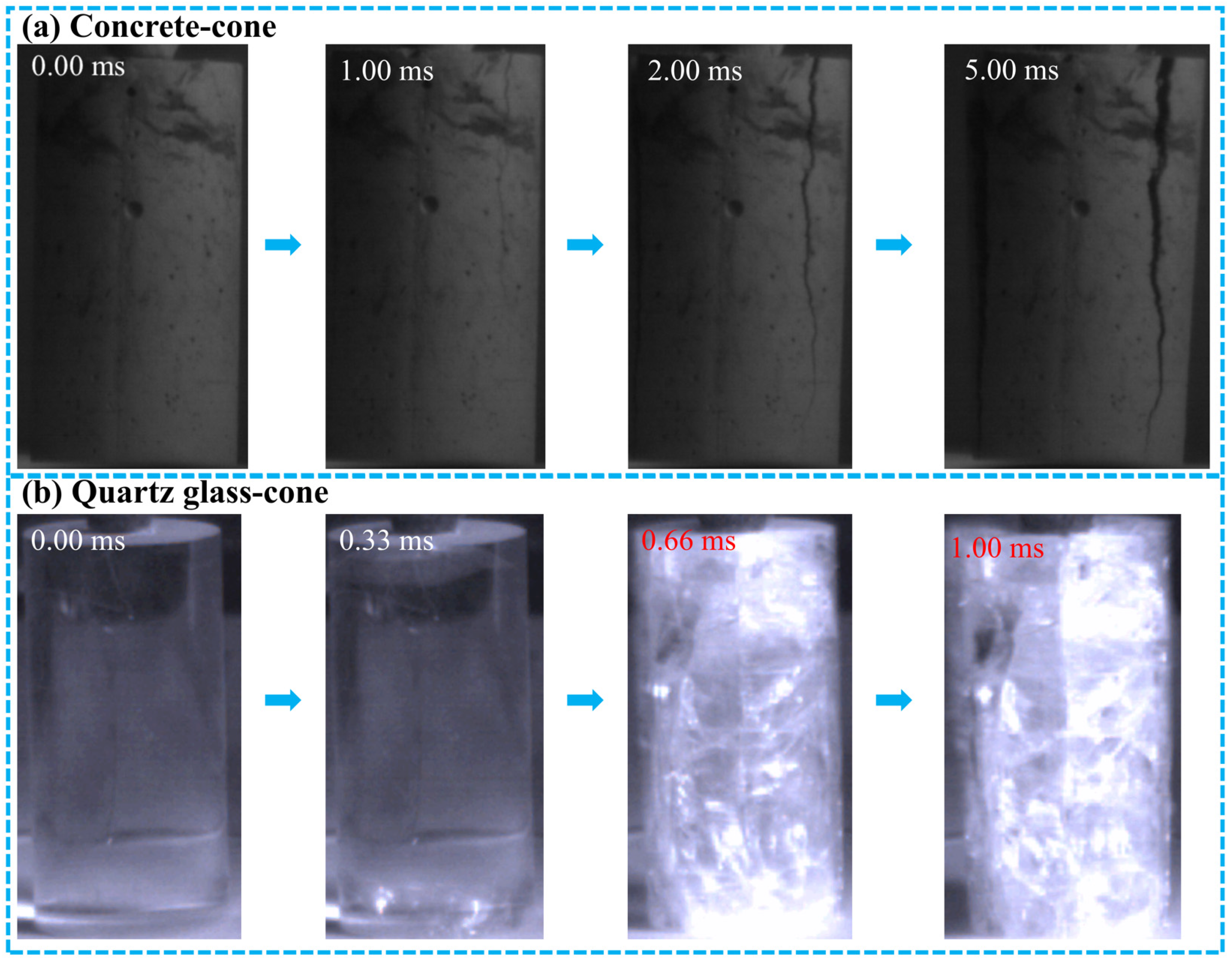
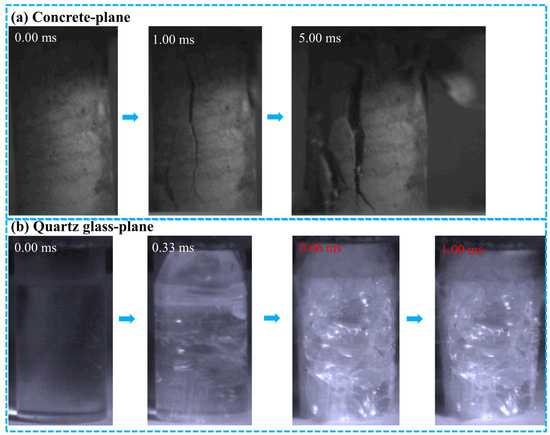
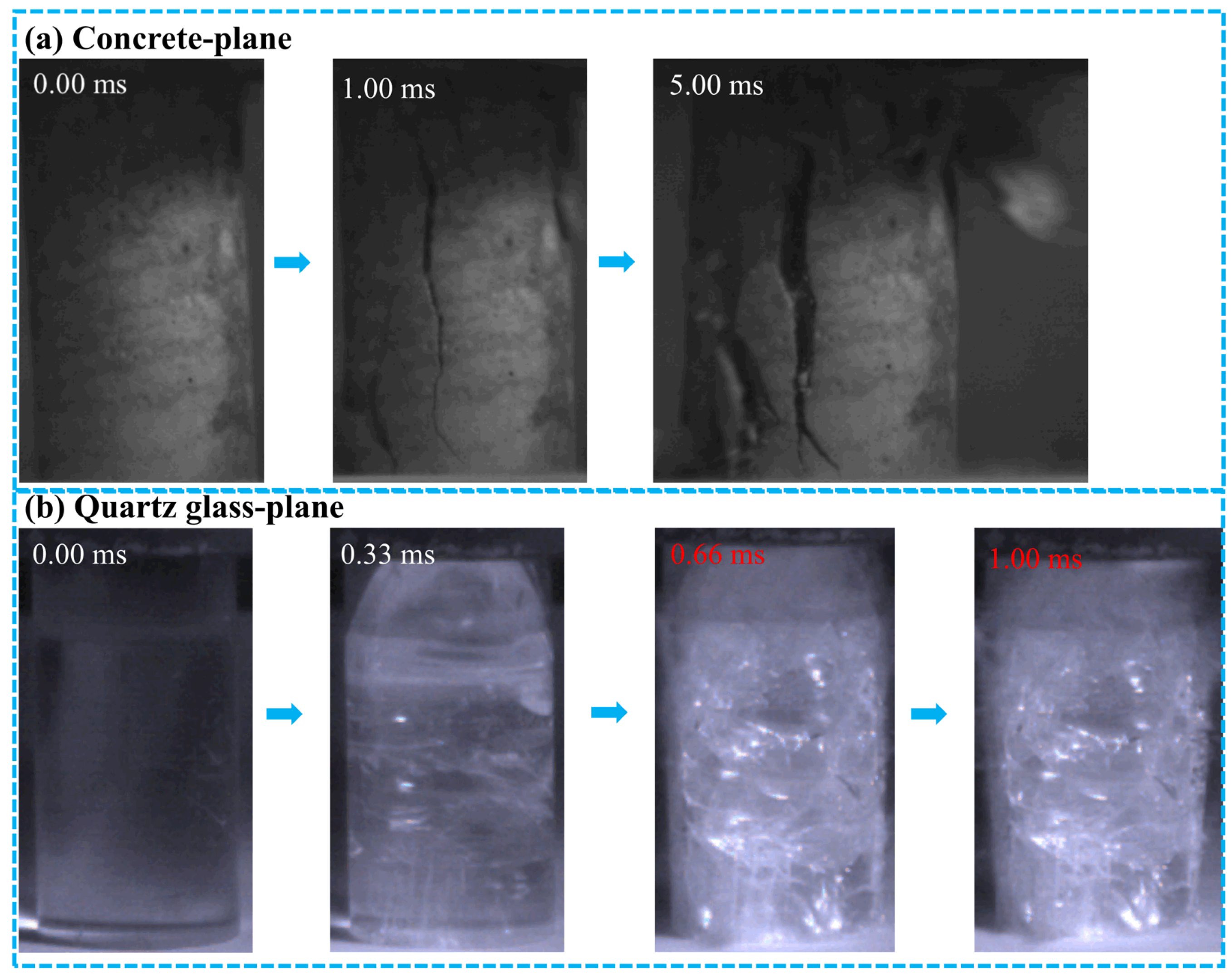
Figure 12 and Figure 13 show typical fracture behaviors of the materials captured by the high-speed camera at the moment of crushing under different contact modes.
Figure 12.
Typical fracture patterns of concrete and quartz glass specimens under point contact loading.
Figure 13.
Typical fracture patterns of concrete and quartz glass specimens under surface contact loading.
As shown in Figure 12a, under point contact loading, the concrete specimen splits due to the penetration of the conical hammer, generating 2–3 main cracks along the height of the specimen. Subsequently, the specimen primarily breaks into several large sub-particles and a number of smaller fine particles. Figure 12b indicates that under the same point contact loading, the quartz glass specimen also undergoes initial splitting under the hammer’s penetration, forming 2–3 main cracks along its height. The difference lies in the concurrent generation of numerous secondary cracks during the formation of the main cracks, leading to violent failure of the specimen and ultimately producing a large quantity of fine-grained particles.
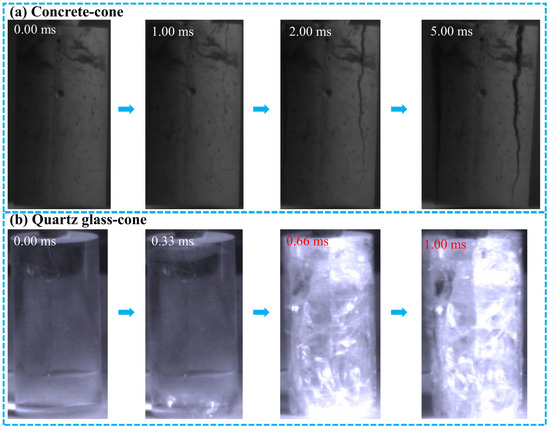
Figure 13a demonstrates that under surface contact loading, the concrete specimen fails by bending under the compression of the planar hammer. In addition to the primary cracks propagating along the specimen height, substantial tensile stresses develop in the radial direction, causing extensive disintegration in the outer regions of the specimen (at 5 ms after impact) and generating fine product particles. This phenomenon is even more pronounced in the quartz glass specimen. As shown in Figure 13b, a distinct fracture cone forms in the upper part of the specimen at 0.33 ms after loading, indicating significant tensile stress in the radial direction under the compression of the planar hammer. By 0.66 ms, the cracks have propagated through the entire specimen, causing fracture to initiate from the central region and producing a large quantity of fragmented particles.
During the crushing process, the main crack in the concrete specimen propagated through its entire section in approximately 2.00 ms, corresponding to a crack propagation velocity of about 100 m/s. In contrast, the main crack in the quartz glass specimen propagated in less than 0.33 ms. Due to the frame rate limitation of our equipment, the exact crack propagation velocity in quartz glass could not be determined. However, similar studies [34] have reported crack velocities of 1800–2800 m/s in quartz glass under compressive loading. This value is an order of magnitude higher than the crack propagation velocity observed in concrete, reflecting the significantly higher brittleness of quartz glass. This fundamental difference in fracture behavior is the primary reason why the quartz glass specimens in this study exhibited substantially higher particle ejection velocities and kinetic energy proportions compared to the concrete specimens.
4. Conclusions
This study investigated the kinetic energy evolution during the impact crushing of typical quasi-brittle materials—concrete and quartz glass—through drop-weight tests conducted under various contact modes and input energy levels. The main conclusions are as follows:
- (1)
- The particle ejection velocity during the fragmentation of quartz glass specimens was significantly higher, with an overall average of 6.28 m/s, which is 2.21 times the average velocity of 2.84 m/s for concrete specimens. The mean proportion of kinetic energy for all quartz glass tests was 5.049%, approximately 14.43 times greater than the 0.350% observed for concrete. Materials with higher toughness exhibit lower kinetic energy and a smaller kinetic energy proportion during the crushing process.
- (2)
- Under point contact loading, both the kinetic energy and its proportion increased markedly with rising input energy for both materials. In contrast, under surface contact loading, the kinetic energy and its proportion showed minimal change as the input energy increased.
- (3)
- The primary breaking mechanisms under point contact loading were identified as penetration and splitting, while surface contact loading predominantly caused compression and bending. Adopting surface contact loading using a planar hammer is an effective strategy for reducing both the kinetic energy and its proportion generated during the crushing process.
- (4)
- The analysis revealed that most variables had no statistically significant effect on the kinetic energy proportion; however, hammer shape and drop height revealed a significant influence on the results for quartz glass.
Author Contributions
Conceptualization, C.Z. and Y.P.; methodology, C.Z. and X.C.; software, C.Z. and X.C.; validation, C.Z. and Y.P.; formal analysis, X.C.; investigation, X.C.; data curation, C.Z. and X.C.; writing—original draft preparation, C.Z.; writing—review and editing, C.Z. and Y.P.; supervision, C.Z.; funding acquisition, Y.P. All authors have read and agreed to the published version of the manuscript.
Funding
This research was funded by the National Natural Science Foundation of China (NSFC) (Grant No. 52074308).
Data Availability Statement
The original contributions presented in this study are included in the article. Further inquiries can be directed to the corresponding author.
Acknowledgments
We thank any assistance and/or helpful discussions. We acknowledge the anonymous reviewers for their comments that greatly improved the earlier version of this manuscript.
Conflicts of Interest
The authors declare that they have no known competing financial interests or per-sonal relationships that could have appeared to influence the work reported in this paper.
Appendix A
Table A1.
Mass distribution of concrete specimen products (collected outside the anvil) in different particle size fractions.
Table A2.
Mass distribution of quartz glass specimen products (collected outside the anvil) in different particle size fractions.
Table A3.
Kinetic energy proportion of concrete specimen during hammer impact process.
Table A4.
Analysis of Variance (ANOVA) results for concrete drop-weight tests using the pseudo-level method.
Table A5.
Kinetic energy proportion of quartz glass specimen during hammer impact process.
Table A6.
Analysis of Variance (ANOVA) results for quartz glass drop-weight tests using the pseudo-level method.
References
- Mastilovic, S.; Rinaldi, A.; Krajcinovic, D. Ordering effect of kinetic energy on dynamic deformation of brittle solids. Mech. Mater. 2008, 40, 407–417. [Google Scholar] [CrossRef] [Scilit]
- Li, Y.F.; Zhang, C.L.; Wang, E.Y.; Kang, Y.; Chen, J.W. Mechanism of energy instability release during coal and gas outburst. Fuel 2025, 401, 20. [Google Scholar] [CrossRef] [Scilit]
- Zhang, Z.X.; Ouchterlony, F. Energy Requirement for Rock Breakage in Laboratory Experiments and Engineering Operations: A Review. Rock Mech. Rock Eng. 2022, 55, 629–667. [Google Scholar] [CrossRef] [Scilit]
- Bergstrom, B.H.; Sollenberger, C.L. Kinetic energy effect in single particle crushing. Trans. AIME 1961, 220, 373–379. [Google Scholar]
- Guo, Q.; Pan, Y.; Zhou, Q.; Zhang, C.; Bi, Y. Kinetic Energy Calculation in Granite Particles Comminution Considering Movement Characteristics and Spatial Distribution. Minerals 2021, 11, 217. [Google Scholar] [CrossRef] [Scilit]
- Parapari, P.S.; Parian, M.; Rosenkranz, J. Breakage process of mineral processing comminution machines—An approach to liberation. Adv. Powder Technol. 2020, 31, 3669–3685. [Google Scholar] [CrossRef] [Scilit]
- Jiao, Y.; Fish, J. Coupled thermodynamically consistent thermo-mechanical model of silica glass subjected to hypervelocity impact. Comput. Methods Appl. Mech. Eng. 2020, 368, 51. [Google Scholar] [CrossRef] [Scilit]
- Orozco, L.F.; Delenne, J.Y.; Sornay, P.; Radjai, F. Discrete-element model for dynamic fracture of a single particle. Int. J. Solids Struct. 2019, 166, 47–56. [Google Scholar] [CrossRef] [Scilit]
- Zhang, Z.X. Kinetic energy and its applications in mining engineering. Int. J. Min. Sci. Technol. 2017, 27, 237–244. [Google Scholar] [CrossRef] [Scilit]
- Hussain, W.; Naveed, M.; Khan, A.; Khan, T.H.; Anjum, M.L.; Rasool, S.; Maqsood, A. Low Cost 3D Motion Capture of Rapid Maneuvers Using a Single High Speed Camera. Comput. Animat. Virtual Worlds 2025, 36, 15. [Google Scholar] [CrossRef] [Scilit]
- Lee, D.S.; Jeong, J.B.; Kim, J.W.; Lee, K.L.; Kim, B.G.; Kim, S.H.; Kang, H.W. Investigation of droplets released during digestive endoscopy using a high-speed camera (with video): A pilot study. Surg. Endosc. 2021, 35, 5392–5396. [Google Scholar] [CrossRef] [Scilit]
- Sathananthan, P.; Sirois, A.; Singh, D.; Cronin, D. Sphere on tile ballistic impact experiment to characterize the response of soda lime glass. Int. J. Impact Eng. 2019, 133, 12. [Google Scholar] [CrossRef] [Scilit]
- De Biagi, V.; Marchelli, M. An experimental setup to study the collision force between brittle impacting bodies. Int. J. Impact Eng. 2025, 196, 9. [Google Scholar] [CrossRef] [Scilit]
- Jägers, J.; Spatz, P.; Wirtz, S.; Scherer, V. Analysis of wood pellet degradation characteristics based on single particle impact tests. Powder Technol. 2021, 378, 704–715. [Google Scholar] [CrossRef] [Scilit]
- Klichowicz, M.; Frühwirt, T.; Lieberwirth, H. New experimental setup for the validation of DEM simulation of brittle crack propagation at grain size level. Miner. Eng. 2018, 128, 312–323. [Google Scholar] [CrossRef] [Scilit]
- Tavares, L.M. Chapter 1 Breakage of Single Particles: Quasi-Static. In Handbook of Powder Technology; Salman, A.D., Ghadiri, M., Hounslow, M.J., Eds.; Elsevier Science B.V.: Amsterdam, The Netherlands, 2007; Volume 12, pp. 3–68. [Google Scholar]
- Mwanga, A.; Rosenkranz, J.; Lamberg, P. Testing of Ore Comminution Behavior in the Geometallurgical Context—A Review. Minerals 2015, 5, 276–297. [Google Scholar] [CrossRef] [Scilit]
- Saeidi, F.; Yahyaei, M.; Powell, M.; Tavares, L.M. Investigating the effect of applied strain rate in a single breakage event. Miner. Eng. 2017, 100, 211–222. [Google Scholar] [CrossRef] [Scilit]
- Yang, J.L.; Li, Y.; Zhu, P.Y.; Guo, R.N.; Li, H.J.; Ma, S.J.; Wang, D.Z. Study on Impact and Abrasion Resistance of Minerals Based on JK Drop Weight Test and Grinding Test. Minerals 2025, 15, 407. [Google Scholar] [CrossRef] [Scilit]
- Ma, S.J.; Li, H.J.; Yang, X.J.; Xu, W.Z.; Deng, X.J.; Yang, J.L. Study on Impact Crushing Characteristics of Minerals Based on Drop Weight Tests. Minerals 2023, 13, 632. [Google Scholar] [CrossRef] [Scilit]
- Wang, B.Q.; Wang, G.F.; Wang, H.; Ding, Y.; Chen, T. Comparison of breakage behavior between the sieving crusher and ordinary teeth roll crushers. Energy Sources Part A Recovery Util. Environ. Eff. 2019, 41, 252–259. [Google Scholar] [CrossRef] [Scilit]
- Lieberwirth, H.; Silbermann, F.; Szczelina, P. New insights into double roll crushing. Miner. Eng. 2023, 202, 12. [Google Scholar] [CrossRef] [Scilit]
- Kumar, A.; Wang, C.T.; Gong, D.Z.; Saud, C.; Pamparana, G.; Klein, B. Development of Locked-cycle piston press test procedure to simulate closed circuit HPGR comminution. Miner. Eng. 2023, 201, 7. [Google Scholar] [CrossRef] [Scilit]
- Zheng, Y.L.; Su, Z.Q.; Li, J.C.; Wang, Z.J.; Xu, Y.B.; Li, X.; Che, P. Energy transfer efficiency and rock damage characteristics of a hydraulic impact hammer with different tool shapes. Int. J. Impact Eng. 2024, 188, 15. [Google Scholar] [CrossRef] [Scilit]
- Chen, Z.R.; Wang, G.Q.; Xue, D.M.; Bi, Q.S. Simulation and optimization of gyratory crusher performance based on the discrete element method. Powder Technol. 2020, 376, 93–103. [Google Scholar] [CrossRef] [Scilit]
- Cleary, P.W.; Morrison, R.D. Geometric analysis of cone crusher liner shape: Geometric measures, methods for their calculation and linkage to crusher behaviour. Miner. Eng. 2021, 160, 106701. [Google Scholar] [CrossRef] [Scilit]
- Ulsen, C.; Tseng, E.; Angulo, S.C.; Landmann, M.; Contessotto, R.; Balbo, J.T.; Kahn, H. Concrete aggregates properties crushed by jaw and impact secondary crushing. J. Mater. Res. Technol. 2019, 8, 494–502. [Google Scholar] [CrossRef] [Scilit]
- Ma, G.; Zhou, W.; Zhang, Y.D.; Wang, Q.; Chang, X.L. Fractal behavior and shape characteristics of fragments produced by the impact of quasi-brittle spheres. Powder Technol. 2018, 325, 498–509. [Google Scholar] [CrossRef] [Scilit]
- Liu, W.Y.; Zhu, Q.Z.; Zhang, J.; Song, M.; Sun, H.H. A micromechanical fatigue damage model for quasi-brittle rocks subjected to triaxial compressive cyclic loads. Comput. Geotech. 2023, 163, 15. [Google Scholar] [CrossRef] [Scilit]
- Khalilpour, S.; BaniAsad, E.; Dehestani, M. A review on concrete fracture energy and effective parameters. Cem. Concr. Res. 2019, 120, 294–321. [Google Scholar] [CrossRef] [Scilit]
- Pan, X.D.; Li, S.Q.; Li, Y.K.; Guo, P.H.; Zhao, X.; Cai, Y.S. Resource, characteristic, purification and application of quartz: A review. Miner. Eng. 2022, 183, 20. [Google Scholar] [CrossRef] [Scilit]
- Xu, J.; Chen, X.; Yang, G.; Niu, X.L.; Chang, F.J.; Lacidogna, G. Review of research on micromechanical properties of cement-based materials based on molecular dynamics simulation. Constr. Build. Mater. 2021, 312, 44. [Google Scholar] [CrossRef] [Scilit]
- Götze, J. Chemistry, textures and physical properties of quartz—Geological interpretation and technical application. Mineral. Mag. 2009, 73, 645–671. [Google Scholar] [CrossRef] [Scilit]
- Zhang, J.; Zheng, Y.; Li, Y.; Zhou, F. Compressive failure and fragmentation of fused silica glass under quasi-static loading. J. Non-Cryst. Solids 2024, 641, 12. [Google Scholar] [CrossRef] [Scilit]

Disclaimer/Publisher’s Note: The statements, opinions and data contained in all publications are solely those of the individual author(s) and contributor(s) and not of MDPI and/or the editor(s). MDPI and/or the editor(s) disclaim responsibility for any injury to people or property resulting from any ideas, methods, instructions or products referred to in the content. |
© 2026 by the authors. Licensee MDPI, Basel, Switzerland. This article is an open access article distributed under the terms and conditions of the Creative Commons Attribution (CC BY) license.