1. Introduction
Concrete waste used as recycled aggregates mainly consists of natural aggregate fragments with adhered cement paste [
1,
2,
3]. The presence of this residual paste adversely affects the physical properties of the material, resulting in increased porosity and water absorption, as well as reduced density compared to natural aggregates [
2,
4]. When incorporated into new concrete mixtures, the recycled aggregates may adversely affect overall performance. Conversely, a higher proportion of cement paste in recycled fines may enhance the reactivity of Portland cement when used as a supplementary cementitious addition (SCM) [
5,
6], and it may also contribute to carbon sequestration due to its high calcium content.
A common technique used to achieve mineral enrichment in specific size fractions is selective comminution [
7]. Several methods have been investigated for the removal of the adhered cement paste of concrete waste to enable the efficient reuse of recycled aggregates. Mechanical, thermomechanical and mechanochemical treatments show effectiveness, but at a cost of high CO
2 emissions in the process [
8,
9]. Autogenous and ball mill grinding, whether applied independently or in combination with thermal treatment, have demonstrated promising results in mortar detachment from coarse natural aggregates, generating partially active pozzolanic crushed rock or ceramic fines [
10]. The effectiveness of this process is strongly influenced by operational parameters such as grinding duration, ball loading, rotational speed, and ball size [
10].
Experimental studies have shown that autogenous grinding may reduce the water absorption of aggregates by up to 50% and decrease the adhered mortar content from 30% to 15%, with 15 min of grinding identified as the optimal processing time [
11]. Conversely, ball milling has demonstrated greater effectiveness when performed with optimized ball charges and controlled rotation durations. Dilbas et al. [
12] reported a reduction in water absorption from 8.95% to 0.84% and an decrease of 82% in attached mortar content using ball milling method.
Ball loading has been identified as the most influential parameter in grinding processes, affecting mortar removal, water absorption, density, and integrity of recycled aggregates [
10]. Reddy and Yaragal [
13] conducted an experimental study to identify optimal grinding conditions, reporting that a low ball charge (J) of 0.2% combined with 24 min yielded the best results. Huang et al. [
14] demonstrated that heating recycled aggregates to 300–400 °C, followed by grinding, increased their density and reduced water absorption. Figueiredo et al. [
1] evaluated various grinding parameters, aiming at energy efficiency. The results indicated that increasing grinding speed and time generated more fines and reduced water absorption, although energy consumption increased. The variation in the ball size favored the production of particles with more regular shapes. The best results were achieved at 40% of the critical speed, 30 min of grinding, and 15% ball filling, yielding water absorption below 3% and energy consumption under 5 kWh/t.
In addition to improving the properties of aggregates, grinding promotes the enrichment of cement on recycled fines, especially in fractions below 0.15 mm, due to the lower hardness of cement paste compared to natural aggregates [
15,
16]. After comminution, the CaO + LOI (loss on ignition) content in the fine fractions increases, confirming the selective comminution of the cement paste. Although some fragmentation of natural aggregates also occurs, the higher concentration of cement in the fines confirms their potential circularity and use as SCMs.
Thus, this study investigates the enrichment of hydrated cement in the fine fraction of cementitious waste by applying selective grinding configurations that employ balls of different sizes, a strategy not previously explored in the literature and constituting the central innovation of this work. The proposed approach aims to preserve the coarse natural aggregate fraction while enhancing the beneficial contribution of the cement paste present in the fines, either for use as a circular SCM or to improve their carbon capture efficiency.
2. Experimental Section
The experimental program aimed to investigate the enrichment of cement paste in the fine fraction of cementitious waste. Exploratory tests were first conducted to obtain an increased mass in the fine fraction below 0.15 mm. Subsequently, various grinding conditions were evaluated, including autogenous grinding (i.e., without steel grinding media), different steel ball diameters, and varying energy inputs. Particle size distribution analysis was determined by sieving. Under the most favorable grinding conditions, the enrichment of the cementitious fraction in the fines was quantified by X-ray fluorescence (XRF), and the Portland cement content was estimated based on the sum of calcium and magnesium oxides and loss on ignition (LOI). XRF was used to measure the percentages of oxides present in the samples, and it was assumed that there was no presence of carbonates in the samples because the concrete was prepared with coarse and sand quartz aggregates.
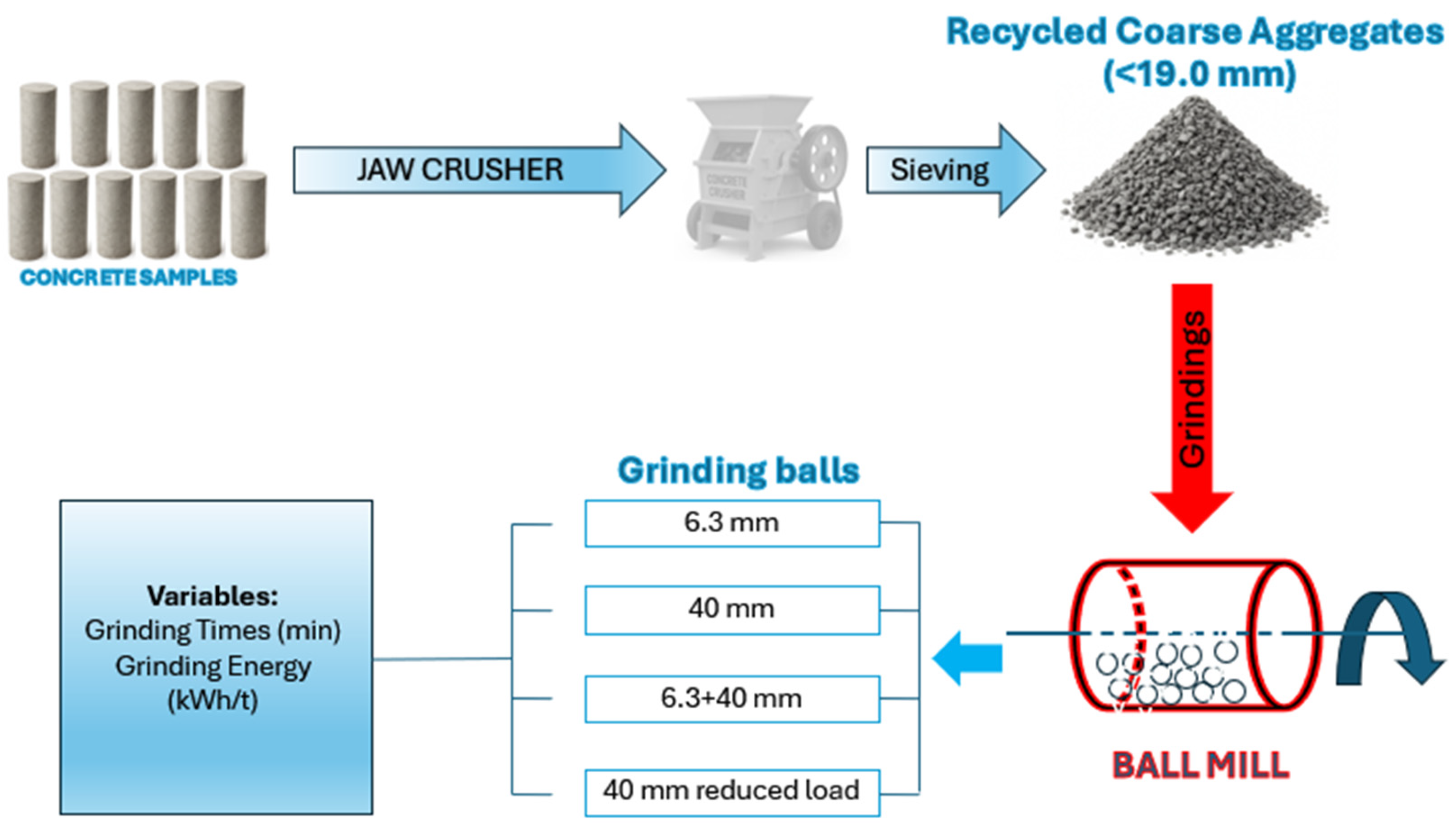
Figure 1 presents an overview of the experimental program.
Concrete specimens measuring 10 cm in diameter and 20 cm in height, obtained from mechanical tests performed for quality control in a ready-mix concrete plant, were collected. The concrete was produced using siliceous aggregates, river sand, and crushed granitic rocks, which facilitates the quantification of residual cement paste in both the recycled aggregates and fine fractions.
The
Table 1 presents the concrete mix design, detailing the quantities of materials required to produce 1 m
3 of concrete, and
Appendix A provides the chemical and physical properties of Portland cement (CPIII-40 RS, corresponding to Portland cement type II, high-early-strength cement) (ASTM C150) used in concrete production. According to the data in
Table 1, the average Portland cement content of the samples corresponded to 15.2% by mass (344/2269.24 = 15.2%). The concrete mix proportion (cement:coarse aggregates:fine aggregates:water/cement ratio) was 1:2.76:2.23:0.60. Considering that the water required for hydration is 27% [
17], the concrete, therefore, contains approximately 20% hydrated cement (15 × 1.27 = 19.1%).
After the initial processing, including separation, crushing, and quartering, an approximately 70 kg subsample was obtained. This material was subsequently sieved through 19.0 mm, 4.8 mm and 1.0 mm mesh screens to isolate the coarse fraction (4.8 mm < d < 19.0 mm, REF—reference sample).
To ensure the representativeness of the sample, the coarse fraction was homogenized and formed an elongated prismatic pile. The pile was then quartered, and a final 3 kg aliquot was collected for further testing.
2.1. Exploratory Grinding Tests
Preliminary tests were conducted to identify critical variables able to promote cement paste liberation, the presence or absence of steel balls in grinding, the effect of ball size, and of grinding time, first monitoring the increase in the contents of fines below 0.15 mm before the evaluation of energy-controlled grinding tests (
Section 2.2).
Table 2 summarizes the variables explored: Tests 1–4 explored autogenous grinding (without grinding media—steel balls,) with varying grinding times and corresponding energy inputs; Tests 5–8 varied the ball-to-waste ratio; Tests 9–11 investigated the influence of ball diameter, fraction of critical speed and filling. Grinding tests were conducted under dry conditions in an open circuit and in a single-stage operation. The input mass was selected to achieve a mill filling comparable to that adopted in Bond standard tests, corresponding to approximately 3% of the mill volume occupied by the sample.
The tap density test was performed to determine the mill-filling mass and ball load using the beaker method. The bulk density was obtained by compacting the material in three successive layers within a graduated cylinder, applying 25 taps after filling each layer [
18]. The tap density was then calculated as the ratio between the mass of the compacted material (
mgc+mat −
mgc) and the internal volume of the graduated cylinder (
Vgc), according to Equation (1):
The mill filling was performed using a jar with a total volume of 22,000 cm3. To ensure the samples’ representativeness, subsamples used for grinding were collected from a prismatic elongated pile following standard sampling procedures. Grinding tests were performed in a 12” × 12” (305 × 305 mm) (internal dimensions) Bond ball mill with smooth liners (model 90S, Lavill, São Paulo, Brazil), equipped with a torque meter.
Rowland’s specific power (kW/t of balls) was estimated with the theoretical expression proposed by Rowland Jr. [
17], applicable to mills with diameters smaller than 2.44 m (Equation (2)):
where
Pb is Rowland’s specific power (kW/t of balls) [
19],
D is the mill diameter (m),
J is the fraction of the volume of the mill occupied by balls (%), and
Cs is the fraction of the critical speed (%). Rowland’s specific energy (kWh/t) was calculated by Rowland’s specific power, multiplied by ball mass and the griding time, divided by the sample mass.
2.2. Energy-Controlled Grinding Tests
After the exploratory results demonstrated limited fine content below 0.15 mm (later shown in
Section 3.1), the size of the steel balls was increased (40 mm) to increase energy intensity in breakage events with the combination, or not, of a reduced-size steel ball (6.3 mm), to avoid excessive breakage in the particles while increasing abrasion, and the controlled conditions of the grinding time and the specific energy input to make the results comparable.
Two distinct grinding strategies were adopted: autogenous grinding and ball milling. The variables investigated included ball diameter, combinations of different ball sizes, ball load variation, and grinding time/specific energy input. The tests were conducted under five operating conditions, all with the mill running at 80% of the critical rotational speed: autogenous grinding (AG), grinding with 6.3 mm balls (G6.3), grinding with 40 mm balls (G40), grinding with a mixture of 40 mm and 6.3 mm balls in a 70:30 proportion (G6.3+40), and grinding with 40 mm balls at a reduced load of 70% (G40-R).
For grinding conditions AG, G6.3 and G40 different specific energy levels were applied and grinding conditions G6.3+40 and G40-R, only the lowest energy level (3 kWh/t) was evaluated to allow for direct comparison. The sample nomenclatures, grinding durations and corresponding specific energy inputs for each condition are presented in
Table 3. The grinding condition G40-R was specifically designed to assess the effect of smaller balls used in combination with larger ones G6.3+40 grinding condition. For this purpose, the 6.3 mm balls were removed, and their corresponding volume (30%) was replaced by the sample.
2.2.1. Specific Grinding Energy Determination
The grinding power (kW) was calculated using Equation (3), which is given by
where
P is the grinding power (kW),
n is the rotational speed (rpm), and
T is the torque (N.m).
The specific grinding energy (in kWh/t of material) was determined based on the grinding power, grinding time and the initial mass of the sample introduced into the mill, as described by Equation (4):
where
E is the specific grinding energy (kWh/t of material),
t is the time (hours), and
m is the mass of residue input (t).
2.2.2. Particle Size Analysis Tests
The size analyses of the products generated after the grinding process (AG, G6.3, G40, G6.3+40, and G40-R samples) were performed by dry sieving using square mesh sieves. For the sieve openings 19.0 mm, 12.5 mm, 9.5 mm, 6.3 mm, 4.8 mm and 2.4 mm, a suspended pneumatic vibrating sieve was used. Fractions of 1.2 mm, 0.6 mm, 0.3 mm and 0.15 mm were sieved in a Ro-Tap apparatus (AS 200 TAP, Retsch, Haan, Germany). Both sieving procedures were conducted for 20 min. All size analysis results were compared with the reference sample (feed material).
2.2.3. Chemical Analysis (XRF), Cement Paste Estimates, and Distributions in the Coarse, Sand, and Fine Fractions
Chemical analyses were performed using X-ray fluorescence (XRF) with a pressed pellet, using a Rigaku spectrometer, model ZSX Primus III (Rigaku Corporation, Tokyo, Japan) or an S2PUMA Bruker one (Bruker, Billerica, MA, USA). These analyses were conducted on samples from the selected grinding conditions. The chemical analyses were performed for the reference sample (REF) (feed material) and samples AG-7 and G6.3+40-3. These conditions were selected based on the most promising indications of selective comminution.
The cement content was estimated based on the sum of CaO, MgO, and loss on ignition (LOI), whereas the aggregate content was calculated based on the combined percentages of SiO
2, Al
2O
3, Fe
2O
3, K
2O, and Na
2O. LOI measurements were conducted at temperatures of up to 1000 °C, following the standardized procedures established in NBR 17086-6 [
20]. The quantification of oxide contents by XRF was normalized to account for mass loss on ignition (LOI). The mass fraction and the cement content of each size fraction were multiplied, defining the weighted average cement content of each sample. The distribution of the cement paste along the different size fractions was calculated considering the product of the mass fraction and the cement paste content of each size fraction, divided by the total mass fraction (1 = 100%), and multiplied by the weighted average cement content. This made it possible to identify how cement paste is distributed over the different size fractions and calculate the cement paste removal efficiency and its concentration in the sand and fine fractions.
3. Results
3.1. Exploratory Grinding Tests
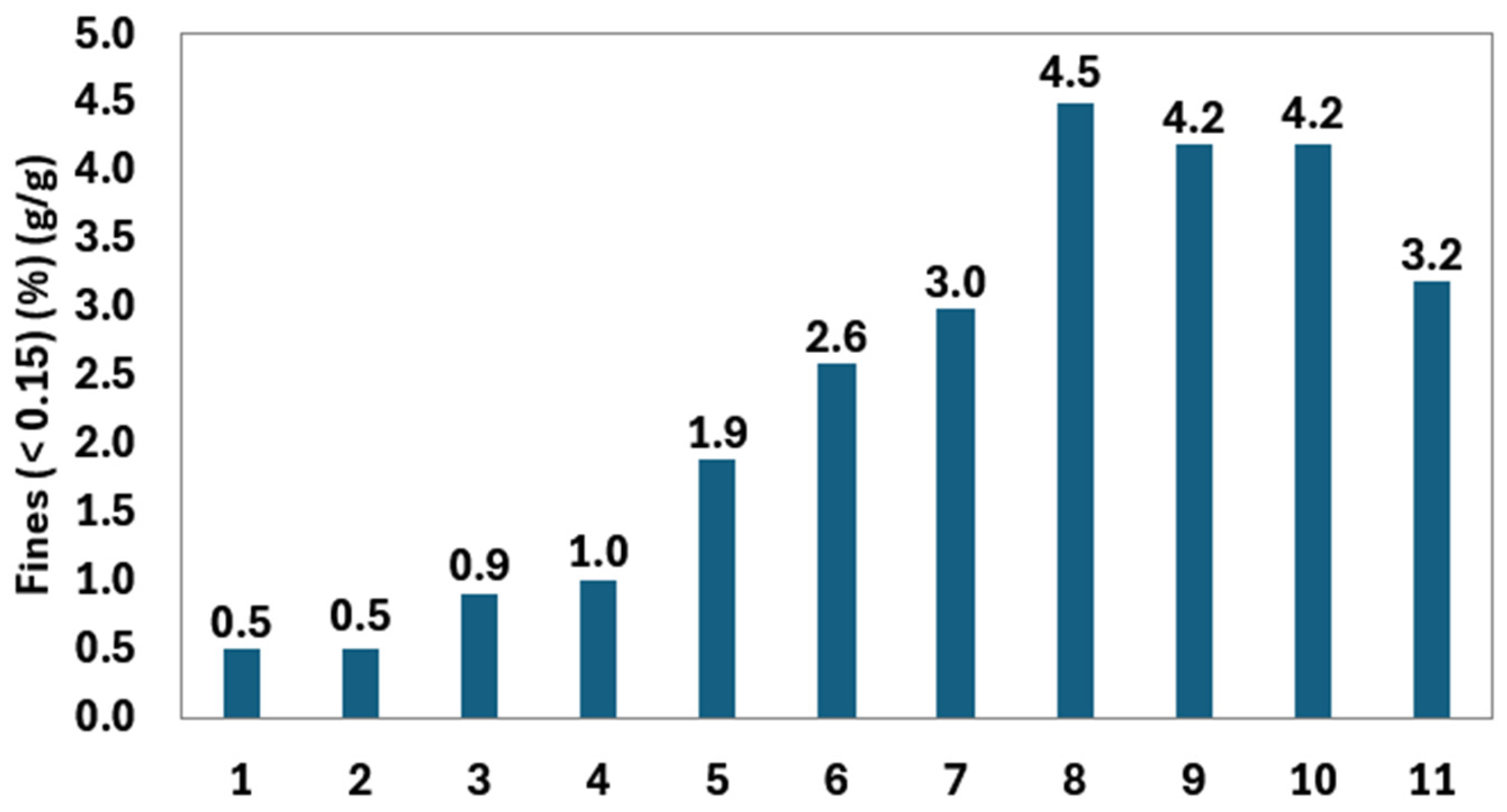
Figure 2 presents the fine content generated in the exploratory tests. In spite of varying parameters, such as the grinding time, specific energy, ball-to-sample ratio, ball diameter, and mill fraction of critical speed, the production of fines remained low, indicating the limited effectiveness of this approach. In Tests 1 and 4, where autogenous grinding (without balls) was applied with varying grinding times, the quantity of fines did not exceed 1%. An increase in fines was observed only when 40 mm balls were used; however, the generated fines remained below 4.5%, corresponding to approximately one-third of the Portland cement content in the sample (~15%).
The exploratory tests revealed that short-duration autogenous grinding (<10 min) generated negligible amounts of fines (
Figure 2). The production of fines increased with higher ball-to-sample ratios (Test 8) (balls/sample ratio = 3:1). Notably, when the 3:1 ratio was maintained (Tests 9 and 10), the quantity of fines generated remained nearly constant. The results also indicated that increasing the ball diameter did not enhance grinding efficiency in producing particles finer than 0.15 mm (Tests 8 and 9), which is inconsistent with the findings of Tomach [
21] who reported that larger ball diameters promote more intensive breakage and, simultaneously, increases generation of fine particles. Indeed, the fine contents were slightly smaller in Test 8 (use of 25 mm balls) than in Test 9 (use of 19 mm balls). These differences are not considered relevant when compared with potential experimental or sampling errors (which usually have 5%–10% relative differences). Zhang [
22] also confirmed that when the diameter of the balls increases, the specific surface area and diameter of the particles increase.
3.2. Energy-Controlled Grinding Tests
3.2.1. Specific Grinding Energies
Table 4 presents the specific energy values (kWh/t) obtained for each grinding condition. Roland’s specific energies (kW/t) were linearly correlated (y = 0.97x − 0.02; R
2 = 0.99) with the specific grinding energy values (kWh/t). The slight deviations observed may be attributed to mechanical losses within the system, minor torque measurements deviations, heterogeneities in the internal distribution of the grinding media and material, or minor fluctuations in the rotational speed of the equipment during the test.
A value of 14 kWh/t is typically the energy required to grind granite as powders (size below 0.15 mm) found in the literature [
23,
24]. So, the last two tested conditions in each experimental arrangement can be set as a limit for the grinding condition in terms of energy consumption and processing costs.
3.2.2. Particle Size Analyzes
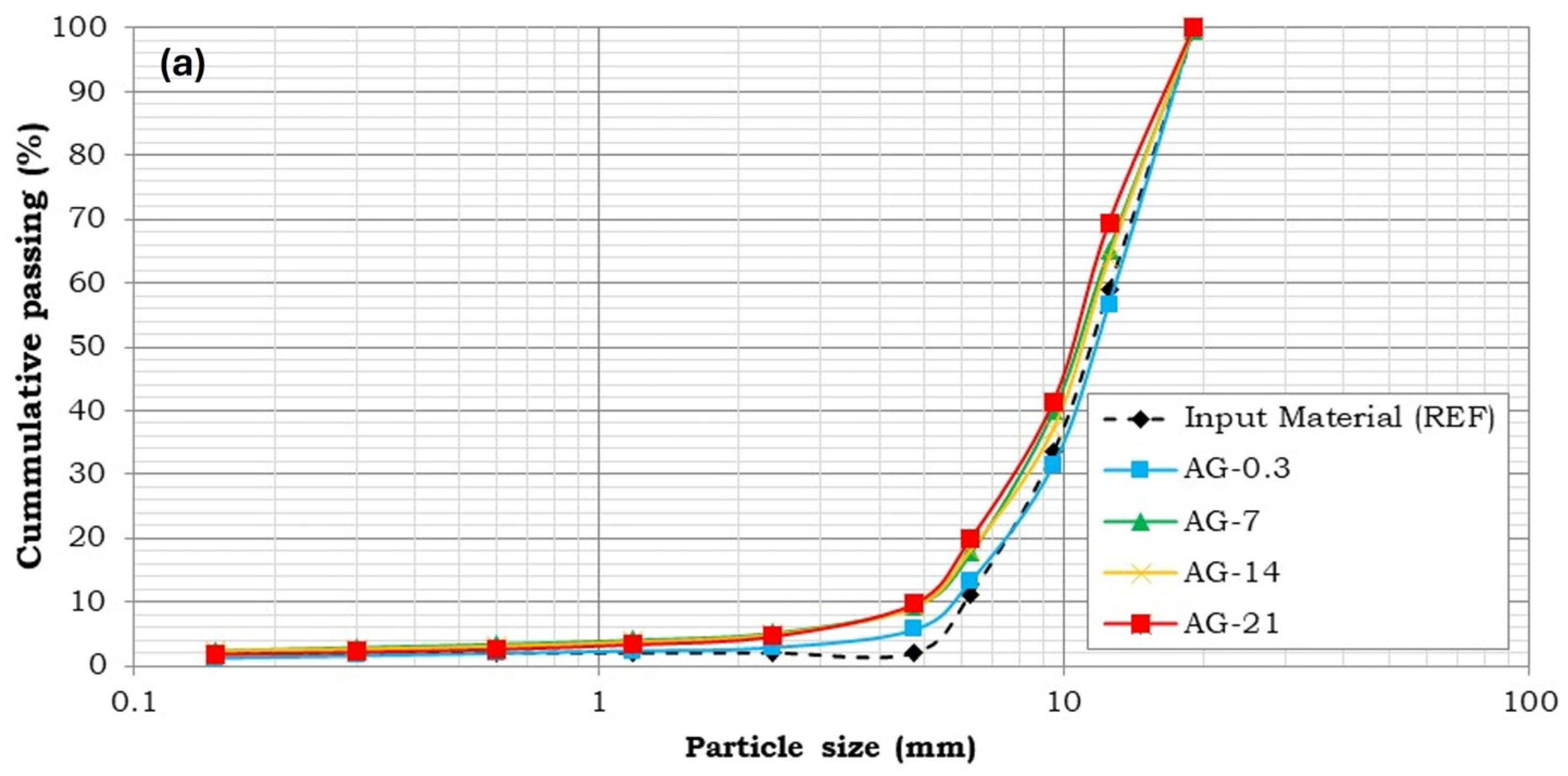
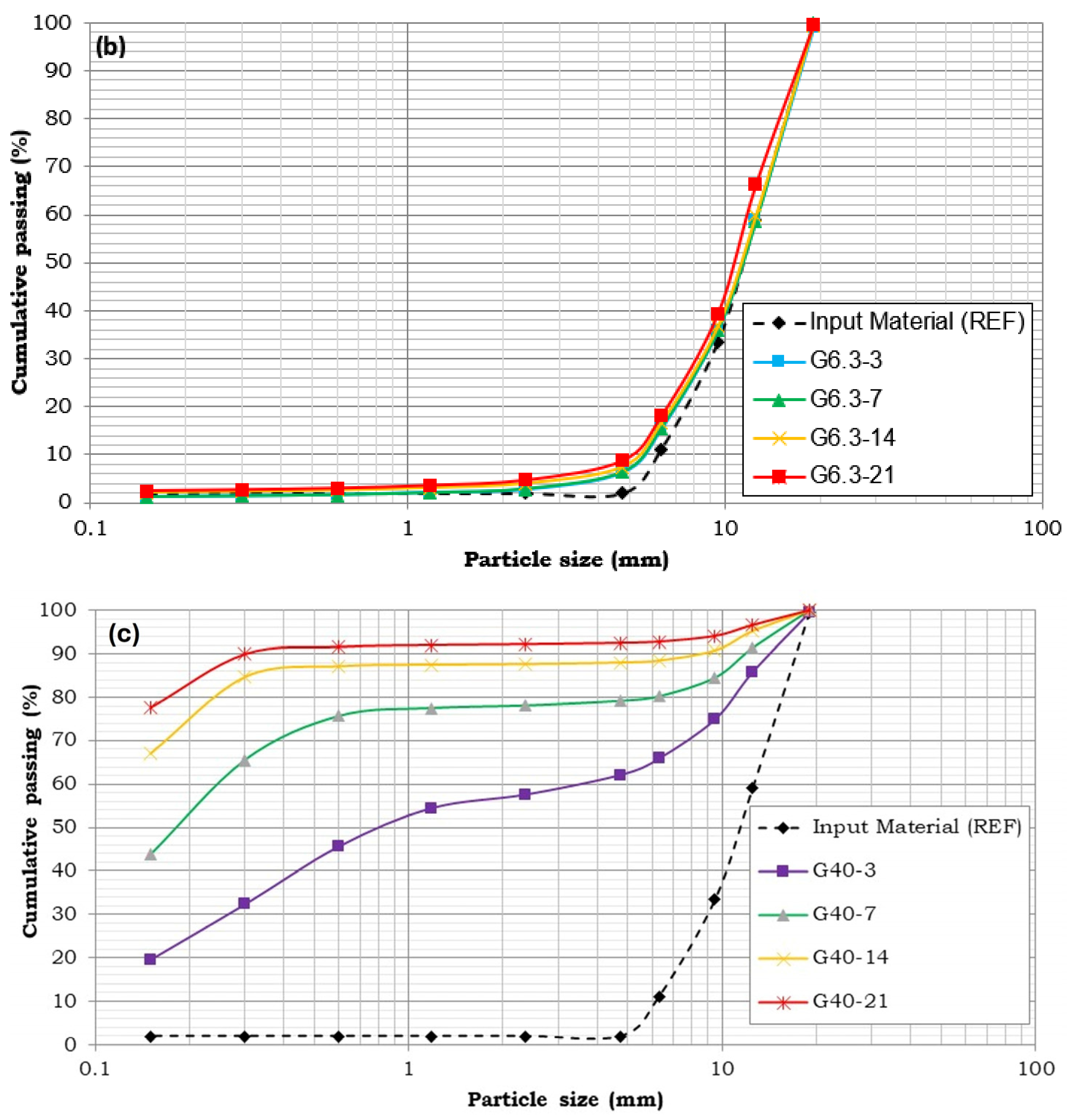
Figure 3 presents the cumulative particle size distribution curves for (a) autogenous grinding (AG), (b) ball milling with 6.3 mm balls (G6.3), and (c) ball milling with 40 mm balls (G40). In autogenous grinding (AG) (
Figure 3a), increasing the specific energy input from 0.3 to 21 kWh/t enhanced the generation of the sand fraction but had only a marginal effect on fine particle production. A stabilization trend is evident from 7 kWh/t onwards, suggesting that a portion of the additional energy was dissipated without contributing to further particle breakage or an increase in the recycled fines.
Grinding with 6.3 mm balls (G6.3) (
Figure 3b) resulted in minimal particle size reduction relative to the material feed, with a limited sand fraction quantity, even at higher energy inputs. The similar profiles of the curves across different energy levels reflect low comminution efficiency under these conditions or the generation of recycled fines.
In contrast, grinding with 40 mm balls (G40) (
Figure 3c) produced a pronounced shift in the curves toward finer sizes as the applied energy increased, indicating intense fragmentation of the coarse fraction. At 21 kWh/t, approximately 90% of the particles were finer than 1 mm, confirming the high breakage capacity of larger grinding media, predominantly through impact mechanisms between the grinding media and the sample particles. Nevertheless, this fragmentation also crushed the siliceous aggregates, thereby inhibiting the selective comminution of the cement paste and preventing the preferential enrichment of it in the fines.
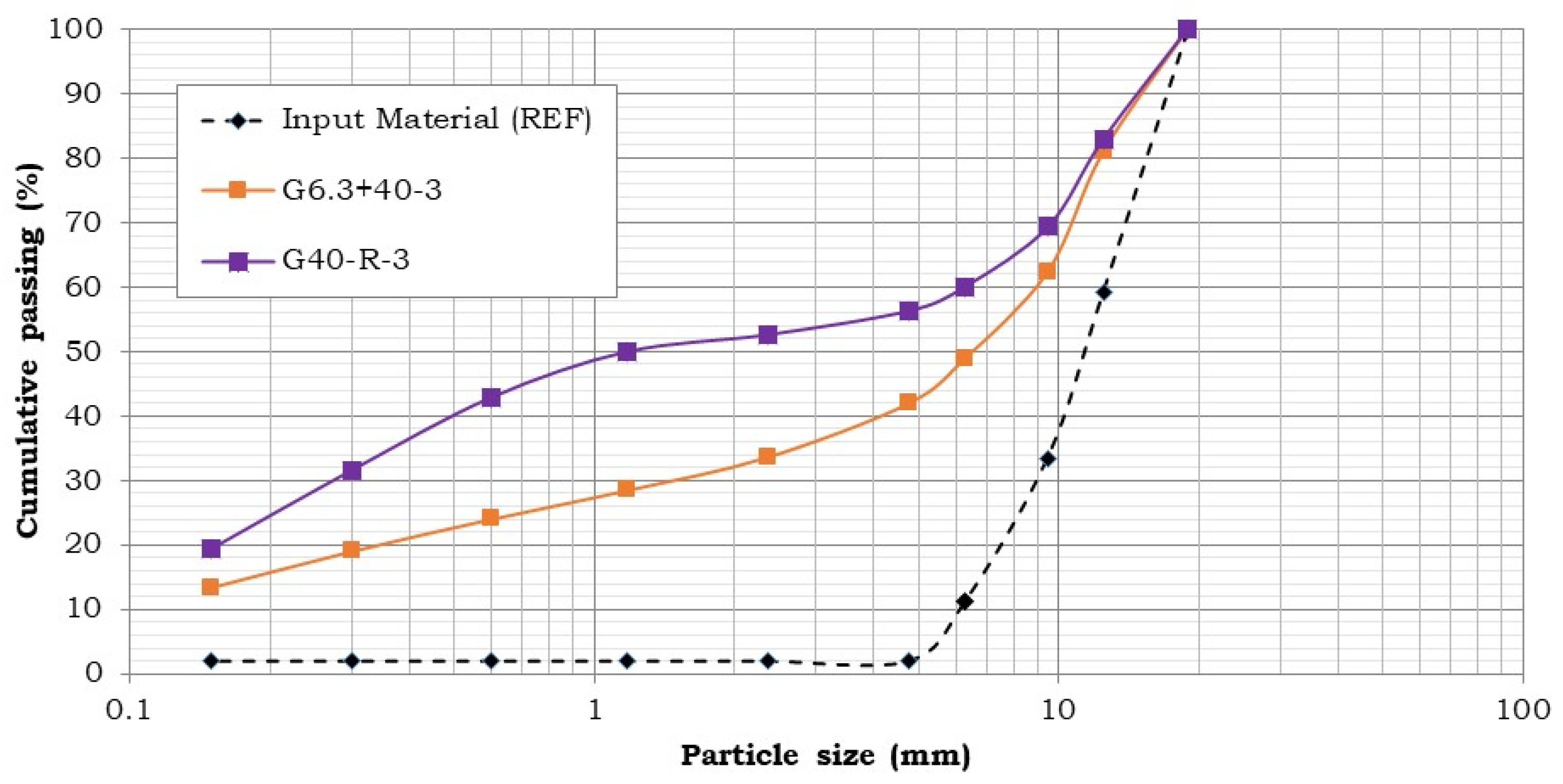
Figure 4 presents a comparison of three grinding conditions at the same specific energy of 3 kWh/t: (i) 40 mm balls (G40), (ii) a combination of two ball diameters (40 mm and 6.3 mm) (G40+6.3), and (iii) 40 mm balls at a reduced load (G40-R). The particle size distribution curve for the two-diameter grinding condition lies well below that of the single 40 mm balls, indicating less intense fragmentation and reduced generation of fines. This outcome suggests that the inclusion of smaller balls mitigates the direct impact effect—predominant in larger balls—thereby promoting a more balanced contribution of abrasion and impact in the comminution process.
To isolate the effect of the 6.3 mm balls, their volume (30% of the total ball load) was replaced with residue, and grinding was conducted with a reduced load consisting solely of 70% of the 40 mm balls (
Figure 4). Under this condition, the resulting curve was very similar to that obtained with the full 40 mm ball load, with only a slight reduction in the release of the sand fraction. These findings confirm that smaller balls effectively attenuate the impact forces exerted by larger balls.
Therefore, even at a relatively low specific energy, the use of a two-diameter ball charge (40 mm + 6.3 mm) exhibited greater selectivity in grinding, representing the most efficient strategy for the restricted conditions tested in this study, optimizing the content of fines (and cement paste) while minimizing aggregate breakage. This is a novelty reported in this manuscript when compared to the published literature.
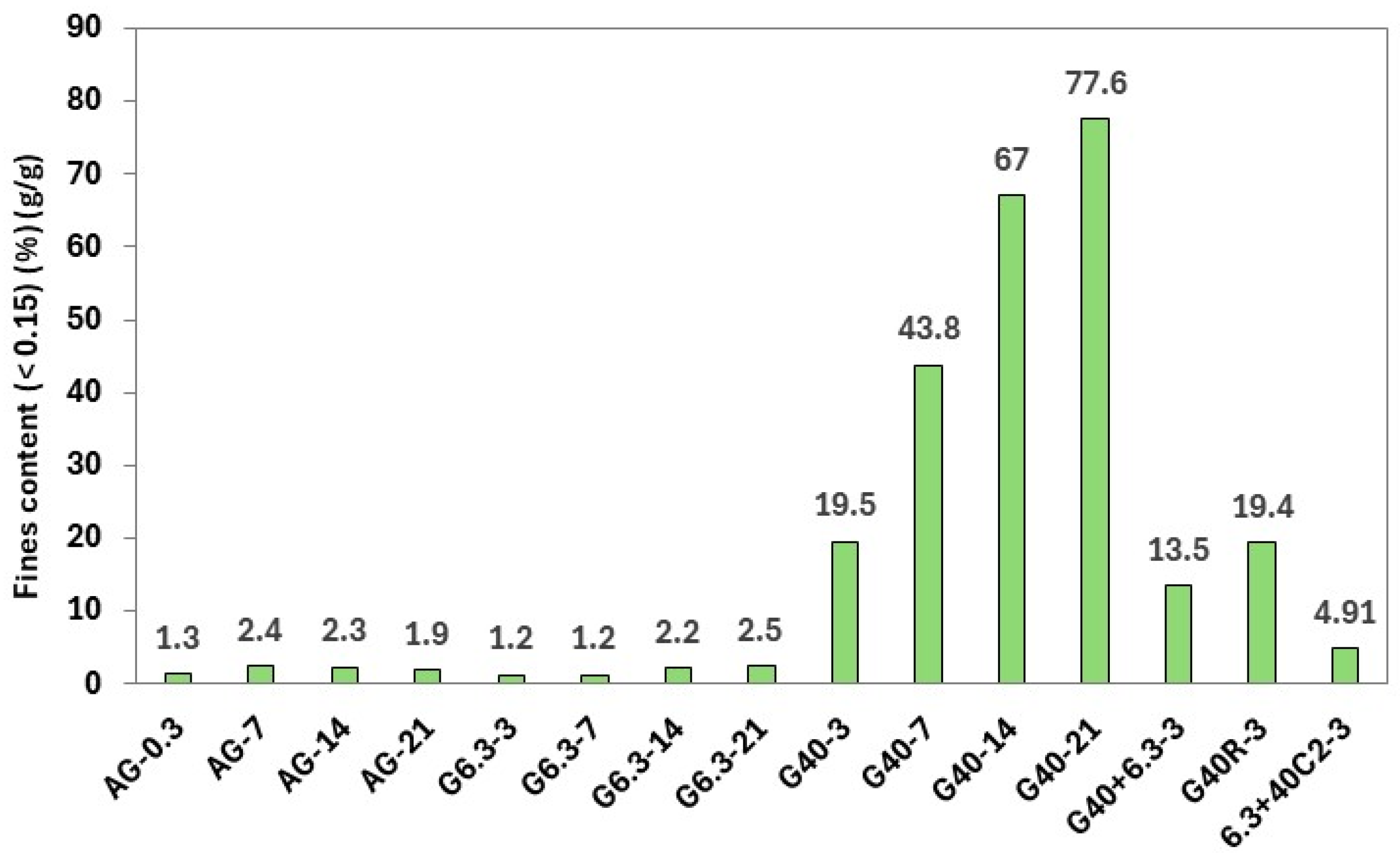
Figure 5 presents the content of fines obtained for each sample. It is evident that grinding with 40 mm balls significantly increased the generation of fines. Autogenous grinding and grinding with 6.3 mm balls produced a similar number of fines, whereas the combination of ball sizes (G6.3+40) resulted in intermediate values. The results suggest that larger ball diameters promoted an excessive fine mass content that surpassed the average cement paste content of the samples). Conversely, smaller balls generate only limited fines, which reduces process efficiency. The use of mixed ball sizes (G6.3+40) yielded fine content closer to the actual cement fraction of the sample, estimated at approximately 15%. It should be noted that no significant differences were found in the fines when the grinding energy was increased, obtaining significantly low percentages (AG-3, AG-7, AG-14, AG-21, G6.3-3, G6.3-7, G6.3-14, and G6.3-21); The percentage variations in the fine content are within the expected experimental error.
3.2.3. Chemical Analyzes (FRX), Cement Paste Estimates, and Distribution in the Coarse, Sand, and Fine Size Fractions
The main oxides present in the samples are silicon oxide (SiO
2), calcium oxide (CaO), alumina (Al
2O
3) and iron oxide (Fe
2O
3), which together with the loss on ignition, add up to more than 90% of the sample (
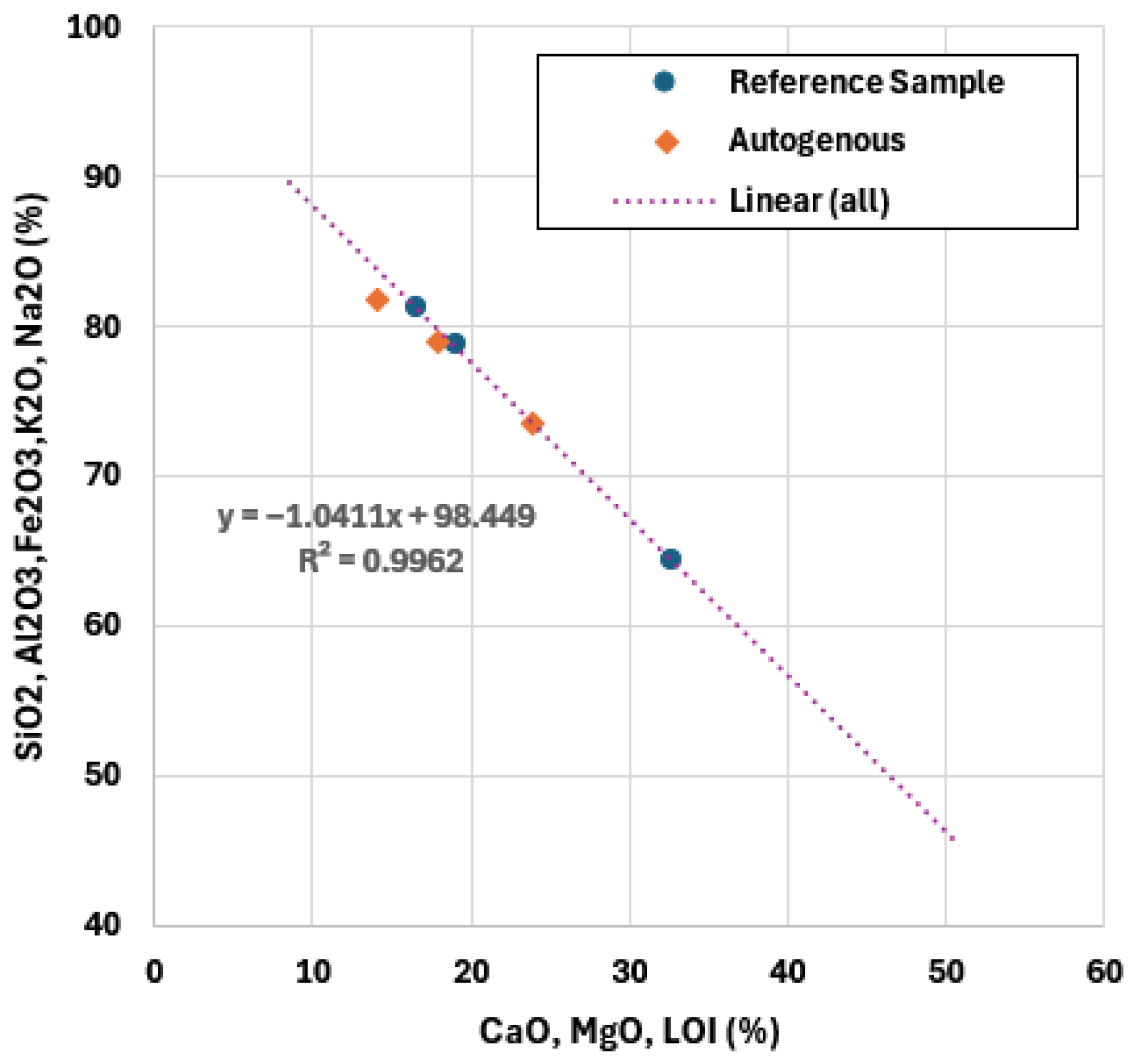
Figure 6). Based on the nature of the materials—cement paste and natural aggregates from siliceous and feldspar rocks—the oxides were grouped. Cement paste may be represented by the sum of CaO + MgO + LOI, as proposed by Angulo et al. [
25]. Natural aggregates from siliceous and feldspar rocks may be represented by the sum of SiO
2 + Al
2O
3 + Fe
2O
3, Na
2O and K
2O, as further proposed by Ulsen [
26] when concrete waste does not contain clayey soils in its composition. As these materials represent the concrete’s composition, a strong linear correlation was found between these groups of oxides (
Figure 6).
Physically adsorbed and chemically bound water and CO
2 account for the loss on ignition at ~1000 °C. As a TG/DTG measurement was not conducted in this study, it was not possible to evaluate whether cement paste carbonates after grinding. This is a limitation of the study, but it is relevant to explore because carbonation of cement paste promotes CO
2 capture in processing [
27].
After crushing the reference sample (REF) (feed sample) (
Table 5), it was found that the highest calcium content (18%) occurs in a fraction finer than 0.15 mm, despite the very limited proportion of fines (2%), as also reported elsewhere [
25]. Regarding the distribution of cement paste in the sample, it was clearly observed that most of the Portland cement waste is retained in the recycled coarse aggregate fraction (66% of the total cement paste), while only 4% of the cement paste waste is found in the fines.
It was observed that autogenous grinding of the coarse fraction (−19 + 4.8 mm) was not effective in separating the cement paste fraction (
Table 6). When this sample was combined with the reference one (REF and AG-7), only a slight increase in the cement paste content was detected in the sand and fine fractions, reaching nearly 40% of the total cement available in the sample. The proportion of the fine fraction remained very low (4% by mass), and no substantial variation was observed in the combined CaO, MgO, and LOI contents of the fines (from 32.7% to 28.7%).
The efficiency of cement paste removal increased under low-energy grinding using a combination of 40 mm and 6.3 mm balls (G6.3+40) (
Table 6). A significant migration of cement paste from the coarse fraction to the sand–fine fractions (<4.8 mm) was observed. Considering the test with 40 mm and 6.3 mm balls (REF+G6.3+40), the cement paste content in the coarse fraction decreased from 54.1% to 32.1%, indicating the removal of Portland cement from the coarse fraction and a corresponding increase in the sand fraction (<4.8 mm). The Portland cement content in the sand fraction (<4.8 mm) increased from 45.9% to 67.9%. The fine fraction (<0.15 mm) was found to contain ~28% Portland cement and ~79% aggregates, a value close to the overall cement content in the sample (~20%). However, this fraction represents only 6.1% of the total cement in the sample after grinding (REF+G6.3+40).
It is important to mention that XRF analytical error is lower than 1% [
28], and it does not affect the analysis. The average cement content varied from 17.4 to 17.9, showing that sampling errors were also very low and not relevant to the analysis.
4. Discussion
In this study, grinding energy and different ball sizes were investigated as a strategy to enrich the cement paste content in the fine fraction of recycled cementitious waste. Previous studies (
Appendix B) have primarily focused on reducing the water absorption of recycled aggregates, but in most cases have failed to adequately report the efficiency of cement paste removal.
Whereas the work of Figueiredo et al. [
29] used comminution with the aim of producing high-quality recycled sand, the present study explores low-energy grinding as a means of preserving the natural fraction of coarse aggregates and preventing their migration into the fines. Here, this issue is examined based on the distribution of cement paste, inferred based on chemical oxides determined by XRF: CaO, MgO and LOI. These test arrangements and results represent the novelty of the study, including a more structured discussion about cement paste removal efficiency. The fine fraction content was carefully controlled to avoid exceeding the total cement paste content of the original sample, estimated at approximately 20%.
It is important to emphasize that an increase in cement content within the fine fraction does not necessarily indicate successful enrichment of cement paste, particularly when the mass fraction recovery is low. Excessive grinding energy, high mill rotation speeds, or the use of oversized grinding media can lead to the fragmentation of natural aggregate particles, thereby increasing the silica content in the fines. Such outcomes are undesirable when the aim is to use the fines as supplementary cementitious material or to enhance their potential for CO2 capture from cementitious waste.
It is well established that the fine fraction (<0.15 mm) is the most suitable for use as an SCM, allowing for up to 25% replacement of Portland cement [
19]. The present study showed that autogenous grinding, conducted without balls and at low energy demand, was not effective in promoting the selective comminution of the cementitious fraction into fines. Less than 50% of the cement present in the samples originating from autogenous grinding could be recovered as sand and fine fractions. This recovery rate remains relatively low for the fine fraction, indicating the need for strategies to improve efficiency.
Conversely, the introduction of grinding balls resulted in a significant increase in fine production (which was particularly excessive with 40 mm balls), which is better optimized with the integrated use of 6.3 mm balls. These findings show that selective comminution of recycled aggregates for the cement paste removal is highly dependent on grinding conditions, especially ball size. Larger balls tend to intensify particle breakage, thus markedly altering the particle size distribution.
Selective grinding using different ball sizes is suggested herein as a low-energy grinding method for both coarse and sand fractions to obtain more suitable material for use as a circular SCM. The suggested process recovered approximately 67% of the cement paste present in the sample in the sand and fine fractions. Nevertheless, the recovery of cement paste from the fine fraction (below 0.15 mm) is still low: about 20%. This suggests that more than one stage may be required to more efficiently concentrate cement paste in the fines.
The main challenge remains maximizing the proportion of cementitious fines derived from recycled aggregates while minimizing the incorporation of inert phases, such as silica from natural aggregates. The target is to achieve cementitious content (CaO + MgO + LOI) of approximately 19%, which corresponds to the average cement content in conventional concrete, and increase the fine mass fraction at a similar value without significant contamination from other mineral phases, particularly silica, which are abundant in aggregates.
Overall, enriching the finer fractions of crushed cementitious waste represents a promising strategy for upgrading construction and demolition waste (CDW) and promoting circularity in the construction sector. The cement-rich sand and fines produced through this process have potential for use as SCMs, contributing to more sustainable construction practices. Considering that 13.5% of the hydrated fine cement fraction may be used as supplementary cementitious material, its use in Portland cement incorporation can reduce CO2 emissions from 863 kg of CO2/ton to 747 kg/CO2/ton in Portland cement.
5. Conclusions
The present study investigated grinding strategies to evaluate the potential for cement paste enrichment of the cementitious fraction of CDW fines. Based on the results, the following conclusions can be drawn:
Exploratory tests indicated that autogenous grinding (without balls) for up to 40 min produced only a small mass fraction of fines (<0.15 mm).
The use of larger balls (40 mm) can generate an excessive amounts of fines due to grinding of quartz and/or granite present in the natural aggregates.
It was possible to migrate cement paste from the coarse fraction to the sand fraction using a combination of 40 mm and 6.3 mm balls; however, no significant enrichment of the fine fraction (<0.15 mm) was achieved, which is the most appropriate fraction for use as a supplementary cementitious material (SCM).
Author Contributions
Conceptualization, S.C.A., M.G.B. and V.M.P.; Methodology, B.C.D.R., V.M.P., S.C.A. and M.G.B.; Validation, V.M.P.; Formal Analysis, B.C.D.R. and V.M.P.; Investigation, B.C.D.R.; Resources, S.C.A. and M.G.B.; Data Curation, B.C.D.R.; Writing—Original Draft Preparation, B.C.D.R. and V.M.P.; Writing—Review and Editing, V.M.P., S.C.A., M.G.B. and L.M.T.; Supervision, V.M.P., S.C.A., M.G.B. and L.M.T.; Project Administration, V.M.P. and S.C.A.; Funding Acquisition, V.M.P. and S.C.A. All authors have read and agreed to the published version of the manuscript.
Funding
The work was partially funded by Votorantim Cimentos S. A—Embrapii project PUSP number: 2404.0019.
Data Availability Statement
Acknowledgments
The authors thank Votorantim for its partial financial support of this research (EMBRAPII Project PUSP 2404.0019). The authors also thank FAPESP, process 2024/04772-2, and FINEP, process 01.22.0267.00. The authors thank the technicians of the mineral processing laboratory (LTM-POLI-USP), especially Maria Auxiliadora da Silva de Marzo, Rogério de Almeida and Rodrigo de Almeida. The authors declare that they used OpenAI (ChatGPT—Version-5) to improve the English text of the manuscript and are thankful for its assistance, but we are responsible for all revisions.
Conflicts of Interest
The authors declare no conflicts of interest.
Appendix A. Portland Cement Characterization
Table A1 presents the chemical and physical properties of cement used to prepare the concrete used in the study.
Table A1.
Chemical, physical, and mechanical properties of Portland cement.
Table A1.
Chemical, physical, and mechanical properties of Portland cement.
| Properties | | |
|---|
| Chemical | Loss on ignition (LOI) (%) | 2.48 |
| MgO (%) | 4.01 |
| SO3 (%) | 2.98 |
| Insoluble residue (IR) (%) | 0.83 |
| Physical | Fineness (retained #200) (75 µm) (%) | 0.58 |
| Superficial area (Blaine) (cm2/g) | 4940 |
| Setting time (min) | Initial | 191 |
| Final | 265 |
| Mechanical | Compressive strength (MPa) | 3 days | 24.1 |
| 7 days | 34.9 |
| 28 days | 51.5 |
Appendix B. Literature Review
Table A2 summarizes the authors, waste and mill types, parameter investigations, and water absorption values found in the literature review.
Table A2.
Summary of studies on milling techniques applied to recycled aggregates, studied variables, and water absorption in the best milling scenario.
Table A2.
Summary of studies on milling techniques applied to recycled aggregates, studied variables, and water absorption in the best milling scenario.
| Authors | Waste Type | Milling Type | Parameters Investigated | Water
Absorption (%) |
|---|
| Kim et al. [21] | Recycled coarse aggregates (RCAs) | Autogenous grinding with thermal treatment | Grinding times (5; 10; 20; 30 min)
Laboratory mill: speed (30 rpm); filling (16.6%) | 2.4 |
| Pilot scale: speed (20 rpm); filling (10%) | 2.3 |
| Pepe et al. [6] | Recycled coarse aggregates | Autogenous grinding | Speed (60 rpm); Filling (33%); Grinding time (2 to 15 min) | 4.09 |
| Recycled fine aggregate (RFA) | 5.56 |
| Yaragal et al. [22] | Recycled coarse aggregates | Grinding with balls and rods | Ball load (840 g)
Aggregate mass (0.84; 1.68; 2.52; 3.36; 4.20; 5.04; and 2.0 kg)
Grinding times (30; 45; 90 min) | 1.25 |
| Kim et al. [7] | Recycled fine aggregates | Grinding with balls and chemical treatment | Ball/aggregate ratio (0.125:1 and 1:2)
Washing fluid and aggregate proportion (1:2; 1:1; 2:1)
Grinding time (5; 10 min)
Steel balls of 45 mm | Without treatment: 3.78 |
| With treatment: 2.35 |
| Dilbas et al. [10] | Recycled coarse aggregates | Grinding with balls | Jar rotations (100; 200; 300; 400; 500)
Steel ball units (0; 2; 5; 7; 10; 12)
Aggregate mass (5 kg) | 0.84 |
| Reddy et al. [11] | Recycled coarse aggregates | Autogenous with ball grinding | Ball load (0; 0.45; 0.90; 1.35; 1.8; 2.25 kg)
Grinding times (6; 12; 18; 24 min)
Aggregate mass (5 kg) | 1.48 |
| Rakesh and Yaragal [9] | Recycled coarse aggregates | Grinding with balls | Speed (60 rpm)
Load balls (1;2; 3; 4; 5 kg)
Grinding time (10; 15; 20; 25; 30 min)
Aggregate mass (4; 6; 8; 10; 12 kg) | 1.12 |
| Figueiredo et al. [23] | Recycled fine aggregates | Grinding with balls | Critical velocity (40%; 50%; 60%; 70%; 80%).
Grinding times (15; 30; 60 min).
Ball diameter (15; 25; 35 mm).
Mill filling with balls (1%; 2%; 10%; 15%).
Aggregate mass (1; 2; 4 kg) | 2.77 |
| Huang et al. [12] | Recycled coarse aggregates | Grinding with balls and thermal treatment | Temperature (300 °C; 400 °C; 500 °C; 600 °C)
Grinding times (1; 2; 3; 4 h)
Ball dimensions (RCA: 40 mm; 70 mm and RFA: 20 mm; 30 mm)
Filling (3/4 of the jar)
Speed (60 rpm)
Ball/aggregate ratio (RCA: 1.5:1 and RFA: 1.3:1) | 3.80 |
| Recycled fine aggregates | 3.70 |
References
- De Juan, M.S.; Gutiérrez, P.A. Study on the Influence of Attached Mortar Content on the Properties of Recycled Concrete Aggregate. Constr. Build. Mater. 2009, 23, 872–877. [Google Scholar] [CrossRef]
- Verian, K.P.; Ashraf, W.; Cao, Y. Properties of Recycled Concrete Aggregate and Their Influence in New Concrete Production. Resour. Conserv. Recycl. 2018, 133, 30–49. [Google Scholar] [CrossRef]
- Belin, P.; Habert, G.; Thiery, M.; Roussel, N. Cement Paste Content and Water Absorption of Recycled Concrete Coarse Aggregates. Mater. Struct. 2013, 47, 1451–1465. [Google Scholar] [CrossRef]
- Silva, R.V.; de Brito, J.; Dhir, R.K. Properties and Composition of Recycled Aggregates from Construction and Demolition Waste Suitable for Concrete Production. Constr. Build. Mater. 2014, 65, 201–217. [Google Scholar] [CrossRef]
- Jiang, Y.; Peng, L.; Ma, Z.; Lu, J.; Shen, P.; Poon, C.S. Enhancing the Treatment Efficiency of Recycled Concrete Fines with Aqueous Carbonation. Cem. Concr. Res. 2023, 174, 107338. [Google Scholar] [CrossRef]
- Moreno-Juez, J.; Vegas, I.J.; Frías Rojas, M.; Vigil De La Villa, R.; Guede-Vázquez, E. Laboratory-Scale Study and Semi-Industrial Validation of Viability of Inorganic CDW Fine Fractions as SCMs in Blended Cements. Constr. Build. Mater. 2021, 271, 121823. [Google Scholar] [CrossRef]
- Hesse, M.; Popov, O.; Lieberwirth, H. Increasing Efficiency by Selective Comminution. Miner. Eng. 2017, 103–104, 112–126. [Google Scholar] [CrossRef]
- Quattrone, M.; Angulo, S.C.; John, V.M. Energy and CO2 from High Performance Recycled Aggregate Production. Resour. Conserv. Recycl. 2014, 90, 21–33. [Google Scholar] [CrossRef]
- Shima, H.; Tateyashiki, H.; Matsuhashi, R.; Yoshida, Y. An Advanced Concrete Recycling Technology and Its Applicability Assessment through Input-Output Analysis. ACT 2005, 3, 53–67. [Google Scholar] [CrossRef]
- Kim, H.-S.; Kim, J.-M.; Kim, B. Quality Improvement of Recycled Fine Aggregate Using Steel Ball with the Help of Acid Treatment. J. Mater. Cycles Waste Manag. 2018, 20, 754–765. [Google Scholar] [CrossRef]
- Pepe, M.; Toledo Filho, R.D.; Koenders, E.A.B.; Martinelli, E. Alternative Processing Procedures for Recycled Aggregates in Structural Concrete. Constr. Build. Mater. 2014, 69, 124–132. [Google Scholar] [CrossRef]
- Dilbas, H.; Çakır, Ö.; Atiş, C.D. Experimental Investigation on Properties of Recycled Aggregate Concrete with Optimized Ball Milling Method. Constr. Build. Mater. 2019, 212, 716–726. [Google Scholar] [CrossRef]
- Reddy, R.R.K.; Yaragal, S.C.; Sanjay, V.K. Processing of Laboratory Concrete Demolition Waste Using Ball Mill. Mater. Today Proc. 2023. [Google Scholar] [CrossRef]
- Huang, R.; Zhao, H.; Zhong, Y.; Wang, J.; Xu, L.; Lin, S.; Li, L.; Zhang, X. Enhancing Quality and Strength of Recycled Coarse and Fine Aggregates through High-Temperature and Ball Milling Treatments: Mechanisms and Cost-Effective Solutions. J. Mater. Cycles Waste Manag. 2025, 27, 270–288. [Google Scholar] [CrossRef]
- Ulsen, C.; Kahn, H.; Hawlitschek, G.; Masini, E.A.; Angulo, S.C.; John, V.M. Production of Recycled Sand from Construction and Demolition Waste. Constr. Build. Mater. 2013, 40, 1168–1173. [Google Scholar] [CrossRef]
- Florea, M.V.A.; Brouwers, H.J.H. Properties of Various Size Fractions of Crushed Concrete Related to Process Conditions and Re-Use. Cem. Concr. Res. 2013, 52, 11–21. [Google Scholar] [CrossRef]
- Angulo, S.C.; Guilge, M.S.; Quarcioni, V.A.; Cincotto, M.A.; Nobre, T.R.S.; Pöllmann, H. The Role of Calcium Silicates and Quicklime on the Reactivity of Rehydrated Cements. Constr. Build. Mater. 2022, 340, 127625. [Google Scholar] [CrossRef]
- DNIT 437/2022; Aggregates—Determination of Unit Mass and Void Volume of Aggregates in Loose and Compacted States—Test Method. Brazilian National Department of Transportation Infrastructure: Brasília, Brazil, 2022. (In Portuguese)
- Rowland, C.A., Jr.; McIvor, R.E. The Bond Standard for Comminution Efficiency. In Recent Advances in Mineral Processing Plant Design; Society for Mining, Metallurgy, and Exploration, Inc.: Englewood, CO, USA, 2009. [Google Scholar]
- NBR 17086-6; Portland Cement—Chemical Analysis, Part 6: Loss on Ignition Determination. Brazilian Association of Technical Standards (ABNT): Rio de Janeiro, Brazil, 2023.
- Tomach, P. The Influence of the Grinding Media Diameter on Grinding Efficiency in a Vibratory Ball Mill. Materials 2024, 17, 2924. [Google Scholar] [CrossRef]
- Zhang, J.; Bai, Y.; Dong, H.; Wu, Q.; Ye, X. Influence of Ball Size Distribution on Grinding Effect in Horizontal Planetary Ball Mill. Adv. Powder Technol. 2014, 25, 983–990. [Google Scholar] [CrossRef]
- Huang, H.; Li, S.; Gou, H.; Zhang, N.; Liu, L. Efficient Recovery of Feldspar, Quartz, and Kaolin from Weathered Granite. Minerals 2024, 14, 300. [Google Scholar] [CrossRef]
- Ranjbar, A.; Mousavi, A.; Asghari, O. Using Rock Geomechanical Characteristics to Estimate Bond Work Index for Mining Production Blocks. Min. Metall. Explor. 2021, 38, 2569–2583. [Google Scholar] [CrossRef]
- Angulo, S.C.; Ulsen, C.; John, V.M.; Kahn, H.; Cincotto, M.A. Chemical–Mineralogical Characterization of C&D Waste Recycled Aggregates from São Paulo, Brazil. Waste Manag. 2009, 29, 721–730. [Google Scholar] [CrossRef]
- Ulsen, C. Caracterização e Separabilidade de Agregados Miúdos Produzidos a Partir de Resíduos de Construção e Demolição. Doctoral Dissertation, Universidade de São Paulo, São Paulo, Brazil, 2011. [Google Scholar][Green Version]
- Dos Reis, G.S.; Cazacliu, B.; Artoni, R.; Torrenti, J.-M.; Hoffmann, C.S.; Lima, E.C. Coupling of Attrition and Accelerated Carbonation for CO2 Sequestration in Recycled Concrete Aggregates. Clean. Eng. Technol. 2021, 3, 100106. [Google Scholar] [CrossRef]
- Dos Santos Macedo, R.; Uliana, D.; Angulo, S.C.; Ulsen, C. Multistep Chemical-Mineralogical Characterization to Differentiate Cement Paste from Carbonate Rocks in CDW Recycled Aggregates. Constr. Build. Mater. 2024, 457, 139397. [Google Scholar] [CrossRef]
- Figueiredo, P.O.; Mucsi, G.; Bergerman, M.G.; Ulsen, C. Production of High Quality Fine Recycled Aggregates Using Low Energy Grinding. Ambient. Constr. 2024, 24, e135205. [Google Scholar] [CrossRef]
| Disclaimer/Publisher’s Note: The statements, opinions and data contained in all publications are solely those of the individual author(s) and contributor(s) and not of MDPI and/or the editor(s). MDPI and/or the editor(s) disclaim responsibility for any injury to people or property resulting from any ideas, methods, instructions or products referred to in the content. |




 ,
,