Geochemical Framework of Ataúro Island (Timor-Leste) in an Arc–Continent Collision Setting

 ,
,  ,
,  and
and
Abstract
1. Introduction
- Establish a representative geochemical baseline across distinct lithological, structural, and geomorphological domains;
- Integrate multi-element geochemistry, compositional data analysis, and geological information to define geochemical process domains relevant to hydrothermal circulation and metal dispersion within the Banda Arc framework.
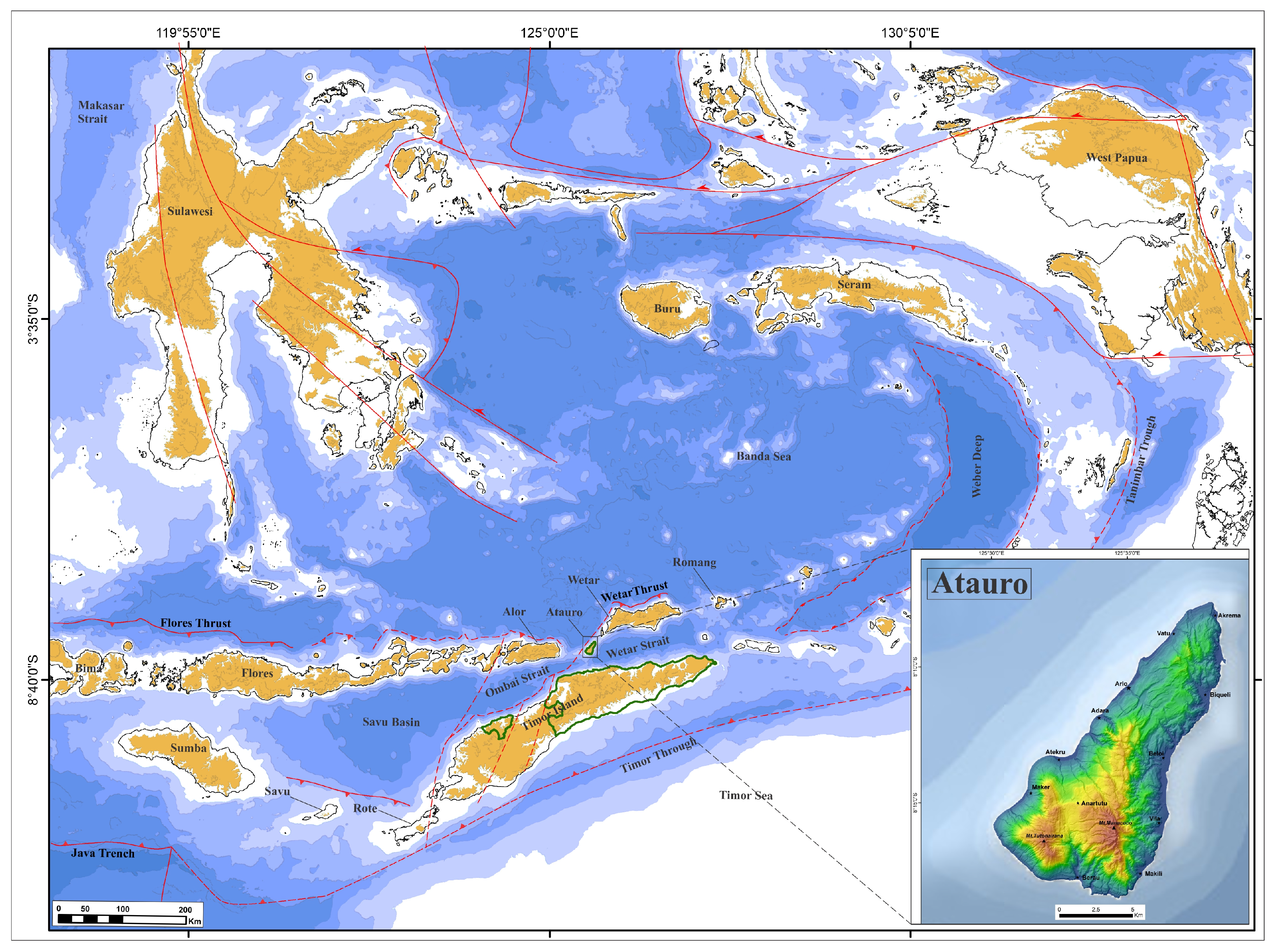
2. Geological Setting
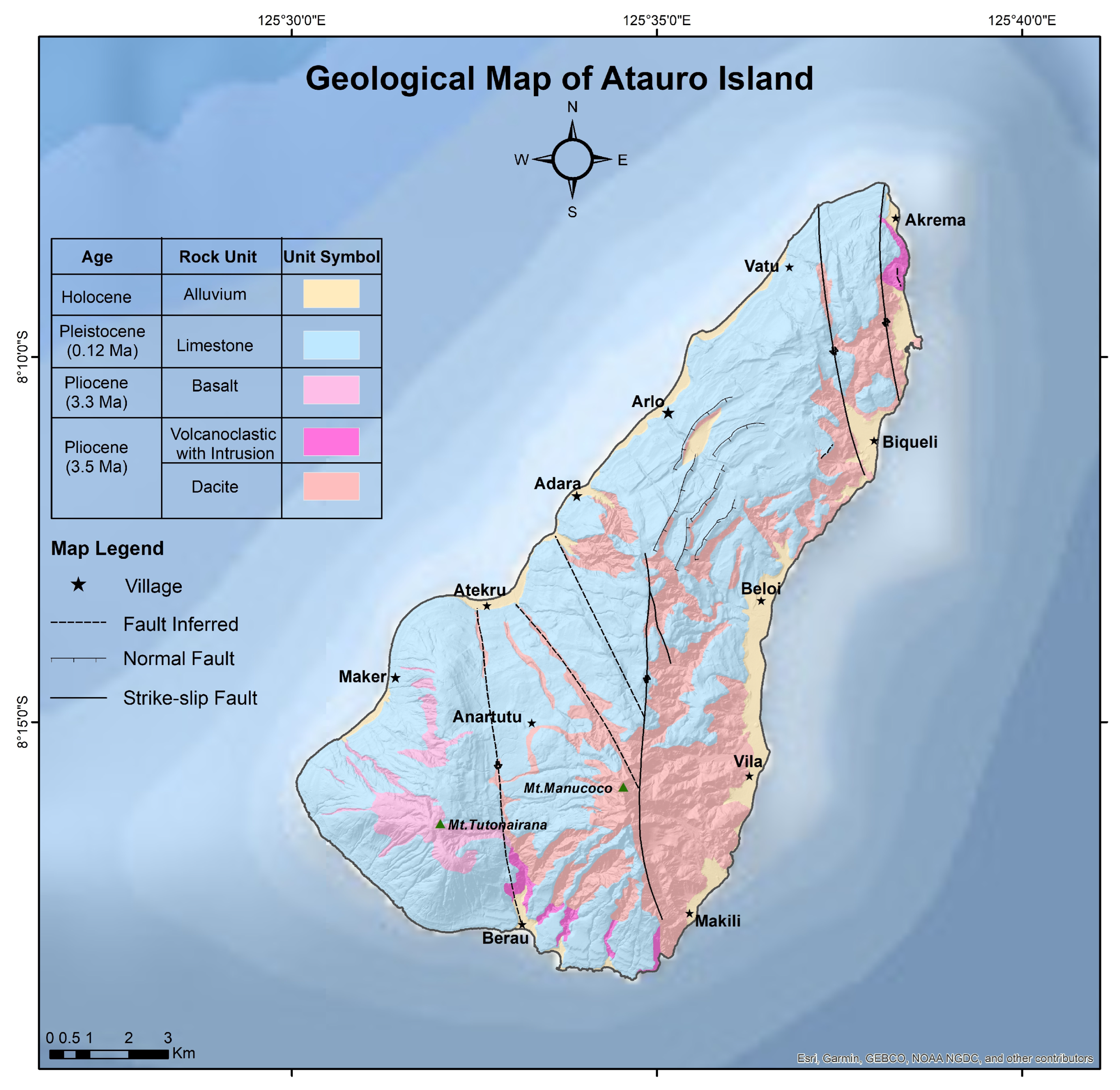
3. Materials and Analytical Methods
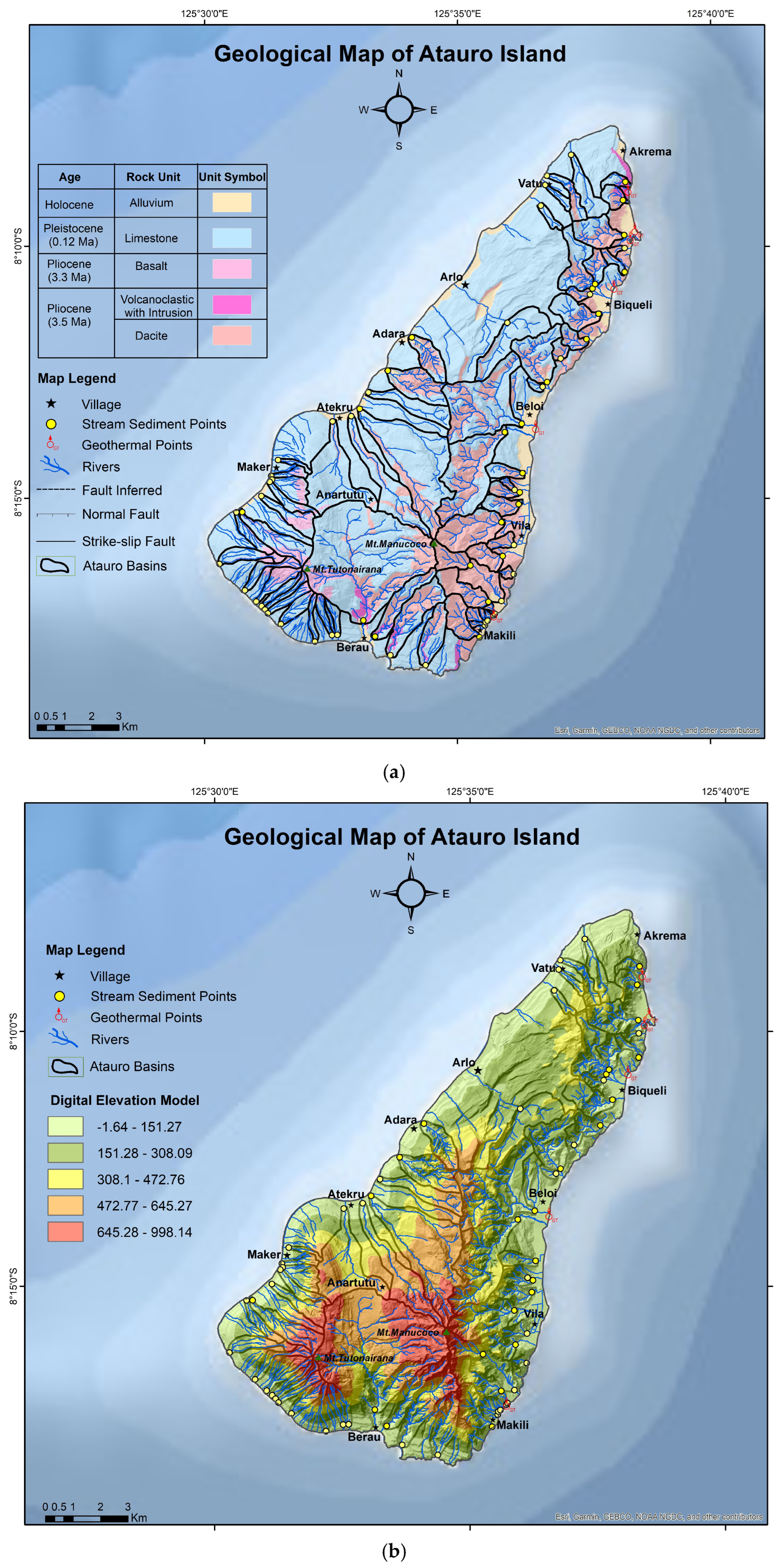
3.1. Sampling Design and Geological Representativity
3.2. Laboratory Analytical Procedures
- ICP-OES for major and transition metals;
- ICP-MS for most trace and chalcophile elements;
- INAA (Instrumental Neutron Activation Analysis) for selected elements, including As, Sb, Au, and REEs.
3.3. Data Treatment and Statistical Workflow
4. Results
4.1. Statistics
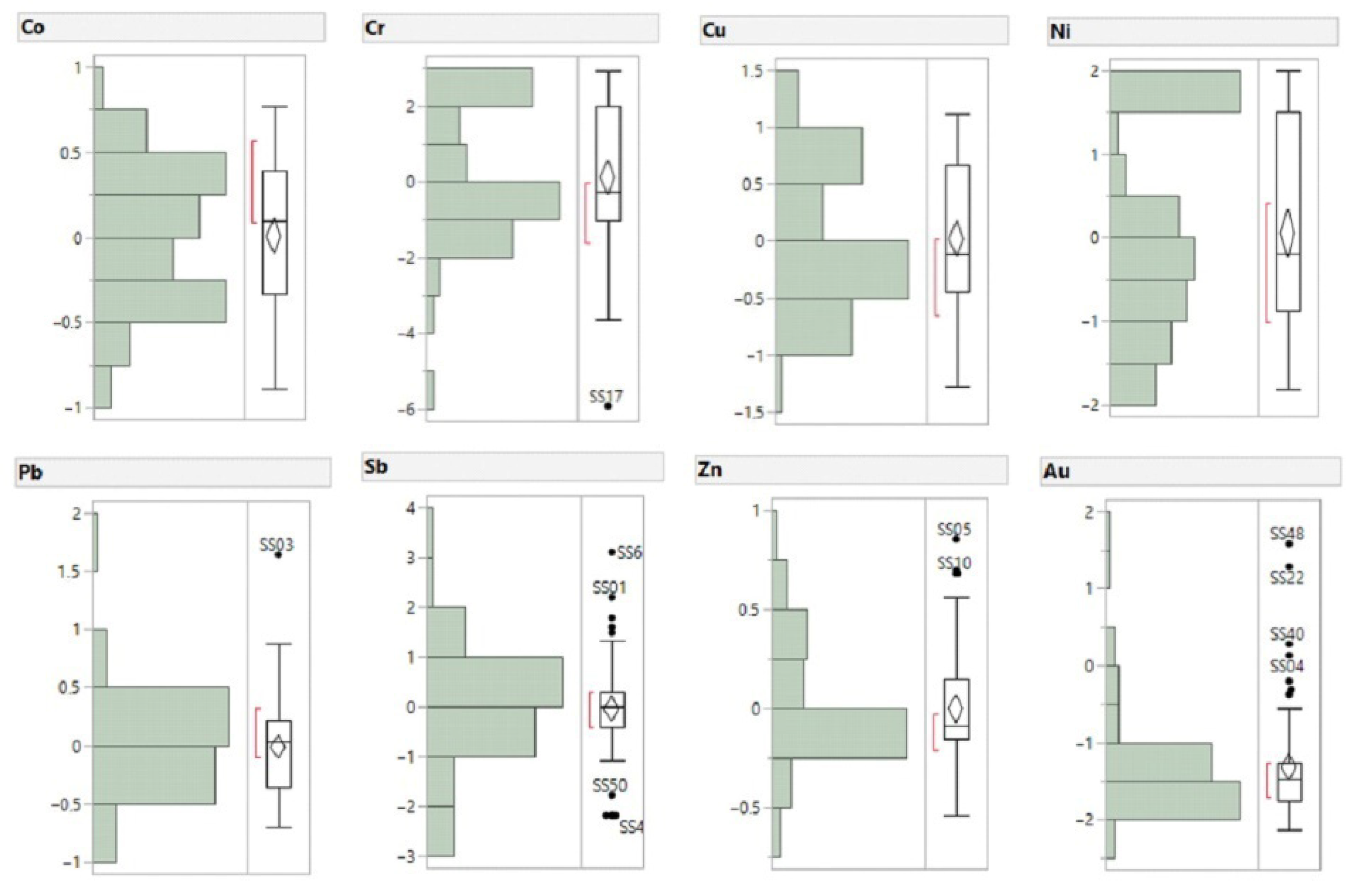
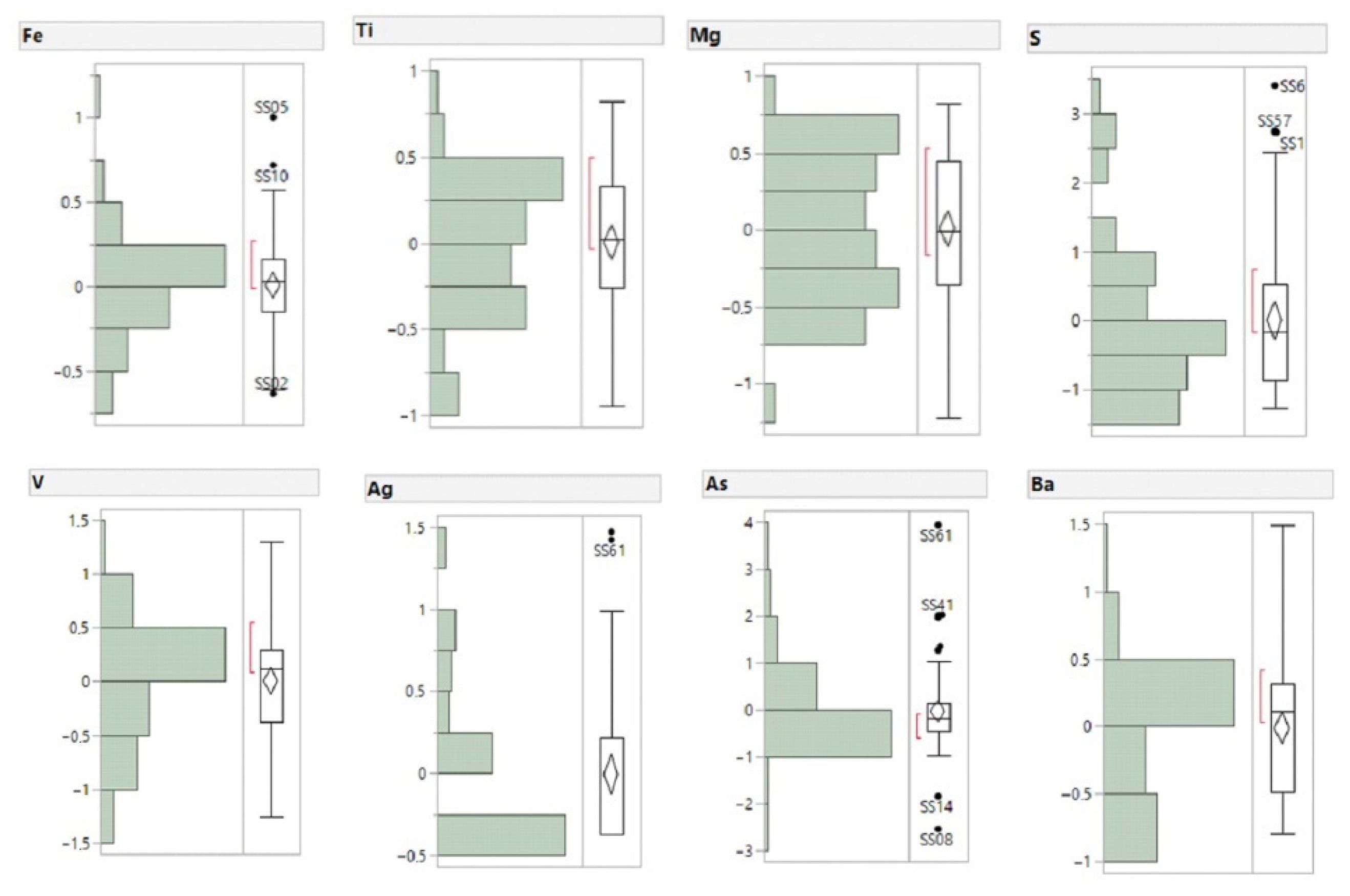
4.2. Boxplots and Dispersion Structure After CLR Transformation
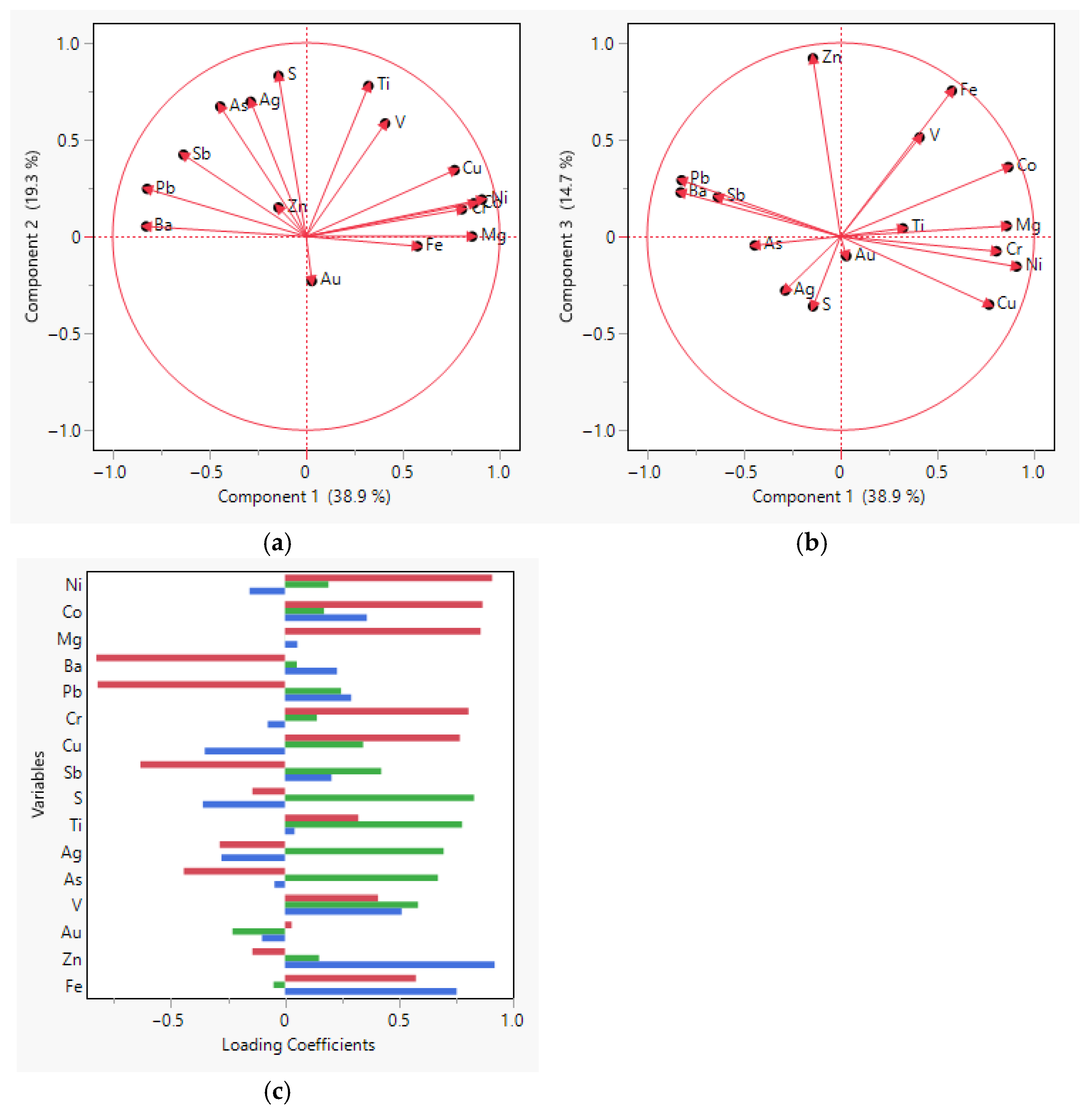
4.3. Compositional Data Analysis (CoDA–PCA)
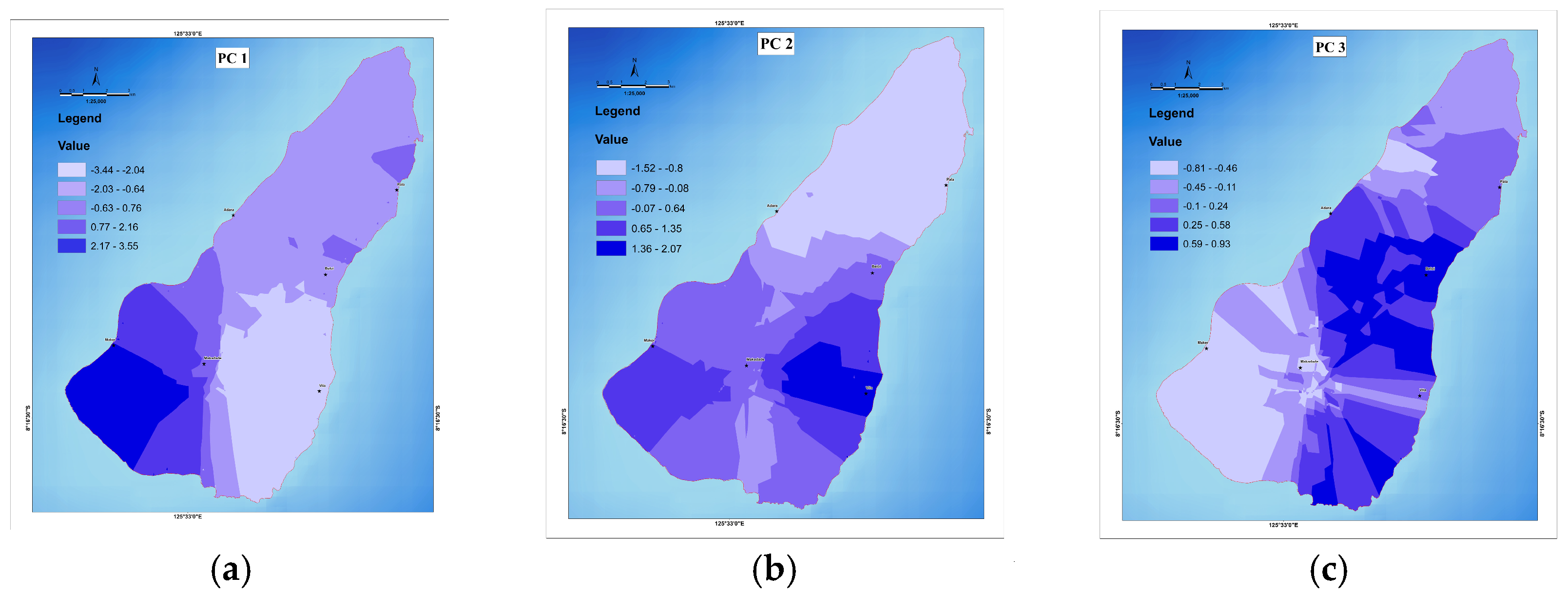
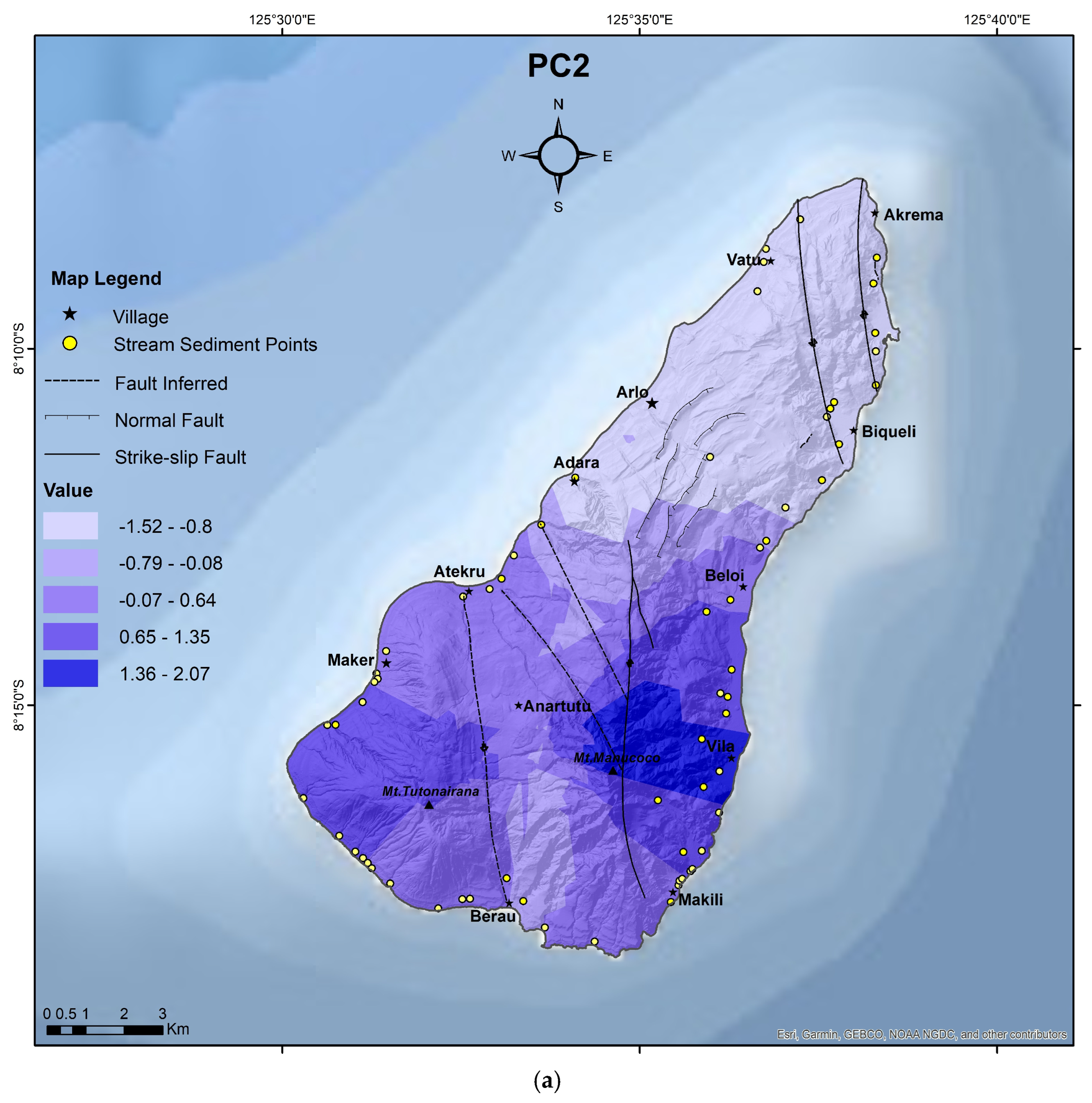
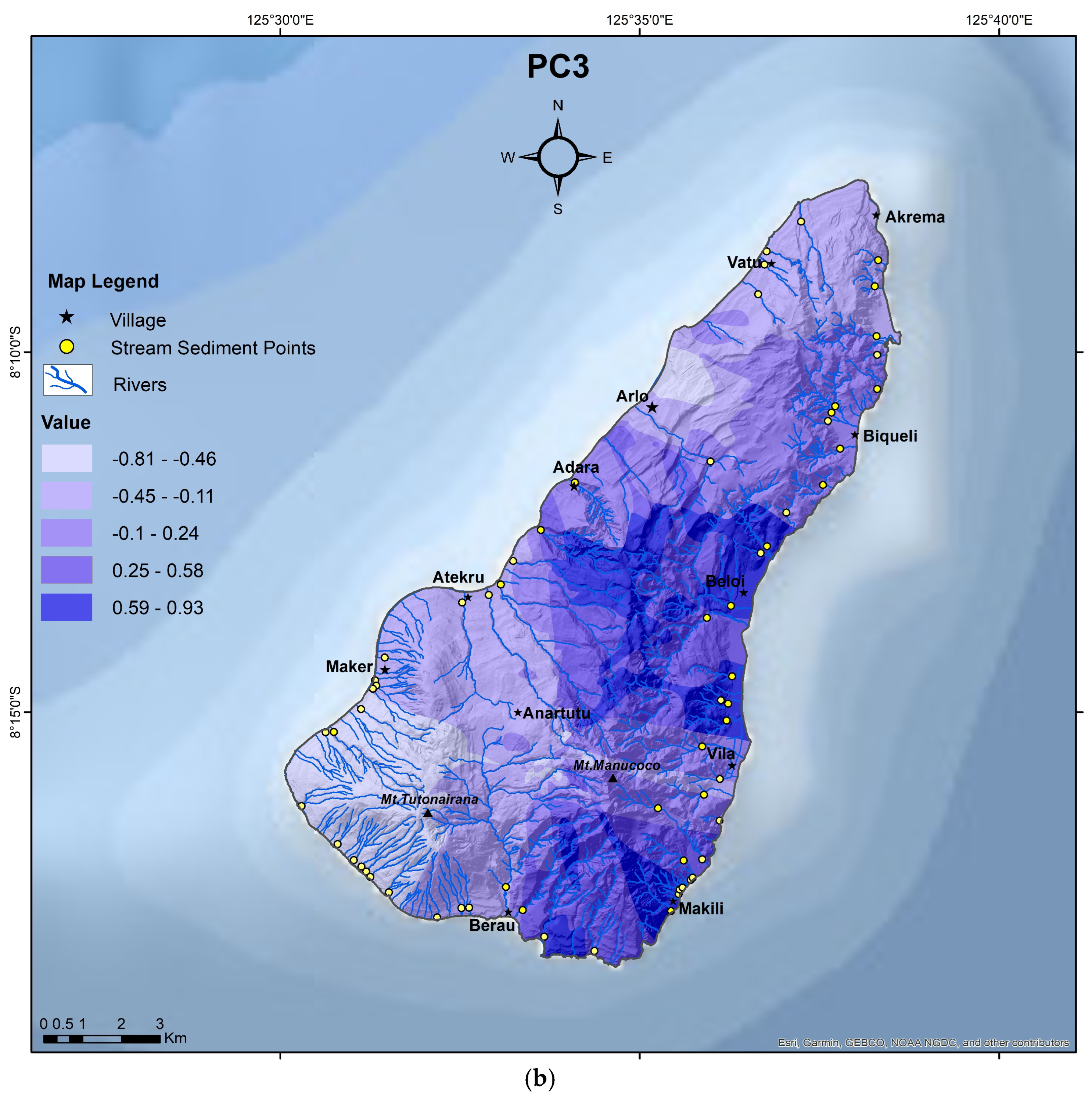
4.4. Spatial Distribution of PCA–CLR Scores
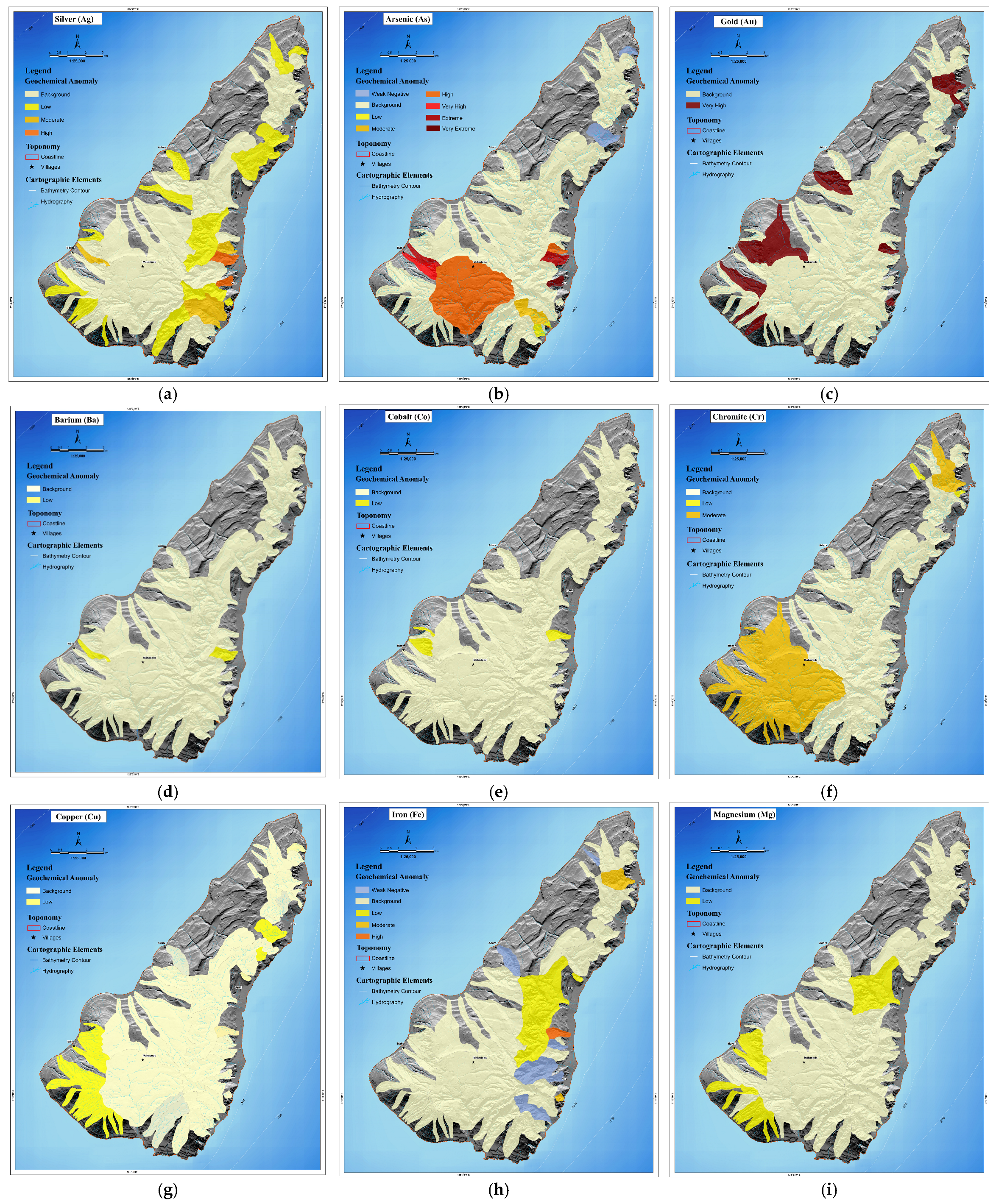
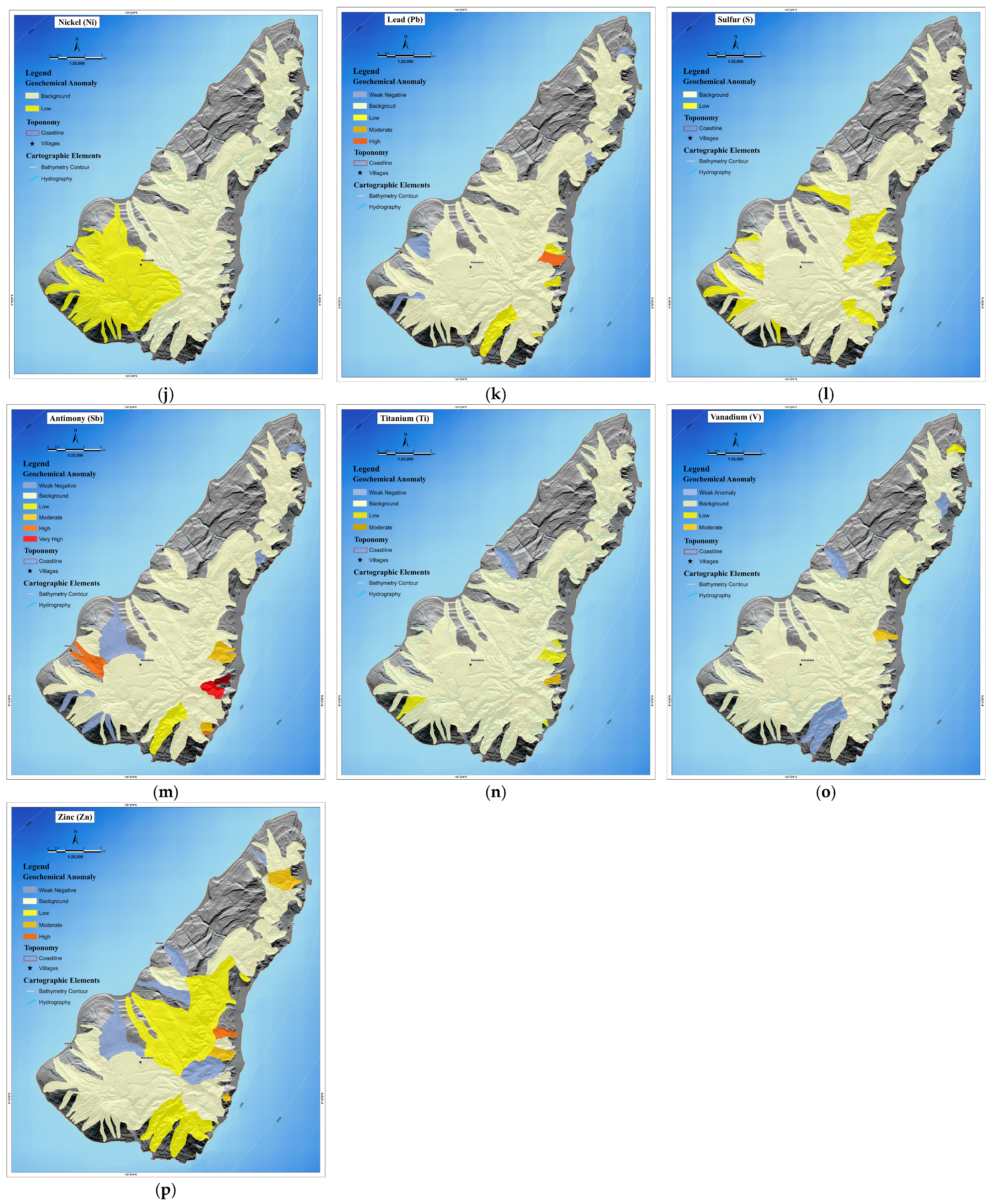
4.5. Individual Anomaly Maps
4.6. PCA–Anomaly Synthesis
5. Discussion
5.1. Lithogenic Control and Primary Geochemical Framework
5.2. Rare Earth Elements (REE) Signatures and Geotectonic Implications
5.3. Hydrothermal Vector and Epithermal-Style Geochemical Enrichment
5.4. Supergene Redistribution and Oxidative Weathering Overprint
5.5. Geochemical Zonation and Regional Context Within the Banda Arc
- Northern felsic domain (Vila–Beloi–Pala): epithermal-style geochemical signature.
- Central hydrothermal–epithermal corridor (Maquedade–Makili–Maumeta–Adara).
- Southern mafic volcanic–volcaniclastic domain (Maulau–Maka).
5.5.1. Northern Felsic Domain (Vila–Beloi–Pala): Epithermal-Style Geochemical Signature
5.5.2. Central Hydrothermal–Epithermal Corridor (Maquedade–Makili–Maumeta–Adara)
5.5.3. Southern Mafic Volcanic–Volcaniclastic Domain (Maulau–Maka)
6. Conclusions
Supplementary Materials
Author Contributions
Funding
Data Availability Statement
Acknowledgments
Conflicts of Interest
References
- Hall, R. Cenozoic geological and plate tectonic evolution of SE Asia and the SW Pacific: Computer-based reconstructions, model and animations. J. Asian Earth Sci. 2002, 20, 353–434. [Google Scholar] [CrossRef] [Scilit]
- Harris, R. The Nature of the Banda Arc–Continent Collision in the Timor Region; Geological Society Special Publications; Springer: Berlin/Heidelberg, Germany, 2011; Volume 355, pp. 91–129. [Google Scholar]
- Hamilton, W. Tectonics of the Indonesian Region. In USGS Professional Paper; USGS Publications Warehouse: Reston, VA, USA, 1979. [Google Scholar]
- Audley-Charles, M.G. Tectonic post-collision processes in Timor. In Arc-Continent Collision; Hall, R., Ed.; Geological Society of London: London, UK, 2011; Volume 355, pp. 3–34. [Google Scholar] [CrossRef] [Scilit]
- Longley, I.M. The tectonostratigraphic evolution of SE Asia. Geol. Soc. Lond. Spec. Publ. 1997, 126, 311–339. [Google Scholar] [CrossRef] [Scilit]
- Spakman, W.; Hall, R. Surface deformation and slab–mantle interaction during Banda arc subduction rollback. Nat. Geosci. 2010, 3, 562–566. [Google Scholar] [CrossRef] [Scilit]
- Elburg, M.A.; Van Leeuwen, T.; Foden, J.; Muhardjo. Origin of geochemical variability by arc–continent collision in the Biru area, southern Sulawesi (Indonesia). J. Petrol. 2002, 43, 581–606. [Google Scholar] [CrossRef] [Scilit]
- Standley, C.E.; Harris, R. Tectonic evolution of forearc nappes of the active Banda arc-continent collision: Origin, age, metamorphic history and structure of the Lolotoi Complex, East Timor. Tectonophysics 2009, 479, 66–94. [Google Scholar] [CrossRef] [Scilit]
- Zhu, D.-C.; Wang, Q.; Weinberg, R.F.; Cawood, P.A.; Chung, S.-L.; Zheng, Y.-F.; Zhao, Z.; Hou, Z.-Q.; Mo, X.-X. Interplay between oceanic subduction and continental collision in building continental crust. Nat. Commun. 2022, 13, 7141. [Google Scholar] [CrossRef] [Scilit]
- Ely, K.S.; Sandiford, M.; Hawke, M.L.; Phillips, D.; Quigley, M.; dos Reis, J.E. Evolution of Ataúro Island: Temporal constraints on subduction processes beneath the Wetar zone, Banda Arc. J. Asian Earth Sci. 2011, 41, 477–493. [Google Scholar] [CrossRef] [Scilit]
- Gomes, N.; Sutarto, S.; Soesilo, J.; Purwanto, H.S.; Christophe, J. Stereographic for Development of Stricture Pattern of Geological Alteration Zone in Atauro Island, Timor-Leste. Asian J. Soc. Humanit. 2024, 2, 1401–1407. [Google Scholar] [CrossRef] [Scilit]
- Dos Santos, J.B.; Pratas, J.; Vicente, V.; da Cruz, A.; Nano, J.; Soares, M. Un Update of the Atauro Island Geological Map, Timor-Leste. In Proceedings of the XI Congresso Nacional de Geologia—Geociências e Desafios Globais, Universidade de Coimbra, Coimbra, Portugal, 16–20 July 2023. [Google Scholar]
- White, N.C.; Hedenquist, J.W. Epithermal environments and styles of mineralization: Variations and their causes, and guidelines for exploration. J. Geochem. Explor. 1990, 36, 445–474. [Google Scholar] [CrossRef] [Scilit]
- Sillitoe, R.H.; Hedenquist, J.W. Linkages between volcanotectonic settings, ore-fluid compositions, and epithermal precious metal deposits. In Volcanic, Geothermal, and Ore-Forming Fluids: Rulers and Witnesses of Processes within the Earth; SEG: Littleton, CO, USA, 2005; pp. 1–30. [Google Scholar]
- Zaw, K.; Meffre, S.; Lai, C.-K.; Burrett, C.; Santosh, M.; Graham, I.; Manaka, T.; Salam, A.; Kamvong, T.; Cromie, P. Tectonics and metallogeny of mainland Southeast Asia—A review and contribution. Gondwana Res. 2014, 26, 5–30. [Google Scholar]
- Bergman, S. Magmatic evolution during arc collision. Tectonophysics 1996, 267, 45–60. [Google Scholar]
- Harris, R. Geodynamic Evolution of The Active Banda Arc-Continent Collision. 2004. Available online: https://archives.datapages.com/data/petroleum-exploration-society-of-australia/news/073/073001/pdfs/32a.htm (accessed on 6 January 2025).
- van Leeuwen, T. Geology of Wetar. J. Southeast Asian Earth Sci. 1994, 9, 1–20. [Google Scholar]
- Soeria-Atmadja, R.; Sunarya, Y. Epithermal gold-copper mineralization associated with late Neogene-magmatism and crustal extension in the Sunda-Banda arc. Bull. Geol. Soc. Malays. 1998, 42, 257–268. [Google Scholar] [CrossRef] [Scilit]
- Duran, P.M.; Baillie, P.; Carrillo, E.; Duval, G. Geological Development of the Timor Orogen; The Geological Society of London: London, UK, 2020. [Google Scholar]
- Keep, M.; Haig, D.W. Deformation and exhumation in Timor: Distinct stages of a young orogeny. Tectonophysics 2010, 483, 93–111. [Google Scholar] [CrossRef] [Scilit]
- Reimann, C.; Garrett, R.G. Geochemical background—Concept and reality. Sci. Total Environ. 2005, 350, 12–27. [Google Scholar] [CrossRef] [Scilit] [PubMed]
- Liu, X.; Wang, X.; de Caritat, P.; Salminen, R. Comparison of datasets obtained by global-scale geochemical sampling in Australia, China and Europe. J. Geochem. Explor. 2015, 148, 1–11. [Google Scholar] [CrossRef] [Scilit]
- Salminen, R.; Tarvainen, T.; Demetriades, A.; Duris, M.; Fordyce, F.M.; Gregorauskiene, V.; Kahelin, H.; Kivisilla, J.; Klaver, G.; Klein, H.; et al. FOREGS geochemical mapping field manual. In Geological Survey of Finland Guide 47; Geological Survey of Finland: Espoo, Finland, 1998. [Google Scholar]
- Bowell, R.J.; Alpers, C.N.; Jamieson, H.E.; Nordstrom, D.K.; Majzlan, J. The environmental geochemistry of arsenic—An overview—. Rev. Mineral. Geochem 2014, 79, 1–16. [Google Scholar] [CrossRef] [Scilit]
- Aitchison, J. The statistical analysis of compositional data. J. R. Stat. Soc. Ser. B (Methodol.) 1982, 44, 139–160. [Google Scholar] [CrossRef] [Scilit]
- Buccianti, A.; Mateu-Figueras, G.; Pawlowsky-Glahn, V. (Eds.) Compositional Data Analysis in the Geosciences: From Theory to Practice; Geological Society of London: London, UK, 2006. [Google Scholar]
- Pawlowsky-Glahn, V.; Buccianti, A. Compositional Data Analysis; Wiley: Chichester, UK, 2011. [Google Scholar]
- ISO/IEC 17025:2017; General Requirements for the Competence of Testing and Calibration Laboratories. International Organization for Standardization (ISO): Geneva, Switzerland, 2017.
- Leys, C.; Ley, C.; Klein, O.; Bernard, P.; Licata, L. Detecting outliers: Do not use standard deviation around the mean, use absolute deviation around the median. J. Exp. Soc. Psychol. 2013, 49, 764–766. [Google Scholar] [CrossRef] [Scilit]
- Tukey, J.W. Exploratory Data Analysis; Addison-Wesley: Reading, MA, USA, 1977. [Google Scholar]
- Hoaglin, D.C.; Mosteller, F.; Tukey, J.W. (Eds.) Understanding Robust and Exploratory Data Analysis; John Wiley & Sons: Hoboken, NJ, USA, 2000. [Google Scholar]
- Liu, Y.; Cheng, Q.; Zhou, K.; Xia, Q.; Wang, X. Multivariate analysis for geochemical process identification using stream sediment geochemical data: A perspective from compositional data. Geochem. J. 2016, 50, 293–314. [Google Scholar] [CrossRef] [Scilit]
- Filzmoser, P.; Hron, K. Correlation Analysis for Compositional Data. Math. Geosci. 2009, 41, 905–919. [Google Scholar] [CrossRef] [Scilit]
- Filzmoser, P.; Hron, K.; Templ, M. Applied Compositional Data Analysis; Springer: Cham, Switzerland, 2018. [Google Scholar]
- Filzmoser, P.; Hron, K.; Reimann, C.; Garrett, R. Robust factor analysis for compositional data. Comput. Geosci. 2009, 35, 1854–1861. [Google Scholar] [CrossRef] [Scilit]
- Hedenquist, J.W.; Lowenstern, J.B. The role of magmas in the formation of hydrothermal ore deposits. Nature 1994, 370, 519–527. [Google Scholar] [CrossRef] [Scilit]
- Cooke, D.R.; Simmons, S.F. Characteristics and genesis of epithermal gold deposits. Rev. Econ. Geol. 2000, 13, 221–244. [Google Scholar]
- Halter, W.E.; Webster, J.D. The magmatic to hydrothermal transition and its bearing on ore-forming systems. Chem. Geol. 2004, 210, 1–6. [Google Scholar] [CrossRef] [Scilit]
- Zhong, R.; Brugger, J.; Chen, Y.; Li, W. Contrasting regimes of Cu, Zn and Pb transport in ore-forming hydrothermal fluids. Chem. Geol. 2015, 395, 154–164. [Google Scholar] [CrossRef] [Scilit]
- Scotney, P.M.; Roberts, S.; Herrington, R.J.; Boyce, A.J.; Burgess, R. The development of volcanic hosted massive sulfide and barite–gold orebodies on Wetar Island, Indonesia. Miner. Depos. 2005, 40, 76–99. [Google Scholar] [CrossRef] [Scilit]
- Warren, J.K. Evaporites: Sediments, Resources and Hydrocarbons; Springer: Berlin/Heidelberg, Germany, 2006. [Google Scholar]
- Yang, K.; Scott, S.D. Possible contribution of a metal-rich magmatic fluid to a sea-floor hydrothermal system. Nature 1996, 383, 420–423. [Google Scholar] [CrossRef] [Scilit]
- Pavlova, G.G.; Borovikov, A.A. Physicochemical factors of formation of Au-As, Au-Sb, and Ag-Sb deposits. Geol. Ore Depos. 2008, 50, 433–444. [Google Scholar] [CrossRef] [Scilit]
- Sillitoe, R.H. Epithermal paleosurfaces. Miner. Depos. 2015, 50, 767–793. [Google Scholar] [CrossRef] [Scilit]
- Corbett, G.J. Structural controls to, and exploration for, epithermal Au-Ag deposits. Aust. Inst. Geosci. Bull. 2012, 56, 43–47. [Google Scholar]
- Lintjewas, L.; Setiawan, I. Mobility of rare earth element in hydrothermal process and weathering product: A review. In IOP Conference Series: Earth and Environmental Science; IOP Publishing: Bristol, UK, 2018; Volume 118, p. 012076. [Google Scholar]
- Freyssinet, P.; Butt, C.R.M.; Morris, R.C.; Piantone, P. Ore-Forming Processes Related to Lateritic Weathering; Society of Economic Geologists: Littleton, CO, USA, 2005. [Google Scholar] [CrossRef] [Scilit]
- Dinis, P.; Garzanti, E.; Vermeesch, P.; Huvi, J. Climatic zonation and weathering control on sediment composition (Angola). Chem. Geol. 2017, 467, 110–121. [Google Scholar] [CrossRef] [Scilit]
- Wang, Q.; Liu, X.; Deng, J.; Ramanaidou, E.; Santosh, M. Supergene metallogeny: Preface. Ore Geol. Rev. 2024, 175, 106388. [Google Scholar] [CrossRef] [Scilit]
- Cornell, R.M.; Schwertmann, U. The Iron Oxides: Structure, Properties, Reactions, Occurrences and Uses; John Wiley & Sons: Hoboken, NJ, USA, 2003. [Google Scholar]
- Jacques, D.; Šimůnek, J.; Mallants, D.; Van Genuchten, M.T. Modelling coupled water flow, solute transport and geochemical reactions affecting heavy metal migration in a podzol soil. Geoderma 2008, 145, 449–461. [Google Scholar] [CrossRef] [Scilit]
- Manceau, A.; Combes, J.M. Structure of Mn and Fe oxides and oxyhydroxides: A topological approach by EXAFS. Phys. Chem. Miner. 1988, 15, 283–295. [Google Scholar] [CrossRef] [Scilit]








| Lithological Unit | Main Lithology | Interpretative Origin/Geological Significance |
|---|---|---|
| Limestones (carbonates) | Primary carbonate sequences locally replaced | Marine sedimentary origin with secondary modification by post-depositional fluids |
| Volcanic breccias | Basaltic–andesitic clasts with alteration textures | Intermediate volcanic successions representing eruptive and redeposited material |
| Dacitic domes | Felsic volcanic rocks | Late-stage felsic magmatism associated with dome emplacement |
| Alluvium | Detrital and colluvial cover | Recent surface deposits reflecting erosional redistribution and incipient oxidative weathering under humid conditions |
| Lithological Unit (Chronological Order) | Dominant Minerals/Features | Samples (n) | Geological Context |
|---|---|---|---|
| Basaltic to andesitic lavas | Plagioclase, pyroxene, amphibole | 3 | Arc-related volcanic suite |
| Volcanic breccias and tuffs | Mixed volcanic clasts, locally altered | 29 | Volcaniclastic deposits, locally associated with hydrothermal pathways |
| Dacitic domes | Quartz, feldspar, biotite | 8 | Felsic volcanic centers |
| Alteration zones | Silica, sericite, barite, sulfides | 10 | Argillic–silicic alteration; barite–sulfide veining |
| Carbonate and oxidative surficial cover | Calcite, Fe–Mn oxides, phosphates | 14 | Supergene and carbonate horizons affected by incipient oxidative weathering |
| Element | Unit | Min | Max | Mean | Median | IQR | MAD |
|---|---|---|---|---|---|---|---|
| Fe | % | 3.08 | 15.8 | 6.08 | 5.93 | 2.02 | 1.01 |
| Ti | % | 0.08 | 0.47 | 0.22 | 0.21 | 0.10 | 0.05 |
| Mg | % | 0.15 | 3.54 | 0.76 | 0.76 | 0.36 | 0.21 |
| V | mg kg−1 | 28 | 359 | 115 | 111 | 67 | 39 |
| S | % | 0.007 | 0.71 | 0.057 | 0.02 | 0.03 | 0.01 |
| Cr | mg kg−1 | 0.8 | 472.0 | 91.3 | 17.0 | 158.0 | 61.0 |
| Ni | mg kg−1 | 2.1 | 95.3 | 25.7 | 10.2 | 28.9 | 12.5 |
| Co | mg kg−1 | 9.9 | 51.8 | 26.1 | 24.8 | 10.1 | 4.9 |
| Cu | mg kg−1 | 13.9 | 153.0 | 60.5 | 43.1 | 38.9 | 21.2 |
| Zn | mg kg−1 | 50.0 | 201.0 | 89.5 | 78.5 | 29.3 | 15.1 |
| Pb | mg kg−1 | 10.4 | 108.0 | 22.9 | 22.1 | 12.7 | 6.4 |
| As | mg kg−1 | 0.7 | 456.0 | 18.5 | 7.5 | 55.4 | 21.3 |
| Sb | mg kg−1 | 0.08 | 13.1 | 1.02 | 0.60 | 1.71 | 0.68 |
| Ag | mg kg−1 | 0.033 | 0.21 | 0.06 | 0.04 | 0.04 | 0.02 |
| Ba | mg kg−1 | 213 | 2100 | 473 | 586 | 455 | 187 |
| Au | µg kg−1 | 1.6 | 57 | 3.8 | 1.6 | 1.2 | 0.0 |
Disclaimer/Publisher’s Note: The statements, opinions and data contained in all publications are solely those of the individual author(s) and contributor(s) and not of MDPI and/or the editor(s). MDPI and/or the editor(s) disclaim responsibility for any injury to people or property resulting from any ideas, methods, instructions or products referred to in the content. |
© 2026 by the authors. Licensee MDPI, Basel, Switzerland. This article is an open access article distributed under the terms and conditions of the Creative Commons Attribution (CC BY) license.
Share and Cite
Santos, J.B.d.; Cabral Pinto, M.; Vicente, V.A.S.; Soares, A.R.; Pratas, J.A.M.S. Geochemical Framework of Ataúro Island (Timor-Leste) in an Arc–Continent Collision Setting. Minerals 2026, 16, 89. https://doi.org/10.3390/min16010089
Santos JBd, Cabral Pinto M, Vicente VAS, Soares AR, Pratas JAMS. Geochemical Framework of Ataúro Island (Timor-Leste) in an Arc–Continent Collision Setting. Minerals. 2026; 16(1):89. https://doi.org/10.3390/min16010089
Chicago/Turabian StyleSantos, Job Brites dos, Marina Cabral Pinto, Victor A. S. Vicente, André Ram Soares, and João A. M. S. Pratas. 2026. "Geochemical Framework of Ataúro Island (Timor-Leste) in an Arc–Continent Collision Setting" Minerals 16, no. 1: 89. https://doi.org/10.3390/min16010089
APA StyleSantos, J. B. d., Cabral Pinto, M., Vicente, V. A. S., Soares, A. R., & Pratas, J. A. M. S. (2026). Geochemical Framework of Ataúro Island (Timor-Leste) in an Arc–Continent Collision Setting. Minerals, 16(1), 89. https://doi.org/10.3390/min16010089