
Hydrogeochemical Characteristics and Genetic Mechanism of the Shiqian Hot Spring Group in Southwestern China: A Study Based on Water–Rock Interaction

 ,
,
Abstract
1. Introduction
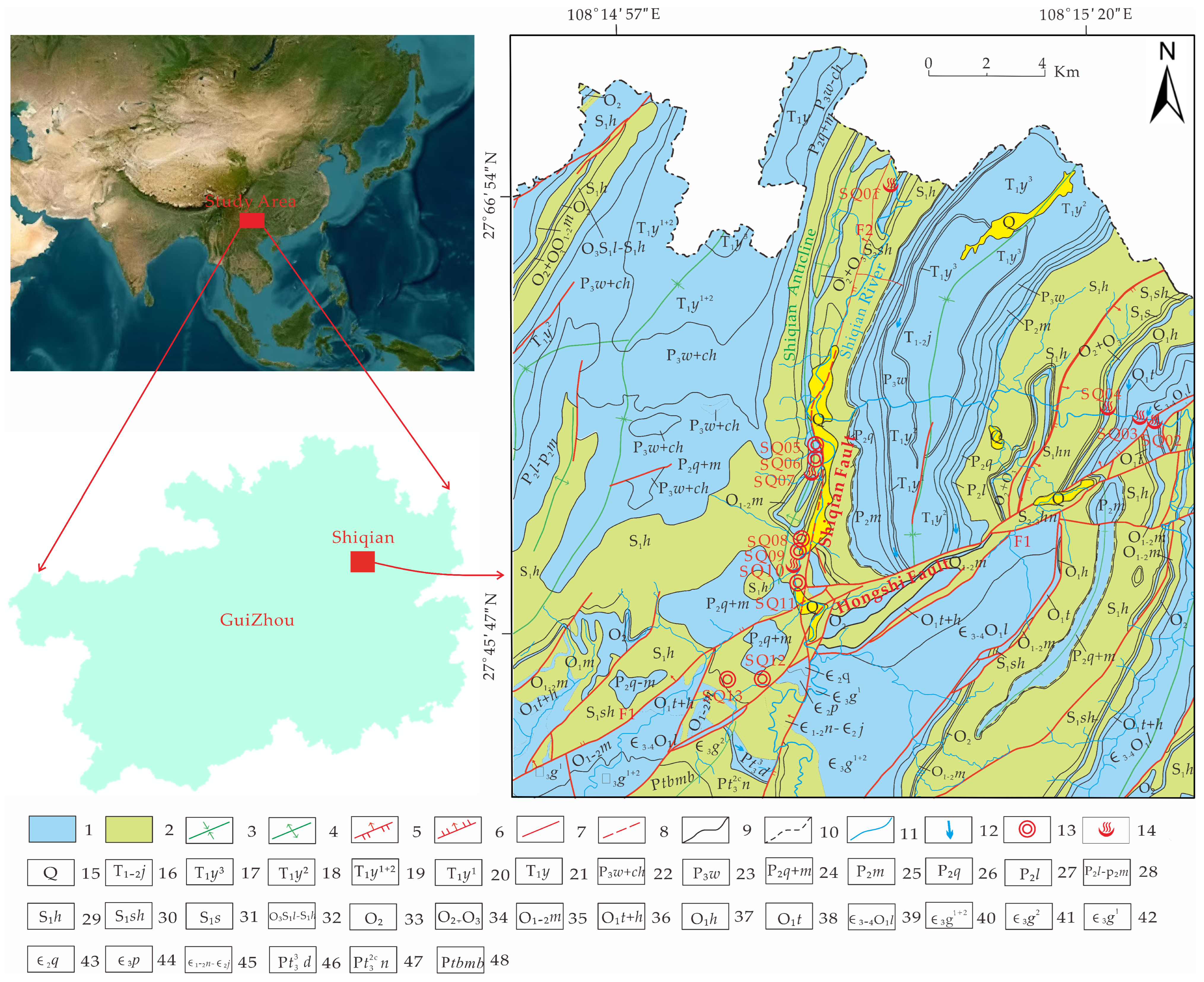
2. Overview of the Study Area
3. Data Sources and Processing Methods
4. Results and Analysis
4.1. Geochemical Characteristics of Thermal Reservoir Rocks
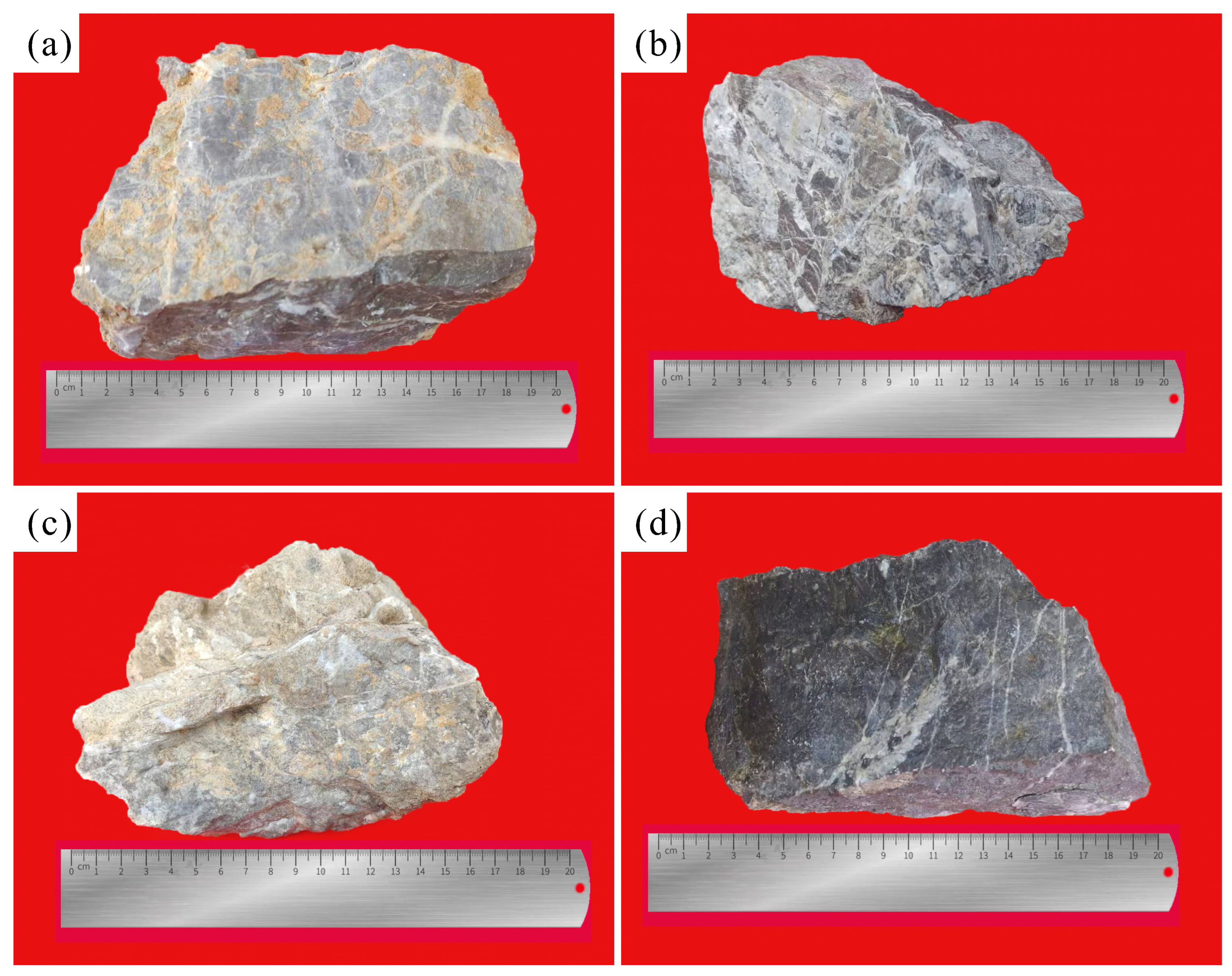
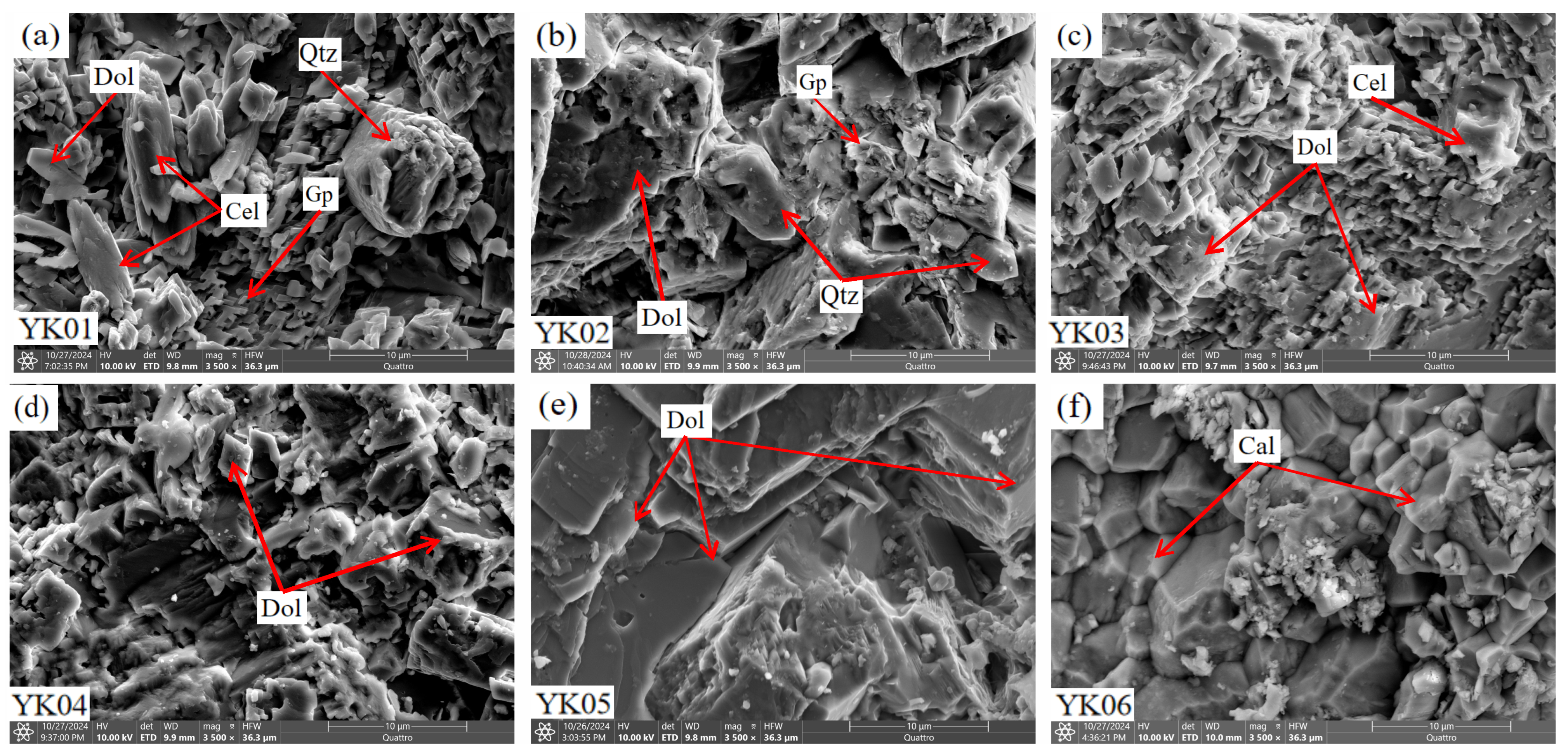
4.1.1. Mineralogical Characteristics
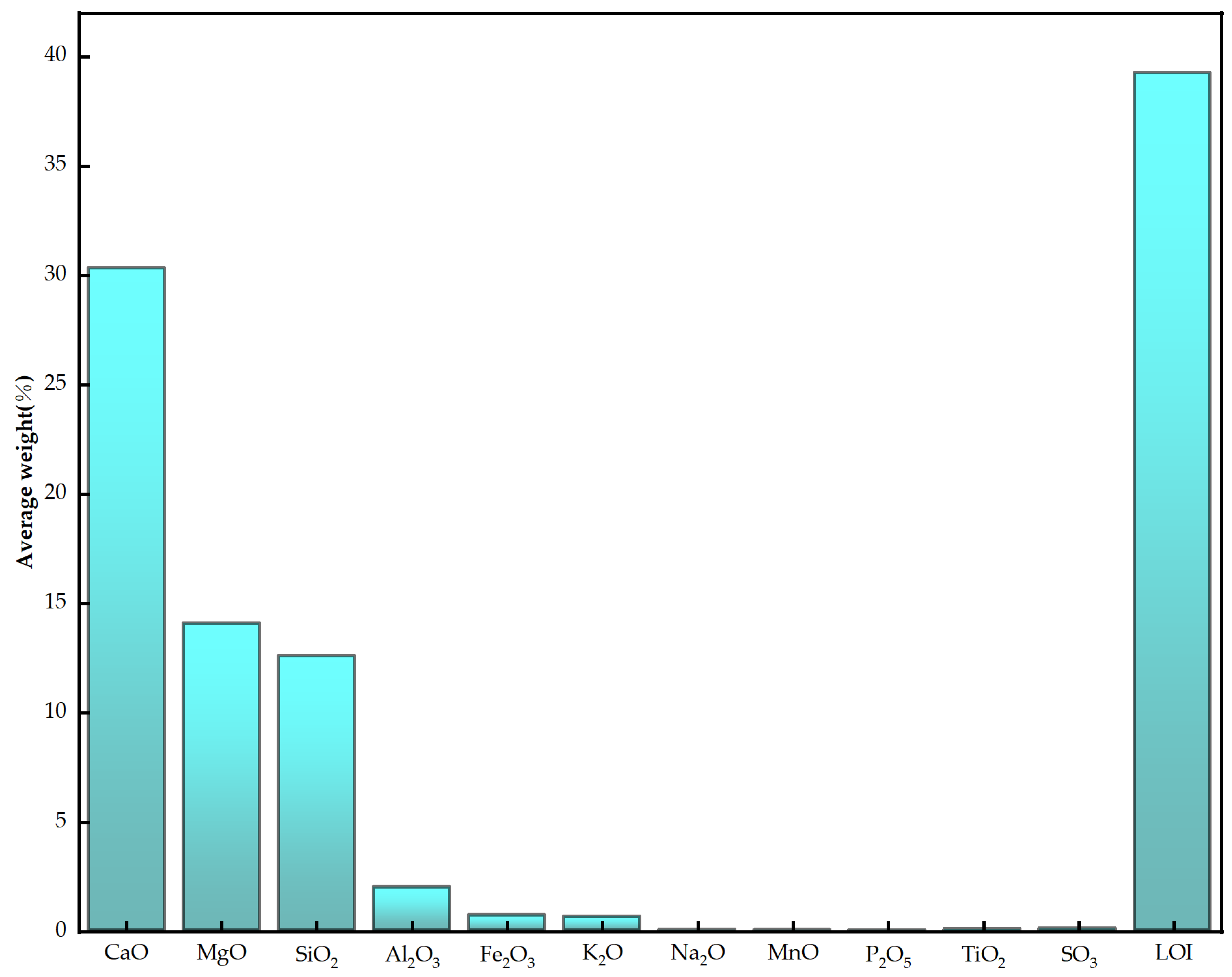
4.1.2. Characteristics of Major Elements
4.2. Hydrochemical Characteristics
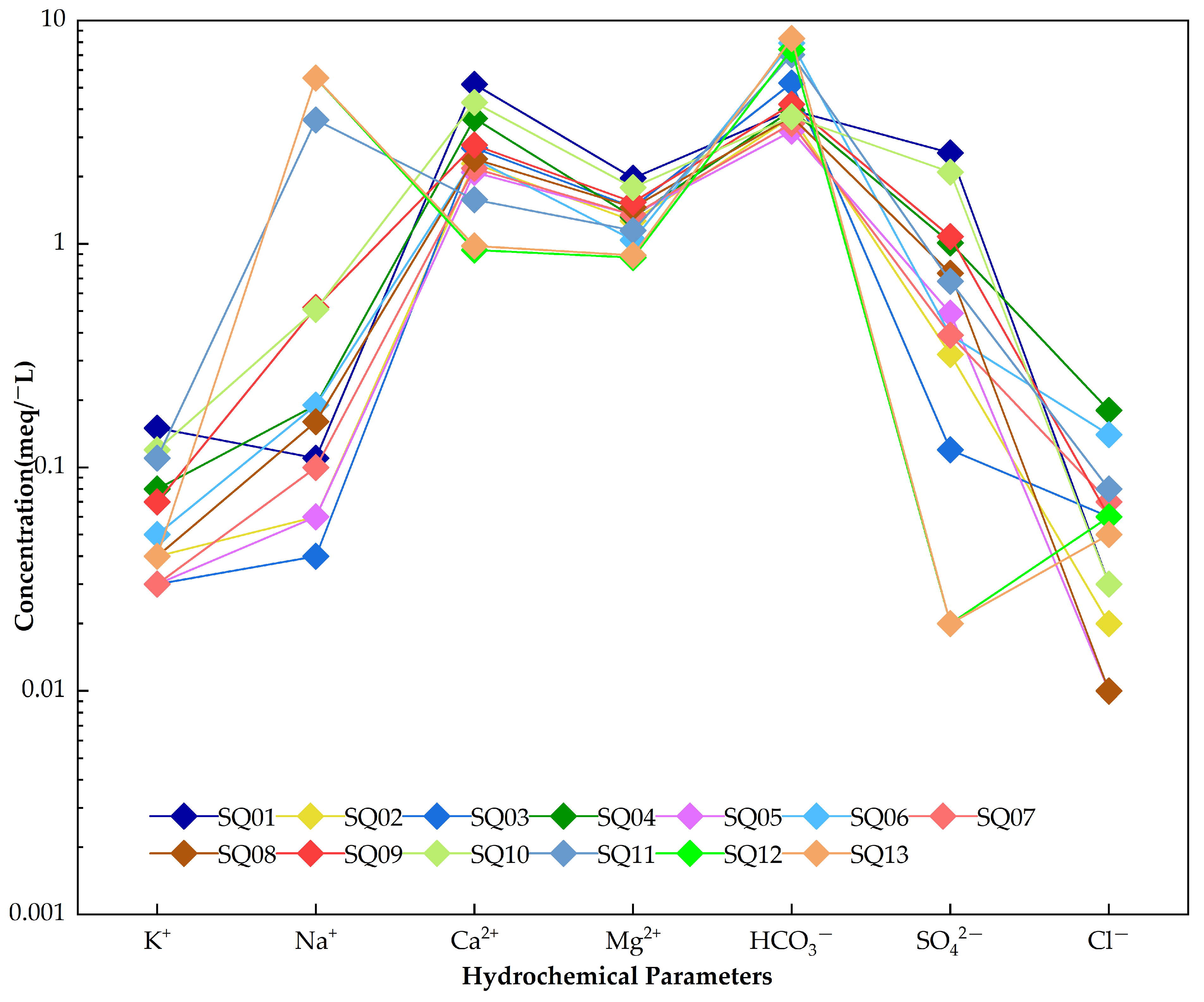
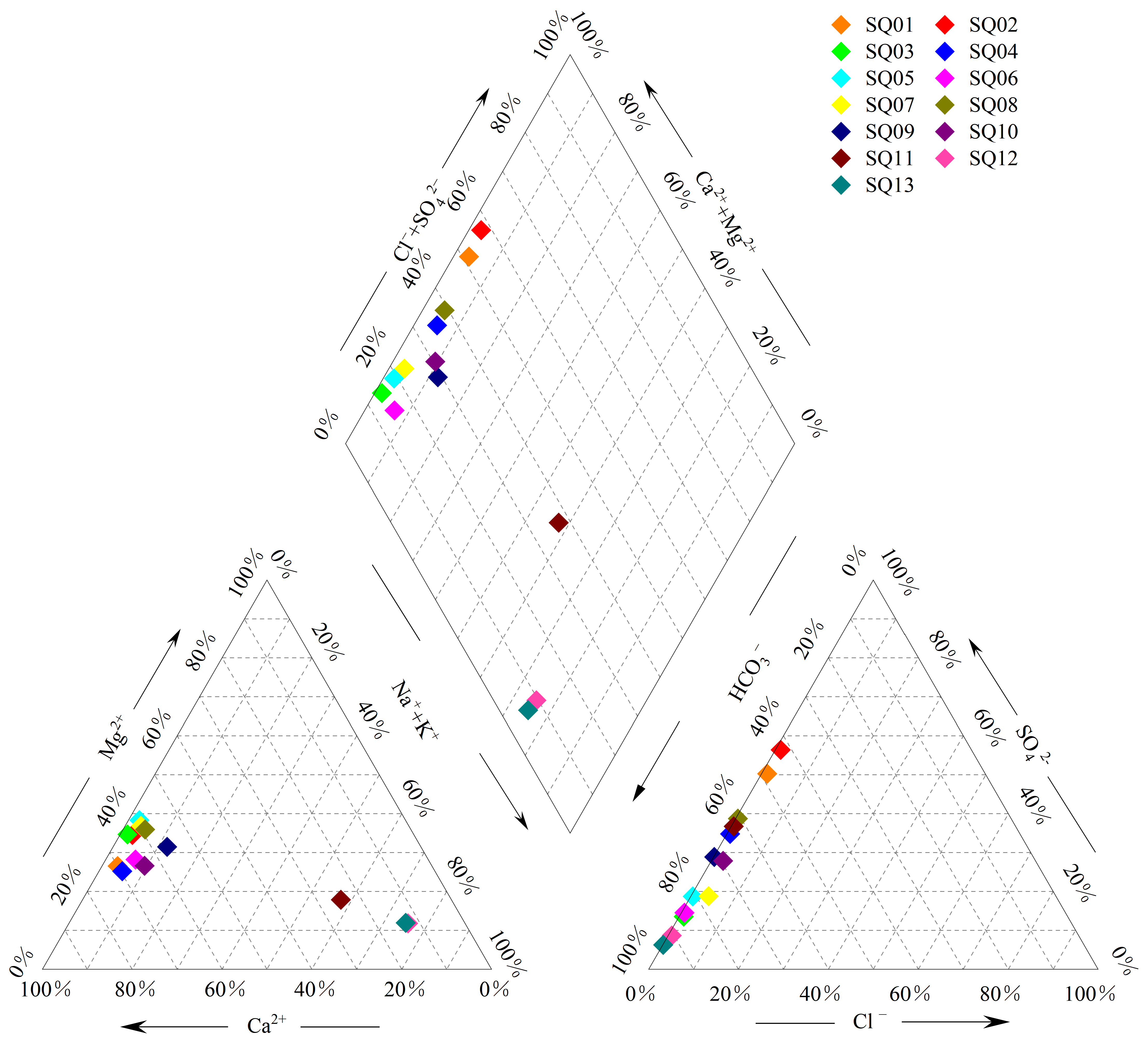
4.2.1. Major Cation and Anion Characteristics and Hydrochemical Types of the Shiqian Hot Spring Group
4.2.2. Characteristics of Special Components
4.3. Hydrogen and Oxygen Isotope Characteristics
5. Discussion
5.1. Recharge, Runoff, and Discharge Processes of the Shiqian Hot Spring Group and Their Controlling Factors
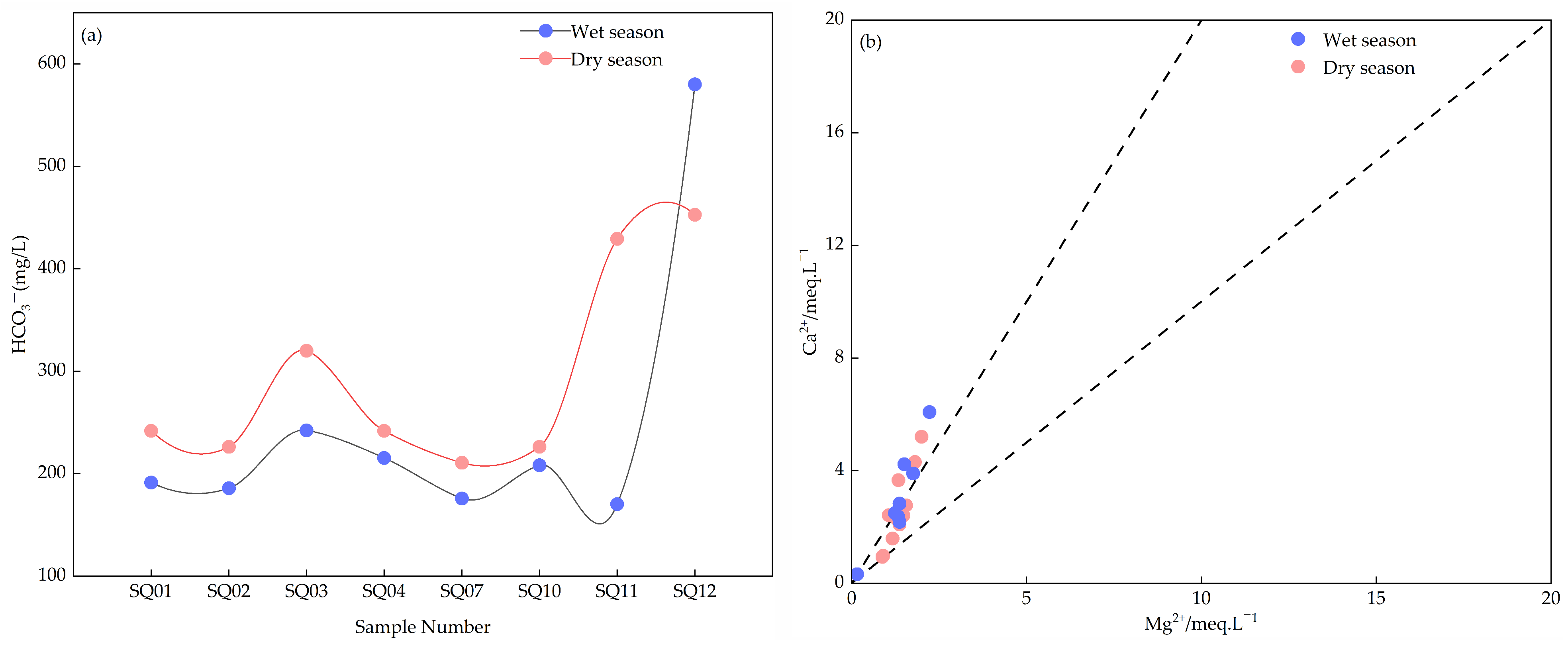
5.2. Sources of Major Ions and Special Components in the Shiqian Hot Spring Group
5.3. Estimation of Geothermal Reservoir Temperature by Equilibrium Mineral Method and Judgment of Mineral-Fluid Chemical Equilibrium
5.4. Numerical Simulation of Water–Rock Interaction
5.5. Genesis and Evolutionary Characteristics of the Shiqian Hot Spring Group
5.6. Analysis of the Water Quality Characteristics and Resource Attributes of the Shiqian Hot Spring Group
6. Conclusions
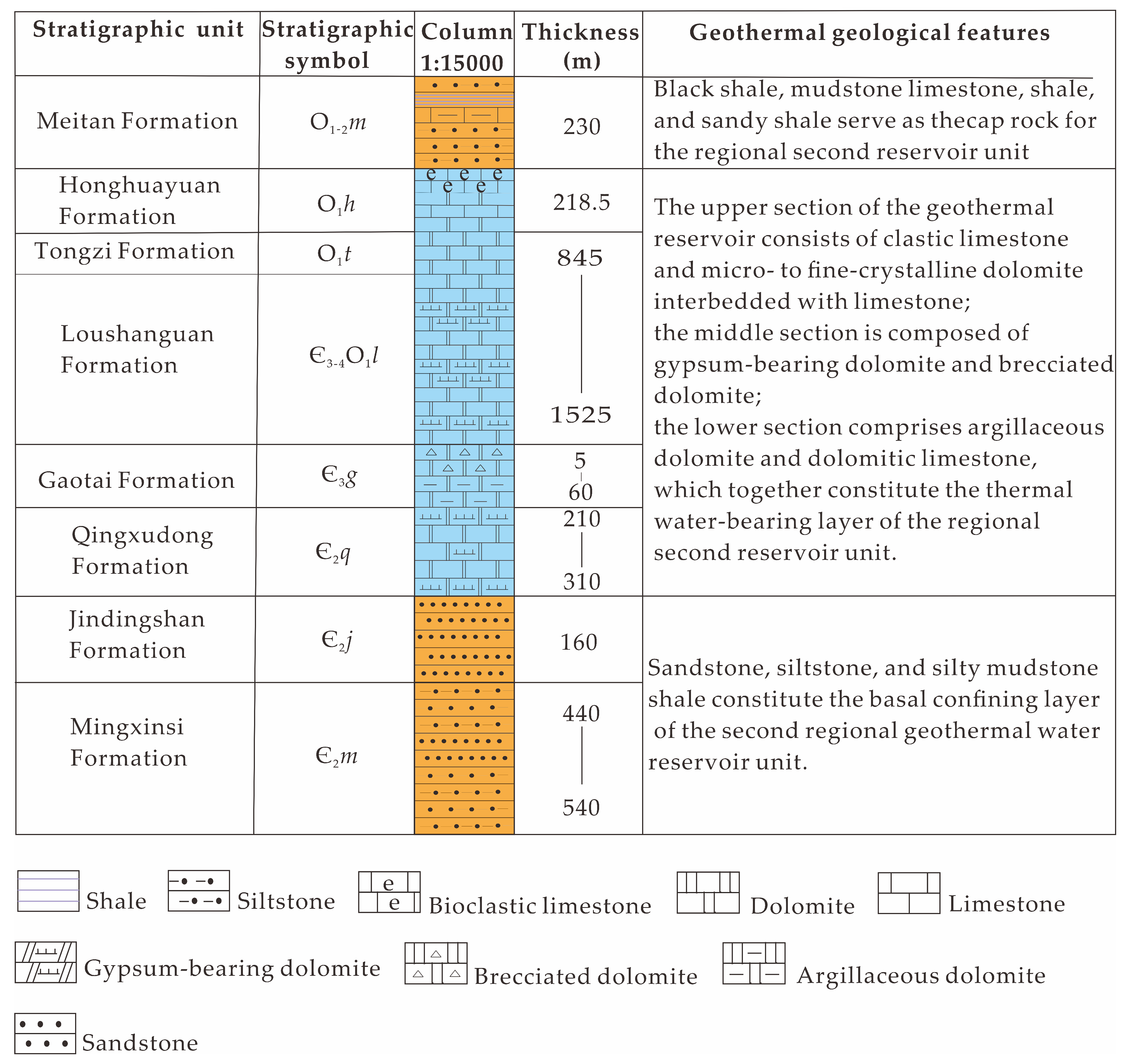
- The thermal mineral waters of Shiqian are hosted within the carbonate strata from the Qingxudong Formation to the Honghuayuan Formation, which constitute the second thermal reservoir in Guizhou Province. The lithology is dominated by dolomite, limestone, and siliceous dolomite, with mineral components mainly comprising dolomite, calcite, and quartz. The principal chemical constituents of the thermal reservoir rocks are CaO, MgO, and SiO2.
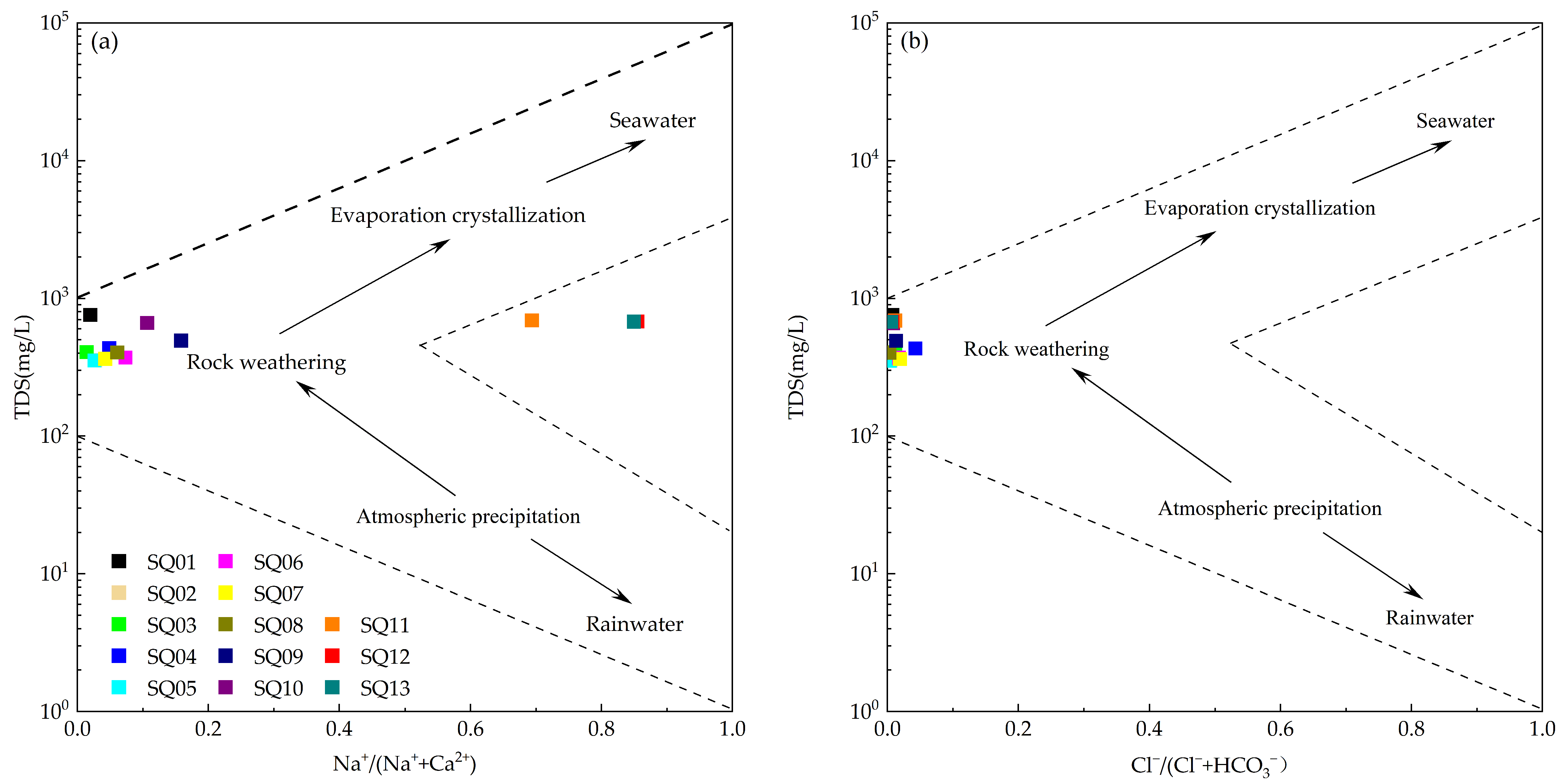
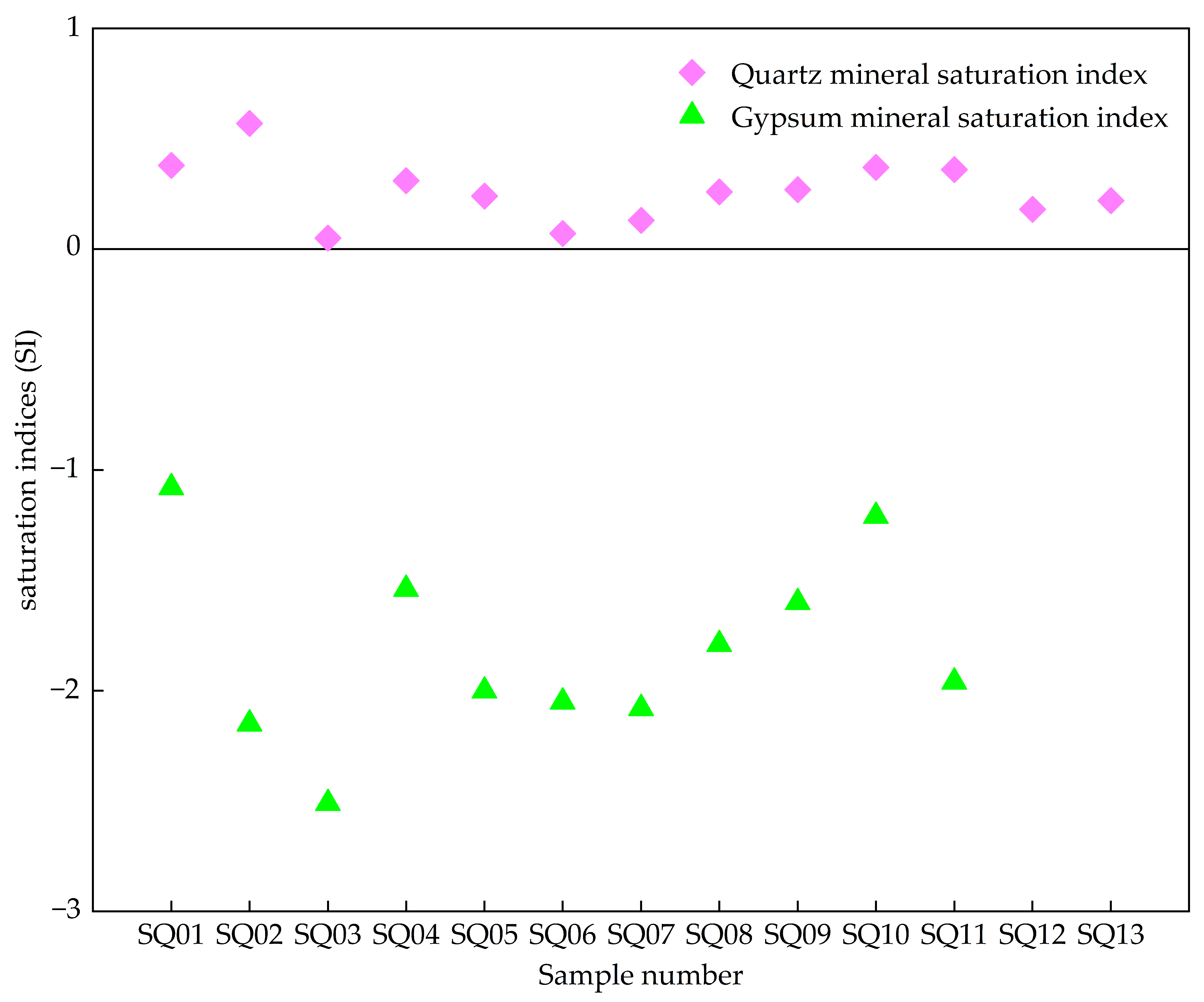
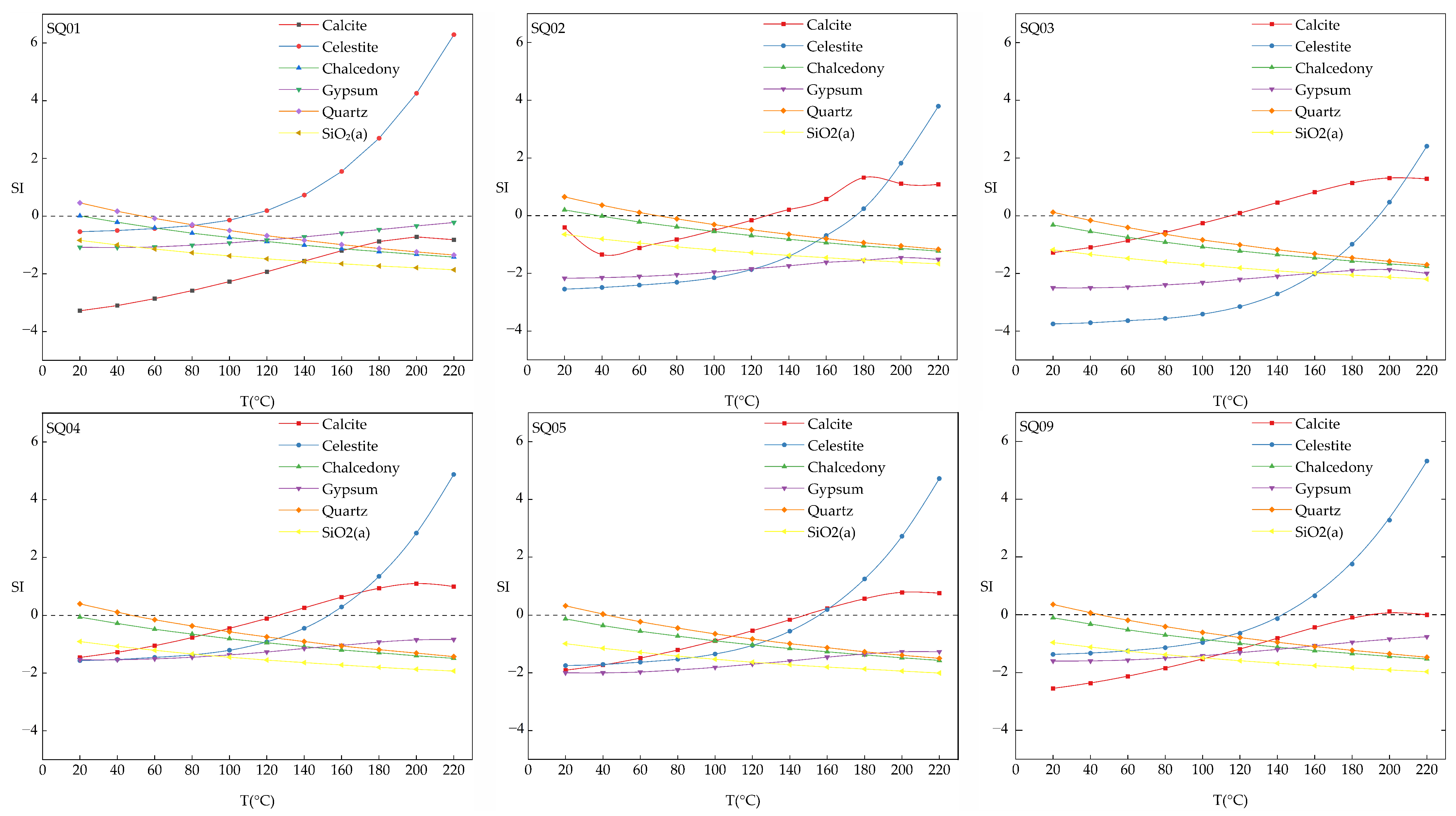
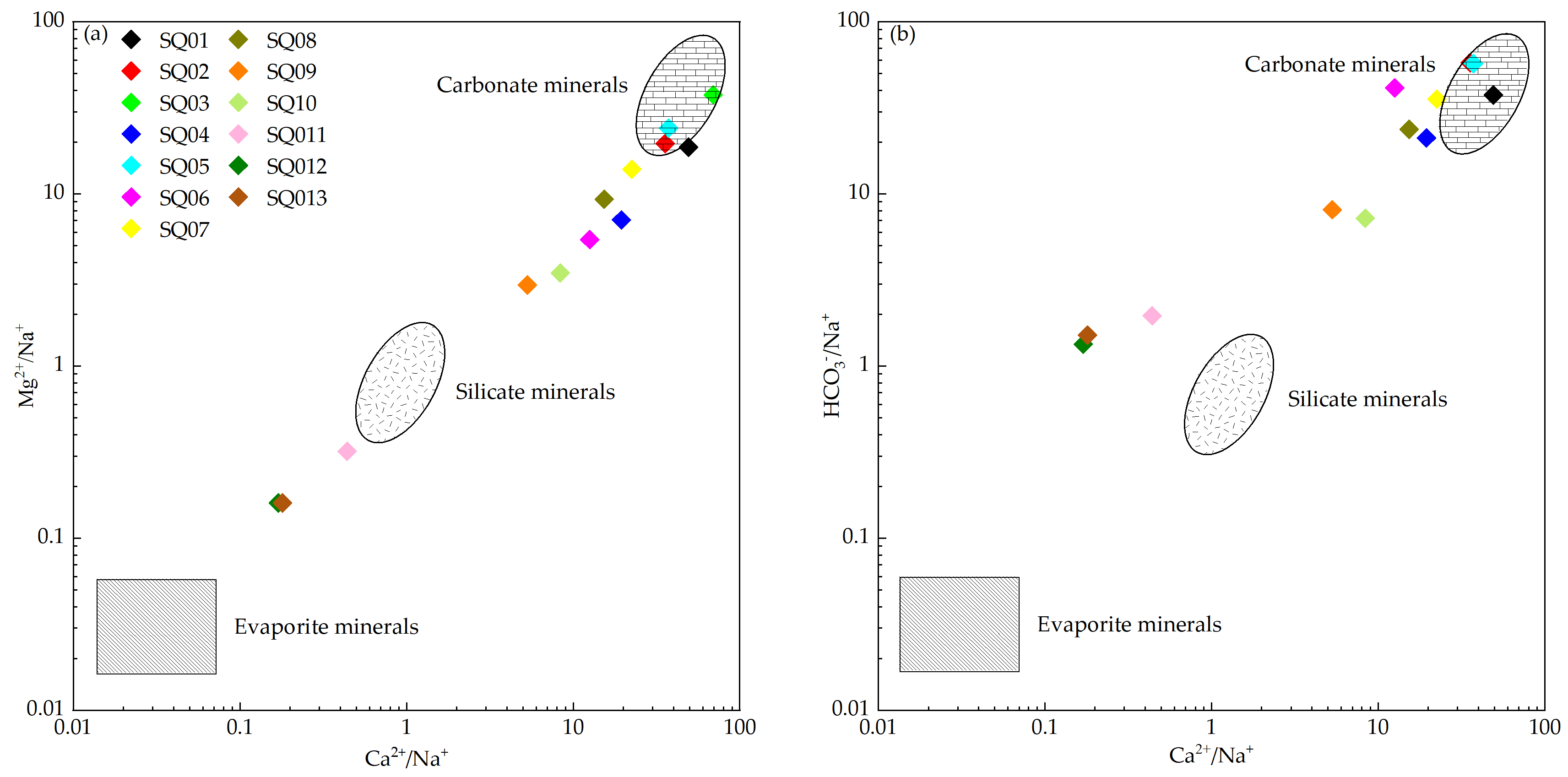
- The dominant hydrochemical types of the thermal mineral waters are HCO3·SO4-Ca·Mg and HCO3-Ca·Mg, followed by HCO3-Na type. The hydrochemical composition is mainly controlled by meteoric precipitation and rock weathering, with carbonate mineral dissolution as the primary process, followed by silicate weathering. Based on the results of mineral saturation index calculation and PHREEQC inverse hydrogeochemical numerical modeling, the net mineral reaction processes within the selected path segment were quantified. The simulation results show that calcite dissolution and dolomite and quartz precipitation are the dominant mineral reactions in the simulation interval. This finding further reveals the specific characteristics of water–rock interaction during the local stage of thermal mineral water migration and supports the analysis of the hydrogeochemical evolution path in this area.
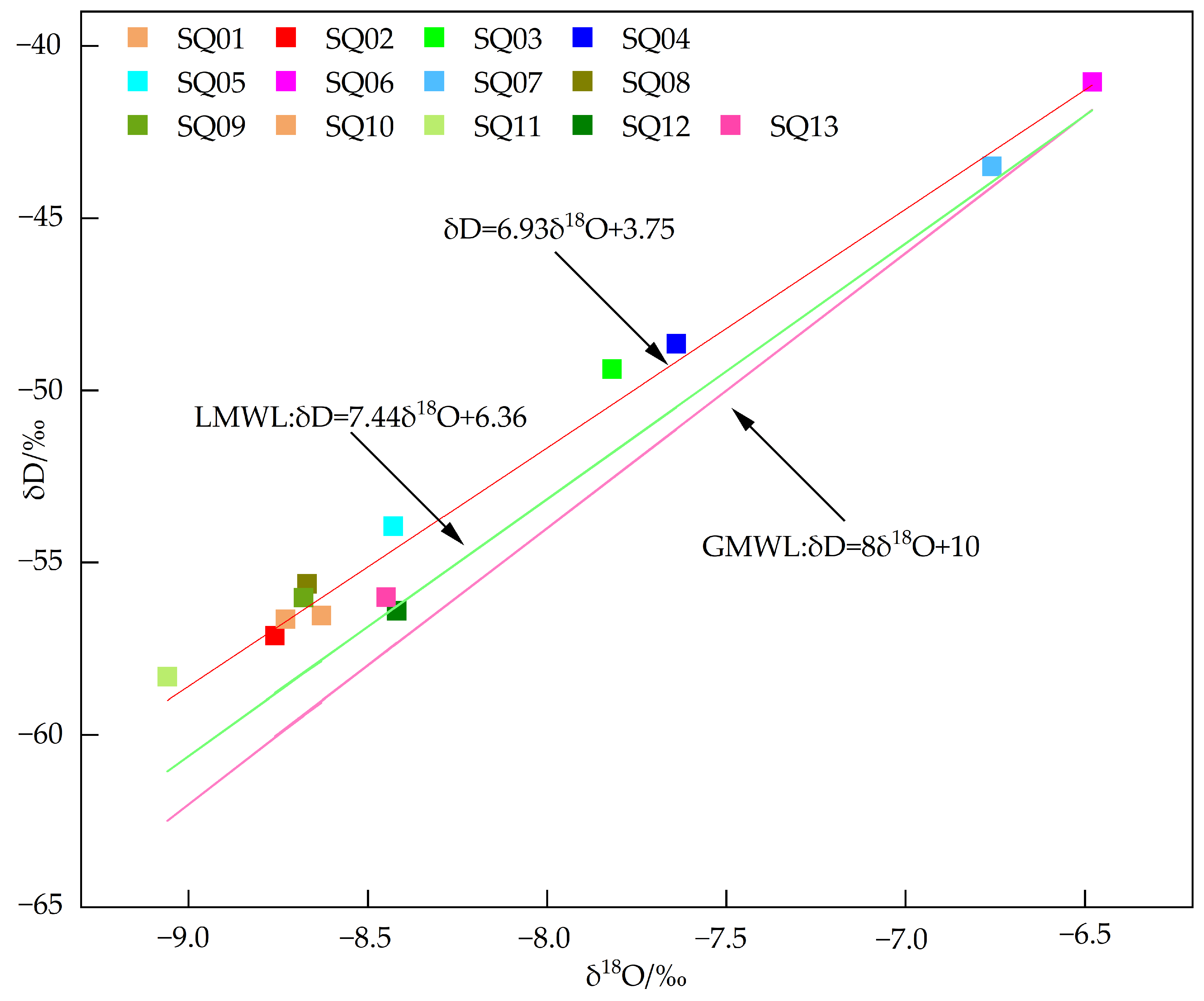
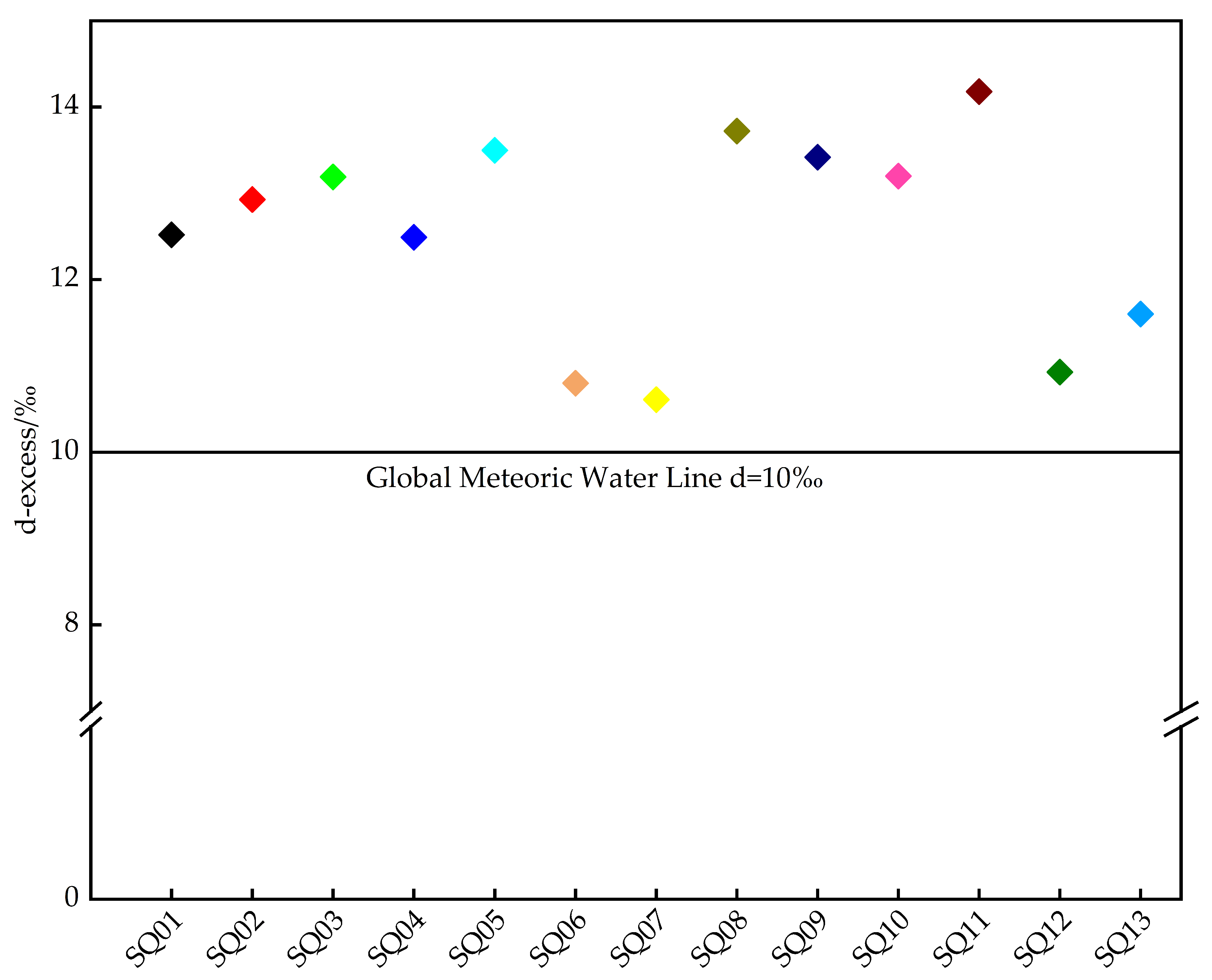
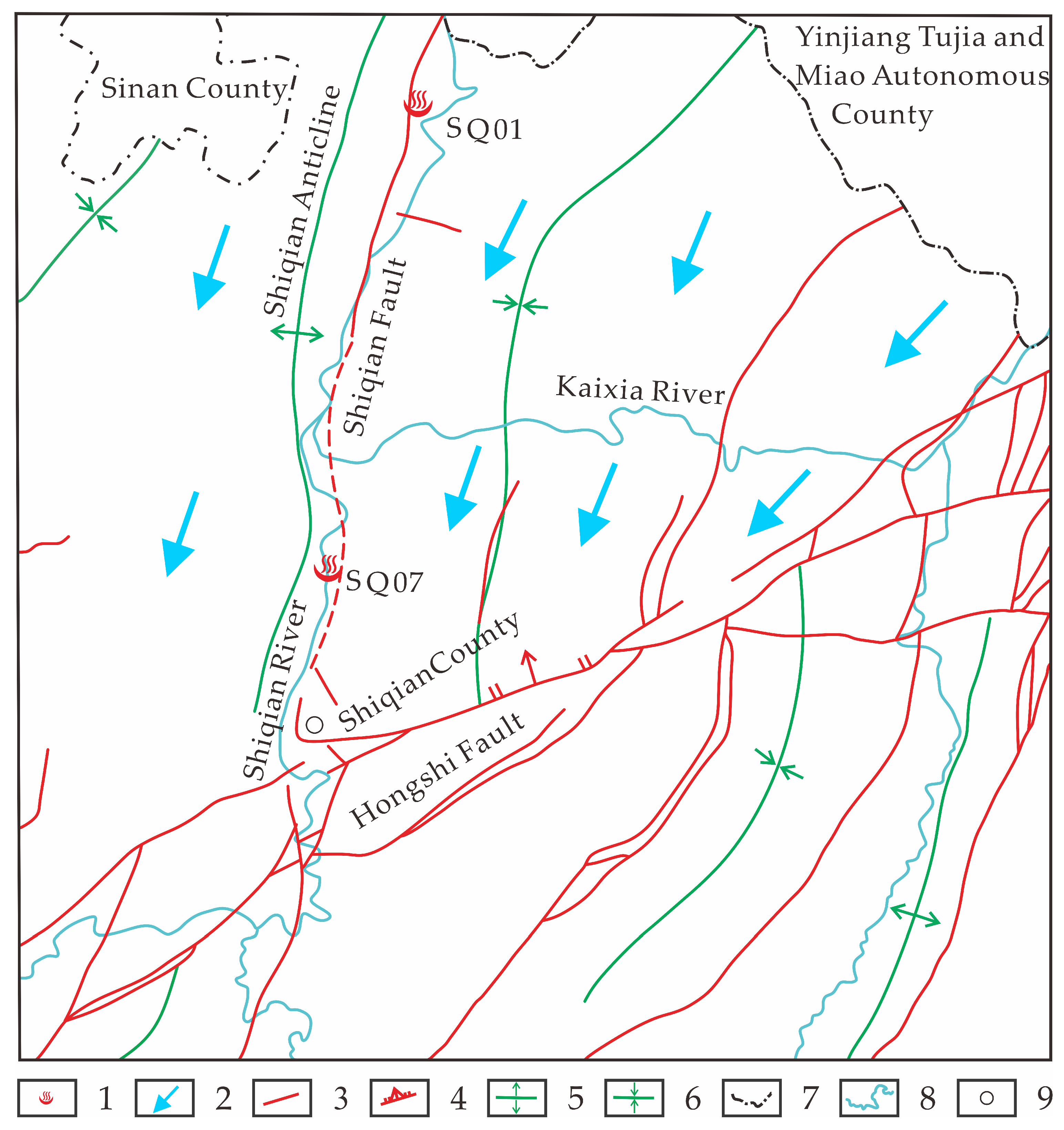
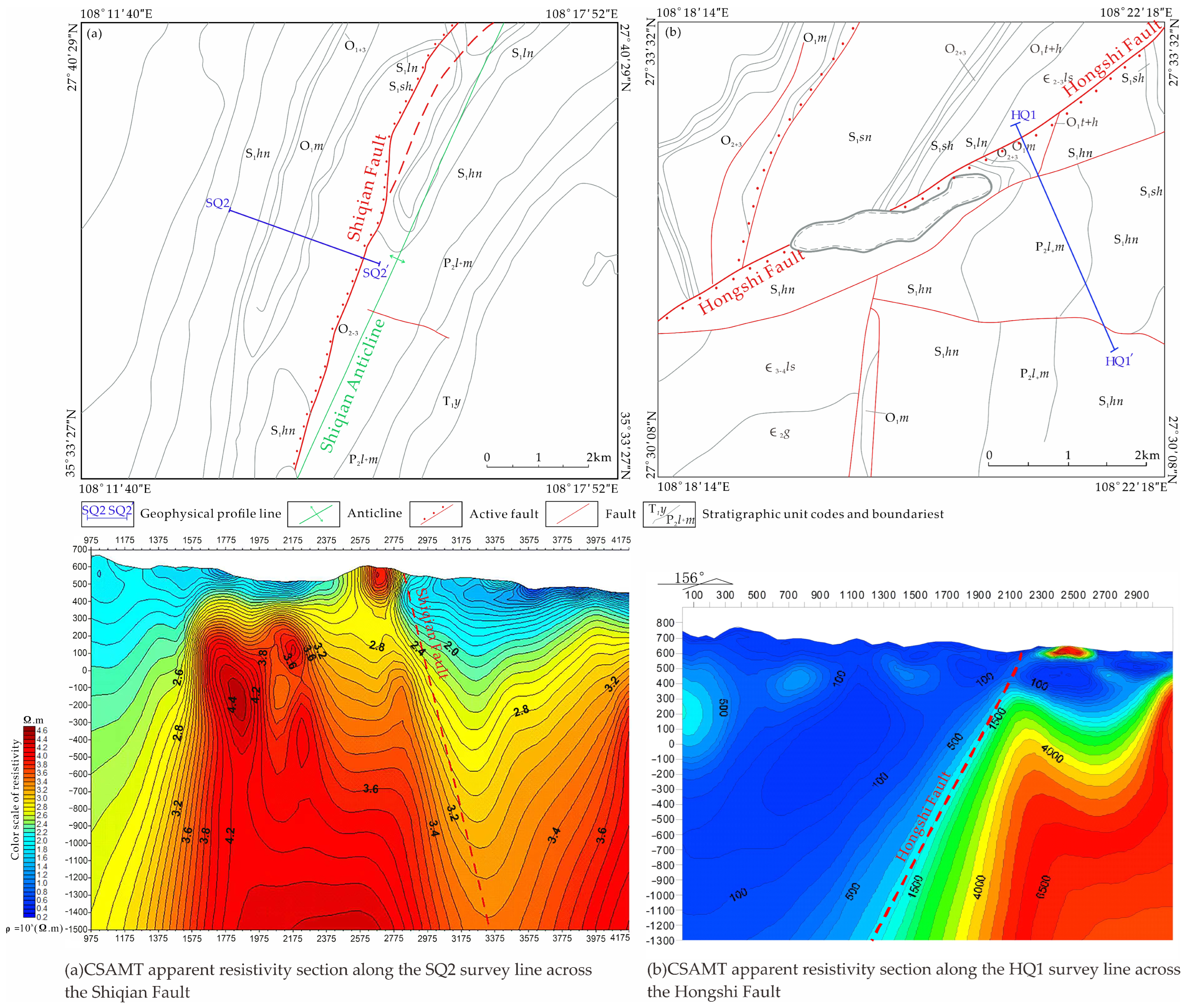
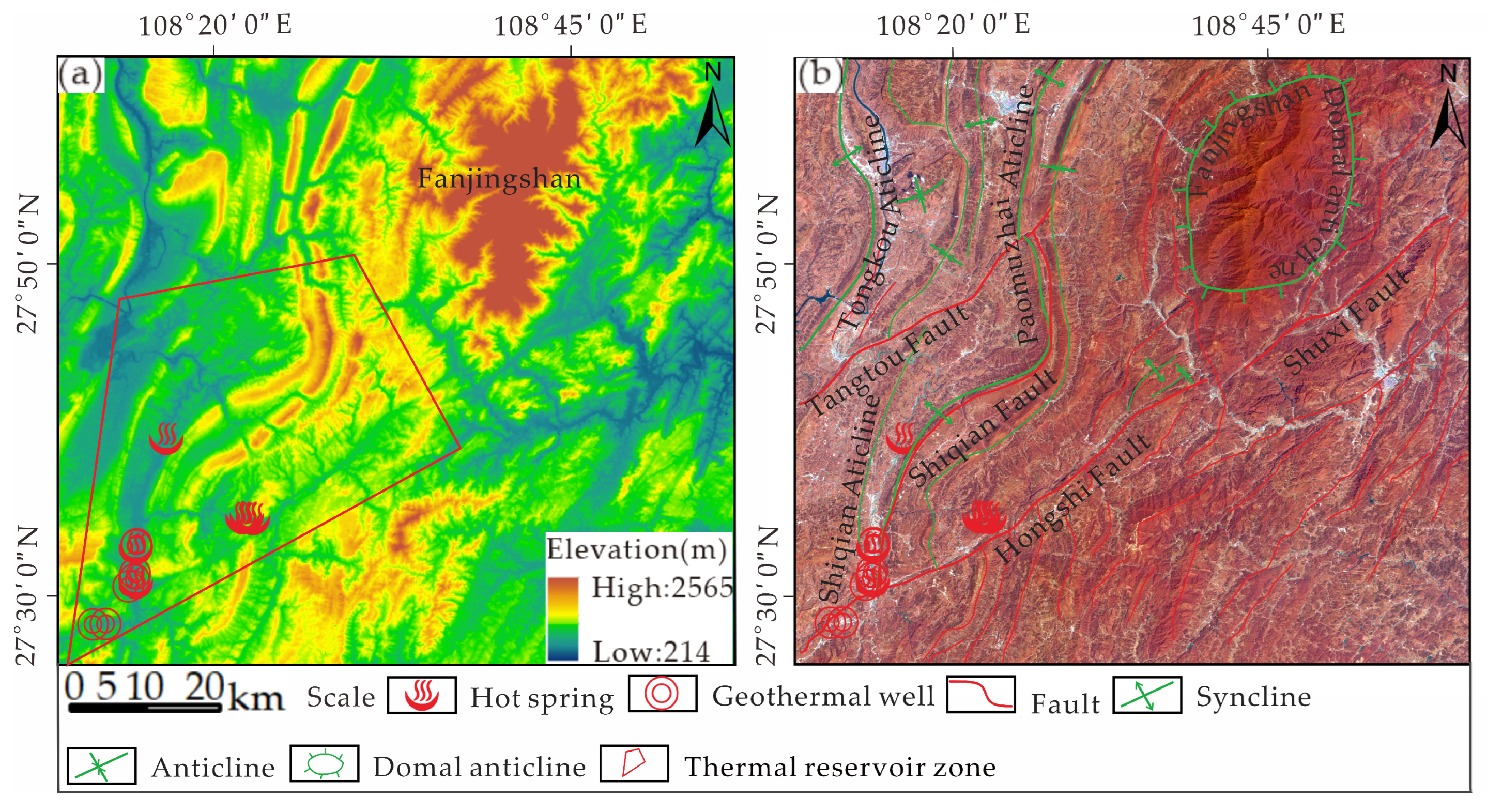
- Integrated analysis of hydrogen–oxygen stable isotope compositions, DEM data, remote sensing interpretation, and geological background reveals that the thermal mineral waters are recharged by meteoric precipitation, with recharge elevations ranging from 911 m to 1833 m. The DEM shows that recharge zones are located on the southwestern foot of Fanjingshan. Combined with remote sensing interpretation of geological structures and regional geological background analysis, the thermal mineral waters flow generally from northeast to southwest along the Shiqian Fault and the Hongshi Fault, ultimately discharging as springs in low-lying terrain, river valleys, or gullies under the control of regional geomorphology and geological structures.
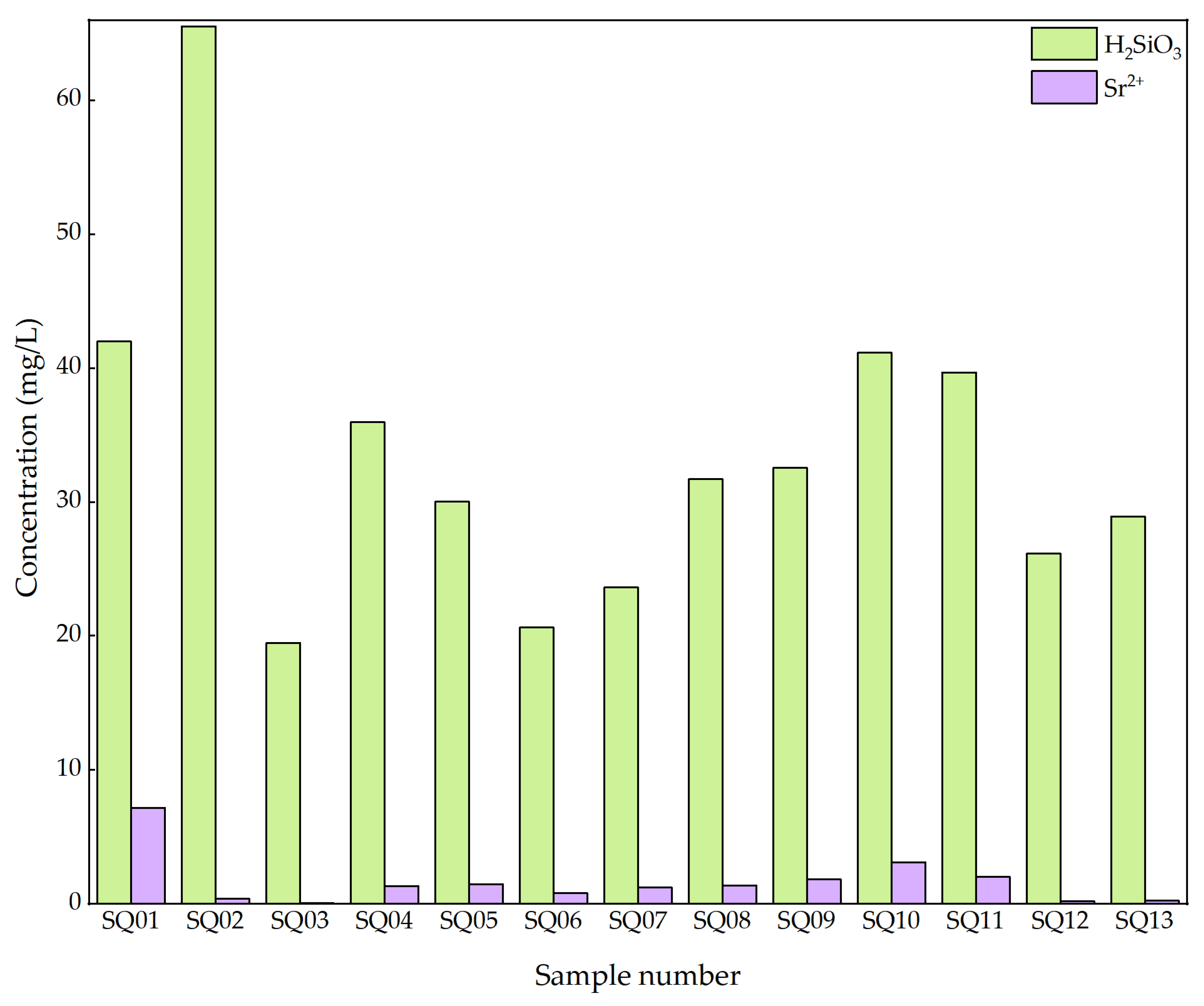
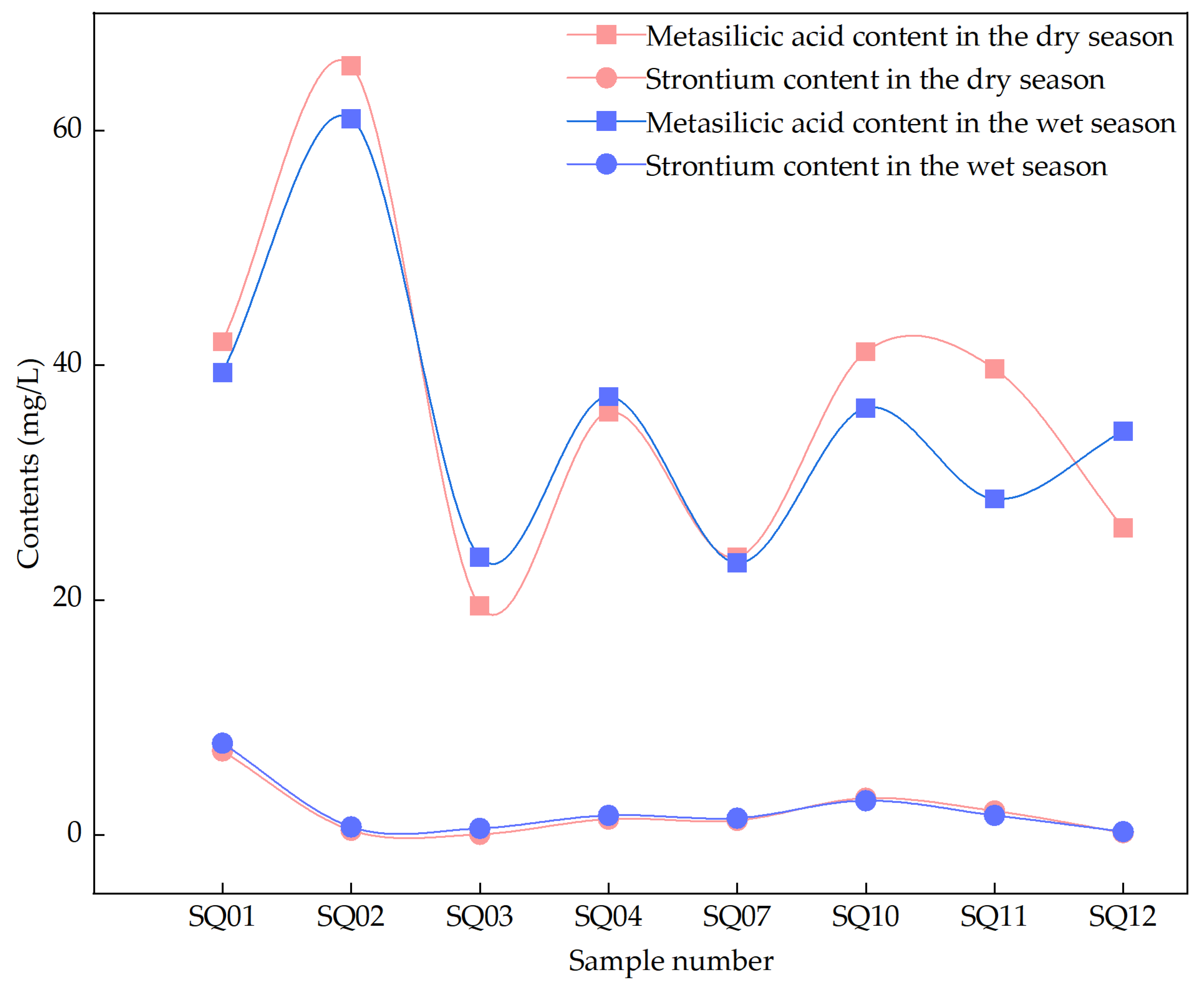
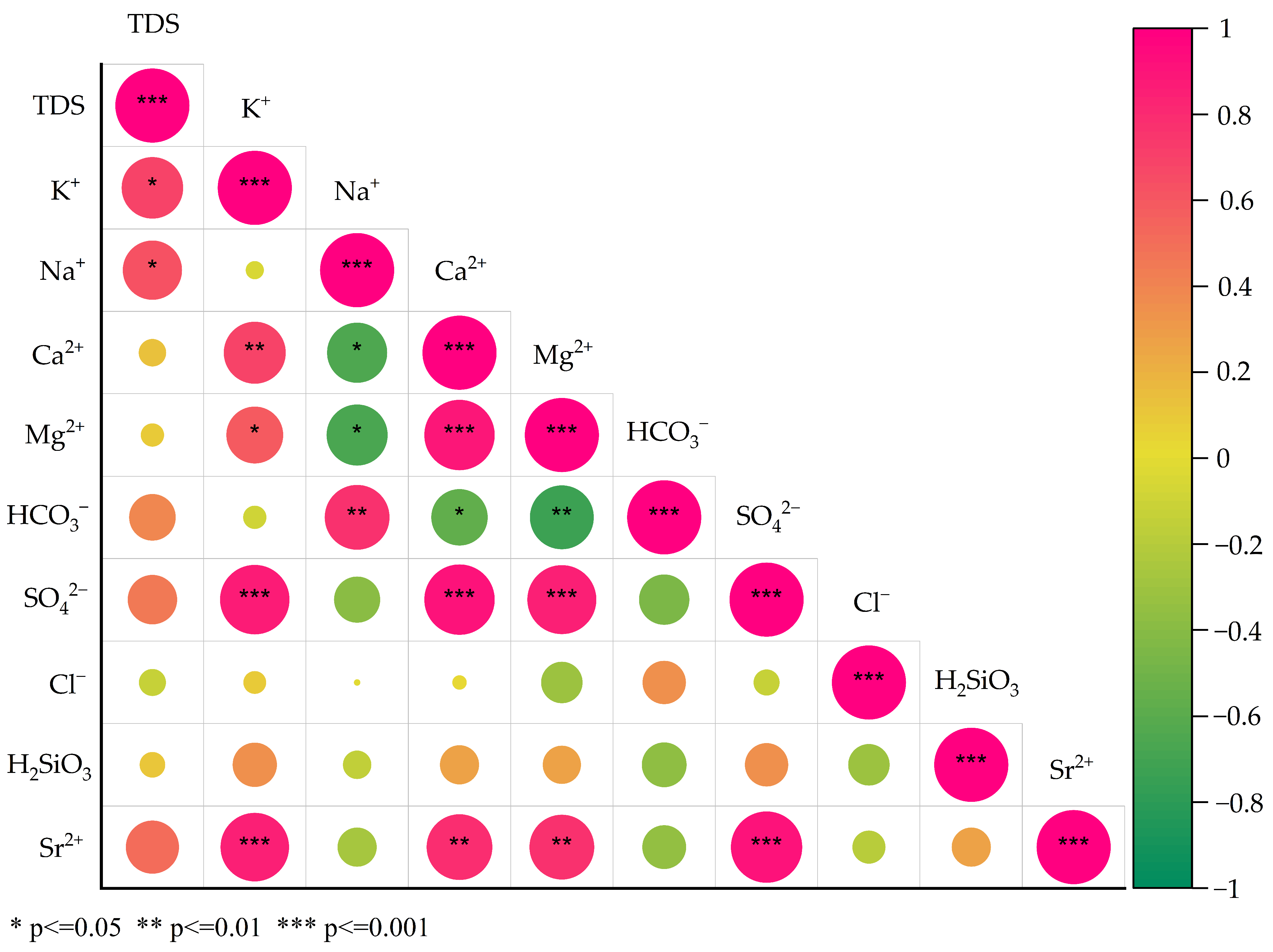
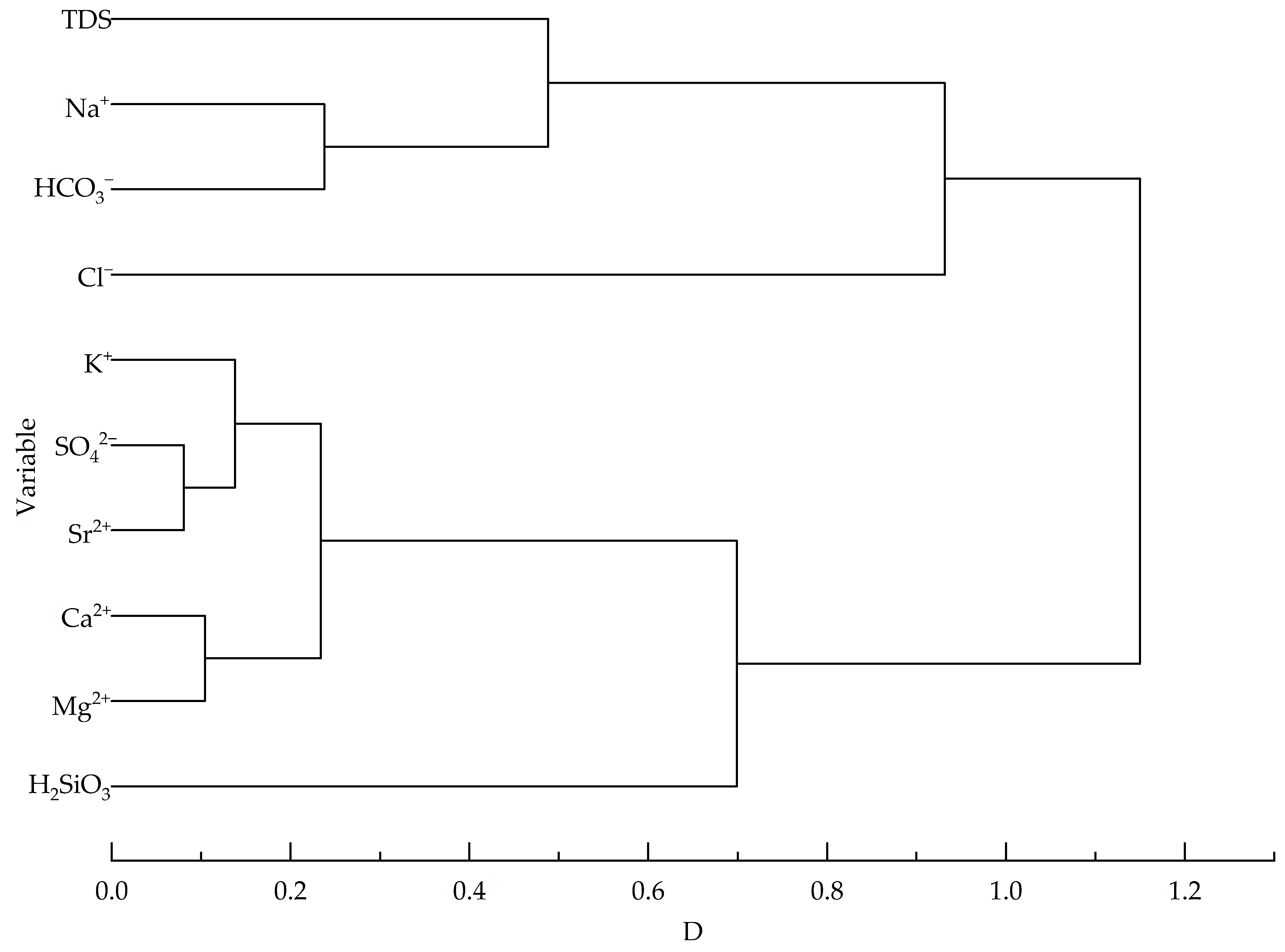
- Integrating evidence from ion correlation analysis, cluster analysis, and petrographic and mineralogical investigations, the chemical composition of the thermal mineral waters in the study area is shown to be primarily controlled by water–rock interactions. Hydrochemical characteristics indicate that the enrichment of Sr is closely associated with the dissolution of strontium-bearing minerals, such as celestine, within carbonate rocks and gypsum-salt layers, and that Sr shares a common material source with ions in the second group (K+, Ca2+, Mg2+, SO42−, and Sr2+). In contrast, metasilicic acid exhibits an independent material source and is mainly derived from the dissolution of quartz in the upstream segment of the groundwater flow path.
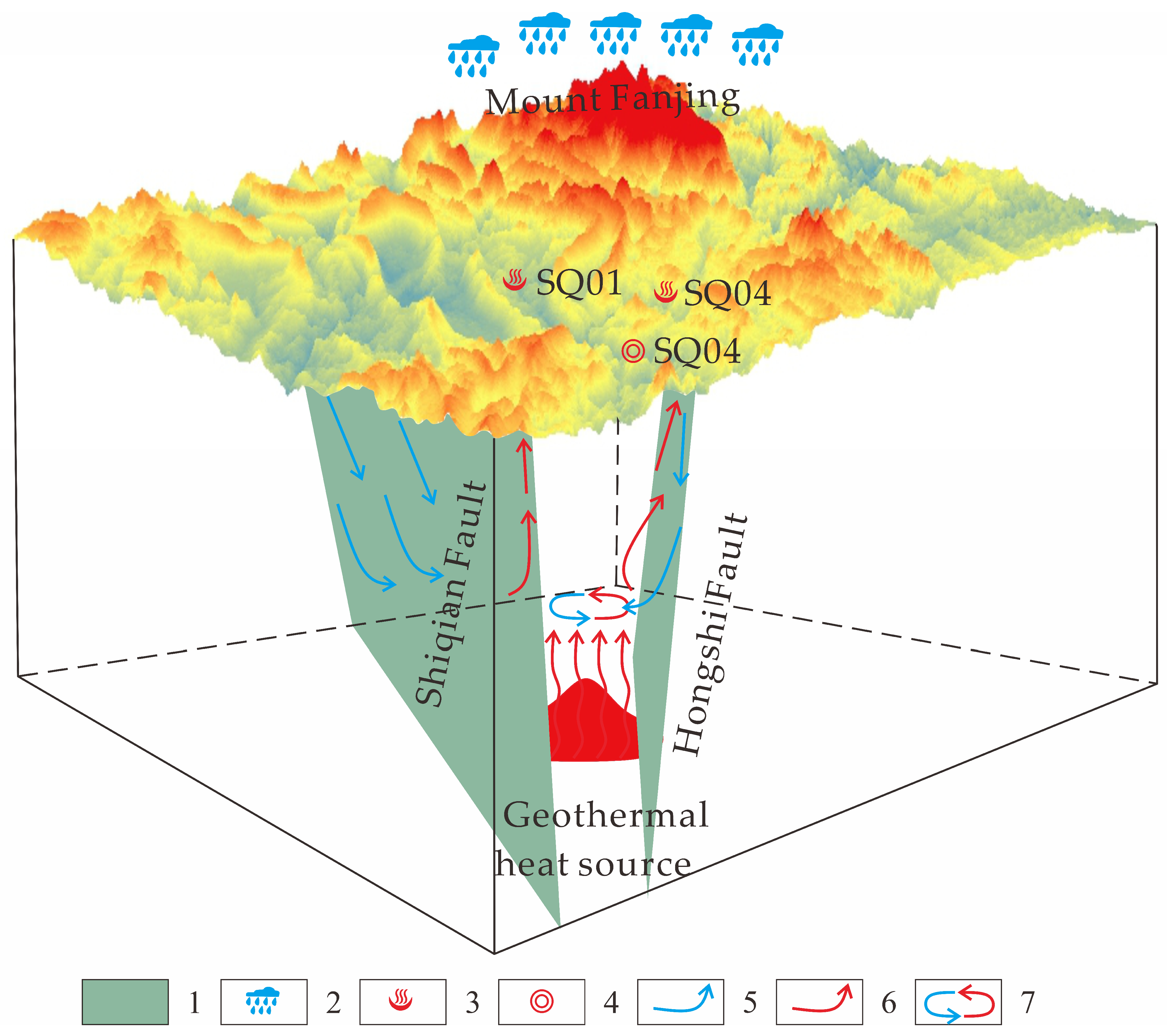
- The recharge source of the thermal mineral waters is meteoric precipitation from the southwestern foot of Fanjingshan. After infiltrating through local fractures, pores, and karst conduits, the water is stored in the primary thermal reservoir composed of Cambrian Qingxudong Formation to Ordovician Honghuayuan Formation carbonates. During deep circulation, the groundwater is heated by terrestrial heat flow and continuously extracts mineral components from the surrounding reservoir rocks, ultimately forming mineral-rich thermal waters. Water quality analyses indicate that the concentrations of characteristic components such as strontium and metasilicic acid in the thermal mineral waters meet the relevant reference values of water-quality standards, demonstrating their potential for development as regional mineral water and therapeutic thermal water resources.
Author Contributions
Funding
Data Availability Statement
Conflicts of Interest
References
- Sajkowski, L.; Turnbull, R.; Rogers, K. A Review of Critical Element Concentrations in High Enthalpy Geothermal Fluids in New Zealand. Resources 2023, 12, 68. [Google Scholar] [CrossRef]
- Islam, M.T.; Nabi, M.N.; Arefin, M.A.; Mostakim, K.; Rashid, F.; Hassan, N.M.S.; Rahman, S.M.A.; McIntosh, S.; Mullins, B.J.; Muyeen, S.M. Trends and Prospects of Geothermal Energy as an Alternative Source of Power: A Comprehensive Review. Heliyon 2022, 8, e11836. [Google Scholar] [CrossRef]
- Reinsch, T.; Dobson, P.; Asanuma, H.; Huenges, E.; Poletto, F.; Sanjuan, B. Utilizing Supercritical Geothermal Systems: A Review of Past Ventures and Ongoing Research Activities. Geotherm. Energy 2017, 5, 16. [Google Scholar] [CrossRef]
- Gutiérrez-Negrín, L.C.A. Evolution of Worldwide Geothermal Power 2020–2023. Geotherm. Energy 2024, 12, 14. [Google Scholar] [CrossRef]
- Nath, F.; Mahmood, M.N.; Ofosu, E.; Khanal, A. Enhanced Geothermal Systems: A Critical Review of Recent Advancements and Future Potential for Clean Energy Production. Geoenergy Sci. Eng. 2024, 243, 213370. [Google Scholar] [CrossRef]
- Lund, J.W.; Toth, A. Direct Utilization of Geothermal Energy 2020 Worldwide Review. Geothermics 2021, 90, 101915. [Google Scholar] [CrossRef]
- Luo, Z.; Lu, X. Characteristics and Prospect of Geothermal Industry in China under the “Dual Carbon” Target. Energy Geosci. 2023, 4, 100199. [Google Scholar] [CrossRef]
- Yin, H.; Zayed, M.E.; Menesy, A.S.; Zhao, J.; Irshad, K.; Rehman, S. Present Status and Sustainable Utilization of Hydrothermal Geothermal Resources in Tianjin, China: A Critical Review. Aims Geosci. 2023, 9, 734–753. [Google Scholar] [CrossRef]
- Maccarone, M.C.; Regazzo, G.; Contessa, P.; Scanu, A.; Masiero, S. Healing with Thermal Mineral-Rich Waters: The Role of Spa Therapy in Post-Surgical Rehabilitation. Int. J. Biometeorol. 2025, 69, 2125–2129. [Google Scholar] [CrossRef]
- Rapolienė, L.; Razbadauskas, A.; Jurgelėnas, A. The Reduction of Distress Using Therapeutic Geothermal Water Procedures in a Randomized Controlled Clinical Trial. Adv. Prev. Med. 2015, 2015, 749417. [Google Scholar] [CrossRef]
- Tamburello, G.; Chiodini, G.; Ciotoli, G.; Procesi, M.; Rouwet, D.; Sandri, L.; Carbonara, N.; Masciantonio, C. Global Thermal Spring Distribution and Relationship to Endogenous and Exogenous Factors. Nat. Commun. 2022, 13, 6378. [Google Scholar] [CrossRef]
- Xue, C.; Xing, N.; Gao, Z.; Niu, Y.; Yang, D. Research on the Genesis Mechanism of Hot Springs in the Middle Reaches of the Wenhe River. Water 2025, 17, 2431. [Google Scholar] [CrossRef]
- Torres-Ceron, D.A.; Acosta-Medina, C.D.; Restrepo-Parra, E. Geothermal and Mineralogic Analysis of Hot Springs in the Puracé-La Mina Sector in Cauca, Colombia. Geofluids 2019, 2019, 3191454. [Google Scholar] [CrossRef]
- U.S. Department of Energy. Geothermal Technologies Program: Direct Use; U.S. Department of Energy: Washington, DC, USA, 2004.
- Liu, W.; Zhang, M.; Liu, Y.; Cui, L.; Sano, Y.; Xu, S. Chemical and Isotopic Constraints on Fluid Origin and Genesis of Geothermal Systems in the Tingri-Tangra Yumco Rift, Southern Tibetan Plateau. Geotherm. Energy 2024, 12, 33. [Google Scholar] [CrossRef]
- Cui, Y.; Sun, F.; Liu, L.; Xie, C.; Li, J.; Chen, Z.; Li, Y.; Du, J. Contribution of Deep-Earth Fluids to the Geothermal System: A Case Study in the Arxan Volcanic Region, Northeastern China. Front. Earth Sci. 2023, 10, 996583. [Google Scholar] [CrossRef]
- Zheng, Y.; Nan, D.; Liu, Z.; Zhao, H.; Zhu, M.; Xing, Y.; Zeng, Q.; Zhang, L.; Hu, Z. A Conceptual Model of the Hydrochemical Evolution and Hydrothermal Genetics of the Geothermal Waters of the Ngari Prefecture, Tibet. Geotherm. Energy 2025, 13, 38. [Google Scholar] [CrossRef]
- Stefánsson, A.; Arnórsson, S.; Sveinbjörnsdóttir, Á.E.; Heinemaier, J.; Kristmannsdóttir, H. Isotope (δd, δ18o, 3h, δ13c, 14c) and chemical (B, Cl) Constrains on water origin, mixing, water-rock interaction and age of low-temperature geothermal water. Appl. Geochem. 2019, 108, 104380. [Google Scholar] [CrossRef]
- Tian, J.; Pang, Z.; Guo, Q.; Wang, Y.; Li, J.; Huang, T.; Kong, Y. Geochemistry of Geothermal Fluids with Implications on the Sources of Water and Heat Recharge to the Rekeng High-Temperature Geothermal System in the Eastern Himalayan Syntax. Geothermics 2018, 74, 92–105. [Google Scholar] [CrossRef]
- Gudmundsson, A. Transport of Geothermal Fluids along Dikes and Fault Zones. Energies 2022, 15, 7106. [Google Scholar] [CrossRef]
- Scibek, J. Multidisciplinary Database of Permeability of Fault Zones and Surrounding Protolith Rocks at World-Wide Sites. Sci. Data 2020, 7, 95. [Google Scholar] [CrossRef] [PubMed]
- Zucchi, M. Faults Controlling Geothermal Fluid Flow in Low Permeability Rock Volumes: An Example from the Exhumed Geothermal System of Eastern Elba Island (Northern Tyrrhenian Sea, Italy). Geothermics 2020, 85, 101765. [Google Scholar] [CrossRef]
- Vidal, J.; Patrier, P.; Beaufort, D.; Maza, S.; Rivera, G.; Volpi, G.; Morata, D. Structural Control of the Graben Fault on Hydrothermal Alteration in the Cerro Pabellón Geothermal System (Andean Cordillera, Northern Chile). Geotherm. Energy 2023, 11, 18. [Google Scholar] [CrossRef]
- Daniilidis, A.; Saeid, S.; Doonechaly, N.G. The Fault Plane as the Main Fluid Pathway: Geothermal Field Development Options under Subsurface and Operational Uncertainty. Renew. Energy 2021, 171, 927–946. [Google Scholar] [CrossRef]
- Gao, B.; Li, Y.; Pang, Z.; Huang, T.; Kong, Y.; Li, B.; Zhang, F. Geochemical Mechanisms of Water/CO2-Rock Interactions in EGS and Its Impacts on Reservoir Properties: A Review. Geothermics 2024, 118, 102923. [Google Scholar] [CrossRef]
- Belshaw, G.E.; Steer, E.; Ji, Y.; Azis, H.; Sapiie, B.; Muljadi, B.; Vandeginste, V. Fluid-Rock Interaction Experiments with Andesite at 100 °C for Potential Carbon Storage in Geothermal Reservoirs. Deep Undergr. Sci. Eng. 2024, 3, 369–382. [Google Scholar] [CrossRef]
- Robinson, B.A. Quartz Dissolution and Silica Deposition in Hot-Dry-Rock Geothermal Systems; Los Alamos National Lab.: Los Alamos, NM, USA, 1982. [Google Scholar]
- Satake, S.; Hosoki, A.; Kuramitz, H.; Ueda, A.; Terai, A. Real-Time Monitoring of Secondary Mineral Precipitation during CO2–H2O–Rock Interactions under High Temperature and Pressure Using Fiber Optic Scale Sensors. Energies 2025, 18, 5856. [Google Scholar] [CrossRef]
- Kim, K.; Kim, D.; Na, Y.; Song, Y.; Wang, J. A Review of Carbon Mineralization Mechanism during Geological CO2 Storage. Heliyon 2023, 9, e23135. [Google Scholar] [CrossRef]
- Wang, W.; Wei, H.-Z.; Jiang, S.-Y.; Tan, H.-B.; Eastoe, C.J.; Williams-Jones, A.E.; Hohl, S.V.; Wu, H.-P. The Origin of Rare Alkali Metals in Geothermal Fluids of Southern Tibet, China: A Silicon Isotope Perspective. Sci. Rep. 2019, 9, 7918. [Google Scholar] [CrossRef] [PubMed]
- Lv, G.; Zhang, X.; Wei, D.; Yu, Z.; Yuan, X.; Sun, M.; Kong, X.; Zhang, Y. Water–Rock Interactions, Genesis Mechanism, and Mineral Scaling of Geothermal Waters in Northwestern Sichuan, SW China. Water 2023, 15, 3730. [Google Scholar] [CrossRef]
- Li Vigni, L.; Daskalopoulou, K.; Calabrese, S.; Kyriakopoulos, K.; Bellomo, S.; Brusca, L.; Brugnone, F.; D’Alessandro, W. Characterization of Trace Elements in Thermal and Mineral Waters of Greece. Environ. Sci. Pollut. Res. 2023, 30, 78376–78393. [Google Scholar] [CrossRef] [PubMed]
- ur Rahman, S.; Bilal, S. Insights into the Factors Responsible for Curative Effects of Aab-E-Shifa Spring Hasan Abdal (Pakistan). Appl. Water Sci. 2017, 7, 1741–1746. [Google Scholar] [CrossRef][Green Version]
- Akın, T.; Kargı, H. Modeling the Geochemical Evolution of Fluids in Geothermal Wells and Its Implication for Sustainable Energy Production. Geothermics 2019, 77, 115–129. [Google Scholar] [CrossRef]
- Cantú Medina, F.G.; Ventura-Houle, R.; Heyer Rodríguez, L.; Requena Lara, G.N.; Guevara Mansilla, O.; Neri Ramírez, E. Water–Rock Interactions in a Karst Aquifer Located in Southwestern Tamaulipas, Mexico. Carbonates Evaporites 2021, 36, 59. [Google Scholar] [CrossRef]
- Bello, O.A.; Özgür, N.; Çalışkan, T.A. Hydrogeological, Hydrogeochemical and Isotope Geochemical Features of Geothermal Waters in Simav and Environs, Western Anatolia, Turkey. Procedia Earth Planet. Sci. 2017, 17, 29–32. [Google Scholar] [CrossRef]
- Gökgöz, A.; Mutlu, H.; Demirel, Ö. Geochemical and Isotopic Characteristics of the Emir Geothermal Waters in Kula Area, Western Anatolia. Arabian J. Sci. Eng. 2024, 49, 9809–9829. [Google Scholar] [CrossRef]
- Wang, C.; Zheng, M.; Zhang, X.; Xing, E.; Zhang, J.; Ren, J.; Ling, Y. O, H, and Sr Isotope Evidence for Origin and Mixing Processes of the Gudui Geothermal System, Himalayas, China. Geosci. Front. 2020, 11, 1175–1187. [Google Scholar] [CrossRef]
- Li, Z.; Zhou, X.; Xu, Q.; Yan, Y.; He, M.; Li, J.; Dong, J.; Tian, J.; Ding, F.; Li, Y.; et al. Hydrochemical Characteristics of Hot Springs in the Intersection of the Red River Fault Zone and the Xiaojiang Fault Zone, Southwest Tibet Plateau. Water 2022, 14, 2525. [Google Scholar] [CrossRef]
- Parkhurst, D.L.; Appelo, C.A.J. Description of Input and Examples for PHREEQC Version 3—A Computer Program for Speciation, Batch-Reaction, One-Dimensional Transport, and Inverse Geochemical Calculations; U.S. Geological Survey Techniques and Methods; U.S. Geological Survey: Denver, CO, USA, 2013; Book 6, Chapter A43; 497p. [CrossRef]
- Ye, T.; Chen, X.; Liu, Z.; Wang, P.; Dong, Z.; Cui, T.; Jiang, F.; Cai, J.; Zhang, Y.; Zhang, J.; et al. A Magnetotelluric Study of 3D Electrical Resistivity Structure underneath the Southern Segment of the Red River Fault Zone, South China. J. Asian Earth Sci. 2022, 225, 105056. [Google Scholar] [CrossRef]
- Lu, P.; Zhang, G.; Apps, J.; Zhu, C. Comparison of Thermodynamic Data Files for PHREEQC. Earth Sci. Rev. 2022, 225, 103888. [Google Scholar] [CrossRef]
- Wang, L.; Hu, C.L.; Zhang, J.W.; Chen, G.Y.; Zhang, M.X.; Yang, W.; Zhang, Y.W. Exploration of the genesis of regional geothermal resources in Guizhou Province. Geophys. Geochem. Explor. 2022, 46, 304–315. [Google Scholar] [CrossRef]
- Wang, G.; Zhan, R.; Percival, I.G.; Huang, B.; Li, Y.; Wu, R. Late Hirnantian (Latest Ordovician) Carbonate Rocks and Shelly Fossils in Shiqian, Northeastern Guizhou, Southwest China. Newsl. Strat. 2015, 48, 241–252. [Google Scholar] [CrossRef]
- Wang, G.-X.; Zhan, R.-B.; Percival, I.G. New Data on Hirnantian (Latest Ordovician) Postglacial Carbonate Rocks and Fossils in Northern Guizhou, Southwest China1. Can. J. Earth Sci. 2015, 53, 660–665. [Google Scholar] [CrossRef]
- Ji, X.; Wang, J.; Liu, H.; Hao, J.; Ruan, J.; Li, C.; Zhang, W.; Asghar, A. Evidence of Late Quaternary Activity of the Weining-Shuicheng Fault in Guizhou, China. Open Geosci. 2024, 16, 20220715. [Google Scholar] [CrossRef]
- Chen, Z.S. The Formation Mechanism of Physiotherapy Thermomineral Water (Hot Spring) in Guizhou and Its Effect on Human. Ph.D. Thesis, Guizhou University, Guiyang, China, 2021. [Google Scholar]
- Sun, S. Features of Strike-slip Faults in Northeast Guizhou and Analysis for Their Fomring Mechanism. Guizhou Geol. 1995, 12, 244–251. [Google Scholar]
- Yang, P.; Chen, Z.; Zhou, M.; Zhou, J.; Ao, Y.; Geng, Z.; Li, C.; Yang, B. Water–Rock Interactions in Karst: Enrichment Mechanisms of H2SiO3 in Thermal Mineral Waters in the Shiqian Fracture Zone, China. Environ. Earth Sci. 2025, 84, 569–600. [Google Scholar] [CrossRef]
- Liu, P.; Chen, Z.; Wang, G.; Mao, T.; Li, C.; Zhou, Y.; Xie, H.; Xiang, T. Hydrogeochemical Signatures Origin of a Karst Geothermal Reservoir–the Sinian Dengying Formation in Northern Guizhou, China. Geosci. J. 2024, 28, 107–123. [Google Scholar] [CrossRef]
- Song, X.; Peng, Q.; Duan, Q.; Xia, Y. Hydrochemistry Charcteristics and Origin of Geothermal Water in Northeastern Guizhou. Eart. Scie. 2019, 44, 2874. [Google Scholar] [CrossRef]
- Lei, K.; He, S.Y.; An, Y.L. Hydrogochemical characteristics of thermal spring group in typical karst region. J. Univ. Chin. Acad. Sci. 2016, 33, 403–411. [Google Scholar]
- Li, Y.; Chen, Z.; Wang, G. Analysis of Geothermal Water Source by H and O Isotopes in Shiqian Area. J. China Hydrol. 2021, 41, 28–34. [Google Scholar] [CrossRef]
- Duan, Q.; Song, X.; Men, F.; Yang, J. Geothermal Water Resources Whole Installation Exploration Report in the Western Area of Tongren City, Guizhou Province; 111 Geological Brigade of Guizhou Provincial Bureau of Geology and Mineral Resources: Guiyang, China, 2014. [Google Scholar]
- Li, Q. Distribution Characteristics and Preliminary Analysis of the Genesis of the Shiqian Hot Spring Group. Low Carbon World 2015, 159–160. [Google Scholar]
- Ni, Y.; Liu, S.; Li, L.; Zhang, B.; Yao, L.; Sui, J.; Chen, J. Geochemical Characteristics of Shale Gas Hydraulic Fracturing Flowback/Produced Water in Zheng’an Block, Northern Guizhou Province, China. J. Nat. Gas Geosci. 2024, 9, 27–37. [Google Scholar] [CrossRef]
- Mou, Y.; Xia, P.; Zhu, L.; Fu, Y.; Wang, K.; Zhao, L.; Qin, C. Geochemical Characteristics of the Shale Gas Reservoirs in Guizhou Province, South China. Arabian J. Chem. 2024, 17, 105616. [Google Scholar] [CrossRef]
- Zhou, W.; Wu, T.; Tao, X. Exploring the Spatial and Seasonal Heterogeneity of Cooling Effect of an Urban River on a Landscape Scale. Sci. Rep. 2024, 14, 8327. [Google Scholar] [CrossRef] [PubMed]
- GB/T 11615-2010; Geologic Exploration Standard of Geothermal Resources. General Administration of Quality Supervision, Inspection and Quarantine of the People’s Republic of China. Standardization Administration of the People’s Republic of China: Beijing, China, 2010.
- Fan, D. Research on the Establishment of NDVI Long-Term Data Set Based on a Novel Method. Sci. Rep. 2023, 13, 9838. [Google Scholar] [CrossRef]
- Sheikhy Narany, T.; Ramli, M.F.; Aris, A.Z.; Sulaiman, W.N.A.; Juahir, H.; Fakharian, K. Identification of the Hydrogeochemical Processes in Groundwater Using Classic Integrated Geochemical Methods and Geostatistical Techniques, in Amol-Babol Plain, Iran. Sci. World J. 2014, 2014, 419058. [Google Scholar] [CrossRef]
- Marín Celestino, A.E.; Ramos Leal, J.A.; Martínez Cruz, D.A.; Tuxpan Vargas, J.; De Lara Bashulto, J.; Morán Ramírez, J. Identification of the Hydrogeochemical Processes and Assessment of Groundwater Quality, Using Multivariate Statistical Approaches and Water Quality Index in a Wastewater Irrigated Region. Water 2019, 11, 1702. [Google Scholar] [CrossRef]
- Mussa, K.R.; Mjemah, I.C. Using Hydrogeochemical Facies and Signatures for Groundwater Characterization and Evolution Assessment in Aquifers with Contrasting Climate and Geology in Tanzania. Appl. Water Sci. 2023, 13, 201. [Google Scholar] [CrossRef]
- Wang, Z.; Li, C.; Qiao, L.; Zhong, S. Hydrogeochemical Characterization and Analysis of the Relation between Underground Oil Storage Caverns Construction and Hydro-Environment. Environ. Earth Sci. 2023, 82, 238. [Google Scholar] [CrossRef]
- Bauer, J.F.; Krumbholz, M.; Meier, S.; Tanner, D.C. Predictability of Properties of a Fractured Geothermal Reservoir: The Opportunities and Limitations of an Outcrop Analogue Study. Geotherm. Energy 2017, 5, 24. [Google Scholar] [CrossRef]
- Liu, K.; Yan, H.; Wang, W.; Wang, S.; Wang, Z.; Xiao, Y.; Guo, B.; Wang, J.; Zhang, S.; Zhang, G.; et al. Hydrogeochemical Signatures, Quality and Driving Forces of Phreatic Groundwater in a Typical Headwater Region of the Yellow River Watershed. Appl. Water Sci. 2025, 15, 111. [Google Scholar] [CrossRef]
- Liu, F.; Wang, S.; Wang, J.; Guo, F.; Yu, S.; Sun, P. The Hydrochemistry Characteristics and Chemical Weathering Intensity of an Anthropogenically Involved Catchment, South China. Water 2024, 16, 2444. [Google Scholar] [CrossRef]
- Kölbel, L.; Kölbel, T.; Maier, U.; Sauter, M.; Schäfer, T.; Wiegand, B. Water–Rock Interactions in the Bruchsal Geothermal System by U–Th Series Radionuclides. Geotherm. Energy 2020, 8, 24. [Google Scholar] [CrossRef]
- Dotsika, E.; Dalampakis, P.; Spyridonos, E.; Diamantopoulos, G.; Karalis, P.; Tassi, M.; Raco, B.; Arvanitis, A.; Kolios, N.; Michelot, J.L. Chemical and Isotopic Characterization of the Thermal Fluids Emerging along the North–Northeastern Greece. Sci. Rep. 2021, 11, 16291. [Google Scholar] [CrossRef] [PubMed]
- Yan, Y.-N.; Zhang, J.-W.; Zhang, W.; Zhang, G.-S.; Guo, J.-Y.; Zhang, D.; Wu, J.; Zhao, Z.-Q. Spatiotemporal Variation of Hydrogen and Oxygen Stable Isotopes in the Yarlung Tsangpo River Basin, Southern Tibetan Plateau. Front. Earth Sci. 2021, 9, 757094. [Google Scholar] [CrossRef]
- GB 8537-2018; Drinking Natural Mineral Water. National Health Commission of the People’s Republic of China, State Administration for Market Regulation: Beijing, China, 2018.
- Machida, I.; Ono, M.; Kamitani, T.; Muranaka, Y. Applicability of D-Excess and 17O-Excess as Groundwater Tracers for Determination of Recharge Area. Hydrogeol. J. 2022, 30, 2027–2041. [Google Scholar] [CrossRef]
- Lei, Y.; Zhao, Z.; Qin, G.; Ba, R.; Yang, S.; Shi, H. Hydrogeochemical and Isotopic Analysis for Interpreting the Formation of the Complex Geothermal System in the Guide Basin, Northeastern Tibetan Plateau. PLoS ONE 2025, 20, e0317694. [Google Scholar] [CrossRef]
- Cao, R.; Dor, J.; Cai, Y.; Chen, X.; Mao, X.; Meng, H. Geochemical and H–O–Sr–B Isotope Signatures of Yangyi Geothermal Fields: Implications for the Evolution of Thermal Fluids in Fracture-Controlled Type Geothermal System, Tibet, China. Geothermal Energy 2023, 11, 23. [Google Scholar] [CrossRef]
- Jiang, Z.; Xu, T.; Mallants, D.; Tian, H.; Owen, D.D.R. Numerical modelling of stable isotope (2H and 18O) transport in a hydrogeothermal system: Model development and implementation to the Guide Basin, China. J. Hydrol. 2019, 569, 93–105. [Google Scholar] [CrossRef]
- Wang, Y.; Tang, Y.; Xu, Y.; Yu, H.; Cao, X.; Duan, G.; Bi, L.; Peng, J. Isotopic Dynamics of Precipitation and Its Regional and Local Drivers in a Plateau Inland Lake Basin, Southwest China. Sci. Total Environ. 2021, 763, 143043. [Google Scholar] [CrossRef]
- Li, W.J.; Wang, J.L.; Wang, J.L. Characteristics of the Stable Isotopes in Precipitation and the Source of Water Vapor in Different Terrain in the Southwest Region. Resour. Environ. Yangtze Basin 2018, 27, 1132–1142. [Google Scholar]
- Dupuy, M.; Garel, E.; Huneau, F.; Santoni, S.; Di Rosa, M.; Mattei, A. Geochemical and Isotope Characterisation of Thermo-Mineral Springs of Corsica Island: From Geological Complexity to Groundwater Singularity. Water 2021, 13, 2413. [Google Scholar] [CrossRef]
- Xu, P.; Li, M.; Qian, H.; Zhang, Q.; Liu, F.; Hou, K. Hydrochemistry and Geothermometry of Geothermal Water in the Central Guanzhong Basin, China: A Case Study in Xi’an. Environ. Earth Sci. 2019, 78, 87. [Google Scholar] [CrossRef]
- Dansgaard, W. Stable Isotopes in Precipitation. Tellus 1964, 16, 436–468. [Google Scholar] [CrossRef]
- Song, Y.; Guo, J.; Li, F.; Wang, J.; Ma, F.; Wu, G.; Li, G. Investigation into Factors Controlling Groundwater Evolution in Mining Areas with an Integrated Approach. Heliyon 2024, 10, e38860. [Google Scholar] [CrossRef]
- Liu, J.; Song, X.; Yuan, G.; Sun, X.; Yang, L. Stable Isotopic Compositions of Precipitation in China. Tellus B Chem. Phys. Meteorol. 2014, 66, 22567. [Google Scholar] [CrossRef]
- Li, J.; Pang, Z. The Elevation Gradient of Stable Isotopes in Precipitation in the Eastern Margin of Tibetan Plateau. Sci. China Earth Sci. 2022, 65, 1972–1984. [Google Scholar] [CrossRef]
- Qu, S.; Zhao, Y.; Li, M.; Zhang, K.; Wang, J.; Duan, L.; Ma, H.; Miao, P.; Yu, R. Spatio-Seasonal Characteristics and Controlling Factors of Surface Water Stable Isotope Values (δ18O and δD) across the Inner Mongolia Reaches of the Yellow River Basin, China: Implication for Hydrological Cycle. J. Hydrol. Reg. Stud. 2024, 53, 101843. [Google Scholar] [CrossRef]
- Chen, L.; Zhang, S.; Lie, Y.; Yang, J. A study Isotopic Ages of Mineral Waters of Area, g uizhou. Guizhou Geol. 1997, 14, 274–278. [Google Scholar]
- Zhang, S.; Chen, L. Isotopic Geochemcal Studties of Thermal Minral Waters in the Shiqian Reea, Guizhou. Geol. Rev. 1992, 38, 457–466. [Google Scholar]
- Song, Z.; Chen, C.; Duo, J.; Li, Y.; Zhang, H. Hydrochemical Characteristics and Evolution of Geothermal Waters from the Gudui–Riruo Geothermal Field, Southern Tibet. ACS Omega 2025, 10, 25451–25466. [Google Scholar] [CrossRef]
- Penhoët, E.; Arbaret, L.; Guillou-Frottier, L.; Duwiquet, H.; Gumiaux, C.; Bellanger, M. Fluid Flow in Crustal Fault Zones with Varying Lengthwise Thickness: Application to the Margeride Fault Zone (French Massif Central). Geotherm. Energy 2025, 13, 6. [Google Scholar] [CrossRef]
- Rafiq, J.; Abu-Mahfouz, I.S.; Chavanidis, K.; Soupios, P. Integrated Structural Analysis for Geothermal Exploration: A New Protocol Combining Remote Sensing and Aeromagnetic Geophysical Data. Methodsx 2025, 14, 103189. [Google Scholar] [CrossRef]
- Ahmadi, H.; Pekkan, E. Fault-Based Geological Lineaments Extraction Using Remote Sensing and GIS—A Review. Geosciences 2021, 11, 183. [Google Scholar] [CrossRef]
- Han, R.; Wu, J.; Zhang, Y.; Chen, Q.; Sun, B. Oblique Distribution Patterns and the Underlying Mechanical Model of Orebody Groups Controlled by Structures at Different Scales. Sci. Rep. 2024, 14, 4591. [Google Scholar] [CrossRef]
- Liu, H.; Zuo, Y.; Rodriguez-Dono, A.; Wu, Z.; Sun, W.; Zheng, L.; Pan, C.; Lin, J.; Du, S. Study on Multi-Period Palaeotectonic Stress Fields Simulation and Fractures Distribution Prediction in Lannigou Gold Mine, Guizhou. Geomech. Geophys. Geo-Energy Geo-Resour. 2023, 9, 92. [Google Scholar] [CrossRef]
- Chen, J.; Chen, D.Q. Distribution status and genetic analysis of geothermal resources in Shiqian County, Guizhou Province. Groundwater 2014, 36, 7–8, 33. [Google Scholar]
- Gibbs, R.J. Mechanisms Controlling World Water Chemistry. Science 1970, 170, 1088–1090. [Google Scholar] [CrossRef]
- Wang, S.; Liu, Z.; Zhou, W.; Jiang, Y.; Ding, H.; Dong, F. Evolution of Karst Geothermal Hydrochemical Characteristics and Genesis Mechanism in Northern Jinan, Shandong, Eastern China. ACS Omega 2024, 9, 36299–36313. [Google Scholar] [CrossRef]
- Upendra, B.; Ciba, M.; Rahul, S.; Sreenivasulu, G.; Reddy, S.K.K.; Arun, V.; Krishnan, K.A. Dissolved Load, Chemical Weathering, and CO2 Uptake Dynamics of Small Tropical Mountainous Rivers of Southern Granulite Terrain, Karamana and Vamanpuram, Western Ghats, India. Sci. Rep. 2025, 15, 11684. [Google Scholar] [CrossRef] [PubMed]
- Liu, J.; Ren, Z.; Yu, Q.; Yan, X.; Qi, K.; Wang, Z.; Lan, H.; Jia, M.; Liu, Y.; Wu, H. Hydrogeochemistry and Genetic Mechanisms of the Geothermal System in the Xi’an Depression of the Southern Weihe Basin, China. Geothermics 2024, 122, 103090. [Google Scholar] [CrossRef]
- Török, A.I.; Moldovan, A.; Tănăselia, C.; Kovacs, E.; Mirea, I.C.; Moldovan, O.T.; Levei, E.A. Sr Isotope, Major, and Trace Element Signatures in Karst Groundwaters. Water 2023, 15, 1431. [Google Scholar] [CrossRef]
- Fan, Y.; Pang, Z.; Liao, D.; Tian, J.; Hao, Y.; Huang, T.; Li, Y. Hydrogeochemical Characteristics and Genesis of Geothermal Water from the Ganzi Geothermal Field, Eastern Tibetan Plateau. Water 2019, 11, 1631. [Google Scholar] [CrossRef]
- Li, J.; Yang, G.; Sagoe, G.; Li, Y. Major Hydrogeochemical Processes Controlling the Composition of Geothermal Waters in the Kangding Geothermal Field, Western Sichuan Province. Geothermics 2018, 75, 154–163. [Google Scholar] [CrossRef]
- Giggenbach, W.F. Geothermal Solute Equilibria. Derivation of Na-K-Mg-Ca Geoindicators. Geochim. Cosmochim. Acta 1988, 52, 2749–2765. [Google Scholar] [CrossRef]
- Wei, Z.-A.; Shao, H.; Tang, L.; Deng, B.; Li, H.; Wang, C. Hydrogeochemistry and Geothermometry of Geothermal Waters from the Pearl River Delta Region, South China. Geothermics 2021, 96, 102164. [Google Scholar] [CrossRef]
- Shi, H.; Zhang, Y.; Yu, Z.; Yang, Y. Reservoir Temperature Prediction Based on Characterization of Water Chemistry Data—Case Study of Western Anatolia, Turkey. Sci. Rep. 2024, 14, 10339. [Google Scholar] [CrossRef] [PubMed]
- Li, X.; Huang, X.; Liao, X.; Zhang, Y. Hydrogeochemical Characteristics and Conceptual Model of the Geothermal Waters in the Xianshuihe Fault Zone, Southwestern China. Int. J. Environ. Res. Public Health 2020, 17, 500. [Google Scholar] [CrossRef]
- Steefel, C.; Depaolo, D.; Lichtner, P. Reactive Transport Modeling: An Essential Tool and a New Research Approach for the Earth Sciences. Earth Planet. Sci. Lett. 2005, 240, 539–558. [Google Scholar] [CrossRef]
- Mohallel, S.A. Study of the Hydrogeochemical Processes and Its Impact on the Quality of Groundwater in the Area between Abu Simbil and Tushka, Western Desert, Egypt. Sci. Rep. 2025, 15, 8400. [Google Scholar] [CrossRef]
- Kashim, M.Z.; Tsegab, H.; Rahmani, O.; Abu Bakar, Z.A.; Aminpour, S.M. Reaction Mechanism of Wollastonite In Situ Mineral Carbonation for CO2 Sequestration: Effects of Saline Conditions, Temperature, and Pressure. ACS Omega 2020, 5, 28942–28954. [Google Scholar] [CrossRef] [PubMed]
- Liu, D.; Cai, Y.; Feng, Z.; Zhang, Q.; Hu, L.; Li, S. Feasibility Study on Geothermal Dolomite Reservoir Reinjection with Surface Water in Tianjin, China. Water 2024, 16, 3144. [Google Scholar] [CrossRef]
- Schäffer, R.; Götz, E.; Schlatter, N.; Schubert, G.; Weinert, S.; Schmidt, S.; Kolb, U.; Sass, I. Fluid–Rock Interactions in Geothermal Reservoirs, Germany: Thermal Autoclave Experiments Using Sandstones and Natural Hydrothermal Brines. Aquat. Geochem. 2022, 28, 63–110. [Google Scholar] [CrossRef]
- Klunk, M.A.; Girelli, T.J.; Telöken, K.N.; Xavier, S.J.S.; Srivastava, A.; Dasgupta, S.; Chemale, F., Jr.; Caetano, N.R. Experimental and Modeling Assessment of Geochemical Processes in CO2 Storage within Saline Aquifers. Discov. Geosci. 2025, 3, 156. [Google Scholar] [CrossRef]







| Sample Number | Geothermal Reservoir | Lithology | Analytical Parameters(%) | ||||||||||||
|---|---|---|---|---|---|---|---|---|---|---|---|---|---|---|---|
| CaO | MgO | SiO2 | Al2O3 | Fe2O3 | K2O | Na2O | MnO | P2O5 | TiO2 | SO3 | LOI | SUM | |||
| YK01 | ∈3–4O1l | Dolomite | 37.02 | 10.88 | 9.31 | 0.72 | 0.27 | 0.16 | 0.01 | 0.02 | 0.00 | 0.02 | 0.30 | 40.89 | 99.60 |
| YK02 | ∈3–4O1l | Dolomite | 33.21 | 12.81 | 10.9 | 1.28 | 0.54 | 0.26 | 0.04 | 0.02 | 0.01 | 0.05 | 0.05 | 40.27 | 99.44 |
| YK03 | ∈3–4O1l | Dolomite | 36.92 | 13.67 | 5.26 | 0.31 | 0.16 | 0.10 | 0.00 | 0.01 | 0.01 | 0.02 | 0.07 | 43.49 | 100.02 |
| YK04 | O1h | Limestone | 17.26 | 8.76 | 30.91 | 10.50 | 3.15 | 3.65 | 0.03 | 0.05 | 0.07 | 0.32 | 0.03 | 25.18 | 99.91 |
| YK05 | O1h | Limestone | 27.45 | 17.67 | 12.16 | 0.60 | 0.49 | 0.18 | 0.02 | 0.02 | 0.01 | 0.02 | 0.15 | 40.57 | 99.34 |
| YK06 | O1t | Dolomite | 29.66 | 17.34 | 11.53 | 0.25 | 0.15 | 0.06 | 0.04 | 0.02 | 0.00 | 0.01 | 0.01 | 41.40 | 100.47 |
| YK07 | O1th | Siliceous Dolomite | 30.68 | 17.23 | 7.86 | 0.35 | 0.24 | 0.10 | 0.04 | 0.02 | 0.00 | 0.01 | 0.01 | 42.99 | 99.54 |
| Sample Number | Name of Hot Spring/Geothermal Well | Hydrochemical Components (mg/L) | |||||||||||
|---|---|---|---|---|---|---|---|---|---|---|---|---|---|
| T(°C) | pH | TDS | K+ | Na+ | Ca2+ | Mg2+ | HCO3− | SO42− | Cl– | H2SiO3 | Sr2+ | ||
| SQ01 | Guanyuliang Hot Spring | 28.7 | 7.24 | 756.0 | 5.89 | 2.42 | 104.01 | 23.94 | 242.01 | 246.14 | 1.01 | 41.98 | 7.17 |
| SQ02 | Shichang No.1 Hot Spring | 46.5 | 7.13 | 354.0 | 1.45 | 1.48 | 46.01 | 15.37 | 226.40 | 30.53 | 0.60 | 65.51 | 0.38 |
| SQ03 | Shichang No.2 Hot Spring | 23.9 | 8.13 | 407.0 | 1.08 | 0.89 | 53.93 | 17.80 | 320.08 | 11.96 | 2.24 | 19.46 | 0.06 |
| SQ04 | Kaixiahe Karst Cave Hot Spring | 38.9 | 7.99 | 434.0 | 3.28 | 4.31 | 73.23 | 16.10 | 242.01 | 97.40 | 6.28 | 35.97 | 1.34 |
| SQ05 | Shiqian Beita Geothermal Well | 40.4 | 7.56 | 353.0 | 1.17 | 1.29 | 41.82 | 16.42 | 195.17 | 46.94 | 0.42 | 30.01 | 1.47 |
| SQ06 | ChengbeiQuandu Geothermal Well | 30.1 | 7.64 | 371.0 | 2.08 | 4.41 | 48.34 | 12.67 | 484.02 | 37.54 | 4.99 | 20.63 | 0.81 |
| SQ07 | Chengbei Hot Spring | 26.1 | 7.97 | 363.0 | 1.19 | 2.23 | 43.77 | 16.41 | 210.78 | 37.54 | 2.36 | 23.63 | 1.23 |
| SQ08 | Old Public Security Bureau Geothermal Well | 41.7 | 7.43 | 404.0 | 1.65 | 3.59 | 48.14 | 17.72 | 226.40 | 71.58 | 0.37 | 31.69 | 1.38 |
| SQ09 | Guochang Geothermal Well | 41.3 | 7.58 | 493.0 | 2.66 | 11.99 | 55.46 | 18.74 | 257.62 | 103.33 | 1.97 | 32.53 | 1.85 |
| SQ10 | Chengnan Hot Spring | 41.1 | 7.42 | 661.0 | 4.71 | 11.81 | 86.21 | 21.74 | 226.40 | 201.39 | 1.16 | 41.14 | 3.12 |
| SQ11 | Wujiawan Geothermal Well | 37.5 | 7.36 | 691.0 | 4.41 | 82.63 | 31.73 | 14.00 | 429.37 | 65.62 | 2.94 | 39.68 | 2.04 |
| SQ12 | Zhongba Jiangpo Geothermal Well | 43.2 | 8.03 | 678.0 | 1.72 | 127.39 | 18.86 | 10.61 | 452.79 | 1.49 | 1.97 | 26.14 | 0.21 |
| SQ13 | Qiaobian Geothermal Well | 38.9 | 8.06 | 677.0 | 1.45 | 127.08 | 19.59 | 10.80 | 507.44 | 1.54 | 1.76 | 28.92 | 0.27 |
| Sample Number | Translating Sampling Time | Hydrochemical Components (mg/L) | ||||
|---|---|---|---|---|---|---|
| Ca2+ | Mg2+ | H2Si03 | Sr2+ | HCO3− | ||
| SQ01 | 2024.10 | 104.01 | 23.94 | 41.98 | 7.17 | 242.01 |
| 2018.05 * | 121.65 | 26.72 | 39.37 | 7.82 | 191.49 | |
| SQ02 | 2024.10 | 46.01 | 15.37 | 65.51 | 0.38 | 226.39 |
| 2018.05 * | 49.71 | 14.83 | 61.01 | 0.06 | 185.86 | |
| SQ03 | 2024.10 | 53.93 | 17.80 | 19.46 | 0.56 | 320.07 |
| 2018.05 * | 56.64 | 16.47 | 24.63 | 0.56 | 242.39 | |
| SQ04 | 2024.10 | 73.23 | 16.10 | 35.97 | 1.34 | 242.00 |
| 2018.05 * | 84.67 | 18.14 | 37.32 | 1.67 | 215.43 | |
| SQ07 | 2024.10 | 43.77 | 16.41 | 23.63 | 1.23 | 210.78 |
| 2018.05 * | 47.49 | 15.93 | 23.15 | 1.43 | 176.0 | |
| SQ10 | 2024.10 | 86.21 | 21.74 | 41.14 | 3.12 | 226.39 |
| 2018.05 * | 78.00 | 21.08 | 36.35 | 2.91 | 208.39 | |
| SQ11 | 2025.10 | 31.73 | 14.00 | 39.68 | 2.04 | 429.37 |
| 2018.05 * | 43.65 | 16.42 | 28.59 | 1.67 | 170.37 | |
| SQ12 | 2024.10 | 18.85 | 10.61 | 26.14 | 0.21 | 452.79 |
| 2018.05 * | 6.47 | 1.96 | 34.36 | 0.28 | 580.10 | |
| Sample Number | Name of Hot Spring/Geothermal Well | δD/‰ | δ18O/‰ |
|---|---|---|---|
| SQ01 | Guanyuliang Hot Spring | –56.54 | –8.63 |
| SQ02 | Shichang No.1 Hot Spring | –57.12 | –8.76 |
| SQ03 | Shichang No.2 Hot Spring | –49.37 | –7.82 |
| SQ04 | Kaixiahe Karst Cave Hot Spring | –48.64 | –7.64 |
| SQ05 | Shiqian Beita Geothermal Well | –53.94 | –8.43 |
| SQ06 | ChengbeiQuandu Geothermal Well | –41.04 | –6.48 |
| SQ07 | Chengbei Hot Spring | –43.49 | –6.76 |
| SQ08 | Old Public Security Bureau Geothermal Well | –55.62 | –8.67 |
| SQ09 | Guochang Geothermal Well | –56.02 | –8.68 |
| SQ10 | Chengnan Hot Spring | –56.64 | –8.73 |
| SQ11 | Wujiawan Geothermal Well | –58.31 | –9.06 |
| SQ12 | Zhongba Jiangpo Geothermal Well | –56.40 | –8.42 |
| SQ13 | Qiaobian Geothermal Well | –56.00 | –8.45 |
| Sample Number | SQ01 | SQ02 | SQ03 | SQ04 | SQ05 | SQ06 | SQ07 |
|---|---|---|---|---|---|---|---|
| Recharge elevation(m) | 1679 | 1723 | 1389 | 1325 | 1607 | 911 | 1011 |
| Sample number | SQ08 | SQ09 | SQ10 | SQ11 | SQ12 | SQ13 | |
| Recharge elevation(m) | 1692 | 1697 | 1714 | 1833 | 1602 | 1614 |
| Sample Number | T1 | T2 | T3 | |
|---|---|---|---|---|
| SQ01 | 82.46 | 7.60 | 51.27 | 65.20% |
| SQ02 | 102.16 | 18 | 72.26 | 54.48% |
| SQ03 | 52.88 | −11.77 | 20.45 | 54.80% |
| SQ04 | 76.09 | −3.88 | 44.57 | 48.88% |
| SQ05 | 68.91 | −0.56 | 37.06 | 41.37% |
| SQ06 | 54.96 | −10.20 | 22.59 | 45.23% |
| SQ07 | 59.88 | −6.63 | 27.67 | 56.41% |
| SQ08 | 71.04 | 0.79 | 39.28 | 41.30% |
| SQ09 | 72.07 | 1.43 | 40.36 | 42.69% |
| SQ10 | 81.61 | 7.11 | 50.38 | 49.64% |
| SQ11 | 80.11 | 6.25 | 48.80 | 53.19% |
| SQ12 | 63.63 | −4.04 | 31.57 | 32.11% |
| SQ13 | 67.48 | −1.49 | 35.57 | 42.35% |
| Phase | Formula | Reaction |
|---|---|---|
| H2O(g) | H2O(g) | H2O(g) = H2O(a) |
| CO2(g) | CO2(g) | CO2(g) = CO2(a) |
| Calcite | CaCO3 | CaCO3 = CO32− + Ca2+ |
| Dolomite | CaMg(CO3)2 | CaMg(CO3)2 = Ca2+ + Mg2+ + 2CO32− |
| Sample Number | Confidence Level | Model | Calcite (mmol/L) | Dolomite (mmol/L) | Quartz (mmol/L) | CO2(g) | H2O(g) |
|---|---|---|---|---|---|---|---|
| SQ01(initial sample) SQ07(terminal sample) | 98% | 1 | 6.834 × 10⁻⁴ | −9.003 × 10⁻⁵ | −1.200 × 10⁻⁴ | - | 1.235 × 101 |
| 2 | 8.888 × 10⁻⁴ | −3.105 × 10⁻⁴ | −2.403 × 10⁻⁴ | −7.795 × 10⁻⁴ | - | ||
| 3 | 6.997 × 10⁻⁴ | −9.003 × 10⁻⁵ | - | 1.4733 × 10⁻⁴ | 1.235 × 101 |
Disclaimer/Publisher’s Note: The statements, opinions and data contained in all publications are solely those of the individual author(s) and contributor(s) and not of MDPI and/or the editor(s). MDPI and/or the editor(s) disclaim responsibility for any injury to people or property resulting from any ideas, methods, instructions or products referred to in the content. |
© 2026 by the authors. Licensee MDPI, Basel, Switzerland. This article is an open access article distributed under the terms and conditions of the Creative Commons Attribution (CC BY) license.
Share and Cite
Zhou, J.; Chen, J.; Hao, Y.; Chen, Z.; Zhou, M.; Li, C.; Yang, P.; Ao, Y. Hydrogeochemical Characteristics and Genetic Mechanism of the Shiqian Hot Spring Group in Southwestern China: A Study Based on Water–Rock Interaction. Minerals 2026, 16, 61. https://doi.org/10.3390/min16010061
Zhou J, Chen J, Hao Y, Chen Z, Zhou M, Li C, Yang P, Ao Y. Hydrogeochemical Characteristics and Genetic Mechanism of the Shiqian Hot Spring Group in Southwestern China: A Study Based on Water–Rock Interaction. Minerals. 2026; 16(1):61. https://doi.org/10.3390/min16010061
Chicago/Turabian StyleZhou, Jianlong, Jianyou Chen, Yupei Hao, Zhengshan Chen, Mingzhong Zhou, Chao Li, Pengchi Yang, and Yu Ao. 2026. "Hydrogeochemical Characteristics and Genetic Mechanism of the Shiqian Hot Spring Group in Southwestern China: A Study Based on Water–Rock Interaction" Minerals 16, no. 1: 61. https://doi.org/10.3390/min16010061
APA StyleZhou, J., Chen, J., Hao, Y., Chen, Z., Zhou, M., Li, C., Yang, P., & Ao, Y. (2026). Hydrogeochemical Characteristics and Genetic Mechanism of the Shiqian Hot Spring Group in Southwestern China: A Study Based on Water–Rock Interaction. Minerals, 16(1), 61. https://doi.org/10.3390/min16010061