Article

U-Pb Dating and Geochemical Characteristics of Zircon and Apatite from Ore-Bearing Porphyry of Huxu Au-Dominated Polymetallic Deposit in Dongxiang Volcanic Basin, South China

1
School of Earth and Planetary Sciences, East China University of Technology, Nanchang 330013, China
2
Geological and Mineral Resources Center Laboratory of Ningxia, Ningxia Fundamental Geological Survey Institute, Yinchuan 750021, China
*
Author to whom correspondence should be addressed.
Minerals 2026, 16(1), 103; https://doi.org/10.3390/min16010103
Submission received: 24 November 2025 / Revised: 16 January 2026 / Accepted: 17 January 2026 / Published: 21 January 2026
(This article belongs to the Special Issue Igneous Rocks and Related Mineral Deposits)

Abstract

The Huxu Au-dominated deposit is a representative intermediate sulfidation epithermal deposit in the middle section of the Gan-Hang belt. The formation of such deposits is commonly closely related to deep magmatism. However, the specific relationship between the formation of the Huxu deposit and the magmatic rocks, and the tectonic setting of the related magmatism and mineralization in this deposit still remains unclear. In this study, we present the results of U-Pb dating, major and trace element analysis, and Nd isotope analysis of the magmatic zircon and apatite from the ore-bearing quartz diorite porphyry in the Huxu deposit. The results show that the U-Pb ages of zircon and apatite from the quartz diorite porphyry are 137.9 ± 1.3 Ma and 130 ± 16 Ma, respectively; the total content of rare earth elements (ΣREEs) in the zircons ranges from 446.66 to 2752.92 ppm, exhibiting enrichment in heavy REE and depletion in light REE, with a slightly negative Eu anomaly and a slightly positive Ce anomaly; the ΣREEs in the apatite is relatively high, ranging from 3252.02 to 13,155.92 ppm, averaged 5604.16 ppm, and exhibits a right-leaning mode with light REE enrichment and heavy REE depletion, with a moderate degree of negative Eu anomaly; the distribution of 143Nd/144Nd ratios of the apatite is rather concentrated (0.512145–0.512271), and the εNd(t) value calculated based on the U-Pb age of apatite ranges from −8.31 to 5.79. By combining the geological characteristics and the geochemical data of the deposit and the ore-bearing magmatic rocks, we propose that the ore-bearing quartz diorite porphyry of the Huxu Au-dominated polymetallic deposit belongs to I-type granite; the parental magma is the mixture of juvenile and ancient crustal melts; the tectonic setting of the intrusion and mineralization is the continental margin arc related to the subduction of the ancient Pacific Ocean Plate in the Early Cretaceous Epoch; and the ore-forming fluids and metals are provided by deep magma.

1. Introduction

The Huxu Au-dominated polymetallic deposit is located in the middle section of the Gan-Hang tectonic belt, and is the most representative deposit within the Mesozoic volcanic basin in Dongxiang County. A series of studies on this deposit have been conducted previously, involving basic geology, fluid inclusion, trace element of sulfide and isotope geochemistry [1,2,3,4,5], and it has been believed that the ore-forming materials mainly originate from magma, and the deposit is the intermediate sulfidation type epithermal deposit [4,5], but the deep source of the fluids and materials, the age of mineralization, and the tectonic setting of mineralization are not fully understood presently. The previous study has revealed that the epithermal deposit is closely related in genesis to its host volcano-subvolcanic rock [6,7,8,9,10]. Therefore, the study of the igneous rocks may reveal the deep source of ore-forming materials, the age of mineralization and the mineralization tectonic setting.
As the main sub-volcanic rock in the basin and the host rock of the Huxu Au-dominated polymetallic deposit, the quartz diorite porphyry in the study area has received only scarce research overall. Only a small amount of research has been conducted on the whole-rock major elements and REEs previously, from which it is inferred that the quartz diorite porphyry is a product of the concurrent and homologous calc-alkaline volcanic activity which also produced the volcanic rock strata in the study area [2,11]. However, the formation era and the source area characteristics of the quartz diorite porphyry have not been explored, which may be due to the relatively intense alteration of the quartz diorite porphyry and thus obstruct the understanding of the genesis of the gold deposit. Accessory minerals, trace minerals in the igneous rocks, can effectively record information about the source area, diagenetic age, and even the diagenetic process of the igneous rocks [12,13,14,15,16,17]. Although the whole-rock composition of altered igneous rocks associated with ore formation has changed, some of their accessory minerals may retain a record of the original rock due to their strong chemical stability. In recent years, the quantitative analytical technology for the accessory minerals has experienced rapid development and has been widely applied in related geochemical studies. For example, laser ablation single-zircon and apatite U-Pb dating, along with trace element and isotopic analysis of associated accessory minerals (e.g., zircon, apatite), has been widely applied in research on diagenesis and mineralization, yielding significant results [18,19,20,21,22,23,24,25,26,27,28,29].
In this paper, we focus on zircon and apatite from the ore-bearing quartz diorite porphyry of the Huxu Au-dominated polymetallic deposit. To this end, we conducted U-Pb dating and trace element analysis on zircon, alongside major-trace element analysis and Nd isotope testing on apatite. These analyses aim to constrain the diagenetic and mineralization ages, tectonic setting, and the deep sources of the ore-forming fluids and materials.

2. Geological Setting

2.1. Regional Geology

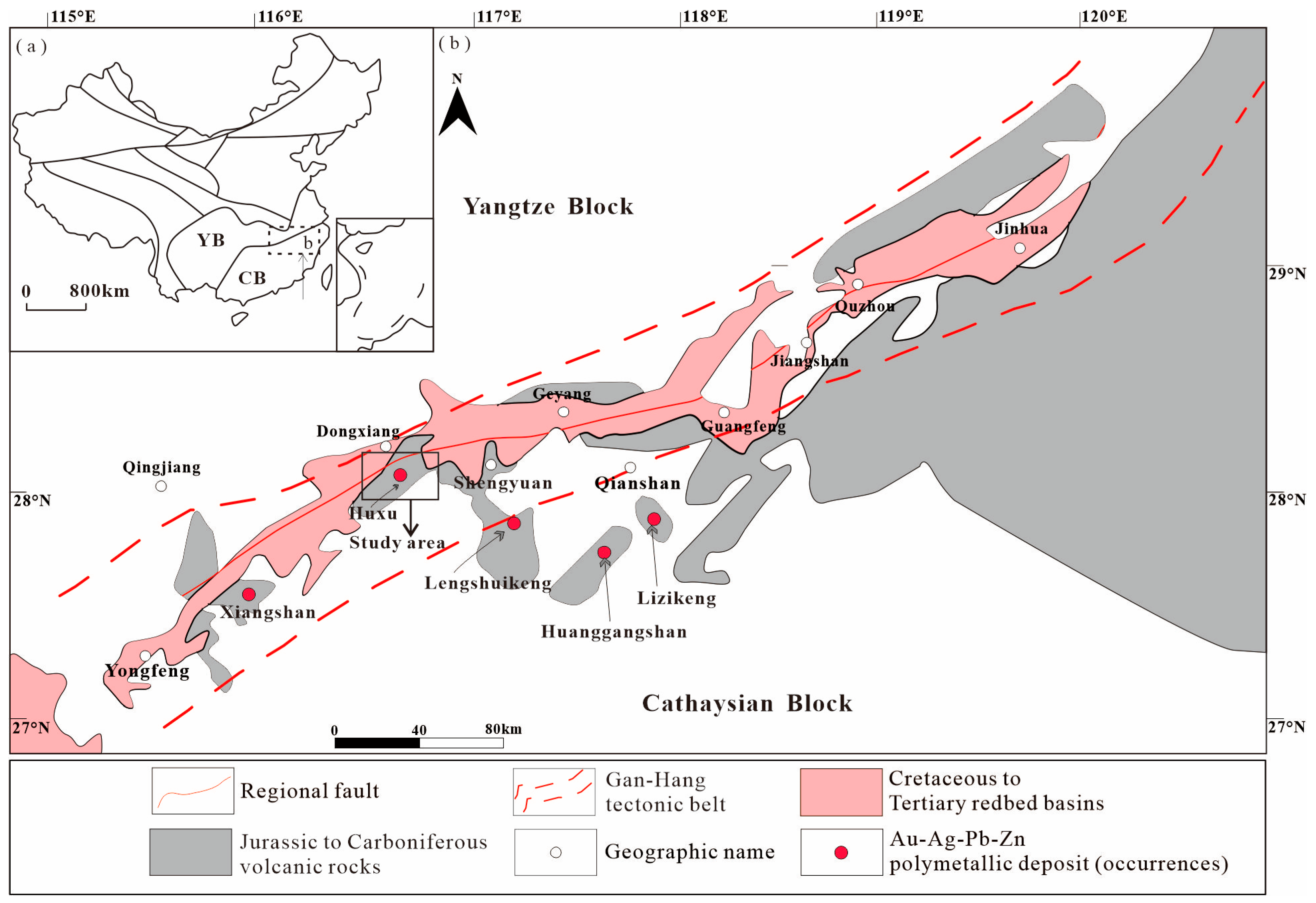
The Huxu Au-dominated polymetallic deposit lies in the orogenic belt caused by the collision of the Yangtze Block and the Cathaysia Block in the Proterozoic era (the middle section of the Gan-Hang tectonic belt; Figure 1). Studies have shown that the Pacific Plate has undergone multiple transitions in subduction direction during the Jurassic-Cretaceous (Yanshanian) and retreated during the Late Jurassic-Early Cretaceous. The intense tectonic and complex volcanic activities extended throughout the South China area in the Jurassic-Cretaceous period, forming a series of volcanic basins and related hydrothermal metallic deposits (occurrences) [6,11,30,31,32].

2.2. Deposit Geology

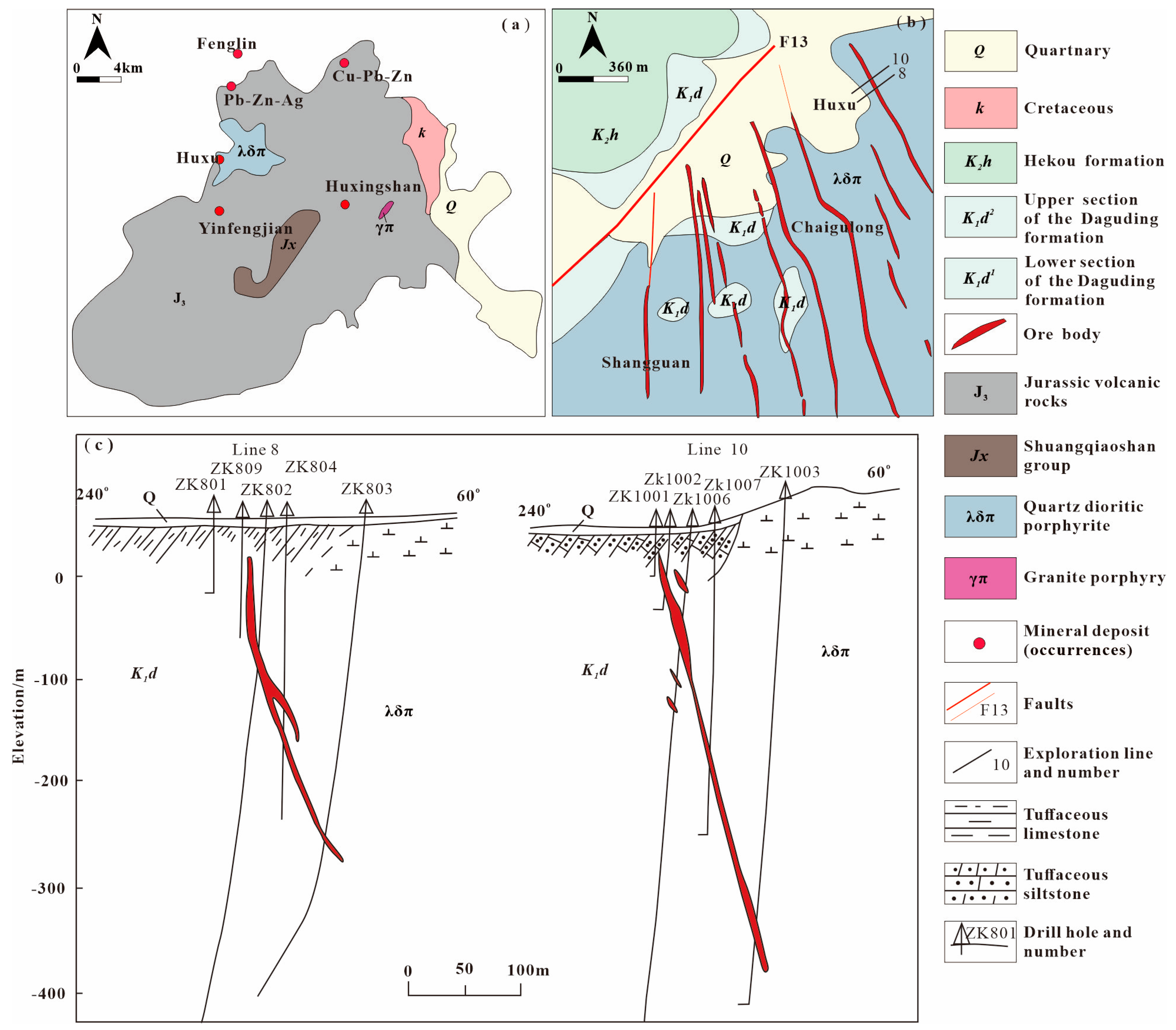
The Dongxiang basin is one of the numerous volcanic basins in the Gan-Hang tectonic belt (Figure 1). The basement of the basin comprises the Mesoproterozoic Shuangqiaoshan Group. This unit is primarily composed of quartzite, tuffite, and blastopsammite, interbedded with phyllite. The overlying exposed strata are Jurassic-Cretaceous in age and dominated by intermediate-acidic volcanic rocks (e.g., dacite and andesite) from multiple eruption cycles, along with pyroclastic rocks such as tuffite and agglomerate. Additionally, subordinate terrigenous clastic sedimentary rocks occur sporadically in the northwestern part of the basin (Figure 2). The magmatic activity in the area is relatively intensive. The intrusive rocks are mainly Mesozoic intermediate-acidic shallow intrusions such as dacite-porphyry, diorite porphyry, and andesite-porphyry, with a small amount of Mesozoic diabase and Caledonian granite. The main structures of this volcanic basin mainly include the northeast-trending faults, folds and volcanic-related structures [34,35]. The mineral resources in the basin are mainly gold, lead, zinc, silver and copper, with the major deposits including the Fenglin copper deposit, the Huxu Au-dominated polymetallic deposit, the Yinfengjian gold deposit, the Huxingshan gold deposit and many other mesothermal and epithermal metalliferous deposits (occurrences). However, the understanding of the genesis of these deposits in the basin is poor, and only a small amount of research has been carried out on the Huxu Au-dominated polymetallic deposit and the Fenglin copper deposit [1,2,36,37].
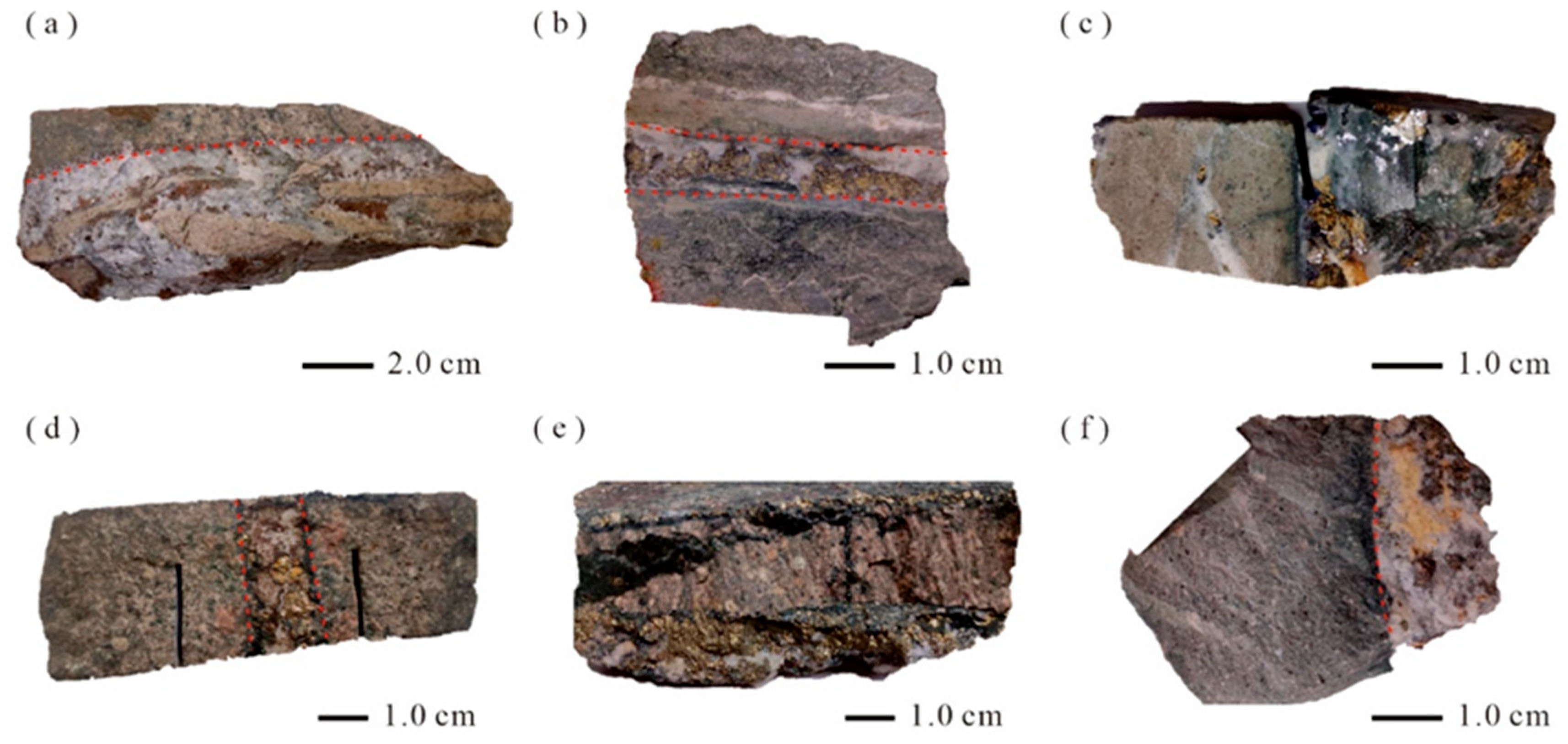
The strata of the mining area are relatively simple, mainly consisting of the Late Cretaceous Hekou Formation and the Early Cretaceous Daguding Formation (Figure 2b). The Late Cretaceous Hekou Formation is mainly composed of red sandstone, calcareous sandstone and siltstone, and is mainly distributed in the northwest of the mining area, whereas the Early Cretaceous Daguding Formation is mainly composed of rhyolitic tuff, dacitic ignimbrite and a small amount of andesite (Figure 3). The faults in the area are highly developed, mainly including the NE-trending fault (F13) in the northern part of the mining area and the NW-trending faults in the middle (Figure 2b). The rock involved in the NE-trending F13 fault shows a strong crushing phenomenon, indicating multi-stage activation of the faults. The F13 fault is the major rock-controlling fault in the area and controls the distribution of the quartz diorite porphyry and the ore body. The NW-trending fault is the major ore-bearing fault in the area. The ore body is relatively steep and can extend up to several hundred meters deep. It mainly occurs within the faults occurring in the quartz diorite porphyry and is locally in contact between porphyry and pyroclastic rocks (Figure 2b,c) [2,38,39].
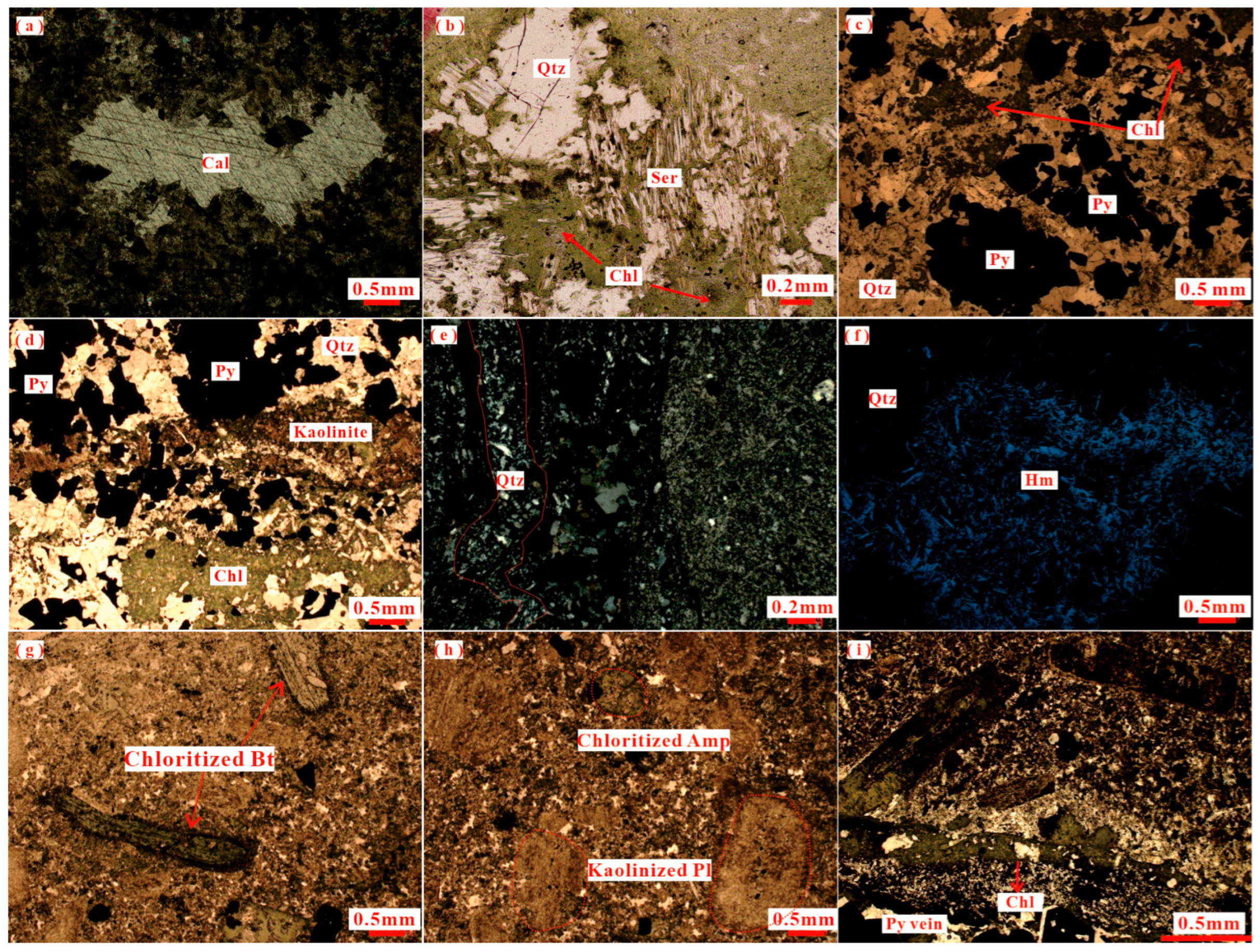
The wall rocks in the study area have suffered relatively strong alteration under the influence of mineralization, the main alteration types are silicification, hematitization, sericitization, chloritization, carbonatization and pyritization (Figure 4).

3. Analytical Methods

A total of 27 samples were collected for this study, 24 of which were made into thin sections for petrographic and mineralogic analysis, and their approximate sampling locations are marked in Figure 2b based on field records, as further explained in this section. In addition, zircon and apatite were separated from one representative quartz diorite porphyry sample for in-situ U-Th-Pb isotopic and elemental analysis. Whole-rock geochemical analysis was not performed on this sample due to its severe alteration. All samples were obtained from underground workings in the Huxu mining area. The zircon and apatite separation from the quartz diorite porphyry and the mineral grain mounting in the epoxy resin were carried out at Guangzhou Tuoyan Testing Technology Co., Ltd. (Guangzhou, China). The quartz diorite porphyry samples were first crushed to an appropriate particle size; then shaken, washed, and separated by electromagnetic force and gravity; and, finally, the zircon and apatite grains were obtained. These mineral grains were further selected under a binocular, and the selected zircon and apatite grains were mounted in ring resin, which were then ground and polished for microscopic observation and geochemical analysis.
The U-Pb dating and trace element analysis of zircons, and the U-Pb isotope and trace element analysis of apatite, were conducted at the State Key Laboratory of Nuclear Resources and Environment, East China University of Technology (Nanchang, China). The instrument used during the analysis is a Laser Ablation Inductively Coupled Plasma Mass Spectrometer (LA-ICP-MS). The laser ablation system employed was a GeoLasHD 193 nm ArF excimer laser (wavelength 193 nm) manufactured by Coherent (Gilching, Germany). The mass spectrometer used was an Agilent 7900 quadrupole inductively coupled plasma mass spectrometer (ICP-MS) manufactured by Agilent Technologies (Santa Clara, CA, USA). The laser beam with a diameter of 50 μm was used in the U-Pb dating and trace element testing of zircon. The standard zircon 91500 was used as the external standard for isotope ratio correction, and the synthetic silicate glass NIST SRM 610 was used as the external standard. Si was used as the internal standard for the quantitative calculation of zircon trace element content. The offline processing of the analysis data was conducted by using the software ICPMSDataCal 11.0 (including the selection of samples and blank signals, the correction of instrument sensitivity drift, and the calculation of elemental mass fraction, U-Th-Pb isotope ratio, and age). The U-Pb concordia diagram was created and the calculation of the weighted average age of the samples was performed by using the lsoplot/Ex ver 3 software [40].
The laser beam with a diameter of 30 μm, laser energy of 4.6 mJ/cm2, and frequency of 4 Hz was used for ablation in the U-Th-Pb isotope and trace element analysis of apatite, with helium gas as the carrier gas. NIST SRM 610 and NIST SRM 612 were used as external standards. The Ca content of each ablation spot, as determined by electron probe microanalysis (EPMA), served as the internal standard for quantitative calibration of trace element concentrations. The original data obtained were processed by using Iolite 4 software, and the uncertainty of most trace element analyses was less than 5%.
The JEOLJXA8100 electron probe (EPMA) was used for testing the major elements in apatite, and a 20nA beam current, 15kV acceleration voltage, and 5 μm diameter electron beam were applied for quantitative analysis. In the testing process, F and Cl were analyzed first in order to avoid migration loss. The analysis accuracy was ±2% to ±5%. All original data were corrected by the internal ZAF procedure. For specific procedures, please refer to Xing et al. (2017) [41].
The Nd isotope testing of apatite was carried out at Wuhan Sample Solution Analysis Technology Co., Ltd. using Laser Ablation Multi-Receiving Cup Inductively Coupled Plasma Mass Spectrometry (LA-MC-ICP-MS). The laser ablation system used is Geolas HD (Coherent, Gilching, Germany), and the MC-ICP-MS used is Neptune Plus mass spectrometer (Thermo Fisher Scientific, Bremen, Germany). Helium was used as a carrier gas in the laser ablation system, and a small amount of nitrogen was added to the ICP to enhance the test signal of the Nd isotope [42]. The analysis was conducted in a single-point mode, with the laser spot size being 90 μm in diameter, the ablation frequency being 8Hz, and the laser energy density being fixed at approximately ~8.0 J/cm2. A signal smoothing device was used in the analysis process, which could improve signal stability and the testing precision of the isotope ratio [42]. The NeptunePlus mass spectrometer was equipped with 9 Faraday cups and could simultaneously receive the signals of 142Nd, 143Nd, 144Nd, 145Nd, 146Nd, 147Sm, 148Nd, and 149Sm statically. The instrumental mass fractionation of the 143Nd/144Nd isotope was corrected by the exponential rule, with the correction factor being estimated by using 146Nd/144Nd = 0.7219. The correction of the interference of 144Sm on 144Nd was achieved by monitoring the signal of 149Sm and using the 144Sm/149Sm ratio of 0.22332. The instrumental mass fractionation of 144Sm/149Sm was corrected by normalizing the 144Sm/149Sm ratio to the interference-free value and using the 147Sm/149Sm ratio of 1.08680. For a detailed description of the analysis method correction, please refer to Xu et al. (2015) [42]. All analytical data were processed using the professional isotope data processing software Iso-Compass [43]. Two natural apatite standard samples, Durango and MAD, were used to monitor the reliability of the apatite Nd isotope correction method. The chemical composition and Nd isotope composition of Durango and MAD can be found in the paper by Xu et al. (2015) [42].

4. Results

4.1. Morphological Characteristics of Zircon and Apatite

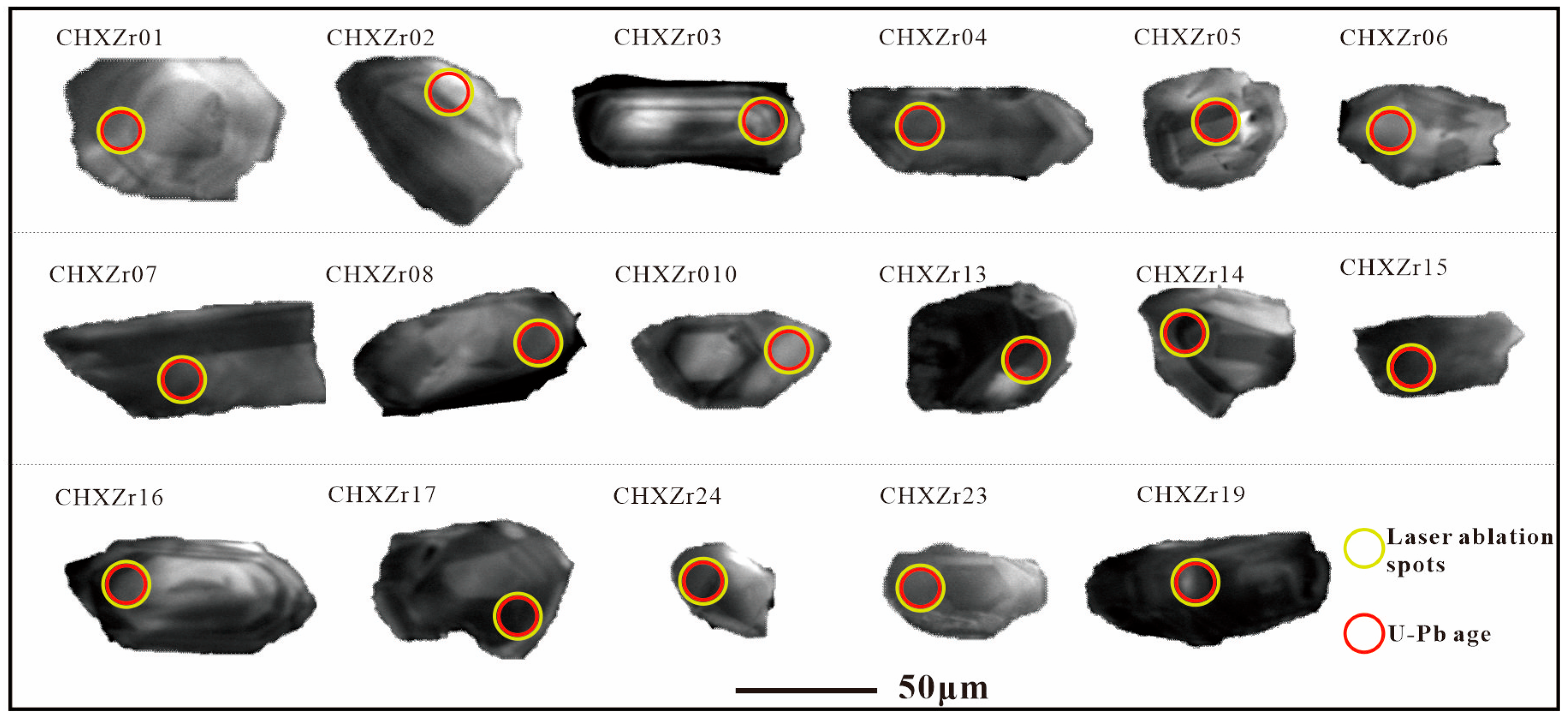
The cathodoluminescence (CL) image of zircon shows that it is mainly columnar (Figure 5), with a long axis of about 50 to 100 μm and a short axis of about 40 μm. The zircons are colorless and transparent, with euhedral-subhedral texture and oscillatory zoning, indicating their magmatic origin.
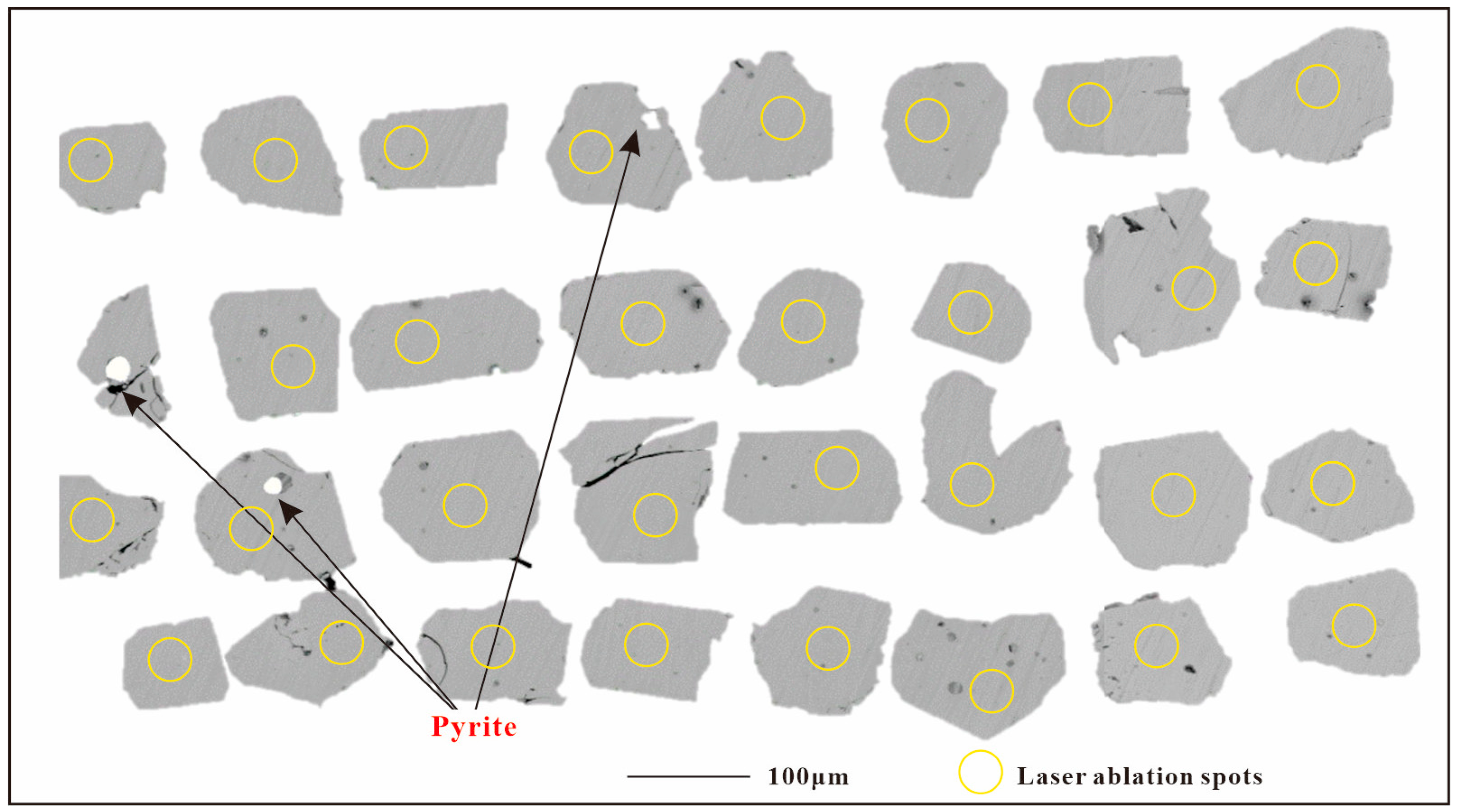
The backscattering (BSE) image of apatite shows that the apatite grains are mainly euhedral-subhedral (Figure 6); the grain diameters generally exceed 100 μm, with relatively uniform particle size. For some apatite grains, the intragranular fractures can be observed. In addition, pyrite inclusions are also observed in some apatite samples. Overall, the BSE image of apatite indicates the characterization of magmatic apatite.

4.2. U-Pb Dating and Trace Element Analysis of Zircon and Apatite

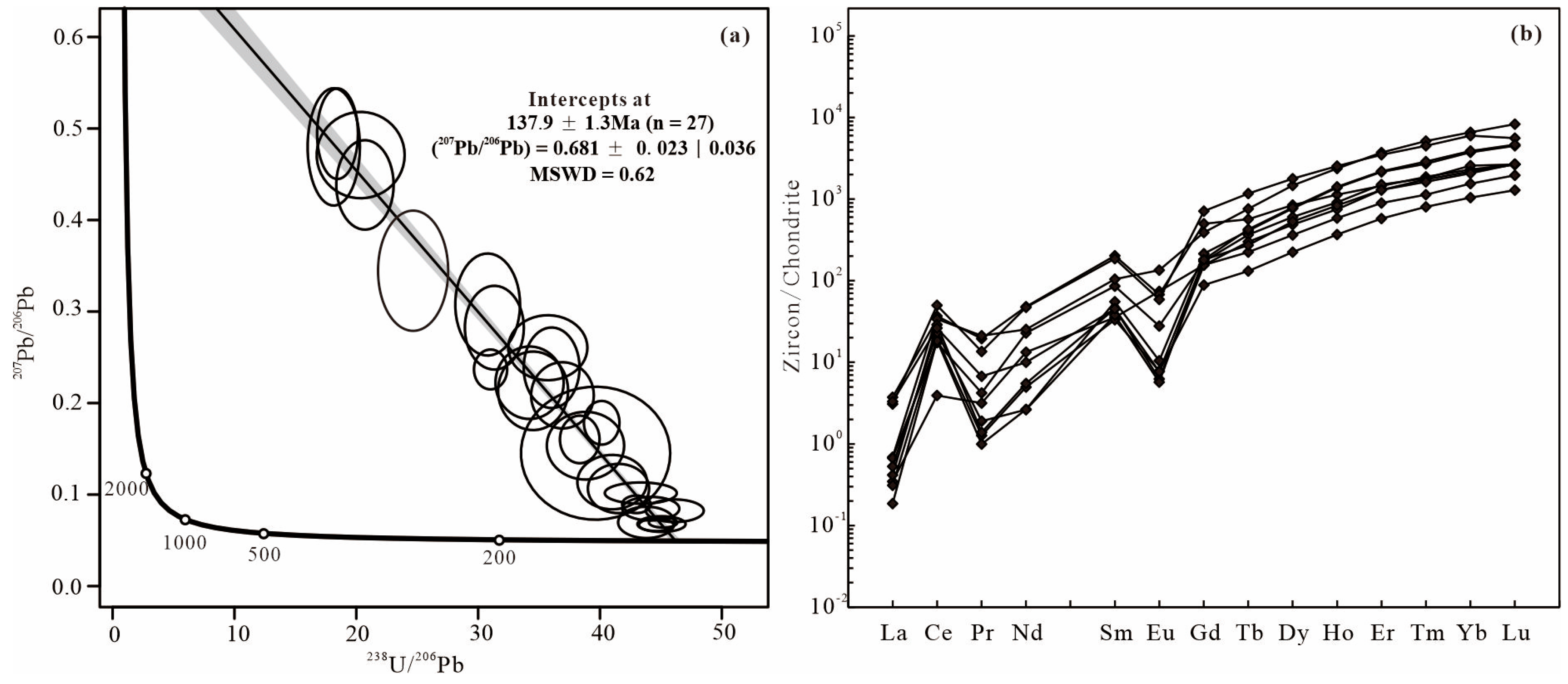
The isotopic compositions and geochronologic data of zircon are listed in Table S1 and shown in Figure 7. It can be seen that the concordance of the model ages is relatively low due to the loss of lead. Thus, the zircon Tera-Wasserburg diagram has been plotted (Figure 7a). The lower intersection point indicates the age of 137.9 ± 1.3 Ma (MSWD = 0.62), belonging to the Early Cretaceous, and similar with the formation age of the other volcanic rocks in the region (142–134 Ma [35]).
The rare earth elements (REEs) in zircon can be easily affected by inclusions, leading to errors in the analysis results. Data with La > 1 × 10⁻⁶ and Ti > 50 × 10−6 need to be excluded from the analysis results in order to remove the interference of the tiny inclusions [45]. The data of the trace elements in zircon are shown in Table S2. It can be seen that the Th/U values of zircon from the quartz diorite porphyry range from 0.41 to 1.23, showing the characteristics of magmatic zircon (Th/U > 0.4). The total content of the REEs (ΣREE) in zircon ranges from 446.66 to 2752.92 ppm. In the chondrite-normalized REEs distribution diagrams (Figure 7b), all REE distribution curves show the characteristics of heavy REE enrichment and light REE depletion, with a slightly negative Eu anomaly and a slightly positive Ce anomaly. The Eu/Eu* ratio ranges from 0.069 to 1.00 (avg. 0.27), while the Ce/Ce* ratio ranges from 3.77 to 42.77 (avg. 17.66).
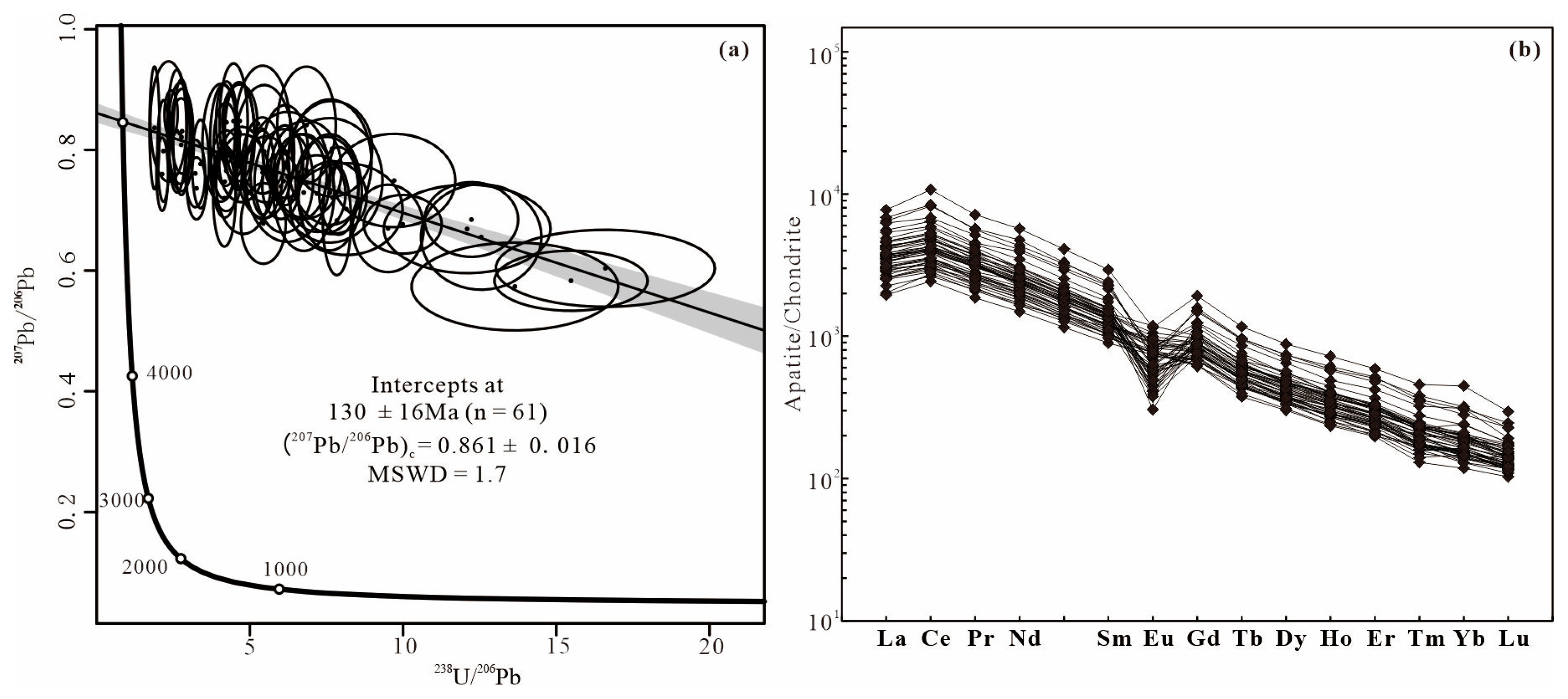
The isotopic compositions and geochronologic data of apatite by using LA-ICP-MS are shown in Table S3 and illustrated in Figure 8. After applying the common lead correction using the Stacey and Kramers (1975; [46]) model to the apatite U-Pb data, the resulting age (~410 Ma) was found to be inconsistent with the generally accepted ages in the region. Therefore, we did not adopt this method. The apatite U-Pb dating results, as displayed on the Tera-Wasserburg concordia diagram, yield a lower intercept age of 130 ± 16 Ma (MSWD = 1.7, n = 61), which is relatively consistent with the zircon age
The trace element data in apatite are shown in Table S4. The results show that the content of REEs in the apatite samples is relatively high, with the ΣREE content ranging from 3252.02 × 10−6 to 13,155.92 × 10−6, averaged 5604.16 × 10−6. The REE distribution pattern (Figure 8b) shows a right-leaning mode with enrichment of light REEs and depletion of heavy REEs, and a moderate degree of negative Eu anomaly.
The major element data of apatite from the quartz diorite porphyry are presented in Table S5. The results show that the apatite is primarily composed of CaO, P2O5, and F, while the contents of SO3, SrO, Al2O3, Cl, MnO, Na2O, and MgO are all extremely low (<1%). The CaO content ranges from 51.87% to 55.48% with an average of 53.04%, the P2O5 content ranges from 40.26% to 43.55% with an average of 42.35%, and the F content ranges from 2.23% to 5.27% with an average of 4.24%. All analyzed apatite grains are fluorapatite.
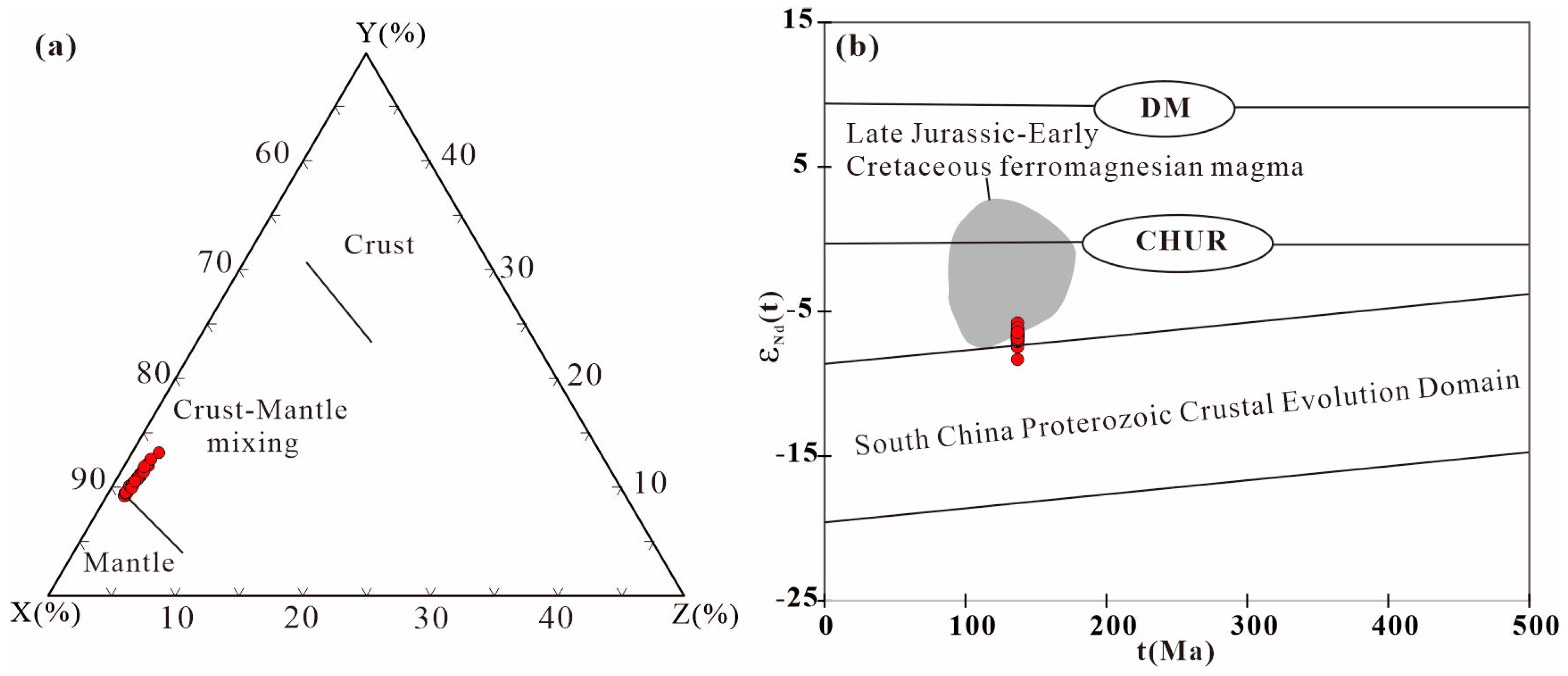
The Nd isotopic compositions of 23 apatite spots are listed in Table S6. The results show that the 143Nd/144Nd ratios of apatite from the quartz diorite porphyry are relatively concentrated, ranging from 0.512145 to 0.512271. This indicates that the apatite crystallized in a relatively closed system and can reflect the source characteristics of the host rock. The calculated εNd(t) values, based on the zircon U-Pb age of 137.9 Ma, range from −8.31 to −5.79.

5. Discussion

5.1. Genetic Type and Source Region

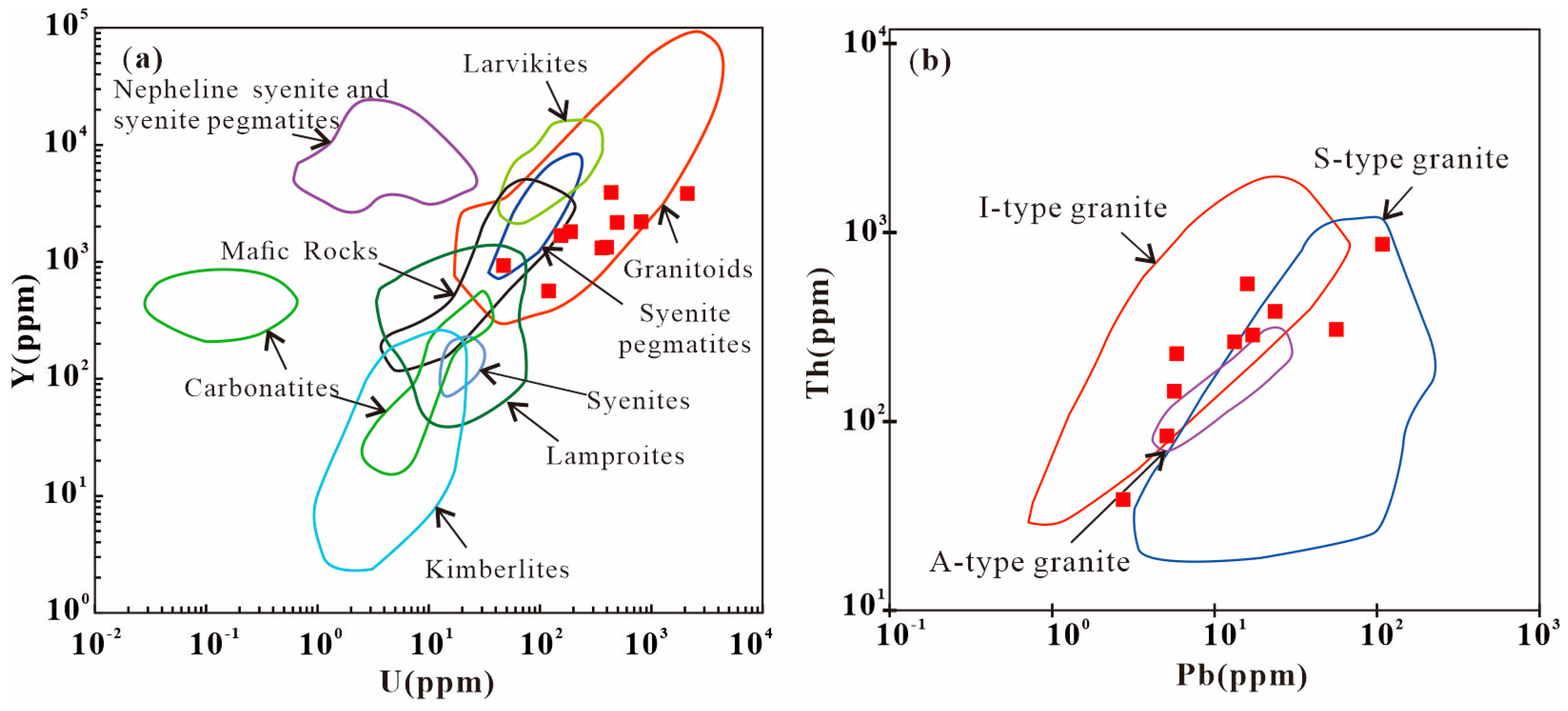
Previous studies have revealed that zircon trace element compositions (e.g., Hf, U, Th, Y) can discriminate their parent rock types [47]. In the Y-U diagram (Figure 9a), nearly all zircon samples from the Huxu quartz diorite porphyry plot within the field for granitoids. Granitoids are genetically classified into I-, S-, and A-types. I-type granites are typically characterized by minerals such as hornblende, S-types by peraluminous minerals (e.g., garnet, muscovite), and A-types by abundant alkali minerals. The quartz diorite porphyry samples collected from the Huxu area in this study have undergone intense alteration overall, as they were obtained in proximity to the ore body, resulting in the alteration of most phenocrysts. However, based on unpublished geological reports and previous studies, it has been observed that the quartz diorite porphyry in this area contains minor biotite and hornblende phenocrysts [2]. These mineralogical characteristics generally resemble those of I-type granites. This mineralogical signature is generally consistent with an I-type affinity.
This interpretation is further supported by zircon trace element discriminants. Belousova et al. [47] demonstrated that zircon chemistry can indicate protolith. Specifically, the Th and Pb contents in zircon vary systematically among different granite types [48]. In the Th-Pb diagram (Figure 9b), data from the Huxu porphyry predominantly fall within the I-type granite field, providing independent geochemical evidence that it belongs to the I-type granite series.
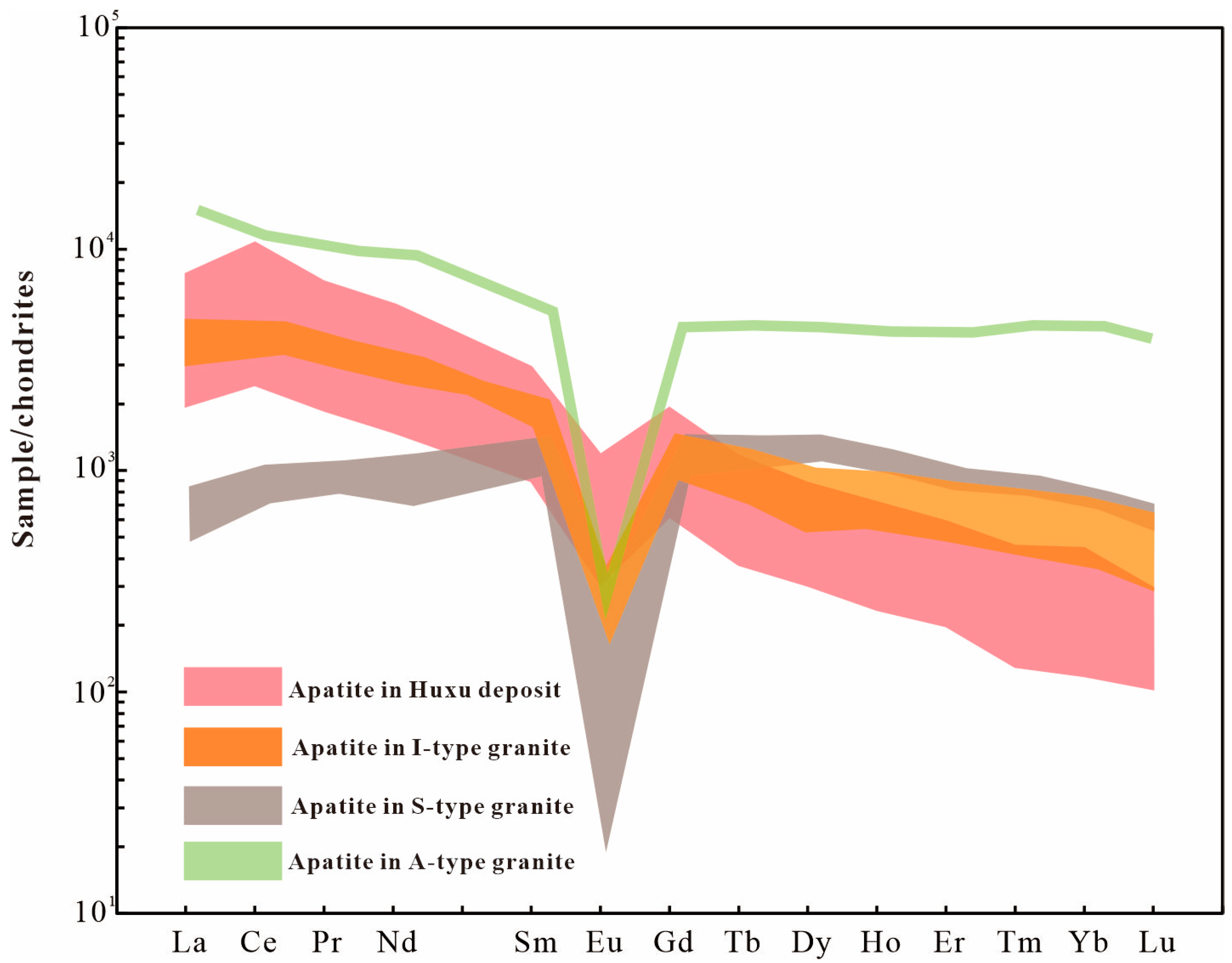
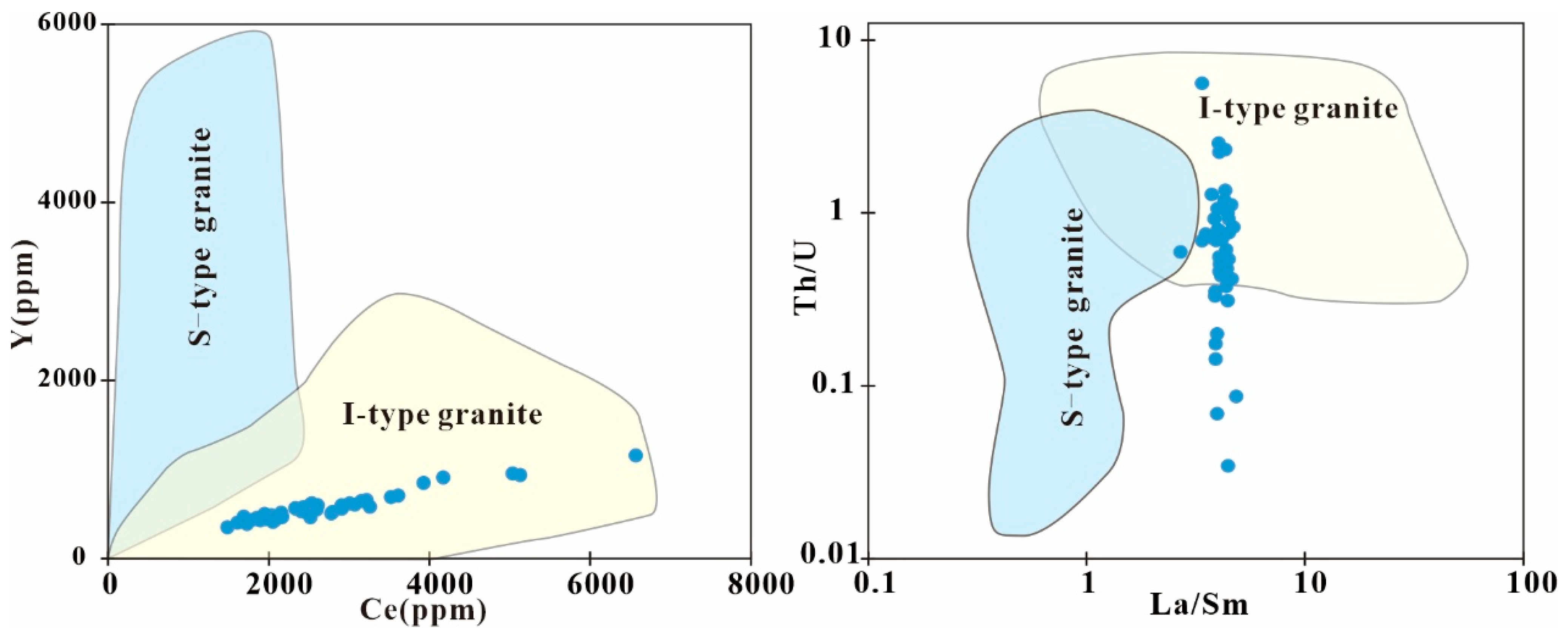
The geochemical characteristics of apatite have also been widely applied in discriminating between the rock genetic types. Zhu et al. (2004) [49] found that the REE distribution patterns of apatite from different types of rocks are significantly different by comparing the REE compositions of apatite from rocks with different genetic types. The REE composition of apatite from the Huxu quartz diorite porphyry shows a high REE content, a moderately sloping right-leaning mode and a moderately negative Eu anomaly. These characteristics are consistent with the REE distribution curve of apatite from I-type granite, but significantly different from the REE distribution characteristics of apatite from S- and A- type granites (Figure 10). Moreover, in the apatite Y-Ce and Th/U-La/Sm discrimination diagrams for discriminating the I-type and S-type granites [17], most data fall into the I-type granite area (Figure 11). Furthermore, to enhance the robustness of our conclusions, we applied a previously established machine learning model that discriminates granite types based on apatite trace element compositions [50]. This model also classifies the rock as I-type granite (Table S7).
Apatite geochemistry provides key constraints on the magma source. The rare earth element (REE) composition of apatite can indicate the provenance of diagenetic materials [48]. In the apatite ΣLa~Nd-ΣSm~Ho-ΣEr~Lu ternary diagram, all data from the Huxu quartz diorite porphyry plot within the crust-mantle mixing field (Figure 12a). More definitively, the Nd isotopes of apatite offer direct evidence for the source. In the εNd(t)-t diagram (Figure 12b), the data predominantly fall within the field of Late Jurassic–Early Cretaceous mafic magmas derived from an enriched mantle, with only a minor trend towards the Proterozoic crust of South China. This indicates that the sedimentary rock is unlikely to be the primary source and points strongly to a source involving the enriched mantle or melts derived from it. Currently, there are four main genetic models proposed for the origin of granite. To contextualize this evidence within current petrogenetic frameworks, we evaluate the four primary genetic models for granitoids: (1) differentiation of mantle-derived magmas [51,52]; (2) mixing between mantle-derived and crust-derived magmas [53]; (3) melting of subducted slabs [54]; and (4) evolution of purely crustal magmas [55]. Several lines of evidence argue against models (1), (3), and (4) for the Huxu porphyry. First, direct differentiation of mantle-derived magma typically yields rocks with very high Mg# values, inconsistent with the low Mg# of the Huxu samples (28.19–31.72, according to an unpublished geological report). The regional scale of coeval felsic magmatism in the Dongxiang Basin would also require an immense, yet unobserved, volume of parental mafic magma. Second, slab-derived melts are characterized by high Sr/Yb ratios, a feature absent in the contemporaneous magmatic rocks of the basin. Third, while crustal melting can produce quartz diorite, the relatively high εNd(t) values observed (Figure 12b) are difficult to reconcile with a pure ancient crustal source. Therefore, the combined evidence from apatite (REE and Nd isotopes) and the exclusion of alternative models converge to support the process of magma generation involving crust-mantle interaction. The mantle component could be contributed via juvenile crust or direct mantle melts. Although direct magma mixing might erase textural evidence like mafic enclaves through thorough hybridization, the geochemical signature remains definitive.
Based on the above evidence, we conclude that the quartz diorite porphyry in the Huxu deposit is I-type granite, derived from the mixing between juvenile and ancient crustal melts.

5.2. Extensive Cretaceous Magmatism and Tectonic Setting

The ages of zircon and apatite from the quartz diorite porphyry of the Huxu Au-dominated polymetallic deposit are determined as 137.9 ± 1.3 Ma, and 130 ± 16 Ma respectively (Figure 7a and Figure 8a). Since zircon and apatite show magmatic origin (Figure 5 and Figure 6), their ages can represent the magma emplacement time. Critically, the overlap of these two ages within analytical uncertainty, despite the large difference in U-Th-Pb system closure temperatures between zircon (>750 °C) and apatite (~350 °C), indicates a rapid post-emplacement cooling history for the porphyry. Such rapid cooling is characteristic of porphyry systems emplaced at shallow crustal depths [57,58]. Therefore, both mineral systems robustly record the same primary magmatic event.
Therefore, it is believed that the quartz diorite porphyry in the study area is the product of the Early Cretaceous magmatism. It should be noted that the Early Cretaceous volcanic-subvolcanic rocks are widely distributed in the Dongxiang basin. A series of zircon U-Pb isotope dating studies on some of these volcanic rocks have been carried out previously, and the results obtained show that the andesite (135.5 ± 2.1, 137.3 ± 2.3 and 141.7 ± 3.4 Ma), trachyandesite (142.0 ± 2.7 Ma), granite porphyry (139.4 ± 3.9 Ma), and rhyolite pyroclastic rocks (134.14 ± 0.6, 137.44 ± 0.67 and 141.35 ± 0.67 Ma) have similar ages with the Huxu quartz diorite porphyry [35], indicating that an intense magmatic activity event occurred in the Early Cretaceous. In South China, porphyry-related mineralization predominantly occurred during the Middle to Late Jurassic [59]. Although Cretaceous porphyry-related mineralization is less common, a review of its spatial distribution reveals that deposits of this age, while not as numerous as those from the Middle to Late Jurassic, are widely distributed across the region [60,61,62,63,64,65,66]. This likely represents an extensive magmatic-hydrothermal mineralization event in South China.
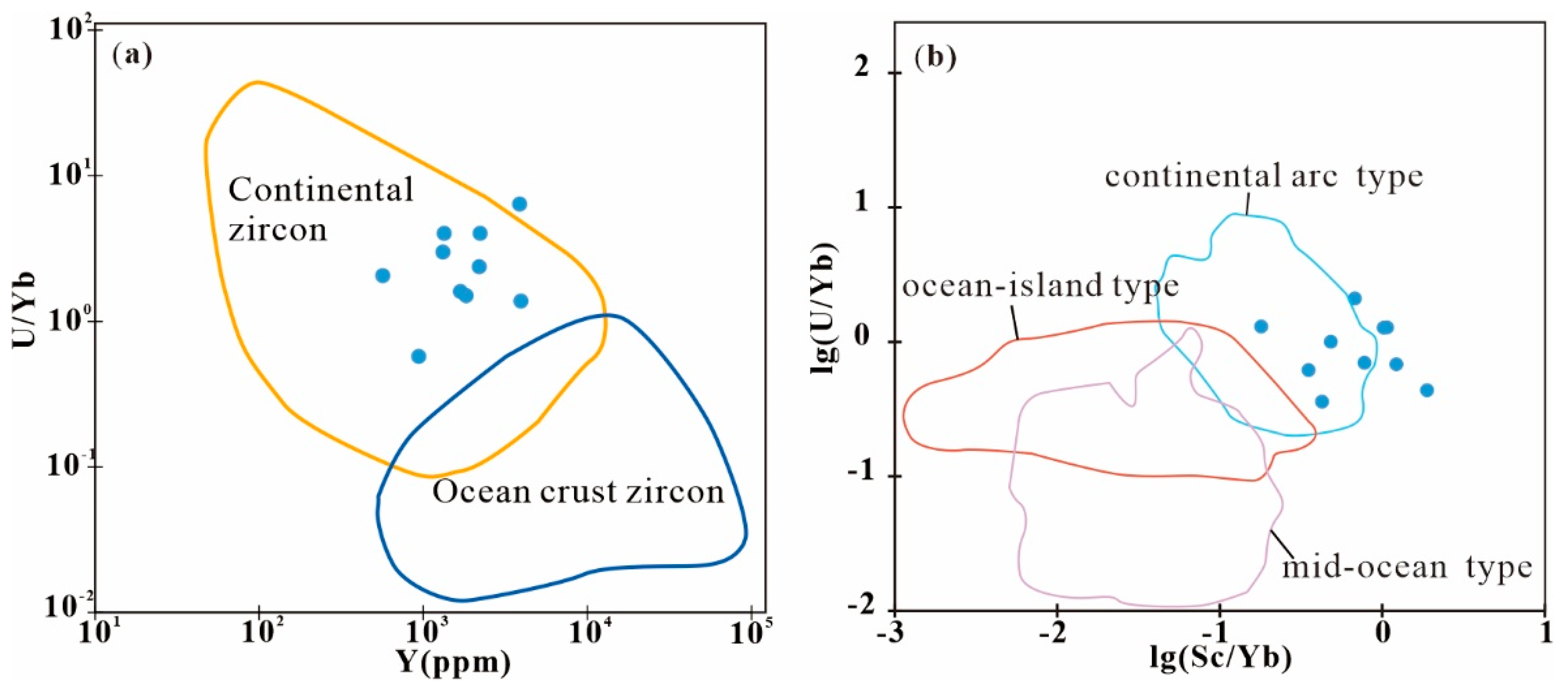
Magmatic rocks with different tectonic settings and source regions often have different whole-rock or mineral geochemical characteristics. Therefore, the whole-rock or mineral geochemical characteristics of magmatic rocks can be used to explore the tectonic setting of diagenesis. The quartz diorite porphyry samples from the Huxu area have undergone quite strong alteration overall, and the whole-rock composition has changed significantly. In this situation, the trace elements from the accessory mineral (e.g., zircon) less affected by alteration are chosen to discriminate the source rock type and tectonic environment. Grimes et al. (2007) [13] found that zircons crystallized in different environments have certain differences in the contents of elements such as U, Yb, Hf and Y after statistically analyzing a large amount of trace element and the REE data in zircon from the Indian Ocean ridge, the Atlantic Ocean ridge, the Talkeetna island arc in Alaska, and the continental areas. They constructed the U/Yb-Hf and U/Yb-Y diagrams to distinguish the source area characteristics of zircon. In the U/Yb-Hf diagram (Figure 13a), most zircon data of the Huxu quartz diorite porphyry fall into the continental crust zircon area; whereas in the lg(U/Yb)-lg(Sc/Yb) tectonic background discrimination diagram (Figure 13b), most zircon data fall into the continental arc environment area [2,35]. These observations combinedly suggest that the Huxu quartz diorite porphyry was formed in a continental arc environment.
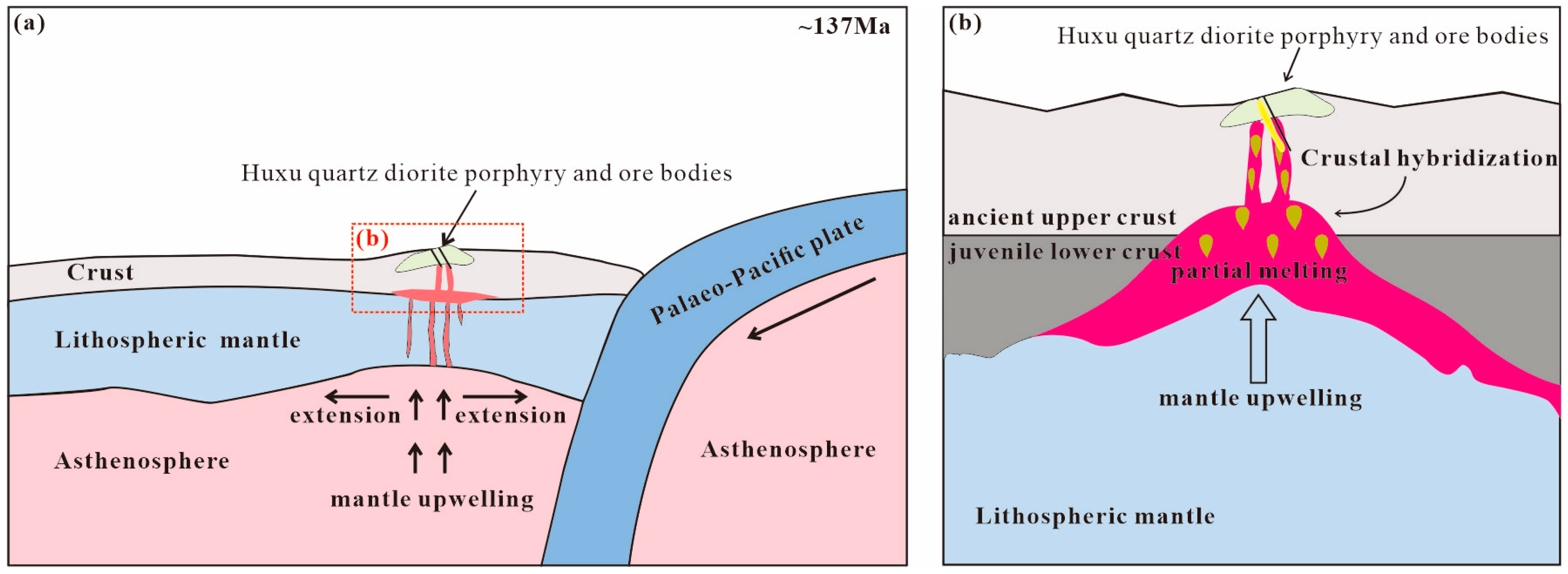
Since the activities of the contemporaneous magmas with similar compositions occurred widely in South China, the magmatic rocks may have similar tectonic settings. Previous studies on the Early Cretaceous magmatic rocks in South China suggest that the Gan-Hang tectonic belt has undergone significant tectonic transitions during the late Yanshanian period, mainly manifesting as multiple changes in the subduction angle of the Paleo-Pacific Plate. In the early Cretaceous period, the Pacific Plate experienced subduction and retreated, leading to a local extensional environment and the upwelling of mantle-derived magma in the area [29,67,68]. It can be seen that the tectonic environments determined by the Huxu quartz diorite porphyry and the regional magmatic rocks are consistent. Therefore, in conclusion, we believe that the Huxu quartz diorite porphyry was formed in the marginal arc environment related to the subduction of the ancient Pacific Ocean Plate.

5.3. Implication for Mineralization

Previous studies have identified the Huxu gold-polymetallic deposit as an intermediate-sulfidation epithermal deposit [4,5]. For this type of deposit, the ore-forming fluids and materials are typically derived from magmatic systems coeval with the host volcanic-subvolcanic rocks [6,7,8,9,10]. H-O isotope analysis of quartz veins by Wang et al. (1998) [2] revealed that the ore-forming fluids exhibited characteristics of a mixture between magmatic water and meteoric water. This is further corroborated by in-situ S-Pb isotopic analyses of pyrite from the Huxu deposit: the sulfur isotopic composition (δ34S ≈ 1.72‰) indicates a magmatic sulfur source, while the lead isotopic signatures are highly consistent with those of the regional magmatic rocks and collectively suggest an orogenic belt/island arc setting [2,5]. These lines of evidence together suggest that the ore-forming magma and the magmas that formed the contemporaneous intrusive rocks in the area were likely derived from the same source. Furthermore, the presence of sulfide inclusions within apatite from the host quartz diorite porphyry (Figure 5) provides direct evidence for sulfide saturation in the parental magma, indicating its significant ore-forming potential. Integrating these geochemical constraints with the close spatial association between the ore bodies and the intrusive rocks, we propose that the ore-forming materials of the Huxu deposit were most likely derived from the same source as the volcanic-subvolcanic rocks in the area and that mineralization occurred concurrently with or shortly after the emplacement of the quartz diorite porphyry. Moreover, the ore-forming porphyries of both the Dongxiang copper deposit within the same basin and the neighboring Dexing copper deposit are characterized by crust-mantle magma mixing. This further indicates that such mixing played a significant role in the Yanshanian Cu-Au mineralization within the region [5,69,70].
Combining the above analysis with previous research, we propose the following genetic model for the Huxu Au-dominated polymetallic deposit (Figure 14). The continuous southwestward subduction of the Pacific Plate during the Early Cretaceous induced the upwelling of mafic magma from a mantle source. This mantle-derived magma triggered the melting of juvenile crust, and the resultant melts assimilated ancient crustal materials during ascent, forming a hybrid magma. This hybrid magma ascended, underwent crystallization and differentiation, and finally emplaced as the quartz diorite porphyry at shallow crustal levels. Subsequent intense regional tectonism created faults within the porphyry, providing favorable conduits and space for ore deposition. During the late magmatic to hydrothermal transition, ore-forming fluids exsolved from the cooling magma and rose along these pre-existing faults. During their ascent, the fluids underwent boiling, water-rock interaction, and mixing with meteoric water. These processes changed the physicochemical properties of the fluids, leading to the precipitation of gold, lead, and zinc within the fault zones [5].

6. Conclusions

(1) Zircon and apatite U-Pb dating results indicate that the quartz diorite porphyry formed during the Early Cretaceous period, with zircon and apatite U-Pb ages of 137.9 ± 1.3 Ma and 130 ± 16 Ma, respectively. These two ages, consistent within analytical uncer-tainty, record rapid post-emplacement cooling of the intrusion and jointly constrain its crystallization age.
(2) The trace element characteristics of zircon (e.g., Y-U and Th-Pb discrimination diagrams) and its typical magmatic oscillatory zoning, combined with the rare earth ele-ment (REE) patterns of apatite (enriched in light REEs with moderate negative Eu anoma-lies), consistently indicate that the rock belongs to the I-type granite series.
(3) The Nd isotopic composition of apatite (εNd(t) = –8.31 to –5.79) suggests that the parental magma was derived from mixing of juvenile crustal material and ancient crustal melts. Zircon trace element tectonic discrimination diagrams (e.g., U/Yb-Y and U/Yb-Sc/Yb) further reveal that the intrusion formed in a continental margin arc setting related to southwestward subduction of the Paleo-Pacific Plate during the Early Cretaceous peri-od.
(4) The presence of sulfide inclusions in apatite, together with published S-Pb iso-topic data from the ores, indicates that the ore-bearing porphyry magma reached sulfide saturation and that the ore-forming materials were predominantly derived from the mag-matic system. This study proposes that the ore-forming fluids and metal components of the Huxu deposit were mainly sourced from a magmatic–hydrothermal system cogeneric with the quartz diorite porphyry and that mineralization occurred during the magmatic–hydrothermal transition stage following porphyry emplacement.

Supplementary Materials

The following supporting information can be downloaded at: https://www.mdpi.com/article/10.3390/min16010103/s1, Table S1: U-Pb dating results of zircon from quartz diorite porphyry by using LA-ICP-MS; Table S2: Trace element content of zircon in Huxu quartz diorite porphyry (ppm); Table S3: U-Pb dating results of apatite from quartz diorite porphyry by using LA-ICP-MS; Table S4: In situ trace element analysis results (ppm) of Apatiten in Huxu quartz diorite porphyry; Table S5: Electronic microprobe analysis results (%) of Apatite in Huxu quartz diorite porphyry; Table S6: In situ Nd isotopic analysis results of Apatite; Table S7: Machine learning method for discriminating granite genetic types based on trace element composition of apatite.

Author Contributions

Conceptualization, J.C.; writing—original draft preparation, H.G. and J.C.; writing—review and editing, J.C., H.G., L.M., K.L., Y.W. and L.W.; sample preparation, H.G. and J.C.; data curation, H.G. and G.W.; funding acquisition, J.C. All authors have read and agreed to the published version of the manuscript.

Funding

This research was funded by Jiangxi Provincial Natural Science Foundation (20232BAB213064) and the National Natural Science Foundation of China (No. 42102088).

Data Availability Statement

The original contributions presented in the study are included in the article/Supplementary Material.

Acknowledgments

We are grateful to the 1st Team of Jiangxi Nonferrous Metals Geological Exploration Bureau and Wei-Wei Chao, Bo Yuan, Jun-Feng Dai, Feng Lai, and Jian Zhang from East China University of Technology for their assistance during field geological surveys and the sample collection process.

Conflicts of Interest

The authors declare no conflict of interest.

References

  1. Tiegeng, L.; Lin, Y. The Relationship between Mineralogical Characteristics and Isotopic Composition of Sphalerite, as Exemplified by The Huxu deposit, China. Chin. J. Geochem. 1995, 14, 160–167. [Google Scholar] [CrossRef] [Scilit]
  2. Wang, K.Y.; Lu, Z.X.; Zhang, X.G. The Geological and Mineralization Feature of Huxu Gold Deposit and Study on Its Origin. Gold 1998, 5, 7–12, (In Chinese with English Abstract). [Google Scholar]
  3. Chao, W.W.; Xu, D.R.; Li, Z.H.; Chen, L.Q.; Zhou, X.J.; Yuan, B.; Yang, L.F.; Chen, J.J.; Zhang, J. Characteristics and Geological Implications of Mineral Chemistry and Fluid Inclusions in Huxu Au-Pb-Zn Ore Deposit, Jiangxi Province. Earth Sci. 2024, 49, 1292–1306, (In Chinese with English Abstract). [Google Scholar] [CrossRef] [Scilit]
  4. Chen, J.J.; Li, Z.H.; Xu, D.R.; Deng, T.; Chen, L.Q.; Zhou, X.J.; Chao, W.W.; Yuan, B.; Yang, L.F.; Liao, J. Metal Precipitation Mechanism of Huxu Au-dominated Deposit in Dongxiang Basin: Constraints from Mineral Paragenesis and Trace Elements. Geotecton. Et Metallog. 2024, 48, 737–753, (In Chinese with English Abstract). [Google Scholar]
  5. Gao, H.Z.; Chen, J.J.; Leng, C.B.; Hu, Y.H.; Xie, H.D.; Li, Z.H. Ore-forming mechanism of Huxu Au-dominated polymetallic deposit in the Dongxiang Basin, South China: Constraints from in-situ trace elements and S–Pb isotopes of pyrite. Acta Geochim. 2024, 43, 1223–1240. [Google Scholar] [CrossRef] [Scilit]
  6. Mao, J.W.; Chen, M.H.; Yuan, S.D.; Guo, C.L. Geological Characteristics of the Qinhang (or Shihang) Metallogenic Belt in South China and Spatial-Temporal Distribution Reqularity of Mineral Deposits. Acta Geol. Sin. 2011, 85, 636–658, (In Chinese with English Abstract). [Google Scholar]
  7. Song, G.X.; Qin, K.Z.; Li, G.M.; Wang, L. Basic characteristics and research progresses of intermediate sulfidation type epithermal gold poly-metallic deposits, and prospects. Acta Petrol. Sin. 2018, 34, 748–762, (In Chinese with English Abstract). [Google Scholar]
  8. Wang, L.; Qin, K.Z.; Song, G.X.; Li, G.M. A Review of Intermediate Sulfidation Epithermal Deposits and Subclassification. Ore Geol. Rev. 2019, 107, 434–456. [Google Scholar] [CrossRef] [Scilit]
  9. Wang, L.; Percival, J.B.; Hedenquist, J.W.; Hattori, K.; Qin, K.Z. Alteration mineralogy of the Zhengguang epithermal Au-Zn Deposit, Northeast China: Interpretation of shortwave infrared analyses during mineral exploration and assessment. Econ. Geol. 2021, 116, 389–406. [Google Scholar] [CrossRef] [Scilit]
  10. Wang, L.; Chiaradia, M.; Qin, K.Z.; Hui, K.X.; Li, Z.Z.; Cao, M.J.; Song, G.X.; Pang, X.Y.; Shan, P.F.; Li, G.M. Magmatic Controls on Au- and Ag-Rich Intermediate-Sulfidation Epithermal Deposits from Northeast China. Econ. Geol. 2024, 119, 1913–1936. [Google Scholar] [CrossRef] [Scilit]
  11. Wu, Z.R. Metallogenetic Character and Prospeeting of Gold Deposit in Dongxiang Volcanic Basin. Miner. Resour. Geol. 2003, 17, 410–413, (In Chinese with English Abstract). [Google Scholar]
  12. Ballard, J.R.; Palin, J.M.; Campbell, I.H. Relative oxidation states of magmas inferred from Ce (IV)/Ce (III) in zircon: Application to porphyry copper deposits of northern Chile. Contrib. Mineral. Petrol. 2002, 144, 347–364. [Google Scholar] [CrossRef] [Scilit]
  13. Grimes, C.B.; John, B.E.; Kelemen, P.B.; Mazdab, F.K.; Wooden, J.L.; Cheadle, M.J.; Hanghøj, K.; Schwartz, J.J. Trace element chemistry of zircons from oceanic crust: A method for distinguishing detrital zircon provenance. Geology 2007, 35, 643–646. [Google Scholar] [CrossRef] [Scilit]
  14. Grimes, C.B.; Wooden, J.L.; Cheadle, M.J.; John, B.E. “Fingerprinting” tectono-magmatic provenance using trace elements in igneous zircon. Contrib. Mineral. Petrol. 2015, 170, 46. [Google Scholar] [CrossRef] [Scilit]
  15. Leng, C.B.; Chen, X.L.; Zhang, J.J.; Ma, X.H.; Tian, F.; Guo, J.H.; Zhang, L.J. Lithogeochemical and mineral chemical footprints of porphyry Cu±Mo±Au deposits: A review. Acta Geol. Sin. 2020, 94, 3189–3212, (In Chinese with English Abstract). [Google Scholar] [CrossRef]
  16. Sun, J.F.; Yang, J.H.; Zhang, J.H.; Yang, Y.H.; Zhu, Y.S. Apatite geochemical and Sr-Nd isotopic insights into granitoid petrogenesis. Chem. Geol. 2021, 566, 120104. [Google Scholar] [CrossRef] [Scilit]
  17. Chen, X.L.; Leng, C.B.; Zou, S.H.; Li, K.X.; Zhang, L.J. Geochemical compositions of apatites from the Xuejiping and Disuga porphyries in Zhongdian arc: Implications for porphyry Cu mineralization. Ore Geol. Rev. 2021, 130, 103954. [Google Scholar] [CrossRef] [Scilit]
  18. Gao, X.; Yang, L.Q.; Meng, J.Y.; Zhang, L.J. Zircon U-Pb, molybdenite Re-Os geochronology and Sr-Nd-Pb-Hf-O-S isotopic constraints on the genesis of Relin Cu-Mo deposit in Zhongdian, Northwest Yunnan, China. Ore Geol. Rev. 2017, 91, 945–962. [Google Scholar] [CrossRef] [Scilit]
  19. Zou, X.Y.; Jiang, J.L.; Qin, K.Z.; Zhang, Y.G.; Yang, W.; Li, X.H. Progress in the principle and application of zircon trace element. Acta Petrol. Sin. 2021, 37, 985–999, (In Chinese with English Abstract). [Google Scholar] [CrossRef] [Scilit]
  20. Cao, K.; Yang, Z.M.; Hou, Z.Q.; White, N.C.; Yu, C. Contrasting porphyry Cu fertilities in the Yidun Arc, eastern Tibet: Insights from zircon and apatite compositions and implications for exploration. SEG Spec. Publ. 2021, 24, 231–255. [Google Scholar]
  21. Watson, E.B.; Wark, D.A.; Thomas, J.B. Crystallization thermometers for zircon and rutile. Contrib. Mineral. Petrol. 2006, 151, 413–433. [Google Scholar] [CrossRef] [Scilit]
  22. Chew, D.M.; Spikings, R.A. Apatite U-Pb Thermochronology: A Review. Minerals 2021, 11, 1095. [Google Scholar] [CrossRef] [Scilit]
  23. Trail, D.; Watson, E.B.; Tailby, N.D. Ce and Eu anomalies in zircon as proxies for the oxidation state of magmas. Geochim. Cosmochim. Acta 2012, 97, 70–87. [Google Scholar] [CrossRef] [Scilit]
  24. Wang, R.; Richards, J.P.; Hou, Z.Q.; Yang, Z.M.; DuFrane, S.A. Increased magmatic water content-the key to oligo-miocene porphyry Cu-Mo ± Au formation in the eastern Gangdese Belt, Tibet. Econ. Geol. 2014, 109, 1315–1339. [Google Scholar] [CrossRef] [Scilit]
  25. Wang, R.; Richards, J.P.; Hou, Z.Q.; Yang, Z.M.; Gou, Z.B.; DuFrane, S.A. Increasing magmatic oxidation state from Paleocene to Miocene in the eastern Gangdese Belt, Tibet: Implication for collision-related porphyry Cu-Mo ± Au mineralization. Econ. Geol. 2014, 109, 1943–1965. [Google Scholar] [CrossRef] [Scilit]
  26. Chen, H.J.; Sun, X.M.; Li, D.F.; Yin, R.; Tong, Z.D.; Wu, Z.W.; Fu, Y.; Liu, Q.F.; Chen, X.; Yi, J.Z.; et al. In situ apatite U-Pb dating for the ophiolite-hosted Nianzha orogenic gold deposit, Southern Tibet. Ore Geol. Rev. 2022, 144, 104811. [Google Scholar] [CrossRef] [Scilit]
  27. Loucks, R.R.; Fiorentini, M.L.; Henríquez, G.J. New magmatic oxybarometer using trace elements in zircon. J. Petrol. 2020, 61, egaa034. [Google Scholar] [CrossRef] [Scilit]
  28. Mo, L.; Leng, C.B.; Chen, X.L.; Li, K.X. Zircon trace elements and Hf-O isotopes of porphyries in the Zhongdian area of Yunnan Province and their implications for petrogenesis and mineralization. Acta Petrol. Sin. 2024, 40, 1163–1184, (In Chinese with English Abstract). [Google Scholar] [CrossRef] [Scilit]
  29. Li, Y.; Yuan, F.; Jowitt, S.M.; Li, X.L.; Zhou, T.F.; Wang, F.Y.; Deng, Y.F. Combined garnet, scheelite and apatite U–Pb dating of mineralizing events in the Qiaomaishan Cu–W skarn deposit, eastern China. Geosci. Front. 2023, 14, 101459. [Google Scholar] [CrossRef] [Scilit]
  30. Sun, W.D.; Ling, M.X.; Wang, F.Y.; Ding, X.; Hu, Y.H.; Zhou, J.B.; Yang, X.Y. Pacific Plate Mesozoic Geological Event in Easten China. Bull. Mineral. Petrol. Geochem. 2008, 27, 218–225, (In Chinese with English Abstract). [Google Scholar]
  31. Su, H.M.; Mao, J.W.; He, X.R.; Lu, R. Timing of The Formation of The Tianhuashan Basin in Northem Wuyi as Constrained by Geochronology of Volcanic and Plutonic Rocks. Sci. China Earth Sci. 2013, 56, 940–955, (In Chinese with English Abstract). [Google Scholar] [CrossRef] [Scilit]
  32. Qin, X.F. A Preliminary Framework for The Sequence of Volcanic-Intrusive Magma of Relation to Mineralization in The North Wuyi Yanshanian Area; China University of Geosciences: Beijing, China, 2014; (In Chinese with English Abstract). [Google Scholar]
  33. Yuan, M.W.; Li, S.R.; Li, C.L.; Santosh, M.; Alam, M.; Zeng, Y.J. Geochemical and Isotopic Composition of Auriferous Pyrite from The Yongxin Gold Deposit, Central Asian Orogenic Belt: Implication for Ore Genesis. Ore Geol. Rev. 2018, 93, 255–267. [Google Scholar] [CrossRef] [Scilit]
  34. Yan, J.L.; Jiang, J.J.; Zhang, J.; Zhang, J.; Wu, Z.C.; Zhu, X.P. Metallogenic Geological and Geochemical Characteristics and Ore-Prospecting Potential of Dongxiang Volcanic Area, Jiangxi Province. Geophys. Geochem. Explor. 2012, 36, 534–538. [Google Scholar] [CrossRef]
  35. Yang, Q. Age and Attribution of Volcanic Rocks in The Dongxiang Volcanic Basin in The North Wuyi; China University of Geosciences: Beijing, China, 2015; pp. 43–56, (In Chinese with English Abstract). [Google Scholar]
  36. Cai, Y.T.; Ni, P.; Shen, K.; Zhu, X.T.; Huang, S.J.; Zhang, X.C.; Xu, J.H. Study on The Fluid Inclusion from Dongxian Copper Deposit Jiangxi Province China. Acta Petrol. Sin. 2011, 27, 1375–1386, (In Chinese with English Abstract). [Google Scholar] [CrossRef] [Scilit]
  37. Ouyang, X.C. Geological and Geochemical Characteristics and Its Genesis of the Dongxiang Copper Deposit, Jiangxi Province. Ph.D. Thesis, China University of Geosciences, Beijing, China, 2015; p. 68, (In Chinese with English Abstract). [Google Scholar]
  38. Zhou, X.J.; Li, S.Q.; Chen, L.Q. Discussion of Metallogenic Regularity and Prospecting Direction of Dongxiang Volcanic Basin in Jiangxi province. J. East China Univ. Technol. (Nat. Sci.) 2019, 42, 45–51, (In Chinese with English Abstract). [Google Scholar]
  39. Wan, L.; Zhou, T.; Dai, W.; Chang, T. Metallogenic Geological Characteristics and Prospecting Prediction in The South of Dongxiang, Jiangxi Province. World Nonferrous Met. 2020, 9, 89–90, (In Chinese with English Abstract). [Google Scholar]
  40. Ludwig, K.R. ISOPLOT 3.00: A Geochronological Toolkit for Microsoft Excel. Berkeley Geochronology Center, California, Berkeley. Nat. Sci. 2003, 5, 39. [Google Scholar]
  41. Xing, C.M.; Wang, C.Y. Cathodoluminescence images and trace element compositions of fluorapatite from the Hong ge layered intrusion in SW China: A record of prolonged crystallization and overprinted fluid metasomatism. Am. Mineral. J. Earth Planet. Mater. 2017, 102, 1390–1401. [Google Scholar] [CrossRef] [Scilit]
  42. Xu, L.; Hu, Z.C.; Zhang, W.; Yang, L.; Liu, Y.S.; Gao, S. In situ Nd isotope analyses in geological materials with signal enhancement and non-linear mass dependent fractionation reduction using laser ablation MC-ICP-MS. J. Anal. Spectrom. 2015, 30, 232–244. [Google Scholar] [CrossRef] [Scilit]
  43. Zhang, W.; Hu, Z.C.; Liu, Y.S. Iso-Compass: New freeware software for isotopic data reduction of LA-MC-ICP-MS. J. Anal. At. Spectrom. 2020, 35, 1087–1096. [Google Scholar] [CrossRef] [Scilit]
  44. Sun, S.; McDonough, W.F. Chemical and Isotopic Systematics of Oceanic Basalts: Implications for Mantle Composition and Processes. Geol. Soc. Lond. Spec. Publ. 1989, 42, 313–345. [Google Scholar] [CrossRef] [Scilit]
  45. Chen, X.L.; Liang, H.Y.; Zhang, J.; Sotiriou, P.; Huang, W.T.; Ren, L.; Zhang, L.; Zou, Y.O. Geochemical characteristics and magma fertility for the Jurassic arc rocks in the Gangdese belt, Tibet. Ore Geol. Rev. 2019, 115, 103169. [Google Scholar] [CrossRef] [Scilit]
  46. Stacey, J.S.; Kramers, J.D. Approximation of terrestrial lead isotope evolution by a two-stage model. Earth Planet. Sci. Lett. 1975, 26, 207–221. [Google Scholar] [CrossRef] [Scilit]
  47. Belousova, E.A.; Griffin, W.L.; O’Reilly, S.Y.; Fishe, N. Igneous zircon: Trace element composition as an indicator osource rock type. Contrib. Mineral. 2002, 143, 601–622. [Google Scholar] [CrossRef] [Scilit]
  48. Wang, Q.; Zhu, D.C.; Zhao, Z.D.; Guan, Q.; Zhang, X.Q.; Sui, Q.L.; Hu, Z.C.; Mo, X.X. Magmatic zirconsfrom I, S-and A-type granitoids in Tibet: Trace elementcharacteristics and their application to detrital zircon provenancestudy. J. Asian Earth Sci. 2012, 53, 59–66. [Google Scholar] [CrossRef] [Scilit]
  49. Zhu, X.Q.; Wang, Z.G.; Huang, Y.; Wang, G.L. REE Content and Distribution in Apatite and Its Geological Tracing Significance. Chin. Rare Earths 2004, 25, 41–45, (In Chinese with English Abstract). [Google Scholar]
  50. Han, F.G.; Leng, C.B.; Chen, J.J.; Zou, S.H.; Wang, D.Z. Machine learning method for discriminating granite genetic types based on trace element composition of apatite. Acta Petrol. Sin. 2025, 41, 737–750. [Google Scholar] [CrossRef] [Scilit]
  51. Sisson, T.W.; Ratajeski, K.; Hankins, W.B.; Glazner, A.F. Voluminous granitic magmas from common basaltic sources. Contrib. Mineral. Petrol. 2005, 148, 635–661. [Google Scholar] [CrossRef] [Scilit]
  52. Whitaker, M.L.; Nekvasil, H.; Lindsley, D.H.; McCurry, M. Can crystallization of olivine tholeiite give rise to potassic rhyolites? —An experimental investigation. Bull. Volcanol. 2008, 70, 417–434. [Google Scholar] [CrossRef] [Scilit]
  53. Chen, J.; Wei, J.; Fu, L.; Li, H.; Zhou, H.; Zhao, X.; Zhan, X.; Tan, J. Multiple sources of the Early Mesozoic Gouli batholith, Eastern Kunlun Orogenic Belt, northern Tibetan Plateau: Linking continental crustal growth with oceanic subduction. Lithos 2017, 292, 161–178. [Google Scholar] [CrossRef] [Scilit]
  54. Martin, H. Adakitic magmas: Modern analogues of Archaean granitoids. Lithos 1999, 46, 411–429. [Google Scholar] [CrossRef] [Scilit]
  55. Carvalho, B.B.; Bartoli, O.; Cesare, B.; Satish-Kumar, M.; Petrelli, M.; Kawakami, T.; Hokada, T.; Gilio, M. Revealing the link between A-type granites and hottest melts from residual metasedimentary crust. Geology 2023, 51, 845–849. [Google Scholar] [CrossRef] [Scilit]
  56. Xiong, L. Petrologic Characteristics and Petrogenetic Study of Intrusive Rocks in TangLi Mining Area, North Wuyishan Area; China University of Geosciences: Beijing, China, 2017; p. 45, (In Chinese with English Abstract). [Google Scholar]
  57. Zhao, J.X.; Qin, K.Z.; Xiao, B.; McInnes, B.; Li, G.; Evans, N.; Cao, M.J.; Li, J.X. Thermal history of the giant Qulong Cu–Mo deposit, Gangdese metallogenic belt, Tibet: Constraints on magmatic–hydrothermal evolution and exhumation. Gondwana Res. 2016, 36, 390–409. [Google Scholar] [CrossRef] [Scilit]
  58. Cernuschi, F.; Dilles, J.H.; Grocke, S.B.; Valley, J.W.; Kitajima, K.; Tepley, F.J. Rapid formation of porphyry copper deposits evidenced by diffusion of oxygen and titanium in quartz. Geology 2018, 46, 611–614. [Google Scholar] [CrossRef] [Scilit]
  59. Mao, J.W.; Zheng, W.; Xie, G.; Lehmann, B.; Goldfarb, R. Recognition of a Middle—Late Jurassic arc-related porphyry copper belt along the southeast China coast: Geological characteristics and metallogenic implications. Geology 2021, 49, 592–596. [Google Scholar] [CrossRef] [Scilit]
  60. Chen, F.W.; Li, H.Q.; Mei, Y.P. Zircon SHRIMP U–Pb chronology of diagenetic mineralization of the Longtoushan porphyry gold orefield, Gui County, Guangxi. Acta Geol. Sin. 2008, 82, 921–926, (In Chinese with English Abstract). [Google Scholar]
  61. Chen, X.H.; Zheng, S.H. New prospecting discovery in Yongping Shizitou molybdenum mineralized zone. Jiangxi Nonferrous Met. 2008, 22, 7–9, (In Chinese with English Abstract). [Google Scholar]
  62. Liang, Q.L.; Jiang, S.H.; Wang, S.H.; Li, C.; Zeng, F.G. Re–Os dating of molybdenite from the Luoboling porphyry Cu–Mo deposit in the Zijinshan ore field of Fujian province and its geological significance. Acta Geol. Sin. 2012, 86, 113–1118, (In Chinese with English Abstract). [Google Scholar]
  63. Xu, C.; Chen, H.Y.; Huang, W.; Qi, J.; Duan, G.; Zhang, L.; Wu, C.; Zhang, S.; Zhong, W. Mesozoic multiphase magmatism at the Xinan Cu–Mo ore deposit (Zijinshan Orefield): Geodynamic setting and metallogenic implications. Ore Geol. Rev. 2017, 88, 768–790. [Google Scholar] [CrossRef] [Scilit]
  64. Duan, G.; Chen, H.Y.; Hollings, P.; Qi, J.P.; Xu, C.; Zhang, S.; Xiao, B.; Liu, G.Y.; Liu, J.M. The Mesozoic magmatic sources and tectonic setting of the Zijinshan mineral field, South China: Constraints from geochronology and geo chemistry of igneous rocks in the Southeastern Ore Segment. Ore Geol. Rev. 2017, 80, 800–827. [Google Scholar] [CrossRef] [Scilit]
  65. Zheng, W.; Zhao, H.J.; Ouyang, H.G.; Zhao, C.S.; Yu, X.F.; Luo, D.L.; Huang, H.G.; Ouyang, Z.X. Re-Os dating for the molybdenite from the Xiping Mo-Cu polymetallic deposit in Guangdong Province and its geological signifi cance. Acta Petrol. Sin. 2017, 33, 843–858, (In Chinese with English Abstract). [Google Scholar]
  66. Shen, H.J.; Zhang, Y.; Pan, Z.; Shao, Y.J.; Brzozowski, M.J.; Zhao, L.J.; Liu, G.Q.; Liu, Q.Q.; Shi, J.; Wang, X.; et al. Newly discovered Early Cretaceous Au mineralization overprinting Late Jurassic Pb-Zn-Ag mineralization in the Qin-Hang metallogenic belt (South China). GSA Bull. 2024, 137, 1021–1036. [Google Scholar] [CrossRef] [Scilit]
  67. Li, S.Z.; Zang, Y.B.; Wang, P.C.; Suo, Y.H.; Li, X.Y.; Liu, X.; Zhou, Z.Z.; Liu, X.G.; Wang, Q. Mesozoie tectonie transition in South China and initiation of Palaeo-Pacific subduction. Earth Sci. Front. 2017, 24, 213–225. [Google Scholar]
  68. Mao, J.R.; Li, Z.L.; Ye, H.M. Mesozoic tectono-magmatic activities in South China: Retrospect and prospect. Sci. China Earth Sci. 2014, 57, 2853–2877. [Google Scholar] [CrossRef] [Scilit]
  69. Ouyang, X.C.; Di, Y.J.; Zhang, D.; Xu, Y.; Yang, Q.; Wang, S.Y.; Wang, S.Y.; Chen, J. Geochemical features and LA-ICP-MS zircon U Pb ages of the granite porphyry in the Dongxiang copper deposit of Jiangxi Province and their geological significance. Geol. Bull. China 2016, 35, 1869–1883, (In Chinese with English Abstract). [Google Scholar]
  70. Wang, G.G.; Ni, P.; Yao, J.; Yao, J.; Wang, X.L.; Zhao, K.D.; Zhu, R.Z.; Xu, Y.F.; Pan, J.Y.; Zhang, Y.H. The link between subduction modified lithosphere and the giant Dexing porphyry copper deposit, South China: Constraints from high-Mg adakitic rocks. Ore Geol. Rev. 2015, 67, 109–126. [Google Scholar] [CrossRef] [Scilit]
Figure 1. (a) Main terrains in China showing the location of the study area (after Yuan et al., 2009 [33]); (b) Geological sketch of the middle section of the Gan-Hang tectonic belt (after Yuan et al., 2009 [33]).
Minerals 16 00103 g001
Figure 2. Geological diagram and the ore body section of the Huxu mining area. (a) Geological sketch of the Dongxiang basin (after Yan, et al., 2012 [34]); (b) geological map of the Huxu Au-dominated polymetallic deposit (after Zhou, et al. 2019 [38]); (c) sectional view of ore body 10 (after Zhou, et al., 2019 [38]).
Minerals 16 00103 g002
Figure 3. Characteristics of typical magmatic rocks in the mining area. (a,b) Quartz pyrite veins interlacing the altered quartz diorite porphyry; (c) Quartz polymetallic veins interlacing the altered quartz diorite porphyry; (d,e) Altered quartz diorite porphyry; (f) Altered rhyolite pyroclastic rock.
Minerals 16 00103 g003
Figure 4. Alteration characteristics of the Huxu gold polymetallic deposit. (a) Carbonatization; (b) sericitization and chloritization; (c) Pyritization and chloritization; (d) Kaolinization and chloritization; (e) Silicification; (f) Hematitization; (g) Chloritized biotite; (h) Alteration of amphibole and feldspar; (i) Chloritization. Qtz—Quartz; Hm—Hematite; Py—Pyrite; Cal—Calcite; Ser—Sericite; Chl—Chlorite; Amp—Amphibole.
Minerals 16 00103 g004
Figure 5. Typical CL image of zircon from quartz diorite porphyry and distribution of test points.
Minerals 16 00103 g005
Figure 6. Typical backscattered (BSE) image of apatite from quartz diorite porphyry and distribution of test points.
Minerals 16 00103 g006
Figure 7. (a) Tera-Wasserburg diagram for zircon; (b) chondrite-normalized REE distribution pattern for zircon (after Sun and Donough, 1989 [44]).
Minerals 16 00103 g007
Figure 8. (a) Tera-Wasserburg diagram for apatite (“c” represents the distinguishing character); (b) chondrite-normalized REE distribution pattern for apatite (after Sun and Donough, 1989 [44]).
Minerals 16 00103 g008
Figure 9. Diagram of rock type discrimination based on zircon trace elements. (a) Zircon Y-U discrimination of different rock types (after Belousova, et al., 2002a [47]); (b) Zircon Th-Pb discrimination of I-, S-, and A- type granites (after Wang, et al., 2012 [48]).
Minerals 16 00103 g009
Figure 10. Diagram of I-, S-, and A-type granite discrimination based on the distribution pattern of REEs in apatite (after Zhu et al., 2004 [49]).
Minerals 16 00103 g010
Figure 11. Diagram of granite genesis type discrimination based on trace elements in apatite (after Chen et al., 2021 [17]).
Minerals 16 00103 g011
Figure 12. Diagram for source area discrimination based on REE and Nd isotope in apatite (a) Apatite ΣLa~Nd-ΣSm~Ho-ΣEr~Lu ternary diagram (after Zhu et al., 2004 [49]); (b) Apatite εNd(t)-t diagram (after Xiong, 2017 [56]).
Minerals 16 00103 g012
Figure 13. Diagram of tectonic environment discrimination based on zircon trace elements. (a) U/Yb-Y discrimination map of zircon from continental area and oceanic crust (after Grimes et al., 2007 [13]); (b) Log (U-Yb)-log (Sc/Yb) discrimination map of zircon from different tectonic settings (after Grimes et al., 2015 [14]).
Minerals 16 00103 g013
Figure 14. (a) Paleo-Pacific Plate roll-back-induced emplacement of the Huxu Quartz Diorite Porphyry (~137 Ma) and (b) shallow magmatic-hydrothermal processes controlling the formation of the Huxu Gold Deposit.
Minerals 16 00103 g014
Disclaimer/Publisher’s Note: The statements, opinions and data contained in all publications are solely those of the individual author(s) and contributor(s) and not of MDPI and/or the editor(s). MDPI and/or the editor(s) disclaim responsibility for any injury to people or property resulting from any ideas, methods, instructions or products referred to in the content.