Article

Influence of Pigment Composition and Painting Technique on Soiling Removal from Wall Painting Mock-Ups Using an UV Nanosecond Nd:YAG Laser


by
Daniel Jiménez-Desmond
1,*,
Kateryna D’Ayala
1,2,
Laura Andrés-Herguedas
1,
Pablo Barreiro
3,
Amélia Dionísio
4 and
José Santiago Pozo-Antonio
1
1
Centro de Investigación en Tecnoloxías (CINTECX), GESSMin Group, University of Vigo, 36310 Vigo, Spain
2
Department of Chemistry, University of Turin, Via Pietro Giuria 7, 10125 Torino, Italy
3
Centro de Investigación en Tecnoloxías(CINTECX), Novos Materiais Group, University of Vigo, 36310 Vigo, Spain
4
Departamento de Engenharia de Recursos Minerais e Energéticos-Centro de Recursos Naturais e Ambiente (DER/CERENA), Técnico Lisboa, ULisboa, 1049-001 Lisbon, Portugal
*
Author to whom correspondence should be addressed.
Minerals 2026, 16(1), 10; https://doi.org/10.3390/min16010010
Submission received: 29 November 2025 / Revised: 16 December 2025 / Accepted: 19 December 2025 / Published: 22 December 2025
(This article belongs to the Special Issue Mineral Pigments: Properties Analysis and Applications)

Abstract

Urban pollution—especially SO2 and particulate matter—rapidly darkens and degrades outdoor-exposed wall paintings due to soiling. Laser cleaning has emerged as a cutting-edge solution, offering selective removal of contaminant layers while preserving the integrity of the underlying materials. This study explores the performance of a 355 nm Nd:YAG laser in cleaning artificially aged paint mock-ups coated with real diesel soot and exposed to an accelerated aging test with SO2 exposure. Traditional mineral pigments—silicates (Egyptian blue, ultramarine blue, and green earth), oxides (chromium green, mars red), and a sulphide (cinnabar)—were applied following fresco and secco (egg yolk) techniques, allowing researchers to uncover how pigment chemistry and binders affect laser sensitivity. Damage thresholds were first determined for each pigment and painting technique via digital photography, stereomicroscopy, and colour spectrophotometry. Cleaning efficacy was then assessed by stereomicroscopy, colour spectrophotometry, Fourier-transform infrared spectroscopy, and scanning electron microscopy. The results revealed clear patterns: silicate pigments exhibit stability under laser irradiation, enabling safe cleaning, whereas mars red and cinnabar remain highly sensitive regardless of the technique. Generally, secco paintings were more susceptible to laser radiation than fresco. These finding provide practical guidance for optimising laser-cleaning protocols while safeguarding the delicate surfaces of historic wall paintings.

1. Introduction

Historical buildings are often located in densely populated urban environments where air pollution—from vehicular traffic, construction activities, and industrial processes—poses a major threat to their long-term preservation. Among the most vulnerable features are decorative elements, such as historical wall paintings, which are highly sensitive to anthropogenic pollutants [1]. Their inherent porosity, together with that of the underlying mortar renders, makes them particularly susceptible to chemically driven decay. For instance, atmospheric SO2 gas reacts with Ca2+ ions in the lime-based mortars forming calcium sulphate phases (mainly gypsum, CaSO4·2H2O). Although atmospheric concentrations of SO2 have declined markedly in recent decades [2], SO2 remains the primary gas responsible for sulfation reactions affecting historical paintings [3,4] and building materials [5,6].
In addition to gaseous pollutants, atmospheric particulate matter (PM) also plays a crucial role in the degradation of heritage surfaces [7,8,9,10]. Road traffic—especially diesel engines—is a major source of fine particulate emissions [11]. These particles cause visible soiling, producing surface darkening due to the deposition of exogenous particles such as soot (black carbon), heavy metals, and organic compounds, which significantly alters the aesthetic and historical legibility of painted surfaces [12]. Moreover, interactions between PM and gaseous pollutants during wet–dry cycles promote the formation of black crusts [13]. Environmental moisture and catalytic components within the particles, such as carbonaceous matter and heavy metals, further accelerate the chemical reactions responsible for encrustation [14,15,16,17].
To restore the visual integrity of the artwork, surface cleaning procedures are required to remove soot or black crusts. In paintings, cleaning typically aims to eliminate dirt, soot, or carbonaceous residues accumulated from the environment, frequently in combination with superimposed layers such as varnishes or overpainting’s. However, traditional cleaning approaches based on chemical solvents or mechanical tools (e.g., scalpels) are not always suitable due to the porosity and/or fragility of the substrate [18]. In such cases, laser cleaning has emerged as a valuable alternative. Since the first application in the 1970s for the removal of dark crusts from Venetian marble [19], lasers have become an increasingly precise, safe, and environmentally friendly alternative [20,21,22]. Laser cleaning enables precise removal of surface deposits while safeguarding the artwork’s original structure and materials, which is an essential benefit when dealing with fragile or highly detailed surfaces. However, effective and respectful cleaning relies on careful optimization of parameters such as wavelength (λ), fluence, pulse duration, and frequency [23]. High-intensity pulses, typically in the infrared (λ = 1064 nm) or ultraviolet (λ = 355 nm) range, must be adjusted to avoid thermal, mechanical, or chemical damage [24]. The inherent advantages of laser cleaning—namely high spatial control, material selectivity, and real-time visual feedback—have motivated extensive research on both model systems and real pictorial substrates [24,25,26,27,28,29,30,31,32,33,34,35,36,37,38]. Much of this body of work has focused on optimizing these parameters to prevent undesirable effects on pigments such as discoloration, degradation, or structural changes. Despite these advances, a comprehensive understanding of the chemical and/or mineralogical changes induced by laser irradiation remains challenging in the context of painting conservation. This is largely due to the fact that laser–matter interactions are typically confined to the outermost micrometres of the treated surface, making such effects difficult to detect and characterise [34].
A comprehensive understanding of laser–material interactions requires attention not only to pigment mineralogy but also to the binder used (ergo, the painting technique) [39]. A painted artwork is a complex multilayer structure applied on a support. In historical wall paintings, fresco and secco are among the most widespread techniques [40]. In fresco technique, pigments mixed with water are applied onto a fresh lime-based mortar and become fixed through a carbonation reaction that converts calcium hydroxide (Ca(OH)2) into calcium carbonate (CaCO3) as it reacts with atmospheric CO2 [41]. In contrast, secco technique involves applying pigments mixed with an organic binder (such as egg yolk or rabbit glue) onto a dry mortar, where polymerization of the binder ensures adhesion [40]. These distinct processes lead to different responses to laser irradiation, making it essential to determine the damage thresholds for pigments and painted layers before any cleaning intervention.
Considering these factors, the present study investigates methods for the removal of soiling from wall painting mock-ups using a UV (355 nm) nanosecond Nd:YAG laser. Six historically significant mineral pigment with differing chemical compositions were selected: silicates (Egyptian blue, ultramarine blue, and green earth), oxides (chromium green and mars red), and a sulphide (cinnabar). These pigments were applied following two traditional techniques—fresco and secco (with egg yolk as the organic binder). The first objective was to establish the laser damage thresholds for each pigment (without binder) and for unsoiled painted surfaces. A damage threshold is understood as the laser fluence above which visible colour changes begin. For determination of damage thresholds, visual inspection, digital photography, stereomicroscopy, and colour spectrophotometry were applied. Building on these results, the study then evaluated the effectiveness of soot removal under conditions tailored to each pigments mineral composition and the specific painting technique employed. Cleaning performance was assessed by stereomicroscopy, colour spectrophotometry, Fourier-transform infrared spectroscopy (FTIR) and scanning electron microscopy with energy-dispersive X-ray spectroscopy (SEM-EDS). This research contributes essential insights into optimizing UV laser cleaning for historical wall paintings. The findings support the development of safer, more effective conservation strategies for heritage surfaces increasingly threatened by urban pollution.

2. Materials and Methods

2.1. Materials

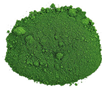
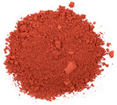
Six pigments were used in this study, all supplied by Kremer Pigments GmbH & Co. KG (Aichstetten, Germany): Egyptian blue (EB), ultramarine blue (UB), green earth (GE), chromium green (CG), mars red (MR), and cinnabar (CI). The reference codes and mineralogical characterizations of the pigments by the supplier are presented in Table 1.
The mortar used for the manufacture of the paint mock-ups was made up of a calcitic lime putty, stored underwater for more than 20 years, from the Department of Mineralogy and Petrology of the University of Granda. Coarse (1.6–4 mm) and fine silica (0.125–1.6 mm), obtained from a local store in Granada (S Spain), and Carrara marble powder (<0.7 mm), supplied by CTS S.L. (Madrid, Spain), were used as aggregates.
The soot used to simulate the soiling on the paintings was obtained by scraping different exhaust pipes of diesel-powered cars from Pontevedra (Galicia, NW Spain).

2.2. Sample Preparation

2.2.1. Pigment Tablets

Pigment tablets were manufactured by placing each pigment powder in a circular aluminium container with a diameter of 4 cm and a height of 1 cm. They were then compacted with a hydraulic press (30-ton) to obtain flat homogenous surfaces with the same diameter and around 0.3 cm height.

2.2.2. Fresco and Secco Painting Mock-Ups

Painting mock-ups (5 × 5 cm) were manufactured following the procedure described in [42]. The substrate was prepared by applying two lime-based mortar layers: (i) the arriccio (the innermost layer) was applied, approximately 2 cm thick, made in a 1:3 lime-to-sand volumetric ratio (2 parts coarse silica to 1 part fine silica); and (ii) the intonaco (the outermost layer) is thinner, approximately 1 cm thick, and is prepared using a 1:2 volume ratio of 1 fine silica and 1 marble powder). Four days after the arriccio layer was applied, the intonaco was added.
For the fresco technique (denoted as -F), pigments mixed with demineralised water were applied with a paintbrush during the ‘golden hour’ (i.e., approximately 4 h after applying the intonaco), when the lime mortar still retained at a high level of moisture [43].
For the secco technique, pigments were mixed with egg yolk (-EY). The yolk was separated from the white by pouring it back and forth in the half shells. It was then rolled onto a paper tissue to remove any remaining egg white. The yolk’s membrane was punctured with a needle, allowing the liquid to flow into a glass jar. A few drops of water were added, and it was then mixed individually with each pigment. Once an adequate consistency was achieved (defined as the point at which droplets forming at the brush tip would not fall off easily), the mixture was applied to fully dried mortars, which had been cured for two months under laboratory conditions (22 ± 3 °C and 60 ± 10% RH).
For each painting technique, twelve painting mock-ups were prepared (six as references) and left for six months under controlled laboratory conditions (22 ± 3 °C and 60 ± 10% RH), protected from direct light.

2.2.3. Artificial Aging of the Paint Mock-Ups

Six mock-ups (of the twelve painting mock-ups for each painting technique) were manufactured for artificial soiling. For this, the paint surfaces were coated with a mixture of soot dispersed in water (approximately 0.5 g). Subsequently, they were subjected to accelerated ageing in a FITOCLIMA 300EDTU climatic chamber, under controlled conditions of temperature (18 °C), relative humidity (80%) and SO2 exposure for a period of 40 days. The SO2 was diluted to 3% in 3000 ppm of nitrogen and then dosed at a concentration of 200 ppm—a value over 250,000 times higher than current SO2 levels in most of Europe (average value: 0.00076 ppm) [44]. These conditions were intentionally used to accelerate the aging of soot deposits on the surface of the paintings and also to enhance chemical interaction between soot and materials used in painting layers. The tap water used in the chamber to achieve 80% RH was analysed by high-resolution liquid chromatography (HRLC) with a Metrohm instrument with a Metrosep A Supp5–250 column (Herisau, Switzerland) and inductively coupled plasma optical emission spectroscopy (ICP-OES) with a PerkinElmer Optima 4300 DV ICP-OES (Waltham, MA, USA). Results are included in [45]: 15.8 mg/L Cl, <0.05 mg/L NO2, 2.15 mg/L NO3, 23.7 mg/L SO42−, 0.017 mg/L Ba2+, 17.35 mg/L Ca2+, 2.37 mg/L K+, 3.74 mg/L Mg2+, and 13.18 mg/L Na+.

2.3. Laser Application

A Q-Switched Quanta Ray INDI-series Nd:YAG laser, operating at 355 nm, with a pulse duration of 6 ns and a constant repetition of 10 Hz, was tested. Values of the spot diameter were adjusted for each fluence (between 0.3 and 0.6 mm). First, the laser was applied to the pigment tablets (areas around 1 × 1 cm) with an overlap of around 80% and 90% in the Y and X axes, respectively, to identify the damage threshold (Thp) of each sample. This overlapping was set to ensure a homogeneous distribution of the energy. A damage threshold is understood as the laser fluence above which visible colour changes begin. This fact allows the identification of the susceptibility of each pigment, which is defined as the propensity to undergo visible colour changes under laser irradiation [35]. Then, the Thp of each pigment was tested on its corresponding painting. Subsequently, by raising or lowering fluence, the painting mock-up damage threshold (Thm) was determined for each painting. Lastly, the Thm of each painting was tested on their corresponding artificially aged paint. To remove as much soiling as possible without causing physical damage to the underlying painting layer, the cleaning fluence (Thc) was determined for each paint. The effect of the number of consecutive passes was also evaluated, with one (Thc1p) and two (Thc2p) consecutive passes applied to each painting. The fixed beam impinged perpendicularly onto the target surface of the specimen placed vertically on a motorized XYZ-translation stage. The sample was precisely positioned at the beam waist of the focused beam using the Z-direction. Customized software was used to control the XY movement and to synchronize the laser with specimen displacement.

2.4. Analytical Techniques

The preliminary characterization of the raw materials (pigments, calcitic lime putty, coarse and fine silica, marble powder aggregates, and soot), included the following:
  • The mineralogical composition of the pigments, calcitic lime putty, coarse and fine silica, marble powder, and soot was analysed using X-ray diffraction (XRD, XPert PRO PANalytical B.V., Almelo, The Netherlands) according to the random-powder method. Analyses were performed using Cu-Kα radiation, a Ni filter, 45 kV voltage, and 40 mA intensity. The exploration range was 3–60° 2θ and the goniometer speed was 0.05° 2θ s−1. The oriented aggregate method was also used to properly identify the presence of phyllosilicates in the GE pigment [46]. The mineral phases were identified using the X’Pert HighScore software (version 4.9.0.27512).
  • The elemental composition of the soot and pigments was determined by X-ray fluorescence (XRF) with an Olympus Vanta C Handheld XRF analyser (Hamburg, Germany) in “GeoChem” mode, using 3-beams working at 40, 10, and 50 kV. The total measurement time was 60 s: 20 s for each beam. Element recognition was obtained by means of the suppliers database. The equipment was used to identify chemical elements of atomic number greater than 12. As no specific calibration was applied apart from the default calibration of the equipment, the composition obtained is semi-quantitative.
  • The molecular composition of the pigments and soot was obtained by Attenuated Total Reflectance Fourier–Transform Infrared Spectroscopy (ATR-FTIR), using a Thermo Nicolet 6700 (Thermo Fisher, Waltham, MA, USA) at a 2 cm−1 resolution over 32 scans in the mid infrared spectral region (400–4000 cm−1).
  • Soot was studied using a FEI Quanta 200 environmental scanning electron microscopy (Hillsboro, OR, USA) with energy-dispersive X-ray spectroscopy (EDS) in both secondary (SE)- and backscattered electron (BSE)-detection modes. Observation conditions included a working distance of ~10 mm, accelerating potential of 20 kV, and specimen current of ~60 mA.
For the characterization of the samples (pigment tablets, unaged painting mock-ups, and artificially aged mock-ups) before and after laser radiation, the following was conducted:
  • The specimen’s morphology was examined using a Nikon SMZ 1000 stereomicroscope (Melville, NY, USA).
  • The colour was characterized by colour spectrophotometry using CIELAB and CIELCH colour spaces [47], measuring L* (lightness), a* and b* (colour coordinates), C*ab (chroma), and h (hue) by means of a Minolta CM-700d spectrophotometer (Tokyo, Japan). L* represents lightness, varying from 0 (black) to 100 (white). The other two parameters are chromaticity coordinates: a* goes from red to green (where +a* is red and -a* is green) and b* from yellow to blue (+b* is yellow and -b* is blue). C*ab is calculated according to the following formula: C*ab = (a2 + b2)1/2 and h is calculated by means of the expression h = tan [1 − (a*/b*)].The measurements were made in the specular component excluded (SCE) mode, for a spot diameter of 8 mm, using illuminant D65 at an observer angle of 10°. A total of five measurements were made on unaged paint mock-ups and artificially aged mock-ups (before and after radiation). ΔL*, Δa*, Δb*, ΔC*ab, and ΔH* and colour difference (ΔE*ab = [ ΔL*2 + Δa*2 + Δb*2]1/2) were calculated between the non-irradiated and the irradiated areas following [48].
  • The molecular composition was obtained by ATR-FTIR, using the same equipment and conditions described above.
  • The painting mock-ups’ micromorphology and elemental composition were studied using a FEI Quanta200 environmental scanning electron microscope (Hillsboro, OR, USA) with energy-dispersive X-ray spectroscopy (SEM-EDS) in both secondary (SE) and backscattered electron (BSE) detection modes. Observation conditions included a working distance of ~10 mm, accelerating potential of 20 kV, and specimen current of ~60 mA.

3. Results

3.1. Chemical and Mineralogical Composition of the Raw Materials (Pigments, Lime Putty, Aggregates, and Soot)

XRD allowed the identification of impurities in the silicate pigments (EB, UB, and GE), as shown in Table 1. In Egyptian blue (EB), besides cuprorivaite (CaCuSi4O10), which imparts the blue colour, quartz (SiO2) was additionally identified as part of the pigment production process [49]. In ultramarine blue (UB), in addition to lazurite (Na3Ca(Al3Si3O12)S), other sodalite-group minerals—e.g., sodalite (Na8Al6Si6O24Cl2) and nepheline (Na,K(Al4Si4O16))—and kaolinite (Al2Si2O5(OH)4)) were detected as part of the manufacturing process [50]. In green earth (GE), besides greenish minerals glauconite ((K,Na)(Fe3+,Al,Mg)2(Si,Al)4O10(OH)2)) and celadonite ((K(Mg,Fe)Fe3+Si4O10(OH)2)), other impurities related to its natural provenance [51] were identified: muscovite (KAl2(AlSi3O10)(OH)2), clinochlore, (Mg,Fe2+)5Al(Si3Al)O10(OH)8, montmorillonite ((Na,Ca)0,3(Al,Mg)2Si4O10(OH)2⋅nH2O), kaolinite, albite (NaAlSi3O8), and calcite (CaCO3) were identified. As for oxide (CG and MR)- and sulphide (CI)-based pigments, no impurities were identified by XRD.
Regarding the raw materials used in the mortar production, the calcitic slaked lime consisted of portlandite (Ca(OH)2) and calcite (CaCO3). The aggregates included silica sand, which was composed of quartz (SiO2), feldspars and rutile (TiO2), and white marble powder, which contained calcite, quartz, and dolomite (CaMg(CO3)2).
The chemical composition of the soot by XRF was 95% light elements (elements with low atomic number), sulphur (2.48%), and calcium (1.24%), and other trace elements, including silicon (Si), iron (Fe), phosphorous (P), zinc (Zn), or copper (Cu). SEM analysis revealed that the diesel powder was composed of spherical particles mainly composed of carbon (C) and other minor elements (Cl, Si, Zn, or Cu).

3.2. Determination of the Damage Thresholds: Pigments and Unaged Painting Mock-Ups

Table 2 includes the damage threshold identified for each pigment tablet (Thp) and unaged painting mock-up (Thm).

3.2.1. Determination of the Pigment Tablet Damage Thresholds (Thps)

Figure 1 shows digital photographs of each pigment tablet after radiation, where the Thp is marked with a white square. Micrographs obtained by stereomicroscopy before (left) and after laser irradiation (right) are also included. No evident visual changes were observed by stereomicroscopy before and after irradiation. Cinnabar (CI) was the only exception as it underwent slight darkening even at very low fluences (Figure 1f), followed by mars red (MR) which slightly darkened. In all, it was observed that Egyptian blue (EB) was the least susceptible pigment as it withstood higher fluences (Thp: 0.147 J/cm2), followed by ultramarine blue (UB) and chromium green (CG) (Thp: 0.075 and 0.070 J/cm2, respectively). In turn, MR and CI were the most susceptible ones to laser radiation (Thp: 0.027 J/cm2).

3.2.2. Determination of the Damage Thresholds for Unaged Painting Mock-Ups (Thm)

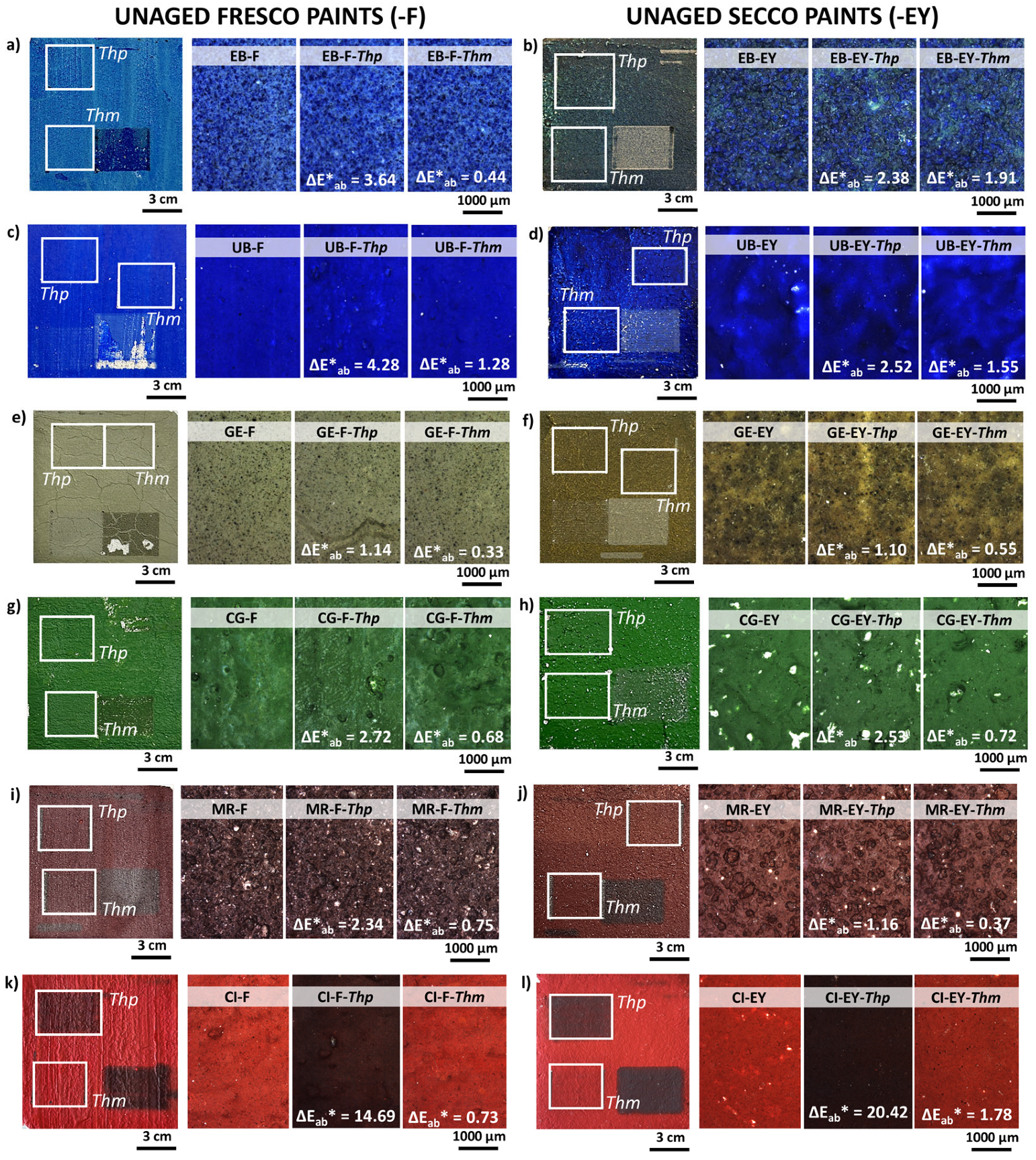
The fluence corresponding to the damage threshold for each pigment (Thp) was evaluated on the unaged painting mock-ups, indicated by a white square in the digital photographs presented in Figure 2. It was observed, based on stereomicroscopy micrographs, that these fluences did not cause any noticeable colour changes. Cinnabar (CI) paint mock-ups were the only exception as they underwent evident blackening, regardless of the painting technique. In fact, botch CI-F and CI-EY exhibited a colour change (∆E*ab) above 10 CIELAB units (Figure 2i–k). In CI-F and CI-EY, since ∆E*ab was well above the value considered as the threshold for the visual detection of a colour difference by the human eye (i.e., ∆E*ab = 3.5 CIELAB units) [48], the threshold detected in the painting mock-ups (Thm) was evidently lower than the one identified as the Thp. As for the other samples, higher fluences than their Thp were able to be applied on the paint mock-ups (Thm). This increase could be directly attributable to the protective effect of the binder surrounding the pigment particles—calcium carbonate in the fresco samples and egg yolk the secco ones—which could mitigate laser–matter interactions at the pigment level. ∆E*ab, presented in Figure 2, confirmed that Thm did not induced visible colour changes after radiation in any of the paint mock-ups. Indeed, the ∆E*ab values for all paints were below 2 CIELAB units, which is under the detection threshold of the human eye [48]. Analysis of the different painting techniques showed that F-based paints generally tolerated higher fluences than EY-based paints. In most cases, F-based samples also exhibited lower ΔEab* values than secco (EY) paintings, with the exception for MR-F. This behaviour can be primarily attributed to the inorganic nature of the fresco technique, in which the pictorial layer is embedded within a calcium carbonate matrix formed during carbonation. This mineral matrix likely provides greater thermal and mechanical stability under laser irradiation when compared to the EY-based paintings, where the pictorial film is bound by an organic egg-yolk medium that is inherently more sensitive to heat and photochemical effects. A similar trend was observed with respect to pigment chemistry; consistent with observations from the pigment tablets, silicate-based paints (EB, UB and GE) generally tolerated higher fluences than oxide (CG and MR)- and sulphide (CI)-based paints, further confirming the combined influence of binder composition and pigment chemistry on fluence tolerance during laser cleaning.

3.3. Determination of the Fluence Required for Cleaning Artificially Aged Painting Mock-Ups (Thc)

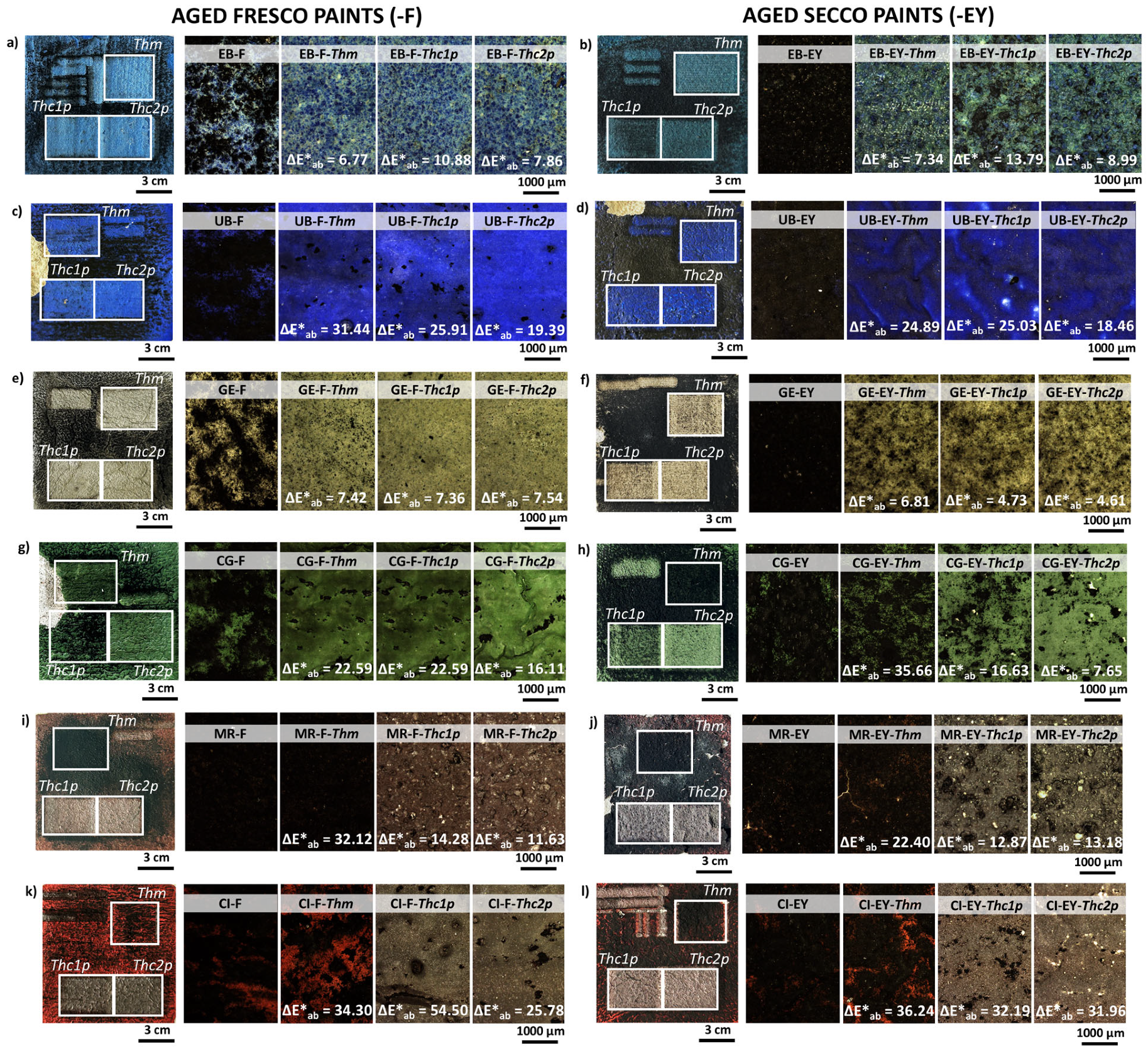
Since the primary goal was to remove as much soiling as possible without damaging to the painting, the fluences were adjusted, either increased or decreased, based on the nature of the pigments. For the silicate-based paints (EG, UB and GE), regardless of the painting technique, Thm fluences generally left remains of soiling on the surface, as observed in Figure 3 (especially in UL- and GE-based paintings). Consequently, a lower fluence was defined as the cleaning threshold (Thc, see Table 2), and the effect of repeated irradiation through consecutive passes was considered. This threshold fluence was applied either once (Thc1p) or twice consecutively (Thc2p), with the latter generally yielding improved cleaning efficacy. Despite visual inspection indicating that the underlying paint layers remained unaffected by laser radiation in terms of colour and appearance, residual surface soiling was still evident (Figure 3a–f), especially in EY-based paintings. Regarding oxide-based paintings (CG and MR), the Thm did not remove any soiling (Figure 3g–j). Thus, higher fluences were applied for cleaning of the paintings (Thc, see Table 2). Although in CG-based paintings the colour and appearance were apparently respected (Figure 3g,h), MR paintings underwent a slight darkening (especially in MR-EY-Thc2p, Figure 3j). Nevertheless, both CG and MR paintings showed evident soiling remains. Sulphide-based paintings (CI) underwent a similar behaviour: the Thm did not remove hardly any soiling, then, fluences had to be increased (see Table 2). However, to remove soiling (nonetheless leaving remains, as observed by stereomicroscopy), Thc caused major colour variations (Figure 3i–k), regardless of the painting technique and the number of passes (Thc1p or Thc2p). Lastly, regarding the colour differences (ΔEab*) between the reference paintings (unaged) and the cleaned areas (included in Figure 3), it was observed that the application of two consecutive passes (Thc2p) generally showed lower ΔEab* than the Thm or Thc1p.

3.4. Cleaning Effectiveness on Soot Removal

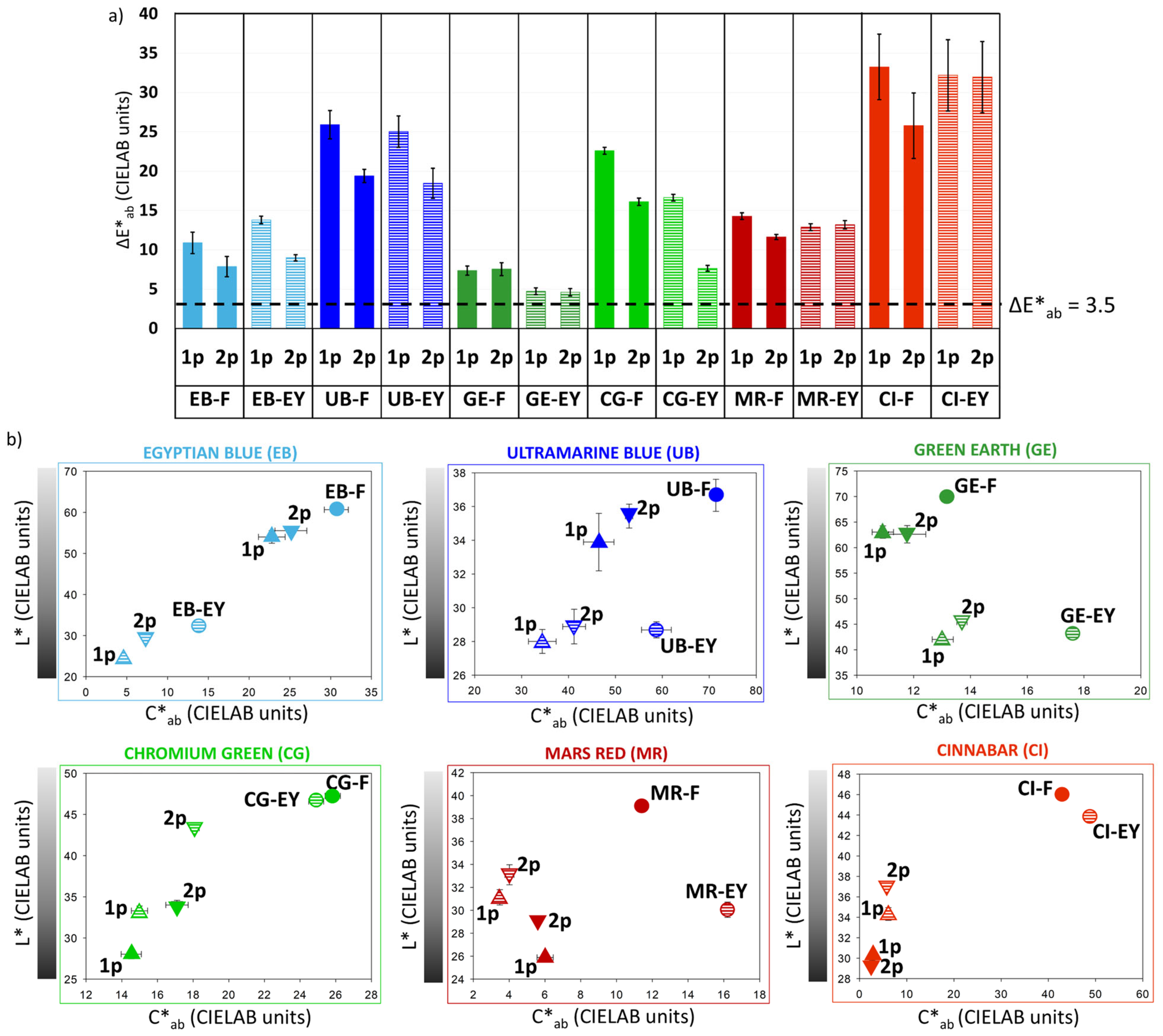
Spectrophotometry results for the colour parameters (L*, a*, b*, C*ab, and h), their variations (ΔL*, Δa*, Δb*, ΔC*ab, and ΔH*), and the total colour difference (ΔE*ab) between the reference paintings (unaged) and the aged mock-ups after irradiating with Thm, Thc1p, and Thc2p fluences are provided as Supplementary Materials (Table S1). Figure 4a represents ΔE*ab for Thc1p and Thc2p, and it was observed that all paintings showed ΔE*ab > 3.5 CIELAB units (marked with a black dashed line in Figure 4a). Therefore, the values were above the value considered as the threshold for the visible detection of a colour difference by the human eye [48]. Nevertheless, the colour values obtained after two consecutive passes (Thc2p) were lower than after Thc1p indicating higher similarity to the unaged mock-ups. This trend was also evident in the L* (lightness) and C*ab (chroma) values, shown in Figure 4b, where Thc2p fluences exhibited higher L* values, indicating reduced blackening and therefore less soiling remaining.
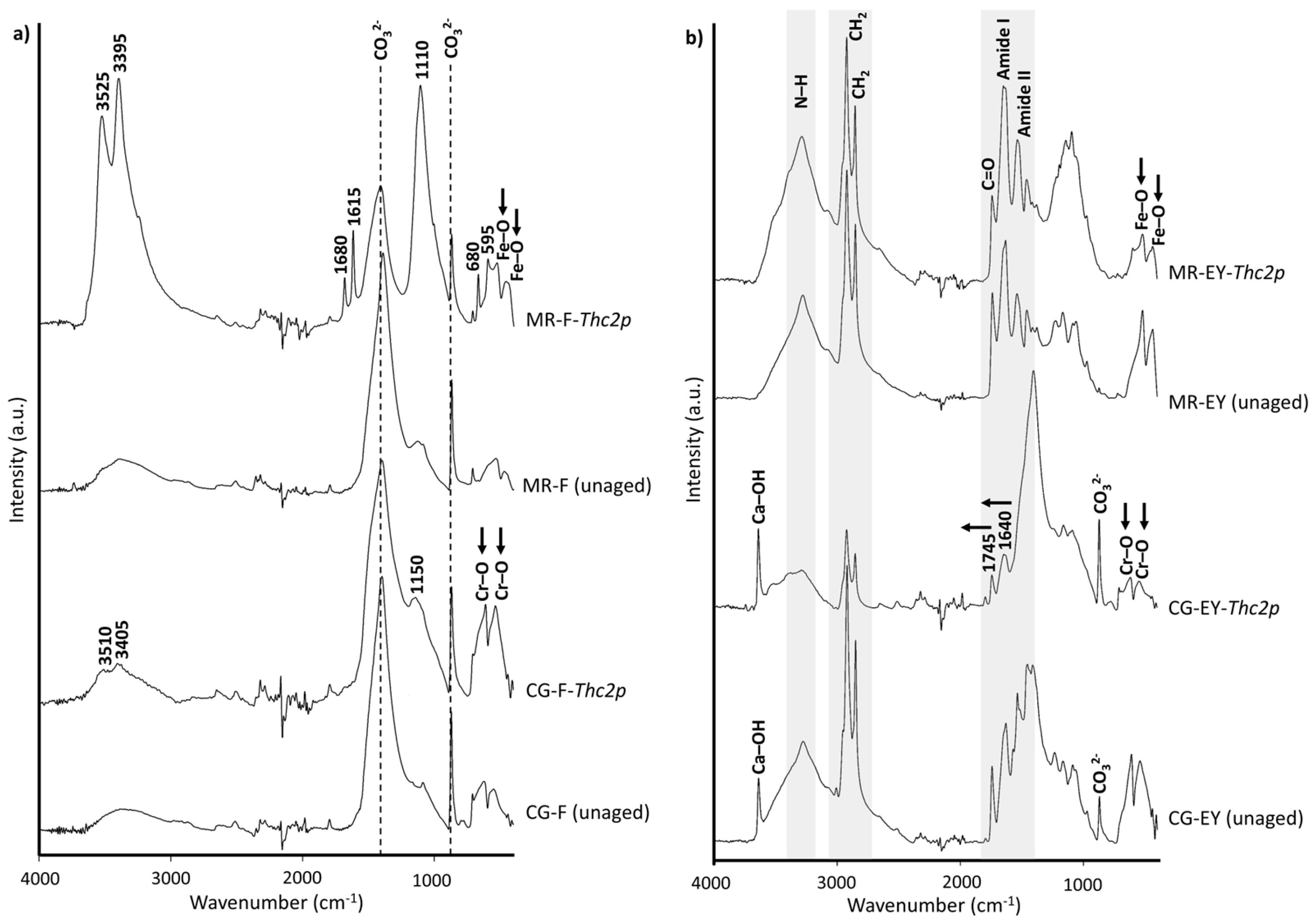
To evaluate the presence of soiling remains, the FTIR spectra of the reference paintings (unaged) were compared to those after laser ablation with Thc fluences and two consecutive passes (Thc2p). The spectra obtained for the soot prior to covering the surface of painting mock-ups, included as Supplementary Materials (Figure S1), showed characteristic bands at 3435 cm−1 (–OH stretching), a high intensity doublet at 2920 and 2850 cm−1 (C–H asymmetric stretching from aliphatic methylene groups), bands around 1705 cm−1 (C=O stretching of carbonyl groups), at 1600 cm−1 (aromatic C=C vibrations and COO groups), around 1460 and 1385 cm−1 (C–H bending or –OH deformations of phenolic and aliphatic groups), and a broad band between 1200 and 1000 cm−1 (C–O stretching) [52,53,54].
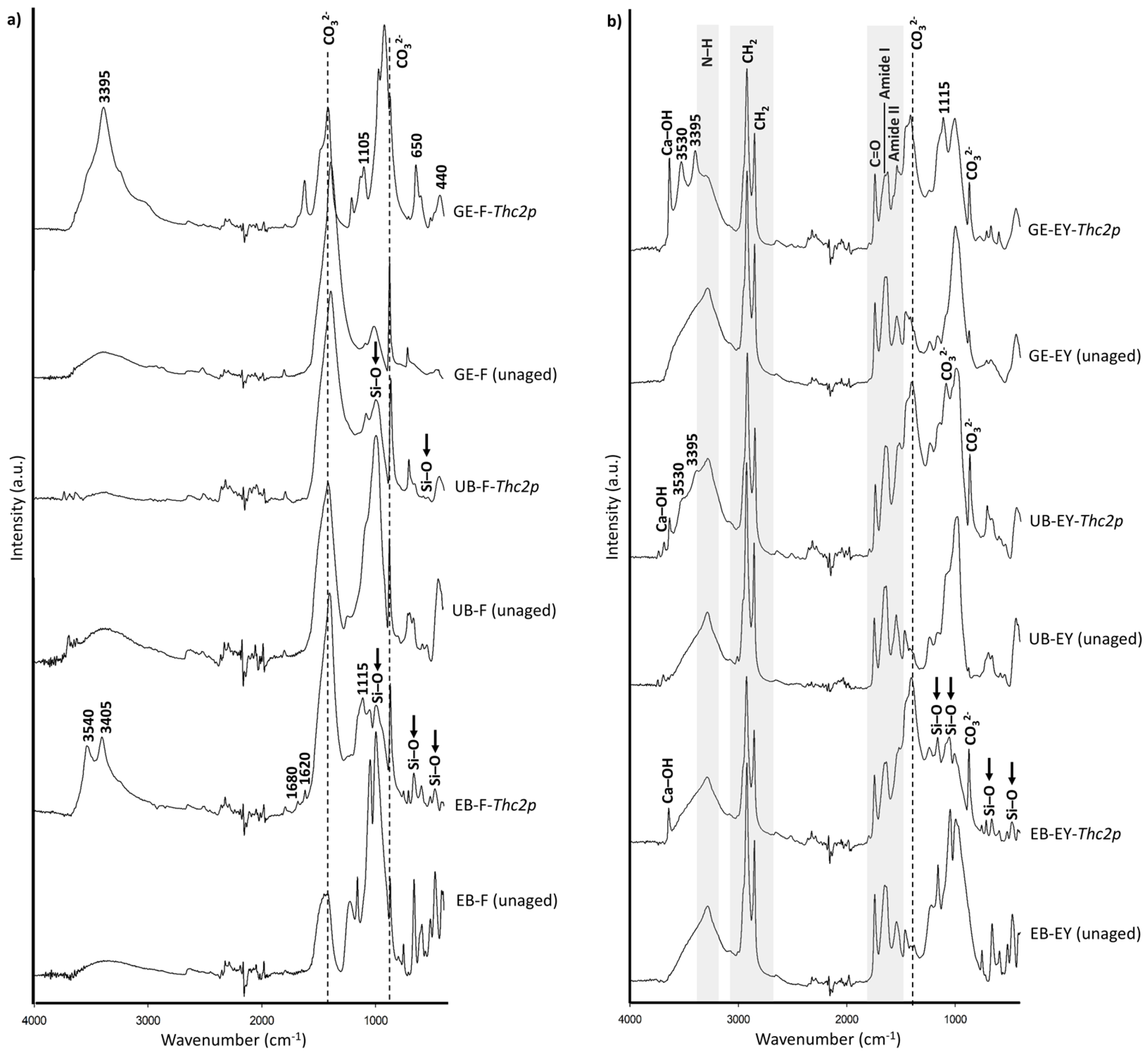
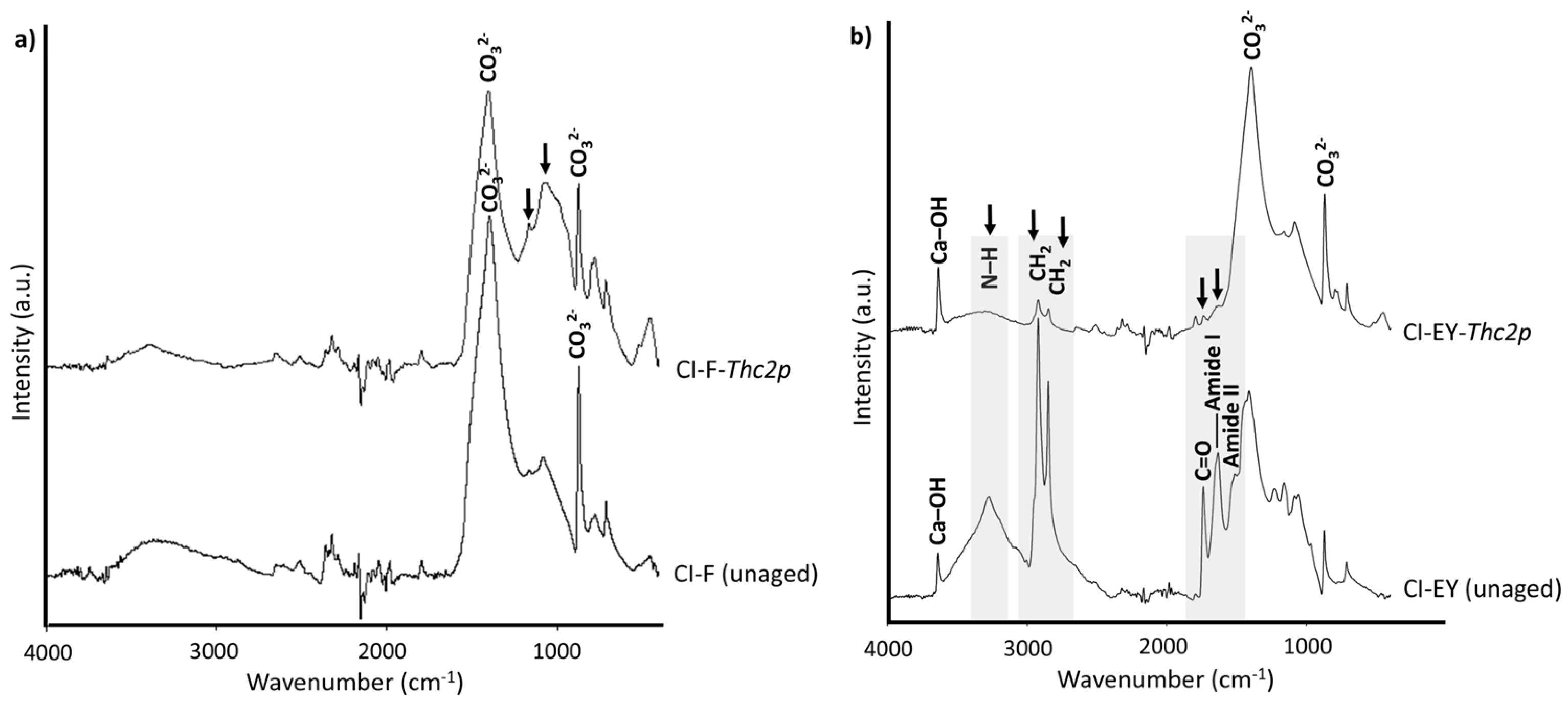
Regarding the paintings (unaged and after Thc2p irradiation), Figure 5 includes the spectra obtained for silicate-based paintings (EB, UB, and GE), Figure 6 the spectra obtained for oxide-based paintings (CG and MR), and Figure 7 the sulphide-based painting spectra (CI). It was observed that all fresco paintings (-F) exhibited calcium carbonate (CaCO3) characteristic bands: around 1400 cm−1 (CO32− stretching), 875 cm−1 (CO32− asymmetric bending), and 710 cm−1 (CO32− symmetric bending) [55,56]. As for secco paintings, egg yolk characteristic bands were identified around 3260 cm−1 (N–H stretching), 2920 and 2850 cm−1 (CH2 stretching from long chain fatty acids), 1735 cm−1 (assigned to ester C=O stretching, ascribable to triglyceride), 1625 cm−1 (C=O stretching from amide I), and 1520 cm−1 (C=O bending from amide II) (highlighted with grey rectangles in Figure 5, Figure 6 and Figure 7) [57,58]. EY-based paintings also showed low intensity bands assigned to calcium carbonate. A band around 3640 cm−1 (Ca–OH) was occasionally present, regardless of the painting technique or the pigment used, related to the presence of portlandite (Ca(OH)2) [59,60].
After laser irradiation (-Thc2p samples), none of the bands assigned to soot were observed in the painting samples, regardless of the painting technique or the pigment nature. Upon irradiation, some paintings showed to a lesser or greater extent bands around 3540 and 3405 cm−1 (–OH stretching of water), 1680 and 1615 cm−1 (–OH bending of water), 1110 cm−1 (S–O stretching), and 680 and 600 cm−1 (S–O bending) [61,62]. All these bands were assigned to the presence of calcium sulphate (gypsum, CaSO4·2H2O) [61,62]. These bands were especially intense in EB-F-Thc2p (Figure 5a), GE-EY-Thc2p (Figure 5b), MR-F-2p (Figure 6a).
Changes in pigment-related bands varied according to pigment chemistry. In silica-based paintings (EB and UB), the characteristic Si–O stretching bands decreased in intensity after laser ablation. In EB paintings, this included bands assigned to cuprorivaite at approximately 1230, 1160, 1050, 995, 755, and 665 cm−1 [63,64], while in UB samples the bands assigned to lazurite/sodalite at around 980 and 665 cm−1 [65] also diminished (marked with black arrows in Figure 5). In contrast, green earth (GE) samples showed an increase in the glauconite/celadonite band at around 970 cm−1 [66,67], especially in the F painting.
In oxide-based paintings, different behaviours were observed depending on both pigment and technique. In chromium green (CG) and mars red (MR), the characteristic Cr–O (≈610 and 465 cm−1) [68,69] and Fe–O (≈510 and 430 cm−1) [70,71] bands increased in intensity in F-based paintings (black arrows in Figure 6a), whereas a decrease was observed EY-based paintings (black arrows in Figure 6b). Additionally, Fe–O bands shifted towards higher wavenumbers by approximately 20 cm−1, regardless of the painting technique, while Cr–O bands remained unchanged. This pronounced shift in MR-F suggests modifications in the chemical environment of the Fe ions. Alteration in the egg yolk binder were also detected. In CG-EY-Thc2p, binder-related bands decreased in intensity and shifted towards higher wavenumbers (±20 cm−1), as indicated by the left-pointing black arrows in Figure 6b. Specifically, the bands assigned to C=O stretching at 1705 cm−1 (esters) and C=C stretching at 1600 cm−1 (amide I) shifted to 1745 and 1640 cm−1, respectively. Similar spectral shifts have been reported in previous studies and attributed to changes in protein secondary structures (α-helices and β-sheets) [72,73].
For cinnabar (CI) paintings, the characteristic Hg–S stretching bands occur in the far-IR region (≈345 and 283 cm−1) [74] and were therefore outside the spectral range investigated. Nevertheless, CI-F showed an increase of intensity in the region around 1060 cm−1, assigned to Si–O stretching (black arrow in Figure 7a), likely related to quartz [56]. In CI-EY, the characteristic bands assigned to the EY binder showed a marked decrease in intensity after laser irradiation (marked in Figure 7b).
Finally, all paintings displayed, to varying degrees, an increase in the characteristic CaCO3 bands associated with CO32− groups (highlighted in Figure 5, Figure 6 and Figure 7). Overall, no systematic correlation was identified between the direction of intensity changes (increase or decrease) and either the chemical nature of the pigment or the painting technique, as these variations appeared to occur in a non-uniform manner across the samples.
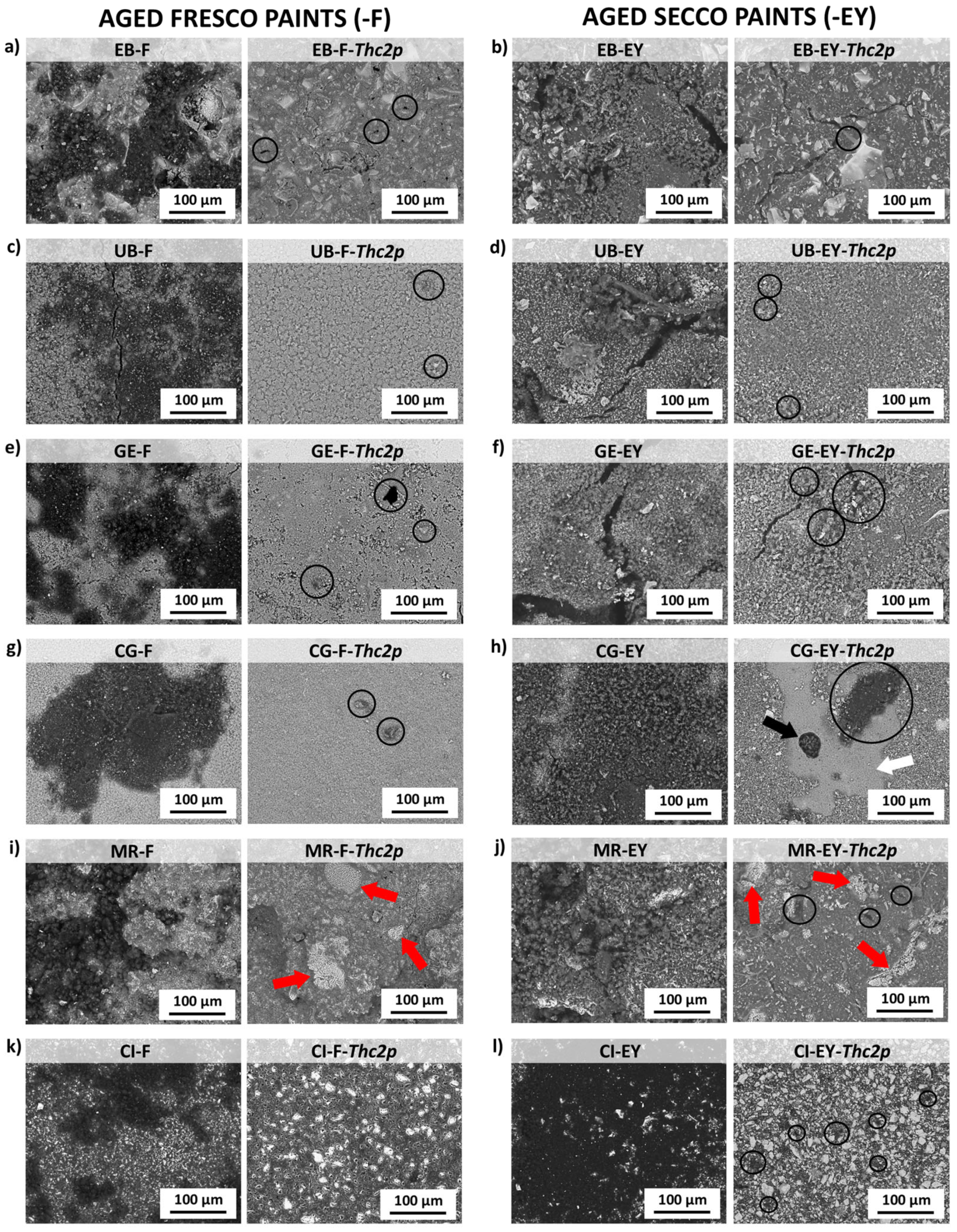
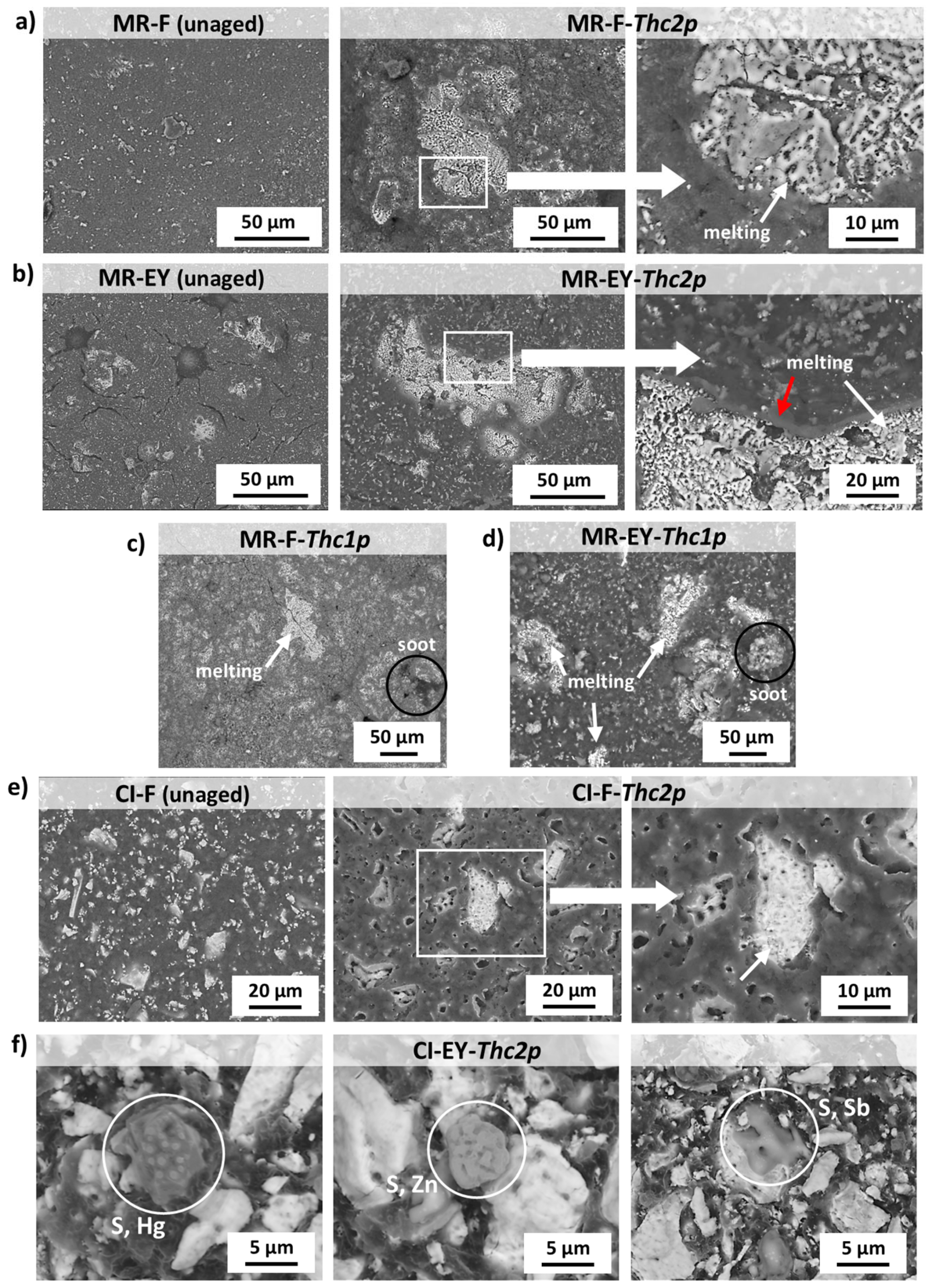
From a micro-textural perspective, SEM-EDS analysis revealed a discontinuous soiling layer on the surface of all aged paintings prior to irradiation, as shown in the micrographs in Figure 8 (left column). In addition to the carbonaceous particles from the soot, sulphur (S) and calcium (Ca) rich particles were observed in all paintings. After irradiation (-Thc2p), regardless of the painting technique and the nature of pigments, soot remains were observed to a lesser extent in all paintings (marked with black circles in Figure 8) compared to the surfaces prior to irradiation. Nevertheless, the level of cleaning varied depending on the nature of the pigments, whether silicates, oxides, or sulphides. For instance, silicate-based paintings were among the cleanest, where small soiling deposits (around 5–25 µm) were observed, especially in EB- and UB-based paintings (Figure 8a–f). Oxide-based paintings followed with larger deposits of soiling remaining (≈300 µm), especially in CG-based paintings (Figure 8g–j). Moreover, oxide-based paintings underwent microtextural changes: in CG-EY paintings, punctual loss of the paint layer and of the intonaco was observed (marked with a black and white arrow, respectively, in Figure 8h). In turn, regardless of the painting technique, MR-based paintings showed an evident melting process (marked with red arrows in Figure 8i,j), as discussed below. Finally, in CI-based paintings, punctual soiling deposits were still present, were considerable in size (≈150 µm) (Figure 8k,l), and they underwent high microtextural changes: an increase in fissures and higher exposure of pigment particles (discussed below).
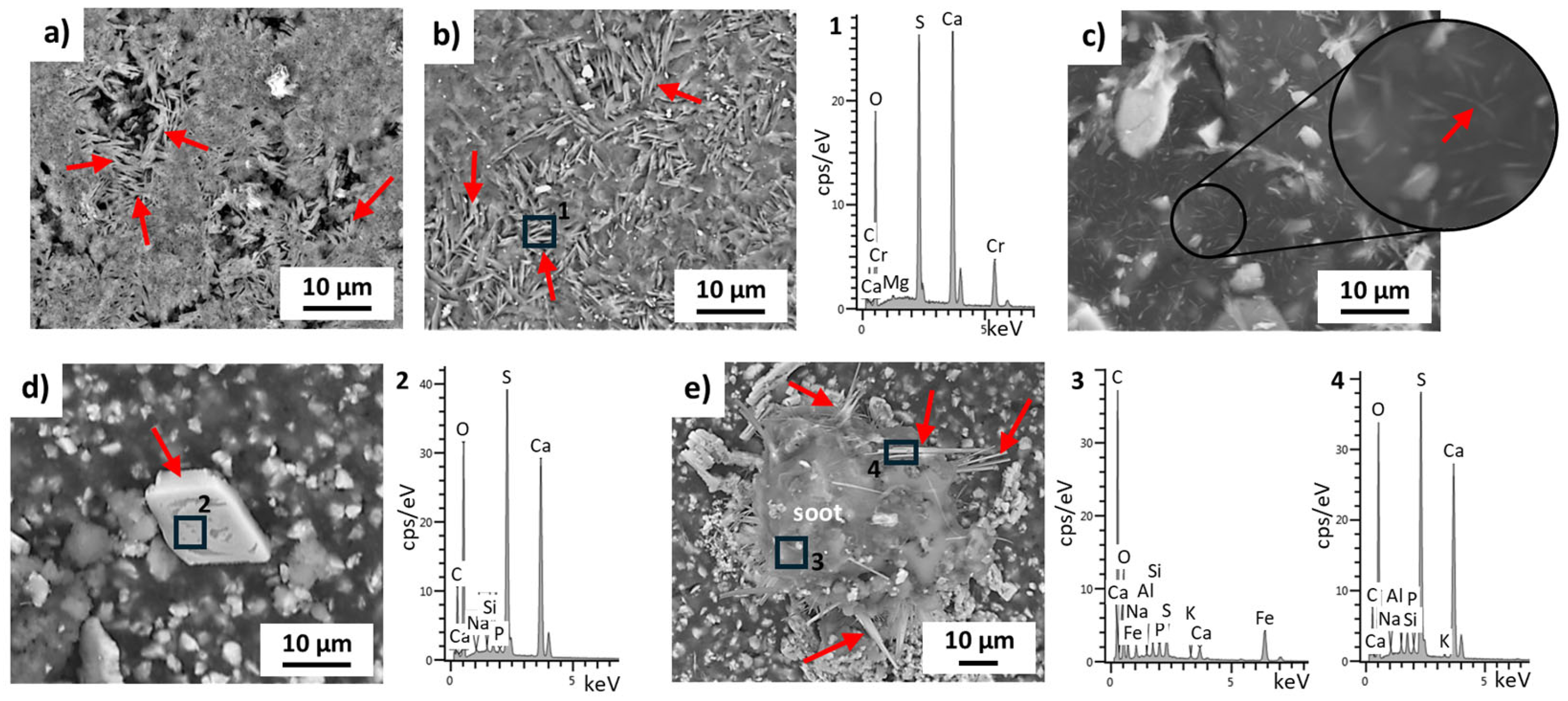
Regardless of the cleaning level, sulphur (S) and calcium (Ca) rich morphologies were still present on the surface after irradiation (regardless of the painting technique or the pigment used). These were present as individual particles or agglomerated in the form of deposits. In addition, their morphological appearance was highly influenced by the painting technique. On the one hand, F-based paintings showed widespread acicular particles. These were present forming widespread large deposits as part of the Ca-based intonaco (marked with red arrows in Figure 9a,b). On the other hand, in EY-based paintings there were either small and thin acicular crystals embedded within the binder (Figure 9c), as individual tabular particles (marked with a white arrow in Figure 9d), or larger acicular particles forming part of the carbonaceous-rich deposits (marked with red arrows in Figure 9e). The study of the surface allowed for identification of a higher amount of these S/Ca-rich particles in EY paintings when compared to F-based ones.
Specifically, silicate (EB, UB, and GE)- and CG-based paintings remained unaltered, regardless of the painting technique (F or EY). However, as previously mentioned, MR paintings (oxide as CG) underwent evident signs of melting, not observed in unaged (reference) paintings, in both F- (marked with a white arrow in Figure 10a) and EY-based paintings (marked with a white arrow in Figure 10b). These processes were encountered all over the surface. In addition, the proteinaceous binder in EY-based paintings also underwent a melting process (marked with a red arrow in Figure 10b). Since the melting process was only observed in MR-paintings, the sample irradiated with one pass (MR-Thc1p) was also evaluated. Nevertheless, larger and more widespread deposits of soiling were present; and, although to a lesser extent than in MR-Thc2p, a melting process was also observed in both F- and EY-based paintings (Figure 10c and d, respectively). Lastly, in CI-based paintings, regardless of the painting technique, an increase in fissures was observed after irradiation (Figure 9e), as well as microtextural changes in the pigment particles (marked with white arrows in Figure 10e). Moreover, micro-textural changes were also on sporadic particles (Figure 10f) composed of S and Hg, S and Zn, or S and antimony (Sb).

4. Discussion

Regardless of the painting technique, the colour difference (ΔE*ab) exceeded 5 CIELAB units in all paintings, except for GE, indicating that the cleaning—whether effective or not—did not restore the colours to their original unaged state. Consequently, the post-cleaning colour parameters remained significantly different from those of the unaged paints. However, it is important to emphasise that the high ΔE*ab values observed should not be interpreted as a limitation of the cleaning procedure. Rather, they are primarily attributable to colorimetric changes induced by the accelerated ageing in the climatic chamber. Similar behaviours have been reported in previous studies in which paint dosimeters, even in the absence of soot deposition, were subjected to SO2 aging and exhibited substantial colour alteration [45,75]. This interpretation is further supported by stereomicroscopic observations: comparison of the micrographs shows that the overall colour appearance of the paintings after cleaning (Figure 3) remains distinct from the unaged samples (Figure 2), independently of the cleaning outcome. Since the objective of this study was not to recover the original unaged colour of the paintings, but rather to evaluate the effectiveness of soot removal, ΔE*ab values should not be considered representative indicators when assessing the success of the cleaning procedure. The evaluation of cleaning efficiency must therefore rely primarily on compositional, morphological, and textural evidence rather than on colorimetric differences alone.
With regard to the cleaning thresholds (Thc), it was observed that the application of two consecutive passes (-Thc2p) yielded better results in terms of soiling removal and respect for the painting. This has been reported in other studies where the application of lower fluences, though with multiple applications, proved to be more respectful to the painting [76].
On the one hand, regardless of the cleaning level, pigment composition, or the painting technique, laser irradiation was unable to remove the Ca/S-rich particles—primarily gypsum (CaSO4·2H2O)—that was formed during accelerated aging. FTIR and SEM-EDS analyses confirmed that these particles remained on the painting surfaces after laser cleaning. Previous studies have demonstrated that laser cleaning can be effective in removing gypsum-rich crusts under specific conditions. Pozo-Antonio et al. [77] reported the successful removal of black gypsum-rich crusts from granitic stone using a 355 nm Nd:YAG laser, achieving a high degree of cleaning without inducing damage to the substrate when a fluence of 0.3 J/cm2 was applied. By contrast, as shown in Table 2, the fluences employed in the present study were, in most cases, substantially lower than 0.3 J/cm2. Consequently, the persistence of gypsum residues observed here is not unexpected. Their presence could negatively affect paintings’ long-term durability and should be eventually removed. Gypsum crystallization can induce mechanical stress within the mortar pores, potentially causing disaggregation, flaking, and delamination due to the larger volume of the crystalline unit cell of gypsum compared to that of calcium carbonate [78]. Consequently, follow-up chemical cleaning procedures are recommended to eliminate these salts. On the other hand, in terms of cleaning efficiency, specifically soiling removal, stereomicroscopy and SEM-EDS observation revealed residual deposits on all the paintings to some extent. The quantity of remaining material, however, was strongly influenced by both the pigment composition and the painting technique, as discussed in the following subsections.

4.1. Influence of the Pigment Composition

Cleaning silicate-based paintings (EB-, UB-, and GE-) allowed using lower fluences (Thc) than the ones identified for the unaged paintings (Thm), as opposed to oxides (CG and MR) or sulphide (CI) paintings where the fluence had to be increased. The fact that the threshold used in silicate paintings was lower is very useful information for professionals working in the field as they could ensure a complete removal of the soiling by the application of multiple passes, ensuring that no damage would be caused to the painting or the pigment. However, the fluence increase in oxide- and sulphide-based paintings did not ensure effective cleaning and evident micro-textural changes were observed. In CG-EY-Thc2p, punctual losses of the painting layer took place. Evident signs of melting, together with considerable soiling deposits, were observed in MR-F and MR-EY after the application of one or two passes (Thc1p and Thc2p, respectively). Considering the blackening observed by stereomicroscopy and the suggested changes in the chemical environment of Fe ions (by FTIR), it is possible that hematite (hexagonal α-Fe2O3) underwent a reduction process, transforming into black magnetite (octahedral Fe3O4), due to laser irradiation local heating [79]. As for CI paintings, a micro-pitting alteration was observed all over the surface of the CI-F and CI-EY mock-ups, as well as blackening and punctual melting processes. The cinnabar particles not only underwent melting but also accumulated Zn/S and Sb/S rich particles. These particles could be related to the minerals sphalerite (ZnS) and stibnite (Sb2S3), respectively, which are commonly associated with cinnabar ore deposits [80,81]. This fact reported the importance of impurities in laser cleaning, as reported in other studies [82].
These results clearly indicate that pigment chemistry plays a key role in determining susceptibility to laser irradiation at 355 nm. It is therefore reasonable to expect that the use of other laser wavelengths would lead to different interaction mechanisms and cleaning outcomes, an aspect that warrants further investigation. In this context, a recent study [34] compared three Nd:YAG lasers operating at 1064 nm with different pulse durations (110 µs, 100 ns, and 8 ns) and reported the transformation from red cinnabar (α-HgS) to black metacinnabar (β-HgS), regardless of the fluence or pulse duration applied. This finding highlights, that for certain pigments, sensitivity is strongly linked to intrinsic absorption properties rather than solely to laser parameters. By contrast, the same study showed that other pigments—different from those investigated here—exhibited markedly different behaviours depending on the laser wavelength and operational settings. This variability underscores the importance of pigment-specific absorption characteristics when selecting laser wavelengths for conservation treatments. Consequently, future studies should systematically assess soot removal using alternative laser wavelengths and pulse regimes, in order to provide conservators with robust, evidence-based guidelines for selecting the most appropriate laser systems for safe and effective cleaning.

4.2. Influence of the Painting Technique

In terms of cleaning level, no differences were observed between fresco (-F)- and egg yolk (-EY)-based paintings, except for CG. While punctual small soiling deposits (<10 µm) were observed in CG-F, considerable remains that were larger in size were observed in CG-EY (>80 µm). Moreover, as previously mentioned, micro-textural changes were observed in CG-EY (painting loss). However, regardless of the cleaning level, differences were observed regarding the laser fluence (J/cm2). In general terms, EY-based paintings were more susceptible to laser radiation than F-based ones since the fluences applied were normally lower (see Table 2). However, no significant changes in the chemical structure of the EY binder were observed, which could suggest binder alteration was observed by FTIR analysis (except for CG-EY). Lastly, regarding the presence of gypsum, EY-based paintings generally showed a higher amount. This is likely related with the fact that low amounts of sulphur can be present in the egg yolk leading to a higher formation of gypsum.

5. Conclusions

The aim of this study was to assess the effectiveness of a nanosecond Nd:YAG laser working at 355 nm for cleaning artificially aged paint mock-ups. Overall, laser cleaning showed moderate effectiveness in soiling removal, with outcomes strongly influenced by pigment composition and, to a lesser extent, painting technique. The application of two consecutive low-fluence passes proved more effective than a single pass, enhancing soot removal while minimizing damage to the painted surface. Nevertheless, complete elimination of soiling was not achieved and residual deposits persisted, particularly in oxide- and sulphide-based paintings.
Regardless of cleaning efficiency, the 655 nm nanosecond Nd:YAG laser was unable to remove Ca/S-rich gypsum particles formed during the artificial ageing. These residues, confirmed by FTIR and SEM-EDS analysis, may compromise long-term painting stability and should be addressed through complementary conservation treatments.
Pigment composition played a critical role in determining the cleaning outcome. Silicate-based paints (Egyptian blue, ultramarine blue, and green earth) tolerated low fluences more effectively, enabling safer cleaning through multiple passes. In contrast, oxide-based pigments (chromium green and mars red) and sulphide-based pigments (cinnabar) required higher fluences, often leading to pigment alteration, surface melting, and painting loss. In mars red samples, hematite may have undergone partial reduction to magnetite, causing blackening, while cinnabar exhibited micro-pitting and melting, affecting both the pigment and associated impurities and likely including sphalerite (ZnS) and stibnite (Sb2S3).
Painting technique also influenced laser response, with egg-yolk-based mock-ups showing higher sensitivity to laser irradiation than frescoes at comparable fluences. Importantly, no chemical or micro-textural degradation of the organic binder was detected (except for CG-EY). Finally, although this study focused on a dense and homogeneous soiling layer to ensure reproducibility, future work should systematically investigate the influence of different pollution levels on laser-cleaning efficiency. Such studies are essential to further optimise laser parameters according to the degree of soiling present on painted surfaces.

Supplementary Materials

The following supporting information can be downloaded at: https://www.mdpi.com/article/10.3390/min16010010/s1, Table S1: L*, a*, b*, C*ab and h* values of fresco (-F) and secco (-EY) based paint mock-ups. The variation (Δ) between the reference paints and the irradiated area with the mock-up threshold (-Thm), and the cleaning threshold after one (-Thc1p) and two (-Thc2p) consecutive pulses included, as well as the colour variation (ΔEab*). Standard deviations (STDs) are also shown. See Table 1 for an explanation of the pigment identification codes (ID); Figure S1: ATR-FTIR spectra of the diesel powder.

Author Contributions

Conceptualization, D.J.-D., K.D., L.A.-H. and J.S.P.-A.; methodology, D.J.-D., K.D., L.A.-H. and J.S.P.-A.; software, P.B. and A.D.; validation, J.S.P.-A.; formal analysis, D.J.-D.; investigation, D.J.-D.; resources, P.B. and A.D.; data curation, D.J.-D. and J.S.P.-A.; writing—original draft preparation, D.J.-D.; writing—review and editing, A.D. and J.S.P.-A.; visualization, J.S.P.-A.; supervision, J.S.P.-A.; project administration, J.S.P.-A.; and funding acquisition, J.S.P.-A. All authors have read and agreed to the published version of the manuscript.

Funding

This research was funded by Research Project ED431F 2022/07. Funding for the open access charge was provided by the Universidade de Vigo/CISUG. For more information, see https://laseringph.webs.uvigo.es/ (accessed on 18 December 2025).

Data Availability Statement

Data are contained within the article. Further data are available on request from the authors.

Acknowledgments

Daniel Jiménez-Desmond was supported by the ED481A-2023/086 predoctoral contract through “Programa de axudas á etapa predoutoral da Xunta de Galicia” cofinanced by the European Union within the framework of the FSE+ Galicia 2021-2027 programme. Laura Andrés-Herguedas was supported by the PRE2022-105106 PhD contract, funded by MICIU/AEI/10.13039/501100011033, and by ESF+. Amélia Dionísio is grateful for the support of CERENA (strategic project FCTUIDB/04028/2025).

Conflicts of Interest

The authors declare no conflicts of interest.

References

  1. Venegas García, C.; Barrainkua Legid, A. La Conservación de Pintura Mural; Síntesis: Madrid, Spain, 2021. [Google Scholar]
  2. Naqvi, A. Decoupling trends of emissions across EU regions and the role of environmental policies. J. Clean. Prod. 2021, 323, 129130. [Google Scholar] [CrossRef]
  3. Herrera, A.; Cardell, C.; Pozo-Antonio, J.S.; Burgos-Cara, A.; Elert, K. Effect of proteinaceous binder on pollution-induced sulfation of lime-based tempera paints. Prog. Org. Coat. 2018, 123, 99–110. [Google Scholar] [CrossRef]
  4. Bevilacqua, N.; Borgioli, L.; Adrover Gracia, I. Pigmenti Nell’arte Dalla Preistoria Alla Rivoluzione Industriale; II Prato: Saonara, Italy, 2010. [Google Scholar]
  5. Urosevic, M.; Yebra-Rodríguez, A.; Sebastián-Pardo, E.; Cardell, C. Black soiling of an architectural limestone during two-year term exposure to urban air in the city of Granada (S Spain). Sci. Total Environ. 2012, 414, 564–575. [Google Scholar] [CrossRef] [PubMed]
  6. Vazquez, P.; Carrizo, L.; Thomachot-Schneider, C.; Gibeaux, S.; Alonso, F.J. Influence of surface finish and composition on the deterioration of building stones exposed to acid atmospheres. Constr. Build. Mater. 2016, 106, 392–403. [Google Scholar] [CrossRef]
  7. Horemans, B.; Cardell, C.; Bencs, L.; Kontozova-Deutsch, V.; De Wael, K.; Van Grieken, R. Evaluation of airborne particles at the Alhambra monument in Granada, Spain. Microchem. J. 2011, 99, 429–438. [Google Scholar] [CrossRef]
  8. La Russa, M.F.; Fermo, P.; Comité, V.; Belfiore, C.M.; Barca, D.; Cerioni, A.; De Santis, M.; Barbagallo, L.F.; Ricca, M.; Ruffolo, S.A. The Oceanus statue of the Fontana di Trevi (Rome): The analysis of black crust as a tool to investigate the urban air pollution and its impact on the stone degradation. Sci. Total Environ. 2017, 593–594, 297–309. [Google Scholar] [CrossRef]
  9. Comite, V.; Miani, A.; Ricca, M.; La Russa, M.; Pulimeno, M.; Fermo, P. The impact of atmospheric pollution on outdoor cultural heritage: An analytic methodology for the characterization of the carbonaceous fraction in black crusts present on stone surfaces. Environ. Res. 2021, 201, 111565. [Google Scholar] [CrossRef]
  10. Islam, N.; Roy, K.; Barman, P.; Rabha, S.; Bora, H.K.; Khare, P.; Konwar, R.; Saikia, B.K. Chemical and toxicological studies on black crust formed over historical monuments as a probable health hazard. J. Hazard Mater. 2024, 464, 132939. [Google Scholar] [CrossRef]
  11. Dallmann, T.R.; Harley, R.A. Evaluation of mobile source emission trends in the United States. J. Geophys. Res. Atmos. 2010, 115, D14305. [Google Scholar] [CrossRef]
  12. Calparsoro, E.; Maguregui, M.; Giakoumaki, A.; Morillas, H.; Madariaga, J.M. Evaluation of black crust formation and soiling process on historical buildings from the Bilbao metropolitan area (north of Spain) using SEM-EDS and Raman microscopy. Environ. Sci. Pollut. Res. 2017, 24, 9468–9480. [Google Scholar] [CrossRef] [PubMed]
  13. ICOMOS. ICOMOS principles for the preservation and conservation-restoration of wall paintings. In Proceedings of the 14th ICOMOS General Assembly, Victoria Falls, Zimbabwe, 2–4 June 2003. [Google Scholar]
  14. Rivas, T.; Pozo, S.; Paz, M. Sulphur and oxygen isotope analysis to identify sources of sulphur in gypsum-rich black crusts developed on granites. Sci. Total Environ. 2014, 482–483, 137–147. [Google Scholar] [CrossRef]
  15. Ricciardi, M.; Pironti, C.; Comité, V.; Bergomi, A.; Fermo, P.; Bontempo, L.; Camin, F.; Proto, A.; Motta, O. A multi-analytical approach for the identification of pollutant sources on black crust samples: Stable isotope ratio of carbon, sulphur, and oxygen. Sci. Total Environ. 2024, 951, 175557. [Google Scholar] [CrossRef]
  16. Maravelaki-Kalaitzaki, P.; Biscontin, G. Origin, characteristics and morphology of weathering crusts on Istria stone in Venice. Atmos. Environ. 1999, 33, 1699–1709. [Google Scholar] [CrossRef]
  17. Maravelaki, P.V.; Zafiropulos, A.V.; Kilikoglou, V.; Kalaitzaki, M.; Fotakis, C. Laser-induced breakdown spectroscopy as a diagnostic technique for the laser cleaning of marble. Spectrochim. Acta Part B At. Spectrosc. 1997, 52, 41–53. [Google Scholar] [CrossRef]
  18. Pouli, P.; Oujja, M.; Castillejo, M. Practical issues in laser cleaning of stone and painted artefacts: Optimisation procedures and side effects. Appl. Phys. A Mater. Sci. Process. 2012, 106, 447–464. [Google Scholar] [CrossRef]
  19. Asmus, J.F.; Murphy, C.G.; Munk, W.H. Studies on the interaction of laser radiation with art artifacts. In Developments in Laser Technology II: Proceedings of the SPIE 0041, San Diego, CA, USA, 1 March 1974; SPIE: Washington, DC, USA. [CrossRef]
  20. Gaetani, M.C.; Santamaria, U. The laser cleaning of wall paintings. J. Cult. Herit. 2000, 1, 199–207. [Google Scholar] [CrossRef]
  21. Shekede, L. Lasers: A preliminary study of their potential for the cleaning and uncovering of wall paintings. In Lacona I, Laser in the Conservation of Artworks; Kautek, W., Konig, E., Eds.; Mayer & Comp: Vienna, Austria, 1997; pp. 51–56. [Google Scholar]
  22. Dragasi, E.; Minos, N.; Pouli, P.; Fotakis, C.; Zanini, A. Laser cleaning studies on wall paintings; a preliminary study of various laser cleaning regimes. In Lacona VI, Laser in the Conservation of Artworks; Nimmrichter, J., Kautek, W., Schreiner, M., Eds.; Springer: Vienna, Austria, 2005. [Google Scholar]
  23. Brygo, F.; Dutouquet, C.; Le Guern, F.; Oltra, R.; Semerok, A.; Weulersse, J.M. Laser fluence, repetition rate and pulse duration effects on paint ablation. Appl. Surf. Sci. 2006, 252, 2131–2138. [Google Scholar] [CrossRef]
  24. Pouli, P.; Selimis, A.; Georgiou, S.; Fotakis, C. Recent studies of laser science in paintings conservation and research. Acc. Chem. Res. 2010, 43, 771–781. [Google Scholar] [CrossRef]
  25. Silva, D.; Torres, R.; Martín, M.; Castillejo, M.; Sánchez-Cortés, S.; Domingo, C.; García-Ramos, J.V.; Sánchez-Cortés, S. Spectroscopic Analysis of Pigments and Binding Media of Polychromes by the Combination of Optical Laser-Based and Vibrational Techniques. Appl. Spectrosc. 2001, 55, 992–998. [Google Scholar] [CrossRef]
  26. Teule, R.; Scholten, H.; van den Brink, O.F.; Heeren, R.M.A.; Zafiropulos, V.; Hesterman, R.; Castillejo, M.; Martín, M.; Ullenius, U.; Larsson, I.; et al. Controlled UV laser cleaning of painted artworks: A systematic effect study on egg tempera paint samples. J. Cult. Herit. 2003, 4, 209–215. [Google Scholar] [CrossRef]
  27. Castillejo, M.; Martín, M.; Oujja, M.; Rebollar, E.; Domingo, C.; García-Ramos, J.V.; Sánchez-Cortés, S. Effect of wavelength on the laser cleaning of polychromes on wood. J. Cult. Herit. 2003, 4, 243–249. [Google Scholar] [CrossRef]
  28. Castillejo, M.; Martín, M.; Oujja, M.; Santamaría, J.; Silva, D.; Torres, R.; Manousaki, A.; Zafiropulos, V.; Brink, O.F.v.D.; Heeren, R.M.; et al. Evaluation of the chemical and physical changes induced by KrF laser irradiation of tempera paints. J. Cult. Herit. 2003, 4, 257–263. [Google Scholar] [CrossRef]
  29. Gordon Sobott, R.J.; Heinze, T.; Neumeister, K.; Hildenhagen, J. Laser interaction with polychromy: Laboratory investigations and on-site observations. J. Cult. Herit. 2003, 4, 276–286. [Google Scholar] [CrossRef]
  30. Bordalo, R.; Morais, P.J.; Gouveia, H.; Young, C. Laser cleaning of easel paintings: An overview. Laser Chem. 2006, 2006, 90279. [Google Scholar] [CrossRef]
  31. Gaspard, S.; Oujja, M.; Moreno, P.; Méndez, C.; García, A.; Domingo, C.; Castillejo, M. Interaction of femtosecond laser pulses with tempera paints. Appl. Surf. Sci. 2008, 255, 2675–2681. [Google Scholar] [CrossRef]
  32. Oujja, M.; Pouli, P.; Fotakis, C.; Castillejo, M.; Domingo, C. Analytical Spectroscopic Investigation of Wavelength and Pulse Duration Effects on Laser-Induced Changes of Egg-Yolk-Based Tempera Paints. Appl. Spectrosc. 2010, 64, 528–536. [Google Scholar] [CrossRef] [PubMed]
  33. Bounos, G.; Selimis, A.; Georgiou, S.; Rebollar, E.; Castillejo, M.; Bityurin, N. Dependence of ultraviolet nanosecond laser polymer ablation on polymer molecular weight: Poly(methyl methacrylate) at 248 nm. J. Appl. Phys. 2006, 100, 114323. [Google Scholar] [CrossRef]
  34. Andrés-Herguedas, L.; Jiménez-Desmond, D.; Ricci, C.; Zenucchini, F.; Rivas, T.; Cardell, C.; Pozo-Antonio, J.S. Influence of pulse duration on the effects induced by three Nd:YAG lasers operating at 1064 nm to tempera paintings mock-ups. J. Cult. Herit. 2025, 76, 373–386. [Google Scholar] [CrossRef]
  35. Andrés-Herguedas, L.; Rivas, T.; Ramil, A.; Jiménez-Desmond, D.; Pozo-Antonio, J.S. Susceptibility of different pigments to irradiation by two lasers with different pulse duration and wavelength. Appl. Surf. Sci. 2025, 706, 163581. [Google Scholar] [CrossRef]
  36. Athanassiou, A.; Hill, A.E.; Fourrier, T.; Burgio, L.; Clark, R.J.H. The effects of UV laser light radiation on artists’ pigments. J. Cult. Herit. 2000, 1, 209–213. [Google Scholar] [CrossRef]
  37. Chappé, M.; Hildenhagen, J.; Dickmann, K.; Bredol, M. Laser irradiation of medieval pigments at IR, VIS and UV wavelengths. J. Cult. Herit. 2003, 4, 264–270. [Google Scholar] [CrossRef]
  38. Siano, S.; Salimbeni, R. Advances in laser cleaning of artwork and objects of historical interest: The optimized pulse duration approach. Acc. Chem. Res. 2010, 43, 739–750. [Google Scholar] [CrossRef]
  39. Ciofini, D.; Cacciari, I.; Siano, S. Multi-pulse laser irradiation of cadmium yellow paint films: The influence of binding medium and particle aggregates. Measurement 2018, 118, 311–319. [Google Scholar] [CrossRef]
  40. Mayer, R. Materiales y Técnicas del Arte; Hermann Blume Ediciones: Madrid, Spain, 2005. [Google Scholar]
  41. Jiménez-Desmond, D.; Pozo-Antonio, J.S.; Arizzi, A. The fresco wall painting techniques in the Mediterranean area from Antiquity to the present: A review. J. Cult. Herit. 2024, 66, 166–186. [Google Scholar] [CrossRef]
  42. Jiménez-Desmond, D.; Pozo-Antonio, J.S.; Arizzi, A.; López-Martínez, T. Physico-Chemical Compatibility of an Aqueous Colloidal Dispersion of Silica Nano-Particles as Binder for Chromatic Reintegration in Wall Paintings. Appl. Sci. 2025, 15, 3690. [Google Scholar] [CrossRef]
  43. Piovesan, R.; Mazzoli, C.; Maritan, L.; Cornale, P. Fresco and lime-paint: An experimental study and objective criteria for distinguishing between these painting techniques. Archaeometry 2012, 54, 723–736. [Google Scholar] [CrossRef]
  44. European Environment Agency. Available online: https://www.eea.europa.eu (accessed on 5 February 2025).
  45. Pozo-Antonio, J.S.; Rivas, T.; Dionísio, A.; Barral, D.; Cardell, C. Effect of a SO2 rich atmosphere on tempera paint mock-ups. Part 1: Accelerated aging of smalt and Lapis Lazuli-based paints. Minerals 2020, 10, 427. [Google Scholar] [CrossRef]
  46. Brindley, G.W.; Brown, G. Crystal Structures of Clay Minerals and Their X-Ray Identification; Mineralogical Society: London, UK, 1982. [Google Scholar]
  47. ISO 11664-4:2008(E)/CIE S 014-4/E:2007; Colorimetry-Part 4: CIE 1976 L* a* b* Colour Space. The International Organization for Standardization: Geneva, Switzerland, 2007.
  48. Mokrzycki, W.; Tatol, M. Color difference Delta E-A survey Colour difference ∆E-A survey. Mach. Graph. Vis. 2011, 20, 383–411. [Google Scholar]
  49. Riederer, J. Egyptian Blue. In Artists Pigments: A Handbook of Their History and Characteristics; West Fitzhugh, E., Ed.; Archetype Publications: London, UK, 1997; Volume 3, pp. 23–46. [Google Scholar]
  50. Plesters, J. Ultramarine Blue, Natural and Artificial. In Artists Pigments: A Handbook of Their History and Characteristics; Roy, A., Ed.; Archetype Publications: London, UK, 1993; Volume 2, pp. 37–66. [Google Scholar]
  51. Grissom, C.A. Green Earth. In Artists Pigments: A Handbook of Their History and Characteristics; Feller, R.L., Ed.; Archetype Publications: London, UK, 1986; Volume 1, pp. 141–168. [Google Scholar]
  52. Baitimirova, M.; Katkevics, J.; Baumane, L.; Bakis, E.; Viksna, A. Characterization of functional groups of airborne particulate matter. IOP Conf. Ser. Mater. Sci. Eng. 2013, 49, 012025. [Google Scholar] [CrossRef]
  53. Senesi, N.; Milano, T.M.; Sposito, G. Molecular and metal chemistry of leonardite humic acid in comparison to typical soil humic acids. In Proceedings of the International Conference on Peat Production and Use—Peat 90, Jyväskylä, Finland, 1 August 1990; pp. 412–421. [Google Scholar]
  54. Senesi, N.; Steelink, C. Application of ESR spectroscopy to the study of humic substances. In Humic Substrances II: In Search of Structure, Chichester; Hayes, M.H.B., MacCarthy, P., Malcolm, R.L., Swift, R.S., Eds.; Wiley & Sons: Hoboken, NJ, USA, 1989; pp. 373–408. [Google Scholar]
  55. Fernández-Carrasco, L.; Torrens-Martín, D.; Morales, L.M.; Martínez-Ramírez, S. Infrared spectroscopy in the analysis of building and construction materials. In Infrared Spectroscopy: Materials Science, Engineering and Technology; Theophanides, T., Ed.; InTech: Rijeka, Croatia, 2012; pp. 369–381. [Google Scholar]
  56. Derrick, M.R.; Stulik, D.; Landry, J.M. Scientific Tools for Conservation. In Infrared Spectroscopy in Conservation Science; The Getty Conservation Institute: Los Angeles, CA, USA, 1999. [Google Scholar]
  57. Nodari, L.; Ricciardi, P. Non-invasive identification of paint binders in illuminated manuscripts by ER-FTIR spectroscopy: A systematic study of the influence of different pigments on the binders’ characteristic spectral features. Herit. Sci. 2019, 7, 7. [Google Scholar] [CrossRef]
  58. Mazzeo, R.; Prati, S.; Quaranta, M.; Joseph, E.; Kendix, E.; Galeotti, M. Attenuated total reflection micro FTIR characterisation of pigment-binder interaction in reconstructed paint films. Anal. Bioanal. Chem. 2008, 392, 65–76. [Google Scholar] [CrossRef]
  59. Loy, C.W.; Matori, K.A.; Lim, W.F.; Schmid, S.; Zainuddin, N.; Wahab, Z.A.; Alassan, Z.N.; Zaid, M.H.M. Effects of Calcination on the Crystallography and Nonbiogenic Aragonite Formation of Ark Clam Shell under Ambient Condition. Adv. Mater. Sci. Eng. 2016, 1, 2914368. [Google Scholar] [CrossRef]
  60. Horgines, M.; Chen, J.J.; Bouillon, C. Overview about the use of Fourier transform infrared spectroscopy to study cementitious materials. In Materials Characterisation VI: Computational Methods and Experiments; Brebbia, C.A., Klemm, A., Eds.; WIT Press: San Francisco, CA, USA, 2013; Volume 77, pp. 251–262. [Google Scholar] [CrossRef]
  61. Kayabaş, A.; Yildirim, E. New approaches with ATR-FTIR, SEM, and contact angle measurements in the adaptation to extreme conditions of some endemic Gypsophila L. taxa growing in gypsum habitats. Spectrochim. Acta A Mol. Biomol. Spectrosc. 2022, 270, 120843. [Google Scholar] [CrossRef] [PubMed]
  62. Genestar, C.; Palou, J. SEM-FTIR spectroscopic evaluation of deterioration in an historic coffered ceiling. Anal. Bioanal. Chem. 2006, 384, 987–993. [Google Scholar] [CrossRef]
  63. Mirtit, P.; Appolonia, L.; Casoli, A.; Ferrari, R.P.; Laurenti, E.; Amisano Canesi, A.; Chiari, G. Spectrochemical and structural studies on a Roman sample of Egyptian blue. Spectrochim. Acta A Mol. Biomol. Spectrosc. 1995, 51, 437–446. [Google Scholar] [CrossRef]
  64. Coimbra, M.M.; Martins, I.; Bruno, S.M.; Vaz, P.D.; Ribeiro-Claro, P.J.A.; Rudić, S.; Nolasco, M.M. Shedding Light on Cuprorivaite, the Egyptian Blue Pigment: Joining Neutrons and Photons for a Computational Spectroscopy Study. Cryst. Growth Des. 2023, 23, 4961–4969. [Google Scholar] [CrossRef]
  65. Chukanov, N.V.; Chervonnyi, A.D. Infrared Spectroscopy of Minerals and Related Compounds; Springer International Publishing: New York, NJ, USA, 2016. [Google Scholar] [CrossRef]
  66. Bishop, J.L.; Lane, M.D.; Dyar, M.D.; Brown, A.J. Reflectance and emission spectroscopy study of four groups of phyllosilicates: Smectites, kaolinite-serpentines, chlorites and micas. Clay Miner. 2008, 43, 35–54. [Google Scholar] [CrossRef]
  67. Fanost, A.; Gimat, A.; de Viguerie, L.; Martinetto, P.; Giot, A.C.; Clémancey, M.; Blondin, G.; Gaslain, F.; Glanville, H.; Walter, P.; et al. Revisiting the identification of commercial and historical green earth pigments. Colloids Surf. A Physicochem. Eng. Asp. 2020, 584, 124035. [Google Scholar] [CrossRef]
  68. Wiesinger, R.; Pagnin, L.; Anghelone, M.; Moretto, L.M.; Orsega, E.F.; Schreiner, M. Pigment and Binder Concentrations in Modern Paint Samples Determined by IR and Raman Spectroscopy. Angew. Chem. Int. Ed. 2018, 57, 7401–7407. [Google Scholar] [CrossRef] [PubMed]
  69. Bai, Y.L.; Xu, H.B.; Zhang, Y.; Li, Z.H. Reductive conversion of hexavalent chromium in the preparation of ultra-fine chromia powder. J. Phys. Chem. Sol. 2006, 67, 2589–2595. [Google Scholar] [CrossRef]
  70. Wang, F.; Qin, X.F.; Meng, Y.F.; Guo, Z.L.; Yang, L.X.; Ming, Y.F. Hydrothermal synthesis and characterization of α-Fe2O3 nanoparticles. Mater. Sci. Semicond. Process. 2013, 16, 802–806. [Google Scholar] [CrossRef]
  71. Salama, W.; El Aref, M.; Gaupp, R. Spectroscopic characterization of iron ores formed in different geological environments using FTIR, XPS, Mössbauer spectroscopy and thermoanalyses. Spectrochim. Acta A Mol. Biomol. Spectrosc. 2015, 136, 1816–1826. [Google Scholar] [CrossRef] [PubMed]
  72. Ulrichs, T.; Drotleff, A.M.; Ternes, W. Determination of heat-induced changes in the protein secondary structure of reconstituted livetins (water-soluble proteins from hen’s egg yolk) by FTIR. Food Chem. 2015, 172, 909–920. [Google Scholar] [CrossRef]
  73. Legan, L.; Retko, K.; Peeters, K.; Knez, F.; Ropret, P. Investigation of proteinaceous paint layers, composed of egg yolk and lead white, exposed to fire-related effects. Sci. Rep. 2020, 10, 18961. [Google Scholar] [CrossRef]
  74. Vahur, S.; Teearu, A.; Leito, I. ATR-FT-IR spectroscopy in the region of 550–230 cm−1 for identification of inorganic pigments. Spectrochim. Acta Part A Mol. Biomol. Spectrosc. 2010, 75, 1061–1072. [Google Scholar] [CrossRef]
  75. Pozo-Antonio, J.S.; Jiménez-Desmond, D.; De Villalobos, L.; Mato, A.; Dionísio, A.; Rivas, T.; Cardell, C. SO2-Induced Aging of Hematite- and Cinnabar-Based Tempera Paint Mock-Ups: Influence of Binder Type/Pigment Size and Composition. Minerals 2023, 13, 289. [Google Scholar] [CrossRef]
  76. Andreotti, A.; Colombini, M.P.; Nevin, A.; Melessanaki, K.; Pouli, P.; Fotakis, C. Multianalytical Study of Laser Pulse Duration Effects in the IR Laser Cleaning of Wall Paintings from the Monumental Cemetery of Pisa. Laser Chem. 2006, 2006, 39046. [Google Scholar] [CrossRef]
  77. Pozo-Antonio, J.S.; Papanikolaou, A.; Philippidis, A.; Melessanaki, K.; Rivas, T.; Pouli, P. Cleaning of gypsum-rich black crusts on granite using a dual wavelength Q-Switched Nd:YAG laser. Constr. Build. Mater. 2019, 226, 721–733. [Google Scholar] [CrossRef]
  78. Baglioni, P.; Giorgi, R.; Chelazzi, D. The degradation of wall paintings and stone: Specific ion effects. Curr. Opin. Colloid. Interface Sci. 2016, 23, 66–71. [Google Scholar] [CrossRef]
  79. Ferreira, N.M.; Ferro, M.C.; Gaspar, G.; Fernandes, A.J.S.; Valente, M.A.; Costa, F.M. Laser-Induced Hematite/Magnetite Phase Transformation. J. Electron. Mater. 2020, 49, 7187–7193. [Google Scholar] [CrossRef]
  80. Gettens, R.J.; Feller, R.L.; Chase, W.T. Vermilion and Cinnabar. In Artists Pigments: A Handbook of Their History and Characteristics; Roy, A., Ed.; Archetype Publications: London, UK, 1993; Volume 2, pp. 159–182. [Google Scholar]
  81. Loredo, J.; Luque Cabal, C.; Garcia Iglesias, J. Conditions of formation of mercury deposits from the Cantabrian zone (Spain). Bull. Minéralogie 1988, 111, 393–400. [Google Scholar] [CrossRef]
  82. Jiménez-Desmond, D.; Pozo-Antonio, J.S.; Arizzi, A. Outdoor durability of nano-sized silica-based chromatic reintegrations. Influence of exposure conditions and pigment composition. Dye. Pigment. 2025, 235, 112651. [Google Scholar] [CrossRef]
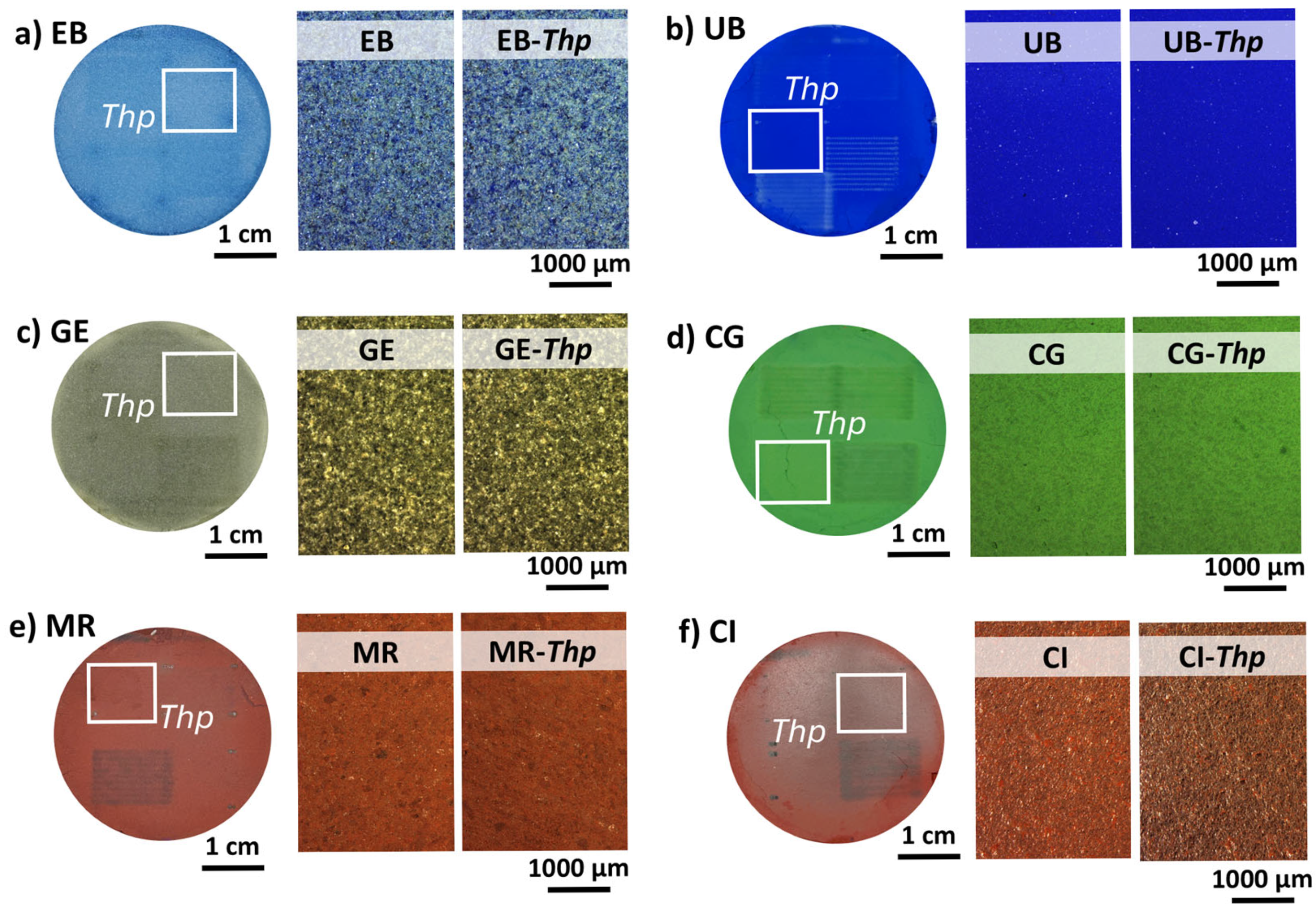
Figure 1. Identification of the damage threshold value for each tablet pigment (Thp). Photographs by digital photography (left) and micrographs by stereomicroscopy (right) of the pigment tablets before and after irradiation. See Table 1 for explanation of the pigment codes. (a) EG-based samples; (b) UB-based samples; (c) GE-based samples; (d) CG-based samples; (e) MR-based samples; and (f) CI-based samples.
Minerals 16 00010 g001
Figure 2. Painting mock-ups (fresco (F-)- and egg yolk (EY)-based paintings) without soling after laser irradiation with different fluences. Photographs by digital photography (left) and micrographs by stereomicroscopy (right) are shown. Regarding the latter, micrographs of the reference, the area irradiated with the damage threshold of the tablet (Thp), and the area irradiated with the damage threshold of the mock-up (Thm) are presented. Colour variation values (ΔE*ab in CIELAB units) are included. See Table 1 for an explanation of the pigment codes. (a) EG-F samples; (b) EG-EY samples; (c) UB-F samples; (d) UB-EY samples; (e) GE-F samples; (f) GE-EY samples; (g) CG-F samples; (h) CG-EY samples; (i) MR-F samples; (j) MR-EY samples; (k) CI-F samples and (l) CI-EY samples.
Minerals 16 00010 g002
Figure 3. Painting mock-ups (fresco (F-)- and egg yolk (EY)-based paintings) with soiling after laser irradiation with different fluences. Photographs by digital photography (left) and micrographs by stereomicroscopy (right) are shown. Regarding the latter, micrographs of the reference, the area irradiated with the damage threshold of the mock-up (Thm), and the areas irradiated with 1 (Thc1p) or 2 (Thc2p) consecutive passes to remove the soiling are presented. Colour variation values (ΔE*ab in CIELAB units) are included. See Table 1 for an explanation of the pigment IDs. (a) EG-F samples; (b) EG-EY samples; (c) UB-F samples; (d) UB-EY samples; (e) GE-F samples; (f) GE-EY samples; (g) CG-F samples; (h) CG-EY samples; (i) MR-F samples; (j) MR-EY samples; (k) CI-F samples and (l) CI-EY samples.
Minerals 16 00010 g003
Figure 4. (a) ΔE*ab (CIELAB units) for Thc1p and Thc2p irradiated areas and (b) L* and C*ab scatter plot of the unaged paints (circles), and the areas irradiated with one (1p, triangle) or two consecutive passes (2p, inverted triangle). F—filled markers and EY—line patterned markers. See Table 1 for an explanation of the pigment codes.
Minerals 16 00010 g004
Figure 5. FTIR spectra of silicate-based (a) fresco (-F) and (b) egg yolk (-EY) paintings before aging (unaged) and after laser radiation (-Thc2p). See Table 1 for an explanation of the pigment codes.
Minerals 16 00010 g005
Figure 6. FTIR spectra of oxide-based (a) fresco (-F) and (b) egg yolk (-EY) paintings before aging (unaged) and after laser radiation (-Thc2p). See Table 1 for an explanation of the pigment codes.
Minerals 16 00010 g006
Figure 7. FTIR spectra of sulphide-based (a) fresco (-F) and (b) egg yolk (-EY) paintings before aging (unaged) and after laser radiation (-Thc2p). See Table 1 for an explanation of the pigment codes.
Minerals 16 00010 g007
Figure 8. SEM micrographs of the surface of fresco (-F) and egg yolk (-EY) paintings with soot and after laser radiation (-Thc2p). See Table 1 for an explanation of the pigment codes. Black circle: soot remains. Black arrow: holes. White arrow: paint losses. Red arrow: melting patterns. (a) EG-F samples; (b) EG-EY samples; (c) UB-F samples; (d) UB-EY samples; (e) GE-F samples; (f) GE-EY samples; (g) CG-F samples; (h) CG-EY samples; (i) MR-F samples; (j) MR-EY samples; (k) CI-F samples and (l) CI-EY samples.
Minerals 16 00010 g008
Figure 9. SEM micrographs of sulphur–calcium-rich particles and some EDS spectra (depicted with numbers) in (a) GE-F-Thc2p, (b) CG-F-Thc2p, (c) EB-EY-Thc2p, and (d,e) UL-EY-Thc2p. See Table 1 for an explanation of the pigment codes. Red arrows: S- and Ca-rich crystals.
Minerals 16 00010 g009
Figure 10. SEM micrographs of different paint samples with (a,b) presence of S- and Ca-rich particles, and microtextural changes in (c,d) MR and (e,f) CI paints. See Table 1 for an explanation of the pigment codes. White arrows: melting patterns. Red arrow: melting of the organic binder. Black circles: soot remains. White circles: impurities.
Minerals 16 00010 g010
Table 1. Digital photographs and data of the pigments used in this study: pigment reference codes used by supplier and in the present study and mineralogical composition according to the supplier and determined in the present study. The elemental composition was also determined by XRF (semi-quantitative data) in the present study.
Visual
Appearance
Suppliers CodePigment CodeSuppliers pigment
Composition
Authors Pigment Composition by XRDSemi-Quantitative
Elemental Composition by XRF
Minerals 16 00010 i001#100601
Egyptian
blue
EBCuprorivaiteCuprorivaite, CaCuSi4O10
Quartz, SiO2
>1: Si, Cu, Ca
<1: Al
Minerals 16 00010 i002#45010
Ultramarine blue,
synthetic
UBSodium
aluminium
sulpho-silicate
and kaolinite
Lazurite, Na3Ca(Al3Si3O12)S
Sodalite, Na8Al6Si6O24Cl2
Nepheline, Na,K(Al4Si4O16)
Kaolinite, Al2Si2O5(OH)4
>1: Si, S, Al
<1: Fe
Minerals 16 00010 i003#11010
Green
Verona earth
GECeladoniteGlauconite, (K,Na)(Fe3+,Al,Mg)2(Si,Al)4O10(OH)2
Celadonite, K(Mg,Fe)Fe3+Si4O10(OH)2
Muscovite, KAl2(AlSi3O10)(OH)2
Calcite, CaCO3
Clinochlore, (Mg,Fe2+)5Al(Si3Al)O10(OH)8
Albite, NaAlSi3O8
Montmorillonite, (Na,Ca)0,3(Al,Mg)2Si4O10(OH)2·nH2O
Kaolinite, Al2Si2O5(OH)4
>1: Si, Ca, Fe, Mg, Al, Ti
<1: Mn
Minerals 16 00010 i004#44200
Chromium oxide green
CGChrome (III)
oxide
Eskolaite, Cr2O3>1: Cr, Mg, Al
<1: Ca, Mn
Minerals 16 00010 i005#48289
Iron oxide red
MRSynthetic iron (III) oxideHematite, Fe2O3>1: Fe, Mg
<1: Al, Mn, Cl, Ca
Minerals 16 00010 i006#10624
Cinnabar,
chien t’ou
CICinnabarCinnabar, HgS>1: Hg, S, Si
<1: Mo, Th, Rb, Nb, Sb, Ba, P, Fe, Al
Table 2. Spot size (cm), energy per pulse (J/pulse), and fluence (J/cm2) identified as damage threshold for the pigment tablets (Thp) and for the unaged fresco (F)- and egg yolk (EY)-based painting mock-ups (Thm) and the fluence needed to remove soot on artificially aged paint mock-ups (Thc). See Table 1 for an explanation of the pigment codes.
Pigment
Nature
Pigment
ID
ThpUnaged SamplesThmAged
Samples
Thc
Spot Size (cm)Energy per Pulse (J/pulse)Fluence (J/cm2)Spot Size (cm)Energy per Pulse (J/pulse)Fluence (J/cm2)Spot Size
(cm)
Energy per Pulse (J/pulse)Fluence (J/cm2)
SilicateEB0.5100.0300.147EB-F0.3000.0300.424EB-F0.3000.0200.283
EB-EY0.3500.0300.321EB-EY0.3500.0200.214
UB0.4500.0120.075UB-F0.3000.0160.221UB-F0.3000.0100.141
UB-EY0.3900.0300.251UB-EY0.3900.0200.161
GE0.5400.0130.055GE-F0.3000.0300.424GE-F0.3000.0150.212
GE-EY0.3300.0180.210GE-EY0.3300.0160.187
OxideCG0.4800.0130.070CG-F0.4800.0230.127CG-F0.4800.0230.127
CG-EY0.4800.0210.116CG-EY0.4800.0220.122
MR0.5700.0070.027MR-F0.4500.0120.075MR-F0.4500.0280.176
MR-EY0.4500.0080.047MR-EY0.4500.0320.201
SulphideCI0.5700.0070.027CI-F0.5700.0040.014CI-F0.4200.0160.115
CI-EY0.5700.0040.016CI-EY0.4200.0140.101
Disclaimer/Publisher’s Note: The statements, opinions and data contained in all publications are solely those of the individual author(s) and contributor(s) and not of MDPI and/or the editor(s). MDPI and/or the editor(s) disclaim responsibility for any injury to people or property resulting from any ideas, methods, instructions or products referred to in the content.