Article

Comprehensive Utilization Beneficiation Process of Lithium Pegmatite Ore: A Pilot-Scale Study

1
Institute of Multipurpose Utilization of Mineral Resources, Chinese Academy of Geological Sciences (CAGS), Chengdu 610041, China
2
Technology Innovation Center for Comprehensive Utilization of Strategic Mineral Resources, Ministry of Natural Resources, Chengdu 610041, China
*
Author to whom correspondence should be addressed.
Minerals 2025, 15(11), 1138; https://doi.org/10.3390/min15111138
Submission received: 27 September 2025 / Revised: 22 October 2025 / Accepted: 28 October 2025 / Published: 30 October 2025

Abstract

Pegmatite ores, the primary and technologically advanced lithium (Li)-bearing minerals, comprise various rare metal-based elements, including niobium (Nb), tantalum (Ta), tin (Sn), and beryllium. With increasing Li demand, global exploitation of pegmatite ores has generated vast tailings, mainly comprising quartz and feldspar. However, the process for comprehensively utilizing valuable minerals from pegmatite ores remains undeveloped, and the persistent gap between laboratory studies and industrial practice hinders the sustainable advancement of the pegmatite mineral processing industry. Herein, a comprehensive utilization beneficiation process was designed and validated at both laboratory- and pilot-scale levels. Locked-circuit flotation tests at the laboratory-scale on spodumene and feldspar yielded (i) an Li concentrate with an Li2O grade of 5.80% and recovery of 88.62%, and (ii) a feldspar concentrate with a (K2O + Na2O) grade of 11.41% and good recoveries of K2O (81.30%) and Na2O (84.81%). In a 72 h continuous pilot-scale test, an Li flotation concentrate with an Li2O grade of 5.72% and recovery of 86.78%, and a final Li concentrate with an Li2O grade of 5.89% and recovery of 86.56% were obtained. Using Li flotation tailings as feed, a feldspar concentrate with a (K2O + Na2O) grade of 11.41% was obtained, achieving K2O and Na2O recoveries of >75%. The proposed process realizes nearly overall mineral recovery from the pegmatite ores, producing qualified concentrates of Li, Nb–Ta, Sn, feldspar, and quartz. In water reuse feasibility tests, ferrous sulfate (FeSO4) was identified as the optimum flocculant at a dosage of 1000 g m−3. In the locked-circuit test with returned water, the consumption of sodium hydroxide (NaOH), sodium carbonate (Na2CO3), and EMT-12 (collector) was reduced by 18.75%, 3.33%, and 3.45%, respectively, while the flotation indices of the Li concentrate (Li2O grade of 5.77% and recovery of 86.47%) were slightly lower than those in freshwater. In addition to increasing economic benefits, the process offers considerable reductions in tailings disposal, full utilization of multiple elements, and a potential decrease in water and reagent consumption. This study provides important guidelines for the mineral processing of Li pegmatite and other associated multimetallic ores.

1. Introduction

The global demand for clean and sustainable energy is increasing. Hence, lithium (Li) has become essential in several fields, such as electric transportation, mobile devices, and energy storage systems, because it has a higher electrochemical equivalent, higher heat capacity, and lower environmental hazards compared to fossil fuels [1,2,3]. Data from the United States of America Geological Survey revealed that Li production increased by 192.7% (from 82,000 to 240,000 metric tons of Li carbonate equivalent) from 2020 to 2024 [4,5]. The global Li demand is expected to continue increasing in the future [6,7].
Pegmatite ores are widely known as the primary and technologically advanced Li-bearing minerals [8]. With the increase in Li demand, the exploitation of pegmatite ores has significantly increased in recent years. However, a huge volume of tailings is generated during spodumene concentrate production owing to the low Li content in LiO2 [9]. Long-term storage of tailings causes serious environmental impacts, including metal ion leaching [10,11,12], water contamination [13], and soil occupation and pollution [14]. Meanwhile, treating tailings require advanced technologies—such as alkali-activated methods for geopolymer production and microorganisms to induce carbonate precipitation [9]—and incurs high costs.
The associated minerals of pegmatite ores commonly comprise quartz, feldspar, and accessory minerals containing rare metal elements such as niobium (Nb), tantalum (Ta), tin (Sn), beryllium (Be), rubidium (Rb), and cesium (Cs) [15,16]. Recently, Nb, Ta, Be, and Sn have attracted considerable interest because of their superior performance in aerospace [17], high-end manufacturing [18], electrochemical energy storage, superconducting materials [19], and alloy production [20]. Rb and Cs exhibit unique advantages in high-tech industrial applications including thermoelectric generators, atomic clocks, laser cooling, and medicine [21,22]. Notably, Rb does not form minerals in nature but can be enriched during the beneficiation of potassium (K) minerals such as K-feldspar and mica [23]. Feldspar and quartz, generally regarded as gangue minerals in the beneficiation of the pegmatite ores [24], are also raw materials used in manufacturing ceramic materials [25] and glass [26]. From the perspective of sustainable development, the comprehensive utilization of these associated minerals is of great significance during the beneficiation of pegmatite ores, as it alleviates shortages of rare metals and reduces the burden of tailings disposal, improving the utilization efficiency of mineral resources.
In recent decades, numerous studies have focused on the separation of spodumene from pegmatite ores, typically using gravity separation, froth flotation, and magnetic separation [27]. Dense or heavy media separation is effective when high liberation occurs at coarse grain sizes [28] or for removing heavy minerals such as Nb–Ta and cassiterite [29]. Magnetic separation is used to remove iron-bearing gangue minerals [30]. Froth flotation is the primary method for separating spodumene from aluminosilicate minerals, including feldspar and mica. Collector selectivity is a key factor in spodumene separation owing to the presence of similar Al3+ sites on mineral surfaces. A mixture of anionic and cationic collectors has been used to improve selectivity in spodumene flotation from feldspar [31,32,33]. Spodumene in pegmatite ores is currently well recovered in production, while the recoveries of minerals bearing rare metal elements remain low [34]. The main issue in the comprehensive utilization of pegmatite ores lies in effectively separating associated minerals. However, it is generally believed that the grades of the associated elements must exceed industrial thresholds—Nb2O5 ≥ 0.022%, Ta2O5 ≥ 0.022%, Sn ≥ 0.2%, and BeO ≥ 0.04%—otherwise, their recovery is not economical [35].
Limited studies have reported the integrated recovery of multiple valuable minerals from pegmatite ores. The process flow of coarse grinding–gravity pre-enrichment–high magnetic separation–centrifugal separation [36] was reported to recover Ta and Nb from the pegmatite ore before spodumene beneficiation, yielding a Ta–Nb concentrate with tantalum oxide (Ta2O5) and niobium oxide (Nb2O5) grades of 13.90% and 29.14% and recoveries of 49.50% and 58.37%, respectively. Moreover, a tin concentrate with a Sn grade of 41.45% and recovery of 54.39% was obtained. High-gradient magnetic separation coupled with magnetic fluid was also reported to enhance Ta–Nb recovery associated with spodumene, producing a final concentrate with (Ta, Nb)2O5 grade of 39.70% and overall recoveries of 51.05% (Nb2O5) and 45.36% (Ta2O5) [37]. The process of primary grinding–desliming–coarse mica flotation–spodumene flotation was proposed to achieve flotation separation of mica and spodumene, yielding a spodumene concentrate with Li2O grade and recovery of 6.02% and 87.34%, respectively. Recycling feldspar from spodumene tailings has also been researched, producing a (K2O + Na2O) grade and recovery of 11.33% and 61.33%, respectively, through magnetic separation and froth flotation [24]. However, a systematic process for the comprehensive utilization of valuable minerals in pegmatite ores remains undeveloped, and the persistent gap between laboratory studies and industrial practice continues to hinder sustainable development of the pegmatite mineral processing industry.
In addition to the issue of comprehensive utilization of associated minerals, substantial water requirement and polluted water discharge are other concerns in the beneficiation of pegmatite ores [38]. The feasibility of water reuse, along with its effects on and mechanisms in the beneficiation performance of multiple minerals, has been studied [39,40]. Ma et al. [41] introduced an electrocatalytic iron/carbon microelectrolysis system to achieve 97.59% removal of lead (Pb2+) and zinc (Zn2+) ions, butyl xanthate, and dianilino dithiophosphoric acid from Pb–Zn flotation wastewater, enabling water reuse at appropriate ratios. Dissolved air flotation combined with coagulation/flocculation treatment was also studied for wastewater reuse in apatite flotation [42]. An industrial-scale test of wastewater reuse at the Shizhuyuan Polymetallic Dressing Plant, China, reported a 34.62% reduction in freshwater consumption and an 18.56% reduction in reagent consumption [43]. However, the water reuse during Li pegmatite ore beneficiation process has rarely been studied.
To solve the problem of effective recovery of valuable minerals in the pegmatite ore and narrow the gap between laboratory studies and industrial practice, a comprehensive utilization beneficiation process was designed and proposed in this study, validated through both laboratory- and pilot-scale tests. The feasibility of water reuse from the slurry of Li flotation tailings was also investigated, and a locked-circuit test was conducted to evaluate the effect of returned water on spodumene flotation indices. The proposed process realizes overall mineral recovery from the pegmatite ore, separating concentrates of Li, Nb–Ta, Sn, feldspar, and quartz. In addition to enhancing economic benefits, the proposed process significantly decreases tailings disposal, recovers multiple elements, and reduces water and reagent consumption.

2. Experimental Methods

2.1. Materials and Reagents

2.1.1. Ore Samples

The Li pegmatite ore used in laboratory- and pilot-scale beneficiation studies was collected from the Keeryin area of western Sichuan Province. Multielemental characterization of the raw ore was conducted after acid dissolution via atomic absorption spectroscopy and inductively coupled plasma mass spectrometry. Table 1 presents the analysis results, showing that the ore sample primarily comprises 1.18% Li2O, 72.35% SiO2, and 15.60% Al2O3. In addition to Li2O as the primary recoverable component, Nb2O5, Ta2O5, Rb2O, and BeO also meet the thresholds for comprehensive utilization. However, the Sn content is below the threshold.
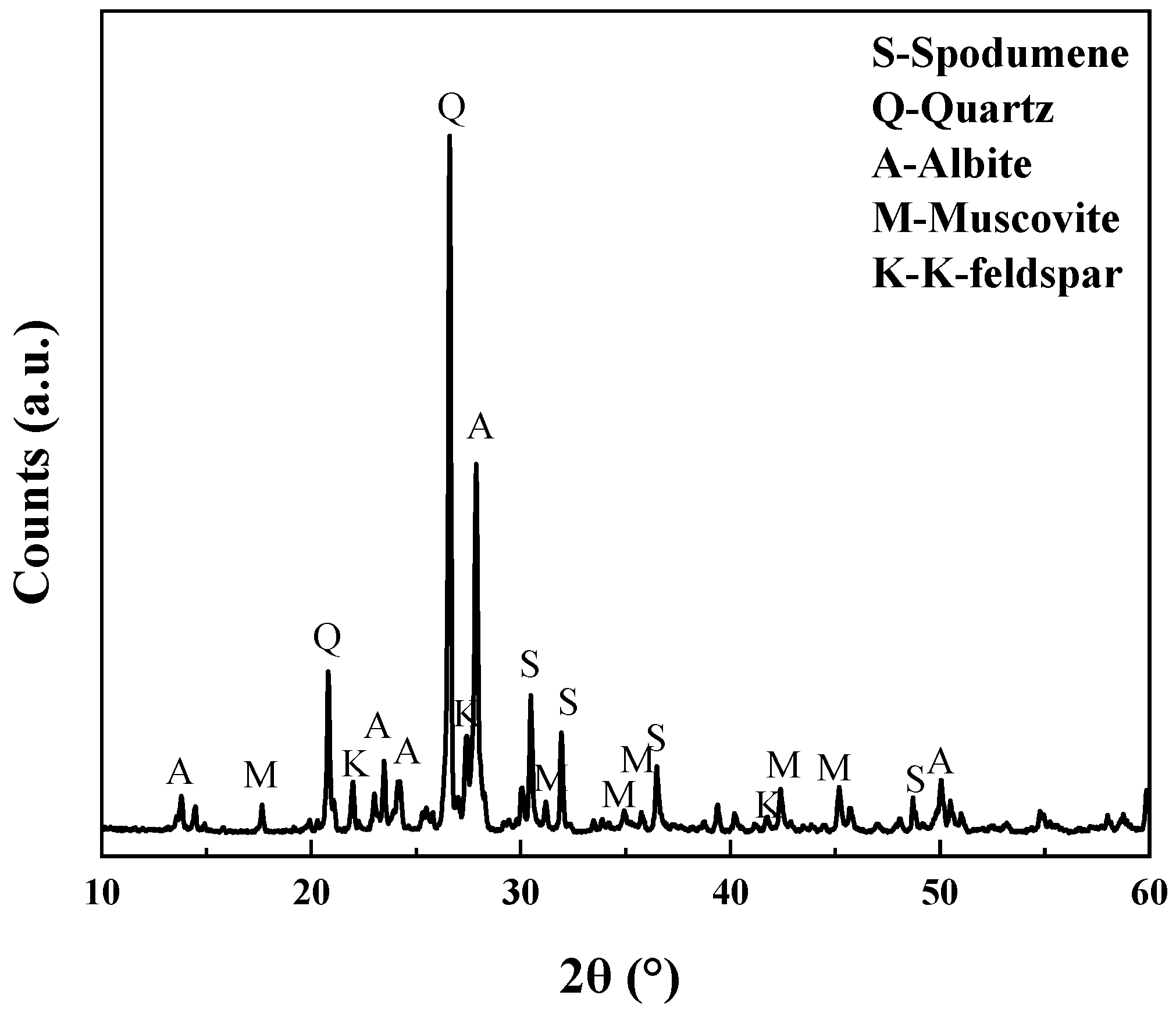
The X-ray diffraction (XRD) pattern of the ore sample is presented in Figure 1. The contents of the main minerals in the ore sample were determined using optical microscopy, energy-dispersive micro-area analysis, and the advanced mineral identification and characterization system (Table 2). Based on the characterizations, spodumene was identified as the main recoverable mineral, along with Nb–Ta-bearing minerals. No independent carrier minerals for Be and Rb were identified. Be was associated with albite, and Rb with potassium feldspar, which makes their recovery difficult. Moreover, the high contents of quartz (27.87%) and feldspar (47.23%) indicate potential for comprehensive recovery.

2.1.2. Reagents

In the flotation tests, sodium carbonate (Na2CO3), sodium hydroxide (NaOH), sulfuric acid (H2SO4), and calcium chloride (CaCl2) were used as regulators. EMT-12, the cationic–anionic combined collector for spodumene, was optimized by mixing laurylamine, oxidized paraffin wax soap, and sodium oleate [24]. The collector EMS-9, a novel cationic–anionic combined collector primarily comprising dodecyl trimethyl ammonium chloride (DTAC) and sodium dodecyl sulfonate, was used for the flotation of feldspar. The reagents used in lab- and pilot-scale flotation were of analytical (≥97%) and industrial grades (≥80%), respectively. Tap water was used for all flotation tests.

2.2. Processes and Devices

Before pilot-scale tests, laboratory-scale tests on reagent conditions and locked-circuit flotation were conducted to provide fundamental research data.

2.2.1. Laboratory-Scale Tests

Condition Flotation Tests
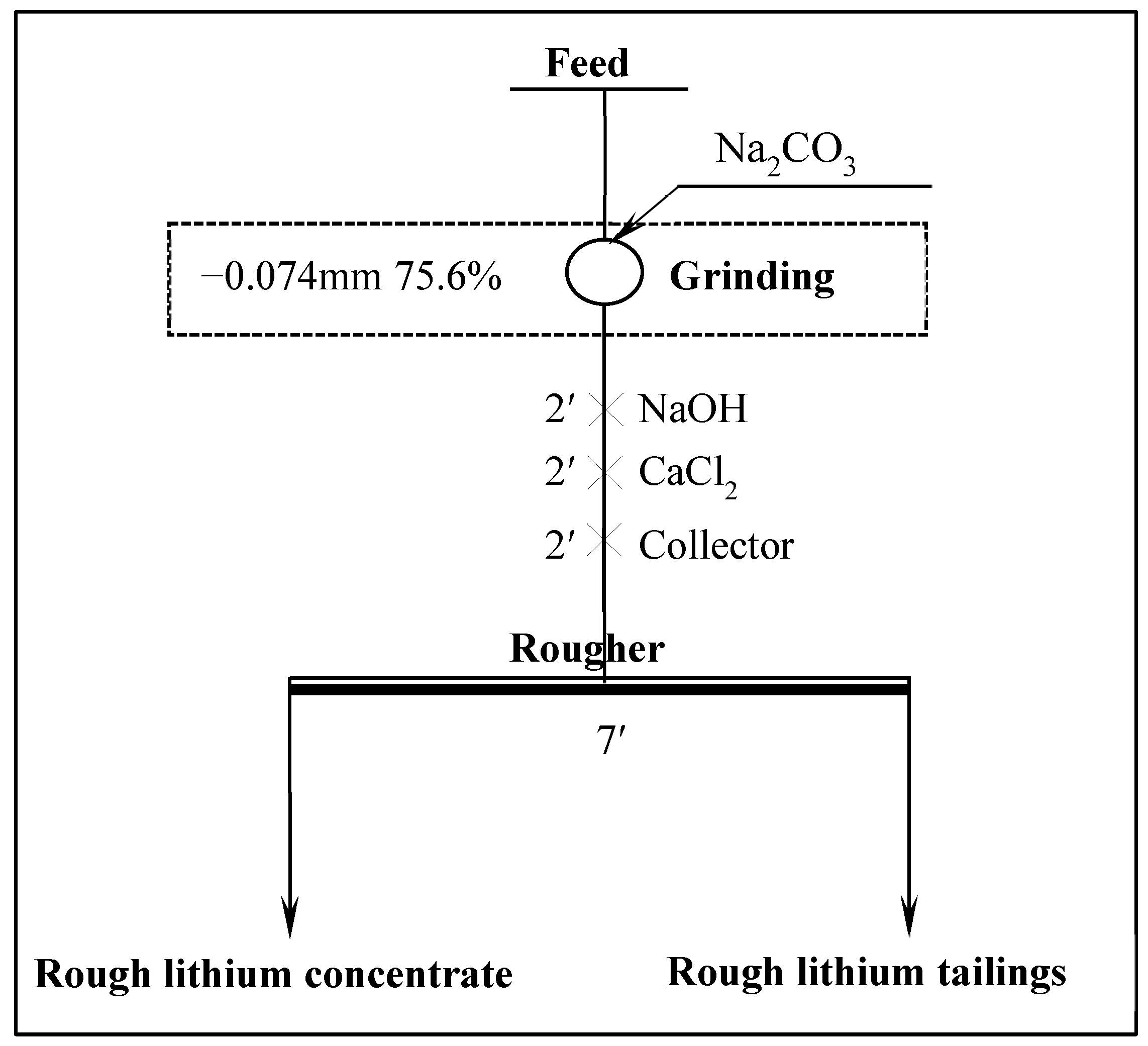
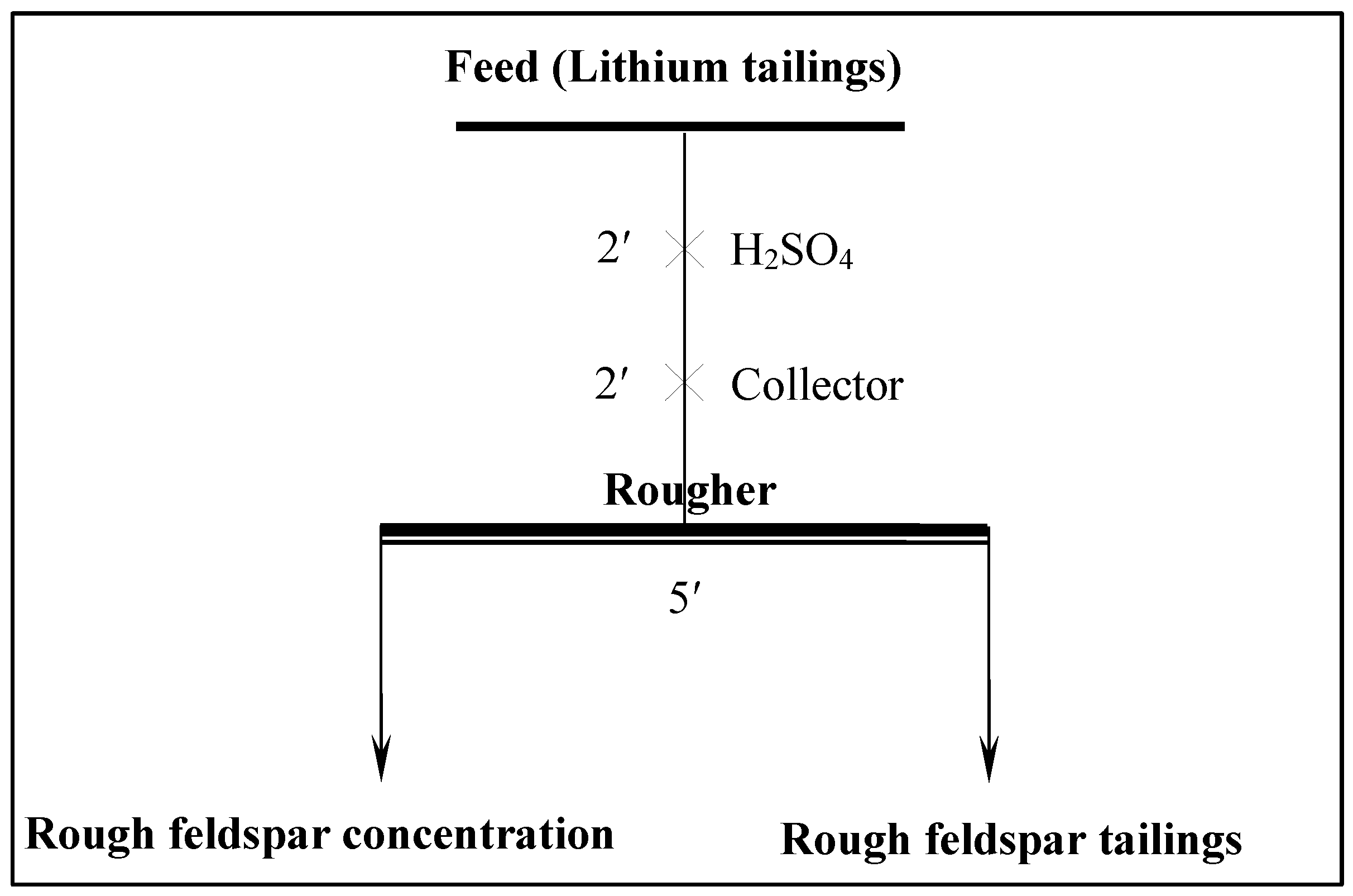
A 500 g sample of Li pegmatite ore used in laboratory-scale batch flotation tests was ground to 75.6% passing 0.074 mm using a ball mill (XMQ; 240 mm × 90 mm, Wuhan Exploration Machinery Co., Ltd., Wuhan, China) with Na2CO3. The target fineness was selected based on previous flotation tests assessing the effect of particle size on flotation indices as well as liberation analysis. Li tailings served as the feed for feldspar flotation. Flotation tests were performed using XFD-type flotation machines with 3.0, 1.5, 1.0, 0.75, or 0.5 L cell. The pulp density was set at 30–35%, and cell selection was based on the weight of the sample. The flowsheets of spodumene and feldspar are shown in Figure 2 and Figure 3, respectively. The detailed reagent dosages are presented in Section 3.1. Each test was repeated three times, and the average value was reported, with error bars representing the standard deviation.
Locked-Circuit Tests
  • Locked-Circuit Test of Spodumene
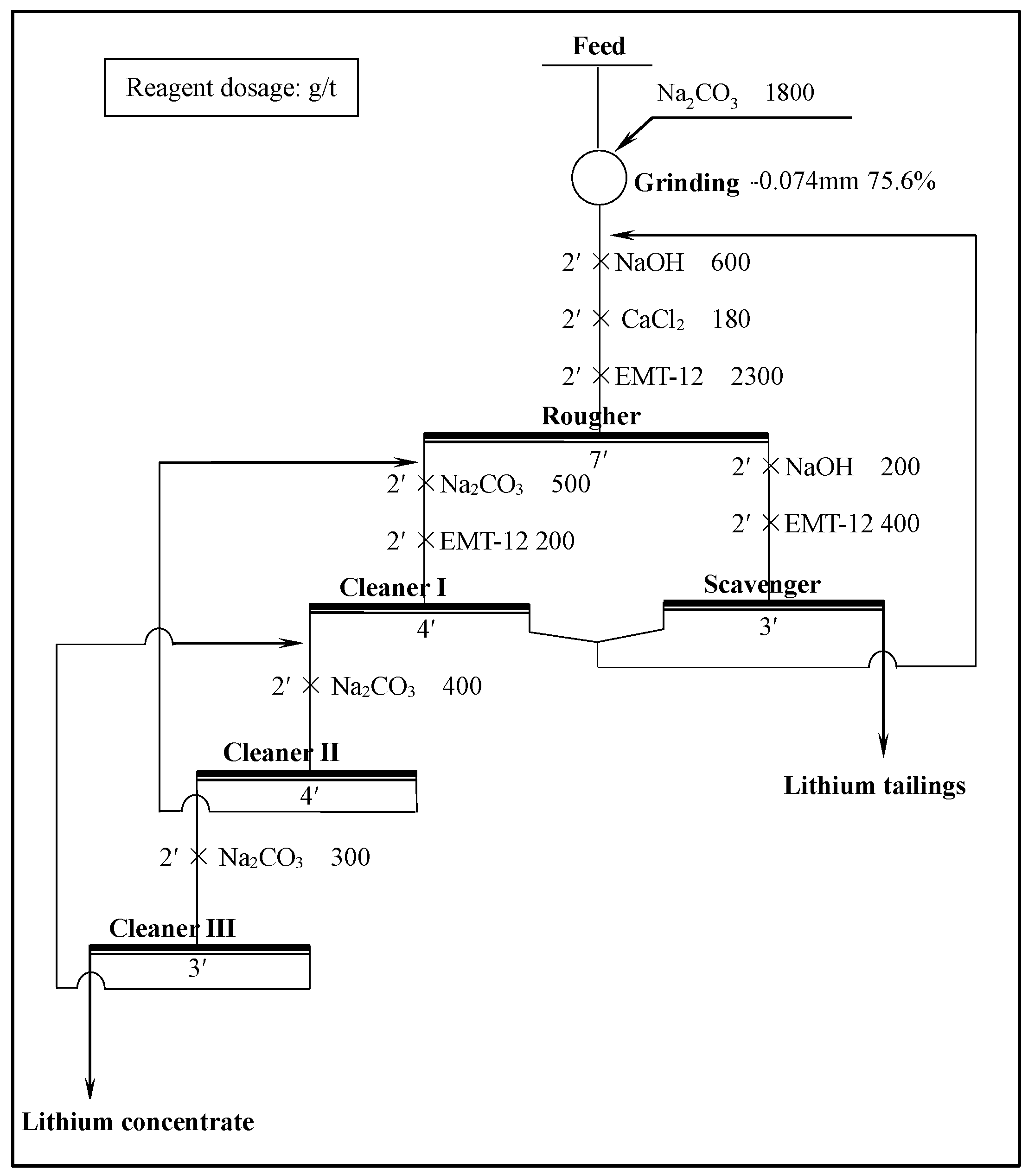
The flowsheet and flotation conditions for the locked-cycle test of spodumene are illustrated in Figure 4. The laboratory-scale locked-circuit test, with one rougher and stage scavenger and three-stage cleaners, was conducted. The grinding conditions matched those used in the flotation condition tests. Reagents included NaOH, CaCl2, and EMT-12 in the rougher; Na2CO3 in the cleaner; and NaOH with EMT-12 in the scavenger stages. All reagents were prepared as 5 wt.% solutions. Each middling was recycled to the preceding beneficiation stage, ultimately producing Li concentrate and tailings. Locked-circuit flotation tests of spodumene and feldspar were conducted with five recycles of the middlings.
  • Locked-Circuit Test of Feldspar
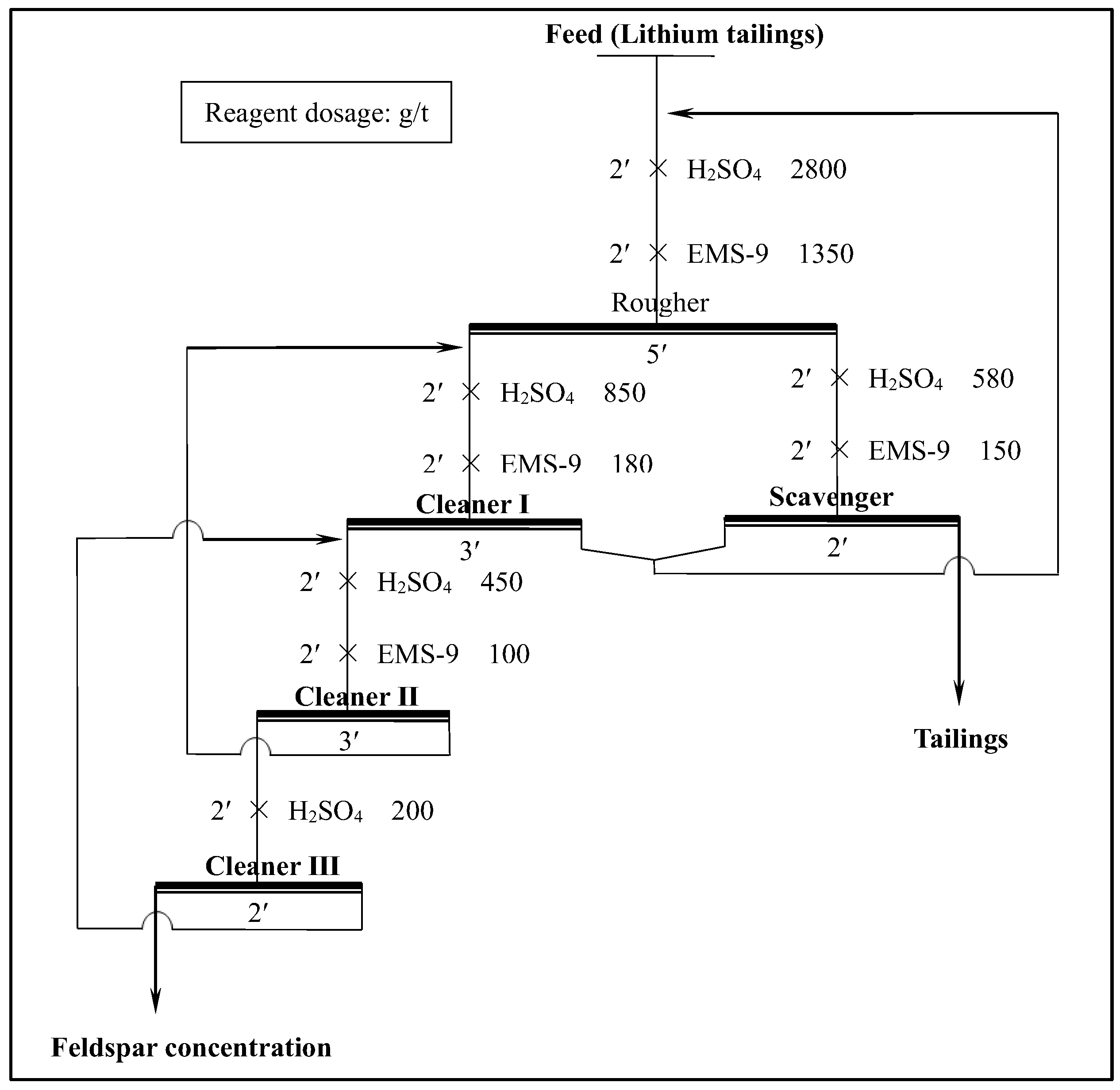
The flowsheet and flotation conditions for the feldspar locked-cycle test are presented in Figure 5. Using Li tailings obtained from the previous locked-circuit test as the feed, the laboratory-scale locked-circuit test was performed using a flowsheet comprising one rougher and scavenger stage and three cleaner stages. During the process, H2SO4 and EMS-9 were used as the regulator and collector, respectively. The recycling of middlings followed a procedure similar to that used for spodumene flotation.

2.2.2. Pilot-Scale Flotation Tests

The pilot-scale flotation tests were continued for 72 h after the stabilization of indices to test the stability of flotation indices.
Pilot-Scale Flotation Tests of Spodumene
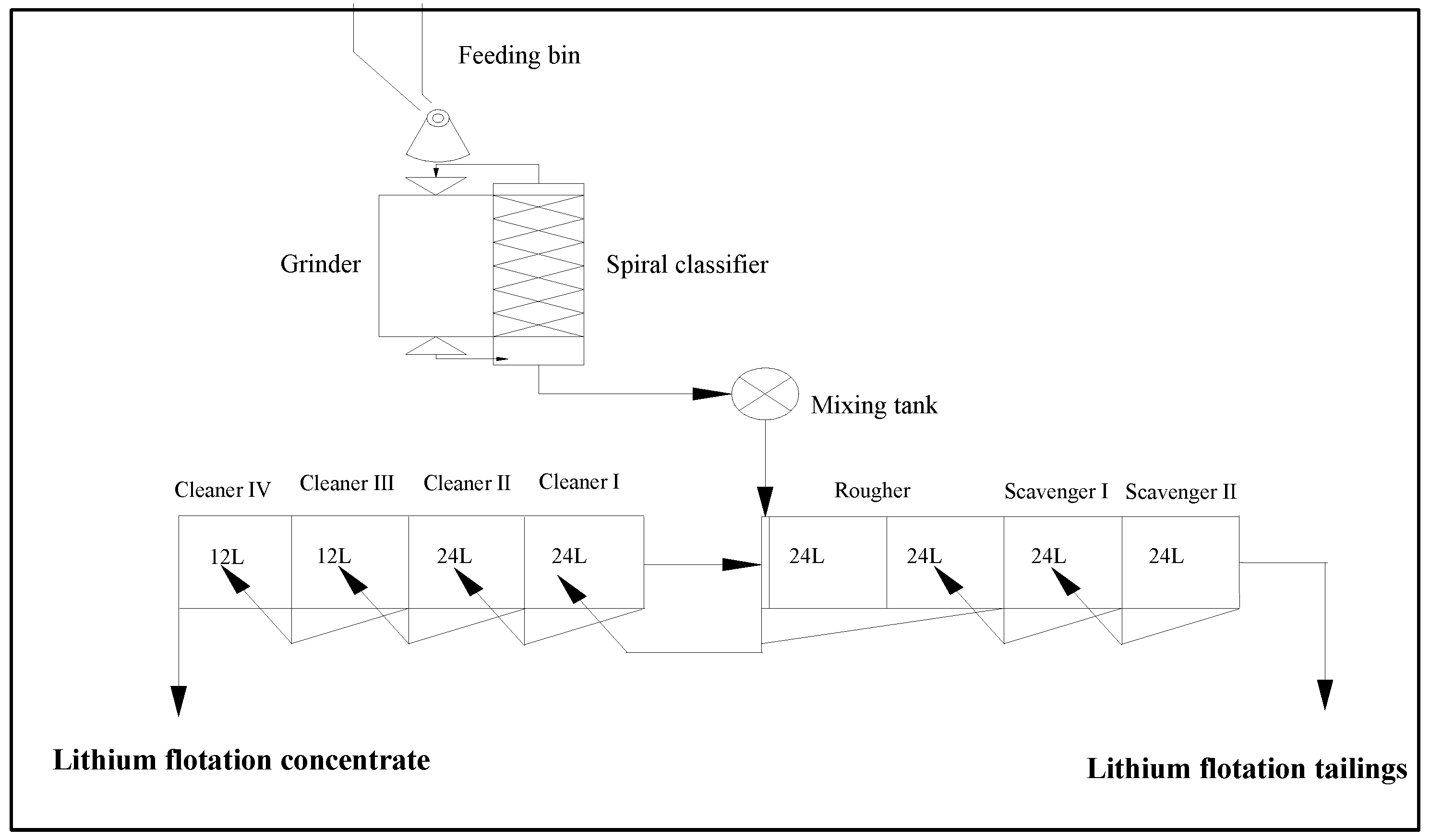
The appropriate processing capacity for the pilot-scale continuous test was set at 1.0 ton per day (t d−1), based on the capacity of the selected equipment and the required grinding fineness. To ensure that the grade of the concentrate met the desired specifications, a fourth-stage cleaner was added to the pilot-scale flotation process of spodumene based on the locked-circuit test, while the rest remained the same as the locked-circuit test. The diagram showing the equipment interconnections is presented in Figure 6, with the volume of each flotation tank labeled.
To monitor indices and calculate mass–quality flowsheet data, grab (random sampling) and shift (composite sample per shift, i.e., 8 h) samples of the Li flotation concentrate, tailings, and raw ore were analyzed for Li2O grade. The standard deviations of the Li flotation concentrate and tailings grades were calculated from shift-sample data to evaluate flotation stability using Equation (1):
σ = 1 N i = 1 N x i μ 2 ,
where σ is the standard deviation of the Li2O grade of the products, N is the number of samples, x i is the Li2O grade data, and μ is the average Li2O grade.
The mass–quality balance flowsheet calculations were based on the average results of shift samples and process stream samples. The yields of the concentrate and tailings were determined from the measured Li2O grades. Li2O recovery, defined as the proportion of Li2O in the products, was then calculated based on the metal mass. The Li2O grade and recovery of the middlings were calculated from the sum of the separated products using the metal mass. The detailed calculation procedure is provided in Equations (2)–(7):
Mass balance: γα = γβ + γθ
Metallurgical balance: γααLi = γββLi + γθθLi
given γα = 100%.
Hence,
γ β = α L i θ L i β L i θ L i   ×   100 ( % )   and
γθ = 1 − γβ
As a result,
ε β = γ β β L i α L i   ×   100 ( % )   and
εθ = 1 − εβ,
where γα is the yield of the raw ore, γβ is the yield of the concentrate, γθ is the yield of tailings, αLi is the Li2O grade of the raw ore, βLi is the Li2O grade of the concentrate, θLi is the Li2O grade of tailings, εβ is the recovery of the concentrate, and εθ is the recovery of tailings.
Pilot-Scale Flotation Tests of Feldspar
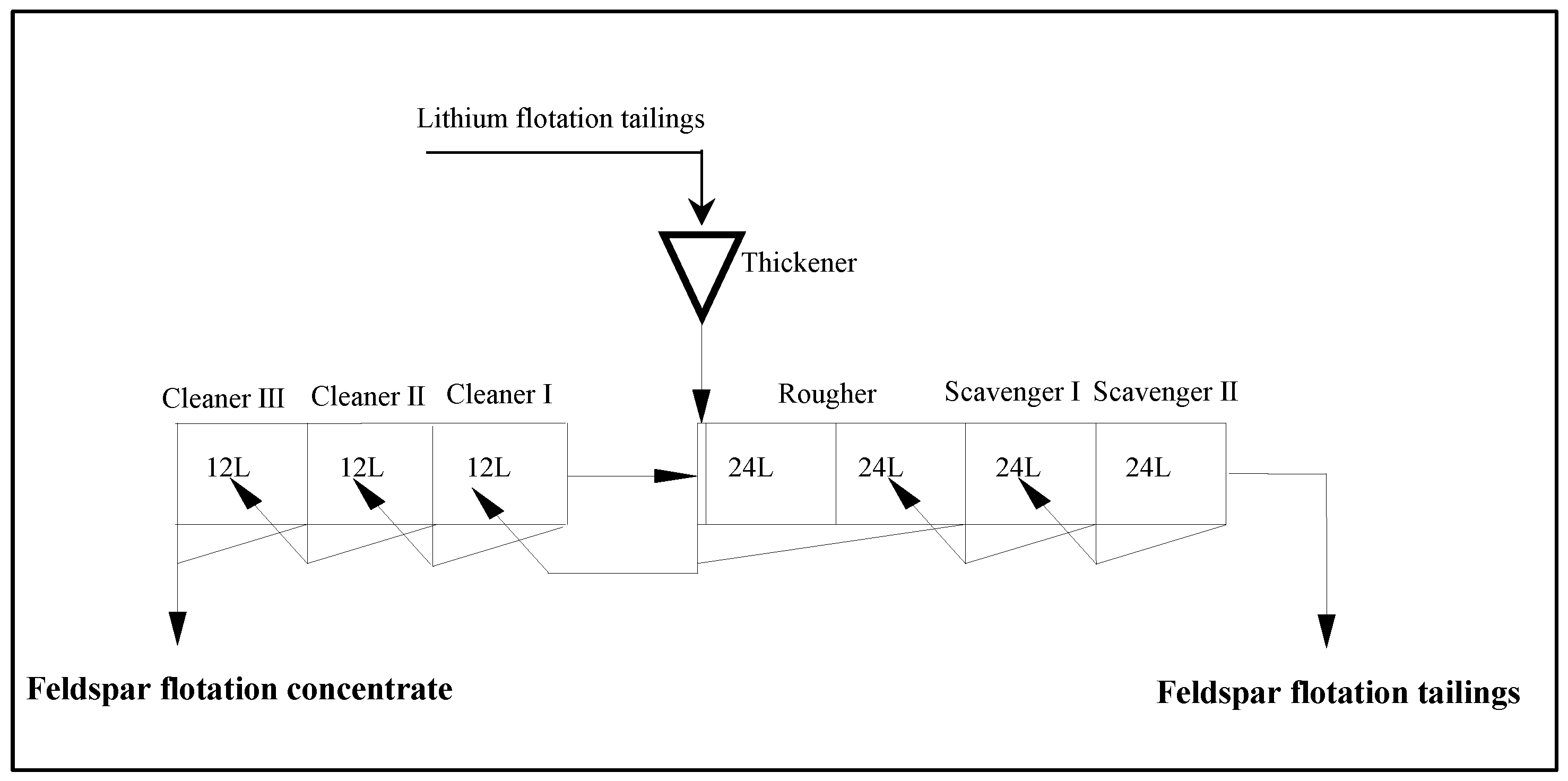
Li flotation tailings were used as the feed for the recovery of feldspar, with a thickener to increase the pulp concentration. To increase the recovery of feldspar, the flowsheet added a second-stage scavenger based on the laboratory-scale test, i.e., a one-stage rougher–two-stage scavenger–three-stage cleaner flowsheet in the pilot-scale test. The diagram of the equipment interconnections is presented in Figure 7. The sampling method and mass–quality balance flowsheet calculations for feldspar are identical to those for spodumene.
Devices
The equipment used in the pilot-scale tests are listed in Table 3.

3. Results and Discussion

3.1. Laboratory-Scale Flotation Tests

3.1.1. Laboratory-Scale Flotation of Spodumene

Effect of Collector Species and Dosage
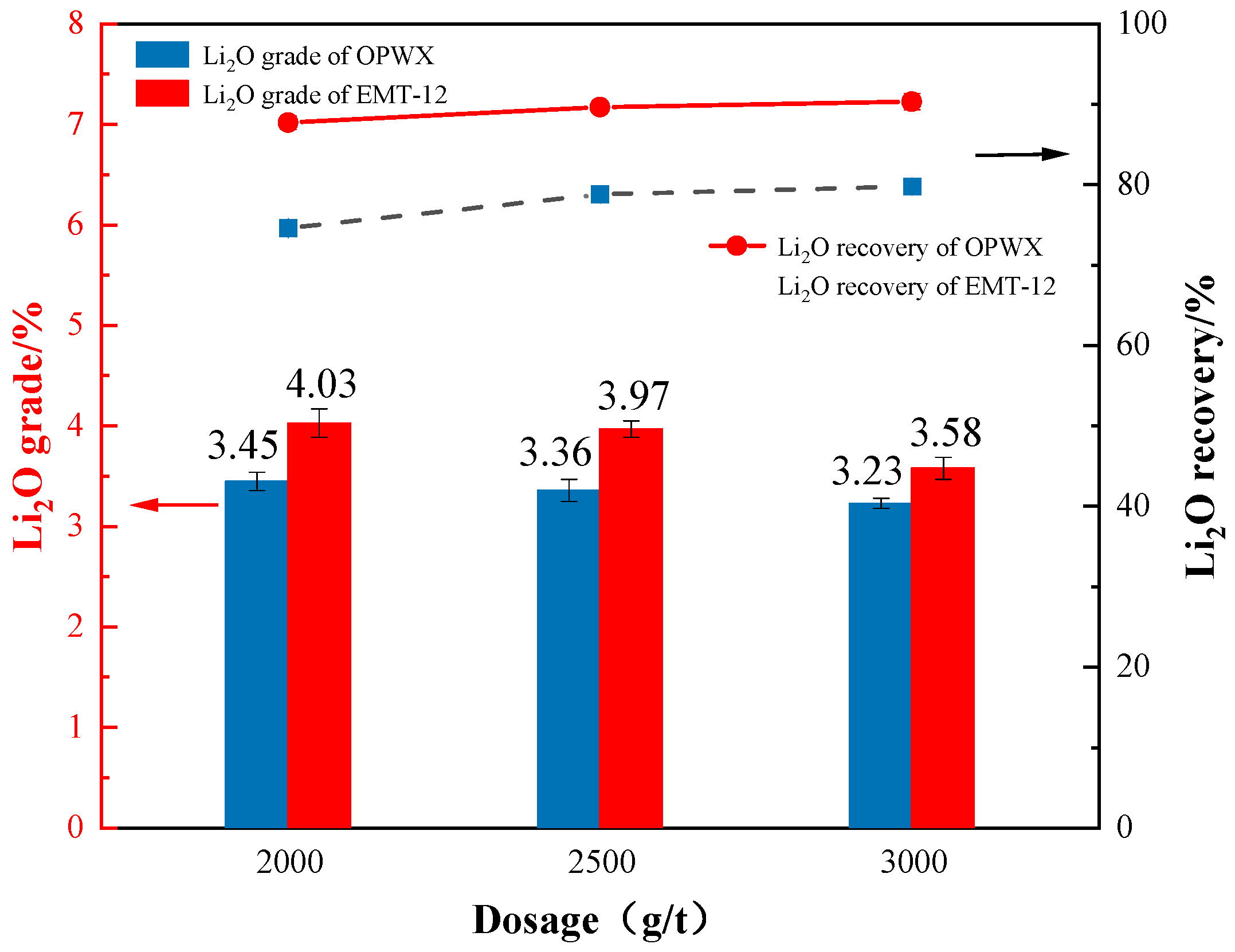
To investigate the flotation performance of the mixed collector EMT-12, comparative tests were conducted on collector types and dosages under the following conditions: (i) grinding fineness of −0.074 mm at 75.6%, (ii) 1500 g/t Na2CO3 added to the mill, and (iii) NaOH and CaCl2 dosages of 500 and 200 g/t, respectively. The grinding fineness was set at 75.6% based on previous experiments, which achieved optimal liberation and maximum Li2O recovery, consistent with the results of other studies [24]. The flotation performance of EMT-12 and an oxidized paraffin wax soap (OPWX) at different dosages was compared on spodumene (Figure 8). The yield and Li2O recovery of the rough concentrate gradually increased with increasing dosages of both collectors, while the Li2O grade decreased. However, Li2O recovery and grade were consistently lower with OPWX as the collector than those achieved using EMT-12. Notably, when a dosage of EMT-12 exceeded 3000 g/t, the increase in Li2O recovery becomes less significant. At a dosage of 2500 g/t EMT-12, the Li2O grade and recovery reached 3.97% and 89.63%, respectively, with 0.61% and 10.85% more than those obtained using OPWX at the same dosage. Thus, EMT-12 is a better collector for spodumene flotation, which is attributed to the synergistic effect and co-adsorption of the mixed collectors [44].
Locked-Circuit Test
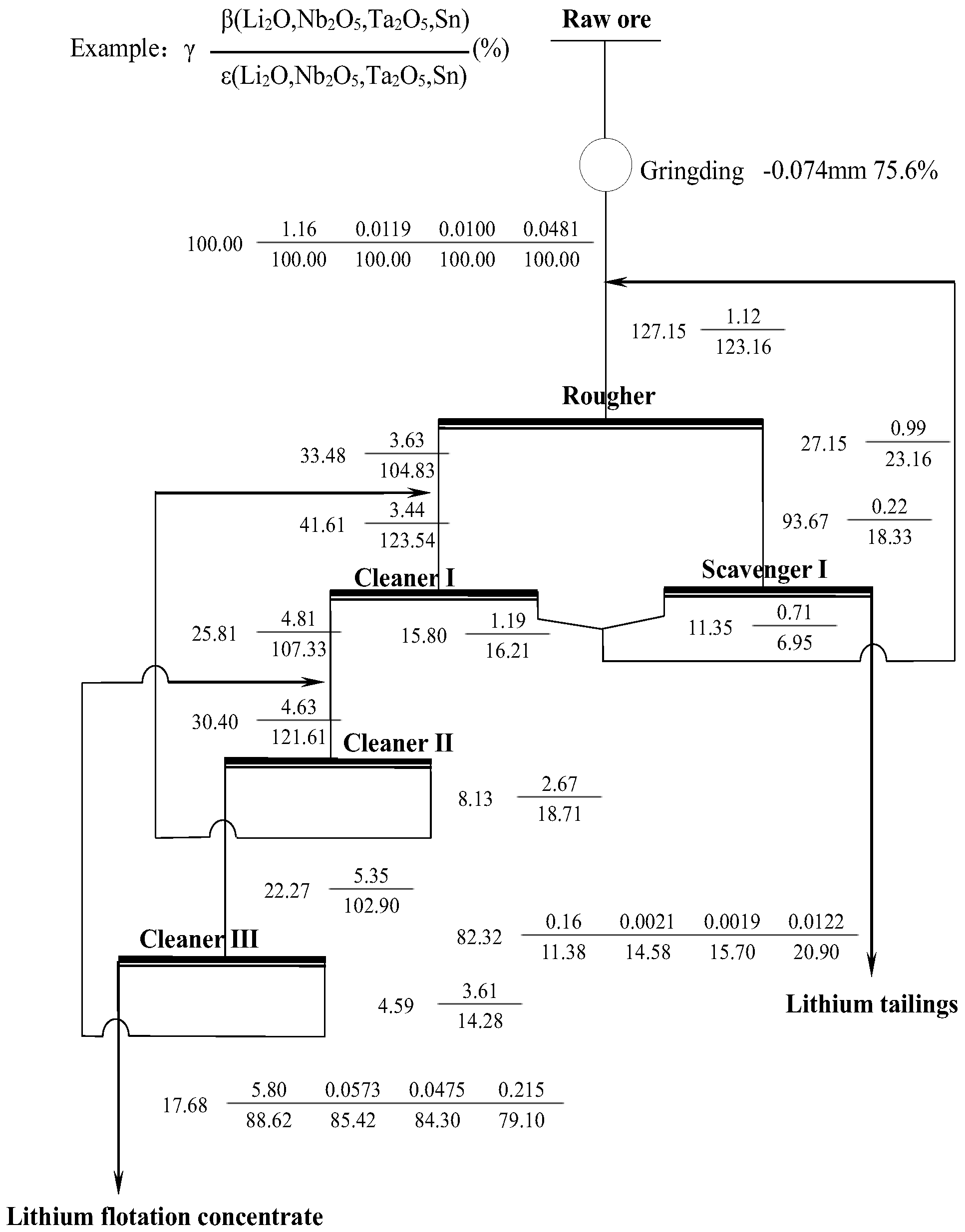
Table 4 shows that the nondesliming process yields an Li flotation concentrate with an Li2O grade of 5.80% and a recovery of 88.62%. The mass–quality balance flowsheet is shown in Figure 9. The distribution of other valuable elements in the products is summarized in Table 5. These results indicate that 85.42% Nb and 84.30% Ta are concentrated in the Li concentrate with spodumene, creating favorable conditions for their comprehensive recovery in subsequent processes. Furthermore, 79.10% of Sn is enriched in the concentrate with a grade of 0.215%, warranting comprehensive recovery experiments for Sn to enhance its utilization. Notably, 67.50% of Be is enriched in the concentrate. However, its concentration (0.235%) remains low, and no independent Be-bearing mineral is present; therefore, Be separation was not considered.

3.1.2. Laboratory-Scale Flotation of Feldspar

Effect of Collector Species and Dosage
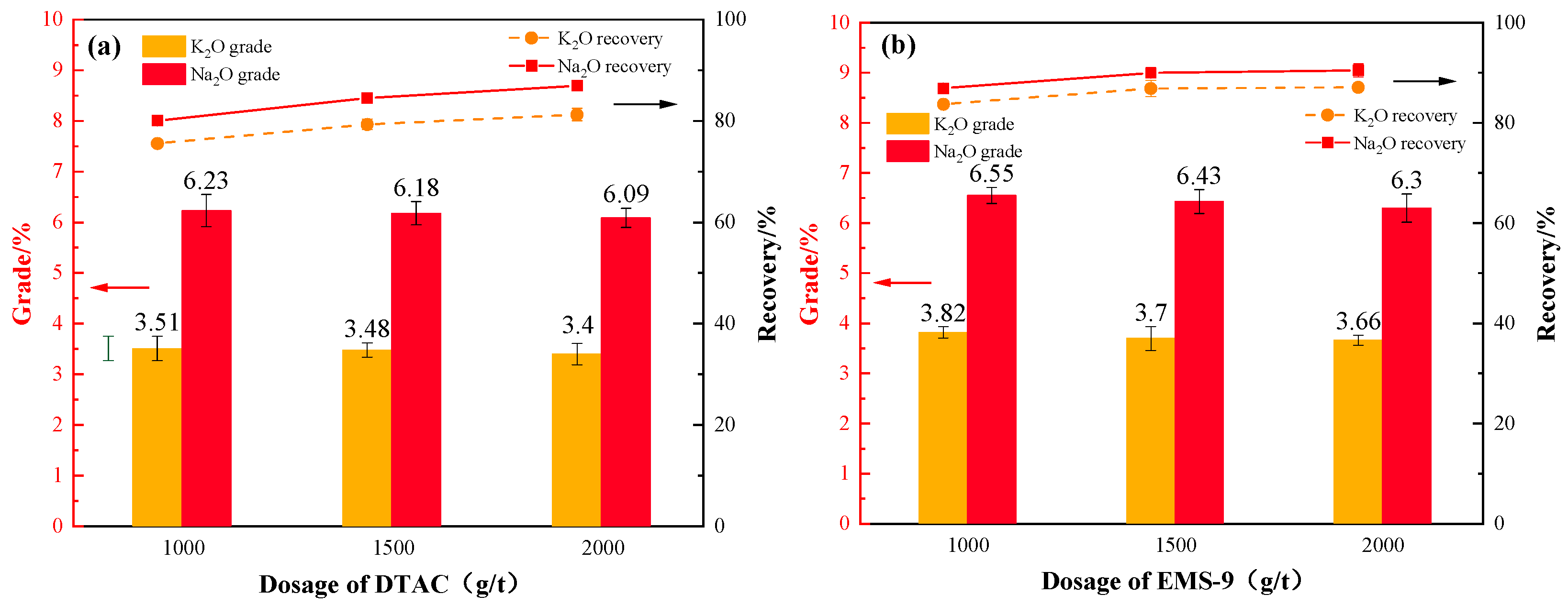
The flotation recovery of feldspar from Li tailings was investigated under the condition of 3000 g/t H2SO4. Herein, H2SO4 was used as an alternative to the commonly used hydrofluoric acid (HF) owing to environmental concerns. The performances of DTAC and EMS-9 as collectors were evaluated. Figure 10 shows that increasing the dosage of the collectors gradually increases the yield and recovery of (K2O + Na2O) in the rough concentrate. The grade and recovery indices of the concentrate are higher with EMS-9 than with DTAC. However, when the dosage of EMS-9 is >1500 g/t, the increase in (K2O + Na2O) recovery becomes marginal. Excessive dosages of EMS-9 cause disordered flotation, forming sticky and unstable foam. Thus, a dosage of 1500 g/t of EMS-9 is considered optimal for the rough stage of feldspar flotation, obtaining a 10.13% (K2O + Na2O) grade and >86% recovery in the rough concentrate.
Locked-Circuit Test
The results of the locked-circuit test for feldspar recovery in Li tailings are presented in Table 6. A qualified feldspar concentrate with an 11.41% (K2O + Na2O) grade was obtained. Operational recoveries of K2O and Na2O reach 81.30% and 84.81%, respectively, while their recoveries relative to the raw ore were 80.00% and 80.85%, demonstrating efficient feldspar recovery compared with other studies [24].

3.2. Pilot-Scale Tests

According to the grinding fineness of −0.074 mm at 75.6% in the laboratory-scale test, the feed capacity was set at 42 kg h−1, equivalent to 1.01 t d−1. During the 72 h continuous test, the fineness of the grinding product was sampled and sieved per hour, stabilizing in the range of 75–80%, with an average fineness of −0.074 mm at 77.1%.

3.2.1. Pilot-Scale Flotation Test of Spodumene

Owing to the return of the slurry, the reagent dosages used in the pilot-scale test were adjusted based on the laboratory-scale test during the debugging period, which were checked every 30 min. The results were averaged as the reported dosages. The reagent scheme is shown in Table 7.
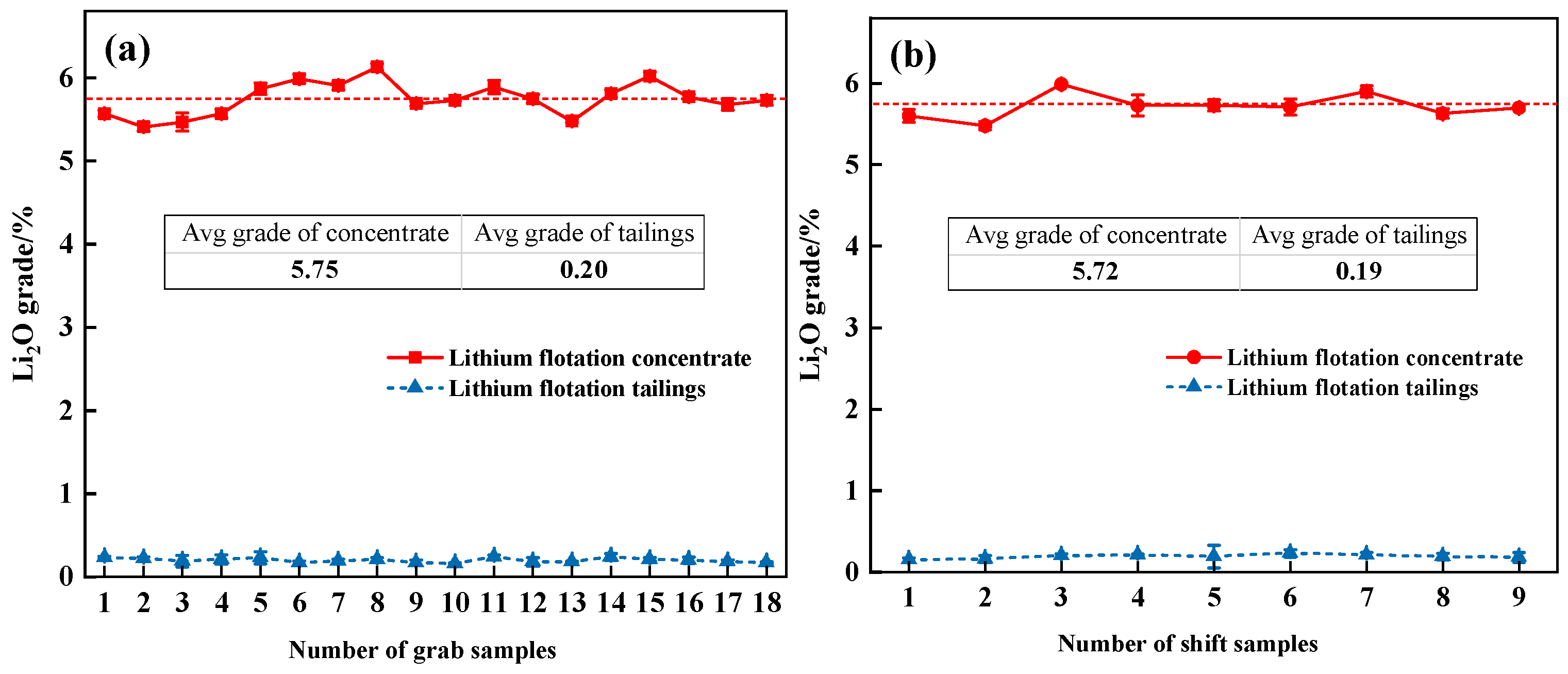
The Li2O grade data of grab and shift samples of the Li flotation concentrate and tailings are shown in Figure 11. The average Li2O grades of the concentrate from grab and shift samples are 5.75% and 5.72%, respectively, meeting the requirement of the qualified spodumene concentrate (≥5.5%). The Li2O grades of the flotation tailings from both samples are effectively controlled at ~0.20%. These results closely match those of the Li concentrate grade obtained from the laboratory-scale locked-circuit test. The standard deviation of Li2O grade of shift samples are 0.144 and 0.024 for Li flotation concentrate and tailings, respectively. Overall, the pilot-scale flotation test of spodumene demonstrates consistent stability, which is significant for pilot-scale tests and subsequent industrial production.
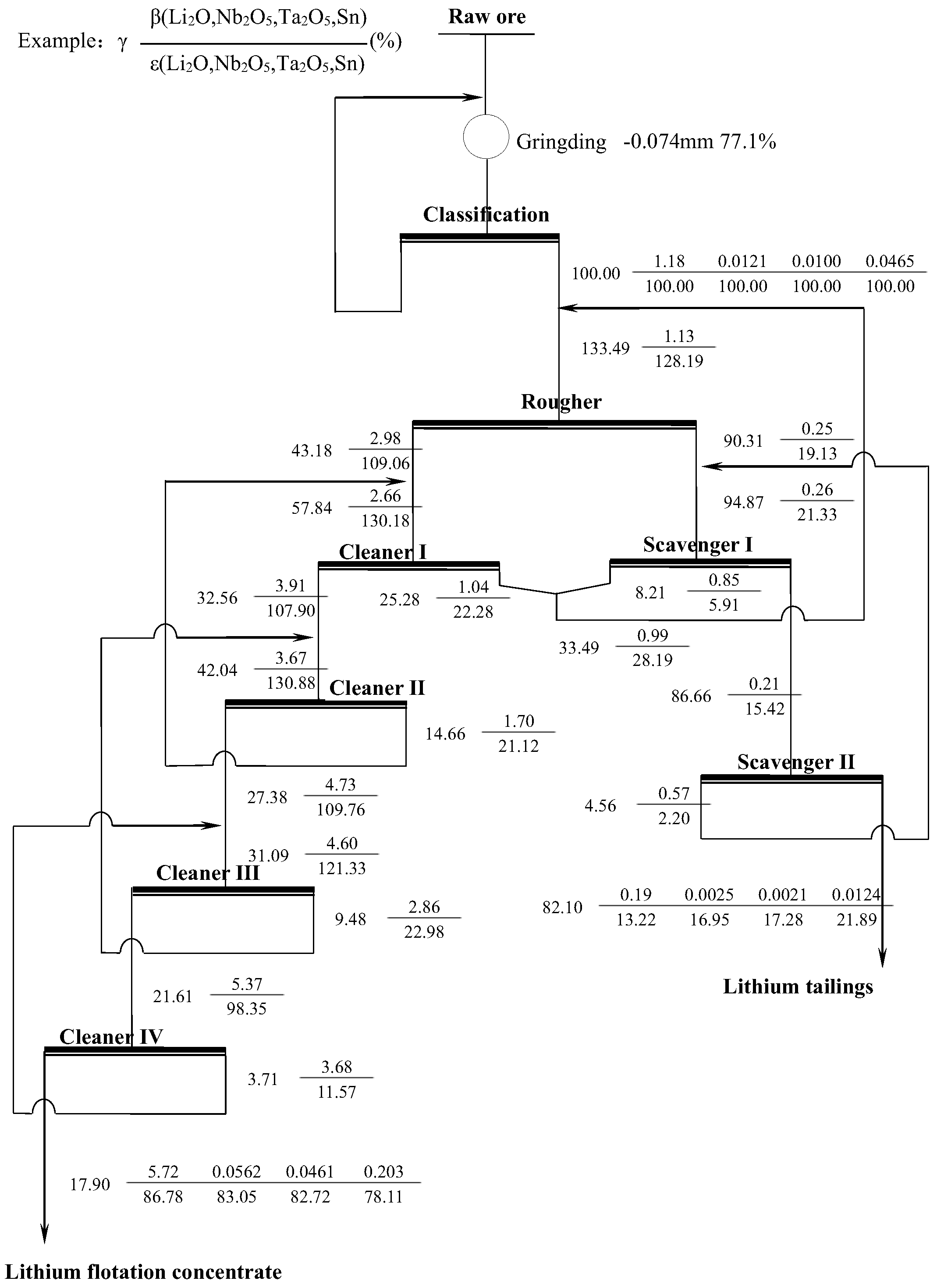
The results of mass–quality balance flowsheet calculations are shown in Table 8, with the corresponding flowsheet presented in Figure 12. The distribution of Nb, Ta, Be, and Sn in the products is shown in Table 9. Table 8 shows that an Li2O concentrate with a recovery of 86.78% and a grade of 5.72% is obtained in the pilot-scale test, meeting the requirements for subsequent metallurgical processing (YS/T 2016-2011). Table 9 shows that 83.05% Nb2O5, 82.72% Ta2O5, and 78.11% Sn from the raw ore were enriched in the Li flotation concentrate, with grades of 0.05620%, 0.0461%, and 0.2030%, respectively. As stated in Section “Locked-Circuit Test”, the separation of BeO from this ore via beneficiation is infeasible and was not considered. The indices agree well with the laboratory-scale locked-circuit results.

3.2.2. Pilot-Scale Flotation Test of Feldspar

Similar to the pilot-scale test of spodumene, reagent dosages were modulated based on the flotation phenomenon and indices. The specific reagent scheme is illustrated in Table 10.
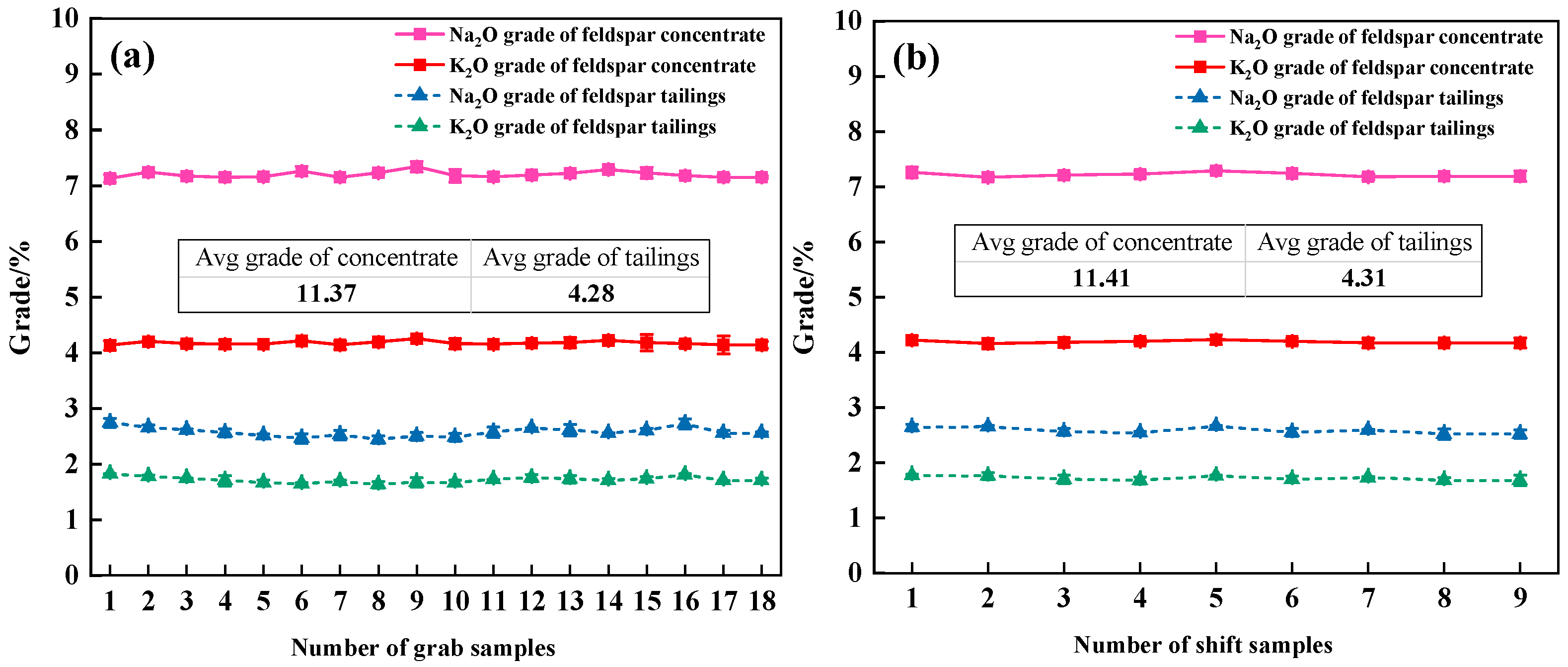
The K2O and Na2O grades of grab and shift samples of feldspar concentrate and tailings are presented in Figure 13. The average (K2O + Na2O) grades of the concentrate from grab and shift samples are 11.37% and 11.41%, respectively, meeting the requirement for the feldspar concentrate (≥11.00%). The standard deviation of (K2O + Na2O) grades of shift samples are 0.063 and 0.082 for feldspar flotation concentrate and tailings, respectively. The results exhibit stable indices, consistent with those from the laboratory-scale locked-circuit test.
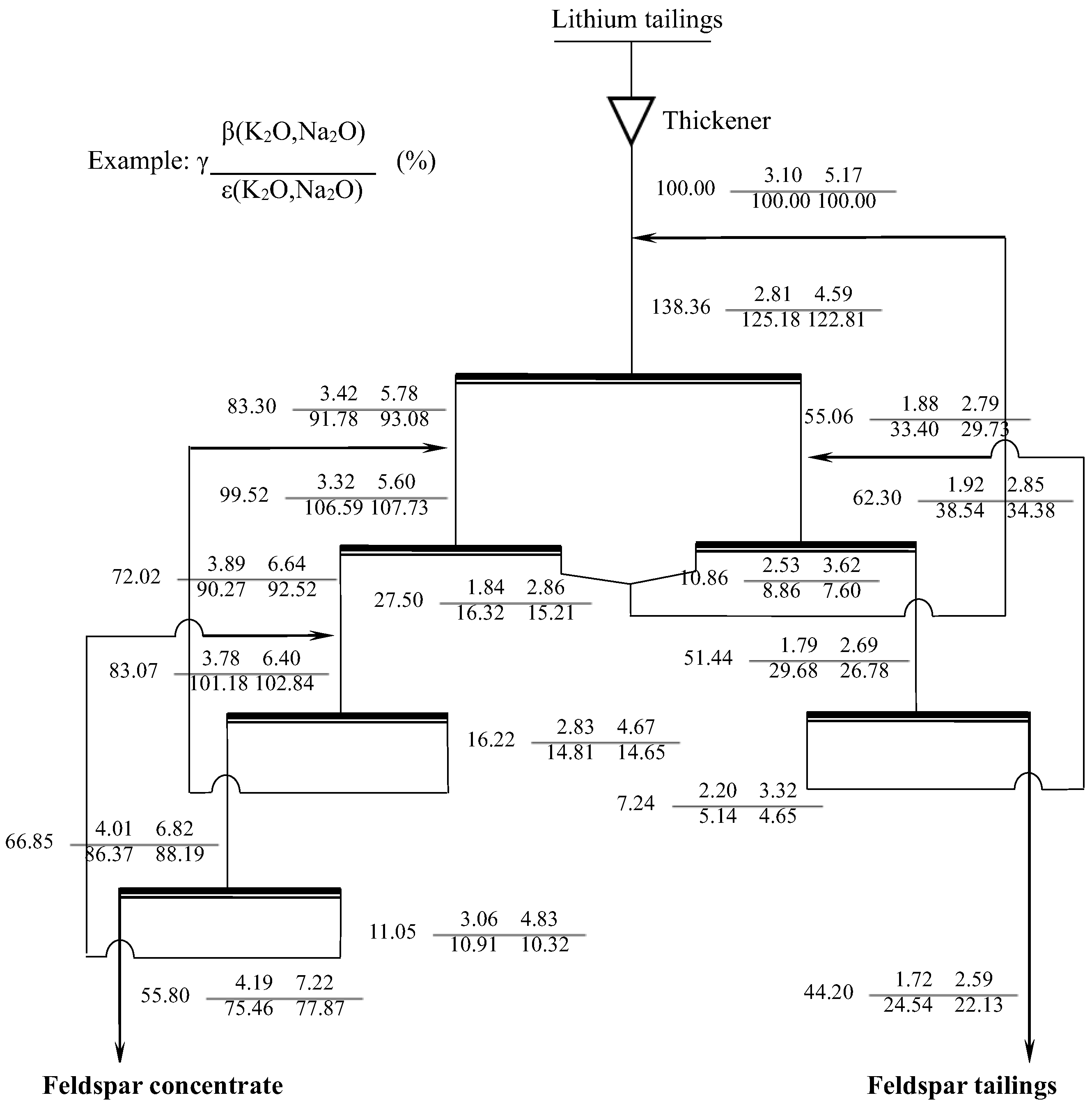
The mass–quality balance flowsheet calculation results are shown in Table 11, with the corresponding flowsheet presented in Figure 14. The (K2O + Na2O) grade of the concentrate is 11.41%, with K2O and Na2O recoveries of >75% relative to the Li flotation tailings. The K2O and Na2O recoveries of feldspar concentrate are 73.83% and 74.33%, respectively, relative to the raw ore. The main content of the feldspar tailings is quartz, with an SiO2 grade of 91.16%, meeting the standards required for Grade II quartz sand in glass manufacturing (JC/T 529-2000 [45]). The SiO2 recovery of feldspar tailings is 45.72% relative to the raw ore. This demonstrates the potential for full utilization of Li flotation tailings. Future studies will focus on further purifying quartz in feldspar tailings to produce high-quality quartz concentrates.

3.2.3. Comprehensive Recovery of Nb–Ta Minerals and Cassiterite

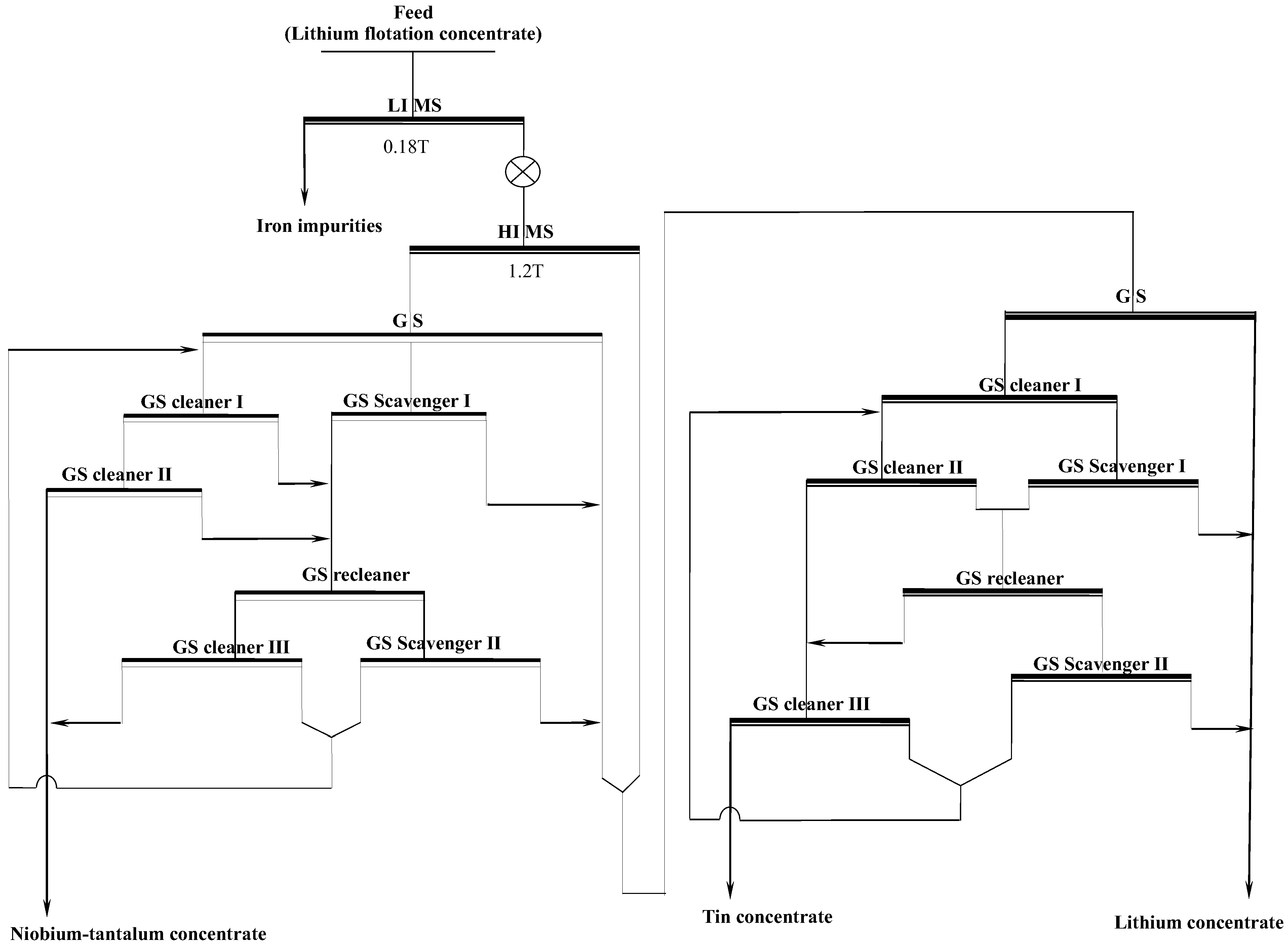
Section 3.2.2 indicates that ~80% of Nb2O5, Ta2O5, and Sn are enriched in the Li flotation concentrate. Thus, the comprehensive utilization of these minerals in the Li flotation concentrate is feasible. The main impurity in the Li flotation concentrate is 4.30 wt.% Fe2O3, which is commonly removed via low-intensity magnetic separation (LIMS) [46]. Owing to the weak magnetism of Nb–Ta minerals and the nonmagnetism of spodumene and cassiterite, Nb–Ta minerals can be separated from spodumene and cassiterite via high-intensity magnetic separation. The densities of Nb–Ta minerals, cassiterite, and spodumene are 5.00–7.90, 6.80–7.10, and 3.13–3.20, respectively [35]. Based on the density differences among these minerals, gravity separation can be an effective method. Through multiple stages of cleaner, recleaner, and scavenger, Nb–Ta and Sn concentrates were simultaneously obtained while producing a high-grade Li concentrate. The detailed flowsheet and indices of the comprehensive utilization are shown in Figure 15 and Table 12, respectively. The Nb–Ta concentrate achieves a total Nb2O5 + Ta2O5 grade of 60.20%, with 52.52% Nb2O5 and 52.07% Ta2O5 recovered from the Li flotation concentrate. A qualified Sn concentrate with a Sn grade of 62.17% and recovery of 70.04% is obtained, yielding a final Li concentrate with an Li2O grade of 5.89% and a recovery of 99.75%. Relative to the raw ore, the recoveries are 43.62% Nb2O5, 43.27% Ta2O5, 54.78% Sn, and 86.62% Li2O, indicating the high quality of the Li concentrate and the efficient, comprehensive recovery of associated Nb, Ta, and Sn.

3.3. Water Reuse from Tailing Slurry

To investigate the feasibility of water reuse from the slurry of the Li flotation tailings, the influence of returned water on the flotation indices was studied. The returned water, obtained from the supernatant after 1 d of settlement of Li flotation tailings, was subjected to flotation and grinding. The spodumene flotation procedure is identical to that of the laboratory-scale flotation experiment.

3.3.1. Effect of the Ratio of Water Reuse on Spodumene Flotation

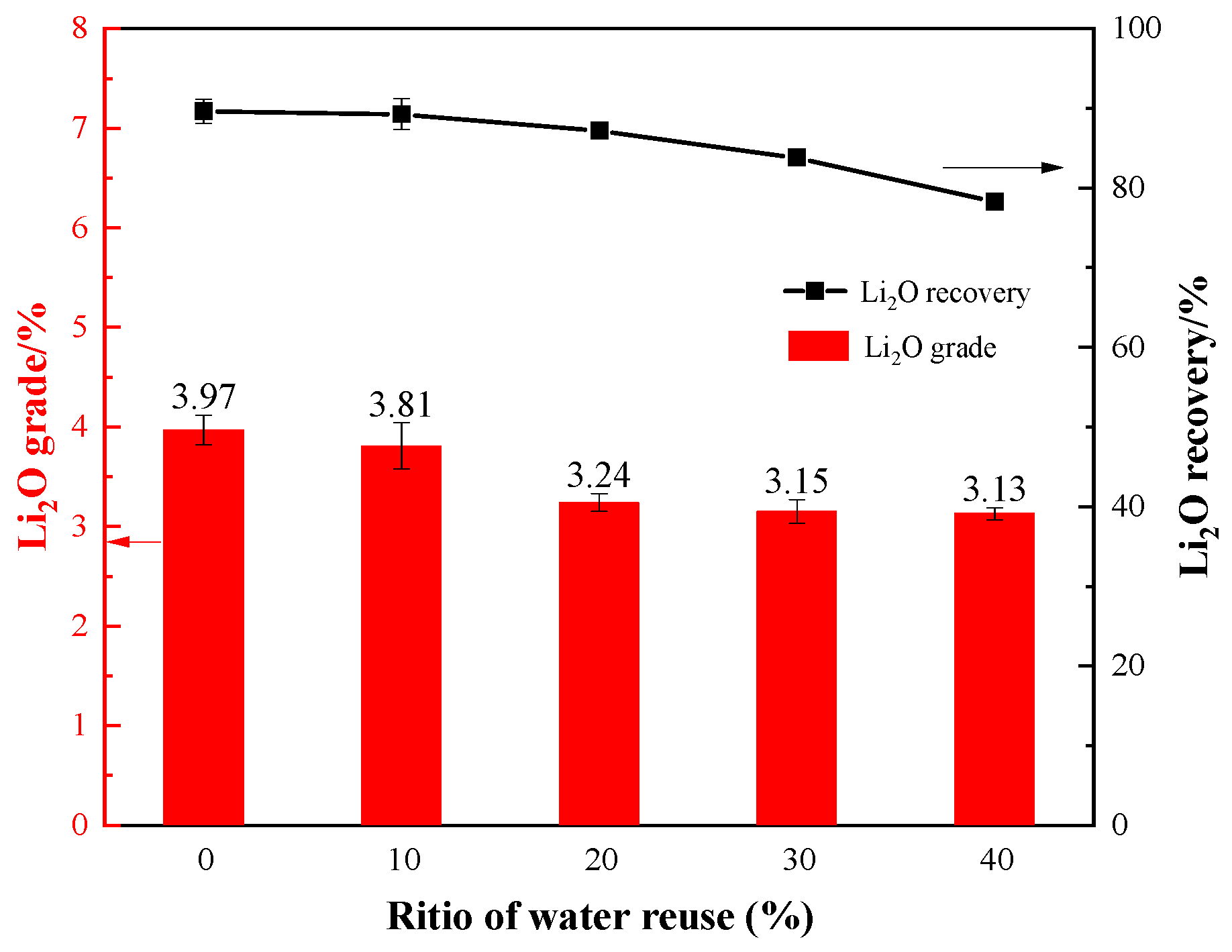
Flotation tests were conducted using varying ratios of returned water to assess its effect on the flotation indices of spodumene. Figure 16 shows that a 10% returned water ratio causes a lower change in the indices compared with freshwater. However, increasing the ratio of the returned water from 10% to 40% reduces the Li2O grade by 0.68% and recovery by 10.96% in the rough concentrate. At a 40% returned water ratio, the Li2O recovery of the rough concentrate decreases by 11.32% compared with freshwater. Therefore, direct reuse of returned water is not recommended. Treatment is needed to reduce its adverse effect on flotation.

3.3.2. Effect of Different Treatments on Spodumene Flotation

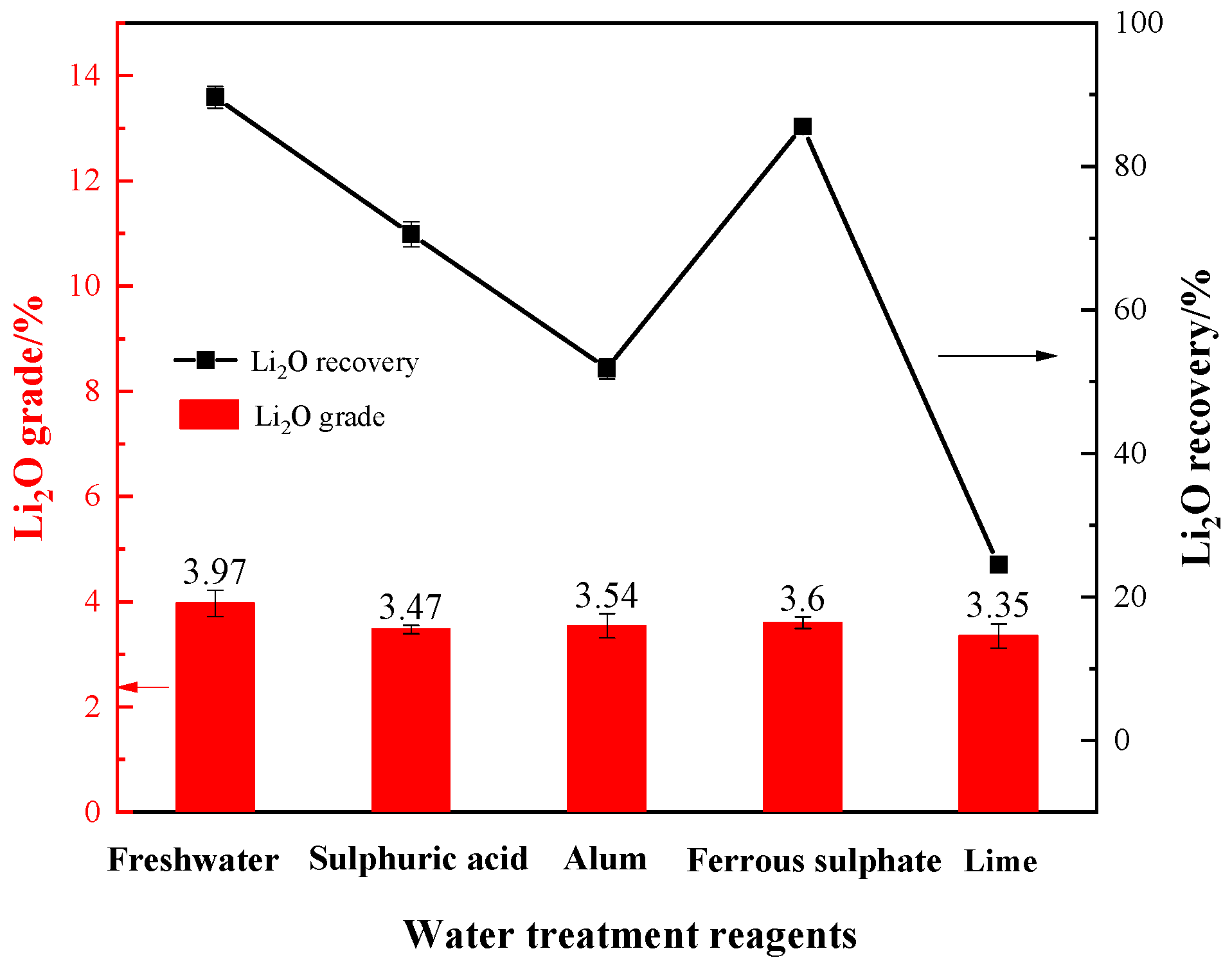
To mitigate the detrimental effect of returned water on spodumene flotation, returned water treated with different flocculants was tested for its impact on flotation indices [47]. Four water treatment reagents—H2SO4, lime (CaO), alum (KAl(SO4)2·12H2O), and FeSO4—were selected to treat the Li flotation tailing slurry at a dosage of 500 g m−3. The resulting pH values of the returned water after treatment were 4.95, 11.80, 7.48, and 8.38, respectively. Figure 17 shows that the LiO2 grade and recovery of the rough concentrate decreased by 0.50% and 19.08%, respectively, when using H2SO4-treated returned water compared with freshwater-treated rough concentrate. CaO- and KAl(SO4)2·12H2O-treated returned water samples show Li2O recoveries of 24.53% and 51.77%, respectively, mainly due to residual calcium and aluminum ions in the wastewater, which hinder the adsorption of flotation reagents on the spodumene surface [40]. FeSO4-treated returned water exhibits an Li2O grade of 3.60% and a recovery of 85.55%, close to freshwater performance. Polyferric sulfate has been widely used in wastewater treatment, including woolen wastewater [48] and mine wastewater [49]. The primary mechanism of FeSO4 as a flocculant is likely the charge neutralization of negatively charged colloids and mineral particles in the returned water by hydrolysis products of Fe ions, accelerating water clarification [50]. Herein, considering that the pH of FeSO4-treated water is close to that of freshwater and its minimal impact on flotation, FeSO4 is recommended as the optimal reagent for water reuse.
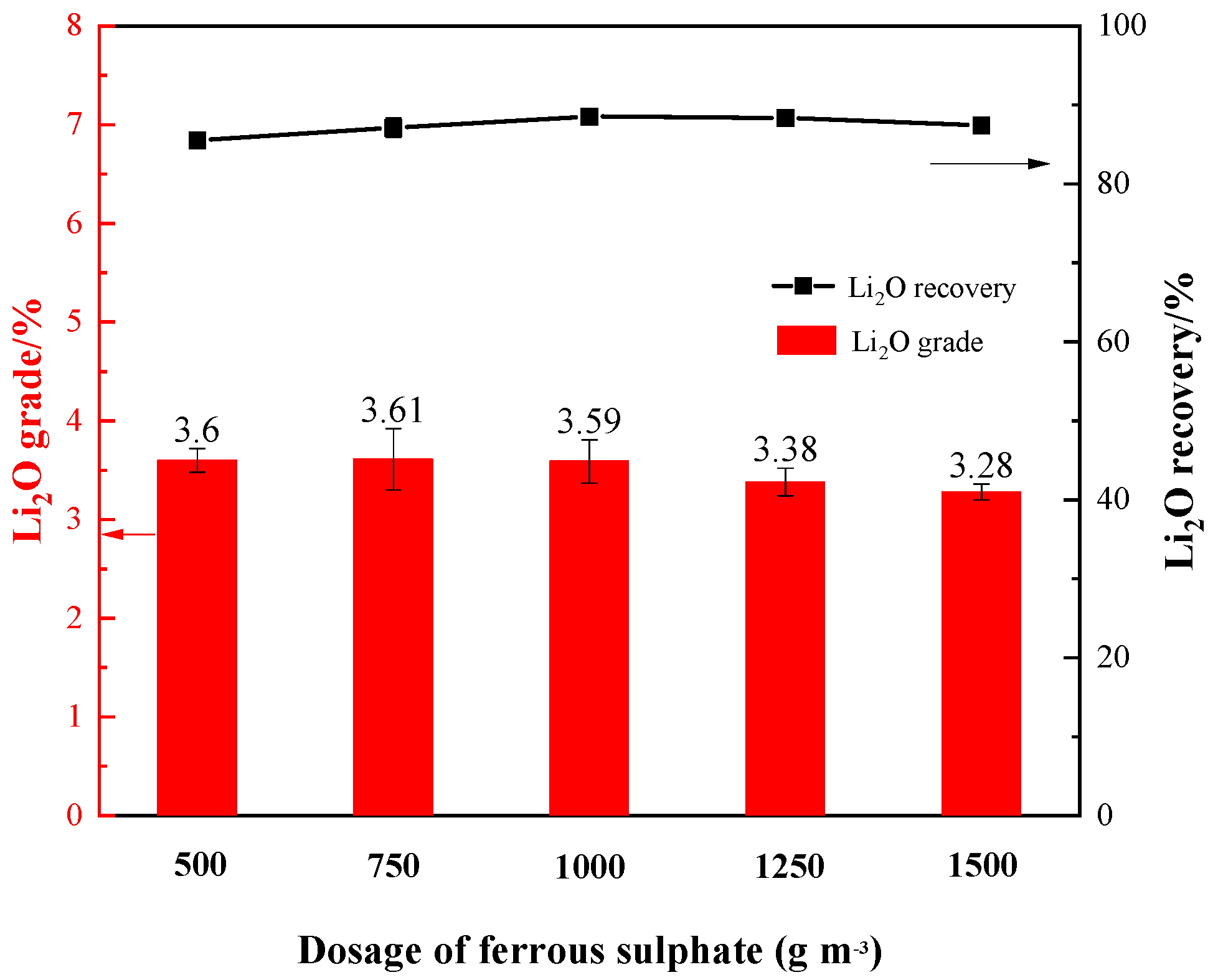
Subsequently, the effect of FeSO4 dosage on flotation indices was further studied, as shown in Figure 18. As the FeSO4 dosage increased from 500 g m−3 to 1500 g m−3, the pH of the returned water gradually decreased from 8.4 to 7.0, and the recovery of Li2O in the rough concentrate initially increased and then decreased. At a dosage of 1000 g m−3, Li2O recovery reaches a maximum (88.53%), with an Li2O grade of 3.59% in the concentrate. Compared to freshwater, Li2O grade and recovery decreased by 0.38% and 1.10%, respectively, while the pH of the returned water was nearly neutral. Therefore, the optimal FeSO4 dosage was selected as 1000 g m−3.

3.3.3. Locked-Circuit Test

To assess flotation performance after water reuse, a laboratory-scale locked-circuit test was conducted. The process was identical to the freshwater test described in Section Locked-Circuit Test of Spodumene, with minor adjustments to the reagent scheme. The locked-circuit test produced a concentrate with an Li2O grade of 5.77% and recovery of 86.47% (Table 13). Although these indices of the concentrate in the locked-circuit test with returned water were slightly lower than those in the absence of returned water (Table 4), it is still an encouraging result because of water conservation and low reagent consumption. Table 14 shows that the consumption of NaOH, Na2CO3, and EMT-12 is reduced by 18.75%, 3.33%, and 3.45%, respectively. Although FeSO4 treatment of returned water is economically and technically feasible for industrial production, the impact of settled tailings on feldspar flotation performance still requires further investigation.

3.4. Economic Evaluation and Environmental Perspective

To evaluate the economic benefits of the comprehensive utilization process of the Li pegmatite ore, the economic returns from Li and byproducts, including Nb–Ta, Sn, feldspar, and quartz concentrates, were approximately estimated via comprehensive utilization and summarized in Table 15. Yield data were calculated based on pilot-scale tests, providing great representativeness for production practice. The process provides an economic benefit of CNY 1568.34 per ton of raw ore, with an additional CNY 199.13 per ton from the comprehensive utilization of byproducts. Furthermore, the cost of freshwater is reduced by ~30% using returned water [43], and reagent consumption is also reduced. Table 16 presents an approximate cost–benefit analysis of the process, indicating that the comprehensive recovery of multiple concentrates from the Li flotation concentrate and tailings provides benefits of CNY 162.95 per ton. It should be noted that this cost estimate is preliminary, primarily including equipment acquisition, routine wear, and maintenance. For industrial production, precise calculations are necessary. Compared with traditional spodumene flotation, the proposed process offers reduced tailings disposal, full utilization of multiple elements, and lower water and reagent consumption.

4. Conclusions

Herein, laboratory- and pilot-scale tests were conducted to develop a comprehensive utilization process for Li pegmatite ore, effectively combining flotation, magnetic, and gravity separation techniques. Compared with conventional methods, the process produces qualified concentrates of Ni–Ta, Sn, feldspar, and quartz, in addition to Li concentrate, achieving stepwise utilization of the minerals in the ore. Based on the results, the primary findings are summarized below:
  • Laboratory-scale locked-circuit flotation tests of spodumene and feldspar yielded an Li concentrate with an Li2O grade of 5.80% and recovery of 88.62%, and a feldspar concentrate with a (K2O + Na2O) grade of 11.41%, with recoveries of K2O and Na2O of 81.30% and 84.81%, respectively.
  • In a 72 h continuous pilot-scale test, Li flotation yielded a concentrate with an Li2O grade of 5.72% and recovery of 86.78%, enriching 83.05% Nb2O5, 82.72% Ta2O5, and 78.11% Sn. Using Li flotation tailings as feed, a feldspar concentrate with a (K2O + Na2O) grade of 11.41% was obtained, achieving K2O and Na2O recoveries of >75%.
  • Comprehensive utilization of Li flotation concentrate via a combined magnetic and gravity separation process produced an Nb–Ta concentrate with a total Nb2O5 + Ta2O5 grade of 60.20% and a Sn concentrate with a Sn grade of 62.17%. Recoveries relative to the raw ore were 43.62% Nb2O5, 43.27% Ta2O5, and 54.78% Sn, demonstrating efficient recovery of multiple valuable elements. Simultaneously, the main content of feldspar tailings was quartz, with an SiO2 grade of 91.16%, satisfying the standards required for Grade II quartz sand in glass manufacturing.
  • The feasibility of water reuse from the slurry of Li flotation tailings was initially researched. FeSO4 with a dosage of 1000 g m−3 was identified as the optimum flocculant, with flotation indices of the Li concentrate (Li2O grade of 5.77% and recovery of 86.47%) slightly lower than those using freshwater. Consumption of NaOH, Na2CO3, and EMT-12 was reduced by 18.75%, 3.33%, and 3.45%, respectively.
  • The proposed process provides economic benefits and offers remarkable advantages, including marked reduction in tailings disposal, full utilization of multiple elements, and low water and reagent consumption. This study provides valuable guidelines for the mineral processing of an Li pegmatite ore and other associated multimetallic ores.

Author Contributions

Conceptualization, W.D.; Methodology, J.W.; Software, Y.W.; Validation, Y.X.; Formal analysis, B.X.; Investigation, Y.X.; Data curation, B.D.; Writing—original draft, Y.X.; Writing—review and editing, W.D.; Supervision, W.D. All authors have read and agreed to the published version of the manuscript.

Funding

The research was funded by the Deep Earth Probe and Mineral Resources Exploration—National Science and Technology Major Project of the Ministry of Natural Resources of the People’s Republic of China (Grant Nos. 2025ZD1009808 and 2024ZD1004005), the China Geological Survey Project by the China Geological Survey, Ministry of Natural Resources (Grant No. DD 202302041), and the Sichuan Science and Technology Program by the Science and Technology Department of Sichuan Province (Grant No. 2025ZNSFSC0370).

Institutional Review Board Statement

Not applicable.

Informed Consent Statement

Not applicable.

Data Availability Statement

The original contributions presented in this study are included in the article. Further inquiries can be directed to the corresponding author.

Conflicts of Interest

The authors declare no conflict of interest.

References

  1. Zhang, X.; Wang, Z.; Li, Z. Research progress of ionic liquids in recycling waste lithium-ion batteries: From metal extraction to material regeneration. Sep. Purif. Technol. 2025, 379, 134850. [Google Scholar] [CrossRef]
  2. Zhou, H.; Liu, Y.; Ma, B.; Wang, C.; Chen, Y. Efficient lithium extraction from low-grade clay-type lithium ore via nitric acid pressure leaching. J. Environ. Chem. Eng. 2025, 13, 118653. [Google Scholar] [CrossRef]
  3. Castelló Escuriet, M.; Boltoeva, M.; Aldoori, H.; Trébouet, D. Novel poly(ionic liquid) inclusion membranes for lithium extraction. J. Mol. Liq. 2025, 435, 128186. [Google Scholar] [CrossRef]
  4. Mineral Commodity Summaries 2021; USGS: Reston, VA, USA, 2021; p. 200.
  5. Mineral Commodity Summaries 2025; USGS: Reston, VA, USA, 2025; p. 212.
  6. Liu, Y.; Ma, B.; Lv, Y.; Wang, C.; Chen, Y. Selective recovery and efficient separation of lithium, rubidium, and cesium from lepidolite ores. Sep. Purif. Technol. 2022, 288, 120667. [Google Scholar] [CrossRef]
  7. Lèbre, É.; Stringer, M.; Svobodova, K.; Owen, J.R.; Kemp, D.; Côte, C.; Arratia-Solar, A.; Valenta, R.K. The social and environmental complexities of extracting energy transition metals. Nat. Commun. 2020, 11, 4823. [Google Scholar] [CrossRef] [PubMed]
  8. Wang, Y.; Zhu, Y.M.; Liu, J.; Zhang, D.J.; Jiang, K. Mechanism of Fe(III)-modified silicate in the flotation separation of spodumene and albite: An experimental and theoretical study. Sep. Purif. Technol. 2024, 340, 126705. [Google Scholar] [CrossRef]
  9. Yang, J.; Xu, L.; Wu, H.; Jin, J.; Liu, L. Microstructure and mechanical properties of metakaolin-based geopolymer composites containing high volume of spodumene tailings. Appl. Clay Sci. 2022, 218, 106412. [Google Scholar] [CrossRef]
  10. Roy, T.; Plante, B.; Benzaazoua, M.; Demers, I.; Coudert, L.; Turcotte, S. Geochemistry of decades-old spodumene mine tailings under a humid continental climate. Appl. Geochem. 2022, 146, 105481. [Google Scholar] [CrossRef]
  11. Wang, Z.; Tian, H.; Liu, J.; Wang, J.; Lu, Q.; Xie, L. Cd(II) adsorption on earth-abundant serpentine in aqueous environment: Role of interfacial ion specificity. Environ. Pollut. 2023, 331, 121845. [Google Scholar] [CrossRef]
  12. Wang, Z.; Tian, H.; Liu, J.; Wang, J.; Lu, Q.; Xie, L. Facet-dependent adsorption of heavy metal ions on Janus clay nanosheets. J. Hazard. Mater. 2024, 461, 132548. [Google Scholar] [CrossRef]
  13. Moreno, L.; Neretnieks, I. Long-term environmental impact of tailings deposits. Hydrometallurgy 2006, 83, 176–183. [Google Scholar] [CrossRef]
  14. Yilmaz, E.; Benzaazoua, M.; Bussière, B.; Pouliot, S. Influence of disposal configurations on hydrogeological behaviour of sulphidic paste tailings: A field experimental study. Int. J. Miner. Process. 2014, 131, 12–25. [Google Scholar] [CrossRef]
  15. Roy, T.; Plante, B.; Benzaazoua, M.; Demers, I. Geochemistry and mineralogy of a spodumene-pegmatite lithium ore at various mineral beneficiation stages. Miner. Eng. 2023, 202, 108312. [Google Scholar] [CrossRef]
  16. Luo, X.-L.; Li, W.; Du, D.-H.; An, S.; Zheng, B.; Zhu, W.; Xu, Z. Iron isotope systematics of the Jiajika granite-pegmatite lithium deposit, Sichuan, China. Ore Geol. Rev. 2024, 165, 105903. [Google Scholar] [CrossRef]
  17. Lan, X.; Gao, J.; Wang, Z.; Guo, Z. Separation of niobium and rare earths from Fe-Nb-RE associated ultra-low-grade tailings using super gravity. Sep. Purif. Technol. 2023, 314, 123589. [Google Scholar] [CrossRef]
  18. Li, S.; Zhu, Y.; Liu, J.; Wang, Y.; Han, Y. Flotation separation of spodumene from beryl or gangue (albite and quartz) with α-bromo-myristic acid as a collector. Miner. Eng. 2025, 228, 109329. [Google Scholar] [CrossRef]
  19. Worku, Y.S.; Sikeyi, L.L.; Olaleru, A.S.; Dolla, T.H.; Palaniyandy, N.; Mathe, M.M. Recent Advancements of Niobium and Tantalum-Based Materials: From Design Engineering to Energy Storage Applications. Chem. Sel. 2025, 10, e202405649. [Google Scholar] [CrossRef]
  20. Angadi, S.I.; Sreenivas, T.; Jeon, H.-S.; Baek, S.-H.; Mishra, B.K. A review of cassiterite beneficiation fundamentals and plant practices. Miner. Eng. 2015, 70, 178–200. [Google Scholar] [CrossRef]
  21. Niu, H.; Yu, M.; Mubula, Y.; Zeng, L.; Xu, K.; Zhu, Z.; He, G. Extraction of Rubidium and Cesium from a Variety of Resources: A Review. Materials 2025, 18, 3378. [Google Scholar] [CrossRef]
  22. Xing, P.; Wang, C.; Wang, L.; Ma, B.; Chen, Y.; Wang, G. Clean and efficient process for the extraction of rubidium from granitic rubidium ore. J. Clean. Prod. 2018, 196, 64–73. [Google Scholar] [CrossRef]
  23. Rodríguez, E.S.; Sáenz, E.C.; Ramírez, M.; Cardona, F.P.; Labra, M.P. Kinetics of Alkaline Decomposition and Cyaniding of Argentian Rubidium Jarosite in NaOH Medium. Metall. Mater. Trans. B 2012, 43, 1027–1033. [Google Scholar] [CrossRef]
  24. Tian, J.; Xu, L.; Wu, H.; Fang, S.; Deng, W.; Peng, T.; Sun, W.; Hu, Y. A novel approach for flotation recovery of spodumene, mica and feldspar from a lithium pegmatite ore. J. Clean. Prod. 2018, 174, 625–633. [Google Scholar] [CrossRef]
  25. Xu, L.; Tian, J.; Wu, H.; Deng, W.; Yang, Y.; Sun, W.; Gao, Z.; Hu, Y. New insights into the oleate flotation response of feldspar particles of different sizes: Anisotropic adsorption model. J. Colloid Interface Sci. 2017, 505, 500–508. [Google Scholar] [CrossRef]
  26. Wang, W.; Song, J.; Shi, Z.; Sun, W.; Xue, L. Crystallization behavior and properties of quartz glass-ceramics synthesized from desert sand. Ceram. Int. 2024, 50, 370–383. [Google Scholar] [CrossRef]
  27. Tadesse, B.; Makuei, F.; Albijanic, B.; Dyer, L. The beneficiation of lithium minerals from hard rock ores: A review. Miner. Eng. 2019, 131, 170–184. [Google Scholar] [CrossRef]
  28. Aghamirian, M.; Mohns, C.; Grammatikopoulos, T.; Imeson, D.; Pearse, G. An overview of spodumene beneficiation. In Proceedings of the 44th Annual Canadian Mineral Processors Operators’ Conference, Ottawa, ON, Canada, 22–24 January 2012; p. 153. [Google Scholar]
  29. Bale, M.D.; May, A.V. Processing of ores to produce tantalum and lithium. Miner. Eng. 1989, 2, 299–320. [Google Scholar] [CrossRef]
  30. Siame, E.; Pascoe, R.D. Extraction of lithium from micaceous waste from china clay production. Miner. Eng. 2011, 24, 1595–1602. [Google Scholar] [CrossRef]
  31. Xu, L.; Hu, Y.; Tian, J.; Wu, H.; Yang, Y.; Zeng, X.; Wang, Z.; Wang, J. Selective flotation separation of spodumene from feldspar using new mixed anionic/cationic collectors. Miner. Eng. 2016, 89, 84–92. [Google Scholar] [CrossRef]
  32. Tian, J.; Xu, L.; Deng, W.; Jiang, H.; Gao, Z.; Hu, Y. Adsorption mechanism of new mixed anionic/cationic collectors in a spodumene-feldspar flotation system. Chem. Eng. Sci. 2017, 164, 99–107. [Google Scholar] [CrossRef]
  33. Wu, H.; Tian, J.; Xu, L.; Fang, S.; Zhang, Z.; Chi, R. Flotation and adsorption of a new mixed anionic/cationic collector in the spodumene-feldspar system. Miner. Eng. 2018, 127, 42–47. [Google Scholar] [CrossRef]
  34. Sun, C.; Zhu, Y.; Song, Z.; Zhang, X.; Sun, X.; Xiao, Y.; Wang, Z.; He, W.; Yan, L. Beneficiation, Smelting and Material Processing of Lithium, eryllium, Tantalum, and Niobium Mineral Resources in China: Current Status and Prospect. Eng. Sci. 2024, 26, 248–258. [Google Scholar]
  35. Li, S.; Liu, J.; Han, Y.; Zhang, S. Review on the Beneficiation of Li, Be, Ta, Nb-Bearing Polymetallic Pegmatite Ores in China. Minerals 2023, 13, 865. [Google Scholar] [CrossRef]
  36. Wang, T.; Li, P.L.; Li, H.W.; Zou, J.J.; Wang, W.; Yang, K.Z.; Wang, C.H. Experimental Study on Comprehensive Recovery of Associated Elements in Pegmatite Lithium Polymetallic Ore in Xinjiang. Met. Mine 2021, 11, 81–85. [Google Scholar] [CrossRef]
  37. Cheng, W.; Zheng, X.; Wang, Y.; Lu, D. Enhancing the recovery of tantalum and niobium minerals associated in spodumene ore by high gradient magnetic separation coupling with magnetic fluid. Sep. Purif. Technol. 2025, 378, 134511. [Google Scholar] [CrossRef]
  38. Petrakis, E.; Alexopoulos, I.; Pantelaki, O.; Karmali, V.; Komnitsas, K. Advances in Mineral Processing of Hard-Rock Lithium Ores: A Comprehensive Review. Min. Metall. Explor. 2025, 42, 1251–1283. [Google Scholar] [CrossRef]
  39. Wang, Z.; Wu, H.; Xu, Y.; Shu, K.; Fang, S.; Xu, L. The effect of dissolved calcite species on the flotation of bastnaesite using sodium oleate. Miner. Eng. 2020, 145, 106095. [Google Scholar] [CrossRef]
  40. Wang, Z.; Wu, H.; Xu, Y.; Shu, K.; Yang, J.; Luo, L.; Xu, L. Effect of dissolved fluorite and barite species on the flotation and adsorption behavior of bastnaesite. Sep. Purif. Technol. 2020, 237, 116387. [Google Scholar] [CrossRef]
  41. Ma, H.Y.; Jiang, C.; Zhu, X.; Zheng, X.; Zhou, W.Y.; Wang, L.R.; Zhao, M.; Feng, L.H.; Xu, X.J.; Kong, C.M.; et al. Interaction and selective treatment of lead-zinc flotation wastewater for wastewater recycling using ectrocatalytic internal micro-electrolysis. J. Clean. Prod. 2024, 468, 142908. [Google Scholar] [CrossRef]
  42. Santos, M.A.; Capponi, F.; Ataíde, C.H.; Barrozo, M.A.S. Wastewater treatment using DAF for process water reuse in apatite flotation. J. Clean. Prod. 2021, 308, 127285. [Google Scholar] [CrossRef]
  43. Lin, S.Y.; Liu, R.Q.; Wu, M.R.; Hu, Y.H.; Sun, W.; Shi, Z.Z.; Han, H.S.; Li, W.H. Minimizing beneficiation wastewater through internal reuse of process water in flotation circuit. J. Clean. Prod. 2020, 245, 118898. [Google Scholar] [CrossRef]
  44. Jiao, F.; Xu, L.; Qin, W.; Cui, Y.; Wei, Q. Synergistic effect and co-adsorption mechanism of a mixed collector on the flotation separation of spodumene from feldspar. Colloids Surf. A Physicochem. Eng. Asp. 2023, 676, 132314. [Google Scholar] [CrossRef]
  45. JC/T 529-2000; Sand for Making Flat Glass. Standardization Administration of the People’s Republic of China: Beijing, China, 2000.
  46. de Freitas Simões, F.; Borges, J.P.; Pires, N.J.; dos Santos Oliveira, M. High-intensity magnetic separation as a pre-flotation stage for the purification of complex phosphate ore. Sep. Purif. Technol. 2025, 378, 134704. [Google Scholar] [CrossRef]
  47. Wang, Z.; Lu, Q.; Wang, J.; Liu, J.; Liu, G.; Sun, W.; Xie, L.; Liu, Q.; Zeng, H. Nanomechanical insights into hydrophobic interactions of mineral surfaces in interfacial adsorption, aggregation and flotation processes. Chem. Eng. J. 2023, 455, 140642. [Google Scholar] [CrossRef]
  48. Li, X.; Liu, W.; Yu, Z.; Bu, S.; Zhang, N.; Wang, A. Carbon-ferrous-sulfur mixotrophic denitrification driven by polyferric sulfate (PFS)-conditioned recovered sludge fermentation liquor enhanced nitrogen removal in woolen wastewater. Chem. Eng. J. 2024, 492, 152329. [Google Scholar] [CrossRef]
  49. Liu, P.; Wang, X.; Zhang, W. The development of an efficient precipitation-flotation-dewatering (PFD) process for acid mine drainage treatment. Sep. Purif. Technol. 2025, 353, 128542. [Google Scholar] [CrossRef]
  50. Gregory, J. Coagulation by Hydrolysing Metal Salts. Adv. Colloid Interface Sci. 2003, 100–102, 475–502. [Google Scholar] [CrossRef]
Figure 1. XRD pattern of the Li pegmatite ore.
Minerals 15 01138 g001
Figure 2. Flowsheet of flotation condition tests of spodumene (′ denotes minutes; the same applies to other similar instances).
Minerals 15 01138 g002
Figure 3. Flowsheet of flotation condition tests of feldspar.
Minerals 15 01138 g003
Figure 4. Flowsheet of the locked-circuit test of spodumene flotation.
Minerals 15 01138 g004
Figure 5. Flowsheet of the locked-circuit test of feldspar flotation.
Minerals 15 01138 g005
Figure 6. Diagram of the equipment interconnections in the pilot-scale flotation test of spodumene.
Minerals 15 01138 g006
Figure 7. Diagram of the equipment interconnections in the pilot-scale flotation test of feldspar.
Minerals 15 01138 g007
Figure 8. Results of collector species and dosage tests of spodumene rough flotation.
Minerals 15 01138 g008
Figure 9. Mass–quality balance flowsheet in laboratory-scale flotation test of spodumene.
Minerals 15 01138 g009
Figure 10. Results of collector species and dosage tests for feldspar rough flotation: (a) DTAC and (b) EMS-9.
Minerals 15 01138 g010
Figure 11. Indices in the pilot-scale flotation test of spodumene: (a) grab and (b) shift samples.
Minerals 15 01138 g011
Figure 12. Mass–quality balance flowsheet in pilot-scale flotation test of spodumene.
Minerals 15 01138 g012
Figure 13. Indices in pilot-scale test of feldspar flotation: (a) grab samples and (b) shift samples.
Minerals 15 01138 g013
Figure 14. Mass–quality balance flowsheet in the pilot-scale flotation test of feldspar.
Minerals 15 01138 g014
Figure 15. Flowsheet of the comprehensive recovery of Nb–Ta minerals and cassiterite (GS: gravity separation).
Minerals 15 01138 g015
Figure 16. Effect of ratio of water reuse on spodumene flotation indices.
Minerals 15 01138 g016
Figure 17. Effect of different treatments during water reuse on spodumene flotation indices.
Minerals 15 01138 g017
Figure 18. Effect of FeSO4 dosage during water reuse on spodumene flotation indices.
Minerals 15 01138 g018
Table 1. Chemical composition analyses of the Li pegmatite ore (wt.%).
ElementLi2OBeONb2O5Ta2O5SnSiO2MgOAl2O3Fe2O3
Content (%)1.180.06120.01240.01050.047972.350.03115.601.13
ElementK2ONa2OCaOMnOP2O5Rb2OCs2OTiO2
Content (%)2.604.450.560.130.330.110.0170.030
Table 2. Mineral compositions of the lithium pegmatite ore (wt. %).
MineralSpodumeneAlbiteQuartzPotassium FeldsparMuscoviteBioclaseChlorite
Content (%)14.0931.7427.8715.494.281.361.27
MineralBauxiteKaoliniteAmphiboleNb–Ta–Fe MineralsCassiteriteOther Trace Minerals
Content (%)0.730.710.510.010.011.93
Table 3. Devices used in the pilot-scale flotation test.
DeviceModelManufacturers
Overflow continuous rod millXMBL-Ф420 × 600Wuhan Exploration Machinery Co., Ltd., Wuhan, China
Single-spiral classifierФ150 × 1000Wuhan Exploration Machinery Co., Ltd., Wuhan, China
Mixing tankXDC-30LWuhan Exploration Machinery Co., Ltd., Wuhan, China
Mechanical agitated continuous flotation machineFX2-24L/12LJilin Jitan Machinery Co., Ltd., Changchun, China
Thickener50LSelf-made
Low-intensity drum magnetic separatorXCRS-Φ400 × 240Wuhan Exploration Machinery Co., Ltd., Wuhan, China
High-intensity magnetic separatorSLon-500Slon Magnetic Separator Co., Ltd., Ganzhou, China
Table 4. Results of locked-circuit test for spodumene flotation.
ProductYield (%)Li2O Grade (%)Li2O Recovery (%)
Li flotation concentrate17.68 5.80 88.62
Li tailings82.32 0.16 11.38
Feed100.00 1.16 100.00
Table 5. Distribution of other valuable elements in spodumene flotation products of the locked-circuit test.
ProductGrade (%)Recovery (%)
Nb2O5Ta2O5BeOSnNb2O5Ta2O5BeOSn
Li flotation concentrate0.05730.04750.2350.21585.42 84.30 67.50 79.10
Li tailings0.00210.00190.02430.012214.58 15.70 32.50 20.90
Feed0.0119 0.0100 0.0616 0.0481 100.00 100.00 100.00 100.00
Table 6. Results of the locked-circuit test for feldspar flotation.
ProductYield (%)Grade (%)Recovery (%)
K2O + Na2OK2ONa2O
Feldspar concentrate60.4511.4181.3084.81
Tailings39.553.4518.7015.19
Feed100.008.26100.00100.00
Table 7. Reagent scheme for the pilot-scale flotation test of spodumene.
ReagentNa2CO3NaOHCaCl2EMT-12
Dosage (g/t)
Stage
Rougher3000300801500
Scavenger I-100-400
Scavenger II--40250
Cleaner I1200---
Cleaner II750---
Cleaner III550---
Cleaner IV350---
Total58504001202100
Table 8. Calculations of indices in the pilot-scale test of spodumene flotation.
ProductYield (%)Li2O Grade (%)Li2O Recovery (%)
Li flotation concentrate17.905.7286.78
Li tailings82.100.1913.22
Feed100.001.18100.00
Table 9. Distribution of other valuable elements in the spodumene flotation products of pilot-scale test.
ProductGrade (%)Recovery (%)
Nb2O5Ta2O5BeOSnFe2O3Nb2O5Ta2O5BeOSnFe2O3
Li flotation concentrate0.05620.04610.22700.20304.3083.0582.7265.5678.1169.06
Li tailings0.00250.00210.02600.01240.4216.9517.2834.4421.8930.94
Feed0.01210.01000.06200.04651.10100.00100.00100.00100.00100.00
Table 10. Reagent scheme of the pilot-scale flotation test of feldspar.
ReagentH2SO4EMS-9
Dosage (g/t)
Stage
Rougher36001400
Scavenger I650200
Scavenger II300150
Cleaner I1200200
Cleaner II800150
Cleaner III450-
Total70002100
Table 11. Calculations of indices in the pilot-scale test of feldspar flotation.
ProductYield (%)Grade (%)Li2O Recovery (%)
K2O + Na2OK2ONa2O
Feldspar concentrate55.8011.4175.4677.87
Feldspar tailings44.204.3124.5422.13
Feed100.008.27100.00100.00
Table 12. Indices of comprehensive recovery of Nb–Ta minerals and cassiterite.
ProductYield (%)Grade (%)Recovery (Relative to the Li Flotation Concentrate, %)Recovery (Relative to the Raw Ore, %)
Li2ONb2O5Ta2O5SnLi2ONb2O5Ta2O5SnLi2ONb2O5Ta2O5Sn
Nb–Ta concentrate0.090.0132.79027.4107.120.0052.5252.073.140.0043.6243.272.45
Li concentrate97.385.890.0270.0230.0699.7546.7947.2826.7186.6238.8639.2920.89
Sn concentrate0.230.300.0070.00462.170.010.030.0270.040.010.020.0254.78
Fe impurities2.300.590.0160.0130.010.240.650.630.110.200.540.520.09
Feed
(Li flotation concentrate)
100.00 5.750.0560.0470.20100.00100.00100.00100.00----
Table 13. Results of the locked-circuit test of spodumene flotation with water reuse.
ProductYield (%)Li2O Grade (%)Li2O Recovery (%)
Li flotation concentrate17.39 5.77 86.47
Li tailings82.61 0.19 13.53
Feed100.00 1.16 100.00
Table 14. Reagent consumption of the locked-circuit flotation test of spodumene with and without water reuse.
ReagentNa2CO3NaOHCaCl2EMT-12
Reagent Consumption (g/t)
Total with water reuse29006501802800
Total without water reuse30008001802900
Saving ratio (%)3.3318.75-3.45
Table 15. Economic returns of the comprehensive utilization of the Li pegmatite ore.
ProductYield
(Relative to Raw Ore, %)
Price Economic Returns
Li concentrate17.43CNY 7855/t1369.21
Nb–Ta concentrate 0.016CNY 199,800/t32.19
Sn concentrate0.04CNY 94,800/t39.03
Feldspar concentrate45.81CNY 200/t91.62
Quartz concentrate
(Feldspar tailings)
36.29CNY 100/t36.29
Total99.59 -1568.34
Measurement unit (CNY/t): the economic benefit for processing per ton of raw ore.
Table 16. Economic analysis of the comprehensive utilization process of an Li pegmatite ore.
ItemExpense/Income
Comprehensive utilization of Nb–Ta, Sn, feldspar, and quartz+199.13
Cost of comprehensive utilization process−38.00
Reagents reduction+1.32
Freshwater reduction+0.50
Total+162.95
Measurement unit (CNY/t): the economic benefit for processing per ton of raw ore.
Disclaimer/Publisher’s Note: The statements, opinions and data contained in all publications are solely those of the individual author(s) and contributor(s) and not of MDPI and/or the editor(s). MDPI and/or the editor(s) disclaim responsibility for any injury to people or property resulting from any ideas, methods, instructions or products referred to in the content.