Article

Magnetotelluric Responses of an Anisotropic 1-D Earth with a Layer of Exponentially Varying Conductivity
1
Key Laboratory of Submarine Geosciences, Ministry of Natural Resources, Hangzhou 310012, China
2
Second Institute of Oceanography, Ministry of Natural Resources, Hangzhou 310012, China
3
Key Laboratory of Geoscience Big Data and Deep Resource of Zhejiang Province, School of Earth Sciences, Zhejiang University, Hangzhou 310027, China
*
Author to whom correspondence should be addressed.
Minerals 2022, 12(7), 915; https://doi.org/10.3390/min12070915
Submission received: 16 May 2022 / Revised: 8 July 2022 / Accepted: 19 July 2022 / Published: 21 July 2022
(This article belongs to the Special Issue Electromagnetic Exploration: Theory, Methods and Applications)

Abstract

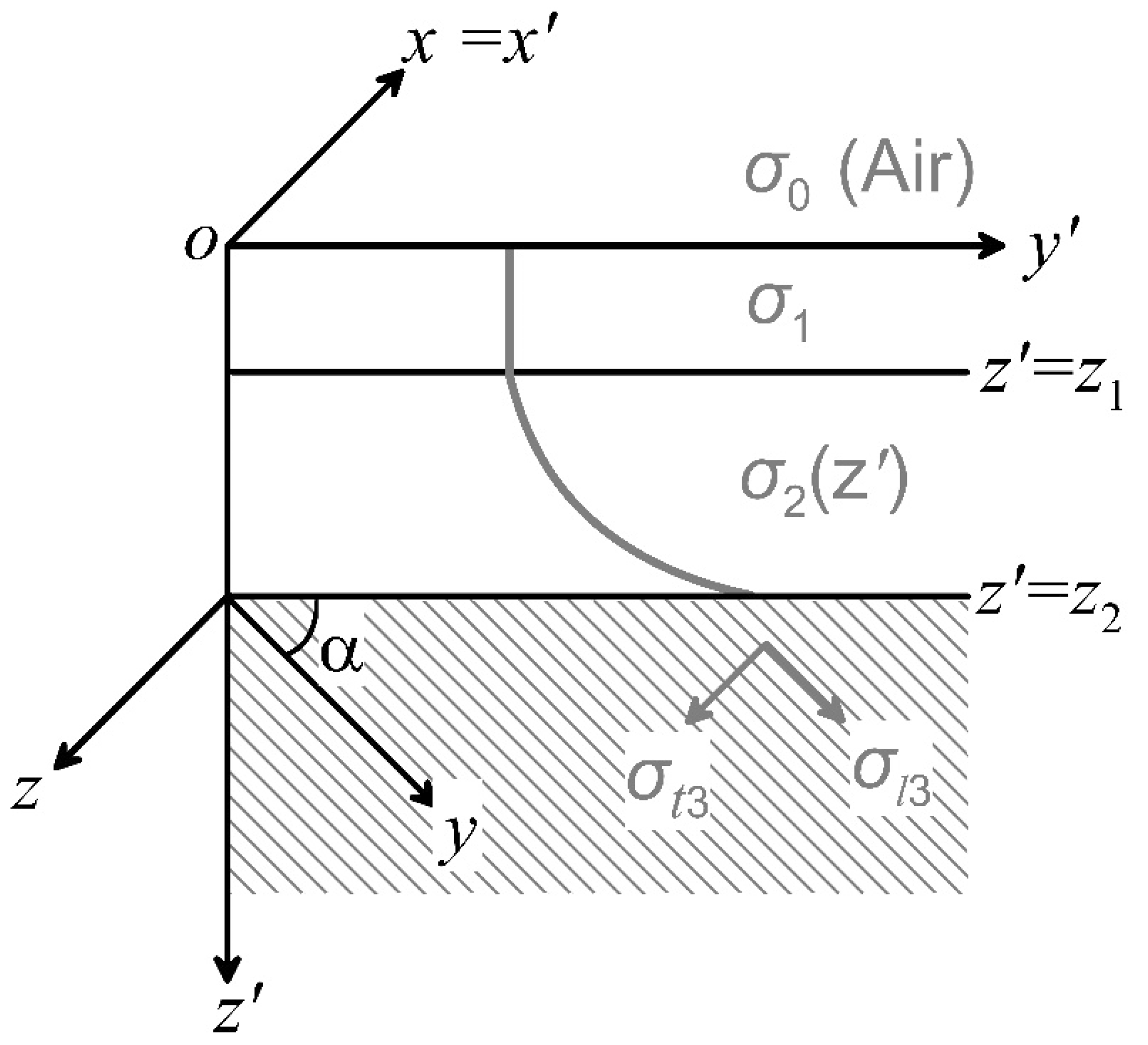
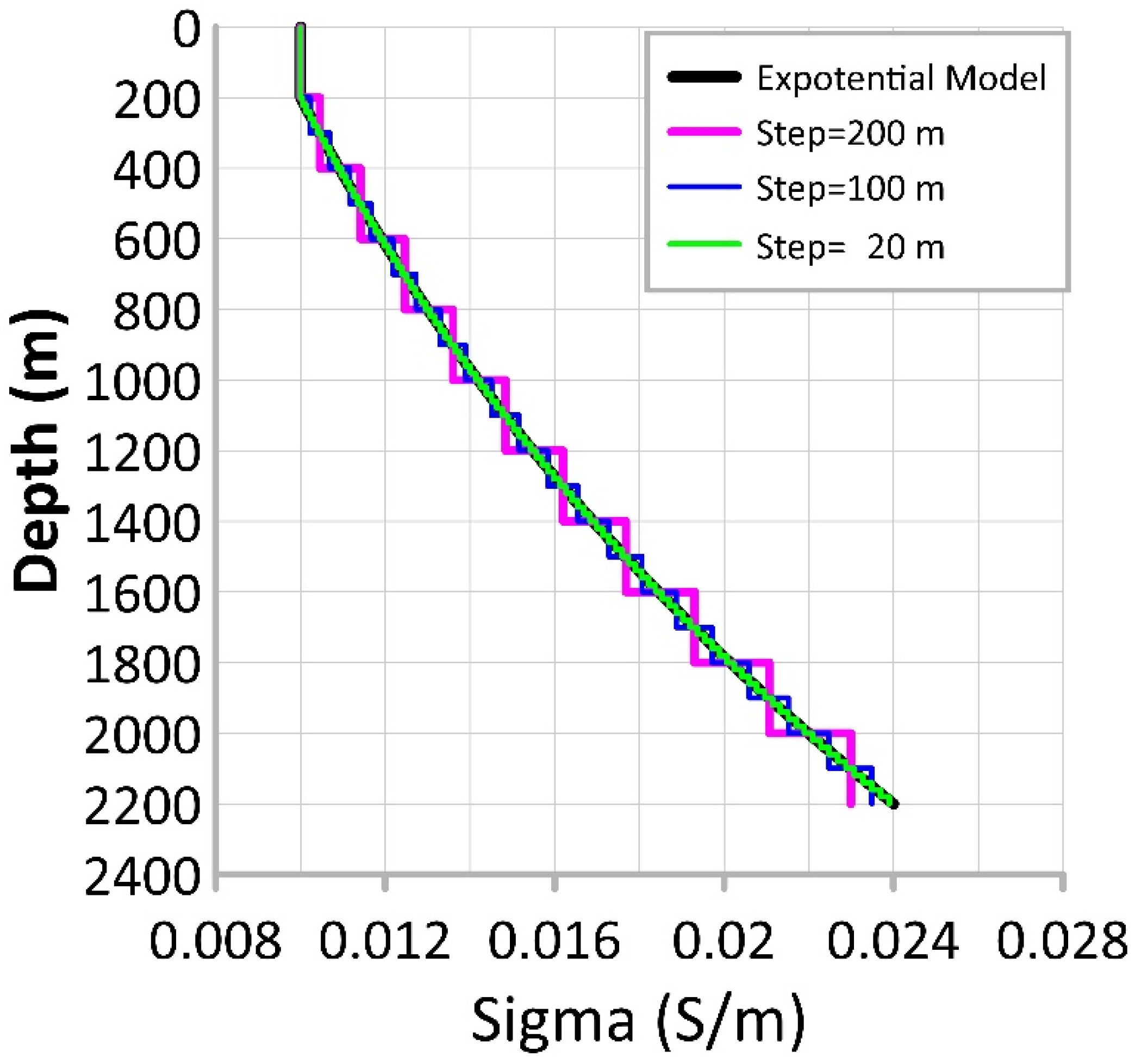
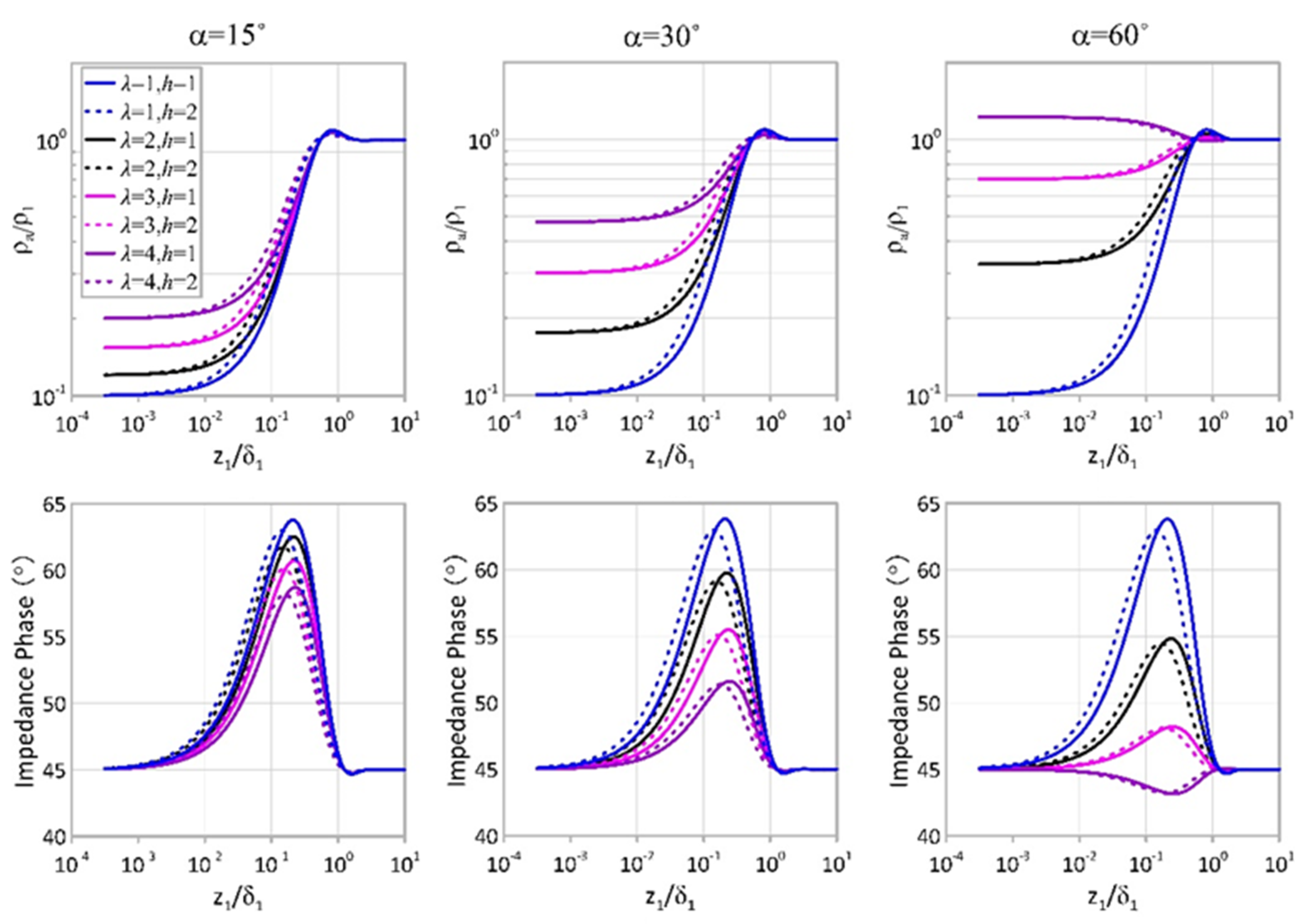
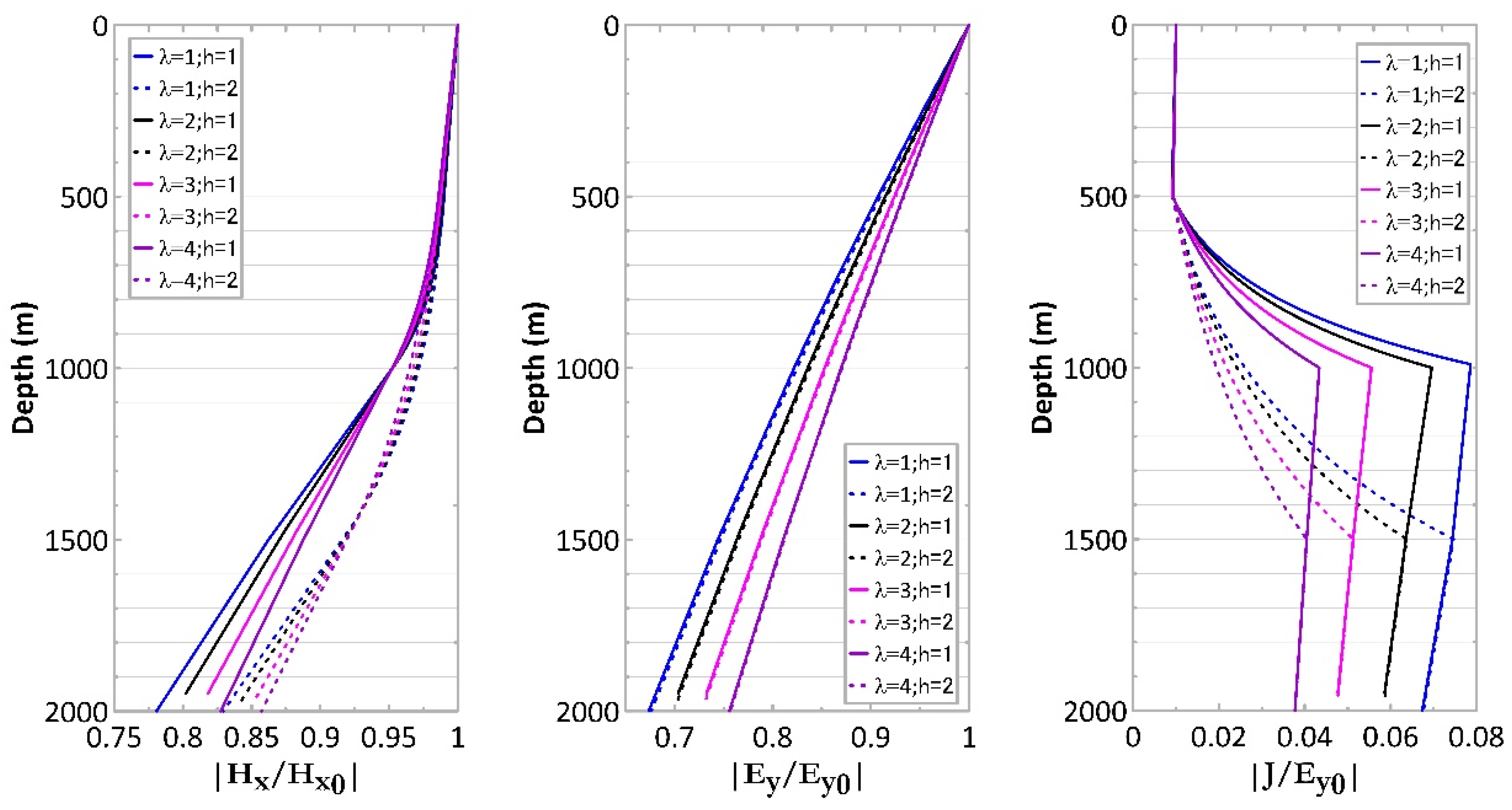
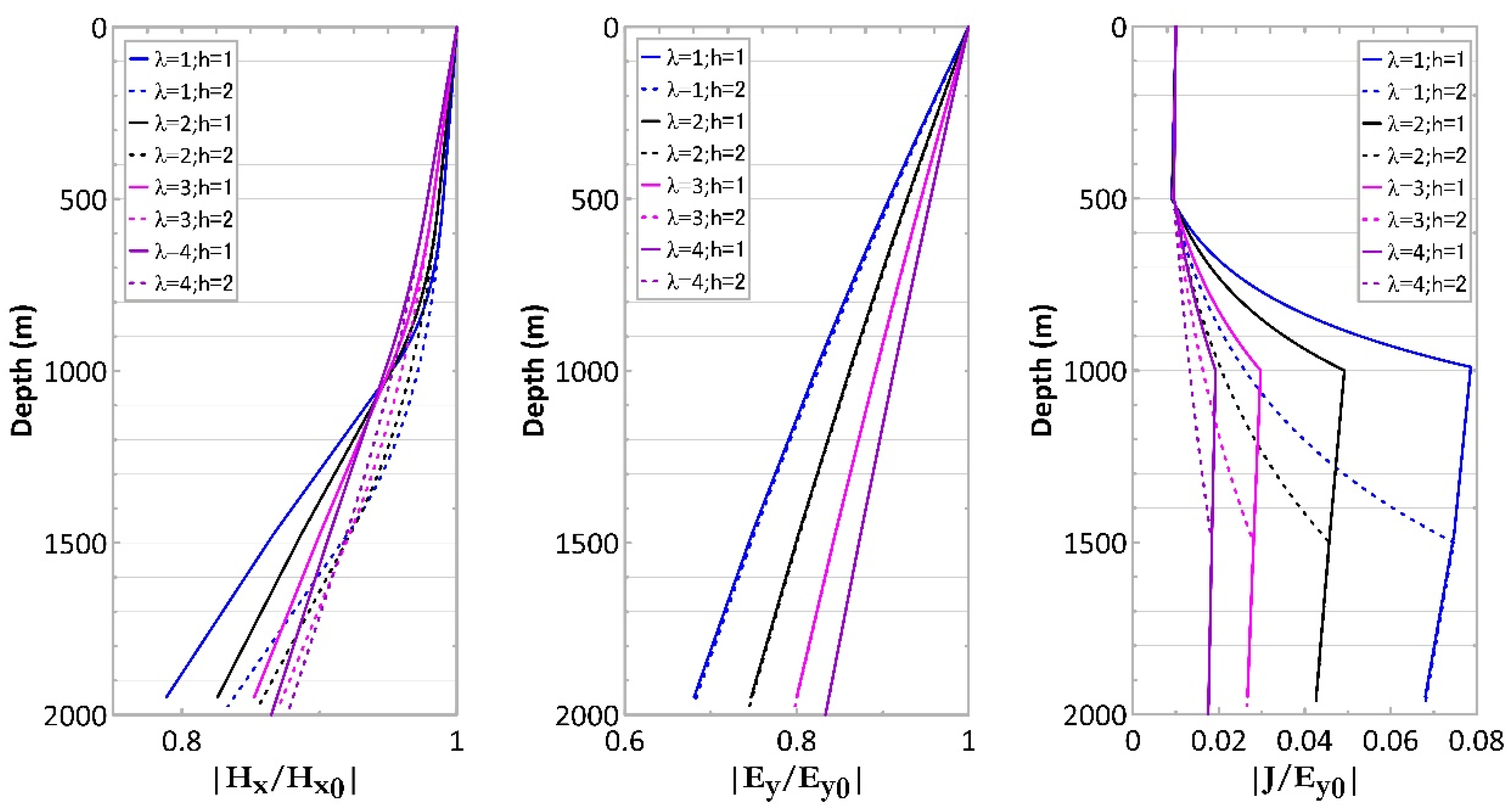
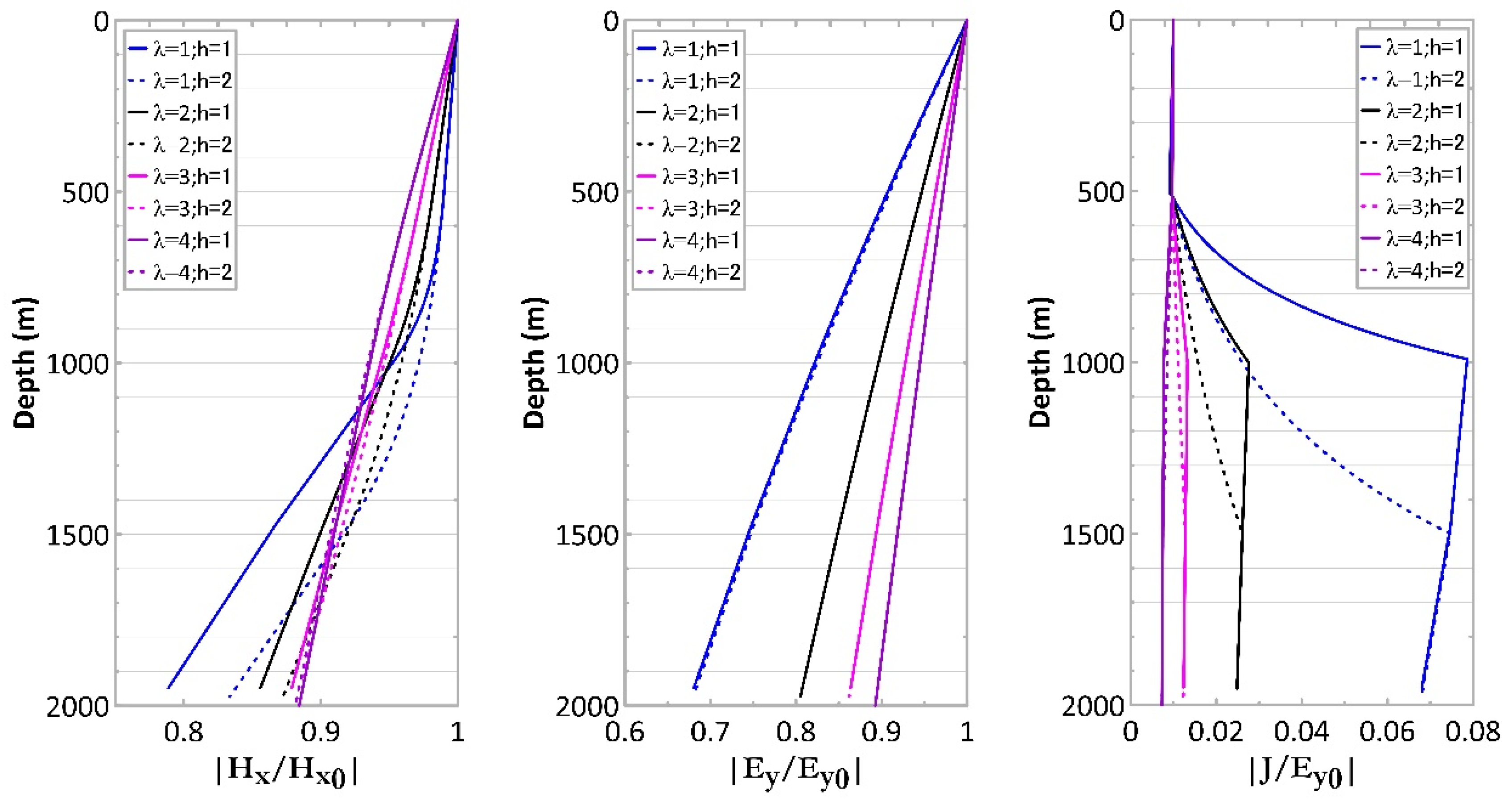
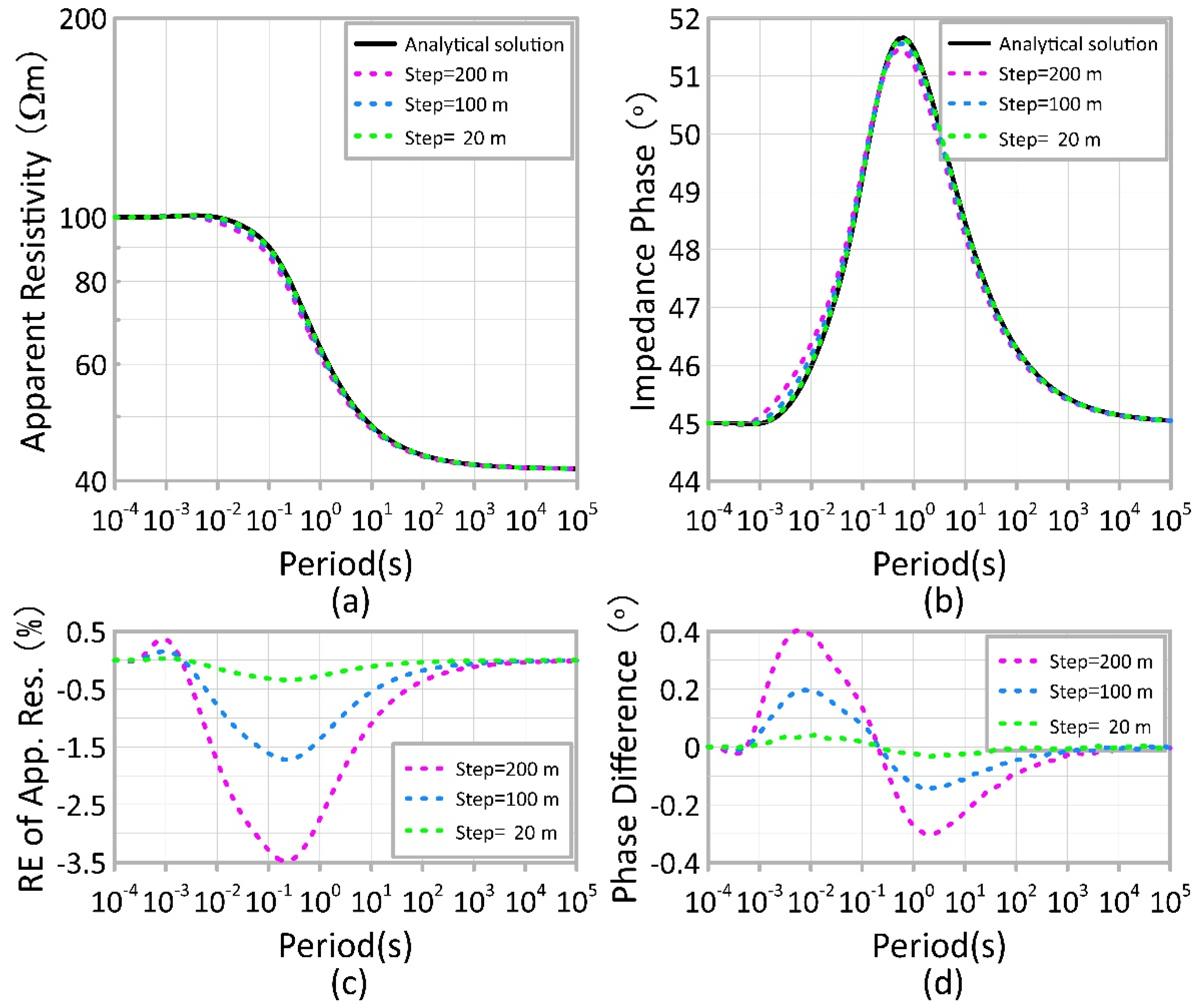
The magnetotelluric (MT) sounding of a layered Earth model involving a transitional layer has been widely studied, and MT responses of the model with dipping anisotropic conductivity have also been treated. However, a model incorporating both a transitional layer and dipping anisotropy has seldom been considered. The analytical solution of such a geoelectrical model including three layers was derived in this study. The middle layer was a transitional layer with conductivity exponentially varying with depth, which was covered by a homogeneous layer and underlaid by a dipping anisotropic half-space. The electromagnetic (EM) fields in the transitional layer were explicitly solved with modified Bessel functions. The surface impedance was calculated recursively. The dependence of the apparent resistivity and impedance phase as well as the EM fields on different model parameters were investigated in detail. We believe that our analytical solution provides a useful complement to the theory of the one-dimensional (1D) inversion and interpretation based on the layered model with fixed conductivity.
Keywords: magnetotelluric fields; analytical expressions; transitional layer; anisotropy; apparent resistivity; electromagnetic method magnetotelluric fields; analytical expressions; transitional layer; anisotropy; apparent resistivity; electromagnetic method