Article

Study on Sintering Characteristics of Ultra-Poor Vanadium-Titanium Magnetite
1
School of Materials and Metallurgy, University of Science and Technology Liaoning, Anshan 114051, China
2
School of Metallurgy, Northeastern University, Shenyang 110819, China
*
Author to whom correspondence should be addressed.
Minerals 2021, 11(5), 515; https://doi.org/10.3390/min11050515
Submission received: 28 March 2021 / Revised: 25 April 2021 / Accepted: 6 May 2021 / Published: 13 May 2021
(This article belongs to the Special Issue Process Optimization in Mineral Processing)

Abstract

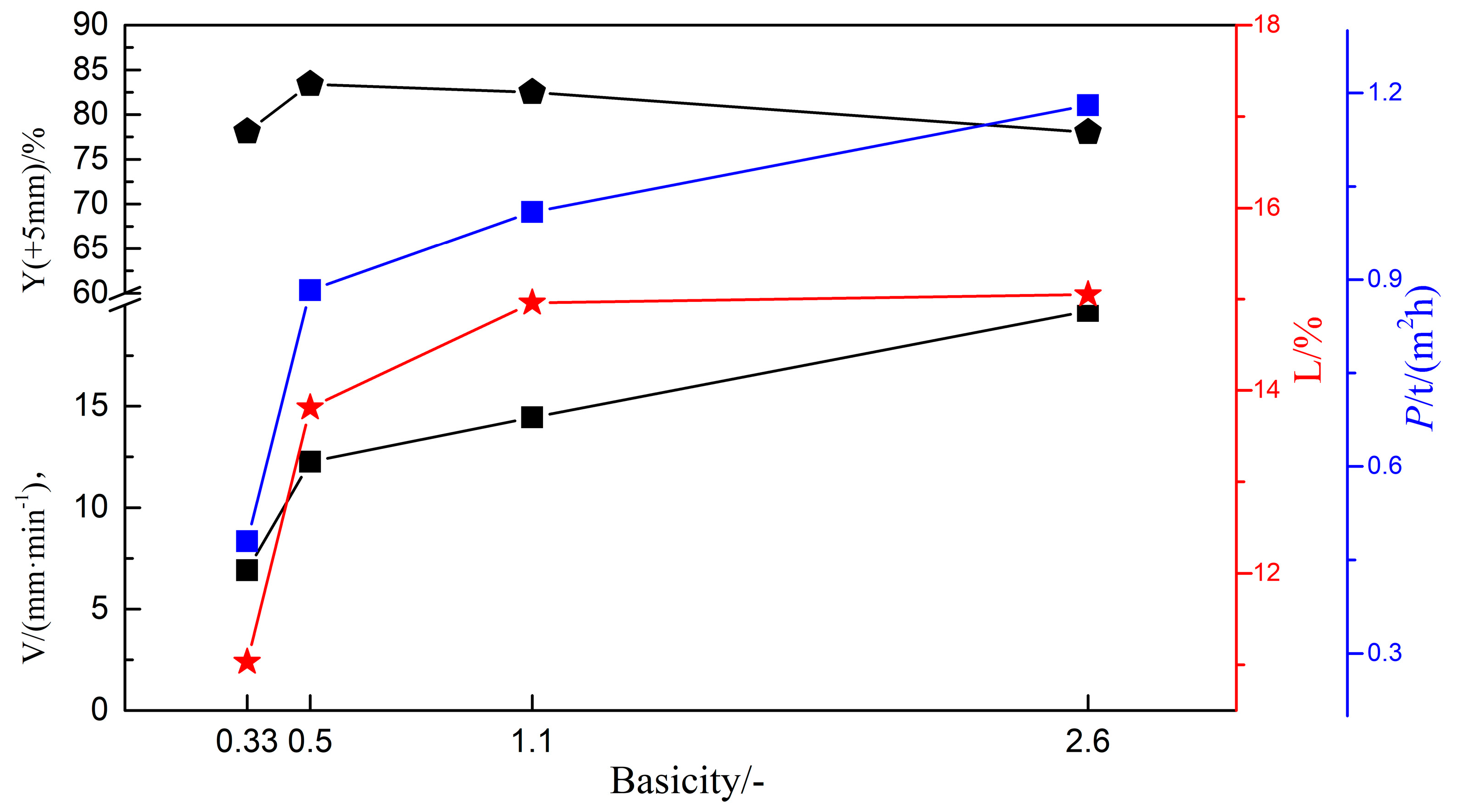
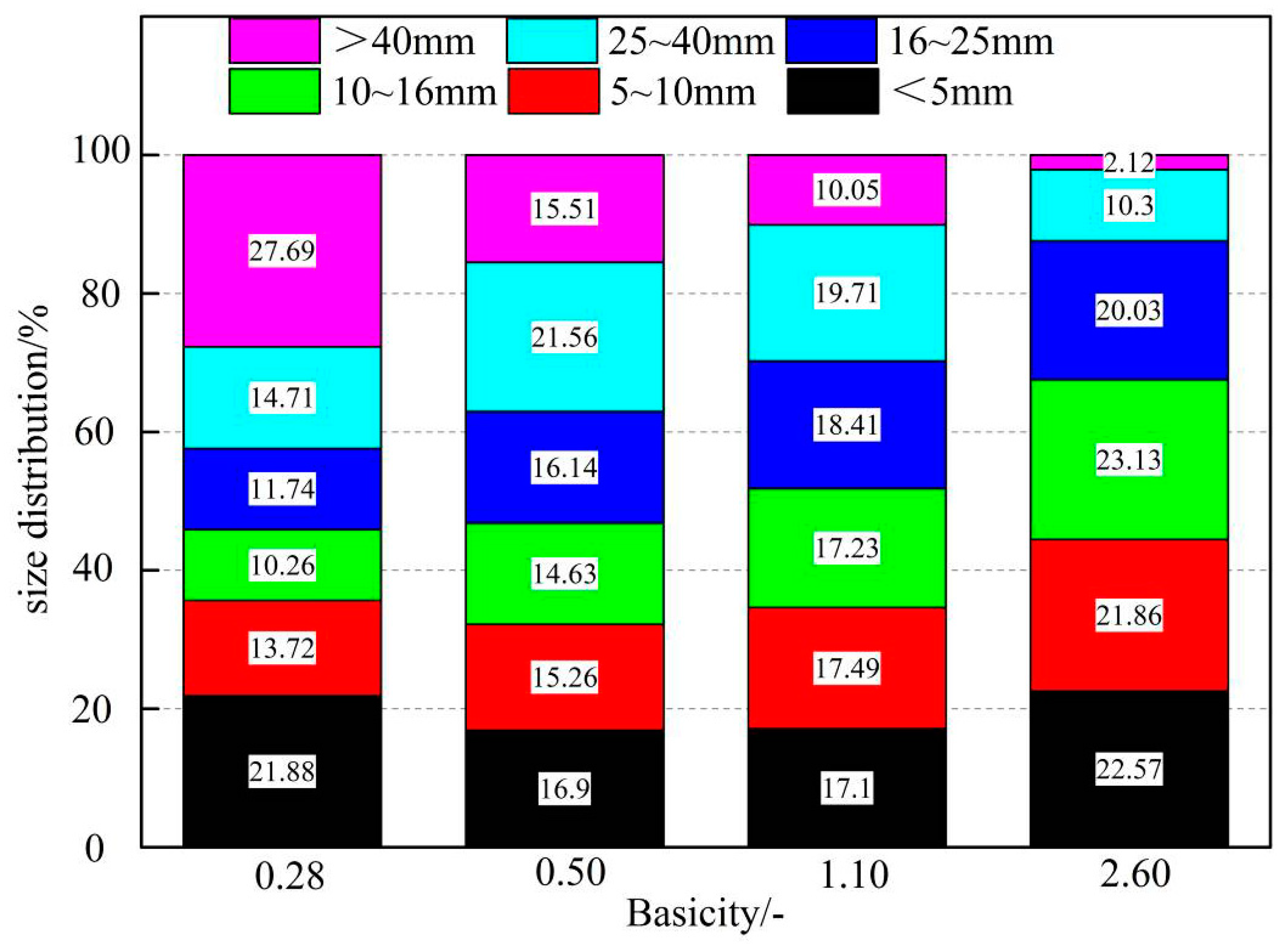
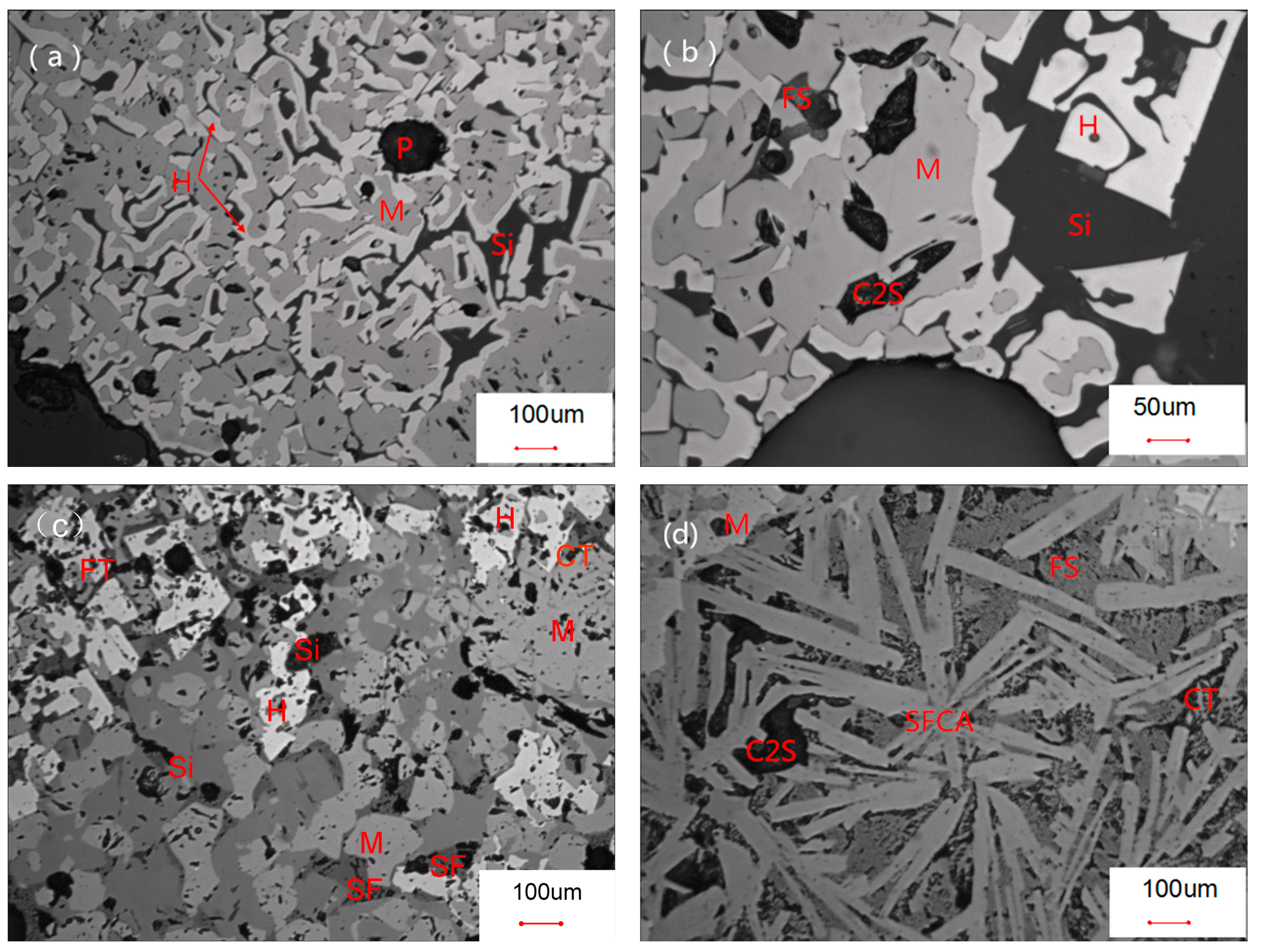
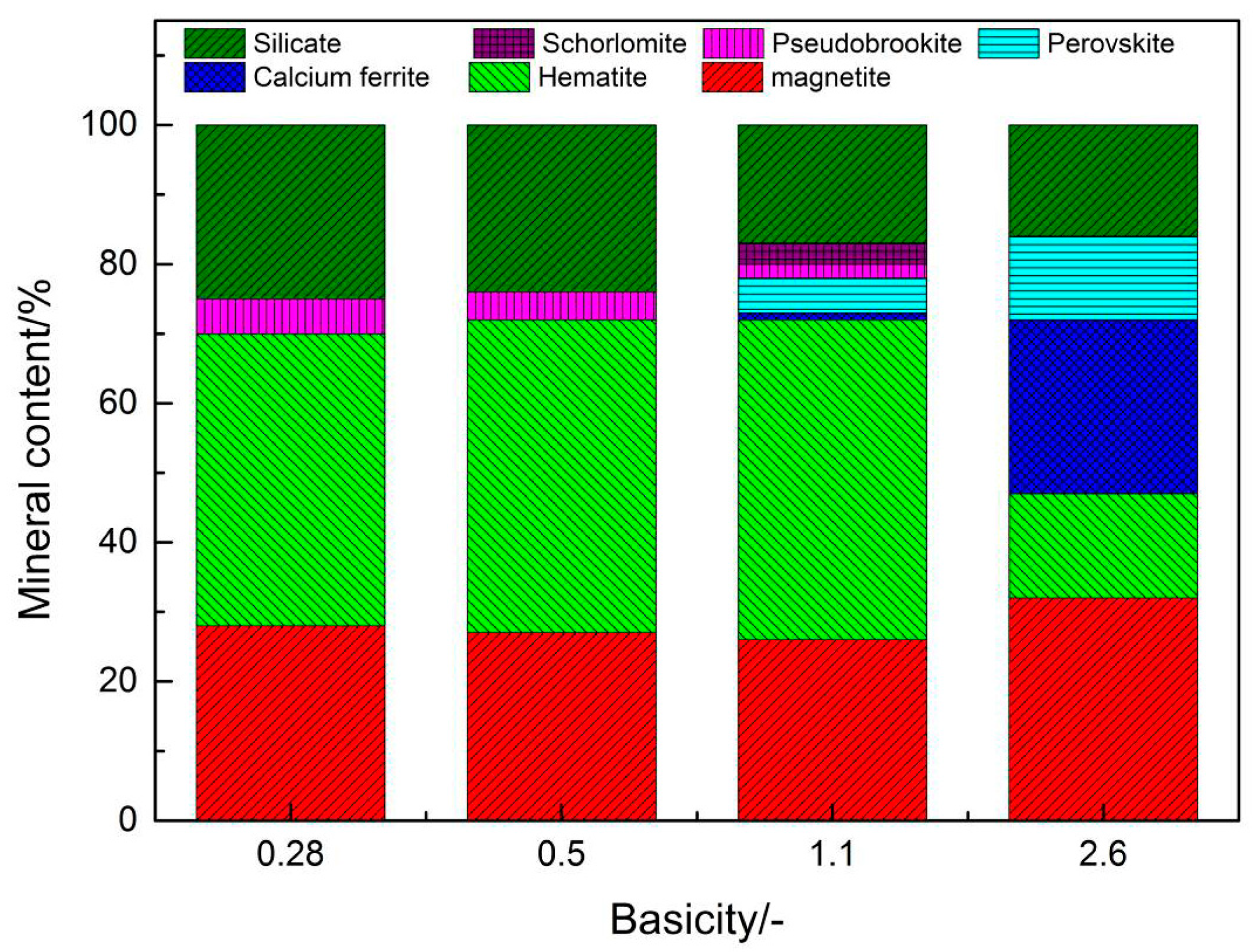
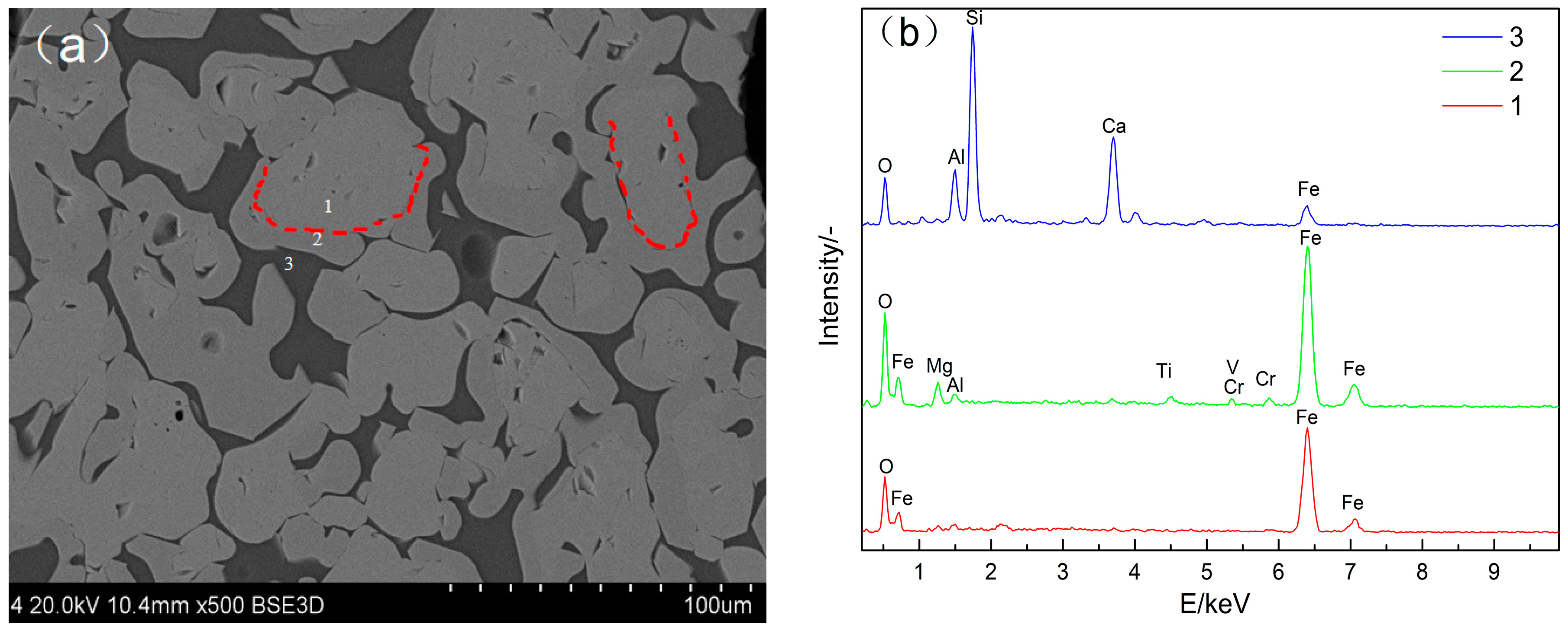
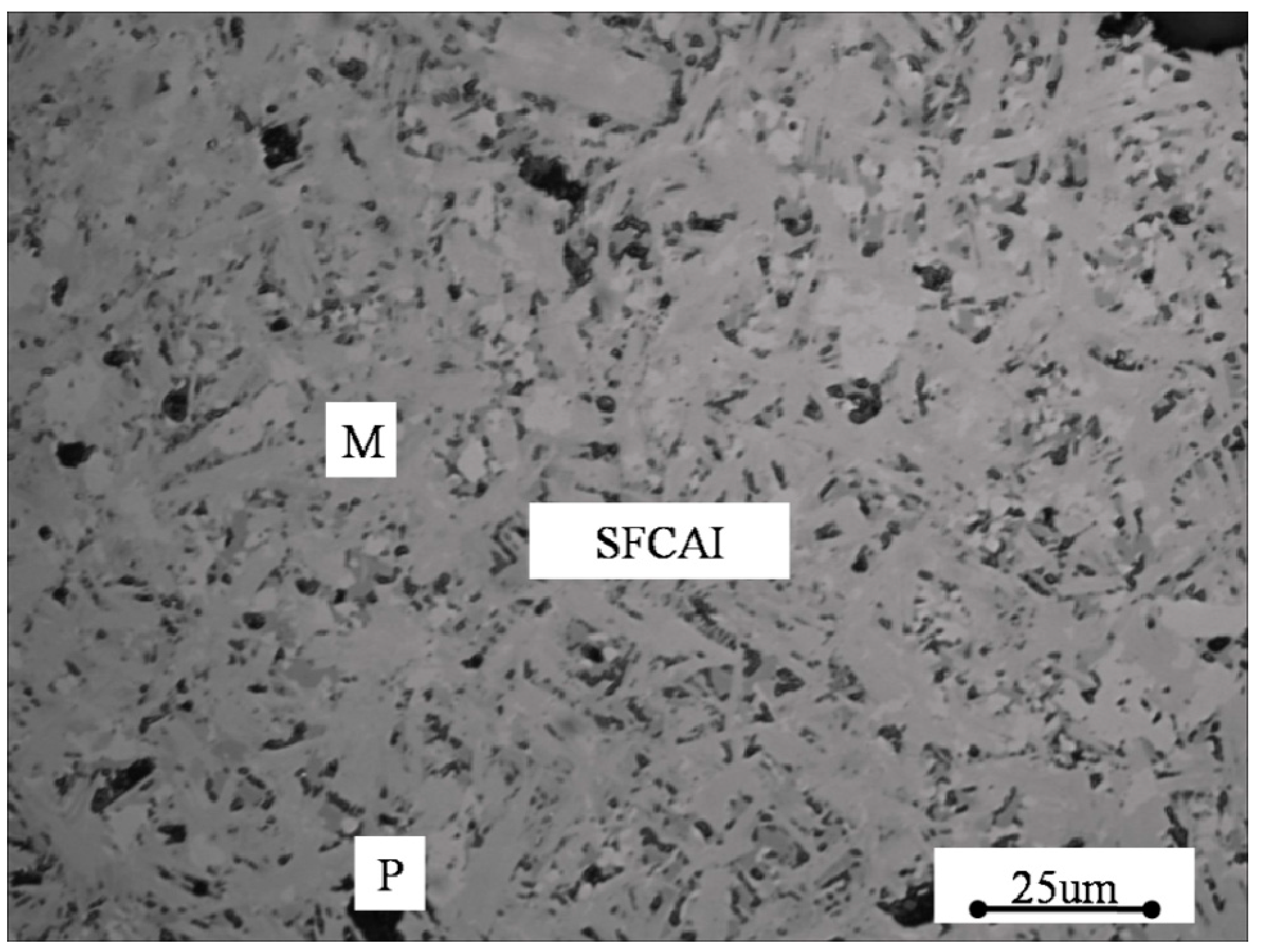
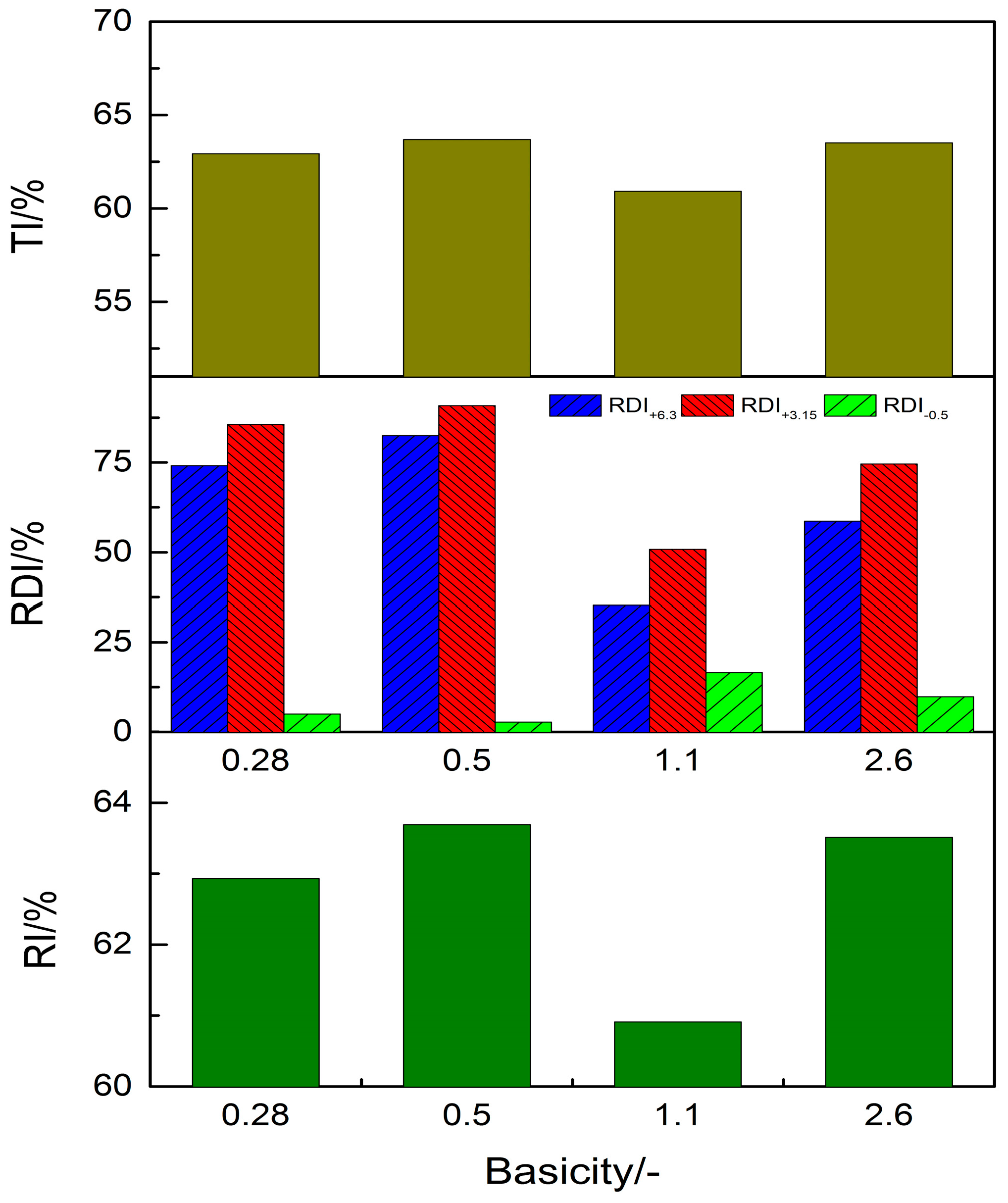
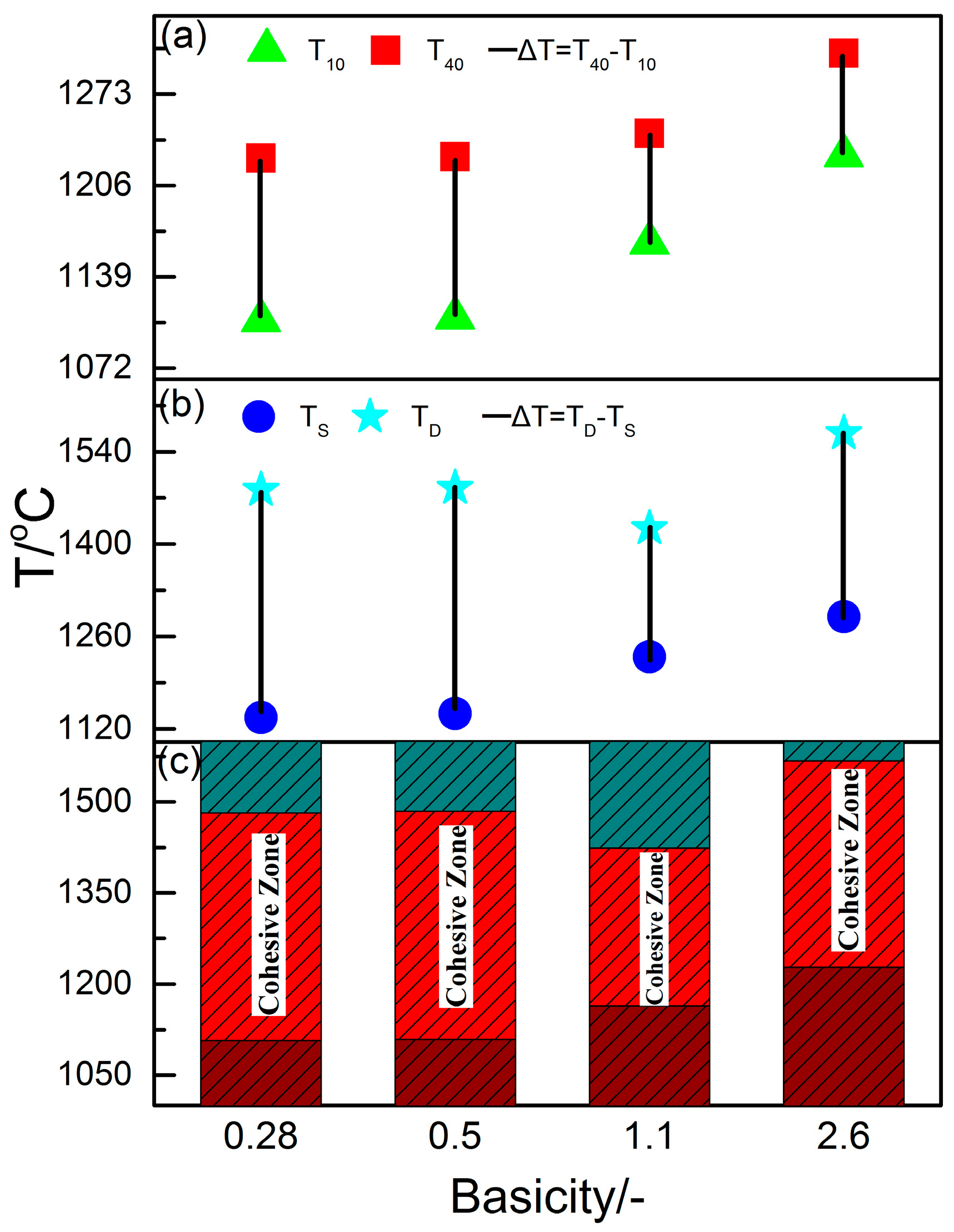
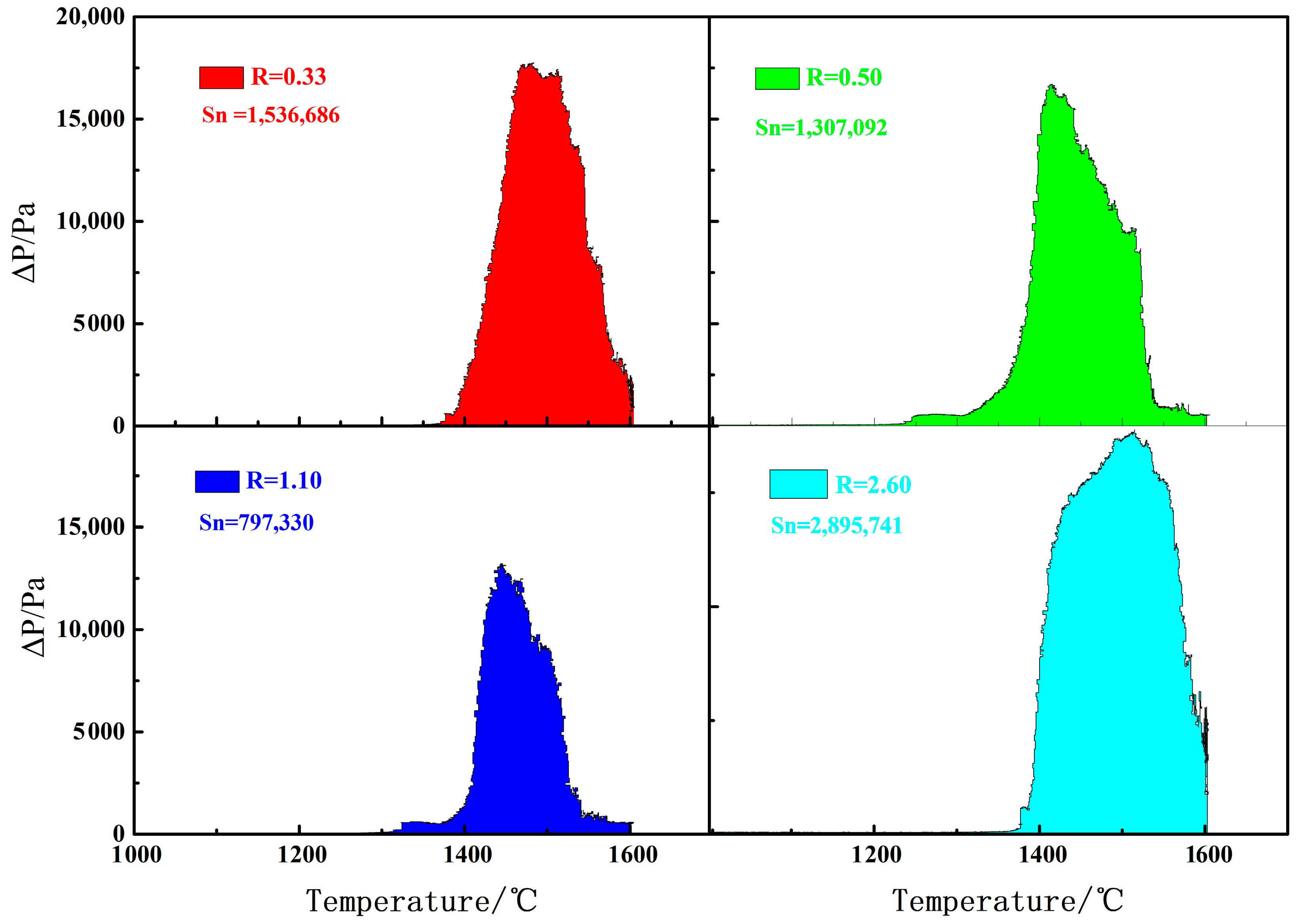
Artificial rich ore for blast furnace use can be produced by sintering ultra-poor vanadium-titanium magnetite (PVTM) with a high-grade iron concentrate. Here, acid (R = 0.33, 0.50), self-fluxing (R = 1.10), and high-basicity (R = 2.60) PVTM sinters were produced in a sinter pot. Their performances were determined using the comprehensive index. The microstructures of the PVTM sinter were observed by metallographic microscope and scanning electron microscopy equipped with an energy dispersion spectrum (SEM-EDS). The results suggest that the acid PVTM sinter had a low flame front speed, low productivity, an uneven size distribution, and poor softening properties. It did have a high tumble index (TI) and low-temperature reduction disintegration index (RDI). The self-fluxing PVTM sinter had the worst performance (TI, RDI, reducibility index (RI)), while the high-basicity PVTM sinter had the highest flame front speed, highest productivity, a reasonable size distribution, excellent softening properties, and satisfactory TI and RDI values. The main consolidation form of the acid sinter was crystal stock, the main bonding phase of the self-fluxing sinter was silicate, and the main bonding phase of the high-basicity sinter was silico-ferrite of calcium and aluminum (SFCA). The comprehensive index values (from high to low) were the high-basicity (R = 2.60), acid (R = 0.50), natural acid (R = 0.33), and self-fluxing (R = 1.10) PVTM sinters. When the production capacity of the acid pellet was in shortage, the acid PVTM sinter (R = 0.50) could be produced by the surplus from the sinter plant. This replaced a part of the acid pellet and the burden structural model of the blast furnace smelting vanadium so the titanium burden could adopt a ‘high-basicity PVTM sinter + acid V-Ti pellet + acid (R = 0.50) PVTM sinter’.
Keywords: acid sinter; self-fluxing; basicity; sinter; vanadium-titanium magnetite; blast furnace acid sinter; self-fluxing; basicity; sinter; vanadium-titanium magnetite; blast furnace