A Mechanical Model for the Progressive Failure of Slabbing Roadway-Side Backfill Bodies


Abstract
1. Introduction
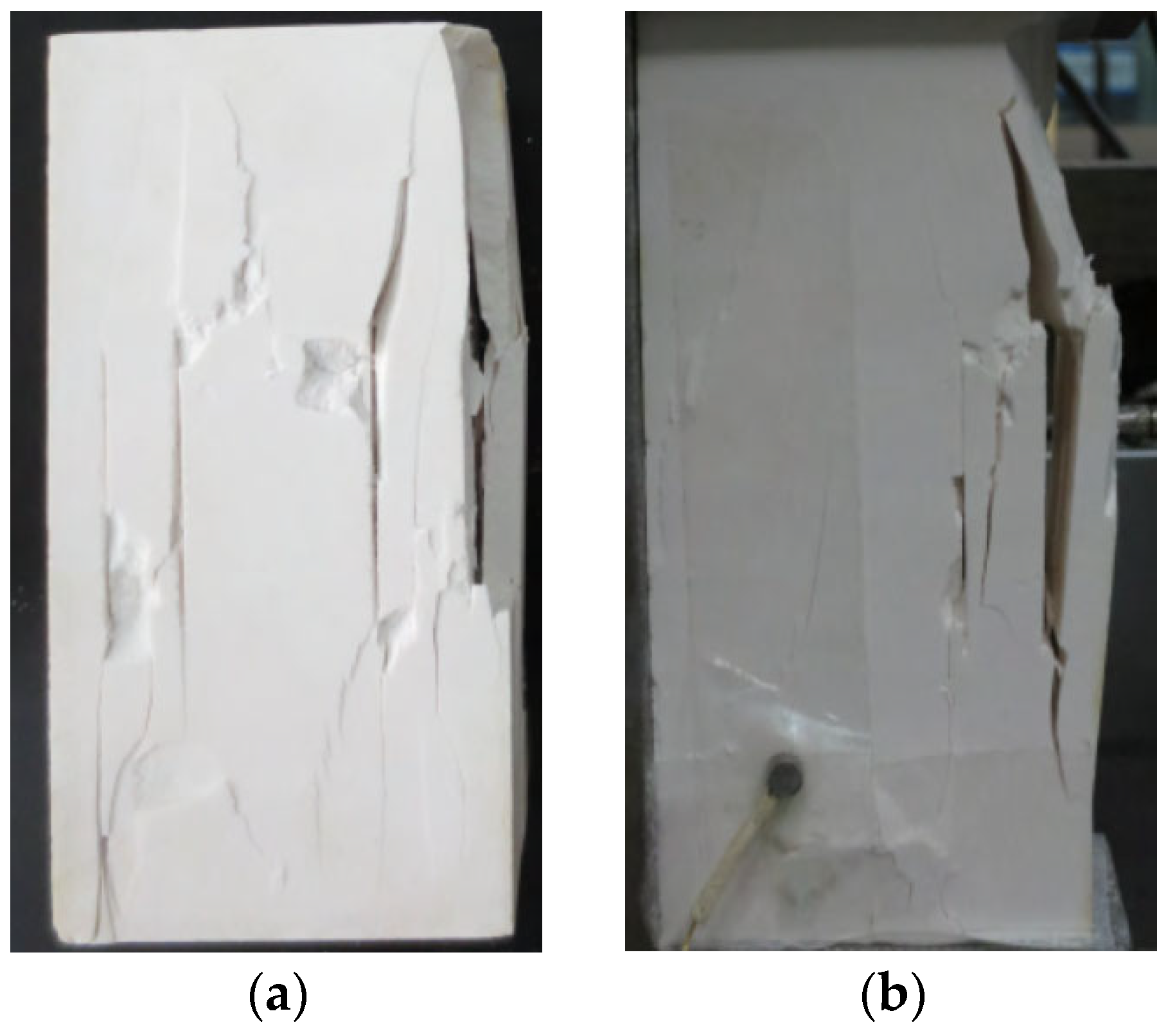
2. Mechanical Model for Slabbing Roadway-Side Backfill Body
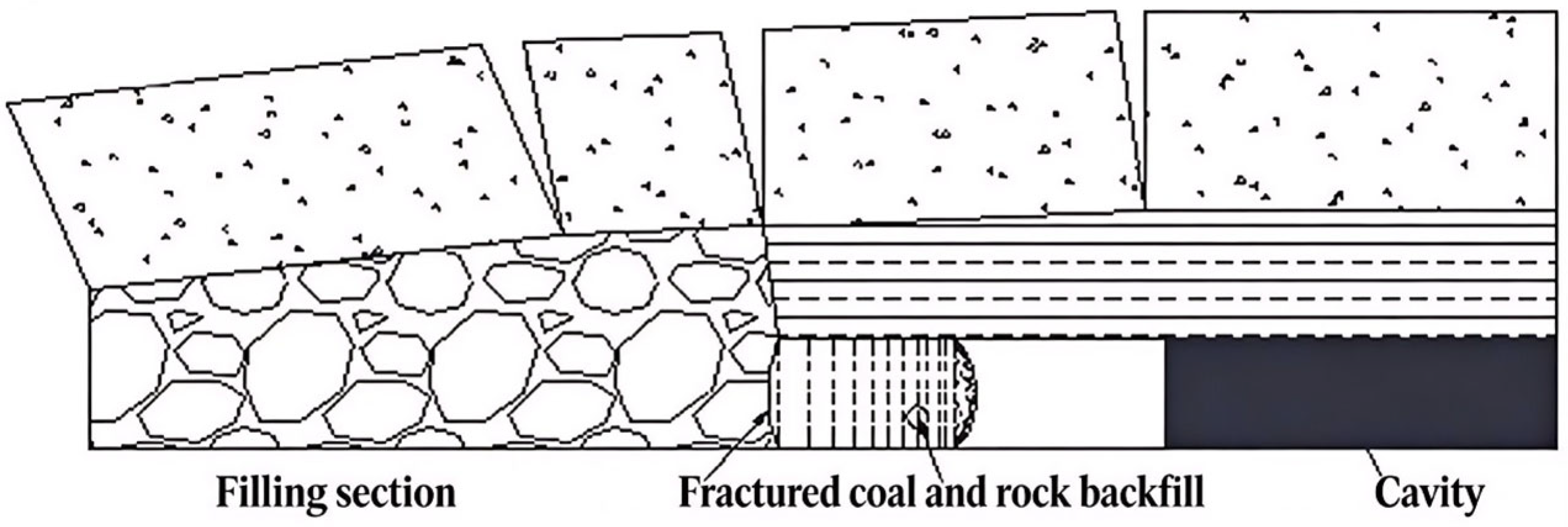
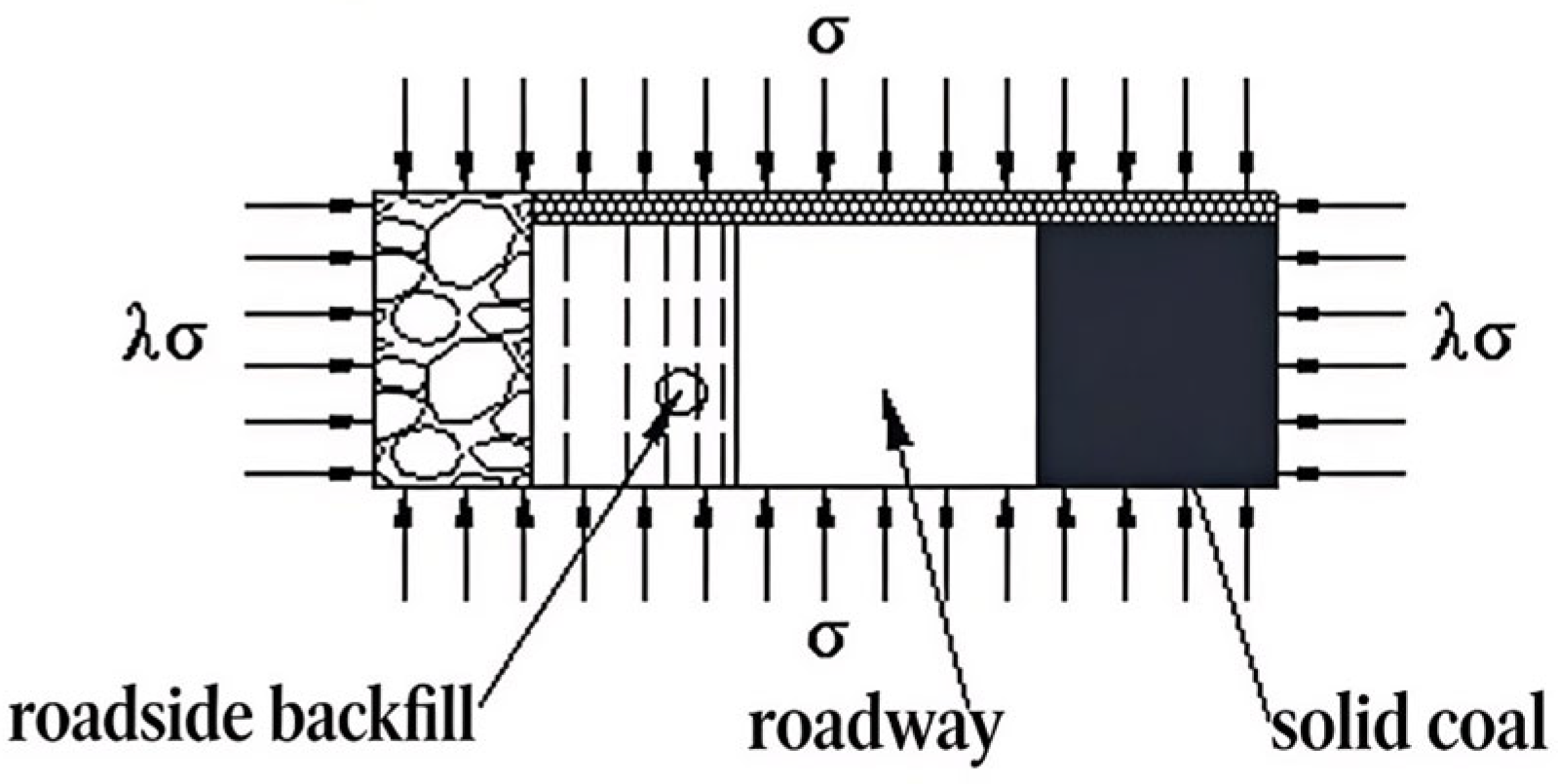
2.1. Load-Bearing Behavior of the Backfill Body and Coal Mass
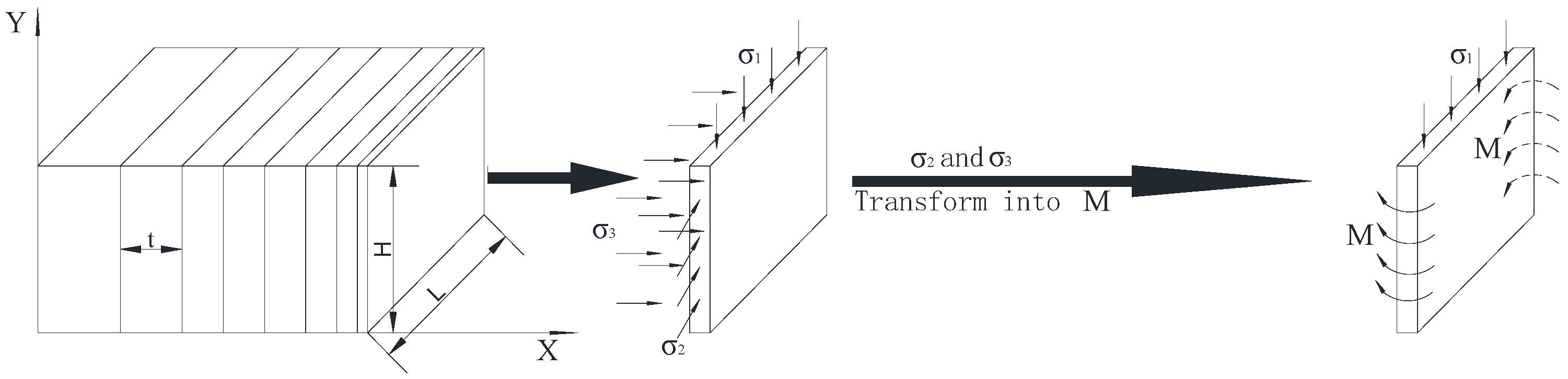
2.2. Establishment of the Thin-Plate Mechanical Model
- (i)
- Material homogeneity and isotropy: High-water rapid-setting backfill materials are grouted in a fluid state and harden into a relatively uniform paste-like body. The ettringite-dominated matrix exhibits substantially greater macroscopic uniformity than naturally fractured rock masses, with the absence of large-scale bedding planes and tectonic joints. Field core sampling [18] reports elastic modulus variation within ±12% across a single backfill panel, which is acceptable for an analytical model.
- (ii)
- Porosity justification: High-water backfill materials exhibit a water-to-solid ratio of 2.0–3.0:1, yielding a porosity of 30–50% after hardening. Cracks propagate predominantly along ettringite crystal boundaries at micron scale—two to three orders of magnitude below the slab thickness (t ≈ 30–120 mm). Therefore, pores act as distributed micro-defects that reduce effective elastic modulus rather than as macroscopic structural discontinuities, and homogenization into an equivalent elastic continuum is justified at the plate scale.
- (iii)
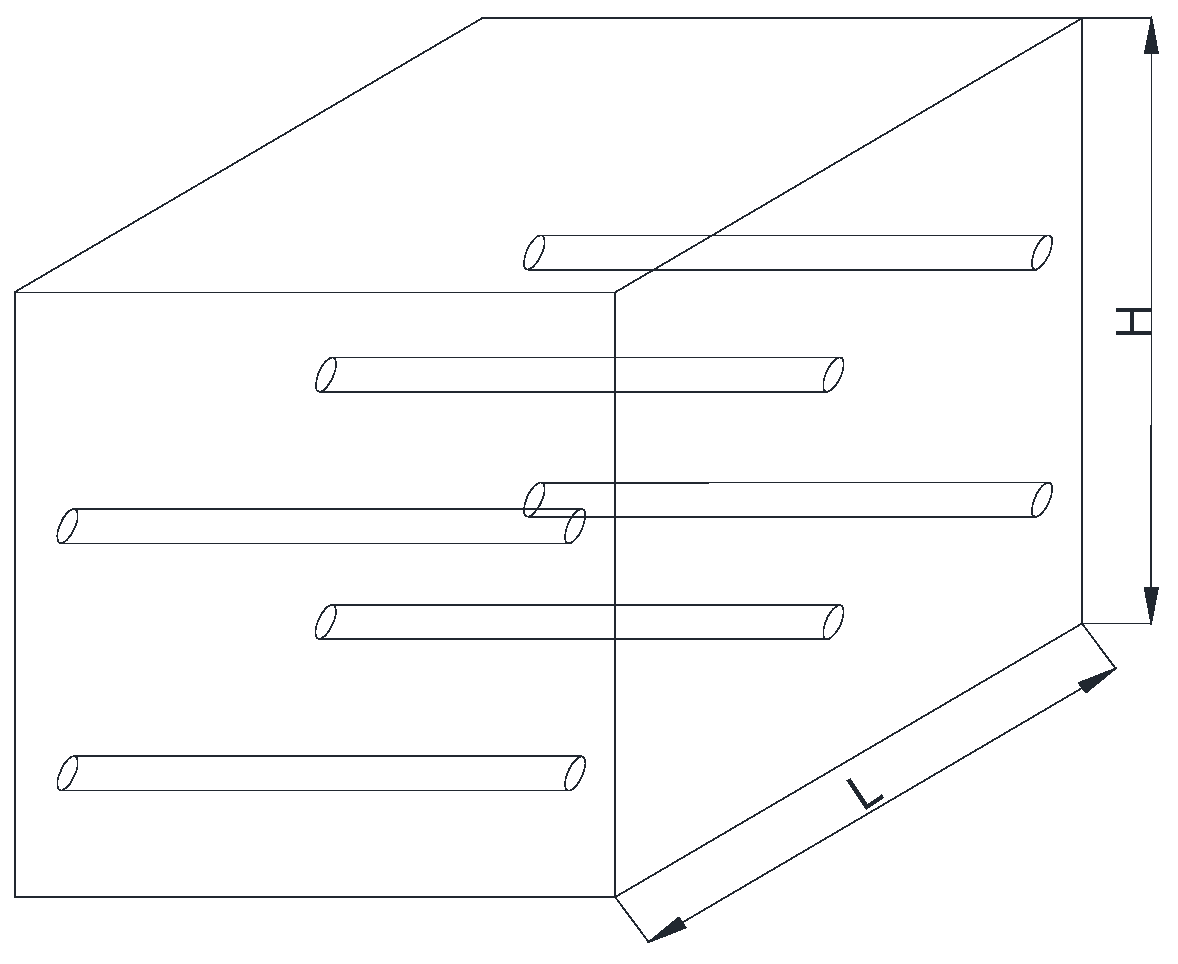
- Thin-plate and small-deflection theory: The slabbing fractures naturally partition the backfill body into plates whose thickness (30–120 mm) is considerably smaller than the height (2–5 m) and length dimensions, satisfying the geometric aspect ratio requirement of Kirchhoff theory (t/H ≤ 0.06). Field observations indicate that the lateral deflection prior to visible crack propagation is typically less than the plate thickness, satisfying the prerequisite of small-deflection theory [15].
- (iv)
- Creep and aging consideration: Creep strain accumulates over weeks to months, whereas slabbing failure typically initiates within 3–5 days after working face passage. During this short time window, the time-dependent deformation increment is small relative to the immediate elastic deformation induced by mining-induced stress redistribution. The backfill is therefore treated as an elastic solid for the timescale of interest.
3. Analysis of the Thin-Plate Mechanical Model
3.1. Stress Analysis
- (1)
- On the fracture surface, i.e., for , , ;
- (2)
- As , , , and the closer to , the larger becomes;
- (3)
- At infinity, i.e., for , , .
3.2. Displacement Analysis of the Thin-Plate Mechanical Model
3.3. Calculation and Analysis of the Failure Zone Width
4. Analysis of Progressive Failure in Slabbing Roadway-Side Backfill Body with Tensioned Bolts
Sensitivity Analysis
5. Discussion
- (i)
- Material assumptions: The isotropic homogeneous assumption does not account for possible micro-heterogeneity, residual porosity, or property degradation due to weathering. The elastic thin-plate model is applicable when: slab thickness exceeds the characteristic pore spacing by at least one order of magnitude; material heterogeneity is limited (elastic modulus variation < 15%); and the failure timescale is short relative to characteristic creep time.
- (ii)
- Boundary conditions: The model assumes ideal contact at roof–backfill and floor–backfill interfaces, without considering potential gap closure, local crushing, or interfacial slip. The predicted crack initiation load may be overestimated under poor contact conditions.
- (iii)
- Loading path and dynamic effects: The load is applied quasi-statically, and abrupt stress adjustments during periodic weighting events are not included. Static fracture mechanics is appropriate for determining threshold conditions for the pre-dynamic stage; dynamic analysis would be required for post-initiation fragment ejection.
- (iv)
- Applicability: The model is intended to reveal dominant mechanical mechanisms and trends, rather than to provide highly accurate quantitative predictions for all field conditions. Its predictions should be interpreted in conjunction with numerical simulations and in situ monitoring data.
6. Conclusions
- (1)
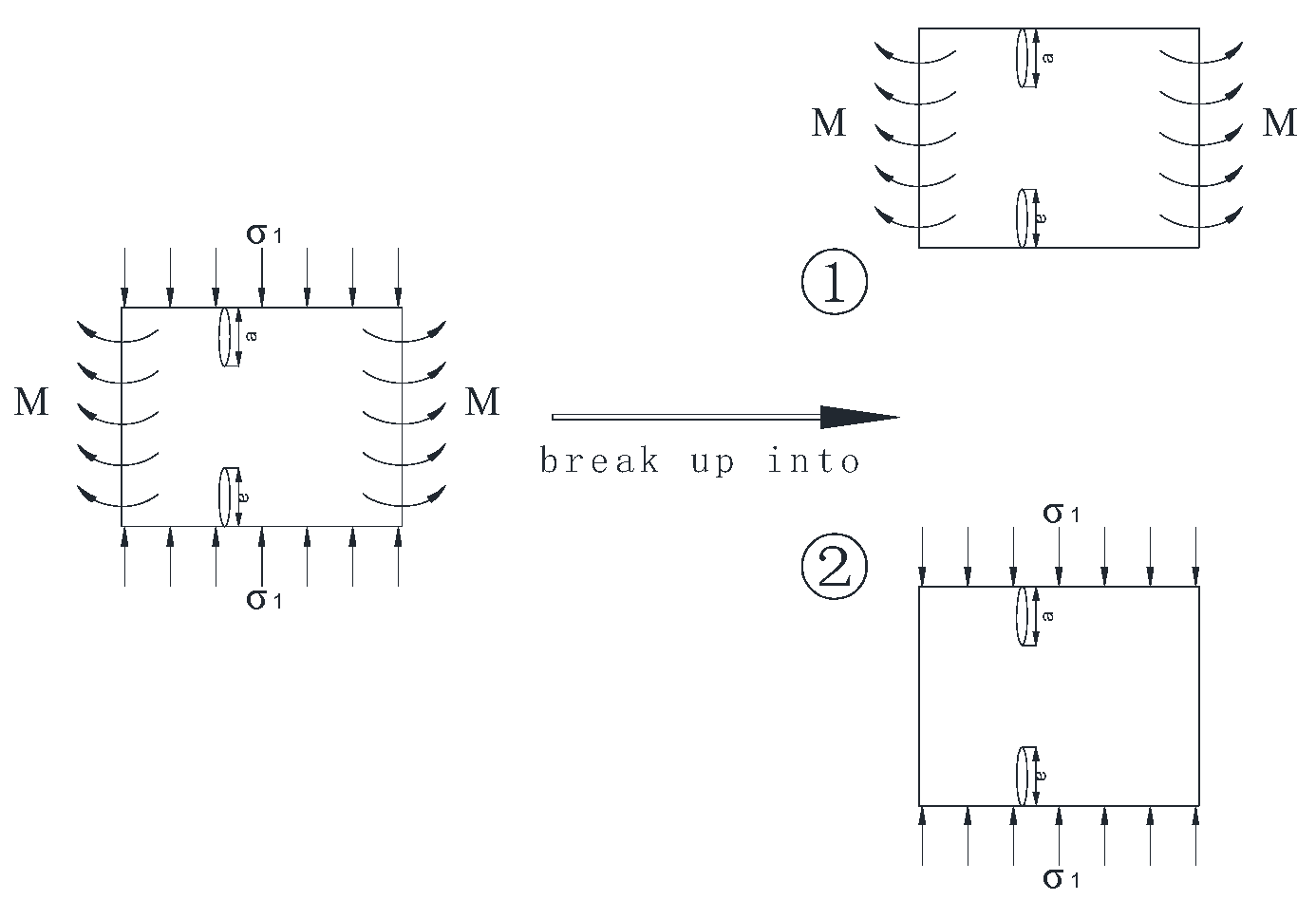
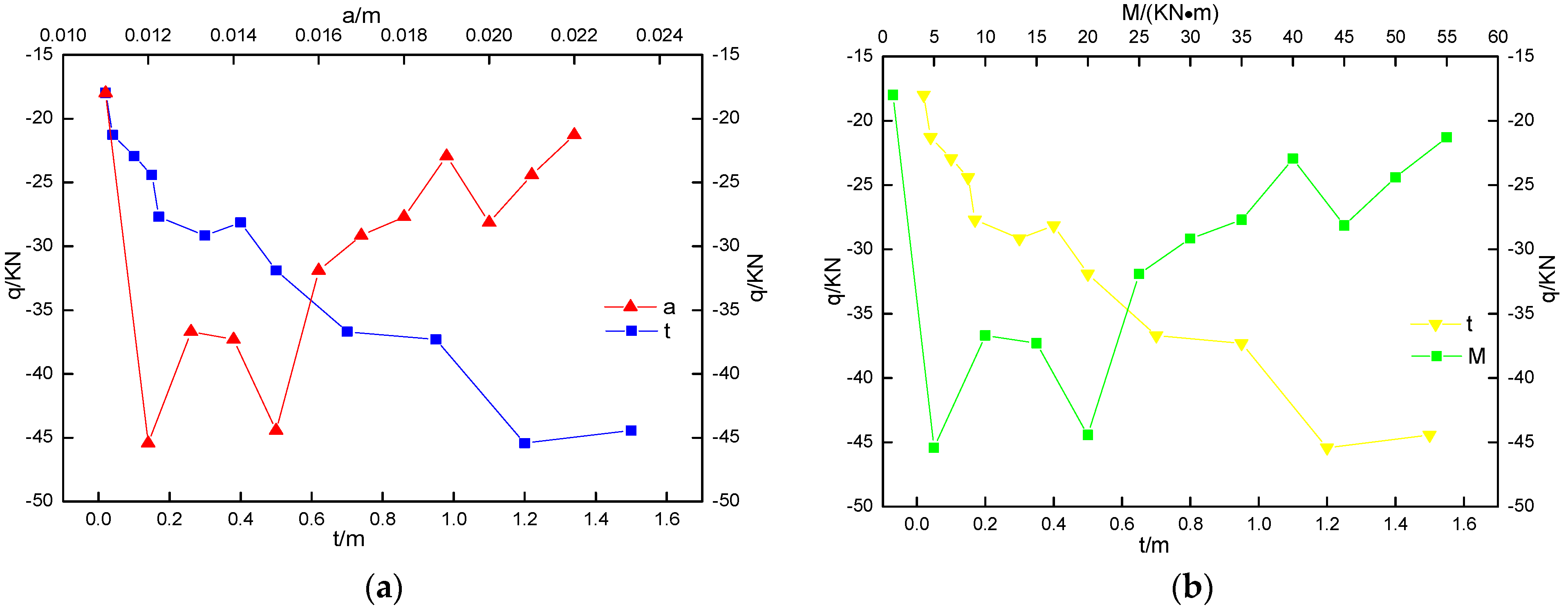
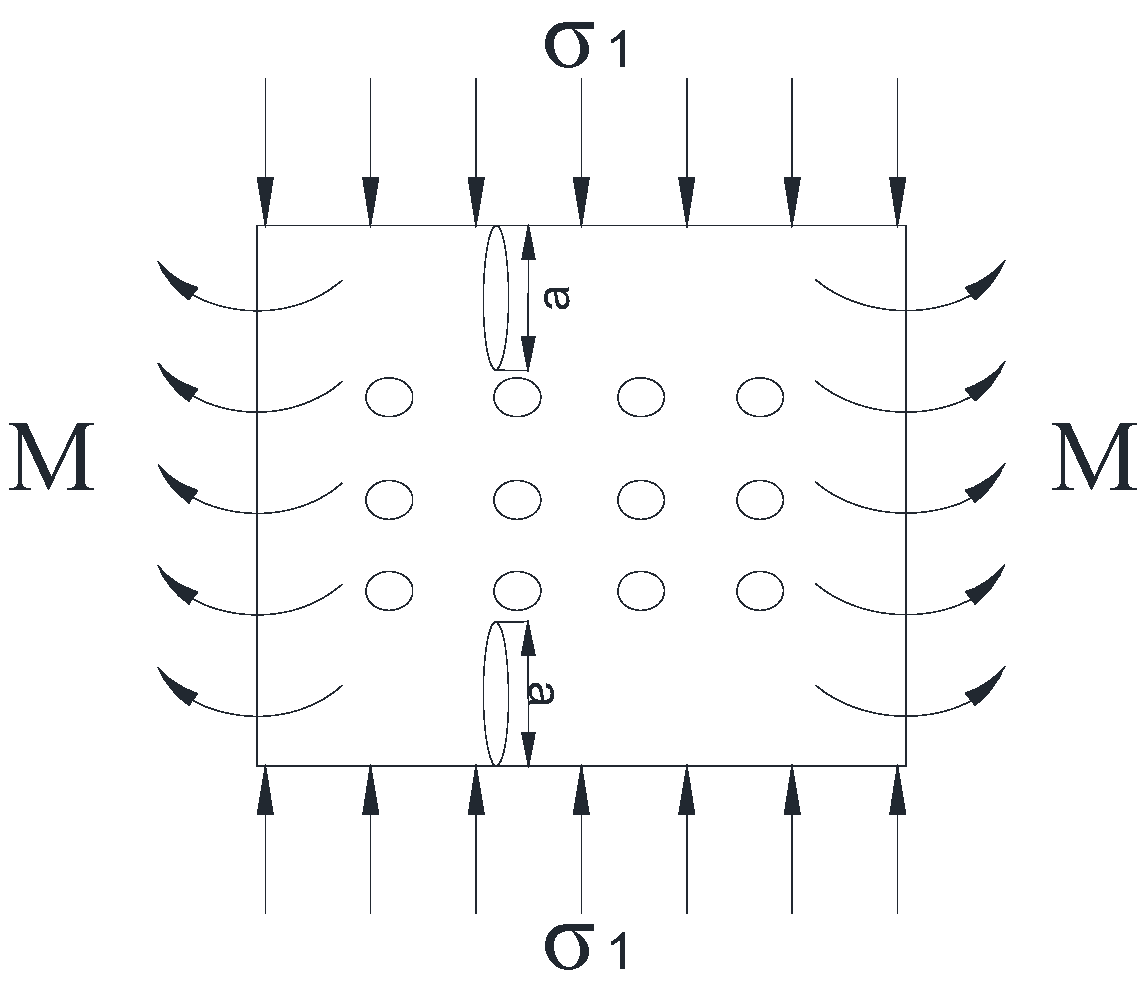
- A thin-plate mechanical model with edge cracks was established for the slabbing roadway-side backfill body. Through an original load transformation method, the three-dimensional in situ stress state is reduced to the combined action of a uniform roof–floor load and an equivalent bending moment M. The derived stress intensity factor (Equation (3)) and crack initiation load q (Equation (6)) provide closed-form analytical expressions linking macroscopic loading to mesoscopic crack-driving forces. q increases positively with plate thickness t (cubic dependence) and bending moment M and decreases with crack length a in the dominant range.
- (2)
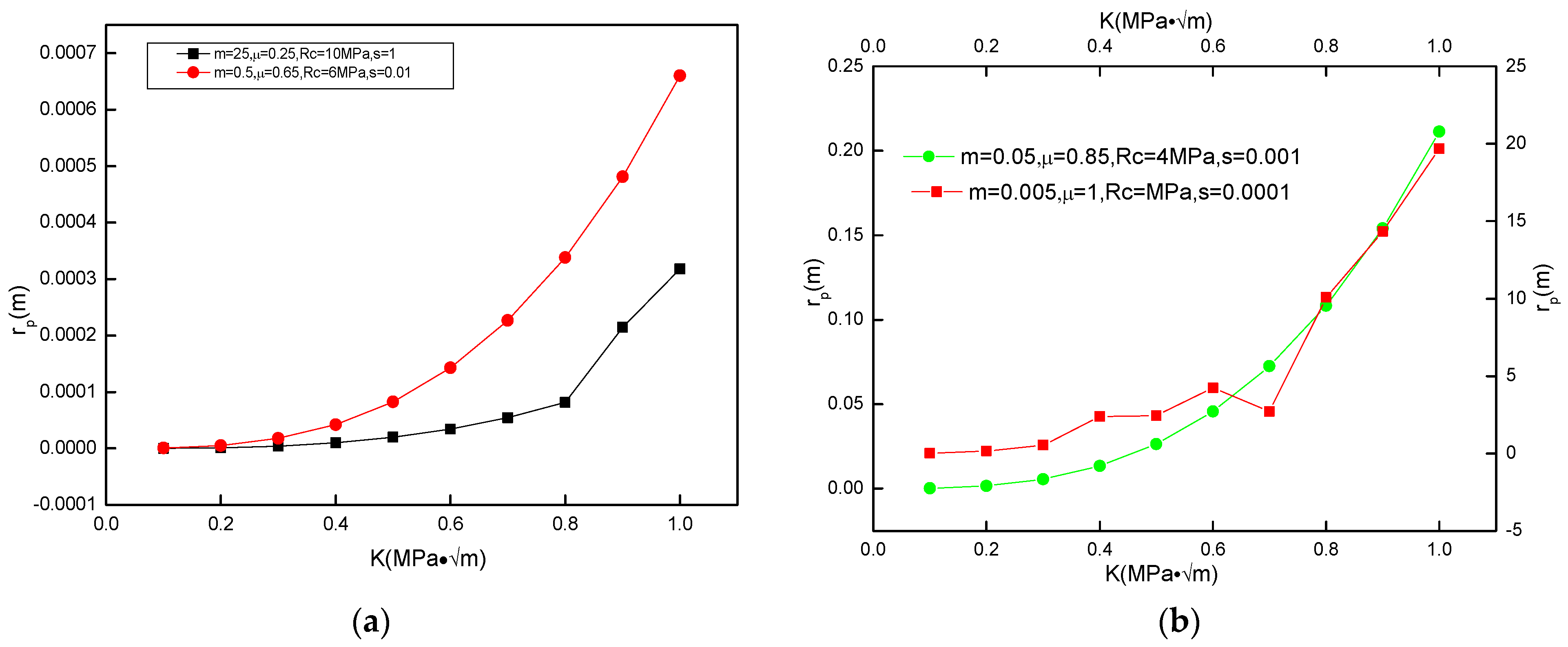
- Based on the nonlinear Hoek–Brown criterion, the failure zone width at the edge crack tip (Equation (17)) was derived and shown to exhibit an approximately exponential relationship with under unbolted conditions. The growth rate of increases as the backfill body progressively degrades (decreasing m, s, and ; increasing μ).
- (3)
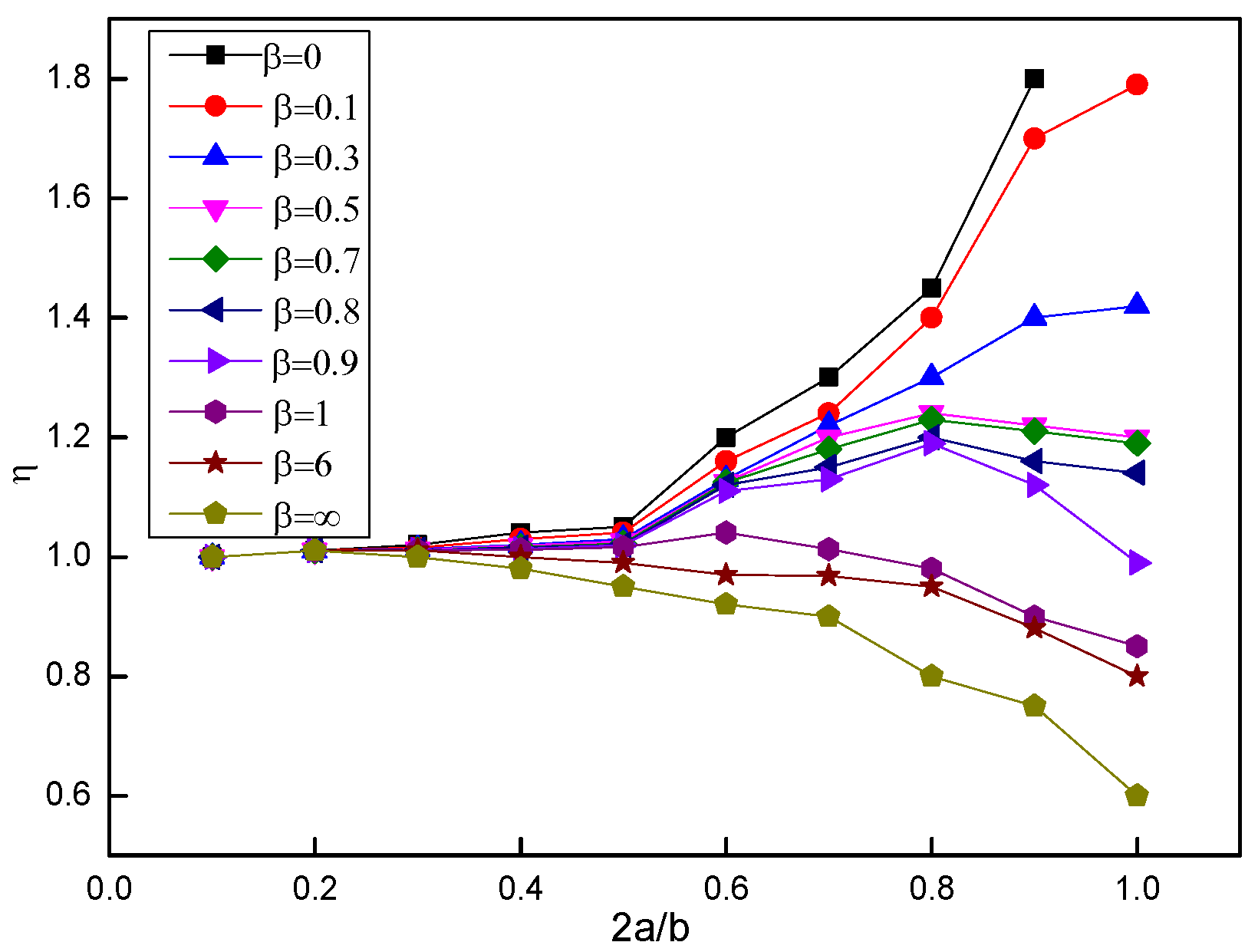
- Introduction of tensioned bolts via a stress concentration factor η transforms the failure zone growth from exponential (unbolted) to asymptotic saturation (bolted), where increases sharply initially then approaches a constant. This quantitatively confirms the crack-arresting mechanism of bolting and provides a theoretical basis for optimizing bolt parameters to limit progressive failure. The derived expression for q enables estimation of the critical roof–floor load for backfill strength design.
- (4)
- The model reveals that V-shaped notch formation in roadway-side backfill bodies arises from differential crack propagation rates between the free surface (zero confinement) and interior regions, governed by the spatial variation in confinement and non-uniform distribution of .
Author Contributions
Funding
Data Availability Statement
Acknowledgments
Conflicts of Interest
References
- Zhang, Q.; Li, S.; Zhang, X.; Jiao, Y.; Zhang, C. Failure Mechanism of Deep Cavern and Theoretical Method of Surrounding Rock Stability Analysis and Application; Science Press: Beijing, China, 2017; pp. 1–25. [Google Scholar]
- Zhou, H. Fracture structure characteristics of surrounding rock in deep tunnels and its relationship with rockburst. In Proceedings of the 51st Academic Salon on New Views and New Theories: Exploration of Rockburst Mechanisms; China Science and Technology Press: Beijing, China, 2011; pp. 106–1114. [Google Scholar]
- Faihurst, C.; Cook, N.G.W. The phenomenon of rock splitting parallel to the direction of maximum compression in the neighborhood of underground excavation with high walls and its mechanical analysis. In Proceedings of the First Congress of International Society on Rock Mechanics; Laboratorio Nacional de Engenharia Civil: Lisbon, Portugal, 1966; pp. 687–692. [Google Scholar]
- Cai, M. Influence of intermediate principal stress on rock fracturing and strength near excavation boundaries-Insight from numerical modeling. Int. J. Rock Mech. Min. Sci. 2008, 45, 763–772. [Google Scholar] [CrossRef] [Scilit]
- Ortlepp, W.D.; Stacey, T.R. Rockburst mechanisms in tunnels and shafts. Tunneling Undergr. Space Technol. 1994, 9, 59–65. [Google Scholar] [CrossRef] [Scilit]
- Ortlepp, W.D. The behavior of tunnels at great depth under large static and dynamic pressures. Tunneling Undergr. Space Technol. 2001, 16, 41–48. [Google Scholar] [CrossRef] [Scilit]
- Martin, C.D.; Maybee, W.G. The strength of hard-rock pillars. Int. J. Rock Mech. Min. Sci. 2000, 37, 1239–1246. [Google Scholar] [CrossRef] [Scilit]
- Lee, M.; Haimson, B.C. Laboratory study of borehole breakouts in Lac du Bonnet granite: A case of extensile fracture mechanism. Int. J. Rock Mech. Min. Sci. Geomech. Abstr. 1993, 30, 1039–1045. [Google Scholar] [CrossRef] [Scilit]
- Stacey, T.R. A simple extension strain criterion for fracture of brittle rock. Int. J. Rock Mech. Min. Sci. Geomech. Abstr. 1981, 18, 469–474. [Google Scholar] [CrossRef] [Scilit]
- Diederichs, M.S. The 2003 Canadian Geotechnical Colloquium: Mechanistic interpretation and practical application of damage and spalling prediction criteria for deep tunnelling. Can. Geotech. J. 2007, 44, 1082–1116. [Google Scholar] [CrossRef] [Scilit]
- Kaiser, P.K.; Cai, M. Design of rock support system under rockburst condition. J. Rock Mech. Geotech. Eng. 2012, 4, 215–227. [Google Scholar] [CrossRef] [Scilit]
- Luo, Y.; Gong, F.; Li, X.; Si, X.; Tao, M. Experimental simulation investigation on rockburst induced by spalling failure in deep circular tunnels. Tunn. Undergr. Space Technol. 2018, 81, 413–427. [Google Scholar] [CrossRef] [Scilit]
- Nie, F.; Zhou, L.; Wang, H.; Shui, X.; Hua, J.; Zhang, H.; Liu, J. Mechanical properties and fracture evolution of tunnel surrounding rock under the coupling effect of static and dynamic loads. J. Cent. South Univ. 2026, 33, 1307–1331. [Google Scholar] [CrossRef] [Scilit]
- Yue, W. Technology and Engineering Practice of Gob-Side Entry Retaining Without Filling Wall; China University of Mining and Technology: Xuzhou, China, 2017; pp. 10–18. [Google Scholar]
- Feng, F.; Li, X.; Li, D.; Wang, S. Mechanism and control strategy of buckling rockbursts of orthotropic slab. Chin. J. Geotech. Eng. 2017, 37, 1302–1311. [Google Scholar]
- Zhou, H.; Xu, R.; Lu, J.; Zhang, Q.; Zhang, C.; Meng, F. Experimental study of instability destruction and crack propagation characteristics of slab failure model specimen. Rock Soil Mech. 2015, 3, 1–11. [Google Scholar]
- Zhou, H.; Xu, R.; Lu, J.; Zhang, C.; Meng, F.; Shen, Z. Experimental investigations and mechanism an analysis of anchoring effect of pre-stressed bolts for slabbing surrounding rock deep tunnel. Chin. J. Rock Mech. Eng. 2015, 34, 1081–1090. [Google Scholar]
- Zhang, Z.; Chen, Y.; Yan, S. An innovative approach for gob-side entry retaining in highly gassy fully-mechanized longwall top-coal caving. Int. J. Rock Mech. Min. Sci. 2015, 80, 1–11. [Google Scholar] [CrossRef] [Scilit]
- Chen, D.; Wang, X.; Bai, J.; Zhao, J.; Zhou, Q.; Ji, X. Research on the evolution law and control technology of deviatoric stress in the surrounding rock of gob-side entry retaining. Heliyon 2024, 10, e38933. [Google Scholar] [CrossRef] [Scilit] [PubMed]
- Hu, H.; Cui, M. Characteristics of High Water Content Hardening Body and Analysis on the Mechanical Mechanism of Fill Body. Min. Res. Dev. 2001, 21, 23–26. [Google Scholar]
- Liu, N.; Zhu, W.; Yu, G.; Li, X. Research on mechanical model of thin plate and splitting failure criterion for surrounding rocks with high geostress. Chin. J. Rock Mech. Eng. 2008, 27, 3173–3179. [Google Scholar]
- Li, X. Experimental and Theoretical Research on the Mechanism of Splitting Failure in Deep Cavern; Shandong University: Jinan, China, 2007; pp. 8–35. [Google Scholar]
- Zhang, D. The Study on Element Free Galerkin Methods and Numerical Simulation of Crack Propagation; Shandong University: Jinan, China, 2007; pp. 1–10. [Google Scholar]
- China Institute of Aeronautics. Stress Intensity Factors Handbook (Updated); Science Press: Beijng, China, 1993; pp. 911–913. [Google Scholar]
- Erdogan, F. Fracture Mechanics of Functionally Graded Materials. Compos. Eng. 1995, 5, 753–770. [Google Scholar] [CrossRef] [Scilit]
- Zhang, X. Solution of Stress Intensity Factor in Fracture Mechanics; National Defense Industry Press: Beijing, China, 1992; pp. 2–80. [Google Scholar]
- Muskhelishvili, N.I. Some Basic Problems of the Mathematical Theory of Elasticity; Noordhoff: Groningen, The Netherlands, 1953. [Google Scholar]
- Wang, Z.; Chen, S. Advanced Fracture Mechanics; Science Press: Beijing, China, 2009; pp. 14–118. [Google Scholar]
- Li, B. Discuss and Practice of the Design Theory in Construction Pit Engineering. Master’s Thesis, Harbin Engineering University, Harbin, China, 2004; pp. 59–62. [Google Scholar]
- Hoek, E.; Carranza-Torres, C.; Corkum, B. Hoek-Brown failure criterion—2002 edition. In Proceedings of the 5th North American Rock Mechanics Symposiumm, Toronto, ON, Canada, 7–10 July 2002; pp. 267–273. [Google Scholar]
- Timoshenko, S.P.; Goodier, J.N. Theory of Elasticity, 3rd ed.; McGraw-Hill: New York, NY, USA, 1970. [Google Scholar]
- Yu, X.; Qiao, C.; Zhou, Q. Fracture Mechanics of Rock and Concrete; Central South University Press: Changsha, China, 1991; pp. 230–278. [Google Scholar]
- Yin, S. Fracture and Damage Theories and Their Application; Tsinghua University Press: Beijing, China, 1992; pp. 239–353. [Google Scholar]



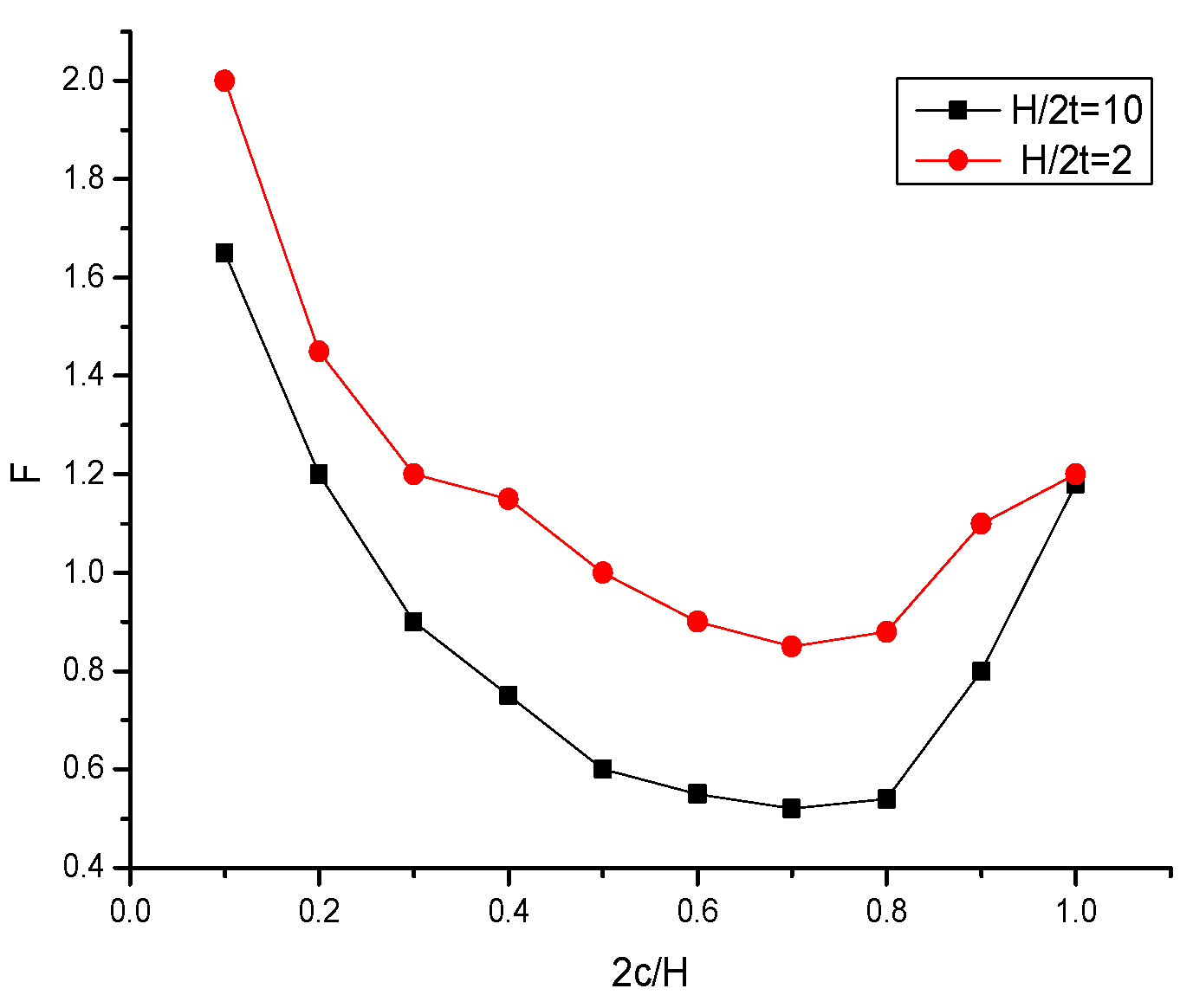
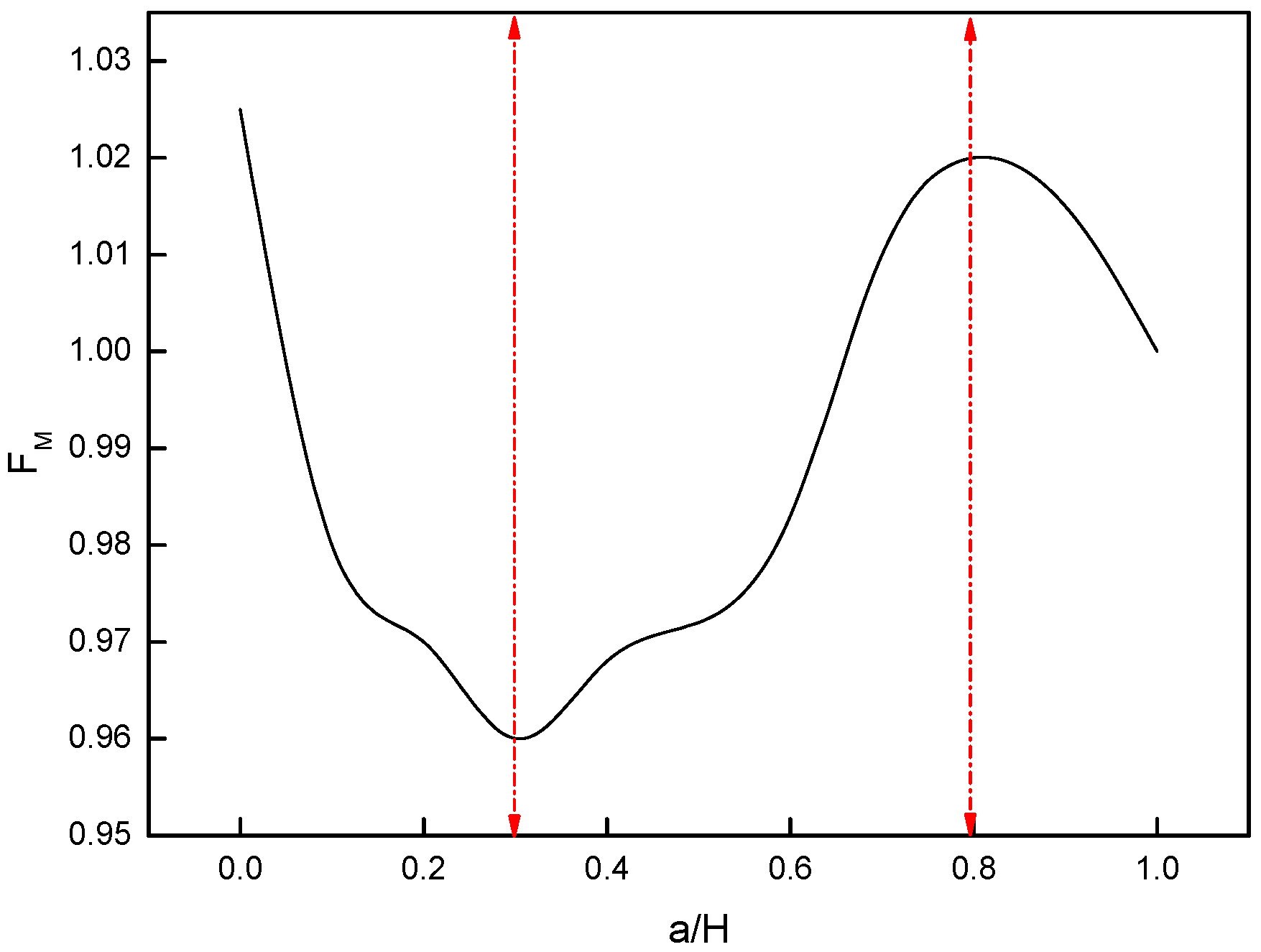
| 2c/H | 0.1 | 0.2 | 0.3 | 0.4 | 0.5 | 0.6 | 0.7 | 0.8 | 0.9 | 1.0 |
|---|---|---|---|---|---|---|---|---|---|---|
| F | 1.09 | 0.98 | 0.87 | 0.81 | 0.78 | 0.77 | 0.78 | 0.81 | 0.87 | 1.00 |
| a (m) | 0.0101 | 0.0105 | 0.0110 | 0.0115 | 0.0120 | 0.0125 | 0.0130 | 0.0135 | 0.0140 | 0.0145 | 0.0150 |
| q (MPa) | −3.82 | −3.54 | −3.49 | −3.51 | −3.53 | −3.53 | −3.52 | −3.51 | −3.50 | −3.49 | −3.48 |
| Curve | m | s | R~c~ (MPa) | μ | Physical State Represented |
|---|---|---|---|---|---|
| 1 | 8 | 0.01 | 5.0 | 0.20 | Intact, early-age backfill |
| 2 | 7 | 0.006 | 4.0 | 0.23 | Slightly micro-cracked |
| 3 | 5 | 0.003 | 3.2 | 0.26 | Moderately degraded (exposed surface) |
| 4 | 4 | 0.001 | 2.5 | 0.30 | Severely weathered/fractured |
| Parameter | −20% Change in q | +20% Change in q | Sensitivity Ranking |
|---|---|---|---|
| t (thickness) | −48.8% | +72.8% | Highest (cubic dependence) |
| H (height) | +44.4% | −30.6% | High (quadratic inverse) |
| L (length) | +56.3% | −30.6% | High (quadratic inverse) |
| a (crack length) | +11.8% | −10.6% | Moderate (square-root inverse) |
| M (bending moment) | +3.8% | −3.8% | Low (linear) |
| K~c~ (fracture toughness) | −20.0% | +20.0% | Moderate (linear) |
Disclaimer/Publisher’s Note: The statements, opinions and data contained in all publications are solely those of the individual author(s) and contributor(s) and not of MDPI and/or the editor(s). MDPI and/or the editor(s) disclaim responsibility for any injury to people or property resulting from any ideas, methods, instructions or products referred to in the content. |
© 2026 by the authors. Licensee MDPI, Basel, Switzerland. This article is an open access article distributed under the terms and conditions of the Creative Commons Attribution (CC BY) license.
Share and Cite
Wang, R.; Yang, X.; Zhang, W.; Bai, J. A Mechanical Model for the Progressive Failure of Slabbing Roadway-Side Backfill Bodies. Symmetry 2026, 18, 950. https://doi.org/10.3390/sym18060950
Wang R, Yang X, Zhang W, Bai J. A Mechanical Model for the Progressive Failure of Slabbing Roadway-Side Backfill Bodies. Symmetry. 2026; 18(6):950. https://doi.org/10.3390/sym18060950
Chicago/Turabian StyleWang, Rui, Xueling Yang, Weiguang Zhang, and Jianbiao Bai. 2026. "A Mechanical Model for the Progressive Failure of Slabbing Roadway-Side Backfill Bodies" Symmetry 18, no. 6: 950. https://doi.org/10.3390/sym18060950
APA StyleWang, R., Yang, X., Zhang, W., & Bai, J. (2026). A Mechanical Model for the Progressive Failure of Slabbing Roadway-Side Backfill Bodies. Symmetry, 18(6), 950. https://doi.org/10.3390/sym18060950