1. Introduction
Driven by scalability and falling costs, solar photovoltaics (PV) have become a cornerstone of renewable energy, reaching over 1.47 TW of global installed capacity in 2023 [
1,
2,
3]. Traditional ground-mounted solar farms require large land areas—typically 1.6 to 2 hectares per megawatt (MW)—creating competition for space in densely populated or agricultural regions [
4,
5]. Floating photovoltaic (FPV) systems offer a potential solution by utilising water surfaces for energy generation [
6]. FPV systems have come to a commercial level on lakes, reservoirs, and irrigation ponds, where water surfaces are relatively calm [
7,
8]. It can help to reduce competition for land and avoids some of the environmental and social issues associated with ground-mounted PV systems [
9]. Beyond preserving land resources, FPV systems also benefit from the natural cooling effect of water, which enhances module efficiency [
10,
11], while mitigating reservoir evaporation by 70% through surface shading [
12,
13]. Moreover, FPV systems can be co-located with existing hydropower facilities, allowing for shared grid connections and reduced deploying costs [
14,
15]. As global energy systems move toward net-zero targets, FPV technology presents a more important role for expanding renewable generation in locations with limited land resources. Its potential to supply coastal and islanded grids strengthens its effect for long-term energy transition strategies.
Despite these benefits, the expansion of FPV systems from calm inland waters to nearshore and offshore environments brings new challenges, and recent offshore FPV studies have highlighted the growing need for platform designs that can withstand harsher marine conditions [
16]. As FPV moves from inland waters to wave-exposed oceans, conventional platform concepts may no longer be sufficient, and more specialized engineering solutions are needed to improve survivability and adaptability [
17]. In this context, Ji et al. [
18] developed a rigid multi-module FPV system supported by a truss frame and floating pontoons, and demonstrated its structural survivability under multidirectional wave loads. Vasuki et al. [
19] also reviewed offshore FPV development and pointed out that current understanding of dynamic performance in ocean environments remains limited. Compared with inland systems, which usually experience mild wave conditions with wave heights below 0.5 m and short periods, offshore platforms are exposed to much harsher multidirectional wave actions, often with wave heights exceeding 2–3 m and longer wave periods. These wave loads, wind forces, and dynamic interactions between the structure and water require reliable mechanical design and improved mooring systems [
20]. Recent research has also explored flexible structures, adaptive mooring systems, and materials capable of withstanding cyclic loading and saltwater exposure [
21,
22]. While inland FPV systems generally perform reliably under mild hydrodynamic conditions, their structural adaptability may still be insufficient for ocean applications [
23]. Local stress concentrations and cumulative fatigue can develop in fixed floaters under long-term wave exposure [
24]. Likewise, conventional mooring strategies may not adapt well to ocean wave motions, which can lead to overload or platform instability [
25]. Some new FPV designs, such as rope-mesh and catamaran platforms, have shown potential for improving hydrodynamic tolerance and distributing loads more effectively [
26,
27]. However, existing studies have mainly focused on structural survivability, general design concepts, or broad offshore applicability, while the hydrodynamic behaviour of FPV systems under wave-induced excitation, especially in terms of pitch, heave, and mooring force response, remains insufficiently understood and still requires further investigation.
Inspired by air-cushion vessels, a promising direction that involves integrating air-cushion systems into floating structures is proposed. The air-cushion-supported catamaran (PACSCAT) proposed by Yang et al. [
28] demonstrated that incorporating a partial air cushion between twin hulls can substantially reduce pitch and heave motions under regular wave conditions, improving seakeeping and operational comfort. In a related study, Yang et al. [
28] also analysed the internal flow characteristics of the cushion system and showed that maintaining stable internal air pressure is essential for reducing pressure fluctuations and hydrodynamic resistance during high-speed navigation. Further work by Chaplin et al. [
29] showed that flexible, deformable inflatable structures—such as floating air bags—can absorb wave energy through volumetric deformation, thereby damping vertical motions and reducing mooring loads. However, these investigations have focused primarily on ship performance or wave-energy absorbers rather than FPV platforms. Furthermore, while conventional air-cushion vessels prioritize pressurized skirts to reduce hull friction at high speeds, and flexible wave energy converters use air bags to continually extract energy, our approach introduces a fundamentally different mechanism to solve the FPV performance gap.
Specifically, the core challenge for FPVs is the stable conversion of solar energy amidst continuous dynamic motion, a relationship defined here as hydro-optical coupling—where the physical oscillations (i.e., pitch and heave) of the floating platform directly impact the stability of solar irradiance capture. We propose using a tuneable air cushion specifically as a passive damping system for FPVs. By actively controlling the internal pressure, the structure can dynamically transition between rigid stability and compliant energy absorption, thereby strengthening hydro-optical coupling and stabilizing power generation. Whether an inflatable cushion can benefit FPV systems and sustain power output under offshore waves remains unexplored; this gap motivates the present experiments. In addition, symmetry is an important consideration in floating platform design because it affects load distribution, motion balance, and structural stability under wave excitation.
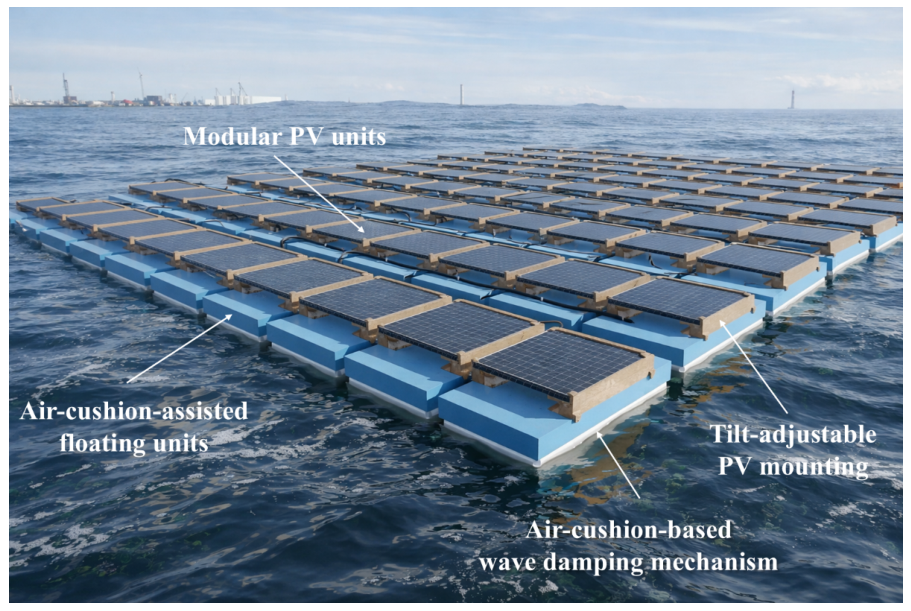
The proposed design features an air-cushion-supported platform, as conceptually illustrated in
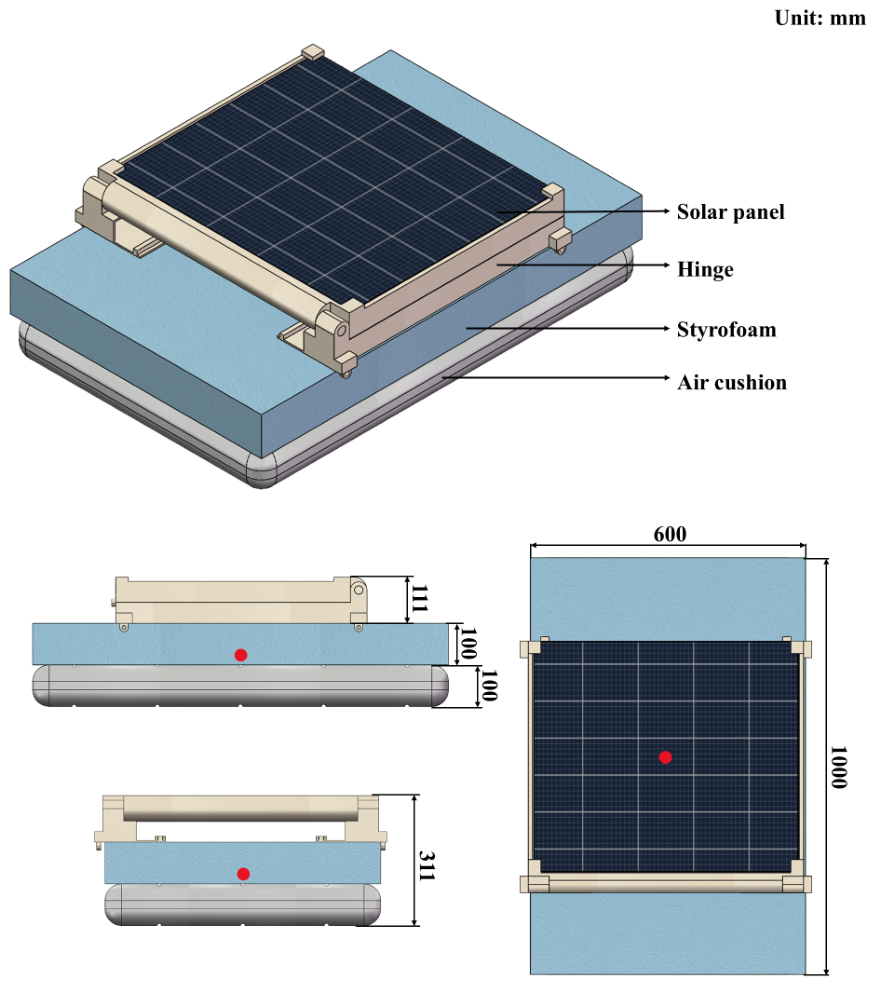
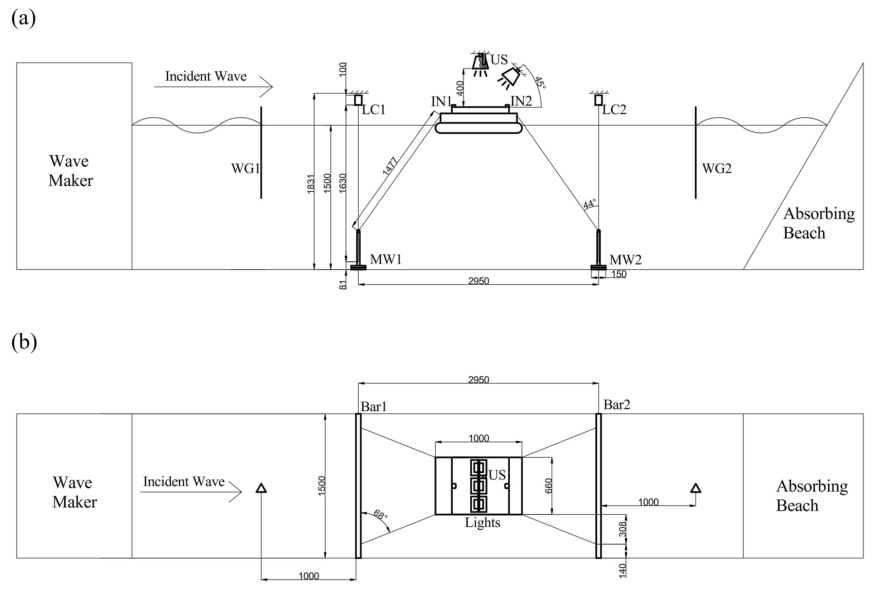
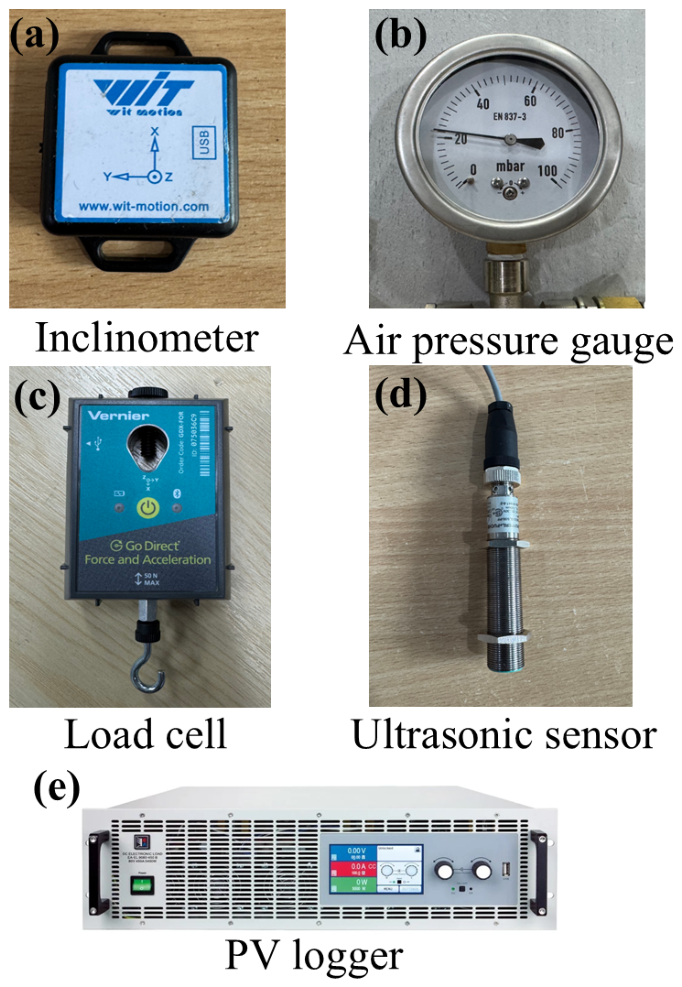
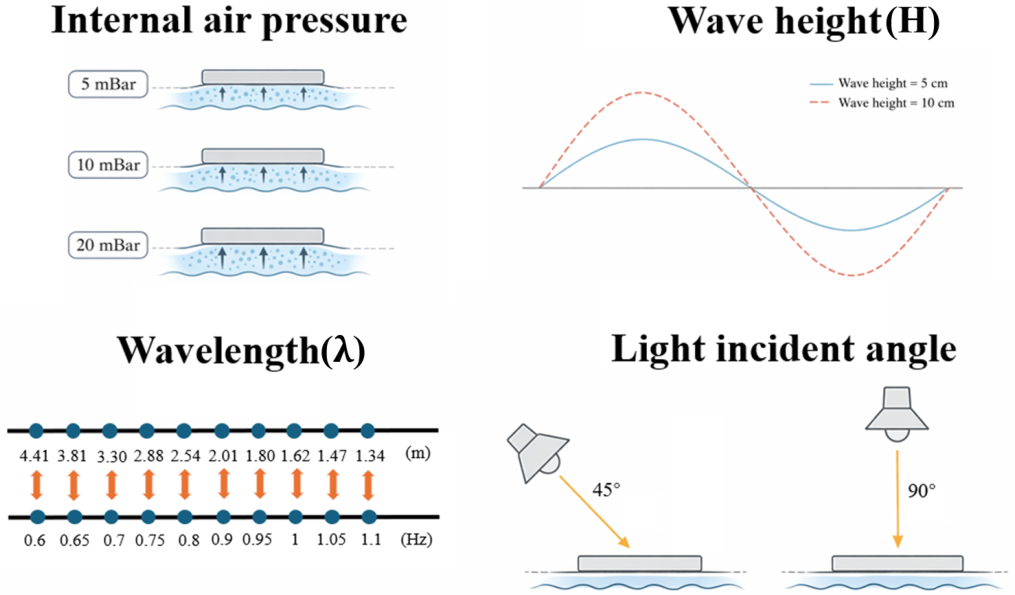
Figure 1. The platform adopts a symmetric structural configuration, which provides a balanced basis for evaluating the effects of air-cushion compliance on hydrodynamic response and power generation stability. It utilises tuneable internal pressure to control structural stiffness, which allows the platform to switch between soft and rigid behaviours. This flexibility allows for a systematic study of how air cushions affect the FPV system. Specifically, the experiments focused on the reduction in pitch angles, mooring loads, and the stabilisation of power generation. A lab-scale platform with tuneable internal pressure (5, 10, and 20 mbar) was tested under representative wave and solar irradiance conditions. The setup controlled key variables: internal pressure, wave height, wavelength, and light incidence to quantify its effects on hydrodynamic responses, mooring loads, power output, and its fluctuations. For comparison, a catamaran and a flat plate platform of the same size were also introduced as references.
This study provides the first combined analysis of wave motion, mooring loads, and power stability on an air-cushion-based FPV platform. The results confirm that the air cushion acts as a dual-function system: it dampens hydrodynamic loads while mitigating wave-induced fluctuations in energy output. The tuneable control further allows for site-specific optimisation, further reducing the cost and weight of mooring systems. These capabilities can help to overcome the corresponding barriers to offshore expansion, proving the air-cushion concept as a critical potential for the next generation of floating solar farms.
3. Results and Discussion
3.1. Hydrodynamic and Mooring Response
Data from each experimental case were recorded for more than 2 min at a sampling frequency of 10 Hz. To ensure consistency across all cases, only steady-state wave conditions were analysed. The initial wave build-up and final decay phases, as well as short intervals influenced by turbulence or irregular disturbances, were removed during post-processing. The effective dataset for each case therefore consists of the central portion of the record, containing more than ten consecutive stable wave cycles. What is more, to ensure the legibility of the comparative trend lines across multiple pressure conditions, steady-state averaged values are presented. While run-to-run variability in the deterministic wave tank environment is negligible, physical fluctuations in system output are explicitly analysed via standard deviation in
Section 3.3.
3.1.1. RAO Pitch Response
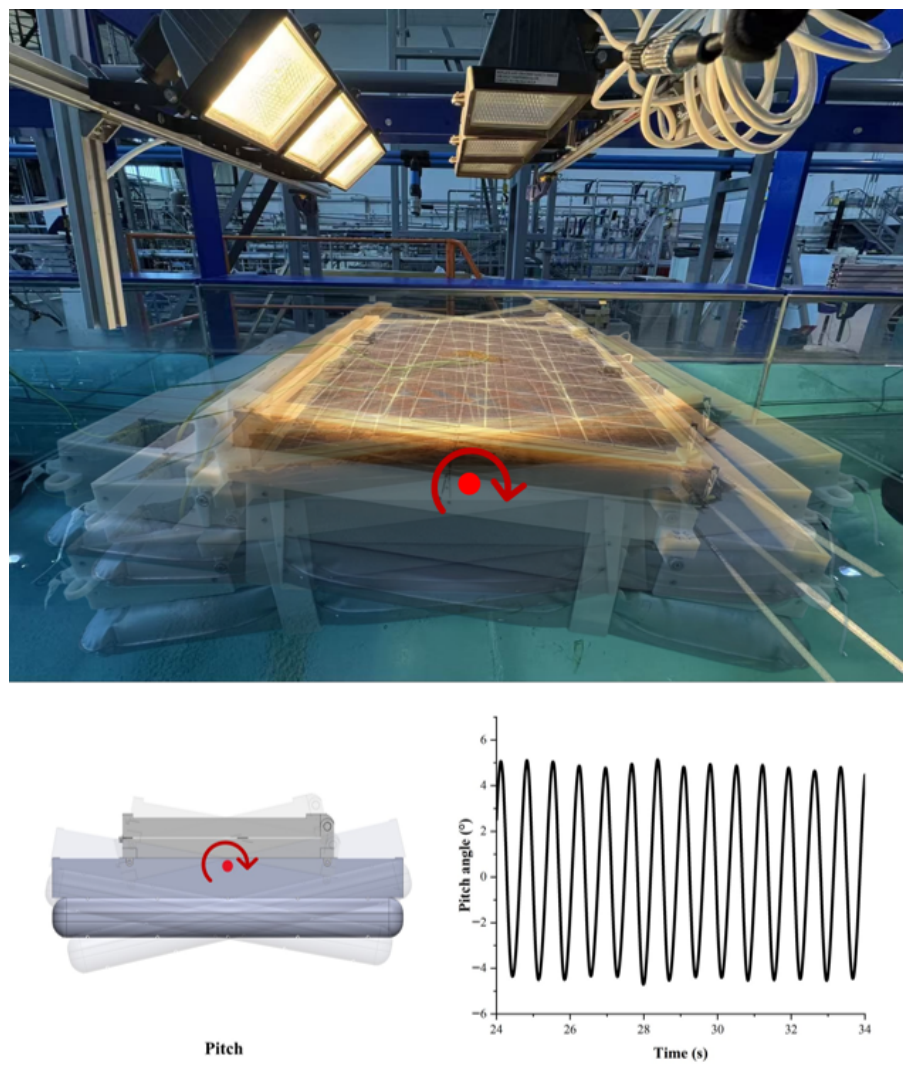
Figure 6 provides a representative time-series record from the case of
H = 10 cm and
= 3.30. Based on these signals,
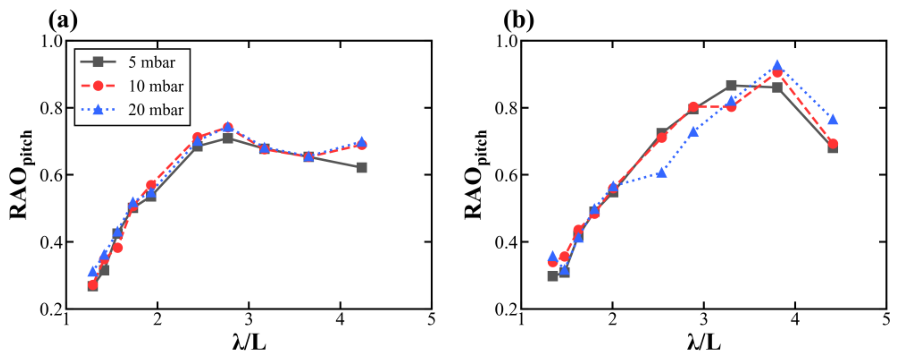
Figure 7 presents the extracted RAO
pitch across the three inflation pressures and the testing wavelength range.
At a wave height of H = 5 cm, the influence of internal air pressure on pitch motion is relatively low. The RAOpitch values increase with and exhibit a resonance peak around = 2.88, where the differences among the three pressure conditions remain small. Under mild wave excitation, the restoring stiffness of the platform is primarily governed by its geometric configuration rather than by the inflation level of the air cushion.
At a wave height of H = 10 cm, the role of internal air pressure becomes more evident. The RAOpitch values increase markedly as rises, reaching a maximum at = 3.81. At this stage, the 20 mbar configuration consistently exhibits the largest pitch response, followed by 10 mbar and 5 mbar. Higher inflation pressure enhances the dynamic coupling between the air cushion and wave excitation, amplifying pitch motion at longer wavelengths.
The symmetric structural configuration of the platform plays a critical role in decoupling its hydrodynamic degrees of freedom. By aligning the centre of gravity with the geometric centre of buoyancy, the platform naturally suppresses asymmetric wave-induced moments. During the experiments, this symmetry resulted in negligible roll and yaw coupling, with lateral motion amplitudes remaining strictly below 2% of the primary longitudinal response. Consequently, this balanced dynamic behaviour prevents uneven load distributions on the mooring lines and ensures uniform solar irradiance capture, which would otherwise be compromised by the twisting motions typical of asymmetric floating structures.
3.1.2. RAO Heave Response
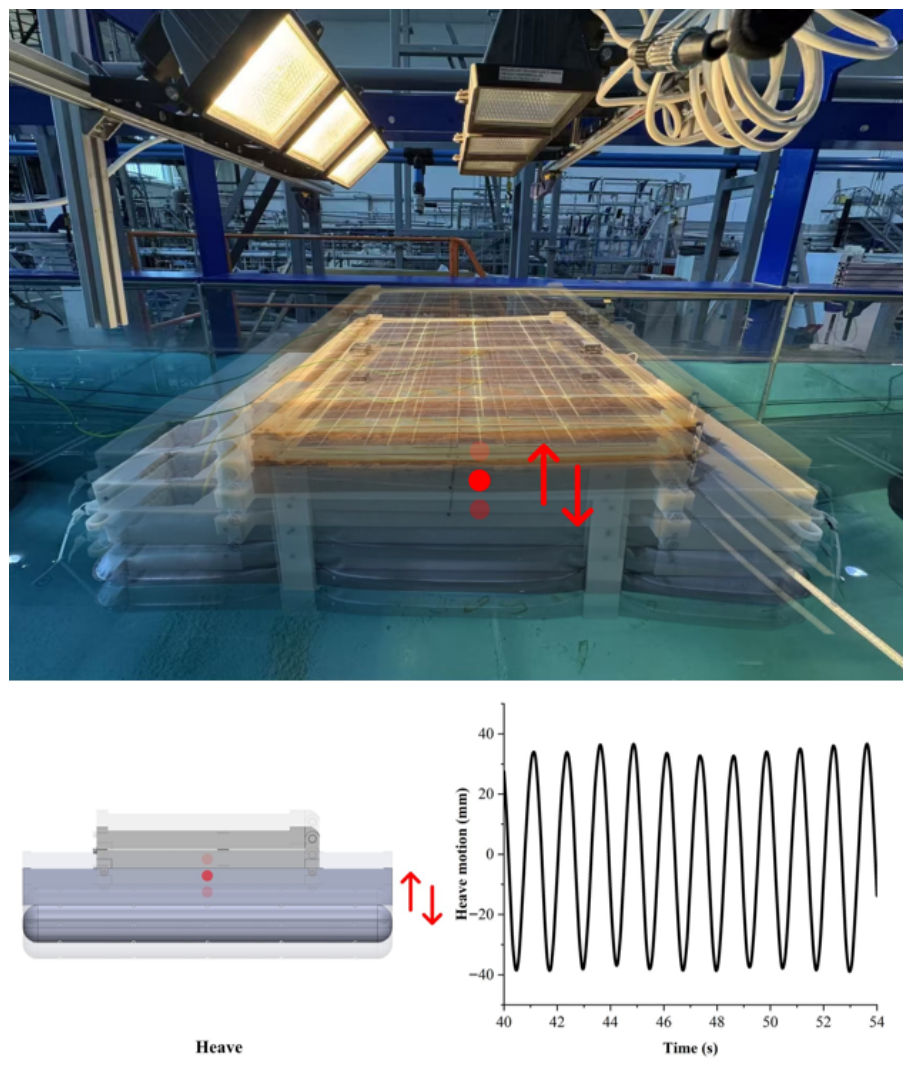
Figure 8 shows a representative heave time-series record from the case of
H = 10 cm and
= 1.34. Using this dataset,
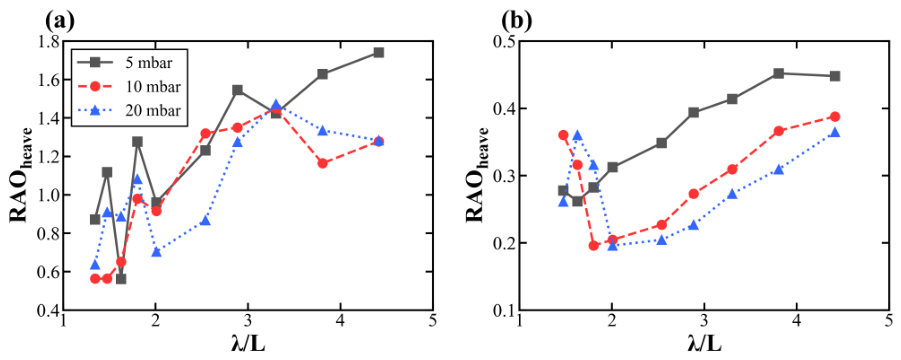
Figure 9 presents the corresponding RAO
heave across the three inflation pressures and the testing wavelength range.
At a wave height of H = 5 cm, the heave response grows steadily with increasing , with the 5 mbar condition consistently producing the largest amplitudes. By contrast, the 10 mbar and 20 mbar cases exhibit noticeably lower values, reflecting the enhanced damping and stiffness associated with higher inflation levels. Reduced internal pressure makes the platform more compliant, leading to stronger vertical oscillations, whereas higher pressures suppress heave motion by increasing restoring force.
At a wave height of H = 10 cm, the overall heave response is greatly diminished and remains within a narrow range across all pressure conditions. The variation among 5, 10, and 20 mbar becomes less pronounced, suggesting that, under higher wave steepness, the platform’s vertical motion is highly constrained by wave–structure interaction. In this regime, the pitch motion dominates the response, while the heave is only weakly affected by the air-cushion pressure.
Interestingly, at 20 mbar under long wave conditions (), the heave response becomes higher than that at 5 and 10 mbar. Under 20 mbar, the air cushion possesses higher rigidity and acts like an elastic body. When the wavelength is long, the platform completely experiences the entire wave profile. In this state, the internal volumetric damping effect is almost zero. As a result, the cushion acts with an elastic bounce effect, which amplifies the vertical motion instead of damping it.
3.1.3. Mooring Force Amplitude
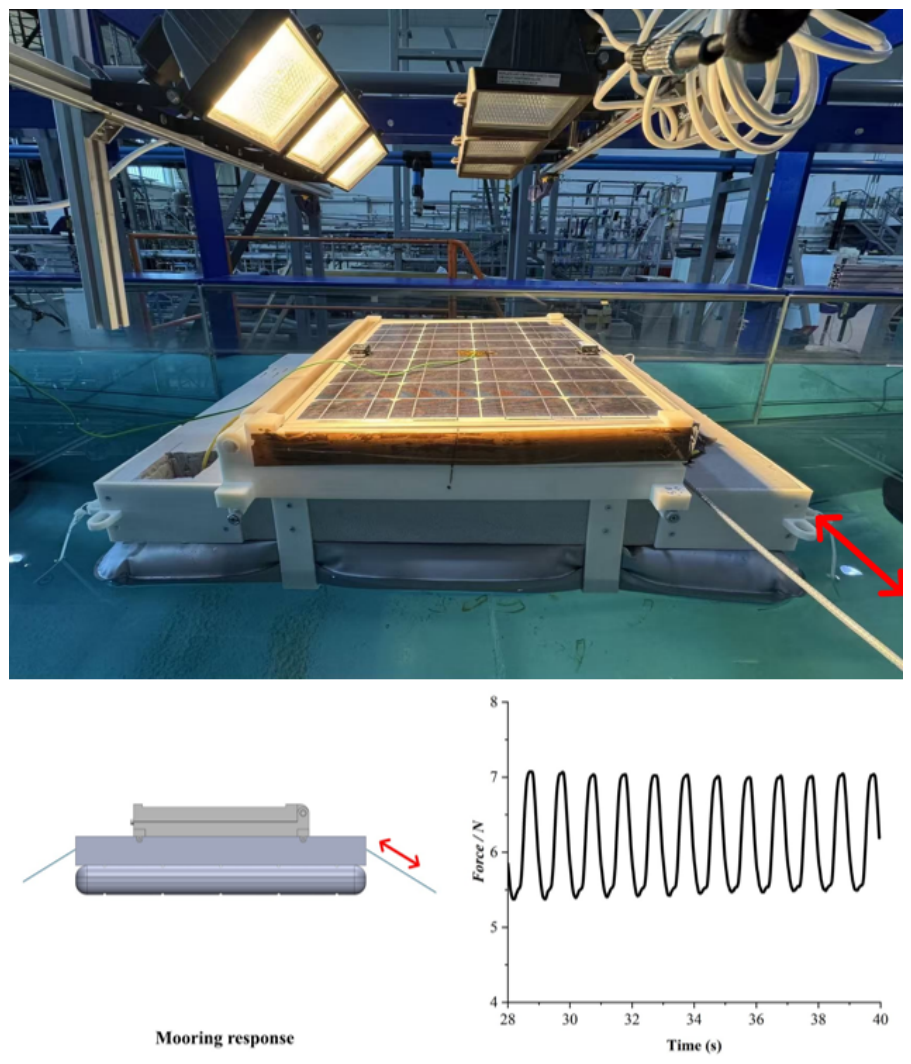
Figure 10 provides a representative mooring-force time-series record from the case of H = 5 cm and
= 1.62. Based on this dataset,
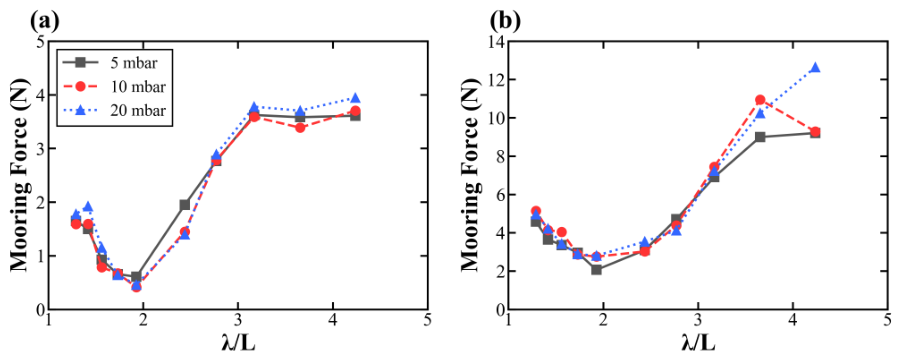
Figure 11 presents the extracted force amplitudes across the three inflation pressures and the testing wavelength range.
At a wave height of H = 5 cm, the mooring force initially decreases with increasing and then rises again beyond ≈ 2. In this regime, the overall force levels remain relatively small (below 4 N), indicating modest hydrodynamic loading. Differences among pressure conditions are minor, although higher internal pressures tend to yield slightly larger amplitudes at longer wavelengths. This suggests that, under mild wave excitation, the transmission of wave-induced loads to the mooring lines is limited, and the role of air-cushion pressure is secondary.
At a wave height of H = 10 cm, the mooring forces increase substantially with
, reaching values above 12 N at the longest tested wavelengths. In this case, the influence of internal pressure becomes more evident: the 20 mbar configuration consistently exhibits the highest mooring forces, followed by 10 mbar and 5 mbar. The trend highlights that higher inflation levels stiffen the platform, enhancing the coupling between wave excitation and mooring line tension. At shorter wavelengths, the variation among pressure cases remains relatively small, implying that hydrodynamic characteristics dominate load generation. The results in
Figure 11 reveal that the effect of internal air pressure on mooring force is wave height dependent. Under small waves, the influence of pressure variation is limited, whereas under larger waves, higher inflation levels lead to significantly greater mooring loads.
3.2. Comparative Analysis with Counterpart Structures
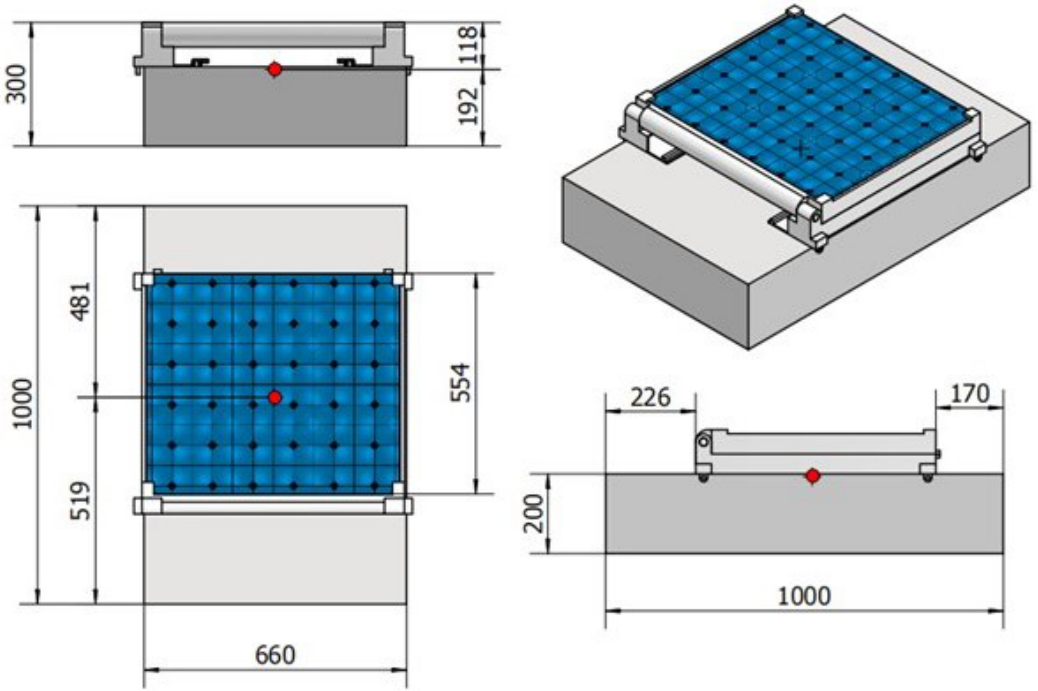
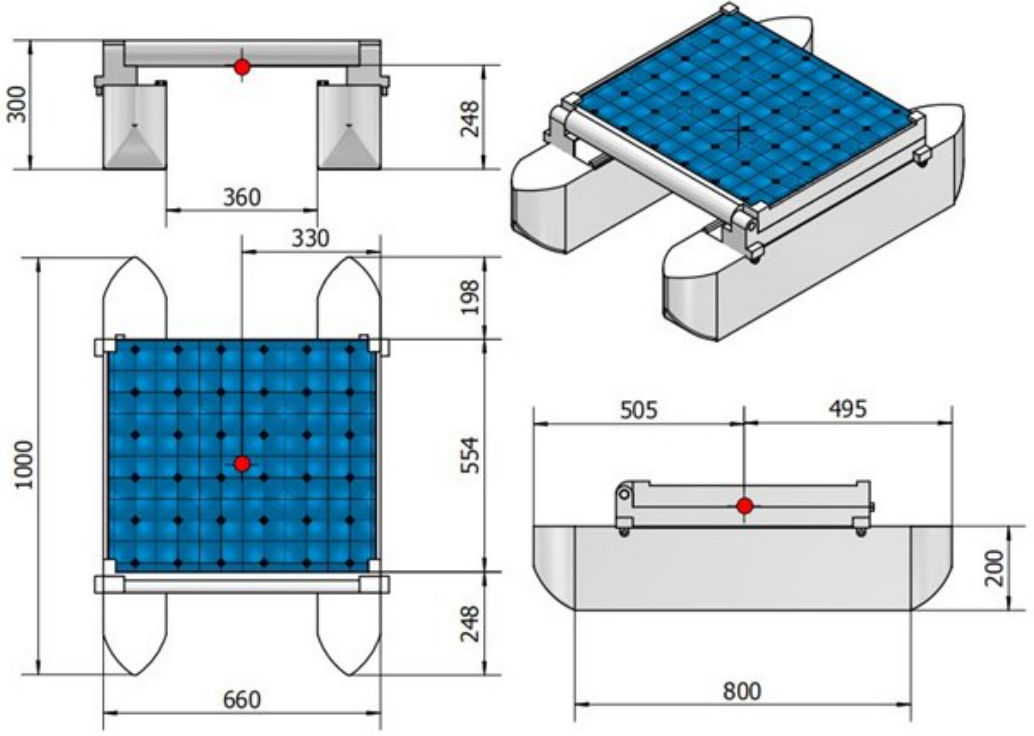
Catamaran and flat plate platforms were previously tested in the Cranfield wave tank [
27]. The corresponding data are used here for comparison with the air-cushion-based platform to further investigate hydrodynamic differences among different structures. Since all three platforms tested share the same body length, this comparison highlights the influence of geometric configuration, providing practical significance to the analysis.
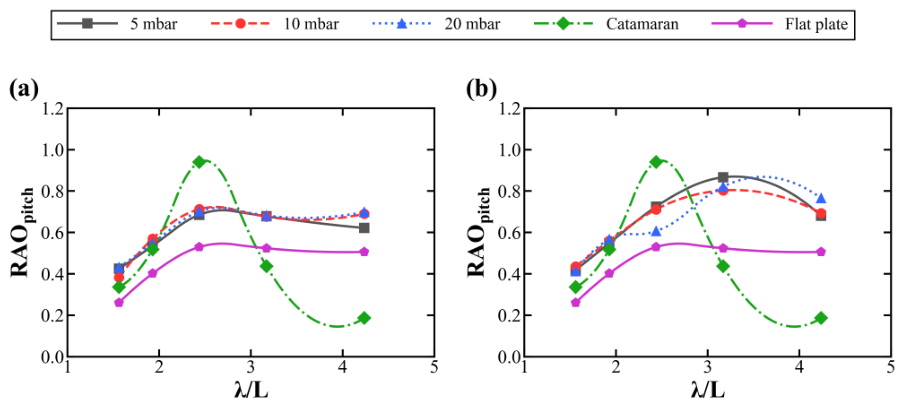
Figure 12 shows the RAO
pitch responses of the air-cushion-based floating platform (5, 10, and 20 mbar) with two conventional structures, the catamaran and the flat plate, under wave heights of 5 cm and 10 cm.
At H = 5 cm, the air-cushion-based design exhibits relatively smooth RAO curves across the tested range, avoiding sharp resonance. In contrast, the catamaran shows a pronounced peak around ≈ 2.4, after which its response rapidly decreases. The flat plate maintains lower RAO levels throughout, reflecting its higher resistance to pitch motion. Overall, the air-cushion configurations lie between the two extremes: less resonant than the catamaran, but more responsive than the flat plate.
At H = 10 cm, the distinction among designs becomes clearer. The catamaran again shows a strong resonance peak, followed by rapid attenuation, while the flat plate continues to exhibit lower, flatter RAO responses. The air-cushion-based platform maintains higher RAO values than the flat plate, indicating greater pitch motion, but its curve is more stable than that of the catamaran in the long-wavelength region. This intermediate behaviour suggests that the internal air cushion contributes to suppressing excessive resonance but still permits noticeable pitch response under stronger waves.
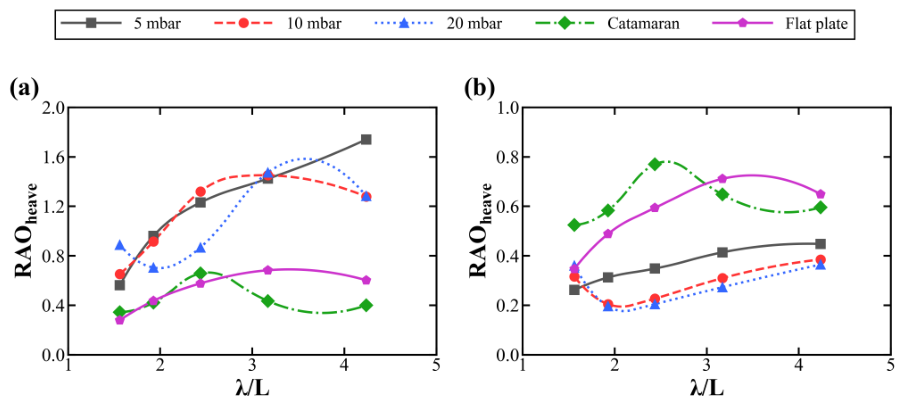
Figure 13 shows the RAO
heave responses of the air-cushion-based floating platform (5, 10, and 20 mbar) with those of the catamaran and flat plate under wave heights of 5 cm and 10 cm.
At H = 5 cm, the air-cushion-based platform exhibits a clear upward trend in RAOheave with increasing , particularly at lower inflation levels. Among the three designs, the air-cushion platform shows the largest vertical motion response at longer wavelengths, while the catamaran and flat plate remain comparatively restrained. The catamaran curve peaks modestly before levelling off, whereas the flat plate demonstrates the most stable behaviour across the entire range. The elastic nature of the air-cushion structure may lead to higher RAOheave under smaller wave heights, which introduces additional motion instability.
At H = 10 cm, the trend shifts significantly. The air-cushion platform’s RAOheave responses are strongly suppressed, with values consistently lower than those of both the catamaran and flat plate. In this condition, the catamaran exhibits the most pronounced heave resonance, while the flat plate maintains elevated but smoother heave levels. The reduced RAOheave of the air-cushion structure under higher wave loading suggests that the enclosed air acts as a damping mechanism, suppressing vertical displacement and limiting heave motion more effectively as excitation increases.
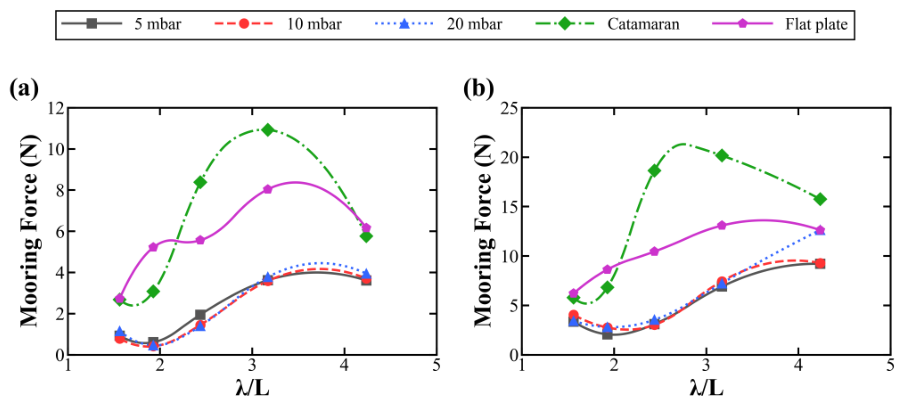
Figure 14 compares the mooring force amplitudes of the air-cushion-based floating platform (5, 10, and 20 mbar) with those of the catamaran and flat plate under wave heights of 5 cm and 10 cm.
At H = 5 cm, all platforms display a non-monotonic trend, with minima around ≈ 1.9, followed by a gradual increase. The catamaran exhibits the largest peak forces, exceeding 10 N, highlighting its high sensitivity to wave excitation. The flat plate shows intermediate values, maintaining higher forces than the air-cushion platform but with a smoother trend. By contrast, the air-cushion-based platform records the lowest mooring forces across the full range, indicating effective load attenuation and reduced hydrodynamic transmission to the mooring system.
At H = 10 cm, the contrast between structures becomes more pronounced. The catamaran again produces the highest mooring loads, with forces surpassing 20 N at resonance. The flat plate also shows substantial mooring amplitudes, particularly at longer wavelengths, exceeding 12 N. In comparison, the air-cushion platform exhibits much smaller forces, generally below 13 N depending on internal pressure, and its response remains comparatively smoother. This reduction reflects the buffering effect of the enclosed air, which absorbs part of the incident wave energy, mitigating dynamic loading on the mooring lines.
This difference in performance can be physically explained by their structural profiles and load-transfer mechanisms. The flat plate design has a large wetted surface area, which transfers wave slamming forces directly to the platform, causing rigid-body motions. By contrast, the catamaran shape reduces frontal resistance, but its rigid side hulls still instantaneously transfer wave-induced vertical accelerations to the main deck. The air-cushion platform, however, introduces a hydro-pneumatic compliance layer between the water surface and the rigid solar panel. Through the combined effects of air compressibility and structural deformation, the internal air volume absorbs and dissipates the incident wave energy. This volumetric damping delays the phase of the transmitted forces and cushions the wave slamming impact before it reaches the main deck.
3.3. Solar Power Output
Data for the power output analysis were collected under the same sampling conditions as the hydrodynamic measurements, with each experimental case recorded for more than 2 min at a frequency of 10 Hz. Only the steady-state portion of the record was used, following the removal of the initial wave build-up, final decay, and any short intervals affected by transient disturbances. The resulting dataset for each case therefore corresponds to the central segment of the time series, ensuring consistent irradiance and wave excitation during analysis.
The standard deviation of power output results represents the statistical dispersion of the instantaneous power values within this steady-state interval, providing a measure of output stability. The wave-induced loss is defined as the relative reduction in mean power, computed as the difference between the calm-water power and the wave-induced power, normalised by the calm-water power.
3.3.1. Power Output and Temperature
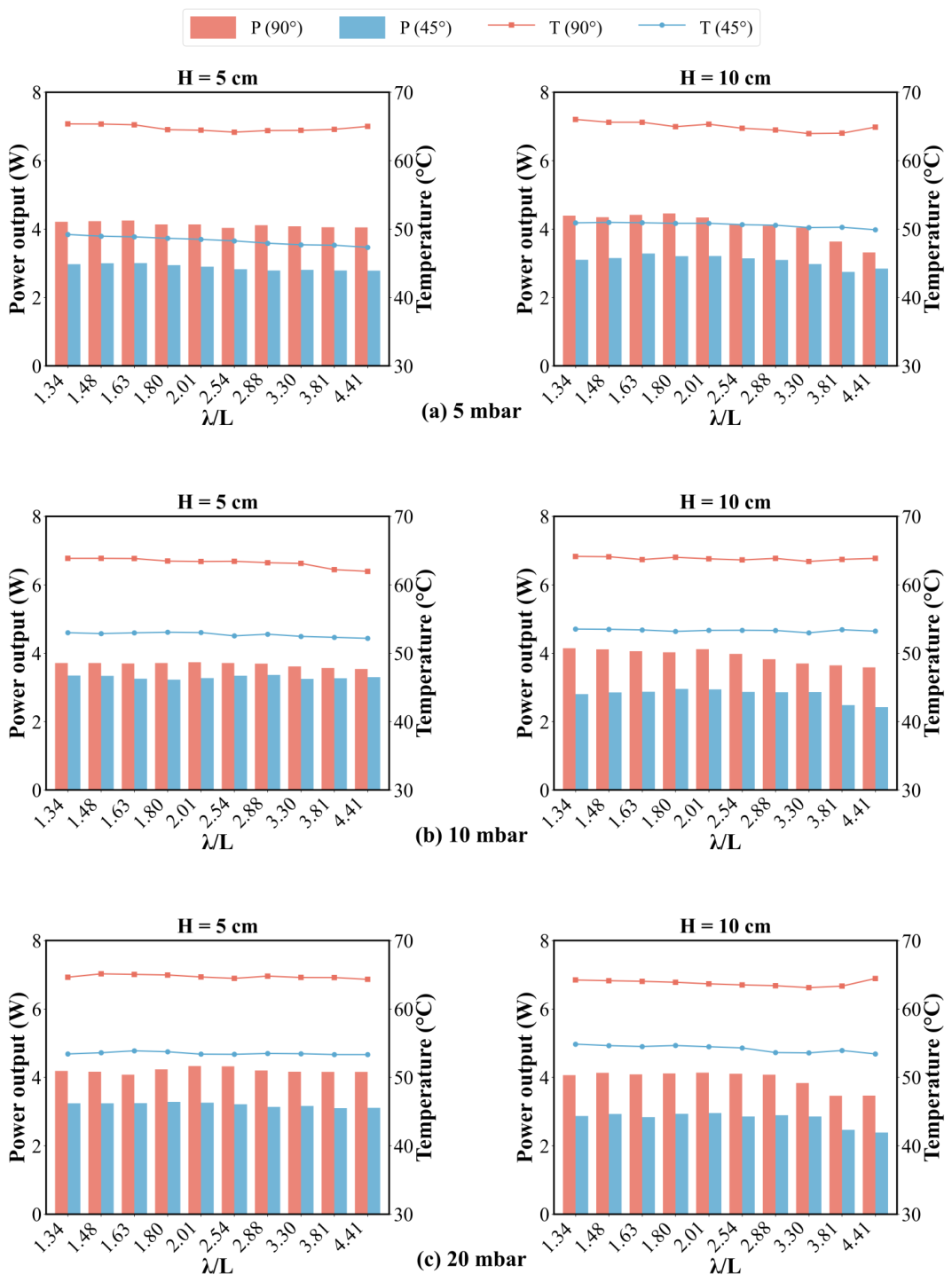
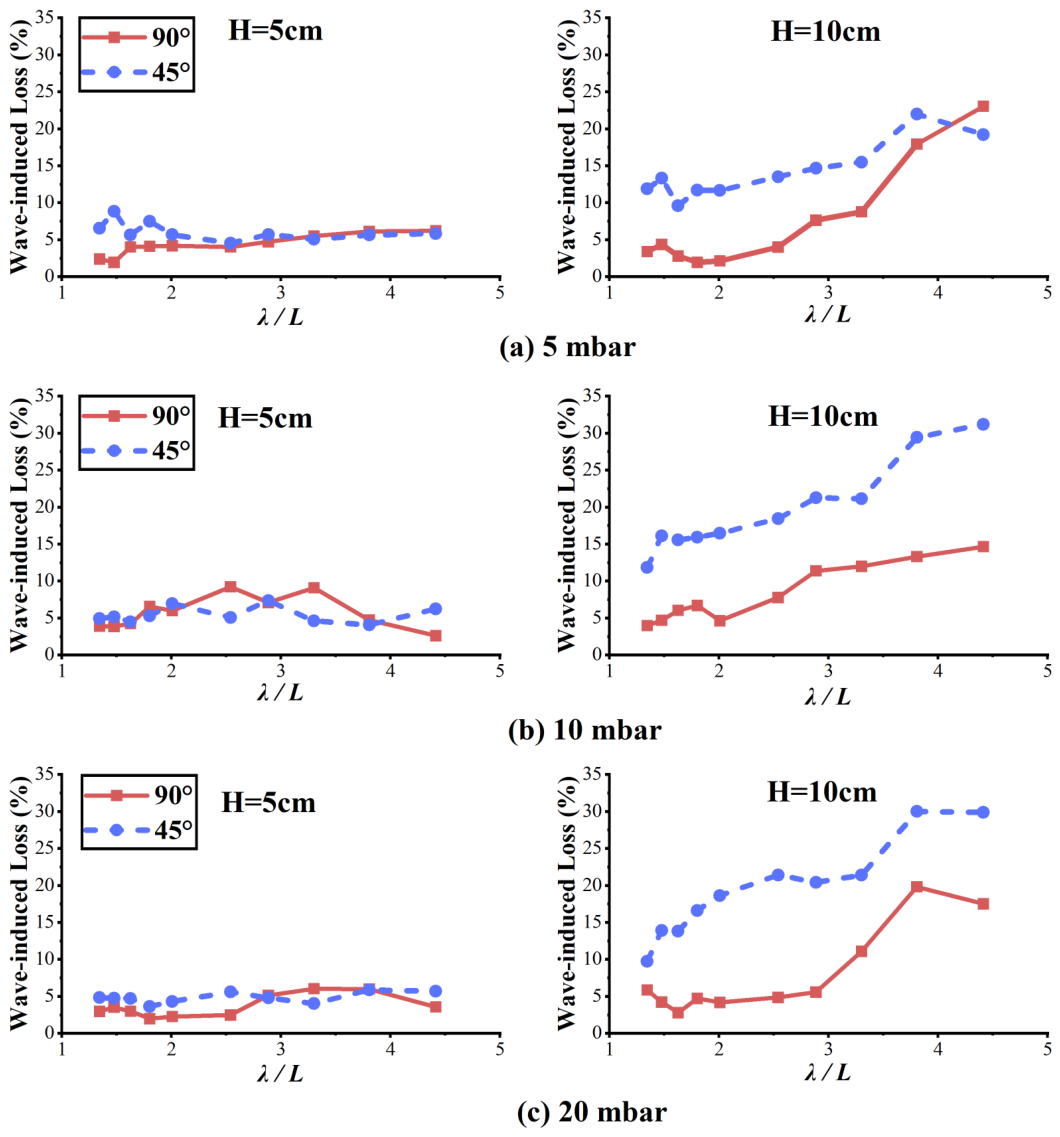
Figure 15 summarises the combined effects of wave height, internal air pressure, and solar incidence angle on the power output and solar panel temperature of the air-cushion-based floating platform. The results are organised by internal pressure levels of 5, 10, and 20 mbar, with each group comparing two wave heights (H = 5 cm and H = 10 cm) under solar incidence angles of 45° and 90°.
The solar incidence angle remains the most significant factor affecting energy yield. For a normal incidence of 90°, the system achieves a peak average power output of approximately 4.06 W across all test conditions. In contrast, at a 45° incidence, the average power output drops to approximately 2.94 W, representing a performance reduction of 27.6%. Notably, under the 90° configuration, the maximum recorded power was 4.46 W (observed at 20 mbar, H = 10 cm, = 1.80), while the minimum was 3.32 W (20 mbar, H = 10 cm, = 4.41), indicating that the platform maintains high efficiency even under challenging hydrodynamic conditions.
The influence of internal air pressure (5, 10, and 20 mbar) demonstrates the platform’s structural resilience. At an internal pressure of 5 mbar, the average power output at 90° is 3.94 W and 3.88 W for H = 5 cm and H = 10 cm, respectively. Increasing the pressure to 20 mbar results in average outputs of 4.13 W (H = 5 cm) and 4.05 W (H = 10 cm). This marginal improvement of approximately 4.4% to 4.8% across the pressure increase confirms that the air-cushion structure provides sufficient stiffness at low pressures to maintain panel stability. However, wave height introduces a more observable sensitivity at higher pressures; for instance, at 20 mbar, the power output for H = 10 cm shows a steeper decline as increases from 1.34 to 4.41, dropping from 4.39 W to 3.32 W (24.4% reduction). This suggests that while higher internal pressure enhances rigidity, it may also lead to a more pronounced hydrodynamic response to long-wavelength oscillations.
Thermal stability is a critical advantage of the floating system. The solar panel temperature displays a high degree of consistency, typically ranging between 62.0 °C and 66.0 °C at 90° incidence, and significantly lower at 45°, settling between 47.3 °C and 54.9 °C. Throughout the experimental range, the panel temperature exhibits minimal sensitivity to changes in wave parameters, remaining within a narrow band for each incidence angle. This stable thermal regime, combined with the cooling effect provided by the water body, ensures that the photovoltaic cells operate within an optimal temperature range, thereby mitigating thermal degradation.
3.3.2. Standard Deviation and Wave-Induced Loss
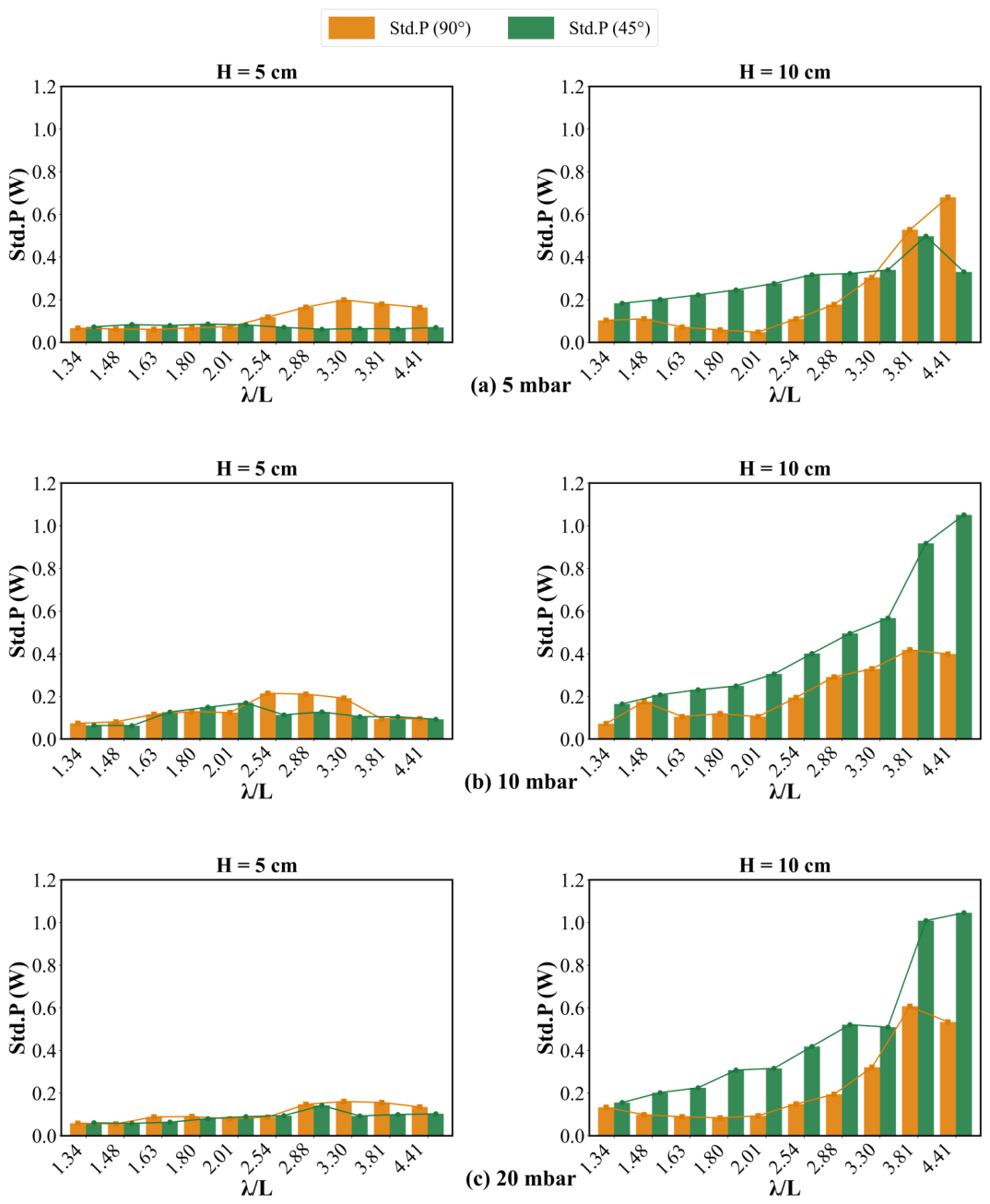
The operational performance of the air-cushion platform under wave excitation is further characterised by the correlation between instantaneous power fluctuations and long-term energy attenuation, as evidenced by the standard deviation (STD) in
Figure 16 and the wave-induced loss in
Figure 17.
The platform exhibits remarkable resilience at H = 5 cm. The STD remains consistently below 0.2 W, and the corresponding power loss is generally suppressed under 5% across all internal pressures. This high degree of stability indicates that the air cushion effectively isolates the solar array from minor hydrodynamic perturbations, maintaining a near-static solar harvesting efficiency. However, a critical transition in system behaviour occurs at H = 10 cm, where a strong coupling between the magnitude of fluctuation and efficiency loss is observed. For the 5 mbar case, the STD for the 90° incidence angle peaks at approximately 0.7 W, which directly corresponds to a surge in wave-induced loss reaching over 20% at long wavelengths ( = 4.41).
This synchronisation suggests that the increased pitching motion of the platform under larger wave amplitudes not only induces severe power flickering but also results in significant energy loss. Interestingly, as the internal pressure increases to 10 mbar and 20 mbar, the 45° incidence (green bars in
Figure 16 and blue dashed lines in
Figure 17) becomes the most vulnerable configuration. In these high-pressure scenarios, the wave-induced loss for the 45° case escalates to approximately 30%, coinciding with a sharp increase in STD exceeding 1.0 W as
increases beyond 3.81.
This integrated behaviour indicates a wave-induced irradiance misalignment. The increased structural rigidity at 20 mbar limits the cushion’s ability to absorb wave energy through local deformation, instead forcing the entire platform to follow the wave slope more rigidly. For an oblique incidence of 45°, this rigid-body rotation causes the projected solar area to fluctuate more violently than at a 90° normal incidence, explaining why both the loss and the fluctuation reach their maximum values simultaneously. These findings reveal that while higher internal pressure may offer structural benefits, it amplifies the sensitivity of the system to long-wavelength waves, leading to substantial power flickering and efficiency reduction.
This power fluctuation is a direct result of hydro-optical coupling. As the platform pitches due to waves, the angle between the incoming sunlight and the panel surface changes constantly. This misalignment reduces the effective geometric area that can receive sunlight, which decreases proportionally to the cosine of the pitch angle. In addition, the continuous and rapid physical oscillations prevent the solar panel from maintaining a stable orientation, leading to the observed jagged fluctuations in the energy output.
4. Conclusions
This study experimentally evaluated the coupled hydrodynamic response, mooring loads, and power-output stability of an air-cushion-based FPV platform under controlled wave and illumination conditions. The results confirm that wave-induced irradiance misalignment, governed by pitch and heave motions, is the primary driver of power loss.
Higher internal pressures increase dynamic coupling between the cushion and incident waves, while lower pressures favour more compliant but more sensitive-to-the-wave induction. Across the tested conditions, a moderate pressure of 10 mbar provides the optimal trade-off, limiting motion excitation and stabilising power output compared with 5 and 20 mbar. Although differences among the three air pressures are modest in some hydrodynamic responses, the 10 mbar configuration provides a consistent compromise across pitch response, mooring force, and power-output stability, avoiding excessive compliance at 5 mbar. It must be acknowledged that over-inflation (e.g., the 20 mbar case) can lead to significant power losses of up to 30% under long-wave conditions. This highlights a critical operational boundary where excessive stiffness compromises the platform’s ability to follow the wave profile smoothly, emphasizing the need for precision pressure regulation. This balance indicates the potential of air-cushion integration as a tuneable mechanism for managing wave–structure interaction rather than purely minimising motion. It should be emphasised that the optimal operational pressure is inherently dependent on specific environmental wave conditions. The 10 mbar state identified herein serves to physically demonstrate the tuneability of the air-cushion mechanism under regular wave excitations, rather than establishing a universal optimum for all sea states.
In terms of motion amplitude, the flat plate exhibits the most stable behaviour due to its rigid-body design and larger wetted surface area. However, this stability is accompanied by higher mooring loads. From an engineering perspective, the air-cushion platform achieved substantially lower mooring demand than rigid benchmarks. Under higher wave height (H = 10 cm), catamaran peak tensions exceeded 20 N, the flat plate reached above 12 N, whereas the air-cushion cases remained below 9 N, which is less than half of the catamaran’s peak loads, indicating clear potential to reduce fatigue loading.
In power performance, tests with longer wavelength showed power fluctuations generally within 0.3–0.5 W, with the 10 mbar configuration exhibiting comparatively stable output relative to the 5 mbar and 20 mbar under both 45° and 90° illumination. Vertical illumination (90°) consistently provides higher and more stable power output than oblique illumination (45°), particularly at higher wave heights where platform motion becomes more pronounced.
The present work is limited to a single-unit model and controlled regular waves. Future research will extend to array configurations, irregular waves, long-term loading, and site-scale deployment to further validate the applicability of air-cushion-based FPV systems in real-world environments.





 ,
,