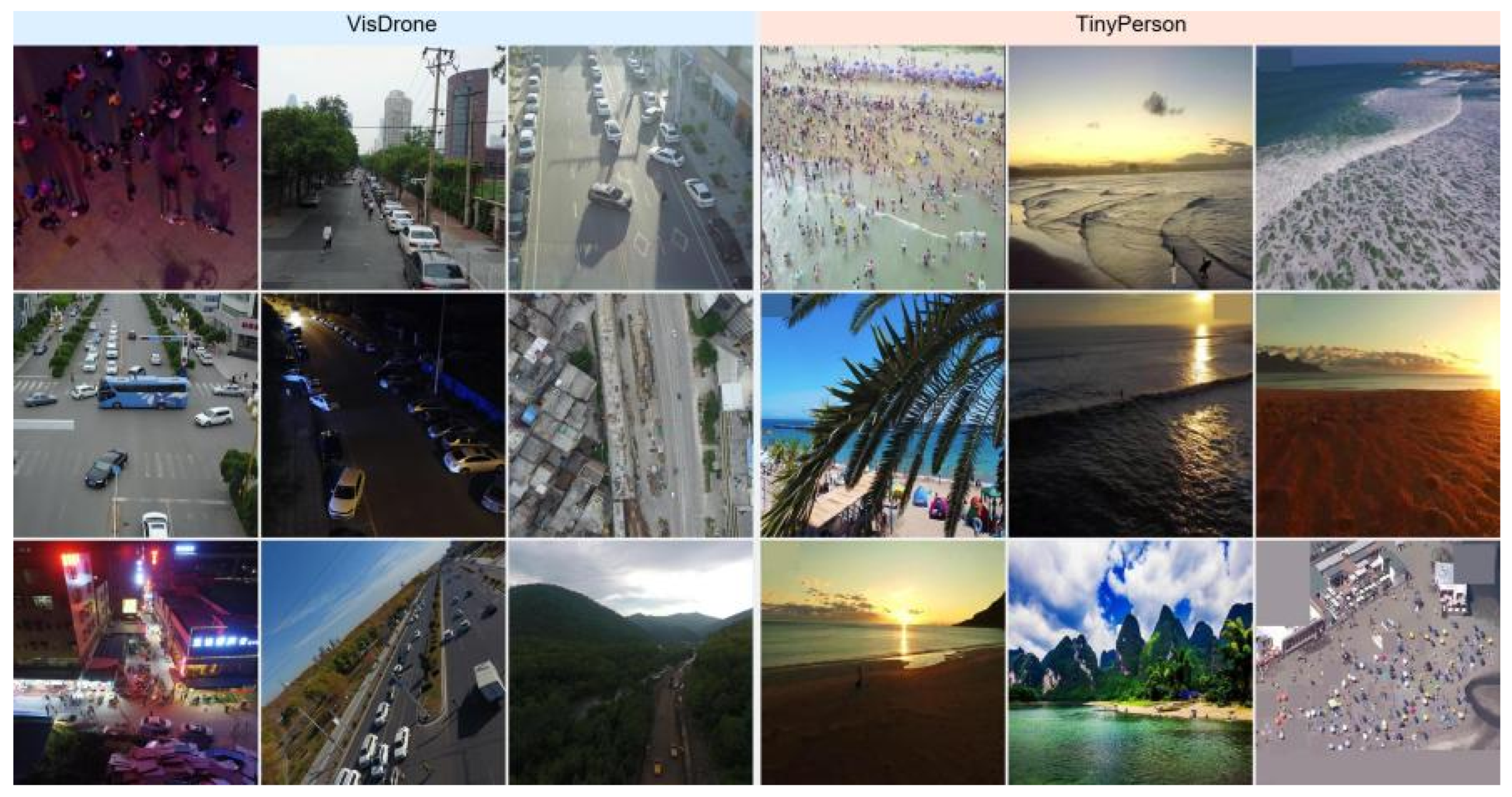
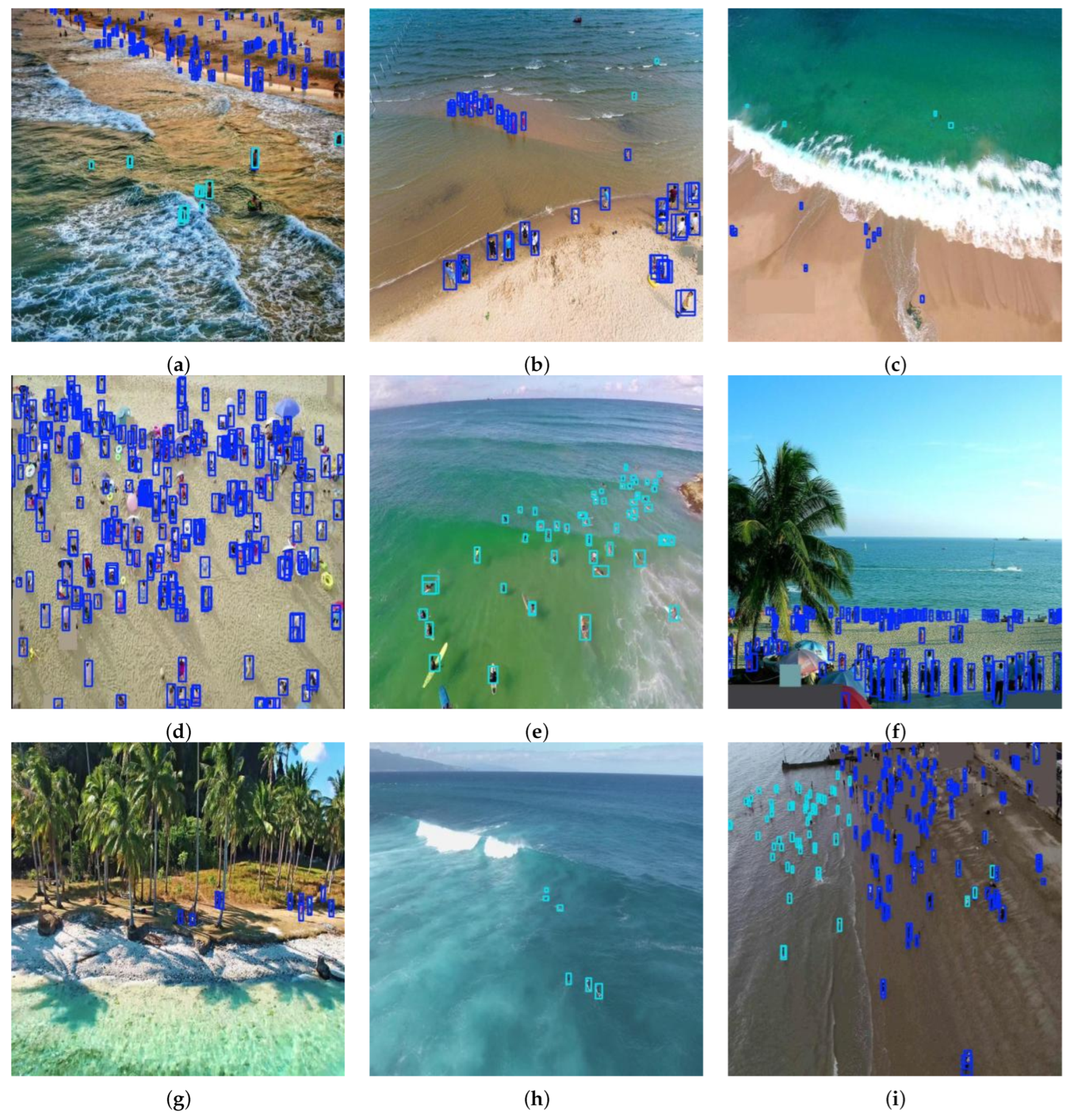
1. Introduction
Owing to the swift technological progress in unmanned aerial vehicle (UAV), object detection based on UAV platforms has demonstrated substantial application value in military surveillance, public security, film production, and logistics delivery. Compared to general object detection, objects in UAV imagery typically exhibit characteristics such as small scale, low pixel occupancy, and complex backgrounds, making small objects more susceptible to interference from environmental textures and noise during imaging, thereby posing greater challenges for detection. Consequently, the urgent need to tackle the enhancement of feature extraction and fusion for small objects under complex backdrops in UAV object detection has become a top priority.
In recent years, a growing body of study has focused on detecting small objects using UAV, yielding notable advancements in this domain. It is evident that, in accordance with divergent detection paradigms, extant methodologies may be categorised into two-stage and one-stage approaches. Two-stage methods, such as Faster R-CNN [
1] and Cascade R-CNN [
2], achieve high detection accuracy through a two-step process of region proposal generation followed by classification and regression. Nevertheless, when it comes to detecting small objects in complicated scenes, these approaches often have limited inference speeds and lack the necessary discriminative features for small objects. In contrast, one-stage methods, including the YOLO [
3,
4,
5,
6] series and SSD [
7], perform direct object prediction on multi-scale feature maps, enabling efficient end-to-end inference. Among them, the YOLO series progressively enhances feature representation by employing serial linear convolutions, residual connections, and multi-scale feature fusion, thereby improving small-object detection performance while preserving fast inference speed. Nevertheless, constrained by the local nature of convolutional operations, CNNs remain limited in capturing global contextual relationships in complex scenes. With the introduction of Transformer architectures, DETR [
8] performs object localization via end-to-end sequence modeling and a query-based mechanism [
9], eliminating the need for predefined anchors and complex post-processing, and achieving notable improvements in detection accuracy. Despite these advantages, DETR exhibits slow convergence in small-object detection and struggles to extract detailed local features. To overcome these issues, RT-DETR [
10] and D-Fine [
11] accelerate convergence and improve small object detection performance by introducing efficient query mechanisms and feature enhancement strategies. Furthermore, DEIM [
12] improves training efficiency and detection performance by refining the Hungarian matching strategy and sample assignment mechanism. In addition, Mamba [
13], based on state-space models, enhances contextual modeling capability, providing a new approach to detecting small objects in complex scenes.
Although progress has been made in designing the detection framework and improving overall performance using existing methods, there are still multiple challenges in UAV-based small object detection [
14]. First, current feature extraction processes largely rely on single propagation paths or serial linear convolutional structures. While such designs facilitate the progressive accumulation of high-level semantic information, they are insufficient in modeling high-frequency details and local textures that are critical for discriminating small objects, causing important cues to be gradually attenuated in deeply stacked convolutions [
15]. Second, mainstream multi-scale feature fusion strategies typically adopt simple aggregation or fixed-weight mechanisms, lacking adaptive weighting of features across different scales [
16]. This limitation hinders flexible cross-scale interaction in response to variations in object scale and contextual information, thereby restricting the effective utilization of fine-grained feature complementarity. Moreover, under UAV viewpoints with complex backgrounds or densely distributed targets, existing fusion approaches remain inadequate in jointly modeling local discriminative features and global semantic information. Overall, relying solely on conventional serial convolutional stacking and static fusion strategies is no longer sufficient to continuously improve UAV small object detection performance. Therefore, more targeted improvements are required in both feature extraction architecture design and cross-scale attention-based fusion mechanisms.
To solve the above issues, the present paper puts forward a proposal for a Detail-Aware Multi-scale Fusion Network (DMF-Net) from two aspects: feature extraction architecture and cross-scale attention-based feature fusion. First, at the feature extraction stage, a convolutional structure named the Multi-Branch Detail-Enhanced Module (MBDE) is introduced to enhance local perception. By adopting a multi-branch design, MBDE strengthens the extraction of high-frequency details and local texture information, while residual connections are incorporated to preserve the original semantic information. This design mitigates the gradual attenuation of discriminative cues for small objects during deep convolution and enhances the extraction of local features critical for their detection. Second, a multi-scale attention fusion module termed the Dual-Attention Fusion Module (DAF) is designed at the multi-scale feature fusion stage. By using attention weights to reflect the features’ significance at different scales, the proposed module adaptively adjusts the intensity of cross-scale information interaction, thereby enabling more effective fine-grained feature complementarity. These improvements enable the proposed method to extract local details and integrate global semantic information more effectively under complex backgrounds and in densely populated target scenarios. This provides more robust feature representations for small object detection by UAVs.
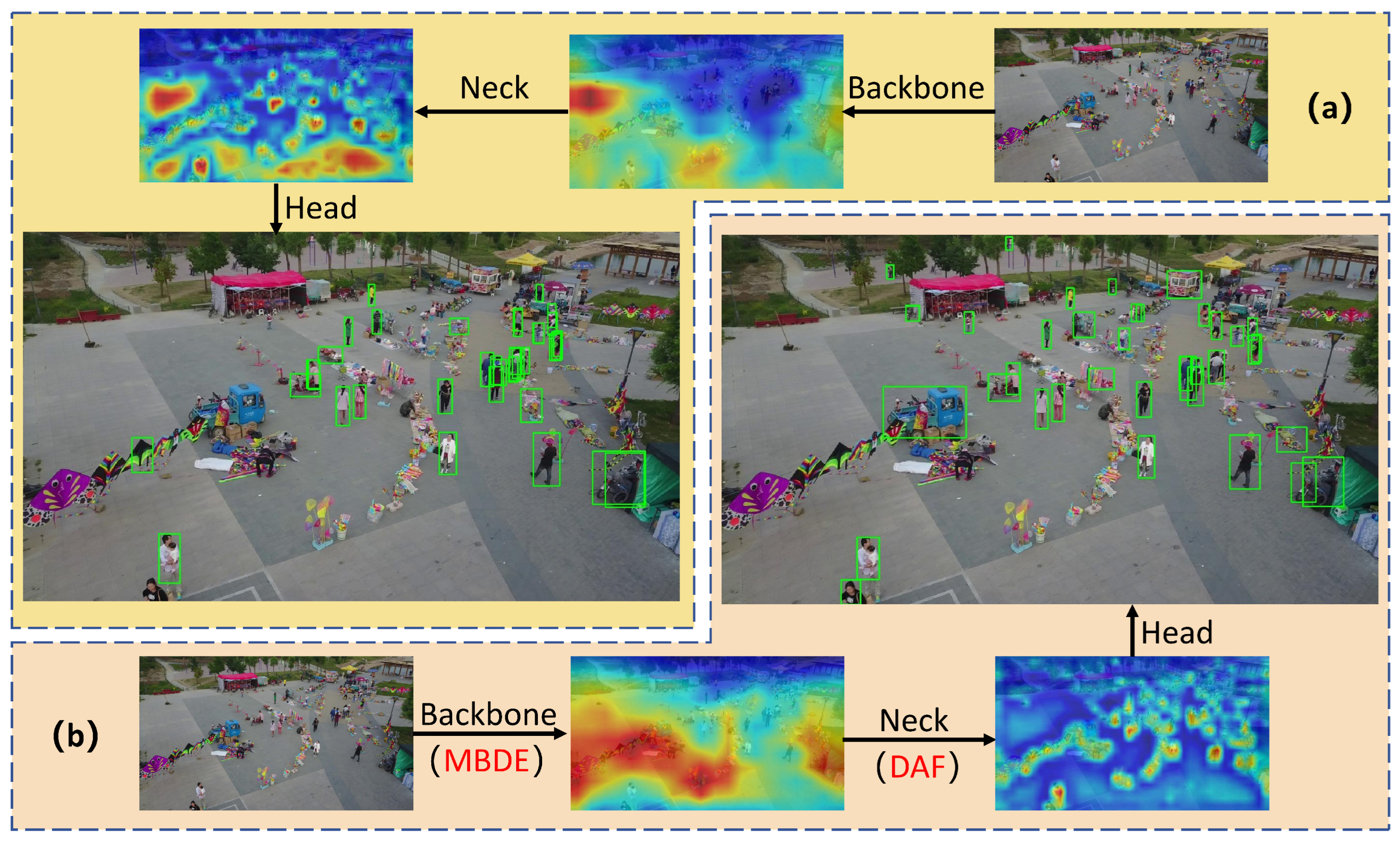
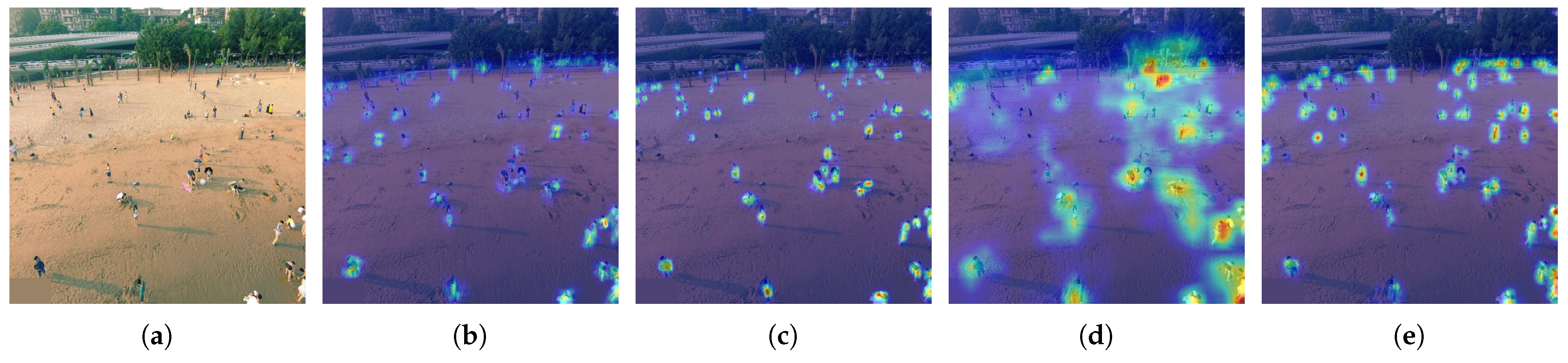
As illustrated in
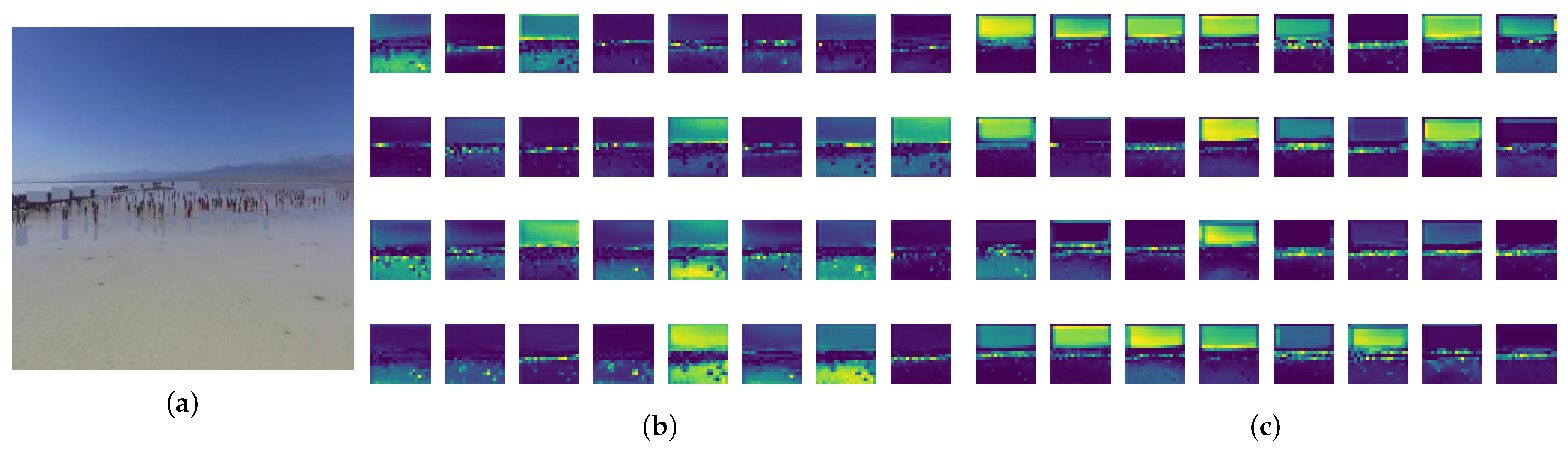
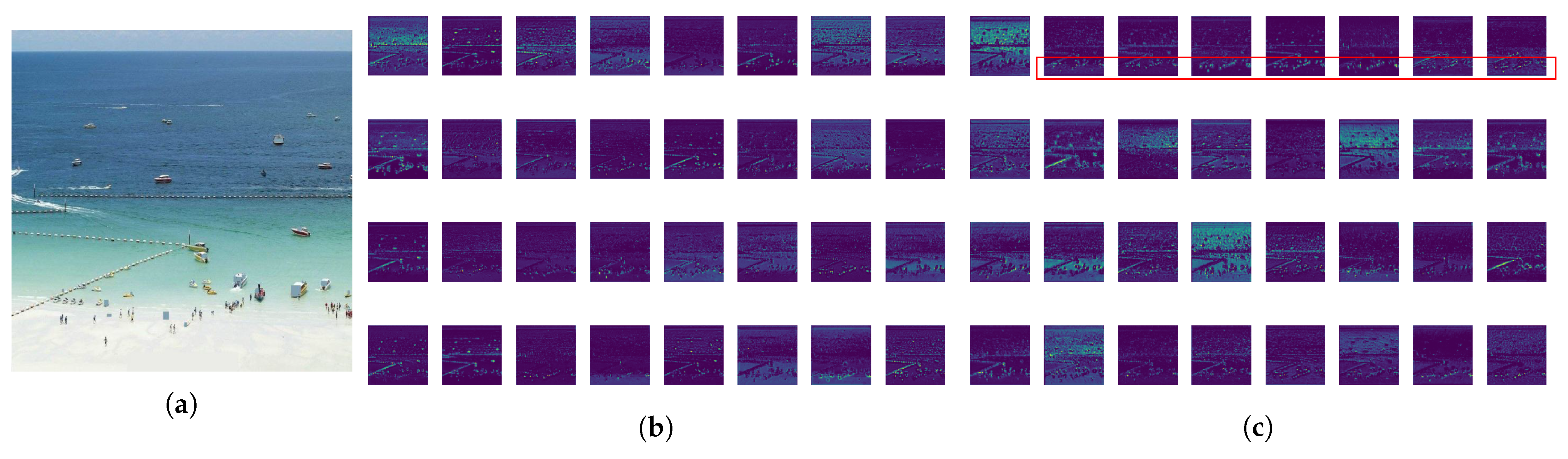
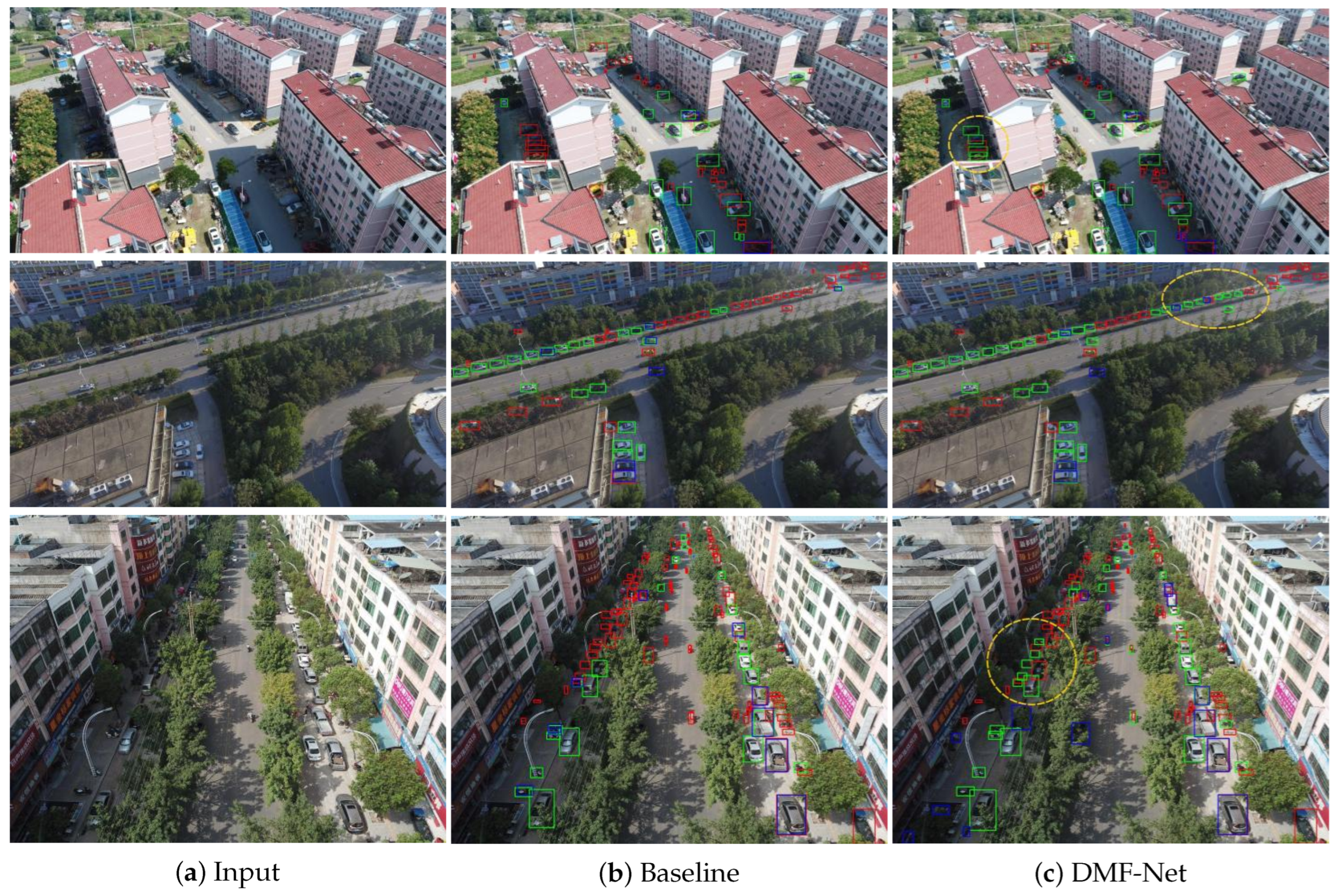
Figure 1, the image being inputted exhibits small-scale objects, dense arrangements, and complex backgrounds. In
Figure 1a, the YOLO11n backbone can extract some semantic information, but its feature responses are weak and scattered across the image. During the subsequent feature fusion process in the neck, these limited discriminative cues are slightly enhanced, leading to more localized feature responses; however, the final detection results remain unsatisfactory. In contrast, as illustrated in
Figure 1b, DMF-Net exhibits more concentrated and continuous feature responses for small objects across the backbone, neck, and head stages, which is particularly evident in the red-circled regions of the detection results. By strengthening fine-grained feature representations and improving the effective propagation of multi-scale information, the proposed model better preserves key semantic cues of small objects under complex backgrounds. This enables more reliable localization and detection of small objects, effectively alleviating the limitations of existing YOLO-series methods in aerial small object detection scenarios. The main technical contributions of this paper are outlined below:
1. In order to tackle the challenges of small object scales, attenuated discriminative features, and insufficient multi-scale feature fusion in UAV scenarios, this paper proposes DMF-Net, which is jointly composed of the MBDE and DAF modules. Experimental results show that DMF-Net achieves consistent and significant performance improvements across multiple UAV small object datasets. While maintaining high inference efficiency, it effectively enhances small object detection accuracy, showing strong robustness and generalization capability.
2. An enhanced feature extraction structure for UAV small object detection, termed MBDE, is designed. To address the gradual attenuation of local discriminative information caused by deep serial convolutions in small object detection, multi-branch convolution structures (MSDC-Conv) are introduced progressively to capture multi-scale local details. Residual connections are incorporated to preserve the origin of semantic information, thus enhancing the extraction of high-frequency details and local texture features at different depths while maintaining semantic consistency. The feature representation of small objects is improved by this design.
3. A cross-scale attention-based feature fusion mechanism, termed DAF, is designed. To address the limitations of existing multi-scale fusion methods, which typically rely on linear addition or fixed weighting and struggle to fully leverage information across scales, an attention-based adaptive fusion strategy is introduced. This strategy dynamically adjusts the intensity of cross-scale information interaction according to the relative significance of features at different scales, enabling more effective fine-grained feature complementarity and boosting the network’s perceptual ability with regard to small objects.
The following sections are to be found in this paper:
Section 2 offers an overview of prior studies on small object detection, multi-branch convolution strategies, and attention-based cross-layer feature enhancement techniques.
Section 3 provides a comprehensive account of the proposed method, encompassing the overarching framework and the design of its key modules.
Section 4 describes the experimental setup and provides a systematic analysis and discussion of the results. Finally,
Section 5 summarizes the paper and explores potential avenues for future research.
3. Methodologies
In UAV images, small objects use few pixels, often resulting in inadequate feature information and insufficient multi-scale feature fusion. In order to overcome these difficulties, we design a feature enhancement network for small object detection, termed DMF-Net, based on multi-branch convolutional structures and attention mechanisms. DMF-Net mainly consists of two key modules: MBDE, which strengthens feature representation and contextual information integration, and DAF, which adaptively reweights adjacent-scale features to optimise the efficacy of multi-scale feature fusion.
3.1. Overview
As a high-performance one-stage object detection model, YOLO11 demonstrates excellent performance for general object detection tasks. However, in UAV small object detection scenarios, where targets are small and occupy few pixels, the progressive downsampling and feature pyramid structures used by YOLO11 tend to weaken fine-grained features in deep network layers, making it difficult to fully preserve small object representations. Moreover, its feature fusion process primarily relies on predefined multi-scale information paths, which limits the exploitation of complementary advantages between semantic and detailed information across different scales, thereby reducing the model’s capacity to represent and discriminate small objects in complex backgrounds. Specifically, in UAV small object detection, YOLO11n still faces three limitations. First, the conventional backbone design lacks a dedicated structure to preserve stable semantic information while progressively aggregating fine-grained local details. Second, its serial downsampling and deep convolution operations tend to progressively weaken local texture cues, which are critical for representing tiny objects with low pixel occupancy. Third, its neck mainly performs cross-scale interaction through predefined fusion paths, which is less flexible in modeling the adaptive complementarity between high-level semantic features and low-level detailed features in complex backgrounds.
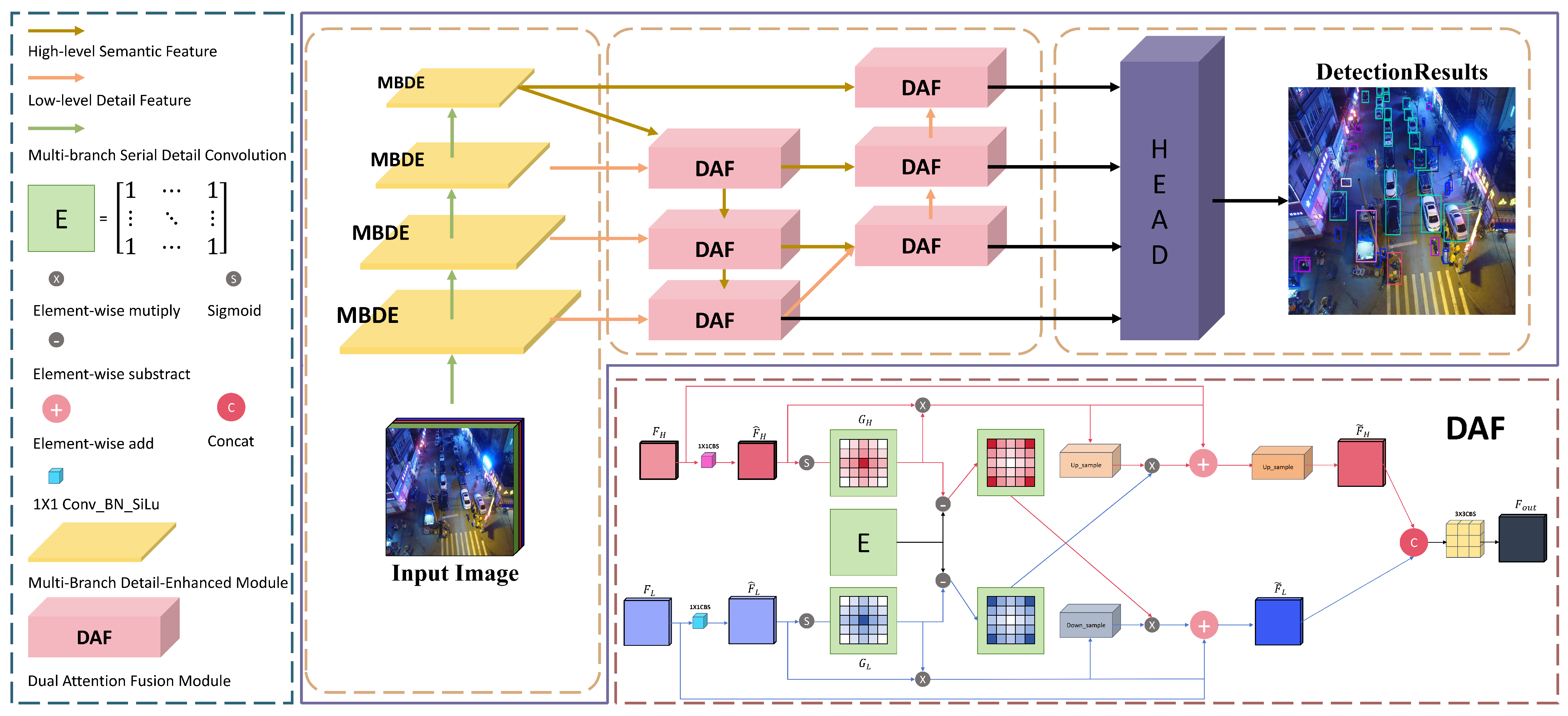
Using YOLO11n as the baseline, this paper introduces a model named DMF-Net for small object detection. As depicted in
Figure 2, the method consists of three main components: Backbone, Neck, and Head. In the backbone, the MBDE module is introduced to enhance feature representation by preserving stable semantic information and progressively aggregating fine-grained local details. Additionally, the MSDC-Conv module employs parallel convolutional paths to model local details across different scales and directions, thereby alleviating the weakening of local texture cues during deep feature extraction and significantly improving the network’s feature extraction capability. During the feature fusion stage, the DAF module is applied, which adaptively reweights adjacent-scale features using an attention mechanism, thereby improving the flexibility of cross-scale interaction and enhancing the complementarity between high-level semantic features and low-level detailed features for small object representation. In the detection stage, four enhanced feature maps that correspond to different scales are input to the detection head for classification and localization. Via simultaneously minimizing classification and regression losses across multiple scales, the model produces more accurate detection results.
3.2. DAF
In the domain of object detection, the identification of small objects poses significant challenges due to variations in scale, strong background interference and poor target-to-background contrast. To address these issues, mainstream detection frameworks typically employ multi-scale feature pyramids to fuse features from different levels. However, existing feature fusion methods largely rely on fixed top-down or bottom-up information paths, which limits their ability to fully capture the complementary relationship between high-level semantic features and low-level detailed features. Consequently, critical information for small objects can still be weakened in complex scenes. Furthermore, the contribution of features that are present at varying scales is not constant in small object detection, and fixed fusion strategies lack adaptive modeling of feature importance. In order to overcome the shortcomings, we design the DAF, as depicted in the lower right of
Figure 2. DAF adaptively reweights adjacent-scale features and enables bidirectional information interaction, effectively enhancing the preservation and propagation of information pertinent to small objects throughout the multi-scale feature integration process. Specifically, DAF is the recipient of high-level semantic features and low-level detailed features from adjacent scales, which are provided as inputs. After channel alignment, adaptive attention weights are generated for each feature path, guiding bidirectional interaction and fusion. Unlike conventional bidirectional fusion, which mainly emphasizes top-down and bottom-up information propagation, the proposed DAF performs symmetric fusion at the fusion-unit level, where adjacent-scale features are assigned independent attention weights and updated through structurally mirrored operations. Specifically, the fusion process follows a symmetric design, in which high-level semantic features and low-level detail features are processed through structurally mirrored operations, enabling balanced and reciprocal information exchange across adjacent scales. This process simultaneously strengthens semantic and detailed information in the fused features, providing the detection head with more effective multi-scale representations.
It should be noted that the term bidirectional fusion in conventional feature pyramid designs usually refers to the existence of both top-down and bottom-up information propagation paths. Such designs improve cross-scale information flow, but their fusion operations are often still based on predefined routes and simple aggregation, without explicitly modeling balanced mutual enhancement between adjacent-scale features. By contrast, the proposed DAF performs symmetric fusion at the fusion-unit level. Specifically, the high-level semantic feature and the low-level detail feature are first aligned in channel space, then assigned independent attention weights, and finally updated through structurally mirrored operations. Therefore, the proposed symmetric fusion is not merely a bidirectional path design, but a balanced dual-branch interaction mechanism in which both adjacent-scale features serve as both information providers and receivers during fusion.
As illustrated in
Figure 2, the DAF modules in the neck are arranged serially along the bidirectional fusion pathway rather than being used as isolated fusion units. Specifically, three DAF modules are connected sequentially in the top-down path and another three DAF modules are connected sequentially in the bottom-up path. In the top-down process, the high-level semantic feature serves as the main propagated stream, while the adjacent low-level detailed feature is introduced at each stage as complementary information to refine and enhance the current representation. In the bottom-up process, the fused low-level feature becomes the main propagated stream and further interacts with the adjacent high-level representation from the previous fusion stage. Therefore, the output of each DAF is forwarded to the next adjacent-scale DAF stage, forming a progressive cross-scale interaction process throughout the neck.
Denote the feature maps from two adjacent scales as and . Here, represents the high-level feature map, which is abundant in semantic information, while represents the low-level feature map, containing abundant local detail information.
First, a 1 × 1 CBS (Conv–BN–SiLU) is utilized to both feature maps to perform channel mapping, aligning them to the same feature dimension:
Here, and denote CBS modules—composed of convolution, batch normalization, and a nonlinear activation function—used to unify the feature dimensions while preserving nonlinear representation capability.
Next, to adaptively capture the importance of features at different scales, DAF generates attention weights for both the high-level and low-level feature maps:
Here, denotes the Sigmoid function, which places a restriction on the attention weights, limiting them to the interval [0, 1].
Under the guidance of the attention weights, DAF performs bidirectional information interaction to simultaneously enhance both semantic and detailed features. This bidirectional interaction forms a symmetric feature enhancement process, where each scale contributes complementary information to the other in a balanced manner. The high-level feature map, enhanced by the low-level semantic information, is updated as:
Similarly, the low-level feature map, enhanced by high-level detailed features, is updated as:
Here, ⊙ denotes element-wise multiplication, and denotes a scale alignment operator that transforms the source feature to the spatial size of the target feature before cross-scale interaction. The low-level feature is first enhanced by its corresponding attention weight , and the term emphasizes informative responses within the low-level branch itself. Similarly, the attention-weighted high-level feature is aligned to the spatial size of the low-level branch through , enabling element-wise interaction across adjacent scales. The term acts as a complementary gate, allowing the low-level branch to selectively absorb additional semantic information from the high-level branch in regions where its own response is relatively weak.
Finally, these aligned high-level and low-level features get concatenated and fused:
Here, denotes a k×k convolution composed of a CBS block.
The proposed DAF introduces a bidirectional attention-based feature interaction mechanism, establishing a more flexible and adaptive information propagation path between adjacent scales. This allows high-level semantic features and low-level detailed features to complement and reinforce each other during fusion. Compared with conventional multi-scale structures that rely on fixed fusion strategies, DAF effectively mitigates the feature representation deficiencies of small objects amid scale variations and cluttered scenes, providing the detection head with better distinguishable and reliable feature representations.
3.3. MBDE Design
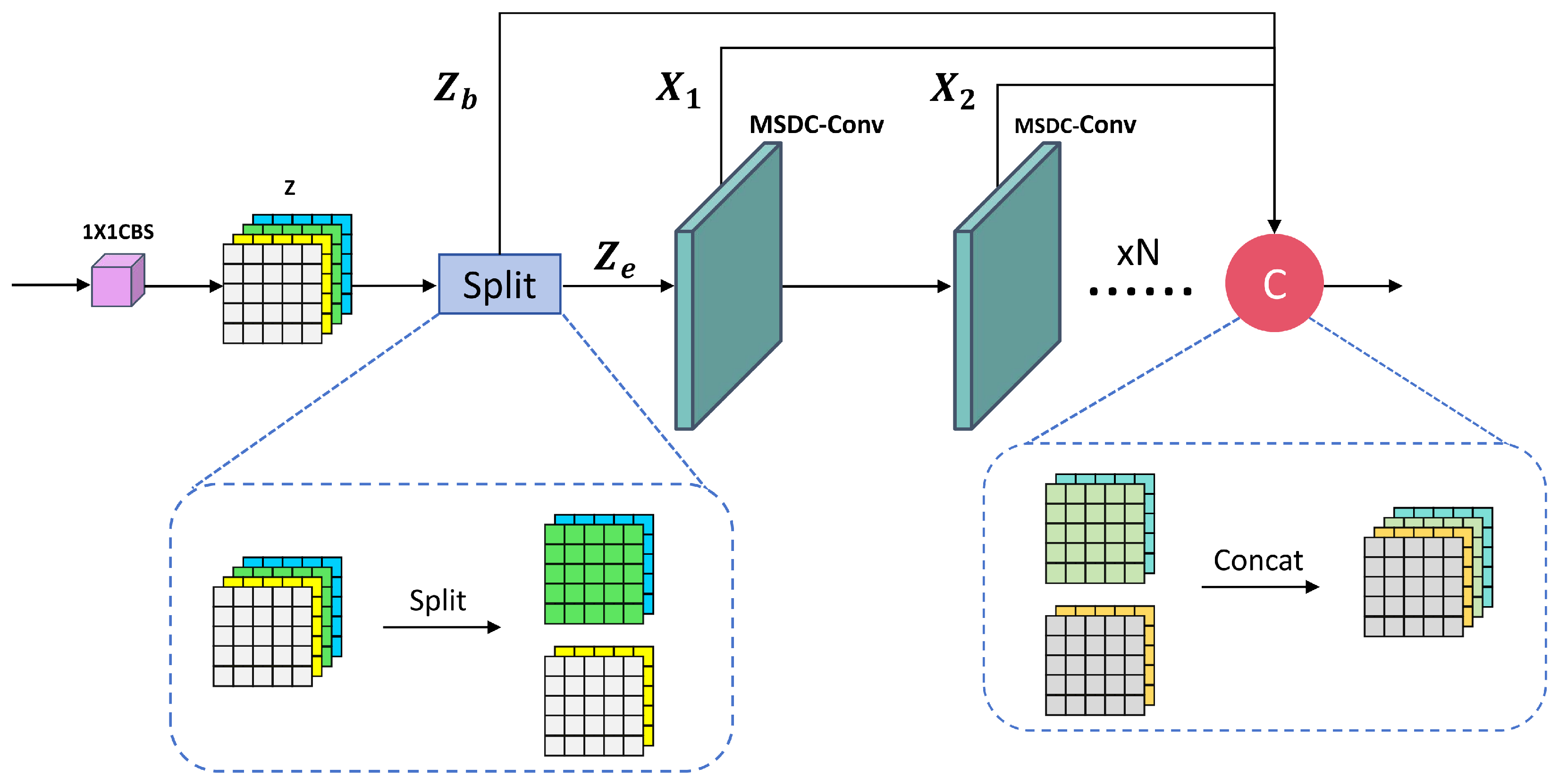
In UAV object detection tasks, targets typically exhibit small scales, low pixel occupancy, and complex backgrounds, placing higher demands on the capacity of the backbone network to extract features. On one hand, the network must efficiently capture detailed features such as local edges and textures to support precise localization; on the other hand, it needs to extract stable high-level semantic information to ensure reliable class discrimination. However, conventional convolutional blocks generally process all channels uniformly, which can mix semantic information with local details, leading to localization errors and object confusion in densely populated or complex scenes. Additionally, consecutive downsampling and limited receptive fields cause high-frequency details to gradually attenuate, making it difficult to preserve small objects’ edges and structural information. To address these challenges, The backbone network incorporates MBDE and MSDC-Conv modules. As depicted in
Figure 3, several serial MBDE and MSDC-Conv modules are incorporated to enhance local detail extraction while retaining original semantic information. The MBDE module introduces a multi-branch parallel structure within the backbone, representing the same feature layer across different receptive fields and feature subspaces, thereby effectively enhancing both semantic and local detail features. The MSDC-Conv, serving as a fundamental building block, employs multiple parallel paths with different convolutional combinations to extract fine-grained features. It fuses multi-level information while maintaining spatial consistency, providing the backbone network with richer and more stable feature representations.
3.3.1. MBDE
As depicted in
Figure 4, we propose the MBDE module, which introduces an explicit channel allocation and fusion mechanism at the module level. The input feature map first passes through a 1 × 1 CBS to perform channel reorganization, producing the feature map Z. Next, a split operation divides Z along the channel dimension into a bypass branch
and an enhancement branch
. The bypass branch
directly preserves the original features, ensuring continuous propagation of class-relevant information. The enhancement branch
is refined progressively by a series of N MSDC-Conv blocks to strengthen the response to local details, with the enhanced features denoted as
, where
. Finally, the module output is obtained by concatenating the original feature
with the N enhanced features
across the channel dimension. This design facilitates the simultaneous retention of stable semantic information and locatable local detail features by the output, thereby enhancing the model’s capacity for small object detection under complex conditions.
The MBDE adopts a structured design of channel splitting, progressive enhancement, and multi-level aggregation to effectively organize the feature extraction process. On one hand, the bypass branch preserves stable original information, reducing interference during semantic propagation and improving training stability. On the other hand, the enhancement branch stacks N MSDC-Conv blocks to progressively refine local structural features, with outputs from each stage aggregated to the final output. This design ensures that the output features simultaneously contain multi-depth local detail information and semantic information. With minimal additional computational overhead, MBDE improves feature separability and localization consistency, rendering it especially suitable for UAV object detection in cluttered scenes.
3.3.2. MSDC-Conv
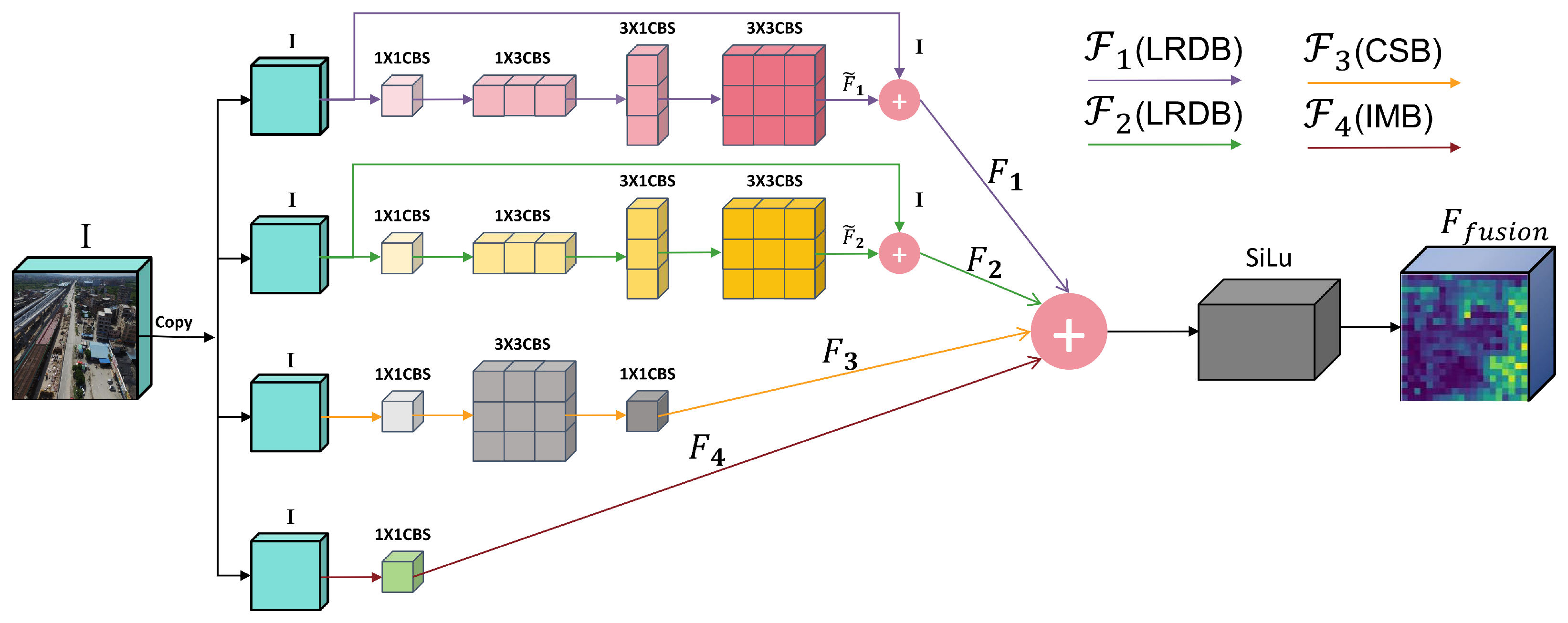
Figure 5 shows the proposed MSDC-Conv adopts a multi-branch parallel structure for feature extraction from the input image. The input is fed into multiple independent convolutional paths, each consisting of serial convolutions with different combinations, designed to capture complementary local details and contextual information across various receptive fields and feature subspaces. Some branches perform feature enhancement via element-wise addition, preserving original details and stabilizing information propagation. Ultimately, the processed features of each branches are combined at the feature level to form a unified representation, which significantly enriches feature diversity and discriminability while maintaining spatial consistency.
The input image is herein designated
, wherein C, H, and W represent the number of channels, height, and width, correspondingly. First, the input image is replicated four times and fed into the corresponding branch paths for information capture. The feature extraction process of the (i)-th branch can be formulated as:
Here,
denotes a nonlinear mapping function composed of several serial convolution operations, corresponding to the convolutional paths in
Figure 5 formed by 1 × 1 CBS, asymmetric convolutions, and 3 × 3 CBS combinations. By employing serial convolutions with different structures, each branch can extract local details and contextual information across various scales and orientations.
For the first two branches, the Local Residual Detail Branches (LRDBs), denoted as
and
, the input image is first duplicated. The first copy sequentially passes through 1 × 1 CBS, 1 × 3 CBS, 3 × 1 CBS, and 3 × 3 CBS convolutions, enabling multi-level detail feature extraction. The second copy is then combined with the output of the first path,
, via a local residual connection to alleviate feature degradation in deep layers:
For the third branch, the Compact Semantic Branch (CSB), denoted as
in
Figure 2, a combination of 1 × 1 CBS, 3 × 3 CBS, and 1 × 1 CBS is employed. This design strengthens high-level semantic representation while keeping computational overhead under control, formulated as:
For the fourth branch, the Identity Mapping Branch (IMB), denoted as
in
Figure 2, a standalone 1 × 1 CBS aims to keep the basic representation of the initial features, providing stable complementary information, expressed as:
Ultimately, those features of all the constituent paths are aggregated across the channel axis. Here’s how the module’s result is expressed:
Here, denotes concatenation along the dimension of the channel, and represents a nonlinear activation function. This fusion strategy allows feature responses from different receptive fields and convolutional paths to complement each other at the same spatial locations, thereby simultaneously preserving the local details of small objects and the necessary contextual information.
By introducing a multi-branch serial convolution structure combined with an effective fusion mechanism, MSDC-Conv is able to preserve the original feature information while keeping computational complexity and parameter size under control. At the same time, it enables the capture of fine-grained features across multiple directions as well as scales, significantly enhancing the detail representation and discriminative capability of small UAV targets. This provides the reliable foundation required for fusion and stable predictions.
5. Conclusions
The present work tackles the difficulty of limited accuracy in UAV small-object detection under complex backgrounds by developing a detection framework centered on feature extraction and cross-scale fusion, and proposing a detection network incorporating MBDE and DAF modules. First, from the perspective of feature extraction, we analyze the limitations of deep serial convolutional structures in modeling high-frequency details and local textures for small object detection. In order to tackle this, we introduce MBDE, which incorporates MSDC-Conv to implement multi-branch parallel processing with different local receptive fields. Combined with residual connections to preserve original semantic information, this design significantly enhances fine-grained feature representation without compromising semantic consistency. Second, we propose the DAF module, which leverages an attention mechanism to adaptively weight features across adjacent scales and dynamically adjust cross-scale information interaction. The symmetric interaction structure between adjacent-scale features further improves the consistency and robustness of multi-scale representation learning. The feature fusion strategy based on DAF effectively balances local discriminative cues and high-level semantic information in complex and densely populated scenes, substantially improving the network’s overall perception of small objects.
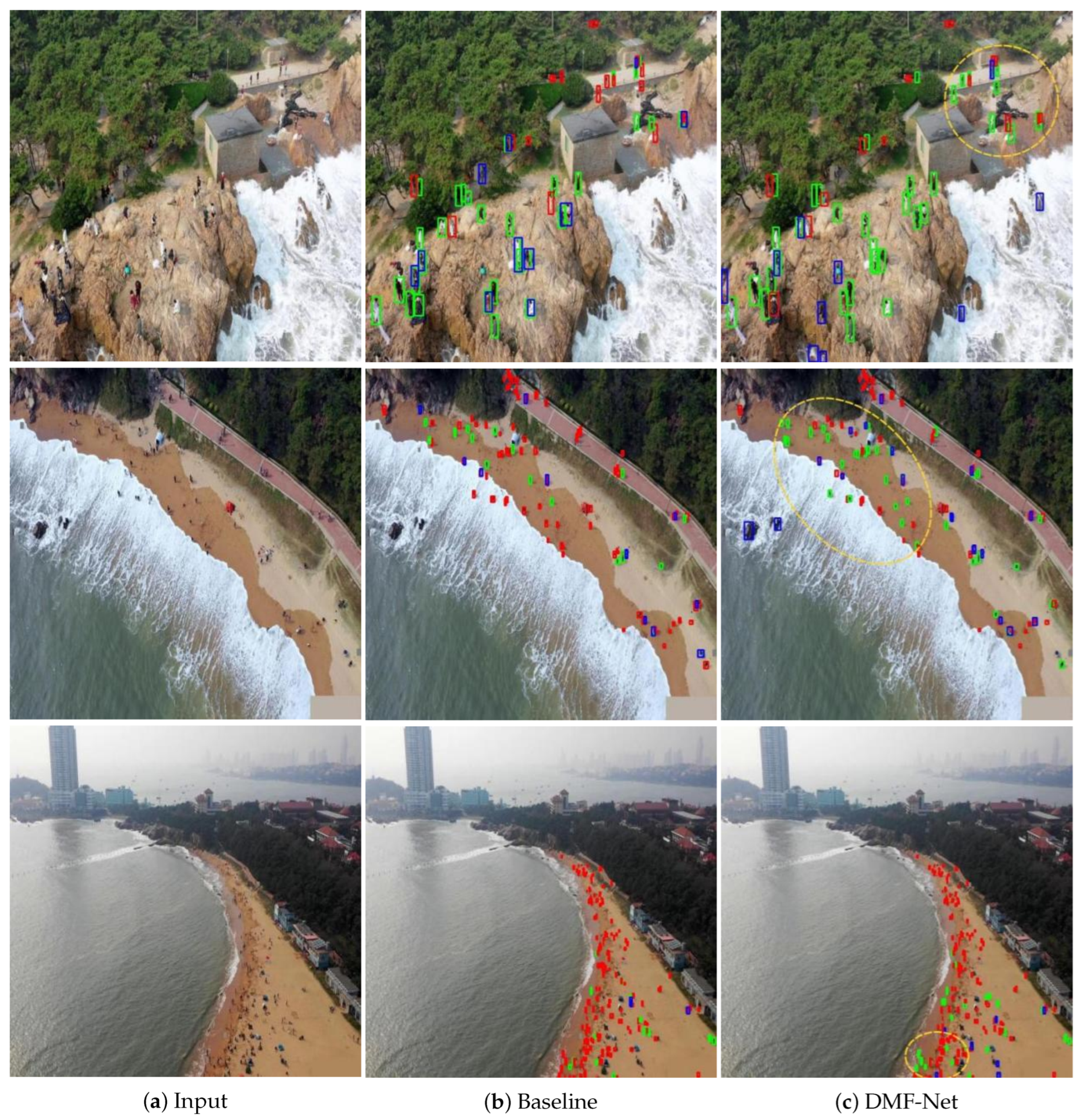
Extensive comparative experiments show that the proposed method improves small-object detection performance on both VisDrone and TinyPerson datasets, with more evident gains on TinyPerson. Compared with the baseline, the proposed model improved AP_50 by 0.5% on the VisDrone dataset and by 4.1% on the TinyPerson dataset. Overall, the proposed method shows the potential to improve UAV small-object detection.
Notwithstanding the substantial enhancements accomplished by the proposed technique in the realm of UAV-based small-object detection, residual limitations persist. For example, the multi-branch structure, while enhancing feature representation, inevitably introduces additional computational overhead and increases the parameter count, which may limit deployment on highly resource-constrained UAV platforms. In addition, the current cross-scale attention mechanism primarily focuses on local inter-scale feature interactions, leaving room for improvement in modeling long-range cross-scale dependencies. Future work will focus on lightweight designs for multi-branch structures, more efficient cross-scale attention modeling strategies, and enhancing robustness in extremely complex scenarios, with the goal of further advancing the practicality and real-world applicability of UAV small-object detection methods.