1. Introduction
In recent years, with the increasing depth of foundation pit excavation and the greater embedment depth of foundations, the influence of groundwater buoyancy on structures has become more pronounced [
1]. Conventional cast-in-place pile foundations have limited capacity to resist groundwater uplift and can hardly satisfy the growing anti-uplift demand of buildings and structures. In addition, in anti-uplift engineering for underground structures in coastal reclaimed areas, the ground surface is often covered by thick soft soil layers, and the service environment is frequently affected by tidal action, resulting in poor physical and mechanical properties of the soil and significantly reducing the uplift bearing capacity of pile foundations. As a new type of variable-section special-shaped pile, squeezed branch piles, owing to their high single-pile bearing capacity and good settlement control performance, have gradually replaced conventional cast-in-place pile foundations in anti-uplift engineering applications [
2,
3,
4].
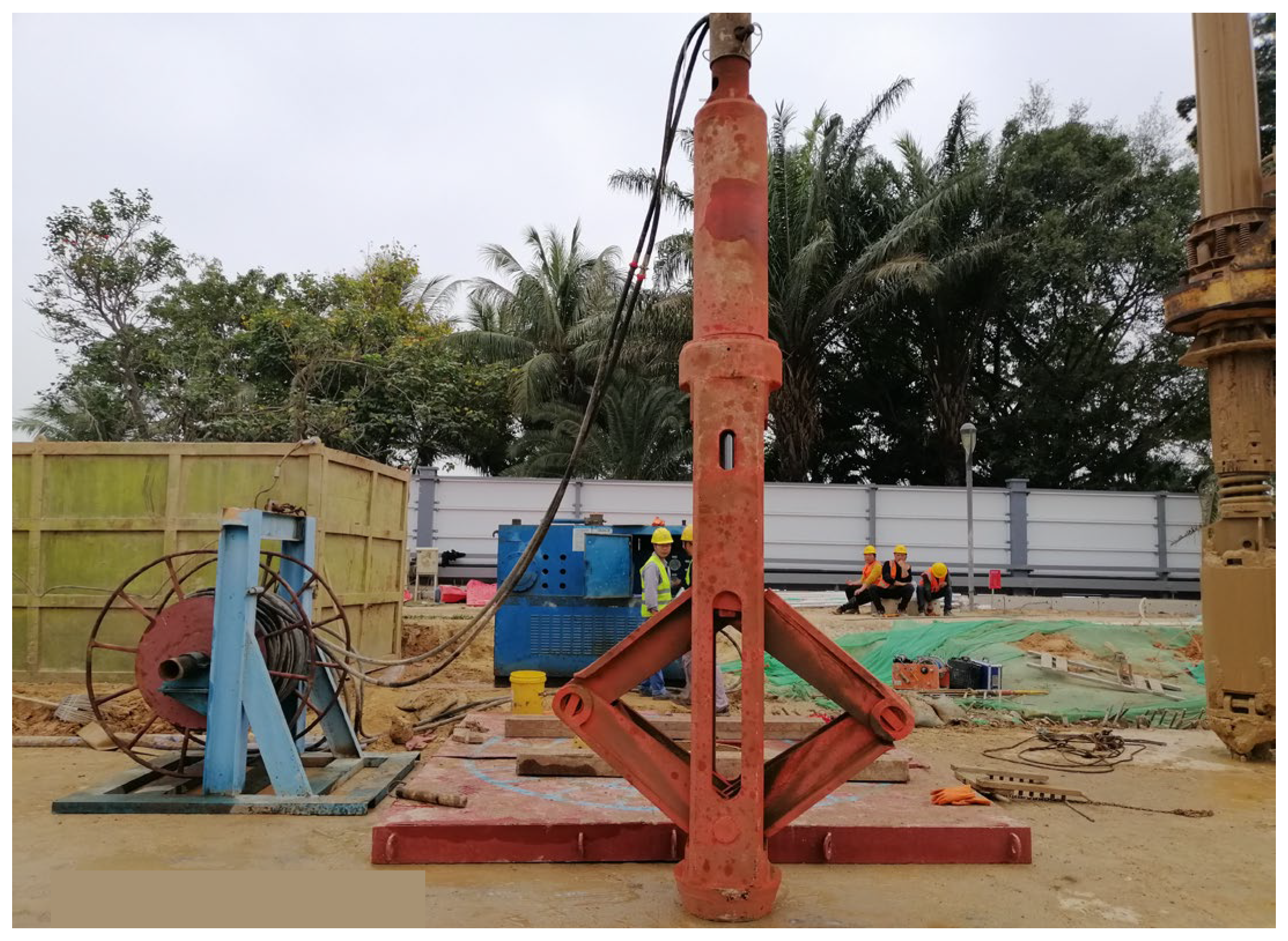
Squeezed branch piles are formed by using a squeezing–expansion machine (as shown in
Figure 1) to laterally compress the soil surrounding the borehole and create branch-shaped or plate-shaped cavities. During concrete casting, these cavities are integrally formed with the pile shaft, resulting in a concrete pile composed of a main shaft and several plates or branches [
5,
6]. During borehole formation, the squeezing–expansion machine compacts the soil above and below the branches or plates, thereby increasing the internal friction angle and compression modulus of the soil and consequently enhancing the end resistance of the branch and plate structures. Under the same loading conditions, compared with conventional cast-in-place pile foundations, squeezed branch piles can reduce pile-head displacement, shorten pile length, save materials, lower construction costs, and shorten the construction period [
7,
8], demonstrating broad application prospects.
Extensive studies have been conducted on the vertical compressive bearing behavior of squeezed branch piles; however, research on their uplift behavior remains insufficient. Owing to the complex mechanical behavior of squeezed branch piles [
9,
10], in situ full-scale tests and laboratory model tests can provide an intuitive understanding of their uplift bearing characteristics. Xiao et al. [
11] carried out field static uplift tests on squeezed branch piles and analyzed the variation in pile-head displacement, the distribution of axial force along the pile shaft, and the bearing contribution and load-sharing ratio of the branch and plate structures. Ma et al. [
12] conducted six groups of laboratory uplift model tests on squeezed branch piles in homogeneous soils and employed a hyperbolic model to predict the load–displacement relationship and ultimate uplift bearing capacity of squeezed branch piles.
Because in situ full-scale tests are costly and large-scale systematic studies are difficult to carry out, while laboratory model tests cannot fully reproduce actual field conditions [
13], three-dimensional numerical analysis has become an important research method. Wang et al. [
14] investigated the effects of the number of branch-plate structures, the spacing between branch-plate structures, and horizontal loading on uplift bearing capacity. Yang et al. [
15] examined the influence of the depth of the first plate on the uplift bearing capacity of squeezed branch piles. Wang et al. [
16] analyzed the primary and secondary factors affecting the uplift resistance of squeezed branch piles and obtained an optimal uplift-resistant configuration.
Existing studies have mostly focused on a single aspect of the mechanical behavior of squeezed branch piles, whereas systematic research on their uplift bearing performance in the complex strata of coastal reclaimed areas remains relatively limited. In particular, studies on the differences in uplift bearing performance among different branch and plate configurations and their applicable strata are still insufficient. Meanwhile, coastal reclaimed areas are characterized by complex hydrogeological conditions and high groundwater levels, under which pile foundations are prone to insufficient uplift resistance. Because plate structures and different branch configurations exhibit distinct symmetric configuration characteristics, and these configuration differences affect the overall uplift bearing performance, it is necessary to investigate the practical application of squeezed branch piles in the complex strata of coastal reclaimed areas so as to meet the engineering demand for anti-uplift design of underground structures.
Against this background, this study employed the anchor-pile method to conduct in situ full-scale uplift tests on squeezed branch piles and established a three-dimensional numerical model based on the actual physical and mechanical properties of the soil layers, in order to investigate the uplift bearing performance of squeezed branch piles in the complex strata of coastal reclaimed areas. On this basis, the differences in uplift bearing performance among different branch and plate configurations, as well as their applicable strata, were further analyzed, thereby providing a reference for the design and application of squeezed branch piles in coastal reclaimed areas.
2. Project and Test Overview
The original landform of the Shenzhen Binhai Avenue (Headquarters Base Section) comprehensive traffic reconstruction project was a coastal tidal flat, which was later reclaimed and developed into a municipal expressway. The terrain is relatively flat, and the hydrogeological conditions are characterized by close hydraulic connection with seawater, thick soft soil layers, and significant undulation of the bedrock surface. A large number of uplift piles, totaling approximately 2620, were installed in the open-cut section of the Binhai Avenue immersed tunnel and the cavity development zone. To address the anti-uplift design requirements of the project and explore a new solution for anti-uplift measures, squeezed branch piles were proposed for use in the open-cut section. This pile type can fully utilize the high bearing capacity of the soil at the branch and plate ends and offers the advantages of high reliability, stable post-construction settlement, a short settlement stabilization period, small settlement under loading, good economic efficiency, and energy-saving and environmental benefits. Accordingly, the pile length can be effectively reduced and the proportion of end-bearing resistance can be lowered, thereby optimizing the pile foundation design.
To verify the actual bearing capacity of squeezed branch piles in the strata of this project, while taking different pile types into account and covering as many strata as possible, a group of in situ piles was constructed in the western section for destructive testing, including one compression pile and two uplift piles.
2.1. Overview of the Test Site
The test site is located on the north side of the southern service road in the western section, between SK1+150 and SK1+200, where clayey sandy gravel, gravelly clayey soil, completely weathered coarse-grained granite, soil-like strongly weathered coarse-grained granite, and massive coarse-grained granite are distributed. The original landform of the site was a coastal tidal flat, which was later reclaimed, and the terrain is relatively flat. Soil and rock samples at the test location were obtained through in situ borehole sampling. The main physical and mechanical properties of the soil and rock strata determined by laboratory geotechnical tests are listed in
Table 1.
Groundwater at the site consists of phreatic water and confined pore water. Within the site, groundwater is mainly stored and transported in the rock-fill layer, sand-fill layer, fine sand, gravelly sand, clayey sandy gravel layer, and fractures in the bedrock. The site is characterized by abundant groundwater and a high groundwater table. Among these, the groundwater in the clayey sandy gravel layer is confined, and this layer is widely distributed and serves as the main aquifer at the site.
2.2. Configuration of Test Pile Parameters
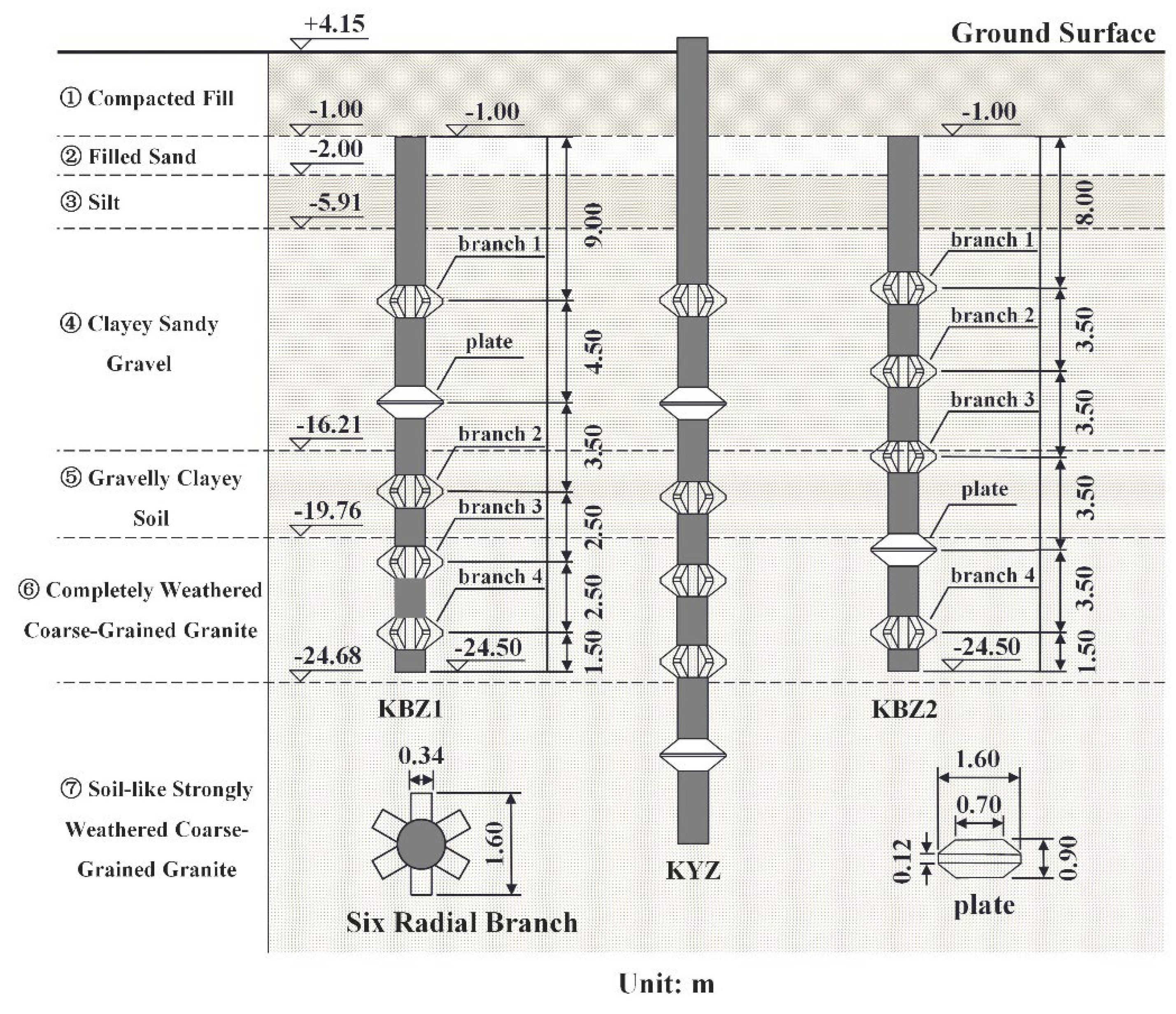
In this test, two uplift piles and one compression pile were arranged in a “two-anchor-one” configuration to conduct a simultaneous static load test on compressive and uplift bearing capacities. The piles were designated as uplift pile KBZ1, uplift pile KBZ2, and compression pile KYZ, respectively. The spacing between the uplift piles and the compression pile was 4.5 m. The uplift piles had a shaft diameter of 700 mm and a plate diameter of 1600 mm. The layout of the test piles is shown in
Figure 2.
2.3. Sensor Arrangement of the Test Piles
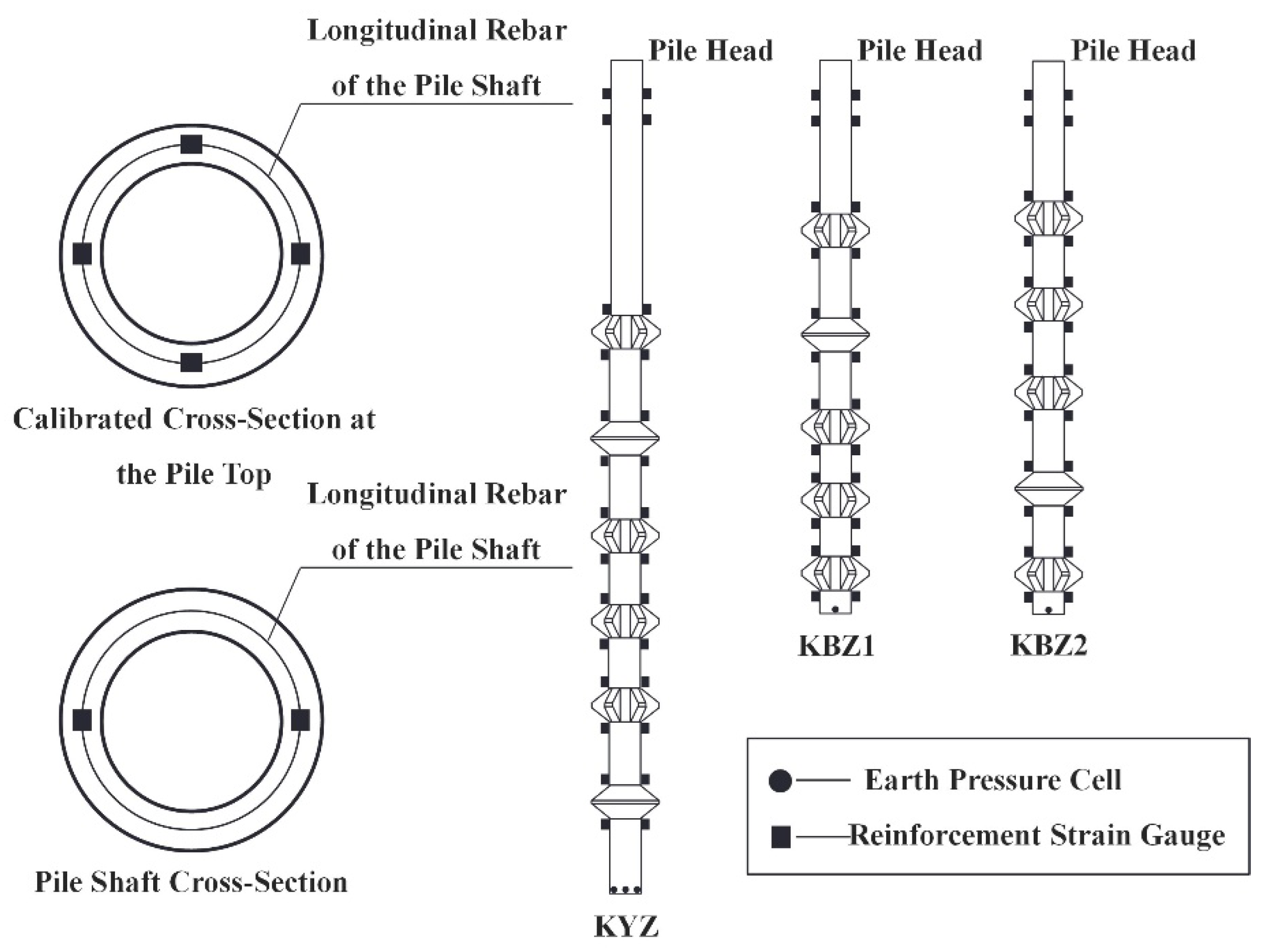
Reinforcement strain gauges were used in the test and welded to the main reinforcing bars of the reinforcement cage. They were arranged 25 cm above and below each branch or plate, with two strain gauges uniformly installed at each cross-section. The uppermost two sections were located 2.0 m and 4.0 m below the pile head, respectively, and four strain gauges were arranged at each of these sections as calibration sections to measure the actual load at the top of the effective pile length. Earth pressure cells were welded to the bottom of the reinforcement cage, with three installed in the compression pile and one in each uplift pile. The schematic arrangement of the reinforcement strain gauges and earth pressure cells for KYZ, KBZ1, and KBZ2 is shown in
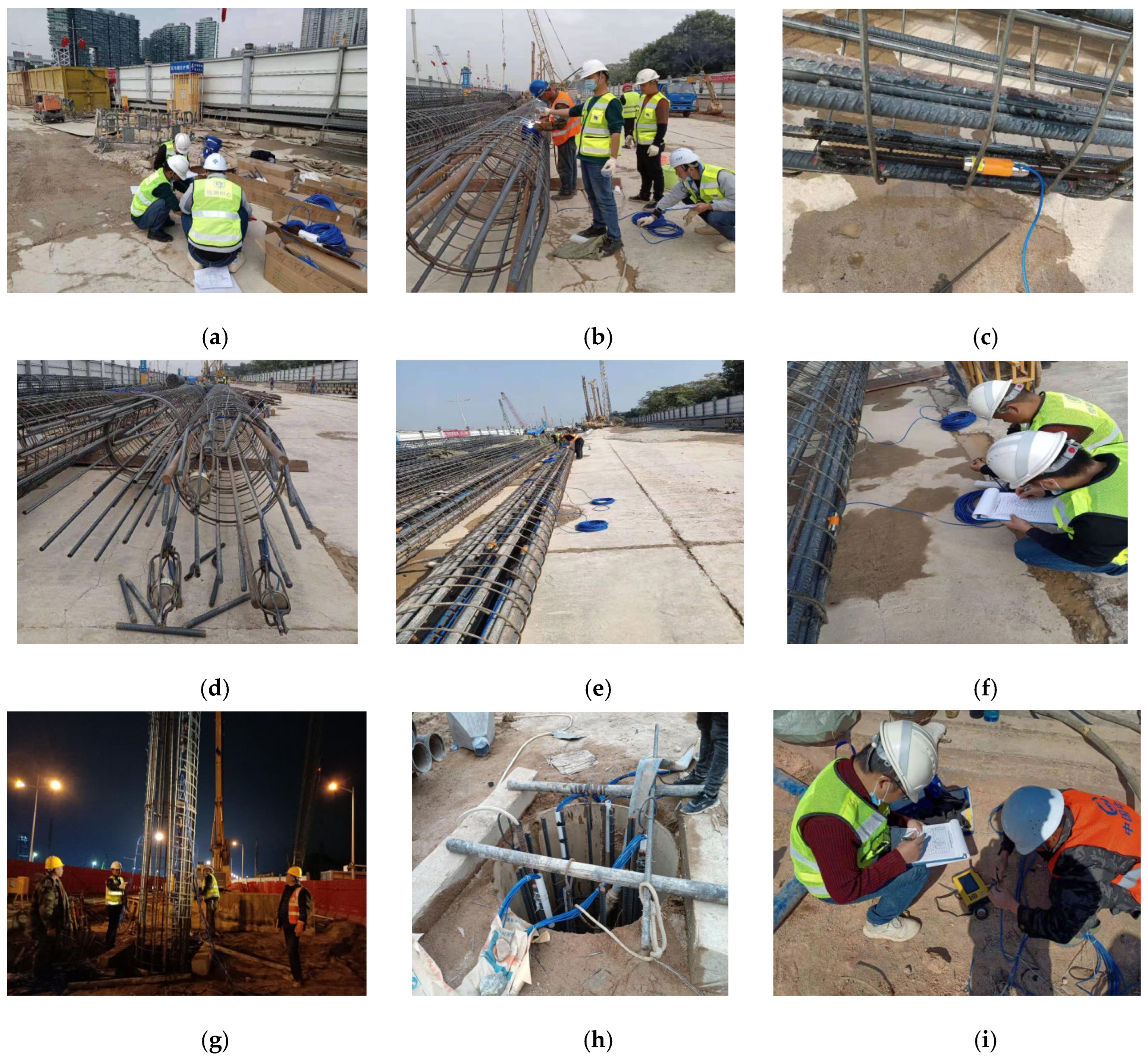
Figure 3, and the field installation is shown in
Figure 4.
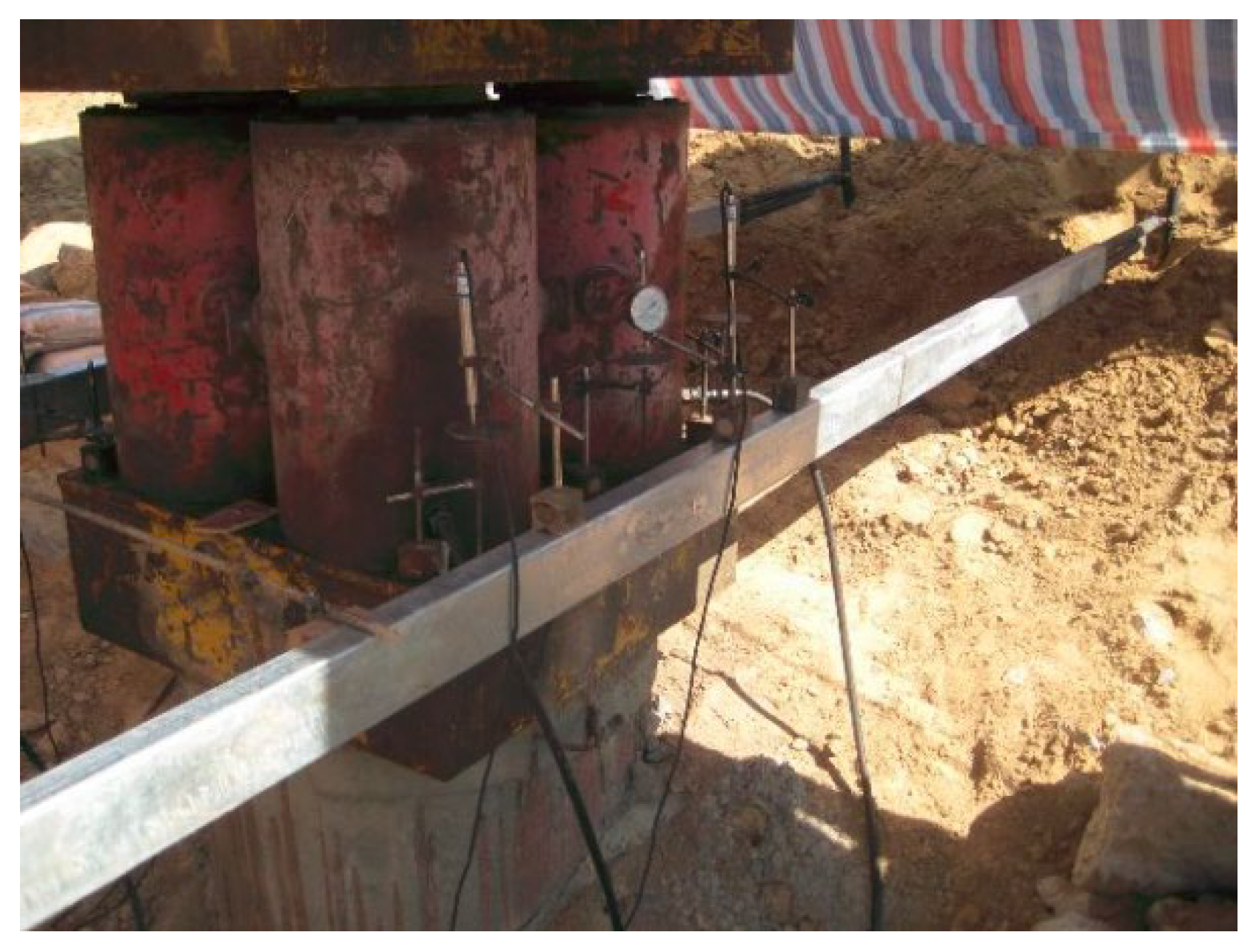
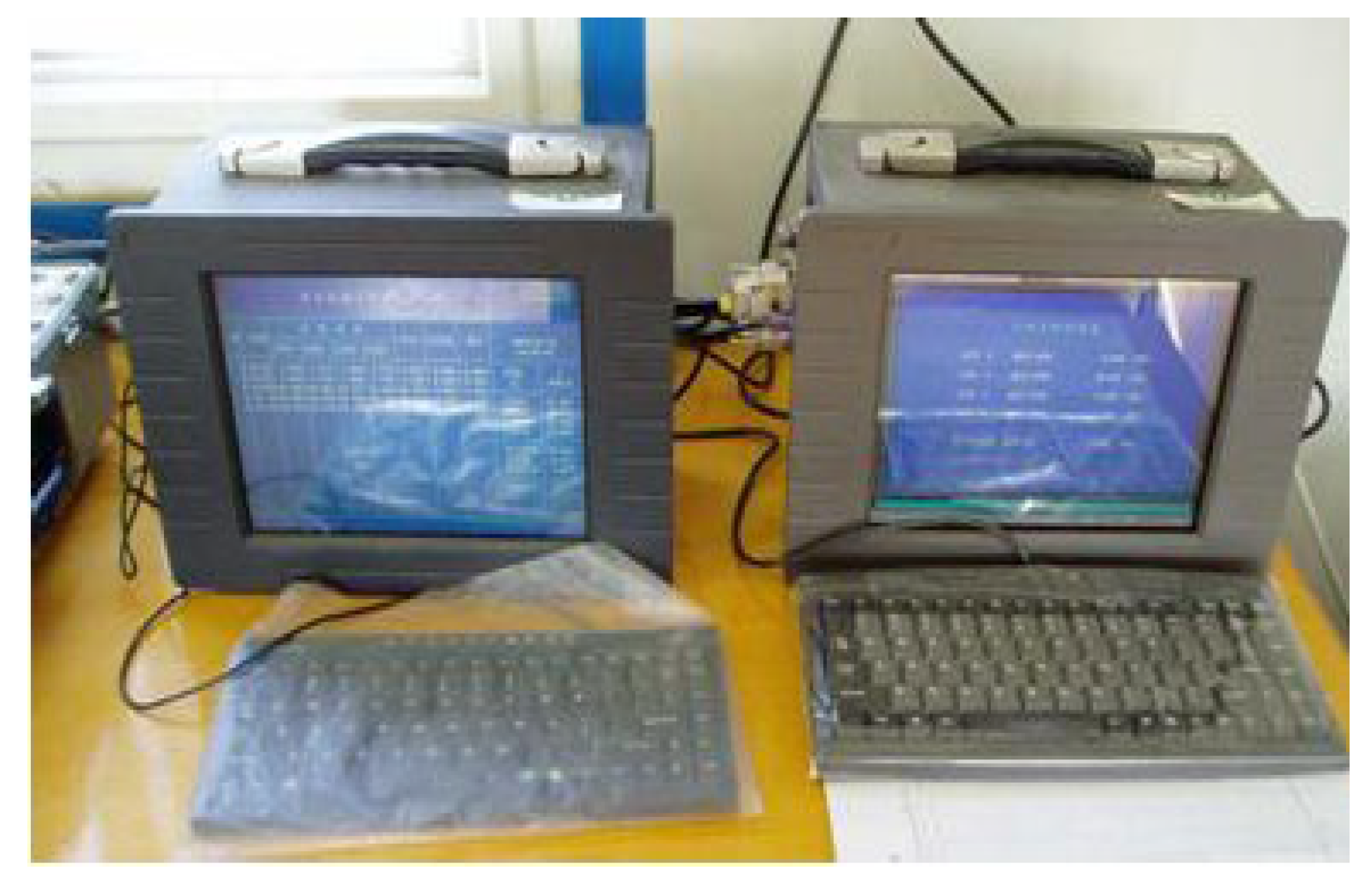
The test reaction force was provided by two anchor piles. A “two-anchor-one” beam–anchor-pile reaction system, consisting of one main beam and a connecting system, was adopted. Hydraulic jacks, together with a high-pressure oil pump, were used to apply the reaction force. The loading test instrument controlled the applied load through pressure sensors mounted on the jacks and displacement sensors installed on the pile heads, and automatically recorded the pile-head displacement values. The pressure and displacement sensors are shown in
Figure 5, and the loading test instrument is shown in
Figure 6.
2.4. Test Procedure
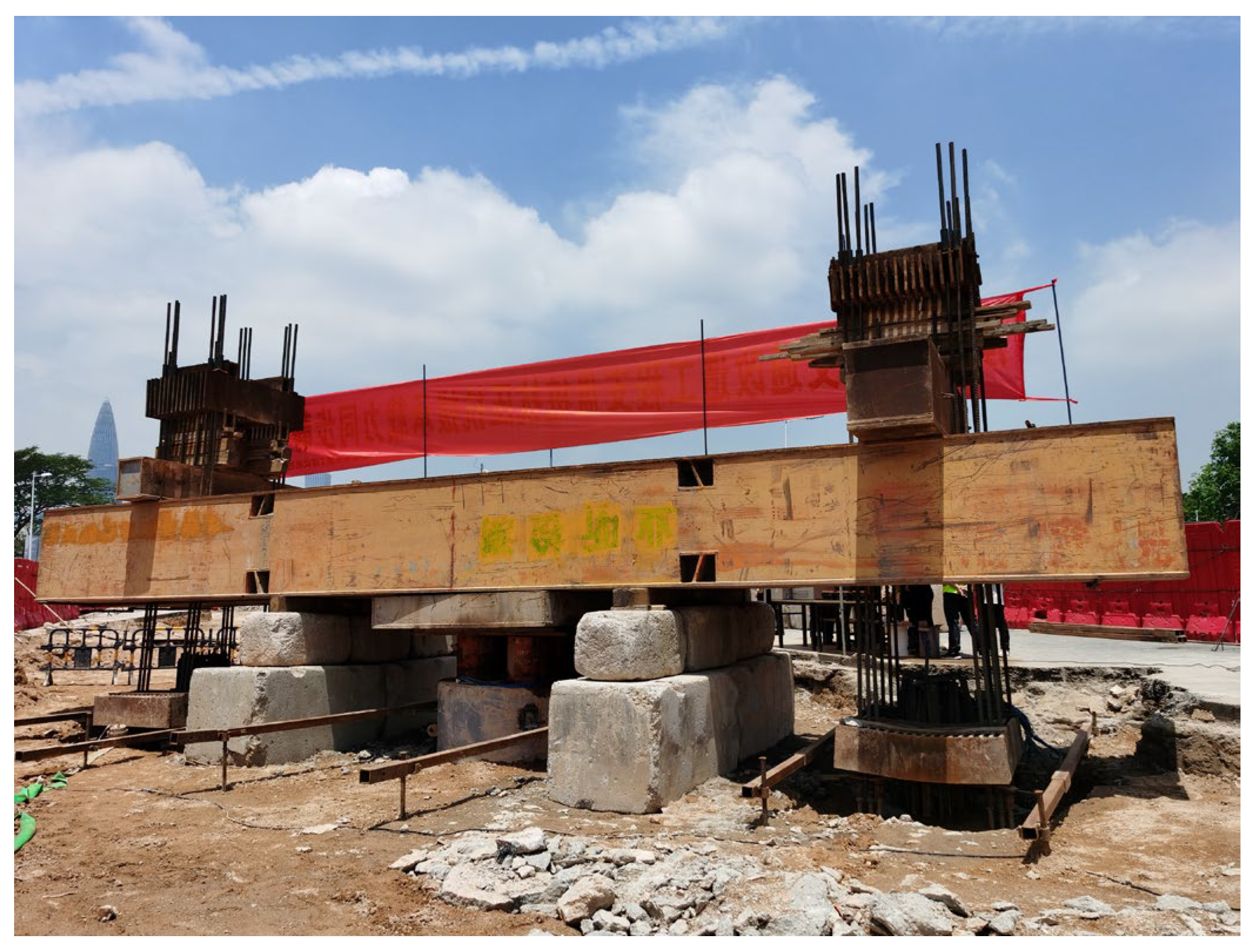
The static load reaction platform was assembled from four steel beams, each measuring 12,000 mm × 550 mm × 1200 mm, together with the corresponding connecting components. Four jacks with a rated lifting capacity of 630 t were used to load the compression pile, and the reaction force was transmitted through the main beam to apply uplift loading to the uplift piles. The static load reaction platform is shown in
Figure 7.
The present in situ test pile program was a destructive test. According to the loading requirements for destructive tests specified in the Technical Code for Testing of Building Foundation Piles [
17], the center-to-center spacing between piles shall not be less than three times the pile diameter and shall not be less than 2 m. Based on the calculation method for the bearing capacity of squeezed branch piles provided in Pile with Expanded Branches and Plates for Highway Bridge [
18], the design bearing capacity, ultimate bearing capacity, and estimated maximum loading value of each test pile were obtained, as listed in
Table 2.
The slow maintained load method was adopted in the test. The initial test load was 846 kN, and the maximum test load was 6344 kN. The test procedure consisted of 14 loading stages and 7 unloading stages, with equal incremental loading and unloading applied stage by stage. The variation in load during each load-holding stage did not exceed ±10% of the corresponding load increment. After each load increment, the pile-head displacement was measured at 5, 15, 30, 45, and 60 min, and thereafter at 30 min intervals. When the pile-head displacement within 1 h did not exceed 0.1 mm and this condition occurred consecutively twice, the displacement was considered to have reached relative stability, and the next load level was applied.
During the test, loading was terminated when the pile-head load of all three test piles reached the estimated maximum loading value listed in
Table 2 and the pile-head displacement had reached relative stability.
2.5. Test Results and Analysis
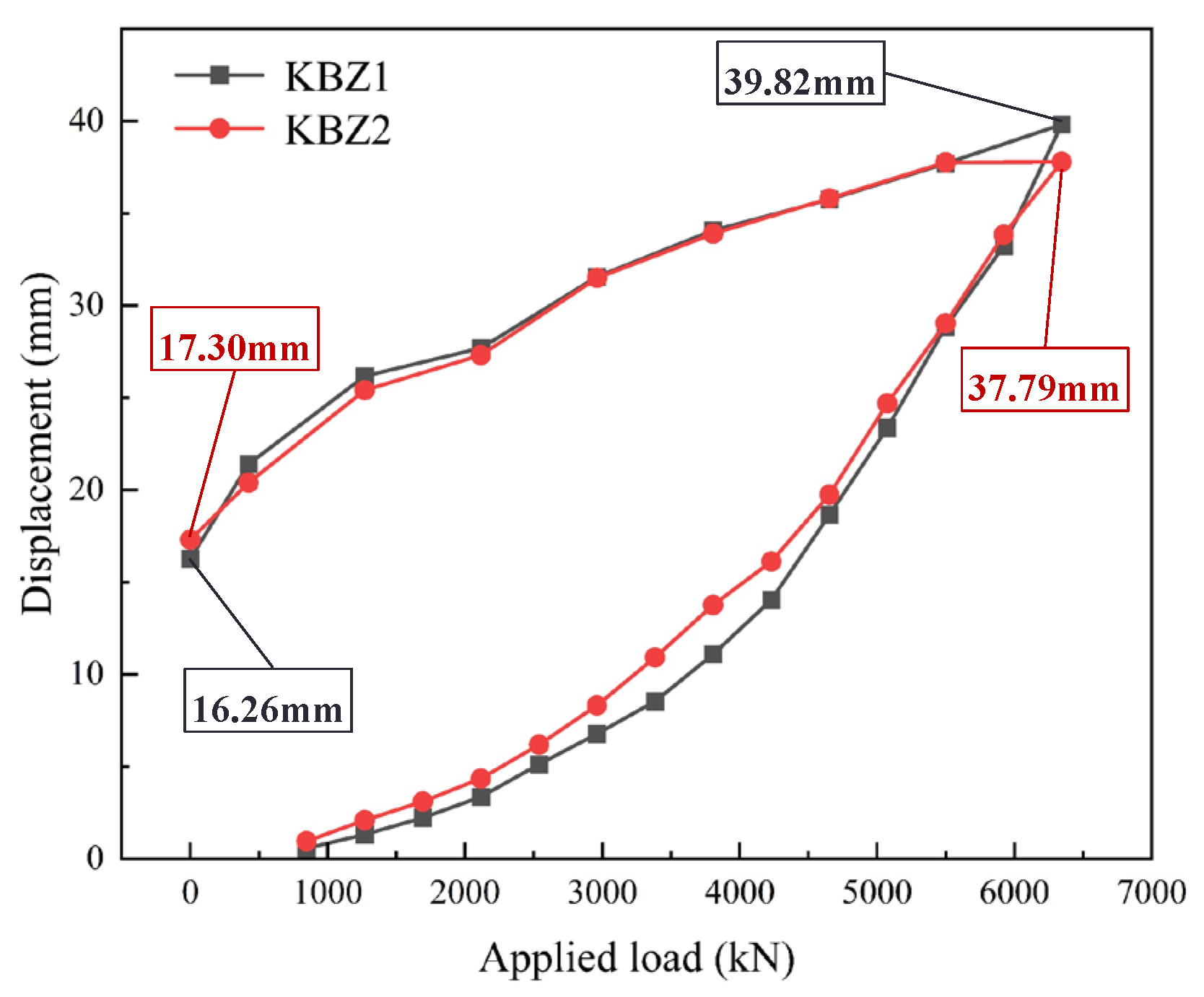
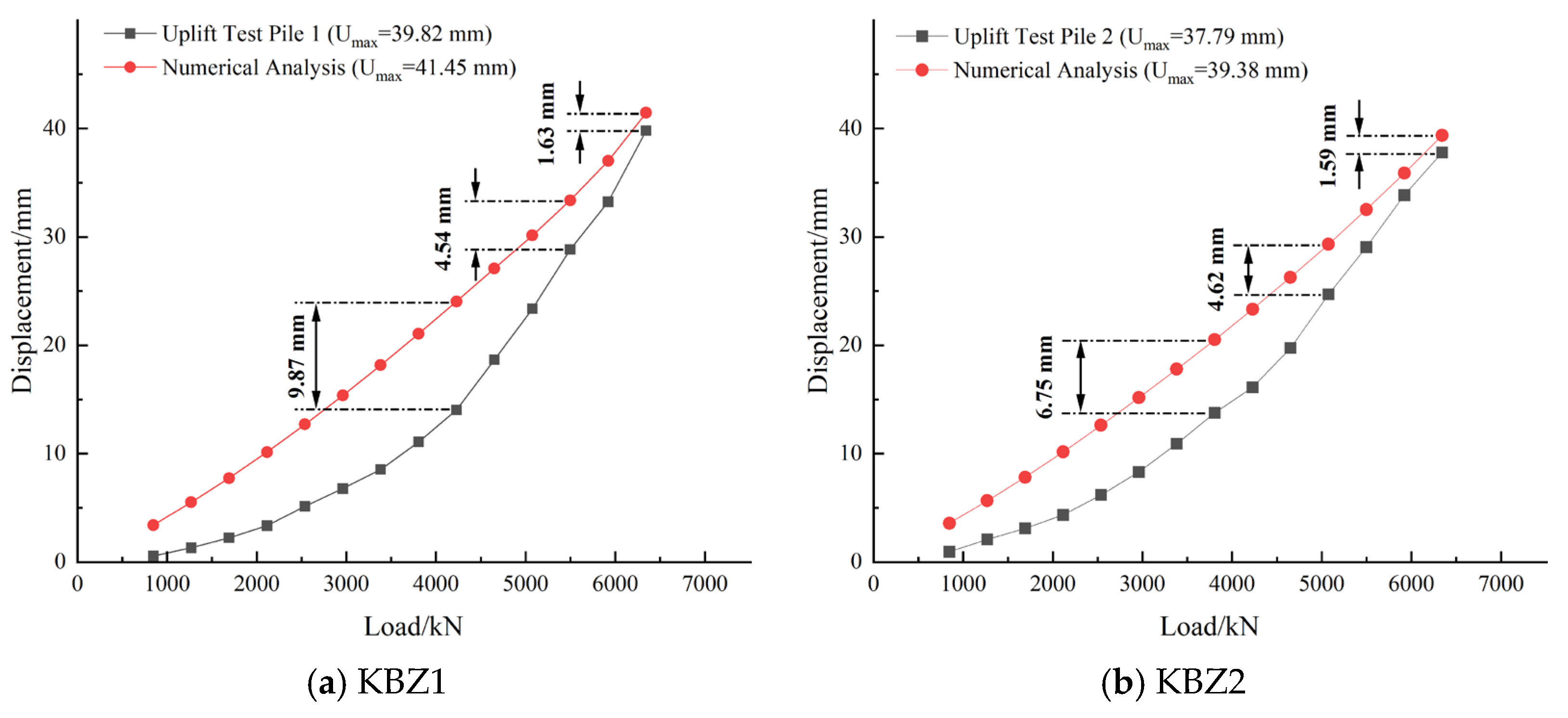
The load–displacement curves of the two uplift piles during loading and unloading are shown in
Figure 8. The curves are generally smooth, without obvious abrupt rises or drops, and exhibit a gradual variation pattern, while the maximum pile-head displacements are all less than 100 mm. In the initial loading stage, under the same load level, KBZ2 showed a larger pile-head displacement and thus slightly lower uplift bearing performance than KBZ1. Previous studies have shown that the uplift bearing performance of plates is superior to that of branches, and that the load transfer of squeezed branch piles exhibits a clear lagging effect, namely, the greater the embedment depth of the branch or plate structure, the later its bearing capacity is mobilized. Compared with KBZ2, the plate in KBZ1 was embedded at a shallower depth and therefore could be mobilized earlier, resulting in better control of pile-head displacement during the initial loading stage. As the load increased, the effect of the plate in KBZ2 gradually became evident, and under the same load level, the pile-head displacement of KBZ2 gradually approached that of KBZ1. When the load reached the maximum value of 6344 kN, the maximum pile-head displacement of KBZ2 was 37.79 mm, while that of KBZ1 was 39.82 mm. By comparison, KBZ2 exhibited better uplift bearing performance, mainly because its plate was embedded more deeply, which increased the confining effect provided by the surrounding soil and thereby enhanced its uplift bearing capacity. After the two uplift piles were completely unloaded, the pile-head displacements of KBZ1 and KBZ2 were 16.26 mm and 17.30 mm, respectively, and the rebound ratios were 59.2% and 54.2%, respectively. These results indicate that the presence of branches and plates endows the pile foundation with better elastic mechanical behavior and a relatively high rebound ratio during unloading.
3. Comparison Between In Situ Full-Scale Tests and Numerical Simulation
3.1. Model Establishment
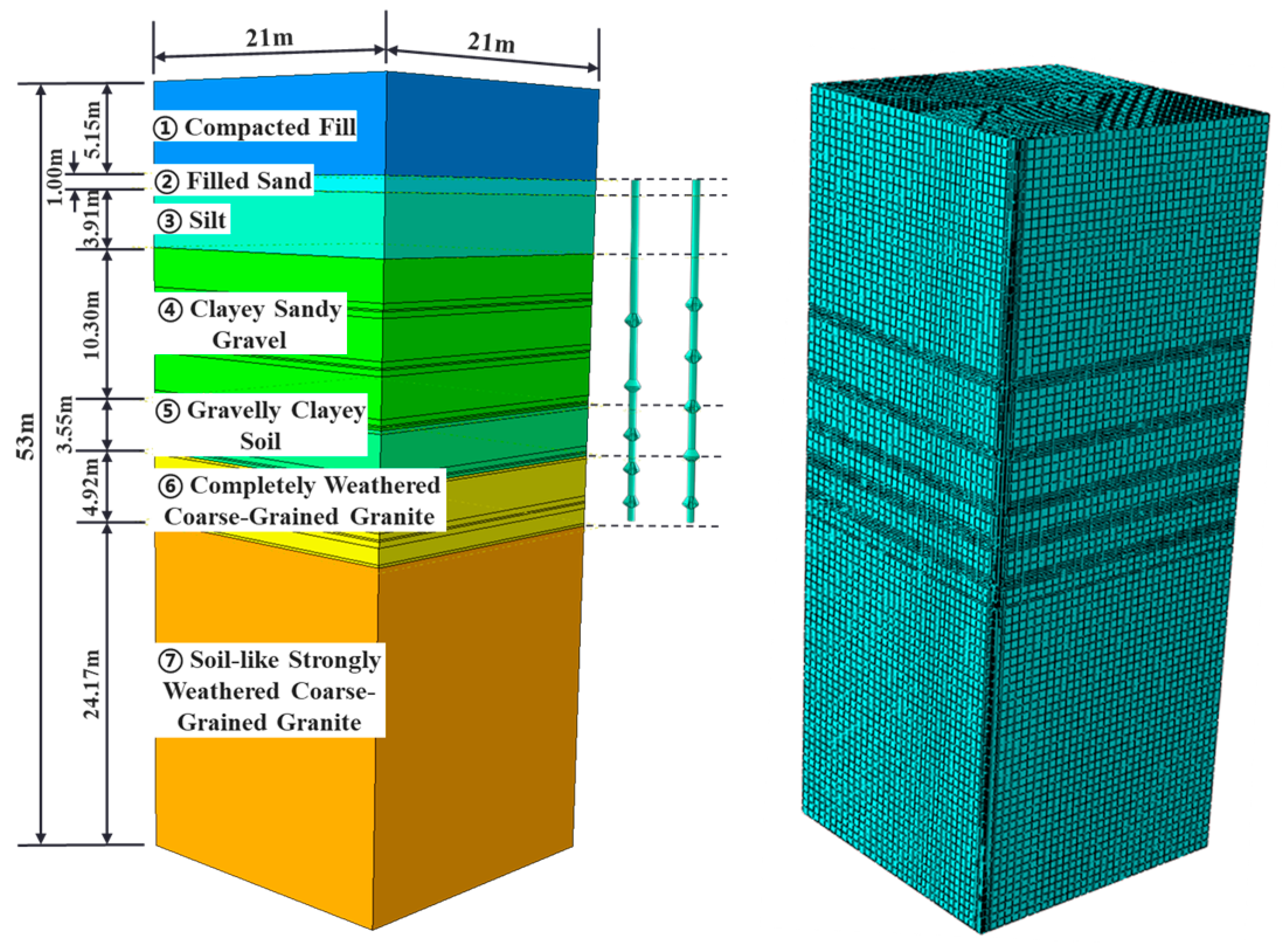
Considering that the plate structure and different branch configurations of squeezed branch piles exhibit distinct symmetric configuration characteristics, and that the overall stress state and boundary conditions are correspondingly symmetric, a quarter three-dimensional model was adopted to improve computational efficiency. To more accurately capture the interaction between the pile and the surrounding soil and to minimize the influence of boundary effects on the simulation results, the lateral dimension of the soil domain was taken as 30 times the pile diameter, i.e., 21 m. To provide a sufficient soil extent so that the selected boundary conditions could function reasonably in the simulation, the height of the soil domain was set to more than twice the pile length, i.e., 53 m. The principal dimensions of the squeezed branch pile were kept consistent with those in the in situ full-scale tests, and the established three-dimensional pile–soil model is shown in
Figure 9.
The pile shaft of the squeezed branch pile was modeled as C40 reinforced concrete and treated as a homogeneous, continuous linear elastic material, with its nonlinear behavior neglected. After accounting for the effect of steel reinforcement, the overall Young’s modulus of the pile shaft was taken as 30 GPa, and the relevant physical parameters are listed in
Table 3. For the anti-uplift engineering of the highway tunnel considered in this study, both the pile length and the design uplift resistance of the test piles were relatively limited, the overall deformation of the pile shaft was small, and the likelihood of significant cracking was therefore low. Meanwhile, because the strata in coastal reclaimed areas are generally weak, the uplift process is dominated mainly by the deformation and failure of the surrounding soil induced by the development of relative displacement between the pile and the soil. Accordingly, the pile shaft may be reasonably approximated as a linear elastic material.
The modeling of each soil layer was kept consistent with the in situ full-scale tests. The Mohr–Coulomb constitutive model was adopted, and each soil layer was assumed to be a homogeneous, continuous, isotropic ideal elastoplastic material. The main physical and mechanical parameters are listed in
Table 1. The Mohr–Coulomb model can reasonably reflect the basic mechanical characteristics of the soil and is suitable for analyzing the overall uplift response of squeezed branch piles in this study. However, it still has certain limitations in describing highly saturated conditions, strain softening, and dilation in the complex strata of coastal reclaimed areas.
3.2. Mesh Generation and Contact Settings
During mesh generation, the key regions, including the stress concentration zones near the branches and plates, large-deformation regions, and the pile–soil contact interface, were first partitioned, and local mesh refinement was then applied in these areas. In contrast, relatively coarse meshes were adopted for the soil regions far from the key load-bearing zones and subjected to lower stress levels, so as to achieve a balance between computational accuracy and efficiency. Swept meshing was employed for both the squeezed branch pile and the surrounding soil, generating C3D8R hexahedral elements. The C3D8R element is a commonly used eight-node three-dimensional linear reduced-integration hexahedral element in ABAQUS. It offers good computational efficiency and contact-analysis stability, and is therefore suitable for the numerical analysis of pile–soil interaction in this study.
The pile–soil contact was modeled using the Surface-to-Surface discretization method in the Contact analysis step, and the finite-sliding formulation was adopted for the pile–soil interaction analysis. In the contact properties, the tangential behavior was defined using a Coulomb friction model based on the penalty method, and the uplift skin friction coefficients were determined from the in situ test results; the specific values are listed in
Table 4. The normal behavior was defined as hard contact, which allows separation after contact while effectively restricting penetration between the contacting bodies, thereby helping to ensure the rationality of the pile–soil contact analysis and the convergence of the numerical model.
3.3. Loading Scheme
The model adopted a force-controlled loading scheme, with load values identical to those used in the in situ full-scale tests. Fourteen analysis steps were defined, with geometric nonlinearity activated. Each analysis step corresponded to one load level, and a total of 14 load levels were applied in the form of a concentrated force at a reference point coupled to the pile head surface. The initial load was 846 kN and was increased in equal increments up to a maximum load of 6344 kN.
3.4. Model Validation
To verify the accuracy of the established three-dimensional model, the load–displacement curves obtained from the finite element simulation were compared with the field test results, as shown in
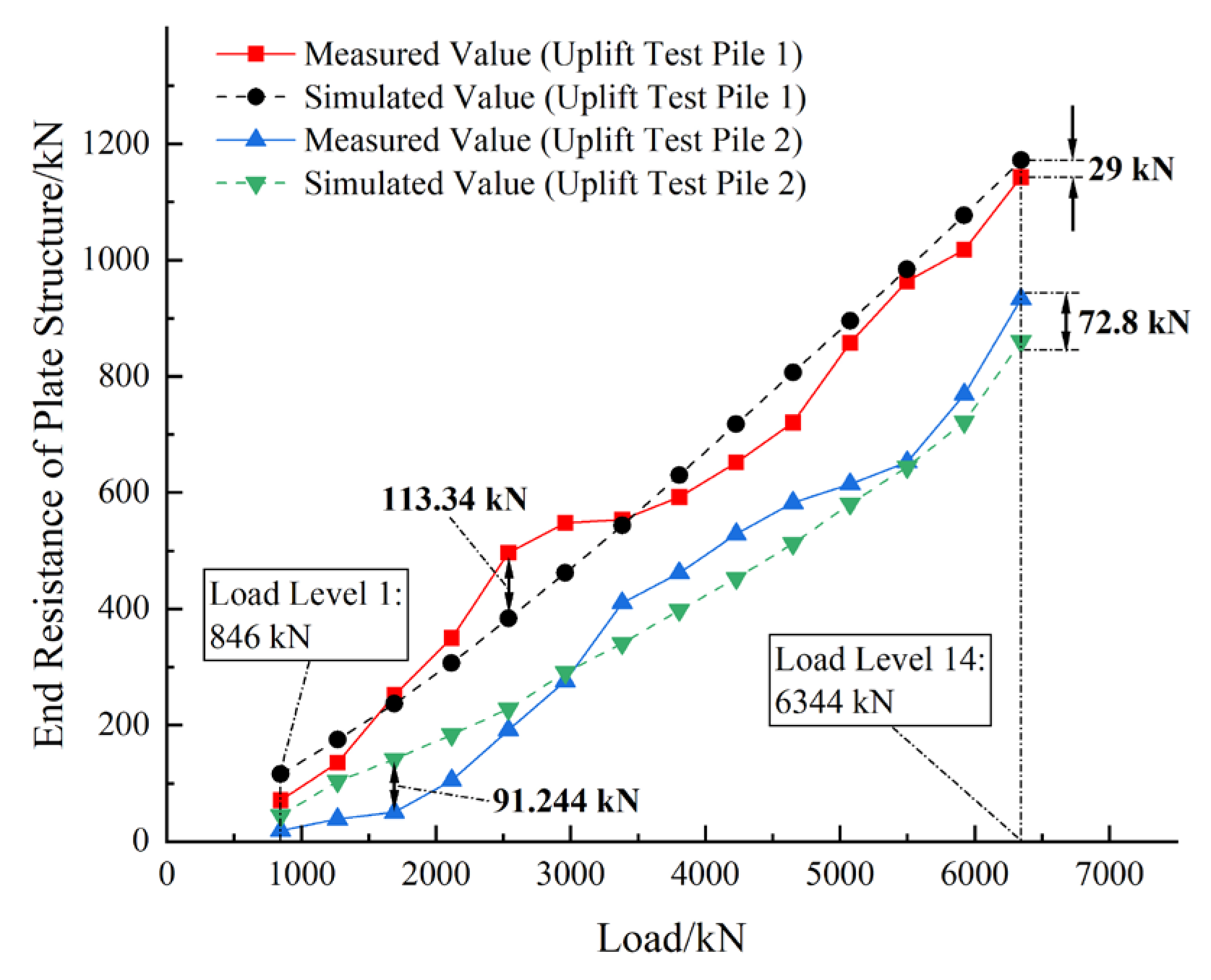
Figure 10. The comparison indicates that, within the range of ultimate bearing capacity, the overall trends of the load–displacement curves obtained from the simulation and the tests are generally consistent. During the borehole formation of squeezed branch piles in the field, the squeezing–expansion equipment exerts a certain compaction effect on the soil around the branches or plates, thereby enhancing its bearing capacity. Since the main purpose of the numerical model in this study was to analyze the overall uplift response of squeezed branch piles, and sufficient field test data were not available to calibrate the extent to which this compaction effect improves the soil bearing capacity, no further equivalent correction method was introduced. In the initial loading stage, due to the influence of the compaction effect, some discrepancy exists between the simulated and measured uplift displacements. As the load increases step by step, the soil around the branches and plates in the model is gradually compressed, and the difference between the two correspondingly decreases. When the load reached the maximum value of 6344 kN, the differences between the simulated and measured results for KBZ1 and KBZ2 were 1.63 mm and 1.59 mm, respectively, both within 5%. In addition, the comparison of the bearing capacities of the plate structures of the two uplift test piles at each loading stage is shown in
Figure 11. In the initial loading stage, the maximum errors in the plate bearing capacity of KBZ1 and KBZ2 were 113.34 kN and 91.244 kN, respectively. After the load reached 5000 kN, the simulated curves agreed well with the measured curves, and their development trends were generally similar. As the load increased, the error in the bearing capacity of the plate structures showed a decreasing trend. Considering that the soil properties may change during construction, and that differences exist between the numerical analysis conditions and the actual site conditions and in situ full-scale test conditions, the model configuration and the adopted parameters are considered reasonable and capable of reflecting the actual stress state of squeezed branch piles.
4. Differences in Bearing Performance Between Branch and Plate Structures and Their Applicable Strata
Some strata at the field test site contained a high sand content and exhibited poor stability. During the squeezing–expansion borehole formation process, borehole wall collapse occurred at the branch and plate locations, which adversely affected the casting quality of the branch and plate structures and reduced the overall uplift bearing performance of the squeezed branch piles. According to engineering construction experience, the disturbance to the surrounding soil is greatest during plate expansion, which makes borehole wall collapse more likely. To reduce soil disturbance during squeezing–expansion borehole formation, field engineers often replace plates with branches according to the actual site conditions.
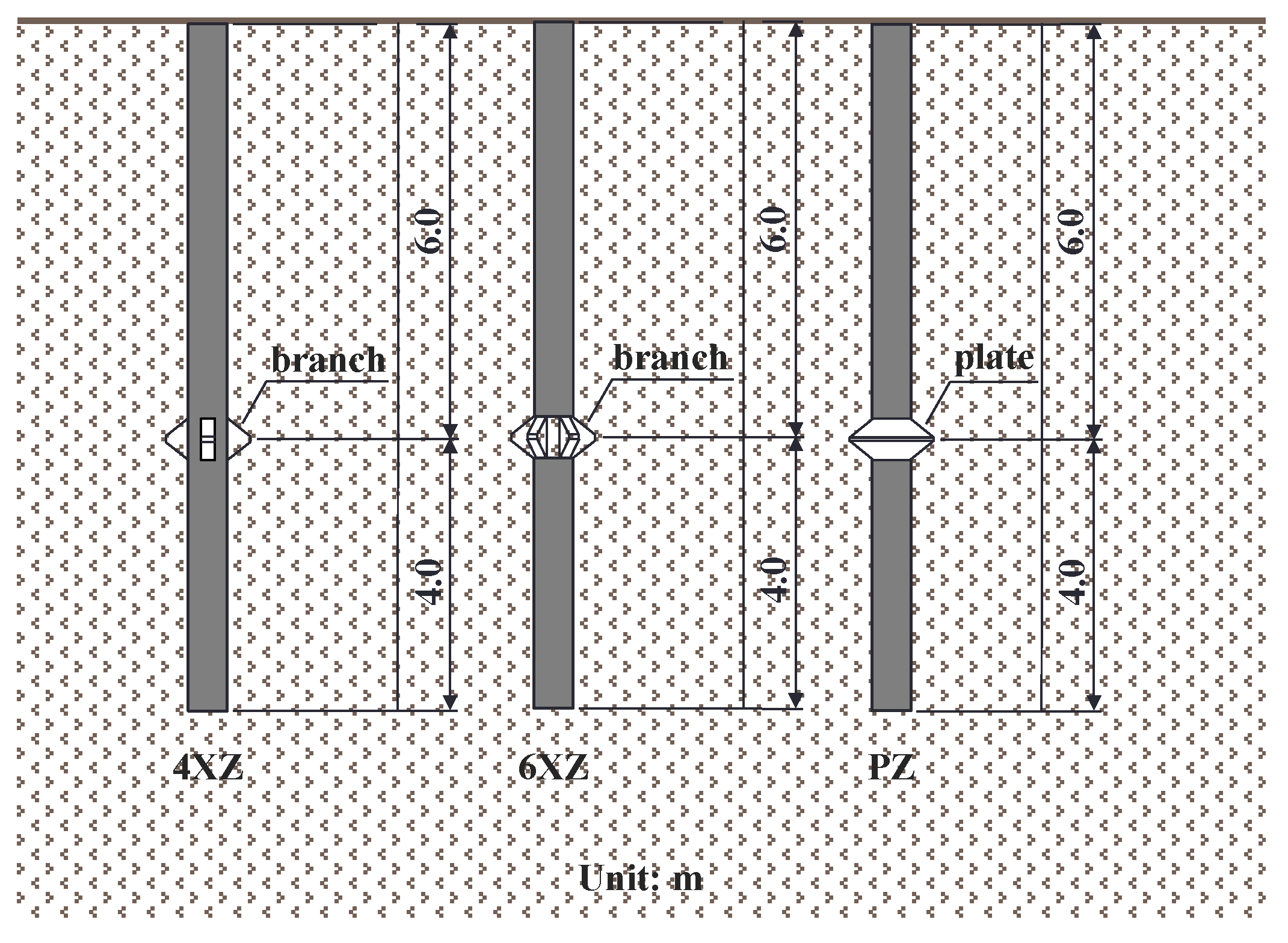
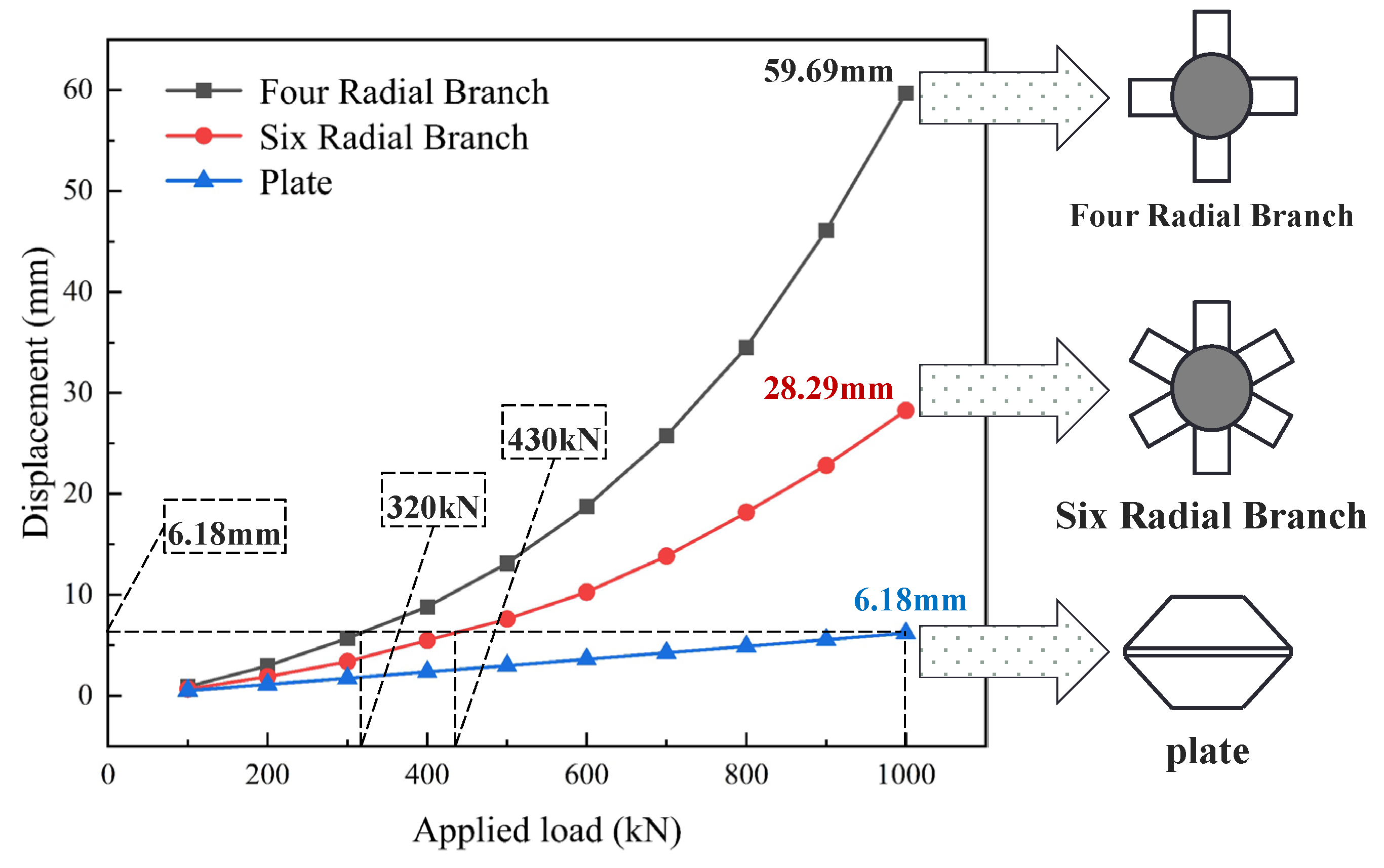
At present, in practical engineering applications, branches are generally configured in two forms, namely four-radial-branch and six-radial-branch. Different branch configurations and the plate structure exhibit distinct symmetric configuration characteristics, and these configuration differences affect the overall uplift bearing performance. To investigate the differences in uplift bearing performance among different branch types and the plate structure, numerical models of single-plate piles and single-branch piles were established under three working conditions to simulate the load–displacement relationships of the four-radial-branch, six-radial-branch, and plate configurations under the same bearing-capacity condition. The single-plate-pile and single-branch-pile models were consistent with the overall model described above in terms of material parameters, contact type, loading method, and boundary conditions. The initial uplift load was set to 100 kN, the maximum uplift load was set to 1000 kN, and the loading process was divided into 10 stages with equal incremental loading.
Figure 12 presents the schematic layouts of the pile length and the branch and plate arrangement of the single-plate-pile and single-branch-pile models, denoted as 4XZ (four-radial-branch), 6XZ (six-radial-branch), and PZ (plate), respectively.
The load–displacement curves of the single-plate pile and single-branch piles are shown in
Figure 13. The curve characteristics indicate that the load–displacement curve of PZ remains linear throughout the loading process and still exhibits considerable uplift bearing potential when the maximum load reaches 1000 kN. The load–displacement curve of 6XZ is generally smooth, without obvious abrupt rises or drops, and shows a gradual variation pattern. As the pile-head load increases, the pile-head displacement at each load level continuously increases, but the increment in displacement remains within 10 mm. In contrast, the load–displacement curve of 4XZ exhibits a gradual variation pattern in the initial loading stage, but an abrupt rise appears when the pile-head load reaches 800 kN. Under the maximum pile-head load of 1000 kN, 4XZ shows the largest pile-head displacement, reaching 59.69 mm; 6XZ ranks in the middle, with a pile-head displacement of 28.29 mm; and PZ exhibits the smallest pile-head displacement, only 6.18 mm. In addition, when the pile-head displacement is 6.18 mm, the corresponding pile-head loads carried by PZ, 6XZ, and 4XZ are 1000 kN, 430 kN, and 320 kN, respectively. Therefore, under the same pile-head displacement condition, the uplift bearing performance of the plate is approximately 133% higher than that of the six-radial-branch configuration, while that of the six-radial-branch configuration is approximately 34% higher than that of the four-radial-branch configuration. These results demonstrate the markedly superior uplift bearing performance of the plate.
To fully utilize the uplift bearing performance of squeezed branch piles, and based on the experience from the in situ full-scale uplift tests as well as the differences in uplift bearing performance between branch and plate structures, the following recommendations are proposed for the application of squeezed branch piles in the complex strata of coastal reclaimed areas: for layer ④, the clayey sandy gravel stratum contains a high sand content and exhibits poor stability, and borehole wall collapse is likely to occur during the squeezing–expansion process; therefore, to reduce soil disturbance during squeezing expansion, the six-radial-branch configuration is recommended. For layer ⑤, the gravelly clayey soil stratum, and layer ⑥, the completely weathered coarse-grained granite stratum, the strata are relatively stable and the branch and plate structures can be formed satisfactorily; therefore, the plate configuration is recommended. For layer ⑦, the soil-like strongly weathered coarse-grained granite stratum, squeezing expansion is difficult and places high demands on the construction equipment; therefore, neither branches nor plates are recommended.
5. Conclusions
To investigate the uplift bearing performance of squeezed branch piles, the differences in bearing performance between branch and plate structures, and their applicable strata in the complex ground conditions of coastal reclaimed areas, in situ full-scale uplift tests and three-dimensional numerical analysis were conducted. The main conclusions are as follows.
(1) Under all loading levels, the increment in pile-head displacement of squeezed branch piles did not exceed 10 mm, and the load–displacement curves all exhibited a gradual variation pattern. Moreover, the presence of branches and plates endowed the squeezed branch piles with better elastic mechanical behavior and a relatively high rebound ratio during unloading.
(2) The mobilization of the bearing capacity of the branch and plate structures in squeezed branch piles exhibits a distinct temporal and sequential pattern, with the plate structures at shallower embedment depths mobilizing earlier than those at greater depths.
(3) In the initial loading stage, owing to the compaction effect of the squeezing–expansion equipment on the surrounding soil, a certain discrepancy exists between the pile-head displacements obtained from the three-dimensional numerical analysis and the measured values. As the load increases, the discrepancy gradually decreases. When the maximum load is reached, the error is reduced to within 5%, indicating that the model parameters adopted in this study are reasonably appropriate.
(4) Under identical stratum and loading conditions, the uplift bearing performance of the plate is approximately 133% higher than that of the six-radial-branch configuration, while that of the six-radial-branch configuration is approximately 34% higher than that of the four-radial-branch configuration. Considering the stratigraphic conditions of coastal reclaimed areas and the differences in uplift bearing performance between branch and plate structures, the six-radial-branch configuration is recommended for clayey sandy gravel strata, the plate configuration is recommended for gravelly clayey soil and completely weathered coarse-grained granite strata, and neither branches nor plates are recommended for soil-like strongly weathered coarse-grained granite strata.
Author Contributions
Conceptualization, Z.H. and Y.F.; methodology, Z.H.; software, Z.H.; validation, Y.Z., Y.B. and Y.F.; formal analysis, Z.H.; investigation, Y.Z.; resources, Y.Z.; data curation, X.L.; writing—original draft preparation, Z.H.; writing—review and editing, Z.H.; visualization, Y.G.; supervision, Y.F.; project administration, Y.Z.; funding acquisition, Y.Z. All authors have read and agreed to the published version of the manuscript.
Funding
This study was supported by the Shanghai Shentong Metro Group Co., Ltd. Research and Development Program (No. ST-TY020-2024), the National Natural Science Foundation of China (No. 52578478), Guangdong Basic and Applied Basic Research Foundation (No. 2025A1515010671), Science and Technology Program of Shenzhen, China (No. 20240809110122002, No. 20220525163716003), National Key Research and Development Program of China (No. 2024YFF050790402), All the above supports are gratefully acknowledged.
Data Availability Statement
The original contributions presented in this study are included in the article. Further inquiries can be directed to the corresponding author.
Conflicts of Interest
Authors Yi Zeng and Yuewei Bian were employed by the company Shanghai Tunnel Engineering & Rail Transit Design and Research Institute. The authors declare that this study received funding from Shanghai Shentong Metro Group Co., Ltd. The funder was not involved in the study design, collection, analysis, interpretation of data, the writing of this article or the decision to submit it for publication.
References
- Yang, M.; Fu, X.; Liu, H.; Wang, L.; Li, Q. Influencing factors, design methods, and buoyancy reduction measures for basement anti-flotation engineering. Buildings 2024, 14, 3005. [Google Scholar] [CrossRef]
- Yin, L.; Fan, X.; Wang, S. A Study on Application of Squeezed Branch Pile in Clay Soil Foundation; IOP Conference Series: Earth and Environmental Science; IOP Publishing Ltd.: Philadelphia, PA, USA, 2017; Volume 61, p. 012091. [Google Scholar]
- Yang, Y.; Ma, H.; Hu, Z.; Wang, L.; Chen, X. The Calculation Method for the Horizontal Bearing Capacity of Squeezed Branch Piles Considering the Plate–Soil Nonlinear Interaction. Appl. Sci. 2023, 13, 13229. [Google Scholar] [CrossRef]
- Zhang, S.; Liu, X.; Zhang, H.; Piao, C.; Niu, Y. Study on the Force Model of Squeezed Branch Piles Based on Surface Potential Characteristics. Buildings 2023, 13, 2231. [Google Scholar] [CrossRef]
- Xiong, L.; Li, G.; Zhou, Y.; He, G. Experimental and analytical investigation of the bearing capacity of bulbs for squeezed branch piles. Int. J. Geomech. 2023, 23, 04023045. [Google Scholar] [CrossRef]
- Su, Q.; Xia, H.; Wu, K.; Yang, F. The Effects of Branch Spacing and Number on the Uplift Bearing Capacity of a New Squeezed Multiple-Branch Pile: A Numerical Simulation Analysis. Model. Simul. Eng. 2023, 2023, 3758253. [Google Scholar] [CrossRef]
- Ma, H.W.; Wu, Y.Y.; Tong, Y.; Jiang, X.Q. Research on bearing theory of squeezed branch pile. Adv. Civ. Eng. 2020, 2020, 6637261. [Google Scholar] [CrossRef]
- Liu, L.; Ma, H.W.; Yang, X.L.; He, Q.R.; Yuan, S. A calculation method of bearing capacity of single squeezed branch pile based on load transfer method. Adv. Mater. Sci. Eng. 2022, 2022, 9597047. [Google Scholar] [CrossRef]
- Chen, J.; Hui, Y. Optimized design of a squeezed-branch pile group based on an improved particle swarm algorithm. Sustainability 2023, 15, 2060. [Google Scholar] [CrossRef]
- Zhang, M.; Xu, P.; Cui, W.; Gao, Y. Bearing behavior and failure mechanism of squeezed branch piles. J. Rock Mech. Geotech. Eng. 2018, 10, 935–946. [Google Scholar] [CrossRef]
- Xiao, Y.; Yu, W.; Shi, S.; Ma, L.; Wang, B. Research on Compression and Pullout Static Load Test of Squeezed Branch Pile in Reclamation Stratum. Highway 2023, 68, 93–101. [Google Scholar]
- Ma, H.; Zhang, W.; Ma, G. Prediction method for uplift capacity of squeezed branch pile based on load transfer method. Ocean Eng. 2025, 334, 121603. [Google Scholar] [CrossRef]
- Ma, H.; Peng, C. Analysis and application of ultimate bearing capacity of squeezed branch pile. Geotech. Geol. Eng. 2023, 41, 3823–3828. [Google Scholar] [CrossRef]
- Wang, D.; Ju, Y.; Zhao, X.; Bai, J. Field test and numerical simulation on bearing capacity of squeezed branch pile in transmission line. Mechanics 2017, 23, 762–768. [Google Scholar]
- Yang, Z.; Xie, Y.; Fan, X.; Liu, Y. A study on the relationship between first disk depth andpullout resistance of uplift branch pile. J. Railw. Sci. Eng. 2019, 16, 2442–2450. [Google Scholar]
- Wang, Z.; Zhao, C.; Zhang, W. Multi-objective design and optimization of squeezed branch pile based on orthogonal test. Sci. Rep. 2023, 13, 22508. [Google Scholar] [CrossRef] [PubMed]
- JGJ 106-2014; Technical Code for Testing of Building Foundation Piles. China Architecture and Building Press: Beijing, China, 2014.
- JT/T 855-2013; Pile with Expanded Branches and Plates for Highway Bridge. Standards Press of China: Beijing, China, 2013.
| Disclaimer/Publisher’s Note: The statements, opinions and data contained in all publications are solely those of the individual author(s) and contributor(s) and not of MDPI and/or the editor(s). MDPI and/or the editor(s) disclaim responsibility for any injury to people or property resulting from any ideas, methods, instructions or products referred to in the content. |