Symmetrical User Fairness in Asymmetric Indoor Channels: A Max–Min Framework for Joint Discrete RIS Partitioning and Power Allocation in NOMA Systems
 ,
,  , ,
, ,  ,
,  and
and 
Abstract
1. Introduction
1.1. Research Gaps
- Existing works on RIS partitioning predominantly focus on sum-rate maximization, employ learning-based frameworks with high computational and training overhead, or consider uplink, aerial, or mmWave scenarios.
- Most studies assume idealized channel models and overlook realistic indoor propagation characteristics, including mixed LoS/NLoS links, wall-penetration losses, and physical link-budget constraints. In particular, fairness-oriented optimization for downlink indoor RIS-assisted NOMA systems, under standardized 3GPP InH channel models, has not been adequately addressed. The joint impact of RIS element partitioning and power allocation on max–min user fairness in such environments remains an open research problem.
- Most traditional studies are tested with only two user scenarios and do not account for real-world impairments such as imperfect SIC (iSIC), imperfect channel state information (iCSI) and RIS implementation loss.
1.2. Major Contributions
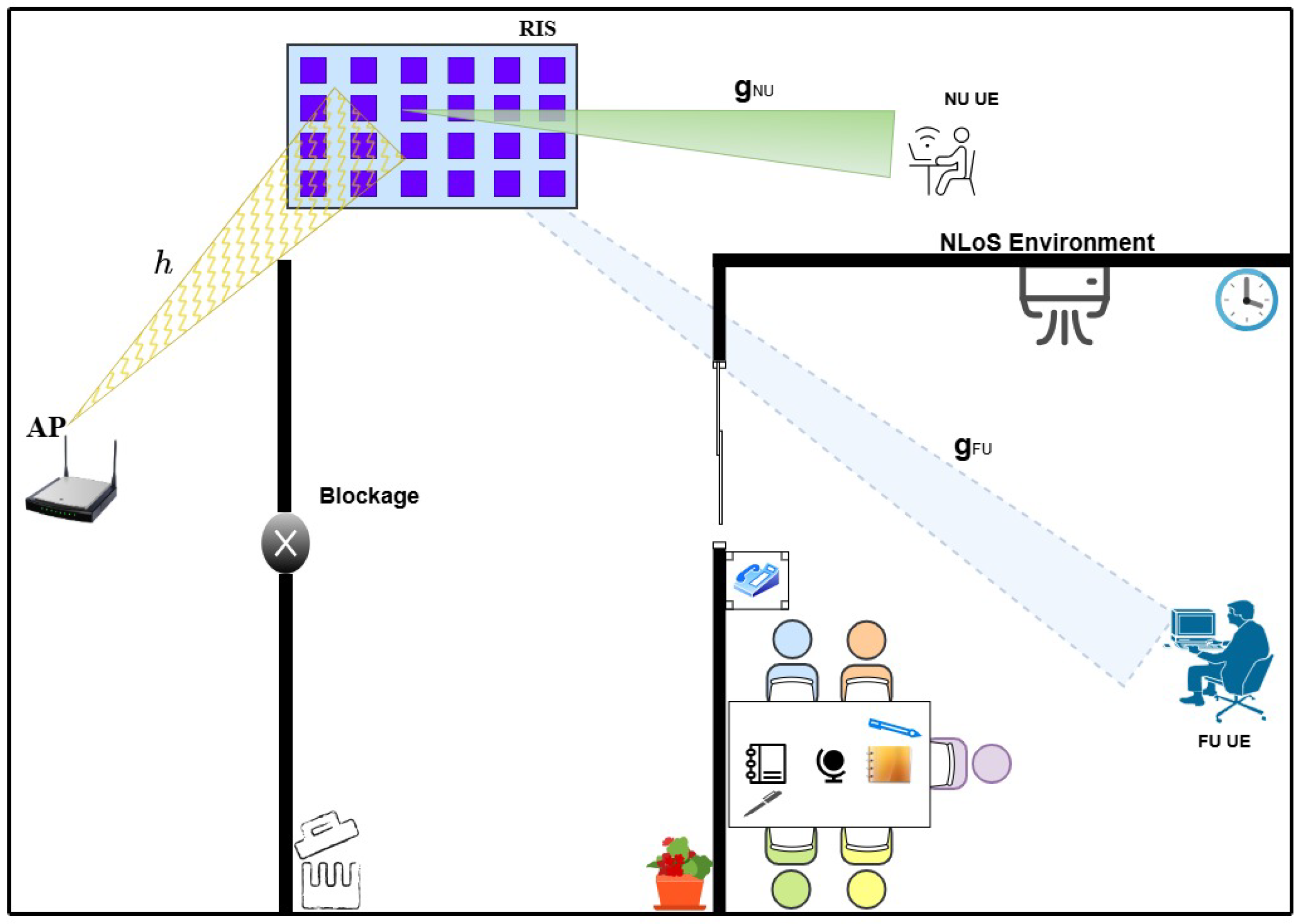
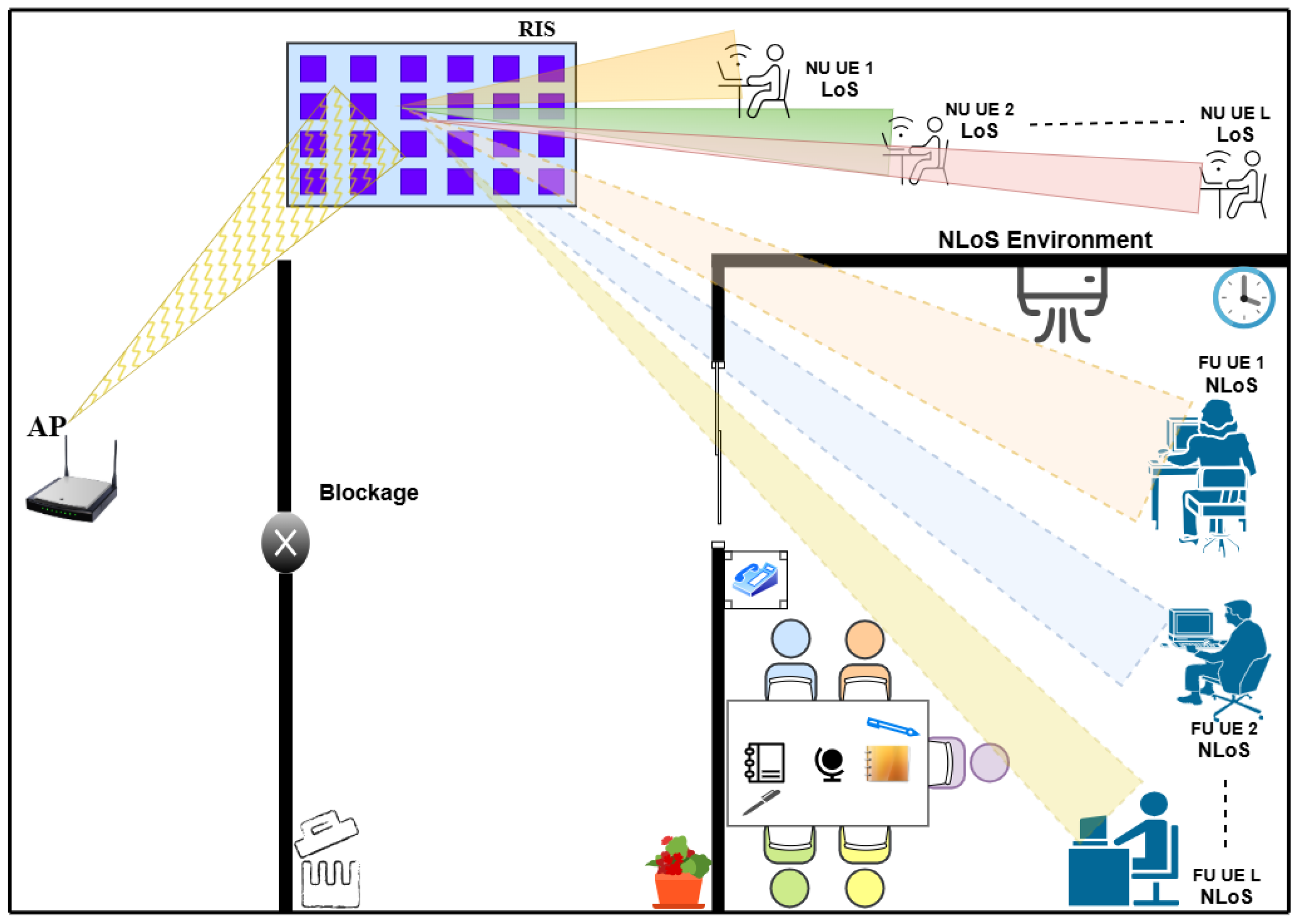
- Indoor RIS-assisted NOMA system modeling under realistic propagation conditions: We develop a downlink RIS-assisted NOMA framework tailored for indoor hotspot environments by incorporating the 3GPP InH channel model, which accounts for distance-dependent path loss, shadowing, and wall penetration losses. This allows the system to capture the asymmetric propagation conditions typically encountered in indoor wireless deployments.
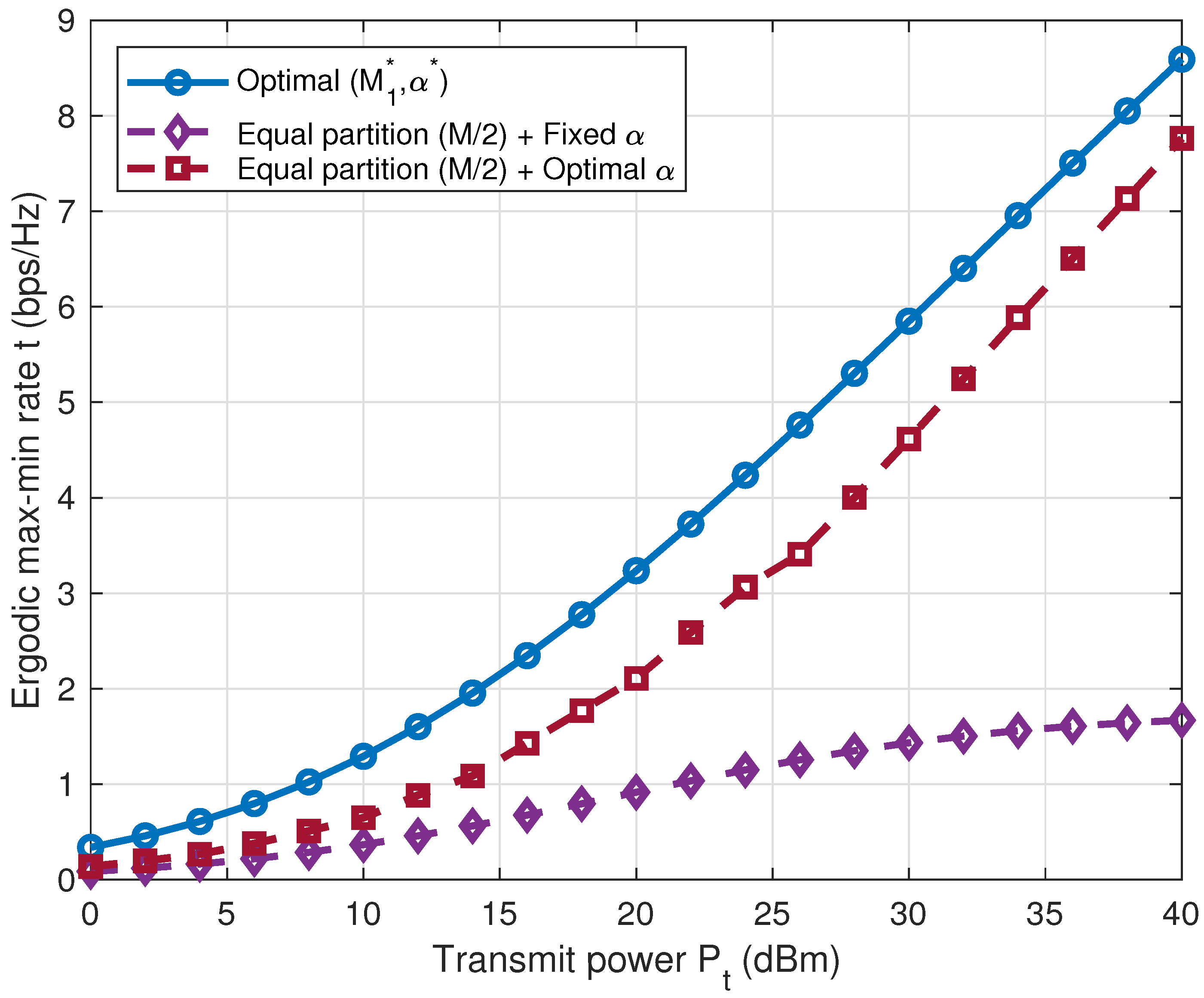
- Fairness-oriented joint RIS partitioning and power allocation: Unlike most existing RIS-NOMA studies that primarily focus on sum-rate maximization, this work formulates a max–min fairness optimization problem to achieve balanced quality-of-service (QoS) between near users (NUs) and FUs. The proposed approach jointly optimizes discrete RIS element partitioning and NOMA power allocation, enabling symmetric service performance even under heterogeneous channel conditions.
- Low-complexity quasi-convex optimization framework: The original non-convex fairness optimization problem is transformed into an epigraph formulation, which allows the problem to be solved using a bisection-based quasi-convex optimization algorithm combined with RIS partition enumeration. The proposed framework significantly reduces computational complexity while maintaining efficient resource allocation.
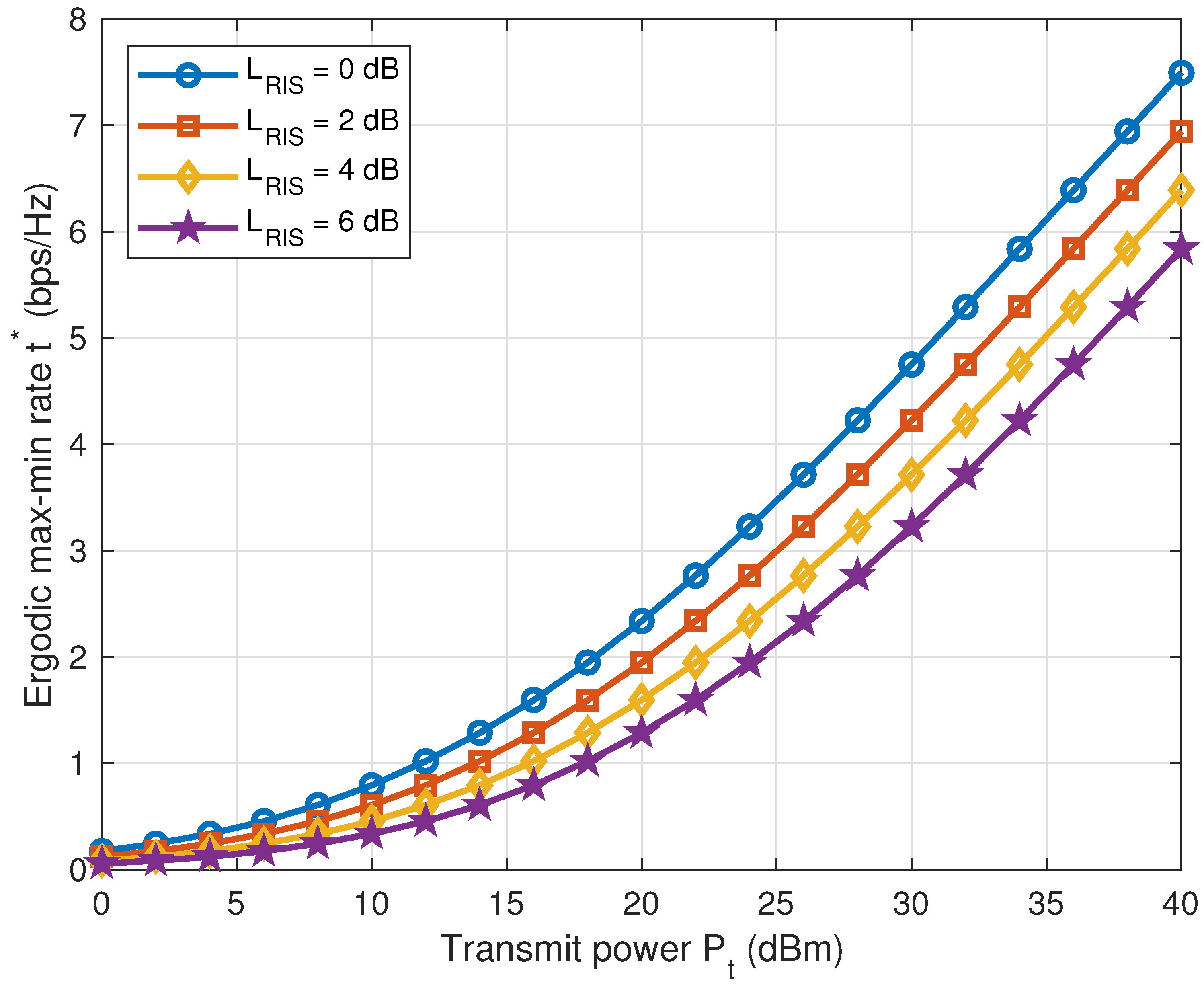
- Practical impairment analysis: The framework is extended to analyze the impact of iSIC, iCSI, and RIS implementation losses, providing insights into how residual interference and hardware-induced attenuation create critical performance floors.
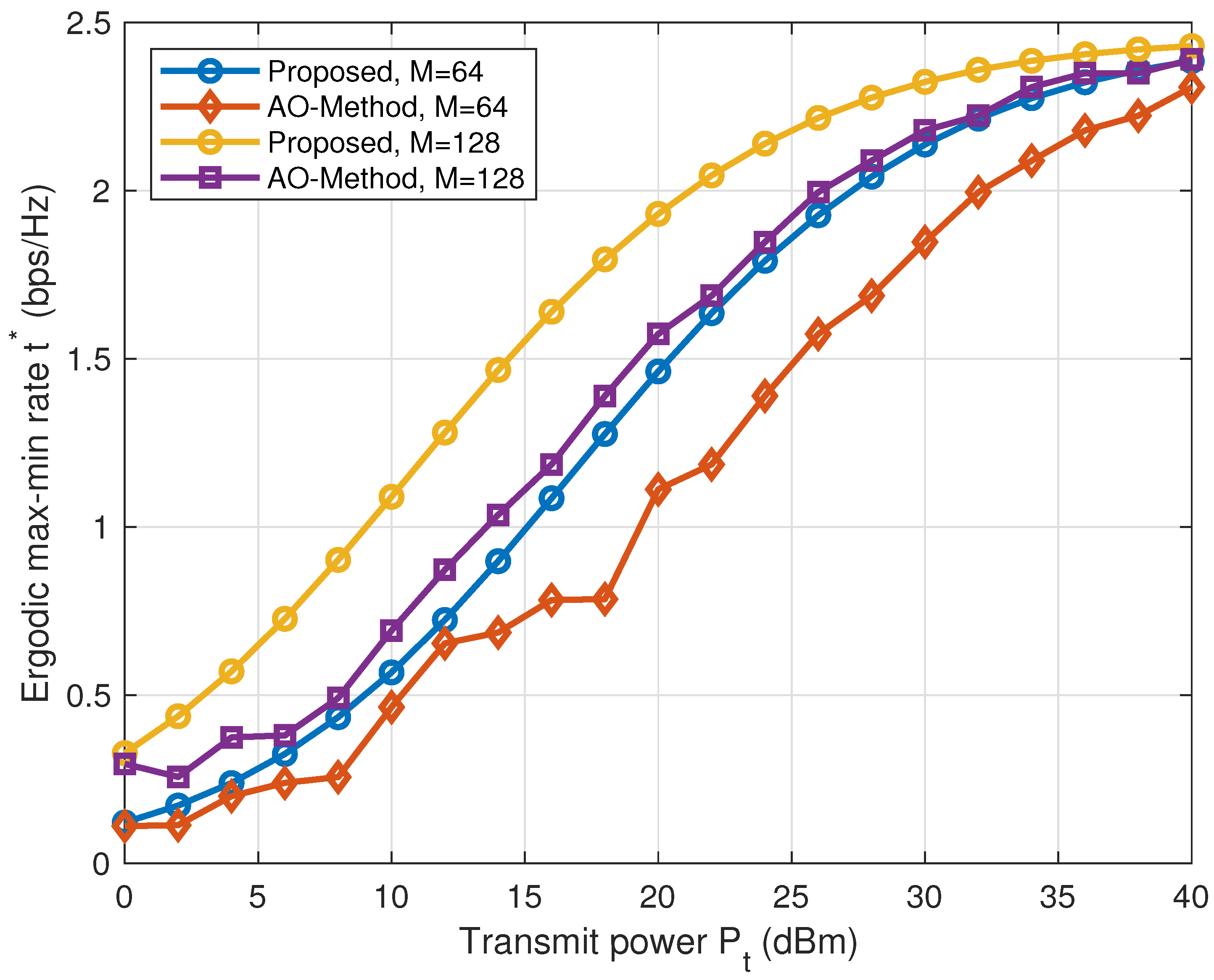
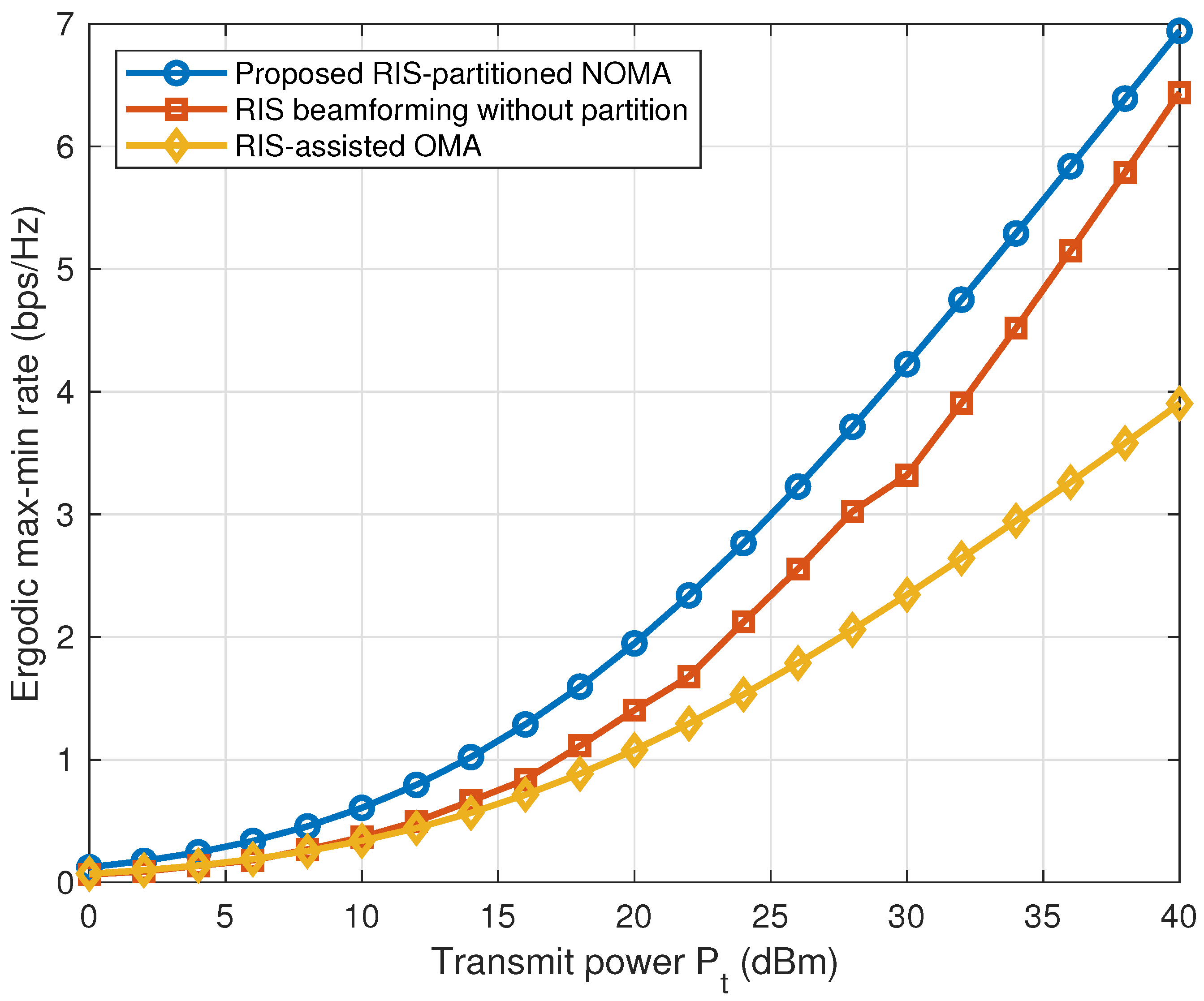
- Performance comparison with conventional RIS-assisted schemes: To validate the effectiveness of the proposed framework, the proposed bisection-based quasi-convex optimization method is compared with several benchmark schemes, including alternating optimization (AO)-based RIS–NOMA, RIS beamforming without partitioning, and RIS-assisted orthogonal multiple access (OMA). Simulation results demonstrate that the proposed RIS-partitioned framework achieves superior ergodic max–min fairness compared to conventional RIS beamforming and OMA baselines, while achieving performance comparable to AO-based optimization methods with substantially lower computational complexity.
- System generalization and scalability: To enhance modeling realism, the study incorporates direct AP-user equipment (UE) links, multiple-input multiple-output (MIMO)-integrated configurations, and multi-user support through hybrid NOMA, demonstrating that the proposed bisection-based logic serves as a scalable baseline for distributed multi-RIS architectures.
1.3. Organization
2. Related Works
3. System Model
4. Symmetrical User Fairness Optimization Problem
4.1. Epigraph Form
- (I)
- NU rate constraint:
- (II)
- FU rate constraint:
- (III)
- SIC feasibility constraint:
- (IV)
- FU QoS constraint:
- (V)
- NU QoS constraint:
4.2. Computational Complexity Analysis
| Algorithm 1 Bisection-based symmetrical user fairness optimization with RIS partition enumeration. |
|
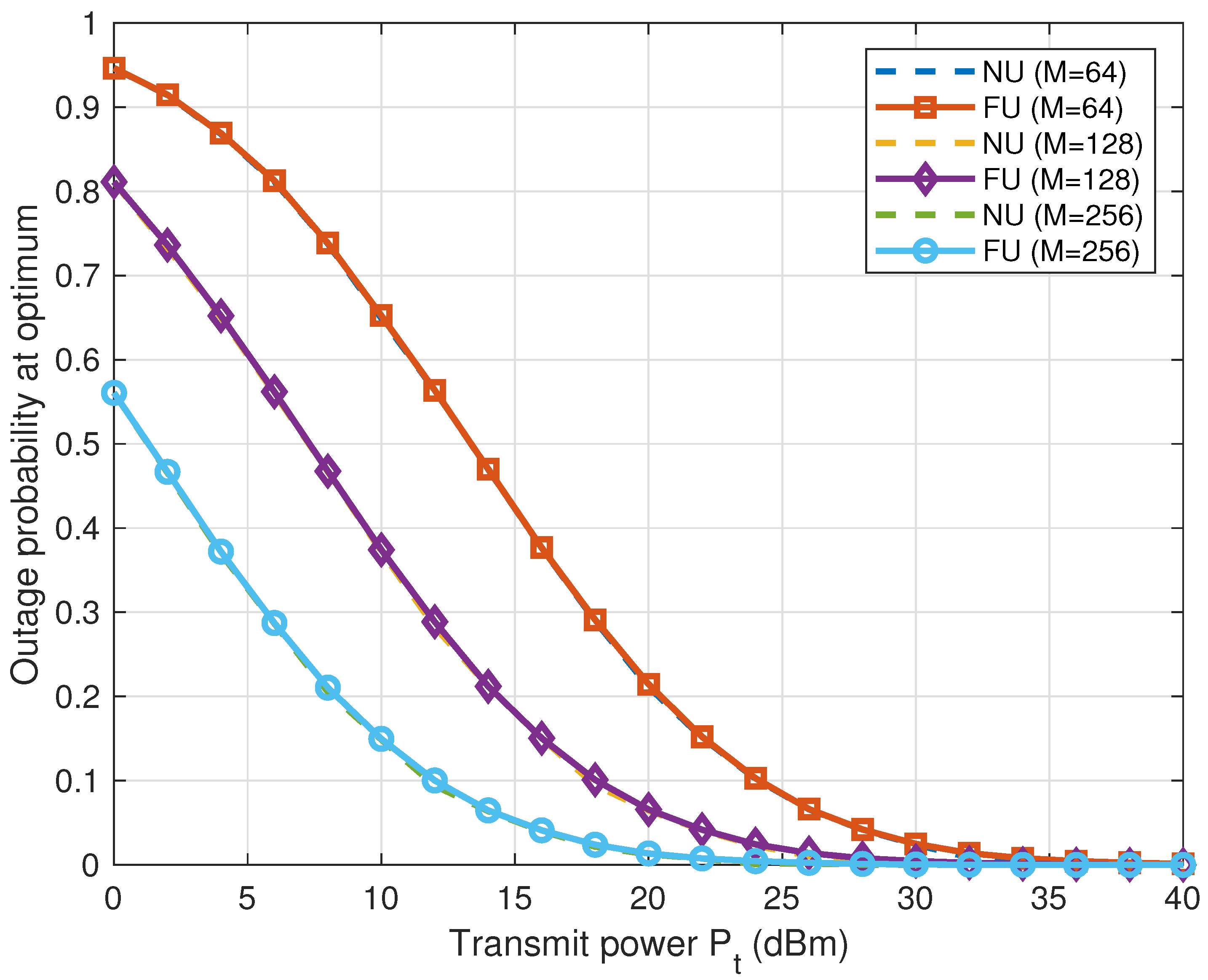
4.3. Outage Analysis
4.4. Practical Impairments and Architectural Generalization
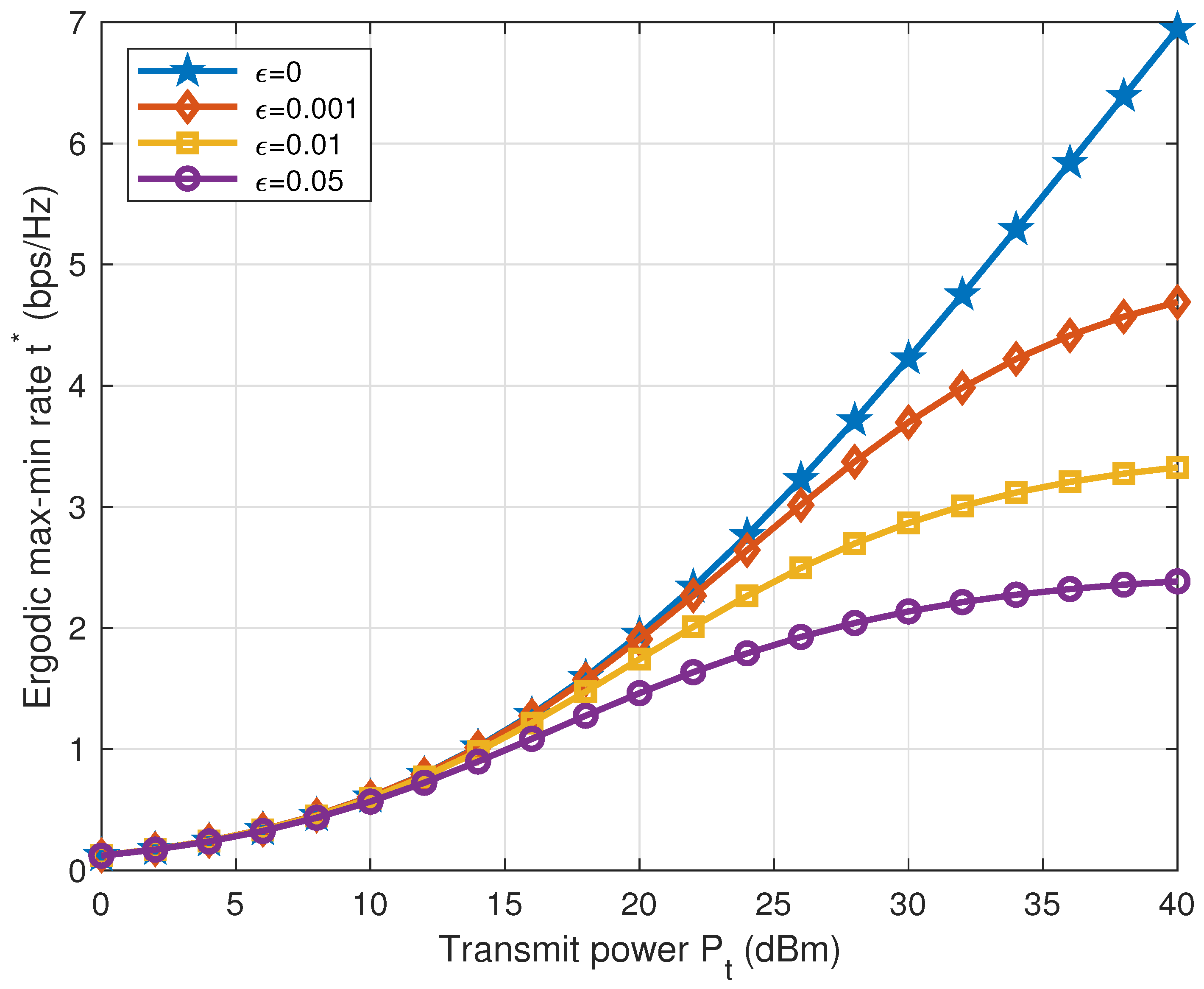
4.4.1. Impact of iSIC
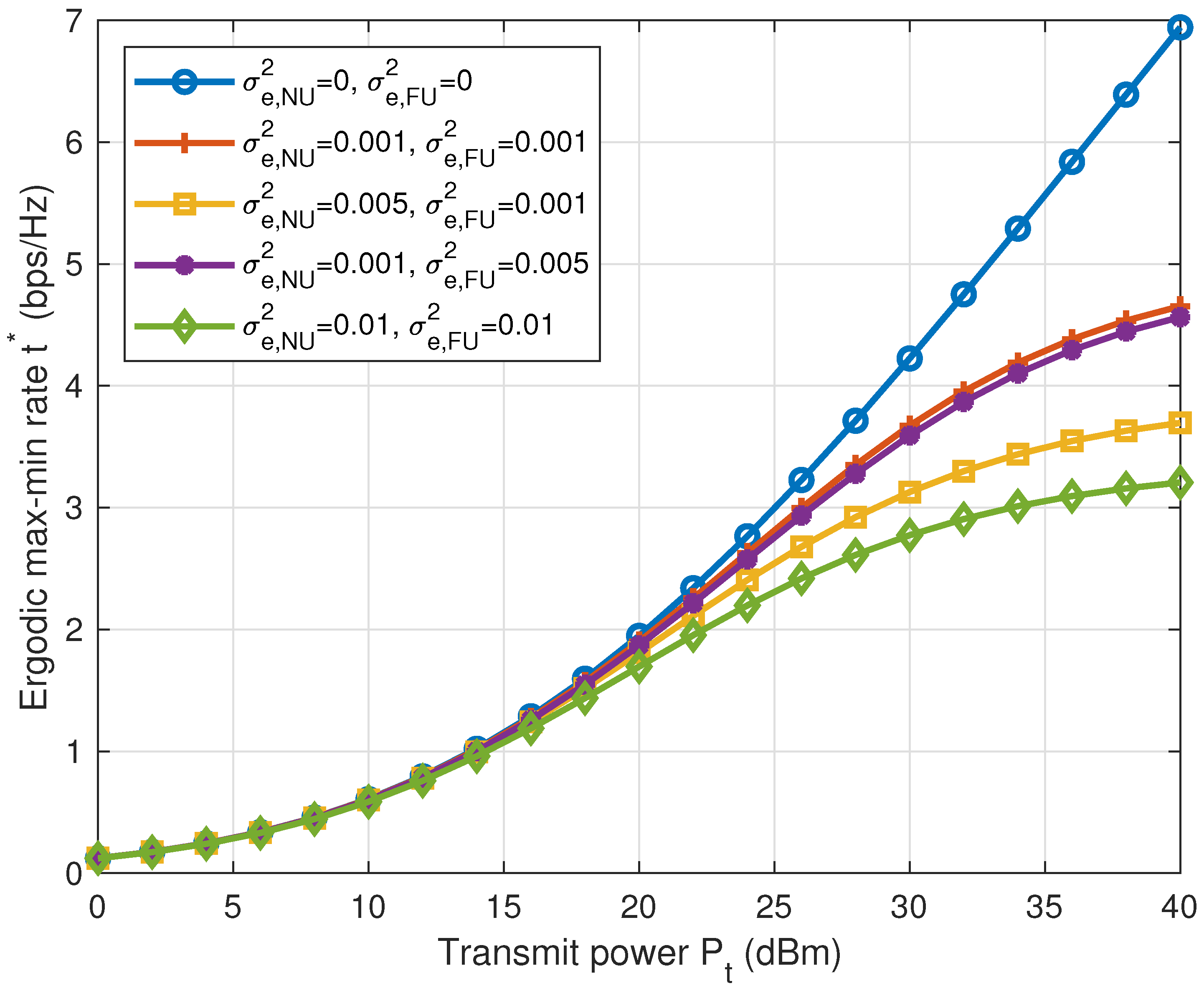
4.4.2. Impact of iCSI
4.4.3. Impact of Direct AP-RIS Link
4.4.4. Multi-User Extension
4.4.5. MIMO Extension
4.4.6. Multi-RIS Extension
5. Simulation Results
6. Conclusions
Author Contributions
Funding
Data Availability Statement
Acknowledgments
Conflicts of Interest
Abbreviations
| 6G | Sixth-generation |
| 5G | Fifth-generation |
| AP | Access point |
| CSI | Channel state information |
| FU | Far user |
| gNB | Next-generation base station |
| iCSI | Imperfect channel state information |
| InH | Indoor hotspot |
| IoT | Internet of Things |
| iSIC | Imperfect successive interference cancellation |
| LoS | Line-of-sight |
| MIMO | Multiple-input multiple-output |
| MISO | Multiple-input single-output |
| NLoS | Non-line-of-sight |
| NOMA | Non-orthogonal multiple access |
| NU | Near user |
| QoS | Quality-of-service |
| RIS | Reconfigurable intelligent surfaces |
| SIC | Successive interference cancellation |
| SNR | Signal-to-noise ratio |
| SINR | Signal-to-interference plus noise ratio |
References
- Van Nguyen, M.; Do, D.; Vahid, A.; Muhaidat, S.; Sicker, D. Enhancing NOMA backscatter IoT communications with RIS. IEEE Internet Things J. 2023, 11, 5604–5622. [Google Scholar] [CrossRef]
- Dipinkrishnan, R.; Kumaravelu, V. Outage analysis and power optimization in uplink and downlink NOMA systems with Rician fading. Results Eng. 2025, 25, 104021. [Google Scholar] [CrossRef]
- Yang, G.; Huang, H.; Sun, C.; Wu, Y.; Xu, X.; Huang, S. A Deployment Strategy for Reconfigurable Intelligent Surfaces with Joint Phase and Position Optimization. Electronics 2026, 15, 718. [Google Scholar] [CrossRef]
- Zhang, Y.; Luo, Z.; Wu, W.; Tian, W. RIS-UAV cooperative ISAC technology for 6G: Architecture, optimization, and challenges. Algorithms 2026, 19, 65. [Google Scholar] [CrossRef]
- Van Nguyen, M.; Do, D.; Tin, P.; Vahid, A. Secure Performance Analysis of User Pairs in Active Reconfigurable Intelligent Surface-Aided IoT Systems. IEEE Syst. J. 2025, 19, 370–381. [Google Scholar] [CrossRef]
- Castillo-Soria, F.; Macias-Velasquez, S.; Babu, K.; Victor, R.; Azurdia-Meza, C. Multiple parallel RIS-assisted MU-MIMO-DQSM system: Blind and intelligent approaches. China Commun. 2025, 22, 29–43. [Google Scholar] [CrossRef]
- Khaleel, A.; Basar, E. A novel NOMA solution with RIS partitioning. IEEE J. Sel. Top. Signal Process. 2022, 16, 70–81. [Google Scholar] [CrossRef]
- Gevez, Y.; Khaleel, A.; Başar, E. A novel partitioning scheme for RIS identification and beamforming. IEEE Wirel. Commun. Lett. 2026, 15, 245–249. [Google Scholar] [CrossRef]
- Nasser, A.; Celik, A.; Eltawil, A.M. Multi-agent DRL for RIS partitioning, beam selection, and power control in MIMO-NOMA system. IEEE Open J. Commun. Soc. 2025, 6, 9073–9089. [Google Scholar] [CrossRef]
- Zhang, C.; Zhou, H.; Long, R.; Liang, Y.-C.; Soong, B.-H. Partition-based RIS for MU-MISO symbiotic radios. IEEE Internet Things J. 2025, 12, 30619–30633. [Google Scholar] [CrossRef]
- Hamedoon, S.M.; Chattha, J.N.; Rashid, U.; Kazmi, S.M.A.; Mazzara, M. AI-driven resource allocation for RIS-assisted NOMA in IoT networks. IEEE Access 2025, 13, 68152–68171. [Google Scholar] [CrossRef]
- Chen, S.; Liu, F.; Liu, Y. Sum-rate maximization for partitioned-IRS-assisted hybrid NOMA networks. In Proceedings of the IEEE Wireless Communications and Networking Conference (WCNC); IEEE: Milan, Italy, 2025; pp. 1–6. [Google Scholar] [CrossRef]
- Wei, T.; Chen, W.; Tang, K.; Zheng, B.; Feng, W.; Che, W.; Xue, Q. Machine learning-enabled RIS-assisted mmWave NOMA systems: RIS partitioning, beamforming design, and power allocation. IEEE Trans. Commun. 2025, 73, 7617–7632. [Google Scholar] [CrossRef]
- Shen, L.; Gao, H.; Chen, N.; Cao, R.; Yuen, C. RIS-based multi-beam NOMA: Efficient RIS partition and power control. IEEE Trans. Veh. Technol. 2025, 74, 11603–11608. [Google Scholar] [CrossRef]
- Nduwayezu, M.; Ofori-Amanfo, K.A.; Asiedu, D.K.P.; Yun, J.-H. Vehicular communication using NOMA with antenna partitioning. In Proceedings of the 15th International Conference Information and Communication Technology Convergence (ICTC); ICTC: Jeju Island, Republic of Korea, 2024; pp. 338–339. [Google Scholar] [CrossRef]
- Makin, M.; Celik, A.; Arzykulov, S.; Eltawil, A.M.; Nauryzbayev, G. Optimal partitioning of reconfigurable intelligent surfaces for uplink NOMA networks. In Proceedings of the IEEE 35th International Symposium Personal, Indoor and Mobile Radio Communications (PIMRC); IEEE: Valencia, Spain, 2024; pp. 1–6. [Google Scholar] [CrossRef]
- Shaikh, M.H.N.; Celik, A.; Arzykulov, S.; Eltawil, A.M.; Nauryzbayev, G. Optimizing deployment and partitioning strategies for aerial RIS-aided uplink NOMA under residual hardware impairments. In Proceedings of the IEEE 36th International Symposium Personal, Indoor and Mobile Radio Communications (PIMRC); IEEE: Istanbul, Türkiye, 2025; pp. 1–6. [Google Scholar] [CrossRef]
- Kennedy, H.S.J.; Kumaravelu, V.B. Enhancing outage performance and sum capacity in multi-user environments through IOS-aided hybrid NOMA under imperfect SIC. EURASIP J. Wirel. Commun. Netw. 2025, 2025, 39. [Google Scholar] [CrossRef]
- Zhang, J.; Cai, C.; Hai, H.; Al-Dulaimi, A.; Selvaprabhu, P.; Chinnadurai, S.; Mumtaz, S. Optimization Design of Beamforming, Phase Shifts, and Power Allocation for RIS-Assisted AF Relay Network. IEEE Wirel. Commun. Lett. 2026, 15, 250–254. [Google Scholar] [CrossRef]
- Wang, Y.; Yang, Z.; Cui, J.; Xu, P.; Chen, G.; Quek, T.Q.; Tafazolli, R. Optimizing Fairness STAR-RIS NOMA Assist. Integr. Sens. Commun. Syst. Trans. Wirel. Commun. 2024, 23, 5895–5907. [Google Scholar] [CrossRef]
- Kshetrimayum, R.S. Fundamentals of MIMO Wireless Communications; Cambridge University Press: Cambridge, UK, 2017. [Google Scholar]
- Rappaport, T.S. Wireless Communications—Principles and Practice (The Book End). Microw. J. 2002, 45, 128–129. [Google Scholar]
- Lima, A.G.M.; Menezes, L.F. Motley–Keenan model adjusted to the thickness of the wall. In Proceedings of the SBMO/IEEE MTT-S International Conference Microwave Optoelectronics (IMOC); IEEE: Brasilia, Brazil, 2005; pp. 180–182. [Google Scholar] [CrossRef]
- Kumaravelu, V.B.; Imoize, A.L.; Soria, F.R.C.C.; Velmurugan, P.G.S.; Thiruvengadam, S.J.; Do, D.-T.; Murugadass, A. RIS-Assisted Fixed NOMA: Outage Probability Analysis and Transmit Power Optimization. Future Internet 2023, 15, 249. [Google Scholar] [CrossRef]
- Boyd, S.; Vandenberghe, L. Convex Optimization; Cambridge University Press: Cambridge, UK, 2004. [Google Scholar]
- Chi, C.-Y.; Li, W.-C.; Lin, C.-H. Convex Optimization for Signal Processing and Communications; Cambridge University Press: Cambridge, UK, 2020. [Google Scholar]
- Björnson, E.; Hoydis, J.; Sanguinetti, L. Massive MIMO networks: Spectral, energy, and hardware efficiency. Found. Trends Signal Process. 2017, 11, 154–655. [Google Scholar] [CrossRef]
- Marzetta, T.L. Noncooperative cellular wireless with unlimited numbers of base station antennas. IEEE Trans. Wirel. Commun. 2010, 9, 3590–3600. [Google Scholar] [CrossRef]
- Endovitskiy, E.; Kureev, A.; Khorov, E. Reducing computational complexity for the 3GPP TR 38.901 MIMO channel model. IEEE Wirel. Commun. Lett. 2022, 11, 1133–1136. [Google Scholar] [CrossRef]
- Zhu, Q.; Wang, C.-X.; Hua, B.; Mao, K.; Jiang, S.; Yao, M. 3GPP TR 38.901 channel model. In The Wiley 5G Ref: The Essential 5G Reference Online; Wiley: Hoboken, NJ, USA, 2021; pp. 1–35. [Google Scholar]
- Goldsmith, A. Wireless Communications; Cambridge University Press: Cambridge, UK, 2005. [Google Scholar]
- Qian, X.; Di Renzo, M.; Sciancalepore, V.; Costa-Pérez, X. Joint optimization of reconfigurable intelligent surfaces and dynamic metasurface antennas for massive MIMO communications. In 2022 IEEE 12th Sensor Array and Multichannel Signal Processing Workshop (SAM); IEEE: Trondheim, Norway, 2022; pp. 450–454. [Google Scholar]
- Sihui, S.; Pinyi, R.; Dongyang, X. Semi-definite relaxation based beamforming design for double-RIS aided MISO system with limited feedback. China Commun. 2025, 22, 309–321. [Google Scholar] [CrossRef]
- Moon, S.; Lee, C.; Liu, H.; Hwang, I. Deep reinforcement learning-based sum rate maximization for RIS-assisted ISAC-UAV network. ICT Express 2024, 10, 1174–1178. [Google Scholar] [CrossRef]



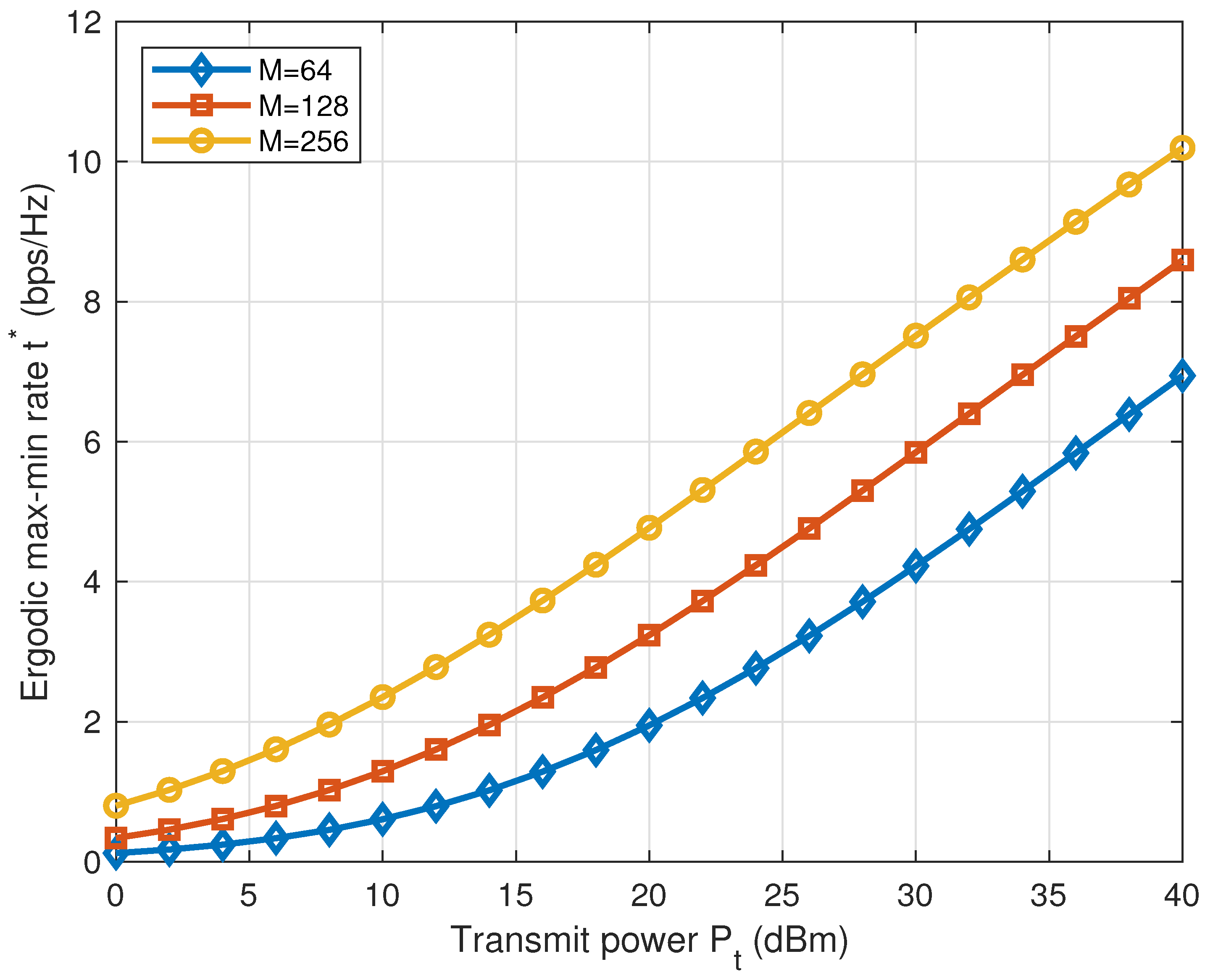
| RIS Configuration | Bisection Iterations | Total Complexity | Rate at 20 dBm (bps/Hz) | Rate at 30 dBm (bps/Hz) | Rate at 40 dBm (bps/Hz) | Fairness Gain for = 20 dBm |
|---|---|---|---|---|---|---|
| 64 | 15 | 960 | 1.95 | 4.22 | 6.94 | - |
| 128 | 15 | 1920 | 3.24 | 5.85 | 8.59 | 66.15% |
| 256 | 15 | 3840 | 4.90 | 7.90 | 10.20 | 151.28% |
| Symbol | Parameter | Value |
|---|---|---|
| Carrier frequency | 3.5 GHz | |
| distance | 10 m | |
| RIS-NU distance | 10 m | |
| RIS-FU distance | 30 m | |
| LoS shadowing standard deviation | 3 dB | |
| NLoS shadowing standard deviation | 8 dB | |
| Wall Loss | 6 dB | |
| , | Tx/Rx antenna gain | 0 dBi, 0 dBi |
| NU data rate demand | 1 bps/Hz | |
| FU data rate demand | 0.5 bps/Hz | |
| Number of realizations | ||
| FU power fraction | [0.5, 1] | |
| B | Bandwidth | 10 MHz |
| Noise Figure | 7 dB |
| RIS Parameter | Value/Assumption |
|---|---|
| Total Elements | 64, 128, 256 |
| Partitioning Strategy | Joint discrete RIS partitioning (allocation of elements between users for NU, for FU)) |
| Implementation Loss | 0, 2, 4, 6 dB |
| Reflection Model | Unit-modulus phase shift behavior |
| NU Channel | Rician fading (AP–RIS and RIS–NU propagation conditions) |
| FU Channel | Rayleigh fading (RIS–FU propagation under blockage) |
| RIS Element Spacing | |
| Quantization | Continuous phase shift |
| Method | Optimization Variables | Complexity | Suitability for Discrete RIS Partitioning | Training Requirement | Performance Characteristics |
|---|---|---|---|---|---|
| Conventional RIS Beamforming [18] | Continuous phase shifts | Moderate | Not suitable | No | Mainly maximizes received power or sum-rate; fairness is not explicitly addressed |
| SDR-based Joint Optimization [33] | Continuous variables via relaxation | High (matrix lifting and semidefinite programming) | Limited suitability due to integer relaxation | No | Provides near-optimal solutions but requires Gaussian randomization and high computational cost |
| Alternating Optimization (AO) [32] | Iterative update of power allocation and RIS partition variables | Moderate–High (iterative convergence required) | Applicable but computationally intensive | No | Achieves performance close to optimal but convergence speed depends on initialization |
| Deep Reinforcement Learning (DRL) [34] | Policy-based RIS configuration and power control | High (training and inference stages) | Applicable for dynamic environments | Yes | Suitable for time-varying environments but lacks analytical guarantees |
| Proposed Bisection–Enumeration Method | Discrete RIS partition and fairness parameter | Low–Moderate | Directly suitable | No | Achieves near-optimal ergodic max–min fairness with reduced computational complexity |
Disclaimer/Publisher’s Note: The statements, opinions and data contained in all publications are solely those of the individual author(s) and contributor(s) and not of MDPI and/or the editor(s). MDPI and/or the editor(s) disclaim responsibility for any injury to people or property resulting from any ideas, methods, instructions or products referred to in the content. |
© 2026 by the authors. Licensee MDPI, Basel, Switzerland. This article is an open access article distributed under the terms and conditions of the Creative Commons Attribution (CC BY) license.
Share and Cite
Velmurugan, P.G.S.; Kumaravelu, V.B.; Murugadass, A.; Imoize, A.L.; Sur, S.N.; Castillo Soria, F.R. Symmetrical User Fairness in Asymmetric Indoor Channels: A Max–Min Framework for Joint Discrete RIS Partitioning and Power Allocation in NOMA Systems. Symmetry 2026, 18, 563. https://doi.org/10.3390/sym18040563
Velmurugan PGS, Kumaravelu VB, Murugadass A, Imoize AL, Sur SN, Castillo Soria FR. Symmetrical User Fairness in Asymmetric Indoor Channels: A Max–Min Framework for Joint Discrete RIS Partitioning and Power Allocation in NOMA Systems. Symmetry. 2026; 18(4):563. https://doi.org/10.3390/sym18040563
Chicago/Turabian StyleVelmurugan, Periyakarupan Gurusamy Sivabalan, Vinoth Babu Kumaravelu, Arthi Murugadass, Agbotiname Lucky Imoize, Samarendra Nath Sur, and Francisco R. Castillo Soria. 2026. "Symmetrical User Fairness in Asymmetric Indoor Channels: A Max–Min Framework for Joint Discrete RIS Partitioning and Power Allocation in NOMA Systems" Symmetry 18, no. 4: 563. https://doi.org/10.3390/sym18040563
APA StyleVelmurugan, P. G. S., Kumaravelu, V. B., Murugadass, A., Imoize, A. L., Sur, S. N., & Castillo Soria, F. R. (2026). Symmetrical User Fairness in Asymmetric Indoor Channels: A Max–Min Framework for Joint Discrete RIS Partitioning and Power Allocation in NOMA Systems. Symmetry, 18(4), 563. https://doi.org/10.3390/sym18040563