The Sinking Mechanism and Active Control Method for Large-Scale Caissons

Abstract
1. Introduction
2. Bearing Capacity Calculation Methods
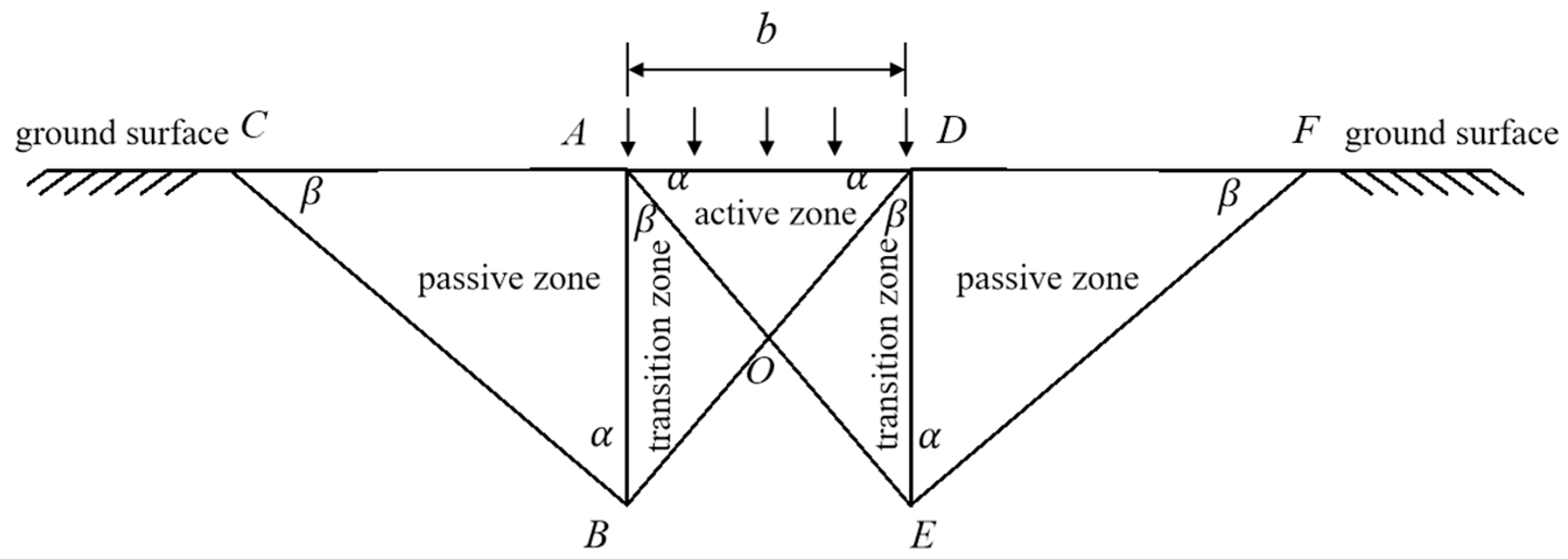
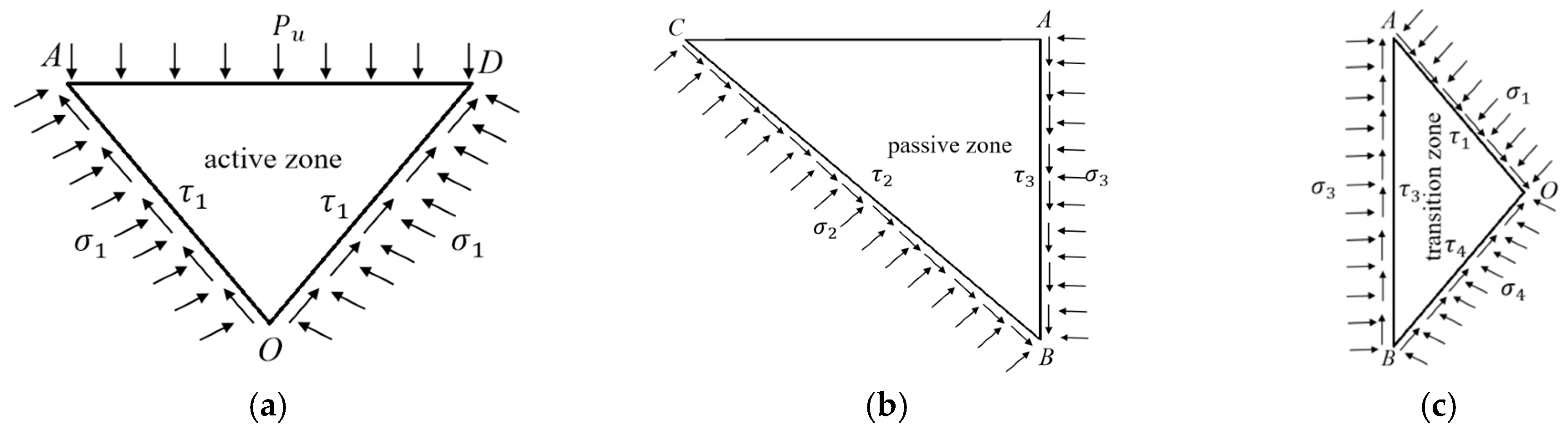
2.1. Simplified Algorithm for the Bearing Capacity
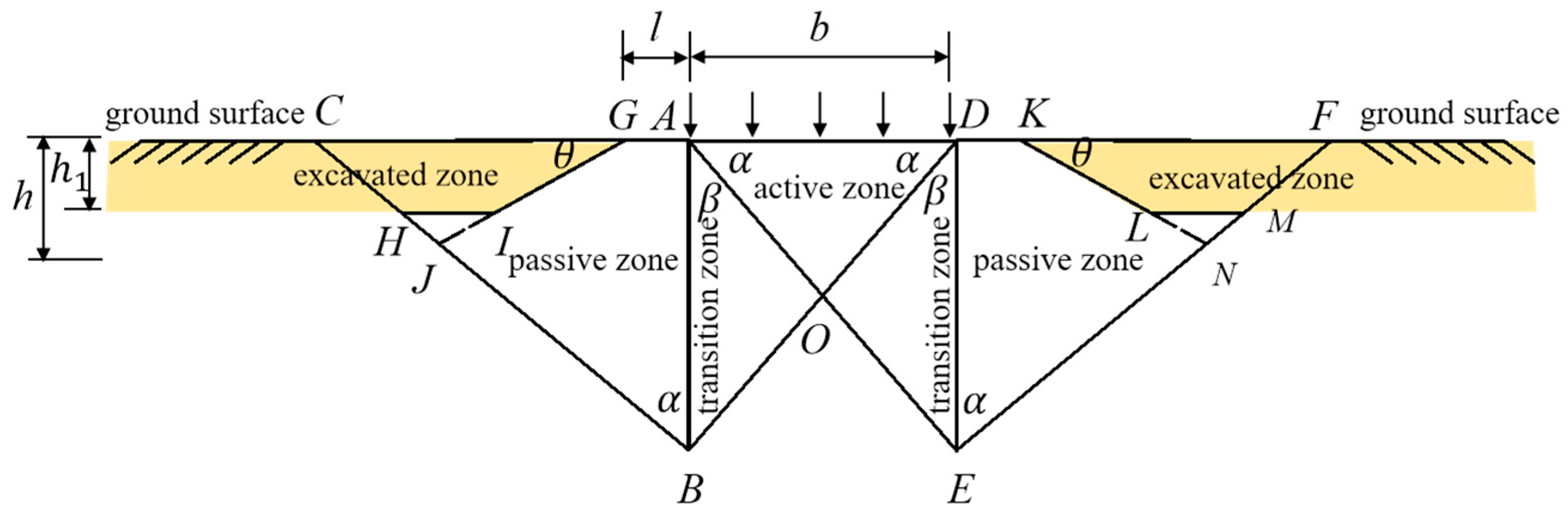
2.2. Foundation Bearing Capacity Considering Caisson Excavation
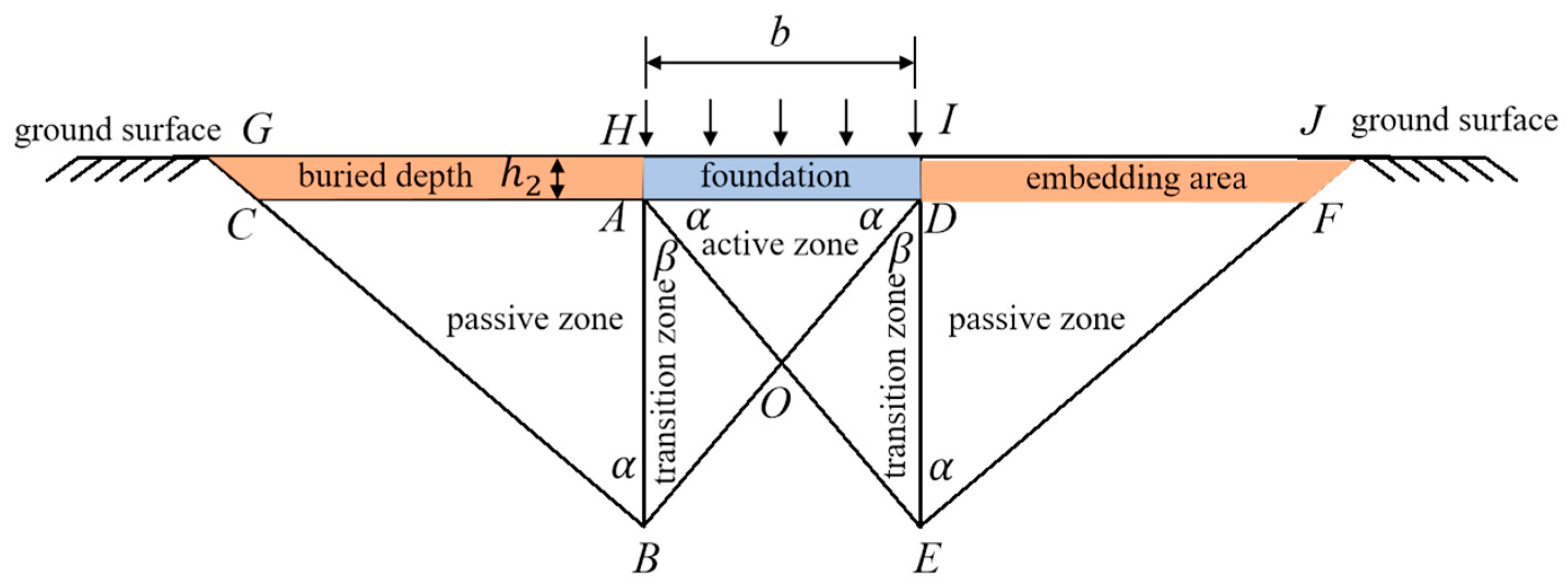
2.3. Foundation Bearing Capacity Considering the Burial Depth of the Foundation
2.4. Foundation Bearing Capacity Considering the 3D Effects of the Structure
3. Interaction Relationship Between Sinking Attitude and Soil
4. Active Control Method for the Singking of Large-Scale Caissons
5. Engineering Application
6. Conclusions
- (1)
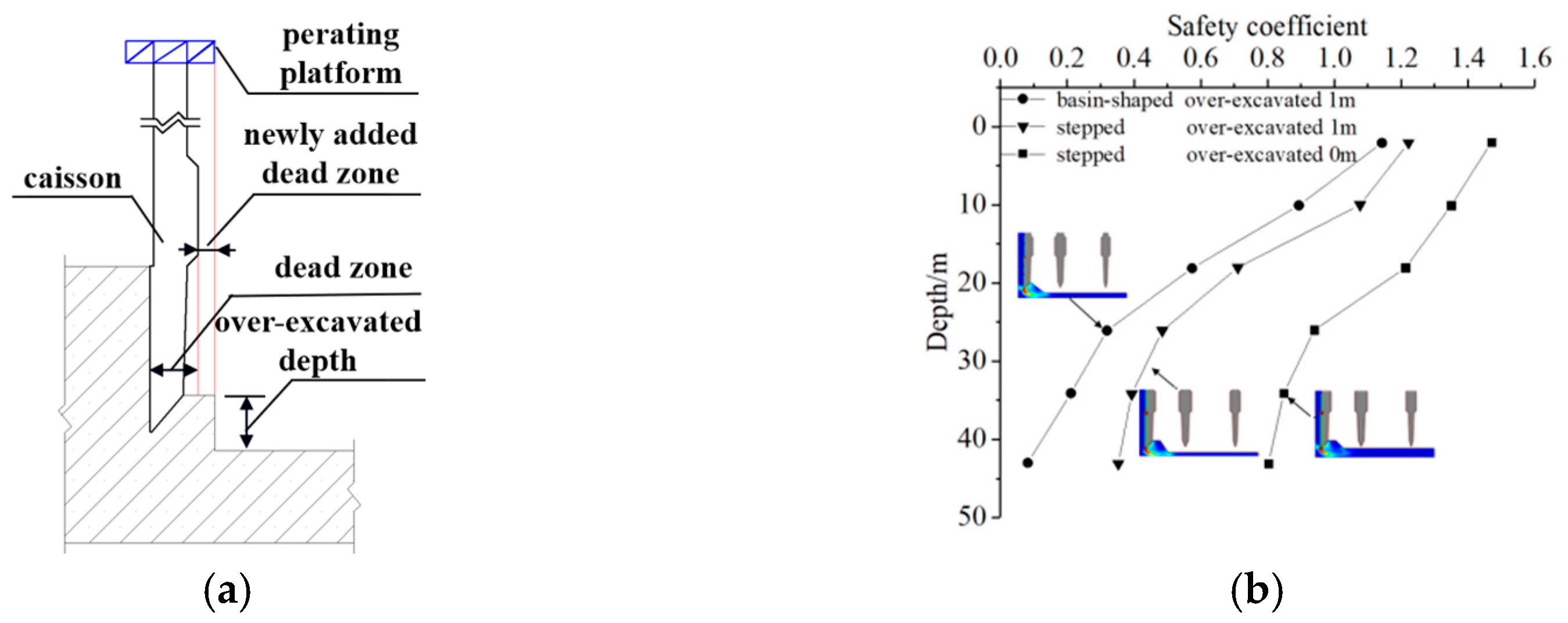
- A simplified algorithm for evaluating end resistance was developed by assuming bilateral shear failure beneath the caisson and representing slip lines as segmented lines. The influence of excavation and burial at the caisson base on end resistance was analyzed. Based on these insights, calculation formulas were derived for end resistance under varying excavation angles and depths, as well as for different foundation embedment depths.
- (2)
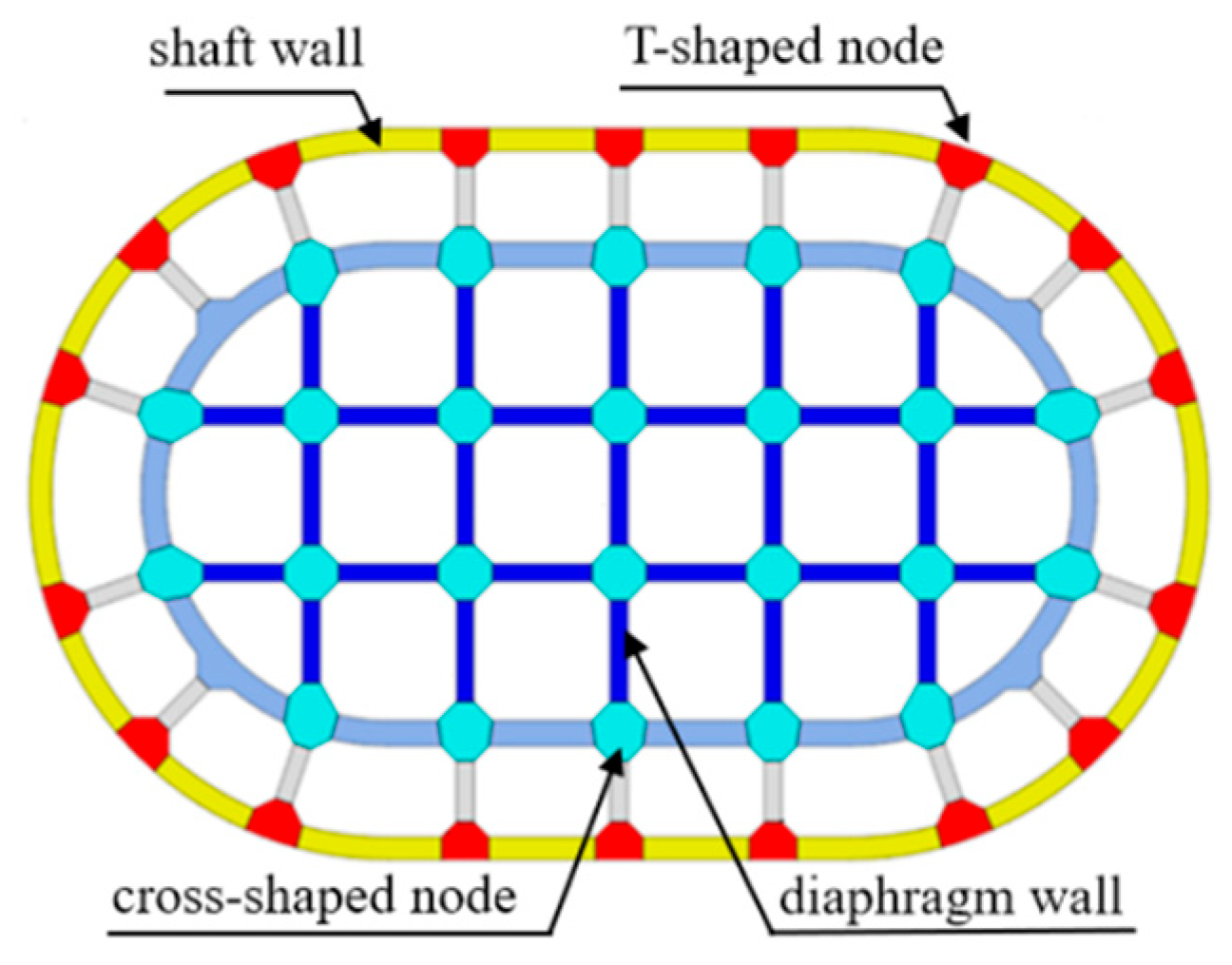
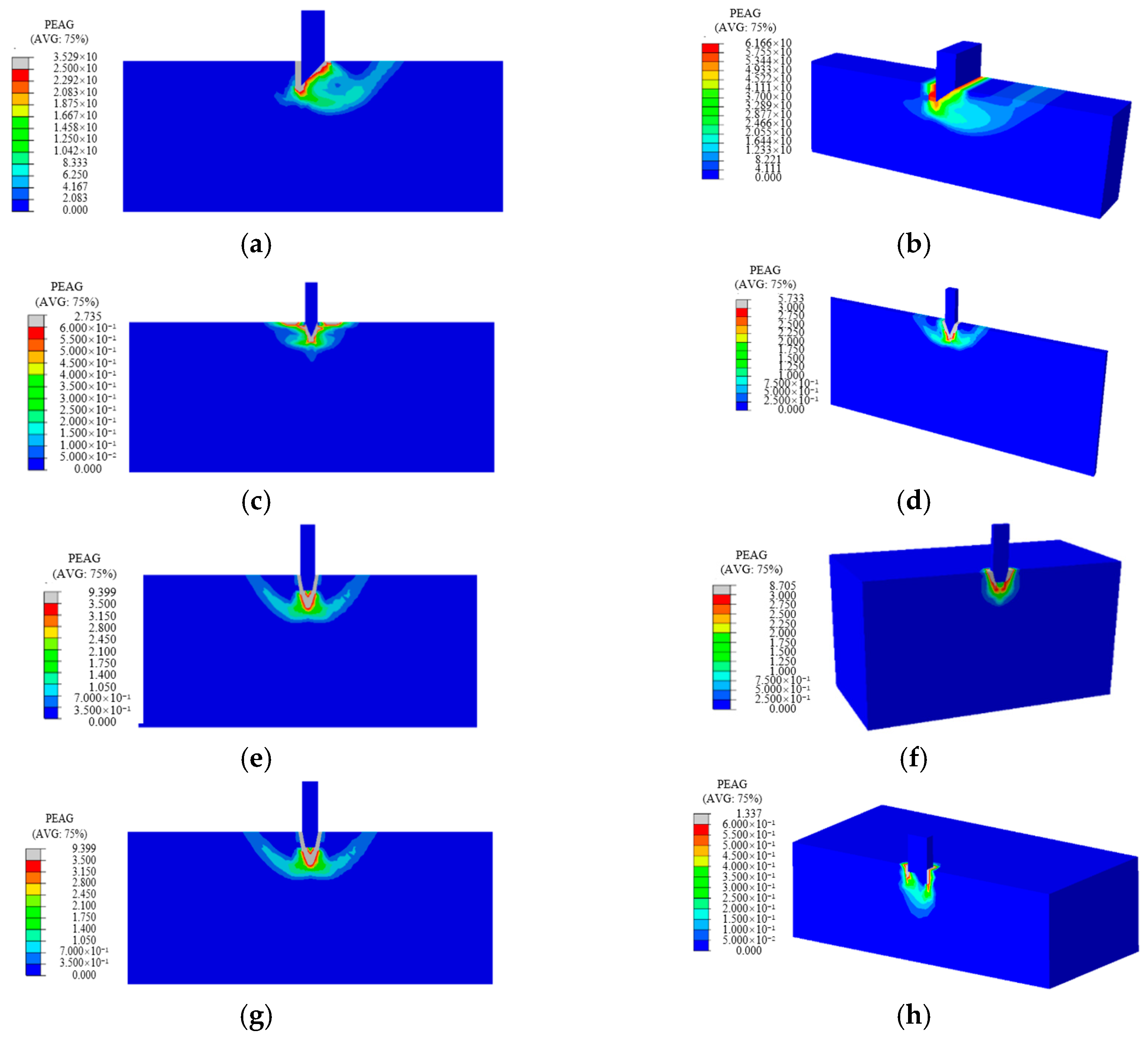
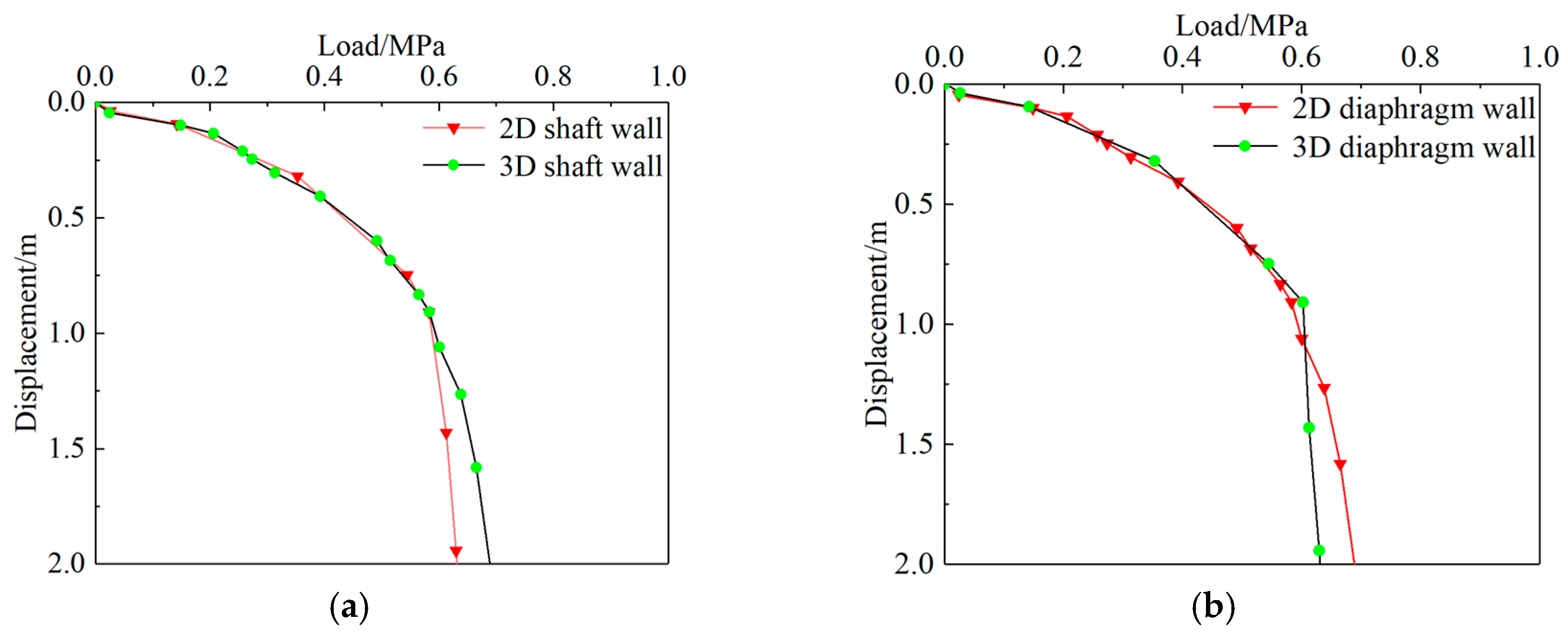
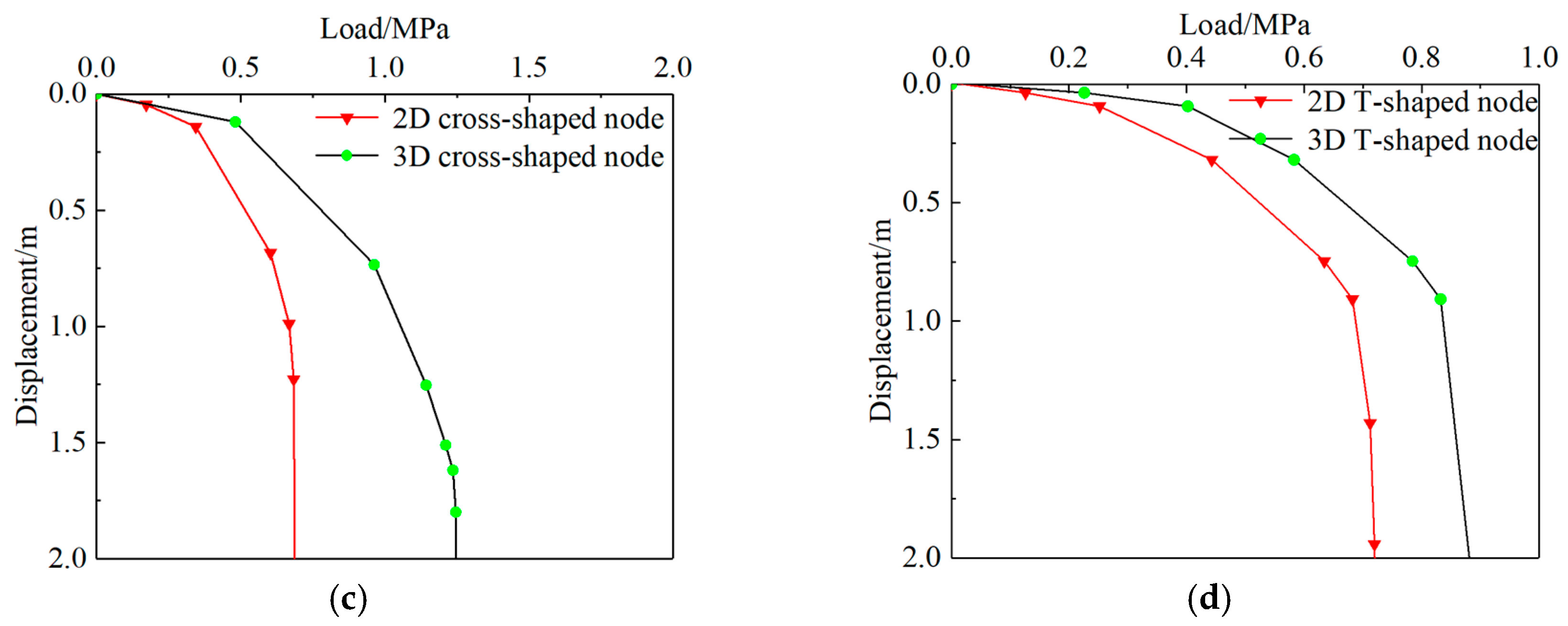
- A correction coefficient, , was introduced to account for the 3D effects at various structural locations of the caisson foundation. Recommended values for are 1.0 for the cutting edges of the shaft wall and diaphragm walls, 1.8 for cross-shaped nodes, and 1.15 for T-shaped nodes.
- (3)
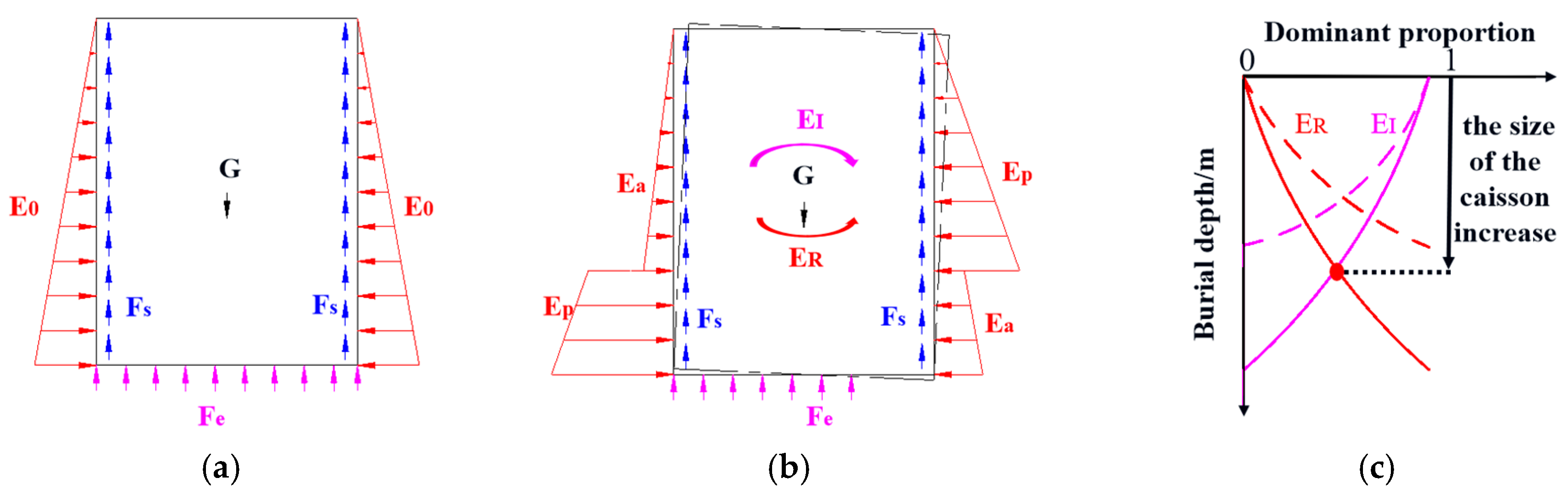
- The relative contributions of inclining and resisting moments to caisson alignment were found to vary with sinking depth. In the case of large-scale caisson construction, end resistance emerged as the dominant factor influencing the caisson’s orientation.
- (4)
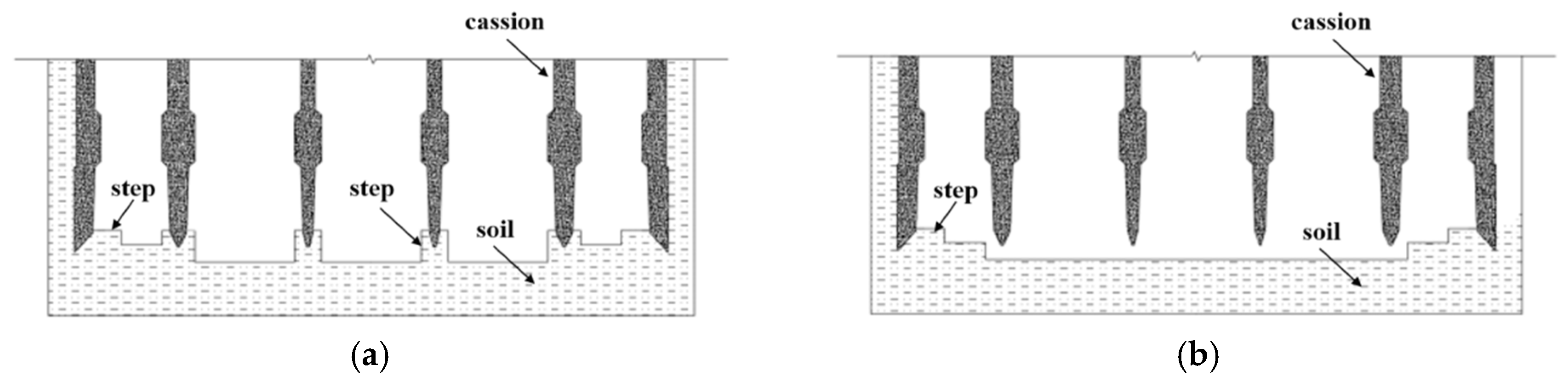
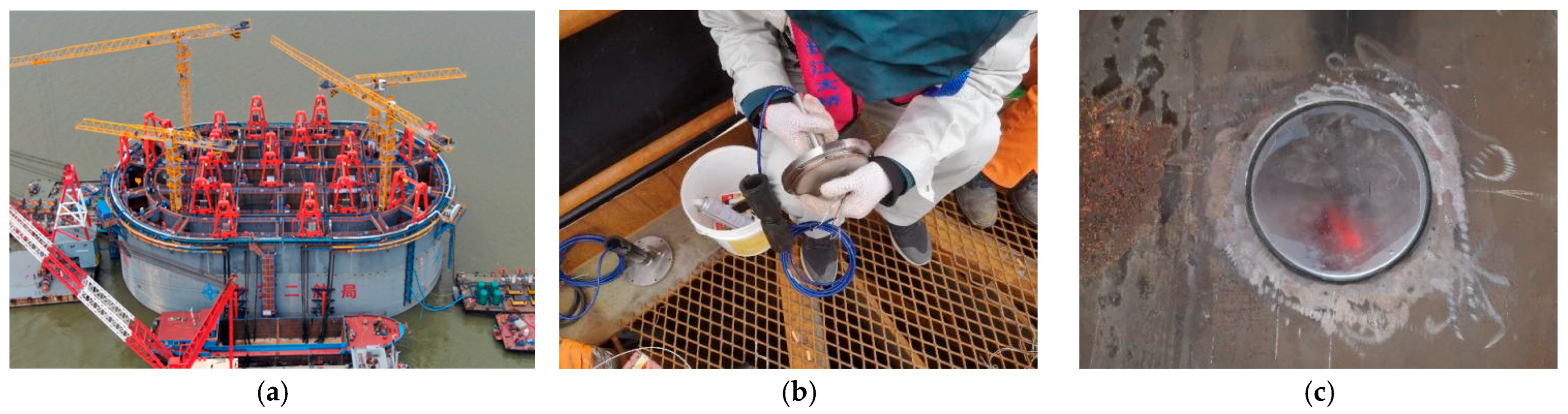
- A “stepped progressive” control strategy for caisson sinking was proposed. This method enabled active regulation of both the width and burial depth of the supporting soil at the caisson base, effectively addressing common issues such as cracking and sand boiling. The method was successfully implemented in the sinking operation of Pier No. 5 of the Changzhou-Taixing Yangtze River Bridge, ensuring high precision and controllable construction performance.
Author Contributions
Funding
Data Availability Statement
Conflicts of Interest
References
- Templeman, J.O.; Phillips, B.M.; Sheil, B.B. Cutting shoe design for open caissons in sand: Influence on vertical bearing capacity. Proc. Inst. Civ. Eng. Geotech. Eng. 2023, 176, 58–73. [Google Scholar] [CrossRef] [Scilit]
- Suppakul, R.; Chavda, J.T.; Jitchaijaroen, W.; Keawsawasvong, S.; Rattanadecho, P. Soft computing-based models for estimating undrained bearing capacity factor of open Caisson in heterogeneous clay. Geotech. Geol. Eng. 2024, 42, 5335–5361. [Google Scholar] [CrossRef] [Scilit]
- Keskin, M.S.; Laman, M. Model studies of bearing capacity of strip footing on sand slope. KSCE J. Civ. Eng. 2013, 17, 699–711. [Google Scholar] [CrossRef] [Scilit]
- Jiang, B.N.; Wang, M.T.; Chen, T.; Zhang, L.L.; Ma, J.L. Experimental study on the migration regularity of sand outside a large, deep-water, open caisson during sinking. Ocean Eng. 2019, 193, 45–53. [Google Scholar] [CrossRef] [Scilit]
- Lai, F.; Zhang, N.; Liu, S.; Sun, Y.; Li, Y. Ground movements induced by installation of twin large diameter deeply-buried caissons: 3D numerical modeling. Acta Geotech. 2021, 16, 2933–2961. [Google Scholar] [CrossRef] [Scilit]
- Zhang, J. Numerical simulation on the whole sinking process of open caisson with an improved SPH method. Math. Probl. Eng. 2021, 2021, 6699880. [Google Scholar] [CrossRef] [Scilit]
- Guo, M.; Dong, X.; Li, J. Study on the earth pressure during sinking stage of super large caisson foundation. Appl. Sci. 2021, 11, 10488. [Google Scholar] [CrossRef] [Scilit]
- Yan, X.; Zhan, W.; Hu, Z.; Xiao, D.; Yu, Y.; Wang, J. Field study on deformation and stress characteristics of large open caisson during excavation in deep marine soft clay. Adv. Civ. Eng. 2021, 2021, 7656068. [Google Scholar] [CrossRef] [Scilit]
- Yea, G.G.; Kim, T.H. Vertical cutting edge forces measured during the sinking of pneumatic caisson. Mar. Georesour. Geotechnol. 2012, 30, 103–121. [Google Scholar] [CrossRef] [Scilit]
- Sobhan, K. Principles of Geotechnical Engineering, 8th ed.; Cengage Learning: Boston, MA, USA, 2012; pp. 1–13. [Google Scholar]
- Royston, R.; Sheil, B.; Byrne, B.W. Monitoring the construction of a large-diameter caisson in sand. Proc. Inst. Civ. Eng. Geotech. Eng. 2022, 175, 323–339. [Google Scholar] [CrossRef] [Scilit]
- Zhou, X.; Zhang, X. Thoughts on the development of bridge technology in China. Engineering 2019, 5, 1120–1130. [Google Scholar] [CrossRef] [Scilit]
- Hoang, N.D. Image processing-based pitting corrosion detection using metaheuristic optimized multilevel image thresholding and machine-learning approaches. Math. Probl. Eng. 2020, 2020, 6765274. [Google Scholar] [CrossRef] [Scilit]
- Kong, X.; Li, J. Vision-based fatigue crack detection of steel structures using video feature tracking. Comput. Aided Civ. Infrastruct. Eng. 2018, 33, 783–799. [Google Scholar] [CrossRef] [Scilit]
- Gordan, M.; Razak, H.A.; Ismail, Z.; Ghaedi, K.; Tan, Z.X.; Ghayeb, H.H. A hybrid ANN-based imperial competitive algorithm methodology for structural damage identification of slab-on-girder bridge using data mining. Appl. Soft Comput. 2020, 88, 16–23. [Google Scholar] [CrossRef] [Scilit]



| Unit Weight (kN/m3) | Cohesion (kPa) | Internal Friction Angle (°) | Compression Modulus (MPa) |
|---|---|---|---|
| 19.9 | 5.6 | 31.4 | 10.19 |
| Excavation State | Dense Coarse Sand | Dense Fine Sand | Silty Clay | ||||||
|---|---|---|---|---|---|---|---|---|---|
| Field Monitoring Data (kPa) | Theoretically Calculated Result (kPa) | Error % | Field Monitoring Data (kPa) | Theoretically Calculated Result (kPa) | Error % | Field Monitoring Data (kPa) | Theoretically Calculated Result (kPa) | Error % | |
| Burial depth of 0 m | 843 | 885 | 5 | 713 | 752 | 5.5 | 412 | 429 | 4.1 |
| Over-excavated by 0.5 m | 638 | 570 | −11 | 545 | 493 | −9.5 | 238 | 249 | 4.6 |
| Over-excavated by 1.0 m | 406 | 462 | 14 | 331 | 399 | 21 | 194 | 169 | −13 |
| Component | Dense Coarse Sand | Dense Fine Sand | Silty Clay | |||
|---|---|---|---|---|---|---|
| Pressure (kPa) | Correction Coefficient | Pressure (kPa) | Correction Coefficient | Pressure (kPa) | Correction Coefficient | |
| Diaphragm wall | 843 | 1.0 | 713 | 1.0 | 412 | 1.0 |
| Cross-shaped node | 1485 | 1.76 | 1296 | 1.82 | 772 | 1.87 |
| Cutting edge of the shaft wall | 865 | 1.0 | 694 | 1.0 | 408 | 1.0 |
| T-shaped node | 1032 | 1.19 | 802 | 1.16 | 467 | 1.14 |
Disclaimer/Publisher’s Note: The statements, opinions and data contained in all publications are solely those of the individual author(s) and contributor(s) and not of MDPI and/or the editor(s). MDPI and/or the editor(s) disclaim responsibility for any injury to people or property resulting from any ideas, methods, instructions or products referred to in the content. |
© 2026 by the authors. Licensee MDPI, Basel, Switzerland. This article is an open access article distributed under the terms and conditions of the Creative Commons Attribution (CC BY) license.
Share and Cite
Zhang, H.; Li, D.; Ji, F.; Wang, Y. The Sinking Mechanism and Active Control Method for Large-Scale Caissons. Symmetry 2026, 18, 80. https://doi.org/10.3390/sym18010080
Zhang H, Li D, Ji F, Wang Y. The Sinking Mechanism and Active Control Method for Large-Scale Caissons. Symmetry. 2026; 18(1):80. https://doi.org/10.3390/sym18010080
Chicago/Turabian StyleZhang, Hong, Dejie Li, Fuquan Ji, and Yongwei Wang. 2026. "The Sinking Mechanism and Active Control Method for Large-Scale Caissons" Symmetry 18, no. 1: 80. https://doi.org/10.3390/sym18010080
APA StyleZhang, H., Li, D., Ji, F., & Wang, Y. (2026). The Sinking Mechanism and Active Control Method for Large-Scale Caissons. Symmetry, 18(1), 80. https://doi.org/10.3390/sym18010080