Nonlinear Hydrogen Bond Network in Small Water Clusters: Combining NMR, DFT, FT-IR, and EIS Research

 ,
, 
Abstract
1. Introduction
2. Materials and Methods
2.1. Physicochemical Composition
2.2. Nuclear Magnetic Resonance (NMR)
2.3. Hydrogen Bond Network and Water Clusters
2.4. Theoretical Calculations
2.5. Fourier Transform Infrared (FT-IR) Spectroscpy
2.6. Electrochemical Impedance Spectroscopy (EIS)
3. Results
3.1. Nuclear Magnetic Resonance (NMR)
3.2. GIAO-DFT Calculations of NMR Chemical Shifts Based on MP2 Geometries
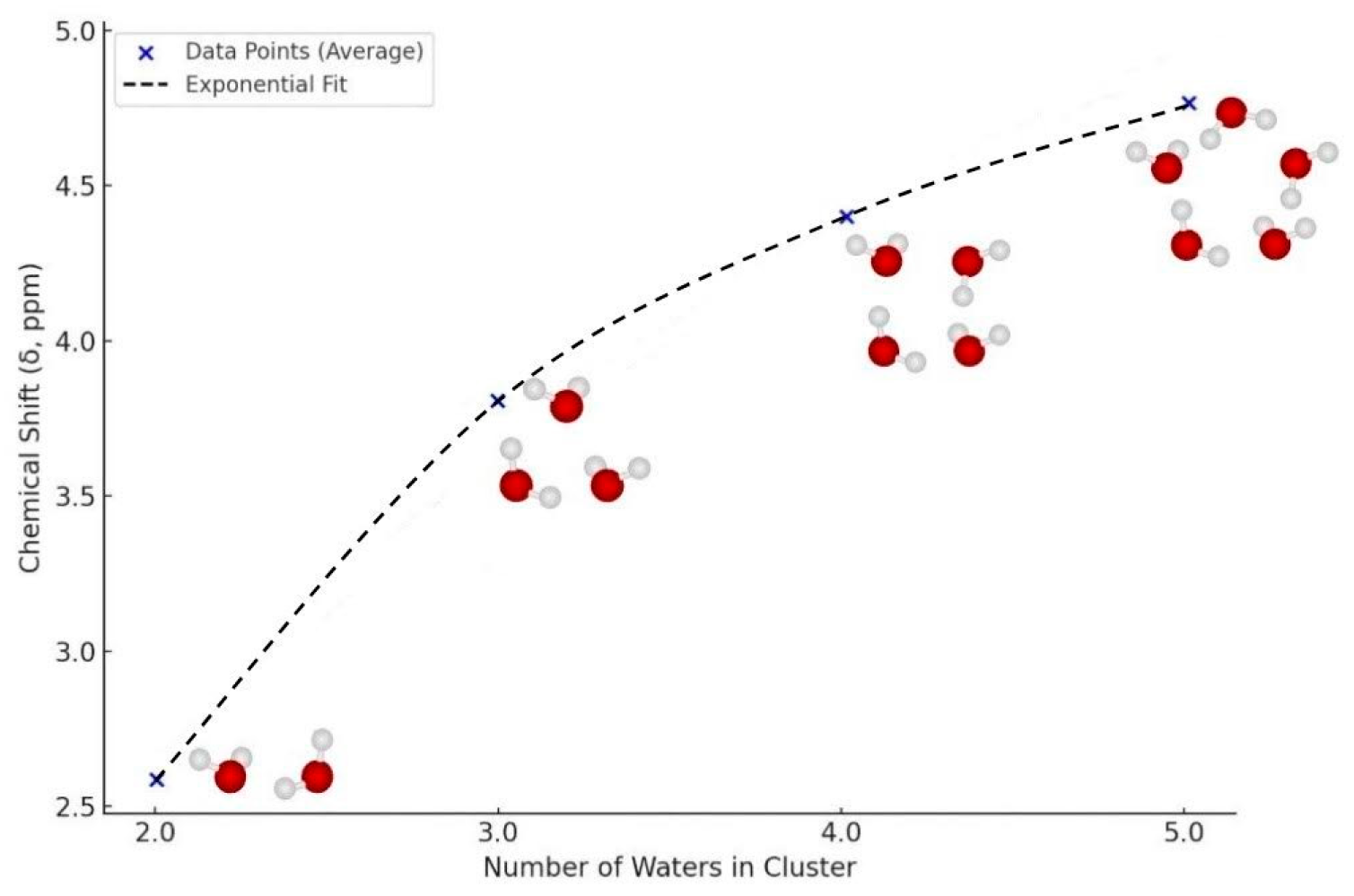
- Theoretical model: δ (n) = 1.94 + 3.20 (1 − e−0.605n);
- Model-MP2/6-31G*: δ (n) = 1.89 + 3.10 (1 − e−0.678n);
- Model-MP2/aug-cc-pVTZ: δ (n) = 1.62 + 3.50 (1 − e−0.760n).
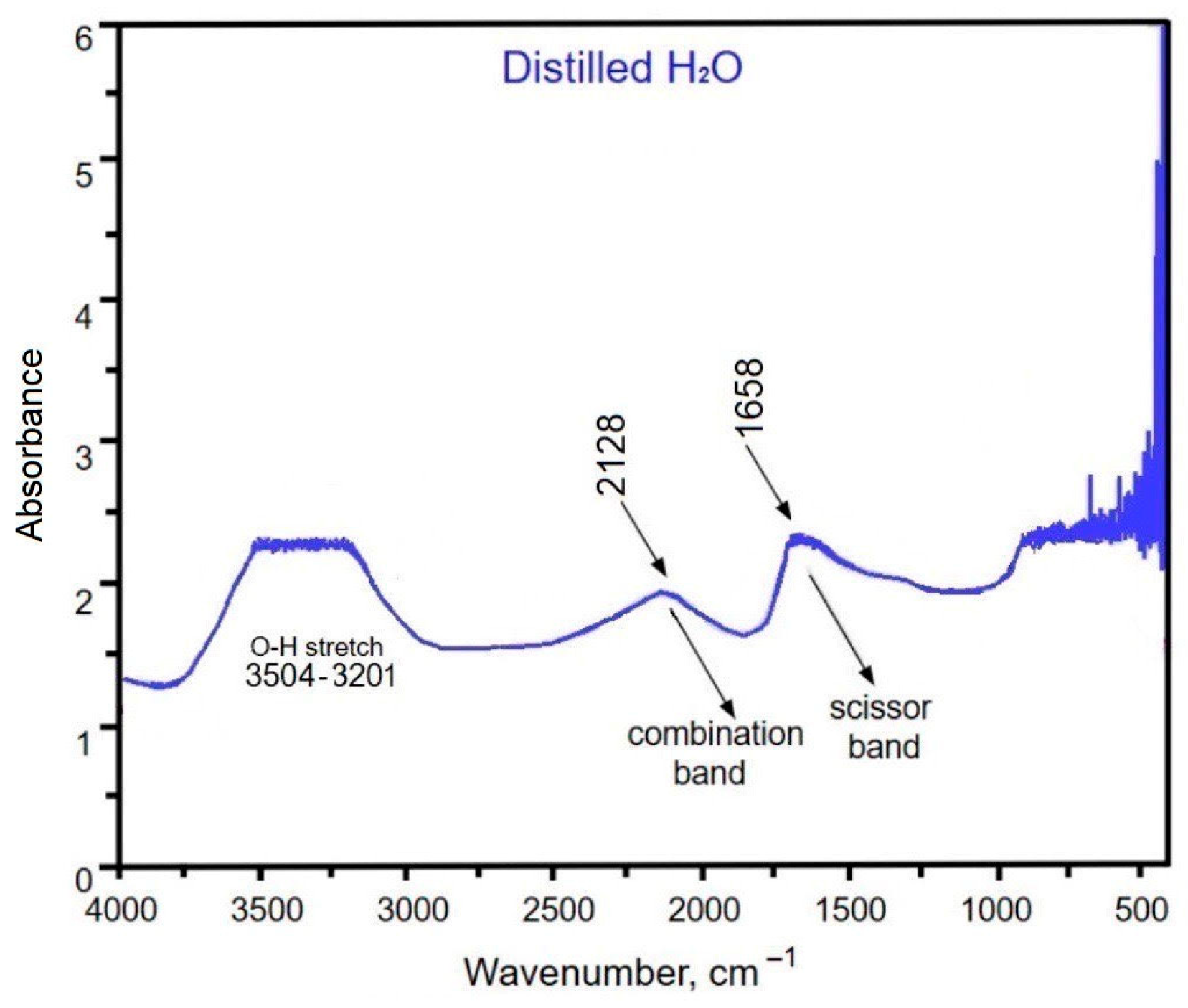
3.3. Fourier-Transform Infrared (FT-IR) Spectroscopy
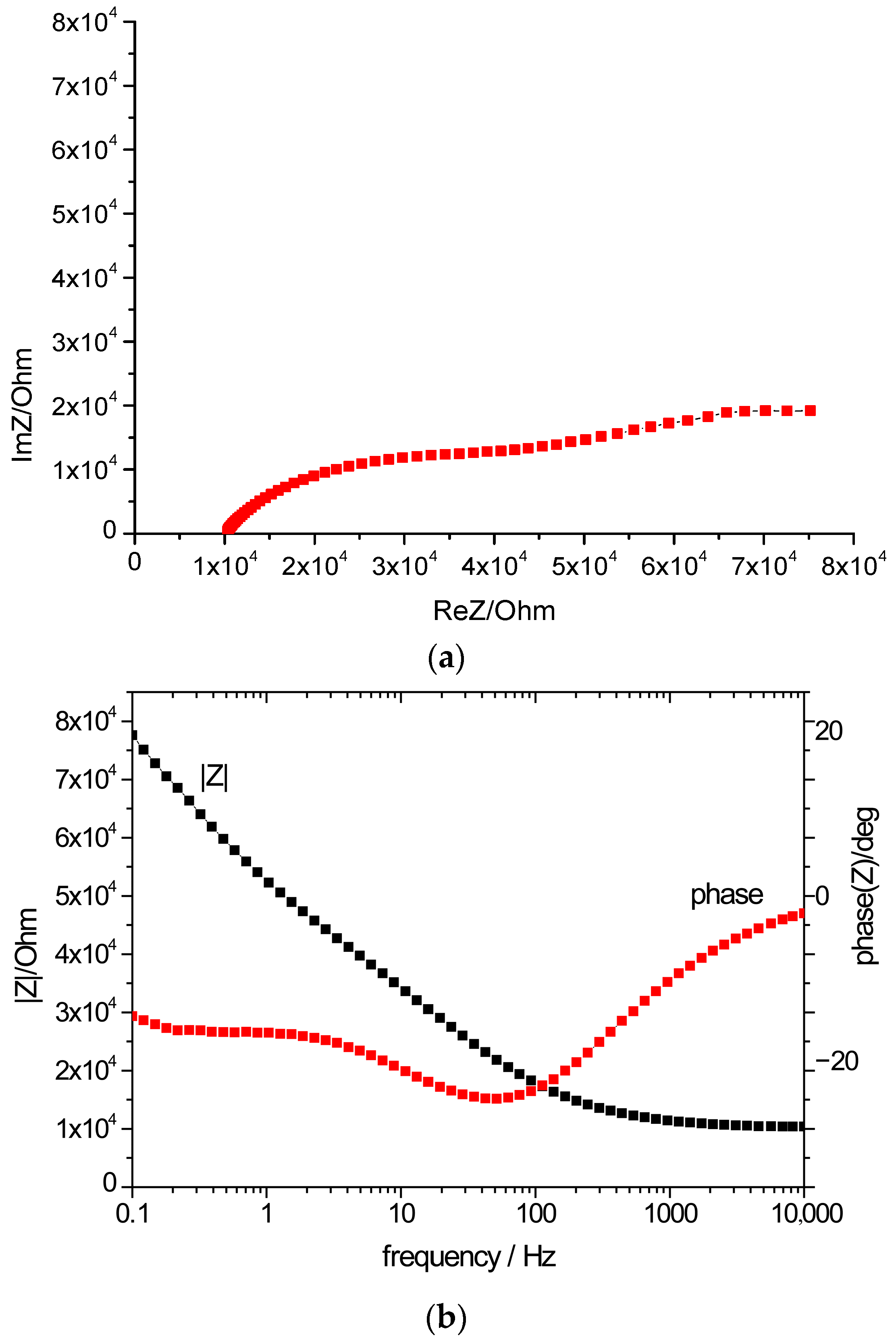
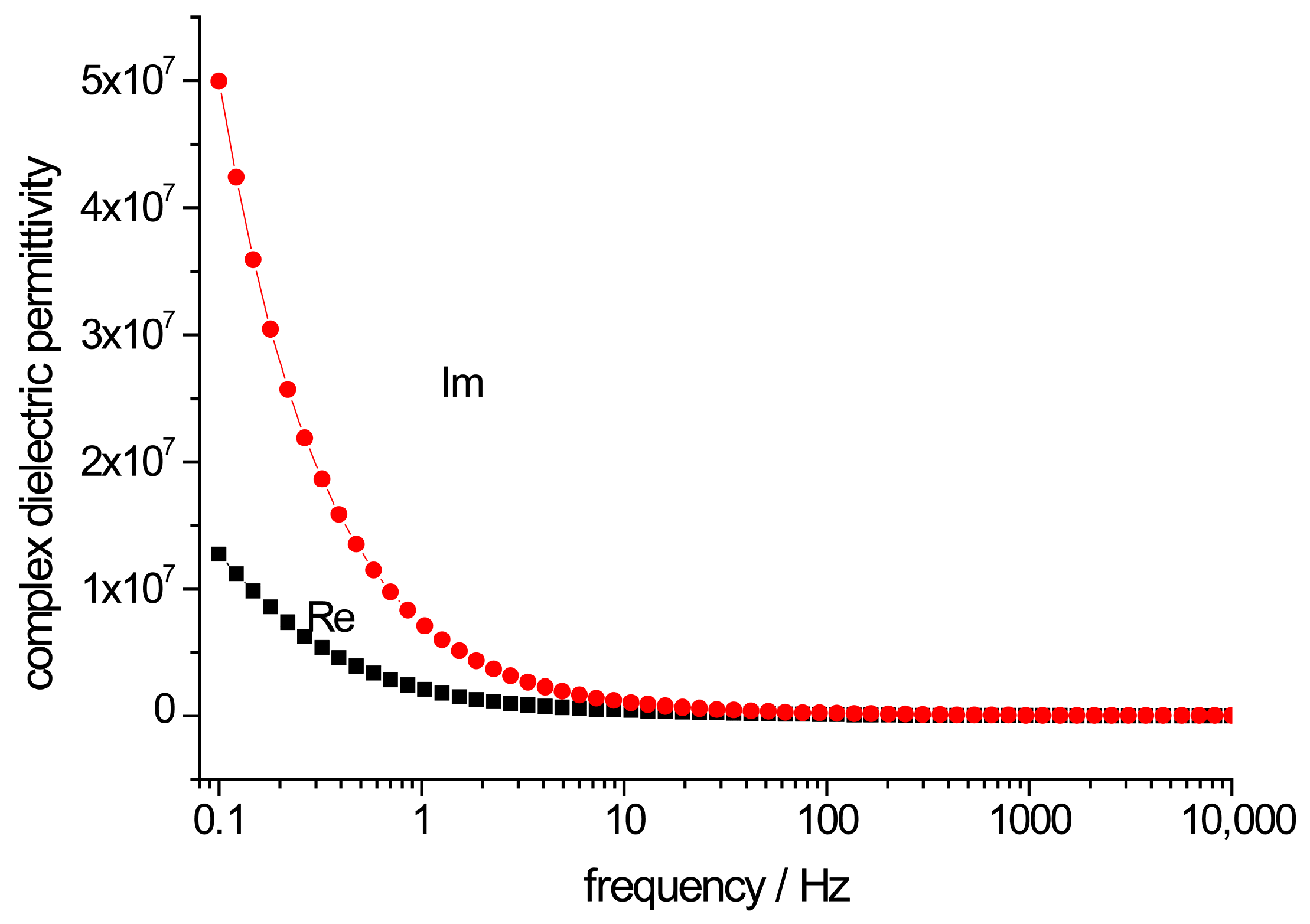
3.4. Electrochemical Impedance Spectroscopy (EIS) Results
4. Conclusions
Author Contributions
Funding
Data Availability Statement
Conflicts of Interest
References
- Kontogeorgios, G.M.; Holster, A.; Kottaki, N.; Tsochantaris, E.; Topsøe, F.; Poulsen, J.; Bache, M.; Liang, X.; Blom, N.; Kronholm, J. Water structure, properties and applications—A review. Chem. Thermodyn. Therm. Anal. 2022, 6, 100053. [Google Scholar] [CrossRef] [Scilit]
- Tyrovolas, I.J. New explanation for the Mpemba Effect. Proceedings 2020, 46, 2. [Google Scholar]
- Kurotobi, K.; Murata, Y. A single molecule of water encapsulated in fullerene C60. Science 2011, 333, 6042. [Google Scholar] [CrossRef] [Scilit]
- Xie, F.; Tikhonov, D.S.; Schell, M. Electric nuclear quadrupole coupling reveals dissociation of HCl with a few water molecules. Science 2024, 384, 1435–1440. [Google Scholar] [CrossRef] [Scilit]
- Maheshwary, S.; Patel, N.; Sathyamurthy, N.; Kuljarni, A.D.; Gadre, S.R. Structure and stability of water clusters (H2O)n, n=8–20: An ab initio investigation. Phys. Chem. A 2001, 105, 10525–10537. [Google Scholar]
- Gregory, J.K.; Clary, D.C. Structure of water clusters. The contribution of many-body forces, monomer relaxation, and vibrational zero-point energy. J. Phys. Chem. 1996, 100, 18014–18022. [Google Scholar] [CrossRef] [Scilit]
- Mandziuk, M. From the trimer, through the pentamer, to liquid water. J. Mol. Strut. 2019, 1177, 168–176. [Google Scholar] [CrossRef] [Scilit]
- Liu, K.; Brown, M.G.; Cruzan, J.D.; Saykally, R.J. Terahertz laser spectroscopy of the water pentamer: Structure and hydrogen bond rearrangement. J. Phys. Chem. A 1997, 101, 9011–9021. [Google Scholar] [CrossRef] [Scilit]
- Guggemos, N.; Slavcek, P.; Kresin, V. Electric dipole moments of nanosolvated acid molecules in water clusters. Phys. Rev. Lett. 2015, 114, 043401. [Google Scholar] [CrossRef] [Scilit]
- Ramachandran, C.N.; Sathyamurthy, N. Water clusters in a confined nonpolar environment. Chem. Phys. Lett. 2005, 410, 348–351. [Google Scholar] [CrossRef] [Scilit]
- European Union. Directive (EU) 2020/2184 of the European Parliament and of the Council of 16 December 2020 on the Quality of Water Intended for Human Consumption; European Union: Brussels, Belgium, 2020. [Google Scholar]
- Ignatov, I. Review of different types of mountain springs and mineral waters from Bulgaria based on their natural origin and health benefits. Med. Perspeeackt. 2023, 51, 199–206. [Google Scholar] [CrossRef] [Scilit]
- Ignatov, I.; Marinov, Y.G.; Vassileva, P.; Popova, T.P.; Gluhchev, G.; Iliev, M.T.; Huether, F.; Dimitrov, Z.; Gotova, I. Formation of ice Ih clusters in solid-phase glacial water with low concentrations of Ca2+ and Mg2+ ions. Crystals 2025, 15, 254. [Google Scholar] [CrossRef] [Scilit]
- Stroobants, K.; Absillis, G.; Shestakova, P.S.; Willem, R.; Parac-Vogt, T.N. Hydrolysis of tetraglycine by a Zr(IV)-substituted Wells-Dawson polyoxotungstate studied by diffusion ordered NMR spectroscopy. J. Clust. Sci. 2014, 25, 855–866. [Google Scholar] [CrossRef] [Scilit]
- Vassilev, N.; Ignatov, I.; Popova, T.P.; Huether, F.; Ignatov, A.I.; Iliev, M.T.; Marinov, Y. Nuclear Magnetic Resonance (NMR) and Density Functional Theory (DFT) study of water clusters of Hydrogen-rich water (HRW). Water 2024, 16, 3261. [Google Scholar] [CrossRef] [Scilit]
- Shields, R.M.; Temelso, B.; Archer, K.A.; Morrell, T.E.; Shields, G.C. Accurate predictions of water cluster formation, (H2O)n=2–10. J. Phys. Chem. A. 2010, 114, 11725–11737. [Google Scholar] [CrossRef] [Scilit]
- Frisch, M.J.; Trucks, G.W.; Schlegel, H.B.; Scuseria, G.E.; Robb, M.A.; Cheeseman, J.R.; Scalmani, G.; Barone, V.P.G.A.; Petersson, G.A.; Nakatsuji, H.J.W.C.; et al. Gaussian 16, Revision C.01; Gaussian Inc.: Wallingford, CT, USA, 2019. [Google Scholar]
- Ferretti, A.; Canal, L.; Sorodoc, R.A.; Sinha, S.; Brancato, G. Fine Tuning the Intermolecular Interactions of Water Clusters Using the Dispersion-Corrected Density Functional Theory. Molecules 2023, 28, 3834. [Google Scholar] [CrossRef] [Scilit]
- Sun, N.; Li, Z.; Qiu, N.; Yu, X.; Zhang, X.; Li, Y.; Yang, L.; Luo, K.; Huang, Q.; Du, S. Ab initio studies on the clathrate hydrates of some nitrogen- and sulfur-containing gases. J. Phys. Chem. A 2017, 121, 2620–2626. [Google Scholar] [CrossRef] [Scilit]
- Yang, N.; Duong, C.H.; Kelleher, P.J.; Johnson, M.A. Capturing intrinsic site-dependent spectral signatures and lifetimes of isolated OH oscillators in extended water networks. Nat. Chem. 2020, 12, 159–164. [Google Scholar] [CrossRef] [Scilit]
- Rakshit, A.; Bandyopadhyay, P.; Heindel, J.P.; Xantheas, S.S. Atlas of putative minima and low-lying energy networks of water clusters n = 3–25. J. Chem. Phys. 2019, 151, 214307. [Google Scholar] [CrossRef] [Scilit]
- Nawar, F.A.; Saeed, B.A.; Hansen, P.E. Structural studies of intramolecularly hydrogen-bonded vinylogous thiocarboxamides. NMR and isotope experiments and a DFT theoretical study. J. Mol. Struct. 2025, 1338, 142321. [Google Scholar] [CrossRef] [Scilit]
- Ditchfield, R. Self-consistent perturbation theory of diamagnetism. Mol. Phys. 1974, 27, 789–807. [Google Scholar] [CrossRef] [Scilit]
- Klein, R.A. Ab initio conformational studies on diols and binary diol-water systems using DFT methods. Intramolecular hydrogen bonding and 1:1 complex formation with water. J. Comput. Chem. 2002, 23, 585–599. [Google Scholar] [CrossRef] [Scilit]
- Qian, P.; Song, W.; Lu, L.; Yang, Z. Ab initio investigation of water clusters (H2O)n (n = 2–34). Int. J. Quantum Chem. 2010, 110, 1923–1937. [Google Scholar] [CrossRef] [Scilit]
- Slavov, D.; Tomaszewska, E.; Grobelny, J.; Drenchev, N.; Karashanova, D.; Peshev, Z.; Bliznakova, I. FTIR spectroscopy revealed nonplanar conformers, chain order, and packaging density in diOctadecylamine- and octadecylamine-passivated gold nanoparticles. J. Mol. Struct. 2024, 1314, 138827. [Google Scholar] [CrossRef] [Scilit]
- Wang, S.; Zhang, J.; Gharbi, O.; Vivier, V.; Gao, M.; Orazem, M. Electrochemical impedance spectroscopy. Nat. Rev. Methods Primers 2021, 1, 41. [Google Scholar] [CrossRef] [Scilit]
- Vlakhov, T.; Marinov, Y.G.; Hadjichristov, G.; Scaramuzza, N. Electrical conductivity properties of solid polymer electrolytes PEO-PVP-NaIO4 filled with TiO2 nanoparticles. Proc. Bulg. Acad. Sci. 2022, 75, 804–811. [Google Scholar] [CrossRef] [Scilit]
- Koduru, H.K.; Scarpelli, F.; Marinov, Y.G.; Hadjichristov, G.G.; Rafailov, P.M.; Miloushev, I.K.; Petrov, A.G.; Godbert, N.; Bruno, L.; Scaramuzza, N. Characterization of PEO/PVP/GO nanocomposite solid polymer electrolyte membranes: Microstructural, thermo-mechanical, and conductivity properties. Ionics 2018, 24, 3459. [Google Scholar] [CrossRef] [Scilit]
- Hickey, A.L.; Rowley, C.N. Benchmarking quantum chemical methods for the calculation of molecular dipole moments and polarizabilities. J. Phys. Chem. A 2014, 118, 3678–3687. [Google Scholar] [CrossRef] [Scilit]
- Luzar, A.; Chandler, D. Hydrogen-bond kinetics in liquid water. Nature 1996, 379, 55–57. [Google Scholar] [CrossRef] [Scilit]
- Ohno, K.; Okimura, M.; Akai, N.; Katsumoto, Y. The effect of cooperative hydrogen bonding on the OH stretching-band shift for water clusters studied by matrix-isolation infrared spectroscopy and density functional theory. Phys. Chem. Chem. Phys. 2005, 7, 3005–3014. [Google Scholar] [CrossRef] [Scilit]
- Max, J.-J.; Chapados, C.I. Isotope effects in liquid water by infrared spectroscopy. IV. No free OH groups in liquid water. J. Chem. Phys. 2010, 133, 164509. [Google Scholar] [CrossRef] [Scilit]
- Ikemoto, Y.; Harada, Y.; Tanaka, Y.; Nishimura, S.-N.; Murakami, D.; Kurahashi, N.; Moriwaki, T.; Yamazoe, K.; Washizu, H.; Ishii, Y.; et al. Infrared spectra and hydrogen-bond configurations of water molecules at the interface of water-insoluble polymers under humidified conditions. J. Phys. Chem. B 2022, 126, 4143–4151. [Google Scholar] [CrossRef] [Scilit]
- Skinner, J.L.; Pieniazek, P.A.; Gruenbaum, S.M. Vibrational spectroscopy of water at interfaces. Acc. Chem. Res. 2012, 45, 93–100. [Google Scholar] [CrossRef] [Scilit]
- Malloum, A.; Fifen, J.J.; Dhaouadi, Z.; Engo, S.G.N.; Conradie, J. Structures, relative stability and binding energies of neutral water clusters, (H2O)2–30. New J. Chem. 2019, 43, 13020–13037. [Google Scholar] [CrossRef] [Scilit]
- Verma, A.; Stoppelman, J.P.; McDaniel, J.G. Tuning water networks via Ionic liquid/water mixtures. Int. J. Mol. Sci. 2020, 21, 403. [Google Scholar] [CrossRef] [Scilit]
- Seki, T.; Chiang, K.-Y.; Yu, C.-C.; Yu, X.; Okuno, M.; Hunger, J.; Nagata, Y.; Bonn, M. The bending mode of water: A powerful probe for hydrogen bond structure of aqueous system. J. Phys. Chem. Lett. 2020, 11, 8459–8469. [Google Scholar] [CrossRef] [Scilit]
- Verma, P.K.; Kundu, A.; Puretz, M.S.; Dhoonmoon, C.; Cheswidden, O.S.; Londergan, C.H.; Cho, M. The bend+libration combination band is an intrinsic, collective, and strongly solute-dependent reporter on the hydrogen bonding network of liquid water. Phys. Chem. B 2018, 122, 2587–2599. [Google Scholar] [CrossRef] [Scilit]
- Xantheas, S.S. On the importance of the water pentamer in hydrogen-bonded water clusters. J. Chem. Phys. 1994, 100, 7523–7534. [Google Scholar]
- Wales, D.J.; Hodges, M.P. Global minima of water clusters (H2O)n, n ≤ 21, described by empirical potentials. Chem. Phys. Lett. 1998, 286, 65–72. [Google Scholar] [CrossRef] [Scilit]
- Keutsch, F.N.; Saykally, R.J. Water clusters: Untangling the mysteries of the liquid, one molecule at a time. Proc. Natl. Acad. Sci. USA 2001, 98, 10533–10540. [Google Scholar] [CrossRef] [Scilit]
- Zhang, B.; Yu, Y.; Zhang, Y.Y.; Jiang, S.; Li, Q.; Hu, H.S.; Li, G.; Zhang, W.; Dai, D.; Wu, G.; et al. Infrared spectroscopy of neutral water clusters at finite temperature: Evidence for a noncyclic pentamer. Proc. Natl. Acad. Sci. USA 2020, 117, 15423–15428. [Google Scholar] [CrossRef] [Scilit]



| Sample | δ, ppm | Δ1/2, Hz |
|---|---|---|
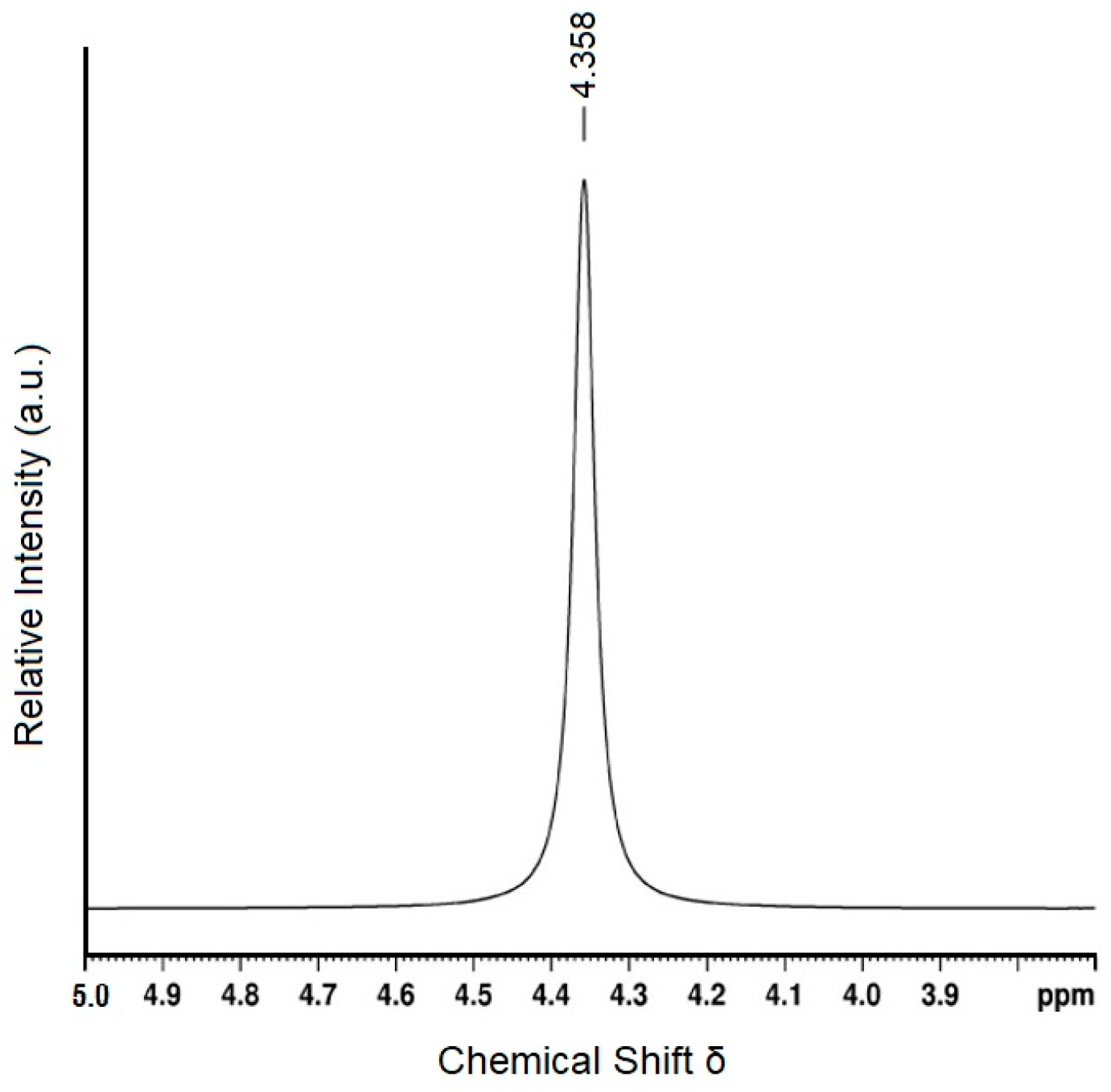
| Distilled water | 4.358 | 7.3 |
| Water Molecule | Number of Hydrogen Bonds | δ, ppm | Comment |
|---|---|---|---|
| H2O | 0 | 1.83 | |
| Cluster | |||
| (H2O)2 | 1 | 2.56 | |
| (H2O)3 | 3 | 3.69 | Cyclic |
| (H2O)4 | 4 | 4.38 | Cyclic |
| (H2O)5 | 5 | 4.60 | Cyclic |
| Cluster | Number of Hydrogen Bonds | δ, ppm | Comment |
|---|---|---|---|
| H2O | 0 | 1.83 | |
| (H2O)2 | 1 | 2.56 | |
| (H2O)3 | 3 | 3.69 | Cyclic |
| (H2O)4 | 4 | 4.38 | Cyclic |
| (H2O)5 | 5 | 4.60 | Cyclic |
| (H2O)6 | 6 | 4.58 | Cyclic |
| (H2O)7 | 8 | 4.83 | CH1 |
| (H2O)8 | 12 | 5.42 | D2d |
| (H2O)9 | 13 | 5.45 | D2dDDh |
| (H2O)10 | 15 | 5.57 | PP1 |
| (H2O)20 | 30 | 5.60 | [19] |
| (H2O)24 | 36 | 5.29 | [19] |
| (H2O)28 | 42 | 5.33 | [19] |
| H3O+ (H2O)20 | 34 | 6.02 | [20] |
| RSS Model/ Number of Hydrogen Bonds for Water Clusters | (H2O)2–(H2O)4 | (H2O)2–(H2O)5 | (H2O)2–(H2O)6 | (H2O)2–(H2O)7 |
|---|---|---|---|---|
| Linear | 0.0045 | 0.0521 | 0.2771 | 0.03732 |
| Logarithmic | 0.0584 | 0.0629 | 0.0880 | 0.08993 |
| Exponential | 0.0005 | 0.1171 | 0.4309 | 0.08532 |
| Fitted model | Exponential | Linear | Logarithmic | Logarithmic |
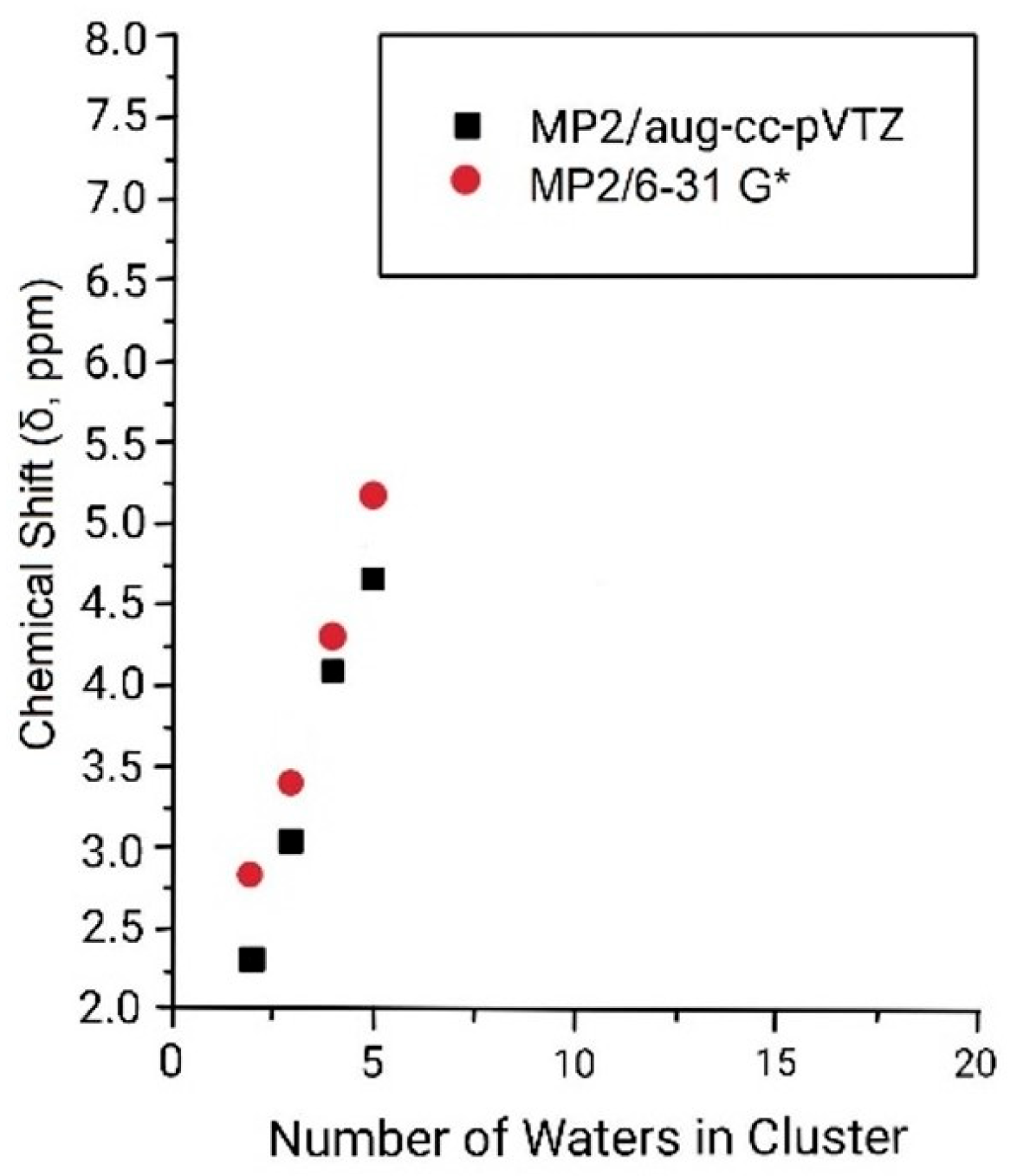
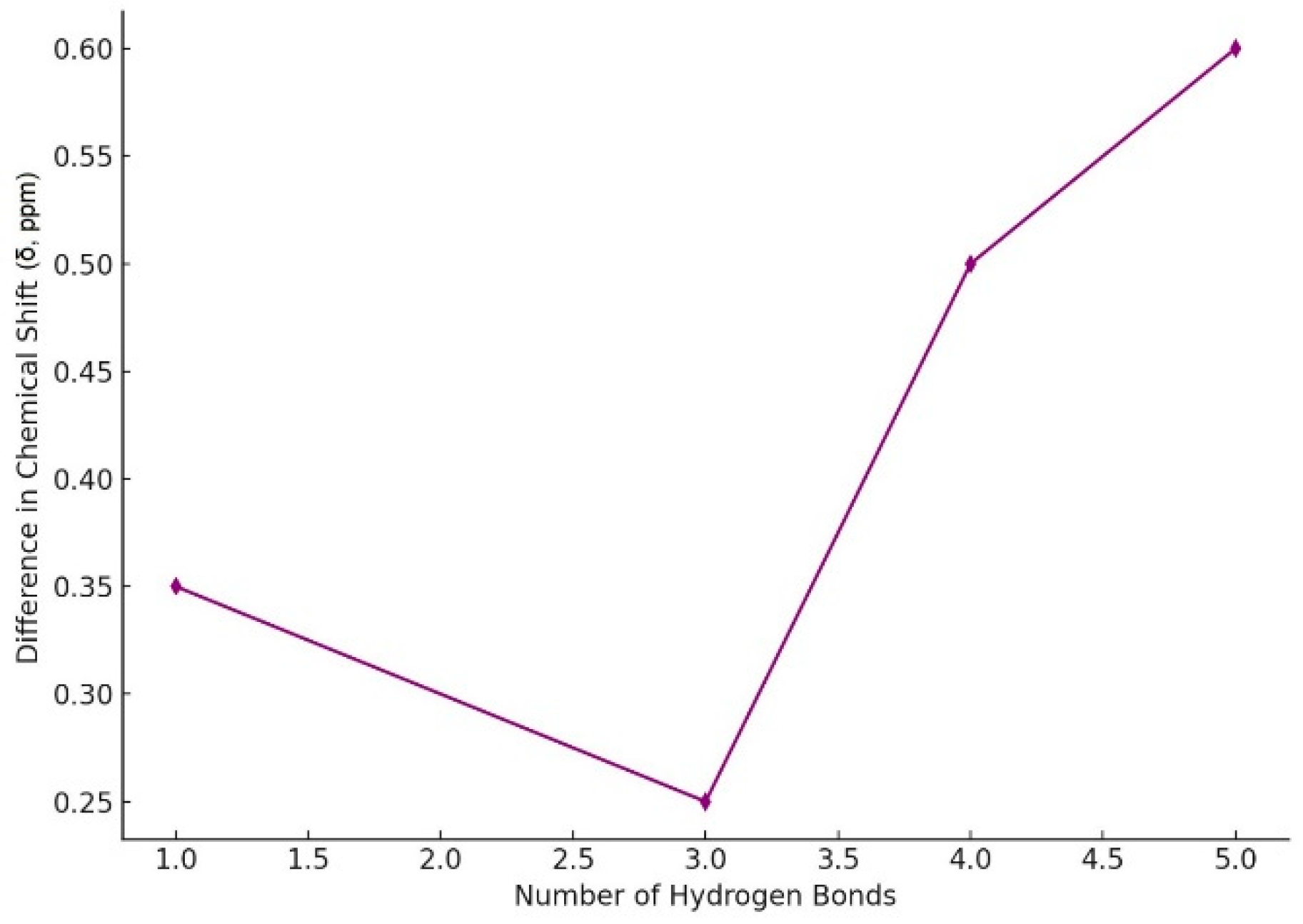
| Water Cluster | Number of Hydrogen Bonds | δ, ppm Theoretical Model | δ, ppm MP2/6-31G* Calculated | δ, ppm MP2/aug-cc-pVTZ Calculated |
|---|---|---|---|---|
| (H2O)2 | 1 | 2.56 | 2.65 | 2.30 |
| (H2O)3 | 3 | 3.69 | 3.35 | 3.10 |
| (H2O)4 | 4 | 4.38 | 4.65 | 4.15 |
Disclaimer/Publisher’s Note: The statements, opinions and data contained in all publications are solely those of the individual author(s) and contributor(s) and not of MDPI and/or the editor(s). MDPI and/or the editor(s) disclaim responsibility for any injury to people or property resulting from any ideas, methods, instructions or products referred to in the content. |
© 2025 by the authors. Licensee MDPI, Basel, Switzerland. This article is an open access article distributed under the terms and conditions of the Creative Commons Attribution (CC BY) license (https://creativecommons.org/licenses/by/4.0/).
Share and Cite
Ignatov, I.; Marinov, Y.G.; Vassileva, P.; Gluhchev, G.; Pesotskaya, L.A.; Jordanov, I.P.; Iliev, M.T. Nonlinear Hydrogen Bond Network in Small Water Clusters: Combining NMR, DFT, FT-IR, and EIS Research. Symmetry 2025, 17, 1062. https://doi.org/10.3390/sym17071062
Ignatov I, Marinov YG, Vassileva P, Gluhchev G, Pesotskaya LA, Jordanov IP, Iliev MT. Nonlinear Hydrogen Bond Network in Small Water Clusters: Combining NMR, DFT, FT-IR, and EIS Research. Symmetry. 2025; 17(7):1062. https://doi.org/10.3390/sym17071062
Chicago/Turabian StyleIgnatov, Ignat, Yordan G. Marinov, Paunka Vassileva, Georgi Gluhchev, Ludmila A. Pesotskaya, Ivan P. Jordanov, and Mario T. Iliev. 2025. "Nonlinear Hydrogen Bond Network in Small Water Clusters: Combining NMR, DFT, FT-IR, and EIS Research" Symmetry 17, no. 7: 1062. https://doi.org/10.3390/sym17071062
APA StyleIgnatov, I., Marinov, Y. G., Vassileva, P., Gluhchev, G., Pesotskaya, L. A., Jordanov, I. P., & Iliev, M. T. (2025). Nonlinear Hydrogen Bond Network in Small Water Clusters: Combining NMR, DFT, FT-IR, and EIS Research. Symmetry, 17(7), 1062. https://doi.org/10.3390/sym17071062