Article

Symmetric Model for Predicting Homography Matrix Between Courts in Co-Directional Multi-Frame Sequence


by
Pan Zhang
1,2,
Jiangtao Luo
1,* and
Xupeng Liang
3
1
School of Communications and Information Engineering, Chongqing University of Posts and Telecommunications, Chongqing 400065, China
2
School of Artificial Intelligence, Neijiang Normal University, Neijiang 641100, China
3
School of Physical Education, Chongqing University of Posts and Telecommunications, Chongqing 400065, China
*
Author to whom correspondence should be addressed.
Symmetry 2025, 17(6), 832; https://doi.org/10.3390/sym17060832
Submission received: 2 April 2025 / Revised: 7 May 2025 / Accepted: 22 May 2025 / Published: 27 May 2025
(This article belongs to the Special Issue Advances in Image Processing with Symmetry/Asymmetry)

Abstract

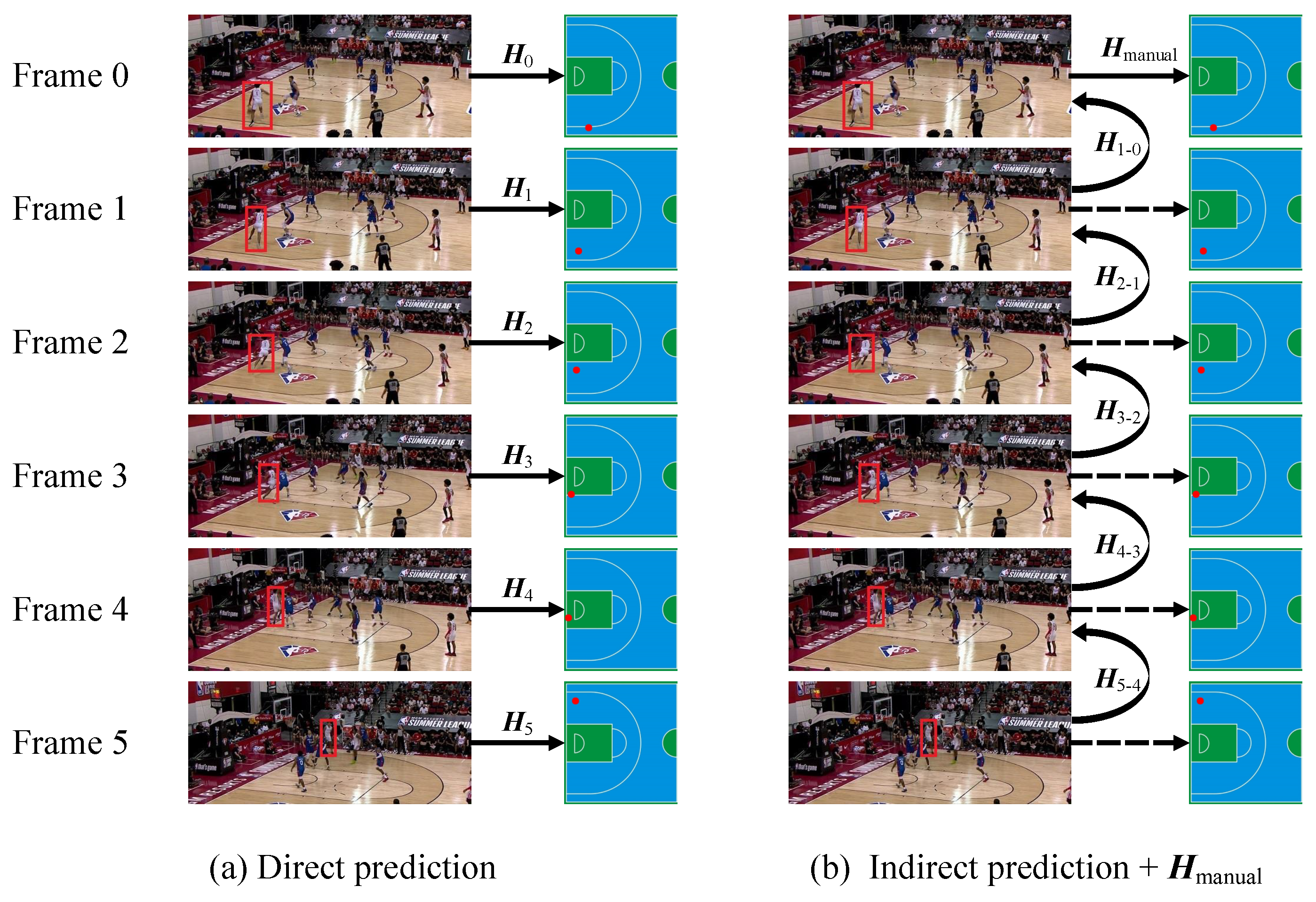
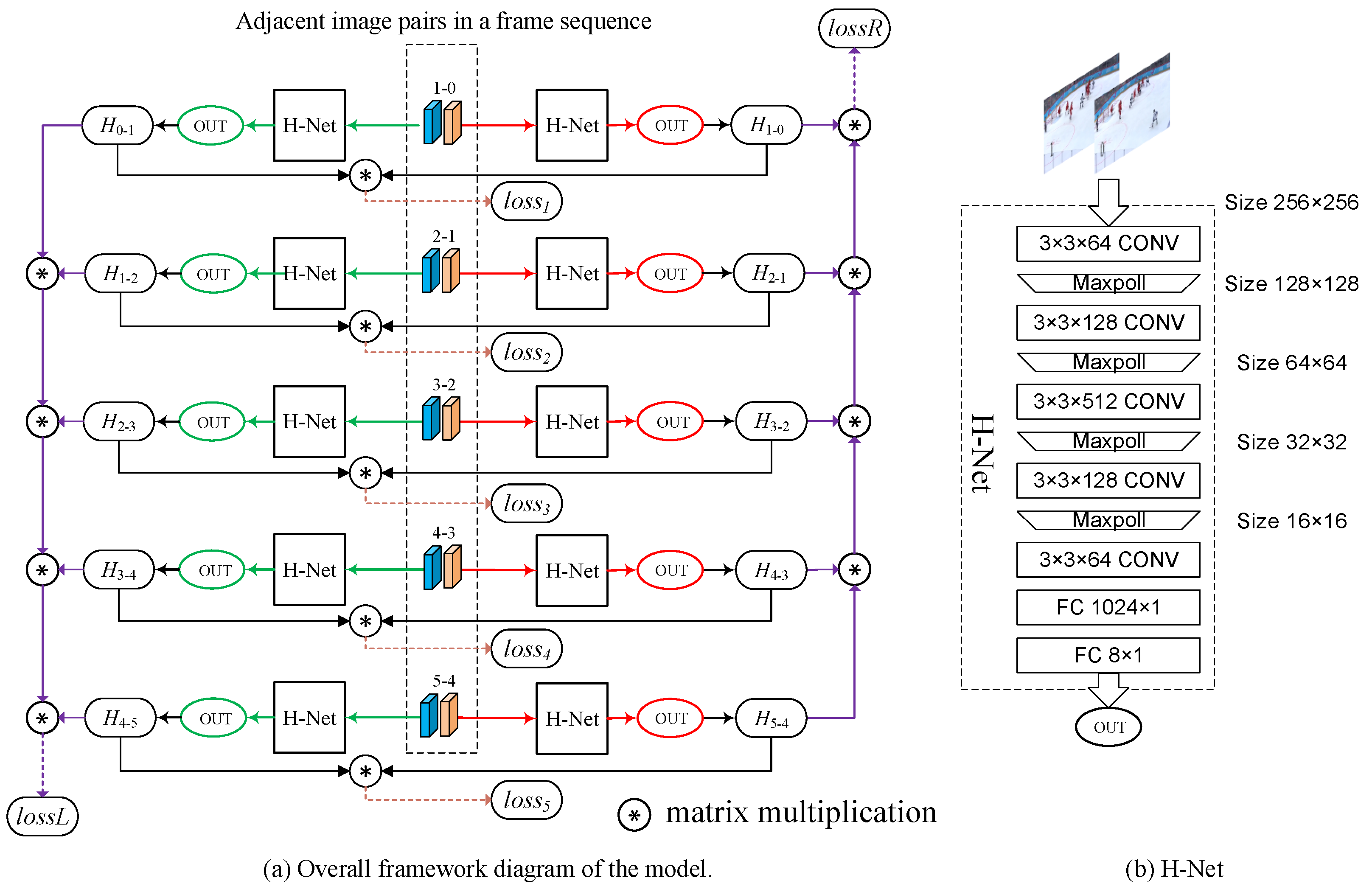
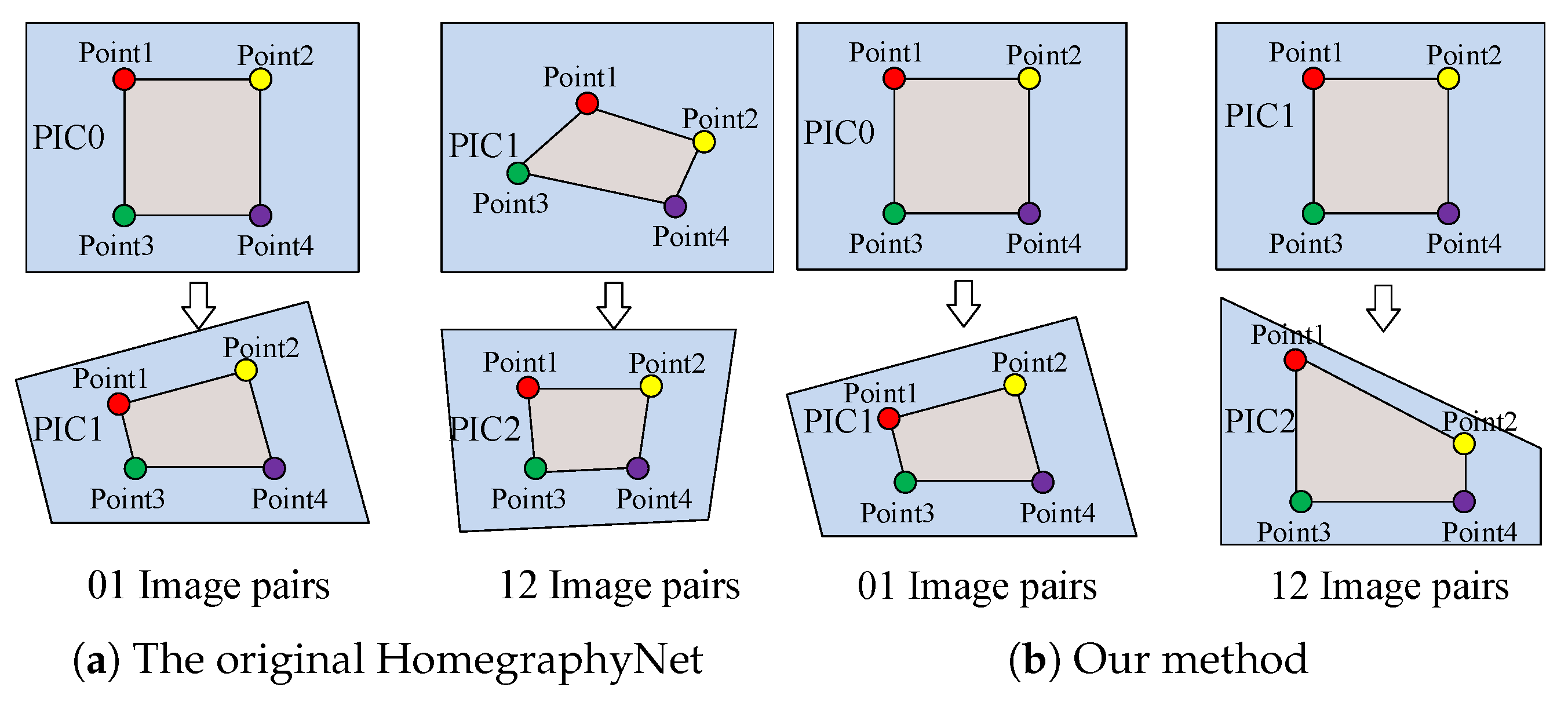
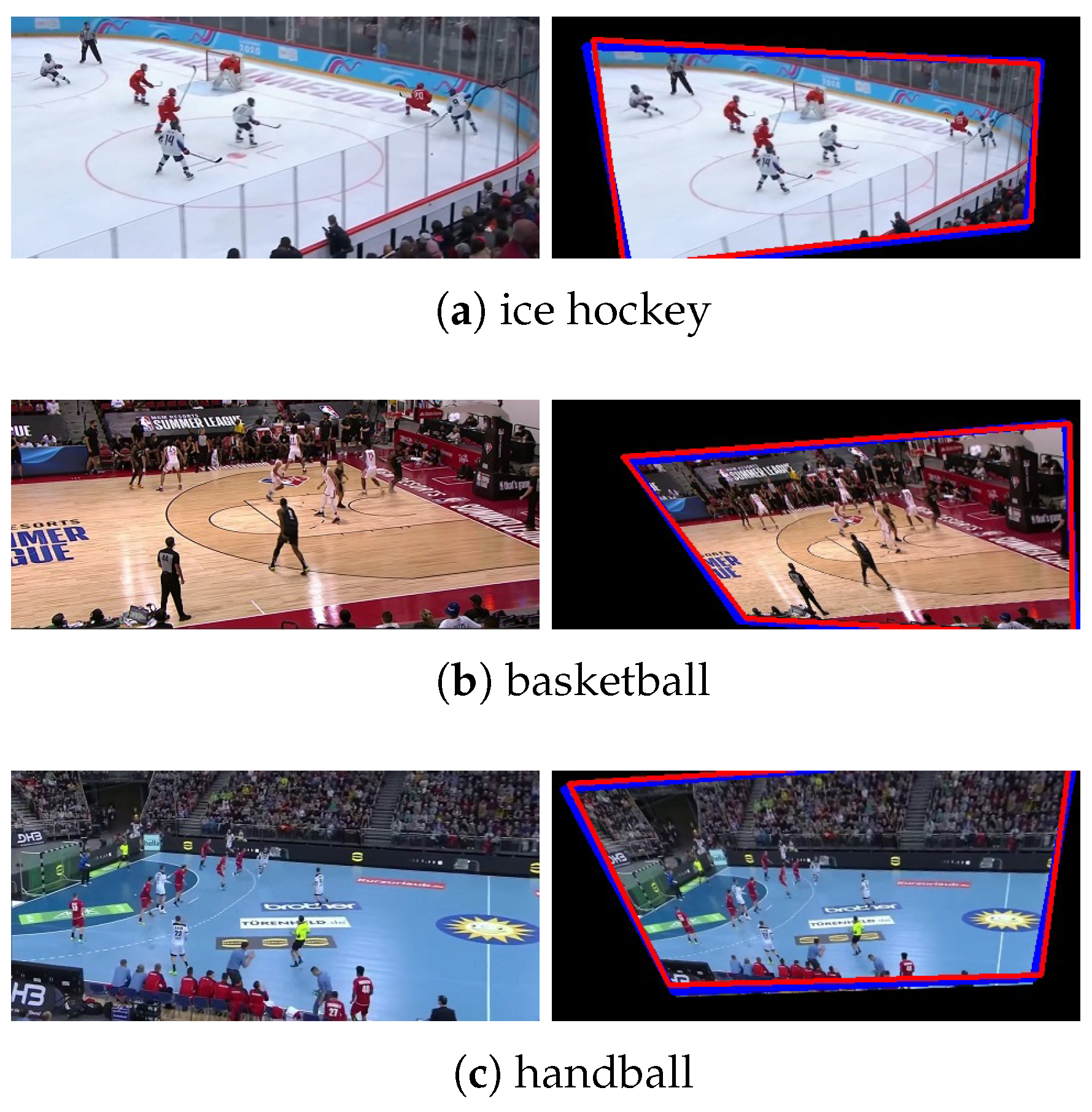
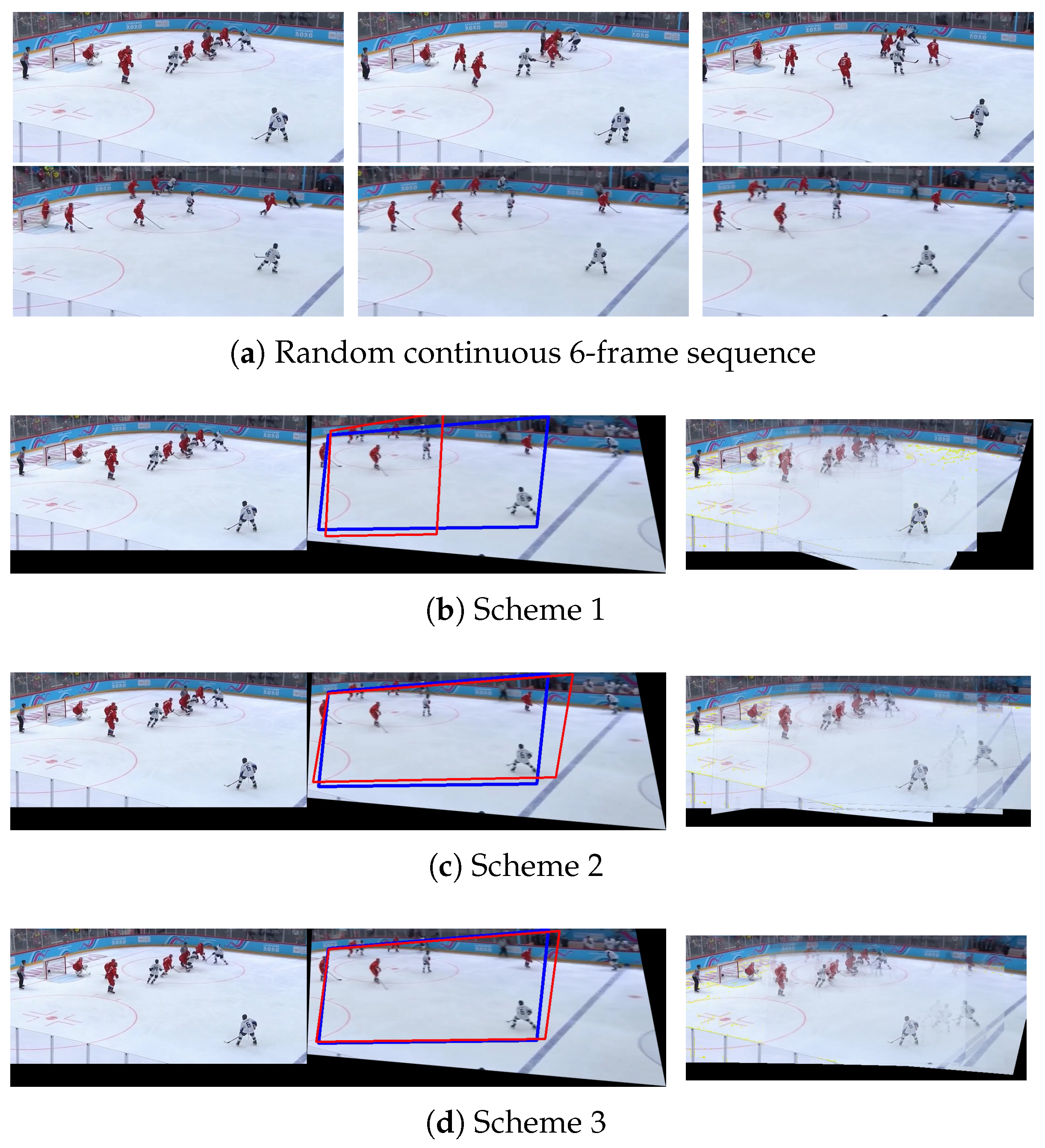
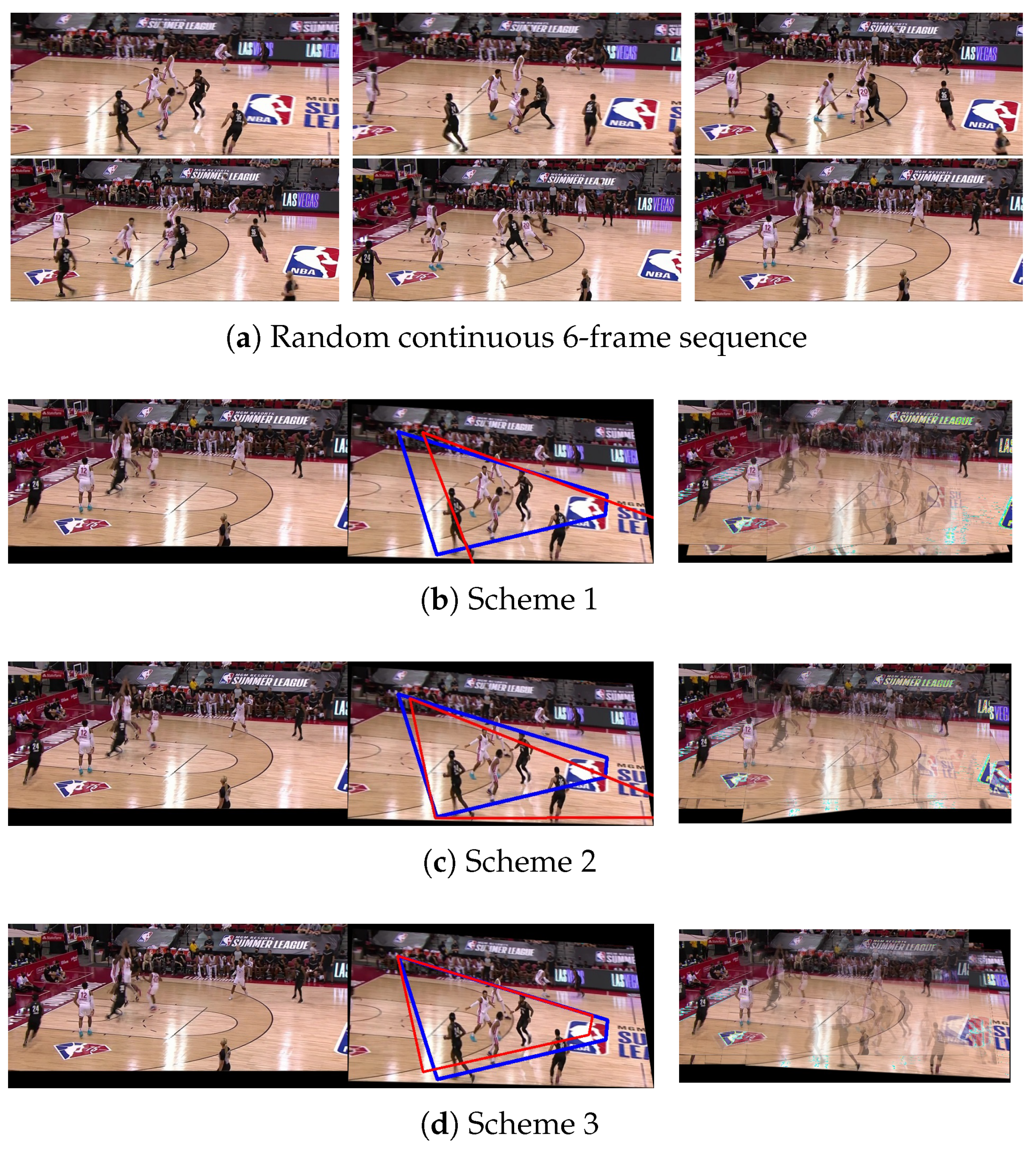
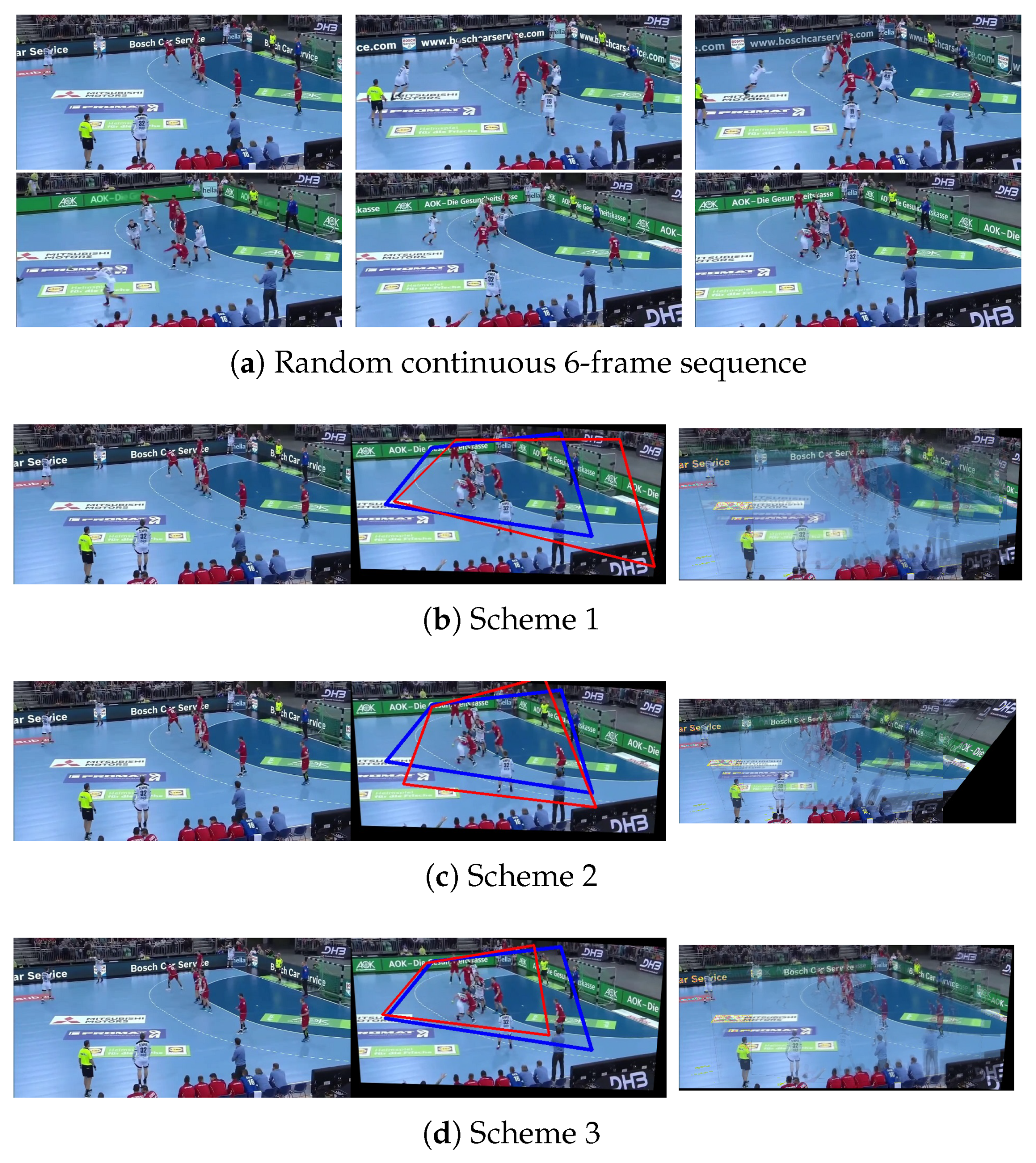
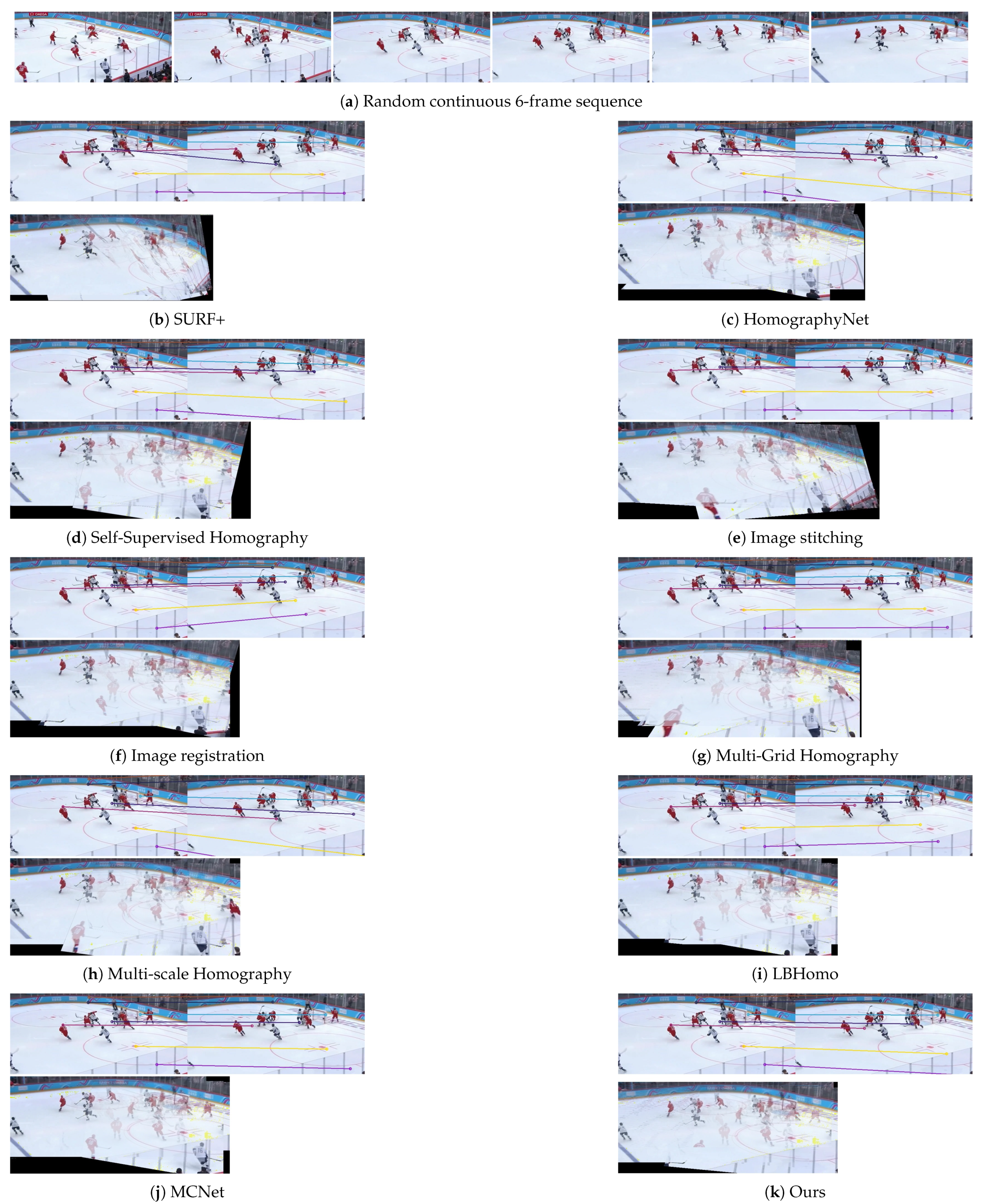
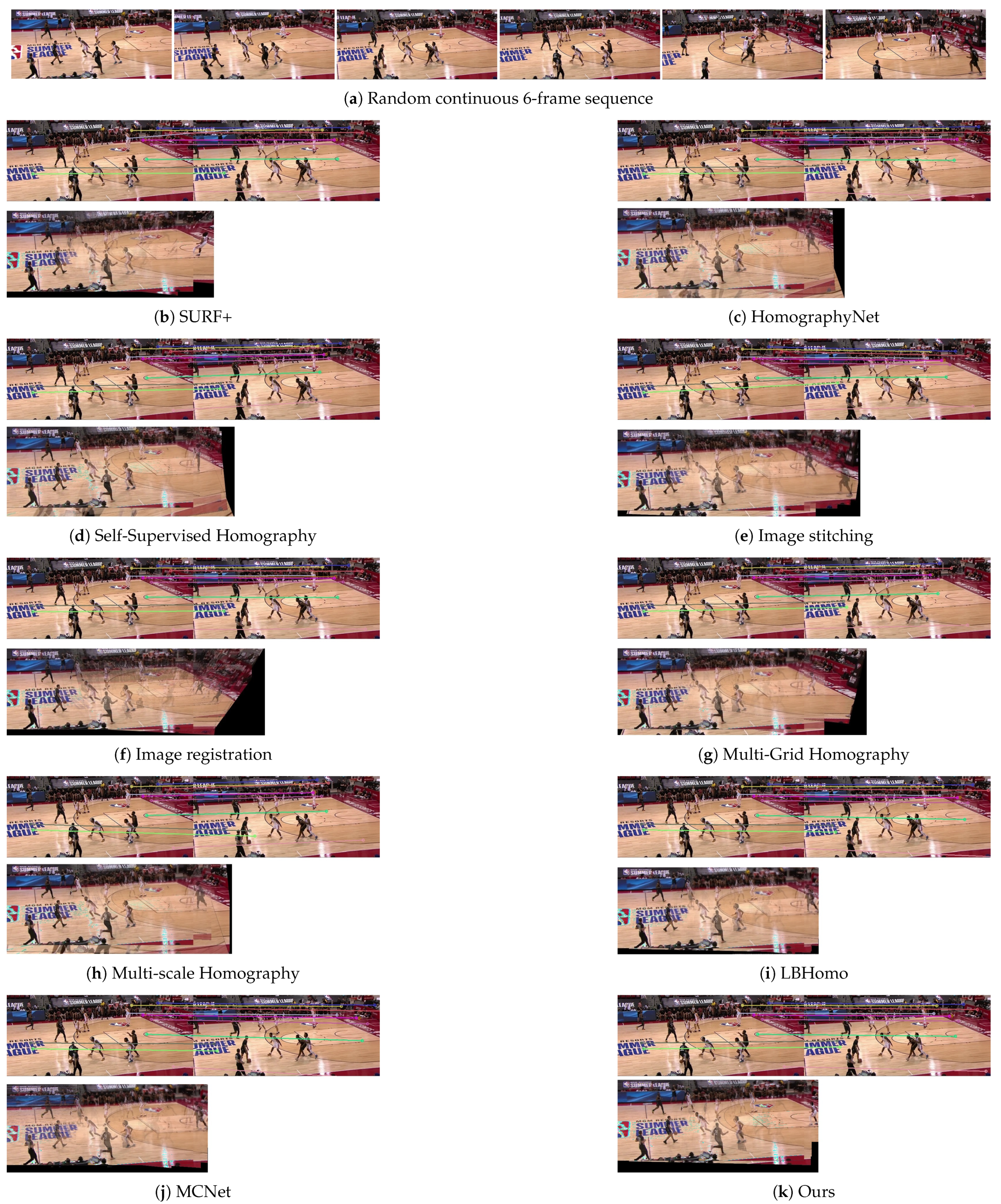
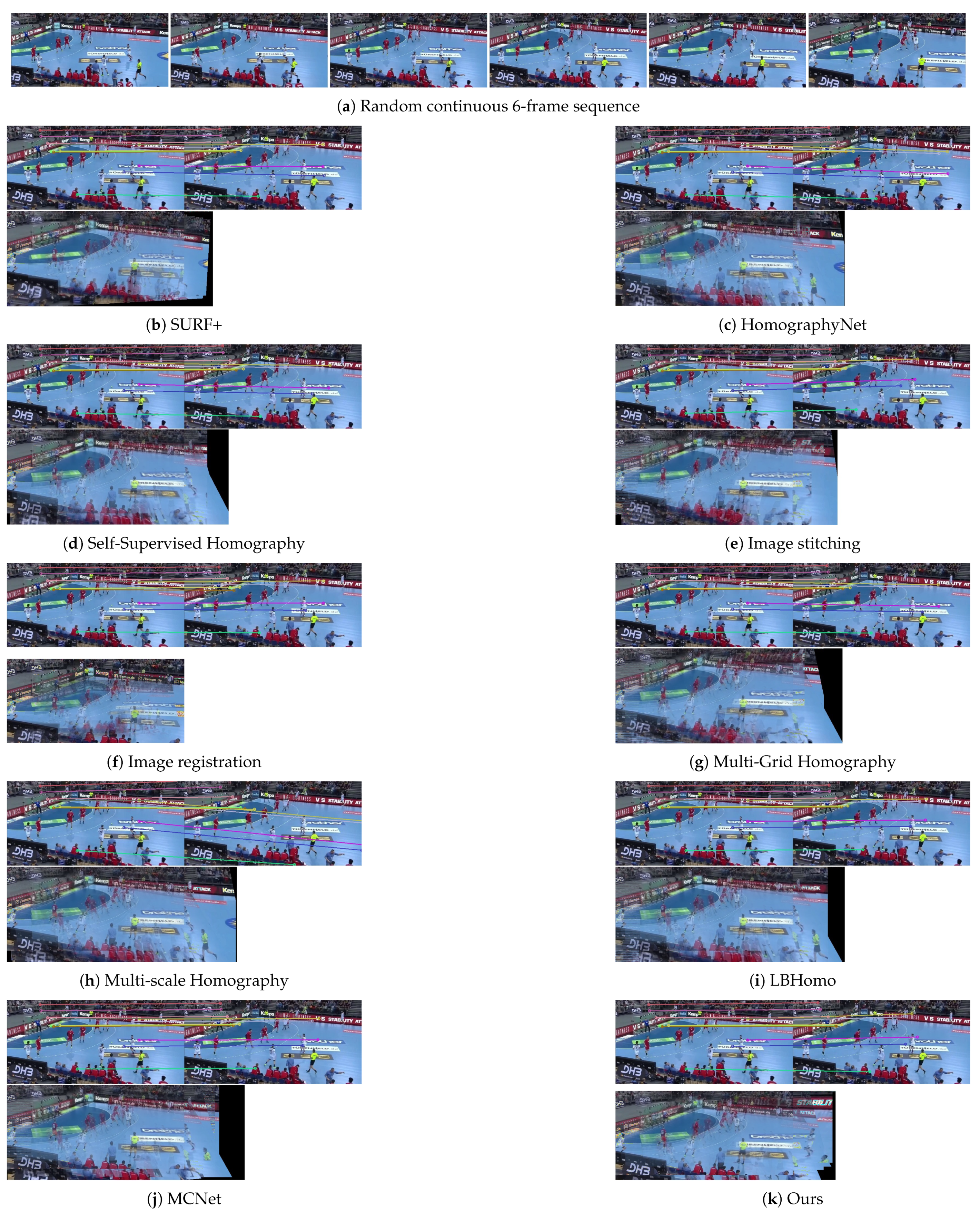
The homography matrix is essential for perspective transformation across consecutive video frames. While existing methods are effective when the visual content between paired images remains largely unchanged, they rely on substantial, high-quality annotated data for a multi-frame court sequence with content variation. To address this limitation and enhance homography matrix predictions in competitive sports images, a new symmetric stacked neural network model is proposed. The model first leverages the mutual invertibility of bidirectional homography matrices to improve prediction accuracy between paired images. Secondly, by theoretically validating and leveraging the decomposability of the homography matrix, the model significantly reduces the amount of data annotation required for continuous frames within the same shooting direction. Experimental evaluations on datasets for court homography transformations in sports, such as ice hockey, basketball, and handball, show that the proposed symmetric model achieves superior accuracy in predicting homography matrices, even when only one-third of the frames are annotated. Comparisons with seven related methods further highlight the exceptional performance of the proposed model.
Keywords: homography matrix; multi-frame sequence; low frame annotation amount; inverse matrix; matrix decomposition homography matrix; multi-frame sequence; low frame annotation amount; inverse matrix; matrix decomposition