Article

A Novel Self-Adaptive Deformable Convolution-Based U-Net for Low-Light Image Denoising

1
Xi’an Institute of Optics and Precision Mechanics, Chinese Academy of Sciences, Xi’an 710119, China
2
University of Chinese Academy of Sciences, Beijing 100049, China
*
Author to whom correspondence should be addressed.
Symmetry 2024, 16(6), 646; https://doi.org/10.3390/sym16060646
Submission received: 23 April 2024 / Revised: 14 May 2024 / Accepted: 18 May 2024 / Published: 23 May 2024
(This article belongs to the Special Issue Advances in Image Processing with Symmetry/Asymmetry)

Abstract

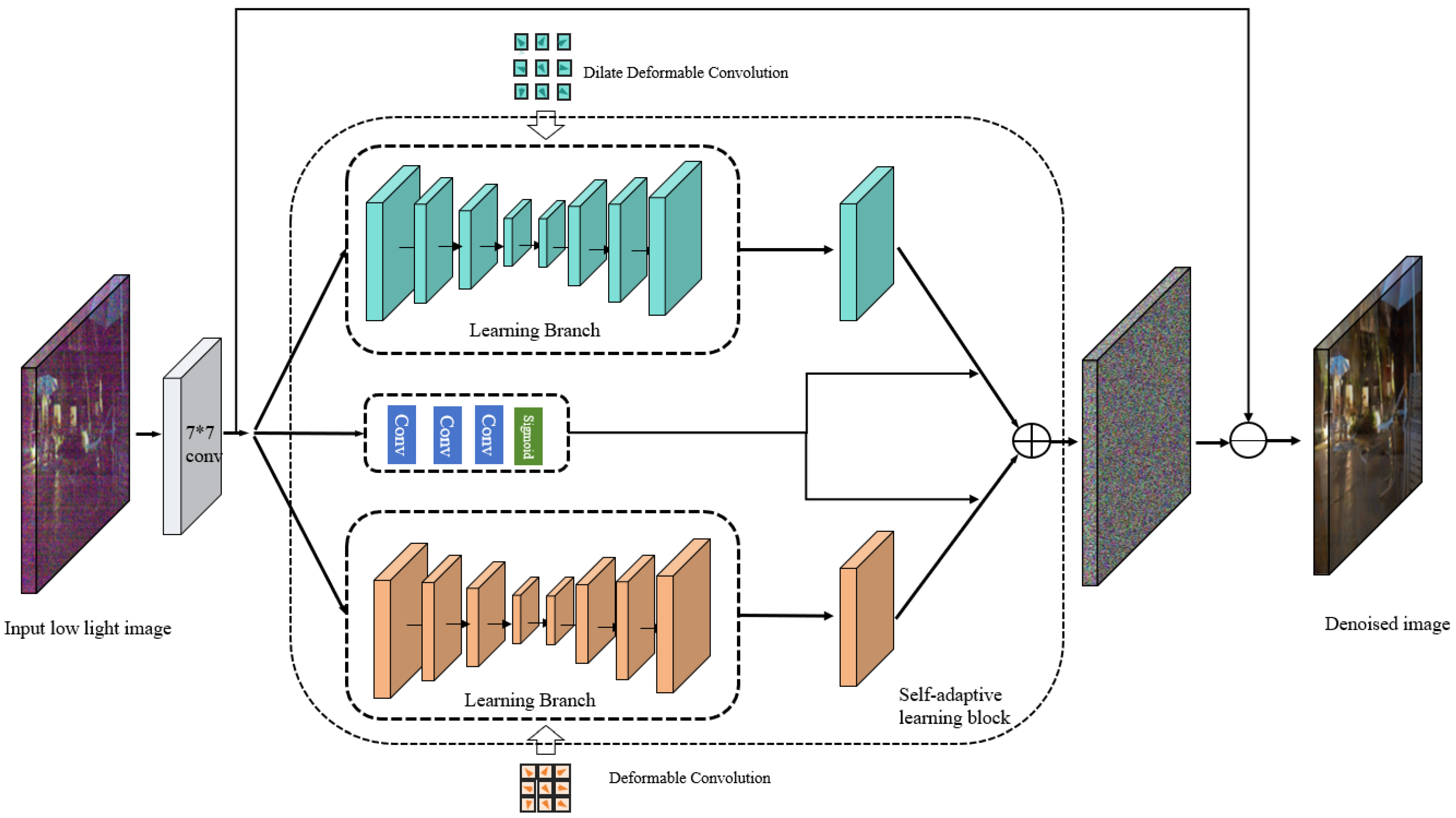
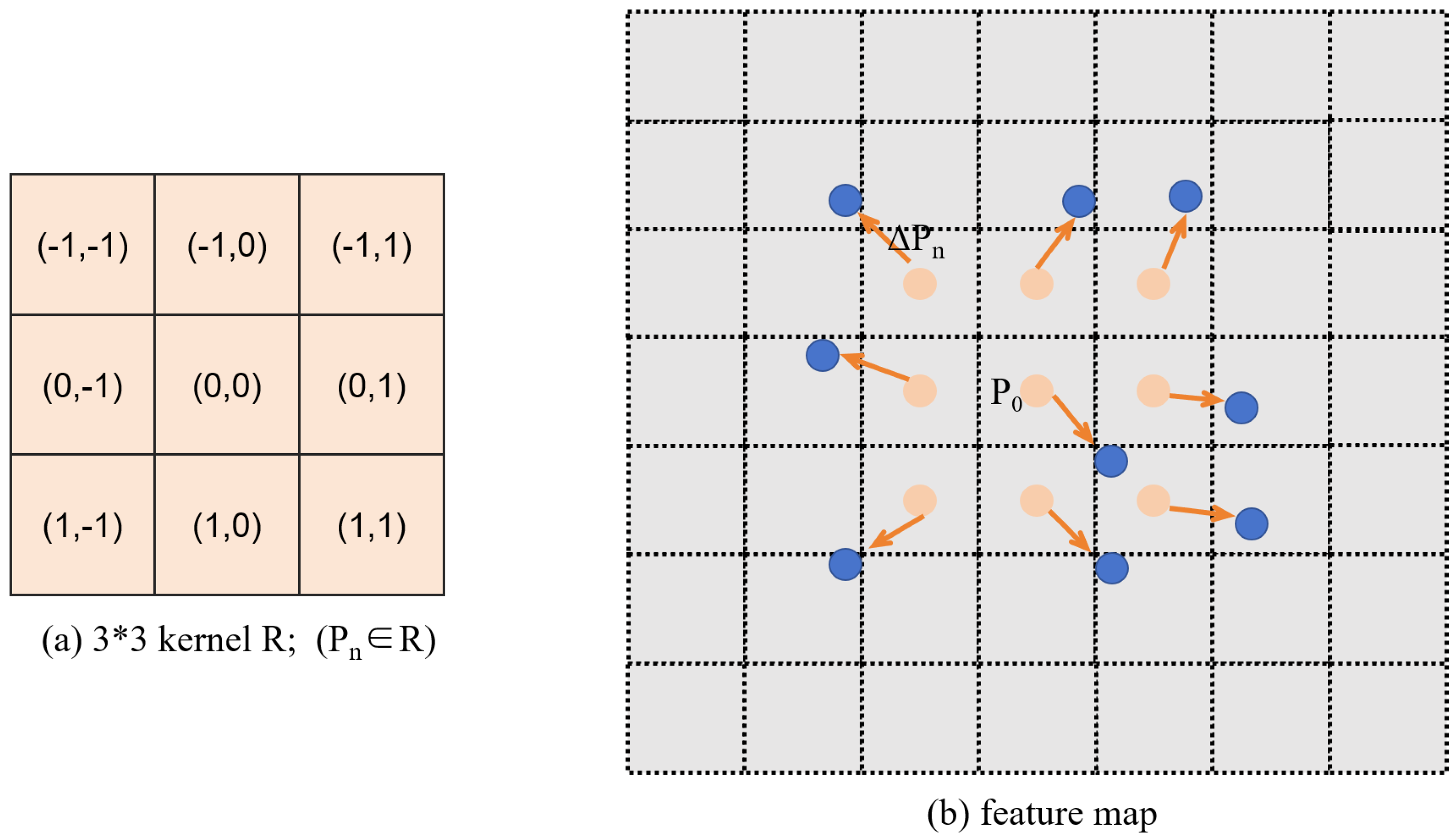
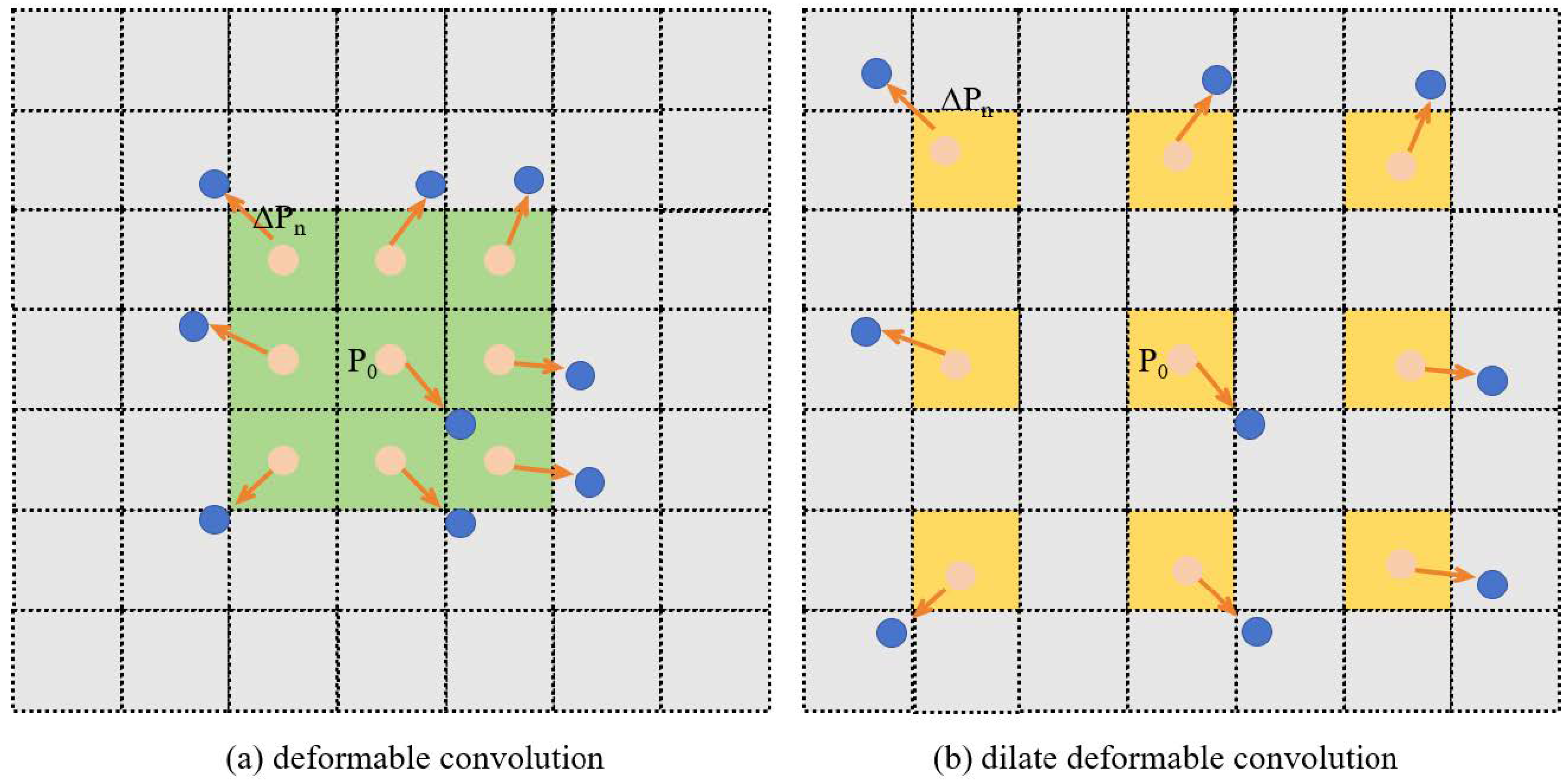
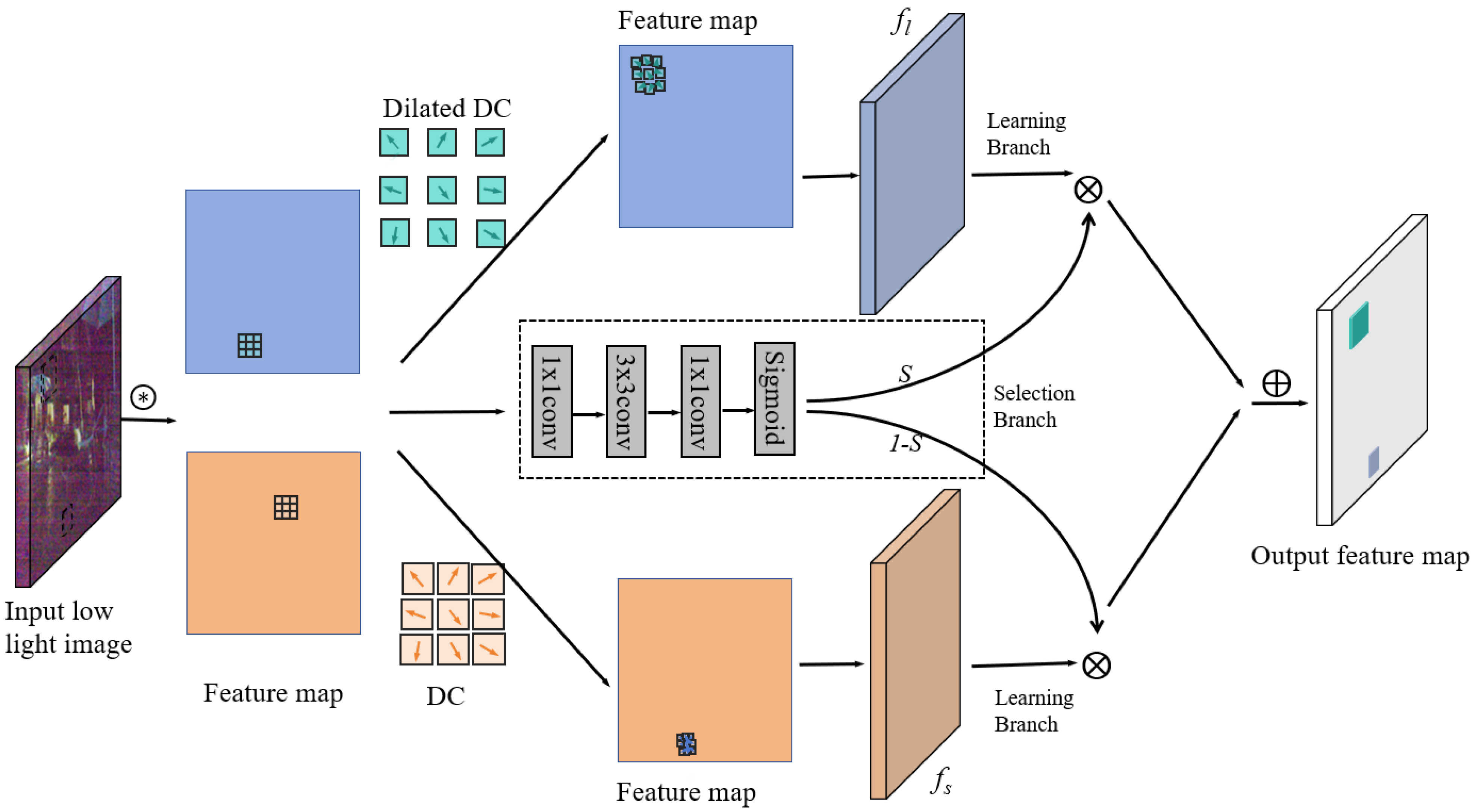
Capturing images under extremely low-light conditions usually suffers from various types of noise due to the limited photon and low signal-to-noise ratio (SNR), which makes low-light denoising a challenging task in the field of imaging technology. Nevertheless, existing methods primarily focus on investigating the precise modeling of real noise distributions while neglecting improvements in the noise modeling capabilities of learning models. To address this situation, a novel self-adaptive deformable-convolution-based U-Net (SD-UNet) model is proposed in this paper. Firstly, deformable convolution is employed to tackle noise patterns with different geometries, thus extracting more reliable noise representations. After that, a self-adaptive learning block is proposed to enable the network to automatically select appropriate learning branches for noise with different scales. Finally, a novel structural loss function is leveraged to evaluate the difference between denoised and clean images. The experimental results on multiple public datasets validate the effectiveness of the proposed method.
Keywords: low-light image denoising; deformable convolution; self-adaptive learning; U-Net; structural loss low-light image denoising; deformable convolution; self-adaptive learning; U-Net; structural loss