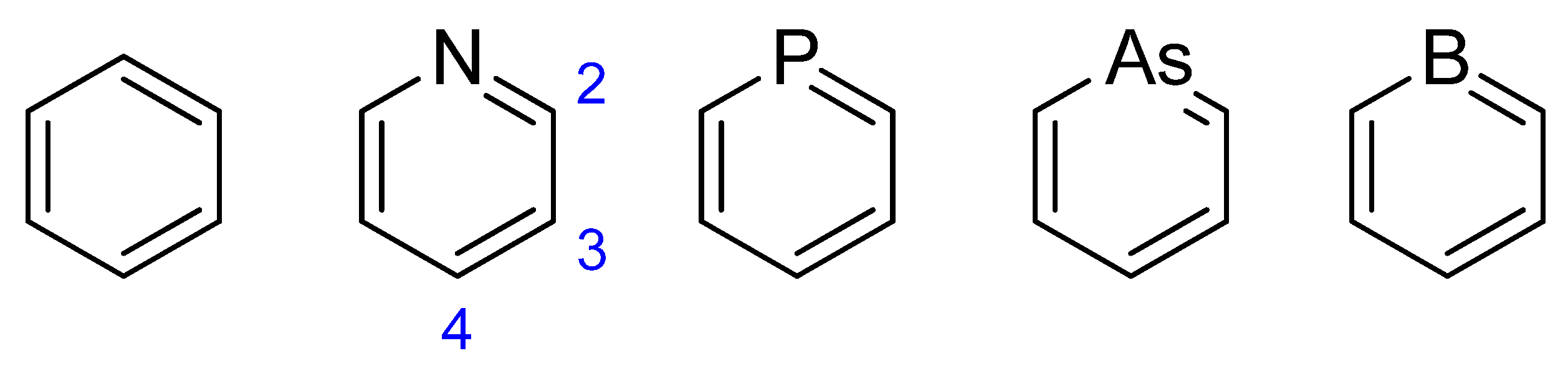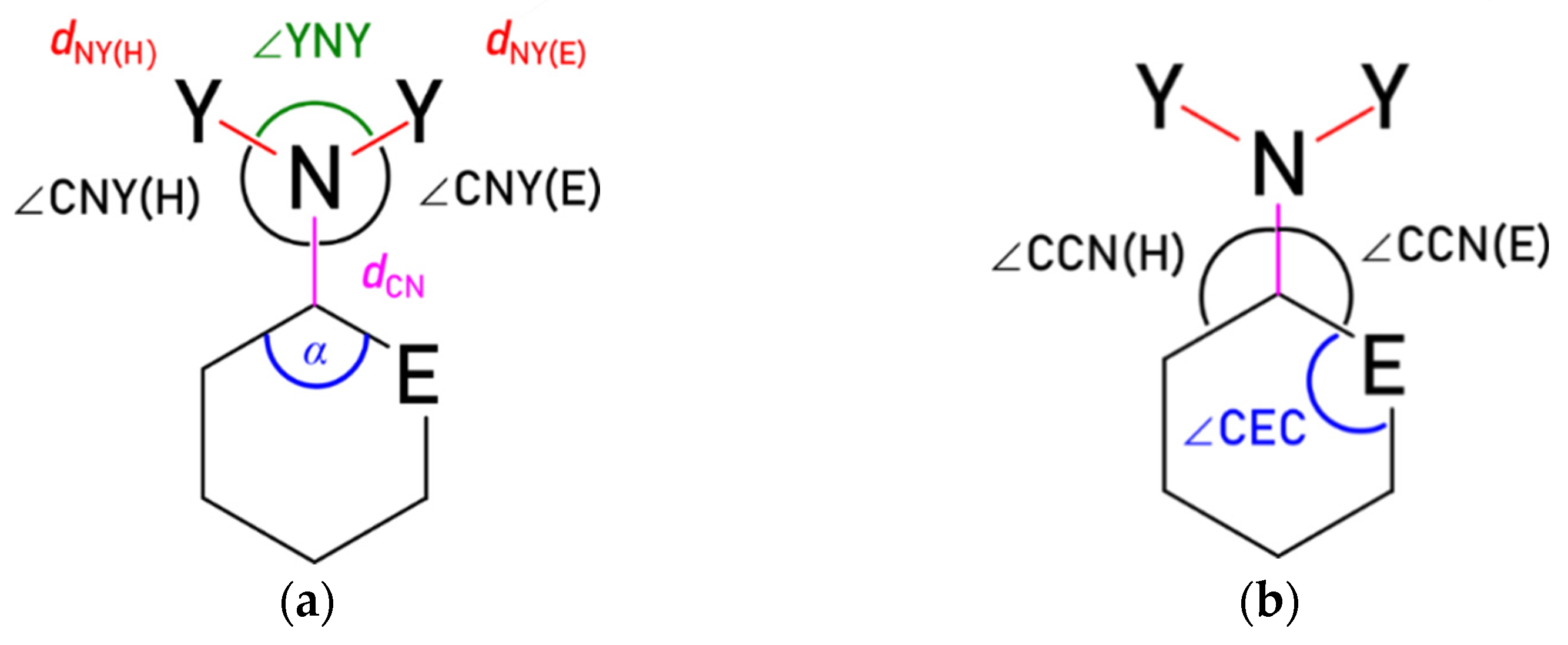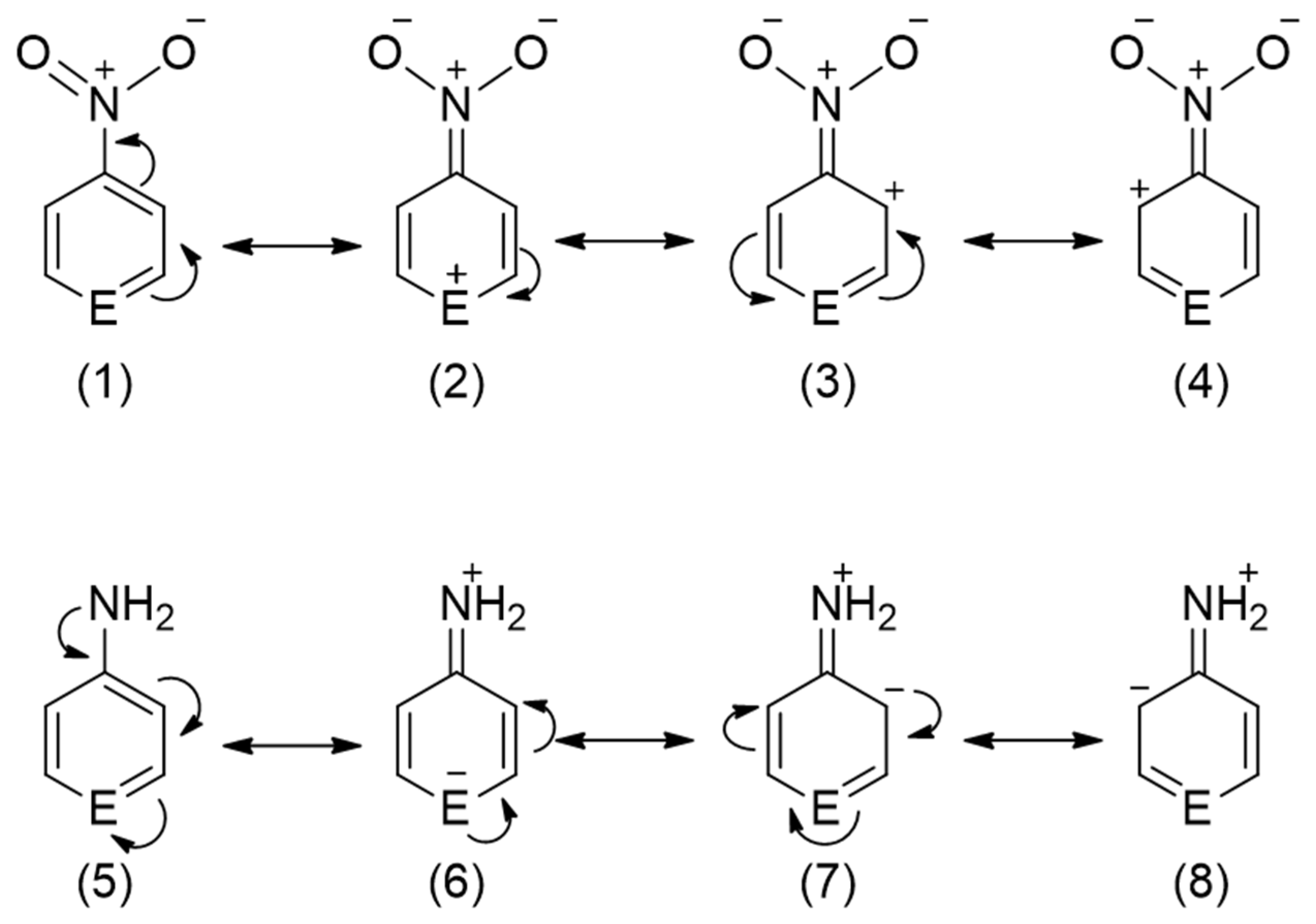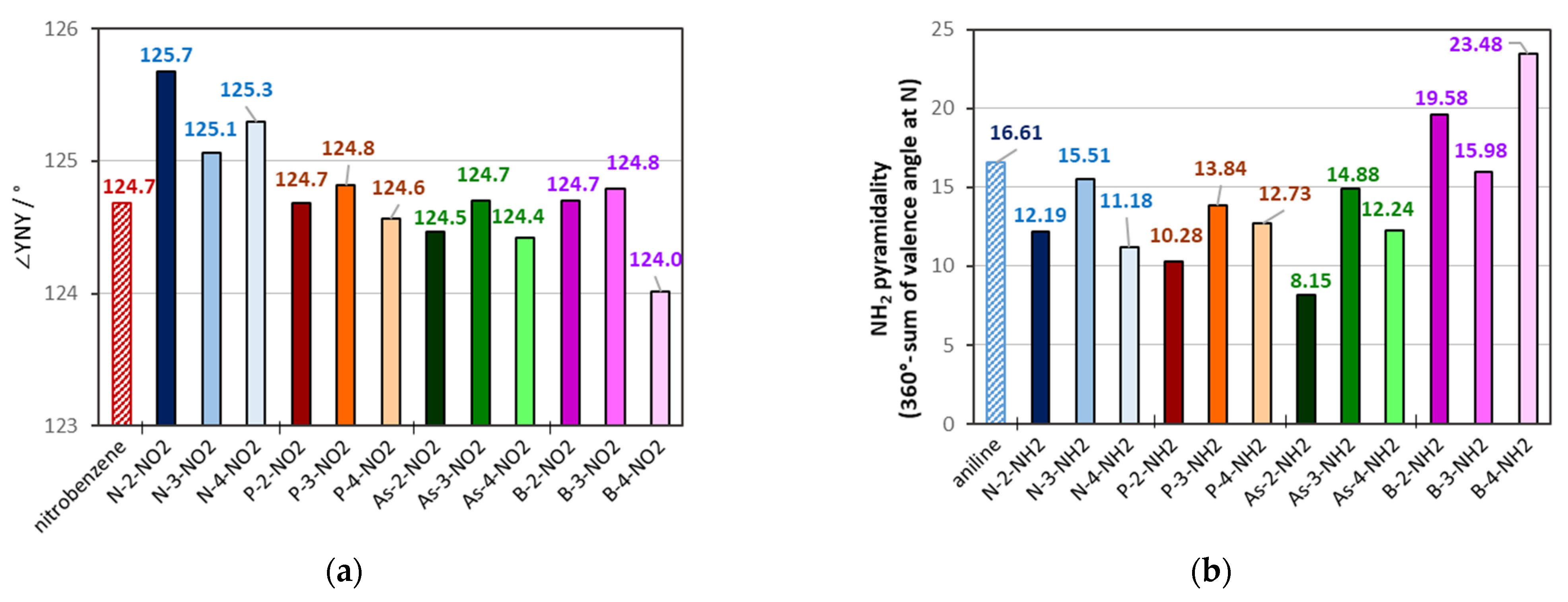
Energetic and Geometric Characteristics of Substituents, Part 3: The Case of NO2 and NH2 Groups in Their Mono-Substituted Derivatives of Six-Membered Heterocycles

Abstract
:1. Introduction
2. Materials and Methods
3. Results
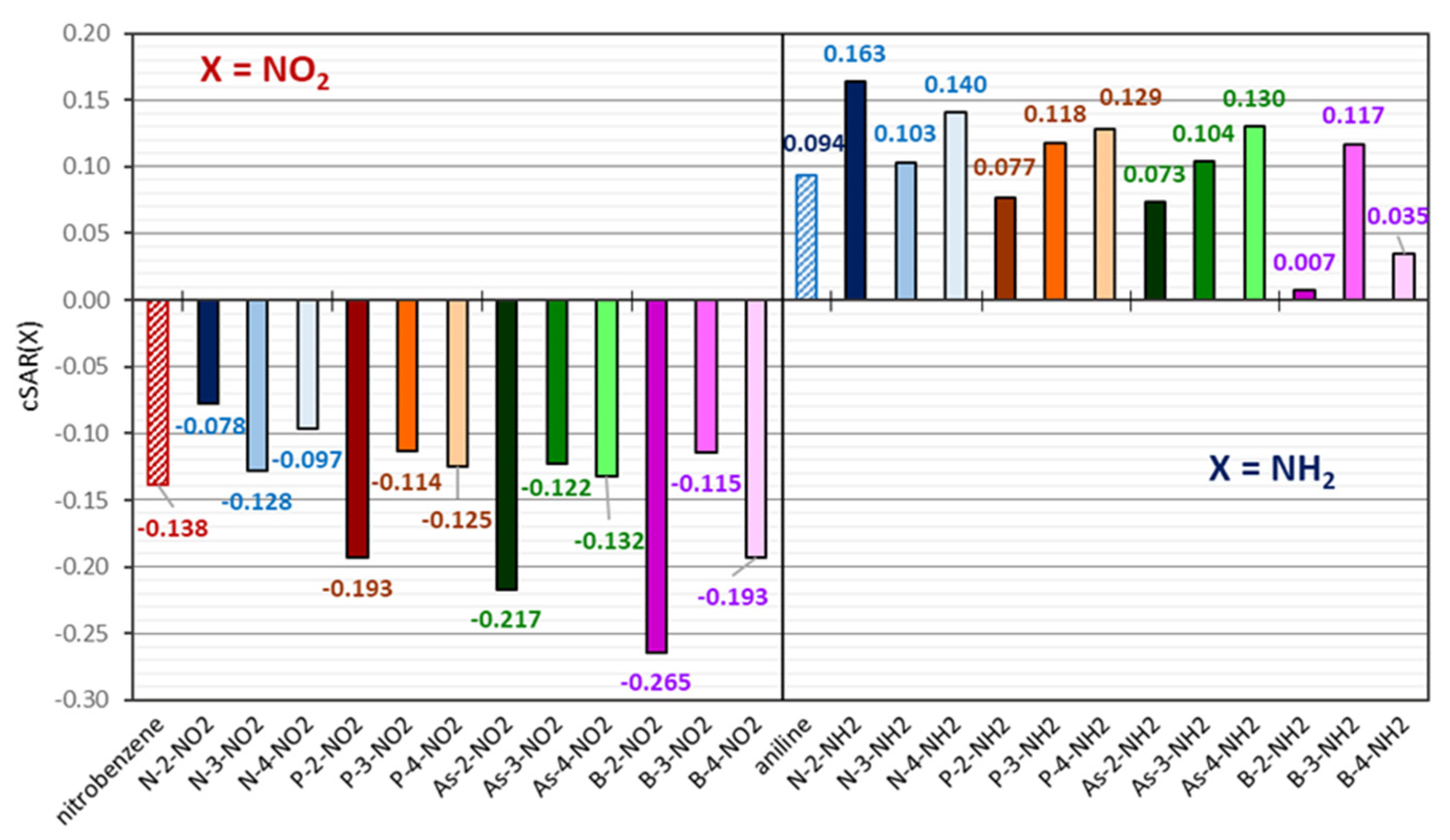
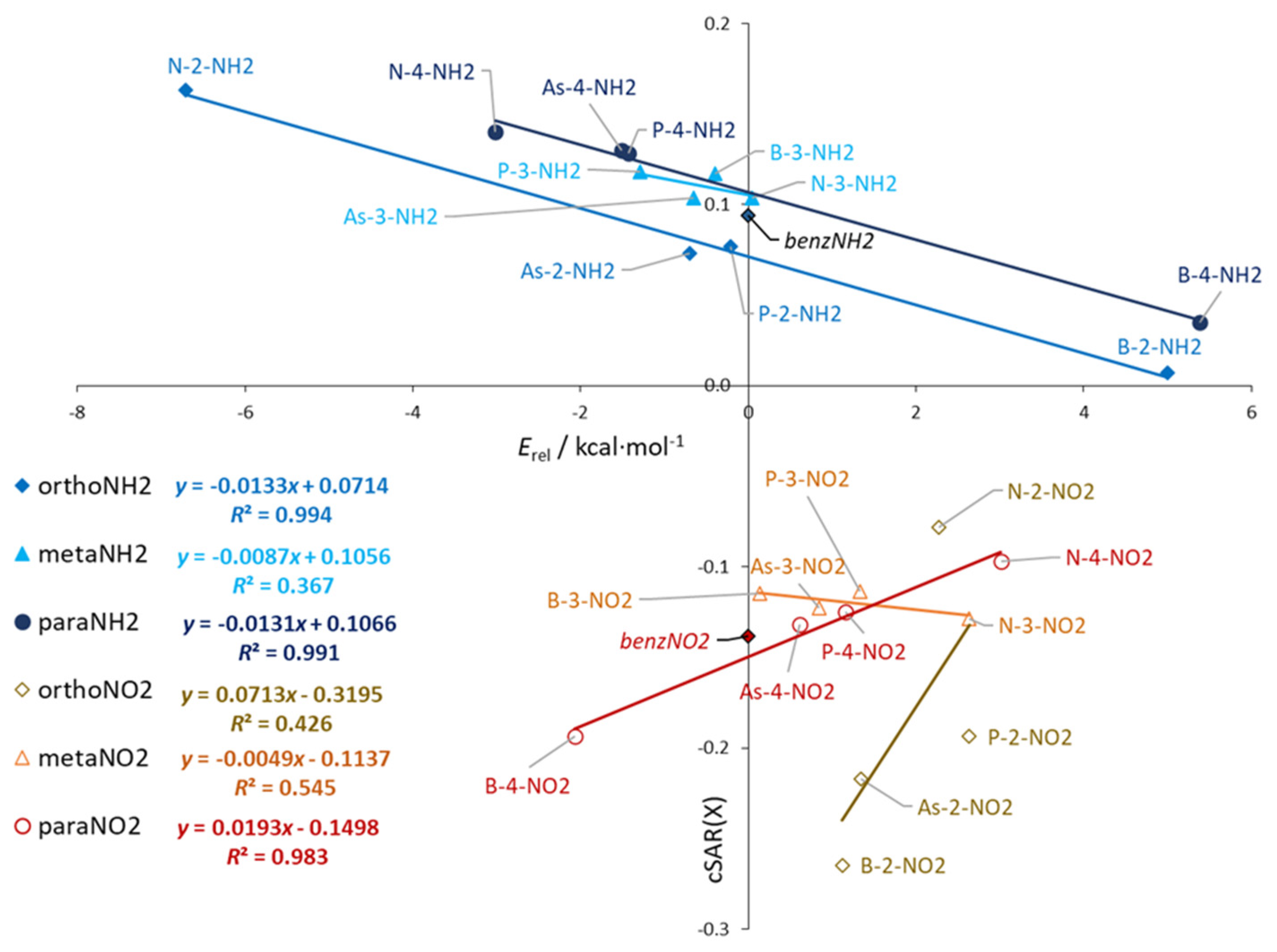
3.1. Energetic and Electronic Substituent Effects
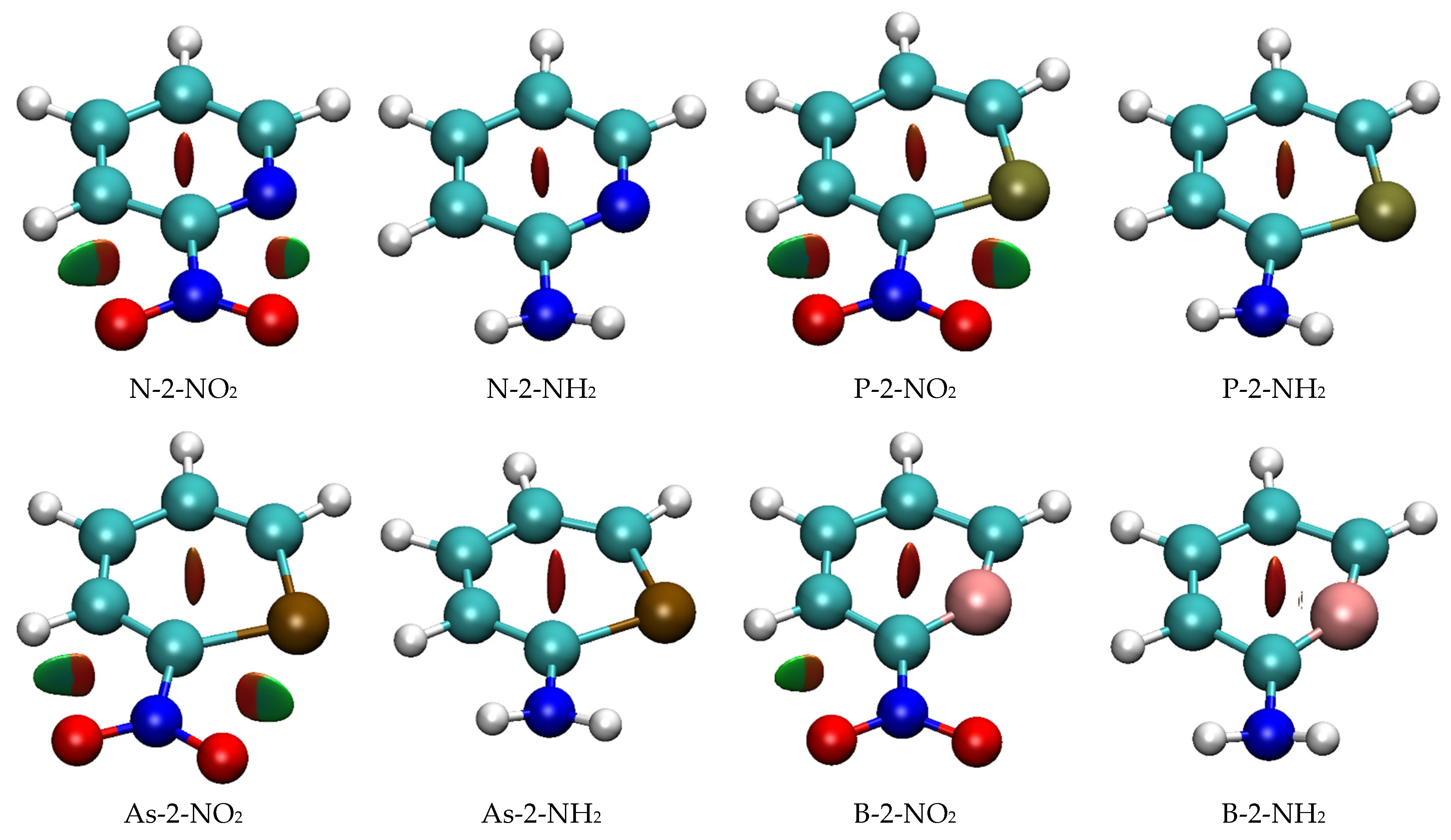
3.2. Proximity Effects
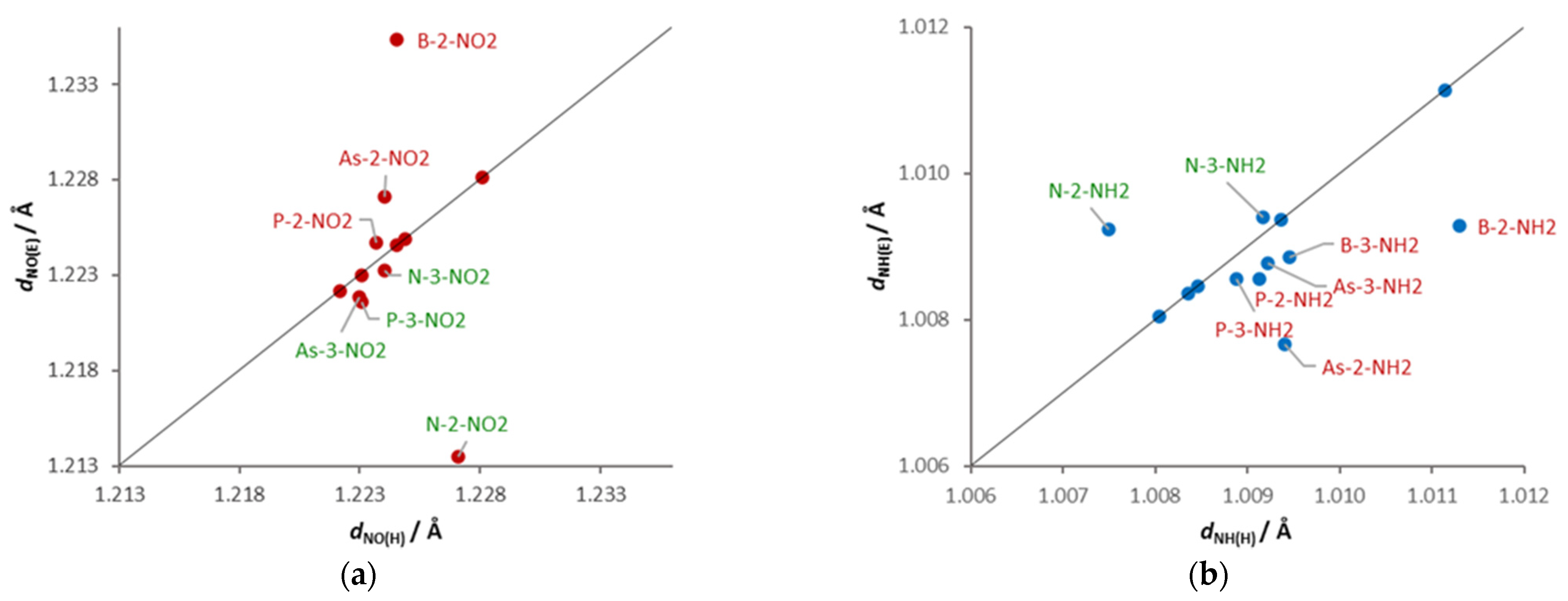
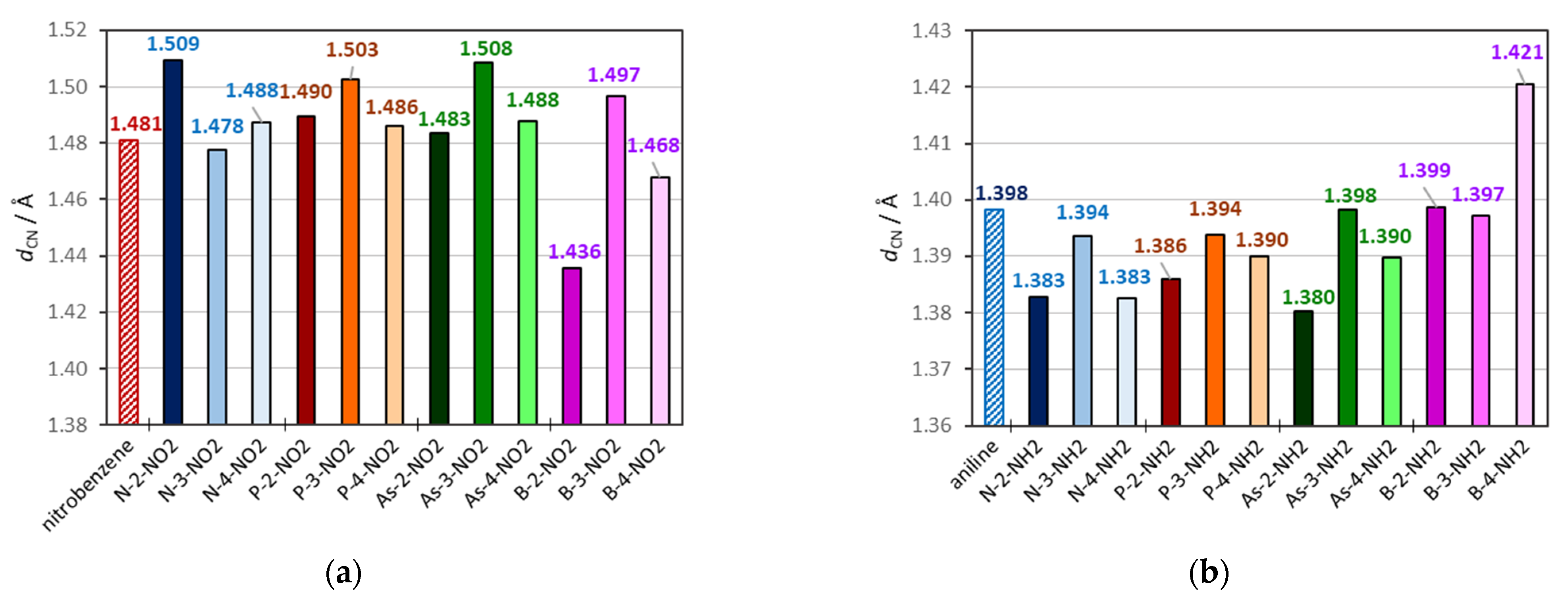
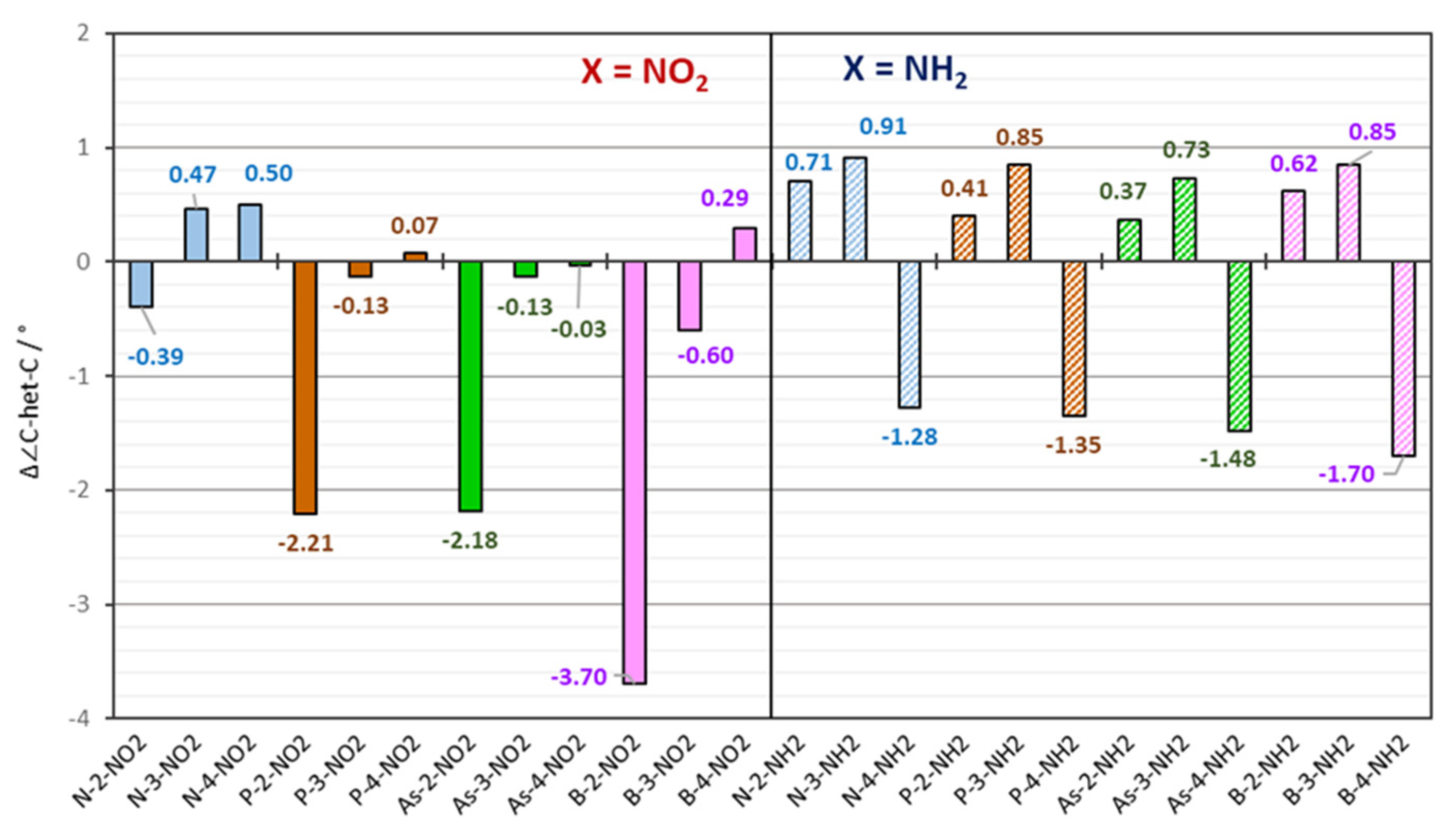
3.3. Geometric Properties of Substituents and the Substituted Moiety
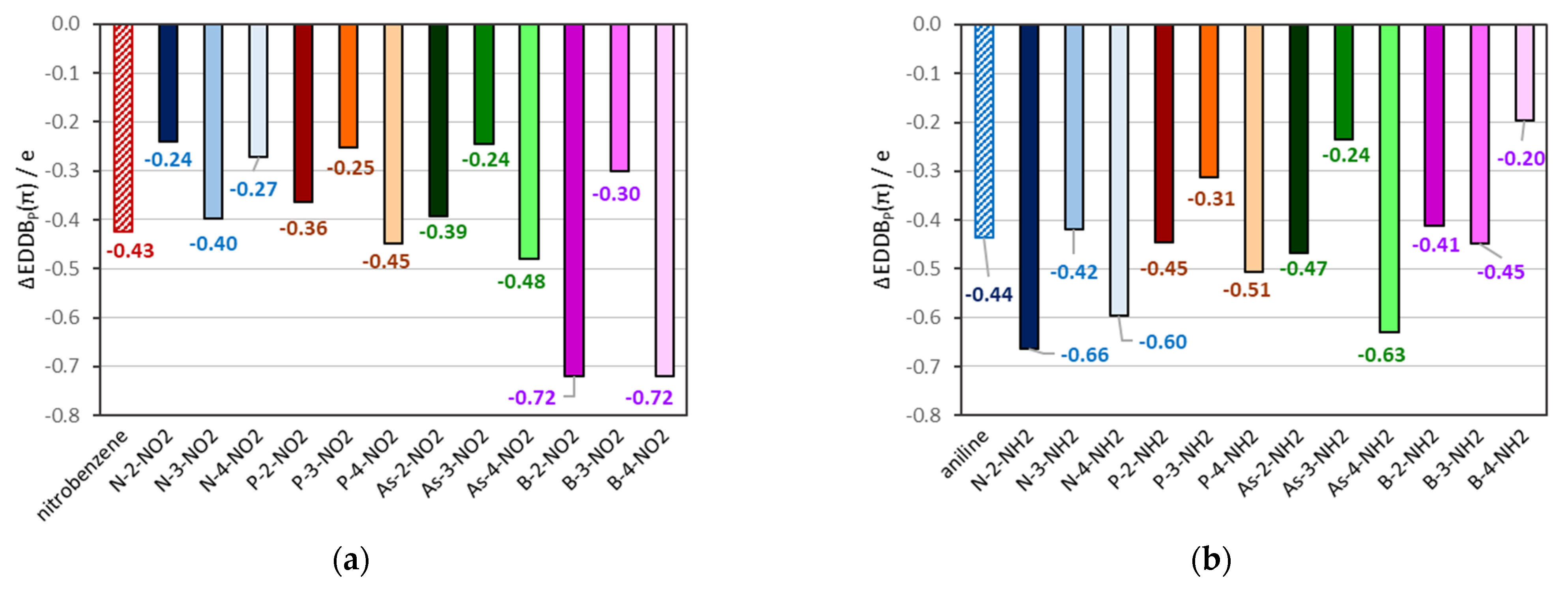
3.4. Substituent Influence on π-Electron Delocalization
4. Conclusions
Supplementary Materials
Author Contributions
Funding
Institutional Review Board Statement
Informed Consent Statement
Data Availability Statement
Acknowledgments
Conflicts of Interest
References
- Hammett, L.P. The Effect of Structure upon the Reactions of Organic Compounds. Benzene Derivatives. J. Am. Chem. Soc. 1937, 59, 96–103. [Google Scholar] [CrossRef]
- Hammett, L.P. Physical Organic Chemistry; McGraw-Hill Book Co. Inc.: New York, NY, USA, 1940. [Google Scholar]
- Hansch, C.; Leo, A.; Taft, R.W. A Survey of Hammett Substituent Constants and Resonance and Field Parameters. Chem. Rev. 1991, 91, 165–195. [Google Scholar] [CrossRef]
- Stasyuk, O.A.; Szatylowicz, H.; Fonseca Guerra, C.; Krygowski, T.M. Theoretical Study of Electron-Attracting Ability of the Nitro Group: Classical and Reverse Substituent Effects. Struct. Chem. 2015, 26, 905–913. [Google Scholar] [CrossRef] [Green Version]
- Sadlej-Sosnowska, N. On the Way to Physical Interpretation of Hammett Constants: How Substituent Active Space Impacts on Acidity and Electron Distribution in p-Substituted Benzoic Acid Molecules. Polish J. Chem. 2007, 81, 1123–1134. [Google Scholar]
- Sadlej-Sosnowska, N. Substituent active region–a gate for communication of substituent charge with the rest of a molecule: Monosubstituted benzenes. Chem. Phys. Lett. 2007, 447, 192–196. [Google Scholar] [CrossRef]
- Cordero, B.; Gomez, V.; Platero-Prats, A.E.; Reves, M.; Echeverrıa, J.; Cremades, E.; Barragan, F.; Alvarez, S. Covalent radii revisited. Dalton Trans. 2008, 21, 2832–2838. [Google Scholar] [CrossRef] [PubMed]
- Ghosh, D.C.; Biswas, R. Theoretical Calculation of Absolute Radii of Atoms and Ions. Part 1. The Atomic Radii. Int. J. Mol. Sci. 2002, 3, 87–113. [Google Scholar] [CrossRef]
- Pauling, L. The Nature of the Chemical Bond and the Structure of Molecules and Crystals: An Introduction to Modern Structural Chemistry, 3rd ed.; Cornell Univ. Press: Ithaca, NY, USA, 2010. [Google Scholar]
- Schwerdtfeger, P.; Nagle, J.K. 2018 Table of Static Dipole Polarizabilities of the Neutral Elements in the Periodic Table. Mol. Phys. 2019, 117, 1200–1225. [Google Scholar] [CrossRef] [Green Version]
- Cárdenas, C.; Heidar-Zadeh, F.; Ayers, P.W. Benchmark Values of Chemical Potential and Chemical Hardness for Atoms and Atomic Ions (Including Unstable Anions) from the Energies of Isoelectronic Series. Phys. Chem. Chem. Phys. 2016, 18, 25721–25734. [Google Scholar] [CrossRef]
- Egli, M.; Saenger, W. Principles of Nucleic Acid Structure; Springer: New York, NY, USA, 2013. [Google Scholar]
- Ashley, E.A.; Phyo, A.P. Drugs in Development for Malaria. Drugs 2018, 78, 861–879. [Google Scholar] [CrossRef] [Green Version]
- Požarskij, A.F.; Soldatenkov, A.T.; Katritzky, A.R. Heterocycles in Life and Society: An Introduction to Heterocyclic Chemistry, Biochemistry and Applications, 2nd ed.; Wiley: Chichester, UK, 2011. [Google Scholar]
- Wieczorkiewicz, P.A.; Szatylowicz, H.; Krygowski, T.M. Energetic and Geometric Characteristics of the Substituents: Part 2: The Case of NO2, Cl, and NH2 Groups in Their Mono-Substituted Derivatives of Simple Nitrogen Heterocycles. Molecules 2021, 26, 6543. [Google Scholar] [CrossRef]
- Ashe, A.J. Phosphoenzyme and Arsabenzene. J. Am. Chem. Soc. 1971, 93, 3293–3295. [Google Scholar] [CrossRef]
- Batich, C.; Heilbronner, E.; Hornung, V.; Ashe, A.J.; Clark, D.T.; Cobley, U.T.; Kilcast, D.; Scanlan, I. Applications of Photoelectron Spectroscopy. 41. Photoelectron Spectra of Phosphabenzene, Arsabenzene, and Stibabenzene. J. Am. Chem. Soc. 1973, 95, 928–930. [Google Scholar] [CrossRef]
- Ashe, A.J.; Sharp, R.R.; Tolan, J.W. The Nuclear Magnetic Resonance Spectra of Phosphabenzene, Arsabenzene, and Stibabenzene. J. Am. Chem. Soc. 1976, 98, 5451–5456. [Google Scholar] [CrossRef]
- Ashe, A.J. The Group 5 Heterobenzenes. Acc. Chem. Res. 1978, 11, 153–157. [Google Scholar] [CrossRef]
- Hodges, R.V.; Beauchamp, J.L.; Ashe, A.J.; Chan, W.T. Proton Affinities of Pyridine, Phosphabenzene, and Arsabenzene. Organometallics 1985, 4, 457–461. [Google Scholar] [CrossRef]
- Arce, A.J.; Deeming, A.J.; De Sanctis, Y.; Garcia, A.M.; Manzur, J.; Spodine, E. Intramolecular [4 + 2] Diels-Alder Cycloadditions of 2-Substituted Phosphabenzene and Arsabenzene in Triosmium Clusters. Organometallics 1994, 13, 3381–3383. [Google Scholar] [CrossRef]
- Elschenbroich, C.; Kroker, J.; Massa, W.; Wünsch, M.; Ashe, A.J. Bis(H6-Arsabenzene)Chromium(0). Angew. Chem. Int. Ed. Engl. 1986, 25, 571–572. [Google Scholar] [CrossRef]
- Elschenbroich, C.; Nowotny, M.; Metz, B.; Massa, W.; Graulich, J.; Biehler, K.; Sauer, W. Bis(H6-Phosphabenzene)Vanadium: Synthesis, Structure, Redox Properties, and Conformational Flexibility. Angew. Chem. Int. Ed. Engl. 1991, 30, 547–550. [Google Scholar] [CrossRef]
- Elschenbroich, C.; Nowotny, M.; Behrendt, A.; Massa, W.; Wocadlo, S. Tetrakis(H1-Phosphabenzene)Nickel. Angew. Chem. Int. Ed. Engl. 1992, 31, 1343–1345. [Google Scholar] [CrossRef]
- Le Floch, P. Phosphaalkene, phospholyl and phosphinine ligands: New tools in coordination chemistry and catalysis. Coord. Chem. Rev. 2006, 250, 627–681. [Google Scholar] [CrossRef]
- Hudgins, D.M.; Bauschlicher Jr, C.W.; Allamandola, L.J. Variations in the peak position of the 6.2 μm interstellar emission feature: A tracer of N in the interstellar polycyclic aromatic hydrocarbon population. Astrophys. J. 2005, 632, 316. [Google Scholar] [CrossRef]
- Canelo, C.M.; Friaça, A.C.S.; Sales, D.A.; Pastoriza, M.G.; Ruschel-Dutra, D. Variations in the 6.2 Μm Emission Profile in Starburst-Dominated Galaxies: A Signature of Polycyclic Aromatic Nitrogen Heterocycles (PANHs)? Mon. Notices Royal Astron. Soc. 2018, 475, 3746–3763. [Google Scholar] [CrossRef] [Green Version]
- Fioroni, M.; Savage, R.E.; DeYonker, N.J. On the Formation of Phosphorous Polycyclic Aromatics Hydrocarbons (PAPHs) in Astrophysical Environments. Phys. Chem. Chem. Phys. 2019, 21, 8015–8021. [Google Scholar] [CrossRef]
- Oliveira, R.R.; Molpeceres, G.; Fantuzzi, F.; Quitián-Lara, H.M.; Boechat-Roberty, H.M.; Kästner, J. Gas-Phase Spectroscopic Characterization of Neutral and Ionic Polycyclic Aromatic Phosphorus Heterocycles (PAPHs). Mon. Notices Royal Astron. Soc. 2020, 500, 2564–2576. [Google Scholar] [CrossRef]
- Boese, R.; Finke, N.; Henkelmann, J.; Maier, G.; Paetzold, P.; Reisenauer, H.P.; Schmid, G. Synthese und Strukturuntersuchung von Pyridin-Borabenzol und Pyridin-2-Boranaphthalin. Chem. Ber. 1985, 118, 1644–1654. [Google Scholar] [CrossRef]
- Mbarki, M.; Oettinghaus, M.; Raabe, G. Quantum-Chemical Ab Initio Calculations on the Donor–Acceptor Complex Pyridine–Borabenzene (C5H5N–BC5H5). Aust. J. Chem. 2014, 67, 266–276. [Google Scholar] [CrossRef] [Green Version]
- Zheng, X.; Herberich, G.E. Borabenzene Derivatives. 33. 3,5-Dimethylborabenzene 1,3,4,5-Tetramethylimidazol-2-Ylidene: The First Carbene Adduct of a Borabenzene. Organometallics 2000, 19, 3751–3753. [Google Scholar] [CrossRef]
- Shen, C.-T.; Liu, Y.-H.; Peng, S.-M.; Chiu, C.-W. A Di-Substituted Boron Dication and Its Hydride-Induced Transformation to an NHC-Stabilized Borabenzene. Angew. Chem. Int. Ed. 2013, 52, 13293–13297. [Google Scholar] [CrossRef]
- Barnes, S.S.; Légaré, M.-A.; Maron, L.; Fontaine, F.-G. Reactivity of a Cl-Boratabenzene Pt(Ii) Complex with Lewis Bases: Generation of the Kinetically Favoured Cl-Boratabenzene Anion. Dalton Trans. 2011, 40, 12439. [Google Scholar] [CrossRef] [Green Version]
- Knaak, T.; Gruber, M.; Lindström, C.; Bocquet, M.-L.; Heck, J.; Berndt, R. Ligand-Induced Energy Shift and Localization of Kondo Resonances in Cobalt-Based Complexes on Cu(111). Nano Lett. 2017, 17, 7146–7151. [Google Scholar] [CrossRef]
- Karamanis, P.; Otero, N.; Xenides, D.; Denawi, H.; Mandado, M.; Rérat, M. From Pyridine Adduct of Borabenzene to (In)Finite Graphene Architectures Functionalized with N → B Dative Bonds. Prototype Systems of Strong One- and Two-Photon Quantum Transitions Triggering Large Nonlinear Optical Responses. J. Phys. Chem. C 2020, 124, 21063–21074. [Google Scholar] [CrossRef]
- Omelchenko, I.V.; Shishkin, O.V.; Gorb, L.; Leszczynski, J.; Fiase, S.; Bultinck, P. Aromaticity in heterocyclic analogues of benzene: Comprehensive analysis of structural aspects, electron delocalization and magnetic characteristics. Phys. Chem. Chem. Phys. 2011, 13, 20536–20548. [Google Scholar] [CrossRef] [PubMed] [Green Version]
- Szczepanik, D.W. A new perspective on quantifying electron localization and delocalization in molecular systems. Comput. Theor. Chem. 2016, 1080, 33–37. [Google Scholar] [CrossRef]
- Szczepanik, D.W.; Solà, M. The electron density of delocalized bonds (EDDBs) as a measure of local and global aromaticity. In Aromaticity; Elsevier: Amsterdam, The Netherlands, 2021; pp. 259–284. [Google Scholar]
- Chen, Z.; Wannere, C.S.; Corminboeuf, C.; Puchta, R.; von Schleyer, P.R. Nucleus-Independent Chemical Shifts (NICS) as an Aromaticity Criterion. Chem. Rev. 2005, 105, 3842–3888. [Google Scholar] [CrossRef]
- Kruszewski, J.; Krygowski, T.M. Definition of Aromaticity Basing on the Harmonic Oscillator Model. Tetrahedron Lett. 1972, 13, 3839–3842. [Google Scholar] [CrossRef]
- Krygowski, T.M. Crystallographic Studies of Inter- and Intramolecular Interactions Reflected in Aromatic Character of π-Electron Systems. J. Chem. Inform. Comput. Sci. 1993, 33, 70–78. [Google Scholar] [CrossRef]
- Fernandez, I.; Frenking, G. Aromaticity in Metallabenzenes. Chem. Eur. J. 2007, 13, 5873–5884. [Google Scholar] [CrossRef] [PubMed]
- Saieswari, A.; Deva Priyakumar, U.; Narahari Sastry, G. On the use of NICS criterion to evaluate aromaticity in heteroaromatics involving III and IV row main group elements. J. Mol. Struct. 2003, 663, 145–148. [Google Scholar] [CrossRef]
- Balaban, A.T. Aromaticity of Six-Membered Rings with One Heteroatom. In Aromaticity in Heterocyclic Compounds; Krygowski, T.M., Cyrański, M.K., Eds.; Springer: Berlin/Heidelberg, Germany, 2009; pp. 203–246. [Google Scholar]
- Baranac-Stojanovic, M.; Stojanovic, M.; Aleksic, J. Triplet state (anti)aromaticity of some monoheterocyclic analogues of benzene, naphthalene and anthracene. New J. Chem. 2021, 45, 5060–5074. [Google Scholar] [CrossRef]
- Zborowski, K.K.; Alkorta, I.; Elguero, J.; Proniewicz, L.M. Calculation of the HOMA model parameters for the carbon–boron bond. Struct. Chem. 2012, 23, 595–600. [Google Scholar] [CrossRef] [Green Version]
- Szatylowicz, H.; Siodla, T.; Stasyuk, O.A.; Krygowski, T.M. Towards physical interpretation of substituent effects: The case of meta- and para-substituted anilines. Phys. Chem. Chem. Phys. 2016, 18, 11711–11721. [Google Scholar] [CrossRef] [PubMed]
- Varaksin, K.S.; Szatylowicz, H.; Krygowski, T.M. Towards a physical interpretation of substituent effect: Quantum chemical interpretation of Hammett substituent constants. J. Mol. Struct. 2017, 1137, 581–588. [Google Scholar] [CrossRef]
- Jabłoński, M.; Krygowski, T.M. Dependence of the substituent energy on the level of theory. J. Comput. Chem. 2021, 42, 2079–2088. [Google Scholar] [CrossRef] [PubMed]
- Lee, C.; Yang, W.; Parr, R.G. Development of the Colle-Salvetti Correlation-Energy Formula into a Functional of the Electron Density. Phys. Rev. B 1988, 37, 785–789. [Google Scholar] [CrossRef] [PubMed] [Green Version]
- Krishnan, R.; Binkley, J.S.; Seeger, R.; Pople, J.A. Self-consistent Molecular Orbital Methods. XX. A Basis Set for Correlated Wave Functions. J. Chem. Phys. 1980, 72, 650–654. [Google Scholar] [CrossRef]
- Frisch, M.J.; Trucks, G.W.; Schlegel, H.B.; Scuseria, G.E.; Robb, M.A.; Cheeseman, J.R.; Scalmani, G.; Barone, V.; Petersson, G.A.; Nakatsuji, H.; et al. Gaussian 16; Revision C.01; J. Gaussian Inc.: Wallingford, CT, USA, 2016. [Google Scholar]
- Mata, F.; Quintana, M.J.; Sørensen, G.O. Microwave spectra of pyridine and monodeuterated pyridines. Revised molecular structure of pyridine. J. Mol. Struct. 1977, 42, 1–5. [Google Scholar] [CrossRef]
- Wong, T.C.; Bartell, L.S. Molecular structure of arsabenzene: Analysis combining electron diffraction and microwave data. J. Mol. Struct. 1978, 44, 169–175. [Google Scholar] [CrossRef] [Green Version]
- Wong, T.C.; Bartell, L.S. Molecular structure of phosphabenzene: Analysis combining electron diffraction and microwave data. J. Chem. Phys. 1974, 61, 2840–2849. [Google Scholar] [CrossRef]
- Nikolova, V.; Cheshmedzhieva, D.; Ilieva, S.; Galabov, B. Atomic Charges in Describing Properties of Aromatic Molecules. J. Org. Chem. 2019, 84, 1908–1915. [Google Scholar] [CrossRef] [PubMed]
- Jabłoński, M.; Krygowski, T.M. Study of the influence of intermolecular interaction on classical and reverse substituent effects in para-substituted phenylboranes. New J. Chem. 2020, 44, 9656–9670. [Google Scholar] [CrossRef]
- Hirshfeld, F.L. Bonded-Atom Fragments for Describing Molecular Charge Densities. Theoret. Chim. Acta 1977, 44, 129–138. [Google Scholar] [CrossRef]
- Fonseca Guerra, C.; Handgraaf, J.-W.; Baerends, E.J.; Bickelhaupt, F.M. Voronoi Deformation Density (VDD) Charges: Assessment of the Mulliken, Bader, Hirshfeld, Weinhold, and VDD Methods for Charge Analysis. J. Comput. Chem. 2004, 25, 189–210. [Google Scholar] [CrossRef]
- Glendening, E.D.; Landis, C.R.; Weinhold, F. NBO 6.0: Natural Bond Orbital Analysis Program. J. Comput. Chem. 2013, 34, 1429–1437. [Google Scholar] [CrossRef]
- Todd, A.; Keith, T.K. Gristmill Software, Overland Park KS, AIMAll (Version 19.10.12), USA. 2019. Available online: aim.tkgristmill.com (accessed on 3 December 2021).
- Johnson, E.R.; Keinan, S.; Mori-Sánchez, P.; Contreras-García, J.; Cohen, A.J.; Yang, W. Revealing Noncovalent Interactions. J. Am. Chem. Soc. 2010, 132, 6498–6506. [Google Scholar] [CrossRef] [Green Version]
- Kozuch, S.; Martin, J.M.L. Halogen Bonds: Benchmarks and Theoretical Analysis. J. Chem. Theory Comput. 2013, 9, 1918–1931. [Google Scholar] [CrossRef]
- Dalvit, C.; Invernizzi, C.; Vulpetti, A. Fluorine as a Hydrogen-Bond Acceptor: Experimental Evidence and Computational Calculations. Chem. Eur. J. 2014, 20, 11058–11068. [Google Scholar] [CrossRef] [PubMed]
- Lu, T.; Chen, F. Multiwfn: A Multifunctional Wavefunction Analyzer. J. Comput. Chem. 2012, 33, 580–592. [Google Scholar] [CrossRef] [PubMed]
- Humphrey, W.; Dalke, A.; Schulten, K. VMD—Visual Molecular Dynamics. J. Molec. Graph. 1996, 14, 33–38. [Google Scholar] [CrossRef]
- Szczepanik, D.W.; Andrzejak, M.; Dominikowska, J.; Pawełek, B.; Krygowski, T.M.; Szatylowicz, H.; Solà, M. The Electron Density of Delocalized Bonds (EDDB) Applied for Quantifying Aromaticity. Phys. Chem. Chem. Phys. 2017, 19, 28970–28981. [Google Scholar] [CrossRef] [Green Version]
- Szczepanik, D.W.; Solà, M. Electron Delocalization in Planar Metallacycles: Hückel or Möbius Aromatic? ChemistryOpen 2019, 8, 219–227. [Google Scholar] [CrossRef] [Green Version]
- Weinhold, F.; Landis, C.R. Valency and Bonding. A Natural Bond Orbital Donor-Acceptor Perspective; Cambridge University Press: Cambridge, UK, 2005. [Google Scholar]
- Desiraju, G.R. A Bond by Any Other Name. Angew. Chem. Int. Ed. 2011, 50, 52–59. [Google Scholar] [CrossRef]






| Atom | Covalent Radius [7]/Å | Atomic Radius [8]/Å | χP [9] | α [10]/a.u. | η [11]/eV |
|---|---|---|---|---|---|
| C | 0.76, 0.73, 0.69 * | 0.6513 | 2.55 | 11.3 ± 0.2 | 10.00 |
| N | 0.71 | 0.5427 | 3.04 | 7.4 ± 0.2 | 14.53 |
| P | 1.07 | 0.9922 | 2.19 | 25 ± 1 | 9.74 |
| As | 1.19 | 1.2431 | 2.18 | 30 ± 1 | 8.99 |
| B | 0.84 | 0.8141 | 2.04 | 20.5 ± 0.1 | 8.02 |
| Compound | ASE [37]/kcal∙mol−1 | ASE [43]/kcal∙mol−1 | ρRCP [37] | NICS(1)zz [37]/ppm | NICS(1) [44]/ppm | I6 [37] | I6 [45] | HOMA [46] | EDDBP (π) * |
|---|---|---|---|---|---|---|---|---|---|
| C6H6 | 37.36 | 42.5 | 0.025 | −30.4 | −12.8 | 100 | 100 | 0.990 | 5.305 |
| C5H5N | 32.65 | 45.7 | 0.027 | −30.2 | −12.4 | 90.9 | 85.7 | 0.995 | 5.248 |
| C5H5P | 30.21 | 36.9 | 0.020 | −28.0 | −11.4 | 69.1 | 74.1 | 0.913 | 5.102 |
| C5H5As | 29.05 | 34.9 | 0.018 | −26.8 | −11.4 | 82.1 | 66.9 | 5.012 | |
| C5H5B | 0.9082 [47] | 5.044 |
Publisher’s Note: MDPI stays neutral with regard to jurisdictional claims in published maps and institutional affiliations. |
© 2022 by the authors. Licensee MDPI, Basel, Switzerland. This article is an open access article distributed under the terms and conditions of the Creative Commons Attribution (CC BY) license (https://creativecommons.org/licenses/by/4.0/).
Share and Cite
Wieczorkiewicz, P.A.; Szatylowicz, H.; Krygowski, T.M. Energetic and Geometric Characteristics of Substituents, Part 3: The Case of NO2 and NH2 Groups in Their Mono-Substituted Derivatives of Six-Membered Heterocycles. Symmetry 2022, 14, 145. https://doi.org/10.3390/sym14010145
Wieczorkiewicz PA, Szatylowicz H, Krygowski TM. Energetic and Geometric Characteristics of Substituents, Part 3: The Case of NO2 and NH2 Groups in Their Mono-Substituted Derivatives of Six-Membered Heterocycles. Symmetry. 2022; 14(1):145. https://doi.org/10.3390/sym14010145
Chicago/Turabian StyleWieczorkiewicz, Paweł A., Halina Szatylowicz, and Tadeusz M. Krygowski. 2022. "Energetic and Geometric Characteristics of Substituents, Part 3: The Case of NO2 and NH2 Groups in Their Mono-Substituted Derivatives of Six-Membered Heterocycles" Symmetry 14, no. 1: 145. https://doi.org/10.3390/sym14010145
APA StyleWieczorkiewicz, P. A., Szatylowicz, H., & Krygowski, T. M. (2022). Energetic and Geometric Characteristics of Substituents, Part 3: The Case of NO2 and NH2 Groups in Their Mono-Substituted Derivatives of Six-Membered Heterocycles. Symmetry, 14(1), 145. https://doi.org/10.3390/sym14010145