Article

Residual Stress Analysis of an Orthotropic Composite Cylinder under Thermal Loading and Unloading


by
Somayeh Bagherinejad Zarandi
1,
Hsiang-Wei Lai
1,
Yun-Che Wang
1,* and
Sergey Aizikovich
2,3
1
Department of Civil Engineering, National Cheng Kung University, Tainan 70101, Taiwan
2
Research and Education Center “Materials”, Don State Technical University, Rostov-on-Don 344000, Russia
3
Vorovich Research Institute of Mechanics and Applied Mathematics, Southern Federal University, Rostov-on-Don 344090, Russia
*
Author to whom correspondence should be addressed.
Symmetry 2019, 11(3), 320; https://doi.org/10.3390/sym11030320
Submission received: 31 January 2019 / Revised: 26 February 2019 / Accepted: 27 February 2019 / Published: 4 March 2019

Abstract

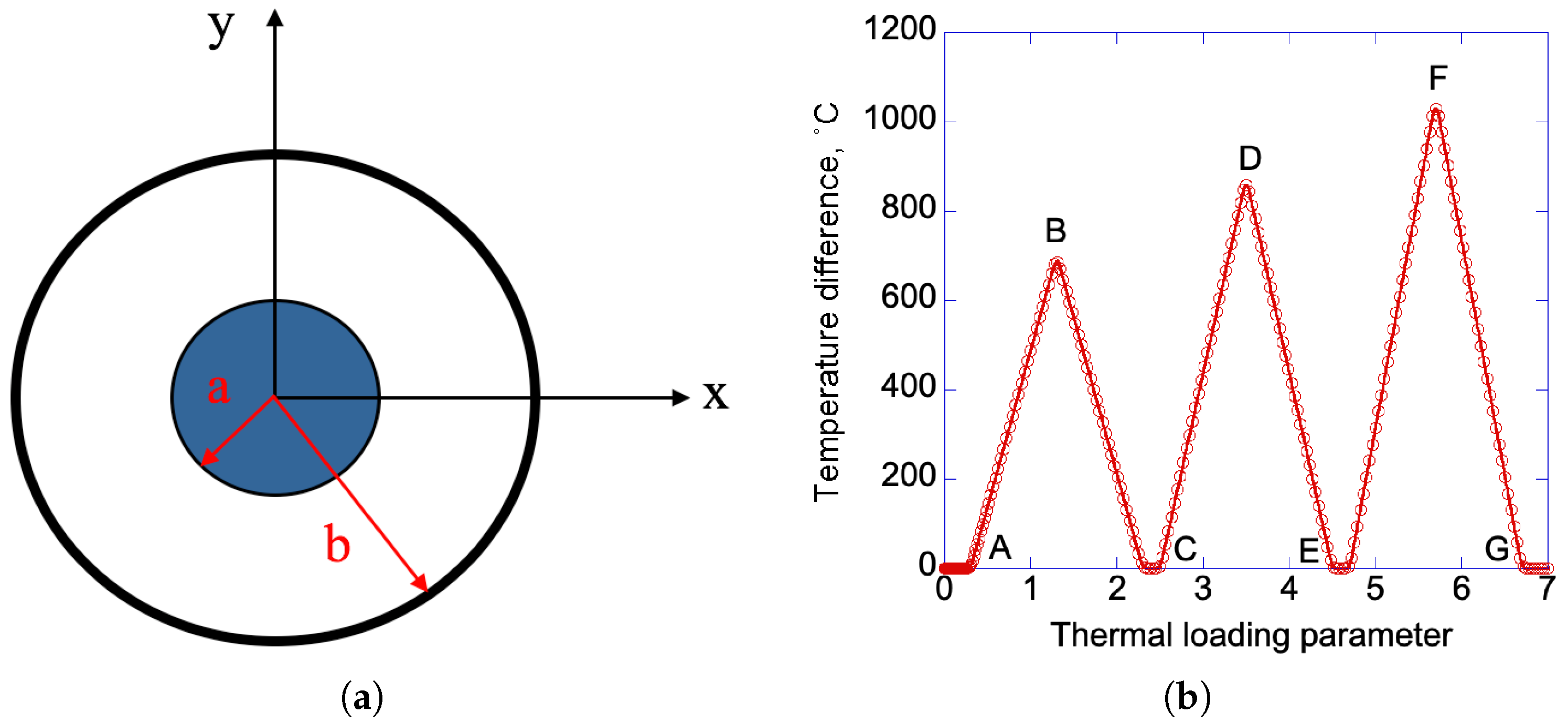
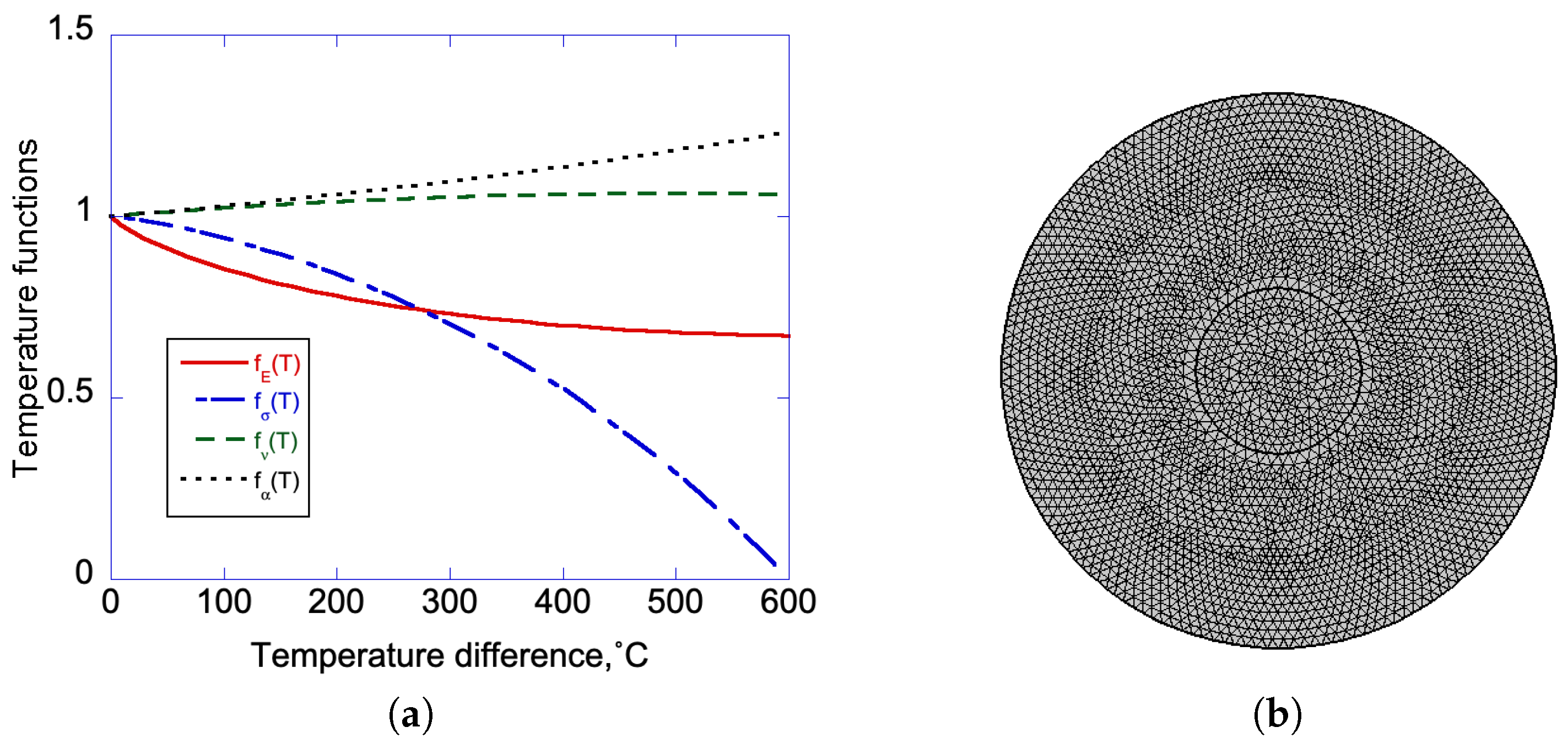
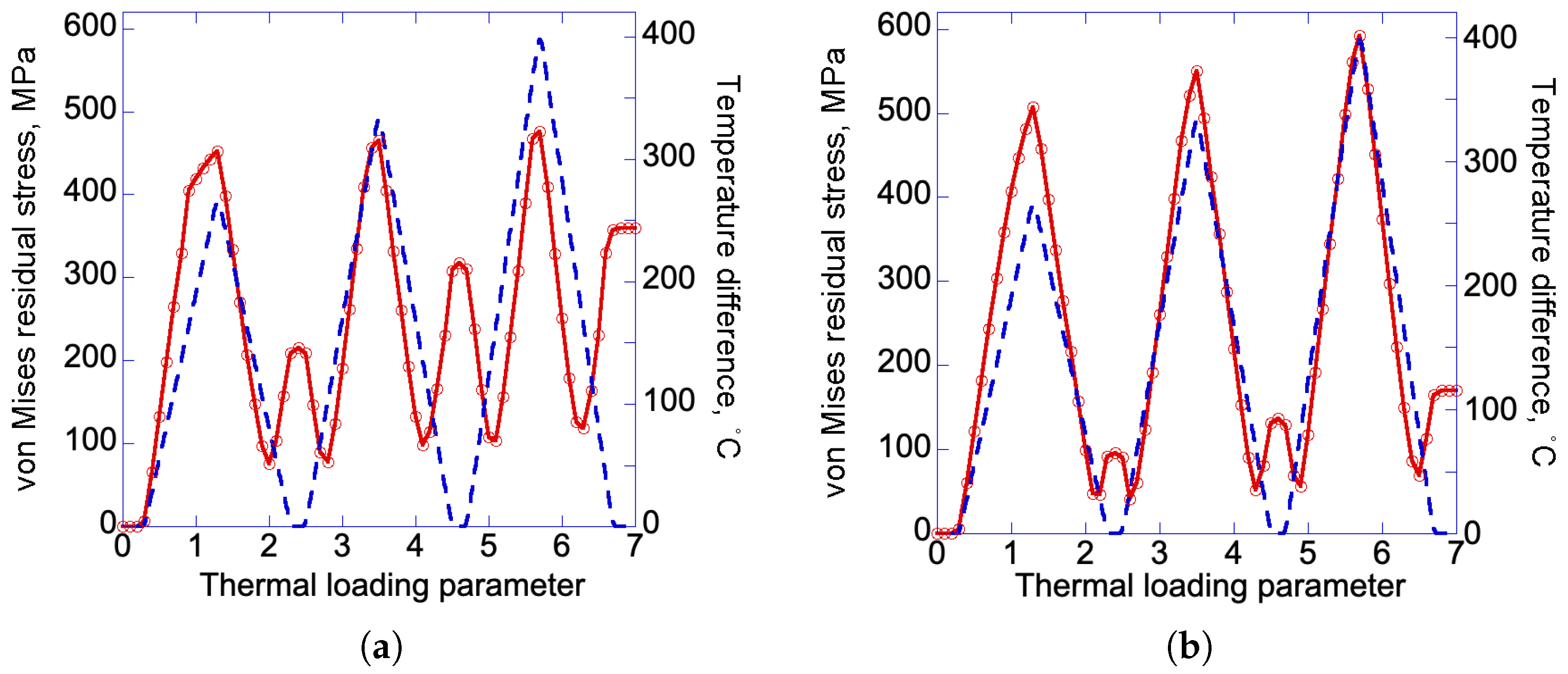
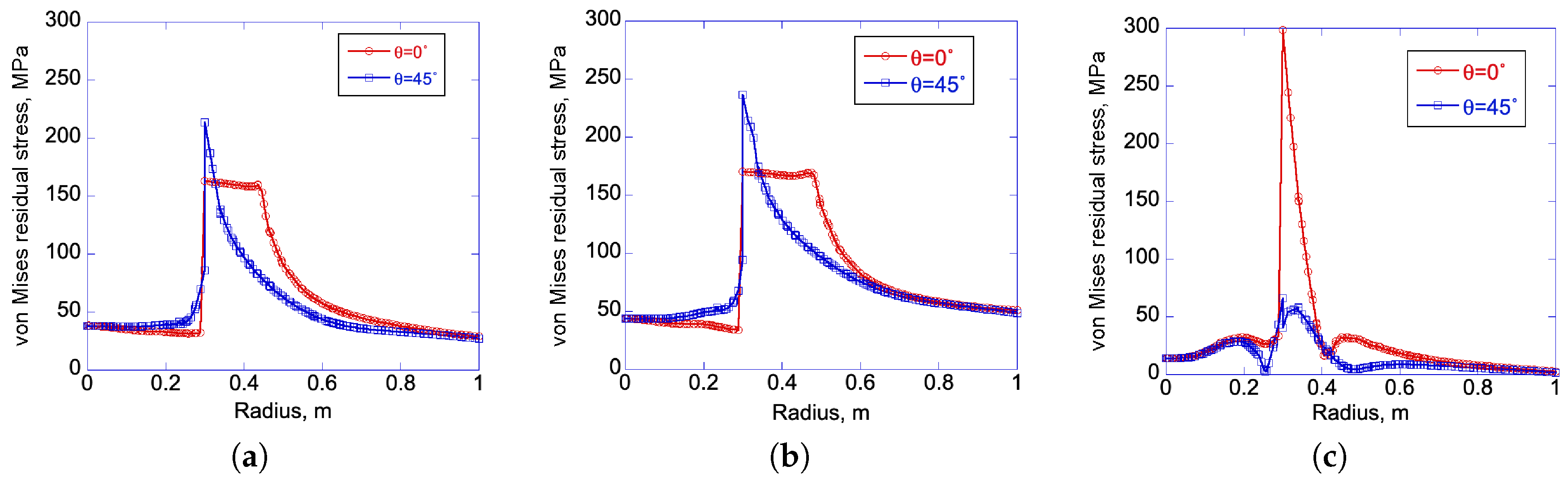
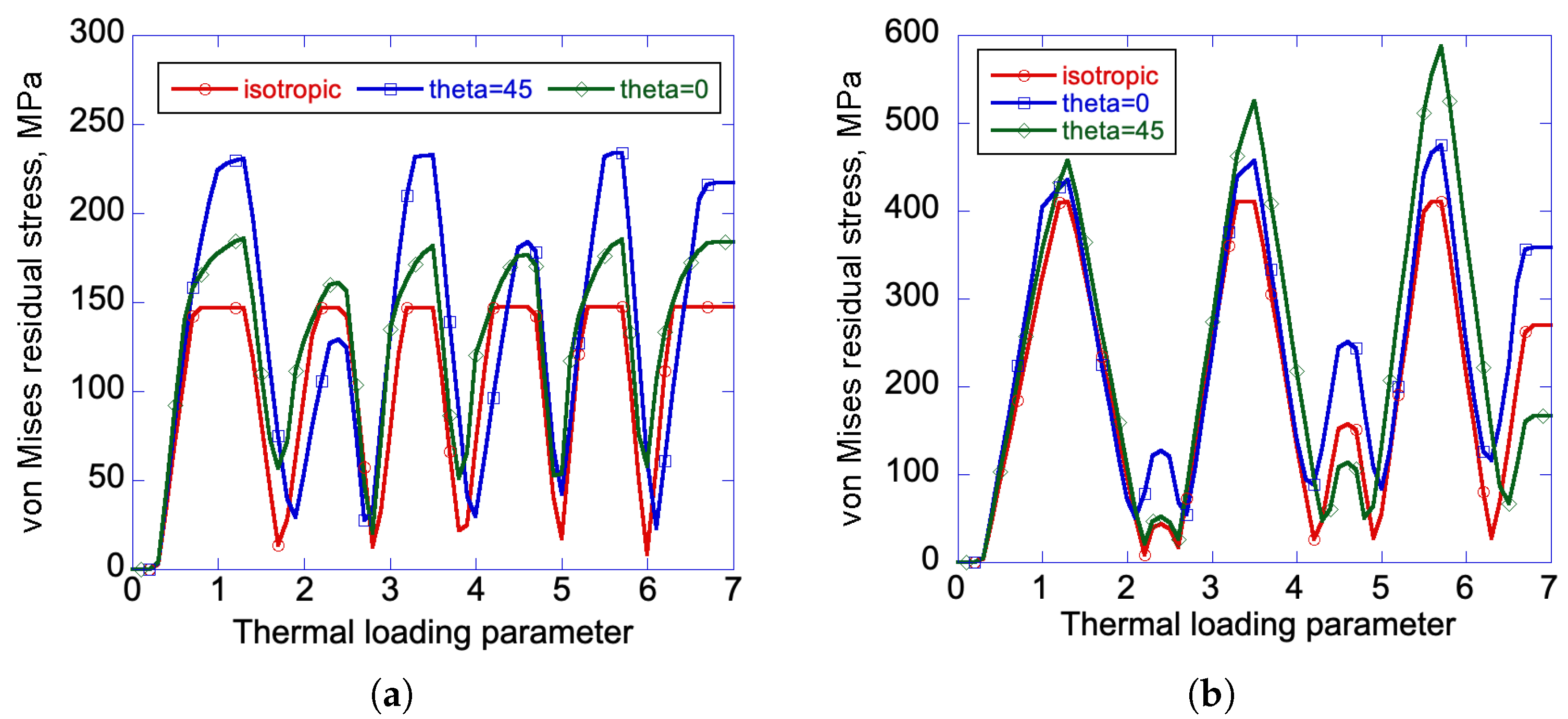
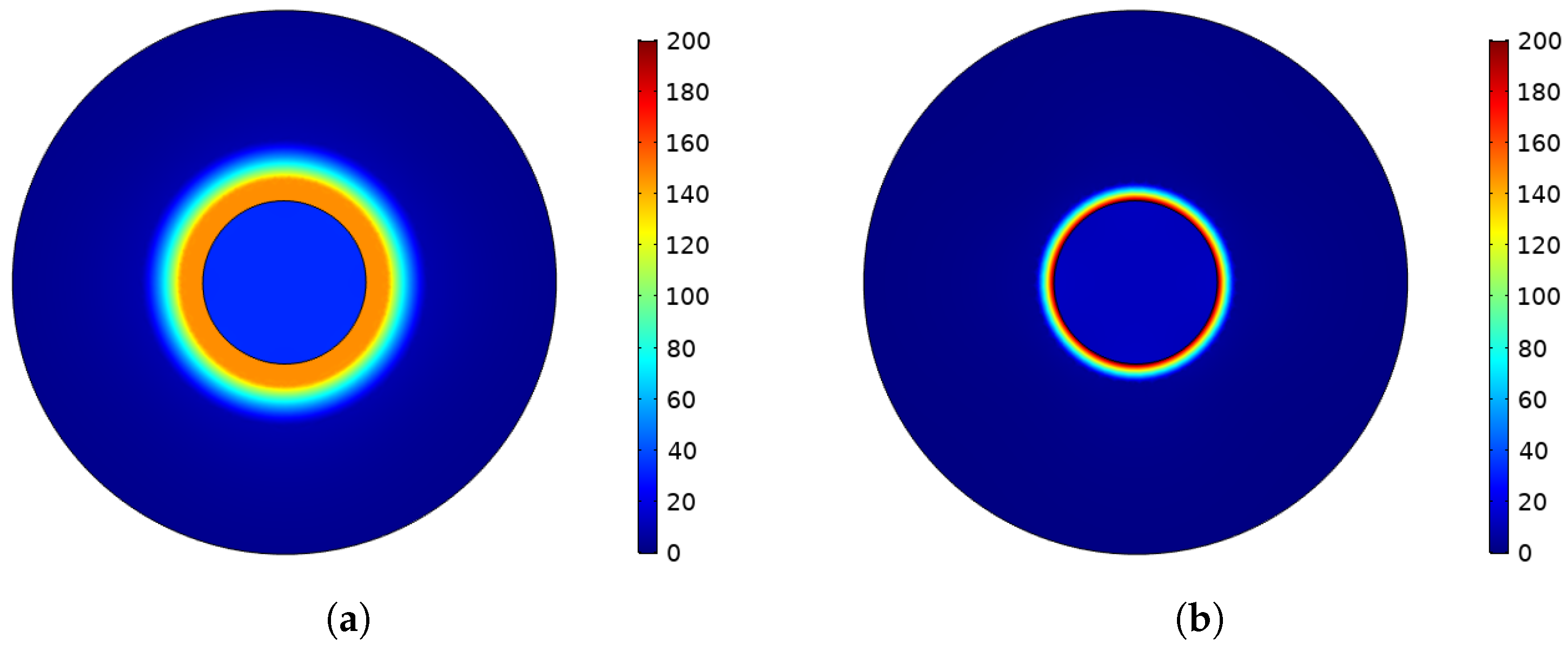
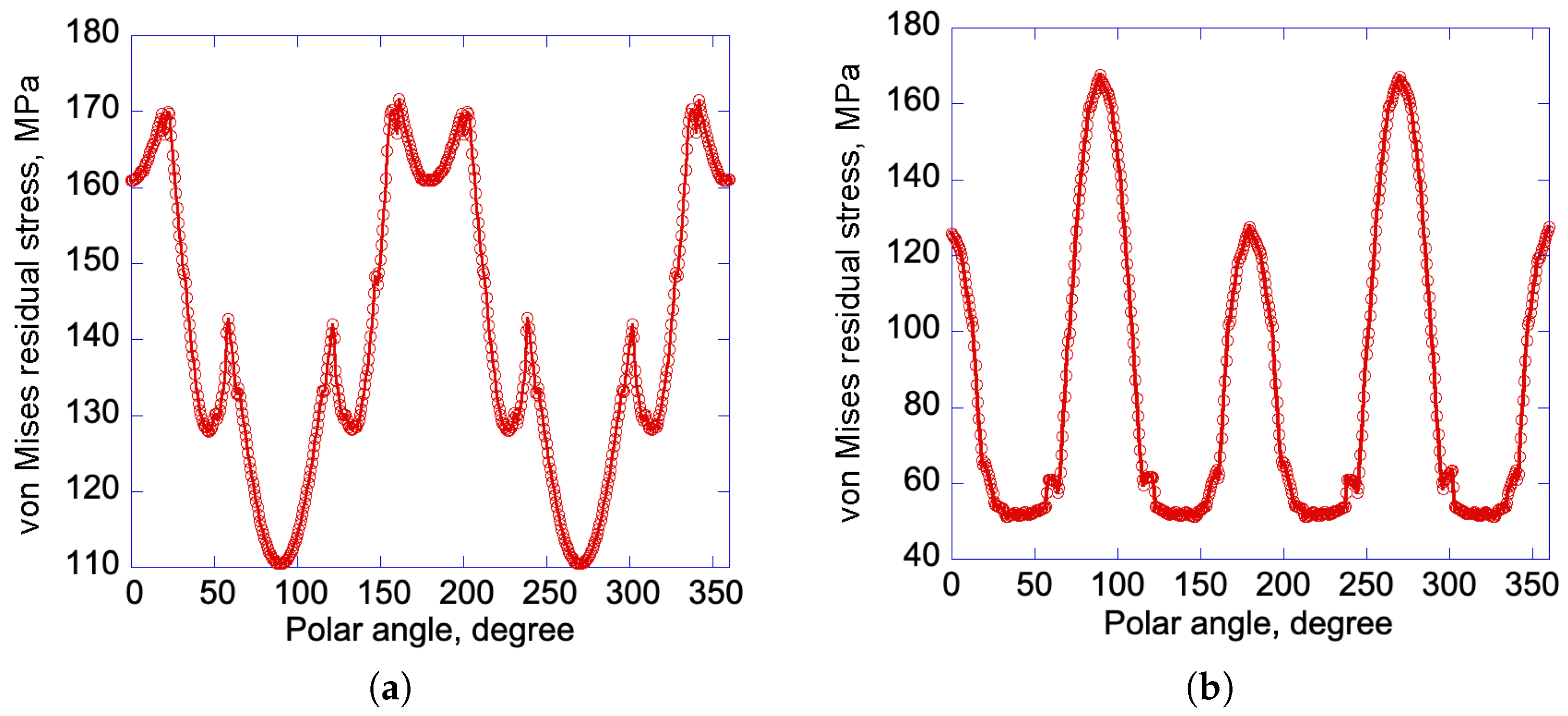
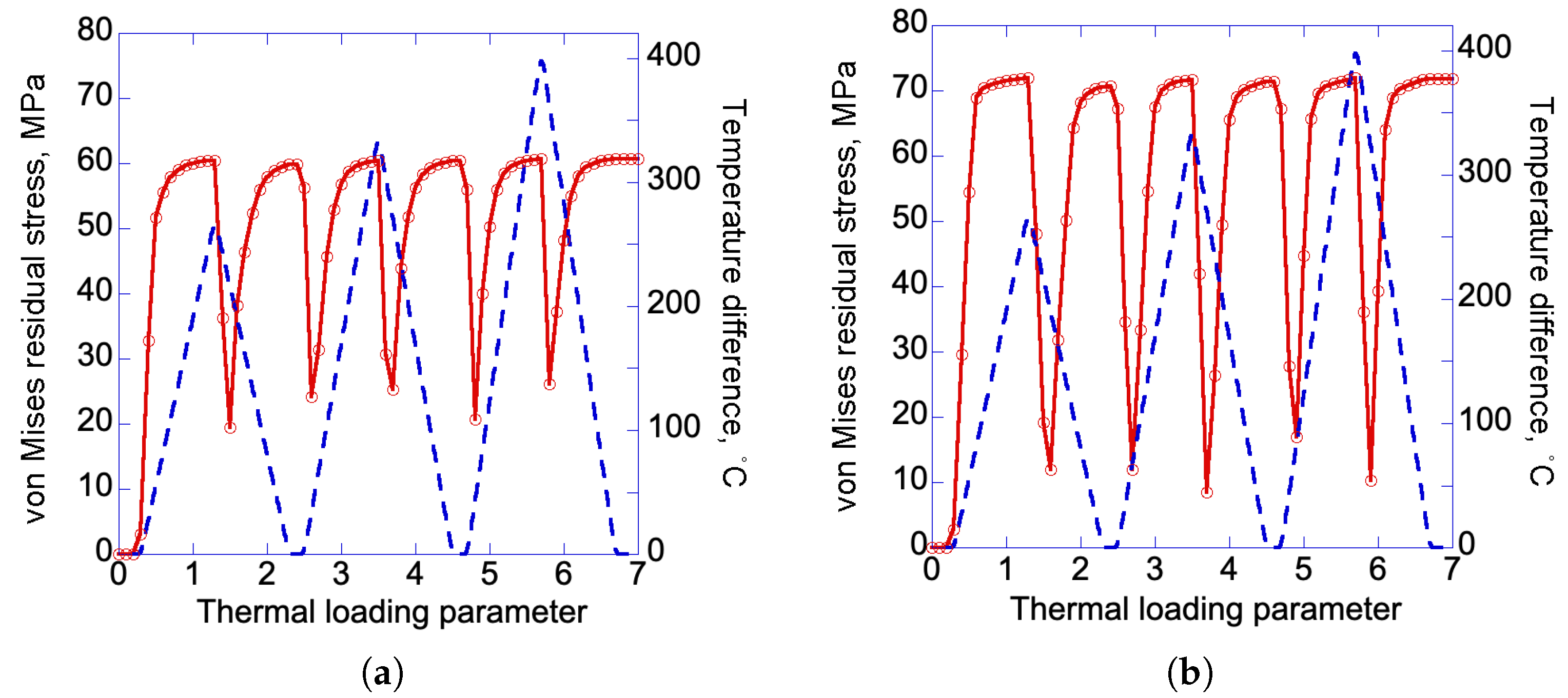
Elastoplastic analysis of a composite cylinder, consisting of an isotropic elastic inclusion surrounded by orthotropic matrix, is conducted via numerical parametric studies for examining its residual stress under thermal cycles. The matrix is assumed to be elastically and plastically orthotropic, and all of its material properties are temperature-dependent (TD). The Hill’s anisotropic plasticity material model is adopted. The interface between the inclusion and matrix is perfectly bonded, and the outer boundary of the cylinder is fully constrained. A quasi-static, uniform temperature field is applied to the cylinder, which is analyzed under the plane-strain assumption. The mechanical responses of the composite cylinder are strongly affected by the material symmetry and temperature-dependent material properties. When the temperature-independent material properties are assumed, larger internal stresses at the loading phase are predicted. Furthermore, considering only yield stress being temperature dependent may be insufficient since other TD material parameters may also affect the stress distributions. In addition, plastic orthotropy inducing preferential yielding along certain directions leads to complex residual stress distributions when material properties are temperature-dependent.
Keywords: orthotropic plasticity; residual stress; temperature-dependent material properties; composite cylinder; finite element analysis orthotropic plasticity; residual stress; temperature-dependent material properties; composite cylinder; finite element analysis