Article

Fractional Order Forced Convection Carbon Nanotube Nanofluid Flow Passing Over a Thin Needle


1
Department of Mathematics, City University of Science and Information Technology, Peshawar 25000, Pakistan
2
Department of Mathematics, Govt. Superior Science College Peshawar, Khyber Pakhtunkhwa, Pakistan
3
Faculty of Mathematics and Statistics, Ton Duc Thang University, Ho Chi Minh City 72915, Vietnam
4
Department of Mechatronics and System Engineering, College of Engineering, Majmaah University, Majmaah 11952, Saudi Arabia
5
Energy and Thermal Systems Laboratory, National Engineering School of Monastir, Street Ibn El Jazzar, 5019 Monastir, Tunisia
*
Author to whom correspondence should be addressed.
Symmetry 2019, 11(3), 312; https://doi.org/10.3390/sym11030312
Submission received: 7 January 2019 / Revised: 31 January 2019 / Accepted: 2 February 2019 / Published: 2 March 2019
(This article belongs to the Special Issue Symmetry and Fluid Mechanics)

Abstract

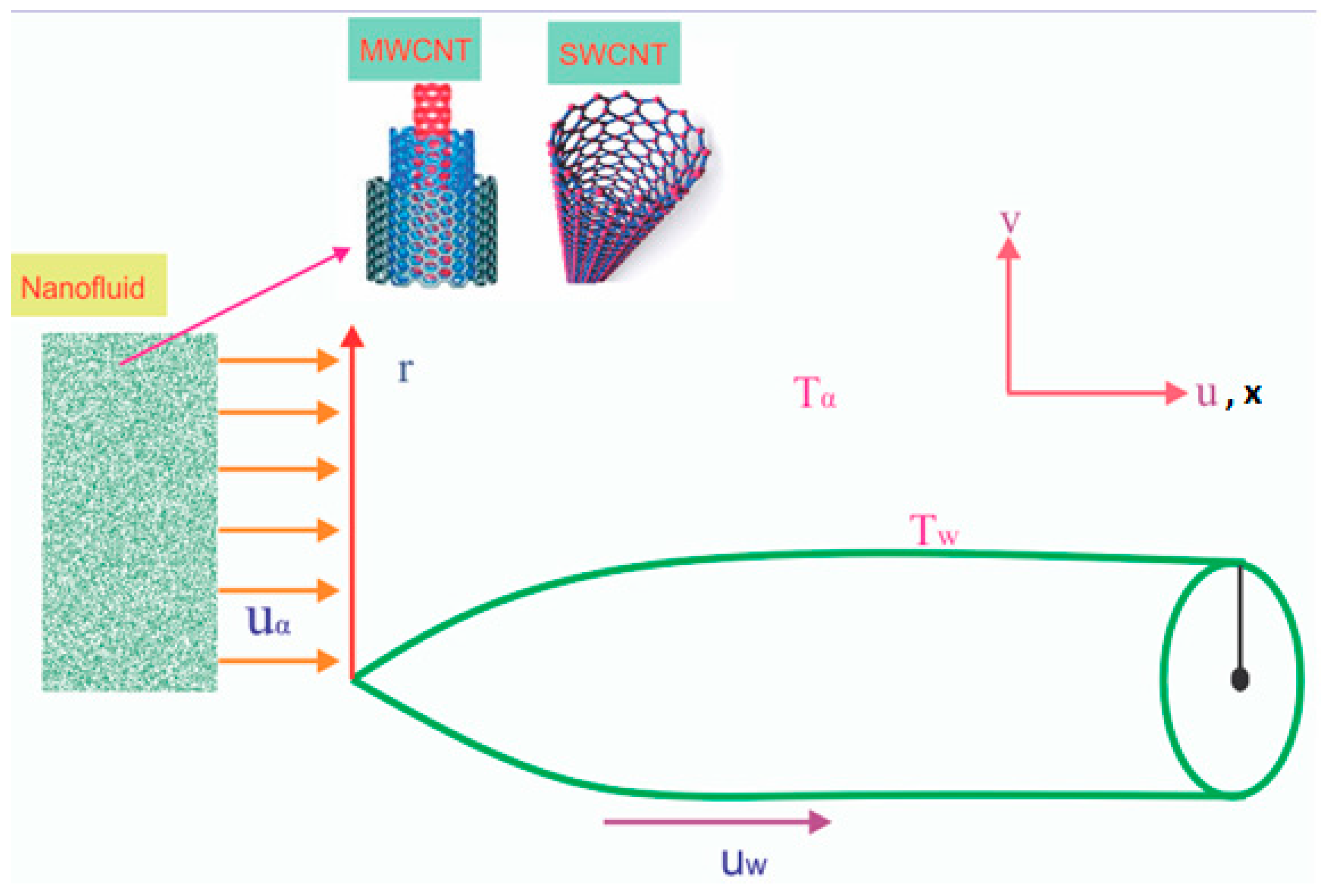
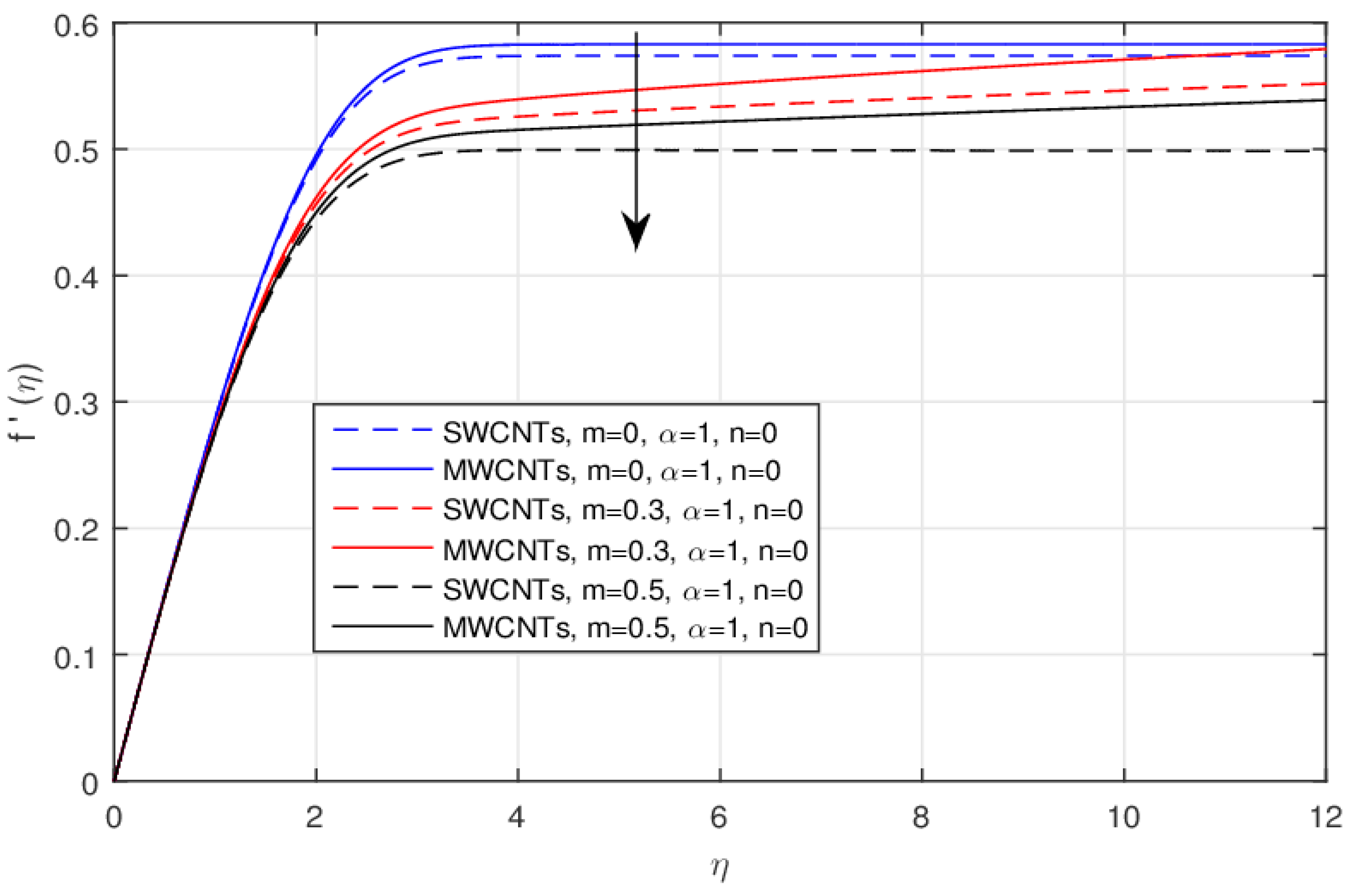
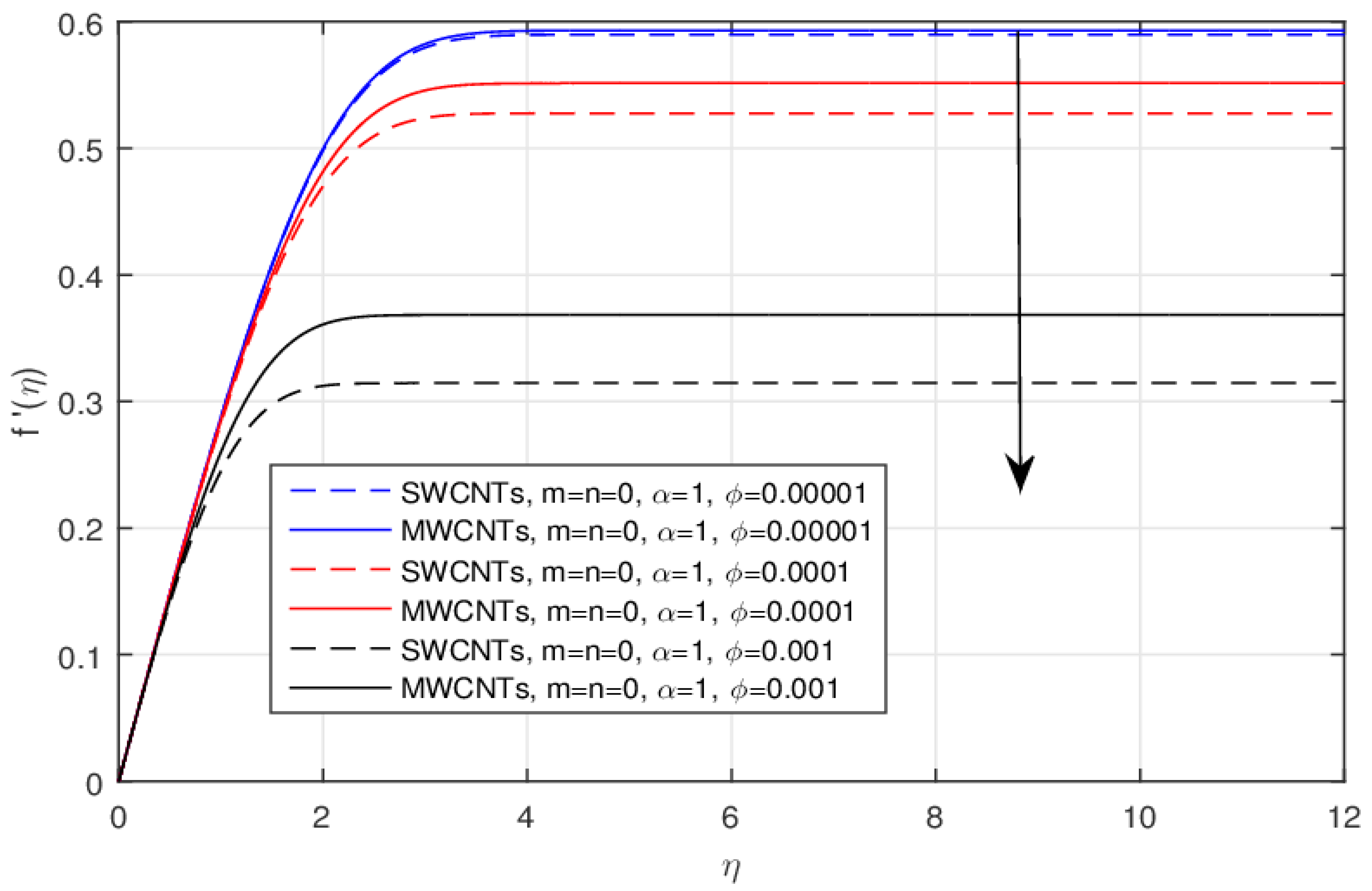
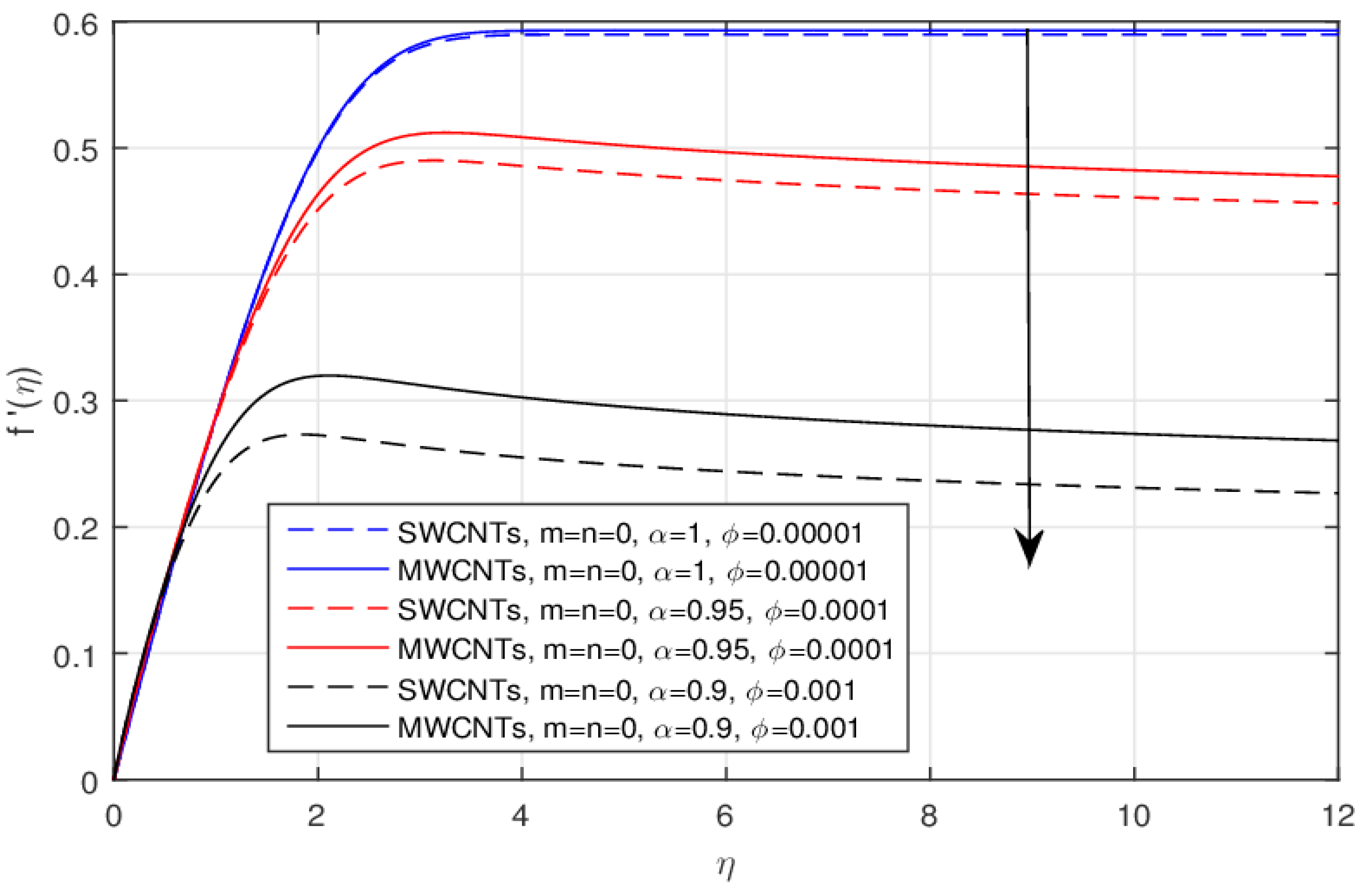
In the fields of fluid dynamics and mechanical engineering, most nanofluids are generally not linear in character, and the fractional order model is the most suitable model for representing such phenomena rather than other traditional approaches. The forced convection fractional order boundary layer flow comprising single-wall carbon nanotubes (SWCNTs) and multiple-wall carbon nanotubes (MWCNTs) with variable wall temperatures passing over a needle was examined. The numerical solutions for the similarity equations were obtained for the integer and fractional values by applying the Adams-type predictor corrector method. A comparison of the SWCNTs and MWCNTs for the classical and fractional schemes was investigated. The classical and fractional order impact of the physical parameters such as skin fraction and Nusselt number are presented physically and numerically. It was observed that the impact of the physical parameters over the momentum and thermal boundary layers in the classical model were limited; however, while utilizing the fractional model, the impact of the parameters varied at different intervals.
Keywords: SWCNT/MWCNT nanofluid; thin needle; classical and fractional order problems; APCM technique SWCNT/MWCNT nanofluid; thin needle; classical and fractional order problems; APCM technique