Article

Forty-Year Landscape Fragmentation and Its Hydro–Climate–Human Drivers Identified Through Entropy and Gray Relational Analysis in the Tuwei River Watershed, China

1
School of Architecture, Chang’an University, Xi’an 710064, China
2
School of Water and Environment, Chang’an University, Xi’an 710054, China
*
Author to whom correspondence should be addressed.
Land 2026, 15(1), 24; https://doi.org/10.3390/land15010024
Submission received: 10 November 2025 / Revised: 15 December 2025 / Accepted: 16 December 2025 / Published: 22 December 2025

Abstract

Landscapes in semiarid regions are highly sensitive to climate change and anthropogenic activities, and their evolution directly influences ecosystem services and regional ecological security. Although previous research has examined land use changes, systematic quantitative analyses of long-term evolutionary trends and driving mechanisms, particularly the comprehensive relationships between key hydrological elements and landscape pattern evolution in water-scarce, semiarid watersheds, remain limited. To address the research gap in long-term, multifactor, and hydro–landscape integrated analysis, China’s Tuwei River watershed was selected as the study area in this study, and methods such as landscape pattern indices and gray relational analysis were employed to quantitatively reveal the spatiotemporal evolution of watershed landscape fragmentation from 1980 to 2020 and identify its dominant driving forces. The results revealed that (1) over the 40-year period, the land use structure of the watershed underwent significant restructuring, with developed land expanding by 1282%, cropland and bare land areas decreasing by 14.2% and 32.01%, respectively, and grassland and forestland areas increasing by 24.5% and 14.9%, respectively; (2) land-scape fragmentation continued to intensify, with the landscape fragmentation composite index (FCI) increasing by 37.6%, patch density (PD) continuously increasing, edge density (ED) and landscape shape index (LSI) increasing significantly, and landscape connectivity weakening; (3) natural and socioeconomic factors jointly drove landscape evolution, with temperature and mean annual flow contributing the most among natural factors and the urbanization rate and secondary industry output value serving as the core drivers among socioeconomic factors; and (4) the trend of landscape fragmentation was synchronized with changes in annual rainfall and runoff and exhibited a significant negative correlation with the groundwater level. In summary, through long-term, multifactor comprehensive analysis, the evolution characteristics and driving mechanisms of landscape patterns in the Tuwei River watershed were systematically revealed in this study. These findings not only deepen the understanding of landscape fragmentation processes under the dual pressures of climate change and anthropogenic activities but also provide scientific evidence for the sustainable management of landscapes and associated ecosystems in semiarid watersheds.

1. Introduction

Semiarid regions are among the areas most sensitive to climate change and anthropogenic activities and are characterized by severe water scarcity and highly uneven spatiotemporal distributions of water resources [1,2]. In these areas, watershed hydrological processes critically influence landscape pattern evolution, which in turn affects vegetation distribution, land use, and ecosystem stability. Moreover, limited water resources cause landscape patterns to exhibit high sensitivity and vulnerability to climatic fluctuations and human disturbances [3]. Therefore, revealing the long-term characteristics of landscape pattern evolution and its driving mechanisms is not only key to increasing the understanding of ecological response patterns in semiarid regions but also represents an important scientific issue for enhancing regional ecological security and achieving sustainable development.
Existing studies have provided important foundations for understanding landscape pattern evolution in semiarid regions. On the one hand, scholars have revealed the spatiotemporal change characteristics of landscape patterns in different regions. For example, research has explored the relationship between crop water demand and landscape pattern evolution in semiarid areas [4], as well as the trends of landscape fragmentation and water quality degradation driven by the expansion of irrigation agriculture in the Suquía River Basin, a semiarid region of Argentina [5]. In terms of natural factors, climate change has been confirmed to significantly influence landscape evolution, with its dominant role varying across regions [6]. In terms of socioeconomic factors, gross regional product, population size, and per capita GDP (Per capita GDP is the average share of a country’s total economic output per person) have been recognized as major contributors to intensified landscape fragmentation [7]. With respect to research methods, geostatistical methods have been applied to analyze landscape–climate coupling in Mediterranean semiarid watersheds [8], PPGIS techniques have been used to dissect the impact of anthropogenic activities on landscape patterns in agricultural landscapes in Europe [9], and structural equation modeling has been widely employed to quantify driving mechanisms in semiarid watersheds in North America [10]. Landscape pattern indices [11], land use transition matrices [12], and spatial statistical methods [13] have been extensively applied. These techniques are being increasingly combined with analytical approaches such as principal component analysis, gray relational analysis (GRA), and the geographical detector method to decipher driving mechanisms [14,15], thereby advancing landscape pattern research from single-factor descriptions to multifactor comprehensive analyses. Despite these advances, two major limitations remain in the existing research. First, systematic quantitative studies on the long-term evolutionary trends of landscape patterns and their driving mechanisms are still inadequate [16]. Second, quantitative analyses of the relationships between key hydrological elements (e.g., rainfall and groundwater level) and long-term landscape pattern evolution remain scarce in semiarid watersheds characterized by limited water resources and strong groundwater dependency. These shortcomings hinder an in-depth understanding of landscape–hydrology interaction mechanisms and limit the application of relevant findings to watershed ecological management and spatial planning.
The Tuwei River watershed is located in the eastern Ordos watershed of China and belongs to a typical temperate semiarid monsoon climate zone [17]. The region shows significant fluctuations and an extremely uneven spatiotemporal distribution of annual precipitation, and these characteristics have become key factors constraining the structure and function of the regional ecosystem [18]. Under the combined effects of climate change and anthropogenic activities, the landscape patterns of the Tuwei River watershed have experienced significant transformation. Human activities such as large-scale vegetation restoration, cropland expansion, groundwater over-extraction, and reservoir construction have led to alterations in the natural hydrological cycle of the watershed, profoundly affecting ecosystem stability and regional ecological security [19]. Existing research on the Tuwei River watershed has focused mainly on specific themes, including assessments of groundwater-dependent ecosystems, river–groundwater transformation and its ecological effects [20], identification of drivers behind runoff reduction [21], and spatiotemporal changes in soil erosion [22]. These studies provide an important foundation for understanding the landscape and ecohydrological processes of the watershed. These studies provide an important foundation for understanding the watershed landscape and its ecohydrological processes. However, most of these studies focused on individual elements and lacked a comprehensive research perspective based on long-term time series and multiple factors. This is particularly evident at the landscape pattern level, where systematic analyses of long-term evolutionary characteristics, the main driving factors, and their relationships with key hydrological elements are still lacking. Nonetheless, significant gaps remain in the existing research in terms of two main aspects. First, for semiarid watersheds such as the Tuwei River, studies that integrate key hydrological elements with landscape patterns for long-term coupled analysis are still scarce. Second, with respect to the identification of driving forces, comprehensive quantitative research incorporating multiple factors is insufficient. There is a notable lack of systematic application of analytical methods capable of handling small-sample, high-dimensional data, such as gray relational analysis (GRA). Therefore, comprehensive multifactor research based on long-term time series data is urgently needed to elucidate the evolution and driving mechanisms of landscape patterns in the Tuwei River watershed. This research not only compensates for the shortcomings of existing studies but also provides a scientific basis for landscape pattern optimization and ecosystem resilience enhancement in semiarid watersheds.
This study aims to examine the Tuwei River watershed in China via land use, climatic, hydrological, and socioeconomic data from 1980 to 2020. By integrating GIS spatial analysis, landscape pattern indices, and GRA, we systematically analyzed the long-term evolution characteristics of landscape patterns and identified key driving forces from both natural and socioeconomic dimensions. Moreover, we explored the relationships between key hydrological elements and landscape fragmentation, providing empirical support for understanding the combined effects of climate change and anthropogenic activities on landscape patterns. On the basis of the above research gaps, this study aims to systematically address the following scientific questions: (1) What spatiotemporal evolution characteristics did the landscape patterns, particularly the degree of fragmentation, exhibit in the Tuwei River watershed from 1980 to 2020? (2) How did natural climatic–hydrological processes and socioeconomic activities jointly drive this evolution, and what were their relative contributions? (3) What are the relationships between the dynamics of key hydrological elements and the processes of landscape fragmentation? By answering these questions, this study aims to elucidate the evolution of watershed landscape patterns under natural and anthropogenic disturbances in semiarid regions and to provide scientific support for the sustainable landscape management of similar watersheds in arid and semiarid areas.

2. Materials and Methods

2.1. Study Area

The Tuwei River watershed is located in the transition zone between the Loess Plateau and the Mu Us Sandy Land and covers a total area of approximately 4503.40 km2 (Figure 1). The watershed is characterized by an arid climate with little rainfall, marked seasonal temperature variations, and an uneven spatiotemporal distribution of precipitation [23]. The multiyear average temperature is approximately 8.5 °C, with extreme maximum and minimum temperatures reaching 38.0 °C and −25.0 °C, respectively. The mean annual precipitation is 417.4 mm, which is predominantly concentrated in summer, whereas winter receives scarce rainfall, reflecting distinct seasonal heterogeneity [24]. Given the complex and diverse geomorphological types within the Tuwei River watershed [25], the zoning scheme proposed by Wang et al. [19], which divides the watershed into three regions—the upper desert area, the middle sand-covered hilly area, and the lower loess hilly-gully area—is adopted in this study. This zoning framework reflects the spatial differences in topography and geomorphology, aquifer characteristics, and groundwater recharge conditions, providing a research basis for understanding the evolution of landscape patterns and ecological responses in the watershed.

2.2. Data Sources

The land use data from 1980 to 2020 employed in this study were obtained from the five-period (1980, 1990, 2000, 2010, and 2020) 30 m resolution land use dataset provided by the Resource and Environmental Science and Data Center (RESDC) of the Chinese Academy of Sciences (http://www.resdc.cn/ (accessed on 27 January 2024)). The dataset was generated through human–computer interactive interpretation based on Landsat series satellite imagery (MSS/TM/ETM+/OLI) and underwent radiometric calibration, atmospheric correction (using the 6S model), and geometric precision correction. The overall classification accuracy exceeds 85%, enabling support for long-time-series landscape pattern change analysis. Preprocessing of the land use data was performed using ENVI 5.3 software, including FLAASH atmospheric correction and cloud masking via band-threshold methods. ArcGIS 10.8 was used for projection conversion (WGS84/UTM Zone 49N), watershed boundary clipping, and rasterization into a 500 m × 500 m grid [26]. Watershed hydrological data, including average flow, rainfall, evaporation, and groundwater level, were sourced from the Gaojiachuan Hydrological Station of the Tuwei River, managed by the Yellow River Conservancy Commission. Data on total watershed water resources and surface water resources were acquired from the Guotai’an Database (https://data.csmar.com/ (accessed on 1 March 2024)). Areal mean evaporation across the watershed was derived using the Thiessen polygon method. Socioeconomic data included mainly per capita GDP; the urbanization rate; the output values of primary, secondary, and tertiary industries; and changes in cultivated land area. Owing to the lack of continuous county-level statistics, prefecture-level data from Yulin and Ordos were disaggregated into watershed counties using an area-weighted interpolation approach to approximate the intensity of socioeconomic activities within the watershed. The relevant statistical data originated from the China Statistical Yearbook (https://www.stats.gov.cn/sj/ndsj/ (accessed on 12 March 2024)).

2.3. Methods

2.3.1. Selection and Calculation of the Landscape Pattern Index

To quantify the long-term evolution characteristics of the landscape pattern in the Tuwei River watershed, landscape pattern indices were selected in terms of the degree of landscape fragmentation, patch shape, and landscape diversity. This transition process reflects a dual pattern of the simultaneous advancement of urbanization and ecological restoration projects and shape complexity induced by human disturbance and has been demonstrated to be highly sensitive in semiarid landscape-hydrology studies [27]. Combined with the actual situation and characteristics of the watershed and in reference to previous similar studies [28,29], the six selected landscape pattern indices included the patch density (PD), maximum patch index (LPI), edge density (ED), landscape shape index (LSI), aggregation index (AI) and Shannon evenness index (SHEI). Among them, PD is the degree of landscape fragmentation, LPI represents the types of dominant landscape patches, ED reflects the degree of landscape segmentation and connectivity, LSI describes the complexity of the patch shape, AI is the degree of patch aggregation, and SHEI is used to characterize the landscape diversity in the region [29,30,31]. See Table 1 for the specific mathematical expression and ecological significance for each index.

2.3.2. Landscape Type and Spatial Distribution

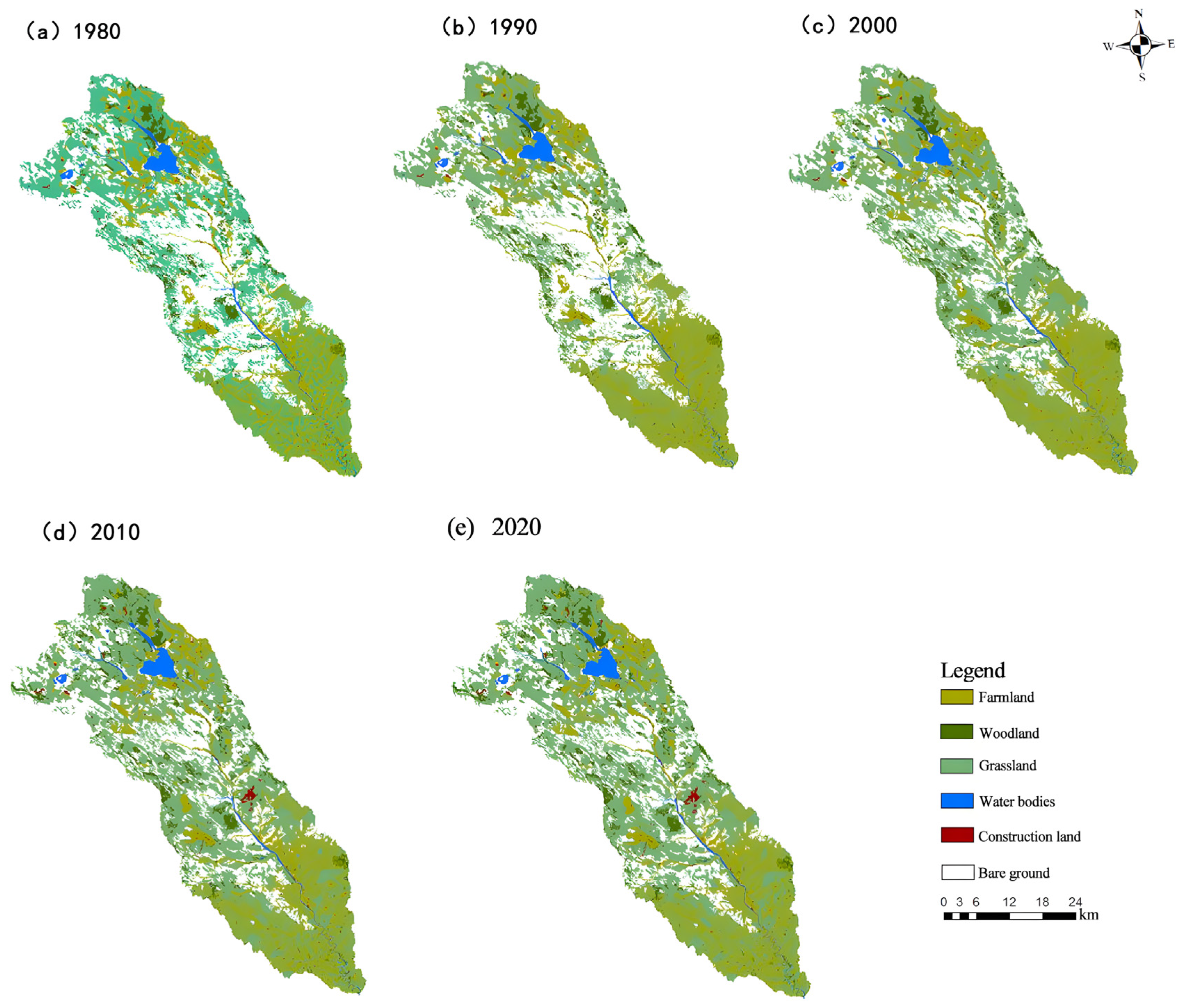
On the basis of the vector boundary data of the Tuwei River watershed from 1980 to 2020 and according to the classification system of the Resource and Environmental Science and Data Center [32], the land use types were classified into the following six categories: cropland, forestland, grassland, urban and rural developed land, water bodies, and bare land. As shown in Figure 2, cropland is distributed mainly in the upper and lower reaches, where fertile soils form important grain-producing areas. Forestland is concentrated along the river networks in the northern part of the watershed and plays crucial roles in soil and water conservation, water retention, and maintaining the regional ecological balance. Grassland is widely distributed across the watershed and provides substantial amounts of forage resources for local livestock farming. Urban and rural developed land is primarily clustered in towns and industrial zones, which are characterized by a dense population and intensive economic activities. Water bodies include the main stream, tributaries, reservoirs, and lakes of the Tuwei River. Bare land is predominantly found in the northwestern and mid-upper sections of the watershed. To better reveal the spatial heterogeneity of the landscape patterns in the Tuwei River watershed, a 500 m × 500 m grid system was established. This approach simplifies complex landscape configurations into standardized units, facilitating the visualization and analysis of spatial distribution and dynamic changes [33].

2.3.3. Landscape Fragmentation Composite Index

Since PD, ED and LSI collectively capture landscape fragmentation characteristics from three dimensions, i.e., patch density, boundary effects, and shape complexity, and have demonstrated high sensitivity in semiarid landscape-hydrology studies [10,27], in this study, landscape fragmentation was defined as a process characterized by decreased patch continuity, increased numbers of patches, and heightened complexity of the patch boundaries [34]. This study aimed to integrate these three indices using the entropy method to construct a comprehensive landscape fragmentation composite index (FCI) that was used to quantify the overall degree of watershed landscape fragmentation (Table 2). To assess the specific impacts of hydrological processes on landscape fragmentation, four key hydrological elements—annual rainfall, runoff, evaporation, and groundwater level—were selected, representing moisture input, surface flow, water loss, and subsurface storage, respectively. Their dynamic trends alongside the landscape fragmentation composite index (FCI) from 1980 to 2020 were then analyzed. To minimize scale differences among variables, all data were normalized to a 0–1 range before calculation to accurately reflect correlations between variables [35].

2.3.4. Gray Relational Analysis

In this study, GRA was employed to quantify the effects of natural and socioeconomic factors on landscape pattern evolution. Compared with traditional statistical methods such as regression and correlation analysis, GRA requires relatively small sample sizes and can effectively handle data with high variability and complexity; thus, GRA is highly applicable to studies of the forces driving landscape patterns, particularly in sample-limited contexts [36]. In this study, GRA was executed using the SPSSPRO platform. The computational procedure included normalization of the raw data, with a comprehensive relational degree exceeding 0.8 set as the criterion for identifying strong associations.
The comprehensive gray relational degree is calculated as follows:
ρ O i = θ ε 0 i + 1 θ r 0 i
where ρ0i = the comprehensive gray relational degree; and θ = weight coefficient (conventionally assigned θ = 0.5).

2.4. Analytical Framework

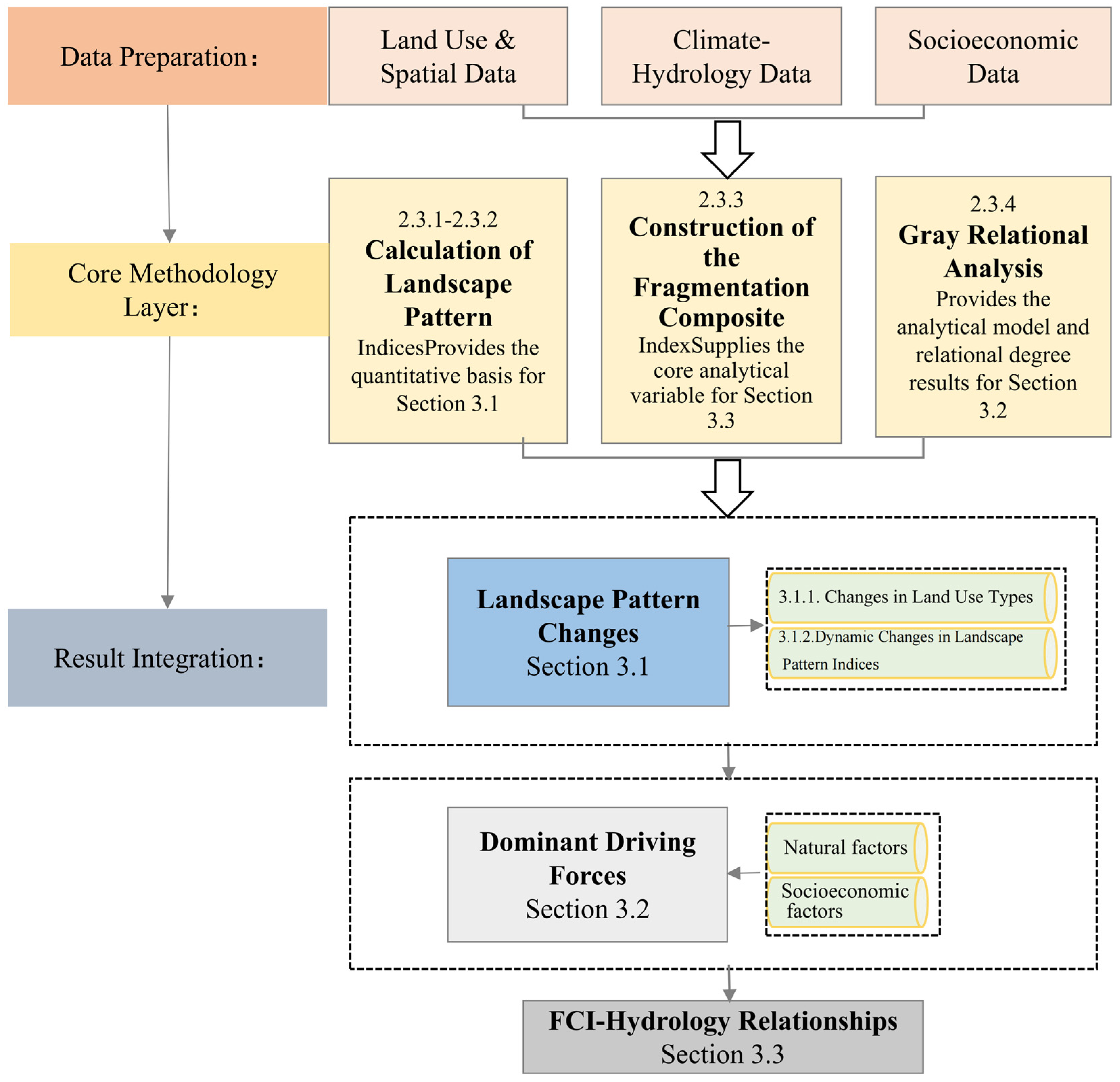
I will integrate the core research logic of the paper, covering all key stages, and clarify the correspondence between the “methodological description” and “result application” at each stage (Figure 3).

3. Results

3.1. Landscape Pattern Changes

3.1.1. Changes in Land Use Types

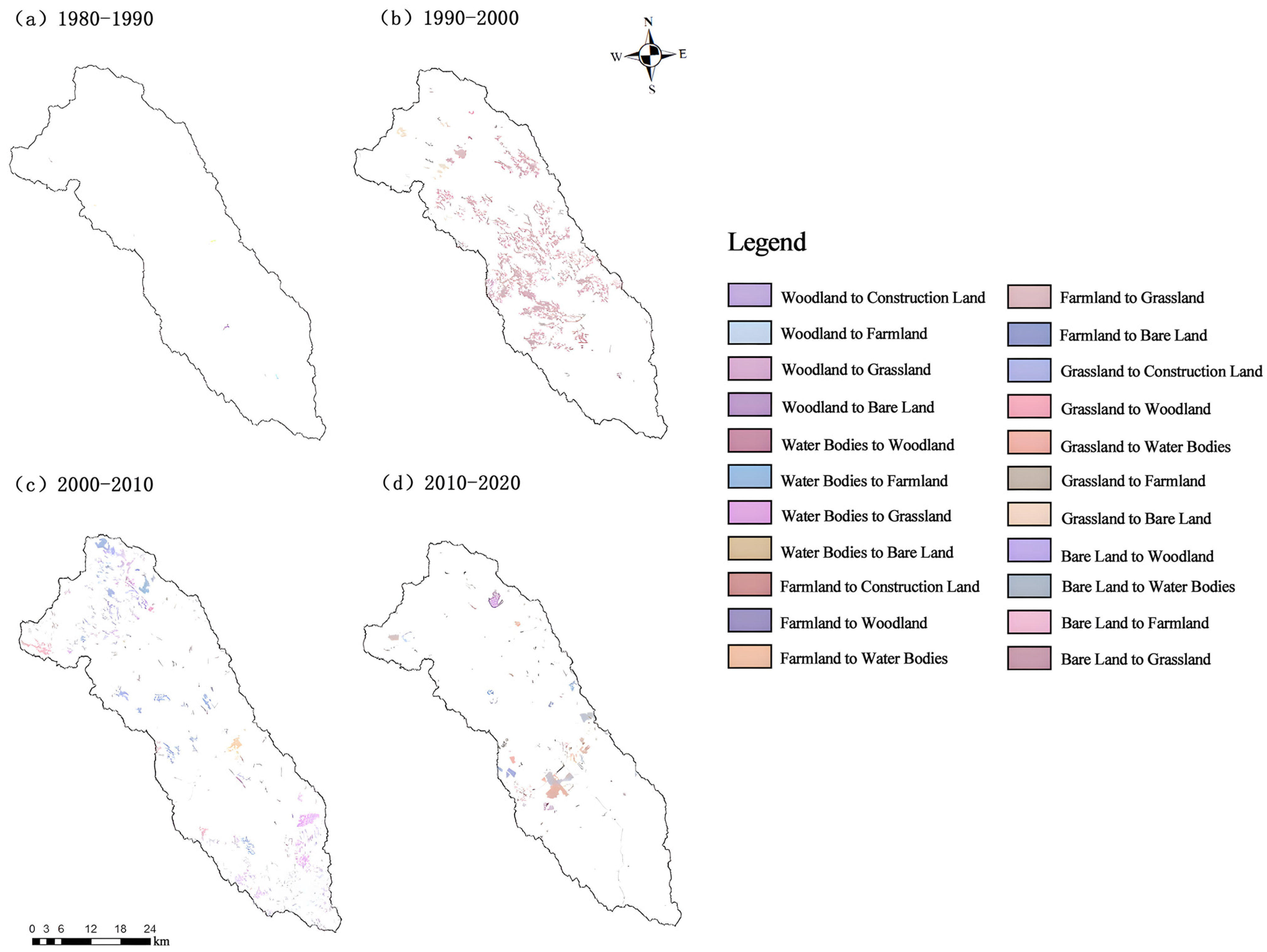
Between 1980 and 2020, the Tuwei River watershed underwent significant land use changes (Table 3 and Table 4 and Figure 4). The developed land area expanded continuously, increasing by more than twelvefold over the 40-year period, primarily through the occupation of cropland and grassland. The grassland and forestland areas increased by 24.5% and 14.9%, respectively, while the cropland and bare land areas decreased by 14.2% and 32%, respectively. Unused land remained largely stable. Analysis by period revealed distinct trends. From 1980 to 1990, land use changes occurred relatively slowly, with a slight increase in urban developed land. From 1990 to 2000, bare land decreased significantly (4861.22 km2) and was largely converted to grassland. The period from 2000 to 2010 experienced the most dramatic changes: developed land expanded by 122%, while cropland area decreased by 15,985.3 km2 because of the large-scale implementation of the Grain for Green Program, which was accompanied by increases in forestland (5505.7 km2) and grassland (14,162.4 km2). Between 2010 and 2020, developed land continued to expand rapidly (with a net increase of 15,060.7 km2), mainly through encroachment on grassland and cropland, whereas the water body area increased, primarily because of conversion from grassland (as shown in Figure 3). Overall, the expansion of developed land and the increase in grassland area were the dominant features of land use transformation in the watershed from 1980 to 2020.

3.1.2. Dynamic Changes in Landscape Pattern Indices

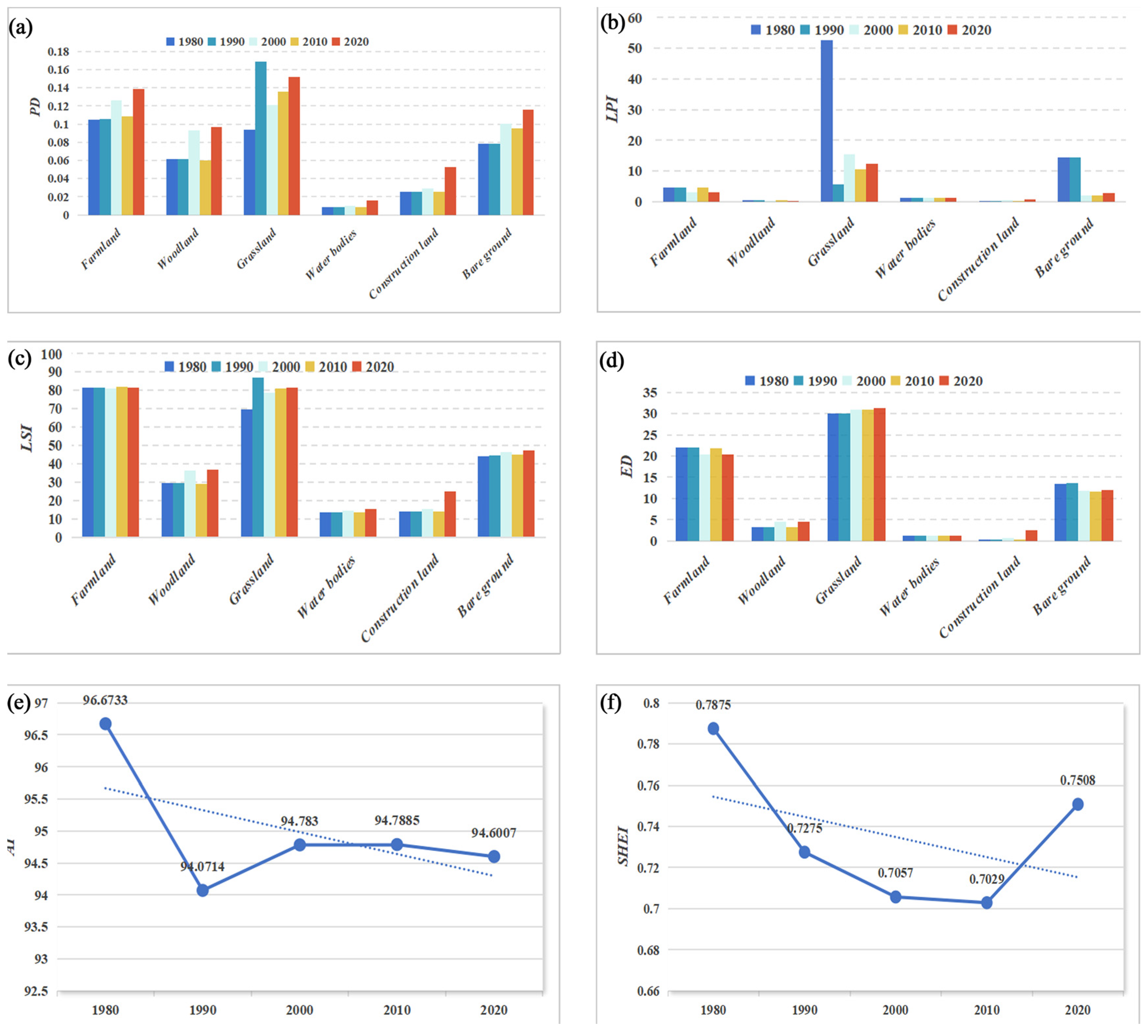
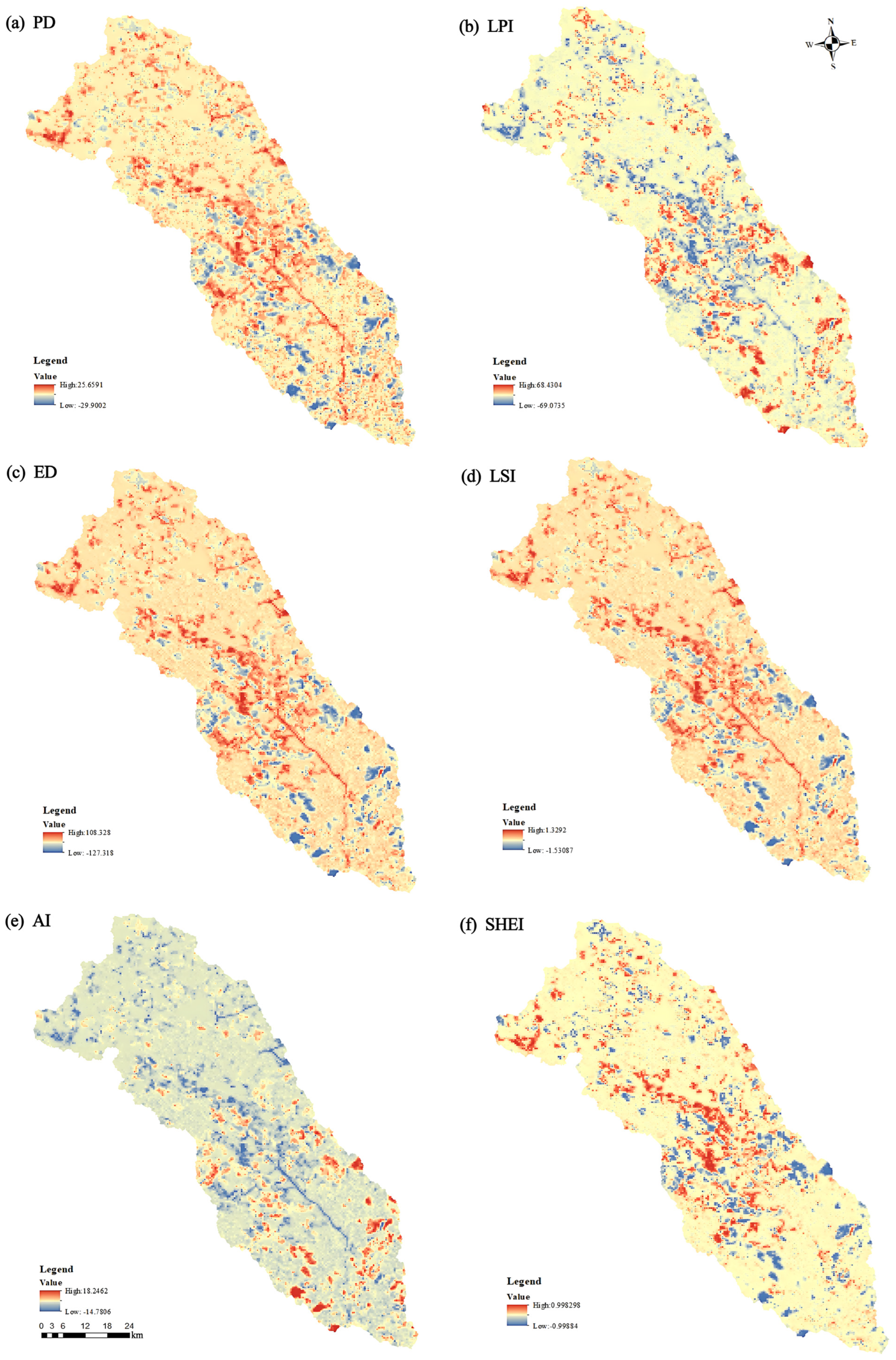
From 1980 to 2020, the landscape pattern indices in the Tuwei River watershed significantly changed (Figure 5 and Figure 6). Overall, landscape fragmentation increased, patch shapes became more complex, edge density increased, and landscape diversity decreased, indicating that the watershed landscape generally tended toward fragmentation and heterogeneity. These changes in landscape pattern indices were particularly notable in the middle and lower reaches, where anthropogenic activities were frequent. Specifically, the PD continuously increased, reflecting intensified landscape fragmentation, with areas exhibiting high-value changes progressively expanding (Figure 6a), indicating increased diversity of habitat types and increased landscape complexity within the watershed. The LPI first increased but then decreased, indicating increased landscape fragmentation, with high-value changes concentrated in the frequently disturbed middle and lower reaches, while the upper reaches maintained relatively continuous habitats (Figure 6b). Both the ED and the LSI showed sustained growth, indicating increased landscape boundaries and edge habitats, along with more complex patch shapes (Figure 6c,d). The AI initially increased but then decreased, reflecting that patch aggregation first increased but then decreased in most areas of the watershed, with high-value changes distributed mainly in the heavily disturbed middle and lower reaches (Figure 6e). The SHEI fluctuated but maintained an overall upward trend, indicating reduced landscape diversity, with particularly noticeable changes in the middle and upper reaches (Figure 6f).

3.2. Identification of Driving Forces of Landscape Pattern Evolution

Previous studies have demonstrated that the evolution of watershed landscape patterns is typically influenced by the combined effects of natural and anthropogenic factors [37]. Natural factors primarily include temperature, precipitation, and evaporation, which indirectly affect vegetation patterns and land use by regulating the spatiotemporal distribution of water resources [38]. Anthropogenic factors, mainly through activities such as land reclamation, urban expansion, and infrastructure development, directly alter landscape patterns, and the intensity of these factors is often characterized by indicators such as the economic development level, population size, and industrial structure [39]. On this basis, GRA was used to quantitatively identify the natural and anthropogenic driving forces of landscape pattern evolution in the Tuwei River watershed to reveal the relative influence of different factors on the evolution of landscape patterns.
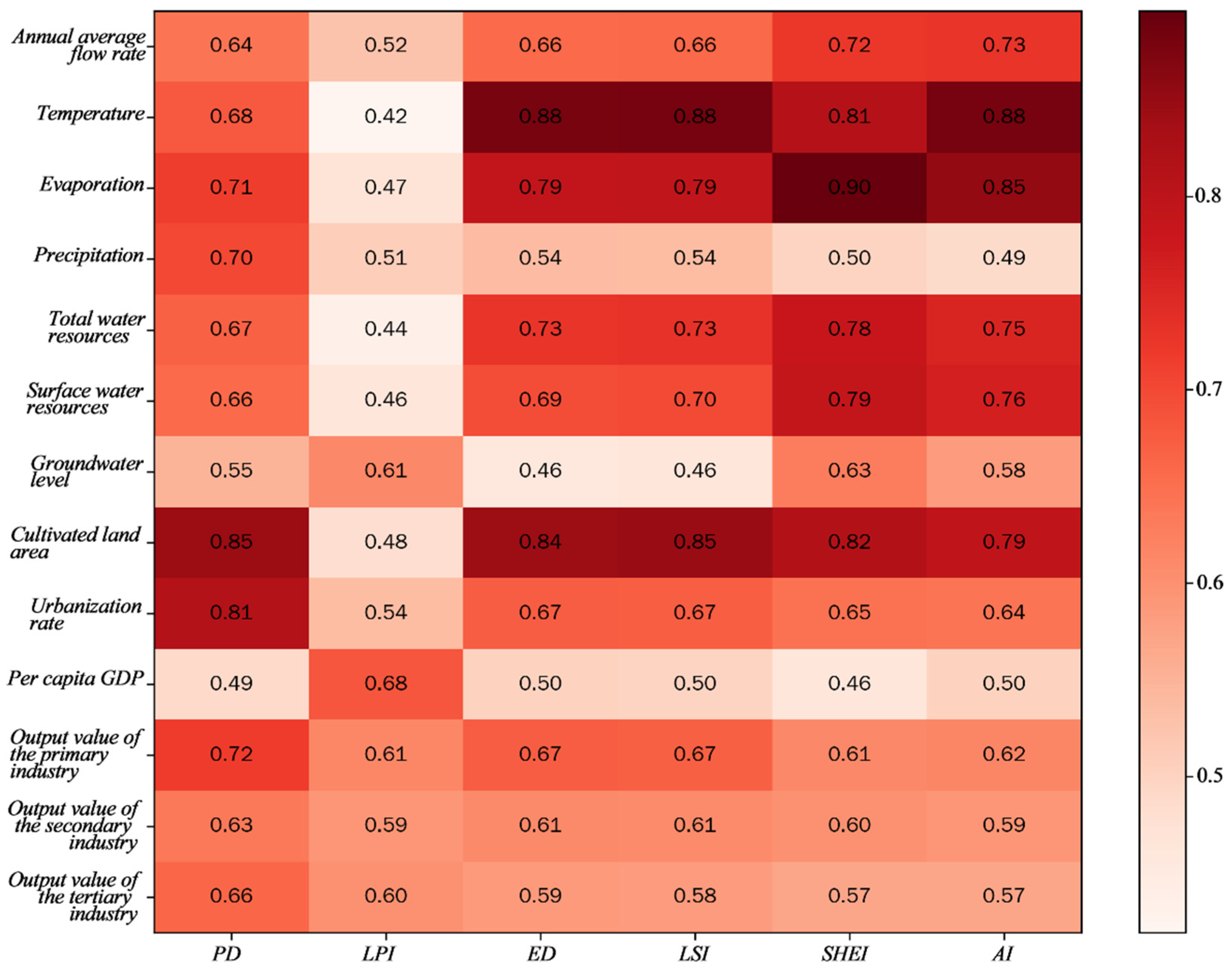
The GRA results (Table 5 and Table 6; Figure 7) revealed that the relational degrees between natural factors and landscape pattern indices ranged from 0.38 to 0.90, whereas those between socioeconomic factors and landscape pattern indices ranged from 0.49 to 0.81. Overall, the average relational degrees of natural and socioeconomic factors were similar, indicating that landscape pattern evolution in the Tuwei River watershed resulted from the coupled effects of natural processes and human activities. Specifically, natural factors primarily influenced the spatial restructuring of watershed landscape patterns through hydroclimatic processes such as temperature and mean flow, whereas socioeconomic factors directly drove landscape evolution mainly through land use changes. On the basis of the ranking of comprehensive relational degrees, the output value of secondary industry and the urbanization rate were the main socioeconomic factors driving landscape pattern changes in the Tuwei River watershed, demonstrating the dominant role of industrialization and urbanization processes in watershed landscape restructuring. Temperature and mean flow were key natural factors influencing the intensity of landscape pattern evolution, with their variations shaping the spatial heterogeneity of the landscape. In summary, the long-term evolution of landscape patterns in the Tuwei River watershed revealed anthropogenic factors as the dominant drivers and natural factors as synergistic contributors, reflecting a landscape restructuring process that was jointly shaped by climate change and anthropogenic activities.

3.3. Investigation of the Relationships Between Landscape Fragmentation and Watershed Hydrological Elements

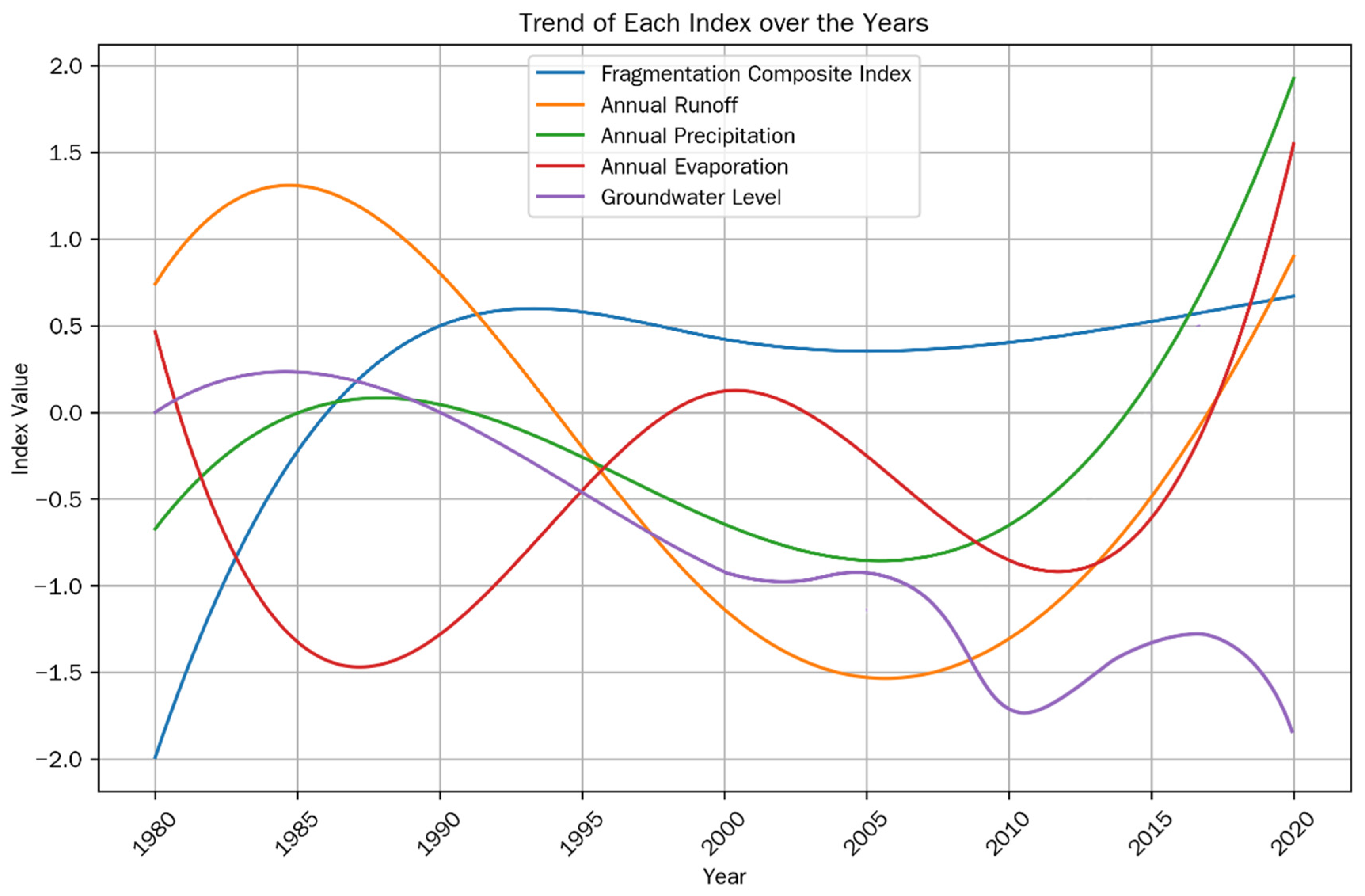
To explore the relationships between landscape fragmentation and watershed hydrological processes in the Tuwei River watershed, in this study, the dynamic characteristics of the fragmentation composite index (FCI) and four key hydrological elements (annual rainfall, annual runoff, evaporation, and groundwater level) were analyzed for 1980 to 2020 (Figure 8). The results revealed that the FCI increased overall: it remained at the lowest level in the 1980s, remained relatively stable in the 1990s, fluctuated after 2000, and increased significantly after 2010, indicating continuously intensifying landscape fragmentation in the watershed. Annual rainfall and runoff demonstrated consistent trends, with both showing noticeable increases after 2005, reflecting the coupling between enhanced precipitation and surface runoff recharge processes. Evaporation remained relatively high during the 1980s, decreased significantly in the early 2000s (2000–2005), and subsequently recovered. The groundwater level generally decreased, with the most substantial decrease occurring between 2005 and 2015, possibly related to increased groundwater extraction and reduced recharge in the watershed.
Comparative analysis revealed that the increasing trend of the FCI was generally temporally synchronized with increasing annual rainfall and runoff, suggesting that landscape fragmentation processes respond sensitively to fluctuations in surface hydrological processes. Conversely, the decline in groundwater level showed the opposite relationship with the increase in FCI, indicating that changes in groundwater processes may weaken the stability of the watershed ecosystem. Overall, the evolution of landscape fragmentation in the Tuwei River watershed exhibited clear temporal response characteristics with fluctuations in hydrological elements, reflecting the significant influence of hydrological conditions on landscape pattern dynamics.

4. Discussion

In this study, land use data and landscape pattern indices from 1980 to 2020 were combined with GRA to systematically examine the long-term evolution characteristics, primary driving forces, and response relationships to hydrological elements of landscape patterns in the Tuwei River watershed. On the basis of these findings, this discussion focuses on four aspects: land use evolution, landscape pattern changes, driving force analysis, and research limitations.

4.1. Watershed Land Use Changes

From 1980 to 2020, significant land use transitions occurred in the Tuwei River watershed (Figure 2 and Figure 4; Table 3 and Table 4). These changes demonstrated the following distinct stage-specific characteristics: 1980–1990 constituted a phase of slow change with relatively low human activity intensity; 1990–2010 represented a rapid transformation stage, during which coal resource exploitation and urban expansion notably accelerated the growth of developed land; and 2010–2020 marked an adjustment and stabilization phase, characterized by slowed urbanization and gradually emerging effects of ecological restoration policies. Overall, land use changes in different stages clearly differed in terms of spatial structure and type conversion. Developed land expanded rapidly, while cropland and bare land areas decreased significantly. Ecological land types such as grassland, forestland, and water bodies generally increased. This transition process reflects a dual pattern of simultaneous advancement of urbanization and ecological restoration projects, which is consistent with research findings from typical watersheds in arid and semiarid regions, such as those in the Front Range of Colorado, USA, and the Ebro River Basin, Spain [40,41].
The period from 1990 to 2010 Constituted a rapid transformation stage, during which coal resource exploitation and urban expansion notably accelerated the growth of developed land. The period of 2010–2020 marked an adjustment and stabilization phase, characterized by slowed urbanization and gradually emerging effects of ecological restoration policies. Overall, land use changes in different stages clearly differed in terms of spatial structure and type conversion. Developed land expanded rapidly, while cropland and bare land areas decreased significantly. Ecological land types such as grassland, forestland, and water bodies generally increased. Between 2000 and 2010, developed land increased by 124.7%. Like the surrounding areas of the Tuwei River watershed, the proportion of newly added developed land that was converted from cropland and grassland collectively exceeded 440%, making these two types the most significant sources of developed land expansion. This surge was closely associated with the Shenfu Coalfield development and industrialization process propelled by the “Western Development Strategy” [42]. Industrial land and urban infrastructure construction expanded primarily by encroaching on cropland (accounting for 38.2% of the conversion) and grassland (accounting for 51.7%), a pattern aligning with the industrialization-driven landscape fragmentation observed in the Weihe River watershed. However, owing to the characteristics of groundwater-dependent ecosystems in the Tuwei River watershed, the expansion of developed land has more strongly weakened landscape connectivity due to hydraulic disconnection. Concurrently, grassland area increased by 24.5% from 1990 to 2020, which was primarily attributed to the implementation of ecological policies such as the “Grain for Green Program” and the “Sand Stabilization Program.” This restorative effect has also been validated in watersheds surrounding the Mu Us Sandy Land.
The intensified land use changes revealed by this study primarily reflect the reshaping effects of anthropogenic activities on spatial patterns. This provides a clear, quantifiable spatial change context for subsequent research on landscape pattern evolution and its driving factors. The intensified land use changes revealed by this study primarily reflect the re-shaping effects of anthropogenic activities on spatial patterns. This provides a clear, quantifiable spatial change context for subsequent research on landscape pattern evolution and its driving factors (Section 4.2 and Section 4.3). Land use change can be regarded as a direct manifestation of human intervention, whose transformative force largely dictates the main di-rection of landscape pattern evolution, thereby establishing a basis for correlation analysis from “land use” to “landscape processes”.

4.2. Analysis of Watershed Landscape Pattern Changes

Analysis based on the dynamic changes in landscape pattern indices revealed that the landscape patterns in the Tuwei River watershed exhibited significant spatiotemporal stage-specific evolution characteristics from 1980 to 2020 (Figure 5 and Figure 6). Overall, landscape fragmentation continuously intensified, patch shapes became more complex, and spatial heterogeneity showed stage-specific fluctuations. According to the trends of the landscape pattern indices, the evolution of the watershed landscape patterns can be divided into four stages: (1) 1980–1990, characterized by slow changes in landscape patterns and relatively high landscape connectivity; (2) 1990–2000, when the development of the Shenfu Coalfield accelerated regional urbanization and industrialization [41], leading to a significant increase in landscape fragmentation and enhanced heterogeneity; (3) 2000–2010, under the influence of China’s Western Development Strategy, infrastructure construction and energy extraction intensified markedly [42], resulting in synchronized increases in landscape fragmentation and patch complexity; and (4) 2010–2020, as urbanization slowed and national ecological restoration policies took effect, landscape connectivity improved in some areas and biodiversity showed slight recovery. The overall trend indicates that the period of high landscape fragmentation in the Tuwei River watershed corresponded with peak phases of resource exploitation and urbanization, whereas landscape patterns later stabilized because of policy regulation and the implementation of ecological restoration measures.
The landscape evolution process in the Tuwei River watershed has been simultaneously influenced by human activity intensity, national policy orientation, and natural environmental changes. Urban expansion and energy development reshaped the original ecological spatial pattern, whereas ecological engineering moderately slowed the intensification of landscape fragmentation. Consistent with findings from other studies in arid and semiarid watersheds [43,44], this research reveals a typical landscape evolution pattern under the interaction of anthropogenic activities and natural processes, reflecting the profound impacts of resource exploitation, urbanization processes, and policy guidance on landscape pattern evolution. Overall, the landscape pattern changes in the Tuwei River watershed exhibited significant stage-specific characteristics and spatial heterogeneity. This phenomenon likely reflects the complex interaction between the intensity of socioeconomic activities and natural climatic fluctuations across different periods: the reshaping effect of human activities on landscape structure was particularly prominent during the rapid urbanization stage, whereas the influence of natural factors became relatively stronger during periods of marked climatic variability. The observed spatial heterogeneity further indicates that different subregions within the watershed respond heterogeneously to the same driving forces. These findings provide a crucial empirical foundation for subsequent in-depth analyses of the specific mechanisms and ecological effects of individual driving factors.

4.3. Driving Forces of Watershed Landscape Pattern Evolution

The GRA results demonstrated that the landscape pattern evolution in the Tuwei River watershed from 1980 to 2020 was jointly driven by natural and socioeconomic factors, with the intensity of their influence showing significant differences across various stages. In general, natural factors dominated the landscape evolution during 1980–2000; socioeconomic factors rapidly intensified and became the primary driving force from 2000 to 2010, whereas the interactive effects of climate change and anthropogenic activities jointly dominated the watershed landscape pattern changes during 2010–2020. This phased characteristic reflects the dynamic transformation of social–ecological systems in semiarid watersheds through long-term adaptation and feedback processes.
Among anthropogenic driving factors, industrialization and urbanization served as the core forces shaping landscape pattern changes [45]. The expansion of secondary industries, including coal-related activities, manufacturing, and construction, has led to large-scale land occupation, resource consumption, and environmental disturbance [46], triggering transformations in land use types and the degradation of ecosystem functions [47]. The continuous expansion of urban and rural developed land further encroached on forestland and grassland areas, resulting in weakened landscape connectivity and intensified landscape fragmentation [48]. In comparison, population factors played a relatively weak direct role, with their influence manifested primarily indirectly through economic production activities [49]. Additionally, national ecological governance policies, such as the Grain for Green and Sand Stabilization programs, played a crucial role in mitigating ecological degradation and facilitating the conversion of cropland and bare land into grassland and forestland, thereby curbing the watershed desertification trend [50]. Therefore, the combined effect of anthropogenic activity intensity and policy regulation collectively shaped the phased evolutionary pathway of the landscape patterns in the Tuwei River watershed.
With respect to natural driving mechanisms, climatic and hydrological elements influence landscape pattern evolution by regulating regional water balance and ecological processes. Rising temperatures increase surface evapotranspiration and soil moisture deficits, thereby suppressing vegetation growth and intensifying habitat fragmentation [51]. Although overall increases in precipitation and runoff volume improved the surface water supply [52], their uneven spatiotemporal distribution resulted in local ecosystems remaining under water stress [53]. Moreover, groundwater levels showed a persistent decline, with the most significant decrease occurring between 2005 and 2015, indicating that the imbalance between surface water recharge and groundwater consumption weakened ecohydrological connectivity [54]. Synthesizing the above analyses, this study identifies a key mechanism: the asynchronous phenomenon of increasing surface water alongside declining groundwater represents an important process driving intensified watershed landscape fragmentation and the contraction of riparian ecological spaces. Therefore, for the Tuwei River Watershed, the natural driving mechanism can be interpreted as a chain process of “climate change → hydrological regulation → ecological feedback.” Specifically, hydrological processes composed of temperature, precipitation, runoff, and groundwater reshape the stability and continuity of landscape patterns by regulating water availability and vegetation cover dynamics.
Overall, this study concludes that the evolution of landscape patterns in the Tuwei River Watershed exhibits a typical compound driving mechanism characterized by a “natural background–anthropogenic orientation”. Climate change regulates hydrological processes to provide dynamic background conditions for landscape evolution, while anthropogenic activities, particularly industrialization and urbanization, exert a dominant reshaping effect against this natural background. Ecological restoration projects have partially buffered the ecological pressures from high-intensity development but have not reversed the trend of landscape fragmentation. These findings indicate that watershed landscape evolution is both an ecological outcome of climate–hydrological system responses and a spatial manifestation of socioeconomic processes. On the basis of this understanding, the focus of future watershed landscape management should shift toward process-oriented and adaptive regulation. First, the interaction between hydrological and landscape processes should be incorporated into the core logic of spatial planning, establishing a spatial regulation system constrained by ecological water demands and groundwater dynamics. Second, the land use structure under the development–restoration parallel spatial pattern should be optimized to enhance the connectivity of ecological spaces. Furthermore, building a multiscale monitoring and dynamic simulation-based assessment framework for landscape evolution is recommended to improve the foresight and scientific basis of policy regulation. These insights deepen the understanding of landscape evolution mechanisms in semiarid watersheds and provide scientific support for achieving integrated governance of hydrological driving–landscape response–ecological regulation.

4.4. Limitations and Prospects

In this study, long-term time series data from 1980 to 2020 were used to systematically examine the principal characteristics of landscape pattern evolution and its natural and socioeconomic driving forces in the Tuwei River watershed, and an analytical framework for landscape fragmentation and its response to hydrological elements in a semiarid watershed was constructed. However, several limitations remain in this research that warrant further improvement in future studies.
First, data limitations persist in terms of spatiotemporal resolution and spatial representativeness. The groundwater level data relied primarily on the single monitoring station at Gaojiachuan, making it difficult to fully characterize the spatial heterogeneity across the entire watershed. The socioeconomic indicators were based on prefecture-level statistical data and lacked granular information at the county level. This may obscure the spatially heterogeneous impacts of local anthropogenic activities and consequently limit the spatial representativeness of the findings. Future research could enhance data precision and multisource integration capabilities [55] by incorporating high-resolution remote sensing imagery (e.g., Sentinel-2) and multipoint groundwater monitoring data [56] combined with UAV aerial surveys and field validation to improve both the land use classification accuracy and the spatial representativeness of hydrological data [57].
Second, the explanatory power of the methods used in this research requires further enhancement. While gray relational analysis (GRA) is suitable for complex system analysis with limited sample sizes, its emphasis on correlation measurements makes it difficult to quantitatively reveal clear causal directions and chains among driving factors [58]. For instance, GRA cannot distinguish whether a factor exerts a direct driving effect or an indirect influence mediated by other variables [58]. Future research could adopt integrated methodological frameworks incorporating geographical detectors [59], structural equation modeling (SEM) [60], and machine learning algorithms (e.g., random forest and extreme gradient boosting (XGBoost) models) to identify nonlinear relationships and interactions among driving factors, thereby deepening the understanding of the combined driving mechanisms of climate change and anthropogenic activity [61].
Furthermore, the dynamic modeling and scenario prediction in this research remain inadequate. While this study focused primarily on historical time series analysis, dynamic simulations of landscape pattern evolution have yet to be developed, making it difficult to assess future trends under different policies and climate scenarios [62]. Moreover, this study failed to integrate future projections of landscape patterns with specific ecological risk assessment indicators, resulting in an incomplete analysis of the “pattern–process–service–risk” chain. This limitation constrains the early warning capability regarding potential risks to the future sustainable development of the study area. Future work could employ models such as CA-Markov [61] and FLUS [63], combined with different climate change pathways and policy scenarios [64], to conduct spatiotemporal predictions of landscape patterns and ecological risk assessments. This advancement promotes the transition of landscape pattern research in semiarid watersheds from descriptive analysis to predictive regulation, providing decision-making support for spatial planning and ecological restoration practices at the watershed scale.
Finally, the study has limitations in terms of policy insight and forward-looking capacity. The current analysis failed to effectively differentiate and quantify the independent and interactive impacts of various policy instruments and did not construct dynamic simulation models to project landscape pattern responses to future climate change and different policy intervention scenarios. Consequently, the findings primarily summarize past patterns and offer limited support for future-oriented adaptive planning and management decision-making. To enhance the practical value of the research, future work must strengthen “predictive regulation” capabilities. For instance, by coupling landscape models such as CA-Markov and FLUS with climate change scenarios and policy intervention schemes, it would be possible to simulate and assess landscape evolution trends and ecological risks under different development pathways. This approach provides more proactive scientific evidence for sustainable spatial planning and ecological restoration at the watershed scale.

5. Conclusions

In this study, on the basis of long-term time series data from 1980 to 2020, land use evolution, landscape pattern changes, and their natural and socioeconomic driving forces in the Tuwei River watershed were systematically analyzed, and a comprehensive analytical framework that integrates climate–hydrology–landscape interactions was established. This research provides a new perspective for understanding landscape evolution mechanisms in semiarid watersheds. The main findings are as follows:
  • Over the 40-year period, the land use structure in the Tuwei River watershed underwent marked restructuring that manifested as the rapid expansion of developed land, marked decreases in cropland and bare land areas, and steady growth of grassland and forestland. The 1990–2010 period represented the peak phase of land use transformation, reflecting a parallel development–restoration spatial pattern under the combined effect of urbanization, resource exploitation, and policy regulation.
  • Analysis of landscape pattern indices revealed that landscape fragmentation in the watershed continued to intensify with increasing patch morphology complexity and increased spatial heterogeneity. The phased characteristics of landscape pattern changes closely corresponded with national policies and regional development cycles, demonstrating the interaction between socioeconomic processes and natural landscape patterns.
  • GRA revealed that the landscape evolution in the Tuwei River watershed was jointly driven by natural and socioeconomic factors: anthropogenic factors, including the output value of secondary industry and the urbanization rate, served as the dominant forces, whereas changes in temperature and runoff indirectly influenced ecological patterns by regulating surface water–groundwater allocation. The asynchronous phenomenon of increasing surface water and declining groundwater observed after 2000 has become an important mechanism driving the continuous intensification of landscape fragmentation and the decline in ecological connectivity.
  • The landscape evolution in the Tuwei River watershed demonstrates a typical climate change–hydrological regulation–ecological feedback chain process. Climatic and hydrological processes establish an ecological foundation, whereas anthropogenic activities amplify landscape fragmentation effects through land use transformation. This interactive pattern within the social–ecological system demonstrates that future watershed governance should enhance the coordinated mechanism of hydrological processes–landscape response–planning regulation, establishing an adaptive management system based on ecological water demand and ecological space connectivity to improve landscape resilience and ecological security in semiarid regions.

Author Contributions

Y.H.: methodology, investigation, formal analysis, visualization, writing—original draft. J.W.: conceptualization, writing—review and editing, funding acquisition. Y.W.: writing—review and editing. F.W.: investigation, formal analysis. Z.F.: data curation. All authors have read and agreed to the published version of the manuscript.

Funding

This work was supported by the National Key R&D Program of China (Grant No. 2023YFC3206502), the Innovation Capability Support Program of Shaanxi (Program No. 2025ZC-KJXX-48) and Research Funds for the Interdisciplinary Projects, CHU (Program No. 300104240932).

Data Availability Statement

The land use data from 1980 to 2020 used in this study were obtained from the Resource and Environmental Science and Data Center of the Chinese Academy of Sciences (RESDC; http://www.resdc.cn/, accessed on 11 July 2024). Watershed hydrological data, including average flow, rainfall, evaporation, and groundwater level, were sourced from the Gaojiachuan Hydrological Station of the Tuwei River, managed by the Yellow River Conservancy Commission (http://www.hwswj.com.cn/home.aspx/, accessed on 12 September 2024). The digital elevation model (DEM) data, temperature and precipitation data, available soil moisture data, soil texture data, soil erodibility data, and other data used in this study are not available to the public because of license restrictions.

Acknowledgments

The authors would like to thank the anonymous reviewers for their comments and suggestions, which contributed to the further improvement of this paper.

Conflicts of Interest

The authors declare that they have no conflicts of interest.

References

  1. Gao, Y.; Hu, Y.; Song, Y.; Hao, J.; Li, Z. Spatio-temporal variation characteristics of water production function in the semi-arid region of the Loess Plateau. J. Ecol. Rural Environ. 2025, 41, 460–472. [Google Scholar] [CrossRef]
  2. Wang, D.; Li, K.; Li, H.; Zhang, Y.; Fu, T.; Sun, L.; Wang, Y.; Zhang, J. Water resource utilization and future supply-demand scenarios in energy cities of semi-arid regions. Sci. Rep. 2025, 15, 5005. [Google Scholar] [CrossRef]
  3. Wang, J.; Ma, Z.; Wang, Z.; Huang, X.; Hou, Q.; Cao, Y.; Wang, W. Evolution of the landscape ecological pattern in arid riparian zones based on the perspective of watershed river-groundwater transformation. J. Hydrol. 2023, 625, 130119. [Google Scholar] [CrossRef]
  4. Moursi, H.; Kim, D.; Kaluarachchi, J.J. A probabilistic assessment of agricultural water scarcity in a semi-arid and snowmelt-dominated river basin under climate change. Agric. Water Manag. 2017, 193, 142–152. [Google Scholar] [CrossRef]
  5. Paná, S.; Marinelli, M.V.; Bonansea, M.; Ferral, A.; Valente, D.; Camacho Valdez, V.; Petrosillo, I. The multiscale nexus among land use-land cover changes and water quality in the Suquía River Basin, a semi-arid region of Argentina. Sci. Rep. 2024, 14, 4670. [Google Scholar] [CrossRef]
  6. Liu, W.; Wan, H.; Guo, P.; Wang, X. Monitoring critical mountain vertical zonation in the Surkhan River Basin based on a comparative analysis of multi-source remote sensing features. Remote Sens. 2025, 17, 2612. [Google Scholar] [CrossRef]
  7. Hu, R.; Du, S.; Li, P.; Yao, Y.; Wang, R.; Teng, K. Analysis of landscape fragmentation and driving forces in semi-arid ecologically fragile areas based on the moving window method. J. Agric. Resour. Environ. 2021, 38, 502–511. [Google Scholar] [CrossRef]
  8. García-Ayllón, S.; Martínez, G. Analysis of Correlation between Anthropization Phenomena and Landscape Values of the Territory: A GIS Framework Based on Spatial Statistics. ISPRS Int. J. Geo-Inf. 2023, 12, 323. [Google Scholar] [CrossRef]
  9. Schüpbach, B.; Kay, S. Validation of a visual landscape quality indicator for agrarian landscapes using public participatory GIS data. Landsc. Urban Plan. 2024, 241, 104906. [Google Scholar] [CrossRef]
  10. Yair, A.; Kossovsky, A. Climate and surface properties: Hydrological response of small arid and semi-arid watersheds. Geomorphology 2002, 42, 43–57. [Google Scholar] [CrossRef]
  11. Guan, X.; Zhang, C.; Jiang, J.; Cao, J. Research on the evolution of natural forest landscape pattern in the Changhua River Basin in Hainan. For. Resour. Manag. 2009, 1, 76–79+88. [Google Scholar] [CrossRef]
  12. Wang, X.; Geng, M.; Wang, M.; Lu, J. Key drivers of spatio-temporal change of land use and its influencing trends: A case study of Wuwei City. Chin. Environ. Sci. 2023, 43, 6583–6591. [Google Scholar] [CrossRef]
  13. Chang, T.; Li, H.; Li, Y. Evolution of water landscape pattern and driving factors analysis of Liangzi Lake Basin. South North Water Divers. Water Conserv. Technol. 2023, 21, 951–961. [Google Scholar] [CrossRef]
  14. Liu, J.; Gao, J.; Dong, C. Regional differentiation and influencing factors of swamp wetland change in Sanjiang plain from 1954 to 2015. Acta Ecol. 2019, 39, 4821–4831. [Google Scholar] [CrossRef]
  15. Yin, X.; Tan, C.; Ke, Y.; Zhou, D. Evolution pattern and driving factors of coastal salt marsh wetland landscape pattern in the Yellow River Delta from 1973 to 2020. Acta Ecol. 2024, 44, 67–80. [Google Scholar] [CrossRef]
  16. Guo, C.F.; Zhao, D.; Feng, M.F. Spatio-temporal evolution and driving mechanisms of landscape in the Yellow River Basin from 1985 to 2020. Front. Ecol. Evol. 2025, 13, 1611874. [Google Scholar] [CrossRef]
  17. Liu, Z.; Feng, S.; Liu, Y. Land use change and landscape gradient differentiation in the process of urbanization in Kunming. Yunnan Geogr. Environ. Res. 2016, 28, 15–20+47. Available online: https://kns.cnki.net/kcms2/article/abstract?v=OsVNzKNazbRD3hucmSc3n62MatP9itf_8VIf_8d6SstbjzXBlNuGBZnWhUK6N4ODpL43nuzE6Jl3SIKcv_WWa1YzPVVcm-Z7I2MIv4eSRsJgxa65kWp46XWU5SicD9SR7MxCh19m8V-UF7PkSDu-CA4EgdVXbyvF9Jb2btFSTpr0IQvn_H_t6V4Dqu3bK_XAWvnvCzfqW9Q=&uniplatform=NZKPT&language=CHS (accessed on 21 April 2025).
  18. Bai, H.; Mu, X.; Wang, S. Effects of soil and water conservation measures on runoff of the Tuwei River. Soil Water Conserv. Res. 2010, 17, 40–44. Available online: https://kns.cnki.net/kcms2/article/abstract?v=bTgd32KJj6sghIUmqfGO-YSKLKeXvbDaJRKou3IOkOzIGw-BUHwyMW6L4diXRQAPNlbeygNd3-FoHkHHenF5-kZqmstw9KI_3Q82_yHHRikkGPJKiOy1lJl2Bb0e9llrjknK41bjFRLoxbkmyrZBf8smqWsAgULvLRKQiE6SwoxekUVR6OEZGIh493OXaHJP&uniplatform=NZKPT&language=CHS (accessed on 21 April 2025).
  19. Wang, J.; Wang, Y.; Zhang, X.; Ma, Z.; Yang, F. River-groundwater transformation and ecological effects in the Tuwei River Basin. Hydrogeol. Eng. Geol. 2024, 51, 36–46. [Google Scholar] [CrossRef]
  20. Yang, Z.; Wang, W.; Ma, X.; Yang, X. Evaluation of the current status of epiphytic ecological environment in the Tuwei River Basin. J. Earth Sci. Environ. 2006, 87–91. Available online: https://kns.cnki.net/kcms2/article/abstract?v=GQPEaosfmU_gLo14vjCX-mH_ZNUzJ9jzY5rhvNaMwqxOFSdhLdzuXjkGyn4yLQXuZh0sJgrU22BbbtERHO3Awa_MaPbKyx5OjJMMRVs7Hu8w-Wc9S_nMlfXgxeHbU6cfes6r_DPL8UUPnSdgkHU3845S6a-QHjo1ogK2JUn3gWWIGG4JOFlkYPYgmIRlgH-Z&uniplatform=NZKPT&language=CHS (accessed on 21 April 2025).
  21. Sun, Z.; Wang, S.; Liu, J.; Gu, J.; Gong, W. Analysis of driving factors of runoff attenuation in the Tuwei River Basin. J. Nat. Resour. 2017, 32, 310–320. Available online: https://kns.cnki.net/kcms2/article/abstract?v=GQPEaosfmU9ZYeZEOB8ptsUoK60zyAdE6S9PwUzZkvN1-p4uG-zpqjL9TU3LjytZWBAfCI97F3NH0uFEs8ViOxu5GdYvwRbjW7PMDu8tlfnB1Un5akB_9d4YM55StTeB1PCgBQBDHZsNVQ4T1tMLHdcemr-oz9md5y_6XhOsixOlupZDXGFpNcUCvtlKa9-JCA1FplbV2_4=&uniplatform=NZKPT&language=CHS (accessed on 21 April 2025).
  22. Yang, B.; Wang, Q.; Guo, S. Spatiotemporal variation characteristics of soil erosion in the Tuwei River Basin in the wind-sand and sand area of Northern Shaanxi from 1988 to 2013. Soil Water Conserv. Sci. China 2018, 16, 56–65. [Google Scholar] [CrossRef]
  23. Liu, Z.; Zhang, X.; Li, X. Impacts of climate change on runoff in the Tuwei River Basin. Agric. Res. Arid. Areas 2011, 29, 184–190. Available online: https://kns.cnki.net/kcms2/article/abstract?v=bTgd32KJj6vcLJnEjV24o1oyMGK1qhLJms2Q7t5exRASb7hbiY1Y2wdobDTEhHbCe3geLcVRAA615vYg6joIF0Z9LBanzzea452XiHYCAbSIKB_DbN02EwQhARoRzVHscIu9g9cB66mmHI-E2NG2KCriKg4YRq210u7rOl6BjSi-tT6XxnpKe3E28xLL8vmL&uniplatform=NZKPT&language=CHS (accessed on 21 April 2025).
  24. Yu, Y.; Li, Z.; Lin, J.; Liu, J.; Wang, S. Analysis of the spatiotemporal change pattern characteristics of land use in the Yihe River Basin. J. Nat. Resour. 2019, 34, 975–988. [Google Scholar] [CrossRef]
  25. Deng, X.; Zhang, X. Investigation and impact assessment of the ecological status of Tuweihe wetland in Shaanxi Province. Wetl. Sci. Manag. 2015, 11, 24–27. Available online: https://kns.cnki.net/kcms2/article/abstract?v=bTgd32KJj6tkkkUf4J5npaGNigiAGm32XoJSskRJ8XD1ObQbF7_V1p4AMSt4A6Tux-o5H8LhTuAMx4X1sldNEok2jfEJKfINO9RJ8hjQgLnA03G7HABecZcIOpnmMqoa1XbinBoDvv1xgSUgBv5XDgjU6C2F1vlivzdRXat0VUNliXL2ApxuDKT2cciqQ3GZc_RvNICN7LQ=&uniplatform=NZKPT&language=CHS (accessed on 21 April 2025).
  26. Floyd, M.; East, H.K.; Suggitt, A.J. Evaluating methods for high-resolution, national-scale seagrass mapping in Google Earth Engine. Remote Sens. Ecol. Conserv. 2025; early view. [Google Scholar] [CrossRef]
  27. Shen, R.; Shi, Z.; He, G.; Lin, Y.; Xu, R. Construction and Optimization of Ecological Security Pattern in Xishuangbanna Based on Landscape Fragmentation Index. Trop. Geogr. 2022, 42, 1363–1375. [Google Scholar] [CrossRef]
  28. Tang, M.; Chen, Z.; Zheng, X.; Liu, L.; Wang, X.; Li, B.; Fu, Z.; Jia, Y.; Wang, X. Analysis of landscape pattern changes and driving forces in the Liqiu River Basin in Kangding, Sichuan Province. Sichuan For. Sci. Technol. 2025, 46, 13–20. Available online: https://kns.cnki.net/kcms2/article/abstract?v=G9uEhVDeKuJ_sPPcuZ9y5HdoP5I9WOU2hcycVkQoVDvHkjuEH94X98GQZC6vuE895MDIDLfawezVAMpb1tpw_Lc8JjJmYehRNfiiSUJWb20EG2DKzGLHZoBPATEMoXXfAcAPdMJtYdmwuD84zXpIdvgQya66cT53sDQ8TPbpafF-4c8o09SJYRjZYX4j3R2R2sy0OK3xxJs=&uniplatform=NZKPT&language=CHS (accessed on 21 April 2025).
  29. Du, H.; Ha, E.; Li, M. The urban landscape pattern of Yanji City evolved in 1977~2008. Geogr. Sci. 2011, 31, 608–612. [Google Scholar] [CrossRef]
  30. Weng, Q.; Liu, H.; Lu, D. Assessing the effects of land use and land cover patterns on thermal conditions using landscape metrics in city of Indianapolis, United States. Urban Ecosyst. 2007, 10, 203–219. [Google Scholar] [CrossRef]
  31. Xuan, J.; Li, Z.; Zou, C.; Qin, Z.; Wu, Y.; Huang, L. Multi-scale effects of landscape types and patterns on plant diversity in Jiangxinzhou: A case study of Fuzhou section of the Minjiang River Basin. J. Ecol. Environ. 2022, 31, 2320–2330. [Google Scholar] [CrossRef]
  32. Zhang, B.; Li, Z.; Feng, Q.; Lu, Z.; Zhang, B.; Cheng, W. Analysis of ecosystem service value evolution in Qilian mountains based on land use change. Acta Ecol. 2024, 44, 4187–4202. [Google Scholar] [CrossRef]
  33. Liu, C.; Zhang, K.; Liu, J. Changes and driving forces of landscape ecological risk in Sanjiang plain from 1976 to 2013. Acta Ecol. 2018, 38, 3729–3740. [Google Scholar] [CrossRef]
  34. Haddad, N.M.; Brudvig, L.A.; Clobert, J.; Davies, K.F.; Gonzalez, A.; Holt, R.D.; Lovejoy, T.E.; Sexton, J.O.; Austin, M.P.; Collins, C.D.; et al. Habitat fragmentation and its lasting impact on Earth’s ecosystems. Sci. Adv. 2015, 1, e1500052. [Google Scholar] [CrossRef]
  35. Wang, Q.; Wu, W.; Lan, T. Prediction model of fatty acid content during rice storage in Northeast China. Trans. Chin. Soc. Agric. Eng. 2020, 36, 269–275. Available online: https://kns.cnki.net/kcms2/article/abstract?v=G9uEhVDeKuKEwqmPsmPRVAEPdjS9s3KQ3_HUdPlu-xXbspswX_1oUBkYga0o4JV-EkSf7o9nTIqXTuTxlThM5CthBVBnFGQG-7MFHSF9uN8VJ_QMCPUJG7f0G24_6gagY6QKcxNgvbrcdgkHfs4UnQQBWMWOXyfBjfDi3sIojq5-dXPoG8y0QkjMQgXh7oNDAKQERWry3hk=&uniplatform=NZKPT&language=CHS (accessed on 21 April 2025).
  36. Song, Y.; Zhang, W.; Deng, Y.; Mo, H.; Li, Y. Decoding Spatial Vitality in Historic Districts: A Grey Relational Analysis of Multidimensional Built Environment Factors in Shanghai’s Zhangyuan. Land 2025, 14, 1869. [Google Scholar] [CrossRef]
  37. Zhang, L.; Lei, J.; Chen, Z.; Chen, Y.; Zhou, P. Spatio-temporal Evolution and Driving Factors of Landscape Ecological Risk in the Three Major Basins of Hainan Island. Acta Ecol. Sin. 2025, 45, 1646–1658. [Google Scholar] [CrossRef]
  38. Wei, L.; Dan, B.; Feiyu, W.; Bojie, F.; Junping, Y.; Shuai, W.; Yang, Y.; Di, L.; Minquan, F. Quantifying the impacts of climate change and ecological restoration on streamflow changes based on a Budyko hydrological model in China’s Loess Plateau. Water Resour. Res. 2015, 51, 6500–6519. [Google Scholar] [CrossRef]
  39. Yang, H.; Xu, Y.; Wang, L.; Xu, L. Spatio-temporal Changes and Influencing Factors of Human Activity Intensity on the Qinghai-Tibet Plateau. J. Ecol. 2023, 43, 3995–4009. Available online: https://kns.cnki.net/kcms2/article/abstract?v=wOuTVkq58NkaNGGZi11afde5UNfO-ucKeeKDP1_yfG0H1GWCL4UYmniOyX0_BlLSEv918pwEATBugybXNFhgk4AhkVbxMg62pElWHHjMB7FhYg1upFl1JBLzUb5-RFkEoFw5QS-KfBEMEY4RWDU9wBM37b2LfJSHJhGaKtLlajOuyTiFHsavI6RZmASmMSL6&uniplatform=NZKPT&language=CHS (accessed on 21 April 2025).
  40. Ngwira, S.; Watanabe, T. An Analysis of the Causes of Deforestation in Malawi: A Case of Mwazisi. Land 2019, 8, 48. [Google Scholar] [CrossRef]
  41. Du, H.; Liu, Y.; Bi, Y.; Sun, H.; Ning, B. Study on Spatiotemporal Heterogeneity of Landscape Ecological Risk in Yushenfu Mining Area from 1995 to 2021. Coal Sci. Technol. 2024, 52, 270–279. Available online: https://link.cnki.net/urlid/11.2402.TD.20230906.1624 (accessed on 21 April 2025).
  42. Jin, C.; Xi, J.; Lu, L.; Xu, Y. Research on dynamic change of land use type in Ordos City and its driving force analysis. West. Resour. 2014, 93–95. Available online: https://kns.cnki.net/kcms2/article/abstract?v=OsVNzKNazbRtVryydzHCW6r4ZAqXabzGStHAmkfzvC33YEFz9W46FBuLrKpK-6kEsYmf_MC8OXnoeN-ril8krmTeaLxUU3cH37eafqRUsQ40qBMD8Q_hgDRs7cls2jqOxqPWuEcYCT5GNx6G2NpIKo1LQsnodQNF-QYLgwK_sNyGAe4S8F9MHS6rezbCbx6vVXnr0Qd1Y2Y=&uniplatform=NZKPT&language=CHS (accessed on 21 April 2025).
  43. Zhang, X.; Shi, P.; Luo, J.; Liu, H.; Wei, W. Ecological Risk Analysis of Arid Inland River Basins Based on Landscape Patterns—A Case Study of the Shiyang River Basin. J. Nat. Resour. 2014, 29, 410–419. Available online: https://kns.cnki.net/kcms2/article/abstract?v=Ss1McYY34CcaCgVRggZ8AaBWQ3DRFlbocfygVIcYDWZZBHxQfgfXlEpK7EvUzPB4fEy1BFmophZ2KBbQRc4joq6MAk-WG8vIo-uq6F2K1thwu0DqiXmfIX2uheT8jnQtr0IzrqaQxNc12iGqENpmCubhsvuKUbY5MZrsf0rek48F8yPv3IEAjg==&uniplatform=NZKPT&language=CHS (accessed on 21 April 2025).
  44. Meng, J.; Jiang, S.; La, B.; Zhang, W. Spatio-temporal Analysis of Land Use Conflicts in the Middle Reaches of the Heihe River Based on Landscape Patterns. Geogr. Sci. 2020, 40, 1553–1562. [Google Scholar] [CrossRef]
  45. Liu, X.; Li, Z.; Li, P.; Zhang, T.; Xu, G.; Gao, H. Research on the relationship between watershed landscape pattern and water and sediment response based on land use/cover change. Acta Ecol. 2016, 36, 5691–5700. Available online: https://link.cnki.net/urlid/11.2031.q.20160105.1547.036 (accessed on 21 April 2025).
  46. Huang, Z.; Song, L.; Gao, B.; Jiang, L. Industrial land transfer, industrial selection and urban air quality. Geogr. Res. 2022, 41, 229–250. Available online: https://kns.cnki.net/kcms2/article/abstract?v=4QAaWarC2DQX2d-T1VThZzFQmXVVwLUUMTFTJtxtYNLqE7s4slPdIip1qAHYxUspOB7M_fUxBmIqbalN3Zks9I4zvzlKO5gW0tjKl-51feUHiBse-11D_S42HFeG_YUwPFROCBM1TTQs1AXUDy0Y-D-1crxlt87toKCmdsYydP2pNNN41NcTafzzBA56ClpN&uniplatform=NZKPT&language=CHS (accessed on 21 April 2025).
  47. Pan, J. A Study on the Impact of Land Use on Regional Economy and Ecological Environment—A Case Study of Jiangsu Province and Shanxi Province. Rural. Econ. Sci. Technol. 2021, 32, 142–144+183. Available online: https://kns.cnki.net/kcms2/article/abstract?v=4QAaWarC2DQri0M0lEYoufuV0HRoeNJyvBQFYoOdhhk7OjLASwqISpSllOrfgEE5u484NeOIGn5XvmHK7DZFNKodW0KgdQbsWJ4kKljp1Q87E7X-tOesnSKYCCjHbu8J9_9p9Utn_s2V3VI2jpo8TD5vT0wKxuK9CkhKMY2SyDe00yazdLdpqWFLKTtulSUG&uniplatform=NZKPT&language=CHS (accessed on 21 April 2025).
  48. Ma, Y.; Yin, H.; Wang, S.; Wang, J.; Tian, L.; Wu, Z. Identification of spatial conflicts between construction land expansion and ecological land in Urumqi City. J. Soil Water Conserv. 2024, 38, 164–174. [Google Scholar] [CrossRef]
  49. Cao, L.; Lang, Q.; Cao, K.; Wang, D.; Yang, K.; Yang, W. Analysis of Dynamic Changes and Driving Forces of Landscape Pattern in the Yongding River Basin from 1980 to 2020. J. Environ. Eng. Technol. 2023, 13, 143–153. Available online: https://link.cnki.net/urlid/11.5972.X.20220928.1940.008 (accessed on 21 April 2025).
  50. Wang, X.; Ma, J.; Feng, X.; Jia, Z.; Zhang, X.; Yan, Y.; Sun, Z.; Zhou, J. Spatial-temporal changes and driving factors of windbreak and sand-fixation in the ecological security barrier of the Yellow River Basin. Acta Ecol. Sin. 2023, 43, 660–671. [Google Scholar] [CrossRef]
  51. Liu, Y.; Yu, H. Climate Change-Driven Spatiotemporal Dynamics of Landscape Ecological in the Qinling Mountains (1980–2023). Land 2025, 14, 1008. [Google Scholar] [CrossRef]
  52. Ning, Y.; Yang, X.; Sun, W.; Mu, X.; Gao, P.; Zhao, G.; Song, X. Trend and attribution of runoff changes in the hekou-longmen reach of the middle Yellow River. J. Nat. Resour. 2021, 36, 256–269. [Google Scholar] [CrossRef]
  53. He, Z.; Du, J.; Chen, L.; Zhu, X.; Zhao, M. Research Progress on Eco-hydrology of Mountain Forests in Arid Regions. Prog. Earth Sci. 2016, 31, 1078–1089. Available online: https://kns.cnki.net/kcms2/article/abstract?v=mA0k7fYtKv46LQggF5P06WlpkD7uu1I9JKyKzASSTmGtwZ_94uWu-j6uwfvCE6mnGsAopX3xO3HfUIdjn1UFtem5p6NcBfHGApEYv4eSoAarIGFfVpF0Q2iimizmAx9y4KIuqJzn0hZ8N5tK1smxdexGXttL4Ple3pyJLwpdX0LRoytfDQHBZs9DdOAKtoLt&uniplatform=NZKPT&language=CHS (accessed on 21 April 2025).
  54. Wilcox, B.P.; Basant, S.; Olariu, H.; Leite, P.A.M. Ecohydrological connectivity: A unifying framework for understanding how woody plant encroachment alters the water cycle in drylands. Front. Environ. Sci. 2022, 10, 934535. [Google Scholar] [CrossRef]
  55. Shu, M.; Du, S. Progress and challenges of remote sensing in 40 years of land survey. J. Geo Inf. Sci. 2022, 24, 597–616. [Google Scholar]
  56. Oldham, L.D.; Freer, J.; Coxon, G.; Howden, N.; Bloomfield, J.P.; Jackson, C. Evidence-based requirements for perceptualising intercatchment groundwater flow in hydrological models. Hydrol. Earth Syst. Sci. 2023, 27, 761–781. [Google Scholar] [CrossRef]
  57. Liu, P.; Wu, C.; Chen, M.; Ye, X.; Peng, Y.; Li, S. A Spatiotemporal Analysis of the Effects of Urbanization’s Socio-Economic Factors on Landscape Patterns Considering Operational Scales. Sustainability 2020, 12, 2543. [Google Scholar] [CrossRef]
  58. Cao, Y.; Zhao, H.; Liu, X. Calculation of landscape pattern complexity and ecological sustainability analysis of Yanhe River Basin based on Boltzmann entropy. Acta Ecol. 2025, 45, 1116–1125. [Google Scholar] [CrossRef]
  59. Wang, J.; Xu, C. Geodetector: Principles and Perspectives. Acta Geogr. 2017, 72, 116–134. Available online: https://kns.cnki.net/kcms2/article/abstract?v=G9uEhVDeKuLKEttgl1jm5fYVuNFzRT8d3dccAEXmGf35j7nKR_NWyIaz54pnxHgk_KG02ked0te_Bnwqt7dU4fN9H59-UeNWvhsqEoPyzfnDEXrjH1IOzYHRep_RZapVCTNt1NTt-2uRvRMqIItt-v10l4GKdInCaGsSUUArOb6NZfz4RfoyVUdVv2Txak8No7jH1ao58og=&uniplatform=NZKPT&language=CHS (accessed on 21 April 2025).
  60. Zhou, Y.; Li, X.; Liu, Y. Land use change and driving factors in rural China during the period 1995-2015. Land Use Policy 2020, 99, 105048. [Google Scholar] [CrossRef]
  61. Zhu, Z.; Alimujiang, K. Research on land use landscape pattern prediction in Hutubi county based on CA-Markov model. Ecol. Sci. 2020, 39, 136–145. [Google Scholar] [CrossRef]
  62. Zhai, M.; Gao, F.; Xu, Y.; Wang, C. Analysis of the landscape pattern evolution and driving factors of Kokto Sea wetland from 1990 to 2020. Ecol. Sci. 2025, 44, 165–176. [Google Scholar] [CrossRef]
  63. Zhang, L.; Mei, Z.; Lu, J.; Chen, J. The application of the spatial autocorrelation FLUS model in the multi-scenario simulation of land use change. J. Geo-Inf. Sci. 2020, 22, 531–542. Available online: https://kns.cnki.net/kcms2/article/abstract?v=0YYC1NNgyEBk0sZDNXmP9LyGjaEu0AsthDFaqjy8OnzsGRYgVd-6dD9FaNfQ4457P8GMGvPdtk38Gs93chUeor-JyVGrzqdhyDOISkX_Yp172aTYEKnwviwW8HYX5TuwdxM5n-DOB3_vFyPn_bBkuqzoHh1oAgH8btdiAC5UYlWsyjpkeSxtg0xtwp-E9PS7i3Y5C4LCtQk=&uniplatform=NZKPT&language=CHS (accessed on 21 April 2025).
  64. Zhang, X.; Zhou, Q.; Wang, Z.; Wang, F. Simulation and prediction of land use evolution in the Three Gorges Reservoir area based on MCE-CA-Markov. Trans. Chin. Soc. Agric. Eng. 2017, 33, 268–277. Available online: https://kns.cnki.net/kcms2/article/abstract?v=0YYC1NNgyECVvg38dwAqXQ_5v8v1hRo7150-6b-t-RMwXgJzmzJk5235rBVfKt3k5j0lgGFiZ3MNCJAb7JDQSAHkTZ0PG87gElfPwgaOJPOFyPU_JVlhTSev0RNJVOyFICo6U7QSRqulI47FP_op-gUVX_aCUZeCkcO6aBZmfU3t79d6BO_AoqitXebLjGuyEgVbMznOSh8=&uniplatform=NZKPT&language=CHS (accessed on 21 April 2025).
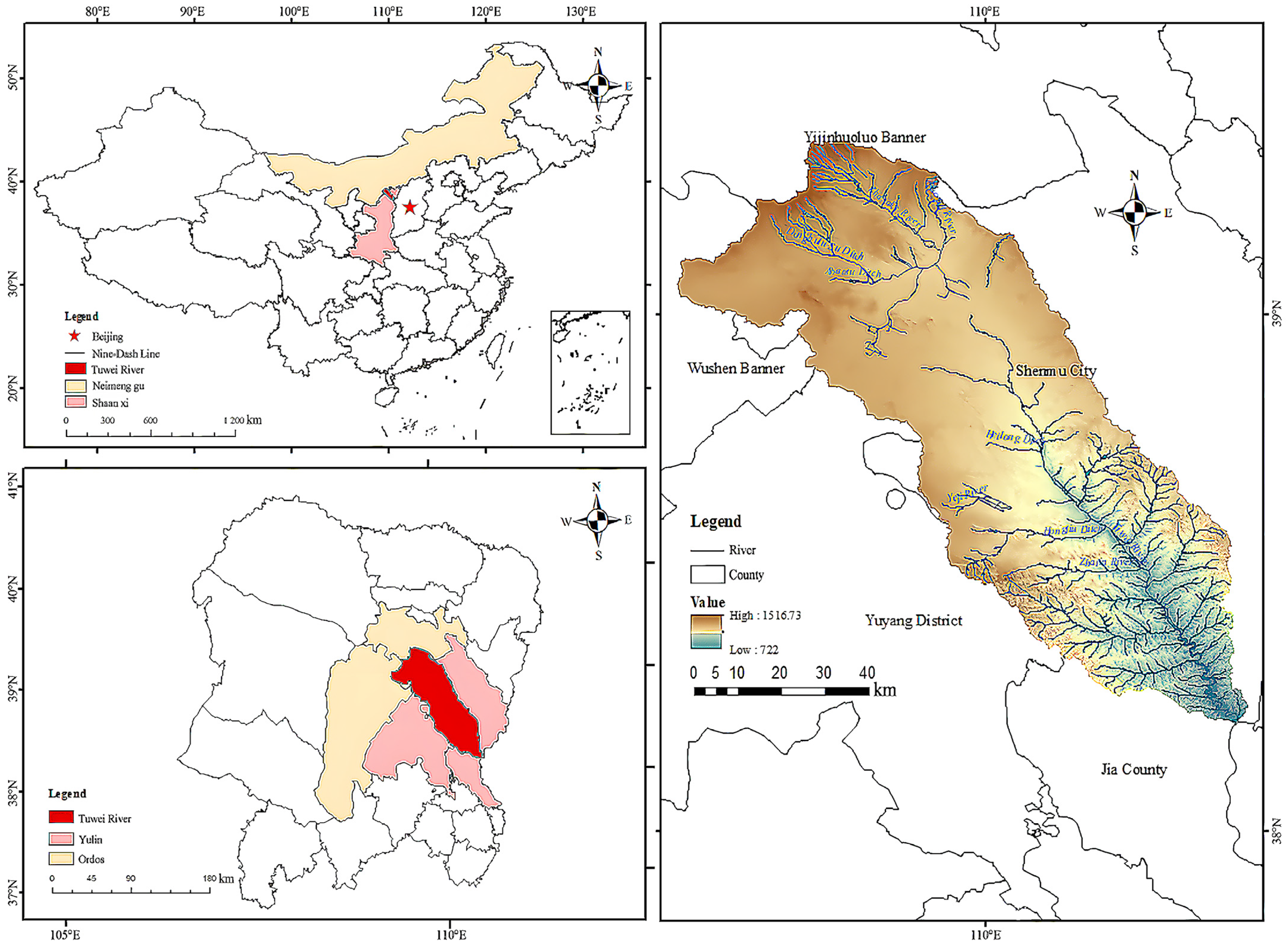
Figure 1. Overview of the Tuwei River Watershed. The administrative regions involved in the watershed and the surrounding administrative counties are as follows: Shaanxi Province: Shenmu city, Yuyang District, and Jia County; Inner; and the Mongolia Autonomous Region: Yijinhuoluo Banner and Wushen Banner.
Land 15 00024 g001
Figure 2. Spatiotemporal dynamics of land use and land cover (LULC) in the Tuwei River Watershed from 1980 to 2020. (a) 1980; (b) 1990; (c) 2000; (d) 2010; (e) 2020. The data were derived from the Resource and Environment Science and Data Center (RESDC) and have a spatial resolution of 30 m.
Land 15 00024 g002
Figure 3. Conceptual framework of the research.
Land 15 00024 g003
Figure 4. Maps of land use transfer in the Tuwei River watershed in different years calculated on the basis of the grid method. (a) 1980–1990; (b) 1990–2000; (c) 2000–2010; (d) 2010–2020. Grid size: 500 m × 500 m.
Land 15 00024 g004
Figure 5. Changes in landscape indices from 1980 to 2020. Selection at the class level: (a) PD; (b) LPI; (c) ED; (d) LSI; selection at the landscape level: (e) AI; (f) SHEI.
Land 15 00024 g005
Figure 6. Spatial variation map of landscape index watersheds from 1990 to 2020 calculated on the basis of the grid method. (a) PD; (b) LPI; (c) ED; (d) LSI; (e) AI; (f) SHEI. Grid size: 500 m × 500 m.
Land 15 00024 g006
Figure 7. Heatmap of gray relational analysis (GRA) between selected natural indicators, socioeconomic indicators and landscape patterns in the Tuwei River watershed.
Land 15 00024 g007
Figure 8. Dynamic change diagram of hydrological elements (annual runoff, annual rainfall, evaporation, groundwater level) and landscape fragmentation synthesis for 1980 to 2020.
Land 15 00024 g008
Table 1. Selection of the landscape index formula and its landscape significance.
Index NameCalculation FormulaEvaluation Method and Meaning
Maximum patch index (LPI) L P I = m a x a i j A 100 The Largest Patch Index (LPI) typically ranges between 0 and 1, with values closer to 1 indicating a greater proportion of the largest contiguous patch within the landscape. A higher LPI value may suggest the presence of larger contiguous habitats in the landscape, while lower values often reflect a more dispersed or fragmented landscape pattern.
Patch density (PD) P D = 1 c i = 1 M N i Patch Density (PD) quantifies the number of patches per unit area. Higher PD values indicate a denser distribution of patches, which is often associated with greater diversity of habitat types or increased landscape complexity. Conversely, lower PD values typically reflect a more homogeneous or structurally simple landscape composition.
Landscape shape index (LSI) L S I = E m i n   E The Landscape Shape Index (LSI) measures the ratio of the actual edge length to the minimum possible edge length of patches, with values always ≥1. Higher LSI values indicate more irregular and complex patch shapes, while values approaching 1 reflect more regular geometric forms.
Edge density (ED) E D = E A × 10 6 Edge Density (ED) quantifies the total length of patch boundaries per unit area. Higher ED values indicate greater abundance of landscape edges and increased edge influence, typically associated with heightened landscape fragmentation. Conversely, lower ED values suggest fewer boundaries and better structural continuity within the landscape.
Aggregation index (AI) A I = g i i m a x g i i ( 100 ) The Aggregation Index (AI) ranges from 0 to 1, with values approaching 1 indicating higher aggregation of habitat types. A higher AI value typically suggests that certain landscape types tend to cluster together in the ecosystem, while lower values generally reflect more dispersed or evenly distributed habitat patterns.
Shannon evenness index (SHEI) S H E I = Σ i = 1 m ( P i × l n P i ) ln m The Shannon evenness index (SHEI) ranges between 0 and 1, where m represents the number of landscape types. Values approaching 1 indicate a more even distribution of landscape types across the study area.
Table 2. Steps for Calculating the FCI Using the Entropy Method.
Serial NumberStep NameCore FormulaEffect
1Data standardizationPositive indicators:
y i j = x i j m i n ( x i ) m a x ( x i ) m i n ( x i )
Negative indicator:
y i j = m a n x i x i j m a x ( x i ) m i n ( x i )
This step ensures comparability across different indicators and establishes a foundation for subsequent calculations.
2Calculate index proportion ρ i j = y i j y i j Σ i = 1 n Conversion of the standardized data into relative proportions was performed for the calculation of information entropy.
3Calculate information entropy e j = 1 ln n Σ i = 1 n   ρ i j = ln ρ i j
( When   ρ i j = 0 ,   0 l n 0 = 0 )
This step quantified the informational value of each indicator to support weight assignment.
4Calculate information utility value d j = 1 e j Each indicator’s utility value directly demonstrates its potential contribution to the integrated assessment—higher values signify more critical indicators in the evaluation system.
5Determine indicator weight w j = d j d j Σ j = 1 m Objective weight allocation was implemented for all indicators in the comprehensive index, effectively eliminating subjective deviations.
6Calculate composite index c l j = Σ j = 1 m w j     y i j This approach integrates multi-indicator information into a single value representing the overall landscape condition, thus facilitating both horizontal and vertical comparisons.
Table 3. Area and proportion of land use in the Tuwei River Basin (1980–2020).
YearIndexFarmlandWoodlandGrasslandWater
Bodies
Developed
Land
Bare Land
1980Area/hm21,318,830231,1152,181,764128,94913,0801,725,429
Proportion/%234.1392.30.231.4
1990Area/hm21,316,920231,1112,175,756129,30213,0801,732,989
Proportion/%23.54.138.92.30.231
2000Area/hm21,302,112232,4552,676,244128,06613,4231,246,867
Proportion/%23.34.247.72.30.222.3
2010Area/hm21,142,259287,5122,817,868123,28930,1601,197,950
Proportion/%20.45.150.42.20.521.4
2020Area/hm21,131,778265,4372,715,926131,981180,7671,173,097
Proportion/%20.24.748.52.43.221
Table 4. Land use changes in the Tuwei River Basin (1980–2020).
YearIndexFarmlandWoodlandGrasslandWater BodiesDeveloped LandBare Land
1980–1990Area of
change/hm2
−1910−4−600835307560
Rate of
change/%
−1.4−0.002−2.8−2.70−4.4
1990–2000Area of
change/hm2
−14,8081344500,478−1236343−486,122
Rate of
change/%
−1.10.623−12.6−28
2000–2010Area of
change/hm2
−159,85355,057141,624−477716,737−48,917
Rate of
change/%
−12.323.75.3−3.7124.7−4
2010–2020Area of
change/hm2
−10,481−22,075−101,9428692150,607−24,853
Rate of
change/%
−1−8−4−7499.4−2.1
1980–2020Area of
change/hm2
−187,05234,322534,1623032167,687−552,332
Rate of
change/%
−14.2−14.9−24.5−0.241282−32.01
Table 5. Correlation degree between selected natural indicators and selected landscape indices in the Tuwei River Watershed for 1980 to 2020.
Annual Average Flow RateTemperatureEvaporationPrecipitationTotal Water ResourcesSurface Water ResourcesGroundwater Level
PD0.5775725770.9054315510.6089630010.7040719960.6475336470.5246657520.527428201
LPI0.7009489990.379269550.6209552050.5862106390.5522955320.6836014170.782092724
ED0.6084553470.8860749040.5474160970.6422199790.6261529650.510901440.435823886
LSI0.6089784660.8857708630.5475387360.6423963360.6263900560.5111155330.436109697
SHEI0.7462392890.4388388840.6041422530.6950385020.5778289690.6277520150.702156252
AI0.6659933180.3820376710.648623580.5997375810.5726569480.6450877770.810911446
Table 6. Correlations between selected socioeconomic indicators and selected landscape indices in the Tuwei River Watershed for 1980 to 2020.
Cultivated Land areaUrbanization RatePer Capita GDPOutput Value of the Primary IndustryOutput Value of
the Secondary Industry
Output Value of
the Tertiary Industry
PD0.8061537730.7726707280.5617620010.678280590.6872423820.707106654
LPI0.485794030.5523455610.6619261720.5549549980.5671876920.571046166
ED0.726625450.7011558670.5867775130.5910188840.7222792910.696206292
LSI0.7269460120.7014585260.5864663760.5912220190.7228063070.696602744
SHEI0.6132553710.5969695650.5657443080.6084341690.6136450270.618134442
AI0.5055508620.5730243370.6811927540.9518693940.6975471090.692187495
Disclaimer/Publisher’s Note: The statements, opinions and data contained in all publications are solely those of the individual author(s) and contributor(s) and not of MDPI and/or the editor(s). MDPI and/or the editor(s) disclaim responsibility for any injury to people or property resulting from any ideas, methods, instructions or products referred to in the content.