Article

Multidimensional Assessment of Ecological Restoration Effectiveness in Plateau Urban Protected Areas: Evidence from Chokpori Mountain Park, Lhasa, China

1
School of Engineering, Xizang University, Lhasa 850000, China
2
School of Architecture, Southwest Jiaotong University, Chengdu 611756, China
*
Author to whom correspondence should be addressed.
Land 2026, 15(6), 1062; https://doi.org/10.3390/land15061062
Submission received: 26 April 2026 / Revised: 11 June 2026 / Accepted: 12 June 2026 / Published: 16 June 2026
(This article belongs to the Special Issue National Parks and Natural Protected Area Systems)

Abstract

In the context of intensifying global climate change, high-altitude mountain ecosystems play a critical role in climate regulation, biodiversity conservation, and the advancement of sustainable human development. Plateau regions, such as the Qinghai–Tibet Plateau, are particularly sensitive and responsive to global climatic fluctuations and function as essential ecological barriers supporting development across Asia. These areas occupy a strategic position within Asia’s ecological security framework and the broader international community, influencing not only regional ecological stability and social cohesion but also sustainable development pathways. However, owing to their fragile ecosystem structures, limited regenerative capacity, and the ongoing expansion of urbanisation and human activities, these regions frequently suffer from habitat fragmentation and degradation of ecological functions. This issue is especially acute in natural protected areas adjacent to plateau cities. Consequently, there is an urgent need for quantitative assessments of ecological restoration effectiveness within natural protected areas, alongside investigations into development approaches that underpin long-term regional stability and sustainability. Focusing on Chokpori Mountain—the “urban green heart” of Lhasa, a principal city on the Qinghai–Tibet Plateau—this study develops a three-dimensional assessment framework encompassing ecological, economic, and social dimensions. By integrating the Integrated Valuation of Ecosystem Services and Trade-offs (InVEST) model, remote sensing inversion techniques, field monitoring, and questionnaire surveys, the research systematically evaluates the effectiveness of ecological restoration and proposes insights for sustainable governance. The findings indicate that ecological restoration elicited positive ecological responses, evidenced by a 69.2% increase in soil retention post-renovation, an increase in vegetation coverage, and modeled total nitrogen (TN) and total phosphorus (TP) export loads demonstrating enhanced nutrient retention potential and improved water purification potential; (2) economic stimulation was evident, as demonstrated by an increase in average weekend daily visitor numbers from 876 to 1567 and a 24.2% rise in average monthly revenue of shops within a 1 km radius; and (3) social well-being improved, with ecological satisfaction reaching 89.2% and recognition of cultural communication attaining 67.3%. An integrated analysis indicates a synergistic enhancement of ecological environmental quality, regional vitality, and public perception. Accordingly, the outcomes of this study provide both theoretical insights and practical guidance for the ecological restoration and sustainable management of urban protected areas in high-altitude plateau regions worldwide.

1. Introduction

Natural protected areas on the Qinghai–Tibet Plateau are integral to maintaining the ecological stability and functional integrity of the so-called “Asian Water Tower.” As essential components of global high-altitude ecosystems, their glaciers, snow cover, and alpine water systems sustain numerous transboundary rivers, thereby underpinning water resource provision and ecological security across East, South, Central, and Southeast Asia. Consequently, these areas are of fundamental importance to global ecological security and sustainable development. However, owing to the harsh alpine environment, their ecological substrates are fragile, and their ecosystems demonstrate limited resilience to disturbances. Within the interior of the Qinghai–Tibet Plateau, rapid urbanisation and intensified human activities have led to the degradation of ecological functions, thereby placing continued pressure on ecosystem stability.
Within this context, ecological restoration has increasingly become a vital global strategy for enhancing ecological environments, improving ecosystem functions, and promoting harmonious relationships between humans and nature. It contributes significantly to biodiversity conservation, environmental protection, and social development [1,2,3], with policy instruments playing a pivotal role in facilitating its implementation [4]. Restoration initiatives can also enhance ecosystem service functions [5]; however, their effects on different ecosystem services vary [6]. Previous research has demonstrated that ecological restoration projects can improve habitat quality and ecological functions by optimising land-use patterns, encouraging vegetation recovery, and enhancing soil moisture conditions [7,8,9,10]. Over time, the objectives of ecosystem restoration have evolved from focusing solely on ecological benefits to adopting a more comprehensive approach that integrates ecological, social, and economic advantages [11]. In light of ongoing urbanisation and increasing demands for ecological protection, there is an urgent need to assess restoration effectiveness from an integrated perspective and to explore sustainable development pathways [12,13].
Within the plateau mountain urban system, Lhasa functions as a prominent population and economic centre on the Qinghai–Tibet Plateau, as well as a crucial node within the regional ecological security framework. Guided by the principles of sustainable development, plateau cities are progressively implementing ecological restoration initiatives. However, natural protected areas in these contexts are ecologically fragile and simultaneously serve multiple roles related to cultural continuity and social engagement; therefore, their restoration must reconcile ecological conservation, cultural preservation, and social needs [14]. Chokpori Mountain, located in the core area of Chengguan District, Lhasa, adjacent to the Potala Palace World Cultural Heritage Site, constitutes both a vital component of the city’s natural protected-area system and a key venue for residents’ daily recreation and cultural activities. Prior to renovation, the area experienced a prolonged absence of systematic management, resulting in vegetation degradation, excessive soil compaction, ageing infrastructure, and inadequate cultural display functions, thereby failing to meet the diverse needs of residents and visitors. In 2025, Lhasa completed the renewal and renovation of Chokpori Mountain Park. The project was undertaken with three primary objectives: ecological restoration, cultural inheritance, and functional optimisation. It entered its initial effectiveness assessment phase from September to December 2025, emerging as a representative case of restoration within natural protected areas of plateau cities. As a core space for ecological and cultural conservation in Lhasa, the restoration project aimed not only to enhance the local ecological environment but also to stimulate economic revitalisation [15] and improve social well-being [16], thereby promoting coordinated ecological, economic, and social development. The evaluation of ecological restoration projects is essential for reinforcing restoration efforts and achieving strategic objectives for ecological regions [17].
From a technical perspective, land-cover change and multi-source ecological indicators constitute a fundamental basis for assessing the effectiveness of ecological restoration. Remote sensing technology has been widely utilised in the evaluation of ecological restoration owing to its broad spatial coverage, temporal sensitivity, and high spatial resolution [18,19]. For example, the Normalized Difference Vegetation Index (NDVI) is employed to characterise vegetation recovery and variations in ecosystem resilience [20,21,22]; the Integrated Valuation of Ecosystem Services and Trade-offs (InVEST) model is commonly applied to assess changes in ecosystem services such as water conservation and soil retention [23]; and water-quality indicators, including total nitrogen (TN) and total phosphorus (TP), are used to reflect improvements in aquatic environmental conditions [24]. Accordingly, this study systematically analyses the ecological impacts of the restoration project through multiple indicators encompassing vegetation, water quality, soil retention, biodiversity, and microclimate regulation. Moreover, field investigations and questionnaire surveys are conducted to complement the evaluation of economic and social benefits, thereby establishing an integrated assessment framework.
Previous research has predominantly evaluated the effectiveness of ecological restoration by focusing on individual ecological factors. For example, Hao et al. examined the trade-off between soil-water conservation and carbon sequestration during the implementation of restoration projects in the semi-arid Loess Plateau, providing valuable guidance for land and water resource management in water-limited ecosystems [25]. Similarly, Jiang et al. developed a platform to assess restoration and rehabilitation scenarios based on the concept of synergistic remediation and restoration of water resources, water environment, and water ecology, thereby addressing the interconnected challenges of water scarcity, pollution, and ecological degradation [26]. Abban Putri Fiqa et al. evaluated restoration effectiveness by comparing vegetation, soil biophysical conditions, and ecosystem services across target restoration areas, secondary forests, and farmland, which served as positive and negative controls, respectively [27]. Lu et al. conducted a meta-analysis of the ecological effects of river restoration, synthesising the overall impacts on ecological status and processes and providing comprehensive evidence for the ecological assessment of restoration effectiveness [28]. Regarding monitoring practices, England et al. proposed best practices for monitoring and assessing ecological responses to river restoration, emphasising the importance of goal-oriented, multi-indicator monitoring and process tracking [29]. Long-term case study observations conducted by Stoltefaut et al. revealed that floodplain biodiversity can gradually improve following river restoration, suggesting that biodiversity constitutes a critical dimension for evaluating long-term ecological effects [30].
As research advanced, scholars expanded the scope of evaluation to include indicators beyond solely ecological measures. For assessing overall project effectiveness from an economic perspective, Zhang et al. devised a benefit-assessment framework to appraise the economic benefits, ecological benefits, and project costs of ecological restoration initiatives [31]. Focusing on policy implementation, Wang et al. proposed an indicator system for evaluating the implementation effectiveness of ecological protection and restoration projects, grounded in ecological supervision requirements and practical policy constraints [32]. Through a South African case study, Peacock et al. compared the benefits and costs of ecological restoration, demonstrating that restoration benefits may exceed investment costs and thereby offering quantitative evidence for the economic evaluation of restoration effectiveness [33]. Lemgruber et al. analysed the effects of ecological restoration on local employment, income, and socioeconomic conditions in an urban restoration project within the Brazilian Atlantic Forest, illustrating that restoration effectiveness can also be examined from a socioeconomic perspective [34]. Clarke et al. incorporated cultural ecosystem service values into the evaluation of coastal wetland restoration, demonstrating that restoration effectiveness can be assessed not only ecologically but also through cultural perception and social value [35]. In addition, Enu et al. compared stakeholder priorities and implementation barriers in urban river restoration projects in Germany and Ghana, indicating that restoration effectiveness may also be understood through governance coordination and social synergy [36].
As research in the field has advanced, the objectives of ecosystem restoration have shifted from a narrow focus on one or a limited number of ecosystem services to a more comprehensive framework that integrates ecological, social, and economic benefits [9]. Yuan et al. employed the analytic hierarchy process to develop an evaluation index system for assessing the effects of marine ecological restoration, incorporating ecological-environmental, social, and economic dimensions [37]. Ding et al. proposed a hierarchical “pattern-service” evaluation framework to appraise the ecological effectiveness of restoration projects in the Yimeng Mountains [38]. Wei et al. focused on agricultural land consolidation and ecological restoration projects based on nature-based solutions, formulating a conceptual framework encompassing three dimensions—ecological sustainability, economic viability, and human well-being—and introduced an integrated assessment system [39]. Lin et al. established an evaluation system for mine ecological restoration effectiveness in the northern Shaanxi coal base, utilising multi-source monitoring data and twelve indicators spanning ecological, social, and economic benefit categories [40]. Wantzen et al. applied the DPSIR (Drivers, Pressures, State, Impacts, Responses) framework to analyse urban river and wetland restoration in the Global South, elucidating systematic linkages among drivers, pressures, state changes, impacts, and responses, thereby providing a structured approach for the multidimensional assessment of restoration effectiveness [41]. Hagger et al. examined coastal wetland restoration with regard to co-benefits such as blue carbon, biodiversity, fisheries, and water quality, suggesting that the effectiveness of ecological restoration should be understood through the interconnection of multiple ecological and social benefits [42]. Roberts et al., in their study of freshwater mussel restoration in Australasia, contended that “restoration success” should be determined by considering population recovery, ecological function, and management objectives, rather than relying on a single indicator [43].
Although previous studies have assessed the effectiveness of ecological restoration from singular perspectives [25,26,27,28,29,30,31,32,33,34,35,36], such as ecological or economic dimensions, and have gradually progressed towards multidimensional integrated evaluations [37,38,39,40,41,42,43], research focusing on natural protected areas within plateau mountain cities remains limited. Firstly, many existing evaluation frameworks have been developed for low-altitude regions and are not readily applicable to the distinctive characteristics of plateau ecosystems. Secondly, prior investigations tend to prioritise individual ecological benefits, often overlooking the synergistic interactions among ecological, economic, and social factors, as well as lacking analyses of sustainable development pathways specifically tailored to plateau environments.
Building upon this context, the present study centres on the ecological restoration project of Chokpori Mountain Park in Lhasa as a case study. It develops a multidimensional quantitative assessment system specifically designed for natural protected areas within plateau mountain cities. The research systematically examines the ecological, economic, and social impacts of ecological restoration initiatives and examine its implications for sustainable governance. The primary objectives are to construct an integrated ecological-economic-social assessment framework, to propose evaluation methodologies for ecological restoration in high-altitude regions, and to provide decision-making guidance for the long-term management and sustainable development of natural protected areas in plateau mountain cities worldwide.

2. Materials and Methods

2.1. Case Study: Chokpori Mountain—A Representative Example of Ecological Restoration Within a Plateau Urban Protected Area

This study investigates the environmental remediation project of Chokpori Mountain, situated within the ecological belt of the Potala Palace water system in Lhasa on the Qinghai–Tibet Plateau. Chokpori Mountain Park is located in the urban core of Chengguan District, Lhasa, adjacent to the Potala Palace World Heritage Site. The surrounding area is subject to multiple planning and management regulations, including those pertaining to the World Heritage buffer zone, construction-control zone, and historic townscape conservation. Consequently, this study does not categorize the site solely as a legally designated nature reserve. Rather, it conceptualizes Chokpori Mountain Park as a plateau urban protected space that integrates heritage conservation, ecological restoration, urban public space functions, and cultural landscape continuity. The project encompasses an environmental remediation area of approximately 10.3 ha, a historic landscape restoration area of 7.7 ha, and an existing park enhancement area of 1.8 ha. The historic landscape restoration zone, corresponding to the Chokpori Mountain Park area, constitutes the primary focus of this research. Figure 1 illustrates the location of the study area alongside the spatiotemporal changes associated with ecological restoration.
Chokpori Mountain is located in the Chengguan District of Lhasa, at an elevation of approximately 3650 m. Lhasa lies within the plateau valley region of the middle and lower reaches of the Yarlung Zangbo River, characterised by terrain that gently slopes from east to west. The area experiences a plateau temperate monsoon climate, with a mean annual temperature of around 9 °C. Precipitation is primarily concentrated between June and September, accompanied by high evaporation rates and pronounced diurnal temperature variations. The Lhasa River Basin, which includes Lhasa, features a well-developed hydrological system, with its wetland ecosystems playing a vital role in ecological regulation and biodiversity conservation.
Lhasa has a history spanning approximately 1300 years. Since the Tubo period, it has functioned as the political, religious, and cultural centre of Tibet. During the Yuan, Ming, and Qing dynasties, Lhasa underwent further development, ultimately becoming the political centre of the Tibet Autonomous Region in the mid-twentieth century. In 1960, it was designated as a prefecture-level city. The ancient city of Lhasa is home to a rich heritage of historical and cultural architecture, most notably the historic ensemble comprising the Potala Palace, Jokhang Temple, and Norbulingka. This ensemble has been inscribed on the United Nations Educational, Scientific and Cultural Organization (UNESCO) World Heritage List and represents an outstanding example of Tibetan Buddhist culture and plateau architectural artistry.
The Lhalu Wetland National Nature Reserve, located in northern Lhasa at an elevation of approximately 3645 m and covering a core area of about 6.6 km2, exemplifies a typical plateau urban wetland. It fulfills vital ecological functions, such as regulation, water purification, and providing habitat for migratory bird species. The interactions among this wetland ecosystem, the central urban water system, and the wetland-woodland belts of Lhasa form an important natural ecological framework for the restoration of Chokpori Mountain.
Historical evidence indicates that, from the early phases of urban development, the Chokpori area exhibited a distinctive landscape pattern characterised by the integration of mountains, wetlands, water systems, linka spaces (a traditional Tibetan garden and leisure space), and temples. Photographs and maps dating from 1904 to 1937 (Figure 2a–d) demonstrate that the Chokpori mountain mass, its foothill wetlands and ponds, together with the landscape water systems associated with the Potala Palace and Longwangtan, collectively formed a significant ecological foundation on the western side of old Lhasa. Although architectural features such as the Kundeling residence had emerged during this period (Figure 2b–d), the overall landscape remained predominantly shaped by natural substrates and wetland areas. A city centre map from 1959 (Figure 2e) depicts a water system diverting water from the Lhasa River through Chokpori to the village beneath the Potala Palace, ultimately flowing into Lubug Nagder, thereby indicating that the area continued to retain certain wetland and water-system functions until the mid-twentieth century.
The expansion of urban areas has led to a progressive deterioration of the ecological landscape in the Chokpori region. Aerial photographs from 1965 and 1970 (Figure 2f–g) demonstrate that the original water channels, which sustained the Potala Palace and Longwangtan, had significantly narrowed and been redirected, resulting in a reduced surface-water supply. Furthermore, wetlands and other ecological habitats became increasingly fragmented. Urban plans from 1985, together with the simplified map included in the 1999 Historical City Atlas of Lhasa project (Figure 2h–i), reveal that the area had undergone extensive development with residential and commercial buildings. The original water channels had largely disappeared, wetland features were difficult to identify, and land use had progressively shifted towards urban construction. Consequently, the Chokpori area transformed from a wetland-dominated natural landscape into a highly urbanised environment, characterised by disrupted ecological connectivity and a marked decline in landscape integrity.
This historical transformation illustrates that Chokpori Mountain has long embodied both natural and cultural attributes within the urban fabric of Lhasa. Firstly, together with Marpori Mountain and the Lhasa River water system, it forms an integral part of the mountain-water spatial configuration characteristic of the plateau city. Secondly, the presence of temple activities, Tibetan medical culture, and the relationship between the site and the heritage landscape surrounding the Potala Palace collectively (Figure 2a–e) endow the area with a distinctive nature-culture composite identity. Consequently, the protection and restoration of the Chokpori protected area extend beyond ecological concerns alone, encompassing ecological security, landscape continuity, and the preservation of cultural heritage.

2.2. Data and Methods

2.2.1. Research Overview

This study evaluates the overall effectiveness of the ecological restoration project in the Chokpori area, considering ecological, economic, and social dimensions (Figure 3). Building upon recent research in ecological restoration assessment, the study focuses on changes in ecosystem structure and function, incorporates analyses of ecosystem services, and utilises spatially explicit methods to assess restoration outcomes. Accordingly, an indicator system aligned with restoration objectives and adaptive management principles has been developed [44,45,46]. To enable a comparative analysis of conditions before and after restoration, the study integrates multi-temporal data from both pre- and post-restoration periods, including remote sensing data, field monitoring data, and field survey data. The period from 2023 to 2024 is designated as the pre-restoration baseline, while the interval from September to December 2025 represents the initial post-restoration evaluation phase.
The evaluation framework primarily emphasises changes in soil retention, water purification, vegetation cover, and biodiversity. Additionally, considering the recreational functions of linka spaces in plateau cities and the historical landscape characteristics of the Chokpori area, microclimate regulation has been incorporated into the assessment system. Chokpori Mountain serves as the principal focus of this study. Given that ecological processes such as soil retention, water purification, and vegetation cover demonstrate a degree of spatial continuity and may extend into adjacent areas, the scope of their assessment has been expanded to include the mountain remediation zone and its ecologically associated surroundings. Conversely, indicators related to biodiversity, microclimate, visitor flow, and socio-economic perceptions are evaluated within the park’s core or its immediately affected vicinity (Table 1). Unless otherwise specified, all findings are primarily interpreted with reference to the core area of Chokpori Mountain Park. Figure 3 presents the study’s methodological framework.
In the development of the indicators, this study adheres to the principles of scientific validity, representativeness, and independence [37]. Building upon existing research and the Technical Guidelines for the Effectiveness Evaluation of Ecological Protection and Restoration (Trial) issued by the Ministry of Ecology and Environment in 2022, an assessment framework for evaluating the effectiveness of ecological restoration in plateau urban contexts has been established (Table 2). This framework comprises three dimensions: ecological-environmental benefits, social benefits, and economic benefits. Methodologically, analyses are conducted in accordance with the nature of the data. Continuous raster data derived from remote-sensing inversion and model simulations—such as soil retention, water purification, and vegetation cover—are analysed through temporal change and spatial pattern comparisons. Data supported by independent samples, including biodiversity metrics, are evaluated using between-group difference analysis. Questionnaire data are primarily analysed using frequency statistics and proportions to elucidate differences in perceived restoration effectiveness among various groups.

2.2.2. Classification and Measurement of Ecological Indicators

(1)
Soil-retention effectiveness:
Land-use change is one of the principal drivers affecting ecosystem services [47,48,49]. Over the past four decades, land use in the Chokpori area has undergone significant transformation: during urbanization, the area shifted from a natural wetland to a hard-surfaced area, and the pattern of surface runoff changed substantially. Accordingly, this study employs the Sediment Delivery Ratio (SDR) model of InVEST to assess soil-retention performance by quantifying reductions in soil erosion and sediment retention before and after the restoration project. The pre-restoration model simulation utilized the 2024 land-use/land-cover map, while the post-restoration model simulation employed the 2025 land-use/land-cover map, corresponding to the initial post-restoration evaluation period. The 2020 land-use dataset served solely as auxiliary background information and was not directly incorporated as input in the InVEST model simulations. The spatial datasets required for model operation include monthly precipitation records for China from 1901 to 2024, the 2024 and 2025 land-use maps data, Food and Agriculture Organization of the United Nations (FAO) global soil-property data, and high-resolution Digital Elevation Model (DEM) data. To reduce errors arising from spatial reference inconsistencies across multiple data sources, all inputs were projected to the WGS 1984 UTM Zone 46N coordinate system and resampled to a spatial resolution of 30 m.
At the computational level, the core logic of the InVEST soil-retention module lies in calculating the difference between potential soil erosion and actual soil loss derived from the Universal Soil Loss Equation (USLE). According to the Revised Universal Soil Loss Equation (RUSLE), USLE-based actual soil loss per unit area, denoted as A, is calculated as follows:
A = R × K × L × S × C × P
where A denotes the mean annual soil loss per unit area; R and K represent the rainfall erosivity factor and the soil erodibility factor, respectively; L and S denote the slope-length factor and the slope-steepness factor, respectively; and C and P represent the cover-management factor and the conservation-practice factor, respectively.
On this basis, potential soil erosion per unit area may be derived as follows:
A p o t = R × K × L × S
where the term denotes the mean annual potential soil erosion per unit area.
Accordingly, soil retention, which represents the sediment interception benefit of a given land parcel, can be obtained by subtracting USLE-based actual soil loss from potential soil erosion, as expressed in the following equation:
A r e t e n t i o n = R × K × L × S × ( 1 C × P )
where the term denotes soil retention, that is, the difference between potential soil erosion and USLE-based actual soil loss A.
In this study, C and P values were not designated as uniform global constants prior to and following restoration. Rather, the 2024 and 2025 land-use/land-cover maps were reclassified into corresponding land-cover categories, and C and P values were spatially assigned to each raster cell based on the land-cover type and the biophysical parameter table. The land-cover transitions and the corresponding C and P assignments by class are detailed in Table 3.
To ensure model reliability under plateau-specific environmental conditions, several key parameters were localized in this study.
The rainfall erosivity factor (R), one of the principal drivers of soil erosion, represents precipitation-induced erosion. In this study, erosivity was estimated from annual rainfall totals using the following simplified model:
R j = α P j β
where P j is the precipitation amount in year j (mm), Rj is the rainfall erosivity in year j (MJ·mm·hm−2·h−1), and α and β are model parameters, set to 0.0534 and 1.6548, respectively.
The soil erodibility factor (K), which describes the ease with which soil particles are detached and transported by water, depends primarily on soil texture, organic-matter content, soil structure, and permeability. It was calculated as follows:
K e p i c = 0.2 + 0.3 × E x p 0.0256 × m s × 1 m s i l t 100 × m s i l t m c + m s i l t 0.3         × 1 0.25 × o r g C o r g C + E x p 3.7 2.95 × o r g C         × 1 0.7 × 1 m s 100 1 m s 100 + E x p 5.51 + 22.9 × 1 m s 100
K = 0.01383 + 0.51575 × K e p i c × 0.1317
where K e p i c characterizes, through four multiplicative terms, the regulatory effects of sand–silt interaction, the silt–clay ratio, organic-carbon binding, and fine-particle content on soil erodibility. The second equation then corrects the bias of the Erosion Productivity Impact Calculator (EPIC) model under Chinese soil conditions by means of the linear regression term −0.01383 + 0.51575 K e p i c and completes conversion from imperial to International System of Units (SI) units using the coefficient 0.1317, thereby yielding a quantitative estimate of regional soil erodibility that provides a key parameter for soil-erosion risk assessment and soil- and water-conservation planning. The unit of K is t·hm−2·h·(hm2·MJ·mm)−1.
Finally, by spatially overlaying and comparing the pre- and post-restoration data in the Geographic Information System (GIS), the stabilizing effect of the ecological restoration project on soil can be quantified visually. On the basis of the above equations and parameters, the analysis focuses on differences in soil erosion before and after restoration between the outer flat hardened belt and the core mountain green patches, thereby demonstrating the specific effectiveness of the restoration project in constructing a “micro-sponge” system and enhancing interception benefits in a plateau city.
(2)
Water-purification effectiveness:
Urban ponds, wetlands, and their surrounding ecological spaces play important roles in maintaining urban water-environment security and ecosystem balance [50]. Because the Chokpori area lies close to Lhasa’s centralized drinking-water source, and because a high proportion of impervious surfaces combined with disturbances such as indiscriminate sewage disposal existed prior to restoration, the area was prone to non-point-source pollution risks dominated by nitrogen and phosphorus nutrients, with potential impacts on both surface water and groundwater. Accordingly, this study employs the Nutrient Delivery Ratio (NDR) module of the InVEST model to simulate the export loads and spatial distributions of total nitrogen (TN) and total phosphorus (TP), thereby characterizing the capacity of the restored area to intercept and reduce nutrients transported by runoff and, on that basis, evaluating its water-purification effect. It should be noted that TN and TP in this study refer to nutrient export indicators rather than measured soil concentrations of nitrogen and phosphorus.
The core mechanism of the NDR module simulates nutrient transport from hillslopes into surface runoff and onward to receiving waters, based on land-use/land-cover type, topographic conditions, and flow paths. Impervious built-up areas generally exhibit higher runoff coefficients and higher nutrient-export risks, whereas natural or semi-natural underlying surfaces, such as woodland, grassland, and wetlands, can reduce TN and TP export through processes including vegetation interception, soil adsorption, sedimentation, and biotransformation. In light of actual conditions in the Chokpori area, nutrient-loading and retention parameters were assigned to different land-use types to quantify the potential reduction in nitrogen and phosphorus pollutants before and after restoration and thereby evaluate water-purification effectiveness.
In interpreting the results, lower TN and TP export loads indicate stronger capacities to reduce and retain nutrients transported by runoff and therefore higher water-purification potential; conversely, higher nutrient export loads indicate zones with relatively concentrated non-point-source pollution risk that should receive priority in subsequent ecological buffering and pollution-control measures.
(3)
Vegetation-restoration effectiveness:
Ecological restoration can improve vegetation cover in restored areas through multiple pathways [51]. In evaluating vegetation restoration, this study compares remote-sensing images acquired in the same month across different years before and after restoration and calculates NDVI to assess the positive gains at the vegetation level. Over time, a wide range of methods based on time-series vegetation index data have been developed globally to monitor changes in plant communities, among which the NDVI is the most widely used [52]. NDVI is computed from the spectral contrast between the near-infrared (NIR) and red (R) bands; by amplifying vegetation spectral responses and reducing noise from factors such as solar elevation angle and atmospheric conditions, it enables sensitive detection of vegetation change [53]. Its standard formula is as follows:
N D V I = ( N I R R ) ( N I R + R )
In remote sensing studies of vegetation monitoring, fractional vegetation cover (FVC) inversion based on the dimidiate pixel model is currently among the most widely used approaches. In the present study area, mixed ground pixels consist primarily of vegetation, soil, and water, and NDVI values are linearly correlated with FVC. Making use of this significant correlation, FVC was calculated as follows:
F V C   =     ( N D V I     N D V I m i n ) ( N D V I m a x     N D V I m i n )  
where FVC denotes fractional vegetation cover; N D V I m i n is the NDVI value of impervious or unvegetated pixels within the region and is taken as the 5th percentile of the cumulative NDVI distribution; and N D V I m a x is the NDVI value of fully vegetated pixels and is taken as the 95th percentile.
This study utilizes the Google Earth Engine (GEE) platform to acquire multispectral imager data from the Multi-Spectral Instrument (MSI) onboard the Sentinel-2A/B satellites, selecting the COPERNICUS/S2_SR_HARMONIZED Level-2A surface reflectance product for NDVI calculation. With a spatial resolution of 10 m, this product meets the requirements for identifying vegetation cover characteristics and analyzing spatiotemporal changes within the study area. To minimize the impact of clouds on remote sensing data extraction, the Quality Assessment 60 m (QA60) quality control band is employed to mask cloud and cirrus pixels, and an image screening criterion of less than 20% cloud cover is applied. Subsequently, NDVI data for the study period are generated through mean compositing. Related image sources, preprocessing procedures, and preliminary data statistics are presented in Table 4.
Based on NDVI values, vegetation cover was classified before and after restoration into <0.2 (low cover), 0.2–0.5 (medium cover), and >0.5 (high cover). Cover maps were then generated for the two periods, with red indicating low coverage, yellow indicating medium coverage, and green indicating high coverage. These maps were used to quantify changes in vegetation cover associated with the restoration project, with particular emphasis on shifts in vegetation-cover pattern, cover grades, and spatial differentiation before and after restoration.
(4)
Biodiversity effectiveness:
Ecological restoration holds considerable potential for mitigating biodiversity loss attributable to habitat degradation [54]. This is especially pertinent within urban protected landscapes, where urban parks and green spaces function as refuges for biodiversity. The biodiversity performance in these areas is significantly influenced by vegetation structure, planting configuration, and broader landscape factors [49,55]. Since 1970, the Chokpori area has undergone a sequential transformation from wetland to residential land, and subsequently to ecological parkland. In the current biodiversity assessment, plant species diversity was employed as the principal quantitative metric, with the Shannon-Wiener index utilised to evaluate the diversity of established plant taxa within the area. Variations in the Shannon-Wiener index among plant communities were analysed using the Kruskal–Wallis test to assess differences in plant species diversity across community types. Identical sampling methods were employed to collect plant diversity data both prior to and following the implementation of the ecological restoration project, thereby ensuring the consistency and comparability of the survey results across these periods. Owing to practical constraints, the diversity of microbial, insect, and animal species was not included in the analysis.
The Shannon–Wiener Index is a core metric in ecology for quantifying community species diversity, and its mathematical expression is as follows:
H = i = 1 S P i ln P i
By jointly quantifying species richness and evenness, the index effectively reflects ecosystem stability and health. The Shannon–Wiener formula comprises three key components:
H : the species diversity of the community. The higher the H value, the richer the species composition and the more even the distribution of individuals; when H approaches zero, the community may be dominated by only a few taxa.
S : the total number of species in the community, which directly determines the starting point of diversity calculation. The larger the S value, the greater the potential diversity.
P i : the proportion of the ith species in the total number of individuals ( P i = number of individuals of species i /total number of individuals). This parameter reflects relative abundance and is crucial to the value of H .
The negative sign in the formula converts the summation result into a positive value, thereby facilitating intuitive comparison of diversity levels among communities.
The specific sampling design is as follows: During the peak plant growth seasons of 2024 and 2025 (July–August), a stratified systematic grid layout will be used to survey plant diversity before and after restoration. A regular grid with 20 m spacing will be established across the entire core study area, with a 1 m × 1 m herbaceous plot placed at the center of each grid intersection, totaling 192 plots.
Baseline survey before restoration: Plots will be established across all areas of the site. Regardless of whether a grid intersection falls on buildings, hardened surfaces, or remnant woodland, a plot will be placed there.
Post-restoration effect survey: Data will be stratified according to six different vegetation configuration types: Evergreen Plant Area, Broadleaf Plant Area, Scattered Shrub Area, Clustered Shrub Area, Ground Cover Plant Area, and Aquatic Plant Area. The number of plots for each configuration type will be proportional to its actual area, and the exact same plot coordinates will be used both before and after restoration.
Within each plot, all vascular plant species, their abundance, and cover will be recorded. For plots with no vegetation, all plant metrics will be recorded as zero, and these plots will still be included in subsequent statistical analyses. Plant diversity will be represented by the Shannon-Wiener index at the plot level, calculated using the following formula:
H = j = 1 S i p i j × ln p i j
Here, S i represents the number of species in the ith sample plot, and p i j represents the proportion of individuals of the jth species in the ith sample plot relative to the total number of individuals in that plot.
The utilisation of the Shannon–Wiener Index to evaluate post-restoration variation in plant community diversity is grounded in the fact that the Chokpori area has undergone a prolonged transition from a wetland landscape to a built environment during urbanization, under conditions of continuous disturbance to plant habitats. Under the present research conditions, taking plant-species diversity as the core basis for biodiversity evaluation not only enables a relatively direct assessment of post-restoration plant community recovery, but also helps identify, at the level of community structure, changes associated with native plant configuration and restoration performance. For statistical analysis of plant diversity, different taxa were grouped into distinct plant community types, as shown in Table 5.
(5)
Microclimate-regulation effectiveness:
Because the site possessed pronounced linka-wetland attributes prior to environmental degradation, and because plateau conditions endow park space with distinctive functions of rest, recreation, and social gathering, this study incorporates post-restoration microclimate regulation into the evaluation framework. This is chiefly because, in plateau cities, the fine-scale ecosystem services generated by ecological improvement are often perceived most directly by nearby residents through the experiential quality of the park environment—in other words, through the environmental comfort associated with microclimatic change.
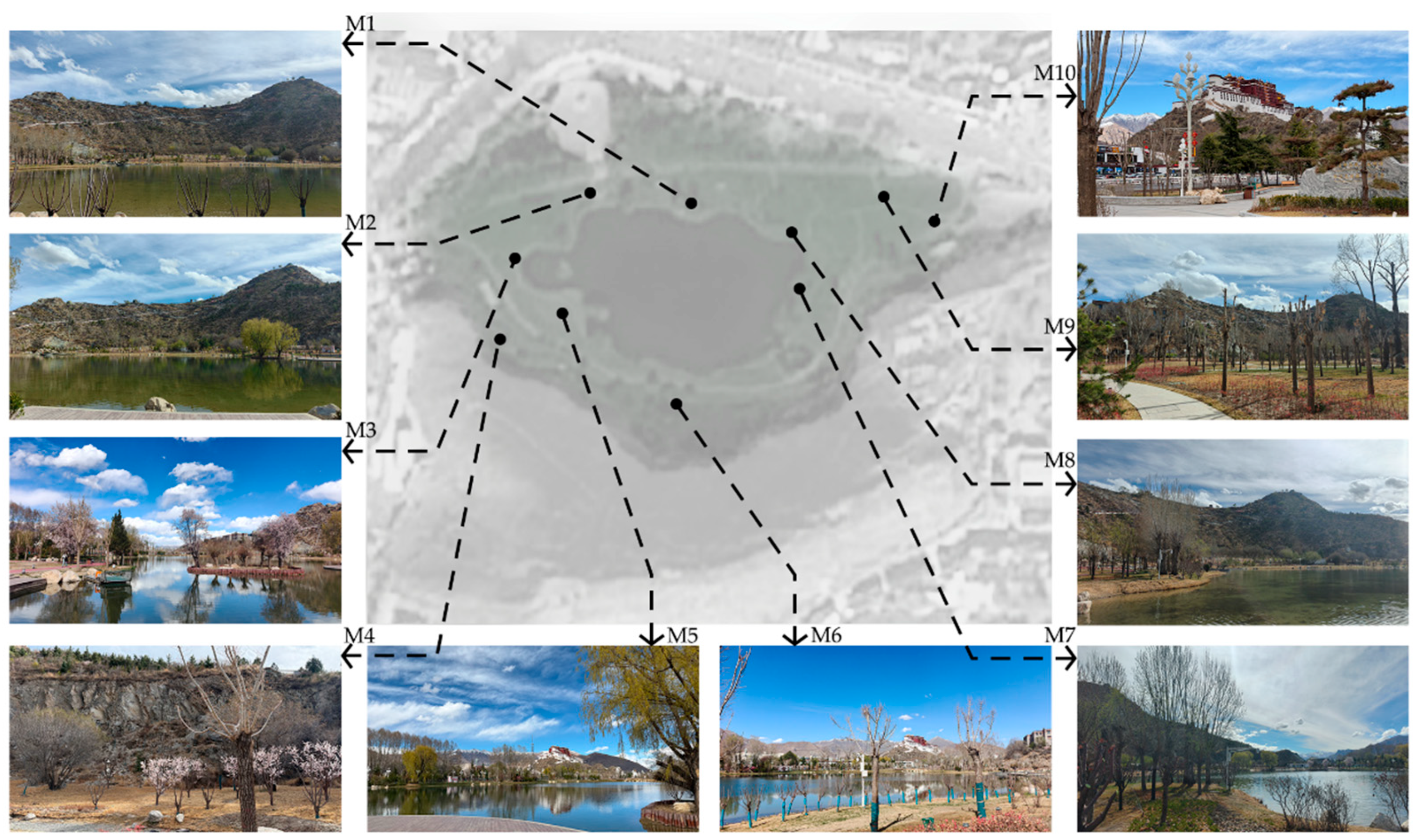
With respect to microclimate assessment, the study focuses on environmental indicators following ecological restoration, particularly given evidence that restoration projects can markedly improve long-term PM2.5 concentrations [56]. In addition, daily mean autumn temperature, relative humidity, wind speed, and outdoor thermal-environment evaluation were incorporated into the microclimate indicator system so as to determine whether microclimatic conditions remained within acceptable ranges and met the day-to-day needs of visitors and residents. To evaluate overall microclimate improvement within the park, ten monitoring points capable of representing pre- and post-restoration environmental characteristics were selected in the Chokpori area and coded as M1–M10 (Figure 4; pre- and post-restoration monitoring was conducted during typical periods on sunny days within the same season and month so as to ensure comparability), and PM2.5, daily mean temperature, relative humidity, and wind speed were monitored over three consecutive sunny days [57,58]. It is important to note that the monitoring framework implemented in this study area rigorously follows the standardized high-altitude climate monitoring procedures detailed in prior research on Lhasa’s urban microclimate [59,60]. This includes adherence to specified sampling intervals, sensor installation heights, and data collection protocols. The comprehensive monitoring system utilized in the field survey aligns closely with the established methodologies presented in the referenced literature. Subsequently, a shapefile of the site was established in ArcGIS (ArcMap 10.8.1 and ArcGIS Pro 2024; Environmental Systems Research Institute, Redlands, CA, USA), the site was spatially partitioned in the form of coordinate points corresponding to the monitoring data, land-use categories were assigned according to current site functions, and RStudio (version 2026.01.1-403; Posit Software, PBC, Boston, MA, USA), built on the R language environment (version 4.5.2; R Foundation for Statistical Computing, Vienna, Austria) with the Rtools 42 toolchain, was used to simulate the spatial distribution of the four environmental variables across the entire area on the basis of land-use parameters; these four variables were then used to calculate the Universal Thermal Climate Index (UTCI). Recommended by the World Meteorological Organization as an outdoor thermal-environment indicator, UTCI is more suitable than the traditional Predicted Mean Vote (PMV) model for thermal-comfort assessment under non-steady-state outdoor conditions characterized by strong solar radiation and natural ventilation, and can therefore more realistically reflect the influence of complex outdoor climates on human thermal sensation. Its evaluation range is generally taken to be −40 °C to +60 °C according to the international UTCI standard, while the thermal comfort zone for the human body is typically considered to be 9 °C to 26 °C. UTCI values in this study were computed using the UTCI Calculator available at utci.org, based on simulated environmental data. Based on the resulting spatial distributions of these indicators, the project’s effectiveness in optimizing microclimate and improving outdoor thermal comfort can be systematically evaluated.

2.2.3. Evaluation of Economic and Social Benefits

Previous studies have indicated that comprehensive effectiveness assessment must take account of both social and economic effects. In terms of economic effects, particular attention should be given to the extent to which restoration projects enhance the value of regional natural resource assets, as well as to any economic compensation or revenue generated by the marketization of ecological products made possible by project implementation. In terms of social effects, the central concern is whether project implementation has resolved or alleviated social challenges faced by the project area and relevant stakeholder groups [61].
Because the site has not been renovated for a long period, the economic improvements achieved may not yet be either pronounced or intuitively observable. This study, therefore, adopts a commonly used statistical approach, calculating the rate of change in average weekend daily visitor volume for 2023 and 2024 (pre-restoration) and 2025 (post-restoration) to infer, from an indirect perspective, the consumption momentum generated by the project. To further substantiate this interpretation, the research team also collected and evaluated revenue data for shops within a 1 km radius before and after renovation so as to determine whether their mean monthly revenue growth rates had changed, thereby providing a more direct and effective representation of the economic benefits associated with ecological restoration. Revenue data for surrounding businesses were collected from continuously operating shops within a 1 km radius of the study area for which comparable pre- and post-renovation revenue records were available. In total, 102 shops were included, and changes in average monthly revenue were assessed using the same set of businesses as the comparison baseline.
To assess social benefits, questionnaire surveys were conducted in Chokpori Mountain Park and its surrounding area during September–December 2025. Respondents included visitors, migrant workers, Tibetan residents from other prefecture-level cities, permanently resident Tibetans, and permanently resident non-Tibetans. This study employed purposive sampling to ensure the representativeness of key stakeholder groups. All respondents were at least 18 years of age and participated in the survey voluntarily. For the tourist group, the inclusion criteria specifically required participants to have visited Lhasa for three or more consecutive years, with their trips passing through the study area. Regarding other respondents, eligibility criteria stipulated that participants must have resided near the study area for a minimum of three months annually and possess familiarity with local customs and the conditions of the area prior to the renovation. 331 Questionnaires were distributed and collected on site, and a total of 269 valid responses were retained after questionnaires with substantial missing information or obviously contradictory answers had been excluded. The distribution of valid samples across various groups is as follows: 66 permanently resident Tibetans, 113 permanent resident non-Tibetans, 55 visitors, 16 Tibetan residents from other prefecture-level cities, and 19 migrant workers. Apart from respondents’ basic demographic information, all items were evaluated on a five-point Likert scale, covering four main aspects: perceived improvement in the ecological environment, experience of the ethnic-cultural landscape, public participation, and perceived recreational well-being. In particular, environmental node images of the park were incorporated into the survey to evaluate public perceptions of the cultural coordination between the renovated park and surrounding historical heritage and other historically significant cultural elements, and to analyze changes in willingness to participate in and enthusiasm for ecological restoration across different respondent groups. To quantify the relative importance of various satisfaction dimensions and standardize the scores, weights were assigned to the four core dimensions based on expert consultation and research priorities in ecological restoration assessment: ecological restoration effect (0.35), folk cultural landscape experience (0.25), public participation (0.20), and impact on production and daily life (0.20). The original questionnaire scores were then multiplied by their respective dimension weights to derive standardized values, which were subsequently utilized in the Sankey diagram analysis. The reliability of the questionnaire was assessed using Cronbach’s alpha coefficient. The overall Cronbach’s alpha value was 0.78, indicating that the questionnaire demonstrates acceptable internal consistency. Data analysis was based primarily on descriptive statistics and group-structure comparisons and was intended to reflect differences in subjective perceptions of restoration effectiveness across respondent groups.

2.3. Data Sources and Processing

The overall evaluation scope of this study was defined based on the area covered by the restoration project, and environmental monitoring data collected at different time points before and after project implementation were used to assess and analyze relevant indicators. Among these, soil retention, water purification, and vegetation cover were analyzed across the expanded analysis area, whereas biodiversity, microclimate, visitor flow, surrounding economic activity, and social perceptions were evaluated for the core area of Chokpori Mountain Park and its directly affected surroundings. Geographic information data related to soil erosion, water-purification capacity, and vegetation cover were obtained online from three publicly available geospatial data platforms [62,63,64]; the land use datasets for 2024 and 2025 were produced by the author team, referencing the 2020 land use dataset, engineering implementation documents, remote sensing images, and field verification data (Table 6); microclimate monitoring data were derived from reports exported from software on the basis of measurements collected by the authors’ team at representative monitoring points at two time nodes before and after restoration; environmental-node images were photographed by the authors’ team; for economic benefit assessment, visitor-flow data were obtained by fixed-point counting conducted by team members every weekend from 10:00 to 21:00, while surrounding shop-revenue data were acquired through field interviews and statistical compilation; and social benefit indicators were derived from questionnaires distributed to residents in the vicinity of the project. In principle, all “post-restoration” data referred to in this paper correspond to or were collected during the first post-restoration evaluation period, namely September–December 2025.
This study establishes the operating and biophysical parameters for the SDR and NDR models by referencing the InVEST user manual and pertinent literature [65,66]. Certain parameters utilize the model’s recommended default values, whereas others are adjusted in accordance with the land use characteristics of the study area and values reported in the literature. These parameter settings have been employed and validated in prior research [67,68]. Detailed information regarding the parameter sources, the rationale for their selection, and the outcomes of the sensitivity analysis [69] are provided in Appendix A.

3. Results

3.1. Assessment of Ecological Restoration Effectiveness

Among the indicators analyzed, soil retention, water purification, and vegetation cover are simulated over the expanded analysis area, whereas biodiversity and microclimate results correspond to surveys and monitoring conducted within the core area of Chokpori Mountain Park. Additionally, the Single-Factor sensitivity analysis of the InVEST model demonstrated that variations in the C and P factors within the SDR model significantly influenced the simulated soil retention outcomes, whereas alterations in the nitrogen and phosphorus loading coefficients in the NDR model affected nutrient export outputs. Among these parameters, the C factor and nutrient loading coefficients exhibited comparatively greater impacts on model results. Under the ±20% and ±40% perturbation scenarios, the direction of change in soil retention and nutrient export before and after restoration remained consistent. Comprehensive results are presented in Appendix A.2.

3.1.1. Marked Improvement in Soil Retention

Based on the spatial simulation results of soil retention (Avoided Erosion) generated by the InVEST model, soil-retention effectiveness in the Chokpori area and its surroundings exhibits pronounced spatial heterogeneity and a clear concentric differentiation pattern characterized by a “core–edge” structure.
As shown in Figure 5, the black-outlined area in Figure 5b, which appears as a large orange-to-yellowish brown patch, encompasses the core mountain remediation and ecological restoration zone of Chokpori Mountain Park. Absolute soil-retention values reach their maximum in this area. Mechanistically, this is attributable, on the one hand, to the mountain’s considerable topographic relief, with relatively high slope-length and slope-steepness factors (L and S), which originally implied substantial potential soil-loss risk; after restoration, however, vegetation recovery on the mountain and within the park further reduced USLE-based actual soil loss. On the other hand, owing to the restoration of native vegetation and the optimization of woodland belt structure in the renovation project, the cover-management factor (C) was substantially reduced, and, together with an effective conservation-practice factor (P), this markedly enhanced surface roughness and root-mediated soil fixation. Within the local topographic context of a plateau city, these high-value patches therefore perform an irreplaceable “micro-sponge” interception function, successfully retaining large quantities of potentially erodible sediment.
In sharp contrast to the restored core area, the central zone in Figure 5a, which appears as an extensive beige-to-yellowish brown patch and corresponds primarily to the highly hardened built-up land occupying the original park site before renovation, exhibits extremely low soil-retention values. This does not imply severe erosion per se; rather, it reflects the fact that urban hard-paved surfaces lack an erodible substrate, such that the soil erodibility factor (K) is extremely low or approaches zero, while the terrain is also relatively flat. Because potential soil erosion in these areas is inherently minimal, the actual retained or avoided erosion calculated by the model likewise falls within a very low range.
Taken together, the spatial pattern corroborates the project’s precision and effectiveness. High-value soil-retention patches are strongly concentrated within the renovated Chokpori Mountain Park, indicating that the surface interception and soil-fixation capacity of the core restoration zone were markedly strengthened after implementation. According to corrected RUSLE calculations, mean soil retention in the study area increased from 0.39 kg·m−2 to 0.66 kg·m−2, representing a 69.23% increase, demonstrating that restoration measures—such as vegetation recovery and surface ecological retrofitting—played a significant role in suppressing soil erosion. This spatial configuration further suggests that, in a fragile plateau urban ecosystem, systematic restoration of key natural mountain patches can effectively attenuate potential erosion processes, strengthen local soil- and water-conservation functions, and provide support for ecological security at the micro-watershed scale.

3.1.2. Enhanced Water-Purification Potential

Spatial simulations conducted using the InVEST Nutrient Delivery Ratio (NDR) module reveal significant spatial heterogeneity in total nitrogen (TN) and total phosphorus (TP) export loads within the Chokpori area. These loads display a distinct pattern characterized by lower values in the core region and higher values at the periphery (Figure 6a,b). Specifically, nutrient export loads are comparatively low within the core ecological restoration zone, whereas elevated levels are observed along the outer boundary and in zones adjacent to surrounding developed land. This pattern suggests that the restored area possesses an enhanced capacity to intercept and mitigate runoff containing nitrogen and phosphorus. Quantitative analysis of the InVEST-NDR outputs employing zonal statistics indicated that the mean modeled total nitrogen (TN) and total phosphorus (TP) export intensities within the core restoration area were 0.3630 and 0.1078 kg·ha−1·yr−1, respectively. In contrast, the corresponding values in the expanded analysis area were 0.4648 and 0.1206 kg·ha−1·yr−1, respectively. Detailed changes in TN and TP export loads before and after ecological restoration are provided in Table 7. These area-normalized nutrient export values offer quantitative evidence supporting the water purification assessment illustrated in Figure 6.
Within the core restoration zone, woodland, grassland, and restored water features together form a relatively continuous ecological underlying surface. Increased vegetation cover and ecologically retrofitted ground surfaces have enhanced nutrient interception, adsorption, and retention, resulting in TN and TP export loads remaining generally low and reflecting comparatively strong water-purification potential. By contrast, export loads remain relatively high along the outer boundary of the study area and at interfaces with surrounding urban roads and built-up land, indicating that impervious surfaces and rapid runoff concentration remain the principal sources of nutrient-export risk.
Overall, the ecological restoration project promoted a functional transition in spatial terms from a high-output hardened interface to a low-output ecological core. This indicates that, through vegetation recovery, the reshaping of water landscapes, and ecologically retrofitted surface treatments, the study area has enhanced its nutrient-retention capacity and, accordingly, its water-purification potential.

3.1.3. Vegetation Cover

NDVI in the study area exhibits pronounced spatial differentiation (Figure 7). Prior to project implementation (Figure 7a), a large contiguous low-NDVI zone occurred in the central study area (marked by the red dashed box), with NDVI values ranging from −0.15 to 0.034. This indicates extremely low vegetation coverage, which is highly consistent with areas of hardened surfaces and other anthropogenic disturbance. By contrast, the southern mountain body of Chokpori and its marginal areas displayed relatively high NDVI values (0.335–0.599) because of the presence of some shrub vegetation, producing a spatial pattern characterized by low values in the center and high values on the periphery.
After project implementation (Figure 7b), NDVI in the formerly low-value central park zone increased markedly to 0.311–0.627, low-value red patches largely disappeared, and the weak low-value area remaining in the center corresponded to park water features. The southern mountain and peripheral high-value zones remained stable and showed slight improvement after rehabilitation (0.513–0.899), yielding an overall pattern of marked central improvement and continued peripheral optimization. The NDVI of the core restoration zone thus recovered from an extremely low level, approaching bare ground or a hardened surface, to a medium cover level, demonstrating that the restoration project effectively improved regional vegetation cover.
From the perspective of quantitative data derived from GIS analysis (Table 8), the average NDVI increased from 0.35 to 0.38, and the average FVC rose from 0.47 to 0.55. The proportion of areas with high vegetation coverage grew from 37.54% to 47.16%, while the proportion of areas with low vegetation coverage decreased from 33.70% to 23.97%. These changes indicate that overall vegetation coverage in the study area has improved following restoration, particularly with a significant increase in high-coverage zones. Additionally, the standard deviations of NDVI and FVC slightly increased, suggesting enhanced spatial heterogeneity in vegetation coverage, meaning that the degree of vegetation recovery varies across different regions.
At the regional scale, mean NDVI increased significantly after implementation; the areal proportion of low-value zones (<0.034) contracted sharply, whereas that of medium- to high-value zones (>0.311) expanded substantially. At the same time, the spatial NDVI gradient became more even, and the previously strong contrast between central and peripheral areas was alleviated. This indicates that the project not only restored the core disturbed zone but also generated positive spillover effects into surrounding areas, narrowing disparities in vegetation cover and promoting more balanced ecosystem development, thereby fully demonstrating the positive role of ecological restoration in improving vegetation cover and regional ecological quality.

3.1.4. Significant Improvement in Biodiversity

Based on data collection and statistical analysis, prior to ecological restoration, the study area was predominantly characterized by residential and commercial land uses, with only isolated remnant plant communities present. The mean Shannon–Wiener diversity index ( H ) at the plot level across the entire site was approximately 0.06, indicating minimal overall plant diversity before restoration. This finding corresponds with the fact that approximately 95.6% of the site was occupied by vegetation-free buildings and impervious surfaces, whereas remnant plant communities comprised only about 4.4% of the total area. As depicted in Figure 8, the Shannon diversity index differed significantly across the six experimental groups (p = 1.2 × 10⁻⁷, Kruskal–Wallis test). The BP group showed the highest diversity, with a median Shannon index of approximately 3.8 and a range of 0.6 to 5.3. The SMP group ranked second, with a median of approximately 3.5, followed by the SSP group (approximately 2.8) and the AQP group (approximately 2.5). The EP group had a lower median of approximately 2.2, whereas the GCP group exhibited the lowest diversity, with a median of approximately 0.7 and values concentrated between 0.5 and 2.2. These results indicate a pronounced biodiversity gradient among the community groups, with BP representing the most diverse community and GCP the least diverse.
On this basis, field observations further indicate that habitat conditions in the study area improved after restoration and that insect activity increased, particularly by pollinators such as bees and butterflies. Vegetation recovery provided food resources and temporary resting sites for insects and some birds, suggesting that the area’s ecological environment has become more supportive of small-animal activity. It should be emphasized that these statements regarding insects and birds are based primarily on field observations and are presented only as auxiliary ecological phenomena associated with plant community recovery; they do not constitute quantitative evidence of the same strength as the Shannon diversity index for plants. Overall, the biodiversity improvement revealed in this study remains primarily focused on enhancing plant species diversity.

3.1.5. Prominent Microclimate-Regulation Effects

A comparison of the simulated post-restoration spatial distributions of microclimatic variables in 2025 (Figure 9a–e) together with Table 9 shows that, after the former vegetable market was transformed into a green park, the area experienced systematic improvements in thermal environment, ventilation conditions, air quality, humidity, and human thermal comfort, thereby demonstrating highly prominent microclimate-regulation effects of ecological restoration.
From the perspective of wind environment characteristics, the pre-restoration site was dominated by hard buildings and pavements, with a pronounced canyon effect, and exhibited an average wind speed of 1.62 m/s. After conversion into a green park, vegetation and open lawns effectively reduced near-surface wind speed to a mean of 1.10 m/s (Figure 9a), while the simulated wind-speed distribution became more even across the site, thereby avoiding discomfort caused by excessive wind while retaining sufficient air circulation to prevent pollutant accumulation, and producing a more stable and moderate wind environment for human use.
In thermal-environment terms, the thermal storage effect of hard underlying surfaces raised the pre-restoration daily mean temperature to 26.3 °C, with high temperatures occurring in contiguous patches. After restoration, green space and water bodies jointly generated a cooling effect, reducing the daily mean temperature to 18.6 °C (Figure 9b), a decrease of 7.7 °C. Except for relatively high temperatures near road edges, internal site temperatures declined steadily, the urban heat-island effect was markedly alleviated, and overall temperature conditions moved closer to the human thermal comfort range.
Air quality likewise improved markedly. Before restoration, buildings and hard pavements favored the accumulation of particulate matter, and the average PM2.5 concentration reached 18.6 μg/m3. After restoration, enhanced vegetation adsorption and dispersion in green spaces reduced PM2.5 concentrations to 9.4 μg/m3 (Figure 9c), representing a decline of nearly 50%. Although some values remained relatively high in static-air zones, most areas showed favorable air-purification performance, and the overall atmospheric environment became appreciably cleaner. Humidity conditions also improved very substantially. Before restoration, the site was dominated by hardened surfaces with weak evaporation, and relative humidity was only 24.8%; after restoration, extensive green areas and artificial water bodies markedly enhanced evapotranspiration, raising relative humidity to 44.3% (Figure 9d), an increase of 19.5 percentage points that effectively ameliorated dry conditions and improved perceived comfort.
The UTCI simulation results for the renovated site (Figure 9e) further show that human thermal comfort improved fundamentally after restoration. Before renovation, under the combined influence of thermal storage by hard underlying surfaces and the intense solar radiation characteristic of the plateau, the mean UTCI reached 27.3 °C, corresponding to a zone of relatively strong heat stress; people therefore experienced clear thermal strain, and the actual sensation of the place was characterized by sultriness, exposure to intense sun, and discomfort, indicating poor outdoor thermal comfort. After restoration, however, the coordinated effects of cooling, humidification, and wind-environment optimization generated by green space and artificial water bodies reduced mean UTCI to 21.0 °C, bringing it back into the no-heat-stress comfort zone. The UTCI reduction amounted to 6.3 °C, or 23.1% in relative terms, and heat stress was essentially eliminated, so that human thermal sensation shifted to a mild, comfortable state. These results fully demonstrate the strong regulatory effect of the restoration project on the microclimate of a plateau city and the substantial enhancement of regional environmental livability.
In summary, through vegetation recovery and optimization of spatial configuration, the ecological restoration project achieved a coordinated microclimatic effect characterized by wind environment stabilization and cooling, enhanced humidification and pollution reduction, and improved thermal comfort, thereby markedly improving both the livability of the human environment and the ecological service functions of the study area.

3.2. Assessment of Economic Spillover Effects

It should be noted that regional visitor flow and commercial revenues are jointly influenced by multiple factors, including tourism seasonality, festival events, the macro-consumption environment, and surrounding urban development. The following results therefore rely primarily on temporal changes before and after project implementation to identify the response characteristics of regional vitality after ecological restoration, and they are intended to reflect the association between restoration and shifts in regional economic vitality rather than to establish strict causal inference.

3.2.1. Substantial Increase in Park Visitor Flow

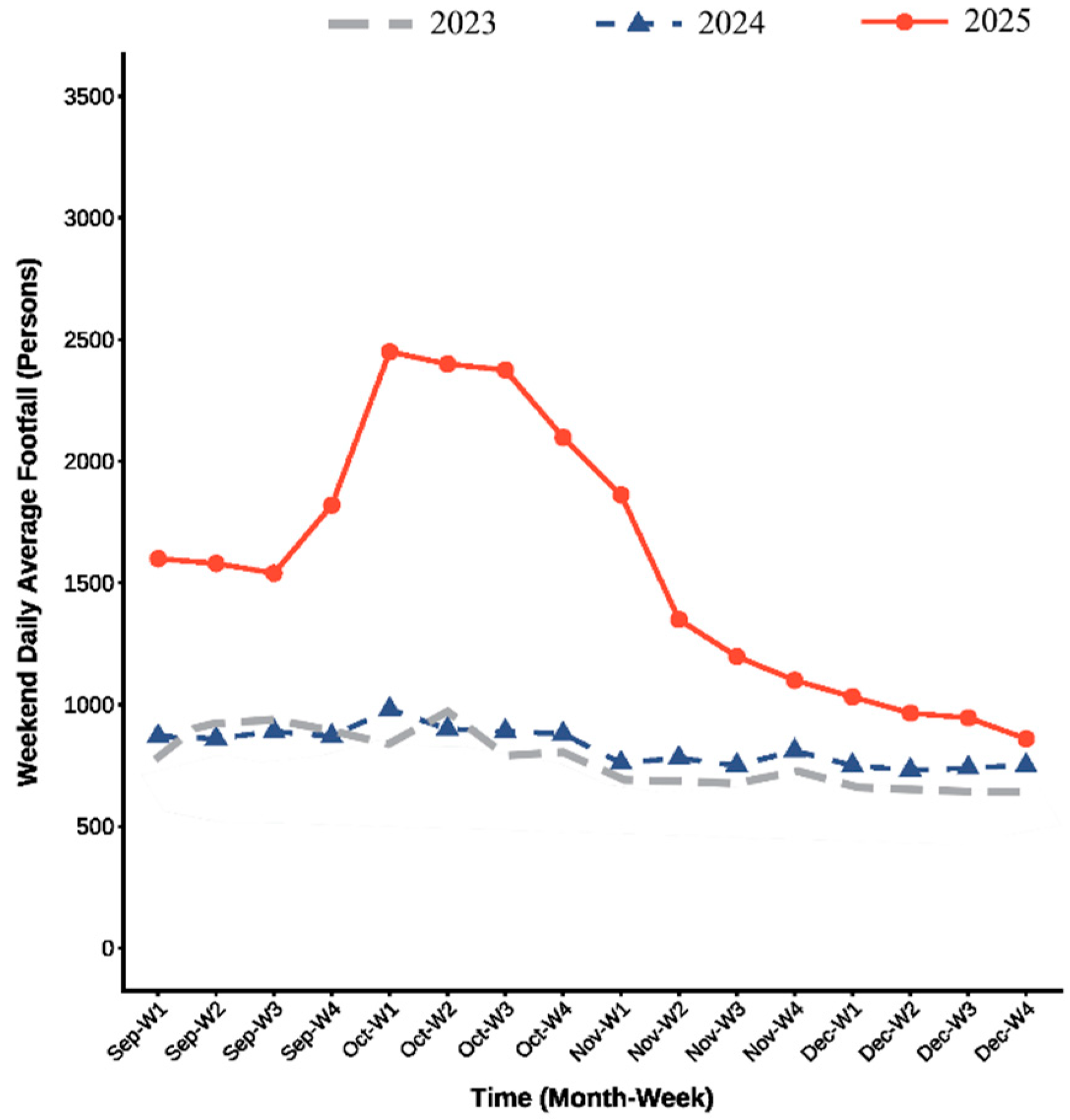
Statistical results indicate that average weekend daily visitor volume exhibits marked interannual and seasonal differentiation (Figure 10). In 2023 and 2024, average weekend daily visitor volume remained relatively stable, fluctuating between 650–1000 and 750–1050 persons per day, respectively, without obvious peaks or sharp oscillations, suggesting that human activity in the study area remained generally stable during this period. In 2025, however, average weekend daily visitor volume increased sharply, peaking in the first week of October at approximately 2500 persons per day before gradually declining, though it remained markedly higher than in the corresponding periods of 2023 and 2024 and still stood at roughly 850 persons per day by the fourth week of December. Taken together, weekend activity in the study area rose substantially in 2025, with average weekend daily visitor volume increasing from 876 to 1567 person-times, and an especially pronounced peak emerging during the autumn tourism high season (September–October). This suggests that, after project completion, the area’s spatial attractiveness and the public’s willingness to use it were enhanced, leading to a clear upward trend in human activity; however, this increase may also have been influenced by factors such as the tourism peak season and festival events.

3.2.2. Synchronous Enhancement of Surrounding Economic Vitality

Before and after the implementation of the ecological restoration project, monthly revenues of five commercial business types surrounding the study area increased markedly (Figure 11), with mean monthly shop revenue within a 1 km radius rising by 24.25%. The summary of economic benefits before and after ecological restoration is shown in Table 10. Prior to implementation, monthly revenues from photography studios, cultural-creative product stores, restaurants, travel agencies, and supermarkets remained relatively low and showed limited fluctuations. Among these, travel agencies generated comparatively higher revenues (22–44 × 104 CNY), whereas the other four business types were largely stable at 5–20 × 104 CNY, indicating relatively weak overall economic vitality. After project implementation, all business types experienced varying degrees of increase: travel-agency revenues rose to 29–50 × 105 CNY, with peak values approximately 13.6% higher than before; photography studios and restaurants stabilized at 11–20 × 104 CNY and 1.4–1.9 × 10⁴ CNY, respectively, with average increases of 33% and 27%; and revenues of cultural-creative stores and supermarkets also increased synchronously, remaining within 8–14 × 104 CNY and 6–10 × 104 CNY, respectively. Overall, monthly revenues across the surrounding commercial sectors increased significantly after implementation, and economic vitality across all business categories showed a clear upward trend. This indicates that commercial vitality around the study area increased synchronously after ecological restoration and that environmental improvement may have helped stimulate local consumption demand and commercial development.

3.3. Assessment of Perceived Social Benefits

To facilitate interpretation of the social-benefit evaluation results and the Sankey diagram in Figure 12, the social-benefit indicators were classified by respondent group and by the assessment criteria associated with each evaluative dimension; the classification scheme is shown in Table 11. A summary of public satisfaction evaluation statistics is shown in Table 12.

3.3.1. High Satisfaction with the Ecological Environment

Following project implementation, the overall environmental quality of Chokpori Mountain Park received highly positive public evaluations. Judging from subjective assessments across multiple dimensions—including vegetation recovery, soil retention, water purification, and microclimate regulation—respondents perceived the park’s ecological environment had improved substantially and generally gave positive feedback on enhanced vegetation cover, improved under-canopy spaces, reshaped waterscapes, and improved air quality. Figure 12(b1) shows that ecological satisfaction reached 89.2%, indicating that most respondents believed the restoration had, to a certain extent, improved the park’s former condition, which had been characterized by sparse vegetation, environmental disorder, and outdated facilities, and had made the overall space cleaner, more comfortable, and more livable. This suggests that the social recognition of environmental optimization after restoration was widespread, while also indicating strengthened public identification with and support for ecological conservation in plateau cities.

3.3.2. Satisfaction with Ethnic Cultural Landscape Experience

In terms of creating an ethnic-cultural landscape, the restored park has formed a distinctive regional cultural landscape by integrating traditional Tibetan elements with the ecological space. Landscape nodes such as Tibetan-style ornaments, cultural display walls, and prayer spaces have strengthened the park’s cultural attributes and sense of place, while also enabling residents and visitors to continuously perceive a Tibetan cultural atmosphere during leisure and recreation. Survey results (Figure 12(b2)) show that the recognition rate for cultural communication reached 67.3%, indicating that most respondents positively evaluated the distinctiveness, coordination, and aesthetic quality of the ethnic-cultural landscape. Some respondents further believed that these cultural landscapes not only preserved the cultural memory associated with the Chokpori area and its surrounding historical heritage, but also, to some extent, enhanced the park’s spiritual connotation and cultural service functions. This suggests that the restored ecological space and ethnic culture are integrated relatively well, although there remains room for further improvement in the depth of cultural communication and the intensity of public perception.

3.3.3. Positive Perceptions of Recreational Well-Being

Throughout the ecological restoration process at Chokpori Mountain Park, the establishment of multiple participation platforms and strengthened guidance mechanisms generated generally positive perceptions of participation among residents. According to the questionnaire results (Figure 12(b3,b4)), respondents evaluated recreational well-being after restoration in broadly positive terms. More than 85% of respondents indicated that participation channels such as opinion solicitation, volunteer supervision, and ecological stewardship enhanced their sense of identification with and belonging to the project, suggesting a relatively clear participatory experience. In terms of the living environment and public activity space, more than 90% of respondents considered that the project improved the surrounding ecological setting and leisure-supporting facilities, and that newly added cultural exhibition areas and resting spaces enriched everyday recreational scenarios and, to some extent, met the leisure needs of different age and ethnic groups. In terms of physical and mental health, more than 88% of respondents reported that the restored ecological leisure environment helped relieve life stress, promote psychological relaxation, and increase the comfort and willingness to engage in daily recreational activities. At the same time, many respondents believed that the project had stimulated surrounding cultural-tourism and leisure-service sectors and created additional opportunities for local employment and income growth; moreover, 92% of residents reported that the project had not caused obvious negative effects, such as noise or dust, on their daily production and living activities, indicating that the project managed to accommodate daily life needs while advancing ecological restoration.
From a social perception perspective, the ecological restoration project received generally positive evaluations for public participation, leisure experiences, and impacts on production and everyday life. As park conditions improved and activity spaces expanded, respondents generally considered the regional living environment, public activity conditions, and cultural experience settings to be more complete than before, while willingness to participate in ecological maintenance, cultural activities, and leisure exercise also increased. Regarding impacts on daily life, most respondents believed that the project did not cause conspicuous negative interference with daily travel, social order, or residential conditions, and instead improved, to a certain extent, the quality of life, spatial vitality, and community identity. The social survey, therefore, suggests that while optimizing ecological space, the project also responded relatively well to residents’ needs regarding leisure use, cultural perceptions, and livelihood security, thereby demonstrating a certain degree of social synergistic benefit.

4. Discussion

4.1. The Relationship Between Ecological Restoration Outcomes and Existing Research

The findings demonstrate that ecological restoration initiatives in Chokpori Mountain Park have resulted in substantial improvements in critical ecological functions, including soil retention, vegetation cover, nutrient interception, and biodiversity. As a natural protected area located at the centre of a plateau city, Chokpori Mountain is expected to serve a function that extends beyond that of a conventional urban green space. Prioritising ecological protection, it is also required to restore degraded ecosystems and re-establish ecological functions. Accordingly, the results of this study partially reflect the integrated effects of ecological restoration within plateau urban protected areas. The notable enhancement in soil retention capacity indicates that the restoration of previously compacted or degraded surfaces to vegetated cover has effectively strengthened their ecological regulatory functions. Within the context of a natural protected area, this process signifies not only the recovery of the ecological substrate but also a reduction in the intensity of anthropogenic disturbance and the regeneration of ecological space. Similarly, the increase in vegetation cover suggests that restoration efforts have reinforced the structural foundation of the ecosystem, rather than merely increasing surface vegetation. The observed reductions in total nitrogen (TN) and total phosphorus (TP) export demonstrate that the spatial reconfiguration of ecological surfaces and vegetation has effectively improved nutrient interception capacity and enhanced water-environment regulation associated with runoff processes. Collectively, these findings indicate a synergistic interaction among vegetation recovery, hydrological regulation, and landscape-structure optimisation, a pattern consistent with observations from other ecological restoration projects in protected areas [70,71].
The biodiversity results correspond with the observed trend of enhanced ecological functioning. Significant differences in the Shannon diversity index among plant community types indicate that the restored community structure demonstrates a degree of ecological differentiation rather than homogenisation. This finding is consistent with previous studies suggesting that targeted vegetation configurations can augment biodiversity within urban green spaces and may provoke broader ecological responses by increasing the complexity of ecological processes [72,73,74]. Restoration also exerted a notable influence on the microclimate. Existing research shows that changes in vegetation structure and surface conditions can substantially impact local thermal environments and air quality, although these effects are often spatially heterogeneous [75,76]. In the present study, alterations in PM2.5 concentration, wind speed, and relative humidity, alongside a reduction in the Universal Thermal Climate Index (UTCI), indicate improvements in the thermal environment and human comfort within the study area. This further implies that the effects of ecological restoration may be more pronounced in plateau urban protected areas, primarily due to the distinctive climatic conditions of plateau regions and the heightened overall sensitivity of their ecosystems. On the one hand, vegetation recovery and surface restructuring can regulate local hydrothermal conditions over relatively short timescales. On the other hand, given the relatively limited buffering capacity of these ecosystems, reductions in anthropogenic disturbance and the recovery of ecological processes are more readily reflected in environmental indicators. Consequently, compared with typical urban green spaces, ecological restoration in plateau urban protected areas tends to elicit stronger environmental responses and more direct ecological feedback. Nevertheless, these improvements do not imply that the ecosystem has reached a stable state. With ongoing vegetation succession and evolving environmental conditions, the system remains in a dynamic state of adjustment, and its long-term effects warrant continued monitoring and evaluation [30,77].

4.2. Interactions and Conflicts Among Ecological, Social, and Economic Outcomes

In addition to ecological enhancement, the restoration process was accompanied by an increase in visitor numbers, greater commercial revenue in the surrounding area, and an improved overall social appraisal. The findings indicate that, within plateau urban protected areas, ecological restoration generates not only environmental benefits but also initiates multidimensional interactions encompassing ecological, social, and economic outcomes [11,15,16,33,34,37,38,39,40]. Previous studies have demonstrated that ecological restoration can yield ecological advantages and, under certain conditions, its integrated benefits may offset or even exceed implementation costs, while also positively influencing employment, income, and residents’ quality of life [33,34]. Moreover, public evaluations of restoration projects typically incorporate cultural and social dimensions alongside ecological indicators [78,79,80]. The restoration of Chokpori broadly aligns with this perspective, suggesting that the site was transformed, in conjunction with ecological restoration, into a multifaceted space integrating public activity, cultural expression, and local economic functions.
The findings of the social survey further clarify this pattern. Previous research has established that place identity, aesthetic experience, and cultural significance within cultural ecosystem services are fundamental components of the public’s understanding and perception of restoration value [28,78,79]. In the current study, respondents’ evaluations extended beyond ecological quality alone; they also demonstrated a strong appreciation for the restoration of ethnic-cultural landscapes and the enhancement of everyday recreational conditions. Accordingly, the ecological restoration of Chokpori involved not only the recovery of ecological processes but also the revitalisation of cultural landscapes and the improvement of the quality of public spaces. For a natural protected area located within an urban core, such multifunctional integration is likely to be relatively common.
The accumulation of multiple benefits does not necessarily yield a uniformly positive outcome. Both domestic and international studies indicate that different stakeholder groups frequently display divergent spatial usage patterns and value perceptions following ecological restoration, which can result in competition over resource utilisation and spatial demands [36,81]. This tension is especially pronounced within the context of natural protected areas. On the one hand, increasing visitor numbers and intensified commercial activities in surrounding areas may enhance social awareness and economic support for restoration initiatives. On the other hand, in the absence of effective capacity controls and management mechanisms, excessive recreational activities can introduce new disturbances to the ecosystem, thereby compromising restoration effectiveness [82]. Consequently, the renovation of Chokpori should be understood not as a straightforward synergy but rather as a dynamic process of balancing ecological protection with public use. While increased visitor activity and spatial vitality may be regarded as positive indicators, they simultaneously entail greater maintenance demands and potential ecological pressures. In plateau urban protected areas, where ecosystems are particularly sensitive, such pressures are more likely to accumulate and produce amplified effects. Further research emphasises that community participation, sustained maintenance, and adaptive management are essential conditions for preserving the long-term effectiveness of ecological restoration [83,84,85]. For sites such as Chokpori, which integrate both protection and utilisation functions, reliance solely on one-off engineering restoration is insufficient to ensure stable long-term operation. Instead, institutionalised management and multi-stakeholder participation mechanisms are necessary to maintain an appropriate balance between ecological conservation and public service provision.

4.3. Implications for the Evaluation and Sustainable Governance of Plateau Urban Protected Areas

The significance of this study extends beyond the assessment of ecological restoration effectiveness at Chokpori Mountain Park; it further demonstrates that ecological restoration within plateau urban protected areas requires an evaluative and governance approach distinct from that employed for conventional urban green spaces. Chokpori Mountain is not simply a single-function urban park; rather, it represents a protected landscape and an urban green core located in the city centre, simultaneously fulfilling ecological conservation and public utilisation functions. Throughout its restoration process, the interaction of high-altitude environmental conditions, ecosystem sensitivity, overlapping cultural heritage, and pressures from tourism and daily use is apparent. This complex nature necessitates that restoration effectiveness cannot be adequately evaluated using a single ecological indicator [28,36]. Consequently, restoration assessment should shift from focusing exclusively on individual ecological outcomes to adopting a multidimensional, integrated evaluative framework. From this perspective, the analytical framework proposed herein is applicable not only to this particular case but also provides a referential approach for understanding urban natural protected areas characterised by the coexistence of ecological sensitivity and social complexity [86,87].
In plateau regions, ecosystems demonstrate increased sensitivity to external disturbances, with the effects of ecological restoration often presenting in multifaceted forms that encompass environmental changes and public perceptions. Simultaneously, long-term, high-intensity monitoring in these areas is both costly and difficult to sustain. The integration of ecological indicators, economic responses, and social perceptions within a unified analytical framework enables a more comprehensive identification of restoration effects and corresponds with current methodologies for multidimensional restoration assessment [29,86,87,88].
This case exemplifies that ecological restoration within plateau urban protected areas should be understood as a continuous adaptive management process rather than a one-off engineering intervention [29,72,89]. The cultural significance of restoration represents a vital aspect of its efficacy; heritage conservation and place identity influence the perception and use of restored environments [28,36]. Simultaneously, an increase in public usage intensity should not be straightforwardly interpreted as evidence of improved restoration effectiveness. Although visitor growth may yield social and economic advantages, it can also exert additional pressures on the ecosystem and compromise restoration outcomes if carrying-capacity thresholds are surpassed and management is insufficient [36,82,84]. Comprehensive restoration frameworks and longitudinal evaluations of effectiveness suggest that restoration benefits are more likely to be maintained when monitoring, institutional continuity, and collaborative governance extend beyond the completion of the project [77,86,87]. Therefore, ecological restoration in plateau urban protected areas fundamentally involves maintaining a dynamic equilibrium among ecological conservation, cultural expression, and public utilisation.

4.4. Limitations of the Study

This study is subject to several limitations. First, one significant limitation of this study is that the primary ecological function indicators, including soil retention and nutrient output load, are exclusively derived from InVEST model simulations, with a paucity of long-term empirical data. Although the model parameters have been calibrated according to local conditions and prior research conducted on the Qinghai–Tibet Plateau, the simulation outcomes remain unvalidated by long-term field monitoring data. Additionally, the model outputs are sensitive to several key parameters, namely the C factor, P factor, and the nitrogen and phosphorus load coefficients. Variations in the assignment of these parameters can alter the absolute values of soil retention and nutrient export loads, thereby increasing parametric uncertainty. Given the lack of long-term measured data for direct model calibration, the quantified improvements in ecological benefits should be interpreted with caution. However, sensitivity analysis shows that within the specified perturbation range, the direction of change in ecological benefits before and after restoration remains consistent. This indicates that the study’s main conclusion—that ecological restoration has the potential to improve soil retention capacity and reduce nutrient output—is relatively robust. Hence, the results presented herein should be regarded as indicative estimates of ecological restoration potential rather than definitive assessments of actual ecological changes.
Second, the assessment is restricted to the initial phase following the completion of restoration and therefore primarily reflects short-term response characteristics; it is insufficient for capturing the long-term development of the ecosystem. Certain ecological effects require extended periods of vegetation succession and ongoing management to become fully evident [30,77,90]. This issue is also pertinent to the Qinghai–Tibet Plateau ecosystem, where relatively harsh natural conditions result in slower vegetation growth and ecological recovery processes. Although the historical data presented in Figure 2 offer a valuable pre-restoration baseline, they do not sufficiently compensate for the absence of long-term post-restoration monitoring. Consequently, the findings of this study predominantly reflect the immediate short-term effects of ecological restoration, and the long-term progression of these effects necessitates ongoing monitoring for comprehensive evaluation.
Third, the indicators utilised operate at differing spatial scales. Although before-and-after comparisons for each indicator are conducted within a consistent analytical range, the spatial extents vary among indicators: some ecological functions are evaluated over broader areas, whereas biodiversity, microclimate, visitor flow, and social perception are predominantly assessed within the core area or impact zone. This approach improves the alignment between each indicator and its respective process but reduces strict comparability across indicators. Consequently, the results are more suitable for integrated interpretation of multidimensional response characteristics rather than for cross-sectional comparison under a uniform spatial scale.
Fourth, this study employs a before-and-after design without incorporating a control site, thereby limiting the ability to attribute observed changes exclusively to the ecological restoration project. External factors, including variations in climate, regional economic development, and tourism policies, may have also contributed to the ecological, economic, and social changes observed. Consequently, the study demonstrates an association between the restoration measures and the observed changes, rather than establishing a definitive causal relationship.
Finally, certain dimensions remain inadequately quantified. Biodiversity analysis is chiefly focused on plant communities, with systematic monitoring data for insects and birds still absent [74]. The social survey sample size is limited and does not fully capture perceptual differences among diverse groups [78,79]. Although the microclimate analysis includes multiple environmental variables, subjective evaluations of thermal comfort have yet to be incorporated [75,76]. Furthermore, critical aspects such as long-term maintenance costs, cost-effectiveness, and governance performance have not been integrated into the analytical framework, despite their importance for the sustained management of plateau urban protected areas [33,86,91,92].
These limitations define the boundaries of the study’s conclusions and their generalisability. This research is best understood as a stage-based integrated assessment of a high-altitude urban protected area, with its wider significance lying chiefly in the analytical framework applied. The study contributes to the identification of key dimensions—specifically ecological functions, social perceptions, economic responses, and governance challenges—within urban natural protected areas characterised by ecological sensitivity, cultural importance, and increasing utilisation pressures. Future research should extend monitoring durations and conduct multi-case comparisons to further examine the stability and variability of restoration outcomes across diverse contexts. Simultaneously, enhanced integration of ecological, cultural, social, and governance indicators is required to develop a more systematic understanding of the dynamic processes underpinning ecological restoration in complex protected-area settings [30,86,87].

5. Conclusions

This study investigates the renewal and renovation project of Chokpori Mountain Park in Lhasa as a case study, employing an integrated assessment framework that encompasses ecological, economic, and social dimensions to evaluate the effectiveness of ecological restoration within a plateau urban protected area. During the initial post-restoration evaluation period, the study area demonstrated consistent positive changes across multiple dimensions: (1) ecologically, soil retention increased by approximately 69.23%, vegetation coverage expanded from 0.35 to 0.55, and modeled total nitrogen (TN) and total phosphorus (TP) export intensities indicated enhanced nutrient retention capacity and improved water purification potential within the restored area; (2) economically, the average weekend daily visitor flow increased from 876 to 1567 individuals, and the average monthly revenue of shops within a 1 km radius rose by 24.25%; and (3) socially, ecological satisfaction reached 89.2%, while recognition of cultural communication attained 67.3%. These findings indicate that ecological restoration in plateau urban protected areas involves multidimensional interconnections, with its effects manifested through the interrelated dynamics of ecological change, spatial utilisation, and public perception.
Ecological restoration in plateau urban protected areas, characterised by ecological fragility, high-altitude climatic constraints, overlapping cultural heritage, and pressures from public use, should be conceptualised as an ongoing adaptive management process rather than a one-off engineering intervention. Its effectiveness ought to be systematically evaluated within a comprehensive, multidimensional framework. Given the limitations of the present study, which include an early-stage restoration assessment and a single-case research design, the findings primarily serve as a preliminary reference at the framework level. Future research should extend monitoring periods and undertake multi-case comparative analyses to examine the stability and variability of restoration outcomes across diverse contexts. In conclusion, ecological restoration in these areas should be understood within a framework shaped by multidimensional responses and governance constraints, with assessment and management approaches that are highly context-specific.

Author Contributions

Conceptualization, R.Z. and S.B.; methodology, R.Z. and S.B.; software, R.Z. and Q.Z.; validation, R.Z., L.Y. and W.S.; formal analysis, R.Z. and Q.Z.; investigation, R.Z., L.Y. and W.S.; resources, S.B.; data curation, R.Z. and W.S.; writing—original draft preparation, R.Z.; writing—review and editing, L.Y., Q.Z. and S.B.; visualization, R.Z.; supervision, S.B.; project administration, S.B.; funding acquisition, S.B. All authors have read and agreed to the published version of the manuscript.

Funding

This research was funded by the National Natural Science Foundation of China Joint Fund Key Project “Research on the Theory and Key Technologies of Zero-Energy Building Design in Tibetan Plateau Areas”, grant number U20A20311.

Institutional Review Board Statement

The questionnaire survey was conducted anonymously and non-interventionally, posing no more than minimal risk to participants. No personally identifiable information was collected, and all responses were analyzed and reported exclusively in aggregate form. The authors consulted institutional guidelines from Xizang University prior to submission and will furnish additional documentation if requested by the Editorial Office.

Data Availability Statement

Restrictions apply to the availability of these data. The geospatial datasets utilized in this study, including the Shuttle Radar Topography Mission (SRTM) digital elevation model, Landsat 8 land use/land cover data, and meteorological observation data, were obtained from the United States Geological Survey (USGS), the National Aeronautics and Space Administration (NASA), and the China Meteorological Data Service Center (CMDC), respectively. Additional geographic information datasets were sourced from the National Geomatics Center of China (Tianditu, https://www.tianditu.gov.cn), Geospatial Data Cloud (https://www.gscloud.cn), and the GISRS Data Platform (https://www.gisrs.cn). These third-party datasets are governed by the original providers’ usage licenses, which prohibit unauthorized redistribution. The processed model outputs, field monitoring data, and questionnaire survey data that support the conclusions of this study are available from the corresponding author upon reasonable request for non-commercial academic research purposes.

Acknowledgments

We would like to express our respect and gratitude to the anonymous reviewers and editors for their professional comments and suggestions. During the preparation of this manuscript, the authors used Gemini 3.1 Pro and ChatGPT 5.5 Pro for the purposes of English language translation and academic text polishing. The authors have reviewed and edited the output and take full responsibility for the content of this publication. Except for Figure 2, which was redrawn from reference [93], all other figures and tables in this manuscript were independently drawn by the authors.

Conflicts of Interest

The authors declare no conflicts of interest.

Abbreviations

The following abbreviations are used in this manuscript:
NDVINormalized Difference Vegetation Index
InVESTIntegrated Valuation of Ecosystem Services and Trade-offs
TNTotal Nitrogen
TPTotal Phosphorus
FAOFood and Agriculture Organization of the United Nations
USLEUniversal Soil Loss Equation
EPICErosion Productivity Impact Calculator
MSIMulti-Spectral Instrument
QA60Quality Assessment 60 m
SDRSediment Delivery Ratio
UTCIUniversal Thermal Climate Index
PMVPredicted Mean Vote
ERecological restoration
RUSLERevised Universal Soil Loss Equation
DEMDigital Elevation Model
NDRNutrient Delivery Ratio
FVCFractional Vegetation Cover
GISGeographic Information System

Appendix A

Appendix A.1. Parameter Settings and Data Sources for the InVEST Model

In the soil retention module, this study employs the InVEST SDR model to simulate changes in soil retention capacity within the study area before and after ecological restoration [65]. The model inputs comprise a digital elevation model (DEM), rainfall erosivity factor, soil erodibility factor, land use/land cover data, biophysical parameter tables, and defined analysis boundaries. Land use data are utilized to determine the cover-management factor and support-practice factor corresponding to various land use types. The model applies the Multiple Flow Direction (MFD) algorithm to determine flow direction, with a flow accumulation threshold set at 1000, a Borselli k parameter of 2, a maximum SDR value of 0.8, an IC0 parameter of 0.5, and a maximum slope length of 122 m [65,67]. Detailed parameter settings are provided in Table A1 and Table A2.
In the water purification module, this study utilizes the InVEST Nutrient Delivery Ratio (NDR) model to simulate total nitrogen (TN) and total phosphorus (TP) export loads within the study area. This approach facilitates the assessment of nutrient export risk before and after ecological restoration, thereby providing an indirect evaluation of water purification potential [66]. The model inputs comprise a digital elevation model (DEM), land use/land cover data, runoff proxy variables, analysis boundaries, and biophysical parameter tables. Land use/land cover data are employed to assign TN and TP load coefficients, retention efficiencies, and critical retention lengths corresponding to different land cover types, while runoff proxy variables quantify the potential intensity of nutrient transport via runoff. The model concurrently calculates nitrogen and phosphorus outputs, applies the Multiple Flow Direction (MFD) algorithm for flow direction, sets the flow accumulation threshold to 100, the Borselli parameter to 2, and defines the subsurface nitrogen critical length and maximum retention efficiency as 50 m and 0.5, respectively [68]. Detailed parameter settings are provided in Table A3 and Table A4.
All raster input data utilized in this study were standardized to a spatial resolution of 30 m. The pre- and post-ecological restoration scenarios correspond to datasets from the years 2024 and 2025, respectively. It is important to note that the specified spatial resolution and temporal references primarily pertain to spatial datasets, including digital elevation models (DEM), land use/cover data, rainfall erosivity factors, soil erodibility factors, and runoff proxy variables. In contrast, biophysical parameters—such as the C and P factors, total nitrogen (TN) and total phosphorus (TP) load coefficients, retention efficiency, and critical retention length—do not possess independent spatial resolutions. Instead, their values are assigned based on land use types and are primarily derived from the InVEST user manual, relevant literature, and the specific conditions of the study area [65,66]. The parameter sources detailed in the appendix are classified into field-measured data, model configurations, literature-based values, and estimations.
Table A1. InVEST Soil Conservation model operation parameters and biophysical parameter settings.
ParameterAssignmentData Source
Watershedsqiyu1.shpGIS Delineation
Flow Direction AlgorithmMFDInVEST Model
Threshold Flow Accumulation1000InVEST Default
Borselli k2InVEST Default
Maximum SDR Value0.8InVEST Default
Borselli IC00.5InVEST Default
Maximum L value122InVEST Default
Table A2. C and P parameters for different land use types.
LU/LCusle_cusle_p
Cultivated land0.220.35
Forest land0.061.00
Grassland/Green space0.071.00
Water body0.001.00
Construction land/Impervious surface0.201.00
Road/Disturbed bare surface/Other land0.201.00
Table A3. InVEST NDR model operational parameters and biophysical parameter settings.
ParameterAssignmentData Source
Subsurface Critical Length, Nitrogen50InVEST Model Settings
Subsurface Maximum Retention Efficiency, Nitrogen0.5InVEST Model Settings
Flow Direction AlgorithmMFDInVEST Model
Threshold Flow Accumulation100InVEST Model Settings
Borselli k Parameter2InVEST Model Settings
Table A4. TN/TP parameters corresponding to land use types in the InVEST NDR model.
Land Use Typeload_peff_pcrit_len_pload_neff_ncrit_len_nProportion_Subsurfacen
Urban and paved roads2.10.261506.30.051500
Grass0.930.615040.351500
Water00.415000.021500
Forest plantation1.40.61503.30.41500

Appendix A.2. Single-Factor Sensitivity Analysis of the InVEST Model

To evaluate the influence of key parameter uncertainties on the output results of the InVEST model, this study employs a simplified single-factor sensitivity analysis approach [69]. Perturbations of ±20% and ±40% were applied individually to the cover-management factor (C) and the support practice factor (P) within the SDR model, as well as to the total nitrogen (TN) and total phosphorus (TP) load coefficients and retention efficiency parameters within the NDR model, while all other input data and model operational parameters were held constant. The relative rate of change in model outputs under these perturbed conditions was then calculated with respect to the baseline scenario. The SDR model’s output indicator was the average soil retention across the study area, whereas the NDR model’s output indicators were the average TN and TP loads [65,66].
Due to the absence of concurrent measured data for soil retention, TN, and TP within the study area, direct validation against observed data was not feasible. Consequently, the single-factor sensitivity analysis was employed to further assess the robustness of the model outputs. The results demonstrate that the NDR model outputs exhibit greater sensitivity to parameter perturbations, as illustrated in Figure A1 and Table A5. Notably, TP output showed the highest sensitivity to changes in the eff_p parameter, with a rate of change of ±57.21% under ±40% perturbation. In contrast, the maximum variation in soil retention induced by perturbations in the C and P factors within the SDR model was limited to 6.52% and 3.48%, respectively, indicating relative stability in soil retention estimates. These findings suggest that while soil retention results are comparatively robust, nutrient output estimates require further calibration using observed water quality data in future research.
Figure A1. Tornado Plot of One-factor Sensitivity Analysis.
Land 15 01062 g0a1
Table A5. Single-Factor Sensitivity Analysis Results of the InVEST Model.
ModelOutput IndicatorsModel Parameters−40% Rate of Change−20% Rate of Change+20% Rate of Change+40% Rate of ChangeSensitivity Ranking
SDRSoil Retention CapacityC+3.48%+1.59%−3.04%−6.52%5
P+3.48%+1.59%−1.74%−2.17%6
NDRTN output loadload_n−40%−20%20%40%3
eff_n+25.67%+12.83%−12.83%−25.67%4
TP output loadload_p−40%−20%20%40%2
eff_p+57.21% +28.61%−28.61%−57.21%1

References

  1. Wang, Y.; Liu, C.; Liu, B.; Lee, T.M. Integrated outcomes of large-scale ecological restoration projects on biodiversity–eco-environment–society in China. Geogr. Sustain. 2025, 6, 100243. [Google Scholar]
  2. Klaus, V.H.; Kiehl, K. A conceptual framework for urban ecological restoration and rehabilitation. Basic Appl. Ecol. 2021, 52, 82–94. [Google Scholar] [CrossRef]
  3. Bertoleti, I.A.F.; Ferreira, M.L.; Gomes, E.P.C.; Rodrigues, E.A.; Nievola, C.C. Global approaches for ecological restoration in urban environments: A PRISMA review. Urban For. Urban Green. 2025, 104, 128673. [Google Scholar] [CrossRef]
  4. Zhu, R.; He, Z.; Huang, S.; Shi, H.; Liu, X.; Wang, J.; Liu, J. Policy-Driven Mine Ecological Restoration Projects in China. Land 2025, 14, 1831. [Google Scholar] [CrossRef]
  5. Lyu, F.; Tang, J.; Olhnuud, A.; Hao, F.; Gong, C. The impact of large-scale ecological restoration projects on trade-offs/synergies and clusters of ecosystem services. J. Environ. Manag. 2024, 365, 121591. [Google Scholar]
  6. Ji, Y.; Xie, M.; Liu, Y.; Zhu, R.; Tang, Z.; Hu, R. How Do Ecological Restoration Projects Affect Trade-Offs and Synergies between Ecosystem Services? Land 2024, 13, 384. [Google Scholar] [CrossRef]
  7. Wang, Q.; Bai, X. Spatiotemporal characteristics and driving mechanisms of land-use transitions and landscape patterns in response to ecological restoration projects: A case study of mountainous areas in Guizhou, Southwest China. Ecol. Inform. 2024, 82, 102748. [Google Scholar] [CrossRef]
  8. Kou, X.; Zhao, J.; Sang, W. Impact of Typical Land Use Expansion Induced by Ecological Restoration and Protection Projects on Landscape Patterns. Land 2024, 13, 1513. [Google Scholar] [CrossRef]
  9. Wei, X.; Zhou, Q.; Cai, M.; Wang, Y. Effects of vegetation restoration on regional soil moisture content in the humid karst areas—A case study of Southwest China. Water 2021, 13, 321. [Google Scholar] [CrossRef]
  10. Zou, M.; Qiang, F.; Yu, X.; Liu, G.; Zhou, Z.; Liu, C.; Ai, N. Impact of ecological restoration projects on watershed habitat quality in the Loess Plateau of China: A case study of the Yanhe River Basin. Ecol. Indic. 2025, 180, 114351. [Google Scholar] [CrossRef]
  11. Wang, L.; Li, Z.; Wang, D.; Chen, J.; Liu, Y.; Nie, X.; Zhang, Y.; Ning, K.; Hu, X. Unbalanced social-ecological development within the Dongting Lake basin: Inspiration from evaluation of ecological restoration projects. J. Clean. Prod. 2021, 315, 128161. [Google Scholar] [CrossRef]
  12. Fischer, J.; Gardner, T.A.; Bennett, E.M.; Balvanera, P.; Biggs, R.; Carpenter, S.; Daw, T.; Folke, C.; Hill, R.; Hughes, T.P.; et al. Advancing sustainability through mainstreaming a social–ecological systems perspective. Curr. Opin. Environ. Sustain. 2015, 14, 144–149. [Google Scholar] [CrossRef]
  13. Zhao, H.; Wei, W.; He, M. Sustainable Implementation Strategies for Market-Oriented Ecological Restoration: Insights from Chinese Forests. Forests 2025, 16, 1083. [Google Scholar] [CrossRef]
  14. Sun, R.; Tian, Y.; Wang, X.; Mao, Y.; Qin, L.; Wu, D.; Li, S. Quantitative assessment of ecological restoration project benefits at long-term time series monitoring: Ling River Basin, Northern China–A case study. Ecol. Front. 2025, 45, 225–238. [Google Scholar]
  15. Li, S.; Xie, J.; Paudel, B. Do ecological restoration projects undermine economic performance? A spatially explicit empirical study in Loess Plateau, China. Remote Sens. 2023, 15, 3035. [Google Scholar] [CrossRef]
  16. Dou, Y.; Zhen, L.; Yu, X.; Bakker, M.; Carsjens, G.J.; Xue, Z. Assessing the influences of ecological restoration on perceptions of cultural ecosystem services by residents of agricultural landscapes of western China. Sci. Total Environ. 2019, 646, 685–695. [Google Scholar] [CrossRef] [PubMed]
  17. Wang, S.; Zhong, R.; Liu, L.; Zhang, J. Ecological effect of ecological engineering projects on low-temperature forest cover in Great Khingan Mountain, China. Int. J. Environ. Res. Public Health 2021, 18, 10625. [Google Scholar] [CrossRef] [PubMed]
  18. Li, X.; Li, Y.; Wang, H.; Qin, S.; Wang, X.; Yang, H.; Cornelis, W. Ecological restoration evaluation of afforestation in Gudao Oilfield based on multi-source remote sensing data. Ecol. Eng. 2023, 197, 107107. [Google Scholar] [CrossRef]
  19. Zhai, L.; Cheng, S.; Sang, H.; Xie, W.; Gan, L.; Wang, T. Remote sensing evaluation of ecological restoration engineering effect: A case study of the Yongding River Watershed, China. Ecol. Eng. 2022, 182, 106724. [Google Scholar] [CrossRef]
  20. Zhang, G.; Dong, J.; Xiao, X.; Hu, Z.; Sheldon, S. Effectiveness of ecological restoration projects in Horqin Sandy Land, China based on SPOT-VGT NDVI data. Ecol. Eng. 2012, 38, 20–29. [Google Scholar] [CrossRef]
  21. Chen, T.; Wang, Q.; Wu, Y.; Peng, L. Differentiation characteristics of karst vegetation resilience and its response to climate and ecological restoration projects. Land Degrad. Dev. 2023, 34, 5055–5070. [Google Scholar] [CrossRef]
  22. Liu, W.; Lin, N.; Su, X.; Du, C.; Li, C. Evaluation of vegetation status and soil quality changes during the implementation period of mine ecological restoration project: A case study of the first mining area of Sandaogou coal mine in northern Shaanxi. China Min. Mag. 2025, 34, 327–336. (In Chinese) [Google Scholar]
  23. Wang, J.; Zhou, J.; Ma, D.; Zhao, X.; Wei, W.; Liu, C.; Zhang, D.; Wang, C. Impact of ecological restoration project on water conservation function of qilian mountains based on inVEST model—A case study of the upper reaches of Shiyang River Basin. Land 2023, 12, 1850. [Google Scholar]
  24. Liu, Z.; Bai, G.; Liu, Y.; Zou, Y.; Ding, Z.; Wang, R.; Chen, D.; Kong, L.; Wang, C.; Liu, L.; et al. Long-term study of ecological restoration in a typical shallow urban lake. Sci. Total Environ. 2022, 846, 157505. [Google Scholar] [CrossRef] [PubMed]
  25. Hao, W.; Bu, X.; Chen, J.; Li, Z.; Li, B. Trade-off Between Soil Water Maintenance and Carbon Sequestration During the Implementation of Ecological Restoration Programs in the Semi-Arid Loess Plateau. Forests 2025, 16, 657. [Google Scholar] [CrossRef]
  26. Jiang, W.; Liu, X.; Wang, Y.; Zhang, Y.; Chen, X.; Sun, Y.; Chen, J.; Zhang, W. Optimization of Synergistic Water Resources, Water Environment, and Water Ecology Remediation and Restoration Project: Application in the Jinshan Lake Basin. Water 2025, 17, 2986. [Google Scholar] [CrossRef]
  27. Fiqa, A.P.; Yulistyarini, T.; Arisoesilaningsih, E. Ecosystem services assessment after 13 years restoration program in the Janitri Water Spring Conservation Area at Batu City. J. Pembang. Alam Lestari 2018, 9, 1. [Google Scholar] [CrossRef]
  28. Lu, W.; Arias Font, R.; Cheng, S.; Wang, J.; Kollmann, J. Assessing the context and ecological effects of river restoration—A meta-analysis. Ecol. Eng. 2019, 136, 30–37. [Google Scholar] [CrossRef]
  29. England, J.; Angelopoulos, N.; Cooksley, S.; Dodd, J.; Gill, A.; Gilvear, D.; Johnson, M.; Naura, M.; O’Hare, M.; Tree, A.; et al. Best Practices for Monitoring and Assessing the Ecological Response to River Restoration. Water 2021, 13, 3352. [Google Scholar] [CrossRef]
  30. Stoltefaut, T.; Haubrock, P.J.; Welti, E.A.R.; Baker, N.J.; Haase, P. A long-term case study indicates improvements in floodplain biodiversity after river restoration. Ecol. Eng. 2024, 198, 107143. [Google Scholar] [CrossRef]
  31. Zhang, W.; Xu, D. Benefits evaluation of ecological restoration projects based on value realization of ecological products. J. Environ. Manag. 2024, 352, 120139. [Google Scholar] [CrossRef] [PubMed]
  32. Wang, Y.; Zou, C.; Lin, N.; Xu, D.; Cao, X.; Cao, B.; Gu, Y. Ecological supervision oriented evaluation indicator system for performance assessment of ecological protection and restoration project implementation. Acta Ecol. Sin. 2023, 43, 118–127. (In Chinese) [Google Scholar] [CrossRef]
  33. Peacock, R.; Bently, M.; Rees, P.; Blignaut, J.N. The benefits of ecological restoration exceed its cost in South Africa: An evidence-based approach. Ecosyst. Serv. 2023, 61, 101528. [Google Scholar] [CrossRef]
  34. Lemgruber, L.S.; Maioli, V.; Latawiec, A.E.; Solórzano, A.; Moraes, L.F.D.; Lino, E.D.S.M.; Pena, I.A.B.; Strassburg, B.B.N. Socioeconomic impacts of urban restoration in the Atlantic Forest, Brazil. Urban For. Urban Green. 2021, 64, 127271. [Google Scholar] [CrossRef]
  35. Clarke, B.; Thet, A.K.; Sandhu, H.; Dittmann, S. Integrating Cultural Ecosystem Services valuation into coastal wetlands restoration: A case study from South Australia. Environ. Sci. Policy 2021, 116, 220–229. [Google Scholar] [CrossRef]
  36. Enu, K.B.; Zingraff-Hamed, A.; Lupp, G.; Raum, S.; Moors, E.; Pauleit, S. Stakeholder priorities and navigating barriers in urban river restoration: Comparative insights from Germany and Ghana. Environ. Sustain. Indic. 2025, 26, 100683. [Google Scholar] [CrossRef]
  37. Yuan, Y.; Song, J.; Liu, M.; Li, J.; Yang, J.; Zhang, Y. Construction and Application of Marine Ecological Restoration Project Effect Assessment System Based on Analytic Hierarchy Process. Water 2025, 17, 1334. [Google Scholar] [CrossRef]
  38. Ding, H.; Sun, R.; Pang, X.; Ding, X.; Jiang, W. Quantifying the independent contributions of ecological restoration projects: An efficacy evaluation study of Yimeng Mountain. Ecol. Eng. 2025, 219, 107699. [Google Scholar] [CrossRef]
  39. Wei, C.; Song, Y.; Liu, L.; Zheng, H.; Wang, Y.; Mao, M.; Xu, Y. Research on the Evaluation System for Agricultural Land Consolidation and Ecological Restoration Projects Based on Nature-Based Solutions. Land 2024, 13, 1565. [Google Scholar] [CrossRef]
  40. Lin, N.; Chen, Y.; Ma, L.; Li, C.; Liu, J.; Zhang, X. Construction and realization of mine ecological restoration effect evaluation system in Northern Shaanxi coal base. Northwest. Geol. 2023, 56, 89–97. (In Chinese) [Google Scholar]
  41. Wantzen, K.M.; Alves, C.B.M.; Badiane, S.D.; Bala, R.; Blettler, M.; Callisto, M.; Cao, Y.; Kolb, M.; Kondolf, G.M.; Leite, M.F.; et al. Urban Stream and Wetland Restoration in the Global South—A DPSIR Analysis. Sustainability 2019, 11, 4975. [Google Scholar] [CrossRef]
  42. Hagger, V.; Waltham, N.J.; Lovelock, C.E. Opportunities for coastal wetland restoration for blue carbon with co-benefits for biodiversity, coastal fisheries, and water quality. Ecosyst. Serv. 2022, 55, 101423. [Google Scholar] [CrossRef]
  43. Roberts, S.M.; Reeves, S.E.; Bossie, A.; Cottingham, A.; Jeffs, A.G.; Hillman, J.R. Determining mussel restoration success: An Australasian case study. Biol. Conserv. 2023, 285, 110235. [Google Scholar] [CrossRef]
  44. Kaiser, N.N.; Feld, C.K.; Stoll, S. Does river restoration increase ecosystem services? Ecosyst. Serv. 2020, 46, 101206. [Google Scholar] [CrossRef]
  45. Costa, M.D.P.; Wartman, M.; Macreadie, P.I.; Ferns, L.W.; Holden, R.L.; Ierodiaconou, D.; MacDonald, K.J.; Mazor, T.K.; Morris, R.; Nicholson, E.; et al. Spatially explicit ecosystem accounts for coastal wetland restoration. Ecosyst. Serv. 2024, 65, 101574. [Google Scholar]
  46. Doren, R.F.; Trexler, J.C.; Gottlieb, A.D.; Harwell, M.C. Ecological indicators for system-wide assessment of the greater Everglades ecosystem restoration program. Ecol. Indic. 2009, 9, S2–S16. [Google Scholar] [CrossRef]
  47. Zhong, J.; Cui, L.; Deng, Z.; Zhang, Y.; Lin, J.; Guo, G.; Zhang, X. Long-term effects of ecological restoration projects on ecosystem services and their spatial interactions: A case study of Hainan Tropical Forest Park in China. Environ. Manag. 2024, 73, 493–508. [Google Scholar]
  48. Hagger, V.; Stewart-Sinclair, P.; Rossini, R.A.; Adame, M.F.; Glamore, W.; Lavery, P.; Waltham, N.J.; Lovelock, C.E. Lessons Learned on the Feasibility of Coastal Wetland Restoration for Blue Carbon and Co-Benefits in Australia. Environ. Manag. 2024, 369, 122287. [Google Scholar] [CrossRef] [PubMed]
  49. Ye, Q.; Wang, X.; Liang, L.; Qiu, J.-W.; Tsim, S.-T. A Review on Landscape Factors for Biodiversity Performance Enhancement in Urban Parks. Diversity 2025, 17, 262. [Google Scholar] [CrossRef]
  50. Liu, F.; Lu, J. Ecological engineering approaches to restoring the aquatic biological community of an urban pond ecosystem and its effects on water quality-a case study of the urban Xixi National Wetland Park in China. Knowl. Manag. Aquat. Ecosyst. 2021, 422, 24. [Google Scholar]
  51. Zhang, J.; Wang, T.; Ge, J. Assessing vegetation cover dynamics induced by policy-driven ecological restoration and implication to soil erosion in southern China. PLoS ONE 2015, 10, e0131352. [Google Scholar] [CrossRef] [PubMed]
  52. McKenna, P.B.; Lechner, A.M.; Phinn, S.; Erskine, P.D. Remote sensing of mine site rehabilitation for ecological outcomes: A global systematic review. Remote Sens. 2020, 12, 3535. [Google Scholar] [CrossRef]
  53. Hu, X.; Li, X. Information extraction of subsided cultivated land in high-groundwater-level coal mines based on unmanned aerial vehicle visible bands. Environ. Earth Sci. 2019, 78, 413. [Google Scholar]
  54. Liversage, K.; Chapman, M.G. Coastal ecological engineering and habitat restoration: Incorporating biologically diverse boulder habitat. Mar. Ecol. Prog. Ser. 2018, 593, 173–185. [Google Scholar] [CrossRef]
  55. da Silva Santos, A.; de Souza, I.; de Souza, J.M.T.; Schaffrath, V.R.; Galvão, F.; Bohn Reckziegel, R. Urban Parks in Curitiba as Biodiversity Refuges of Montane Mixed Ombrophilous Forests. Sustainability 2023, 15, 968. [Google Scholar] [CrossRef]
  56. Yang, Y.; Shi, M.; Liu, B.; Yi, Y.; Wang, J.; Zhao, H. Contribution of ecological restoration projects to long-term changes in PM2.5. Ecol. Indic. 2024, 159, 111630. [Google Scholar] [CrossRef]
  57. Wu, R.; Wu, N.; Nan, X.; Yan, H.; Wang, K.; Ma, T.; She, J.; Bao, Z. Effects of the Bamboo Communities on Microclimate and Thermal Comfort in Subtropical Climates. Forests 2023, 14, 1231. [Google Scholar] [CrossRef]
  58. Li, W.; Pan, P.; Fang, D.; Guo, C. Effects of Plant Communities in Urban Green Spaces on Microclimate and Thermal Comfort. Forests 2025, 16, 799. [Google Scholar] [CrossRef]
  59. Ma, L.; Zhang, J.; Chen, L.; Xiao, S.; Zhang, Y. A Field Research on the Impact of Underlying Surface Configuration on Street Thermal Environment in Lhasa. AIMS Environ. Sci. 2019, 6, 483–503. [Google Scholar] [CrossRef]
  60. Zhang, Y.; Chen, L.; Sun, C.; Fu, Y.; Xie, Y. An Investigation of the Influence of the Morphological Indexes of Trees on the Outdoor Microclimate at High Altitude in Summer. Front. Environ. Sci. 2023, 11, 1098966. [Google Scholar] [CrossRef]
  61. Li, S.; Lu, L. Conception of evaluating the effectiveness of the implementation of ecological protection and restoration projects. China Land 2022, 3, 12–15. (In Chinese) [Google Scholar]
  62. Geospatial Data Cloud Site, Computer Network Information Center, Chinese Academy of Sciences. Available online: http://www.gscloud.cn (accessed on 16 August 2025).
  63. Map World, National Platform for Common GeoSpatial Information Services. Available online: www.tianditu.gov.cn (accessed on 20 August 2025).
  64. Geographic Remote Sensing Ecological Network Platform. Available online: www.gisrs.cn (accessed on 23 August 2025).
  65. Natural Capital Project. InVEST SDR: Sediment Delivery Ratio User Guide. Available online: https://storage.googleapis.com/releases.naturalcapitalproject.org/invest-userguide/latest/en/sdr.html (accessed on 6 September 2025).
  66. Natural Capital Project. InVEST NDR: Nutrient Delivery Ratio User Guide. Available online: https://storage.googleapis.com/releases.naturalcapitalproject.org/invest-userguide/latest/en/ndr.html (accessed on 10 September 2025).
  67. Marques, S.M.; Campos, F.S.; David, J.; Cabral, P. Modelling sediment retention services and soil erosion changes in portugal: A spatio-temporal approach. ISPRS Int. J. Geo-Inf. 2021, 10, 262. [Google Scholar] [CrossRef]
  68. Guerrero, P.; Haase, D.; Albert, C. Identifying spatial patterns and ecosystem service delivery of nature-based solutions. Environ. Manag. 2022, 69, 735–751. [Google Scholar] [CrossRef] [PubMed]
  69. Pianosi, F.; Beven, K.; Freer, J.; Hall, J.W.; Rougier, J.; Stephenson, D.B.; Wagener, T. Sensitivity analysis of environmental models: A systematic review with practical workflow. Environ. Model. Softw. 2016, 79, 214–232. [Google Scholar] [CrossRef]
  70. Groll, M. The passive river restoration approach as an efficient tool to improve the hydromorphological diversity of rivers—Case study from two river restoration projects in the German lower mountain range. Geomorphology 2017, 293, 69–83. [Google Scholar]
  71. Gumiero, B.; Mant, J.; Hein, T.; Elso, J.; Boz, B. Linking the restoration of rivers and riparian zones/wetlands in Europe: Sharing knowledge through case studies. Ecol. Eng. 2013, 56, 36–50. [Google Scholar] [CrossRef]
  72. Castelli, K.R.; Silva, A.M.; Dunning, J.B. Improving the biodiversity in urban green spaces: A nature based approach. Ecol. Eng. 2021, 173, 106398. [Google Scholar] [CrossRef]
  73. Staentzel, C.; Combroux, I.; Barillier, A.; Grac, C.; Chanez, E.; Beisel, J.-N. Effects of a river restoration project along the Old Rhine River (France–Germany): Response of macroinvertebrate communities. Ecol. Eng. 2019, 127, 114–124. [Google Scholar] [CrossRef]
  74. Carvalho, D.N.; Calixto, E.S.; Del-Claro, K. Effects of Vegetation on Bird Communities and Bird–Plant Interactions in Urban Green Areas of Riparian Forests in Brazil That Have Undergone Ecological Restoration. Diversity 2025, 17, 149. [Google Scholar] [CrossRef]
  75. Shen, X.; Guo, Y.; Yang, Q.; Cheng, W.; Chen, M.; Gao, X.; Cheng, S.; Wang, L. Assessing thermal comfort in a landmark urban park: A case study and methodological framework of Alamo Square in San Francisco, USA. Ecol. Indic. 2025, 180, 114206. [Google Scholar] [CrossRef]
  76. Rosso-Alvarez, J.; Jiménez-Caldera, J.; Campo-Daza, G.; Hernández-Sabié, R.; Caballero-Calvo, A. Integrating Objective and Subjective Thermal Comfort Assessments in Urban Park Design: A Case Study of Monteria, Colombia. Urban Sci. 2025, 9, 139. [Google Scholar] [CrossRef]
  77. Hu, L.; Li, Y.; Chen, P.; Shen, C.; Wang, S.; Hai, Y.; Ma, T.; Zhang, B.; Lv, H.; Li, H.; et al. Balancing act in large-scale environmental restoration project: Ecological return and cost-efficiency over 18 years in a Forest-steppe ecotone project. Ecol. Indic. 2026, 182, 114570. [Google Scholar]
  78. Wiederholt, R.; Stainback, G.A.; Paudel, R.; Khare, Y.; Naja, M.; Davis, S.E.; van Lent, T. Economic valuation of the ecological response to hydrologic restoration in the Greater Everglades ecosystem. Ecol. Indic. 2020, 117, 106678. [Google Scholar] [CrossRef]
  79. Seeteram, N.A.; Engel, V.; Mozumder, P. Implications of a valuation study for ecological and social indicators associated with Everglades restoration. Sci. Total Environ. 2018, 627, 792–801. [Google Scholar] [CrossRef] [PubMed]
  80. Xia, P.; Zheng, H.; Hu, T.; Xu, Z.; Peng, J. Linking perceptions of ecological restoration projects’ impacts on ecosystem services and human well-being for achieving regional sustainability. Appl. Geogr. 2025, 178, 103570. [Google Scholar] [CrossRef]
  81. Flávio, H.M.; Ferreira, P.; Formigo, N.; Svendsen, J.C. Reconciling agriculture and stream restoration in Europe: A review relating to the EU Water Framework Directive. Sci. Total Environ. 2017, 596, 378–395. [Google Scholar] [CrossRef] [PubMed]
  82. Blanton, A.; Ewane, E.B.; McTavish, F.; Watt, M.S.; Rogers, K.; Daneil, R.; Vizcaino, I.; Gomez, A.N.; Arachchige, P.S.P.; King, S.A.L.; et al. Ecotourism and mangrove conservation in Southeast Asia: Current trends and perspectives. J. Environ. Manag. 2024, 365, 121529. [Google Scholar] [CrossRef] [PubMed]
  83. Damastuti, E.; de Groot, R.; Debrot, A.O.; Silvius, M.J. Effectiveness of community-based mangrove management for biodiversity conservation: A case study from Central Java, Indonesia. Trees For. People 2022, 7, 100202. [Google Scholar] [CrossRef]
  84. Sarmento-Soares, L.M.; Tanscheidt, F.S.T.; Queiroz, F.S.L.; Martins-Pinheiro, R.F. The ‘Córregos da Tiririca’ Collective: Replicating the Experience of Restoration of an Urban Stream with Syntropic Agriculture—Oceanic Region of Niterói, Rio de Janeiro, Brazil. Sustainability 2026, 18, 1969. [Google Scholar]
  85. Lengefeld, E.; Metternicht, G.; Nedungadi, P. Behavior change and sustainability of ecological restoration projects. Restor. Ecol. 2020, 28, 724–729. [Google Scholar] [CrossRef]
  86. Saunders, M.I.; Cannard, T.; Fischer, M.; Sheppard, M.; Twomey, A.; Morris, R.; Bishop, M.J.; Mayer-Pinto, M.; Malcolm, M.; Vozzo, M.; et al. A roadmap to coastal and marine ecological restoration in Australia. Environ. Sci. Policy 2024, 159, 103808. [Google Scholar] [CrossRef]
  87. Armstrong, C.; Piccone, T.; Dombrowski, J. The largest constructed treatment wetland project in the world: The story of the Everglades stormwater treatment areas. Ecol. Eng. 2023, 193, 107005. [Google Scholar] [CrossRef]
  88. Liu, X.; Wang, C.; Wang, Y.; Zou, C.; Hou, P. Ecological effectiveness evaluation of ecological protection and restoration project of mountains, rivers, forests, farmlands, lakes and grasslands in Qilian Mountains, Qinghai Province. Acta Ecol. Sin. 2024, 44, 5960–5973. (In Chinese) [Google Scholar]
  89. Li, Q.; Shi, X.; Zhao, Z.; Wu, Q. Reference ecosystem construction and adaptive restoration effect evaluation: A case study of a small watershed in the loess hilly region. Land Degrad. Dev. 2024, 35, 3802–3816. [Google Scholar] [CrossRef]
  90. Holmes, R.; Salzmann, U.; Djamaluddin, R.; Hocking, E.P.; Williams, M.; Berrio, J.C.; Siregar, I.; Tjoa, B.A.; Fusi, M.; Diele, K. Mangrove dynamics and resilience in North Sulawesi, Indonesia, across the Holocene. Ecol. Indic. 2025, 171, 113231. [Google Scholar] [CrossRef]
  91. Carnell, P.E.; Whiteoak, K.; Young, M.; Critchell, K.; Swearer, S.; Macreadie, P.I.; McIntyre, J.; Treml, E.A. Prioritising investment in kelp forest restoration: A spatially explicit benefit-cost analysis in southern Australia. Ecosyst. Serv. 2025, 74, 101739. [Google Scholar] [CrossRef]
  92. Yang, W.; Tanner, C.C.; Holland, P.; Qu, Z. Dynamic economic valuation of coastal wetland restoration: A nature-based solution for climate and biodiversity. Environ. Chall. 2025, 20, 101182. [Google Scholar] [CrossRef]
  93. Larsen, K.; Sinding-Larsen, A. The Lhasa Atlas: Traditional Tibetan Architecture and Townscape; Li, G.; Muya, Q., Translators; China Architecture & Building Press: Beijing, China, 2005. [Google Scholar]
Figure 1. Location of the study area. (a) China, (b) Lhasa City, (c) Chengguan District, (d) Regional satellite image in 2020 and 2025, (e) Post-renovation site condition of Chokpori Mountain Park in 2025.
Land 15 01062 g001
Figure 2. Changes in the historical records of the Chokpori area. (a) Looking at the Medical Monastery on the mountain top from the Potala Palace, J. Claude White, photographed in 1904, (b) Plan of Lhasa, L. Austine Waddell, drawn in 1905, (c) Viewing the Potala Palace, the West Gate, and Longwangtan from the southwest, C.S. Cutting, photographed in 1935, (d) View of the Potala Palace from the medical monastery on Chokpori, F. Spencer Chapman, photographed in 1937, (e) “The Central District of Lhasa”, Zasak J. Taring, drawn in 1959, (f) Central Lhasa, satellite photograph, taken in 1965, (g) Lhasa, satellite photograph, taken in 1970, (h) Lhasa, painted around 1985, (i) A concise map of the ‘Historical City Atlas of Lhasa’ project, drawn in 1999.
Land 15 01062 g002
Figure 3. Flowchart of the methodology in this study. The dark blue bar represents the overall title of the research framework; light blue boxes indicate the five core research modules at the secondary level; white boxes list specific indicators, methods, and analytical content within each module; orange blocks denote the sustainable mechanisms proposed as the research output. Blue one-way arrows illustrate the sequential logical flow of the research, while the two-way orange arrow reflects the mutually supportive relationship between the evaluation index system and the quantitative analysis modules.
Land 15 01062 g003
Figure 4. Location map of microclimate monitoring points.
Land 15 01062 g004
Figure 5. Changes in soil retention: (a) 2024; (b) 2025.
Land 15 01062 g005
Figure 6. Spatial patterns of Nitrogen and Phosphorus export loads. (a) Total nitrogen (TN) and (b) Total phosphorus (TP). Unit: kg·ha−1·yr−1.
Land 15 01062 g006
Figure 7. Changes in vegetation cover: (a) 2024; (b) 2025.
Land 15 01062 g007
Figure 8. Comparison of Shannon diversity index across six groups (EP, BP, SSP, SMP, GCP, AQP; defined in Table 5 as evergreen plants, broadleaf plants, shrub scattered planting, shrub mass planting, ground cover plants, and aquatic plants). The groups differ extremely significantly (p = 1.2 × 10⁻⁷). The BP group shows the highest median Shannon index, while the GCP group shows the lowest.
Land 15 01062 g008
Figure 9. Spatial distribution of simulated microclimate data after ecological restoration. (a) Mean Wind, (b) Daily Mean Temperature, (c) PM2.5, (d) Relative Humidity, (e) UTCI. The black and red dashed borders in the figure represent the boundaries of the core research area.
Land 15 01062 g009
Figure 10. Variations in the average daily pedestrian flow on weekends at Chokpori Mountain Park before and after ecological restoration (2023–2025). The data were collected through systematic field surveys conducted every weekend and were verified against official visitor records obtained from the Chokpori Park Management Office. The gray and blue lines represent the pre-restoration baseline for 2023 and 2024, respectively, while the red line illustrates the post-restoration effects observed in 2025.
Land 15 01062 g010
Figure 11. Changes in the revenue of various shops surrounding the research area.
Land 15 01062 g011
Figure 12. Sankey diagram illustrating the social benefit assessment of the ecological restoration project in Chokpori Mountain Park. The diagram depicts the flow of social benefit perceptions across three hierarchical levels: the left column (a) represents various respondent groups, the middle column (b) corresponds to the indicator layer, and the right column (c) denotes the constituent elements. The classification system of these three levels aligns precisely with that presented in Table 11. Different colors are used to distinguish distinct node categories within each level, and the width of each flow line reflects the relative weight of the association between the connected nodes.
Land 15 01062 g012
Table 1. Spatial scope and interpretation unit of the evaluation indicators.
IndicatorAnalytical ScopeInterpretation Unit
Soil retentionExtended analysis area associated with the mountain restoration zoneSpatial response of the core restoration area of Chokpori Mountain Park
Water purificationExtended analysis area associated with the mountain restoration zoneWater purification effect of the ecological restoration area of Chokpori Mountain Park
Vegetation coverExtended analysis area associated with the mountain restoration zoneVegetation recovery effect in the core area of Chokpori Mountain Park
BiodiversityCore area of Chokpori Mountain ParkPlant community restoration effect within the park
MicroclimateCore area of Chokpori Mountain ParkImprovement in environmental comfort within the park
Visitor flowCore area of Chokpori Mountain ParkChange in park use intensity and public attractiveness
Shop revenue1 km impact zone surrounding the parkEconomic spillover effect in the surrounding area
Social questionnairePark area and its directly affected populationPerceived social benefits of ecological restoration
Table 2. Framework for evaluating the effectiveness of Ecological Restoration projects in natural protected areas of plateau cities.
Target LayerCriterion LayerElement LayerIndicator LayerIndicator Description
A
Ecological Restoration Project Effectiveness of Plateau Urban Nature Reserves
B1
Ecological Environment
C1
Environmental Quality
D1
Soil Erosion Modulus
Change Degree of Soil Conservation Capacity after Ecological Restoration
D2
Water Body TN/TP Content Change
Change in Water Purification Capacity in Artificial Lakes and Wetlands
D3
Air Purification Effectiveness
Change Degree of Air Quality
D4
Vegetation Coverage
Overall Vegetation Restoration Status in Ecological Restoration Area
C2
Biological Environment
D5
Vegetation Species Richness Index
Improvement of Regional Vegetation Species Diversity
C3
Regional Microclimate
D6
Regional Environmental Comfort
Impact of Ecological Restoration on Environmental Comfort
D7
Microclimate Environmental Factors
Change Degree of Environmental Climatic Factors
B2
Social Benefits
C5
Social Satisfaction
D8
Restoration Effect Satisfaction
Public Satisfaction with Peripheral Environmental Quality Improvement and Wetland Ecological Function Restoration by Ecological Restoration Projects
D9
Folk Cultural Landscape Experience Satisfaction
Public Satisfaction with Cultural Services
C6
Social Impact
D10
Public Participation Degree
Degree of Public Participation or Intention to Participate in Ecological Restoration Projects
D11
Production and Living Impact Degree
Impact Degree of Ecological Restoration Projects on Residents’ Production and Living Environment
B3
Economic Benefits
C7
Economic Benefit Degree
D12
Annual Park Visitor Flow Growth Rate
Attractiveness Improvement Amplitude of Ecological Restoration
D13
Revenue Growth Rate of Surrounding Stores
Driving Effect of Ecological Restoration on Peripheral Economy
Table 3. Table of land use transfer and assignment of C and P Factors for different land use types before and after restoration.
Land Use TypeTransfer AreaArea ProportionC Factor AssignmentP Factor Assignment
Pre-RestorationPost-Restoration(ha)(%)Pre-RestorationPost-RestorationPre-RestorationPost-restoration
Construction land/Impervious surfaceWater body2.0326.420.200.001.001.00
Construction land/Impervious surfaceRoad1.7522.740.200.201.001.00
Construction land/Impervious surfaceGrassland2.7435.590.200.701.000.60
Construction land/Impervious surfaceForest land0.8310.800.200.601.000.60
Forest landForest land0.344.400.600.601.000.60
TotalApproximately 7.70Approximately 100.00
Table 4. Remote sensing data and quality control statistics.
Time PeriodSatellite PlatformSpatial Resolution BandPreprocessing ProceduresNumber of Valid ImagesValid Pixel Coverage (%)
August 2024Sentinel-2A/Sentinel-2B10 m4, 8L2A surface reflectance, atmospheric correction, QA60 cloud mask, cloud cover <20%, mean compositing599.89
August 2025Sentinel-2A/Sentinel-2B10 m4, 8L2A surface reflectance, atmospheric correction, QA60 cloud mask, cloud cover <20%, mean compositing499.89
Table 5. Plant community groups.
GroupEPBPSSPSMPGCPAQP
Vegetation Configuration TypeEvergreen PlantsBroadleaf PlantsShrub Scattered PlantingShrub Mass PlantingGround Cover PlantsAquatic Plants
Table 6. Land use dataset.
Model Operation ScenarioYear of DataData SourceSpatial ResolutionCartographic MethodsAccuracy Control
Pre-restoration20242020 Land use data, 2024 Remote sensing imagery, Tianditu base map, On-site verification data30 × 30 mBased on the 2020 data, which has been updated and manually corrected in accordance with the supervised classification results of the 2024 remote sensing imagery.Cross-verification of high-resolution base maps, field photographs, and validation sample points
Post-restoration20252024 Baseline land use data, Construction drawings, Project implementation scope, Engineering survey data, 2025 Remote sensing images, On-site verification data30 × 30 mBased on the generated land use data for 2024, the areas of change have been updated and manually verified in the field through the integration of restoration project plans and remote sensing images from 2025.Cross-verification of construction drawings, engineering survey data, on-site photographs, and high-resolution images
Table 7. Changes in TN and TP export loads before and after ecological restoration (ER).
Research RegionTotal Nitrogen ExportTotal Phosphorus Export
(kg·ha−1·yr−1)(kg·ha−1·yr−1)
Before ERAfter ERChangesBefore ERAfter ERChanges
(%)(%)
The core restoration area1.30290.3630−72.14%0.32260.1078−66.58%
Expanded analysis area1.08690.4648−57.24%0.25960.1206−53.54%
Table 8. Statistics of NDVI and FVC as well as vegetation coverage grade proportions.
YearMean NDVIStd. NDVIMean FVCStd. FVCLow Coverage (%)Moderate Coverage (%)High Coverage (%)
20240.350.220.470.2933.7028.7537.54
20250.380.300.550.3023.9728.8747.16
Table 9. Changes in microclimate indicators before and after ecological restoration (ER).
IndicatorBefore ERAfter ERAbsolute VariationRelative Variation
MW1.62 m/s1.10 m/s−0.52 m/s−32.10%
DMT26.3°C18.6°C−7.7°C−29.28%
PM2.518.6 μg/m39.4 μg/m3−9.2 μg/m3−49.46%
MH24.80%44.30%19.50%78.63%
UTCI27.3°C21.0°C−6.3°C−23.08%
Table 10. Summary data of economic benefit research.
Type of Business FormatNumberYearSeptember OctoberNovemberDecemberData Source
Photography Studio24202312.515.510.58Annual Summary Report and Tax Payment Record Vouchers
202413.516.511.59
20251619.51411.5
Cultural and Creative Products Store152023810.575.5
20248.511.57.56
202510.513.59.58
Catering Establishment3020231214.5119.5
20241315.51210.5
202515.518.514.513
Travel Agency12202335422822
202437443024
202542503529
Convenience stores/Supermarkets21202367.55.54.5
20246.5865
20257.59.576
Note: All revenue data for September to December are expressed in 104 CNY.
Table 11. Classification of social effectiveness evaluation indicators.
A (Source)B (Indicator Layer)C (Constituent Elements)
a1
Permanent Tibetan residents


a2
Permanent non-Tibetan residents


a3
Tibetan residents of other prefecture-level cities


a4
Migrant workers


a5
Tourist
b1
Ecological Restoration Effect
c1
Improvement of air quality
c2
Water Purification
c3
Vegetation Diversity
c4
Microclimate Regulation
c5
Restoration of Wetland Ecological Functions
b2
Folk Culture Landscape Experience
c6
Elements of traditional culture
c7
Environmental Harmony
c8
Continuity of historical context
c9
Cultural Activities
c10
Cultural Belonging and Spiritual Identity
b3
Public Participation
c11
Public Suggestion Oversight
c12
Feedback Channel
c13
Level of Importance
c14
Types and Accessibility of Public Activities
c15
Sense of personal involvement
b4
Impact on Production and Daily Life
c16
Surrounding Residential Environment
c17
Public Activity Space
c18
Physical and mental health
c19
Driving Effect of Related Industries
c20
No adverse effects
Table 12. Statistical summary of public satisfaction evaluation.
DimensionTotal Original ScoreMean ScoreStandard DeviationSatisfaction Rate (%)WeightStandardized Total
Ecological Restoration effect (b1)54351087.0842.489.20.351902
Folk Culture Landscape Experience (b2)55011100.2840.667.30.251375
Public participation (b3)54931098.6864.183.80.201099
Impact on Production and Daily Life (b4)55481109.6866.975.60.201110
Disclaimer/Publisher’s Note: The statements, opinions and data contained in all publications are solely those of the individual author(s) and contributor(s) and not of MDPI and/or the editor(s). MDPI and/or the editor(s) disclaim responsibility for any injury to people or property resulting from any ideas, methods, instructions or products referred to in the content.