Article

Tracing Divergence in Athenian Urban Land-Use Planning: The Faliro Bay and Akademia Platonos Regeneration Projects

by
Konstantina Stamatiou
Department of Planning and Regional Development, School of Engineering, University of Thessaly, Pedion Areos, 383 34 Volos, Greece
Land 2026, 15(6), 1025; https://doi.org/10.3390/land15061025
Submission received: 21 April 2026 / Revised: 27 May 2026 / Accepted: 3 June 2026 / Published: 10 June 2026
(This article belongs to the Special Issue Urban Land Use Planning in Europe: A Comparative Perspective)

Abstract

Urban regeneration projects offer critical insights into contemporary urban land-use planning, particularly through high-profile interventions that reflect distinct planning visions and strategic approaches. This study examines two major regeneration initiatives in Athens: the redevelopment of Faliro Bay along the southern waterfront and the regeneration of Akademia Platonos in the northwest. Faliro Bay, designated as a metropolitan hub in the revised Athens Master Plan, is currently the focus of a regeneration project aiming to transform a predominantly state-owned area—including former Olympic facilities and a degraded waterfront—into a major cultural and recreational destination, combining extensive green public spaces with landmark developments through public–private collaboration. In contrast, the Akademia Platonos project is a public-led intervention within a dense urban setting, encompassing an archaeological site, former industrial premises, and mixed-use neighborhoods. Its objective is to reorganize land uses, reduce building intensity, and enhance open space and public amenities. These cases are comparatively assessed in terms of strategic orientation, governance structure, planning practices, and outcomes; this analysis highlights divergent planning trajectories and underscores the institutional, spatial, and governance challenges shaping the implementation of urban regeneration policies in contemporary Athens.

1. Introduction

Urban regeneration is widely understood as an open-ended and evolving concept. As cities transform in response to technological change, shifting economic and social structures, changing ideological paradigms, political power relations, and institutional frameworks, the theoretical foundations, objectives, and policy practices of urban regeneration remain historically situated and context-specific [1]. Accordingly, approaches to urban regeneration have varied across historical periods, reflecting changes in policy objectives, strategic orientations, governance arrangements, dominant actors, spatial scales and mechanisms of intervention, and the relative balance between physical, social, and environmental dimensions of regeneration [2,3,4,5].
Historically, regeneration policies have undergone significant transformations [2]. From the 1980s onwards, broader neoliberal policy agendas and major changes in the fiscal regimes of many large capitalist cities generated increasing pressure for competitive-city strategies, the attraction of private capital through large-scale flagship projects [6], and new forms of urban entrepreneurial governance [7,8,9,10]. The growing emphasis on wealth creation was accompanied by a restructuring of economic strategies, institutional arrangements, and modes of governance [11]. In this context, cities came to be conceptualized as “spaces of neoliberalism” [12]; within this emerging “new spatial order” [13], they were increasingly exposed to global competition, while public finances and welfare-state structures underwent restructuring, leading to a reconfiguration of the roles of both central and local government. Urban governance consequently became associated with increasingly complex constellations of actors, institutions, and interests extending beyond traditional forms of urban government and administration [7].
Following the 2008 global financial crisis and the subsequent Eurozone debt crisis—particularly in Southern European cities such as Athens—research on austerity urbanism highlighted the profound effects of fiscal constraints and austerity policies on urban governance and planning [14,15,16,17]. Indeed, austerity was associated with a reduced capacity for public investment in infrastructure, increased reliance on property-led development strategies, the strengthening of technocratic and centralized forms of governance, and the adoption of more flexible, market-oriented, and investment-driven spatial planning policies and instruments [18,19,20].
Research has also suggested that although neoliberalism has frequently been employed as a macro-level explanatory framework for urban transformation, urban change may occur—or fail to occur—for reasons that are not necessarily linked to neoliberalism [21,22]. Accordingly, neoliberalism alone cannot fully explain the diversity of trajectories observed across planning systems [23,24].
In the case of Athens, Poulios notes that the Municipality faced severe budget cuts during the crisis and increasingly relied on EU funding instruments. This period marked a significant turning point in urban governance, reinforcing top-down governance models, restructuring relations across governance levels, and strengthening the role of private actors [25]. According to Chorianopoulos and Tselepi, “a financially and regulatorily deprivileged local authority is opening up to the influence of corporate and third sector organizations, adopting a partnership approach that is best understood as a form of ‘elite pluralism’” [26].
Pagonis, on the other hand, argues that Athenian urbanism is characterized by a “resistance to change”. Recent reforms have primarily focused on promoting large-scale investments, while the broader regulatory framework has remained largely intact, with no effective mechanisms for value capture. In this context, he further argues that mechanisms for intervention in existing built-up areas remain weak [27], while the legal framework for urban regeneration has largely remained unimplemented [27,28,29,30].
In this study, I compare two urban regeneration projects in contemporary Athens, developed in the periods following the 2004 Summer Olympics and during and after the Greek debt crisis.
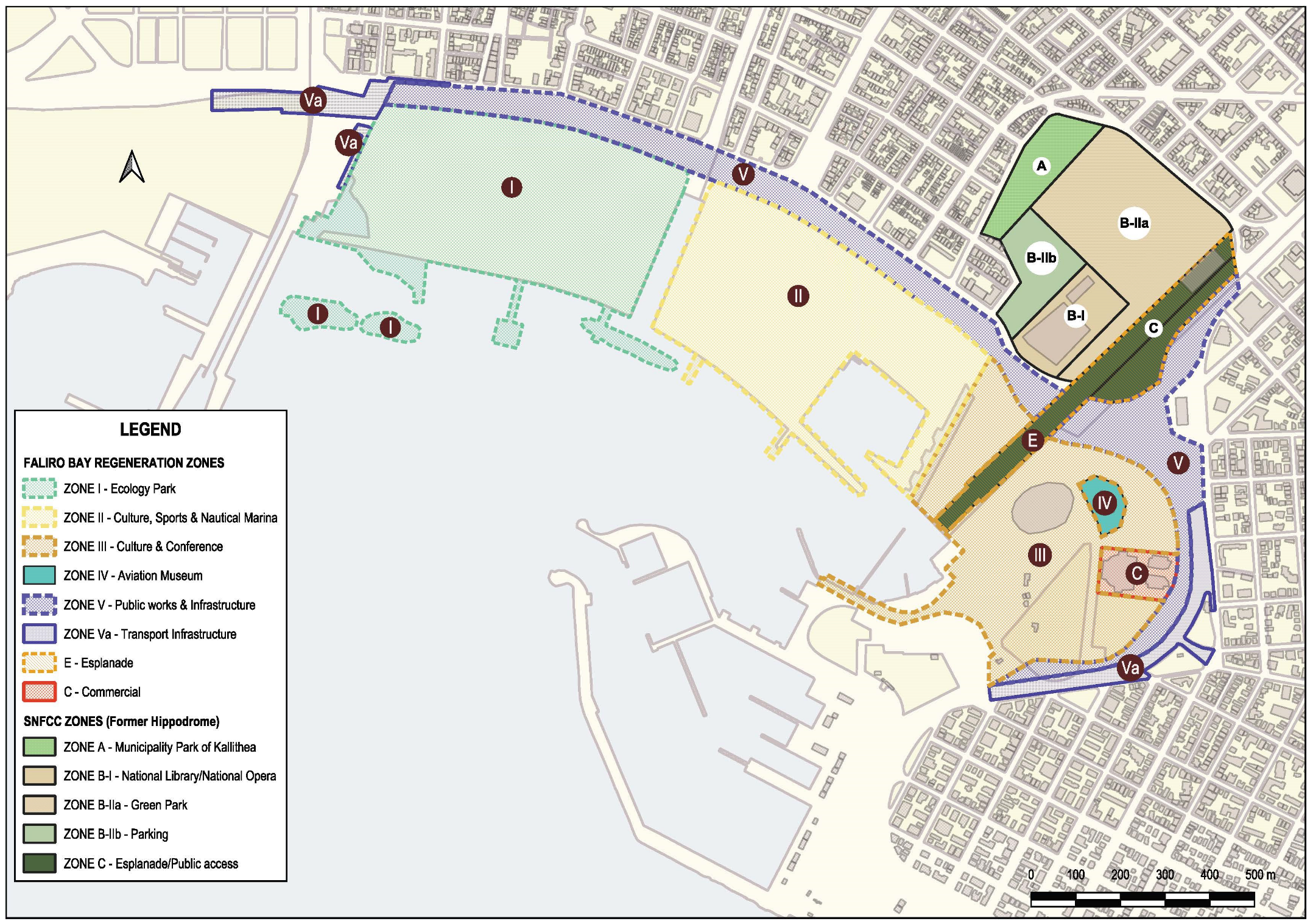
The first case (Figure 1) concerns the regeneration of the Faliro Bay waterfront in southern Attica, a large-scale intervention encompassing the coastal front of three municipalities within the Athens metropolitan area. Key components include the relocation of major cultural institutions alongside the development of a conference center, an ecological park, and significant infrastructural works. Initiated by the public sector, the project has been supported financially and operationally by the public-benefit Stavros Niarchos Foundation in combination with European funding mechanisms and national public resources. It is implemented primarily on publicly owned land.
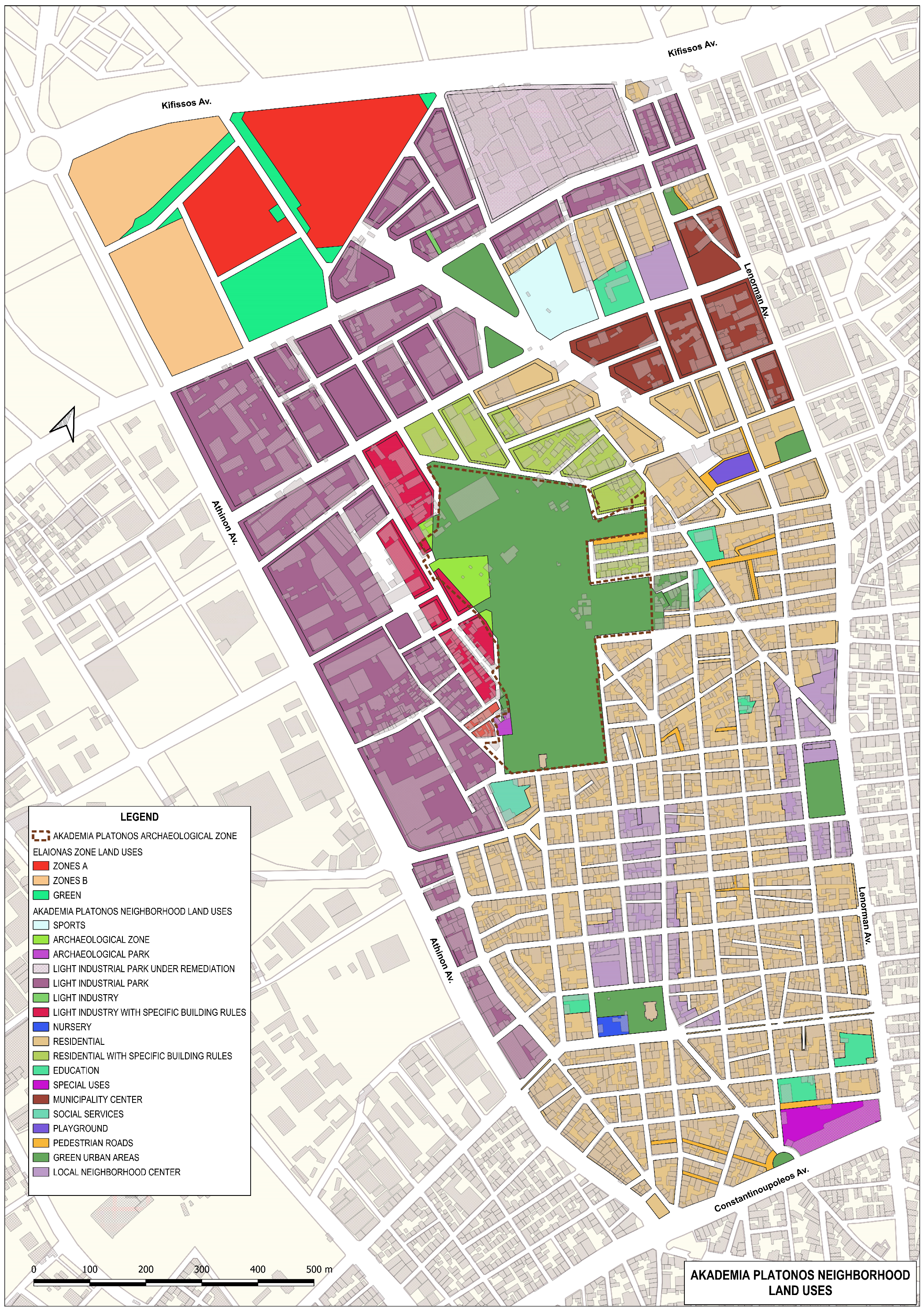
The second case (Figure 2) focuses on the regeneration of the neighborhood of Akademia Platonos in the western sector of central Athens. The area is characterized by a complex urban fabric comprising a major archeological site, residential spaces, low-to-medium-impact industrial uses, abandoned industrial complexes, and vacant plots. As with the Faliro Bay project, this initiative is public-led. However, it is implemented in a densely built and inhabited urban environment, where land ownership is predominantly private, with only a limited proportion under municipal or public control.
While both regeneration projects are identified in the revised Athens-Attica Master Plan [31] as metropolitan-scale interventions and share a common emphasis on environmental protection and heritage preservation, accordingly, they differ significantly in terms of their rationale for regeneration, planning models, governance structures, and outcomes. As such, they provide valuable insights into contemporary urban regeneration practices and metropolitan governance dynamics in Greece. The research questions addressed in this study are as follows: Why did two regeneration projects operating within the same metropolitan and institutional context produce such divergent governance arrangements and implementation outcomes? More specifically, how do land ownership structures and governance capacity shape the trajectory, implementation, and outcomes of metropolitan regeneration processes? Finally, how can the divergence between strategic regeneration objectives and actual implementation outcomes in metropolitan Athens be explained?
This study argues that synergies and partnerships between the state and the Stavros Niarchos Foundation, together with the long-term continuity and resilience of the planning framework, facilitated the implementation of significant components of the Faliro Bay project while also enabling the gradual realization of the broader regeneration project. On the other hand, fragmented land ownership and planning fragmentation, combined with a lack of institutional mechanisms for intervention in the built environment, appear to explain the limited implementation outcomes of the Akademia Platonos project to date.

2. Materials and Methods

2.1. Data Sources

This study constitutes a comparative qualitative planning analysis of two urban regeneration projects in contemporary Athens. It adopts a diachronic and interpretive qualitative document analysis approach, examining the evolution of both projects through time and across different planning phases. The research draws upon multiple categories of primary sources, including planning documents; maps and diagrams; administrative acts (such as ministerial decisions and presidential decrees); media reports; EU reports; policy papers; publicly available information from the websites of public authorities, municipalities, agencies, citizen groups, and associations; and the relevant academic and gray literature concerning metropolitan-scale interventions within the Athens–Attica metropolitan area. Additional sources include opinions and decisions of the Greek Council of State and other courts and open-access digital databases and platforms, including e-Poleodomia, the Ministry of Environment and Energy, and the Municipality of Athens. Τhe use of multiple and complementary data sources enabled the concentration and triangulation of empirical evidence to strengthen the validity of the findings.

2.2. Caste Study Selection

A case-selection approach was adopted, based on a set of predefined criteria that would enable comparability in terms of strategic orientation, planning framework, governance structure, ownership arrangements, and institutional complexity and innovation. The selection criteria included the following:
  • Geographical reference to the Athens–Attica metropolitan area;
  • Explicit identification within the revised Athens Master Plan [31] as a metropolitan pole or metropolitan-scale intervention;
  • Timeliness, ensuring that the selected cases demonstrated a sufficient degree of planning and institutional maturity while not constituting projects that had previously been fully completed;
  • An emphasis on metropolitan regeneration strategies associated primarily with environmental upgrading, public space enhancement, and cultural and recreational functions, rather than predominantly property-led, productive, or commercial development.
On the basis of these criteria, projects that had fully been completed in the past, such as the Athens 2004 Olympic interventions, were not considered. Projects that had not progressed to the stage of formal land-use planning regulation, such as the Rethink Athens project (Pedestrianization of Panepistimiou Avenue), were likewise omitted, as were projects characterized by prolonged institutional deadlock, such as the Double Regeneration project.
Metropolitan interventions primarily focusing on productive or commercial development were also excluded. In particular, the Hellinikon project, widely considered Greece’s flagship urban regeneration intervention, was excluded due to its exceptional scale, highly mixed-use orientation, and autonomous regulatory framework, which rendered direct comparison with other Greek metropolitan regeneration projects methodologically problematic.
Following the application of these criteria, the cases of Faliro Bay and Akademia Platonos were selected as the most appropriate comparative case studies for the purposes of the research.

2.3. Analytical Procedure

In this study, thematic analysis was employed to identify recurring themes in planning and governance. The coding framework included the following analytical dimensions: regeneration rationale and strategic orientation; ownership structure and land assembly mechanisms; regeneration models; governance structure; dominant actor configuration; financing models; planning scale and instruments; and main implementation constraints. These dimensions were derived deductively from the theoretical literature on urban regeneration, entrepreneurial urban governance, and austerity urbanism and refined inductively through the empirical material.
The research findings were assessed using a comparative qualitative analysis on the basis of the aforementioned thematic categories, combining an examination of planning and regulatory developments with cross-case thematic comparisons. This step focused on identifying and highlighting divergencies in regeneration rationales, governance structures, coalitions and synergies, planning scale, and instruments, with the goal of understanding and explaining different regeneration trajectories. In this respect, the assessment is interpretive rather than quantitative. It aims to shed light on governance capacity and generate broader insights into metropolitan governance and urban development pathways.

2.4. Limitations

This study is subject to certain limitations. First, the analysis focuses on two case studies within the Athens–Attica metropolitan area and therefore aims at analytical rather than statistical generalization regarding metropolitan regeneration processes in Greece. Second, the research relies primarily on qualitative document analysis. Although the use of multiple and complementary sources enabled triangulation and strengthened the analytical consistency of the findings, interviews and other stakeholder-based empirical methods were not systematically incorporated. Consequently, informal governance dynamics, political negotiations, and actor perceptions may not be fully captured. Third, as an interpretive and document-based qualitative analysis, the study does not quantitatively assess variables such as land values or levels of urban and infrastructural provision per inhabitant. Fourth, as an interpretive qualitative analysis, this study inevitably involves a degree of researcher subjectivity in the comparative assessment of the material, despite the systematic coding framework employed. Formal peer-validation and member-checking procedures were not applied due to the document-based nature of the research.
Finally, both regeneration projects remain evolving planning processes. Therefore, their long-term spatial, social, environmental, and governance outcomes cannot yet be comprehensively assessed.

3. Results

Section 3.1 and Section 3.2 provide a concise, evidence-based, yet necessarily descriptive overview of the key spatial characteristics, development trajectories, planning instruments, land-use arrangements, and stakeholder engagement patterns of the two case studies. This overview is intended to identify critical turning points that shaped their regeneration trajectories. Section 3.3 presents a comparative thematic analysis, providing a basis for broader conclusions regarding contemporary metropolitan urbanism and governance dynamics in Greece. The analytical dimensions were initially deduced using the theoretical literature and refined inductively through the empirical material.

3.1. The Faliro Bay Project

Once a popular recreational and bathing area, the Faliro Bay zone—extending from the Peace and Friendship Stadium in Piraeus to Flisvos in Palaio Faliro, covering approximately 770 acres over 2.5 km—has experienced significant degradation since the 1970s. The area became largely disconnected from the urban fabric due to the elevated expansion of the coastline and the high-speed seafront arterial road [32].
Within the framework of the Athens 2004 Olympic Games, the Faliro Bay waterfront was selected as a strategic venue for athletic activities, aiming to reconnect the city with the coastal front, enhance flood protection, and regenerate a degraded coastal landscape that functioned as the outlet zone of two major rivers of Athens and had been affected by uncontrolled landfill deposition [6,33]. Despite objections regarding the environmentally sensitive character of the area [33], Faliro Bay was designated in the Athens Master Plan [34] as a metropolitan-scale hub for recreation, sports, and cultural activities serving the entire city. At the site of the adjacent former Hippodrome, a multipurpose sports center was planned, while in the post-Olympic period, the area was envisaged as a supralocal tourism and leisure hub, excluding hotels, entertainment facilities, golf courses, residential uses, and casino activities.
The regeneration process evolved through successive planning and regulatory interventions extending across the Olympic and post-Olympic periods (2002–2013). In 2002, a Special Integrated Development Plan was approved, dividing the area into six (6) zones designated for Olympic sport uses and post-Olympic recreational, ecological park, and aquarium [35] functions, while also establishing key building regulations, including density and height limits [36] (see Table 1, Phases 1 and 2).
However, the implementation of the project remained largely confined to the Olympic facilities, while the broader objectives of reconnecting the city with the coastal front and developing the ecological park were not achieved.
The post-Olympic planning discourse framed Athens as an emerging metropolitan pole with a promising international role as the “gateway to Greece” in a globalized economy [37]. The overall objective was to attract investment through strategic infrastructure development and flagship urban regeneration projects, supported by entrepreneurial forms of urban governance [38,39]. In this respect, the repurposing and redevelopment of the Olympic venues was set as a priority [40]. The land uses of several Olympic venues were redesigned through legislation to ensure their long-term viability and attract investment [41]. In this context, the land uses in Faliro Bay were amended to include cultural, leisure, retail, and support facilities (see Table 1, Phase 3). A key change was the conversion of a former Tae Kwon Do gymnasium into a conference center.
At this stage, the involvement of the public-benefit ”Stavros Niarchos” Foundation proved crucial, giving new direction to the regeneration programme. Under a donation agreement between the Foundation and the Greek State, ratified by law [42], the Foundation undertook the regeneration of the adjacent former Hippodrome site. This project involved the relocation of the National Library and the National Opera, alongside the creation of a metropolitan park with educational, cultural, and recreational functions and sports facilities for the local community.
For the implementation of the project, a special-purpose private-law entity, the Stavros Niarchos Foundation Cultural Center S.A., was established, with a public-benefit mission. The organization was responsible for the design, construction, operation, maintenance, and overall management of the Cultural Center and the park. Operating as a private entity, it was exempt from public-sector regulations governing procurement, staffing, etc.
The regeneration project was implemented on entirely public land, which was granted to the organization for use over a specified period of time. To facilitate the implementation of the project, the urban plan of the Municipality of Kallithea was amended and the relevant master plan was approved, organizing the site into distinct land-use zones (Figure 1).
The contribution of the Foundation also proved crucial for advancing the regeneration of the Faliro Bay waterfront, funding a master plan prepared by Renzo Piano and related technical studies [43].
In 2010, the Faliro Bay was designated as a regeneration area [44], followed in 2013 by the approval of a Special Integrated Regeneration Programme through a Presidential Decree [45] (Table 1, Phases 4 and 5). The revised plan refined land uses while preserving key urban functions, including the ecological park, cultural facilities, nautical marina, conference center, public infrastructure, and open spaces.
The revised 2014 Athens–Attica Master Plan [31] reaffirmed the Faliro Bay Metropolitan Park and former Hippodrome area as a hub of national and international significance.
While the projects in the former Hippodrome area were completed and officially delivered to the Greek State and the public in 2017 [46], the regeneration of the Faliro Bay waterfront remains ongoing, with the planned infrastructure and regeneration works only partially implemented to date. In 2024, the European Commission approved initial Cohesion Fund financing for the Faliro Bay Metropolitan Park within the framework of the New European Bauhaus initiative [47,48]. The progress of the project has also been delayed by litigation related to the public procurement process [49]. Following a concession agreement with the Hellenic Public Properties Company (HPPC), the Region of Attica has assumed responsibility for the broader redevelopment of the Faliro Bay area for the creation of a new metropolitan park [50].

3.2. The Akademia Platonos Project

Akademia Platonos, historically associated with both the physical site and the philosophical school of Plato, constitutes a distinct neighborhood in the western sector of central Athens. The area exhibits a unique urban identity shaped by a heterogeneous mix of land uses and the interaction of diverse spatial and socio-economic factors. It is defined by major transport arteries—many of which have supported intensive industrial activity since the 1950s—as well as by the 13 ha archeological park of Plato’s Academy, which functions as a significant cultural and historical landmark.
The initial town plan of the neighborhood was approved in 1968. According to the Athens General Urban Plan [51,52], the neighborhood is located within the 4th Municipal District and comprises two sub-neighborhoods: Akademia Platonos and Agios Georgios. Residential densities in these sub-neighborhoods are set at 220 and 350 inhabitants per ha, respectively, with corresponding average Floor Area Ratios (FARs) of 2.10 and 3.00.
The General Urban Plan identified the area as degraded and promoted a strategic framework for its regeneration, focusing on spatial restructuring and functional reorganization combined with targeted interventions to improve urban quality and the built environment. Within this framework, the development of a craft–industrial park was also proposed to concentrate nuisance-generating activities, such as workshops, small-scale manufacturing, transport facilities, and warehousing, which have long been dispersed within the surrounding urban fabric.
Akademia Platonos is also included in the network of unified pedestrian flows, which operates as a primary spatial backbone within the metropolitan core of Athens. Conceived as a cultural and mobility corridor, the purpose of this network is to enhance the accessibility and continuity of the city’s principal archeological sites and monuments.
The neighborhood is mainly characterized by general residential uses, while some areas function as local neighborhood centers. The plan also provides for urban green spaces, including the archeological park, its surrounding buffer zones, and additional green areas, alongside dispersed uses related to sports and education (Figure 2—Akademia Platonos land uses).
A substantial portion of the wider area falls within a designated industrial park zone (excluding heavy industry), extending northwards to the administrative boundary of the Municipality of Athens and westwards, partly reaching the southern sectors. The northwestern section is regulated by a special land-use plan for the Elaionas District [53]. Permitted uses in this section include low- and medium-impact industrial and craft activities, as well as parking, storage, wholesale trade, and transport-related facilities, including the Kifisos Intercity Bus Terminal. Despite its formal designation, the area remains largely underdeveloped, as neither the 1968 town plan nor its subsequent amendments have been fully implemented. This has resulted in persistent spatial fragmentation, informality, and regulatory inconsistency [54,55].
Although the Municipality of Athens commissioned an initial study for an urban regeneration [54,55], this did not lead to the adoption of a comprehensive regeneration programme. A more coherent approach was established through the revised Athens–Attica Master Plan [31], which emphasizes the incorporation of Akademia Platonos into the programme for the unification of archeological sites in Athens, alongside the formal delineation and statutory protection of the archeological area, thereby repositioning it as a site of metropolitan significance. It also prioritizes the upgrading of surrounding urban frontages and proposes the development of a new Museum of the City of Athens as a key cultural catalyst. In parallel, the plan introduces measures to restructure the surrounding residential fabric, including reductions in building coefficients, stricter land-use controls, and the reorganization of public and social infrastructure. In combination, these interventions aim to enhance spatial coherence, strengthen the relationship between the built environment and the archeological landscape, and reinforce the area’s cultural identity.
However, beyond the aforementioned Athens General Urban Plan 52, land uses and building regulations in the area have been shaped through successive, often overlapping planning instruments. These planning instruments—including the General Urban Plan, Joint Ministerial Decisions, and town-plan amendments—operate simultaneously across multiple spatial scales, ranging from neighborhood-wide regulation to special regulatory zones surrounding the archeological park and site-specific interventions affecting individual building blocks (Table 2).
With specific regard to building regulations, the area was governed by a composite framework comprising the 1968 town plan 51, the decree on sector-based building coefficients in Athens [63], and the General Building Regulations [64,65,66,67] These provisions established a Floor Area Ratio (FAR) of 3.00, a Maximum Site Coverage of 70%, a maximum building height of 27 m, and a limit of seven stories.
In 2004, specific development controls for the area surrounding the Archeological Park were introduced through a Joint Ministerial Decision 57. The provisions maintained a relatively high FAR of 3.00, exceeding the average FAR of 2.1 established by the General Urban Plan. However, building height was restricted to a maximum of 18 m. In effect, the framework allowed for high-density development, while imposing restrictions on building heights to moderate the built form’s impact on the adjacent archeological landscape.
The same decision established a zoning framework dividing the area into two sub-zones. Zone A (General Residential Area) permits a broad mix of uses, including residential development, small-scale hotels and guesthouses, retail, etc. Zone B (Craft–Industrial Park) permits low- and medium-impact workshops, offices, and parking, with residential use and restaurants/cafés allowed by exception.
Through a Presidential Decree in 2013, the building regulations in the area surrounding the archeological site were amended [68]. The area was divided into two planning zones: Zone I, directly surrounding the archeological park, where the FAR was reduced to 1.6 and the maximum building height to 12 m; and Zone II, where the FAR was set at 2.1 and the maximum building height at 15 m. These provisions did not apply to the northern part of the Craft–Industrial Park or the southern part of the General Residential Area, where the regulations of the 1968 and 1978 decrees, as well as the General Building Code, remained in force.
In 2014, the Athens General Urban Plan was partially amended, changing the designation of the northeastern part of the area from a “Craft–Industrial Park” to a “Craft–Industrial Park for Rehabilitation 59.”. The revised framework introduced a broader mix of permitted uses, including residential development, retail, personal services, offices, etc. In 2018, building regulations for this special section were further revised, setting a FAR of 2.1 and maximum building heights of 21 m along Kifisou Avenue and 18 m on the side facing the archeological site [69].
The designation of the area as a “Craft–Industrial Park for Rehabilitation” and the regulation of height limits were related to growing private-sector interest in a large-scale brownfield redevelopment, particularly concerning a major industrial complex in the northeastern part of Akademia Platonos, listed by the Ministry of Culture. In this context, the investment proposal envisaged the repurposing of the complex for mixed-use development, combining cultural, leisure, and retail functions [70].
The project became a focal point of contestation, generating opposition from locals which resulted in legal proceedings. The two cases concerned applications for the annulment of the 2013 Presidential Decree reducing permitted building heights in the wider area, while exempting the building blocks associated with the investment project, and of the 2018 Presidential Decree establishing specific height limits for those blocks. Both applications were rejected by the Council of State of Greece, the country’s supreme administrative court [71]. By the late 2010s, investment interest was withdrawn [72].
Judicial disputes have also arisen as a result of the restrictions imposed on properties due to the archeological site, the implementation of the town plan for creating the necessary open spaces, the administration’s failure to expropriate affected properties, and the prolonged planning restrictions imposed on property owners [73]. In certain cases, this resulted in the lifting of expropriations and amendments to the town plan, restoring buildability to affected properties at the expense of land designated for necessary public open spaces [74].
Finally, the Ministry of Culture’s plan for the establishment of a Museum of the City of Athens within the archeological park has also become a matter of controversy. The relevant provision, originally introduced through an amendment to the town plan in 2002 [75], was revived following the signing of a memorandum of cooperation in 2022 between the Ministry of Culture, the Municipality of Athens, and the Academy of Athens [76]. The proposal raised concerns among local citizen initiatives [77], scientific societies, and professional bodies, including the Associations of Greek Architects and Spatial Planners [78,79].

3.3. Comparative Thematic Analysis

This section includes the results of a thematic comparative analysis between the two case studies (Table 3). The results are further discussed in Section 4.

4. Discussion: Divergences in Metropolitan Land-Use Planning

The comparative analysis reveals substantial differences in governance structures, implementation capacity, and regeneration outcomes between the two metropolitan projects.
The involvement of the public-benefit foundation marked a major turning point in the implementation of the Faliro Bay project, as the redevelopment of the former Hippodrome site also triggered the broader redesign of the coastal waterfront by a world-renowned architect.
Delegating a significant coordinating and executive role to a public-benefit foundation and its affiliated special-purpose entity was a notable institutional innovation that proved critical for the implementation of the project. This initiative has been criticized as part of broader post-Olympic entrepreneurial urban strategies that sought to leverage Olympic and coastal assets to attract investment while reinforcing privatization tendencies [80]. Consequently, concerns have been raised regarding the growing influence of private actors over metropolitan planning agendas [81]. Nevertheless, although the foundation’s intervention influenced metropolitan planning priorities, it did not undermine the public character of the project [6], nor its emphasis on ecological functions and sustainability objectives.
It should be noted, however, that this intervention is not an isolated case. Since the onset of the economic crisis, privately sponsored initiatives have assumed an increasingly important role in the Greek urban landscape. Recent research highlights an increasing number of sponsor-led regeneration projects in the metropolitan area [23,82]. This shift appears to be linked both to austerity-driven constraints and to attempts to bypass rigid public procurement procedures [15,23]. Growing criticism regarding urban donations to the Greek State, particularly in relation to transparency and accountability concerns [83], has also prompted recent legal reforms by the Ministry of Finance aimed at strengthening transparency, standardizing administrative procedures, and establishing a more coherent institutional framework for the governance of such initiatives [83,84].
Another critical factor underlying the progress of the Faliro Bay project was the predominance of state-owned land, which was granted to the entities responsible for implementation—specifically, the Region of Attica for the waterfront redevelopment and the special private-law entity affiliated with the Stavros Niarchos Foundation for the former Hippodrome site. Since public land was leased or granted through concession arrangements rather than privatized, and consisted predominantly of undeveloped areas, the project did not evolve into a property-led redevelopment scheme. Thus, it avoided significant land-capture conflicts and major legal disputes, apart from challenges related to public procurement procedures.
In view of the above, the Faliro Bay project represents a hybrid governance model integrating state coordination, strong foundation participation, local-government implementation, and multi-source financing mechanisms. The project was facilitated by public land ownership and a relatively coherent and continuous planning framework.
Conversely, the Akademia Platonos project was implemented within an already urbanized and largely privately owned area. In Greece, expropriation remains the primary mechanism through which land is acquired for urban planning purposes [85]. Moreover, the developer obligations system (eisfora se gi kai chrima—land and monetary contribution), a key instrument through which local governments secure land for open spaces and public infrastructure which constitutes one of the few available mechanisms for land-value capture, is often constrained by legislative complexity, limited administrative capacity, delays in the implementation of planning acts, and frequent legal challenges by landowners [86].
The case of Akademia Platonos is both indicative and representative of these structural limitations. Legal disputes have arisen not only due to opposition to private development projects, but also because of resistance to interventions affecting property rights—a problem deeply embedded in Greek urbanism [6,27]. The absence of a coherent institutional framework for the regeneration of areas which are already built up, capable of enabling active intervention and facilitating urban transformation, provides an explanation for many of the difficulties faced in the project’s implementation. Moreover, austerity-related cuts in public and municipal expenditure during the crisis left limited room for municipalities to advance expropriation procedures.
With regard to planning instruments, the Faliro Bay project is underpinned by a relatively coherent and enduring planning framework integrating legislative provisions, land-use zoning, and building regulations. By contrast, Akademia Platonos involves a more fragmented and multi-scalar configuration of planning instruments operating across different institutional levels and spatial scales within the same neighborhood. Planning interventions range from metropolitan-level directives to neighborhood- and site-specific zoning regulations—particularly in the area surrounding the archaeological park—as well as detailed block-level provisions. The coexistence of these overlapping and, at times, inconsistent regulations contribute to regulatory complexity and (in some cases) to the overregulation of space.
Finally, important differences also emerge with regard to governance structures and decision-making arrangements. Governance in Akademia Platonos remains highly centralized, with the central state and the Ministry of Culture exercising the dominant decision-making role, while the Municipality of Athens plays only a limited role in implementation. The broader governance framework and the implementation process are further affected by judicial disputes related both to public-sector planning interventions and to private development projects. These governance constraints further explain the limited progress achieved in the project’s implementation to date.

5. Conclusions

In this study, I have shown that the implementation trajectories of the two metropolitan regeneration projects discussed were shaped by distinct governance models, institutional capacities, and land management mechanisms. Although both projects operated within the same metropolitan and national planning framework, they produced markedly different implementation trajectories and governance outcomes. How, then, can the difficulties observed in Akademia Platonos help explain the divergence between strategic regeneration objectives and actual implementation outcomes?
The findings suggest that this divergence cannot be explained solely through formal planning objectives or statutory frameworks. Rather, it must be understood through the lens of path dependencies in institutional design, governance capacity, inter-institutional coordination, and land ownership structures. Metropolitan regeneration success depends not only on strategic vision and planning objectives but on the institutional and governance capacity to manage land, coordinate actors, and ensure an equitable allocation of development rights, costs, and benefits among stakeholders. The ability to leverage private funding for the regeneration of degraded built-up areas also emerges as a critical condition for implementation.
The case of Akademia Platonos reflects broader characteristics of Greek urbanism, described in the literature as path dependencies rooted in post-war urban development processes. The Greek planning trajectory has long been associated with the intensive exploitation of fragmented small-scale property ownership and strong resistance to interventions affecting property rights, particularly with regard to mechanisms allocating land-value gains between private owners and the state through planning regulations [6,27,87,88] with these factors still exerting notable influence today. Despite successive planning reforms during the economic crisis period [89,90,91,92], the challenge of intervening effectively in existing built-up areas through mechanisms of development-right allocation and land-value capture remains largely unresolved.
These findings, which may account for the gap between approved urban planning schemes and their implementation to a significant extent, also point to a critical field for institutional intervention and a major challenge for the Greek planning system. In this respect, the Athens cases illustrate broader structural and governance constraints affecting metropolitan regeneration projects in other contexts characterized by complex property regimes, governance fragmentation and fiscal constraints.

Funding

This research received no external funding.

Data Availability Statement

The original contributions presented in this study are included in the article. Further inquiries can be directed to the corresponding author.

Acknowledgments

The author would like to give special thanks to Vassilis Tzokas, who elaborated and edited Figure 1 and Figure 2, which are included in this article.

Conflicts of Interest

The author declares no conflicts of interest.

References

  1. Couch, C.; Fraser, C.; Persy, S. Urban Regeneration in Europe; Blackwell Science: Oxford, UK; Malden, MA, USA, 2003. [Google Scholar]
  2. Roberts, P. The Evolution, Definition and Purpose of Urban Regeneration. In Urban Regeneration; Roberts, P., Sykes, H., Granger, R., Eds.; Sage: Los Angeles, CA, USA, 2016; pp. 9–43. [Google Scholar]
  3. Pugalis, L.; Liddle, J. Editorial: Austerity era regeneration: Conceptual issues and practical challenges, Part 1. J. Urban Regen. Renew. 2013, 6, 333–338. [Google Scholar] [CrossRef]
  4. Lichfield, D. Urban Regeneration for the 1990s; London Planning Advisory Committee: London, UK, 1992. [Google Scholar]
  5. Economou, D. Urban Regeneration and Urban Redevelopment. Technical Chronicles 2004 May–June 2004, 3, 1–10. Available online: https://portal.tee.gr/portal/page/portal/PUBLICATIONS/BYMONTHLY_PUBLICATIONS/diminiaia_2004/trito_tefhos (accessed on 27 May 2026).
  6. Chorianopoulos, I.; Pagonis, T. Tracing the Mediterranean City—Urbanism, Planning and Governance in the Metropolis of Athens; Kritiki: Athens, Greece, 2020. (In Greek) [Google Scholar]
  7. Harvey, D. From Managerialism to Entrepreneurialism: The Transformation in Urban Governance in Late Capitalism. Geogr. Ann. Ser. B Hum. Geogr. 1989, 71, 3–17. [Google Scholar] [CrossRef]
  8. Peck, J. Transatlantic city, part 1: Conjunctural urbanism. Urban Stud. 2017, 54, 4–30. [Google Scholar] [CrossRef]
  9. Peck, J. Transatlantic city, part 2: Late entrepreneurialism. Urban Stud. 2017, 54, 327–363. [Google Scholar] [CrossRef]
  10. Crouch, C.; Galès, P.L. Cities as national champions? J. Eur. Public Policy 2012, 19, 405–419. [Google Scholar] [CrossRef]
  11. Jessop, B. The Entrepreneurial City Re-imaging localities, redesigning economic governance, or restructuring capital? In Transforming Cities; Jewson, N., Macgregor, S., Eds.; Routledge: London, UK, 1997. [Google Scholar]
  12. Brenner, N.; Theodore, N. Cities and the Geographies of “Actually Existing Neoliberalism”. Antipode 2002, 34, 349–379. [Google Scholar] [CrossRef]
  13. Peck, J.; Tickell, A. Searching for a New Institutional Fix: The After-Fordist Crisis and the Global-Local Disorder. In Post-Fordism; Amin, A., Ed.; Blackwell Publishers: Oxford, UK, 1994. [Google Scholar]
  14. Afonso, A.; Zartaloudis, S.; Papadopoulos, Y. How party linkages shape austerity politics: Clientelism and fiscal adjustment in Greece and Portugal during the eurozone crisis. J. Eur. Public Policy 2015, 22, 315–334. [Google Scholar] [CrossRef][Green Version]
  15. Kapsali, M. ‘Adopt your city’: Post-political geographies and politics of urban philanthropy during austerity. Urban Stud. 2024, 61, 2290–2308. [Google Scholar] [CrossRef]
  16. Maloutas, T. Spatial and Social Implications of the Crisis in Athens: From the Regulations of the Clientelistic State to the Debt Crisis. Greek Rev. Soc. Res. 2011, 134–135, 51–70. (In Greek) [Google Scholar]
  17. Tulumello, S.; Cotella, G.; Othengrafen, F. Spatial planning and territorial governance in Southern Europe between economic crisis and austerity policies. Int. Plan. Stud. 2020, 25, 72–87. [Google Scholar] [CrossRef]
  18. Eckardt, F. City and Crisis: Learning from urban theory. In City of Crisis The Multiple Contestation of Southern European Cities; Eckardt, F., Sánchez, J.R., Eds.; Transcript Verlag: Bielefeld, Germany, 2015. [Google Scholar]
  19. Hadjimichalis, C. Crisis Spaces: Structures, Struggles and Solidarity in Southern Europe; Routledge: London, UK, 2018; Volume 67. [Google Scholar]
  20. Kunzmann, K. Crisis and urban planning? A commentary. Eur. Plan. Stud. 2016, 24, 1313–1318. [Google Scholar] [CrossRef]
  21. Le Galès, P. Neoliberalism and Urban Change: Stretching a Good Idea Too Far? Territ. Politics Gov. 2016, 4, 154–172. [Google Scholar] [CrossRef]
  22. Storper, M. The Neo-liberal City as Idea and Reality. Territ. Politics Gov. 2016, 4, 241–263. [Google Scholar] [CrossRef]
  23. Giannakourou, G.; Stamatiou, K. Planning reform and change in times of economic crisis: Lessons from the expansion of private-led planning in Greece. Plan. Pract. Res. 2026, 41, 69–89. [Google Scholar] [CrossRef]
  24. Poulios, D. Redeveloping Athens: State–Municipal Entrepreneurship in Postcrisis City. Urban Aff. Rev. 2026. [Google Scholar] [CrossRef]
  25. Poulios, D. Urban governance and spatial policies in Athens during a period of crisis (2009–2015): Attempts to reconstruct the city, institutional turning points and the role of Local Governments. In Athens Social Atlas; Maloutas, T., Spyrellis, S., Eds.; Digital compendium of texts and visual material; 2023; Available online: https://www.athenssocialatlas.gr/en/article/urban-governance-and-spatial-policies-in-athens-during-a-period-of-crisis/ (accessed on 27 May 2026). [CrossRef]
  26. Chorianopoulos, I.; Tselepi, N. Austerity urbanism: Rescaling and collaborative governance policies in Athens. Eur. Urban Reg. Stud. 2019, 26, 80–96. [Google Scholar] [CrossRef]
  27. Pagonis, T. Athenian Urbanism and Urban Resilience Path-dependent trajectories from the post-war era to the crisis and beyond. In Urban Resilience, Changing Economy and Social Trends: Coping with Socio-Economic Consequences of the Crisis in Athens; Othengrafen, F., Serraos, K., Eds.; LUH-NTUA, DAAD: Hannover, Germany, 2018; pp. 31–48. [Google Scholar]
  28. Aravantinos, A. Concepts, Objectives, and Forms of Urban Regeneration: The Gap Between Institutional Frameworks and Practice in Greece; Nomos & Physis 2011. Available online: https://nomosphysis.org.gr/12257/ennoia-skopimotita-kai-morfes-anaplaseon-i-anakolouthia-metaksu-thesmon-kai-praktikis-stin-ellada-iounios-2011/ (accessed on 27 May 2026). (In Greek)
  29. Melissas, D. Is Legislation Responsible for the Lack of Urban Redevelopment Projects? What Should the New Legislative Framework for Urban Redevelopment Ensure? Nomos & Physis 2011. Available online: https://nomosphysis.org.gr/12275/euthunetai-i-nomothesia-gia-tin-elleipsi-anaplaseon-ti-ofeilei-na-diasfalisei-to-neo-nomothetiko-plaisio-gia-tis-anaplaseis-ioulios-2011/ (accessed on 27 May 2026). (In Greek)
  30. Asprogerakas, E. Strategies of Integrated Interventions in Greece: Tools and Governance Schemes. Plan. Pract. Res. 2020, 35, 575–588. [Google Scholar] [CrossRef]
  31. Law 4277/2014, Government Gazette (GG) A 156. Available online: https://search.et.gr/el/simple-search/?selectYear=2014&selectIssue=1&documentNumber=156 (accessed on 27 May 2026).
  32. Olympic Properties, S.A. Faliro Bay Regeneration Project (Special Integrated Development Plan), Study “Update of the General Layout Plan of Zone A1-AP from Kifissos to Ilissos”, Phase B2, Final General Layout Plan, Thymio Papayannis and Associates. 2009.
  33. Pagonis, A. Olympic Legacy and Metropolitan Planning in Athens: The Transformation in Urban Governance as a Result of Organizational Fragmentation. Doctoral Dissertation, National Technical University of Athens (NTUA), Athens, Greece, 2005. Available online: http://hdl.handle.net/10442/hedi/16615 (accessed on 27 May 2026).
  34. Law 1515/1985 (GG A 18) as Amended by Law 2730/1999 (GG A 130). Available online: https://search.et.gr/el/simple-search/?selectYear=1999&selectIssue=1&documentNumber=130 (accessed on 27 May 2026).
  35. Law 3105/2003 Art. 41 par. 8, GG A 29-Amendment to the Approved 2002 Special Integrated Development Plan. Available online: https://search.et.gr/el/simple-search/?selectYear=2003&selectIssue=1&documentNumber=29 (accessed on 27 May 2026).
  36. Presidential Decree 22.3.2002 “Approval of the Special Plan for Integrated Development of Olympic Facilities (ES.O.A.P.) Beach Volleyball and Other Sports Facilities and Regeneration of the Faliro Bay Area (Attica Prefecture)” (GG D 233). Available online: https://search.et.gr/el/simple-search/?selectYear=2002&selectIssue=4&documentNumber=233 (accessed on 27 May 2026).
  37. OECD. Territorial Reviews: Athens, Greece; OECD: Paris, France, 2004. [Google Scholar]
  38. Getimis, P.; Giannakourou, G. The evolution of spatial planning in Greece after the 1990s: Drivers, directions and agents of change. In Spatial Planning Systems and Practices in Europe. A Comparative Perspective on Continuity and Change; Reimer, M., Getimis, P., Blotevogel, H., Eds.; Routledge: London, UK; New York, NY, USA, 2014; pp. 149–168. [Google Scholar]
  39. Beriatos, E.; Gospodini, A. “Glocalising” urban landscapes: Athens and the 2004 olympics. Cities 2004, 21, 187–202. [Google Scholar] [CrossRef]
  40. Serraos, K.; Ioannou, B.; Papaioannou, A. The generation of urban poles of interest on the occasion of great events and interventions. Athens—Hamburg, a comparative approach. In Proceedings of the XXII AESOP Conference, Naples, Italy, 11–14 July 2007. [Google Scholar]
  41. Law 3342/2005, GG A 131. Available online: https://search.et.gr/el/simple-search/?selectYear=2005&selectIssue=1&documentNumber=131 (accessed on 27 May 2026).
  42. Law 3785/2009, GG A 138. Available online: https://search.et.gr/el/simple-search/?selectYear=2009&selectIssue=1&documentNumber=138 (accessed on 27 May 2026).
  43. Γ.Γ.Π.Τ.Υ.: 1477/2011, GG Β 2822. Available online: https://search.et.gr/el/simple-search/?selectYear=2011&selectIssue=2&documentNumber=2822 (accessed on 27 May 2026).
  44. Law 3843/2010, GG A 62. Available online: https://search.et.gr/el/simple-search/?selectYear=2010&selectIssue=1&documentNumber=62 (accessed on 27 May 2026).
  45. Presidential Decree 26.11.2013 “Approval of the Integrated Regeneration Programme for Faliro Bay and its Strategic Environmental Impact Assessment” (GG AAP 443). Available online: https://search.et.gr/el/simple-search/?selectYear=2013&selectIssue=15&documentNumber=443 (accessed on 27 May 2026).
  46. SNFCC. Available online: https://www.snf.org/en/work/grants/grants-database/stavros-niarchos-foundation-cultural-center-ae-construction-2006/?utm_source=chatgpt.com (accessed on 27 May 2026).
  47. 13.05.2026, Kathimerini. Faliro Bay Revamp Back on Track After Court Ruling. Available online: https://www.ekathimerini.com/economy/1303575/faliro-bay-revamp-back-on-track-after-court-ruling/ (accessed on 27 May 2026).
  48. EC. Available online: https://ec.europa.eu/regional_policy/whats-new/newsroom/29-10-2024-more-than-eur93-million-from-the-cohesion-fund-to-turn-faliron-bay-in-athens-into-a-green-and-vibrant-space_en?utm_source=chatgpt.com (accessed on 27 May 2026).
  49. GTP. 31.10.2024. Available online: https://news.gtp.gr/2024/10/31/athens-faliro-bay-metropolitan-park-project-progresses-eu-funding/?utm_source=chatgpt.com (accessed on 27 May 2026).
  50. HPPC. Region of Attica: Concession Agreement signed for the Faliro Indoor Olympic Arena (Taekwondo). Available online: https://hppc.gr/perifereia-attikis-ypografi-tis-symvasis-parachorisis-toy-kleistoy-olympiakoy-gipedoy-faliroy-tae-kwon-do/?lang=en (accessed on 27 May 2026).
  51. Royal Decree 1/20.11.1968 “Amendment and Extension of the Athens Town Plan in Akademia Platonos and the Determination of Building Terms and Restrictions for Its Plots.” (GG D 224). Available online: https://search.et.gr/el/simple-search/?selectYear=1968&selectIssue=4&documentNumber=224 (accessed on 27 May 2026).
  52. Ministry of Environment Decision 255/45/4.1.1988 “Approval of the General Urban Plan of Athens, GG D 80. Available online: https://search.et.gr/el/simple-search/?selectYear=1988&selectIssue=4&documentNumber=80 (accessed on 27 May 2026).
  53. Presidential Decree 20.9.1995, GG D 1049. Available online: https://search.et.gr/el/simple-search/?selectYear=1995&selectIssue=4&documentNumber=1049 (accessed on 27 May 2026).
  54. Council of State Decision 2261/2014. Available online: https://nomosphysis.org.gr/13566/ste-22612014-tropopoiisi-toy-syntelesti-domisis-ton-oikopedon-kai-toy-megistoy-epitrepomenoy-ypsoys-ton-ktirion-stin-perioxi-gyro-apo-ton-arxaiologiko-xoro-akadimias-platonos/ (accessed on 27 May 2026).
  55. Council of State Opinions 25/2015, 41/2016, 111/2017.
  56. Ministry of Culture Decision ΥΠΠOΤ/ΓΔAΠΚ/AΡΧ/A1/Φ43/64526/2921/1.8.2011 “Re-Delimitation of the Archeological Site of Akademia Platonos, GG AAP 215/2011. Available online: https://search.et.gr/el/simple-search/?selectYear=2011&selectIssue=15&documentNumber=215 (accessed on 27 May 2026).
  57. JMD ΥΠΠO/ΓΔAΠΚ/AΡΧ/A1/Φ03/74279/4510/2004 “Designation of Land Uses and Special Building Terms and Restrictions for the Protection of the Area of the Declared Archaeological Site of Plato’s Academy”, GG D 911. Available online: https://search.et.gr/el/simple-search/?selectYear=2004&selectIssue=4&documentNumber=911 (accessed on 27 May 2026).
  58. Presidential Decree 27.3.2009 “Athens Town Plan Amendment”, GG AAP 154. Available online: https://search.et.gr/el/simple-search/?selectYear=2009&selectIssue=15&documentNumber=154 (accessed on 27 May 2026).
  59. Ministry of Environment Decision 7752/13.2.2014 “Athens General Urban Plan Amendment”, GG AAP 57. Available online: https://search.et.gr/el/simple-search/?selectYear=2014&selectIssue=15&documentNumber=57 (accessed on 27 May 2026).
  60. Ministry of Environment Decision 51414/28.11.2007 “Athens Town Plan Amendment”, GG AAP 588. Available online: https://search.et.gr/el/simple-search/?selectYear=2007&selectIssue=15&documentNumber=588 (accessed on 27 May 2026).
  61. Presidential Decree 27.4.2016 “Athens Town Plan Amendment”, GG AAP 92. Available online: https://search.et.gr/el/simple-search/?selectYear=2016&selectIssue=15&documentNumber=92 (accessed on 27 May 2026).
  62. Municipal Council Decision 1770/23.10.1989 “Athens Town Plan Amendment”, GG D 727. Available online: https://search.et.gr/el/simple-search/?selectYear=1989&selectIssue=4&documentNumber=727 (accessed on 27 May 2026).
  63. Presidential Decree23.6/27.6.1978 “On the Determination of Building Coefficients in the Athens Area.”, GG D 312. Available online: https://search.et.gr/el/simple-search/?selectYear=1978&selectIssue=4&documentNumber=312 (accessed on 27 May 2026).
  64. Royal Decree 9/30-9-1955, GG A 266, General Building Regulation 1955. Available online: https://search.et.gr/el/simple-search/?selectYear=1955&selectIssue=1&documentNumber=266 (accessed on 27 May 2026).
  65. Legislative Decree 8/1973, GG A 124 General Building Regulation 1973. Available online: https://search.et.gr/el/simple-search/?selectYear=1973&selectIssue=1&documentNumber=124 (accessed on 27 May 2026).
  66. Law 1577/1985, GG A 210 General Building Regulation 1985. Available online: https://search.et.gr/el/simple-search/?selectYear=1985&selectIssue=1&documentNumber=210 (accessed on 27 May 2026).
  67. Law 4067/2012, GG A 79 New Building Regulation 2012. Available online: https://search.et.gr/el/simple-search/?selectYear=2012&selectIssue=1&documentNumber=79 (accessed on 27 May 2026).
  68. Presidential Decree o29.4.2013 “Amendment of the Building Coefficient of Plots and the Maximum Permitted Building Height in the Area Surrounding the Archaeological Site of Plato’s Academy Within the Athens City Plan” (GGAAP 165). Available online: https://search.et.gr/el/simple-search/?selectYear=2013&selectIssue=15&documentNumber=165 (accessed on 27 May 2026).
  69. Presidential Decree of 23.1.2018 “Amendment of Building Terms and Restrictions in Blocks 124, 126, 127 and 128 of Area 75 of the Approved City Plan of Athens”, GG AAP 21/8.2.2018. Available online: https://search.et.gr/el/simple-search/?selectYear=2018&selectIssue=15&documentNumber=21 (accessed on 27 May 2026).
  70. Ministry of Culture. ΥΠΠOAO/AΤΝΠΚΕ/39911/278/18.9.2017 Reply to Report No. 1141/9.2.2017 submitted to the Hellenic Parliament. 2017.
  71. Council of State Decisions 2261/2014, 1802/2021.
  72. Greekreporter.gr. BlackRock Freezes €300 Million Mall Development Project in Athens. Available online: https://greekreporter.com/2018/10/17/blackrock-freezes-e300-million-mall-development-project-in-athens/ (accessed on 27 May 2026).
  73. Council of State Decision 266/2024, 64-65/2020, 2045/2020, Athens Administrative Court of Appeal, Judgment 502/2026.
  74. Counsil of State Decision 266/2024, Athens Administrative Court of Appeal, Judgment No. 502/2026.
  75. Law 3057/2002, Art. 80 par. 2a, GG A 239. Available online: https://search.et.gr/el/simple-search/?selectYear=2002&selectIssue=1&documentNumber=239 (accessed on 27 May 2026).
  76. Memorandum of Cooperation between the Ministry of Culture and Sports, the Academy of Athens, and the Municipality of Athens for the Enhancement of the Archaeological Site of Akademia Platonos and the Operation of the International Community of Academies. 2022. Available online: https://www.culture.gov.gr/el/Information/SitePages/view.aspx?nID=4243 (accessed on 27 May 2026).
  77. Akademia Platonos. Municipality of Athens. Museum of the city of Athens. Available online: https://akadimia-platonos.com/tag/%CE%BC%CE%BF%CF%85%CF%83%CE%B5%CE%AF%CE%BF-%CF%84%CE%B7%CF%82-%CF%80%CF%8C%CE%BB%CE%B7%CF%82-%CF%84%CF%89%CE%BD-%CE%B1%CE%B8%CE%B7%CE%BD%CF%8E%CE%BD/ (accessed on 27 May 2026).
  78. Resolution 5.2.2024 of the General Assembly of the Association of Greek Architects and Spatial Planners (SEPOX)on the Archaeological Grove of Akademia Platonos. Available online: https://sepox.gr/2024/02/%CF%88%CE%B7%CF%86%CE%B9%CF%83%CE%BC%CE%B1-%CE%B3%CE%B5%CE%BD%CE%B9%CE%BA%CE%B7%CF%82-%CF%83%CF%85%CE%BD%CE%B5%CE%BB%CE%B5%CF%85%CF%83%CE%B7%CF%82-%CF%83%CE%B5%CF%80%CE%BF%CF%87-%CE%B3%CE%B9%CE%B1/ (accessed on 27 May 2026).
  79. Resolution 5.4.2023 of the Attica Department of Association of Greek Architects Regarding the Proposed Location of the “Archaeological Museum of Athens” Within the Archaeological Grove of Akademia Platonos. Available online: https://www.archetype.gr/blog/arthro/psifisma-tou-tmimatos-attikis-sadas-pea-gia-ti-chorothetisi-tou-archaiologikou-mousiou-athinon-sto-archaiologiko-alsos-tis-akadimias-platonos (accessed on 27 May 2026).
  80. Markou, M. Renovation projects at Faliro Bay. In Athens Social Atlas; Digital Compendium of Texts and Visual Material; Harokopio University: Athens, Greece, 2017. [Google Scholar] [CrossRef]
  81. Papakonstantinou-Papadopoulou, E. The Role of Donations in the Development of Athens. Doctoral Dissertation, National Technical University of Athens (NTUA), Athens, Greece, 2018. (In Greek) [Google Scholar] [CrossRef]
  82. Technical Chamber of Greece (2022) Resolution No 565/14.4.2022. Available online: https://diavgeia.gov.gr/decision/view/%25CE%25A9%25CE%25966%25CE%259546%25CE%25A8842-8%25CE%259C1 (accessed on 27 May 2026).
  83. Ministry of Economy and Finance. New Framework for Donations to the State; 2025. Available online: https://minfin.gov.gr/entharrynsi-ton-doreon-pros-to-dimosio-taxi-sta-idrymata-kai-tis-scholazouses-klironomies/ (accessed on 27 May 2026).
  84. Law 5269/2025, GG A 228. Available online: https://search.et.gr/el/simple-search/?selectYear=2025&documentNumber=228 (accessed on 27 May 2026).
  85. Giannakourou, G.; Balla, E. Greece. In Takings International; Alterman, R., Ed.; American Bar Association: Chicago, IL, USA, 2006. [Google Scholar]
  86. OECD; Lincoln Institute of Land Policy. Global Compendium of Land Value Capture Policies; OECD Regional Development Studies; OECD: Paris, France, 2022. [Google Scholar] [CrossRef]
  87. Giannakourou, G.; Kafkalas, G. Rethinking spatial planning in times of crisis: On the necessity, the content and the requirements of a planning reform. In Competitiveness for Growth: Policy Proposals; Hellenic Bank Association: Athens, Greece, 2014; Available online: https://www.researchgate.net/publication/299389725_Epanexetazontas_te_chorotaxia_se_periodo_krises_anankaioteta_periechomeno_kai_proupotheseis_tes_metarrythmises_Rethinking_spatial_planning_in_times_of_crisis_on_the_necessity_the_content_and_the_requi (accessed on 27 May 2026). (In Greek)
  88. Economou, D. The planning system and rural land use control in Greece: A European perspective. Eur. Plan. Stud. 1996, 5, 461–476. [Google Scholar] [CrossRef]
  89. Gemenetzi, G. Restructuring Local-Level Spatial Planning in Greece Amid the Recession and Recovery Period: Trends and Challenges. Plan. Pract. Res. 2022, 38, 564–580. [Google Scholar] [CrossRef]
  90. Wassenhoven, L.; Asprogerakas, E. Planning in transition: The case of Greece. Plan. Pract. Res. 2026, 41, 1–14. [Google Scholar] [CrossRef]
  91. Tasopoulou, A. Shifts in planning tradition amid an economic crisis and in light of a planning reform: The case of Greece. Plan. Pract. Res. 2026, 41, 32–51. [Google Scholar] [CrossRef]
  92. Gourgiotis, A.; Tsilimigkas, G. Spatial planning in Greece: Framework critical review, challenges and perspectives. Plan. Pract. Res. 2026, 41, 184–205. [Google Scholar] [CrossRef]
Figure 1. Faliro Bay regeneration zones.
Land 15 01025 g001
Figure 2. Akademia Platonos land uses.
Land 15 01025 g002
Table 1. Evolution of planning phases and land uses in the Faliro Bay regeneration area and former Hippodrome (2002–2013).
Planning Spatial ZoneSurface (Ha)Primary Land Uses
Faliro Bay Phase 1: Special Plan for Integrated Development 2002—Olympic Land Uses Zone A124.03• Outdoor sports facilities (football, basketball, volleyball)
• Swimming pool
• Open-air athletic infrastructure
Zone A212.09• Permanent & temporary sports facilities
• Supporting infrastructure and parking
• Permanent volleyball venue (9000 m2, 8.5 m height)
• Building limits: “Max Building Area”|9000 m2/“Max Height”|8.50 m
Zone B19.33• Nautical sports center (7000 m2, 6.5 m height)
Zone B212.55• Visitor & information center
• Esplanade, public square, & open spaces
• Cafés, restaurants, and retail for spectators
• Building limits: “Max Building Area”|5875 m2/“Max Height”|12.75 m
Zone C116.08• Indoor & outdoor sports facilities
• Tae Kwon Do arena
• Outdoor parking
• Building limits: “Max Building Area” 12,000 m2/“Max Height”|26 m
Zone C20.8• Aviation Museum (1500 m2)
Faliro Bay Phase 2: Special Plan for Integrated Development 2002—Post-Olympic Land Uses Zone A124.03• Ecological park
• Light recreational & sports facilities
• Building limits: “Max Building Area”|2500 m2/“Max Height”|8.50 m
Zone A212.09• Multipurpose amphitheater
• Outdoor sports fields
• Outdoor parking
• Building limits: “Max Building Area” 9000 m2/“Max Height” |8.5 m
Zone B19.33• Nautical center (clubs, sea scouts, fishermen)
• Building limits: Max Building Area” 7.000 m2/“Max Height”|6.75 m
Zone B212.55• Reception & information center
• Esplanade, public square, & open spaces
• Building limits: “Max Building Area” 5.875 m2/“Max Height”|12.75 m
• Aquarium—17,000 m2 at esplanade level (Law 3105/2003)
Zone C116.08• Sports facilities
• Green park
• Outdoor parking
• Building limits: “Max Building Area” 12,000 m2/“Max Height”|26 m
Zone C20.8• Aviation Museum retained
Faliro Bay Phase 3: Post-Olympic Land Uses L.3342/2005Zone A124.03• Ecological park
• Light sports & leisure infrastructure
• Changing rooms, sanitary facilities, storage, guardhouses
• Public assembly areas
Zones A2–B1–B233.97• Cultural & sports uses
• National Nautical Center (clubs, fishermen, sea scouts, boat maintenance, boat refueling station)
• Supporting offices, retail, restaurants, medical facilities
• Thematic park, indoor amphitheater, & public assembly area
• Square/open spaces
• Outdoor parking & service infrastructure
Zone C116.08• Conference center (within the indoor gym)
• Municipal sports facilities
• Open green & walking areas, outdoor parking
Zone C20.8• Aviation Museum
Faliro Bay Phase 4: Law 3843/2010 Regeneration Zones & Land UsesZone I (formerly A1)—Ecological Park 24.03• Ecological park/low-impact sports facilities/public assembly areas (open-air cinema)
• Low-impact exercise and recreation facilities
• Environmental education & info centers
• Open-air cultural events
• Playgrounds
• Cafés, sanitation, administration
• PV & desalination systems
• Parking, transport, & technical infrastructure
• Floor Area Ratio (FAR) ≤ 0.017; Maximum Site Coverage = 6.3%
Zone II (formerly A2 & B1)—Culture21.42• Cultural & athletic uses
• National Nautical Center (clubs, fishermen, sea scouts, boat maintenance, boat refueling station)
• Changing rooms/sanitary facilities/public dining & refreshments/offices & sports facilities/shops/administration & medical offices
• Theme park & multipurpose amphitheater
• Guard posts/transport & technical infrastructure/parking
• Floor Area Ratio (FAR) ≤ 0.072; Maximum Site Coverage = 7.2%; Max Height as per 2002 Plan; Exception: up to 2.5% of FAR → Max Height 12.5 m
Zone III (formerly B2 & C1)—Culture & Conference28.63• International Conference Center with supporting uses: exhibition spaces, shops, offices, and dining areas
• Public dining and refreshment areas, plus facilities related to fishermen’s port
• Information centers, exhibition spaces, shops, and parking areas
• Maximum FAR: 0.118; Maximum Site Coverage: 6.2%; Maximum Height as per 2002 Plan
Zone IV (formerly C2)—Aviation Museum0.8• Aviation Museum retained as per 2002 Plan
Zone V—Public works & Infrastructure • Theme park/outdoor sports & recreation/support facilities/refreshments
• Transport & infrastructure
• Parking/sanitary facilities
•Maximum Building Area: 300 m2; Maximum Site Coverage: 350 m2; Maximum Building Height: 4.5 m
Faliro Bay Phase 5: 2013 Regeneration Master PlanRegeneration Zone I (formerly A1)—Ecological Park 24.03Sports and Recreation Facilities: Low-impact sports areas, gyms, wellness facilities, swimming pools, rowing and diving facilities, outdoor event and exhibition spaces, thematic playgrounds, interactive play structures, small-scale open-air cinemas and experimental theaters.
Education and Environmental Facilities: Observatories, environmental information centers, educational and seminar spaces, small service stations for sports and environmental users.
Public Amenities: Dining areas, refreshment areas, offices, medical facilities, sanitary facilities, changing rooms, storage and maintenance areas, guard posts.
Parking and Transportation Infrastructure: Outdoor, ground-level, and underground parking, roads, public transport infrastructure, and technical infrastructure.
Energy and Demonstration Facilities: Hot-air balloon installations, photovoltaic panels, wind turbines for demonstration purposes, electric substations, irrigation and fire-fighting water tanks.
Building conditions: FAR 0.017; buildings on marine structures ≤ 750 m2; central pier landmark ≤ 550 m2; coverage 6.3%; height 8.5 m (landmark exception); new landfills excluded.
Regeneration Zone II (formerly A2 & B1)—Culture, Sports, & Nautical Marina21.42Sports, Recreation, & Nautical Uses: Gyms, wellness centers, sailing and yacht club facilities, swimming pools, beach volleyball amphitheater, thematic parks, playgrounds, interactive/artistic installations, seminar halls, and event/exhibition spaces.
Commercial, Cultural, & Food Services: Retail shops, cultural venues, dining areas, cafés, and refreshment facilities.
Administrative & Support Facilities: Management, medical, and sports organization offices; support spaces; changing rooms and restrooms; guard posts; parking (ground, underground, open-air).
Infrastructure & Technical Installations: Roads, transport networks, public transit facilities, passenger piers, energy installations (PV panels, small wind turbines), pumping stations, and electrical substations.
Building conditions: FAR 0.072; buildings on marine structures ≤ 100 m2; coverage 7.2%; height 8.5 m; new landfills excluded.
Regeneration Zone III (formerly B2 & V1)—Culture & Conference28.63Conference and Event Facilities: Conference venues complemented by exhibition spaces, themed parks, recreational areas, semi-outdoor event spaces, outdoor cinemas, large-scale outdoor events (mega-events), interactive installations, and artistic landmarks.
Commercial and Public Services: Retail units, visitor service offices, dining areas, cafes, kiosks, and permanent berthing for tourism, leisure, and catering uses.
Infrastructure and Utilities: Road networks, public transport facilities, technical infrastructure, photovoltaic panels, small wind turbines, pumping stations, electrical substations, and outdoor, ground-level, and underground parking.
Maritime and Market Facilities: Small fishing harbor with open-air fish market and permanent docking for a landmark vessel.
Building conditions: FAR 0.118; buildings on marine structures ≤ 1.500 m2; coverage 6.2%; new landfills excluded
Regeneration Zone IV (formerly C2)—Aviation Museum0.8• Aviation Museum retained as per 2002 Plan
Regeneration Zone V—Public Works & Infrastructure Outdoor Facilities & Infrastructure: Sports, recreation, themed parks, landmarks, kiosks, restrooms, parking, utilities, roads, and public transport support.
Maximum Building Area: 300 m2; Maximum Site Coverage: 350 m2; Maximum Building Height: 4.5 m
Additional Transport Infrastructure Zone: Va. Roads and Infrastructure: Road network, public and technical infrastructure with supporting functions, and outdoor parking areas with auxiliary facilities.
Former Hippodrome Phase 1—Post-Olympic Land Uses L. 3342/2005 • Spectator reception & parking area
• Average Floor Area Ratio (FAR) ≤ 0.4; Maximum Site Coverage = 30%
Former Hippodrome Phase 2—Post-Olympic Land Uses L. 3342/2005 • Open Spaces and Urban Green
Average Floor Area Ratio (FAR) ≤ 0.3; Maximum Site Coverage = 25%
Former Hippodrome—Post-2009 Zoning & Land-Use PlanningZone A—Municipality Park of Kallithea Sports and Recreational Facilities: Football field without stands, outdoor swimming pool without stands, changing rooms and support facilities, playground, kiosk, and multipurpose cultural hall. Maximum total building area: 1000 m2.
Zone B—Cultural Complex (SNFCC Area) Supralocal Cultural Park—“Stavros Niarchos Foundation Cultural Center”: Features a green park with educational, cultural, and recreational functions; new buildings for the National Library and the National Opera; a large water feature; and auxiliary buildings.
Area I: National Library and National Opera buildings.
Area IIa: Green park with auxiliary buildings, maximum building area 2500 m2.
Area IIb: Parking area with green roof.
Zone C—Esplanade/Public Access Esplanade section: Open-access area to the supralocal cultural park; construction prohibited.
Building Conditions Average FAR: 0.30; Maximum Site Coverage: 25%; maximum building height: 38.50 m; energy-bioclimatic roof height: 46.50 m; volume ratio: 4
Table 2. Akademia Platonos land uses and planning instruments.
Land Uses in Akademia Platonos NeighborhoodPlanning Instruments (1988–2018)
SportsGeneral Urban Plan [52]
Archaeological zoneRe-delimitation of the Archeological Site of Akademia Platonos [56]
Archaeological parkJMD—Land uses & building regulations [57]
& Town Plan Amendment [58]
Craft–industry park for rehabilitationGeneral Urban Plan amendment [59]
Light industryGeneral Urban Plan [52]
Craft–industry park (exc. industry)General Urban Plan [52]
Light industryJMD—Land uses and building regulations [57]
Light industryGeneral Urban Plan Amendment [59]
Craft–industry park (excl. professional workshops)JMD—Land uses and building regulations [57]
& Town Plan Amendment [58]
Light industry (exc. industry)Elaionas Land uses Presidential Decree [53]
NurseryGeneral Urban Plan [52]
Residential with specific building rulesGeneral Urban Plan [52]
Residential with specific building rulesJMD—Land uses and building regulations [57]
EducationGeneral Urban Plan [52]
Town Plan amendments [60,61]
Special usesGeneral Urban Plan [52]
Municipality centerGeneral Urban Plan [52]
Local neighborhood centerGeneral Urban Plan [52]
Social servicesTown Plan amendment [62]
PlaygroundGeneral Urban Plan [52]
Pedestrian roadsGeneral Urban Plan [52]
Green urban areasGeneral Urban Plan [52]
Green urban areasLand uses and building regulations [57]
& Town Plan amendment [58]
Table 3. Comparative thematic analysis.
Analytical DimensionFaliro BayAkademia Platonos
Regeneration rationale and strategic orientationWaterfront reconnection and metropolitan-scale regeneration through landmark cultural facilities, green infrastructure, and public-space enhancementHeritage-led, inner-city regeneration focused on archaeological protection, land-use restructuring, density reduction, and neighborhood upgrading
Land ownership structurePredominantly public landMixed public and private ownership
Land assembly mechanismsPublic land allocation and concession arrangementsCompulsory expropriations and regulatory land control
Dominant regeneration modelState-led metropolitan flagship regeneration supported by philanthropic actorsState-led, heritage-driven neighborhood regeneration shaped by central ministries and archaeological authorities
Key governance actorsCentral state, regional and municipal authorities, public property agencies, philanthropic actors, European institutionsCentral state, municipality, citizen groups
Configuration of dominant actors State-led and state-coordinated metropolitan governance, involving regional authorities, philanthropic actors and European funding mechanismsState-led heritage governance shaped by ministries, archaeological authorities, judicial intervention, and civic contestation
Degree of institutional centralizationMulti-level but centrally coordinatedHighly centralized and ministry-dominated
Role of the private sectorActive involvement through philanthropic and partnership-based mechanismsMarginal and contested involvement under a command-and-control regulatory framework
Financing modelPublic–private financing combining philanthropic contributions, regional resources, and European funding mechanismsPredominantly state-funded interventions with limited private investment participation
Planning modelMetropolitan project-led planning Heritage-centered and fragmented regulatory planning
Planning scale and instrumentsMetropolitan-scale intervention implemented through strategic and project-based planning instrumentsMetropolitan regeneration objectives pursued through lower-scale statutory planning tools and site-specific regulatory controls
Main implementation constraintsFinancing constraints, multi-level coordination complexity, and delays linked to judicial disputesInstitutional fragmentation, expropriation disputes, litigation, financing constraints
Regeneration trajectory and outcomes Partial implementation of a flagship metropolitan regeneration project, with key components dependent on long-term financing and coordination capacityLimited implementation under a fragmented regulatory framework, with regeneration objectives remaining largely unrealized
Disclaimer/Publisher’s Note: The statements, opinions and data contained in all publications are solely those of the individual author(s) and contributor(s) and not of MDPI and/or the editor(s). MDPI and/or the editor(s) disclaim responsibility for any injury to people or property resulting from any ideas, methods, instructions or products referred to in the content.