1. Introduction
Agricultural systems are increasingly exposed to compound shocks arising from climate change, geopolitical uncertainty, and volatility in food and factor markets [
1]. More frequent extreme weather events, including heat stress, droughts, floods, pest outbreaks, and water scarcity, are weakening the relatively stable production environment on which agricultural economies have long depended. These risks indicate that food security is no longer only a matter of increasing output, but also of strengthening the stability, adaptability, and recovery capacity of agricultural systems. For China, where cultivated land protection is closely linked to national food security and rural development [
2], the conventional governance logic that prioritizes arable land targets and yield thresholds is increasingly insufficient. The key policy challenge is therefore how to shift from a narrow “high-yield” orientation to a broader “high-resilience” orientation in which agricultural systems can withstand shocks [
3], recover rapidly, and adapt to changing production conditions.
Resilience generally refers to a system’s capacity to absorb disturbances, maintain core functions, and adjust its structure under external shocks [
4,
5]. Over time, this concept has evolved from a narrow emphasis on post-shock recovery to a broader understanding of systems’ capacities for adaptation, reorganization, and transformation [
6,
7]. In agricultural economics, resilience extends beyond the short-term recovery of production capacity. It also involves the ability of agricultural systems to maintain functional stability, optimize resource allocation, and evolve toward more sustainable development pathways under compound disturbances such as climate extremes, market fluctuations, and resource constraints. This perspective provides an analytical bridge between food security, risk governance, and agricultural transformation, and offers a useful framework for examining how land-use policies reshape the adaptive capacity of agricultural economies.
Internationally, resilience-oriented agricultural governance has been promoted through diverse policy instruments. The climate-smart agriculture framework emphasizes the joint goals of increasing agricultural productivity, enhancing adaptation and resilience, and reducing greenhouse gas emissions where possible [
8,
9]. The European Union’s
Common Agricultural Policy (2023–2027) integrates farm income support and rural development with objectives related to climate mitigation, soil management, biodiversity, and generational renewal ([
10]). These initiatives reflect a common shift from yield maximization toward risk adaptation and sustainable transformation. Compared with these international approaches, China’s high-standard farmland construction (HSFC) represents a distinctive land-use and infrastructure-based pathway. Its broader relevance therefore depends on the institutional and structural conditions under which it is implemented, including land tenure arrangements, farm size, fiscal capacity, water endowments, and local governance capacity.
Existing research on agricultural economic resilience primarily focuses on three aspects: measurement methods, spatial disparities, and driving mechanisms. In terms of measurement, studies have generally adopted either composite index approaches or single-proxy indicators. Composite index methods measure resilience through multidimensional indicator systems, such as the PSR framework [
11], the resistance–recovery–regeneration framework [
12], and multi-criteria evaluation based on core agricultural economic functions and expert weighting [
13]. By contrast, single-proxy approaches prioritize simplicity and counterfactual applicability, using indicators such as value added in the primary sector or rural household fixed-asset investment to capture agricultural economic resilience [
14,
15]. Regarding spatial variations, existing studies show that agricultural economic resilience exhibits significant regional heterogeneity. In China, resilience generally shows an upward trend, but its high-value areas are identified differently across studies, including the eastern coastal regions [
16] and the central region, followed by the eastern and western regions [
1]. International evidence from European agricultural systems similarly confirms regional disparities in resilience structures and spatial correlations [
17,
18].
With respect to driving mechanisms, existing studies have moved from single-factor explanations toward multidimensional frameworks. Financial support, agricultural insurance, and digital finance are found to buffer external shocks and enhance resilience [
19,
20]. Digital and smart agriculture enhance agricultural resilience by improving monitoring, early warning, precision input allocation, and adaptive decision-making through technologies such as remote sensing, IoT, artificial intelligence, and robotics, thereby supporting the coordination of productivity growth, climate adaptation, and emission reduction [
8,
9]. Other studies emphasize that smart supply chains, rural industrial integration, local knowledge, and institutional quality strengthen shock resistance, recovery, learning, and adaptive capacity [
12,
21,
22,
23,
24].
As a major land governance policy in China, HSFC is designed to improve cultivated land quality, strengthen agricultural infrastructure, and enhance disaster resilience. Existing studies have evaluated its effects from several perspectives, including production performance, factor allocation, farmer welfare, and green development [
25]. At the production level, HSFC can improve soil quality and infrastructure, increase grain output, and enhance agricultural total factor productivity [
26,
27,
28,
29]. At the factor allocation level, it can promote land transfer, moderate-scale management, and agricultural mechanization by reducing transaction costs and improving production conditions [
25,
30]. In terms of welfare and green development, available evidence suggests that HSFC may increase farmers’ income, reduce poverty incidence, improve resource-use efficiency, and support agricultural emission reduction [
31,
32,
33,
34]. Nevertheless, the social impacts of HSFC are not necessarily uniform. In particular, smallholders may face unequal access to machinery services, rising land rents, higher participation thresholds in scale management, and potential marginalization if supporting institutions and inclusive service systems are insufficient [
35]. Therefore, examining HSFC from a resilience perspective requires not only an assessment of aggregate economic effects, but also attention to the distributional and structural conditions under which policy benefits are generated [
36,
37].
These studies often assume a linear link between infrastructure improvement and agricultural economic performance, but whether administratively driven “engineered resilience” can be transformed into “endogenous resilience” within the agricultural economic system remains unclear. Specifically, it is still insufficiently examined whether HSFC merely reinforces traditional production models through physical infrastructure, or whether it enhances the system’s capacity for shock resistance, self-repair, and adaptive renewal by restructuring factor allocation and production organization. Existing research has yet to provide convincing evidence in two respects: systematic causal identification remains limited, and the transmission mechanisms through which HSFC affects multidimensional agricultural economic resilience are still insufficiently unpacked.
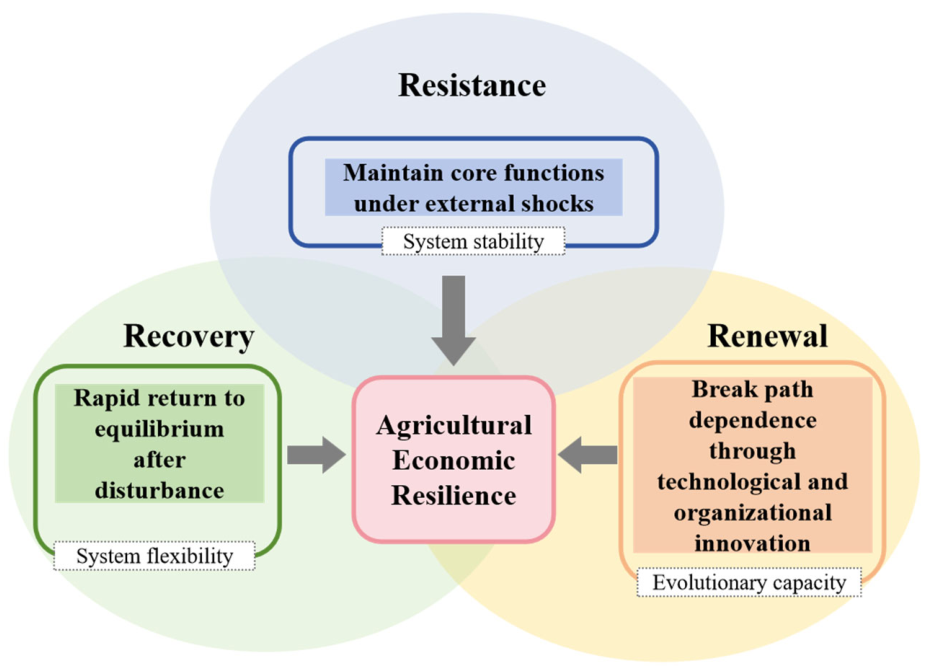
Therefore, this study defines agricultural economic resilience as the capacity of an agricultural system to enhance its resistance to external shocks and to improve its adaptive capability for rapid recovery and transition toward new growth pathways through internal structural optimization. Based on panel data from 30 provinces in China covering the period 2005–2022, this study constructs a comprehensive evaluation framework for agricultural economic resilience encompassing three dimensions: resistance, recovery, and renewal [
12,
38] (see
Figure 1). By employing a continuous difference-in-differences (Continuous DID) model within a quasi-natural experimental framework, this study identifies the causal effects of HSFC on agricultural economic resilience.
This paper makes three main contributions. First, it extends the evaluation of HSFC beyond conventional outcomes such as grain production, farmers’ income, or ecological performance, and examines its effect on the integrated dimension of agricultural economic resilience. By constructing an evaluation framework based on resistance, recovery, and renewal, this study provides a more comprehensive assessment of agricultural economic adaptability under multiple shocks. Second, this study employs a continuous DID model that uses the proportion of land consolidation area as a proxy for HSFC implementation intensity. Compared with conventional binary treatment approaches [
35,
39], this method captures the marginal effects of policy inputs more effectively and helps reduce estimation bias. Third, this study examines the transmission mechanisms of infrastructure improvement, mechanization, scale management, and agro-ecological improvement, and further explores heterogeneity across agricultural dependence, land type, and natural risk exposure. The findings provide empirical evidence for advancing HSFC in China and offer context-specific insights for promoting resilient agricultural systems through land-use policies under increasing global uncertainty.
3. Research Design
3.1. Variable Definition and Measurement
(1) Explained variable: Agricultural economic resilience.
Drawing on the relevant work of Zhang et al. [
51], this study constructs a composite evaluation index of agricultural economic resilience based on its conceptual connotation and the structural characteristics of China’s agricultural production system. The resulting index system encompasses three dimensions—resistance, recovery, and renewal—and is calculated using the entropy method. The selection of indicators follows three principles: theoretical consistency with the connotation of agricultural economic resilience, empirical relevance to China’s provincial agricultural systems, and data availability and comparability over the study period. Specifically, resistance reflects the ability of the agricultural system to maintain stable operation in the face of natural hazards and market fluctuations, and its indicators capture production stability, ecological pressure, and economic buffering capacity. Recovery measures the ability to restore rural production and economic activities after external disturbances. Renewal reflects the capacity for structural adjustment and production upgrading through technological progress, investment, and public support. The detailed indicator system and its description are presented in
Table 1.
(2) Core explanatory variable: HSFC.
Drawing on prior research [
36], this study uses, as the core explanatory variable, the interaction term between the proportion of land consolidation area and a dummy variable indicating the timing of HSFC implementation. Here, the proportion of land consolidation area refers to the percentage of total cultivated land accounted for by the area of low- and medium-yield farmland upgraded and the area of high-standard farmland.
(3) Mediating variables.
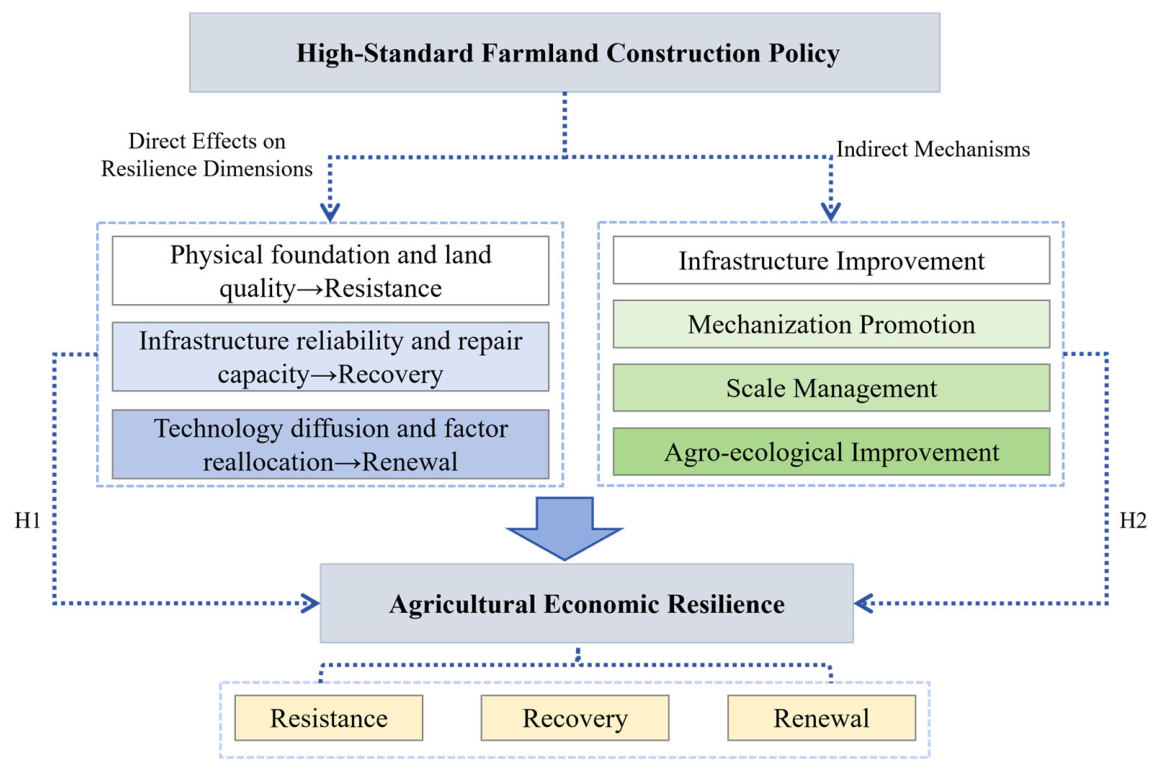
Based on the above theoretical framework, HSFC is expected to enhance agricultural economic resilience mainly through four channels. First, HSFC improves irrigation and drainage conditions through land leveling and the provision of water conservancy infrastructure, with the most direct outcome being an increase in effective irrigation capacity. Accordingly, irrigation coverage (Irr), measured as the ratio of effective irrigated area to total cultivated land area, is used as a proxy for the infrastructure pathway. Second, farmland consolidation reduces land fragmentation and operational constraints, thereby creating favorable conditions for mechanized input and improvements in production efficiency. Accordingly, agricultural machinery power per capita (Mech), measured as the ratio of total agricultural machinery power to the rural population, is used to capture the level of mechanization. Third, land transfer is a key mechanism through which moderate-scale farming and factor concentration are achieved. Accordingly, transferred farmland area (Farm), measured as the natural logarithm of the area of transferred household-contracted cultivated land, is used to characterize the scale-management pathway. Fourth, HSFC may reduce dependence on high-intensity chemical inputs by improving land quality and optimizing production conditions, thereby improving the agro-ecological environment of farmland. Accordingly, agricultural chemical input intensity (Chem) is used to capture this pathway, and is specifically defined as an intensity indicator constructed from fertilizer use, pesticide use, and agricultural plastic film use divided by crop-sown area.
(4) Control variables.
Drawing on previous studies and taking into full consideration the multidimensional factors affecting land-use change, this study includes the following variables as controls. At the socioeconomic level, the selected variables are: (1) the urban–rural income gap, measured by the Theil index (Urb); (2) transportation infrastructure, measured by the natural logarithm of freight turnover to reflect the effective transport capacity of the transport network in facilitating the circulation of production factors and agricultural products (Trans); (3) industrial structure, measured by the share of the combined value added of the secondary and tertiary sectors in GDP (Indus); (4) rural economic growth, measured by the natural logarithm of per capita regional GDP (Eco); (5) educational attainment, measured by the average years of schooling of the rural population (Edu); (6) the share of rural labor, measured as the ratio of rural employed persons to the rural resident population (Labor); and (7) the level of social consumption, measured by the natural logarithm of per capita retail sales of consumer goods (Consum). At the level of fiscal support, the selected variables are: (8) fiscal support intensity, measured by the ratio of local fiscal expenditure to GDP (Fis); and (9) tax burden, measured by the ratio of tax revenue to GDP (Tax).
3.2. Model Design
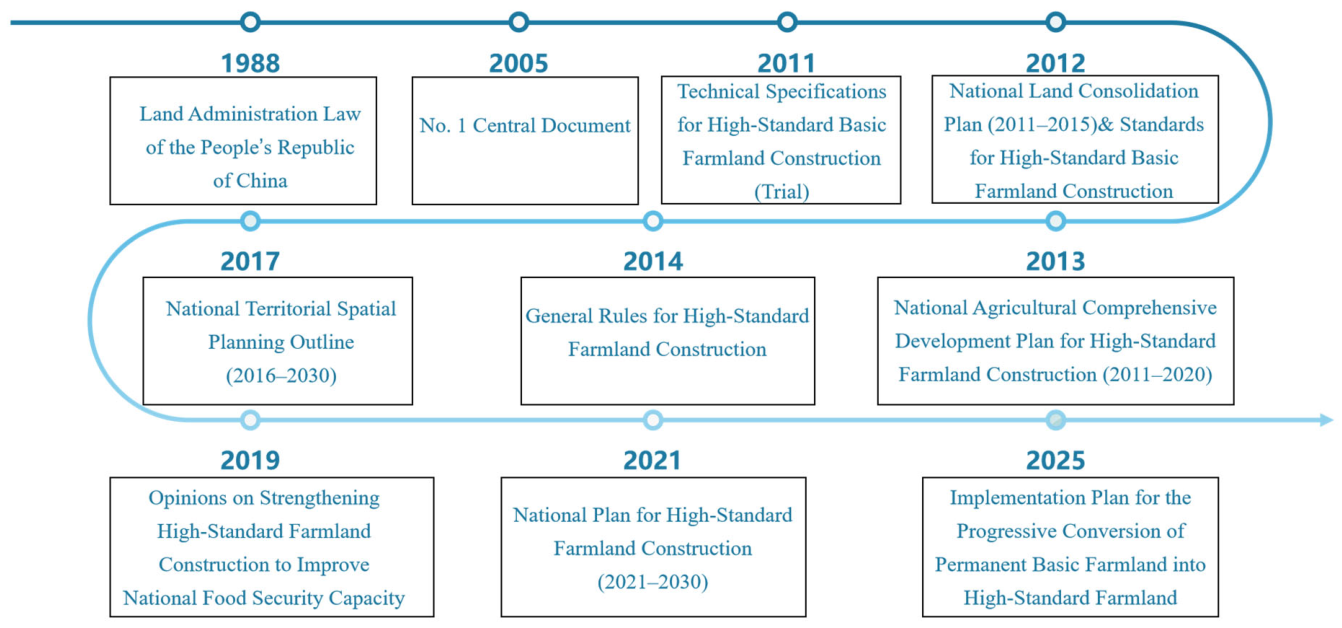
Since HSFC entered a stage of standardized nationwide implementation in 2011 and followed a differentiated implementation pattern that prioritized major grain-producing areas while also taking non-major producing areas into account, the policy generated spatiotemporal heterogeneity at the provincial level with quasi-natural experimental features. From a temporal perspective, the intensity of policy coverage varied continuously across provinces as implementation progressed. From a spatial perspective, substantial differences in construction intensity existed across provinces during the same period. Based on these features, this study uses the share of land consolidation area to capture policy implementation intensity and constructs a continuous DID model to identify the causal effect of HSFC on agricultural economic resilience by exploiting interprovincial variation in policy intensity. Compared with the conventional DID framework, which treats policy exposure as a binary variable, the continuous DID approach can, while controlling for province and year fixed effects, further capture the marginal effects associated with changes in policy intensity, thereby allowing a more precise identification of the dose-response relationship of policy inputs.
(1) Baseline regression.
To identify the causal effect of HSFC on agricultural economic resilience, this study exploits interprovincial differences in the share of land consolidation area to construct the following continuous DID model:
In Equation (1), Resilit represents the level of agricultural economic resilience in province i in year t; Hratei denotes the share of land consolidation area in province i; Itpost is a dummy variable for the post-policy period, taking the value 1 when t ≥ 2011 and 0 otherwise; Xit denotes the set of time-varying control variables. In addition, μi and γt represent province fixed effects and year fixed effects, respectively, while εit is the random error term. α is the constant term, and β and δ parameters to be estimated. The coefficient β captures the net effect of HSFC on agricultural economic resilience. Based on the theoretical analysis presented above, β is expected to be positive.
(2) Parallel trend test.
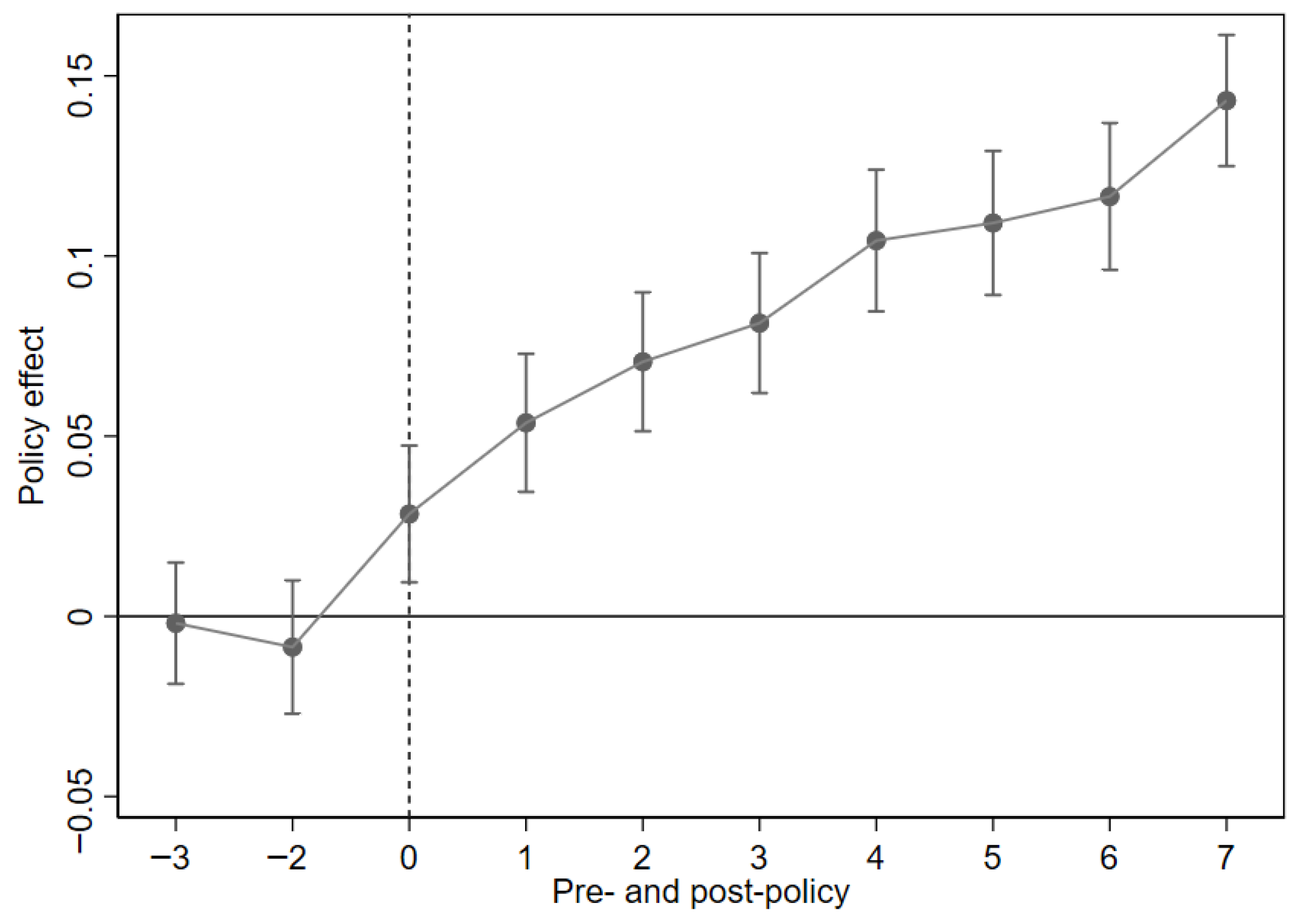
Causal identification in the continuous DID framework relies on the parallel trends assumption, which requires that, prior to policy implementation, agricultural economic resilience should follow similar trajectories across regions with different levels of policy intensity. To test this assumption, this study constructs an event-study framework using 2011 as the policy benchmark year and introduces relative-time indicators to capture the dynamic effects before and after policy implementation.
Compared with directly introducing dummy variables for each calendar year, the use of relative time transforms “absolute years” into the temporal distance from policy implementation, thereby more directly addressing the two key issues underlying the parallel trends test: whether pre-policy trends are consistent and whether post-policy effects evolve dynamically. At the same time, to avoid over-parameterization caused by the long sample period and to improve estimation stability, this study groups the two tails of the relative-time dimension by combining the three years prior to policy implementation and earlier into one category (denoted as −3), and the seventh year after policy implementation and later into another category (denoted as 7). Taking the year immediately preceding policy implementation (
k = −1) as the reference period, the model ultimately retains the key time windows consisting of the two pre-policy periods, the policy year itself, and the seven post-policy periods, as specified below:
In Equation (2), Hrateit × xhk denotes the interaction term between the share of land consolidation area and the relative-time dummy variable, where k denotes relative time. The coefficient βk captures the dynamic effect in each period before and after policy implementation, while the remaining coefficients are defined in the same way as in Equation (1). Before policy implementation (2011), the estimated coefficients on the interaction terms are expected to remain statistically stable; after policy implementation (2011), they are expected to exhibit significant changes.
(3) Mechanism inspection.
Given the limitations of the traditional three-step mediation model, this study draws on the research by Jiang [
52] to conduct regression analyses on the four mechanism variables using the policy on the construction of high-standard farmland. The aim is to verify the causal relationship between the policy and these four mechanism variables, thereby inferring the underlying mechanism through which the policy influences agricultural economic resilience. The following model is constructed:
In Equation (3), Mit denotes the mechanism variables considered in this study, including irrigation coverage, agricultural machinery power per capita, farmland transfer area, and agricultural chemical input intensity. The remaining variables and coefficients are defined consistently with those in Equation (1).
3.3. Data Source and Descriptive Statistics of Variables
This study employs panel data for 30 Chinese provinces (excluding Hong Kong, Macao, Taiwan, and the Tibet Autonomous Region) over the period 2005–2022. Data for the dependent variable—namely, the comprehensive evaluation index system of agricultural economic resilience—and the mechanism variables are obtained from the
China Statistical Yearbook. Data for the core explanatory variable, i.e., policies related to HSFC, are sourced from the
China Fiscal Yearbook and the
China Rural Statistical Yearbook. Data for the control variables are collected from the
China Statistical Yearbook, the
China Fiscal Yearbook, the
China Rural Statistical Yearbook, the
China Population and Employment Statistical Yearbook, the
China Environmental Statistical Yearbook, and the
China Rural Management Statistical Annual Report. Missing values for a small number of observations are supplemented using linear interpolation. Descriptive statistics for all variables are reported in
Table 2.
Two data-related limitations should be acknowledged. First, provincial-level aggregate data may mask intra-provincial heterogeneity in farmland quality, local governance capacity, farm structure, and household-level responses to HSFC. Nevertheless, provincial data are appropriate for this study because HSFC is a national land governance policy with differentiated implementation intensity across provinces, and long-term comparable policy and statistical indicators are mainly available at the provincial level. Second, other agricultural policies implemented during the same period may also have contributed to changes in agricultural economic resilience. To mitigate this concern, the model includes province and year fixed effects as well as time-varying socioeconomic and fiscal controls, which help absorb common national policy shocks, time-invariant provincial differences, and observable regional development trends. However, because all concurrent agricultural policies cannot be consistently measured at the provincial level, unobserved province-specific policy shocks cannot be completely excluded. This limitation is considered when interpreting the estimated policy effects.
4. Analysis of Results
4.1. Spatio-Temporal Evolution of Agricultural Economic Resilience in China
Understanding the spatio-temporal evolution of agricultural economic resilience is a necessary foundation for examining the impact of HSFC policies.
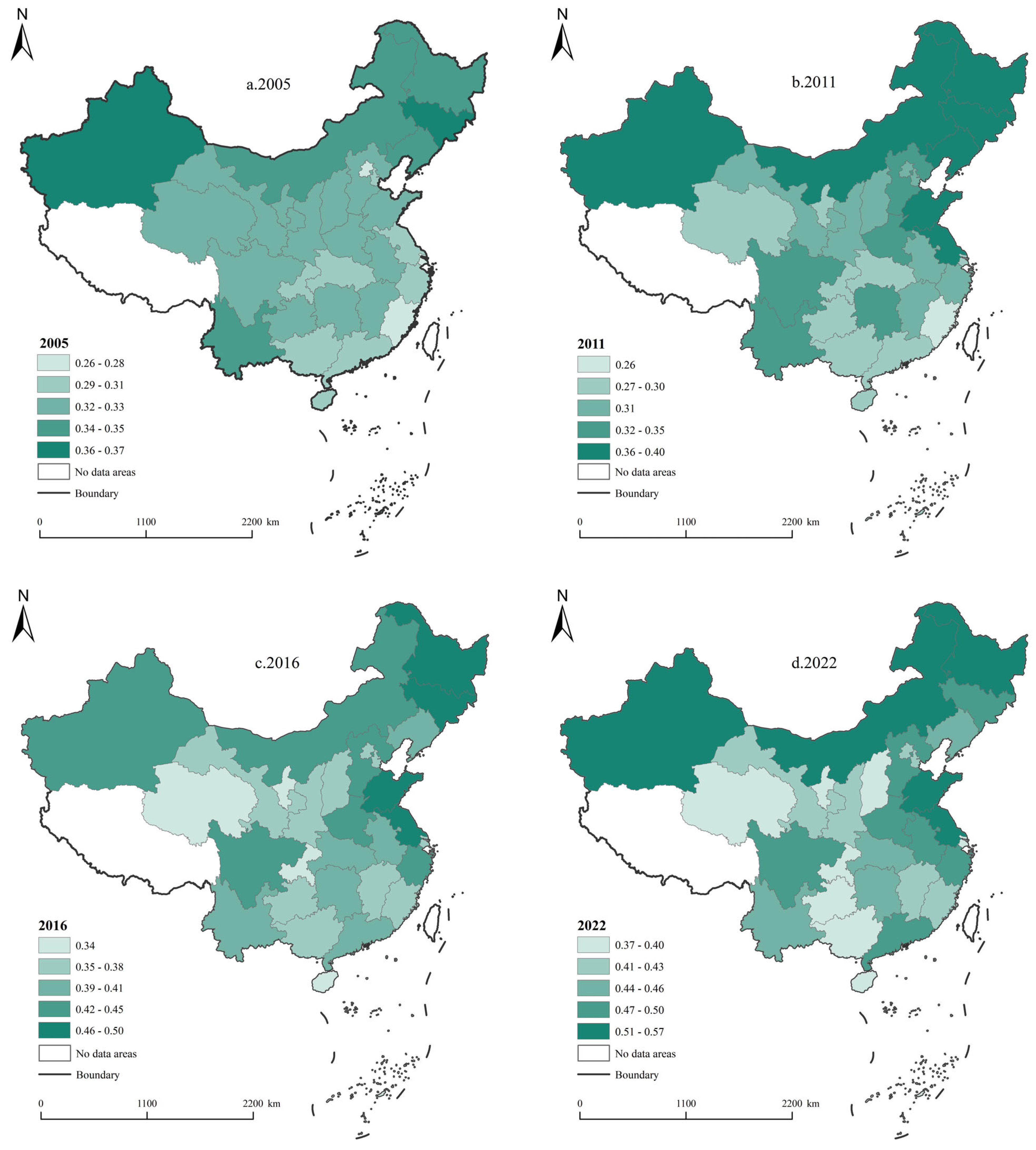
Figure 4 presents the spatial distribution of China’s agricultural economic resilience index in 2005, 2011, 2016, and 2022. Overall, agricultural economic resilience in China exhibits a gradual upward trend, while displaying pronounced regional disparities.
From a temporal perspective, the overall level of agricultural economic resilience in China was relatively low in 2005, with the resilience index for most provinces concentrated in the range of 0.26–0.33. These values were primarily observed in central and western regions, while some western and northern provinces exhibited comparatively higher resilience levels. This suggests that differences in regional development foundations and resource endowments led to heterogeneous initial impacts on agricultural economic resilience. By 2011, the overall level of agricultural economic resilience in China had improved, with the lower bound of the resilience index increasing to 0.27. In some eastern coastal provinces and major grain-producing regions, resilience levels reached 0.36–0.40, and the spatial clustering of high-resilience provinces became more pronounced. Notably, this change coincides with the HSFC policy entering a standardized implementation stage in 2011, indicating that the policy may have begun to exert a positive effect on agricultural economic resilience.
In 2016, agricultural economic resilience continued to improve in the eastern coastal regions, Northeast China, and some central provinces. The extent of high-resilience areas expanded further, with resilience indices generally ranging between 0.34 and 0.45, while southeastern coastal regions and some northwestern provinces remained at relatively low-to-medium levels. By 2022, agricultural economic resilience in China had further increased. High-resilience provinces were mainly concentrated in Northeast China, North China, and major grain-producing regions in the middle and lower reaches of the Yangtze River, with resilience indices reaching 0.51–0.57. Meanwhile, provinces in Southwest China and parts of Northwest China, where natural conditions are relatively constrained, still exhibited potential for improvement, although the overall trend showed clear progress. This indicates that the adaptive capacity of the agricultural system to natural risks and market fluctuations has gradually strengthened; however, the improvement in resilience remains spatially uneven.
Overall, from 2005 to 2022, China’s agricultural economic resilience exhibits the characteristics of “overall improvement, eastern priority, and north–south divergence” across both spatial and temporal dimensions. On the one hand, the national agricultural system has progressively enhanced its capacity to withstand natural risks, restore production, and promote technological innovation, leading to an overall increase in resilience. On the other hand, regional disparities persist, with agricultural economic resilience closely associated with regional endowments, farmland resource conditions, and exposure to risks. This evolutionary pattern provides an important contextual basis for subsequent analysis and, to some extent, offers preliminary evidence on the dynamic effects of HSFC policies on agricultural economic resilience.
4.2. Baseline Regression
Table 3 reports the baseline regression results for the impact of HSFC policies on agricultural economic resilience. Model (1) provides the baseline estimates, controlling for regional fixed effects, time fixed effects, and socioeconomic control variables. Model (2) further incorporates fiscal support-related control variables. The stepwise inclusion of control variables serves to test the robustness of the policy effects while also revealing the potential influence of different categories of controls on the core estimates. By first controlling for socioeconomic factors and subsequently introducing fiscal support variables, the analysis helps to better identify the net effect of the policy after accounting for potential confounding factors. Across all model specifications, the estimated coefficients of the core explanatory variable remain significantly positive, indicating that HSFC policies have a statistically significant positive effect on agricultural economic resilience.
Specifically, Model (1) reports a DID coefficient of 2.207, which is significant at the 10% level. In Model (2), after controlling for fiscal support, the coefficient increases slightly to 2.362 and is significant at the 5% level, indicating that the estimated policy effect remains robust after accounting for fiscal interventions. Given that the DID variable is measured by the proportion of land consolidation area, the estimated coefficient captures the marginal effect of a one-percentage-point increase in policy intensity on agricultural economic resilience—equivalent to an average increase of approximately 0.023 in the resilience index. These results suggest that HSFC policies not only enhance agricultural output but also systematically improve farmland infrastructure, optimize production conditions, and strengthen risk-buffering capacity. As a result, the agricultural system’s stability and adaptability under shocks are enhanced, leading to a significant improvement in agricultural economic resilience. Therefore, Hypothesis H1 is supported.
From an economic perspective, these findings indicate that HSFC policies play a significant institutional role in enhancing agricultural economic resilience. Investments associated with HSFC, by improving physical infrastructure, increasing production organization efficiency, and enhancing ecological and environmental quality, strengthen the agricultural system’s capacity to withstand shocks and recover from natural disasters and market fluctuations. At the same time, they create favorable conditions for long-term technological innovation and structural optimization. This suggests that the effects of HSFC policies are not limited to short-term increases in agricultural output; more importantly, they contribute to sustained improvements in agricultural economic resilience through institutional support and more efficient resource allocation.
4.3. Parallel Trends Test and Placebo Test
Figure 5 reports the results of the parallel trends test within an event study framework. Prior to the implementation of HSFC policies, the interaction coefficients between relative time indicators and policy intensity are not statistically different from zero, indicating that, before 2011, there were no systematic differences in the evolution of agricultural economic resilience across regions with different policy intensities. This provides support for the parallel trends assumption. In the year of policy implementation (2011), the interaction coefficients shift from negative to positive and become statistically significant, suggesting that the policy effects begin to emerge at the early stage of implementation. Following policy implementation, the interaction coefficients remain positive overall and exhibit a gradually increasing trend over time. Meanwhile, the corresponding confidence intervals move progressively away from the zero line, indicating that the impact of HSFC policies on agricultural economic resilience follows a continuous and cumulative dynamic process rather than a one-off shock. Overall, the event study results rule out significant pre-trend bias in the temporal dimension and provide further robust evidence supporting the baseline regression findings.
The dynamic estimates also provide preliminary evidence on the persistence of HSFC effects. The post-policy coefficients remain positive and generally increase over time, suggesting that the resilience-enhancing effect is not a short-term shock but a cumulative process during the sample period. Nevertheless, whether these effects can be maintained in the longer term depends on post-construction maintenance, stable fiscal support, and local implementation capacity. Regional and municipal policies, such as infrastructure maintenance arrangements, agricultural service provision, disaster-response systems, and complementary support for mechanization and land transfer, may further strengthen or weaken the observed policy effects. Because such local policy measures cannot be fully observed in the provincial panel data, the estimated coefficients should be interpreted as average effects of HSFC under different local implementation environments.
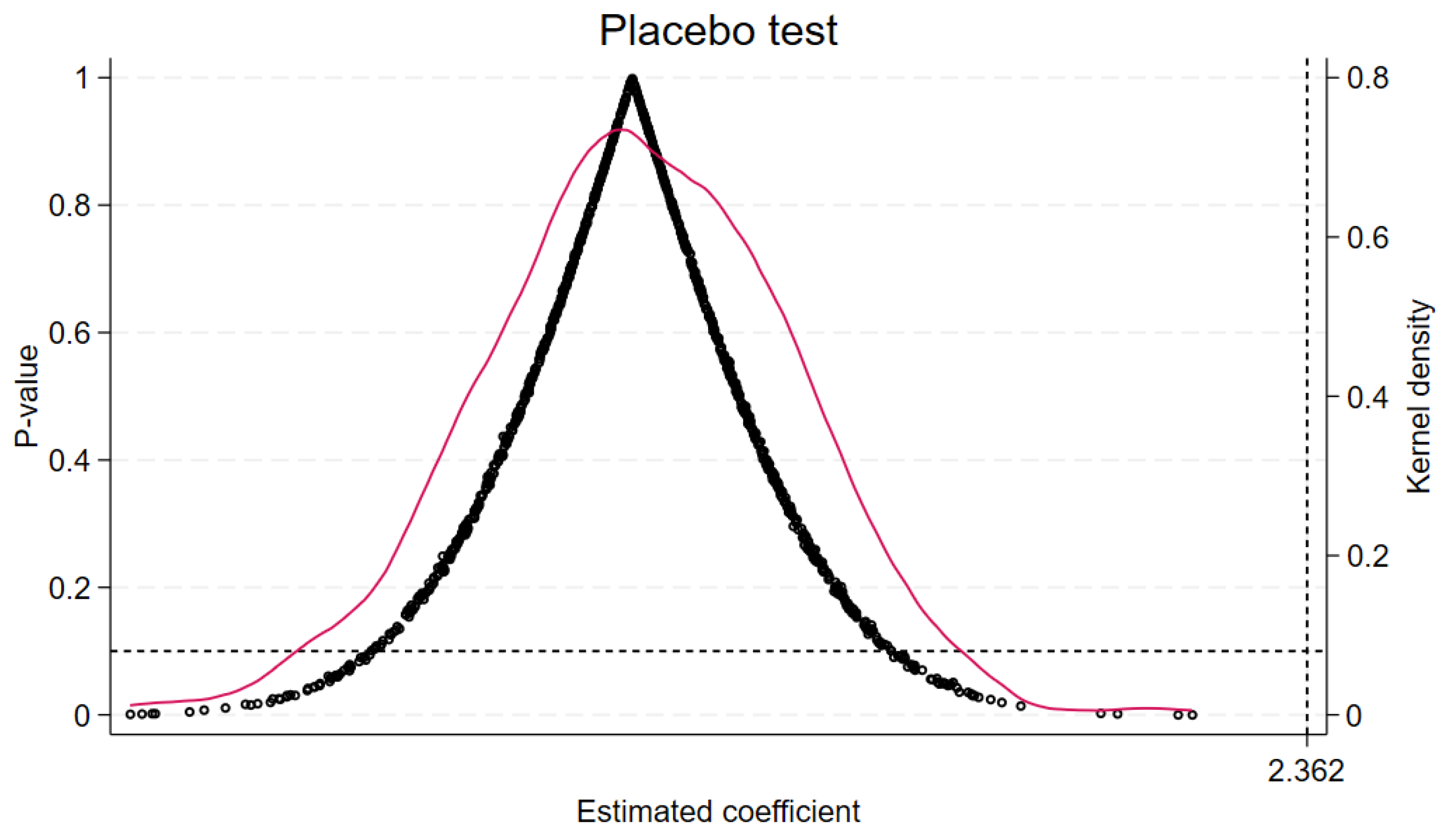
To address potential spurious regression arising from random shocks and unobserved factors, a placebo test is conducted.
Figure 6 presents the results of the placebo test. The horizontal axis reports the estimated policy coefficients obtained after random reassignment, the left vertical axis shows the corresponding
p-values, and the right vertical axis depicts the kernel density distribution of the estimated coefficients. The pink kernel density curve further illustrates that the placebo estimates are concentrated around zero and decline gradually toward both tails. The vertical dashed line indicates the true estimated coefficient from the baseline regression. Specifically, the core explanatory variable is randomly reassigned, and the regression is repeated 1000 times while keeping the sample structure and model specifications unchanged, thereby constructing a distribution of placebo policy effects. The results show that the estimated coefficients from the random reassignment are primarily centered around zero, with the kernel density exhibiting an approximately symmetric distribution. In contrast, the true estimated coefficient lies in the right tail of the distribution and deviates markedly from its main mass. These findings suggest that the policy effect identified in the baseline regression is unlikely to be driven by random variation or model misspecification. Therefore, the positive impact of HSFC policies on agricultural economic resilience is robust.
4.4. Robustness Tests
To assess the robustness of the baseline estimates, this study conducts a series of robustness checks from three perspectives: sample interval adjustment, instrumental variable estimation, and propensity score matching (PSM). The detailed results are reported in
Table 4. Overall, the findings are consistent across different specifications, with the core conclusion remaining unchanged—namely, that HSFC policies exert a statistically significant positive effect on agricultural economic resilience.
(1) Adjusting the sample period.
Given that the COVID-19 pandemic in 2020 and subsequent macroeconomic fluctuations may constitute exogenous shocks that interfere with model estimation, this study excludes observations from 2020 onward and re-estimates the model to isolate the effects of such exceptional events. The results from Model (3) indicate that, after excluding the influence of specific years, the coefficient of the interaction term for the core explanatory variable remains significantly positive at the 5% level. This suggests that the positive effect of HSFC policies on agricultural economic resilience is robust and not driven by extreme observations or structural breaks at the end of the sample period.
(2) Instrumental variable approach.
Given that regions with higher levels of agricultural economic resilience may possess greater resource endowments for implementing HSFC policies, the estimates may be subject to endogeneity bias arising from reverse causality. To mitigate this concern, this study follows the instrumental-variable logic of using lagged values of potentially endogenous variables and employs the one-period lag of the core explanatory variable as an instrument [
51,
53]. This treatment differs from directly replacing the contemporaneous explanatory variable with its lagged value; instead, the lagged policy variable is used within an IV framework. The rationale is that the previous-period HSFC intensity is closely related to current policy implementation because HSFC is characterized by policy continuity and path dependence, while current agricultural economic resilience is unlikely to directly affect the previous-period policy intensity. Therefore, this approach helps alleviate potential reverse causality and provides an additional robustness check for the baseline estimates. The estimation results of Model (4) show that the coefficient of the one-period lagged explanatory variable remains significantly positive at the 10% level, indicating that the positive effect of HSFC policies on agricultural economic resilience persists after addressing potential endogeneity concerns.
(3) Propensity score matching (PSM).
To further address potential selection bias arising from non-random sampling and to ensure comparability between the treatment and control groups in terms of observable characteristics, this study employs propensity score matching (PSM) for counterfactual analysis. Specifically, propensity scores for policy exposure are estimated using a logit model, and nearest-neighbor matching without replacement is implemented to ensure similarity and matching quality between treated and control units. After matching, only observations within the region of common support are retained, and the regression is re-estimated based on the matched sample. The PSM results reported in Model (5) indicate that the average treatment effect on the treated (ATT) of HSFC policies on agricultural economic resilience is 2.011 and is statistically significant at the 10% level. These findings further confirm the robustness of the baseline regression results and suggest that the estimated policy effects are not driven by sample selection bias.
4.5. Heterogeneity Analysis
Given regional differences in resource endowments and economic structures, the effects of HSFC policies on agricultural economic resilience may exhibit heterogeneity. To examine this, the sample is stratified along three dimensions—agricultural dependence, agricultural production conditions, and the level of natural risk—and separate regressions are conducted to assess the policy’s impact. The detailed results are reported in
Table 5.
(1) Heterogeneity in agricultural dependence.
Agricultural economic resilience reflects the capacity of regional agricultural systems to maintain core functions, recover from shocks, and adjust development pathways in response to external disturbances. The effects of HSFC policies are inevitably embedded within broader regional economic structures. Given that the role of agriculture within the overall economic system varies across regions—thereby influencing the efficiency of resource allocation and the transmission of policy effects—this study adopts agricultural dependence (measured by the share of agricultural value added in GDP) as the classification criterion. The sample is accordingly divided into agriculture-dominated and non-agriculture-dominated regions. The regression results indicate that, in agriculture-dominated provinces (Model (7)), the estimated coefficient of HSFC policies is positive and statistically significant at the 1% level. In contrast, in non-agriculture-dominated provinces (Model (6)), although the coefficient remains positive, it is not statistically significant. This suggests that the policy effects exhibit clear asymmetry across different economic structures.
These findings can be interpreted as follows. In agriculture-dominated regions, agriculture serves as the core sector for both economic growth and risk transmission. HSFC policies directly target the agricultural production sector, and the output-stabilizing effects generated through improved factor allocation and enhanced risk resistance can be more readily translated into system-level gains in agricultural economic resilience, resulting in higher marginal effects. Meanwhile, fiscal resources, technical support, and institutional arrangements in such regions tend to be more concentrated within the agricultural sector, reducing the likelihood that policy investments are diverted to non-agricultural uses and thereby enhancing implementation efficiency. In addition, agriculture-dominated regions typically possess relatively well-developed supporting industries and large-scale production entities (e.g., cooperatives and family farms), which facilitate the absorption and amplification of policy benefits while mitigating inefficiencies such as idle facilities or increased costs due to inadequate complementary infrastructure. By contrast, in non-agriculture-dominated provinces, economic growth relies more heavily on industrial and service sectors. Consequently, HSFC policies carry relatively limited weight within the overall economic system, and their marginal contribution to agricultural economic resilience is less pronounced.
(2) Heterogeneity in agricultural production conditions.
Different types of farmland exhibit significant differences in production patterns, resource constraints, and technological suitability. The engineering- and standardization-oriented approach emphasized by HSFC policies is therefore not equally applicable across all production conditions. Based on this, the sample is further divided into paddy-dominated and dryland-dominated regions to examine how policy effects vary under different agricultural production conditions. The results show that, in paddy-dominated regions (Model (9)), the estimated coefficient of HSFC policies is positive and statistically significant at the 1% level. In contrast, in dryland-dominated regions (Model (8)), the coefficient is negative but not statistically significant. This comparison indicates that the effectiveness of HSFC policies depends critically on their alignment with underlying production conditions.
These results can be explained as follows. Paddy-field regions, especially those located in the middle and lower reaches of the Yangtze River and southern China, typically benefit from relatively favorable hydrological conditions and well-developed irrigation infrastructure, which are highly consistent with the technical logic of “land leveling and irrigation–drainage systems” emphasized by HSFC policies. In such contexts, the marginal cost of engineering investment is relatively low, while improvements in production stability resulting from infrastructure upgrades are substantial. By contrast, dryland-dominated regions, particularly those in northern and northwestern China, often face structural constraints such as water scarcity and fragmented land parcels. In these areas, the implementation of HSFC policies tends to involve higher engineering costs, and reliance on infrastructure investment alone is insufficient to fundamentally overcome natural resource constraints, thereby limiting the policy’s capacity to enhance agricultural economic resilience.
(3) Heterogeneity in natural risk levels.
The core of agricultural economic resilience lies in the capacity of agricultural systems to withstand natural shocks and market fluctuations. Differences in regional risk exposure directly affect both the urgency and the potential returns of policy interventions. To capture this heterogeneity, this study uses disaster incidence (measured as the ratio of affected area to arable land area) as a proxy variable and classifies the sample into high-risk and low-risk regions. The results show that, in high-risk regions (Model (11)), HSFC policies significantly enhance agricultural economic resilience, with the coefficient being significant at the 5% level. In contrast, in low-risk regions (Model (10)), the estimated coefficient is significantly negative. These findings indicate that the direction of policy effects diverges across different risk environments.
These results can be interpreted as follows. In low-risk regions, where agricultural production environments are relatively stable and economic development levels are higher, agriculture has increasingly shifted toward high value-added and multifunctional activities. Provinces in this category are often located in economically developed coastal or peri-urban areas, where agricultural resilience depends less on basic farmland infrastructure and more on “soft capabilities,” including technological innovation, market diversification, and the extension of industrial chains. Against this backdrop, large-scale public investment in basic production infrastructure may, to some extent, crowd out resources that would otherwise support innovation and structural upgrading. Moreover, by reinforcing path dependence through standardized production systems, HSFC policies may reduce system flexibility and diversity, which could be detrimental to long-term improvements in overall resilience. By contrast, high-risk provinces are more commonly found in major grain-producing areas or regions frequently exposed to droughts, floods, and other natural hazards, such as parts of North China, and the middle and lower reaches of the Yangtze River. In these provinces, HSFC policies address key constraints in disaster prevention and recovery by strengthening water conservancy infrastructure, field road systems, and disaster mitigation facilities. As a result, these policies generate higher marginal benefits by effectively enhancing the agricultural system’s capacity to resist shocks, adapt to changing conditions, and recover rapidly after disturbances, thereby exerting a significant positive effect on agricultural economic resilience.
4.6. Mechanism Tests
Building on the preceding theoretical analysis, HSFC policies are unlikely to affect agricultural economic resilience through a single channel; rather, their effects are expected to operate through multiple mechanisms, including improvements in infrastructure, technological adoption, reorganization of production structures, and the enhancement of ecological functions. To examine the validity of these transmission channels, this study employs a continuous DID framework and uses irrigation coverage, agricultural machinery power per capita, farmland transfer area, and the intensity of agricultural chemical inputs as dependent variables. This approach allows for a systematic assessment of the effects of HSFC policies on key mechanism variables. The corresponding estimation results are reported in
Table 6.
First, the results of Model (12) indicate that HSFC policies significantly increase irrigation coverage, with the effect being statistically significant at the 10% level. This finding suggests that the policy alleviates long-standing structural constraints related to farmland water conservancy through improvements in irrigation systems, water resource projects, and supporting infrastructure. Compared with simply increasing output levels, improvements in irrigation conditions more directly enhance the agricultural system’s capacity to buffer against extreme weather shocks, such as droughts and floods, thereby reducing output volatility and shortening post-disaster recovery periods. Consequently, infrastructure improvements represent not only technological inputs aimed at enhancing production efficiency, but also fundamental conditions underpinning agricultural economic resilience.
Second, the results of Model (13) show that HSFC policies significantly increase agricultural machinery power per capita at the 10% significance level. This indicates that land consolidation and soil quality improvement provide standardized spatial conditions for mechanized operations, thereby facilitating the substitution of capital for labor. It is important to note that mechanization in this context is not merely an efficiency-enhancing tool; its contribution to resilience is primarily reflected in the system’s capacity to respond to time-sensitive shocks. Under conditions of tightening labor constraints or shortened windows for post-disaster planting and harvesting, mechanization improves both response speed and operational precision, thereby strengthening the agricultural system’s ability to maintain continuous production under shock conditions. These results indicate that technological adoption constitutes a key transmission channel through which HSFC policies enhance agricultural economic resilience.
Furthermore, the results of Model (14) show that HSFC policies have a significantly positive effect on farmland transfer area at the 1% level, indicating that the policy promotes the reallocation of land resources. Through land leveling, clarification of property rights, and improvements in supporting infrastructure, HSFC policies reduce land transaction costs, enhance the liquidity of land assets, and facilitate the concentration of farmland among more efficient operators. Compared with fragmented operations, moderate-scale farming not only reduces unit production costs through economies of scale but, more importantly, enhances operators’ capacity for risk sharing and resource allocation. This enables greater adaptability and flexibility in response to market fluctuations and natural shocks. Consequently, scale management is not merely a byproduct of HSFC policies, but a key organizational mechanism through which agricultural economic resilience is strengthened.
Finally, the results of Model (15) indicate that HSFC policies significantly reduce the intensity of agricultural chemical inputs at the 1% level. This finding suggests that the policy weakens agriculture’s dependence on high-intensity chemical inputs through soil improvement, enhanced soil fertility, and the promotion of green production technologies. In contrast to the traditional “high input–high output” paradigm, the decline in chemical input intensity reflects an improvement in the self-regulating capacity of agroecosystems, thereby reducing the likelihood that environmental risks are transmitted into economic risks. The restoration and strengthening of ecological functions provide the agricultural system with an important long-term buffering mechanism, enhancing its endogenous stability in the face of external shocks and, in turn, forming a critical ecological foundation for agricultural economic resilience.
To compare the relative strength of the four transmission channels, the mechanism variables were further standardized and Equation (3) was re-estimated. The results are reported in
Table 7. Since the four mechanism variables are measured in different units, their unstandardized coefficients are not directly comparable. The standardized results show that HSFC has the strongest effect on the scale-management pathway, followed by agro-ecological improvement, mechanization promotion, and infrastructure improvement. This suggests that HSFC affects agricultural economic resilience primarily by promoting land resource reallocation and moderate-scale management, while ecological improvement and mechanization also constitute important supporting channels. Therefore, the mechanism analysis indicates that the policy effect is not merely generated through physical infrastructure investment, but also through organizational restructuring and ecological optimization within the agricultural production system.
5. Discussion
The empirical results indicate that HSFC policies are not merely engineering interventions aimed at improving farmland quality and increasing agricultural output, but institutional investments that strengthen agricultural economic resilience. By improving infrastructure, promoting mechanized operations, facilitating moderate-scale management, and enhancing agro-ecological conditions, HSFC helps agricultural systems reduce output volatility, shorten post-shock recovery periods, and create conditions for adaptive upgrading. The mechanism analysis further shows that the resilience-enhancing effect of HSFC is generated not only through physical infrastructure investment, but also through the restructuring of production conditions, factor allocation, and ecological functions. Improved irrigation and drainage facilities enhance the capacity to cope with droughts and floods; mechanization strengthens the timeliness and precision of agricultural operations under labor constraints or post-disaster production pressures; land transfer and moderate-scale management improve organizational efficiency and risk-sharing capacity; and the reduction in chemical input intensity contributes to a more stable agro-ecological foundation.
The heterogeneity results further suggest that the effects of HSFC are strongly conditioned by regional agricultural structures, farmland types, and risk environments. This finding is important because it shows that HSFC does not generate uniform policy returns across all regions. Instead, its effectiveness depends on whether the technical logic of farmland construction is consistent with local production conditions and resilience needs. In agriculture-dominated regions, HSFC can be more directly translated into improvements in agricultural system stability because agriculture occupies a central position in the regional economy. In paddy-dominated areas, land leveling, irrigation and drainage systems, and mechanized field operations are more compatible with the production requirements of paddy farming. In regions facing greater natural risks, HSFC can play a stronger role in strengthening disaster prevention, buffering shocks, and supporting post-disaster recovery. These results imply that the policy value of HSFC lies not in a uniform construction model, but in matching construction priorities with regional constraints and resilience demands.
Compared with existing studies that mainly evaluate HSFC using indicators such as grain yield, total factor productivity, farmers’ income, or carbon emissions [
27,
32,
36], this study places policy evaluation within a multidimensional resilience framework. This perspective helps reveal that the value of HSFC lies not only in productivity improvement, but also in strengthening the resistance, recovery, and renewal capacities of agricultural systems under external shocks. Methodologically, the use of a continuous DID framework captures differences in policy intensity and provides evidence on the marginal effects of HSFC implementation. In this sense, the study extends the evaluation of land-use policy from short-term production performance to broader system-level resilience.
Several broader issues also deserve discussion. First, the long-term effectiveness of HSFC depends on financial sustainability. HSFC requires not only initial construction investment, but also continuous expenditure on maintenance, monitoring, operation, and post-disaster repair. If post-construction management is insufficient, infrastructure degradation may reduce the long-term return on public investment. Second, excessive standardization may weaken the flexibility and diversity of local agricultural systems. Uniform standards can improve construction efficiency and basic production conditions, but they may also constrain locally adapted farming systems, specialty crops, ecological buffer zones, and traditional agricultural knowledge. Third, the benefits of HSFC may not be evenly distributed across rural groups. Large-scale operators and better-capitalized farms may be more capable of capturing the benefits of improved infrastructure, mechanization, and land transfer, while smallholders, elderly farmers, and low-income households may face higher participation thresholds, rising land rents, or unequal access to machinery services. Therefore, while HSFC can enhance agricultural economic resilience at the aggregate level, its long-term effects depend on whether fiscal arrangements, technical standards, and rural governance mechanisms can support inclusive and locally adaptive implementation.
6. Conclusions and Implications
Using panel data for 30 Chinese provinces over the period 2005–2022, this study employs a continuous difference-in-differences framework to evaluate the effects of HSFC policies on agricultural economic resilience and the underlying mechanisms. The results show that HSFC significantly enhances agricultural economic resilience, and this conclusion remains robust after adjusting the sample period, using a lagged explanatory variable, and applying propensity score matching. The heterogeneity analysis further indicates that the policy effects vary across regional conditions, suggesting that the marginal returns of HSFC depend on agricultural dependence, farmland type, and risk exposure. The mechanism analysis shows that HSFC improves agricultural economic resilience through four major channels: improving infrastructure, promoting mechanization, facilitating scale management, and enhancing the agro-ecological environment. These findings suggest that HSFC should be understood not only as a farmland improvement project, but also as a long-term institutional investment for strengthening the resistance, recovery, and renewal capacities of agricultural systems.
The applicability of HSFC to other regions depends on whether the institutional and resource conditions required for this policy approach are present. The Chinese experience shows that land-use policies can contribute to agricultural resilience when they are supported by stable public investment, clear implementation standards, local government coordination, and long-term maintenance arrangements. However, this approach may face different constraints in other regional or national contexts. In regions with highly fragmented land tenure, weak fiscal capacity, limited local governance capacity, or severe water scarcity, large-scale standardized farmland construction may be difficult to implement or may generate limited marginal returns. Therefore, the broader relevance of HSFC does not lie in directly replicating a uniform construction model, but in adapting its core policy logic—improving land quality, strengthening agricultural infrastructure, reducing production risks, and enhancing adaptive capacity—to local land institutions, farm structures, water endowments, and climate-risk conditions.
Based on the above findings, several policy implications can be derived. First, HSFC should be positioned as a long-term public investment for agricultural resilience rather than a short-term engineering project aimed only at expanding production capacity. Public policy should shift from emphasizing construction scale to emphasizing life-cycle performance. This requires stable fiscal support for both construction and post-construction maintenance, together with diversified financing mechanisms involving central and local fiscal funds, agricultural infrastructure funds, and, where appropriate, participation by agricultural service organizations and new agricultural business entities. At the same time, policy evaluation should incorporate not only the completed construction area, but also infrastructure functionality, maintenance quality, disaster-buffering capacity, and improvements in agricultural economic resilience. Such a performance-oriented framework can help ensure that public investment is converted into sustained resilience benefits.
Second, HSFC policy toolkits should be differentiated according to regional production conditions and risk characteristics. In agriculture-dominated and high-risk regions, policy resources should be prioritized toward infrastructure components with direct risk-buffering functions, such as irrigation and drainage systems, field roads, disaster-prevention facilities, water-storage infrastructure, and rapid post-disaster repair mechanisms. In paddy-dominated areas, the policy toolkit should emphasize land leveling, irrigation and drainage coordination, water-saving irrigation, mechanized transplanting and harvesting, and precision field management. In dryland regions, especially those facing water scarcity and ecological fragility, HSFC should be combined with drought-resistant farming technologies, water-saving irrigation, soil and water conservation, conservation tillage, shelterbelt construction, and soil organic matter improvement. In non-agriculture-dominated or low-risk regions, the focus should gradually shift toward smart agriculture, specialty agriculture, multifunctional agriculture, market integration, and value-chain upgrading, so as to avoid excessive investment in basic infrastructure with limited marginal returns.
Third, post-construction management should be strengthened to ensure that HSFC continues to function effectively over the long term. The resilience-enhancing effects of HSFC depend not only on initial construction quality, but also on the continuous operation, repair, and upgrading of farmland infrastructure. Local governments should establish clear responsibility-sharing mechanisms among construction agencies, village collectives, agricultural operators, and maintenance organizations. Dedicated maintenance funds and regular monitoring systems should be established to prevent infrastructure degradation. In areas frequently affected by extreme weather events, emergency repair mechanisms should also be incorporated into HSFC governance, so that damaged irrigation, drainage, road, and protection facilities can be restored rapidly after disasters. Digital monitoring technologies, remote sensing, and field-level information systems can be used to improve the accuracy and timeliness of infrastructure management.
Fourth, HSFC should be integrated with broader climate change adaptation strategies. Under increasing climate uncertainty, farmland construction should not only improve current production conditions, but also enhance the capacity of agricultural systems to adapt to more frequent droughts, floods, heat stress, and pest outbreaks. Climate-adaptive HSFC should therefore include several technical components: improved irrigation and drainage systems to cope with drought–flood alternation, water-saving irrigation technologies to reduce water pressure, soil moisture conservation and organic matter improvement to strengthen soil resilience, ecological buffer zones and shelterbelts to reduce environmental risks, and climate-resilient crop varieties and agronomic practices to improve production stability. In addition, early-warning systems, agricultural insurance, and digital decision-support tools should be integrated with HSFC to form a more comprehensive risk-governance system.
Fifth, HSFC implementation should pay greater attention to inclusive governance and the prevention of rural inequalities. To avoid the possibility that policy benefits are disproportionately captured by large-scale operators, supporting measures should be designed for smallholders, elderly farmers, and low-income households. These measures may include inclusive machinery services, transparent land-transfer arrangements, targeted subsidies for small-scale farmers, cooperative-based service platforms, and mechanisms that allow local farmers to participate in post-construction management. At the same time, HSFC should follow the principle of “basic standards plus local adaptation.” While basic standards are necessary for ensuring construction quality, local governments should retain flexibility to adjust technical modules according to farmland type, water availability, ecological vulnerability, and local production traditions. This can help avoid over-standardization and maintain agricultural diversity while improving resilience.
Finally, several limitations and future research directions should be acknowledged. First, due to data availability, this study relies on provincial-level panel data, which may mask heterogeneity at the county, village, and household levels. Future research could use county-level data, plot-level data, or household survey data to identify more precisely how HSFC affects different types of farmers and local production systems. Second, this study focuses mainly on aggregate agricultural economic resilience, while the distributional effects of HSFC require further examination. Future studies should investigate whether HSFC changes land rents, labor allocation, smallholder participation, income distribution, and the welfare of elderly farmers and low-income households. Third, although this study discusses the long-term economic sustainability of HSFC, it does not directly conduct a full cost–benefit analysis. Future research could incorporate construction costs, maintenance costs, fiscal capacity, and resilience benefits into an integrated evaluation framework. Fourth, under the background of climate change, future studies could combine climate scenarios with HSFC evaluation to assess whether different technical pathways—such as water-saving irrigation, conservation tillage, ecological restoration, and smart agriculture—produce heterogeneous adaptation effects. These extensions would provide more detailed evidence for designing regionally differentiated, financially sustainable, and socially inclusive farmland construction policies.