Article

Irrigation Reshapes Vegetation Dynamics and Their Environmental Controls in the Hetao Irrigation District Watershed, Inner Mongolia, China

1
State Key Laboratory of Water Engineering Ecology and Environment in Arid Area, Inner Mongolia Agricultural University, Hohhot 010018, China
2
Inner Mongolia Key Laboratory of Ecohydrology and High-Efficient Utilization of Water Resources, Hohhot 010018, China
3
Collaborative Innovation Center for Integrated Management of Water Resources and Water Environment in the Inner Mongolia Reaches of the Yellow River, Hohhot 010018, China
4
Shanxi Institute of Geological Survey Co., Ltd., Taiyuan 030006, China
5
Department of Biological and Agricultural Engineering & Zachry Department of Civil Engineering, Texas A&M University, College Station, TX 77843, USA
*
Authors to whom correspondence should be addressed.
Land 2026, 15(5), 892; https://doi.org/10.3390/land15050892 (registering DOI)
Submission received: 21 April 2026 / Revised: 19 May 2026 / Accepted: 19 May 2026 / Published: 21 May 2026

Abstract

The normalized difference vegetation index (NDVI) is widely used to track vegetation cover and ecological change. However, in arid watersheds where irrigated farmland and natural vegetation coexist, it remains unclear how irrigation changes the relative effects of climate, terrain, and soil on vegetation growth. Using the Hetao irrigation district watershed in Inner Mongolia, this study analyzed NDVI dynamics and their environmental controls from 2001 to 2024 through trend analysis, spatial autocorrelation, XGBoost-SHAP, GeoDetector, and geographically weighted regression. NDVI increased significantly across the watershed at 0.0035 yr−1, but the increase was much stronger inside the irrigation district (mean NDVI = 0.58; slope = 0.0061 yr−1) than outside it (mean NDVI = 0.26; slope = 0.0015 yr−1). Global Moran’s I values remained above 0.86, showing persistent spatial clustering. The main drivers also differed by zone. DEM, SOC, and precipitation were most important for the whole watershed; SOC, TP, pH, and TN were more important inside the irrigation district; and precipitation and DEM were more important outside it. GeoDetector confirmed that paired drivers strengthened each other, including SOC ∩ DEM at the watershed scale and DEM ∩ TP outside the irrigation district. GWR further showed that rainfall effects were stronger outside the irrigation boundary, while soil-related effects were stronger in the irrigated agricultural belt. These results show that irrigation not only increases NDVI but also changes how vegetation responds to environmental conditions by weakening direct rainfall limitation and strengthening soil-related controls in managed landscapes. The findings provide evidence for zone-specific vegetation restoration and land-water management in dryland irrigation watersheds.

1. Introduction

Vegetation greening in dryland irrigation systems reflects both ecological change and human water management. These systems often support grain production in arid and semi-arid regions, where vegetation growth depends on limited rainfall as well as irrigation and farming practices [1]. Irrigation can reduce water stress and stabilize crop growth, but it can also increase competition for scarce water among agriculture, ecosystems, and downstream users [2,3]. Separating irrigated from non-irrigated landscapes is therefore important for distinguishing greening related to water diversion and cultivation from vegetation change controlled mainly by climate. NDVI provides a practical indicator for tracking these differences in vegetation cover and growth [4,5].
Vegetation change in the Yellow River Basin has been widely studied. Previous work has shown that precipitation, temperature, terrain, soil properties, and land use all influence vegetation patterns, but their relative importance varies across regions [6,7]. Many studies have focused on the whole basin or on large administrative units, mainly identifying NDVI trends and broad climatic or environmental drivers [8]. A remaining question is whether irrigation changes the way NDVI responds to water, heat, soil, and terrain [9]. In irrigated areas, Yellow River water diversion may partly offset rainfall deficits, so vegetation may become less dependent on precipitation and more related to soil quality, salinity, and farming practices [10,11]. Outside irrigated areas, natural vegetation should remain more sensitive to rainfall, temperature, terrain, and soil background [12]. The key issue is therefore not only which factors affect NDVI but how irrigation changes their relative importance.
The Hetao irrigation district watershed provides a suitable case for this question [13]. Located on the northern margin of the Yellow River Basin, it is a dryland irrigated oasis and agro-pastoral transition zone [14]. The watershed includes mountains, cropland, desert, grassland, lakes, and irrigated oases, creating strong spatial contrasts in vegetation and environmental conditions. Vegetation inside the irrigation district is strongly influenced by Yellow River water diversion, fertilization, and farmland management, whereas vegetation outside the district is more closely controlled by rainfall, temperature, terrain, and natural soil conditions [15]. This contrast makes the watershed useful for examining how human water regulation changes vegetation-environment relationships [16].
This study combined field-measured soil properties from 2024 with historical soil datasets to better represent soil differences inside and outside the irrigation district [17]. Using NDVI, precipitation, temperature, terrain, and soil data from 2001 to 2024, we examined whether irrigation reshapes vegetation dynamics and their environmental controls in a dryland watershed. The objectives were to (i) describe NDVI trends, class transitions, and spatial clustering across the whole watershed and in irrigated and non-irrigated zones; (ii) use XGBoost–SHAP analysis, implemented with XGBoost version 1.7.6 and SHAP version 0.42.1, to identify the relative contributions, response directions, and sensitive response ranges of NDVI drivers; (iii) use GeoDetector analysis, performed with the official GeoDetector Software in Excel, Release 1, to test driver interactions, and GWR, implemented using the Spatial Statistics toolbox in ArcGIS Desktop 10.8, to examine spatial differences in driver effects. Together, these methods were used to clarify how irrigation and agricultural management change the roles of water availability, temperature, soil properties, and topography and to support zone-specific vegetation restoration and land-water management [18].

2. Materials and Methods

2.1. Study Area

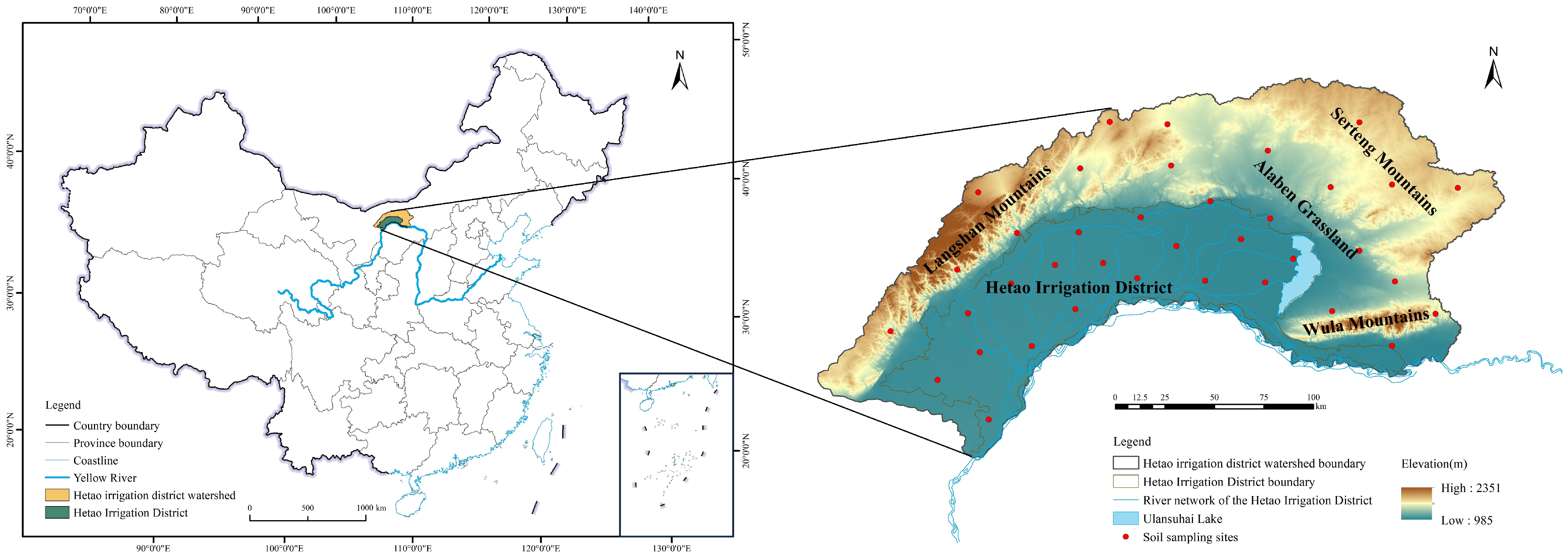
The Hetao irrigation district watershed is located in the northwestern part of the “Jiziwan” section of the Yellow River in Inner Mongolia (Figure 1), between 39°10′–41°38′ N and 104°55′–111°48′ E, and covers about 2.86 × 10⁴ km2. It is bordered by the Ulan Buh Desert to the west, the Yellow River to the south, the Seerteng and Wula mountains to the east, and the Langshan Mountains to the north. The watershed includes the Hetao Irrigation District, Ulansuhai Lake, and the Alaben grassland, forming a landscape of desert, river, grassland, mountains, and irrigated oases. The region has a typical temperate continental arid to semi-arid climate, with annual precipitation of 132–276 mm and potential evaporation of 1276–2799 mm. The mean annual temperature ranges from 6 to 8 °C, the frost-free period lasts 135–150 days, and the winter freezing period lasts 5–6 months. Based on the official boundary of the Hetao Irrigation District, the watershed was divided into irrigated and non-irrigated zones. The irrigated zone represents a human-managed agricultural system supplied mainly by Yellow River water diversion, where cropland and managed vegetation dominate. In contrast, the non-irrigated zone represents the surrounding natural and semi-natural landscapes within the same watershed, where natural grassland, shrubland, and patchy desert vegetation are the main vegetation types.

2.2. Data Sources and Basic Preprocessing

This study used NDVI, climate, terrain, and soil-property data. NDVI data were obtained from the MOD13Q1.061 Terra Vegetation Indices product released by NASA for 2001–2024 at 250 m resolution. Monthly precipitation and air temperature data at 1 km resolution were obtained from the National Earth System Science Data Center of China for the same period. Terrain information was derived from the 30 m ASTER GDEM dataset, from which elevation (DEM) and slope were extracted. Soil variables included soil organic carbon (SOC), pH, total nitrogen (TN), total phosphorus (TP), and total potassium (TK). Historical soil data for 1998–2010 were obtained from the Chinese Soil Database, and gridded soil data for 2010–2018 were obtained from the National Tibetan Plateau/Third Pole Environment Data Center. Because the original soil values were stored after multiplication by 100, SOC, TN, TP, and TK were divided by 100 before interpretation and are reported in g/kg. pH was also divided by 100 and reported as a dimensionless value. The main datasets are summarized in Table 1.

2.3. Soil Sampling and Laboratory Analysis

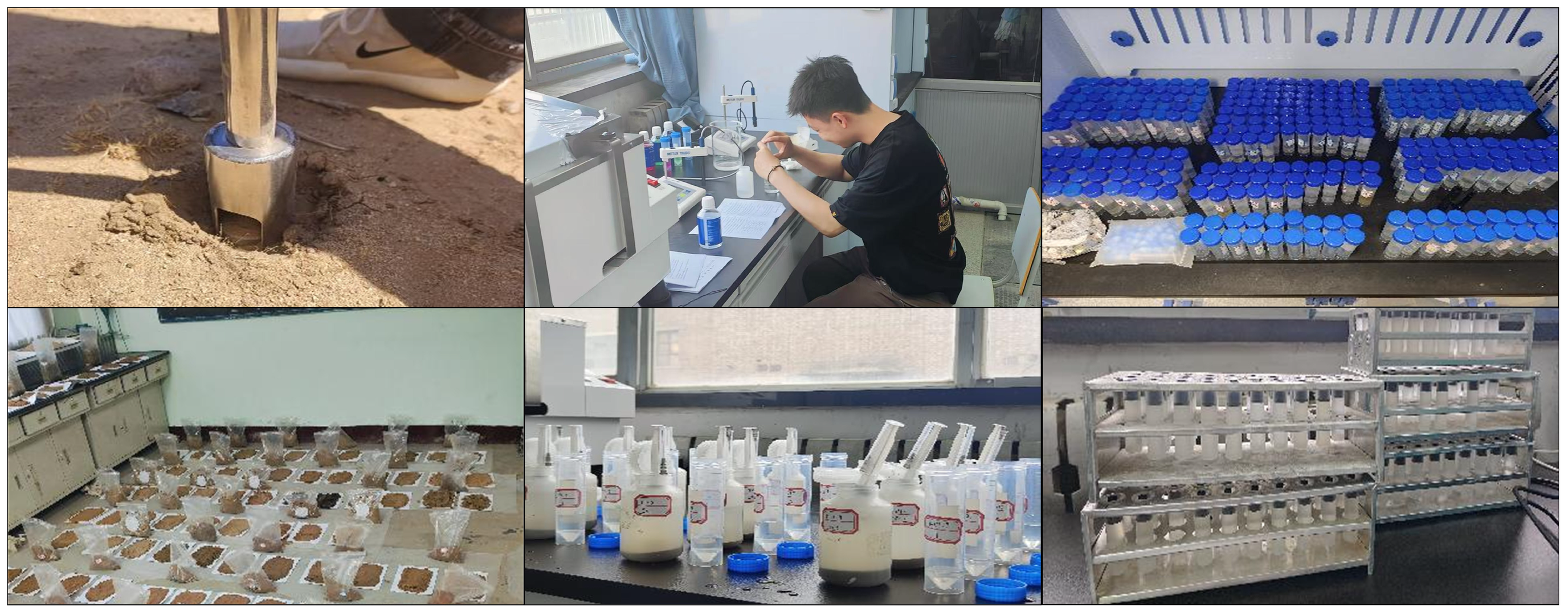
Field soil sampling was carried out during the 2024 growing season (June–August). To account for landform differences, site accessibility, and land-use representation, 38 sampling sites were selected using a combination of watershed-wide distribution and stratified random sampling by land-use type (Figure 1). At each site, five topsoil subsamples (0–20 cm) were collected within a 5 m radius using a 5 cm diameter auger and then combined into one composite sample. About 1 kg of mixed soil was stored in a sterile sealed bag, and site coordinates were recorded with a handheld GPS device. After roots and litter were removed, the samples were air-dried, ground, sieved, and analyzed for SOC, pH, TN, TP, and TK using standard soil agrochemical methods. The field and laboratory workflow is shown in Figure 2.

2.4. Data Integration and Analytical Framework

Continuous annual soil-property measurements were not available for 2001–2024. Soil variables were therefore treated as spatial background conditions rather than fully time-varying annual drivers. Historical soil data and national gridded soil data were used to describe long-term and regional soil patterns, while the 2024 field observations were used to supplement and calibrate the recent spatial pattern of soil properties. To improve the spatial representation of field-measured soil properties, co-kriging interpolation was performed with precipitation, temperature, elevation, and other environmental covariates as auxiliary variables, producing 1000 m soil-property raster layers.
Because the datasets differed in spatial resolution, all data were resampled to a unified 250 m × 250 m grid using the nearest-neighbor method. Projection transformation, mean-value calculation, clipping, and other preprocessing procedures were also conducted to ensure consistency in spatial projection and temporal sequence among datasets. These steps helped reduce potential bias and improve the accuracy and reliability of the results.
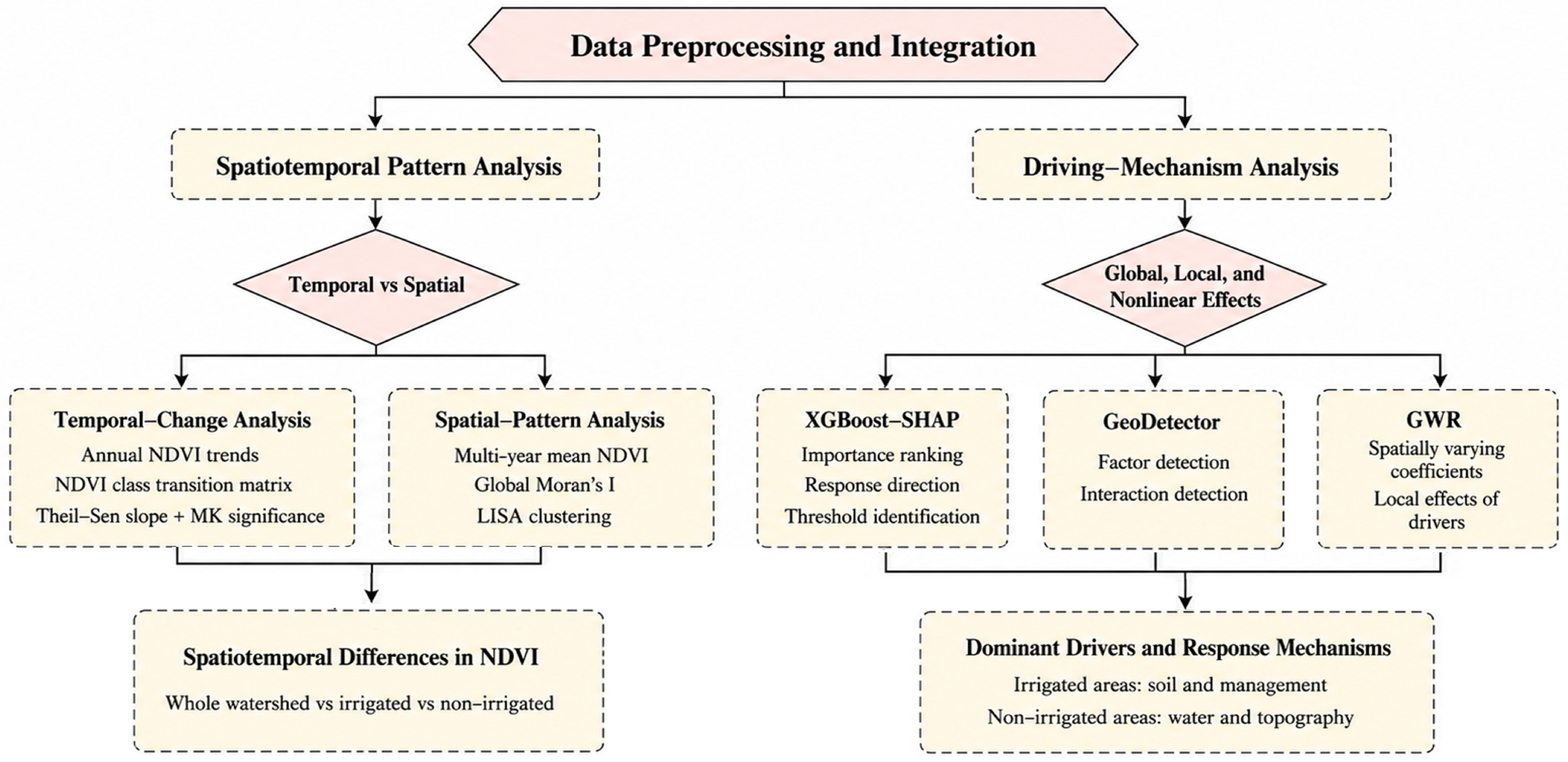
The overall analytical framework of this study is shown in Figure 3. The three attribution methods were used for different purposes. XGBoost-SHAP was used as the main tool to identify nonlinear driver contributions and response directions. GeoDetector was used to test the explanatory power of drivers and their two-factor interactions. GWR was used to examine whether driver effects varied across space. The interpretation focused on agreement among methods rather than on any single ranking. Because all analyses were based on observational spatial data, the results are interpreted as model-supported associations rather than direct causal proof.

2.4.1. NDVI Class Transition Matrix Analysis

To characterize stage-specific changes in NDVI structure across the Hetao irrigation district watershed, NDVI raster data for 2001, 2005, 2010, 2015, 2020, and 2024 were classified using a fixed-threshold approach [19]. Based on the NDVI range of the study area and differences in vegetation cover, NDVI was divided into five classes: Class I (0.0–0.2), Class II (0.2–0.4), Class III (0.4–0.6), Class IV (0.6–0.8), and Class V (0.8–1.0). The same classification thresholds were applied to all years to ensure interannual comparability [20].
Transition matrices were then generated by raster overlay analysis to quantify class persistence, gains, losses, and class-to-class transfers between different periods. Each matrix element represents the area or number of pixels transferred from NDVI class i at the initial time to class j at the later time. The transition area was calculated as follows:
S i j = n i j × A ,
where S i j is the area transferred from class i to class j , n i j is the number of pixels transferred from class i to class j , and A is the area represented by a single pixel. When transitions are expressed as pixel counts rather than areas, S i j can be replaced directly by n i j . By examining both the diagonal and off-diagonal elements of the matrix, class persistence, adjacent-class conversion, and directional shifts between low and medium-high NDVI classes can be identified.

2.4.2. NDVI Trend and Significance Analysis

To quantify pixel-scale NDVI trends during 2001–2024, the Theil-Sen median slope estimator and the Mann–Kendall (MK) significance test were jointly applied to the annual mean NDVI series [21,22]. This combined approach does not require normality and is less sensitive to outliers than ordinary least squares, making it well suited to long-term remote-sensing time series.
The Theil-Sen slope was calculated as follows:
β = m e d i a n ( N D V I i N D V I j i j ) , 1 i < j n ,
where β is the NDVI trend slope, N D V I i and N D V I j are the NDVI values in years i and j , respectively, and n is the length of the time series. A positive β indicates an increasing NDVI trend, whereas a negative β indicates a decreasing trend; larger absolute values of β represent faster rates of change.
The MK test was then used to evaluate the statistical significance of the trend. In this study, |Z| ≥ 1.96 and |Z| ≥ 2.58 were used to indicate significance at p < 0.05 and p < 0.01, respectively. The combination of the Theil-Sen slope and the MK test was used to identify both the direction and significance of NDVI change.

2.4.3. Spatial Autocorrelation Analysis

Spatial autocorrelation analysis was used to determine whether NDVI values exhibited clustered, dispersed, or random spatial patterns. Global Moran’s I was used to evaluate overall spatial dependence across the study area, whereas local Moran’s I was used to identify local clusters and spatial outliers, including high-high clusters, low-low clusters, high-low outliers, and low-high outliers [23].
Global Moran’s I was calculated as follows:
G l o b a l   M o r a n s   I = n i = 1 n j = 1 n w i j ( x i x ¯ ) ( x j x ¯ ) ( i = 1 n j = 1 n w i j ) i = 1 n ( x i x ¯ ) 2 , ( i j ) ,
Local Moran’s I was calculated as follows:
L o c a l   M o r a n s   I = ( x i x ¯ ) s 2 j = 1 n ω i j ( x j x ¯ ) ,
where x i and x j are the NDVI values of spatial units i and j , n is the total number of spatial units, x ¯ is the mean NDVI value, ω i j is the spatial weight between units i and j , and s 2 is the sample variance of NDVI.

2.4.4. XGBoost-SHAP Analysis of Nonlinear Responses and Thresholds

XGBoost is an ensemble-learning algorithm based on gradient-boosted decision trees and has strong capacity for fitting complex nonlinear relationships [24]. To quantify the contribution of each driver to NDVI and to identify nonlinear response characteristics, SHAP (Shapley Additive Explanations) was introduced as an interpretable machine-learning method [25]. Based on Shapley-value theory, SHAP decomposes the model prediction into the marginal contribution of each feature, thereby revealing both variable importance and the direction of feature effects. The SHAP explanatory model can be expressed as follows:
f ( x ) = g ( z ) = ϕ 0 + j = 1 M ϕ j z j ,
where f ( x ) is the prediction of the original model, g ( z ) is the SHAP explanation model, ϕ 0 is the mean prediction of the model, M is the number of driving factors, and ϕ j represents the SHAP contribution of feature j . The mean absolute SHAP value of each factor was used to measure variable importance. NDVI was used as the dependent variable, and precipitation, temperature, elevation, slope, and soil physicochemical properties were used as explanatory variables. Separate XGBoost regression models were developed for the whole watershed, inside the irrigation district [26], and outside the irrigation district. Samples were divided into training and testing sets at a ratio of 8:2, and the model parameters were optimized through five-fold cross-validation combined with grid search. Model performance was evaluated using R2, RMSE, and MAE.
After the optimal model was obtained, SHAP values were calculated using TreeExplainer in SHAP 0.42.1. Original driver values were then plotted against their SHAP values and fitted with LOWESS-smoothed curves. Potential response thresholds or sensitive turning points were identified where the curves crossed the SHAP = 0 baseline [27]. All thresholds are reported in the original units of the input variables.
To test whether spatial autocorrelation inflated model performance, spatial block validation was used as a sensitivity analysis. The study area was divided into 20 km × 20 km blocks, and all samples within the same block were assigned to the same group. Five-fold GroupKFold cross-validation was then used to separate training and testing samples spatially. Performance under spatial block validation was compared with the random 8:2 split.

2.4.5. GeoDetector Analysis

GeoDetector was used to assess the explanatory power of different drivers for NDVI spatial differentiation without relying on linear assumptions [28]. Two modules were applied in this study: the factor detector, which quantifies the explanatory power of a single factor, and the interaction detector, which evaluates whether the joint effect of two factors enhances or weakens NDVI differentiation.
The explanatory power of factor X for NDVI spatial differentiation Y was expressed using q as follows:
q = 1 h = 1 L N h σ h 2 N σ 2 = 1 S S W S S T ,
S S W = h = 1 L N h σ h 2 ,
S S T = N σ 2 ,
where h = 1, …, L denotes the strata of variable Y or factor X; N h and N are the numbers of units in stratum h and the whole study area, respectively; σ h 2 and σ 2 are the variances of Y in stratum h and the whole study area, respectively; and S S W and S S T are the sums of within-stratum variance and total variance, respectively. The q-value ranges from 0 to 1, and larger q-values indicate stronger explanatory power.
The interaction detector was further used to interpret the joint effects of paired factors [29]. The main interaction types identified in this study are summarized in Table 2.

2.4.6. Geographically Weighted Regression

Geographically weighted regression (GWR) was used to reveal the spatial non-stationarity of the relationships between NDVI and its driving factors [30]. By incorporating geographic location into the regression framework, GWR allows local parameter estimation and can therefore capture place-specific differences in factor effects. The GWR model was expressed as follows:
y i = β 0 ( u i , v i ) + j = 1 k β j ( u i , v i ) x i j + ε i ,
where y i is the dependent variable at spatial unit i , x i j is the explanatory variable j at spatial unit i , β 0 ( u i , v i ) is the local intercept at location ( u i , v i ) , β j ( u i , v i ) is the local regression coefficient for explanatory variable j , k is the number of explanatory variables, and ε i is the random error term. A positive coefficient indicates a positive relationship between the explanatory variable and NDVI, whereas a negative coefficient indicates a negative relationship.

3. Results

3.1. Temporal Changes and NDVI Class Transitions

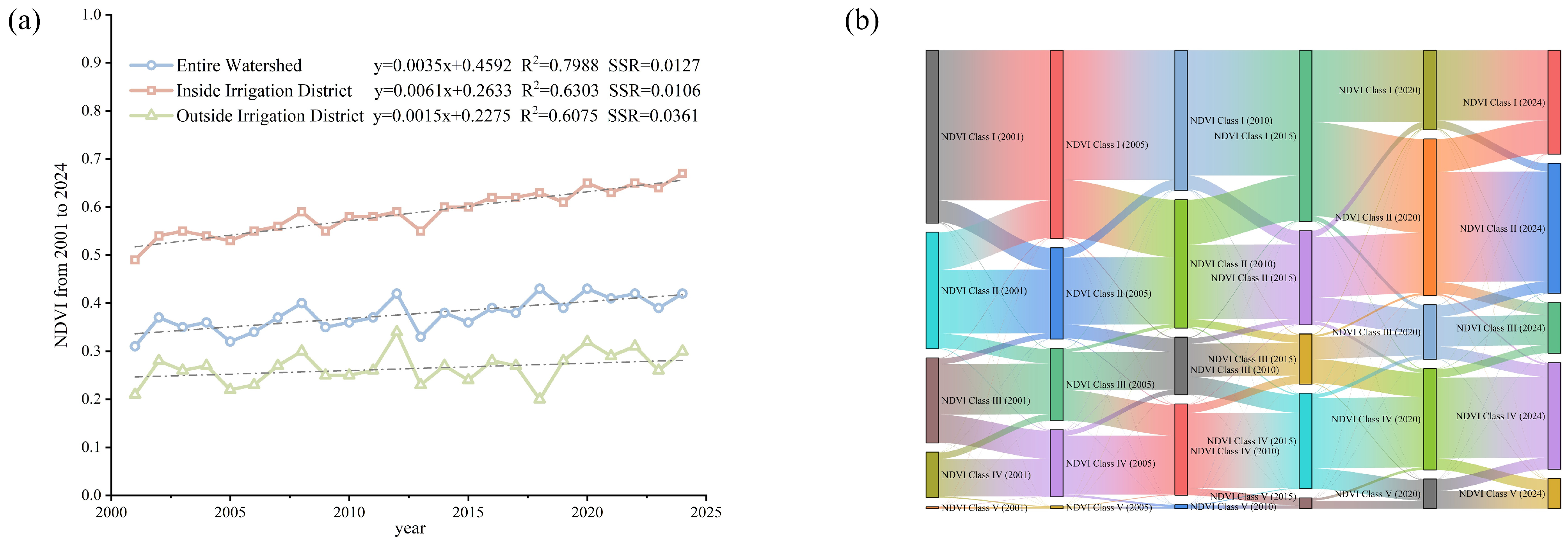
From 2001 to 2024, NDVI in the Hetao irrigation district watershed showed a significant but fluctuating upward trend (Figure 4a). The mean NDVI for the whole watershed ranged from 0.31 to 0.43, with an overall mean of 0.38 and an average annual increase of 0.0035 year−1, indicating an overall improvement in vegetation cover during the study period. Inside the irrigation district, NDVI was consistently higher than the watershed average, ranging from 0.49 to 0.67 with a mean of 0.58, and it increased fastest at 0.0061 year−1. Outside the irrigation district, NDVI ranged from 0.14 to 0.34, with a mean of 0.26, which was only 44.8% of the mean value inside the irrigation district and increased much more slowly at 0.0015 year−1.
The NDVI transition matrix (Figure 4b) showed that class persistence and shifts between neighboring classes dominated throughout the study period, whereas jumps across multiple classes were relatively rare, indicating strong stage continuity. Class I decreased from 40.98% in 2001 to 24.63% in 2024, and Class III decreased from 20.15% to 12.08%; by contrast, Class II increased from 27.62% to 30.82%, Class IV increased from 10.80% to 25.32%, and Class V increased from 0.45% to 7.16%. Overall, the NDVI structure shifted from low classes toward medium and high classes, with the most pronounced improvement occurring during 2015–2020, when transitions from Class I to II, Class III to IV, and Class IV to V became especially evident.

3.2. Spatial Patterns and Spatial Autocorrelation of NDVI

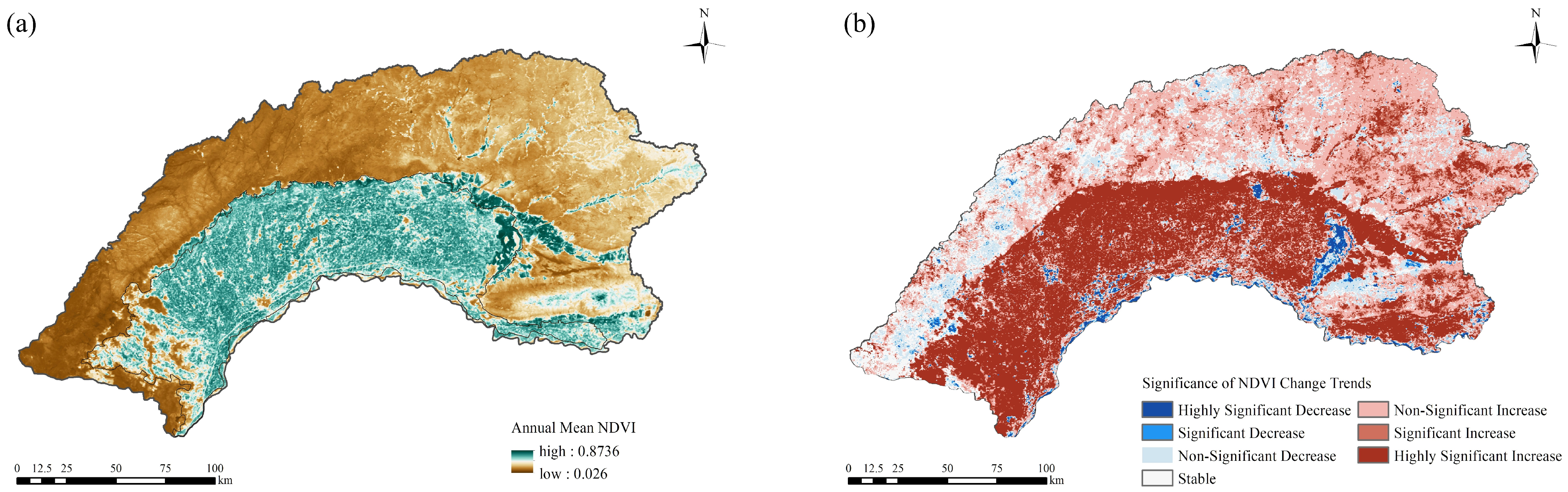
The multi-year mean NDVI showed strong spatial heterogeneity, with a clear pattern of higher values inside the irrigation district and lower values outside it (Figure 5a). Mean NDVI values ranged from 0.0261 to 0.8736. Under the fixed-threshold five-class scheme, Classes IV and V were concentrated mainly in the central and southern irrigation zones, indicating persistently high vegetation cover in the managed oasis, whereas Class I occurred mainly in the Ulan Buh Desert, the Langshan Mountains, the western margin of the Alaben grassland, around Ulansuhai Lake, and along the northern piedmont of the Wula Mountains. Classes II and III were widely distributed in the outer irrigation belt and piedmont transition zones and formed the main transitional background of the watershed.
Trend and significance analysis further showed that NDVI increases dominated the watershed during 2001–2024 (Figure 5b). Significant and highly significant increases were concentrated in the central and southern Yellow River irrigated zone and its surrounding areas, where they formed relatively continuous patches. Non-significant increases were widespread in the peripheral belt outside the irrigation district. Areas with decreasing NDVI were limited in extent and occurred mainly as scattered patches in the northern mountains, the eastern piedmont, around Ulansuhai Lake, and in local desert–grassland transition zones.
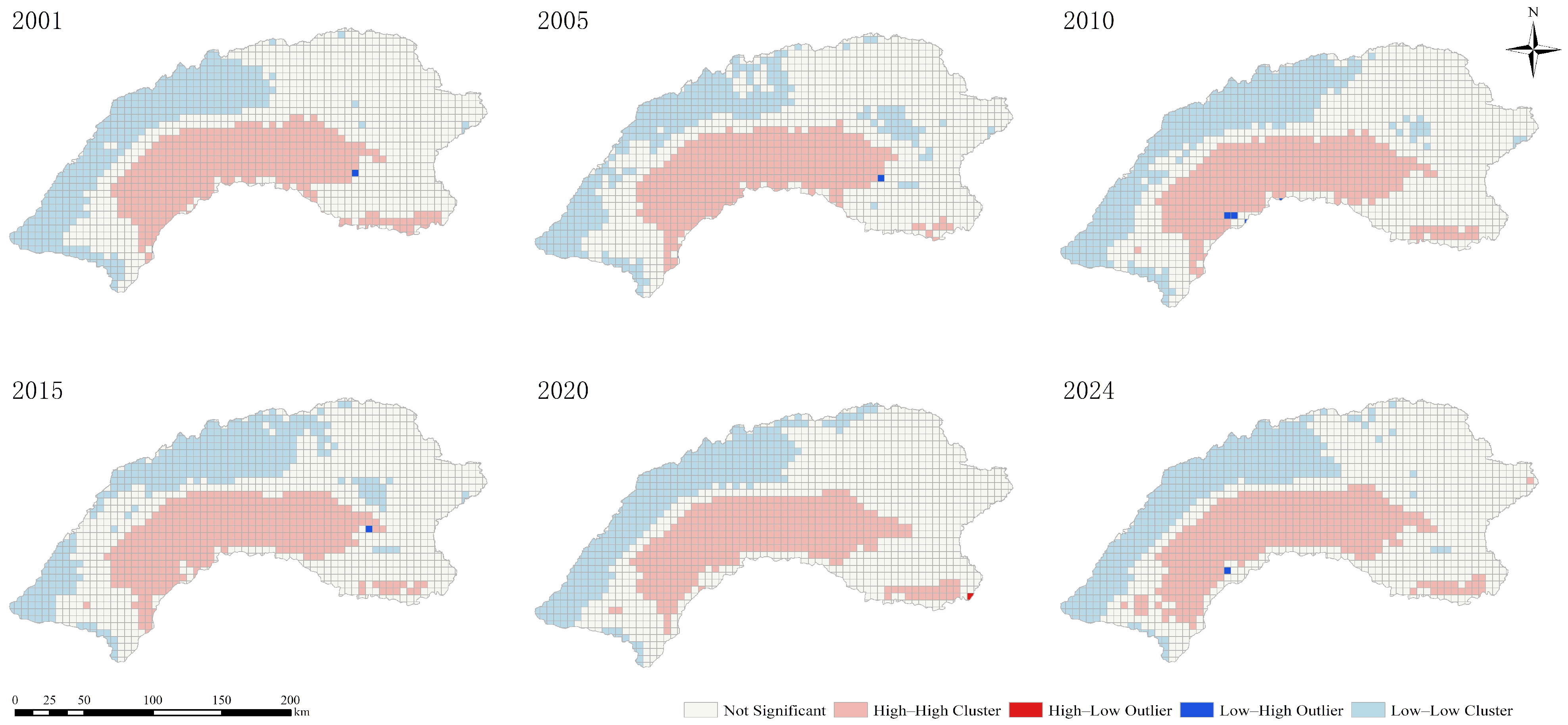
Using equal-distance grid sampling, the watershed was divided into 1348 grids of 5 km × 5 km. Global Moran’s I values for 2001, 2005, 2010, 2015, 2020, and 2024 were 0.895, 0.892, 0.886, 0.883, 0.860, and 0.864, respectively. The corresponding z-scores ranged from 45.445 to 47.275, and all p-values were below 0.001. These results indicate strong positive spatial autocorrelation rather than a random NDVI pattern. Moran’s I declined slightly from 2001 to 2020 and then increased slightly in 2024, but all values remained high. Local spatial autocorrelation also showed a stable clustering pattern (Figure 6): high-high clusters were concentrated in the irrigated core, low-low clusters occurred mainly in mountains and desert margins, and non-significant areas dominated broad transition belts. Thus, NDVI improvement was spatially concentrated rather than evenly distributed.

3.3. Nonlinear Contributions and Zonal Response Patterns of NDVI Drivers Based on XGBoost-SHAP

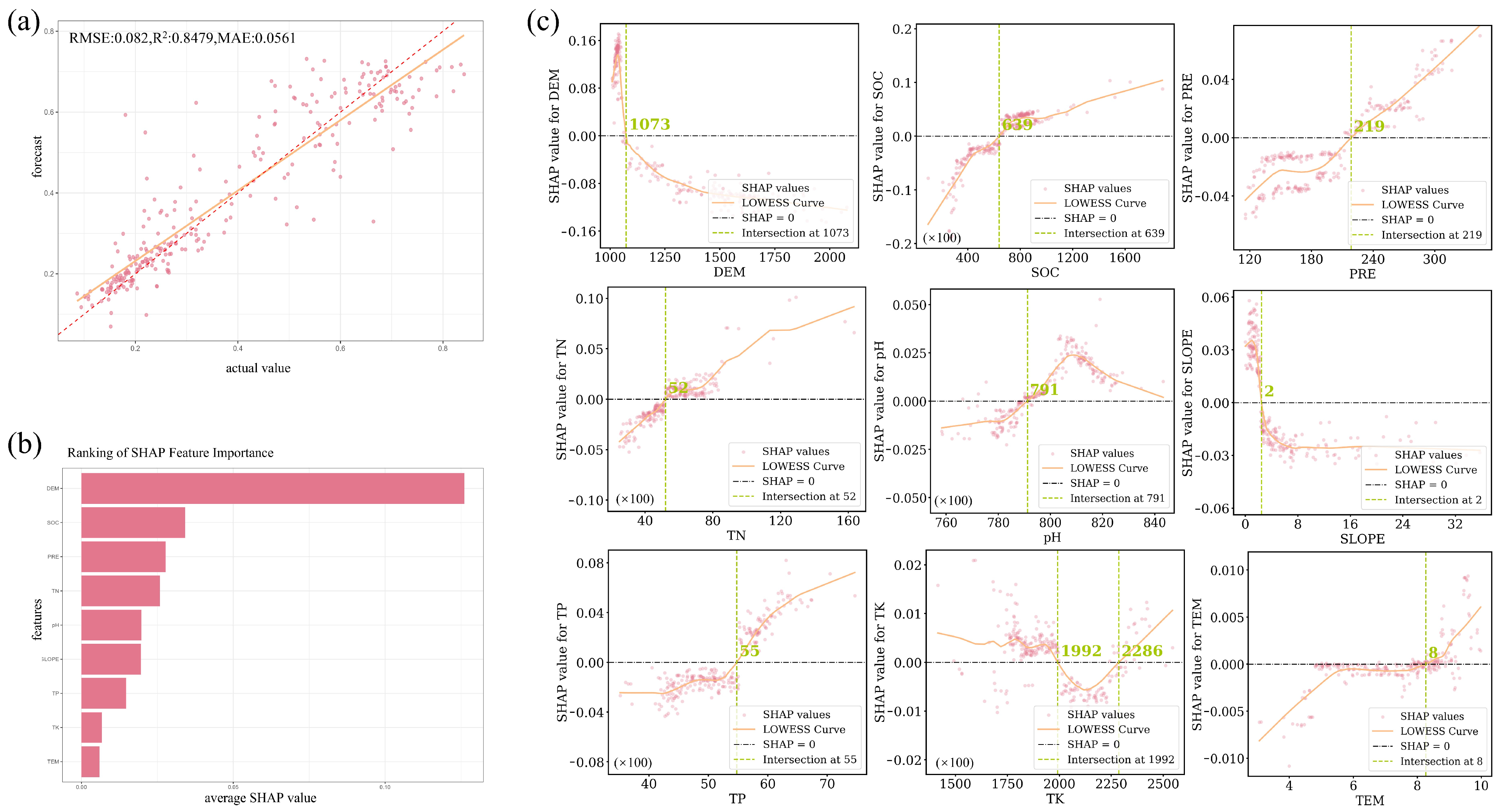
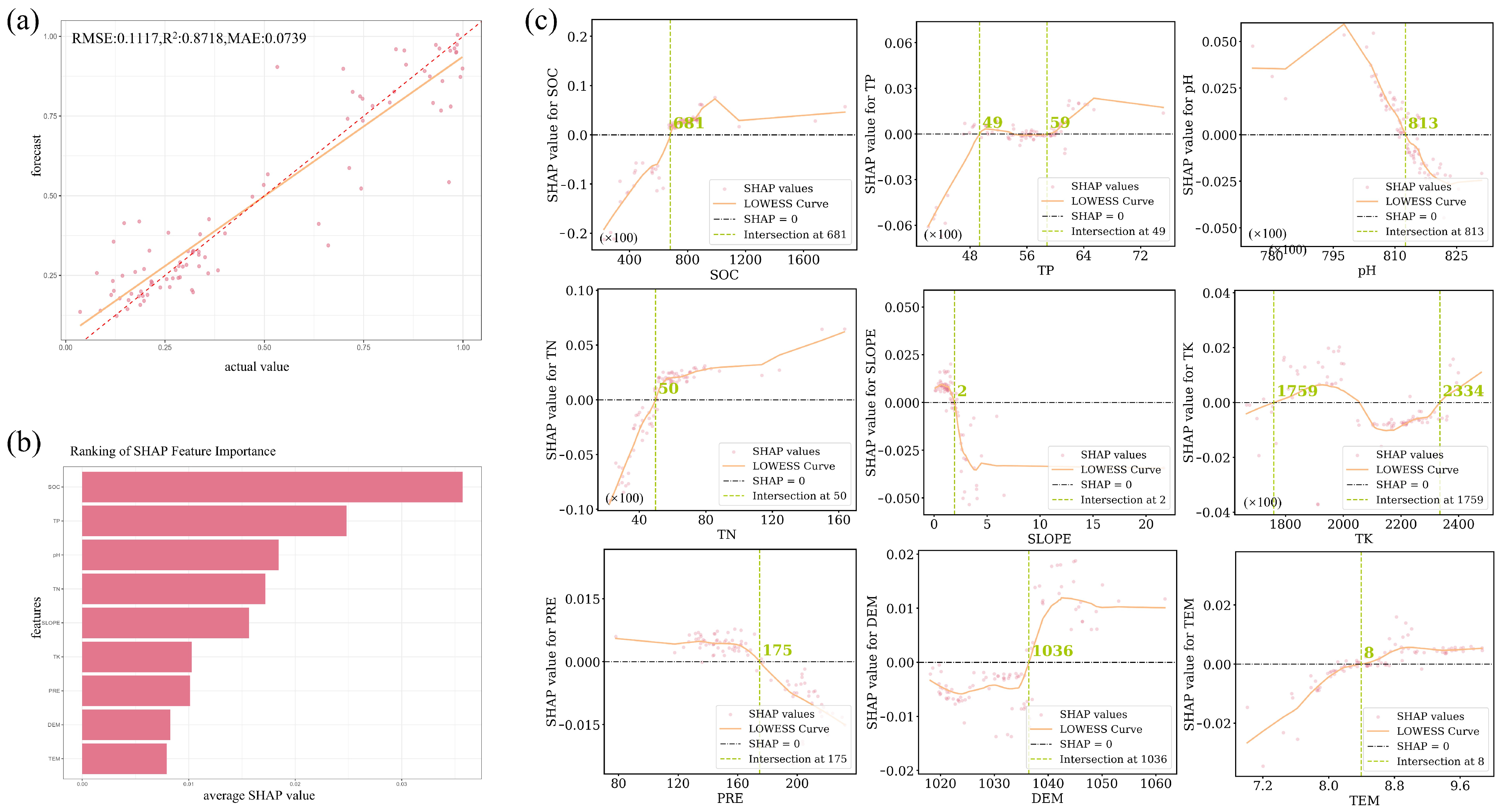
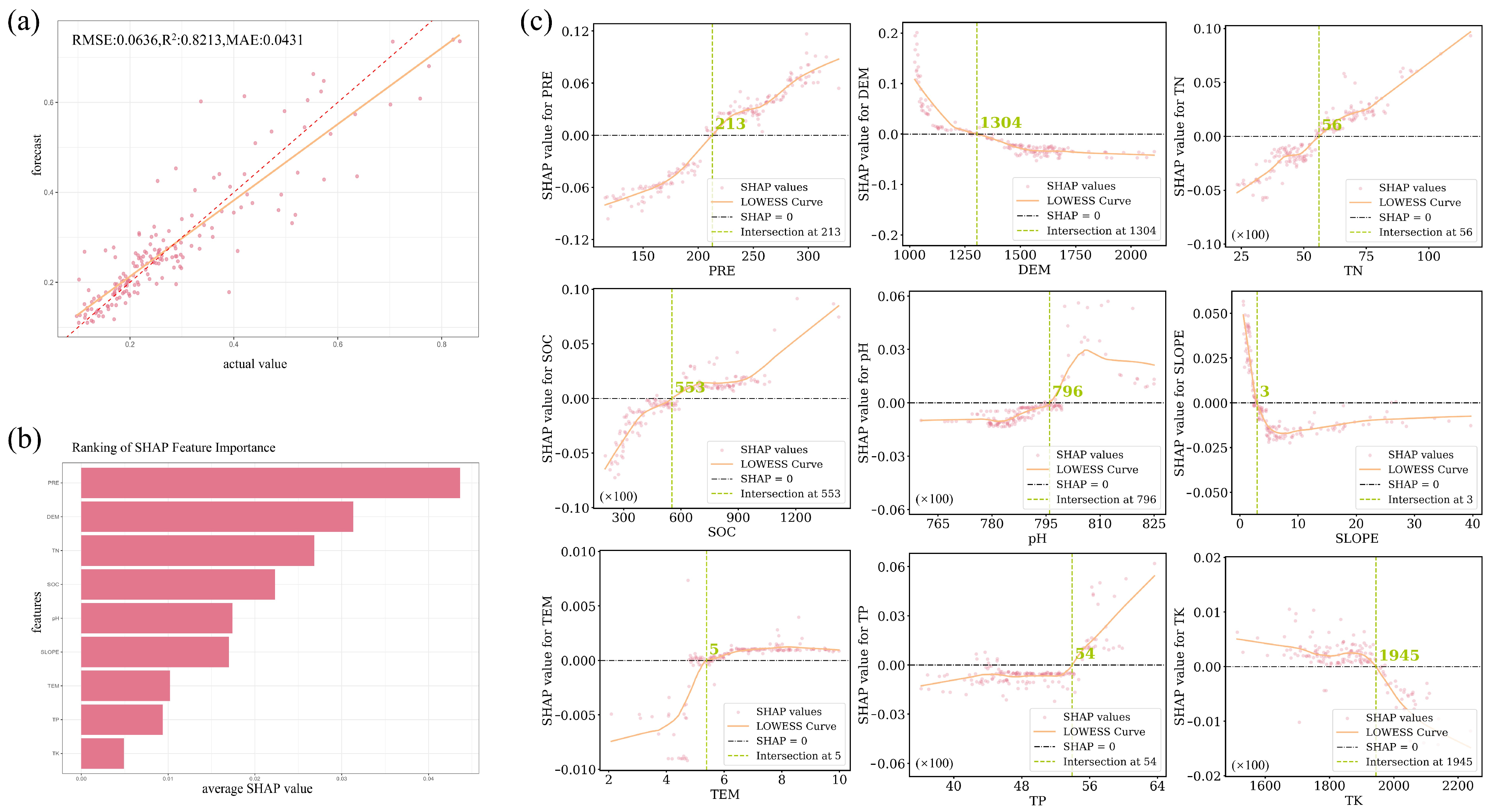
XGBoost-SHAP was used as the main framework for interpreting nonlinear relationships between NDVI and environmental drivers. The models performed well under random validation, with R2 values of 0.8479, 0.8718, and 0.8213 for the whole watershed, irrigated zone, and non-irrigated zone, respectively. These results indicate that the selected climate, terrain, and soil variables captured major spatial differences in NDVI. However, because the data are observational and spatially dependent, the model results are interpreted as statistical associations rather than direct causal estimates.
As shown in Table 3, spatial block validation showed lower performance than the random 8:2 split. R2 decreased by 23.8%, 27.8%, and 27.2% for the whole watershed, irrigated zone, and non-irrigated zone, respectively, and RMSE increased in all three zones. This confirms that random validation can overestimate model performance when spatial autocorrelation is present. Even so, the models retained useful explanatory power under spatially separated validation.
The whole-watershed SHAP results are summarized in Figure 7. At the whole-watershed scale, the SHAP importance ranking was DEM > SOC > PRE > TN > pH > SLOPE > TP > TK > TEM. The model mainly used elevation, soil organic carbon, and precipitation to distinguish NDVI differences among irrigated plains, piedmont zones, grasslands, desert margins, and mountains. DEM shifted from positive to negative SHAP contributions near 1073 m. SOC became positive after about 6.39 g/kg, and precipitation became more favorable near 219 mm. These patterns suggest that areas with higher soil organic carbon and greater precipitation tended to have higher predicted NDVI. However, the whole-watershed result mixes signals from irrigated cropland, natural vegetation, terrain gradients, and soil background. Other variables also showed nonlinear responses, but their mean SHAP contributions were smaller than those of DEM, SOC, and precipitation.
For the irrigated zone, Figure 8 shows that the SHAP ranking changed to SOC > TP > pH > TN > SLOPE > TK > PRE > DEM > TEM. This indicates that soil fertility and soil chemical conditions explained more NDVI variation than climate and terrain within the managed irrigation landscape. SOC became positively associated with NDVI near 6.81 g/kg, suggesting that higher soil organic carbon was linked to higher predicted NDVI in cropland-dominated oasis areas. TP showed a sensitive response range of about 0.49–0.59 g/kg, while TN became positive near 0.50 g/kg.
The pH response changed from positive to negative near 8, indicating that NDVI was sensitive to alkaline soil conditions within the irrigated plain. Because the Hetao Irrigation District is affected by irrigation, drainage, alkalinity, and potential salinity, the pH response likely reflects a broader soil chemical background rather than pH alone. Precipitation, DEM, and temperature ranked lower in the irrigated-zone model. This does not mean that water or climate was unimportant; rather, their relative effects were weaker than those of soil-related variables within this managed landscape. Yellow River water diversion, canal irrigation, and farmland management may partly buffer rainfall limitation.
For the non-irrigated zone, Figure 9 indicates that the SHAP ranking was PRE > DEM > TN > SOC > pH > SLOPE > TEM > TP > TK. This contrasts with the irrigated zone and shows that precipitation and topography were the main predictors for natural and semi-natural landscapes. Positive precipitation contributions appeared near 213 mm, suggesting stronger dependence on natural moisture availability. DEM shifted near 1304 m, after which its contribution became mainly negative, indicating that higher mountain-front or upland areas tended to have lower predicted NDVI. This elevation pattern likely reflects combined effects of terrain, soil development, water retention, and vegetation type.
Soil variables still affected NDVI outside the irrigation district, but mainly as secondary modifiers. TN and SOC showed positive contribution ranges above about 0.56 g/kg and 5.53 g/kg, respectively, suggesting that better nutrient and organic matter conditions could support higher vegetation cover where moisture and terrain were favorable. The responses of pH, slope, temperature, TP, and TK further show that soil and hydrothermal conditions modified vegetation growth, but they did not replace precipitation and terrain as the main sources of spatial variation. Overall, non-irrigated vegetation depended more strongly on natural water availability and topographic setting than irrigated vegetation.

3.4. Interaction Enhancement of NDVI Drivers Verified by GeoDetector

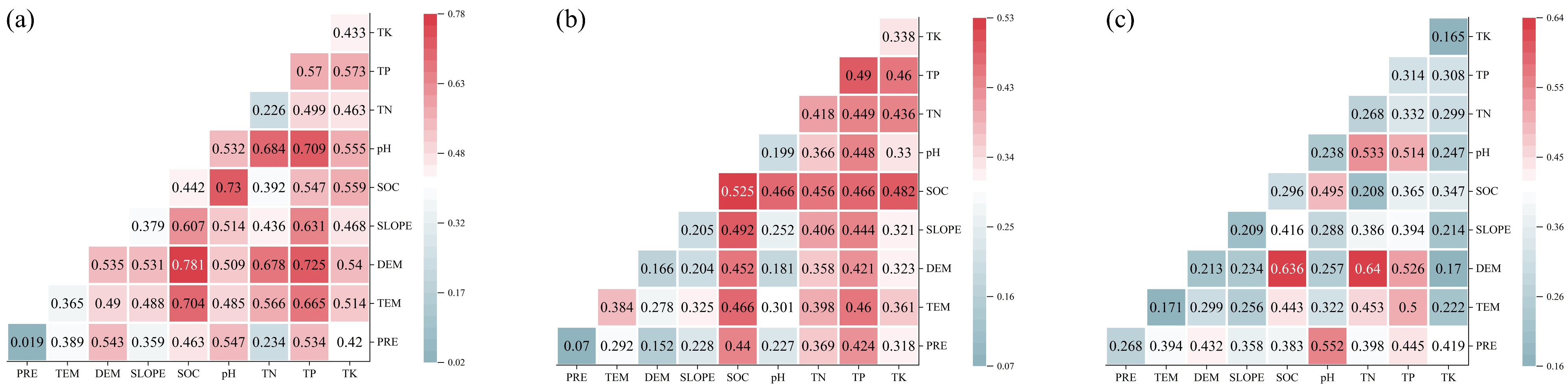
GeoDetector was used mainly to explore interactions among the major NDVI drivers identified by XGBoost-SHAP. Single-factor q-values differed among the whole watershed, irrigated zone, and non-irrigated zone (Table 4). At the whole-watershed scale, TP (q = 0.570), DEM (q = 0.535), pH (q = 0.532), and SOC (q = 0.442) had relatively high explanatory power. Inside the irrigation district, SOC (q = 0.525), TP (q = 0.490), TN (q = 0.418), and temperature (q = 0.384) were more prominent. Outside the irrigation district, TP (q = 0.314), SOC (q = 0.296), PRE and TN (both q = 0.268), and pH (q = 0.238) contributed more strongly than other single variables. These results support the SHAP interpretation that soil variables are important inside the irrigation district, while precipitation, terrain, and soil jointly constrain vegetation outside it.
The GeoDetector interaction results are presented in Figure 10. The interaction detector showed that paired drivers explained NDVI patterns better than single drivers. At the whole-watershed scale, the strongest interactions were mainly terrain-soil and soil-chemical combinations. SOC ∩ DEM had the highest interaction value (q = 0.781), followed by SOC ∩ pH (q = 0.730), TP ∩ DEM (q = 0.725), pH ∩ DEM (q = 0.684), and TP ∩ TEM (q = 0.665). These results indicate that watershed-scale NDVI patterns were shaped by combined effects of elevation, soil organic matter, phosphorus availability, and soil chemical conditions rather than by one factor alone. This agrees with the SHAP results, in which DEM, SOC, and precipitation were leading contributors.
Inside the irrigation district, interactions were centered on soil fertility and management-related variables. Strong interactions included SOC ∩ SLOPE (q = 0.492), SOC ∩ TK (q = 0.482), SOC ∩ TEM and SOC ∩ TP (both q = 0.466), TP ∩ TK (q = 0.460), and TN ∩ TP (q = 0.449). Although precipitation had a low single-factor q-value inside the irrigation district (q = 0.070), its interactions with SOC, TP, and other soil variables increased its relevance. This suggests that rainfall alone was not the dominant constraint under irrigation, but water availability still affected vegetation through its links with soil fertility, topography, and management.
Outside the irrigation district, the strongest interactions involved terrain, precipitation, and soil chemical conditions. DEM ∩ TP (q = 0.640) and DEM ∩ SLOPE (q = 0.636) had the highest interaction values, followed by pH ∩ PRE (q = 0.552), pH ∩ DEM (q = 0.533), DEM ∩ TN (q = 0.526), pH ∩ TN (q = 0.514), and TEM ∩ TP (q = 0.500). This pattern shows that non-irrigated vegetation was controlled by a linked water-terrain-soil system. Compared with the irrigated zone, vegetation outside the irrigation district was more strongly affected by precipitation and topography, with soil variables acting as important modifiers.

3.5. Spatial Non-Stationarity of NDVI Driver Effects Revealed by GWR

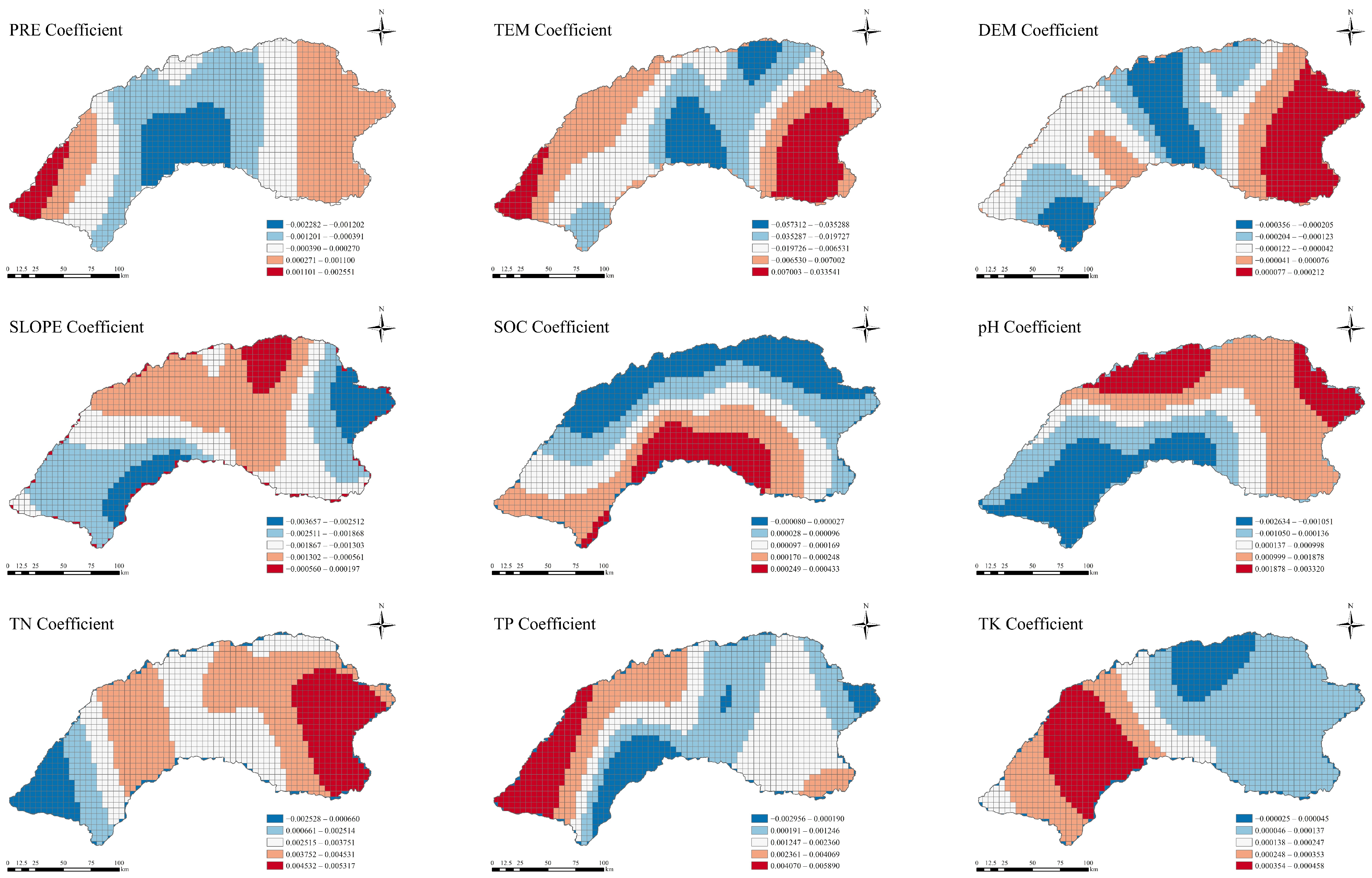
GWR was used as a supplementary analysis to examine whether NDVI-driver relationships varied across space. The model had good explanatory performance, with R2 = 0.831 and adjusted R2 = 0.829, indicating that spatially varying coefficients captured important regional differences in NDVI-environment relationships. Figure 11 further illustrates how GWR coefficients for the main NDVI driving factors varied across the watershed.
The coefficient surfaces showed that precipitation effects were not spatially uniform. Positive precipitation coefficients appeared mainly in the western and eastern peripheral parts of the watershed and in some non-irrigated transition areas, whereas weak or negative coefficients occurred in parts of the central irrigated plain. This contrast indicates that rainfall had a stronger limiting effect outside the irrigation boundary, while its direct effect was weaker in the managed irrigation area because Yellow River water diversion and agricultural water management partly compensated for rainfall deficits. This is consistent with the SHAP result that precipitation was the leading contributor outside the irrigation district but ranked lower inside it.
Temperature effects also varied across space. Positive temperature coefficients were mainly found in parts of the western and eastern sectors, while negative coefficients occurred in several central and northern areas. This suggests that the effect of temperature on NDVI depended on local moisture and land-cover conditions. In water-limited areas, higher temperatures may increase evaporative stress and reduce vegetation growth. In cooler mountain-front or transition zones, warmer conditions may extend the growing season or improve thermal suitability.
Topographic effects also differed locally. DEM coefficients changed from negative to positive across the watershed, with more positive effects in parts of the eastern mountainous and piedmont areas and negative effects in parts of the northern mountains and low-lying transition areas. Slope coefficients were mostly negative, suggesting that steeper slopes generally constrained NDVI by limiting soil accumulation, water retention, and agricultural suitability. The strength of this negative effect varied by location, especially in mountain-front and dissected terrain.
Soil-related coefficients further showed that vegetation controls were spatially variable. SOC had positive coefficients mainly in the central and southern irrigated agricultural belt, while weak or negative coefficients appeared in parts of the northern mountains and peripheral natural landscapes. This supports the SHAP interpretation that soil organic matter is especially important in the irrigated zone. TP and TN also showed locally positive effects in several agricultural and transition areas, but weaker or negative effects elsewhere. These results indicate that soil nutrients influenced NDVI more strongly where irrigation, cultivation, and soil management supported vegetation growth.
The pH and TK coefficients also varied across the watershed. Positive pH effects appeared in parts of the northern and eastern sectors, while negative effects occurred in parts of the southwestern and central areas. This may reflect the combined influence of alkalinity, salinity, and soil background on vegetation growth in the Hetao irrigation system. TK showed local positive effects in the western and southwestern sectors but weaker or negative effects in parts of the eastern watershed, suggesting that potassium played a secondary and location-dependent role compared with SOC, TP, and precipitation.

4. Discussion

4.1. Spatially Uneven NDVI Greening Under Irrigation Influence

The results indicate that greening in the Hetao irrigation district watershed was spatially uneven rather than a uniform NDVI increase [31]. During 2001–2024, NDVI increased in both zones, but the irrigated zone maintained higher vegetation cover and a faster upward trend than the non-irrigated zone [32]. This divergence under the same regional climate background suggests that irrigation, farming practices, and landscape position modified vegetation responses and separated the managed oasis from surrounding dryland landscapes [33].
The class-transition results clarify how this greening occurred. NDVI changes were dominated by persistence and adjacent-class shifts, whereas long-distance jumps among vegetation-cover classes were rare [34]. The contraction of low-NDVI classes and expansion of medium- and high-NDVI classes point to gradual improvement, especially in areas where water supply and management already supported stable vegetation growth [35]. This indicates that the observed greening reflects both ecological recovery and the maintenance of productive irrigated vegetation.
The spatial autocorrelation results further show that greening was organized by stable landscape structures. High Global Moran’s I values and persistent LISA clusters indicate a clustered rather than random NDVI pattern [36]. High-high clusters were concentrated in the irrigated core, whereas low-low clusters remained mainly in mountains, desert margins, and transition zones. These clusters suggest that vegetation improvement was constrained by water distribution, topography, soil background, and land use [37]. Accordingly, greening in this watershed should be interpreted as a differentiated process involving managed oasis vegetation and climate-constrained natural vegetation [38].
This interpretation is consistent with dryland irrigation systems more generally [39]. In arid and semi-arid watersheds, irrigation does not only supplement rainfall; it also modifies soil moisture, crop-growth stability, and management intensity [40]. By contrast, vegetation outside irrigation systems remains more exposed to rainfall variability, terrain constraints, and natural soil conditions [41].

4.2. Zonal Differences in Environmental Controls on NDVI

The attribution results show that irrigation reorganized the relative importance of NDVI drivers [42]. At the whole-watershed scale, DEM, SOC, and precipitation were the leading XGBoost-SHAP predictors [43], but this ranking represents a composite signal from irrigated plains, grasslands, piedmont zones, desert margins, and mountains. The whole-watershed model captures broad spatial gradients but cannot fully separate climate limitations, terrain effects, soil fertility, and agricultural management [44]. Zonal analysis is therefore needed to reveal how these controls differ across the irrigation boundary.
Inside the irrigation district, SOC, TP, pH, and TN ranked above precipitation, DEM, and temperature [45]. This indicates that NDVI variation in the managed agricultural landscape was more closely associated with soil fertility and soil chemical conditions than with rainfall alone. The response ranges identified for SOC, TP, TN, and pH should be regarded as model-based transition ranges rather than fixed ecological thresholds. SOC was positively associated with predicted NDVI, which is consistent with the role of organic matter in improving nutrient retention, soil structure, water-holding capacity, and crop productivity [46]. TP and TN highlight the importance of nutrient status, while the pH response under alkaline conditions likely reflects the combined influence of alkalinity, salinity, and soil background rather than pH alone [47].
Outside the irrigation district, precipitation and DEM became the dominant predictors, with TN and SOC serving as secondary modifiers [48]. This result is consistent with the stronger dependence of natural and semi-natural vegetation on natural moisture supply. Topography further affects NDVI through elevation, runoff redistribution, soil development, and local climate [49]. The precipitation response indicates improved vegetation conditions with increasing moisture availability, whereas the DEM response indicates that higher mountain-front or upland areas tended to have lower predicted NDVI after a certain elevation range. Soil variables remained relevant, but their effects depended on water availability and terrain setting.

4.3. Implications for Zone-Specific Vegetation Restoration and Land-Water Management

These zonal differences imply that vegetation restoration and land-water management should be spatially differentiated. In the irrigation district, where NDVI was already high and increased rapidly, the main priority should shift from simply increasing greenness to sustaining soil quality and water-use efficiency. Management should address soil organic matter, nutrient balance, alkalinity, salinity risk, drainage, and irrigation-water efficiency [50]. Measures such as improving soil organic matter, optimizing fertilization, strengthening drainage and salinity control, and aligning crop structure with water availability may therefore be more effective than uniform greening targets [51].
In non-irrigated landscapes, restoration potential is more strongly constrained by precipitation and terrain. Management should follow moisture and topographic gradients rather than applying a single restoration strategy [52]. In mountain-front zones, desert-grassland transition belts, and low-cover areas, restoration should prioritize water availability, soil retention, slope position, and suitable vegetation types [53]. Protecting existing grassland and shrubland patches, reducing disturbance, and improving soil-water conservation may be more realistic than pursuing rapid increases in NDVI [54].
At the watershed scale, the results support an oasis-periphery management framework [55]. The irrigated core functions as a human-managed vegetation system in which water diversion and farming partly buffer climatic constraints. The surrounding non-irrigated zone functions as a natural or semi-natural dryland system where precipitation and terrain remain dominant. Treating these zones as one homogeneous unit could obscure the drivers of vegetation change and lead to unsuitable management measures. A more effective strategy is to maintain agricultural productivity and soil-water sustainability in the irrigated core while protecting climate-sensitive vegetation and transition zones outside the irrigation boundary.

4.4. Limitations and Future Research

Several limitations remain. First, this study used observational remote-sensing, climate, terrain, and soil-background data; therefore, the attribution results should be interpreted as model-supported associations rather than strict causal evidence. Although the contrast between irrigated and non-irrigated zones is consistent with expected irrigation and management effects, detailed records of irrigation volume, canal distribution, groundwater depth, drainage, crop type, fertilization, and soil salinity were not fully available. This limits the ability to identify specific management pathways.
Second, soil variables were represented by integrated background layers rather than continuous annual observations for 2001–2024. The soil-NDVI relationships therefore describe spatial background associations, not proof that soil properties alone drove temporal greening. Third, resampling climate and soil data to a common 250 m grid and using spatially autocorrelated observations may have introduced uncertainty and inflated random-validation performance. Although spatial block validation partly addressed this issue, uncertainty may still accumulate from multisource datasets, co-kriging interpolation, resampling, and model integration. The zonal contrasts should therefore be interpreted as robust spatial associations rather than deterministic estimates of direct irrigation effects.
Future research should combine multi-year soil surveys, salinity and alkalinity indicators, irrigation-water records, groundwater observations, crop information, and alternative spatial-validation designs. Process-based ecohydrological models, crop-growth models, and scenario experiments could further test how climate variability, water diversion, agricultural management, soil salinization, and restoration policies jointly shape vegetation dynamics. Such work would move beyond statistical attribution toward a stronger causal and management-oriented understanding of dryland irrigation watersheds.

5. Conclusions

Using the Hetao irrigation district watershed as a representative dryland irrigation watershed, this study examined NDVI dynamics and environmental controls from 2001 to 2024 by separating irrigated and non-irrigated landscapes. NDVI increased across the watershed, but greening was spatially uneven. Whole-watershed NDVI increased at 0.0035 yr−1, while the irrigated zone had a higher mean NDVI and a faster increase than the non-irrigated zone. NDVI transitions were dominated by persistence and adjacent-class conversion, and Global Moran’s I values remained above 0.860, indicating persistent clustering. These findings show that vegetation improvement was not spatially uniform. Instead, it reflected the contrast between managed oasis cropland and climate-constrained natural or semi-natural landscapes.
The attribution results further show that irrigation can reorganize the relative importance of NDVI drivers. At the whole-watershed scale, DEM, SOC, and precipitation were the leading XGBoost-SHAP predictors. After zonal separation, SOC, TP, pH, and TN were more important in the irrigated zone, while precipitation and DEM were more important outside it. GeoDetector showed that paired drivers strengthened each other, and GWR revealed spatially varying effects. Overall, these findings reveal a clear spatial pattern of irrigation influence. In the irrigated zone, water diversion and agricultural management may weaken the direct limitation of rainfall and increase the role of soil conditions in shaping vegetation dynamics. Outside the irrigation boundary, vegetation remains more dependent on natural water availability and topography. This contrast indicates that irrigation affects both vegetation growth and its environmental controls, supporting separate land-water management strategies for the irrigated core and the non-irrigated surrounding areas.

Author Contributions

Conceptualization, X.Z., X.T. and X.L.; methodology, X.Z., X.T. and T.L.; software, X.Z. and J.L.; validation, X.Z., M.H. and X.T.; formal analysis, X.Z. and M.H.; investigation, X.Z., M.H., J.L. and J.J.; resources, X.T., T.L., L.D., X.L. and G.Z.; data curation, X.Z., M.H. and J.L.; writing—original draft preparation, X.Z.; writing—review and editing, X.T., X.L., T.L., L.D. and V.P.S.; visualization, X.Z. and J.L.; supervision, X.T., X.L. and T.L.; project administration, X.T. and X.L.; funding acquisition, X.T., T.L., L.D. and X.L. All authors have read and agreed to the published version of the manuscript.

Funding

This research was funded by the National Key Research and Development Program of China (2021YFC3201203); the Yellow River Water Science Research Joint Fund jointly supported by the National Natural Science Foundation of China, the Ministry of Water Resources of the People’s Republic of China, and State Power Investment Corporation Limited (U2243234); the Science and Technology Program of Inner Mongolia Autonomous Region (2025YFHH0170, 2020ZD0009, 2025KYPT0099); the Natural Science Foundation of Inner Mongolia Autonomous Region (2024QN05019); the Ministry of Education Innovative Research Team (IRT_17R60); the Inner Mongolia Agricultural University Basic Research Project (BR251403, BR251018); the First-Class Academic Subjects Special Research Project of the Education Department of Inner Mongolia Autonomous Region (YLXKZX-NND-010); and the State Key Laboratory of Water Engineering Ecology and Environment in Arid Areas, Inner Mongolia Agricultural University (SQ2024SKL08048).

Data Availability Statement

The MOD13Q1 data are publicly available from NASA LP DAAC. Monthly precipitation and temperature data are available from the National Earth System Science Data Center of China. ASTER GDEM is available from the Geospatial Data Cloud. Historical soil grids are available from the Chinese Soil Database and the National Tibetan Plateau/Third Pole Environment Data Center. The 2024 field soil observations and the derived raster products are available from the corresponding authors upon reasonable request.

Acknowledgments

The authors thank the field and laboratory staff who supported the 2024 soil survey and sample analysis.

Conflicts of Interest

Author Jianxun Ji is employed by Shanxi Institute of Geological Survey Company Limited. The remaining authors declare that the research was conducted in the absence of any commercial or financial relationships that could be construed as a potential conflict of interest.

Abbreviations

The following abbreviations are used in this manuscript:
NDVINormalized Difference Vegetation Index
PREPrecipitation
TEMTemperature
DEMDigital Elevation Model
SOCSoil Organic Carbon
TNTotal Nitrogen
TPTotal Phosphorus
TKTotal Potassium
MKMann–Kendall
LISALocal Indicators of Spatial Association
GWRGeographically Weighted Regression

References

  1. Rosa, L.; Chiarelli, D.D.; Rulli, M.C.; Dell’Angelo, J.; D’Odorico, P. Global agricultural economic water scarcity. Sci. Adv. 2020, 6, eaaz6031. [Google Scholar] [CrossRef] [PubMed]
  2. Jägermeyr, J.; Pastor, A.; Biemans, H.; Gerten, D. Reconciling irrigated food production with environmental flows for Sustainable Development Goals implementation. Nat. Commun. 2017, 8, 15900. [Google Scholar] [CrossRef]
  3. Lu, X.; Zou, M.; Gan, G.; Kang, S. Excessive irrigation-driven greening has triggered water shortages and compromised sustainability. Agric. Water Manag. 2025, 311, 109405. [Google Scholar] [CrossRef]
  4. Wu, Y.; Yang, J.; Li, S.; Guo, C.; Yang, X.; Xu, Y.; Yue, F.; Peng, H.; Chen, Y.; Gu, L.; et al. NDVI-Based Vegetation Dynamics and Their Responses to Climate Change and Human Activities from 2000 to 2020 in Miaoling Karst Mountain Area, SW China. Land 2023, 12, 1267. [Google Scholar] [CrossRef]
  5. Khalefa, E.; Pepin, N.; Teeuw, R. Long-term vegetation trends and driving factors of NDVI change on the slopes of Mount Kilimanjaro. Int. J. Environ. Stud. 2024, 81, 2027–2047. [Google Scholar] [CrossRef]
  6. Li, L.; Xia, R.; Dou, M.; Ling, M.; Li, G.; Wang, C.; Mi, Q. Integrating landsat NDVI data with climate and anthropogenic factors reveals drivers of vegetation dynamics in the semi-arid Basin of Western China. Sci. Rep. 2025, 15, 18831. [Google Scholar] [CrossRef] [PubMed]
  7. Gao, M.; Yang, N.; Liu, Q. What Drives Vegetation Evolution in the Middle Reaches of the Yellow River Basin, Climate Change or Human Activities? Sustainability 2024, 16, 10122. [Google Scholar] [CrossRef]
  8. Zhao, S.; Fan, Z.; Gao, X. Spatiotemporal Dynamics of Land Cover and Their Driving Forces in the Yellow River Basin since 1990. Land 2022, 11, 1563. [Google Scholar] [CrossRef]
  9. Li, X.; Wang, Y.; Zhao, Y.; Zhai, J.; Liu, Y.; Han, S.; Liu, K. Research on the Impact of Climate Change and Human Activities on the NDVI of Arid Areas—A Case Study of the Shiyang River Basin. Land 2024, 13, 533. [Google Scholar] [CrossRef]
  10. Cao, Z.; Zhu, T.; Cai, X. Hydro-agro-economic optimization for irrigated farming in an arid region: The Hetao Irrigation District, Inner Mongolia. Agric. Water Manag. 2023, 277, 108095. [Google Scholar] [CrossRef]
  11. Li, X.; Wang, P.; Mu, J.; Mu, D.; Sun, C.; Li, Z.; Ren, D.; Huo, Z.; Xu, X. Unraveling long-term water consumption changes and agro-ecological responses to agricultural practices in arid irrigation districts of the upper Yellow River basin (2000–2021). J. Hydrol. 2025, 658, 133222. [Google Scholar]
  12. Shi, X.; Yang, P.; Xia, J.; Zhang, Y.; Huang, H.; Zhu, Y. Effects of precipitation on vegetation and surface water in the Yellow River Basin during 2000–2021. J. Geogr. Sci. 2024, 34, 633–653. [Google Scholar] [CrossRef]
  13. Wang, Z.; Duan, L.; Han, Y.; Ji, J.; Shi, Q.; Yao, R.; Luo, Y.; Liu, T. Hydrology–Soil–Vegetation Element Interactions in the Largest Single-Port Artesian Irrigation Area of Asia. Land 2024, 13, 2099. [Google Scholar] [CrossRef]
  14. Qian, X.; Qi, H.; Shang, S.; Wan, H.; Wang, R. Multi-year mapping of flood autumn irrigation extent and timing in harvested croplands of arid irrigation district. GISci. Remote Sens. 2022, 59, 1598–1623. [Google Scholar]
  15. Sun, Y.; Zhang, D.; Miao, Z.; Yang, S.; Liu, Q.; Qu, Z. Season-Specific CNN and TVDI Approach for Soil Moisture and Irrigation Monitoring in the Hetao Irrigation District, China. Agriculture 2025, 15, 1946. [Google Scholar] [CrossRef]
  16. Shi, X.; Han, W.; Wang, Y. Spatial heterogeneity of agricultural drought drivers in irrigation district: A causal inference framework bridging covariation and structural equation modeling. Agric. Water Manag. 2025, 309, 109978. [Google Scholar]
  17. Nait-Taleb, O.; Elomari, S.; Abdelrahman, K.; Ismaili, M.; Fnais, M.S.; Atiq, J.E.; Ouchkir, I.; Karaoui, I.; Krimissa, S.; Namous, M.; et al. Monitoring soil degradation using Sentinel-2 imagery and statistical analysis of spectral indices in a semi-arid watershed of the Moroccan High Atlas. Front. Soil Sci. 2025, 5, 1553887. [Google Scholar]
  18. Zhang, J.; Zhang, P.; Gu, X.; Deng, M.; Lai, X.; Long, A.; Deng, X. Analysis of Spatio-Temporal Pattern Changes and Driving Forces of Xinjiang Plain Oases Based on Geodetector. Land 2023, 12, 1508. [Google Scholar] [CrossRef]
  19. Zhang, M.; Deng, Y.; Hai, Y.; Chen, H.; Ma, A.; Wang, W.; Ming, L.; Dang, H.; Peng, M.; Jize, D.; et al. Monitoring Vegetation Dynamics and Driving Forces in the Baijiu Golden Triangle Using Multi-Decadal Landsat NDVI and Geodetector Modeling. Land 2025, 14, 1111. [Google Scholar] [CrossRef]
  20. Zhang, X.; Yang, Y.; Gao, H.; Xu, S.; Feng, J.; Qin, T. Land Cover Changes and Driving Factors in the Source Regions of the Yangtze and Yellow Rivers over the Past 40 Years. Land 2024, 13, 259. [Google Scholar] [CrossRef]
  21. Mann, H.B. Nonparametric Tests Against Trend. Econometrica 1945, 13, 245–259. [Google Scholar] [CrossRef]
  22. Sen, P.K. Estimates of the Regression Coefficient Based on Kendall’s Tau. J. Am. Stat. Assoc. 1968, 63, 1379–1389. [Google Scholar] [CrossRef]
  23. Anselin, L. Local Indicators of Spatial Association—LISA. Geogr. Anal. 1995, 27, 93–115. [Google Scholar] [CrossRef]
  24. Chen, T.; Guestrin, C. XGBoost: A Scalable Tree Boosting System. In Proceedings of the 22nd ACM SIGKDD International Conference on Knowledge Discovery and Data Mining, San Francisco, CA, USA, 13–17 August 2016; pp. 785–794. [Google Scholar]
  25. Lundberg, S.M.; Lee, S.-I. A Unified Approach to Interpreting Model Predictions. Adv. Neural Inf. Process. Syst. 2017, 30, 4765–4774. [Google Scholar]
  26. van Jaarsveld, B.; Hauswirth, S.M.; Wanders, N. Machine learning and global vegetation: Random forests for downscaling and gap filling. Hydrol. Earth Syst. Sci. 2024, 28, 2357–2374. [Google Scholar] [CrossRef]
  27. Guo, S.; Li, L.; Wang, S.; Huang, J.; Xie, X.; Wang, Y. What are the dominant drivers and optimal thresholds for a healthy ecosystem in the Yellow River Basin, China? From a perspective of nonlinear nexus. Ecol. Indic. 2024, 162, 111997. [Google Scholar] [CrossRef]
  28. Song, Y.; Wang, J.; Ge, Y.; Xu, C. An Optimal Parameters-Based Geographical Detector Model Enhances Geographic Characteristics of Explanatory Variables for Spatial Heterogeneity Analysis: Cases with Different Types of Spatial Data. GISci. Remote Sens. 2020, 57, 593–610. [Google Scholar] [CrossRef]
  29. Yao, B.; Ma, L.; Si, H.; Li, S.; Gong, X.; Wang, X. Spatial Pattern of Changing Vegetation Dynamics and Its Driving Factors across the Yangtze River Basin in Chongqing: A Geodetector-Based Study. Land 2023, 12, 269. [Google Scholar] [CrossRef]
  30. Brunsdon, C.; Fotheringham, A.S.; Charlton, M. Geographically weighted regression: A method for exploring spatial nonstationarity. Geogr. Anal. 1996, 28, 281–298. [Google Scholar] [CrossRef]
  31. Dong, F.; Qin, F.; Zhang, T.; Dong, X.; Wu, Y.; Guo, Z. kNDVI reveals vegetation dynamics and hydro-edaphic controls in inner Mongolia (2000–2024). Sci. Rep. 2026, 16, 5244. [Google Scholar] [CrossRef]
  32. Gao, W.; Zheng, C.; Liu, X.; Lu, Y.; Chen, Y.; Wei, Y.; Ma, Y. NDVI-based vegetation dynamics and their responses to climate change and human activities from 1982 to 2020: A case study in the Mu Us Sandy Land, China. Ecol. Indic. 2022, 137, 108745. [Google Scholar] [CrossRef]
  33. Lyu, H.; Qiao, J.; Fang, G.; Liang, W.; Tang, Z.; Lv, F.; Zhang, Q.; Qiu, Z.; Huang, G. Variations in Water Stress and Its Driving Factors in the Yellow River Basin. Land 2025, 14, 53. [Google Scholar] [CrossRef]
  34. Chao, Y.; Zhu, Y.; Wang, X.; Li, J.; Liang, L. Dynamic evolution of the NDVI and driving factors in the Mu Us Sandy Land of China from 2002 to 2021. J. Arid Land 2025, 17, 605–623. [Google Scholar] [CrossRef]
  35. Hou, P.; Wang, Y.; Qiu, S.; Wang, J.; Li, S.; Wang, H.; Yin, S.; Du, J. Impacts of Climate Change and Human Activities on Vegetation NDVI Changes in Henan Province from 2000 to 2020. Front. Environ. Sci. 2025, 13, 1682187. [Google Scholar] [CrossRef]
  36. Xu, Z.; Liu, W.; Li, H.; Qin, S.; Wen, T. Vegetation variations and driving mechanisms in northern China based on kNDVI. Sci. Rep. 2025, 15, 30094. [Google Scholar] [CrossRef] [PubMed]
  37. Niu, Z.; Wang, S.; Yu, F.; Li, B.; Dong, D.; Zheng, S.; Peng, C.; Zhang, K.; Zeng, G.; Huang, Q. Revealing the driving forces of vegetation dynamics in China’s mountainous regions: Integrating climatic and anthropogenic factors. Front. For. Glob. Change 2026, 9, 1759441. [Google Scholar] [CrossRef]
  38. Chen, X.; Yan, Q.; Yi, M.; Ma, X.; Li, G.; Wu, Z.; Pan, Q.; Qiu, Y. Analysis of spatial and temporal variations of NDVI and its driving factors in the corridor of Lan-Xin railway. Front. Environ. Sci. 2024, 12, 1369974. [Google Scholar] [CrossRef]
  39. Kreri, S.; Farhi, N.; Bennia, A.; Derdour, A.; Kébir, L.W.; Alharbi, K.M.; Bojer, A.K.; Arafat, A.A. Remote sensing assessment of vegetation and moisture dynamics in semi-arid regions. Sci. Rep. 2026, 16, 6549. [Google Scholar] [CrossRef]
  40. Li, H.; Miao, Q.; Shi, H.; Li, X.; Zhang, S.; Zhang, F.; Bu, H.; Wang, P.; Yang, L.; Wang, Y.; et al. Remote sensing monitoring of irrigated area in the non-growth season and water consumption analysis in a large-scale irrigation district. Agric. Water Manag. 2024, 303, 109020. [Google Scholar] [CrossRef]
  41. Bai, X.; Zhang, Z.; Gu, D. Driving Mechanism of Natural Vegetation Response to Climate Change in China from 2001 to 2022. Environ. Res. 2025, 276, 121529. [Google Scholar] [CrossRef]
  42. Xia, Z.; Liao, K.; Guo, L.; Wang, B.; Huang, H.; Chen, X.; Fang, X.; Zu, K.; Luo, Z.; Shen, F.; et al. Determining Dominant Factors of Vegetation Change with Machine Learning and Multisource Data in the Ganjiang River Basin, China. Land 2025, 14, 76. [Google Scholar] [CrossRef]
  43. Guo, Y.; Cheng, L.; Ding, A.; Yuan, Y.; Li, Z.; Hou, Y.; Ren, L.; Zhang, S. Geodetector model-based quantitative analysis of vegetation change characteristics and driving forces: A case study in the Yongding River basin in China. Int. J. Appl. Earth Obs. Geoinf. 2024, 132, 104027. [Google Scholar] [CrossRef]
  44. Li, H.; Bai, L.; Luo, J.; Chen, Z.; Yin, Z.; Li, P.; Yang, H. Study on spatiotemporal variations of NDVI and driving factors during the vegetation growth peak period in Sichuan-Tibet Interface, Southwest China. Front. For. Glob. Change 2025, 8, 1652361. [Google Scholar]
  45. Cui, X.; Han, W.; Zhang, H.; Cui, J.; Ma, W.; Zhang, L.; Li, G. Estimating soil salinity under sunflower cover in the Hetao Irrigation District based on unmanned aerial vehicle remote sensing. Land Degrad. Dev. 2022, 34, 84–97. [Google Scholar] [CrossRef]
  46. Li, A.; Yin, S.; Li, N.; Shi, C. Comprehensive Analysis of the Driving Forces Behind NDVI Variability in China Under Climate Change Conditions and Future Scenario Projections. Atmosphere 2025, 16, 738. [Google Scholar] [CrossRef]
  47. Ma, W.; Cui, X.; Han, W.; Zhang, H.; Zhang, L. Improved soil salinity estimation in arid regions: Leveraging bare soil periods and environmental factors. iScience 2025, 28, 113020. [Google Scholar] [CrossRef]
  48. Yu, K.; Yang, C.; Wu, T.; Zhai, Y.; Tian, S.; Feng, Y. Analysis of vegetation coverage changes and driving forces in the source region of the Yellow River. Sci. Rep. 2025, 15, 22569. [Google Scholar] [CrossRef] [PubMed]
  49. Liu, Z.; Wang, D.; Han, L.; Kang, H.; Cao, X. Vegetation Quality Assessment of the Shaanxi Section of the Yellow River Basin Based on NDVI and Rain-Use Efficiency. Land 2025, 14, 166. [Google Scholar] [CrossRef]
  50. Hao, L.; Wang, G.; Singh, V.P.; Liu, T. Water and Salt Dynamics in Cultivated, Abandoned, and Lake Systems Under Irrigation Reduction in the Hetao Irrigation District. Agronomy 2025, 15, 1650. [Google Scholar] [CrossRef]
  51. Cao, X.; Zhan, C.; Hu, S.; Lin, Z.; Meng, H.; Feng, Q. Impact of Soil Salinity Changes on the Evolution of Evapotranspiration Driving Mechanisms. Soil Use Manag. 2025, 41, e70132. [Google Scholar] [CrossRef]
  52. Jiang, L.; Liu, Y. Response of Runoff-Sediment System to Vegetation Variation in the Yellow River Basin in the Last 20 Years. Land 2023, 12, 428. [Google Scholar] [CrossRef]
  53. Li, Y.; Xie, W.; Zhang, J.; Zhang, D. Spatiotemporal Changes and Driving Factors of Ecological Environmental Quality in the Yongding-Luan River Basin Based on RSEI. Front. Environ. Sci. 2024, 12, 1494098. [Google Scholar] [CrossRef]
  54. Tang, J.; Zhou, L.; Dang, X.; Hu, F.; Yuan, B.; Yuan, Z.; Wei, L. Impacts and predictions of urban expansion on habitat quality in densely populated areas: A case study of the Yellow River Basin, China. Ecol. Indic. 2023, 148, 110320. [Google Scholar] [CrossRef]
  55. Wang, X.; Li, Y.; Fang, S.; Dong, C.; Sun, L. Decoupling anthropogenic and climate impacts on vegetation dynamics in China’s Huaihe River Basin using geodetector. Sci. Rep. 2025, 15, 40561. [Google Scholar] [CrossRef]
Figure 1. Geographical location and soil sampling sites in the Hetao irrigation district watershed, Inner Mongolia, China.
Land 15 00892 g001
Figure 2. Field soil sampling and laboratory pretreatment, including auger sampling, air-drying, sieving, and preparation for soil physicochemical analysis.
Land 15 00892 g002
Figure 3. Analytical framework of this study.
Land 15 00892 g003
Figure 4. Interannual NDVI dynamics and grade transition characteristics in the Hetao irrigation district watershed during 2001–2024: (a) annual NDVI trends for the whole watershed, irrigated zone, and non-irrigated zone; (b) class transitions between representative years.
Land 15 00892 g004
Figure 5. Spatial distribution of NDVI and its trend significance in the Hetao irrigation district watershed during 2001–2024: (a) multi-year mean NDVI; (b) significance of NDVI change trends.
Land 15 00892 g005
Figure 6. Evolution of local spatial autocorrelation (LISA) clustering patterns of NDVI in the Hetao irrigation district watershed.
Land 15 00892 g006
Figure 7. SHAP analysis results of NDVI driving factors for the whole watershed. (a) XGBoost model validation based on observed and predicted NDVI values; (b) SHAP feature importance ranking; (c) SHAP dependence plots and response thresholds for the main driving factors.
Land 15 00892 g007
Figure 8. SHAP analysis results of NDVI driving factors inside the irrigation district. (a) XGBoost model validation based on observed and predicted NDVI values; (b) SHAP feature importance ranking; (c) SHAP dependence plots and response thresholds for the main driving factors.
Land 15 00892 g008
Figure 9. SHAP analysis results of NDVI driving factors outside the irrigation district. (a) XGBoost model validation based on observed and predicted NDVI values; (b) SHAP feature importance ranking; (c) SHAP dependence plots and response thresholds for the main driving factors.
Land 15 00892 g009
Figure 10. Interaction effects among NDVI driving factors derived from GeoDetector at different spatial partitions. (a) Entire watershed; (b) inside the irrigation district; (c) outside the irrigation district.
Land 15 00892 g010
Figure 11. Spatial distribution of GWR coefficients for the main NDVI driving factors in the Hetao irrigation district watershed.
Land 15 00892 g011
Table 1. Main datasets used in this study.
Data TypeDataset/ProductPeriodSpatial ResolutionMain VariablesSourceURL
NDVIMOD13Q1.061 Terra Vegetation Indices2001–2024250 mNDVINASA LP DAAChttps://www.earthdata.nasa.gov/data/catalog/lpcloud-mod13q1-061
(accessed on 20 May 2025)
PrecipitationMonthly precipitation dataset of China2001–20241 kmPRENational Earth System Science Data Centerhttps://www.geodata.cn/
(accessed on 25 May 2025)
Air temperatureMonthly mean air temperature dataset of China2001–20241 kmTEMNational Earth System Science Data Centerhttps://www.geodata.cn/
(accessed on 25 May 2025)
TopographyASTER GDEMStatic30 mDEM, slopeGeospatial Data Cloudhttps://www.gscloud.cn/
(accessed on 10 June 2025)
Soil properties (historical)Chinese Soil Database1998–20101 kmSOC, pH, TN, TP, TKChinese Soil Databasehttps://vdb3.soil.csdb.cn/
(accessed on 10 June 2025)
Soil properties (gridded)National soil information grid dataset of China2010–20181 kmSOC, pH, TN, TP, TKTPDChttps://data.tpdc.ac.cn/
(accessed on 17 July 2025)
Table 2. Interpretation of interaction types in the GeoDetector analysis.
CriterionInteraction Type
q(X1 ∩ X2) < min [q(X1), q(X2)]Nonlinear weakening
min [q(X1), q(X2)] < q(X1 ∩ X2) < max [q(X1), q(X2)]Univariate nonlinear weakening
max [q(X1), q(X2)] < q(X1 ∩ X2) < q(X1) + q(X2)Bivariate enhancement
q(X1 ∩ X2) = q(X1) + q(X2)Independence
q(X1 ∩ X2) > q(X1) + q(X2)Nonlinear enhancement
Table 3. Comparison between random 8:2 validation and 20 km spatial block validation for the XGBoost models.
ZoneSamplesRandom
8:2 R2
20 km Block R2Absolute R2 DecreaseRelative R2 Decrease (%)Random RMSEBlock RMSERelative RMSE Increase (%)
Whole watershed13480.84790.64650.201423.8%0.08200.108031.7%
Irrigated zone4590.87180.62970.242127.8%0.11170.144329.2%
Non-irrigated zone8890.82130.59750.223827.2%0.06360.078523.4%
Table 4. GeoDetector q-values for the main NDVI driving factors.
Factor GroupFactorWhole WatershedInside Irrigation
District
Outside Irrigation
District
ClimatePRE0.1910.0700.268
ClimateTEM0.3650.3840.171
TopographyDEM0.5350.1660.213
TopographySLOPE0.3790.2050.209
SoilSOC0.4420.5250.296
SoilpH0.5320.1990.238
SoilTN0.2260.4180.268
SoilTP0.5700.4900.314
SoilTK0.4330.3380.165
Disclaimer/Publisher’s Note: The statements, opinions and data contained in all publications are solely those of the individual author(s) and contributor(s) and not of MDPI and/or the editor(s). MDPI and/or the editor(s) disclaim responsibility for any injury to people or property resulting from any ideas, methods, instructions or products referred to in the content.