Article

Reconstructing the Historic Rural Landscape Through an Integrated and Interdisciplinary Methodology: The Case Study of Staffarda Abbey (Italy)


1
Department of Agricultural, Forest and Food Sciences, University of Turin, 10095 Grugliasco, Italy
2
Department of Historical Studies, University of Turin, 10124 Turin, Italy
3
Computer Science Department, University of Turin, 10149 Turin, Italy
*
Author to whom correspondence should be addressed.
Land 2026, 15(5), 801; https://doi.org/10.3390/land15050801
Submission received: 2 April 2026 / Revised: 30 April 2026 / Accepted: 5 May 2026 / Published: 8 May 2026
(This article belongs to the Special Issue Evaluating and Managing Historic Landscapes)

Abstract

Combining landscape studies with historical studies and archeology is a scientific challenge: through the skills of historians, archeologists, agronomists, and computer scientists, an integrated and interdisciplinary methodology was adopted. The aim was to backtrack historical landscape changes and permanences in the rural landscape around Staffarda Abbey (Piedmont, Northwest Italy), a medieval monastery founded in the XII century on a surface of 1356 ha and its farms. Surveys, field observations, landscape observations, and historical and archival analyses (XII–XX century) were performed. Several document types, such as historical cartography, iconographies, cadastral maps, notes, descriptions, topographic maps, inventories, and photographs, were deeply analyzed. These documents referred to different historic periods (XII–XXI century) and provided qualitative and quantitative data. Using a fixed-wing drone, the aerial photographs were reworked and georeferenced. QGIS was used to perform diachronic analyses at the landscape level. The advanced land analysis methodologies were compared with the post-medieval cartographic data that were collected. The landscape dynamics and land-use changes were quantified over time, and routes, tree lines, hedgerows, and canals were recognized as qualifying elements. In this study, qualitative and quantitative data were collected, processed, systematized, and analyzed using a digital platform. Using different scales, readings, and interpretations, the landscape dynamics of a rural medieval site were reconstructed.

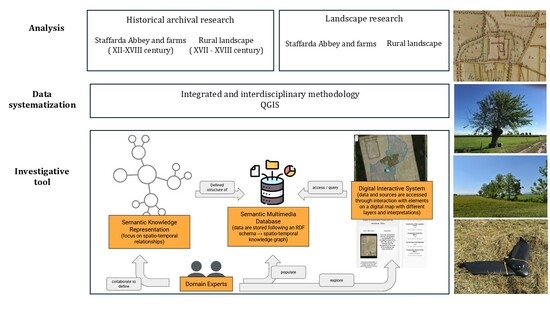
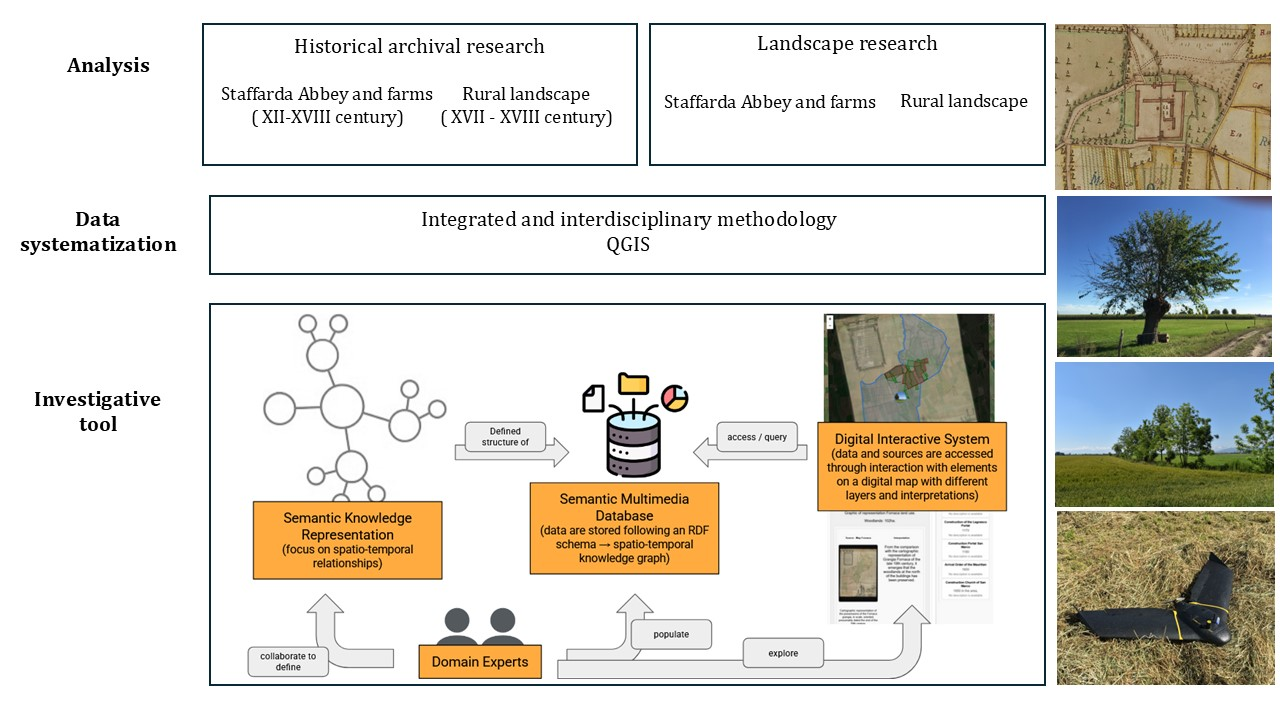
Graphical Abstract

1. Introduction

The identification of historical permanences in rural landscapes is receiving a lot of attention from decision makers, planners and researchers who wish to achieve multiple aims, including the preservation and conservation of cultural values and biodiversity [1,2,3]. These sites are characterized by productive, historical, and cultural dimensions. The relationship between landscapes’ functional and cultural aspects depends on the recognition of rural landscapes as cultural heritage sites [4,5].
In contrast, these sites are characterized by several criticalities [6,7]. Gullino et al. [8] identified several critical issues that affect UNESCO rural sites, such as depopulation, the aging of farmers, land fragmentation, soil consumption, abandonment, and economic crisis. Rural landscapes evolve continuously with chaotic dynamics and reflect commercial demand, social and economic needs, and trends. Indeed, in the past few decades, many traditional land-use systems have diminished over time or have been deeply modified [9,10,11]. The phenomenon of abandonment and the lack of proper management are the main critical issues that affect the traditional agroforestry systems [12]. To characterize rural historical landscapes, it is imperative to involve rural communities at all levels, from decision makers to farmers [13].
In these contexts, with the purpose of identifying, protecting, and managing historic rural landscapes, several international and national measures, programs, and actions were applied over time [14,15]. At the international level, in addition to the UNESCO cultural landscapes (1992), the most relevant one for traditional rural landscapes is the Globally Important Agricultural Heritage Systems program (2002) of the Food and Agriculture Organization [16]. The need to implement new methods to preserve and, at the same time, enhance and manage historic landscapes has led to the formulation of the European Landscape Convention (2020) in Europe. In Italy, the most prominent conservation program is the National Register of Historic Rural Landscapes, established in 2012 by the Ministry of Agriculture, Food Sovereignty and Forestry [17].
Under this complex framework, it is necessary to find innovative solutions to analyze and identify historical permanences as sustainable strategies of development and planning rural landscapes. Evaluating and managing historic rural landscapes are considered priorities for landscape planning policy. Concerning historic landscape transformations, according to Di Fazio and Modica [18] and Gullino et al. [19], knowledge, identification, interpretation, and characterization are the primary actions that define landscape planning strategies and sustainable action criteria. From a methodological point of view, there is a rising international awareness of the need to examine landscapes regarding their natural, cultural–anthropic, and perceptive components through a historical lens [20,21,22].

1.1. Historical Permanences

For the Council of Europe (2000), “Landscape means an area, as perceived by people, whose character is the result of the action and interaction of natural and/or human factors” [23]. Rural landscapes are dynamic. These sites change because they are the expression of the continuous interaction among the human, natural, and cultural forces in the environment. In agreement with Antrop, attention is needed for those landscapes that are considered biocultural heritage sites, in which it is still possible to recognize ancient mosaics and archeological remnants dating back to the Middle Ages [24]. For Tosco, “historic landscape analysis is based upon an understanding of the cultural processes that give the rural environment its current appearance. Historical landscape permanences are defined as those elements that persist over time” [25]. In this perspective, historic permanences can be related to morphological aspects such as parcel patterns, routes, canal structures, and water systems, as well as management aspects such as land uses, cultivation techniques, tree lines, hedgerows, etc. Moreover, landscape permanence could also be guaranteed by a continuity of land ownership.
Regarding historical studies, several research projects were performed. For example, to evaluate the morphological and vegetation variations in agroforestry land, Tortora et al. [14] analyzed land-use changes in a rural area located in Southern Italy, comparing some historical maps produced by the Italian Geographic Military Institute at different periods over about 160 years with modern ones. Moreover, Aimar et al. [26] proposed an integrated approach to evaluate land-use changes and to predict future land-use variations by analyzing historical data.
To evaluate and quantify changes and permanences in historical landscapes, several studies used remote sensing techniques and Geographical Information Systems (GIS) [27,28,29,30]. Remote sensing data, in association with GIS techniques, are advantageous for observing and analyzing historical rural areas. Moreover, these tools allow us to understand environmental conditions and to evaluate the landscapes [31]. To monitor forest landscape dynamics, Cillis et al. [32] applied a chronological and diachronic methodology based on historical GIS, integrating different types of geodata.
The last few years have seen the development of drone-deployed Lidar systems, offering archeologists the opportunity to collect new data [33,34]. To study landscapes in forested regions, the archeologists combined multiple drone-based remote sensing datasets with detailed surface surveys [35]. To plan sustainable interventions, Tarolli and Straffelini [36] combined the geography discipline with innovative remote sensing techniques and digital terrain analysis.

1.2. Research Aim

The Italian national project Cultural Heritage Active Innovation for Sustainable Society (CHANGES–PNRR, 2022–2025, Spoke 1—Historical, Landscapes, Traditions and cultural Identities) addressed case studies to enhance historical Italian landscapes as cultural heritage. Through the skills of historians, archeologists, agronomists, and computer scientists, an integrated and interdisciplinary methodology was adopted.
The key goals of the research were as follows:
-
To reconstruct the historic rural landscape through an integrated and interdisciplinary methodology, backtracking changes and permanences in the rural landscape around the Abbazia di Santa Maria di Staffarda (Piedmont, Northwest Italy);
-
To evaluate and quantify landscape persistences and changes driven by local stakeholders over time;
-
To evaluate how the structure of the mosaic has changed between the XIX century and today;
-
To demonstrate how the digital platform supports the analysis and management of the monastic landscape.
This paper explains the methods used and the results acquired. In addition, the results have been used to realize a digital resource.

2. Materials and Methods

2.1. The Study Area

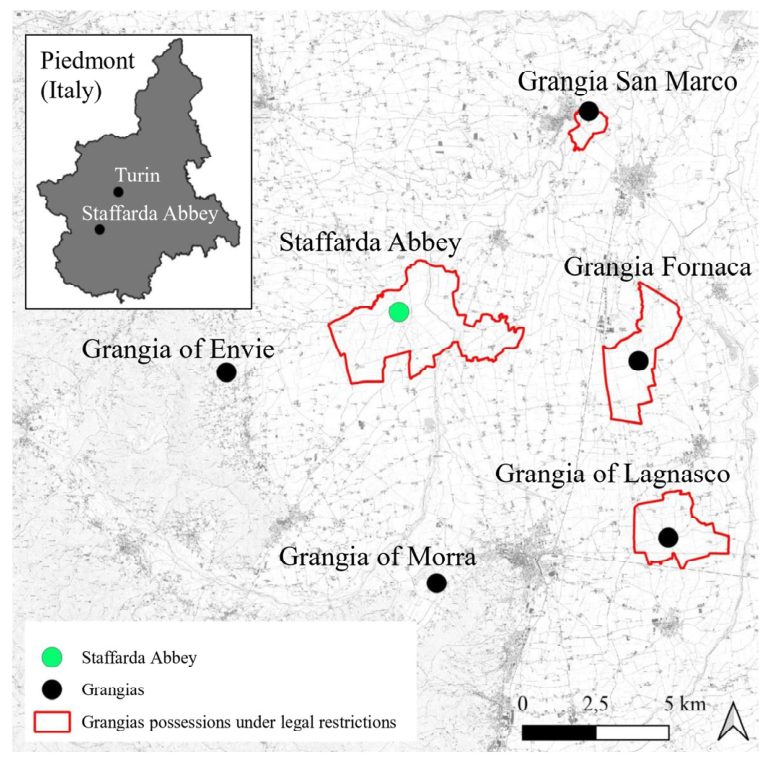
The study area is the rural landscape around Staffarda Abbey (Piedmont, Italy), a Cistercian Benedictine monastery founded in the XII century. Since 1750, this religious complex has belonged to the Mauriziano Order, a chivalric order born at the behest of the Royal Savoy family in 1572. The transformation of the rural landscape dates to the Middle Ages when the Abbey was founded [37]. The landscape unit of Staffarda is composed of several grangias (medieval rural farms): Grangia of Lagnasco, Grangia Fornaca, Grangia San Marco, Grangia of Envie, and Grangia of Morra [38]. The areas that Staffarda Abbey possesses (surface: 1356 ha) include Grangia of Lagnasco (538 ha), Grangia Fornaca (624 ha), and Grangia San Marco (108 ha), which are subjected to legal restrictions for landscape and historical heritage (the Italian Code of Cultural Heritage and Landscape, Italian law nr. 42/2004). Figure 1 illustrates the research framework.
The rural landscape of Staffarda Abbey and its Grangias is an irrigated flat area, characterized by several agricultural patterns and land uses: growing cereals, grasslands, pastures, woods, and fruits.

2.2. Methodological Framework

The historical reconstruction of rural landscapes is a challenge that needs to be addressed through several incremental steps [39]. For this purpose, the scientific community recognizes the opportunity to carry out photointerpretation processes to obtain high-resolution land-use maps that are useful for analyzing the dynamics of the transformations that have occurred in agricultural landscapes over time [40,41,42]. To define and map landscape characters, Van Eetvelde and Antrop used topographical maps and orthophoto maps from different historical periods [43]. In agreement with Antrop [36], setting up an interdisciplinary approach was considered a primary step in historic rural landscape planning [24].
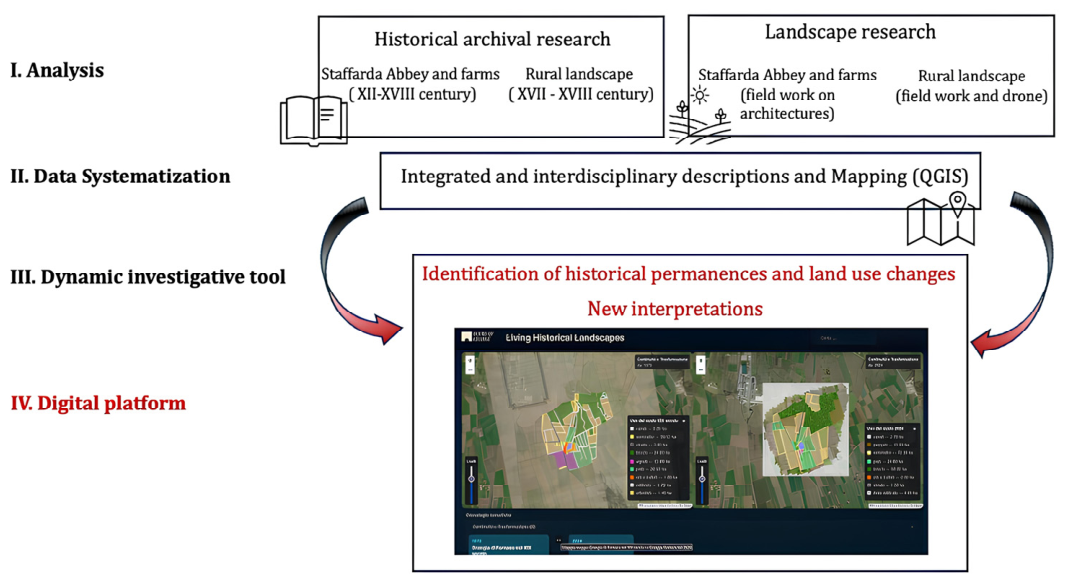
According to these studies, the methodological framework applied in this research project is illustrated (Figure 2). To realize a digital platform, analysis, data systematization, and the use of dynamic investigative tools were carried out.

2.2.1. Analysis

Firstly, historical archival research was carried out. To backtrack the permanences of Staffarda Abbey and its medieval farms, historians and archeologists performed a study on medieval and post-medieval architectures from the XII century to the XVIII century.
The analysis and checking of the monumental persistence of the grangia built by the Staffarda monks in the area constituted a fundamental methodological step in understanding the processes of transformation and stratification of this specific historical landscape. The oldest structures of the examined contexts (Grangia of Lagnasco, Grangia San Marco, and Grangia Envie), still preserved in the forms of the important reconstructions that occurred in the centuries following their foundation, connected to the progressive intensification of agricultural exploitation, were identified inside the architectural complexes. In agreement with Brogiolo and Cagnana, to elaborate relative construction sequences, an archeological method of the analysis of historical buildings, characterized by the autoptic examination of the internal and external wall surfaces and the recognition of the masonry stratigraphy, was performed [44,45]. The presence of still-preserved brick and stone portals, however, made it possible to more stringently define the chronologies of the oldest phases, thanks to the possibility of formal comparisons with other coeval examples, not least the abbey of Santa Maria di Staffarda itself. In terms of method, the archeological analysis of the building was also corroborated by reliefs of the oldest buildings, thus far unpublished in this respect. The study of the preserved architecture was also supplemented by the examination of textual and cartographic sources, the latter ones of more recent chronology (XVII–XIX centuries) are very meaningful and useful for discerning the persistence of the oldest building phases over time and the progressive addition of buildings in the centuries following their foundation.
To reconstruct the rural landscape, historical archival research was performed. The first part of our research was carried out by analyzing documents and references from historical archives, academies, and libraries. Historical cartography, iconographies, cadastral maps, notes, topographic maps, inventories, and documents were collected. In this first part of the analysis, several document types were analyzed with different readings and interpretations. To reconstruct the historical organization of the land uses of Grangia Fornaca, the historical map (XIX century) was analyzed, reproduced through orthophotography, and digitized using GIS.
Secondly, landscape research was carried out. The historical architecture and rural landscape were investigated. To reveal the persistence of original building structures dating back to the Cistercian foundation in the late XII century, a stratigraphic analysis of the medieval rural farms associated with the Abbey of Staffarda was conducted through direct on-site inspection and verified using advanced digital survey techniques [46]. These results are not reported in this paper.
At the rural landscape level, the authors, through field observation (including photo documentation), identified and mapped the main landscape features: routes, tree lines, hedgerows, canals, and water systems. The analyses of the photographs are recognized as an opportunity to investigate the landscape features and evaluate changes [47]. In this research, direct field observation and surveys allowed us to verify the landscape features, including the changes in land use.
For the rural landscape research, drones were used. The aerial photographs acquired with the drones were analyzed, reworked, and georeferenced. The photogrammetric survey was conducted at the Grangia Fornaca property during midday hours in the early days of October (2024). A fixed-wing drone (eBeeX model, manufactured by SenseFly, Cheseaux-sur-Lausanne, Switzerland) was employed for data acquisition. The surveyed area covered approximately 2.7 km2. Image acquisition was performed with a lateral and longitudinal overlap between 70% and 80%. The drone operated at a flight altitude of 106 m, capturing a total of 2670 images. Subsequent image processing produced a Digital Surface Model (DSM) with a spatial resolution of 5.17 cm/pixel and an orthomosaic map with a resolution of 2.59 cm/pixel.
To identify historical permanences and land-use changes, the advanced land analysis methodologies were compared with the post-medieval cartographic collections, overlapping historical and current sources.

2.2.2. Data Systematization

To reconstruct the historical and current land uses in the sample area (171 ha) of Grangia Fornaca, QGIS 3.38.2 “Grenoble” was used to perform diachronic analyses at the landscape level. Regarding the historical landscape, the Grangia Fornaca map (XIX century) acquired through orthography was georeferenced. For the georeferencing of the historical map, 18 Ground Control Points (GPCs), evenly distributed across the map, have been identified. The Thin Plate Spline (TPS) transformation was used, and the medium root mean square error (RMSE) was 7.01339e−10. The orthophoto acquired with the drone was used as a reference for georeferencing. After obtaining the georeferenced historical map, the correct superimposition was verified between the two maps (georeferenced historical map from the XIX century and the aerial image acquired with the drone, 2024). A good overlap was detected, without deformations of the georeferenced historical map. Subsequently, the historical georeferenced map was deeply analyzed in QGIS. Its symbols were interpreted and reconducted to specific land uses.
Corine Land Cover classes definitions were adjusted to be compared with the historic references. In line with the Corinne Land Cover classification, the following land-use classes have been defined for the elaboration of historical and current land-use maps through photointerpretation: arable crops (code 2.1); meadows (code 2.3); vineyards (code 2.2.1); vegetable gardens (code 2.1.0.3); woodlands (code 3.1); woody arboriculture (code 2.2.4); shrublands (code 3.2); canals (code 5.1.1.2); urbanized areas (code 1.1); and roads (code 1.2.2.1). Furthermore, the linear elements, canals, and hedgerows were digitized. Regarding the current land uses, the aerial photograph acquired with the drone (2024) was photo-interpreted using a high level of detail (scale 1:250). A single operator performed the photointerpretation to produce both the historical and current land-use maps. However, the results were validated through a cross-checking procedure. No ambiguity was detected. The same land-use classes were used to produce two superimposable land-use maps. Also in this case, the canals and the hedgerows have been censured and characterized. The quantitative data acquired were further processed in the form of percentages to identify the dynamics, land-use changes, and recognize the historical permanences. To analyze the number, the extension, and the shape of the landscape mosaic tiles in the two periods within the sample area, all elements of the agricultural landscape and the cultivated plots were digitized.

2.2.3. Dynamic Investigative Tool

Historical permanences and land-use changes constitute the investigative tools designed. The digital twins of the document resources (e.g., historical maps and inventories) and landscape landmarks (e.g., historical buildings) have been stored and made accessible as a shared resource. Architecture, agricultural productions, hedgerows, tree lines, canals, water systems, and routes were implemented in the dynamic investigative tool. The aim of this resource was to provide continuous access to the source materials in their digital form and to enrich them with scholarly interpretations.
The digital resource consists of a multimedia semantic database, structured according to a knowledge representation (or ontological) schema. Digital twins of the document materials and physical landmarks are consistently stored with their related interpretations; the latter, which can be the scientific literature as well as novel digital items (e.g., annotated GIS polygons), are completed with structured metadata that support semantic interoperability, long-term preservation, and discoverability. Moreover, the ontological schema supports the integration of heterogeneous types of data, enabling the cross-referencing between different categories of items (e.g., linking historical maps with events and descriptive interpretations).

2.2.4. Digital Platform

The digital platform not only provides access and visualization to digital items but also serves as an investigative tool to explore the potential of digital semantic infrastructure in cultural landscape research. In the literature, such a tool should provide multimodal access to archived materials through maps, timelines, and visual browsing to foster interdisciplinary and comparative analysis. For example, Yang and Han 2020 proposed an expert-oriented GIS-integrated informative system that allows access to a multimedia database through the spatial dimension, exploiting GIS shape elements (e.g., points, curves, and polygons), including the temporal dimension, which is useful for a chronological organization of the content [48]. Items can be accessed starting from their georeferencing, providing access to related resources and information. The temporal dimension is used as a filter and a parameter.

2.3. Data Accuracy

To reconstruct the rural landscape, historical archival research was performed. A limitation for reconstructing historical landscapes is the discontinuity of sources. In this study, several document types, such as historical cartography, iconographies, cadastral maps, notes, descriptions, topographic maps, inventories, and photographs, were deeply analyzed. These documents, collected in different archives, refer to different historic periods (XII–XXI century), report different data, and were produced by different authors. Moreover, these documents offer different readings because they are reproduced at different scales and aims. All these documents provide qualitative information. Inventories, cadastral maps, and notes also provide quantitative data. In this study, different readings and interpretations were used.
To identify canals and hedgerows (2024), aerial photographs acquired with a drone were used. The drone used in our study has a high degree of precision, and the reading of these linear elements allows for data accuracy. To recognize canals and hedgerows (XIX century), the historical map has been examined. In this interpretation, map readability is more difficult and presents some uncertainties and limitations. In this study, cartography and cadastral maps were considered as the preferred sources of analysis, because they were historically produced to control and govern the territory by the Royal Family of Savoy. These documents, as explained by Longhi (2008), are representative of reality, unlike the iconography, and allow for a reliable interpretation of the landscape [49].

3. Results

In this study, qualitative and quantitative data were collected, processed, and systematized. The historical and archival research collection, integration, and re-elaboration of iconographic and material sources concerned with architectural and landscape assets were analyzed in a digital resource.

3.1. Analysis

The foundation of Staffarda Abbey and the subsequent establishment of its Grangias (centers for the management of large estates) marked a period of deep transformation in the region. These changes involved agricultural intensification, the concentration of wealth under monastic control, and the reorganization of territorial structures by the definition of a well-defined monastic space. The Grangias became autonomous centers, separated from the village and their communities. This shift entailed a reconfiguration of the agricultural landscape, a redistribution of resources, and the birth of new territorial identities [50,51].
This assertion of identity was expressed on three interconnected levels:
  • The creation of large, cohesive estates, structurally different from the fragmented holdings of earlier centuries.
  • The disputes with village communities to assert the abbey’s rights and privileges.
  • The construction of monumental buildings to visibly and symbolically mark the distinction between the monastic community and the surrounding peasant society.
Studying the architectural configuration of these buildings is therefore essential to understanding the broader changes underway.
Among the surviving historical structures, the monumental entrance arches are particularly noteworthy. Constructed from brick and squared stone with advanced building techniques, they closely resemble those from contemporary construction phases of the Abbey of Santa Maria di Staffarda and other monastic religious buildings in the broader region. The use of newly manufactured bricks and the precision of the masonry work highlight the high level of craftsmanship involved. These farms must have stood out for their construction quality, conveying a message of social prestige and strong identity.
The transformations of these architectural complexes in the following centuries (XIII–XIX centuries, especially since the XVI–XVII centuries) was finally made possible through the integrated reading of the archeological data acquired from the direct analysis of the contexts, the examination of the historical cartography in the diachrony considered, and the comparison with aerial surveys acquired by drone, which made it possible to verify the evolution, developments, and additions of the buildings around those attributable to the first architectural complex. In this context, the archeological study is still in progress.
Regarding rural historical landscape recognition, several documents from the XIV to XX centuries were selected, collected, and interpreted. The historical literature, notes, descriptions, cartographies, iconographies, figured land registers, cadastral maps, and photographs allowed us to understand the landscape structure, with particular attention to settlements and cultivation types. In this paper, the most important documentation (XVII–XIX centuries) found in the archives is reported. The list of archives consulted, the period, the data acquired, the document type, and the number of documents analyzed are reported in Table 1.
The historical documents analyzed provide both qualitative and quantitative data. The historical literature, iconography, cartographies, figured land registers, descriptions, photographs, and cadastral maps allowed us to understand the historical permanences and landscape structures over time. All these documents provide qualitative and quantitative data. Land uses, rural farms, hedgerows, tree lines, routes, paths, canals, and water systems were identified as qualifying elements. Crops, woods, and grassland pastures were the main historical cultivations and were maintained for centuries in this territory. By contrast, winegrowing has greatly decreased, and fruit growing has increased significantly. By analyzing iconographies, cadastral maps, and the figured land register, the routes, canals, land uses, and the presence of hedgerows and tree lines were recognized.
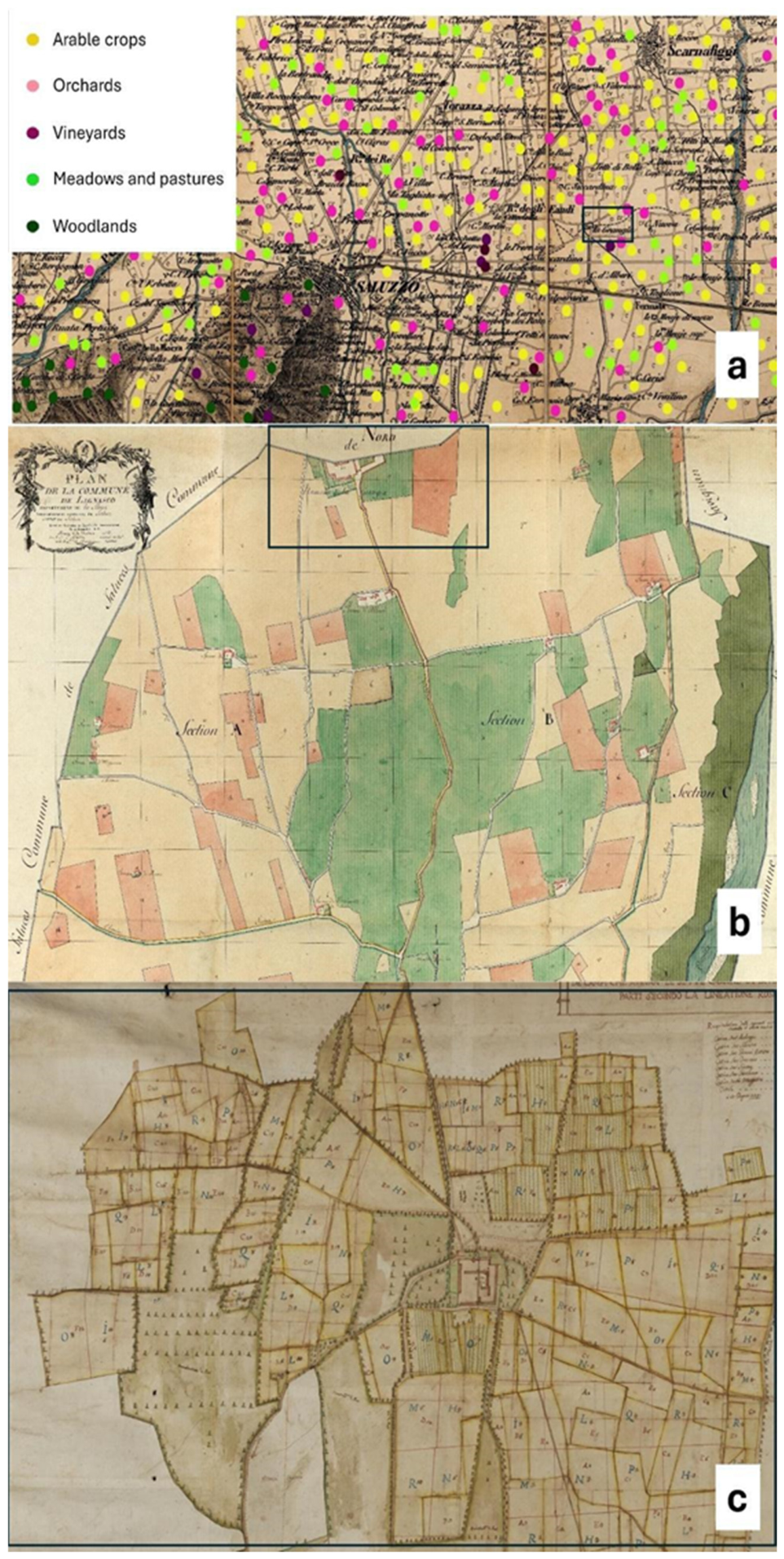
Moreover, these documents offer different readings because they are reproduced at different scales: landscape, municipality, and farm (Figure 3). We decided to reproduce Lagnasco Grangia as an example. At the landscape level, the cartography, dated 1852, was reproduced in a scale of 1:50,000, which included the entire territory of Staffarda Abbey, its grangias, and the land uses and infrastructures. The main land uses of the topographic map, with the historic land uses detected, were reworked (Figure 3a). At the municipal level, the cadastral map (1802) reproduces the Lagnasco municipality with all the rural farms, including Fornaca Grangia, the land uses, and the water network and infrastructures. Figure 3b reports the details of the cadastral map representing the Lagnasco Grangia. At the Lagnasco Grangia level, the map (1739) showed all the plots, the hedgerows, the tree lines, the paths, and the canals in detail. A part of this map is shown in Figure 3c.
When analyzing Figure 3, an ever-increasing level of detail was observed. The main crops practiced, the infrastructures, the paths, and the irrigation system are highlighted. For Grangia of Lagnasco, arable land (yellow), woods (dark green), meadows and grassland pastures (green), orchards (pink), and grapevines for wine (purple) were the main cultivations. All the plots of Grangia of Lagnasco were delimited by trees or hedges arranged in single or double rows. There was a complex and articulated system of canals used to irrigate the fields.
Inventories, cadastral maps, and notes also provide quantitative data. Moreover, through inventories, the Cistercian Benedictine monks reported their cultivation practices, the production techniques, and the related economic income. Inventories dated 1755 and 1756 related to Staffarda Abbey and its Grangias reported the cultivations and their productions. These lists allow for a quantification of the crops. Analyzing these reports, we can conclude that the main crops were wheat, rye, millet, corn, legumes (broad beans and beans), nuts, hemp, and vines. Silkworms and chickens were also raised in the XVIII century. In 1749, 1752, and 1758, the Cistercian Benedictine monks surveyed the forest component and reported the number of plants cultivated in Staffarda Abbey and its Grangias (Table 2).
As seen in Table 2, mulberries, oaks, elms, walnuts, and poplars were cultivated in Staffarda Abbey and its medievalGrangias. Between 1749 and 1758, the number of mulberries doubled, and the number of oaks increased a lot. By contrast, elms and poplars decreased. The inventory shows that apple trees were only grown in Fornaca, and chestnut trees were only grown in Staffarda Abbey. Apple trees were cultivated in Grangia Fornaca and introduced in 1752. In Grangia Fornaca, the number of mulberries and oaks doubles. By contrast, elms and walnuts slightly decrease by 19% and 18%, respectively. The number of poplars, on the other hand, decreases significantly (77%). Quantitative data allow us to understand the landscape structure and its transformations over time.
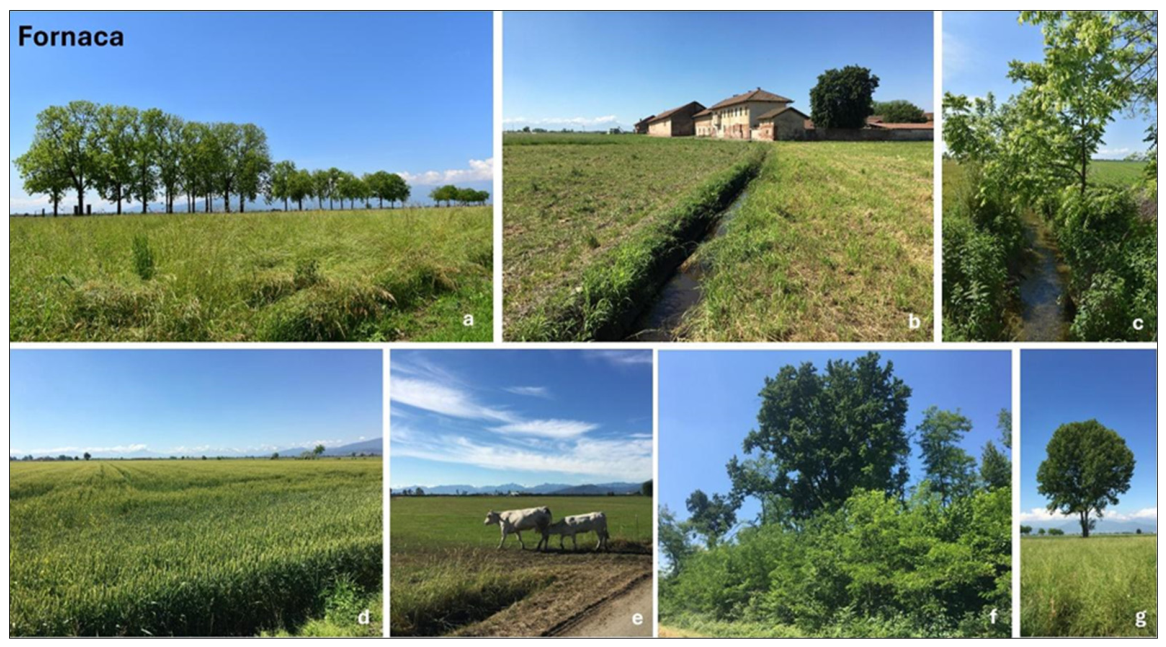
The field inspections showed that the hedgerows and tree lines are well preserved. The most common species observed are Salix alba L., Morus alba L., Populus spp., Robinia pseudoacacia L., Prunus avium L., Fraxinus excelsior L., Quercus robur L., Rubus spp., Corylus avellana L., and Sambucus nigra L. For Grangia Fornaca, it is possible to find hedgerows and tree lines both along the waterways and along the field’s boundaries. The canals, the complex water systems, and the main cultivation types, crops, woods, and grassland pastures, are still recognizable (Figure 4).

3.2. Data Systematization

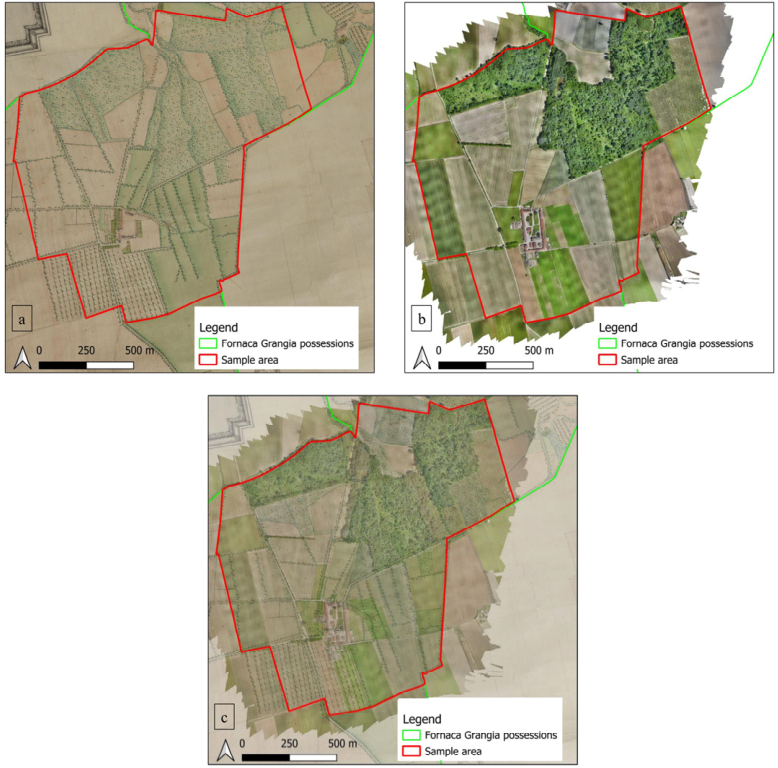
The analyses performed in a GIS environment allowed us to produce the historical land-use map (HLU) based on the Grangia Fornaca map (XIX century) and the current land-use map (CLU) based on the aerial photograph acquired with a drone (2024). Figure 5 reports the historical land-use map (XIX century), the aerial photograph acquired with a drone (2024), and the overlapping of the two maps.
The land-use classes identified in the sample area analyzed, their descriptions, and their percentages of coverage are reported in Table 3.
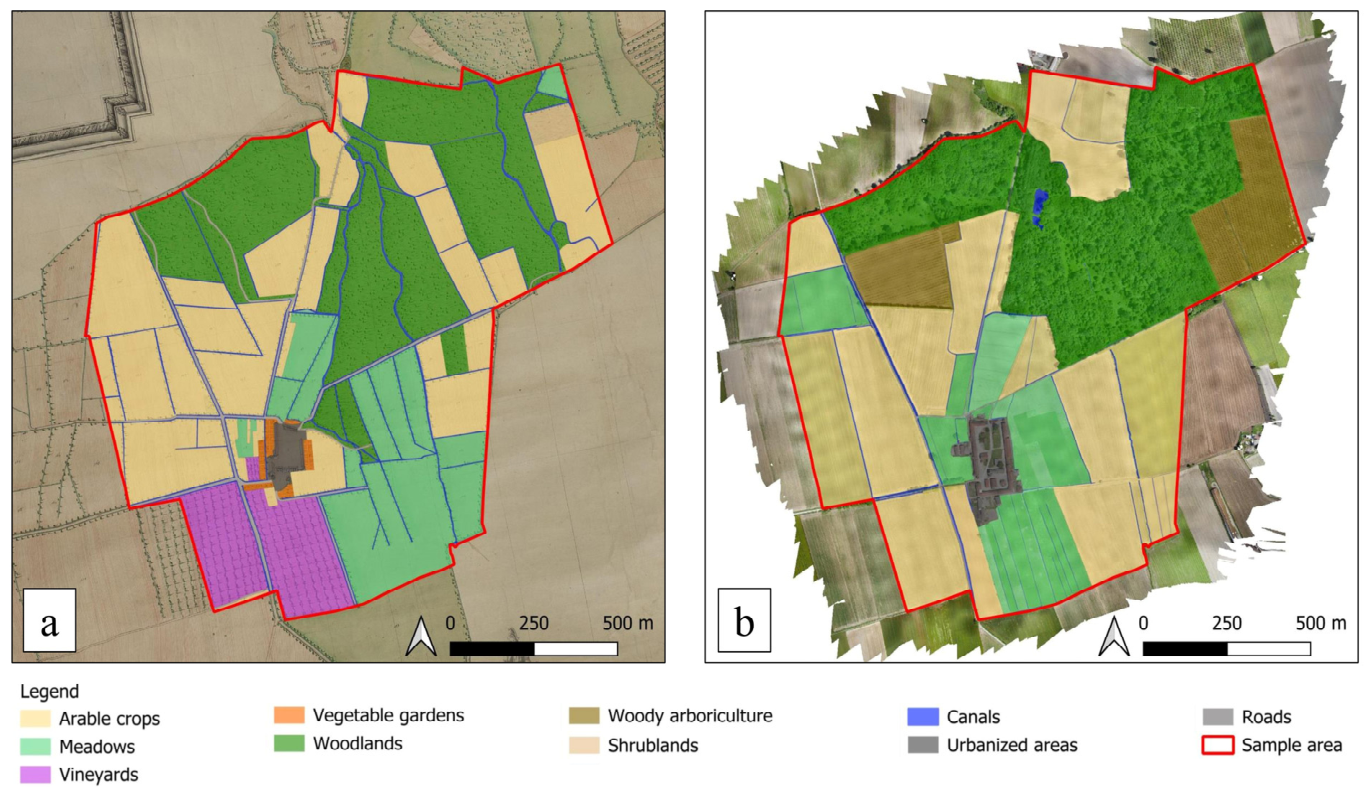
Figure 6 shows the HLU and the CLU. Their comparison makes evident that the general structure of the landscape analyzed is unchanged from the XIX century to nowadays. Indeed, in both periods considered, arable crops represent the most extensive land use. In the sample area, they represent 34.85% and 42.39% of the surface for the HLU and CLU, respectively. The second type of land use nowadays, as was the case in the XIX century, remains the woodlands (32.1% for HLU and 29.3% for CLU), followed by meadows (15.51% for HLU and 14.41% for CLU). By contrast, in the XIX century, vineyards were well represented in the sample area (8,11% of the surface), while nowadays they have been replaced mainly by arable crops. Similarly, the CLU has fewer vegetable gardens than in the past. Indeed, only one remains near the farm of a very small size (0.002% of the surface). Woody arboriculture in the sample area constitutes a new land-use class that covers 9.13% of the surface nowadays. The urbanized areas have not undergone substantial changes, except for a limited expansion of the farm. More generally, the comparison of Figure 6a,b allowed us to understand how the organization of the landscape mosaic characterizing the sample area analyzed of Grangia Fornaca is recognizable nowadays. In the middle of the system is the farm; the woodlands are still located in the northern part of the area; the meadows, where the animals graze, mainly remain in the eastern part near the farm; while the other surfaces are mainly characterized by arable crops. The analysis conducted in a GIS environment highlighted the permanence of the canals in the present landscape and their reduction compared with the situation in the XIX century.
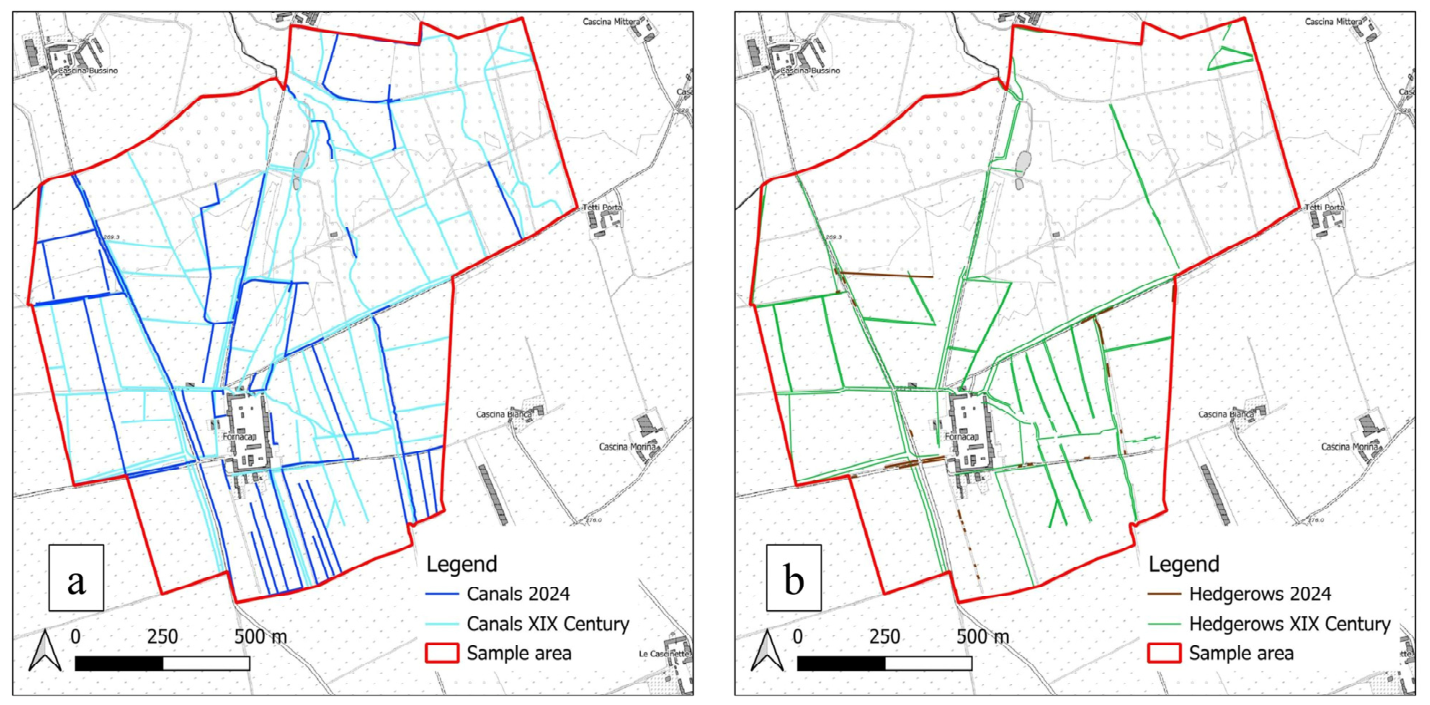
To explore the permanence of the linear elements, the maps of the linear elements were produced (Figure 7). As shown in Figure 7a, canals are important elements of the landscape. In the XIX century, they extended to 23.26 km. Most of them are still present and used today. However, their total extension is now about half (12 km). Similarly, the extension of the hedgerows has decreased over time (Figure 7b). In the XIX century, their total length in the sample area was 21.42 km, while nowadays less than 1 km is preserved (0.93 km).

3.3. Dynamic Investigative Tool

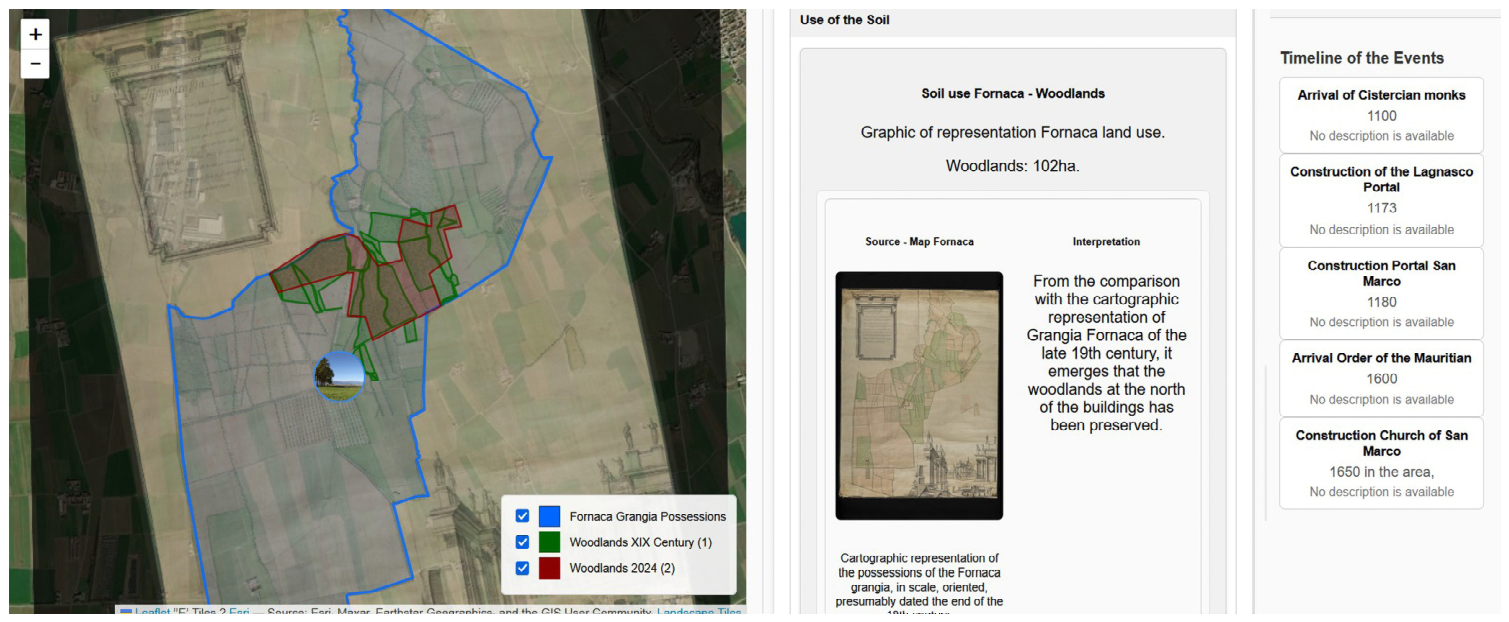
Digital maps and timelines are used to explore the spatial and temporal extent of the landscape, respectively, and to allow for comparisons between historical and contemporary features. For instance, the XIX century map of Grangia Fornaca can be linked with the aerial photograph of the same area acquired in 2024 and the descriptive interpretation of its content, but it can also be linked with the event of the creation of the map, the archive in which the map is currently preserved, and the GIS polygons depicting the diverse land use shown within the map.

3.4. Digital Platform

In this study, digital resources provide a storage space for the digital twins of the documentation materials, together with an interface for multimodal access. The prototype interface shows the Grangia Fornaca and is illustrated in Figure 8.

4. Discussion

This paper outlines methods and results of the multi-source strategy needed for the reconstruction of the main features of an historical rural landscape. This approach has been similarly adopted in other contests, Poggi et al. 2025 [52]. In addition, the study demonstrated that historical map analysis facilitates the tracking of the evolution of rural landscapes, like for Forejt et al. (2018) and Slámová et al. (2013), who considered old cadastral maps as a fundamental source for land-use reconstruction [53,54]. Moreover, Skaloš et al. (2011) used old military survey maps and images to analyze long-term land cover changes in the case of the Czech Republic [55]. Moving from knowledge to conservation, strengthening the public interest in local heritage is fundamental. Digital archives as tools for researchers and communities have been realized in Scotland (UK), and Beel et al. (2017) have realized a digital archive [56].
In this study, the historical and archival analysis provide quantitative and qualitative data on the case study. The dynamic reading (diachronic and synchronic) of the historical transformations of rural landscapes was adopted towards the recognition of the historical permanences that constitute the landscape structures. Agricultural productions, land uses, hedgerows, and the water system were recognized as historical permanences dating back to the Middle Ages. The historical configuration confirmed the presence of rural farms, land uses (crops, woods, and grassland pastures), routes, and paths.
By overlaying the historical map dating back to the XIX century with the drone’s image (2024) in Grangia Fornaca, we could confirm that some historical landscape features were preserved over time. Indeed, as described above, from the XIX century to today, surrounding Grangia Fornaca, the rural matrix remained predominant: arable crops and meadows—which constitute the most representative land uses—covered 50.36% in the XIX century and cover 56.80% today. Furthermore, the size and the shape of the cultivated plots have been maintained over time, conserving the historical organization of the mosaic landscape. Finally, the actual boundaries of the Grangia Fornaca property, defined by legal restrictions (Italian Code of Cultural Heritage and Landscape by the Ministry of Cultural Heritage), coincide perfectly with its perimeter in the XIX century. By contrast, we have detected some minor changes, such as a reduction in the linear elements characterizing the historical landscape. Many authors reported that the agricultural intensification in Europe caused the reduction in hedgerows along the boundaries of the fields and suggested their restoration to preserve the multifunctionality of these agricultural systems [57,58,59].
The historical analysis explained these dynamics. The rural landscape of Staffarda Abbey (founded in 1135) with its medieval farms was characterized by changes from the XII century to the present. The land on which the Abbey was built was originally reclaimed by the Cistercian monks, who built a complex of buildings. Until the XV century, Staffarda was a very important regional center for the Cistercian monks. Its property covered 1356 ha, and it has been maintained today as a whole farming unit. The highly productive soils of Staffarda are also far from large human settlements. These factors contribute to creating an independent, productive agricultural center able to produce and react to the markets over time.
Adopting a multidisciplinary analytical perspective, it is possible to evaluate and interpret the impacts of long-term changes. The concentration of landownership in the hands of one owner (before the Abbey and the Mauritian Order) over time is the main driving factor. This factor determined the governance of the territory and the unified planning of crop choices, parcel patterns, cultivation techniques, and the company settlement structure. This land-use planning capacity emerges in different phases and in different elements studied in the project:
  • Massive deforestation and clearing between the XII and XIII centuries;
  • Significant building investment between the XIII and XX centuries;
  • Intense rural landscape changes related to morphological and management aspects between the XVIII and XXI centuries.
These evolutionary mechanisms and changes in cultivation choices are linked to the strong consistency of the ownership structure and are also connected to the broader settlement and economic context. In this study, several document types were deeply analyzed and different sources examined. To evaluate and quantify the dynamics and transformations of historic rural landscapes, the difficulty in handling this data was highlighted. In this context, the study of Staffarda Abbey was analyzed starting from a historical methodology in relation to architecture and elements linked to the rural landscape. Through the skill of historians, archeologists, agronomists, and computer scientists, different readings and interpretations of those historical sources were performed.
They provided qualitative and quantitative data related to the architecture, land uses, agricultural productions, canals, water system, tree lines, hedgerows, and routes. The overlapping datasets used in this study converge in the interpretation of landscape transformations and permanences, meanings, and functions of the different elements. The preliminary results related to the multifunctional role of hedgerows were published [60].
In the rural landscape around Grangia Fornaca, we highlighted the necessity to maintain the system of the historical water canals. Zhong et al. (2024) demonstrated that these historical irrigation systems are characterized by aesthetic and recreational values by stakeholders [61]. The scientific community attributed them to important biodiversity functions [62,63]. According to several Authors, GIS analysis allowed landscape monitoring and the reconstruction of the historical and current elements. Its limitation is due to the different nature of the sources used [64,65,66]. To conserve biodiversity and manage and plan rural landscapes, Millner (2025) used digital technologies and drones in tropical forests [67].
According to De Montis et al., the specific focus on rural landscapes has attracted the interest of the international community [68]. The researchers have approached the question from many perspectives, but have rarely analyzed the interplay between landscapes, buildings, and settlements. To analyze and plan the rural built-up landscapes, the Authors proposed an interesting methodology in which qualitative and quantitative landscape information were examined and systematized [65]. To investigate the historical conflict landscape, Storch et al. (2025) used UAV-based LiDAR and photogrammetric systems [69]. By mapping and modeling past and future land-use changes in European cultural landscapes, Schulp et al. (2018) highlighted a clear co-occurrence of specific land change trajectories and cultural landscape types [70]. In this perspective, analyzing land-use changes over time was considered the primary step [71].
An interdisciplinary and integrated analysis to investigate landscape structure transformations through the assessment of land-use change over time was proposed in this paper. Combining history, landscape archeology, agronomy, and computer science, with different readings and interpretations, can be considered an effective methodology to investigate and evaluate historic rural landscapes. The digital platform has been designed to facilitate the exploration of knowledge by researchers from different fields, promoting new interpretations across spatial, temporal, and thematic dimensions. Even if it is in a prototypical phase, the interface shows that the system can support spatial and temporal queries and comparative analysis of landscape changes over time. Also, the metadata descriptive schema allows for the integration of diverse types of source materials and data, such as historical maps, experts’ interpretations, historical events, inventory information, and media sources, providing a holistic view of the object of study and the research process itself.
Concerning digital information platforms, Shu et al. (2023) provided a theoretical basis for the development of their potential in the protection, conservation, and sustainable management of rural landscapes in the future [72]. In contrast, to overcome the limitations of linear narratives in historical research, Lombardo et al. 2024 proposed an interactive platform to connect history disciplines [73]. The example of a digital platform realized in this study illustrates the potential of digital infrastructure, but a thorough understanding of the potentialities of the multimodal access and visualization of heterogeneous types of information is needed to introduce novel facilities and disruptive interaction modes. Also, after careful design and implementation, a complete user study should be performed to evaluate the interface’s accessibility features, as is required for experts from different disciplines, such as historians and agronomists. The descriptive digital items of the Grangia Fornaca can be accessed through a digital map that integrates historical maps, aerial photographs, and scholarly interpretations as thematic layers. The timeline allows for the sorting and filtering of those thematic layers according to their temporal characterization. This approach provides a diachronic and spatially grounded understanding of landscape transformation, concluding the methodological framework. The descriptive digital items of the Grangia Fornaca can be accessed through a digital map that integrates historical maps, aerial photographs, and scholarly interpretations as thematic layers.

5. Conclusions

Assessing the dynamics of medieval rural landscapes, it is necessary to develop monitoring systems based on qualitative and quantitative tools for their conservation and valorization. In this case study, an integrated empirical work was developed. The methodological framework proposed in this paper could be useful for regional/national landscape planning. The integrated empirical work could be applied to other case studies. The methodology combines history, landscape archeology, and computer science with different readings and interpretations.
Using different scales, historical permanences, land-use changes in a rural medieval site, and recognized settlements were reconstructed. We think that analyzing the historical features of the rural landscape and identifying the permanences are the first steps in developing landscape conservation and valorization programs. The paper demonstrates that the historical reconstruction of a rural landscape is a scientific challenge that needs to be addressed through an integrated and interdisciplinary approach. Historical permanences are detected as indicators of landscape changes and qualifying landscape elements. To collect, interpret, and analyze data, it is necessary to design new dynamic investigative tools and databases. These tools can be used over time to consult data and their interpretations and implement the acquired knowledge. This methodology contributes to building rural strategies and policies for landscape planning and management.
Despite the difficulties regarding historic rural landscapes, translating actions and strategies into practice is an essential step for ensuring traditional values. In the case of Staffarda Abbey, as a rural medieval site, it is important to develop specific programs, landscape planning, policies, and identify sustainable strategies. By recognizing linear landscape elements, such as hedgerows and water systems, as a future research direction, it would be possible to study the ecosystem services provided and their roles in current agricultural practices. Another potential application is linked to a participatory approach. Following the European Landscape Convention recommendations concerning the need to consider people’s perceptions regarding living landscape planning, public consultation has become an increasingly important tool in the decision-making process. In this perspective, the empirical results of this study could be integrated with a participatory approach in the future to involve decision makers. In this context, raising awareness among the community on the issue of preserving the historical elements of the rural landscape by including them in tourist and educational itineraries appears to be a good strategy for the future.

Author Contributions

Conceptualization, L.P. and F.L.; methodology, P.G. (Paola Gullino) and P.G. (Paola Greppi); software, F.M., E.P. and A.N.; validation, V.L.; formal analysis, P.G. (Paola Gullino) and E.P.; investigation, P.G. (Paola Gullino) and P.G. (Paola Greppi); resources, L.P.; data curation, P.G. (Paola Gullino); writing—original draft preparation, P.G. (Paola Gullino), P.G. (Paola Greppi), E.P., L.P., A.N., V.L. and F.L.; writing—review and editing, P.G. (Paola Gullino) and F.L.; supervision, L.P. and F.L.; funding acquisition, L.P. All authors have read and agreed to the published version of the manuscript.

Funding

The research was supported by the European Union—Next Generation EU, Mission 4 Component 2, CHANGES—2022–2025, Spoke 1—Historical, Landscapes, Traditions and cultural Identities (PE00020 CHANGES.—CUP D53C22002530006).

Data Availability Statement

The digital platform developed in this study is accessible through https://landscapes.livingculture.it/.

Acknowledgments

We are grateful to all the farmers for their essential contribution to the study. We would like to thank Cristina Scalon and Amedeo Mandrone of the Ordine Mauriziano Foundation.

Conflicts of Interest

The authors declare no conflicts of interest. The funders had no role in the design of the study; in the collection, analyses, or interpretation of data; in the writing of the manuscript; or in the decision to publish the results.

References

  1. Pôças, I.; Cunha, M.; Marcal, A.R.S.; Pereira, L.S. An evaluation of changes in a mountainous rural landscape of Northeast Portugal using remotely sensed data. Landsc. Urban Plan 2011, 101, 253–261. [Google Scholar] [CrossRef]
  2. Cullotta, S.; Barbera, G. Mapping traditional cultural landscapes in the Mediterranean area using a combined multidisciplinary approach: Method and application to Mount Etna (Sicily; Italy). Landsc. Urban Plan 2011, 100, 98–108. [Google Scholar] [CrossRef]
  3. Chirwa, P.W.; Mala, W. Trees in the landscape: Towards the promotion and development of traditional and farm forest management in tropical and subtropical regions. Agrofor. Syst. 2016, 90, 555–561. [Google Scholar] [CrossRef]
  4. Janssen, J.; Luiten, E.; Renes, H.; Stegmeijer, E. Heritage as sector, factor and vector: Conceptualizing the shifting relationship between heritage management and spatial planning. Eur. Plan. Stud. 2017, 25, 1654–1672. [Google Scholar] [CrossRef]
  5. Statuto, D.; Cillis, G.; Picuno, P. GIS-based Analysis of Temporal Evolution of Rural Landscape: A Case Study in Southern Italy. Nat. Resour. Res. 2019, 28, 1. [Google Scholar] [CrossRef]
  6. Agnoletti, M. The degradation of traditional landscape in a mountain area of Tuscany during the 19th and 20th centuries: Implications for biodiversity and sustainable management. For. Ecol. Manag. 2007, 249, 5–17. [Google Scholar] [CrossRef]
  7. Hebinck, P. De-/re-agrarianisation: Global perspectives. J. Rural Stud. 2018, 61, 227–235. [Google Scholar] [CrossRef]
  8. Gullino, P.; Beccaro, G.L.; Larcher, F. Assessing and Monitoring the Sustainability in Rural World Heritage Sites. Sustainability 2015, 7, 14186–14210. [Google Scholar] [CrossRef]
  9. Garbarino, M.; Sibona, E.; Lingua, E.; Motta, R. Decline of traditional landscape in a protected area of the southwestern Alps: The fate of enclosed pasture patches in the land mosaic shift. J. Mt. Sci. 2014, 11, 544–554. [Google Scholar] [CrossRef]
  10. Plieninger, T.; Hartel, T.; Martín-López, B.; Beaufoy, G.; Bergmeier, E.; Kirby, K.; Jesús Montero, M.; Moreno, G.; Oteros-Rozas, E.; Van Uytvanck, J. Wood-pastures of Europe: Geographic coverage, social–ecological values, conservation management, and policy implications. Biol. Conserv. 2015, 190, 70–79. [Google Scholar] [CrossRef]
  11. Li, Y.; Westlund, H.; Liu, Y. Why some rural areas decline while some others not: An overview of rural evolution in the world. J. Rural Stud. 2019, 68, 135–143. [Google Scholar] [CrossRef]
  12. Gullino, P.; Mellano, M.G.; Beccaro, G.L.; Devecchi, M.; Larcher, F. Strategies for the management of traditional chestnut landscapes in Pesio Valley, Italy: A participatory approach. Land 2020, 9, 536. [Google Scholar] [CrossRef]
  13. Pomatto, E.; Gullino, P.; Novelli, S.; Devecchi, M.; Larcher, F. Landscape Strategies for Terraced Landscapes in the European Alpine Region Using a Mixed-Method Analysis Tool. Land 2023, 12, 1252. [Google Scholar] [CrossRef]
  14. Tortora, A.; Statuto, D.; Picuno, P. Rural landscape planning through spatial modelling and image processing of historical maps. Land Use Policy 2015, 42, 71–82. [Google Scholar] [CrossRef]
  15. Ridding, L.E.; Redhead, J.W.; Oliver, T.H.; Schmucki, R.; McGinlay, J.; Graves, A.L.; Morris, J.; Bradbury, R.B.; King, H.; Bullock, J.M. The importance of landscape characteristics for the delivery of cultural ecosystem services. J. Environ. Manag. 2018, 206, 1145–1154. [Google Scholar] [CrossRef] [PubMed]
  16. FAO. GIAHS-Globally Important Agricultural Heritage Systems. Retrieved 17 June 2020. Available online: http://www.fao.org/giahs/en/ (accessed on 23 January 2026).
  17. Ministry of Agriculture, Food Sovereignty and Forestry. Decree of the Minister n. 17070 of 19 November 2012. Available online: https://www.politicheagricole.it/flex/cm/pages/ServeBLOB.php/L/IT/IDPagina/5832 (accessed on 28 January 2026).
  18. Di Fazio, S.; Modica, G. Historic Rural Landscapes: Sustainable Planning Strategies and Action Criteria. The Italian Experience in the Global and European Context. Sustainability 2018, 10, 3834. [Google Scholar] [CrossRef]
  19. Gullino, P.; Devecchi, M.; Larcher, F. How can different stakeholders contribute to rural landscape planning policy? The case study of Pralormo municipality (Italy). J. Rural Stud. 2018, 57, 99–109. [Google Scholar] [CrossRef]
  20. Agnoletti, M. Rural landscape, nature conservation and culture: Some notes on research trends and management approaches from a (southern) European perspective. Landsc. Urban Plan 2014, 126, 66–73. [Google Scholar] [CrossRef]
  21. Aimar, F. Reconstructing the unknown: An integrated and multisource description of Albanian landscape transformations since the 1850s. Landsc. Res. 2024, 49, 506–526. [Google Scholar] [CrossRef]
  22. Gabellieri, N.; Watkins, C. Measuring long-term landscape change using historical photographs and the WSL Monoplotting Tool. Landsc. Hist. 2019, 40, 93–109. [Google Scholar] [CrossRef]
  23. Council of Europe. European Landscape Convention. 2000. Available online: https://www.coe.int/en/web/landscape/text-of-the-european-landscape-convention (accessed on 4 May 2026).
  24. Antrop, M. Why landscapes of the past are important for the future. Landsc. Urban Plan 2005, 70, 21–34. [Google Scholar] [CrossRef]
  25. Tosco, C. Il Paesaggio Storico. Fonti e Metodi di Ricerca; Edizioni Laterza: Rome, Italy, 2009; p. 18. [Google Scholar]
  26. Aimar, F.; Gullino, P.; Devecchi, M. Towards reconstructing rural landscapes: A case study of Italian Mongardino. J. Rural Stud. 2021, 88, 446–461. [Google Scholar] [CrossRef]
  27. Tarolli, P.; Sofia, G.; Calligaro, S.; Prosdocimi, M.; Preti, F.; Fontana Dalla, G. Vine- yards in terraced landscapes: New opportunities from lidar data. Land Degrad. Dev. 2015, 26, 92–102. [Google Scholar] [CrossRef]
  28. Picuno, P.; Cillis, G.; Statuto, D. Investigating the time evolution of a rural landscape: How historical maps may provide environmental information when processed using a GIS. Ecol. Eng. 2019, 139, 105580. [Google Scholar] [CrossRef]
  29. Rossi, A.; De Feudis, M.; Trenti, W.; Gherardi, M.; Vianello, G.; Vittori Antisari, L. GIS-Based Geopedological Approach for Assessing Land Suitability for Chestnut (Castanea sativa Mill.) Groves for Fruit Production. Forests 2023, 14, 224. [Google Scholar] [CrossRef]
  30. Santoro, A.; Venturi, M.; Ben Maachia, S.; Benyahia, F.; Corrieri, F.; Piras, F.; Agnoletti, M. Agroforestry Heritage Systems as Agrobiodiversity Hotspots. The Case of the Mountain Oases of Tunisia. Sustainability 2020, 12, 4054. [Google Scholar] [CrossRef]
  31. Iizuka, K.; Itoh, M.; Shiodera, S.; Matsubara, T.; Dohar, M.; Watanabe, K. Advantages of unmanned aerial vehicle (UAV) photogrammetry for landscape analysis compared with satellite data: A case study of postmining sites in Indonesia. Cogent Geosci. 2018, 4, 1498180. [Google Scholar] [CrossRef]
  32. Cillis, G.; Statuto, D.; Picuno, P. Historical GIS as a Tool for Monitoring, Preserving and Planning Forest Landscape: A Case Study in a Mediterranean Region. Land 2021, 10, 851. [Google Scholar] [CrossRef]
  33. Casana, J.; Laugier, E.J.; Hill, A.C.; Reese, K.M.; Ferwerda, C.; McCoy, M.D.; Ladefoged, T. Exploring archaeological landscapes using drone-acquired lidar: Case studies from Hawai’i, Colorado, and New Hampshire, USA. J. Archaeol. Sci. 2021, 39, 103133. [Google Scholar] [CrossRef]
  34. VanValkenburgh, P.; Cushman, K.C.; Castillo Butters, L.J.; Vega, C.R.; Roberts, C.B.; Kepler, C.; Kellner, J. Lasers without lost cities: Using drone lidar to capture architectural complexity at kuelap, amazonas, Peru. J. Field Archaeol. 2020, 45, S75–S88. [Google Scholar] [CrossRef]
  35. Casana, J.; Fowles, S.; Montgomery, L.M.; Mermejo, R.; Ferwerda, C.; Hill, A.C.; Adler, M. Multi-sensor drone survey of ancestral agricultural landscapes at Picuris Pueblo, New Mexico. J. Archaeol. Sci. 2023, 157, 105837. [Google Scholar] [CrossRef]
  36. Tarolli, P.; Straffelini, E. Agriculture in Hilly and Mountainous Landscapes: Threats, Monitoring and Sustainable Management. Geogr. Sustain. 2020, 1, 70–76. [Google Scholar] [CrossRef]
  37. Comba, R.; Merlo, G.G. L’Abbazia di Staffarda e l’irradiazione cistercense nel Piemonte meridionale. In Proceedings of the Storia e Storiografia, Revello, Cuneo, Italy, 17–18 October 1998; Società per gli Studi Storici di Cuneo: Cuneo, Italy, 1999. [Google Scholar]
  38. Provero, L. La Pratica dei Luoghi: Percorsi Politici Nel Saluzzese Medievale (Secoli XI–XIII), 1st ed.; Viella Editore: Roma, Italy, 2025; 420p. [Google Scholar]
  39. Pomatto, E.; Devecchi, M.; Larcher, F.; Gullino, P. Agriculture and natural resources for valorizing peri-urban historical landscapes: The case study of Stupinigi Royal Natural Park (Metropolitan City of Turin, Italy). Acta Hortic. 2022, 1345, 91–96. [Google Scholar] [CrossRef]
  40. Piras, F.; Santoro, A.; Romano, F.; Agnoletti, M. The VASA (historical and environmental evaluation) multitemporal approach for the analysis and assessment of rural landscape transformations. Landsc. Ecol. 2025, 40, 56. [Google Scholar] [CrossRef]
  41. Pomatto, E.; Devecchi, M.; Larcher, F. Assessment of the Terraced Landscapes’ Integrity: A GIS-Based Approach in a Potential GIAHS-FAO Site (Northwest Piedmont, Italy). Land 2022, 11, 2269. [Google Scholar] [CrossRef]
  42. Filigheddu, M.R.; Cillara, M.; Deplano, G.; Molgora, J.E.; Lai, L.; Muru, D.; Schirru, M.; Sedda, L.; Dettori, S. Analysis of land-use change in Mandrolisai 1860 to 2016: A case study from Sardinia (Italy). Landsc. Hist. 2024, 45, 81–100. [Google Scholar] [CrossRef]
  43. Van Eetvelde, V.; Antrop, M. Indicators for assessing changing landscape character of cultural landscapes in Flanders (Belgium). Land Use Policy 2009, 26, 901–910. [Google Scholar] [CrossRef]
  44. Brogiolo, G.P.; Cagnana, A. Archeologia Dell’architettura, Metodi e Interpretazioni; All’insegna del Giglio Ediotre: Firenze, Italy, 2012; 195p. [Google Scholar]
  45. Palmucci Quaglino, L. Le grange dell’abbazia di Staffarda a Lagnasco e Scarnafigi: Otto secoli di storia. In L’abbazia di Staffarda e L’irradiazione Cistercense nel Piemonte Meridionale: Atti del Convegno, Abbazia di Staffarda–Revello, Cuneo, Italy, 17–18 October 1998; Comba, R., Merlo, G.G., Eds.; Società per gli Studi Storici di Cuneo: Cuneo, Italy, 1999; pp. 287–303. [Google Scholar]
  46. Gullino, P.; Larcher, F.; Greppi, P.; Pomatto, E.; Meloni, F.; Nasi, A.; Lombardo, V.; Provero, L. Tracing back historical changes in a Medieval rural landscape: A case study of Staffarda Abbey (Piedmont, North-West Italy). In IALE 2025 European Landscape Ecology Congress, Landscape Perspectives in a Rapidly Changing World: Book of Abstracts, Bratislava, Slovakia, 2–5 September 2025; Lieskovský, J., Baránková, Z., Miklósová, V., Hilbert, H., Ponecová, Z., Eds.; Institute of Landscape Ecology, Slovak Academy of Sciences: Bratislava, Slovacchia, 2025; p. 117. [Google Scholar] [CrossRef]
  47. Svenningsen, S.R.; Brandt, J.; Christensen, A.A.; Dahl, M.C.; Dupont, H. Historical oblique aerial photographs as a powerful tool for communicating landscape changes. Land Use Policy 2015, 43, 82–95. [Google Scholar] [CrossRef]
  48. Yang, C.; Han, F. A digital information system for cultural landscapes: The case of Slender West Lake scenic area in Yangzhou, China. Built Herit. 2020, 4, 3. [Google Scholar] [CrossRef]
  49. Longhi, A. Catasti e Territori. L’analisi dei Catasti Storici per L’interpretazione del Paesaggio e Per il Governo del Territorio; Alinea Editrice: Firenze, Italy, 2008; p. 381. [Google Scholar]
  50. Tosco, C. L’abbazia di Staffarda e L’irradiazione Cistercense nel Piemonte Meridionale; Società Studi Storici: Cuneo, Italy, 1999; p. 207. [Google Scholar]
  51. Beltramo, S. I Cistercensi Foglianti e le Abbazie Medievali: Interventi Architettonici a Staffarda e Novalesa; Viella Editrice: Roma, Italy, 2020; pp. 105–130. [Google Scholar]
  52. Poggi, G.; Volpi, V.; Dallai, L. Tracing natural and anthropic dynamics in alluvial and coastal plain through multidisciplinary sources: A new protocol for the study of historical landscapes in Val di Cornia (southern Tuscany, Italy). Quat. Int. 2025, 728, 109725. [Google Scholar] [CrossRef]
  53. Forejt, M.; Dolejš, M.; Raška, P. How reliable is my historical land-use reconstruction? Assessing uncertainties in old cadastral maps. Ecol. Indic. 2018, 94, 237–245. [Google Scholar] [CrossRef]
  54. Slámová, M.; Jančura, P.; Daniš, D. Methods of Historical Landscape Structures. Identification and Implementation into Landscape Studies. Ekológia 2013, 32, 267–276. [Google Scholar] [CrossRef]
  55. Skaloš, J.; Weber, M.; Lipský, Z.; Trpáková, I.; Šantrůčková, M.; Uhlířová, L.; Kukla, P. Using old military survey maps and orthophotograph maps to analyse long-term land cover changes-Case study (Czech Republic). Appl. Geogr. 2011, 31, 426–438. [Google Scholar] [CrossRef]
  56. Beel, D.E.; Wallace, C.D.; Webster, G.; Nguyen, H.; Tait, E.; Macleod, M.; Mellish, C. Cultural resilience: The production of rural community heritage, digital archives and the role of volunteers. J. Rural Stud. 2017, 54, 459–468. [Google Scholar] [CrossRef]
  57. Sklenicka, P.; Molnarova, K.; Brabec, E.; Kumble, P.; Pittnerova, B.; Pixova, K.; Salek, M. Remnants of medieval field patterns in the Czech Republic: Analysis of driving forces behind their disappearance with special attention to the role of hedgerows. Agric. Ecosyst. Environ. 2009, 129, 465–473. [Google Scholar] [CrossRef]
  58. Litza, K.; Alignier, A.; Closset-Kopp, D.; Ernoult, A.; Mony, C.; Osthaus, M.; Staley, J.; Van Den Berge, S.; Vanneste, T.; Diekmann, M. Hedgerows as a habitat for forest plant species in the agricultural landscape of Europe. Agric. Ecosyst. Environ. 2022, 326, 107809. [Google Scholar] [CrossRef]
  59. Vannucci, A.; Andreoli, M.; Rovai, M. Land Use Change and Disappearance of Hedgerows in a Tuscan Rural Landscape: A Discussion on Policy Tools to Revert This Trend. Sustainability 2022, 14, 13341. [Google Scholar] [CrossRef]
  60. Larcher, F.; Gullino, P.; Pomatto, E.; Greppi, P.; Provero, L. The multifunctional role of hedgerows in the historical rural landscape: The case study of Staffarda Abbey (Italy). Acta Hortic. 2025, 1434, 55–62. [Google Scholar] [CrossRef]
  61. Zhong, Y.; Zhang, M.; Xia, Y.; Hao, R.; Tan, L. Public Aesthetic and Recreational Preferences for Historical Irrigation Canals in Rural Areas: A Case Study in Li Canal-Gaoyou Irrigation District. Buildings 2024, 14, 1955. [Google Scholar] [CrossRef]
  62. Dorotovičová, C. Man-made canals as a hotspot of aquatic macrophyte biodiversity in Slovakia. Limnologica 2013, 43, 277–287. [Google Scholar] [CrossRef]
  63. Aspe, C.; Gilles, A.; Jacqué, M. Irrigation canals as tools for climate change adaptation and fish biodiversity management in Southern France. Reg. Environ. Change 2016, 16, 1975–1984. [Google Scholar] [CrossRef]
  64. Jackman, A.; Millner, N.; Cunliffe, A.M.; Laumonier, Y.; Lunstrum, E.; Paneque-Gálvez, J.; Wich, S.A. Protecting people and wildlife from the potential harms of drone use in biodiversity conservation: Interdisciplinary dialogues. Glob. Soc. Chall. J. 2023, 2, 68–83. [Google Scholar] [CrossRef]
  65. Morgan, J.L.; Gergel, S.E.; Coops, N.C. Aerial photography: A rapidly evolving tool for ecological management. BioScience 2010, 60, 47–59. [Google Scholar] [CrossRef]
  66. Morgan, J.L.; Gergel, S.E.; Ankerson, C.; Tomscha, S.A.; Sutherland, I.J. Historical aerial photography for landscape analysis. In Learning Landscape Ecology. A Practical Guide to Concepts and Techniques; Gergel, S.E., Turner, M.G., Eds.; Springer: New York, NY, USA, 2017. [Google Scholar] [CrossRef]
  67. Millner, N. Wildlife in Pixels: Digital Technologies Mediating Diverse Potentialities in Biodiversity Conservation. Conserv. Soc. 2025, 23, 92–97. [Google Scholar] [CrossRef]
  68. De Montis, A.; Ledda, A.; Serra, V.; Noce, M.; Barra, M.; De Montis, S. A method for analysing and planning rural built-up landscapes: The case of Sardinia, Italy. Land Use Policy 2017, 62, 113–131. [Google Scholar] [CrossRef]
  69. Storch, M.; Kisliuk, B.; Jarmer, T.; Waske, B.; de Lange, N. Comparative analysis of UAV-based LiDAR and photogrammetric systems for the detection of terrain anomalies in a historical conflict landscape. Sci. Remote Sens. 2025, 11, 100191. [Google Scholar] [CrossRef]
  70. Schulp, C.J.E.; Levers, C.; Kuemmerle, T.; Tieskens, K.F.; Verburg, P.H. Mapping and modelling past and future land use change in Europe’s cultural landscapes. Land Use Policy 2018, 80, 332–344. [Google Scholar] [CrossRef]
  71. Casanova-Salas, P.; Sevilla, J.; Coma, I.; Morillo, P.; Gaitán, M.; Portalés, C. Enhancing Accessibility and Navigation of Heritage Collections Through Interactive Spatiotemporal Maps. ACM J. Comput. Cult. Herit. 2024, 17, 1–21. [Google Scholar] [CrossRef]
  72. Shu, Y.; Ma, X.; Liu, Z.; Li, J.; Zhang, Y. Potential of the Digital Information Platform Applied in Promotion of Rural Landscape in China: From Preliminary Practices to Framework Conception. Land 2023, 12, 1667. [Google Scholar] [CrossRef]
  73. Lombardo, V.; Laurenti, A.; Capurro, M.; Favole, F.; Provero, L.; Spione, G.; Fiore, A. Interactive Digital Narratives for Modern Historical Research. In Interactive Storytelling: 17th International Conference on Interactive Digital Storytelling, ICIDS 2024, Barranquilla, Colombia, 2–6 December 2024, Proceedings, Part II; Springer: Cham, Switzerland, 2024; pp. 232–242. [Google Scholar] [CrossRef]
Figure 1. The research framework. The landscape unit of Staffarda in Piedmont (Italy) with the areas subjected to legal restrictions for landscape and historical heritage.
Land 15 00801 g001
Figure 2. The methodological framework applied in the research.
Land 15 00801 g002
Figure 3. The cartographic reworking of the main land uses of the topographic map with the historic land uses detected in the XIX century, 1806, and the XVIII century. Source (a): Archive of Turin, a detailed cadastral map. Source (b): Archive of Turin, a detailed map of Grangia of Lagnasco. Source (c): Fondazione Ordine Mauriziano.
Land 15 00801 g003
Figure 4. The main landscape features that characterize Grangia Fornaca today are the tree lines (a), the canals (b,c), the crops (d), the grassland pastures (e), the woods (f), and the isolated trees (g).
Land 15 00801 g004
Figure 5. The Grangia Fornaca map (XIX century) (a), the aerial photograph acquired with a drone (2024) (b), and the overlapping of the two maps (c).
Land 15 00801 g005
Figure 6. The land use of the sample area referred to (a) the Grangia Fornaca map (XIX century) and (b) the aerial photograph acquired with a drone (2024).
Land 15 00801 g006
Figure 7. The linear elements of the canals (a) and the hedgerows (b) referred to in the present Grangia Fornaca historical map (XIX century) and an aerial photograph acquired with a drone (2024).
Land 15 00801 g007
Figure 8. The prototype interface shows the Grangia Fornaca on a satellite map with the historical map overlayed, highlighting the woodland areas as in the XIX century and in 2024. Source materials and interpretations (in the center) guide the reading of the map (on the left), while the timeline of the events (on the right) gives some additional contextual information about the main historical events that characterize the site’s history.
Land 15 00801 g008
Table 1. The list of archives consulted, the period, the data acquired, the document type, and the number of documents analyzed.
PeriodData AcquiredDocument TypeDocuments Analyzed
(N°)
Archive Name and Localization
XIV–XIX
century
Architectures, Staffarda Abbey’s ‘plan, medieval farms’ plans, routes, and land uses Cartography 44Fondazione Ordine Mauriziano (TURIN)
XVII–XIX
century
Canals and water systems, Po River, tree lines, woodlands, and routesIconography 21Fondazione Ordine Mauriziano (TURIN)
XVII–XIX
century
Canals and water systems, tree lines, woodlands, routes, and a list of forest and riparian species Description
Note
24Fondazione Ordine Mauriziano (TURIN)
XVIII
century
Cultivations practiced, list of agricultural productions, list of riparian species, tree lines, and woodland Inventory 8Fondazione Ordine Mauriziano (TURIN)
1772Land uses, rural farms, hedgerows, tree lines, and routes.Figured land register 83Archive of di Saluzzo (Saluzzo, CN)
XIX
century
Land uses, rural farms, and routes Cadastral map 5Archive of Turin (TURIN)
XIX
century
Canals and water system, land uses (landscape level), and routesCartography 35Archive of Turin (TURIN)
XX–XXI
century
Land uses, rural farms, agricultural and fruit productions, and routesPhotography 28Private archives
Table 2. Number of mulberries, oaks, elms, walnuts, and poplar trees cultivated in Staffarda Abbey and its Grangias in 1749, 1752, and 1758.
Mulberries (n°)Oaks (n°)Elms (n°)Walnuts (n°)Poplars (n°)
174917521758174917521758174917521758174917521758174917521758
Staffarda Abbey1349138522822892485302762134231041049729831
Fornaca8708681683730886141711621178944365336301834183194
Lagnasco6298971245747739602180413901268572573529328257321
San Marco218163390677233405313243624327151588
Total 306633135600183319452582364730942878110310569541206463634
Table 3. The land-use classes identified in the sample area analyzed for HLU and CLU, their descriptions, and their percentages of coverage.
Land-Use ClassesDescriptionHLU
(%)
CLU
(%)
Arable cropsThe agricultural surfaces dedicated to cereals in crop rotation with meadows. 34.8542.39
MeadowsThe agricultural surfaces dedicated to meadows (used for pasture or mowing for hay) in crop rotation with cereals. 15.5114.41
VineyardsThe agricultural surfaces dedicated to vineyards. 8.11-
Vegetable gardens The agricultural surfaces dedicated to vegetable gardens, often located near the farms.0.640.002
Woody arboricultureThe poplars used for the woody arboriculture planted with a regular scheme. -9.13
WoodlandsThe areas occupied by woody vegetation according to the parameters defined by the forest law of the Piedmont region (nr. 4, 10 February 2009): minimum surface 2000 m2, minimum width 20 m, minimum covered surface 20%.32.129.3
ShrublandsThe areas occupied by shrublands and trees that are not definable as woodlands according to the parameters reported above.0.820
CanalsThe canals historically used for water regulation and irrigation of the fields.4.851.63
Urbanized areasThe areas occupied by the buildings of the farm.1.012.37
RoadsThe main roads that cross the sample area.2.110.76
Disclaimer/Publisher’s Note: The statements, opinions and data contained in all publications are solely those of the individual author(s) and contributor(s) and not of MDPI and/or the editor(s). MDPI and/or the editor(s) disclaim responsibility for any injury to people or property resulting from any ideas, methods, instructions or products referred to in the content.