Review

Waterlogging and Land System Transformation in Pakistan’s Indus Basin Irrigation System: Six Decades of Management and Governance Lessons

1
Civil Engineering Department, University of Lahore, Lahore 54000, Pakistan
2
Civil and Environmental Engineering, University of New Hampshire, Durham, NH 03824, USA
3
Department of Agriculture and Forest Sciences (DAFNE), Tuscia University, 01100 Viterbo, Italy
*
Author to whom correspondence should be addressed.
Land 2026, 15(4), 662; https://doi.org/10.3390/land15040662
Submission received: 11 March 2026 / Revised: 11 April 2026 / Accepted: 16 April 2026 / Published: 17 April 2026

Abstract

Waterlogging and secondary salinization are major drivers of land degradation in irrigated dryland regions, undermining soil productivity and long-term sustainability. Pakistan’s Indus Basin Irrigation System (IBIS), one of the world’s largest irrigation networks, supports national food security over approximately 16.7 million hectares (Mha). However, large-scale canal irrigation, combined with flat topography, monsoonal recharge, and inefficient water management, has disrupted groundwater balance, leading to persistent shallow water tables and widespread land degradation. Currently, nearly one-third of the irrigated area is affected by groundwater depths of less than 3 m. This review synthesizes six decades of waterlogging development and management in the IBIS, analyzing the evolution of drainage infrastructure, salinity control strategies, groundwater exploitation, and institutional reforms within a land sustainability perspective. Although large-scale interventions—including 61 Salinity Control and Reclamation Projects (SCARPs) and major outfall systems—initially reclaimed substantial areas, long-term performance has been constrained by governance fragmentation, inadequate operation and maintenance, and environmentally problematic effluent disposal. The Indus Basin experience underscores the need to move beyond infrastructure-centered solutions towards more integrated land–water governance and adaptive management to enhance land system resilience in irrigated regions facing growing climatic and resource pressures.

1. Introduction

Irrigation has reshaped land systems in arid and semi-arid regions, enhancing agricultural productivity and food security but also generating significant environmental externalities. Among the most pervasive are waterlogging and soil salinization, which undermine long-term land sustainability [1,2]. Waterlogging occurs when groundwater rises into the crop root zone, displacing soil air and restricting plant growth [3]. In Pakistan, land with groundwater depth less than 3 m is classified as waterlogged, and depths within 1.5 m are considered severely waterlogged [3].
Globally, salt-affected soils cover approximately 1060 million hectares, and the affected area continues to expand due to climate change and inappropriate irrigation practices [4,5]. About 25% of total land and 33% of irrigated land are impacted by salinity [1,6,7,8]. The FAO estimates that 10–48% of irrigated lands in arid and semi-arid regions are affected by waterlogging and salinity (the wide range reflecting regional variability in climate, irrigation method, and soil type), with 2–3 million hectares lost annually from production and economic losses reaching USD 27.3 billion per year [9,10]. With the global population projected to approach 10 billion by 2050, sustaining productive irrigated land is critical for food system resilience [5,11,12,13].
Waterlogging typically results from excessive recharge due to canal seepage, deep percolation, over-irrigation, and inadequate drainage [14]. Management strategies are commonly divided into preventive and curative approaches [15]. Preventive measures emphasize improved irrigation efficiency, including canal lining and high-efficiency irrigation systems [16], while curative measures rely on structural drainage interventions and biodrainage [15]. Although engineering solutions can reduce groundwater levels, their effectiveness depends on sustained operation, institutional capacity, and environmentally sound disposal of saline effluent [17,18,19].
Large-scale irrigation in dryland regions represents a profound transformation of land systems, altering soil processes, groundwater dynamics, ecosystem services, and rural socio-economic structures. From a land system science perspective, waterlogging and salinization are not merely hydrological phenomena but emergent outcomes of coupled human–environment interactions shaped by infrastructure expansion, agricultural intensification, and governance arrangements. Irrigated landscapes function as socio-hydrological systems in which feedbacks between water management decisions, groundwater responses, land degradation processes, and institutional performance determine long-term sustainability trajectories. Understanding waterlogging therefore requires an integrated land–water governance lens that accounts for biophysical processes, spatial inequalities (e.g., unequal waterlogging burdens between Punjab and Sindh and between head-reach and tail-end farmers) and adaptive capacity under climate variability.
Within this broader land system perspective, the IBIS provides a compelling large-scale example of how sustained hydrological modification and governance choices reshape irrigated landscapes over time. The IBIS is one of the largest contiguous irrigation networks worldwide, irrigating approximately 16.7 Mha and supplying about 130 billion cubic meters (BCM) annually [20]. It supports nearly 90% of national food production and contributes significantly to Gross Domestic Product (GDP), employment, and foreign exchange earnings [21,22]. However, the expansion of IBIS has disrupted the natural groundwater balance through canal seepage, inefficient irrigation practices, monsoonal recharge, and flat topography [23,24].
Waterlogging in the IBIS was first documented in 1851, and by the 1950s nearly 30% of irrigated land was severely affected [25]. Groundwater levels rose at rates ranging from 15 to 75 cm per year in some areas [23]. Currently, approximately 33% of irrigated land has groundwater depths less than 3 m, while 12–14% is severely waterlogged, particularly in Sindh Province [3,26], threatening soil health and agricultural sustainability [27].
Since the 1960s, 61 Salinity Control and Reclamation Projects (SCARPs) have been implemented, including installation of more than 16,000 public tubewells and development of major outfall systems such as Left Bank Outfall Drainage (LBOD) and Right Bank Outfall Drainage (RBOD) [24,26,28]. While these interventions initially reduced waterlogging, long-term performance has been constrained by high operation and maintenance (O&M) costs, institutional fragmentation, weak cost recovery, limited stakeholder participation, and environmentally problematic effluent disposal [22,28,29].
Despite extensive technical and institutional experience, existing studies on waterlogging in the Indus Basin remain fragmented across hydrological, engineering, and policy domains. A comprehensive land system perspective that integrates biophysical processes, infrastructure development, governance structures, and long-term land sustainability outcomes is still limited. This review therefore synthesizes six decades of waterlogging development and management within an integrated land sustainability framework, linking hydrological imbalance, drainage infrastructure evolution, groundwater exploitation, and institutional performance. By situating waterlogging control within broader land–water governance dynamics, the paper aims to identify transferable lessons for enhancing land system resilience and sustainable land management in irrigated dryland regions facing increasing climatic and resource pressures.
This paper is structured as follows. Section 2 outlines the review methodology and selection criteria adopted for the synthesis. Section 3 describes the main hydrological, institutional, and infrastructural features of the IBIS to provide contextual background. Section 4 examines the historical development of waterlogging in the basin, highlighting groundwater dynamics, spatial patterns, and land degradation trends. Section 5 reviews management responses, including drainage infrastructure expansion, governance reforms, operation and maintenance challenges, and drainage water reuse and disposal strategies. Finally, Section 6 synthesizes key findings and presents transferable lessons and policy recommendations for enhancing land system resilience in irrigated dryland regions.

2. Review Methodology

This study follows a structured narrative review approach to examine the development and management of waterlogging and salinity in the IBIS over the period 1960–2025. A comprehensive literature search was conducted using major scientific databases (Scopus, Web of Science, and Google Scholar) combined with targeted screening of institutional repositories. Search terms included combinations of “Indus Basin”, “waterlogging”, “salinity”, “drainage management”, “SCARP”, “groundwater management”, “drainage effluent disposal”, and “irrigation sustainability”, applied both individually and in combination. The initial search yielded over 300 potentially relevant sources, of which approximately 90 were retained following screening against the inclusion criteria described below.
In addition to peer-reviewed journal articles, the review incorporated key institutional and technical reports from national and international agencies directly involved in basin management, including the Water and Power Development Authority (WAPDA), International Water Management Institute (IWMI), International Waterlogging and Salinity Research Institute (IWASRI), Food and Agriculture Organization (FAO), World Bank (WB), and Asian Development Bank (ADB). Such gray literature was incorporated to supplement, not replace, peer-reviewed evidence, particularly where it provided basin-scale data, long-term monitoring records, or program evaluations not available in academic literature. Foundational assessments, governance analyses, groundwater and salinity management studies, and drainage water management frameworks were critically reviewed to ensure both historical continuity and contemporary relevance.
Sources were included if they addressed at least one of the following dimensions: (i) hydrological drivers of groundwater rise and land degradation; (ii) design, performance, and spatial coverage of drainage infrastructure; (iii) drainage water reuse and disposal strategies; or (iv) institutional and policy reforms affecting land–water governance. Studies limited to localized technical experiments without basin-scale implications were excluded unless they provided methodological insights directly transferable to basin-scale management or helped contextualize broader trends. Sources published prior to 1960 were retained where they provided essential historical context, particularly for documenting the pre-SCARP waterlogging baseline.
The review synthesizes quantitative evidence (e.g., groundwater depth trends, drainage coverage, effluent volumes) and qualitative analyses (e.g., institutional performance, governance reforms) within a land sustainability framework. Rather than conducting a statistical meta-analysis, the objective is to integrate interdisciplinary knowledge to identify long-term system trajectories, socio-hydrological feedbacks, and transferable lessons for irrigated dryland land systems under increasing climatic and resource pressures. This narrative approach was chosen in preference to a Preferred Reporting Items for Systematic reviews and Meta-Analyses (PRISMA)-compliant systematic review because the heterogeneity of source types (technical reports, hydrological assessments, governance studies, and monitoring datasets) precludes standardized quality scoring across all included materials. A limitation of this approach is that the selection of sources, while guided by explicit inclusion criteria, inevitably involves interpretive judgment; the authors have sought to mitigate this through broad database coverage and the incorporation of both supportive and critical evaluations of major interventions.

3. Main Features of the IBIS

The IBIS was initially developed between 1857 and 1947 under British administration and was subsequently inherited by Pakistan after independence [25]. Since the 1950s, the system has undergone continuous expansion and modernization under national institutions, primarily the WAPDA and the Provincial Irrigation Departments (PIDs). Additional reservoirs, barrages, and inter-river link canals were constructed with sustained technical and financial support from international agencies including the WB, ADB, and Japan Bank for International Cooperation (JBIC) [25].
In the post-independence period (1947–1960), Pakistan possessed an extensive but seasonally constrained canal network fed by the Indus River and its tributaries, Jhelum, Chenab, Ravi, Sutlej, and Beas. Although annual inflows averaged 206 BCM, nearly half of this volume discharged into the sea unused, while approximately 30% of the 16.7 Mha irrigated area was already affected by waterlogging and salinity. The infrastructure comprised 10 barrages and 56,327 km of canals. Following the 1960 Indus Water Treaty, which allocated the western rivers to Pakistan, the Indus Basin Replacement Works, including Mangla and Tarbela dams, link canals, and associated SCARPs, restructured and stabilized the system [25].
Currently, IBIS is one of the largest integrated irrigation networks in the world, irrigating about 16.7 Mha and supplying approximately 130 BCM of river water annually from an average basin inflow of 190 BCM [20]. Around 50 BCM reaches the sea and 10 BCM is lost to evaporation and seepage [20,22,27,30]. Agriculture dependent on IBIS contributes roughly 25% to national GDP, supports 43.5% of employment, and generates over 60% of foreign exchange earnings [21,22].
The system comprises three major reservoirs, Tarbela and Chashma on the Indus (noting that Chashma functions as a run-of-river barrage rather than a storage reservoir in the same class as Tarbela or Mangla), and Mangla on the Jhelum, 15 barrages, 45 main canals, and 15 link canals [23]. Water is conveyed through a hierarchical distribution network of over 4000 distributaries and minors and approximately 107,000 watercourses. The canal network extends about 61,000 km, while watercourses and field channels exceed 1.6 million km [26].
River water quality is generally suitable for irrigation (150–200 ppm TDS upstream), though salinity increases downstream due to return flows and drainage effluent discharge [27]. The basin also receives approximately 50 BCM of effective rainfall annually, and groundwater abstraction contributes a further ~62 BCM [20,31,32].
The basin overlies a vast unconfined alluvial aquifer. Groundwater quality varies spatially: about 6 Mha contains fresh groundwater (<1000 ppm TDS), 1 Mha moderately saline (1000–3000 ppm), and 9 Mha highly saline (>3000 ppm) (totaling approximately 16.7 Mha of the irrigated command area) [26]. The estimated safe yield is 68 BCM per year, with current abstraction near 62 BCM [20].
Conjunctive use of surface and groundwater supplies more than 50% of irrigation water. In fresh groundwater zones, approximately 10 BCM from public and 52 BCM from private tubewells are utilized directly or through blending and cyclic use [23], accounting for the ~62 BCM total noted above. Over one million private tubewells are operational [33] (this figure is likely an underestimate given continued expansion since 2012), increasing cropping intensity from approximately 80% (pre-tubewell baseline) to over 150% (by the mid-1980s), with yield gains of 50–100% for tubewell owners [34].
Climatically, the basin is arid to semi-arid, receiving 100–750 mm rainfall in lowlands and up to 2000 mm in mountainous areas. Major cropping systems include rice–wheat, cotton–wheat, wheat–maize, and sugarcane–wheat rotations. Canal irrigation supplies roughly half of crop water requirements, but unreliable deliveries and expansion of high-delta crops have intensified groundwater dependence, which contributes 10–90% (average ~50%) of irrigation demand [20].
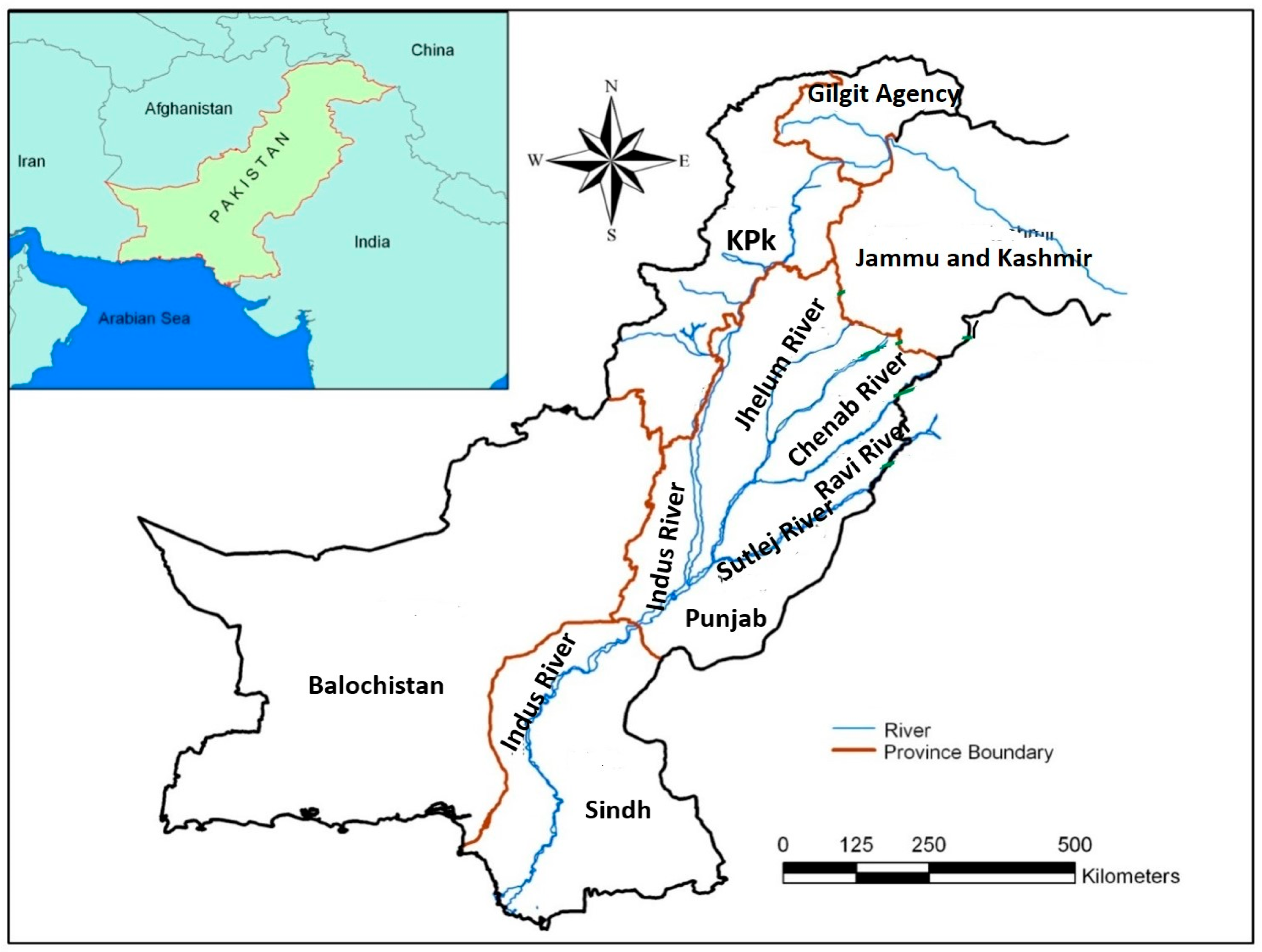
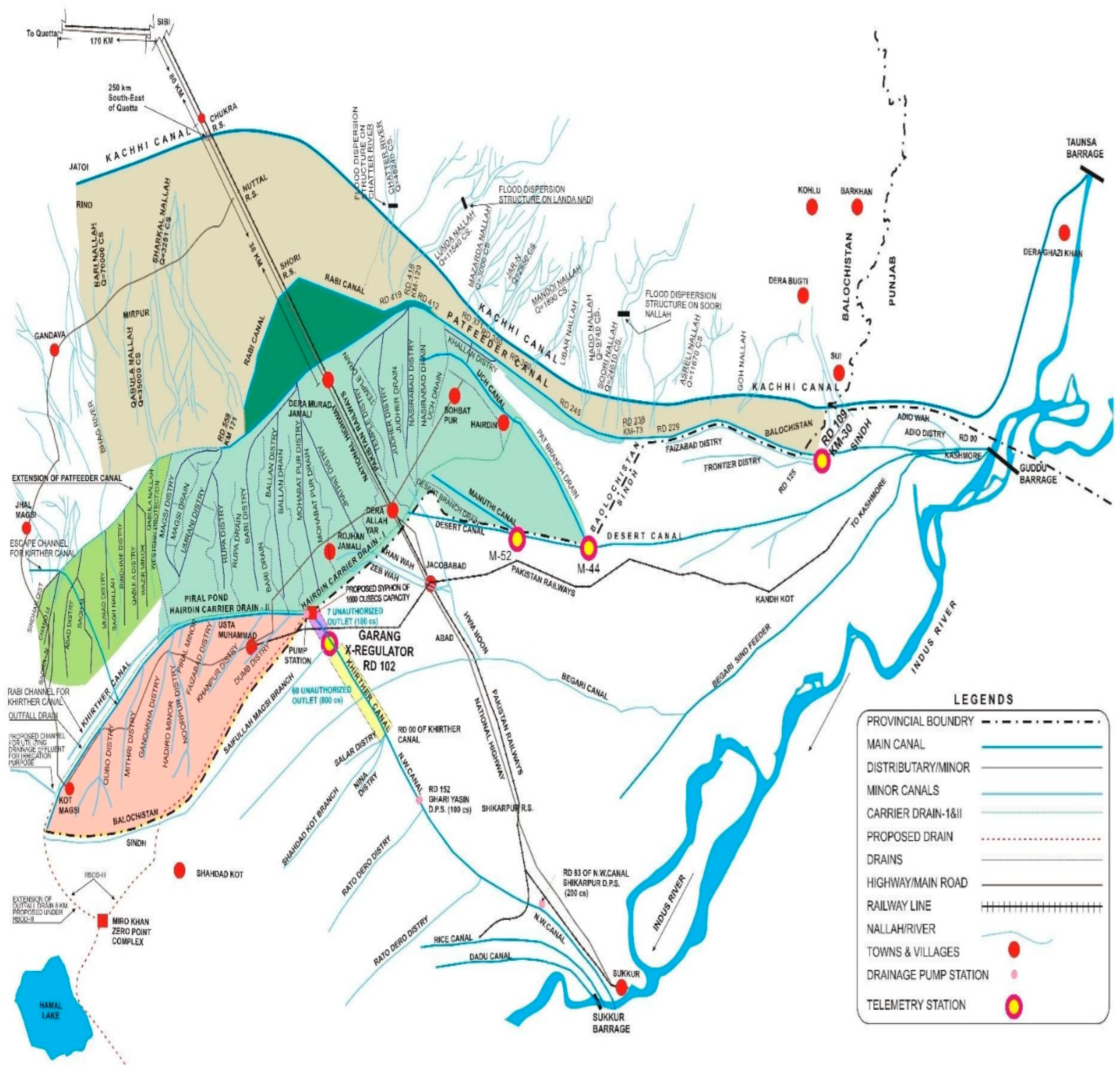
Figure 1 shows the rivers of the Indus Basin Irrigation System (IBIS) of Pakistan, while Figure 2 is specifically devoted to Balochistan Province in order to highlight the key irrigation canals that sustain its agricultural land.
The principal irrigation canals in Balochistan include the Pat Feeder Canal, Kirthar Canal, and Kachhi Canal. The Pat Feeder Canal offtakes from the Guddu Barrage on the Indus River. Its design discharge capacity is 190 m3/s, and its command area is approximately 0.20 Mha.
The Kachhi Canal offtakes from the Taunsa Barrage on the Indus River. Its discharge capacity is about 170 m3/s, and its command area is approximately 0.30 Mha. The Kirthar Canal is a branch canal that offtakes from the North-West Main Canal, which in turn offtakes from the Sukkur Barrage on the Indus River.
The discharge capacity of the Kirthar Canal is about 85 m3/s, and its command area is approximately 0.12 Mha. (Source: Balochistan Irrigation Department and Indus River System Authority (IRSA), Pakistan).
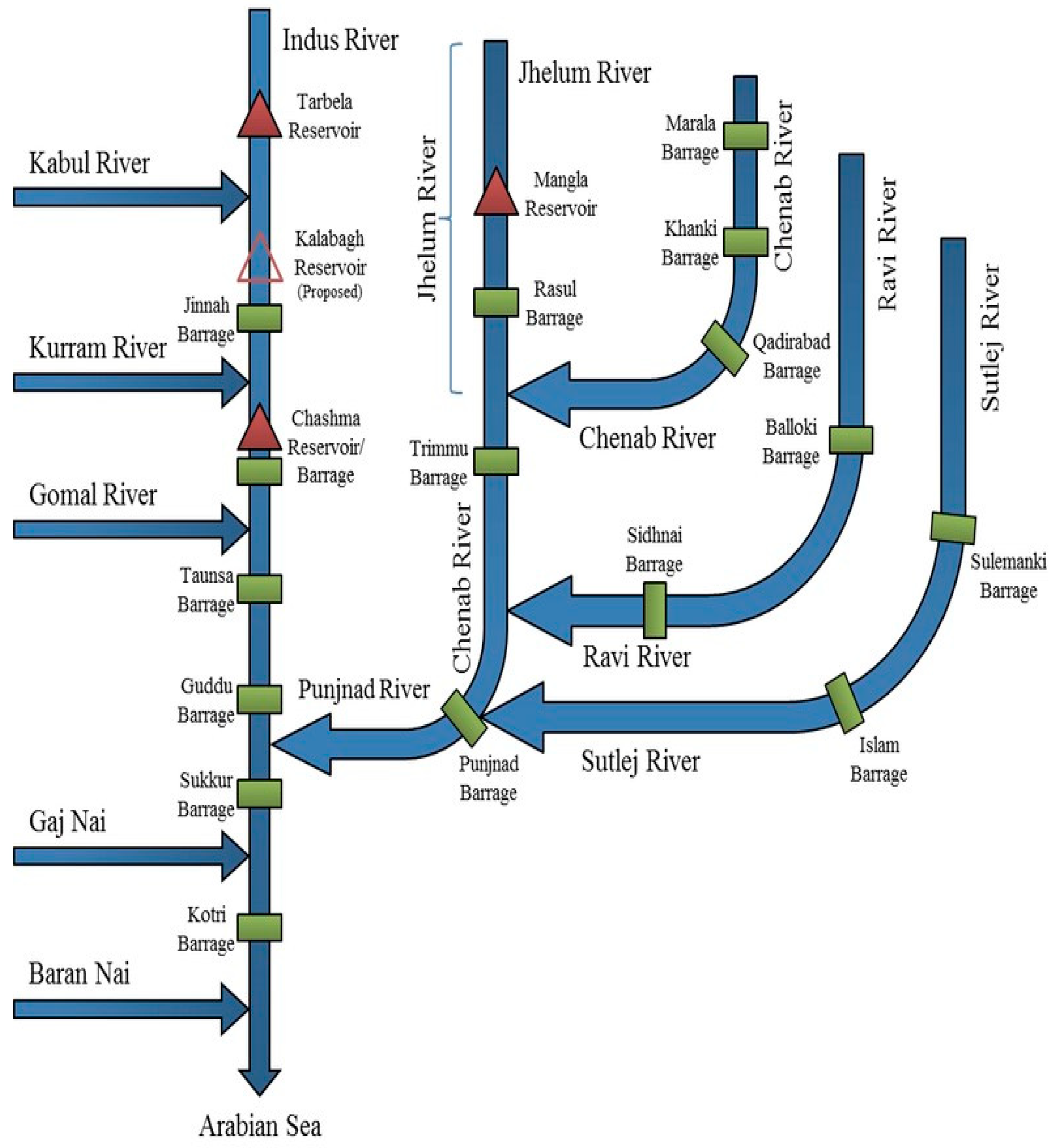
Figure 3 depicts the reservoirs, barrages and rivers in the IBIS of Pakistan.

4. Waterlogging Development Scenario

Waterlogging occurs when groundwater rises into the crop root zone, saturating soil pores and displacing air required for plant growth. It is typically induced by excessive recharge from canal seepage, deep percolation from irrigated fields, rainfall, and inadequate drainage [2,35,36,37,38].
Large-scale irrigation in arid and semi-arid environments has significantly enhanced agricultural productivity but has simultaneously altered groundwater regimes. When recharge exceeds natural discharge, groundwater tables rise, leading to waterlogging and secondary salinization, particularly in flat terrains with limited natural drainage. IBIS represents a prominent example of this hydrological imbalance.
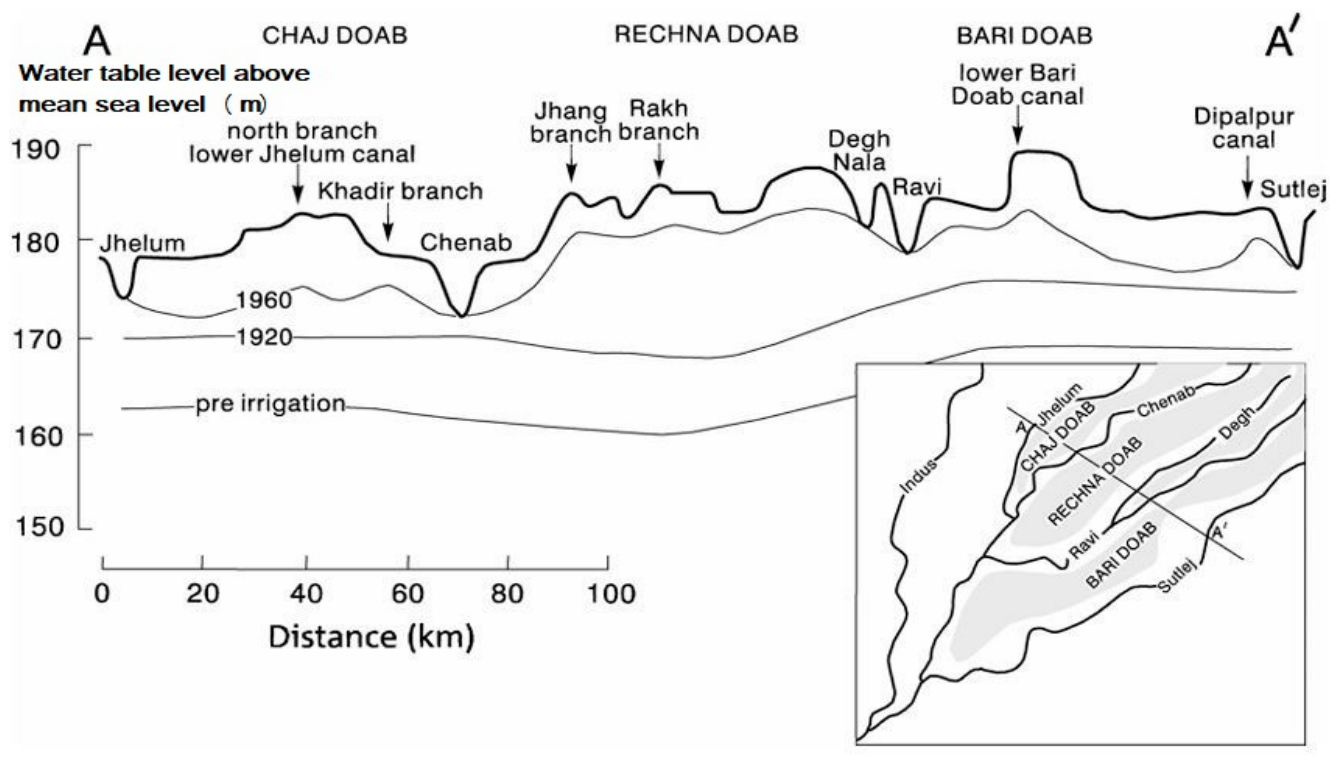
Prior to canal irrigation, water table depth (WTD) in the Indus Plain ranged between 20 and 30 m [27]. With irrigation expansion, seepage from unlined canals, distributaries, and fields progressively raised water tables. Recorded rates of rise ranged from 15 to 75 cm per year in some areas [23]. By the 1940s, water tables were within 3–4.5 m of the surface in many locations and later within 1.5 m, causing severe waterlogging [24] (see Figure 3). In Figure 4, the doabs refer to the inter-fluvial tracts: Chaj Doab (between the Jhelum and Chenab), Rechna Doab (between the Chenab and Ravi), and Bari Doab (between the Ravi and Sutlej).
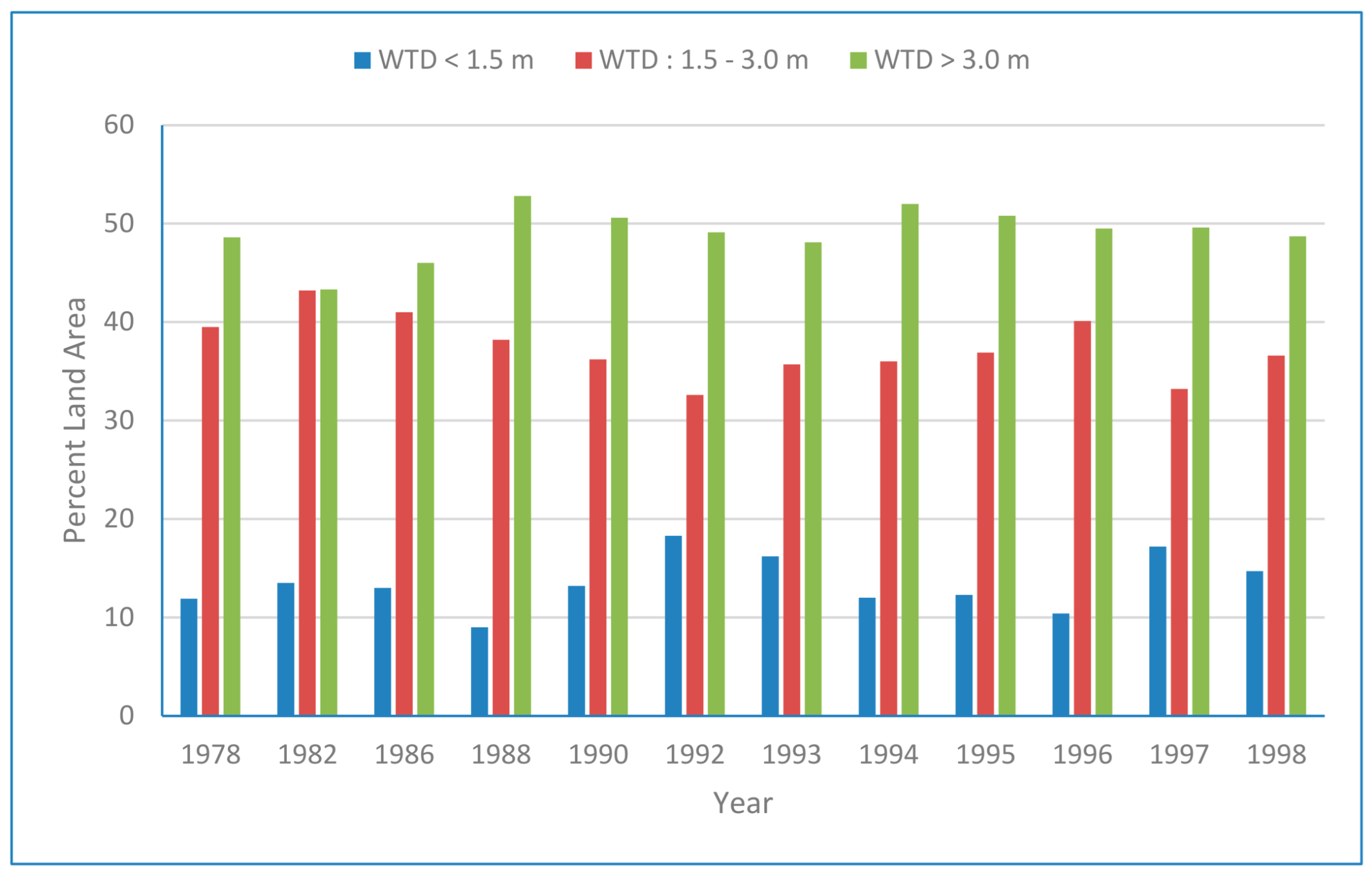
Figure 5 illustrates the percentage of land area within the IBIS under varying water table depths.
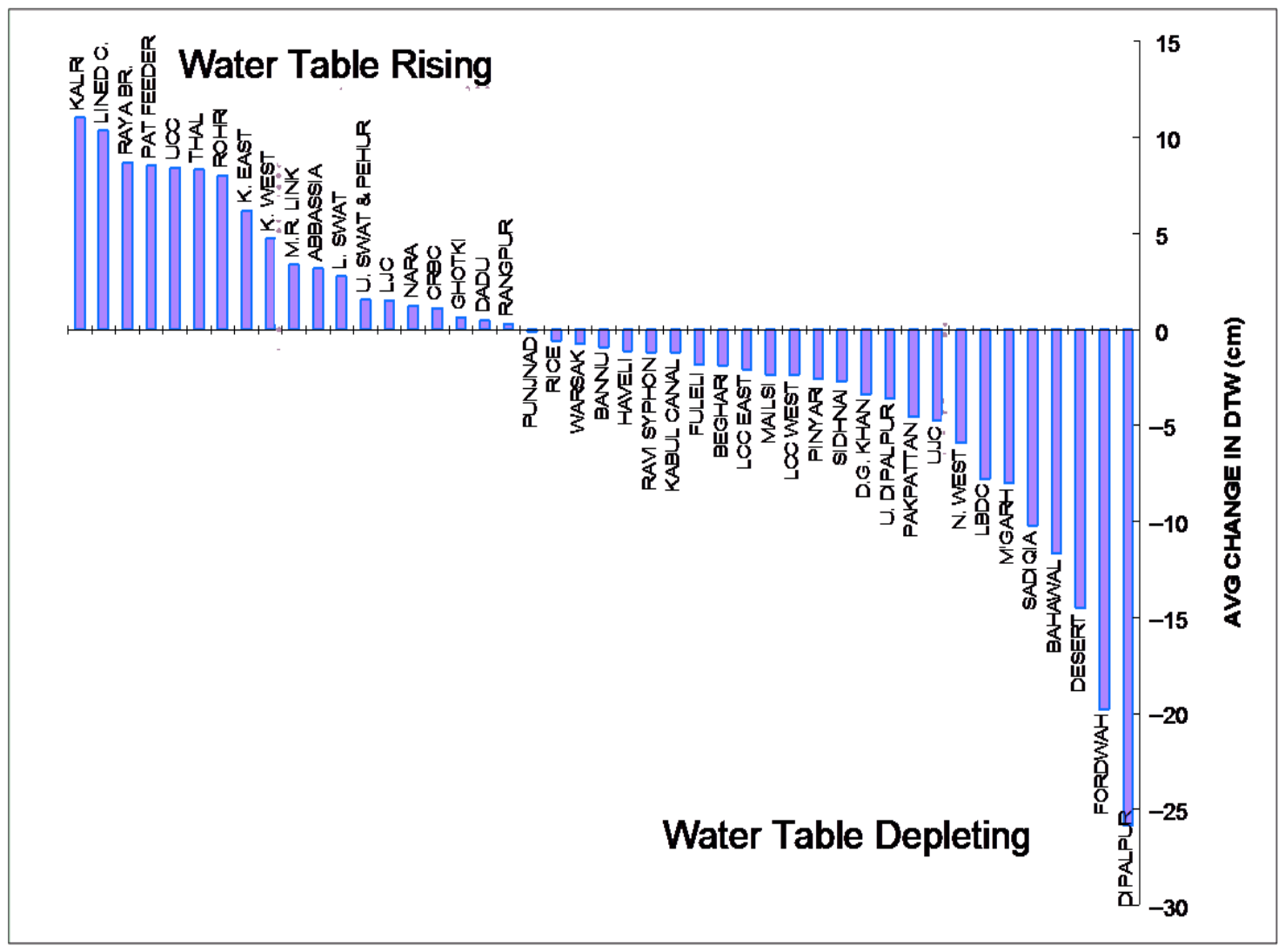
Figure 6 presents the average annual change in groundwater levels between 1990 and 1996 across various canal commands within the IBIS. The analysis indicates that groundwater levels declined in 26 out of 45 canal commands, primarily due to overexploitation of groundwater resources. In contrast, 19 canal commands experienced rising water tables, largely attributed to seepage from irrigation canals, deep percolation from irrigated fields, and insufficient drainage [23].
Waterlogging was first formally documented in 1851 in the Western Jammu Command and subsequently reported across Punjab [25]. By the late 1950s, nearly 30% of the irrigated area was severely waterlogged, and an additional 30% had critically high water tables [25].
The Colombo Plan survey (1953–1954) found that 30% of 8.0 Mha in the northern zone and 53% of 5.0 Mha in the southern zone were waterlogged or poorly drained [39,40]. By 1962, groundwater was rising at approximately 0.6 m annually, attributed largely to 45–54% conveyance and application losses; of 92.5 BCM diverted, only 42–50 BCM reached crops [40].
Historical trends (Table 1) show cyclical fluctuations influenced by floods and droughts. Flood years in the 1990s aggravated waterlogging, while drought conditions (1999–2002) temporarily lowered water tables due to increased groundwater abstraction [3].
By 2006, about 43% of the 16.74 Mha surveyed area had WTD shallower than 3 m, including 4.05 Mha severely waterlogged (0–1.5 m) and 3.14 Mha moderately affected (1.5–3.0 m) [3]. Sindh exhibited the highest proportion of affected land (81% with WTD < 3 m), while Punjab showed relative improvement due to intensive pumping (Table 2).
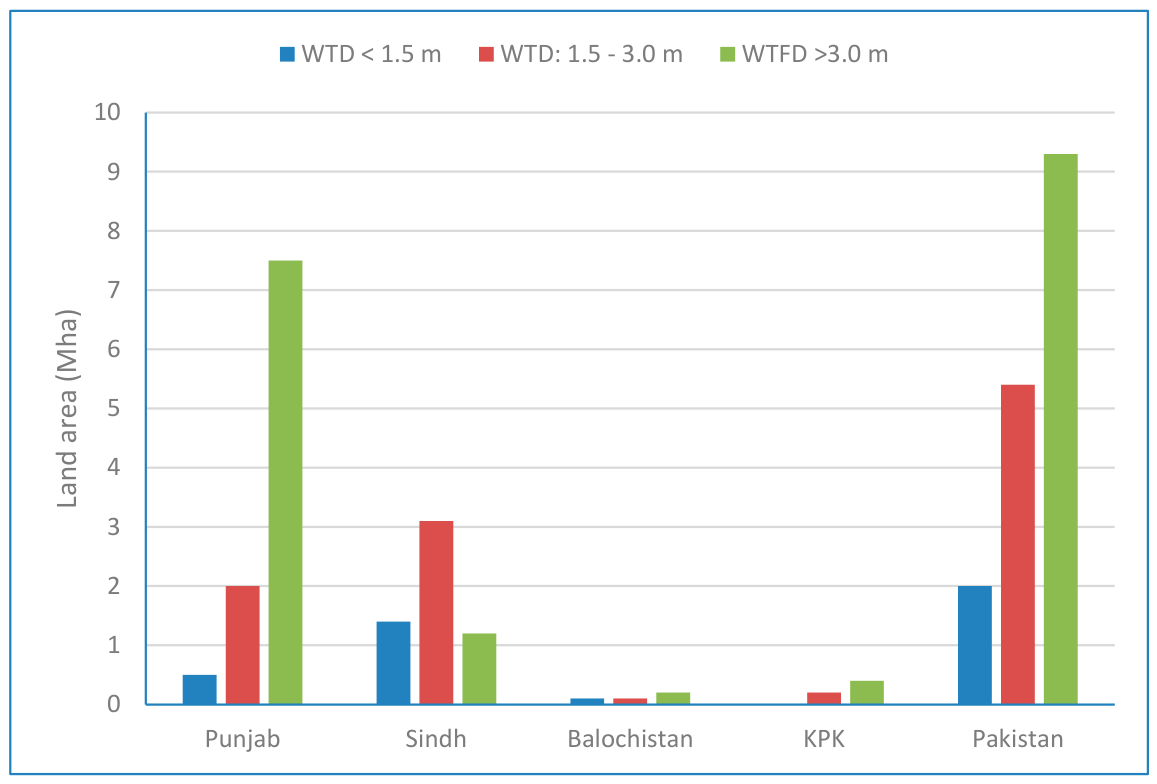
Recent estimates (year 2018) based on groundwater table June data indicate that approximately 5.4 Mha (32.3% of Gross Command Area—GCA) remains potentially waterlogged (<3 m), with 2.0 Mha (12%) severely waterlogged as shown in Figure 7 [16,28]. According to such estimates, about 0.04 Mha is abandoned annually due to the waterlogging problem in the IBIS of Pakistan [23,27,41].
Soil salinization is another major environmental issue that has emerged as a consequence of the IBIS in Pakistan. Waterlogging and soil salinity are, in fact, twin menaces that threaten the agricultural productivity of irrigated lands. In the IBIS, salinization occurs through two main processes: the presence of shallow saline water tables and the use of marginal-quality groundwater for irrigation [23].
Following the introduction of the IBIS, groundwater levels rose at rates of 15 to 75 cm per year. Capillary rise from shallow water tables, combined with evapotranspiration, concentrates salts in the soil, leading to salinization of both soil and water. In areas where canal water is unavailable and marginal-quality groundwater is used for irrigation, evapotranspiration further contributes to soil sodicity.
SCARPs have played an important role in mitigating waterlogging and salinity to a considerable extent. As a result, the salt-affected area has been reduced from 7 to 4.5 Mha [34].
However, waterlogging and salinity problems have not yet been fully or effectively resolved. While the large-scale installation of tubewells, surface drains, and tile drainage systems has helped control waterlogging, soil salinity remains a persistent issue.
Currently, about 4.5 Mha—approximately 30% of the total irrigated area—continues to suffer from harmful salinity levels [20,28,40]. Inadequate drainage remains a key factor contributing to both waterlogging and salinity in irrigated regions. Estimated annual losses due to salinization range from 0.03 to 0.04 Mha of land and about USD 230 million in revenue [23].
Consequently, the Government of Pakistan continues to invest substantial financial resources in various drainage and reclamation programs, projects, and schemes within the Indus Basin.

5. Waterlogging Management Scenario

The expansion of IBIS fundamentally altered the basin’s natural groundwater balance, necessitating large-scale intervention. Since the 1960s, the Government of Pakistan has implemented 61 SCARPs, covering approximately 7.35 Mha. Complementary initiatives including the National Drainage Program (NDP), Pakistan Water Partnership (PWP), Vision 2010, and Water Vision 2025, seeking to strengthen irrigation and drainage governance.
These efforts reduced waterlogged area from about 40% to 30% and salinity from 42% to 27% of the irrigated area. However, long-term sustainability has been constrained by institutional fragmentation, inadequate O&M, financial limitations, and environmentally problematic effluent disposal [22,28,29].

5.1. Policies, Strategies, Plans, Programs, and Projects

Waterlogging emerged as a national concern soon after large-scale irrigation expansion in the Indus Basin, with early assessments indicating nearly 5 Mha affected and annual land abandonment of about 0.04 Mha. This prompted WAPDA to formulate the Reclamation Plan in 1961, despite incomplete surveys.
Early interventions (performed in years 1912–1952) included canal lining, surface drainage, canal closures, and tree plantations. The Colombo Plan survey (years 1953–54) provided the first comprehensive assessment, leading to the establishment of the Groundwater Development Organization (in 1954), later incorporated into WAPDA as Water and Soil Investigation Division, WASID (in 1960).
In 1964, a ten-year SCARP program was initiated and subsequently extended SCARPs focused on vertical drainage through public tubewells, supported by surface and subsurface drains, lowering groundwater tables and increasing cropping intensity from about 80% to 120%. Additional measures included abstraction in saline zones and construction of outfall systems such as LBOD and RBOD [40].
The Revised Action Plan (1979), supported by the United Nations Development Program (UNDP), promoted private tubewells and phased reduction of public wells in fresh groundwater areas [42]. Subsequent Five-Year Plans aimed to maintain groundwater depths above 3 m, identifying severely affected zones (<1.5 m) as “disastrous areas”, though financial constraints limited progress.
The NDP combined technical measures with institutional reforms, promoting reduction of drainable surplus, safe effluent disposal, stakeholder participation, and establishment of Provincial Irrigation and Drainage Authorities (PIDAs), Area Water Boards, and Farmers’ Organizations, while advancing an Inter-Provincial Drainage Accord [23,26,43].
The Pakistan Water Sector Strategy [44] proposed integrated water management, groundwater regulation, and waterlogging reduction on 2.8 Mha [28]. Despite projected investments of USD 33.6 billion, implementation remained limited due to institutional weaknesses and low-cost recovery [28].
The National Water Policy (2018) reiterated commitments to a National Drainage System and canal lining in saline areas but lacked strong enforcement and inter-provincial coordination [28]. Overall, policy frameworks have been technically sound but institutionally constrained, particularly regarding long-term O&M and financial sustainability. Table 3 summarizes the main physical tasks implemented under the NDP.

5.2. Drainage Institution Development

Drainage governance in the Indus Basin evolved in response to rising groundwater levels [26]. The establishment of WAPDA in 1958 centralized planning and construction of major irrigation and drainage projects at the federal level, while the PIDs retained operational responsibilities. Within PIDs, specialized SCARP units and drainage circles were created, separating drainage administration from irrigation and flood control functions, with vertical drainage managed under SCARP divisions and open drains under drainage circles [26].
At present, WAPDA oversees planning and major construction, whereas provinces operate and maintain vertical and surface drainage systems [29]. Reforms under the National Drainage Program introduced PIDAs, Area Water Boards, and Farmers’ Organizations to decentralize management; however, planning, financing, and O&M functions remain fragmented, and this institutional separation continues to constrain system performance. Research bodies such as SCARP Monitoring Organization (SMO), IWASRI, Mona Reclamation Experimental Project (MREP), and Lower Indus Water Management and Reclamation Research Project (LIM) contribute to monitoring and innovation, though translation of research into practice has been uneven. Table 4 summarizes the evolution of drainage institutions.

5.3. Drainage Infrastructure Development

Engineering interventions have been central to waterlogging control [14,45]. Under SCARPs, WAPDA installed over 16,000 tubewells, 13,726 km of surface drains, 160 km of interceptor drains and 12,615 km of tile drains [24,26,28,29,34,40]. Table 5 reveals a summary of existing drainage facilities which have substantially reduced groundwater levels in targeted areas, though sustainability has varied.
Table 6 shows the impact of drainage in six SCARPs by comparing pre- and post-project areas with water tables within 1.5 m of the surface. Overall, waterlogging was largely controlled. However, about 11% (0.25 Mha) of the total 2.2 Mha SCARP area remains waterlogged, with groundwater still within 1.5 m of the ground surface [23].
Though large-scale installation of tubewells, surface drains, and tile drains has reduced waterlogging in about 5.1 Mha in the IBIS, about 14% of the 16.7 Mha irrigated area remains severely affected, with groundwater within 1.5 m of the surface [20,22,26]. The experience from 1960 to 2020 is outlined below.

5.3.1. Vertical Subsurface Drains—Drainage Tubewells

In fresh groundwater zones, drainage tubewells both lowered water tables and supplied irrigation, whereas in saline areas they functioned primarily for drainage; scavenger wells in Sindh separately abstracted fresh and saline water [22].
These systems reduced groundwater below 1.5 m on 2 Mha and below 3 m on 4 Mha [28,46], but high O&M costs and poor maintenance led to declining performance and widespread system failure [24]. Chandio et al. [47] also reported that public tubewells (SCARP tubewells) installed under the Khairpur drainage project worked effectively for the first 10 years, but later their performance declined due to lack of maintenance and management facilities [34].

5.3.2. Horizontal Subsurface Drains—Tile Drains

By the mid-1970s, vertical drainage was found to exacerbate salinity through recirculation of saline water, prompting a shift to horizontal (tile/pipe) drainage in saline groundwater areas despite costs nearly ten times higher than tubewells. Tile drains produced better-quality effluent and smaller saline volumes, facilitating disposal and reuse [24], and were adopted where tubewells were unsuitable [22].
Since 1977, about 220,000 ha have been tile-drained under SCARPs, with 12,612 km constructed [22,28,40], including projects such as East Khairpur Tile Drainage Project (EKTDP), Mardan, Khushab, Swabi, Fourth Drainage Project (FDP), Chashma Command Area Development Project (CCADP), Mirpur Khas Drainage Project (MKDP), Fordwah Eastern Sadiqia South (FESS) Irrigation and Drainage Project, and tile components of LBOD and RBOD [24,26]. Interceptor drains along unlined canals had limited impact [22,26]. Although tile drainage initially reduced waterlogging [23], design based on humid-region criteria and high O&M costs constrained long-term performance [34].

5.3.3. Surface Drains

In the IBIS, excessive recharge from canal seepage, deep percolation from irrigated fields, rainfall, and inadequate drainage caused rapid groundwater rise.
Observation wells were installed from 1870, and storm-cum-seepage drains were introduced in 1932, but measures before the 1950s were largely ineffective [26].
Severe floods in the late 1940s highlighted runoff problems, leading to expanded surface drainage during 1950–60 under the Second Five-Year Plan (performed in years 1960–65). Although surface drains captured limited seepage, they effectively removed stormwater [26]. Approximately 13,880 km of surface drains was constructed, serving 8.77 Mha across Punjab, Sindh, Khyber Pukhtoon Khwa (KPK), and Balochistan [28]. Canal lining, first applied in 1943 on Jhang Branch and later on major link canals, reduced seepage locally but was not considered economical for large-scale implementation [22,26].

5.3.4. Outfall Drains

The LBOD, one of Pakistan’s largest drainage projects [48], was implemented in Sindh from 1986 to 1997 at a cost of USD 636 million (60% donor-funded) to control waterlogging and convey effluent to the sea [34]. It provided surface drainage for 516,000 ha and subsurface drainage for 392,000 ha through a 250 km system linked to the Arabian Sea.
Annual discharge is about 1.12 BCM with salinity near 20,000 ppm [49]. Although operational issues related to tidal variation, weak monitoring, delays, and high costs limited performance [17,28,50], LBOD improved drainage on approximately 516,500 ha [26,51]. However, downstream land degradation, ecological impacts, and high O&M costs raise sustainability concerns [34,48].
The RBOD is a major drainage project in Pakistan, designed to convey saline effluent from Sindh and Balochistan on the right bank of the Indus River to the sea without significantly increasing river salinity [52,53]. It was developed to replace the discharge of effluent into Manchar Lake, which had severely degraded water quality [54,55].
The project comprises three components: RBOD-I (231 km), RBOD-II (273 km), and RBOD-III (113 km), each at different stages of development and completion [54,56]. RBOD-I, completed in 2020, provides an outfall for the existing drainage system of northern Sindh. RBOD-II, which is 273 km long, serves as the main carrier, conveying the combined effluent from RBOD-I and RBOD-III to the Arabian Sea.
It was initiated in 2002 at a cost of USD 35.82 million, fully funded by the Government of Pakistan and implemented by the Government of Sindh [25], although it experienced significant delays due to funding and design issues. RBOD-III, completed in 2021, collects and disposes of drainage effluent from Balochistan and upper Sindh.
Table 7 presents the area covered, discharge capacity, and annual effluent volume of the RBOD system components (Sindh Irrigation Department). As shown in Table 7, a fully integrated and operational RBOD system is expected to convey approximately 3.10 BCM of drainage effluent annually to the sea via RBOD-II—comprising 2.03 BCM/year from RBOD-I (northern Sindh) and 1.07 BCM/year from RBOD-III (Balochistan and upper Sindh).

5.4. Drainage Infrastructure Operation and Maintenance Scenario

After the initial operation, WAPDA transferred drainage projects to the PIDs, but O&M responsibilities remained disputed and underfunded, as no dedicated drainage charges existed beyond the limited cess [22]. Rising O&M costs particularly affected SCARP tubewells, consuming budgets and leading to neglect of surface drains; many vertical drainage gains reversed as maintenance declined [29].
Tile drains and tubewells further deteriorated under provincial management due to financial constraints [26]. Participatory models produced mixed results: Drainage Beneficiary Groups performed better in freshwater areas but struggled in saline zones, where waterlogging is re-emerging in parts of Punjab, while freshwater areas face groundwater depletion from heavy pumping; in Sindh, weak O&M and infrastructure damage further reduced performance [40].
Sustainability problems are largely attributed to underfunding and institutional weaknesses [28]. For example, over 500 LBOD tubewells deteriorated after handover, reflecting the limits of project-based financing [28]. While RBOD-I and -III operate satisfactorily, delays in RBOD-II constrain overall effectiveness [28].
Some successes remain, such as SCARP VI in Liaqatpur, where 514 tubewells continue functioning [28], though saline effluent disposal was later redirected to evaporation ponds. Overall, emphasis on infrastructure over institutional capacity resulted in persistent O&M deficiencies and reduced long-term performance [26].

5.5. Drainage Infrastructure Performance Scenario

Although drainage systems initially reclaimed large waterlogged areas, performance declined as sump systems failed, drains clogged, and effluent disposal weakened, resulting in stagnation and questionable sustainability [22]. Constraints include institutional weakness, high O&M costs, limited farmer participation, political interference, poor cost recovery, weak research–practice linkages, and environmental impacts from saline pumping and untreated effluents.
The parallel functioning of PIDs and PIDAs and limited private-sector engagement further reduced effectiveness. Failures are largely attributed to weak coordination, low community ownership, power shortages, and poor implementation under NDP [28].
While SCARPs I–VI (1964–2000; USD 2 billion) were largely successful, LBOD (USD 636 million) was only partially effective, and NDP (USD 785 million) failed to achieve intended reforms, despite generating a strategic research and development (R&D) framework [28,34]. Overall, mega-projects showed limited long-term sustainability due to institutional fragility, high costs, and inadequate O&M, allowing waterlogging to persist [28].

5.6. Drainage Water Management

Drainage water management seeks to reduce drainage volumes and ensure safe disposal. Globally, strategies include conservation, reuse, disposal, and treatment [18]. Conservation focuses on source reduction and groundwater control; reuse involves direct or conjunctive use; disposal includes discharge to rivers, evaporation ponds, outfall drains, or deep aquifers; and treatment encompasses physical, chemical (desalination), and biological processes.
Although desalination can remove salts, it reduces usable volume and generates brine requiring disposal. While technically feasible, it is generally uneconomical for large-scale agricultural drainage [17,18,57]. For example, only selected cases such as the Wellton-Mohawk Irrigation District in Arizona justify its use, whereas most basin applications are not cost-effective [17]. Desalination has not been implemented in the IBIS. In Pakistan, drainage management primarily relies on conservation, reuse, and disposal strategies.

5.6.1. Water Conservation Measures

Water conservation measures reduce drainage volume and salt loads, serving as the primary strategy for managing subsurface drainage. They include source reduction through improved irrigation management, shallow-water-table control, groundwater regulation, and land retirement [18]. Promoting conservation was a key objective of the Pakistan Water Sector Strategy 2002 [28,44]. In the IBIS, major approaches have included on-farm water management and biological drainage, whose experiences are reviewed below.
On-Farm Water Management (OFWM) Measures
Improving irrigation management in drainage-prone areas is essential to reduce drainable surplus. FAO and World Bank-supported OFWM programs promote high-efficiency irrigation (bed–furrow, sprinkler, and drip), watercourse lining, and laser leveling. Irrigation efficiency can be increased from the current 40% to 45% (water saving of 5.8 BCM through improved field application, lining of watercourses and adoption of high-efficiency irrigation technologies [58]).
According to a WAPDA report, more than 6.2 BCM of irrigation could be saved by lining of secondary canals (distributaries and minors) and an additional 4.4 BCM could be saved by improvement of watercourses [59]. Since 1980, provincial OFWM directorates have expanded these measures; by 2006–07, 82,908 watercourses (59%) were improved, saving about 123,000 m3 annually each—nearly 9.87 BCM basin-wide.
Water savings include 27–30% under bed–furrow [60,61], 35% with sprinkler irrigation for rice [62], 31–33% with drip for cotton [63], and 30–50% for wheat, rice and cotton using laser leveling, bed planting and drip irrigation [60]. Trickle irrigation of cotton results in 34% water saving [60]. Furrow irrigation compared to flood irrigation of kinnow results in 46% water saving [60].
Resource conservation technologies yield 23–45% savings [61,64,65], while zero tillage saves 15–20% [59,66]. On an average, laser land leveling resulted in 51% water saving compared to unleveled fields of rice, wheat and maize (fodder) crops [67]. Given field efficiencies below 50% and losses of 25–40% under basin irrigation [68], these measures significantly improve water productivity across major crops [69].
Biological Drainage
Biological drainage employs deep-rooted, high-evapotranspiration species to lower shallow water tables and is considered an environmentally friendly option in arid regions where effluent disposal is constrained [17,70,71].
The process of absorption, translocation and transpiration of excess groundwater into the atmosphere by deep-rooted plants defines the concept of biodrainage [72]. A tree used for biodrainage can reduce the level of groundwater table by 1–2 m over a time period of 3–5 years [73,74]. Successful applications have been reported in the USA, Australia, and India [18,24,68,69,75,76].
In the IBIS, Eucalyptus camaldulensis trees were tested as biodrainage pumps; E. microtheca, Acacia nilotica, Acacia ampliceps, and Atriplex lentiformis were tested. Eucalyptus plantations (1900 trees/ha) reduced water tables by up to 15 m, while other trials reported 0.3–0.4 m drawdown, increasing average depth to 2.78 m [77].
Acacia ampliceps and Acacia nilotica trees and Atriplex lentiformis shrubs demonstrated strong biodrainage potential [21]. The four-year-old Acacia nilotica consumed 1400–2000 mm of brackish groundwater annually [76].
Although effective, biodrainage has remained limited in large-scale application within the IBIS.

5.6.2. Measures for the Reuse of Wastewater

Reuse strategies aim to reduce drainage effluent while supplementing irrigation water in water-scarce regions [18,77]. Options include reuse in conventional and saline agriculture, integrated drainage systems, wetlands, and reclamation of salt-affected soils, though salt accumulation remains a key concern. Direct and conjunctive use (blending or cyclic) has gained importance in arid areas; blending is suitable when salinity remains below crop thresholds, while cyclic use is preferable otherwise. Saline drainage water can support salt-tolerant crops and agroforestry systems [20].
In Pakistan, SCARPs installed high-capacity tubewells for drainage and irrigation, and approximately 10 BCM (public) and 52 BCM (private) tubewell effluent are reused annually in fresh groundwater areas [20,23,31,33].
Skimming wells (vertical drains) pump better-quality groundwater overlying the saline groundwater in the aquifer. The drainage effluent resulting from horizontal (tiles) drains is also of better quality.
Consequently, skimming wells and horizontal drains offer a great potential for reuse of their effluent for irrigation of crop lands [17]. Reuse increased cropping intensity from 80% to more than 150% by the mid-1980s but, when unmanaged, contributed to secondary salinization [34]. Policy promotes conjunctive use, with highly saline effluent diluted or discharged during high flows [17].
Saline agriculture further enables productive use of saline resources [78]. Crops and trees tolerate salinity up to 27 and 19 dS/m, respectively, and sustainable use requires careful irrigation, soil amendments, and crop rotations; cyclic strategies often outperform blending [79,80,81,82,83,84,85,86,87,88].

5.6.3. Wastewater Disposal Measures

For environmentally sustainable irrigated agriculture, saline drainage water needs to be disposed of within the irrigation system. For this purpose, potential options include discharge into rivers and streams, outfall drains to the sea or saline lakes, and evaporation ponds. Deep-well injection is another option. Suitability depends on effluent quality and volume, environmental and health risks, technical capacity, and cost [18].
In Pakistan’s IBIS, disposal methods include discharge into rivers and lakes, evaporation ponds, sea outfalls, and limited deep injection. The policy framework and practical experiences with these options are discussed below.
Drainage Effluent Disposal Policy
Pakistan’s drainage effluent disposal policy prioritizes maximizing local reuse. The policy also focuses on development of a National Surface Drainage System (NSDS) to convey drainage effluent from Punjab and KPK to the sea. The policy also stressed the establishment of an Inter-Provincial Drainage Accord to define federal and provincial roles and to develop cost-sharing mechanisms [82].
It also calls for completion of RBOD stages, alignment of carrier drains outside canal commands, promotion of bio-chemical measures and salt-tolerant crops, transfer of highly saline effluent to designated areas, development of interconnected drains, stakeholder awareness, monitoring under the National Water Quality Monitoring Program, and optimization of disposal through NDP. The overarching objective is to sustain irrigated agriculture while protecting land and water resources.
In the IBIS of Pakistan, current disposal practices are environmentally unsustainable. In order to dispose of drainage effluent of the entire IBIS to Arabian Sea, the idea of NSDS has been proposed, by which LBOD will be extended northward and linked with Punjab drains to convey saline effluent to the sea [21].
Experiences of Disposal of Drainage Effluent
Table 8 shows that IBIS drainage projects generate about 13.45 BCM of effluent annually from public tubewells and surface drains. Of this, 9.82 BCM comes from Sindh/Balochistan and 3.63 BCM from Punjab. Each year, about 1.67 BCM (0.75 BCM from Punjab; 0.92 BCM from Sindh/Balochistan) is discharged into canals and 2.96 BCM (1.51 BCM Punjab; 1.45 BCM Sindh) into rivers [21,26,88,89,90].
In Sindh/Balochistan, the Larkana Shikarpur and North Dadu drainage projects discharge about 0.31 BCM of saline effluent into Hamal and Manchar Lakes, with salinity ranging from 1000 to 4000 ppm, degrading water quality and increasing soil salinity around Manchar Lake [26,44]. Where river or sea disposal is limited, evaporation ponds are used, though they require strict environmental management.
In IBIS, ponds at Hairdin and under SCARP-VI and FESS dispose of about 1.40 BCM annually. In Punjab, SCARP-VI conveys 0.75 BCM/year to a 13,360 ha pond and FESS disposes of 0.62 BCM/year into a 6400 ha pond [23]. In Sindh/Balochistan, 0.03 BCM of saline drainage effluent per year is disposed of into ponds at Hairdin [26]. However, seepage caused waterlogging over 4200 ha, affecting 15 villages; salt accumulation further reduced pond efficiency and Hairdin ponds similarly degraded adjacent land [26,46,89]. Overall, evaporation ponds have generated secondary waterlogging and ecological impacts.
Deep-well injection is another option but requires careful assessment and is costly due to pretreatment and maintenance challenges [17,55]. A pilot study in Hyderabad demonstrated technical feasibility under specific geological conditions, though practical application remains limited. Approximately 7.42 BCM of saline effluent from the Lower Indus Basin reaches the Arabian Sea annually. LBOD conveys about 1.12 BCM/year (≈20,000 ppm salinity) from 5.8 Mha through a 250 km system [49], despite reported O&M issues [57]. The fully integrated and functional RBOD system will carry 3.10 BCM of drainage effluent per year through the RBOD-II channel to the sea.

6. Conclusions

The six-decade evolution of waterlogging management in the Indus Basin Irrigation System (IBIS) illustrates how large-scale irrigation has altered groundwater dynamics and land conditions in arid and semi-arid settings (Section 3 and Section 4).
The evidence reviewed in this study shows that canal seepage, irrigation practices, monsoonal recharge, and limited natural drainage have contributed to sustained groundwater rise, resulting in widespread shallow water tables and associated waterlogging conditions (Section 4). Current estimates indicate that a substantial proportion of irrigated land remains affected, with significant areas experiencing groundwater depths within critical thresholds.
The review of management interventions (Section 5) indicates that large-scale engineering measures—particularly SCARPs, subsurface drainage, and outfall systems (LBOD and RBOD)—have been effective in reducing waterlogging in specific locations and over certain periods.
However, their long-term performance has varied and, in many cases, declined due to documented constraints including insufficient operation and maintenance, institutional fragmentation, and limitations in drainage effluent disposal (Section 5.3, Section 5.4 and Section 5.5). These findings suggest that infrastructure development alone has not ensured sustained control of waterlogging at the basin scale.
The analysis further shows that groundwater abstraction has played a dual role in the basin (Section 4 and Section 5.6), contributing to water table control in some regions while leading to groundwater depletion in others. This highlights the spatial variability and trade-offs inherent in conjunctive water use strategies within the basin.
With regard to drainage water management (Section 5.6), the evidence indicates that reuse practices, evaporation ponds, and disposal into rivers or outfall systems each present technical and environmental limitations under current conditions. In particular, constraints related to effluent quality, disposal capacity, and environmental impacts are consistently reported in the literature reviewed.
Based on the synthesis presented in Section 4 and Section 5, several implications can be cautiously drawn. First, the effectiveness of drainage interventions appears closely linked to sustained operation, maintenance, and institutional capacity rather than initial design alone. Second, management of groundwater abstraction and recharge is a critical component of controlling waterlogging dynamics. Third, drainage effluent management remains a key unresolved challenge, requiring approaches that consider both technical feasibility and environmental constraints at the basin scale. Fourth, preventive measures—such as improving irrigation efficiency and on-farm water management—are consistently identified as contributing to reductions in drainage volumes.
While these observations are derived from the IBIS context, their broader applicability should be interpreted with caution. The findings primarily reflect the specific hydrological, institutional, and environmental conditions of the Indus Basin, although they may offer indicative insights for other irrigated dryland systems facing similar challenges.
Overall, the review suggests that future progress in waterlogging management in the IBIS depends on improving the integration between infrastructure, groundwater management, and institutional frameworks (Section 5.1, Section 5.2, Section 5.3, Section 5.4, Section 5.5 and Section 5.6). Strengthening monitoring systems, enhancing operation and maintenance practices, and aligning management strategies with basin-scale processes are identified as important directions supported by the evidence synthesized in this study.

Author Contributions

Conceptualization, M.A.; methodology, M.A.; software, M.A.; validation, M.A., F.H., A.P.; formal analysis, M.A., F.H., A.P.; investigation, M.A., F.H., A.P.; resources, M.A., F.H., A.P.; data curation, M.A.; writing—original draft preparation, M.A.; writing—review and editing, M.A., F.H., A.P.; visualization, M.A., F.H., A.P.; supervision, A.P.; project administration, A.P.; funding acquisition, A.P. All authors have read and agreed to the published version of the manuscript.

Funding

This research received no external funding.

Data Availability Statement

Dataset available on request from the authors.

Conflicts of Interest

The authors declare no conflicts of interest.

References

  1. Mohanavelu, A.; Naganna, S.R.; Al-Ansari, N. Irrigation induced salinity and sodicity hazards on soil and groundwater: An overview of its causes, impacts and mitigation strategies. Agriculture 2021, 11, 983. [Google Scholar] [CrossRef]
  2. Prajapati, G.S.; Rai, P.K.; Mishra, V.N.; Singh, P.; Shahi, A.P. Remote sensing-based assessment of waterlogging and soil salinity: A case study from Kerala, India. Results Geophys. Sci. 2021, 7, 100024. [Google Scholar] [CrossRef]
  3. Zaman, S.B.; Ahmad, S. Salinity and waterlogging in the Indus Basin of Pakistan: Economic loss to agricultural economy. In Managing Natural Resources for Sustaining Future Agriculture; Natural Resources Division, Pakistan Agricultural Research Council: Islamabad, Pakistan, 2009; pp. 4–8. [Google Scholar]
  4. Eswar, D.; Karuppusamy, R.; Chellamuthu, S. Drivers of soil salinity and their correlation with climate change. Curr. Opin. Environ. Sustain. 2021, 50, 310–318. [Google Scholar] [CrossRef]
  5. Khondoker, M.; Mandal, S.; Gurav, R.; Hwang, S. Freshwater shortage, salinity increase, and global food production: A need for sustainable irrigation water desalination—A scoping review. Earth 2023, 4, 223–240. [Google Scholar] [CrossRef]
  6. Shahid, S.A.; Zaman, M.; Heng, L. Soil salinity: Historical perspectives and a world overview of the problem. In Guideline for Salinity Assessment, Mitigation and Adaptation Using Nuclear and Related Techniques; Springer: Cham, Switzerland, 2018; pp. 43–53. [Google Scholar] [CrossRef]
  7. Rengasamy, P. Soil salinization. In Oxford Research Encyclopedia of Environmental Science; Oxford University Press: Oxford, UK, 2016; pp. 1–33. [Google Scholar] [CrossRef]
  8. Bennett, S.J.; Barrett-Lennard, E.G.; Colmer, T.D. Salinity and waterlogging as constraints to saltland pasture production: A review. Agric. Ecosyst. Environ. 2009, 129, 349–360. [Google Scholar] [CrossRef]
  9. Ayub, M.A.; Ahmad, H.R.; Ali, M.; Rizwan, M.; Ali, S.; Rehman, M.Z.U.; Waris, A.A. Salinity and its tolerance strategies in plants. In Plant Life Under Changing Environment; Academic Press: Cambridge, MA, USA, 2020; pp. 47–76. [Google Scholar] [CrossRef]
  10. Pessarakli, M.; Szabolcs, I. Soil salinity and sodicity as particular plant/crop stress factors. In Handbook of Plant and Crop Stress, 4th ed.; CRC Press: Boca Raton, FL, USA, 2021. [Google Scholar]
  11. Giordano, R.; Milella, P.; Portoghese, I.; Vurro, M.; Apollonio, C.; D’Agostino, D.; Lamaddalena, N.; Scardigno, A.; Piccinni, A.F. An innovative monitoring system for sustainable management of groundwater resources: Objectives, stakeholder acceptability and implementation strategy. In Proceedings of the IEEE Workshop on Environmental Energy and Structural Monitoring Systems (EESMS), Taranto, Italy, 9 September 2010; IEEE: New York, NY, USA, 2010; pp. 32–37. [Google Scholar] [CrossRef]
  12. Liu, Y.; Zhang, J.; Pan, T.; Chen, Q.; Qin, Y.; Ge, Q. Climate-associated major food crops production change under multi-scenario in China. Sci. Total Environ. 2022, 811, 151393. [Google Scholar] [CrossRef]
  13. Mutiibwa, D.; Fleisher, D.H.; Resop, J.P.; Timlin, D.; Reddy, V.R. Regional food production and land redistribution as adaptation to climate change in the U.S. northeast seaboard. Comput. Electron. Agric. 2018, 154, 54–70. [Google Scholar] [CrossRef]
  14. Awad, S.R.; El Fakharany, Z.M. Mitigation of waterlogging problem in El-Salhiya area, Egypt. Water Sci. 2020, 34, 1–12. [Google Scholar] [CrossRef]
  15. Kumar, R.; Singh, J. Integrated approach for the management of waterlogging and salinity problems in Haryana. In Proceedings of the 8th ICID International Drainage Workshop, New Delhi, India, 31 January–4 February 2000; pp. 363–373. [Google Scholar]
  16. Aslam, M.; Haq, A.U.; Javaid, M. Indus Basin experiences on disposal of agricultural drainage effluent. In Proceedings of the 20th International Congress on Irrigation and Drainage, Lahore, Pakistan, 13–18 October 2008. [Google Scholar] [CrossRef]
  17. Prathapar, S.A.; Aslam, M.; Ejaz, S. Disposal of drainage waters—Recycling and reuse. In Proceedings of the 8th ICID International Drainage Workshop, New Delhi, India, 31 January–4 February 2000; Available online: https://www.researchgate.net/publication/272157848 (accessed on 14 February 2026).
  18. Tanji, K.K.; Kielen, N.C. Agricultural Drainage Water Management in Arid and Semi-Arid Areas; FAO Irrigation and Drainage Paper No.61; FAO: Rome, Italy, 2002. [Google Scholar]
  19. Apollonio, C.; Delle Rose, M.; Fidelibus, C.; Orlanducci, L.; Spasiano, D. Water management problems in a karst flood-prone endorheic basin. Environ. Earth Sci. 2018, 77, 676. [Google Scholar] [CrossRef]
  20. Qureshi, A.S.; Perry, C. Managing water and salt for sustainable agriculture in the Indus Basin of Pakistan. Sustainability 2021, 13, 5303. [Google Scholar] [CrossRef]
  21. Qureshi, A.S. Water management in the Indus Basin in Pakistan: Challenges and opportunities. Mt. Res. Dev. 2011, 31, 252–260. [Google Scholar] [CrossRef]
  22. Basharat, M.; Rizvi, S.A. Irrigation and drainage efforts in Indus Basin—A review of past, present and future requirements. In Proceedings of the 2nd World Irrigation Forum, Chiang Mai, Thailand, 6–8 November 2016. [Google Scholar]
  23. Aslam, M.; Prathapar, S.A. Strategies to Mitigate Secondary Salinization in the Indus Basin of Pakistan: A Selective Review; Research Report 97; IWMI: Colombo, Sri Lanka, 2006. [Google Scholar]
  24. Qureshi, A.S.; Sarwar, A. Managing salinity in the Indus Basin of Pakistan. Int. J. River Basin Manag. 2009, 7, 111–117. [Google Scholar] [CrossRef]
  25. Chaudhry, S.A. Pakistan: Indus Basin water strategy—Past, present and future. Lahore J. Econ. 2010, 15, 187–211. [Google Scholar] [CrossRef]
  26. Memon, M.Y.; Scheumann, W. Reforming Governance Systems for Drainage in Pakistan: Toward an Interdisciplinary and Integrated Approach to Agricultural Drainage; World Bank: Washington, DC, USA, 2003. [Google Scholar]
  27. Qureshi, A.S. Challenges and opportunities of groundwater management in Pakistan. In Groundwater of South Asia; Springer: Singapore, 2018; pp. 735–756. [Google Scholar] [CrossRef]
  28. Ali, A. Improving Salinity and Agricultural Water Management in the Indus Basin, Pakistan: Issues, Management and Opportunities; Charles Sturt University: Albury, Australia, 2023. [Google Scholar]
  29. Scheumann, W.; Freisem, C. The role of drainage for sustainable agriculture. J. Appl. Irrig. Sci. 2002, 37, 33–61. [Google Scholar]
  30. Selin, H.; Selin, N.E. The human–technical–environmental systems framework for sustainability analysis. Sustain. Sci. 2023, 18, 791–808. [Google Scholar] [CrossRef]
  31. Janjua, S.; Hassan, I.; Muhammad, S.; Ahmed, S.; Ahmed, A. Water management in Pakistan’s Indus Basin: Challenges and opportunities. Water Policy 2021, 23, 1329–1343. [Google Scholar] [CrossRef]
  32. Basharat, M. Water management in the Indus Basin in Pakistan: Challenges and opportunities. In Indus River Basin; Elsevier: Amsterdam, The Netherlands, 2019; pp. 375–388. [Google Scholar]
  33. Water Sector Task Force (WSTF). A Productive and Water-Secure Pakistan: Infrastructure, Institutions and Strategy; Ministry of Water Resources: Islamabad, Pakistan, 2012; Available online: https://sar-climate.adpc.net/wp-content/uploads/2022/05/PK-IWRM-CS-32.pdf (accessed on 8 February 2026).
  34. Qureshi, A.S.; McCornick, P.G.; Qadir, M.; Aslam, Z. Managing salinity and waterlogging in the Indus Basin of Pakistan. Agric. Water Manag. 2008, 95, 1–10. [Google Scholar] [CrossRef]
  35. Aslam, M.; Matsuno, Y.; Hatcho, N. Performance evaluation of fresh groundwater skimming wells in the Indus Basin irrigation system of Pakistan: A selective review. Mem. Fac. Agric. Kindai Univ. 2016, 50, 5–23. [Google Scholar]
  36. Aslam, M.; Shehzad, M.U.; Ali, A.; Ali, N.; Chaiyasan, K.; Tahir, H.; Joyklad, P.; Hussain, Q. Seepage and groundwater numerical modelling for managing waterlogging in the vicinity of the Trimmu–Sidhnai link canal. Infrastructures 2022, 7, 144. [Google Scholar] [CrossRef]
  37. Zaghloul, E.A.; Abdeen, M.M.; Elbeih, S.F.; Soliman, M.A. Waterlogging problems in Egypt’s deserts: Case study Abu Mena archaeological site using geospatial techniques. Egypt. J. Remote Sens. Space Sci. 2020, 23, 387–399. [Google Scholar] [CrossRef]
  38. El Abd, E.S.A.; El Osta, M.M. Waterlogging in the new reclaimed areas northeast El Fayoum, Western Desert, Egypt: Reasons and solutions. J. Water Resour. Prot. 2014, 6, 1631–1645. [Google Scholar] [CrossRef]
  39. Government of Canada; Government of Pakistan. Landforms, Soils, and Land Use of the Indus Plain, West Pakistan; Government of Canada: Toronto, ON, Canada, 1958; Available online: http://www.pide.org.pk/pdf/PDR/1963/Volume2/250-278.pdf (accessed on 10 February 2026).
  40. Ashraf, M.; Fatima, B.; Hasan, F.U.; Salam, H.A. Adapting to Salinity in the Southern Indus Basin: Policy Review; Pakistan Council for Research in Water Resources: Islamabad, Pakistan, 2022. Available online: https://www.researchgate.net/publication/360164854_Adapting-to-Salinity-in-the-Southern-Indus-Basin-ASSIB-Project-2022 (accessed on 19 February 2026).
  41. Bhatti, A.K. A Review of Planning Strategies of Salinity Control and Reclamation Projects in Pakistan. In Proceedings of the Symposium 25th International Course on Land Drainage: Twenty-Five Years of Drainage Experience, Wageningen, The Netherlands, 24–28 November 1986; Available online: https://edepot.wur.nl/312990#page=210 (accessed on 15 February 2026).
  42. Water and Power Development Authority (WAPDA). Revised Action Program for Irrigated Agriculture. Main Report, Vol. 1; Master Planning Division: Lahore, Pakistan, 1979. [Google Scholar]
  43. Pakistan National Drainage Program Project (PNDPP). Progress Report on Status of Implementation of the Action Plan; World Bank: Washington, DC, USA, 2007; Available online: https://aconsole-static.s3.amazonaws.com/media/public/cases/34-Second_Management_Progress_Report_Annex_English.pdf (accessed on 15 February 2026).
  44. Government of Pakistan. Pakistan Water Sector Strategy; National Water Sector Strategy; Office of the Chief Engineering Advisor/Chairman Federal Flood Commission, Ministry of Water and Power: Islamabad, Pakistan, 2002. Available online: https://www.ircwash.org/resources/pakistan-water-sector-strategy-national-water-sector-strategy (accessed on 10 February 2026).
  45. El Bastawesy, M.; Ali, R.R.; Faid, A.; El Osta, M. Assessment of waterlogging in agricultural megaprojects in the closed drainage basins of the Western Desert of Egypt. Hydrol. Earth Syst. Sci. 2013, 17, 1493–1501. [Google Scholar] [CrossRef]
  46. Sufi, A.B.; Hussain, Z.; Sultan, S.J.; Tariq, I. Integrated water resource management in Pakistan. In Proceedings of the Symposium on Changing Environmental Pattern and Its Impact with Special Focus on Pakistan; Pakistan Engineering Congress: Lahore, Pakistan, 2011; pp. 36–49. Available online: https://pecongress.org.pk/wp-content/uploads/2024/06/4-Intergrated-Water-Resource-Management-in-Pakistan-4.pdf (accessed on 20 February 2026).
  47. Chandio, A.S.; Lee, T.S.; Mirjat, M.S. The extent of waterlogging in the lower Indus Basin (Pakistan)—A modeling study of groundwater levels. J. Hydrol. 2012, 426–427, 103–111. [Google Scholar] [CrossRef]
  48. Iqbal, S. Left Bank Outfall Drain (LBOD) Project: A Mega Failure. In Proceedings of the 18th Scandinavian Academy of Management Conference; Aarhus School of Business: Aarhus, Denmark, 2005; pp. 1–16. Available online: https://www.academia.edu/14831578/Left_Bank_Outfall_Drain_LBOD_Project_A_Mega_Failure (accessed on 20 February 2026).
  49. Butt, R.; Munir, N.; Bhatti, M.I.; Almas, A.S.; Rehman, G.; Hamid, A.; Soomro, T.; Hussain, A.; Tabassum, M.; Yousaf, K. Waterlogging and Salinity Management in the Sindh Province, Pakistan. Volume 1, Supplement I-D. Drainage in the LBOD Project: Impact Assessment; International Water Management Institute: Colombo, Sri Lanka, 1998; p. H024979. Available online: https://hdl.handle.net/10568/39495 (accessed on 26 February 2026).
  50. World Bank. Investigation Report: Pakistan—National Drainage Program Project; World Bank: Washington, DC, USA, 2004; Available online: https://documents1.worldbank.org/curated/en/963611468290115625/pdf/30704.pdf (accessed on 15 February 2026).
  51. Asian Development Bank (ADB). Left Bank Outfall Drain Project (Stage-I); Project Completion Report; ADB: Manila, Philippines, 2000; Available online: https://www.adb.org/sites/default/files/project-documents/pcr-pak17055.pdf (accessed on 15 February 2026).
  52. Rehman, G.; Hussain, A.; Hamid, A.; Almas, A.S.; Tabassum, M.; Nomani, M.A.; Yousaf, K. Waterlogging and Salinity Management in the Sindh Province. Volume 1—The Irrigated Landscape: Resource Availability Across the Hydrological Divides; IWMI Pakistan Report R-070.1; International Irrigation Management Institute: Lahore, Pakistan, 1998; Available online: https://hdl.handle.net/10568/39491 (accessed on 15 February 2026).
  53. Ata-Ur-Rehman, C. Salinity management in the Indus Basin. In Proceedings of the Workshop Groundwater and Irrigation Management Issues, Lahore, Pakistan, 21–22 April 1996. [Google Scholar]
  54. Mahessar, A.A.; Ansari, K.; Arain, G.M.; Kori, S.M.; Qureshi, S.; Qureshi, A.L. Impact of Right Bank Outfall Drain-I (RBOD-I)/Main Nara Valley Drain (MNVD) on Manchar Lake, Sindh, Pakistan. Eng. Technol. Appl. Sci. Res. 2019, 9, 5074–5079. [Google Scholar] [CrossRef]
  55. Soomro, A.; Qureshi, A.L.; Memon, N.A.; Abro, Z. Efficacy of watercourse lining in Sindh. Agric. Sci. 2018, 9, 1215–1227. [Google Scholar] [CrossRef]
  56. Khaskheli, R.; Abbasi, M.H.; Marvi, H.; Bhutto, A. The Cause of the Disasters in Sindh: The Failure of LBOD, Incomplete RBOD Project, and Non-Functional Old Natural Waterways—A Review of the Evidence. J. Archit. Built Environ. Res. 2024, 1, 1–7. [Google Scholar] [CrossRef]
  57. Westcot, D.W. Reuse and disposal of higher salinity subsurface drainage water—A review. Agric. Water Manag. 1988, 14, 483–511. [Google Scholar] [CrossRef]
  58. Asian Development Bank (ADB). Water Sector Strategy for Pakistan; Asian Development Bank: Manila, Philippines, 2002. Available online: https://www.mowr.gov.pk/Download (accessed on 10 February 2026).
  59. Ahmad, A.; Iftikhar, H.; Chaudhry, G. Water resources and conservation strategy of Pakistan. Pak. Dev. Rev. 2007, 46, 997–1009. [Google Scholar] [CrossRef]
  60. Alam, I.; Rehman, A.; Khan, M.A.; Zada, N.; Shahid, A.; Khan, J.; Islam, M.U. Promoting water conservation in agricultural practices. Khyber J. Public Policy 2024, 3, 119–146. [Google Scholar]
  61. Kahlown, M.A.; Gill, M.A.; Ashraf, M. Evaluation of Resource Conservation Technologies in Rice-Wheat System of Pakistan; Research Report 1; Pakistan Council of Research in Water Resources: Islamabad, Pakistan, 2002. Available online: https://www.researchgate.net/profile/Muhammad-Ashraf-275/publication/238686972 (accessed on 20 February 2026).
  62. Kahlown, M.A.; Raoof, A.; Zubair, M.; Kemper, W.D. Water use efficiency and economic feasibility of growing rice and wheat with sprinkler irrigation in the Indus Basin of Pakistan. Agric. Water Manag. 2007, 87, 292–298. [Google Scholar] [CrossRef]
  63. Du, T.; Kang, S.; Zhang, J.; Li, F. Water use and yield responses of cotton to alternate partial root-zone drip irrigation in the arid area of northwest China. Irrig. Sci. 2008, 26, 147–159. [Google Scholar] [CrossRef]
  64. Ahmad, M.-u.-D.; Masih, I.; Turral, H.; Giordano, M.; Masood, Z. Opportunities and Challenges in Saving Water and Improving Productivity through Resource Conservation Technologies: Examples from Pakistan. In Proceedings of the International Workshop on Water Saving Technologies; International Water Management Institute (IWMI): Colombo, Sri Lanka, 2006; pp. 120–139. Available online: https://cgspace.cgiar.org/items/492bbaf3-a950-426a-878a-706df59ad60a (accessed on 20 February 2026).
  65. Kahlown, M.A.; Azam, M.; Kemper, W.D. Soil management strategies for rice–wheat rotations in Pakistan’s Punjab. J. Soil Water Conserv. 2006, 61, 40–44. [Google Scholar] [CrossRef]
  66. Ahmad, M.-u.-D.; Turral, H.; Masih, I.; Giordano, M.; Masood, Z. Water Saving Technologies: Myths and Realities Revealed in Pakistan’s Rice–Wheat System; Research Report 108; International Water Management Institute: Colombo, Sri Lanka, 2007; p. 38. Available online: https://research.aciar.gov.au/aik-saath/sites/_co-lab.aciar.gov.au.aik-saath/files/2020-09/Water%20Saving%20Technologies%20Myths%20and%20realities.pdf (accessed on 20 February 2026).
  67. Ashraf, M.; Ejaz, K.; Arshad, M.D. Water use efficiency and economic feasibility of laser land leveling in irrigated areas of Pakistan. Sci. Technol. Dev. 2017, 36, 115–127. Available online: https://www.scribd.com/document/756577814/Water-Use-Efficiency-Economic-Feasibility-of-Laser-Land-Leveling-Irrigated-Areas-of-Pakistan-2017 (accessed on 20 February 2026).
  68. Farooq, U.; Iqbal, M. Attaining and maintaining self-sufficiency in wheat production: Institutional efforts and farmers’ limitations. Pak. Dev. Rev. 2000, 39, 487–514. [Google Scholar]
  69. Lashari, B.K.; Anwar, A.; Aslam, M. Efficient application of water on farm: Consensus action paper. In Proceedings of the 73rd Annual Session of the Pakistan Engineering Congress, Lahore, Pakistan, January 2014–December 2015; Pakistan Engineering Congress: Lahore, Pakistan, 2015. [Google Scholar]
  70. Tanji, K.K.; Karajeh, F.F. Saline drain water reuse in agroforestry systems. J. Irrig. Drain. Eng. 1993, 119, 170–180. [Google Scholar] [CrossRef]
  71. Kapoor, A.S. Bio-Drainage of Lands Under Irrigation in Dry Arid Regions with Particular Reference to the Indira Gandhi Nahar Project (IGNP), Rajasthan; Indira Gandhi Nahar Board, Government of Rajasthan: Jaipur, India, 1997. Available online: https://api.mountainscholar.org/server/api/core/bitstreams/d55dc6d4-4f66-4e4b-803b-a7f50e488d74/content (accessed on 15 February 2026).
  72. Sow, S.; Ranjan, S. Biodrainage: An environment friendly technique to deal with waterlogging and salinity. Agric. Food E-Newsl. 2021, 3, 10471. [Google Scholar]
  73. Gafni, A.; Zohar, Y. Sodicity, conventional drainage and bio-drainage in Israel. Aust. J. Soil Res. 2001, 39, 1269–1278. [Google Scholar] [CrossRef]
  74. Heuperman, A.F.; Kapoor, A.S.; Denecke, H.W. Biodrainage—Principles, Experiences and Applications; Knowledge Synthesis Report No. 6; FAO: Rome, Italy, 2002; p. 79. Available online: https://www.fao.org/4/y3796e/y3796e00.htm (accessed on 15 February 2026).
  75. Hafeez, A.; Basharat, M. Effect of Deep-Rooted Vegetation on Water Table; Publication No. 230; International Waterlogging and Salinity Research Institute, WAPDA: Lahore, Pakistan, 2003. [Google Scholar]
  76. Qureshi, R.H.; Barrett-Lennard, E.G. Saline Agriculture for Irrigated Land in Pakistan: A Handbook; Monograph No. 50; ACIAR: Canberra, Australia, 1998; 142p.
  77. Khanzada, A.N.; Morris, J.D.; Ansari, R.; Slavich, P.G.; Collopy, J.J. Groundwater uptake and sustainability of Acacia and Prosopis plantations in southern Pakistan. Agric. Water Manag. 1998, 36, 121–139. [Google Scholar] [CrossRef]
  78. Sharma, D.P.; Tyagi, N.K. On-farm management of saline drainage water in arid and semi-arid regions. Irrig. Drain. 2004, 53, 87–103. [Google Scholar] [CrossRef]
  79. Murtaza, G.; Qadir, A.A.; Shehzad, T.; Farooqi, Z.U.R. Treatment and Management of Brackish Water for Safe Use in Agriculture. In Proceedings of the Pakistan Engineering Congress, World Water Day 2022; Pakistan Engineering Congress: Lahore, Pakistan, 2022; Paper No. 186; Available online: https://pecongress.org.pk/wp-content/uploads/2025/04/Paper-No.-186.pdf (accessed on 20 February 2026).
  80. Saqib, A.I.; Ahmed, K.; Bhatti, M.K.; Qadir, G.; Nawaz, M.Q.; Anjum, M.A.; Naseem, A.R.; Sheikh, A.A.; Akhter, B. Management of brackish water for crop production in two different textured soils. Pak. J. Agric. Res. 2021, 34, 614–624. [Google Scholar] [CrossRef]
  81. Ali, T.; Kahlown, M.A. Role of gypsum in amelioration of saline-sodic and sodic soil. Int. J. Agric. Biol. 2001, 3, 326–332. Available online: https://www.fspublishers.org/published_papers/34846_..pdf (accessed on 15 February 2026).
  82. Chaudhry, M.R. Management of Water Resources towards a National Drainage Accord. In Proceedings of the Roundtable Meeting Held at IWASRI, Lahore, Pakistan, November 2000; Irrigation Works and Systems Research Institute: Lahore, Pakistan, 2000; Available online: https://www.fao.org/4/y3690e/y3690e08.htm (accessed on 15 February 2026).
  83. Chaudhry, M.R.; Iqbal, M.; Subhani, K.M. Management of brackish water: Impact on soil and crops. Pak. J. Soil Sci. 2001, 20, 33–38. [Google Scholar]
  84. Murtaza, G.; Ghafoor, A.; Qadir, M. Irrigation and soil management strategies for using saline-sodic water in a cotton-wheat rotation. Agric. Water Manag. 2006, 81, 98–114. [Google Scholar] [CrossRef]
  85. Qadir, M.; Ghafoor, A.; Murtaza, G. Amelioration Strategies for Saline Soils: A Review. Land Degrad. Dev. 2001, 12, 357–386. [Google Scholar] [CrossRef]
  86. Hussain, N. Use of Brackish Water for Sustained Crop Production While Maintaining Soil Health. Ph.D. Thesis, University of Agriculture, Faisalabad, Pakistan, 1997. Available online: https://www.researchgate.net/publication/46419114 (accessed on 20 February 2026).
  87. Murtaza, G.; Shah, S.H.; Ghafoor, A.; Akhtar, S.; Mahmood, N. Management of Brackish Water for Crop Production under Arid and Semi-Arid Conditions. Pak. J. Agric. Sci. 2002, 39, 166–170. [Google Scholar]
  88. Zia, M.H.; Ghafoor, A.; Boers, T.M. Strategies for Productive Use of Brackish Water for Sustainable Food Grain Production in Dry Regions. In Proceedings of the 9th International Drainage Workshop, Utrecht, The Netherlands, 10–13 September 2003; Available online: https://edepot.wur.nl/202695 (accessed on 15 February 2026).
  89. NESPAK; Mott MacDonald International Ltd. Pakistan Drainage Sector Environmental Assessment—National Drainage Programme; Main Report; World Bank: Washington, DC, USA, 1993; Volume 1, Available online: https://documents1.worldbank.org/curated/en/872431468775511369/pdf/multi-page.pdf (accessed on 15 February 2026).
  90. Javed, I.; Hafeez, A. Disposal of Drainage Effluent in Evaporation Ponds of Pakistan. In Irrigation in a Total Catchment Context—Sharing the River, Proceedings 2nd ICID Asian Regional Conference on Irrigation and Drainage, Moama, NSW, Australia, 14–17 March 2004; International Commission on Irrigation and Drainage (ICID): New Delhi, India, 2004. [Google Scholar]
Figure 1. The rivers of the IBIS of Pakistan.
Land 15 00662 g001
Figure 2. Schematic diagram showing main irrigation canals and drains of Balochistan (source: IRSA).
Land 15 00662 g002
Figure 3. Reservoirs, barrages and rivers in the IBIS of Pakistan (adapted from Google).
Land 15 00662 g003
Figure 4. Water table level rising trend after introduction of canal irrigation system in Punjab, Pakistan (Source: [24]).
Land 15 00662 g004
Figure 5. Percentage of land area within the IBIS across different water table depths.
Land 15 00662 g005
Figure 6. Average annual change in groundwater levels across IBIS canal commands during 1990–1996.
Land 15 00662 g006
Figure 7. Province-wise land area (Mha) categorized by water table depth.
Land 15 00662 g007
Table 1. Historical perspective of irrigation, waterlogging and drainage developments in the IBIS (source: [22]).
PeriodIrrigation, Waterlogging and Drainage Developments
17th–18th century
-
Inundation canals dug in 17th century.
-
Weir-controlled irrigation started late in the 18th century.
1800–1940s
-
Majority of the existing irrigation systems were developed.
-
Co-occurrence of waterlogging and salinity also appeared in many areas.
-
Waterlogging & salinization were first formally documented in 1851.
-
First observation wells were installed in 1870 to monitor the effect of irrigation on groundwater table depth.
1950s–1960s
-
Waterlogging peaked by 1960.
-
WAPDA established in 1958.
-
SCARPs were launched.
1970s
-
Extensive surface drainage and canal lining measures were taken.
-
1977–79 soil salinity survey showed reduction as compared to 1950s.
1980s
-
Public wells privatized and more than 200,000 private wells installed, enhancing groundwater use and drainage.
1990s
-
High floods in 1988, 1992 and 1994 further aggravated waterlogging.
-
LBOD project in Sindh initiated in 1990.
2000
-
In Upper Indus, groundwater contribution on par with surface water.
-
In Lower Indus, surface irrigation still contributed the most, due to abundant surface supplies and underlying saline groundwater.
1999–2002
-
A severe drought enhanced water table lowering in Punjab; in Bari Doab groundwater mining was triggered, and this is still going on at alarming rates.
-
In Lower Indus, temporary lowering of water table was observed.
2010
-
Heavy flooding recharged the aquifer in adjoining areas and enhanced waterlogging in Lower Indus.
2011
-
Heavy flooding in Lower Indus due to high-intensity rainfall, particularly in south-eastern parts, further aggravated waterlogging problem.
Present conditions
-
In Punjab Province, about 25% of irrigated area is severely waterlogged (water table lies within 0–1.5 m depth from ground surface).
-
In Sindh Province, about 60% of irrigated area is severely waterlogged (water table lies within 0–1.5 m depth from ground surface).
-
In Indus Basin, about 56% of the irrigated land has groundwater tables deeper than 3 m.
-
In Upper Indus, pumping for irrigation is larger than recharge, leading to declining groundwater levels to various extents.
-
In Lower Indus, SCARP tubewells and tile drainage are hardly functioning. Consequently, the waterlogging problem persists in a wider area (60% of its irrigated area).
-
About 0.04 Mha is annually abandoned within the Indus Basin due to waterlogging.
Table 2. Waterlogged area (Mha and %) in the IBIS of Pakistan during 2006. Note: * Percent area of total surveyed area (Source: [3]).
DrainageTotal Surveyed Area (Mha)Area (Mha & %) with WTD of 0–1.5 mArea (Mha & %) with WTD of 1.5–3.0 mArea (Mha & %) with WTD < 3 mArea (Mha & %) with WTD > 3 m
Basin
Punjab100.59 (6%) *1.41 (14%)2.00 (20%)8.00 (80%)
Sindh5.743.04 (53%)1.60 (28%)4.64 (81%)1.10 (19%)
KPK0.400.40 (100%)0.00 (0%)0.40 (100%)-
Balochistan0.600.02 (3%)0.13 (22%)0.15 (25%)0.45 (75%)
Pakistan16.744.05 (24%)3.14 (19%)7.19 (43%)9.55 (57%)
Table 3. Main physical tasks implemented under the NDP (source: [16]).
Physical TaskImplementation PeriodDetails of Physical Works
Surface drainage systems1999–2007Construction of new surface drains and rehabilitation of existing ones to carry saline effluent to outfalls.
Subsurface (tile) drainage2000–2005Installation of perforated pipes underground to lower the water table, particularly in “disaster areas” with water tables less than 1.5 m deep.
LBOD repairs2002–2006Critical repairs and remodeling of the LBOD spinal drain and related structures after damage from extreme weather events.
Canal remodeling & modernizing2001–2007Lining and remodeling of irrigation canals and watercourses to reduce seepage and improve water distribution efficiency.
Public SCARP tubewell phase-out1998–2004Decommissioning of old public tubewells and replacing them with community-managed systems to promote private-sector participation.
Land acquisition & resettlement1996–2007Acquisition of approximately 0.0038 Mha of land to clear paths for new drainage infrastructure and relocate affected populations.
Table 4. Evolution of drainage institutions (source: [28]).
YearInstitutionPurpose
1917/18Drainage Board created for Upper Chenab CanalInvestigations for controlling canal seepage. Made recommendations for canal seepage control: frequent canal closures, lowering of canal water level, and growing of trees along irrigation channels.
1920Drainage division created in Upper Bari Doab Canal with a drainage engineer
1925Waterlogging Inquiry Committee (WIC) created with a superintending engineerAdvisor to government. Waterlogging investigations (1927).
1928WIC replaced by Waterlogging Board
1930/31Irrigation Research Institute established in provincial irrigation department.Research on seepage drains in Upper and Lower Chenab Canals.
1932Drainage circle created with superintending engineer. Reorganization of drainage circle, i.e., two divisions (jurisdiction over Chaj and Rechna)Organized around natural drainage basins to better tackle construction of seepage and seepage-cum-storm drains. Investigations in deep-water-table areas (1937).
1939United with Upper Jhelum Canal Circle and Lower Chenab Canal Circle
1940Land Reclamation Board createdRecommended nonstructural measures for salinity and alkalinity survey in Punjab (1943).
1944Northern Drainage Circle created with jurisdiction over Chaj and Rechna doabsIndependent circles better suited to construct and maintain drains.
1945Directorate of Land Reclamation createdTo reclaim saline and sodic soils.
1947Drainage circles closed
1951Drainage divisions attached to irrigation circlesDrainage divisions better suited because already in charge of maintenance of canals.
1952Soil Reclamation Board created for groundwater managementEstablished after FAO investigations. In 1954–1955 initiated a pilot scheme for the installation of 25 drainage tubewells.
1954Groundwater Development Organization createdLater transformed into WAPDA with a Water and Soil Investigation Division.
1954Drainage circles abolishedTo economize expenditures.
1958Drainage circles reestablishedTo improve land reclamation and drainage.
Director of drainage appointed in the office of the chief engineer, irrigation (West Pakistan)
1958WAPDA establishedFor investigation, planning and implementation of control measures.
Master Plan, Regional Plan (1967).
Action Program for Irrigation and Drainage (1965–75) Accelerated Program “Waterlogging and Salinity Control” (1974/75 to 1984/85), revised in 1985 for a 21-year period.
1964/65Soil Reclamation Board suspendedResponsibilities/power transferred to PIDs except groundwater management.
1977Federal Flood CommissionApproval of flood control schemes; forecasting; evaluation/monitoring of National Flood Protection Plan.
1977Drainage circles in Lahore, Faisalabad, Sargodha; drainage divisions in other zonesFunctional units (O&M of drains).
1995WAPDA takes over O&M responsibility for inter-provincial drainsCost-sharing between federal state and provinces.
Table 5. Summary of existing drainage facilities (source: [40]). Canal command area (CCA); fresh groundwater (FGW); saline groundwater (SGW); scavenger wells (SCW).
ProvinceGCA (Mha)CCA (Mha)Surface Drains (km)Subsurface Drainage
Tubewells (No.)Interceptor Drains (km)Tile Drainage
FGWSGWSCWLength (km)Area (Mha)
GCACCA
Punjab1.71.51340280651985-628100.040.03
Sindh1.10.9390314190158736115420460.020.02
KPK0.140.15971491---77560.110.02
Balochistan0.030.03322-------
Total2.972.6213,72612,746357236116012,6120.170.07
Table 6. Impact of SCARPs on waterlogged area (source: [23]).
NumberSCARPProject Total Area (Mha)Pre-ProjectPost-Project
1987198819891998
YearArea
(Mha)
Area
(Mha)
Area
(Mha)
Area
(Mha)
Area
(Mha)
1SCARP I0.4919610.070.010.000.010.00
2SCARP II0.6819640.070.050.010.030.03
3SCARP III0.4619690.190.110.070.120.12
4Khairpur0.1519600.050.070.030.050.03
5North Rohri0.2819660.030.010.020.020.03
6Drainage IV0.1419850.040.01--0.04
Total area of six projects2.20 0.25
Table 7. Area covered, discharge capacity and annual effluent volume of RBOD system (source: Sindh Irrigation Department).
Component DrainArea Covered LengthDischarge Capacity Annual Effluent Volume
(Mha)(Km)(m3/s)(BCM/year)
RBOD-I0.5223164.32.03
RBOD-II1.7427398.283.10
RBOD-III0.2911333.98 1.07
Table 8. Annual drainage effluent volume from IBIS drainage projects (Source: [21]).
ProvinceVolume of Drainage Effluent (BCM)
Punjab3.63
Sindh/Balochistan9.82
Total13.45
Disclaimer/Publisher’s Note: The statements, opinions and data contained in all publications are solely those of the individual author(s) and contributor(s) and not of MDPI and/or the editor(s). MDPI and/or the editor(s) disclaim responsibility for any injury to people or property resulting from any ideas, methods, instructions or products referred to in the content.