Spatiotemporal Variation in Regional Habitat Quality and Its Driving Factors: A Case Study of Ningxia, Northwest China


 ,
,
Abstract
1. Introduction
2. Study Area and Data Source
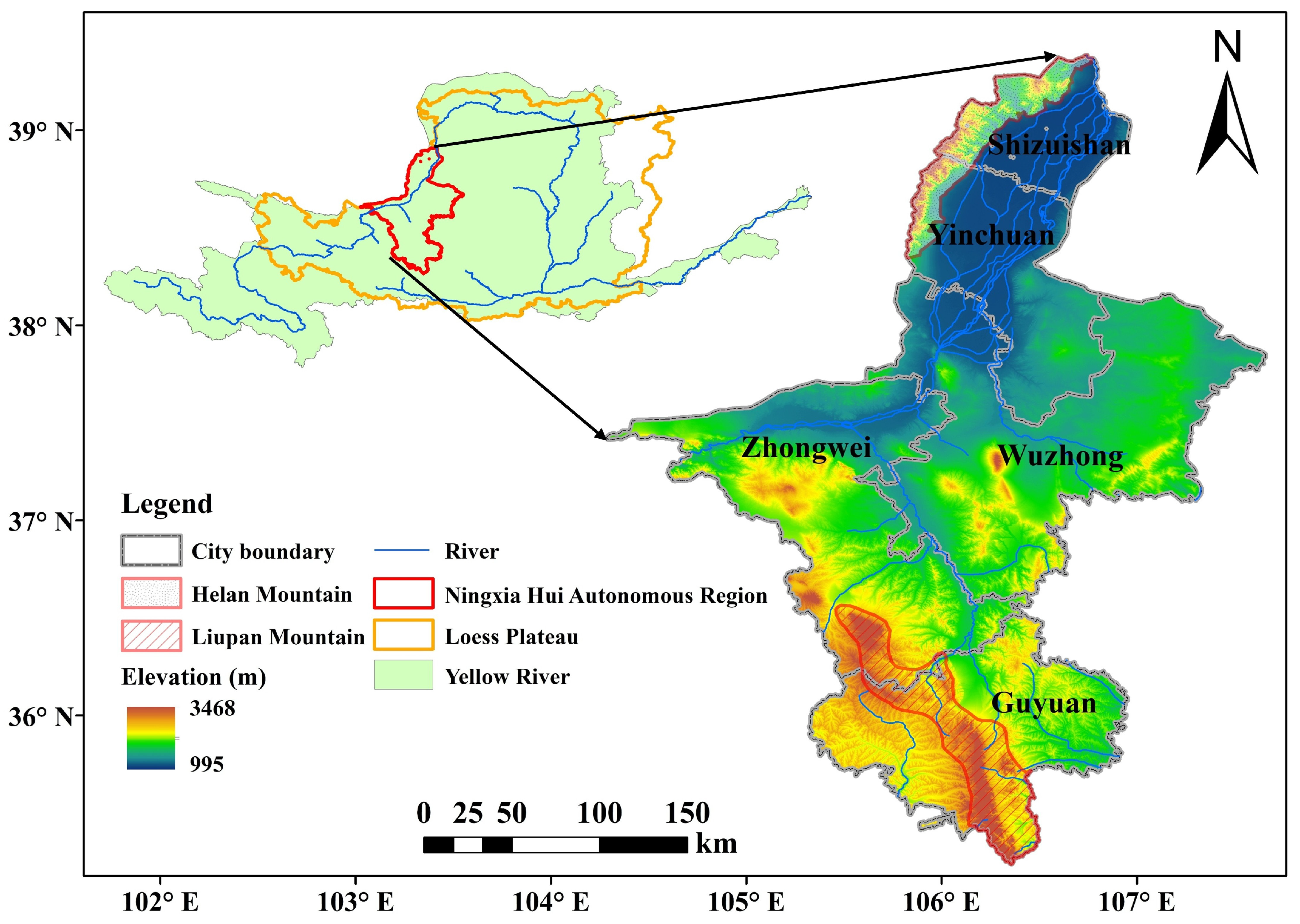
2.1. Study Area
2.2. Data Sources and Processing
3. Methodology
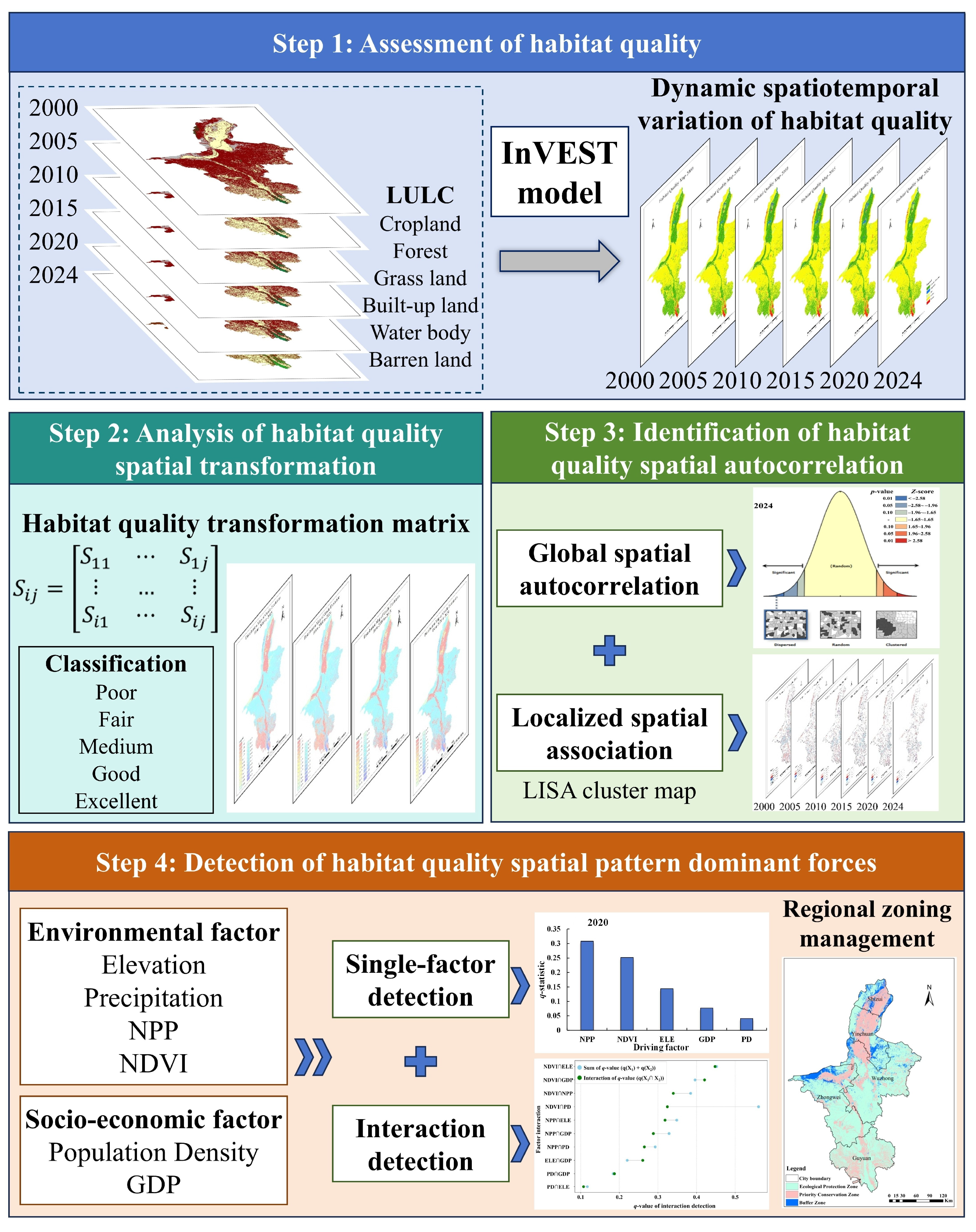
3.1. Assessment of Habitat Quality
3.2. Analysis of Habitat Quality Spatial Transformation
3.3. Identification of Habitat Quality Spatial Autocorrelation
3.4. Detection of Habitat Quality Spatial Pattern Dominant Forces
4. Results
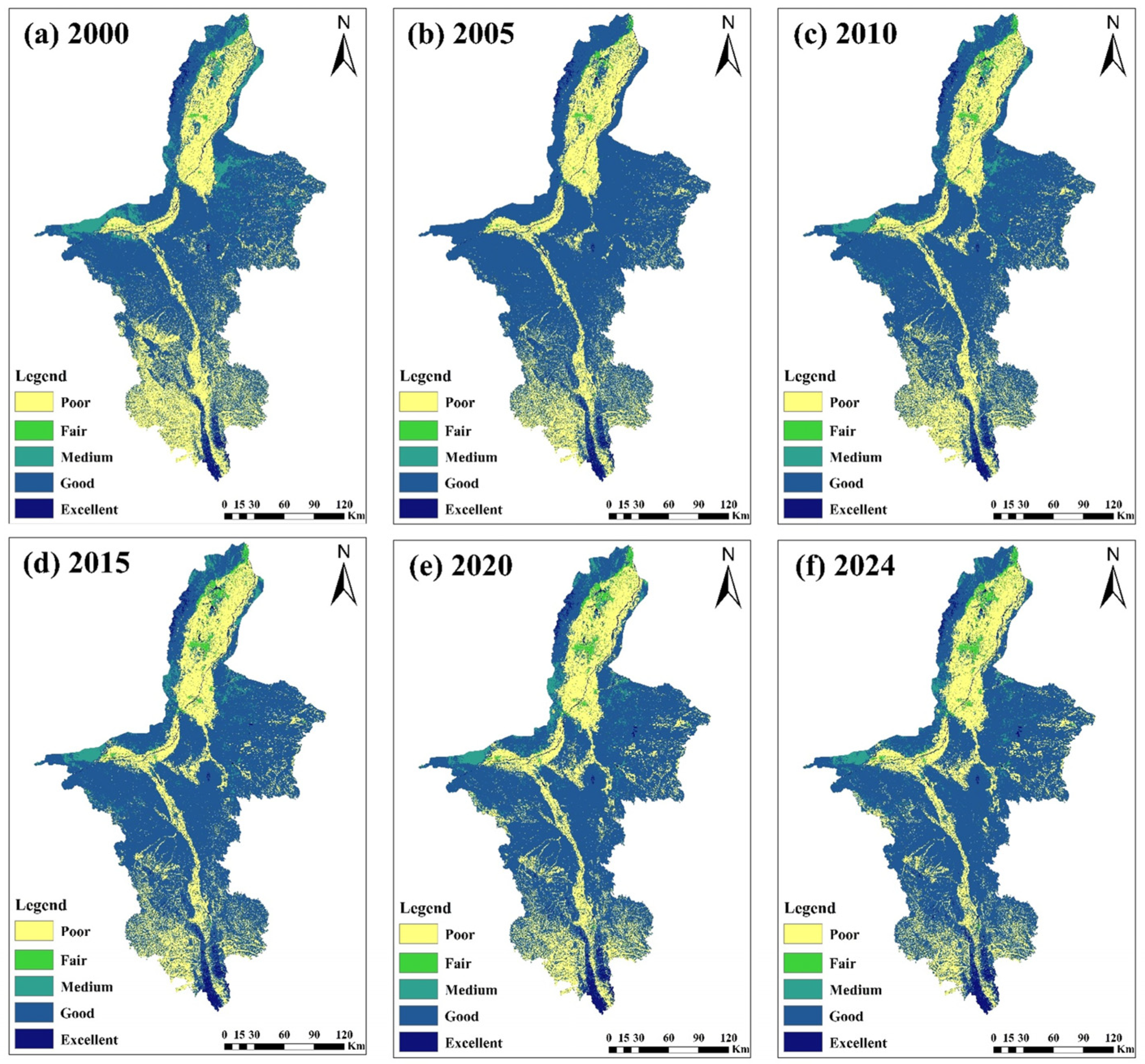
4.1. Habitat Quality of Ningxia
4.2. Spatial Evolution Process of Habitat Quality
4.2.1. Spatiotemporal Variation in Habitat Quality in Ningxia
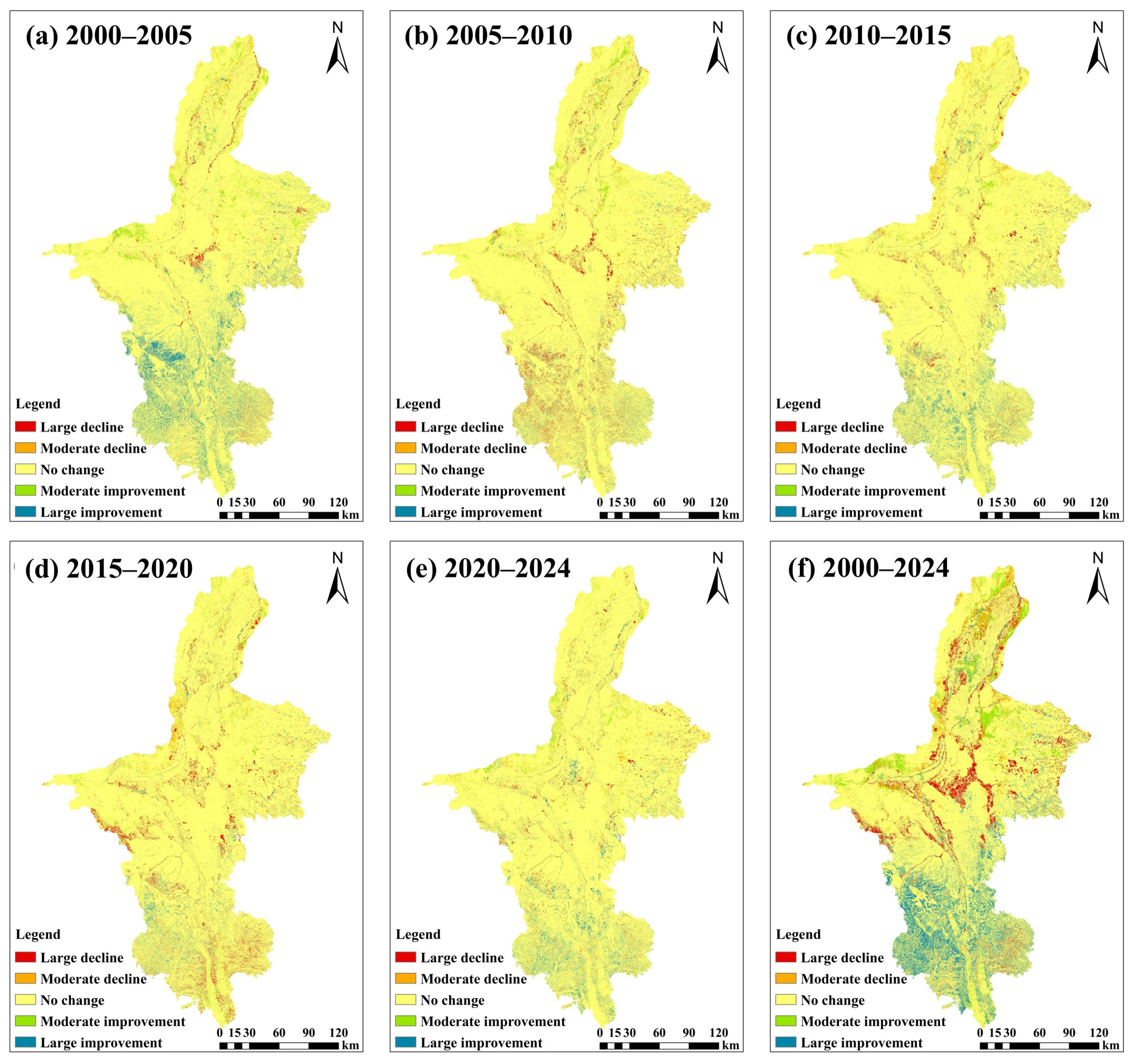
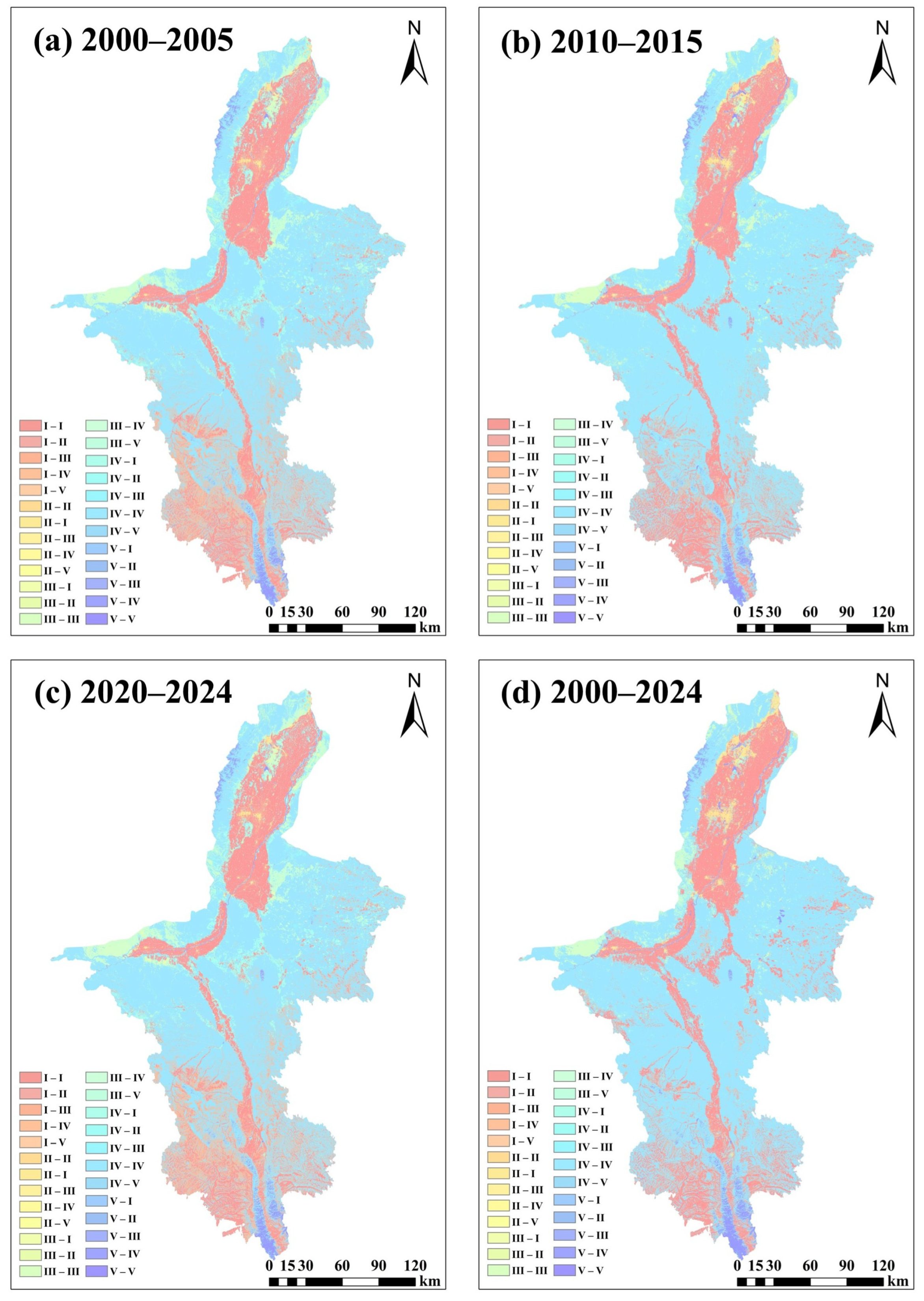
4.2.2. Spatial Transformation of Habitat Quality Grade in Ningxia
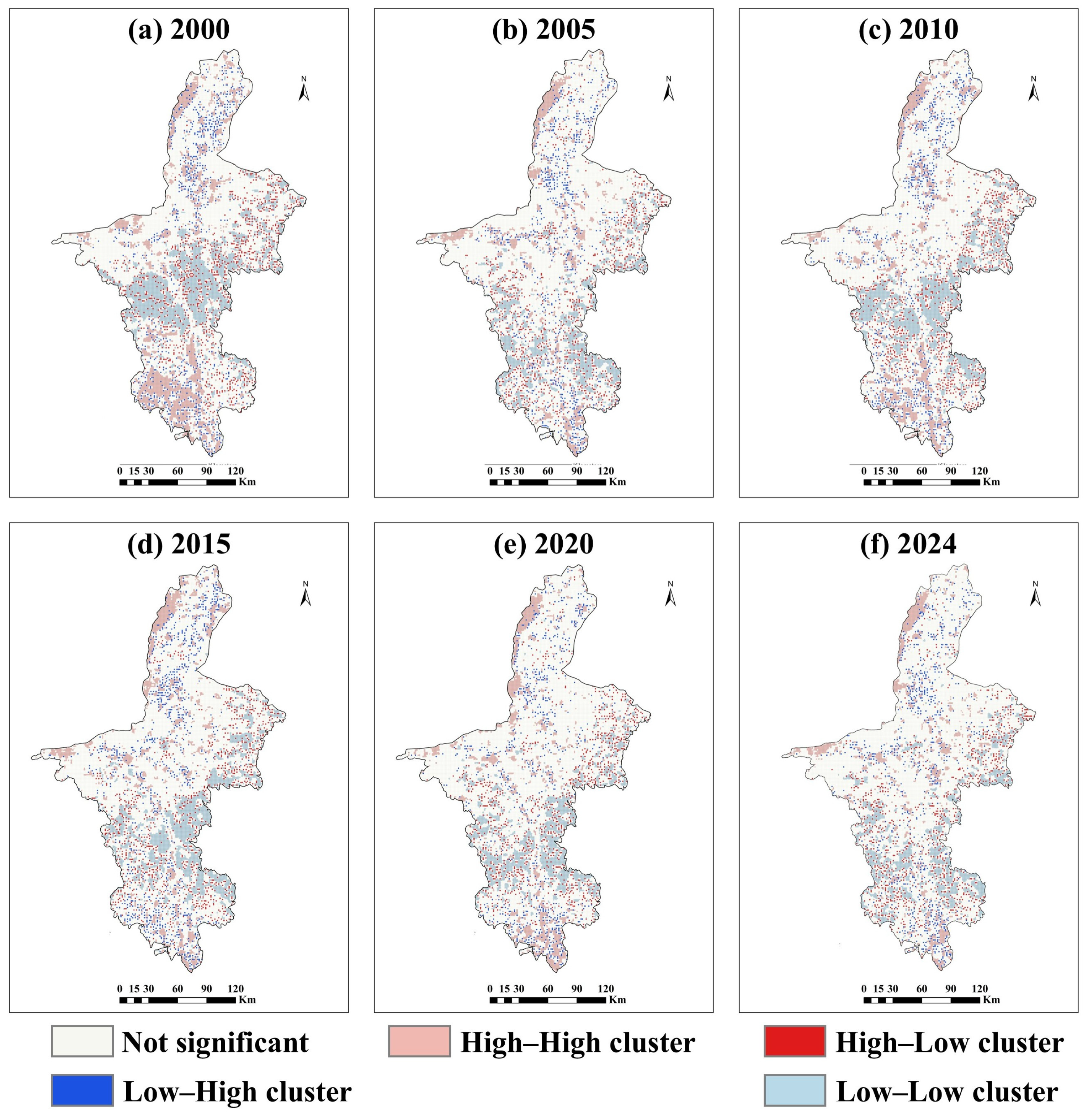
4.3. Spatial Autocorrelation of Habitat Quality in Ningxia
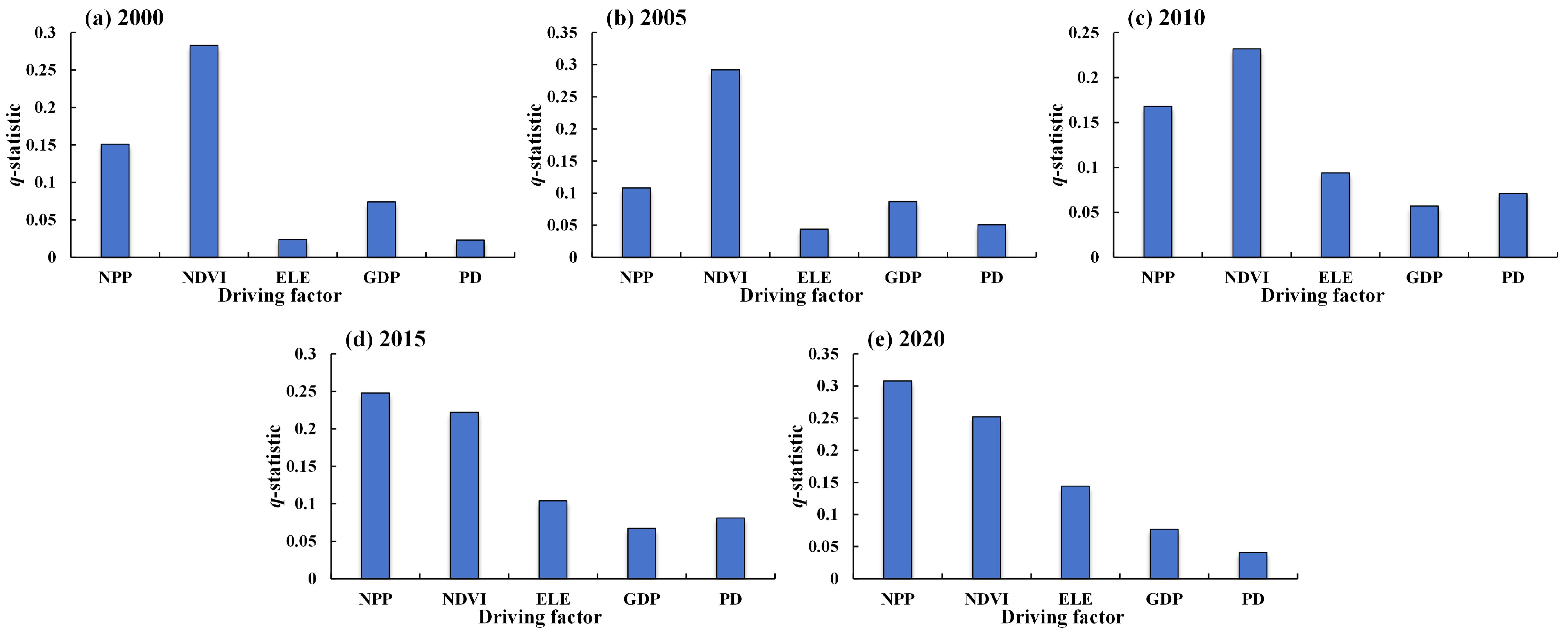
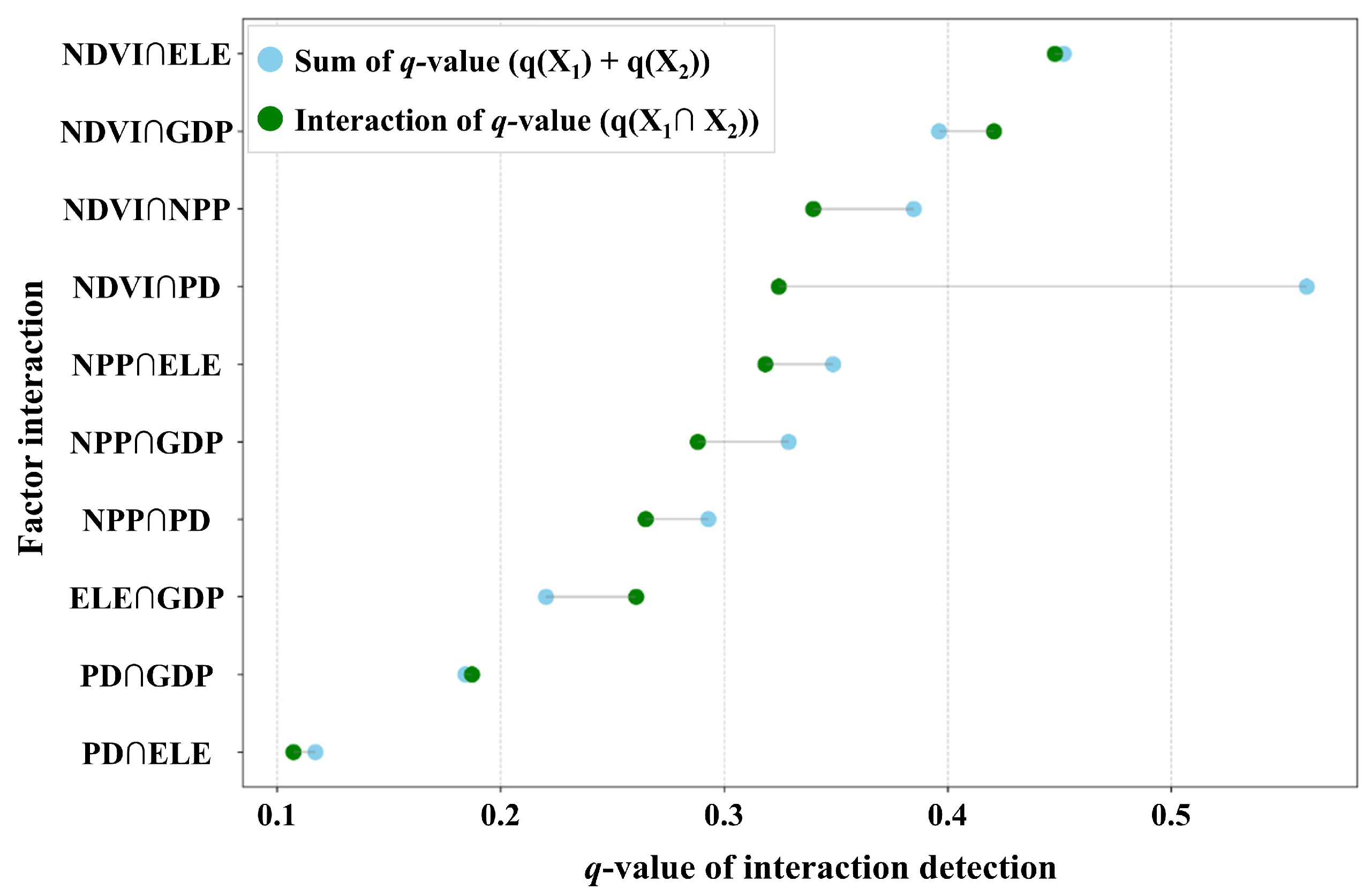
4.4. Driving Factors of Spatial Evolution in Habitat Quality
5. Discussion
5.1. Analysis of Applicability of Results
5.1.1. Applicability and Reliability of Results
5.1.2. Uncertainty
5.2. Zone-Based Strategies for Ecological Conservation and Land Planning
6. Conclusions
- (1)
- From 2000 to 2024, the habitat quality of Ningxia is dominated by good habitats. The proportion of poor habitat area increased from 29.26% to 24.63%, with excellent habitats largely recovered and a net positive change of 5.12%.
- (2)
- From 2000 to 2024, the habitat quality transformation is remarkably distinct across both spatial and temporal dimensions. Spatially, the transformation is more pronounced in the northern and southern regions. Temporally, short-term variations exhibit localized characteristics, while long-term trends show a gradient-based interaction.
- (3)
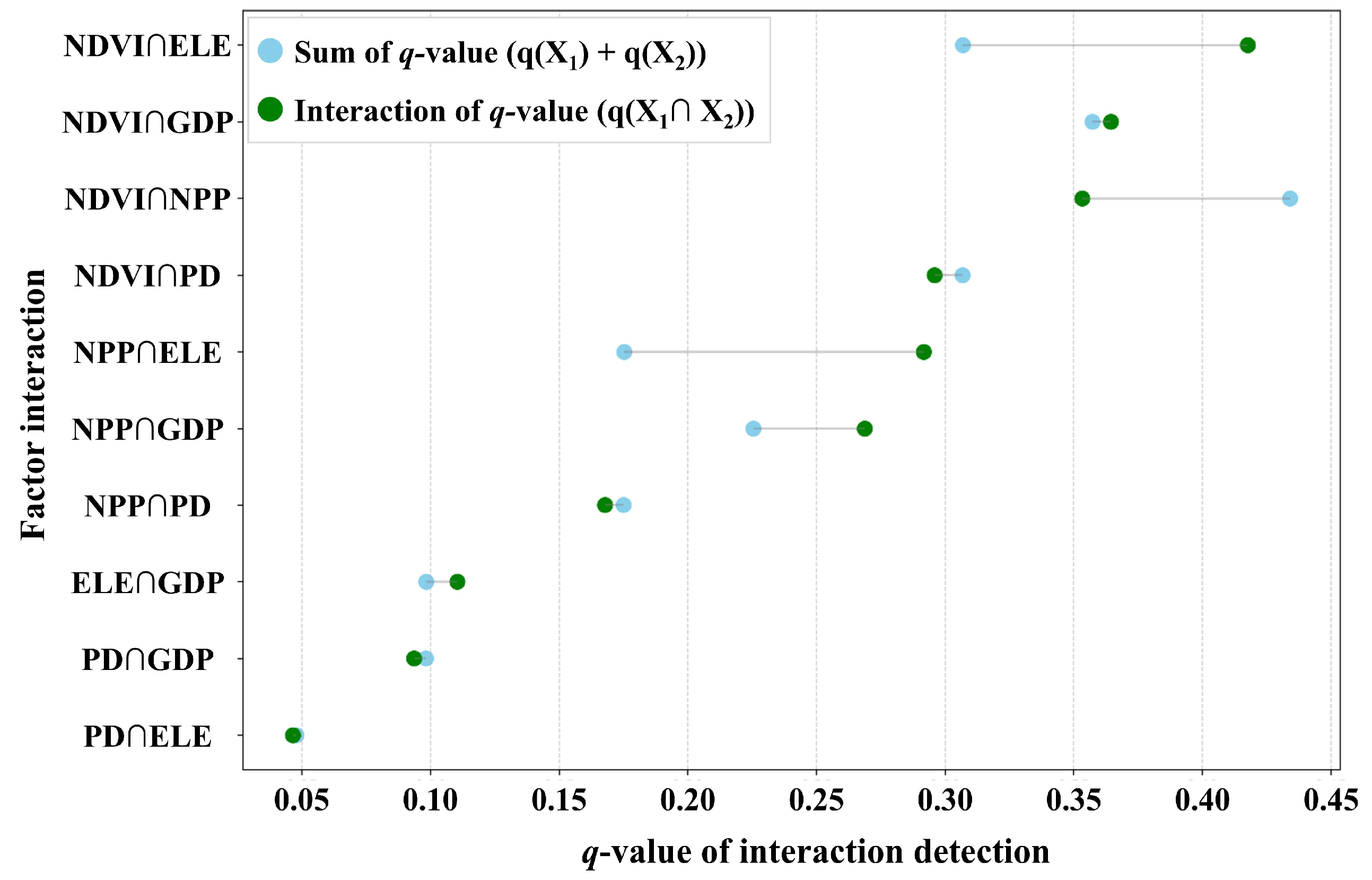
- From 2000 to 2020, habitat quality patterns are influenced by natural and socioeconomic factors. Over the past two decades, vegetation factors (i.e., NDVI and NPP) are the primary driver of habitat quality evolution. Furthermore, a widespread nonlinear enhancement exists among those drivers. Strong interactions between natural factors, such as NPP, NDVI, and terrain, serve as the key mechanism that determines the current spatial differentiation of habitat quality.
Author Contributions
Funding
Data Availability Statement
Conflicts of Interest
References
- Yue, Z.; Xiao, C.; Feng, Z.; Wang, Y.; Yan, H. Accelerating Decline of Habitat Quality in Chinese Border Areas. Resour. Conserv. Recycl. 2024, 206, 107665. [Google Scholar] [CrossRef]
- Zhao, J.; Yu, L.; Newbold, T.; Chen, X. Trends in Habitat Quality and Habitat Degradation in Terrestrial Protected Areas. Conserv. Biol. 2025, 39, e14348. [Google Scholar] [CrossRef]
- Tobisch, C.; Rojas-Botero, S.; Uhler, J.; Kollmann, J.; Müller, J.; Moning, C.; Redlich, S.; Steffan-Dewenter, I.; Benjamin, C.; Englmeier, J.; et al. Conservation-Relevant Plant Species Indicate Arthropod Richness across Trophic Levels: Habitat Quality Is More Important than Habitat Amount. Ecol. Indic. 2023, 148, 110039. [Google Scholar] [CrossRef]
- Zhang, S.; Zhong, Q.; Cheng, D.; Xu, C.; Chang, Y.; Lin, Y.; Li, B. Landscape Ecological Risk Projection Based on the PLUS Model under the Localized Shared Socioeconomic Pathways in the Fujian Delta Region. Ecol. Indic. 2022, 136, 108642. [Google Scholar] [CrossRef]
- Zou, M.; Qiang, F.; Yu, X.; Liu, G.; Zhou, Z.; Liu, C.; Ai, N. Impact of Ecological Restoration Projects on Watershed Habitat Quality in the Loess Plateau of China: A Case Study of the Yanhe River Basin. Ecol. Indic. 2025, 180, 114351. [Google Scholar] [CrossRef]
- Broquet, M.; Campos, F.S.; Cabral, P.; David, J. Habitat Quality on the Edge of Anthropogenic Pressures: Predicting the Impact of Land Use Changes in the Brazilian Upper Paraguay River Basin. J. Clean. Prod. 2024, 459, 142546. [Google Scholar] [CrossRef]
- Cheng, G.; Pan, C.; Zhou, Y. Urban-Rural Disparities in the Ecological Impact of Built-up Land Expansion: A Comprehensive Assessment from China. Appl. Geogr. 2025, 179, 103618. [Google Scholar] [CrossRef]
- Yao, Y.; Thiery, W.; Ducharne, A.; Cook, B.I.; Ding, A.; De Hertog, S.J.; Sieber, P.; Aas, K.S.; Arboleda-Obando, P.F.; Colin, J.; et al. Irrigation-Induced Land Water Depletion Aggravated by Climate Change. Nat. Water 2025, 3, 1424–1435. [Google Scholar] [CrossRef]
- Veisi Nabikandi, B.; Hami, A.; Valizadeh Kamran, K.; Russo, A. Evaluating Urban Ecosystem Services and Resilience Using Remote Sensing and InVEST Model: A Case Study of Flood Risk Control and Urban Cooling in Tabriz. Sustain. Cities Soc. 2025, 130, 106654. [Google Scholar] [CrossRef]
- Mao, B.; Wang, X.; Liao, Z.; Miao, Y.; Yan, S. Spatiotemporal Variations and Tradeoff-Synergy Relations of Ecosystem Services under Ecological Water Replenishment in Baiyangdian Lake, North China. J. Environ. Manag. 2023, 343, 118229. [Google Scholar] [CrossRef] [PubMed]
- Liu, Y.; Huang, X.; Liu, Y. Detection of Long-Term Land Use and Ecosystem Services Dynamics in the Loess Hilly-Gully Region Based on Artificial Intelligence and Multiple Models. J. Clean. Prod. 2024, 447, 141560. [Google Scholar] [CrossRef]
- Yi, D.; Guo, J.; Pueppke, S.G.; Han, Y.; Ding, G.; Ou, M.; Koomen, E. What Dominates the Variation of Ecosystem Services across Different Urban Expansion Patterns?—Evidence from the Yangtze River Delta Region, China. Environ. Impact Assess. Rev. 2025, 110, 107674. [Google Scholar] [CrossRef]
- Sherrouse, B.C.; Semmens, D.J. Validating A Method for Transferring Social Values of Ecosystem Services between Public Lands in the Rocky Mountain Region. Ecosyst. Serv. 2014, 8, 166. [Google Scholar] [CrossRef]
- Guan, D.; Ran, B.; Zhou, L.; Jin, C.; Yu, X. Assessing and Transferring Social Value of Ecosystem Services in Wetland Parks Based on SolVES Model. Ecol. Indic. 2023, 157, 111300. [Google Scholar] [CrossRef]
- Shen, W.; Li, Y.; Qin, Y. Research on the Influencing Factors and Multi-Scale Regulatory Pathway of Ecosystem Health: A Case Study in the Middle Reaches of the Yellow River, China. J. Clean. Prod. 2023, 406, 137038. [Google Scholar] [CrossRef]
- Wang, Y.; Song, M.; Han, Y.; Wang, Y. Multi-Scale Coupling Measurement and Driving Factor Analysis between Carbon Emission from Energy Consumption and Ecological Environment—The Case Study of Pearl River Delta Urban Agglomeration. Sustain. Cities Soc. 2025, 127, 106425. [Google Scholar] [CrossRef]
- Zhou, J.; Yang, J.; Tang, Z.; Xue, L.; Zhang, W.; Zhang, J. Driving Mechanisms of Ecosystem Services and Their Trade-Offs and Synergies in the Transition Zone between the Qinghai-Tibet Plateau and the Loess Plateau. Ecol. Indic. 2025, 171, 113148. [Google Scholar] [CrossRef]
- Xiong, Y.; Xu, W.; Lu, N.; Huang, S.; Wu, C.; Wang, L.; Dai, F.; Kou, W. Assessment of Spatial–Temporal Changes of Ecological Environment Quality Based on RSEI and GEE: A Case Study in Erhai Lake Basin, Yunnan Province, China. Ecol. Indic. 2021, 125, 107518. [Google Scholar] [CrossRef]
- Tian, C.; Zhong, J.; You, Q.; Fang, C.; Hu, Q.; Liang, J.; He, J.; Yang, W. Land Use Modeling and Habitat Quality Assessment under Climate Scenarios: A Case Study of the Poyang Lake Basin. Ecol. Indic. 2025, 172, 113292. [Google Scholar] [CrossRef]
- Yang, J.; Huang, X. The 30m Annual Land Cover Dataset and Its Dynamics in China from 1990 to 2019. Earth Syst. Sci. Data 2021, 13, 3907–3925. [Google Scholar] [CrossRef]
- Pan, C.; Wen, J.; Ma, J. Temporal and Spatial Variation in Habitat Quality in Guangxi Based on PLUS-InVEST Model. Land 2024, 13, 2250. [Google Scholar] [CrossRef]
- Hou, K.; Tao, W.; Wang, L.; Li, X. Study on Hierarchical Transformation Mechanisms of Regional Ecological Vulnerability and Its Applicability. Ecol. Indic. 2020, 114, 106343. [Google Scholar] [CrossRef]
- Ji, Y.; Li, M.; Zhao, Q.; Geng, J.; Liu, J.; Yu, K. Forest Carbon Stock Ecological Risk Assessment in Minjiang River Basin Based on the Adaptive Cycle Model. Ecol. Indic. 2025, 176, 113668. [Google Scholar] [CrossRef]
- Yang, F.; Yang, L.; Fang, Q.; Yao, X. Impact of Landscape Pattern on Habitat Quality in the Yangtze River Economic Belt from 2000 to 2030. Ecol. Indic. 2024, 166, 112480. [Google Scholar] [CrossRef]
- Zhang, X.; Wan, W.; Fan, H.; Dong, X.; Lv, T. Temporal and Spatial Responses of Landscape Patterns to Habitat Quality Changes in the Poyang Lake Region, China. J. Nat. Conserv. 2024, 77, 126546. [Google Scholar] [CrossRef]
- Hou, Y.; Wu, J.; Guo, Y. Spatial-Temporal Evolution and Prediction of Habitat Quality in the Yellow River Basin. Front. Environ. Sci. 2025, 13, 1650777. [Google Scholar] [CrossRef]
- Zhang, P.; Wang, Y.; Ma, W.; Li, M.; Zhao, Y.; Wang, W.; Jia, Y.; Fan, J.; Kong, L.; Hou, K.; et al. Identifying the Determinants of Natural, Anthropogenic Factors and Precursors on PM1 Pollution in Urban Agglomerations in China: Insights from Optimal Parameter-Based Geographic Detector and Robust Geographic Weighted Regression Models. Environ. Res. 2025, 279, 121817. [Google Scholar] [CrossRef] [PubMed]
- Guan, Z.; Pan, P. New Quality Productive Forces and New-Type Urbanization: Analysis of Coupling Coordination and Influencing Factors in China. Land Use Policy 2025, 158, 107724. [Google Scholar] [CrossRef]
- Xu, T.; Umair, M.; Cheng, W.; Hakimova, Y.; Mang, G. Evaluating Eco-Efficiency as a Metric for Sustainable Urban Growth: A Comparative Study of Provincial Capital Cities in China. Ecol. Indic. 2024, 169, 112959. [Google Scholar] [CrossRef]
- Wang, D.; Xu, P.-Y. Urban Green Infrastructure: Bridging Biodiversity Conservation and Sustainable Urban Development through Adaptive Management Approach. Front. Ecol. Evol. 2024, 12, 1440477. [Google Scholar] [CrossRef]
- Ding, J.; Zhuo, Y.; Xu, W.; Kessler, M.; Wang, M.; Yang, W. Synergistic Effects of Climate and Land Use Change on Khulan (Equus Hemionus Hemionus) Habitat in China. Glob. Ecol. Conserv. 2024, 54, e03181. [Google Scholar] [CrossRef]
- Wen, R.; Liu, Z. Exploring Trade-Offs and Synergies between Economy Development and Ecosystem Sustainability of the Eco-Fragile Regions in the Context of Food Security. J. Clean. Prod. 2025, 510, 145604. [Google Scholar] [CrossRef]
- Wu, H.; Zheng, X.; Zhou, L.; Meng, Y. Spatial Autocorrelation and Driving Factors of Carbon Emission Density of Crop Production in China. Environ. Sci. Pollut. Res. 2024, 31, 27172–27191. [Google Scholar] [CrossRef]
- Wang, D.; Hao, H.; Liu, H.; Sun, L.; Li, Y. Dynamic Change of Habitat Quality and Its Key Driving Factors in Ningxia Hui Autonomous Region, China. Nat. Conserv. 2023, 53, 125–155. [Google Scholar] [CrossRef]
- Zhang, F.; Jia, Y.; Liu, X.; Li, T.; Gao, Q. Application of MSPA-MCR Models to Construct Ecological Security Pattern in the Basin: A Case Study of Dawen River Basin. Ecol. Indic. 2024, 160, 111887. [Google Scholar] [CrossRef]
- Huang, L.; Chen, Z.; Yang, Z.; Chen, M.; Chen, X.; Zhai, T.; Qiu, T. Integrating “Quality-Risk-Demand” Framework and Circuit Theory to Identify Spatial Range and Priority Area of Ecological Security Pattern in a Rapidly Urbanizing Landscape. Ecol. Inform. 2024, 82, 102673. [Google Scholar] [CrossRef]
- Zhu, Y.; Li, C.; Feng, J. The Protected Areas System Policy Enhances Habitat Quality Conservation Effectiveness in Dongting Lake Eco-Economic Zone. J. Clean. Prod. 2025, 504, 145425. [Google Scholar] [CrossRef]



| Item | Name | Resolution | Time Series | Source |
|---|---|---|---|---|
| DEM | ASTER GDEM | 30 m | - | https://www.gscloud.cn |
| PRE | 1 km monthly precipitation dataset for China | 1 km | 2000, 2005, 2010, 2015, 2020 | https://zenodo.org/records/3114194 (accessed on 8 September 2025) |
| NPP | MOD17A3HGF | 500 m | 2000, 2005, 2010, 2015, 2020 | https://earthengine.google.com/ |
| NDVI | MOD13A2 | 1 km | 2000, 2005, 2010, 2015, 2020 | https://earthengine.google.com/ |
| PD | China population density 1 km grid dataset | 1 km | 2000, 2005, 2010, 2015, 2020 | https://www.resdc.cn/DOI/DOI.aspx?DOIID=32 (accessed on 15 September 2025) |
| GDP | China GDP 1 km grid dataset | 1 km | 2000, 2005, 2010, 2015, 2020 | https://www.resdc.cn/DOI/DOI.aspx?DOIID=33 (accessed on 15 September 2025) |
| Land use and land cover | China land cover dataset [20] | 30 m | 2000, 2005, 2010, 2015, 2020, 2024 | https://zenodo.org/records/15853565 (accessed on 4 September 2025) |
| Threat Factor | Maximum Distance (km) | Weight | Decay Type |
|---|---|---|---|
| Crop land | 3 | 0.8 | Linear |
| Built-up land | 5 | 1 | Exponential |
| Barren land | 2 | 0.4 | Exponential |
| Land Use and Land Cover Type | Habitat Sustainability | Threat Factor | ||
|---|---|---|---|---|
| Crop Land | Built-Up Land | Barren Land | ||
| Crop land | 0.4 | 0.3 | 0.6 | 0.2 |
| Forest | 0.9 | 0.7 | 0.8 | 0.3 |
| Grassland | 0.8 | 0.6 | 0.7 | 0.3 |
| Built-up land | 0.1 | 0.1 | 0.1 | 0.1 |
| Water body | 0.95 | 0.8 | 0.9 | 0.4 |
| Barren land | 0.6 | 0.4 | 0.5 | 0.1 |
| Judgment Criteria | Interaction Relationship |
|---|---|
| q(X1∩X2) < min(q(X1), q(X2)) | Nonlinear attenuation |
| min(q(X1), q(X2)) < q(X1∩X2) < max(q(X1), q(X2)) | Single-factor nonlinear attenuation |
| q(X1∩X2) < max(q(X1), q(X2)) | Dual-factor enhancement |
| q(X1∩X2) = q(X1) + q(X2) | Independent |
| q(X1∩X2) > q(X1) + q(X2) | Nonlinear Enhancement |
| Factors | Discrete Method | Number of Intervals |
|---|---|---|
| PRE | geometric | 8 |
| ELE | natural | 9 |
| NPP | natural | 9 |
| NDVI | natural | 9 |
| PD | quantile | 9 |
| GDP | quantile | 9 |
| Year | Poor | Fair | Medium | Good | Excellent |
|---|---|---|---|---|---|
| 2000 | 29.26 | 0.74 | 5.55 | 62.76 | 1.68 |
| 2005 | 24.43 | 1.17 | 3.97 | 68.63 | 1.80 |
| 2010 | 25.99 | 1.55 | 3.30 | 67.20 | 1.96 |
| 2015 | 24.36 | 1.88 | 3.48 | 68.21 | 2.07 |
| 2020 | 26.28 | 2.12 | 3.46 | 65.78 | 2.37 |
| 2024 | 24.63 | 2.22 | 2.95 | 67.86 | 2.33 |
| Period | Large Decline | Moderate Decline | No Change | Moderate Improvement | Large Improvement |
|---|---|---|---|---|---|
| 2000–2005 | 2.09 | 0.85 | 87.97 | 2.29 | 6.80 |
| 2005–2010 | 4.11 | 1.02 | 90.85 | 15.51 | 2.45 |
| 2010–2015 | 2.66 | 1.34 | 90.69 | 1.16 | 4.15 |
| 2015–2020 | 4.25 | 1.31 | 90.74 | 1.37 | 2.32 |
| 2020–2024 | 2.13 | 0.94 | 91.82 | 1.34 | 3.77 |
| 2000–2024 | 6.10 | 2.78 | 75.93 | 4.73 | 10.46 |
| Year | Moran’s I | Z | p |
|---|---|---|---|
| 2000 | −0.259 | −275.99 | <0.001 |
| 2005 | −0.226 | −229.16 | <0.001 |
| 2010 | −0.242 | −230.07 | <0.001 |
| 2015 | −0.186 | −183.54 | <0.001 |
| 2020 | −0.205 | −188.00 | <0.001 |
| 2024 | −0.170 | −151.40 | <0.001 |
Disclaimer/Publisher’s Note: The statements, opinions and data contained in all publications are solely those of the individual author(s) and contributor(s) and not of MDPI and/or the editor(s). MDPI and/or the editor(s) disclaim responsibility for any injury to people or property resulting from any ideas, methods, instructions or products referred to in the content. |
© 2026 by the authors. Licensee MDPI, Basel, Switzerland. This article is an open access article distributed under the terms and conditions of the Creative Commons Attribution (CC BY) license.
Share and Cite
Wang, J.; Sun, P.; Liu, Q.; Zhang, G.; Xiao, P.; Wang, Z.; Jiao, P.; Hou, K. Spatiotemporal Variation in Regional Habitat Quality and Its Driving Factors: A Case Study of Ningxia, Northwest China. Land 2026, 15, 570. https://doi.org/10.3390/land15040570
Wang J, Sun P, Liu Q, Zhang G, Xiao P, Wang Z, Jiao P, Hou K. Spatiotemporal Variation in Regional Habitat Quality and Its Driving Factors: A Case Study of Ningxia, Northwest China. Land. 2026; 15(4):570. https://doi.org/10.3390/land15040570
Chicago/Turabian StyleWang, Jingshu, Pengcheng Sun, Qihang Liu, Guojun Zhang, Peiqing Xiao, Zhihui Wang, Peng Jiao, and Kang Hou. 2026. "Spatiotemporal Variation in Regional Habitat Quality and Its Driving Factors: A Case Study of Ningxia, Northwest China" Land 15, no. 4: 570. https://doi.org/10.3390/land15040570
APA StyleWang, J., Sun, P., Liu, Q., Zhang, G., Xiao, P., Wang, Z., Jiao, P., & Hou, K. (2026). Spatiotemporal Variation in Regional Habitat Quality and Its Driving Factors: A Case Study of Ningxia, Northwest China. Land, 15(4), 570. https://doi.org/10.3390/land15040570