Article

Nonlinear Responses of Vegetation and Soil Properties to Rock Desertification Gradients in Qingzhen, China


1
State Key Laboratory of Environmental Criteria and Risk Assessment, Chinese Research Academy of Environmental Sciences, Beijing 100012, China
2
State Environmental Protection Key Laboratory of Regional Eco-Process and Function Assessment, Chinese Research Academy of Environmental Sciences, Beijing 100012, China
3
College of Ecology, Lanzhou University, Lanzhou 730000, China
*
Author to whom correspondence should be addressed.
Land 2026, 15(3), 499; https://doi.org/10.3390/land15030499
Submission received: 17 February 2026 / Revised: 17 March 2026 / Accepted: 18 March 2026 / Published: 19 March 2026
(This article belongs to the Section Land, Soil and Water)

Abstract

Karst rock desertification is an extreme form of land degradation that poses a serious threat to regional ecological security and sustainable development in Southwest China. Understanding the response patterns of plant communities and soil properties along desertification gradients is critical for developing effective ecological restoration strategies. This study focused on Qingzhen City, Guizhou Province, a representative karst desertification region. Using remote sensing to classify rock desertification intensity, together with systematic vegetation surveys and soil sampling, we investigated variation patterns in ecological parameters along the degradation gradient. The results revealed three key patterns. First, rock desertification was widespread across Qingzhen and exhibited pronounced spatial differentiation. Second, as desertification intensified, vegetation community structure became progressively simplified, transitioning from forests to shrublands. Biomass and vegetation cover declined from 77.25 kg/m2 and 83% to 0.62 kg/m2 and 15%, respectively. Notably, species diversity exhibited a bell-shaped relationship with desertification intensity, peaking at the potential desertification stage before declining under increasing environmental stress. Third, soil physicochemical properties showed complex nonlinear responses along the desertification gradient. Soil bulk density decreased, and pH increased with increasing desertification intensity, while volumetric water content fluctuated across stages. Soil total carbon and total nitrogen exhibited temporary enrichment during the light-to-moderate desertification stages, likely due to shifts in litter quality. Overall, these findings demonstrate that both plant communities and soil properties respond nonlinearly to rock desertification gradients. Together, the results enhance the understanding of the ecological processes underlying karst rock desertification and support the development of targeted regional restoration strategies.

1. Introduction

Rock desertification is an extreme form of land degradation characterized by a sharp decline in terrestrial productivity. It typically occurs in fragile karst ecological systems and is primarily driven by unsustainable socioeconomic activities such as over-cultivation, overgrazing, and excessive fuelwood collection [1]. As a severe form of environmental degradation, rock desertification not only depletes land resources and impairs ecosystem services but also drastically reduces biodiversity, posing a direct threat to human livelihoods and regional development. Consequently, rock desertification has become a critical issue in the global discourse on land health. To address land degradation challenges, including rock desertification, the United Nations 2030 Agenda for Sustainable Development established the target of achieving Land Degradation Neutrality (LDN) [2]. Achieving this goal requires a deeper understanding of the mechanisms underlying degradation processes. In particular, it is essential to clarify the response patterns and interactions between plant community dynamics and soil physicochemical properties across different stages of rock desertification [3].
To elucidate these dynamics, numerous studies worldwide have investigated the responses of plant communities and soil physicochemical properties to rock desertification. Historically, however, most studies have examined vegetation and soil changes separately and often assumed a linear degradation trajectory with increasing desertification intensity. Specifically, plant community structures tend to simplify and become increasingly dwarf-dominated [4], while the concentrations of soil organic matter, nitrogen, phosphorus, and potassium decline significantly [5]. These changes disrupt soil nutrient cycling and ultimately reduce ecosystem productivity [6]. More recent research suggests that ecological responses to rock desertification are not strictly linear but involve complex and dynamic changes. For example, forest cover loss in non-desertified areas may initially accelerate nutrient loss due to intensified soil erosion and reduced litter input. However, this trend may reverse as desertification intensifies. In advanced stages, the aggregation effect of exposed rock crevices becomes increasingly prominent. By capturing atmospheric nutrient deposition and accumulating karst weathering products, these crevices can enhance localized inputs of soil organic matter and nitrogen. At the same time, as available soil volume decreases, soil erosion intensity may gradually weaken, paradoxically improving the nutrient status of remaining soil patches [3,7]. This nonlinear pattern has also been reported in the Guanling-Zhenfeng border region of Guizhou Province, where shrub species richness declined with increasing desertification; meanwhile, herb species richness showed a unimodal pattern, first increasing and then decreasing. Notably, herb richness in moderately desertified areas was higher than that in mildly desertified areas [8]. This phenomenon has been attributed to habitat differentiation: mildly desertified areas have thicker soil layers that favor deep-rooted shrubs despite relatively lower surface nutrient concentrations. In contrast, severe rock desertification produces a fragmented landscape with shallow crevice soils that, although limited in distribution, often have high nutrient density and create microhabitats suitable for herbs and other shallow-rooted plants [8].
Soil and vegetation dynamics during rock desertification are not independent but represent a highly coupled ecological process [9]. Karst ecosystems are characterized by thin and discontinuous soil layers; therefore, vegetation degradation often triggers severe soil erosion and subsequent declines in soil quality [10], resulting in substantial reductions in vegetation cover and soil organic carbon (SOC) stocks [9]. Consequently, intensifying desertification simplifies plant community structure and leads to marked reductions in biomass and coverage [9]. These effects also extend to lower taxa. For example, bryophyte community composition and life forms are significantly altered under increasing habitat stress [11]. Vegetation further regulates soil physicochemical properties through litter deposition and rhizosphere processes [12]. Plant nitrogen (N) and phosphorus (P) levels are closely associated with rhizosphere nutrient availability [13]. To alleviate nutrient limitations and enhance nutrient uptake efficiency, plants may exhibit plastic responses by restructuring their fine-root architecture [14]. These reciprocal soil–vegetation interactions form a complex feedback system loop that influences the trajectory of land degradation [9]. Consequently, effective prevention and restoration strategies must account for these interconnected ecological processes.
Previous studies have demonstrated that enhancing vegetation structural complexity can significantly improve soil quality and reduce desertification intensity. For example, Zhang et al. reported that increased vegetation complexity markedly enhanced the concentrations of SOC, total nitrogen (TN), and AP, and the overall soil quality index (SQI) [15]. However, restoration outcomes are often constrained by inherent soil conditions [15,16]. Zhong et al. further showed that the key factors limiting restoration vary with lithology; in limestone regions, altitude and SOC are the primary constraints, whereas in dolomite regions, soil layer thickness plays a more critical role [17]. Moreover, some studies indicate that intensive artificial restoration and associated soil disturbances may exacerbate rock desertification. Comparative analyses have shown that shrubland and secondary forest restoration can effectively reduce desertification severity, whereas artificial grasslands and certain economic forests often produce limited benefits. Due to shallow root systems and frequent harvesting disturbances, artificial grasslands may lead to net losses of soil carbon [18,19]. Similarly, economic forest restoration may exhibit staged nutrient dynamics, with soil nutrient levels peaking during intermediate restoration stages before declining again [20]. Therefore, without a comprehensive understanding of the feedback mechanisms between plant communities and soil physicochemical properties, effective prevention and control of rock desertification remain difficult to achieve.
Guizhou Province represents a global hotspot for karst development and is among the regions most severely affected by rock desertification in China. Qingzhen City, located in central Guizhou and administered by the provincial capital Guiyang, has karst landscapes covering 85.83% of its total land area [21]. Within this relatively homogeneous geographic unit, the region exhibits a complete degradation gradient ranging from non-desertified landscapes to extremely severe rock desertification. This well-defined gradient, combined with a mosaic of basins, hills, and mountains, makes Qingzhen a representative microcosm of the karst plateau landscape of Southwest China. Currently, vegetation and soil degradation in the region are severe [22,23], and widespread rock desertification continues to threaten ecological stability and local livelihoods [24,25]. Nevertheless, existing studies in this region have largely focused on descriptive analyses of individual factors [3,26,27,28,29,30], and comprehensive investigations of the reciprocal response mechanisms between plant community characteristics and soil physicochemical properties remain limited.
To address these knowledge gaps, this study aims to: (1) quantify the spatial distribution patterns of different rock desertification intensity classes across Qingzhen City; (2) analyze the response patterns of plant community structure, diversity, and biomass along the full desertification gradient; and (3) elucidate the nonlinear dynamics of key soil physicochemical properties and their potential decoupling from vegetation status during advanced degradation stages.
By integrating these analyses, this study seeks to provide a scientific basis for developing targeted ecological restoration strategies in this representative karst region.

2. Materials and Methods

2.1. Study Area

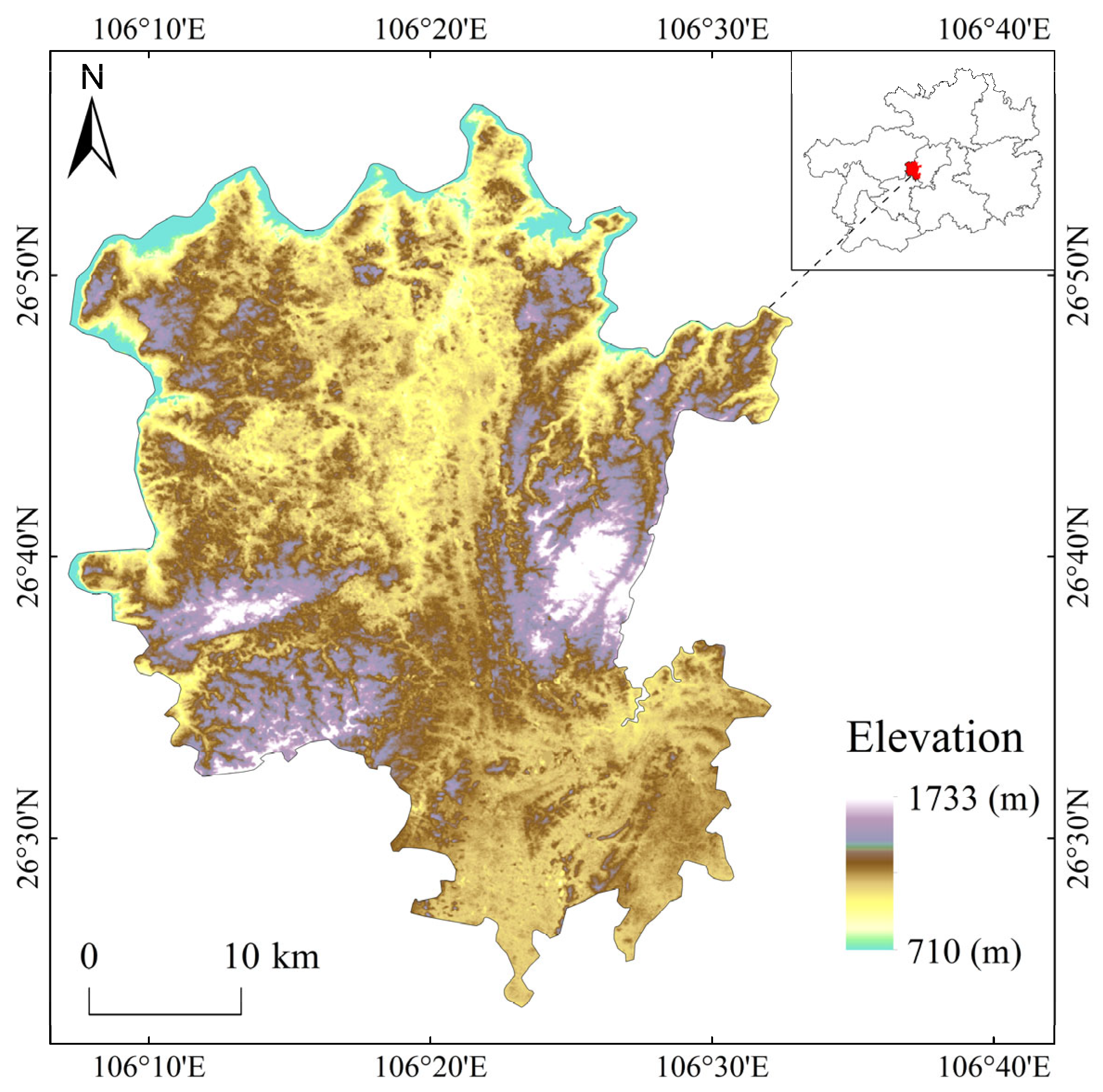
Qingzhen City is located in central Guizhou Province, Southwest China, and falls under the jurisdiction of the provincial capital, Guiyang. The study area lies in the interior of the Yunnan-Guizhou Plateau (26°21′–26°59′ N, 106°07′–106°33′ E), and covers approximately 1400 km2. The region exhibits highly complex terrain dominated by mountains and hills, with elevations ranging from 765 to 1762.7 m and an average altitude of approximately 1300 m [31]. Karst landforms are extensively developed, covering 85.83% of the total area and forming the structural foundation of the landscape. This geological framework manifests as karst hilly mountains in the eastern and western sectors, hilly basins in the central region, and karst depressions in the south [32]. Qingzhen City experiences a typical subtropical monsoon humid climate, with an average annual temperature of approximately 14 °C and average annual precipitation of 1180.9 mm, characterized by pronounced hydrothermal synchrony (Figure 1). Due to its representative karst environment, Qingzhen has been the focus of several foundational studies. Previous research has mainly examined the relationships between lithology and rocky desertification, as well as descriptive trends in individual ecological factors such as soil erosion and vegetation degradation during the desertification process. However, these studies have largely focused on isolated analyses of geological background or single ecological factors, leaving the integrated reciprocal response mechanisms between plant community characteristics and soil physicochemical properties across a complete degradation gradient largely unexplored. This lack of systematic investigation of plant–soil interactions in this representative karst plateau region highlights the need for the comprehensive analysis conducted in this study.
In terms of soil types, the study area is predominantly characterized by yellow soils (classified as Haplic Acrisols in the World Reference Base for Soil Resources, WRB) and black calcareous soils (Rendzic Leptosols), which exhibit distinct physicochemical properties. Yellow soils, developed from siliceous parent materials, are typically distributed in areas with relatively thick soil layers (>50 cm) and exhibit acidic to neutral pH reactions. In contrast, black calcareous soils, derived from carbonate rocks, are generally shallow (<30 cm) with alkaline pH and high organic matter content (>20%). Previous studies have shown that soil type significantly influences both the occurrence and progression of rocky desertification, as well as plant water-use efficiency and community composition [33,34]. Therefore, to minimize the confounding effects of soil type variation, all sampling plots in this study were established on yellow soils (for NRD to SRD stages) or black calcareous soils (for ESRD stage), ensuring consistency within each desertification intensity category. However, inherent differences between these two soil types may partially contribute to the observed variations in soil physicochemical properties across desertification stages, particularly with respect to pH and organic carbon dynamics. This limitation should therefore be considered when interpreting the results.

2.2. Data Sources and Research Methods

2.2.1. Identification and Spatial Classification of Rock Desertification Intensity

Rock desertification intensity in the study area was assessed according to the Soil Erosion Classification and Grading Standard (SL190-2007) [35] and Technical Specifications for Soil and Water Conservation Experiments (SL419-2007) [36] issued by the Ministry of Water Resources of the People’s Republic of China. Rock desertification was categorized into six grades: non-rock desertification (NRD), potential rock desertification (PRD), light rock desertification (LRD), moderate rock desertification (MRD), severe rock desertification (SRD), and extremely severe rock desertification (ESRD). The specific threshold values for each grade are presented in Table 1.
Construction land and water bodies were excluded from the analysis to ensure accurate classification and spatial assessment. The datasets used in this study were obtained from authoritative sources: (1) vegetation coverage data were acquired from the National Ecosystem Science Data Center (https://nesdc.org.cn/ (accessed on 5 August 2024)), and (2) topographic slopes were derived from digital elevation data, with elevation models sourced from NASA EarthData (https://earthdata.nasa.gov/ (accessed on 5 August 2024)).

2.2.2. Plot Layout and Sample Collection

Field investigations, including plant community surveys and soil sampling, were conducted in Qingzhen City from August to September 2024. Based on the principles of regional zonation and representative local vegetation, sampling sites were strategically selected to avoid areas subjected to severe anthropogenic disturbance. Plots were established along a gradient of six rock desertification intensities: NRD, PRD, LRD, MRD, SRD, and ESRD. To minimize the confounding effects of mining disturbances, human activities, and site-specific heterogeneity, research plots were selected using a systematic screening protocol: (1) sampling sites were located at least 1 km from urban built-up areas and more than 2 km from active mining operations; (2) the continuous distribution area of the target vegetation type exceeded 1 km2 to ensure environmental homogeneity; and (3) field reconnaissance and structured interviews with local village committees and residents confirmed that no fertilization, grazing, or soil amendments had occurred within the plots for at least 10 years, and that the primary vegetation had been established for more than a decade.
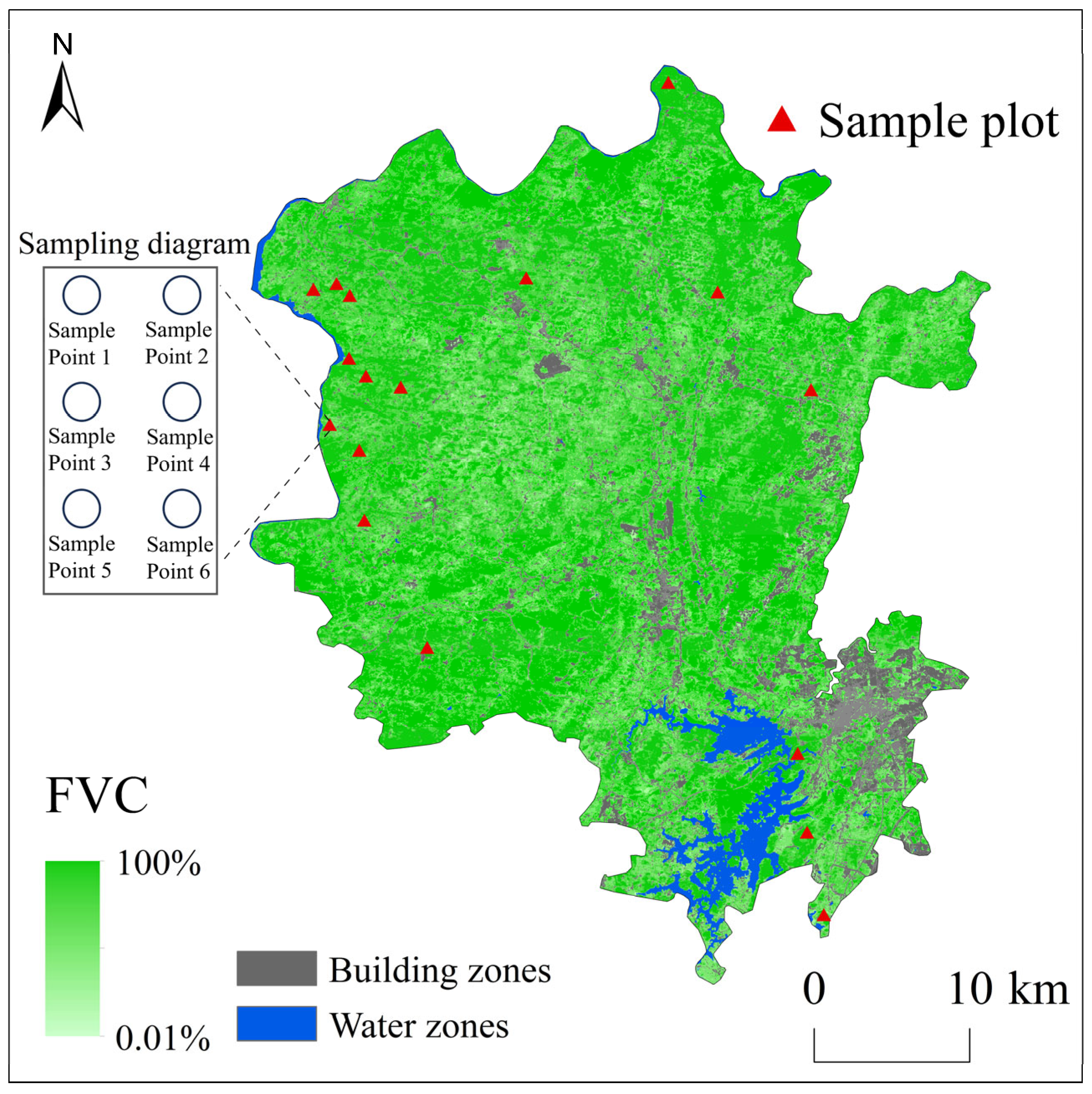
This rigorous screening process resulted in the establishment of 17 typical study plots: three NRD plots and three plots each representing PRD, LRD, MRD, and SRD stages. Due to successful ecological restoration following the implementation of the Grain for Green Project in 1999 and the Comprehensive Control of Rocky Desertification project in 2008, the regional extent of extremely severe rock desertification has significantly decreased. Consequently, only two representative ESRD plots meeting the experimental criteria were identified. The spatial distributions of all sampling plots are shown in Figure 2.
Six sampling points were evenly arranged within each plot. At each sampling point, a five-point composite sampling method was applied, and sampling tools were sterilized prior to use to prevent cross-contamination between sampling points [37]. For soil physicochemical analysis, approximately 1 kg of surface soil (0–10 cm depth) was collected from each sampling point using a stainless-steel shovel. The five subsamples were thoroughly mixed to form a composite sample, placed in labeled polyethylene bags, and transported to the laboratory in insulated coolers with ice packs to maintain low temperatures during transport. In total, 102 composite soil samples were collected (6 sampling points × 17 plots). For soil bulk density (BD) and volumetric water content (VWC) determination, undisturbed soil cores were collected at each sampling point using stainless steel cutting rings (100 cm3 volume, 5 cm diameter × 5.1 cm height), resulting in 102 undisturbed core samples. Soil samples were collected from a depth of 0–10 cm after removing surface litter. For sampling points with soil layers slightly thinner than 10 cm, the entire soil layer was considered representative of the 0–10 cm layer. After air-drying, soil samples were gently crushed and passed through a 2 mm stainless steel sieve to remove roots, stones, and other debris. The processed samples were then used to determine soil pH, electrical conductivity (EC), total carbon (TC), soil organic carbon (SOC), dissolved organic carbon (DOC), easily oxidizable carbon (EOC), total phosphorus (TP), available phosphorus (AP), total nitrogen (TN), and hydrolyzable nitrogen (HN). Detailed analytical procedures are described in Section 2.2.3.
Vegetation surveys were conducted using quadrats of different sizes according to community structure and vegetation growth characteristics. One large quadrat (10 × 10 m) was established at each sampling point to investigate tree and shrub layers. Within each large quadrat, three small quadrats (1 × 1 m) were randomly placed to survey the herb layer and surface litter. With six sampling points per plot and 17 plots in total, a total of 408 vegetation quadrats (17 plots × 6 points × 4 quadrats) were investigated. Within each quadrat, species composition, total vegetation coverage, and species-specific data were recorded. For the herb layer, three 1 m × 1 m subplots were randomly established within each 10 m × 10 m quadrat. Herbaceous species were identified, and their average height and coverage were recorded. For the shrub layer, all shrubs within the 10 m × 10 m quadrat were surveyed. For each species, three to five representative individuals were selected to measure height, basal diameter, and canopy width along two perpendicular directions. For the tree layer, all trees with diameter at breast height (DBH) ≥ 5 cm were measured, and species identity, DBH, height, and canopy width were recorded. Following the field investigation, aboveground herb biomass within the 1 × 1 m subplots was harvested by clipping at ground level, and surface litter was collected from the same subplots. All samples were transported to the laboratory in paper envelopes, dried at 65 °C to constant weight, and weighed to determine aboveground herb biomass and litter dry mass.
Timing of Field Investigation and Its Representativeness
The field investigation was conducted during the peak growing season (August to September), when most vascular plants in the subtropical karst region of Qingzhen have fully developed their vegetative and reproductive organs. This timing was chosen to maximize species detectability and capture peak aboveground biomass for accurate community classification and productivity estimation. Conducting the survey outside this period could underestimate species richness due to the dieback of herbaceous perennials and the deciduous nature of some shrub species.
Plant–soil interactions, including root exudation, microbial activity, and litter decomposition rates, exhibit seasonal variability that cannot be fully captured by a single sampling campaign. However, the primary objective of this study was to investigate spatial patterns and response mechanisms along the desertification gradient rather than intra-annual temporal dynamics. The consistent sampling period across all desertification stages (NRD to ESRD) ensures that observed differences among groups are attributable to desertification intensity rather than seasonal variation.
Nevertheless, the absence of seasonal re-sampling represents a limitation of this study. Future research should incorporate multi-seasonal surveys to better elucidate plant phenological responses and the seasonal dynamics of soil nutrient cycling under different desertification intensities. Such data would also support the development of season-specific restoration strategies, including optimized timing for seed sowing or fertilization in restoration programs.

2.2.3. Laboratory Analysis and Index Determination

Soil physical properties were determined using the core sampler method. Samples were oven-dried at 105 °C for 72 h until constant weight to calculate soil BD and VWC. Chemical analyses were performed according to established national and industry standards. Soil pH was measured using a Leici PHS-3C pH meter (Shanghai Leici Instrument Co., Ltd., Shanghai, China) following the NY/T-1377-2007 standard [38]. EC was determined using a conductivity meter (Model DDS-307, Shanghai Leici Instrument Co., Ltd., Shanghai, China) according to the HJ 802-2016 standard [39], with a soil-to-water ratio of 1:5 (m/V) at 20 ± 1 °C and measurement at 25 ± 1 °C. SOC was quantified using the potassium dichromate volumetric method [40]. To characterize soil carbon fractions, DOC was measured using a TOC analyzer (Vario TOC, Elementar Analysensysteme GmbH, Langenselbold, Germany) after extraction from the supernatant following oscillation and centrifugation [41]. EOC was determined using the potassium permanganate oxidation method combined with spectrophotometry [42]. TC was quantified using an elemental analyzer (Vario EL III, Elementar Analysensysteme GmbH, Langenselbold, Germany) [43]. Nitrogen and phosphorus concentrations were determined using standardized digestion and colorimetric methods. TN was measured using a Kjeldahl nitrogen analyzer (K-360, BUCHI Labortechnik AG, Flawil, Switzerland) after digestion with a mixture of sulfuric and perchloric acids [44]. HN was determined using a 5 mL microburette according to the LY/T1228-2015 standard [45]. TP was measured using the molybdenum-antimony colorimetric method following H2SO4-HClO4 digestion [46]. Finally, AP was determined using a TU-1900 UV-visible spectrophotometer (Beijing Purkinje General Instrument Co., Ltd., Beijing, China) according to the NY/T-1121.7-2014 standard [47].

2.2.4. Data Processing and Analysis

Arbor and shrub biomasses were quantified using generalized allometric biomass equations. For tree biomass estimation, established relative growth equations calibrated for major tree species in China were adopted [48]. Following this approach, tree species were categorized into three distinct functional groups: (1) coniferous trees, (2) deciduous broadleaved trees, and (3) evergreen broadleaved trees, as shown in Equations (1)–(3).
M c = 0.0571 × H × D 2 0.8958 + 0.0215 × D 2.3532
M d = 0.0685 × H × D 2 0.8958 + 0.0457 × D 2.0975
M e = 0.0932 × H × D 2 0.8541 + 0.0432 × D 2.2729
In these models, M represents the estimated biomass, H denotes plant height, and D refers to the diameter at breast height (DBH).
Shrub biomass was estimated using models reported in the Handbook of Biomass Models for Common Shrubs in China [49]. Specific biomass models were selected through a hierarchical screening process considering (1) shrub species identification, (2) geographical distribution, and (3) relevant morphological parameter ranges. When species-specific models were unavailable, generalized mixed-species biomass models for subtropical shrubs, categorized by branch morphology, were applied.
Plant community diversity was evaluated using the Shannon diversity index, Simpson diversity index, and Pielou evenness index. The Shannon diversity index reflects overall community diversity by integrating both species richness and evenness.
H = D i l n D i
D i = P o p u l a t i o n   s i z e   o f   t h e   s p e c i e s   ( n i ) P o p u l a t i o n   s i z e   o f   a l l   s p e c i e s   ( N )
In these equations, H represents the Shannon diversity index, and Di denotes the relative abundance of species i.
The Simpson diversity index represents the probability that two randomly selected individuals from a community belong to different species. Values approaching 1 indicate higher community diversity.
D = 1 ( n i / N ) 2
In this formula, D represents the Simpson diversity index, ni is the number of individuals or biomass of a species i, and N represents the total number of individuals or biomass of all species in the sample.
The Pielou evenness index was used to quantify the uniformity of individual distribution among species within the community.
J = H / l n S
In this formula, J represents the Pielou evenness index, H is the Shannon diversity index, and S denotes the number of species.
Spatial pattern identification, experimental data processing, statistical analyses, and map generation were performed using ArcGIS Pro (v3.3) and R (v4.4.2). ArcGIS Pro was used for spatial data integration and map production, whereas R was used for statistical analysis and data visualization.

2.2.5. Statistical Analysis and Mapping

All statistical analyses were conducted using R software (version 4.4.2, R Core Team, 2024; R Foundation for Statistical Computing, Vienna, Austria). Spatial mapping and interpolation were performed using ArcGIS Pro (version 3.3, ESRI Inc., Redlands, CA, USA).
Prior to analysis, data were tested for normality using the Shapiro–Wilk test and for homogeneity of variance using Levene’s test. As most variables did not satisfy the assumptions of parametric tests, non-parametric methods were applied.
Differences in plant community characteristics (species diversity indices, biomass, litter mass, and vegetation coverage) and soil physicochemical properties among the six rock desertification intensity grades (NRD, PRD, LRD, MRD, SRD, and ESRD) were assessed using the Kruskal–Wallis test, a non-parametric alternative to one-way ANOVA.
When the Kruskal–Wallis test indicated significant differences (p < 0.05), post hoc multiple comparisons were conducted using the agricolae package (version 1.3-7) in R. Specifically, the kruskal() function was used to generate compact letter displays, where groups sharing the same letter are not significantly different at the α = 0.05 level. The significance letters were manually added above the boxplots to facilitate visual interpretation.
All figures were generated using the ggplot2 package (version 3.5.1) in R. Boxplots were used to illustrate the distribution of each variables across desertification intensity grades, with individual observations overlaid as jittered points to display sample variability.
For spatial mapping, continuous surfaces of vegetation coverage and slope were interpolated from point data using the Inverse Distance Weighting (IDW) method with a power parameter of 2 and a variable search radius including 12 neighboring points. The interpolated layers were then reclassified according to the criteria presented in Table 1 to generate the rock desertification intensity distribution map (Figure 3).

3. Results

3.1. Spatial Distribution of Rock Desertification Intensity in Qingzhen City

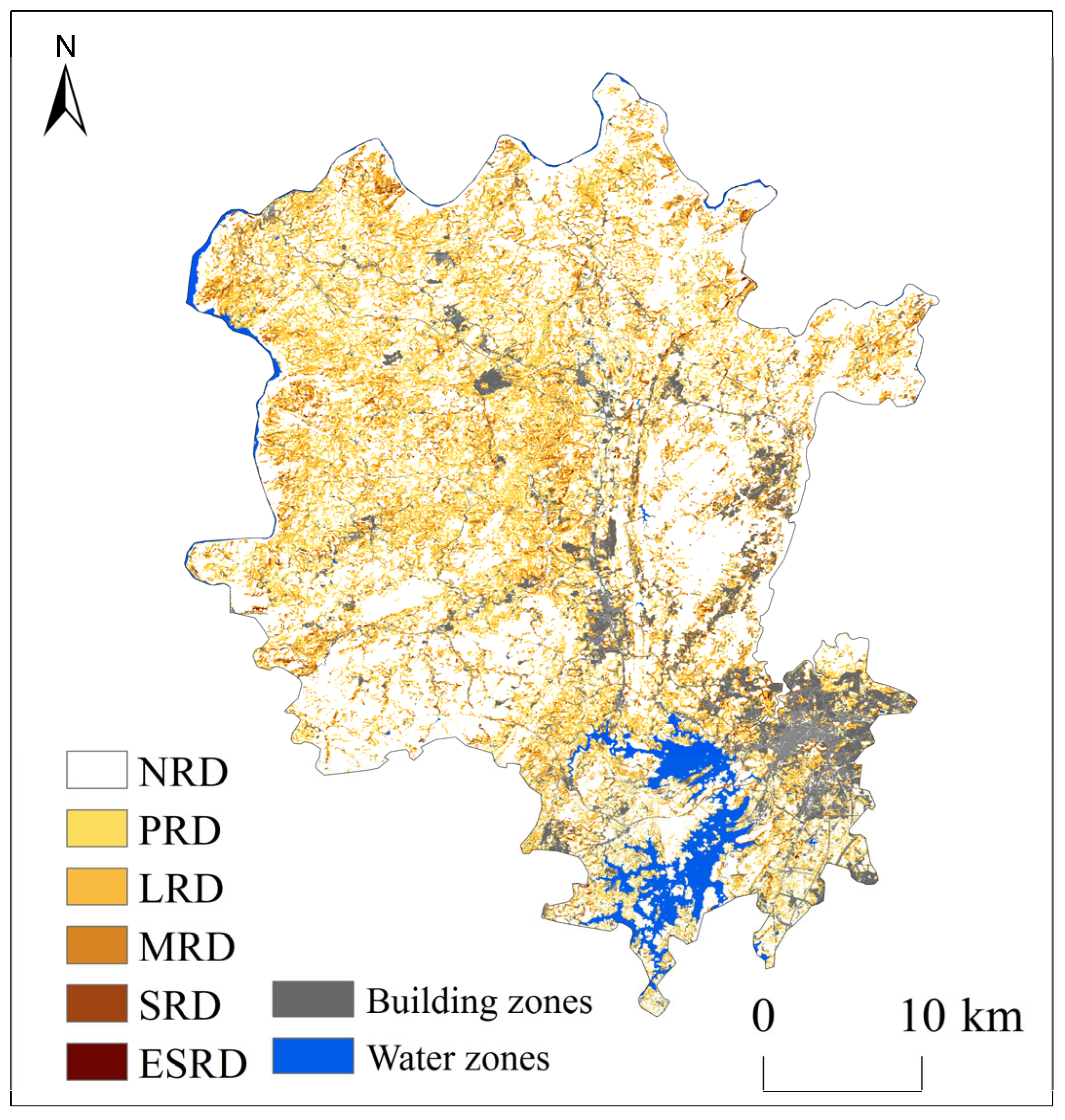
The intensity of rock desertification in Qingzhen City was quantified using vegetation coverage and slope data. Rock desertification is widespread across the city; however, its spatial distribution varies markedly among different intensity grades (Figure 3). NRD areas cover 782.07 km2 and are predominantly concentrated near the Hongfeng Lake catchment in the southern and central parts of Qingzhen City. These landscapes are characterized by high vegetation coverage supported by favorable topographic and climatic conditions. In the central region, relatively flat terrain dominated by hilly basins reduces the scouring effects of water erosion on surface soils, thereby maintaining deeper and more continuous soil profiles. Meanwhile, the southern region surrounding Hongfeng Lake benefits from the microclimate provided by the large water body. High atmospheric humidity, stable water availability, and enhanced water-retention capacity create favorable conditions for the growth of tall tree species and dense plant communities. Under these favorable edaphic and hydrological conditions, vegetation coverage has remained high over time, effectively interrupting the degradation cycle of soil loss and bedrock exposure. The PRD stage covers 295.42 km2 and represents one of the most common intensity types across the city. LRD exhibits a similar widespread distribution, covering 198.17 km2. In contrast, more advanced desertification stages display more localized and fragmented spatial patterns. MRD covers 84.05 km2 while SRD covers 23.29 km2. These stages are mainly distributed across the northern, western, and eastern parts of the city and exhibit a patchy spatial pattern. ESRD accounts for the smallest total area, totaling only 3.60 km2. Its distribution is limited to northern, western, and eastern regions and appears as scattered, isolated patches across the landscape.

3.2. Nonlinear Relationship Between Rock Desertification and Plant Community Characteristics

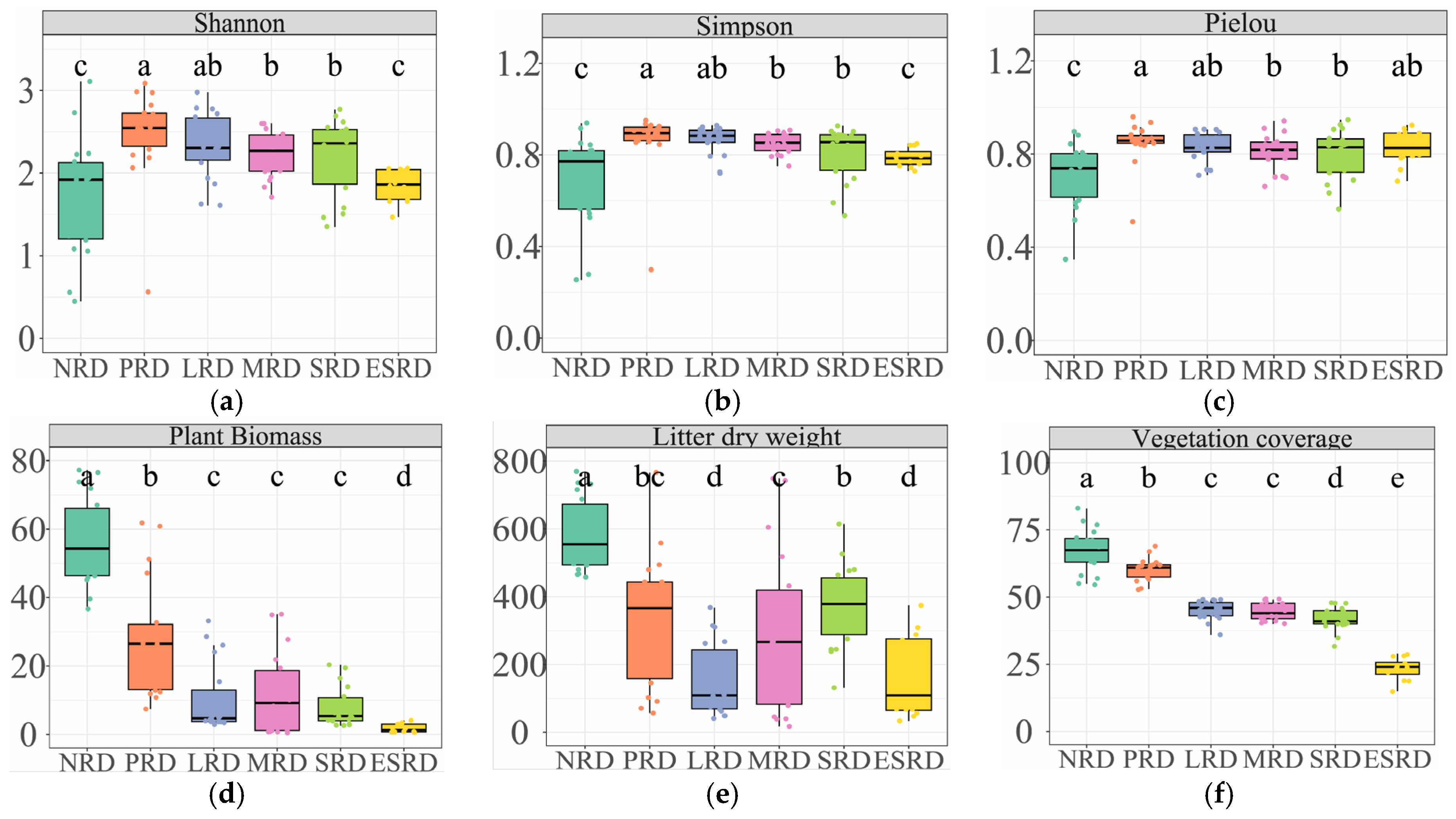
The quadrat survey recorded a total of 237 plant species within the study area of Qingzhen City. The species diversity indices, including the Shannon, Simpson, and Pielou indices, across the six rock desertification intensity levels (NRD, PRD, LRD, MRD, SRD, and ESRD) are presented in Figure 4. The three species diversity indices exhibited highly consistent variation trends. All indices remained at relatively low levels during the NRD stage, peaked at the PRD stage, and subsequently declined progressively as rock desertification intensified. Specifically, the Shannon and Simpson indices reached their maximum values in the PRD group, which were significantly higher than those in the NRD, MRD, SRD, and ESRD groups (p < 0.05). The lowest diversity levels were observed in the NRD and ESRD groups, with no significant difference between them; however, both were significantly lower than the values in the PRD, LRD, MRD, and SRD groups (p < 0.05). Furthermore, no significant differences were detected between the PRD and LRD groups or among the LRD, MRD, and SRD groups. The Pielou Index followed a similar overall pattern. Community evenness peaked in the PRD group and was significantly higher than that observed in the NRD, MRD, and SRD groups (p < 0.05). The Pielou index in the NRD group was significantly lower than that in all other desertification intensity levels (p < 0.05). Apart from the NRD group, no significant differences in evenness were observed between adjacent desertification intensity grades.
Further analysis of litter mass, vegetation coverage, and plant biomass across the desertification gradient showed that both coverage and biomass declined significantly as desertification intensified. Specifically, plant biomass decreased sharply from 77.25 kg/m2 to 0.62 kg/m2, while vegetation coverage declined from 83% to 15%. The NRD plots exhibited the highest values for both parameters, significantly exceeding those of all other intensity grades. Vegetation coverage showed a continuous decreasing trend from the PRD to the ESRD stage. Significant differences were observed between most desertification stages, except between the LRD and MRD plots, where no significant differences were detected. In terms of plant biomass, a sharp reduction occurred during the transition from NRD to PRD. Thereafter, biomass remained consistently low across LRD, MRD, and SRD stages, with no significant differences among them. Both vegetation coverage and biomass reached their minimum values in the ESRD plots. In contrast, litter mass exhibited a more complex variation pattern. The NRD plots had the highest litter mass, significantly exceeding that of all other groups. The lowest values occurred in the LRD and ESRD stages, with no significant difference between them. Notably, litter mass increased markedly during the SRD stage and was significantly higher than that observed in the LRD, MRD, and ESRD stages.

3.3. Nonlinear Relationship Between Rock Desertification and Soil Physicochemical Properties

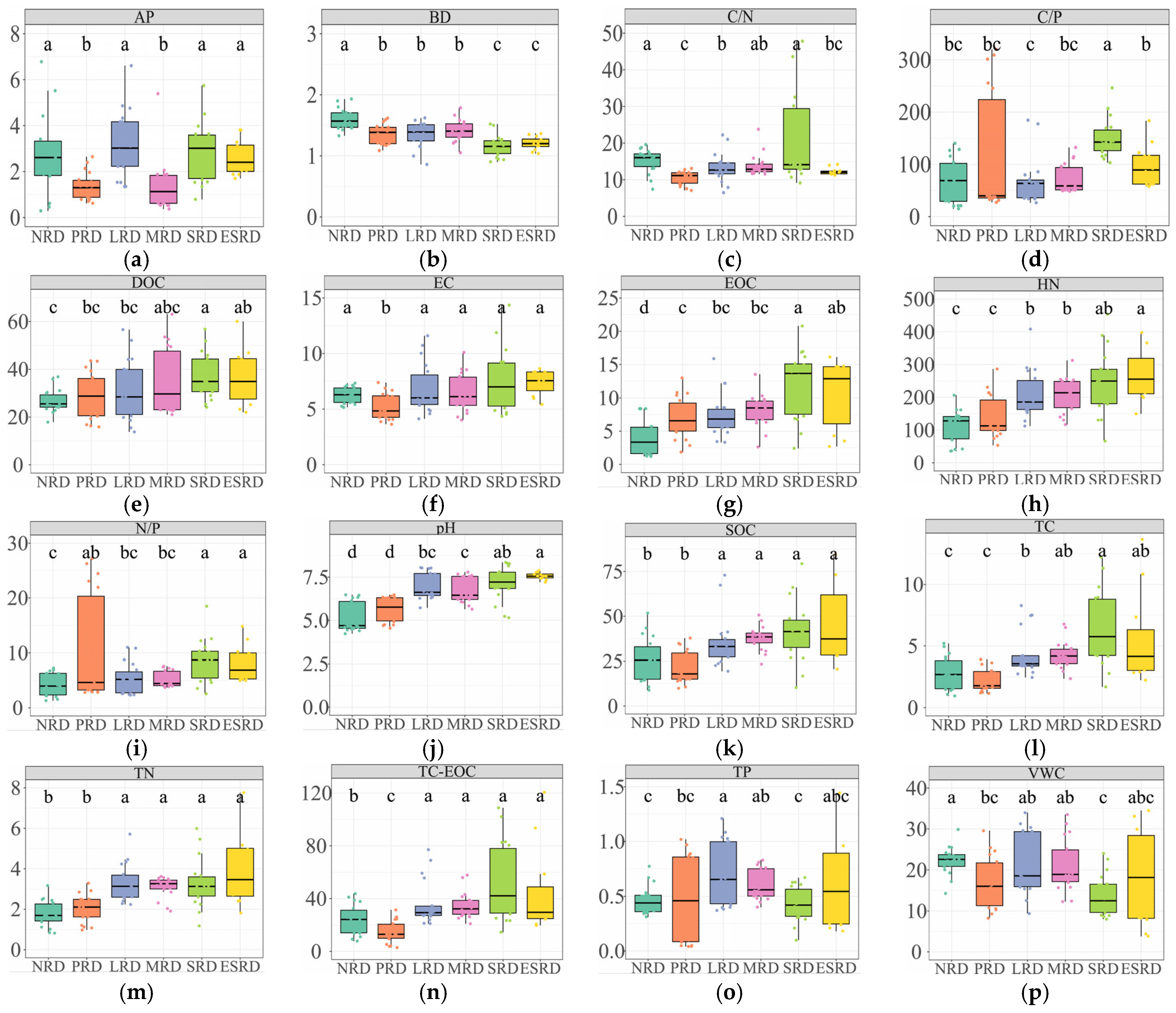
Statistical analyses revealed significant variations (p < 0.05) in multiple soil physicochemical properties along the rock desertification gradient (see Figure 5). Soil BD showed a significant decreasing trend as desertification intensified, with the highest values observed in the NRD group and significantly lower values in the SRD and ESRD groups. Soil VWC fluctuated across different desertification stages. VWC was significantly lower in the SRD group than in the NRD group, reaching its minimum value at this stage. In contrast, the soil pH exhibited an opposite trend, increasing progressively with the severity of rock desertification. This shift was characterized by a transition from slightly acidic conditions in the NRD and PRD groups to significantly more alkaline conditions in the SRD and ESRD groups, reflecting the soils associated with karst degradation. EC reached its maximum in the SRD group before declining significantly to its minimum in the PRD group. After this decline, EC levels across the remaining desertification intensity grades did not differ significantly from those in the NRD group (Figure 5).
The concentrations of soil nutrients and organic matter fractions also showed pronounced variations along the desertification gradient. TC, TN, and SOC exhibited highly consistent patterns. Their concentrations were relatively low in the NRD and PRD stages but increased significantly from the LRD stage onward and remained at elevated levels in the more advanced stages of degradation. Similarly, the concentrations of HN and labile organic carbon fractions, including EOC and DOC, generally increased as rock desertification intensified. HN reached its highest concentration in the ESRD group, whereas EOC peaked during the SRD stage. In contrast, soil phosphorus dynamics exhibited a clear unidirectional pattern. TP in the LRD group was significantly higher than that in the NRD and SRD groups. Meanwhile, AP concentrations in the PRD and MRD groups were significantly lower than those in the other desertification intensity grades.
Soil ecological stoichiometric ratios also showed complex nonlinear patterns. The soil carbon-to-nitrogen ratio (C/N) was highest in the NRD group, declined significantly to its lowest value in the PRD group, and subsequently reached a secondary peak during the SRD stage. The trajectories of the soil carbon-to-phosphorus (C/P) and nitrogen-to-phosphorus (N/P) ratios were highly consistent, both increasing significantly during the later stages of rock desertification. Specifically, the C/P ratio in the SRD group was significantly higher than that in all other groups, whereas the N/P ratio was the highest in the SRD and ESRD groups, both of which were significantly higher than those in the earlier desertification stages. Finally, the stable carbon pool (defined as TC-EOC) reached its minimum in the PRD group and was significantly lower than that observed in the NRD, LRD, MRD, SRD, and ESRD groups.

4. Discussion

By integrating field surveys with systematic analysis, this study revealed distinct response patterns of plant community characteristics and soil physicochemical properties along a rock desertification gradient. A key finding was that plant species diversity does not decline linearly with intensifying rock desertification; instead, it follows a unimodal pattern, initially increasing and then decreasing, with a peak at the PRD stage (Figure 4). This pattern is consistent with the predictions of the Intermediate Disturbance Hypothesis (IDH). According to this theory [50], environments with minimal disturbance tend to be dominated by a few highly competitive species that gradually exclude others, whereas environments subjected to intense disturbance allow only a limited number of stress-tolerant species to survive severe environmental conditions. Both extremes reduce biodiversity, while intermediate levels of disturbance create a balance between competitive exclusion and environmental filtering, allowing more species to coexist and maximize diversity [50,51]. The unimodal diversity pattern observed in this study therefore provides empirical support for this hypothesis in the context of karst rock desertification. In NRD areas, plant communities tend toward late-successional stability and are typically dominated by primary coniferous forests. These species possess strong competitive advantages that may suppress the establishment of diverse understory species, maintaining diversity at a relatively low baseline [52]. During the initial NRD-PRD transition, mild environmental stress acts as an intermediate disturbance that disrupts the dominance of the primary community and creates vacant ecological niches. This facilitates the colonization of secondary or stress-tolerant species, resulting in a short-term increase in species richness. However, as rock desertification progresses from moderate to extremely severe stages, environmental filtering effects, including habitat fragmentation, soil impoverishment, and hydrological stress, intensify substantially, forming a regime of persistent high-intensity disturbance. Under these conditions, only a limited number of drought-tolerant and lithophytic species can persist, leading to simplified community structure and a rapid decline in overall species diversity [53,54]. It should be noted that although the observed diversity pattern aligns with IDH predictions, the underlying mechanisms—such as competitive exclusion in low-disturbance environments and environmental filtering under high-disturbance conditions—were not directly tested in this study. Further experimental or long-term observational studies are therefore required to explicitly verify these processes.
The reciprocal interactions between plant community characteristics and soil physicochemical properties generate cascading degradation processes that intensify rock desertification in the karst ecosystems. The sharp decline in vegetation coverage and plant biomass represents one of the most direct indicators of the desertification process [55,56]. This trend is primarily driven by progressive soil thinning and increased bedrock exposure, which together reduce soil water retention and nutrient availability. As a result, these edaphic constraints cannot sustain the metabolic and structural requirements of tall trees and dense vegetation communities [57]. However, some soil physicochemical properties do not decline linearly but instead exhibit complex nonlinear dynamics. In particular, nutrient indices including TC, TN, and SOC reached relatively high levels during the LRD and MRD rock desertification stages (Figure 5). This phenomenon may be explained by a temporary “fertile island effect” [58]. According to ecosystem succession theory, the colonization of pioneer species during early successional stages can improve the soil conditions and facilitate the establishment of late-successional species [59]. In the present study, NRD sites were primarily dominated by coniferous forests characterized by high lignin content and slowly decomposing litter. As degradation progressed toward the LRD and MRD stages, vegetation composition gradually shifted toward broadleaf forests or shrublands with more labile and readily decomposable litter. This change in litter quality accelerates nutrient mineralization and release, resulting in temporary nutrient enrichment in surface soils and explaining the increases observed in TC, TN, and SOC during the early stages of desertification. However, this enrichment is transient. As desertification advances to the SRD and ESRD stages, extensive vegetation loss triggers severe soil erosion. At this stage, nutrient-rich topsoil is rapidly removed, ultimately leading to widespread soil depletion and ecosystem degradation.
An important finding of this study is that SOC concentrations did not reach their minimum during the ESRD stage, as commonly assumed, but instead remained relatively high (Figure 5). This pattern is likely associated with the soil-rock heterogeneous characteristic of karst landscapes. Under severe desertification conditions, surface soils are largely eroded and remain primarily within rock crevices and dissolution channels. Within these microhabitats, residual soils often develop biological crusts composed of mosses and lichens, which can reduce further erosion. In addition, the microtopographic depressions formed by rock crevices act as natural traps that intercept litter and fine soil particles transported by runoff. These processes promote localized nutrient accumulation and contribute to elevated SOC concentrations in highly desertified soils [60]. In ESRD environments characterized by extensive bedrock exposure, soils occur as discontinuous patches mainly confined to rock crevices and depressions. Litter and root exudates from sparse surrounding vegetation are transported into these crevices through wind and water movement. Consequently, although overall ecosystem productivity remains low, localized SOC concentrations can appear relatively high due to physical accumulation processes [61]. Furthermore, shrubs that survive under ESRD conditions often develop extensive root systems capable of accessing water and nutrients within deep rock fissures and allocating a large proportion of photosynthates to root biomass [62]. Subsequent root turnover, decomposition, and exudation provide important carbon inputs to the soil [63], while lignin-rich root residues further enhance the stability of soil carbon pools under extreme environmental conditions. The progressive increase in soil pH observed along the desertification gradient reflects the fundamental geochemical characteristics of karst terrain. As acidic topsoil is gradually lost through erosion, calcium carbonate-rich bedrock becomes exposed, and its weathering products increasingly influence the remaining soils, resulting in progressive soil alkalization [64]. Elevated pH can reduce the bioavailability of essential nutrients such as phosphorus, further intensifying plant nutrient limitations. These results are consistent with previous studies. Wei et al. [65] reported that SOC concentrations in highly desertified peak-cluster depression soils were substantially higher than those in potential, light, and moderate desertification stages. Similarly, Wu et al. [66] identified a strong positive relationship between SOC levels and bedrock exposure on karst slopes. Wang et al. further demonstrated that when environmental stress exceeds a critical threshold (e.g., aridity index > 0.88), the relationship between SOC and ecosystem stability may reverse [67]. Under such extreme conditions, high SOC does not necessarily indicate ecological stability but may instead be associated with increased variability in community productivity. In water-limited environments, episodic rainfall events can activate sensitive microbial communities through a priming effect, leading to accelerated carbon mineralization and subsequent declines in biomass stability. The ESRD areas in Qingzhen likely represent such a high-stress ecological state. Therefore, elevated SOC levels in these environments probably indicate unstable ecological conditions rather than meaningful ecosystem recovery.
In many ecological studies, SOC is widely used as a positive indicator of soil health and ecosystem quality. However, the present study revealed a clear decoupling between vegetation status and soil nutrient stocks as rock desertification intensified. Vegetation biomass and community coverage declined sharply, indicating severe ecosystem degradation, yet SOC concentrations did not decrease accordingly. Instead, SOC remained relatively high during the LRD and ESRD stages. These findings suggest that in karst regions such as Qingzhen City, SOC alone cannot reliably reflect soil functional health or ecosystem restoration effectiveness. Relying solely on SOC as an indicator for evaluating rock desertification control may therefore lead to misleading conclusions regarding actual ecosystem conditions.
Based on these findings, several policy implications for rocky desertification control in karst regions can be proposed. First, restoration effectiveness should be evaluated using a multi-indicator framework integrating vegetation productivity, species diversity, and soil hydrological properties rather than relying solely on SOC, which may remain artificially elevated due to physical accumulation processes. Second, restoration strategies should be tailored to different desertification stages: moderate disturbance stages (PRD–LRD) may benefit from assisted natural regeneration, while severely degraded areas (SRD–ESRD) require active interventions such as planting drought-tolerant shrubs and improving microhabitats within rock crevices. Third, increasing soil alkalization should be addressed by prioritizing alkaline-tolerant species and, where appropriate, implementing soil amendments. Finally, long-term monitoring networks integrating remote sensing with periodic field surveys are essential for capturing the complex nonlinear dynamics of ecosystem degradation and recovery.

5. Conclusions

This study systematically examined the spatial patterns and reciprocal response mechanisms of plant communities and soil properties along a rock desertification gradient in Qingzhen, China. The results indicate that rock desertification is widespread across Qingzhen City, exhibiting clear spatial differentiation, with more severe degradation in the northern and western regions and relatively milder conditions in the southern areas. Plant community characteristics showed nonlinear responses to increasing desertification intensity. As desertification intensified, vegetation gradually shifted from forests to shrublands, community structures became simplified, and both plant biomass and vegetation coverage declined continuously. Species diversity indices displayed a unimodal (bell-shaped) relationship with rock desertification intensity, providing empirical support for the Intermediate Disturbance Hypothesis. Diversity peaked in areas of PRD before progressively declining as environmental stress and habitat fragmentation increased. Soil physicochemical properties also exhibited nonlinear responses along the desertification gradient. Soil BD decreased significantly with increasing desertification intensity, whereas soil VWC fluctuated across different stages. In contrast, soil pH increased progressively with the severity of rock desertification, indicating a clear trend of soil alkalization. Soil nutrient stocks, particularly TC and TN, showed temporary enrichment during the light and moderate desertification stages. This pattern is likely associated with the “fertile island effect” and shifts in litter quality that accelerate nutrient mineralization. Notably, SOC concentrations remained relatively high from the light to extremely severe desertification stages. This suggests that SOC may become decoupled from ecosystem productivity under extreme karst conditions and therefore should not be used as a sole indicator for evaluating the effectiveness of rock desertification control and ecological restoration.

Author Contributions

Conceptualization, Y.L.; methodology, Y.L.; software, Y.L.; validation, Y.L.; formal analysis, Y.L.; investigation, Y.W., N.S., M.L., Q.W. and Y.C.; data curation, Y.L.; writing—original draft preparation, Y.L.; writing—review and editing, Y.L. and X.G.; visualization, Y.L.; resources, X.G.; supervision, X.G.; project administration, X.G.; funding acquisition, X.G. All authors have read and agreed to the published version of the manuscript.

Funding

This work was supported financially by the Basic Research Fund for Free Exploration (2025YSKY-41).

Data Availability Statement

The data that support the findings of this study are available from the corresponding author upon reasonable request.

Conflicts of Interest

The authors declare no conflict of interest.

References

  1. Wang, S.J. Concept deduction and its connotation of karst rocky desertification. Carsologica Sin. 2002, 21, 101–105. [Google Scholar]
  2. Dang, H.; Lu, Y.; Wang, X.; Sun, G.; Fu, B. Land degradation neutrality in mountainous region: Dynamics, driving factors, and management implications. Appl. Geogr. 2025, 181, 103691. [Google Scholar] [CrossRef]
  3. Sheng, M.; Xiong, K.; Wang, L.; Li, X.; Li, R.; Tian, X. Response of soil physical and chemical properties to Rocky desertification succession in South China Karst. Carbonates Evaporites 2018, 33, 15–28. [Google Scholar] [CrossRef]
  4. Liu, Y.; Wang, Q.; Wang, L.; Sheng, M. Functional traits of plant functional groups in karst rocky desertification ecosystem: Insights for the adaptability of plants to the degraded environment. Glob. Ecol. Conserv. 2025, 62, e03721. [Google Scholar] [CrossRef]
  5. Fang, L.; Shijie, W.; Yuansheng, L.; Tengbing, H.E.; Haibo, L.; Jian, L. Changes of soil quality in the process of karst rocky desertification and evaluation of impact on ecological environment. Acta Ecol. Sin. 2005, 25, 639–644. [Google Scholar]
  6. Wang, S.; Li, Y.; Li, R. Karst Rocky Desertification: Formation Background, Evolution and Comprehensive Taming. Quat. Sci. 2003, 23, 657–666. [Google Scholar]
  7. Sheng, M.; Xiong, K.; Cui, G.; Liu, Y. Plant diversity and soil physical-chemical properties in karst rocky desertification ecosystem of Guizhou, China. Acta Ecol. Sin. 2015, 35, 434–448. [Google Scholar] [CrossRef]
  8. Zheng, W.; Wu, Q.; Rao, C.; Chen, X.; Wang, E.; Liang, X.; Yan, W. Characteristics and interactions of soil bacteria, phytocommunity and soil properties in rocky desertification ecosystems of Southwest China. Catena 2023, 220, 106731. [Google Scholar] [CrossRef]
  9. Wei, X.; Li, S.; Luo, H.; Nie, L.; Li, H.; He, Q. Changes and correlation of soil and vegetation in process of rock desertification in northern Guangdong Province. Sci. Geogr. Sin. 2008, 28, 662–666. [Google Scholar]
  10. He, X.; Wang, L.; Ke, B.; Yue, Y.; Wang, K.; Cao, J.; Xiong, K. Progress on ecological conservation and restoration for China Karst. Acta Ecol. Sin. 2019, 39, 6577–6585. [Google Scholar] [CrossRef]
  11. Shen, J.; Zhang, Z.; Wang, Z. The effects of rocky desertification degree on bryophyte diversity and soil chemical properties of crusts. Acta Ecol. Sin. 2018, 38, 65–76. [Google Scholar] [CrossRef]
  12. Zhang, J.; Chen, H.; Fu, Z.; Wang, K. Effects of vegetation restoration on soil properties along an elevation gradient in the karst region of southwest China. Agric. Ecosyst. Environ. 2021, 320, 107572. [Google Scholar] [CrossRef]
  13. Li, Y.Q.; Deng, X.W.; Yi, C.Y.; Deng, D.H.; Huang, Z.H.; Xiang, W.H.; Fang, X.; Jing, Y.R. Plant and soil nutrient characteristics in the karst shrub ecosystem of southwest Hunan, China. Ying Yong Sheng Tai Xue Bao J. Appl. Ecol. 2016, 27, 1015–1023. [Google Scholar]
  14. Wu, J.; Sheng, M.; Xiao, H.; Guo, C.; Wang, L. Fine root architecture of adaptive plants and its correlation with nutrient stoichiometric characteristics of fine root and rhizosphere soils in karst rocky desertification environments, SW China. Acta Ecol. Sin. 2022, 42, 677–687. [Google Scholar] [CrossRef]
  15. Zhang, Y.; Xu, X.; Li, Z.; Xu, C.; Luo, W. Improvements in soil quality with vegetation succession in subtropical China karst. Sci. Total Environ. 2021, 775, 145876. [Google Scholar] [CrossRef]
  16. Wang, M.; Chen, H.; Zhang, W.; Wang, K. Influencing factors on soil nutrients at different scales in a karst area. Catena 2019, 175, 411–420. [Google Scholar] [CrossRef]
  17. Zhong, F.; Xu, X.; Li, Z.; Zeng, X.; Yi, R.; Luo, W.; Zhang, Y.; Xu, C. Relationships between lithology, topography, soil, and vegetation, and their implications for karst vegetation restoration. Catena 2022, 209, 105831. [Google Scholar] [CrossRef]
  18. He, X.; Sheng, M.; Wang, L.; Zhang, S.; Luo, N. Effects on soil organic carbon accumulation and mineralization of long-term vegetation restoration in Southwest China karst. Ecol. Indic. 2022, 145, 109622. [Google Scholar] [CrossRef]
  19. Zheng, W.; Guo, X.; Zhou, P.; Tang, L.; Lai, J.; Dai, Y.; Yan, W.; Wu, J. Vegetation restoration enhancing soil carbon sequestration in karst rocky desertification ecosystems: A meta-analysis. J. Environ. Manag. 2024, 370, 122530. [Google Scholar] [CrossRef] [PubMed]
  20. Hu, T.; Xiong, K.; Yu, Y.; Wang, J.; Wu, Y. Ecological stoichiometry and homeostasis characteristics of plant-litter-soil system with vegetation restoration of the karst desertification control. Front. Plant Sci. 2023, 14, 1224691. [Google Scholar] [CrossRef] [PubMed]
  21. Zhou, Z.; Huang, L. An analysis on relation of rock desertification to stratum and lithology in karst region—A case study at Qingzhen City of Guizhou Plateau. Bull. Soil Water Conserv. 2003, 23, 19–22. [Google Scholar]
  22. Jiang, Z.; Lian, Y.; Qin, X. Rocky desertification in Southwest China: Impacts, causes, and restoration. Earth-Sci. Rev. 2014, 132, 1–12. [Google Scholar] [CrossRef]
  23. Yuan, D. World correlation of karst ecosystem: Objectives and implementation plan. Adv. Earth Sci. 2001, 16, 461–466. [Google Scholar]
  24. Chi, Y.; Song, S.; Xiong, K. Effects of different grassland use patterns on soil bacterial communities in the karst desertification areas. Front. Microbiol. 2023, 14, 1208971. [Google Scholar] [CrossRef]
  25. Gao, L.; Wang, W.; Liao, X.; Tan, X.; Yue, J.; Zhang, W.; Wu, J.; Willison, J.; Tian, Q.; Liu, Y. Soil nutrients, enzyme activities, and bacterial communities in varied plant communities in karst rocky desertification regions in Wushan County, Southwest China. Front. Microbiol. 2023, 14, 1180562. [Google Scholar] [CrossRef]
  26. Long, J.; Jiang, X.; Deng, Q.; Liu, F. Characteristics of soil rocky desertification in the karst region of Guizhou province. Acta Pedol. Sin. 2005, 42, 427. [Google Scholar]
  27. Song, T.; Peng, W.; Du, H.; Wang, K.; Zeng, F. Occurrence, spatial-temporal dynamics and regulation strategies of karst rocky desertification in southwest China. Acta Ecol. Sin. 2014, 34, 5328–5341. [Google Scholar] [CrossRef]
  28. Su, W. Soil erosive deterioration and its control in Karst mountainous regions of Guizhou province. Carsol Sin. 2001, 3, 51–57. [Google Scholar]
  29. Su, W.; Yang, H.; Li, Q.; Guo, Y.; Chen, Z. Rocky land desertification and its controlling measurements in the karst mountainous region, Southwest of China. Chin. J. Soil Sci. 2006, 37, 447–451. [Google Scholar]
  30. Wang, D. Changes of vegetation features of rocky desertification process in karst area of Guizhou. J. Nanjing For. Univ. 2003, 27, 26. [Google Scholar]
  31. Wei, L.; Jin, L. Research on zoning of ecological restoration in territorial space based on ecological security pattern: A case study of Qingzhen city in Guizhou province. Environ. Pollut. Control 2022, 44, 966–971. [Google Scholar]
  32. Luo, S.; Hu, J.; Zhang, Y. Analysis of Rocky Desertification in Central Guizhou, China, Using Landsat Satellite Data. In Proceedings of the International Conference on Computer Information Systems and Industrial Applications, Fukuoka, Japan, 11–13 September 2015; pp. 165–168. [Google Scholar]
  33. Yang, Q.; Yang, G.B.; Dai, L.; Zhao, Q.S.; Luo, Y.R. Spatial correlation analysis of rocky desertification and soil types in karst area: A case study of Guizhou Province. Carsologica Sin. 2019, 38, 80–87. [Google Scholar]
  34. Du, X.L.; Wang, S.J.; Rong, L.; Liu, N. Effects of different soil types on the foliar δ13C values of common local plant species in karst rocky desertification area in Central Guizhou Province. Environ. Sci. 2014, 35, 3587–3594. [Google Scholar]
  35. SL 190-2007; Standards for Classification and Gradation of Soil Erosion. Ministry of Water Resources of the People’s Republic of China, China Water Resources and Hydropower Press: Beijing, China, 2008.
  36. SL 419-2007; Test Specification of Soil and Water Conservation. Ministry of Water Resources of the People’s Republic of China, China Water Resources and Hydropower Press: Beijing, China, 2008.
  37. Perkins, L.B.; Blank, R.R.; Ferguson, S.D.; Johnson, D.W.; Lindemann, W.C.; Rau, B.M. Quick start guide to soil methods for ecologists. Perspect. Plant Ecol. Evol. Syst. 2013, 15, 237–244. [Google Scholar] [CrossRef]
  38. NY/T 1377-2007; Determination of pH in Soil. Ministry of Agriculture of the People’s Republic of China, China Agriculture Press: Beijing, China, 2007.
  39. HJ 802-2016; Soil Quality—Determination of Conductivity—Electrode Method. Ministry of Environmental Protection of the People’s Republic of China, China Environmental Science Press: Beijing, China, 2016.
  40. Li, Z.; Xia, B.H.; Han, M.; Chen, C.K. Determination of organic carbon in geological samples by potassium dichromate volumetric method. Chin. J. Inorg. Anal. Chem. 2024, 14, 330–336. [Google Scholar]
  41. Kanagaraj, A.; Kaliappan, S.B.; Shanmugam, T.; Alagirisamy, B.; Ramalingam, K. Quantification techniques of soil organic carbon: An appraisal. Anal. Sci. 2025, 41, 759–776. [Google Scholar] [CrossRef]
  42. Liu, C.X. Determination of organic carbon in saline alkali soil by potassium dichromate volumetric method. Chem. Eng. 2023, 37, 33–37. [Google Scholar]
  43. Koorneef, G.J.; de Goede, R.G.M.; Pulleman, M.M.; van Leeuwen, A.G.; Barré, P.; Baudin, F.; Comans, R.N.J. Quantifying organic carbon in particulate and mineral-associated fractions of calcareous soils—A method comparison. Geoderma 2023, 436, 116558. [Google Scholar] [CrossRef]
  44. Bradstreet, R.B. Kjeldahl method for organic nitrogen. Anal. Chem. 1954, 26, 185–187. [Google Scholar] [CrossRef]
  45. LY/T 1228-2015; Determination of Nitrogen in Forest Soils. State Forestry Administration of the People’s Republic of China, Standards Press of China: Beijing, China, 2015.
  46. Murphy, J.; Riley, J.P. A modified single solution method for the determination of phosphate in natural waters. Anal. Chim. Acta 1962, 27, 31–36. [Google Scholar] [CrossRef]
  47. Olsen, S.R.; Cole, C.V.; Watanabe, F.S.; Dean, L.A. Estimation of Available Phosphorus in Soils by Extraction with Sodium Bicarbonate; U.S. Department of Agriculture Circular No. 939; U.S. Department of Agriculture: Washington, DC, USA, 1954.
  48. Liu, J.; Ni, J. Comparison of general allometric equations of biomass estimation for major tree species types in China. Quat. Sci. 2021, 41, 1169–1180. [Google Scholar]
  49. Xie, Z. Manual of Biomass Models for Common Shrubs in China; Science Press: Beijing, China, 2018. [Google Scholar]
  50. Huston, M. A general hypothesis of species diversity. Am. Nat. 1979, 113, 81–101. [Google Scholar] [CrossRef]
  51. Connell, J. Diversity in tropical rain forests and coral reefs. Science 1978, 199, 1302–1310. [Google Scholar] [CrossRef]
  52. Mao, Z.; Zhu, J. Effects of disturbances on species composition and diversity of plant communities. Acta Ecol. Sin. 2006, 26, 2695–2701. [Google Scholar]
  53. Song, T.; Peng, W.; Zeng, F.; Wang, K.; Ouyang, Z. Vegetation succession rule and regeneration strategies in disturbed karst area, northwest Guangxi. J. Mt. Sci. 2008, 26, 597–604. [Google Scholar]
  54. Zhang, J.; Huang, Y. Biodiversity and stability mechanisms: Understanding and future research. Acta Ecol. Sin. 2016, 36, 3859–3870. [Google Scholar] [CrossRef]
  55. Du, Z. Effects of freeze-thaw action on soil physicochemical and biological properties in the alpine grasslands. Ecol. Environ. Sci. 2020, 29, 1054–1061. [Google Scholar]
  56. Huang, J.; Wei, X.; Wang, X.; Zhou, H.; Li, H. Effect of vegetation degradation on soil organic matte and nutrient in process of rocky desertification in typical karst area of Northern Guangdong. Soil Fertil. China 2014, 1, 15–18. [Google Scholar]
  57. Li, E.-X.; Jiang, Z.-C.; Cao, J.-H.; Jiang, G.-H.; Deng, Y. The comparison of properties of karst soil and karst erosion ratio under different successional stages of karst vegetation in Nongla, Guangxi. Acta Ecol. Sin. 2004, 24, 1131–1139. [Google Scholar]
  58. Schlesinger, W.H.; Pilmanis, A.M. Plant-soil interactions in deserts. Biogeochemistry 1998, 42, 169–187. [Google Scholar] [CrossRef]
  59. Connell, J.H.; Slatyer, R.O. Mechanisms of succession in natural communities and their role in community stability and organization. Am. Nat. 1977, 111, 1119–1144. [Google Scholar] [CrossRef]
  60. Wang, L.; Sheng, M.; Du, J.; Wen, P. Distribution characteristics of soil organic carbon and its influence factors in the karst rocky desertification ecosystem of Southwest China. Shengtai Xuebao 2017, 37, 1358–1365. [Google Scholar][Green Version]
  61. Wang, X. Relationship among soil organic carbon and small environment and lithology in the rocky desertification process in different karst landforms. J. Soil Water Conserv. 2020, 34, 295–303. [Google Scholar]
  62. Guo, K.; Liu, C.-C.; Dong, M. Ecological adaptation of plants and control of rocky-desertification on karst region of Southwest China. Chin. J. Plant Ecol. 2011, 35, 991–999. [Google Scholar] [CrossRef]
  63. Rasse, D.P.; Rumpel, C.; Dignac, M.-F. Is soil carbon mostly root carbon? Mechanisms for a specific stabilisation. Plant Soil 2005, 269, 341–356. [Google Scholar] [CrossRef]
  64. Qi, D.; Wieneke, X.; Tao, J.; Zhou, X.; Desilva, U. Soil pH Is the Primary Factor Correlating with Soil Microbiome in Karst Rocky Desertification Regions in the Wushan County, Chongqing, China. Front. Microbiol. 2018, 9, 1027. [Google Scholar] [CrossRef]
  65. Wei, X.; Xu, X.; Lei, L.; Zhou, H.; Li, Z. The effect of rocky desertification on the soils organic carbon storage in Karst peak-cluster: A case study in Yanbei town, Yingde city, Guangdong province. Carsologica Sin. 2013, 32, 371. [Google Scholar]
  66. Wu, M.; Liu, S.; Ye, Y.; Zhang, W.; Wang, K.; Chen, H. Spatial heterogeneity and storage assessment method of surface soil organic carbon in high bulk-rock ratio slopes of Karst Regions. Chin. J. Eco-Agric. 2015, 23, 676–685. [Google Scholar]
  67. Wang, K.; Wang, C.; Fu, B.; Huang, J.; Wei, F.; Leng, X.; Feng, X.; Li, Z.; Jiang, W. Divergent driving mechanisms of community temporal stability in China’s drylands. Environ. Sci. Ecotechnol. 2024, 20, 100404. [Google Scholar] [CrossRef]
Figure 1. Study area map.
Land 15 00499 g001
Figure 2. Layout of sampling plots overlaid on the Fractional Vegetation Cover (FVC) map of Qingzhen City. Notes: FVC was derived from remote sensing data and used as a key parameter for classifying rock desertification intensity grades (see Table 1).
Land 15 00499 g002
Figure 3. Spatial distribution pattern of rocky desertification intensity in Qingzhen City.
Land 15 00499 g003
Figure 4. Distribution characteristics of plant community species diversity indices, biomass, litter mass, and vegetation cover. Different lowercase letters above the boxes indicate significant differences between rocky desertification intensity levels at p < 0.05, while the same letters indicate no significant difference. (a) Shannon; (b) Simpson; (c) Pielou; (d) plant biomass (kg/m2); (e) litter dry weight (g/m2); (f) vegetation coverage (%). Note: Sample sizes—NRD–SRD (n = 18 for soil, n = 72 for vegetation); ESRD (n = 12 for soil, n = 48 for vegetation).
Land 15 00499 g004
Figure 5. Distribution characteristics of soil physical and chemical properties. Different lowercase letters indicate significant differences among rocky desertification intensity levels at p < 0.05, and groups sharing the same letter are not significantly different. (a) AP (mg/kg); (b) BD (g/cm3); (c) C/N; (d) C/P; (e) DOC (mg/kg); (f) EC (mS/m); (g) EOC (g/kg); (h) HN (mg/kg); (i) N/P; (j) pH; (k) SOC (g/kg); (l) TC (%); (m) TN (g/kg); (n) TC-EOC; (o) TP (g/kg); (p) VWC (%). Note: Sample sizes—NRD–SRD (n = 18 for soil, n = 72 for vegetation); ESRD (n = 12 for soil, n = 48 for vegetation).
Land 15 00499 g005
Table 1. Evaluation criteria for rocky desertification intensity.
Vegetation Coverage (%)Slope (°)
<55~88~1515~2525~35>35
>75NRDNRDNRDPRDLRDMRD
60~75NRDNRDPRDLRDMRDSRD
45~60NRDPRDLRDMRDSRDESRD
30~45PRDLRDMRDSRDESRDESRD
<30LRDMRDSRDESRDESRDESRD
Note: This classification follows the Soil Erosion Classification and Grading Standard (SL 190-2007) and the Technical Specifications for Soil and Water Conservation Experiments (SL 419-2007), issued by the Ministry of Water Resources of the People’s Republic of China.
Disclaimer/Publisher’s Note: The statements, opinions and data contained in all publications are solely those of the individual author(s) and contributor(s) and not of MDPI and/or the editor(s). MDPI and/or the editor(s) disclaim responsibility for any injury to people or property resulting from any ideas, methods, instructions or products referred to in the content.